FEDERAL COURT OF AUSTRALIA
Eli Lilly and Company Limited v Apotex Pty Ltd [2013] FCA 214
IN THE FEDERAL COURT OF AUSTRALIA | |
| First Applicant ELI LILLY AUSTRALIA PTY LTD (ABN 39 000 233 992) Second Applicant | |
AND: | APOTEX PTY LTD (ABN 52 096 916 148) Respondent |
DATE OF ORDER: | |
WHERE MADE: |
THE COURT ORDERS THAT:
1. The parties confer and thereafter file and serve minutes of orders reflecting the reasons of the Court on or before 4:00pm on 29 March 2013.
Note: Entry of orders is dealt with in Rule 39.32 of the Federal Court Rules 2011.
VICTORIA DISTRICT REGISTRY | |
GENERAL DIVISION | VID 876 of 2009 |
BETWEEN: | ELI LILLY AND COMPANY LIMITED First Applicant ELI LILLY AUSTRALIA PTY LTD (ABN 39 000 233 992) Second Applicant
|
AND: | APOTEX PTY LTD (ABN 52 096 916 148) Respondent
|
JUDGE: | MIDDLETON J |
DATE: | 15 MARCH 2013 |
PLACE: | MELBOURNE |
REASONS FOR JUDGMENT
INTRODUCTION
1 This proceeding concerns Australian Patent No. 643267 (the Patent). The invention described in the Patent comprises three main parts:
1. the compound olanzapine;
2. the processes for producing olanzapine; and
3. pharmaceutical compounds including olanzapine.
2 Olanzapine is a compound used in pharmaceutical products to treat schizophrenia, a debilitating psychiatric disease which affects approximately 1% of the population. Olanzapine has had considerable commercial and therapeutic success in the treatment of schizophrenia.
3 The first applicant, Eli Lilly and Company Ltd, is the registered proprietor of the Patent. The second applicant, Eli Lilly Australia Pty Ltd, is the exclusive licensee of the Patent in Australia. It supplies and markets pharmaceutical goods containing olanzapine under the product names Zyprexa, Zyprexa Zydis Wafer, Zyprexa Relprevv and Zyprexa IntraMuscular. It is convenient to refer to the applicants collectively as ‘Eli Lilly’.
4 The respondent, Apotex Pty Ltd (Apotex), manufactures and supplies ‘generic’ brands of pharmaceutical products. On 26 November 2009, Apotex received approval from the Therapeutic Goods Administration (TGA) to market generic olanzapine pharmaceutical products in Australia. Apotex obtained registration on the Australian Register of Therapeutic Goods as the sponsor of 50 olanzapine products. Until the determination of this proceeding, Apotex has been restrained from acting upon such approval or registration.
THE ISSUES
5 Eli Lilly contended that Apotex, by obtaining registration as the sponsor of olanzapine products, threatened to infringe claims 1, 2, 3 and 4 of the Patent by proposing to exploit olanzapine during the term of the Patent: s 13 Patents Act 1990 (Cth) (the 1990 Act).
6 Apotex, by way of cross-claim, sought revocation of the Patent. Apotex argued that the Patent should be revoked under the Patents Act 1952 (Cth) (the 1952 Act) on the following grounds:
(a) the invention was not novel (s 100(1)(g));
(b) the invention was obvious and did not involve an inventive step (s 100(1)(e));
(c) the complete specification of the Patent did not comply with the requirements of s 40 of the 1952 Act, namely:
(i) if the invention was found to be a “selection patent”, then the invention claimed was not fully (or “sufficiently”) described under s 40(1)(a);
(ii) the specification did not end with a claim or claims defining the invention (s 40(1)(b));
(iii) the claims of the Patent were not clear (s 40(2)); and
(iv) the claims were not fairly based on the matter described in the specification (s 40(2)); and
(d) the invention, so far as claimed in any claim of the complete specification, was not an invention within the meaning of the 1952 Act, or further or alternatively, was not a manner of manufacture (s 6 of the Statute of Monopolies and s 100(1)(d) of the 1952 Act).
RELEVANT LEGISLATIVE PROVISIONS
7 Before turning to address these issues in detail, there is a preliminary issue that needs to be mentioned. Eli Lilly and Apotex agreed that both the 1990 Act and the 1952 Act apply to this proceeding. The 1952 Act applied to the grounds of invalidity upon which Apotex sought to rely. The 1990 Act applied to the issue of infringement.
8 This is due to the date on which the Patent was filed and granted, and the date of commencement of this proceeding. The Patent was filed on 22 April 1991, and granted on 25 February 1994. The priority date of the Patent is 25 April 1990 (the date on which United Kingdom Patent Application No. 9009229 was filed, from which the Patent in suit essentially derives). The 1990 Act commenced on 30 April 1991. Section 230 of the 1990 Act repealed the 1952 Act.
9 Section 228(7) of the 1990 Act, read together with s 228(2)(za) of the 1990 Act, allows the Governor-General to make such transitional and savings provisions as are necessary or convenient as a result of the repeal of the 1952 Act and the enactment of the 1990 Act.
10 Specifically, s 228(7) provides that:
Despite the repeal of the 1952 Act by this Act, regulations made under paragraph (2)(za) may provide for the continued operation of specified provisions of the 1952 Act in relation to prescribed persons or matters, or in prescribed circumstances.
11 Chapter 23 of the 1990 Act and the regulations made under that Act contain certain transitional and savings provisions that relate to patent applications lodged under the 1952 Act and patents granted on such applications.
12 The relevant transitional provisions of the 1990 Act provide:
233 Patents granted under 1952 Act
(1) Subject to this Chapter and the regulations, this Act applies in relation to a standard patent or a petty patent granted under the 1952 Act as if the patent had been granted under this Act.
…
(4) Objection cannot be taken to a patent mentioned in subsection (1), and such a patent is not invalid, so far as the invention is claimed in any claim, on any ground that would not have been available against the patent under the 1952 Act.
234 Applications under 1952 Act
…
(2) Where, before the commencing day:
(a) a patent application had been lodged under the 1952 Act; and
(b) a complete specification, or a petty patent specification, had been lodged under that Act in respect of the application; and
(c) the application had not been withdrawn or finally dealt with;
then, subject to this Chapter and the regulations, this Act applies on and after that day:
(d) in relation to the application as if it were a complete application made under this Act; and
(e) in relation to the petty patent specification as if it were a complete specification filed under this Act in respect of the application.
…
(5) Objection cannot be taken to:
(a) an application mentioned in subsection (2); or
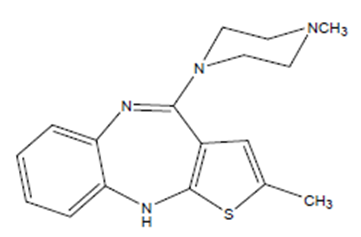
(b) a patent granted on such an application;
and such a patent is not invalid, so far as the invention is claimed in any claim, on any ground that would not have been available against the application or patent, as the case may be, under the 1952 Act.
Schedule 1—Dictionary
In this Act, unless the contrary intention appears:
application, in Chapter 15, means a patent application, and includes a relevant international application.
13 The relevant provisions of the Patents Regulations 1991 (Cth) provide:
23.26 Certain actions and proceedings
(1) The 1952 Act applies to an action or proceeding made or started under that Act and not finally dealt with or determined before the commencing day:
(a) in which the validity of a patent is disputed; or
(b) concerning infringement of a patent.
(2) The 1952 Act applies to an action or proceeding in which the validity of a patent granted under the Patents Act 1990 on an application made under the 1952 Act is disputed.
14 The commencing day referred to in reg 23.26(1) is 30 April 1991.
15 The 1990 Act applies to patents granted under the 1952 Act, “as if the patent had been granted under [that] Act” (s 233(1)). The 1990 Act also applies to applications made, but not finally dealt with, under the 1952 Act (s 234(2)). If the patent was applied for or granted under the 1952 Act, then the patent (or application) cannot be invalid on any ground that would not have been available under the 1952 Act (ss 233(4) and 234(5)).
16 However, the 1990 Act does not stipulate which Act applies to determine the validity of a patent that was applied for under the 1952 Act, but ultimately granted under the 1990 Act. Regulation 23.26(2) provides for this event. The 1952 Act applies to determine the validity of patents granted under the 1990 Act but applied for under the 1952 Act. It should be noted that this reg 23.26(2) applies to issues of validity, not infringement. This is apparent from the preceding reg 23.26(1), which provides that the 1952 Act applies to the determination of both validity as well as infringement where a patent was granted under the 1952 Act and the proceeding was commenced before 30 April 1991. By contrast, reg 23.26(2) is silent as to infringement.
17 From s 234(5) of the 1990 Act it is clear that Apotex cannot succeed in impugning the validity of any claim of the Patent unless it is shown that the invention claimed could have been revoked under the 1952 Act.
18 As Lockhart J said in NV Philips Gloeilampenfabrieken v Mirabella International Pty Limited (1993) 44 FCR 239 at 253-254 in relation to s 233(4) of the 1990 Act (which is in language to the same effect as s 234(5) of the Act):
In my opinion the evident intent of s 233(4) is to ensure that the grounds of revocation under the 1990 Act (which, though in some cases are expressed in different terms, are essentially the same as the grounds previously available under s 100 of the 1952 Act) apply as the grounds for revocation of a 1952 Act patent; but with this important qualification, namely, that the elements of each ground of revocation under the 1990 Act apply only to the extent that they replicate in substance the elements that previously constituted a ground of revocation under the 1952 Act. Hence, if a ground of revocation under the 1990 Act omits an element which was a necessary part of a ground under the 1952 Act, the patentee has the benefit of it. On the other hand, if a ground under the 1990 Act contains an element not previously present under the 1952 Act, it cannot apply in aid of revocation of the 1952 Act patent. In short, a 1952 Act patentee is not to be worse off than he would have been if the 1952 Act had continued to operate, but he may be better off if the 1990 Act treats a former element of a ground of revocation as being no longer necessary.
BACKGROUND
Australian Patent No. 643267 and Related Patents
19 On 26 November 1974, Lilly Industries Ltd filed GB provisional application number 51240.
20 This provisional application led to a family of patents, including AU 506340 (the 340 Patent) and GB 1 533 235 (the 235 Patent). Both the 340 Patent and the 235 Patent (the genus patents) claimed a class of compounds that included olanzapine, although it is not mentioned specifically. The genus patents are effectively identical.
21 The complete specifications for the 340 Patent and the 235 Patent were filed on 21 November 1975 and 24 November 1975 respectively. By s 22 of the Patents Act 1949 (UK) and s 68 of the 1952 Act, the term of each of the genus patents was 16 years from the date of filing.
22 The genus patents claim a vast number of compounds. The named inventors of the Patent and the genus patents included Dr Jiban Kumar Chakrabarti and Dr David Edward Tupper. During the 1980s, Dr Chakrabarti, Dr Tupper and others published a series of papers relating to their work on antipsychotic compounds, including compounds covered by the genus patents. Eli Lilly conducted clinical trials from 1986 onwards. Eli Lilly made its product commitment in 1990.
23 The application for the Patent was filed on 22 April 1991. The genus patents were published in 1977 (AU) and 1978 (UK). The Patent was published on 7 November 1991. The term of the Patent was extended to 5 March 2012. It seems that the patentee has effectively had continuing patent protection for olanzapine from 1977 until the expiry of the Patent. There was some suggestion made by counsel for Apotex of Eli Lilly “evergreening”, namely, being able to in effect re-monopolise olanzapine in the 1990s via the Patent, having initially obtained patent protection in the 1970s with the grant of the 235 Patent. Of course, this observation cannot impact upon the principles to be applied in this proceeding. The outcome must be the same as if the 235 Patent was claimed and owned by a third party unconnected to Eli Lilly.
24 Returning to the matters in issue in this proceeding, it is important to note that the genus patents are an important basis for some of the grounds of invalidity pleaded by Apotex.
25 In answer to the significant attack upon the validity of the Patent, Eli Lilly contended that the provisional application and the genus patents do not clearly disclose olanzapine, being only one among the trillions of compounds they mathematically encompass.
26 I make this preliminary observation. Many of the compounds relevant to this proceeding are closely related, as the general structure of each indicates. This is not unusual. Apparent similarities in the chemical structures may exist, but very different pharmaceutical effects may still occur. As will be seen, flumezapine and ethyl flumezapine have similar structures, but produce very different side effects when used as drugs. Therefore, one must be careful not to assume that just because the compounds may be similar, arriving at a suitable compound is necessarily easily achieved or readily predictable with any confidence. In this proceeding, I became satisfied on the evidence before me of the immense research and intellectual endeavour undertaken to reach the compound the subject of the Patent. Importantly, with the search for a drug to treat schizophrenia, progress was impeded by the ignorance of the real causes and pathogenesis of schizophrenia.
Agreed Chemistry Primer
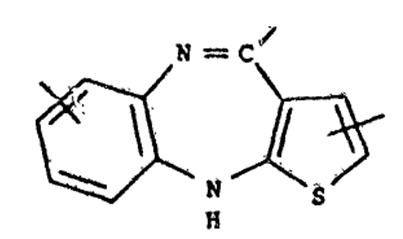
27 It is necessary to have some background knowledge of the principles of chemistry relevant to this proceeding. Accordingly, before setting out the key aspects of the Patent, it is appropriate to set out some principles contained in the chemistry primer agreed upon by the parties and presented to the Court.
Chemistry
28 Chemistry is that part of science which deals with the composition, structure, properties and reactions of matter.
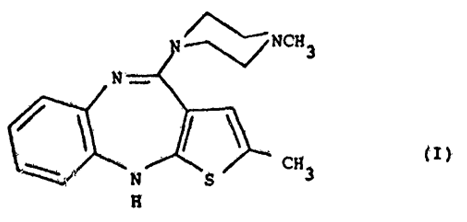
29 The building blocks of matter are atoms, which are made up of protons, neutrons and electrons.
30 An atom can be visualised as a small, exceptionally dense nucleus comprised of protons and neutrons, surrounded by a relatively large volume of electrons. Protons are positively charged, neutrons are not charged and electrons are negatively charged. In a neutral atom, the number of electrons is the same as the number of protons.
31 The chemistry of an atom is largely determined by the behaviour of its electrons. As a result, chemists typically employ a simple model of the nucleus, and focus more attention on the properties of the electrons. At its simplest, the nucleus provides the positive charge to bind the negatively charged electrons in atoms.
32 Although all atoms are comprised of the same components (protons, neutrons and electrons), different atoms have different chemical properties. The chemical properties of an atom are determined by the number and arrangement of electrons. As noted above, in a neutral atom, the number of electrons is the same as the number of protons. Atoms can become negatively charged by gaining electrons, or positively charged by losing electrons, but the number of electrons on a neutral atom is always the same, and is equal to the number of protons. Accordingly, chemists define different atoms, or elements, by reference to the number of protons. This is known as the atomic number of the element. For example, an atom that has six protons is an atom of the element carbon; an atom that has eight protons is an atom of the element oxygen.
33 Each element is allocated a symbol. A symbol for an element consists of up to three letters, where the first letter is uppercase, and the remainder lowercase. By way of example, the chemical symbols for some relevant elements are provided below.
Element | Symbol |
Hydrogen | H |
Carbon | C |
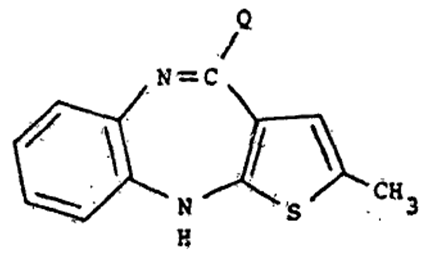
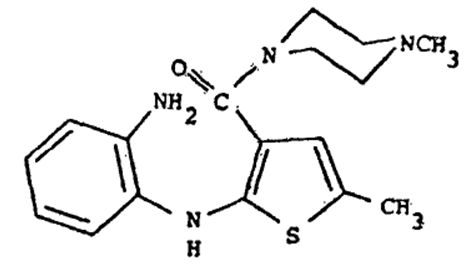
Nitrogen | N |
Oxygen | O |
Sulfur | S |
Fluorine | F |
Chlorine | Cl |
34 Atoms have the ability to combine with atoms of the same or other elements to form compounds. The forces that hold the atoms together in a compound are called chemical bonds. Electrons can form chemical bonds in different ways. The manner in which the electrons form a chemical bond within a compound may affect the manner in which that compound interacts with other compounds. For example, the manner in which the electrons form chemical bonds within a drug molecule may affect the way that the drug molecule interacts with other molecules, such as biological receptors.
35 There are broadly two types of chemical bonds, distinguished by the behaviour of the electrons of the bonded atoms.
36 In one type of chemical bond, one atom transfers one or more electrons to the other atom. The atom that loses the electron(s) becomes positively charged (as the number of electrons is now less than the number of protons) and the atom that gains the electron(s) becomes negatively charged (as the number of electrons now exceeds the number of protons). The charged atoms are called ions, and this type of chemical bonding is called ionic bonding.
37 The other way that atoms can form chemical bonds to other atoms is by sharing electrons. These bonds are called covalent bonds, and the resulting collection of atoms is called a molecule. A simple way of thinking about a molecule is that the shared electrons are located between the atoms, providing a region of negative charge to which the positively charged nuclei (made up of positively charged protons and neutral neutrons) of the atoms are attracted. This is known as the localised electron model.
38 If the two bonded atoms are identical, then the electrons are shared equally between them. This is called pure covalent bonding. If the atoms are different, the electrons are not shared equally between them. This is called polar covalent bonding. Polar covalent bonding, and the effect of polar covalent bonds within a molecule on the interaction of that molecule with other molecules are discussed in more detail below.
39 Molecules can be represented in different ways. The simplest method is the molecular formula, in which the symbols of the elements comprising the compound are listed, together with numerical subscripts indicating the number of atoms of each element. For example, the molecular formula for water is H2O, indicating that a molecule of water contains two hydrogen atoms and one oxygen atom. More information about a molecule is provided by the structural formula (or simply structure), in which the individual bonds between atoms are shown by lines. Structural formulae indicate connectivity of atoms and may or may not indicate the shape of the molecule. For example, water may be represented in either of the ways set out in Figure 1 below, with the structural formula on the right indicating the shape of the molecule.
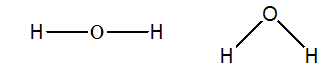
Figure 1
40 Not all of the electrons of an atom have the potential to be involved in interactions with the electrons of other atoms. The electrons of an atom have different discrete energies. These discrete energies are described as orbitals. Each orbital can only accommodate a certain number of electrons; the first orbital can contain up to two electrons and the second, up to eight. Once each orbital is full, any further electrons added to the atom are forced to occupy a higher energy orbital. It is only the electrons of highest energy (valence electrons) that interact with the electrons of other atoms. An atom that has a full highest energy orbital is stable. Most of the chemical properties of an atom are determined by the number of valence electrons and the propensity of the atom to share valence electrons with other atoms (in the case of covalent bonds), or donate or receive valence electrons to or from other atoms (in the case of ionic bonds), to achieve a full highest energy orbital. In most cases, a full highest energy orbital consists of eight electrons. Hydrogen is a relevant exception, requiring only two electrons to complete its highest energy orbital.
41 Neutral atoms of different elements will have different numbers of total electrons, but may have the same number of valence electrons, and thus exhibit similar chemical behaviour. The periodic table of the elements arranges elements in vertical columns or groups based on the number of valence electrons in a neutral atom of each element.
42 Discussed below, by way of example, are the groups of elements in the periodic table known as the halogens (Group VII) and the noble gases (Group VIII).
43 The halogens include the elements fluorine (symbol F) and chlorine (symbol Cl). Although neutral atoms of the halogens will have different numbers of total electrons, (corresponding to the number of protons in the nucleus), the number of valence electrons of each halogen is seven.
44 Atoms of the noble gas elements contain a full highest energy orbital (eight electrons), and do not therefore need to interact with other atoms to achieve stability. This manifests itself in their chemical behaviour – they do not tend to readily react with other elements.
Electronegativity and Intermolecular Forces
45 When electrons are shared in a covalent chemical bond between atoms of different elements, the electrons are not shared equally. That is, the covalent bond is a polar covalent bond, as opposed to a pure covalent bond. The different affinities of atoms of different elements for the electrons in a bond are described by a property called electronegativity: the ability of an atom in a molecule to attract electrons to itself.
46 The electronegativity of an atom of a particular element is a function of two effects. First, elements with a larger number of protons have a more positively charged nucleus, which is generally more attractive to the negatively charged valence electrons of the atom, and the valence electrons of the other atom to which it is chemically bonded. Second, complete orbitals of electrons between the nucleus and the valence electrons insulate the positive nucleus both from the valence electrons of the atom and from the other atom to which it is chemically bonded. The first effect means that electronegativity increases from left to right across the periodic table. The second effect means that electronegativity decreases from the top to the bottom of the periodic table (the noble gases are excluded from this analysis as they do not tend to form chemical bonds at all). Accordingly, the most electronegative element is fluorine (symbol F).
47 Electrons carry a negative charge, so the uneven distribution of electrons within a chemical bond means an uneven distribution of charge across the bond: the atom of the more electronegative element will acquire a small negative charge, and the atom of the less electronegative atom a small positive charge. These small charges are conventionally represented by the Greek letter delta (δ). They are different to the full positive and negative charges created by the transfer of electrons in ionic bonding. The separation of charges across the chemical bond in this manner is called a dipole.
48 Using a molecule of hydrogen fluoride as an example, the fluorine atom is considerably more electronegative than the hydrogen atom. As a result, the shared electrons that comprise the chemical bond spend more of their time in the vicinity of the fluorine atom than the hydrogen atom, resulting in the fluorine end of the molecule acquiring a small negative charge, and the hydrogen end of the molecule, now deficient in electrons, acquiring a small positive charge. This is illustrated in Figure 2 below:
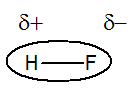
Figure 2
49 The distribution of electrons within a molecule has a significant effect on the way in which the molecule interacts with other molecules, whether the other molecules are molecules of the same compound, or molecules of a different compound (eg the interaction between a drug molecule and a biological receptor).
50 Again using hydrogen fluoride as an example, groups of hydrogen fluoride molecules tend to orient themselves in the pattern shown in Figure 3 below. This is because the small negative charges at the fluorine ends of the molecules tend to be attracted to the small positive charges at the hydrogen ends of other molecules.
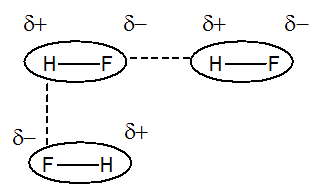
Figure 3
51 The forces between molecules are known as intermolecular forces, as opposed to the chemical bonds within molecules. Intermolecular forces vary in strength, but are not as strong as the chemical bonds within a molecule. The strongest intermolecular forces are created where there is the most uneven distribution of electrons within the molecules, as this results in the greatest charge separation.
Organic Chemistry
52 Organic chemistry is the study of the chemistry of carbon-based compounds, also commonly known as organic compounds. Most drugs are organic compounds. Carbon has four valence electrons in its highest energy orbital, and demonstrates a propensity to share an additional four electrons to complete that orbital and achieve stability. Carbon demonstrates a considerable degree of flexibility in the manner in which it achieves this, enabling an extraordinary number of carbon-based compounds with a wide variety of properties.
53 For example, carbon has the capacity to form bonds that involve more than one pair of shared electrons. Bonds involving two pairs of electrons are known as double bonds. Bonds involving three pairs of electrons are known as triple bonds. Collectively, they are described as multiple bonds. These are illustrated in Figure 4 below using the structural formulae of the gases ethane, ethene (ethylene) and ethyne (acetylene). Each carbon has four valence electrons to contribute to bonding, and each hydrogen has one.
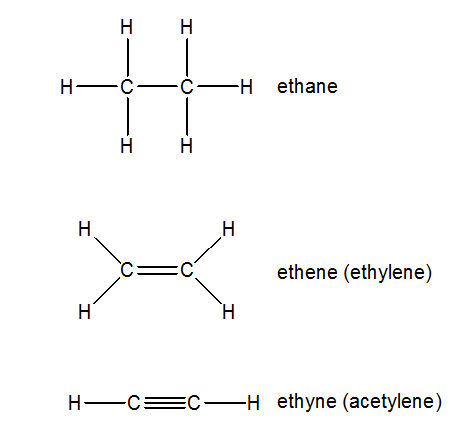
Figure 4
54 In ethane, each carbon has four valence electrons and gains a share of an electron in each of three bonds to hydrogen, and a share in an electron in the bond to the other carbon, making a complete highest energy orbital of eight. In ethene, each carbon gains a share of an electron from each of two bonds to hydrogen, but gains a share of two electrons in the double bond to the other carbon for a total of eight. In ethyne, each carbon has a share in an electron from the bond to hydrogen, and a share in three electrons from the triple bond to the other carbon.
55 The structures of ethane, ethene and ethyne also serve to illustrate the concept of saturation. A carbon atom that is attached to the maximum number of other atoms allowed by the four valence electrons in its highest energy orbital (ie 4) is described as saturated. The two carbon atoms of ethane are saturated. A carbon atom that has the capacity to attach to another atom, such as those in ethene and ethyne, are described as unsaturated carbon atoms.
56 The ability of carbon to engage in multiple bonds exposes a limitation of the localised electron model discussed above. A component of many organic compounds is a ring of six carbon atoms, with each carbon atom having a single hydrogen atom attached. This is commonly known as a benzene ring. The structural formula (or, simply, the structure) of benzene can be drawn two ways, each depicting alternating single and double bonds (see Figure 5 below).
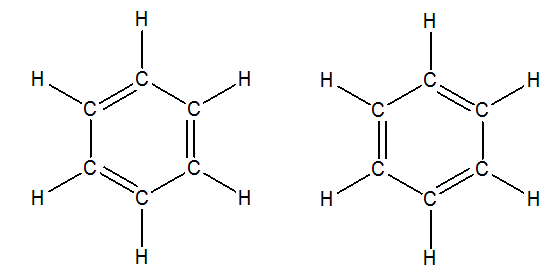
Figure 5
57 In reality, the distribution of electrons within the ring of carbon atoms is a hybridisation of both structural formulae. That is, instead of alternating double and single bonds, the properties of benzene are more consistent with six identical bonds of a character intermediate between double and single bonds. In other words, instead of being localised in the three double bonds, six electrons are evenly spread – delocalised – around the ring. For this reason, the structural formula of benzene is often depicted as set out in Figure 6 below.
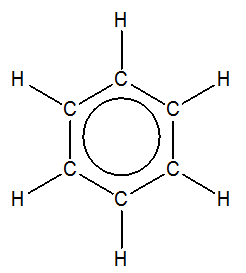
Figure 6
58 The fact that the delocalisation of electrons in a benzene ring must be depicted in this way is sometimes referred to as ‘resonance’ or ‘mesomerism’ (about which more will be said later). The delocalisation of electrons around a ring in the manner characteristic of benzene can result in particularly stable molecules and is a property known as aromaticity. Benzene may be described as an aromatic ring. Aromatic rings have specific chemical properties as a result of this particular stability, and of the concentration of delocalised electrons at the centre of the molecule.
59 The structural formula of benzene can be used to illustrate two conventions that are widely used when representing the structural formulae of organic compounds. First, where hydrogen atoms are attached to carbon atoms, the symbols for hydrogen atoms and the bonds to the hydrogen atoms are omitted from the structural formulae. We know carbon must be involved in bonds which result in it sharing eight electrons, so the existence of the correct number of hydrogen atoms attached to the carbon atom is implied. Secondly, carbon atoms may simply be omitted from the structure. Applying these two conventions, the structure of benzene is more commonly represented as depicted in Figure 7 below.
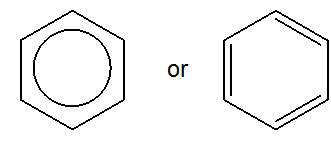
Figure 7
These two conventions greatly simplify the representations of the structural formulae of organic compounds.
Electron Withdrawing Groups
60 In organic chemistry, atoms or groups of atoms within a molecule may be characterised as electron withdrawing groups or electron donating groups. This characterisation is made relative to hydrogen. For example, a fluorine atom will draw electrons to itself more than a hydrogen atom would if it occupied the same position in a molecule. Electron withdrawing groups contain one or more highly electronegative atoms. Fluorine is the second strongest electron withdrawing group, with the other halogens following immediately thereafter in order of decreasing electronegativity. The electron withdrawing effects of the halogen atoms were known prior to 1990.
61 The effect of an electron withdrawing group is not limited to the carbon atom to which it is attached. For example, a strongly electron withdrawing group such as fluorine attached to a benzene ring will exert an effect on the distribution of electrons over the whole ring.
Olanzapine
62 Olanzapine is an organic compound. The chemical formula for olanzapine is C17H20N4S. This indicates that in each molecule of olanzapine, there are 17 carbon atoms, 20 hydrogen atoms, 4 nitrogen atoms and one sulfur atom. The chemical formula for olanzapine is not capable of unambiguously describing olanzapine – there are a number of different compounds that share this chemical formula.
63 The structure of olanzapine is shown in Figure 8 below:
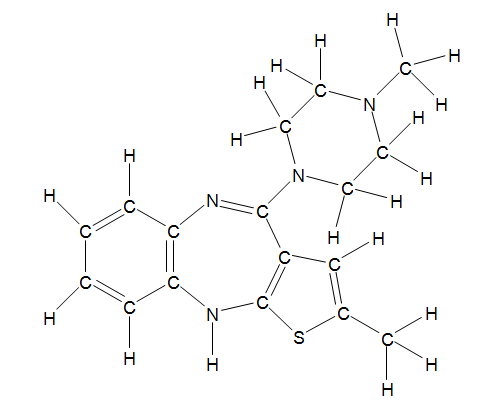
Figure 8
64 Using the two conventions illustrated for benzene above, the structural formula of olanzapine can be more simply represented as Figure 9 below:
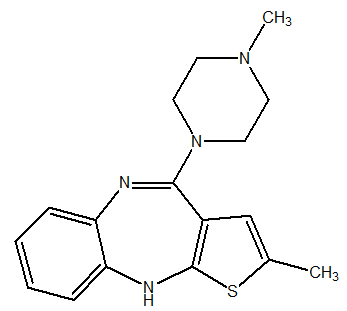
Figure 9
This is the manner in which the structure of olanzapine is represented in the Merck Index, which is an encyclopaedia of chemicals, drugs and biologicals produced periodically and on a not-for-profit basis by the New Jersey-based pharmaceutical company, Merck & Co Inc. Chemically, this structure is identical to the structure in Figure 8 above.
65 The representation of the structural formula of olanzapine which appears on p 3 of the Patent is set out in Figure 10 below. This structural formula is slightly different to that set out in the Merck Index, but is an equally clear representation of the identical chemical compound.
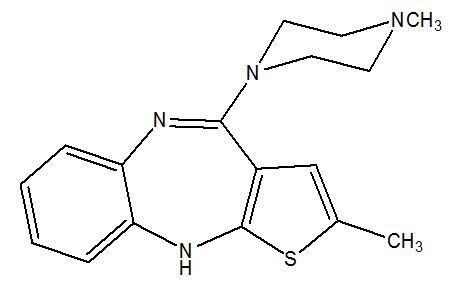
Figure 10
66 The difference lies in the manner in which the six-membered ring containing two nitrogen atoms (a piperazine ring), which is located at the top right of the structural formula, is depicted. The only difference is that the representation in the Patent attempts to depict the planar arrangement of the atoms of the piperazine ring (ie that they are in a different plane to the rest of the structure), whereas the Merck Index does not.
67 The structural formulae represented in Figures 8 to 10 above are two-dimensional representations of molecules that exist in three dimensions. Once the connectivity of the atoms (the structural formula) is known, the molecule can be oriented in different ways but still represent the same compound. That is, if the structure is turned upside down, or rotated, the two-dimensional representation can appear quite different, while still representing the same molecule. Using the core tricyclic structure of olanzapine as an example, all of the four structural formulae shown in Figure 11 below represent the same core tricyclic structure.
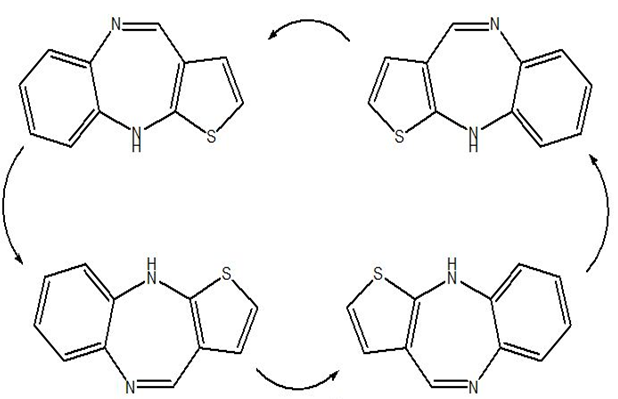
Figure 11
68 Frequently, a two-dimensional structural formula of a molecule gives little indication of the three-dimensional shape of the molecule. The three-dimensional shape of the molecule is relevant to the interaction of the molecule with its biological receptor. The spatial arrangement of bonds around a particular atom is relatively inflexible, with departures from the optimum arrangement leading to unstable or strained molecules. For example, a saturated carbon atom (ie a carbon atom bonded to four other atoms) adopts a tetrahedral arrangement of those bonds, as the electrons in each bond repel the electrons in the other bonds such that they are evenly distributed in three-dimensional space.
69 A way of representing a molecule that allows for these spatial constraints, and so provides an indication of the three-dimensional shape of the molecule, is the ball and stick model. “Annexure A” to these reasons is a copy of a ball and stick model for olanzapine generated using ChemBioDraw Ultra, version 12, published by CambridgeSoft (which, for convenience, will simply be referred to as “ChemDraw” hereafter).
70 The ball and stick model in Annexure A is oriented in the same way as the structural formulae illustrated in Figure 10 above. The benzene ring is shown on the left of the molecule, the piperazine ring is shown at the top of the molecule and the thiophene ring is shown on the right of the molecule. Carbon atoms are represented in grey, hydrogen in white, nitrogen in blue and sulfur in yellow. The relative sizes of the atoms are represented in a ball and stick model (for example, the sulfur atoms are obviously larger than the carbon atoms, which are, in turn, larger than the hydrogen atoms), but the atoms are deliberately reduced in size so as to highlight the framework of covalent bonds that hold the atoms together. From the ball and stick model, it is apparent that the core tricyclic ring system of olanzapine is not planar as it is represented by the structural formulae in the Merck Index. “Annexure B” to these reasons contains the same ball and stick model that appears in Annexure A, in which the structural features of olanzapine are indicated.
71 A closer approximation of the actual three-dimensional appearance of the olanzapine molecule is the space-filling model, in which the atoms are represented by spheres, the size of which is proportional to the size of the atoms. Space-filling models are useful for visualising the shape of the molecule, which is important in considering how the molecule will interact with a biological receptor. “Annexure C” to these reasons is a copy of the space-filling model generated for olanzapine using ChemDraw. The space-filling model in Annexure C is oriented in the same way as the structural formulae shown on p 3 of the Patent and the Merck Index, and the ball and stick models of Annexures A and B. “Annexure D” to these reasons is a copy of the space-filling model that appears in Annexure C, in which the structural features of olanzapine are indicated.
Drug Molecule–Receptor Interactions
72 Most drugs exert their effects on a patient by interacting with a biological molecule such as a receptor. Receptors are proteins. The receptor protein is often located partly inside the cell, partly within the cell wall and partly outside the cell. They function to recognise and bind a particular chemical substance, and thereby activate a specific biological process within the cell.
73 Proteins are made up of basic structural units known as amino acids, which form polypeptide chains. Proteins consist of one or more polypeptide chains. Polypeptide chains are formed by amino acids bonded together by peptide bonds between the carboxyl groups and amino groups of adjacent amino acid residues, as illustrated in Figure 12 below.
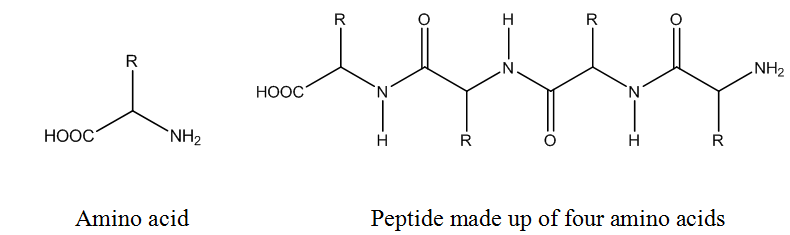
Figure 12
74 There are twenty standard amino acids from which polypeptides, and thereby proteins, are formed. All of the amino acids have part of their structure in common – the differences lie in a part of the molecule called the side chain (represented by ‘R’ in Figure 12 above). The twenty side chains differ in size, shape, charge, the type and strength of the intermolecular forces they can form with other molecules (including drug molecules) and their chemical reactivity.
75 Despite the fact that amino acids are connected linearly in polypeptide chains, proteins are not linear. Proteins have well-defined three-dimensional structures. A stretched-out or randomly arranged polypeptide chain will not have biological activity. The biological activity of a protein arises from its conformation, being its three-dimensional shape. The types of amino acids in the protein will specify the conformation of the protein.
76 The interaction between a receptor and a drug molecule is often described by reference to the interaction of a lock (the receptor) with a key (the drug molecule). However, this is a considerable oversimplification. The interaction between a drug molecule and a receptor is also governed by the intermolecular forces between the two. So, as well as the three-dimensional physical shapes of the drug molecule and the part of the protein with which it interacts, the distribution of charge (electrons) affects the interaction. For example, if the portion of the drug molecule that aligns with an electron deficient (and therefore relatively positively charged) amino acid residue is also positively charged, then it will be repelled, at least reducing, if not preventing, interaction of the two molecules.
77 As of 25 April 1990, little was known at a molecular level about drug-receptor interactions. Usually, but not always, a drug will interact with a receptor in a non-covalent binding manner and several types of interactions may contribute to the non-covalent binding. For example, hydrophobic interactions will often provide the major driving force, however, hydrogen and ionic binding may also be important, especially for the specificity of the binding of the drug molecule to the receptor. For example, the location of a charged group on a drug molecule in proximity to a hydrophobic portion of the receptor may serve to weaken the binding interaction. The structural features of a drug molecule which determine its affinity for the receptor are often distinct from those which determine its activity at the receptor, that is, the ability to stimulate a biological response. The affinity of a drug molecule for the receptor will be the net result of the various interactions which occur between complementary portions of the drug and its receptor. Activity is generally related to other structural features of the drug molecule that tend to promote conformational changes in the receptor molecule that then initiate a series of interactions, which ultimately result in a biological response.
Acids, Bases and Pharmaceutically Acceptable Salts
78 Acids are compounds that produce hydrogen ions (being a hydrogen atom from which the electron is removed, generating a positive charge, namely, H+) when dissolved in water. The more acidic the compound, the more hydrogen ions it produces. Bases are compounds that can accept a hydrogen ion when dissolved in water. Bases do this by donating a pair of electrons to the electron deficient hydrogen ion. This basic concept was refined in 1923 by J.N. Bronsted who proposed a simple definition for acids and bases:
(a) An acid is a species having a tendency to lose a hydrogen ion.
(b) A base is a species having a tendency to accept a hydrogen ion.
79 Every acid has a corresponding (conjugate) base. For example, in water, hydrochloric acid donates a hydrogen ion to a water molecule to give a hydronium ion and a chloride ion, both of which are highly solvated by water.

80 In this reaction, water is acting as a base by accepting a hydrogen ion from HCl, which in turn is acting as an acid by donating a hydrogen ion. For any acid and for any base:

81 In this case, AH is an acid and A- is its conjugate base, and B is a base and BH+ is its conjugate acid. Every acid has its conjugate base associated with it, and every base has its conjugate acid associated with it.
82 The product of the reaction between an acid and a base is called a salt. For example, the product of the reaction of hydrochloric acid and the base sodium hydroxide is the salt sodium chloride (table salt).
83 Drug molecules may be acids or bases. For some drug molecules, it is useful to make salts. Making a drug in the form of a salt may render it more soluble in water, more readily made into tablets, etc. For other drugs, the base (sometimes called the free base) or acid (sometimes called the free acid) is the more useful form. Salts made by adding acids to drug molecules that are bases may be called acid addition salts. When a salt of a drug molecule is ingested, it dissolves in the aqueous environment of the stomach and/or gastrointestinal tract. It is only when the drug is dissolved that it can be absorbed through the stomach or intestine and it can dissociate into the free acid or base from which it was formed. The extent of dissociation depends on a number of factors including the acidity or basicity (alkalinity) of the solution in which the drug molecule is absorbed. Making a drug in the form of a salt does not change the mechanism by which the drug molecule interacts with the relevant biological receptor or receptors.
84 Olanzapine is a base, which may be reacted with an acid to form a salt.
THE PATENT
85 With this background in mind, I now turn to the Patent.
86 The title of the Patent is “2-methyl-10-(4-methyl-1-piperazinyl)-4H-thieno-(2,3-b)(1,5)-benzodiazepine and the process for making the same”. The inventors named in the Patent are Jiban Kumar Chakrabarti, Terrence Michael Hotten and David Edward Tupper.
The Invention Described
87 The Patent opens by stating that “[t]his invention relates to novel organic compounds and the use thereof as pharmaceuticals.”
88 The Patent then outlines the context in which the compound in question was developed (at p 1a):
Currently there are many drugs available for the treatment of disorders of the central nervous system. Amongst these drugs is a category known as antipsychotics for treating serious mental conditions such as schizophrenia and schizo-phreniform illnesses. The drugs available for such conditions are often associated with undesirable side effects, and there is a need for better products that control or eliminate the symptoms in a safer and more effective way. Furthermore, many patients do not respond or only partially respond to present drug treatment, and estimates of such partial- or non-responders vary between 40% and 80% of those treated.
Ever since antipsychotics were introduced it has been observed that patients are liable to suffer from drug-induced extra pyramidal symptoms which include drug-induced Parkinsonism, actute dystonic reactions, akathisia, tardive dyskinesia and tardive dystonia… The great majority of drugs available for treatment of schizoprenia are prone to produce these extra pyramidal side effects when used at dosages that yield a beneficial effect on the symptoms of the disease. The severity of adverse events and/or lack of efficacy in a considerable number of patients frequently results in poor compliance or termination of treatment.
89 Other side effects of antipsychotics listed in the Patent include the potential for a sedative effect and depression. Long-term use could lead to irreversible conditions such as tardive dyskinesia and tardive dystonia (at p 2).
90 The Patent identifies three antipsychotic drugs which were widely used prior to, and up to the time of, the priority date of the Patent. These are: haloperidol, clozapine and chlorpromazine. According to the Patent, haloperidol “has been reported as causing a high incidence of extra pyramidal symptoms and may also cause tardive dyskinesia”. Clozapine, it is noted, was “introduced with the claim that it is free from extra pyramidal effects”. However, in some patients it caused agranulocytosis, a condition which lowers white blood cell count and which can be life threatening. As such, clozapine can only be used under “strict medical observation and supervision” (at p 2). Chlorpromazine, the Patent states, “has long been in use but [its] safety has been called into question”. It also exhibits an undesirable tendency to raise liver enzyme levels (at p 3).
91 The Patent also refers to a class of antipsychotic compounds – thienobenzodiazepines – which were the subject of the 235 Patent. Page 2 of the Patent depicts the structural nucleus of a subset of thienobenzodiazepines referred to in the 235 Patent. This depiction is reproduced here:
92 The Patent states that the “lead compound” from this group was flumezapine (7-fluoro-2-methyl-10-(4-methyl-1-piperazinyl)-4H-thieno[2,3-b][1,5]-benzodiazepine). Flumezapine was the subject of a clinical trial. According to the Patent, 17 patients were treated with flumezapine before the trial was terminated due to an “unacceptably high incidence of raised enzyme levels in the treated patients… indicating the possibility of toxicity”. Blood samples taken from patients showed them to be in “substantial excess of normal values” of the enzyme creatinine phosphokinase (CPK), and liver enzymes serum glutamate oxalacetic transaminase (SGOT) and serum glutamate pyruvate transaminase (SGPT). The Patent reports that extrapyramidal side effects (EPS) emerged in two patients in the trial (p 3). The extrapyramidal system is a neural network involved in motor activities such as movement and coordination.
93 Eli Lilly contended that the reference to the “lead compound from this group” is an important part of the description of flumezapine. Eli Lilly submitted that synthesis of a new drug typically involves synthesis of a very large number of compounds before a compound is identified that is sufficiently active, has the right pharmacokinetic profile, is not toxic, and is able to be chemically synthesised on a large scale. The words “lead compound from this group”, ascribed to flumezapine, indicate that Eli Lilly had selected it from the group of thienobenzodiazepines in the 235 Patent because years of discovery and preclinical research led to the conclusion that it was the best compound in the class. Apotex did not agree with this assertion. The significance of flumezapine will become apparent in due course. However, it is important to keep in mind that the Patent, as I am about to recite, indicates the discovery of the compound that was said to be superior not only to flumezapine but also to other related compounds.
Olanzapine, the Compound of the Invention
94 The Patent then goes on to tell the reader about olanzapine, and states at pp 3 to 4 of the Patent:
We have now discovered a compound which possesses surprising and unexpected properties by comparison with flumezapine and other related compounds.
The compound of the invention is of the formula [“formula (I)”]
or an acid addition salt thereof. The free base of formula (I) is 2-methyl-10-(4-methyl-1-piperazinyl)-4H-thieno[2,3-b][1,5]benzodiazepine.
95 The parties agreed that the structural depiction of formula (I) on p 3 of the Patent specification unambiguously depicts a single compound, now known as olanzapine.
96 Eli Lilly submitted that the structural formula of olanzapine (formula (I)) and the chemical name quoted immediately after it are used consistently in the specification to describe the compound of the invention. Apotex submitted this chemical name – as repeated in the claims of the Patent – is not the name for olanzapine. I will return to this point in detail later.
97 The Patent then continues:
The compound of the invention has given surprising and excellent results, described in greater detail below, in experimental screens for testing activity on the central nervous system and in clinical trials, which results indicate its usefulness for the relatively safe and effective treatment of a wide range of disorders of the central nervous system.
The Benefits of Using Olanzapine Observed From Pre-Clinical and Clinical Studies
98 The Patent then describes the benefits of olanzapine observed from the studies conducted, which include that olanzapine (at pp 4-6):
(a) is useful in treating a wide range of central nervous system (CNS) disorders, including psychotic conditions such as schizophrenia, schizophreniform diseases, acute mania, and – in lower doses – mild anxiety states;
(b) exhibits high activity at “surprisingly low dosage levels” in humans, specifically at lower dosage levels than were expected after initial animal testing;
(c) produces a low incidence of only mild and transient elevation of liver enzymes in patients treated with therapeutic doses;
(d) produces lower plasma levels of CPK than flumezapine, “indicating a lower adverse effect on muscular tissue”;
(e) causes lower elevation of prolactin levels than other “currently used neuroleptic drugs”;
(f) caused no observed alteration of white blood cell count in clinical studies; and
(g) did not show any rise in cholesterol levels in a dog study comparing olanzapine with the ethyl analogue at 8mg/kg, whereas the ethyl analogue showed a significant rise.
99 The Patent then concludes on olanzapine’s clinical performance (at p 6):
Overall, therefore, in clinical situations, the compound of the invention shows marked superiority, and a better side effects profile than prior known antipsychotic agents, and has a highly advantageous activity level.
100 The Patent then states that the compound of the invention “can be used both in its free base and acid addition salt forms”. It lists the preferable pharmaceutically acceptable acid addition salts and other acid addition salts (at p 6).
101 I observe that the information provided by the Patent is obviously based on experimental work and chemical tests, and is relatively fulsome for a pharmaceutical compound said to be new.
Processes For Producing Olanzapine
102 Two processes for producing the compound of formula (I) (olanzapine) are described in the Patent. They are (pp 6-7):
(a) reacting N-methylpiperazine with a compound of the formula
in which Q is a radical capable of being split off, or
(b) ring-closing a compound of the formula
103 The Patent indicates that appropriate reaction conditions and suitable values of Q can readily be chosen for these processes.
Animal Models and In Vitro Data
104 The Patent presents results based on two animal behavioural models using well-established procedures, showing that olanzapine has useful CNS activity. In particular, the results from the animal models show that olanzapine (at p 13):
(a) antagonised apomorphine-induced climbing behaviour and hypothermia in mice, indicating that the compound might have efficacy as an antipsychotic in humans; and
(b) inhibited a conditioned avoidance response in rats, but induced catalepsy only at much higher doses, indicating that olanzapine is less likely to induce EPS in the clinic.
105 The Patent then states that olanzapine (at p 13):
… has been found to have a favourable profile of activity in a number of in vitro binding assays, designed to measure the degree of binding to neural receptors.
106 In particular, olanzapine is active at both the dopamine D1 and D2 receptors, the muscarinic and cholinergic receptors, and at the 5-HT-2 and 5-HT-IC receptors (at pp 13-14).
107 From these data, the Patent concludes at p 14:
This profile of activity in in vitro receptor binding assays, like that observed in the behavioural tests, would indicate that the compound is effective in the treatment of psychotic conditions but is less likely to induce extra pyramidal side-effects.
Dosage and Administration
108 The Patent teaches the dosage range that is effective to treat different conditions, including mild anxiety and psychotic disorders in adult humans. The Patent also discusses methods of administration of pharmaceutical compositions containing olanzapine, including suitable carriers for olanzapine and formulations thereof (at pp 14-16).
Examples
109 The invention is then illustrated by examples. Pages 17 to 23 of the Patent give details of seven examples. The first two examples describe two different ways to synthesise olanzapine. The remaining five examples relate to pharmaceutical formulations containing olanzapine.
The Invention Claimed
110 The specification ends in seven claims.
(a) Claim 1 is directed to a single compound (namely, 2-methyl-10-(4-methyl-1-piperazinyl)-4H-thieno-[2,3-b][1,5]benzodiazepine) or its acid addition salts.
(b) Claim 2 is limited to the single compound (2-methyl-10-(4-methyl-1-piperazinyl)-4H-thieno-[2,3-b][1,5]benzodiazepine) which is the subject of claim 1.
(c) Claims 3 and 4 are directed to pharmaceutical compositions which include the compound of claim 1 or its acid addition salts with a diluent or carrier.
(d) Claim 5 is directed to a process for producing the compound of claim 1.
(e) Claim 6 is directed to an intermediate compound associated with the production of the compound of claim 1.
(f) Claim 7 is an “omnibus” claim.
111 I note that only claims 1 to 4 and 7 are in issue in this proceeding.
WITNESSES
112 Eli Lilly relied on the following witnesses:
(a) Dr Alan Duncan Robertson, who swore affidavits dated 16 December 2010, 24 June and 12 September 2011. Dr Robertson was cross-examined. Dr Robertson holds a Bachelor of Science (Hons) Degree (1978) and a PhD in synthetic organic chemistry (1981) from the University of Glasgow. Dr Robertson completed a post-doctoral fellowship with the Science and Engineering Research Council at the University of Sussex between 1981 and 1984. He then worked for Wellcome Foundation Ltd where, as a Senior Research Scientist, he worked on a migraine drug marketed as Zomig. In 1992 Dr Robertson migrated to Australia to work for FH Faulding and Company Limited where he managed the development of generic injectable drugs. This role involved reading patents and working the inventions described.
(b) Professor David Earl Nichols, who swore affidavits dated 17 December 2010 and 24 June 2011. Professor Nichols was cross-examined. Professor Nichols received a Bachelor’s Degree in Chemistry in 1969 from the University of Cincinnati, and a PhD in Medicinal Chemistry from the University of Iowa in 1973. He completed two years of post-doctoral work there and then moved to Purdue University, where he is currently the Robert C and Charlotte P Anderson Distinguished Chair in Pharmacology. At the priority date, Professor Nichols was a Professor of Pharmacology and Medicinal Chemistry at Purdue University. He has conducted research into drugs that modify consciousness and dopamine receptors, and has particular expertise in the study of small molecules affecting the CNS.
(c) Dr Benventuto Capuano, who affirmed an affidavit dated 1 July 2011. Dr Capuano was cross-examined. At the time of swearing his affidavit, Dr Capuano was a Senior Lecturer at the Faculty of Pharmacy & Pharmaceutical Sciences, Monash University. He completed a Bachelor of Applied Science (Applied Chemistry) Degree in 1987, followed by a Master of Pharmacy (1991) and a PhD with the Department of Medicinal Chemistry at Monash University (2001). At the priority date, Dr Capuano was a Masters student and Assistant Lecturer at the Victorian College of Pharmacy. Dr Capuano’s PhD was entitled “The Design, Synthesis and Pharmacological Evaluation of Clozapine Analogues for the Treatment of Schizophrenia”. This examined the differences between “typical” and “atypical” antipsychotic drugs, the available antipsychotic drugs before the priority date and their structural features. Dr Capuano’s PhD included a discussion on key textbooks in the area.
(d) Dr Ian Alexander Pullar, who affirmed an affidavit dated 28 July 2011, which largely related to a witness statement that he gave in proceedings regarding the United Kingdom equivalent of the Patent. Dr Pullar was cross-examined. Dr Pullar, a neuropsychopharmacologist, received a Bachelor of Science Degree in 1966 and completed a PhD in Neuroscience in 1971. He was an employee of Eli Lilly from June 1975 until his retirement on 31 January 2005. From 1975 to 1987, Dr Pullar was Head of the CNS Pharmacology group at an Eli Lilly research facility, Erl Wood, in Surrey, United Kingdom. After 1987, he continued as a Senior Research Scientist within Eli Lilly’s Global CNS Pharmacology group. The Pharmacology group was responsible for the research of drugs for the treatment of schizophrenia and depression.
(e) Professor Gordon Frederick Stuart Johnson, who swore an affidavit dated 17 May 2011. Professor Johnson was cross-examined. At the time of swearing his affidavit, Professor Johnson was an Emeritus Professor of Psychological Medicine at the University of Sydney. Professor Johnson completed a Bachelor of Medicine Degree and Bachelor of Surgery Degree in 1959. From 1963 to 1964, Professor Johnson trained in psychological medicine in Sussex, UK, and received a Diploma of Psychological Medicine from the Royal College of Physicians & Surgeons UK. Between 1969 and 1970, Professor Johnson was a co-investigator in clinical trials relating to drugs used to treat schizophrenia and bipolar disorder. From 1970 to 1971, he was actively involved in clinical research with new potential psychotropic compounds (drugs for treating mental illnesses) at Schering and Ciba Pharmaceuticals. Professor Johnson has published over 100 articles, reviews, and chapters in books.
(f) Professor Guy Manning Goodwin, who swore affidavits dated 4 July 2011 and 18 October 2011. Professor Goodwin was not cross-examined. At the time of swearing his first affidavit, Professor Goodwin was the Head of the Department of Psychiatry and WA Handley Professor of Psychiatry at Merton College, University of Oxford. He was, and has been since 1980, a practising psychiatrist. Professor Goodwin has authored or co-authored over 300 scientific papers, review articles and technical publications in the areas of neuroscience, psychiatry and disorders and function of the CNS. Of these, 35 were co-authored with Australian colleagues.
(g) Dr Jeffery Allen Engelhardt, who swore an affidavit dated 24 June 2011. Dr Engelhardt was cross-examined. At the time of swearing his affidavit, Dr Engelhardt was a President and Senior Pathologist of Experimental Pathology Laboratories Incorporated. Dr Engelhardt was employed by Eli Lilly and Company Ltd from 1988 to February 2004 as a veterinary pathologist. His affidavit largely concerned his involvement in animal toxicity studies, conducted in relation to the development of olanzapine, in particular, the dog study D07290 (Lilly Dog Study) conducted by Eli Lilly.
(h) Professor John Emery Bauer, who affirmed an affidavit dated 29 June 2011. Professor Bauer was not cross-examined. His affidavit largely concerned the Lilly Dog Study and comparative dog toxicology studies. Professor Bauer was not involved in the Lilly Dog Study. Professor Bauer was, at the time of affirming his affidavit, a Professor at Texas A&M University and a Director of the Comparative Nutrition Research Laboratory at the College of Veterinary Medicine at the same institution. Professor Bauer conducted research on animal nutrition and metabolism, particularly focusing on cholesterol, lipoprotein and serum lipid metabolism in companion animals such as dogs.
(i) Professor Ronald Thisted, who swore an affidavit dated 28 June 2011. Professor Thisted was not cross-examined. Professor Thisted was, at the time of swearing his affidavit, the Chairman of the Department of Health Studies at the University of Chicago, as well as a Professor of the Departments of Statistics, Health Studies, Anesthesia and Critical Care and the Undergraduate College at the University of Chicago. He was also a Professor of the Committee on Clinical Pharmacology and Pharmacogenomics. Professor Thisted obtained a PhD in statistics from Stanford University in 1977, and has published a book on statistical computation and over 100 original articles in peer-reviewed journals (including medical journals). He has also published peer-reviewed articles in statistics journals. Professor Thisted’s evidence largely concerned the interpretation and analysis of the Lilly Dog Study and comparative dog toxicology studies.
(j) Dr Karl Arthur Traul, who affirmed an affidavit dated 24 June 2011. Dr Traul was not cross-examined. At the time of affirming his affidavit, Dr Traul was the President of K A Traul Pharmaceutical Consulting. Dr Traul obtained a Bachelor’s Degree in Biology in 1963 from the University of Akron, Ohio, a Master of Science in 1965 and later a PhD from Ohio State University in 1969. Between 1969 and 1980 he worked in cancer research and drug safety for Pfizer Pharmaceuticals, ultimately as Laboratory Head and Project Leader. Dr Traul then worked in the area of toxicology for various companies, including Exxon Corporation and American Cyanamid. From 1995 he has worked as a consultant in toxicology and regulatory affairs. Dr Traul largely gave evidence on the Lilly Dog Study and comparative dog toxicology studies.
(k) Mr Steven Michael Harrill, who affirmed an affidavit dated 19 August 2011. Dr Harrill was cross-examined. Dr Harrill was, at the time of affirming his affidavit, the Global Brand Director – Neuroscience, of Eli Lilly and Company (US). Mr Harrill has a Bachelor’s Degree in Chemistry and Masters of Business Administration. Mr Harrill has worked for Eli Lilly and Company (US) since July 1985 in various positions. Mr Harrill largely gave evidence on the marketing and sales of various Eli Lilly products.
(l) Ms Shihui Yuan, who affirmed an affidavit dated 3 August 2011. Ms Yuan was not cross-examined. Ms Yuan is the Marketing Director of the Bio-medicines business unit of the second applicant, Eli Lilly Australia, and has been so since May 2011. Ms Yuan has an American Language and Literature Degree. After graduating, Ms Yuan worked for Shanghai Loudon Far East, which was a market research firm specialising in the pharmaceutical industry. Since 2001 Ms Yuan has held various marketing roles at Eli Lilly. In her various roles, she has had considerable responsibility for the marketing of Zyprexa products, which contain olanzapine as their active ingredients. Ms Yuan largely gave evidence on the sales of Zyprexa products, and the market share enjoyed by Eli Lilly for these products.
(m) Dr Andreas von Falck, who swore an affidavit dated 1 August 2011. Dr von Falck was not cross-examined. Dr von Falck is a partner at the law firm Hogan Lovells International LLP, in the Düsseldorf office. Dr von Falck holds a PhD in International Civil Procedural Law from Freiburg University. Since the European Autumn of 2006, Dr von Falck has represented Eli Lilly in the German proceedings relating to European Patent EP 0454436, the corresponding patent to the Australian Patent in suit. Dr von Falck gave evidence as to steps he undertook to locate a Professor Mager. Professor Mager was co-author of an article known as the “Schauzu Article” (or simply “Schauzu”) in this proceeding.
(n) Ms Miriam Gundt, who affirmed an affidavit dated 1 August 2011. Ms Gundt was not cross-examined. Ms Gundt was a colleague (Senior Associate) of Dr von Falck at Hogan Lovells International LLP. Ms Gundt gave similar evidence to that of Dr von Falck.
113 Apotex relied on the following witnesses:
(a) Professor David St Clair Black, who swore affidavits dated 23 December 2010 and 15 September 2011. Dr Black was cross-examined. At the time of swearing his first affidavit, Dr Black was the Professor of Organic Chemistry at The University of New South Wales. He was also the Secretary-General of the International Union of Pure and Applied Chemistry (IUPAC). Dr Black has a Bachelor of Science Degree with First Class Honours in Organic Chemistry (1959) and a Master of Science (1960). He received a PhD from Cambridge University in 1963, which related to the basic chemistry of 1-pyrroline 1-oxides and the application of these nitrones to the synthesis of the corrin ring system of vitamin B12. After working at Monash University, Dr Black took up his current position in 1983. Since this time, his research has been in relation to heterocyclic chemistry of indoles, nitrones and oxaziridines; heterocyclic and coordination chemistry applied to the synthesis of new heterocalixarenes; and new generic hetereocyclic systems.
(b) Dr Keith Geoffrey Watson, who swore affidavits dated 23 December 2010, 14 June and 23 September 2011. Dr Watson was cross-examined. At the time of swearing his affidavits, Dr Watson was a Special Fellow and Head of Laboratory at the Walter and Eliza Hall Institute of Medical Research, and an Honorary Professorial Fellow within the Faculty of Medicine, Dentistry and Health Sciences at The University of Melbourne. Dr Watson obtained a Bachelor of Science Degree from Monash University in 1969. In 1973, he was awarded a PhD in chemistry by the same institution. From 1977, he worked as a synthetic organic chemist on biologically-oriented projects, each requiring the optimisation of drug-like molecules with biological activity. Between 1987 and 1991, Dr Watson was made a Senior Principal Research Scientist at ICI Australia Central Research Laboratories in Victoria, and his work focused on designing novel inhibitors of acetolactate synthase. Between 1991 and 1994, Dr Watson took a position as Principal, and later Senior Principal Research Scientist, at CSIRO (Division of Chemicals and Polymers). During this period, he undertook research on the synthesis of novel acetylcholinesterase inhibitors as potential drugs for the treatment of Alzheimer’s disease.
(c) Ms Melissa Anne McGrath, who swore affidavits dated 23 December 2010 and 17 February 2011. Ms McGrath was not cross-examined. Ms McGrath was, at the time of swearing her first affidavit, a Senior Associate at DibbsBarker, being the solicitor for Apotex. Exhibited to Ms McGrath’s affidavits were various documents upon which Apotex sought to rely in the proceeding, including correspondence with Eli Lilly’s solicitors and information relating to the dates upon which certain patent specifications were open for public inspection.
(d) Ms Gaye Michelle Gericke, who affirmed an affidavit dated 17 February 2011. Ms Gericke was not cross-examined. At the time of affirming her affidavit, Ms Gericke was the Acting Manager of the Document Supply Service at the National Library of Australia. Ms Gericke gave evidence in relation to an article Apotex tendered from the publication Die Pharmazie – in particular, that the article had been received by the Library and made available to the Australian public in both German and English prior to 24 April 1990.
114 I make these comments about the witnesses and their evidence.
115 The parties agreed that, putting aside evidence that either party did not press or they agreed was objectionable, all the evidence was to be admitted subject to final submissions addressing weight or relevance. In this proceeding, that was an appropriate course to adopt, and I have so proceeded.
116 No issue of credit arose in this proceeding, in the sense of a witness being said to be deliberately not telling the truth, or not attempting to assist the Court. Within the level of skill of each expert witness, each one answered directly and according to his own particular view of the relevant science. The competence of each witness was not in contention. Some comments were directed to the extensive earlier involvement of Professor Nichols in litigation involving similar issues to those in this proceeding. However, I do not consider this has in any way impacted upon the giving of his evidence.
117 These general comments apply to all witnesses, including Professor Black. However, in the case of Professor Black, particular care must be taken in relying on his evidence. On important matters, I have discounted it when assessed against the evidence of the other experts. I am mindful of the observations made by the Full Court of this Court in Fresenius Medical Care Australia Pty Ltd v Gambro Pty Ltd (2005) 224 ALR 168; [2005] FCAFC 220 at 194 [175], where a witness, in giving evidence relating to inventive step, already knows the answer. There is no one determinative matter in assessing the evidence of such a witness, and his or her evidence is not necessarily to be disregarded entirely. Nevertheless, “the insidious effects” or “misuse” of hindsight are particularly acute in the case of the evidence in chief of Professor Black. Accordingly, and for the reasons outlined below, I have not found his evidence helpful other than where he supported the evidence given by other experts (which usually occurred in the course of his cross-examination).
118 First, Professor Black did not provide useful expert evidence on the question of inventive step. As I have indicated, Professor Black’s evidence in chief was essentially a hindsight reconstruction. At the outset of preparing his evidence, he was given the structure of olanzapine. He was then given a series of questions taking him through the information relied upon by Apotex and leading him – step by step – to the structure of olanzapine, which he agreed he kept in his mind. This deprived his evidence of any real value in assessing inventive step when considered in the context of other evidence before the Court.
119 Further, Professor Black approached the task of developing a new compound based on the 235 Patent solely from the perspective of ease of synthesis, without considering the biological activity of the compounds or their potential side effects. This was because of Professor Black’s view that the biological effects of the compounds were unknown until they had been made and tested. Professor Black had no expectation that his variation of the substituents of the compounds would produce a better drug than flumezapine or a body useful for any other purpose.
120 Despite Professor Black’s original approach, cross-examination demonstrated that the path he would have chosen (based on his starting point of the 235 Patent) would not have led to olanzapine. In particular, it showed that he would have been directly led as a matter of course to make one of the compounds described in the examples in the 235 Patent.
121 Further, as I will address later in the context of determining the identity of the skilled addressee in this matter, Professor Black is a synthetic organic chemist. The invention of the Patent concerns the development of a safe and effective drug, namely, the compound olanzapine, which is useful in the treatment of schizophrenia. Professor Black has had no relevant experience in medicinal chemistry. He has not worked on any compound that has become a commercial drug, nor with antipsychotic drugs.
122 In fact, before 1990, Professor Black had not done any work at all on the development of a drug. As he stated during cross-examination:
the chemistry I did was not directed specifically at making a drug; that’s not the way you go about doing academic research… the aim was not necessarily to make a drug but to invent new chemistry.
123 Whilst since 1990 Professor Black has been involved in a collaborative project to develop some anti-cancer agents, his role has been limited to making compounds.
124 Neither the 235 Patent, nor thienobenzodiazepines themselves, were common general knowledge before 1990. Professor Black did not read the 235 Patent before 1990. He only read it for the purposes of this proceeding. Professor Black only learned about thienobenzodiazepines for the purposes of this proceeding. Professor Black had not heard of flumezapine before giving evidence in this proceeding. His evidence was primarily based upon information contained in the 235 Patent.
125 In my view, Professor Black was effectively ‘led’ to various conclusions in his affidavit material by the way in which he was asked to focus on certain matters. It was in cross-examination that his untutored position became evident.
126 On the issues of validity (particularly inventive step), once Professor Black’s conclusions are discounted, Apotex is then effectively left only with isolated comments elicited from Eli Lilly witnesses during the course of cross-examination. However, at no stage did Apotex, in cross-examination, lead any of Eli Lilly’s witnesses to opine on the ultimate scientific questions relevant to the grounds of invalidity. This Apotex was not necessarily obliged to do, but it indicates a shyness in putting propositions to an expert witness which may be readily refuted by that expert witness if given the opportunity to do so.
CONSTRUCTION AND INFRINGEMENT
Background
127 The first issue is whether Apotex, by obtaining registration on the Australian Register of Therapeutic Goods as the sponsor of olanzapine products and proposing to exploit olanzapine during the term of the Patent, threatened to infringe claims 1, 2, 3 and 4 of the Patent.
128 A patent is infringed if the alleged infringer has, on a proper construction of the patentee’s claim, exploited a product or process that possesses all the integers of that claim: Olin Corporation v Super Cartridge Co Pty Ltd (1977) 180 CLR 236 at 246 (per Gibbs J); Fresenius Medical Care Australia Pty Ltd v Gambro Pty Ltd (2005) 224 ALR 168 at 175 [49]; and Rodi & Wienenberger AG v Henry Showell Ltd [1969] RPC 367.
129 Eli Lilly contended that Apotex’s products:
(a) contain as their active ingredient olanzapine, which is the compound claimed in claims 1 and 2 of the Patent; and
(b) are pharmaceutical compositions comprising olanzapine in forms that infringe claims 3 and 4 of the Patent.
130 Apotex admitted that its products contain olanzapine. Apotex asserted, however, that its products do not contain the compound described by the chemical name “2-methyl-10-(4-methyl-1-piperazinyl)-4H-thieno[2,3-b][1,5]benzodiazepine”, recited in claims 1 and 2 of the Patent. It therefore does not infringe these claims. Further, as claims 3 and 4 are pharmaceutical compositions of claim 1, Apotex contended that it does not infringe claims 3 and 4 of the Patent.
131 Rather, Apotex submitted that the correct chemical name for olanzapine is “2-methyl-4-(4-methyl-1-piperazinyl)-10H-thieno[2,3-b][1,5]benzodiazepine” (emphasis added).
132 Importantly, the name submitted by Apotex would be the name of the compound if the patentee had followed the naming convention used by IUPAC. IUPAC is an international non-governmental organisation, one of the aims of which is to standardise chemical nomenclature. The Commission on the Nomenclature of Organic Chemistry of IUPAC produces books that provide a series of rules by which chemical compounds can be named (colloquially referred to by the experts in this proceeding as the “Blue Book”).
133 It will be observed that there are only two differences between the numbers used to designate the atom positions in the name used in the Patent, and those used in the IUPAC name for olanzapine. Those differences are in:
(a) the number allocated to the atom to which the 4-methyl-1-piperazinyl group is attached; and
(b) the number allocated to the saturated atom (shown by the indicated hydrogen “H”).
134 All parties agreed that formula (I), as depicted on p 3 of the Patent specification, is olanzapine. Essentially, the difference between the parties is the proper name to be ascribed to this chemical structure. This is a matter of patent construction, which is ultimately a matter for the Court. It is convenient to note at this point that if the contentions of Eli Lilly on construction are accepted, then it is accepted that the claim for infringement against Apotex has been established in this proceeding.
135 In essence, Eli Lilly submitted that the compound in claims 1 and 2 would be properly understood to be olanzapine when the specification is read as a whole through the eyes of a person skilled in the art to whom the document is addressed (otherwise known as the ‘skilled addressee’). Alternatively, Eli Lilly submitted that the expert evidence showed that a person skilled in the art, when viewing claims 1 and 2 of the Patent in isolation from the specification and even other claims, could deduce olanzapine as the “best fit” for the chemical name “2-methyl-10-(4-methyl-1-piperazinyl)-4H-thieno[2,3-b][1,5]benzodiazepine”.
136 Apotex’s submissions were anchored by two main propositions. The first was that, even if the claims were read in light of the specification, the specification provided no clear context that would give the claims in suit any positive meaning. In particular, in depicting olanzapine, p 19 of the Patent specification uses chemical nomenclature (namely, the IUPAC convention) that is “rival” to that used in claims 1 and 2, and featuring on pp 3 and 4 of the specification.
137 The second proposition was that the IUPAC name is the only name which unambiguously describes the structure of olanzapine. This is not a case, it was submitted by Apotex, of ambiguity – the name in claims 1 and 2 is simply wrong. Essentially, Apotex contended that there was no warrant for giving the patentee what it might have intended to claim, rather than what the claim actually says.
138 Therefore, the issue in determining infringement is one of construction, and the extent to which the Court (in this proceeding) can use the Patent specification to interpret the claims. It is appropriate to commence this inquiry by reviewing some of the relevant legal principles.
Principles of Construction and the Parties’ Submissions
139 It is well settled that the Court should, from the outset, approach the task of patent construction with a generous measure of common sense. The Court must place itself in the position of a person skilled in the relevant art, being the subject matter of the patent. From this perspective, the patent is to be read as a whole, in the context of the specification and in light of the prevailing common general knowledge and state of the relevant art at the priority date.
140 As the Full Court said in Populin v HB Nominees Pty Ltd (1982) 41 ALR 471 at 476:
The complete specification must not be read in the abstract but in the light of common knowledge in the art before the priority date, bearing in mind that what is being construed is a public instrument which must, if it is to be valid, define a monopoly in such a way that it is not reasonably capable of being misunderstood (see generally Welch Perrin & Co Pty Ltd v Worrel (1961) 106 CLR 588 at 610). The essential features of the product or process for which it claims a monopoly are to be determined not as a matter of abstract uninformed construction but by a common-sense assessment of what the words used convey in the context of then-existing published knowledge.
141 See also Kimberly-Clark Australia Pty Limited v Arico Trading International Pty Limited (2001) 207 CLR 1 at 16 [24] and SNF (Australia) Pty Ltd v Ciba Specialty Chemicals Water Treatments Ltd (2012) 204 FCR 325 at 391 [255] per Bennett J.
142 Turning to the law on the construction of claims, the parties agreed on the following statement of principle by Bennett J in the Full Court in H Lundbeck A/S v Alphapharm Pty Ltd (2009) 177 FCR 151 at 179-180 [118]-[120]:
There is little if any dispute between the parties as to the correct principles to apply to the construction of a claim. Whether reference is made to the discussion of the High Court in Welch Perrin & Company Pty Ltd v Worrel (1961) 106 CLR 588 and Kimberly-Clark Australia Pty Ltd v Arico Trading International Pty Ltd (2001) 207 CLR 1, Sheppard J in Décor Corporation Pty Ltd v Dart Industries Inc (1988) 13 IPR 385, Hely J in Flexible Steel Lacing Company v Beltreco Ltd (2000) 49 IPR 331, Bennett J in Sachtler GmbH & Company KG v RE Miller Pty Ltd (2005) 221 ALR 373, or the elegant exposition of claim construction by Lord Hoffmann in Kirin-Amgen Inc v Hoechst Marion Roussel Ltd (2004) 64 IPR 444, the end point is that the words in a claim should be read through the eyes of the skilled addressee in the context in which they appear. Words used in a specification are to be given the meaning which the person skilled in the art would attach to them, having regard to his or her own general knowledge and to what is disclosed in the body of the specification (Jupiters Ltd v Neurizon Pty Ltd (2005) 222 ALR 155 at [67]). This applies to words used in the claims. As Emmett J observed at [53], the construction of a specification, including the claims, is ultimately a question of law for the Court.
The claims are part of the specification (Kimberly-Clark 207 CLR 1 at [14]). While the claims define the monopoly claimed in the words of the patentee’s choosing, the specification should be read as a whole (Welch Perrin 106 CLR at 610). Those who attempt to elevate the “purposive construction” utilised by Lord Diplock in Catnic Components Ltd v Hill & Smith Ltd [1982] RPC 183 should understand the application of that approach to construction as explained by Lord Hoffmann in Kirin-Amgen 64 IPR 444 at [33]-[34] (see also Sachtler 221 ALR 373 at [42]).
It is not permissible to read into a claim an additional integer or limitation to vary or qualify the claim by reference to the body of the specification (Kimberly-Clark 207 CLR 1 at [15]; Welch Perrin 106 CLR at 610). This is particularly relevant when the question concerns infringement of a claim or the sufficiency of a claim to define the invention. However, terms in the claim which are unclear may be defined or clarified by reference to the body of the specification (Welch Perrin 106 CLR at 610; Kimberly-Clark 207 CLR 1 at [15]). The language of the claims may have no positive meaning when read apart from the specification but the meaning may become clear and the invention sufficiently defined when read using the body of the specification as a dictionary of the jargon and ascertaining the nature of the invention (Welch Perrin 106 CLR at 616).
143 It is possible to glean a number of propositions from the foregoing passage upon which the parties agree. Many were also distilled by Bennett J in Sachtler GmbH & Company KG v RE Miller Pty Ltd (2005) 65 IPR 605; [2005] FCA 788 at 613-614 [42]. They are:
a patent is a public instrument which must, if it is to be statutorily valid, define a monopoly which is not reasonably capable of being misunderstood;
the Court, when reading the entire patent specification, must place itself in the position of a person who is skilled in the relevant art, given their general knowledge, and the common general knowledge and the state of the art that existed before the priority date of the patent;
the words used in a specification, including the claims, are to be construed from this standpoint in a “commonsense” and not abstract manner;
what is disclosed in the body of the specification will also assist the skilled person in the art to understand the claims, bearing in mind that a patent is a unilateral document and the patentee has chosen particular words to describe the invention;
the claims define the monopoly claimed by the patent;
terms which are unclear in the claims may be defined or clarified by reference to the body of the specification;
language which has no positive meaning in the claims may become clear when the specification is used as a “dictionary” for the jargon in the claims; and
that said, given the special function of the claims, it is impermissible to read into a claim an additional integer, or otherwise vary the scope of the claim by reference to the body of the specification.
144 It is clear from the above propositions (particularly the latter three points) that the use the Court can make of the body of a specification will vary from case to case. As Apotex submitted, there is a fine line between using the specification to construe the claim, and using the specification in such a way that adds an impermissible gloss to the claims: Inverness Medical Switzerland GmbH v MDS Diagnostics Pty Ltd (2010) 85 IPR 525; [2010] FCA 108 at 530 [15].
145 As I have said, Eli Lilly’s primary contention is that the compound claimed in claims 1 and 2 is clearly olanzapine when reference is made to the body of the specification of the Patent – in particular, the depiction and description of formula (I) on pp 3 and 4 of the Patent.
146 Eli Lilly submitted that the accepted mode of construction is to construe the claims in the context of the specification at first instance. This is not a task that should be delayed or used only at some later stage after the claims have been read in isolation and have been found to be ambiguous. In Décor Corporation Pty Ltd v Dart Industries Inc (1988) 13 IPR 385, Sheppard J said that the “fundamental rule of construction [is] that the specification must be read as a whole”: at 410 (emphasis added). Justice Sheppard went on to say at 411:
In the light of these various considerations, I think the only safe approach to adopt is to look at all parts of the specification claimed by either party to be relevant or irrelevant to the task of construction and come ultimately to a conclusion on what is covered by the claims. That means that one must consider, even if one ultimately discards them as of no assistance, words used in the description of the preferred embodiment of the invention.
147 I observe that Sheppard J did not rely on the description of the preferred embodiment to confine the meaning of the claim. Rather, his Honour did so after considering the specification as a whole, and the context of the claim made in that proceeding.
148 I do not accept that only where there is ambiguity in a claim does the Court then refer to the body of the specification. In this regard, Hely J’s comments in Flexible Steel Lacing Company v Beltreco Ltd (2000) 49 IPR 331; [2000] FCA 890 are apposite. His Honour said (at 347-348 [76]-[77]):
In Décor at 410, Sheppard J rejected the notion that the claims are first to be construed without reference to the body of the specification, and it is only if ambiguity is exposed by that process that reference to the body of the patent is permissible. In his Honour’s view, that approach ignores the “fundamental rule of construction” that the specification must be read as a whole, and the modern approach to interpretation, which requires that the context be considered in the first instance, and not merely at some later stage when ambiguity might be thought to arise. In addition, Sheppard J enunciates that “if there is disclosed in the specification an intention on the part of the draftsman that words used elsewhere are to have a particular meaning, that meaning must be given those words because the draftsman has used his own dictionary”: Sheppard J at 410–11.
149 Further reference to the use of the specification at first instance was made in International Business Machines Corporation v Commissioner of Patents (1991) 33 FCR 218 at 222-223:
If the present specification is read as a whole, it seems to me that there is a necessary inference confining claim 1 to the operation of computers. One should not pick one’s way through a claim wearing blinkers that exclude from sight the context in which the claim is set… When the present specification is read, the whole of the context rises up to insist that claim 1 is talking about the operation of computers. Almost the first words of the specification inform the reader that the invention “relates to computer graphics and more specifically to a method and apparatus for generating curves on computer graphics displays”. The recital of the prior art reinforces the clear impression thus conveyed from the beginning of the document. Claim 1 itself uses the terminology of computers – “input”, “intervals of the curve to be computed”, “computing ... from the set of input control points”, “displaying” and “computed”. The figures quite plainly involve diagrammatic representations of the functioning of computer programs.
150 The body of the specification is often of particular importance where the subject matter of the patent is complex. Technical and new matter is difficult to describe, and the words used in the specification will have been specifically chosen, usually after much advice and deliberation by the patentee: Kirin-Amgen Inc v Hoechst Marion Roussel Ltd (2004) 64 IPR 444 at 454-455 [33]-[34] per Lord Hoffmann. It would be wrong in principle to ignore the body of the specification when considering the claim.
151 On their own, claims may be isolated so as to be devoid of any meaning. In such a situation, the specification may provide particular meaning as to the ambit of the claims.
152 In Welch Perrin and Company Pty Ltd v Worrel (1961) 106 CLR 588 at 616-617, the majority, after discussing the claims of the patent in suit said:
This language [in the claims], if read apart from the rest of the specification, seems to have no positive meaning; but when read using the body of the specification and the illustrations as a dictionary of the jargon, the meaning of these claims becomes clear and the invention sufficiently defined.
…
Some of the phrases used in these claims were subjected to much careful criticism. But once the nature of the invention has been appreciated it is not to be demolished by finding that particular phrases used could, out of any context, or in other contexts, be ambiguous.
153 As noted by the High Court, the specification may have a particular function as a “dictionary” where it is clear that the patentee has sought to use the specification as a vehicle for defining the claims. In Inverness Medical (2010) 85 IPR 525 at 530 [15] by Bennett J:
An essential part of the process of construction involves understanding the nature of the invention described and claimed and the way in which the patentee has used words or phrases in describing and then claiming that invention. Sometimes the patentee provides a clear dictionary in the body of the specification for words and phrases. However, that is not always the case. While a patent is a public instrument which must define a monopoly in such a way that it is not reasonably capable of being misunderstood, it is also appropriate to try to understand what the patentee seeks to convey by the words used, especially where those words convey matters of biological or technological complexity: see generally Welch Perrin.
154 The dictionary reference has been attributed to Viscount Haldane in British Thomson-Houston Co Ltd v Corona Lamp Works Ltd (1922) 39 RPC 49, who said (at 67):
The Claiming Clauses, for example, are not to be taken as standing in complete isolation. For if the Patentee has used in these clauses expressions which he has already adequately interpreted in the body of his Specification, he is entitled to refer to the Specification as a dictionary in which the meaning of the words he uses has been defined.
155 However, Apotex’s primary contention was that reference to the specification as a dictionary, or to resolve ambiguity (being the two circumstances in which reference to a specification is permitted to construe claims, according to Apotex) was not permitted in this case. The words of the claim were clear on their face, and so the specification – and the context it provides to the patent – has a limited role. Taken further, the statutory function of the claims of a patent is to define the monopoly claimed by the invention: Welch Perrin (1961) 106 CLR 588 at 610; Kimberly-Clark (2001) 207 CLR 1 at 12 [14]-[15]. As it is the claims that define the monopoly, the specification cannot be used in retrospect to expand the boundaries of the patentee’s proprietary right. Amendment is therefore Eli Lilly’s proper remedy: the patentee has been given the opportunity to define their monopoly. If that opportunity has been squandered, so Apotex contends, it is not the Court’s role, in construing the Patent, to read into it what is not there.
156 Apotex submitted that the compound claimed in claims 1 and 2 of the Patent is not olanzapine, but an entirely different compound. Apotex further submitted that reference to the specification for “context”, whilst permissible, cannot be taken so far that it morphs the claims into a different compound entirely, namely olanzapine. To do so would frustrate the statutory function of the claims. As the compound claimed is clear itself, the two avenues through which recourse to the specification is permissible (defined by Sheppard J) are not available to Eli Lilly. As Lord Porter stated in Electric and Musical Industries Ltd v Lissen Ltd (1939) 56 RPC 23 at 57:
If the Claims have a plain meaning in themselves, then advantage cannot be taken of the language used in the body of the Specification to make them mean something different.
157 See also Kirin-Amgen (2004) 64 IPR 444 at 452 [27]-[28].
158 In this regard, Apotex stressed that the proper use of the body of the specification to interpret claims is confined to two situations. It points to another passage taken from Décor (1988) 13 IPR 385, where at 410-411 Sheppard J stated:
There are two specific circumstances in which the body of the specification may be referred to in ascertaining the meaning of the claims. One is where there is an ambiguity. In such a case resort may be had to the earlier part of the specification for the purpose of resolving the ambiguity. And, if there is disclosed in the specification an intention on the part of the draftsman that words used elsewhere are to have a particular meaning, that meaning must be given those words because the draftsman has used his own dictionary.
(Emphasis added)
159 Apotex also submitted that the Court must be cautious, in any event, to avoid a liberal application of the “purposive” method of construction, now widely accepted in Australia. It cannot be taken so far that it detracts from the proper function of the claims. The Full Court recently pointed to the limits of using the specification to shed light on the “purpose” of the claims in Australian Mud Company Pty Ltd v Coretell Pty Ltd (2011) 93 IPR 188; [2011] FCAFC 121 at 198-199 [64]-[65]:
The catch-cry of “purposive construction” purportedly based upon Catnic and the application of the “Improver” questions derived from Improver Corporation v Remington Consumer Products Ltd [1990] FSR 181 in the context of claim construction was comprehensively discussed by Bennett J in Sachtler GMBH and Co KG v RE Miller Pty Ltd (2005) 221 ALR 373 [further citations omitted] at [43]-[67]. The primary judge applied those principles and it is not necessary for us to repeat them. We would, however, make the following observations.
In Catnic, Lord Diplock (with whom the other members of the House of Lords agreed) referred to a patent specification as “a unilateral statement by the patentee, in words of his own choosing, addressed to those likely to have a practical interest in the subject matter of his invention… by which he informs them what he claims to be the essential features of the new product or process for which the letters patent grant him a monopoly”. It was in this context that his Lordship said that “a patent specification should be given a purposive construction rather than a purely literal one…”. In saying that a patent specification should be given a purposive construction, his Lordship was not suggesting that the words of the claim function other than as a definition of the invention. That, after all, is the task that the Act requires the claims to perform. In performing that task the claims must not only define the invention; they must be clear and succinct: see ss 40(2)(a) and 40(3).
160 Their Honours continued at 199-200 [69]-[71]:
To give a purposive construction to a patent specification, and in particular its claims, is not to engage in a process of reasoning that extends the patentee’s monopoly to the “ideas” disclosed in the specification. Nor does it extend the patentee’s monopoly to products or processes that the patentee did not, by the claims, define as the invention, even if those products or processes can be seen to perform the same function as the invention or to be based on the patentee’s “ideas”.
…
In adopting that approach [the primary judge] concluded that a purposive construction of the claims did not result in a construction that was at variance with the plain text of the claims themselves.
161 Apotex also emphasised Emmett J’s comments in H Lundbeck (2009) 177 FCR 151 at 168 [60]:
There is no warranty for adopting a method of construction that gives a patentee what it might have wished or intended to claim, rather than what the words of the relevant claim actually say. While such an approach may be appropriate where there is a genuine ambiguity, it is not permissible to read an entire limiting integer into the claim as written, when the claim clearly does not contain it.
162 According to Apotex, there is no genuine ambiguity on the facts of this case.
163 Apotex’s submissions then urged the Court not to cross the “fine line” between using the specification appropriately, and drawing an impermissible gloss from the body of the specification so as to expand the scope of the claims. Apotex cited Bennett J in Inverness Medical (2010) 85 IPR 525 at 530 [15] in this regard, a passage which continues on from that recited in Eli Lilly’s submissions:
The body of the specification may be used to resolve ambiguities or to clarify what is uncertain in meaning. It may not be used to restrict, expand or qualify what appears in the claim: Interlego AG v Toltoys Proprietary Ltd (1973) 130 CLR 461 at [16]. However, as stated in Sachtler GmbH & Co KG v RE Miller Pty Ltd (2005) 221 ALR 373; 65 IPR 605; (2005) AIPC 92-104; [2005] FCA 788 at [42] per Bennett J, there is a fine line between, on the one hand, reading down the words of a patent claim to reflect how a person skilled in the art would understand it in a practical and common sense way and, on the other, impermissibly limiting the clear words of a claim because a reader skilled in the art would be likely to apply those wide words only in a limited range of all the situations they describe: citing Stanway Oyster Cylinders Pty Ltd v Marks (1996) 66 FCR 577 at 585; 144 ALR 627 at 634; 35 IPR 71 at 78 per Drummond J.
Consideration
164 Where the “fine line” referred to by Bennett J in Inverness Medical (2010) 85 IPR 525 at 530 [15] falls in this case must now be determined. Before going to the various arguments on this issue, I should mention the skilled addressee and his or her role in this proceeding, as it directly affects the question of construction.
The Skilled Addressee
165 The notion of a skilled addressee is called upon in a number of different contexts in both the 1952 Act and 1990 Act, and in Australian patent law generally – for example, in the inquiries relating to construction, novelty, inventive step, usefulness and sufficiency.
166 Relevantly to the construction issue, the parties accepted the expertise of each of their main witnesses on construction. I discussed in Britax Childcare Pty Ltd v Infa-Secure Pty Ltd (2012) 290 ALR 47 at 90-92 [238]-[250] the role of various expert witnesses on the construction of a patent. Effectively, the position I ultimately adopted in Britax on construction – namely, that construction is ultimately a matter for the Court – was the position adopted by the parties before me in this proceeding. However, it is necessary to discuss further the characteristics of the skilled addressee (which I note are also relevant to other issues before the Court).
167 In this proceeding, the field of the invention is pharmaceuticals, specifically that area relating to drugs known as antipsychotics for the treatment of serious mental disorders, such as schizophrenia. The seven claims of the Patent are directed to a single compound, pharmaceutical compositions thereof, processes for producing the compound, and an omnibus claim.
168 Eli Lilly submitted that the skilled addressee is a team of scientists working in the CNS field with a particular interest in psychotic illnesses, who were involved in a research project to identify a new antipsychotic drug at the priority date, being 25 April 1990. The team would have at least one medicinal chemist with knowledge or experience in developing structure-activity relationships for antipsychotic drugs. The medicinal chemist would have been assisted by pharmacologists and, at a later stage, when lead compounds were identified and it became necessary to assess the safety of those compounds in animal studies, one or more toxicologists. Eli Lilly submitted that thereafter, when a compound progressed to the clinical trial phase, research clinicians would be involved in order to design clinical trials and later interpret the results of those clinical trials.
169 Apotex did not agree with Eli Lilly’s notional team, although it accepted that a team would be necessary.
170 On the subject of the composition of the notional team, Apotex contended that it should include a “synthetic” chemist, as the claims are not directed to a therapeutic use. It was further submitted that a medicinal chemist may not be necessary, because the research need not be directed to biological activity.
171 Clearly a collection of skills and knowledge not to be found in one individual is necessary. The relevant skilled person may be a team, as it is in this proceeding. As I have already indicated, the invention is directed to a pharmaceutical compound which must have biological activity to perform that function, and it is clear that the claimed invention is directed to the relatively safe and effective treatment of a range of CNS disorders. Further, the team must have a practical interest in the subject matter of the invention.
172 Accordingly, I accept that the skilled team would have a medicinal chemist with knowledge or experience in developing structure-activity relationships for antipsychotic drugs. These chemists would have been assisted by pharmacologists, and at a later stage, toxicologists would become involved (as submitted by Eli Lilly).
173 I also consider that research clinicians would be involved to design clinical trials and later interpret the results of those clinical trials as part of the inventive process. In this proceeding, on the evidence before me, the involvement of research clinicians was necessary as it needed to be determined whether olanzapine was safe and effective in humans. On this basis I would include research clinicians in the team.
174 Having concluded that the team will include medicinal chemists, pharmacologists, toxicologists and research clinicians, it is clear that Professor Black, being a synthetic chemist (not a medicinal chemist), would not be part of that team. In any event, for the reasons I have already stated, in important respects the evidence given by Professor Black was neither probative nor of assistance, even if he was to be treated as part of the team.
175 I should say something more about the distinction between a synthetic chemist and a medicinal chemist. It was clear from the evidence that Eli Lilly’s medicinal chemists considered the impact of substituents on the electronic properties of the molecule in terms of the effect on biological activity, whereas Professor Black focused on the impact on the ease of synthesis. For the following reasons, I prefer the approach adopted by the medicinal chemists.
176 There is a distinction in the research focus between a synthetic chemist on the one hand and a medicinal chemist on the other, as demonstrated by the different approaches of Professor Nichols (a medicinal chemist) and Professor Black (a synthetic chemist) to the subject of methylthio- and methoxy- as substituents on the core thienobenzodiazepine structure.
177 Professor Black made the following comments in respect of the methoxy- and methylthio- substituents on the benzene ring of the core thienobenzodiazepine structure, in the context of feature (G) on the list of preferred features on p 3 of 235 Patent:
G does not [relate to electron withdrawing groups], and I should emphasise this, because they are electron-donating groups. There’s absolutely no question about that, whatever theory you might want to quote. They are electron-donating groups, strongly electron-donating groups.
178 A substituent on a benzene ring and its character as an electron withdrawing or donating group can either activate or deactivate the benzene ring for certain chemical reactions, the result of which is a new molecule. The withdrawal or donation of electrons in this way due to the overlap of the electron orbitals of a substituent and the benzene ring is known as a resonance or mesomeric effect.
179 Professor Black’s position that methylthio- and methoxy- substituents are electron donating groups related to the reactivity of the molecule – namely, how it behaves in chemical reactions to make new molecules:
I suggest if you talk to Prof Nichols, ask him whether thiomethylbenzene is more reactive than benzene or less reactive than benzene, because that is the issue, the issue is the overall reactivity, and I would be extremely surprised if any organic chemist anywhere in the world would pretend that thiomethylbenzene is less reactive than benzene.
180 Professor Nichols agreed with Professor Black’s view that methylthio- and methoxy- substituents on a benzene ring render that structure more reactive. However, Professor Nichols did not consider chemical reactivity to be the relevant perspective. The distribution of electrons within a molecule influences both the reactivity of a molecule and how the molecule interacts reversibly with biological receptors. About this, Professor Nichols made the following comments :
This explains chemical reactivity, but what about when we have a situation where we are looking at a drug and it’s not actually reacting chemically with the receptor, it’s just forming a reversible association based on affinities?
…
Drugs generally interact with the receptor in a reversible way, they form a complexer with a certain affinity and then they disassociate, so there is no covalent bond formed.
181 The overall electronic effects of a substituent on the benzene ring can be evaluated with reference to the Hammett constant (represented as σ).
182 A positive Hammett constant indicates an electron withdrawing group, and a negative Hammett constant indicates an electron donating group.
183 As the resonance effect will be different at different atoms on the benzene ring, separate Hammett constant values are reported for a given substituent for different positions on the benzene ring (for example, at positions known as the meta- position (σm) and the para-position (σp)).
184 The position in respect of the methylthio- and methoxy- substituents was put to Professor Nichols in cross-examination as follows:
Methoxy, OCH3, is electron withdrawing at meta and donating at para. Is that right? --Yes, that’s the resonance effect.
Just finally, thiomethyl or methylthio, the second last one, is electron withdrawing at meta and neutral at para? --Has no effect in para, yes.
185 Accordingly, both methylthio- and methoxy- are electron withdrawing at the meta position. Although position-dependent, this conclusion means that these substituents have a potential effect on the reversible interaction between a drug molecule and its biological receptors.
186 I deal with this matter at this stage of the reasons to demonstrate the different approaches of Professor Black and Professor Nichols, and the relevance of medicinal rather than synthetic chemists as part of the skilled team in this proceeding. The conclusions reached are also relevant to the significance of electron withdrawing groups themselves.
187 Returning to Apotex’s argument that there is only one name for olanzapine (which was not used to describe the compound the subject of the Patent), Apotex submitted that the single correct name is “2-methyl-4-(4-methyl-1-piperazinyl)-10H-thieno[2,3-b][1,5]benzodiazepine”. It will be recalled that this is the name which conforms with IUPAC chemical nomenclature conventions.
188 The core ring structure of olanzapine has a thienobenzodiazepine ring (made up of a benzene, diazepine, and thiophene ring) with three features: a 4-methyl-1-piperazinyl group; a saturated atom (indicated by hydrogen, “H”); and a methyl group (CH3). It is worth repeating that the two differences between the IUPAC name and the name used in the Patent (namely, 2-methyl-10-(4-methyl-1-piperazinyl)-4H-thieno-[2,3-b][1,5]-benzodiazepine) are:
(a) the number allocated to the atom to which the 4-methyl-1-piperazinyl group is attached; and
(b) the number allocated to the saturated atom.
189 Eli Lilly submitted that these differences arise from the use of two different numbering systems to number the atoms of the core ring structure, which also differ in two respects. That is:
(a) the point at which numbering begins (at a carbon atom or the sulfur atom on the thiophene ring); and
(b) the direction in which numbering proceeds.
190 The numbering system used to generate the name that appears in the Patent starts at the carbon atom (above the sulfur atom) in the thiophene ring and then proceeds clockwise around the entire periphery of the three ring system.
191 The IUPAC name, for which Apotex contends, is generated using a different ring numbering system, which starts at the sulfur atom in the thiophene ring and proceeds in a counter-clockwise direction around the entire periphery of the three ring system.
192 The difference in numbering systems can be seen in the two structures depicted below:
|
|
Patent name 2-methyl-10-(4-methyl-1-piperazinyl)-4H-thieno[2,3-b][1,5]-benzodiazapene | IUPAC name 2-methyl-4-(4-methyl-1-piperazinyl)-10H-thieno[2,3-b][1,5]benzodiazepine |
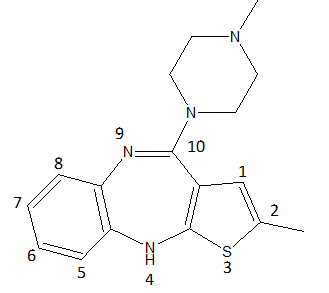
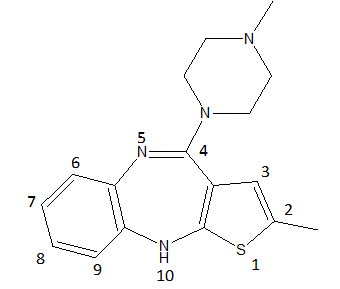
193 As can be seen from the structures depicted above, both names describe the tricyclic core ring structure in the same way: namely, thieno[2,3-b][1,5]benzodiazepine. Both names describe the identity of the substituents in the same way: the CH3 substituent on the thiophene ring is described as “methyl”, and the substituent ring at the top of the structure is described as “4-methyl-1-piperazinyl”.
194 Eli Lilly submitted that even though the chemical name used in claims 1 and 2 of the Patent is not strictly IUPAC-compliant, Apotex cannot contend that it is outright “wrong”. This is because the person skilled in the art would not approach the task of identifying the compound with the chemical name used in claims 1 and 2 on the assumption that the name is strictly compliant with IUPAC guidelines. Eli Lilly contended that the IUPAC nomenclature system is not, and was not at the priority date, universally used.
195 Some expert evidence in this proceeding on the construction issue was given by way of an evidential “hot tub” (more formally known as “concurrent expert evidence”). Dr Watson and Dr Robertson were hot tub participants.
196 Prior to trial Dr Watson and Dr Robertson prepared a joint expert report on the construction of the claims, in which both experts attempted to give answers from the perspective of the skilled addressee at the priority date (25 April 1990), without regard to knowledge acquired after that date. For convenience, I will, in describing their evidence, refer to claims 1 and 2 (as they contain the same chemical formula).
197 In the report, both Dr Watson and Dr Robertson agreed that, when read in isolation from the rest of the Patent, claims 1 and 2 concern a single compound. When the claims were read with the rest of the Patent, and considering the 235 Patent referred to in the Patent, Dr Watson and Dr Robertson still believed claims 1 and 2 to claim a single compound. They believed this compound to be olanzapine. However, they both agreed that the nomenclature used in the Patent was “unconventional”.
198 I should indicate that, in answer to contrary suggestions by Apotex, I do not consider that the reference to the 235 Patent detracts from the conclusion reached by the experts. Nor do I accept that the nomenclature underpinning the ‘dictionary’ at pp 3 and 4 of the Patent can only be understood by the use of 235 Patent. The nomenclature on those pages of the Patent was readily understood by the experts, without the need for any further reference or source.
199 Dr Watson and Dr Robertson then went on to consider whether that single compound could be the subject of more than one system of chemical nomenclature, regardless of whether the nomenclature in the Patent was “unconventional”. In response to the question: “in 1990, was IUPAC nomenclature universally applied in the naming of chemical compounds?”, both Dr Watson and Dr Robertson stated that:
IUPAC nomenclature was not used on a daily basis by practising synthetic organic chemists.
It was universally accepted that IUPAC nomenclature was the most detailed reference for naming compounds.
Chemical [A]bstracts was often used as a guide to nomenclature.
200 There were no areas of disagreement between the two experts in relation to this question.
201 As IUPAC nomenclature was not used on a daily basis by practising chemists at the priority date, it is therefore possible that a skilled addressee would not exclude the possibility that a non-IUPAC name was used. Perhaps the more relevant question to ask was whether a skilled addressee at the priority date would consider that a formal document, such as a patent, would only use IUPAC-compliant naming. Nonetheless, I accept that even in this context, a non-IUPAC name could be used.
202 Eli Lilly submitted that the numbering system in the Patent relies on a “convention or a nickname” specific to the 235 Patent (which they characterised as a “genus patent”). As the Patent states, the “lead compound” described in the 235 Patent is flumezapine (7-fluoro-2-methyl-10-(4-methyl-1-piperazinyl)-4H-thieno[2,3-b][1,5]-benzodiazepine). The naming convention used to name flumezapine is the same as that used in the Patent. That convention, according to Apotex, was “created and used solely by [Eli Lilly]”, and “describes the three isomers of the core structure of thienobenzodiazepine in the 235 Patent”.
203 Australian Patent No 502678, granted to American Cyanamid, was also raised in the proceeding. It refers to a molecule that is closely related to that which is the subject of the Patent in suit. Under cross-examination, Dr Watson was provided with a copy of the American Cyanamid patent. Dr Watson knew that American Cyanamid was, prior to 1990, engaged in primary research and development in relation to chemicals and pharmaceuticals. Dr Watson accepted that the numbering scheme deployed in the American Cyanamid patent was not an IUPAC-compliant method of numbering, but it was the same method of numbering used in the Patent.
204 In closing, Eli Lilly submitted that the difference between the 235 Patent, the American Cyanamid patent and the Patent in suit is that the 235 Patent “expressly gave… a numbering convention”. Apotex submitted that the American Cyanamid patent expressly gives its own numbering convention, but the Patent specification in this case does not give a specific, self-contained numbering convention. As I will explain further below, Apotex contended that there were rival and inconsistent naming conventions within the Patent specification.
205 Evidence was also led to the effect that chemists, on a day-to-day basis, used alternative naming systems. In cross-examination, Professor Nichols said that he had used non-IUPAC naming systems for molecules he had synthesised, “simply because it seemed the most logical way to do it”. Later he said:
Formally, in a strict sense, there is one formal name. But in terms of being able to name where the substituents are, where things are put together and being able to recreate that molecule there may be other ways to do it. In this case, there are two ways to do it, one of which is probably the more recent way, the IUPAC way, the other is an older way that was used to name when the work was first done.
206 This evidence reinforces the conclusion in the joint expert report: IUPAC was not the only system of chemical nomenclature used prior to the priority date.
207 Nonetheless, in pursuit of its submission that there was only one correct way to name olanzapine, Apotex pointed to a number of instances where olanzapine was ascribed the IUPAC-compliant name.
208 Apotex tendered a number of documents which showed olanzapine or similar compounds named using the IUPAC-compliant numbering system, on or before the priority date. There was evidence that Eli Lilly used the IUPAC name for olanzapine internally before the priority date.
209 Professor Nichols agreed in cross-examination that the US Adopted Name (USAN) for olanzapine, shown in a document dated 30 October 1991, is IUPAC-compliant. Professor Nichols explained that when a drug is developed, the inventor can propose a name, or the USAN Council can assign one. Professor Nichols said “so that’s where the name olanzapine would be sort of officially adopted by its USAN name”.
210 The role of the Merck Index was discussed at length by both parties. Dr Robertson said that he was familiar with the Merck Index as “containing monographs on commercially relevant compounds, including pharmaceutical compounds”. It will be recalled that the Index is an encyclopaedia of chemicals, drugs and biologicals produced by the pharmaceutical company Merck & Co Inc on a not-for-profit basis.
211 In the joint expert report, Dr Robertson and Dr Watson agreed that:
The Merck Index may be used for key references or for identifying key patents of known drugs and for providing basic information on a compound such as crystallinity, solubility, structure etc…
It is used in the same way today as it was used in 1990. It remains a handy reference book.
212 Professor Nichols deposed that the Merck Index was “widely used and respected… among organic chemists, including medicinal chemists” and he had no reason to doubt its accuracy.
213 Apotex tendered a 1996 copy of the Merck Index (12th ed), which on p 6957 lists olanzapine as “2-Methyl-4-(4-methyl-1-piperazinyl)-10H-thieno[2,3-b][1,5]benzodiazepine”. It was accepted by the parties this would have been the position at the priority date.
214 Apotex also tendered a copy of the Australian Zyprexa Product Information Sheet. Zyprexa is the marketed name for olanzapine. The product information sheet depicts the structural formula of olanzapine, with IUPAC-compliant numbering. It also cites the IUPAC-compliant name for olanzapine. Professor Nichols agreed in cross-examination that the structure was olanzapine, and that the number ‘4’ indicated the location of the piperazine substituent, and ‘10’ indicated the saturated atom.
215 The Chemical Abstracts Service is another service for identifying the chemical name of a compound. Dr Robertson deposed that Chemical Abstracts has adopted a similar but not identical naming system to IUPAC.
216 The Chemical Abstracts reference for olanzapine identifies the name as “10H-Thieno[2,3-b][1,5]benzodiazepine, 2-methyl-4-(4-methyl-1-piperazinyl).” Although the name has been “moved around”, Professor Nichols agreed with counsel for Apotex that the ‘10’ is associated with the “H” (indicating that the saturated atom is at the ‘10’ position), and the ‘4’ identifies the position of the piperazinyl group.
217 There was also evidence that the Patent’s inventors otherwise used the IUPAC nomenclature. Apotex tendered a 1980 article entitled “4-Piperazinyl-10H-thieno[2,3-b][1,5]benzodiazepines as Potential Neuroleptics” (emphasis in original). The article is written by, inter alia, the three inventors of the Patent. The first page of the article features a similar compound to olanzapine, which is described using IUPAC-compliant numbering. A saturated hydrogen is at position 10, and the piperazinyl group is at position 4.
218 In light of my conclusions on the joint expert report and conventions used in other patents, this evidence reinforces the comments of Professor Nichols that, “strictly speaking”, there is one formal name for olanzapine. That would be the one that is featured in the Merck Index. However, this does not disturb the foregoing conclusion that Eli Lilly used a name in the Patent that would be understood by the skilled addressee to be olanzapine. That Eli Lilly used a different name internally is of no consequence to this conclusion. I do not see it as an admission that the name used in the Patent was wrong. If anything, it shows that at the time of filing the specification, the patentee understood that there was more than one naming convention.
219 Central to Apotex’s submissions was that the claims did not just ascribe the wrong name to olanzapine, but the name unambiguously claimed a completely different compound. To this end, Apotex relied on a structure that Dr Watson drew in his first affidavit.
220 The solicitor for Apotex asked Dr Watson to draw the structure of “2-Methyl-10-(4-methyl-1-piperazinyl)-4H-thieno-[2,3-b][1,5]benzodiazepine”. He did this firstly from his knowledge as a skilled addressee and later by use of the computer software program ChemDraw. Dr Watson said that four structures could be drawn from the name in claims 1 and 2 of the Patent. Two could be immediately discounted as not feasible. The two remaining structures were:
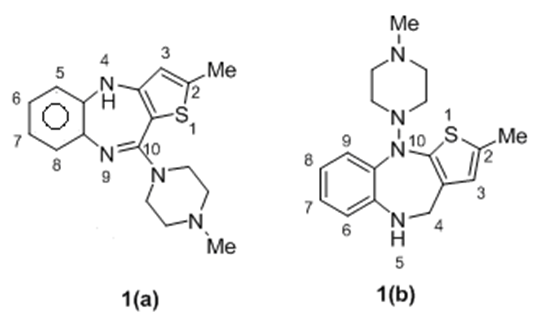
221 Dr Watson said that structure 1(b) was the compound more correctly identified by the name in claims 1 and 2. To draw the structures, Dr Watson said he drew the basic ring system by drawing the benzodiazepine and the thieno group and fusing them together. He then used “accepted principles of nomenclature to add the substituents”. Dr Watson said he typically used IUPAC principles of nomenclature.
222 Dr Watson deposed that the basic rule of nomenclature is to begin numbering at the atom within the compound having the highest atomic weight; in this instance, sulfur. Numbering could then go clockwise or anti-clockwise. Four structures should thus result, but two would not make sense. Dr Watson then attached the piperazine group at the atom occurring at the ‘10’ position, which is carbon in compound 1(a) and nitrogen in compound 1(b).
223 Dr Watson said he was not “certain” as to which of the compounds drawn was intended to be identified by the name in claims 1 and 2 of the Patent. He “expected”, however, that compound 1(b) is described, because the reference to “4H” (which was unusual and therefore probably important) indicated that the carbon at position 4 is saturated. At trial, in examination-in-chief, Dr Watson said he “marginally” preferred structure 1(b) to structure 1(a).
224 The solicitor for Eli Lilly attempted to test Dr Watson’s evidence, by asking Dr Robertson whether three structures drawn by that solicitor were consistent with the name used in claims 1 and 2 of the Patent, or the IUPAC or Chemical Abstracts nomenclature conventions. The first of those structures I will ignore, as it arose due to an error in Dr Watson’s first affidavit. However, the second and third structures drawn by Eli Lilly matched the structures 1(a) and 1(b) respectively, as drawn by Dr Watson.
225 In his second affidavit, Dr Robertson said that structure 1(a) is not consistent with the chemical name in claims 1 and 2 of the Patent because it is a thieno[3,2-b][1,5]benzodiazepine, not a thieno[2,3-b][1,5]benzodiazepine. The thieno[2,3-b][1,5]benzodiazepine is common to, and an essential feature of, the compound claimed by the Patent and the IUPAC name. Dr Watson agreed in his third affidavit that structure (1)(a) was erroneous, on the basis that it was not a [2,3-b] structure. However, Dr Watson stated that this would not have been in his working knowledge as at the priority date, and he was not asked to review the IUPAC Blue Book in drawing the compounds.
226 Dr Robertson’s second affidavit further stated that structure 1(b) is not consistent with the name in claims 1 and 2. On an initial study of structure 1(b), Dr Robertson stated that there were two saturated atoms in this structure at positions 4 and 5 (unlike in structure (1)(a)). Dr Robertson deposed that he did not know at the time of swearing his second affidavit, and would not have known at the priority date, precisely how to name this feature according to IUPAC nomenclature. Dr Robertson thus referred to the IUPAC Blue Book, which said that the saturation at the carbon atom (position 4) would be reflected in the name. As such, “dihydro-” would be a prefix to “4H”. Dr Watson, in his third affidavit, agreed that the compound in (1)(b) includes a dihydro group. However, Dr Watson stated that the saturation of position 4 (and the specification of ‘4H’ in the name of the compound claimed to indicate this fact) makes the “dihydro-” prefix redundant, as the structure will not allow for any other constitution of the diazepine ring.
227 I should add that the solicitor for Apotex asked Dr Watson to draw his structure by only looking at the claimed compound. Dr Robertson, by contrast, was asked by the solicitor for Eli Lilly to draw his structure after looking at the Patent as a whole. The approach that Dr Watson was asked to take is somewhat artificial. It is clear that the claims are to be read in context. It is the degree of context that the Patent provides that varies from case to case, depending on the clarity of the claims.
228 Dr Watson said that his analysis of structure (1)(b) is supported by ChemDraw. According to Dr Robertson, ChemDraw is a software program widely used by medicinal chemists to draw chemical structures and name chemical compounds. The software purports to generate accurate IUPAC names for structures. Both parties used ChemDraw in giving evidence.
229 Dr Robertson referred to ChemDraw in his first affidavit. The solicitor for Eli Lilly asked him to generate formula (I), the structure that appears on p 3 of the Patent. The software generated the name “2-methyl-4-(4-methylpiperazin-1-yl)-10H-benzo[b]thieno[2,3-e][1,4]diazepine” (emphasis in original). Dr Robertson stated that this is “significantly different to the name used in the Merck Index [also the IUPAC name] in that the name for the core ring system is different”. The manner in which the core ring is numbered was, however, consistent with the Merck Index system. Dr Robertson stated that both were valid and useful approaches to nomenclature.
230 Dr Watson tested this “significantly different” name, the Merck Index (IUPAC) name, and the name claimed in the Patent in the same software. He spoke of the results in his second affidavit.
231 Both the “significantly different” name and the Merck Index name produced the same structural formula as on p 3 of the Patent. The name claimed in claims 1 and 2 of the Patent produced a different structure, depicted below:
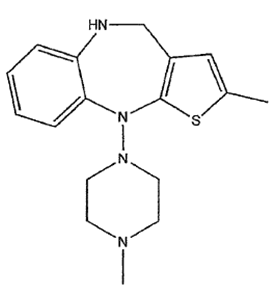
232 Dr Watson stated that this structure is the same structure as 1(b), as identified in his first affidavit. On this basis, Apotex submitted that claims 1 and 2 claim an entirely different structure to olanzapine.
233 The usefulness of ChemDraw was raised by all parties. Dr Robertson said that:
I worry about placing too much reliance, I suppose, on computer programs because they’re only as good as the data that you put into them, and even the vendor of ChemDraw will say that they are right only 99 per cent of the time… But it means it’s wrong one time every hundred and it seems that it’s wrong in this case, and it is wrong in this case because the… name rather, is not IUPAC, the computer has had to make some assumptions.
234 The ChemDraw product information confirms that it is only 99% accurate, and that:
The last percent includes a lot of names that are ambiguous in a variety of ways. [ChemDraw] is designed to interpret names in the most common and reasonable way possible.
235 Eli Lilly submitted that the computer had to resort to assumptions in this instance because ChemDraw applies IUPAC rules, and both parties agree that the compound claimed in claims 1 and 2 of the Patent is not strictly IUPAC-compliant.
236 Eli Lilly also submitted that ChemDraw was not available at the priority date, so its utility in resolving the issue of construction is limited. Dr Watson was similarly reticent about the accuracy of the software as it would not have been used at the priority date.
237 Dr Watson did not show that structure (1)(b) was the only structure that could be named by claims 1 and 2 of the Patent. First, Dr Watson found that four structures were theoretically possible, but only two were feasible in practice. But Dr Robertson indicated that there were flaws in the naming of Dr Watson’s structures, and to this end, Dr Watson ultimately agreed in respect of structure (1)(b) that, strictly speaking, “dihydro-” would be a prefix to the “4H”. In this regard, Dr Watson’s evidence was uncertain on the unambiguous name for, and depiction of, the structure claimed. Then, despite the drawbacks of ChemDraw, the software seemed to confirm that there was ambiguity surrounding the name in the Patent, the name of Dr Watson’s structure 1(b), and the name of the structure that both parties agreed accurately depicted olanzapine. The ChemDraw software presumes that IUPAC conventions underlie the generation of a structure or a chemical name. However, the evidence shows that the skilled addressee at the priority date would not make such an assumption, or proceed to read the Patent document on this basis. In any event, the claims must be read in context, and the exercise undertaken by Dr Watson is not determinative of the construction issue.
238 Putting aside the context of the Patent itself, I have already indicated that I am satisfied that, at the priority date, IUPAC was not the only system for ascribing names to chemical compounds that would be recognised by a skilled addressee. Both Dr Robertson and Dr Watson agreed that IUPAC nomenclature was not used on a daily basis by practising chemists. Although it seemed common ground that there was only one, strictly ‘formal’ name, the balance of the evidence shows that the skilled addressee would not exclude the possibility that the patentee may not have used IUPAC nomenclature. Indeed, IUPAC nomenclature is neither required by law, nor is it referred to in the Patent.
239 There have been many published instances in which olanzapine has been referred to by its IUPAC-compliant name. However, this does not mean that there is only one way to identify olanzapine that would be understood by the skilled addressee at the priority date. As Professor Nichols put it:
The chemical structure is, I mean that is an absolute, but there are different ways to name it. You name someone Richard and then you called him Dick. Well, it’s a nickname for Richard. It’s the same person; it’s just a different way to do the name.
240 Whatever be the conclusion as to the normal usage of terms, the question in this proceeding must be answered in the context of the Patent. I stress again, this is a task for the Court, aided by relevant expert evidence.
241 The Patent claims must be read in context of the specification. I am satisfied that reference to the specification is necessary at first instance, not at some later stage when ambiguity is thought to arise. This latter approach is unduly artificial.
242 All parties agreed that on p 4 of the Patent, formula (I) is ascribed the name “2-methyl-10-(4-methyl-1-piperazinyl)-4H-thieno[2,3-b][1,5]benzodiazepine”. Formula (I) is described as the “compound of the invention”. As previously stated, all parties also agree that the structure of formula (I) is olanzapine.
243 Dr Robertson and Dr Watson stated in their joint expert report that:
We understand when the patent is read as a whole that the invention described to be the compound olanzapine, its salts and pharmaceutical compositions and the process to make this compound.
244 Furthermore, the experts agreed that the name on p 4 of the Patent “specifically relates” to the structure depicted as formula (I) on p 3 of the Patent. This name is the one which is recited in the claims.
245 Dr Robertson and Dr Watson also agreed in the joint expert report that when there is information provided in the form of a structural formula and a chemical name, the person skilled in the art would generally place more emphasis or importance on the structural formula. In the words of Professor Nichols, chemical structures are the “universal ‘language’ of organic chemistry, including medicinal chemistry”. Considerable weight can therefore be given to the structure depicted as formula (I) on p 3 of the Patent when the skilled addressee is construing the claims in the context of the specification.
246 Professor Nichols’ evidence was to the same effect: the “compound of the invention” is said to be formula (I), on p 3, and the name recited in the claims immediately follows formula (I) on p 4 of the specification.
247 Professor Nichols’ first affidavit states that the Patent, on pp 3 and 4, identifies the “compound of the invention” by a depicted structure and a name. As this name was identical to that in claims 1 and 2 of the Patent, he understood the structure of the compound claimed was the same as that on p 3. Professor Nichols maintained this position under cross-examination, and Dr Robertson’s affidavit evidence was largely to the same effect.
248 Apotex took issue with this interpretation of the evidence, submitting that Eli Lilly offered a construction that relies on the assumption that the claimed chemical name is the same as formula (I) on p 3. However, I find that this interpretation of the evidence strained; and I think it skips over what Dr Watson and Dr Robertson agreed upon in the joint expert report.
249 The evidence suggests that reading the claims in context is sufficient to identify the claim to formula (I), being olanzapine. I am aware that this conclusion largely derives from a very small extract on pp 3 to 4 of the Patent. However, as I will explain later, nothing else in the specification detracts from this conclusion. It is not a matter of correcting a wrong name that is claimed, but of determining, in proper context, what is claimed.
250 Eli Lilly directed considerable attention to authorities which stated that the law permits the hypothetical addressee to use the specification as a “dictionary” to interpret jargon in the claims where the draftsman shows an intention that the specification is to be used in this way. I have already adverted to these authorities in these reasons for judgment. Eli Lilly said that the specification is a dictionary in the sense of the term used by the High Court in Welch Perrin (1961) 106 CLR 588, and later by Bennett J in Inverness Medical (2010) 85 IPR 525 and H Lundbeck (2009) 177 FLR 151. That is, for the purpose of this Patent, formula (I) and the name on p 4 of the Patent are a definition for the jargon in the claims of this Patent.
251 For the foregoing reasons, I am satisfied that the clear conclusion in this case is that formula (I), and the name ascribed to it on p 4, are a definition for the claims. That the name on p 4 of the specification is the same as that recited in the claims of the Patent makes this reasonably clear. The evidence supporting this conclusion is the same as I have already outlined in relation to context.
252 Eli Lilly submitted as an alternative argument that if the claims must be read in isolation, then they are ambiguous. Given the conclusions already reached, it is not strictly necessary to deal with these arguments, but I make the following comments.
253 Eli Lilly contended that the Court could find ambiguity in a number of ways. The first is that, if Dr Watson’s evidence is accepted over Dr Robertson’s, there is still ambiguity. Dr Watson narrowed his construction of the claims down to two structures: 1(a) and 1(b). Dr Watson said in evidence in chief that he “marginally” preferred 1(b) over 1(a). The second way to find ambiguity is to treat the evidence of both Dr Watson and Dr Robertson with equal weight, in which case (it was submitted by Eli Lilly) the claims are ambiguous. Dr Watson considered structure 1(b) to be the best fit; Dr Robertson drew the structure on p 3 of the Patent.
254 Apotex submitted that even if reference to the specification is permissible, the specification is unclear in itself. Apotex said that this is really a question of “how much work can the skilled addressee be required to do, given the statutory function [of the claims], which is to define the invention”. Apotex submitted that the interpretation of this Patent required too much work on the part of the skilled addressee. It is perhaps trite to say, as the High Court did in Welch Perrin (1961) 106 CLR 588 at 610:
If it is impossible to ascertain what the invention is from a fair reading of the specification as a whole, that, of course, is an end of the matter.
255 Apotex took particular issue with an inconsistency between the naming convention used on pp 3 to 4 of the Patent, and pp 18 and 19. I have discussed what appears on pp 3 and 4 of the Patent at length. From pp 17 to 19, the Patent goes through a number of examples, “example 1” of which is the first of two ways to synthesise olanzapine. The third step is entitled “4-Amino-2-methyl-10H-thieno[2,3-b][1,5]benzodiazepine, hydrochloride”. This was an intermediate step in producing the compound claimed in claims 1 and 2. This intermediate compound is numbered according to IUPAC conventions. This is the first inconsistency to which Apotex points.
256 The second inconsistency is that the fourth step of example 1 is entitled “2-Methyl-10-(4-methyl-1-piperazinyl)-4H-thieno[2,3-b]-[1,5]benzodiazepine”, which is the same chemical name as in claims 1 and 2. In going through the method to arrive at this target compound, the fourth step says that the structure of the resulting compound “was confirmed spectroscopically”. The Patent then depicts that structure as:
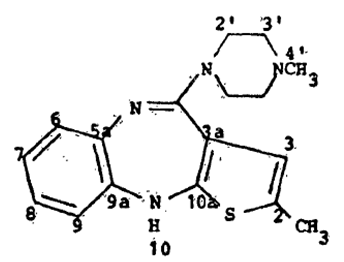
257 Other data appear after the structure. It was clear, on the evidence, that the numbers ascribed to this structure as it appears on p 19 are different to the numbers ascribed to formula (I) by the name on p 4 of the Patent. Further, this numbering is IUPAC-compliant.
258 Apotex submitted that as such, if recourse is had to the specification, two rival and irreconcilable naming conventions appear for the one compound. Particular confusion is said to arise with respect to claim 5. Claim 5, not in suit, refers to “a process for producing a compound according to claim 1…”, which is described in example 1 of the Patent. Apotex said that if the Patent was as Eli Lilly contended, claim 1 is defined on p 3 of the Patent. However, the process for synthesising the compound referred to in claim 1 appears on pp 18-19, where two rival numbering conventions are used. Both step three on p 18 of the specification and the structure on p 19 were drafted with IUPAC-compliant numbering. Similar problems arise with respect to claims 6 and 7, also not in suit. It is for these reasons that Apotex submitted that there is too much work for the skilled addressee to do to understand the Patent.
259 It will be apparent from the foregoing reasons that I think the simple answer to this particular confusion in this proceeding is the view of both experts. In preparing the joint expert report, Dr Robertson and Dr Watson were asked: “Do the structure shown on p 19 of the Patent and the structure shown in formula (I) on p 3 of the Patent represent the same compound?”. Dr Robertson and Dr Watson stated that:
The structure shown on page 19 of the patent and the structure shown in Formula (I) on page 3 of the patent represent the same compound.
260 Dr Robertson and Dr Watson also agreed that the primary purpose of the numbering shown with respect to the structure on p 19 is to aid with interpretation of nuclear magnetic resonance (NMR) data. Dr Robertson gave evidence that NMR is a spectroscopic analytical tool used by chemists to confirm that the structure they have synthesised in theory is in fact the structure synthesised in practice. The numbers in the structure therefore have a specific purpose which may be unrelated to IUPAC nomenclature. In cross-examination, Dr Watson said that NMR data gives chemists a signal for each hydrogen or carbon atom in the molecule, to confirm whether they are consistent with the predicted structure. In giving evidence–in-chief, Dr Watson said that he would consider that this numbering is “not just any sort of numbering to help the NMR interpretation, it’s also what I would say is the correct IUPAC numbering”.
261 It seems to me that the real function of the numbers at p 19 of the Patent is to aid with the interpretation of NMR data. I agree with Eli Lilly’s submission that this numbering, in the context in which it appears, does not detract from the “definition” provided on pp 3 and 4 of the Patent for the purpose of considering the claims in suit.
262 On the basis of the foregoing conclusion, I need not consider the so-called “best fit” argument put in the alternative by Eli Lilly.
Conclusion – Construction and Infringement
263 Aside from giving the claims context, the best use of the specification in this case is as a “dictionary”. The draftsman of the Patent has clearly contemplated that formula (I) and the name that follows on pp 3 and 4 are to act as a dictionary to the jargon in the claims. This is clear from the words “the compound of the invention” which introduce formula (I) and the name that follows. As I consider this intention was clear, the draftsman has not, in supplying a definition to the claims, expanded or otherwise altered the scope of the claims. This is not a construction that gives to Eli Lilly what it only intended or wished to claim (but failed to do so), but it is what the words of the claim actually say when read in context.
264 Therefore, on the basis of the agreement of the parties and the determination of the construction issue in favour of Eli Lilly, the claims of infringement against Apotex are made out.
265 It is now appropriate to consider the substance of Apotex’s cross-claim for invalidity of the Patent. It will be recalled that the first argument in support of this cross-claim was that the Patent should be revoked under the 1952 Act on basis that the invention disclosed by it was not novel.
NOVELTY
The Prior Art
266 Apotex alleges that the Patent is not novel in light of the following prior art documents:
(a) The 235 Patent, published 22 November 1978;
(b) The 340 Patent, published 26 May 1977;
(c) Provisional Specification 51240 (Provisional 240); and
(d) H G Schauzu and P P Mager, “A Free-Wilson Study of 4-Piperazinyl-10H-thienobenzodiazepine Analogues” (1983) 38 Die Pharmazie 562 (Schauzu).
267 The 235 Patent, the 340 Patent and Provisional 240 are all members of the same family and there are no material differences between the documents. Each of these documents was published in Australia before the priority date.
Legal Principles
The Test For Novelty so far as Relevant to This Proceeding
268 The Courts have generally approached the task of determining the novelty of any given claim by asking whether the alleged anticipation would, if done after the grant of a valid claim, constitute an infringement of that claim. This test is sometimes referred to as the “reverse infringement” test. In Meyers Taylor Pty Limited v Vicarr Industries Limited (1977) 137 CLR 228, Aickin J held (at 235):
The basic test for anticipation or want of novelty is the same as that for infringement and generally one can properly ask oneself whether the alleged anticipation would, if the patent were valid, constitute an infringement.
269 The “basic test” of reverse infringement does not describe the level of disclosure that is required for anticipation. The test for determining if a prior document has made sufficient disclosure to constitute anticipation has been stated being whether that publication contains “clear and unmistakable directions to do what the patentee claims to have invented”, and whether “carrying out the directions contained in the prior inventor’s publication will inevitably result in something being made or done which… would constitute an infringement of the patentee’s claim”: see General Tire & Rubber Company v Firestone Tyre and Rubber Company Ltd (1971) 1A IPR 121 at 138.
270 In talking of inevitable result, the comments of Bennett and Yates JJ in Apotex Pty Ltd v Sanofi-Aventis Australia Pty Ltd (No 2) (2012) 204 FCR 494 at [165] must be recalled:
There is a question whether the unyielding logic of the “inevitable result” cases can be applied uncritically in every case of alleged anticipation. If so applied, inventions claimed as new methods of medical treatment involving the administration of a known compound for a hitherto unknown and unexpected, but nevertheless useful, therapeutic use would never stand scrutiny as patentable inventions. This is because, on the logic of the “inevitable result” cases, the disclosure of a given compound for one therapeutic use must equally and inevitably disclose all therapeutic uses of the compound in susceptible recipients, notwithstanding that those uses might not have been discovered at the time of disclosure of the first use, and may never be known. Such an approach may not give true expression to the statutory test that denies novelty only in light of information that is made “publicly available”, a requirement as stated in Hill v Evans (1862) 4 De GF & J 288; 1A IPR 1 at 7at 301 that “[t]he invention must be shewn to have been before made known”. See also the decision in H Lundbeck A/S v Alphapharm Pty Ltd (2009) 177 FCR 151 at [174]–[190] (Lundbeck) per Bennett J with whom Middleton J agreed.
271 I observe that there have been a number of decisions made in other jurisdictions relevant to the Patent and its validity. However, I do not consider that reference to the approach taken in other jurisdictions as to the issue of novelty (or for that matter the other invalidity issues raised in this proceeding) is particularly helpful. Each approach is determined by the relevant statutory provisions in those jurisdictions, and the evidence adduced in each proceeding. The function of the Court in this proceeding is to apply Australian law to the evidence adduced by the parties.
Generic Chemical Disclosures
272 The view I have reached in this proceeding is that even if the prior art theoretically includes all of the integers of the invention (among other possible combinations), this is not necessarily to anticipate a later patent. Such a view is particularly apt where the prior art discloses a class of chemical compounds, often by way of a generic formula, as in the present case. Everything will depend upon the extent of disclosure in the prior art document, and the context in which that disclosure appears. It will be necessary to consider the disclosure in its entirety to determine what it clearly and unmistakably discloses. It is true to say as a matter of logic that a very generalised prior description in a prior art document does not necessarily disclose a specific item falling within that generalised description.
273 Undoubtedly, a prior document may disclose more than one thing. It may disclose many things, and in doing so, anticipate a later invention. However, a prior disclosure of many things must still provide “clear and unmistakable directions” to the claimed invention: see ICI Chemicals & Polymers Ltd v The Lubrizol Corporation Inc (2000) 106 FCR 214.
274 In Bristol-Myers Co v L’Oreal (1989) 16 IPR 652 at 657, Acting Supervisory Examiner of Patents Kendall said that a generic formula in a prior patent described “countless permutations and combinations of chemical formulae which could have been produced by a gorilla mindlessly producing chemical formulae with no knowledge of what they mean, nor whether any suggested formula was capable of manufacture”. Examiner Kendall stated (at 657-658):
I do not think the proper approach is to consider that the generic formula in [the prior patent] discloses all the structural formulae which a gorilla might derive by choosing any of the substituents and by choosing any substitution pattern of the benzene ring. Rather I think the generic formula has to be considered in conjunction with the compounds specifically described in the citation in order to determine which combinations of substituents, and which substitution patterns are disclosed in the citation. To do otherwise is to ignore a molecule as an entity and merely regard it as a collection of substituents which can be interchanged at any positions of the benzene ring.
275 In ICI Chemicals (2000) 106 FCR 214, the Full Federal Court upheld the conclusion of the primary judge that a prior art patent did not anticipate, notwithstanding that it was possible to find the claimed composition within the broad range of compositions disclosed in it. In doing so, the Court elaborated on the “planting the flag” metaphor originally used by the Court in General Tire (1971) 1A IPR 121 at 138 (in ICI Chemicals (2000) 106 FCR 214 at 230 [50]-[51]; emphasis added):
The primary judge proceeded on the basis that the Williamitis patent, including its cross reference to the Midgley patent, was to be read as a whole in order to assess whether it disclosed the invention sought to be protected by any of the claims (other than the abandoned claims) of the patent in suit. In adopting that approach his Honour was, in our view, plainly correct. That approach involves having regard not merely to the literal meaning of the terms used or the width of the class of refrigerants disclosed in the Midgley patent but also to important other aspects of the Williamitis patent: to the circumstances, for example, that the only refrigerants exemplified in the Williamitis patent are CFCs and HCFCs, that the Williamitis patent does not disclose any tests or experiments involving refrigerants other than CFCs and HCFCs and that, though a refrigerant is an integer of each of its claims, none of those refrigerants is an HFC.
In those circumstances, and in the absence of relevant expert evidence, we think that the primary judge was correct to conclude that Williamitis did not anticipate the claims of the patent in suit. A familiar metaphor illustrating the concept of anticipation is that the prior inventor must clearly be shown to have planted his flag at the precise destination before the patentee … In the present case, the appellants’ argument involved the skilled addressee rummaging through the Williamitis flag locker to find a flag which Williamitis possessed and could have planted.
276 A similar issue was considered by the High Court in Commissioner of Patents v Ethyl Corporation (1969) 120 CLR 594. The claim related to a gasoline composition that contained, inter alia, from 3 to 65 per cent of methyl benzenes having from one to four methyl groups. The question was whether a prior art document which claimed a gasoline composition having from 13 to 55 per cent aromatic gasoline components anticipated the claim of the patent in suit. Justice McTiernan of the Appeal Tribunal accepted that the term “aromatic gasoline components” may – but need not necessarily – include methyl benzenes. Justice McTiernan held that the prior art document was not novelty destroying, and stated that (at 596):
the invention claimed… differs from the composition claimed [in the prior document] in that the latter in referring to a fuel containing from thirteen to fifty-five volume per cent aromatic gasoline components need not have in it any methyl benzene groups which are an essential feature of the former.
277 Nor did the prior document suggest the limitation of from one to four methyl groups, as did the patent in suit in that case.
278 In Imperial Chemical Industries Pty Ltd v Commissioner of Patents (2004) 213 ALR 399; [2004] FCA 1658, Crennan J stated the issue as follows (at 412 [64]):
Questions of anticipation can be difficult in cases where a broad chemical claim in an alleged anticipatory document, in its terms, encompasses many, even thousands of compounds. Questions can arise as to whether such a broad claim in a patent (or even a divisional thereof) discloses, sub silentio, a particular compound from the broad class, which is the subject matter of a later application.
279 Justice Crennan recognised that literal satisfaction of the basic test of “reverse infringement” for a prior disclosure of a generic chemical formula is not necessarily sufficient to anticipate a later claim to a compound within the formula (at 412 [66]):
Those cases [Beecham Group Ltd’s (Amoxycillin) Application [1980] 97 RPC 261, Bristol-Myers Squibb Co v FH Faulding & Co Ltd (2000) 97 FCR 524 and University of Georgia Research Foundation v Biochem Pharma Inc (2000) 51 IPR 222]… highlight the danger of applying the “reverse infringement” test to broad chemical claims by reference to whether a description of a broad class of compounds encompasses a specific compound later disclosed. It is possible to imagine many cases where asking the question “does a prior claim encompass a later disclosure?” will give the same practical result as the Meyers Taylor question which is “would a prior claim constitute an infringement of a later disclosure (if a patent therefore were valid)?” However, with a claim to a broad class of chemical compounds, such an approach will not always or necessarily dispose of the question of what is taught to a skilled addressee… Such an approach in these circumstances might leave little room for patents of addition and selection patents.
…
In the field of chemistry fine distinctions are often necessary between a “fleeting” or “paper” disclosure or the “intellectual content” of a disclosure on the one hand, and a “disclosure for novelty purpose” or an “enabling disclosure” on the other. Not every disclosure is a “disclosure for novelty purposes”. Beecham’s case…illustrates this difficult point: Buckley LJ refers (at 288) to the fact that the parent patent in that case encompassed “the entire field of α-aminopenicillins…and literally thousands of these compounds could be made.” Buckley LJ also noted (at 286) that an inclusive claim in a patent of addition for “broad spectrum penicillins” must be treated as specifically claiming amoxycillin. Then (at 290) he found that the prior patent of addition contained ‘no disclosure or promise’ or ‘teaching’ that taught amoxycillin. Accordingly, there was no want of novelty, arising out of a paper disclosure in an inclusive phrase.
(Emphasis in original)
280 With respect to the evidence in that case, Crennan J observed (at 416 [80]):
It is clear that each skilled addressee, qualified as an expert for the purposes of explaining the technology, does not regard the Lubrizol patent as teaching the specific ternary mixture which the applicant now claims. Each recognises however that the broad disclosure of integer (A) of the Lubrizol patent encompasses the specific ternary mixture. Such distinctions are the distinctions deployed by the majority in the Court of Appeal in Beecham’s case. It is therefore clear that the specific ternary mixture the applicant claims required some further inventive ingenuity as that phrase is used in the established authorities.
(Emphasis in original)
281 Justice Crennan concluded, at 416 [82] (para (ii)):
Integer (A), and the consistory clause, of the Lubrizol patent are broad enough to encompass ternary compositions of HFCs and broad enough to encompass the specific ternary mixture which the applicant now claims….
282 But her Honour found and held, at 417 [82] (para vi):
There is no disclosure for novelty purposes, that is, no teaching, on page 9 or anywhere in the Lubrizol patent of any specific ternary mixtures of HFCs or the particular ternary mixture of HFCs which the applicant now claims.
283 In H Lundbeck (2009) 177 FCR 151 the question was whether the disclosure of a racemic compound (ie a compound having two enantiomers in equal proportions) anticipated a later claim to a single enantiomer of the compound. The Full Court gave a detailed analysis of novelty, in particular, Bennett J (with whom I concurred) stated at 191 [173] (emphasis added):
Where the prior disclosure is to a broad chemical claim encompassing many compounds, there may not be anticipation in the absence of the skilled addressee understanding or perceiving a specific compound in the disclosure (Imperial Chemicals Industries Pty Ltd v Commissioner of Patents (2004) 213 ALR 399 at [64]- [65]). That is, there is no actual description of the particular compound to the skilled addressee; there is no relevant disclosure. There may be a distinction, albeit fine, between a “fleeting” or “paper” disclosure or the “intellectual content” of a disclosure on the one hand and a “disclosure for novelty purposes” or “enabling disclosure” on the other (Imperial Chemicals at [68]; University of Georgia Research Foundation v Biochem Pharma Inc (2000) 51 IPR 222, a decision of Dr Barker of the Patent Office described by Crennan J in Imperial Chemicals as a “sound account of the relevant distinctions between a ‘paper disclosure’ and an ‘enabling disclosure’ in the field of chemistry” (at 412)). It depends on what the skilled reader would understand.
284 In H Lundbeck, the patent in suit claimed the (+)-enantiomer of citalopram (otherwise called the S-enantiomer), which exists in a racemic form (ie equal parts of (+)- and (-)-enantiomers).
285 At 188 [168], the majority held that, for lack of novelty to be made out, “the earlier disclosure must point unmistakably to the (+)-enantiomer of citalopram”.
286 One of the prior art documents was the earlier patent of Lundbeck that claimed citalopram in racemic form. At 195 [194], the majority held (emphasis added):
It is the case that the skilled addressee knew that the racemate could be resolved into the enantiomers but there was nothing to tell him or her to do so…. There were no clear and unmistakable directions to obtain the enantiomers.
287 The second prior art document, the Smith article, disclosed that citalopram had two enantiomers. However, it wrongly predicted that the R-enantiomer would be the most potent.
288 At 197 [209]-[210], the majority held (emphasis added):
The Smith article does not describe the (+)-enantiomer. It does not disclose whether the R- or the S-enantiomer is the (+)-enantiomer. It does not give directions to obtain the (+)-enantiomer. The skilled addressee wishing to obtain an enantiomer of citalopram would… have to conduct further experiments, conduct research and gain further information to hit upon the present invention. Such experimentation and the steps that it would entail were not inevitable… The Smith article does not contain information equivalent to the disclosure of the (+)-enantiomer of Claim 1. It does not anticipate Claim 1 of the Patent.
289 Thus, in H Lundbeck, the bare disclosure of two enantiomers of a compound was not sufficient to destroy the novelty of a claim to a single enantiomer of the compound.
290 In the end, as accepted by Apotex, the question is one of clarity of disclosure. If the prior disclosure is clear and unmistakable enough in making directions and includes all the essential integers of the invention as claimed, then the invention will not be novel. However, there does not necessarily need to be a literal disclosure – see Nicaro Holdings Pty Ltd v Martin Engineering Co (1990) 91 ALR 513 at 531 per Gummow J. If there is not literal or exact disclosure, then if the skilled addressee would add the missing information as a matter of course (without the application of inventive ingenuity or undue experimentation), that would lead to anticipation.
291 In my opinion, the analysis is not helped by reference to any general rule that disclosure of a class prima facie deprives its members of novelty: see eg Blanco White QC, Patents for Inventions 4th ed (1974) p 120 fn 60, fn 62 and p 121 as cited in Dr Reddy’s Laboratories (UK) Ltd v Eli Lilly and Co Ltd [2010] RPC 9 at 238 [35].
292 The correct approach, not constrained by any presumption, consistent with the approach of Crennan J described above, is that described by Bennett J in H Lundbeck (2009) 177 FCR 151 at 194 [191] :
Where the prior disclosure is of large numbers of compounds by reference to a chemical formula, evidence will establish whether or not such a form of disclosure in the context of the examples and the discussion in the specification is disclosure of any particular subsequently claimed compound.
293 Therefore, evidence will establish whether there is sufficient disclosure to the skilled reader of olanzapine in prior art documents. Whilst one does not talk so much of “teaching away” in the context of novelty, such is permissible to the extent one has to look at the disclosures in context: see SNF (Australia) (2012) 204 FCR 325 at 401 [313] per Bennett J. Thus, it becomes necessary to investigate the prior documents said to give rise to the anticipation, and to take into account the expert evidence as to what those prior documents disclose.
The 235 Patent
294 The 235 Patent is directed towards thieno[1,5]benzodiazepine compounds having useful CNS activity. It was filed on 26 November 1974 and lists Jiban Kumar Chakrabarti and David Edward Tupper as the inventors of the claimed invention. The term of the 235 Patent expired on 21 November 1991.
What the 235 Patent Discloses
295 The 235 Patent discloses a very wide range of thieno[1,5]benzodiazepine compounds. While the exact number of compounds encompassed by this patent is debatable, the evidence is clear that it is very large. Olanzapine is not mentioned specifically.
General Structure of Formula I
296 The thieno[1,5]benzodiazepine compounds in the 235 Patent are described as being of formula (I), which contains the variables R1, R2 and R5 (representing substitutions on the benzene ring and diazepine ring):
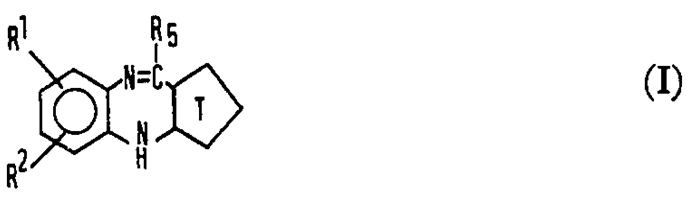
297 Substituents R1, R2 and R5 are given broad meanings. R1 and R2 include many possible variables.
298 The symbol ‘T’ in formula (I) represents a thiophene ring fused to the benzodiazepine nucleus.
First Class of Preferred Compounds
299 On p 2, lines 19 to 35, the 235 Patent describes a very broad class of preferred compounds. This is the class of compounds encompassed by formula (I), as limited by a reduced scope of possible substituents for R1 and R2 (compared to the vast range of possible substituents encompassed by the broadest disclosure of the invention), and with the R5 substituent being directed to an optionally substituted piperazine ring.
300 On p 3, lines 1 to 10, the specification specifically identifies three broad formulae of the invention (namely, (II), (III) and (IV)), which reflect the different positions for the sulfur atom in the thiophene ring.
301 The specification also identifies possible substituents that might be bound to the thiophene ring. The specification identifies that one or two substitutions may be made to the thiophene ring structure.
Second Class of Preferred Compounds
302 On p 3, lines 11 to 31, the 235 Patent describes a second class of preferred thieno[1,5]benzodiazepine compounds. Dr Robertson read this class of compounds as being preferred because they have greater CNS activity than other members of the broader class. These are compounds based on any of the core structural formulae (I) to (IV) having one or more of the characteristics (A) through (N) as listed on p 3, lines 14 to 31 of the 235 Patent. These characteristics broadly concern:
(a) substitutions to the benzene ring (characteristics (A) to (H));
(b) substitutions to the carbon atom in the diazepine ring (ie the imine carbon) (characteristics (I) to (J)); and
(c) substitutions specific to the thiophene ring (characteristics (K) to (N)).
303 Many of these characteristics are mutually exclusive; it is not possible to have a molecule that has all of the 14 listed characteristics. Even with this limitation, there are still many compounds within this class.
Most Preferred Class of Compounds
304 On p 3, lines 32 to 33, the 235 Patent describes a “most preferred class of compounds”. This class is made up of characteristics (A) to (E), (J) and (L) drawn from the second class of preferred compounds.
305 This class of compounds is more specific than the previous class, in that each of characteristics (A) to (C) and (E) provides for a compound that is halogenated on the benzene ring. That is, the characteristics contain an electron withdrawing group attached to the benzene ring. Dr Robertson read the preference for these compounds as being linked to greater CNS activity.
306 Overall, in my view, if anything the 235 Patent contains a teaching directing the reader to the benzene ring being preferentially substituted with an electron withdrawing group.
Particularly Active Compound
307 On p 3, lines 34 to 36, the 235 Patent identifies one “particularly active” compound falling within the most preferred class of compounds as:
2-methyl-7-fluoro-10-(4’-methyl-1’-piperazinyl)-4H-thieno[2,3-b][1,5]-benzodiazepine.
308 This compound is flumezapine. Flumezapine has a fluorine atom (ie a halogen as an electron withdrawing group) bound to the benzene ring.
309 The presence of the fluorine atom on the benzene ring in the “particularly active” compound supports the view that overall, the 235 Patent suggests that the benzene ring is preferentially substituted with an electron withdrawing group.
Exemplified Compounds
310 From line 11 on p 4 to line 3 on p 6, the 235 Patent lists 71 different compounds. None of these compounds is olanzapine. Further, flumezapine is not listed in the 71 compounds, which suggests that these compounds are not exemplified on the basis of superior CNS activity.
311 On pp 11 to 29, the 235 Patent sets out 40 examples. Examples 1 to 36 illustrate methods of making intermediate compounds as well as compounds of the invention. Examples 37 to 40 illustrate pharmaceutical formulations containing one active compound of the invention, namely ethyl flumezapine.
The Claims in the 235 Patent
312 The 235 Patent concludes with 41 claims.
(a) Claims 1 to 14 define processes for preparing compounds (claims 1 to 11) or pharmaceutical preparations (claims 12 to 14) within the broad scope of the compounds of formula (I).
(b) Claims 15 to 27 define various classes of compounds selected from the broader ambit of compounds within the class of formula (I). These claims encompass a vast collection of different compounds.
(c) Claims 28 to 36 define nine specific compounds selected from the array of compounds exemplified in the specification. The first of those nine compounds is flumezapine. All nine compounds contain a halogen or halogenated electron withdrawing group on the benzene ring. In addition, eight of the nine claimed compounds have an ethyl group on the thiophene ring.
(d) Claims 37 to 41 define pharmaceutical salts, processes for preparing compounds of the invention and omnibus claims.
313 None of the claims identifies olanzapine.
The 235 Patent is Silent About Any Structure-Activity Relationship
314 While the 235 Patent encompasses a wide variety of compounds, the information contained in the patent does not identify any specific structural relationships between the identified compounds and their particular activity. There was a preference in the 235 Patent for substitution of the benzene ring with an electron withdrawing group, which was recognised by Dr Robertson, Professor Nichols and Professor Black under cross-examination. This would teach away from olanzapine.
315 On p 10, lines 10 to 18 of the 235 Patent, reference is made to the compounds having demonstrated CNS activity in “extensive testing an [sic] animal models using well-established procedures, such as the production of catalepsy, block of conditioned avoidance response and reversal of amphetamine-induced stereotyped behaviour in rats.” The specification then classifies the compounds as “potent centrally acting compounds with neuroleptic, sedative or relaxant or anti-emetic properties.” It then asserts that “their high therapeutic index, render them useful in the treatment of mild anxiety states and certain kinds of psychotic conditions, such as schizophrenia and acute mania.”
316 This is the only passage in the 235 Patent that provides any information about the activity of the compounds identified in the patent. This passage does not support any conclusions about what substituents might or might not be required for biological activity of the identified compounds. The 235 Patent also does not teach anything in regard to the level of activity of any of the thieno[2,3-b][1,5]benzodiazepine compounds, nor anything in regard to the safety, side effects or effectiveness of the compounds. This was the evidence of both Dr Robertson and Professor Nichols.
317 Therefore, other than a clear discernible preference for a halogen or halogenated substituent on the benzene ring for activity, the 235 Patent does not teach the reader any particular substituent that might be important for biological activity, or any side effects of the identified compounds in this patent.
The 235 Patent Does Not Otherwise ‘Teach’ Olanzapine
318 A number of other matters are worthy of observation.
319 The 235 Patent sets out a large number of possibilities for each of R1, R2 and R5. A debate took place as to the full extent of these possibilities. Even accepting the confined number of possibilities as suggested by Apotex, this would make no difference to my conclusion. As I have said, the primary focus of the 235 Patent was on the benzene ring being preferentially substituted with an electron withdrawing group. A narrower class of ‘preferred’ compounds is proposed, although no reason for such preferment is given. Many compounds are here named, but there is no suggestion that any of them have been made or tested. Then there are examples of the preparation of specific compounds, although there is no explanation of the specific properties of any specific compound.
320 The 235 Patent does assert that the compounds have a useful nervous system activity, but goes no further.
321 Olanzapine is one of the many compounds (probably in excess of 5 x 10⁸ compounds) encompassed by formula (I) and one of the 86,000 compounds in the “most preferred class”. As I have said, it is not mentioned specifically. Whether the skilled addressee will focus on the “most preferred class” or any claims particularly recommended is relevant but not determinative of the ultimate issue – namely, whether olanzapine is disclosed. That the 235 Patent encompassed olanzapine as an objective fact was accepted by Dr Robertson and Professor Nichols, although they said that it was one compound amongst many.
322 I do not accept as a matter of principle that the arithmetical number of disclosures is ‘irrelevant’ (as contented by Apotex) to the enquiry as to novelty. It is at least relevant to that part of the enquiry concerning the extent of the disclosure, and whether a clear and unmistakable direction has been given by the prior disclosure. The greater the generality of the disclosure, the less there may be specific identification of a particular thing. As I have already indicated, a generalised description does not necessarily disclose a particular thing. Of course, it will be the evidence of the skilled addressee that will assist in the ultimate determination of the extent of the prior disclosure.
323 The approach of Apotex, starting as it does from the prima facie position of disclosure of a class depriving its members of novelty, is not an appropriate one in this proceeding. Nor do I accept the approach taken by Professor Black, being the only witness advanced by Apotex who considered the 235 Patent. I have already touched upon Professor Black’s evidence. When Professor Black was given this patent, he read it, but only focused on those parts of the specification to which Apotex’s lawyers took him. Professor Black conceded during cross-examination that he had olanzapine in mind when he was asked whether it was disclosed in the 235 Patent. Indeed, Professor Black was given the structure of olanzapine and asked whether it fell within various disclosures or claims:
I was asked questions about that particular structure [olanzapine], to the extent as to whether or not it was incorporated in the compounds of the [235] patent or the provisional patent. So the question and the discussion focused on the functionality that that compound has… Looking at that, we then looked at the various claims, the constraints within the patent, and I had to answer questions as to whether that was relevant, whether it fitted or not.
324 As he conceded in cross-examination, “the focus of all of this [the analysis of the 235 Patent] was clearly on the olanzapine structure”, and “it was a similar process [with the 340 patent] to hone in on the structure of olanzapine”.
325 In these circumstances, I cannot accept that Professor Black’s evidence established that a person skilled in the art could clearly and unmistakably arrive at olanzapine based on the teachings of the 235 Patent, or that olanzapine is produced as an inevitable result of following the teachings in this patent.
326 I do not consider that it is as simple as he suggests, namely, that the skilled addressee would begin with the thienobenzodiazepine of the core and ‘build’ appropriate analogies by the use of the variable substituents that need to be added to the core to arrive at olanzapine. No other witness accepted that this was the position. I accept the submission of Eli Lilly that it is only by the ex post facto “cherry-picking” of specific substituents that one is able to reach olanzapine from the compounds disclosed in the 235 Patent. The large number of compounds disclosed in the 235 Patent reflects the breadth of the teaching of that patent, and underscores the magnitude of the difficulty in selecting a single compound from the extensive class identified. Even if the skilled addressee limited attention to the most preferred class, there is no real guidance as to why it is preferred.
327 A person skilled in the art, reading the 235 Patent, would need to make a significant number of choices in order to arrive at olanzapine. A single variation in any one of those choices would lead to a different compound. This does not constitute a clear and unmistakable teaching of the invention claimed in the Patent, whether one talks in terms of direction, recommendation or suggestion.
328 I should also observe that even if olanzapine was just, say, one of only 100 likely candidates that the skilled addressee would perceive amongst the generic disclosure effected by the 235 Patent, without more, this would not constitute sufficient disclosure. There is still no clear and unmistakable direction to olanzapine.
329 Therefore, upon an informed reading by the skilled addressee, the 235 Patent does not disclose olanzapine, whether by name, chemical structure, or teaching. In my view, olanzapine could not be read out of the 235 Patent. The fact that olanzapine is technically encompassed within the broad scope of the disclosure and general claims of the 235 Patent falls short of establishing anticipation. Neither Dr Robertson nor Professor Nichols waivered from this conclusion.
Conclusion – the 235 Patent
330 It seems to me that without considerable hindsight, there is no way to assume that, travelling through the myriad of possible combinations and permutations (even in the most preferred class of compounds), one will arrive at olanzapine. I will assume that olanzapine has not been excluded from the class of preferred compounds. Whether this is so or not makes no difference. If there was a teaching or inevitability anywhere in the 235 Patent relevantly leading to olanzapine that would be sufficient to constitute anticipation. No credible witness said there was – even after cross-examination.
331 Therefore, even though olanzapine is encompassed within the broad scope of the disclosure of the 235 Patent and its general claims, it cannot be said on the evidence that the 235 Patent anticipates olanzapine.
The 340 Patent
332 The 340 Patent is in the same patent family as Provisional 240 and the 235 Patent. The information in the 340 Patent generally corresponds to the information in the 235 Patent. Accordingly, I find that the 340 Patent does not disclose the invention claimed in the Patent.
Provisional 240
333 Provisional 240 is the priority document for both the 235 Patent and the 340 Patent discussed above.
334 For the same reasons advanced above in relation to the 235 Patent, Provisional 240 does not disclose olanzapine.
Schauzu
335 Schauzu is a “note” published in the East German publication “Die Pharmazie” by H G Schauzu and P P Mager in 1983. The table of contents and title refer to “4-Piperazinyl-10H-thienobenzodiazepine Analogues” (emphasis in original). The note is half a page in length and contains two footnoted references:
(a) Free S M and J W Wilson, J. med. Chem. 7, 395 (1964) (Free and Wilson 1964); and
(b) Chakrabarti J.K., J. med. Chem., 25, 1133-1140 (1982) (Chakrabarti 1982).
336 Schauzu reports a mathematical calculation used to study and assess the strength of binding assays of 12 compounds performed in rat brain tissue, according to the Free-Wilson method. The Free-Wilson method, first reported in Free and Wilson 1964, is a method for the quantitative (measured) description of structure-activity relationships. It is a numerical method which relates structural features with biological properties. The authors of Schauzu used the bioassay data from Chakrabarti 1982 (data in the public domain) in their calculation. The authors modelled and presented the data according to the Free-Wilson method. The biological data referred to as the dopaminergic receptor binding assay data in Schauzu originates from Chakrabarti 1982, published a year before.
337 Schauzu is open to multiple interpretations, which principally relate to whether the note describes piperidinyl compounds (having three nitrogens in their molecular formula) or piperazinyl compounds (having four nitrogens in their molecular formula).
338 Primarily, there seems to be an apparent contradiction between the title and the depicted structure in Schauzu.
339 It was said by Eli Lilly that the evidence from Professors Black and Nichols, and Drs Robertson, Watson and Capuano, establish that Schauzu is at best ambiguous. It was submitted that the person skilled in the art reading Schauzu could conclude:
(a) the structural formula is correct and therefore the title contains an error;
(b) there are two errors in Schauzu;
(c) the title is correct and the structure is correct, with the piperidine being considered a carbon analogue of a piperazine; or
(d) the title is correct and the structural formula contains only one error.
340 Eli Lilly contended that the Court does not need to decide which of the above constructions is “correct”. The fact that the skilled addressee could reasonably arrive at any one of them necessarily means that Schauzu does not anticipate olanzapine.
341 Eli Lilly relied upon the evidence of various witnesses and certain documentation in support of its contention in this regard. It is necessary to summarise this evidence.
Professor Black
342 Professor Black approached Schauzu with the knowledge that this proceeding was about a compound that had the structure of olanzapine. In cross-examination he conceded that he was “probably” asked to look at Schauzu and determine whether or not olanzapine was disclosed. With his knowledge of the structure of olanzapine, he concluded that the structure was “missing a nitrogen” and therefore the title was correct and the structure was “in error”. Professor Black agreed this was mere speculation.
343 Professor Black said that the error he first identified was that an N was missing from the piperazine. On this analysis, the skilled addressee would correct it. He said that chemically, it was an obvious error.
344 Professor Black accepted that it was clear on the face of Schauzu that the authors did not synthesise the compounds listed in Table 1 themselves. He agreed that if one wanted to understand what those compounds were, in circumstances where there was an “error” in the structure depicted in Schauzu, one would look at the information in Chakrabarti 1982. Professor Black accepted that, in 1990, in order to check what the compounds in Schauzu were, he would have gone to the library, looked up Chakrabarti 1982 in the Journal of Medicinal Chemistry and read it. After reading it, Professor Black agreed that Chakrabarti 1982 tells the reader that the structure in Schauzu is incorrect in two respects. The following exchange occurred during the cross-examination of Professor Black:
[MS HOWARD]: So once you looked at Chakrabarti 1982, you would have understood that in fact the structure that is referred to in Schauzu should have a nitrogen in the substituent ring?
[PROFESSOR BLACK]: Yes.
[MS HOWARD]: But you would also know that the compound has a fluorine on the benzene ring?
[PROFESSOR BLACK]: Yes, that’s true and that I missed, and so I haven’t commented on that.
[MS HOWARD]: So once you have read the Chakrabarti 1982 reference, you know that compound 11, which you identified as olanzapine, is not in fact olanzapine but is flumezapine?
[PROFESSOR BLACK]: Yes, that’s correct. I said before that when I wrote the affidavit, I hadn’t read the Chakrabarti paper, so I was unaware of that extra fluorine.
Dr Watson
345 When Dr Watson read Schauzu he too was already aware that this proceeding concerned olanzapine. He had also reviewed the affidavits of Dr Capuano, Dr Robertson and Professor Nichols, which contained comments made by medicinal chemists on the contradiction between the title and the structure in Schauzu.
346 Dr Watson assumed the title was correct, and concluded that the structure in Schauzu should have a piperazine ring rather than a piperidine ring as drawn. In his third affidavit, Dr Watson relies on the presence of the ‘2’ and ‘5’ numbering on the piperidine ring (as drawn) to support his conclusion that the structure in Schauzu is incorrect. Based on his assumption that the title was correct and without reviewing Chakrabarti 1982, Dr Watson found the structure in Schauzu was missing a nitrogen atom.
347 Dr Watson stated in his third affidavit that on reading Schauzu he noted a reference to a footnote (Reference 1) and recalls that he had “briefly read Chakrabarti 1982 when reviewing the affidavit of Dr Capuano”. Dr Watson went to Chakrabarti 1982 in order to find an answer to the inconsistency between the title and the reported structure.
348 Once he read Chakrabarti 1982 he had no difficulty in identifying that there were two errors in the structure of Schauzu. The title was in fact correct but the structure was missing both a nitrogen atom and a fluorine atom. To Dr Watson, the numbering was very significant, because the identification of substituents and their location was the aim of the article.
Dr Capuano
349 It is apparent from Dr Capuano’s evidence that he was uncertain as to whether the structure was correct or the title was correct. As Dr Capuano said in cross-examination, “I noticed the ‘piperazinyl’ word in the title. I looked at the structure and observed that it was a piperidine and then thought, well, I went to the original article from Chakrabarti to see what compounds were covered.” In fact, it would appear from the cross-examination of Dr Capuano that he went to Chakrabarti 1982 to clarify the structure and look at the assay.
350 When Dr Capuano read Chakrabarti 1982, it became apparent that the compounds in the structure and Table 1 of Schauzu were the same as the compounds listed in Chakrabarti 1982. He reached the same conclusion as Dr Watson, namely, that there were two errors in the structure depicted in Schauzu— both a nitrogen atom and a fluorine atom were missing. Like Dr Watson, Dr Capuano readily identified the two errors in the Schauzu structure.
351 Dr Capuano also agreed that the numbers in the piperidinyl ring provided by the authors in Schauzu:
(a) were located consistently with a piperazinyl ring;
(b) taught the skilled reader that the structure was intended to be a piperazinyl ring; and
(c) were important and underpinned the understanding of table 2 of Schauzu.
352 Dr Capuano would have allowed the numbers to correct the structure, taken with the title.
Dr Robertson
353 Dr Robertson was provided with a copy of Schauzu after he had prepared other evidence in this proceeding, and was asked to review and comment on what that note would have taught him as of 25 April 1990.
354 Dr Robertson’s view was that Schauzu was concerned with a mathematical analysis of biological data using the Free-Wilson method. However, it did not provide him with any helpful information on how to design new or better compounds.
355 Dr Robertson was asked whether Schauzu disclosed either flumezapine or olanzapine. Dr Robertson considered that the structure in Schauzu (when read with the tables) described a family of piperidinyl compounds. Therefore, he did not consider that Schauzu disclosed either flumezapine or olanzapine.
356 It was not until Dr Robertson’s attention was drawn to the title of Schauzu that he became aware of the contradiction between the title and the structure. He noted that “the compounds described by the structure [in] the paper are clearly piperidinyl compounds, not piperazinyl compounds”. However, he said that “I cannot tell from the paper which group of compounds the authors intended to cover”. Although “as a medicinal chemist, [he was] more naturally drawn to the structure than the title”, he conceded that “if [the solicitors for Eli Lilly] hadn’t drawn [his] attention to the title… it is possible that [he] would not have realised the discrepancy between the title and the structure”.
357 In cross-examination, Dr Robertson disagreed that the numbering scheme used in the piperidine ring of the structure in Schauzu helped to resolve the contradiction between the title and the structure.
358 Dr Robertson did not seek out or review the Chakrabarti 1982 paper.
Professor Nichols
359 Consistent with the opinions of Professor Black and Drs Watson and Capuano, Professor Nichols understood after reading Chakrabarti 1982 that there were two errors in the Schauzu structure – both a nitrogen atom and a fluorine atom were missing. He said that he did not go to Chakrabarti 1982 for the purpose of determining the structure. He went to look at the assay, but ended up informing himself about the structure.
Other Evidence
360 Further to this expert evidence, Eli Lilly also contended that the preferential reading of the chemical structure as the primary source of information in a note such as Schauzu is supported by Beilstein and Chemical Abstracts.
361 Beilstein is a well-accepted abstracting and indexing service that read the Schauzu reference before 1990 and interpreted the listed compounds as being piperidinyl compounds, not piperazinyl compounds. Similarly, when Chemical Abstracts reproduced Schauzu, the structure was copied as presented in Schauzu without modification. I accept that this is some evidence that a skilled person reading this article (for purposes other than litigation) saw the title of the article as being in error rather than the chemical structure.
362 Eli Lilly also relied on material exhibited to the affidavit of Dr von Falck, sworn on 1 August 2011. This includes a statement from one of the authors of Schauzu, Dr Mager, indicating that the title is correct, but that there are other errors. The correction of Dr Mager was never published. Exhibit AVF-3 to the affidavit of Dr von Falke provides the “correction” by way of Corrigendum dated December 2006. It refers to two mistakes in the structure in the Schauzu article (described as the depiction of a piperidine rather than a piperazine, and the absence of the fluorine at the benzole ring).
363 I do not regard this evidence as relevant, and do not take it into account. None of this material was published or available to the skilled addressee at the relevant time.
364 As I have said, Eli Lilly primarily submitted that in view of the above inconsistencies and confusion, Schauzu cannot anticipate olanzapine. As a matter of principle, I do not accept that differences of opinion between skilled addressees as to the interpretation of a piece of prior art necessarily means that this prior art may not (once properly understood and interpreted) give ‘clear and unmistakable’ directions so as to constitute anticipation. It remains for the Court to determine what directions are given (if any) upon accepting the preferred evidence relating to the skilled addressee.
365 However, if (after reviewing the evidence) it is apparent that a prior art document, because of its inherent ambiguity or lack of reliability in the eyes of the skilled addressee, cannot give any clear and unmistakable direction, then that prior art document will not anticipate a later patent.
366 In my view, that is the position here. In light of the evidence and even assuming one error in the Schauzu note, I find that the note is unclear and would not be considered reliable by any properly informed skilled addressee. On the face of Schauzu, and without going to Chakrabarti 1982, this would be the position. There is a clear contradiction apparent to the skilled addressee between the title and the depicted structural formula, which I do not consider could be reliably resolved by the skilled addressee.
367 However, if I am wrong in this approach, there is another way of approaching this issue, which is as follows.
368 On the face of Schauzu, a nitrogen is missing from the piperazinyl ring. There is nothing in Schauzu itself to suggest that a fluorine is missing from the benzene ring. This may lead to the identification of olanzapine, as the approach of Professor Black indicated (before he read Chakrabarti 1982).
369 However, in my view, the skilled addressee, confronted with the contradictions on the face of Schauzu, would go to Chakrabarti 1982. This is what most of the witnesses would have done to resolve the inconsistency. To retrieve data not included in the very concise Schauzu publication, the skilled addressee, confronted by the contradiction, would consult the references referred to by Schauzu. The references would be seen as being the only direct possibility to resolve the contradiction. By going to Chakrabarti 1982, the skilled addressee would replace the incorrect structural formula of Schauzu with the correct structural formula (as depicted in Chakrabarti 1982). Thus, compound 11 in Schauzu (corresponding with compound 2 in Chakrabarti 1982) is not olanzapine, but flumezapine. Even if the skilled addressee would not have consulted Chakrabarti 1982 for this purpose, they would have observed the structure in Chakrabarti 1982 as a matter of course. I am satisfied that any inquiring mind would take such a reasonable and prudent step to discover the true position. This is not a process in which there is a correcting of Schauzu – it is simply the process which the skilled addressee would follow in order to understand the Schauzu article. However, in doing so, the unreliability and ambiguity of the Schauzu note would have become even more apparent to the skilled addressee.
370 On this likely premise, I do not consider that the skilled addressee would have been led sufficiently to olanzapine by Schauzu. Accordingly, on whatever approach one takes, Schauzu does not anticipate the Patent.
Principles of Selection
371 Eli Lilly’s primary submission was that the invention claimed is novel over the 235 Patent, the 340 Patent and Provisional 240, each of which discloses a broad class of compounds by reference to a chemical formula. As I have concluded, none of these documents discloses olanzapine. If I am wrong, then the principles of selection (if applicable under Australian law) establish that the invention claimed is nonetheless valid.
372 Selection patents are not a sui generis category of patents. A “selection patent” refers to a patent for an invention that is selected from a broader invention disclosed in a prior publication. The typical “chemical selection patent” arises where a group of chemical substances has been disclosed (together with methods for their manufacture) in general terms as being useful for a particular purpose.
373 I make mention of one preliminary matter raised by Apotex, namely that where the claims of the Patent are not limited to any use (eg as an anti-psychotic) or any other specific purpose, then there cannot be a valid selection patent. As I have indicated, the whole context of the Patent is for the use of olanzapine as a pharmaceutical, and more specifically, to treat schizophrenia, so this issue does not arise on the facts of this proceeding.
374 However, I do not accept the proposition that even if the claims themselves are not limited to any specific use, a selection patent cannot arise. The approach to take is to determine whether the selection is properly made by reference to the context of the specification and the claims. This is not to say that the basis of the selection should not be specifically addressed in the specification. It must be. For the purposes of applying the principles of selection, the special characteristics possessed by the selection must be clearly defined and addressed. I will return in detail to this later.
375 The starting point of any discussion of selection law is the decision of the UK High Court in Re IG Farbenindustrie AG’s Patents (1930) 47 RPC 289. Justice Maugham identified three principal propositions (at 322-323):
(a) The selection must be based on some substantial advantage to be secured (or some substantial disadvantage to be avoided) by the use of the selected members. Justice Maugham added to this proposition that there must be a substantial advantage “attributable to the use of the selected members” and that this condition is “inherent in the so-called invention”.
(b) The whole of the selected members must possess the advantage in question.
(c) The selection must be in respect of a quality of a “special character” that can fairly be said to be peculiar to the selected group. This means that in further research, “[i]t must not be one which those skilled in the art will expect to find in a large number of the members”. As Maugham J explained (at 323; emphasis added):
If there are five thousand possible members of the group, and a hundred have been selected as possessing some new and definite advantage, it is not intended to assert that such a selection patent would be bad if it were shown as the result of further research that there existed another hundred members possessing the same advantage. If, on the other hand, it were to be established that there were a thousand unselected members which possessed the same advantage, I doubt very much whether the patent could be sustained.
376 A further proposition that emerges from Re IG Farbenindustrie is that the specification must define in clear terms the nature of the special characteristic possessed by the selection.
377 In Beecham Group Ltd v Bristol Laboratories International SA (1978) RPC 521, Lord Diplock (with Lords Edmund-Davies and Fraser and Viscount Dilhorne concurring) said at 579:
The inventive step in a selection patent lies in the discovery that one or more members of a previously known class of products possess some special advantage for a particular purpose, which could not be predicted before the discovery was made… The quid pro quo for the monopoly granted to the inventor is the public disclosure by him in his specification of the special advantages that the selected members of the class possess. So there can be no invention to support a selection patent unless the would-be patentee is in a position to define with adequate precision what those special advantages are.
378 Another way to approach this issue is to seek to find “the field left open for subsequent researchers”: see Lord Wilberforce in EL Du Pont De Nemours & Co (Witsiepe’s) Application (1982) 1A IPR 297 at 303. In this way, to look for a compound amongst an earlier class of compounds (which compound will possess special characteristics) is to undertake the inventive approach. The earlier class may even have pointed the way, but the later inventor seeks to find the unrecognised special characteristics of a specific compound. Of course, the selected invention must possess qualities previously undiscovered, peculiar to the selected invention and not attributable to it by virtue of merely belonging to the earlier class.
379 Notwithstanding the foregoing discussion, it is not settled that the concept of selection patents forms part of the current law of novelty in Australia.
380 It is clear from the judgment of Maugham J in Re IG Farbenindustrie (1930) 47 RPC 289 that the propositions concerning such patents technically pertain to whether an invention involves an inventive step, not to whether an invention is novel.
381 The conflation of the doctrines of selection patents and novelty in certain subsequent judgments is likely attributable to the fact that Re IG Farbenindustrie was decided under the common law, which did not draw an explicit distinction between lack of novelty and lack of inventive step: Dr Reddy’s Laboratories [2010] RPC 9 at 238 (Jacob LJ). Justice Gyles noted that the distinction between anticipation and obviousness is not always easy to discern in the authorities on selection patents, including the seminal judgment of Maugham J: Apotex Pty Ltd (formerly GenRx Pty Ltd) v Sanofi-Aventis (2008) 78 IPR 485; [2008] FCA 1194 at 522.
382 However, Crennan J in ICI v Commissioner of Patents (2004) 213 ALR 399; [2004] FCA 1658 acknowledged the existence of the principles of selection at 412 [64], [66]. Various Australian texts also support the existence of selection patents under the Australian law of novelty.
383 Further, the principles of selection have been applied in several decisions of the Australian Patent Office, including: Clay v ICI Australia Operations Pty Ltd (1984) 3 IPR 439 at 447; PPG Industries Inc v Stauffer Chemical Company (1985) 5 IPR 496 at 509; Bristol-Myers Co v L’Oreal (1988) 12 IPR 275 at 284; Sumitomo Electric Industries Ltd v Metal Manufactures Ltd (1995) 32 IPR 185; Hoechst Aktiengesellschaft v Monsanto Company [1998] APO 13 (17 March 1998); Kimberley-Clark Worldwide, Inc v Carter Holt Tissue Australia Pty Ltd [2002] APO 44 (19 November 2002); University of Georgia Research Foundation Inc v Biochem Pharma Inc (2000) 51 IPR 222 at 241; American Home Products Corporation [1994] APO 58 (28 September 1994) at point 7; and Pharmacia Aktiebolag v Ueno Fine Chemicals Industry Ltd (1995) 34 IPR 445 at 458. See also Commissioner of Patents v The Wellcome Foundation Limited (1983) 2 IPR 156 at 159 (Somers J).
384 These principles have also been applied in the Federal Court, by Gyles J in Apotex v Sanofi-Aventis (2008) 78 IPR 485; [2008] FCA 1194 at 522-523 [79] and [82]. The prior art in that case disclosed the racemate of a compound, with the selection patent claiming only one enantiomer. The enantiomer was said to possess substantial advantages compared with the racemate, as it was less toxic and better tolerated. Therefore, Re IG Farbenindustrie (1930) 47 RPC 289 propositions (a) and (b) (as set out above) were satisfied. The further proposition that emerged from Re IG Farbenindustrie was also satisfied as the advantage was clearly stated in the specification.
385 Justice Gyles went on to consider whether Re IG Farbenindustrie proposition (c) was also satisfied. The prior art described the advantages of the racemate as “low toxicity” and “excellent tolerance”. The prior art also made it clear that not every compound within the broader class would have equal qualities. Therefore, the advantages of the selected compounds were “not different in kind from those described and predicted” in the prior art, and the results obtained were “by no means out of the range of results predictable from the tests done on the examples” in the prior art. This meant that the patent which claimed a single enantiomer was not valid as a selection patent. Justice Gyles said that it was a false issue whether or not it was expected that the difference in the performance of the enantiomers would be as great as the testing revealed. Rather, the law on selection patents required that the advantage in the selection be “the inventor’s own discovery as opposed to mere verification by him of previous predictions or of what was previously predictable” (at 524 [86], quoting Buckley LJ in Re Beecham Group Ltd’s (Amoxycillin) Application [1980] RPC 261 at 292). Justice Gyles suggested, however, that where the results of the testing of the selection resulted in a “quantum leap” over the efficacy of the prior art, outside of the predicted range, there may be scope for the patent to be valid (at 524 [86]).
386 On appeal (Apotex Pty Ltd v Sanofi-Aventis (2009) 82 IPR 416; [2009] FCAFC 134), Bennett J and I said there is no room for the application of the principles of selection where a compound is “disclosed and claimed” in a prior patent and its properties have been predicted for a later claimed use (at 436 [117]):
It is not necessary to decide whether or not there is a special category of “selection patents” which, if they satisfy the test in IG Farbenindustrie, may overcome a claim of lack of novelty. Any such category was not, in our view, intended to exclude from the requirement of novelty a compound (here, the d-enantiomer) that was previously disclosed and claimed as one of a class of inventive compounds that demonstrated, or were predicted to demonstrate, particular activity and tolerance at various levels, and the compound was then shown to demonstrate that same activity at a high level, with high tolerance.
387 It is clear from the foregoing authorities that patents for selection inventions (if such patents form part of Australian law) are based on the discovery of particularly desirable properties arising from the use of a specific material that has been broadly encompassed by a prior disclosure of a family of related materials. The principle of a selection patent presupposes that there is no novelty in the process of manufacture, but that the novelty lies in the selection because it has particular merits (such as fresh or new advantages inherent in that selection: Re IG Farbenindustrie (1930) 47 RPC 289 at 303 per Maugham J). Thus analysed, selection patents encourage improvements.
388 On the strength of these authorities, Eli Lilly relied on a number of witnesses in an attempt to support a selection. It will shortly become apparent that I accept this evidence. In particular, extensive evidence was led in relation to the paragraph that appears at p 5, line 24 and following of the specification of the Patent in suit:
In dog toxicity studies with a closely analogous compound, 2-ethyl-10-(4-methyl-1-piperazinyl)-4H-thieno[2,3-b]-[1,5]benzodiazepine, at a dosage of 8mg/kg, it was observed that four out of eight dogs showed a significant rise in cholesterol levels, whereas the compound of the invention did not show any rise in cholesterol levels.
389 Before looking at this evidence, it is necessary to return to the Patent and the specification.
390 The Patent states (at p 3):
[w]e have now discovered a compound which possesses surprising and unexpected properties by comparison with flumezapine and other related compounds.
391 The Patent then discloses that olanzapine has substantial advantages which form the basis of the selection. The advantages are collectively substantial and desirable, in that a person skilled in the art would select olanzapine over other members of the thienobenzodiazepine family. The main advantages are as follows.
Usefulness For the Relatively Safe and Effective Treatment of CNS Disorders
392 The results from experimental screens and clinical trials indicate the usefulness of olanzapine for the relatively safe and effective treatment of a wide range of CNS disorders, especially conditions such as schizophrenia, schizophreniform disease and acute mania.
393 The evidence demonstrates that Professor Johnson and Professor Goodwin each agreed that olanzapine provided this benefit. Both Professor Johnson and Professor Goodwin stated that experimental screens, including binding assays, and animal models such as the CAR (conditioned avoidance response) and CAT (catalepsy) tests are used to characterise the pharmacological profile of a drug in the laboratory before clinical trials are conducted on patients with a psychiatric disorder. The relative efficacy and safety of olanzapine was predicted and confirmed from data generated from binding assays and clinical assays. Professor Johnson agreed that the clinical trials in the Patent report that the drug is an effective treatment for schizophrenia symptoms. A similar conclusion was reached by Professor Goodwin. Overall, olanzapine was and is regarded as a relatively safe and effective medicine for treating schizophrenia. This success is a substantial advantage unique to olanzapine relative to the other members of the class of compounds.
394 The Patent also encapsulates the avoidance of the substantial disadvantages. Those skilled in the art were seeking a compound with good activity as an antipsychotic without the disadvantages of EPS and life-threatening toxicity.
395 Other members of the class of compounds carried these disadvantages. Flumezapine failed clinical trials due to severe safety concerns arising from its toxicity. Ethyl flumezapine failed a toxicity study. Ethyl olanzapine failed to produce sufficient activity in its pre-clinical testing to be of any interest and also failed a toxicity study by causing an elevation in cholesterol. Others in the class failed to provide sufficient activity to advance at all. No compound resulted in a relatively safe and effective medicine prior to the discovery of olanzapine.
396 Flumezapine is specifically noted as the lead compound from the genus identified in the 235 Patent. This disclosure means that the skilled reader of the Patent is being taught that a process of sifting, screening and testing of the “very impressive number of compounds” in the group (as described by Professor Black) has already taken place, and that the lead was flumezapine. For olanzapine to be better than flumezapine means olanzapine is better than all the other compounds within that group.
397 The reference to “other related compounds” in the Patent is a specific reference to other members of the group identified by the 235 Patent. None is a clinically approved antipsychotic treatment. Looked at overall, the clinical approval of olanzapine (and the reasons for such approval being granted) can be seen as the most important advantageous property olanzapine possesses.
Olanzapine Displays a High Level of Efficacy at Low Doses
398 As previously foreshadowed, the Patent states that olanzapine has “shown a high level of activity in the clinical evaluation of psychiatric patients suffering from schizophrenia, and it exhibits this high activity at surprisingly low dosage levels”, being dosage levels that were lower than would be expected from “initial tests on animal models” (p 4, lines 20 to 26). Further, the Patent states that the results from early and continuing clinical trials confirm the high level of efficacy at low doses (p 5, lines 11 to 12). Professor Goodwin interpreted this to mean “that olanzapine doses that had proven effective in schizophrenia were substantially lower than had been predicted on the basis of animal screening studies”. Professor Johnson and Professor Nichols agreed that this was taught by the Patent. This is significant because olanzapine causes dose-dependent EPS less frequently than conventional antipsychotic treatments. This had not been demonstrated for any other member of the genus. Preliminary data relating to flumezapine referred to in the Patent suggests that flumezapine was inferior. Although olanzapine exhibited some dose-dependent EPS, the Patent indicates that the side effects sought to be avoided occur more often at higher doses, such that the high activity of olanzapine at low doses is an advantage.
Olanzapine Only Caused Mild and Transient Elevations of Liver and CPK Enzymes
399 It will be recalled that the Patent states that olanzapine causes only mild and transient elevations of liver and CPK enzymes compared to flumezapine. It was this feature that caused termination of the clinical flumezapine trials. The importance of measuring liver and CPK enzymes as an indicator of tissue damage due to drug treatment was discussed by both Professor Johnson and Professor Goodwin. Professors Nichols, Johnson and Goodwin’s review of the Patent demonstrated that “the compound [of the invention] does not suffer from the same side effects as flumezapine”.
Olanzapine Displays Lower Elevation of Prolactin Levels
400 The Patent states – and Professors Nichols, Johnson and Goodwin confirmed – that olanzapine causes lower elevation of prolactin levels compared to other currently used neuroleptic drugs.
401 While the effects on prolactin levels in humans are not known for the other members of the class of compounds that did not reach human testing, the fact that olanzapine causes lower elevation of prolactin levels is an advantage. Professor Johnson summarised in his evidence the adverse side effects associated with neuroleptic drugs, including elevated prolactin levels. This is a highly distressing side effect, particularly in male patients who may experience enlarged breasts and lactation. By causing lower elevation of prolactin levels compared to other neuroleptic drugs, olanzapine cleared the hurdles to be tested in humans, and improved conventional treatment. Only olanzapine has been shown to avoid this severe disadvantage over the other members of the genus.
Olanzapine Did Not Alter White Blood Cell Count in Clinical Studies
402 Further, the Patent states that olanzapine demonstrated no alteration in white blood cell count observed in clinical studies. Other antipsychotics – in particular, clozapine – were found to cause agranulocytosis in patients. Ethyl flumezapine, a member of the 235 Patent, also caused neutropenia (a reduction in certain types of white blood cells), which was a major side effect sought to be avoided.
Olanzapine Does Not Cause a Significant Rise in Cholesterol in Animal Studies
403 The Patent also states that in a dog study (which has previously been defined as the ‘Lilly Dog Study’ for the purpose of these reasons) comparing olanzapine with ethyl olanzapine at 8mg/kg, four out of eight dogs given the analogue compound showed a significant rise in cholesterol which was not seen with olanzapine. That is, ethyl olanzapine had a dramatic effect on the average cholesterol levels seen over time in the dogs, whereas olanzapine did not. The difference in cholesterol values is statistically significant. The potential of a drug intended for lifelong treatment of schizophrenia to elevate average cholesterol levels is an obviously undesirable property. I will return to this in due course.
404 Although Professor Johnson confirmed in cross-examination that olanzapine does cause some cholesterol elevation in some patients, this is no answer to the advantage stated in the Patent, which is a relative advantage over ethyl olanzapine. There is no evidence of the effect of ethyl olanzapine in patients, nor is there ever likely to be, given its adverse performance in the dog studies described in the Patent.
405 Having made these observations and findings, it is appropriate to set out my conclusions in respect of each of the criteria referred to in Re IG Farbenindustrie (1930) 47 RPC 289.
Proposition (a): The Benefits of Olanzapine Demonstrate a Substantial Advantage to be Secured By Its Use
406 The Patent summarises these benefits and states that (at p 6, lines 2 to 5):
[o]verall, therefore, in clinical situations, the compound of the invention shows marked superiority, and a better side effects profile than prior known antipsychotic agents, and has a highly advantageous activity level.
407 The advantages of olanzapine were not really challenged in cross-examination.
408 I am satisfied that, viewed collectively, the above advantages demonstrate that Eli Lilly has satisfied the first of the propositions set out in Re IG Farbenindustrie (1930) 47 RPC 289.
Proposition (b): The Whole of The Selected Members Possess The Advantage
409 As the Patent selects only one member from the thienobenzodiazepine family disclosed in the 235 Patent (ie olanzapine), and that one member possesses all of the advantages referred to above, it is clear that the second proposition of Re IG Farbenindustrie (1930) 47 RPC 289 is also satisfied.
Proposition (c): Olanzapine’s Special Character Can Fairly Be Said to Be Peculiar to Olanzapine
410 The third proposition examines whether further research has uncovered a significant number of other compounds within the genus that possess the same advantages. I do not consider that there must be evidence that olanzapine had peculiar advantages over all members of the genus class. This is not the proper application of the third criterion, which requires that the quality must be of a “special character”, and “[i]t must not be one which those skilled in the art will expect to find in a large number of the members”.
411 It is not a requirement of Re IG Farbenindustrie (1930) 47 RPC 289 for the patentee to test all the members of the prior class and generate evidence for their properties.
412 In this case, olanzapine was better than ethyl olanzapine in terms of its effect on cholesterol, and it was also shown that olanzapine had advantages over flumezapine, the lead compound of those described in the genus patents. A lead compound is to be understood as a reference to a compound that has been demonstrated through prior testing to be the best of a generic class. Such a compound is only selected after extensive testing and comparisons against other members of the class. Accordingly, the fact that olanzapine was shown to be better than these compounds is sufficient for the purpose of this proposition. In other words, if a compound is better than the next-in-line compound, it can be considered better then the entire class in the absence of other evidence.
Eli Lilly’s Dog Toxicology Study – D07290
413 I now turn to the Lilly Dog Study. This relates to one of the advantages of the invention.
414 There was, as I have indicated, a great deal of evidence dealing with dog toxicity studies, most of which was not contested by Apotex. There was, however, some cross-examination of Eli Lilly’s witnesses on this topic.
415 I accept the evidence, mainly given by Dr Engelhardt, as to the purpose, timing, design, conduct, test parameters and dose selection of the Lilly Dog Study. Dr Engelhardt was a veterinary pathologist with Eli Lilly for the period 1988 to 2004, and had considerable involvement in the toxicology studies. The evidence needs no rehearsing in these reasons, save for some aspects referred to below. As to dose selection, of which there was some disputation, I make these further observations.
416 In accordance with standard practice, the doses for olanzapine and ethyl olanzapine were selected based on data from previous Eli Lilly studies.
417 Dr Engelhardt gave evidence in re-examination that the previous dog studies with olanzapine had gone up to doses of 10 mg/kg and certain dogs had a very strong response to the pharmacodynamics of the drug. Therefore it was felt that 8 mg/kg would be a more tolerable dose at the high end. A pilot study was also conducted with ethyl olanzapine at 8 mg/kg to confirm that the dogs could tolerate it, but also have acceptable clinical signs.
418 Dr Engelhardt explained in cross-examination that the objective of the toxicity studies is not to mimic the doses that would be given to a human, but rather, to identify hazards.
419 Dr Engelhardt gave evidence in cross-examination that heroic (or high) doses that are tolerable to the animal are used in toxicity studies to elicit toxicities. He further explained that from what they see in these shorter duration animal studies, they try to predict as best as possible what might happen over a lifetime of exposure for a human.
420 The Lilly Dog Study was a six-month chronic dog toxicity study that compared the effects of and identified any differences between olanzapine and ethyl olanzapine, at a dosage of 8mg/kg. At the time of the Lilly Dog Study, olanzapine was referred to inside Eli Lilly as compound LY170053, and ethyl olanzapine was referred to inside Eli Lilly as compound 170222.
421 The Patent reports the outcome of the Lilly Dog Study as being “that four out of eight dogs showed a significant rise in cholesterol levels, whereas the compound of the invention did not show any rise in cholesterol levels” at a dosage of 8mg/kg. The statement in the Patent about cholesterol levels in dogs is an assertion of the superiority of olanzapine over ethyl olanzapine in terms of its liability for elevating cholesterol in humans. Ethyl olanzapine raises cholesterol, whilst olanzapine does not.
422 There was some cross-examination of Dr Engelhardt, which demonstrated a number of matters regarding the Lilly Dog Study, as follows.
423 The final toxicology report for the Lilly Dog Study was prepared in early 1995 and finalised in May 1995. This study – which provided the basis for the assertions in the Patent regarding cholesterol levels – was not carried out as part of Eli Lilly’s progression of olanzapine towards regulatory approval and marketing. Rather, it was asked for later by the patent department of Eli Lilly in anticipation of an objection from the United States Patent and Trademark Office. Accordingly, there were “no regulatory drivers or obligations” associated with the Lilly Dog Study.
424 Dr Engelhardt confirmed that in the normal course, dog toxicity studies occur prior to clinical studies on humans as steps along the road to regulatory approval for a compound. In fact, an olanzapine dog toxicology study was conducted between February 1983 and March 1983 prior to clinical testing in healthy humans and schizophrenic patients in 1986. Dr Engelhardt was aware that ethyl flumezapine had been studied prior to conducting the Lilly Dog Study.
425 The Lilly Dog Study was conducted in circumstances where, based on previous experience with 2-ethyl analogues, there was already at least an expectation that ethyl olanzapine would have a greater incidence of hematotoxicity occurring at lower doses than olanzapine.
426 Dr Engelhardt accepted that “clinical pathologic significance” was initially defined as “statistically significant differences involving both corresponding compound dose groups”, being high and low dose groups. That was the definition as at April 1992.
427 From the statistical methodology and results report for the Lilly Dog Study, it was clear that the cholesterol result in dogs treated with ethyl olanzapine was only statistically significant in respect of high doses; not in both the high and low dose groups.
428 By 20 February 1995, there was a change of the definition of “clinical pathologic significance” by adding a new branch to the definition, namely a “statistically significant increase in the means of the high dose group alone”. Thus the definition of “clinical pathologic significance” changed prior to the final report of the Lilly Dog Study, with the consequence that the cholesterol results for the dogs were written up in the final report in accordance with this changed definition.
429 Dr Engelhardt accepted that the limited results in respect of cholesterol in dogs were a rather crude way of predicting what might happen in humans, particularly without clinical trials, but that they were also “rather predictive of what can occur in people”.
430 I do observe, however, according to evidence led by Apotex, that olanzapine does raise cholesterol levels in humans.
431 Nevertheless, Professor Bauer gave evidence that based on his knowledge and experience, it is his opinion that the dog is a suitable and relevant model for investigating total cholesterol responses in human drug studies. Furthermore, he gave evidence that total blood cholesterol elevations due to a drug effect in dogs are likely to be considered a harbinger of a serious problem when that drug is administered to humans. More specifically, the fact that dogs are a cholesterol-resistant species means that even modest cholesterol elevations in dogs may point to a risk factor for heart and artery diseases in humans.
432 Professor Bauer expressed his opinion that the Lilly Dog Study shows that the risk of elevated cholesterol with ethyl olanzapine as compared to olanzapine represents a substantial disadvantage of ethyl olanzapine as compared to olanzapine. Indeed, after reviewing the data, Professor Bauer would have advised against pursuing the development of ethyl olanzapine because of the potential health risks.
433 In addition, Dr Traul gave evidence that the principal toxicologic concern in respect of the effects of ethyl olanzapine on cholesterol values lies in the established understanding that elevated cholesterol levels in humans are associated with an increased risk of cardiovascular health problems.
434 On the basis of the evidence before me, I accept that the Lilly Dog Study has some relevance to humans, and supports the implied assertion in the Patent, namely, that the elevated cholesterol levels observed in dogs are potentially relevant to humans. However, the Lilly Dog Study refers only to ethyl olanzapine in this regard, and tells nothing of flumezapine or other compounds. The weight the study is given as evidence that olanzapine satisfies the Re IG Farbenindustrie (1930) 47 RPC 289 propositions regarding selection is therefore reduced, as it demonstrates the advantages of olanzapine compared to one compound, not the entire class. However, I have previously indicated that the reference in the Patent to the Lilly Dog Study was not the only basis relied upon by Eli Lilly for selection.
Other Studies
435 I make mention of two other comparative dog toxicology studies that compare the toxicity profiles of olanzapine and ethyl olanzapine:
Study Number 954-001 conducted by MPI Research Incorporated (MPI Study); and
Study Number 0470DK11-001 conducted by Calvert Pre-Clinical Services (Calvert Study).
436 I do regard these inquiries as relevant to the extent they confirm the appropriateness and the results of the Lilly Dog Study. For the sake of completeness, I make the following observations.
MPI Study
437 Professor Thisted summarised the MPI Study as follows:
The MPI Study was a 26 week study which aimed to compare the toxicity of olanzapine and ethyl olanzapine. The study subjects were 45 female beagle dogs. The subjects were divided into three groups, with 15 dogs in each group. One of these groups was given 8mg/kg/day of olanzapine, another was given 8mg/kg/day of ethyl olanzapine, and the third group received a placebo. A range of clinical parameters was evaluated, including cholesterol levels. The MPI Study is very similar in design to the portion of the Lilly Study that examined female dogs.
438 Professor Thisted was of the opinion that, with respect to the evaluation of differential drug effects on cholesterol levels in female dogs, the MPI Study was well-designed and well-executed. Furthermore, Professor Thisted gave evidence that the results obtained in the Lilly Dog Study were confirmed by the subsequent MPI Study.
439 In addition, Dr Traul was of the opinion that the findings of the MPI Study confirm the cholesterol findings in the Lilly Dog Study.
440 Similarly, Professor Bauer expressed his opinion that the MPI Study was well-designed, and that the results obtained from the MPI Study confirm and extend those obtained in the Lilly Dog Study relating to cholesterol elevations with ethyl olanzapine.
441 Professor Bauer also gave evidence that the data from the MPI Study confirms that oestrus does not explain the sustained rise in cholesterol observed over time in female dogs treated with 8 mg/kg of ethyl olanzapine.
442 Professor Thisted gave evidence that the prolactin measurements at the third month of the MPI Study show elevated prolactin levels in most dogs treated with ethyl olanzapine, but not in most olanzapine-treated dogs. The difference in prolactin levels between the ethyl olanzapine-treated dogs and the olanzapine-treated dogs is statistically significant, and the difference cannot plausibly be explained by progesterone differences in the previous months.
Calvert Study
443 Professor Thisted summarised the Calvert Study as follows:
The Calvert Study was a 60 day study aimed to determine (a) whether olanzapine or ethyl olanzapine elevate blood lipid concentrations, and (b) whether doubling the test subjects’ daily caloric intake increases blood lipid concentrations. The study animals consisted of 40 female beagle dogs, which were divided into four groups of 10. One of these groups was given 8mg/kg/day of olanzapine, while another was given 8mg/kg/day of ethyl olanzapine. A third group acted as a control and received a placebo. The fourth group received twice the daily caloric intake and a placebo. A range of clinical parameters was measured, including cholesterol levels…
While the Calvert Study shared some features of its design with the Lilly Study, it also differed in important respects. Both studies randomized animals to treatment regimens, both used the same 8mg/kg dosages of olanzapine and ethyl olanzapine, and both studies used female dogs of about the same age and weight. Unlike the Lilly Study, the Calvert Study included a fourth treatment arm, consisting of dogs that were provided double rations of food. Whereas the Lilly Study was a chronic toxicity study that comprised 26 weeks of treatment and observation, the Calvert Study was only 8 weeks in duration. Over the 8-week course of the Calvert Study, measurements were taken at weekly intervals; by contrast, the Lilly Study took only three measurements during the corresponding period…
444 Professor Thisted noted that, due to its short duration, the design of the Calvert Study made it very difficult, if not impossible, to detect a cholesterol effect in which cholesterol rises over a 60-day period and then remains unchanged thereafter, which is the pattern seen in the Lilly Dog Study and replicated in the MPI Study.
445 Professor Bauer was of the opinion that the results of the Calvert Study do not undermine the results of either the Lilly Dog Study or the MPI Study, especially in view of the short duration of the Calvert Study.
446 Dr Traul gave evidence that, even though the Calvert Study was not as scientifically or technically robust as the Lilly Dog Study, he considers the Calvert Study to be supportive of the Lilly Dog Study insofar as the data show a rise in cholesterol levels in female dogs treated with 8 mg/kg of ethyl olanzapine that roughly parallels the rise found in the Lilly Dog Study.
Conclusion - Novelty
447 Accordingly, I am satisfied for the foregoing reasons that Apotex has failed to discharge its onus of demonstrating that the invention that is the subject of the Patent was anticipated by prior art. Further, I find that even if recourse need be made to the principles of selection patents (which I have applied without purporting to ultimately determine whether they form part of Australian law), I would still find the claims in the Patent to be valid.
INVENTIVE STEP
448 Having disposed of the arguments relating to novelty, the next attack by Apotex on the validity of the Patent was that the claims did not involve any inventive step.
The Statutory Provisions
449 I make some observations on the relevant provisions of the 1990 Act to put in context an important consideration in this proceeding, namely the need to establish the common general knowledge at the priority date.
450 Section 18(1)(b)(ii) of the 1990 Act provides that an invention is a patentable invention for the purposes of a standard patent if the invention, so far as claimed in any claim:
(b) when compared with the prior art base as it existed before the priority date of that claim:
…
(ii) involves an inventive step.
451 Section 7 of the 1990 Act provides that:
(2) For the purposes of this Act, an invention is to be taken to involve an inventive step when compared with the prior art base unless the invention would have been obvious to a person skilled in the relevant art in the light of the common general knowledge as it existed in the patent area before the priority date of the relevant claim, whether that knowledge is considered separately or together with the information mentioned in subsection (3).
(3) The information for the purposes of subsection (2) is:
(a) any single piece of prior art information; or
(b) a combination of any 2 or more pieces of prior art information;
being information that the skilled person mentioned in subsection (2) could, before the priority date of the relevant claim, be reasonably expected to have ascertained, understood, regarded as relevant and, in the case of information mentioned in paragraph (b), combined as mentioned in that paragraph.
452 Schedule 1 of the 1990 Act provides that:
prior art base means:
(a) in relation to deciding whether an invention does or does not involve an inventive step or an innovative step:
(i) information in a document that is publicly available, whether in or out of the patent area; and
(ii) information made publicly available through doing an act, whether in or out of the patent area.
453 However, s 100(1)(e) of the 1952 Act provided that a patent may be revoked if:
the invention … was obvious and did not involve an inventive step having regard to what was known or used in Australia on or before the priority date of that claim.
454 The differences between the 1952 Act and the 1990 Act are well known. As the High Court stated in Aktiebolaget Hässle v Alphapharm Pty Limited (2002) 212 CLR 411 at 422 [16] (Astra):
The 1990 Act provides some relaxation of the rule established in this Court (to which further reference will be necessary) which forbade the use of prior disclosures which, whilst publicly available, were not proved to be part of common general knowledge at the priority date. The further amendments by the Patents Amendment Act 2001 (Cth) appear to continue this trend. However, the scheme of the 1990 Act was to preserve the rights of patentees under the 1952 Act by not imperilling validity through use of any broader grounds provided by the 1990 Act.
(Citations omitted)
455 In this proceeding, Apotex must establish that olanzapine was obvious at the priority date having regard to the relevant ground of invalidity in the 1952 Act. Broader grounds provided by the 1990 Act, whether express (for example under s 7(2)) or implied, are not available to Apotex. Relevantly, the Court must adhere to the rule under the 1952 Act forbidding the use of prior disclosures which are not demonstrated to form part of common general knowledge.
456 At this point, it is convenient to make some general observations concerning the principles to be applied by the Court to this task.
The Test for Obviousness
457 The test for obviousness under the 1952 Act was formulated by the High Court in Astra (2002) 212 CLR 411. The critical passages in 432 to 433 [50] to [53] of that judgment are worth setting out in full (citations omitted):
In Wellcome Foundation, Aickin J referred to the taking of a series of routine steps and the making of a series of routine experiments and continued:
The test is whether the hypothetical addressee faced with the same problem would have taken as a matter of routine whatever steps might have led from the prior art to the invention, whether they be the steps of the inventor or not.
(Emphasis added)
Lehane J, in critical passages in his reasoning, referred to and applied what he understood to follow from this passage. Was that understanding correct? Alphapharm submits that his Honour was correct, and Astra the opposite. Both sides accept that Wellcome Foundation is binding; they differ as to its meaning.
What Aickin J had in mind as “routine” appears from an earlier passage in his judgment in which he was discussing the question whether evidence of the steps taken by the patentee was relevant and therefore admissible in a revocation action. His Honour said:
Evidence of what he did by way of experiment may be another matter. It might show that the experiments devised for the purpose were part of an inventive step. Alternatively it might show that the experiments were of a routine character which the uninventive worker in the field would try as a matter of course. The latter could be relevant though not decisive in every case. It may be that the perception of the true nature of the problem was the inventive step which, once taken, revealed that straightforward experiments will provide the solution. It will always be necessary to distinguish between experiments leading to an invention and subsequent experiments for checking and testing the product or process the subject of the invention. The latter would not be material to obviousness but might be material to the question of utility.
(Emphasis added)
There are distinct strands of thought in this passage which may now be considered in terms applicable to the issues in this litigation. First, the working trials of which Dr Cederberg gave evidence may be (it is not necessary to determine the point) an example of the “subsequent experiments for checking and testing”, to which Aickin J referred at the end of the above passage. Secondly, the invention claimed in the Patent lay not in perceiving “the true nature of the problem” to which “straightforward experiments” then would provide the solution; the invention was in the interaction between the integers of the compound, to answer the known problem. Thirdly, in a case such as the present, the relevant question was that posed in the first part of the passage. Were the experiments “part of” that inventive step claimed in the Patent or were they “of a routine character” to be tried “as a matter of course”? If the latter be attributable to the hypothetical addressee of the Patent, such a finding would support a holding of obviousness.
That way of approaching the matter has an affinity with the reformulation of the “Cripps question” by Graham J in Olin Mathieson Chemical Corporation v Biorex Laboratories Ltd. This Court had been referred to Olin in the argument in Wellcome Foundation. Graham J had posed the question:
Would the notional research group at the relevant date, in all the circumstances, which include a knowledge of all the relevant prior art and of the facts of the nature and success of chlorpromazine, directly be led as a matter of course to try the -CF3 substitution in the ‘2’ position in place of the -Cl atom in chlorpromazine or in any other body which, apart from the -CF3 substitution, has the other characteristics of the formula of claim 1, in the expectation that it might well produce a useful alternative to or better drug than chlorpromazine or a body useful for any other purpose?
(Emphasis added)
458 The above passage, and in particular the High Court’s express endorsement of the reformulated Cripps question, is the authoritative test for inventive step under the 1952 Act.
459 The reference to “expectation” in the Cripps question means a reasonable expectation of success: see Alphapharm Pty Ltd v H Lundbeck A/S (2008) 76 IPR 618; [2008] FCA 559 at 660 to 661 [180] (per Lindgren J). In Astra (2002) 212 CLR 411 at 441 to 442 [74], the High Court referred with approval to the following statement by Judge Rich in Re O’Farrell (1988) 853 F 2d 894 at 903:
[F]or many inventions that seem quite obvious, there is no absolute predictability of success until the invention is reduced to practice. There is always at least a possibility of unexpected results, that would then provide an objective basis for showing that the invention, although apparently obvious, was in law nonobvious.
460 The reference to “directly be led as a matter of course to try” in the Cripps question does not mean that an invention is obvious if it is “worthwhile” or “obvious to try”. This notion was firmly rejected by the High Court in Astra (2002) 212 CLR 411. The High Court criticised the Full Court’s expression of the inventive step issue in those terms at 441 [72]:
In so expressing the critical question and then proceeding to answer it favourably to Alphapharm, the Full Court fell into various errors of law. Several points are to be made. First, the statute does not ask whether a particular avenue of research was obvious to try so that the result claimed therefore is obvious; the adoption of a criterion of validity expressed in terms of “worth a try” or “obvious to try” and the like begs the question presented by the statute. In a sense, any invention that would in fact have been obvious under the statute would also have been worth trying. Paragraph (e) of s 100(1) of the 1952 Act, applied to the present case, asks whether the combination claimed in claim 1 was obvious. The paragraph does not fix upon the direction to be taken in making efforts or attempts to reach that particular solution to the problem identified in the Patent. Nor does it direct an inquiry respecting each integer of the claimed combination. The paragraph asks whether “the invention ... as claimed”, here the combination, was obvious, not each of its integers.
461 Another reason why “obvious to try” is incorrect is that it fails adequately to take into account the expectation of success of the person skilled in the art when exploring an avenue of research. As Lord Hoffman (with whom the other Lords agreed) said in Conor Medsystems Inc v Angiotech Pharmaceuticals Inc [2008] 4 All ER 621 at 633 [28]:
the test for obviousness which Pumfrey J devised for such an ‘invention’ was whether it was obvious to try it without any expectation of success. This oxymoronic concept has, so far as I know, no precedent in the law of patents.
462 It follows that, where there is no expectation of success, an inventive step can lie both in a complex and laborious course of action and in a sudden flash of genius. This was acknowledged by the High Court in Astra (2002) 212 CLR 411 at 436 [58] (citations omitted):
The tracing of a course of action which was complex and detailed, as well as laborious, with a good deal of trial and error, with dead ends and the retracing of steps is not the taking of routine steps to which the hypothetical formulator was taken as a matter of course. In In re IG Farbenindustrie Patents, Maugham J had said that while “mere verification is not invention”, what he likened to the citadel of invention “may be captured either by a brilliant coup-de-main or by a slow and laborious approach by sap and mine according to the rules of the art; the reward is the same.”
463 The following passage from the High Court’s decision in Advanced Building Systems Pty Ltd v Ramset Fasteners (Aust) Pty Ltd (1998) 194 CLR 171 at 187 [25] (Ramset), quoting Longbottom v Shaw (1891) 8 RPC 333 at 337 and Wellcome Foundation Ltd v VR Laboratories (Aust) Pty Ltd (1981) 148 CLR 262 at 286 (per Aickin J) (also quoted by the High Court with approval in Grain Pool (WA) v Commonwealth of Australia (2002) 202 CLR 479 at 505 [55]), is to similar effect (citations omitted):
Further, “an invention which comes to a man by a happy flash of inspiration or without any prolonged experiment or thought may be as good a subject matter of a patent as one which has only been arrived at after long and difficult experiments”, and a valid patent might be obtained under the Act “for something stumbled upon by accident [or] remembered from a dream” if it otherwise satisfied the requirements of the legislation.
Common General Knowledge
464 It is settled law that the words “what was known or used in Australia” as used in s 100(1)(e) of the 1952 Act mean the common general knowledge in Australia at the priority date. This is the prior art base against which the invention is to be judged.
465 The concept of common general knowledge is well-established. In Minnesota Mining and Manufacturing Co & 3M Australia Pty Ltd v Beiersdorf (Aust) Ltd (1980) 144 CLR 253 at 292 (3M), the High Court described it as:
… the background knowledge and experience which is available to all in the trade in considering the making of new products, or the making of improvements in old…
466 Under the 1952 Act, it is impermissible to include in the common general knowledge prior disclosures which are not proven to be part of the common general knowledge. This was established by 3M and affirmed by the High Court in subsequent cases, including Astra (2002) 212 CLR 411 at 426 to 427 [31] (citations omitted):
The primary judge rejected Alphapharm’s submission that the common general knowledge of the skilled formulator in Australia included material which the formulator might find by conducting computer searches and the like, being means available to and used by formulators. His Honour correctly did so because the corollary of the submission was that information should be treated as part of the common general knowledge in Australia, even in the absence of evidence of its general acceptance and assimilation by what he called “the formulating community”. This was a proposition which Lehane J recognised was foreclosed by the authority of this Court, in particular by Minnesota Mining and Manufacturing Co v Beiersdorf (Australia) Ltd.
467 The High Court in Astra at 435 to 436 [57] expressly rejected the argument that the results of a routine literature search could be included within common general knowledge, absent proof that the results had become part of the common general knowledge:
There was no finding that what was disclosed by those documents had entered the common general knowledge of those in Australia experienced in the practical work of formulating drugs for therapeutic use. Rather, reliance was placed upon the notion, illegitimate after Minnesota Mining, of a “routine literature search”.
468 Information does not constitute common general knowledge merely because it might be found, for example, in a journal, even if widely read by persons in the art: see Wake Forest University Health Sciences v Smith & Nephew Pty Ltd (No 2) (2011) 92 IPR 496; [2011] FCA 1002 at 514 [96], which referred to the decision of Luxmoore J in British Acoustic Films Ltd v Nettlefold Productions (1936) 53 RPC 221 at 250. The British Acoustic Films decision was affirmed in General Tire (1971) 1A IPR 121 at 135, and the following words of Luxmoore J at 250 were quoted with approval in Aktiebolaget Hässle v Alphapharm Pty Ltd (1999) 44 IPR 593; [1999] FCA 628 at 605 [39] (per Lehane J):
In my judgment it is not sufficient to prove common general knowledge that a particular disclosure is made in an article, or series of articles, in a scientific journal, no matter how wide the circulation of that journal may be, in the absence of any evidence that the disclosure is accepted generally by those who are engaged in the art to which the disclosure relates. A piece of particular knowledge as disclosed in a scientific paper does not become common general knowledge merely because it is widely read, and still less because it is widely circulated. Such a piece of knowledge only becomes general knowledge when it is generally known and accepted without question by the bulk of those who are engaged in the particular art; in other words, when it becomes part of their common stock of knowledge relating to the art.
469 In Alphapharm (2008) 76 IPR 618 at 667, Lindgren J observed that:
[I]t was held in Astra that information recorded in a document, even a document widely circulated within the art, is not part of general common knowledge merely because the skilled addressee could be expected to locate it. The question is whether it is “generally accepted without question” or “generally regarded as a good basis for further action” by the bulk of those in the art...
470 Similarly, in Minnesota Mining & Manufacturing Co v Tyco Electronics Pty Ltd (2002) 56 IPR 248; [2002] FCAFC 315 at 277, the Full Court said:
In our view there was insufficient evidence to justify the conclusion that the AT&T connector was part of the relevant common general knowledge as at the priority date. It should have been possible to ascertain the extent to which the AT&T connector had been distributed prior to that date. Similarly, it should have been possible to obtain anecdotal evidence from relevant engineers and technicians as to their knowledge of it, however derived. Such evidence would have had direct bearing upon the question of whether it had become part of common general knowledge.
Hindsight Must Be Avoided
471 As I have already alluded to, it is necessary to guard against the use of hindsight in assessing obviousness. In fact, hindsight should play no part in the process of assessing obviousness.
472 In Astra (2002) 212 CLR 411, quoting what was said by Lord Diplock in Technograph Printed Circuits Ltd v Mills & Rockley (Electronics) Ltd [1972] RPC 346 at 362, the High Court expressed its warning in the following manner (at 423 to 424 [21]; emphasis added; citations omitted):
The defendant to an infringement action who cross-claims for revocation on the ground of obviousness bears the onus of establishing that case. This obliges the defendant to lead evidence looking back to the priority date, sometimes, as here, many years before trial. In those circumstances, the warnings in the authorities against the misuse of hindsight are not to be repeated as but prefatory averments and statements of trite law. The danger of such misuse will be particularly acute where what is claimed is a new and inventive combination for the interaction of integers, some or all of which are known. It is worth repeating what was said by Lord Diplock in Technograph Printed Circuits Ltd v Mills & Rockley (Electronics) Ltd:
Once an invention has been made it is generally possible to postulate a combination of steps by which the inventor might have arrived at the invention that he claims in his specification if he started from something that was already known. But it is only because the invention has been made and has proved successful that it is possible to postulate from what starting point and by what particular combination of steps the inventor could have arrived at his invention. It may be that taken in isolation none of the steps which it is now possible to postulate, if taken in isolation, appears to call for any inventive ingenuity. It is improbable that this reconstruction a posteriori represents the mental process by which the inventor in fact arrived at his invention, but, even if it were, inventive ingenuity lay in perceiving that the final result which it was the object of the inventor to achieve was attainable from the particular starting point and in his selection of the particular combination of steps which would lead to that result.
473 On this basis, even the most honest and competent witnesses will tend to exaggerate what could have been anticipated once they have the advantage of knowing of the invention and the process involved in reaching that invention.
Summary of Key Legal Principles
474 The following summary of legal principles applicable to the obviousness inquiry under the 1952 Act was provided by Bennett J and myself in Apotex v Sanofi-Aventis (2009) 82 IPR 416 at 441 [146], based on the High Court’s decision in Lockwood Security Products Pty Ltd v Doric Products Pty Ltd (No 2) (2007) 235 CLR 173 (Lockwood No 2):
• “Obvious” means “very plain”.
• The question whether an invention is obvious is a question of fact.
• The question of inventive step is one of degree. Ingenuity is relative, depending on relevant states of common general knowledge.
• The question is always “is the step taken over the prior art an ‘obvious step’ or ‘an inventive step’”.
• There is no distinction between obviousness and a lack of inventive step.
• There must be “some difficulty overcome, some barrier crossed”.
• The essential question to be posed when considering obviousness under the 1952 Act was that set out in Wellcome Foundation Ltd v VR Laboratories (Aust) Pty Ltd (1981) 148 CLR 262: the question of obviousness involves asking whether the invention would have been obvious to a non-inventive worker in the field, equipped with the common general knowledge in that field, without regard to documents in existence but not part of common general knowledge.
• Common general knowledge, as explained in Minnesota Mining and Manufacturing Co v Beiersdorf (Aust) Ltd (1980) 144 CLR 253 at 292, is the background knowledge and experience which is available to all in the trade in considering the making of new products, or the making of improvements in old.
• For the purpose of determining inventiveness, prior disclosures which were not part of common general knowledge are excluded from consideration.
(Citations omitted; emphasis in original)
Identifying the Invention
475 However, prior to assessing obviousness in this manner, it is necessary to first identify the invention claimed in the Patent. As stated by Bennett J and myself in Apotex v Sanofi-Aventis (2009) 82 IPR 416 at 442 [152] (emphasis in original):
Section 100(1)(e) makes it clear that the question to be addressed is whether the invention, so far as claimed in the particular claim, is obvious and does not involve an inventive step. That requires a determination of the invention, as described in the specification. What is claimed may then equate with, or be less than the totality of or scope of, the invention.
476 The invention claimed in the Patent is the compound olanzapine, its acid addition salts, pharmaceutical formulations containing olanzapine and processes for making olanzapine. This is the context of the use thereof as pharmaceuticals. I should say at the outset that the Patent does not introduce olanzapine as the solution to the problems of flumezapine. At the very least, the invention is selecting thienobenzodiazepines, then selecting from that class the 2,3-b thienobenzodiazepines, and further selecting from that class olanzapine. I will return to this inventive journey later.
477 In its closing submissions, Apotex referred to the references made in the Patent at pp 2 and 3 to flumezapine, which was:
…developed to the stage of being clinically administered to psychiatric patients suffering from schizophrenia. A total of 17 patients received treatment with flumezapine before the clinical trial was terminated after consultation with the US Food and Drug Administration, because of an unacceptably high incidence of raised enzyme levels in the treated patients. The enzyme, creatinine phosphokinase (CPK), and the liver enzymes, serum glutamate oxalacetic transaminase (SGOT) and serum glutamate pyruvate transaminase (SGPT), estimated from blood samples taken from patients, were in substantial excess of normal values, indicating the possibility of toxicity. In respect of its tendency to raise liver enzyme levels, flumezapine is similar to chlorpromazine, an antipsychotic which has long been in use but whose safety has been called into question.
In clinical trials with flumezapine two of the patients showed the emergence of extra pyramidal side effects as measured on the AIMS scale referred to above.
478 Apotex submitted that for the question of obviousness, this is a statement of “the problem addressed in the patent”, referring to Apotex v Sanofi-Aventis (2009) 82 IPR 416 at 442 to 444 [152]-[163], per Bennett J and myself (Emmett J agreeing at 422 to 423 [29]-[33]). It follows, according to Apotex, that the “starting point” for the determination of whether there was an inventive step is flumezapine, with its beneficial activity and also (in particular) the undesirable side effects referred to in the Patent specification. It is worth noting at this point that references to the “starting point” and the “problem addressed in” the Patent effectively relate to the same concept.
479 It was eventually accepted by Apotex that if the “starting point” was not flumezapine, then it could not succeed in its attack on the validity of the Patent based on lack of inventive step.
480 Apotex submitted that the situation presented to the Court in this proceeding is precisely the same as that discussed in Apotex v Sanofi-Aventis (2009) 82 IPR 416 at 444 [160]-[161]:
160. The problem addressed in the patent is the resolution of the enantiomers of PCR 4099. The problem described is the difficulty of purifying the d-enantiomer and of obtaining suitable salts. Accordingly, the hypothetical skilled worker armed with common general knowledge would have that racemic mixture as the starting point. The question is then whether, from that starting point, the claimed invention was obvious; whether there was an inventive step, as assessed by reference to the common general knowledge, in resolving the enantiomers and obtaining pharmaceutically acceptable salts of the d-enantiomer. It should be emphasised that the base line or starting point may itself be part of the inventive step or inventive process but that is not the case here. The selection of PCR 4099 for resolution was not claimed to be inventive.
161. The French prior art patent as referred to in the specification of the patent does assist in understanding the starting point and context of the invention described and claimed. However, it is clear, as the primary judge accepted, that the reference to the French prior art patent in the specification of the patent does not make that patent part of common general knowledge. It does not make that patent available to tell the notional skilled addressee the results of the testing of formulations of PCR 4099.
481 Apotex submitted that the approach to the “starting point” in Apotex v Sanofi-Aventis was rightly derived from the decisions of the High Court in 3M (1980) 144 CLR 253; Wellcome Foundation v VR Laboratories (1981) 148 CLR 262; Astra (2002) 212 CLR 411; and Lockwood No 2 (2007) 235 CLR 173.
482 Apotex submitted that each of those High Court decisions, and that of the Full Court in Apotex v Sanofi-Aventis (2009) 82 IPR 416, distinguishes between (a) the starting point from which the inventive step is taken (or not); and (b) the “furniture of the mind” or common general knowledge, “having regard” to which the obviousness of the step is assessed for the purpose of s 100(1)(e).
483 Apotex submitted that in this proceeding, the skilled addressee is told that flumezapine is a promising lead compound, but that it has (like other drugs) a problem with side effects. Accordingly, it was submitted, the hypothetical skilled worker – armed with common general knowledge – would have flumezapine as the starting point. Armed with such common general knowledge (and not Eli Lilly’s private knowledge), the skilled addressee would be directly led to olanzapine. It will shortly become apparent that I do not accept these submissions. However, before considering this issue further, it is necessary to consider the common general knowledge at the priority date.
Common General Knowledge at the Priority Date
484 The following paragraphs provide a summary of what the evidence before the Court establishes was (and was not) part of the common general knowledge of the team of persons skilled in the art working on a drug development project at the priority date.
485 The parties have agreed that the information in paragraphs 28 to 61 and 72 to 83 above (which is substantially the same as that set out in the Agreed Chemistry Primer) was part of the common general knowledge of the persons skilled in the art in Australia at the priority date.
486 There are additional matters (identified by reference to specific topics) that were part of the common general knowledge of the skilled team in Australia at the priority date. These matters are established by the evidence of the following witnesses, who I regard as being members of the skilled team:
(a) Dr Robertson;
(b) Professor Nichols;
(c) Dr Capuano;
(d) Professor Johnson; and
(e) Professor Goodwin.
487 The Agreed Chemistry Primer records the parties’ agreement that the following information was known to the skilled team (which is substantially set out above, but is worth repeating at this point):
Most drugs exert their effects on a patient by interacting with a biological molecule such as a receptor. Receptors are proteins, in which the protein is often located partly inside the cell, partly within the cell wall and partly outside the cell. They function to recognise and bind a particular chemical substance, and thereby activate a specific biological process within the cell.
…
The interaction between a receptor and a drug molecule is often described by reference to the interaction of a lock (the receptor) with a key (the drug molecule). However, this is a considerable oversimplification. The interaction between a drug compound and a receptor is also governed by the intermolecular forces between the two. So, as well as the three dimensional physical shapes of the drug molecule and the part of the protein with which it interacts, the distribution of charge (electrons) affects the interaction. For example, if the portion of the drug compound that aligns with an electron deficient (and therefore relatively positively charged) amino acid residue is also positively charged, then it will be repelled, at least reducing, if not preventing, interaction of the two molecules.
[At the Priority Date] little was known at a molecular level about drug-receptor interactions. Usually, but not always, a drug will interact with a receptor in a non-covalent binding manner and several types of interactions may contribute to the non-covalent binding. For example, hydrophobic interactions will often provide the major driving force, however, hydrogen and ionic binding may also be important, especially for the specificity of the binding of the drug to the receptor. For example, the location of a charged group on a drug in proximity to a hydrophobic portion of the receptor may serve to weaken the binding interaction. The structural features of a drug which determine its affinity for the receptor are often distinct from those which determine its activity at the receptor, that is, the ability to stimulate a biological response. The affinity of a drug will be the net result of the various interactions which occur between complementary portions of the drug and its receptor. Activity is generally related to other structural features of the drug that tend to promote conformational changes in the receptor molecule that then initiate a series of interactions, which ultimately result in a biological response.
488 The skilled team did not know the exact causes of schizophrenia, because both at the priority date and today, they were and are unknown. This is significant. The course of drug development is far more uncertain and unpredictable when the exact cause of the disease to be cured is unknown.
489 The skilled team knew that genetic and environmental factors were thought to be involved in the aetiology of schizophrenia. The skilled team knew that schizophrenia was a complex disorder, and that it was most likely a multi-neurotransmitter system disease, caused by a factor or factors that could be acting on any of these systems.
490 The skilled team knew of the “dopamine hypothesis” of schizophrenia, which is that an excess of dopamine in the mesocortical pathway was causally related to the positive symptoms of schizophrenia. The skilled team knew of four dopamine pathways:
(a) the nigrostriatal pathway (responsible for movement);
(b) the tuberoinfundibular pathway (responsible for regulating prolactin); and
(c) the mesolimbic and mesocortical pathways (responsible for mediating higher cognitive function).
491 The skilled team knew of a range of antipsychotic drugs, including:
(a) phenothiazines, such as chlorpromazine, perphenazine, thioridazine and trifluoperazine;
(b) thioxanthenes, such as flupenthixol and zuclopenthixol;
(c) butyrophenones, such as haloperidol, droperidol and pimozide; and
(d) clozapine, a dibenzodiazepine.
492 The skilled team knew that antipsychotic drugs possessed a range of pharmacological properties, including dopamine receptor antagonist action, anticholinergic effects and α-adrenergic receptor blocking.
493 The skilled team knew that antipsychotic molecules can act in various ways in neural pathways. They can be “agonists” or “partial agonists” that activate the physiological response of the receptor, or “antagonists” that block or prevent the physiological response of the receptor.
494 The skilled team knew that some side effects were caused by receptor interactions unrelated to those required for antipsychotic activity, such that there was no real relationship between potency and side effects. The skilled team knew that antipsychotic drugs caused side effects due to interaction with other neurotransmitter receptors, such as acetylcholine receptors and α-adrenergic receptors.
495 The skilled team knew that antipsychotic drugs often caused a variety of distressing and unpleasant side effects. The side effects known to the skilled team included:
(a) EPS (previously defined in these reasons as extrapyramidal side effects), including dystonia (involuntary movements and abnormal posture), dyskinesia (involuntary movements), pseudo-Parkinsonism (alteration in movement) and akathisia (restlessness);
(b) elevated prolactin levels, leading to gynaecomastia and galactorrhoea;
(c) elevated muscle and liver enzyme levels, associated with neuroleptic malignant syndrome and hepatotoxicity; and
(d) haematological side effects, most notably agranulocytosis.
496 The skilled team knew that the dopamine system of pathways was a major neurotransmitter pathway that provided the foundation for the pharmacological action of antipsychotic drugs. The skilled team knew in particular of two sub-types of dopamine receptors, D1 and D2 (although others were thought to exist). The skilled team knew that antipsychotic drugs were potent dopamine D2 receptor blocking agents.
497 The skilled team knew of the hypothesis that the blockade of dopamine receptors by antipsychotic drugs in the nigrostriatal dopamine pathway was implicated in EPS, that the blockade of dopamine receptors in the tuberoinfundibular pathway was implicated in prolactin elevation and that the blockade of dopamine receptors in the mesolimbic and mesocortical pathways was implicated in antipsychotic activity.
498 The skilled team knew that the discovery of clozapine challenged this hypothesis. Clozapine was known to be an effective antipsychotic drug with a lower risk of causing EPS. It did not elevate prolactin levels. It became known as an “atypical” (or “second generation”) antipsychotic drug, in contrast to the “typical” (or “first generation”) antipsychotic drugs. Clozapine showed that antipsychotic activity and EPS were not inextricably linked, and this was accepted by the skilled team by the priority date. It was not known why clozapine had a lower risk of EPS, but one belief was that this was due to greater selectivity towards dopamine receptors.
499 By the priority date, the skilled team knew that the correlation between altered dopamine function and the antipsychotic effects of antipsychotic drugs had not been consistently demonstrated. The emphasis placed on the central role of dopamine as formulated in the “dopamine hypothesis” of schizophrenia had undergone considerable reassessment.
500 Accordingly, while the skilled team believed that dopamine played a key role in schizophrenia, the skilled team also knew that other neurotransmitters were implicated. These included noradrenaline (binding to α-receptors), serotonin (binding to 5HT-2 receptors) and acetylcholine (binding to muscarinic receptors). The inventors of the Patent tested compounds for anticholinergic, antimuscarinic and antidopaminergic activity, as well as activity at serotonin receptors: see pp 13 to 14 of the Patent. While the skilled team knew many receptors were involved, it did not know the identity of all of the receptors.
501 The skilled team knew that clozapine caused agranulocytosis. The skilled team did not know why or how this occurred, or what parts of the clozapine molecule were responsible for this side effect.
502 The skilled team knew that there was a need for safer and more effective drugs to treat schizophrenia.
503 The skilled team knew that one process of developing an antipsychotic drug is directed to finding a new molecule that is capable of binding to and altering the function of receptors in the brain thought to be involved in the particular mental illness. The process involved the development of structure-activity relationships, which attempt to correlate structural features of the molecule with its activity and side effect profile.
504 The skilled team knew that, in the absence of a known mechanism for addressing a side effect, one strategy to develop new antipsychotic drugs that might avoid or minimise that side effect was to develop more potent compounds (namely, compounds with a higher affinity for the target receptor) in the hope that the lower effective doses allowed by more potent compounds would render the side effect less likely.
505 The skilled team knew of the following factors which complicated antipsychotic drug development:
(a) Small changes to the chemical structure of a compound could have a significant effect on the biological activity of the compound.
(b) The actual three-dimensional structure of receptors was unknown.
(c) It was not possible to predict with any certainty the effect that structural changes would have on the antipsychotic activity or side effect profile of a compound. This is especially the case with schizophrenia, because of its multiple receptor profile.
(d) There was no animal model for schizophrenia. The skilled team did not have access to any test that could act as a biological indicator for the disease state of schizophrenia. There was no single biological indicator of schizophrenia that acted as a “surrogate indicator” of the disorder, such as measures of blood pressure for hypertension or blood sugar for diabetes. The skilled team had access to ligand binding assays to establish receptor affinities, and to animal behavioural studies (such as CAR and CAT tests), but these were not reliably predictive of either the antipsychotic activity of the compound, or likely side effects in humans. Nevertheless, they were the best tests available at the priority date.
(e) The outcome of toxicological side effect testing of antipsychotic drugs was unpredictable.
506 The skilled team would take approximately one or two weeks to synthesise one antipsychotic drug candidate. The skilled team knew they needed to make careful choices about what compounds to pursue given the limitation on the number of compounds that can be synthesised for drug development.
Electron Withdrawing Groups
507 The Agreed Chemistry Primer records the parties’ agreement that the skilled team knew that atoms or groups of atoms within a molecule may be characterised as electron withdrawing groups or electron donating groups. As previously explained, this characterisation is made relative to hydrogen. Electron withdrawing groups contain one or more highly electronegative atoms, and such groups alter the distribution of electrons over a ring system. Halogen atoms are electron withdrawing groups.
508 The skilled team knew that, for a compound to have antipsychotic activity, an electron withdrawing group was preferred. Professor Nichols was personally aware of this fact at the priority date. Dr Capuano’s evidence was that he would have learned this fact had he been working in the field before the priority date.
509 Professor Nichols and Dr Capuano explain that the importance of electron withdrawing groups in this context was published in major textbooks that were consulted by the person skilled in the art at the priority date, including Foye’s Principles of Medicinal Chemistry, Goodman & Gilman’s The Pharmacological Basis of Therapeutics, Burger’s Medicinal Chemistry and Krogsgaard-Larsen and Bundgaard’s A Textbook of Drug Design and Development. I accept this evidence, and it was not in any way contradicted in the course of cross-examination. The importance of electron withdrawing groups was also published in Professor Johnson’s own book (though he did not have personal knowledge of the concept, having derived it from the work of Schmutz).
510 Dr Capuano explained that seven major antipsychotic compounds available in Australia before the priority date – chlorpromazine, fluphenazine, thioridazine, haloperidol, flupenthixol, zuclopenthixol and clozapine – have an electron withdrawing group on an aromatic ring, which is in all cases a benzene ring. In six of the seven compounds (chlorpromazine, fluphenazine, haloperidol, flupenthixol, zuclopenthixol and clozapine), the electron withdrawing group is halogenated. Professor Nichols explained that the majority of compounds listed as antipsychotics in the Merck Index of 1989 have an electron withdrawing group.
511 As I have already discussed, there was disagreement between Professor Nichols and Professor Black as to whether methlythio- and methoxy- groups are electron withdrawing on the core thienobenzodiazepine structure. But I do not think this is a matter that impacts upon the determination of this proceeding.
512 The skilled team knew that fluorine was the most electronegative element in the periodic table, and an electron withdrawing group. In cross-examination, Dr Capuano explained that the major textbooks highlight fluorine in particular as being very important for antipsychotic activity. Removal of the fluorine was thought to reduce the efficacy of the compound. The skilled team also knew that fluorine was important to the pharmacology and metabolism of a drug, for example because it can block oxidation, decrease the rate of metabolism and increase the half-life of a drug. Professor Black also acknowledged in cross-examination that fluorine is “a popular atom to put into drugs”. There is no evidence that the skilled team associated fluorine with side effects, including EPS, blood or liver toxicity.
Apotex’s Reliance on Information
513 In particular, Apotex relied on the following information to make out its pleaded case on inventive step:
(a) Provisional 240.
(b) the 235 Patent, the 340 Patent and their disclosure of:
(i) a genus of compounds;
(ii) a preferred class of compounds within that genus; and
(iii) flumezapine being a particularly active compound within the preferred class.
(c) Problems encountered with flumezapine during clinical trials.
514 However, this information was not part of the common general knowledge of the skilled team at the priority date. Indeed, it was eventually conceded by Apotex that Provisional 240, the 235 Patent and the 340 Patent were not part of common general knowledge. There was no evidence that the problems encountered with flumezapine during clinical trials were publicly known at all. Accordingly, the above information is irrelevant to the question of inventive step.
515 Apotex also submitted that the following four propositions relating to thienobenzodiazepines were part of the common general knowledge of the skilled team:
(a) Thienobenzodiazepines were effective antipsychotics for use in humans suffering from schizophrenia.
(b) A piperazinyl group was essential for antipsychotic activity of a thienobenzodiazepine.
(c) Thienobenzodiazepines with a halogen substituent on the phenyl ring could be effective antipsychotics.
(d) There were problems with side effects with [thienobenzodiazepines].
516 There is no evidence that this information was known by the skilled team in relation to benzodiazepines. The evidence establishes that there was information about thienobenzodiazepines in various publications, such as Jiban Chakrabarti et al, “4-Piperazinyl-10H-thieno[2,3-b][1,5]benzodiazepines as Potential Neuroleptics (1980) 23 Journal of Medicinal Chemistry 878 (Chakrabarti 1980a), and Fritz Hunziker et al, “Neuroleptic piperazinyl derivatives of 10H-thieno[3,2-c][1] benzazepines and 4H-thieno[2,3-c][1] benzazepines” (1981, September-October) 16 European Journal of Medicinal Chemistry – Chimica Therapeutica 391, but not that this was part of common general knowledge.
517 Further submissions made by Apotex as to the common general knowledge of the skilled team at the relevant time were as follows.
518 First, it was submitted that prior to the development of clozapine, it was initially thought that an electron withdrawing group on the benzene ring was necessary for activity. However, Apotex submitted, by 1990 clozapine had demonstrated that a nexus did not necessarily exist between these two concepts in each case.
519 I do not accept this. Clozapine has an electron withdrawing group on one of its two benzene rings. Clozapine is thus consistent with the skilled team’s knowledge that, for a compound to have antipsychotic activity, an electron withdrawing group was preferred. The nexus broken by clozapine was the link between antipsychotic activity and EPS.
520 Secondly, it was said to be known that a marker for activity of antipsychotic drugs was the production of catalepsy. I accept that the skilled team would be aware that the catalepsy could not reliably predict antipsychotic activity or side effects in humans. However, at the priority date, catalepsy was no longer considered an indicator for antipsychotic activity, but for EPS.
521 Thirdly, Apotex submitted that as illustrated by the article in “Chronicles of Drug Discovery” (edited by Jasjit Bindra and Daniel Lednicer (1982)) that was authored by J Schmutz and E Eichenberger and entitled “Clozapine”, the electron withdrawing group at the ‘2’ position was a “neuroleptic” substituent. Undoubtedly, the role of the “neuroleptic substituent” (which I understand to mean the electron withdrawing group substituent conferring antipsychotic and/or EPS activity) was common general knowledge. However, there was no evidence that the Schmutz article itself was common general knowledge. But this in itself may be of no consequence, because I am satisfied that clozapine itself was part of the common general knowledge at the priority date, and it had an electron withdrawing group in the form of a chlorine atom at the ‘8’ position rather than the ‘2’ position.
522 Fourthly, it was submitted that it was routine to explore a “chemical space” to vary substituents. I accept this at a very general level. At the priority date it was common practice to try various substituents at various positions on the thiophene and benzene rings, including electron withdrawing, neutral and electron donating groups on the benzene ring. The purposes of varying such substituents in a molecule included to develop structure-activity relationships. However, in this proceeding, this conclusion does not depend upon any particular document being part of the common general knowledge, such as the Schmutz article. Rather, it is apparent from the evidence of the witnesses in this proceeding what the skilled team was doing, publishing, and observing and assimilating as knowledge at the relevant time. However, putting aside the generality of exploring a chemical space, whether a particular substituent variation was “routine” will depend on an assessment of the variation in question.
523 Fifthly, Apotex submitted that the effect of short alkyl chains (especially methyl or ethyl chains) on lipophilicity (and hence, solubility and ability of a molecule to pass the blood/brain barrier) was known. I do not accept that this was known at the relevant time. Further, I can find no evidence that methyl and ethyl chains are equivalent to each other in terms of lipophilicity, solubility and ability to pass the blood/brain barrier. Professor Nichols said in cross-examination that moving from methyl to ethyl increases the lipophilicity of a compound by half a log unit. He explained that there is a balance to be struck between solubility and lipophilicity. Accordingly, moving from methyl to ethyl (or vice versa) can have a significant effect.
524 Sixthly, Apotex submitted that it was known that clozapine was “the gold standard”. Again this can be accepted. It was the only antipsychotic drug known at the time not to cause EPS.
525 Finally, Apotex submitted that it was known that with the earlier (‘typical’) anti-psychotics (such as the phenothiazines and haloperidol) there was a direct link between potency and side effects, but that use of the atypical antipsychotics taught that efficacy and EPS could be dissociated. As to this submission, I find that there was a hypothesis that the blockade of dopamine receptors by antipsychotic drugs in the nigrostriatal dopamine pathway was implicated in EPS, while the blockade of dopamine receptors in the mesolimbic and mesocortical pathways was implicated in antipsychotic activity. Clozapine challenged this hypothesis. At the same time, as I have already found, the skilled team knew that antipsychotic drugs have a range of pharmacological properties, that the exact causes of schizophrenia were unknown, that some side effects were caused by receptor interactions unrelated to those required for antipsychotic activity, and that there was no real relationship between potency and side effects.
The Cripps Question and the ‘Starting Point’ of the Invention
526 Having then considered the common general knowledge, it is necessary to determine the correct formulation of the Cripps question in relation to olanzapine and the correct starting point of the invention (which issues are interrelated).
527 In my view the Cripps question formulated in terms appropriate for this proceeding is:
Would the notional research group at the relevant date, based on their common general knowledge, directly be led as a matter of course to try olanzapine, in the expectation that it might well produce a useful alternative to or a better drug than known antipsychotic drugs, or a compound useful for any other purpose?
528 Apotex accepted that the Cripps question is determinative of the issue of inventive step. However, Apotex phrased the Cripps question in the following way:
Would the national research group at the relevant date in all the circumstances, which include a knowledge of … the facts set out at p2-3 of the Patent, and, in particular, of the advantages of flumezapine and its disadvantageous side effects, directly be led as a matter of course to try the -H substitution in the “7” position in place of the -F atom of flumezapine in the expectation that it might well produce a useful alternative to or a better drug than flumezapine or a body useful for any other purpose?
529 One reason for this particular formulation by Apotex was because the claims of the Patent are not limited to any particular therapeutic use and claim any use of olanzapine. Accordingly, Apotex submitted, merely demonstrating lack of inventiveness of olanzapine would be sufficient.
530 As to that approach, I make this observation. In Olin Mathieson Chemical Corporation v Biorex Laboratories Limited [1970] RPC 157, the patent in suit (UK patent number 857,547) concerned a “relatively new and successful drug” by the name of trifluoperazine, which was used as a tranquillizer (p 175). The claims of this patent are set out at pp 165 to 167 of Graham J’s reasons in that case. None of the product claims was limited to any therapeutic use of the compounds (or classes of compounds claimed).
531 The absence of any limitation in the claims to therapeutic uses led Graham J to reformulate the original Cripps question to refer to “a body useful for any other purpose”:
Would the notional research group at the relevant date, in all the circumstances, which include a knowledge of all the relevant prior art and of the facts of the nature and success of chlorpromazine, directly be led as a matter of course to try the -CF3 substitution in the “2” position in place of the -Cl atom in chlorpromazine or in any other body which, apart from the -CF3 substitution, has the other characteristics of the formula of claim 1, in the expectation that it might well produce a useful alternative to or better drug than chlorpromazine or a body useful for any other purpose?
532 However, the absence of any limitation in the claims to therapeutic uses did not cause Graham J to disregard the utility of the compounds altogether. To the contrary, Graham J’s reformulation of the Cripps question makes it clear that the utility of the compounds is an important part of the test. This is the correct approach to the Cripps question in the present case.
533 It is impermissible to divorce olanzapine from its context and subject it to an obviousness test that completely disregards its utility as an antipsychotic drug.
534 There was also disputation between the parties as to the relevance and application of the “problem and solution” approach to determining the question of inventive step. In my view, the simple answer to this issue is to recall that the Court is undertaking a comparison between the invention (as claimed) and the prior art, but only by reference to common general knowledge. This is what is dictated by s 100(1)(e) of the 1952 Act. An important part of the analysis involves the Court identifying the invention, and the prior art, and then, with any necessary expert assistance, undertaking the comparison.
535 It is wrong to confine the question of obviousness to a “problem and solution” analysis, although such an analysis may be useful in certain contexts: see eg Lockwood No 2 (2007) 235 CLR 173 at 200 to 201 [65].
536 The approach I take is similar to the one adopted very recently by Jagot J in Apotex Pty Ltd v AstraZeneca AB (No 4) [2013] FCA 162 at [207] to [215]. It makes no difference for these purposes that her Honour was considering the 1990 Act.
537 In this proceeding, the invention described in the Patent can readily be understood without reference to a problem to be solved. The invention in the Patent is the compound olanzapine, its acid addition salts, pharmaceutical formulations containing olanzapine and processes for making olanzapine. In determining obviousness there is no need to include in the inventive concept an express or implied reference to the problem to be overcome.
538 The Patent does not require the person skilled in the art to adopt any particular starting point, but rather, describes a number of potential starting points by surveying known antipsychotic drugs such as haloperidol, chlorpromazine and clozapine.
539 The search undertaken in the Patent was to find something like clozapine (with its freedom from EPS) but without clozapine’s unfortunate agranulocytosis side effect, and to find something better than flumezapine (without its EPS). Of course, the mere reference to the 235 Patent in the Patent does not make the information contained therein the starting point.
540 Further, and perhaps most significantly, the selection of the group of thienobenzodiazepines disclosed by the 340 Patent and the 235 Patent, and the selection of thieno[2,3-b][1,5]benzodiazepines from that group (from among the many avenues of research open to the person skilled in the art), is part of the inventive concept in the Patent. The reference to the 235 Patent enables the person skilled in the art to discern that the genus of compounds covered by the 235 Patent, the preferred class of compounds within that genus, flumezapine and the problems encountered with flumezapine, were all part of Eli Lilly’s own inventive journey to develop olanzapine. However, in this proceeding, I was not satisfied on the basis of the evidence before me that the relevant details of this inventive journey (notably, the information contained in documents such as the 235 Patent) comprised part of the common general knowledge at the relevant time. Accordingly, concluding that the information contained in the 235 Patent forms part of Eli Lilly’s inventive journey is not the same as concluding that flumezapine is the “starting point” for the Patent as suggested by Apotex.
541 As I have previously noted, Apotex eventually accepted that if the “starting point” was not flumezapine, then it could not succeed in its attack on the validity of the Patent based on lack of inventive step. Accordingly, for the foregoing reasons, its case against Eli Lilly in this regard must fail.
542 However, even if the proper formulation of the problem that is the subject of the Patent did start with the benefits and side effects of flumezapine, under s 100(1)(e), in answering the Cripps question, reliance can only be placed upon common general knowledge. Accordingly, no reliance can be placed on the 235 Patent, which the parties agree did not form part of the common general knowledge at the relevant time. Further, no reliance can be placed upon Eli Lilly’s journey in getting to flumezapine other than information that is part of the common general knowledge. In these circumstances, I still do not consider that Apotex has satisfied the burden of proof to demonstrate lack of inventiveness. One cannot view the so-called single and obvious step in reaching the invention from flumezapine without considering the circumstances leading to flumezapine. Such circumstances would impact upon what the skilled team (with their accumulated knowledge) would do starting from flumezapine. Therefore, it is necessary to consider the relevant evidence in this regard.
Apotex’s General Approach to Proving Lack of Inventive Step
543 I make some observations on the evidence relied upon by Apotex. Apotex did not file any affidavit evidence addressing the common general knowledge of the skilled team. Instead, Apotex sought to rely on isolated statements made (largely by Eli Lilly’s witnesses) in the course of cross-examination to prove various matters Apotex considered relevant to the inventive step inquiry. This Apotex was entitled to do. However, before information taken from isolated cross-examination can be relied upon by Apotex, such information needs to be shown to be part of common general knowledge (and must not be taken out of context). It is thus necessary to consider the various conclusions made by Apotex following on from the cross-examination of Eli Lilly witnesses, and put them in context. I will return to this task later. At the outset, it is useful to describe the development of olanzapine as described in the evidence led by Eli Lilly.
544 I do not consider the basic facts concerning the development of olanzapine were contested by Apotex to any material extent, although certain aspects of the chronology were emphasised. Further, additional elements of the inventive journey were introduced into evidence by Apotex, again not materially in contention. The evidence of the development of olanzapine was primarily given by Dr Pullar, who was cross-examined. I have accepted his evidence. No suggestion was made by Apotex that his evidence was not credible.
545 However, it is to be observed that Dr Pullar was not one of the inventors of the Patent, although he gave evidence of the inventive journey associated with it. In referring to events concerning the synthesis stage of olanzapine, he made a number of references to Dr Tupper, who was one of the inventors of the Patent. Despite being available to give evidence, Dr Tupper was not called. Accordingly, Apotex sought to persuade the Court to draw certain inferences from his failure to be called. I will return to this issue later.
546 As will be apparent from the foregoing, evidence of the inventive journey is admissible and relevant to, but not decisive of, the question of obviousness. The leading case on the relevance and admissibility of inventors’ evidence in relation to the question of obviousness is the High Court’s decision in Wellcome Foundation (1981) 148 CLR 262. Justice Aickin (with whom the other members of the Court agreed) stated (at 286 to 287):
The difference of opinion in the authorities appears only in the cases which deal with evidence of what the inventor did in arriving at his invention. Where obviousness is in issue admissibility must depend on relevance to that issue. Such evidence has in some cases been discussed as likely to be helpful, sometimes to the inventor and sometimes to his opponent. Notwithstanding that it has been suggested that such evidence may show that all that the inventor did was to take a series of routine steps, I find it difficult to see how resort by those attacking a patent to the research and experiments of the inventor can often be helpful on the issue of obviousness. If those equipped with the common general knowledge of the relevant art are unable to see from the specification and the claims how the invention was arrived at, that would tend to show that it was not obvious.
Such a mode of attack on a patent might well prove to be an expanded form of the illegitimate use of hindsight. Courts have had continually to remind themselves and those who seek to establish invalidity of patents of the limits on the usefulness of hindsight and ex post facto analysis. It is not necessary to repeat here the many authorities which have referred to this matter.
…
The fact that extensive research and experiment was carried out by a person claiming to be an inventor will not of itself prove that an invention had been made. Invention will depend on the nature of the result ultimately claimed, whether product or process, viewed against the background of common general knowledge.
547 Evidence of the inventors was admitted in Astra (2002) 212 CLR 411. The High Court set out in some detail the development story at 424 to 425 [22]-[25]. In particular, at 424 to 425 [24], the evidence of Dr Pilbrant (one of the inventors) was quoted:
The range of ideas suggested reflected the fact that we could see no clear way forward, and there was no way that we could predict that any of the possibilities which had been suggested would solve the problems we had with omeprazole.
548 I propose to set out in some detail the development of olanzapine, but can summarise the position as follows.
549 The evidence establishes that it took many years to produce a successful antipsychotic compound, first on the basis of a “new clozapine” and then from the thienobenzodiazepine series. The road to olanzapine involved many years of experimentation and included a number of failures, even during clinical trials.
550 Eli Lilly had made what Professor Black accepted was a “very impressive number of compounds”, and tested the compounds to identify those that had the best profile of activity in pre-clinical trials. Many of these were eventually published in Chakrabarti 1980a (to which I have already referred). The first interesting compound was ethyl flumezapine, which failed in toxicity studies. The second interesting compound, characterised as the “lead” compound in the Patent, was flumezapine, which went into clinical trials only to fail due to severe safety concerns arising from toxicity. After synthesising a vast number of compounds (59 of which are within the 235 Patent), all failed one way or another. The evidence of Dr Pullar shows that the team could not predict that any particular compound that was suggested would produce a safe and effective drug.
551 After seven years of making compounds in the thienobenzodiazepine series, and the failures of ethyl flumezapine in dog studies and flumezapine in clinical trials, the neuroscience group was desperate to find a compound that had potential as an antipsychotic. If it could not do so, the whole Erl Wood research facility faced closure. In early 1982, Dr Tupper and his colleagues, without the approval of Eli Lilly management in Indianapolis, decided to have one last go at making a new set of compounds. One of those compounds was olanzapine.
552 In January 1983, after testing the set of nine compounds, the researchers at Eli Lilly decided to try to persuade management in Indianapolis to approve one more compound to be progressed as a possible replacement for flumezapine. The compound that was chosen was olanzapine. Dr Pullar was strongly against this choice, as he did not believe that it would be sufficiently potent. Nevertheless, another researcher at Eli Lilly – Dr Nicholas Tye – prepared a report that attempted to justify why olanzapine should be the subject of further study and testing. The justifications included hypotheses concerning the metabolism of flumezapine. However, there was no proof that there was any substance to these hypotheses.
553 Indianapolis decided to approve the progression of olanzapine. It took another three years of testing in animals before olanzapine was tested in humans. Until the results of the early clinical trials were received, there was simply no way to predict that the compound would be a safe and effective drug. It was only after yet another three years of testing in schizophrenic patients that Eli Lilly could have any confidence that olanzapine was indeed a safe and effective drug.
554 The evidence of Dr Pullar demonstrates that there was no expectation of success until olanzapine was tested in humans. Prior to this occurring, no test was able to predict both efficacy and side effects in humans. As I have already said, the evidence relating to clinical trials did not fall into the category of subsequent “checking and testing”, but was integral and necessary to the process of discovering the invention. In Astra (2002) 212 CLR 411, the High Court acknowledged the possibility (but did not ultimately decide) that the evidence of the clinical trials given by Dr Cederberg was “checking and testing” (and thus, not evidence that was material to the question of obviousness). However, the difference between Astra (2002) 212 CLR 411 and the present case is that in Astra, the compound omeprazole was already known to be safe and effective. With olanzapine, it could not be known that the inventors had developed a safe and effective drug until after the clinical trials. There was no stopping of the enquiry at the time of synthesis of the compound in April 1982.
555 While the test for inventive step is an objective one based on what the person skilled in the art in Australia knew (ie common general knowledge) and did at the priority date, the evidence of inventors has always been a matter that the courts have taken into account as an indicator of inventive step. As will shortly become apparent, in the present case, the development story is evidence that olanzapine was not obvious to the highly skilled team that created the novel class of thienobenzodiazepine compounds, of which olanzapine is a member. Eli Lilly tried a variety of substituents. With those compounds, the “activity” was achieved with a halogen. There was seven years of research making predominantly fluorinated compounds. Until the discovery of olanzapine by the inventors, no one made flumezapine without the fluorine.
556 I now set out in more detail the evidence given in relation to the development of olanzapine.
The Development of Olanzapine
557 Olanzapine was discovered at Eli Lilly’s Erl Wood research facility in Surrey, United Kingdom, as part of a research program to develop a potent atypical antipsychotic which did not cause EPS or blood disorders such as agranulocytosis.
558 Olanzapine was developed after some seven years of experimentation (from 1975, when Dr Pullar joined Eli Lilly, to 1982), including at least two failed candidates. These were ethyl flumezapine (Compound 5508) and flumezapine (Compound 5852). It took a further seven years of testing and clinical trials before olanzapine’s success as a safe and effective antipsychotic became apparent in or about 1989.
Establishment of Eli Lilly’s Erl Wood Research Facility
559 In 1967, the Erl Wood research facility was opened. The scientists at Erl Wood reported to Eli Lilly’s corporate headquarters in Indianapolis, USA. In the early 1970s, the CNS group was formed at Eli Lilly. Research into antipsychotic compounds started in 1974.
560 Dr Pullar joined Eli Lilly in June 1975 as the Head of the CNS Pharmacology Group at Erl Wood, a position he held until 1987. At the time, there was already a small group of about 15 scientists conducting research into CNS active compounds. Dr Pullar was responsible for testing the compounds that were synthesised by the chemistry department.
561 From 1975 to 1977, Dr Pullar was the Secretary of the CNS Committee, which was responsible for monitoring and managing the CNS research carried out at Erl Wood. The CNS Committee monitored progress and resources and fed this information back to Eli Lilly’s head office in Indianapolis. The CNS Committee made recommendations for progressing compounds to the clinic. Dr Pullar was Chairman of the CNS Committee from 1981 to 1984.
562 From 1977 to 1981, Dr Pullar was highly involved in the development of Compound 5852 (flumezapine), and was Chairman of the UK 5852 Project Team.
563 When Dr Pullar joined Eli Lilly, there were two chemistry laboratories at Erl Wood, one of which was headed by Dr Chakrabarti. From 1978 to 1981, the heads of the two chemistry labs reported to Dr Pullar. The chemists synthesised the compounds and submitted them to the CNS Pharmacology group for testing. The CNS Pharmacology group provided the chemists with biological test data to guide the synthesis of further compounds. The data were presented at the CNS Committee meetings.
564 The scientists in the CNS Pharmacology group and the CNS medicinal chemists were in close proximity and contact. Dr Pullar often spoke to Dr Chakrabarti, and spoke to Dr Tupper almost daily.
Range of Tests Performed on Newly Synthesised Compounds
565 In order for any biological tests to be conducted on a compound, the chemists had to synthesise sufficient amounts of the compound in an appropriate form. Dr Pullar gave evidence that because the Pharmacology group was dealing with “whole animals” and required “quite a reasonable amount of compound” for testing to be carried out, it was not sufficient for the chemists to produce a few milligrams of a compound and expect a full profile to be done. The solubility of the compound was also important for successful testing. Sometimes the chemists gave the pharmacologists “things that were like brick dust” which could not be used for testing. Synthesis of free bases (rather than maleate salts) provided a greater yield of product for testing. As a result, the chemists eventually opted to synthesise compounds in their free base forms.
566 After a given compound was synthesised in sufficient quantities, the chemists submitted it to the biologists for testing. The time period between synthesis of a compound and its submission for testing was generally in the order of a few weeks. The allocation of a compound number occurred at this stage. The date of submission of a compound for testing was noted on the corresponding data sheet.
567 Each of the compounds given to the CNS pharmacologists was tested using some or all of a multitude of tests, depending on how the compound performed in the initial testing. Dr Pullar did not accept that any of these tests were routine.
568 In vitro tests were conducted to assess activity of compounds at various receptors. The compounds tested were not selective for one particular receptor. The receptor activities that were considered the most important for schizophrenia were anticholinergic, antimuscarinic and antidopaminergic activity. From 1975 onwards, the scientists at Erl Wood began to use receptor binding assays, including the quinuclidine benzoate binding assay for antimuscarinic and anticholinergic activity. The antidopaminergic tritiated spiperone binding assay was also used later on.
569 In vivo tests were also conducted to assess the activity of compounds. Again, the compounds initially tested were not selective for one particular receptor. Tests carried out by the CNS Pharmacology group included tests to assess the anticholinergic activity of a given compound in mice, using oxotremorine-induced tremors and physostigmine-induced lethality. In vivo tests for assessing a compound’s antidopaminergic activity included apomorphine-induced stereotypy and amphetamine-induced stereotype behaviour. The group also investigated pro-convulsant activity. The tests used by the CNS Pharmacology group were aimed not only at determining the activity of the compounds, but also ascertaining which receptors were involved and important in schizophrenia.
570 Of this wide variety of tests carried out by the CNS Pharmacology group, Dr Pullar gave evidence in cross-examination that they are not “precise” or “fully predictive”.
571 In addition to the tests described above, animal behaviour tests such as CAT and CAR tests were carried out. These were often repeated several times because of the variability in results obtained when testing on animals. If a compound showed potential in the CAT and CAR tests, it would proceed to further animal testing, including pharmacokinetic (namely, how the body handles the drug) and toxicological testing. Only the compounds which passed these tests could proceed to human testing. These tests assessed the likelihood of antipsychotic effects and EPS.
572 A formal ‘Project Team’ was established to support a potential drug candidate when it had sufficient pre-clinical activity to be brought forward towards possible regulatory approval.
The Beginning of the Thienobenzodiazepine Project
573 Dr Pullar gave evidence that before he joined Eli Lilly in 1975, Dr Chakrabarti had created a series of adamantane alkyl compounds, but they did not show much promise as antipsychotic agents. Dr Chakrabarti became interested in researching tricyclic compounds to try to create an atypical antipsychotic similar to clozapine.
574 The starting point of the CNS group in the search for a suitable compound was clozapine, and clozapine was used as a reference in the CNS group’s work with the thienobenzodiazepine series. The “atypicality” of clozapine was what made it most interesting to the group. As previously alluded to, clozapine was different from previous antipsychotic drugs in that it was an effective antipsychotic, did not produce EPS and effectively treated the negative symptoms of schizophrenia (such as the flattening of mood and withdrawn personality often seen in schizophrenics, which is one of the most debilitating aspects of the disorder) as well as the positive symptoms (such as psychosis).
575 When Dr Pullar joined Eli Lilly in 1975, the CNS group had already synthesised around 12 maleate salts of thienobenzodiazepines. The group tried a range of substituents on the tricyclic ring structure of the core thienobenzodiazepine molecule and identified the most promising, as described in the paper already defined in these reasons for judgment as ‘Chakrabarti 1980a’. It will be recalled that the Chakrabarti 1980a paper – two of the authors of which were Drs Pullar and Tupper – was published in the Journal of Medicinal Chemistry.
576 Chakrabarti 1980a describes the making and testing of 59 compounds that fall within the 235 Patent. As I have indicated already, Professor Black said that this was “a very impressive number of compounds”. He said that it was “a lot of work… this would be six people working for at least a year… probably quite a lot longer”, and that it was “ a seriously good piece of chemistry… and pharmacology”. An enormous amount of work was done on the thienobenzodiazepines before 1980, but it did not result in any successful drug. It was another ten years before a successful drug was found within the class, giving rise to the olanzapine Patent.
577 Chakrabarti 1980a tells the reader that the presence and placement of the halogen on the benzene ring is relevant to activity, in particular, that the presence of a halogen at the ‘7’ position enhanced activity.
578 Further, the table at pp 880 to 882 of that publication contains a description of each compound made and the results of testing in rat CAT and CAR tests. It is the separation of activity between these two tests demonstrated by some compounds at comparable doses as set out in the table that is important.
579 Based on the information in the table, Chakrabarti 1980a describes certain compounds as being more potent than clozapine. The “benchmark” for such compounds is the separation of doses that give a value of 3 in the CAR test (at 30 mg) and a value of 2 in the CAT test (at 80mg). One of those is flumezapine (compound 9). Another is ethyl flumezapine (compound 12). Compound 17 has a 7-fluoro on the benzene ring and an isopropyl on the thiophene ring. Compound 29 has two fluorine substituents at the ‘7’ and ‘8’ positions on the benzene ring, and a 2-ethyl on the thiophene ring.
580 Of those compounds that are identified in the paper as being more potent than clozapine (at p 883), only one is unsubstituted on the benzene ring: compound 34. However, it has a hydroxymethyl group on the piperazine ring, which is a very different substituent to methyl (and one would expect it to have a different effect).
581 Other compounds that are unsubstituted on the benzene ring had no significant effect even at high doses – for example, compound 1.
582 Accordingly, armed with the information in Chakrabarti 1980a, it is reasonable to expect that the skilled reader would have preferred a halogen in the ‘7’ position on the benzene ring (given the description in the paper of a halogen at the ‘7’ position enhancing activity, and the fact that all compounds that were identified as being more potent than clozapine (except one) had a halogen at the ‘7’ position). It is also reasonable to expect that based on this paper, the skilled reader would not favour methyl over ethyl, or isopropyl, on the thiophene ring (given that the one compound with an isopropyl substituent on the benzene ring had greater potency than clozapine, and the description treats them equally). This approach would not have resulted in olanzapine.
583 Apotex compiled a chronology of compounds made at Erl Wood which was admitted into evidence. Apotex acknowledged that the chronology was not exhaustive, and Dr Pullar did not agree that the chronology was accurate or complete. Indeed, as he pointed out, the Chakrabarti 1980a paper described 59 compounds, the majority of which were not included in Apotex’s purported chronology. There were also compounds that were submitted for biological tests which showed no activity, and these were not included in the chronology.
Ethyl Flumezapine
584 “Ethyl flumezapine” (known internally within Eli Lilly as Compound 5508) was the first promising candidate identified by the CNS group. On 15 October 1975, a Project Team was formed to progress “ethyl flumezapine”. Dr Pullar was a member of this Project Team.
585 Various initial biological tests were carried out on ethyl flumezapine. In November 1976, it was established that ethyl flumezapine would have no advantage over competing products as far as toxicity was concerned, and would only be progressed if it showed an advantage in terms of efficacy.
586 In September 1976, a six-month dog toxicology study was started using ethyl flumezapine. In April 1977, the study was completed and it revealed that ethyl flumezapine caused blood disorders (among other problems) in dogs. As a result, human volunteer testing of ethyl flumezapine was postponed indefinitely.
Flumezapine
587 Leading up to March 1977 and in parallel with the development of ethyl flumezapine, the CNS group had been performing pharmacological tests on another compound, flumezapine (known internally as Compound 5852). Flumezapine was the next most potent compound after ethyl flumezapine.
588 In May 1977, the Project Team decided to do a comparative dog toxicity study using flumezapine and ethyl flumezapine at comparable doses.
589 Dr Pullar was very familiar with both flumezapine and ethyl flumezapine, and their activity. His contribution was to gather the data generated by the scientists in his group and to provide the pharmacological methodology.
590 In December 1977, a progress report for the comparative dog toxicity study with flumezapine and ethyl flumezapine was produced. The results showed that two dogs treated with ethyl flumezapine experienced severe granulocytopenia. The Project Team therefore resolved to drop ethyl flumezapine as a development candidate. The results indicated that flumezapine did not cause granulocytopenia in dogs.
591 From September 1978 to January 1981, flumezapine was tested further (including in multiple animal studies) and progressed towards clinical trials. An Investigational New Drug application for flumezapine was filed on 23 January 1981.
592 From January to October 1981, clinical trials of flumezapine commenced in healthy human volunteers. It was concluded that flumezapine was sufficiently safe to be administered to patients with schizophrenia.
593 In 1981 and 1982, clinical trials of flumezapine were conducted in schizophrenic patients. It appeared to be a good antipsychotic.
594 However, in early April 1982, these clinical trials showed that flumezapine caused elevations of the enzyme CPK, and the liver enzymes SGOT and SGPT. The United States Food and Drug Administration (USFDA) and the United Kingdom Department of Health and Social Security advised Eli Lilly to halt progress of the compound. In June 1982, the final decision was made to terminate the development of flumezapine, and the Project Team was eventually dissolved, after it became clear that it would not be possible to conduct further studies to ascertain why flumezapine was causing toxicity. The CNS group had spent at least six years of work in developing flumezapine without success.
The Search for a New Compound
595 At this time the CNS group at Erl Wood considered that there were few options left, because they believed that a halogen and a methyl-piperazine were necessary on the benzodiazepine ring, and that a methyl was the best substituent for the thiophene. The former belief was based on the group’s knowledge at the time that most antipsychotics had a halogen present (including chlorpromazine, and the drug of greatest interest, namely clozapine), and from testing the compounds the group had made. The group also knew this from other compounds that did not have a halogen and which lacked antipsychotic activity (for example, perlapine). The latter belief that methyl was the best substituent for the thiophene ring was based on internal data from the testing carried out by the group. This was knowledge internal to Eli Lilly.
596 Some of the members of the CNS team wanted to terminate investigation of the thienobenzodiazepines. Dr Pullar did not think there was any prospect of finding a compound from amongst those synthesised that would have any advantage over flumezapine or ethyl flumezapine. It was felt that the investigation had reached a “dead end” with no hope of solving the problems encountered by those compounds that had been taken forward, which were thought to be the best candidates in the class.
597 In August 1982, senior management in Indianapolis was persuaded to give the Erl Wood research team one last chance. A small sub-group (the Thienobenzodiazepine Analogue Project Team) was formed and charged with the task of finding a replacement for flumezapine. The sub-group was chaired by Dr Tye, and reported to the CNS Committee, of which Dr Pullar was Chairman. The sub-group included Dr Chakrabarti and Dr Tupper. The sub-group was asked to look at, synthesise and test a number of compounds to see if there were any that could possibly be used as an antipsychotic.
598 After the flumezapine Project Team was dissolved but before the Thienobenzodiazepine Analogue Project Team had been set up, Dr Tupper and his colleagues had proceeded to synthesise nine compounds. The CNS Pharmacology group evaluated the new compounds to assess whether a new potential drug candidate could be identified.
599 Both the synthesis of the compounds and testing was done prior to approval being given by Indianapolis and was not carried out in the context of any particular Project Team. This was a last, desperate attempt by the scientists at Erl Wood to save the research facility.
600 All of the new compounds synthesised were methyl substituted on the thiophene ring, and one of them was olanzapine. Olanzapine was the first of the new compounds to be submitted for pharmacological testing. This does not necessarily mean that it was the first compound to be synthesised. The exact date of synthesis is unclear. Each new compound may have differed in terms of the time required for synthesis and purification. Pharmacological evaluation of olanzapine would probably have commenced shortly after its submission for testing.
601 The new compounds underwent extensive pharmacological testing, including mouse behaviour tests, CAT and CAR tests, and tests of anticholinergic, antimuscarinic and antidopaminergic activity.
Olanzapine
602 Dr Pullar believed that because olanzapine did not have a halogen substituent at the ‘7’ position on the benzene ring, it would not have the required level of potency. He further believed that it would be as likely (if not more so) to produce the side effects caused by flumezapine, since it would have to be administered at higher doses. Olanzapine has about half the potency of flumezapine.
603 In January 1983, olanzapine was selected for further development. Dr Pullar did not agree that olanzapine should be chosen for further progression. Although Dr Pullar was not a member of the Project Team for olanzapine, he was aware of its progress and development as he attended CNS team meetings, read copies of the minutes and had discussions with members of the CNS team.
604 Dr Tye prepared a report specifically for Indianapolis dated January 1983, which set out the reasons as to why it was worth pursuing olanzapine for further development. The report contains a direct comparison between olanzapine and flumezapine, and reflects the opinions of the CNS Committee and their interpretation of the available data. The report was never published, and the contents of the report are internal Lilly knowledge.
605 By the time the report was published, a considerable amount of testing had been done on the newly synthesised compounds mentioned in the report. Eli Lilly’s management team in Indianapolis was not in favour of the synthesis and testing of these new compounds. As Dr Pullar explained:
…there was a lot of antagonism in the States towards us really progressing any further with the thienobenzodiazepines and we really needed to be able to persuade senior management. We can’t progress without their blessing, we needed to have their blessing in order to go ahead and we wouldn’t get that unless they had a lot more information than just the simple pharmacology of the compound.
606 The context in which Dr Tye’s report was prepared was that the CNS group knew they had to “sell” one of the newly synthesised compounds to senior Eli Lilly management in Indianapolis. In order to do this, the group proposed various hypotheses to justify olanzapine as an attractive candidate for further development.
607 The report prepared by Dr Tye notes that olanzapine is preferred to compound 170075 (an 8-fluoro compound) as olanzapine lacks a ring fluorine and is equipotent (ie has the same level of activity). Even though the two compounds had similar levels of activity, as Dr Pullar stated, “you have to understand what the situation was that this team was facing”. The difference between olanzapine and compounds such as flumezapine or 170075 (an 8-fluoro compound) is the presence or absence of the fluorine substituent. The CNS group knew that some of the metabolism of flumezapine occurred “around the fluorine” substituent on the benzene ring. But they did not know if that metabolism would occur at that same point in the absence of a fluorine. However, the group was keen to persuade senior management to agree to progress one of these compounds as a potential clinical candidate. The hypothesis about the metabolism of the fluorine on compounds such as flumezapine was used by the CNS group to promote olanzapine as the next compound for progression. The CNS group had no proof that the fluorine substituent in flumezapine was responsible for the toxicity seen with that compound. Indeed, there is no evidence from any witness in this proceeding that it was known that the presence of a fluorine on a benzene ring could contribute to toxicity – only that a halogen was considered necessary for antipsychotic activity.
608 As Dr Pullar explained in cross-examination:
[Mr Catterns]: But the author says that one is preferred to the other, “although they are equipotent, as it lacks a ring fluorine.” Do you know what that reasoning was?
[Dr Pullar]: I think you have to understand what the situation was that this team was facing. It had a number of compounds which had similar levels of activity. I mean, these are not large differences in activity, they are similar levels of activity.
[Mr Catterns]: Doctor, I’m sorry to interrupt you, I was just asking you if you knew what that phrase, “One is preferred to the other as it lacks a ring fluorine,” what that meant?
[Dr Pullar]: I was just trying to explain what it meant, but in order for you to understand what I’m going to say you have to know the situation behind it. They had to sell one of these compounds to Indianapolis, to the senior management in Indianapolis. Now, to go along and say, “Oh, we’ve got a compound that has exactly the same activity, but we would like to progress it and we have no reason to assume that it’s going to be any better or any worse than flumezapine,” Indianapolis would have said, “No way, we just will not progress it.” So they have to use the hypotheses that may have been produced in order to try and get a handle on the compound to try and make it more attractive. The difference between these two compounds was the presence and the absence of the fluorine. Certainly we knew that some of the metabolism occurred around the fluorine and we didn’t know that there was going to be metabolism at that point if you didn’t have a fluorine, but at least we had the opportunity of saying, “Look, this has a fluorine where it’s metabolised, this one doesn’t have a fluorine, and therefore we would like to go with the one without the fluorine”.
[Mr Catterns]: Was the lack of absence of the fluorine, in effect, a selling point?
[Dr Pullar]: It was purely a selling point, it was not proof. We had no proof that the fluorine had anything to do with the toxicity.
Animal Studies of Olanzapine
609 In 1983, a dog toxicology study was carried out using olanzapine. Dr Pullar gave evidence that leukopenia (namely, reduction in the number of white blood cells) was observed in one dog, and Eli Lilly came close to terminating the project.
610 In September 1984, it was agreed that a one-year dog study should be carried out to determine whether the leukopenia observed in that one dog in the previous study was idiosyncratic.
611 In May 1985, the interim (six-month) results of the new dog study showed that olanzapine did not cause a reduction in white blood cell counts. However, shortly before these results were compiled, one of the dogs at the highest dose stopped eating and recorded a fall in the number of its red blood cells.
612 By October 1985 it had been concluded that the effect on red blood cells observed in this dog was idiosyncratic. Olanzapine was then recommended to be moved forward into clinical studies.
613 Even though olanzapine was less potent than flumezapine in pre-clinical biological testing, it appeared to be sufficiently safe to progress to clinical trials. However, the team still had no basis to be confident. They knew that until olanzapine was administered to humans, they would not know whether olanzapine could reasonably be predicted to be a safe compound.
Clinical Trials of Olanzapine
614 In 1986, Phase I trials of olanzapine commenced in healthy human volunteers.
615 In 1989, olanzapine entered trials in schizophrenic patients. On the basis of these trials, olanzapine appeared to be safe and effective with less propensity for causing EPS and increased prolactin levels than other compounds. Olanzapine was also found to be active at doses as low as 5mg. During the clinical trials in healthy volunteers, because of its comparatively low potency in pre-clinical biological testing, it had been expected that olanzapine would need to be administered at doses five to ten times greater than those actually used. It was later found that olanzapine was effective in treating schizophrenia at doses that were much lower than expected. This information was provided to the CNS Committee.
616 The draft protocol for the clinical trials specified that olanzapine would be administered over four weeks with dose levels increasing from 10mg per day to 80mg per day (with provision to rise to 120mg per day). However, Eli Lilly found that a more appropriate dosage range was between 5 to 20mg. As stated by Dr Pullar:
Olanzapine was found in the clinic to be remarkably effective and safe. This was surprising and unexpected, particularly based on Lilly’s experience with other compounds of this class.
617 It took approximately seven years of extensive testing (from 1982 to approximately 1989) before Eli Lilly could be confident that olanzapine was a safe and effective drug. It was only after this period of testing that the team believed it had achieved its objective of developing a safe and effective atypical antipsychotic.
618 Dr Pullar seemed to have no expectation that olanzapine would be a safe and effective drug until it was administered to humans. As Dr Pullar stated in his evidence:
Overall, in contrast to 5508 and 5852, Lilly found relatively few toxic events with olanzapine. Consequently… olanzapine appeared to be sufficiently safe to progress to human studies, and could have sufficient anti-psychotic activity if given at a suitable dose. However, we still had no basis to be confident. The reasons for the toxicity seen with clozapine and 5852 were not understood. So, we knew that until we administered the compound to humans in a small scale clinical study, we would not know whether olanzapine would reasonably be predicted to be a safe compound, nor whether it would be effective at a dose which was safe.
619 For example, the toxic effects of flumezapine only became apparent during clinical trials. This supports Dr Pullar’s view, and indicates that it is not possible to have a reasonable expectation of success until an antipsychotic is tested in humans. Similarly, the result that olanzapine was found to be active at doses as low as 5mg was one that “no one had foreseen considering the lower potency of olanzapine based on the preclinical test results”.
620 Olanzapine went to market in 1996, 22 years after the team at Erl Wood first began synthesising compounds in the thienobenzodiazepine series. As stated by Dr Pullar, “our original objective of producing a compound which was as effective as clozapine but without the side effects either of clozapine or the antipsychotic agents which preceded it had been achieved”.
621 The evidence shows that, after its introduction, olanzapine enjoyed a rapid uptake in market share. The introduction of olanzapine caused a marked shift away from typical antipsychotics towards olanzapine.
622 Before I set out some particular conclusions relating to the evidence of the development of olanzapine that is relevant to the inventive step inquiry, I should mention one particular matter. As I have already indicated, Apotex wanted me to draw certain inferences from the failure of Eli Lilly to call Dr Tupper (one of the inventors of the Patent).
623 More specifically, Apotex sought to rely on the rule in Jones v Dunkel (1959) 101 CLR 298 in support of its submission that the Court should draw inferences that:
(a) Dr Tupper’s evidence would not have assisted in relation to whether the steps he took were of a routine character (coupled with this was the implied inference that, therefore, the work of the thienobenzodiazapine Project Team was routine);
(b) Dr Tupper would not have contradicted Dr Pullar’s statement that “we believed that... methyl-piperazine [was] necessary, and methyl was the best substituent for the thiophene”;
(c) Dr Tupper would not have corroborated Dr Pullar’s subjective feelings in the face of his own routine experiments over the very time that emotions allegedly ran high; and
(d) Dr Tupper would not have said that at 24 June 1982, the group felt there were few options left.
624 The rule in Jones v Dunkel (1959) 101 CLR 298 only applies where a party is “required to explain or contradict” something. What a party is required to explain or contradict depends on the issues in the case as thrown up in the pleadings and by the course of evidence in the case. No inference can be drawn unless evidence is given of facts “requiring an answer”. If there is no issue between the parties on a matter, there is nothing to answer; and if there is an issue between them, but the party bearing the burden of proof has tendered no evidence of it, the opponent is not required to answer.
625 In this proceeding, Apotex bears the onus of proof on obviousness. Eli Lilly called Dr Pullar, who gave evidence as to the development story. The development story is largely uncontroversial, although each party seeks to emphasise different aspect of that story. In most respects, the story is documented.
626 There is much to be said in all proceedings, but particularly in patent cases, to avoid the duplication of evidence. Fairness is still required to be given to all parties and the evidence must be looked at as a whole, including where a party deliberately refuses to call a witness who is required to explain a central matter in dispute. In this proceeding, I do not regard the calling of Dr Tupper as being needed to explain or contradict any relevant evidence. Neither the pleadings, the outline of submissions, nor the conduct of the cross-examination of Dr Pullar required the calling of Dr Tupper to explain or contradict any aspect of the evidence.
627 I see no reason to draw the inferences sought by Apotex.
Analysis of Inventive Step
628 In light of the foregoing, my conclusions on the evidence in this proceeding regarding inventive step are as follows.
629 The Patent describes flumezapine as the “lead compound” from the group of antipsychotic compounds described in the 235 Patent. As I have alluded to already, the skilled team would understand “lead compound” to mean that Eli Lilly had selected flumezapine from the group of thienobenzodiazepines in the 235 Patent because years of discovery and pre-clinical research (including detailed study of the structure-activity relationships of thienobenzodiazepines) led to the conclusion that it was the best compound in the class. The fact that flumezapine failed in clinical trials also tells the skilled team that flumezapine was considered sufficiently promising that it had progressed to the clinical stages of testing. The skilled team would understand the failure of flumezapine to be a “significant setback”.
630 In that context, faced with the failure of flumezapine, I find that the skilled team would assume that there is no better compound in the class of compounds described in the 235 Patent, step outside this class altogether and choose a different set of compounds to continue their research. Indeed, Professor Nichols said that, based on his background knowledge plus knowledge of the 235 Patent and the failure of flumezapine as described in the Patent, this is exactly what he would do if he was progressing a research project to identify a new antipsychotic compound at the priority date. Professor Black also agreed in cross-examination that this was an option.
631 If, however, the skilled team decided to make another compound within the class of thienobenzodiazepines that is the subject of the 235 Patent, they would be influenced by the teaching of the 235 Patent towards compounds with an electron withdrawing group on the benzene ring. As already indicated, this teaching of the 235 Patent is supported by the evidence of Dr Robertson and Professor Nichols. Dr Robertson gave affidavit evidence that, based on his reading of the 235 Patent, he would expect compounds with an electron withdrawing group at position ‘7’ on the benzene ring to have the best activity. Professor Nichols gave affidavit evidence that the description of the most preferred compounds in the 235 Patent teaches him that the benzene ring should be substituted with a 6- or 7- halogen substituent or a 6- or 7- trifluoromethyl substituent. Professor Black also agreed that 235 Patent “seem[ed] to favour” an electron withdrawing group on the benzene ring and has a “heavy emphasis on compounds with electron withdrawing groups”.
632 Accordingly, I accept the submission of Eli Lilly that if the skilled team decided to make another compound within the class of thienobenzodiazepines that is the subject of the 235 Patent, the evidence before the Court demonstrates that the skilled team would have taken one of the following approaches:
(a) Making one of the other specifically claimed compounds in 235 Patent.
This approach is supported by the affidavit evidence of Professor Nichols and Dr Robertson.
(b) Making another thienobenzodiazepine with an electron withdrawing group on the benzene ring.
This approach is supported by the affidavit evidence of Professor Nichols. In cross-examination, Senior Counsel for Apotex put to Professor Nichols that he would also make compounds with other substituents on the benzene ring, including electron-donating groups such as methyl. Professor Nichols responded:
Based on what was known at the time, it’s not something I think I would put a high priority on, I think I would be focusing on electron withdrawing groups. That’s what everyone did, pretty much.
633 Both Dr Robertson and Professor Nichols said that they would not have been able to predict whether the approach taken would result in a successful compound.
634 To this end, I have already observed that an approach to drug development known to the skilled team was to vary substituents in a molecule to develop structure-activity relationships. However, in this regard it is important to recall that:
Small changes to the chemical structure of a compound could have a significant effect on the biological activity of the compound.
Although various theories existed as to which receptors were responsible for schizophrenia, the receptors responsible for this ailment were, in April 1990 – and indeed, remain today – unknown.
The actual three-dimensional structure of the receptors implicated in schizophrenia was unknown.
It was not possible to predict with any certainty the effect that structural changes would have on the antipsychotic activity or side effect profile of a compound. This was and is especially the case with schizophrenia, because of its multiple receptor profile.
635 Therefore, the skilled team knew that making changes to the structure of a molecule would affect its interactions with different receptors in different ways, leading to unexpected and unpredictable changes in activity and side effects. Selecting different substituents for a molecule was not simply a matter of trying various possibilities in the anticipation that something might work. The skilled team would make informed decisions about which structural features to prefer. Those decisions would be made against the background of the common general knowledge of the skilled team, and in particular their knowledge that, for antipsychotic activity, a compound with an electron withdrawing group is preferred (along with their lack of knowledge that fluorine might be associated with side effects).
636 On this basis, and as I have already alluded to in the context of the discussion of common general knowledge at the priority date, I find that even using the information set out on pp 1 to 3 of the Patent and their common general knowledge, the skilled team would not embark on an unlimited or undirected structure-activity relationship program “exploring the chemical space” that led directly to olanzapine.
637 Even if the skilled team did decide to make more thienobenzodiazepines, there is no reason why the skilled team would focus their attention solely on one aspect of the molecule. The complex and largely unknown nature of drug-receptor interactions means that the skilled team would have many directions in which to take their research, faced with the failure of flumezapine.
638 For these reasons, I find that the skilled team would not have been directly led to substitute a hydrogen atom for the fluorine atom in flumezapine (thus leading to olanzapine) with an expectation of success. Even with the knowledge of the failure of flumezapine, the skilled team would not “blame the fluorine”. This is supported by Dr Robertson’s evidence in cross-examination. I do not accept that Dr Robertson would have considered the fluorine atom to be the sole issue relating to side effect profiles, or that this was predictable. I will return later to Dr Robertson’s evidence in this regard. Professor Nichols said that it was “not a simple matter of saying, ‘It’s the fluorine that’s the problem’”, and that it would have been surprising to learn that fluorine was involved in causing a toxic effect.
639 There is evidence, relied upon by Apotex, that the inventors did make a series of analogues of flumezapine. However, this was only one aspect of the journey. I do not consider that this demonstrates that the inventors were led directly as a matter of course to synthesise analogues of flumezapine, focusing on the benzene ring. Even if olanzapine was the first compound synthesised, this does not, in the context of the science, demonstrate the routine character in the eyes of the skilled addressee.
640 I should say something more about the Thienobenzodiazepine Analogue Project Team and its place in the journey to the invention. Apotex strongly relies on this aspect of “the step” being undertaken, starting with flumezapine. In this regard, Apotex relies on a number of facts, which have been established:
Flumezapine was made in 1976.
Flumezapine was withdrawn from phase 2 trials on 2 April 1982 at the direction of the USFDA.
Olanzapine was submitted to the biologists in a state suitable for biological investigation on 29 April 1982.
Olanzapine was the first compound submitted after the problem arose with flumezapine.
Olanzapine was synthesised independently of the formal setting up of the Thienobenzodiazepine Analogue Project Team, as part of the ongoing work by the chemists.
Olanzapine was being evaluated very shortly after being submitted on 29 April 1982, and was being tested by 8 June 1982 at the latest.
The “feeling that there were few options left” occurred some time between the failure of flumezapine on 2 April 1982 and the disbanding of the flumezapine Project Team on 24 June 1982.
The Thienobenzodiazepine Analogue Project Team was set up to synthesise and test further compounds in August 1982. Some nine compounds had already been submitted for testing.
The Thienobenzodiazepine Analogue Project Team reported on the preparation of a short series of analogues of flumezapine. These analogues varied in their substituents on the benzene ring: one was unsubstituted (olanzapine); others had electron-withdrawing or electron-donating groups.
By January 1983, the authors (including Dr Tupper) of the report from the Thienobenzodiazepine Analogue Project Team felt that “by merely selecting a compound with a similar pharmacological profile (as at present known) to flumezapine there was an excellent chance of reproducing the interesting and, in some respects, novel clinical profile”.
641 Apotex submitted that this chronology indicates the obviousness of olanzapine over flumezapine, and that the obvious thing to try was a range of substituents on the benzene ring of flumezapine in the expectation that one of the resulting compounds may be useful.
642 Assuming (contrary to my primary conclusion) that the starting point is flumezapine, I reject this submission.
643 This approach was not directly put to any Eli Lilly witness, and is based primarily upon inference. It is not supported by credible evidence of any witness called by Apotex. Further, some of the foundations of the argument are contradicted by the evidence given by the witnesses called by Eli Lilly (particularly as to the routine nature of the steps taken as asserted by Apotex). I have already outlined this evidence in dealing with the approach the skilled team would adopt, based upon the common general knowledge at the priority date.
644 Further, I do not accept, other than through the prism of hindsight, that the benzene ring would necessarily be the focus of the skilled team’s research.
645 Paragraph 216 of Apotex’s Outline of Closing Submissions advances two particular reasons why it is alleged the skilled team would focus on the benzene ring:
(a) The “N methyl piperazine substituent would be retained … [t]here was no suggestion it had any role in side effects.”
646 The fact that there was no suggestion the N-methyl piperazine substituent had any role in side effects is irrelevant in an environment in which the mechanisms by which side effects are caused are largely unknown. Apotex has not proven that it was common general knowledge that the N-methyl piperazine substituent was not associated with side effects. Some typical antipsychotics (that showed EPS) included a piperazinyl substituent, and at least one atypical antipsychotic (namely, one that causes low or no EPS; in this case, zotepine), did not. Most importantly, clozapine, which caused the life-threatening blood disorder agranulocytosis, does have an N-methyl piperazinyl group Certainly, an N-methyl piperazine substituent was not essential for antipsychotic activity (to this end I note that chlorpromazine, thioridazine and zotepine do not possess an N-methyl piperazine substituent).
647 The second reason why Apotex alleged in its Outline of Closing Submissions that the skilled team would focus on the benzene ring was as follows:
(b) The short alkyl would also be retained – flumezapine got so far you wouldn’t vary this.
648 There is no evidence that it was common general knowledge that a short alkyl group contributed to reduced side effects. The evidence indicated that substitutions on the thiophene ring were another viable area of exploration for the skilled team. I do not consider that this reason put forward by Apotex leads to the conclusion that the benzene ring would be the focus of the skilled team’s research.
649 Apotex also has relied on the evidence of Eli Lilly’s witnesses including the inventors, Dr Robertson and Professor Nichols in support of its submissions concerning inventive step.
650 I have already discussed Dr Robertson’s evidence. Apotex described the passage appearing at [95] from Dr Robertson’s second affidavit as “very significant”. In that passage, Dr Robertson expresses the view that he is:
not surprised that what appears to be a small change to the structure of the molecule has a significant biological effect, namely a reduction in side effect profile. This is particularly so when the change in question involves a fluorine atom. As a medicinal chemist I know that a fluorine atom is on election withdrawing group that has the capacity to significantly alter the distribution of electrons over a ring system.
651 I do not consider this evidence assists Apotex. It was given by Dr Robertson in response to a specific question asking him to compare flumezapine with olanzapine. That context shows that Dr Robertson’s comments were clearly made with the benefit of hindsight. I do not understand this comment of Dr Robertson to be saying that the particular effect observed was predictable.
652 In cross-examination, Dr Robertson was asked about whether he would have considered removing the fluorine atom. Dr Robertson’s views are consistent with the skilled team’s knowledge of the importance of the fluorine atom:
[MR CATTERNS]: So to speak, you wouldn’t throw fluorine out the window, you would make some molecules around it, so to speak?
[DR ROBERTSON]: I had been taught, at least in my reading I had been thinking, that that was important for the reasons that we had discussed at some length this morning. So I would kind of be reluctant, I guess, to move away from that teaching and I certainly would be reluctant to blame the fluorine. Even today, even with the knowledge that I have, I would be reluctant to make that conclusion.
653 Dr Robertson also confirmed that he would not limit his focus to substitutions on the benzene ring:
[MR CATTERNS]: Also reducing the strength of the electron withdrawing effect by trying unsubstituted, ie, hydrogen or methyl?
[DR ROBERTSON]: There is an element of trial and error here, but that would be one of a number of things that you would do. It’s not the only part in the ring that you would necessarily focus on and there are other features of the molecule, but certainly that’s an area that would require some effort. I think there are other areas in the molecule that would also require effort. As you say, trial and error, particularly when the exact circumstance leading to the side effect is uncertain, is a sensible approach.
654 I accept the submissions of Eli Lilly that this “trial and error” as described by Dr Robertson is not being “directly led” with an “expectation of success” within the meaning of the Cripps question.
655 Apotex relied on further evidence of Dr Robertson given in cross-examination. In its closing submissions, Apotex drew attention to two passages of the transcript in particular. It is necessary to look at these passages, which in context it must be said lend no support to Apotex.
(a) T507.45 to T508.4
In this passage, there is an exchange with Dr Robertson about “exploring the chemical space” ranging from electron donating substituents on one end, to electron withdrawing substituents on the other. Whilst Dr Robertson said he would pay attention to substitutions on the benzene ring, he qualified this by saying “but not completely on its own”.
(b) T515 to T516
In these pages, Dr Robertson explains the process of developing structure-activity relationships. Apotex relied on Dr Robertson’s agreement with the statement that his expectation of success would increase along the way. However, Dr Robertson also said that, in developing structure-activity relationships:
you begin to believe more in your hypothesis, which is all it will ever be really because it’s impossible to prove. Then once a program has been running for many years, which is how long it can take in doing this endeavour, you would be able to know which compounds are likely to be active and which compounds are not likely to be active.
This suggests that, if given only the information on pp 1 to 3 of the Patent, the skilled team would need to run a program for many years testing a structure-activity relationship hypothesis that is impossible to prove. This does not suggest being “directly led” with an “expectation of success” within the meaning of the Cripps question, even if one starts with flumezapine.
656 Apotex’s case also relied on Professor Nichols’ evidence in cross-examination. However, the evidence of Professor Nichols (which I accept) is to the following effect:
(a) Professor Nichols would not automatically consider the fluorine in flumezapine to be the cause of side effects and would need to consider the molecule as a whole, including substitutions on the thiophene ring.
(b) Accepting that a range of substitutions would be made, Professor Nichols said he would still focus on electron withdrawing groups.
(c) Professor Nichols explained that fluorine was not typically something that causes a toxic effect and there are drugs with fluorine that are not toxic.
(d) In terms of priority as to removing the fluorine and choosing an unsubstituted compound or electron donating substituent, Professor Nicols made the following comments:
[HIS HONOUR]: Where would you put it at the top of the ladder of potential roles or would you not do that at that time?
[PROFESSOR NICHOLS]: That’s really difficult to say. Since we still don’t know anything about what causes EPS versus what causes the positive symptom efficacy, I really don’t know that you could point to that. So many of the compounds that are made, had been made, had halogens. It was the widespread belief you needed a halogen on there to have antipsychotic efficacy. But until clozapine, they thought that antipsychotic efficacy was intertwined with the ability to produce catalepsy. So it’s difficult to know. I probably would have modified, put some other electron-withdrawing groups there. But in terms of taking it off or replacing it with electron-donating groups, the conventional wisdom would not have led you in that direction.
[MR CATTERNS]: Apropos of conventional wisdom, you and I have looked at a number of articles and other publications where what the authors did was “cover the space” as you used the phrase with both electron-withdrawing and electron-donating?
[PROFESSOR NICHOLS]: There was generally a mix, but predominantly I would say electron-withdrawing, in the papers we’ve looked at.
[MR CATTERNS]: I suggest what you might look at, if you were focusing on the benzene ring here following our discussions, you might focus on the electron-withdrawing effect, but you would keep an open mind with respect to the possibility of unsubstituted or electron-donating?
[PROFESSOR NICHOLS]: I certainly wouldn’t put those very high on my priority list.
(e) Professor Nichols also confirmed in cross-examination he would not restrict his focus to the benzene ring; and would design his program to study all aspects of the molecule.
657 This evidence affirms my conclusion that even if the skilled team started with flumezapine at the priority date. they would not directly be led as a matter of course to try olanzapine, in the expectation that it might well produce a useful alternative to or a better drug than known antipsychotic drugs or a compound useful for any other purpose.
658 The final element of this inventive step analysis is to consider the question of commercial success. Before doing so, I briefly make mention of Apotex’s reliance upon the evidence of Mr Harrill to show that the making and testing of a considerable number of compounds would have been reasonable in the circumstances.
659 It was said that the expectation of vast commercial success impacts on what is judged to be reasonable in the taking of steps of a routine character. I am not sure that reasonableness should be judged other than on a scientific basis, although the context of the experimentation (including commercial considerations) is important. However, I accept on the evidence, and in particular based on the cross-examination of Mr Harrill, that at the relevant time, there was the capacity and desire to discover, develop and launch new drugs. This would involve making and testing a considerable number of compounds. Nevertheless, I do not consider that this evidence (even if relevant) supports the conclusion, in light of the other evidence, that there was a lack of inventiveness. One would think that there will always be a general commercial desire to try a number of compounds in the course of pursuing a successful one. But such a general observation, without more, does not assist in answering the question of whether there has been an inventive step.
660 I now turn to consider commercial success.
661 Evidence of commercial success (and satisfying a long-felt need) is evidence that is admissible and relevant to the question of obviousness. This was confirmed by the High Court in Lockwood No 2 (2007) 235 CLR 173 (at 215 to 216 [115]-[116]):
… Secondary evidence, such as commercial success, satisfying a long-felt want or need, the failure of others to find a solution to the problem at hand and copying by others such as competitors, has a role to play in a case concerning inventive step …
… the inquiry into secondary considerations of non-obviousness has been treated as being an important inquiry which must be taken into account because prior art cannot be evaluated in isolation.
An Australian court should be slow to ignore secondary evidence or to rely on its own assumed technical expertise to reach conclusions contrary to such evidence. Australian courts have long recognised that the importance of such evidence and its weight will vary from case to case; it will not necessarily be determinative.
662 Similarly, in 3M (1980) 144 CLR 253 at 297-298 the High Court stated:
The evidence as to the position in Australia at the priority date thus shows that there was a known need for an improved adhesive surgical tape, the existing adhesive tapes having well known disadvantages. The advantages of a “breathable” tape had been known at least since 1955 but that need had not been satisfied by any product on the market or disclosed in the medical field or in the field of the suppliers of surgical supplies, including tapes. That evidence further shows that when introduced on the market this tape met that need, and had substantial commercial success, notwithstanding that it may have been slow to “take off” because of price. These are well recognized indications of inventiveness though they are not in themselves decisive. In the present case however they contribute to the conclusion that there was an inventive step. There was nothing in common general knowledge which pointed to this solution to the known problem which awaited solution.
(Emphasis added)
663 In Conor Medsystems Inc v University of British Columbia (2005) 223 ALR 74 at 76 [8], Finkelstein J noted:
Another consideration is the commercial success of the innovation. Here the courts are prepared to infer unobviousness by reference to the industry’s reaction to the invention. What is required is evidence of the substantial displacement of the prior art or the widespread adoption or imitation by competitors: see generally P L Costas, “Discovery and the Issue of Commercial Success in Patent Infringement Actions” (1963) 31 Federal Rules Decisions 215. More usually, however, commercial success or acceptance by competitors is merely an adjunct to the long-felt want test…
664 In Olin Mathieson [1970] RPC 157 at 189, Graham J found that news of the success of the invention claimed “created great interest and stimulated considerable further research”, and that this was another indication that the invention was not obvious, and “if it had been one would have expected the historical picture to have been different”.
665 Further, Menzies J referred to relevant secondary considerations in Commonwealth Industrial Gases Ltd v MWA Holdings Pty Ltd (1970) 180 CLR 160 at 163 in the following terms:
The invention claimed here, however, is the ingenious employment of these three features together — including the element that the reflector should extend completely across the tube at the inlet end — to achieve a result much sought after by earlier inventors, as the specifications examined in the course of the case demonstrate. The inventive step is of the character referred to by Lord Russell of Killowen in Non-Drip Measure Co Ltd v Stranger's Ltd (1943) 60 RPC 135 at p. 142, as follows:
Whether there has or has not been an inventive step in constructing a device for giving effect to an idea which when given effect to seems a simple idea which ought to or might have occurred to anyone, is often [a] matter of dispute. More especially is this the case when many integers of the new device are already known. Nothing is easier than to say, after the event, that the thing was obvious and involved no invention. The words of Moulton LJ (British Westinghouse Electric & Manufacturing Co v Braulik (1910) 27 RPC 209 at p. 230) may well be called to mind in this connexion: ‘I confess’ (he said) ‘that I view with suspicion arguments to the effect that a new combination, bringing with it new and important consequences in the shape of practical machines, is not an invention, because, when it has once been established, it is easy to show how it might be arrived at by starting from something known, and taking a series of apparently easy steps. This ex post facto analysis of invention is unfair to the inventors, and in my opinion it is not countenanced by English patent law.’ My Lords, it is always pertinent to ask, as to the article which is alleged to have been a mere workshop improvement, and to have involved no inventive step, has it been a commercial success? Has it supplied a want? Some language used by Tomlin J in the case of Samuel Parkes & Co Ltd v Cocker Bros Ltd (1929) 46 RPC 241 at 248) may be cited as apposite: ‘Nobody, however, has told me, and I do not suppose that anybody ever will tell me, what is the precise characteristic or quality the presence of which distinguishes invention from workshop improvement … The truth is that when once it has been found, as I find here, that the problem had waited solution for many years, and that the device is in fact novel and superior to what had gone before, and has been widely used, and used in preference to alternative devices, it is, I think, practically impossible to say that there is not present that scintilla of invention necessary to support the patent.
No evidence is more cogent of the success of the invention than that the defendants simply copied it and made profits by making and selling the products.
666 The standard required of such evidence was explained by Finkelstein J in ITW AFC Pty Ltd v Loi & Tran Pty Ltd (2008) 76 IPR 129; [2008] FCA 552 (at 136 [31]):
To prove commercial success the patentee will call evidence of market share, growth of market share, or displacement of existing prior art devices. The patentee will also be required to show that this success was due to the merits of his invention and not to other factors, such as advertising or significant sales efforts.
667 So-called “secondary” evidence is to be considered as part of all the evidence, not just when the Court remains in doubt after reviewing the prior art. The prior art cannot be read and evaluated in isolation.
668 There must be a nexus between the purported secondary consideration (such as commercial success) and the merits of the invention. No such nexus will exist if commercial success is in fact due to (for example) an element in the prior art.
669 Therefore, relevantly in this proceeding, it is for Eli Lilly to demonstrate the relevant nexus between the commercial success and the merits of the invention by way of evidence.
670 To this end, Eli Lilly relied upon Mr Harrill and other evidence of commercial success.
671 A number of matters can be immediately observed concerning the evidence of Mr Harrill. As the documentary evidence showed, he accepted that Eli Lilly did not provide to the Court any evidence relating to the costs associated with the selling of Zyprexa, which would have included marketing costs. He also accepted, in general terms at least, that marketing costs were very high (when compared, for instance, to the cost of manufacture). Nowhere in the evidence of Mr Harrill (or elsewhere) is there any support for the proposition that the attributes of olanzapine were the cause of the commercial success of olanzapine, over and above other possible causes (such as marketing).
672 Undoubtedly, the evidence establishes that olanzapine was “the most successful drug launch in history in terms of speed of product uptake following launch”. Before product launch, Eli Lilly had no idea that the product would be as successful as it has become, and yet it was willing to move forward in the development of the product, expecting only a small fraction of what Eli Lilly has actually achieved with olanzapine.
673 Olanzapine was listed on the Pharmaceutical Benefits Scheme on 1 August 1997. Confidential evidence was given as to market share after that time, which demonstrated a very high percentage of market share.
674 Olanzapine’s commercial success was not unique to Australia. Following the launch of olanzapine in the United States in October 1996, there was an extremely rapid uptake, which peaked in 2001 at nearly 47 per cent of the US antipsychotic drug market. Total revenue from all formulations of olanzapine increased nearly six times between 1997 and 2010. Olanzapine is sold in more than 90 countries and regions around the world. Globally, sales of olanzapine increased from 2002 to 2010 in billions of US dollars.
675 However, I am not satisfied, based upon the evidence, that the true reason for the success is the qualities of the invention. I cannot ignore other possible sources of success, such as the marketing, price and the cost of the drug. In other words, I am not satisfied that the required ‘nexus’ has been sufficiently proved between the qualities of olanzapine and its commercial success.
676 I make mention of one argument put forward by Apotex on this issue. Apotex submitted that evidence as to commercial success was in any event irrelevant in this proceeding, because the genus patents monopolised the group of thieno[1,5]benzodiazepines from 1975 to 1991. In other words, the effective monopoly granted to Eli Lilly precluded competition, and the success enjoyed by Eli Lilly was not because of the attributes of olanzapine.
677 Assuming the genus patents did monopolise as alleged, I do not accept that there was no incentive for another player to undertake research and try to enter the market. Nor do I accept that such a state of monopoly would mean that I cannot conclude that there was a long-felt need which led to commercial success.
678 I take the view that if there is a potential drug within a genus that is possibly valuable, then there is an incentive to seek to develop it. Opportunities may arise upon its development at the end of the already existing patents.
679 I do, however, accept that just focusing on commercial success, the fact that the invention was the subject of anterior patent protection could impact upon whether that commercial success was attributable to that protection, or the characteristics of the invention.
680 In view of the conclusion I have reached on this issue, I do not need to consider the matter further.
MANNER OF NEW MANUFACTURE
681 I now turn to the issue of manner of new manufacture.
Apotex’s Submissions on “Manner of New Manufacture”
682 Apotex has also challenged the validity of the Patent on the ground that the alleged invention so far as claimed in the complete specification is not an invention within the meaning of s 100(1)(d) of the 1952 Act, or, further or alternatively, is not a “manner of manufacture” within the meaning of s 6 of the Statute of Monopolies.
683 More particularly, Apotex has alleged that the subject matter claimed in claims 1 to 4 and 7 of the Patent:
(a) lacks the necessary quality of inventiveness; and
(b) is not a proper subject of letters patent in that those claims merely claim a chemical compound, and chemical compositions of that compound, which compound was previously known, disclosed and claimed in the 235 Patent and the corresponding Australian 340 Patent.
Summary of Eli Lilly’s Submissions
684 In summary, Eli Lilly submitted that:
(a) Apotex’s asserted ground of invalidity is not available in this proceeding;
(b) if it is open to Apotex to rely on “manner of new manufacture” as a ground of invalidity, the scope of that ground must be limited to “nothing but a new use for a known substance or process”.
(c) in any event, the Patent claims a “manner of new manufacture”.
Relevant Legislation and Authorities
685 As already indicated, the 1952 Act applies to issues of validity in this proceeding.
686 Section 100(1) of the 1952 Act relevantly provided that:
(1) A standard patent may be revoked, either wholly or in so far as it relates to any claim of the complete specification, and a petty patent may be revoked, on one or more of the following grounds, but on no other ground:
…
(d) that the invention, so far as claimed in any claim of the complete specification or in the claim of the petty patent specification, as the case may be, is not an invention within the meaning of this Act;
(e) that the invention, so far as claimed in any claim of the complete specification or in the claim of the petty patent specification, as the case may be, was obvious and did not involve an inventive step having regard to what was known or used in Australia on or before the priority date of that claim;
…
(g) that the invention, so far as claimed in any claim of the complete specification or in the claim of the petty patent specification, as the case may be, was not novel in Australia on the priority date of that claim;
(2) For the purposes of para (1)(e) or (g), account shall not be taken of any secret use.
687 Section 100(1) of the 1952 Act does not refer to manner of new manufacture. However, s 6 of the 1952 Act defines “invention” to mean “any manner of new manufacture the subject of letters patent and grant of privilege within s 6 of the Statute of Monopolies, and includes an alleged invention”.
688 The language and structure of the relevant patents legislation govern the availability of the ground of “manner of new manufacture”. Having regard to a granted patent to which the 1952 Act applies, on the basis of current authority, the ground of “manner of new manufacture” is only available (if at all) in limited circumstances. Those limited circumstances are enlivened where the alleged invention is not, on the face of the specification, an alleged manner of new manufacture properly the subject of letters patent according to traditional principles.
689 It is necessary to briefly analyse the relevant authorities.
690 In Commissioner of Patents v Microcell Limited (1959) 102 CLR 232 (Microcell), a patent applicant appealed to the High Court from a decision of the Deputy Commissioner of Patents to refuse to accept a patent application. The application was made under the Patents Act 1903-1950 (Cth) (1903-1950 Act).
691 On the basis of a number of provisions in the 1903-1950 Act, the High Court considered the power of the Commissioner to reject an application on the basis that it does not disclose a “manner of new manufacture”.
692 Section 41 provided:
In the case of all complete specifications the examiner shall also:
…
(b) Report whether to the best of his knowledge the invention [was] or [was] not novel.
693 Section 46 provided:
If the Commissioner is satisfied that no objection exists to the specification on the ground that the invention is already patented in the Commonwealth or in any State or is already the subject of any prior application for a patent in the Commonwealth or any State he shall in the absence of any other lawful ground of objection accept the application and specification without any condition, but if he is not so satisfied he may either—
(a) accept the application and specification on condition that a reference to such prior specifications as he thinks fit be made thereon by way of notice to the public; or
(b) refuse to accept the application and specification.
694 Section 4 defined “invention” in the exact terms used by the 1893 and 1907 United Kingdom Acts, namely as “any manner of new manufacture the subject of letters patent and grant of privilege within section six of the Statute of Monopolies and includes an alleged invention” (Microcell (1959) 102 CLR 232 at 234 to 235 per Menzies J, at 245 per Dixon CJ, McTiernan, Fullagar, Taylor, Windeyer JJ; NV Philips Gloeilampenfabrieken v Mirabella International Pty Ltd (1995) 183 CLR 655 at 661; and DJ Brennan and AF Christie, “Patent Claims for Analogous Use and the Threshold Requirement of Inventiveness” (1997) 25 Federal Law Review 237 at 243 (Brennan and Christie)).
695 The High Court construed s 41 as requiring the Commissioner to be concerned with the question of whether the manner of manufacture claimed was “new”. Accordingly, under s 46 (in particular, the words “in the absence of any other lawful ground of objection”), the Commissioner had not merely a power, but a duty, to reject the application if it appeared manifest that a valid patent could not be granted: Microcell (1959) 102 CLR 232 at 235 to 236 per Menzies J, at 244 to 246 per Dixon CJ, McTiernan, Fullagar, Taylor, Windeyer JJ).
696 In National Research Development Corporation v Commissioner of Patents (1959) 102 CLR 252 (NRDC), a patent applicant appealed to the High Court from a decision of the Deputy Commissioner of Patents given under s 49(2) of the Patents Act 1952-1955 (Cth) (1952-1955 Act), directing that three claims in a patent application be deleted. The examiner in his adverse report under ss 47 and 48 stated that the active substances in the three claims were known and therefore not directed to any manner of new manufacture.
697 Section 47 required the examiner to report on whether a patent application complied with the requirements of the 1952 Act. Section 49(2) empowered a Commissioner to direct that a complete specification be amended by deletion of certain claims. Section 6 defined “invention” to mean “any manner of new manufacture the subject of letters patent and grant of privilege within section six of the Statute of Monopolies, and includes an alleged invention”.
698 After referring to ss 47, 49(2), 34 and 6, the High Court held that “it is a subject for report under s.47 whether each claim in a complete specification defines an invention of the kind to which the expression “a manner of new manufacture” in the Statute of Monopolies must be understood to refer” (at 260; see also Brennan and Christie at 245, fn 53).
699 The “manner of new manufacture” question in NRDC was distinct from the “pure” manner of manufacture point, which was whether the claimed invention was “a proper subject of letters patent according to the principles which have been developed for the application of s. 6 of the Statute of Monopolies”: see 268 to 269. The Court held that agricultural or horticultural processes could be the proper subject of letters patent. See also Ccom Pty Ltd v Jiejing Pty Ltd (1994) 51 FCR 260 at 295 and Brennan and Christie at 246.
700 NV Philips Gloeilampenfabrieken (1995) 183 CLR 655 concerned an appeal to the High Court on a single issue relating to s 18(1) of the 1990 Act (at 659; citations omitted):
This appeal has been confined to a single issue relating to the significance under s 18(1) of the Patents Act 1990 (Cth) (the Act) of a finding of the learned primary judge and a majority of the Full Federal Court to the effect that the subject matter of the patent in suit, as disclosed by the specification when read as a whole, was merely a new use of a particular known product.
701 Section 138(3)(b) of the 1990 Act provided that the court may, by order, revoke the patent, either wholly or so far as it relates to a claim, on the ground that “the invention is not a patentable invention”.
702 Section 18(1) relevantly provided that a “patentable invention” is an invention that, so far as claimed in any claim:
(a) is a manner of manufacture within the meaning of section 6 of the Statute of Monopolies; and
(b) when compared with the prior art base as it existed before the priority date of that claim:
(i) is novel; and
(ii) involves an inventive step; and
(c) is useful; and
(d) was not secretly used in the patent area…
703 By reference to both the use of the word “invention” in the introductory clause to s 18(1) and the definition of “invention” in Schedule 1, the High Court held in NV Philips Gloeilampenfabrieken (1995) 183 CLR 655 that the opening words of s 18(1) imposed a threshold requirement that the invention claimed should be a “manner of new manufacture”.
704 Ramset (1998) 194 CLR 171 was the first High Court decision on “manner of new manufacture” under the 1952 Act since NRDC. I accept that Ramset represents the law relating to this ground of invalidity under s 100(1)(d) of the 1952 Act, and applies to the present case.
705 Just as the High Court found in Ramset, I find that NV Philips Gloeilampenfabrieken (1995) 183 CLR 655 is not determinative of this proceeding. However, the Ramset judgment is not easy to reconcile with NV Philips Gloeilampenfabrieken. The relevant provisions of the respective statutes under consideration were very similar, and it is difficult to see any relevant distinction between them.
706 NV Philips Gloeilampenfabrieken (1995) 183 CLR 655 fell to be decided under the 1990 Act, whereas the present case falls to be decided under the 1952 Act. The High Court stated in Ramset (1998) 194 CLR 171 at 179 to 180 [6] that (citations omitted):
The [1952] Act was repealed by s 230 of the Patents Act 1990 (Cth) (the 1990 Act). On 30 April 1991, the repeal effected by s 230 of the 1990 Act took effect and the 1990 Act commenced. However, the proceedings in the Federal Court were instituted prior to 30 April 1991. The trial judge (Hill J) held, by reference to reg 23.26(1) of the Patents Regulations (Cth), that the 1990 Act had no application to the litigation, the issues in which were to be determined by reference to the earlier law. There has been no challenge to that ruling and the issues which arise on this appeal concern the construction of the 1952 statute rather than its replacement.
707 In Ramset (which concerned an appeal to the High Court from a decision of the Full Federal Court to order revocation under s 100(1)(d) of the 1952 Act), the High Court distinguished NV Philips Gloeilampenfabrieken (1995) 183 CLR 655 on two grounds:
(a) the differences in structure and language between the 1952 Act and the 1990 Act (Ramset (1998) 194 CLR 171 at 191 [36]-[38]); and
(b) the case was in a different category of cases to those considered in NV Philips Gloeilampenfabrieken (1995) 183 CLR 655 (Ramset (1998) 194 CLR 171 at 191 to 192 [36]-[40]; citations omitted):
…this Court should accept the submission by the appellants that Philips is not determinative of this appeal.
In that case, revocation was sought under s 138(3)(b) of the 1990 Act. This is significantly different in structure from s 100 of the 1952 statute. The grounds of revocation in s 138(3) of the 1990 Act do not distinguish obviousness and novelty as the 1952 Act does by creating particular grounds to which the special qualification in s 100(2) applies. Rather, s 138(3)(b) of the 1990 Act, by incorporating the definitions of invention in s 18(1) and of patentable invention in Sch 1 of that Act, imports the elements which are found separately in s 100(1) of the 1952 Act. Again, the “prior art base” specified in s 18 is a concept not found in the 1952 Act and is defined in Sch 1 as including information in a publicly available document…
The present case is not in that category of cases, considered in Philips, where the lack of an inventive step appears on the face of the specification.
708 In construing s 100, the High Court held that novelty and obviousness were dealt with “specifically and exhaustively” in paragraphs (e) and (g) and these were not included in paragraph (d): see Ramset (1998) 194 CLR 171 at 189 to 190 [30]-[34].
709 The High Court held that, under the 1952 Act, a grant might properly be refused in the first instance on the footing that, on its face, a patent application claimed “nothing but” a new use of an old substance, disentitling the applicant from arguing that even an alleged invention was disclosed. If such an application proceeded to grant, the grant would be liable to revocation under paragraph 100(1)(e): Ramset (1998) 194 CLR 171 at 192 [38].
710 The High Court explained that paragraph (d) was concerned with the “pure” manner of manufacture question – the central question in NRDC (at 190 to 193 [33]-[34], [38], [40]; citations omitted):
In particular, s 100(2) assumes that issues of obviousness and lack of novelty are extracted by paras (e) and (g) of s 100(1) from what otherwise may have been their inclusion (by means of para (d)) in the general concept of invention within the ambit of s 6 of the Statute of Monopolies. Novelty and obviousness are dealt with specifically and exhaustively in paras (e) and (g). There remains no scope for the doctrine of secret use, as a qualification to obviousness and novelty, in para (d), and in s 100(2), no occasion to refer to para (d).
What then was left to provide the doctrinal content of para (d)? Section 6 of the Statute of Monopolies excluded any manner of new manufacture which was “contrary to the Law” or “generally inconvenient”. The classification of certain methods of treatment of the human body as an inappropriate subject for grants under the Act appears to rest on this footing. Further, it has long been established that “a clear distinction will be drawn between the discovery of one of nature’s laws, and of its application to some new and useful purpose”. Whilst discovery adds to the sum of human knowledge, s 6 of the Statute of Monopolies is concerned with a manner of new manufacture. Thus, in Neilson v Minister of Public Works (NSW) Isaacs J, speaking of a discovery which might be applied in the improved treatment of sewage, said:
Assuming, therefore, the idea is original that the best conditions are fermentation short of putrefaction, still without some practical means of carrying out that idea so as to add to the sum of human art — not merely human discovery — the idea is not patentable.
On the other hand, “manufacture” in s 6 is not restricted to vendible processes or their products and may include agricultural and horticultural processes involving the selective use of herbicides.
…
Under [the old law which applied before and under the 1952 Act], as the doctrine with respect to obviousness and lack of inventive step developed in the nineteenth century, it was decided that a claim for “nothing but” a new use of an old substance lacked the quality of inventiveness. There were also instances in which this lack of inventive step was admitted on the face of the specification. If so, a grant might properly be refused in the first instance on the footing that the admission of the lack of an inventive step itself disentitled the applicant to argue that even an alleged invention was disclosed. If such an application had proceeded to grant, the grant would be liable to revocation under s 100(1)(e).
…
[T]he Full Court was in error in considering under the ground of revocation in s 100(1)(d) matters that could have arisen under other grounds, namely obviousness and lack of novelty, but which either did not arise or were put to one side.
711 In support of the reference to “instances in which this lack of inventive step was admitted on the face of the specification”, the Court cited Microcell (1959) 102 CLR 232 and the decision of Sir Stafford Cripps S-G in Re Application of Compagnies Reunies des Glaces et Verres Speciaux du Nord de la France (1930) 48 RPC 185 (Compagnies Reunies).
712 Lockwood No 2 (2007) 235 CLR 173 concerned an appeal to the High Court from a decision of the Full Federal Court on the issue of inventive step.
713 The High Court did not rule on the ground of “manner of new manufacture”. However, in the context of discussing the relevance of admissions in a specification to the issue of common general knowledge, the High Court noted that the expression “on its face” derives from Microcell (1959) 102 CLR 232. The High Court then stated at 229 to 230 [106] that Microcell:
…stands for a narrow proposition that a Commissioner of Patents, or his or her delegate, may refuse an application for patent protection where a specification ‘on its face’ shows the invention claimed is not a manner of new manufacture. This may arise, for example, from admissions concerning novelty. The decision in Microcell has not always been properly understood; it does not involve a separate ground of invalidity or a discrete “threshold” test.
714 The reference to “admissions concerning novelty” in this passage should be understood as a reference to the finding at 250 in Microcell (1959) 102 CLR 232 that:
These things [ie that tubular self-propelled-rocket projectors and reinforced plastics were well-known] are to be gathered from the specification itself, which contains no suggestion of novelty in relation to the article to be manufactured or the material to be used.
715 The High Court’s explanation of Microcell in Lockwood No 2 (2007) 235 CLR 173 was referred to by the Full Court in Dura-Post (Aust) Pty Ltd v Delnorth Pty Ltd (2009) 177 FCR 239 at 246 [31], and again by Kenny J in SNF (Australia) Pty Ltd v Ciba Specialty Chemicals Water Treatments Limited (2011) 92 IPR 46; [2011] FCA 452 at 93 [215] (not disturbed on appeal: see SNF (Australia) (2012) 204 FCR 325). The oft-cited decision of Sir Stafford Cripps S-G in Compagnies Reunies (1930) 48 RPC 185 may be understood as standing for the same narrow proposition.
716 It may also be useful to repeat the comments made by the Full Court of this Court in Merck & Co Inc v Arrow Pharmaceuticals Ltd (2006) 154 FCR 31, although that case was not decided under the 1952 Act. The Full Court said:
63. Microcell, NRDC and Philips establish the following propositions:
1. The opening words of s18(1) (“a patentable invention is an invention that “) impose a threshold requirement that the “patentable invention” be an “invention”, that is to say an “alleged” “manner of new manufacture” within s6 of the Statute of Monopolies (Philips at 663).
2. That requirement will not be met if, on the face of the specification, the subject matter:
(a) lacks the necessary quality of inventiveness under the Statute of Monopolies (Philips at 664);
(b) is not new (NRDC at 262, Philips at 664).
3. A new use of an old substance is not an invention if its known properties make it suitable for that use – in such a case the new purpose is “no more than analogous to the purposes for which the utility of the substance is already known” (NRDC at 262).
4. But there will be an invention if the new use consists in taking advantage of a hitherto unknown or unsuspected property of the substance (NRDC at 262).
64. Clearly, it is not sufficient that a claimant simply asserts “newness”. It is necessary that the specification be “construed and understood”. Technical terms may need explanation, but that is by no means uncommon in cases of this kind. We acknowledge the need to avoid incursion into areas correctly addressed under other sections of the Act. See Bristol-Myers.
717 This passage indicates the significance of only looking at the terms of the specification in this context. In other words, the inquiry in the context of the 1990 Act is on what is disclosed on the face of the specification. Returning then to Ramset (1998) 194 CLR 171, being the authority I will follow, it would appear that the reasoning of the majority in that case would leave no room for any consideration of inventiveness, other than by consideration of s 100(1)(e) of the 1952 Act. Even information apparent from the face of the specification could not (as a matter of logic based on the reasoning of the majority) be considered in the context of the statutory definition of invention at the revocation stage.
718 The High Court’s explanation of s 100(1)(d) in Ramset (1998) 194 CLR 171 may well be justified when understood in the context of the historical development of patent law. The first enactment that protected monopolies for inventions was the Statute of Monopolies 1623. It did not set out the grounds upon which a patent could be challenged. Under the rubric of “manner of new manufacture”, the courts elaborated various grounds on which revocation could be sought (Ramset (1998) 194 CLR 171 at 184). The word “new” in “manner of new manufacture” is an historical artefact. Under the 1952 Act, the obviousness and novelty grounds of revocation are dealt with specifically and exhaustively under ss 100(1)(e) and (g). Accordingly, the word “new” in the definition of “invention” has no work to do under s 100(1)(d). This is what the majority held in Ramset (1998) 194 CLR 171.
719 Of course, in applying the 1952 Act and s 100(1)(e), it may be more difficult to show lack of inventiveness, than just relying on the face of the specification if no inventive step is so disclosed. This is because of the requirement, referred to earlier in these reasons, for there to be reliance in the application of s 100(1)(e) of the 1952 Act on common general knowledge, which must be proved.
720 I point out that the position in relation to these considerations will be quite different in applying the 1990 Act: see eg Bristol-Myers Squibb Co v F H Faulding & Co Limited (2000) 97 FCR 524.
721 However, I do not need to go any further into this area of uncertainty, because at the very least, for Apotex to progress its argument in respect of manner of manufacture, it must be shown that the alleged invention was not, on the face of the specification, a manner of new manufacture. In my view, this has not shown by Apotex in this proceeding.
722 The specification reveals the new qualities of the compound of the invention and positively asserts that there is an invention. On the basis of the specification itself, olanzapine is disclosed as a new compound with advantages over earlier compounds, as discussed in these reasons. On this aspect of the attack, the Court may not “go behind” these statements, ie rely on extrinsic evidence: see Apotex v Sanofi-Aventis (2009) 82 IPR 416 at 449 to 451 (per Bennett and Middleton JJ); Pilja v Rapidjoint (2009) 80 IPR 648 at 655 [41]; Ranbaxy Australia Pty Ltd v Warner-Lambert Co LLC (No 2) (2006) 71 IPR 46 at 103 [206]. This is sufficient for there to be no so-called ‘threshold’ problem in the Patent, as alleged by Apotex.
Conclusion – Manner of Manufacture
723 Even if the ground of “manner of new manufacture” was available as sought to be relied upon by Apotex, I am satisfied that the Patent on its face describes and claims a “manner of new manufacture”.
SECTION 40 REQUIREMENTS
724 I turn now to sufficiency of description.
Sufficiency
725 Apotex alleges that the complete specification of the Patent lacks sufficiency of full description, on the basis that it does not adequately describe the advantages of olanzapine over all other compounds within the genus of compounds described in the 340 Patent.
726 Apotex alleges that the complete specification does not describe the invention fully, in that “being a selection from the genus of compounds”, the specification “does not disclose, explain or demonstrate the advantages claimed for the compound named in claims 1 to 4 and 7 over all other compounds within that genus”.
727 I do not consider that special principles of sufficiency apply to a patent which is determined to satisfy the principles of selection for the purposes of novelty.
728 In relation to the issue of novelty, a patent either satisfies the criteria for assessing novelty, or it does not. As indicated by the High Court in Lockwood Security Products Pty Ltd v Doric Products Pty Ltd (2004) 217 CLR 274 (Lockwood No 1) at 290, 291 [43], [46] and 301 [70], the requirement of sufficiency is a separate inquiry which must not be conflated with other grounds of invalidity.
729 By s 138(3)(f) of the 1990 Act, and by s 100(1)(c) of the 1952 Act, a patent may be revoked on the ground that it does not comply with the requirements of s 40. Section 40(2)(a) of the 1990 Act and s 40(1)(a) of the 1952 Act provide that a complete specification must describe the invention “fully”.
730 The applicable principles are stated in Blanco White QC, Patents for Inventions, 5th ed (1983) at [4-502] as follows (citations omitted):
To be proper and sufficient, the complete specification as a whole (that is, read together with the claims, and in the light of the drawings, if any) must in the first place contain such instructions as will enable all those to whom the specification is addressed to produce something within each claim “by following the directions of the specification, without any new inventions or additions of their own” and without “prolonged study of matters which present some initial difficulty.”
731 In Kimberly-Clark (2001) 207 CLR 1, the High Court rejected an argument based on Sami S Svendsen Inc v Independent Products Canada Ltd (1968) 119 CLR 156 (Sami Svendsen) that a reader ought to be able to discern the invention from the specification. Instead, the High Court adopted the principles set out in Blanco White QC’s text, and upheld the following test of sufficiency of full description at 17 [25]:
The question is, will the disclosure enable the addressee of the specification to produce something within each claim without new inventions or additions or prolonged study of matters presenting initial difficulty?
732 In Lockwood No 1 (2004) 217 CLR 274, the High Court reiterated its approval for this approach, confirming at 297 [60] (citations omitted):
For the purposes of s 40(2)(a), it is not necessary for the inventor to disclose all the alternative means; it is enough that there is disclosure in the sense of enabling the addressee of the specification to produce something within each claim without new inventions or additions or prolonged study of matters presenting additional difficulty.
733 The High Court also noted at 311 to 312 [103]:
One source of these unfairnesses was said to be the fact that s 40(2)(a), on the construction given by this Court in Kimberly-Clark, is complied with if the complete specification enables the addressee to produce something within each claim without new inventions or additions or prolonged study of matters presenting initial difficulty: but Doric, whilst willing to attempt to sap life from Kimberly-Clark, prudently eschewed any attack upon that binding authority.
734 In Lockwood Security Products Pty Ltd v Doric Products Pty Ltd (2005) 68 IPR 459; [2005] FCAFC 255, the Full Federal Court (when determining certain issues remitted by the High Court following its decision in Lockwood No 1 (2004) 217 CLR 274) convincingly rejected the principles in Sami Svendsen (1968) 119 CLR 156 at 499 to 502 [182]-[198]. In particular, the Full Federal Court noted at 500 to 501 [190]-[195]:
It was put by Doric that the consistory clause “misleads the reader as to the particular improvement”. This, it was said, was not the lock release means because the addition of such means were already present in a number of other locks produced in evidence… But this is to mix up the test for sufficiency with other grounds of invalidity such as want of novelty…
More fundamentally however, we think that the element of Sami Svendsen relied on is not good law…
Courts of high authority have consistently held that an applicant for a grant is not, pursuant to the statutory requirements to describe the invention, under an obligation to identify the inventive step involved.
735 It is also useful to keep in mind some further observations, usefully collated by Kenny J in SNF (Australia) (2011) 92 IPR 46; [2011] FCA 452 at 98 [234] (which were accepted on appeal):
234 A specification is not insufficient merely because some experiment of a routine character (as distinct from prolonged study of matters presenting initial difficulty) is necessary in the particular case: see Blanco White at 131 [4-504]; Kimberly-Clark ([24]-[25]); and No-Fume Ld v Frank Pitchford & Co Ld (1935) 52 RPC 231 (No-Fume) at 238, 243-5. Nor is a specification insufficient because it fails to give detailed instructions as to matters which a “practical person … would naturally settle, and expect to have to settle … himself,” provided he “would find no difficulty in so doing”: British Ore Concentration Syndicate Ld v Minerals Separation Ld (1909) 26 RPC 124 at 139. Further, Blanco White states at 131 [4-505]:
[A]lthough the specification must disclose the method of carrying out the invention, and not merely the result to be obtained [Vidal Dyes v Levinstein (1912) 29 RPC 245 at 266] any general description is enough if in fact the desired result can be obtained with certainty [Vidal Dyes at 279-280] and without invention [No-Fume v Pitchford (1935) 52 RPC 231 at 238]. Thus a general instruction to use “any suitable material” [Bickford v Skewes (1835) 1 WPC 214 at 218-219] or “known methods” [I G Farbenindustrie (1939) 56 RPC 249] or to use chemical reagents of a general class (leaving it to the addressee to determine which members of the class will operate satisfactorily) [Leonhardt v Kalle (1895) 12 RPC 103 at 116], will be sufficient if it enables the addressee to put the invention into practice. … Nor will vagueness or obscurity of instructions render the specification insufficient if an addressee would have no serious difficulty in understanding what he had to do [cf Whatmough v Morris (1940) 57 RPC 177 at 199].
See also D Falconer, W Aldous and D Young, Terrell on the Law of Patents (London, 12th ed, 1971) pp 82-3 [219]; D Young, A Watson, S Thorley and R Miller, Terrell on the Law of Patents (London, 14th ed, 1994) pp 100-101 [5.09-5.10], R Miller, G Burkill, C Birss and D Campbell, Terrell on the Law of Patents (London, 17th ed, 2011) pp 421 [13-27], all editions citing Plimpton v Malcolmson (1876) 3 Ch D 531 at 576 and Edison and Swan Electric Light Co v Holland (1889) 6 RPC 243 at 277-278.
Conclusion – Sufficiency
736 It is clear from these authorities that if the specification provides enough information to enable the skilled addressee to perform a single embodiment that falls within the scope of each claim (without new inventions or additions or prolonged study of matters presenting initial difficulty), the invention has been fully described. There is no further obligation to adequately disclose the advantages of a “selection” invention.
737 In any event, as referred to earlier in these reasons, the Patent does describe the advantages of olanzapine.
Fair Basis
738 I now turn to the fair basis ground.
Introduction
739 At paragraphs 3(a) and (b) of Apotex’s Consolidated Particulars of Invalidity, Apotex alleges that claims 1 to 4 are not fairly based for the same reasons that Apotex relies on to deny infringement, that is, the compound claimed is not the compound represented on p 3 of the Patent. This argument fails for the reasons set out relating to construction and infringement.
Legal Principles
740 The principles of law governing fair basis are well-established.
741 Section 40(3) of the 1990 Act and s 40(2) of the 1952 Act both provide that the claim or claims must be fairly based on the matter described in the specification.
742 In Lockwood No 1 (2004) 217 CLR 274, the High Court explained that s 40(3) of the 1990 Act requires that the claims are directed to the same invention as identified in the specification, when read as a whole.
743 In Lockwood (2004) 217 CLR 274 at 294 [54], the High Court held that s 40(3) requires a comparison to be made between the claims and what is described in the specification. The Court added (at 300 [68]):
It is wrong to employ “an over meticulous verbal analysis”. It is wrong to seek to isolate in the body of the specification “essential integers” or “essential features” of an alleged invention and to ask whether they correspond with the essential integers of the claim in question.
(Citations omitted)
744 The Court in Lockwood No 1 went on to say (at 300 [69]):
Section 40(3) requires, in Fullagar J’s words, “a real and reasonably clear disclosure”. But those words, when used in connection with s 40(3), do not limit disclosures to preferred embodiments.
The circumstance that something is a requirement for the best method of performing an invention does not make it necessarily a requirement for all claims; likewise, the circumstance that material is part of the description of the invention does not mean that it must be included as an integer of each claim. Rather, the question is whether there is a real and reasonably clear disclosure in the body of the specification of what is then claimed, so that the alleged invention as claimed is broadly, that is to say in a general sense described in the body of the specification.
Fullagar J’s phrase serves the function of compelling attention to the construction of the specification as a whole, putting aside particular parts which, although in isolation they might appear to point against the “real” disclosure, are in truth only loose or stray remarks.
(Citations omitted)
745 For an application of Lockwood No 1 (2004) 217 CLR 274, see Synthetic Turf Development Pty Ltd v Sports Technology International Pty Ltd (2005) 67 IPR 475 at 479 [26], in which the Full Federal Court affirmed that:
Fair basing for the purposes of s 40(3) of the Act requires a comparison between the matter described in the specification and the claim which defines the scope of the monopoly; the claim to a product must not travel beyond the matter disclosed in the specification. … Fair basis requires a real and reasonably clear disclosure of what is then claimed … . The question is what the body of the specification read as a whole discloses as the invention …
746 Apotex contended that the chemical name “2-Methyl-10-(4-methyl-1-piperazinyl)-4H-thieno-[2,3-b][1,5] benzodiazepine”, used in claims 1 and 2, is not the same as the compound identified by the chemical structure on p 3, lines 20 to 26, which is stated to be the compound of the invention. Apotex contended that, consequently, claims 1 to 4 and claim 7 are not fairly based.
747 As I have found, on a proper construction “2-methyl-10-(4-methyl-1-piperazinyl)-4H-thieno(2,3-b)(1,5)-benzodiazapene”, as used in claims 1 and 2, is to be construed by the relevant skilled addressee to equate to the following structure:
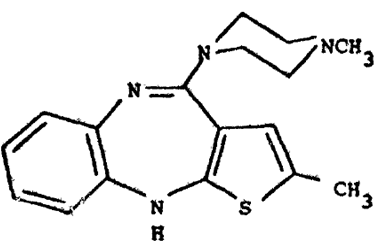
748 On p 3 of the Patent specification, it is stated:
We have now discovered a compound which possesses surprising and unexpected properties by comparison with flumezapine and other related compounds.
The compound of the invention is of the formula
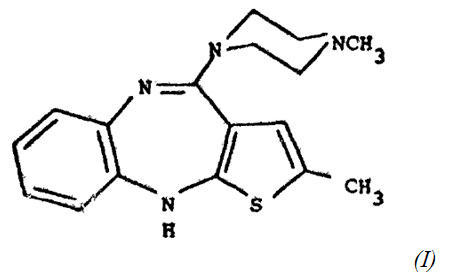
or an acid addition salt thereof. The free base of formula (I) is 2-methyl-10-(4-methyl-1-piperazinyl)-4H-thieno(2,3-b)(1,5)-benzodiazapene.
749 The language of the specification reflects the description of the invention in the light of the specification as a whole.
Conclusion – Fair Basis
750 Accordingly, I find that claims 1 to 4 are fairly based on the specification because there has been a real and reasonably clear disclosure of “2-methyl-10-(4-methyl-1-piperazinyl)-4H-thieno(2,3-b)(1,5)-benzodiazapene” in the specification according to the principles in Lockwood No 1 (2004) 217 CLR 274.
Lack of Clarity and Lack of Definition of Invention
751 I now turn to the grounds of lack of clarity and lack of definition of invention. These two grounds can be conveniently dealt with together.
752 Apotex pleaded that claims 1 to 4 and 7 of the Patent should be revoked on the ground that they are not clear as required by s 40(2) of the 1952 Act, ie they claim the compound with the chemical name, “2-Methyl-10-(4-methyl-1-piperazinyl)-4H-thieno-(2,3-b)(1,5) benzodiazepine”, not olanzapine. Apotex also relied upon s 40(1)(b) of the 1952 Act which required that the specification define the invention.
Legal Principles
753 Apotex put forward its construction of the Patent as considered at length at the commencement of these reasons for judgment. Apotex also submitted in the alternative that the use of the chemical name in claims 1 and 2 renders it unclear.
754 These grounds can only be successful if there is an irresolvable ambiguity or uncertainty. The issue only arises if an ambiguity remains after the claim has been properly construed.
755 The consideration is whether, on a reasonable view, the claim has meaning. In its Outline of Closing Submissions, Apotex cited the following passage from Blanco White QC’s text, Patents for Inventions (5th ed) (at 4-701):
…a claim is bad if no reasonably certain construction can be given to it, or it is fairly and equally open to diverse meanings. But the rule goes further than this. A court is not bound to find a meaning for a claim, nor to approach a claim with the "conviction that its language is capable of a reasonable construction when carefully examined" that is the due of an Act of Parliament. Thus a claim may be bad for uncertainty although the court could find its true meaning (and would do so if the words concerned appeared in a commercial contract) if it is so obscure that "its proper construction must always remain a matter of doubt". …
756 See also Wake Forest No 2 (2011) 92 IPR 496; [2011] FCA 1002 at 624 to 625 [819].
757 Justice Hely in Flexible Steel Lacing (2000) 49 IPR 331; [2000] FCA 890 (which concerned pulley lagging used in conveyor systems) found both method and product claims invalid for lack of clarity, saying:
at 355 [107]: “the equivocations in the drawings… do not resolve the puzzle created by the uncertainties and inconsistencies in the text. The method claim is fairly open to more than one meaning not because of grammatical problems but because, even to a skilled reader, it would not be clear which of two methods [it] describes. That problem cannot be overcome by the expectation on the part of a skilled worker, to which I earlier referred”.
at 359 to 360 [131]: “the product claim is obscure; it is fairly and equally open to diverse meanings… Another possibility is that the claim embraces both. Sometimes, ambiguity or insufficiency in description can be resolved by a skilled addressee through the application of commonsense and common knowledge: cf Innovative Agriculture Products Pty Ltd v Cranshaw (1996) 35 IPR 643 at 666. I do not think that this is such a case”.
758 In Martin v Scribal Pty Ltd (1954) 92 CLR 17 at 59, Dixon CJ, when considering a claim alleged to be invalid for ambiguity, stated the duty of the Court and the test of ambiguity in relation to a claim in the following terms:
If we were concerned only with a written instrument operating inter partes and not generally these difficulties would easily be overcome by construction. But the principles governing the definition of a monopoly operating over the public at large require a description which is not reasonably capable of misunderstanding. If an ambiguity is purposely introduced in order to produce a vagueness in the boundaries of a monopoly this purposeful introduction of an ambiguity destroys the patent, whether the ambiguity be great or small. Here, there is no reason to suppose that there was any such design. The following passage, however, in the judgment of Lord Parker (Natural Color Kinematograph Co Ltd (In liquidation) v Bioschemes Ltd (1951) 32 PRC 256 at 269) describes what is the duty of the court and provides the test of ambiguity: “Further, though it may be true that in construing an instrument inter partes the Court is bound to make up its mind as to the true meaning, this is far from being the case with a Specification. It is open to the Court to conclude that the terms of a Specification are so ambiguous that its proper construction must always remain a matter of doubt, and in such a case, even if the Specification had been prepared in perfect good faith, the duty of the Court would be to declare the Patent void.
(Emphasis added)
759 If more than one meaning could be attributed to a claim and a skilled reader would be unable to resolve the ambiguity, then uncertainty, obscurity and lack of cogent meaning would render that claim unclear.
760 However, in this proceeding, it has been possible to ascertain what the invention is from a fair reading of the specification as a whole. I adopt here my conclusions on the question of construction, which apply equally to Apotex’s allegations of lack of clarity and failing to define the invention. I have not reached the position where I have concluded that the construction of the claims is, and will always remain, a matter of doubt. The relevant skilled team will be able to ascertain the precise extent of the monopoly claimed. Any ambiguity, if there was such, is resolved by reading the Patent as a whole. The claims are thus not invalid for lack of clarity or for failure to define the invention on the basis of the above principles.
761 I should also indicate, although it is not the situation confronting me, that the mere existence of some imprecision in the challenged claims does not necessarily render them unclear. All expressions used must be read and understood in a practical, commonsense manner.
762 I conclude that the claims are clear and do not lack clarity under s 40(2) nor do they fail to define the invention as required by s 40(1)(b).
CONCLUSION
763 Eli Lilly has been successful in its application, and the grounds of revocation relied upon by Apotex have been rejected.
764 To give the parties the opportunity to consider any issues relating to the formulation of orders (including costs), I will direct that the parties confer and thereafter file and serve minutes of orders reflecting the reasons of the Court on or before 4:00pm on 29 March 2013.
I certify that the preceding seven hundred and sixty-four (764) numbered paragraphs are a true copy of the Reasons for Judgment herein of the Honourable Justice Middleton. |
Associate:
ANNEXURE ‘A’
Ball and Stick model of olanzapine created by ChemBioDraw Ultra, version 12, published by CambridgeSoft
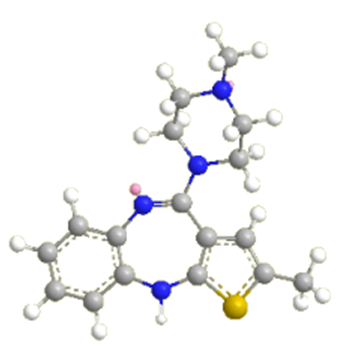
Atom coloured yellow is Sulfur
Atom coloured blue is Nitrogen
Atom coloured grey is Carbon
Atom coloured white is Hydrogen
Pink represents lone pair of electrons
Model oriented as in Australian Patent No. 643267 and as below:
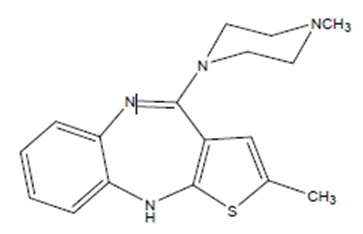
ANNEXURE ‘B’
Ball and Stick model of olanzapine created by ChemBioDraw Ultra, version 12, published by CambridgeSoft
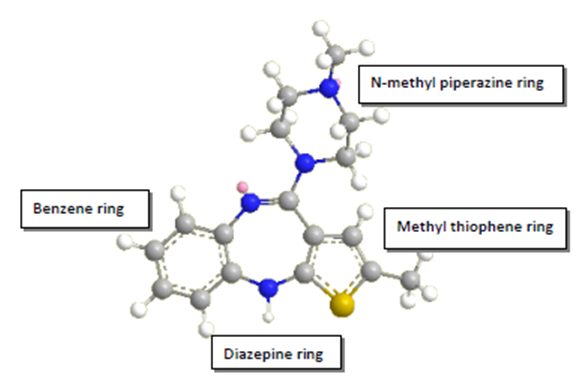
Atom coloured yellow is Sulfur
Atom coloured blue is Nitrogen
Atom coloured grey is Carbon
Atom coloured white is Hydrogen
Pink represents lone pair of electrons
Molecule oriented as in Australian Patent No. 643267 and as below:
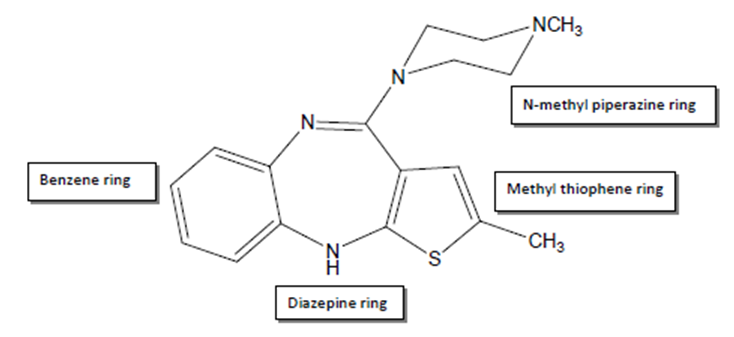
ANNEXURE ‘C’
Space-filling model of olanzapine created by ChemBioDraw Ultra, version 12, published by CambridgeSoft
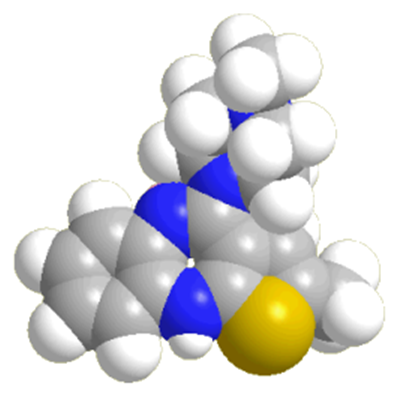
Atom coloured yellow is Sulfur
Atom coloured blue is Nitrogen
Atom coloured grey is Carbon
Atom coloured white is Hydrogen
Model oriented as in Australian Patent No. 643267 and as below:
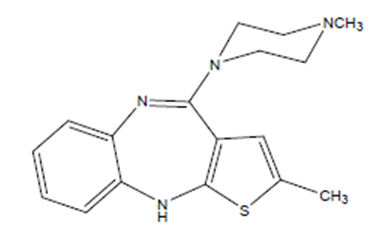
ANNEXURE ‘D’
Space-filling model of olanzapine created by ChemBioDraw Ultra, version 12, published by CambridgeSoft
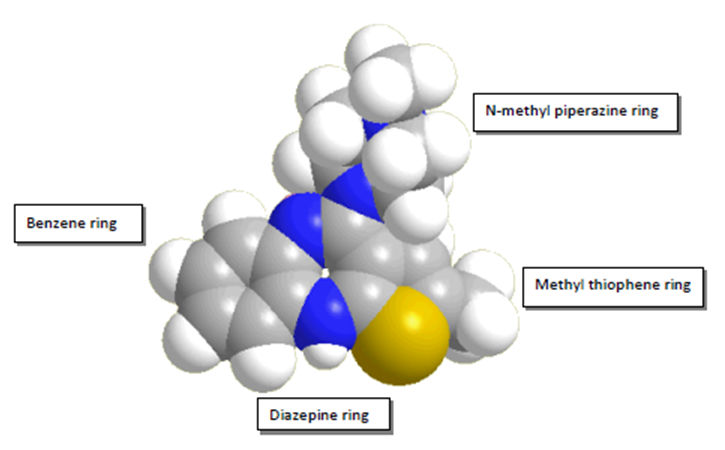
Atom coloured yellow is Sulfur
Atom coloured blue is Nitrogen
Atom coloured grey is Carbon
Atom coloured white is Hydrogen
Model oriented as in Australian Patent No. 643267 and as below: