FEDERAL COURT OF AUSTRALIA
Breezway Australia (Holdings) Pty Ltd v Preference Manufacturing Pte Ltd (No 2) [2013] FCA 66
IN THE FEDERAL COURT OF AUSTRALIA | |
DATE OF ORDER: | |
WHERE MADE: |
THE COURT ORDERS THAT:
1. Within 14 days, the parties file a minute of orders programming the filing of further submissions, if any, and a minute of final orders reflecting these reasons for judgment.
Note: Entry of orders is dealt with in Rule 39.32 of the Federal Court Rules 2011
QUEENSLAND DISTRICT REGISTRY | |
GENERAL DIVISION | QUD 45 of 2011 |
BETWEEN: | BREEZWAY AUSTRALIA (HOLDINGS) PTY LTD ACN 105 521 640 Applicant/Cross-Claimant
|
AND: | PREFERENCE MANUFACTURING PTE LTD First Respondent/First Cross-Claimant PREFERENCE MANUFACTURING (AUST) PTY LTD ACN 100 826 695 Second Respondent/Second Cross-Claimant LGI AUSTRALIA PTY LTD ACN 090 088 289 Third Respondent
|
JUDGE: | MCKERRACHER J |
DATE: | 11 FEBRUARY 2013 |
PLACE: | PERTH (HEARD IN BRISBANE) |
REASONS FOR JUDGMENT
TABLE OF CONTENTS
1 This case involves window louvres. More specifically, the clips at each end of each louvre in a window louvre system. Those clips hold the louvres in place. When a handle is used to shut a section or all of the louvres, those clips align with one another in a manner which is said to be one of the features of the patent in suit. It is said that the patent achieves greater protection from unwanted entry of water (usually rain) through the louvre clips or the louvres. There is a focus in the patent in suit, not only in resisting the entry of water but also in providing internal drainage within the clips which permits entering water to escape.
2 The disputed issues, although discussed at some length, are now quite narrow and relate to the proper meaning to be given to four expressions used in the claims.
3 The applicant (Breezway) seeks relief in respect of an alleged infringement of its patent. Breezway is the holder of Australian Standard Patent No. 2009212763 for an invention entitled ‘A Louvre System’ (the Patent). It is annexed to these reasons at Annexure A. Breezway contends that claims 1 to 10 of the Patent are infringed by a product known as the ‘fresAir’ louvre (fresAir Product).
4 The first respondent, Preference Manufacturing Pte Ltd (Preference Singapore), is a Singaporean company which is related to the second respondent, Preference Manufacturing (Aust) Pty Ltd (Preference Australia). Preference Singapore manufactures the fresAir Product. It is distributed to Preference Australia for sale within Australia. Those two respondents are usually jointly described in these reasons in the singular as Preference.
5 The third respondent, LGI Australia Pty Ltd (LGI), is unrelated to Preference. However, LGI has, on Breezway’s case, also been involved in the distribution and sale of the fresAir Product in Australia. Although LGI was represented by the same solicitors for Preference until shortly prior to the trial, it has since become self-represented and has played no further role in the proceedings. LGI did not appear at the trial although there is no doubt that notice was given to LGI of the proceedings. Once the contested case between Breezway and Preference had concluded, Breezway proceeded ex parte against LGI. Judgment on that claim has been delivered separately.
6 Infringement proceedings are authorised under s 120(1) of the Patents Act 1990 (Cth) (Patents Act). It relevantly provides:
120 Infringement proceedings
(1) Subject to subsection (1A), infringement proceedings may be started in a prescribed court, or in another court having jurisdiction to hear and determine the matter, by the patentee or an exclusive licensee.
…
7 There is no challenge to any of the requirements set out in that section.
8 Preference denies any infringement and by a cross-claim challenges the validity of the Patent. It also originally brought a claim for unjustified threats under s 128 of the Patents Act, which was then removed from its fourth amended cross-claim filed in Court on the first day of the hearing. A similar cross-claim by LGI was dismissed at the outset due to its non-appearance.
9 Through a process of refining its case, Preference has now admitted infringement of claims 1, 2, 6 and 7 of the Patent and under its amended cross-claim raises only one ground of invalidity being lack of novelty. The invalidity suit by Preference is directed to all 10 of the claims upon which Breezway claims infringement. (The eleventh claim is not part of the suit.)
10 In substantial measure the parties are agreed as to the relevant principles to be applied to determine the issues in this dispute. Those agreed principles which I have also substantially adopted are set out in the following passages in this section.
11 A patent and its claims are to be construed objectively by the Court, noting the following observations:
It is not ‘a written instrument operating inter partes, but a public instrument which must … define a monopoly in such a way that is not reasonably capable of being misunderstood’: Welch Perrin & Co Pty Ltd v Worrel (1961) 106 CLR 588 (at 610) per Dixon CJ, Kitto and Windeyer JJ;
‘Provision for it [a patent] is made in legislation permitting a special monopoly, and the English predecessor to the present standard patent, the issue of which is provided for in Pt VI of the Act, was Letters Patent issued by the Crown. The granting of the modern standard patent is an activity not contractual but quasi-legislative in character’: Prestige Group (Australia) Pty Ltd v Dart Industries Inc (1990) 26 FCR 197 (at 211) per Gummow J;
‘The complete specification must not be read in the abstract but in the light of common knowledge in the art before the priority date, bearing in mind that what is being construed is a public instrument which must, if it is to be valid, define a monopoly in such a way that it is not reasonably capable of being misunderstood ... The essential features of the product or process for which it claims a monopoly are to be determined not as a matter of abstract uninformed construction but by a common sense assessment of what the words used convey in the context of the then-existing published knowledge’: Populin v HB Nominees Pty Ltd (1982) 41 ALR 471 (at 476-477) per Bowen CJ, Deane and Ellicott JJ;
‘A patent is a public instrument which grants the rights to protection of a defined monopoly, for the consideration of the disclosure of the invention to the general knowledge base of society. It is the need for balance between these symbiotic, yet competing interests which underscores the rules of patent construction’: Flexible Steel Lacing Co v Beltreco Ltd (2000) 49 IPR 331 (at [70]) per Hely J.
12 One should rarely depart from the literal meaning of the claims:
The settled rule is that in ascertaining the width of a particular claim it is not permissible to vary or qualify the plain and unambiguous meaning of the claim by reference to the body of the specification: Interlego AG v Toltoys Pty Ltd (1973) 130 CLR 461 (at 479);
‘If an essential integer of the claimed monopoly is not present, it is not to the point that the absence of it can be explained as a conscious attempt to engineer around the claim’: Grove Hill Pty Ltd v Great Western Corp Pty Ltd (2002) 55 IPR 257 (at [311]) per Gyles J.
13 The patentee has chosen the words of the claims; they determine the nature and extent of the monopoly:
‘A claiming clause operates as a disclaimer of what is not specifically claimed, and for such disclaimer there may be reasons known to the inventor but not to the Court’: Fellows v Thomas William Lench Ltd (1916) 34 RPC 45 (at 55) per Lord Parker, cited by Dixon J in Walker v Alemite Corp (1933) 49 CLR 643 (at 656); Minnesota Mining & Manufacturing Company v Tyco Electronics Pty Ltd (2001) 53 IPR 32 per Sackville J (at [93]) (upheld on appeal in Minnesota Mining & Manufacturing Co v Tyco Electronics Pty Ltd (2002) 56 IPR 248 per Heerey, Emmett and Dowsett JJ (at [36]);
‘The function of the claims is to define clearly and with precision the monopoly claimed, so that others may know the exact boundaries of the area within which they will be trespassers. Their primary object is to limit, and not to extend, the monopoly. What is not claimed is disclaimed. The claims must undoubtedly be read as part of the entire document, and not as a separate document. Nevertheless, the forbidden field must be found in the language of the claims and not elsewhere ... A patentee who describes an invention in the body of a specification obtains no monopoly unless it is claimed in the claims. As Lord Cairns LC said, there is no such thing as infringement of the equity of a patent’: Electric & Musical Industries Ltd v Lissen Ltd [1938] 4 All ER 221 per Lord Russell (at 224-225);
The language of the claims themselves marks out the ambit of the monopoly of the claims. In ascertaining the width of a particular claim it is impermissible to qualify the plain and unambiguous meaning of a claim by reference to the body of the specification. As Dixon CJ, Kitto and Windeyer JJ observed in Welch Perrin (at 610):
The specification must be read as a whole. But it is a whole made up of several parts, and those parts have different functions. Courts have often insisted that it is not legitimate to narrow or expand the boundaries of monopoly as fixed by the words of a claim by adding to those words glosses drawn from other parts of the specification. Similarly, if a claim be clear it is not to be made obscure simply because obscurities can be found in particular sentences in other parts of the document.
14 The specification must be read as a whole and in light of the common general knowledge in the art before the priority date: Kinabalu Investments Pty Ltd v Barron & Rawson Pty Ltd [2008] FCAFC 178 per Sundberg, Emmett and Greenwood JJ (at [44]). The ‘common general knowledge’ is the general knowledge of the notional skilled addressee: see Kinabalu (at [45]). The words used in the specification are to be given the meaning that the skilled addressee would give them, in light of the addressee’s own general knowledge and in light of what is disclosed in the body of the specification: see Kinabalu (at [44]). In constructing a claim or claims, reference can be made to the specification to explain the background, to ascertain the meaning of technical terms, and to resolve ambiguities: see Kinabalu (at [44]).
15 Admissible evidence may be given by persons with the knowledge, skill and experience of the notional ‘skilled addressee’ as to how that addressee would have read the specification in the patent in suit or a prior publication: see EI Dupont de Nemours & Co v Imperial Chemical Industries plc (2002) 54 IPR 304 (at [59]).
16 As Gyles J observed in Grove Hill (at [311]), ‘A patentee cannot eat the cake and have it too by persuading a court to construe a claim more widely than the patentee was prepared to risk when framing the claims under the guise of purposive construction’. See also Pendleton MD, ‘Construe Widely and Face Invalidity – Construe Narrowly and Miss Infringements: The Dilemma of Interpreting Patent Specifications’ (2004) 11 (No 3) Murdoch University Electronic Journal of Law.
17 The Patent, in more detail, is for an invention entitled ‘A Louvre System’. As explained in the evidence, it is a ‘system’ to be used on the vertical extremes of louvred windows, particularly for louvre windows comprising any of glass, metal, timber or plastic blades. The earliest priority date of the Patent as claimed is 30 November 2001 (the Priority Date). The Patent was granted on 14 January 2010.
18 There are 11 product claims in the Patent. They are as follows:
1. A louvre end clip having an outer body and a substantially planar base portion to be located adjacent a louvre frame member in use, a longitudinal recess formed in the outer body and which is adapted to accommodate the edge of a louvre blade, the outer body having a pair of side walls, one wall extending from at least adjacent the longitudinal recess on each side of the louvre end clip to adjacent the base portion and at least one internal drainage chamber which allows water to drain through the end clip when the end clip is in the closed position wherein when multiple louvre end clips are provided in a louvre window system and the louvres are closed, the respective side walls of adjacent louvre end clips align to form a substantially continuous side wall. (Infringement admitted; validity challenged)
2. A louvre end clip as claimed in claim 1 wherein at least one spacing means is provided in the longitudinal recess to space an end edge of the louvre blade from a base wall of the longitudinal recess. (Infringement admitted; validity challenged)
3. A louvre end clip as claimed in claim I or claim 2 further including a shroud portion on at least one side of the longitudinal recess and adapted to partially overlap with a overlapped portion of an adjacent louvre end clip when closed. (Infringement denied; validity challenged)
4. A louvre end clip as claimed in claim 3 wherein a pair of shroud portions are provided, one on each side of the longitudinal recess and at opposite ends of the louvre end clip. (Infringement denied; validity challenged)
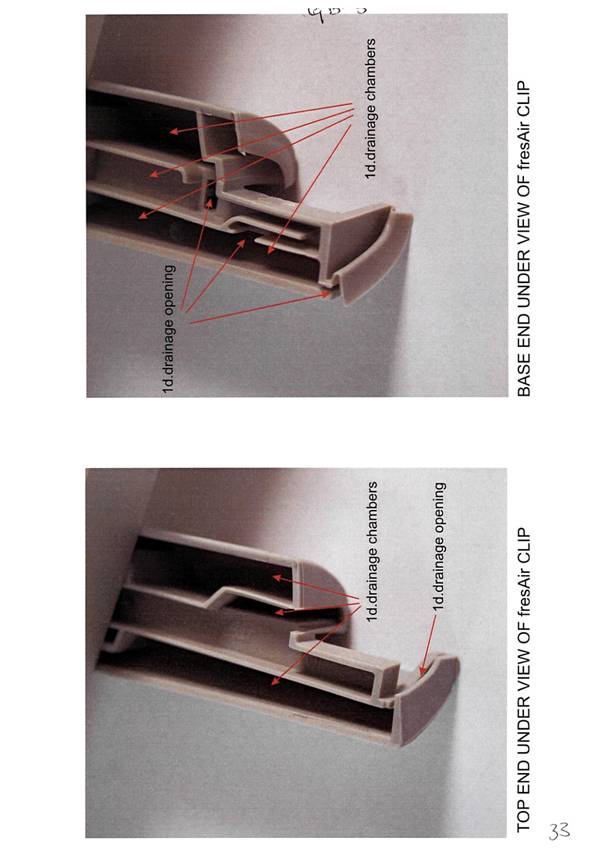
5. A louvre end clip of claim 4 wherein a pair of overlapped portions are provided, one on each side of the longitudinal recess and at opposite ends of the louvre end clip on opposite sides to the shroud portions. (Infringement denied; validity challenged)
6. A louvre window system including a plurality of louvre end clips, each louvre end clip having an outer body and a substantially planar base portion to be located adjacent a louvre frame member in use, a longitudinal recess formed in the outer body and which is adapted to accommodate the edge of a louvre blade, the outer body having a pair of side walls, one wall extending from at least adjacent the longitudinal recess on each side of the louvre end clip to adjacent the base portion and at least one internal drainage chamber which allows water to drain through the end clip when the end clip is in the closed position wherein when the louvres are closed, the respective side walls of adjacent louvre end clips align to form a substantially continuous side wall. (Infringement admitted; validity challenged)
7. A louvre window system as claimed in claim 6 wherein each louvre end clip has at least one spacing means provided in the longitudinal recess to space an end edge of the louvre blade from a base wall of the longitudinal recess. (Infringement admitted; validity challenged)
8. A louvre window system as claimed in claim 6 or claim 7 wherein each louvre end clip further includes a shroud portion on at least one side of the longitudinal recess and adapted to partially overlap with a overlapped portion of an adjacent louvre end clip when closed. (Infringement denied; validity challenged)
9. A louvre window system as claimed in claim 8 wherein each louvre end clip includes a pair of shroud portions, one shroud portion on each side of the longitudinal recess and at opposite ends of the louvre end clip. (Infringement denied; validity challenged)
10. A louvre window system of claim 9 wherein each louvre end clip includes a pair of overlapped portions, one overlapped portion on each side of the longitudinal recess and at opposite ends of the louvre end clip on opposite sides to the shroud portions. (Infringement denied; validity challenged)
11. A louvre window system as claimed in any one of claims 6 to 10 wherein the at least one internal drainage chamber of each louvre end clip aligns to form a common drainage channel. (Not in suit)
19 The claims which are the subject of the infringement allegations are claims 1 to 10. As can be seen, claim 1 and claim 6 are independent claims while claims 2 to 5 and 7 to 10 are all dependent claims, depending on claim 1 and claim 6 respectively.
20 A number of disadvantages existing in the prior art as at the Priority Date are identified in the ‘Background Art’ section of the Patent. Those disadvantages were primarily water penetration, inadequacy of the conventional louvre mechanisms which rotate the end clips and disadvantages associated with the simple handle/link joints found in conventional louvre operating systems.
21 Preference points to the fact that, with respect to the preferred embodiment, the specification (at page 8, lines 4 to 6) provides: ‘… If desired, a shroud can be provided. The shroud may comprise an extending lip that extends over an adjacent clip when the two clips are in the closed position.’ (emphasis added)
4. THE AGREED ISSUES – A SUMMARY
22 The parties helpfully prepared a list of agreed issues which are now, in substance, as follows:
In relation to the patent infringement pleading in Breezway’s statement of claim, Preference admits that the fresAir Product infringes claims 1, 2, 6 and 7 of the claims.
The primary issues for determination on infringement are whether the fresAir Product also takes all the features/integers of at least one of claims 3-5 and 8-10 of the Patent.
In relation to Preferences’ fourth amended cross-claim, the only issue remaining for determination is whether the Patent in suit is invalidated by reason of lack of novelty in light of prior art documentary disclosure. Preference contends that Great Britain Patent 2,062, 843 (Chris Turner & Scott Pty Ltd) (Turner & Scott Patent) anticipates claims 1-10 of the Patent. Breezway admits that the Turner & Scott Patent was publicly available as at the Priority Date. The Turner & Scott Patent is annexed to these reasons at Annexure B.
In relation to the construction of the claims of the Patent, the construction of the following features/integers are the principal matters which arise for determination:
Claim | Terms of feature |
1 | “one wall extending from at least adjacent the longitudinal recess on each side of the louvre end clip adjacent the base portion”. |
1 | “at least one internal drainage chamber which allows water to drain through the end clip when the end clip is in the closed position”. |
1 | “when multiple louvre end clips are provided in a louvre window system and the louvres are closed, the respective side walls of adjacent louvre end clips align to forms substantially continuous side wall”. |
3 | “a shroud portion on at least one side of the longitudinal recess and adapted to partially overlap with an overlapped portion of an adjacent louvre end clip when closed”. |
Given the dependencies in respect of claims 3-5 and 8-10, and that these features are in part also found in claim 6 (infringement of which is admitted), the resolution of the construction of the features/integers in the table above affects the question of infringement of those claims.
The parties agree that in the event that patent infringement is established, the quantum of profits payable by Preference Singapore to Breezway for the period 11 November 2010 (the date upon which Preference was first advised of Breezway’s allegation of patent infringement) to 6 June 2011 is $214,477.
With respect to the profits made by Preference Australia, Breezway contends that an accurate assessment of the profits made cannot be calculated from the discovery provided to date by Preference Australia. Breezway therefore submits that the appropriate course is for an inquiry to be conducted by a referee. Preference Australia agrees with this course.
It is agreed that in respect of the calculation of profits made by Preference Singapore from 6 June 2011 and Preference Australia from 30 June 2011 that an inquiry should be conducted by a referee.
23 As noted, by the time of trial Preference admitted that the fresAir Product did infringe claims 1, 2, 6 and 7 of the Patent. Notwithstanding these admissions, Breezway still presses its infringement suit in respect of claims 3 to 5 inclusive and claims 8 to 10 inclusive. The maintenance of the infringement suit in respect of those claims is pursued as Preference puts the validity of those claims in issue under its cross-claim.
4.2 Main areas of construction dispute
24 The essential issue to be determined on infringement as identified by Preference is with respect to claims 3, 4, 5, 8, 9 and 10 is what is meant by a ‘shroud portion’, this being an additional essential integer to those in claim 1. Claim 3 of the Patent also provides for a louvre end clip as claimed in claim 1 or claim 2 further including a shroud portion on at least side of the longitudinal recess and adapted to partially overlap with an overlapped portion of an adjacent louvre end clip.
25 Preference contends that the fresAir Product does not possess the shroud portion features of the claims because:
there is no shroud present but rather what is described as ‘an external sweep seal’; and
the claim specifies that the ‘shroud portion’ must be ‘adapted to partially overlap’ (or cover) a portion of the adjacent clip. This feature is not present in the fresAir Product.
26 Preference argues that in the fresAir Product, no part of an adjacent clip is covered or shrouded. Rather, the two adjacent clips abut each other so as to form a ‘seal’.
27 On the novelty question, Preference says, in refining the issues further, that the key issues arising are:
the construction of the prior art Turner & Scott Patent;
what is meant by ‘wall’ in the context of ‘one wall extending from at least adjacent the longitudinal recess on each side of the louvre end clip to adjacent the base portion’ for the purposes of claims 1 to 10;
what is meant by ‘drain through’ in the context of ‘one internal drainage chamber which allows water to drain through’ for the purposes of claims 1 to 10; and
what is meant by a ‘substantially continuous side wall’ for the purposes of claims 1 to 10.
28 The discussion below primarily records the substance of the evidence in chief of the key expert witnesses. The cross-examination is addressed in more detail in the consideration of the claim and cross-claim.
29 Each of the parties relies upon expert evidence. Breezway relies upon the evidence of Mr Glenn Bevan, an industrial designer. He is a Managing Director of a design company, Infinity Design Development Pty Ltd. Preference relies on the evidence of Dr Duncan Gilmore, a mechanical engineer. Dr Gilmore is a Managing Director and President of Gilmore Engineers Pty Ltd.
30 Each party contends that the evidence of its witness should be generally preferred by virtue of the experience of that witness. Breezway submits that as Mr Bevan has greater relevant experience appropriate to the subject matter of the Patent, his evidence is more helpful than that of Dr Gilmore on matters of construction. The witnesses gave evidence separately rather than concurrently.
31 Preference argues that Dr Gilmore is a very experienced consulting mechanical engineer, with no connection to Breezway or Preference other than being engaged to provide an expert opinion in the matter. Preference argues that the relevant prior art falls within the scope of mechanical engineering and Dr Gilmore’s training and qualifications give him more than sufficient qualifications to provide an expert opinion.
32 In relation to Mr Bevan, Preference points to the fact that Mr Bevan is an industrial designer who has worked as a design consultant for approximately 20 years. He has engaged in design work concerning louvre windows, including designing the external shape of the Breezway louvre clip. Mr Bevan has contracted to Breezway on numerous occasions between 2001 and 2009. Preference argues, accordingly, that in light of his background, the Court ought to regard Mr Bevan as being inventive in respect of the relevant art, that is, the design and manufacture of louvre window systems. Preference cites Doric Products Pty Ltd v Lockwood Security Products Pty Ltd (2001) 53 IPR 270 (at [165]), amongst other authorities, for the proposition that the person ‘skilled in the art’ should be a non-inventive worker in the field which would normally exclude, for example, patentees and others of a particularly inventive disposition.
33 Preference also argues that Mr Bevan, having been directly involved in aspects of the design of the Breezway invention, the subject of the Patent, would be less helpful as an objective and independent witness.
34 I found the evidence of the two experts to be fairly evenly balanced. Although Dr Gilmore has the benefit of additional qualifications, Mr Bevan struck me as being a little more practical and realistic in his assessments. I did not consider his previous dealings with Breezway influenced his judgement or independence. In my assessment he was willing, perhaps a little more so than Dr Gilmore, to make concessions where they should be made. Generally, with specific identified exceptions, I accepted the conclusions reached in the expert evidence of Mr Bevan.
35 Mr Bevan swore two affidavits. Only the first of his affidavits, sworn on 18 November 2011, was read in its entirety. Portions of the second affidavit were read following a sensible narrowing of the issues.
36 Mr Bevan was awarded a Diploma of Applied Science in Queensland in 1984 and a Bachelor of Technology (Design) in 1992 in Melbourne. He commenced work as a design consultant in 1992. He has carried out a variety of industrial design work including, but not limited to, sliding door systems, security doors and windows, consumer electronics, sports equipment and medical products.
37 Mr Bevan has also tutored and lectured in industrial design at the Queensland University of Technology for a number of years.
38 Mr Bevan is a Fellow of the Australian Institute of Design and a member of the professional organisation ‘Industrial Designers Queensland’. He has received an impressive list of awards for his design work with the James Hardie Group which led to consultancy with Breezway. With the James Hardie Group he worked on projects around new window and door developments including working for the louvre window division. Mr Bevan deposes that his experience with James Hardie gave him an important ‘base level understanding’ of the window industry. It also gave him information into the window louvre products that were then available on the market. The research was intended to identify design opportunities for new products and technologies for them that were not then in the market.
39 Mr Bevan was aware through his consultancy contracting in about 2001 that an entity known as Breezway Management Group successfully completed a management buyout of a louvre window business from James Hardie. In 2001 and 2002, after Breezway had completed its buyout of the louvre window business from James Hardie, Mr Bevan continued his contract consulting work for Breezway and worked as a consultant as part of a team on a project for the redesign of the then existing louvre window systems range.
40 The work involved using Mr Bevan’s industrial design expertise for the aesthetic and functional considerations of the new louvre window systems Breezway was developing. This involved his designing the shape of the operating handle and the external shape of Breezway’s louvre clip.
41 Mr Bevan was not responsible for any of the engineering design work on that clip in the new louvre window system. Other members of the team were expressly responsible for designing the new Breezway louvre clip system to meet what Breezway considered to be deficiencies in the then louvre window systems in the market. Those other members of the team would also produce sketches for prototypes for the clip and he was contracted to turn the sketches into 3D computer aide design (CAD) models that the other team members could use for their further development work. As a result the project led to the development, manufacture and successful launch of Breezway’s new louvre window system.
42 On the finalisation of his consultancy work for the project in 2002, Mr Bevan’s company engaged in some limited types of design work on occasions over approximately four years in attending design meetings, preparing technical illustrations and images for promotional campaigns. This further work was limited to making illustrations of the louvre system using a 3D CAD program and updating the content and layout of the technical manual for louvre systems. Mr Bevan’s company also a technical draftsman as a contractor who was formerly employed by Breezway. On occasions the draftsman was contracted out to do technical drawing work for Breezway at its office. That contractor worked at Breezway’s office when did contract work for Breezway. Neither Mr Bevan nor his company had any involvement on whatever work the draftsman did for Breezway. He acted always on instructions from Breezway staff and Mr Bevan’s company received a commission for his work. That contracted work was carried out intermittently up until 2009 but has not subsequently continued.
43 Mr Bevan explains that Breezway’s solicitors provided him with a copy of each of the Patent, Breezway’s statement of claim, Preferences’ amended defence and cross-claim, Breezway’s reply, and a section of the louvre window gallery and to which were mounted a number of louvre window clips comprising the fresAir Product. A section of that louvre was tendered into evidence and Mr Bevan also produced a photograph of the fresAir Product.
44 Mr Bevan was instructed to read the Patent, paying particular attention to the claims of the Patent set out on pages 17 and 18 which contain features of a different embodiment of the product which the inventors claim is their invention. He was instructed to read the statement of claim, paying particular attention to the paragraphs concerning the allegations of infringement of the Patent by the fresAir Product.
45 In construing the Patent claims to carry out his instructions, Mr Bevan expressed the view that some words used in the claims to describe features of the claimed invention did have a particular and accepted technical meanings in the window industry both as at the Priority Date and at the date of giving his evidence. Those particular terms and meanings, he said, were as follows:
End clip: a device supporting a glass, aluminium, timber or other material panel on either end which allows it to span a distance and be controlled by a mechanical operating device. These can be pressed metal but are now more likely to be moulded plastic in construction.
Blade: a common industry name for a rectangular panel of glass, aluminium, timber or other material that makes up a system of overlapping louvres.
Bearing: a device that attaches to the clip on the reverse side of the framing element that transfers the rotating movement to the clip from the handle operating mechanism.
Gallery: a collection of clips attached to a side frame element. A gallery can have independently movable clips or a system of mechanisms to control the movement so that they all rotate simultaneously. A typical installation usually has one operating gallery with a handle and a freely rotating gallery on the opposite side of the blade, although some installations have two operating sides.
Louvre window system: a fully framed window that is made up of two galleries at opposing sides, complete with blades, a head (top section) and a sill (base section) for water sealing. At least one of the galleries will have an operating mechanism and the other may be free moving and follow the operating gallery by the connection with rigid blades. A Louvre window system may be made up of galleries that have multiple handles which independently open only a segment of blades at once.
5.2.1 Shroud and shroud portion
46 In relation to claims 3, 4, and 9 of the Patent and the reference to ‘shroud’ and ‘shroud portion’, Mr Bevan expresses the view that insofar as he is aware neither the word ‘shroud’ nor ‘shroud portion’ were in common use in the window industry or the field of industrial design as at the Priority Date or at the date of giving evidence.
47 Looking at the Patent specification to ascertain whether it contains material to assist in the meaning, Mr Bevan notes that in the ‘Object of the Invention’ section, it is said that a shroud may be provided if desired. It continues:
The shroud may comprise an extending lip that extends over an adjacent clip when the two clips are in the closed position and to provide further weatherproofing. The shroud may be formed integrally with the clips, however the length of the shroud has an effect on the waterproofing of the clips, however if the shroud is too long, the shroud may be damaged and manufacturing costs are increased.
48 Mr Bevan then refers to the discussion about the ideal ratio between gap width and shroud length. Similarly, under the heading ‘Brief Description of the Drawings’ at line 17 there is a reference to figure 5 of the drawings attached to the Patent which is said to illustrate a ‘shroud’. He also refers to various other references to ‘shroud’ in the ‘Object’ section and the ‘Best Mode’ section of the Patent.
49 Mr Bevan concludes that having regard to the context of what is said in the sections of the Patent referred to above and the description of a ‘shroud portion’ in the claims, ‘shroud’ and ‘shroud portion’ mean a feature of a clip that is intended to cover a gap and so provide weather proofing.
50 Mr Bevan’s view is that the Patent does not limit the meaning of the word ‘shroud’ or the phrase ‘shroud portion’ in claims 3, 4 and 9 of the Patent to any particular form of appearance. Rather, what is claimed by the inventors by use of those words is a feature which is intended to cover a gap and so provide weatherproofing. He refers to the Macquarie Concise Dictionary (5th ed, 2010) and the Oxford English Dictionary. The former defines shroud, inter alia, as ‘something which covers or conceals like a garment: a shroud of rain …’ and ‘to cover; to hide from view’. Then ‘portion’ in that dictionary is defined as being ‘a part of a whole, whether actually separated from it or not’.
51 In the Oxford English Dictionary ‘shroud’ is defined as, inter alia, ‘a thing serving as a covering or protection; a covering, screen, veil, ‘cloak’, disguise. Now somewhat rhetorical’.
52 Mr Bevan therefore considers that shroud portions are found in the fresAir Product and they can be seen on the lower end of the clip that faces externally. In photographs exhibited to his affidavit, he has marked ‘shroud’ and ‘other clip’ respectively on those photos of the fresAir Product. These photographs are annexed to these reasons as Annexure C and Annexure D.
53 In relation to the so-called ‘sweep seal’ described by Preference, Mr Bevan considers the term to be a ‘marketing term’. Nevertheless, in his opinion, a sweep seal is a shroud which effectively covers the upper portion of a lower adjoining clip in the closed position. He considers that the fresAir Product clip also has a shroud portion on the top end of the lower clip which is on the opposite side of the horizontal blade recess and forms part of the inside facing section of the clip. This is marked ‘lower clip shroud’ on the photograph which appears at Annexure D to these reasons. In Mr Bevan’s view, although this ‘shroud’ takes a different form from the ‘sweep seal’ on the opposite side and opposite ends of the fresAir Product clip, it is nevertheless still a shroud portion made of a more rigid material that overlaps the flexible section of the adjoining clip in the closed position. It is marked on the photograph at Annexure D as ‘overlapped portion of upper clip’.
54 Claim 1 and claim 6 both refer to features called a ‘drainage chamber’. In Mr Bevan’s view, the fresAir Product has at least one or more internal drainage chambers that provide drainage of water through the clips. The top of the fresAir Product has an opening which is for draining water from one clip to the clip immediately below when the clips are in a closed position. The drainage channels are on the underside of the fresAir Product. He identifies on photographs on both the top end and base end views what he considers are drainage openings. Mr Bevan also notes drainage chambers in the top end and also in the base end of the underside of the fresAir Product. Those notations appear on the photograph which is exhibit GB5 to his first affidavit and is also annexed to these reasons as Annexure E.
55 Mr Bevan notes that the photograph of the entire of the underside of the fresAir Product also illustrates how the sections of the drainage chambers run down the length of the underside of the fresAir Product. Water enters the fresAir Product and can drain down along the pathway. The clips do not sit flush with the side frame. There is a very slight gap between the underside of the clips and the adjacent gallery extrusion. Water accumulates in that chamber area. There is a bearing sitting in a hole drilled or punched through the channel section. Alongside each of those holes is a slot cut into the channel section. Water can then flow out of those holes and into the back of the gallery section. Some of the accumulated water would continue to flow through the clip chambers.
5.2.3 Mr Bevan’s analysis claim by claim
56 Summarising Mr Bevan’s observations from the schedule annexed to his first affidavit, his evidence is as follows. While Preference admits the fresAir Product infringes claims 1, 2, 6 and 7 of the Patent, it still helpful to examine these claims, at least to ascertain Mr Bevan’s interpretation of why it is said that the fresAir Product has those qualities which cause them to infringe. (No objection was taken to the schedule incorporating these earlier unamended challenges to this part of the claim.)
A louvre end clip having an outer body and a substantially planar base portion to be located adjacent a louvre frame member in use…
57 To this Mr Bevan says there is no doubt that the fresAir Product is a louvre end clip. The described aspects of the feature are all present in the fresAir Product. There is a ‘substantially planar based portion’ and the ‘adjacent louvre frame’ member. There is longitudinal recess formed in the outer body and which is adapted to accommodate the edge of a louvre blade. Mr Bevan says that the fresAir Product has a recess in the outer body which is designed to accommodate the edge of the louvre blade.
… the outer body having a pair of side walls, one wall extending from at least adjacent the longitudinal recess on each side of the louvre end clip to adjacent the base portion…
58 Mr Bevan explains that the side walls and the louvre clips are a unique identifying feature of the Patent claimed. The fresAir Product, he says, also has a pair of side walls as described as a feature of claim 1. The side walls extend along the longitudinal recess which accommodates the edge of the louvre blade. The side walls are on each side of the fresAir Product. They also extend to the adjacent base portion.
… and at least one internal drainage chamber which allows water to drain through the end clip when the end clip is in closed position…
59 In Mr Bevan’s opinion the fresAir Product has drainage chambers and drainage holes. He says that water drains through the end clip behind the blade, along the longitudinal cavities and exits from the various areas which he has identified. In addition, the top of the fresAir Product has an opening which, in his view, is for the drainage of water from one clip to the clip immediately below it when the clips are in a closed position.
… wherein when multiple louvre end clips are provided in a louvre window system and the louvres are closed, the respective side walls of adjacent louvre end clips align to form a substantially continuous side wall.
60 In Mr Bevan’s view, this feature describes the alignment of the side walls of the adjacent louvre clips when in the closed position to form what is called a ‘substantially continuous side wall’. He contends that fresAir Product has this exact substantially continuous side wall when it is in the closed position. Mr Bevan says that this is a unique feature of the patented clips and, he says, seems to be quite an obvious infringement of the particular feature of the fresAir Product. The feature can be seen in the various photos and in the exhibited louvre. When the fresAir Product is in the closed position he observes that there is only a minimal gap, likely to be a fraction of a millimetre, between the adjacent portions of the respective upper and lower ends of the adjacent clips. In marketing material for the fresAir Product and louvre window system, it is stated that ‘when fully closed, clips are brought into alignment with corresponding outer surfaces of successive clips substantially co-planar’. Preference now admits that the fresAir product possesses all of the integers of claim 1.
A louvre end clip as claimed in claim 1…
…wherein at least one spacing means is provided in the longitudinal recess to space an end edge of the louvre blade from a base wall of the longitudinal recess.
61 Mr Bevan comments that claim 2 relates to a spacing means in the longitudinal recess of the clip to provide a space between the end of the louvre blade and the base wall of the clip. This is to prevent surface tension of the water inside the clip and to promote free flow of water for drainage inside the clip behind the end of the blade. In Mr Bevan’s view, the fresAir Product does have a spacing at the end of the blade from the base of the clip to encourage this free drainage of water. Preference now admits that the fresAir Product incorporates all of the integers of claim 2.
A louvre end clip as claimed in claim 1 or claim 2…
….further including a shroud portion on at least one side of the longitudinal recess and adapted to partially overlap with an overlapped portion of an adjacent louvre end clip when closed.
62 Preference denies that there is a shroud portion involved. Rather, it says, the fresAir Product ‘has an external sweep seal’.
63 Mr Bevan disagrees with this view. He interprets ‘shroud’ to mean a ‘cover’ whereby one feature which is the ‘shroud’ overlaps another feature so covering the second feature. The fresAir Product has such a shroud feature on at least one side of the longitudinal recess that partially overlaps an adjacent clip as described in this feature of claim 3.
A louvre end clip is claimed in claim 3…
…wherein a pair of shroud portions are provided, one on each side of the longitudinal recess and at opposite ends of the louvre end clip.
64 Preference denies the fresAir Product has any shroud portions because it has an external sweep seal. Mr Bevan disagrees for the same reasons set out above.
The louvre end clip of claim 4…
… wherein a pair of overlapped portions are provided one on each side of the longitudinal recess and at opposites ends of the louvre end clip on opposite sides of the shroud portions.
65 Preference again say that the fresAir Product does not have shroud portions but rather has a sweep seal. Mr Bevan disagrees for the same reasons.
A louvre window system including a plurality of louvre end clips as claimed in claim 1…
66 Claims 6 to 10 of the Patent refer to a louvre window system.
67 A louvre window system will incorporate galleries as an essential part of its framework/architecture. It follows that if the fresAir Product infringes any of claims 1 to 5 of the Patent and they are incorporated into a gallery which is in turn incorporated into a louvre window system, claims 6 to 10 of the Patent will be infringed if the features of those particular claims are also present in such a window system. Mr Bevan points out that the louvre window system must incorporate the fresAir Product with a plurality of louvre end clips.
… each louvre end clip having an outer body and a substantially planar base portion to be located adjacent to a louvre frame member in use …
68 Preference admits this feature.
… a longitudinal recess formed …
69 Preference also admits this feature.
… the outer body having a pair of side walls …
70 Preference admits this feature.
… one wall extending from at least adjacent the longitudinal recess on each side of the louvre end clip to adjacent the base portion and at least one internal drainage chamber which allows water to drain through the end clip when the end clip is in the closed position wherein when the louvres are closed, the respective side walls of adjacent louvre end clips align to form a substantially continuous side wall.
71 Mr Bevan has previously covered these aspects. He says that the drainage chamber will allow water to exit in the way described in claim 1 of the Patent and that when closed, the side walls of the adjacent fresAir Product align to form a substantially continuous side wall when the louvre clips are in the closed position. Preference now admits that the fresAir Product incorporates all of the integers of claim 6.
A louvre window system as claimed in claim 6…
72 The parties repeat their positions.
… wherein each louvre end clip has at least one spacing means provided in the longitudinal recess to space an end edge of the louvre blade from a base wall of the longitudinal recess.
73 Preference admits that the louvre window system incorporating the fresAir Product will incorporate all of the integers of claim 7 of the Patent.
A louvre window system as claimed in claim 6 or claim 7…
… wherein each louvre end clip further includes a shroud portion on at least one side of the longitudinal recess and adapted to partially overlap with an overlapped portion of an adjacent louvre end clip when closed.
74 Again, Preference denies that the fresAir Product includes a shroud portion as it has external sweep seals.
75 Mr Bevan repeats his observation that the fresAir Product is designed to partially overlap with overlapped portions of an adjacent louvre end clip when closed. The external sweep seal is in substance a shroud as that word is used in the Patent claims.
A louvre window system as claimed in claim 8…
… wherein each louvre end clip includes a pair of shroud portions one shroud portion on each side of the longitudinal recess and at opposite ends of the louvre end clip …
76 To this the parties repeat their positions.
The louvre window system of claim 9…
… wherein each louvre end clip includes a pair of overlapped portions…
77 Preference does not plead to his but Mr Bevan says there are overlap portions in the fresAir Product.
… one overlapped portion on each side of the longitudinal recess and at opposite ends of the louvre end clip on opposite sides to the shroud portions.
78 The parties repeat their positions with Preference denying that there are shroud portions because the fresAir Product has the external sweep seal. Mr Bevan takes the contrary position.
5.3.1 The first Gilmore report
79 Dr Gilmore, called by Preference, prepared two expert reports. The first was filed on 21 November 2011 (the first Gilmore report).
80 Dr Gilmore’s early experience obtained while undertaking masters and doctorate level engineering programs involved practical experience with experimental equipment in wind tunnels. The aim of his work was to undertake highly accurate dynamic scientific measurements of air velocity. This required him to design the equipment used in the wind tunnel to hold and enable adjustment of the location of sensor probes. His later experience involved the detailed engineering design of components of the drivetrain of demonstration hybrid vehicles in the early stages of their development. This was in the early 1980s. In the same decade he also worked on robotic devices in Japan.
81 Dr Gilmore has lectured on mechanical design to engineering students at universities in both Australia and the United States of America.
82 As a consultant engineer since 1993, Dr Gilmore has completed extensive work in the product design and development of several hundred components and devices including renewable energy tidal turbines, biomedical equipment including hinged collapsible arms, reciprocating engine technology including water-cooling channels, grass mower machinery, hydroelectric equipment, scissor lift machinery, components on an underground search and rescue vehicle, and a window shutter drive system.
83 Dr Gilmore has acted as an expert engineering witness in various cases for approximately 27 years. He deposes that he has examined and reported on components in relation to alleged patent infringement including and relating to window blinds, portable folding tents, fish farming machinery and ride-on mowers.
84 Dr Gilmore breaks down the integers in more detail than did Mr Bevan. He described the integers disclosed in claims 1 to 10 of the Patent as follows:
Claim 1
a) A louvre end clip having an outer body
b) And a substantially planar base portion
c) To be located adjacent a louvre frame member in use,
d) A longitudinal recess formed in the outer body
e) And which is adapted to accommodate the edge of a louvre blade,
f) The outer body having a pair of side walls
g) One wall extending from at least adjacent the longitudinal recess on each side of the louvre end clip to adjacent the base portion
h) And at least one internal drainage chamber
i) Which allows water to drain through the end clip
j) When the end clip is in the closed position
k) Wherein when multiple louvre end clips are provided in a louvre window system and the louvres are closed
l) The respective side walls of adjacent louvre end clips align to form a substantially continuous side wall.
Claim 2
a) A louvre end clip as claimed in claim 1
b) Wherein at least one spacing means is provided in the longitudinal recess
c) To space an end edge of the louvre blade from a base wall of the longitudinal recess.
Claim 3
a) A louvre end clip as claimed in claim 1 and claim 2
b) Further including a shroud portion
c) On at least one side of the longitudinal recess
d) And adapted to partially overlap with a [sic] overlapped portion of an adjacent louvre end clip
e) When closed.
Claim 4
a) A louvre end clip as claimed in claim 3
b) Wherein a pair of shroud portions are provided
c) One on each side of the longitudinal recess
d) And at opposite ends of the louvre end clip.
Claim 5
a) A louvre end clip of claim 4.
b) Wherein a pair of overlapped portions are provided
c) One on each side of the longitudinal recess
d) And at opposite ends of the louvre end clip
e) On opposite sides to the shroud portions.
Claim 6
a) A louvre window system including a plurality of louvre end clips
b) Each louvre end clip having an outer body
c) And a substantially planar base portion
d) To be located adjacent a louvre frame member in use
e) A longitudinal recess formed in the outer body
f) And which is adapted to accommodate the edge of a louvre blade
g) The outer body having a pair of side walls
h) One wall extending from at least adjacent the longitudinal recess on each side of the louvre end clip to adjacent the base portion
i) And at least one internal drainage chamber
j) Which allows water to drain through the end clip
k) When the end clip is in the closed position
l) Wherein when the louvres are closed the respective side walls of adjacent louvre end clips align to form a substantially continuous side wall.
Claim 7
a) A louvre window system as claimed in claim 6
b) Wherein each louvre end clip has at least one spacing means provided in the longitudinal recess
c) To space an end edge of the louvre blade from a base wall of the longitudinal recess.
Claim 8
a) A louvre window system as claimed in claim 6 and claim 7
b) Wherein each louvre end clip further includes a shroud portion
c) On at least one side of the longitudinal recess
d) And adapted to partially overlap with a [sic] overlapped portion of an adjacent louvre end clip
e) When closed.
Claim 9
a) A louvre window system as claimed in claim 8
b) Wherein each louvre end clip includes a pair of shroud portions
c) One shroud portion on each side of the longitudinal recess
d) And at opposite ends of the louvre end clip.
Claim 10
a) A louvre window system of claim 9
b) Wherein each louvre end clip includes a pair of overlapped portions
c) One overlapped portion on each side of the longitudinal recess
d) And at opposite ends of the louvre end clip
e) On opposite sides to the shroud portions.
5.3.1.1 Internal drainage chamber
85 Relevant to the evidence given by Dr Gilmore are the meanings he attributes to the expressions ‘internal drainage chamber’ and ‘drain through’ as disclosed in claim 1 of the Patent. He refers to the Macquarie Dictionary (revised 3rd ed, 2001) which defines ‘drain’ as to ‘draw off gradually, as a liquid’. The same edition also defines ‘through’ as ‘in at one end, side or surface, and out the other’. In Dr Gilmore’s opinion, the words ‘internal drainage chamber’ mean any chamber which is internal to the end clip and which allows water to draw or travel through the chamber and therefore through the end clip.
86 ‘Drain through’ in Dr Gilmore’s opinion means that water enters the clip through any surface, leaves the clip gradually through another surface, when the louvre end clip is in the closed position, that is, with the end clips rotated so as to touch each other so as to largely close off any airflow through the louvre system.
5.3.1.3 Substantially continuous side wall
87 Dr Gilmore also explains his understanding of the phrase ‘substantially continuous side wall’ as disclosed in claim 1 of the Patent. He notes that claim 1 uses the words ‘when multiple louvre end clips are provided in a louvre window system and the louvres are closed, the respective side walls of adjacent louvre end clips align to form a substantially continuous wall’. He refers, again, to the same dictionary which defines ‘substantial’ as ‘real or actual, and of ample or considerable amount’ and ‘continuous’ as ‘having the parts in immediate connection, unbroken’. The Macquarie Dictionary also defines ‘side’ as ‘one of the surfaces or lines bounding a thing’ and ‘wall’ as ‘an upright work or structure … servicing for enclosure, division, support, protection etc’.
88 Therefore, Dr Gilmore concludes that the words ‘substantially continuous side wall’ mean that the enclosing boundary surfaces of adjacent louvre end clips align when the louvres are rotated to largely close off any airflow through the louvre system, so as to actually or effectively form a continuous upright structure. In his view, the individual parts in each louvre end clip come together to form a structure which acts in practice as a continuous side wall down the side of a bank of louvres.
89 As to ‘shroud portion’, again, referring to dictionary definitions and placing the expression in context in claim 3, Dr Gilmore opines that ‘shroud portion’ means a part of a louvre end clip on the side of a recess which holds the louvre blade, which is formed or designed so as to act as a cover on a part of the adjacent louvre end clip. One shroud part of one end clip covers a part of the adjacent end clip when the louvres are rotated to largely close off any airflow through the louvre system.
5.3.1.5 The Turner & Scott Patent
90 Dr Gilmore addresses the question of whether the device disclosed in the Turner & Scott Patent possesses any or all of the integers identified above. To that, Dr Gilmore produced a spreadsheet which revealed that in his assessment, the Turner & Scott Patent disclosed all the integers of the claims as he had identified them. He did not, in evidence in chief, expand upon this observation.
5.3.2 The second Gilmore report
91 Dr Gilmore prepared a second report, filed on 16 December 2011, which is more directly related to the question of the fresAir Product. He was asked to express his view as to whether the integers identified in the first Gilmore report as having been disclosed in the various claims in the Patent were also to be found in the fresAir Product and, if so, which integers.
92 In relation to claim 3 and the expression ‘shroud portion’, Dr Gilmore repeats his understanding of the meaning of that expression. He observes a close-up photograph of the interface between adjacent fresAir clips with the louvres closed. He understands that a shroud acts as a cover (concealing like a garment). In Dr Gilmore’s view, it is therefore reasonable to expect that it would be impossible for light to pass through the shrouded surface, that is, a straight line could not be drawn through the shroud and the overlap portion from one side to the other. A concealing garment possesses the same attributes prohibiting vision of the underlying substrate. However, Dr Gilmore observes that by reference to the photograph that a straight line can in fact be drawn through the interface between the clips. That can also be illustrated by inserting straight coloured slips of paper through the interface to illustrate the effect visually. This fact informs that the interface is an ‘abutment’ of adjacent surfaces and not a ‘shroud’.
93 The adjacent clips come together when the louvres are closed, forming a seal by virtue of one louvre touching the other. However, no part is shrouded and no part is overlapped. An illustration which Dr Gilmore used and repeated by reference to his evidence given in the witness box was whereby two circular components come together and abut forming a seal. A shroud is not created as no part of the adjacent circle is concealed. A thin ray of light could penetrate directly through the interface between the circles, just as it can between the fresAir Product.
94 Dr Gilmore says that the description of the shroud in the Patent shows that the interpretation given by the Patent is that a lip extends over an adjacent clip. The shroud has length, and a gap exists between adjacent clips (not a seal). A shroud length to gap width should be about 5 mm to 6 mm, so that if the gap is approximately 1 mm, the shroud overlap length is approximately 5 mm to 6 mm. This type of shroud does not exist in the fresAir Product which simply has clips abutting.
95 Dr Gilmore stresses his central point that the shroud described by the Patent does ‘cover’ an ‘overlapped’ portion quite unlike the fresAir Product. In figure 5 from the Patent it is possible to demonstrate the ‘substantial extent’ of the shroud and overlapped portions and the existence of a substantial gap. It is not possible to trace the straight path line from outside the clip through the shrouded and overlapped portions. That contrasts with the fresAir Product. Accordingly, he expresses the view that shroud portions are not present in the fresAir Product and overlapped portions are not present in the fresAir Product. Dr Gilmore says that Mr Bevan ignores the description of the shroud and gap discussed at page 8, line 11 of the Patent. By doing so, Mr Bevan finds a ‘shroud’ in the fresAir Product with a gap width of 0 created by a seal or abutment. The ‘shroud length’ becomes meaningless, according to Mr Bevan’s interpretation. Further, Mr Bevan ignores figure 5 of the Patent with the illustration of ‘shroud’, ‘gap’ and ‘shroud length to gap width ratio’. Dr Gilmore considers that Mr Bevan’s interpretation of ‘shroud’ is an interpretation in an entirely different manner to that described in the Patent. Dr Gilmore considers Mr Bevan also ignores the dictionary definitions quoted by him referring to shroud being something that conceals or hides from view and cloaks. The ability of a shroud to ‘hide from view’ was discussed by Dr Gilmore.
96 As to drainage, Dr Gilmore refers to the identification by Mr Bevan of an internal drainage chamber in the fresAir Product as well as an independent ‘opening’ which in his view is for draining water from ‘one clip to the clip immediately below it’ when the clips are in a closed position. Dr Gilmore notes that such an ability to drain water from ‘one clip to the clip immediately below it’ is not an integer to any of the claims of the Patent. Dr Gilmore contends that Mr Bevan has introduced that feature himself rather than source it from the claims of the Patent.
97 In addition, he says that Mr Bevan introduces the term ‘drainage opening’ as an independent feature. Of significant importance, in Dr Gilmore’s view, is that Mr Bevan illustrates sections of the clip which are discretely and independently described as ‘drainage chambers’ and others which are discretely and independently described with red arrows as ‘drainage opening’. In other words, ‘chambers’ and ‘drainage opening’ are interpreted by Mr Bevan as not coexisting. However, Dr Gilmore considers that given the Patent does not feature any ‘drainage opening’ in the integers of claims 1 to 10 and Mr Bevan illustrates them as independent features, reference to them is irrelevant and distracting. He refers to the reference by Mr Bevan to ‘the very slight gap between the underside of the clips and the adjacent gallery extrusion’ and the accumulation of water in the chamber area immediately above the cross-shaped sections. In Dr Gilmore’s opinion, as the Patent does not feature ‘drainage opening’ in any of the integers and Mr Bevan illustrates them as ‘independent features’, that reference is also irrelevant and distracting.
98 Mr Bevan responds to contentions raised by Dr Gilmore by affidavit sworn on 24 April 2012. First, Mr Bevan takes issue with the manner in Dr Gilmore broke down the claims, noting that because claims were broken down into so many integers, some of the integers did not make any sense when considered by themselves.
99 Nevertheless, for clarity he responds to Dr Gilmore’s comments using the same breakdown. However, in the ultimate presentation of the evidence, his response was confined to the comment in relation to Dr Gilmore’s comments on the presence of the integers in the Turner & Scott Patent.
100 In relation to claim 1, while he agrees with the first six observations by Dr Gilmore, in relation to Dr Gilmore’s integer G (which was ‘One wall extending from at least adjacent the longitudinal recess on each side of the louvre end clip to adjacent the base portion’), he observes that on Dr Gilmore’s construction, the way the integer is worded in the claim means that the wall must go beside the glass to beside the base portion. Mr Bevan finds no reference to that in any of the patents or any of the drawings. He could not apply that description as framed in the claim and find the wall in the Turner & Scott Patent.
101 Similarly, in relation to integer H (which was ‘And at least one internal drainage chamber’), again, Mr Bevan observes that there is no drainage chamber in the Turner & Scott Patent. There is no reference to internal drainage chambers and no reference to the clips draining. It is clear from the illustrations, he says, that there are chambers but in his view these do not have the function of draining water.
102 In relation to integer I (‘Which allows water to drain through the end clip’) and integer J (‘When the end clip is in the closed position’), the same observations apply as in Mr Bevan’s view, the Turner & Scott Patent does not disclose a product which drains water.
103 In relation to integer K (‘Wherein when multiple louvre end clips are provided in a louvre window system and the louvres are closed’) and integer L (‘The respective side walls of adjacent louvre end clips align to form a substantially continuous side wall’), Mr Bevan observes that those integers should be considered together and there is no substantially continuous side wall in the Turner & Scott Patent.
104 In relation to claim 2 and the Turner & Scott Patent, Mr Bevan says that he does not think that all of the integers of the first claim are present. Apart from that, he agrees with Dr Gilmore in respect of the remaining integers.
105 Although Mr Bevan changed his mind with respect to Dr Gilmore’s findings concerning the Turner & Scott Patent in relation to claims 4 and 5, there are no new issues raised in the remaining claims. There were some remaining aspects of disagreement with Dr Gilmore concerning the first Gilmore report. These pertained, in particular, to the opinions of Dr Gilmore on certain terms in the claims of the Patent.
106 Some such issues which were not ventilated in the first affidavit of Mr Bevan included the following.
107 The term ‘one wall’ was unclear in Dr Gilmore’s view and he was unable to understand it. Mr Bevan disagreed with that observation, expressing the view that the term is clear. As to the meaning of the term ‘internal drainage chamber’, Dr Gilmore had opined that it meant ‘any chamber which is internal to the end clip, and which allows water to draw or travel through the chamber, and therefore through the end clip’. Mr Bevan agreed with that definition. In relation to the expression ‘drain through’, Dr Gilmore commented that it meant ‘water enters the clip through any surface, leaves the clip gradually through another surface, when the louvre end clip is in the closed position’. However Mr Bevan disagreed that ‘drain through’ must mean that it enters through a surface. It must enter through a hole, cavity or opening but it does not enter through a surface. A surface, in Mr Bevan’s view, is a term used for a continuous piece. As to the expression ‘substantially continuous side wall’, Dr Gilmore said:
The enclosing boundary surfaces of adjacent louvre end clips align when the louvres are rotated to largely close off any airflow through louvre system, so as to actually or effectively form a continuous upright structure. The individual parts in each louvre end clip come together to form a structure which acts as in practice as a continuous side wall down the side of a bank of louvres.
Although Mr Bevan generally agreed with that statement, he noted that Dr Gilmore limits the definition to airflow. Mr Bevan considers that it is not necessarily continuous just because it stops airflow. To the extent that would be a restriction, he disagrees.
108 Finally, in relation to discussion of specific terms, in relation to ‘shroud portion’, Dr Gilmore said:
A part of a louvre end clip on the side of a recess which holds the louvre blade, which is formed or designed so as to act as a cover on a part of the adjacent end clip. One shroud part of one end clip, covers a part of the adjacent end clip, when the louvres are rotated to largely close of any airflow through the louvre system.
Although Mr Bevan believed that that definition was basically the same as his definition, again, he noted that Dr Gilmore discussed airflow. Mr Bevan did not consider a definition should be linked to something as specific as airflow, particularly in the context of the reference to weather proofing in the Patent. In his view, a shroud is a cover and does not need to restrict airflow.
109 Whereas Dr Gilmore had used the example of slipping paper between the joins and the two circles abutting, Mr Bevan was of the view that those examples were not helpful as they are not consistent with the dictionary definition of ‘shroud’. In that context, Dr Gilmore had stated that the ‘interface between [two clips] is an abutment of adjacent surfaces, and not a shroud’. Dr Gilmore had observed that ‘two circular components come together and abut, forming a seal, but a shroud is not created as no part of the adjacent circle is concealed’. Mr Bevan’s view, however, was that two things can abut and still form a shroud so long as something is concealed from at least one perspective. If two surfaces are abutted, one surface could be hidden from view thus satisfying the definitions of the term in the Macquarie and Oxford dictionaries. Again, in relation to the Dr Gilmore’s second report, Mr Bevan emphasised that airflow had nothing to do with a shroud. An umbrella, for example, is a shroud but it does not stop airflow; it diverts rain.
6. CONSIDERATION OF BREEZWAY’S CLAIM
110 I will first consider some arguments of principle raised by Preference.
111 Preference argued and put to Mr Bevan in cross-examination that he made a fundamental error in his approach to the construction of the Patent. Specifically, that he used the allegedly infringing fresAir Product to construe the claims of the Patent. Doing so was inconsistent with the requirement emphasised by Bennett J in Danisco A/S v Novozymes A/S (No 2) (2011) 91 IPR 209 (at [38]), and also by the Full Court in Fresenius Medical Care Australia Pty Ltd v Gambro Pty Ltd (2005) 224 ALR 168 (at [95]), that ‘a claim is not to be construed with an eye to the infringing article, nor should it be construed with an eye to the prior art’. Preference contends that because Breezway has construed the claims by reference to the characteristics of the allegedly infringing fresAir Product, it is asking the Court to read the claim as being narrower than its words convey because of the preferred embodiments and because of the error of construing it against the allegedly infringing article, the fresAir Product.
112 While Preference has correctly identified the relevant principles, in my view, Mr Bevan has not made the mistake of construing the Patent claims only with an eye to infringement. In his first affidavit (from paragraph [33] onwards) it is clear that he reviewed the Patent first. He sets out the terms and considers it independently of the fresAir Product. It cannot be said that he went straight to the fresAir Product and then started looking at the terms of the Patent thereafter. Equally, in cross-examination (at T 54, lines 21 to 25) when questioned by senior counsel for Preference on this point, he made his position clear about the approach that he took to construction. It was consistent with the description set out above. In my view he is not in error in this regard.
113 Next, Preference points out by way of overview (as the point is more pertinent to the cross-claim) that while it accepts that claim 1 would be infringed if it is valid, it is a claim which is extremely wide, much wider than the preferred embodiments. That being the case, Breezway has on the one hand, the advantage of the infringement on claim 1 but suffers the corresponding difficulty of losing the claim by reason of anticipation because of reverse infringement. (See the examination of this issue by Professor Pendleton in the article referred to at [16] above.) Claim 1 it is argued is so broad that it would capture infringement of an internal chamber which, unlike the requirement of claim 11, does not have an opening and an exit. There is no limitation on proportion or shape or configuration of any of the aspects in it. Preference argues that on a fair reading of claim 1, it is clear that there is no particular need for the concept of the water only entering at the intersection between the two clips. The shape of the outer body is unrestricted. There is a complicated arrangement for drainage within the drainage chamber for the fresAir Product. There is no common drainage chamber going from the top of the clip to the bottom of the clip which then joins with the next clip and the next clip after that. That is the reason the fresAir Product does not infringe claim 11 because of the complexity of those series of internal drainage chambers. But claim 11 is not the subject of the suit.
114 It was also submitted that Mr Bevan’s analysis was faulty by going straight to the specification without considering the ordinary meaning of the word ‘shroud’ as used in the claim. That approach, it is submitted, is contrary to general principles of construction. Preference draws on the observations by Gyles J in Grove Hill Pty Ltd (at [311]) where his Honour said:
A patentee cannot eat the cake and have it too by persuading a court to construe a claim more widely than the patentee was prepared to risk when framing the claims under the guise of purposive construction.
115 The view taken by Mr Bevan in relation to a shroud is relatively simple and in my view is correct. What is required by the ‘shroud’ is that the object (in this case the ‘sweep seal’ of the fresAir Product) acts as a ‘cover’. Breezway relies on the fact that Dr Gilmore also agreed in cross-examination that the purpose of the ‘shroud portion’ was to assist in weather proofing. So the shroud portion in claim 3 was intended to provide a barrier for weather proofing purposes. That was the same purpose of the sweep seal in the fresAir Product.
116 In my view, it is necessary to give a construction to the meaning of shroud portion which is consistent with the purpose of the terms used or deployed in the Patent claims: Catnic Components Ltd v Hill & Smith Ltd [1982] RPC 183 (at 239). The passage from Catnic is derived from the speech of Lord Diplock (with whom Lords Keith of Kinkel, Scarman, Lowry and Roskill agreed) where Lord Diplock said (at 242-243):
My Lords, a patent specification is a unilateral statement by the patentee, in words of his own choosing, addressed to those likely to have a practical interest in the subject matter of his invention (ie “skilled in the art”), by which he informs them what he claims to be the essential features of the new product or process for which the letters patent grant him a monopoly. It is those novel features only that he claims to be essential that constitute the so-called “pith and marrow” of the claim. A patent specification should be given a purposive construction rather than a purely literal one derived from applying to it the kind of meticulous verbal analysis in which lawyers are too often tempted by their training to indulge. The question in each case is: whether persons with practical knowledge and experience of the kind of work in which the invention was intended to be used, would understand that strict compliance with a particular descriptive word or phrase appearing in a claim was intended by the patentee to be an essential requirement of the invention so that any variant would fall outside the monopoly claimed, even though it could have no material effect upon the way the invention worked.
117 As noted in Bodkin C, Patent Law in Australia (Lawbook Co, 2008) (at [9230]): ‘It is also implicit in Lord Diplock’s observations cited in Catnic … that in order to construe claims purposively, the purpose of the patent must be ascertainable. The purpose must be ascertained from the patent specification. …’.
118 The field of the invention claimed by the Patent is, amongst other things, ‘directed to improvements to reducing water penetration’ (page 1, lines 6 to 7). When discussing weather proofing in its ‘Objects’ section, the Patent says that ‘if desired’ a shroud can be provided ‘to provide further weather proofing’ that ‘may be formed integrally with the clip’ (page 8, lines 4 to 7).
119 In relation to the requirement that the shroud portion ‘overlap’ with an ‘overlapped portion’, Breezway argues that two descriptions of the shroud portion within the Patent and come from the text in describing preferred embodiments of the invention. Neither description acts as a dictionary meaning or glossary within the Patent intended by the patentee to limit the meaning of the term ‘shroud portion’. The particular words used in each of the descriptions are relevant and show that the patentee did not intend to limit the scope of the term ‘shroud portion’. The language used includes words such as ‘may comprise’, ‘may be formed’, ‘if maximised’, ‘should be’ (not ‘must’).
120 In my view, the sweep seal on the fresAir Product does constitute or is relevantly indistinguishable from a shroud portion.
121 It will be recalled that claim 4 provides for a louvre end clip as claimed in claim 3 wherein a pair of shroud portions are provided, one on each side of a longitudinal recess and at opposite ends of the louvre end clip. The same arguments arise in relation to the meaning of shroud or shroud portions. The question being whether a ‘pair of shroud portions’ is taken by the fresAir Product in the manner described in claim 4.
122 The Preference contentions turn on the same arguments as to shroud portion. The same interpretation should be given. There is no direct engagement by Preference in relation to the requirement that the ‘pair of shroud portions’ be provided on each side of the longitudinal recess at opposite ends of the louvre end clip. The evidence of Mr Bevan supports this requirement being met in the fresAir Product.
123 Claim 5 provides for a louvre end clip as claimed in claim 4 wherein a pair of overlapped portions are provided, one on each side of the longitudinal recess and at opposite ends of the louvre end clip on opposite sides to the shroud portions.
124 Preference makes the point with some force that it is difficult to understand what new integers are introduced by claim 5 over and above those of claim 4 but, once again, the same arguments are engaged and for the same reasons. Breezway say that the question is whether a ‘pair of overlapping portions’ is taken by the fresAir Product in the manner described in claim 5. In that regard, Dr Gilmore had contended that the term ‘overlapping options’ added nothing to what was claimed in claim 3. Mr Bevan, however, gave evidence that he understood what was meant by the term ‘overlapping portions’ as being readily seen in exhibit 4 at claim 9, integer 3. They are found on diagonally opposite ends of each end clip of the fresAir Product. The Macquarie Dictionary defines overlap to mean, inter alia ‘to lap over (something else or each other); extend over and cover a part of’. Breezway submits, and I accept, that Mr Bevan’s evidence on what constitutes ‘overlapping portions’ is consistent with that definition.
125 It is unnecessary to consider the remaining claims. The infringement claim succeeds for the same reasons expressed above.
7. CONSIDERATION OF THE PREFERENCE CROSS-CLAIM
126 Originally the cross-claim on the basis of invalidity due to lack of novelty was based on four prior art patents. Preference now relies upon only one prior art item to defeat novelty; it argues that the Turner & Scott Patent anticipates claims 1 to 10.
127 Section 18(1)(b) of the Patents Act provides as follows:
Patentable inventions for the purposes of a standard patent
(1) Subject to subsection (2), an invention is a patentable invention for the purposes of a standard patent if the invention, so far as claimed in any claim:
…
(b) when compared with the prior art base as it existed before the priority date of that claim:
(i) is novel; and
(ii) involves an inventive step; and
…
128 An invention will be taken to be novel when compared with the prior art base unless it is not novel in the light of any one of the kinds of information identified in s 7(1): H Lundbeck A/S v Alphapharm Pty Ltd (2009) 177 FCR 151 (at [68]). That section of the Patents Act provides:
Novelty and inventive step
Novelty
(1) For the purposes of this Act, an invention is to be taken to be novel when compared with the prior art base unless it is not novel in the light of any one of the following kinds of information, each of which must be considered separately:
(a) prior art information (other than that mentioned in paragraph (c)) made publicly available in a single document or through doing a single act;
(b) prior art information (other than that mentioned in paragraph (c)) made publicly available in 2 or more related documents, or through doing 2 or more related acts, if the relationship between the documents or acts is such that a person skilled in the relevant art would treat them as a single source of that information;
(c) prior art information contained in a single specification of the kind mentioned in subparagraph (b)(ii) of the definition of prior art base in Schedule 1.
129 The Turner & Scott Patent was published and publically available in Australia before the priority date for the Patent (30 November 2001). Preference relies upon the reverse infringement test as explained in Meyers Taylor Pty Ltd v Vicarr Industries Ltd (1977) 137 CLR 228 (at 235) and Fresenius Medical Care Australia Pty Ltd (at 125) and H Lundbeck (at [166]). Specifically, in Meyers Taylor Pty Ltd (at 235) Aickin J said:
The basic test for anticipation or want of novelty is the same as that for infringement and generally one can properly ask oneself whether the alleged anticipation would, if the patent were valid, constitute an infringement.
130 Preference argues the differences between the experts on the question of whether or not the Turner & Scott Patent reveals essential integers of claims 1 to 10 of the Patent can be broken down into the following questions:
What is meant by ‘wall’ in the context of ‘one wall extending from at least adjacent the longitudinal recess on each side of the louvre end clip to adjacent that the base portion’ for the purposes of claims 1 to 10?
What is meant by ‘drain through’ in the context of ‘one internal drainage chamber which allows water to drain through’ for the purposes of claims 1 to 10?
What is meant by a ‘substantially continuous side wall’ for the purposes of claims 1 to 10?
What constitutes a ‘shroud portion’ for claims 3, 4, 8 and 9 and ‘overlapped portions’ for claim 5 and claim 10?
131 The position taken by Mr Bevan is that the Turner & Scott Patent does not disclose:
one wall which is adjacent to the base portion and the recess;
an internal chamber which allows water to drain through; or
a substantially continuous side wall when two or more clips are aligned.
132 In Dr Gilmore’s view a ‘wall’ is any ‘structure’ which encloses or separates. In order to anticipate claim 1 and render the Patent invalid, one wall has to extend from adjacent the recess to adjacent the base portion. The shape of the wall is not specified in the claims. All that is specified is where it begins and where it ends. The claim does not limit the wall to any particular shape. Mr Bevan accepted this in cross examination. Mr Bevan also conceded that figure 4 in the Turner & Scott Patent demonstrated one continuous section with bends in it but he still contended that it was made up of separate walls.
133 In this regard, in my view, as previously noted the principal question is whether the Turner & Scott Patent contains a clear and unmistakeable disclosure of each of the features/integers which are in dispute. Gyles J in Apotex Pty Ltd v Sanofi-Aventis (2008) 78 IPR 485 (at [91]) said:
Anticipation is deadly but requires the accuracy of a sniper, not the firing of a 12 gauge shotgun.
134 In connection with the dispute over the question of whether the Turner & Scott Patent reveals one wall extending from at least adjacent the longitudinal recess on each side of the louvre end clip adjacent the base portion, although the Turner & Scott Patent makes no reference to walls, the two claims in the Turner & Scott Patent are:
Claims
1. A louvre blade end clip of the type having on one side thereof a longitudinal channel to receive an end of a blade, the other side being adapted to make close pivotal contact with a jamb mounting surface when the clip is pivotally mounted to the jamb about a boss intermediate its ends, said other side being fitted with two wiper members or blades extending from opposite diametral positions at the boss towards the opposite ends of the clip and each obliquely to the longitudinal line of the clip, said two wiper members being substantially parallel to one another.
2. A louvre blade end clip substantially as herein described with reference to the accompanying drawings.
135 In Mr Bevan’s evidence he was asked about figure 4 which was a cross section of the prior art clip. It was put to Mr Bevan that the section to which the glass or the blade fits continues in an s shape down to where it meets the louvre. Mr Bevan considered that it was not an s shape but a collection of walls with corners. He accepted that it was one continuous section with bends in it. It was put to him that it was appropriate to refer to that as being a single external wall of the clip but Mr Bevan stated that he would refer to them as external walls not one wall. Although they are all connected and all continuous, he would describe such curved walls as being separate walls or separate faces of the same connected piece of plastic. He accepted that a continuous wall was a wall that starts and finishes without a break but, taking an example of a room which has potentially many walls as well as a ceiling and a floor, they are not regarded as all one wall just because they are joined together. They are separate walls joined by corners.
136 I feel this construction by Mr Bevan is strained. Notwithstanding the curved nature of the wall, I consider that there is one continuous wall. I prefer Dr Gilmore’s evidence on this topic.
7.1.1 Internal chamber allowing water to drain through
137 The point of distinction here appears to be that Mr Bevan considers that in order for water to drain through a chamber the water must enter and exit via an opening hole or cavity. He argues that while the Turner & Scott Patent discloses internal chambers, there is no specific reference in the specifications or drawings to entry or exit points to indicate that those chambers act to allow water to drain through. Preference however argues that the same can be said in respect of claim 1 of the Patent in suit.
138 Claim 1 does not specify that water has to enter via a specified opening, only that the drainage chamber allows water to drain through it. Any preferred embodiment set out in the body of the specification cannot operate to narrow the width of claim 1. Claim 1 covers all possible types of drainage chambers which allow water to drain through a clip when in the closed position, that is, when it is in the vertical position thus allowing gravity to have effect.
139 Mr Bevan did concede in cross-examination that the front of the clip was going to allow water in between the base portion of the clip and the jamb. There is no doubt that water can enter from the front, the left to at least the wiper blade. Mr Bevan argues, however, that because of the presence of wiper blades in the Turner & Scott Patent there was no reason or purpose for water entering and draining through the chamber. Preference argues, however, that that is irrelevant.
140 The Macquarie Dictionary which has been relied upon by both witnesses to construe terms in the Patent which are not terms of art defines, as Mr Bevan points out, ‘drain’ to comprise a ‘conduit’ or ‘pipe’ but as I understand this definition, this relates to the noun not the verb, ‘drain’. Accordingly, I place little reliance on this argument. The verb is defined in that source as:
1. to draw off gradually, as a liquid; remove by degrees, as by filtration.
2. to draw off or take away completely.
3. to withdraw liquid gradually from; make empty or dry by drawing off liquid.
4. to deprive of possessions, resources, etc., by gradual withdrawal; exhaust.
–verb (i)
5. to flow off gradually.
6. to become empty or dry by the gradual flowing off of moisture.
141 Breezway contends that the term conduit was deployed by Dr Gilmore in the course of his examination in chief to describe the chamber in the Turner & Scott Patent. By that definition a conduit implicitly comprises an entry and an exit point. Neither of those elements or features are disclosed in the Turner & Scott Patent whether by written text or in the figure accompanying the Patent. It is argued for Breezway that the construction by Dr Gilmore of the term ‘drain through’ is incredibly broad. It does not require there to be any opening or exit point for water. Rather, as long as water has an opportunity to pass into the end clip anywhere and exit anywhere, then that will be sufficient to constitute the capacity to ‘drain through’ a clip together with there being present a hollow cavity within the end clip. For Breezway it is argued that Dr Gilmore’s construction is unrealistic and does not represent a reasonable or practical approach to the term ‘drain through’, nor is it consistent with relevant dictionary definitions. It ignores the requirement that ‘a’ drain must implicitly and logically have an entry point and an exit point. Evidence from Dr Gilmore that water could be drive by wind under the outer edge of a clip and exit at some point along the same edge is, according to Breezway, ‘counter intuitive and against commonsense’ because the same wind force would still be driving against the same edge to propel water under the clip. In contrast, in the Patent there are numerous details provided of the internal drainage chamber (see page 6, lines 8 to 32). There is no clear disclosure of this nature in the Turner & Scott Patent for the purposes of anticipation.
142 In relation to this Mr Bevan accepted that this was a narrower claim than claim 1 but made the point that it was very limited to draining from the top of one clip through to the bottom and into the next clip. Claim 1, on the other hand, did not necessarily have to be from one clip to the next clip but was draining through the clip which may not be to the next clip. But there still needs to be a method of draining from the chambers.
143 In my view the Turner & Scott Patent does not disclose any clear and unmistakeable direction as an ‘internal drainage chamber’ or that water has capacity to ‘drain through’ the end clip. There is no passage of text which clearly describes or discloses the cavity of the end clip depicted in the Turner & Scott Patent as comprising or constituting an internal drainage chamber compared with the Patent where there are numerous details provided of the internal drainage chamber. It is clear disclosure of this kind which is necessary to satisfy the tests for anticipation.
144 In my view, most aspects of the evidence of Mr Bevan on this topic (the dictionary definition of the noun drain excluded) are more persuasive. Certainly, there is nothing in the Turner & Scott Patent on this topic relating to drainage which could be characterised as ‘having the accuracy of a sniper’.
145 There is, in my view, no clear and unmistakeable disclosure of a ‘shroud portion’ let alone a ‘pair of shroud portions’ in the written text of the Turner & Scott Patent. Mr Bevan’s evidence was that items 15 and 17 and items 16 and 18 in figure 1 of the Turner & Scott Patent supported his opinion that there was no ‘pair of shroud portions’ depicted or disclosed. In my view, this evidence is correct. It is particularly so when one observes items 16 and 18 in figure 1 of the Turner & Scott Patent from which it is clear that there is no disclosure of any shroud portion. I accept the evidence of Mr Bevan and the case for Breezway on this point.
7.1.3 Pair of overlapped portions
146 Again, that there is no clear and unmistakeable disclosure of an ‘overlapped portion’ or ‘pair of overlapped portions’ in the written text of the Turner & Scott Patent. There is no disclosure of a pair of overlapped portions. Therefore I accept the Breezway case on this point.
147 It follows that the invalidity case for Preference fails.
148 A joint application was made by the parties to sever the questions of liability from the questions of quantum. That application was rejected by Reeves J in Breezway Australia (Holdings) Pty Ltd v Preference Manufacturing Pte Ltd [2011] FCA 764 essentially on the basis that the Preference cross-claim included a claim for damages based on misleading and deceptive conduct under the Competition and Consumer Act 2010 (Cth). That claim was abandoned and, insofar as the parties were concerned, it was possible to proceed on the question of liability alone. Nevertheless, with respect to quantum regarding Breezway’s claim for patent infringement, it relies upon a report of Mr Norbert Calabro. Preference has not led evidence in response.
149 Breezway and Preference agree that the appropriate date from which any award in Breezway’s favour of an account of profits should be made is 11 November 2010. That is the date upon which Preference was first advised of Breezway’s allegation of patent infringement. A third accounting report prepared by Mr Calabro, dated 13 June 2012 and setting out calculations from 11 November 2010 to June 2011, being the date to which Preference have provided discovery of financial information, includes a calculation of an account of profits. I do not understand that evidence for that period to have been challenged and having examined the reports, I accept that evidence in relation to the period up to 2011. The content of the reports and the reasoning is set out in more detail in the reasons for judgment in the claim against LGI. As the evidence was unchallenged in the Preference claim it is not necessary to repeat that exercise.
150 Breezway, in the first instance, seeks appropriate declarations of patent infringement by the fresAir Product. It also seeks injunctive relief restraining further infringement of the Patent. It seeks orders for delivery up of all infringing products together with an order for payment of all profits made in the amount established on the evidence to June 2011. As to the quantum of profits for the period post-June 2011, it seeks an order that an account be taken by a referee to be appointed by the Court.
151 The parties have requested that I publish reasons for my conclusions before they confer in relation to consequential orders. That is an appropriate course which I will adopt. No doubt the parties will confer about the appropriate relief which should follow in the circumstances. For present purposes I will order that within 14 days the parties file a minute of orders addressing the programming of further submissions, if any, and a minute of final orders providing for the relief which should follow as a consequence of these reasons. The final orders will be made in open court on a date to be advised.
I certify that the preceding one hundred and fifty-one (151) numbered paragraphs are a true copy of the Reasons for Judgment herein of the Honourable Justice McKerracher. |
Associate:
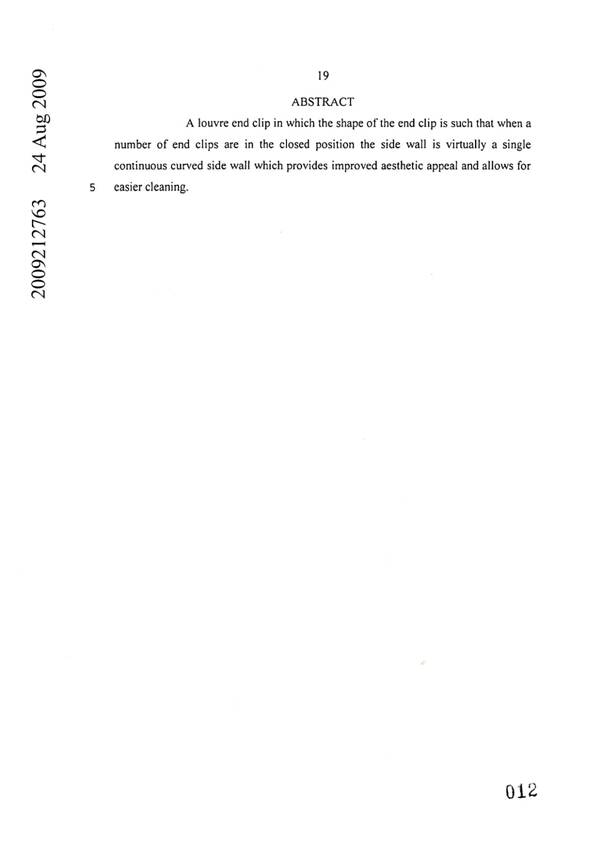
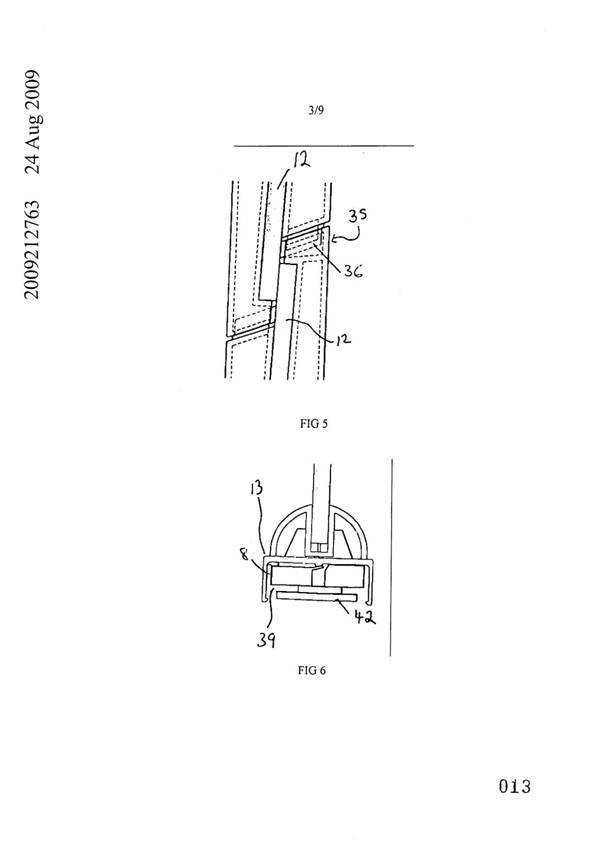
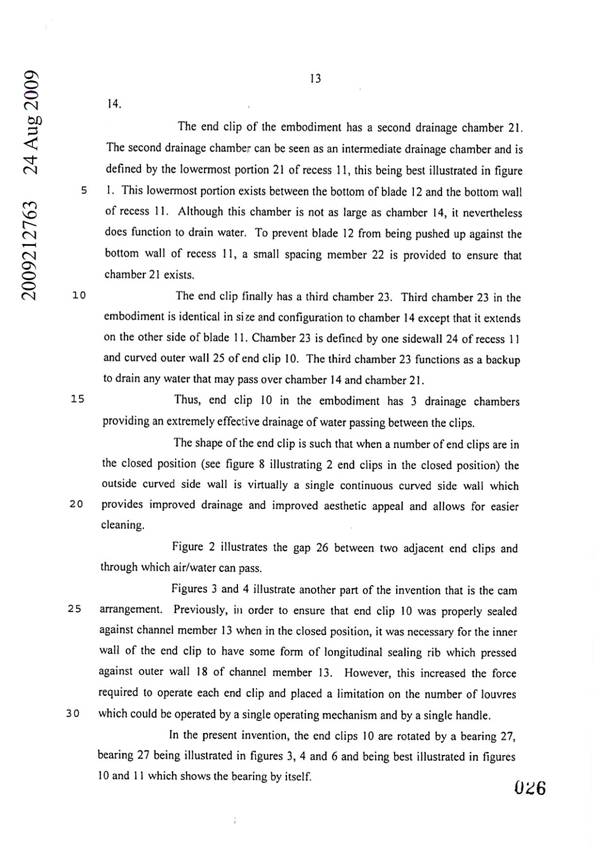
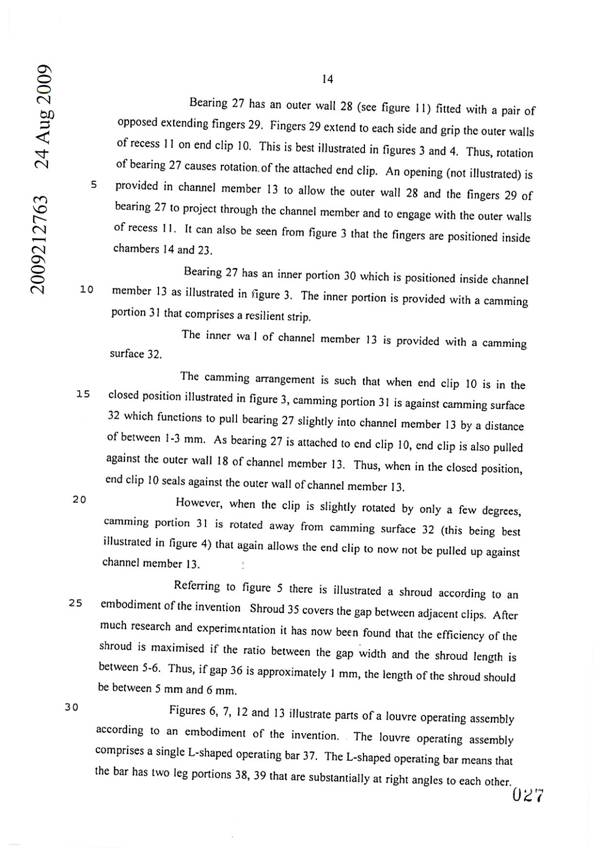
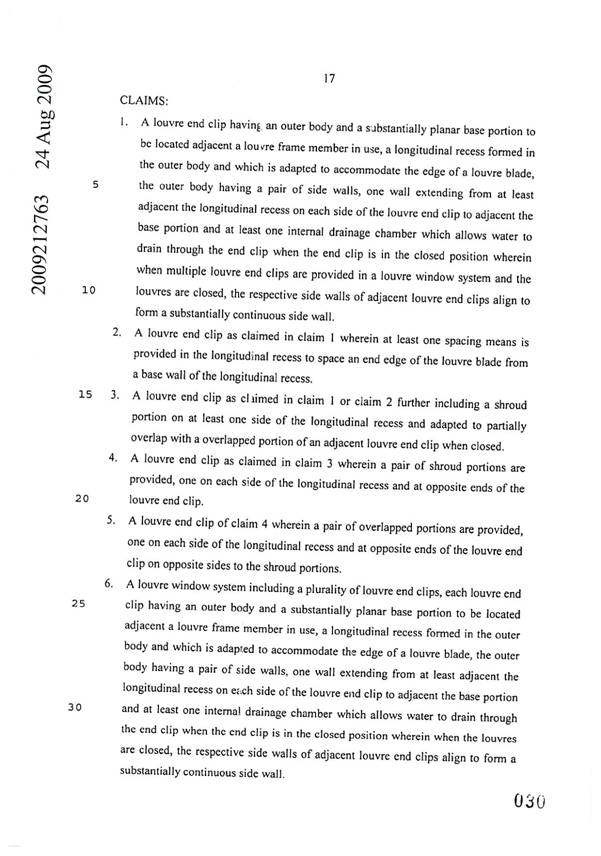
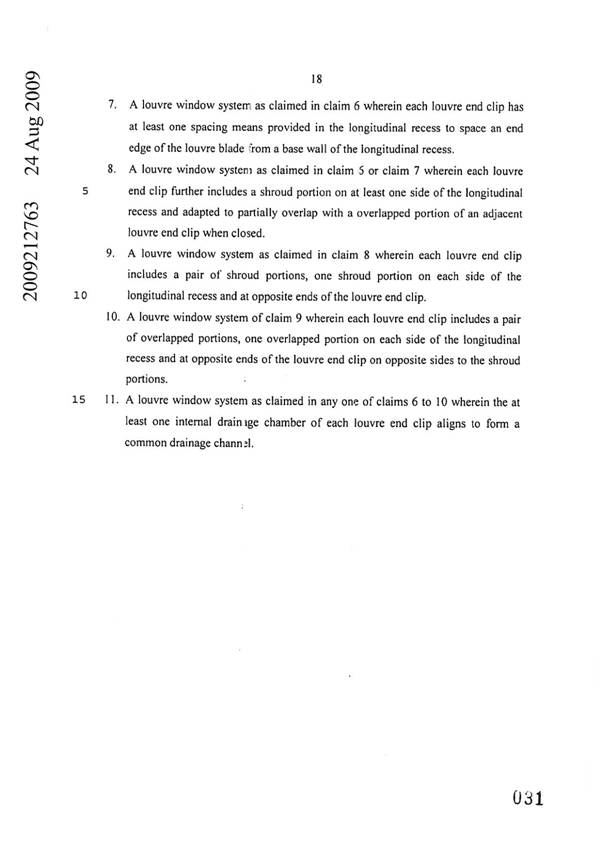
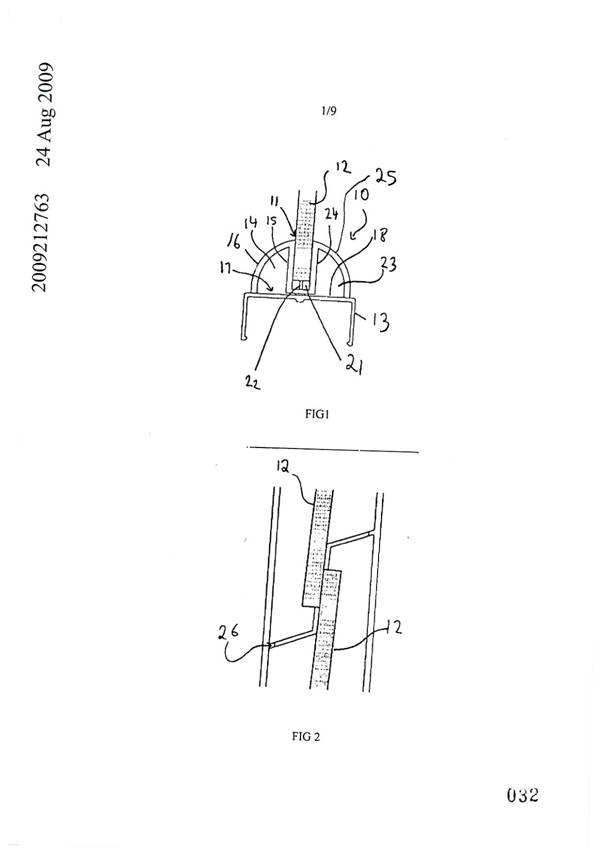
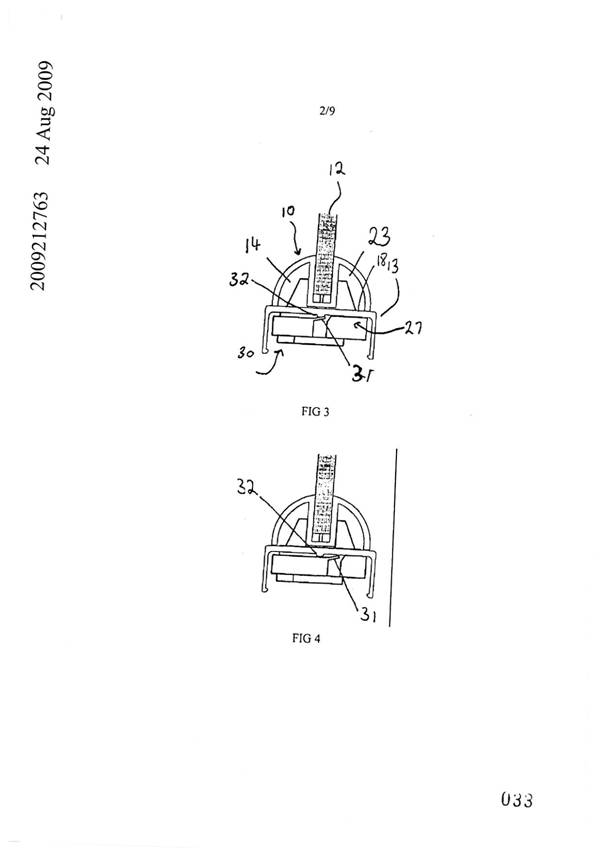
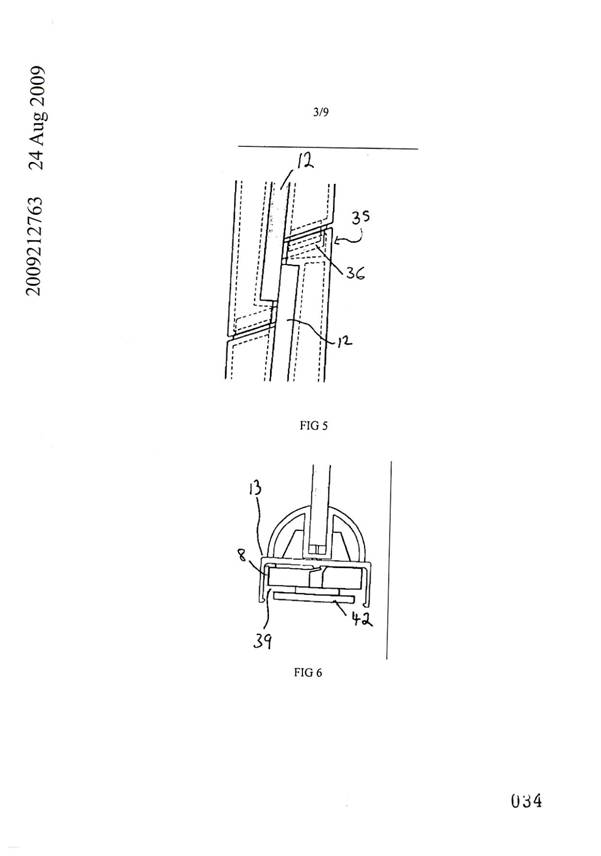
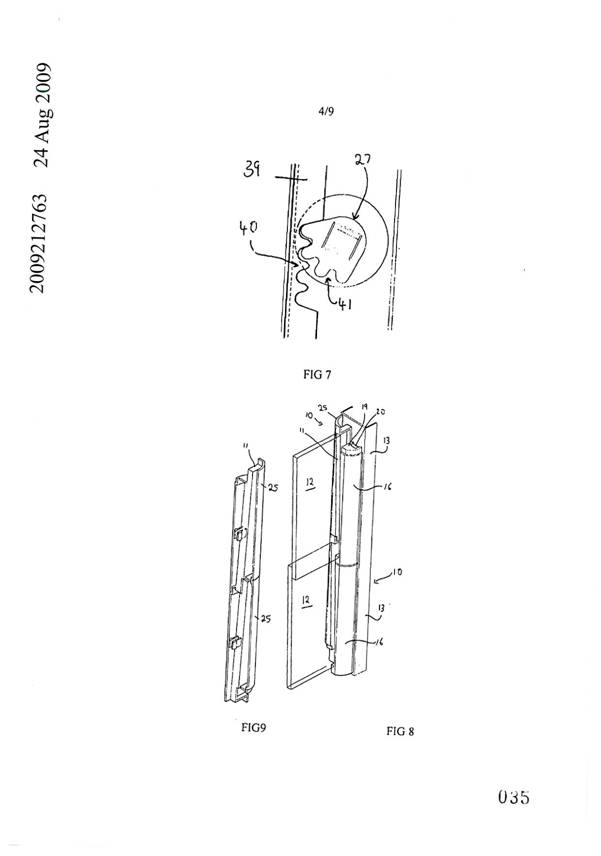
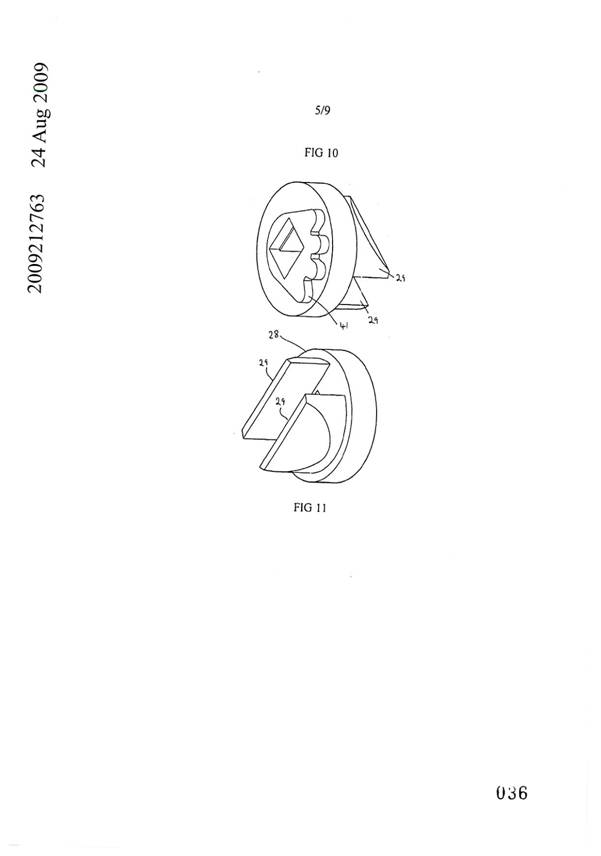
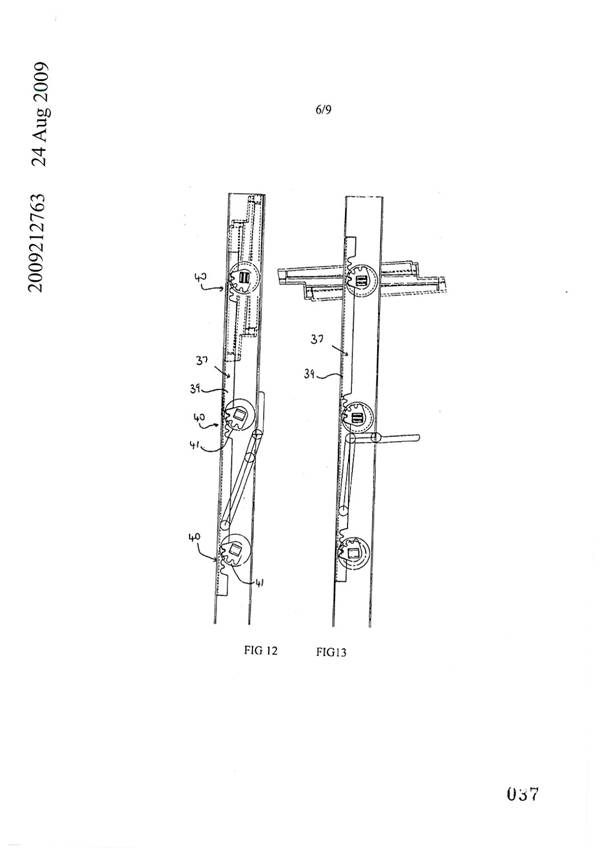
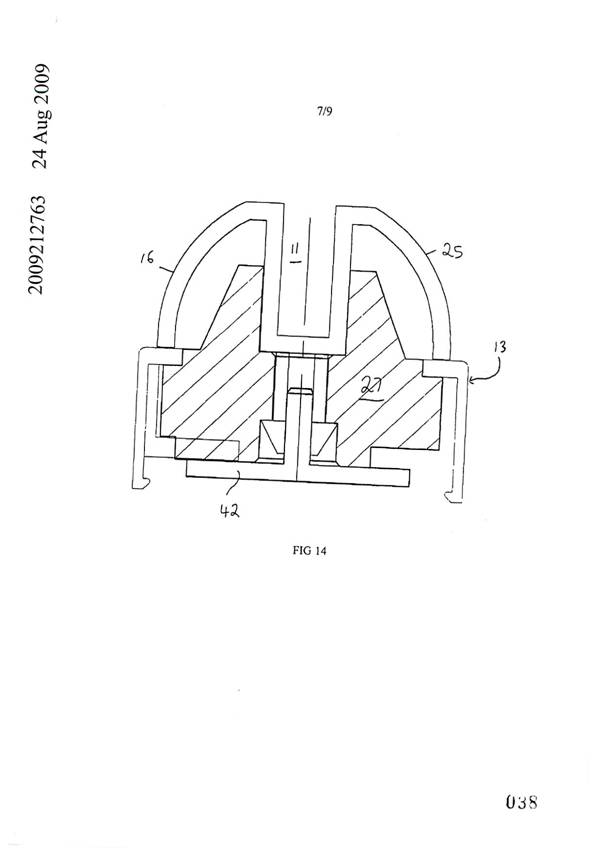
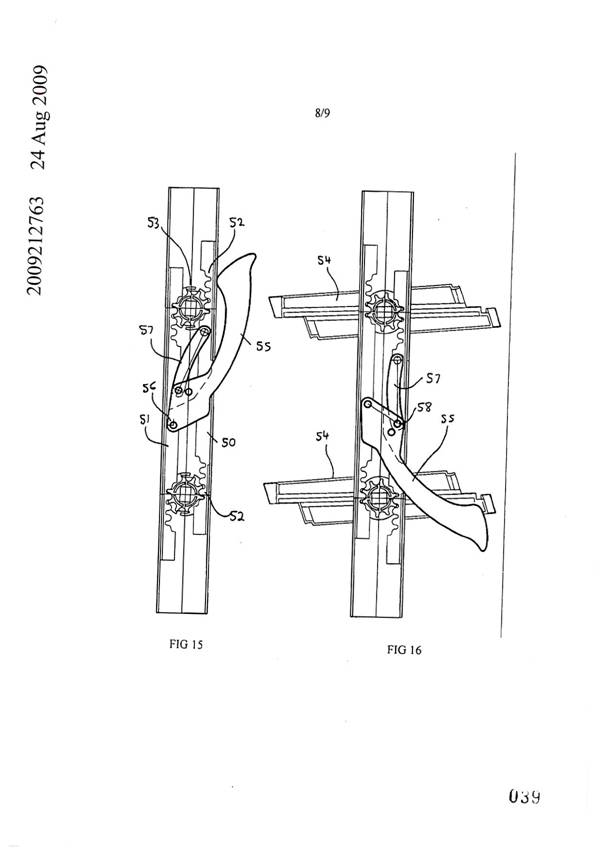
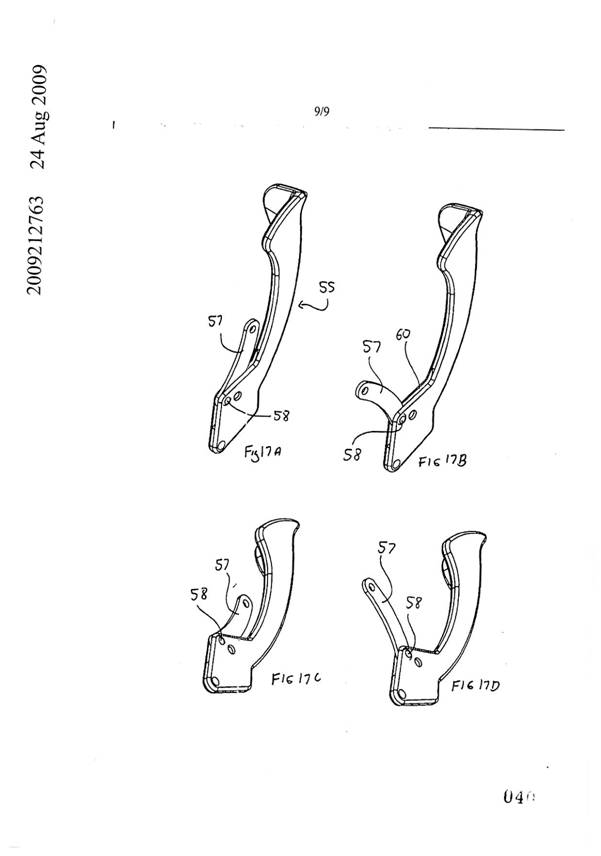
ANNEXURE B
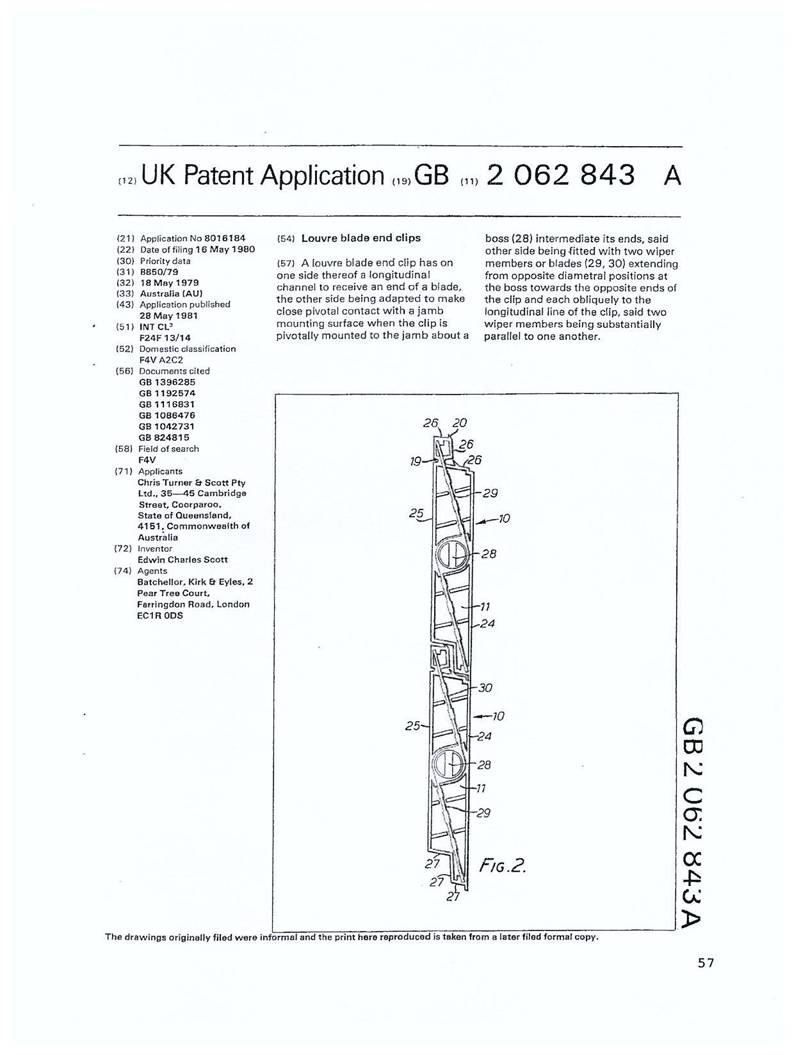
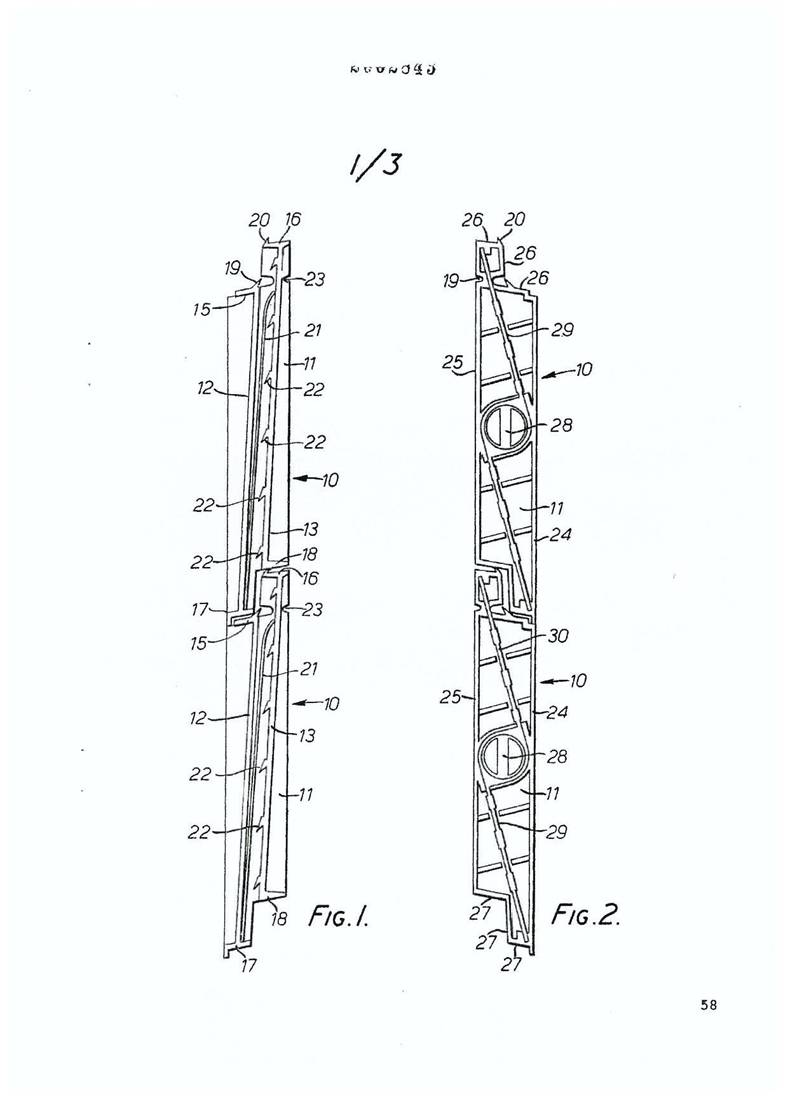
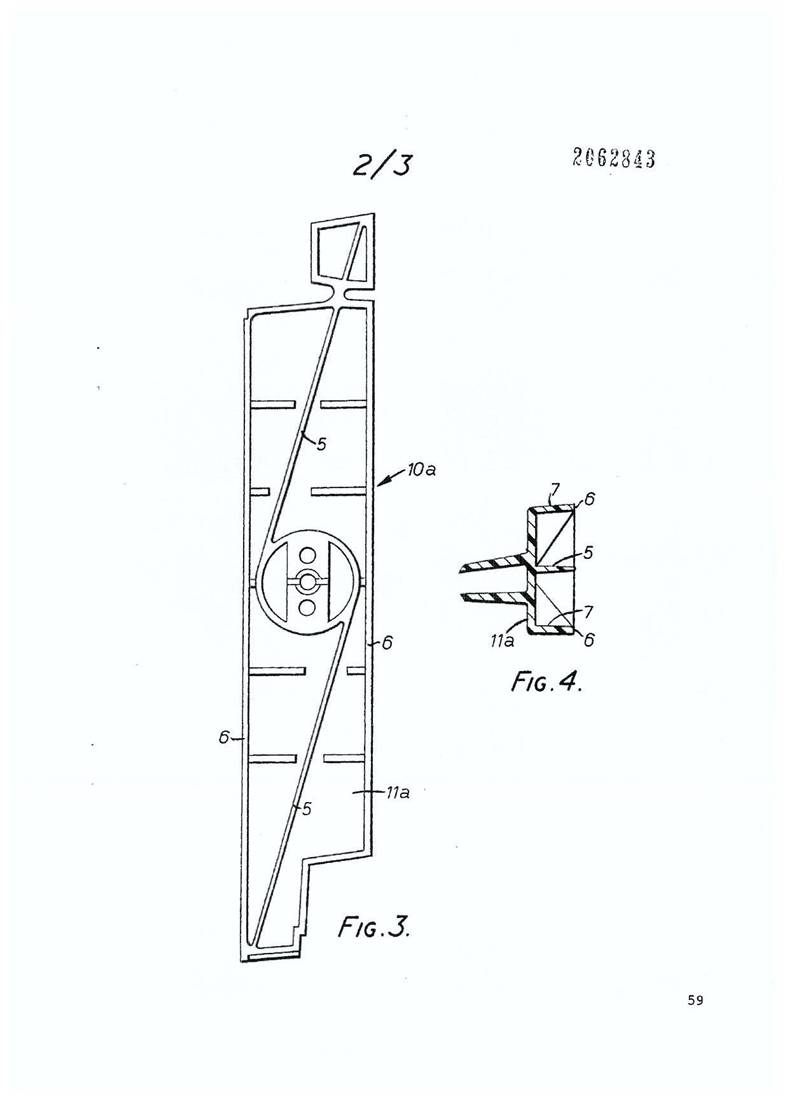
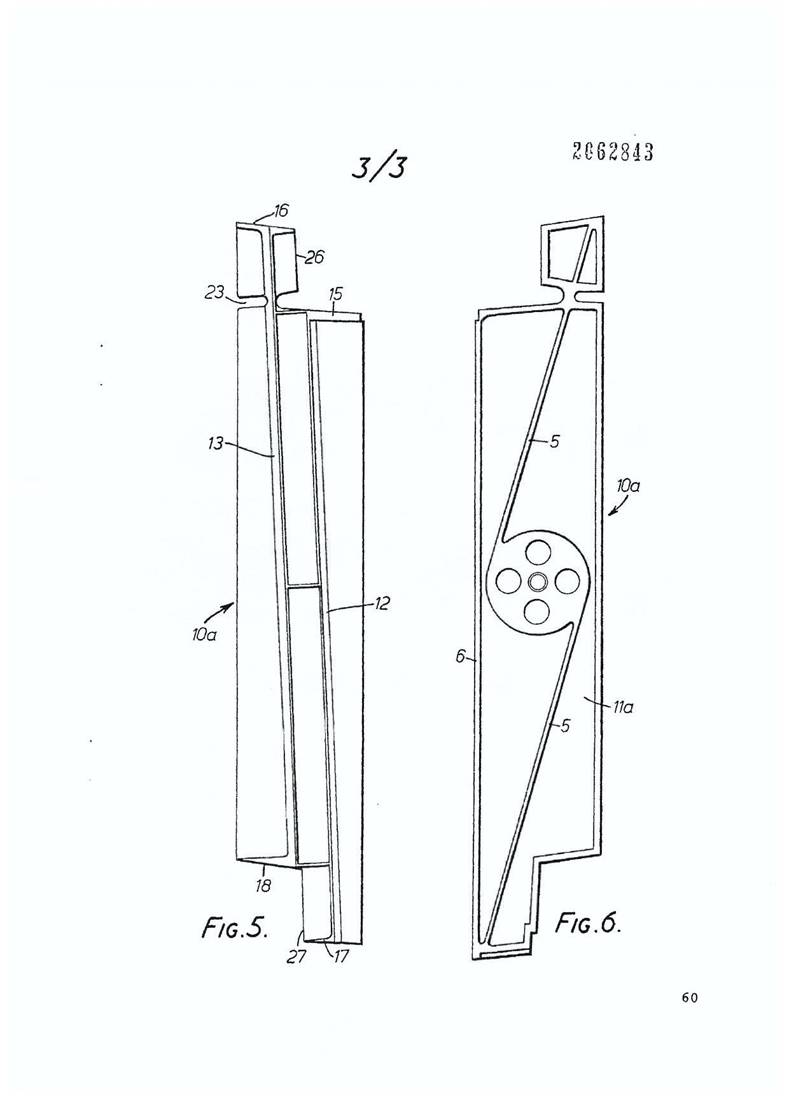
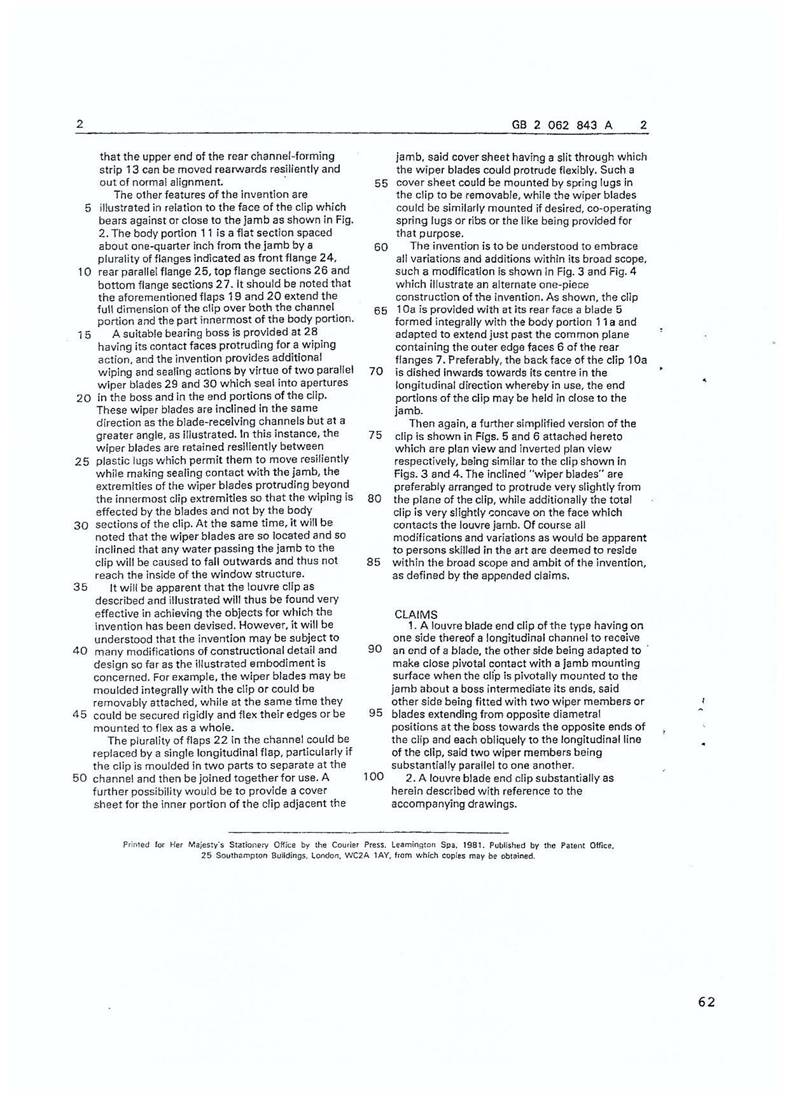 ANNEXURE C
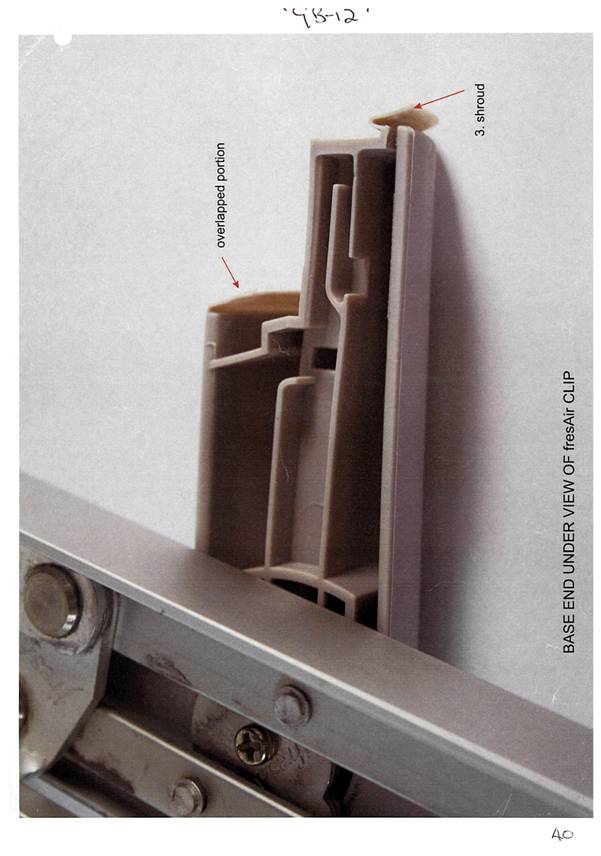
ANNEXURE D
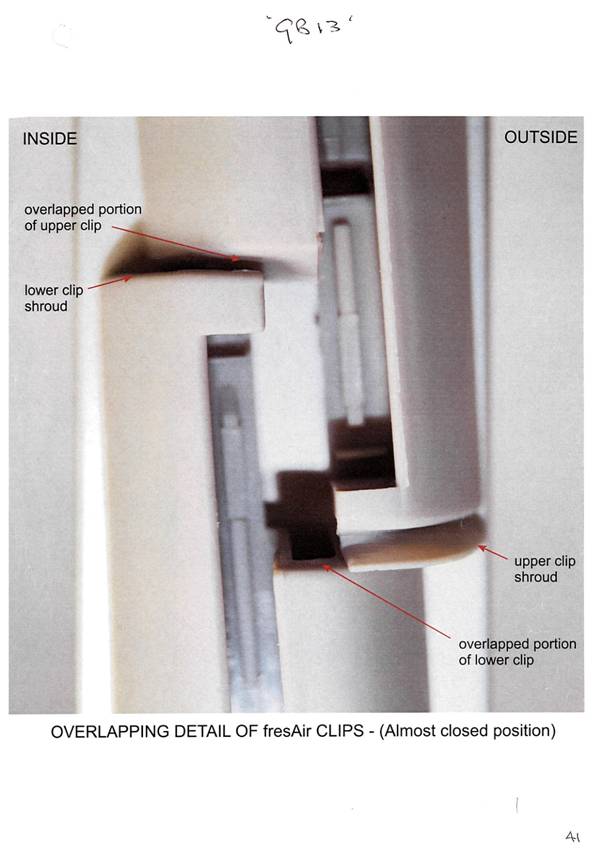
ANNEXURE E