

FEDERAL COURT OF AUSTRALIA
SMA Solar Technology AG v Beyond Building Systems Pty Ltd (No 5) [2012] FCA 1483
|
IN THE FEDERAL COURT OF AUSTRALIA |
|
|
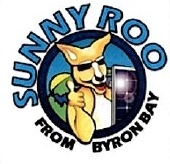
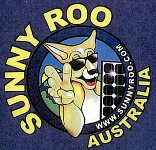
First Applicant SMA AUSTRALIA PTY LTD ACN 127 198 761 Second Applicant | |
|
AND: |
BEYOND BUILDING SYSTEMS PTY LTD ACN 128 030 302 First Respondent IPEVO PTY LTD ACN 143 970 978 Second Respondent |
|
DATE OF ORDER: |
|
|
WHERE MADE: |
THE COURT ORDERS THAT:
1. The parties are to bring in short minutes of order giving effect to these reasons by 1 February 2013.
Note: Entry of orders is dealt with in Rule 39.32 of the Federal Court Rules 2011.
|
NEW SOUTH WALES DISTRICT REGISTRY |
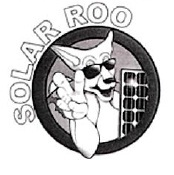
|
|
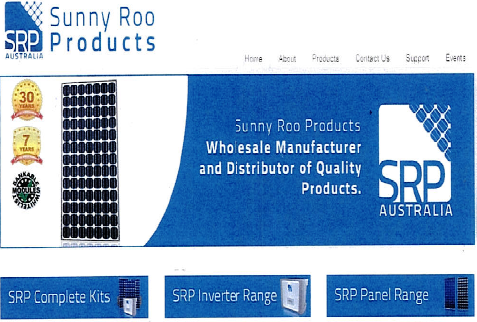
GENERAL DIVISION |
NSD 817 of 2011 |
|
BETWEEN: |
SMA SOLAR TECHNOLOGY AG First Applicant SMA AUSTRALIA PTY LTD ACN 127 198 761 Second Applicant |
|
AND: |
BEYOND BUILDING SYSTEMS PTY LTD ACN 128 030 302 First Respondent IPEVO PTY LTD ACN 143 970 978 Second Respondent |
|
JUDGE: |
PERRAM J |
|
DATE: |
21 December 2012 |
|
PLACE: |
SYDNEY |
REASONS FOR JUDGMENT
|
[1] | |
|
[9] | |
|
[9] | |
|
[16] | |
|
[24] | |
|
[26] | |
|
[28] | |
|
[28] | |
|
[32] | |
|
[38] | |
|
[39] | |
|
[40] | |
|
[51] | |
|
[57] | |
|
[58] | |
|
[71] | |
|
[79] | |
|
[80] | |
|
[80] | |
|
[81] | |
|
[82] |
1 A solar inverter converts the direct current of electricity produced by photovoltaic panels (i.e. solar panels) into an alternating current which can both power household electrical goods and be used to feed electricity back into the general electricity grid. The first applicant (‘SMA Germany’) is the German parent of a multinational group of companies which manufactures and distributes solar inverters together with related devices and services. It does so under a family of registered trade marks, many of which contain the word SUNNY. One member of that family is the trade mark SUNNY BOY, under which SMA Germany sells a range of solar inverters. The second applicant (‘SMA Australia’) is the Australian subsidiary responsible for the distribution of SMA Germany’s products in Australia. SMA Australia is a wholesale operation and does not sell directly to the public (though it does provide some after-sales service to retail customers). I shall refer to SMA Germany and SMA Australia collectively as ‘SMA’ save where the context otherwise requires.
2 Until it was wound up earlier this year, the first respondent (‘BBS’) conducted two businesses. One was a retail business of selling and installing complete solar energy systems. It operated under the name Beyond Building Energy. The other was a wholesale business which sold complete solar systems and their components. BBS commenced operations in 2007.
3 In the conduct of both businesses, BBS marketed solar inverters, other solar products (such as photovoltaic panels) and installation services using, in various ways, the brand SUNNY ROO. This included the affixation of the word SUNNY ROO to the inverters themselves as well as its use in promotional literature and on a website. SMA has taken exception to this. It says that, by reason of its extensive sale and marketing of solar inverters under the name SUNNY BOY, it has acquired a goodwill which BBS’s use of the brand SUNNY ROO is apt to misappropriate. It claims that the same conduct by BBS was misleading and deceptive contrary to ss 52 and 53 of the Trade Practices Act 1974 (Cth) (‘TPA’) and ss 18 and 29 of the Australian Consumer Law (‘ACL’). Apart form those claims, SMA also alleges that BBS infringed its registered SUNNY trade marks.
4 At the liability trial (the question of damages having been deferred), SMA pursued these claims against BBS by way of a default judgment application because BBS was, by then, in liquidation and neither it nor its liquidator thought it fruitful to participate in the trial. The bulk of the trial was concerned, therefore, with SMA’s efforts to establish that a related entity, Ipevo Pty Ltd (‘Ipevo’), was accessorily liable along with BBS. BBS and Ipevo were related by virtue of the fact that they had a common director, Mr Vincent Smith.
5 One of the ways Ipevo pursued its defence was to deny that BBS would have been liable at all, thereby excluding its own liability. In that aspect of its defence, it made two basic points: the word ‘SUNNY’ in SUNNY ROO was descriptive only and could not be misleading; and, at least in relation to the passing off and s 52 claims, it drew attention to the actual brand used on the products by BBS to say that, viewed in context, there could be nothing misleading in what BBS had done.
6 The two relevant logos were as follows:
|
|
|
7 On the question of how Ipevo was liable for the actions of BBS (if the liability of BBS were otherwise established), SMA argued either that Ipevo was a joint tortfeasor with BBS or that it was knowingly concerned in BBS’s misleading and deceptive conduct. Principally, the question of joint tortfeasorship arose from SMA’s submission that it was Ipevo which had licensed BBS to use the name SUNNY ROO.
8 Having sketched in outline the issues, it is convenient to turn to the facts.
9 SMA Germany is based in Kassel, which is in the state of Hesse in central Germany. Kassel is famous for having been home to the Brothers Grimm in the early 19th century and for its ice hockey history. SMA Germany was incorporated in 1981. It rapidly expanded and now operates in 17 countries, including Australia. It began exporting its inverters to Australia in 1999. In 2007, it incorporated SMA Australia to conduct its distribution business. Worldwide, the group employs more than 5,000 people. It is presently the world’s largest producer and distributor of solar inverters and monitoring systems for photovoltaic applications. It manufactures a wide range of inverters together with related products and services, such as monitoring systems and design software. Beginning in the mid-1990’s, it began the production of inverters under the SUNNY BOY name with the SUNNY BOY SB700. Subsequently, it has manufactured and sold other lines of inverters under names such as SUNNY TRIPOWER, SUNNY CENTRAL, SUNNY TOWER, SUNNY ISLAND and SUNNY BACKUP.
10 SMA’s monitoring systems and design software are also branded with the word SUNNY under names such as SUNNY BEAM, SUNNY WEBBOX and SUNNY DESIGN.
11 SMA Germany’s revenues from the sale of inverters is very substantial. It commands a significant portion of the Australian market. Prior to 9 June 2009 – the day on which the Federal Government introduced a substantial subsidy for the purchase of photovoltaic panels – it held 80-85% of the market. Once the subsidy was introduced, there followed an explosion in the demand for such panels and, with them, solar inverters. That demand outstripped supply and led to the entry of a large number of new manufacturers and importers of inverters. During this period, SMA’s Australian market share declined to just under 50%.
12 When an end to the subsidy was announced a year in advance of its actual end date, this led to another boom as consumers scrambled to take advantage of the scheme before its imminent demise. Since the end of the subsidy scheme, SMA’s Australian market share has recovered. Whilst it is true that SMA’s market share declined during the subsidy period, the absolute level of its sales never fell and its drop in market share was caused not by a contraction of its share of a market of fixed or constant size, but by an overall inflation of the market itself.
13 In 2010, SMA Germany’s revenues were €1.920 billion. Australian sales by SMA Germany (and after 2007, SMA Australia) were at 400 in 2001 and had increased to a significant number less than 100,000 by 2010.
14 SMA’s inverters have been marketed in Australia under the various SUNNY names. This marketing has consisted of sales brochures, trade publications, websites, press releases, e-newsletters and mail-outs. SMA’s products (and, with them, the word SUNNY) have also appeared on the promotional materials of third parties such as installers (who often advertise the products they install). SMA’s products have also been displayed at trade shows throughout the Asia-Pacific. Additionally, SMA offers training for qualified tradespeople about SUNNY products at the ‘SMA Solar Academy’ at which, I accept, the SUNNY products and their branding are further advertised.
15 I conclude, in light of those matters, that by 2007 the words SUNNY BOY, when used in connexion with solar inverters together with other related products and services, had come to signify to the trade and the public in Australia a connexion to SMA. In those circumstances, both SMA Germany and SMA Australia have a substantial goodwill in the word SUNNY BOY when used in connexion with their solar inverters. Indeed, Ms Amato of counsel, who appeared for Ipevo, did not attempt to dissuade me from that conclusion when I put it to her during closing submissions.
(b) BBS, its inverters and other products and services
16 Until the middle of 2010, BBS did not have its own range of inverters but used those manufactured by other companies, including SMA. By 2010, the introduction of the Federal Government’s subsidy on the installation of photovoltaic panels was causing a significant shortage in the supply of inverters. The former Marketing Manager for BBS, Mr Russell, gave evidence, which I accept, that this shortage was, in some cases, delaying the installation of solar packages by between 6 and 12 months. Early in 2010, BBS decided to market its own range of solar inverters and in February 2010 it commenced advertising solar energy power system packages, which included products marketed under the brand SUNNY ROO FROM BYRON BAY. One of the products so marketed was a solar inverter, but photovoltaic panels were also marketed in the same manner. The first shipment of solar inverters were delivered to BBS from China on or around 16 June 2010 and they appear to have commenced being sold to the public shortly thereafterwards, in July 2010. These inverters displayed on their front the SUNNY ROO FROM BYRON BAY logo set out at [6] above on the left. The logo on the right was also extensively used.
17 The important features of these logos are the kangaroo (known as Sunny), his dark glasses, his thumbs-up pose (in one) and peace sign (in the other) and the fact that he appears to be holding a solar panel. It is also to be noted that Sunny, in the logo on the left, is said to be from Byron Bay, a town on the north coast of New South Wales with a reputation for being laid-back. It is useful to observe that Sunny is bright yellow. Indeed, as I discuss later, Sunny was intended by its creator (Mr Russel) to be a solar kangaroo and to this end, like Apollo himself, he literally shines like the sun. Mr Russell created Sunny in late 2008 in Cork, Ireland.
18 He gave evidence, which I accept, that he was trying to capture in the brand both the concept of the sun and, at the same time, some kind of motif with a uniquely Antipodean flavour. In addition, his research into this part of the world had revealed to him that Sunny was a name sometimes given to people. The brand he formulated, therefore, combined all three concepts into one. Although there was some inconclusive discussion at the Bar table as to whether the principal human character in the well-known television show ‘Skippy the Bush Kangaroo’ was possibly also called Sunny, the evidence did not disclose whether this was truly so and, in any event, it does not appear that Mr Russell (a New Zealander) was aware of this.
19 Sunny’s existence was not limited to the logos. He was central to all of BBS’s branding and marketing of solar products and services. During the course of the hearing, I was shown photographs of a life-size bright yellow kangaroo suit (replete with black sunglasses) into which a man (or woman) could get. I was also told about a children’s book, key rings, badges and pens.
20 In October 2010, a trade mark application for a modified version of SUNNY ROO was made. Sunny had been reinvented as SOLAR ROO and looked like this:
21 Mr Russell gave evidence that SOLAR ROO was never used. I accept, therefore, the perhaps unfortunate submission of Ms Amato that this particular yellow kangaroo is a ‘red herring’.
22 In 2010, a decision was made within BBS to reduce significantly the role of Sunny who, by then, was thought, so Mr Russell reported, to look perhaps a little amateurish and to move instead to a new branding, which appeared as follows on the SUNNY ROO PRODUCTS website:
23 The key featuers of this are the name SUNNY ROO PRODUCTS and the three-letter acronym SRP. SMA’s case includes complaint about SUNNY ROO PRODUCTS but, perhaps understandably, not about SRP.
(c) The use of the SUNNY ROO name
24 BBS used the name SUNNY ROO in various ways. A print-out of the website www.sunnyrooproducts.com from 2010 was in evidence. It advertised a number of products for sale under the SUNNY ROO logo that is reproduced on the right at [6] (slightly modified) next to the words SUNNY ROO PRODUCTS. Further into the website, there was advertised the SUNNY ROO range of inverters. Again, this was done under the SUNNY ROO name. The names of each of these inverters began with the words SUNNY ROO, i.e. SUNNY ROO SR2000TL. These pages also reveal the same logo.
25 The name SUNNY ROO was also used in BBS’s print campaigns in 2010. A sales brochure was in evidence for each size of solar panel system provided by BBS (i.e. 1.5kW, 2kW, 3kW, 4kW and 5kW). Each was marketed with a SUNNY ROO inverter. The SUNNY ROO name was also used to market BBS’s installation services in print brochures (‘SUNNY ROO: We are Australia’s largest manufacturer, supplier and installer of solar equipment’). In addition, the SUNNY ROO logos were used to market various solar products including panels and inverters. This was done, for example, by means of sales brochures emblazoned with the logos and also on the SUNNY ROO PRODUCTS website (www.sunnyrooproducts.com).
26 By July 2010, when the SUNNY ROO inverters began to be sold, the logo on the left at [6] was a registered trade mark although it had not been, and was not ever, owned by BBS. Instead, Mr Vincent Smith, who was a director of BBS, applied for registration of the logo as a trade mark on 1 August 2009. On 31 May 2010, Mr Smith assigned his interest in this application for registration to Ipevo, of which he was also a director and which had been incorporated on the same day. On 15 June 2010, the logo on the left at [6] was registered as a trade mark and given a registration date of 1 August 2009. It was registered in Class 9 for solar panels, in Class 11 for evacuated heat pipe solar collectors and Class 37 for the installation of solar energy systems. It was not registered for solar inverters.
27 I turn then to the issues to be resolved.
III. Passing off and misleading and deceptive conduct
28 It will suffice for present purposes if SMA establishes, as I have found that it has, that it has a reputation in the words SUNNY BOY as designating its solar inverters, that BBS made one or more misrepresentations the reasonably foreseeable consequence of which was to injure that reputation and that, in fact, that reputation was injured: ConAgra Inc V McCain Foods (Aust) Pty Ltd (1992) 33 FCR 302 at 355-356 per Gummow J.
29 Given the reputation that SMA has in the word SUNNY BOY in relation to their solar inverters, I have little doubt that putting the word SUNNY in front of the word ROO and affixing it on the same products was, as a marketing gesture, apt to suggest a connexion with SMA which, despite all of Sunny’s other demonstrable virtues, was not his to suggest. I do not think that Mr Russell set out to exploit SMA’s goodwill, but that is what has happened and his lack of intention does not of itself defeat the claims made against BBS and Ipevo (and, in any event, as I discuss later, the real question is what the senior management of BBS intended, not Mr Russell). It will suffice in this area if damage to SMA’s goodwill is a reasonably foreseeable consequence of the use of the sign.
30 I do not think that any different result obtains in respect of BBS’s use of SUNNY ROO to market other solar products (such as photovoltaic panels) or services (such as installation). It is true that these are different products, but they existed in a milieu so closely related to the one in which SMA’s reputation in the word SUNNY BOY inhered that to use SUNNY ROO in relation to solar inverters made confusion in the public mind inevitable. In the case of installation services, this effect is even more pronounced.
31 That the use of SUNNY ROO in these ways had the capacity to damage the goodwill of SMA is amply borne out by the fact that there was substantial evidence that consumers were, in fact, misled into thinking that the SUNNY ROO inverters were manufactured by them. On one occasion, a defective SUNNY ROO inverter was returned by an installer to SMA Australia for testing. The staff of SMA Australia were then obliged to point out that the inverter was not an SMA product. Nor was this an isolated occurrence. A number of witnesses were called by SMA to further this point. They were employees whose task was to assist in fielding questions and inquiries from the public about SMA’s products. Each gave evidence that customers had called and had appeared to have been under a misapprehension that the SUNNY ROO product was one which was manufactured by SMA. Attempts under cross-examination to establish faulty recollection on the part of these witnesses failed, as did efforts to show the instances were very isolated or rare. My impression of these witnesses’ evidence was that they had a distinct recollection of these confused customers and that it happened frequently enough for it to be worth discussing.
32 Against this conclusion, Ms Amato mounted two defences – one procedural, one substantive. Procedurally, objection was taken to the phone call evidence on the basis that it was hearsay. At one point, I was persuaded to make a direction pursuant to s 136 of the Evidence Act 1995 (Cth) limiting the use to which this evidence could be put, namely, to prove the terms of the conversations but not the truth of what had been said. However, since the witnesses were giving evidence of a person reporting his or her state of mind, the issue was governed by s 66A of the Evidence Act, which is as follows:
66A Exception: contemporaneous statements about a person’s health etc.
The hearsay rule does not apply to evidence of a previous representation made by a person if the representation was a contemporaneous representation about the person’s health, feelings, sensations, intention, knowledge or state of mind.
33 During the course of the hearing (at T184) I clarified that I did not intend by those directions to exclude the operation of s 66A. I do not think my direction prevents the calls being used as evidence that customers were confused about the origins of SUNNY ROO products. That evidence was not a hearsay use of the material because the point was that what the customers thought was wrong. In any event, the important part of the evidence was the mental states of the customers – i.e. confusion – and not whether the customers were correct (which they were not). To the extent that my direction has a contrary effect, I revoke it.
34 I accept the thrust of the evidence about these calls, which shows that quite a few consumers had mistaken BBS’s inverters for SMA’s. In my view, this is powerful evidence of the misleading capacity of the SUNNY ROO mark when used in proximity to a solar inverter. I do not accept that the logo or Sunny himself sufficed to overcome the nature of the deception.
35 Ms Amato’s substantive point concerned the word ‘sunny’. Here, the argument was that the confusion arose from the word ‘sunny’ itself, which was no more than an adjective. The public was not likely to be misled by descriptive words, so the argument went, because it understood the mark not as signifying a connexion to SMA but instead as a word with its own distinct meaning.
36 It is true that the word ‘sunny’ can describe not only the weather but the moods of people. However, I do not think that is how a reasonable person would regard the word being used on BBS’s inverters. This is because of the goodwill that SMA has in the name SUNNY BOY when used in connexion with inverters. The solar-inverter-purchasing public does not think that a SUNNY ROO inverter is literally shining like the sun or that it has a cheerful disposition (even if both of those statements are true of its mascot). What is likely to spring to the mind of that public is not the idea of an inverter to which the adjectival aspects of the word ‘sunny’ may be attached, but rather that the inverter is one with a connexion to SMA.
37 In those circumstances, I conclude: (a) that BBS did misrepresent that its products had a connexion with SMA, (b) that it was reasonably foreseeable that this would harm SMA’s goodwill in SUNNY BOY and (c) that it did, in fact, do so. I form conclusions (a) and (b) by examining the two logos, the names SUNNY ROO and SUNNY ROO PRODUCTS and the manner in which they were used to market BBS’s products and services. I draw conclusion (c) from the evidence above which indicates actual confusion in the public mind.
(c) Misleading and deceptive conduct
38 I did not apprehend that there was any dispute that, if the passing off claim succeeded against BBS, then so should the claims under ss 52 and 53 of the TPA and ss 18 and 29 of the ACL. In this case, the questions of liability and damages have been severed, with the latter being postponed to a later date. Accordingly, SMA did not seek to lead direct evidence of either company’s losses. I am satisfied, nevertheless, that both have suffered loss and damage so that they establish each of the constituent elements of these causes of action (which includes loss and damage). I am satisfied of this because of the evidence of actual consumer confusion, from which I infer actual harm to their goodwill.
39 SMA’s claim on Ipevo is twofold. It is said that Ipevo is a joint tortfeasor with BBS by reason of its having licensed the SUNNY ROO mark to BBS and that it was, in any event, knowingly concerned in BBS’s misleading and deceptive conduct.
(a) Liability as a joint tortfeasor
40 The applicants relied upon the fact that Ipevo had licensed the SUNNY ROO mark to BBS under a written licence agreement. Reliance was placed on Thompson v Australian Capital Television Pty Ltd (1996) 186 CLR 574. In that case, it was held that a licensor of the right to broadcast a television programme was a joint tortfeasor with the licensee broadcaster who did, in fact, broadcast it: ‘to constitute joint tortfeasors two or more people must act in concert in committing the tort’ observed Brennan CJ, Dawson and Toohey JJ (at 580-581). When this was applied to the kinds of licensing arrangements common in the television industry, the answer was clear: ‘The transmission of the television program in question was the result of concerted action on the part of Channel 9 and Channel 7 and that made them joint tortfeasors. In the same way, the journalist, printer, publisher and distributer are joint tortfeasors in respect of the ultimate publication of a libellous periodical or book’: at 581, citing G Williams, Joint Torts and Contributory Negligence (Stevens, 1951) at 10-11. As Gummow J pointed out in the same case (at 600), this was a reflection of what had been said by Scrutton LJ in The ‘Koursk’ [1924] P 140 at 155.
41 In this case it is clear, therefore, that if Ipevo did licence BBS to use the word SUNNY ROO then it will be a joint tortfeasor with BBS.
42 Ipevo did not really seek to cavil with that proposition. Instead, it trained its fire upon the question of what it was that Ipevo had licensed BBS to do, with the eventual intent of demonstrating that what had, in fact, been done by BBS was not an act which had been licensed by Ipevo. This endeavour called for a close reading of the license agreement. I return to its terms shortly. In the meantime, one should note SMA’s responsive postures to this argument, which were twofold: first, a rejection of Ipevo’s interpretation of the licence agreement; secondly, a contention that, whatever else had occurred, Ipevo must have implicitly licensed BBS to use the SUNNY ROO name.
43 One begins then with license agreement. This was dated 31 May 2010. The operative provision was cl 1 (‘The licensor [Ipevo] hereby grants to the licensee [BBS] a non-exclusive license to use the intellectual property for the permitted use on the terms of this agreement’). What was the ‘intellectual property’ which was subject to this grant? It was defined in cl 15(g) to mean:
(i) The confidential information;
(ii) The improvements;
(iii) The patent; and
(iv) The trade mark
44 Ms Amato drew attention to (iv) and to the fact that ‘trade mark’ was itself defined in cl 15(q) to mean ‘the registered trade mark, trade mark registration application and common law trade marks described in the schedule’. Here things become a little unclear because the schedule contained no express reference to trade marks, but instead recorded the following matters:
REFERENCE SCHEDULE
Agreement date 31 May 2010
License Fee $35,000 per annum, or as agreed in writing by parties.
Product Call Centre and Marketing Systems and IP relative to retail and wholesale solar sales in Australia.
Business Retail and wholesale solar sales in Australia
Commencement date 31 May 0210
Term 12 months (automatically renewed unless terminated in writing by licensor)
45 The parties nevertheless approached the matter on the basis that the ‘registered trade mark’ was a reference to registered trade mark 1312858 and the trade mark registration application was a reference to trade mark registration application 1389262. The former is set out above at [6] (on the left). The trade mark application concerned the SOLAR ROO logo set out above at [20]. Nothing turns on it.
46 The point to be made, as I understood it, was that SMA’s case related not to the logo but only to the name SUNNY ROO. Perhaps to put the matter another way, this was not an example of a get-up case. That being so, as the argument was developed, one needed to ask not whether BBS had been authorised by Ipevo to use trade mark 1312858 but, rather, whether Ipevo had authorised BBS to use the name SUNNY ROO ‘without more’, as Ms Amato put it.
47 Mr Darke of counsel, who appeared for SMA, gave an answer to this argument which depended on the license terms themselves. He submitted that Ms Amato’s argument paid too little attention to the terms of the definition of ‘intellectual property’ (above) for it included in sub-cl (ii) what it termed ‘[t]he improvements’. This was a defined term whose meaning was specified in cl 15(f) as meaning ‘any improvement, modification, enhancement or derivative of the intellectual property arising during the term’. The name SUNNY ROO was to be seen as having been derived from trade mark 1312858 and was, as such, a derivative of that mark. If that were so, then the SUNNY ROO name was an element of the ‘intellectual property’ under the license agreement, and it followed that Ipevo had licensed its use to BBS.
48 To this, Ms Amato replied with cl 3 which, so far as it is relevant, provided that if BBS ‘develops any improvements, [it] will notify [Ipevo] of the nature of the same and [BBS] hereby irrevocably:…(b) Assigns, transfers and sets over absolutely to [Ipevo] all right, title and interest to the improvements including all claims as they relate to the improvements’.
49 It was submitted that, before the irreversible assignment to Ipevo occurred, it would have been necessary first for BBS to have given notice to Ipevo. This depends upon reading the requirement of notice as a condition precedent to the clause’s operation. I do not, however, read it that way. It would be curious if BBS had been able to maintain ownership of any improvements merely by refusing to notify Ipevo. I accept Mr Darke’s submission that the name SUNNY ROO is derived from trade mark 1312858, from which it follows that it is part of the intellectual property licensed by Ipevo to BBS.
50 Once one arrives at that conclusion, SMA’s claim against Ipevo as a joint tortfeasor is made good. It is not necessary to resolve Mr Darke’s second contention concerning an implied licence.
51 I also accept that SMA’s second basis for establishing Ipevo’s liability – knowing involvement – is established. This case related to SMA’s claims under the TPA and the ACL. In both cases, SMA had an additional cause of action against a person who, whilst not being the direct contravenor, was nevertheless a person who was ‘involved’ in that contravention (see TPA, s 82(1) and ACL, s 236(1)). ‘Involved’ is defined in s 75B(1) of the TPA and s 2 of the ACL to include aiding, abetting, counselling or procuring, and also being in any way, whether directly or indirectly, knowingly concerned in, or party to, a contravention. It was the ‘knowingly concerned’ aspect of this definition upon which Mr Darke primarily relied. In effect, this liability will be established against Ipevo only if it is shown that it knew that licensing the use of the SUNNY ROO name to BBS to use on its solar inverters was likely to mislead consumers into believing there was a connexion with SMA. The time at which that knowledge would need to be demonstrated would be the date of the licence agreement, for it is the act of licensing which constitutes the knowing involvement. That date was 31 May 2010.
52 There is no direct evidence about this issue. I have concluded above that the design consultant, Mr Russell, did not create SUNNY ROO with a view to exploiting SMA’s goodwill. That, however, is not the end of the matter. The fact is that, prior to the date of licence agreement, BBS was installing SMA’s invertors. I am prepared to infer that its senior management was aware of the SUNNY BOY mark and its own use of the SUNNY ROO word mark. One may do this because BBS was selling and installing SMA’s inverters and because senior management must have been perfectly well-aware of the names of the products they were selling. It is far too much to believe that, as BBS began to use SUNNY ROO to market its inverters (and panels), it escaped BBS’s attention that there was more than a passing similarity to the name SUNNY BOY when it was selling SUNNY BOY inverters.
53 No-one from BBS’s senior management was called to suggest that the implausible was the reality. To be clear, I infer from the words SUNNY ROO and SUNNY BOY themselves that the senior management of BBS must have been aware of the deceptive similarity between them and I may more comfortably draw that inference in circumstances where there was a failure by Ipevo to call Mr Smith or any other person in a management position on the topic: Jones v Dunkel (1959) 101 CLR 298. As it happens, Mr Smith was one of BBS’s directors. He was also a director of Ipevo. He executed the licence agreement on behalf of both companies. Ought one to infer that Mr Smith was aware that the SUNNY ROO word mark was deceptively similar to SMA’s SUNNY BOY mark when used on inverters? One could certainly reasonably infer that he was, since he was a director and presumably involved in the management of the company. Indeed, this seems to be the inference which should be drawn, especially in light of the following remarks made about Mr Smith in a BBS promotional document that was in evidence before me:
BENEFIT TO AUSTRALIA
Beyond Building Systems Pty Ltd (BBS) established in 2007 is now a multi-disciplinary team of engineers, designers, accountants, marketing professionals and business managers assembled and managed directly by Vincent Smith from locations at Byron Bay and Tweed Heads NSW and Burleigh Heads QLD.
…
Vince is currently responsible for the development and implementation of business plans and strategies that have managed the company’s infrastructure to date. The company is now focusing on the development and growth towards a 2011 (Q2) ASX IPO.
54 I am minded to infer that he was aware all the more because he was not called, as easily he could have been, to suggest the contrary. I have no hesitation in attributing Mr Smith’s knowledge to Ipevo.
55 In those circumstances, I conclude not only that BBS engaged in misleading and deceptive conduct by using the word SUNNY ROO in connexion with the sale of its solar inverters and solar product installation services, but also that Ipevo was knowingly concerned in this contravention. For reasons already given, I am satisfied that loss was suffered.
56 I turn then to the trade mark issues.
57 SMA pursued two trade mark claims. First, it is said that the use by BBS of SUNNY ROO on solar inverters constituted infringement under s 120(1) of the Trade Marks Act 1995 (Cth) on the basis that the SUNNY ROO mark was deceptively similar to SUNNY BOY. Secondly, it was said that BBS had used SUNNY ROO on goods of the same description as SMA’s solar inverters, or in respect of closely related services, and that in this regard there had been infringement under s 120(2).
(a) Infringement under s 120(1) of the Trade Marks Act
58 Section 120(1) of the Trade Marks Act provides:
120 When is a registered trade mark infringed?
(1) A person infringes a registered trade mark if the person uses as a trade mark a sign that is substantially identical with, or deceptively similar to, the trade mark in relation to goods or services in respect of which the trade mark is registered.
59 The SUNNY ROO mark was used to sell solar inverters. Although in its pleading SMA alleged infringements of a number of its trade marks, in its final submissions it directed its focus solely on its SUNNY BOY mark. The SUNNY BOY mark is registered in Class 9 for:
Energy supplying devices, essentially comprising transformers, inverters, battery storage and measuring and controlling devices therefore; computer software, namely evaluation software designed for inverter products in photovoltaic installations; all aforementioned goods included in this class.
60 The first question posed under the rubric of s 120(1) is whether BBS used the SUNNY ROO mark ‘in relation’ to inverters. The second question is whether it so used the mark as a trade mark. That question will receive an affirmative answer when the nature and purpose of the use is examined objectively and an inquiry is then posed as to whether consumers would see the sign as possessing the character of a brand or badge of origin: Nature’s Blend Pty Ltd v NestlÉ Australia (2010) 272 ALR 487; [2010] FCAFC 117 per Stone, Gordon and McKerracher JJ at [19].
61 Both of these matters should be answered in SMA’s favour. BBS advertised the availability of its inverter range through its SUNNY ROO PRODUCTS website (www.sunnyrooproducts.com). This range included four inverters called the SUNNY ROO SR200TL, the SUNNY ROO SR3000TL, the SUNNY ROO SR4200TL and the SUNNY ROO SR5000TL. The website put the matter this way: ‘[t]he SUNNY ROO TL range of inverters has been created specifically for the Australian solar market’. The inverters thus marketed bore one of the SUNNY ROO logos which also, obviously enough, contained the name SUNNY ROO. There is no doubt, therefore, that the SUNNY ROO name was used by BBS to sell its inverters and that its use to do so was use of the mark as a trade mark. I did not apprehend that these two aspects of the matter were seriously contested.
62 The real question was whether, as SMA contended, the SUNNY ROO name was deceptively similar to the SUNNY BOY registered trade mark. This directs attention to s 10 of the Trade Marks Act, which provides that ‘a trade mark is taken to be deceptively similar to another trade mark if it so nearly resembles that other trade mark that it is likely to deceive or cause confusion’.
63 In my opinion, the name SUNNY ROO so nearly resembles the name SUNNY BOY that it is likely to cause confusion. In reaching that conclusion, I do not put the two marks side by side and ask myself how they look. Rather, I inquire into the impression that persons of ordinary intelligence and memory would have of the name SUNNY ROO based on their recollection of SMA’s mark, SUNNY BOY: cf. Shell Company of Australia Ltd v Esso Standard Oil (Australia) Ltd (1963) 109 CLR 407 at 415 per Windeyer J (at trial). I do so cognisant of the fact that there is considerable aural similarity between the two marks and not a small degree of visual similarity. SUNNY appears in both, ROO and BOY are both monosyllabic nouns and each consists, as Mr Darke pointed out, of a consonant followed by a diphthong: cf. Australian Woollen Mills Ltd v FS Walton & Co Ltd (1937) 58 CLR 641 at 658 per Dixon and McTiernan JJ. That similarity is, in effect, a function of the fact that the idea that SUNNY ROO naturally suggests to the mind of a person who sees it – the word combination of the word SUNNY with a short name – is likely to resonate with their recollection, however imperfect, of SUNNY BOY: cf. Jafferjee v Scarlett (1937) 57 CLR 115 at 121-122 per Latham CJ. In that regard, the impact of the word SUNNY in association with goods related to the solar industry should be acknowledged. Relevant, too, is the fact that the SUNNY ROO mark is applied to inverters which are marketed to the public in similar ways, such as via brochures and the internet: cf. Shell at 416; Crazy Ron’s Communications Pty Ltd v Mobileworld Communications Pty Ltd (2004) 209 ALR 1; [2004] FCAFC 196 at [87] per Moore, Sackville and Emmett JJ. In particular, it is of significance that BBS sold both its own and SMA’s inverters.
64 I have also considered whether the fact that the SUNNY ROO mark incorporates the word SUNNY means that it is possible to say, as SMA does, that it incorporates an essential feature of SMA’s mark. This is a different question to whether the word SUNNY in SUNNY ROO is apt to create a similar impression by reason of its association with the sun. I think, on balance, that this is not a matter which assists SMA. In Crazy Ron’s, the Full Court gave some consideration to this issue (at [79]-[90]) and, in particular, the advice of Lord Radcliffe in de Cordova v Vick Chemical Co (1951) 1B IPR 496; 68 RPC 103 at 498-499 (IPR); 1055-1056 (RPC) that ‘[t]he identification of an essential feature depends partly on the court’s own judgment and partly on the burden of the evidence that is placed before it’. That tells one what to look at, but not necessarily where to go. The cases perhaps provide more guidance by way of illustration. In de Cordova itself, ‘Vapo Rub’ was held to be an essential feature of the trade mark ‘Vicks VapoRub’ because it was commonly used by the public to describe the product. In Crazy Ron’s, the Full Court asked itself (at [98]) what the dominant idea conveyed by the mark to a casual observer would be and concluded, by inspection, that the phrase CRAZY JOHN was not an essential feature of the following mark:
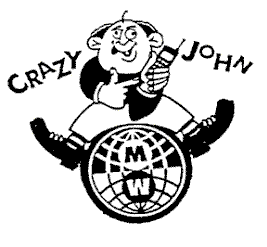
65 I do not think that the dominant idea conveyed to the casual observer by the SUNNY BOY mark is the word SUNNY. Nor do I think that SMA’s use of the word SUNNY to market its product has reached a level where it could be said that the mark had become ‘notoriously so ubiquitous and of such long standing that consumers must be taken to be familiar with it’: cf. Crazy Ron’s at [99], quoting CA Henschke & Co v Rousemount Estates Pty Ltd (2000) 52 IPR 42; [2000] FCA 1539 at 66 [52] per Ryan, Branson and Lehane JJ.
66 However, I do not think that conclusion detracts from the other matters to which I have referred. Those matters generate a real and tangible risk of deception or confusion arising. The reality of that risk is confirmed by the fact that consumers have, in fact, been misled. In that regard, I refer to the evidence of the erroneous returns of a SUNNY ROO inverter to SMA for repair together with the other evidence of consumer confusion in telephone calls to SMA Australia: see above at [31]. This is a matter of considerable weight: see Australian Woollen Mills at 658 per Dixon and McTiernan JJ.
67 For those reasons, I conclude that deceptive similarity is established.
68 In the case of the name SUNNY ROO PRODUCTS, I accept a similar conclusion. The addition of the word ‘products’ does not retrieve the situation.
69 In the case of the use of the two SUNNY ROO FROM BYRON BAY and SUNNY ROO AUSTRALIA logos, matters are more complex. There is little doubt that the depiction of Sunny in these logos reduces the visual similarity of the marks. But the aural similarity remains essentially unchanged. Although I accept that the difficulty is not so extreme in the case of these marks, on balance, I still accept SMA’s case that these logos are deceptively similar to the SUNNY BOY mark. The principal reason I accept SMA’s submission is because deceptive similarity may arise where consumers are caused to wonder or to entertain a reasonable doubt as to whether the products bearing the marks might not come from the same trade source: Southern Cross Refrigerating Company v Toowoomba Foundry Pty Ltd (1954) 91 CLR 592 at 594-595 per Kitto J (at trial) and 608 per Dixon CJ, McTiernan, Webb, Fullager and Taylor JJ (on appeal). As Kitto J observed in that case (at 595) ‘it is enough if the ordinary person entertains a reasonable doubt’. My conclusion to that effect is borne out by the fact that a BBS inverter was returned to SMA even though it had the logo on it.
70 I accept, therefore, that each use of the SUNNY ROO brand impugned by SMA infringed SMA’s SUNNY BOY mark where utilised in relation to inverters.
(b) Infringement under s 120(2) of the Trade Marks Act
71 Section 120(2) provides:
120 When is a registered trade mark infringed?
…
(2) A person infringes a registered trade mark if the person uses as a trade mark a sign that is substantially identical with, or deceptively similar to, the trade mark in relation to:
(a) goods of the same description as that of goods (registered goods) in respect of which the trade mark is registered; or
(b) services that are closely related to registered goods; or
(c) services of the same description as that of services (registered services) in respect of which the trade mark is registered; or
(d) goods that are closely related to registered services.
However, the person is not taken to have infringed the trade mark if the person establishes that using the sign as the person did is not likely to deceive or cause confusion.
72 SMA claimed that BBS used the SUNNY ROO name and logos both in relation to goods of the same description as those in respect of which SUNNY BOY was registered (sub-s (a)) and in relation to services that were closely related to goods of the same description (sub-s (b)). As with its case under s 120(1), its claim was that SUNNY ROO was deceptively similar to SUNNY BOY.
73 It is necessary to have regard to all of the circumstances of the relevant trade in determining deceptive similarity: Shell at 416 per Windeyer J. In this case, those circumstances include the products upon which the SUNNY ROO mark was being used. It is easy enough to see how confusion may arise from the use of SUNNY ROO on solar inverters (the s 120(1) case) but this may be less clear where what one is concerned with is goods or services of a similar description or services that are closely related to the registered goods.
74 The goods and services under consideration are BBS’s solar panels, solar energy accessories and its installation services for inverters. SMA submitted that the solar panels and accessories were goods of the same description as inverters. This was said to flow from a consideration of the nature of the goods, the uses made of them and the trade channels through which the goods are bought and sold (citing McCormick & Company Inc v McCormick (2000) 5 IPR 102; [2000] FCA 1335 at [18] per Kenny J).
75 Although I accept the similarity of the trade channels, I do not accept that solar inverters are, in fact, goods of the same description. In relation to solar panels this conclusion is straightforward: a photovoltaic solar panel converts photons into electrons and produces a direct current of electricity. A solar panel is, therefore, a device for generating electricity. An inverter, on the other hand, converts a direct current into an alternating current of the kind used for ordinary domestic purposes. It does not generate power. One could not use a solar inverter for any of the functions performed by a solar panel and the reverse is also true. Substitutability is not the whole story when it comes to considering whether two goods are of the same description, but is certainly a useful guide in many cases. Gummow J gained some benefit from it in New South Wales Dairy Corporation v Murray Goulburn Co-operative Company Ltd (1989) 86 ALR 549 at 566, as did the Full Court in E & J Gallo Winery v Lion Nathan Australia Pty Ltd (2009) 175 FCR 386 at 407-408 [72]-[74] per Moore, Edmonds and Gilmour JJ (special leave to cross-appeal on this matter refused: E & J Gallo Winery v Lion Nathan Australia Pty Ltd (2010) 241 CLR 144 at 170-171 [71]-[72]). In a case not dissimilar to this one, I considered whether solar panels were goods of the same description as roof mounted solar hot water heaters and did so by reference, in part, to notions of substitutability: Solarhart Industries Pty Ltd v Solar Shop Pty Ltd (2011) 281 ALR 544; [2011] FCA 700 at [30]-[35]. In that case, I concluded that the goods were of the same description because, although technically different in operation, there were some people who might use them interchangeably.
76 I cannot see that this is so in this case. Mr Darke submitted that the products were complimentary in the sense that one needed both products to have an operating solar power system. I accept this, but I do not think the fact that the products are complimentary is sufficient. A bottle and its fluid contents are complimentary but they are not goods of the same description: one is a bottle, the other is a drink. There was no precise explication of what the solar accessories were, so I am unable to form a view in relation to them.
77 On the other hand, I do accept that the provision by BBS of the service of installing inverters was a service which was closely related to the inverters themselves and the case is, therefore, governed by what was said by French J in Registrar of Trade Marks v Woolworths (1999) 93 FCR 365 at 378 [38]; that is, that in most cases the question will be defined by the function of the service with respect to the goods. An installation service will generally pass this test with respect to the item installed.
78 I return then to the question of deceptive similarity. The question of whether the SUNNY ROO signs are likely to cause confusion when used in relation to solar panels and other accessories does not arise because of my conclusion that they are not goods to which s 120(2) applies. It does arise, however, in relation to the services provided by BBS of inverter installation. In relation to those services, I am satisfied that the same analysis as applies in the case of the inverters requires the conclusion that the use of the SUNNY ROO name and logos to market BBS’s installation services was deceptively similar to the SUNNY BOY mark.
(c) Conclusions on infringement
79 BBS infringed the SUNNY BOY mark by using the SUNNY ROO name and logos to market its solar inverters and closely related installation services under, respectively, ss 120(1) and 120(2). For completeness, no defence was pursued under the chausette to s 120(2), and although Ipevo indicated that it was going to pursue a defence under s 23, this was not pursued in final submissions.
80 Although SMA sought default judgment against BBS, I have concluded that SMA should only receive judgment against BBS to the extent indicated in these reasons. It would be productive only of confusion for the actual liability of BBS to differ from its notional liability in the claim against Ipevo. In substance, the only difference relates to its liability under s 120(2) in relation to other solar products (this being the only aspect of SMA’s claim that is not well-founded). As a matter of formality, I dismiss the application for default judgment, but will give judgment against BBS in this action as indicated. BBS should pay SMA’s costs.
81 Ipevo is liable as a joint tortfeasor in passing off and for trade mark infringement under s 120(1) and (2). It is liable for being knowingly concerned in BBS’s breaches of the TPA and ACL. It should pay SMA’s costs.
82 The parties are to bring in short minutes of order by Friday 8 February 2013 giving effect to these reasons. Those short minutes should provide for a directions hearing in late February 2013 so that arrangements may be made for the damages hearing.
|
I certify that the preceding eighty-two (82) numbered paragraphs are a true copy of the Reasons for Judgment herein of the Honourable Justice Perram. |
Associate:


