

FEDERAL COURT OF AUSTRALIA
Wang v Anying Group Pty Ltd (No 3) [2012] FCA 1380
IN THE FEDERAL COURT OF AUSTRALIA | |
DATE OF ORDER: | |
WHERE MADE: |
THE COURT ORDERS THAT:
1. Pursuant to r 30.21 of the Federal Court Rules 2011, the hearing of the third applicant’s claim against the first respondent for an order for an account of profits and for an order quantifying those profits proceed generally in the absence of the first respondent.
2. Accounts having been ordered and taken of the profits made by the first respondent by carrying on business under or by reference to the name “Anying” and by using in connection with such business the logo and four Chinese characters depicted below:
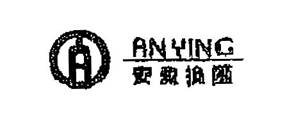
either alone or in conjunction with the Anying name thereby passing off its business as the business of the third applicant, the first respondent pay to the third applicant $138,000 being the total of the amount of the said profits as determined by the Court after the taking of accounts namely $125,334 and a lump sum in lieu of interest hereby ordered pursuant to s 51A(1)(b) of the Federal Court of Australia Act 1976 (Cth) in the amount of $12,666.
3. The first respondent pay the third applicant’s costs of and incidental to the third applicant’s claim for an account of profits against the first respondent as described in par 2 above.
Note: Entry of orders is dealt with in Rule 39.32 of the Federal Court Rules 2011.
NEW SOUTH WALES DISTRICT REGISTRY | |
GENERAL DIVISION | NSD 768 of 2008 |
BETWEEN: | HUA WEI WANG First Applicant XINYING PTY LTD (ACN 118 548 977) Second Applicant NEW CENTURY 2001 PTY LTD TRADING AS ANYING SYDNEY COMPANY (ACN 114 661 568) Third Applicant
|
AND: | ANYING GROUP PTY LTD (ACN 126 282 657) First Respondent YANYAN SUN Second Respondent YUN CHEN Third Respondent
|
and between: | ANYING GROUP PTY LTD (ACN 126 282 657) First Cross-Claimant YANYAN SUN Second Cross-Claimant YUN CHEN Third Cross-Claimant |
AND: | HUA WEI WANG First Cross-Respondent XINYING PTY LTD (ACN 118 548 977) Second Cross-Respondent NEW CENTURY 2001 PTY LTD TRADING AS ANYING SYDNEY COMPANY (ACN 114 661 568) Third Cross-Respondent REGISTRAR OF TRADE MARKS Fourth Cross-Respondent CHUANG WANG Fifth Cross-Respondent ANYING INTERNATIONAL FINANCIAL PTY LIMITED (ACN 105 067 990) Sixth Cross-Respondent |
JUDGE: | FOSTER J |
DATE: | 4 DECEMBER 2012 |
PLACE: | SYDNEY |
REASONS FOR JUDGMENT
1 On 21 October 2011, I gave judgment in these proceedings in relation to all claims for relief other than the parties’ claims for pecuniary relief (Wang v Anying Group Pty Ltd [2011] FCA 1196) (the principal judgment). These Reasons for Judgment which I now give ex tempore should be read in conjunction with the principal judgment. To the extent that it is appropriate to do so, I shall adopt in these Reasons the same acronyms and abbreviations as were used in the principal judgment. The conclusions reached in the principal judgment may be summarised as follows:
(a) The Registered Trade Mark (comprising the Anying name and logo as described in the principal judgment) registered in the name of Hua Wei Wang (Harry Wang) was to be cancelled and removed from the Australian Register of Trade Marks.
(b) New Century 2001 Pty Ltd (New Century) (the third applicant) was entitled to declaratory and injunctive relief against Anying Group Pty Limited (Anying Auburn) (the first respondent) in respect of Anying Auburn’s contraventions of s 52 and s 53(d) of the Trade Practices Act 1974 (Cth) (the TPA) and s 18(1) and s 29(1)(g) of the Australian Consumer Law (the ACL) and in respect of Anying Auburn’s conduct in passing off its business as the business of New Century.
(c) New Century was also entitled to declaratory and injunctive relief pursuant to s 75B of the TPA and s 232 of the ACL against Yanyan Sun and Yun Chen (the second and third respondents respectively) in respect of Anying Auburn’s contraventions of s 52 of the TPA and of s 18(1) of the ACL.
2 All other claims for relief made by various parties in the earlier part of the proceedings were rejected. There remained, of course, New Century’s claims for pecuniary relief. These Reasons for Judgment determine the only claim for pecuniary relief which was actually pressed by New Century viz its claim for an account of profits against Anying Auburn.
3 On 16 November 2011, I made orders giving effect to the principal judgment. The orders which I made on that occasion were in the following terms:
THE COURT:
1. By consent, ORDERS that, with effect from 28 June 2010, the applicants’ entitlement to pecuniary remedies (if any) and the cross-claimants’ entitlement to pecuniary remedies (if any) and the quantum of any such remedies to which any party might be entitled be heard separately from and after all other questions in the proceedings.
2. ORDERS that, pursuant to the provisions of s 88(1)(a) of the Trade Marks Act 1995 (Cth), the Register of Trade Marks kept under s 207 of that Act be rectified by cancelling the registration of Australian Registered Trade Mark No 1100722.
3. DECLARES that:
(a) By carrying on business under or by reference to the name “Anying” (the Anying name); and
(b) By using in connection with such business the logo and four Chinese characters depicted below:
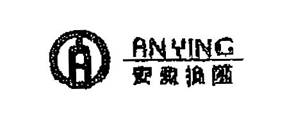
whether alone or in conjunction with the Anying name (the Anying trade mark), the first respondent has:
(i) Passed off its business and the foreign currency exchange services provided by it as those of the third applicant;
(ii) In trade or commerce, engaged in conduct that is misleading or deceptive or likely to mislead or deceive within the meaning of s 18(1) of the Australian Consumer Law and, until 1 January 2011, within the meaning of s 52 of the Trade Practices Act 1974 (Cth); and
(iii) In trade or commerce, in connection with the supply or possible supply of services namely foreign currency exchange services and in connection with the promotion of the supply or use of such services, made false or misleading representations that it had and continues to have the sponsorship or approval of the third applicant or was affiliated with the third applicant and thereby contravened s 29(1)(g) of the Australian Consumer Law and, until 1 January 2011, contravened s 53(d) of the Trade Practices Act 1974 (Cth).
4. DECLARES that the second and third respondents aided, abetted, counselled or procured the contraventions by the first respondent of the Trade Practices Act 1974 (Cth) and the Australian Consumer Law specified in Order 3 above and were knowingly concerned in or party to those contraventions and were thus involved in such contraventions with the consequence that they are both liable for such contraventions by reason of the provisions of s 75B of the Trade Practices Act 1974 (Cth) and ss 2, 18 and 236 of the Australian Consumer Law.
5. ORDERS that the first respondent by itself, its officers, its employees, its servants and its agents and otherwise howsoever, be restrained from carrying on business or trading under or by reference to the Anying name or the Anying trade mark or any name or trade mark substantially the same as the Anying name or the Anying trade mark.
6. ORDERS that the second and third respondents by themselves, their officers, their employees, their servants and their agents and otherwise howsoever, be restrained from carrying on business or trading under or by reference to the Anying name or the Anying trade mark or any name or trade mark substantially the same as the Anying name or the Anying trade mark.
7. ORDERS that the second and third respondents, and each of them, by themselves, their servants, their agents and otherwise howsoever be restrained from:
(a) aiding, abetting, counselling or procuring; and
(b) being in any way knowingly concerned in or party to
another person or entity carrying on business or trading under or by reference to the Anying name or the Anying trade mark or any name or trade mark substantially the same as the Anying name or the Anying trade mark and be further restrained from conspiring with others to cause another person or entity to carry on business or trade in such a manner.
8. DECLARES that, by representing to members of the public that:
(a) The business of the third applicant and the business of the first respondent were one and the same;
(b) The owner of the foreign currency exchange business conducted by the third applicant was the same person or entity as the owner of the foreign currency exchange business conducted by the first respondent; and
(c) There was a business connection between the third applicant and the first respondent
(the representations)
the first respondent:
(a) in trade or commerce, engaged in conduct that is misleading or deceptive or likely to mislead or deceive within the meaning of s 18(1) of the Australian Consumer Law and, until 1 January 2011, within the meaning of s 52 of the Trade Practices Act 1974 (Cth); and
(b) in trade or commerce, in connection with the supply or possible supply of services namely foreign currency exchange services and in connection with the promotion of the supply or use of such services, made false or misleading representations that it had and continues to have the sponsorship or approval of the third applicant or was affiliated with the third applicant and thereby contravened s 29(1)(g) of the Australian Consumer Law and, until 1 January 2011, contravened s 53(d) of the Trade Practices Act 1974 (Cth).
9. ORDERS that the first respondent by itself, its officers, its servants, its agents and otherwise howsoever, be restrained from making the representations, or any of them.
10. NOTES that the third applicant has elected to claim an account of profits from the respondents (rather than damages) for passing off and for contraventions of the Trade Practices Act 1974 (Cth) and the Australian Consumer Law.
11. ORDERS that the Application and the Further Amended Cross-Claim Application and Second Further Amended Cross-Claim (both of which were filed on 25 May 2010) (the Cross-Claim) otherwise be dismissed to the intent that, save for the relief granted by Orders 2 to 9 above and the preservation to the third applicant by these orders of its right to pursue the respondents for an account of profits, all other claims for relief stand dismissed.
12. ORDERS that, by no later than 23 November 2011, the parties file and serve any Written Submissions that they may wish to make on the question of costs both of the Application and of the Cross-Claim.
13. ORDERS that thereafter the question of costs be dealt with on the papers.
14. ORDERS that the proceeding be listed for directions at 9.30 am on 30 November 2011 before Foster J for the purpose of making directions in respect of the third applicant’s claims for an account of profits.
4 The specific paragraphs of those orders directed to the claims in tort for passing off were Declaration (3)(a), Declaration (3)(b)(i) and Order 5.
5 Prior to the making of the orders which I made on 16 November 2011, New Century informed the Court and the first, second and third respondents that the only claim for pecuniary relief which it intended to press was its claim for an account of profits against Anying Auburn. That election meant that it forewent any claim for damages or compensation against Anying Auburn in respect of the Court’s finding that Anying Auburn had committed the tort of passing off vis-à-vis New Century. Damages and an account of profits are alternative remedies. New Century chose the remedy of account. By making that choice, it abandoned its damages claim.
6 An account of profits could not be claimed against Anying Auburn or, indeed, against Yanyan Sun or Yun Chen, based upon the Court’s findings of contraventions of s 52 and s 75B of the TPA and s 18(1) and s 232 of the ACL (see Marks v GIO Australia Holdings Ltd (1998) 196 CLR 494; and Multigroup Distribution Services Pty Ltd v TNT Australia Pty Ltd (2001) 109 FCR 528 at 546 [38]). This is because the pecuniary remedies available under the TPA and the ACL are intended to be compensatory.
7 It should also be noted that, in the principal judgment, I made no finding of passing off against either Yanyan Sun or Yun Chen. No such finding had been sought, in any event.
8 In the end, the applicants’ claims for pecuniary relief were confined to New Century’s claim for an account of profits against Anying Auburn.
9 These circumstances were recognised by the solicitor-advocate who appeared this morning for New Century at the final hearing of its claim for pecuniary relief. He accepted that, of the applicants, only New Century had an outstanding claim for pecuniary relief and that that claim was against Anying Auburn alone.
10 On 12 December 2011, I made an order for costs in respect of all claims determined by the principal judgment.
11 Since 12 December 2011, there have been several directions hearings held by the Court in order to case manage New Century’s claim for an account of profits against Anying Auburn. In the period from late 2011 up to 4 April 2012, Anying Auburn, Yanyan Sun and Yun Chen were represented at those directions hearings by lawyers. Thereafter, in the period from 5 April 2012 to 19 June 2012, Yanyan Sun appeared. She did so on her own behalf, on behalf of Anying Auburn (by leave) and, on occasion, on behalf of Yun Chen (by leave). Yanyan Sun last appeared before the Court on 19 June 2012. She has not appeared since. Yun Chen has not appeared at any of the directions hearings which took place after I delivered the principal judgment. It appears that he may have decamped to Canada.
12 Anying Auburn, Yanyan Sun and Yun Chen purported to appeal from the principal judgment. On appeal, a question arose as to whether the proper mode of proceeding was for those parties to seek leave to appeal rather than to attempt to appeal as of right. However, in the end, that question did not have to be resolved, because the appeal or application for leave to appeal launched by those parties was dismissed on 29 June 2012 for want of prosecution (Anying Group Pty Limited v Hua Wei Wang [2012] FCA 702).
13 On 1 August 2012, I fixed for hearing today New Century’s claim against Anying Auburn for an account of profits. I am satisfied that Anying Auburn, Yanyan Sun and Yun Chen were informed of today’s listing by letters sent to the last known address of each of them. When the matter was called on for hearing today, there was no appearance by any person on behalf of Anying Auburn. In those circumstances, I proceeded with the hearing in the absence of Anying Auburn (as to which, see r 30.21 of the Federal Court Rules 2011).
New Century’s Case for Pecuniary Relief
14 The evidence tendered by New Century in support of its claim for an account of profits against Anying Auburn is contained in the affidavit of Damian Primo Barlow sworn on 8 November 2012 and in the exhibit to that affidavit (Exhibit DPB-13). The arguments in support of New Century’s claim are also set out in that affidavit. Those arguments were supplemented by oral submissions made by Mr Barlow this morning.
15 The following documents were tendered as part of Exhibit DPB-13:
(a) Copy Financial Statements of Anying Auburn for each of the Financial Years ended 30 June 2009, 30 June 2010 and 30 June 2011. The copy Financial Statements tendered in evidence were not signed. However, they were discovered by Anying Auburn during the pecuniary relief phase of the proceedings as being the Financial Statements of Anying Auburn for each of those Financial Years. The authenticity of each of those documents is, therefore, admitted (r 22.05 of the Federal Court Rules 2011).
(b) Copy Income Tax Returns of Anying Auburn for each of the Financial Years ended 30 June 2009, 30 June 2010 and 30 June 2011. These documents were also discovered by Anying Auburn. The authenticity of each of them is, therefore, also admitted. The Income Tax Returns contain information which is consistent with the information contained in the Financial Statements.
(c) A bundle of Memoranda of Fees and Tax Invoices rendered by various Counsel and lawyers to Anying Auburn or to its lawyers, as the case may be, in the period from about June 2008 to February 2011. All of these memoranda of fees and invoices were produced by various of the rendering parties in answer to subpoenas for production served upon those persons and firms at the instigation of New Century.
I am satisfied that these documents are genuine and that fees and disbursements at least to the level demonstrated by these documents were rendered to Anying Auburn in the period referred to. I am also satisfied that all of the fees and disbursements so rendered were rendered by lawyers representing Anying Auburn (and also perhaps Yanyan Sun and Yun Chen) in these proceedings. None of the work done by the relevant lawyers was done by those lawyers for the purpose of enabling Anying Auburn to earn income from the foreign exchange business conducted by it in the relevant period.
16 Mr Barlow submitted that:
(a) Anying Auburn was incorporated by Yun Chen for the express purpose of conducting a foreign exchange business under the Anying name with the specific intention of using that name and the Anying logo to advance its business. It never traded under any other name or in any other way. It never intended to trade under any other name or in any other way. Therefore, the whole of the profits derived by Anying Auburn from its foreign exchange business from the commencement of that business in December 2007 or January 2008 up to 30 June 2011 ought to be accounted for to New Century. It is not incumbent upon New Century to establish that proportion of those profits which was earned by the use of the Anying name and logo as distinct from that part which was derived otherwise than from the use of that name and logo.
(b) The net profit or loss (as the case may be) of Anying Auburn in each of the Financial Years in question proved by the Detailed Profit and Loss Statements forming part of the Financial Statements of Anying Auburn tendered as part of Exhibit DPB-13 was as follows:
Y/E 30-06-08 | ($3,039) | (Loss) | |
(ii) | Y/E 30-06-09 | ($125,864) | (Loss) |
(iii) | Y/E 30-06-10 | ($151,189) | (Loss) |
(iv) | Y/E 30-06-11 | $51,790 | Profit |
Total Losses | ($228,302) | ||
(c) The amounts of the legal fees and disbursements shown as expenses in those Detailed Profit and Loss Statements were as follows:
(i) | Y/E 30-06-08 | $1,060 |
(ii) | Y/E 30-06-09 | $147,644 |
(iii) | Y/E 30-06-10 | $185,768 |
(iv) | Y/E 30-06-11 | $20,224 |
Total Legal Fees | $354,696 | |
This figure is less than the total amount charged to Anying Auburn in the memoranda of fees and tax invoices issued in the relevant period. Therefore, the Court can be comfortable in concluding that at least the amount of $354,696 was actually incurred as the total amount of legal fees and disbursements in the period from early 2008 to 30 June 2011.
(d) With the exception of the amount of legal fees incurred in the year ended 30 June 2008 (viz $1,060), the total amount of legal fees and disbursements expensed in the Detailed Profit and Loss Statements contained in the Financial Statements of Anying Auburn (ie $354,696 – $1,060 viz $353,636) was incurred, not in producing business income for Anying Auburn, but rather in defending these proceedings. For this reason, the amount of $353,636 should be added back to the net loss figure proved by the Detailed Profit and Loss Statements in respect of the period from early 2008 to 30 June 2011 in order to derive the true profit derived by Anying Auburn from its wrongful conduct. All other expenses shown in the Detailed Profit and Loss Statements should be allowed to Anying Auburn as expenses appropriately incurred. New Century did not establish that the amount of legal fees and disbursements incurred in the year ended 30 June 2008 (viz $1,060) was incurred in defending the proceedings. For that reason, that amount should not be added back. Adding back $353,636 to the net loss figure of $228,302 produces a profit figure for the whole of the relevant period of $125,334. This is the figure claimed by New Century.
17 Initially, Mr Barlow submitted that New Century was entitled to a lesser sum viz $64,076. This latter figure was arrived at by adding back the total amount of legal fees and disbursements expensed in the Detailed Profit and Loss Statements for the years ended 30 June 2009 and 30 June 2011 and, in respect of the year ended 30 June 2010, adding back the total amount rendered in the memoranda of fees and tax invoices in that year. I informed Mr Barlow that I considered that this approach was not correct since it did not adopt the same source for legal expenses for each year in question and failed to take into account timing differences between legal fees and disbursements expensed in the Detailed Profit and Loss Statements in any given year, on the one hand, and those derived from memoranda of fees and tax invoices, on the other hand. In light of my comments, Mr Barlow then submitted that I should take a consistent approach across all years and use the figures for legal fees and disbursements derived from the Detailed Profit and Loss Statements. As I have noted at [16(d)] above, this revised approach by Mr Barlow justified a profit figure of $125,334.
Consideration
18 The submissions made by Mr Barlow are sound in principle and supported by the evidence. I accept them. There will, therefore, be an award on New Century’s claim for an account of profits against Anying Auburn in the amount of $125,334 plus interest. I propose to award a lump sum for interest pursuant to s 51A(1)(b) of the Federal Court of Australia Act 1976 (Cth). I think that an amount which broadly equates to interest at the rate of 6.75% pa on $125,334 for one and a half years is appropriate. I have in mind awarding $12,666 by way of interest.
19 I shall now explain my reasons for the orders which I propose to make.
20 The leading case in which the relevant principles were discussed is Colbeam Palmer Ltd v Stock Affiliates Pty Ltd (1968) 122 CLR 25. In that case, the wrongful conduct was the infringement of the first plaintiff’s registered trade mark. Windeyer J explained that the plaintiff in such a case is entitled to an account of only those profits which were derived by the infringer from the infringement of the registered trade mark. In the circumstances of that case, what needed to be shown was the precise amount of profit derived from using the trademark in question in respect of certain painting sets sold by the defendant. The point was that his Honour did not think that all of the profit made from selling the painting sets should be the subject of an account. Rather only that proportion of those profits which was truly referable to the infringing conduct should be brought to account.
21 In the course of dealing with the matter before him, Windeyer J made a number of references to the way in which the core principle might be applied in a passing off case. After discussing the common form of order for an account, at 37–38, his Honour said:
It was suggested that the defendant’s profit should be measured by the difference between the amount it received for painting sets bearing the trade mark and the amount it had paid to obtain them. The account taken when a patent has been infringed was suggested as an analogy. But to my mind there is an important distinction. If the infringer of a patent sells an article made wholly in accordance with the invention and thereby obtains more than it cost him to make or acquire it, he is accountable for the difference as profit. That is because he has infringed the patentee’s monopoly right to make, use, exercise and vend the invention. But in the case of a registered trade mark, infringement consists in the unauthorized use of the mark in the course of trade in relation to goods in respect of which it is registered. The profit for which the infringer of a trade mark must account is thus not the profit he made from selling the article itself but, as the ordinary form of order shews, the profit made in selling it under the trade mark. This creates a difficulty in taking the account—a difficulty which also arises sometimes in cases of patents for improvements: see e.g. Goodlet v. Fowler ((1876) 14 S.C.R. (N.S.W.) 496). In passing-off cases an infringer has sometimes been required to account for the whole profits made by his selling of an article under a spurious description. For example in Lever v. Goodwin ((1887) 36 Ch. D. 1) the Court of Appeal upheld the order of Chitty J. to this effect, Cotton L.J. saying that the sale of soap “in a fraudulent dress was a wrongful act” and that “the profit for which the defendants must account is the profit which they have made by the sale of soap in that fraudulent dress”. In a case of that sort, where a man sells goods by a false representation, the profit for which he is accountable may well be the profit which he makes by selling the goods. But there is nothing in the evidence to suggest that in this case the defendant by its use of the plaintiff’s trade mark in fact passed off the painting sets it sold as the goods of the plaintiff. There is no evidence that the name Craftmaster had come to denote for the Australian public the plaintiff’s goods. Indeed it seems that the name was as likely, perhaps more likely, to have meant a kind of article than the products of either the plaintiff or the American company.
22 In a subsequent judgment in Colbeam Palmer, his Honour explained the relevant principles in further detail. After referring to the way in which those principles would be applied in various types of case, eg, patent cases, design cases, and cases for infringement of copyright, his Honour moved on to comment upon the way in which the principles would be applied in a passing off case. At 43–44, his Honour said:
If one man makes profits by the use or sale of some thing, and that whole thing came into existence by reason of his wrongful use of another man’s property in a patent, design or copyright, the difficulty disappears and the case is then, generally speaking, simple. In such a case the infringer must account for all the profits which he thus made. This is so too in the case of a sale of an article which could only be made by the use of confidential information, as in Peter Pan Manufacturing Corporation v. Corsets Silhouette Ltd ([1964] 1 W.L.R. 96; [1963] 3 All E.R. 402). The judgment in that case, to which I had referred earlier, was invoked by counsel for the plaintiffs in support of the claim that they were entitled to have the whole of the profits made by the defendant by selling American painting sets which bore the mark Craftmaster. But the case does not support that proposition. It was a case of the misuse of confidential information in the manufacturing of brassieres of a particular kind. The profit for which the wrongdoer was held accountable was all the profit it made by selling articles of that kind. That was because, as Pennycuick J. pointed out, “the manufacture of the article in question of itself involved the use of the confidential information and Silhouette [the defendant] could not have manufactured that article at all without the use of the confidential information”. That case is no help at all to the plaintiffs in this case. The painting sets in this case could have been made and sold without the use of the word Craftmaster. The difficulty of apportioning profits made by selling them therefore remains.
It is a difficulty which ceases to be troublesome in a case when a word has become well known as indicative that goods of a particular kind are the product of a particular manufacturer or seller and those goods have acquired a reputation under that name. All profits made by an infringer by selling goods of that kind under that name may in some cases be said to be attributable to his use of the mark. In cases of that sort the buyer of the goods is taken to have bought them because of the mark under which they were sold. If that mark was for him an inducement, not necessarily the sole inducing cause, of his buying the goods, the infringing seller is accountable to the owner of the mark for the profit he made by the sale. But this case is not of that kind. There is no evidence that the name Craftmaster was associated in the trade in painting sets in Australia with products of the plaintiffs or of either of them. Indeed it seems possible that, in Sydney at all events, the name was known in the trade as indicative of the American goods sold by the defendant.
23 The essence of his Honour’s observations concerning passing off is this. If the defendant has passed off the business or goods of the plaintiff and the entire business of the defendant has been based upon the misuse of the plaintiff’s reputation and name, then there is usually a sound basis for the court to find that all of the profits made by the defendant in conducting such a business should be brought to account. In such a case, it is not necessary for the plaintiff to undertake any apportionment.
24 The finding of passing off which I made against Anying Auburn in the principal judgment makes clear that the present case is the type of passing off case which his Honour had in mind at 43–44 of his judgment in Colbeam Palmer. It has been urged upon me by Mr Barlow that I should conclude that the entire amount of profits derived by Anying Auburn over the relevant period should be brought to account by reason of the application of that principle. I agree that that is what I should do.
25 The second important submission advanced by Mr Barlow was his submission that, because the legal fees and disbursements expensed in the Detailed Profit and Loss Statements of Anying Auburn were not incurred by Anying Auburn in the pursuit of foreign exchange commissions (its principal source of revenue) but rather were incurred in defending these proceedings, the total of those fees and disbursements should be added back to the net loss or net profit (as the case may be) for each of the years ended 30 June 2009, 30 June 2010 and 30 June 2011 in order to determine the true amount of profit derived by Anying Auburn from its wrongful conduct.
26 In Dart Industries v Décor Corporation Pty Ltd, the plurality (Mason CJ, Deane, Dawson and Toohey JJ) said (at 110–111):
Damages and an account of profits are alternative remedies (See Neilson v. Betts (1871), L.R. 5 H.L. 1, at p. 22; Lever v. Goodwin (1887), 36 Ch. D. 1, at p. 7; Patents Act 1990 (Cth), s. 122(1)). An account of profits was a form of relief granted by equity whereas damages were originally a purely common law remedy (cf. Meagher, Gummow and Lehane, Equity: Doctrines and Remedies, 3rd ed. (1992), pp. 659-660). As Windeyer J. pointed out in Colbeam Palmer Ltd. v. Stock Affiliates Pty. Ltd. ((1968) 122 C.L.R. 25, at p. 34), even now (See Patents Act 1952 (Cth), s. 118(1); Patents Act 1990 (Cth), s. 122) an account of profits retains its equitable characteristics in that a defendant is made to account for, and is then stripped of, profits which it has dishonestly made by the infringement and which it would be unconscionable for it to retain. An account of profits is confined to profits actually made, its purpose being not to punish the defendant but to prevent its unjust enrichment (My Kinda Town Ltd. v. Soll [1983] RP.C. 15, at p. 55; Potlon Ltd. v. Yorkclose Ltd. (1989), 17 F.S.R 11, at pp. 14, 15; Sheldon v. Metro-Goldwyn Pictures Corp. (1940) 309 U.S. 390, at p. 399). The ordinary requirement of the principles of unjust enrichment that regard be paid to matters of substance rather than technical form (See Baltic Shipping Co. v. Dillon (1993) 176 C.L.R 344, at p. 376.) is applicable.
27 At 119, the plurality said that, in determining whether certain overheads should be deducted from the gross revenue earned from sales of the infringing product and thus allowed to the infringer, it had to be established that the relevant overheads were attributable to the manufacture and sale of that product.
28 McHugh J made observations to a similar effect at 122–123.
29 In the present case, it is clear, I think, that the legal fees and disbursements expensed in the Detailed Profit and Loss Statements of Anying Auburn for the relevant period were not incurred by Anying Auburn for the purpose of or in connection with its earning commission revenue in that period. The observations made by the High Court in Dart Industries v Décor Corporation Pty Ltd, to which I have referred at [26]–[28] above, require me to add back the quantum of those legal fees and disbursements in order to arrive at the true profit derived by Anying Auburn from its wrongful conduct. When this is done, the profit derived by Anying Auburn from its wrongful conduct is quantified at $125,334. As foreshadowed at [17] and [18] above, this is the amount which, together with interest thereon, will be ordered by the Court to be paid by Anying Auburn to New Century. Costs should follow the event. There will be orders accordingly.
30 There is no need to make any other orders. The orders made on 16 November 2011 covered all remaining issues. I note, however, that, for reasons already explained, no orders by way of pecuniary relief were sought against either Yanyan Sun or Yun Chen and, as a consequence, no orders of that type will be made against either of those persons.
I certify that the preceding thirty (30) numbered paragraphs are a true copy of the Reasons for Judgment herein of the Honourable Justice Foster. |
Associate:


