FEDERAL COURT OF AUSTRALIA
Australian Competition and Consumer Commission v Neighbourhood Energy Pty Ltd [2012] FCA 1357
|
IN THE FEDERAL COURT OF AUSTRALIA |
|
|
VID 268 of 2012 |
|
AUSTRALIAN COMPETITION AND CONSUMER COMMISSION Applicant | |
|
AND: |
(ACN 109 118 578) First Respondent AUSTRALIAN GREEN CREDITS PTY LTD (ACN 139 641 679) Second Respondent |
|
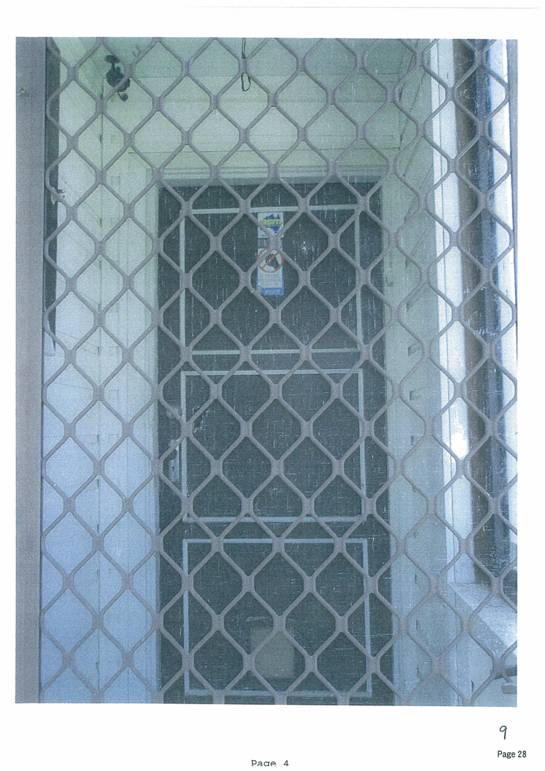
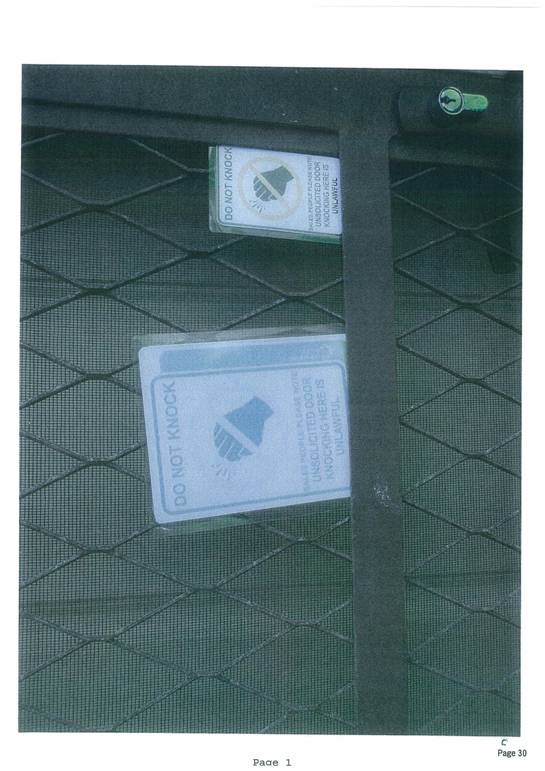
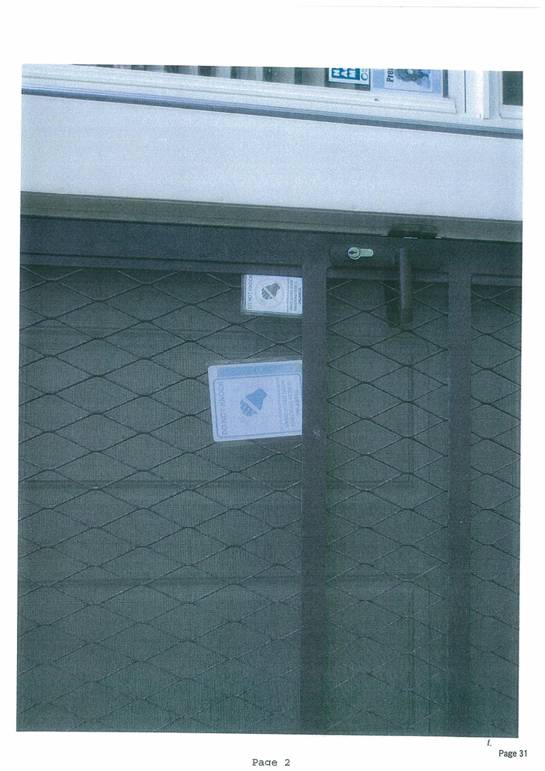
DATE OF ORDER: |
|
|
WHERE MADE: |
The Applicant (ACCC) and the First Respondent (Neighbourhood Energy) consent, for the purposes of Rule 39.11 of the Federal Court Rules, to the making of orders in accordance with the following terms:
THE COURT DECLARES THAT:
1. Neighbourhood Energy contravened sections 74(a), 74(b), 74(c) and 75(1)(a) of the Australian Consumer Law (ACL) by reason of the following:
1.1 on 24 June 2011, Neighbourhood Energy’s dealer, Australian Green Credits Pty Ltd (AGC), by the conduct of sales representatives, called on Mr Garry Fahnle for the purpose of negotiating an unsolicited consumer agreement for Neighbourhood Energy to supply retail electricity to Mr Fahnle and did not:
1.1.1 as soon as practicable or before starting to negotiate:
1.1.1.1 clearly advise Mr Fahnle that its purpose was to seek his agreement to a supply of retail electricity and thereby contravened section 74(a) of the ACL;
1.1.1.2 clearly advise Mr Fahnle that it was obliged to leave the premises immediately on request and thereby contravened section 74(b) of the ACL; and
1.1.1.3 provide to Mr Fahnle its name and Neighbourhood Energy's name and address and thereby contravened section 74(c) of the ACL; and
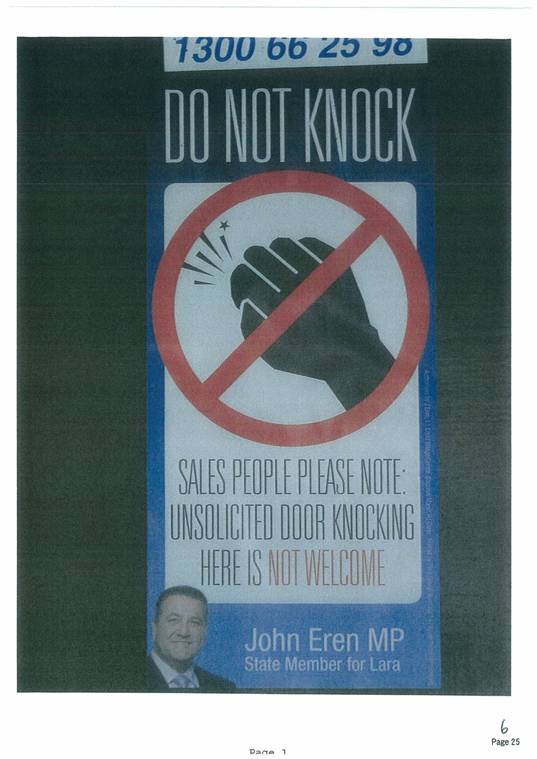
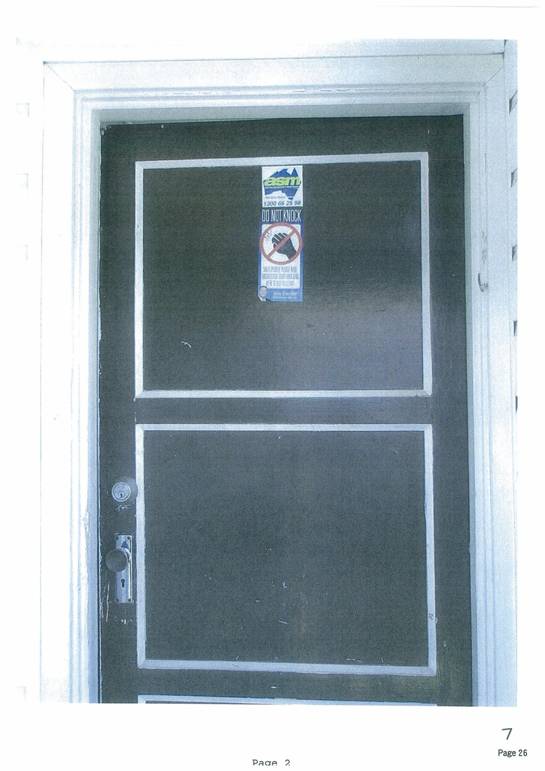
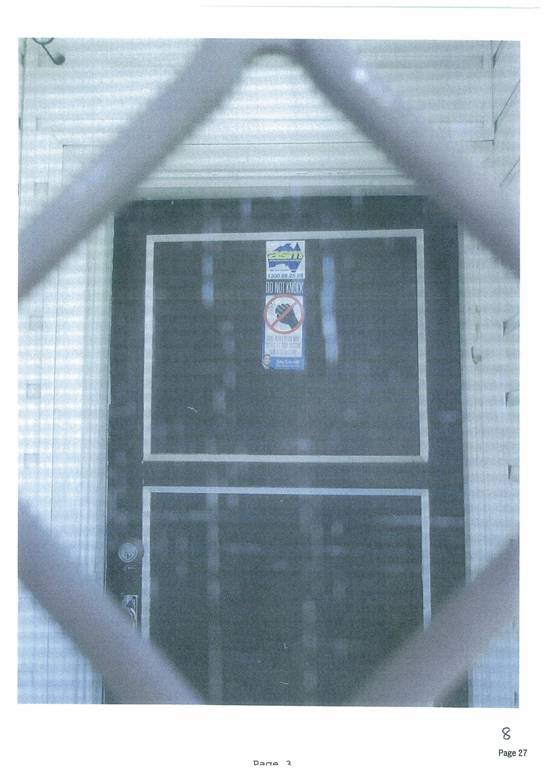
1.1.2 leave the premises immediately on the request of the occupier of the premises (including a request by the display of a visible notice that stated ‘do not knock’) and thereby contravened section 75(1)(a) of the ACL; and
1.2 Neighbourhood Energy, as the supplier of the retail electricity to which the negotiations referred to in 1.1 above related, is by reason of section 77 of the ACL also taken to have contravened sections 74(a), 74(b), 74(c) and 75(1)(a) of the ACL.
2. Neighbourhood Energy, by the conduct of AGC through sales representatives that called upon Mr Garry Fahnle on 24 June 2011 for the purpose of negotiating an unsolicited consumer agreement, contravened subsection 18(1) of the ACL because the sales representatives, in trade and commerce, represented to Mr Fahnle that:
2.1 they were not at Mr Fahnle’s premises to seek to convince him to change his retail electricity supplier;
2.2 Mr Fahnle was being overcharged by his then current retail electricity supplier; and
2.3 Mr Fahnle had been zoned incorrectly for the purposes of the supply of retail electricity services,
when this was not the case, and thereby engaged in conduct which was misleading or deceptive or likely to mislead or deceive.
3. Neighbourhood Energy contravened sections 74(a), 74(b), 74(c) and 75(1)(a) of the ACL by reason of the following:
3.1 on 18 July 2011, Neighbourhood Energy's dealer, AGC, by the conduct of a sales representative, called on Mr Gary Alda for the purpose of negotiating an unsolicited consumer agreement for Neighbourhood Energy to supply retail electricity to Mr Alda and did not:
3.1.1 as soon as practicable or before starting to negotiate:
3.1.1.1 clearly advise Mr Alda that it was obliged to leave the premises immediately on request in contravention of section 74(b) of the ACL; and
3.1.1.2 clearly advise Mr Alda that it was obliged to leave the premises immediately on request in contravention of section 74(b) of the ACL; and
3.1.1.3 provide to Mr Alda its name and Neighbourhood Energy’s address in contravention of section 74(c) of the ACL; and
3.1.2 leave the premises immediately on the request of the occupier of the premises (including by a request by the display of a visible notice that stated ‘do not knock’) in contravention of section 75(1)(a) of the ACL; and
3.2 Neighbourhood Energy, as the supplier of the retail electricity to which the negotiations referred to in 3.1 above related, is by reason of section 77 of the ACL also taken to have contravened sections 74(a), 74(b), 74(c) and 75(1)(a) of the ACL.
4. Neighbourhood Energy, by the conduct of AGC through a sales representative that called on Mr Gary Alda on 18 July 2011 for the purpose of negotiating an unsolicited consumer agreement, contravened subsection 18(1) of the ACL because the sales representative, in trade and commerce, represented to Mr Alda that he was not calling on Mr Alda for the purpose of selling anything, when this was not the case, and thereby engaged in conduct which was misleading or deceptive or likely to mislead or deceive.
5. Neighbourhood Energy contravened sections 74(a), 74(b) and 74(c) of the ACL by reason of the following:
5.1 on 13 July 2011, Neighbourhood Energy's dealer, AGC, by the conduct of sales representatives, called on Ms Kittikhun or Quan Sing (Ms Sing) for the purpose of negotiating an unsolicited consumer agreement for Neighbourhood Energy to supply retail electricity to Ms Sing and did not, as soon as practicable or before starting to negotiate:
5.1.1 clearly advise Ms Sing that its purpose was to seek her agreement to a supply of retail electricity in contravention of section 74(a) of the ACL;
5.1.2 clearly advise Ms Sing that it was obliged to leave the premises immediately on request in contravention of section 74(b) of the ACL; and
5.1.3 provide to Ms Sing its name and Neighbourhood Energy's address in contravention of section 74(c) of the ACL; and
5.2 Neighbourhood Energy, as the supplier of the retail electricity to which the negotiations referred to in 5.1 above related, is by reason of section 77 of the ACL also taken to have contravened sections 74(a), 74(b) and 74(c) of the ACL.
6. Neighbourhood Energy contravened sections 74(b) and 74(c) of the ACL by reason of the following:
6.1 from at least 2 May 2011 until 1 September 2011, Neighbourhood Energy’s dealer, AGC, by conduct of two sales representatives, called upon the occupiers of premises for the purpose of negotiating an unsolicited consumer agreement for the supply of retail electricity by Neighbourhood Energy with the occupier of the premises, or for an incidental or related purpose, and during each call did not, as soon as practicable or before starting to negotiate:
6.1.1 clearly advise the occupier that they were obliged to leave the premises immediately on request and thereby contravened section 74(b) of the ACL; and
6.1.2 provide the occupier with AGC's name and Neighbourhood Energy's address and thereby contravened section 74(c) of the ACL; and
6.2 Neighbourhood Energy, as the supplier of the retail electricity to which the negotiations referred to in 6.1 above related, is by reason of section 77 of the ACL also taken to have contravened sections 74(b) and 74(c) of the ACL.
THE COURT ORDERS BY CONSENT:
Pecuniary Penalties
7. Neighbourhood Energy shall pay to the Commonwealth of Australia within 30 days of the date of this order a total pecuniary penalty of $850,000 in respect of the acts or omissions relating to Neighbourhood Energy's contraventions of sections 74 and 75 of the ACL.
Compliance Program
8. Neighbourhood Energy is to, at its own expense:
8.1 establish, within 3 months of the date of this order, a trade practices compliance program which meets the requirements set out in Annexure A to this order and maintain the compliance program for 3 years from the date on which it was established; or
8.2 if it already maintains an existing trade practices compliance program:
8.2.1 within 3 months of the date of this order, review the existing trade practices compliance program and make any amendments necessary to ensure that it meets the requirements set out in Annexure A to this order; and
8.2.2 maintain for at least 3 years from the date on which the amendments referred to in paragraph 8.2.1 are made.
Publication Orders
9. Neighbourhood Energy is to, within 14 days of the date of this order, cause a notice to be published (which requirement will be satisfied by the publication of a joint notice together with AGC) in a weekday edition of The Herald Sun newspaper which is in the terms and form of Annexure B and complies with the following specifications:
9.1 be placed within the ‘general news’ section of the newspaper;
9.2 be at least 20 cm by 3 columns in size;
9.3 have a banner font of sans serif 11 point bold;
9.4 have a headline font of 11 point bold;
9.5 contain in the body of text font that is no less than 9 point; and
9.6 have the ACCC and Commonwealth logos of at least 20 millimetres in height and centred.
10. Neighbourhood Energy is to, at its own expense, within 10 days of the date of this order, publish or cause to be published, on the internet homepage located at www.neighbourhood.com.au (Neighbourhood Energy website), a notice in the terms and form (including font and formatting) of Annexure C (the notice) and ensure that the notice complies with the following specifications:
10.1 the notice is accessible through a prominent one-click link displayed in the top third of the home page of the Neighbourhood Energy website with the following specifications:
10.1.1 have the words “A NOTICE PUBLISHED FOLLOWING ACTION BY THE ACCC” in uppercase 18 point, bold, black, sans serif font on a white background, centred and in a bordered box;
10.1.2 have the words "Click here for further information" in 14 point, black sans serif font on white background, centred below the words "A NOTICE PUBLISHED FOLLOWING ACTION BY THE ACCC" in the same bordered box;
10.1.3 the bordered box and its contents, including the white space, is to operate in the form of a one-click hyper-link to the notice; and
10.1.4 the border will be black;
10.2 the heading of the notice is to be in font that is no less than 12 point bold black sans serif font on white background;
10.3 the body of text of the notice is to be in font that is no less than 12 point size black sans serif font on white background;
10.4 the border and text of the notice will be black;
10.5 the notice will be displayed on a stand-alone web page that is coded in standard 'HTML' format;
10.6 the notice will not be displayed as a 'pop-up' or 'pop-under' window; and
10.7 the notice will remain on the Neighbourhood Energy website for a continuous period of 90 days.
11. Neighbourhood Energy is to, at its own expense, within 45 days of the date of this order, cause to be published and distributed a letter in the terms and form of Annexure D to all persons with whom it entered into an unsolicited consumer agreement (within the meaning of section 69 of the ACL) for Neighbourhood Energy to supply retail electricity, as a result of a call on a premises between 2 May 2011 and 2 September 2011 and who remains a customer of Neighbourhood Energy, or who is a customer of a related body corporate of Neighbourhood Energy (within the meaning of section 9 of the Corporations Act 2001 (Cth)) in respect of the supply of electricity only.
12. Neighbourhood Energy is to, within 140 days but after 120 days of the date of this order, provide a letter signed by the proper officer of Neighbourhood Energy to the ACCC setting out the following, in relation to any customer who contacted Neighbourhood Energy as a result of the publications required by these orders:
12.1 the customer's name and address;
12.2 the date upon which the customer contacted Neighbourhood Energy;
12.3 the reason the customer gave for contacting Neighbourhood Energy;
12.4 the date of the customer's unsolicited consumer agreement;
12.5 whether the customer purported to exercise their cooling off rights; and
12.6 the details of Neighbourhood Energy's actions in response to being contacted by that customer including whether or not the unsolicited consumer agreement was terminated and if not, the reason why not.
Other Orders
13. Within 60 days of the date of this order, Neighbourhood Energy shall file and serve on the ACCC an affidavit sworn or affirmed by its proper officer verifying that it has carried out its obligations under the orders of the Court sought under paragraphs 9, 10 and 11 above, detailing what it has done, including:
13.1 in respect of paragraph 9 above, providing a copy of the corrective advertisement as published in The Herald Sun newspaper;
13.1.1 in respect of paragraph 10 above, providing a copy of:
13.1.1.1 a date stamped screen capture of the Neighbourhood Energy website showing the click-through link; and
13.1.1.2 a date stamped screen capture of the stand-alone web page containing the notice; and
13.1.2 in respect of paragraph 11 above, providing:
13.1.2.1 a copy of one letter as distributed to a person; and
13.1.2.2 a list of the persons to whom the letter was sent and the addresses to which the letter was sent.
14. Neighbourhood Energy is to pay to the ACCC, within 30 days of the making of this order by the Court, a contribution to its costs of, and incidental to, this proceeding in the amount of $35,000.
Injunctions
15. Neighbourhood Energy is restrained for a period of 2 years, by its servants, agents, employees or otherwise, when calling on a premises for the purpose of entering into any negotiation, discussion or dealing directed towards the making of an unsolicited consumer agreement (whether or not the terms of the agreement or proposed agreement are open to any discussion or dealing) to supply retail electricity to a person, from representing that:
15.1 it is calling on the premises for another purpose, where there is no basis for making such a representation;
15.2 it is not calling on the premises to sell the person retail electricity or to seek to convince the person to change their supplier of retail electricity;
15.3 the person is currently being incorrectly charged by the person’s retail electricity supplier, where there is no basis for making such a representation; or
15.4 the person has been zoned incorrectly for the purposes of the supply of retail electricity.
ANNEXURE A
Requirements for Trade Practices Compliance Program
Neighbourhood Energy will establish a Trade Practices Compliance Program (Compliance Program) that complies with each of the following requirements:
1. Appointments
1.1 Within 30 days of the date of the Order of the Court (Court Order)coming into effect, Neighbourhood Energy will appoint a Director or a Senior Manager of the business to be responsible for the development, implementation and maintenance of the Compliance Program (Compliance Officer).
1.2 After the appointment of the Compliance Officer in accordance with paragraph 1.1, Neighbourhood Energy must take all reasonable steps to ensure that, for the duration of the Court Order, there is a Director or a Senior Manager with suitable qualifications or experience in corporate compliance appointed as Compliance Officer with responsibility for ensuring that the Compliance Program is effectively established, maintained and administered in accordance with the Court Order.
1.3 Neighbourhood Energy must take all reasonable steps to ensure that for the duration of the Court Order the Compliance Officer discharges his or her responsibility of ensuring that the Compliance Program is effectively established, maintained and administered in accordance with the Court Order.
1.4 Within two months of the date of the Court Order coming into effect, Neighbourhood Energy shall appoint a qualified, internal or external, compliance professional with expertise in trade practices law issues (the Compliance Advisor). Neighbourhood Energy shall instruct the Compliance Advisor to conduct a Competition and Consumer Act 2010 (Cth) (CCA) risk assessment (Risk Assessment) in accordance with 1.4.1 - 1.4.4 below:
1.4.1 identify the areas where Neighbourhood Energy is at risk of breaching section 18 and Division 2 of Part 3-2 of the Australian Consumer Law (ACL) being Schedule 2 to the CCA;
1.4.2 assess the likelihood of these risks occurring and the consequences of the risks to the business operations of Neighbourhood Energy should they occur;
1.4.3 identify where there may be gaps in Neighbourhood Energy’s existing procedures for managing these risks; and
1.4.4 provide recommendations for action having regard to the assessment.
2. Compliance Policy
2.1 Neighbourhood Energy will, within 30 days of the date of the Court Order, issue a policy statement outlining its commitment to trade practices compliance (the Compliance Policy). Neighbourhood Energy will ensure that the Compliance Policy:
2.1.1 is written in plain language;
2.1.2 contains a statement of commitment to compliance with the CCA;
2.1.3 contains a strategic outline of how commitment to trade practices compliance will be realised within the company;
2.1.4 contains a requirement for all staff to report any Compliance Program related issues and trade practices compliance concerns to the Compliance Officer;
2.1.5 contains a guarantee that whistleblowers will not be prosecuted or disadvantaged in any way and that their reports will be kept confidential and secure; and
2.1.6 contains a clear statement that Neighbourhood Energy will take action internally against any persons who are knowingly or recklessly concerned in a contravention of the CCA and will not indemnify them.
3. Complaints Handling System
3.1 Neighbourhood Energy will ensure that the Compliance Program includes a trade practices complaints handling system. Neighbourhood Energy shall use its best endeavours to ensure that this system is consistent with AS/ISO 10002:2006 Customer satisfaction – Guidelines for complaints handling in organizations, though tailored to Neighbourhood Energy's circumstances. Neighbourhood Energy will ensure that staff are made aware of the complaints handling system, and that information is available to customers as to how and where a complaint can be made.
3.2 Neighbourhood Energy will ensure that the Compliance Program includes whistleblower protection mechanisms to protect those coming forward with trade practices complaints. Neighbourhood Energy shall use its best endeavours to ensure that these mechanisms are consistent with AS 8004:2003 Whistleblower protection programs for entities, though tailored to Neighbourhood Energy's circumstances.
4. Reports to Board/Senior Management
4.1 Neighbourhood Energy will ensure that the Compliance Officer reports to the Board and/or senior management meetings every 12 months on the continuing effectiveness of the Compliance Program.
5. Training
5.1 Neighbourhood Energy will ensure that the Compliance Program provides for regular (at least once a year) and practical training for all directors, officers, employees, representatives and agents of Neighbourhood Energy, whose duties could result in them being concerned with conduct that may contravene section 18 and Division 2 of Part 3-2 of the ACL.
5.2 Neighbourhood Energy must ensure that the training is conducted by a suitably qualified compliance professional or legal practitioner with expertise in trade practices law (the Compliance Trainer).
5.3 Neighbourhood Energy must provide to the Compliance Trainer, for the purposes of conducting the Training, a copy of:
5.3.1 the Court Order;
5.3.2 the Compliance Policy;
5.3.3 the Complaints Handling System; and
5.3.4 the Risk Assessment Report.
5.4 Neighbourhood Energy will ensure that the Compliance Program includes a requirement that awareness of trade practices law compliance issues forms part of the induction of all new directors, officers, employees, representatives and agents, whose duties could result in them being concerned with conduct that may contravene section 18 and Division 2 of Part 3-2 of the ACL.
5.5 Without limiting paragraph 5.1, the training to be provided by Neighbourhood Energy in accordance with paragraph 5.1 must refer to the requirements that Neighbourhood Energy’s directors, officers, employees, representatives and agents, when calling on a person at any premises for the purpose of negotiating an unsolicited consumer agreement for Neighbourhood Energy to supply retail electricity to the person:
5.5.1 must not represent that:
5.5.1.1 the person is currently being incorrectly charged by the person's retail electricity supplier; or
5.5.1.2 the person has been zoned incorrectly for the purposes of the supply of retail electricity,
if this is not the case.
5.5.2 must, as soon as practicable and in any event before starting to negotiate:
5.5.2.1 clearly advise the person that their purpose is to seek the person's agreement for Neighbourhood Energy to supply retail electricity to the person;
5.5.2.2 clearly advise the person that they are obliged to leave the premises immediately on request; and
5.5.2.3 provide to the person Neighbourhood Energy’s name and address (and, where the dealer is not Neighbourhood Energy, the dealer’s name); and
5.5.3 must leave the premises immediately:
5.5.3.1 if there is displayed at the premises a visible notice that states 'do not knock', or that otherwise represents that unsolicited door knocking or approaches by sales people are unwelcome at the premises; or
5.5.3.2 upon a request to leave the premises, however made, by the occupier of the premises or person with whom the negotiations are being conducted.
6. Supply of Compliance Program Documents to the ACCC
6.1 Neighbourhood Energy shall, at its own expense, within three months of the date of the Court Order, cause to be produced and provided to the ACCC copies of each of the documents constituting the Compliance Program.
6.2 Neighbourhood Energy will consider in good faith all recommendations made by the ACCC in respect of the Compliance Program and consult with the ACCC to the extent that it does not consider that a recommendation is reasonably necessary to ensure that Neighbourhood Energy maintains and continues to implement the Compliance Program in accordance with the requirements of the Court Order.
7. Review
7.1 Neighbourhood Energy shall, where it has conducted door to door selling activities at any time later than 2 months after the date of the Court Order, at its own expense, cause annual Reviews of the Compliance Program (the Reviews) to be carried out in accordance with each of the following requirements in this paragraph 7, and satisfy the requirements in paragraphs 8 to 11 below:
7.1.1 Scope of the Reviews – the Reviews should be sufficiently detailed to provide Neighbourhood Energy and the ACCC with a supportable verification that Neighbourhood Energy has in place a program that complies with each of the requirements detailed in paragraphs 1-6 above and to provide the Review reports and opinions detailed at paragraph 8 below;
7.1.2 Independence of Reviewer – Neighbourhood Energy shall ensure that the Reviews are carried out by a suitably qualified and independent compliance professional with expertise in trade practices law (the Reviewer). The Reviewer will qualify as independent on the basis that he or she:
7.1.2.1 did not design or implement the Compliance Program;
7.1.2.2 is not a present or past staff member of director of Neighbourhood Energy;
7.1.2.3 has not acted and does not act for Neighbourhood Energy in any trade practices law related matters;
7.1.2.4 has not and does not act for or consult to Neighbourhood Energy or provide other services on trade practices law related matters other than Compliance Program reviewing; and
7.1.2.5 has no significant shareholding or other interest in Neighbourhood Energy.
7.1.3 Evidence - Neighbourhood Energy shall use reasonable endeavours to ensure that Reviews are conducted on the basis that the Reviewer has reasonable access to all relevant sources of information in Neighbourhood Energy's possession or control, including without limitation:
7.1.3.1 enquiries of any officers, employees, representatives, contractors and agents of Neighbourhood Energy;
7.1.3.2 Neighbourhood Energy's records, including Neighbourhood Energy's complaints register/reports and any documents relevant to Neighbourhood Energy's training or induction program; and
7.1.3.3 documents created by Neighbourhood Energy's consultants and legal practitioners for use in Neighbourhood Energy's Compliance Program other than where subject to legal professional privilege.
7.1.4 Neighbourhood Energy shall ensure that the first Review is completed within one year and one month of the Court Order and that each subsequent Review is completed within one year thereafter.
8.1 Neighbourhood Energy shall use reasonable endeavours to ensure the Review sets out the findings of the Review in two separate reports as set out below:
Company Compliance Program Review Report (to be provided to Neighbourhood Energy)
8.1.1 Neighbourhood Energy's Company Compliance Program Review Report will provide particular and specific information regarding the performance of the Compliance Program to the corporation including:
8.1.1.1 if, and to what extent, the Compliance Program of Neighbourhood Energy includes all the elements detailed in paragraphs 1-6 above;
8.1.1.2 if, and to what extent, the Compliance Program adequately covers the parties and areas identified in the initial Risk Assessment;
8.1.1.3 if, and to what extent, the trade practices law training is effective;
8.1.1.4 if, and to what extent, Neighbourhood Energy's complaints handling system is effective;
8.1.1.5 if, and to what extent, Neighbourhood Energy is able to provide confidentiality and security to whistleblowers, and staff are aware of the whistleblower protection mechanisms; and
8.1.1.6 recommendations for rectifying deficiencies in 8.1.1.1-8.1.1.5 above that the Reviewer thinks are reasonably necessary to ensure that Neighbourhood Energy maintains and continues to implement the Compliance Program in accordance with the requirements of the Court Order.
ACCC Compliance Program Review Report (to be provided to the ACCC)
8.1.2 The ACCC Compliance Program Review Report will provide particular and specific information regarding the scope of the Review and the effectiveness of the Compliance Program including:
8.1.2.1 details of the evidence gathered and examined during the Review;
8.1.2.2 the name and relevant experience of the person appointed as the company Compliance Officer;
8.1.2.3 the Reviewer's opinion on whether Neighbourhood Energy has in place a Compliance Program that complies with the requirements detailed in paragraphs 1-6 above;
8.1.2.4 actions recommended by the Reviewer to ensure the continuing effectiveness of Neighbourhood Energy's Compliance Program;
8.1.2.5 confirmation that any actual and potential inadequacies in Neighbourhood Energy's Compliance Program have been brought to the attention of the Compliance Officer and the Board;
8.1.2.6 confirmation that the Reviewer has revisited any actual and potential inadequacies in Neighbourhood Energy's Compliance Program identified in any previous Company Compliance Program Review Report, and assessed how they have been addressed by Neighbourhood Energy;
8.1.2.7 any reservations that the Reviewer might have about the reliability and completeness of the information to which the Reviewer has access in the conduct and reporting of the Review;
8.1.2.8 any comments or qualifications concerning the Review process that the Reviewer, in his or her professional opinion, considers necessary.
8.1.3 Neighbourhood Energy will ensure that the Review Reports are completed and provided to Neighbourhood Energy within two months of each Review.
8.1.4 Neighbourhood Energy will retain the Company Compliance Program Review Report and cause the ACCC Compliance Program Review Report to be provided to the ACCC within 14 days of its receipt from the Reviewer.
9. Recommendations
9.1 Neighbourhood Energy shall consider in good faith all recommendations made by the Reviewer in respect of the Compliance Program and consult with the Reviewer and the ACCC to the extent that it does not consider that a recommendation is reasonably necessary to ensure that Neighbourhood Energy maintains and continues to implement the Compliance Program in accordance with the requirements of the Court Order.
9.2 Where Neighbourhood Energy has conducted door to door selling activities at any time later than 2 months after the date of the Court Order:
9.2.1 If requested by the ACCC on a reasonable basis and no more than 4 times per calendar year, Neighbourhood Energy shall, at its own expense, provide copies of documents and information (other than documents or information the subject of legal professional privilege) to the ACCC in respect of matters which are the subject of the Compliance Program.
9.2.2 In the event that the ACCC has sufficient reason to suspect that the Compliance Program is not being implemented effectively, Neighbourhood Energy shall, at its own expense and if requested by the ACCC, cause an interim or additional review to be conducted and cause the resulting ACCC Review Report to be provided to the ACCC.
ANNEXURE B (NEWSPAPER ADVERTISEMENT)
|
A MESSAGE TO CONSUMERS ABOUT DOOR-TO-DOOR ENERGY SALES | |
|
The Australian Consumer Law protects you as a consumer when a door-to-door salesperson comes to your home. | |
|
When a salesperson comes to your door, they must: • tell you the purpose of their visit before they start to negotiate • state their name and the name and address of the company supplying the goods or services they are offering you • tell you that they must leave immediately if you ask them to • leave immediately if you ask them to - whether verbally or by visibly displaying a ‘do not knock’ sign expressing that unsolicited door knocking by salespeople is unwelcome at your home • tell you about your rights to cancel the agreement and explain how you can exercise those rights • give you a written copy of any agreement before you sign it, which has on it the full contact details of the supplier of the goods or services. |
A salesperson selling electricity services must not engage in misleading or deceptive conduct, including by creating the impression or representing that: • your bill will be a certain amount if you switch energy supplier, if the salesperson has no basis for making this statement • you are being incorrectly charged by your current energy supplier, if the salesperson has no basis for making this statement • they are from a government, council or community organisation • they are there to investigate price increases or check you are being billed correctly by your current supplier • they are there following up complaints in your area about over-billing or rate increases, if this is not the case. |
|
Australian Green Credits Pty Ltd and Neighbourhood Energy Pty Ltd have agreed to publish this message following action by the ACCC. | |
|
If you think a door-to-door salesperson has not followed these rules, please contact the supplier. If you are not satisfied with their response, you can call the ACCC Infocentre on 1300 302 502 For more information visit www.accc.gov.au
| |

ANNEXURE C (WEBSITE NOTICE)
Neighbourhood Energy has engaged in misleading conduct and breached requirements when negotiating unsolicited consumer agreements
Following action by the Australian Competition and Consumer Commission (ACCC), Neighbourhood Energy Pty Ltd has acknowledged and accepted that it contravened the Australian Consumer Law in relation to three particular incidents involving door-to-door sales, and by the broader conduct of 2 door-to-door sales representatives. The Australian Consumer Law protects the rights of consumers in door-to-door sales negotiations.
Before September 2011, sales representatives representing Neighbourhood Energy called on people at their homes in order to enter into an agreement for the supply of retail electricity services.
Neighbourhood Energy accepts that on 3 occasions, and by the broader conduct of 2 sales representatives over a period of 4 months, sales representatives did not advise consumers as soon as practicable that:
• their purpose was to enter into an agreement for the supply of retail electricity services
• they were obliged to leave the premises immediately on request.
Neighbourhood Energy accepts that on 2 of those occasions the sales representatives did not leave consumers' premises when requested to do so. Neighbourhood Energy also accepts that the presence of a visible "do not knock" sign on the front door of a house, which stated that unsolicited door knocking there by salespeople is unwelcome, was a request to leave.
Neighbourhood Energy has agreed to pay a penalty of $850,000 in respect of the above contraventions.
Neighbourhood Energy also accepts that, on these 2 occasions, the sales representatives made representations that were misleading or deceptive or likely to mislead or deceive. These representations included:
• the sales representative was not calling on a consumer to sell anything
• a consumer had been zoned incorrectly and was being incorrectly charged by their current electricity supplier.
For more information about the Australian Consumer Law and door-to-door sales, please visit www.accc.gov.au or call the ACCC Infocentre on 1300 302 502.
ANNEXURE D (LETTER TO CUSTOMERS)
(Neighbourhood Energy logo and letterhead)
(Date)
(To Neighbourhood Energy customer)
Dear Sir/Madam
Door-to-door sales: your rights and our obligations
Neighbourhood Energy is writing to you to:
provide information as to the protections provided to consumers under the Australian Consumer Law, including where a customer enters into a contract through a door-to-door sale; and
advise you of circumstances where Neighbourhood Energy has breached the Australian Consumer Law in relation to 3 incidents, and the broader conduct of 2 sales representatives during a period of 4 months, identified by the Australian Competition and Consumer Commission (the ACCC).
Following action by the ACCC, Neighbourhood Energy has accepted that it contravened the Australian Consumer Law (the ACL) through the conduct of its door-to-door sales representatives as outlined below. This law protects the rights of consumers in door-to-door sales negotiations.
Before September 2011, sales representatives representing Neighbourhood Energy called on people at their homes in order to enter into an agreement for the supply of retail electricity services. Neighbourhood Energy accepts that on 3 occasions, and though the broader conduct of 2 sales representatives, sales representatives did not clearly advise consumers as soon as practicable that:
• their purpose was to enter into an agreement for the supply of retail electricity services; and
• they were obliged to leave the premises immediately on request.
Neighbourhood Energy accepts that on 2 of those occasions the salesperson did not leave the premises when requested to do so. Neighbourhood Energy also accepts that the presence of a visible "do not knock" sign on the front door of a house, which stated that unsolicited door knocking there by salespeople is unwelcome, was a request to leave.
Neighbourhood Energy has agreed to pay a penalty of $850,000 in respect of the above contraventions.
Neighbourhood Energy also accepts that, on these 2 occasions, the sales representatives made representations that were misleading or deceptive or likely to mislead or deceive. These representations included:
the sales representative was not calling on a consumer to sell anything
a consumer has been zoned incorrectly and was being incorrectly charged by the consumer's current electricity supplier.
Your rights when a sales person comes to your door
A salesperson is allowed to come to your door between:
9am and 6pm Monday to Friday
9am and 5pm Saturday.
They cannot come on Sunday or public holidays.
When they come to your door, a salesperson must:
tell you why they are visiting you;
tell you their name, and the name and address of the company they work for and, if the company they work for is not the supplier of the goods or services, tell you that company's name and address;
tell you that they must leave immediately if you ask them to (if you ask a sales person to leave, they cannot contact you again for at least 30 days);
leave immediately if you ask them to (whether verbally or by displaying a visible "do not knock" sign or notice stating that you do not wish to be visited by salespeople);
tell you about your rights to cancel the agreement (this must include how you can cancel the agreement);
give you a written copy of any agreement before it has been signed, which includes on it the full contact details of the supplier of the goods or services;
not ask for payment within 10 business days of signing the agreement; and
not provide services within 10 business days of signing the agreement.
A salesperson must also not engage in misleading or deceptive conduct. Circumstances which are likely to constitute misleading or deceptive conduct include where a salesperson creates the impression or represents that:
they are from a government or community organisation;
they are there to investigate price increases or check you are being billed correctly by your current supplier;
you are being overcharged by your current energy supplier; or
you will definitely receive a lower energy bill if you switch your energy supplier, when this is not the case.
If a salesperson has not complied with the requirements of the ACL then you may have an extended "cooling off" period during which you can terminate the agreement if you would like to.
If you have experienced an issue, or have concerns, as a result of entering a supply agreement with Neighbourhood Energy, please contact us as soon as possible on [insert contact phone number] and Neighbourhood Energy will discuss and seek to resolve the issue with you.
For more information about the Australian Consumer Law and door-to-door sales, please visit www.accc.gov.au or call the ACCC Infocentre on 1300 302 502.
Yours sincerely, (Signature of Neighbourhood Energy's Proper Officer)
|
IN THE FEDERAL COURT OF AUSTRALIA |
|
|
VICTORIA DISTRICT REGISTRY |
|
|
GENERAL DIVISION |
VID 268 of 2012 |
|
BETWEEN: |
AUSTRALIAN COMPETITION AND CONSUMER COMMISSION Applicant |
|
AND: |
NEIGHBOURHOOD ENERGY PTY LTD (ACN 109 118 578) First Respondent AUSTRALIAN GREEN CREDITS PTY LTD (ACN 139 641 679) Second Respondent |
|
JUDGE: |
MARSHALL J |
|
DATE OF ORDER: |
27 September 2012 |
|
WHERE MADE: |
MELBOURNE |
The Applicant (ACCC) and the Second Respondent (AGC) consent, for the purposes of Rule 39.11 of the Federal Court Rules, to the making of orders in accordance with the following terms:
THE COURT DECLARES THAT:
1. On 24 June 2011, AGC by the conduct of its sales representatives, called on Mr Garry Fahnle for the purpose of negotiating an unsolicited consumer agreement for Neighbourhood Energy Pty Ltd (Neighbourhood Energy) to supply retail electricity to Mr Fahnle and did not:
1.1 as soon as practicable or before starting to negotiate:
1.1.2 clearly advise Mr Fahnle that it was obliged to leave the premises immediately on request and thereby contravened section 74(b) of the ACL; and
1.1.3 provide to Mr Fahnle AGC’s name and Neighbourhood Energy’s name and address and thereby contravened section 74(c) of the ACL; and
1.2 leave the premises immediately on the request of the occupier of the premises (including by a request by the display of a visible notice that stated ‘do not knock’) and thereby contravened section 75(1)(a) of the ACL.
2. On 24 June 2011, AGC, by the conduct of its sales representatives when calling on Mr Fahnle’s premises, in trade and commerce, represented to Mr Garry Fahnle that:
2.1. AGC's sales representatives were not at Mr Fahnle’s premises to seek to convince him to change his retail electricity supplier;
2.2. Mr Fahnle was being overcharged by his then current retail electricity supplier; and
2.3. Mr Fahnle had been zoned incorrectly for the purposes of the supply of retail electricity services,
when this was not the case, and thereby engaged in conduct which was misleading or deceptive or likely to mislead or deceive in contravention of section 18(1) of the ACL.
3. On 18 July 2011, AGC, by the conduct of its sales representative, called on Mr Gary Alda for the purpose of negotiating an unsolicited consumer agreement for Neighbourhood Energy to supply retail electricity to Mr Alda and did not:
3.1. as soon as practicable or before starting to negotiate:
3.1.1. clearly advise Mr Alda that its purpose was to seek his agreement to a supply of retail electricity and thereby contravened section 74(a) of the ACL;
3.1.2. clearly advise Mr Alda that it was obliged to leave the premises immediately on request and thereby contravened section 74(b) of the ACL; and
3.1.3. provide to Mr Alda AGC's name and Neighbourhood Energy’s address and thereby contravened section 74(c) of the ACL; and
3.2. leave the premises immediately on the request of the occupier of the premises (including by a request by the display of a visible notice that stated ‘do not knock’) and thereby contravened section 75(1)(a) of the ACL.
4. On 18 July 2011, AGC, by the conduct of its sales representative when calling on Mr Alda’s premises, in trade and commerce, represented to Mr Gary Alda that it was not calling on Mr Alda for the purpose of selling anything, when this was not the case, and thereby engaged in conduct which was misleading or deceptive or likely to mislead or deceive in contravention of section 18(1) of the ACL.
5. On 13 July 2011, AGC, by the conduct of its sales representatives, called on Ms Kittikhun Sing (Ms Sing) for the purpose of negotiating an unsolicited consumer agreement for Neighbourhood Energy to supply retail electricity to Ms Sing and did not as soon as practicable or before starting to negotiate:
5.1. clearly advise Ms Sing that its purpose was to seek her agreement to a supply of retail electricity and thereby contravened section 74(a) of the ACL;
5.2. clearly advise Ms Sing that it was obliged to leave the premises immediately on request and thereby contravened section 74(b) of the ACL; and
5.3. provide to Ms Sing AGC's name and Neighbourhood Energy's address and thereby contravened section 74(c) of the ACL.
6. From at least 2 May 2011 until 1 September 2011 AGC, by the conduct of two sales representatives, called upon the occupiers of premises for the purpose of negotiating an unsolicited consumer agreement for the supply of retail electricity by Neighbourhood Energy with the occupier of the premises, or for an incidental or related purpose, and during each call did not as soon as practicable or before starting to negotiate:
6.1. clearly advise the occupier that they were obliged to leave the premises immediately on request and thereby contravened section 74(b) of the ACL; and
6.2. provide the occupier with AGC’s name and Neighbourhood Energy's address and thereby contravened section 74(c) of the ACL.
AND THE COURT ORDERS BY CONSENT THAT:
Injunctions
7. AGC is restrained for a period of 2 years, by its servants, agents, employees or otherwise, when calling on premises for the purpose of entering into any negotiation, discussion or dealing directed towards the making of an unsolicited consumer agreement to supply retail electricity to a person, from representing to a person that it:
7.1. is calling on the person for another purpose; or
7.2. is not calling on the person to sell goods or services.
8. AGC is restrained for a period of 2 years, by its servants, agents, employees or otherwise, from, when calling on premises, entering into any negotiation, discussion or dealing directed towards the making of an unsolicited consumer agreement to supply retail electricity to a person unless it has first:
8.1. clearly advised the person that its purpose is to seek agreement to supply retail electricity to the person;
8.2. clearly advised the person that it is obliged to leave the premises immediately on request; and
8.3. provided to the person the name of the dealer entering into the negotiation, discussion or dealing and the name and address of the supplier of the retail electricity about which AGC proposes to negotiate.
9. AGC is restrained for a period of 2 years, by its servants, agents, employees or otherwise, when calling on premises for the purpose of negotiating an unsolicited consumer agreement to supply retail electricity to a person to immediately leave any premises:
9.1. which displays a visible notice that states 'do not knock', or that otherwise represents that unsolicited door knocking or approaches by sales people are unwelcome at the premises; or
9.2. upon a request to leave the premises, however made, by the occupier of the premises or person with whom the negotiations are being conducted.
Pecuniary penalties
10. AGC shall pay to the Commonwealth of Australia a total pecuniary penalty of $150,000 in respect of the acts or omissions relating to AGC's contraventions of sections 74 and 75 of the ACL referred to in orders 1, 3, 5 and 6 above.
11. The pecuniary penalty of $150,000 in order 10 is to be paid in the following three instalments:
11.1. $55,000 within 3 months of the date of the making of this order by the Court;
11.2. $50,000 within 6 months of the date of the making of this order by the Court; and
11.3. $45,000 within 9 months of the date of the making of this order by the Court.
Compliance Program
12. AGC is to, at its own expense:
12.1. establish, within 3 months of the date of this order, a trade practices compliance program which meets the requirements set out in Annexure A and maintain the compliance program for 3 years from the date on which it was established; or
12.2 if it already maintains an existing trade practices compliance program:
12.2. within 3 months of the date of this order:
12.2.1. review the existing trade practices compliance program; and
12.2.1.2. make any amendments necessary to ensure that it meets the requirements set out in Annexure A; and
12.2.2. maintain the amended program for at least 3 years from the date on which the amendments referred to in section 12.2.1 are made.
Publication Orders
13. AGC is to, within 14 days of the date of this order, take all reasonable steps to cause a notice to be published (which requirement will be satisfied by the publication of a joint notice together with Neighbourhood Energy) in a weekday edition of the The Herald Sun newspaper which is in the terms and form of Annexure B and complies with the following specifications:
13.1. be placed within the ‘general news’ section of the newspaper;
13.2. be at least 20 cm by 3 columns in size;
13.3. have a banner font of sans serif 11 point bold;
13.4. have a headline font of 11 point bold;
13.5. contain in the body of text font that is no less than 9 point; and
13.6. have the ACCC and Commonwealth logos of at least 20 millimetres in height and centred.
14. AGC is to, at its own expense, within 10 days of the date of this order, publish or cause to be published, on the internet homepage located at http://australiangreencredits.com.au (AGC website), a notice in the terms and form (including font and formatting) of Annexure C (the notice) and ensure that the notice complies with the following specifications:
14.1. the notice is accessible through a prominent one-click link displayed in the top third of the home page of the AGC website with the following specifications:
14.1.1. have the words "a notice published FOLLOWING ACTION BY the accc" in uppercase 14 point, bold, black, sans serif font on a white background, centred and in a bordered box;
14.1.2. have the words "Click here for further information" in 14 point, black sans serif font on white background, centred below the words "a notice published FOLLOWING ACTION BY the accc" in the same bordered box;
14.1.3. the bordered box and its contents, including the white space, is to operate in the form of a one-click hyper-link to the notice; and
14.1.4. the border will be black;
14.2. the heading of the notice is to be in sans serif font that is no less than 12 point size, bold, black and on white background;
14.3. the body of text of the notice is to be in sans serif font that is no less than 12 point size, black and on white background;
14.4. the border and text of the notice will be black;
14.5. the notice will be displayed on a stand-alone web page that is coded in standard 'HTML' format;
14.6. the notice will not be displayed as a 'pop-up' or ‘pop-under’ window; and
14.7. the notice will remain on the AGC website for the period of 90 days from the date of this order.
Other orders
15. Within 45 days of the date of this order, AGC shall file and serve on the ACCC an affidavit sworn or affirmed by its proper officer verifying that it has carried out its obligations under the orders of the Court in orders 13 and 14 above, detailing what it has done, including:
15.1. in respect of order 13 above, providing a copy of the corrective advertisement as published in The Herald Sun newspaper; and
15.2. in respect of order 14 above, providing a copy of:
15.2.1. a date stamped screen capture of the AGC website showing the click-through link; and
15.2.2. a date stamped screen capture of the stand-alone web page containing the notice.
16. AGC is to pay to the ACCC, within 3 months of the making of this order by the Court, a contribution towards its costs of, and incidental to, these proceedings in the amount of $5,000.
ANNEXURE A
Requirements for Trade Practices Compliance Program
AGC will establish a Trade Practices Compliance Program (Compliance Program) that complies with each of the following requirements:
1. Appointments
1.1. Within 30 days of the date of the Order of the Court (Court Order) coming into effect, AGC will appoint a Director or a Senior Manager of the business to be responsible for the development, implementation and maintenance of the Compliance Program (the Compliance Officer).
1.2. After the appointment of the Compliance Officer in accordance with paragraph 1.1, AGC must take all reasonable steps to ensure that, for the duration of the Court Order, there is a Director or a Senior Manager with suitable qualifications or experience in corporate compliance appointed as Compliance Officer with responsibility for ensuring that the Compliance Program is effectively established, maintained and administered in accordance with the Court Order.
2. Compliance Officer Training
2.1. AGC will ensure that, within two months of the date of the Court Order, the Compliance Officer attends practical training focusing on section 18 and Division 2 of Part 3-2 of the ACL.
2.2. AGC shall ensure that the training is administered by a suitably qualified compliance professional or legal practitioner with expertise in trade practices law.
2.3. AGC, within 14 days of completion of training, will provide the ACCC with a written statement from the compliance professional or legal practitioner who conducts the training, confirming the completion of the training conducted in accordance with 2.1 and 2.2 above.
3. Staff Training
3.1. AGC will cause all employees of AGC whose duties could result in them being concerned with conduct that may contravene sections 18 and Division 2 of Part 2-3 of the ACL to receive regular (at least once a year) practical training administered by the Compliance Officer (once trained) or a qualified compliance professional or legal practitioner with expertise in trade practices law, that focuses on section 18 and Division 2 of Part 3-2 of the ACL.
4. Complaints handling – AGC will:
4.1. develop procedures for recording, storing and responding to trade practices complaints within 2 months of the Court Order; and
4.2. provide the ACCC with an outline of the complaint handling system within 2 months of the Court Order.
4.3. AGC will ensure that the Compliance Officer reports to the AGC director(s) or governing body every 12 months on the continuing effectiveness of the Compliance Program.
5. Review – AGC shall, at its own expense, cause an annual review of the Compliance Program elements (the Review) to be carried out in accordance with each of the following requirements:
5.1. Scope of the Review – AGC shall ensure that the Review is sufficiently detailed to:
5.1.1. provide AGC and the ACCC with a supportable verification that AGC has in place a Compliance Program that complies with the requirements of the Court Order and is suitable for the size and structure of AGC; and
5.1.2. provide the Review Report and opinions detailed at paragraph 6 below.
5.2. Independence of Reviewer – AGC shall ensure that the Review is carried out by a suitably qualified and independent compliance professional with expertise in trade practices law (the Reviewer). The Reviewer will qualify as independent on the basis that he or she:
5.2.1. did not design or implement the Compliance Program;
5.2.2. is not a present or past staff member or director of AGC;
5.2.3. has not acted and does not act for AGC in any trade practices law related matters;
5.2.4. has not and does not act for or consult to AGC or provide other services on trade practices law related matters to AGC other than Compliance Program reviewing; and
5.2.5. has no significant shareholding or other interests in AGC.
5.3. Evidence - AGC shall use all reasonable endeavors to ensure that the Review is able to be conducted on the basis that the Reviewer has reasonable access to all relevant sources of information in AGC’s possession or control, including without limitation:
5.3.1. enquiries of any employees, representatives, contractors and agents of AGC; and
5.3.2. documents created by AGC’s consultants, legal practitioners and accountants for use in AGC’s Compliance Program other than where subject to legal professional privilege.
5.4. AGC shall ensure that the first Review is completed within one year and one month of the date of the Court Order and that each subsequent Review is completed within one year thereafter.
6. Reporting
6.1. AGC shall use all reasonable endeavours to ensure that the Reviewer sets out the findings of the Review in a Compliance Program Review Report, which will provide particular and specific information regarding the scope of the Review and the effectiveness of the Compliance Program including:
6.1.1. details of the methodology employed to conduct the Review;
6.1.2. the name and relevant experience of the person appointed as Compliance Officer;
6.1.3. the Reviewer’s opinion on whether AGC has in place effective staff training and complaints handling programs that comply with the requirements of the Court Order; and
6.1.4. actions recommended by the Reviewer to ensure the continuing effectiveness of AGC’s Compliance Program.
6.2. AGC shall ensure that each Compliance Program Review Report is completed and provided to AGC within one month of completion of the Review.
6.3. AGC will cause the Compliance Program Review Report to be provided to the ACCC within 14 days of its receipt from the Reviewer.
6.4. AGC shall implement promptly and with due diligence any recommendations made by the Reviewer or required by the ACCC that are reasonably necessary to ensure that AGC maintains and continues to develop the Compliance Program elements in accordance with the requirements of the Court Order.
6.5. If requested by the ACCC, AGC shall, at its own expense, provide copies of documents and information in respect of matters which are the subject of the Compliance Program.
6.6. In the event the ACCC has sufficient reason to suspect that the Compliance Program is not being implemented effectively, AGC shall, at its own expense and if requested by the ACCC, cause an interim or additional Review to be conducted and cause the resulting Compliance Program Review Report to be provided to the ACCC.
ANNEXURE B
|
A MESSAGE TO CONSUMERS ABOUT DOOR-TO-DOOR ENERGY SALES | |
|
The Australian Consumer Law protects you as a consumer when a door-to-door salesperson comes to your home. | |
|
When a salesperson comes to your door, they must: • tell you the purpose of their visit before they start to negotiate • state their name and the name and address of the company supplying the goods or services they are offering you • tell you that they must leave immediately if you ask them to • leave immediately if you ask them to - whether verbally or by visibly displaying a ‘do not knock’ sign expressing that unsolicited door knocking by salespeople is unwelcome at your home • tell you about your rights to cancel the agreement and explain how you can exercise those rights • give you a written copy of any agreement before you sign it, which has on it the full contact details of the supplier of the goods or services. |
A salesperson selling electricity services must not engage in misleading or deceptive conduct, including by creating the impression or representing that: • your bill will be a certain amount if you switch energy supplier, if the salesperson has no basis for making this statement • you are being incorrectly charged by your current energy supplier, if the salesperson has no basis for making this statement • they are from a government, council or community organisation • they are there to investigate price increases or check you are being billed correctly by your current supplier • they are there following up complaints in your area about over-billing or rate increases, if this is not the case. |
|
Australian Green Credits Pty Ltd and Neighbourhood Energy Pty Ltd have agreed to publish this message following action by the ACCC. | |
|
If you think a door-to-door salesperson has not followed these rules, please contact the supplier. If you are not satisfied with their response, you can call the ACCC Infocentre on 1300 302 502 For more information visit www.accc.gov.au
| |
ANNEXURE C
AGC has breached ACL requirements when negotiating unsolicited consumer agreements
Following action by the Australian Competition and Consumer Commission (ACCC), AGC has acknowledged and accepted that it contravened the Australian Consumer Law in relation to three particular incidents involving door-to-door sales, and by the broader conduct of two door-to-door sales representatives. This law protects the rights of consumers in door-to-door sales negotiations.
Before September 2011, sales representatives contracted by AGC called on people at their homes in order to enter into an agreement for the supply of retail electricity services by Neighbourhood Energy Pty Ltd. AGC accepts that on three occasions, and by the broader conduct of two sales representatives, AGC sales representatives did not advise consumers as soon as practicable that:
• their purpose was to enter into an agreement for the supply of retail electricity services
• they were obliged to leave the premises immediately on request.
AGC accepts that on two of those occasions the sales representatives did not leave the premises when requested to do so. AGC also accepts that the presence of a visible “do not knock” sign on the front door of a house, which stated that unsolicited door knocking there by salespeople is unwelcome, was a request to leave.
AGC also accepts that on these two occasions, the sales representatives made representations that were misleading or deceptive or likely to mislead or deceive. These representations included:
• the sales representative was not calling on a consumer to sell anything
• a consumer had been zoned incorrectly and was being overcharged by their current electricity supplier
when the relevant sales representative had no basis for making such representations.
AGC has agreed to pay a penalty of $150,000 and refrain from engaging in similar conduct for 2 years.
If one of AGC’s sales representatives breached AGC's obligations under the ACL while signing you up to an agreement with Neighbourhood Energy, you may have an extended ‘cooling off’ period during which you can terminate the agreement if you would like to. If you believe this is the case, please contact Neighbourhood Energy as soon as possible on [insert contact phone number].
For more information about the Australian Consumer Law and door-to-door sales, please visit www.accc.gov.au or call the ACCC Infocentre on 1300 302 502.
Note: Entry of orders is dealt with in Rule 39.32 of the Federal Court Rules 2011.
|
VICTORIA DISTRICT REGISTRY |
|
|
GENERAL DIVISION |
VID 268 of 2012 |
|
BETWEEN: |
AUSTRALIAN COMPETITION AND CONSUMER COMMISSION Applicant |
|
AND: |
NEIGHBOURHOOD ENERGY PTY LTD (ACN 109 118 578) First Respondent AUSTRALIAN GREEN CREDITS PTY LTD (ACN 139 641 679) Second Respondent |
|
JUDGE: |
MARSHALL J |
|
DATE: |
30 November 2012 |
|
PLACE: |
MELBOURNE |
REASONS FOR JUDGMENT
1 On 27 September 2012, the Court made orders in the form set out in the order pages of this judgment, by consent. It informed the parties that it would later provide reasons for doing so. These are those reasons. I acknowledge that much of the material in this judgment has been taken from a joint submission which was helpfully prepared by the parties.
background
2 On 26 March 2012, the Australian Competition and Consumer Commission (“the ACCC”) commenced this proceeding against the first respondent, Neighbourhood Energy Pty Ltd (“Neighbourhood Energy”) and the second respondent, Australian Green Credits Pty Ltd (“AGC”). In its fast track application and statement of claim, the ACCC alleged multiple contraventions by each of the respondents of ss 18, 74 and 75 of the Australian Consumer Law (“ACL”) in connection with the possible supply of retail electricity to consumers. The ACCC sought declaratory and injunctive relief, pecuniary penalties and various other orders against the respondents.
3 Neighbourhood Energy has, since 2006, carried on business as an electricity retailer in the State of Victoria. AGC is a company which provides “sales and marketing” services. From about September 2010 to 2 September 2011, Neighbourhood Energy engaged AGC to conduct door-to-door sales activities on its behalf. The contraventions alleged by the ACCC arose from particular instances of conduct which occurred over the course of this period when AGC sales representatives called on consumers at their homes to negotiate agreements for Neighbourhood Energy to supply them with electricity.
4 A compromise of the litigation was reached in September 2012. The parties filed proposed consent orders, an agreed statement of facts and admissions (“agreed statement of facts”) and a joint written submission prior to the hearing which took place on 27 September 2012. The agreed statement of facts sets out the factual basis for each of the orders sought and made. It is attached to this judgment as an annexure.
relevant legislation
5 The key statutory provisions relevant to this proceeding are ss 18, 74 and 75 of the ACL (Schedule 2 to the Competition and Consumer Act 2010 (Cth) (“CCA”)). Section 18(1) provides that:
A person must not, in trade or commerce, engage in conduct that is misleading or deceptive or is likely to mislead or deceive.
This section, formerly s 52 of the Trade Practices Act 1974 (Cth), is a broad and general provision. It does not purport to create liability; rather it establishes a norm of conduct. The principles to be applied in relation to it have been considered in many judgments: see, for example, Concrete Constructions (NSW) Pty Ltd v Nelson (1990) 169 CLR 594; ACCC v Dukemaster Pty Ltd [2009] FCA 682; Equity Access Pty Ltd v Westpac Banking Corporation (1989) 16 IPR 431.
6 By contrast, the “unsolicited consumer agreement” provisions contained in ss 74 and 75 of the ACL entered into force on 1 January 2011 and have not yet been considered in judicial proceedings. It is admitted that AGC is a “dealer” and that Neighbourhood Energy is a “supplier” within the meaning of those expressions in the relevant provisions of the ACL. Sections 74 and 75 relevantly provide as follows:
74 Disclosing purpose and identity
A dealer who calls on a person for the purpose of negotiating an unsolicited consumer agreement, or for an incidental or related purpose, must, as soon as practicable and in any event before starting to negotiate:
(a) clearly advise the person that the dealer’s purpose is to seek the person’s agreement to a supply of the goods or services concerned; and
(b) clearly advise the person that the dealer is obliged to leave the premises immediately on request; and
(c) provide to the person such information relating to the dealer’s identity as is prescribed by the regulations.
The prescribed information referred to in s 74(c) above is the dealer’s name and the supplier’s name and address; see Competition and Consumer Regulations 2010, reg 82.
75 Ceasing to negotiate on request
(1) [Request to leave premises] A dealer who calls on a person at any premises for the purpose of negotiating an unsolicited consumer agreement, or for an incidental or related purpose, must leave the premises immediately on the request of:
(a) the occupier of the premises, or any person acting with the actual or apparent authority of the occupier; or
(b) the person (the prospective consumer) with whom the negotiations are being conducted.
7 Suppliers are responsible for the actions of dealers by reason of s 77 of the ACL which provides:
77 Liability of suppliers for contraventions by dealers
If:
(a) a dealer contravenes a provision of this Subdivision in relation to an unsolicited consumer agreement; and
(b) the dealer is not, or is not to be, the supplier of the goods and services to which the agreement relates;
the supplier of the goods and services is also taken to have contravened that provision in relation to the agreement.
8 The express obligations imposed on dealers and suppliers by the unsolicited consumer agreement provisions of the ACL are intended to limit the exposure of consumers to harm from the practice of unsolicited selling: see Commonwealth, Parliamentary Debates, House of Representatives, 17 March 2010, 2721-2.
admitted contraventions OF THE ACL
9 Neighbourhood Energy and AGC each admit liability for the contraventions referred to below.
Section 18(1) – Misleading and deceptive conduct
10 The respondents contravened s 18(1) of the ACL by the conduct of two AGC sales representatives who called upon premises occupied by a Mr Garry Fahnle (“Mr Fahnle”) on 24 June 2011, for the purpose of negotiating an unsolicited consumer agreement for Neighbourhood Energy to supply him with electricity.
11 Neighbourhood Energy and AGC also contravened s 18(1) because one of the sales representatives represented to Mr Fahnle that:
they were not at Mr Fahnle’s premises to convince him to change his retail electricity supplier;
Mr Fahnle was being overcharged by his then current electricity supplier; and
Mr Fahnle had been zoned incorrectly for the purposes of the supply of retail electricity services,
when this was not the case and thereby engaged in conduct which was misleading or deceptive or likely to mislead or deceive.
12 Neighbourhood Energy and AGC contravened s 18(1) of the ACL by the conduct of an AGC sales representative who called on premises occupied by a Mr Garry Alda (“Mr Alda”) on 18 July 2011 for the purpose of negotiating an unsolicited consumer agreement. The sales representative represented to Mr Alda that he was not calling for the purpose of selling him anything when this was not the case and thereby engaged in conduct which was misleading or deceptive or likely to mislead or deceive.
Section 75(1) – Failure to leave on request
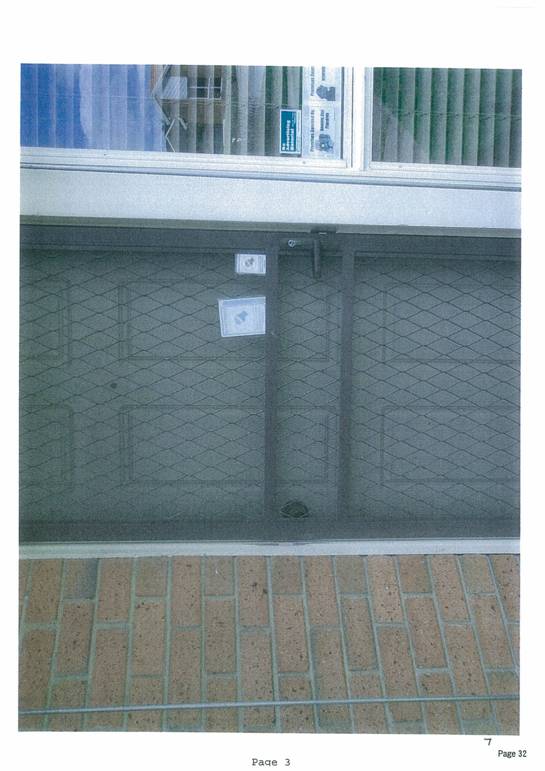
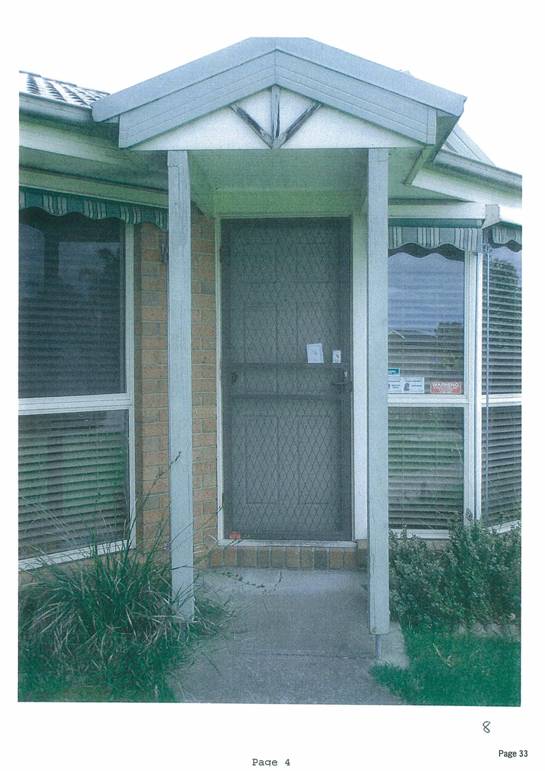
13 The respondents also contravened s 75(1)(a) of the ACL by the conduct of the two sales representatives who called on Mr Fahnle on 24 June 2011 for the purpose of negotiating an unsolicited agreement for Neighbourhood Energy to supply him with electricity. The sales representatives did not leave the premises immediately on each of the requests of the occupier, including a request by the display of a visible sign with the words “do not knock”.
14 The respondents contravened s 75(1)(a) of the ACL again by the conduct of the AGC sales representative who called on Mr Alda on 18 July 2011 for the purpose of negotiating an unsolicited agreement with Neighbourhood Energy and did not leave the premises immediately on the request of the occupier of the premises, including a request by the display of a visible “do not knock” sign.
15 As the supplier of services to which the negotiations related, Neighbourhood Energy is taken to have contravened s 75(1)(a) by reason of s 77 of the ACL.
Section 74(a) – Failure to advise of purpose
16 By the failure of the relevant AGC sales representative(s), as soon as practicable and in any event before beginning to negotiate, to clearly advise the occupier that their purpose was to seek the occupier’s agreement to a supply of retail energy, AGC and Neighbourhood Energy contravened s 74(a) of the ACL:
on 24 June 2011 by conduct at the premises occupied by Mr Fahnle;
on 13 July 2011 by conduct at premises occupied by Ms Quan Sing; and
on 18 July 2011 by conduct at the premises of Mr Alda.
Section 74(b) – Failure to advise of obligation to leave
17 By the failure of the relevant AGC sales representative(s) as soon as practicable and in any event before beginning to negotiate, to clearly advise the occupant that they were obliged to leave the premises immediately on request, AGC and Neighbourhood Energy contravened s 74(b) of the ACL:
on 24 June 2011 by conduct at premises occupied by Mr Fahnle;
on 18 July 2011 by conduct at premises occupied by Mr Alda; and
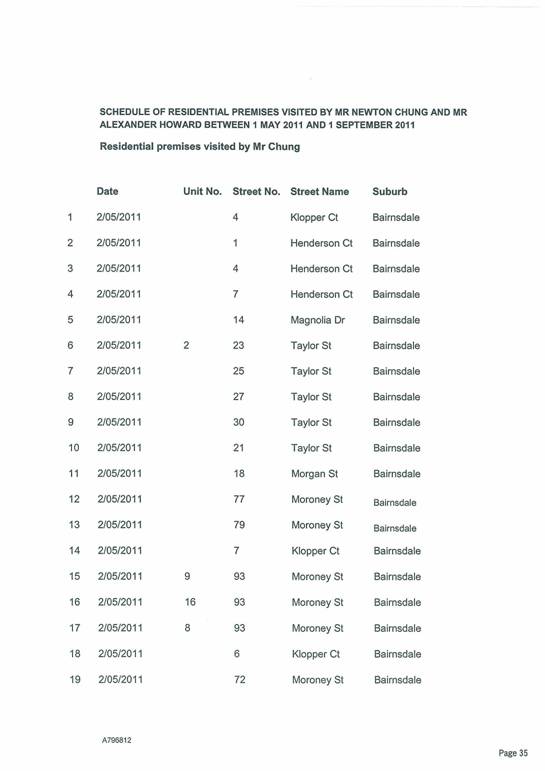
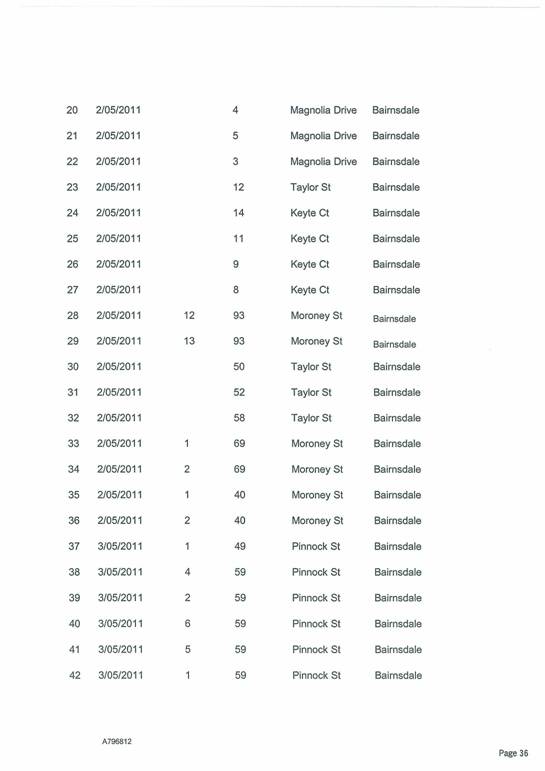
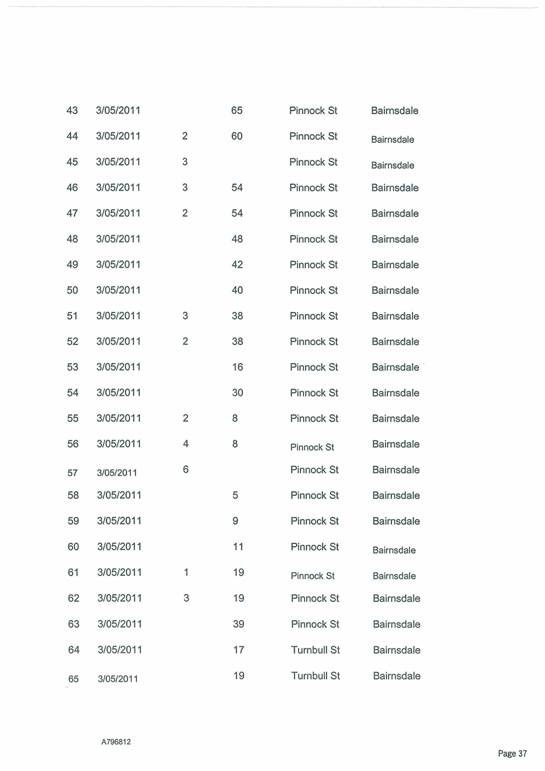
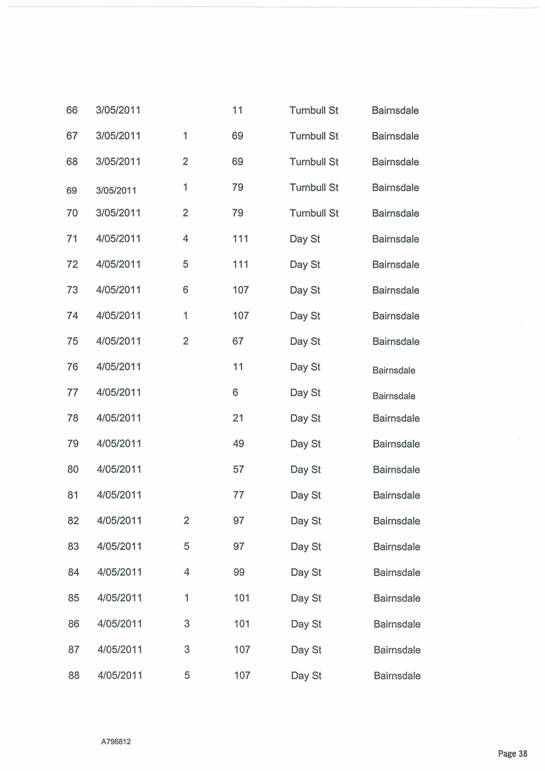
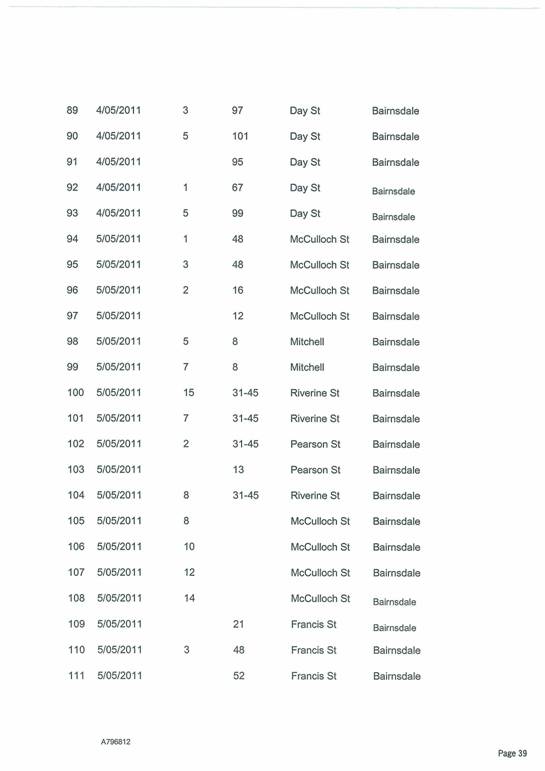
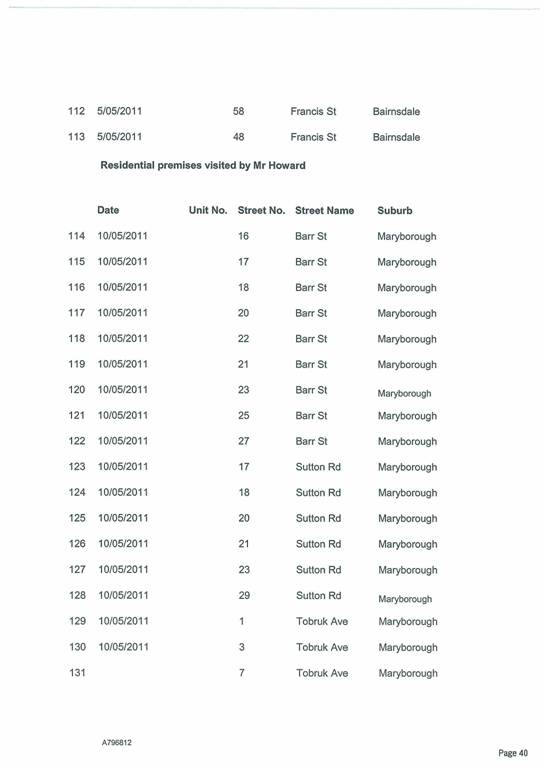
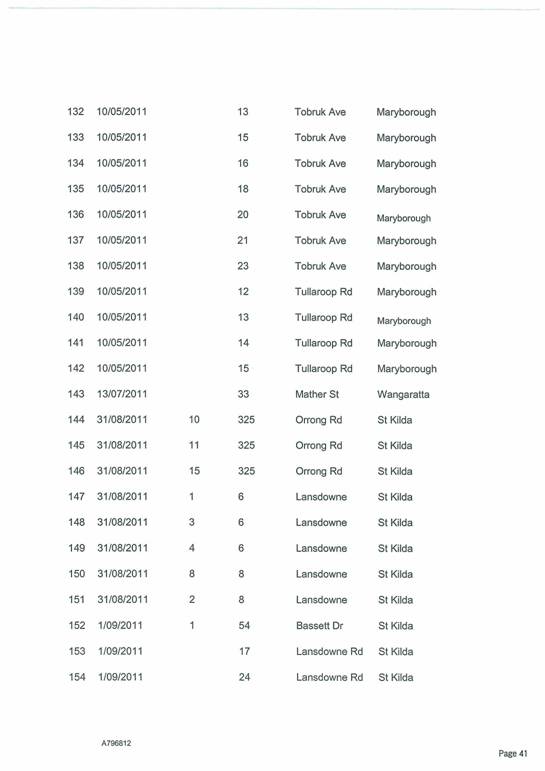
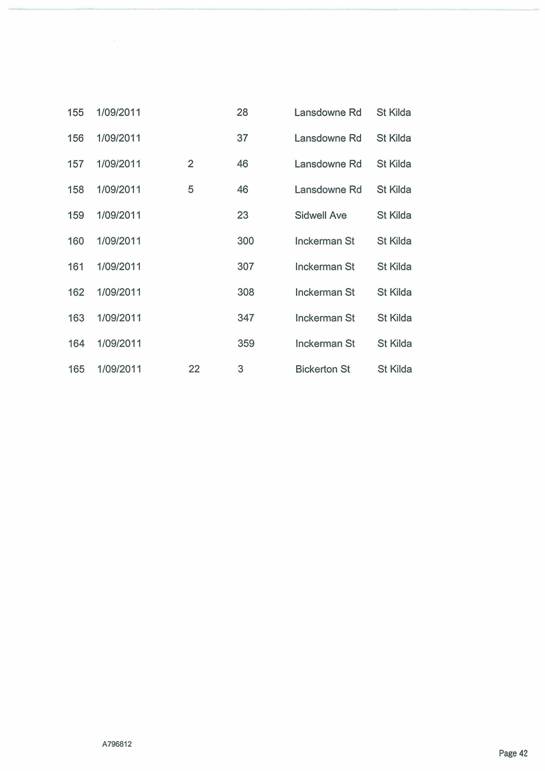
on 2, 3, 4, 5 and 10 May 2011, 13 July 2011 and 31 August 2011 and 1 September 2011 by conduct at 165 addresses (one of which was occupied by Ms Sing) which are listed in Annexure C to the agreed statement of facts.
Section 74(c) – Failure to adequately disclose identity
18 By the failure of the relevant AGC sales representative(s), as soon as practicable, and in any event before beginning to negotiate, to provide to the occupant AGC’s name and Neighbourhood Energy’s address, AGC and Neighbourhood Energy admit contravened s 74(c) of the ACL:
on 24 June 2011 by conduct at the premises occupied by Mr Fahnle;
on 18 July 2011 by conduct at the premises occupied by Mr Alda; and
on 2, 3, 4, 5 and 10 May 2011, 13 July 2011, 31 August 2011 and 1 September 2011 by conduct at the 165 addresses (one of which was occupied by Ms Sing) listed in Annexure C to the agreed statement of facts.
consideration of the relief sought by the parties
19 While ultimate responsibility for the making of orders to resolve proceedings remains with the Court, the Court will not ordinarily refuse to give effect to settlements under the CCA which are within its power and not otherwise inappropriate: see for example ACCC v Eternal Beauty Products Pty Ltd [2012] FCA 1124 at [33].
20 The principle of judicial restraint is particularly well established in matters such as the present where the parties are legally represented and able to understand and evaluate the desirability of a settlement: see ACCC v Construction, Forestry, Mining and Energy Union [2007] ATPR 42-140 at [4].
21 As Lee J said in ACCC v Target Australia Pty Ltd (2001) ATPR 41-840 at [24]:
It is the Court’s duty in receiving consent orders in any matter to scrutinise such orders as to their appropriateness. However, after being satisfied as to the appropriateness of the orders, the Court should be slow to impede final settlement of such matters, particularly those involving public interest considerations. Moreover, the public has an interest in the mutual resolution of litigation, and subject to the foregoing the Court should be careful not to refuse to make orders simply because the orders may have been different had it been the Court’s task to formulate them.
22 The public has a clear interest in the resolution of litigation in this case. As Burchett and Kiefel JJ remarked in NW Frozen Foods Pty Ltd v ACCC (1996) 71 FCR 285 (“NW Frozen Foods”) at 291:
When corporations acknowledge contraventions, very lengthy and complex litigation is frequently avoided, freeing the courts to deal with other matters, and investigating officers of the ACCC to turn to other areas of the economy that await their attention.
23 In deciding whether consent orders conform with legal principle, the Court is entitled to treat the respondents’ consent as admission of all facts necessary or appropriate to granting the relief sought against each of them: see Thomson Australian Holdings Pty Ltd v Trade Practices Commission (1981) 148 CLR 150, 164 per Gibbs CJ, Stephen, Mason and Wilson JJ. Additional support for the relief sought is found in the agreed statement of facts and the joint written submission.
Declarations
24 The declarations were sought by consent pursuant to s 21 of the Federal Court of Australia Act 1976 (Cth) (“FCA”). The Court has a broad discretion to make declarations under this provision: see Forster v Jododex Australia Pty Limited (1972) 127 CLR 421, 437-438 per Gibbs J (“Forster”); Ainsworth v Criminal Justice Commission (1992) 175 CLR 564, 581-582. In Forster, the High Court held that three requirements should be satisfied before a declaration will normally be made:
1. the question must be a real and not hypothetical one;
2. the applicant must have a real interest in raising it; and
3. there must be a proper contradictor.
25 I am satisfied that each of these requirements has been met in this case. It is obvious that the questions proposed to be determined by the declarations sought are real and not hypothetical. Further, the proceeding involves a significant legal controversy in a matter of public interest. Unsolicited selling methods carry a risk of harm to consumers, particularly when tainted by misleading or deceptive conduct or dishonesty. The ACCC is the public regulator responsible for enforcement of the ACL. Accordingly, the ACCC has a real interest in raising these matters. The respondents are proper contradictors, having an interest in opposing declarations of the kind sought. Moreover, having regard to the reasoning of Nicholas J in ACCC v Construction, Forestry, Mining and Energy Union [2007] ATPR 42-140 at [6], it was appropriate to make the declarations in this case. The declarations:
are an appropriate vehicle for recording the Court’s disapproval of the contravening conduct;
serve to vindicate the ACCC’s claim that each of the respondents has contravened the ACL;
assist the ACCC to carry out its duties under the CCA in the future;
inform consumers of the dangers arising from the respondents’ contravening conduct; and
may deter other corporations from contravening the ACL.
26 The declarations contain sufficient indication of how and why the conduct complained of constitutes a breach of the ACL.
pecuniary penalties
27 The parties sought orders imposing a pecuniary penalty pursuant to s 224 of the ACL on:
Neighbourhood Energy in the amount of $850,000 and;
AGC in the amount of $150,000.
28 The Court has power under s 224(1)(a)(iv) to order a contravener of s 74 or s 75 of the ACL to pay a pecuniary penalty in respect of “each act or omission” as the Court determines to be appropriate. Penalties are not available in respect of contraventions of s 18 of the ACL. The maximum penalty for a corporation for each act or omission that relates to s 74 or s 75 is $50,000: see Item 5 of s 224(3) of the ACL. However, s 224(4)(b) mandates that a person is “not liable to more than one pecuniary penalty in respect of the same conduct”.
The Court’s approach to agreements on penalty
29 It is in the public interest that parties resolve matters under the ACL as quickly and inexpensively as possible, consistent with justice being done. The Court therefore looks with favour on negotiated settlements: NW Frozen Foods; Trade Practices Commission v TNT Australia Pty Ltd (1995) ATPR 41-375 (“TPC v TNT Australia”). However, as the parties acknowledged, ultimate responsibility for the making of orders to resolve the proceeding rests with the Court.
Relevant factors
30 Paragraph 224(2) of the ACL provides that, in determining an appropriate pecuniary penalty, the Court must have regard to all relevant matters, including:
the nature and extent of the act or omission and of any loss or damage suffered as a result of the act or omission;
the circumstances in which the act or omission took place; and
whether the person has previously been found to have engaged in any similar conduct.
31 The matters to which the Court must have regard under s 224 of the ACL are the same mandatory considerations as are set out in s 76(1) of the CCA. The principles which have previously been applied by this Court in determining penalties under s 76 of the CCA provide a useful guide in setting a penalty under s 224 of the ACL: see, for example, the matters identified by French J (as his Honour then was) in Trade Practices Commission v CSR Ltd (1991) ATPR 41-076 at 52,152-52,153. The following factors may be relevant to the quantum of pecuniary penalties:
the size of the contravening company;
the degree of market power it has;
the deliberateness of the contravention and the period over which it extended;
whether the contravention arose out of the conduct of senior management or at a lower level;
whether the company has a culture conducive to compliance with the CCA as evidenced by education programs and/or corrective measures taken in response to an acknowledged contravention;
whether the contravener has cooperated with the authorities responsible for the enforcement of the CCA in relation to the contravention.
These factors have been approved on several occasions; see for example NW Frozen Foods, 292-294; ACCC v Dataline.Net.Au Pty Ltd (in liq) (2007) 161 FCR 513.
Additional factors which have previously been identified by this Court include:
the effect on the functioning of the market and other economic effects of the contravening conduct;
whether the contravening conduct was systematic, deliberate or covert;
the financial position of the contravener;
The amount of loss or damage caused, including whether consumers suffered any loss is also a relevant factor: see ACCC v Global One Mobile Entertainment Limited [2011] FCA 393 at [134].
32 However, the most significant consideration is deterrence (both specific and general): see Trade Practices Commission v CSR Ltd (1991) ATPR 41-076, approved by the majority in NW Frozen Foods at 292-4. As the Full Court made clear in NW Frozen Foods at 294-295:
The Court should leave no room for any impression of weakness in its resolve to impose penalties sufficient to ensure the deterrence, not only of the parties actually before it, but also of others who might be tempted to think that contravention would pay…
The penalty imposed must be set high enough that offenders and potential offenders do not calculate the cost of a fine as “an acceptable cost of doing business”: Singtel Optus Pty Ltd v ACCC (2012) 287 ALR 249 at [62]. However, the penalty for related offences ought not to exceed what is proper for the entire contravening conduct: TPC v TNT Australia at 40,169 per Burchett J. Other things being equal, similar contraventions should incur similar penalties, albeit “other things are rarely equal where contraventions of the [CCA] are concerned”: see NW Frozen Foods at 295.
Application to the facts
33 I accepted that the penalties proposed were appropriate and would achieve the object of deterrence. In arriving at this view, I had regard to the facts and admissions set out in the agreed statement of facts and the following factors.
Nature and extent of the conduct/circumstances in which the contravening conduct took place
34 The contravening conduct arises from door-to-door sales activities undertaken by AGC, through its contractors, to negotiate consumer agreements on behalf of Neighbourhood Energy.
35 It was submitted, and I agreed, that the failure of the relevant sales representatives to leave on request during visits to Mr Alda and Mr Fahnle’s premises in breach of s 74(a) of the ACL was serious in nature and that this failure was exacerbated by misleading and deceptive statements made by the sales representatives.
36 The failure of the relevant AGC sales representatives to comply with all of the disclosure requirements in s 74 of the ACL was on a lower scale of seriousness. Although occurring on multiple occasions, the failure to provide the occupier with AGC’s name and Neighbourhood Energy’s address and clearly advise the occupier that the representatives were required to leave on request, occurred in circumstances where the representatives provided Neighbourhood Energy’s name and their own names (which were displayed on the front of their identity badges) to the occupants.
Amount of loss or damage
37 There was some disagreement between the ACCC and the respondents as to loss or damage and its relationship to penalties in this case. The ACCC submitted that the lack specific evidence as to the amount of loss or damage sustained as a result of the respondents’ contravening conduct should not be seen as a mitigating factor. According to the ACCC, the “loss or damage” to be considered in setting a penalty should not be limited to financial loss, because the mandatory standards imposed by the ACL are also aimed at limiting consumers’ exposure to things such as inconvenience and invasion of privacy.
38 The respondents submitted that loss or damage arising from the contraventions is likely to be negligible. Although Mr Fahnle and Mr Alda were subjected to unwanted interactions with salespersons for a period, neither was actually induced to enter into an agreement for the supply of electricity from Neighbourhood Energy. Similarly, in relation to the failure by the representatives in other instances to comply with all of the disclosure requirements of s 74, the respondents submitted this was unlikely to have been a decisive factor in the consumer agreeing to switch to Neighbourhood Energy for his or her electricity. The respondents suggested that this should be taken into account as a mitigating factor.
39 With respect to loss or damage to competitors, the ACCC submitted that some weight should be given to the initial contact with consumers, made without the prescribed disclosures, which “heads them down the path” with Neighbourhood Energy. However, the ACCC conceded that such detriment is not as significant as in other cases.
40 The respondents argued that it was unlikely that competing suppliers of retail electricity services have suffered loss or damage as a result of some of their consumers switching their retail electricity supplier during an exchange in which the particular contraventions in the current case occurred. They pointed out that neither Mr Fahnle nor Mr Alda entered into an agreement for the supply of electricity with Neighbourhood Energy, and to the extent that any other relevant consumer did enter into an agreement with Neighbourhood Energy, there was no evidence that the admitted failure to comply with the disclosure requirements of s 74 of the ACL was a decisive factor in the consumer agreeing to switch to Neighbourhood Energy.
41 There is authority to support the view that, in some cases, the absence of evidence of loss or damage constitutes a factor in mitigation of penalty; see Singtel Optus at [58]. However, the parties jointly submitted, and I agreed, that whichever approach was taken, when regard is had to all relevant matters, the proposed penalties were appropriate and within the permissible range.
Whether similar prior conduct
42 Neither Neighbourhood Energy nor AGC had previously been found by a court to have engaged in any similar conduct or to have contravened the ACL or the CCA (or its predecessor, the Trade Practices Act 1974 (Cth)). This was a mitigating factor in the respondents’ favour.
Maximum penalties and courses of conduct
43 As noted above, the Court has power to order a maximum penalty of $50,000 for “every act or omission” constituting a breach of ss 74 or 75 of the ACL. In cases involving a multitude of contraventions, it is necessary to determine whether each act or omission constitutes a separate contravention. This ensures that the contravener is not punished twice for the same conduct. As the Full Court said in Construction, Forestry, Mining and Energy Union v Cahill (2010) 194 IR 461 at [41]:
[T]he court must ensure that the offender is not punished twice for the same conduct. In other words, where two offences arise as a result of the same or related conduct that is not a disentitling factor to the application of the single course of conduct principle but a reason why a Court may have regard to that principle, as one of the applicable sentencing principles, to guide it in the exercise of the sentencing discretion…It is a tool of analysis which a Court is not compelled to utilise.
44 The parties took opposing views of the number of contraventions arising from the conduct. The ACCC submitted that there were six contraventions by each respondent of s 75 which took place in two separate incidents at two premises on 24 June 2011 and 18 July 2011 and 337 contraventions of s 74 by each respondent which took place in 167 separate incidents over a four month period including during the incidents at Mr Fahnle and Mr Alda’s premises on 24 June 2011 and 18 July 2011. The respondents submitted that fewer contraventions should be recorded. Ultimately, the identification of the precise number of contraventions is not important, so long as the overall contravening conduct is adequately reflected in the total penalty.
Size and financial position of contravener
45 Having regard to the facts contained in [79]-[82] of the agreed statement of facts, I was persuaded that the penalties sought adequately reflected the relative size and financial position of the respondents and that each of the respondents would have capacity to pay.
The deliberateness of the contravening conduct
46 In relation to the contraventions involving sales representatives calling at premises on 2, 3, 4, 5 and 10 May 2011, 13 July 2011 and 31 August 2011 and 1 September 2011, there was no evidence to suggest that the failure to provide AGC’s name and Neighbourhood Energy’s address and to clearly advise the occupier that the representatives were obliged to leave on request was a deliberate contravention of the ACL. However, I inferred from the nature of the misleading representations made in the calls to Mr Fahnle and Mr Alda’s premises, that the sales representatives may have been deliberately attempting to hide their purpose to “get a foot in the door” of members of the public.
Participation of senior employees/management
47 Neither senior employees, nor management were involved in the contravening conduct. Neither senior employees nor management had any knowledge of the contravening conduct before it was brought to their attention by the ACCC. This is a mitigating factor in the respondents favour.
Culture of compliance and corrective measures taken in response to contravention
48 Both respondents had compliance procedures in place at the time of the contraventions. Sales representatives engaged by AGC on behalf of Neighbourhood Energy were provided with two days of training at AGC’s office and one day of training “in the field” prior to commencing work. The training covered regulatory compliance, including compliance with the unsolicited consumer agreement provisions of the ACL, as described at [51]-[57] of the agreed statement of facts. It failed to prevent the contravening conduct from occurring. However, the respondents accepted the need for more a rigorous compliance regime and each of the respondents had consented to a probation order pursuant to s 246 of the ACL providing for a compliance program.
49 The respondents have taken the contravening conduct seriously and acted promptly to implement corrective measures, as described at [63]-[65] of the agreed statement of facts. Both respondents have shown a commitment to ensuring that the failures which resulted in the contravening conduct do not happen again.
Cooperation and contrition discount
50 The respondents cooperated with the ACCC in the conduct of this proceeding by consenting to the agreed statement of facts, the consent orders and the joint submission. This was a significant mitigating factor in their favour. As a result of the respondents’ cooperation, a complex trial was avoided. A contested hearing would have consumed a large amount of the time and resources of the ACCC and of the Court. As a result, the respondents were entitled to a discount in relation to the penalty imposed.
Deterrence
51 The penalty imposed must be large enough to act as an effective deterrent. I was satisfied that the quantum of the penalties proposed would have the desired deterrent effect on the respondents and that it was likely to deter others in the door-to-door selling market, including energy retailers, from allowing similar conduct to occur in the future.
Parity principle
52 Similar contraventions should incur similar penalties, all other things being equal. There were no previous judgments on penalties for breached of s 74 or s 75 of the ACL with which to compare this case. However, there were two respondents to this proceeding whose contraventions arose from the same conduct. The parity principle requires that, with respect to penalties, there “should not be such an inequality as would suggest that the treatment meted out has not been even-handed”; NW Frozen Foods, 295. I found that the penalties reasonably differentiated between the two respondents, noting their relative size and capacity to pay. A penalty as high as that imposed on Neighbourhood Energy would have been oppressive to AGC: see Schneider Electric (Australia) Pty Ltd v ACCC (2003) 127 FCR 170 at [13] per Sackville J.
Totality principle
53 I was satisfied that the penalties sought by the parties were consistent with the totality principle as referred to by the Court in TPC v TNT Australia and that the aggregate penalties properly reflected the seriousness of the contravening conduct.
Conclusion on penalties
54 Having considered the relevant factors referred to above, the maximum penalties for contraventions of ss 74 and 75 and the parity and totality principles, I was satisfied that the penalties were appropriate and within range and ought to be ordered by this Court.
injunctions
55 I also made the consent orders imposing an injunction for two years to restrain the respondents from engaging in certain conduct, as specified in the order pages of these reasons. The ACL provides for injunctive relief in s 232. Injunctive relief was appropriate in this proceeding as Neighbourhood Energy continued to supply electricity to consumers and use door-to-door marketing although it had ceased door-to-door sales and had also changed its management following the contraventions. AGC intended to resume providing door-to-door sales services. The object of the injunctions was to restrain repetition of the contraventions. I was satisfied two years was an appropriate length of time and that the injunctions were clear and capable of being obeyed by the respondents without court supervision.
publication orders
56 The orders for publication of notices were calculated to alert affected consumers to the contravening conduct and to educate consumers and the industry generally as to the requirements of the ACL and consumer rights under the provisions the subject of this proceeding.
compliance program
57 The respondents had each agreed to orders requiring them to implement a compliance program. I was satisfied that the proposed compliance programs were appropriate to the circumstances of each of the respondents and the industries in which they carried on their respective businesses. The programs reinforce the primary orders and should prevent repetition of the conduct.
conclusion
58 For the reasons set out above, the Court made the orders sought by consent in the proposed form. I also made the costs orders sought by consent pursuant to s 43 of the FCA requiring the respondents to make contributions towards the ACCC’s costs of the proceeding. This was a sensible suggestion by the parties, which the Court adopted, having regard to the respondents’ cooperation with the ACCC to resolve the proceeding and the steps which had been taken to avoid future contraventions.
|
I certify that the preceding fifty-eight (58) numbered paragraphs are a true copy of the Reasons for Judgment herein of the Honourable Justice Marshall |
Associate:
ANNEXURE
agreed statement of facts and Admissions
A. Introduction
1. This Statement of Agreed Facts and Admissions (ASOF) is made jointly by the Applicant (ACCC), the First Respondent (Neighbourhood Energy) and the Second Respondent (AGC) for the purposes of section 191 of the Evidence Act 1995 (Cth).
2. This Statement details:
2.1 conduct that took place between 2 May and 1 September 2011 in relation to door-to-door sales activities conducted by Sales Representatives engaged by AGC to make agreements for Neighbourhood Energy to supply retail electricity to consumers;
2.2 admissions by Neighbourhood Energy and AGC that each contravened unsolicited consumer agreements provisions of Division 2 of Part 3-2 of the Australian Consumer Law (the ACL), being Schedule 2 to the Competition and Consumer Act 2010 (Cth) (the CCA); and
2.3 conduct by Neighbourhood Energy and AGC subsequent to the admitted contraventions relevant to the proposed consent orders to b submitted by the parties.
B. the parties
ACCC
3. The ACCC is, and was at all material times, a body corporate duly established under section 6A of the CCA, and is able to sue in its corporate name.
Neighbourhood Energy
4. At all material times, Neighbourhood Energy is and was:
4.1 duly incorporated under the Corporations Act 2001 (Cth) and able to be sued in its corporate name; and
4.2 a corporation within the meaning of section 4 of the CCA.
5. Since 2006, Neighbourhood Energy has carried on business, in trade or commerce, as an electricity retailer in Victoria, operating under electricity retail licenses issued under the Electricity Industry Act 2000 (Vic).
6. Neighbourhood Energy currently has around 76,000 customers.
AGC
7. At all material times, AGC is and was:
7.1 duly incorporated under the Corporations Act 2001 (Cth) and able to be sued in its corporate name; and
7.2 a corporation within the meaning of section 4 of the CCA.
8. At all material times, AGC carried on business, in trade or commerce, as a supplier of sales and marketing services.
9. AGC was incorporated on 24 September 2009. It has, since that time, had a sole director, Mr Dhaval Shah (who is also one of the two shareholders). As at 30 June 2011, the company had three employees and 80 independent contractors.
C. facts relevant to liability
10. From about September 2010 to 2 September 2011:
10.1 Neighbourhood Energy engaged AGC to conduct door-to-door sales activities on its behalf by engaging sales representatives (Sales Representatives) to call on consumers at their homes to negotiate agreements for Neighbourhood Energy to supply retail electricity to them;
10.2 AGC engaged Sales Representatives as independent contractors under contracts which required them, inter alia, to:
10.2.1. attend such initial and on-going training AGC or its suppliers may from time to time require; and
10.2.2. comply with all laws and codes of conduct;
10.3 the Sales Representatives received training as further described in paragraphs 51 and following below; and
10.4 Neighbourhood Energy and AGC provided to the Sales Representatives materials to be used when conducting door-to-door sales activities, which included the following:
10.4.1. an identity card, which had the name "Neighbourhood Energy" appearing on the front together with the Sales Representative's name, photograph and unique identification number. The reverse side of the identity card included Neighbourhood Energy's name, address and telephone number, and AGC's name, address and telephone number; and
10.4.2. a welcome pack, which comprised the following Neighbourhood Energy branded documents (which did not have any reference to AGC):
10.4.2.1. the Agreement for Supply of Electricity;
10.4.2.2. a welcome letter;
10.4.2.3. the terms and conditions of the market contract for Victoria;
10.4.2.4. the customer charter;
10.4.2.5. the cancellation notice; and
10.4.2.6. a postage paid envelope which could be used to return the cancellation notice to Neighbourhood Energy.
Conduct in relation to Mr Garry Fahnle
11. Since at least early 2011, Mr Garry Fahnle has been:
11.1 the occupier of premises at 56 Alkira Avenue, Norlane in the State of Victoria (Mr Fahnle's premises); and
11.2 a ‘consumer’ of retail electricity within the meaning of section 3 of the ACL.
11. Prior to 24 June 2011, Mr Fahnle placed a sticker on the wooden front door of the house on Mr Fahnle's premises. This sticker was about 9.5 cms by 21 cms in size, was positioned on the door about 1.6 m from the ground and contained:
12.1 the words 'do not knock' and 'sales people please note: unsolicited door knocking here is not welcome' in capital letters; and
12.2 the image of a hand simulating a knocking motion with a cross through it,
(the Fahnle notice).
13. On 24 June 2011:
13.1. the house on Mr Fahnle's premises had a screen door at the front entrance, which was about 1.7m from the wooden door on which the Fahnle notice was placed; and
13.2. the Fahnle notice remained on the wooden front door.
14. At Annexure A to this ASOF are photographs of the Fahnle notice taken on 8 December 2011 from close up and from outside the screen door at the front entrance. The photographs at Annexure A accurately portray the appearance and position of the Fahnle notice and the entrance to the house on Mr Fahnle's premises as at 24 June 2011.
15. On 24 June 2011, one male and one female Sales Representative engaged by AGC (the Fahnle Sales Representatives) attended Mr Fahnle’s premises. Their purpose in doing so was to have a discussion with the occupier directed towards making an agreement for the supply of retail electricity by Neighbourhood Energy to the occupier. The Fahnle Sales Representatives had not been invited to Mr Fahnle's premises.
16. Despite the presence of the Fahnle notice, the Fahnle Sales Representatives did not leave Mr Fahnle’s premises immediately and instead:
16.1 remained on Mr Fahnle’s premises; and
16.2 knocked on the screen door of the house on Mr Fahnle’s premises.
17. After the Fahnle Sales Representatives knocked on the screen door, Mr Fahnle opened the wooden front door of his house. The Fahnle Sales Representatives then opened the front screen door and walked through the doorway to the wooden front door. The discussion that followed, which lasted about 10 minutes, was directed toward making an agreement with Mr Fahnle for the supply of retail electricity by Neighbourhood Energy to Mr Fahnle. The discussion was between the male Sales Representative and Mr Fahnle, and took place to the following effect:
17.1. The male Fahnle Sales Representatives said words to the effect of "I'd just like to talk to you about your energy."
17.2. Mr Fahnle replied with words to the effect that "I just got off the phone to my energy company, I've signed a new three-year contract. I'm not interested in changing."
17.3. The male Fahnle Sales Representative said words to the effect of, "No no no no, I'm not here to change your company. I’m trying to save you money, you’re being ripped off because you’ve been zoned wrongly."
17.4 Mr Fahnle asked, “Where are you from?”
17.5 The male Fahnle Sales Representative said, "Neighbourhood Energy", and held up an identity card for Mr Fahnle to see. The male Fahnle Sales Representative may have said his name while showing Mr Fahnle the card, but if he did, Mr Fahnle does not recall what it was.
17.6 The male Fahnle Sales Representative asked to see Mr Fahnle's current electricity bill.
17.7 Mr Fahnle retrieved an overdue payment notice for his last electricity bill from some drawers near the wooden front door and handed it to the male Fahnle Sales Representative. Mr Fahnle thought if he showed the male Fahnle Sales Representative an electricity bill, as he asked, the Fahnle Sales Representatives might leave sooner.
17.8 The male Fahnle Sales Representative then said words to the effect that "You are being billed wrong because you have been zoned incorrectly."
17.9 Mr Fahnle then pointed to the Fahnle notice on the wooden door and said words to the effect of, "I have a sticker here, I'm not interested."
17.10 The Fahnle Sales Representatives remained on the premises and the male Sales Representative said "I'm trying to save you money."
17.11 Mr Fahnle then said words to the effect of, "I’m not interested, I don’t want you here, please leave" a number of times (but not more than 10 times). The Fahnle Sales Representatives remained on the premises and the male Fahnle Sales Representative responded with words to the effect of, "You like being ripped off? You're not interested in saving money? I'm trying to help you out".
17.12 Mr Fahnle's housemate then came out to the front door and Mr Fahnle closed the front wooden door to his house while the Fahnle Sales Representatives were still on the premises.
17.13 The whole exchange between Mr Fahnle and the Fahnle Sales Representatives lasted approximately 10 minutes. The female Fahnle Sales Representative did not speak at all during the exchange.
17.14 Mr Fahnle did not have any further contact with the Fahnle Sales Representative and did not enter into any agreement for Neighbourhood Energy to supply retail electricity.
18. The Fahnle Sales Representatives did not as soon as practicable or before starting to negotiate with Mr Fahnle:
18.1 clearly advise Mr Fahnle that their purpose was to seek Mr Fahnle’s agreement to a supply of retail electricity;
18.2 provide Mr Fahnle with AGC's name and Neighbourhood Energy's name and address.
19. By each of the following, a ‘request’ (within the meaning of subsection 75(1) of the ACL) was made by Mr Fahnle for the Fahnle Sales Representatives to leave Mr Fahnle’s premises immediately, in response to which the Fahnle Sales Representatives remained on Mr Fahnle's premises:
19.1. the Fahnle notice;
19.2. the conduct of Mr Fahnle referred to in paragraph 17.9 above; and
19.3. the conduct of Mr Fahnle referred to in paragraph 17.11 above.
20. By engaging in the conduct referred to in paragraph 17 above, the Fahnle Sales Representatives represented that:
20.1. they were not at Mr Fahnle’s premises to seek to convince him to change his retail electricity supplier;
20.2. Mr Fahnle was being overcharged by his then current retail electricity supplier; and
20.3. Mr Fahnle had been zoned incorrectly for the purposes of the supply of retail electricity,
when this was not the case.
21. The representations referred to in paragraph 20 above were made in trade and commerce.
22. The Fahnle Sales Representatives were agents of AGC and Neighbourhood Energy and acting within the scope of their apparent authority within the meaning of subsections 84(2) and 139B(2) of the CCA.
Conduct in relation to Mr Gary Alda
23. Since at least 18 July 2011, Mr Gary Alda has been:
23.1. the occupier of premises at 11 Oates Court, Cranbourne North in the State of Victoria (Mr Alda's premises); and
23.2. a ‘consumer’ of retail electricity within the meaning of section 3 of the ACL.
24. Prior to 18 July 2011, Mr Alda placed two laminated 'Do not knock' notices on the screen door at the entrance to his home. One notice he placed just above the door handle and the other notice he placed approximately 112 cm from the ground. One notice was larger than the other, the larger notice being approximately 11.5cm by 9cm and the smaller notice being approximately 7cm by 5cm. The notices have the same wording and contained:
24.1. the words 'do not knock' and 'sales people please note unsolicited door-knocking here is unlawful' in capital letters; and
24.2. the image of a hand simulating a knocking motion with a cross through it,
(the Alda notices).
25. On 18 July 2011, the Alda notices remained on the screen door.
26. At Annexure B to this ASOF are photographs of the Alda notices taken on 5 December 2011 from distances of 0.5m, 1m, 2m and 5m away. The photographs at Annexure B accurately portray the appearance and position of the Alda notices and the entrance to the house on Mr Alda's premises on 18 July 2011.
27. On 18 July 2011, in the early evening, a male Sales Representative engaged by AGC (Alda Sales Representative) attended Mr Alda's premises. The Alda Sales Representative's purpose in doing so was to have a discussion with the occupier directed towards making an agreement for the supply of retail electricity by Neighbourhood Energy to the occupier. The Alda Sales Representative had not been invited to Mr Alda's premises.
28. Despite the presence of the Alda notices, the Alda Sales Representative did not leave Mr Alda's premises immediately and instead:
28.1. remained on Mr Alda's premises; and
28.2. knocked on the front screen door of the house on Mr Alda's premises.
29. After the Alda Sales Representative knocked on the front screen door, Mr Alda's recollection is that he opened the front wooden door of the house but left the screen door shut and had an exchange with the Alda Sales Representative, which lasted approximately 30 seconds to 1 minute, to the following effect:
29.1. The Alda Sales Representative made an introductory statement, which Mr Alda understood to be the beginning of a sales spiel. Mr Alda recalls that the man spoke very quickly and had an accent and Mr Alda found it difficult to understand what the Alda Sales Representative was saying. Mr Alda believes that the Alda Sales Representative may have said that he was from Neighbourhood Energy and that he was visiting the local area with special offers.
29.2. After approximately 10 seconds, Mr Alda interrupted the Alda Sales Representative and asked "Where are you from?"
29.3. The Alda Sales Representative showed Mr Alda an identity card and said words to the effect that "I am from Neighbourhood Energy".
29.4. Mr Alda pointed from where he stood inside the screen door to the Alda notices on the door and said words to the effect that, "I have two notices on the door saying 'do not knock'. Why are you knocking on my door?"
29.5. The Alda Sales Representative said words to the effect of "I'm not selling anything, it doesn't apply to me".
29.6. Mr Alda said words to the effect that "I made it clear that I don't want Sales Representatives knocking on my door. Why bother? Why do you keep doing it?"
29.7. The Alda Sales Representative then said words to the effect of "I'm not selling anything, it doesn't apply to me".
29.8. Mr Alda said, "You're a liar. Get lost."
29.9. The Alda Sales Representative walked away from Mr Alda's door down the path from the door while saying words to the effect of "I'm not a liar. I'm not selling anything. It doesn't apply to me."
29.10. Mr Alda did not have any further contact with the Alda Sales Representative and did not enter into any agreement for Neighbourhood Energy to supply retail electricity.
30. The Alda Sales Representative did not as soon as practicable or before starting to negotiate:
30.1. clearly advise Mr Alda that his purpose was to seek Mr Alda's agreement to a supply of retail electricity;
30.2. clearly advise Mr Alda that he was obliged to leave the premises immediately on request; and
30.3. provide Mr Alda with AGC's name and Neighbourhood Energy's address.
31. By each of the following, a ‘request’ (within the meaning of subsection 75(1) of the ACL) was made by Mr Alda for the Alda Sales Representative to leave Mr Alda’s premises immediately, in response to which the Alda Sales Representative remained on Mr Alda's premises:
31.1. the Alda notices;
31.2. the conduct of Mr Alda referred to in paragraph 29.4 above; and
31.3. the conduct of Mr Alda referred to in paragraph 29.6.
32. By engaging in the conduct referred to in paragraphs 29.5, 29.7, and 29.9 above, the Alda Sales Representative represented that he was not calling on Mr Alda for the purpose of selling anything, when this was not the case.
33. The representation referred to in paragraph 32 above was made in trade and commerce.
34. The Alda Sales Representative was an agent of AGC and Neighbourhood Energy and acting within the scope of his apparent authority within the meaning of subsections 84(2) and 139B(2) of the CCA.
Conduct of Mr Howard and Mr Chung
35. From about April 2011 until September 2011, AGC contracted Mr Newton Chung and Mr Alexander Howard as Sales Representatives.
36. From at least 2 May 2011 until 1 September 2011, Mr Chung and Mr Howard, on some occasions together and on other occasions separately, called upon the occupiers of premises with the purpose of having a discussion with the occupiers directed towards making an agreement for the supply of retail electricity by Neighbourhood Energy to the occupiers of those premises (the Chung and Howard calls). Neither Mr Chung or Mr Howard had been invited to any of the premises at which they made the Chung and Howard calls.
37. The addresses at which 165 of the Chung and Howard calls took place over the course of 2, 3, 4, 5 and 10 May 2011, 13 July 2011, 31 August 2011 and 1 September 2011 are listed in the attached table (Annexure C).
38. Each Chung and Howard call was made upon an occupier who was a 'consumer' of retail electricity within the meaning of section 3 of the ACL.
39. During each Chung and Howard call, when an occupier came to the front door of the residence, Mr Chung, Mr Howard or both of them started a discussion with the occupier directed towards having the occupier agree to acquire retail electricity from Neighbourhood Energy.
40. During each Chung and Howard call, Mr Chung and Mr Howard did not as soon as practicable or before starting to negotiate:
40.1. clearly advise the occupier that they were obliged to leave the premises immediately on request; and
40.2. provide the occupier with AGC's name and Neighbourhood Energy's address.
Conduct in relation to Ms Sing
41. On 13 July 2011:
41.1. Ms Sing was the occupier of premises at 33 Mather Street, Wangaratta (Ms Sing's premises); and
41.2. a 'consumer' of retail electricity within the meaning of section 3 of the ACL.
42. On 13 July 2011, Mr Howard and Mr Chung attended Ms Sing's premises. Their purpose in doing so was to have a discussion with the occupier directed towards making an agreement for the supply of retail electricity by Neighbourhood Energy to the occupier. Neither Mr Howard nor Mr Chung had been invited to Ms Sing's premises.
43. One of Mr Howard or Mr Chung knocked on the door to Ms Sing's premises and Ms Sing responded to this by opening the door. A discussion followed, which was directed toward making an agreement with Ms Sing for the supply of retail electricity by Neighbourhood Energy to Ms Sing. The discussion was between all three of Mr Howard, Mr Chung and Ms Sing, as follows.
43.1. Mr Chung said words to the effect "Hello. I'm Newton from Neighbourhood Energy" and held up to Ms Sing the front of his Neighbourhood Energy identity card, which had his name, photograph and unique identification number on it together with Neighbourhood Energy's name and logo.
43.2. Mr Howard said words to the effect "Hello. I'm Alex from Neighbourhood Energy" and held up to Ms Sing the front of his Neighbourhood Energy identity card, which had his name, photograph and unique identification number on it together with Neighbourhood Energy's name and logo.
43.3. Mr Howard then asked Ms Sing if she was Thai, Mr Sing responded by saying that she was from Thailand and Mr Howard then said that he had recently travelled to Thailand. Mr Howard and Ms Sing then discussed Thailand for about 3 to 4 minutes.
43.4. Once Mr Howard and Ms Sing had stopped discussing Thailand, Mr Chung said words to the effect of, "All we're doing today is just coming out here to register the property for customers who are in this area. We're here because your property is on a GD power tariff and so you're eligible for a 12 percent reduction off your electricity. If you happen to have a bill, I will be able to show you exactly what I'm talking about."
43.5. Ms Sing responded with words to the effect that she did not have a bill.
43.6. Mr Chung said words to the effect, "Come outside and I will show you on the meter box what I'm talking about."
43.7. Ms Sing stepped outside to her meter box on a wall at the front of the premises.
43.8. Mr Chung and Ms Sing then discussed Ms Sing's current supplier, Truenergy.
43.9. Mr Chung then told Ms Sing that consumers are charged for kilowatts of electricity used and a supply charge, the rates for that area being charged by her current supplier and the reductions she might be on with her current supplier. He then told Ms Sing that she was entitled to a 12 percent reduction with Neighbourhood Energy and that this was a better reduction than that offered by her current supplier.
43.10. At this point, while showing Ms Sing a contract for the supply of electricity by Neighbourhood Energy, Mr Chung said words to the effect, "All you need to do is sign here to change from Truenergy to Neighbourhood Energy and get the 12 percent reduction for 2 years." Mr Chung also explained that:
43.10.1. the electricity would still come from the same distributor but the bill would be coming from Neighbourhood Energy;
43.10.2. it was a 2 year contract; and
43.10.3. Ms Sing had a 10 day cooling off period.
43.11. Mr Chung continued his negotiations with Ms Sing, asking her a number of details necessary to complete a written contract for the supply of electricity from Neighbourhood Energy to Ms Sing and recording Ms Sing's responses on the contract. Mr Chung showed Ms Sing what he was writing.
43.12. Mr Chung told Ms Sing that he was going to make a verification call to make sure that the information she had given him was correct, and that she understood the information that he had given her. Mr Chung telephoned a verification call operator and gave the operator relevant administrative details which Neighbourhood Energy required to arrange for the supply of electricity to Ms Sing.
43.13. Ms Sing also spoke with the call operator and confirmed with the operator details which Neighbourhood Energy required to verify that Ms Sing had agreed to the supply of electricity, including:
43.13.1. that Mr Chung had shown Ms Sing his identification badge;
43.13.2. that Ms Sing was aware that she was accepting Neighbourhood Energy's 12% pay-on-time discount offer with a $30 sign up credit for a 2-year term, with a $50 cancellation fee and that Ms Sing had a 10 business day cooling off period;
43.13.3. that Mr Chung had given Ms Sing Neighbourhood Energy's Welcome Pack which includes the offer in writing, the rates, the terms, conditions and the cancellation form;
43.13.4. the box that Mr Chung ticked on the contract relating to the rates payable under the contract, and that these would be the rates charged to Ms Sing under the contract; and
43.13.5. that Ms Sing was aware she was becoming a Neighbourhood Energy customer, was changing her electricity retailer and that Neighbourhood Energy was not affiliated with the government.
43.14. Ms Sing signed a document titled Agreement for Supply of Electricity and Mr Chung gave her a duplicate copy of the contract.
44. Mr Howard and Mr Chung did not as soon as practicable or before starting to negotiate:
44.1. clearly advise Ms Sing that their purpose was to seek Ms Sing's agreement to a supply of retail electricity;
44.2. clearly advise Ms Sing that they were obliged to leave the premises immediately on request; and
44.3. provide Ms Sing with AGC's name and Neighbourhood Energy's address.
D. Admissions
45. During the Fahnle call, AGC:
45.1. was a ‘dealer’ within the meaning of section 71 of the ACL;
45.2. by the conduct of the Fahnle Sales Representatives referred to in paragraphs 15, 16 and 17 above, contravened subsection 75(1) of the ACL on 24 June 2012;
45.3. by the conduct of the Fahnle Sales Representatives referred to in paragraphs 15, 17 and 18 above, contravened sections 74(a), 74(b) and 74(c) of the ACL; and
45.4. by the conduct of the Fahnle Sales Representatives referred to in paragraph 17 above, contravened section 18(1) of the ACL.
46. During the Fahnle call, Neighbourhood Energy:
46.1. was a 'supplier' within the meaning of section 2 of the ACL;
46.2. by virtue of section 77 of the ACL, as the supplier of the retail electricity to which the Fahnle Sales Representatives' negotiations with Mr Fahnle related, is taken to have contravened sections 74(a), 74(b), 74(c) and 75(1) of the ACL; and
46.3. by the conduct of the Fahnle Sales Representatives referred to in paragraph 17 above, contravened section 18(1) of the ACL.
47. During the Alda call, AGC:
47.1. was a ‘dealer’ within the meaning of section 71 of the ACL;
47.2. by the conduct of the Alda Sales Representative referred to in paragraphs 27, 28 and 29 above, contravened subsection 75(1) of the ACL on 18 July 2011;
47.3. by the conduct of the Alda Sales Representative referred to in paragraph 27 and 29 above, contravened sections 74(a), 74(b) and 74(c) of the ACL; and
47.4. by the conduct of the Alda Sales Representative referred to in paragraph 29 above, contravened section 18(1) of the ACL.
48. During the Alda call, Neighbourhood Energy:
48.1. was a 'supplier' within the meaning of section 2 of the ACL;
48.2. by virtue of section 77 of the ACL, as the supplier of the retail electricity to which the Alda Sales Representative's negotiations with Mr Alda related, is taken to have contravened sections 74(a), 74(b), 74(c) and 75(1) of the ACL; and
48.3. by the conduct of the Alda Sales Representative referred to in paragraph 29 above, contravened section 18(1) of the ACL.
49. During the Chung and Howard calls (including the call on Ms Sing on 13 July 2011), AGC:
49.1. was a 'dealer' within the meaning of section 71 of the ACL;
49.2. by the conduct of Mr Chung and Mr Howard referred to in paragraphs 36, 39 and 40 above, contravened sections 74(b) and 74(c) of the ACL;
49.3. by the conduct of Mr Chung and Mr Howard referred to in relation to Ms Sing on 13 July 2011 in paragraphs 42, 43 and 44 above, also contravened section 74(a) of the ACL.
49. During the Chung and Howard calls (including the call on Ms Sing on 13 July 2011), Neighbourhood Energy:
50.1. was a 'supplier' within the meaning of section 2 of the ACL;
50.2. by virtue of section 77 of the ACL, as the supplier of the retail electricity to which the negotiations that Mr Howard and Mr Chung had with the occupiers related, is taken to have contravened sections 74(b) and 74(c) of the ACL; and
50.3. by virtue of section 77 of the ACL, as the supplier of the retail electricity to which the negotiations that Mr Howard and Mr Chung had with Ms Sing on 13 July 2011 related, is also taken to have contravened section 74(a) of the ACL in relation to that call upon Ms Sing.
E. facts relevant to relief
TRAINING
Initial training provided to Sales Representatives
51. Sales Representatives engaged by AGC to sell electricity on behalf of Neighbourhood Energy were provided with training prior to commencing work for two days at AGC's head office and one day training in the field. During the training, they were provided with information about Neighbourhood Energy, the electricity industry, regulatory compliance (described in further detail below) and sales techniques.
52. Following this training, Sales Representatives were required to complete questionnaires pertaining to the energy industry, Neighbourhood Energy's specific products and certain regulatory compliance obligations. Sales Representatives were also required to acknowledge their understanding of general door-to-door sales practices by signing a document outlining certain door-to-door selling rules.
53. As part of the regulatory compliance training referred to in paragraph 51, Neighbourhood Energy and AGC required Sales Representatives to undertake training as to the ACL. The powerpoint slides provided by Neighbourhood Energy to AGC for this training (Training Presentation) were updated in January 2011 to take into account the introduction of the ACL, and relevantly included reference to the following:
53.1. that Sales Representatives should not door knock a property that has a "Do Not Knock" sign or a "No Canvassing" sign;
53.2. that Sales Representatives must leave a property immediately at the request of the customer or occupant at the property and not visit the customer or occupant for thirty days;
53.3. that Sales Representatives should provide identification before entering into any discussions with the customer or occupant at a property;
53.4. that the identification badges worn by Sales Representatives must include the full name and identification number of the representative and the name and address of Neighbourhood Energy;
53.5. that, before entering into negotiations with the customer or occupant at a property, Sales Representatives must inform the customer or occupant that:
53.5.1. the representative must leave immediately if asked to do so;
53.5.2. the purpose of the representative's visit is to enter the customer into an agreement for the supply of electricity; and
53.6. that Sales Representatives should not falsely misrepresent Neighbourhood Energy or its offers, or the intent of the visit to the customer or occupant at a property.
54. At all material times, AGC gave initial training to its Sales Representatives in accordance with the Training Presentation, or substantially similar versions of it.
55. In addition, on the first day of the training referred to in paragraph 51, a document titled "Pitch Structure" was provided to Sales Representatives. This provided a dot-point structure for the discussion with the occupier (with three segments - introduction, body, close), a sample script to use in the discussion with the occupier for making sales and a sample script to use for handling objections by customers. During training, Sales Representatives were taken through the pitch and then practised making sales using the pitch. The document did not include any reference to the requirement for Sales Representatives to, as soon as possible and in any event before starting to negotiate:
55.1. clearly advise the person on whom they were calling that the Sales Representative's purpose was to seek the person's agreement to a supply of retail electricity;
55.2. clearly advise the person that the Sales Representative was obliged to leave the premises immediately on request; and
55.3. provide to the person AGC's name and address, and Neighbourhood Energy's address.
56. Instead, through the Pitch Structure document, Sales Representatives were provided with a sample introduction in the following terms:
HELLO, HOW ARE YOU? (WAIT FOR CUSTOMER TO RESPOND)
MY NAME IS …… FROM NEIGHBOURHOOD ENERGY (SHOW I'D BADGE), IT'S NOTHING AT ALL SERIOUS.
HOWEVER THERE HAVE BEEN SOME INCREASES TO YOUR POWER IN THE AREA (POINT TO THE LINES) AND I JUST NEED TO KNOW IF YOU ARE RUNNING ON A GD OR GR TARIFF.
DO YOU KNOW? (SHOW INQUISITIVE LOOK) (CUSTOMER RESPONDS "I DON'T KNOW")
THAT'S FINE JUST GRAB ME A POWER BILL, THERE IS A NUMBER ON THE BACK THAT WILL LET ME KNOW. (POINT OVER CUSTOMERS SHOULDER WITH EYE CONTACT)
NOW TURN YOUR BACK TO THE CUSTOMER AND LOOK BUSY
57. During the training, Sales Representatives were instructed not to knock on doors with 'do not knock' signs.
ACL Briefing Document
58. In addition to the Training Presentation, at about the time the ACL was introduced in January 2011, Neighbourhood Energy also prepared and provided to AGC a briefing document highlighting important differences between the ACL and the regime that had previously applied under the Fair Trading Act 1999 (Vic) (ACL Briefing Document).
59. The ACL Briefing Document relevantly included reference to the following:
59.1. the requirements in section 74 of the ACL that the dealer must:
59.1.1. advise the consumer upfront that the dealer's purpose is to enter the consumer into an agreement;
59.1.2. advise the consumer upfront that the dealer is obliged to leave immediately upon request;
59.1.3. provide the consumer with the prescribed identity information, being the dealer's name and either the dealer's address (if the dealer is the supplier) or the supplier's name and address (if the dealer is not the supplier); and
59.2. the requirement in section 75 of the ACL that the dealer must leave the premises immediately upon request and that the dealer must not contact a consumer who makes such a request for a period of thirty days.
60. The ACL Briefing Document was forwarded by AGC's director to the Senior Sales Manager and Sales Manager of AGC together with a direction that Sales Representatives be trained in, and comply with, its contents.
Daily sales training provided by AGC
61. AGC also provided daily training to Sales Representatives prior to their going out into the field to conduct sales. This training was primarily focussed on sales and pitching techniques and how to respond to objections from prospective consumers.
Basis on which Sales Representatives were paid
62. AGC paid Sales Representatives on either a commission only basis or a wage and commission basis, with commissions being paid for each consumer who agreed to acquire electricity from Neighbourhood Energy and who did not terminate the contract within 4 weeks of the sale.
CORRECTIVE MEASURES
63. Management of AGC and Neighbourhood Energy had no knowledge of the conduct of the Sales Representatives constituting contraventions detailed in Section C above until it was brought to the attention of AGC and Neighbourhood Energy by the ACCC in letters dated 11 August 2011 and 22 November 2011.
64. Since receiving notification of the ACCC's concerns regarding a particular incident involving Mr Howard and Mr Chung in a letter dated 11 August 2011, Neighbourhood Energy:
64.1. on Friday 12 August 2011:
64.1.1. arranged for AGC to immediately cease door-to-door sales on Neighbourhood Energy's behalf until Sales Representatives had attended a compulsory re-training session;
64.1.2. agreed with AGC that the individual(s) against whom the complaint was made be investigated;
64.1.3. provided AGC with a letter requiring them to formally respond to the allegation; and
64.1.4. instructed their external legal adviser to write to the ACCC informing them of the actions taken by Neighbourhood Energy in response to the letter of 11 August 2011;
64.2. on Monday 15 August 2011, conducted a compulsory compliance training refresher course for AGC's Sales Representatives. The presentation used for this training relevantly included reference to the following:
64.2.1. that Sales Representatives should not door knock a property that has a "Do Not Knock" sign or a "No Canvassing" sign;
64.2.2. that Sales Representatives must leave a property immediately at the request of the customer or occupant at the property and not visit the customer or occupant for thirty days;
64.2.3. that Sales Representatives should provide identification before entering into any discussions with the customer or occupant at a property;
64.2.4. that the identification badges worn by Sales Representatives must include the full name and identification number of the representative and the name and address of Neighbourhood Energy;
64.2.5. that, before entering into negotiations with the customer or occupant at a property, Sales Representatives must inform the customer or occupant that:
64.2.5.1. the representative must leave immediately if asked to do so;
64.2.5.2. the purpose of the representative's visit is to enter the customer into an agreement for the supply of electricity; and
64.2.6. that Sales Representatives should not falsely misrepresent Neighbourhood Energy or its offers, or the intent of the visit to the customer or occupant at a property;
64.3. on 24 August 2011, provided (through its external solicitors) a substantive response to the ACCC's letter of 11 August 2011, describing the actions that Neighbourhood Energy had taken in response to the complaint, and the training and compliance procedures used by Neighbourhood Energy in relation to Sales Representatives selling its products;
64.4. initiated a review of training material provided to Sales Representatives;
64.5. on 2 September 2011, permanently ceased using AGC for door-to-door sales activities after being made aware of a further complaint about the alleged conduct of a Sales Representative;
64.6. on 29 November 2011, provided (through its external solicitors) a substantive response to the ACCC's letter of 22 November 2011, which had raised for the first time the complaints regarding the conduct of the Fahnle Sales Representatives and the Alda Sales Representative described in Section C; and
64.7. did not conduct any door-to-door sales (either itself or using any third party agent) between 2 September 2011 and 31 January 2012, by which time significant changes to the operation and management of Neighbourhood Energy had been implemented as described in paragraph 76 and following.
65. Since receiving notification of the ACCC's concerns via Neighbourhood Energy on 12 August 2011 and direct correspondence from the ACCC on 29 September 2011, AGC:
65.1. recalled all of its Sales Representatives from the field and performed internal compliance sessions on 12 and 13 August 2011;
65.2. agreed with Neighbourhood Energy that the individual(s) against whom the complaint was made be investigated;
65.3. required all of its Sales Representatives to attend the compliance training conducted by Neighbourhood Energy on Monday 15 August 2011;
65.4. from 2 September 2011 has not conducted door-to-door sales for Neighbourhood Energy or any other commercial supplier of goods or services;
65.5. on 12 October 2011, provided (through its external solicitors) a substantive response to the ACCC's letter of 29 September 2011, describing the training given by AGC to its Sales Representatives;
65.6. on 2 December 2011, provided (through its external solicitors) a substantive response to the ACCC's letter of 25 November 2011, which had raised for the first time the complaints regarding the conduct of the Fahnle Sales Representatives and the Alda Sales Representative described in Section C;
65.7. reviewed and revised its Unsolicited Consumer Contract Policy;
65.8. engaged Sales Representatives as employees, rather than contractors, under terms in which they:
65.8.1. agree to observe and comply with the provisions set out in any written policy, practice or procedure circulated by AGC from time to time; and
65.8.2. acknowledge and confirm that they have received a copy of AGC's Unsolicited Consumer Contract Policy and read and understood its contents;
65.9. reviewed and revised its Complaints Handling Policy for recording, storing and responding to trade practices complaints;
65.10. reviewed and revised the training material to be provided to its Sales Representatives;
65.11. appointed two Senior Managers as Compliance Officers with responsibility for developing, implementing and maintaining a trade practices compliance program, both of whom report to the Chief Executive Officer of AGC; and
65.12. arranged for the two Compliance Officers to receive practical training focusing on section 18 and Division 2 of Part 3-2 of the ACL from a qualified legal practitioner with expertise in trade practices law, and provided to the Applicant written confirmation from the legal practitioner that the training has occurred.
CHANGES TO OWNERSHIP AND MANAGEMENT OF NEIGHBOURHOOD ENERGY
Summary
66. As set out in further detail below:
66.1. Neighbourhood Energy is currently a member of a group of Alinta Energy companies that was acquired on 29 March 2011 by Alinta Energy Finance Pty Ltd (formerly Amber Group Nominee Pty Ltd), a subsidiary of Alinta Holdings (formerly Amber Holdings), pursuant to a scheme of arrangement.
66.2. During the period 2 May 2011 to 1 September 2011 as relevant to these proceedings, Neighbourhood Energy was effectively operated as a standalone business under its previous management, while negotiations took place for the proposed sale of Neighbourhood Energy by Alinta Energy to a prospective purchaser.
66.3. Following the termination of the proposed sale in mid-November 2011, a decision was made to integrate Neighbourhood Energy into the new Alinta Energy business, and the previous management of Neighbourhood Energy, including those responsible for compliance, was changed as part of this process.
History and change in ownership of Neighbourhood Energy in March 2011
67. On 1 October 2009, Alinta Energy Limited ABN 67 116 665 608 completed the purchase of 100% of the shares in Neighbourhood Energy.
68. On 29 March 2011, Alinta Energy Finance Pty Ltd, a subsidiary of Alinta Holdings, acquired the Alinta Energy group of companies (which included Neighbourhood Energy) pursuant to a scheme of arrangement under which Alinta Energy Limited sold shares in the holding companies of Neighbourhood Energy to Alinta Energy Finance Pty Ltd.
69. For a significant period prior to the scheme of arrangement, the Alinta Energy Group was burdened with significant levels of debt and had difficulties operating within its capital structure under its prevailing business model. In late 2010, the Alinta Energy Group negotiated a solution with its lenders for repayment of the remaining $3.2 billion of debt owed. This solution was implemented by way of the scheme of arrangement, which involved the transfer of substantially all of Alinta Energy's assets (including Neighbourhood Energy) to Alinta Energy Finance Pty Ltd.
Strategy of new owners to sell Neighbourhood Energy
70. The strategy of Alinta Energy's new owners was at all times between March 2011 and mid-November 2011 to sell Neighbourhood Energy as a standalone unit, rather than integrate it into the Alinta Energy business.
71. In early May 2011, Alinta Energy took various steps towards selling Neighbourhood Energy, including putting in place confidentiality arrangements for interested parties, establishing a data room, and appointing an external law firm to act as legal adviser on the sale.
72. In early June 2011, CBD Energy Pty Ltd (CBD Energy) was identified as a prospective purchaser. Negotiations with CBD Energy took place between June 2011 and October 2011, and a share sale agreement was signed by the parties on 6 October 2011, subject to various conditions.
73. On 18 November 2011, the share sale agreement was terminated as CBD Energy had not satisfied certain conditions, including in relation to funding.
Management of Neighbourhood Energy prior to and during period of contravention
74. During the period from 1 October 2009 until late November 2011, the Neighbourhood Energy business was managed by its own management team using its own systems, and the management and officers of Alinta Energy were not involved in the day to day decisions of the Neighbourhood Energy business.
75. In particular:
75.1. Neighbourhood Energy had its own management team, including persons responsible for compliance. At that time, Neighbourhood Energy's CEO was Tim Hunt-Smith. Neighbourhood Energy also had a separate National Sales and Marketing Manager, Mr Julian Smith, a Regulatory and Compliance Manager, Ms Louizanne Diaz, and a Sales and Marketing Channel Specialist, Mr Daven Bettridge;
75.2. Neighbourhood Energy held all of its contracts in its own name and had separate offices, employees, payroll and IT systems; and
75.3. customer complaints and compliance issues were generally dealt with internally by Neighbourhood Energy, which also used an external law firm, Maddocks, to advise on specific compliance and consumer law issues.
Changes in operation and management of Neighbourhood Energy post contravention
76. Following the termination of the share sale agreement between Neighbourhood Energy and CBD Energy on 18 November 2011, a decision was taken to integrate Neighbourhood Energy into the new Alinta Energy retail business. This process included moving from Neighbourhood Energy's customer platform to the customer platform used by Alinta Energy's retail business, and transferring the strategic management of the business, including compliance, to Alinta Energy.
77. The previous management team of Neighbourhood Energy, including those responsible for compliance, left Neighbourhood Energy as part of this process, and Neighbourhood Energy's offices were closed and subleased. Relevantly, Mr Hunt-Smith, Ms Diaz and Mr Smith left Neighbourhood Energy in the week ended 25 November 2011, and Mr Bettridge left Neighbourhood Energy on 29 February 2012.
COOPERATION BY NEIGHBOURHOOD ENERGY AND AGC
78. Neighbourhood Energy and AGC have cooperated with the Applicant during the course of its initial investigations and following commencement of proceedings, including:
78.1. in negotiating at an early stage, proposed orders to seek by consent to finalise these proceedings; and
78.2. accepting affidavit evidence of Mr Fahnle and Mr Alda served by the ACCC that the conduct in relation to Mr Fahnle and Mr Alda occurred as set out in paragraphs 15 to 17 and 27 to 29 above in circumstances where Neighbourhood Energy and AGC have not been able to independently verify that AGC Sales Representatives attended Mr Fahnle or Mr Alda's premises.
FINANCIAL POSITION
Financial Position of Neighbourhood Energy
79. For the 2010 and 2011 financial years, Neighbourhood Energy made trading losses. Neighbourhood Energy's total revenue, expenses and overall loss were in the order of:
|
Year |
2009/10 |
2010/11 |
|
Revenue |
$31,623,369 |
$52,253,871 |
|
Expenses |
$35,844,035 |
$58,027,439 |
|
Profit / (loss) before tax |
($4,220,686) |
($5,773,568) |
80. As at 30 June 2011, Neighbourhood Energy's assets were valued at $16,430,504 and its liabilities at $20,962,093 (including debt of $10,496,366).
Financial position of AGC
81. For the 2010 financial year, AGC made trading losses. For the 2011 financial year AGC made a trading profit of $29,935. AGC's total revenue, expenses and trading results were in the order of:
|
Year |
2009/10 |
2010/11 |
|
Revenue |
$1,499,152 |
$5,358,202 |
|
Expenses |
$1,507,736 |
$5,328,267 |
|
Profit / (loss) before tax |
($7,147) |
$29,935 |
82. As at 30 June 2011, AGC's assets were valued at $381,621 and its liabilities at $363,562.
NO PRIOR CONTRAVENTION OF THE ACL
83. Neither Neighbourhood Energy nor AGC have been found previously by a court to have contravened any provision of the ACL or engaged in similar conduct to that described in section C above.