FEDERAL COURT OF AUSTRALIA
SC Johnson & Son Pty Limited v Reckitt Benckiser (Australia) Pty Limited [2012] FCA 1266
IN THE FEDERAL COURT OF AUSTRALIA | |
SC JOHNSON & SON PTY LIMITED ACN 000 021 009 Applicant | |
AND: | RECKITT BENCKISER (AUSTRALIA) PTY LIMITED ACN 003 274 655 Respondent |
DATE OF ORDER: | |
WHERE MADE: |
THE COURT ORDERS THAT:
1. The parties provide by 4.00 pm on 22 November 2012 an agreed form of orders (including as to costs) that will give effect to these reasons.
2. If the parties are unable to agree, each is to provide by 4.00 pm on 26 November 2012 a draft of the orders it proposes together with a written outline of submissions in support of that relief, such outline not to exceed three pages.
Note: Settlement and entry of orders is dealt with in Rule 39.32 of the Federal Court Rules 2011.
NEW SOUTH WALES DISTRICT REGISTRY | |
GENERAL DIVISION | NSD 1365 of 2012 |
BETWEEN: | SC JOHNSON & SON PTY LIMITED ACN 000 021 009 Applicant
|
AND: | RECKITT BENCKISER (AUSTRALIA) PTY LIMITED ACN 003 274 655 Respondent
|
JUDGE: | YATES J |
DATE: | 15 NOVEMBER 2012 |
PLACE: | SYDNEY |
REASONS FOR JUDGMENT
1 This case concerns the packaging of household insecticide products referred to as automatic indoor insect control systems (AIIC systems).
2 The applicant and the respondent are competitors in the supply of pest control products, including AIIC systems.
3 In June 2012 the respondent commenced to market a variant of its AIIC system in packaging which, the applicant says, conveys a number of representations. As ultimately argued, the applicant’s claim is that the making of these representations constitutes conduct that is misleading or deceptive or likely to mislead or deceive in contravention of s 18 of Sch 2 of the Competition and Consumer Act 2010 (Cth) (the Australian Consumer Law).
4 For the reasons that follow, I am of the view that the applicant’s claim succeeds in part.
Background
Automatic indoor insect control systems
5 An AIIC system is one which automatically releases into the atmosphere an aerosol containing an insecticide on a timed basis at regular intervals. AIIC systems typically comprise a battery-powered dispenser and an aerosol can which is replaced when empty (a refill).
6 Aerosol insecticide products, including those used in an AIIC system, typically comprise three core elements:
(a) a propellant;
(b) a solvent; and
(c) active ingredients – specifically, the insecticide.
7 The insecticide can be partnered with synergists. Synergists are not insecticides and have no insecticidal effects. Nevertheless, they are required by Australian law to be listed as part of the active constituents on the labels of Australian household insecticide products.
8 Synergists enhance the performance of the insecticide by acting on the insect to inhibit the action of enzymes contained within the insect (namely, mixed function oxidases) which break down or detoxify the insecticide before it is able to harm the insect. Thus the active ingredients (including synergists) are those ingredients that have an effect on the insect. It can be said that these ingredients “control” the insect.
9 There may be other elements present in the aerosol formulation, such as fragrances to enhance consumer experience or to hide unpleasant formulation odours, and other materials, such as antioxidants, to improve the stability of the formulation. The solvent, active ingredients and these other elements are referred to as “the concentrate”.
10 The propellant is the substance that propels the concentrate out of the can and into the atmosphere. The solvent acts as a carrier. When the aerosol makes contact with the atmosphere, the propellant volatilises and disperses the concentrate. The solvent is also volatile. The more volatile the solvent, the more likely it will evaporate leaving behind only the active ingredients and other non-volatile components, which might include less volatile fractions of the solvent blend itself.
11 The active ingredients may be substances that are naturally occurring or synthesised via a synthetic chemical route, creating a molecule that probably does not occur in nature (sometimes called a synthetic active).
12 In the context of insecticides, naturally occurring active ingredients can include plant-based ingredients, an example of which are pyrethrins. Pyrethrins are extracted from pyrethrum chrysanthemum daisies. They have a distinctive musty odour. The extraction process, which will often also extract other compounds, can contribute to this odour. Because they are natural products, pyrethrins can vary with climate, season, plant nutrition, genetic variety and the extraction method used to obtain them from the flower.
13 On the other hand, pyrethroids are synthetic insecticides. Transfluthrin and permethrin are examples. Synthetic actives have benefits compared with plant-based active ingredients and, specifically, pyrethrins. The evidence identifies these benefits to be as follows:
(a) Synthetic actives have enhanced activity.
(b) Synthetic actives are more stable. For example, pyrethrins have a tendency to be affected by exposure to sunlight and can start to decompose after 24 hours. Synthetic actives can last for days, weeks or months.
(c) Synthetic actives are significantly cheaper than plant-based active ingredients.
(d) The supply of pyrethrins is limited and prone to supply failures caused by drought or political disruptions in the major supply countries.
(e) The musty smell of pyrethrins is difficult to mask.
(f) Some components in pyrethrins and the synergists with which they are used are not as volatile as synthetic actives. This can cause problems such as residue build-up in the area on the ground below the dispenser, impingement around the orifice of the dispenser, and unsightly “dribbling” down the front of the dispenser. These disadvantages are greatly reduced with the use of synthetic actives.
14 Pyrethrins are more readily broken down by the insect than most pyrethroids. For this reason pyrethrins are typically used with synergists. Synergists could also be used, to a lesser extent, to boost the performance of pyrethroids. However, it is not usually cost-effective to do so. Synergists include the synthetic compounds piperonyl butoxide (PBO) and N-octyl bicycloheptene dicarboximide (MGK 264).
15 Solvents can often aid in the penetration of the active ingredients through the insect’s cuticle. Although solvents are not listed as a synergistic component on labels together with the active ingredients, they can be regarded as having a synergistic action.
16 The insecticide functions as a neurotoxin and has a “knock down” effect (usually associated with, but not limited to, flying insects) that grounds the insect due to a state of intoxication and paralysis. The death of the insect usually, but not necessarily, follows.
The respondent’s NaturGard range of products
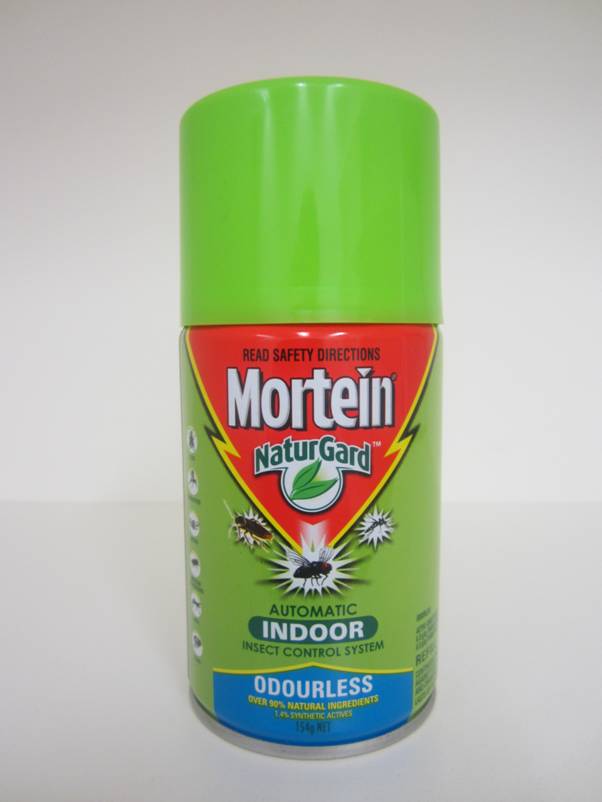
17 The Mortein brand is one of the respondent’s premier brands. Mortein was first registered as a trade mark in Australia in 1907. It functions as the house brand for products that include:
(a) AIIC systems;
(b) automatic outdoor insect control systems;
(c) flying insect sprays (also called flying insect killers or FIKs);
(d) fly baits;
(e) crawling insect sprays (also called crawling insect killers or CIKs), both indoor and outdoor;
(f) professional sprays;
(g) bombs (for insect infestations);
(h) cockroach baits;
(i) ant killers;
(j) area repellents (for mosquitoes); and
(k) rodenticides.
18 The respondent is the owner of registered trade marks that comprise or include the word NaturGard. One form (registered trade mark no. 1258423) is a composite mark that includes the word NaturGard in a stylised form depicted in a curved band over a symbol of two leaves. The registered trade mark also contains other device elements. It is convenient to refer to this registered trade mark as the NaturGard logo.
19 A copy of the NaturGard logo is shown in Schedule A to these reasons.
Products launched in 2007
20 The respondent commenced to market products in the NaturGard range in 2007. The presentation of the products in this range has been consistent in that the NaturGard logo has been used in conjunction with and as a sub-brand of the Mortein brand. The packaging of the products is presented in what can be colloquially termed as light green colouring. The first products sold in this range were NaturGard fly baits and NaturGard fly spray.
21 The NaturGard fly baits were distributed throughout Australia between June 2007 and January 2011. They contained natural food attractants and a synthetic active ingredient (imidacloprid). No natural or plant-based active ingredients were used.
22 The NaturGard fly spray was distributed throughout Australia between January 2007 and June 2010. It contained plant-based pyrethrins as the active ingredient in combination with PBO.
23 The packaging of each of these products also contained a contrastingly coloured pentagonal device called a “tombstone”. The tombstone was located at the front of, and towards the foot of, the packaging. It contained information about the product. The same or a similar functioning device has been used, and continues to be used, in subsequent and succeeding products in the NaturGard range.
24 The tombstone on the packaging for the NaturGard fly baits contained the statement:
HELPS CONTROL
FLIES IN YOUR HOME
WITHOUT
SPRAYING
25 The tombstone on the packaging for the NaturGard fly spray contained the statement:
CONTROLS
FLIES WITH A
PLANT BASED
ACTIVE INGREDIENT
Products launched in 2008
26 In June 2008 the respondent launched its first NaturGard AIIC system. As packaged, the product consisted of a dispenser, a refill and batteries. The refill was also distributed separately from the packaged system. Pyrethrins were used as the active ingredient in combination with PBO and MGK 264.
27 The packaged system (referred to in the pleadings as the NaturGard Launch Product) was distributed throughout Australia between June 2008 and approximately September 2009. The tombstone on the packaged system contained the following statement:
CONTROLS
FLYING INSECTS
WITH A PLANT BASED
ACTIVE INGREDIENT*
28 A single asterisk on the back of the packaging identifies the following statement:
THIS PRODUCT ALSO CONTAINS SYNTHETIC INGREDIENTS
29 This statement is not very conspicuous, although it is located close to a depiction of the components of the system.
30 An example of the packaging of the NaturGard Launch Product is shown in Schedule B to these reasons.
31 The refill for the NaturGard Launch Product also commenced to be distributed throughout Australia in June 2008. The product is still distributed, although it has undergone some packaging changes to which I will make further reference. As originally distributed the tombstone on the refill for the NaturGard Launch Product contained the statement:
24 DAY
REFILL
Products launched in 2009
32 In 2009 the respondent launched a NaturGard CIK. This product was distributed throughout Australia between June 2009 and October 2010. Pyrethrins and cypermethrin (a synthetic active) were used as the active ingredients in combination with PBO. The tombstone on the packaging contained the following statement:
CONTROLS
COCKROACHES WITH A
PLANT BASED
ACTIVE INGREDIENT
33 In October 2009 the respondent commenced to distribute the NaturGard AIIC system and refills in revised packaging. The packaged system and refills were otherwise substantially the same as their predecessors in terms of formulation. The significant change in each case was the statement contained in the tombstone. These products are referred to in the pleadings as the Second NaturGard Product and the Second NaturGard Refill, respectively. Both products continue to be distributed in this packaging.
34 Examples of the packaging of each product, respectively, are shown in Schedules C and D.
35 The tombstone on the Second NaturGard Product contains the statement:
CONTROLS
FLYING & CRAWLING INSECTS*
WITH A PLANT BASED
ACTIVE INGREDIENT
36 A single asterisk on the back of the packaging identifies the following statement in small print near a depiction of the components of the system:
Controls flies, mosquitoes, moths, ants, fleas, American cockroaches and helps control German cockroaches.
37 This statement is followed by another statement identified by a double asterisk which states:
This product also contains synthetic ingredients.
38 The tombstone on the Second NaturGard Refill contains the following statement:
CONTROLS
FLYING & CRAWLING INSECTS*
WITH A PLANT BASED ACTIVE INGREDIENT**
39 These asterisks refer to respective statements that correspond with the statements identified by single and double asterisks on the back of the packaging of the Second NaturGard Product described above.
Products launched in 2010
40 In June 2010 the respondent launched a NaturGard automatic outdoor insect control system. Once again the system consists of a dispenser, a refill and batteries. Pyrethrins are used as the active ingredient in combination with PBO and MGK 264. Since its launch, this system has been distributed throughout Australia. The tombstone on the packaged system contains the following statement:
PROTECTION
AGAINST FLIES & MOSQUITOES
WITH A PLANT BASED
ACTIVE INGREDIENT
Products launched in 2011
41 In June 2011 the responded launched a second NaturGard fly spray, the previous NaturGard fly spray having been discontinued the year before. This product has been distributed throughout Australia since that time. The product uses synthetic active ingredients, namely esbiothrin and permethrin. A triangular device located at the front of the can towards its foot (instead of a tombstone) contains a number of statements including:
Contains
Natural Citrus Extract
42 Under that statement the following statement appears:
0.2% synthetic actives
Products launched in 2012
43 In June and July 2012 the respondent launched a range of new NaturGard products, namely:
(a) a eucalyptus variant of the NaturGard CIK;
(b) an “odourless” variant of the AIIC system (referred to in the pleadings as the New NaturGard Product);
(c) two new fly sprays, one being a “eucalyptus” variant and the other being a “citronella” variant;
(d) a new “adjustable” version of the AIIC system (referred to in the pleadings as the Adjustable NaturGard Product); and
(e) new refills for the AIIC system, one being an “odourless” variant (referred to in the pleadings as the New NaturGard Refill) and the other being a “eucalyptus” variant.
44 Of these products, only the Adjustable NaturGard Product, as supplied, and the eucalyptus refill for the AIIC systems contain a natural active ingredient. In these products pyrethrins are used in combination with PBO and MGK 264. Examples of the packaging of both of these products, respectively, are shown in Schedules E and F.
45 The remaining products all contain synthetic active ingredients exclusively. Of these products, the New NaturGard Product and the New NaturGard Refill are of particular importance because they are the subject of the applicant’s claims that the respondent has contravened the Australian Consumer Law. For this reason, I now turn to consider the packaging of these products in more detail.
the New NaturGard Product and the New NaturGard Refill
46 An example of the packaging of the New NaturGard Product is shown in Schedule G to these reasons. The New NaturGard Refill has been distributed by the respondent in two versions. Examples of the packaging of these versions are shown in Schedules H (the first version) and I (the second version) to these reasons.
47 In order to consider the packaging elements of the New NaturGard Product and the New NaturGard Refill it is necessary to descend to some more detail concerning the packaging of these products compared with the packaging of the NaturGard Launch Product, the Second NaturGard Product, the Adjustable NaturGard Product, and the other two refills for the AIIC systems (that is, the Second NaturGard Refill and the “eucalyptus” variant).
48 The packaging of all these products contains a number of common elements. Many of these elements are present in other products in the NaturGard range. There can be no doubt that when an array of NaturGard products is displayed on shelves, such as in the major supermarket chains, they are immediately identifiable as not only Mortein brand products but also as products that are part of the one range – the NaturGard range.
49 Prominent elements of the packaging of the AIIC systems include:
(a) the Mortein brand in a red flash which also includes the NaturGard logo;
(b) a light green box with a longitudinally aligned, substantially elliptical cut-out on the right hand side, revealing a white dispenser;
(c) images of a fly, a cockroach and a mosquito within contrastingly coloured starbursts dispersed at or near the spike of the red Mortein flash;
(d) the words AUTOMATIC INDOOR INSECT CONTROL SYSTEM;
(e) a calendar device or (in the case of the NaturGard Launch Product) a flag-like device showing the number of days that the aerosol can will last when the system is in continuous use; and
(f) a tombstone.
50 In the case of the NaturGard Launch Product (see Schedule B) and the Second NaturGard Product (see Schedule C), a double leaf device (separate from the double leaf device in the NaturGard logo) is prominently displayed on the front right side of the packaging near and in conjunction with the cut-out. The leaves protrude into the space of the cut-out. As I have noted, the tombstone on each of these products refers to the fact that the system, as packaged, contains a plant-based active ingredient. The double leaf device reinforces that statement.
51 The New NaturGard Product (see Schedule G) and the Adjustable NaturGard Product (see Schedule E) use a slightly different box shape which, in front perspective, curves rearwardly at the top of the box. This gives a more modern, sleek appearance. Nothing turns on that fact for present purposes. Each product contains a prominent marking on its front face in a contrastingly coloured background that it is NEW. In the case of the Adjustable NaturGard Product the specific statement is:
NEW
ENHANCED
TECHNOLOGY
52 Each uses a device which intrudes into the cut-out displaying the dispenser. In the case of the New NaturGard Product the device is blue-coloured and contains the word ODOURLESS. The same background colour is used to signify that the product is NEW. In the case of the Adjustable NaturGard Product the same shaped device is used in different colouring. A combination of colours is used. In that product the device contains the words:
ADJUSTABLE
3 CONTROL
SETTINGS
53 However, like the NaturGard Launch Product and the Second NaturGard Product, the Adjustable NaturGard Product contains a tombstone which refers to the fact that the system, as packaged, uses a plant-based active ingredient. The exact statement is:
CONTINUOUS PROTECTION
AGAINST INSECTS*
WITH A PLANT BASED
ACTIVE INGREDIENT**
54 A single asterisk on the back of the packaging identifies the following statement:
Controls flies, mosquitoes, moths, American cockroaches, ants, fleas and helps control German cockroaches.
55 A double asterisk on the back of the packaging identifies the following statement:
This product also contains synthetic ingredients.
56 By way of contrast, the tombstone on the New NaturGard Product states:
CONTINUOUS PROTECTION
AGAINST FLIES, MOSQUITOES &
CRAWLING INSECTS*
OVER 90% NATURAL INGREDIENTS
1.4% SYNTHETIC ACTIVES
57 A single asterisk on the back of the packaging identifies the following statement:
Controls flies, mosquitoes, cockroaches, ants and helps control fleas.
58 A prominent blue panel on the back of the packaging also contains information about the product. The information is arranged by reference to arrowheads. One of the arrowheads identifies the following statement:
Contains 98% natural ingredients with 1.4% trusted synthetic actives
59 In my view, when the New NaturGard Product is displayed next to or near the Second NaturGard Product on supermarket shelves (the NaturGard Launch Product no longer being available), as illustrated by a number of images of shelf displays in evidence, both products are immediately recognisable as being part of the same sub-category (that is, AIIC systems) in the same range. They are, however, also immediately and obviously distinguishable as variants within that sub-category. I am satisfied, based on my own viewing and comparison of the exhibits, that the same conclusions would follow when the Adjustable NaturGard Product is displayed next to or near either or both of the New NaturGard Product and/or the Second NaturGard Product.
60 Prominent elements of the packaging of the refills include:
(a) the Mortein brand in a red flash which also includes the NaturGard logo;
(b) a light green can with a green lid (although some examples of the Second NaturGard Refill have a red lid);
(c) images of a fly, a cockroach and a mosquito within contrastingly coloured starbursts dispersed at or near the spike of the red Mortein flash;
(d) the words AUTOMATIC INDOOR INSECT CONTROL SYSTEM; and
(e) a tombstone.
61 I have already described the Second NaturGard Refill in [33] to [39]: see also Schedule D.
62 As I have noted, the New NaturGard Refill has been distributed in two versions. The first 51,000 refills were sold to the trade in June, July and August 2012. The packaging of those refills (see Schedule H) incorporated a blue tombstone with the following statement:
ODOURLESS
OVER 90% NATURAL INGREDIENTS
63 These refills are still available in the marketplace but, according to Mr Tedesco who is the respondent’s Marketing Director, the great majority of these are expected to be sold by November 2012. As at 8 October 2012, Mr Tedesco estimated that 50% of the New NaturGard Refills in the marketplace were of this version.
64 The second version of the refills (see Schedule I) commenced to be supplied in September 2012. They also have a blue tombstone. However, the statement within the tombstone contains additional wording referring to a percentage of synthetic actives. The tombstone contains the following statement:
ODOURLESS
OVER 90% NATURAL INGREDIENTS
1.4% SYNTHETIC ACTIVES
65 Both versions of the New NaturGard Refill contain a blue panel on the back of the can which contains information about the product. The information is arranged by reference to arrowheads. One of the arrowheads identifies the following statement:
Contains 98% natural ingredients with 1.4% trusted synthetic actives
66 The eucalyptus variant refill (see Schedule F) has a dark green tombstone which contains the following statement:
CONTAINS
NATURAL EUCALYPTUS EXTRACT
AND A PLANT BASED ACTIVE INGREDIENT
67 A double asterisk on the back of the refill identifies the following statement:
This product also contains synthetic ingredients.
68 It would be fair to say that some study of the refill is required before this statement is located.
69 In my view, when the New NaturGard Refill is displayed next to or near the Second NaturGard Refill and the eucalyptus variant refill on supermarket shelves, as illustrated by the images of shelf displays in evidence, the products are immediately recognisable as being part of the AIIC system sub-category in the same range. They are, however, also immediately and obviously distinguishable as variants within that sub-category.
advertising for the NaturGard range
Television commercials
70 Since 2008 the respondent has created a number of television commercials for NaturGard products which have been broadcast over free-to-air and subscription services. Most have also been made available by online video. A number of the commercials feature the NaturGard AIIC systems. Typically the television commercials have been broadcast in the period September to March, representing the seasonal nature of the products in question. Television is the primary advertising medium for household pest control products.
71 The applicant does not allege that the respondent’s television commercials contravene or have contravened the Australian Consumer Law or corresponding provisions of the Trade Practices Act 1974 (Cth). The applicant’s case relies on the television commercials providing part of the context in which the representational nature of the packaging for the New NaturGard Product and the New NaturGard Refill should be considered. For this reason it is necessary for me to refer to the detail of these commercials. I will deal firstly with the television commercials broadcast in the period 2008 to 2011 and then the current season’s television commercial.
Television commercials 2008 to 2011
72 The NaturGard Launch Product was advertised in three television commercials and corresponding online videos. The first was a Brand Power commercial that commenced to be broadcast on 28 September 2008. The commercial prominently shows the packaging of the product, singularly and arranged on shelves. In the course of describing the operation of the system the presenter refers to it releasing “small bursts of mist containing a plant-based active at regular intervals”. The presenter also refers to the system providing a “hassle-free, more natural way to get continuous protection against flying insects”. The commercial is no longer broadcast.
73 The second commercial was broadcast in the period 2 November 2008 to 8 February 2009. The commercial shows a dispenser located on the wall of a room, emitting a mist of spray later represented by green leaves floating around the room. A narrator refers to a “fine mist” being released at intervals – “continuously protecting your home in a more natural way”. The commercial features Louie the Fly and two insect “friends” (a mosquito and a fly) who are struck down by the floating leaves which, for this purpose, have turned into arrowheads. Louie himself is tormented by the green arrowheads. At the end of the commercial he is shown being struck by green lightning.
74 The third commercial was broadcast in the period 25 October 2009 to 28 February 2010. Its focus was the NaturGard fly spray referred to in [20] above, although the NaturGard Launch Product is also referred to, albeit briefly. The commercial features Louie the Fly and two fly “friends”. The commercial commences with one of the friends reporting to Louie that he can see “lots of green natural-looking stuff”. This a direct reference to greengroceries shown in the boot of a car, which is being unpacked. On analysis, it can also be seen as an allusive reference to attributes of the fly spray product. In this connection, a narrator refers to “a fly spray that controls flies with a powerful plant-based active ingredient”. This is a direct reference to the NaturGard fly spray. Louie and his friends are sprayed with the product. Louie and his friends are then shown being tormented by the fly spray which, for this purpose, has turned into green arrowheads. The narrator says that “you can protect your family from pests in a more natural way”. The narrator then refers to the fly spray as “now also available as an automatic insect control system”. The NaturGard Launch Product is then shown beside a can of the NaturGard fly spray and a separate dispenser. At the end of the commercial Louie is struck by green lightning.
75 I should note at this juncture that the applicant also relies on another commercial that is very similar to the one that I have just described. It was broadcast in the period 26 September 2010 to 13 March 2011. Once again its focus is the NaturGard fly spray referred to in [20] above. The commercial concludes by referring to the new “NaturGard Cockroach Control Spray” (referred to in [32] above) which is shown beside a can of the fly spray.
76 The Second NaturGard Product has been advertised in four commercials. The first commercial was broadcast in the period 6 September 2009 to 14 March 2010. The commercial depicts the dispenser on the wall of a room, emitting green leaves which swirl into the room. Louie the Fly and two cockroach “friends” are shown. The leaves turn into spears and pierce Louie and his friends. At the end of the commercial Louie is struck by green lightning.
77 The second commercial was broadcast in the period 26 September 2010 to 13 March 2011. A narrator refers to “Mortein automatic indoor” continuously protecting “your home” against flying and crawling insects. Louie the Fly is shown with two “friends” – a mosquito and a cockroach. The narrator refers to the system automatically releasing a fine mist “containing a plant-based active ingredient”. At the end of the commercial Louie is struck by green lightning.
78 The third commercial was also broadcast in the period 26 September 2010 to 13 March 2011. This was a Better Homes and Gardens promotion of the Mortein indoor and outdoor automatic insect control systems. The presenter refers to both products containing “a plant-based active ingredient”.
79 The fourth commercial was one of two based on the theme “Kill Louie Off Forever?”. It shows the packaging of the Second NaturGard Product but makes no specific product claims beyond stating that the product is “advanced” and provides continuous protection from flying and crawling insects. The question posed is whether Louie the Fly should be “killed off forever” because he is “too old” to be “the face” of such “advanced technology”. The other commercial adopting this theme features the NaturGard fly spray referred to in [41] above. This commercial was broadcast in the period 16 October 2011 to 25 December 2011. The presenter refers to the product as containing “over 90% natural ingredients”. This message is also shown on-screen. The words “Contains 0.2% synthetic actives” are also shown on-screen. It is to be recalled that the only active ingredients in this product are synthetic.
Current television commercial
80 The New NaturGard Product is currently being promoted by a television commercial. This commercial is not the subject of complaint in this proceeding. The commercial features Louie the Fly dressed as a detective and two “friends” – a mosquito and a cockroach – dressed in white coats at a crime scene. They are investigating the death of “Roach”. The mosquito says: “We’ve no idea what killed Roach. We’re having trouble smelling any chemicals …”.
81 The narrator refers to the “new Mortein NaturGard automatic odourless” with “98% natural ingredients”. At the same time the following words appear prominently on-screen:
98% natural
ingredients
and odourless
82 Below these words the following words appear in smaller print:
1.4% synthetic actives.
No plant based actives.
Print advertising
83 For completeness I refer to the respondent’s current print advertising for its NaturGard products. Once again, the applicant’s case relies on print advertising as providing part of the context in which the representational nature of the packaging of the New NaturGard Product and the New NaturGard Refill should be considered. The applicant does not allege that the respondent’s print advertising contravenes or will contravene the Australian Consumer Law.
84 The respondent has prepared a “Smart Protection” advertisement which has appeared, and will appear, in a number of well-known weekly and monthly magazines. The following products are advertised: the New NaturGard Product; the NaturGard eucalyptus variant fly spray and a CIK surface spray; and the NaturGard automatic outdoor insect control system. Each of the New NaturGard Product, and the NaturGard eucalyptus fly spray and CIK surface spray, is identified as being new.
85 The New NaturGard Product is described as containing “98 per cent natural ingredients*”. The asterisk identifies the following statement:
Combined with 1.4 per cent trusted synthetic actives. Does not contain plant-based actives.
86 The NaturGard eucalyptus fly spray and the CIK surface spray are described as containing “over 90 per cent natural ingredients*, including eucalyptus extracts”.
87 The asterisk identifies the following statement:
Combined with trusted synthetic actives (0.2 per cent for the fly spray and 0.1 per cent for the surface spray). Do not contain plant-based actives.
88 The NaturGard automatic outdoor insect control system refers to the product containing a plant-based active ingredient.
89 The respondent also adduced evidence of two inserts that have been or will be included in some magazines. One of them is similar to the “Smart Protection” advertisement. It is not necessary for me to describe the inserts in any greater detail.
The parties’ submissions
The applicant’s claims and submissions
90 As I have noted, the applicant’s case relates to the packaging of the New NaturGard Product and the New NaturGard Refill.
91 The applicant’s pleaded case is that, by virtue of:
(a) the packaging of the New NaturGard Product;
(b) the distribution, promotion and sale of the New NaturGard Product;
(c) the packaging of the NaturGard Launch Product and the Second NaturGard Product;
(d) the previous distribution, promotion and sale of the NaturGard Launch Product;
(e) the previous and continuing distribution, promotion and sale of the Second NaturGard Product; and/or
(f) the promotion of the Adjustable NaturGard Product,
the respondent has represented and continues to represent to consumers that:
(i) the New NaturGard Product uses or contains a natural ingredient to control insects;
(ii) the New NaturGard Product uses or contains a plant-based active ingredient to control insects;
(iii) the New NaturGard Product uses or contains a natural active ingredient to provide continuous protection against flies, mosquitoes and crawling insects; and
(iv) 1.4% of the active ingredients of the New NaturGard Product are synthetic and the balance of the active ingredients are natural.
92 It also pleads that, by virtue of:
(a) the packaging of the New NaturGard Refill;
(b) the distribution, promotion and sale of the New NaturGard Refill;
(c) the packaging of the NaturGard Launch Product, the Second NaturGard Product and the Second NaturGard Refill;
(d) the previous distribution, promotion and sale of the NaturGard Launch Product;
(e) the previous and continuing distribution, promotion and sale of the Second NaturGard Product and the Second NaturGard Refill; and/or
(f) the promotion of the Adjustable NaturGard Product,
the respondent has represented and continues to represent to consumers that:
(i) the New NaturGard Refill uses or contains a natural ingredient to control insects; and
(ii) the New NaturGard Refill uses or contains a plant-based active ingredient to control insects.
93 In this connection, the applicant does not dispute that the New NaturGard Refill, which is also supplied as a component of the New NaturGard Product, contains 98% natural ingredients and 1.4% synthetic active ingredients, namely transfluthrin and permethrin.
94 The applicant’s pleaded case was developed, in submissions, in the following way.
95 The applicant submitted that, by the end of 2011, the impression created in the minds of a significant number of ordinary and reasonable consumers was that the NaturGard range of products contained natural, plant-based active ingredients. The applicant submitted that this was a “dominant message” created by the respondent in respect of these products. The applicant pointed to the express reference to plant-based active ingredients in five out of the six NaturGard products advertised in television commercials and by corresponding online videos between 2008 and 2011. It pointed to the use of green-coloured packaging in conjunction with the use of “natural” imagery such as the green leaves in the NaturGard logo and on other parts of the packaging of products in the range that were suggestive of plant-derived ingredients. This was supported by the use of leaf images in some of the television commercials and their deployment as arrowheads or spears, and also green lightning, to “kill” the depicted insects, including Louie the Fly. The only two products in the NaturGard range at that time that did not contain natural active ingredients were the fly baits and the NaturGard fly spray referred to in [41]. The applicant submitted that the fly baits were not advertised on television or by an online video and were, as a result, “far less prominent”. The applicant submitted that neither of these products positively indicated a lack of natural active ingredients.
96 The applicant submitted that this “dominant message” is not displaced in respect of the New NaturGard Product or the New NaturGard Refill, even when those products are considered separately from the earlier NaturGard products and their promotion. The applicant submitted that although the tombstone on each product (as now supplied) – and also the back of the packaging of each product – refers to “1.4% synthetic actives”, there is no indication that none of the active ingredients is natural or plant-based. It submitted that a fair reading of the statement on the tombstone was that 1.4% of the active ingredients are synthetic, with the balance of the active ingredients being natural.
97 The applicant pointed to the fact that the first version of the New NaturGard Refill did not refer to “1.4% synthetic actives” on the tombstone. It submitted that this was instructive because it showed that the respondent felt the need to make this change in the second version of the packaging, even though, on the applicant’s case, this change did not itself overcome or correct the “dominant message”.
98 The applicant also submitted that it was instructive that the on-screen text of the current television commercial for the New NaturGard Product refers to “No plant based actives”. This, according to the applicant, signified the respondent’s own perception as to “what consumers might need to know”, although the applicant made clear that it did not accept that this “fleeting reference” was sufficient to correct the “dominant message”. A similar submission was made in respect of the current print advertising for the New NaturGard Product.
99 The applicant referred to the images in evidence of the range of NaturGard products displayed on supermarket shelves. It submitted that the consumer is faced with “a wall” of green products bearing the NaturGard logo and, in a number of cases, other leaf devices depicted on the packaging. It submitted that, without close inspection of the labels, the consumer is likely to think that the only point of difference between, on the one hand, the New NaturGard Product and the New NaturGard Refill and, on the other hand, other products in the NaturGard range is that the New NaturGard Product and the New NaturGard Refill are new “odourless” variants. Consistently with its other submissions, the applicant submitted that even a close inspection of the packaging of these products would not tell the consumer that no plant-based actives are used, only that 1.4% synthetic actives are used.
100 The applicant also submitted that a consumer would not automatically associate an “odourless” product with one that lacks any natural or plant-based active ingredients: the consumer would need to be informed that there were no natural or plant-based active ingredients in the product. It submitted that it would be a simple matter for the respondent to give express notification on the packaging and marketing materials used in connection with the New NaturGard Product and the New NaturGard Refill that these products do not contain natural active ingredients.
The respondent’s submissions
101 The respondent submitted that the arrangement of the pest control sections of supermarkets and the display of the New NaturGard Product and the New NaturGard Refill within that arrangement and display constitute the dominating contextual circumstance in which the impugned conduct falls to be assessed. Even for those who may retain an awareness of the advertising for the NaturGard range of products in previous years, the display of products encountered at the point of sale will be of primary significance for consumers. According to the respondent, this will be because household insecticide products will be selected by the consumer after some consideration, especially where the consumer is presented with a choice between products within a range. It submitted that the television commercials for products in the NaturGard range are broadcast only seasonally, with new offerings presented each year. When the consumer is presented with a choice between new and old offerings at the point of sale, the collection of variants from which a selection must be made has the effect of displacing any impact of television advertising in former years.
102 The respondent submitted that the packaging of the New NaturGard Product and the New NaturGard Refill does not state that they contain a plant-based or natural active ingredient, and the packaging of those products does not convey those representations as a matter of implication.
103 The respondent submitted that the NaturGard logo conveys nothing particular about the characteristics of the insecticide in the products supplied in that range. The NaturGard logo communicates no more than that the products within that range have the benefits of products that contain natural ingredients. In that connection the respondent relied on evidence given by Mr McCarthy, the applicant’s Marketing Director, that, based on his review of recent consumer marketing data (including consumer surveys, focus groups and customer feedback), products containing natural ingredients are preferred by consumers for reasons including that the product is perceived to be better for the environment and to be a safer solution for human use. The respondent submitted that the green colour of the packaging operates in the same way. Whether considered alone or in conjunction with the NaturGard logo, it says nothing more specific about the ingredients of the product.
104 The respondent submitted that the proper approach was to consider the whole of the packaging from the point of view of the relevant representative consumer. Such a consumer would see the tombstone and be given information about the ingredients of the New NaturGard Product and the New NaturGard Refill. Apart from being told that the variant is “odourless”, the consumer would be informed that over 90% of the ingredients are natural. Except in the case of the first version of the New NaturGard Refill, the consumer would also be told by the tombstone that 1.4% of the ingredients were synthetic active ingredients. Although the tombstone on the first version of the New NaturGard Refill did not contain this information, it was stated on the back of the packaging. The respondent submitted that no reasonable members of the class of relevant consumers could think that the two stated percentages were percentages of different things. On a natural reading, they both referred to a percentage of the total ingredients of the product in question.
105 The respondent also submitted that if the New NaturGard Product and the New NaturGard Refill contained a plant-based or natural active ingredient in addition to synthetic actives then the “natural positioning” of the product would lead a consumer to expect to see that attribute expressly included in the tombstone. The respondent submitted that the consumer would be unlikely to think that the statement about synthetic actives silently brought with it an implication that there are also natural or plant-based active ingredients.
106 The respondent acknowledged that the two stated percentages in the tombstone did not add up to 100% and that this might cause the consumer to wonder what the balance of the ingredients might be. This, however, could not constitute conduct that is misleading or deceptive or likely to mislead or deceive.
107 The respondent also placed reliance on the fact that it has never been the case that all products in the NaturGard range contained natural active ingredients. It submitted that products within the range, with natural and synthetic actives, sit alongside one another on supermarket shelves and are distinguished by stating their active ingredients on their labels, including in the tombstone or other similar device elements in the packaging. Thus, the respondent submitted, the consistent use of packaging elements across products within the NaturGard range does not, and could not, of itself, convey that the New NaturGard Product and the New NaturGard Refill themselves contain a plant-based or a natural active ingredient.
108 The respondent submitted that, similarly, the fact that previous television commercials identified specific products within the NaturGard range as containing a plant-based active ingredient or being a “natural” product or that leaf elements were used does not and could not reasonably lead to the conclusion that the New NaturGard Product and the New NaturGard Refill contain a natural or plant-based active ingredient. In this connection the respondent pointed once again to the seasonal nature of the television advertising. It also pointed to the fact that there had been no television advertising of plant-based claims for about 15 months before the launch of the impugned products. The last set of television commercials (the “Kill Louie Off Forever?” commercials) deployed by the respondent made no such claims. One of these commercials in fact made a specific reference to synthetic active ingredients. The respondent submitted that the applicant’s case in this regard depended on consumers retaining a memory of advertising from two seasons ago, while entirely disregarding advertising from the intervening and current years.
Relevant legal principles
109 The question whether identified conduct, addressed to members of the public at large, can be taken to be misleading or deceptive or likely to mislead or deceive was addressed by the High Court in Campomar Sociedad, Limitada v Nike International Limited (2000) 202 CLR 45 at [101]-[103] as follows:
[101] The other classes of case which their Honours had in mind include those of actual or threatened conduct involving representations to the public at large or to a section thereof, such as prospective retail purchasers of a product the respondent markets or proposes to market. Here, the issue with respect to the sufficiency of the nexus between the conduct or the apprehended conduct and the misleading or deception or likely misleading or deception of prospective purchasers is to be approached at a level of abstraction not present where the case is one involving an express untrue representation allegedly made only to identified individuals.
[102] It is in these cases of representations to the public, of which the first appeal is one, that there enter the "ordinary" or "reasonable" members of the class of prospective purchasers. Although a class of consumers may be expected to include a wide range of persons, in isolating the "ordinary" or "reasonable" members of that class, there is an objective attribution of certain characteristics. Thus, in Puxu, Gibbs CJ determined that the legislation did not impose burdens which operated for the benefit of persons "who fail[ed] to take reasonable care of their own interests". In the same case, Mason J concluded that, whilst it was unlikely that an ordinary purchaser would notice the very slight differences in the appearance of the two items of furniture in question, nevertheless such a prospective purchaser reasonably could be expected to attempt to ascertain the brand name of the particular type of furniture on offer.
[103] Where the persons in question are not identified individuals to whom a particular misrepresentation has been made or from whom a relevant fact, circumstance or proposal was withheld, but are members of a class to which the conduct in question was directed in a general sense, it is necessary to isolate by some criterion a representative member of that class. The inquiry thus is to be made with respect to this hypothetical individual why the misconception complained has arisen or is likely to arise if no injunctive relief be granted. In formulating this inquiry, the courts have had regard to what appears to be the outer limits of the purpose and scope of the statutory norm of conduct fixed by s 52. Thus, in Puxu, Gibbs CJ observed that conduct not intended to mislead or deceive and which was engaged in "honestly and reasonably" might nevertheless contravene s 52. Having regard to these "heavy burdens" which the statute created, his Honour concluded that, where the effect of conduct on a class of persons, such as consumers, was in issue, the section must be "regarded as contemplating the effect of the conduct on reasonable members of the class".
[Footnotes omitted]
110 More recently the Full Court in Global One Mobile Entertainment Pty Ltd v Australian Competition and Consumer Commission [2012] FCAFC 134 observed (at [108]):
Whether impugned conduct conveys the making of the representation is always a question of fact to be determined having regard to all of the contextual circumstances within which something was said or done. When that assessment is being made in the context of conduct said to involve representations to the public at large (or a section of the public) such as prospective buyers of ringtones, games or similar applications, ss 52 and 53(e) contemplate the effect of the impugned conduct on reasonable members of the relevant class of buyers (Parkdale Custom Built Furniture Pty Ltd v Puxu Pty Ltd (1982) 149 CLR 191 per Gibbs CJ at 199) or ordinary members of that class (Parkdale per Mason J at 204-205) (“Parkdale”). In order to test whether a misconception has arisen or might arise among members of the relevant cohort by reason of the impugned conduct, the inquiry is to be made notionally of the hypothetical individual excluding “assumptions by persons whose reactions are extreme or fanciful”: Campomar Sociedad Limitada v Nike International Ltd (2000) 202 CLR 45 at [105] (“Campomar”). The question is, “whether the misconceptions, or deceptions, alleged to arise or to be likely to arise are properly to be attributed to the ordinary and reasonable members of the classes of prospective purchasers”: Campomar at [105]. In determining whether a contravention has occurred, the focus of the inquiry is whether a not insignificant number within the class or cohort have been misled or deceived or are likely to be misled or deceived by the conduct, whether in fact or as a matter of inference: Hansen Beverage Co v Bickfords (Aust) Pty Ltd (2008) 171 FCR 579 at [46], per Tamberlin J and at [66] per Siopis J; ConAgra Inc v McCain Foods (Aust) Pty Ltd (1992) 33 FCR 302 at 380 and 381 per French J. In ConAgra, French J observed that the notion of “insignificant” identified the threshold of public awareness below which such conduct is not misleading. His Honour observed that the term “insignificant” in this formulation is thus “normative” but not inappropriate in understanding the scope of the prohibition upon misleading conduct which is directed to consumer protection. The issue, however, is not whether the impugned conduct simply causes confusion or wonderment but whether the conduct is or is likely to mislead or deceive: Taco Co of Australia Inc v Taco Bell Pty Ltd (1982) 42 ALR 177 at 201 per Deane and Fitzgerald JJ. The proper approach to determining whether a person has engaged in conduct in contravention of ss 52 and 53(e) involves normative considerations of whether a not insignificant number of persons within the cohort being ordinary or reasonable members of the class of prospective purchasers would be or would be likely to be misled by the impugned conduct: Peter Bodum A/S v DKSH Australia Pty Ltd (2011) 280 ALR 639 at [203] – [208]; National Exchange Pty Ltd v Australian Securities and Investments Commission (2004) 61 IPR 420 at [23], [70] and [71].
111 The parties accepted that these general statements of principle, although directed to the then provisions of the Trade Practices Act 1974 (Cth), apply in the present case.
112 The applicant also placed reliance on the following observations made in Australian Competition and Consumer Commission v Telstra Corporation Ltd (2007) 244 ALR 470 at [19]-[20]:
[19] As noted, under the two-step analysis that has been described, the court cannot consider each event in isolation. Each event must be considered within the context of the advertising campaign of which it formed part: see Telstra Corporation Ltd v Optus Communications Pty Ltd (1996) 36 IPR 515 at 523–4 (Telstra Corporation); Trade Practices Commission v Optus Communications Pty Ltd (1996) 64 FCR 326 at 338; 34 IPR 176 at 188 (Optus Communications); Astrazeneca at [24]; Johnson & Johnson Pacific Pty Ltd v Unilever Australia Ltd (No 2) (2006) 70 IPR 574; [2007] ATPR 42-136; [2006] FCA 1646 at [16]. In a national advertising campaign it would ordinarily be expected that there would be a dominant message and, in such a case, particular attention should be paid to that dominant message. In Telstra Corporation (at 524), that principle was stated as follows:
In television and print advertising where a false dominant impression is conveyed, its message will not be ameliorated by the accuracy of the detailed message which is derived from a careful analysis of all the constituent parts of the advertisement.
[20] Part of this contextual approach requires consideration of any “hangover effect” caused by earlier advertising. That is, it is necessary to consider whether an impression obtained from an earlier but related advertisement may need to be taken into account in determining whether a later advertisement is misleading: see Duracell Australia Pty Ltd v Union Carbide Australia Ltd (1988) 14 IPR 293 at 299, cited in Singtel Optus Pty Ltd v Telstra Corp Ltd [2004] FCA 859 at [43]; Optus Communications at FCR 338; IPR 188.
113 It was by reference to these passages that the applicant contended that the television advertising conducted by the respondent in previous years in relation to the NaturGard range of products played an important role when considering the representations that were conveyed by the packaging of the New NaturGard Product and the New NaturGard Refill.
Consideration
114 In the present case the relevant class of consumers will be those who purchase or who are likely to purchase household insecticide products. I do not think that the class should be defined more narrowly. This class will include, but will not be limited to, those who will be purchasing an AIIC system for the first time, and those who have already purchased a NaturGard AIIC system and who are seeking to purchase a refill for that system. I will refer to the ordinary or reasonable member of that class as “the representative consumer”.
115 In opening its case the applicant placed reliance on the observations of Burchett J in Duracell Australia Pty Ltd v Union Carbide Australia Ltd (1988) 14 IPR 293 at 299 that a purchaser of “cheap commodities” cannot sensibly be expected to devote much time and thought to the weighing of statements made about them by their producers, and that an inaccurate or ambiguously qualified statement about such products may often be found to be misleading.
116 Whilst I accept the cautionary nature of those observations, they cannot be applied – and I do not believe that his Honour intended them to be applied – indiscriminately or inflexibly to all cases involving the purchase of relatively inexpensive items. Much will depend on the nature of the item itself and the significance to the consumer, as purchaser, of the alleged representation concerning that item. The present case is a good example. It can be taken that a consumer with an interest in the characteristics of the household insecticide product he or she seeks to purchase will spend some time inspecting the product to garner information from it and, if reasonably and readily available, from other sources (such as other products displayed with it) to ensure that the product meets that person’s immediate requirements. This will certainly be so when varieties of a product within a range are presented for choice and the element of choice is important for the consumer. This is unlikely to be so when the consumer is uncaring as to the choice presented – such that any product or variant having the general characteristics of the desired household insecticide (for example, that it is an FIK), regardless of its specific characteristics, will satisfy the consumer’s immediate need. There will be consumers who will fall within the range of the two extremes that I have described. Importantly, however, the level of attention to be paid to the packaging of the product will be a function of the consumer’s engagement with the product and that person’s need for information to satisfy his or her questions about it.
117 Thus I do not accept that consumers who are purchasers of relatively inexpensive items necessarily approach the purchase of those items in a mechanistic or uncritical way. It is to be remembered in this regard that, when Burchett J made these observations, he was addressing a submission based on Parkdale Custom Built Furniture Proprietary Limited v Puxu Proprietary Limited (1982) 149 CLR 191, which was a case dealing with alleged misleading or deceptive conduct in the context of the purchase of relatively expensive items of furniture. His Honour, quite properly, sought to distinguish that case from the case before him which was concerned with the purchase of household batteries.
118 The applicant’s case proceeded upon an analysis of the packaging of the New NaturGard Product and the New NaturGard Refill considered, first, in the context of other products in the NaturGard range and the previous promotion of those products (specifically by television advertising) and, secondly, by considering the packaging of the products alone.
119 In my view the respondent’s previous television advertising for the NaturGard range of products does not have the significance which the applicant has sought to place upon it. I doubt whether the details to which I was taken in submissions – which I have noted above – would remain steadfastly in the recollection of viewers in any significant numbers. Indeed, my own description of the television commercials in these reasons does not seek to summarise all the thematic elements of them. I have certainly not sought to summarise every significant feature of the commercials. Rather, I have sought to record those features on which the applicant seeks to place reliance. My own description, therefore, places an emphasis on features which they do not necessarily bear when each commercial is viewed as a whole, without attention being directed to them. Considered as a whole, the dominating element of the television commercials dealing with the NaturGard Launch Product and the Second NaturGard Product is that automatic and continuous control of insects is sought to be provided by, and can be achieved by, the system.
120 Having said that, I accept that, by reason of some of those commercials, a not insubstantial number of viewers at that time – who are typical of the representative consumer – would have been led to the belief, correctly, that the particular products advertised also provided a natural means of insect control using a plant-based active ingredient. I also accept that visual elements employed in some of the television commercials would have contributed to the formation of that belief or reinforced it in respect of the particular products in the NaturGard range that were promoted by reference to that attribute. The evidence shows that this attribute has contributed significantly to NaturGard’s brand equity and, certainly in previous years, has been provided by the respondent as part of the consumer’s “reason to believe” that NaturGard products provide a more natural way to effectively control and eliminate insects. The evidence makes clear, however, that, with the launch of the new products in June and July 2012, the respondent has commenced to move from that marketing platform to one that emphasises the use of other natural ingredients in the NaturGard products. I accept that the motivating reason for this has been the respondent’s desire to move away from the use of pyrethrins as an insecticide because of the problems it has encountered with the reliable supply of that ingredient.
121 I am not persuaded that, typically, the representative consumer who is a present-day purchaser of, specifically, the New NaturGard Product or the New NaturGard Refill would approach his or her purchasing decision with any specific recollection of the historical television advertising of the NaturGard products. This advertising was not continuous but seasonal in nature. Such a purchaser may have a general recollection that previously advertised products contained a plant-based active ingredient, when that claim was made. As the respondent has emphasised, that claim was last made in television commercials some 15 months before the launch of the New NaturGard Product and the New NaturGard Refill. I am unable to accept that any recollection of the previous television commercials promoting that claim would now be held so strongly that the representative consumer would apply his or her understanding of previously promoted products indiscriminately to what is now being promoted as a new product in the NaturGard range with its own specific and discrete product claims.
122 A not insubstantial number of consumers, typical of the representative consumer, will approach their purchasing decision informed by the current season’s television commercial for the New NaturGard Product. The commercial does not make a claim that the product uses plant-based ingredients. The commercial does emphasise that the product contains 98% natural ingredients and is “odourless”. Those watching the commercial attentively will see the visual messages that the product contains 1.4% synthetic actives and no plant-based actives. Those visual messages are far less prominent, and are correspondingly of far less significance, than the aural message that the product contains a large percentage of natural ingredients. Some viewers will take those visual messages into account and retain them; others will not be cognisant of them. Once again I note that the applicant makes no complaint about the current television commercial. Its only complaint is with respect to the packaging of the New NaturGard Product and the New NaturGard Refill.
123 Even given the existence of the current season’s television commercial and the fact that television advertising is the main form of promotion of products in this category, I accept the respondent’s submission that the display of household insecticide products on the shelves of supermarkets will constitute the dominating context in which the representative consumer will consider the packaging of the New NaturGard Product and the New NaturGard Refill. In that context the New NaturGard Product and the New NaturGard Refill are presented not only as Mortein brand products but as products within the NaturGard range. More specifically, the products are presented as variants within the sub-category of AIIC systems. The evidence shows that, typically, at least two variants are displayed. Thus the New NaturGard Product is shown alongside or near the Second NaturGard Product. No doubt there will be occasions when the New NaturGard Product will be displayed alongside or near the Adjustable NaturGard Product. It may well be the case that all three AIIC systems will be displayed alongside or near each other. The point of present relevance is that the circumstance of choice thus presented by such a display will introduce the element of comparison into the consumer’s decision-making process.
124 Similarly the evidence shows that, as a component of the NaturGard AIIC systems, the New NaturGard Refill will be displayed alongside or near, at least, the Second NaturGard Refill. Indeed, the evidence gives an example of all three current refill variants (that is, including the eucalyptus variant) displayed together. Once again, the circumstance of choice presented by such a display introduces the element of comparison into the consumer’s decision-making process. In that connection it is also necessary to bear in mind that all variants of the refills can be used in the NaturGard AIIC systems, whether that system be the Second NaturGard Product, the New NaturGard Product, the Adjustable NaturGard Product or, indeed, the NaturGard Launch Product.
125 It is convenient to put the circumstance of choice to one side for the moment and to consider how the representative consumer would examine the packaging of the New NaturGard Product and the New NaturGard Refill without the opportunity for in-store comparison with other variants within the sub-category. The applicant’s submissions, in that regard, proceeded on a somewhat sequential treatment of the packaging elements of each product to ground a submission that, by the time the consumer comes to see the words “1.4% synthetic actives” in the tombstone on the packaging, he or she would be already labouring under a serious misunderstanding which that particular statement in the tombstone does not correct. According to the applicant, that misunderstanding, in respect of each of the products, is constituted by each of, or one or more of, the representations which it has pleaded: see [91]-[92] above.
126 In my view the packaging of each product cannot be dissected in that way. Of necessity any description of the packaging elements must be given in a step-wise fashion. But when the representative consumer views the packaging, he or she will be met with a combination of elements that, as a whole, will be meaningful and impart information about the product to that consumer. In the present case that information will include, of course, that the product is part of the NaturGard range. The consumer’s consideration of the product will be preceded by knowledge that it is an insecticide product. That is, after all, the essential characteristic of the product that initiates the consumer’s consideration of it in the first place. But if the attributes and characteristics of the New NaturGard Product and the New NaturGard Refill are important for the representative consumer – and specifically as avowedly new products – he or she is unlikely to ignore the combined effect of conspicuous elements of the packaging that impart information about the particular product in question.
127 In the case of the New NaturGard Product those elements include the description of the product as “new” and “odourless”. The applicant submitted that, for the representative consumer, these are the only features of the packaging that would differentiate the New NaturGard Product from other products in the NaturGard range. It submitted that the representative consumer would be predisposed by the general elements of packaging that the New NaturGard Product shares with other products in the NaturGard range to believe that it contains a plant-based or otherwise natural active ingredient. It submitted that, if the product did not contain a plant-based or otherwise natural active ingredient, the representative consumer would need to be specifically disabused of his or her erroneous belief.
128 There are a number of difficulties with that submission. First, I do not accept that the representative consumer would approach his or her consideration of products in the NaturGard range with a rigid mindset that all products in the range contain a plant-based active ingredient, particularly if they are new products. Secondly, if the presence of a plant-based active ingredient in the product is a significant element in the representative consumer’s purchasing decision, I think it is more likely than not that he or she would seek some specific verification of that fact from the packaging itself. Thirdly, and in any event, the tombstone is a conspicuous element of the packaging of the New NaturGard Product. The representative consumer is unlikely to ignore it. Even a cursory examination of the packaging will draw attention to it. The representative consumer would understand the tombstone to contain important information about the attributes and characteristics of the product. The representative consumer must be taken, therefore, to be equally armed with that information as he or she would be with the information imparted by other conspicuous elements of the packaging. So armed, the representative consumer will know that the product provides continuous protection against flies, mosquitoes and crawling insects; that over 90% of its ingredients are natural; and that 1.4% of its ingredients are synthetic actives.
129 In my view the representative consumer would more likely than not regard the last-mentioned statement for what it truly is: a description of the active ingredients of the product. By that description the representative consumer is informed, accurately, that the active ingredients are synthetic and that they constitute 1.4% of the total ingredients of the aerosol. If verification of these facts were required, the “actives” and their respective proportions are clearly and specifically identified just above, and to the left of, the tombstone. They are easily seen on the packaging. These are the only active ingredients. There are only two of them. I would accept that unless the representative consumer has specialised knowledge, he or she might not know the derivation of the listed substances by reason only of their chemical names. But the representative consumer would realise that these must be the “actives” referred to in the tombstone and that, by reason of the information given in the tombstone, they must be synthetic substances. I should add that the applicant did not suggest that the representative consumer would not understand that the word “synthetic” in this particular context means a substance that was not naturally occurring.
130 The applicant’s case proceeds on the basis that, rather than accepting the statement as a description of the characteristics of the active ingredients of the product, the representative consumer would embark upon a process of reasoning that involves reading the last-mentioned percentage statement as referring only to the synthetic ingredients as a percentage of the active ingredients of the product, not to the active ingredients as a percentage of the total ingredients of the product. The applicant’s thesis was that the representative consumer would then take the further steps of reasoning that there must be other active ingredients in the product and that those other active ingredients must be plant-based ingredients or otherwise natural ingredients.
131 Contrary to the applicant’s submission, I do not accept that it would be reasonable for the representative consumer to read this percentage statement as referring only to the synthetic ingredients as a percentage of the active ingredients of the product. Having been informed that 90% of the total ingredients of the product are natural, it would not be rational for the representative consumer to then think that the immediately succeeding 1.4% statement was referring to a different universe; that is, something other than a percentage of the total ingredients of the product. If the consumer did think that a different universe was being referred to then that would be the consumer’s own erroneous conclusion based on nothing more than conjecture, the consequences of which could not be attributed to the respondent. The succeeding steps in the reasoning process posited by the applicant represent no more than further examples of conjecture based on the initial erroneous conclusion.
132 The same considerations apply in relation to the second version of the New NaturGard Refill. Here the contrastingly coloured tombstone identifies the product as the “odourless” variant. Although the two “percentage” statements are depicted in smaller figures and lettering within the tombstone, they are nevertheless sufficiently conspicuous and would not be missed by the representative consumer as important information about the characteristics of the product.
133 When one comes to consider how the representative consumer would examine the packaging of the New NaturGard Product or the second version of the New NaturGard Refill when presented with the opportunity for in-store comparison with other variants within the sub-category – which will be the typical context in which the examination takes place – the situation of the consumer presents even more obvious outcomes. When the tombstones for the respective products are compared, they each impart different important information about the characteristics of the products.
134 For example, if the representative consumer were to compare the New NaturGard Product with the Second NaturGard Product, he or she would be told instantly that the Second NaturGard Product controls flying and crawling insects with a plant-based active ingredient. The use of a different packaging statement about the characteristics of the New NaturGard Product provides an inescapable contrast between the two products. They are different. In that example, one important difference is that the Second NaturGard Product has a plant-based active ingredient whereas the New NaturGard Product – the new odourless variant – has synthetic actives.
135 The same contrast is provided when the second version of the New NaturGard Refill is compared with the other refill variants. The tombstone on the Second NaturGard Refill once again characterises the product as having a plant-based active ingredient. The tombstone on the eucalyptus variant characterises the product as having a plant-based active ingredient and natural eucalyptus extract. When the comparison is undertaken, the representative consumer knows immediately that the three refills are different. One point of difference is that the Second NaturGard Refill and the eucalyptus variant each have a plant-based active ingredient whereas the tombstone on the New NaturGard Refill – the new odourless variant – tells the consumer that that variant has synthetic actives.
136 In my view, however, the position in respect of the first version of the New NaturGard Refill is somewhat different. The tombstone tells the representative consumer that the variant is “odourless” and contains “over 90% natural ingredients”. The active ingredients are listed immediately to the right of the tombstone. Unless the representative consumer knows that transfluthrin and permethrin are synthetic ingredients, he or she will be none the wiser about their derivation. The back of the can does refer to the product containing “1.4% trusted synthetic actives” along with other product information. The information is not inconspicuous, but the consumer would be required to engage in a detailed investigation of the product to find it. I accept that some consumers would do this if they were very engaged by the product. In my view, however, there would be a not insubstantial number of persons who are typical of the representative consumer who would not examine the product with that level of attention or engagement. Such a consumer would simply rely on what he or she was told in the tombstone. This then throws emphasis back on the statement: “Over 90% natural ingredients”. Given that the essential quality of the product is that it is an aerosol insecticide, I am satisfied that a not insubstantial number of those persons would understand that statement as conveying, without further elaboration, that at least some part of the insecticide (that is, some part of the active ingredients) is “natural”. The important point of difference between this version of the New NaturGard Refill and the second version is that the tombstone of the second version presents composite information which includes an important and explicit statement about the active ingredients in the product being synthetic.
137 Moreover, the opportunity for comparison with the other variants would not dispel the consumer’s impression that at least some part of the active ingredients of this version of the New NaturGard Refill is “natural”. This is because the other two variants contain a plant-based active ingredient. The representative consumer examining the first version of the New NaturGard Refill might understand that the other two variants are different in having a plant-based active ingredient, but he or she would still be left with the impression that at least some part of the New NaturGard Refill’s active ingredients is “natural”, although not apparently plant-based.
138 For these reasons I am not satisfied that, by using the packaging of the New NaturGard Product, the respondent has represented and continues to represent that:
(a) the New NaturGard Product uses or contains a plant-based active ingredient to control insects;
(b) the New NaturGard Product uses or contains a natural active ingredient to provide continuous protection against flies, mosquitoes and crawling insects; or
(c) 1.4% of the active ingredients of the New NaturGard Product are synthetic and the balance of the active ingredients are natural.
139 Similarly, I am not satisfied that, by using the packaging of the first and second versions of the New NaturGard Refill, the respondent has represented that the New NaturGard Refill uses or contains a plant-based active ingredient to control insects.
140 The applicant also claims that, by its packaging for the New NaturGard Product and for the first and second versions of the New NaturGard Refill, the respondent has represented that the New NaturGard Product and the New NaturGard Refill use or contain a natural ingredient to control insects. The pleading of these allegations is ambiguous. If the expression “to control insects” is taken to mean no more than that natural ingredients are used in the aerosol product which, as a product, is used to control insects then the packaging of these products does convey that representation because over 90% of the ingredients are said to be natural. That representation is, however, accurate. The making of it cannot constitute conduct that, in the circumstances, is misleading or deceptive or likely to mislead or deceive.
141 On the other hand, if the applicant intends to allege that the respondent has represented that some part of the natural ingredients of the product have an effect upon the insect itself, I am satisfied that that representation is made by the packaging of the first version of the New NaturGard Refill and is false. In the circumstances, the making of that representation by that form of packaging constitutes conduct in trade or commerce that is misleading or deceptive or likely to mislead or deceive in contravention of s 18 of the Australian Consumer Law. I am not satisfied, however, that that representation is made by the packaging of the New NaturGard Product or the second version of the New NaturGard Refill.
142 There is a final matter I should mention in my consideration of the applicant’s case. In the course of his cross-examination, Mr Tedesco was challenged with the respondent’s adoption of the visual statement in its current season’s television commercial that the New NaturGard Product contains “No plant based actives”. A similar statement is also now used by the respondent in its website advertising with respect to the product. Mr Tedesco was also challenged with the respondent’s adoption of the statement “Does not contain Natural Active Ingredients” that is to be used in future print advertising for the product. It was put to Mr Tedesco that the respondent consciously deployed these statements to dispel the suggestion, otherwise made in those forms of advertising, that the New NaturGard Product uses a plant-based active ingredient or a natural active ingredient. The thrust of this part of the cross-examination was to suggest that, without such an explicit disclaimer, the mere statement that the product contains 1.4% synthetic actives (such as that used in the impugned packaging for the products) was insufficient to dispel an abiding impression on the part of consumers that the products do contain natural or plant-based active ingredients.
143 Whilst it may be accepted that the respondent could use a range of explicit statements on the packaging of its products to describe with greater detail the attributes or characteristics of the active ingredients used in them, the question presented for adjudication in this proceeding is whether the packaging which the respondent has adopted for the New NaturGard Product and the New NaturGard Refill misrepresents the attributes and characteristics of the products in the ways that the applicant has alleged. For the reasons I have given, I am satisfied that, in one aspect, that claim has been established in respect of the packaging of the first version of the New NaturGard Refill, but not otherwise.
Disposition
144 It may be that, after considering these reasons, the parties are able to agree on the form of relief that should be granted. In anticipation that that might be so, I will order the parties to provide by 4.00 pm on 22 November 2012 an agreed form of the orders (including as to costs) that should be made to give effect to my reasons. If the parties are unable to agree then each is to provide by 4.00 pm on 26 November 2012 a draft of the orders it proposes together with a written outline of submissions on that question, not exceeding three pages. I will then list the matter for further argument, if need be, on the form of relief to be granted. My provisional view is that, as the applicant has been successful in relation to its case on one of the two products in question, it should have 50% of its costs. I do not have a concluded view on that question. Nevertheless my provisional view may provide some guidance for the parties.
I certify that the preceding one hundred and forty-four (144) numbered paragraphs are a true copy of the Reasons for Judgment herein of the Honourable Justice Yates. |
Associate:
Schedule A
NaturGard logo
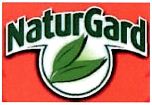
Schedule B
NaturGard Launch Product
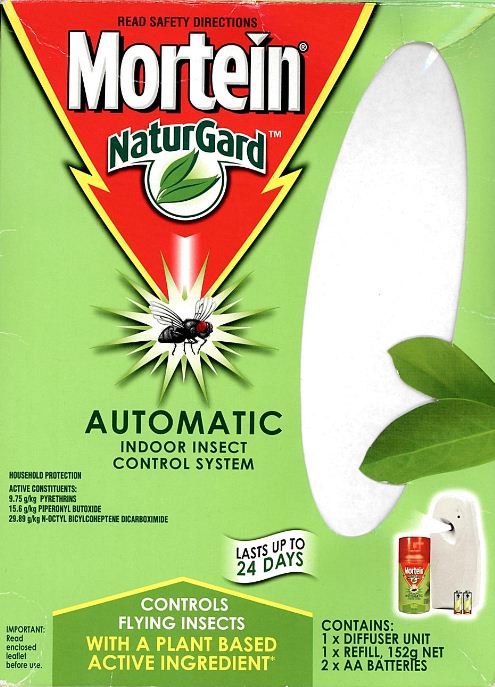
Schedule C
Second NaturGard Product
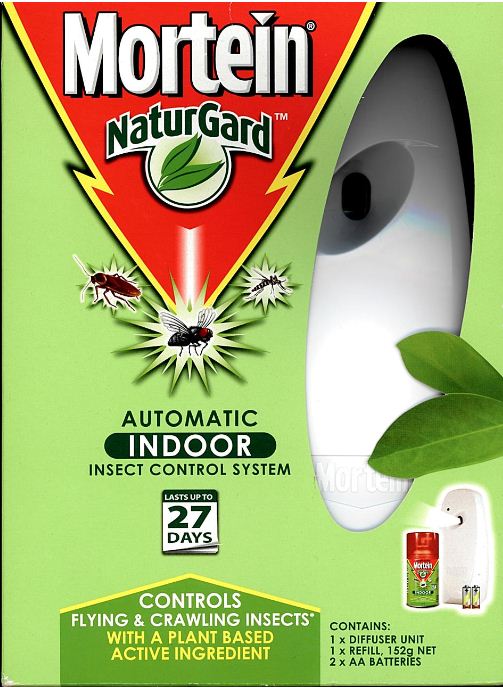
Schedule D
Second NaturGard Refill
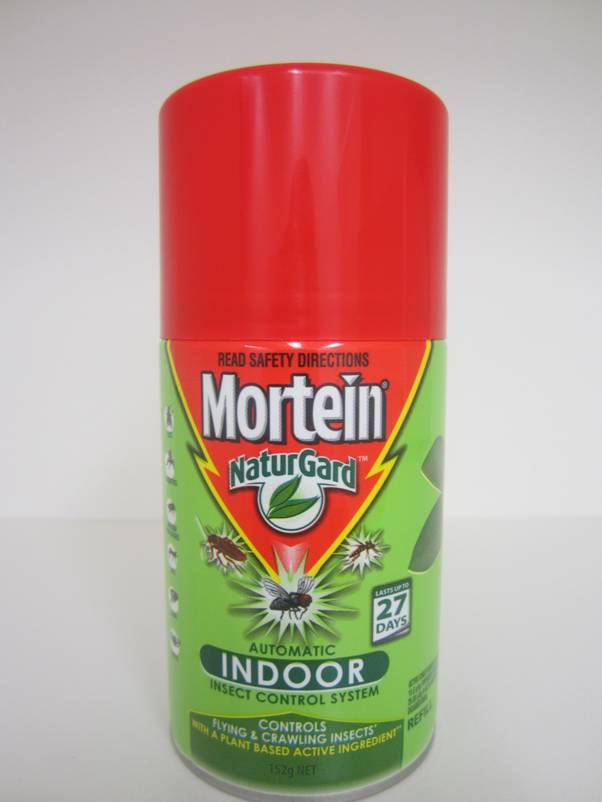
Schedule E
Adjustable NaturGard Product
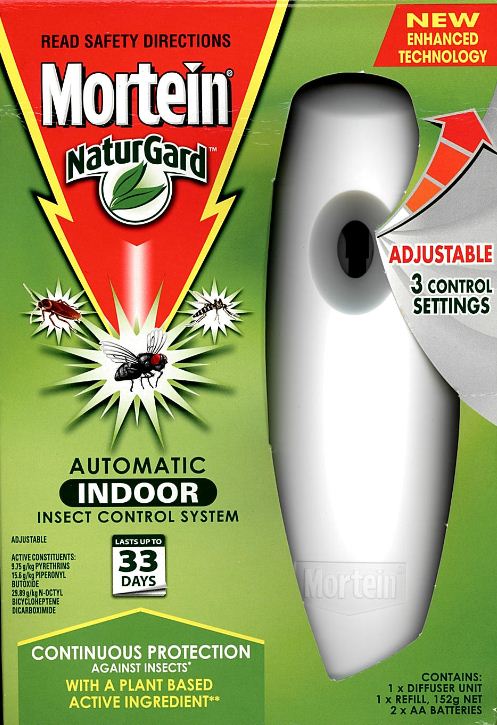
Schedule F
Eucalyptus variant refill
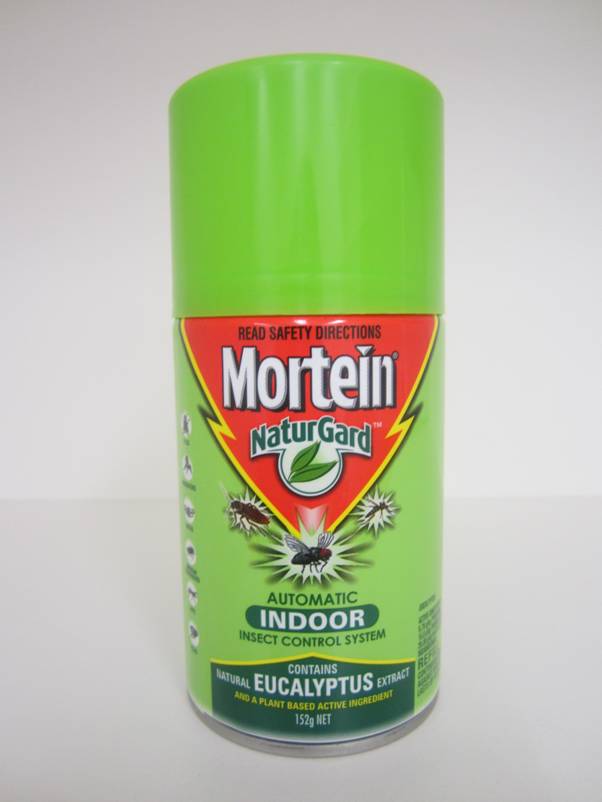
Schedule G
New NaturGard Product
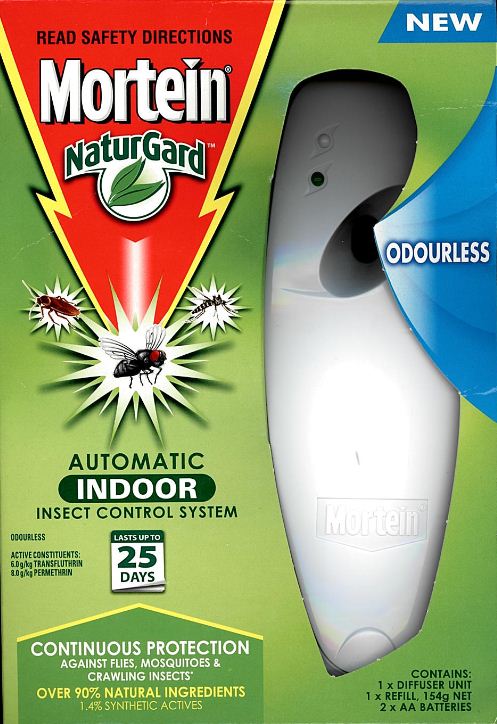
Schedule H
New NaturGard Refill – first version
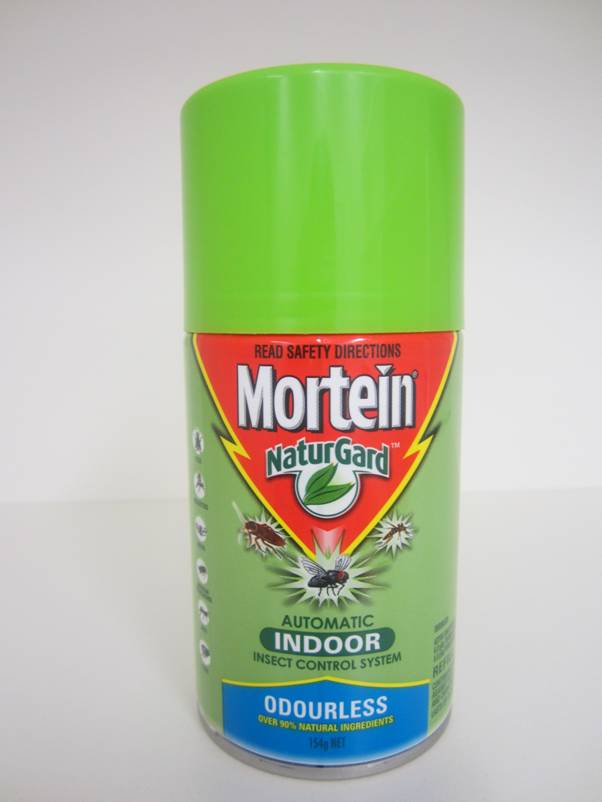
Schedule I
New NaturGard Refill – second version