

FEDERAL COURT OF AUSTRALIA
Construction, Forestry, Mining and Energy Union v BHP Coal Pty Ltd [2012] FCA 1201
IN THE FEDERAL COURT OF AUSTRALIA | |
CONSTRUCTION, FORESTRY, MINING AND ENERGY UNION Applicant | |
AND: | Respondent |
DATE OF ORDER: | |
WHERE MADE: |
THE COURT ORDERS THAT:
1. The application be dismissed.
Note: Entry of orders is dealt with in Rule 39.32 of the Federal Court Rules 2011.
QUEENSLAND DISTRICT REGISTRY | |
FAIR WORK DIVISION | QUD 227 of 2012 |
BETWEEN: | CONSTRUCTION, FORESTRY, MINING AND ENERGY UNION Applicant
|
AND: | BHP COAL PTY LTD Respondent
|
JUDGE: | LANDER J |
DATE: | 2 NOVEMBER 2012 |
PLACE: | melbourne (heard in BRISBANE) |
REASONS FOR JUDGMENT
The Proceeding
1 This is an application by the Construction, Forestry, Mining and Energy Union (CFMEU) for a declaration that BHP Coal Pty Ltd (BHP Coal) has contravened s 346 of the Fair Work Act 2009 (Cth) (FWA) by threatening to terminate Mr Walter Meacle’s employment because Mr Meacle is and was an officer or member of an industrial association (the CFMEU), and/or because he proposed to engage in industrial activities, and/or because he had engaged in industrial activity.
2 The industrial activities, which the CFMEU claims prompted the contravention, were that Mr Meacle organised or provided lawful activity on behalf of the CFMEU; encouraged or participated in lawful activity organised or provided by the CFMEU; and/or represented or advanced the views, claims or interests of the CFMEU.
3 Consequential orders are sought, including an order requiring BHP Coal to treat as null and void its decision to require Mr Meacle to show cause why his employment should not be terminated, and an order requiring BHP Coal not to terminate Mr Meacle’s employment on the grounds set out in a letter from BHP Coal to Mr Meacle dated 30 April 2012.
4 In the alternative, an order is sought pursuant to s 545 of the FWA requiring BHP Coal to pay compensation to Mr Meacle. Penalties are sought to be imposed under s 546 of the FWA, and an order that those penalties be paid to the CFMEU.
5 The CFMEU also sought interlocutory relief, which was not pursued, after BHP Coal gave an undertaking not to proceed with its investigation of Mr Meacle’s conduct until the conclusion of this proceeding.
The Parties and the Witnesses
6 The CFMEU is a registered organisation of employees for the purposes of the FWA.
7 BHP Coal, as part of BHP Billiton Mitsubishi Alliance (BMA), conducts a coal mining operation at the Norwich Park mine near Dysart in Queensland. Its Acting Manager Production (Mining Manager) is Mr Travis Perry, who was previously Coal Mining Superintendent. The Mining Manager is Mr Jarrod Stewart, who is also General Manager of the operation at the Norwich Park mine. Mr Stewart commenced at the Norwich Park mine as Acting Manager of Mining in February 2012, and on or around 20 April 2012, was appointed General Manager of the Norwich Park mine.
8 Ms Anne Hyatt is the Acting Human Resources Manager at the Norwich Park mine and has been employed in this position by BHP Coal since about 30 March 2012. Prior to that she was employed in the Human Resources Department at the Norwich Park mine.
9 Ms Kirsty Taylor has been employed by BHP Coal in the Human Resources Department at the Saraji mine since October 2009. On 12 April 2012, Ms Taylor was asked to investigate a picket line at the Norwich Park mine.
10 Mr Trevor Loader was first employed by BHP Coal in August 2011 and at the relevant time was employed as an operator/trainer/assessor. Mr Loader was a member of the CFMEU until he resigned from the CFMEU on 6 March 2012.
11 Mr Meacle, also known as “Brendan” or “Brat”, is employed at the Norwich Park mine as a production employee. He has been employed at the mine since July 2006. Mr Meacle has been a member of the CFMEU for over six and a half years, and was at the relevant time Treasurer of the Norwich Park Lodge and had been for two years. He has also been a Shift Delegate for four years.
12 The President of that Lodge is Mr Brad Crompton. There are two Vice-Presidents, one of whom is Mr Zane Madden.
13 Mr Meacle’s duties as Treasurer are:
(a) being responsible for the books of account for the Lodge;
(b) overseeing, in conjunction with the other members of the Lodge Executive, all industrial disputes;
(c) resolving, in conjunction with the other members of the Lodge Executive, all Mine wide industrial issues;
(d) recruiting, in conjunction with the Secretary, new members and handling all applications for membership;
(e) participating in monthly meetings of all Lodge members;
(f) preparing a financial report for monthly Lodge meetings;
(g) participating in meetings of the Lodge Executive;
(h) attending Regional Liaison Committee meetings when required.
14 Mr Meacle’s duties as Shift Delegate are to:
(a) provide industrial advice to Union members;
(b) represent members who have industrial issues in meetings with BHP Coal Pty Ltd (“BHP”) management; and
(c) engage in negotiations with BHP management to resolve industrial issues for members.
History and Evidence
15 The CFMEU and BHP Coal have been negotiating a new enterprise agreement in relation to BHP Coal’s employees at the mine for some years. In or about mid 2011, the CFMEU commenced protected industrial action by implementing stoppages of up to seven days.
16 During several of those stoppages, members of the CFMEU conducted protests at the entrance to the mine site by forming a picket line. The protesters situate themselves on both sides of the road leading into the mine and the members of the CFMEU who take part stand behind plastic bollards filled with water, which have been set up by BHP Coal. The CFMEU has a permit from the police, which allows the members to stand within one metre of the road, but usually the protesters stand behind the bollards.
17 Most of the protesters wear red union T-shirts and union caps. The purpose of the protesters is to advance the CFMEU’s claims in relation to the proposed enterprise agreement. The protesters play loud amplified music. Whilst holding placards, the protesters shout and yell at persons who travel in their cars into, or from, the mine. Mr Meacle agreed in his evidence that the purpose of shouting and yelling was to make those in the car hear what they have said. The audience, he said, was in the cars.
18 There is more than one union represented at BMA mines. Those unions that are represented at the mines have joined together in a Single Bargaining Unit (SBU) to represent all of the workers in the various unions.
19 BMA had had reason to write to the SBU, prior to the events with which this proceeding is concerned, relating to the conduct of unionists holding demonstrations near the Norwich Park mine.
20 On 29 July 2011, BMA wrote to the SBU:
I refer to the demonstration that occurred at the entrance to the Norwich Park mine on 27 and 28 July 2011.
BMA understands that the demonstration commenced after one or all of the Unions (or someone acting on their behalf) applied for permits to hold peaceful demonstrations at two locations at the Norwich Park mine.
BMA has been made aware of threatening, intimidating and otherwise inappropriate conduct by the demonstrators. On this basis, the demonstration which your unions organised, managed and co-ordinated was not peaceful.
In particular BMA understands that:
● employees and contractors were told to ‘go home’, ‘fuck off’, ‘fuck off home’, ‘go home, dogs, and don’t fucking come back!’ as they entered or exited the mine. The words ‘you’re scabs, you’re scabs, you’ve got no morals’ were also yelled at employees and contractors as they entered or exited the mine;
● banners with the words ‘No principles Scabs No guts’ were displayed at the entrance to the mine;
● signs were placed on the traffic control devices contrary to the approved traffic control plan;
● the registration or identification details of contractor vehicles, which entered or exited the site, were recorded and displayed on a chalk board that was mounted on a CFMEU Norwich Park Lodge branded trailer facing the site entrance road;
● employees and contractors were video recorded or otherwise filmed as they entered or left the mine site;
● at approximately 1am on 28 July 2011, an individual was standing in the middle of the road taking video footage (before he was asked to return behind the barriers by local security); and
● loud music was played over loud speakers, which interfered with the safe operation of communications between a traffic controller and personnel involved in road works that occurred at the front entrance to the site.
BMA is very concerned about your union’s organisation and involvement in the offending conduct and the effect that the conduct is or may be having on BMA’s employees and contractors. BMA has received complaints from employees and contractors about the threatening and intimidating nature of the conduct at the demonstration.
BMA is particularly concerned about your union’s organisation of and involvement in the offending conduct in light of the written assurances you provided on 11 June 2011 – that there would be no interference with contractors and labour hire workers continuing to work during the notified stoppages.
BMA’s concerns about the offensive nature of the conduct were raised directly with Brad Crompton, the CFMEU Lodge President – Norwich Park on the afternoon of 27 July 2011. In particular, BMA representatives advised Mr Crompton that the conduct of those participating in the demonstration was contrary to the earlier assurances received about the nature of the demonstration.
BMA asked Mr Crompton to remove the signs at the entrance to the mine because they were offensive, inappropriate and intended to prejudice persons exercising their rights. Mr Crompton responded that he would have a meeting of his members and put that to his members. Mr Crompton apparently discussed this with his members and then advised BMA that the signs would not be removed.
In light of the information set out above, BMA considers that your unions have (through their officers, delegates, employees and members) been organising and engaging in conduct at the demonstration which has or may have had the effect of (at the very least) intimidating BMA’s employees and contractors or to injure, prejudice or alter their position.
21 BMA sought various undertakings in relation to the conduct of the officers, delegates, employees and members of the union, and in particular an undertaking that they would refrain from displaying offensive banners or using offensive language or calling employees and contractors “scabs”.
22 The letter concluded:
If your union fails to provide the written confirmation and undertaking set out above, BMA will rely upon this failure in any action that it may take to protect the health, safety and welfare of its employees and contractors and to ensure that they are not exposed to threatening or intimidating conduct by your unions.
23 Mr Loader resigned from the CFMEU for personal reasons and because the cost of the protected industrial action was hurting him financially. Mr Loader spoke to Mr Perry before resigning, asking whether the company would help if he crossed a picket line. Mr Perry and Mr Stewart told Mr Loader he would have their full support and BHP Coal’s full support if he were bullied or harassed for working during a stoppage. After Mr Loader resigned from the CFMEU, he continued to work his normal shift whilst the CFMEU carried out its protected industrial action.
24 Between 27 March 2012 and 2 April 2012, the CFMEU staged a stoppage and its members maintained a picket line at the Norwich Park mine.
25 On 31 March 2012 at 7.20am, Mr Citadella, a Mining Supervisor and Mr Loader’s direct supervisor, telephoned Mr Perry and told him that one of the placards at the picket line displayed a “scab” sign, and had the words written on it “scab forever loader shit”.
26 Mr Loader said that on 31 March 2012 at approximately 6.30pm he left the Norwich Park mine at the end of his shift, driving his white Toyota Landcruiser. He said he saw three people outside the bollards on the left hand side of the road, one of whom was Mr Meacle. He did not recognise the other two. He and Mr Meacle had previously worked on the same crew.
27 The CFMEU tendered the Sunrise, Sunset and Twilight Times published by Geoscience Australia, of the Australian Government. The ending of evening civil twilight is defined:
… as the instant in the evening, when the centre of the sun is at a depression angle of six degrees (6°) below an ideal horizon. At this time in the absence of moonlight, artificial lighting or adverse atmospheric conditions, the illumination is such that large objects may be seen but no detail is discernible. The brightest stars and planets can be seen and for navigation purposes at sea, the sea horizon is clearly defined.
Twilight started at 5.52am and finished at 6.30pm on 31 March 2012.
28 Mr Loader said that Mr Meacle has a very distinct voice. The window of Mr Loader’s vehicle was down and as he passed Mr Meacle he heard Mr Meacle yell out “scab cunt”, whilst at the same time raising a finger on both hands and moving his hands up and down.
29 Mr Meacle denies the allegations. He said in his evidence:
41. At approximately 4.45pm, I returned to the protest. I was still wearing my red Union t-shirt and Union cap.
42. At approximately 6:00pm, I attended the meeting following the shift change where Mr Crompton and I reported back to members about events that had occurred during the day. A barbecue was held after the meeting and then members started to leave the protest at around 6.30pm.
43. There were not as many cars that travelled past the protest after 6.00pm because the shift change took place between 5.00pm and 6.00pm.
44. It was fairly dark at 6:30pm and we didn’t have a lighting plant set up.
45. I recall that I was standing in the middle of the protest when a white Landcruiser ute travelled through the protest just after 6.30pm. I was standing behind the bollards but I am unable to recall whether I was standing directly behind the bollards or two or three rows back. I recall that I was not holding a placard but I was yelling out words to the effect of “go home”, along with other members around me.
46. I deny that I ever yelled the word “scab” or “scab cunt” at the car travelling past. I never use the word “scab” while I am protesting because I know words like that can upset some people and I don’t want to cause any problems with HR.
47. I deny that I gave the finger in the direction of the car travelling past with both hands. As a member of the Executive, I try to prevent members from causing trouble and I understand that I have to set a good example myself.
48. The only member usually outside of the bollards is the protest marshal. I recall that the marshal on this day was Mr Crompton. The only time I go outside of the bollards is to cross the road to the other side of the protest or to pick up signs that are usually placed in front of the bollard that have fallen down.
30 Mr Crompton said that he was present on 31 March 2012 with about 35 other members. He said he was carrying out his duty to patrol in front of the bollards in the afternoon, when he was approached by three security guards who asked him to take down the “scab” signs. He told the security guards that they would not be removing them, using words to the effect of “We’re just expressing our views”.
31 A little later he was telephoned by Ms Hyatt, who asked him to take down the “scab” signs because they were derogatory. He said that he told her that they would not because they were expressing the views of the membership.
32 While he was talking to Ms Hyatt, the security guards returned and again requested the signs with “scab” on them be removed, but Mr Crompton refused.
33 Mr Crompton said he was standing in front of the bollards and recalled seeing Mr Meacle standing behind the bollards. He said that he did not hear Mr Meacle yell out anything at the cars travelling through the protest.
34 He said there was considerable noise at the time because loud music was being played with the noise being so loud that members usually wear earplugs and it was very difficult to hold a conversation,.
35 Whilst Mr Crompton may not have heard Mr Meacle yell out at the cars, that does not establish Mr Meacle did not do so. Mr Meacle’s own evidence was that he was “yelling out … along with other members around me”.
36 In view of Mr Meacle’s evidence, Mr Crompton’s evidence that he did not hear Mr Meacle yell out raises a question as to the reliability of his evidence.
37 The first Mr Crompton was aware that there was any complaint about Mr Meacle’s conduct was when Mr Meacle contacted him by telephone on 7 April 2012 to advise that he had been stood down for yelling out the word “scab” at cars driving past the protest.
38 Mr Madden said he was also present on 31 March 2012 at the picket line. He said that at any meeting after a shift change, Mr Crompton usually told the members at the picket line “play it cool” and respect the “rules of the line”, which are:
(a) not to throw anything at cars;
(b) not to swear at passing cars;
(c) not to let “anything BHP does worry you”;
(d) don’t give BHP any reason to “write you up”.
(Emphasis in original)
39 Mr Madden said he has heard Mr Meacle reinforce these rules. He also has reinforced the rules. He said it was noisy and difficult to hear anyone unless they are standing next to you. He said that generally the only words that are shouted out by the protesters are “Go Home” when persons are leaving or “Slow Down” if the car is speeding. He said the protesters just make a lot of noise by banging on the bollards. He said he was standing next to Mr Meacle at the protest on 31 March 2012, but did not hear Mr Meacle shout anything, or make any gestures, at any vehicle that day. He did not recall seeing anyone standing in front of the bollards on that day.
40 Again, Mr Madden’s evidence cannot be used to establish that Mr Meacle did not yell anything toward a vehicle, in view of Mr Meacle’s own evidence to the contrary. Again, Mr Meacle’s own evidence suggests that Mr Madden’s evidence is not reliable. Mr Madden said he was standing next to a man who was yelling out, but Mr Madden did not hear Mr Meacle shout anything.
41 Mr Loader said that he spoke to his direct supervisor, Mr Citadella that night. Mr Citadella confirmed that Mr Loader came to see him later on on 31 March 2012 and told him that when he was leaving earlier that day, he saw three people, one of whom was Mr Meacle, standing in front of the barriers. Mr Citadella said that he was told by Mr Loader that “Mr Meacle had both arms in the air giving him the finger and yelling abuse and calling him ‘you scab cunt’.”
42 Mr Citadella telephoned Mr Perry on 31 March 2012 at 7.00pm, and told Mr Perry that Mr Meacle had used abusive language directed to Mr Loader as he drove through the picket line. Mr Citadella told Mr Perry that Mr Loader said there were three persons who all stood out in front of the picket line, but the only one he recognised was Mr Meacle, because they had previously worked together in the Mining Department. Mr Perry knew Mr Meacle and was aware that he had a position in the CFMEU, which he thought was as a union delegate.
43 Mr Perry asked Mr Citadella to request Mr Loader to provide a statement, and Mr Perry reported the incident to Mr Stewart on or about that day.
44 Mr Loader said in his statement that when he drove through the picket line at the end of his shift at 6.30pm on 31 March 2012, he noticed three people standing on the outside of the bollards on the roadside, one of whom was Mr Meacle. He was unable to identify the other two persons. He said that Mr Meacle yelled obscenities at him, including “scab cunt”, whilst at the same time “giving me the finger with both hands”.
45 The next day, 1 April 2012, Mr Loader rang Mr Citadella and asked him if he could travel to work with the supervisor because he was intimidated by the incident of the previous day.
46 At around 5.00am on 2 April 2012, Mr Perry drove through the picket line and observed a sign about the size of a road sign, which had the words written on it, “scab forever loader shit”. About 1.5 metres directly above the sign was a hangman’s noose.
47 When he arrived at work, Mr Perry was provided with two statements; one of Mr Loader, and one of another employee, Ms Julie Johnston, both dated 1 April 2012.
48 Ms Johnston’s statement was brief and merely recorded that on 1 April 2012, when she was approaching the entrance to the mine, she had observed a sign up on the picket line with the words “SCAB LOADER” written on it.
49 Mr Perry subsequently obtained statements from Mr Citadella, and from another employee Mr Kevin Barnes, both dated 3 April 2012.
50 Mr Citadella’s statement referred to a conversation he had with Mr Loader in which Mr Loader had reported on Mr Meacle’s conduct, which formed the basis of Mr Loader’s written statement. Mr Citadella also observed for himself on 3 April 2012 the sign on the picket line with the words “Once a scab always a scab” written on it.
51 Mr Barnes, who travelled in the same car with Mr Citadella, said that he saw a sign with the words “SCAB” and “LOADER” on it. Mr Barnes also said that he was present when Mr Loader complained to Mr Citadella about Mr Meacle’s conduct.
52 On or about 3 April 2012, Mr Perry told Ms Hyatt that he had received a complaint from Mr Loader and later provided a copy of the complaint to her. Ms Hyatt was of the opinion that the complaint was serious and needed to be investigated because of BMA’s Workplace Conduct Policy and BHP Billiton’s Code of Conduct. Ms Hyatt spoke to Ms Sonia Lewis, who was a Senior Human Resources Manager and was also Ms Hyatt’s direct manager. Ms Hyatt recommended to Ms Lewis that Mr Meacle should be stood aside on full pay pending an investigation. Ms Lewis agreed with the recommendation.
53 Mr Perry decided to commence an investigation into Mr Meacle’s conduct, and on 5 April 2012, spoke to Ms Hyatt by telephone in Mr Loader’s presence for the purpose of discussing Mr Loader’s allegations.
54 During that conversation Mr Loader was asked to confirm the truth of his statement, which he did.
55 Mr Perry said that his investigation was in accordance with the Workplace Conduct Policy and Code of Business Conduct. In the Workplace Conduct Policy it is stated:
Each employee is expected to treat others in the workplace (at work and outside of work) with courtesy, dignity and respect.
56 The Code of Business Conduct refers to the company’s charter values, including “Respect” and “Integrity”, and states:
BHP Billiton does not tolerate any form of harassment in any of our work places.
…
Employees must never engage in actions or behaviours that entail harassment or bullying.
Harassment is an action, conduct or behaviour that a reasonable person would find unwelcome, humiliating, intimidating or offensive.
57 On 7 April 2012, at about 6.15am, Mr Perry spoke to Mr Meacle and told him that he had to “chase up some issues” that occurred on the previous weekend and asked Mr Meacle whether he would require a delegate to be present while he did so.
58 Mr Meacle responded by asking what he had done, and whether he needed a delegate. In the end result, he attended, with a union delegate Mr Warren Deeth, a meeting with Mr Perry and Mr Meacle’s direct supervisor Mr Fraser, in Mr Perry’s office at 6.20am.
59 Mr Perry told Mr Meacle that the meeting concerned Mr Meacle’s inappropriate behaviour at a picket line the previous weekend. Mr Meacle asked Mr Perry what he meant by inappropriate behaviour, and Mr Perry said that an allegation had been made that Mr Meacle was bullying and harassing his fellow workmates.
60 In his affidavit tendered at trial Mr Perry said:
47. Mr Meacle admitted that the word scab was used at the picket line. To the best of my recollection, Mr Meacle referred to ‘scab’ without any prompting.
61 During the meeting, Mr Perry handed Mr Meacle a “stand aside letter”. The letter informed him that the company was investigating allegations concerning his conduct toward a fellow employee, which might have breached BHP Billiton’s Code of Business Conduct in relation to harassment, BHP Billiton’s Charter Values, and BMA’s Workplace Conduct Policy and expected workplace behaviour. The letter informed Mr Meacle that he would not be required to report for duty effective from that day until the investigation was complete, but that he would be expected to be available during this time to participate in any investigation process or meeting as required by BMA.
62 Mr Meacle was informed that the investigation would be finalised in accordance with BMA’s Guideline to Fair Play Policy and Just Culture Decision Tree, which might result in a consideration of his ongoing employment.
63 Later that same morning, whilst driving home after completing his shift, at approximately 7.29am Mr Perry received a telephone call from Mr Crompton, asking if the Code of Conduct Work Policy applied to conduct outside of work. Mr Perry told Mr Crompton that it did if it was a work related issue, and that there was a serious allegation raised against Mr Meacle into which an inquiry needed to be made.
64 After that day, and before 10 April 2012, Mr Crompton spoke to Mr Perry and asked how Mr Meacle’s case was going. Mr Crompton enquired how many statements had been put in, but Mr Perry said that he could not tell him.
65 On 10 April 2012, Mr Perry received a letter from Mr Crompton, requesting details of the allegations made against Mr Meacle because Mr Meacle was unable to formulate a proper response to the allegations made against him without those details. Mr Crompton wrote:
I refer to the above matter and advise that I have been appointed as the employee representative for Mr Walter (Brendan) Meacle.
Mr Meacle has provided me with a copy of your correspondence dated 7 April 2012.
I note that whilst your correspondence of 7 April 2012 refers to allegations that had been made against Mr Meacle, your correspondence does not set out what those allegations are. I am advised by Mr Meacle that at the meeting on 7 April 2012 you stated that the allegations were that on 30 March and 1 April 2012 Mr Meacle yelled the word “scab” at unidentified persons passing the lawful demonstration that was assembled outside the Norwich Park Mine. However, no further details were provided.
On behalf of Mr Meacle I request that you immediately provide proper details of the allegations against him. These details would include, but would not be limited to:
1. the times at which Mr Meacle was alleged to have yelled the word “scab”; and
2. the persons to whom it is alleged that Mr Meacle yelled the word “scab” at.
In addition to those details Mr Meacle also requests that he be provided with any witness statements that BHP Coal Pty Ltd (“BHP”) is relying upon in this matter.
Mr Meacle is [sic] denies any wrongdoing in this matter and is desirous of resolving this matter as expeditiously as possible. To that end Mr Meacle wishes to provide BHP with a response. However, in order for Mr Meacle to respond to the allegations he must first know the details of the allegations. As it presently stands BHP have, despite standing Mr Meacle down from duty, only provided the vaguest details of the allegations.
As you would appreciate, Mr Meacle is unable to formulate a proper response to the allegations made against him without the basic details referred to above. For example, without knowing when it is alleged that Mr Meacle yelled the word “scab” it is impossible for Mr Meacle to say whether he was even at the demonstration at the relevant time.
Further, the failure to provide these details is also prejudicing Mr Meacle’s ability to provide witness statements in support [of] his position.
Given that BHP are purportedly in possession of sufficient evidentiary material to warrant standing Mr Meacle down, providing the details sought should be a relatively straight forward matter.
Failure to provide such details to Mr Meacle will deny him a full and fair opportunity to respond to the allegations.
So there can be no confusion both Mr Meacle and the CFMEU wholly reserve their rights in relation to this matter.
I look forward to your prompt response.
66 Mr Perry forwarded that letter to Ms Hyatt, who then sought Ms Lewis’ assistance to provide further resources for the purpose of the investigation. Ms Lewis requested Ms Taylor investigate the complaint.
67 Mr Meacle signed a statement, which was said to have been taken on 11 April 2012 by his solicitor. The date of the statement is misleading. The first draft of the statement was created on 11 April 2012, but successive drafts were created over the days that followed and the statement was not completed until 18 April 2012, which is significant because it was completed after a meeting on 17 April 2012 in which Mr Meacle was advised that the events occurred on 31 March 2012, not on 30 March 2012 or 1 April 2012 as was previously indicated.
68 On 12 April 2012, Ms Lewis asked Ms Taylor to attend at the Norwich Park mine the next day to carry out an investigation into an incident at the picket line.
69 As I have mentioned earlier, Ms Taylor has been employed in the Human Resources Department at Saraji mine since October 2009. More recently, she has been employed as a Senior Human Resources Adviser. She has been mainly employed in human resource positions since leaving university in 2003.
70 As a Senior Human Resources Adviser she has been trained on how to conduct an investigation. She had been involved in this type of investigation before.
71 Although there is no specific policy that an investigator is required to follow to conduct an investigation, she knew she would have to have regard to the Workplace Conduct Policy, which requires the investigator to inform an employee of the allegation made against the employee.
72 Ms Taylor said in cross-examination that she regarded herself as an experienced investigator of complaints and workplace situations.
73 On 13 April 2012 Ms Taylor attended the Norwich Park mine for the purpose of meeting with Ms Hyatt and Ms Julia Swift, a solicitor with Freehills.
74 Ms Taylor said in evidence that she was told by Ms Hyatt that Mr Meacle was alleged to have jumped over the barriers at the Norwich Park picket line and called an employee, Mr Loader, a “scab cunt”, and that Mr Meacle directed his two middle fingers at Mr Loader as Mr Loader drove through the picket line. She was informed by Ms Hyatt that Mr Meacle was the Treasurer of the union. She was informed that Mr Loader had made his initial complaint to Mr Fraser and Mr Perry. She was provided with Mr Loader’s statement. She was told that three other employees had given statements regarding signage that they had seen when crossing the picket line. The words “Scab” and “Loader” were on some of the signs. She was also told that Ms Hyatt had spoken to Mr Loader on 5 April 2012 with Mr Perry and Mr Mark Nam, a solicitor of Freehills. She was given a copy of Mr Nam’s notes.
75 Ms Taylor was also told that Mr Meacle had been stood aside on the basis that he had potentially breached BHP Billiton’s Code of Business Conduct, and BMA’s Workplace Conduct Policy.
76 Ms Taylor said that after that meeting Ms Swift emailed her later on 13 April 2012, with the statements and information then available, which comprised the following:
(a) Mr Loader’s statement regarding incident on 16 March 2012.
(b) Mr Perry’s notes of his meeting of 26 March 2012, with Mr Meacle and his union representative Mr Russell Collins.
(c) Mr Loader’s statement of 30 March 2012.
(d) Verifact Security log notes of 30 March 2012, 31 March 2012 and 1 April 2012.
(e) Mr Loader’s statement of 1 April 2012, regarding incident on 31 March 2012.
(f) Ms Johnston’s statement of 1 April 2012.
(g) Mr Nam’s handwritten notes of his 5 April 2012 phone call with Ms Hyatt, Mr Perry, and Mr Loader, and the typed file note of those handwritten notes.
(h) Ms Hyatt’s notes of her 5 April 2012 phone call with Mr Perry, Mr Nam and Mr Loader.
(i) Notes of meeting of 6 April 2012 between Mr Perry, Mr Fraser, Mr Meacle and Mr Deeth.
(j) Mr Perry’s notes of meeting of 7 April 2012 between Mr Perry, Mr Fraser, Mr Meacle and Mr Deeth.
(k) Letter of 7 April 2012 from BMA to Mr Meacle.
(l) Letter of 10 April 2012 from Mr Crompton to Mr Perry.
(m) Mr Fraser’s diary notes (redacted).
77 On the same day, Ms Taylor asked Mr Perry to inform Mr Meacle that she wanted to meet with him on Tuesday, 17 April 2012, to obtain his account of the events. She was of the opinion that she ought to first meet with Mr Perry and Mr Loader.
78 On 14 April 2012, Ms Taylor received from Ms Swift another copy of Ms Johnston’s statement dated 1 April 2012, which was already included in those materials that Ms Swift emailed to Ms Taylor on 13 April 2012, to which I have referred.
79 On 16 April 2012, Ms Taylor met with Mr Perry and Mr Loader separately. Ms Taylor said that during her discussion with Mr Perry she was told by Mr Perry that he had spoken to both Mr Stephen Viell and Mr Chris Sparkes, labour hire employees who had entered the mine at the same time as Mr Loader on 31 March 2012, and they had told Mr Perry that they did not see anything. She said in her affidavit of evidence:
Mr Perry told me to the effect that Mr Viell and Mr Sparkes gave him the impression they did not want to get involved. I made the decision not to track them down, as they had told Mr Perry that they did not see anything.
80 The notes Ms Taylor took of that meeting with Mr Perry, which she said accurately summarised the meeting, include the following:
Travis told me that he had spoken to Mr Stephen Viell and Chris Sparkes and that both of them said that they had not seen the incident. Travis had the impression that they did not want to be involved.
81 In his evidence however, Mr Perry said that he did not ever speak to Mr Viell or Mr Sparkes, and he did not tell Ms Taylor that he had.
82 Ms Taylor then met with Mr Loader in the company of Ms Penny Brooke, a solicitor of Freehills. Ms Taylor assessed Mr Loader as being a credible witness and she felt he was telling her the truth.
83 Ms Brooke took notes of the meeting with Mr Loader. The notes record Mr Loader as saying, amongst other things:
● The incident occurred on 31 March 2012. Trevor was leaving day shift. It was still light. Brendan Meacle (also referred to as Brat) was standing on the roadside of the water barriers with 2 other men. They were very close to the road. …
● They (Meacle and the 2 unidentified people) did not rush out from behind the water barriers as Trevor’s car exited. They were already standing there.
84 On 17 April 2012, at approximately 3.00pm, Ms Taylor and Mr Perry met with Mr Meacle and Mr Crompton at the Dysart town office. At that meeting, Mr Crompton handed Mr Perry a letter seeking details of the allegations against Mr Meacle. In that letter Mr Crompton again, as he had in his letter of 10 April 2012, requested details of the allegations against Mr Meacle including, but not limited to:
(1) the times at which Mr Meacle was alleged to have yelled the word “scab”; and
(2) the persons to whom it is alleged that Mr Meacle yelled the word “scab” at.
In addition to those details Mr Meacle also requests that he be provided with any witness statements that BHP Coal Pty Ltd (“BHP”) is relying upon in this matter.
85 The letter continued:
Mr Meacle denies any wrongdoing and wishes to cooperate with the investigation process and to provide a response to the allegations against him. However, Mr Meacle is unable to properly respond to the allegations without further particulars.
86 Ms Taylor told Mr Crompton that BHP Coal would not be giving him any copies of any witness statements.
87 Mr Perry then took over the conduct of the meeting. He said that BHP Coal was investigating an incident that occurred on 31 March 2012 at approximately 6.30pm. He handed Mr Meacle a letter detailing the allegations. The letter had been created by Ms Taylor who had particularised the complaint by reference to Mr Loader’s statement of 1 April 2012, Mr Nam’s notes of his meeting with Mr Loader on 5 April 2012, and her conversation with Mr Loader on 16 April 2012.
88 The letter contained the following:
I write to advise that a complaint has been made under BMA’s Workplace Conduct Policy, in respect of allegations of harassment, victimisation and discrimination due to a colleague choosing not to be a union member (Complaint). We require your assistance in relation to this matter.
Workplace Investigation
Under BMA’s Workplace Conduct Policy this matter is being investigated further. The purpose of the investigation is to examine the facts and determine whether any further action needs to be taken by BMA.
Incident 31 March 2012
It has been alleged that on 31 March 2012 at approximately 6:30pm, you were present on the picket line at the entrance to Norwich Park Mine. While you were standing in front of the water barriers you behaved in the following manner:
● You yelled at a colleague as he came to work that he was a “scab cunt”; and
● You displayed inappropriate behaviour to this colleague by “giving him the finger with both hands” while yelling obscenities.
The complaint if upheld, is viewed as serious misconduct as it breaches:
● BMA’s Workplace Conduct Policy; and
● BHP Billiton’s Code of Business Conduct.
Specifically, page 3 of the Workplace Conduct Policy states that:
“Each employee is expected to treat others in the workplace (at work and outside of work) with courtesy, dignity and respect.”
The policy details that certain forms of behaviour will not be tolerated and this includes, discrimination, harassment and victimisation of an individual on the grounds that he has chosen not [to] be a member of the union.
BHP Billiton’s Code of Business Conduct states that the company’s Charter Values includes Respect and Integrity. These values are further expanded within the policy and p22 states that harassment will not be tolerated.
In accordance with BMA’s Workplace Conduct Policy, you are required to respond to these allegations no later than 5pm on Thursday 19 April 2012. This is an opportunity for you to respond to the complaint made against you.
If you do not respond, BMA will make a decision based on the information it has to determine whether any further action needs to be taken.
Outcome of Investigation
Once the matter has been fully investigated, depending on the outcome BMA may take further action.
You should be aware that as noted in the Workplace Conduct Policy, BMA will not tolerate any form of inappropriate workplace conduct and if the allegations are upheld, disciplinary action may be taken against you which may include termination of employment.
All details of this meeting and ongoing investigation process will remain confidential and we ask you keep the contents of this letter and any discussions confidential, except to the extent you may wish to discuss the matter with any appointed representative.
89 Mr Perry said that Mr Crompton began talking and said that it was a “he said/she said” situation, and requested to know the specific allegations against Mr Meacle.
90 The purpose of the meeting with Mr Meacle and the publishing of the letter of 17 April 2012 to Mr Meacle was to acquaint Mr Meacle with the specific allegations that had been made against him in order that he would have an opportunity of addressing those allegations precisely.
91 During the meeting, Mr Meacle said that he was not on the picket line on 31 March 2012, and Mr Crompton said that there were a number of witnesses who could confirm that. Mr Crompton admitted saying that in his evidence. He said that he was mistaken about what he said because he thought he was addressing 30 March 2012, which had been a date suggested by BHP Coal earlier as being the relevant day, and a date on which both he and Mr Meacle had been in Mackay at a union meeting.
92 Although the purpose of the meeting and the letter was to provide Mr Meacle with the allegations that had been made against him, neither Mr Perry at the meeting nor Ms Taylor in her letter advised Mr Meacle of the complainant. This was because of the Code of Business Conduct Policy, which provides that where an employee raises a concern, the employee’s identity would only be shared on a need-to-know basis in order to address the concern, as required by law, or otherwise with the employee’s consent, and every effort is to be made to protect a person raising a concern from victimisation.
93 As it happened, the failure to advise Mr Meacle of the complainant was of little or no consequence because Mr Crompton and Mr Meacle knew that the person making the complaint had to be Mr Loader because he was the only worker, apart from management, who was working during the stoppage.
94 Mr Meacle was given until 5.00pm on Thursday 19 April 2012 to respond to the letter of 17 April 2012. He was advised that if no response was received then the investigation would have to proceed upon the basis that no response was to be given. Mr Crompton, however, said that although it would be a lot of work to get affidavits together, he would be able to provide a number of those to prove that Mr Meacle was not at the picket. Ms Taylor advised Mr Crompton that she would accept anything that would help her in her investigation.
95 On 19 April 2012, Mr Crompton provided Mr Perry with Mr Meacle’s statement incorrectly dated 11 April 2012. The timing of that response supports the evidence that Mr Meacle’s statement was not finalised until 18 April 2012. In that statement Mr Meacle addressed the events of 31 March 2012. He said:
15. On 31 March 2012, I stayed overnight at the protest before being present for the shift change that morning. I left the protest after the morning meeting.
16. At approximately 4.45pm, I returned to the protest. I was still wearing my red Union t-shirt and Union cap.
17. At approximately 6:00pm, I attended the meeting following the shift change where Mr Crompton and I reported back to members about events that had occurred during the day. A barbecue was held after the meeting and then members started to leave the protest at around 6.30pm.
18. There were not as many cars that travelled past the protest after 6.00pm because the shift change took place between 5.00pm and 6.00pm.
19. It was fairly dark at 6:30pm and we didn’t have a lighting plant set up.
20. I recall that I was standing in the middle of the protest when a white Landcruiser ute travelled through the protest just after 6.30pm. I was standing behind the bollards but I am unable to recall whether I was standing directly behind the bollards or two or three rows back. I recall that I was not holding a placard but I was yelling out words to the following effect:
“Go home”
21. I deny that I ever yelled the word “scab” or “scab cunt” at the car travelling past. I never use the word [sic] words alleged while I am protesting because I know words like that can upset some people and I don’t want to cause any problems with HR.
22. I deny that I gave the finger in the direction of the car travelling past with both hands or at all. As a member of the Executive, I try to prevent members from causing trouble and I understand that I have to set a good example myself.
23. The only member usually outside of the bollards is the protest marsha [sic]. The marshal is there to ensure that people attending the protest remain behind the bollards. I recall that the marshal on this day was Mr Crompton. The only time I go outside of the bollards is to cross the road to the other side of the protest or to pick up signs that are usually placed in front of the bollard that have fallen down.
96 Clearly, at that time, Mr Meacle understood that the events, which had given rise to the complaint, were said to have occurred on 31 March 2012. He also understood what the allegations were because he directly addressed those allegations in paragraphs 21 and 22.
97 On or around 19 April 2012, Mr Perry provided Ms Taylor with statements given by Mr Citadella and Mr Barnes both made on 3 April 2012.
98 On 19 April 2012, Mr Perry wrote to Mr Crompton in response to Mr Crompton’s letters of 10 April 2012 and 17 April 2012, stating that he was satisfied Mr Meacle had been provided with the relevant information with respect to the allegations against him. He also wrote that the investigation was ongoing and being conducted in accordance with BMA’s normal procedures. He said it was not BMA’s usual practice to provide copies of statements obtained in the course of investigations.
99 No other statements were provided apart from Mr Meacle’s.
100 Ms Taylor said that as part of her investigation she considered the Verifact logs kept by a security company that BHP Coal has engaged to provide assistance during any protest. That company keeps a record of events. The logs did not refer to Mr Meacle’s behaviour.
101 Ms Taylor said she also had regard to a meeting note dated 26 March 2012 concerning a meeting between Mr Perry, Mr Meacle, and Mr Meacle’s union representative Mr Russell Collins to discuss allegations of breach of the Workplace Code of Conduct against another employee for a separate matter. She considered that meeting relevant because it would have reminded Mr Meacle of the company’s Code of Business Conduct.
102 She also considered the “scab” signs that had been seen by other employees as they drove to work. Ms Johnston saw a sign that stated “Scab Loader”. Mr Citadella saw a sign that said “Once a scab always a scab”. Mr Barnes observed a sign that had the two words “scab” and “loader” written on it. Ms Taylor did not assume that Mr Meacle placed those signs at the protest, because there was no evidence to suggest as much.
103 On 23 April 2012, Ms Taylor completed her report, which was seven pages in length and to which were attached the following documents:
a) Mr. Trevor Loader’s statement regarding Steve Brown incident – Attachment A
b) Ms. Julie Johnston’s, Mr Bruce Citadella’s and Mr Kevin Barne’s (sic) statement regarding sign at the protest – Attachment B
c) Mr. Trevor Loader’s statement regarding incident at the protest – Attachment C.
d) Mr. Mark Nam’s file notes from conversation with Mr. Loader – Attachment D
e) Mr. Travis Perry, diary note from meeting with Mr. Meacle – Attachment E.
f) Mr. Tony Frazer’s (sic) diary note from meeting with Mr. Meacle – Attachment F
g) Mr. Brendan Meacle’s Written Notice of Intention to Stand Aside – Attachment G
h) Mr. Travis Perry’s letter from Mr. Brad Crompton regarding Mr. Meacle’s stand aside dated 10 April 2012 – Attachment H.
i) Ms. Kirsty Taylor’s diary note of meeting with Mr. Perry – Attachment I
j) Ms. Penny Brooke’s file note of meeting with Mr. Trevor Loader – Attachment J
k) Ms. Kirsty Taylor’s diary note of meeting with Mr. Meacle regarding allegations – Attachment K.
l) Mr. Travis Perry’s letter from Mr. Brad Crompton regarding Mr. Meacle’s stand aside dated 17 April 2012 – Attachment L.
m) Letter to Mr. Meacle outlining the allegations made against him – Attachment M
n) Letter from Mr Travis Perry to Mr Brad Crompton in regards to his previous letters – Attachment N
o) Mr. Meacle’s response to allegations – Attachment O.
p) Mr. Trevor Loader’s diagram of incident scene – Attachment P
q) Verificat (sic) Log – Attachment Q
r) Mr. Travis Perry’s diary note of conversation with Mr. Brendan Meacle – Attachment R
s) BMA Workplace Code of Conduct Policy – Attachment S
t) BHP Billiton Code of Business Conduct Policy. – attachment T
104 In her report, Ms Taylor described the background and the complaint, and the action taken after the complaint was made. She identified her appointment and the investigation procedure, which she detailed in paragraph 5 of her report.
105 After identifying the written documents relied upon for the purposes of the investigation, she addressed additional facts. In that regard, she said in paragraphs 5.6 and 5.7:
5.6 Additional Facts
5.6.1 On 26 March 2012, Mr. Perry met with Mr. Meacle to discuss accusations of breaches of the Workplace Code of Conduct Policy against another employee for a separate matter (Attachment R). During this meeting Mr. Perry told Mr. Meacle that breaches of the BMA Workplace Code of Conduct Policy would not be tolerated.
5.6.2 Mr. Meacle attended the BHP Billiton Code of Business Conduct training on 7 March 2012, this training was provided by Ms. Prue Mitchell, Advisor Employee Relations.
5.7 “Scab” Signs
5.7.1 On 1 April 2012, Ms. Julie Johnston, drove through the protest. On her way through she witnessed a sign leaning on a bollard (water barrier) that stated “Scab Loader” (Attachment B)
5.7.2 On 3 April 2012, Mr. Bruce Citadella witnessed a scab sign at the picket that stated “Once a scab, always a scab”, he believed that there had been a name on the sign but it was now covered up. (Attachment B)
5.7.3 On 3 April 2012, Mr. Kevin Barnes witnessed scab signs that had “scab” and “loader” written on it at the entrance of the mine. (Attachment B)
5.7.4 There is no evidence to suggest that Mr. Meacle placed these signs at the protest.
106 She completed her report with the following findings:
6. FINDINGS OF THE INVESTIGATION
6.1 Inconsistencies
6.1 There were a number of inconsistencies in the responses provided by Mr. Meacle:
a) At the meeting on 17 April 2012 Mr. Meacle stated that he was not at the protest. However, in his written response provided on 19 April 2012, Mr. Meacle stated that he was at the protest at the time of the incident.
b) At the meeting on 17 April 2012, Mr. Crompton stated that he would provide written affidavits to prove that Mr. Meacle was not present at the protest. During this conversation Mr. Crompton asked Ms. Taylor if affidavits could be provided as part of the investigation Ms. Taylor stated that anything that could be useful in the investigation should be provided. Apart from Mr. Meacle’s written statement, nothing further was provided in the 19 April 2012 response.
c) At the meeting on 17 April 2012, Mr. Meacle stated that he could not understand why anyone could be offended by his using the word “scab” as it was the term prescribed in the dictionary for those who cross a picket line. However, in Mr. Meacle’s written response provided on 19 April 2012, he stated that he would “never use” the term “scab” or “scab cunt” as he “knows that words like that can upset people”
d) Mr. Meacle stated in his written response that meetings are held at approximately 6.15pm, however the meeting on 19 April 2012, is stated by Mr. Meacle to have begun at 6.00pm. The information provided by Verifact in their log states that the meeting began at 6.35pm. Mr. Meacle states in his written response that he saw a vehicle leave the mine site just after 6.30pm – this is the vehicle he alleges that he stated “go home” to.
e) Both Mr. Meacle and Mr. Crompton made reference at the meeting on 17 April 2012 that they knew who had made the complaint about Mr. Meacle, even though the name of the complainant had not been provided by the Company.
f) In his written response, Mr. Meacle singles out a “white landcruiser ute” as driving out of the mine site, this is believed to be the same model as that driven by Mr. Loader. At no point during the investigation was the name of the complainant provided.
6.2 The investigator has not come across any inconsistencies in the statements provided by Mr. Trevor Loader.
107 After she completed her report she emailed the report to Ms Hyatt and Mr Stewart, and provided a copy to Ms Lewis. The hard copy of the report she hand delivered to Ms Hyatt.
108 That completed Ms Taylor’s involvement in the investigation. She said in her statement tendered in Court that:
52. I deny any allegation that:
(a) Mr Meacle’s union membership;
(b) Mr Meacle’s industrial activities; or
(c) Mr Meacle’s status as an officer of the CFMEU,
influenced my investigation of Mr Meacle’s conduct.
53. I conducted the investigation because I was requested to by the Company. I prepared it on the basis of the facts that were available to me. My sole focus was to ascertain the facts of the matter that I was asked to investigate and prepare a report that could then be used by Mr Stewart to decide what steps if any should thereafter be taken in regards to the matter.
109 Ms Taylor was cross-examined about the inquiry she conducted and the conclusion she reached. It was put to her that there were inconsistencies in the statements made by witnesses opposed to Mr Meacle which she had not recorded.
110 It was also put to her that she did not interview security persons who might have been available to assist. It was put to her that she just assumed that their notes were accurate without interviewing those persons.
111 It was also put to her that she had failed to interview two persons, namely Mr Viell and Mr Sparkes, who had driven through the picket at or about the same time.
112 It was put to her that her recollection, that Mr Perry told her he had spoken to Mr Viell and Mr Sparkes, was inconsistent with Mr Perry’s evidence, which was that he had not spoken to them.
113 Ms Taylor said in her cross-examination that she spoke to those persons who she believed would be able to give her information either one way or the other in relation to the incident under investigation.
114 She understood that Mr Viell and Mr Sparkes had not witnessed anything that would assist in resolving the issue to be decided. She also thought that the security guards could not assist.
115 It was put to her that she had ignored the possibility of investigating the matter properly, because she had started from the position that Mr Loader’s account was right. She denied that allegation. She also denied that her conclusion suited BHP’s industrial agenda “to have someone who can be disciplined for doing something on the picket line”.
116 She was not cross-examined about the assertion in her written statement that Mr Meacle’s union membership, industrial activities or status as an officer of the CFMEU influenced her investigation of the conduct. It was not put to her that she made the recommendations that she did because of Mr Meacle’s status as a member or officer of the CFMEU or because of the industrial activities in which he was engaged.
117 On 23 April 2012, Mr Perry wrote to Mr Crompton acknowledging Mr Crompton’s letter of 19 April 2012. He said “we are currently considering the matters you have raised”.
118 Mr Stewart was first aware of what he described as an “incident” that occurred on 31 March 2012, following a phone call from Mr Perry on or about that day. On the same day as he first learnt of the incident, Mr Stewart phoned his then direct supervisor, Mr Brendon Lynn, and the two decided an investigation ought to be conducted, which Mr Perry was asked to initiate.
119 However, Mr Stewart did not become aware of the specific details of the allegations until he read Ms Taylor’s report. Mr Stewart spoke to Ms Hyatt about the content of Ms Taylor’s report, and in particular discussed the inconsistencies that Ms Taylor had identified in her report.
120 On reading the report Mr Stewart formed the opinion that if the allegations were proven, BMA’s Workplace Conduct Policy and BHP Billiton’s Code of Business Conduct had been breached, because the conduct amounted to harassment and was contrary to the Workplace Conduct Policy, which states:
Each employee is expected to treat others in the workplace (at work and outside of work) with courtesy, dignity and respect.
121 The BMA policy says that BMA will not tolerate any form of inappropriate workplace conduct, and that disciplinary action could be taken against any employee who breached the policy and that disciplinary action may include termination of employment.
122 Mr Stewart also said that BHP Billiton’s Code of Business Conduct states that the company’s Charter Values include respect and integrity. He said that at page 22, the Code of Business Conduct stated:
BHP Billiton does not tolerate any form of harassment at any of our workplaces.
…
Employees must never engage in actions or behaviours that entail harassment or bullying.
Harassment is an action, conduct or behaviour that a reasonable person would find unwelcome, humiliating, intimidating or offensive.
123 He said that he finds the use of the word “scab” to be derogatory, that it is a term used to intimidate people, and it is a term designed to be offensive and is, by its nature, offensive.
124 He said that he understood that BMA had received a commitment from SBU that the term “scab” would not be used.
125 After he had read through the investigation report, he took the decision to initiate the “Just Culture Decision Tree”. The Just Culture Decision Tree is a process designed to assist the company to determine what action is required when a breach of company policy has been established. It is a process that is separate from the investigation into the incident itself.
126 BMA has issued a document entitled “Guideline to Fair Play”, the purpose of which is to provide management with broad guidance on the application of the Just Culture Decision Tree. The guideline states:
The decision tree is complementary to our values, our work in leading zero harm and our obligations under legislation and relevant industrial instruments. This policy applies to all employees of BHP Coal Pty Ltd, Hay Point Services and Broadmeadow Mine Services Pty Ltd.
127 It provides:
THE JUST CULTURE DECISION TREE
In order to ensure a consistent and fair approach and to provide a clear consequence for actions the below decision tree will guide in the appropriate discipline level when inappropriate behaviour occurs. However, each situation will be ultimately determined on a case by case basis, taking into account the particular circumstances and severity of each case and the relevant disciplinary procedure.
Just Culture Decision Tree Flowchart
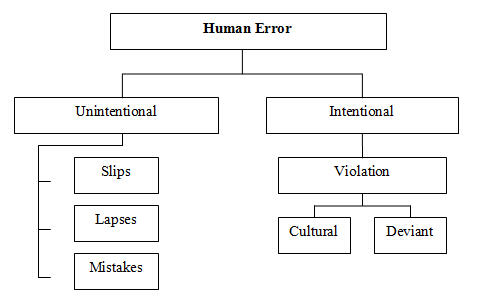
Definitions:
Slip/Lapse: An unintentional error where a loss of attention causes the incorrect thing to happen or the correct thing to fail to happen.
Mistake: An unintentional error where the person did not have the capability to do the correct thing at the time.
Cultural Violation: An intentional error by a person because it is perceived by that person that it is the expected action in their work group.
Deviant Violation: An intentional error by a person even though they know it is not the approved/tolerated action.
The decision tree will assist leaders to make sure that human error is addressed in a clear and consistent manner. The decision tree should only be used for one action at a time. In cases where there are multiple actions that led to the event, each action should be treated separately. There may be an incident where an employee does not follow an isolation procedure, is not wearing the correct PPE and does not follow a broader safe-working procedure/job safety analysis.
Each of these acts should be treated separately as each one may have different underlying causes and lead to a different outcome. The decision-maker will then need to exercise judgement to determine an appropriate course of action including mitigating circumstances and previous safety breaches.
Where an investigation finds that human error contributed to the incident, the just culture tree shall be applied to decide to ensure the behaviour is corrected; separate from the investigations. Note we are talking about the human error not the consequence e.g. failure to call up versus excavator hitting the dozer.
Questions to be asked are:
● Was the error intentional or unintentional?
○ Was a safe operating procedure violated? If yes, were the procedures adequate and available?
○ Could an equally competent person make the same mistake? If no, were the deficiencies in training, experience or selection?
○ Is there history of unsafe acts in the individual or group?
● For unintentional violations, was the error due to a mistake, slip or lapse and has the individual made similar errors before?
● For intentional violations, was the error due to cultural violation (generally not complied with) or was it due to a deviant violation (an individual deliberately chose not to comply with a requirement).
Intentional violations are more unacceptable than unintentional violations, with deviant violations being totally unacceptable and not tolerable. Cultural violation are no longer cultural when a line is drawn in the sand and it is clear the behaviour is no longer acceptable.
Where an individual makes repeated unintentional mistakes, slips or lapses the behaviour will be deemed unacceptable.
128 The Just Culture Decision Tree assumes that prior to the commencement of the filling out of the Just Culture form, an investigation has been carried out.
129 On 30 April 2012, Mr Stewart and Ms Hyatt met with Mr Meacle and Mr Crompton for the purpose of giving them an opportunity to provide any other evidence, and/or supporting affidavits in light of the allegations made against Mr Meacle, and to go through the Just Culture Decision Tree.
130 Mr Stewart worked through steps one to four of the Just Culture Decision Tree and Ms Hyatt filled out the associated form as they went along.
131 The details of the incident were:
Brendan approached an employee driving into Norwich Park Mine and called him a “scab cunt” and raised both middle fingers.
132 Mr Stewart reached the conclusion that the breach, of the Workplace Conduct Policy and the Code of Business Conduct, was a deviant rather than cultural breach, and was deliberate, not an accident.
133 Mr Stewart said either he or Ms Hyatt asked Mr Meacle and Mr Crompton whether they had any other supporting documents that they wished him to consider.
134 Ms Hyatt then asked Mr Meacle and Mr Crompton to leave the room. Mr Stewart and Ms Hyatt discussed what the next step should be and concluded that a show cause letter should issue. Mr Stewart signed the letter, which had been prepared but not signed prior to the meeting, before Mr Meacle and Mr Crompton rejoined the meeting.
135 Mr Stewart explained to Mr Meacle that he considered the allegations serious enough to issue a show cause letter, which he handed to Mr Meacle at the same time telling Mr Meacle that termination was an option available to him.
136 The show cause letter stated:
I refer to the investigation to the following allegations against you under BMA’s Workplace Conduct Policy:
That on 31 March 2012 at approximately 6:30pm, you were present on the picket line at the entrance to Norwich Park Mine. While you were standing in front of the water barriers you behaved in the following manner:
● You yelled at a colleague as he came to work that he was a “scab cunt”; and
● You displayed inappropriate behaviour to this colleague by “giving him the finger with both hands” while yelling obscenities.
The complaint if upheld, is viewed as serious misconduct as it breaches:
● BMA’s Workplace Conduct Policy; and
● BHP Billiton’s Code of Business Conduct.
Specifically, page 3 of the Workplace Conduct Policy states that:
“Each employee is expected to treat others in the workplace (at work and outside of work) with courtesy, dignity and respect.”
The policy details that certain forms of behaviour will not be tolerated and this includes, discrimination, harassment and victimisation of an individual on the grounds that he has chosen not be a member of the union.
BHP Billiton’s Code of Business Conduct states that the company’s Charter Values includes Respect and Integrity. These values are further expanded within the policy and p22 states that harassment will not be tolerated.
The Investigation
7 April 2012
You were stood aside on full pay pending an investigation into allegations that you had behaved inappropriately on the picket line. At this meeting (with your union representative Warren Deeth) you stated that there were lots of people on the picket line and the word scab was probably said, but not by you.
17 April 2012
As part of the investigation you attended a meeting with your union representative Brad Crompton, Kirsty Taylor, Investigator and Travis Perry where you were given a letter detailing the allegations against you.
Having read the letter you stated that you “were not sure how scab is discriminatory because it is in the dictionary. The meaning of the word is: people who cross the picket and come in during a strike, so how was the use of the word discriminatory if it was said at a picket.”
You then advised that you were not on the picket line on 31 March 2012. Furthermore you stated that the timing of the allegation was off as at that time of the day and night there would usually be an executive address to the crowd. You advised if you were there you would have been addressing the crowd.
19 April 2012
You responded in writing to the above allegations. I note that you do now admit that you were on the picket line on 31 March at around 6:30pm, despite previously denying that you were there.
At paragraph 20 you state that you were present when a white land cruiser ute travelled through the protest line just after 6:30pm. You admit that you yelled out words to the following effect: “Go Home,” but you deny using the word “scab” or “scab cunt”.
The white land cruiser was being driven by the colleague who it is alleged you behaved inappropriately towards.
Outcome of Investigation
As a result of our investigation and after careful consideration of BMA’s Guideline to Fair Play Policy and the Just Culture Decision Tree, I have formed the opinion that the alleged breaches are substantiated. This conduct is viewed as a serious matter and I find there are sufficient grounds to terminate your employment. However before taking this step we wish to invite you to provide any factors we should consider as to why your employment should not be terminated.
You are required to provide your written response to me by 9am on Wednesday 2 May 2012. On receipt of your response, I will consider your response and inform you of the decision in relation to the outcome. If I do not receive a response within the time frame, a final decision regarding your employment will be taken on the basis of the material available to the company.
I wish to again extend to you the offer of any assistance you may require regarding this matter and also remind you that BMA’s Employee Assistance Program (EAP) is available in case you need it. They can be contacted on 1800 056 076 and this is a free service.
137 Ms Hyatt said that during the meeting Mr Crompton kept interrupting the process, and claimed that false allegations had been made against Mr Meacle. She said Mr Crompton also said that he was of the opinion that they had not completed a thorough investigation as they had not interviewed anyone else.
138 After Mr Meacle had been given the show cause letter he asked if his employment would be terminated at 9.00am on Wednesday. Ms Hyatt said that would not occur because no final decision had been made in relation to his employment. She said that Mr Stewart would consider the information after 9.00am on Wednesday and make a decision.
139 Mr Crompton said that he would send an email through within a half an hour and that he wanted to book some time with Mr Stewart the next day to provide the additional information. Mr Crompton said that he had further statements, including his own, but that he wanted to check them through his legal team prior to providing them.
140 Following the meeting, Mr Stewart informed Mr Jon Evans, Head of Production-Mining, of the decision to issue the show cause letter.
141 Mr Stewart, who is to make the further decision, said as yet no decision has been made as to what further steps should be taken in relation to Mr Meacle’s conduct. The purpose of the show cause letter was to try and establish whether there is any other evidence which would bear upon the allegations. Mr Stewart said that he will be required to inform Mr Evans of the decision at which he arrives.
142 Mr Stewart accepted in cross-examination that members of unions “get upset” where they think workers who should be on their side have gone over to the other side. However, he would not accept as a proposition that it is to be anticipated that unionists would call workers who had “gone over to the other side”, as it was put to him, “scabs”.
143 He said that BHP Coal had sought to reach an understanding with the SBU that the word “scab” would not be used, so that workers who come to work were not subject to abuse of that kind. Mr Stewart said, in his cross-examination, that BHP Coal’s sole purpose in that regard was to protect the employees from harassment at work, and that if workers breach workplace policies, then that would make them subject to disciplinary action.
144 He accepted that he had no formal part in the investigation into Mr Meacle’s conduct and his first involvement occurred on 30 April 2012 when he and Ms Hyatt met with Mr Meacle and Mr Crompton. He said he had read Ms Taylor’s report thoroughly before that meeting; he thought the report had been done in an effective and constructive manner; and he agreed with the body of the report. He reached the same conclusion as Ms Taylor that there were a number of inconsistencies in Mr Meacle’s statement.
145 He agreed in cross-examination that the show cause letter had been typed prior to the meeting with Mr Meacle and prior to the process of the Just Culture Decision Tree. He said that he made his decision to issue the show cause letter because he was of the opinion that Mr Meacle had harassed Mr Loader by using the expression “scab”.
146 His cross-examination concluded:
Was it your view that nothing short of termination of employment would send a message to the employees of BHP that BHP would not tolerate the use of the word “scab”? --- No, because I still hadn’t made a decision.
147 Mr Meacle remains an employee of BHP Coal.
148 Mr Stewart and Ms Hyatt, like Ms Taylor, said that Mr Meacle’s union membership, industrial activities and status as an officer of the CFMEU, did not influence their involvement in the investigation or the decision to have Mr Stewart issue a show cause letter.
149 Although no final decision has been made, BHP Coal accepts that the show cause letter amounts to adverse action within the meaning of s 342 of the FWA.
The Witnesses
150 Apart from Ms Carly Barnard, solicitor for the CFMEU, the witnesses all gave their evidence-in-chief by way of affidavit and were cross-examined in relation to the contents of their affidavits. Ms Barnard was involved in preparing Mr Meacle’s statement, which, as I have said, was misleadingly dated 11 April 2012. She gave oral evidence at the trial, and identified the various versions of Mr Meacle’s statement, including those versions created after the meeting held on 17 April 2012 at the Dysart town office between Ms Taylor and Mr Perry, and Mr Meacle and Mr Crompton.
151 Four witnesses gave evidence in relation to the events of 31 March 2012 at the picket line: Mr Meacle, Mr Loader, Mr Crompton and Mr Madden.
152 The evidence of Mr Loader and Mr Meacle cannot be reconciled. One of them is not telling the truth.
153 Mr Meacle was uncomfortable in giving evidence. Mr Loader was straightforward. Mr Crompton was wary and defensive when the cross-examination commenced, but became more open as the cross-examination continued. Mr Madden gave his evidence straightforwardly.
154 The question as to who is telling the truth, however, cannot be determined by reference to the demeanour of any of the witnesses and must be determined by reference to the evidence as a whole.
155 Mr Perry insisted on calling Mr Friend SC, counsel for the CFMEU, “mate” in answer to Mr Friend’s questions. Whilst that was irritating, it is not a factor to be taken into account in the assessment of his evidence.
156 The rest of the witnesses were unremarkable and gave their evidence straightforwardly. In particular, I had no reason to doubt the reliability or credibility of the evidence of Ms Taylor, Ms Hyatt or Mr Stewart. I accept those three witnesses’ evidence.
The Issues
157 Both parties have contended that there are two factual issues to be resolved: first, whether Mr Meacle committed the acts that Mr Loader has alleged; and secondly, whether BHP Coal took the action requiring Mr Meacle to show cause for reasons which did not include any of the proscribed reasons.
158 In his written opening, the CFMEU’s counsel contended:
27. Whether or not Mr Loader’s complaint is well-founded the action alleged – the expression of opposition to strikebreakers – was industrial activity of the relevant kind. That gives rise to an issue concerning the intersection of the employer’s norms of behaviour and the right to engage in industrial activity. It also raises the question of whether the threat to dismiss was in all the circumstances disproportionate to the allegations acted on, and if so whether part of the reason for that was the industrial activity.
28. The applicant’s case is that the respondent did act for an impugned reason in either or both of those ways.
29. Further, the respondent will also have contravened s346 if it used the complaint as a pretext to take action against Mr Meacle because of his industrial activity generally. That is, if the respondent investigated with a mindset against Mr Meacle because of is industrial activity and that played a part in the decision to threaten him with termination, that threat will have occurred “because” of his industrial activity.
30. The applicant’s case is that the threat was industrially motivated, that is it was carried out in the context of the industrial action and was a response to it. It was also disproportionate to the conduct alleged. Further, the investigation was flawed. It was carried out in a context where there was a desire to vindicate the employer’s industrial agenda.
159 In his closing submission, Mr Friend put the CFMEU’s case in two ways. First, he argued that the Court should not conclude, as Ms Taylor did and Mr Stewart agreed, that Mr Meacle had conducted himself in the way alleged by Mr Loader. He said if the Court concluded as the CFMEU contended, then the Court would infer that BHP Coal had done what it did through Mr Stewart “to control or limit industrial action”. In other words, Mr Friend put it that the adverse action in issuing the show cause letter was taken for an impugned reason. If, on the other hand, the Court concluded that Mr Meacle’s conduct was as alleged, that would not necessarily mean that Mr Stewart took the action for other than an impugned reason.
160 Mr Friend contended that:
27. Without resorting to categories such as conscious or unconscious motives it is possible to conclude that Mr Stewart was briefed with a superficial investigation of the allegations and that the evidence justifies an inference that he and the investigator, consistently with BHPs (sic) policy about the industrial action, were quick to find that the charges were true or likely to be true.
28. If that was brought about because of the respondents’ (sic) desire to control and limit the industrial activity of persons such as Mr Meacle then it has an industrial flavour.
29. As a matter of causation Mr Meacle was singled out because Mr Loader made the allegation against him. That circumstance having existed, the respondent took advantage of it and conducted an investigation which was skewed towards a finding of guilt.
161 In support of that contention, he said that Ms Taylor and Mr Stewart relied upon minor inconsistencies in Mr Meacle’s statement and ignored ambiguities and inconsistencies in Mr Loader’s statements. He said a full investigation was not carried out as persons who drove through the picket line at the time that Mr Loader did were not interviewed. He said the investigator did not take into account whether Mr Loader could have seen Mr Meacle given the lighting conditions at the time, and no consideration was given by Ms Taylor and Mr Stewart to the likelihood that Mr Loader could not have heard Mr Meacle given the evidence of loud music being played and other noise.
162 It was contended that because BHP Coal wants its employees to refuse to join in protected action and wants to limit or control the industrial activity of those who do join in protected action, the Court should find that an opportunity was created by the allegation made by Mr Loader, which allowed BHP Coal to reinforce its desire to impose a discipline on the picketers and, in those circumstances, the Court could not conclude that Mr Stewart did not take adverse action for an impugned reason.
The Legislation
163 Chapter 3 of the FWA is entitled “Rights and responsibilities of employees, employers, organisations etc.” The objects of Part 3-1, entitled “General protections”, are identified in s 336:
336 The objects of this Part are as follows:
(a) to protect workplace rights;
(b) to protect freedom of association by ensuring that persons are:
(i) free to become, or not become, members of industrial associations; and
(ii) free to be represented, or not represented, by industrial associations; and
(iii) free to participate, or not participate, in lawful industrial activities;
(c) to provide protection from workplace discrimination;
(d) to provide effective relief for persons who have been discriminated against, victimised or otherwise adversely affected as a result of contraventions of this Part.
164 Freedom of Association is addressed in Division 4 and, relevantly, s 346, which is relied upon by the CFMEU. It provides:
346 A person must not take adverse action against another person because the other person:
(a) is or is not, or was or was not, an officer or member of an industrial association; or
(b) engages, or has at any time engaged or proposed to engage, in industrial activity within the meaning of paragraph 347(a) or (b); or
(c) does not engage, or has at any time not engaged or proposed to not engage, in industrial activity within the meaning of paragraphs 347(c) to (g).
165 Adverse action is addressed in s 342, which relevantly provides:
Meaning of adverse action | ||
Item | Column 1 Adverse action is taken by … | Column 2 if … |
1 | an employer against an employee | the employer: (a) dismisses the employee; or (b) injures the employee in his or her employment; or (c) alters the position of the employee to the employee’s prejudice; or (d) discriminates between the employee and other employees of the employer. |
… | ||
7 | an industrial association, or an officer or member of an industrial association, against a person | the industrial association, or the officer or member of the industrial association: (a) organises or takes industrial action against the person; or (b) takes action that has the effect, directly or indirectly, of prejudicing the person in the person’s employment or prospective employment; or (c) if the person is an independent contractor — takes action that has the effect, directly or indirectly, of prejudicing the independent contractor in relation to a contract for services; or (d) if the person is a member of the association — imposes a penalty, forfeiture or disability of any kind on the member (other than in relation to money legally owed to the association by the member). |
166 During the hearing, Mr Friend abandoned any reliance on s 346(a) and instead relied solely on s 346(b).
167 Section 347 addresses the meaning of engaging in industrial activity. At the hearing, Mr Friend relied only upon, and limited the CFMEU’s claims of contraventions to, s 347(a) and s 347(b)(iii) and (v), which provide:
347 A person engages in industrial activity if the person:
(a) becomes or does not become or remains or ceases to be, an officer or member of an industrial association; or
(b) does, or does not:
(i) …
(ii) …
(iii) encourage, or participate in, a lawful activity organised or promoted by an industrial association; or
(iv) …
(v) represent or advance the views, claims or interests of an industrial association …
168 Sections 360 and 361 are also relevant and important. They provide:
360 For the purposes of this Part, a person takes action for a particular reason if the reasons for the action include that reason.
361(1) If:
(a) in an application in relation to a contravention of this Part, it is alleged that a person took, or is taking, action for a particular reason or with a particular intent; and
(b) taking that action for that reason or with that intent would constitute a contravention of this Part;
it is presumed, in proceedings arising from the application, that the action was, or is being, taken for that reason or with that intent, unless the person proves otherwise.
361(2) Subsection (1) does not apply in relation to orders for an interim injunction.
169 It was not disputed in this proceeding that the CFMEU had alleged in its application that BHP Coal took the adverse action for the reason that Mr Meacle is an officer of the CFMEU, or Mr Meacle encouraged or participated in a lawful activity organised by the CFMEU, or represented or advanced the views, claims or interests of the CFMEU.
170 It was also not disputed that if BHP Coal took the action for all or any of those reasons, then BHP Coal would have contravened s 346(b) of the FWA.
171 In those circumstances, the presumption in s 361 arises and BHP Coal has the onus of proving that it did not take the action for any of the reasons asserted.
172 Section 360 is also relevant if the adverse action was taken for more than one reason.
173 The trial of this proceeding took place after the decision of the Full Court of the Federal Court in Barclay v Board of Bendigo Regional Institute of Technical and Further Education (2011) 191 FCR 212; after the High Court had given special leave to appeal from that decision; after the hearing of the appeal in the High Court; but before the delivery by the High Court of its reasons for judgment for allowing the appeal: Board of Bendigo Regional Institute of Technical and Further Education v Barclay [2012] HCA 32.
174 Both parties tailored their case, as it were, to the Full Court of the Federal Court decision.
175 The CFMEU contended that if Mr Meacle did engage in the conduct alleged by Mr Loader then that conduct was still industrial conduct within the protection of the section, because there was nothing unlawful in anything that Mr Meacle did. The conduct was within the conduct that occurred at the picket under the auspices of the union and, although there is an agreement between BHP Coal and the CFMEU about appropriate conduct, the use of the word “scab” is not absolutely within that understanding.
176 The CFMEU contended that if Mr Meacle was involved in industrial activity within the protection of s 347 then, because Mr Stewart took the adverse action he did, BHP Coal contravened the FWA.
177 In the Board of Bendigo Regional Institute of Technical and Further Education v Barclay, Mr Barclay was an employee of the appellant (BRIT) and President of the BRIT Sub-Branch of the Australian Education Union (AEU).
178 In January 2010, BRIT was to undergo an audit to be conducted by the Victorian Registration and Qualifications Authority for the purpose of reaccrediting BRIT so that it could continue to offer each of its courses, confer relevant qualifications, and receive funding for that purpose. Auditors were due to attend BRIT on 16 and 17 February 2010.
179 Part of Mr Barclay’s role at BRIT was as a member of a team responsible for ensuring that the courses provided by BRIT remain accredited and was part of the unit which had the responsibility of overseeing the audit process.
180 During the period from late 2009 to mid January 2010, AEU members employed by BRIT spoke to Mr Barclay about incorrect documentation being prepared for the audit. The members who spoke to Mr Barclay told him that they did not want any formal action taken in relation to their complaints and they did not want their names disclosed to BRIT.
181 Mr Barclay also became aware of other complaints of the preparation of inaccurate information. On 29 January 2010, about two or three weeks before the audit was due to commence, Mr Barclay sent an email to all AEU members employed by BRIT exhorting them not to be part of any attempt to create false or fraudulent documentation or participate in those types of activities. He also invited the members who were subject to any pressure in relation to this kind of activity to contact the AEU and seek its support and advice.
182 Copies of the email were provided to senior managers within BRIT and were, in turn, provided to Dr Harvey, who was the Chief Executive Officer at BRIT. She was advised by the manager who provided her with the email that Mr Barclay had declined to provide the manager with the names of the members referred to in the email, who said they had witnessed or been asked to assist in producing false and fraudulent documents.
183 Dr Harvey invited Mr Barclay to meet with her. At that meeting she provided Mr Barclay with a letter asking him to show cause why he should not be subject to disciplinary action. Mr Barclay was suspended on full pay. He and the AEU brought a proceeding seeking both interlocutory and final relief for an injunction restraining BRIT from taking any further adverse action. It was accepted that the provision of the show cause letter amounted to BRIT taking adverse action.
184 Dr Harvey was called by BRIT to explain why she took the action she did in giving Mr Barclay a show cause letter. She said, and the trial judge accepted, that the independent audit which was to be undertaken was serious for BRIT. Mr Barclay’s email concerned her in that the allegations of fraudulent conduct were made without complaint being raised with her or any other member of senior management and the language used in the email was bound to cause distress to other members of the staff, and bring BRIT’s reputation into question and undermine staff confidence in that audit process. She was further concerned because Mr Barclay was employed in the unit responsible for overseeing the preparation for the audit process.
185 She said in her affidavit that she regarded his conduct as prima facie evidence of a breach of the code of conduct and his obligations as an employee. She said:
I made the decision to investigate Mr Barclay's conduct in sending the Email on the basis that he is an employee of [BRIT] who is required to adhere to policy and procedures that govern his employment, not because of his membership of or role in the AEU ...
I made the decision to suspend Mr Barclay because I was of the view that the allegations against him were serious and I was concerned that if Mr Barclay was not suspended he might cause further damage to the reputation of [BRIT] and of the staff [of BRIT].
186 She said she would have taken the same action if a person who was neither a member nor an officer of the AEU had engaged in the same conduct.
187 The trial judge accepted her evidence, finding that she had provided convincing and credible explanations of why she took the steps she did. In particular, he found that she did not act for any proscribed reason, but acted for the reasons which she gave.
188 The majority in the Full Court found that the relevant conduct involved Mr Barclay in his union capacity and not as an employee of BRIT, in that Mr Barclay was engaged in industrial activity within the meaning of s 347(b)(iii) and (v) by sending the email on 29 January 2010, and encouraging members of the AEU to contact the AEU for support and advice.
189 The majority reasoned that because Mr Barclay was engaged in industrial activity by sending the email and because Dr Harvey had taken adverse action against Mr Barclay for the sending of the email, the reasons why Dr Harvey had taken adverse action against Mr Barclay “included the fact that he was an officer of the AEU and the fact that he had engaged in industrial activity.” The majority therefore found that BRIT had contravened both s 346(a) and s 346(b) of the FWA.
190 In the High Court two joint judgments were delivered (French CJ and Crennan J, and Gummow and Hayne JJ). Justice Heydon delivered his own judgment.
191 The two joint judgments traced the history of this legislation beginning with the Conciliation and Arbitration Act 1904 (Cth), which was considered by the High Court in Pearce v W D Peacock & Co Ltd (1917) 23 CLR 199. In that case, Isaacs J said, at 205:
The provision casting the onus on the defendant employer means that the fact that the dismissed employee was a member of an organization must not enter in any way into the reason of the defendant, if he desires exculpation.
192 The joint judgments recognised that that approach was rejected in General Motors-Holden’s Pty Ltd v Bowling (1977) 51 ALJR 235. In that case, Mason J said at 241:
The protection of trade unions and their representatives from discrimination and victimization by employers does not require an interpretation as extreme as that favoured by Isaacs J. It would unduly and unfairly inhibit the dismissal of a union representative in circumstances where other employees would be dismissed and thereby confer on the union representative an advantage not enjoyed by other workers, to penalize a dismissal merely because the prohibited factor entered into the employer’s reasons for dismissal though it was not a substantial and operative factor in those reasons.
193 Chief Justice French and Crennan J said that the statutory presumption in s 361 raises the question “why was the adverse action taken”: at [44]. They said at [45]:
This question is one of fact, which must be answered in the light of all the facts established in the proceeding. Generally, it will be extremely difficult to displace the statutory presumption in s 361 if no direct testimony is given by the decision-maker acting on behalf of the employer. Direct evidence of the reason why a decision-maker took adverse action, which may include positive evidence that the action was not taken for a prohibited reason, may be unreliable because of other contradictory evidence given by the decision-maker or because other objective facts are proven which contradict the decision-maker's evidence. However, direct testimony from the decision-maker which is accepted as reliable is capable of discharging the burden upon an employer even though an employee may be an officer or member of an industrial association and engage in industrial activity.
(Footnotes omitted.)
194 They said at [60]-[63]:
First, it is erroneous to treat the onus imposed on an employer by s 361 as being made heavier (or rendered impossible to discharge) because an employee affected by adverse action happens to be an officer of an industrial association. Further, the history of the relevant legislative provisions reveals no reason why the onus must now be different if adverse action is taken while an employee engages in industrial activity – like a person who happens to be an officer of an industrial association, a person who happens to be engaged in industrial activity should not have an advantage not enjoyed by other workers.
Central to the respondents’ argument on this appeal was the contrary and incorrect view that Mr Barclay’s status as an officer of an industrial association engaged in lawful industrial activity at the time that Dr Harvey took adverse action against him meant that Mr Barclay’s union position and activities were inextricably entwined with the adverse action, and that Mr Barclay was therefore immune, and protected, from the adverse action. If accepted, such a position would destroy the balance between employers and employees central to the operation of s 361, a balance which Parliament has chosen to maintain irrespective of the fact that the protection in s 346(b) has a shorter history than the protection in s 346(a). That balance, once the reflex of criminal sanctions in the legislation, now reflects the serious nature of the civil penalty regime. Speaking more generally, that balance is a specific example of the balance of which Alfred Deakin spoke as being necessary for an effective conciliation and arbitration system.
Secondly, it is a related error to treat an employee’s union position and activity as necessarily being a factor which must have something to do with adverse action, or which can never be dissociated from adverse action. It is a misunderstanding of, and contrary to, Bowling to require that the establishment of the reason for adverse action must be entirely dissociated from an employee’s union position or activities. Such reasoning effectively institutes an interpretation of the relevant provisions indistinguishable from that of Isaacs J in Pearce, which was rejected in Bowling. The onus of proving that an employee’s union position and activity was not an operative factor in taking adverse action is to be discharged on the balance of probabilities in the light of all the established evidence.
Thirdly, it is appropriate for a decision-maker to give positive evidence comparing the position of the employee affected by the adverse action with that of an employee who has no union involvement.
195 They concluded that the findings of the trial judge, which were not challenged in the Full Court, meant that the appeal had to be allowed.
196 Gummow and Hayne JJ, in their separate joint-reasons, noted that s 346 was derived from s 9 of the Commonwealth Conciliation and Arbitration Act 1904 (Cth) (the 1904 Act), which itself was drawn from the Industrial Arbitration Act 1901 (NSW) (the NSW Act). Section 9 was considered by the High Court in Pearce v W D Peacock & Co Ltd (1917) 23 CLR 199 to which they referred and, in particular, Barton ACJ’s reasons at 203 and Isaacs J’s reasons at 205.
197 Isaacs J, in his dissenting judgment, said at 205:
[A]s I read that section, it is designed, among other things, to preserve organizations, so that the method selected by Parliament for settling disputes shall not be thwarted. The provision casting the onus on the defendant employer means that the fact that the dismissed employee was a member of an organization must not enter in any way into the reason of the defendant, if he desires exculpation. Otherwise he might add any other reason whatever to the membership of a union, and break down the whole structure of the Act, so far as he is concerned, as the defendant has, in fact, done in this case.
(Emphasis in original)
198 Their honours then traced the changes in the legislation and had regard to s 5 of the Conciliation and Arbitration Act 1904-1976 (Cth) (the 1976 Act). That section was considered by the High Court in General Motors Holden Pty Ltd v Bowling (1976) 51 ALJR 235; 12 ALR 605 where Mason J said:
[Section] 5(1) does not proscribe the circumstances which it lists as the sole or predominant reasons for dismissal. It is sufficient if the circumstance is a substantial and operative factor. And it does not cease to be such a factor because it is coupled with other circumstances or because regard is had to it in association with other circumstances not mentioned in the section.
Section 5(4) imposed the onus on the [employer] of establishing affirmatively that it was not actuated by the reason alleged in the charge. The consequence was that the [employee], in order to succeed, was not bound to adduce evidence that the [employer] was actuated by that reason, a matter peculiarly within the knowledge of the [employer]. The [employee] was entitled to succeed if the evidence was consistent with the hypothesis that the [employer] was so actuated and that hypothesis was not displaced by the [employer]. To hold that, despite the subsection, there is some requirement that the prosecutor brings evidence of this fact is to make an implication which, in my view, is unwarranted and which is at variance with the plain purpose of the provision in throwing on to the [employer] the onus of proving that which lies peculiarly within his own knowledge.
(Emphasis in original)
199 Justices Gummow and Hayne said at [100]-[101]:
The application of s 346 turns on the term “because”. This term is not defined. The term is not unique to s 346. It appears in s 340 (regarding workplace rights), s 351 (regarding discrimination), s 352 (regarding temporary absence in relation to illness or injury) and s 354 (regarding coverage by particular instruments, including provisions of the National Employment Standards).
The use in s 346(b) of the term “because” in the expression “because the other person engages ... in industrial activity”, invites attention to the reasons why the decision-maker so acted. Section 360 stipulates that, for the purposes of provisions including s 346, whilst there may be multiple reasons for a particular action “a person takes action for a particular reason if the reasons for the action include that reason”. These provisions presented an issue of fact for decision by the primary judge.
200 Justices Gummow and Hayne noted that Gibbs CJ had accepted the “substantial and operative factor” criterion adopted by Mason J. They then addressed the current legislation and said at [104]:
In light of the legislative history of s 346 and the intention of Parliament outlined above, the reasoning of Mason J in Bowling is to be applied to s 346. An employer contravenes s 346 if it can be said that engagement by the employee in an industrial activity comprised “a substantial and operative” reason, or reasons including the reason, for the employer’s action and that this action constitutes an “adverse action” within the meaning of s 342.
201 After discussing the facts, they said at [127]-[128]:
In determining an application under s 346 the Federal Court was to assess whether the engagement of an employee in an industrial activity was a “substantial and operative factor” as to constitute a “reason”, potentially amongst many reasons, for adverse action to be taken against that employee. In assessing the evidence led to discharge the onus upon the employer under s 361(1), the reliability and weight of such evidence was to be balanced against evidence adduced by the employee and the overall facts and circumstances of each case; but it was the reasons of the decision-maker at the time the adverse action was taken which was the focus of the inquiry.
Whilst it is true to say, as do the respondents, that there is a distinction between discharging the onus of proof and establishing that the reason for taking adverse action was not a proscribed reason, there is nothing to suggest that the conclusions drawn by the primary judge, and the findings and reasons upon which these were based, did not take this into consideration. As Lander J concluded, if the reasons for the conclusions and the facts for which they were formulated are not challenged, then the contravention of s 346 cannot be made out. This proposition should be accepted. To hold otherwise would be to endorse the view that the imposition of an onus of proof on the employer under s 361(1) creates an irrebuttable presumption at law in favour of the employee.
(Footnotes omitted.)
202 Justice Heydon identified and rejected Mr Barclay’s argument at paragraph [149]:
In this Court, the respondents contended that s 346 of the Act “is not confined to the subjective intent of the decision-maker”. They argued:
“The ‘real reason’ for the adverse action may comprise a multiplicity of reasons, some of them ‘subjective’ in the sense that they refer to an intention, belief or other state of mind of the actor and others of which are objective in the sense that they refer to extrinsically ascertainable facts which comprise the context in which the action was taken. However, the enquiry to ascertain the real reason or reasons is objective. The decision maker may or may not be in a position to give dispositive evidence of the real reasons for the adverse action”.
The respondent did not make it plain what precise meaning the words “objective enquiry” would have in this context. The language of the Act does not support the respondents’ submission. The international instruments to which Australia is party and on which the respondents relied do not support it either. Nor do the authorities to which the respondents referred. One of those authorities, for example, was Mason J’s judgment in General Motors-Holden’s Pty Ltd v Bowling, with which Stephen and Jacobs JJ concurred. In that case, his Honour was considering the purpose of an earlier version of the Act. His Honour held that its purpose was to place on the defendant the onus of proving “that which lies peculiarly within his own knowledge” (emphasis added).
(Footnotes omitted)
203 Where it is alleged that a person took, or is taking, action for a particular reason, or with a particular intent, which would constitute a contravention of the Part, s 361 raises a statutory presumption that the action was being taken for that reason, or with that intent, unless the employer proves otherwise. Section 360 provides that a person takes action for a particular reason if the reasons for the action include that reason.
204 Where a claim is made by an employee that a person (in this case the employer) has taken adverse action against the employee of the kind mentioned in s 342, s 361 throws upon the employer the obligation to establish, on the balance of probabilities, that the employer did not take the adverse action for a proscribed reason mentioned in s 346. The onus is thrown upon the employer because the employee cannot be expected to know what was in the employer’s mind when the employer took the action.
205 The inquiry must be as to the reason why the employer took adverse action against the employee.
206 The employer must establish to the Court’s satisfaction, on the balance of probabilities, that the decision-maker did not take the adverse action for a reason in s 346. If a proscribed reason in s 346 was a substantial and operative reason for taking the adverse action, then the employer will have contravened the section. If, however, the reasons for the employer taking adverse action did not include a proscribed reason in s 346, or the proscribed reason was not a substantial or operative reason, the employer will not have contravened the section.
207 If the employee is a member or an officer of a union, or if the employee was engaged in or proposed to engage in industrial activity of the kind mentioned in s 347, an employer may take adverse action against that employee so long as the adverse action is not taken for the reason, or the substantial and operative reason, that the employee is a member or officer of a union, or was engaged in or was proposing to engage in industrial activity.
208 The employer will not usually be able to displace the statutory presumption in s 361 without calling the decision-maker to identify the particular reason why the adverse action was taken.
209 The statutory presumption in s 361 does not make it harder for an employer to discharge the evidential burden thrown upon the employer, because the employee is a member or officer of a union, or because the employee was engaged in or was proposing to engage in industrial activity. That must be so because a claim of a contravention under s 346, putting aside s 346(c), will not arise unless the employee is a member or an officer of a union, or was engaged in or proposing to engage in industrial activity.
210 The question in any case is what was the real reason or reasons for the employer taking the adverse action. That is a question of fact, which will require the employer establishing to the Court’s satisfaction that it was not a proscribed reason or at least the proscribed reason was not a substantial or operative reason.
211 The employer will not discharge its burden unless the Court is prepared to accept the decision-maker’s evidence. The Court is not bound to accept a decision-maker who claims that the adverse action was taken for reasons that did not include a proscribed reason. That evidence will be given due weight and weighed against any other evidence that might contradict that evidence.
212 What is important is that the statutory presumption in s 361 is not given more authority than it deserves. The statutory presumption exists because it is assumed that in all cases of this kind the employer is in a position to state positively why the employer or the decision-maker took the adverse action.
213 That would ordinarily mean that the decision-maker must be called to give account of why the decision-maker did what was done. If the decision-maker says that the reason includes a non-proscribed reason and a proscribed reason, then the statutory presumption will not be displaced: s 360. If, on the other hand, the decision-maker says that the reason for taking the adverse action is not a proscribed reason, and if the Court accepts the decision-maker’s evidence in that regard, the statutory presumption will be displaced and the contravention will not have been established.
Findings
214 There is no dispute that there were about 30 or 40 members of the CFMEU behind the bollards at around 6.30pm on 31 March 2012. Those members had formed a picket line and they were there in particular at that time because the shift change for the workers at the Norwich Park mine was generally around 5.00pm to 6.00pm or thereabouts. Mr Loader had resigned from the CFMEU on 6 March 2012 for personal and financial reasons. When the picket line was formed on 27 March 2012, Mr Loader crossed that line and became, in the eyes of the unionists, a “scab”.
215 A “scab” is a derogatory term, which is uttered for the purpose of criticising and upsetting the person to whom it is directed.
216 Mr Crompton and Mr Meacle, and all of the others on the picket line, were aware that there were signs at the picket line referring to Mr Loader as a “scab”. Mr Crompton refused to take those signs down, notwithstanding that he knew those signs were calculated to disparage Mr Loader, because his membership had instructed him not to take the signs down.
217 I reject Mr Crompton’s evidence that the signs did not refer to Mr Loader. Indeed, later in cross-examination he contradicted that statement and he said that the signs with the words “loada shit” referred to Mr Loader.
218 The signs were maintained at the picket line to intimidate and embarrass Mr Loader for crossing the picket line.
219 Mr Crompton accepted that if Mr Loader had seen the signs he would have been upset.
220 The members of the picket line were there for the purpose of not only maintaining the picket line but also to yell at persons entering and emerging from the mine. As Mr Meacle accepted, the purpose of yelling at the cars as they drive past is for the drivers to hear what is being yelled.
221 It was contended by the CFMEU that Mr Loader’s account of the incident should not be accepted because of inconsistencies in his evidence. Although he said in his affidavit, which contained his evidence-in-chief, that the windows of his vehicles were down, it was put to him that he had previously told Ms Taylor that his windows were up. It was also put that he said that, although it was 6.30pm, he was driving without lights, which could not be right having regard to the time of sunset. It was also put that he said there was no music, when the independent Verifact log of the security guards and other witnesses said there was.
222 He also said, which was apparently evidence of his unreliability, that he could hear over all the noise and the banging on the water barriers. It is also contended that his evidence should be rejected because it is improbable that he would have been able to identify Mr Meacle in the available light and to hear what Mr Meacle said.
223 There is nothing in the last point. There is no doubt that Mr Meacle was present and the fact that Mr Loader could identify him, as he said he could, rather indicates that the light was better than the CFMEU has contended.
224 The purpose of yelling out to the cars was to have the drivers of the car hear what was said. Whether Mr Loader’s windows were up or down, and whether there was music and other noise, Mr Meacle and his fellow unionists were yelling with the intent of having Mr Loader hear what they said.
225 It seems to me not unremarkable that Mr Loader said he could hear what was said.
226 As to Mr Meacle’s action, there is no reason to think, notwithstanding the complaint about the state of the light, that Mr Loader did not see Mr Meacle do what he said he did.
227 I accept Mr Loader’s evidence.
228 Mr Loader complained within a half an hour after he drove out of the mine to Mr Citadella that Mr Meacle, who he knew, had called him a “scab cunt” and had given him the finger with both hands.
229 There was no reason for Mr Loader to invent that happening. It was not suggested that he was on unfriendly terms with Mr Meacle or any of the other unionists. He did not profit by making the complaint. One would suspect, having made the complaint, he has become even less popular with his fellow workers than he was.
230 On the other hand, the use of the word “scab” by a unionist on the picket line would not be surprising having regard to the signs, which were at the picket line, accusing Mr Loader of being a “scab”. It is more likely, in my opinion, that the unionists would have vocalised that expression than not.
231 There is one aspect of Mr Meacle’s statement dated 11 April 2012 that is especially troubling. In paragraph 20 of that statement, he identified a white Landcruiser ute which he said he yelled at and used the expression “go home”. The fact that he is able to remember the particular car that Mr Loader was driving is remarkable unless he can remember an incident.
232 I reject the CFMEU’s witnesses’ claims that they were yelling out “go home” or “slow down”. They are such unlikely expressions to be used against someone who has crossed a picket line as to be capable of being rejected out of hand.
233 I find that Mr Meacle said and did what Mr Loader claims, and he did so for the purpose of humiliating and harassing Mr Loader, because Mr Loader had resigned from the union and crossed the picket line. It follows therefore, in my opinion, that Ms Taylor was right to arrive at her conclusion in her investigation that Mr Meacle had done what Mr Loader had claimed he had done. Mr Stewart was also right to accept that recommendation.
234 That conduct, which I find Mr Meacle guilty of, was inconsistent with the purpose of the picket line, which was not designed to intimidate or put people in fear. It is also inconsistent with the union policy of not involving individual identification of people as they go through the line. His conduct was outside the reason for the protest.
235 Mr Meacle knew what he said in the picket line and knew that what he said was in breach of the company’s Code of Conduct. It was conduct of which Mr Meacle was aware the union would disapprove.
236 Accepting Mr Loader’s evidence that Mr Meacle yelled out at him “scab cunt” and raised a finger on each hand and moved his hands up and down, supports the finding arrived at by Ms Taylor, which was relied upon by Mr Stewart at the time that he gave the show cause letter to Mr Meacle.
237 However, the CFMEU is correct to contend that even if it is found that Mr Meacle did what Mr Loader said he did, that does not relieve this Court of the inquiry as to the reason or reasons why Mr Stewart caused BHP Coal to take the adverse action.
238 If Mr Stewart caused BHP Coal to take the adverse action for a proscribed reason, then BHP Coal would have contravened the FWA.
239 The question, which still has to be answered, is why was the adverse action taken.
240 The three persons involved closely with the decision to issue the show cause letter were Ms Taylor, Ms Hyatt and Mr Stewart; although in the end result, the decision was Mr Stewart’s.
241 Each of those witnesses said that they were not influenced by Mr Meacle’s membership or status within the CFMEU, or by the industrial activities in which he was engaged, in making their decision.
242 Mr Stewart had been advised of the incident at the Norwich Park mine on 31 March 2012, in a telephone call from Mr Perry, on or around that day.
243 As I have said, Mr Stewart phoned his direct supervisor and General Manager at the time, Mr Lynn and told him that an employee may have been harassed on his way to work. He took the decision to have an investigation, with Mr Lynn, because of BHP’s obligation to ensure the safety and well-being of its employees. He thought there was a potential case of harassment and it should be investigated.
244 Mr Stewart did not become aware, as I have already said, of the specific details of Ms Taylor’s report until he read it. After he read the report, he took the decision to initiate the “Just Culture Decision Tree” to determine what action should be taken in response to what he viewed as a breach of company policy.
245 Mr Stewart said that Mr Meacle’s union position had no impact whatsoever on his decision to issue a show cause letter; it was simply irrelevant. His decision to issue the show cause letter was based on Mr Meacle’s offensive behaviour directed to Mr Loader.
246 In my opinion, Mr Stewart took the action that he did for the reasons that he said, which do not include a proscribed reason. He said, and he was not challenged, that he did not take the action for any proscribed reason. True it is, as the CFMEU’s counsel contended by saying that he was swearing to the issue, but the fact is that BHP Coal had to establish through Mr Stewart, that Mr Stewart did what he did for a reason or reasons other than a proscribed reason.
247 I accept Mr Stewart’s evidence that he did not issue the show cause letter because of Mr Meacle’s membership or position in the CFMEU, or because Mr Meacle was involved in any industrial activities.
248 I also accept Ms Taylor’s evidence that she was not influenced in the investigation she carried out in relation to Mr Meacle’s conduct, by reason of Mr Meacle’s membership or position within the union, or because Mr Meacle was involved in any industrial activities.
249 Although Ms Hyatt was present with Mr Stewart at the meeting on 30 April 2012 and assisted Mr Stewart, she was not the decision-maker, but I accept her evidence that she also was not influenced by Mr Meacle’s membership and position in the CFMEU and by the industrial activities in which he was engaged in any step she took in the investigation.
250 I accept that all three witnesses were truthful in that respect.
251 It follows that I find that the show cause letter was not given to Mr Meacle for any of the impugned reasons claimed by the CFMEU.
252 In my opinion, BHP Coal has displaced the statutory presumption and established that the adverse action was not taken for any impugned reason. Therefore, the proceeding must be dismissed because the CFMEU cannot establish that BHP Coal contravened s 346 of the FWA.
253 I assume that there will be no application for costs: s 570 of the FWA. However, if I am wrong about that, BHP Coal should write to my Associate within three days, stating the order sought and the grounds upon which the order is to be made.
I certify that the preceding two hundred and fifty-three (253) numbered paragraphs are a true copy of the Reasons for Judgment herein of the Honourable Justice Lander. |
Associate:


