FEDERAL COURT OF AUSTRALIA
Facton Ltd v Toast Sales Group Pty Ltd [2012] FCA 612
FEDERAL COURT OF AUSTRALIA
Facton Ltd v Toast Sales Group Pty Ltd [2012] FCA 612
CORRIGENDUM
1. In paragraph 10 of the Reasons for Judgment, in the third line, the word “has” should read “as”.
2. In paragraph 27 of the Reasons for Judgment, in the last line, the words “Sorrento and South Yarra” should read “South Yarra and Sorrento”.
I certify that the preceding two (2) numbered paragraphs are a true copy of the Corrigendum to the Reasons for Judgment herein of the Honourable Justice Middleton. |
Associate:
Dated: 22 June 2012
IN THE FEDERAL COURT OF AUSTRALIA | |
DATE OF ORDER: | |
WHERE MADE: |
THE COURT ORDERS THAT:
1. The parties confer and file and serve within 10 days agreed minutes of order, or failing agreement, written submissions in support of their respective positions.
Note: Entry of orders is dealt with in Rule 39.32 of the Federal Court Rules 2011.
VICTORIA DISTRICT REGISTRY | |
GENERAL DIVISION | VID 821 of 2011 |
BETWEEN: | FACTON LTD First Applicant G-STAR RAW CV Second Applicant G-STAR AUSTRALIA PTY LTD (ACN 084 011 852) Third Applicant STICHTING LITIGATION G-STAR INTERNATIONAL Fourth Applicant
|
AND: | TOAST SALES GROUP PTY LTD (ACN 139 709 694) Respondent
|
JUDGE: | MIDDLETON J |
DATE: | 19 JUNE 2012 |
PLACE: | MELBOURNE |
REASONS FOR JUDGMENT
introduction
1 This proceeding in the Fast Track List concerns allegations of infringement of the Trade Marks Act 1995 (Cth) (‘Trade Marks Act’), the Copyright Act 1968 (Cth) (‘Copyright Act’) as well as allegations of misleading or deceptive conduct under the Trade Practices Act 1974 (Cth) (‘Trade Practices Act’), and under the Australian Consumer Law in Sch 2 to the Competition and Consumer Act 2010 (Cth) (‘Australian Consumer Law’). The applicants primarily sought an account of profits in respect of the alleged infringements of the Trade Marks Act and Copyright Act, although declaratory and injunctive relief was also sought, including the delivery up of the infringing products and promotional material. Declaratory and injunctive relief was also sought in relation to the trade practices claims.
Background
2 For the most part, the facts in this proceeding are not in dispute. The applicants, (collectively ‘G-Star’) design, promote, manufacture, market, distribute, offer for sale and sell “G-Star” branded goods throughout the world. That brand is the subject of various registered trade marks and artistic works in which copyright is alleged to subsist.
3 The first applicant is the registered owner of the following trade marks from the filing dates set out in the table below:
Australian Trade Mark No. | Trade Mark | Class(es) | Filing date |
722849 | G-STAR | 3: (for soaps, perfumes and cosmetics amongst other things) 18: (for leathergoods amongst other things) 25: (for clothing, footwear and headgear) | 27 November 1996 |
722852 |
| 3: (for soaps, perfumes and cosmetics amongst other things) 18: (for leathergoods amongst other things) 25: (for clothing, footwear and headgear) | 27 November 1996 |
883618 |
| 25: (for clothing, footwear and headgear) | 24 July 2001 |
980112 |
| 18: (for leathergoods amongst other things) 25: (for clothing, footwear and headgear) 35: (for franchising services amongst other things) | 27 November 2003 |
980122 |
| 18: (for leathergoods amongst other things) 25: (for clothing, footwear and headgear) 35: (for franchising services amongst other things) | 27 November 2003 |
999346 |
| 9: (for spectacles and sunglasses amongst other things) 14: (for jewellery amongst other things) | 23 April 2004 |
999347 |
| 9: (for spectacles and sunglasses amongst other things) 14: (for jewellery amongst other things) | |
999348 |
| 9: (for spectacles and sunglasses amongst other things) 14: (for jewellery amongst other things) 35: (for franchising services amongst other things) | 23 April 2004 |
999349 |
| 9: (for spectacles and sunglasses amongst other things) 14: (for jewellery amongst other things) 35: (for franchising services amongst other things) | 23 April 2004 |
999350 | G-Star Raw Denim | 9: (for spectacles and sunglasses amongst other things) 14: (for jewellery amongst other things) 35: (for franchising services amongst other things) | 23 April 2004 |
999351 | G-STAR | 9: (for spectacles and sunglasses amongst other things) 14: (for jewellery amongst other things) 35: (for franchising services amongst other things) | 23 April 2004 |







4 I will refer to these marks collectively as ‘the G-Star Trade Marks’. From June 2002, the first applicant licensed the use of the G-Star Trade Marks to the fourth applicant, then known as G-Star International BV, throughout the world on an exclusive basis.
5 The second applicant is, relevantly, the owner of the copyright in the following artistic work:
 (‘the G-Star Copyright Work’).
6 That copyright work was originally owned by G-Star International BV.
7 Until 1 April 2011, the fourth applicant (then known as G-Star International BV) was the exclusive licensee of the G-Star Trade Marks, and owner of the Copyright Work. Pursuant to a business sale and purchase agreement, the fourth applicant sold its assets, including all of its intellectual property rights, to the second applicant. The second applicant therefore became the exclusive licensee of the G-Star Trade Marks throughout the world, and owner of the G-Star Copyright Work.
8 The third applicant, in turn, was authorised by the second applicant to use the G-Star Trade Marks and G-Star Copyright Work for the sale and promotion of G-Star products in Australia.
9 At trial, there was some dispute as to whether the second applicant could sue for copyright infringement, on the basis that the infringing conduct occurred prior to the assignment of the G-Star Copyright Work to the second applicant. Toast Sales submitted that any purported assignment of a chose in action to sue for the copyright infringement was ineffective at law. However, this issue was ultimately resolved by consent. G-Star was granted leave to add Stichting Litigation G-Star International (formerly known as G-Star International BV) as the fourth applicant to this proceeding. This resulted in the dispute as to whether the second applicant had any entitlement to the relief sought in relation to copyright infringement being of no practical import. The second and fourth applicants agreed between them that the Court did not need to determine which of them was entitled to an award of an account of profits in respect of the copyright infringement alleged. The only question that remains is one of costs, which can be disposed of without determining the somewhat complex issue of whether a chose in action for past infringement of copyright could be assigned. I will return to the question of costs later in these reasons.
10 The respondent, (‘Toast Sales’), conducted “pop-up” warehouse sales at which it has sold a range of clothing and accessories from different brands, including G-Star. These were sporadic sales events that occurred at various locations, such has hotel lobbies, conference rooms or vacant retail locations. Such sales were promoted via various means, and generally they were promoted as short term sales, under the auspices of Toast Sales, by reference to specific identified brands. Often, the sale was promoted by the generic reference to jeans or denim, and the price ranges were prominent.
11 The nature of the premises at which the pop up warehouse sales were conducted was temporary. For example, one of the sales was held in a warehouse next to a Bonds factory outlet, located in a side street in South Yarra. Jeans were displayed on trestle tables. There were various sizes available, though most were either very large or very small. Garments were also hung on coat hangers around the warehouse, and again, sizes were often very large or very small. Some of the swing tag labels had certain information, such as barcodes and original pricing, ripped off them. Clothing was offered on a one-off basis, as is commonly found in factory outlets and the like.
12 At certain of its pop up warehouse events, Toast Sales offered for sale and sold G-Star branded products which it purchased from:
(a) Denim Enterprises Pty Ltd (‘Denim Enterprises’), which is a company that, at all relevant times, operated G-Star Stores in Australia;
(b) Bagga Menswear, a store located in the United Kingdom that went into liquidation; and
(c) Attr@ttivo (which I find is the trade mark and trading name for Pantelis Avramidis & SIA OE (‘Pantelis’)) (‘Attr@ttivo’), a Greek company.
13 Toast Sales purchased the following G-Star clothing:
(a) 2,052 units at a cost of AUD112,860 from Denim Enterprises in September 2009;
(b) 431 units at a cost of GBP3,865.40 (approximately AUD7,000) from Bagga Menswear in August 2010;
(c) 6,751 units at a cost of EUR71,710.09 (approximately AUD101,662.93) from Attr@ttivo between December 2010 and April 2011.
14 It is not in dispute that the products sold were authentic G-Star products.
15 It is likewise not in dispute that Toast Sales used the following marks to market, promote, advertise, offer for sale and sell G-Star branded products:
(a)  (‘the G-Star Raw device’);
(b)  (‘the G-Star device’); and
(c) G STAR (‘the G Star word mark’).
(Collectively, ‘the alleged infringing marks’).
The issues
16 The following are the primary issues which the parties contended required determination by the Court:
(a) whether Toast Sales has used the G-Star Trade Marks as trade marks in relation to the retailing of goods or retail services;
(b) whether, in respect of any infringing use made by Toast Sales of the G-Star Trade Marks in promotional materials, that use falls within the defence in s 123 of the Trade Marks Act;
(c) alternatively, whether, in respect of any infringing use made by Toast Sales of the G-Star Trade Marks in promotional materials, that use falls within the defence in s 122(1)(b) of the Trade Marks Act;
(d) whether, in respect of the clothing imported from Attr@ttivo, the defence in s 123 of the Trade Marks Act applied to the sale of that clothing in Australia;
(e) whether any account of profits should be ordered in respect of any trade mark and copyright infringement; and
(f) whether the promotion of the G-Star brand in Toast Sales’ promotional materials is misleading or deceptive, or likely to mislead or deceive, or conveys a representation to consumers that the respondent, its product, or its promotional activities were G-Star’s and were authorised or approved by G-Star.
EVIDEnce
17 The following witnesses gave evidence by affidavit for G-Star:
(a) Mr Jonathan Ariel Feder, solicitor for G-Star, affirmed an affidavit dated 27 January 2012;
(b) Mr Adam Christopher Charles Williams, researcher, swore an affidavit dated 27 January 2012;
(c) Ms Christine Danos, solicitor for G-Star, swore an affidavit dated 27 January 2012;
(d) Mr Christian de Bil, general counsel for G-Star Raw CV, swore an affidavit dated 3 February 2012;
None of the witnesses for G-Star were cross-examined.
18 Mr Paul Detsis, sole director and company secretary of Toast Sales, swore an affidavit dated 6 March 2012. Mr Detsis was the only witness to give evidence for Toast Sales, and was the only witness in the proceeding to be cross-examined.
the facts
19 I have already canvassed the background facts to this dispute. However, a more detailed explanation of the facts is necessary to assess the merits of G-Star’s claims and Toast Sales’ defences.
20 In the period 1989 to 31 March 2011, the fourth applicant, then known as G-Star International BV, designed, promoted, marketed, advertised, distributed, offered for sale and sold around the world, clothing and clothing accessories branded with and by reference to the name “G-Star”, including the G-Star Trade Marks and the G-Star Copyright Work, including on its website located at domain name “www.g-star.com”. Since 1 April 2011, the second applicant has taken over these functions.
21 Toast Sales admitted that the relevant applicants had established a “substantial, exclusive and valuable reputation and goodwill” in Australia by reference to the G-Star Trade Marks and the G-Star Copyright Work. Similarly, Toast Sales admitted that G-Star’s business and goods have become widely and favourably known and identified by the general public in Australia by reference to the G-Star Trade Marks and Copyright Work.
22 Mr Detsis’ affidavit describes his retail background and the development of Toast Sales. From 2003, he ran his own business called The Emporium, which primarily sold high-end designer brands and ran clearance sales for local and international brands. Around 2004, The Emporium conducted a sale of “more casual” branded clothing, including G-Star, and another brand, Diesel. That stock was obtained from Ms Candice Hirons, who owned another store called D.inc. Mr Detsis approached Ms Hirons to see “whether she wanted to clear some product”. Ms Hirons supplied to Mr Detsis some G-Star and Diesel products.
23 In 2009, Mr Detsis decided that “the market was moving away from high end designer brands to more casual fashion brands”. Mr Detsis wound-down The Emporium and started a new business, Toast Sales, the focus of which was on more casual brands. He decided that the new business would operate as a “pop up” business, renting premises such as hotel lobbies, conference rooms or vacant retail locations for a limited period only, or even a single day to conduct the sales.
24 Around the same time, Mr Detsis was aware that Ms Hirons was running Denim Enterprises, which was managing a number of G-Star stores. Mr Detsis decided that G-Star would be a good brand to sell using the Toast Sales business model. He approached Ms Hirons to obtain any excess G-Star branded stock that she may have had. A meeting was set up for 25 August 2009. Mr Detsis, and Toast Sales’ Sales Manager, Ms Kate Solly attended as did Ms Hirons, and Mr Nick Hirons, whom Mr Detsis says he understood to be the two directors of Denim Enterprises.
25 According to Mr Detsis, from that time, until at least October 2010, it was his understanding that Denim Enterprises was part of the G-Star corporate group because it was the company that operated all the G-Star stores in Australia and New Zealand. Mr Detsis’ affidavit states that all of his discussions with the Hironses were “consistent with my previous understanding that their company represented the G-Star brand in Australia”. Mr Detsis agreed in cross-examination that he thought that Denim Enterprises might have owned, or been exclusively licensed to use, the G-Star Trade Marks and G-Star Copyright Work.
26 Initially, at least, Mr Detsis felt that he should seek permission from the Hironses as to his use of the G-Star logo in promotional materials for the pop up warehouse sales. He agreed in cross-examination that he was “very careful to ensure that [he] had approval” to use the G-Star logo. At the meeting in August 2009, Mr Detsis and Ms Solly informed the Hironses as to how Toast Sales intended to promote its pop up warehouse sales. Mr Detsis said he informed them that Toast Sales wanted to use the G-Star logo as part of its promotion of the sales. He recalled that the Hironses said that it “should be fine”.
27 A proposed sale schedule was forwarded by Mr Detsis to the Hironses, outlining proposed sales in Geelong, Frankston, Melbourne and Portsea over late 2009 and early 2010. Mr Detsis agreed that he sought to obtain approval to use specific trade marks in relation to these sales. The Frankston sale did not go ahead, and the Melbourne and Portsea sales were in fact held in Sorrento and South Yarra respectively.
28 According to Mr Detsis, Toast Sales ultimately selected 2,052 units from approximately 4,200 units that Denim Enterprises offered for sale. A contract was signed on or about 25 September 2009 for the sale of those units, and $112,860 was paid by Toast Sales to Denim Enterprises.
29 Just prior to Toast Sales’ first warehouse sale, Mr Detsis sought a G-Star logo from Mr Hirons to use on promotional materials. Mr Hirons provided Mr Detsis with the G-Star Raw device. Mr Detsis placed the G-Star Raw device on an image of the proposed website, and sent this image back to Mr Hirons. The device appears under “Current Brands” alongside brands including “Ksubi”, “Prada”, “Gucci” and “Bray”. According to Mr Detsis, Mr Hirons telephoned him back and told him that the use of the logo was approved.
30 Having obtained the G-Star stock from Denim Enterprises, Toast Sales commenced the first of a series of pop up warehouse sales, 12 of which are relevant to this proceeding. I will outline the way in which the alleged infringing marks were used in relation to these sales.
31 The first warehouse sale was held in Geelong, from 8 to 11 October 2009. G-Star branded jeans were sold alongside those from “Ksubi” and “Bray”. Various brands of sunglasses were also sold. Mr Detsis said that the “primary promotion” of the sale did not highlight or refer to specific brands, but promoted it as the sale of denim generally. In cross-examination, what constituted the “primary promotion” did not become entirely clear, though Mr Detsis said flyers, email and other electronic and digital media were used. It did not become clear which included the alleged infringing marks and which did not. Mr Detsis’ affidavit also states that a commercial was distributed via MMS, which did not refer to specific brands on sale.
32 Annexed to Mr Detsis’ affidavit is a copy of an email containing artwork for an advertisement to be used on the SalesGuide website (later re-named StyleZilla) and Toast Sales’ Facebook page. That artwork is annexed to these reasons at “Annexure A”. The G-Star Raw device appears in the bottom left-hand corner of the advertisement. I would consider it to be highly visible, though not the main focus of the advertisement, which is the text “DENIM SALE! SAVE UP TO 70% NOW ON! 4 DAYS ONLY! 1 MALOP STREET GEELONG OCTOBER 8-11TH TOASTSALES.COM”. It appears alongside a picture of a torso and pair of legs wearing jeans. The mark also appears with one other, being “Ksubi”, and followed by the words “and much more – hit the event…”. The words “TOAST SALES” appear in the top left-hand corner of the advertisement in a different font.
33 Mr Detsis also said that the “G-Star trade mark” was further used on the Toast Sales website and appeared on an email sent to promote the sale. By the “G-Star trade mark”, Mr Detsis presumably meant the G-Star Raw device, for which he sought consent from Denim Enterprises to use.
34 Mr Detsis agreed in cross-examination that he was hoping to take advantage of the reputation in the G-Star Raw brand in relation to retail services and goods, and through that reputation encourage consumers to come to the Geelong warehouse sale. By promoting well known “more casual” branded clothing, Mr Detsis wanted to draw customers to his sale location.
35 Toast Sales held a second pop up warehouse sale at the Como Hotel in South Yarra in October 2009. The same brands as the first warehouse sale were offered for sale. It was Mr Detsis’ recollection that the sale was only promoted by an email distribution list. He said that the emails would have included the “G-Star trade mark” at the end, as one of a number of brands. In cross-examination, however, he agreed that the layout of the promotion was similar to that in relation to the third warehouse sale (outlined below).
36 Toast Sales held another pop up warehouse sale at Como Hotel in South Yarra in December 2009. However, this was not one of the twelve warehouse sales at which G-Star stock was sold. Counsel for G-Star tendered an advertisement from the front page of the sports section of the newspaper the Age, dated 13 December 2009, on which the G-Star device is depicted alongside the words “CURRENT SEASON! JEANS $100”. The sale was to take place from 17 to 20 December, at the Como Hotel. The address for Toast Sales’ website is also given.
37 During cross-examination, Mr Detsis stated that he pulled the G-Star stock out of the proposed warehouse sale. Mr Detsis’ reason for doing so was that Mr Hirons had contacted him and said that Denim Enterprises had only approved one sale at the Como Hotel. Mr Detsis decided not to sell any G-Star stock at this event, as he was keen to preserve a relationship with Denim Enterprises. Mr Detsis said that he put a notice on Toast Sales’ Facebook page saying that G-Star stock was “sold out” for the purposes of that sale.
38 Mr Detsis agreed in cross-examination that, in using the G-Star brand in the advertisement, he was, in the words of Counsel for G-Star, “hoping, again, to garner the reputation that the G-Star brand had for retail services, to encourage or entice consumers to go to that sale…”.
39 G-Star branded stock was sold at a third warehouse sale conducted from 4 to 10 January 2010 at the Sorrento RSL. Again, Mr Detsis sought approval from Mr Hirons as to the artwork to be used in a promotional flyer. Mr Hirons replied in an email that the artwork was “no problem from [their] end”.
40 The flyer appears to have had two sides. On one side of the flyer, the G-Star device and a mark for “Ksubi” feature prominently at the head of the flyer. These are followed by the text “IT’S ON AGAIN!!! HOLIDAY SALE 7 DAYS ONLY!...” details of the location, dates, and payment methods follow. Under this are the words “SALE THIS IS A DIRECT TO PUBLIC SALE ONLY * NO VIP PRESALE AT THIS EVENT!!!!!” To the right-hand side of this is a map, with an arrow and accompanying text saying “TOAST SALES HERE! ONSITE PARKING AVAILABLE INFO PHONE: 03 9827 2800”. Below this, Toast Sales’ website is featured: “WWW.TOASTSALES.COM”. On the other side, the G-Star device and a “Ksubi” mark are featured, again prominently. Under the G-Star device is: “JEANS $100”. Under the Ksubi mark, items for sale are listed as “JEANS $100 SHORTS $50 SUNNIES $50”. On the right hand side of the flyer are two people wearing jeans. The words “SALE 4TH UNTIL SUNDAY 10TH JANUARY 2010 7 DAYS ONLY!” are along the base of the flyer. This side of the flyer features no reference to Toast Sales.
41 Mr Detsis again agreed in cross-examination that, by using the G-Star device, he was hoping to use or garner the reputation that G-Star had for “retail services and G-Star branded goods in particular”.
42 At around this time, Mr Detsis said he approached Denim Enterprises for more stock, via email and telephone. According to Mr Detsis, as time passed, he formed the view that Toast Sales was unlikely to be able to obtain further stock from Denim Enterprises. He said he then began to look for other sources of G-Star branded clothing.
43 From 26 to 28 March 2010, Toast Sales conducted a fourth warehouse sale at the University of Melbourne. This sale included G-Star products, which Denim Enterprises had supplied. Unlike in relation to previous sales, Mr Detsis did not seek permission from Denim Enterprises to sell the stock at this event, or use any G-Star artwork. However, the stock appeared to be part of that which he purchased in the original order of 2,052 units purchased from Denim Enterprises in September 2009.
44 To advertise the event, Mr Detsis said that posters were put up around the University campus. That poster is annexed to these reasons at “Annexure B”. That poster is simpler in design than the previous ones. The focus of the artwork is the words “DENIM SUPERSALE $69 JEANS & $99 JEANS!!”. Under this, about two-thirds of the way down the page is the G-Star device, a “Ksubi” mark, and a mark for “Elwood”. These marks are certainly noticeable, and, in my opinion, are designed to catch the addressee’s eye. Under these marks is the text “TWO DAYS ONLY!! UNION HOUSE” with further details of the location and dates. In the top right-hand corner are the words “ON NOW!!” and, in smaller writing: “HEAD UPSTAIRS!” with an arrow pointing upwards. Unlike previous promotional materials, the advertisement does not feature any reference to Toast Sales.
45 Mr Detsis agreed in cross-examination that he used the G-Star Copyright Work and the G-Star device in the artwork, again for the purpose of garnering the reputation of the G-Star logo and name in respect of retail services and G-Star goods to encourage or entice students to attend the sale.
46 On 21 and 22 May 2010, Toast Sales held a fifth warehouse sale at the Como Hotel. According to Mr Detsis, Ksubi was the main brand sold, but some G-Star stock was also sold. Again, it appears that this stock was derived from the original stock purchased from Denim Enterprises in September 2009. Annexed to Mr Detsis’ affidavit is an advertisement that was used to promote that sale. Mr Detsis believed that the advertisement would have been used on Toast Sales’ website, the Missy Confidential website, the SalesGuide website, and emailed to Toast Sales’ customer database. The main words on the advertisement are: “IT’S ON! KSUBI SALE JEANS $100”. The word “Ksubi” appears as a trade mark. Under this, in smaller words, is: “TOAST SALES”. There are also pictures of people wearing jeans to the right of the advertisement. Smaller text appears under this:
It’s ON!
Toast Sales is PROUD TO PRESENT the BIG ONE… KSUBI SALE!!!
Everyone has been asking about this since our first big KSUBI + G-Star Sale in Melbourne. Now get in on this…
2 Day Sale Only.
47 No other reference to G-Star was made in this advertisement.
48 The sixth warehouse sale took place on 8 October 2010 at the Como Hotel. By this time, Mr Detsis had located an alternative supplier of G-Star clothing. Bagga Menswear (a United Kingdom company that had gone into liquidation) sold 431 items of G-Star clothing to Toast Sales for GBP3,865.40 (AUD7,000). At the sixth warehouse sale, the Bagga Menswear stock was sold alongside unsold stock purchased from Denim Enterprises.
49 According to Mr Detsis, at the time of the sixth warehouse sale, he used the “G-Star Raw logo”, in relation to which he said:
It was my understanding at that time that Toast Sales was entitled to use the logo in promoting its sale of G-Star clothing since Denim Enterprises had authorised the use of the logo in relation to the sale of the clothing it had supplied, and also because Toast Sales was selling genuine G-Star clothing.
50 Annexed to Mr Detsis’ affidavit is a copy of draft artwork for the promotional materials for the sixth warehouse sale. That artwork is annexed to these reasons at “Annexure C”. It does not use a “G-Star Raw logo”, but the G-Star device. The advertisement has two main components. To the left is a “picture box”, on which coloured text appears alongside the G-Star device. In this picture box, it is stated that “IT’S ON!”, followed by a prominent use of the G-Star device. No other brands are mentioned. Then, in larger text, “SALE JEANS $100!” follows. Under this, in smaller text, is a “TOAST SALES” trade mark. To the right of this picture box is the second component of the advertisement, which is plain text outlining the details of the sale, including the following:
G-STAR $100 JEANS – 1 Day Only!
Current Season MEGASALE
Get your denim and fashion fix as Toast Sales Lands THE hottest current season stock from G-STAR! ... YES – 1 DAY ONLY.
This is a MENS G-STAR Sale Only!
SALE INCLUDES – Just Landed and ALL Current Season DENIM. TEE’S, SHIRTS, JACKETS, KNITS, BELTS, SHORTS, PLUS DESIGNER SUNNIES!
Not a member? Sign up now be be [sic] first to know about future Toast Sales www.toastsales.com.
51 Details of the location, payment methods, and Toast Sales’ website follow. It appears that the artwork was intended for the SalesGuide website.
52 Again, Mr Detsis agreed in cross-examination that, in using the G-Star device, Toast Sales was hoping to garner the reputation that G-Star had “in relation to retail services to encourage or entice consumers to come to this sale”.
53 This advertisement was reproduced on the Missy Confidential Website, and the StyleZilla website. According to Ms Danos’ affidavit, Missy Confidential is a fashion website which offers advertising and online shopping for a range of international and Australian fashion designers. It provides information on designer fashion sales in Australia. In addition to such information being available on its website, Missy Confidential sends weekly emails to subscribers which detail designer fashion sales in the subscriber’s capital city. The above advertisement was largely reproduced in an email and electronic newsletter sent by Missy Confidential to subscribers on 6 October 2010, though details of Toast Sales’ membership and website were omitted in these. The advertisement is one amongst many for clothing sales in the email and newsletter.
54 The advertisement proposed for the SalesGuide website and featured on the Missy Confidential website provided a link to Toast Sales’ website. Annexed to Ms Danos’ affidavit are screen shots of Toast Sales’ website taken on 6 October 2010. The words “TOAST SALES” feature prominently on the site. A band across the top of the homepage to the website features two people in the background, wearing jeans and other casual clothing. In the foreground are the words “TOAST SALES” and, in separate text-boxes, “DENIM & FASHION LABELS!”, “AND MORE! ON NOW!”. In between and beneath these textboxes are a number of brands, including “G-Star”, depicted in the form of the G-Star device, as well as “Ksubi”, “Elwood” and “Bray”. The website permits users to “Register Now” to be informed of Toast Sales’ events. The website also encourages users to join its Facebook “group”. Memberships are also said to be open. A strip near the bottom of the page entitled “Current Brands +” features a number of brands, and depicts the G-Star Raw device.
55 Also annexed to Ms Danos’ affidavit is a print-out of Toast Sales’ Facebook page as it was on 3 November 2010. On this page, a different advertisement is used to promote the sixth warehouse sale. Most prominently it states “TOAST SALES POP-UP FASHION SALES”. Under this, also prominent, is the G-Star device, and marks for “Ksubi”, “Elwood” and “Bray”. In the background is a female wearing denim jeans and a casual top. To the left-hand side of the page, in smaller plain text, are references to Toast Sales’ website, and how to join their “VIP membership”. Also in plain text below this is a list of “Current Brands”, which includes reference to the G-Star brand and its website: “GSTAR (Now $100) http://www.g-star.com”.
56 Shortly after the sixth warehouse sale, Toast Sales received a letter of demand dated 22 October 2010 from G-Star’s solicitors. This letter complained of the use and reproduction of certain G-Star Trade Marks and copyright works in relation to the 8 October 2010 sale. The letter demanded, inter alia, that Toast Sales and Mr Detsis cease to use, and forever refrain from reproducing these. Delivery up of promotional materials and removal of the trade marks and copyright works was similarly demanded.
57 In response to this, Mr Detsis stated that he arranged for the “G-Star Raw logo” to be removed from Toast Sales’ website. He stated that Toast Sales has not used that logo since, or any other “G-Star logo”. The alleged infringing marks and the G-Star Copyright Work were not used in promotional materials after this. G-Star does not allege infringement of the alleged infringing marks or the G-Star Copyright Work after the sixth warehouse sale.
58 Toast Sales obtained more G-Star products in late 2010 and early 2011. It purchased a total of EUR71,710.09 (approximately AUD101,662.93) from Attr@ttivo, a Greek company.
59 A seventh warehouse sale of G-Star products by Toast Sales was held in Sorrento from 26 December 2010 to 9 January 2011. Annexed to Mr Detsis’ affidavit is artwork that was used for a flyer to promote that sale. Two separate pages of artwork appear, presumably two sides of the one flyer. On the first page, a strip of colour runs across the top of the page listing a number of brands, including “G STAR” (with no hyphen). The words “HOLIDAY SALE 2 WEEKS ONLY!” feature most prominently on this artwork. To the right of the page is a map, with an arrow-type device and the text “TOAST SALES HERE! ONSITE PARKING AVAILABLE”. At the bottom of the map is Toast Sales’ website: “WWW.TOASTSALES.COM”. Text on the left-hand side of the flyer gives further details of the event, namely, location, time, and available payment methods. At the bottom of the page are the words “SALE THIS IS A DIRECT TO PUBLIC SALE ONLY. NO VIP PRESALE AT THIS EVENT!!!!!”.
60 The second page of the artwork does not feature reference to G-Star prominently. The focus of the advertisement is on “Elwood” and “Ksubi”. However, in the bottom left-hand corner of the advertisement is the text:
IT’S ON AGAIN!!! TOAST’S FAMOUS FASHIONS POPUP HOLIDAY SALE! WITH MALE & FEMALE DENIM FROM GSTAR * JLO * VERSACE * GALLIANO * NOLITA * JUST CAVALLI * PAIGE * ELWOOD * AND MUCH MORE…
61 Details of the location and dates are also given on this artwork. To the right of the work is a picture of two people in denim jeans. The only mention of “G-Star” on this page of the flyer is the use of the word “GSTAR”, with no hyphen or space.
62 An eighth warehouse sale took place on 17 and 18 February 2011, again at the Como Hotel in South Yarra. The main feature in this artwork is the words “IT’S ON! MEGASALE G STAR JEANS $100!”. Below this, in smaller text are the words “MENS AND WOMENS DENIM”. The text is segregated into boxes and circles. The circle contains the text “2 DAYS ONLY!”, while a square box next to it has written in it: “NOT A MEMBER YET? SIGNUP NOW AT TOASTSALES.COM”. In a box below this, the details of the event are given. The sale is said to include “All G STAR Mens and Womens Denim, Jackets, Knits, Tee’s, Shirts, Belts and Sunnies!”. The words “TOAST SALES” appear in the bottom right-hand corner of the artwork, are noticeable. Again, the reference to the brand “G-Star” is mentioned without a hyphen.
63 Mr Feder visited the eighth warehouse sale and purchased a number of G-Star branded products. Subsequently, the applicants’ solicitors sent a further letter of demand to Toast Sales’ solicitors, dated 28 April 2011. The letter stated that the applicants’ had identified that the products had originated with one of its international retailers in Greece (that is Pantelis, whose trading name was Attr@ttivo). The letter stated that the retailer had been restrained from distributing “G-Star” branded products to retailers outside its business, or retailers not authorised by G-Star.
64 Toast Sales held four more warehouse sales, all at the one address leased by Toast Sales, being 7 Claremont Street, South Yarra. The ninth warehouse sale took place from 10 to 11 June 2011 and then from 16 to 19 June 2011. The artwork used for this sale was very similar to that used for the eighth warehouse sale. Again, the most prominent words on the artwork are “IT’S ON! MEGASALE G STAR JEANS $100!”. In the same way as the previous advertisement, the sale is said to include “All G STAR Mens and Womens Denim…” and other clothing and accessories. In a box two-thirds of the way down the page are the words “SALE EXTENDED 16th TO 19th JUNE TOASTSALES.COM”. In the bottom right-hand corner are the words “TOAST SALES”.
65 Mr Feder’s affidavit details how he visited Toast Sales’ website and became a registered member of that site. As a member, he began to receive emails from “vip@toastsales.com” promoting Toast Sales’ warehouse sales. On 14 June 2011, Mr Feder received an email from that address promoting the ninth warehouse sale. The email promotion is materially the same as that described above.
66 A similar advertisement appeared on the website StyleZilla, which had two components. To the left was a picture box most prominently featuring the words “IT’S ON! MEGASALE SALE G STAR JEANS $69!”. The words “TOAST SALES” appear in the bottom right hard corner of the advertisement, as a trade mark. To the right of the picture box is plain text which largely repeats the information which was described in relation to the main artwork used for the sale, above.
67 Mr Feder visited the ninth warehouse sale, and purchased a number of items. Some of the products available had Greek writing on the stickers affixed to swing tags.
68 The tenth warehouse sale was conducted from 4 to 6 August 2011. Again the artwork is similar to that for the promotional materials for the eighth and ninth warehouse sales. The text “IT’S ON! MEGASALE G STAR JEANS $79” is the main feature of the advertisement. The reference to Toast Sales’ website is incorporated in the same way, though occurring under the words “CLEARANCE SALE 4th TO 6th AUGUST”. “TOAST SALES” is also featured in the bottom right-hand corner.
69 Subscribers to Toast Sales’ website membership received an email containing a similar advertisement on or about 3 August 2011.
70 A similar advertisement was sent to subscribers of Missy Confidential on 3 August 2011 to promote the tenth warehouse sale, and it likewise appeared on the Missy Confidential website. The most prominent words say “IT’S ON! MEGASALE G STAR JEANS $79!”. Under this, the words “TOAST SALES” appear. These captions appear in a picture box. To the right of the box is plain text detailing items on offer, the dates and location of the warehouse sale. There is a link to Toast Sales’ website to allow users to sign up to be a member to know about future sales events. The website advertisement also features a link to Toast Sales’ Facebook page. The advertisement is similar to that used on the Missy Confidential website for the sixth warehouse sale. The G-Star device is however, replaced with the text “G STAR”.
71 The eleventh warehouse sale was conducted from 14 to 17 December 2011, and again, used similar artwork for the promotional materials, with some minor differences. The most prominent words on the page are: “IT’S ON! SAMPLE SALE G STAR JEANS $69!”. Again, Toast Sales’ website is listed approximately two-thirds of the way down the page, and its trade mark appears in the bottom right-hand corner. The sale is said to include “Mens and Womens Tees, Shirts, Belts, Bags from $29!”. Other brands also appear to have been at the sale: “PLUS! Diesel Sunglasses, 55DSL from $100 and More!”. Details of the location of the sale are also given.
72 Ms Danos’ affidavit details that she also joined Toast Sales’ membership on their website. On 9 and 13 December 2011, Ms Danos received emails advertising the eleventh warehouse sale. Both emails received are materially the same, and both use similar artwork as that described above. A similar advertisement was sent to Ms Danos by email as a subscriber of the Missy Confidential newsletter on 13 December 2011 and also appeared on the Missy Confidential and StyleZilla websites.
73 The twelfth warehouse sale was conducted from 26 to 27 December 2011. The artwork, is again similar to that of the eighth, ninth, tenth and eleventh warehouse sales. The most prominent words are: “IT’S ON! CLEARANCE SALE G STAR JEANS $69!”, and under this in slightly smaller writing: “LIMITED SIZES, BE QUICK!”. Toast Sales’ website is again listed approximately two-thirds of the way down the page, and “TOAST SALES” features as a trade mark in the bottom left-hand corner.
74 Ms Danos’ affidavit details how she received emails from “vip@toastsales.com” advertising this sale on 22 December 2011. This email contained an advertisement saying “BOXING DAY CLEARANCE SALE G STAR JEANS $69!”. The content of the remainder of the advertisement is materially the same as the one described previously. A similar advertisement appeared on the Toast Sales’ Facebook page around this time.
75 In addition to the 12 warehouse sales, from February to July 2011, Toast Sales sold a limited amount of G-Star stock to online retailers in Australia, being Thread People Pty Ltd, Buyinvite and Oz Sale Singapore, Oz Sale New Zealand and Oz Sale Australia. Mr Detsis stated in his affidavit that he was not able to readily identify what items of stock were sourced from Denim Enterprises, Bagga Menswear or Attr@ttivo.
76 From the above facts, the following points can be noted in summary. From the first to the sixth warehouse sales (inclusive), Toast Sales used the alleged infringing marks and the Copyright Work on promotional materials. Mr Detsis was supplied the graphics for the G-Star Raw device from Mr Hirons in relation to the first sale, but also sought (and received) approval from Mr Hirons to use the G-Star device (without the word “Raw”) in relation to the third warehouse sale. Mr Detsis agreed in cross-examination that he sought approval from Denim Enterprises to use the relevant G-Star Trade Marks in promotional materials for the first, second and third warehouse sales. From the fourth warehouse sale onwards, Mr Detsis did not seek permission from any person or entity to use the alleged infringing marks.
77 It was also clear from his evidence that, at least initially, Mr Detsis thought he had an obligation to obtain Denim Enterprises’ permission to use and reproduce the G-Star Trade Marks and G-Star Copyright Work. Mr Detsis also deposed that until October 2010, he believed that Denim Enterprises was a member of the G-Star corporate group.
78 All promotional materials referred to “Toast Sales” in some form, except for the artwork used in relation to the fourth warehouse sale, held at the University of Melbourne. After receiving the first letter of demand in October 2010 after the sixth warehouse sale, Toast Sales stopped using the alleged infringing marks and reproducing the G-Star Copyright Work. Promotional materials then featured the words “GSTAR” or “G STAR”. G-Star did not allege that the G-Star Trade Marks or Copyright Work were infringed in relation to the sales after the sixth warehouse sale.
79 In relation to certain materials relating to the first, second, third, fourth and sixth warehouse sales (and the advertisement in the Age relating to the event in October 2009 at which no G-Star stock was sold), Mr Detsis agreed that, by using the G-Star Trade Marks and Copyright Work, Toast Sales was hoping to garner, or take advantage of the applicants’ reputation to encourage or entice consumers to attend the sales. Specifically, Mr Detsis agreed that the advantage sought was in relation to retail services, as well as G-Star branded goods.
80 The alleged trade mark infringement that occurred in relation to the seventh to twelfth warehouse sales was in respect of the sale of Attr@ttivo goods.
81 I now turn to consider each cause of action and the relevant defences.
trade mark infringement and defences
82 G-Star made the following allegations against Toast Sales:
(a) from the first to the sixth warehouse sales, Toast Sales used the alleged infringing marks on promotional materials for:
(i) the promotion and sale of goods; and
(ii) the promotion of retail services;
(b) from the seventh to the twelfth warehouse sales, Toast Sales used the G-Star Trade Marks on the G-Star branded goods sourced from Attr@ttivo without G-Star’s consent.
83 No allegations of infringement were made in respect of the promotional materials used for the seventh to twelfth warehouse sales.
84 It was uncontroversial that Toast Sales had “infringed” the G-Star Trade Marks in respect of the Attr@ttivo goods. My consideration of infringement therefore does not concern these goods.
Infringement
85 Infringement occurs if the infringing party satisfies a number of elements in s 120 of the Trade Marks Act. Section 120 provides, relevantly:
120 When is a registered trade mark infringed?
(1) A person infringes a registered trade mark if the person uses as a trade mark a sign that is substantially identical with, or deceptively similar to, the trade mark in relation to goods or services in respect of which the trade mark is registered.
…
(2) A person infringes a registered trade mark if the person uses as a trade mark a sign that is substantially identical with, or deceptively similar to, the trade mark in relation to:
(a) goods of the same description as that of goods (registered goods) in respect of which the trade mark is registered; or
(b) services that are closely related to registered goods; or
(c) services of the same description as that of services (registered services) in respect of which the trade mark is registered; or
(d) goods that are closely related to registered services.
However, the person is not taken to have infringed the trade mark if the person establishes that using the sign as the person did is not likely to deceive or cause confusion.
“Use” as a trade mark
86 The first critical element in determining infringement is therefore whether the “uses” of the alleged infringing marks were uses of the signs as trade marks. “Use of a trade mark” is defined in s 7 of the Act. Relevantly, use “in relation to” goods or services are defined respectively, in ss 7(4) and 7(5) of the Trade Marks Act. For goods, use of a trade mark can be “upon, or in physical or other relation to, the goods”. For services, the use can be “in physical or other relation to services”.
87 I observe at the outset that Toast Sales confirmed that it did not dispute that it used the alleged infringing marks as trade marks in its promotional materials to indicate the commercial origin of the G-Star goods that it was selling. That is, Toast Sales did not seek to rely upon the Champagne Heidsieck et Cie Monopole Société Anonyme v Buxton [1930] 1 Ch 330 line of authority, which was recently discussed by Gordon J in Lonsdale Australia Ltd v Paul’s Retail Pty Ltd [2012] FCA 584. However, Toast Sales did seek to rely by way of defence on s 123(1), to which I will later return.
88 Use of a sign “as a trade mark” was considered by the Full Court of this Court in Coca-Cola Co v All-Fect Distributors Ltd (1999) 96 FCR 107 at [19]:
… Use “as a trade mark” is use of the mark as a “badge of origin” in the sense that it indicates a connection in the course of trade between goods and the person who applies the mark to the goods… That is the concept embodied in the definition of “trade mark” in s 17 – a sign used to distinguish goods dealt with in the course of trade by a person from goods so dealt with by someone else.
(Citation omitted).
89 This statement was approved by the High Court in E & J Gallo Winery v Lion Nathan Australia Pty Ltd (2010) 241 CLR 144 at [43]. So the use has to be of a sign as a “badge of origin”. The relevant question is not whether the alleged infringer has used the sign so as to indicate origin in the registered owner of the mark, but whether the alleged infringer had used it so as to indicate origin in itself: Coca-Cola at [28],
90 “Use”, in the relevant sense, can be use of the trade mark on signage, advertising, stationery, business cards or promotional items: see Optical 88 Ltd v Optical 88 Pty Ltd (No 2) (2010) 89 IPR 457; [2010] FCA 1380 at [141]; affirmed by Optical 88 Ltd v Optical 88 Pty Ltd (2011) 197 FCR 67; see also Shell Co of Australia Ltd v Esso Standard Oil (Australia) Ltd (1963) 109 CLR 407 at 422 (Kitto J).
91 G-Star submitted that use of the alleged infringing marks in advertising and promotional materials constituted use of these marks as “badges of origin” to indicate a connection between the goods being advertised for sale and/or the retail services being offered and Toast Sales.
Substantially identical with or deceptively similar to
92 Having established that a person has used a trade mark, the next essential element for infringement is that the mark must be “substantially identical with, or deceptively similar to” the registered trade mark alleged to be infringed. The approach to determining substantial identity is different to determining deceptive similarity. As to substantial identity, I refer to what was said in Coca-Cola at [38] (and see also Shell at 414 per Windeyer J):
… In order to determine whether marks are substantially identical they should be compared side by side, their similarities and differences noted and the importance of these similarities and differences assessed having regard to the essential features of the registered mark and the total impression of resemblance or dissimilarity that emerges from the comparison.
93 The term “deceptively similar” is defined in s 10 of the Trade Marks Act:
For the purposes of this Act, a trade mark is taken to be deceptively similar to another trade mark if it so nearly resembles that other trade mark that it is likely to deceive or cause confusion.
94 Whether a trade mark is likely to deceive or cause confusion is assessed from the point of view of customers, or potential customers, which would result from “notional normal and fair use” of the marks: Coca-Cola at [41]. Customers may have imperfect recollection of the trade marks. Part of the inquiry, then, is directed to whether the general “idea” suggested by the mark (rather than the fine detail) leaves such an impression on the customer’s mind that it is not set apart from the registered trade mark and causes confusion: Coca-Cola at [42].
95 I think it is uncontroversial that the G-Star Raw device is substantially identical to Australian Registered Trade Mark Nos. 980112 and 999346. I also consider it to be uncontroversial that the G Star word mark (“G STAR”) used by Toast Sales is substantially identical to the Australian Registered Trade Mark Nos. 722849 and 999351. The only material difference between the G Star word mark and the registered marks was the hyphen present in the registered trade marks. Failing this, it would be deceptively similar, the idea conveyed by the word mark “G-STAR” being such that it is likely to be confused with the word mark “G STAR”.
96 G-Star also contended that the G-Star device used by Toast Sales was deceptively similar to Australian Registered Trade Mark Nos. 980112, 980122, 999346 and 999347. I agree. Looking at the major features of the registered trade marks, all contain a stylised “G”. Nos. 980112 and 999346 include the words “G-Star Raw”. The G-Star device, used by Toast Sales, includes the “G” (comprising the G-Star Copyright Work) and the word “G-Star” in the same font as in Trade Mark Nos. 980112 and 999346. The stylised “G”, in particular, leaves a strong impression. The addition (or omission) of words next to this would not, in my view, detract from the idea suggested by the mark, thus leaving consumers likely to be deceived or caused confusion. Nothing in the G-Star device used by the respondent sets it apart from any of the relevant registered trade marks.
Relationship with goods or services
97 Finally, the alleged infringing trade mark must have some relationship with the goods or services for which the trade mark is registered. Sections 120(1) and (2) contain different requirements for this relationship. In particular, G-Star submitted that there was a nexus between Australian Trade Mark Nos. 722849, 980112 and 980122, which were registered in respect of class 25 goods (which includes clothing, footwear and headgear), the alleged infringing marks and their use in relation to the sale and promotion of clothing, which are goods in the same class (see s 120(1) of the Trade Marks Act). This submission was uncontroversial.
98 G-Star also submitted that there was a nexus between these trade marks, the alleged infringing marks, and their use in relation to retailing services, being services closely related to class 25 goods, for which the trade marks are registered (see 120(2)(b) of the Trade Marks Act). This submission was, by contrast, in contention, and characterised by Counsel for G-Star to be the “real issue” in relation to the promotional material.
99 Counsel for G-Star submitted that Toast Sales’ primary use of the alleged infringing marks was in relation to retail services. To find that this use of the alleged infringing marks actually infringed the relevant G-Star Trade Marks requires G-Star to overcome two hurdles. The first is whether the marks were “used” in the relevant sense to indicate the commercial origin of the retail services that they were providing. The second is whether that use bore the necessary relationship to the uses for which the G-Star Trade Marks were registered.
100 I will deal with the second point first, as it can be dealt with briefly. The relevant G-Star Trade Marks are registered in respect of class 25 goods, being clothing, footwear and headgear. The retailing of such goods could be a “service… that is closely related to” these registered goods (see s 120(2)(b)). Counsel for G-Star relied on Colorado Group Ltd v Strandbags Group Pty Ltd (No 2) (2006) 69 IPR 281; [2006] FCA 880 at [27] in this regard:
… In my opinion, speaking generally it is only when retailing services consist of supplying the very goods in respect of which it is said the services are related that the services and goods will be closely related: see Warnaco US Inc v Estee Lauder Cosmetics Ltd (2000) 50 IPR 143; K Mart Corporation v Artline Furnishers Supermarkets Pty Ltd (1991) 23 IPR 149.
101 Whilst I would not endorse Finkelstein J’s narrow proposition (given the wide range of factual scenarios that may, on their own facts, fall within s 120(2)(b)), I do accept in this proceeding that the service of retailing clothing is closely related to the registered goods for which the trade marks are registered.
102 The relevant trade marks are also registered in respect of class 35 services, being, inter alia, “franchising services” (but not retailing services). Counsel for G-Star appeared to abandon any contention that retailing was a service of the same description as franchising.
103 I now turn to consider whether the alleged infringing marks were “used” as trade marks in relation to retail services. Advertisements used in relation to the first, second, third, fourth and sixth warehouse sales (as well as the advertisement in the Age dated 13 December 2009) were said by G-Star to constitute a use of the G-Star Trade Marks in relation to the service of retailing the G-Star goods rather than a use in relation to the goods themselves. The alleged infringing marks were said to be placed in such a fashion that they did not distinguish them from the true retailer, being Toast Sales.
104 A recurring theme in Counsel for G-Star’s cross-examination was whether Mr Detsis, in using the alleged infringing marks in the promotional material, was “hoping to use, or garner, the reputation that G-Star had for retail services…”. Mr Detsis agreed with this proposition specifically in relation to all of Toast Sales’ advertisements alleged by G-Star to promote “retailing services”, except for the advertisement used for the second warehouse sale. Mr Detsis, however, agreed that this advertisement was similar to that used for the third warehouse sale, and, presumably, Toast Sales would have sought the same effect.
105 Counsel for G-Star submitted that the promotional materials would lead customers to go to the warehouse sale not just because they could purchase G-Star branded clothing. The promotional materials also enticed customers to the warehouse sales on the basis that they would receive G-Star retailing services there.
106 Arguably, the strongest examples in this regard were the promotional materials used by Toast Sales to promote the fourth and sixth warehouse sales (these are reproduced at “Annexure B” and “Annexure C” respectively to these reasons). The promotion for the fourth sale, at the University of Melbourne, included no reference to Toast Sales. Rather, it was described as a “denim supersale” and reference was made to G-Star, Ksubi and Elwood. The sixth sale prominently featured the G-Star device, with words following, such that the main part of the text appeared to be “G-STAR SALE JEANS $100”.
107 To take the sixth warehouse sale promotion as an example, there are no less than five references to Toast Sales in that promotion. The opening sentence to the words to the right of the artwork is: “Get your denim and fashion fix as Toast Sales Lands THE hottest current season stock from G-STAR!...”. As Counsel for Toast Sales submitted, there are many references to the entity which is offering the G-Star products for sale. Appearing on the artwork is a “TOAST SALES” trade mark. I agree with Counsel for Toast Sales that this mark, and the way in which it is presented, tends to indicate that Toast Sales is the entity offering the retail services. G-Star goods are those which are offered for sale.
108 I think that the advertisements (with the exception of the one used for the fourth warehouse sale at the University of Melbourne) indicate that the goods sold were G-Star branded goods. Toast Sales’ role was to offer the goods for sale, and in doing so, provide the retail services. As Counsel for Toast Sales submitted, there are many trade marked goods, including clothing, which are sold through various retail outlets. Sometimes clothing passes through tightly controlled retail channels. However, for products such as G-Star clothing, they are often promoted for sale separately from the entity with which they originated (for example, at various department stores or general clothing boutiques). It does not matter whether a particular vendor or retail outlet is identified. In this instance, however, Toast Sales was – for the most part – identified as the vendor who provided the retail services, which, in turn, provided for customers a variety of clothing items and accessories.
109 The advertisement used for the fourth warehouse sale at the University of Melbourne contained no reference to Toast Sales. The detail of that advertisement is outlined above. However, the nature of the poster, considered in the context in which it would have been displayed, does not use the G-Star device to indicate that G-Star related retail services would be on offer. The nature of the poster is temporary. It advertises a transient sale. It was displayed, presumably, on the University campus (hence the reference to “head upstairs”). The venue itself suggests that the nature of the sale was temporary. Moreover, three brands’ trade marks are featured on the poster, only one of which is the G-Star device. This tends to indicate that the trade mark represents a product being offered for sale. It would not be a trade mark offering a specific retail service in relation to a particular brand, when two other (perhaps competing) brands are also present at the sale.
110 I arrive at this conclusion, despite Mr Detsis’ answers during cross-examination, which at a commercial level seemed logical and self-evident. However, having heard Mr Detsis’ answers in the context in which they were given, it was apparent that all he was agreeing to was that the sale of G-Star goods would entice customers to attend the relevant sales. Obviously, Toast Sales wanted to use well-known brands for this purpose, and would use the logos and names of well-known brands to attract the immediate attention of its target consumers. In answering as he did, Mr Detsis was just talking from a business point of view. I do not take his answers to be any form of admission, for instance, that the alleged infringing marks were used as trade marks in relation to retail services.
111 I conclude that Toast Sales’ use of the alleged infringing marks on the promotional material was not use of the marks in relation to retail services that are closely related to registered goods, being class 25 goods, for the purposes of s 120(2)(b) of the Trade Marks Act. I note that this conclusion means it is unnecessary to go on and consider the secondary consideration under s 120(2), which is whether Toast Sales established that by using the sign as it did, it was not likely to deceive or cause confusion.
Defences
112 The foregoing discussion leaves two issues open for me to consider:
(a) whether, in respect of the infringing use of the trade marks in the promotional materials in relation to G-Star goods, there is a defence; and
(b) whether, in respect of the infringing use of the trade marks on the Attr@ttivo branded goods, there is a defence.
113 I should flag at the outset that most of the parties’ attention on the defence provisions of the Trade Marks Act was focused on s 123, which is as follows:
123 Goods etc. to which registered trade mark has been applied by or with consent of registered owner
(1) In spite of section 120, a person who uses a registered trade mark in relation to goods that are similar to goods in respect of which the trade mark is registered does not infringe the trade mark if the trade mark has been applied to, or in relation to, the goods by, or with the consent of, the registered owner of the trade mark.
Note: For similar goods see subsection 14(1).
(2) In spite of section 120, a person who uses a registered trade mark in relation to services that are similar to services in respect of which the trade mark is registered does not infringe the trade mark if the trade mark has been applied in relation to the services by, or with the consent of, the registered owner of the trade mark.
Note: For similar services see subsection 14(2).
114 Further, both parties ultimately accepted that s 123 covered Toast Sales in respect of issue (a). This warrants further explanation below. Both parties similarly accepted that s 123 would not have provided Toast Sales a defence had I found that the trade marks were used in relation to retail services. Section 123(1) covers only the infringing use of a “registered trade mark in relation to goods that are similar to goods in respect of which the trade mark is registered…”. Section 123(2) relates, in a similar way, to services. So use of a trade mark in relation to retail services will not be covered when the trade mark is, in fact, registered in respect of goods.
Use of G-Star Trade Marks in relation to goods in the promotional materials
115 Toast Sales submitted that a plain reading of s 123(1) supports the view that the defence applies to the use of the alleged infringing marks in the promotional materials, such that:
(a) Toast Sales’ use was a use of the registered trade marks in relation to goods that are similar to goods in respect of which the trade marks are registered; and
(b) the relevant goods are goods to which the trade marks had been applied with the consent of the registered owner of the trade marks.
116 Such a construction was supported by the Full Court in Transport Tyre Sales Pty Ltd v Montana Tyres Rims and Tubes Pty Ltd (1999) 93 FCR 421. In that case, Montana had imported tyres from Singapore bearing OHTSU and FALKEN trade marks, which had been applied to (moulded into) those tyres by the then owner of the registered trade marks. The Court said at [96]:
[I]f promotion entailed, for example, advertisements in which the names “OHTSU” or “FALKEN” appeared, there would be a further “use” of the Trade Marks. That use would be comprised in the advertisements, whether printed or oral or visual. That would be a different use of the Trade Marks from the use entailed by the offering for sale or sale of the tyres in question with the moulding on them. Nevertheless, it is clearly a use of the Trade Marks in relation to the tyres in question.
(Original emphasis).
117 At trial, G-Star conceded that the Court is bound by the Full Court’s decision in Montana Tyres at [94]-[97], and in this respect, where a registered trade mark has been applied to goods with the consent of the trade mark owner, the use of that trade mark by another in advertising in relation to those goods will not be an infringement of the trade mark.
118 I should add that I question the extent to which s 123 applies to Toast Sales’ infringing use of the G-Star Trade Marks. The two trade marks used by Toast Sales in promotional materials which are identical to registered trade marks are the G-Star Raw device and G-Star word mark. Often, however, Toast Sales used the G-Star device, which, of itself, was not registered by G-Star. It can be said it was “substantially identical” or “deceptively similar” to the G-Star Trade Marks so as to constitute infringement. However, the use of the G-Star device, of itself, is not use of a “registered trade mark in relation to goods…” as required by s 123.
119 Counsel for G-Star, however, accepted at trial that s 123 applied across the board to Toast Sales’ use of the alleged infringing marks in the promotional materials in relation to goods. No distinction was made between the alleged infringing marks and the actual registered trade marks used on the promotional materials. The issue therefore did not arise for consideration, and both parties accepted that s 123 applied. The only issue that was raised concerned the correctness of the decision in Montana Tyres, which is a matter I need not determine in this proceeding. In Fast Track List proceedings, it is important for the parties to define the issues. Having then defined the issues, the parties must adhere to the parameters of the issues that they present to the Court for determination. Regarding the application of s 123, G-Star accepted at trial that s 123 provided a defence in respect of the use of the alleged infringing marks in the promotional materials in relation to goods.
Use of G-Star Trade Marks on Attr@ttivo goods
120 G-Star submitted that s 123 could not apply to excuse Toast Sales’ infringing use of the trade marks on the Attr@ttivo goods. G-Star’s position was that:
(a) they authorised the application of the G-Star Trade Marks to the relevant clothing;
(b) the clothing that Toast Sales purchased from Attr@ttivo was clothing that G-Star International BV supplied to Pantelis (Attr@ttivo); and
(c) there was a clause in the contract between G-Star International BV and Pantelis pursuant to which Pantelis agreed not to sub-distribute the products to retailers not authorised by G-Star.
121 In G-Star’s outline of contentions, the argument was developed as follows:
Accordingly, as long as the trade mark owner maintains some form of control over the goods, its consent to the application of its trade mark to those goods continues and may be withdrawn, expressly or implicitly... Once Pantelis took steps to [sub-distribute], Facton’s consent to the application of the G-Star Trade Marks to the G-Star Products was withdrawn, or, simply no longer existed.
122 In submissions, Counsel for G-Star expanded on this. Consent could be affected (that is, absent) in two ways. The first is as stated above: consent is ongoing and withdrawn when the condition on which it was given is breached. The second is that it could be conditional in the sense of a condition subsequent, so if the condition is not met, then consent never existed at all.
123 At trial, both parties relied on the decision of Sporte Leisure Pty Ltd v Paul’s International Pty Ltd (No 3) (2010) 88 IPR 242; [2010] FCA 1162 (Nicholas J). Since, the Full Court of this Court has handed down a decision on the appeal of this matter, dismissing the appeal: see Paul’s Retail Pty Ltd v Sporte Leisure Pty Ltd (2012) 95 IPR 151; [2012] FCAFC 51. I will come to the Full Court’s decision shortly. It is useful to first, however, outline the trial judge’s findings and how the parties interpreted these.
124 In Sporte Leisure at first instance, the respondent sourced clothing that bore a “Greg Norman” trade mark and a stylised shark trade mark from Sunsports (BVI) Ltd (‘Sunsports’), which had in turn purchased the clothing from BTB Marketing PVT Ltd (‘BTB’). BTB was licensed by Greg Norman Collection, Inc (‘GNC’) to use the relevant trade marks in the manufacture, marketing, sale and distribution of clothing, but it was only authorised to do this for clothing for sale within India, and it was only licensed to sell clothing within India. Sunsports ordered goods for supply to Pakistan, and the clothing was manufactured by BTB for the purpose of filling that order. Nicholas J held that the manufacture of the clothing was therefore not authorised, and there was no consent to the “application of” the trade marks to the clothing.
125 Justice Nicholas’ reasoning on this issue was clear – the Court considered whether there was consent to the application of the trade marks, that is, consent at the time of their manufacture. The Court did not base its reasoning simply on the fact that BTB was not authorised to supply the clothing outside of India. This seemed to be the premise upon which G-Star relied on Sporte Leisure at first instance. However, I agree with Counsel for Toast Sales’ interpretation of the decision, in that:
(a) Nicholas J made a specific finding that BTB manufactured the relevant clothing “specifically for the purpose of fulfilling Sunsports’ purchase order” (at [44]);
(b) Nicholas J reasoned as follows on the issue of consent at [78]:
Where a registered owner consents to another person applying the registered mark to goods on condition that the goods must not to be supplied outside a designated territory, the registered owner would not usually be regarded as having consented to the application of the mark to goods which the other person knows at the time he or she applies the mark are to be supplied by him or her outside the territory.
(Emphasis added);
(c) Nicholas J later made the following statement at [90] (after rejecting other arguments as to why the manufacture of the goods did not comply with the contract and hence fall outside the scope of the licence):
… I would have found that the second applicant consented to the application of its marks to those goods but for the fact that the goods were manufactured by BTB for sale outside India.
(Emphasis added).
126 That final statement also shows that had BTB manufactured the clothing for sale inside India, but subsequently sold it outside India, Nicholas J would have found that the trade marks had been applied with the requisite consent.
127 G-Star, in their outline of contentions, submitted that such a conclusion as to the construction of s 123 “cannot be the case”. They submitted that “BTB would still have been in breach of its agreement with GNC and the consent given to apply the marks was clearly conditional on those goods being sold only in India”.
128 Nicholas J’s reasoning contradicts that submission. Further, to the extent that G-Star submitted that a construction of s 123 that only considers the issue of consent at the time of the application of the trade mark would create some sort of practical loophole, Toast Sales submitted that:
(a) a court could always look behind any conduct that it considered to be a sham to find that, in fact, there was no consent to the application of the trade mark; and
(b) a trade mark owner that has sought to prevent parallel imports through its particular contractual arrangements could always impose further contractual restraints to prevent its contracting party from undermining its relevant intentions.
129 The Full Court affirmed Nicholas’ J’s decision. At [76]-[81], their Honours said:
76 The inescapable fact was that Mr Singh knew that the goods were to be supplied outside of India and this was contrary to the express terms of the licence. In those circumstances, GNC could not be said to have consented to the application of the Greg Norman marks to the goods.
77 It is not correct to describe the contractual position between BTB and GNC as one in which GNC gave conditional consent to the application of the marks so long as the goods were to be sold in the territory of India. Rather, it prohibited the application of the Greg Norman marks to goods which were destined for supply outside of India.
78 Contrary to the submissions advanced on behalf of Paul’s, we do not consider that the approach taken by the primary judge permitted the trade mark owner to enforce contractual restrictions in a way that was inconsistent with trade mark law.
79 In our opinion, the approach which his Honour took was consistent with that which was accepted by the Full Court in Montana Tyres at [79]-[80]. That was a case of parallel importing where consent to the application of the mark was given by the registered owner. The Court accepted that it was immaterial where the application of the mark occurs. What is required is consent by the owner to the application of the mark.
80 Section 20 of the Act gives the registered owner of a mark the exclusive right to use, or to authorise others to use, the trade mark. Whilst these rights are subject to some territorial limitation, as was explained in Montana Tyres at [78], a sign or mark may be applied to goods anywhere in the world. If the mark is used as a trade mark in Australia, the question becomes whether its application overseas was by or with the consent of the owner.
81 Here, unlike the situation which existed in Montana Tyres, the Greg Norman marks were applied without the consent of the registered owner. (Emphasis added).
130 Toast Sales submitted that there was nothing surprising about the outcome in Sporte Leisure at first instance. I agree, and similarly agree with respect to the outcome in the Full Court. No special principle emerges from the reasoning in those cases. The trade marks were clearly not applied to the clothing with the consent of the trade mark owner, and the scenario was directly analogous to a contracted manufacturer surreptitiously manufacturing excess stock for sale to a third party.
131 The proposition that was advanced by G-Star therefore needs to be assessed on first principles, as is it is not supported by Sporte Leisure.
132 A natural reading of the words used in s 123 suggests that the only time at which the issue of consent is to be assessed is the time of the application of the trade mark to goods (or services). The foregoing passages from Sporte Leisure (both at first instance and on appeal) support this.
133 It is also clear that the Full Court in Montana Tyres adopted the same construction, namely that consent only relates to the time of the application of the trade mark to the goods. At [80] the Court said:
When s 123 of the Act refers to a trade mark which “has been applied to, or in relation to” goods, or “has been applied in relation to” services, it is immaterial where the application occurs. It is equally immaterial to inquire as to the intention [as to where the goods would be sold] of the registered owner of the trade mark by whom or with whose consent the trade mark has been so applied.
134 In this case, there was evidence that G-Star admitted that the trade marks were affixed to the relevant products with the relevant applicant’s consent. So, in the words of s 123, the “trade mark [had] been applied to… the goods by, or with the consent of, the registered owner of the trade mark”. This sits in stark contrast to the facts recited by the Full Court in Sporte Leisure, where it was said that the “inescapable fact” was that the managing director of BTB knew the goods were to be supplied outside of India, and this was contrary to the express terms of the trade mark licence.
135 Section 123 therefore provides a complete defence to Toast Sales’ alleged infringing conduct in relation to the Attr@ttivo goods.
136 I should add that G-Star relied on European case law, which I found of no assistance. Reliance on the European case law was said to be based on some similarities in the wording of s 123 of the Trade Marks Act and Article 7(1) of the EU Trade Mark Directive. Article 7(1) has been interpreted as providing for “territorial exhaustion” or “regional exhaustion”, such that when goods are placed on the market within the European Union (‘EU’) or European Economic Area (‘EEA’), the trade mark owner’s rights have been exhausted (that is, after the first sale of goods within the EU and EEA, a trade mark holder cannot object to the further circulation of its products). However, if the goods featuring a trade mark were imported from outside of an EU or EEA member state, then the trade mark owner will have a claim for trade mark infringement, even if the trade mark was applied to these goods with the consent of the trade mark owner in an EU or EEA member state.
137 However, Counsel for Toast Sales submitted that the critical difference between Article 7(1) and s 123 is the words highlighted below:
The trade mark shall not entitle to the proprietor to prohibit its use in relation to goods which have been put on the market in the Community under that trade mark by the proprietor or with his consent.
(Emphasis added).
138 As the Applicants themselves acknowledge in their written submissions, the EU has adopted a regional exhaustion rule. That means that there is no defence allowing parallel importation of goods that were put on the market outside of the European Union.
139 The decision in Zino Davidoff SA v A & G Imports Ltd [2001] ECRI-8691, which was summarised in G-Star’s written submissions, dealt with a quite different aspect of consent to that in s 123. Each of the three related cases before the Court involved goods that had been first put on the market outside the Community with the trade mark owner’s consent, and which were subsequently imported into and put on the market in the Community by third parties. The original purchasers of the goods had agreed to distribute the products within a specified territory outside the EEA and to impose on other traders a prohibition on resale outside that territory. The issue for the Court was whether, when the goods were later put on the market in the Community by the third party, the consent of the trade mark owner could be implied so as to satisfy the requirement in Article 7(1), and, if so, whether such an implication arose on the facts.
140 The relevant contractual limitations that had been imposed on the original purchasers of the goods therefore became relevant, because they predated the relevant time for assessment of consent, namely the putting of the goods on the market in the Community. That is to be contrasted with the relevant time for assessment of consent in s 123, which is the application of the trade mark to the goods.
141 The decision in Zino Davidoff did not address what would be the analogous issue, which is withdrawal of consent after the goods had been put on the market in the Community.
142 Article 7(1) and s 123 are therefore not similar in their terms or operation. Section 123 is clear on its face: the relevant time to assess consent is at the time when the trade marks are applied to the relevant goods.
A note on the defence in s 122(1)(b)(i) of the Trade Marks Act
143 As Toast Sales’ case was put, s 122(1)(b)(i) of the Trade Marks Act was said to provide a defence in relation to any “use” in the promotional materials. That section states:
122 When is a trade mark not infringed?
(1) In spite of section 120, a person does not infringe a registered trade mark when:
…
(b) the person uses a sign in good faith to indicate:
(i) the kind, quality, quantity, intended purpose, value, geographical origin, or some other characteristic, of goods or services;
144 Counsel for Toast Sales conceded that if I were to find that Toast Sales used the trade marks in the promotional materials in relation to retail services, s 122(1)(b)(i) could not apply.
145 By the time of the hearing, G-Star had conceded that the Court was bound by Montana Tyres and so s 123 applied in respect of the use of the trade mark in promotional materials in relation to goods. As s 123 applies, it is unnecessary to consider whether s 122(1)(b)(i) applies.
account of profits
146 G-Star sought an account of profits in respect of the alleged trade mark infringements and copyright infringement. G-Star accepted that if an account of profits were awarded for trade mark infringement, it cannot also be awarded for copyright infringement which constitutes the same conduct.
147 I have found that Toast Sales is not liable for infringement of the G-Star Trade Marks, either because it did not infringe the trade marks, or s 123 applied as a defence. The issue of whether, and to what extent, an account of profits should be given for any trade mark infringement does not arise.
Account of profits for copyright infringement
148 Toast Sales accepted that it reproduced the G-Star Copyright Work, in particular on its website and on Missy Confidential materials. G-Star further alleged that there were reproductions on Toast Sales’ emails, the StyleZilla website and on promotional flyers. I do not think this was disputed by Toast Sales.
149 The award of an account of profits is provided for by s 115 of the Copyright Act. Relevantly:
115 Actions for infringement
...
(2) Subject to this Act, the relief that a court may grant in an action for an infringement of copyright includes an injunction (subject to such terms, if any, as the court thinks fit) and either damages or an account of profits.
(3) Where, in an action for infringement of copyright, it is established that an infringement was committed but it is also established that, at the time of the infringement, the defendant was not aware, and had no reasonable grounds for suspecting, that the act constituting the infringement was an infringement of the copyright, the plaintiff is not entitled under this section to any damages against the defendant in respect of the infringement, but is entitled to an account of profits in respect of the infringement whether any other relief is granted under this section or not.
150 An account of profits is a discretionary remedy: Facton Ltd v Rifai Fashions Pty Ltd (2012) 199 FCR 569 at [18] per Lander and Gordon JJ. This is made clear by the words “may” in s 115(2) and the nature of an account of profits originating in equity. The reference to a plaintiff’s “entitlement” to an account of profits in s 115(3) in context merely recognises an account of profits is still an available remedy in the circumstances of innocent infringement.
151 The general nature of an account of profits in relation to trade mark infringement was explained by Windeyer J in Colbeam Palmer Ltd v Stock Affiliates Pty Ltd (1968) 122 CLR 25 at 32:
The distinction between an account of profits and damages is that by the former the infringer is required to give up his ill-gotten gains to the party whose rights he has infringed: by the latter he is required to compensate the party wronged for the loss he has suffered. The two computations can obviously yield different results, for a plaintiff’s loss is not to be measured by the defendant’s gain, nor a defendant’s gain by the plaintiff’s loss. Either may be greater, or less, than the other…
This passage was quoted with approval by Lander and Gordon JJ in Rifai Fashions at [15], although not by reference to the “ill-gotten” nature of the gains, but by reference to the difference between the two computations referred to by Windeyer J.
152 However, there was a dispute about the relevance of innocence in granting an account of profits. In Colbeam Palmer, Windeyer J went on to explain (at 34-35):
… the account of profits retains the characteristics of its origins in the Court of Chancery. By [an award of an account of profits] a defendant is made to account for, and is then stripped of, profits he has made which it would be unconscionable that he retain. These are profits made by him dishonestly, that is by his knowingly infringing the rights of the proprietor of the trade mark. This explains why the liability to account is still not necessarily coextensive with acts of infringement. The account is limited to the profits made by the defendant during the period when he knew of the plaintiff’s rights. So it was in respect of common law trade marks. So it is in respect of registered trade marks… I think that it follows that it lies upon a plaintiff who seeks an account of profits to establish that profits were made by the defendant knowing that he was transgressing the plaintiff’s rights…
(Citations omitted, own emphasis).
153 In LED Builders Pty Ltd v Masterton Homes (NSW) Pty Ltd (1994) 54 FCR 196, Sheppard J said that the principles relating to an account of profits were governed by Colbeam Palmer at 34, including the latter passage cited above. That is, an account of profits retained the characteristics of its origin in the Court of Chancery. It was therefore limited to the profits made by the defendant during the period that the infringer knew of the plaintiff’s rights: LED Builders at 197-198.
154 Colbeam Palmer was a decision which related to s 65 of the now repealed Trade Marks Act 1955 (Cth). That provision was similar to s 115(2) of the Copyright Act, and gave the Court a broad discretion to grant an injunction, damages, or an account of profits in respect of infringing conduct.
155 Where the award of an account of profits arises in a statute, unadorned by additional text, the award would seem to retain the characteristics of its origin. Knowledge may very well be a requirement in this instance for an account of profits in relation to the infringement of intellectual property rights, as described by Windeyer J in Colbeam Palmer.
156 However, it is necessary to construe the equitable remedies provided for by statute in the context of that legislation. Section 115(2) does not sit on its own. Section 115(3) follows, which specifically contemplates that a party is entitled to an account of profits even when the infringing party is innocent. In that instance, however, the party whose copyright has been infringed is not entitled to damages. So an account of profits under the Copyright Act may be awarded where the defendant is innocent, or has no knowledge that they are transgressing the plaintiff’s rights.
157 For this reason, I do not think that all the statements in Colbeam Palmer apply to the interpretation of s 115(3). The operation of s 115(2) alongside s 115(3) and the question of innocent infringement was not specifically canvassed by Sheppard J when he said that Colbeam Palmer applied to the Copyright Act in LED Builders. His Honour really focussed upon the question of whether an account of profits was still a discretionary remedy when s 115(3) applied. The clear wording of s 115(3), allowing for an account of profits in the case of innocent infringement, must be followed in determining the relief available.
158 Further, I do not consider that an account of profits in the case of copyright infringement should only run from the date of receipt of the letter of demand: see eg Apand Pty Ltd v Kettle Chip Co Pty Ltd (1994) 52 FCR 474 at 498. As I have said, in the case of copyright, an account of profits may be awarded even if the infringer was unaware and had no reasonable grounds for suspecting there was an infringement of the copyright.
159 I add that in quantifying an account of profits, it is only those profits that can be attributed to the infringing use that will be awarded. In Dart Industries Inc v Décor Corporation Pty Ltd (1993) 179 CLR 101 at 121, Mason CJ, Deane, Dawson and Toohey JJ quoted the following passage from Colbeam Palmer (at 42-43) with approval:
The true rule, I consider, is that a person who wrongly uses another man’s industrial property – patent, copyright, trade mark – is accountable for any profits which he makes which are attributable to his use of the property which was not his…
If one man makes profits by the use or sale of some thing, and that whole thing came into existence by reason of his wrongful use of another man’s property in a patent, design or copyright, the difficulty disappears and the case is then, generally speaking, simple. In such a case the infringer must account for all the profits which he thus made…
(Own emphasis).
160 On the facts of Colbeam Palmer, there was no evidence that the relevant trade mark, Craftsmaster, had come to denote to the Australian public the plaintiff’s goods. The trade mark was applied to painting sets. The defendant’s painting sets, other than bearing the mark “Craft Master” were different to those of the plaintiff in their general get-up and decoration. Windeyer J said that the defendant was not therefore accountable for the whole of the profit which it gained from the sale of the painting sets. In calculating an account of profits, it is necessary to ascertain how much of the profit is attributable to the selling of the goods under the trade mark: Colbeam Palmer at 37-38. The same principle applies to copyright works.
161 Furthermore, reference to “profit” for which the plaintiff must account is the amount attributable to the sales over the relevant period less overhead costs (obtaining and on-selling the goods): Colbeam Palmer at 38-39.
162 Both parties relied on the facts of Colbeam Palmer to support their case. Toast Sales submitted that G-Star had to establish that any profit made by Toast Sales was attributable to its reproduction of the G-Star Copyright Work. This would require G-Star to show that Toast Sales made some greater level of sales by using the G-Star Copyright Work in its logo form, rather than when Toast Sales referred to G-Star by using plain words (eg, “GSTAR” or “G STAR” as used after the sixth warehouse sale). Thus, the positive correlation between the Copyright Work and increased sales would be the profit that Toast Sales would be required to disgorge. Toast Sales submitted that there was no evidence to support that reproduction of the G-Star Copyright work resulted in greater profit.
163 G-Star, by contrast, submitted that unlike the case in Colbeam Palmer, the G-Star Trade Marks have come to denote to the Australian public G-Star’s goods. G-Star said that there was nothing to suggest that Toast Sales would have sold the impugned goods if they had not been labelled with the G-Star Trade Marks and Copyright Work and that the Trade Marks, in themselves, were the “very draw card used by [Toast Sales] to attract consumers”. No apportionment of the profit was therefore required. According to G-Star, Toast Sales ought to disgorge its entire profit made from the use of the G-Star Trade Marks and Copyright Work.
164 However, G-Star has been unsuccessful in proving that Toast Sales is liable for trade mark infringement. The G-Star Copyright Work, on its own, cannot be attributable to being the “very draw card” which attracted consumers. That said, I do not think that this would be the case even if Toast Sales had been liable for trade mark infringement.
165 Furthermore, although Toast Sales admitted that G-Star had established a substantial, exclusive and valuable reputation and goodwill in Australia by reference to the G-Star Trade Marks and Copyright Works, there was no evidence to the effect that consumers purchased the G-Star products from Toast Sales because of the G-Star Copyright Work, or to what effect the Copyright Work had on Toast Sales’ profit. In my view, the contentions of Toast Sales are correct, and G-Star has not proved any profit that Toast Sales would be required to disgorge.
166 I come to this conclusion keeping in mind the “cardinal principle of equity” is that the remedy must be fashioned to fit the nature of the case and the particular facts – see Warman International Ltd v Dwyer (1995) 182 CLR 544 at 559. It is to be recalled that an account of profits is confined to profits actually made, and its purpose is not to punish a respondent, but to prevent unjust enrichment – see Dart Industries at 111. Without any evidence to demonstrate the profits actually made, in line with the approach I have adopted, I take the view that an account of profits should not be awarded.
167 I might also add that even if there was some basis for concluding that there was some profit actually made by Toast Sales arising from the infringing conduct, it would seem to me to be minimal on the basis of the evidence before me, even from G-Star’s position. The assessment of the actual profit would be difficult, complex, and could possibly involve an inaccurate attribution to Toast Sales.
168 This in itself would not be a reason not to award an account of profits. However, in circumstances where an applicant cannot demonstrate by evidence (after having the benefit of discovery and the examination of a respondent) that there is more than a minimal amount that may be recovered on an account, the difficulties, complexities and cost of an account are relevant considerations in determining whether to award an account. In these circumstances, I would exercise my discretion not to award an account of profits even if satisfied that some minimal actual profit had been made by Toast Sales arising from the infringements found in this proceeding.
169 For the above reasons, I do not propose to order an account of profits arising from the infringement of the G-Star Copyright Work.
misleading and deceptive conduct
170 G-Star’s case in relation to its trade practices claims was founded on a number of admissions made by Toast Sales. As I have outlined, Toast Sales made various admissions that G-Star had acquired a substantial, exclusive and valuable reputation and goodwill in Australia, and that G-Star goods have come to be widely and favourably known by reference to the G-Star Trade Marks and Copyright Work.
171 G-Star submitted that by Toast Sales’ use of the alleged infringing marks and the reproduction of the G-Star Copyright Work on promotional materials and goods offered for sale, Toast Sales has made representations to the public that:
(a) the G-Star products sold by Toast Sales were advertised and promoted for sale by Toast Sales with the sponsorship or approval of G-Star when this was not the case;
(b) the Attr@ttivo garments were imported, manufactured, advertised, promoted, offered for sale or sold with the sponsorship or approval of G-Star when this was not the case;
(c) Toast Sales, as a business, was licensed, authorised, sponsored, approved or endorsed by G-Star when this was not the case; and
(d) an association or affiliation existed between Toast Sales and G-Star when this was not the case.
172 G-Star alleged that prior to 1 January 2011, Toast Sales breached ss 52 and 53 of the Trade Practices Act. That legislation has been replaced by the Australian Consumer Law from 1 January 2011. Toast Sales’ conduct after this date was alleged to have breached ss 18 and 29 of the Australian Consumer Law.
173 Sections 18 and 29 of the Australian Consumer Law are substantially the same as ss 52 and 53 of the Trade Practices Act, and no significant differences arise for the purposes of this proceeding. Section 18(1) relevantly provides:
18 Misleading or deceptive conduct
(1) A person must not, in trade or commerce, engage in conduct that is misleading or deceptive or is likely to mislead or deceive.
…
174 Section 29 relevantly provides:
29 False or misleading representations about goods or services
(1) A person must not, in trade or commerce, in connection with the supply or possible supply of goods or services or in connection with the promotion by any means of the supply or use of goods or services:
…
(g) make a false or misleading representation that goods or services have sponsorship, approval, performance characteristics, accessories, uses or benefits; or
(h) make a false or misleading representation that the person making the representation has a sponsorship, approval or affiliation;
...
The principles regarding s 52 of the Trade Practices Act (now applicable to s 18 of the Australian Consumer Law) were enunciated recently by Greenwood J (with Tracey J agreeing) in Peter Bodum A/S v DKSH Australia Pty Ltd (2011) 92 IPR 222; [2011] FCAFC 98 at [202]-[203] and [209]-[210]. They are that:
(a) the provisions prescribe standards of conduct that manufacturers and traders must exhibit in their dealings with consumers;
(b) whether the impugned conduct conveys the making of a representation is a question of fact to be determined having regard to all the contextual circumstances within which something was said or done;
(c) the question is whether or not a not insignificant number of persons within the relevant section of the public (or the public at large if that is the case) would be misled or be likely to be misled by reason of the impugned conduct;
(d) in assessing the character of the conduct in question, against the background of all of the contextual circumstances, conduct which misleads a consumer such that he or she opens negotiations or invites approaches under some mistaken impression of a trader’s connection or affiliation with another, may be engaging in misleading or deceptive conduct even if the true position emerges before the transaction is concluded: SAP Australia Pty Ltd v Sapient Australia Pty Ltd (1999) 48 IPR 593; [1999] FCA 1821 at [51].
175 Applying these principles to the circumstances of this proceeding, neither G-Star’s claim under s 18 of the Australian Consumer Law, nor s 52 of the Trade Practices Act, succeeds. There is insufficient evidence to found these claims. The applicants must bring some evidence to suggest, on the balance of probabilities, that the conduct is misleading or deceptive, or likely to mislead or deceive, or that the alleged representations were in fact made. Obviously, it is not essential that there be evidence of actual deception. However, the presence of, and absence of, such evidence is relevant to an evaluation of all the circumstances relating to the alleged misleading or deceptive conduct. No such evidence was adduced in this proceeding.
176 On the facts of this case, without more, I do not think it can be assumed or properly inferred that any potential consumer would be likely to be misled or deceived as alleged by reason of the promotion, sale, and presentation of a particular type of clothing at the sales outlets of Toast Sales. I take this position looking at the conduct related to the promotion, sale and presentation of G-Star goods as individual conduct and then as cumulative conduct. I also consider that none of the alleged representations were made in the circumstances of Toast Sales’ promotion, sale and presentation of G-Star products.
177 I turn first to the alleged conduct and representations associated with the promotional materials. For reasons I have discussed above in relation to G-Star’s trade mark infringement claim, consumers are aware that clothing is sold through various retail channels. In some instances, the producer controls tightly those channels through which their products pass; in others, they do not. Consumers are aware of this.
178 Counsel for Toast Sales submitted that it is possible, and common, for retail sales to not be provided under a trade mark, or to be provided under a different trade mark to the goods that are ultimately offered. The sale of trade marked goods on the internet, by a separate entity, such as eBay, was given as an example. I think, as Counsel put it, a reasonable consumer understands that Toast Sales’ use of the G-Star Trade Marks and Copyright Work were to inform the consumer about the sale of such products; and not any retail service that is associated with it.
179 The context in which the G-Star brand appears in Toast Sales’ promotional materials indicates that Toast Sales is an outlet through which the G-Star brand is sold. Nothing suggests that there is any further connection between the two brands. Consumers are alert to this common scenario, and I think that consumers would have perceived this to be the scenario under which the goods were sold.
180 I turn now to the alleged conduct and representations associated with the sale of G-Star branded goods and their presentation. There was no suggestion by G-Star that its “flagship stores”, and their promotion or presentation in any way resembled Toast Sales’ “pop-up” warehouse sales and their promotion and presentation. In fact, there was evidence introduced by G-Star which demonstrated that the location and fit-out of stores that sell G-Star products was the result of careful marketing, positioning and promotion. It can be concluded that Toast Sales’ “pop-up” warehouse sales locations were an anathema to the stores that G-Star had been associated with in the marketing or promotion of its products. Those familiar with G-Star, and its stores, would readily understand that Toast Sales’ warehouse sales were not associated with G-Star other than by the selling of G-Star products. In the context of the activities of Toast Sales, this is because of the nature of the location, the way that the products were displayed, and the range of products themselves. In the final analysis, the nature, duration, location and description of the “pop up” warehouse sales were not congruent with G-Star stores or any services or products offered there.
181 Those consumers who were familiar with and aware of the G-Star brand and its promotion would not have treated the promotion, sale and presentation of G-star products by Toast Sales as anything other than just that: a retailer selling goods (probably at “bargain” prices) which it had purchased or acquired for resale to the general public.
182 Similarly, if consumers were not familiar with the G-Star brand, it is difficult to see how they could be misled or deceived or likely to be misled or deceived. For example, in relation to the fourth warehouse sale, university students would “head upstairs” to the “pop-up” warehouse, there for only a few days, with stock displayed on hangers or trestle tables, looking for a “bargain” in the purchase of clothing. Unfamiliar with G-Star brand, I cannot accept that those university students would be likely to be misled into thinking there was any association between G-Star and Toast Sales as alleged in this proceeding.
183 Then there is the position of Toast Sales, the retailer. Some potential purchasers may know of Toast Sales, some may not. In most of the promotional material Toast Sales is referred to. In some instances, G-Star is not the only brand sold or promoted.
184 However, even if there is no reference to Toast Sales (as the retailer), or even if G-Star was the only brand promoted or sold, I consider that the circumstances surrounding the promotion, sale and presentation of the “pop up” warehouse sales does not lead to the conclusion that Toast Sales was making the representations or engaging in the conduct alleged by G-Star. At the very least, I do not consider that G-Star has shown on the balance of probabilities that this is the case on the evidence in this proceeding.
185 There is nothing about the conduct of Toast Sales that is identified as creating any particular reason for consumers to assume that some particular connection existed between Toast Sales and G-Star.
186 Therefore, I find that Toast Sales did not engage in conduct that was misleading or deceptive or likely to mislead or deceive, nor did it make false or misleading representations that it, or its services, were authorised by, or associated with that of G-Star.
ORDERS
187 I make a final observation about the orders (other than an account of profits) sought in relation to the only basis upon which G-Star has been successful, namely the copyright claim.
188 I do not propose to make any declarations or injunctions (including ordering delivery up of the infringing products or promotional materials). Whilst Toast Sales does intend to continue its operations, it does not intend to use the G-Star Copyright work. In fact, since receipt of the letter of demand dated 22 October 2010, Toast Sales has not used the G-Star Copyright Work. Further, in this proceeding, Toast Sales accepted it had infringed, albeit innocently, the G-Star Copyright Work.
189 In these circumstances, I see no utility in making any declarations or injunctions.
190 I will order that the parties confer and seek agreement as to the orders to be made reflecting these reasons, including as to costs. If the parties cannot agree, they should file and serve submissions to the extent of any disagreement.
191 As to the issue of the joinder of the fourth applicant and the assignment of the chose in action for past infringement of copyright, I make the following observations to assist the parties in relation to costs.
192 The issue of the assignment of the chose in action was only raised by Toast Sales by way of defence immediately prior to the commencement of the trial. If it had been properly ventilated earlier, then I have no doubt that the fourth applicant would have been joined earlier, out of an abundance of caution. Once I indicated at the beginning of the trial that I would allow the defence to be pursued, the existing applicants (with the Court’s leave) added the fourth applicant.
193 It makes no commercial difference to any party whether the second or fourth applicant had obtained relief, and it was a proper course of action to join both the second and fourth applicant in light of the defence ultimately raised by Toast Sales.
194 However, for the reasons given above, the applicants have been unsuccessful in obtaining any of the relief they sought. Therefore, subject to hearing any submissions from the parties, I would consider that costs follow the event, so that the applicants would pay the costs of the respondent.
I certify that the preceding one hundred and ninety-four (194) numbered paragraphs are a true copy of the Reasons for Judgment herein of the Honourable Justice Middleton. |
Associate:
ANNEXURE ‘A’

ANNEXURE ‘B’
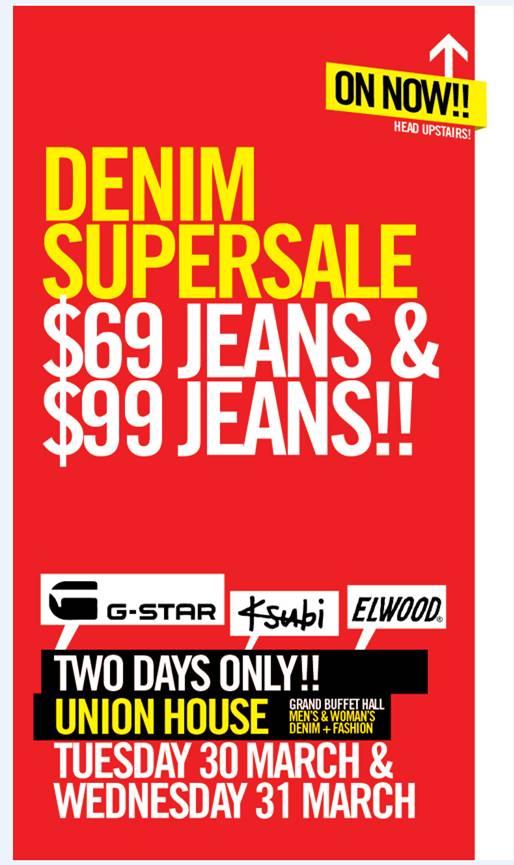
ANNEXURE ‘C’