

FEDERAL COURT OF AUSTRALIA
Australian Competition and Consumer Commission v Link Solutions Pty Ltd (No 3) [2012] FCA 348
IN THE FEDERAL COURT OF AUSTRALIA | |
DATE OF ORDER: | |
WHERE MADE: |
1. The proceedings as against:
(a) the First Respondent;
(b) the Second Respondent;
(c) the Third Respondent;
(d) the Fourth Respondent;
(e) the Fifth Respondent;
(f) the Sixth Respondent;
(g) the Seventh Respondent;
(h) the Eighth Respondent;
(i) the Thirteenth Respondent;
(j) the Fourteenth Respondent,
(k) the Fifteenth Respondent;
(l) the Twenty-Third Respondent; and
(m) the Twenty-Fourth Respondent
be discontinued.
By consent of the Applicants and the Ninth Respondent (George Tawaf), Tenth Respondent (Mark Nesbitt), Eleventh Respondent (John Masia), Sixteenth Respondent (Romeo Wehbe), Seventeenth Respondent (Manoel Wehbe), Eighteenth Respondent (Fakhr Fakhr), Nineteenth Respondent (Joseph Ayoub), Twenty-Fifth, Twenty-Sixth, Twenty-Seventh and Twenty-Eighth Respondents (Clear Respondents):
THE COURT DECLARES THAT:
Ninth Respondent
2. George Tawaf was knowingly concerned in contraventions of s 47(1) of the Trade Practices Act 1974 (Cth) (now the Competition and Consumer Act 2010 (Cth)) by causing the Fourth Respondent, Service AT Pty Ltd (Axis Telecoms #1) to offer to give to the following individuals/organisations (customer) credits on the cost of telecommunications services each customer acquired from Axis Telecoms #1 when those credits were on the condition that the customer lease equipment from a company that provided equipment leasing services and that was specified by Axis Telecoms #1 or one of its related bodies corporate, when that company was not related to Axis Telecoms #1 or its related bodies corporate:
(a) Certified Diamond Network Pty Ltd;
(b) Asie Bassit;
(c) Bakhos Development Pty Ltd;
(d) Cammac Pty Ltd;
(e) Capital Access Holdings Ltd;
(f) Chadmore Pty Ltd;
(g) Daryl Jackson Robin Dyke Pty Ltd;
(h) E Productions Pty Ltd;
(i) Galaxios Greek Radio (Aust) Pty Ltd;
(j) Just Transmissions Pty Ltd;
(k) Manton Auctioneers Pty Ltd;
(l) Neil’s Liverpool Mechanical Repairs Pty Ltd;
(m) REM Electrical Services Pty Ltd;
(n) Sui Jin Huang;
(o) Greek Orthodox Archdiocese of Australia;
(p) Australian Chemical Research Pty Ltd;
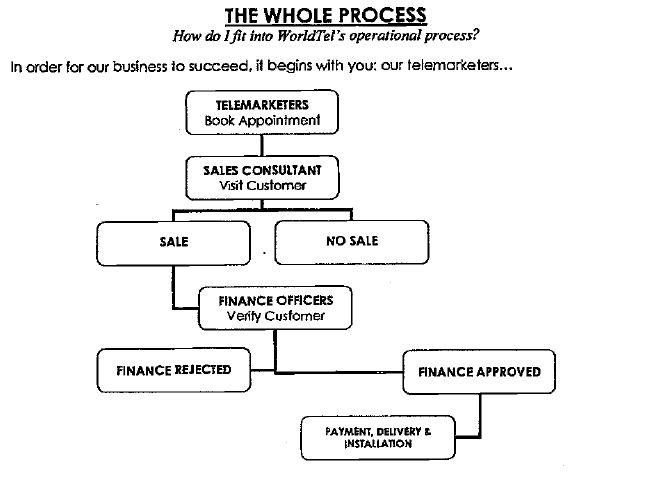
(q) C& L Building Systems Pty Ltd;
(r) Hunt Holdings (NSW) Pty Ltd;
(s) John Charles Joseph Vella;
(t) Rapid Constructions Group Pty Limited;
(u) Totally Floored Australia Pty Ltd;
(v) Vanafu Pty Ltd;
(w) Apollo Fruit Supply Pty Ltd;
(x) A Dec Trading Company Incorporated;
(y) CTS Transport Pty Ltd;
(z) Health Pride Pty Ltd;
(aa) Margaret Ann Smith;
(bb) Nationwide Mortgage Specialists Pty Ltd;
(cc) Nissan Brothers Pty Ltd;
(dd) Riverwall Constructions Pty Ltd;
(ee) T and M Holdings Group Pty Ltd;
(ff) Charter One Pty Ltd;
(gg) Moores Corporations Australia Pty Ltd;
(hh) Sione Aonga;
(ii) R L Elias Pty Ltd;
(jj) Belcon Group Pty Limited;
(kk) Darryl R. Young;
(ll) Furntek Marketing Pty Ltd;
(mm) Maria Ria Adermann; and
(nn) Karen Joy Fenwick and Kevin Justice
and when George Tawaf knew that that company providing equipment leasing services was not related to Axis Telecoms #1.
3. George Tawaf was knowingly concerned in contraventions of s 47(1) of the Trade Practices Act 1974 (Cth) (now the Competition and Consumer Act 2010 (Cth)) by causing the Fourth Respondent, Service AT Pty Ltd (Axis Telecoms #1), to offer to give to the following individuals/organisations (customer) credits on the cost of telecommunications services each customer acquired from Axis Telecoms #1 when those credits were on the condition that the customer lease equipment from one of the companies of which Australian Equipment Rentals Pty Ltd was an agent (Finance Companies), when the Finance Companies were not related to Axis Telecoms #1 or its related bodies corporate:
(a) BBM Office National Pty Ltd;
(b) Jewish Centre on the Ageing Inc; and
(c) Advanced Towing Pty Ltd
and when George Tawaf knew that the Finance Companies were not related to Axis Telecoms #1.
Tenth Respondent
4. Mark Nesbitt was knowingly concerned in contraventions of s 47(1) of the Trade Practices Act 1974 (Cth) (now the Competition and Consumer Act 2010 (Cth)) by causing the Fourth Respondent, Service AT Pty Ltd (Axis Telecoms #1), to offer to give to the following individuals/organisations (customer) credits on the cost of telecommunications services each customer acquired from Axis Telecoms #1 when those credits were on the condition that the customer lease equipment from a company that provided equipment leasing services and that was specified by Axis Telecoms #1 or one of its related bodies corporate, when that company was not related to Axis Telecoms #1 or its related bodies corporate:
(a) Certified Diamond Network Pty Ltd;
(b) Asie Bassit;
(c) Bakhos Development Pty Ltd;
(d) Cammac Pty Ltd;
(e) Capital Access Holdings Ltd;
(f) Chadmore Pty Ltd;
(g) Daryl Jackson Robin Dyke Pty Ltd;
(h) E Productions Pty Ltd;
(i) Galaxios Greek Radio (Aust) Pty Ltd;
(j) Just Transmissions Pty Ltd;
(k) Manton Auctioneers Pty Ltd;
(l) Neil’s Liverpool Mechanical Repairs Pty Ltd;
(m) REM Electrical Services Pty Ltd;
(n) Sui Jin Huang;
(o) Greek Orthodox Archdiocese of Australia;
(p) Australian Chemical Research Pty Ltd;
(q) C& L Building Systems Pty Ltd;
(r) Hunt Holdings (NSW) Pty Ltd;
(s) John Charles Joseph Vella;
(t) Rapid Constructions Group Pty Limited;
(u) Totally Floored Australia Pty Ltd;
(v) Vanafu Pty Ltd;
(w) Apollo Fruit Supply Pty Ltd;
(x) A Dec Trading Company Incorporated;
(y) CTS Transport Pty Ltd;
(z) Health Pride Pty Ltd;
(aa) Margaret Ann Smith;
(bb) Nationwide Mortgage Specialists Pty Ltd;
(cc) Nissan Brothers Pty Ltd;
(dd) Riverwall Constructions Pty Ltd;
(ee) T and M Holdings Group Pty Ltd;
(ff) Charter One Pty Ltd;
(gg) Moores Corporations Australia Pty Ltd;
(hh) Sione Aonga;
(ii) R L Elias Pty Ltd;
(jj) Belcon Group Pty Limited;
(kk) Darryl R. Young;
(ll) Furntek Marketing Pty Ltd;
(mm) Maria Ria Adermann; and
(nn) Karen Joy Fenwick and Kevin Justice
and when Mark Nesbitt knew that the credits so offered were on that condition and that that company providing equipment leasing services was not related to Axis Telecoms #1.
5. Mark Nesbitt was knowingly concerned in contraventions of s 47(1) of the Trade Practices Act 1974 (Cth) (now the Competition and Consumer Act 2010 (Cth)) by causing the Fourth Respondent, Service AT Pty Ltd (Axis Telecoms #1), to offer to give to the following individuals/organisations (customer) credits on the cost of telecommunications services each customer acquired from Axis Telecoms #1 when those credits were on the condition that the customer lease equipment from one of the finance companies of which Australian Equipment Rentals Pty Ltd was an agent (Finance Companies), when the Finance Companies were not related to Axis Telecoms #1 or its related bodies corporate:
(a) BBM Office National Pty Ltd;
(b) Jewish Centre on the Ageing Inc; and
(c) Advanced Towing Pty Ltd
and when Mark Nesbitt knew that the credits so offered were on that condition and that the Panel Finance Companies were not related to Axis Telecoms #1.
6. Mark Nesbitt was knowingly concerned in contraventions of s 47(1) of the Trade Practices Act 1974 (Cth) (now the Competition and Consumer Act 2010 (Cth)) by causing the Third Respondent, Axis Telecoms Pty Ltd (Axis Telecoms #2), to offer to give to Debbie Hanna credits on the cost of telecommunications services she acquired from Axis Telecoms #2 when those credits were on the condition that Ms Hanna lease equipment from one of the companies of which Australian Equipment Rentals Pty Ltd was an agent (Finance Companies), when the Finance Companies were not related to Axis Telecoms #2 or its related bodies corporate, and when Mark Nesbitt knew that those credits were on that condition and that the Finance Companies were not related to Axis Telecoms #2.
Sixteenth, Seventeenth and Eighteenth Respondents
7. Romeo Wehbe, Manoel Wehbe and Fakhr Fakhr were each knowingly concerned in contraventions of s 47(1) of the Trade Practices Act 1974 (Cth) (now the Competition and Consumer Act 2010 (Cth)) by causing the Thirteenth Respondent (WorldTel) to offer to give to the following individuals/organisations (customer) credits on the cost of telecommunications services each customer acquired from WorldTel when those credits were on the condition that the customer lease equipment from a company that provided equipment leasing services and that was specified by WorldTel or one of its related bodies corporate, when that company was not related to WorldTel or its related bodies corporate:
(a) PrintOnline Pty Ltd;
(b) Gazmel Pty Ltd;
(c) Proper Painting and Decorating Pty Ltd;
(d) Aussie Power Pty Ltd;
(e) Bo Hua Guo;
(f) Fitco International Pty Ltd;
(g) G M Mitrovski Pty Ltd;
(h) Kathnic Pty Ltd;
(i) Illara J Dixon;
(j) MJ and DA Brown Pty Ltd;
(k) Motionmen Pty Ltd;
(l) Peter James Snow;
(m) Kenrick Australia Pty Ltd;
(n) Aristocrat Developments Pty Ltd;
(o) Sandhurst Manor Pty Ltd;
(p) Combined Resources Holdings Pty Ltd;
(q) Dean Kenway Services Pty Ltd;
(r) Gino Stivala;
(s) Jan Borys and Peter Borys;
(t) Funding Direct Australia Pty Ltd;
(u) Top Value International Pty Ltd;
(v) Chi Hung Peter Tsang and Oi Lan Karen Lee;
(w) Melissa Tora Veidreyaki;
(x) Pacific Mortgage Centre Pty Ltd; and
(y) ALF Property Service Pty Ltd
and when Romeo Wehbe, Manoel Wehbe and Fakhr Fakhr each knew that the credits so offered were on that condition and that that company providing equipment leasing services was not related to WorldTel.
Nineteenth Respondent
8. Joseph Ayoub was knowingly concerned in contraventions of s 47(1) of the Trade Practices Act 1974 (Cth) (now the Competition and Consumer Act 2010 (Cth)) by causing the Thirteenth Respondent (WorldTel) to offer to give to the following individuals/organisations (customer) credits on the cost of telecommunications services each customer acquired from WorldTel when those credits were on the condition that the customer lease equipment from a company that provided equipment leasing services and that was specified by WorldTel or one of its related bodies corporate, when that company was not related to WorldTel or its related bodies corporate:
(a) Aussie Power Pty Ltd;
(b) Bo Hua Guo;
(c) Fitco International Pty Ltd;
(d) G M Mitrovski Pty Ltd;
(e) MJ and DA Brown Pty Ltd;
(f) Combined Resources Holdings Pty Ltd;
(g) Funding Direct Australia Pty Ltd; and
(h) Top Value International Pty Ltd
and when Joseph Ayoub knew that the credits so offered were on that condition and that that company providing equipment leasing services was not related to WorldTel.
Twentieth Respondent
9. Australian Integrated Finance Pty Ltd (AIF), was knowingly concerned in contraventions of s 47(1) of the Trade Practices Act 1974 (Cth) (now the Competition and Consumer Act 2010 (Cth)) by Axis Telecoms, by AIF in respect of each of the customers referred to in paragraphs (g) and (h) below (the Customers):
(a) implementing arrangements which had been discussed and agreed between AIF and the Fourth Respondent (Axis Telecoms) for Axis Telecoms to provide to AIF, and AIF to receive, consider and process, forms upon which customers of Axis Telecoms applied for approval of an equipment lease; and
(b) receiving, considering and processing equipment lease application forms from each of the Customers on or about the dates referred to in those paragraphs,
while AIF knew that:
(c) when Axis Telecoms obtained from a Customer a completed application for approval of an equipment lease it did so for the purpose of the Customer applying for approval of equipment lease finance as part of a single transaction in which Axis Telecoms also offered credit on charges to be incurred for telecommunications services that would offset the lease costs to be incurred by the Customer under a lease which would come into force when that application was approved; and
(d) Axis Telecoms offered credit on charges to be incurred for telecommunications services only as part of a single transaction in which the Customer also applied to enter into an equipment lease;
(e) in each case in which such an application was received by AIF, the choice of AIF as financier was not made by the Customer; and
(f) it was not related to Axis Telecoms,
and by Axis Telecoms:
(g) on 9 August 2005, offering to give to Certified Diamond Network Pty Ltd $355 in credits per month on the cost of telecommunications services it acquired from Axis Telecoms on the condition that Certified Diamond Network Pty Ltd lease a colour laser printer from AIF, or another company that provided equipment leasing services chosen by Axis Telecoms or one of its related bodies corporate, when AIF was not related to Axis Telecoms; and
(h) on 9 June 2006, offering to give to Apollo Fruit Supply Pty Ltd $810 in credits per month on the cost of telecommunications services it acquired from Axis Telecoms on the condition that Apollo Fruit Supply Pty Ltd lease a television, surveillance system and three cameras from AIF, or another company that provided equipment leasing services chosen by Axis Telecoms or one of its related bodies corporate, when AIF was not related to Axis Telecoms.
Twenty-Sixth Respondent
10. The Twenty-Sixth Respondent contravened s 47(1) of the Trade Practices Act 1974 (Cth) (Act) (now the Competition and Consumer Act 2010 (Cth)), by reason of s 47(6) of the Act, by:
(a) on 15 May 2008, offering to give to Rogmont Pty Ltd $300 in credits per month on the cost of telecommunications services it acquired from the Twenty-Sixth Respondent on the condition that Rogmont Pty Ltd lease a television from Enterprise Finance Solutions Pty Ltd, when Enterprise Finance Solutions Pty Ltd was not related to the Twenty-Sixth Respondent; and
(b) on 23 June 2008, offering to give to Eileen Valerie Nicholson $300 in credits per month on the cost of telecommunications services she acquired from the Twenty-Sixth Respondent on the condition that she lease a photocopier from Enterprise Finance Solutions Pty Ltd, when Enterprise Finance Solutions Pty Ltd was not related to the Twenty-Sixth Respondent; and
engaged in misleading or deceptive conduct in trade or commerce in contravention of s 12DA of the Australian Securities and lnvestments Commission Act 2001 (Cth) by:
(c) on 15 May 2008, representing to Rogmont Pty Ltd that the telecommunications equipment and television to be provided to it were free, when the telecommunications equipment and television were provided pursuant to an equipment lease with a rental of $300 per month (excluding GST); and
(d) on 23 June 2008, representing to Eileen Nicholson that the photocopier to be provided to her was free, when the photocopier was provided pursuant to an equipment lease with a rental of $300 per month (excluding GST).
THE COURT ORDERS THAT:
Ninth Respondent
11. George Tawaf is restrained for a period of five years from being directly or indirectly knowingly concerned in promotion or conduct by a corporation of any business which offers to give credits on charges to be incurred by any person (customer) on the proposed supply of telecommunication services when those credits are on the condition that the customer will acquire equipment by leasing or hiring that equipment from a person / organisation which is:
(a) not a body corporate related to the corporation; and
(b) specified, including as one of a panel, by:
(i) the corporation;
(ii) its related bodies corporate; or
(iii) someone on behalf of the corporation or its related body corporate,
as a person or organisation from which such equipment is to be leased or hired,
unless:
(c) the corporation has provided notice of such conduct to the Australian Competition and Consumer Commission (the Commission) pursuant to s 93(1) of the Competition and Consumer Act 2010 (Cth) (Act); and
(d) the ACCC has not given the corporation a notice pursuant to s 93(3A) of the Act with respect to the conduct the subject of the corporation’s notice referred to in (c) above.
Tenth Respondent
12. Mark Nesbitt is restrained for a period of five years from being directly or indirectly knowingly concerned in promotion or conduct by a corporation of any business which offers to give credits on charges to be incurred by any person (customer) on the proposed supply of telecommunication services when those credits are on the condition that the customer will acquire equipment by leasing or hiring that equipment from a person / organisation which is:
(a) not a body corporate related to the corporation; and
(b) specified, including as one of a panel, by:
(i) the corporation;
(ii) its related bodies corporate; or
(iii) someone on behalf of the corporation or its related body corporate,
as a person or organisation from which such equipment is to be leased or hired,
unless:
(c) the corporation has provided notice of such conduct to the Australian Competition and Consumer Commission (the Commission) pursuant to s 93(1) of the Competition and Consumer Act 2010 (Cth) (Act); and
(d) the Commission has not given the corporation a notice pursuant to s 93(3A) of the Act with respect to the conduct the subject of the corporation’s notice referred to in (c) above.
Eleventh Respondent
13. John Masia is restrained for a period of five years from being directly or indirectly knowingly concerned in promotion or conduct by a corporation of any business which offers to give credits on charges to be incurred by any person (customer) on the proposed supply of telecommunication services when those credits are on the condition that the customer will acquire equipment by leasing or hiring that equipment from a person / organisation which is:
(a) not a body corporate related to the corporation; and
(b) specified, including as one of a panel, by:
(i) the corporation;
(ii) its related body corporate; or
(iii) someone on behalf of the corporation or its related body corporate,
as a person or organisation from which such equipment is to be leased or hired,
unless:
(c) the corporation has provided notice of such conduct to the Australian Competition and Consumer Commission (the Commission) pursuant to s 93(1) of the Competition and Consumer Act 2010 (Cth) (Act); and
(d) the Commission has not given the corporation a notice pursuant to s 93(3A) of the Act with respect to the conduct the subject of the corporation’s notice referred to in (c) above.
Sixteenth, Seventeenth and Eighteenth Respondents
14. Each of Romeo Wehbe, Manoel Wehbe and Fakhr Fakhr is restrained for a period of five years from being directly or indirectly knowingly concerned in promotion or conduct by a corporation of any business which offers to give credits on charges to be incurred by any person (customer) on the proposed supply of telecommunication services when those credits are on the condition that the customer will acquire equipment by leasing or hiring that equipment from a person/organisation which is:
(a) not a body corporate related to the corporation; and
(b) specified, including as one of a panel by:
(i) the corporation;
(ii) its related body corporate; or
(iii) someone on behalf of the corporation or its related body corporate,
as a person or organisation from which such equipment is to be leased or hired,
unless:
(c) the corporation has provided notice of such conduct to the Australian Competition and Consumer Commission (the Commission) pursuant to s 93(1) of the Competition and Consumer Act 2010 (Cth) (Act); and
(d) the Commission has not given the corporation a notice pursuant to s 93(3A) of the Act with respect to the conduct the subject of the corporation’s notice referred to in (c) above.
Nineteenth Respondent
15. Joseph Ayoub is restrained for a period of five years from being directly or indirectly knowingly concerned in promotion or conduct by a corporation of any business which offers to give credits on charges to be incurred by any person (customer) on the proposed supply of telecommunication services when those credits are on the condition that the customer will acquire equipment by leasing or hiring that equipment from a person / organisation which is:
(a) not a body corporate related to the corporation; and
(b) specified, including as one of a panel by:
(i) the corporation;
(ii) its related body corporate; or
(iii) someone on behalf of the corporation or its related body corporate,
as a person or organisation from which such equipment is to be leased or hired,
unless:
(c) the corporation has provided notice of such conduct to the Australian Competition and Consumer Commission (the Commission) pursuant to s 93(1) of the Competition and Consumer Act 2010 (Cth) (Act); and
(d) the Commission has not given the corporation a notice pursuant to s 93(3A) of the Act with respect to the conduct the subject of the corporation’s notice referred to in (c) above.
Costs
16. The Twenty-Sixth Respondent pay the Applicants, within 14 days of the date this order is made, a contribution toward their costs of and incidental to these proceedings in the fixed sum of $50,000.
17. All previous costs orders as between the Applicants and George Tawaf, Mark Nesbitt, John Masia, Romeo Wehbe, Manoel Wehbe, Fakhr Fakhr and Joseph Ayoub be vacated, and there be no other order as to costs as between the Applicants and those parties.
18. Except for order 3 of the orders made on 10 September 2010, and subject to order 16 above, all interlocutory costs orders between the Applicants and the Clear Respondents be vacated.
19. Subject to order 16 above, there be no other order as to costs as between the Applicants and the Clear Respondents.
Disposition of proceedings
20. The proceedings as against George Tawaf, Mark Nesbitt, John Masia, Romeo Wehbe, Manoel Wehbe, Fakhr Fakhr and Joseph Ayoub otherwise be dismissed.
21. The proceedings as against the Twenty-Fifth Respondent, the Twenty-Seventh and the Twenty-Eighth Respondent be dismissed.
22. The proceedings as against the Twenty-Sixth Respondent otherwise be dismissed.
Note: Entry of orders is dealt with in Order 39.32 of the Federal Court Rules 2011. The text of entered orders can be located using Federal Law Search on the Court’s website.
NEW SOUTH WALES DISTRICT REGISTRY | |
GENERAL DIVISION | NSD 1473 of 2008 |
BETWEEN: | AUSTRALIAN COMPETITION AND CONSUMER COMMISSION First Applicant MARK PEARSON Second Applicant
|
AND: | LINK SOLUTIONS PTY LTD ACN 126 049 214 First Respondent SERVICE LS PTY LTD ACN 103 836 326 Second Respondent AXIS TELECOMS PTY LTD ACN 126 049 205 Third Respondent SERVICE AT PTY LTD ACN 076 804 718 Fourth Respondent SONOFON PTY LTD ACN 126 249 625 Fifth Respondent SERVICE SO PTY LTD ACN 103 970 627 Sixth Respondent TELECOM ONE PTY LTD ACN 126 049 394 Seventh Respondent SERVICE TO PTY LTD ACN 116 646 916 Eighth Respondent GEORGE TAWAF Ninth Respondent MARK NESBITT Tenth Respondent JOHN MASIA Eleventh Respondent BARRY KENNEDY Twelfth Respondent WORLDTEL (AUST) PTY LTD ACN 105 597 091 Thirteenth Respondent WORLDTEL CORPORATION (VICTORIA) PTY LTD ACN 109 699 425 Fourteenth Respondent SKYLINK COMMUNICATIONS PTY LTD ACN 112 018 809 Fifteenth Respondent ROMEO WEHBE Sixteenth Respondent MANOEL WEHBE Seventeenth Respondent FAKHR FAKHR Eighteenth Respondent JOSEPH AYOUB Nineteenth Respondent AUSTRALIAN INTEGRATED FINANCE PTY LTD ACN 078 700 044 Twentieth Respondent ENTERPRISE FINANCE SOLUTIONS PTY LTD ACN 101 737 204 Twenty-First Respondent CIT GROUP (AUSTRALIA) LIMITED ACN 065 745 735 Twenty-Second Respondent QUEENSLAND COMMUNICATION COMPANY PTY LTD ACN 126 049 385 Twenty-Third Respondent SERVICE QCC PTY LTD ACN 113 079 600 Twenty-Fourth Respondent CLEAR COMMUNICATIONS (EURAUST) AB Twenty-Fifth Respondent CLEAR TELECOMS (AUST) PTY LTD ACN 129 296 573 Twenty-Sixth Respondent ANTHONY HAKIM Twenty-Seventh Respondent NATIONAL TELECOMS GROUP PTY LTD ACN 094 312 704 Twenty-Eighth Respondent
|
JUDGE: | BENNETT J |
DATE: | 5 April 2012 |
PLACE: | SYDNEY |
REASONS FOR JUDGMENT
1 The applicants are the Australian Competition and Consumer Commission (the Commission) and Mr Pearson, a delegate of the Australian Securities and Investment Commission (together, the Applicants). The Applicants allege that the respondent telecommunications companies, the Thirteenth Respondent, WorldTel (Aust) Pty Ltd (WorldTel), the Fourth Respondent, Service AT Pty Ltd (Axis Telecoms #1), the Third Respondent, Axis Telecoms Pty Ltd (Axis Telecoms #2), and the Twenty-Sixth Respondent, Clear Telecoms Pty Ltd (Clear Telecoms) (together, the Telcos) have engaged in third line forcing in contravention of s 47(1) of the Trade Practices Act 1974 (Cth) (the Act) by reason of s 47(6) of the Act. The Applicants allege that third line forcing occurred through the provision by the Telcos of call credits to customers linked to the leasing of equipment, such as televisions and photocopiers, from finance companies. Section 47(1) of the Act relevantly provides:
Subject to this section, a corporation shall not, in trade or commerce, engage in the practice of exclusive dealing.
2 The originating application was the subject of applications for summary dismissal pursuant to s 31A(2) of the Federal Court of Australia Act 1976 (Cth) (FC Act) and the pleadings were subject to strike-out applications pursuant to O 11 r 16 of the Federal Court Rules. Those applications were previously determined in Australian Competition and Consumer Commission v Link Solutions Pty Limited (No 2) (2010) 188 FCR 463. In that decision, the construction of s 47(6) of the Act was discussed. Section 47(6) provides, relevantly:
A corporation also engages in the practice of exclusive dealing if the corporation:
…
(c) gives or allows, or offers to give or allow, a discount, allowance, rebate or credit in relation to the supply or proposed supply of goods or services by the corporation;
on the condition that the person to whom the corporation supplies or offers or proposes to supply the goods or services or, if that person is a body corporate, a body corporate related to that body corporate will acquire goods or services of a particular kind or description directly or indirectly from another person not being a body corporate related to the corporation.
[emphasis added]
3 As a result of the summary dismissal applications, two of the finance companies that had been joined in the proceedings, the Twenty-Second Respondent, CIT Group (Australia) Limited (CIT) and the Twenty-First Respondent, Enterprise Finance Solutions Pty Ltd (EFS) were held entitled to summary judgment under s 31A (2) of the FC Act. The Applicants and various respondents have now reached agreement on the resolution of the proceedings including, subject to the Court’s approval, the terms of proposed consent orders.
4 The respondents with whom the Applicants have reached settlements are:
(a) the Ninth Respondent, George Tawaf;
(b) the Tenth Respondent, Mark Nesbitt;
(c) the Eleventh Respondent, John Masia;
(d) the Sixteenth Respondent, Romeo Wehbe;
(e) the Seventeenth Respondent, Manoel Wehbe;
(f) the Eighteenth Respondent, Fakhr Fakhr;
(g) the Nineteenth Respondent, Joseph Ayoub;
(h) the Twenty-Fifth Respondent, Clear Communications (EurAust) AB (Clear Communications);
(i) Clear Telecoms;
(j) the Twenty-Seventh Respondent, Anthony Hakim; and
(k) the Twenty-Eighth Respondent, National Telecoms Group Pty Ltd (NTG).
5 In addition, the Applicants seek orders against the Twentieth Respondent, Australian Integrated Finance Pty Ltd (AIF), which relief is not opposed by the Liquidator or by the Receivers and Managers of AIF. I sought clarification from both the Liquidator and the Receivers and Managers of AIF that they fully comprehended the proposed orders as sought by the Applicants and that they maintained that position. Each answered affirmatively.
6 Mr Tawaf, Mr Nesbitt and Mr Masia were not legally represented at the hearing of the Applicants’ application for orders. They were, however, present in person and gave assurances that they understand the nature of the proposed orders to be made against them and consent to those orders being made.
7 Apart from orders as to costs and the dismissal of the proceedings, the proposed consent orders provide for declarations and for injunctions restraining the individual respondents from carrying out certain business activities. The fact that the proposed declarations are sought by consent requires some further consideration.
The ORDERS SOUGHT
Declarations by consent
8 In Australian Competition and Consumer Commission v MSY Technology Pty Limited (No 2) (2011) 279 ALR 609, Perram J (at [9]) identified two impediments to the making of declarations by consent:
(a) the principle which his Honour said was derived from Wallersteiner v Moir (1974) 1 WLR 991, which suggests that declarations should not be made on submissions, but only on evidence; and
(b) the principle which his Honour said was derived from Lord Dunedin’s speech in Russian Commercial and Industrial Bank v British Bank of Foreign Trade Limited [1921] 2 AC 438 (at 448), that a declaration may not be granted in the absence of a contradictor. A contradictor is ‘some one (sic) presently existing who has a true interest to oppose the declaration sought’. Justice Perram said that the Court was bound to the existence of this principle, which has been approved and applied by Gibbs J (with whom McTiernan, Stephen and Mason JJ agreed on the issue) in Forster v Jododex Australia Pty Limited (1972) 127 CLR 421.
9 In this case, each of the declarations sought is sought on the basis of evidence. The first requirement identified by Perram J is satisfied.
10 It is apparent that Perram J felt himself constrained by the decision of the Full Court in BMI Ltd v Federated Clerks Union of Australia (1983) 76 FLR 141. His Honour concluded (at [32]) that it was clear from BMI that Keely and Beaumont JJ in that case thought that the need for a contradictor required there to be a party arguing against the grant of relief and that this could not be satisfied where a matter proceeded by consent. Justice Perram also observed that in BMI all parties were before the Court and were consenting and that, even then, the absence of opposition proved fatal to the making of a declaration.
11 Justice Perram accepted (at [28]) that he was bound by the principle in Forster that no declaration should be made in the absence of a proper contradictor. In Forster, Gibbs J recognised (at 437–438) that the Court had a broad discretion as to the making of declarations. However, Gibbs J also stated that before the discretion is exercised in favour of making a declaration, the rules summarised by Lord Dunedin in Russian Commercial & Industrial Bank should also be satisfied, namely:
The question must be a real and not a theoretical question; the person raising it must have a real interest to raise it; he must be able to secure a proper contradictor, that is to say, some one presently existing who has a true interest to oppose the declaration sought.
Justice Perram observed that the conclusion by Gibbs J that a declaration should not be made in the absence of a contradictor was obiter dictum, but was again, one in which McTiernan, Stephen and Mason JJ joined.
12 Justice Perram also cited the reasons of French J in IMF (Aust) Ltd v Sons of Gwalia Ltd (2004) 211 ALR 231; [2004] FCA 1390 at [47] where his Honour noted that a party may decide not to contest declaratory proceedings about the lawfulness of proposed conduct and that a declaration may be made by consent or may be uncontested and said: ‘This does not mean that the Court lacks jurisdiction or power to grant the declaration in such a case. The proceedings will have resolved a pre-existing controversy …’. Justice French stated at [49] that he expressed no concluded view on whether, for jurisdictional purposes, the existence of a proper contradictor is essential to the declaratory jurisdiction of the Court.
13 Justice Perram accepted that, following the reasoning of French J and his own analysis of other cases, a contradictor does not connote a party who is in fact arguing to the contrary, but rather connotes all parties whose interests are opposed and who can be bound by the outcome (at [40]). However, his Honour concluded (at [32]) that he was bound to give effect to the reasoning in BMI that the need for “a proper contradictor” required there to be ‘a party arguing against the granting of the relief and that this could not be satisfied where the matter proceeded by consent’ and that consenting defendants did not constitute proper contradictors.
Consideration
14 In Forster at 437–438, Gibbs J referred to the broad discretion to be exercised in making a declaration. It was in that context that his Honour cited Lord Dunedin. Justice Gibbs added a citation from Lord Radcliffe in Ibeneweka v Egbuna [1964] 1 WLR 219 (at 225), to the effect that the power to grant a declaration should be exercised ‘with a proper sense of responsibility’ and where justified by the circumstances. Lord Radcliffe then added ‘beyond that there is no legal restriction on the award of a declaration’.
15 It is the case that in BMI, Keely and Beaumont JJ declined to make the declaration sought. Their Honours noted (at 152) that:
there was no opposition to the claim made by the applicants;
the declaration sought was for the invalidity of a State award and the Attorney-General for the State did not appear; and
the applicant presented a full argument in support of the claim made and no argument was advanced to the contrary. Their Honours stated that there was no criticism of this approach, it being ‘natural enough that such a course should be adopted’.
16 Keely and Beaumont JJ:
said (at 152) that ‘we are by no means persuaded that, in the circumstances, it is appropriate that a declaration as sought should be made’.
cited Scarman J in Wallersteiner v Moir where (at 1030) his Lordship referred to the fact that the power of the Court to give declaratory relief in default of a pleading by a defendant ‘of course, exists’, although the power to grant declaratory relief should only be exercised in such circumstances where to deny it would be to impose injustice upon the claimant.
confirmed their view (at 153) that it is ‘generally undesirable that the court should grant relief by way of declaratory orders under s 108 in the absence of any contest on the question’.
observed that in the circumstances of that case, the practical operation of the declaration may extend beyond the activities of the parties and observed (at 154) that they could see no useful purpose in the making of the declarations sought except to bind other parties in other situations in the future.
in the absence of a contradictor and where the question was academic, as a matter of discretion, determined that the Court should not grant the declaratory relief, even though it had the statutory jurisdiction to do so.
17 It was in that context that their Honours pointed to the importance of the absence of a contradictor, averting to the difficulties that they saw in the content of the declarations themselves in the context of the particular industrial awards in question. Their Honours then said:
In the circumstances we would decline to make the declaration sought. It is apparent from what we have said that the refusal of the relief sought is made on discretionary grounds…
18 The decisions in BMI and MSY were considered by Dodds-Streeton J in Australian Competition and Consumer Commission v Willesee Healthcare Pty Ltd (No 2) [2011] FCA 752. Her Honour accepted some of Perram J’s conclusions; that the Court is bound by Forster not to make declarations without a contradictor and that a contradictor would still be present when all proper defendants had been joined and so were bound to the result and would not cease to be contradictors merely because they consent to the proposed declarations. Her Honour was not persuaded that the ratio of BMI precluded the making of declarations involving a public right in the absence of a contradictor who contests that relief (at [32]). Justice Dodds-Streeton considered BMI in some detail and expressed the view (at [41]) that the majority in BMI, in characterising the proper contradictor as a party who contested the question, considered the issue expressly within the context of an application under s 108 of the Conciliation and Arbitration Act 1904 (Cth). Justice Dodds-Streeton did not accept that Keely and Beaumont JJ purported to enunciate absolute requirements for a proper contradictor that were generally applicable in all contexts. Further, the absence of a proper contradictor was but one of a number of factors relevant to the exercise of discretion, but was not of itself a decisive factor.
19 In Australian Competition and Consumer Commission v Sampson [2011] FCA 1165 at [15], Tracey J agreed with the analysis of Dodds-Streeton J in Willesee. His Honour looked to Forster and the requirement that a proper contradictor be ‘one presently existing’ who has a true interest to oppose the declaration sought. His Honour said (at [15]) that Forster establishes that a person will be a “proper contradictor” provided that he or she has a genuine interest in resisting the grant of relief which may be retained despite a willingness to compromise his or her position in the litigation.
20 The situation remains as stated by Gordon J in Australian Competition and Consumer Commission v Dimmeys Stores Pty Ltd [2011] FCA 372 at [11]–[14] that the prerequisites for making a declaration under s 21 of the FC Act are that:
the question must be real and not a hypothetical or theoretical one;
the applicant must have a real interest in raising it; and
there must be a proper contradictor.
21 As her Honour noted at [13], as a general principle the Court does not make declarations on matters relating to public rights by consent or on admissions unless it is satisfied by the evidence.
22 The parties have asked that I make a decision concerning the proposed consent declarations without awaiting the decision of the Full Court in the appeal from MSY. With respect, I agree with the reasoning in Willesee and Sampson. There were a number of reasons in BMI why Keely and Beaumont JJ decided against the making of a declaration. These included the fact that a number of the respondents did not appear, including the Attorney General for the State whose award was under attack, and there were identified problems with the form of the declarations sought and with their substance. The absence of a contradictor in a case that affected a public right was but one factor that weighed against the exercise of the discretion not to make the declarations.
23 The Court is not precluded in the present circumstances from making declarations by consent.
24 In this case, each of the natural person respondents to the proposed declarations is an active party in the proceedings and actively opposed the making of the declaration sought for a substantial period of time. Each remains a person “presently existing who has a true interest to oppose the declaration sought”.
25 In the case of AIF, there is a Liquidator appointed to the company and Receivers and Managers appointed in respect of its lease receivables. The declaration affects the rights of the company. The Liquidator and the Receivers and Managers are each persons who have a true interest to oppose the declaration sought. The fact that they have chosen not to do so does not lead to the conclusion that they are not proper contradictors, as that term was used by Gibbs J in Forster.
26 In the present case, the respondents have been provided with the Applicants’ detailed written submissions which included the facts the Applicants seek to draw from the evidence cited. There has been no dispute as to those facts.
27 It is frequently the case that declarations are made by consent and on the basis of a statement of agreed facts (eg Australian Competition and Consumer Commission v Sontax Australia (1988) Pty Ltd [2011] FCA 1202; Australian Competition and Consumer Commission v Harvey Norman Holdings Ltd [2011] FCA 1407; Australian Competition and Consumer Commission v Ticketek Pty Ltd [2011] FCA 1489; and Australian Competition and Consumer Commission v Turi Foods Pty Ltd (No 2) [2012] FCA 19).
28 In the present case, there is a limited statement of agreed facts, as between the Applicants and Clear Telecoms. Otherwise, the Applicants rely upon the evidence filed in the proceedings. There is no dispute as to the facts drawn, expressly or by inference, from that evidence.
Injunctions by consent
29 As to the injunctions sought, once the condition precedent to the exercise of injunctive relief has been satisfied, that is, the contraventions of the Act, the Court has ‘the widest possible injunctive powers, devoid of traditional constraints, though the power must be exercised judicially and sensibly’, as stated by Lockhart J (with whom French J agreed) in ICI Australia Operations Pty Ltd v Trade Practices Commission (1992) 38 FCR 248. This statement was quoted with approval by the Full Court in Foster v Australian Competition and Consumer Commission (2006) 149 FCR 135 (at [30]). There needs to be a nexus between the contravention of the Act which the Court has found and the terms of the restraint (Foster).
30 The injunctions presently sought restrict the employment of the named respondents such that they cannot be employed by corporations engaged in the particular forms of conduct that, generally, are within the area of practice the subject of these proceedings, without notifying the Commission first.
The GENERAL business methods of the telcos
31 The Applicants allege that the business methods of each of the Telcos were similar and that the same relevant condition, giving rise to the third line force, was present in the contractual documentation of each company. Evidence has been provided by the Applicants of the business method of WorldTel and Axis Telecoms. This is set out below at [35]-[77]. The general structure of the business method of WorldTel and Axis Telecoms, and similarly, Clear Communications, was discussed in ACCC v Link (No.2) and summarised at [18]:
Generally, the Commission alleges that the customers of each Telco were offered and supplied a bundle of services which included each of the following features:
The commencement of supply of telecommunications services;
A range of equipment leased by the Leasing Company to the customer; and
Call credits from the Telco up to the value of the customer’s proposed equipment lease payments to the Leasing Company.
32 “Call Credits” meant ‘credits given or to be given on charges for telecommunications services’ and “Leasing Company” meant ‘a corporation engaged in the business of supplying leases of equipment and includes the Finance Companies’. I adopt the same definitions in these reasons. The “Finance Companies” there meant finance companies, including EFS, CIT and AIF. Here, I shall use “Finance Companies” to mean the limited panel of finance companies used by each Telco in its respective business methods.
33 The key components of the alleged business method for Axis Telecoms and WorldTel, now established on the evidence, were considered in ACCC v Link (No 2) at [23]–[40]. These included:
• An offer to a customer to supply call credits was made on condition that the customer enter into a lease agreement with one of a panel of Finance Companies and was subject to the approval of the lease agreement by the Finance Company.
• Call credits were offered where the Telco determined that the profit to be derived from the whole of the bundled services was acceptable to the Telco.
• For each particular customer, a nominated Finance Company was chosen using the “configurator”. The “configurator” was a spreadsheet that was used to assess the monthly equipment rental payments which the customer might pay each month.
• The giving of the offered call credits was conditional upon the approval of the equipment lease by a specified Finance Company, whether or not that specified Finance Company was known to the customer. The customer signed an application form addressed to the Leasing Company for approval of the proposed equipment leasing transaction. The period during which call credits were given would commence when an equipment lease to be entered into by the customer was approved by the relevant Leasing Company.
• Once the lease agreement was entered into, the customer was obliged to continue the lease payments for the term of the lease agreement, whether or not the customer continued to receive telecommunications services and call credits. Once the customer had committed to an equipment lease, the customer had to remain with the Telco to receive the call credits.
The WorldTel RESPONDents
34 The liability of each of the WorldTel directors, Mr Romeo Wehbe, Mr Manoel Wehbe and Mr Fakhr and of the WorldTel officer Mr Ayoub (together the WorldTel Respondents), depends upon there having been contraventions by WorldTel. Mr Fakhr was responsible for sales. Mr Romeo Wehbe was the Chief Executive Officer of WorldTel and was responsible for the administration of WorldTel and its associated companies. Mr Manoel Wehbe was responsible for telemarketing. Mr Ayoub was an employee of WorldTel and managed the finance section.
35 There were a number of different companies within the WorldTel group with common directors and common management but all ran one business, which involved the giving of call credits linked to finance arrangements. WorldTel was not related to any of the Finance Companies used by WorldTel. WorldTel conducted a business method which was applied each time it sold telecommunication services with call credits. The evidence presented by the Applicants deals with individual instances of the application of that business method. The Applicants contend that in each case where the business method was applied, a contravention of s 47 of the Act occurred. Implicit in the fact that the business method was applied by WorldTel is the conclusion that there were numerous such contraventions.
36 In ACCC v Link Solution (No 2), Mr Romeo Wehbe and Mr Fakhr sought summary judgment pursuant to s 31A of the FC Act. When the evidence was considered as a whole, it was found (at [158]) to be sufficient to establish a reasonable cause of action against Mr Romeo Wehbe and Mr Fakhr of procuring or being knowingly concerned in the alleged contraventions by WorldTel. The evidence included:
(a) their positions with, knowledge of, and activities within WorldTel and its associated companies;
(b) conversations and communications with staff and customers;
(c) the fact that the customers were, on their evidence, misled concerning the effect of the documentation they signed with EFS; and
(d) the fact that the customers executed the agreement with that Finance Company as directed by WorldTel.
37 Additionally, the following facts about the involvement of Mr Romeo Wehbe and Mr Fakhr were found (at [154]):
Mr Wehbe was a director of WorldTel, managed the telemarketing function for WorldTel and, on the evidence, was involved in the conduct of the WorldTel business from the commencement of that business. He signed the EFS Vendor Accreditation Agreement which is said by the Commission to have provided the framework of the leasing arrangements for WorldTel customers from EFS. Mr Fakhr was involved in the management of the sales function for the WorldTel group and provided training in respect of its telecommunications-related rental agreements. He was, on the evidence, the person responsible for the preparation of scripts used by employees of WorldTel or a related corporation in relation to telemarketing calls to prospective customers. There is direct evidence that Mr Fakhr told an employee of “WorldTel” that a customer’s obtaining of cheaper rates (call credits) was conditional on taking a bundled solution.
38 As explained in ACCC v Link Solutions (No 2) at [23], ‘an assessment of the value to the call credits to be offered to a customer was made utilising an Excel spreadsheet known as the “configurator”’. Mr Romeo Wehbe created the configurator used by WorldTel (WorldTel Configurator) as a software calculation of a quote to be given to the customer based on the contract term, the equipment to be leased, call credits and the rental amount to be paid to the Finance Companies. Mr Wehbe says that the monthly payment and amount to be borrowed had to fit within the parameters of one of the Finance Companies on the WorldTel panel. The WorldTel employees determined these deal parameters on the WorldTel Configurator, using a matrix supplied by the Finance Company.
39 Mr Ayoub was the contact person for the Finance Companies and dealt with the Finance Companies to obtain approval of finance deals. Mr Ayoub also managed the use of the WorldTel Configurator. Within Mr Ayoub’s responsibility was the employment of those persons who decided which of the specified Finance Companies on the WorldTel panel would be nominated for a particular customer and management of the people employed by WorldTel who dealt with those Finance Companies.
40 Mr Ayoub wrote scripts used by telemarketers employed by WorldTel in which the link with the Finance Companies was explained and the customer was told that WorldTel would give call credits ‘in return’ for the lease payments to be made, separately, to the Finance Company. Other scripts were written by Mr Manoel Wehbe, Mr Romeo Wehbe and Mr Fakhr Fakhr for use by telemarketers. The WorldTel Training Manual identifies the ‘whole process’ of WorldTel’s operations:
41 From the evidence of Mr Manoel Wehbe:
(a) WorldTel had a panel of two (or according to Mr Ayoub, three) Finance Companies on its panel;
(b) call credits were only ever offered to offset the costs of equipment rental under an agreement lease with one of those finance panel members;
(c) the documentation of each such offer included:
a WorldTel Services Application (the Services Application);
a WorldTel rate card;
an application for an equipment lease; and
a hardware summary form.
42 The Services Application form was signed at the same time as the application for an equipment lease. Mr Romeo Wehbe stated that the “hardware summary” form was invariably provided to and signed by customers at the point of sale. The hardware summary form linked the term of the rental agreement between the customer and the Finance Company with the provision of call credits to be given by WorldTel. The hardware summary form set out the monthly rental, the monthly call credit amount and the term of the agreement. It stated that the monthly rental amount would be debited and that call credits would be credited throughout that term.
43 Once signed by the customer, the Services Application came into operation immediately with respect to the provision of telecommunication services. However, no call credits were allocated until the equipment lease was approved by the Finance Company. It was an expressed condition of the Services Application that there would be no call credits until the lease equipment was approved, some time after the Services Application was executed. The evidence is that this normally took two to three weeks.
44 The Services Application makes it clear in the acknowledgment, consent and signing section that call credits will not apply if no finance is provided and that, otherwise, telecommunication services are provided. The Services Application includes the following term (the WorldTel Clause):
In the event that an associated agreement for the rental lease, hire purchase or other finance method for the acquisition of nominated equipment is not approved for any reason whatsoever that Call Credits, Monthly Call Credits, Maximum Monthly Call Credits and Total Call Credits will not apply to these arrangements and you acknowledge by signing below that you will become a customer of WorldTel Pty Limited for telephone services only and at rates the equal to or better than the rates referred to in this application.
45 As was discussed in ACCC v Link (No 2), to constitute a third line force, the condition must have some attributes of compulsion and futurity, although the condition does not need to be legally binding. The Applicants contend that it is the WorldTel Clause that constitutes the third line force and that it represents the condition with the elements of futurity and compulsion that are required for a contravention of s 47.
46 While the exact terms of the rental agreements varied depending upon the Finance Company involved, an example of a rental agreement between a WorldTel customer and AIF provided that ‘this rental agreement will be binding on the Hirer, the Guarantor and AIF following delivery of the completed and signed Rental Agreement by the Hirer to AIF and delivery of the duly accepted rental agreement by AIF to the hirer’.
47 In evidence tendered by the Applicants, Mr Ayoub acknowledges that he was familiar with the bundled deals and that those deals were always made through the Finance Companies nominated by WorldTel. Further, he acknowledges that customers could not obtain call credits without dealing with the specified Finance Companies. Call credits were only available to customers as part of a finance package and the finance was obtained from a panel of two or three Finance Companies. If finance was not required, telecommunication services were provided by WorldTel, but not call credits. Call credits were solely associated with bundled packages and a customer could not get call credits otherwise. Mr Wehbe confirmed that the “vast majority” of WorldTel customers had bundled services, although there was a small proportion which just had telecommunication services.
48 The Applicants submit that the conclusion can be drawn that in every case that WorldTel provided call credits:
it did so on its standard Services Application form, which included the WorldTel Clause;
in circumstances where there was a limited panel of Finance Companies;
the application for equipment lease and the Services Application were executed together;
call credits were only provided on the prescribed condition in the WorldTel Clause; and
call credits were not provided until there was approval by the Finance Company after the application for finance in the application for equipment lease which constituted ‘an irrevocable offer to rent the equipment’ upon the terms of the rental plan.
49 It follows that, as provided in the WorldTel clause, WorldTel offered telephone services with call credits, it did so upon the condition that call credits would only be provided if and when an equipment lease was approved by a member of WorldTel finance panel. Each such occasion on which WorldTel offered this bundled deal constituted a contravention of s 47(6) of the Act.
50 Evidence was adduced by the Applicants from each of 25 customers as examples of the business method of WorldTel in practice. With different levels of production of documents, that evidence establishes that WorldTel entered into arrangements to provide telephone services with call credits, bundled with an equipment lease, to each of those customers. Together with the evidence of the officers of WorldTel, that evidence is sufficient to conclude that the WorldTel business method documents referred to in [41] were executed in each case and that the condition in the WorldTel Clause was imposed. The inference is available, and I draw it, that the business method was invariably applied in WorldTel customer transactions such that call credits were only provided on condition that the customer entered into a lease of equipment with a Finance Company on the WorldTel panel. There is no example in evidence of the provision of call credits without finance being concurrently provided.
51 I am satisfied that each of the WorldTel Respondents was knowingly concerned in contraventions of s 47(1) of the Act, by causing WorldTel to offer to give call credits to customers on the cost of telecommunication services acquired from WorldTel, when those credits were on the condition that the customer lease equipment from a company that was specified by WorldTel or one of its related body corporates.
The Axis Telecoms respondents and AIF
52 The contraventions by Mr Tawaf and Mr Nesbitt (the directors of Axis Telecoms), Mr Masia (an officer of Axis Telecoms) (together, the Axis Telecom Respondents) and the finance company AIF all depend upon there having been contraventions of s 47(1) of the Act by Axis Telecoms #1 and Axis Telecoms #2 (together, Axis Telecoms). The evidence of the Axis Telecoms’ business method is primarily set out by Mr Nesbitt.
The business method of Axis Telecoms
53 Mr Nesbitt explains the history of Axis Telecoms, commencing with the company that he started called Recom Corporate Communications Pty Ltd (Recom), the shares in which were subsequently sold to National Telecom (Investments) Pty Limited. Recom’s parent company became NTG. The NTG business was broken up in 2003 and the Recom business was operated through a group of companies (Link Group) owned by Link Telecoms Holdings Pty Ltd (Link Holdings). The business that the Link Group ran initially was the sale of the same “bundled solution” put together by NTG that Recom had sold. One of the companies through which that bundled solution was sold was Link Solutions Pty Ltd, the Second Respondent, which is now known as the Third Respondent, Service LS Pty Ltd (Link Solutions).
54 In about late 2003, Mr Nesbitt and Mr Tawaf caused the Link Group to set up a business to provide telecommunication services to be sold as part of the “bundled solution”. That business was run by Axis Telecoms #2, a wholly owned subsidiary of Link Holdings. The Link Group business was operated through various companies, some of which are respondents in these proceedings. From about mid or late 2004, the Link Group also had a small operation in Queensland which led to the Link Group taking a stake in Queensland Communications Company Pty Ltd (QCC), the Twenty-Fourth Respondent.
55 Mr Nesbitt was involved in writing a spreadsheet used between 2003 and 2008, which was used in configuring sales of equipment leases with call credits (the Axis Configurator). Mr Masia was the general manager employed to run Axis Telecoms. He established the business systems and implemented the standard documentation, subject to the directions of Mr Tawaf and Mr Nesbitt. Mr Tawaf negotiated and concluded arrangements with Finance Companies as to rates and volume. Mr Nesbitt ensured that each Finance Company received the volume negotiated.
56 Mr Nesbitt explains that a key feature of the Axis Configurator was the incorporation of business rules that operated so that if a “deal” was to be outside the parameters of those business rules, the Axis Configurator would not display the values on the financial consideration worksheet required to complete the transaction documents to implement the deal.
57 Mr Nesbitt explains that the business model of the Link Group was substantially the same as the business model used by NTG. That is:
(a) a customer signed a contract by which he or she would purchase telecommunication services from, in the case of the Link Group, Axis Telecoms;
(b) customers obtained the use of equipment by:
(i) a sales company within the Link Group selling that equipment to a Finance Company; and
(ii) customers signing a contract with that Finance Company by which they would lease that equipment from that Finance Company; and
(c) customers received “call credits” to offset the cost of leasing the equipment from the Finance Company. The call credits operated as a discount on the customers’ telephone bill.
58 It is clear that Mr Nesbitt and Mr Masia both understood that a bundled plan was one where the customer receives “call credits” against that customer’s commitment to purchase equipment and accept the nominated rate plan.
The Finance Companies
59 The bulk of the Link Group’s transactions were financed by either CIT, AIF or EFS. These Finance Companies were not related to Axis Telecoms.
60 As Mr Nesbitt explains, to obtain an equipment lease, the customer had to use one of these nominated Finance Companies determined by Axis Telecoms. Call credits depended on finance being approved. The cost of leasing the equipment would often depend on which Finance Company was to provide the lease to the customer. Mr Nesbitt would instruct the managers within the Link Group which Finance Companies they were allowed to use at particular times. Within the parameters specified by Mr Nesbitt and Mr Tawaf, the choice of an individual Finance Company to be used by a customer was made by the individual sales person and that person’s manager. The customer was not offered the choice. The choice of Finance Companies available for selection by the manager and sales person depended on a number of factors described by Mr Nesbitt, including:
the Finance Companies with which the Link Group had relationships;
which Finance Companies were offering the best finance rates;
whether it would assist the Link Group to increase the volume of sales that were directed to a particular Finance Company at the time of sale; and
which Finance Company was most likely to approve the transaction with the least amount of delay and complexity.
61 Mr Nesbitt gives evidence as to the standard practice adopted by himself and Mr Tawaf in explaining to Finance Company representatives, including those from AIF, the business method operations of the Link Group. This explanation included the way in which the Axis Configurator worked by configuring a bundled solution. It also included explaining to the Finance Company representatives that there were only two or three suppliers of finance and that it would be Mr Nesbitt and Mr Tawaf, who controlled which of the Finance Companies were used, to ‘ensure that there is an even spread of work between the finance companies we used’.
62 The project implementation process, designed by Mr Masia was used by Axis Telecoms, was described by Mr Nesbitt:
Within one day of an agreement being signed by a customer, the agreement was to be reviewed by Regional Managers to ensure that the arrangements in the agreement were commercially sound, that the documentation was ready to processed, and that the agreements included an order specification, finance agreement and the Axis application for telephone services form.
The Quality Assurance (QA) team (discussed below at [67]-[77]) had certain criteria that each agreement needed to meet before a deal could be processed. If the deal did not meet those criteria, the QA team would return the deal to the Regional Manager to revise.
The finance department submitted the customer’s rental application to the relevant Finance Company for acceptance.
If external finance was not approved, the deal would be put on hold until alternative finance was approved.
On the installation of the hardware, the billing department checked that the service lines were capturing calls as expected, that the calls were being rated at the agreed rates and that the billing system had all the relevant details for the generation of the call credits.
63 The sales team were instructed that if the documents provided that the equipment lease was with a Finance Company different to the company that the sales team was instructed to use, the deal was to be rejected under the QA program (see below at [67]-[77]). If a sales manager wanted his or her team to use a finance company different to the Finance Company that he or she was instructed to use, the manager would require approval from either Mr Nesbitt or Mr Tawaf. There were very limited occasions in which the finance company used was not one on the panel. Mr Nesbitt says that in almost all cases in which a customer entered into an agreement under which the customer was to receive telecommunication services and call credits from the Axis Telecoms #1, the customer entered into an equipment lease with a Finance Company that was on the panel that the Link Group dealt with. He could only recall one customer directly purchasing equipment that was part of a bundled solution which involved only the supply of telecommunications by Axis Telecoms #2.
Australian Equipment Rentals
64 If the Finance Company rejected an application for an equipment lease, to avoid the need to have customers sign new applications, a company known as Australian Equipment Rentals Pty Ltd (AER) was used as a finance company within the Link Group. AER was a company owned and controlled by the Link Group. It operated in effect as an in-house broker of the finance provided by members of the Link Group’s finance panel. It did so by entering into finance leases, in its own name, but as undisclosed agent for each such Finance Company. Having procured an application for approval from a customer, AER directed that application to the Finance Company of its choice.
65 Those arrangements were underpinned by principal and agency agreements entered into between AER on the one hand and AIF and EFS on the other. While AER was a related body corporate to Axis Telecoms #1 and Axis Telecoms #2, its principal in each of the finance leases was not a related body corporate.
66 In September 2006, a principal and agency agreement was executed between EFS and AER and between AIF and AER. Mr Nesbitt explains that subsequently there were only two or three Finance Companies that AER was to deal with, using one document that could be used for all of the Finance Companies. This was to enable the Link Group to ‘balance the amount of business that we give to each finance company’.
Quality Assurance Program
67 A QA process was set up to ensure compliance with the business method of Axis Telecom. This included:
from May 2004, a standard form application for telephone services. Seven different standard forms were implemented over time. Each contained a standard clause, as discussed below at [69]. The business method ensured that an application for services was filled out for each customer and signed by the customer or rejected.
an Axis Telecoms employee ensured compliance with the mandatory requirements in a checklist, as discussed below at [72].
a requirement that a finance contract be signed with the designated Finance Company or the application for telephone services be rejected.
68 The designated Finance Companies were chosen by Mr Nesbitt and Mr Tawaf, generally from a panel of three. Each sales team was instructed from time to time by Mr Nesbitt as to which Finance Companies were allowed to be used.
69 The QA process was such that if the proposed customer had not signed an application for telephone service form, Axis Telecoms would not provide services to the customer. The provision of any telephone service by Axis Telecoms #1 was on the expressed terms contained in its standard “Application for Telephone Service” forms which contained a near-identical provision to the WorldTel Clause referred to above at [44] (the Axis Clause), being:
In the event that an associated agreement for the rental, lease, hire purchase or other financing method for the acquisition of the nominated equipment is not approved for any reason whatsoever, that Call Credits, Monthly Call Credits, Maximum Monthly Call Credits and Total Call Credits will not apply to these arrangements and you acknowledge by signing below that you will become a customer of Axis Telecoms Pty Limited for Telephone Services only and at rates the equal to or better than the rates referred to in this Application.
70 Mr Nesbitt explains that the Axis Clause was included in all versions of the application for telephone services used by the Link Group for sales by Axis Telecoms of telecommunication services from early May 2004, including sales by each of the entities that acted as agents for Axis Telecoms such as Link Solutions, the Fifth Respondent, Sonofon Pty Ltd (Sonofon), the Seventh Respondent, Telecom One Pty Ltd (Telecom One) and QCC. Mr Nesbitt says that he does not recall ever approving a contract between Axis Telecoms and a customer which varied or removed the clause.
71 In about June 2007 the telecommunication business of Axis was sold to Axis Telecoms #2. Even after that business was sold, the same documentation was utilised, including the application for telephone services and the Axis Clause.
72 A “QA Check-List” was introduced in 2004. It is clear from this checklist that certain information had to be provided in order for Axis Telecoms to accept a deal. Those items were described as mandatory. One of those mandatory requirements was that the current Axis Configurator was used. That is, the customer had to use the individual Finance Company determined by Axis Telecoms and call credits depended on that finance being approved.
73 The Axis Configurator was the key internal control mechanism for sales made by the Link Group. From 2006, it operated to prevent any offer of call credits being made at a level greater than 10% above the calculated rental costs. Mr Nesbitt confirms that the same system was used when Sonofon and QCC were the selling agents and that after the business was transferred to Axis Telecoms #2, the same business method was retained.
74 The application for telephone service forms were used in the context of a business process which operated so that an equipment lease, if it was to commence, would invariably commence at a date after the execution of the application for telephone service. Mr Nesbitt’s evidence establishes that in every case in which Axis Telecoms #1 sold telecommunication services from early May 2004 together with an equipment lease, it did so making an offer of call credits on the conditions set out in the Axis Clause.
75 The Applicants contend that it is the Axis Clause that constitutes the third line force and that it represents the condition with the elements of futurity and compulsion that are required for a contravention of s 47. I accept the Applicants’ contention. It was a condition with respect to a specified Finance Company, unrelated to Axis Telecoms #1. The same was the case with Axis Telecoms #2, which used the same forms and the same QA process.
76 The affidavit of Ms Hanna, together with the business method evidence of Mr Nesbitt, establishes that Axis Telecoms #2 provided telecommunication services to Ms Hanna with an offer of call credits, which was on the condition that she lease equipment through AER. The evidence shows that AER was the undisclosed agent of EFS.
77 Evidence was adduced by the Applicants from each of 40 customers as examples of the business method of Axis Telecoms #1 in practice. With different levels of production of documents, that evidence establishes that Axis Telecoms #1 offered and provided telephone services with call credits, together with an equipment lease, to each of those customers. Further, the evidence establishes that in one instance, Axis Telecoms #2 offered call credits to Ms Hanna on the condition that the customer leased equipment through AER, which acted, acting as an undisclosed principal of EFS. This supports the evidence of Mr Nesbitt that, in each case in which telephone services were provided, the condition in the Axis Clause was imposed. That is, the business method was invariably applied in Axis Telecoms customer transactions such that call credits were only provided on condition that the customer entered into an equipment lease with a Finance Company on the Axis Telecoms panel. Apart from the one exception referred to by Mr Nesbitt (see [63] above), there is no example in evidence of the provision of call credits without finance being concurrently provided.
Mr Tawaf and Mr Nesbitt
78 Mr Nesbitt’s evidence is that he and Mr Tawaf were the directing minds of the Link Group, including Axis Telecoms.
79 It was they who decided on and:
implemented the business method described above at [53]-[58];
recruited individual Finance Companies to their panel;
directed individual sales teams as to the Finance Company to be used from time to time by each such team;
implemented the detailed terms of the Axis Configurator; and
enforced the QA process.
80 Each of them had the authority to approve departures from the mandatory elements of that QA process. Consequently each of them had the assurance that in every sale of telecommunications with call credits and an equipment lease, the offer of call credits would be made on the proscribed condition, unless one or other of them had given a specific approval to depart from those procedures by, for example, permitting a customer to select their own finance company.
Mr Masia
81 Mr Masia was employed to establish and run Axis Telecoms #1. He set up Axis Telecoms #1’s systems and managed Axis Telecoms #1 in accordance with instructions given to him by Mr Nesbitt and Mr Tawaf. He implemented the requirement for the inclusion in all Application for Telephone Service forms of the Clause. Mr Masia was the author of the “Project Implementation Plan”, referred to above at [62], which provided the sales people within the Link Group with comprehensive instructions and a suite of documents for the implementation of the business method described above.
82 I am satisfied that Mr Masia was partially responsible for and assisted with the implementation of the business method of Axis Telecoms.
Australian Integrated Finance
83 AIF is in liquidation. The Court granted leave to the Applicants to proceed against AIF on 1 December 2008: (ACCC v Link Solutions Pty Ltd (2008) FCA 1790). AIF is not and never has been related to Axis Telecoms #1 or any other member of the Link Group.
84 In ACCC v Link (No 2), two of the Finance Company respondents, EFS and CIT succeeded in obtaining summary dismissal pursuant to s 31A of the FC Act. The Commission had not clearly pleaded and had not established the requisite knowledge on the part of EFS and CIT. In particular, the Commission had not alleged or established that EFS and CIT had knowledge that the Telcos required customers to acquire equipment from a limited number of Finance Companies (at [121]–[122] and [131]). In the absence of such evidence to support the requisite knowledge, being an essential element of a contravention of s 47(6), the Commission had no reasonable prospects of success in its case against EFS and CIT.
85 At that time, the evidence did not include the affidavits of Mr Nesbitt.
86 AIF did not apply for summary dismissal. Accordingly, AIF’s liability was not considered at that time.
87 Mr Nesbitt sets out the standard practice that he and Mr Tawaf implemented with each Finance Company. That standard practice included providing detailed briefings to representatives of the Finance Company at the Link Group’s offices in Artarmon. Those briefings included:
showing the representatives the operations of the finance area of the Link Group, which was responsible for processing applications for equipment leases received from sales representatives and forwarding them to Finance Companies for approval;
showing the officers the Axis Configurator and giving them a demonstration of the Axis Configurator including a demonstration of:
(i) the linkage between recommended retail prices and the prices at which the Link Group would sell equipment to the Finance Company;
(ii) the way in which the Link Group managers selected the Finance Company to which the equipment would be sold; and
(iii) the way in which the Axis Configurator linked the value of call credits to be offered with the value of lease payments to be made.
88 It was standard practice at those discussions for the Finance Company officers to be briefed by Mr Tawaf with words to the effect that:
We only want two or three suppliers in all areas of our business, including our finance companies. It’s important for me that we have long term relationships with our suppliers, and I want to make sure that you understand our business.
We sign 100 to 150 deals per month in Artarmon, and as a group we do anywhere up to 400- 500 per month. We only deal with our two or three suppliers, and you could therefore expect to receive $800,000-$1.4m amount of business.
89 It was also the standard practice to brief those Finance Company officers in these terms:
We tell the sales staff who to use, and we can control their selection of the finance company. The sales people generally have one or two different companies’ application documents in their bag that we have told them to use, and they will most likely just use whichever document is the easiest to complete and which is most likely to be approved quickly.
…
We don’t want you giving any incentives to our sales people to try and encourage them to use your company. We will control which finance companies are used and in that way we can ensure that there is an even spread of work between the finance companies we use.
90 Mr Tawaf and Mr Nesbitt gave a briefing in those terms to Mr Vatsaklis, the Sales and Marketing Director of AIF on 16 October 2003, together with a demonstration of the Axis Configurator. It is apparent that AIF knew that it was on a panel of Finance Companies, that there were other members of the panel and the identity of those other members, through Mr Vatsaklis and through Mr Upperton, the State Manger for Queensland AIF, to whom information regarding the Link business method was given at a meeting on 20 October 2003.
91 The Applicants have adduced evidence from two customers of Axis Telecoms, Certified Diamond Network Pty Ltd (Certified Diamond) and Apollo Fruit Supply Pty Ltd (Apollo Fruit) which each applied for an equipment lease to AIF. The evidence with respect to Certified Diamond and Apollo Fruit establishes that:
the application form completed by the customer for the rental agreement was provided by AIF to Axis Telecoms in accordance with the arrangements put in place by Mr Vatsaklis, Mr Nesbitt and Mr Tawaf;
Axis Telecoms, perhaps through one of its marketing companies, had provided that form to the customer;
the customer had provided the completed form to Axis Telecoms which in turn had provided it to AIF to receive, consider and process it; and
AIF had received, considered and processed the form and approved the commencement of the lease.
92 Certified Diamond provided to AIF an “acknowledgement” which included the statement:
Rental payments under the Rental Agreement are not contingent upon any rebate, discount or the like offered by any telephony service provider. You understand that as the renter you are contracted to pay the rental payments to Australian Integrated Finance Pty Limited … for the full term of the Rental Agreement and no party other than Australian Integrated Finance Pty Limited … , in writing, can agree otherwise.
93 This evidence and the acknowledgement, together with the evidence concerning the information given to AIF by Axis Telecoms, lead to the conclusion that AIF, at least through Mr Vatsaklis, knew that call credits, linked to the equipment rental, formed part of the transaction.
94 The evidence with respect to Certified Diamond and Apollo Fruit establishes that:
the application form completed by the customer for the rental agreement was provided by AIF to Axis Telecoms in accordance with the arrangements put in place by Mr Vatsaklis, Mr Nesbitt and Mr Tawaf;
Axis Telecoms, perhaps through one of its marketing companies, had provided that form to the customer;
the customer had provided the completed form to Axis Telecoms which in turn had provided it to AIF to receive, consider and process it; and
AIF had received, considered and processed the form and approved the commencement of the lease.
The proposed orders SOUGHT AGAINST THE WORLDTEL RESPONDENTS, THE AXIS TELECOM RESPONDENTS AND AIF
The declarations sought
95 Declarations are sought against each of Messrs Romeo Wehbe, Manoel Wehbe, Fakhr, Ayoub, Tawaf, Nesbitt and AIF.
96 Declarations have been granted in proceedings brought by regulators such as the Commission. In such proceedings, the Court looks to the public interest nature of the proceedings and the public interest in the enforcement of the Act. As has been stated:
declarations are an appropriate vehicle to record the Court’s disapproval of the contravening conduct (Tobacco Institute of Australia Limited v AFCO (No 2) (1993) 41 FCR 89 at 100; ACCC v Chen (2003) 132 FCR 309 at [36]);
declarations serve to vindicate the Applicants’ claims of contravention of the Act (Australian Competition and Consumer Commission v Goldy Motors (2001) ATPR 41-801; [2000] FCA 1885 at [30]);
declarations assist in the future enforcement of the Act (Australian Competition and Consumer Commission v Goldy Motors at [34]); and
declarations inform consumers of the dangers arising from contravening conduct (Australian Competition and Consumer Commission v Pacific Dunlop (2001) ATPR 41-823; [2001] FCA 740 at [59]–[69]).
97 Mr Nesbitt described the economic advantages to his business of denying a choice of finance companies to the customer:
if the customer arranged his or her own financier, the customer would see the sale price of the equipment and the customer may baulk at the price and cancel the deal. By dealing with financiers chosen by Link Group, the Link Group was able to close the deal without disclosing a sale price to customers;
non-panel finance companies were more likely to delay approval and settlement; and
non-panel finance companies’ finance rates would not be in the Axis Configurator, which would prevent costing of the “bundled solution” in accordance with the Link Group’s internal procedures.
98 That is, Axis Telecoms, by implementing its business method, succeeded in capturing the economic benefit of the sale. As the WorldTel business method was similar, the same economic benefit flowed.
99 The conduct alleged in these proceedings has affected many consumers and has been engaged in by a number of Telcos. It is appropriate that market participants be informed of the illegality of such conduct. The Commission, which administers the Act, asserts a public interest in seeking the declarations. The declarations involve a real and not merely a hypothetical controversy for determination. This has been supported by evidence and by particulars of the conduct which have established why the conduct involved a contravention of the Act.
Mr Fakhr, Mr Romeo Wehbe and Mr Manoel Wehbe
100 I am satisfied that the evidence, combined with the consent of Mr Fakhr, Mr Romeo Wehbe and Mr Manoel Wehbe to the terms of the declaration, is sufficient to ground the making of the declaration against each of them.
Mr Ayoub
101 The evidence establishes that the 8 customers listed in the proposed declaration concerning Mr Ayoub were customers who entered into bundled deals with WorldTel while Mr Ayoub was finance manager. Mr Ayoub consents to the declaration being made against him in respect of his participation in contraventions constituted by the formation of each of those transactions. I am satisfied that the evidence is sufficient for the making of the declaration against Mr Ayoub.
Mr Tawaf and Mr Nesbitt
102 The first declaration sought against Mr Tawaf and Mr Nesbitt lists 40 customers to whom the offer of call credits on the proscribed condition was made by Axis Telecoms #1. In respect of two of those customers, Apollo Fruit and Ferntek Marketing Pty Limited, there is affidavit evidence before the Court. In respect of the other 38 customers listed in the declarations, there are documents which establish, at least, that Axis Telecoms #1 offered and provided telecommunication services with call credits together with an equipment lease to the customer concerned, on or after May 2004.
103 The second declaration sought against each of Mr Tawaf and Mr Nesbitt concerns 3 customers, where documentary evidence shows that Axis Telecoms #1 sold telecommunication services with call credits and equipment to those customers in the name of AER, where the principal in each case was EFS.
104 The affidavit of Ms Hanna, together with the business method evidence of Mr Nesbitt, establishes that Axis Telecoms #2 provided telecommunication services to Ms Hanna with an offer of call credits, which was on the condition that Ms Hanna lease equipment through AER. The evidence shows that AER was the undisclosed agent of EFS. That is the subject of the third declaration sought against Mr Nesbitt.
105 From Mr Nesbitt’s evidence as to the business method of Axis Telecoms, it is apparent, and not denied, that in each such case an offer of call credits was made on the proscribed condition. I am satisfied that each of Mr Tawaf and Mr Nesbitt were knowingly concerned in the contraventions by Axis Telecoms #1, and that Mr Nesbitt was knowingly concerned in the contraventions by Axis Telecoms #2 the subject of the proposed consent declarations. I am satisfied that it is appropriate to make these proposed declarations.
106 The orders sought against Mr Masia do not include a declaration.
AIF
107 The only order sought against AIF is a declaration to the effect that AIF was knowingly concerned in two of the contraventions of s 47 by Axis Telecoms #1, being the sales of bundled services with call credits, and an equipment lease from AIF to Certified Diamond on 9 August 2005 and to Apollo Fruit on 9 June 2006.
108 The declaration proposed to be made against AIF is a declaration which is specific in its terms dealing with conduct engaged in by AIF. It will have binding effect upon AIF, its Liquidator and Receivers and Managers. Neither the Liquidator nor Receivers and Managers oppose the declaration.
109 I am satisfied that AIF engaged in conduct that contravened the Act and that it is appropriate to make the declaration sought. The making of the declaration will serve the particular public interest of informing those engaged in equipment financing that such conduct constitutes a contravention of the Act.
The injunctions sought
110 Injunctions are sought against each of Messrs Romeo Wehbe, Manoel Wehbe, Fakhr, Ayoub, Tawaf, Nesbitt and Masia.
111 The injunctions sought each relate directly to the subject matter of the proceedings. Each of the natural persons who are the subject of those injunctions consents to the orders as sought.
112 The Applicants’ submit that the proposed injunctions are appropriate in the public interest, to ensure that conduct such as that engaged in by the individual respondents through Axis Telecoms #1, Axis Telecoms #2 and WorldTel is not permitted to be engaged in by them in the telecommunications services market unless there are safeguards which are sufficient to prevent such conduct. Each of the proposed injunctions expressly refers to the process for notification, by any corporation with which they are concerned of third line forcing conduct, to the Commission. Those provisions, together with the provisions by which the Commission decides whether to permit the conduct the subject of such notifications to stand, are an appropriate mechanism to ensure that the individual respondents do not repeat such conduct through another telecommunications provider.
113 While each of the proposed injunctions has the effect of restricting employment choices available to each of the natural person respondents:
each is specific in its focus upon employment with corporations engaged in bundling of telecommunication services and finance in a manner which may contravene s 47(6); and
the terms of each such injunction are consented to by each of those natural person respondents.
114 There is a sufficient and appropriate nexus between the contravention of the Act by each of the natural person respondents through their accessorial participation in the contraventions by Axis Telecoms and WorldTel and the terms of the restraint contained in the proposed orders.
115 I have considered the evidence of the conduct of the individual natural person respondents with respect to the bundled deals offered by the companies with which each was associated, and that the bundled deals were offered in contravention of the Act. I am satisfied that these circumstances justify the making of each proposed injunction. The effect of each injunction is to prevent that person from obtaining employment with a corporation which is engaged in the bundling of telecommunication services and the leasing or hiring of equipment in circumstances where the conduct of that corporation is likely to constitute a contravention of the Act by conduct closely analogous to the contravening conduct of Axis Telecoms. The proposed injunctions should be made against each of Messrs Romeo Wehbe, Manoel Wehbe, Fakhr, Ayoub, Masia, Nesbitt and Tawaf.
Costs and consequential orders
116 The Applicants and Messrs Manoel Wehbe, Romeo Wehbe, Fakhr and Ayoub agree that all previous costs orders as between them are to be vacated and that there should be no order as to costs. They agree that the proceedings against Messrs Wehbe, Wehbe, Fakhr and Ayoub should otherwise be dismissed.
117 The Applicants and Messrs Tawaf, Nesbitt and Masia agree that all previous costs orders as between them are to be vacated and that there should be no order as to costs. They agree that the proceedings against Messrs Tawaf, Nesbitt and Masia should otherwise be dismissed.
The Clear Telecoms respondents
118 Clear Communications, Clear Telecoms, Mr Hakim and NTG (together, the Clear Respondents) are represented by Counsel, who makes it clear that he makes no submissions to derogate from the declarations proposed by the Applicants. The Clear Respondents make no admission of any allegation other than admissions made concerning the specific proposed declaration concerning Clear Telecoms and make no admission about the allegations concerning the pleaded business method or about customers of Clear Telecoms other than those named in the agreed proposed order.
119 The agreed proposed order against Clear Telecoms is a declaration of contravention of s 47(1) of the Act by reason of s 47(6) and of s 12DA of the Australian Securities and Investments Commission Act 2001 (Cth) (ASIC Act) by reason of two customer transactions:
of 15 May 2008 with Rogmont Pty Ltd (Rogmont); and
of 23 June 2008 with Eileen Valerie Nicholson.
120 The Applicants and Clear Telecoms have agreed on certain facts pursuant to s 191 of the Evidence Act 1995 (Cth) and for the purpose of this proceeding only:
1. In relation to the offer of telecommunications services and equipment made to Rogmont on 15 May 2008:
(a) it was a condition of the offer that Rogmont enter into an equipment lease with a third party; and
(b) the third party referred to in paragraph (a) was unrelated to Clear Telecoms at that time.
2. In relation to the offer of telecommunications services and equipment to Ms Nicholson on 23 June 2008:
(a) an effect of the offer was that Clear Telecoms, through its authorised dealer, offered to give call credits to Ms Nicholson on the condition that Ms Nicholson would enter into an equipment lease with a third party;
(b) the third party referred to in paragraph (1) was unrelated to Clear Telecoms at that time; and
(c) Justin Harris was authorised by Clear Telecoms to market its telecommunications services.
Contravention of s 47(1) of the Act
121 In ACCC v Link Solution (No 2), Clear Telecoms sought summary judgment pursuant to s 31A of the FC Act. When the evidence was considered as a whole, it was found (at [141] and [151]) that the evidence was sufficient to establish a reasonable cause of action against Clear Telecoms for contravention of s 47 of the Act.
122 The documents that Mr Rogers signed included the Application for Clear Telecoms Telephone Service. This included a provision that in the event that an associated agreement for the rental lease, hire purchase or other financing method for the acquisition of equipment was not approved, call credits would not be provided (the Clear Clause):
In the event that any associated agreement for the rental lease, hire purchase or other financing method for the acquisition of equipment is not approved for any reason whatsoever, all Plan Credits, and Included Calls will not apply to these arrangements and you acknowledge by signing below that you will become a customer of Clear Telecoms for Telephone Services only and at rates the equal to or better than the rates referred to in this Application.
123 The evidence of Mr Rogers, the sole director of Rogmont, is that he did not see or read the documents and was not aware of the Clear Clause, or of the fact that the documents included a rental agreement or a lease, or that a finance company was involved.
124 The forms signed by Mr Rogers included an application for lease of equipment addressed to Quikfund Australia Pty Ltd (Quikfund), a related company to Clear Telecoms. Quikfund acted as undisclosed agent for an approved panel of finance companies (see ACCC v Link (No 2) at [40] and [143]-[151]). The Quikfund Rental Agreement contained a term that acknowledged that Quikfund entered into the Rental Agreement as agent for an undisclosed principal. The offer of call credits to Rogmont was made on the condition that it enter into an equipment lease. The inference is open that this condition was that the equipment lease would be with one of the external and unrelated Finance Companies on the Quikfund finance panel as the undisclosed principal.
125 The documentation signed by Mr Rogers included a document entitled “Understanding the Arrangement” which sets out the monthly rental and the term of the equipment rental agreement as well as the provision for call credits. It contains the statement (the Statement):
Although Quikfund Australia Pty Ltd is able to provide the finance required you may choose to organize your own financing arrangements.
126 That document also contains an entire agreement clause, to the effect that the application to Clear Telecoms for telephone services and the Quikfund Rental Agreement describe the whole of the arrangements between the parties.
127 The Clear Telecoms’ Application for Telephone Services and the application for the rental agreement were executed at the same time, such that the offer of call credits was conditional on the entry into the Rental Agreement. Neither the Applicants nor Clear Telecoms rely on any inconsistency between the Statement and the fact that the documentation and the events made it clear that Mr Rogers did not have a choice in the provision of finance. He was not aware of the Statement or that the provision of telephony services was conditional on any rental agreement.
128 The same was the case for Ms Nicholson, the other customer of Clear Telecoms who is the subject of the proposed orders. Ms Nicholson signed a number of documents without seeing or reading the contents of those documents. The documents signed by Ms Nicholson included an Application for Clear Telecoms Telephone Service and an application for a Quikfund lease for equipment at a nominated rental amount and term. The application for telephone services included the following provision with respect to call credits:
Our obligation to give You the Credits is contingent on several factors, including Your usage of the Service and You entering into this standard rental agreement for the rental of telephony services. The credits will commence upon receipt of written notification from your authorised Clear Telecoms dealer.
129 Neither of those customers understood that they were entering into an equipment lease. Each was incapable of making a choice in respect of such a lease, as there was no sufficient information provided to enable him or her to understand that any choice could be made. As a result, each of Rogmont and Ms Nicholson entered into an equipment lease agreement without choosing to do so. The financier standing behind Quikfund in both instances as undisclosed principal was EFS.
130 Clear Telecoms contravened s 47 of the Act by its offer of call credits to Rogmont on the condition that it lease telephone equipment and a television from EFS. Clear Telecoms contravened s 47 by its offer of call credits to Ms Nicholson on the condition that she lease a photocopier from EFS.
Contraventions of ASIC Act
131 Section 12DA(1) of the ASIC Act provides:
(1) A person must not, in trade or commerce, engage in conduct in relation to financial services that is misleading or deceptive or is likely to mislead or deceive.
132 Mr Panagis, who identified himself as representing Clear Telecoms, had a conversation with Mr Rogers in which he represented to him that the telecommunications equipment and television to be provided to Rogmont would be free. In fact, that equipment and television were the subject of the Quikfund lease at a rental of $300 per month for a period of 60 months.
133 Mr Harris, while employed by 3 Call Pty Limited, was acting as a marketing agent for Clear Telecoms. He, on behalf of Clear Telecoms, represented to Ms Nicholson that the photocopier to be provided to her was free when it was in fact provided pursuant to the equipment lease with EFS at a rental of $300 per month for a period of 48 months.
134 On each occasion, the agent for Clear Telecoms made representations that were false and misleading. Clear Telecoms has engaged in conduct in contravention of s 12DA(1) of the ASIC Act.
Conclusion
135 I am satisfied that it is appropriate to make the proposed declarations concerning Clear Telecoms.
136 I note that it is agreed as between the Clear Respondents that:
(a) an order be made requiring Clear Telecoms to make a contribution towards the Applicants’ costs, fixed in the sum of $50,000
(b) except for Order 3 of the orders made on 10 September 2010, and subject to the order referred to in (a) above, all interlocutory costs orders between the Applicants and the Clear Respondents will be vacated; and
(c) subject to the order referred to in (a) above, there be no further orders as to costs between the Applicants and the Clear Respondents.
137 It is further agreed that the proceedings as against Clear Communications, Mr Hakim and NTG be dismissed and that the proceedings as against Clear Telecoms otherwise be dismissed.
138 Orders will be made accordingly.
The remaining respondents
139 The following respondents have been deregistered:
(a) Link Solutions Pty Ltd;
(b) Service LS Pty Ltd;
(c) Axis Telecoms #2;
(d) Sonofon;
(e) The Sixth Respondent, Service SO Pty Ltd;
(f) The Seventh Respondent, Telecom One Pty Ltd;
(g) The Eighth Respondent, Service TO Pty Ltd;
(h) The Fourteenth Respondent, WorldTel Corporation (Victoria) Pty Ltd;
(i) The Fifteenth Respondent, Skylink Communications Pty Ltd;
(j) QCC; and
(k) The Twenty-Fourth Respondent, Service QCC Pty Ltd.
140 Pursuant to s 601AD of the Corporations Act 2001 (Cth) (Corporations Act), each of these respondent companies has ceased to exist. It is appropriate that orders be made discontinuing the proceedings against each of these respondents.
141 Axis Telecoms #1 and WorldTel are in liquidation. Pursuant to s 471B of the Corporations Act, the proceedings in respect of these respondents have been stayed. It is appropriate that orders be made discontinuing the proceedings against Axis Telecoms #1 and WorldTel.
I certify that the preceding one hundred and forty one (141) numbered paragraphs are a true copy of the Reasons for Judgment herein of the Honourable Justice Bennett. |
Associate:


