

FEDERAL COURT OF AUSTRALIA
Zetco Pty Ltd v Austworld Commodities Pty Ltd (No 2) [2011] FCA 848
|
Date of last submissions: |
13 April 2011 |
|
Place: |
Sydney |
|
Division: |
GENERAL DIVISION |
|
Category: |
Catchwords |
|
Number of paragraphs: |
|
|
Solicitor for the Applicant/Cross-Respondent: |
Mallesons Stephen Jaques |
|
Counsel for the Respondent/Cross-Claimant: |
Ms A Bowne SC with Mr A Fox |
|
Solicitor for the Respondent/Cross-Claimant: |
Watermark Intellectual Property Lawyers |
|
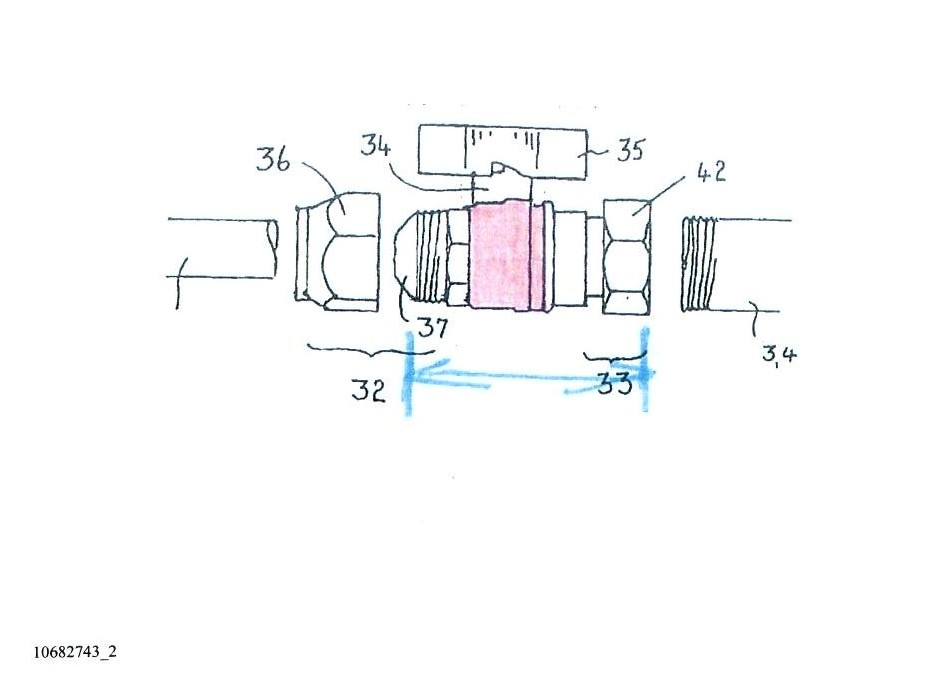
IN THE FEDERAL COURT OF AUSTRALIA |
|
|
ZETCO PTY LTD (ACN 084 301 986) Applicant/Cross-Respondent | |
|
AND: |
AUSTWORLD COMMODITIES PTY LTD (ACN 006 882 631) Respondent/Cross-Claimant |
|
DATE OF ORDER: |
|
|
WHERE MADE: |
THE COURT ORDERS THAT:
1. The parties are to submit proposed agreed orders by 8 August 2011.
2. If the parties are unable to agree proposed orders, each party should submit proposed orders, including orders as to costs, by midday on 11 August 2011. If there is no agreement as to costs, the proposed orders should be accompanied by short written submissions as to costs of no more than 2 pages.
3. The matter be listed for the making of orders at 9:30 a.m. on 12 August 2011.
Note: Entry of orders is dealt with in Rule 39.32 of the Federal Court Rules 2011.
|
NEW SOUTH WALES DISTRICT REGISTRY |
|
|
GENERAL DIVISION |
NSD 194 of 2009 |
|
BETWEEN: |
ZETCO PTY LTD (ACN 084 301 986) Applicant/Cross-Respondent |
|
AND: |
AUSTWORLD COMMODITIES PTY LTD (ACN 006 882 631) Respondent/Cross-Claimant |
|
JUDGE: |
BENNETT J |
|
DATE: |
1 august 2011 |
|
PLACE: |
SYDNEY |
REASONS FOR JUDGMENT
1 Zetco Pty Limited (Zetco) is a supplier of an extensive range of plumbing valves in Australia. Zetco is the patentee of Australian Standard Patent No 2006200845 for an invention titled “Plumbing Arrangements & Fittings” (the Patent). The Patent was filed on and has a priority date of 26 February 2006. The subject matter of the Patent is a plumbing valve for use with instantaneous gas and hot water systems. This plumbing valve is a loose nut ball valve.
2 Austworld Commodities Pty Limited (Austworld) is a supplier of a variety of plumbing products including plumbing valves in Australia. Since about 10 January 2007, Austworld has marketed “Logi Valves”, which are loose nut ball valves. One use of the Logi Valves is with instantaneous gas and hot water systems.
3 Zetco commenced proceedings against Austworld alleging patent infringement, contravention of ss 52 and 53 of the Trade Practices Act 1974 (Cth) (the TPA) and passing off in respect of the Austworld valves marketed as “Logi Valves”. After commencing the proceedings, Zetco successfully applied to amend the Patent pursuant to s 105 of the Patents Act 1990 (Cth) (the Act) (see Zetco Pty Ltd v Austworld Commodities Pty Ltd (2010) 86 IPR 11). The amendments, which were not opposed by Austworld, included changes to the body of the specification, changes to claim 3, and the deletion of claims 10 and 11.
4 The present hearing is concerned with issues of liability only, issues of the quantum of any pecuniary relief having been reserved for later determination.
5 Zetco asserts infringement by Austworld of claims 1 to 5 and 8 and 9 of the Patent:
(a) directly, through dealing in “Logi Valves” with model identification H20G, H20G15, H20W, H20R15, H20R and H20R15 (Logi Valves);
(b) directly, through dealing in valves of an amended design, including the H20 New Design Kit (which is a kit of H20G and H20W) (Sold Version 2 Logi Valves);
(c) directly, through offering for sale valves of an amended design, which include the Logi Valves, the H20 New Design Kit, H20G sold as one of two valves in the H20WR Kit and H20G sold as one of two valves in the H20RR Kit (Advertised Version 2 Logi Valves); and
(d) indirectly, by authorising, instigating, procuring, inducing and assisting persons in Australia to:
(i) deal in the Logi Valves, the Sold Version 2 Logi Valves and the Advertised Version 2 Logi Valves; and
(ii) use the methods claimed in claims 8 and 9 of the Patent.
6 For the purpose of the patent infringement proceedings (cf the TPA/passing off proceedings) there is no difference between the Logi Valves, the Sold Version 2 Logi Valves and the Advertised Version 2 Logi Valves (they will collectively be referred to as the Austworld Valves).
7 Austworld denies infringement of the Patent, liability for the contravention of ss 52 and 53 of the TPA and liability for passing off. Austworld has cross-claimed seeking an order revoking the Patent on the bases that the claimed invention is not novel and lacks an inventive step. Austworld no longer presses its revocation attack on the grounds of lack of clarity and lack of fair basis.
8 It is not in dispute that:
Austworld has imported, sold or disposed, offered for sale and kept Logi Valves since about January 2007;
Austworld has imported, sold or disposed, offered for sale and kept the Version 2 Logi Valves;
Austworld sells its valves to distributors for on-sale; and
Austworld has offered for sale Advertised Version 2 Logi Valves.
9 The parties have, commendably, narrowed the issues in dispute and it is not necessary to examine in detail the different Austworld Valves. A number of issues as outlined in the pleadings and in opening were resolved during the concurrent evidence of the experts called by the parties.
10 The issues presently pressed are:
whether the Austworld Valves directly infringe the claims of the Patent;
whether Austworld has infringed the method of use claims of the Patent pursuant to s 117 of the Act;
whether certain of the claims of the Patent are not novel in that they have been anticipated by:
certain valves that were on the market prior to the priority date;
a brochure/a drawing; and
a valve kit publicly displayed and allegedly sold prior to the priority date;
whether the invention, so far as claimed in the claims of the Patent, was obvious and lacked an inventive step as at the priority date;
whether, in the event of a finding of patent infringement, the conduct of Austworld is such as to attract the operation of the “additional damages” provision in s 122(1A) of the Act; and
whether there has been a contravention of ss 52 and 53 of the TPA, or passing off of the Logi Valves as those of Zetco.
THE EXPERT WITNESSes
11 The parties each called a plumber to give evidence as the skilled reader or skilled addressee of the Patent, Mr Neil McPherson by Zetco and Mr Cameron Gleeson by Austworld. Each was accepted by the parties as a skilled addressee. However, neither of the expert witnesses asserted any expertise in the design of plumbing valves. The parties’ submissions on the evidence of the expert witnesses in relation to obviousness are discussed at [200]-[204] below.
The experts
Mr McPherson
12 Mr McPherson is the owner and Principal Consultant of Watermark Product Solutions Pty Ltd, a plumbing and hydraulic consulting company established in 2009. He has over 35 years experience in the plumbing industry. During his career he has been involved in a wide range of roles including licensed plumber, drainer and gasfitter, plumbing inspector, hydraulic services engineer, TAFE teacher (including head teacher) and Standards Australia committee member. Mr McPherson also has extensive experience in the manufacture and installation of copper tubes (pipes) and fittings.
Mr Gleeson
13 Mr Gleeson has been a registered plumber and gasfitter for over 20 years. Mr Gleeson is a full-time teacher at Northern Melbourne Institute of TAFE for students enrolled in Certificates II, III and IV in Plumbing. From 1991 to 2008, Mr Gleeson ran a business under the name “Cam the Plumber Man” and later Fixadrip, which offered general plumbing services and then later specialised in gas appliances. During his career he has written plumbing articles for various magazines, acted as a plumbing consultant and appeared on talkback radio to answer questions relating to plumbing.
Experience level of expert witnesses
14 Austworld contends that Mr Gleeson is more acceptable as a person of skill in the art than Mr McPherson because he has had more experience in the actual installation of instantaneous hot water systems. I do not accept that submission. Mr Gleeson is a plumber with substantial experience as such. Mr McPherson has experience as a plumber, as a teacher of plumbers and as a person experienced in plumbing standards. Both of them qualify as skilled addressees and as persons skilled in the art to which plumbing valves are relevant, even though their experience is not precisely coextensive. It is not necessary for all persons of skill in the art to have corresponding experience. In this case, there is no single, precise experience that qualifies a person to give relevant evidence as to the understanding of relevant terms, as to common general knowledge in plumbing practices or as to certification standards. The claimed valve is to be used by practising plumbers, who can give relevant evidence, for example, as to the connection of parts in the installation of instantaneous hot water systems. The Patent also relates to a designed and manufactured valve and persons engaged in that activity may also give relevant evidence, for example, of the standards of connection resulting from the manufacturing process.
Comments on expert witnesses
15 Mr Gleeson had some apparent difficulty in giving evidence in Court. While it is understandable that a person resents being asked what he considers to be the same question repeatedly and being asked questions that probe answers already given or opinions expressed in his affidavits, the fact is that Mr Gleeson declined to answer questions probing the rationale for his conclusions or, when he answered such questions, simply referred back to what he had said in his affidavit or in a previous answer. On the other hand, Mr Gleeson was co-operative in demonstrating the methodology of the connection of a hot water heater to a pipe and readily conceded matters in concurrent evidence, including the fact that his conclusions generally depended upon his own construction of claim 1. He readily agreed with the conclusions of Mr McPherson on a number of matters on the assumption that his interpretation was not correct. He was not similarly forthcoming during cross-examination. This made it difficult to comprehend his approach to some areas in dispute.
16 Mr McPherson readily answered questions that probed his opinions, enabling a better understanding of the reasons why he came to his conclusions.
THE PATENT Specification
17 The Patent is particularly, but not exclusively, concerned with plumbing fittings used to connect instantaneous gas operated water heaters to a gas and water supply. The Patent abstract summarises the nature of the invention as the development of a new isolation valve:
A valve… useful in connecting an instantaneous gas water heater having threaded male gas and water inlets to existing pipework is disclosed. The requirement to include several additional fittings… with their attendant cost, time for installation and additional (possible leaky) joins is avoided. A pipework arrangement, a method of installation and a method of disconnection are also disclosed.
18 The specification states that the new combination overcomes a variety of difficulties hitherto not identified from prior art arrangements for connecting isolation valves.
19 The background of the invention can be summarised as follows:
Instantaneous gas water heaters are typically made with two threaded male connectors: one for water, the other for gas. (The nomenclature used within plumbing distinguishes between “male” components, which fit within “female” components. Thus a male screw will fit into a female nut or component.)
These threaded connectors are ¾ of an inch in external diameter (equivalent to 20 mm).
The pipework in new buildings is normally ¾ of an inch in external diameter.
In project homes and new buildings, the pipes are installed first. Hot water heaters are installed just before occupation.
The fittings required to “interconnect” the water pipe to the water heater have previously consisted of a “male flared union”, a “female-female isolation valve” and a “male-female barrel union”. This must be repeated for the gas connection.
This arrangement involves two lots of five joints, each of which may leak. The overall arrangement is bulky, not aesthetically pleasing and is time consuming for the plumber to assemble and install.
Australian laws require properly tested and marked gas and water isolation valves to be used.
The valve is intended to be installed within a pipe in order to control the flow through that pipe.
If it is necessary to change the diameter of the pipe work through which the water or gas flows, this change is effected by a union or other pipe connector which enables the change in diameter to be accommodated.
20 The genesis of the invention of the Patent is said to be a desire to simplify the prior art arrangement and to enable an appliance to be quickly and easily installed.
21 A detailed description of the invention is given by reference to the embodiment that is shown in Fig 3. It is contrasted with the prior art arrangement that is depicted in Fig 2. In relation to the prior art arrangement:
The water heater installation has two “threaded male connectors” which are ¾ of an inch in external diameter and which are to fit to the water and gas pipes.
The prior art fittings required to make the necessary connections consist of a valve, a male flared union and a male-female barrel union. Connecting these parts requires five joins to be made by the plumber.
Once the joins have been effected, the valve controls the flow of gas or water as desired. If it is necessary to replace the water heater, then the joining nut connected to the heater is loosened and the water heater is removed, leaving the joining nuts connected to the inlets of the heater.
A disadvantage of this system is that the overall distance of the assembled fitting is determined to some extent by the degree of engagement of the union bodies with the inlet and outlet to the valve. This introduces some uncertainty as to the precise position at which the pipes should be cut and so the cutting step must be left until last when the exact size of the assembly is known.
22 In contrast, in the preferred embodiment of the invention only a single fitting is required to effect the coupling. This is in the form of a valve having a pipe coupling at the inlet (and consisting of a male flared compression fitting) and a nut and tail outlet. Unlike the prior art arrangement, in order to complete the assembly, the pipe is cut to size so that it mates with the known overall length of the valve and the position of the inlet to the heater. The nut of the coupling at the inlet is passed over the pipe and the (flared) free end is tightened to compress the flared free end against the valve. Then a washer is placed inside the nut of the outlet and tightened.
23 This assembly procedure is said to be quick and easy and has only two joints that may create possible leaks, rather than the previous five. Removal of the heater unit is effected by rotating off the nut and washer.
The construction of the claims of the PATENT
24 The issues of infringement and whether certain of the prior art relied upon anticipates the subject matter of the claims are largely determined by the construction of the claims of the Patent.
25 There is no need to outline the principles of construction as they are well-established and are not in dispute between the parties. It goes without saying that the construction of the claims is a matter for the Court. However, evidence as to terms of art is relevant to placing the Court in the position of construing the claims as they would be understood by the skilled addressee.
Claim 1
26 Claim 1, the independent claim, is to:
A valve for controlling gas or liquid flow, said valve having a valve housing, a quasi-sphere having a through hole therein and being rotatably mounted within the housing and connected via a spindle with a handle means to permit said quasi-sphere to be rotated, wherein said valve housing has a through passage at one end thereof which terminates in a nut and tail fitting and the other end of which terminates in a pipe coupling, said nut and tail fitting and said pipe coupling being the same size.
[emphasis added]
Terms and expressions in claim 1
The valve
27 Exhibit A illustrates the experts’ alternative constructions of the term “valve” in claim 1 by reference to Fig 3 of the Patent:
28 At issue is whether the “valve” is limited to the quasi-sphere, the spindle (34) and the handle (35). If so, the “valve housing” is only that part surrounding the spindle and handle. This is the construction that Austworld contends for.
29 Alternatively, Zetco contends that the “valve” consists not only of the spindle and handle but also the nut and tail fitting at one end (33) and the pipe coupling at the other end (37). In that case, the valve housing extends from end to end.
30 Mr Gleeson’s depiction of the “valve housing” is shaded in pink. Mr Gleeson considers the valve to be the section around the ball of a ball valve together with the section that includes the handle. Accordingly, he uses the term “valve housing” in claim 1 to mean and be limited to the area immediately surrounding the valve handle, quasi-sphere and spindle, that is, ‘the housing that houses the quasi-sphere, not the rest of the valve’. Mr Gleeson’s characterisation is based on claim 1 stating that the through passage ‘terminates in a nut and tail fitting and the other end terminates in a pipe coupling’, which, in his view, ‘would mean it terminates at the nut and tail fitting and at the pipe coupling’.
31 Mr McPherson’s depiction of the “valve housing” is depicted by the lines and arrows in blue. Mr McPherson says that he understands the term to describe the body that encompasses the device, that is, the entire valve. He considers the valve to mean the device from the pipe connection to the end of the nut and tail.
32 In my view, claim 1 describes a single valve and its housing. As the claim states, the valve housing terminates in the nut and tail fitting at one end and the pipe coupling at the other end. It does not say that the valve housing terminates at the nut and tail fitting at one and the pipe coupling at the other end. The nut and tail fitting and pipe coupling are described by reference to their presence at the ends of the valve housing. In other words, claim 1 describes and claims a single unit, which is described as a valve. It follows that the valve housing encompasses the whole of that unit. There is little point in the claim referring to a valve housing that only encompasses part of the valve therein described and claimed.
33 If regard is had to the specification, including the drawings in Figs 2 and 3, the specification supports this construction of claim 1 and what constitutes the valve housing. The background of the invention says that, hitherto, a number of individual fittings had been required to interconnect the pipe supplying water and gas to the meter. The invention is intended to simplify such an arrangement, inter alia, to enable it to be more quickly and easily installed or removed. In the preferred embodiment of the invention in Fig 3, only a single fitting is required to effect the coupling. This fitting is in the form of a valve described and claimed as having a pipe coupling at the inlet and a nut and tail outlet. The valve has a quasi-sphere. The specification describes the valve as “having” each of these, not just the quasi-sphere. The specification also states that there are only two joints to prevent possible leaks rather than the previous five. Those two joints are the ones at each end, one to the hot water system and one to the existing pipe. This re-enforces that there are no internal joints from the nut and tail at the one end to the pipe coupling at the other and supports the conclusion that the “valve” in claim 1 includes those integers.
34 In addition, a comparison is made in the specification between Fig 3 and Fig 2, the latter describing the different components necessary for the installation of the hot water service using components of the prior art. It is clear that the distinction that is drawn is between numerous components that must be manually connected and the single valve of the invention that extends from the pipe coupling to the end of the nut and tail.
35 Further, claim 1 requires that the valve housing has a through passage which terminates at one end in the nut and tail fitting and at the other end in the pipe coupling. The through passage is described as being the length of the valve housing. The purpose of the through passage, as recognised in the specification and as understood by the experts, is to provide for a flow of gas or water. The purpose of that through passage would be defeated if it did not pass from the point at which the nut and tail fitting effected a connection at one end and the point at which the pipe coupling effected the connection at the other.
36 It is clear that the valve housing is not limited to the area containing the quasi-sphere, spindle and handle.
Is the valve integrally formed, with the nut and tail included?
37 Claim 1 does not specify the method of manufacture of the valve. An issue between the parties is whether, as Zetco contends, claim 1 requires the product to be integrally formed as a fixed unit with the valve, including the nut and tail fitting and pipe coupling, having been prefabricated or whether, as Austworld contends, the claim only requires a valve where the nut and tail fitting and pipe coupling have been pre-attached manually.
38 Mr Gleeson understands the statement in the Patent that there is a nut and tail fitting at one end and a pipe coupling at the other end to mean that the valve comes with the nut and tail and the pipe coupling already attached.
39 Mr McPherson understands the specification to describe a valve that does not require the plumber to do anything to the valve to use it. This includes avoiding the need to tighten the nut and tail, or the need to ensure that the connection between the nut and tail and the rest of the valve does not leak. This could not be achieved by simply attaching the nut and tail manually, as the plumber would need to use thread seal and reattach the nut and tail. This would not achieve the promise of the invention and would be no different to supplying the individual components separately. From Mr McPherson’s evidence, which I prefer on this issue as it was not conditioned on an incorrect reading of the claim, it is apparent that the plumber would need to be satisfied that the components of the valve had been connected and sealed to a factory standard in order to be confident that the valve supplied does not need to be disassembled and reassembled. If a prefabricated valve unit included the join of the pipe coupling, a plumber would know that it had been tested before certification and would not then take it apart.
40 The description of the invention in the specification, including the reference to a single fitting, the reference in claim 1 to the pipe coupling at the inlet of the valve and the nut and tail at the outlet of the valve and the comparison of the claimed invention in Fig 3 with the prior art of Fig 2, together with the functional elements of the claimed invention, such as the absence of leaking between hitherto separate components, all make it clear that a valve that consists of the components specified in claim 1 supplied separately (even if manually pre-attached) would not be understood by a plumber to be within the scope of the claim. That is, the valve of claim 1 is a prefabricated unit.
the requirement to be “the same size”
41 An issue about the meaning of the phrase “being the same size” resolved during the course of concurrent expert evidence.
42 In plumbing, components to be connected are described in terms of their size. The expert witnesses both understand “being the same size” to refer to the fitting of another component of the same recognised size. For example, commonly used in the trade is the expression “DN 20”, which equates roughly to three quarters of an inch in diameter. A connector can be designated DN 20 if it joins to another pipe or connector designated DN 20. Although, for example, a male and female end may look to be of different diameter externally, they may both be designated DN 20 as the threads fit and are therefore of the same size.
43 Claim 1 therefore requires the nut and tail fitting and pipe coupling to fit the same sized pipe. As plumbing fittings are a standard size (DN 20), they are interchangeable and can be “mixed and matched”.
Pipe Coupling
44 Issues about the meaning of “pipe coupling” were generally resolved during the course of concurrent expert evidence. The experts agree that:
a pipe coupling is a mechanical fitting that connects a pipe to something else, such as another pipe or a valve;
a pipe can be joined to another pipe only through a fitting;
the pipe to which a valve is connected is not part of the pipe coupling;
a pipe coupling must be complete to enable the pipe to be joined; and
a pipe coupling is only complete when there are two parts which form a coupling.
Claim 2
45 Claim 2 is to:
The valve as claimed in claim 1 wherein said through passage has a substantially constant internal diameter which is substantially equal to the diameter of the hole through said quasi-sphere.
[emphasis added]
46 The through passage of the valve must have a substantially constant internal diameter for the purposes of claim 2. The extent of the valve housing, as construed above, determines the extent of the through passage of the valve.
47 Mr Gleeson’s evidence as to the extent of the valve housing and the part of the through passage that must have a substantially constant internal diameter for the purpose of claim 2 was affected by his interpretation of claim 1. As the valve includes the pipe coupling and the nut and tail fitting, the substantially constant internal diameter must extend from the end of the pipe coupling to the end of the nut and tail fitting.
48 Based on my construction of claim 1, the only remaining issue for claim 2 is the meaning of the integer ‘the through passage has a substantially constant internal diameter’. Mr Gleeson understands the reference to a substantially constant internal diameter to mean the same diameter within engineering tolerances, to ensure a consistent, reliable, predictable flow. He says that ‘the flow rate is the most important factor in the function of a valve’. According to Mr Gleeson, small variations do not affect the performance of the valve.
49 The through passage is the passage through which hydraulic fluids and gas can pass. The experts agree that the requirement that the internal diameter be constant means that it must not decrease or increase through the whole length of the passage, that is, the internal diameter must be the same, not only under the valve but also at the ends of the valve. The experts agree that the requirement of claim 2 is of a passage through which no obstructions are observable. For example, the areas under any joins must be smooth. It is not in dispute that a constant internal diameter is important for hydraulic properties and that the functioning of the valve may be affected if, for example, spoilt water pools because of the wider diameter in part of the internal passage.
Claim 3
50 Claim 3 is to:
The valve as claimed in claim 1 or 2 wherein said pipe coupling is selected from the class consisting of: a flared compression fitting, an olive compression fitting, and a cone type compression fitting.
51 Each of the specified pipe couplings is standard in the industry. No arguments were addressed specifically to claim 3. The validity and infringement of that claim will be determined by a consideration of the validity and infringement of claims 1 and 2.
Claim 4
52 Claim 4 is to:
The valve as claimed in any one of claims 1-3 and rated for both gas and water.
53 It is common ground that “rated” means “certified”. The experts agree that for a valve to be of utility to a plumber it must be rated for gas, water or both. A valve may be rated for one and not the other. It is necessary that the valve is stamped accordingly. Both Mr Gleeson and Mr McPherson read the requirement for certification in claim 4 of the Patent as requiring compliance with the relevant Australian standards for water and gas valves. As Mr McPherson said, that meant:
1. it has a “WaterMark” certifying logo on the body along with a “WaterMark” licence number confirming it is certified for water supply use in accordance with AS 5200 and ATS 5200.012; and
2. it has an Australian Gas Association (AGA) licence number marked on the body confirming it is certified for gas supply use in accordance with AS 5601.
54 It is not surprising that valves that are not for use in Australia do not bear Australian rating approval. Mr Gleeson says that compliance with Australian standards is not something that can be determined by looking at a prior art fitting or any valve but he would assume that a valve for sale in Australia would so comply. Although both experts understand claim 4 to be referring to compliance with Australian standards, it is not common ground between the parties that the claim requires certification under Australian standards. Austworld submits that “certified” should mean certified or rated for gas and water anywhere in the world. The reason for this construction is, Austworld submits, the policy behind the Act. Otherwise, Austworld says, a valve which had all of the features of the claimed valve but was certified only in an overseas jurisdiction could not anticipate claim 4. Austworld submits that I should take judicial notice (pursuant to s 144 of the Evidence Act 1995 (Cth)) of the fact that overseas sales of prior art valves were of valves that must have been certified in the countries in which they were sold.
55 I do not accept Austworld’s submission. First, it is not a question of the policy of the Act. The question is how the claim would be read by the skilled addressee. If a plumber would see, for example, an Italian valve certified for gas and water and assume that it would also be certified for gas and water in Australia, that may be a sufficient disclosure of this integer. In the absence of such evidence it cannot be accepted that an Italian valve certified in Italy for gas or water would be understood by the skilled addressee to be certified under Australian standards. I do not accept that correlations between Italian standards and Australian standards for certification of valves for use for gas and water is a matter of which judicial notice can be taken. I have no basis on which to make such an assumption, nor was one proffered.
56 It is therefore clear that claim 4 refers to compliance with the relevant Australian standards.
Claim 5
57 Claim 5 is to:
A valve substantially as herein described with reference to Fig. 3 of the drawings.
58 The construction of this claim is not relevantly at issue.
Claims 8 and 9
59 Claim 8 is to:
A method of installing an appliance having a male threaded connector to an existing pipe, said method comprising the steps of:
(1) selecting a valve having a nut and tail fitting at one end and a pipe coupling at the other end and being as claimed in any one of claims 1-5,
(2) interconnecting said pipe coupling and said pipe, and
(3) interconnecting said nut and tail fitting and said male threaded connector.
60 Claim 9 is to:
A method of installing an appliance having a male threaded connector to an existing pipe, said method being substantially as herein described with reference to Figs. 1 and 3 of the drawings.
61 Zetco submits that the use of the word “interconnecting” in claim 8 supports an interpretation of a valve integrally formed, while Austworld contends that “interconnecting” simply means “connecting”.
62 In giving evidence, Mr Gleeson focussed on the function to be performed by the claimed combination rather than considering that combination itself. For example, Mr Gleeson equates the methods of claims 8 and 9 with the method he used before the priority date of connecting a series of fittings. He points out that, in his view, there is no requirement that the valve be prefabricated and that the method includes the use of the valve parts as set out in fig 2 of the Patent, therein described as the arrangement of the prior art. He says that even if the claims require a prefabricated valve, the method adds nothing to the prior art. From his evidence, it is apparent that he is concerned with the functional end-point of connection, rather than the means to achieve it.
63 Mr Gleeson says that he sees “interconnecting” as being interchangeable with “connected”. On the other hand, Mr McPherson understands “interconnected” to denote an integral system, in one product. The word “interconnected” is not, in context, a term of art for a plumber. The expert evidence on this point is unhelpful.
64 It is appropriate to have regard to the body of the specification and the description of the invention in context in order to understand what the patentee meant by the word “interconnecting” in the claims. It is, perhaps, a classic application of the correct use of “purposive construction”, as explained in Catnic Components Ltd v Hill & Smith Ltd [1978] FSR 405 and elucidated in Kirin-Amgen Inc v Hoechst Marion Roussel Ltd (2004) 64 IPR 444 and Sachtler GmbH & Co KG v RE Miller Pty Ltd (2005) 221 ALR 373; the question is what the person skilled in the art would have understood the patentee to be using the language of the claim to mean. The word “interconnecting” in claim 8 is used to mean “connect” in the context where that connection involves the joining of the parts such that one fits into the other.
65 I do not see the use of the word “interconnecting” as affecting the construction of claim 1.
Infringement
66 Zetco alleges that each of the Austworld Valves infringes the Patent.
67 Austworld admits that if the Austworld Valves infringe one or more of claims 1 to 5 then it has authorised such infringement by the sale of the Austworld Valves to distributors for on-sale to end users.
Claims 1 to 5
68 Austworld admits that claim 1, if valid, is infringed by the Austworld Valves. Accordingly, subject to validity, claim 1 is infringed by the Austworld Valves.
69 Zetco accepts that three of the Logi Valves - H20G15, H20W15 and H20R15 - do not infringe claim 2. Austworld concedes that the other three Logi Valves - H20G, H20W and H20R - possess all the essential integers of claim 2. Accordingly, subject to validity, with the exception of H20G15, H20W15 and H20R15, the Austworld Valves infringe claim 2.
70 It is admitted that the Austworld Valves possess the essential integers of claim 3 insofar as it is dependent on claim 1. Accordingly, subject to validity, claim 3 is infringed by the Austworld Valves.
71 Zetco accepts that certain of the Austworld Valves - H20R, H20R15, H20G and H20G15 - are not certified for both gas and water and therefore do not infringe claim 4. Austworld admits that H20W (when dependent on claims 1-3) and H20W15 (when dependent on claims 1 and 3) infringes claim 4. Accordingly, subject to vaidity, claim 4 is infringed by these two valves. No submissions were specifically directed to the other of the Austworld Valves.
72 It is admitted that if valid, claim 5 is infringed by the Austworld Valves. Accordingly, subject to validity, claim 5 is infringed by the Austworld Valves.
Claims 8 to 9
73 Zetco contends that Austworld's supply of the Austworld Valves to its customers in Australia constitutes an infringement of method claims 8 and 9 under s 117(1) of the Act. Austworld’s admission of its authorisation of infringement of claims 1 to 5 does not extend to claims 8 and 9. Austworld denies any form of infringement of claims 8 and 9.
Legal Principles
74 Section 117(1) of the Act provides:
If the use of a product by a person would infringe a patent, the supply of that product by one person to another is an infringement of the patent by the supplier unless the supplier is the patentee or licensee of the patent.
75 Based on the definition in the Dictionary in Schedule 1 to the Act, “supply” includes an ‘offer to supply’.
76 Section 117(2) of the Act explains what is meant is meant by “use of a product”. It relevantly provides:
(2) A reference in subsection (1) to the use of a product by a person is a reference to:
(a) if the product is capable of only one reasonable use, having regard to its nature or design--that use; or…
…
(b) if the product is not a staple commercial product--any use of the product, if the supplier had reason to believe that the person would put it to that use…
77 If a product supplied has only one reasonable use and that use is infringing, supply of the product will infringe s 117(1) via s 117(2)(a), regardless of any other surrounding circumstances.
78 Where a product is not a ‘staple commercial product’, and the supplier has ‘reason to believe’ that the product will be used in a manner that will infringe a patent, supply of the product will infringe s 117(1) via s 117(2)(b).
79 The parties agree that the test to be applied for what constitutes a ‘staple commercial product’ is as set out by the High Court in Northern Territory v Collins (2008) 235 CLR 619. Justice Hayne agreed with Crennan J that ‘staple commercial product’ means a product that is ‘supplied commercially for various uses’. Further, Hayne J said that a product is a ‘staple commercial product’ if it is an article of commerce that not only can be used in a variety of ways but also is traded for use in various ways (at [41]).
Application of s 117
80 It is necessary for Zetco to establish that the Austworld Valves fall within either s 117(2)(a) or s 117(2)(b). It is agreed that if the Austworld Valves have only one reasonable use, being the methods of claims 8 and 9, or are not staple commercial products within the compass of s 117(2)(b) of the Act, claims 8 and 9 are infringed.
81 Zetco contends that the Austworld Valves have only one reasonable use, being the use described in the methods of claims 8 and 9, and are not staple commercial products. It follows, Zetco says, that since use by a plumber to install the Austworld Valves will infringe the methods of claims 8 and 9, the supply of the Austworld Valves by Austworld will infringe those claims by reason of s 117(1).
82 Austworld admits that the Austworld Valves are capable of being used as part of a method as claimed in each of claims 8 and 9 but denies that the Austworld Valves are capable of only one reasonable use. Austworld also denies that the Austworld Valves are not staple commercial products and denies that ‘it had reason to believe’ that the Austworld Valves would be used as part of a method as claimed in each of claims 8 and 9 of the Patent.
83 Zetco submits that there is no evidence that the Austworld Valves are traded for any use other than the use described in the Patent, that is, the installation of instantaneous gas hot water systems. Zetco relies on the evidence of Mr Gleeson, which is to the effect that the Austworld Valves were sold for this use, and Mr McPherson’s resistance of the contention that the Austworld Valves could be used for other purposes.
84 Austworld says that claims 8 and 9 require the use of the valve in the installation of an appliance to an existing pipe, whereas the Austworld Valves can be connected to a variety of pipes, for example, an existing pipe or a new pipe. Austworld Valves can also, Austworld says, be connected to other fittings or fixtures which are not pipes but, for example, in the nature of hoses. However, as Zetco points out, the requirement that there be a connection to an ‘existing pipe’ only requires that, at the time of engaging in the methods of claims 8 and 9, there is an existing pipe. As the method is a method of connecting a pipe to an appliance, this would always be the case.
85 Austworld relies upon the evidence of Mr McPherson to support a submission that the Austworld Valves can be used both as isolation valves and more generally, in circumstances other than connecting the parts for a hot water service; for example, to connect a pipe to another pipe. However, Mr McPherson does not accept that the Austworld Valves alone could be so used. He does not accept that normally a plumber would use the Austworld Valves to connect two pipes together. He says that this would require the plumber to do extra work with the Austworld Valves.
86 While Mr Gleeson describes a number of different valves with or without different end fittings, he does not say that in the ordinary course he would use the valve of claims 1 to 5 of the Patent other than to connect with an existing pipe. Nor does the evidence support Austworld’s contention that the Austworld Valves are staple commercial products because they are capable of a variety of uses in the installation of plumbing systems. Further, there is no evidence that they are traded for use in various ways. While it may theoretically be possible to use the Austworld Valves in ways other than as set out in claims 8 or 9, in particular in connection with other fittings, there is no evidence that the Austworld Valves are so used or that they are traded for use other than for the methods of these claims. There is clear evidence of the use of the Austworld Valves within claims 8 and 9 of the Patent. There is no evidence of alternate use. Zetco’s evidence establishes that the Austworld Valves have only one reasonable use and are not a staple commercial product. Austworld has not, by evidence, established the contrary.
87 To establish that that the supply of the Austworld Valves falls within s 117(2)(b), it must also be shown that Austworld had ‘reason to believe’ that the Austworld Valves would be used as part of the method claimed in claims 8 and 9.
88 Austworld points out that its customers are wholesale valve distributors and merchants who buy valves from Austworld in bulk and on-sell them to customers. Austworld’s customers are not end-users. However, Austworld has not adduced evidence that the Austworld Valves have a variety of applications. Its price guide states a use with instantaneous hot water systems. Mr Gleeson read the references to the Austworld Valves in the Austworld price guide as being for use of the Austworld Valves in installing instantaneous hot water systems. Zetco says that Austworld thereby recommended that the Austworld Valves be used for that purpose. Zetco submits that Austworld clearly had reason to believe that the Austworld Valves would be used this way.
89 I accept Zetco’s submission. It is clear that Austworld had reason to believe that the Austworld Valves would be used in the methods of claims 8 and 9.
90 The use of the method of claims 8 and 9 falls within both ss 117(2)(a) and (b). Therefore, subject to validity, the Austworld Valves infringe these claims of the Patent pursuant to s 117(1).
Novelty
91 A patent is liable to be revoked if a claim is not to a patentable invention (s 138(3)(b) of the Act). A patentable invention, insofar as claimed in any claim, must be novel when compared to the “prior art base” as it existed before the priority date (s 18(1)(b)(i) of the Act). The parties agree that s 7 of the Act as at 26 February 2006 is applicable for the determination of novelty and inventive step. Section 7(1), which deals with novelty, relevantly provides:
For the purposes of this Act, an invention is to be taken to be novel when compared with the prior art base unless it is not novel in the light of any one of the following kinds of information, each of which must be considered separately:
(a) prior art information (other than that mentioned in paragraph (c)) made publicly available in a single document or through doing a single act;
…
92 According to its definition in the Dictionary in Schedule 1 to the Act, the “prior art base” available to establish lack of novelty includes information that is publicly available inside or outside the patent area. It is immaterial whether or not the invention has become known to many people or to few people, as long as it was available to at least one member of the public who, in that capacity, was free in law and equity to make use of it.
93 In order to anticipate the invention of the claims, the prior art must include, or at least disclose, each and every essential integer of the claims. Such a disclosure may be explicit or, in certain circumstances, may amount to a sufficient disclosure of each integer to a skilled worker even though not explicit (H Lundbeck A/S v Alphapharm Pty Ltd (2009) 177 FCR 151; Nicaro Holdings Pty Ltd v Martin Engineering Co (1990) 91 ALR 513). This may occur where, for example, the prior art information is a publication which does not specify an integer but the skilled reader would understand that integer to be present in the subject matter described. The same applies to what is disclosed to the person of skill in the art by a prior product. If the prior art does not expressly specify each and every essential integer of the claimed invention, the evidence must clearly establish that, to the skilled reader, each and every essential integer is included in that prior art. If the prior art relied on is an object rather than a publication, that object must incorporate all of the essential integers of the claim, as would an infringement (Meyers Taylor Pty Ltd v Vicarr Industries Ltd (1977) 137 CLR 228 at 235). Otherwise, it is necessary to establish that the skilled addressee would add the missing information to the combination as a matter of course and without the application of inventive ingenuity; he or she must, in effect, “see” the missing integer in the prior art object (Lundbeck at [181] and [183] per Bennett J, Middleton J agreeing). The term “enabling disclosure” may also be apposite to disclosure to the skilled addressee of an asserted prior use; the issue is whether what the skilled addressee observes on inspection is sufficient to enable him or her to comprehend the complete invention (Insta Image Pty Ltd v KD Kanopy Australasia Pty Ltd (2008) 78 IPR 20). A person of skill in the art examining a prior art valve may know of a component that equates to a missing integer, or the missing integer may be part of common general knowledge. However, this does not necessarily mean that the prior art discloses that missing integer and that anticipation has occurred. Such a submission misunderstands the test for anticipation. It is a matter of the disclosure of the prior art information.
The prior art
94 Austworld relies on a number of prior art valves in asserting that claims 1 to 5 and 8 and 9 of the Patent lack novelty.
95 The valves relied upon are identified as:
Cimberio valve No CIM 260 (Cimberio Valve). It is not in dispute that the Cimberio Valve has been sold by an Italian company to customers in Italy since 2001.
CPS valve No BVM 3 (CPS Valve). It is not in dispute that the CPS Valve has been sold in Australia since March 2000.
Pettinaroli valve No 52MET (Pettinaroli Valve). It is not in dispute that the Pettinaroli Valve has been sold in Italy and other European countries since 1995. Austworld no longer relies on Pettinaroli valve No 52MET1.
AVG Quickie Valve, which Austworld contends Australian Valve Group Pty Ltd (AVG) offered for sale and displayed at the Plumbtec Conference in Perth in November 2005 (the Plumbtec Conference) and sold on or about 20 January 2006.
96 Austworld also relies on the display by AVG at the Plumbtec Conference of further material for the AVG Quickie Valve.
97 Another valve, the Effebi valve, is no longer pressed as an anticipation of the relevant claims of the Patent.
98 The integers in dispute as between the experts, each of which is essential, are:
a pipe coupling (claim 1);
the nut and tail fitting and pipe coupling being the same size (claim 1);
the through passage having a substantially constant internal diameter which is substantially equal to the diameter of the hole through the quasi-sphere (claim 2);
the pipe coupling being selected from the class consisting of a flared compression fitting, an olive compression fitting, or a cone type compression fitting (claim 3);
the valve being rated for both gas and water (claim 4);
a valve with reference to fig 3 of the drawings (claim 5); and
a single valve encompassing the claimed integers, that is, prefabricated as a single valve.
Cimberio Valve
99 With the exception of the integer that the nut and tail fitting and pipe coupling be of the same size, the parties agree that the Cimberio Valve contains the other integers of claim 1. Austworld contends that based on the information in the Cimberio Valve catalogue, the nut and tail fitting of the Cimberio Valve is 19 mm and the pipe coupling fitting is ¾ of an inch, which is the same size.
100 As stated above, Mr Gleeson and Mr McPherson agree that the requirement in claim 1 that the nut and tail fitting and the pipe coupling be the ‘same size’ does not refer to literal dimensions of threads and the like but rather to the size of pipe that the fitting is designed to accommodate. Both experts agree that the flared compression fitting of the Cimberio Valve is different from ones known in Australia. The experts agree that the Cimberio Valve has a DN 20 nut and tail but not a DN 20 pipe coupling. That is, the inlet and outlet bore diameters are not of the same size. The Cimberio Valve thus lacks the essential integer that the nut and tail fitting and the pipe coupling are of the same size. Accordingly the Cimberio Valve does not anticipate claim 1 or the dependent claims 2 to 5 and 8 and 9.
101 In any event, for the purposes of claim 2, based on the construction of “valve housing” I determined above, the experts agree that a shoulder within the through passage of the Cimberio Valve means that it does not have a substantially constant internal diameter.
102 For the purposes of claim 4, there is no evidence that the Cimberio Valve is approved for both gas and water by Australian standards. Mr McPherson’s examination caused him to conclude that it would not satisfy the Australian Standards requirements for certification. Availability for sale of the valve in Italy is not sufficient to establish that criterion. Austworld has not established the certification of the Cimberio Valve for both gas and water.
103 The Cimberio Valve could not anticipate claim 5 because it is not substantially as described in Fig 3 of the Patent.
The CPS Valve
104 The issue in dispute between both the parties and the experts is whether the CPS Valve discloses the integer of a pipe coupling, as required by claim 1. Zetco contends that this integer is missing from the disclosure of the CPS Valve. Austworld submits that the flared end of the CPS Valve with the thread is a pipe coupling. In the alternative, Austworld submits that the CPS Valve constitutes an enabling disclosure within the meaning discussed in Lundbeck at [181] and [183].
Does the CPS Valve contain a pipe coupling?
105 Mr Gleeson is not familiar with the CPS Valve and is of the view that it looks like it is from a different industry. Mr Gleeson observes that the CPS Valve is very small and unlikely to be used for the supply of gas or water from the mains. He says it could not be used in Australia for Australian plumbing because it is not of an approved size. Mr Gleeson is not certain of the use of the CPS Valve, although he speculates that its use could be, for example, for refrigeration compressed air or hydraulic fluid. The nut and tail of the CPS Valve is suitable, in his view, to connect a flexible hose. Mr Gleeson is of the view that a “hose” is within the definition of “pipe” as that is understood in the relevant Australian Standard, AS 3500. Mr Gleeson expresses the opinion that the absence of a nut does not preclude the presence of a pipe coupling. That is, a thread that can screw into some sort of tube is, in his view, a pipe coupling.
106 Mr McPherson is of the view that the CPS Valve does not have a pipe coupling. Mr McPherson says that the CPS Valve is generally connected to a hose. He does not agree with Mr Gleeson that nut and tail fittings were used on washing machine fittings before February 2006. Mr McPherson likens the hose of a washing machine to a garden hose, where the fitting is not a nut and tail but a press joint. He does not view the inlet of the CPS Valve as a pipe coupling because he does not believe that the inlet is generally connected to a copper pipe and because a male thread by itself is not a pipe coupling. Mr McPherson observes that the CPS Valve is not supplied with any other accessory and that there is no reference on the CPS Valve to certification for gas or water. Mr McPherson says that the CPS Valve seems to be used in a commercial refrigeration test equipment context and that he would not search for or consider the CPS Valve for use in a plumbing context. He says that it cannot be used as an isolation valve in an instantaneous hot water system installation.
107 In Mr Gleeson’s words, a pipe coupling is a ‘mechanical fitting that joins a pipe to something else… The words “pipe coupling” also mean that it joins two pipes or joins a pipe to a fitting in a straight line’. On this basis, the CPS Valve does not have a pipe coupling.
Is there an enabling disclosure of the pipe coupling?
108 Mr Gleeson says that in order to enable the presence of a pipe coupling for the CPS Valve, he would attach the CPS Valve to a pipe using a coupling nut, a common plumbing device. Accordingly, Austworld submits that if a person skilled in the art wanted to use the CPS Valve to connect an instantaneous gas hot water system service, it was readily apparent to him or her at the priority date that all that was required to achieve that outcome was the addition of a simple, single fitting to enable the presence of a pipe coupling.
109 However, Mr Gleeson concedes that he would not know if the end of the CPS Valve could function as a pipe coupling unless he received more information from the manufacturer and that he would have to go to the manufacturer to find out how to couple a pipe to the CPS Valve. Although a representative of CPS Australia Pty Ltd (CPS) gave evidence of publication, no CPS representative gave evidence of the features of the CPS Valve or as to whether the thread could be used as a pipe coupling. Zetco urges rejection of Mr Gleeson’s speculation that the thread end of the CPS Valve could be coupled to a pipe.
110 Austworld’s submission on the enabling disclosure of a pipe coupling is to the following effect:
The CPS Valve enables the skilled addressee in the ordinary course and without invention to add what is missing from the CPS Valve to obtain the claimed invention (Lundbeck at [180]–[183]).
Mr Gleeson says that adding a pipe coupling to the CPS Valve to join it to a pipe is something that would be done as a matter of course without inventive ingenuity. Mr McPherson does not suggest in his oral evidence that adding parts to the CPS Valve was not something he could (or would) have done as a matter of course.
The additional fitting would have been of the same size as the nut and tail on the CPS Valve in order for them to be used on a pipe.
The additional fitting was part of common general knowledge.
111 Zetco submits that Austworld cannot create a combination by fusing common general knowledge and the disclosure of four out of five integers of the claim. I agree (see also [93] above).
112 The claimed invention is a combination of integers used in the installation of hot water systems. The experts agree that the CPS Valve is not a plumbing product. A valve that is not known to a plumber as a plumbing valve and that is missing an integer of the invention as claimed in claim 1 does not sufficiently disclose to a plumber the claimed combination. Mr Gleeson does not say that the CPS Valve disclosed to him the combination of the claimed valve. His evidence that he would have to ask the manufacturer how to couple a pipe to the CPS Valve argues against Austworld’s submission that it was a simple or inevitable outcome or that it would be done as a matter of course. The CPS Valve does not anticipate claim 1.
Other claims
113 In any event, none of the other relevant claims are anticipated by the CPS Valve. In relation to claim 2, based on the construction of “valve housing” found above, the claim is not anticipated. The parties do not seem to argue to the contrary. The CPS Valve has a restriction though the bore, so it does not have a substantially constant diameter. Claim 3 cannot be anticipated by the CPS Valve because there is no coupling of the specific type identified within the three alternatives in that claim. In relation to claim 4, Mr Gleeson accepts that the CPS Valve could not be used as a pipe coupling in Australia for water or gas as it has no certification markings and is too small to be connected to a hot water service. The CPS Valve could not anticipate claim 5 because it is not substantially as described in Fig 3 of the Patent.
The Pettinaroli Valve
114 Mr Gleeson accepts that the Pettinaroli Valve has a nut and tail fitting at one end and a female thread, rather than a pipe coupling, at the end other end. He also accepts that neither a female thread nor a male thread is a pipe coupling. Austworld acknowledges that the Pettinaroli Valve does not have a pipe coupling at the one end. As an essential integer is absent, the Pettinaroli Valve does not expressly disclose the integers of claim 1 of the Patent. However, as with the CPS Valve, Austworld contends that there is an enabling disclosure of the pipe coupling. Austworld’s submissions on the enabling disclosure of a pipe coupling with regard to the Pettinaroli Valve are generally the same as those made in respect of the CPS Valve (see [110] above).
115 Mr Gleeson considers the prior art valves primarily from a functional rather than structural perspective. Mr Gleeson is of the view that the Pettinaroli Valve could be “modified” to have a pipe coupling by connecting an available fitting. He makes the same response to a valve with a nut and tail at one end and a male thread at the other end. On being asked to describe how to convert a female thread to a pipe coupling, he explains that it could be done using a number of additional fittings. However, he does not say that the Pettinaroli Valve, with a female thread, discloses to him the pipe coupling of the valve of the Patent.
116 It has not been established that the Pettinaroli Valve was part of common general knowledge or, indeed, that Mr Gleeson had seen one before. Austworld’s submission that it was “inevitable” that the plumber would run one end of a Pettinaroli Valve into a pipe coupling has not been substantiated in the evidence. Mr Gleeson does not say what he would do to add a coupling to the Pettinaroli Valve. Enablement fails both legally and factually. Accordingly, there is no enabling disclosure of claim 1.
117 In any event, the Pettinaroli Valve does not possess the essential integers of any of the other relevant claims of the Patent. Austworld does not rely on the Pettinaroli Valve to invalidate claim 2 of the Patent. There is no coupling of the specific kind identified within the three alternatives in claim 3. In relation to claim 4, there is no gas and water rating on the valve. The experts agree that the Pettinaroli Valve was not certified for both gas and water in Australia. Claim 5 is not anticipated as the particular coupling of Fig 3 of the Patent is absent.
The AVG Quickie Valves
118 The evidence concerning the AVG Quickie Valves is primarily that of Mr Morris, a director of AVG since 2001.
119 According to Mr Morris, AVG was selling only 10 or 20 products in 2005. Mr Morris says that in around January 2005, AVG developed a kit for the installation of continuous flow hot water systems, known as the AVG Quickie Instantaneous Kit (Quickie Kit). Mr Morris says that the Quickie Kit comprised two valves, one for connecting the gas supply and one for connecting the water supply.
120 Mr Morris was the designer and developer of the AVG Quickie Valves. He says that his plan was to have a loose nut ball valve, with a loose nut at one end and a method of connecting to the plumbing at the other. The AVG Quickie Valves were manufactured by an external manufacturer, Mania National. Mr Morris says that he was not aware of the way in which AVG products were supplied to consumers.
121 Mr Morris says that the Quickie Kit was first offered for sale at the Plumbtec Conference. AVG displayed at its public stand a Quickie Kit, a brochure of the Quickie Kit (the Brochure), a drawing of the Quickie Kit (the Drawing) and a poster for the Quickie Kit. Mr Morris says that a plumbing retailer, Galvins Plumbing (Galvins), ordered 100 Quickie Kits on 17 January 2006 (the Galvins Purchase Order). The Galvins Purchase Order and a tax invoice issued by AVG to Galvins for the supply of the Quickie Kits dated 20 January 2006 (the Galvins Invoice) are in evidence. Mr Morris’ uncontradicted evidence establishes that the Brochure and the Drawing, as well as an example of the Quickie Kit, were publicly available at the Plumbtec Conference.
122 Austworld relies on the display and sale of the Quickie Kit prior to the priority date of the Patent to anticipate the valve of the claims.
123 There is, however, an issue concerning the nature of the Quickie Kit. It does not appear to be in dispute that it included a valve but there is a dispute as to the characteristics of the valves on display at the Plumbtec Conference and the characteristics of the valves of the Quickie Kits allegedly sold to Galvins.
124 In particular, the Quickie Kit displayed at the Plumbtec Conference apparently included a tempering valve, a valve which would need to be placed between the nut and tail at one end and the pipe coupling at the other. It would seem from the evidence that the Quickie Kits allegedly sold to Galvins did not include a tempering valve. Mr Morris says that the tempering valve was optional.
125 Mr Morris says that, just prior to the hearing, he discovered two valves in his possession, which became exhibit PJM-1 (PJM-1) and exhibit PJM-2 (PJM-2). Zetco questions whether those valves were part of the Quickie Kit displayed at the Plumbtec Conference. Austworld contends that Mr Morris’ evidence establishes that PJM-1 formed part of the Quickie Kit, was offered for sale before the priority date as part of the Quickie Kit and was available as a separate valve. Austworld relies on PJM-1 as a valve of the Quickie Kit and contends that it anticipates the claims of the Patent. Austworld has abandoned PJM-2 as a prior art disclosure.
126 Zetco points out that Austworld’s pleading does not correspond with the prior art now relied upon on the bases that:
(a) there is no mention in the pleading of PJM-1; and
(b) the pleading does not make reference to the Drawing.
127 In relation to (a), Zetco did not seek an adjournment because of the late introduction of PJM-1. The case was conducted on the basis that Zetco was able to deal with PJM-1, which was the subject of much cross-examination of Mr Morris and of subsequent submissions. PJM-1 is available for Austworld’s case on novelty.
128 In relation to (b), the Drawing can be included as part of the paper anticipation pleaded by Austworld, which was described as ‘AVG Quickie Kit brochure – all four pages’. The Drawing is part of these four pages. The evidence sufficiently establishes that it was publicly available at the Plumbtec Conference together with the Brochure.
129 It is necessary to consider separately whether each of the Brochure, the Drawing and PJM-1 anticipates the claims of the Patent.
The Brochure
130 The Brochure is two pages. The first page depicts the AVG Quickie Valve as a series of components separate to each other. In particular, the two ball valves are depicted separated from the nut and tail fitting. The isolation valves of the Brochure are valves with a flared compression joint at the inlet and a female outlet. According to the Brochure, a separate plumbing fitting in the form of a nut and tail part is supplied with the two isolation valves. The plumber must assemble the parts. A tempering valve is depicted. The tempering valve would be placed, in lieu of the nut and tail part, in the female outlet of the isolation valve.
131 The second page of the Brochure depicts an “exploded view” diagram of the Quickie Kit. The diagram is ambiguous. The individual components are drawn separated from each other. The diagram shows how they should be or are put together but there is no indication from the diagram whether or not the components have been connected prior to sale. The text accompanying the diagram states that the Quickie Kit ‘minimizes [sic] the use of thread seal tape with the inclusion of easy to use fittings’. That does not explain whether there is no need for thread seal tape, which is used when threaded fittings are connected, or whether there is for some reason simply less need or fewer but separate parts. Another statement made, that there are ‘huge savings on installation time’, may mean that the necessary components are all present, that some are already connected or that all are connected.
132 Mr McPherson understands that the Quickie Kit was supplied in separate parts as depicted in the exploded view diagram that accompanied it. Mr Gleeson cannot tell from the Brochure whether or not the parts came as separate components.
133 The Brochure does not anticipate the claims of the Patent. There is no disclosure of a single prefabricated valve that includes the nut and tail fitting of claim 1. The Brochure depicts the parts separately and separated. Austworld acknowledges that there is no disclosure of the essential integers of claims 2 and 4. Based on my findings above and given that it is dependent on claim 1, claim 3 is not anticipated by the Brochure. The diagram included within the Brochure shows the components separated, similar to the drawing depicting the prior art in Fig 2 of the Patent. Accordingly, as I have construed claim 5 to require an integral product, the Brochure does not anticipate the single valve of claim 5 as depicted in Fig 3 of the Patent.
The Drawing
134 The Drawing depicts an “exploded view” of the components of the Quickie Kit, in the same vein as the diagram on the second page of the Brochure. Once again, the components are depicted separately. As with the diagram in the Brochure, there is no indication from the Drawing whether or not the components have been connected prior to sale.
135 Austworld acknowledges that the Drawing does not disclose the essential integers of claims 2 and 4. The Drawing does not anticipate claims 1, 3 and 5 for the reasons stated at [133] above.
PJM-1
136 Austworld submits that the evidence establishes, in summary, that prior to the priority date:
The Quickie Kit included two valves: one for connecting the gas supply to a continuous flow hot water system and one for connecting water (PJM-1 and PJM-2 respectively).
PJM-1 was described in the amended cross-claim as the ‘Quickie Kit valve’.
PJM-1 has the nut and tail attached.
PJM-1 was sold as a single piece ready for installation by plumbers and was not intended to be pulled apart or unscrewed before installation.
Any AVG valve with a “Q” as part of its identifier had the loose nut attached by Mania National, which pre-assembled and tested the valves.
The Galvins Invoice refers to two valves, each of which contains a reference to “Q”.
The valve that was offered for sale at the Plumbtec Conference and sold as referred to in the Galvins Invoice was PJM-1.
137 The issues in dispute between the parties are:
Was PJM-1 even part of the Quickie Kit?
Was PJM-1 supplied in separate parts or joined together?
If PJM-1 was supplied with its parts joined together, was it possible to unscrew the nut and tail component of PJM-1, and what is the relevance of this to whether the relevant claims of the Patent were anticipated?
138 It is convenient to deal with the second and third of these issues before turning to the first issue. However, in my discussion and findings on the second and third issues, I have assumed that the first issue is answered in the affirmative.
139 Much of the evidence relating to these issues is that of Mr Morris. As a preliminary observation, I found Mr Morris’ evidence on the Quickie Kit and PJM-1 to be particularly confusing and contradictory. As such, this negatively affected the reliability of his evidence.
Was PJM-1 Offered for sale or sold as a single unit?
140 The issue for determination is whether PJM-1 was offered for sale or sold as a single unit. Based on the construction of the claims that I found above, if PJM-1 was not offered for sale or sold as a single unit, it cannot have anticipated the relevant claims of the Patent.
141 In general, Mr Morris says that PJM-1 was offered for sale and sold as a complete product with the loose nut connected, just ready for the plumber to install.
142 Mr Morris says that the Quickie Kit demonstrated at the Plumbtec Conference contained several items, each of which was in a single unit and not in pieces. The separate items were individual valves, being the tempering valve and the loose nut ball valves.
143 However, the Brochure and the Drawing both depict the nut and tail as separate components to be assembled by the plumber. Mr Morris does, at one stage in his evidence, differentiate between the Brochure/the Drawing and how the AVG Quickie Valves were actually supplied. Mr Morris says that the exploded view was not how the Quickie Kits or AVG Quickie Valves were physically provided. Mr Morris states:
We had it where the ball valves were connected to the appropriate fittings and there would be a loose piece of tube, a tempering valve, a T-piece… which was just a compression outlet, and a loose connection to both the tempering valve and the water heater and a separate loose nut that went to a T-piece, which was connected to the ball valve.
144 Mr Morris says that the Drawing was not an installation instruction but showed the components that went into the making of the Quickie Kit. He says that the valves came in a kit which was equivalent to the parts depicted in the Drawing. That included a tempering valve. Mr Morris accepts that the Quickie Kit was designed in such a way as to enable the tempering valve to be included within the ball valve. That is, the nut and tail would need to be removed to insert the tempering valve. However, Mr Morris also says that the tempering valves were offered separately to the Quickie Kit and attracted no interest at the Plumbtec Conference.
145 Mr Morris says that the Quickie Kit was offered in a bag, rather than in a box. While instructions were apparently included, Mr Morris says that each of the valves in the Quickie Kit was never provided in the form of its separate components but only came as a pre-assembled valve ‘incorporating the loose nut ball valve, the loose nut component’. He says that this assembly was provided by Mania National, which screwed together and pressure tested the valves.
146 Mr Morris says that at the Plumbtec Conference the Quickie Kit was only displayed on a water heater. This would mean that any components were already screwed together, either because they were pre-assembled or because they had been manually joined.
147 The evidence is somewhat confusing, as Mr Morris also says that what was shown at the Plumbtec Conference was a Quickie Kit made up of separate components. When asked if the components were manufactured together as a single unit, Mr Morris responds that they were individual valves. That does not answer the question whether the components were in a single valve or had been manually connected. Mr Morris accepts in cross-examination that the purpose of the Quickie Kit was to enable plumbers to connect to the instantaneous hot water systems ‘using the variety of parts that came in the [Quickie] Kit’, but that may refer to a Quickie Kit containing individual valves, where each of those valves had its components joined together as one unit. When asked the question
but if somebody were to say that they had received in 2006 valves which are manufactured in accordance – sorry, valves such as the type that you have displayed... but with the nut and tail separate and not together with the handle part, you wouldn’t be able to say one way or another how that came about?
Mr Morris answered in the negative.
148 Mr Morris says that on the AVG price list the loose nut ball valves were designated ‘BVF-15C, Q15 or Q20’, which leads him to conclude that PJM-1 ‘is an individual product’ because valves with a “Q” in the part number came assembled and were not meant to be pulled apart, although they could be. Mr Morris says that the nut and tail was inserted into the threaded section of the valve but the part was manufactured externally by Mania National and was only provided to AVG after the section was screwed together and pressure tested.
149 However, PJM-1 does not have the “Q” designation on it. In this regard the following passage is of significance:
So, Mr Morris, just so I can be completely clear, a BVF valve is one which is supplied as a valve with a female joint for something to be inserted within the female joint; is that right? – Right.
And a BVQ is one supplied with the nut and tail fitting included in it? – Yes, my latest names that I’m calling them are BVQs and if – you can’t actually see this, but it’s just something I researched just yesterday, is the actual name on this particular nut ball valve was a BVF. I will give you the detail. It’s a BVF20-FL Q20, so the Q once again meaning the loose nut connection. So if it was just a BVF20-C, that’s how it would be listed, a BVF2020-FL and in this case it’s actually got a Q in the part number.
150 After providing this evidence, Mr Morris was shown photographs of an AVG nut and tail ball valve that did not have a “Q” designation on it. The following evidence was then given:
Yes, and your evidence was, wasn’t it, that you knew when the Q designation appeared that the separate nut and tail was screwed in, but when the Q designation didn’t appear, it wasn’t screwed in, was it? - As provided to the merchants or the plumbers, you’re correct. If it had just an F on the valve, it was sold as an F and our loose nut ball valves were sold as a kit, so they weren’t sold – they were sold as individual valves, but as you’re pointing out, the name of the valve is not showing the Q. I will agree with that.
151 This evidence tends to indicate that PJM-1 was not sold with a manufactured nut and tail screwed into it. Mr Morris repeatedly asserts that Quickie Kits with the letter Q in their listing had attached nut and tail fittings and that those without a Q had loose nut and tail fittings. Mr Morris maintains that PJM-1 had a “Q end” on it but had earlier agreed that if an AVG valve was an “F valve”, as PJM-1 was, it was sold as an individual valve in a kit with the separate nut and tail fitting not screwed into the valve. However, despite the fact that there was no Q designation on PJM-1, Mr Morris seeks to maintain his assertion that PJM-1 was “sold as a complete unit”. This is clearly inconsistent with his statement that the pre-assembled Quickie Kits had the Q description. It is fair to say that Mr Morris’ evidence was somewhat confusing and inconsistent.
152 In Mr McPherson’s view, from an examination of the Quickie Kit and the Brochure, he considers that the AVG Quickie Valve in the Quickie Kit was supplied with the pieces shown in the Brochure disassembled. Mr McPherson sees the Brochure as showing that the nut and tail is separate from the valve housing and is designed to be screwed into the AVG Quickie Valve.
153 Mr Michaels, a director of Zetco, says that some time in 2006 he purchased a Quickie Kit through a plumbing supplier. He was not able to say with precision when in 2006 this purchase was made. Mr Michaels received a kit in a clear, heat-sealed plastic bag which contained the components of the Quickie Kit and a document showing the various components. The valves purchased by Mr Michaels had identical product codes to those of PJM-1. Mr Michaels says that the package contained, as separate components:
(a) a female to copper olive DN 15 ball valve and a separate nut and tail component, the tail having a DN 15 male thread and DN 20 nut;
(b) a female to flared compression DN 20 ball valve and a separate nut and tail component, the tail having a male thread; and
(c) a fitting which would be used to connect the hot water outlet on an instantaneous gas hot water system to the copper tube.
154 Mr Michaels exhibited the items in (a) and (b). He no longer has the fitting in (c). As a professional engineer familiar with the manufacture of ball valves, Mr Michaels says he is of the view that the nut and tail component and the ball valve component of each of (a) and (b) have never been joined in a manufacturing process.
155 Zetco submits that this evidence, together with that of Mr Morris, establishes that PJM-1, when supplied, consisted of a female threaded isolation valve which could be joined to a separate nut and tail fitting.
156 Austworld submits that Mr Michaels’ evidence has no probative value for two reasons:
As Mr Michaels was unable to recall when in 2006 he purchased the Quickie Kit, his evidence does not establish that the AVG valves he purchased were available in the Australian marketplace before the priority date of 26 February 2006. Austworld does not accept that his purchase was in this form or was made prior to the priority date.
The valves on which Zetco relies as having been sold in parts were not put to Mr Morris in cross-examination.
157 As to the former, Mr Michaels was not cross-examined as to the date of purchase of the Quickie Kit. There is no suggestion that the valves sold by AVG in 2006 prior to the priority date differed from those sold in 2006 after the priority date. While it is necessary for Austworld to establish anticipation prior to the priority date, Zetco is not precluded from relying on the purchase of the Quickie Kit in 2006, even though the purchase may have been made after the priority date. I am satisfied that the valves in the AVG Quickie Kit purchased by Mr Michaels were in the form in which those valves were available as at the priority date.
158 As to the latter, I do not accept that the failure to put those specific valves as purchased by Mr Michaels to Mr Morris means that Mr Michaels’ evidence must be rejected. I accept that Zetco cannot rely on any adoption by Mr Morris of those valves.
159 Austworld submits that Mr Morris’ evidence makes it quite clear that PJM-1 was offered for sale and sold before the priority date as a single piece ready for installation by plumbers.
160 Zetco submits that, in the absence of any physical evidence of the packaging of PJM-1 and given the contradictory evidence of its manufactured state, no assumptions can be made as to how PJM-1 was assembled sufficient to conclude that it was sold as a pre-assembled unit such that a plumber would not be required to add a fitting to the female threaded outlet. Zetco submits that this means that Austworld has not established that PJM-1 constitutes an anticipation of the claims.
161 Given the inconsistencies in Mr Morris’ evidence, particularly regarding the Q designation, as well as the evidence of Mr Michaels, Austworld has not established on the balance of probabilities that PJM-1 was sold or made available as a single unit, rather than as a valve with a female threaded outlet supplied with a separate nut and tail for connection.
162 As I found above in the section on construction, claim 1 of the Patent is to a single unit. Accordingly, PJM-1 cannot have anticipated the relevant claims of the Patent.
If PJM-1 was sold as a single unit, were the nut and tail fitting removable?
Mr Morris’ evidence
163 Although I have found that PJM-1 was not sold or displayed as a single unit, which of itself is sufficient to prevent it from having anticipated the claims of the Patent, I will consider whether PJM-1 could have anticipated the claims of the Patent in the event that it was sold or displayed as a single unit.
164 Mr Morris says that the AVG Quickie Valve demonstrated at the Plumbtec Conference was already connected to a water heater. Mr Morris repeatedly remarks that the manufacturer, Mania National, provided products for display which consisted of the AVG Quickie Valve with the nut and tail physically screwed into the valve but from this alone it is not clear whether the nut and tail was thereby integrated into the valve in a machined form which eliminated the join or whether it was hand screwed, as if by a plumber, with thread seal.
165 Mr Morris also says that the AVG Quickie Valves were ‘pre-assembled by Mania National and tested’ and were sold ‘as a complete product with the loose nut connected, just ready for the plumber to install’. Again, this latter statement does not distinguish between a “loose nut” manually connected but intended to be removed and re-connected by the plumber with thread seal and a connection that did not require further action by the plumber. The same applies to Mr Morris’ statement that ‘the [AVG Quickie] Valves came assembled, so there was nothing for them [the plumbers] to have to think about’.
166 Mr Morris agrees that the nut and tail of PJM-1 was designed to be unscrewed or screwed up depending on the plumber’s desires. However, somewhat confusingly, he also says that the AVG Quickie Valves were sold as a unit with the nut and tail attached and were not meant to be pulled apart or unscrewed, although he recognises that this could be done by using a spanner. Mr Morris says that there was no intention that the components be pulled apart but accepts that there was nothing in the accompanying document to tell the plumber that he or she could rely on the security of that connection. According to Mr Morris, the main reason for the form of design was to prevent thread seal tape needing to be used.
167 Mr Morris agrees that the gas and water approval for the AVG Quickie Valve was in respect of ‘the ball valve alone’ and that something had to be done to have the nut and tail approved. He states, ‘Instead of building another complete valve, we had the option of screwing something into the valve to make another valve.’
168 Mr Morris accepts that the tempering valve was displayed as part of the Quickie Kit. According to Mr Morris, if the tempering valve was used, this required the removal of the nut and tail and replacement with the T-piece for the tempering valve. Although Mr Morris says that the Quickie Kit containing the tempering valve was never supplied as the tempering valves were not popular, it is at least clear that the tempering valve formed part of the Brochure (which accompanied the Quickie Kit displayed at the Plumbtec Conference). Mr Morris was asked whether the nut and tail threaded screw arrangement was designed to enable it to be removed so that the tempering valve could, if required, be inserted. He says that it was not the intention to remove the loose nut ball valves. He describes it as an ‘individual product’ but, while he states that the AVG Quickie Valve came with the nut and tail screwed on, he does not directly say in this context that the nut and tail could not be removed.
The AVG Patent
169 The confusion is clarified somewhat by reference to Australian Innovation Patent No 2008100338 entitled “Valve” (the AVG Patent). The inventor was Mr Morris. The patentee is AVG. The date of filing of the AVG Patent was 17 April 2008, that is, after the priority date of the Patent.
170 Mr Morris says that the AVG Patent relates to the development of the Mark II version of the AVG Quickie Valve from the previous Mark I version.
171 Mr Morris says that the Mark III version adopted the same principle as the Mark I or Mark II versions but was developed mainly for ‘ease of manufacture in China’, while the Mark II version differed from the Mark I version in that it ‘incorporated the nut and tail rather than a separate addition to make the valve… [an AVG] Quickie Valve’. The point is that the AVG Patent describes the prior art AVG Quickie Valve.
172 In its description of the background art, the AVG Patent states:
One type of prior art valve had a body containing a valve member and a valve seat arrangement. The body is made in two parts. Making the body in two parts enables the valve member and valve seat arrangement to be installed. The two body parts are then connected together. One of the parts of the body has an end having a screw thread to receive a nut. This enables a pipe with a flared end to be connected to the valve by abutting the flared end of the pipe with that part of the body and tightening the nut onto the screw thread at the end of that part of the body.
The other part of the body has an end with a tubular member attached to it. A loose nut is provided on the tubular member. The tubular member has a flange at its other end. The flange is made integral with the tube member, i.e. the flange and tubular member are a one-piece unit. The loose nut is placed on the tubular member and the tubular member is then connected to that other body part.
The connections between the two parts of the body and the tubular member and one of the parts of the body are by screw threaded connections.
The above-described prior art arrangement requires three separate pieces to be made and connected together via screw threaded connections, namely, two parts for the body and the tubular member. This requires screw threads at each end of each of the two parts of the body and also a screw thread at one end of the tubular member.
173 Mr Morris concedes in cross-examination that this description of the background art was referring to the Mark I version of the AVG Quickie Valve. That is, the prior art arrangement was described as requiring three separate pieces to be made and connected together via screw threaded connections, with screw threads at each end of each part of the body and also a screw thread at one end of the tubular member; a ball valve in three pieces. The change to the Mark II version was to make the whole of that into one piece. That change was after the priority date.
174 It would seem from this evidence that the Mark I version was displayed at the Plumbtec Conference with the proffered tempering valve and was designed to remove the nut and tail to enable the insertion of the tempering valve. The AVG Quickie Valve may have had the nut and tail attached (although I found above that there was insufficient evidence to support this) but it was apparently not integrated, in that it could be unscrewed to insert the tempering valve. There was little or no demand for that product and the Mark II was developed. If PJM-1 is an emobidment of the Mark I version, the nut and tail was not part of a single unit. If it is an embodiment of the Mark II version, it is not prior art for the purposes of the novelty of the invention of the claims of the Patent. If the nut and tail of PJM-1 was detachable, it would have been an embodiment of the Mark I version. If the nut and tail was integrated, it would be an embodiment of the post-priority date Mark II version.
175 Mr Morris says that he moved to the Mark II version, where there was no longer a removable nut and tail component, which was then moulded together with the rest of the valve. Mr Morris describes that as incorporating the nut and tail into the valve rather than as a separate addition ‘to make the valve a Quickie Valve’. That was in the change from the Mark I to the Mark II version. Although Mr Morris says that the Mark II version replaced the Mark I version in 2006, this is inconsistent with his evidence concerning the AVG Patent. If the Mark II version, the subject of the AVG Patent, had been available in 2006, there would be no patentable invention in the AVG Patent and the claimed invention would have been prior used. If PJM-1 is a Mark I version, the nut and tail is detachable. If it is not detachable, it is a Mark II version and post-dates the priority date of the Patent.
The expert evidence on PJM-1
176 Mr Gleeson says that the only difference between PJM-1 and the Zetco valve accepted as an embodiment of the claims of the Patent (the Patented Zetco Valve) is that the nut and tail of PJM-1 is longer, which has no impact on the function of the valve.
177 Mr Gleeson points out that claim 1 does not state whether the nut and tail is removable. He accepts that, as far as he is aware, the nut and tail component of Fig 3 of the Patent cannot be removed but, for the purposes of his conclusion that the valve of Fig 3 of the Patent is functionally the same as PJM-1, he assumes that the nut and tail fitting of the claimed valve in Fig 3 and claim 1 and that of PJM-1 are removable. Mr Gleeson accepts, however, that there is no room for a tool between the bottom of the nut and the body of the valve as depicted in Fig 3 of the Patent.
178 In his evidence, Mr McPherson distinguishes between:
a single valve with the nut and tail pre-attached by machine, which results in a join that he would expect to be leakproof and would therefore not interfere with; and
an attachment that is not tightened and indicates to the plumber the need for him or her to join it properly.
179 On examination of PJM-1, Mr McPherson notes that there are flat surfaces on the tail to permit the use of a spanner to enable the plumber installing the valve to tighten the nut and tail when screwed into the valve. Mr McPherson says that the nut and tail fittings are not part of the valve housing, as they are screwed into the valve by the plumber. He also says that the reason why the shaft of the nut and tail is longer in PJM-1 than the shaft of the Patented Zetco Valve is to permit a spanner to fasten upon the shaft to tighten it. This is unnecessary in the Patented Zetco Valve, as the nut and tail does not need to be tightened. This, in his opinion, represents a difference of functional significance. According to Mr McPherson, as the removal of the nut and tail of PJM-1 is possible, this makes the nut and tail a component in its own right.
Conclusion
180 Assuming that PJM-1 is a prior art valve, based on Mr Morris’ evidence, the AVG Patent and the evidence of the experts, it is clear that even if the nut and tail had been screwed onto PJM-1 by Mania National prior to its display or sale, it was connected such as to enable manual removal; the skilled addressee would understand that it needed to be removed and joined with thread seal to ensure a proper join that would not leak. Although the longer tail of PJM-1 of itself has no effect on the function of the valve, the tail has two notches on it for gripping with a spanner. This can be used to fix a T-piece for installing a solar hot water heater. Neither the Patented Zetco Valve nor Fig 3 of the Patent have notches on the tail; there is no space for the use of a spanner and the nut and tail cannot be removed. Even assuming that the nut and tail was pre-attached as part of PJM-1 and accepting PJM-1 as prior art, the nut and tail piece of PJM-1 is removable for the purpose of enabling a tempering valve to be inserted. Accordingly, as this did not make the nut and tail part of the valve housing, PJM-1 would not anticipate claim 1.
181 Austworld submits that even if the AVG Quickie Valve was merely pre-assembled before sale, that is sufficient to anticipate claim 1 of the Patent. I do not accept that submission. As stated above in the section on construction, a fair reading of the claim in the context of the specification requires the valve to be in one piece; claim 1 is to a prefabricated valve encompassing the nut and tail component. A unit that is made up of different parts screwed together by a plumber is not the combination claimed. Therefore, if PJM-1 had consisted of parts manually connected with the nut and ball valve screwed such as to enable removal, there would be no anticipation. The claim requires the nut and tail to be part of the valve housing sharing a common through passage, not simply to be in one piece with the nut and tail fitting connected by being screwed into the female thread on an existing ball valve. The claim is not to a number of separate components that may be joined manually.
Was PJM-1 part of the Quickie Kit?
182 Although I have already found that PJM-1 did not anticipate the relevant claims of the Patent, I will briefly deal with whether PJM-1 actually formed part of the Quickie Kit. If this issue is determined in the negative, then PJM-1 would not be classified as “prior art information” for the purposes of s 7(1)(a) of the Act and, accordingly, would not be part of the “prior art base”, with the consequence that PJM-1 could not have anticipated the claims of the Patent in any event.
183 Mr Morris says that PJM-1 formed part of the Quickie Kit displayed at the Plumbtec Conference. He also says that PJM-1 was part of the Galvins Purchase Order.
184 Zetco submits that Austworld has not established that PJM-1 is an example of the valve of the Quickie Kit, or that the Quickie Kit available prior to the priority date contained or consisted of PJM-1.
185 Zetco relies on the following statements made by Mr Morris in cross-examination:
‘no-one wanted it [the Quickie Kit]’;
‘it [the Quickie Kit] never actually went anywhere. From the very first time we offered it at the show in 2005, the only valves that were – that merchants were interested in were the – just the loose nut ball valve on its own’; and
‘we never got past making products for display’.
186 Zetco contends that these statements make clear that neither the Quickie Kit nor PJM-1 was ever sold. However, this does not, of itself, serve to preclude PJM-1 or the Quickie Kit as prior art, as their display at the Plumbtec Conference would make them publicly available information for the purposes of the “prior art base”.
187 Austworld contends that Mr Morris’ evidence establishes that the Quickie Kit shown at the Plumbtec Conference included PJM-1 and a tempering valve. The tempering valve was, Austworld says, an optional extra for PJM-2 that in no way detracts from the disclosure of the Quickie Kit, let alone of PJM-1.
188 In addition, Austworld disputes Zetco’s categorisation of Mr Morris’ evidence concerning the sale of the Quickie Kit and PJM-1. It relies on the Galvins Invoice, which was sent by AVG to Galvins following receipt of the Galvins Purchase Order, and Mr Morris’ evidence that the code description in the Galvins Invoice aligned with the code that AVG had designated to PJM-1.
189 Austworld has not established on the balance of probabilities that PJM-1 was actually sold or displayed as part of the pleaded Quickie Kit for the following reasons:
The Brochure and the Drawing, which were both displayed at the Plumbtec Conference, appear to be inconsistent with PJM-1 as an integrated valve.
Mr Morris’ apparent confidence that PJM-1 was supplied to Galvins with the nut and tail component included was based on the fact that the AVG Quickie Valves ‘were only ever sold as Q-valves’ and the presence of a Q designation on the Galvins Purchase Order. Mr Morris’ evidence about the Q designation on the Galvins Invoice does not accord with the code that appears on PJM-1, which does not include a Q designation. This makes it seem unlikely that PJM-1 was included in orders of the Quickie Kit.
As Mr Morris says that what was supplied to Galvins was the same as what was exhibited at the Plumbtec Conference, it appears unlikely that PJM-1 was part of the Quickie Kit displayed at the Plumbtec Conference.
190 As such, Austworld has not established that PJM-1 formed part of the “prior art base”. Therefore, PJM-1 could not, in any event, have anticipated the claims of the Patent.
Conclusion on PJM-1
191 Based on my findings above, Austworld has not established on the balance of probabilities that either PJM-1 or the AVG Quickie Valve anticipates claim 1 of the Patent. As claims 2 to 4 are dependent on claim 1, they are not anticipated. In any event:
There is no dispute between the experts that based on the construction of “valve housing” that I found above, PJM-1 does not have a substantially constant internal diameter and accordingly could not anticipate claim 2.
No separate issue is raised for claim 3. The pipe coupling of PJM-1 is a flared compression fitting.
192 Further, in relation to claim 4, the Brochure makes plain that the ball valve depicted has separate AGA (that is, gas) approval and that it was rated as approved separate from the nut and tail that was to be screwed in with it. Mr Morris’ evidence, although unclear, appears to be that the AGA approval was initially for the valve alone and that something had to be done subsequently to obtain approval for the valve plus nut and tail component. It is not clear whether such approval was before or after the priority date. Zetco submits that PJM-1 does not satisfy claim 4 in any event on the basis that, as Mr McPherson points out, the certification marking for gas and water appears on the handle and not the body of the valve. I do not accept that submission. The valve includes the handle, which states that certification. However, claim 4 is dependent on claim 1 and is not anticipated.
193 PJM-1 does not anticipate claim 5 because it has not been established to have included the nut and tail as supplied other than as a separate component. While the valve of Fig 3 is a single unit, it is made up of components that have been joined in a way to avoid leakage.
194 However, if PJM-1 had been so supplied, I do not accept Zetco’s submission that the presence of ‘flats’ on the tail to enable the screwed portion to be removed with implements would be sufficient to avoid anticipation. The Patent is silent as to the ability to remove the nut and tail if a plumber wishes to do so. Mr McPherson read the claim as providing a valve where the components had been joined by machine, a join that he would not normally interfere with. However, it would be possible, with some force, to remove a component such as the nut and tail. The slightly longer tail section in PJM-1, which the evidence suggests is present in order to allow for the placement of a spanner to enable removal of the nut and tail, is not a sufficient difference to Fig 3 of the Patent.
Claims 8 and 9
195 Austworld contends that if any of the prior art valves anticipate any or all of claims 1 to 5 then neither of the methods disclosed in claims 8 and 9 was novel as at the priority date. None of the prior valves anticipate the product claims. None of the cited prior art describes a method. The evidence does not establish that the the prior art valves would have disclosed the methods of claims 8 and 9 to the skilled worker prior to the priority date. As none of the valves anticipate claims 1 to 5, there is no anticipation of the use of the valves as claimed in claims 8 and 9.
196 Austworld also submits that these claims describe methods which were used by plumbers in Australia as at the priority date. However, this depends on its construction of claim 1 as describing a valve which is not integrated or presented with the nut and tail attached. The method claims of claims 8 and 9, using the new product of claim 1, enabled the plumber to use a quicker and more streamlined installation procedure than that of the prior art. Although the end result of attachment of a hot water service could have been achieved by the use of prior art valves and means of connection, it was a slower procedure that increased the risk of leakage. There is no specific reference in the claims or in the specification to “prefabrication” or “pre-assembled”, however, as I found above, it is apparent that the valve of the claims is presented as an integral unit and manufactured such that there are no parts for the plumber to connect and no joins to seal. Accordingly, the claimed method was not anticipated by prior art methods of connection.
Conclusion on Novelty
197 Austworld has not established that any of claims 1 to 5 or 8 and 9 of the Patent lack novelty.
OBVIOUSNESS
198 Austworld submits that the invention, that is, the combination of the integers of the claims, is obvious on the basis of s 7(2) of the Act, which provides:
For the purposes of this Act, an invention is to be taken to involve an inventive step when compared with the prior art base unless the invention would have been obvious to a person skilled in the relevant art in the light of the common general knowledge as it existed in the patent area before the priority date of the relevant claim, whether that knowledge is considered separately or together with the information in subsection (3).
199 Austworld contends that if a person skilled in the art had desired to produce a prefabricated valve with the parts of the claimed valve as at the priority date, then the steps taken would have been routine in the light of common general knowledge, that is, that it was a ‘simple matter of routine for a person skilled in the art to conceive of the idea of joining the parts of the prior art valve’. Austworld does not press its previous reliance on information pursuant to s 7(3) of the Act.
Who is a person “skilled in the relevant art”?
200 It is necessary first to deal with an issue between the parties as to the person of skill in the relevant art for the purposes of assessing obviousness.
201 Zetco submits, and Austworld disputes, that for the purposes of obviousness the person “skilled in the relevant art” is a designer not a plumber. Accordingly, Zetco submits that there is no evidence of a hypothetical skilled addressee for the purposes of s 7(2) of the Act.
202 There was no evidence from a person who designed valves as to obviousness. Although Mr Morris designed valves, his evidence did not address the obviousness of the claimed invention as at the priority date. Mr McPherson accepts that a plumber is not a person who designs manufactured fittings. Mr Gleeson agrees that it is not part of a plumber’s job to design valves and that plumbers are not trained in such matters. However, Mr Gleeson says that, as a plumber, he was familiar as at the priority date with different fittings and means of connection. He says that he subscribed to the magazine Plumbing and Mechanical Connection prior to February 2006. He read the articles and looked at the advertisements for new products. He does not say that he considered designing new products or that he noted nut and tail fittings or considered them as relevant to existing combinations for connecting instantaneous hot water systems.
203 Although Mr Gleeson says that he was not a designer of plumbing valves, there was no evidence from either Mr Gleeson or Mr McPherson sufficient to support Zetco’s submission that there was a relevant art of plumbing design.
204 I do not accept Zetco’s submission. The evidence does not establish that there is a specific art of design of plumbing parts. As the submissions of the parties on obviousness addressed the evidence of Mr Gleeson and Mr McPherson, both experienced plumbers, I shall consider that evidence in determining whether the invention was obvious.
Evidence
205 Mr Gleeson and Mr McPherson gave evidence of and demonstrated the steps and connections that they would have made to install a new instantaneous hot water system prior to February 2006. It suffices to say that, although there were differences in the precise approach that could be adopted, in each case a number of steps, parts and connections were involved.
206 Mr McPherson describes the invention of the Patent as ‘an ingenious product that has presented plumbers with a fundamentally new product with which to install instantaneous hot water systems’. As Mr McPherson observes, when compared to the prior art valves, the Patented Zetco Valve involves:
(a) a reduction in the number of joints. This minimises the number of leak points in the Patented Zetco Valve;
(b) less parts;
(c) reduced installation time by the plumber;
(d) greater ability for the plumber to avoid forgetting components. The more components required to complete an installation, the higher the likelihood that the plumber forgets to bring one or more of those components to a particular job and needs to travel to a plumbing outlet to replenish his or her stock;
(e) a lighter product;
(f) potential cost savings, as less metal is required to make the Patented Zetco Valve;
(g) ease of stock replenishment of the two single units sold as a kit; and
(h) the Patented Zetco Valve obviating the need for brazing, thus enhancing safety.
207 Mr McPherson notes that the joining of the different fittings in a manufactured, single unit ‘would be highly challenging from a manufacturing and standards compliance perspective’. He says that this is even more so for a product with a constant bore, that is, a substantially constant internal diameter.
208 Mr McPherson’s views on the advantages of the Patented Zetco Valve are supported by Mr Clark, a licensed plumber and the owner/manager since 1989 of a plumbing business which currently employs 7 people and engages 8 contractors. Mr McPherson’s views are also supported by Mr Gleeson’s evidence that he considered the Patented Zetco Valve to be an improvement on the prior art valves and that he did not go back to his former practices after trying the Patented Zetco Valve.
209 In addition, Mr Michaels identifies that one of the problems with the prior art was that each joint represents a potential leak point. Further, according to Mr Michaels, extra care was required to establish the correct pipe length, given the number of joints involved in the assembly of the connection for an instantaneous hot water system. Mr Michaels says that by contrast the Patented Zetco Valve requires no additional fittings and has fewer potential leaks.
210 Mr Gleeson agrees that the Patented Zetco Valve is more efficient than the previous system. He was first attracted by the fact that the Patented Zetco Valve had different handles to the prior art. He notes that they were shaped differently, but not significantly. It was the colour coded handles that attracted him, as well as the nut and tail arrangement, which, in his view, was unusual for an isolation valve. Mr Gleeson says that once he discovered the Patented Zetco Valve and valves of this type, he does not remember using anything else.
211 Despite this evidence, Mr Gleeson says that the Patented Zetco Valve is no different to the arrangement disclosed in fig 2 of the Patent, which depicts the prior art. That reflects Mr Gleeson’s construction of claim 1, which I have rejected. It is apparent that Mr Gleeson considers the valve and the prior art from a functional perspective rather than the arrangement as claimed. His view, that a series of fittings could be used in the connection of an instantaneous hot water heater to gas and water flows to achieve the same result as the Patented Zetco Valve, is not the relevant comparison.
Submissions
212 It is not in dispute that there is a benefit in the invention in that it saves approximately 30 minutes installation time compared to the prior art. Austworld says that it was a routine step for a person of skill in the art who wished to make the time for installation shorter or the cost of installation cheaper to put the various components together in one piece.
213 Austworld points to the fact that each of the integers of the claims was part of common general knowledge, as was the use of the combination of those integers by manually connecting the individual components in the installation of a hot water system. It is not in dispute that common general knowledge included the Australian Standards, common pipe sizes, the various unions commonly used separately and together and the use of thread seal to ensure a strong connection that does not leak.
214 Austworld contends that the use of nut and tail fittings by plumbers ‘in the provision of plumbing services’ in Australia formed part of common general knowledge. Austworld says that Zetco’s idea was merely to attach a nut and tail to a valve when all the other features existed and that there was no ingenuity in the idea as the nut and tail was part of common general knowledge. Mr Gleeson accepts that nut and tail fittings were known to be used on the “utility” side of an gas installation, that is by the utility agencies, rather than by the plumber installing the system. Mr Gleeson also says that before February 2006 he was aware of nut and tail fittings but not of their use in isolation valves. They had been used prior to that time for refrigeration hoses and for some use in gas fittings, on the consumer side of the meter. Mr McPherson knew of nut and tail fittings before the priority date but this was in the context of gas heaters where they were used on gas meters.
215 Austworld says that the pre-joining of parts was known and points to Mr Morris’ evidence that the AVG Quickie Valve included pre-joined parts. Mr Gleeson also says that plumbers knew that a prefabricated fitting was less prone to leaking and faster to install.
216 Austworld also points to the sale by Zetco prior to the priority date of pre-joined valves manufactured by Effebi and of Zetco ball valves with a nut and tail fitting at one end (Zetco Prior Art Valves). Austworld suggests that the claimed valve simply combined features of the Zetco Prior Art Valves.
217 Austworld submits that the Zetco Prior Art Valves formed part of common general knowledge. Zetco points out that this was not pleaded in the cross-claim, not particularised, did not form part of Austworld’s opening submissions and was not the subject of evidence. Zetco says that in those circumstances it is prejudiced, as it was not given the opportunity to cross-examine on this contention. Zetco points out that there is no evidence to support a case based on s 7(3) of the Act but that, in any event, the Patent benefits from a 12 month grace period under the operation of s 24(1)(a) of the Act and reg 2.2(1A) of the Patents Regulations 1991 (Cth). That is, if the Zetco Prior Art Valves represent an embodiment of the invention, Zetco says that they cannot be relied upon for the purposes of finding a lack of inventive step by reason of their sale in the grace period.
218 Austworld submits that, on the basis that the use of compression fittings and nut and tail fittings with ball valves was well known by February 2006, the step to attach two previously used and known end fittings to the same type of ball valve to which they had previously been attached (although not in that combination), using previously used methods of attachment to produce a valve of the same approximate length and shape for the same application, is insufficient to establish that the claims of the Patent involve an inventive step.
219 Austworld points out that there are no documents supporting Zetco’s development of the invention. Austworld says that it seems from the discovered documents in the proceedings that the design drawings were those of Effebi. That is, the idea was not Zetco’s; all that Zetco did was to execute the idea. Although this was Austworld’s submission, I note that the pleading does not allege that Zetco is not entitled to the invention.
220 Zetco says that the invention lies in the idea of prefabricating a valve so that the five joins that were previously necessary in connecting the parts that were agreed to be common general knowledge in the art were reduced to two joins. Zetco relies on the conception of the idea of combining specific plumbing fittings into a single valve and the implementation of that conception. This, Zetco says, was the identification of an unfelt want which was itself inventive.
Consideration
221 The question is whether the claimed invention, a combination of integers, involved an inventive step. This is judged by reference to whether it was obvious as at the priority date to the person of skill in the art in the light of common general knowledge. An invention may exist in a new combination of known integers. The inventive step may lie in the idea of putting the integers together into a new combination.
222 Neither expert witness said that he would have been led directly as a matter of course to try the claimed invention in the expectation that it might well produce a useful product (Aktiebolaget Hassle v Alphapharm Pty Ltd (2002) 212 CLR 411). Neither expert witness said that he gave any thought to redesigning the existing valves or the existing combination of separate integers.
223 Austworld’s submissions fail to acknowledge that claim 1 and the dependent claims are to a single, integrated valve that incorporates the integers into a single unit. That combination includes the nut and tail fitting. There was no single approach to the installation of instantaneous gas hot water systems prior to the priority date. Mr Gleeson and Mr McPherson gave evidence on and demonstrated different preferred methods. The evidence does not establish that it was part of common general knowledge prior to the priority date to use nut and tail fittings in combination with the other integers of the claim. Austworld needs to establish that this combination of integers formed part of common general knowledge. It has not done so. Even if Austworld had established that nut and tail fittings formed part of common general knowledge for the claimed use, it has not established that they had been used prior to the priority date in combination with the other integers of the claims.
224 Austworld points out that the Zetco Prior Art Valves differed from the claimed valves only in the presence of a flared compression fitting rather than a female fitting. However, that does not obviate the need for Austworld, in establishing obviousness, to prove that the Zetco Prior Art Valves released in September 2005 formed part of common general knowledge by February 2006. In this respect, Austworld relies on evidence of prior sale, length of time on the market and sales figures.
225 There is some evidence that the Zetco Prior Art Valves were advertised in plumbing magazines, that Mr Gleeson was aware of an advertisement which happened to include the Zetco Prior Art Valves and that two Zetco products with a female end and a nut and tail end were “popular” in NSW from September 2005. That is insufficient to establish that the Zetco Prior Art Valves formed part of common general knowledge as at the priority date of February 2006. Mr Gleeson does not make that assertion. Mr McPherson was not cross-examined on it and it has not been particularised. There was no evidence from either Mr Gleeson or Mr McPherson that he knew of or used the Zetco Prior Art Valves in the combination of the integers of the claims.
226 There is no evidence that any of the other valves relied on as prior art, in particular, the AVG Quickie Valve, formed part of common general knowledge. Mr Morris, who gave evidence of the AVG Quickie Valve and its redesign, was not relied on as the person of ordinary skill. In any event, his evidence does not establish that his work became part of common general knowledge. He says that the Quickie Kit was not commercially successful and that no-one was interested in it. Again, Zetco submits that the AVG Quickie Valve was not pleaded or particularised or relied on in Austworld’s opening submissions for lack of inventive step and that it is prejudiced by the late inclusion of this valve as a basis for this ground of invalidity. That presents a further basis for rejecting reliance on the AVG Quickie Valve for the purpose of obviousness.
227 Austworld discounts Zetco’s reliance on the fact that it was the first to introduce a valve made in accordance with the Patent as confusing novelty with inventive step. I accept that being the first to introduce a new product does not equate with inventiveness but that does not mean that, where part of the alleged inventive step was the idea to use existing integers in a new combination, the fact of being the first to invent is irrelevant.
228 Austworld also emphasises that the inventor, Mr Scott Michaels, did not give evidence and submits that this demonstrates a lack of inventive step. I do not agree. The evidence of the inventor may be relevant but whether or not he thought that the claimed valves were inventive is not relevant. The test for obviousness is by reference to the person of ordinary skill armed with common general knowledge. The fact that Mr Scott Michaels was neither qualified as a plumber nor as a designer of valves is also not relevant.
229 In the present case, as is apparent from the specification of the Patent and the evidence, the key part of the inventive step was the idea of the combination in a single valve. It is not to the point that the idea was simple or that it did or did not come easily to the inventor. It could even have been ‘remembered from a dream’ (Wellcome Foundation Ltd v VR Laboratories (Aust) Pty Ltd (1981) 148 CLR 262). For that reason, the absence of evidence from the inventor, relied on by Austworld, is no impediment to a finding of the presence of an inventive step (Sartas No 1 Pty Ltd v Koukourou & Partners Pty Ltd (1994) 30 IPR 479 at 511 per Gummow J). The idea of the inventor was implemented in the specific combination of the claims, the single valve of the invention. As the High Court said in Lockwood Security Products Pty Ltd v Doric Products Pty Ltd (No 2) (2007) 235 CLR 173 at [60] and [111], an idea of combining integers may be simple but may still involve an act of insight that means that the combination is not obvious. While the analysis of problem/solution may be of assistance in resolving questions of obviousness, there may, as is the case here, be no recognised problem. Plumbers were able to connect hot water systems using existing valves and connectors. However, Mr Scott Michaels recognised the advantages of a single manufactured valve that would enable the connection to occur faster, with fewer manual connections and with less chance of leakage. Accepting that the prior art valves do not anticipate the claimed invention, no-one else had done this before and there is no evidence that anyone had thought to do so. Mr Scott Michaels identified an unfelt want and provided the product to meet it.
230 Secondary evidence, such as commercial success and subsequent copying by competitors, may be relevant to, but not determinative of, an assessment of inventive step (Doric (No 2) at [116]). The evidence establishes the commercial success of the Patented Zetco Valve. There is also evidence of the commercial success of other integrated valves, such as the Austworld Valves, marketed after the priority date. Mr Gleeson says that once he discovered the Patented Zetco Valve, he does not remember using anything else. Compared to the prior art, the Patented Zetco Valve, he says, was more efficient in terms of speed of installation, was ‘better’ and ‘streamlined’, required fewer connections, reduced the risk of leaks, was easier to undo and was more popular with other plumbers.
231 Austworld has not established lack of inventive step or obviousness.
SECTION 52 OF THE TPA AND PASSING OFF
232 Since around September 2005, Zetco has manufactured in Italy for export to Australia and has marketed, distributed and supplied for sale in Australia a range of gas and water ball valves (Zetco Valves). Zetco contends that Austworld’s promotion and sale of the Logi Valves and certain other valves signifies or is likely to signify to persons in Australia that they are Zetco Valves or that Austworld has the licence, sponsorship or approval of, or has some other association with Zetco. Zetco contends that Austworld has:
engaged in conduct that is misleading and deceptive, or is likely to mislead or deceive, in contravention of s 52 of the TPA;
represented that it or the Logi Valves and certain other valves have a sponsorship, approval or affiliation that they do not have, in contravention of s 53(e) of the TPA; and
passed off the Logi Valves and certain other valves as goods of or associated with Zetco.
233 Austworld accepts that the causes of action overlap but differentiates between the actions of contravention of ss 52 and 53 of the TPA, which are concerned with consumer protection, and passing off, which protects a right of property in business or goodwill. The wider protection is afforded by Part V of the TPA (Cadbury Schweppes Pty Ltd v Darrell Lea Chocolate Shops Pty Ltd (2007) 159 FCR 397 at [98]).
234 It does not seem to be in dispute that if the s 52 case falls away, so too does the passing off action.
235 Notwithstanding the renaming of the TPA as the Competition and Consumer Act 2010 (Cth) (the CCA) and the commencement of the Australian Consumer Law as Schedule 2 of the CCA, ss 52 and 53 of the TPA continue to apply to conduct occurring prior to 1 January 2011.
236 In its closing submissions, Zetco referred to valves of Austworld’s that were not part of the patent infringement suit and were not specifically pleaded in its amended statement of claim. Zetco’s pleading referred to ‘the Logi valves and a number of other gas and water ball valves ... together the Austworld valves’. Additional valves said to have the distinctive features of the Zetco Valves were referred to in Mr Michaels’ affidavit evidence. The additional valves were not particularised by reference to Mr Michaels’ affidavit.
237 Austworld submits that these additional valves should not be made the subject of consideration in the claim for passing off and infringement of the TPA. I agree. While Zetco submits that there are no differences between these valves and the Logi Valves, Austworld is placed at a disadvantage in having to consider valves that were not, for the purposes of the TPA/passing off case, the subject of the original pleading, the amended pleading or of earlier identification, other than as the ‘other gas and water ball valves’. That is not sufficient to identify the valves to enable Austworld to prepare its case.
238 Austworld submits that Zetco must show, as at the earlier of the dates on which the impugned conduct commenced or when the passing off was first threatened:
A reputation in the identified features of the Zetco Valves (Nutrientwater Pty Ltd v Baco Pty Ltd (2010) 265 ALR 140);
A reputation by Austworld leading or likely to lead consumers to believe that the Logi Valves are Zetco products (Reckitt & Colman Products Ltd v Borden Inc (1990) 17 IPR 1 at 7);
That it was Austworld’s conduct that led persons into error or misconception, not merely confusion or uncertainty in the minds of the relevant public (Parkdale Custom Built Furniture Pty Ltd v Puxu Pty Ltd (1982) 149 CLR 191 per Gibbs CJ at 198 and per Mason J at 203); and
Actual or probable damage (TGI Friday’s Australia Pty Ltd v TGI Friday’s Inc (1999) 45 IPR 43 at [25]-[26]).
239 The relevant date for assessment is January 2007, when Austworld commenced marketing for sale and selling the Logi Valves. The conduct is to be tested as against the ordinary or reasonable member of the class of prospective purchasers of the product (Campomar Sociedad, Limitada v Nike International Ltd (2000) 202 CLR 45 at [103]), here an ordinary or reasonable plumber or an ordinary or reasonable distributor of plumbing valves.
240 Conduct will be likely to mislead or deceive if there is a real or not remote chance or possibility of it doing so (Global Sportsman Pty Ltd v Mirror Newspapers Ltd (1984) 2 FCR 82 at 87). That is assessed having regard to the reactions or likely reactions of ordinary or reasonable members of the public in the context in which such people would encounter the conduct (Campomar at [105]).
Reputation of Zetco Valves
241 Zetco asserts that the Zetco Valves possess a number of distinctive features:
a unique space-saver “T handle” with recessed nut, which is different to all other manufacturers’ handles;
“T handles” that are coloured in a particular shade of yellow or green;
a machined band that runs around the circumference of the Zetco Valves on which identification and certification information is embossed;
a distinctive flared nut design with larger-than-usual flat surfaces on the nuts of each of the Zetco Valves; and
the fact that the Zetco Valves are offered for sale as a kit/pair – one for gas and one for water.
242 Mr Michaels, the managing director and equal joint owner (with his wife) of Zetco, says that to his knowledge Zetco was the first company in Australia to offer ball valves for use in the installation of instantaneous hot water systems which did not require any additional fittings. They were sold boxed as a kit, comprising one gas valve and one water valve.
243 Mr Michaels says that from the launch of the Zetco Valves in September 2005 there was an immediate and rapid take-up by users followed by a steady and continuous increase in sales. Mr Michaels provides detailed evidence in support of this. This evidence is relevant not only to reputation but also to the commercial success of the Zetco Valves on their release. Mr Michaels says that in all of his years of experience, he has never seen a product attract the level of enquiries and orders on its launch as did the Zetco Valves. According to Mr Michaels, Zetco subsequently expanded the range of the Zetco Valves to include additional sizes and pipe couplings and advertised those extensively, nationwide. Mr Michaels’ evidence is that Zetco sells to distributors in Western Australia and Victoria and that he believes that Zetco enjoys a substantial market share in those two states.
244 The time period for which Zetco must establish the relevant reputation is between the launch of the Zetco Valves in September 2005 and the commencement of Austworld’s marketing of the Logi Valves in January 2007, that is, 1 year and 3 months. Zetco relies on the commercial success of the Zetco Valves since their launch and the extensive advertising and promotion of the Zetco products which are sold under the Zetco trade name in approximately 750 outlets throughout Australia. This, Zetco says, is sufficient to establish a large and valuable reputation in Australia in relation to gas and water ball valves used in the context of continuous hot flow water installations. Zetco also relies on what it contends are the distinctive features of the Zetco Valves in establishing this reputation.
245 Austworld denies that Zetco has established a reputation in the alleged distinctive features of the Zetco Valves. Austworld says that if Zetco has a reputation it is as a ball valve manufacturer but not as to the features of the Zetco Valves. Austworld says that the evidence establishes that only 10 advertisements were placed in the relevant period. There is, Austworld points out, no evidence of the extent of publication or readership of the publications in which the advertisements were placed. Austworld submits that the advertising evidence does not assist Zetco to establish a reputation in the Zetco Valves, as at January 2007 or thereafter. Further, Austworld says there is insufficient evidence to support Zetco’s submission that the Zetco Valves are sold through approximately 750 retail stores in Australia and that the evidence on the sales of the Zetco Valves is not indicative of any reputation in Australia.
246 In considering whether the individual features of the Zetco Valves are distinctive, Austworld points out that:
Valves used in plumbing must comply with relevant Australian standards and most of the visually noticeable features are required for function or are mandated by the Australian Standards. This means that, visually, the Zetco Valves and the Logi Valves are inherently similar in appearance.
The “T handle” of the Zetco Valves, while different to some other manufacturers’ handles, has been adopted from the Effebi handle. Zetco does not use this handle with a recessed nut on all valves in its product range.
The colour yellow on valve handles has long been associated with suitability for use with gas, as indicated by other valves in evidence that are used for gas and were so used prior to the priority date.
Green handles on valves are understood, and were understood, to be used for water.
Having a machined band is not unique to the Zetco Valves. Each of the Effebi and AVG Quickie Valves had a machined band.
Austworld used a machined band for recording identification details on its Logi Valves but also on other products.
Zetco led no evidence to suggest that the flare nut with larger-than-usual flat surfaces had become synonymous with Zetco in the marketplace.
The evidence establishes that other manufacturers sold gas and water valves as kits.
247 The machined band is not unique. Mr Zikos, the Austworld Marketing Manager, confirms that no other valve of Austworld’s had a machined band, although other Austworld products, that are not valves, do.
248 Austworld submits that there are no distinctive features of the Zetco Valves alone or in combination. There is no monopoly in the colours, which are the same for everyone. Austworld says that as a number of the features which Zetco contends are distinctive to the Zetco Valves were used by manufacturers of other valve products sold in Australia at the relevant time, Zetco cannot establish any real reputation in the combination of the five features in the relevant 1 year and 3 month period.
249 I accept Austworld’s submissions. Generally, there is an absence of evidence of consumer association between the alleged distinctive features and Zetco Valves or Zetco.
Even if Zetco had established that there was a reputation in the Zetco valves, was there a contravention of ss 52/53 of the TPA or passing off?
250 Zetco points to what it calls the ‘striking resemblance’ of the Logi Valves to the Zetco Valves. Zetco contends that this is a case of ‘deliberate copying’ and that Austworld had an intention to pass off or to mislead the consumer, as well as to appropriate the reputation established by the Zetco Valves. Zetco submits that such intention provides a ‘reliable and expert opinion’ as to the likely result of a trader’s conduct. Zetco relies on:
The ‘remarkable similarity’ between the Zetco Valves and the Logi Valves.
The failure on the part of the officers of Austworld, present in the Court during the hearing, to give evidence.
The fact that the only drawing discovered by Austworld relevant to the design of the Logi Valves was a drawing dated 19 April 2006, which depicts a valve design ‘almost identical to the Zetco Valves’.
The fact that during the course of these proceedings in 2010, Austworld altered the appearance of the Logi Valves by altering the handles. This was said by Mr Zikos to be in order to make the handles more consistent with those of the rest of its range. Zetco says that this was done only after a sufficient customer base was secured by appropriation of the Zetco Valves. Zetco relies upon the fact that Austworld declined to give evidence in the proceedings of its development of the Logi Valves. Zetco points out that there is no suggestion that there was no copying and no explanation of the design of the Logi Valves. The inference that Austworld copied the Zetco Valves is, Zetco submits, available by reason of the application of the principle in Jones v Dunkel (1959) 101 CLR 298.
251 Austworld is a wholesaler and its products are often purchased in bulk by plumbing retailers. Austworld does not sell to the public. It sells to wholesale valve distributors and merchants who on-sell to their customers, either directly or through retail stores. Austworld does not advertise its valves to end users such as plumbers. It advertises in catalogues, on its website and by sales managers visiting customers. Mr Zikos refers to the Logi Valves with customers as “loose nut ball valve[s]” and refers the customer to the catalogue where they are described in those terms.
252 Mr Gleeson states that he does not, and he believes other plumbers do not, ask for valves by name, for example, as a “Zetco Valve”. Rather, he says, they are asked for as, for example, a ‘ball valve, nut and tail to compression’. He says that he is not interested in the identity of the manufacturer.
253 Mr Michaels says that neither he nor, to his knowledge, Zetco’s customers, use the term “loose nut ball valve”. He describes Zetco’s ‘ultimate customer base’ for the Zetco Valves as plumbers operating in the domestic or residential context, who generally work as sole traders or in very small plumbing companies. This customer base relies on wholesale distributors of plumbing supplies or independent plumbing buying groups. Zetco sells to distributors. Mr Michaels says that, from his experience in visiting distributors, the plumber asks for a product by a ‘commonly used name and the required size specifications’. That evidence is not inconsistent with the name being a “loose nut ball valve” rather than by reference to Zetco. However, Mr Michaels also says that he understands that plumbers commonly ask for the Zetco Valves by reference to Zetco, for example, as “Zetco Valves”.
254 The Zetco Valves have “Zetco” clearly marked on the handle. The Logi Valves have “LOGI” printed on the handle. They arrive in Australia packaged for sale. When the Logi Valves are sold as a single product, they are packaged in a clear plastic bag. When they are sold as part of a kit, they are packaged in a plain white box or a clear plastic bag. In each case, a label is attached to the Logi Valves, bearing the mark LOGI. Zetco submits that the fact that the handles bear the Logi name is not sufficient to distinguish the Logi Valves because the evidence is that plumbers do not ask for these valves by name. Further, Zetco points out that products are not always purchased in a shop but are often delivered to work sites.
255 As referred to in [243], Mr Michaels’ evidence is that the Zetco Valves have attracted a high level of inquiries and orders and enjoy a substantial market share in Western Australia and Victoria. Mr Michaels says that there has been confusion in the marketplace since Austworld commenced selling Logi Valves. He gives evidence of examples of this confusion. He describes the return of valves which were not Zetco Valves but Logi Valves from a distributor to Zetco and the supply of Logi Valves by a distributor when Zetco Valves were requested. In the latter case, although the box was labelled as a Zetco kit and contained a Zetco product number and an invoice for a Zetco kit, a plain white box containing Logi Valves was received. Mr Michaels also provides an order received by Zetco from a major customer for its valves that was addressed to Austworld and refers to a quote from a person not employed by Zetco at prices that were not Zetco prices. Zetco relies on this as evidence of confusion of origin despite different branding practices and packaging, even on the part of a long-term, sophisticated customer. Zetco relies on the fact that the evidence of confusion is evidence concerning distributors, not end-users. However, there is no direct evidence that this confusion extended beyond the three distributors concerned.
256 Austworld says that three instances of confusion do not amount to clear or cogent instances of confusion in the marketplace and could even be explained by administrative error. It points to the evidence of Mr Wood, a chartered accountant who prepared financial records and returns for Austworld. Austworld submits that it is telling that despite the large number of Logi Valves sold since January 2007, Zetco has adduced little evidence of confusion in the marketplace. Indeed, Austworld submits that Mr Wood’s evidence, taken with Mr Michaels’ evidence, establishes that there has not been any tangible confusion in the marketplace as a result of its conduct.
257 Austworld accepts that Zetco’s customers are wholesale distributors of plumbing supplies and that this is a similar trade channel to that in which Austworld sells its Logi Valves. However, Austworld submits that there is no evidence that wholesale distributors are unable to discern the difference between, or are confused by, the Logi Valves and Zetco Valves. As for the end-user, the plumber, Austworld points to:
the different packaging, name and labelling of the Logi Valves and Zetco Valves – specifically the fact that the trade name Zetco is clearly marked on the handles of the Zetco Valves;
the fact that Logi Valves for gas and water are the same colour, both silver, while the Zetco water valve is left as the raw brass, which is different from the Zetco gas valve which is silver; and
the “T handle” of the Zetco Valves having been adopted from an Effebi design.
258 The evidence does not establish that consumers of the Zetco Valves have been, would be or would be likely to be misled that the Logi Valves are Zetco Valves. There is no direct evidence of confusion or as to prospects of deception or confusion in the marketplace from customers, be they distributors or plumbers, or from Zetco sales personnel who visit Zetco’s customers. There are only three examples provided of confusion.
259 Ball valves are ordinary articles of consumption with common features. According to Mr Gleeson, prior to 2006, most gas and water valves had coloured handles, yellow for gas and green for water, regardless of the manufacturer. There will, of necessity, be similarity in ball valves from different manufacturers and Zetco does not have a monopoly over those features. Logi Valves are labelled as such and are sold in different packaging.
260 I am not satisfied that Zetco has established a contravention of ss 52 and 53 of the TPA or that Austworld has passed off the Logi Valves as Zetco Valves.
Additional damages for patent infringement
261 Zetco seeks an additional amount in an assessment of damages for infringement pursuant to s 122(1A) of the Act. Although the assessment of quantum has been separated from liability, the parties agree that it is appropriate for the Court to determine whether, in the event of a finding of infringement, Austworld’s conduct has attracted the operation of s 122(1A).
262 Section 122(1A) provides:
A court may include an additional amount in an assessment of damages for an
infringement of a patent, if the court considers it appropriate to do so having regard
to:
(a) the flagrancy of the infringement; and
(b) the need to deter similar infringements of patents; and
(c) the conduct of the party that infringed the patent that occurred:
(i) after the act constituting the infringement; or
(ii) after that party was informed that it had allegedly infringed the patent; and
(d) any benefit shown to have accrued to that party because of the infringement; and
(e) all other relevant matters.
263 Zetco alleges that Austworld’s conduct in copying the Zetco Valves and in knowingly continuing to infringe the Patent in disregard of Zetco’s rights renders it liable for additional damages.
264 Zetco says that Austworld has engaged in deliberate and calculated patent infringement. It has been on notice of the Patent and the asserted infringement since at least 8 January 2007 and accepts, subject to validity, that its products infringe. Those products have yielded sales and profit to Austworld. Zetco points out that Austworld has changed its product handles since the proceedings commenced to avoid conduct in contravention of the TPA and passing off of Zetco products. Zetco says, however, that even those altered valves were derived directly from its embodiment of the valves claimed in the Patent.
265 Although Zetco has raised the allegation of the copying of the Patented Zetco Valve by Austworld in its submissions, Austworld points out that this was not an allegation in the statement of claim as filed or as amended and no evidence has been directed by either party to this question.
266 Zetco submits that it was not required to plead copying, as it is not an element of the cause of action under s 122(1A) or s 52 of the TPA. Further, Zetco says that it could not adduce direct evidence as to copying as such evidence was not within its knowledge. Zetco submits that, because of the close similarity of the the Patented Zetco Valve and the Austworld Valves, the onus is on Austworld to adduce evidence to explain the similarity and that, in the absence of any such evidence, an inference should be drawn of copying. I reject that submission. If Zetco wished to establish copying, the onus was on Zetco to adduce some evidence sufficient to establish actual copying or to provide a proper basis for drawing such an inference. It did not do so.
267 More than copying is required to enliven the application of s 122(1A). Patent infringement may occur whether or not there is copying. However, deliberate copying may be relevant to a decision whether to award additional damages. As in the application of s 115(4) of the Copyright Act 1968 (Cth), there must be an additional element to the infringing conduct to warrant additional damages (as in Raben Footwear Pty Ltd v Polygram Records Inc (1997) 75 FCR 88 at 93 per Burchett J and 103-104 per Tamberlin J and Sullivan v FNH Investments Pty Ltd (2003) 57 IPR 63 at [91]). Austworld maintains that there is no evidence of flagrancy of infringement or of a calculated disregard of Zetco’s rights to enliven the Court’s discretion to award such damages (MJA Scientifics International Pty Ltd v SC Johnson & Son Pty Ltd (1998) 43 IPR 275 at 281-282). Austworld has at all times denied patent infringement and has maintained its contention that the Patent is invalid. It cross-claimed for revocation of the Patent. The right to file a cross-claim arises from s 138 of the Act and by reason of Austworld’s position as a defendant in infringement proceedings (s 121 of the Act). As part of its continued assertion of invalidity, Austworld earlier sought a re-examination of the Patent in the Patent Office under chapter 9 of the Act.
268 Zetco says that ‘the only defence put forward is invalidity’. That, however, is hardly unusual where patent infringement is asserted, even where infringement is admitted. At the hearing, the basis of that defence seemed to rely in a large part on the evidence of Mr Morris. That evidence was only adduced on the first day of the hearing. However, the defence of invalidity was at all relevant times based on the AVG Quickie Valve and the other prior art valves, as well as obviousness. It cannot be said that the invalidity case was hopeless or improperly pursued. In my view, an unsuccessful defence of invalidity is not of itself sufficient to warrant the award of additional damages.
269 Zetco is not entitled to additional damages pursuant to s 122(1A).
conclusion
270 Austworld has failed to establish that the Patent lacks novelty or an inventive step. Austworld has infringed claims 1 to 5, 8 and 9 of the Patent. However, Zetco has failed to establish that this infringement should attract additional damages pursuant to s 122(1A). Zetco has also failed to make out its claim for contravention of ss 52 and 53 of the TPA and passing off by Austworld.
271 The parties should submit proposed agreed orders within 7 days. If there is no agreement, each party should submit proposed orders, including orders as to costs, within 14 days. If there is no agreement as to costs, the proposed orders should be accompanied by short written submissions of no more than 2 pages.
|
I certify that the preceding two hundred and seventy-one (271) numbered paragraphs are a true copy of the Reasons for Judgment herein of the Honourable Justice Bennett. |
Associate:


