

FEDERAL COURT OF AUSTRALIA
Australian Competition & Consumer Commission v Marksun Australia Pty Ltd [2011] FCA 695
| IN THE FEDERAL COURT OF AUSTRALIA | |
| AUSTRALIAN COMPETITION AND CONSUMER COMMISSION Applicant |
| AND: | MARKSUN AUSTRALIA PTY LTD (ACN 141 539 648) Respondent |
| DATE OF ORDER: | |
| WHERE MADE: |
THE COURT ORDERS THAT:
1. Pursuant to Order 1 rule 9(1) of the Federal Court Rules, it is directed that Order 35A is to apply to this proceeding, and the references in Order 35A rule 3(2)(c) to “statement of claim” are taken to be references to the Amended Fast Track Statement dated 1 February 2011.
2. There be judgment against the respondent pursuant to Order 35A rule 3(2)(c) of the Federal Court Rules.
THE COURT DECLARES THAT
3. The respondent, from at least 22 June 2010, by publishing or causing to be published on various websites representations that the respondent’s Ugg Boot products (“Ugg Boots”) promoted for sale were made in Australia, when the Ugg Boots were made in China, has, in trade or commerce:
3.1. engaged in conduct that was misleading or deceptive, or was likely to mislead or deceive:
3.1.1. in contravention of section 52 of the (Trade Practices Act 1974 (Cth)) (TPA) for conduct up to 31 December 2010; and
3.1.2. in contravention of section 18 of the Australian Consumer Law (Schedule 2 to the Competition and Consumer Act 2010 (Cth) (CCA)) (ACL) for conduct from 1 January 2011; and
3.2. made representations in connection with the supply or possible supply of the Ugg Boots or in connection with the promotion of the supply of the Ugg Boots that were false or misleading concerning the place of origin of the Ugg Boots:
3.2.1. in contravention of section 53(eb) of the TPA for conduct up to 31 December 2010; and
3.2.2. in contravention of section 29(1)(k) of the ACL for conduct from 1 January 2011.
4. The respondent, from at least 19 January 2011, by publishing or causing to be published on various websites the official Australian Made Logo, represented to consumers that the Ugg Boots had the approval to use the Australian Made Logo, or the benefits of such approval, in relation to Ugg Boots promoted for sale on those websites, when in fact the Ugg Boots were made in China and the respondent did not have approval to use the Australian Made Logo, has, in trade or commerce:
4.1. engaged in conduct that was misleading or deceptive, or was likely to mislead or deceive, in contravention of section 18 of the ACL; and
4.2. made representations in connection with the supply or possible supply of the Ugg Boots or in connection with the promotion of the supply of the Ugg Boots that were false or misleading concerning the approval or benefits of the Ugg Boots in contravention of section 29(1)(g) of the ACL.
AND THE COURT ORDERS
Injunction
5. The respondent be permanently restrained, whether by itself, its servants, agents or howsoever otherwise from publishing, or causing to be published, on any website, any words, images or audio that state, or otherwise convey the overall impression, that any products offered for sale are:
5.1. made in Australia when they are not; or
5.2. approved for the use of an Australian Made Logo when they are not.
Corrective Advertising
6. At its own expense, the respondent will:
6.1. use its best endeavours to publish or cause to be published, within 14 days of the date of this order, on the homepage of each website on which it markets the sale of Ugg Boots, including but not limited to www.uggbootsonsale.com.au, www.uggbootsoutlet.com.au, www.marksunboots.com.au, www.authenticuggboots.com.au, www.australiauggbootssale.com.au, www.uggexpress.com.au, www.ugg-boots-outlet.com.au www.australiauggbootstore.com.au, www.uggclassicboots.com.au, www.ugg-boots-australian.com.au and www.ugg-boots-melbourne.com.au, a notice in the terms of Annexure A to this order, such notice be maintained for a period of 90 days thereafter, and to use its best endeavours to ensure that such notice in each instance:
6.1.1. shall be viewable immediately on the computer screen upon access to each website;
6.1.2. shall be of a size that consists of at least 40% of the images on the screen; and
6.1.3. shall include the business logo of the respondent at the top as appearing in Annexure A.
Pecuniary Penalties
7. Pursuant to subsection 76E(1) of the TPA, and subsection 224(1) of the ACL, the respondent pay to the Commonwealth of Australia pecuniary penalties as follows:
7.1. $330,000.00 in respect of the contraventions of section 53(eb) of the TPA and sections 29(1) (k) of the ACL; and
7.2. $100,000.00 in respect of the contraventions of section 29(1)(g) of the ACL.
Other Orders
8. The respondent pay the applicant’s costs payable as a gross sum of $50,000.
Note: Settlement and entry of orders is dealt with in Order 36 of the Federal Court Rules. The text of entered orders can be located using Federal Law Search on the Court’s website.
Annexure A
| BY ORDER OF THE FEDERAL COURT OF AUSTRALIA Marksun Australia Pty Ltd The Federal Court of Australia has declared that Marksun Australia Pty Ltd (Marksun Australia) contravened the Trade Practices Act 1974 (TPA) (now the Competition and Consumer Act 2010) and the Australian Consumer Law (ACL) by misleading consumers about where its ugg boots were made. The declarations were made in proceedings taken by the Australian Competition and Consumer Commission (ACCC). The Court found that Marksun Australia represented on a number of websites including this website, that its ugg boots were made in Australia, when in fact the ugg boots were made in China. The Court also found that Marksun Australia had used the official “Australian Made Logo” without the authority of Australian Made Campaign Limited, which regulates its use. The Federal Court declared that Marksun Australia had contravened sections 52 and 53(eb) of the TPA, and sections 18, 29(1)(g) and (k) of the ACL. These provisions prohibit misleading or deceptive conduct and making false or misleading representations about the place of origin of goods or the approval or benefit of goods. The Court ordered Marksun Australia to pay pecuniary penalties of [INSERT] for the contraventions of section 53(eb) of the TPA, and 29(1)(g) and (k) of the ACL. The Court also made an order restraining Marksun Australia from engaging in similar conduct in the future, and other orders requiring it to pay the ACCC’s costs and to publish this notice. You can access a copy of Court decision by clicking on this link: http://www.austlii.edu.au/au/cases/cth/linsert referencej.html |
| WESTERN AUSTRALIA DISTRICT REGISTRY | |
| GENERAL DIVISION | WAD 418 of 2010 |
| BETWEEN: | AUSTRALIAN COMPETITION AND CONSUMER COMMISSION Applicant |
| AND: | MARKSUN AUSTRALIA PTY LTD (ACN 141 539 648) Respondent |
| JUDGE: | GILMOUR J |
| DATE: | 23 June 2011 |
| PLACE: | PERTH |
REASONS FOR JUDGMENT
1 The respondent, Marksun Australia Pty Ltd, has variously, through several internet websites falsely and misleadingly represented that “Ugg Boots” made in Australia were available for sale. The respondent also published on certain websites the ‘Australian Made Logo’ when it was not authorised to do so, and thereby again misrepresented the place of manufacture of the Ugg Boots for sale. The boots were in fact, made in China.
HISTORY OF PROCEEDINGS
2 The Australian Competition and Consumer Commission (the Commission), seeks:
(a) declarations pursuant to s 21 of the Federal Court of Australia Act 1976 (Cth) (FCA);
(b) an injunction pursuant to s 232 of the Australian Consumer Law (Schedule 2 to the Competition and Consumer Act 2010 (Cth)) (ACL);
(c) a non-punitive order pursuant to s 246 ACL;
(d) pecuniary penalties under s 76E of the Trade Practices Act 1974 (Cth) (TPA) and s 224 ACL, (but solely in respect of the alleged contraventions pursuant to s 53(eb) TPA for conduct up to 31 December 2010, and ss 29(1)(k) and (g) ACL for conduct from 1 January 2011 and 19 January 2011 respectively); and
(e) costs.
3 The legislative basis of the Court’s jurisdiction to hear the present case and to grant the relief sought is found in s 86 of the Competition and Consumer Act 2010 (Cth) (CCA).
4 These are Fast Track proceedings which were commenced by:
(a) Fast Track Application dated 24 December 2010;
(b) Fast Track Statement dated 24 December 2010; and
(c) Affidavit of Jonathan Jacobson affirmed 24 December 2010
(collectively referred to as the Court Application).
5 On 11 February 2011 on instructions from the applicant, Australian Government Solicitor (AGS), sent from the email address of jonathan.jacobson@ags.gov.au, an email to each of the following email addresses:
(a) rbintlltd@gmail.com;
(b) lindseyshen@gmail.com;
(c) support@uggbootsonsale.com.au;
(d) cs@uggexpress.com; and
(e) carnation1314@hotmail.com (Marksun Emails)
attaching copies of the:
(f) Court Application;
(g) sealed orders dated 2 February 2011;
(h) Amended Application amended pursuant to the orders made 2 February 2011 (Amended Application); and
(i) Amended Fast Track Statement amended pursuant to the orders made 2 February 2011 (Amended Fast Track Statement)
(the documents referred to at (h) and (i) above are collectively referred to as the Amended Court Application).
6 On 3 March 2011 I ordered, pursuant to O 7 r 10 of the Federal Court Rules (FCR) that the Court Application and Amended Court Application be taken to have been served on the respondent on 11 February 2011.
7 On 23 March 2011 a directions hearing was held and the respondent did not appear.
8 On 23 March 2011, I ordered that the notice of motion for Judgment on Default filed 7 February 2011 and any hearing of the substantive application be listed for a hearing on 28 April 2011.
APPLICATION FOR DEFAULT JUDGMENT
9 The Commission seeks judgment by default against the respondent pursuant to O 35A r 3(2)(c), or alternatively r 3(2)(d) FCR.
10 Order 35A r 2(2) FCR provides that a respondent is in default for the purposes of the order if the respondent has not satisfied the applicant’s claim and, relevantly, the respondent fails to enter an appearance (sub-rule (a)) or attend a directions hearing (sub-rule (c)).
11 Here, the respondent is in default in respect of each of those provisions. Despite having notice of the Court Application and Amended Court Application since at least 11 February 2011 nothing has been done by the respondent to rectify those matters or to explain its non-appearance at the 23 March 2011 directions hearing.
12 Where the default is established, the Court may make the orders provided for in r 3(2). The applicant seeks judgment pursuant to sub-rule (c), or alternatively (d).
13 In Australian Competition and Consumer Commission v Yellow Page Marketing BV (No 2) [2011] FCA 352 (Yellow Page Marketing BV (No 2)), Gordon J considered that applications under Order 35A Rule 3:
at [16]…can be and should be made in relation to proceedings issued in the Fast Track. Filing a proceeding in Fast Track means that there are no formal pleadings; and
at [18]…[a]ccordingly, as the fast track statement can and, in the present case does, perform the same function as the statement of claim by identifying the applicant’s claim, the requirements for an order for judgment in default under O35A set out in Authur [v Vaupotic Investments Pty Ltd [2005] FCA 433] …can and should be adopted to these proceedings filed in fast track. Further, if there is doubt about the applicability of O 35A (and I do not consider there is), this is a case in which I should direct (and out of an abundance of caution I do direct, pursuant to O 1 r 9(1)) of the Federal Court Rules that O 35A is to apply to the proceeding, thus engaging the provisions of O 35A for the purposes of considering the Applicant’s motion.
14 I will make the same direction in this case.
15 In Yellow Page Marketing BV (No 2), the applicant applied for judgment pursuant to sub-rule (c), which entitles judgment against the respondent for the relief that the applicant appears to be entitled to on the Statement of Claim and which the Court is satisfied it has power to grant. Gordon J observed that an application under Order 35A was generally determined on the facts pleaded in the claim and without recourse to evidence which supplements or supports those facts. However, Gordon J also remarked that where the relief is discretionary (including declarations, injunctions or pecuniary penalties) the Court is entitled, if not obliged, to receive material relevant to the exercise of that discretion, so long as that evidence does not contain evidence of additional facts which should have been pleaded in the claim.
16 The application for judgment is supported by the following affidavits:
Affidavit of Jonathan Jacobson affirmed 18 February 2011;
Affidavit of Jonathan Jacobson affirmed 1 March 2011;
Affidavit of Jonathan Jacobson affirmed 22 March 2011;
Affidavit of Lisa Meredith Crowe affirmed 15 April 2011;
Affidavit of Peter William Cromwell sworn 20 April 2011; and
Affidavit of Lauren Blanche Hillbrick sworn 20 April 2011.
17 In so far as the affidavits of Mr Cromwell, Ms Hillbrick and Ms Crowe go beyond the pleaded facts, that additional material is not evidence of facts which should have been pleaded. It is relied upon only to establish facts leading up to and surrounding the pleaded contraventions, as matters relevant to the exercise of discretion regarding the discretionary remedies sought by the applicant.
18 A sufficient act of default is established by the respondent's failure to appear in these proceedings.
19 The Amended Fast Track Statement pleads each element of the breaches of ss 52 and 53(eb) of the TPA which from 1 January 2011 was amended and renamed the Competition and Consumer Act 2010 (Cth), and ss 18 and 29(1)(g) and (k) of the ACL.
20 The Amended Fast Track Statement pleads a sound basis for concluding that the following contraventions occurred:
(a) misleading and deceptive conduct in contravention of s 52 TPA for conduct up to 31 December 2010, and s 18 ACL for conduct from 1 January 2011;
(b) false or misleading representations in contravention of s 53(eb) TPA for conduct up to 31 December 2010, and s 29(1)(k) ACL for conduct from 1 January 2011; and
(c) false or misleading representations in contravention of s 29(1)(g) of the ACL for conduct from 19 January 2011.
21 The question then becomes whether the Court is satisfied that it has power to grant the relief sought in the Amended Application.
RELEVANT LEGISLATIVE AMENDMENTS
22 The TPA was substantially amended by the Trade Practices Amendment (Australian Consumer Law) Act (No 2) 2010 (Cth) (Amendment Act No 2). The short title of the TPA is now the Competition and Consumer Act 2010 (Cth): see s 1 of the CCA, which was amended by s 3 and Schedule 5 item 2 of the Amendment Act No 2. The consumer law provisions of the TPA were, essentially, repealed and reproduced in Schedule 2 to the CCA (known as the Australian Consumer Law), which is applied as a law of the Commonwealth to the conduct of corporations under Part XI, Division 2, Subdivision A of the CCA.
23 Relevantly, s 52 is reproduced in s 18 of the ACL; s 53(eb) is reproduced in s 29(1)(k) of the ACL.
24 Amendment Act No 2 contained saving provisions.
25 By Schedule 7, item 6(1) of the Amendment Act No 2, the TPA as in force immediately before the commencement of that item (1 January 2011) continues to apply to acts and omissions before that date, and by item 7(1) the TPA continues to apply to or in relation to this proceeding, because the proceeding was commenced before that date.
26 Aside from s 80 of the TPA, action may be taken under or in relation to Part VI of the TPA as in force immediately before 1 January 2011: Schedule 7, items 6(2) and 7(1) of Amendment Act No 2. Under Schedule 7, item 7(2) of Amendment Act No 2, the applicant’s application for an injunction under s 80 of the TPA is now to be taken to be an application for an injunction under s 232 of the ACL.
27 Section 76E was added to the TPA by the Trade Practices Amendment (Australian Consumer Law) Act (No 1) 2010 (Cth) (Amendment Act No 1), by provisions commencing on 15 April 2010: Schedule 2, items 1 and 18 and s 2(1), table item 3 of Amendment Act No 1. Section 76E was repealed by Amendment Act No 2. However, in its form prior to 1 January 2011, it continues to apply to conduct after 15 April 2010 up to and including 31 December 2010: Schedule 7, clauses 6 and 7 of Amendment Act No 2.
28 The equivalent pecuniary penalty provision is now contained in s 224 of the ACL.
DECLARATIONS
29 The Court's power to make the declarations sought is found in s 21 FCA.
Factual basis for the Declarations
30 The Affidavits of Crowe, Cromwell and Hillbrick set out all relevant matters underlying the respondents contraventions of:
(a) s 52 TPA/ s 18 ACL;
(b) s 53(eb) TPA/ ss 29(1)(g) and (k) ACL.
31 The respondent carries on its business over the internet selling a product described as “Ugg Boots From Australia” (Ugg Boots) to consumers, using (as far as these proceedings are concerned) the following websites as "online stores":
(a) www.uggbootsonsale.com.au;
(b) www.marksunboots.com.au;
(c) www.uggbootsoutlet.com.au;
(d) www.authenticuggboots.com.au;
(e) www.australiauggbootssale.com.au;
(f) www.uggexpress.com.au; and
(g) www.ugg-boots-outlet.com.au
((a) to (g) referred to collectively as the Websites).
(h) www.australiauggbootstore.com.au; and
(i) www.uggclassicboots.com.au
((h) and (i) referred to collectively as the Additional Websites).
(j) www.ugg-boots-australian.com.au; and
(k) www.ugg-boots-melbourne.com.au
((j) and (k) referred to collectively as the Further Additional Websites).
32 On 27 April 2010 the applicant received initial complaints about claims by the respondent in a website "www.uggmall.com.au", that its products were made in Australia.
33 After reviewing the complaint, on 7 May 2011, the applicant took steps to notify the respondent of its concerns that the respondent was breaching particular provisions of the TPA.
34 Although the applicant initially incorrectly addressed its correspondence to "Marksun International Pty Ltd", on 14 May 2010 the applicant received a response to its 7 May 2010 correspondence from support@uggbootsonsale.com.au on behalf of “Geoffrey Uggbootsonsale.com.au”. The applicant's solicitors later received a response from the respondent from the same email address. I infer that the respondent received and responded to the initial 7 May 2010 correspondence from the applicant.
35 Despite the respondent assuring the applicant that it would discontinue its offending conduct, the applicant received a further complaint to the same effect on 14 June 2010 about claims made online by the respondent, on the website www.uggbootsonsale.com.au. The applicant again sent correspondence to the respondent, but no response was received.
36 Between around June 2010 and November 2010, the applicant continued its investigation of the respondent and accessed, copied and recorded images from the following websites:
(a) www.marksunboots.com.au;
(b) www.uggbootsoutlet.com.au; and
(c) www.uggbootsonsale.com.au.
37 The applicant also took steps to determine the identity of the Registrant of the websites referred to in the preceding paragraph and noted that the Registrants were the respondent in respect of (a) and the sole director of the respondent in respect of (b) and (c).
38 The applicant then took steps to determine the owner of the Trade Mark “MARKSUN PRODUCTION UGG BOOTS FROM AUSTRALIA” and ascertained that this was Marksun International Ltd (a company registered in Hong Kong).
Published on the Websites
39 The evidence establishes that in various periods the respondent published, or caused to be published:
(a) the following image on each of the Websites on pages promoting Ugg Boots for sale:
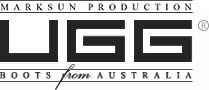
(b) a header or title for the Websites that display the words:
"…Boots From Australia…"
(c) on pages of each of the Websites except www.uggbootsoutlet.com.au, the following statements under the bold typeface heading “Product Specifications” and adjacent to the image of the “Roxy Tall” style of Ugg Boot promoted for sale:
"Another 100% Authentic Australian boot made by Marksun Australia"
(d) on the home pages of the www.uggbootsonsale.com.au, www.uggbootsoutlet.com.au and www.uggexpress.com.au websites, images of various styles of Ugg Boots arranged side by side, alongside the caption: “Purely Australian Sheepskin UGG Boots”;
(e) on the border of each homepage of the www.uggbootsonsale.com.au and www.uggbootsoutlet.com.au websites, silhouette images of various fauna including wombats and kangaroos;
(f) on the homepage of the website www.uggbootsoutlet.com.au, the following statement adjacent to images of Ugg Boots:
“UGG CLASSIC SHORT & TALL BOOTS
Made in Australia, From Australian Wool”
(g) on the www.uggbootsonsale.com.au website, a page prominently titled “What Do You Know About Uggs [sic] Boots?” upon which the following statement constitutes the third paragraph:
"The ugg is top superior boots that’s fabricated in Australia [sic] and the boots are fabricated out of sheep skin.”
40 The conduct referred to in the preceding paragraph took place on the respective Websites during the following periods:
(a) on www.uggbootsonsale.com.au:
(i) from at least 22 June 2010 to 23 December 2010 and 19 January 2011 to 23 January 2011 with respect to paras 39(a) to 39(e) above; and
(ii) from at least 26 November 2010 to the date of the filing of the Amended Fast Track Statement with respect to para 39(g) above;
(b) on www.marksunboots.com.au from at least 1 November 2010 to 23 December 2010;
(c) on www.uggbootsoutlet.com.au from at least 5 November 2010 to the date of the filing of the Amended Fast Track Statement;
(d) on www.authenticuggboots.com.au from at least 19 January 2011 to the date of the filing of the Amended Fast Track Statement;
(e) on www.australiauggbootssale.com.au from at least 19 January 2011 to the date of the filing of the Amended Fast Track Statement;
(f) on www.uggexpress.com.au from at least 19 January 2011 to the date of the filing of the Amended Fast Track Statement; and
(g) on www.ugg-boots-outlet.com.au from at least 19 January 2011 to the date of the filing of the Amended Fast Track Statement.
Published on the Additional Websites
41 From at least 19 January 2011 to the date of the filing of the Amended Fast Track Statement, the respondent published, or caused to be published on the homepage for each of the Additional Websites the following official Australian Made Australian Grown Logo (Australian Made Logo):

42 Use of the Australian Made Logo is approved and licensed by the Australian Made Campaign Limited (ACN 086 641 527) (AMCL) which administers the Australian Made, Australian Grown (AMAG) Campaign. The Australian Made Logo is only to be used in accordance with AMCL's Code of Practice. In April 2010, the AMCL made its own investigations following complaints that the respondent had inappropriately used the Australian Made Logo on the website www.uggmall.com.au. After establishing that the use of the Australian Made Logo by the respondent was indeed unauthorised, in September 2010 the AMCL attempted to contact the respondent by email in relation to its conduct. The AMCL did not receive any response from the respondent, but in November 2010 the respondent appeared to desist from using the Australian Made Logo on the website www.uggmall.com.au.
43 In January 2011, the AMCL communicated with the applicant in respect of two further unauthorised uses of the Australian Made Logo in the homepages of each of the Additional Websites. At no time has the AMCL authorised the respondent to use the Australian Made Logo.
44 From at least 19 January 2011 to the date of the filing of the Amended Fast Track Statement the respondent published, or caused to be published on the Additional Websites the statements referred to in para 39(c) above.
Published on the Further Additional Websites
45 From 19 January 2011 to the date of the filing of the Amended Fast Track Statement, the respondent published, or caused to be published on the homepage for each of the Further Additional Websites symbols or images, including:
(a) the Australian flag; and
(b) the Sydney Opera House.
46 From 19 January 2011 to the date of the filing of the Amended Fast Track Statement the respondent published, or caused to be published on each of the Further Additional Websites the words “…Boots from Australia…” in the manner described in para 39(b) above.
Discretionary Considerations
47 The Court has a wide discretionary power to make declarations under s 21 of the FCA. In Forster v Jododex Australia Pty Ltd (1972) 127 CLR 421 at 437-438, the High Court held the following three requirements should be satisfied before the Court exercises its power to make declarations:
(a) the question must be a real and not a hypothetical or theoretical one;
(b) the applicant must have a real interest in raising it; and
(c) there must be a proper contradictor.
48 Each of these requirements is satisfied in this case:
(a) the proposed declarations relate to conduct that contravenes the CCA and ACL and the matters in issue have been identified and particularised by the applicant with precision;
(b) it is in the public interest for the applicant to seek to have the declarations made and for the declarations to be made. For example, the declarations may act to warn the public to exercise care when claims are made on the internet about products being Australian Made and will inform the business community that false or misleading claims of that kind will be pursued by the Commission; and
(c) the respondent would be a proper contradictor, but has chosen not to participate.
49 Having regard to the reasoning of Nicholson J in Australia Competition and Consumer Commission v Construction, Forestry, Mining and Energy Union [2006] FCA 1730 at [6], the declarations sought are appropriate because they:
(a) are an appropriate vehicle to record the Court’s disapproval of the contravening conduct;
(b) serve to vindicate the applicant's claim that the respondent contravened the CCA and ACL;
(c) are of some assistance to the applicant in the future in carrying out the duties which are conferred upon it by the CCA and ACL;
(d) may inform consumers of the dangers arising from the respondent's contravening conduct; and
(e) may deter others from contravening the CCA and ACL.
50 Furthermore, the declarations sought properly set out how and why the conduct complained of is a contravention of the law: BMW Australia Ltd v Australian Competition and Consumer Commission (2004) 207 ALR 452 at [35], applying the decision of the High Court in Rural Press Ltd v Australian Competition and Consumer Commission (2003) 216 CLR 53 at [90].
51 In the 12 April 2011 decision, Yellow Page Marketing BV (No 2), at [69], Gordon J noted that in the absence of declarations, the contravening conduct would not otherwise be clearly identified. Gordon J noted the public interest to be served in making the declarations, including that they served as warnings to the public. Her Honour also considered that declarations were also appropriate to indicate the Court’s disapproval of the contravening conduct, particularly given that the respondents sought to commercially exploit affiliations that they did not have.
52 Orders proposed by the Commission contain a sufficient indication of how and why the conduct complained of is a contravention of the CCA/ACL and that it is appropriate for the Court to make the declarations sought.
INJUNCTIONS
53 The applicant submits that the Court should make an order permanently restraining the respondent from engaging in the contravening conduct, or conduct similar to the contravening conduct.
54 The power to make an injunctive order is now under s 232 of the ACL. The ACL is set out in Sch 2 to the CCA. Pursuant to Item 7(2) of Sch 7 of the Amendment Act No 2:
However, to the extent that any such proceeding are proceedings for an injunction under s 80 of [the TPA] as so in force, the proceedings are taken, after that commencement, to be proceedings for an injunction under s 232 of the Australian Consumer Law.
55 Section 232 ACL provides:
(1) A court may grant an injunction, in such terms as the court considers appropriate, if the court is satisfied that a person has engaged, or is proposing to engage, in conduct that constitutes or would constitute:
(a) a contravention of a provision of Chapter 2, 3 or 4; or
(b) attempting to contravene such a provision; or
(c) aiding, abetting, counselling or procuring a person to contravene such a provision; or
(d) inducing, or attempting to induce, whether by threats, promises or otherwise, a person to contravene such a provision; or
(e) being in any way, directly or indirectly, knowingly concerned in, or party to, the contravention by a person of such a provision; or
(f) conspiring with others to contravene such a provision.
56 Section 232 ACL is in substantially the same terms as s 80 CCA and the applicant submits that the same legal principles apply.
57 The Court has power to grant an injunction whether or not there is a likelihood of the conduct being repeated: s 232(4)(a) ACL. The granting of an injunction is appropriate to deter a repetition of the contraventions by attaching the sanctions available for contempt of court to any repetition of the contraventions: see ICI Australia Operations Pty Ltd v Trade Practices Commission (1992) 38 FCR 248 per French J at 268 (see also Lockhart J at 256).
58 As French J (as he then was) has observed, this discretion “is as wide as the phrase ‘as the court determines to be appropriate’”: OD Transport Pty Ltd v WA Government Railways Commission (1987) 13 FCR 500 at 508.
59 Broad as the Court’s power is, it is subject to at least three limitations, identified by this Court in Australian Competition and Consumer Commission v Z-Tek Computer Pty Ltd (1997) 78 FCR 197 at 203-4. The applicant submits that these three limitations equally apply to the provisions of s 232 ACL:
(a) the power is confined by reference to the scope and purpose of the legislation. Consequently, the relief should be designed to prevent a repetition of the conduct for which the relief is sought;
(b) because the jurisdiction to grant an injunction is enlivened by an alleged or actual contravention of a provision of Chapter 2, 3 or 4, there must be a sufficient nexus or relationship between the contravention and the injunction granted; and
(c) the Federal Court exercises judicial power under Ch III of the Constitution in a ‘matter’. Consequently, the injunction must be related to the case or controversy.
60 The injunctions proposed by the applicant come within these three limitations, as they are directed at preventing the precise conduct which has been the subject of this proceeding.
61 The proposed injunctions are within power and are appropriate to deter a repetition of the contraventions (by attaching the sanctions available for contempt of Court to any repetition of the sanctions).
62 Further, the proposed injunctions are clearly and specifically expressed, so they are capable of being readily obeyed, and furthermore, they do not require Court supervision: Australian Competition and Consumer Commission v Real Estate Institute of Western Australia Inc (1999) 161 ALR 79 at [26].
PUBLICATION ORDERS/ INFORMATION NOTICES
63 Section 246(1) ACL provides that:
A court may, on application of the regulator, make one or more of the orders mentioned in subsection (2) in relation to a person who has engaged in conduct that:
(a) contravenes a provision of Chapter 2, 3 or 4; or
(b) constitutes an involvement in a contravention of such a provision.
64 Section 246(2)(d) ACL is expressed in exactly the same terms as s 86C(2)(d) CCA and the applicant submits that the same legal principles apply.
65 Orders for corrective advertising are for the protection of the public interest and are not punitive in nature. In Australian Competition and Consumer Commission v On Clinic Australia Pty Ltd (1996) 35 IPR 635, Tamberlin J observed, at 640:
The purpose of corrective advertising is to protect the public interest. … Corrective advertising is intended to dispel incorrect or false impressions which may have been created as a result of deceptive or misleading conduct. It is not intended to be punitive. In any matter concerning corrective advertising the timing of such corrective advertising is of course important … There is no principle that any particular period is appropriate as a point beyond which corrective advertising is not warranted. In the context of advertising it is necessary to examine the nature, extent and intensity of the advertising and the media in which it has been released with a view to deciding whether there could reasonably be any current misapprehension as a result of the advertisements.
66 Advertising that is directed to dispelling incorrect or false impressions created as a result of deceptive or misleading conduct will generally have, as an ancillary benefit, some public educational effect in relation to the operation of the relevant legislative provisions. In Australian Competition and Consumer Commission v Target Australia Pty Ltd [2001] ATPR 41–840 Lee J commented, at 43,382, that:
…the purpose sought to be achieved by corrective advertising is to raise public awareness – for both consumers and competitors – as to the type of conduct that may contravene the Act, and as to the outcome of the particular litigation.
67 In Australian Competition and Consumer Commission v Real Estate Institute of Western Australia Inc (1999) 95 FCR 114, French J observed that it is important that corrective advertisements do more than merely announce a ‘win’ for the ACCC. In relation to the contraventions of Pt IV of the Act, French J held, at 133, that [the equivalent of s 86C(2)(d) CCA and s 246(1) ACL] authorised advertisements:
…directed to informing the relevant markets of the outcome of the litigation so that those in the market have at least a broad understanding of the ways in which the contraveners have had to change their conduct … In this way, public advertising as proposed may aid in the enforcement of the primary orders and the prevention of the repetition of the contravening conduct.
68 The Commission proposes that the respondent be required to cause to be published, on the homepage of each website on which it markets the sale of Ugg Boots, a notice in the terms of Annexure A to the Minute of Proposed Orders which it has filed including but not limited to:
www.uggbootsonsale.com.au;
www.uggbootsoutlet.com.au;
www.marksunboots.com.au;
www.authenticuggboots.com.au;
www.australiauggbootsonsale.com.au;
www.uggexpress.com.au;
www.ugg-boots-outlet.com.au;
www.australiauggbootstore.com.au;
www.uggclassicboots.com.au;
www.ugg-boots-australian.com.au; and
www.ugg-boots-melbourne.com.au
such notice to be maintained for a period of 90 days.
69 The proposed publication notice is intended both to protect and educate consumers and to prevent a repetition of the contravening conduct. Importantly, by making use of those particular websites, the publication notices specifically target consumers who may have been affected by the respondent’s conduct during the relevant period of the breaches. The proposed method of delivering the publication notices is feasible and appropriate, given that all of the respondent’s contravening conduct has occurred via the internet.
PENALTY AND COSTS
Penalty – Contentions of law
70 The applicant submits that the Court should make orders imposing on the respondent a pecuniary penalty pursuant to s 76E TPA and s 224 ACL in the total amount of $430,000.
Maximum penalty and courses of conduct
71 Pursuant to s 76E TPA and s 224 ACL, the Court may impose a pecuniary penalty in respect of a contravention of s 53(eb) TPA (for conduct up to 31 December 2010) and ss 29(1)(k) and (g) ACL (for conduct from 1 January 2011 and 19 January 2011 respectively) (False and Misleading Provisions).
72 For each contravention of the False and Misleading Provisions, a penalty of up to 10,000 penalty units may be imposed upon a body corporate. As each penalty unit is worth $110, the maximum penalty for a body corporate for each contravention of the False and Misleading Provisions is $1.1 million.
73 The applicant considers that every instance of publishing the words and images that give rise to a contravention of the kind referred to in para 70 above can be characterised as a breach of the TPA or CCA.
74 I accept the applicant’s submission that for the purposes of assessing an appropriate pecuniary penalty, the respondent’s contravening conduct should be divided into two distinct courses of conduct that should each attract a penalty even though multiple contraventions comprise each of those courses of conduct: see Yellow Page Marketing BV (No 2) at [83]-[87] and [108]; Australian Competition and Consumer Commission v C.I. & Co Pty Ltd [2010] FCA 1511 at [27]; Australian Competition and Consumer Commission v ABB Transmission and Distribution Limited (No 2) (2002) 190 ALR 169 at [38]; Australian Competition and Consumer Commission v Rural Press Ltd [2001] ATPR 41-833 at [19].
75 The two courses of conduct are:
(a) false or misleading representations that the respondent’s Ugg Boots are made in Australia, when the Ugg Boots are actually made in China. These representations are made through the publication of the following combination of trademarks, words, images and headers:
(i) on seven of the websites , a trademark which includes the words “…Boots from Australia…”;
(ii) on nine of the websites a website header “…Boots from Australia…”;
(iii) on eight of the websites adjacent to its Roxy Tall Ugg Boot the statement “Another 100% Authentic Australian boot made by Marksun Australia”;
(iv) on three of the websites the statement “Purely Australian Sheepskin UGG Boots”;
(v) on two of the websites , silhouette images of fauna including wombats and kangaroos on homepage border;
(vi) on one of the websites the statement “Made in Australia, From Australian Wool” on the homepage;
(vii) on one of the websites the statement “The ugg is top superior boots that’s fabricated in Australia [sic] and the boots are fabricated out of sheep skin” on “What Do You Know About Uggs [sic] Boots?” web page;
(viii) on two of the websites the Australian Made Logo referred to in paragraph 9 of the Amended Fast Track Statement; and
(ix) on two of the websites an Australian flag image and Opera House image (Made in Australia Conduct); and
(b) by publishing the triangular Australian Made Logo on two websites, makes false or misleading representations that the Ugg Boots have approval to use that logo or benefits of such approval (Use of Logo Conduct).
76 Justice Gordon in Yellow Page Marketing BV (No 2) at [108] considered that it was appropriate to apply penalties to each of three courses of conduct in determining penalties that would apply under s 76E of the TPA.
77 The publication on numerous websites of the various combinations of words and images described above as the Made in Australia Conduct gives rise to the same misrepresentations and should, for the purpose of considering an appropriate penalty, be characterised as one course of conduct.
78 There is some overlap with the Use of Logo conduct in that the publication of the Australian Made Logo on the websites is a common factor, but the representations that arise are different. The use of the Australian Made Logo in that manner gives rise to a representation about approval to use the Australian Made Logo which has serious implications beyond a representation solely that goods are made in Australia. As explained in the Crowe Affidavit, the Australian Made Logo was created by the Commonwealth Government in 1986, is licensed and administered with reference to a Code of Practice and its use is monitored. The Australian Made Logo and its meaning is widely recognised, enjoying a 98% recognition amongst Australian consumers. The Use of Logo conduct elevates the likelihood that a consumer would not enquire further into the origin of the goods or otherwise discover that an ‘Australian Made’ claim was misleading. Notwithstanding that consumers may potentially still inquire about the accuracy of ‘Made in Australia’ representations, the Use of Logo Conduct, given the credibility and authority the Australian Made Logo carries, effectively eliminates any possibility that consumers will make any further inquiry at all.
79 Although consumers may not be familiar with the Code of Practice applied by Australian Made Campaign Limited, the use of the Australian Made Logo conveys to consumers that the logo was applied to the goods in accordance with some independent practice to establish that the goods were “Australian Made”.
80 Without the publication of the Australian Made Logo, the Australian Made misrepresentation would still otherwise arise from the other Australian Made Conduct. However, the Use of Logo conduct is peculiar to the publication of that logo and gives rise to its own misrepresentation.
81 It is, in my opinion, appropriate to impose a penalty in respect of each of those two courses of conduct: to do so would not punish the same contravening conduct more than once.
Penalty: relevant matters
82 Section 76E(2) TPA provided and s 224(2) ACL provides:
In determining the appropriate pecuniary penalty, the Court must have regard to all relevant matters including:
(a) the nature and extent of the act or omission and of any loss or damage suffered as a result of the act or omission; and
(b) the circumstances in which the act or omission took place; and
(c) whether the person has previously been found by the Court in proceedings under Part VC/Chapter 4 or this Part to have engaged in any similar conduct.
83 The “relevant matters” referred to in s 76E(1) TPA/s 224(1) ACL incorporate the same non-exhaustive mandatory considerations that are expressly provided for determining a pecuniary penalty pursuant to s 76(1) CCA.
84 The established principles to be applied by the Court in determining penalties under s 76(1) CCA are broadly applicable in determining a penalty under s 76E TPA and s 224(1) ACL.
85 French J in Trade Practices Commission v CSR Limited [1991] ATPR 41-076 at 52,152-52,153 identified the following matters:
(a) the nature and extent of the contravening conduct;
(b) the amount of loss or damage caused;
(c) the circumstances in which the conduct took place;
(d) the size of the contravening company;
(e) the degree of power it has, as evidenced by its market share and ease of entry into the market;
(f) the deliberateness of the contravention and the period over which it extended;
(g) whether the contravention arose out of the conduct of senior management or at a lower level;
(h) whether the company has a corporate culture conducive to compliance with the Act as evidenced by educational programs and disciplinary or other corrective measures in response to an acknowledged contravention; and
(i) whether the company has shown disposition to cooperate with the authorities responsible for the enforcement of the Act in relation to the contravention.
86 Those considerations have since been approved with the following extensions by Full Courts of this Court: NW Frozen Foods Pty Ltd v Australian Competition and Consumer Commission (1996) 71 FCR 285 at 292-294 and J McPhee & Son (Australia) Pty Ltd v Australian Competition and Consumer Commission (2000) 172 ALR 532 at [150]. More recently, both “the French factors” from CSR and “the Heerey factors” from NW Frozen Foods Pty Ltd were endorsed in Australian Competition and Consumer Commission v Dataline.Net.au (2007) 161 FCR 513 at [58]:
(a) similar conduct in the past;
(b) effect on the functioning of the market and other economic effects of the conduct;
(c) the financial position of the contravening company; and
(d) whether the conduct was systematic, deliberate or covert.
87 In determining the appropriate penalty, it is also relevant to take into account the “totality principle”; the total penalty for related contraventions ought not to exceed what is proper for the entire contravening conduct involved: Trade Practices Commission v TNT Australia Pty Limited [1995] ATPR 41-375 at 40,169, per Burchett J. This approach was adopted by Goldberg J in Australian Competition and Consumer Commission v Australian Safeway Stores Pty Ltd (1997) 75 FCR 238 at 243, and Mansfield J in Australian Competition and Consumer Commission v Rural Press Ltd [2001] ATPR 41-833; [2001] FCA 1065 at [19] and Australian Competition and Consumer Commission v Baxter [2010] FCA 929 at [22].
88 A penalty must not be so high as to be oppressive: NW Frozen Foods Pty Ltd v ACCC at 293, referring to Trade Practices Commission v Stihl Chain Saws (Aust) Pty Ltd [1978] ATPR 40-091 at 17,896. In considering what may constitute oppression, Merkel J stated in Australian Competition and Consumer Commission v Leahy Petroleum Pty Ltd (No 2) (2005) 215 ALR 281 at [9] that:
… a penalty that is no greater than is necessary to achieve the object of general deterrence, will not be oppressive.
89 There is also the parity principle to be considered. Similar contraventions should incur similar penalties, other things being equal, albeit that “other things are rarely equal where contraventions of the [CCA] are concerned”: NW Frozen Foods Pty Ltd v ACCC at 295.
Assessment of Penalty
90 The process to be applied in arriving at a particular penalty figure was considered in the context of criminal sentencing by the High Court in Markarian v The Queen (2005) 228 CLR 357. That process is also applicable to the assessment of pecuniary penalties under s 76 of the CCA: see Australian Competition and Consumer Commission v Liquorland (Australia) Pty Ltd (2005) ATPR 42-070 at [68].
91 In Markarian, Gleeson CJ, Gummow, Hayne and Callinan JJ held:
(a) the Court's assessment of the appropriate penalty is a discretionary judgment based on all relevant factors (at [27]);
(b) "… careful attention to maximum penalties will almost always be required, first because the legislature has legislated for them; secondly, because they invite comparison between the worst possible case and the case before the court at the time; and thirdly, because in that regard they do provide, taken and balanced with all of the other relevant factors, a yardstick." (at [31]);
(c) it will rarely be appropriate for a Court to start with the maximum penalty and proceed by making a proportional deduction from that maximum (at [31]);
(d) the Court should not adopt a mathematical approach of increments or decrements from a pre-determined range, or assign specific numerical or proportionate value to the various relevant factors (at [37] citing Wong v The Queen (2001) 207 CLR 584 at 611-612 [74]-[76] per Gaudron, Gummow and Hayne JJ);
(e) it is not appropriate to determine an "objective" sentence and then adjust it by some mathematical value given to one or more factors such as a plea of guilty or assistance to authorities (at [37];
(f) the Court "may not add and subtract item by item from some apparently subliminally derived figure" to determine the penalty to be imposed (at [39]); and
(g) since the law strongly favours transparency, accessible reasoning is necessary in the interests of all, and, while there may be occasions where some indulgence in an arithmetical process will better serve the end, it does not apply where there are numerous and complex considerations that must be weighed (at [39]).
PENALTY - APPLICATION OF PRINCIPLES TO THE RESPONDENT’S CONDUCT
92 The following are the applicant’s submissions applying the relevant established principles to the respondent’s conduct and circumstances of this proceeding.
Deterrence
93 It has long been accepted that a principal object of a penalty under s 76 CCA is deterrence: Trade Practices Commission v Stihl Chain Saws (Aust) Pty Ltd at 17,896 per Smithers J; Trade Practices Commission v CSR Limited at 52,152 per French J and the Full Court in NW Frozen Foods Pty Ltd v ACCC at 292-293. More recently, see Australian Competition and Consumer Commission v High Adventure Pty Ltd [2006] ATPR 42-091 at 44,564 per Heerey, Finkelstein and Allsop JJ.
94 The applicant submits that deterrence should also be the primary focus of a penalty under s 76E TPA/s 224(1) ACL, particularly where (as here) the applicant is bringing a civil penalty action.
95 Consistent with this, Jagot J in Australian Competition and Consumer Commission v Le Sands Restaurant [2011] FCA 105 at [9] which was a s 76E TPA penalty case – cited with approval the Full Court’s observation in NW Frozen Foods Pty Ltd v ACCC that:
[t]he Court should not leave room for any impression of weakness in its resolve to impose penalties sufficient to ensure the deterrence, not only of the parties actually before it, but also of others who might be tempted to think that contravention would pay...
96 Fundamentally, deterrence has two aspects: specific deterrence in respect of the actual contravener and general deterrence of others “who may be disposed to engage in prohibited conduct of a similar kind”: Trade Practices Commission v Mobil Oil Australia Ltd (1984) 4 FCR 296 at 297-298 per Toohey J.
97 Considerable emphasis has been placed by the Court on general deterrence for contraventions of provisions of the TPA in previous matters involving consumer protection. These are equally applicable in respect of the consumer provisions of the CCA. As Justice Tracey stated in Australian Competition and Consumer Commission v Skippy Australia Pty Ltd [2006] FCA 1343 at [15]:
It has become accepted that the imposition of substantial penalties for breaches of provisions which are designed to protect consumers, will serve to alert members of the business community to the provisions of the Act and the serious consequences which may flow from their contravention.
98 The cases cited by Tracey J in Skippy at [15] in support were: Pugh v Clark Rubber Ltd (1993) ATPR 41-258 at 41, 473; Miller v Cunninghams Warehouse Sales Pty Ltd (1994) ATPR 41-321 at 42, 269; Australian Competition and Consumer Commission v Dimmeys Stores Pty Ltd [1999] ATPR 41-716 at 43,247.
99 Justice Tracey also referred at [15] to the "significant monetary penalties, provided for in the Act, for contravention of consumer protection provisions" and the express object in s 2 CCA, which is "to enhance the welfare of Australians through the promotion of competition and fair trading and provision for consumer protection."
100 Recent cases emphasise the imposition of penalties of a sufficient scale to deter businesses from weighing up the risk of a penalty being ordered as a strategic business cost, particularly in cases in which the contravening conduct has the potential for creating large profits: Australian Competition and Consumer Commission v McMahon Services Pty Ltd (2004) ATPR 42-031 at 49,228 per Selway J, which was a price fixing case.
101 Deterrence in this case is a significant factor, particularly given the involvement of promotion and sale of products over the internet. Internet trading more generally is a rapidly growing business both within and outside of Australia. Commonly, it is of a different character to traditional sales, sometime referred to as sales via ‘bricks and mortar’ stores, in that customers do not have the opportunity to handle and inspect goods or samples themselves and often have a less directly interactive opportunity to enquire about representations made about products, although internet sales can incorporate an opportunity for customers to email questions. In that environment there may be less, or at least less immediately familiar, opportunities for consumers to test or enquire about representations made about products on websites. Deterrence of the improper Use of Logo conduct is of particular importance in that environment.
102 Misrepresentations about goods being Australian Made not only harm the buyers of those goods, but also adversely impact on those traders that can properly make that claim and, over time, may adversely impact on the reliability and value of Made in Australia claims more generally.
103 The applicant submits that the penalty awarded against the respondent should be of a level that will not only specifically deter a repeat of the conduct by the respondent, but will serve as a general deterrent to others, who advertise that their products are made in Australia, when they are not.
The Nature and Extent of Conduct / Circumstances in which Conduct Took Place / Duration of Conduct
104 The Made in Australia Conduct and Use of Logo Conduct are likely to mislead consumers into thinking that they are purchasing iconic Ugg Boots made in Australia, when in fact the Ugg Boots are made in China.
105 In Australian Competition and Consumer Commission v Harvey Fresh (1994) Limited (2009) 82 IPR 6, Siopis J was particularly critical of the respondent’s deliberate marketing strategy adopted on the representation that its products are produced in Western Australia. His Honour stated at [10]:
This marketing strategy is designed to appeal to the desire of Western Australians to promote Western Australian products and interests. This is a powerful marketing tool founded on the implicit assertion by the respondent of a common bond between Western Australian consumers and the respondent and its products. Accordingly, in my view, it is important that the faith that Western Australian consumers place in the respondent’s statements of product origin is not misplaced or undermined.
106 In this case, the respondent has deliberately structured its marketing to benefit from the perception of an iconic Australian product being “Made in Australia”, when it is actually made in China.
107 In circumstances where the respondent’s websites are accessible by large numbers of consumers from around the world, it is relevant that both Australian and non-Australian consumers place a premium on goods made in Australia and are likely to be swayed by a representation that the iconic Australian product advertised, is genuinely Australian. The respondent, in my view, has likely obtained an unfair market advantage which ultimately disadvantages other companies who produce Australian made Ugg boots.
108 The Use of Logo Conduct, without authorisation, may have caused damage to the reputation of the Australian Made Logo. As a result, consumers may become wary of whether other products which have the Australian Made Logo have been similarly misused. Consumers may begin to question the value of the Australian Made Logo and the concept of “Australian made” if false representations are easily made on the internet. According to the AMCL Code of Practice:
The Australian Made logo certification trade mark was created by the Australian Government in 1986 to promote Australian made products in local and export markets. The triangular logo encasing a stylised kangaroo is the most recognized and trusted country of origin symbol in Australia, enjoying a 98 per cent recognition level amongst Australian consumers.
….
[The purpose of the logo is to] build consumer confidence that goods promoted in association with the Australian Made, Australian Grown logo comply with established legislative consumer information and country of origin labelling standards and promote the benefits of buying Australian goods;
109 The applicant submits that the overall character of the conduct in promoting goods that are entirely made in China was calculated to apply a veneer of ‘Australian-ness’ or ‘Australia washing’ in a manner similar to what is done in bogus environment claims – sometimes referred to as ‘green washing’. Conduct of that kind harms not only consumers of those particular products, but is done for a perceived commercial gain and in the process may erode consumer confidence in such claims when legitimately advanced by other businesses.
110 The duration of the contravening conduct is from at least:
(a) 22 June 2010 (and in respect of most of most of the relevant websites continuing), with regard to the Made in Australia Conduct; and
(b) from at least 19 January 2011 to the date of the filing of the Amended Fast Track Statement, in respect of the Use of Logo Conduct.
Size of Contravener and its Financial Position
111 The applicant is not in receipt of any direct evidence which indicates the size of the respondent, its financial position or its market power. The applicant is unable to provide any direct evidence setting out:
(a) the respondent’s financial position, size and market share;
(b) the proportion of the respondent’s profits that are attributed to its contravening conduct;
(c) whether or not the respondent has a physical presence in Australia;
(d) the number of consumers who were misled by the conduct, the overall number of sales, competitors’ loss of sales, and the number of website hits;
(e) whether or not the respondent has the financial capacity to substantiate a pecuniary penalty.
112 These matters are solely within the knowledge of the respondent and it, as an Australian company, should not be advantaged by the fact that it has failed to participate in the court process in any way.
113 Further, there is evidence which indicates that the respondent is well resourced and funded, particularly:
(a) the respondent’s, or its sole director and shareholder’s, engagement of lawyers and accounting firms in Australia to incorporate the respondent and register its trademarks. That conduct has also been undertaken in other jurisdictions, for example Canada, USA and Europe;
(b) the respondent's heavy saturation of the online Ugg boot retail market with at least 11 “.com.au” websites and numerous other ."com" websites not the subject of these proceedings, some of which are written in languages other than English; and
(c) the content of the website www.sheepskinmanufacture.com, indicates that another foreign corporation or corporations with a substantial multi-million dollar annual turnover is closely associated with the respondent and has some claim over the trade mark used by the respondent and referred to in para 7.1 of the Amended Fast Track Statement. The registrant of the website www.sheepskinmanufcature.com is Lianping Shen which is the same name as the sole director and shareholder of the respondent.
Deliberateness of the contravention and the period over which it extended
114 In respect of the Made in Australia Conduct, the applicant and AGS on behalf of the applicant have notified the respondent of the applicant’s concerns on numerous occasions by way of letters and e-mails. In some instances, the respondent has replied to either the applicant or AGS by email.
115 Notwithstanding its responses, the respondent has subsequently largely ignored the respondent’s concerns. At or about the time of the hearing of this application the Made in Australia Conduct persisted on many of the relevant websites, albeit with amendments to some representations.
116 In respect of the Use of Logo Conduct, the AMAG Campaign wrote to one of the Marksun Emails “lindseyshen@gmail.com”, raising concerns that the respondent was using the Australian Made Logo without permission. It appears that the respondent subsequently removed the Australian Made Logo, and then later re-published it on at least two websites on 31 January 2011. In this respect, the respondent’s conduct worsened after it was put on notice by both the AMAG and the applicant.
117 Given:
(a) that the respondent knows that it is not licensed to use the Australian Made Logo;
(b) that the Ugg Boots it offers for sale are made in China; and
(c) the attempted communication by the AMAG Campaign and the applicant and content of subsequent responses from the agents of the respondent,
there is clear evidence that the respondent knowingly and deliberately engaged in the Made in Australia Conduct and Use of Logo Conduct and continues to do so in respect of the former.
Culture of compliance
118 In some of its email responses to the AGS, an agent of the respondent has asserted that the respondent does not understand the nature of the proceedings against it, of the relevant Australian law and the respondent’s obligations. In an email dated 24 February 2011 “Geoffrey” of the respondent stated:
We’ll adjust whatever judge ask us all the modifications on our website, I don’t know what else we can do cause we can’t present ourselves in the court. Also don't know exactly how law proceeds in Australia.
119 There is nothing in the nature and content of any communications on behalf of the respondent or the respondent’s conduct including failure to appear in these proceedings which is indicative of a culture of compliance with Australian law.
Co-operation and Contrition
120 Prior to the institution of proceedings the respondent failed to co-operate with the applicant, which ultimately led to the institution of these proceedings.
121 Since then the respondent has not co-operated with the applicant in the conduct of this proceeding and has refused to acknowledge its liability or culpability for the contravening conduct and has not participated in the court process in any way.
122 In respect of the Use of Logo Conduct, the respondent engaged in that conduct after these proceedings had been issued against it and at the time when the sole director had knowledge of the rules associated with use of the Australian Made Logo.
123 The process of assessing an appropriate level of penalty may be assisted, and has been undertaken by the Court in numerous cases, by determining a base penalty appropriate to the conduct before taking account of mitigating factors, and allowing a discount in recognition of mitigation factors: see for example Australian Competition and Consumer Commission v Qantas Airways Ltd (2008) 253 ALR 89 at [65]-[69] per Lindgren J.
124 The respondent has not previously been found to have contravened the CCA or ACL. However, the applicant submits that, given:
(a) the ongoing contraventions;
(b) the contraventions of the law notwithstanding the contact about the conduct by AMAG Campaign; and
(c) the failure of the respondent to participate in these proceedings,
only a minimal discount should be applied to any penalty: see for example the approach adopted in Yellow Page Marketing BV (No 2) at [116].
125 As at 18 February 2011, and as a result of notification of these proceedings, the respondent appears to have taken steps to modify some of its websites, and appears to have ceased the Use of Logo Conduct on the websites that are the subject of these proceedings. However, one or more of the following representations still appear on several of the websites:
(a) trademark which includes the words “…Boots from Australia…”;
(b) website header “…Boots from Australia…”;
(c) adjacent to its Roxy Tall Ugg Boot the statement “Another 100% Authentic Australian boot made by Marksun Australia”; and
(d) the statement “Purely Australian Sheepskin UGG Boots”.
Parity Principle
126 There are no other respondents to this proceeding. Accordingly, no question arises of equivalence of the penalties imposed on the respondent with other parties to the proceeding.
Totality Principle
127 The accumulation of the respondent’s contraventions requires the appropriate level of penalty to take account of the entirety of its conduct. The applicant submits that the penalties sought against the respondent conform to the totality principle.
128 Each individual contravention of the False and Misleading Provisions constitutes a separate breach of those provisions and, as outlined in para 73 above, the applicant considers that a penalty could be applied in each instance.
129 However, the applicant submits that for the purposes of assessing an appropriate pecuniary penalty, the respondent’s contravening conduct should be divided into the Made in Australia Conduct and the Use of Logo Conduct (both referred to as Contravening Conduct), each to be regarded as a separate course of conduct over the relevant periods and, for the purposes of assessment of the appropriateness of penalty, each should attract one penalty even though there were multiple contraventions: Australian Competition and Consumer Commission v ABB Transmission and Distribution Limited (No 2) at [38]; Australian Competition and Consumer Commission v Rural Press Ltd at [19] and Australian Competition and Consumer Commission v C.I. & Co Pty Ltd [2010] FCA 1511; Yellow Page Marketing BV (No 2) at [84].
130 The totality principle requires that the total penalty for related contraventions ought to reflect what is proper for the entire contravening conduct involved.
Conclusions on appropriate penalty
131 It is trite that the fixing of penalties is not an exact science.
132 The applicant submits that that a total penalty of $430,000 is appropriate to be imposed on the respondent.
Made in Australia Conduct
133 In respect of the Made in Australia Conduct, the evidence indicates that the conduct occurred from at least 22 June 2010 and conduct of that kind is ongoing.
134 The Made in Australia Conduct was deliberate and dishonest and the aggravating factors discussed above at paras 114 to 117 apply.
135 The applicant submits that in respect of the Made in Australia Conduct which occurred on 11 different websites, it would be appropriate for a pecuniary penalty be awarded in the sum of $330,000. I am satisfied in this case, that such a penalty falls within a reasonable range having regard to the relevant matters discussed above.
Use of Logo Conduct
136 The respondent published the official Australian Made Logo on two websites from at least 19 January 2011 to 18 February 2011. The measure of penalty should also take into account the detriment caused by the respondent’s conduct to the value, goodwill or reputation of the Australian Made Logo.
137 I take account of the fact that the respondent modified its behaviour once the pleadings and associated documents were served on the email addresses.
138 The applicant submits that a pecuniary penalty of $100,000 should be awarded for the Use of Logo Conduct.
139 Again I am satisfied that this penalty falls within a reasonable range in this respect.
COSTS
140 The applicant submits that in the subject circumstances, an appropriate exercise of the Court's discretion and power to make Minute of Proposed Order 1, is under O 62 r 4(2)(c) FCR.
141 Rule 4(2)(c) FCR empowers the Court to order that a specified gross sum be paid as to costs.
142 The rule is directed to the avoidance of such expense, delay and protraction of litigation, and it may be appropriate to apply the rule in either a complex case or simple one: Beach Petroleum NL v Johnson (1995) 57 FCR 119 at 120.
143 In Gillette Company v Schiavini [2008] FCA 1053, Gyles J made a lump sum order for costs. His Honour considered it appropriate to do so as the respondent did not appear; the task of taxation would involve yet further costs, expense and time; and the quantum was reasonable.
144 The respondent has not entered an appearance or taken any steps to defend these proceedings. It does not have a registered address for service in Australia and it is unknown whether it has any physical presence in Australia. It seems unlikely that the respondent will participate in any taxation and the applicant will incur unnecessary cost if it is required to go through the taxation process.
145 In Sony Entertainment (Australia) Ltd v Smith (2005) 215 ALR 788 Jacobson J when making an award of lump sum costs, was persuaded by two main grounds:
(a) the manner in which the respondents had conducted the litigation; and
(b) the prospect that the respondents may be unlikely to meet their liability under the order and the desirability of the successful party not being further aggravated by having to find the additional costs of taxation with those costs also being unrecoverable.
146 Both those factors have relevance to this case. The respondent’s conduct of this litigation has resulted in the applicant seeking orders for default judgment and, in my view, it is unlikely that the respondent will meet any cost order made against it, based upon its lack of presence in Australia.
147 An order that costs be assessed as a gross sum does not envisage that any process similar to that of taxation should take place, however the power must be used judiciously and after giving the parties an adequate opportunity to make submissions on the matter: Ualesi (t/a Australian Empire Imports) v Expeditors International Pty Ltd [2006] FCA 26.
148 In Nine Films & Television Pty Ltd v Ninox Television Ltd [2006] FCA 1046 Tamberlin J fixed costs in the sum of $650,000. An order had been sought fixing costs at $843,199.42. In doing so, his Honour acknowledged that:
the exercise is one of estimation or assessment and not of arithmetic calculation or precision … [T]he rule contemplates the application of a much broader brush than that applied on taxation. The approach must be logical, fair and reasonable, and should only be exercised when the court considers that it can do so fairly as between the parties: at [8].
149 In Sony Entertainment, in fixing the quantum of costs, Jacobson J accepted at [197] that "the rule contemplates a much broader brush than would be applied on taxation". His Honour noted that the same approach had been taken in Harrison v Schipp (2002) 54 NSWLR 738.
150 I have considered the affidavit of Mr Jonathan Jacobson, a solicitor with the AGS with the care and conduct of this matter affirmed on 28 April 2011 and which sets out the position in respect to the applicant’s costs as follows. The applicant has incurred in excess of $46,000 in costs to date and estimates that it will incur a further $7,000 approximately up to and including the hearing of this matter. This does not include expected additional counsel’s fees of about $3,000. The applicant considers that at least the majority of this amount will be recoverable under this Court’s Costs Scale if this matter were to proceed to a taxation of costs. This view is reinforced by the fact that the respondent failed to meaningfully respond to the concerns raised by the applicant about the respondent's conduct, both before and after the commencement of these proceedings. The respondent's failure to discontinue the conduct left the applicant with no option but to initiate these proceedings. It therefore seeks an order that $50,000.00 be payable as a gross sum by the respondent in respect of these proceedings. I am satisfied that this, in the circumstances, is a reasonable estimate of the costs likely to be assessed upon taxation.
151 There will, for all these reasons, be declarations and orders in the terms sought by the applicant.
| I certify that the preceding one hundred and fifty-two (151) numbered paragraphs are a true copy of the Reasons for Judgment herein of the Honourable Justice Gilmour. |
Associate:


