FEDERAL COURT OF AUSTRALIA
Ron Englehart Pty Ltd v Enterprise Constructions (Aust) Pty Ltd
[2010] FCA 820
| Citation: | Ron Englehart Pty Ltd v Enterprise Constructions (Aust) Pty Ltd [2010] FCA 820 | |
| Parties: | ||
| File number: | VID 537 of 2009 | |
| Judge: | JESSUP J | |
| Date of judgment: | 12 August 2010 | |
| Catchwords: | ||
| Legislation: | ||
| Cases cited: | SW Hart & Co Pty Ltd v Edwards Hot Water Systems (1985) 159 CLR 466 Francis Day & Hunter Ltd v Bron [1963] Ch 587 | |
|
|
| |
| Date of hearing: | 12-16 April and 27 May 2010 | |
|
|
| |
| Place: | Melbourne | |
|
|
| |
| Division: | GENERAL DIVISION | |
|
|
| |
| Category: | Catchwords | |
|
|
| |
| Number of paragraphs: | 73 | |
|
|
| |
| Counsel for the Applicant: | Mr C Golvan SC and Dr S Ricketson | |
|
|
| |
| Solicitor for the Applicant: | Middletons | |
|
|
| |
| Counsel for the Respondents: | Mr Cawthorn SC and Mr Madder | |
|
|
| |
| Solicitor for the Respondents: | Coolabah Law Chambers | |
| IN THE FEDERAL COURT OF AUSTRALIA |
|
| VICTORIA DISTRICT REGISTRY |
|
| GENERAL DIVISION | VID 537 of 2009 |
| RON ENGLEHART PTY LTD (ACN 005 657 554) Applicant
| |
| AND: | ENTERPRISE CONSTRUCTIONS (AUST.) PTY LTD (ACN 067 405 896) First Respondent
SAFAK ARLEN DERVISH Second Respondent
|
| JUDGE: | |
| DATE OF ORDER: | 12 AUGUST 2010 |
| WHERE MADE: |
THE COURT ORDERS THAT:
1. The application be dismissed.
2. Any party who or which seeks the making of an order as to costs file and serve a memorandum setting out, and justifying, his or its claim within 7 days.
3. Any party upon which such a memorandum has been served file and serve a response thereto within 7 days thereafter.
4. A party upon whom or which such a response was served have leave, within a further 7 days, to file and serve a reply thereto.
Note:Settlement and entry of orders is dealt with in Order 36 of the Federal Court Rules.
The text of entered orders can be located using Federal Law Search on the Court’s website.
| IN THE FEDERAL COURT OF AUSTRALIA |
| |
| VICTORIA DISTRICT REGISTRY |
| |
| GENERAL DIVISION | VID 537 of 2009 | |
| BETWEEN: | RON ENGLEHART PTY LTD (ACN 005 657 554) Applicant
| |
| AND: | ENTERPRISE CONSTRUCTIONS (AUST.) PTY LTD (ACN 067 405 896) First Respondent
SAFAK ARLEN DERVISH Second Respondent
| |
| JUDGE: | JESSUP J | |
| DATE: | 12 AUGUST 2010 | |
| PLACE: | MELBOURNE | |
REASONS FOR JUDGMENT
1 The applicant, Ron Englehart Pty Ltd, and the first respondent, Enterprise Constructions (Aust.) Pty Ltd, are project house builders carrying on business in Victoria. The second respondent, Safak Arlen Dervish, is the Managing Director of the first respondent. I shall refer to the first respondent as “the respondent”. In this proceeding, the applicant alleges that the respondent copied one or more of its plans for project houses, alternatively copied the houses themselves. It alleges that the plans, and the houses, were original works in relation to which it owned the copyright. It sues for infringement of copyright, and claims declarations, injunctions, damages, orders for delivery up, costs and interest. Its allegations are denied by the respondents.
2 The applicant’s copyright claims emanate from the design of a new project house in 1996, done on its behalf by the employed staff of a company called Paul Shaw & Associates Pty Ltd. The house in question was named the “Monomeeth”, and subsequently came to have variations, also designed by Paul Shaw & Associates Pty Ltd (in conjunction with the Managing Director of the applicant, Ron Englehart), which came to be known as Monomeeth 101, Monomeeth 102, Monomeeth 104 and Monomeeth 105. In April 1997 or thereabouts, the applicant took the Monomeeth house onto the market, constructing, and subsequently opening to the public, a display house in Doncaster East. It seems that the Monomeeth was commercially successful for the applicant, as a total of 23 such houses were sold to the public between 1997 and 2001.
3 In 2000, the respondent built a display house, which it described as the “Sterling”, on a residential block of land in Bundoora. The respondent had this block before taking any step to design its new display house, and the instructions which it gave to the architect whom it engaged for the purpose, Michael Factor, were to design a house which might be built on this block. Mr Factor commenced work in February 2000 and, by mid 2001, the Sterling house had been constructed on the block in Bundoora. The applicant alleged that the Sterling house, and the plans on which it was based, amounted to infringements of its Monomeeth houses and plans, or at least one of them. In 2002, the respondent caused another display house to be designed and built. This was called “St James”, and was located in East Brighton. It was very similar to the Sterling, and the applicant alleged that it too, and the plans for it, amounted to infringements of copyright. It was common ground that, if the Sterling was not an infringement, neither was the St James.
4 The applicant alleges that the plans for the Sterling house, and the Sterling house itself, reproduced the plans for the Monomeeth 101 house, and also reproduced that house itself. It alleges that the Sterling house amounted to a substantial reproduction of the original Monomeeth plans, and of the Monomeeth house itself. The respondents deny that there was any reproduction of any of the Monomeeth houses or plans. They rely upon the evidence of Mr Factor, which was to the effect that the Sterling house was designed by him in the normal course without access to, or knowledge of, the Monomeeth plans or houses, and also upon that of Mr Dervish, which was also to the effect that, to the extent that he had any input into the design of the Sterling house, he was, at the time, unaware of the Monomeeth plans or houses. It was implicit in the applicant’s case that, if the respondents’ plans and houses were not an infringement of the Monomeeth plan or house, or the Monomeeth 101 plan or house, they were not an infringement of any of the other Monomeeth plans or houses (ie the 102, 104 or 105).
5 One result of the circumstance that this proceeding was not commenced until 21 July 2009 is that, because of the operation of s 134(1) of the Copyright Act 1968 (Cth), the respondent will not be liable for any act which occurred before 21 July 2003. The design and construction of the Sterling display house in Bundoora cannot, therefore, provide a basis for the applicant’s case on infringement. However, it seems that houses built in accordance with the Sterling and St James plans, were built on many occasions since 21 July 2003, and it is the applicant’s case that, because of the reproduction which was involved in the original design of the Sterling house, the construction of those houses amounts to infringements of copyright.
6 The other consequence of the timing of the commencement of this proceeding is that the recollections of the persons principally concerned in the events which have become controversial – chiefly Messrs Factor and Dervish – are necessarily less clear, and in some respects less reliable, than they would have been had the trial been conducted at a time more proximate to the events with which it was concerned. The passage of time, together with the circumstance that the applicant chose to commence this proceeding in the Fast Track List of the court, also produced the result that the initial endeavours of the respondents, and of Mr Factor, to locate the documents which were relevant to the development of the design for the Sterling house were not as successful as is normally regarded as ideal in contested commercial litigation. Because of the circumstances to which I have referred, I express no criticism of the respondents, or of Mr Factor, for this shortcoming, if shortcoming it be.
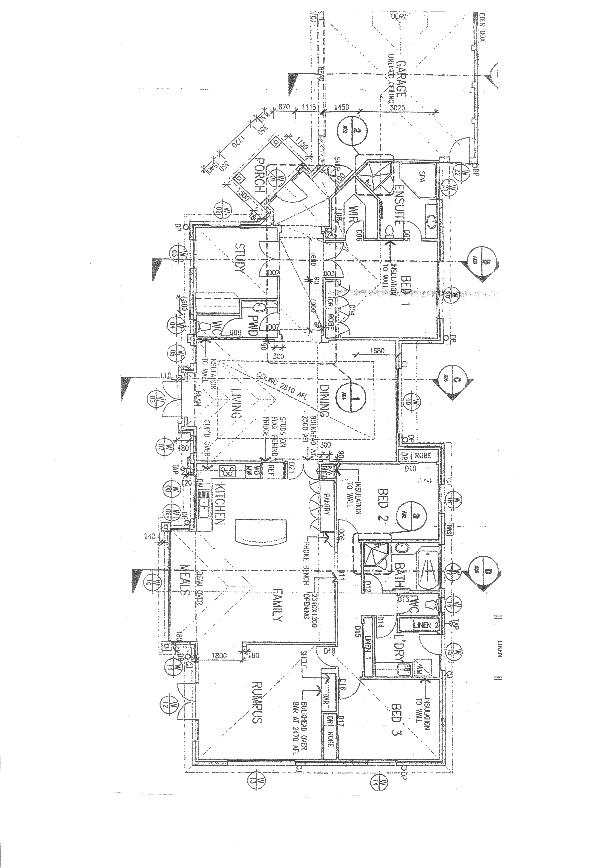
7 The respondents accepted that the plans for the Monomeeth and the Monomeeth 101 houses were original copyright works in which the applicant owned the copyright, although their counsel expressed a reservation as to whether, if it be found that their clients had reproduced a part only of either of those works, that part should be regarded as a substantial one. As it happens, that question will not arise.
8 The plan for the Monomeeth house, upon which the applicant relied as a copyright work, is reproduced as App A to these reasons. The applicant alleged that the respondent had reproduced a substantial part of this work, being so much of it as lies to the rear of the rear wall of bedroom 1 and the rear wall of the powder-room and WC leading off the hallway.
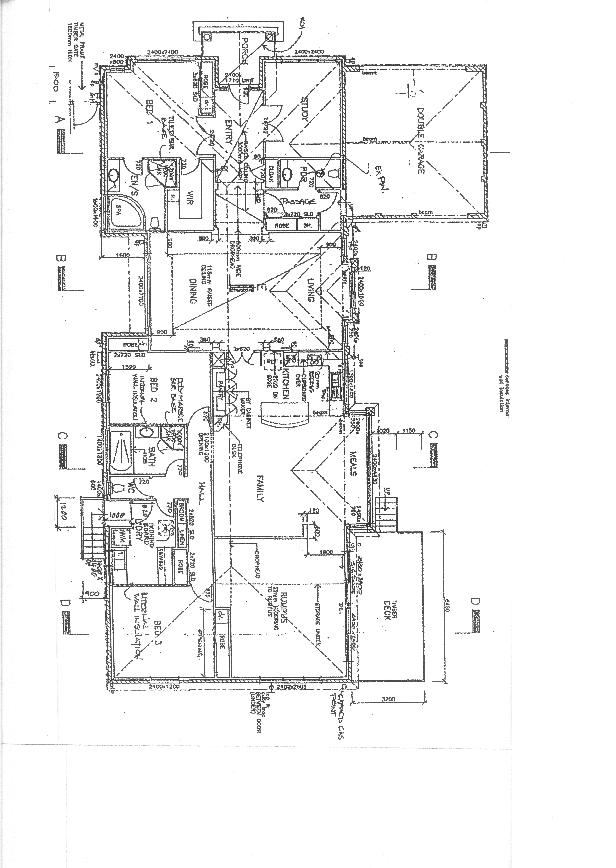
9 It seems that there were two “versions” of the plan for the Monomeeth 101. Ultimately, that upon which the applicant relied as a copyright work is reproduced as App B to these reasons. The applicant alleged that the respondent had reproduced the whole of this work.
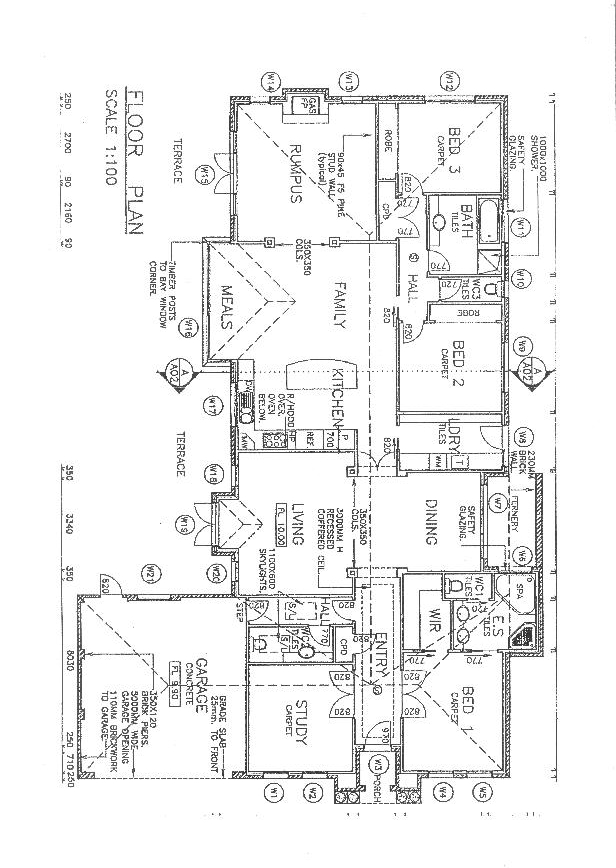
10 The plan for the respondent’s Sterling house is reproduced as App C to these reasons. The distinctive treatment of the front section of the Monomeeth house, particularly with respect to the angled entryway and longitudinally-protruding garage, precluded the applicant from submitting that the plan had been wholly reproduced by the respondent in its Sterling plan. However, the applicant submitted that the Sterling plan was effectively a reproduction of the Monomeeth 101 plan.
11 Under the Copyright Act, there will not be reproduction in the absence of “actual use of … the copyright work”: SW Hart & Co Pty Ltd v Edwards Hot Water Systems (1985) 159 CLR 466, 472 per Gibbs CJ. This includes, of course, indirect copying (ie copying a copy of the work) and so-called subconscious copying. But, one way or the other, “the copyright work must be shown to be a causa sine qua non of the infringing work”: Francis Day & Hunter Ltd v Bron [1963] Ch 587, 624 per Diplock LJ. In the present case, the applicant does not suggest that Mr Factor copied any of its plans or houses, either consciously or, subject to its allegation that he was influenced by Mr Dervish, subconsciously. Rather, the applicant says that Mr Dervish had such an influence on Mr Factor’s undertaking as to justify the conclusion that the result was either a reproduction or a substantial reproduction of one or other of its plans or houses.
12 An important question, therefore, is whether Mr Dervish, contrary to his denials, was aware of the Monomeeth plans, and/or the Monomeeth house itself, in early 2000 when he instructed Mr Factor. It was put to him by counsel for the applicant that he visited and inspected the Monomeeth display house in Doncaster East, and that he came across the Monomeeth plan in two places:
(a) in the Autumn/Winter 2000 edition of the Herald Sun magazine “Display Homes”; and
(b) in the promotional brochure for the Monomeeth range of houses published by the applicant.
Mr Dervish claimed to have no recollection of seeing the Monomeeth plan in the Herald Sun publication, and denied ever having visited the display house and ever having seen the applicant’s promotional brochure.
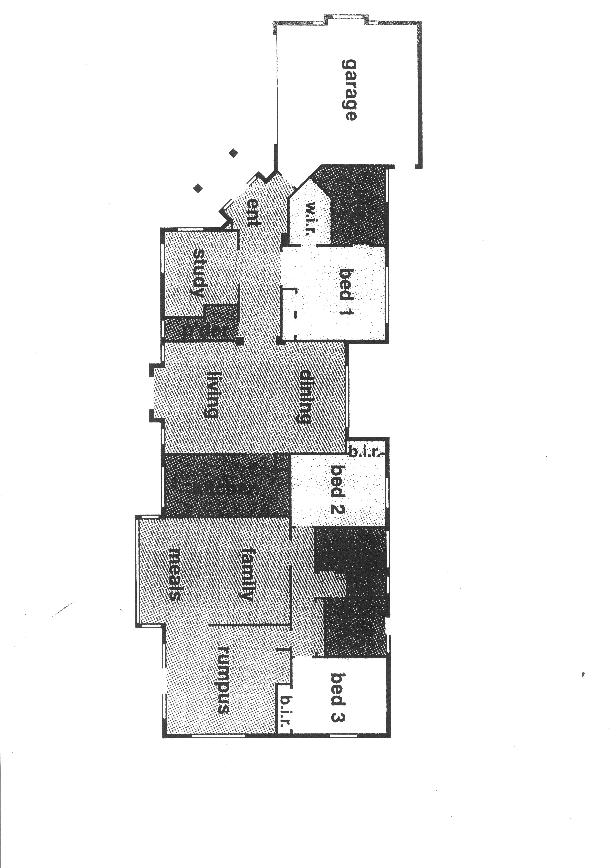
13 The Herald Sun publication was a glossy-paged magazine of 186 pages, in which were reproduced photographs, plans and promotional descriptions for many display homes in the greater Melbourne area, arranged by region. The Monomeeth appeared on page 64, represented by a photograph of the display house at Doncaster East, and by an outline of the floor-plan as reproduced in App D to these reasons. At trial, there was a debate as to whether this publication was available to Mr Dervish in January and February 2000, when he gave his instructions to Mr Factor. I shall return to that issue below.
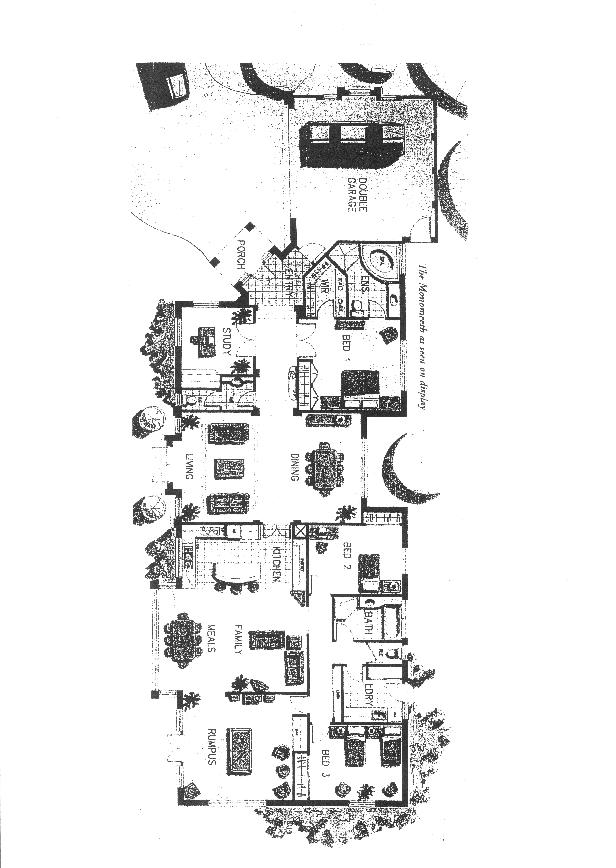
14 The applicant’s promotional brochure for the Monomeeth range of houses showed an outline floor plan of the house at Doncaster East as reproduced in App E to these reasons. On the same page of the brochure, a partial floor plan, as shown in App F to these reasons, was also represented. Beneath that partial plan, the following was written:
Monomeeth 101: Garage repositioned to side of study. Repositioned master bedroom, ensuite and powder room. Depending on setback requirements, suits blocks of 18 x 31.9 metres.
That is to say, by replacing the front section of the Monomeeth with the section shown in App F, one would have the Monomeeth 101. It was this combination exactly which, according to the applicant, Mr Dervish chose to reproduce for the purposes of his Sterling plan. On the applicant’s case, it made no difference that the orientation of the rooms in the Sterling plan was a mirror image of, rather than a straight reproduction of, the plan for the Monomeeth 101. It appears to have been common ground that these houses might have been designed and built either way, depending on the preference of the particular customer.
15 On the evidence, the only place that Mr Dervish might have come by the Monomeeth promotional brochure was the display house at Doncaster East, where copies of the brochure were available to the public. There was no evidence that Mr Dervish, or anyone associated with his then fledgling business, had ever visited that house, or had ever obtained a copy of the brochure. The applicant’s case was that, because of the striking similarities between the Monomeeth 101 plan (and of a substantial part of the Monomeeth plan as such) and the Sterling plan and house, the latter must have been copied from the former, and the public display of the Monomeeth house, and the public availability of the brochure, at least provided Mr Dervish with the potential for access to both. I shall return to these aspects of the applicant’s case, and to Mr Dervish’s denials, later in these reasons.
16 Central to the applicant’s case were the inferences which, it was submitted, should be drawn from the primary evidence of the course of the design of the respondent’s Sterling house. From October 1992, Mr Dervish worked for a company called MS Homes run by his uncle. He established the respondent in 1994 because of the preference of MS Homes to have a corporate intermediary from which they would receive his services, rather than employing him on wages directly. Mr Dervish originally worked for MS Homes in a sales capacity, but towards the end of the 1990s he was involved more in contract administration, particularly with respect to the preparation of tender documents for the Ministry of Housing. In 1999, he and the respondent parted company with MS Homes, the respondent thereafter carrying on business as an independent entity. The Sterling house in Bundoora was the respondent’s first display house.
17 The Bundoora site upon which the Sterling house was built was within a development of residential house lots, marketed by Australand Holdings Ltd, called “Botanica Park”. It was the last site available when purchased by the respondent on 6 December 1999. The contract under which the respondent purchased the block apparently required that construction be commenced by 24 January 2000, and that the display house itself be completed and ready for operation by 22 August 2000. These requirements provided the foundation for a submission on behalf of the applicant that, in January and February 2000, the respondent – a company new to the project house industry – had every incentive to expedite matters by adopting the plans of a competitor. In his evidence, Mr Dervish recognised that he was, in January 2000, confronted with the reality that, by not having commenced construction, the respondent was in breach of contract. He did, however, reject the suggestion that this caused him to adopt the applicant’s plans.
18 However these criticisms may be, the fact is that it was on 10 January 2000 that Mr Dervish first attempted to contact Mr Factor, by telephone. He did so because Mr Factor had previously done some architectural work for MS Homes. He attempted to contact Mr Factor again on 18 January 2000, but it was not until 28 January 2000 that the two men spoke. Unsurprisingly, neither could now remember the detail of that conversation, but there exists a brief handwritten note thereof, taken by Mr Factor at the time, as follows:
Design for 16 m frontage.
Single storey. – Slim bricks
Double hung Colonial windows.
25 sq. living + garage.
4 Beds
Bay to Meals.
As a result of that conversation, Mr Factor sent a quotation setting out his rates to the respondent on 31 January 2000.
19 It seems that Mr Factor’s rates were satisfactory to the respondent, since he and Mr Dervish spoke again on 7 February 2000. Again, the best evidence of the content of that discussion is the following note made by Mr Factor at the time:
3 Beds 870 Front door single with sidelights. – 2400 H.
25-26 sq.
Entry from Garage to Entry via Powder Rm airlock.
Bay to Meals.
Island bench in Kitchen
Large L’dry.
Separate toilet in W.C.
Mirrored wall to Bedroom 1.
Living/Dining either side of axis.
Dining next to Kitchen.
Powder Rm.
Coffered ceiling to Entry. (matching floor border).
Lot of windows.
2700 H. ceilings. → 2250-2400 H. windows.
Slate shingle roof.
Portico.
Double Hung front windows.
Doors at Living/Kitchen junction.
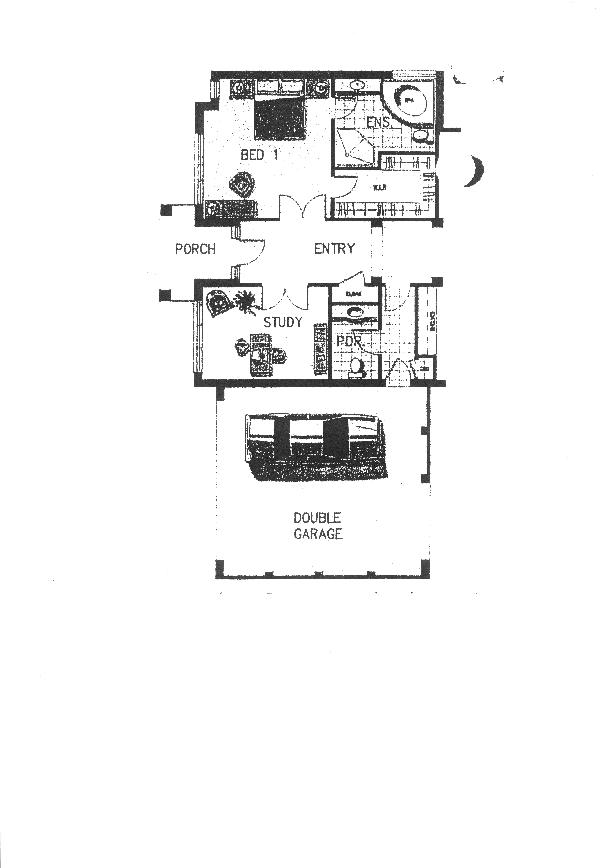
20 Mr Factor never visited the site at Bundoora, but it is clear that he was asked to design a house that would fit on that site, and, because it was to be a project house, that could conveniently be placed on other sites as required. As it happened, the Bundoora site had an unusual feature: it was not rectangular, but tapered to the rear. The best way to demonstrate this is to refer to an extract from the Australand brochure for Botanica Park, which shows the dimensions of the lots in the vicinity of the site in question, which was Lot 128. I have set out that extract in App G to these reasons. There was another feature of the site which affected Mr Factor’s work: the vehicular cross-over was on the non-tapering side of the site (where a faint “x” appears in App G).
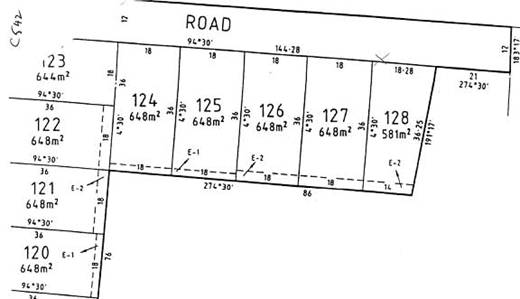
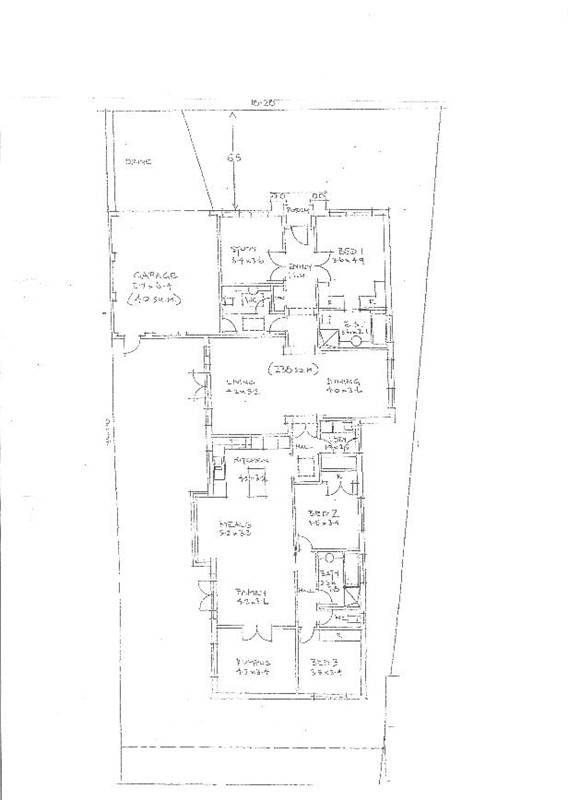
21 Having taken instructions from Mr Dervish on 7 February 2000, Mr Factor set to work. He commenced by preparing a very basic outline on “butter paper”. He then prepared a sketch plan, with dimensions and room designations, in accordance with that outline. That sketch plan is reproduced in App H to these reasons. The tapering outline of the site can be seen from this plan, as can the location of the vehicular cross-over, and thus the placement of the driveway and garage. Mr Factor had reached this stage of things by 14 February 2000, when he sent a copy of this sketch plan to Mr Dervish by facsimile (at 10:18 am).
22 Mr Factor was not happy with this design. Because he had been constrained by the location of the cross-over, and by the asymmetrical shape of the site, he had been unable to make the rear section of the house (that comprising bedrooms 2 and 3, the kitchen, meals, family and rumpus areas) as wide as he would have liked. The result was that the main longitudinal hallway ended rather abruptly against the wall of the second bedroom, and the access to the rear section of the house was through the kitchen. As a result, he discussed with Mr Dervish the possibility of re-locating the cross-over to the other side. On the expectation that the local council would approve such an expedient, Mr Factor “flipped” (his word) the plan, so as to produce the result set out in App I to these reasons.
23 It is obvious even to the non-architectural eye that, with this orientation, the house is a much better fit for the asymmetrical block in Bundoora. Mr Factor was able to make the rear part of the house wider, thereby giving him what was, in effect, a continuous longitudinal axis from the front door through to the family and meals areas. He was able to separate the kitchen area from this axis by the cupboards or similar units shown on the plan, to increase the size of the laundry, and to introduce extra width into the second and third bedrooms. At the same time, as will be seen, Mr Factor changed the orientation of the components within the bathroom. All these measures were made possible by the “flipping” of the design, with the extra width which that provided to the rear section of the house. Having made these changes, Mr Factor sent a copy of his sketch plan to Mr Dervish at 10:26 am on 15 February 2000.
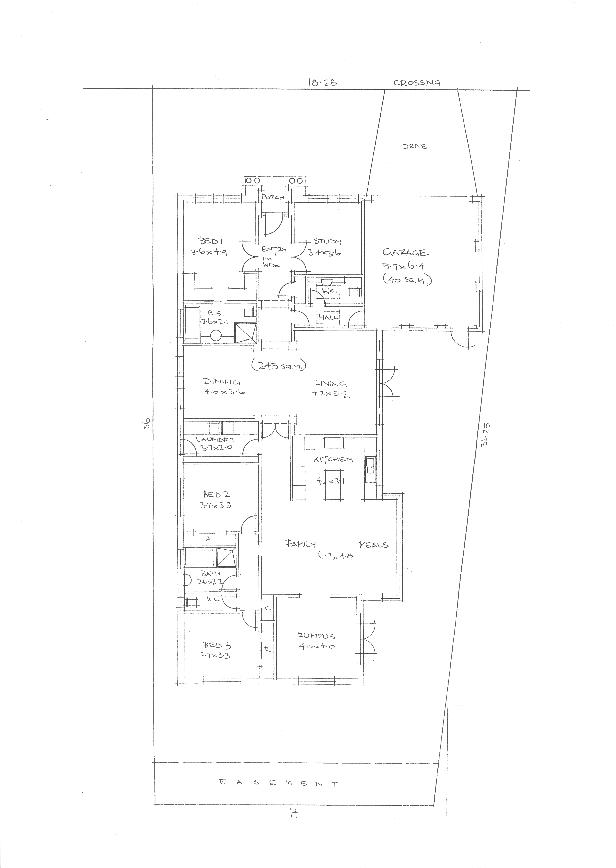
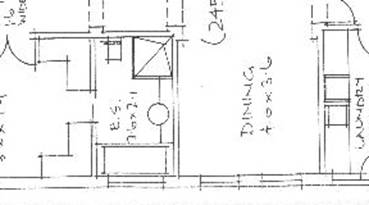
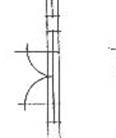
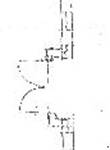
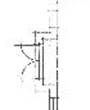
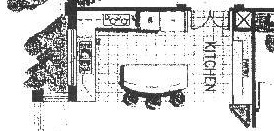
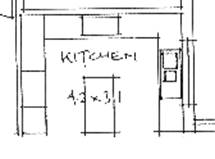
24 On 16 February 2000, Mr Dervish returned at least three versions of the sketch plan to Mr Factor by facsimile, with suggested alterations made in his (Mr Dervish’s) hand. At 12:26 pm on that day, Mr Dervish sent a version of the plan to which the following changes had been made. First, the external wall to the dining area, running between the en-suite to the first bedroom and the laundry, was set back a short distance, so as to make the dining area slightly smaller and to create a slightly larger, indented, area external to the footpad of the house, between the dining area and the fence-line. Mr Dervish described this external area as a fernery. Secondly, the French doors on the external wall to the living area (running between the rear of the garage and the kitchen) were set out a short distance, so as to give a bay window kind of effect. Thirdly, the cupboards or units marking off the kitchen from the main longitudinal axis of the house were omitted (thereby giving the kitchen an “L” shape, rather than an “open box” shape), and the island bench in the kitchen was re-orientated, so that its longer dimension now ran across the axis of the house, rather than in line with it. Further, this new island bench, as drawn by Mr Dervish, was given a curved, or crescent‑shaped, front section, where it faced onto the family room. Fourthly, the hand basin in the family bathroom was removed from its position on the external wall, and replaced with a vanity bench, incorporating a hand basin, running along the wall opposite the bath, and terminating just short of the position occupied by the open door.
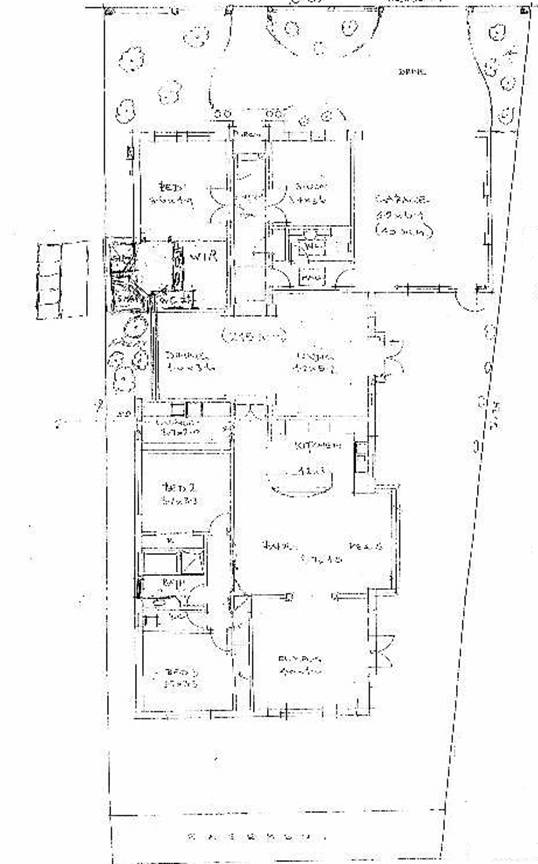
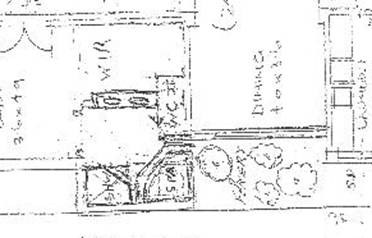
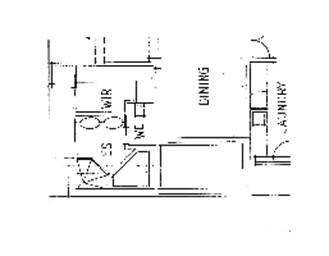
25 At 1:34 pm on 16 February 2000, Mr Dervish sent a further iteration of the plan by facsimile to Mr Factor. This time, changes were made to the master bedroom and to the en-suite bathroom leading off that bedroom. The wardrobes were removed from the master bedroom, and the en-suite bathroom enlarged, to a degree, to occupy part of the space that had hitherto been occupied by the wardrobes. At the same time, the now enlarged area of the en-suite bathroom was divided longitudinally, such that the section of it which lay towards the centre of the house became a walk-in robe, with access directly from the master bedroom (ie one would turn left immediately upon entering that room). The remaining part of the en-suite bathroom was enlarged by moving the external wall out to the fence-line of the property. The shower was moved to the front section of this extended part, and a corner spa was drawn in the rear section of this extended part (overlooking, as it were, Mr Dervish’s proposed fernery). The spa would take the place of the bath. A separately partitioned WC was drawn along the internal wall which adjoined the dining area, and a new double-basin vanity bench was drawn between the other wall of that WC and the master bedroom itself (ie in alignment with the axis of the house).
26 At 2:39 pm on 16 February 2000, Mr Dervish sent a further iteration of the plan to Mr Factor, but, although I allow for the probability that it differed in some respects from that sent at 1:34 pm, no change is readily apparent, and the parties drew my attention to no relevant distinction between the two.
27 The changes made by Mr Dervish on 16 February 2000 are shown in the sketch plan reproduced in App J to these reasons.
28 Mr Factor incorporated Mr Dervish’s suggested alterations. They are shown on the plan reproduced in App K to these reasons. An elaboration beyond those suggested by Mr Dervish which is apparent in this plan is the external wall, in line with the boundary fence, which now more completely defined the fernery area outside the window to the dining area.
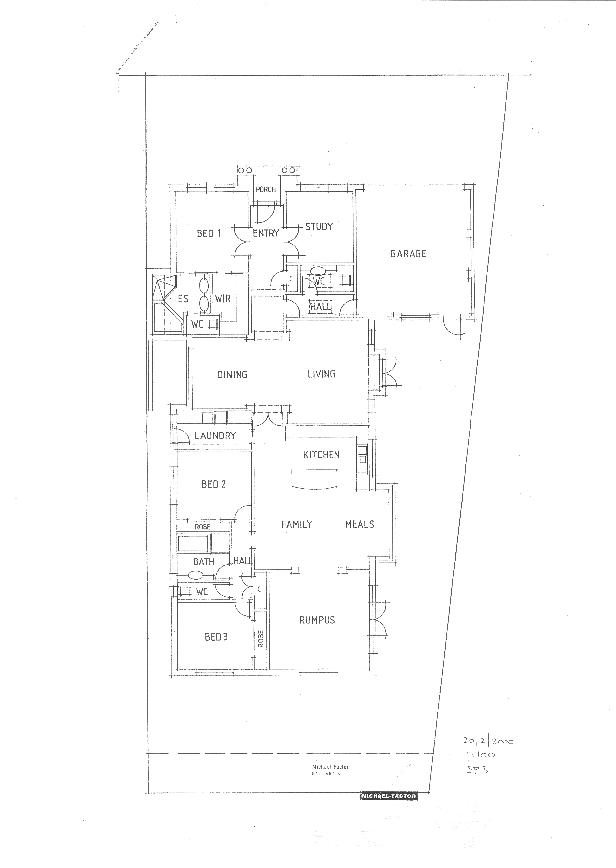
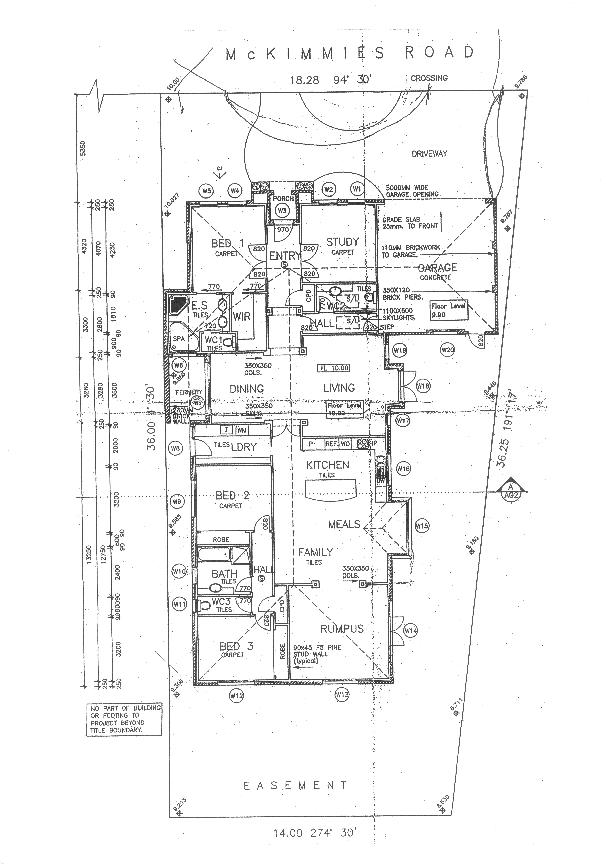
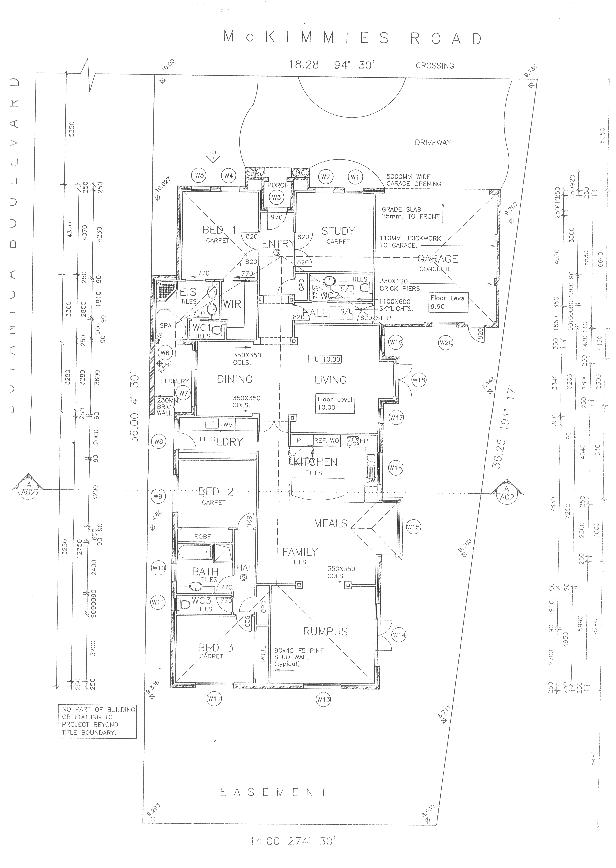
29 By this stage, at least for present purposes, the design of the Sterling house was architecturally complete. A technical drawing was prepared by Mr Factor’s wife Vicki, a draftsperson, in March 2000. It is reproduced in App L to these reasons. Changes were subsequently made to the width of the family room at the point where it adjoined the rumpus room, and, by April 2000, the design was as reproduced in App M to these reasons.
30 The applicant accepted that Mr Factor had not had direct or, subject to its allegation that he was influenced by Mr Dervish, indirect, access to the plan for the Monomeeth or the Monomeeth 101, or to the Monomeeth display house. The reproduction which the applicant alleged was not the conscious doing of Mr Factor. Rather, it was alleged that Mr Dervish so influenced Mr Factor during the design stage for the Sterling display house as to cause him to produce a design which was in fact a reproduction of the Monomeeth 101 or a substantial reproduction of the Monomeeth itself. It was said first that Mr Dervish did this knowingly and intentionally, and that I should not accept his denials to the contrary. Alternatively, it was said that Mr Dervish was so familiar with the applicant’s two houses, or with one of them at least, that the instructions which he gave and the suggestions which he made to Mr Factor subconsciously transferred to the latter sufficient design details thereof as to cause his designs for the Sterling to amount to reproductions.
31 I regard this latter way of putting it as inconsistent with the evidence. If, contrary to his denials, Mr Dervish was aware of either or both of the Monomeeth designs at all, that awareness could not have amounted to the kind of familiarity necessary for him to have conveyed all the substantial details of the Monomeeth designs to Mr Factor, without being conscious at the time of what he was doing. Even put at its highest, the applicant’s case against Mr Dervish does not even approach the kind of situation which one sees, for example, when a person’s familiarity with a tune or logo is so ingrained as to make subconscious copying a realistic possibility. In my view, the applicant’s case must stand or fall on its allegation that Mr Dervish consciously instructed Mr Factor by reference to the Monomeeth plans, or to his recollection of the Monomeeth display house.
32 The applicant submitted that, during the course of Mr Factor’s engagement by the respondent – particularly in the period leading up to about the middle of February 2000 – Mr Dervish and Mr Factor communicated regularly about the design of the house on the vacant lot in Bundoora. It was submitted that Mr Dervish told Mr Factor what he wanted, and Mr Factor carried out those instructions. At the general level, Mr Factor did accept that he received instructions from Mr Dervish, and acted consistently with them. That is, however, a far cry from saying that Mr Dervish effectively instructed him in sufficient architectural detail to have him design a house that was a copy of the Monomeeth. It will be necessary to refer in due course to such evidence as there is of the oral communications which passed between these two men in January and February 2000. Before doing so, I should note the respects in which, objectively, the Sterling plan is similar to the Monomeeth plan.
33 In support of its case that it should be inferred that the respondents’ Sterling house plans were copied from one of the variants of the Monomeeth plans or house, the applicant called Dr John Cooke, an architect with extensive relevant experience and qualifications since his graduation as Bachelor of Architecture at the University of Sydney in 1966. Comparing the Monomeeth plans with the Sterling plans, Dr Cooke concluded as follows:
The significant features of both plans are the closely similar disposition of the major rooms and spaces within the rectangular plan shape, planned around a central circulation access commencing at the front door and leading into an open planned formal living dining area and then into an informal kitchen/family/meals area and connected rumpus room, the use of a bay window in the living room and in the meals area (wider in the Monomeeth than in the Sterling), the recessed external wall of the dining area and the use of wide doorways and ceiling coffers/bulkheads to strengthen the visual definition of spaces and pilasters/attached columns to frame doorways. Both plans have a classical style front porch and portico, but in the Monomeeth it is placed at a 45 degree angle between the front wall of the study and the garage projecting to the front, whereas in the Sterling the garage is to the side and the front porch is parallel to the front facade.
In summary, the relationship of bed 1 and its ensuite is reversed in the Sterling when compared with the Monomeeth, the front facade in the Monomeeth not being available for windows because of the position of the Monomeeth garage adjacent to the front wall. The front porch in the Monomeeth is angled, rather than parallel to the front facade as in the Sterling. In other respects, the Monomeeth and Sterling plans are strikingly similar: in the overall plan shape and proportions, in the disposition of rooms, circulation spaces and passages within the plan, in the flow of space within the plan from the formal front porch and entry past the living and dining rooms into the open planned kitchen/meals/family/rumpus area, and in the use of a bay window in the meals area to connect internal and external spaces. The differences in details of cupboards, windows, doors, bathroom and kitchen fit‑out and laundry position are trivial in the overall design, when comparing the two plans.
34 Comparing the Monomeeth 101 plans with the Sterling plans, Dr Cooke concluded as follows:
The significant features of both plans are the closely similar disposition of the major rooms and spaces within the rectangular plan shape, planned around a central circulation access commencing at the front door and leading into an open planned formal living dining area and then into an informal kitchen/family/meals area and connected rumpus room, the use of a bay window in the living room and in the meals area (wider in the Monomeeth 101 plan than in the Sterling plan), the recessed external wall and “fernery” of the dining area in the Sterling, the partial bay window to bed 1 in the Monomeeth 101 and, in both plans, the use of wide doorways, ceiling coffers (Monomeeth 101)/bulkheads (Sterling) to strengthen the visual definition of spaces and pilasters/attached columns to frame doorways. Both plans have a classical style front porch and portico and the garage projecting from the side of the study.
The Monomeeth 101 and Sterling plans are strikingly similar: in the overall plan shape, in the disposition of rooms, circulation spaces and passages within the plan (including a formal front portico with classical antecedents in each case), in the flow of space within the plan, and in the use of a bay window in the meals area to connect internal and external spaces. The differences in details of cupboards, windows, doors, bathroom and kitchen fit‑out and laundry position are trivial in the total design.
With respect to each of the above comparisons, the applicant stressed Dr Cooke’s conclusion that the Sterling plan was “strikingly similar” to the relevant Monomeeth plan. Indeed, Dr Cooke prepared transparencies of the two Monomeeth plans which could be laid over the Sterling plan (or vice versa), and which were supposed to demonstrate the similarity to which he referred.
35 The respondents called Bryan Miller, also an architect with extensive relevant experience since being awarded a Fellowship Diploma of Architecture from the Royal Melbourne Institute of Technology in 1966. Having examined the plans for the Monomeeth house, the Monomeeth 101 house and the Sterling house, Mr Miller expressed his opinion that these houses represented “current examples of project house design in this residential market”, that none contained “any unique or revolutionary concepts in modern house design” and that, while all had a number of similarities, they also had “a number of differences in relation to planning arrangements, interior detail and external façade treatments”.
36 Mr Miller also referred to a number of features of project house design in the contemporary market which, taken together, made it unremarkable that any two single‑storey project houses, intended to be built on residential sites of the dimensions typically encountered, may be quite similar, albeit that they were independently designed. He said:
Throughout Australia project house builders are catering for the same type of client with similar expectations and budgets. While there may be some difference of approach due to climatic or regional differences the floor plans for most project builders in this part of the residential sector of the construction industry are all remarkably similar.
Currently in Victoria the vast majority of project house designs will contain a number of common elements. For the single storey version of a typical residence there will be three bedrooms with the main bedroom having its own bathroom (“en suite”) and separate walk-in robe or dressing room. The other bedrooms will have a wall of robe space and be located somewhere adjacent to a common bathroom. This will contain the bath, separate shower, basin and WC.
Generally for cost considerations the laundry will be located adjacent to the bathroom. Sometimes the WC is in a space adjacent to, but separate, from the bathroom.
In a typical plan for a project house the kitchen is now almost always located adjacent to large open spaces which are labelled as “meals”, “living” and/or “family room” but irrespective of the name the kitchen is normally in close proximity to the areas of the residence where food is most likely to be consumed.
Some plans also incorporate outdoor spaces labelled with such exotic names as “el fresco” but in reality they are simply a modern version of the old traditional veranda. Current trends in project house design however recognize the fact that our weather changes frequently and hence the outdoor space is now more protected than the old style open veranda by the inclusion of some additional external walls. Hence the “el fresco” outdoor space can also be used on days of high wind and or excessive sunlight.
The front of the house will normally contain a double garage in close proximity to the main entry. This is in recognition that we all drive as the main form of transport and for most customers in this market the entry and exit point for the residence needs to be closely related to the place where the cars are to be located.
For most floor plans produced by project house builders the main bedroom and its associated en suite and walk-in robe are also located at the front of the house although another approach is to place a small room or study adjacent to the main entry and the garage with the main bedroom behind. Other spaces that may be located at the front part of the floor plan may include an oversized bedroom notated as a “parents retreat”, or perhaps an extension of the living space to suggest a separate area for the dining table.
Mr Miller referred also to the current trend for building sites to be of 500 m2 or less, and to have a typical frontage of about 16 m. In summary, he expressed the view that, while there were “numerous examples of unique external and internal treatments to various surfaces and finishes, the overall floor plans, the shape and the construction of most designs will be very similar and contain a large list of common elements.” It was only with respect to this last conclusion that Dr Cooke disagreed with Mr Miller. As I understand Dr Cooke’s position, he would not agree with the implication, carried by the conclusion of Mr Miller, that all project house designs were generic.
37 Dr Cooke made the following general observations, with which Mr Miller agreed:
I would expect the designers of single storey house plans of similar floor areas competing for the same segment of the project house market, designed to fit blocks of land with a relatively narrow frontage in comparison to the depth of the block, to produce plans with many similar features: an approximately rectangular plan (to fit typical narrow-fronted lot sizes), a reasonably compact plan to minimize the total length of external wall and therefore cost (as external walls are more expensive than internal walls), an efficient plan to reduce corridor length (with circulation space forming part of usable room area as far as possible in preference to enclosed corridors), an attached double garage, a front door in the front facade, front entrance hall, master bedroom with ensuite bathroom, informal dining and family/living area with open kitchen, formal dining and/or sitting area, two to four subsidiary bedrooms with a second bathroom (possibly with a separate WC), a laundry, and (depending on floor area) possibly a study and a rumpus room or home theatre.
In an elongated rectangular plan shape, a front entrance door in the front facade must be positioned approximately centrally to allow the entrance hall to give access to rooms on either side (if there are rooms on both sides of the entrance hall) and for that circulation axis to discharge approximately in the centre of the plan to give efficient circulation paths within that plan shape. The arrangement of the rooms is significantly influenced by functional relationships and the constraints of a compact plan shape. However, within those constraints there is scope for originality and there are almost limitless planning possibilities.
38 Although there are points of detail which correspond as between the two plans, the strong impression which one gets from the overlays prepared by Dr Cooke is of marked similarity in the overall and relative dimensions, and in the arrangement of the various rooms. This is what struck Dr Cooke himself particularly. He referred, for instance, to “the overall plan shape and proportions”, to “the disposition of rooms, circulation spaces and passages” and to “the flow of space within the plan”. It is with respect to these features particularly that I should be alert to discern any suggestion of a communication of content from Mr Dervish to Mr Factor. Indeed, it was submitted on behalf of the applicant that I should infer that there was such a communication.
39 It is convenient to consider the applicant’s allegations in two stages, since the applicant itself so structured its submissions. The first stage covers Mr Factor’s design work down to the point where he flipped the plan which he had drawn on 14 February 2000. It was submitted that, even by then, Mr Dervish had influenced Mr Factor towards unwittingly copying the Monomeeth 101.
40 It was not established as a matter of fact that, when he engaged and instructed Mr Factor in January/February 2000, Mr Dervish had ever seen the Monomeeth house (and it was not suggested that there was ever a Monomeeth 101 display house to which he might have had access), or the plans for that house or for the Monomeeth 101. It was put on behalf of the applicant that Mr Dervish had the opportunity to visit the Monomeeth display house in Doncaster East, and that he might, while there, easily have picked up a brochure which contained a representation of the floor plan of that house and of the Monomeeth 101. Mr Dervish denied that he had ever visited that house or viewed the brochure. In a case in which he is a party sued by the applicant – and given some rather unsatisfactory aspects of his evidence to which I refer below – I am not disposed to accord his denials much weight. However, the fact remains that the only sense in which he had the opportunity to visit the display house was that in which every other member of the public had such an opportunity. There is neither direct evidence of any such visit nor other evidence from which I could find, as a matter of inference, that Mr Dervish probably did make such a visit. The evidence does not rise above the proposition that it is something which he could have done.
41 The applicant’s case that Mr Dervish probably did visit the house in Doncaster East was based upon the likelihood that Mr Dervish, as a builder of project houses, would want to keep abreast of interesting designs that were abroad and to monitor what his competitors were doing. Under cross-examination, he did accept that, when he was involved with house sales with MS Homes in the early 1990’s, he made a practice of visiting other companies’ project houses which were on display in the area of Melbourne in which he operated – generally the northern suburbs. He resisted the suggestion that he visited houses in the Doncaster area. That resistance does not strike me as remarkable. Indeed, the explanation given by the applicant for the lateness of the commencement of the present proceeding was that it was not until September 2003 that Mr Englehart was aware that the respondent was building houses with designs similar to his own. That occurred because the respondent started to build houses in the suburb where Mr Englehart himself lived. The original Sterling house was opened for display in mid-2001 without Mr Englehart becoming aware of that fact, and without the similarity between that house and the Monomeeth series otherwise coming to his attention.
42 The applicant submitted also that Mr Dervish had access to the plan for the Monomeeth house because he had access to the Herald Sun magazine to which I have referred, in which the plan was reproduced. Mr Dervish claimed to have no recollection of having seen this magazine at the time, but I am disposed to place little weight upon evidence such as this, given by an interested party as it was. Further, for reasons which will appear, I do not regard Mr Dervish’s own recollections of the relevant events as at all reliable. A more satisfactory approach is to examine the objective indications on the question whether Mr Dervish had access to the magazine, and if so, whether he used the Monomeeth plan on p 64 as a basis for instructing Mr Factor.
43 As I have said, the magazine was described as the “Autumn/Winter 2000” edition. Relevantly to the present debate, Mr Dervish’s communications with Mr Factor occurred in late January and the first half of February 2000. Surprisingly (but possibly as a result of the expedition which the parties brought to the preparation of the case generally), no-one seems to have thought it advisable to procure evidence from the publisher of the magazine (as a matter of notoriety, a substantial enterprise still in business) as to when it would have first appeared on the newsstands. Counsel for the respondents pointed to numerous instances in the magazine in which the prices for houses were quoted “as at 25 March 2000”. They asked me to infer that that probably represented the date upon which – or around about which – the magazine appeared. I can think of no reason to draw any such inference, at least to the extent (which would be necessary for the respondents’ purposes) of excluding the likelihood of the magazine having first appeared, say, in early February 2000. It does not strike me as intuitively improbable that advertisers in a magazine such as this would be requested to quote their prices current as at a particular date which was within, rather than at the commencement of, the period over which the magazine would be publicly available.
44 The applicant’s strongest argument that Mr Dervish did have the magazine available to him when he commissioned Mr Factor fell out of the evidence of Mr Dervish himself. In a witness statement originally made on 30 November 2009, and tendered in evidence at trial, Mr Dervish said:
I provided Mr Factor with a number of materials that I wanted him to consider when designing the home. This was predominantly to show the style I was trying to achieve. It included a photograph of the St Kilda town hall. Attached to this witness statement and marked ‘SD1’ is the bundle of material that I provided to Michael Factor.
The first document in exhibit SD1 was an unsourced photocopy of a one-page promotion for a house called “Kiwifruit 234”. Other documents included photographs of the facades of houses, and in one case of the St Kilda Town Hall, which Mr Dervish used to show Mr Factor the kind of thing that he wanted. In his oral evidence, for the first time Mr Dervish explained that the photographs in the exhibit had actually been taken in 2009 for the purposes of this proceeding. He did that because he had mislaid his copies of the photographs originally sent to Mr Factor. The photographs in the exhibits were supposed to have been of the same structures as had been the subject of the original ones.
45 The substitution of the photographs for the purposes of exhibit SD1 is not directly relevant to the issue presently under discussion, but it does demonstrate how unsatisfactory Mr Dervish’s own evidence was in relevant respects. Of more direct present relevance is the circumstance that the photocopy of the Kiwifruit 234 advertisement was taken from a page of the Herald Sun magazine to which I have referred. When this circumstance was brought to Mr Dervish’s attention in cross-examination, he effectively abandoned what he had said in his witness statement. He as good as said that exhibit SD1 was made up of documents which he may have given to Mr Factor, but he had no recollection. When cross-examined about these matters, Mr Dervish was evasive and uncertain – a degree of uncertainty that was not evident in his witness statement. For the purpose of identifying what, if anything, Mr Dervish provided to Mr Factor in early 2000, I cannot rely upon anything Mr Dervish himself said, either in his witness statement or in his viva-voce evidence. This state of affairs, of course, is not altogether unpropitious for the respondents, since it means that I am quite unpersuaded that Mr Dervish did in fact send a copy of a page from the Herald Sun magazine to Mr Factor in January or February 2000.
46 Such as it is, the documentary objective evidence suggests that he probably did not. Mr Factor made two witness statements in the course of preparing for the trial of this proceeding. The first, dated 18 December 2009, was filed on 4 January 2010. It was, Mr Factor said in his oral evidence, prepared only by reference to his own (imperfect) recollection and to the documents provided to him by the respondents’ solicitors. Then, on 10 February 2010, Mr Factor was served with a subpoena which the applicant had caused to be issued, and which required him to provide his original design file for the Sterling house. That was done. On 2 March 2010, the respondents filed a series of supplementary witness statements, one of which was made by Mr Factor. He made that statement with the benefit of access to his file. The file itself was tendered in evidence, and I have relied substantially on it in my narrative of the course of Mr Factor’s designing of the Sterling house.
47 Although it was not suggested by either party that the order of documents on Mr Factor’s file necessarily corresponds with the order in which such documents were originally placed on to the file (the file having been inspected a number of times in recent months), two documents appearing quite early in the piece appear to have been supplied by Mr Dervish, because they are stapled to his business card. They are a photocopy of the cover page of the 1993 Dulux “Colours” magazine and the floor plan for a house designed in May 1999 by David Calleja, a building designer and structural engineer otherwise unconnected with the case. The Dulux magazine cover showed a photograph of the façade of a Georgian-style house with double columns to the left (and inferentially also to the right – this section not being included in the photograph) of the entrance. The file also contains two photographs of the same house, which I infer were taken either by Mr Dervish or by Mr Factor for indicative purposes. These photographs are not stapled to Mr Dervish’s business card. They represent the only element common to Mr Factor’s file and exhibit SD1. Otherwise, the file contains nothing that would corroborate the exhibit.
48 The contents of Mr Factor’s file demonstrate that Mr Dervish was quite prepared to put before his architect examples of the kind of thing he wanted – both as to the appearance of the house from the street and as to the floor plan. However, there is no plan, photograph or representation of any variant of the Monomeeth house on the file. Neither, for that matter, is there a copy of the page from the Herald Sun magazine showing the Kiwifruit 234. The applicant made no suggestion that the contents of Mr Factor’s file had been manipulated for the purposes of the present proceeding. Indeed, Mr Factor was cross-examined by counsel for the applicant towards having him accept – which he did – that he had had “no particular reason to look at [the file] or take documents from it” since he did the work in 2000.
49 I should also note that, although the applicant’s promotional brochure contained the wherewithal from which Mr Dervish might have been able to perceive something close to the full design of the Monomeeth 101, the entry in the Herald Sun magazine did not. It showed only a very broad outline plan of the Monomeeth itself. There was almost no detail in the kitchen area: no island bench, for example, was shown. Absent some other basis for inferring that Mr Dervish had access to the plan for the Monomeeth 101, any access which he had to the magazine would not have provided the basis for an inference that the details of the front section of the house which, on the applicant’s case, he conveyed to Mr Factor had been derived from one of the applicant’s plans.
50 The facts to which I have referred above speak strongly against the inference that Mr Dervish consciously instructed Mr Factor to reproduce the Monomeeth plan, or substantial elements of it. Given the way he did instruct Mr Factor, I think it highly improbable that, had he been of a mind to reproduce the Monomeeth plan, he would not have sent Mr Factor a copy thereof, or of the brochure, or of the relevant page from the Herald Sun magazine, or of a photograph of the house; or that he would not have directed Mr Factor’s attention to the Monomeeth house in some other way. Yet it seems quite clear that Mr Dervish did none of these things. Rather than take simple steps such as these – steps which would have been consistent with the way he drew other houses to Mr Factor’s attention – it is the applicant’s case that Mr Dervish chose to communicate the details of the end result which he sought to achieve by the forms of oral communication that were sufficiently subtle to leave Mr Factor himself substantially in the dark as to the plans on which his own design was to be based.
51 The only records of any oral communications as between Mr Dervish and Mr Factor before the latter drew his initial butter paper plan were his notes dated 28 January 2000 and 7 February 2000 (see paras 18-19 above). There is nothing in those notes that betrays a communication in anything like the detail that would have been necessary to produce, at Mr Dervish’s insistence, the kind of Monomeeth-like elements to which Dr Cooke referred. So far as the notes convey, Mr Dervish’s instructions on 28 January 2000 were highly undeveloped. By 7 February 2000, it seems that he was telling Mr Factor that he wanted a three-bedroom house of 25-26 squares, with dining and living areas either side of an axis (from which it may be inferred that there was to be an axis), with a “Bay to Meals”, with an island bench in the kitchen, with the dining area next to the kitchen, and with the other elements referred to. There is nothing there from which Mr Factor should have regarded himself as instructed, against whatever might have been his own better instincts, to design a house with the actual dimensions, placement of rooms, circulation spaces and orientation generally that Mr Dervish is alleged to have gleaned from the Monomeeth, and which Dr Cooke perceived to involve striking similarities between the two.
52 Mr Factor’s butter paper plan has all the indications of the development of an original design, unprompted by the kind of instructions which the applicant alleges were given by Mr Dervish. I accept Mr Factor’s evidence that he did what he could to produce a three-bedroom house of 25-26 squares, with the features otherwise mentioned by Mr Dervish on the asymmetrically-shaped site. But on no view does the plan of 14 February 2000 betray an unconscious attempt to reproduce the Monomeeth. Mr Factor recalls that he then spoke to Mr Dervish about this plan, and told him, in effect, that it would not work on the block. There are no notes of this conversation, but the applicant did not challenge Mr Factor on his recollection. The result was, broadly, a plan which had the design features to which Dr Cooke referred. It was at this point that the striking similarity with the Monomeeth houses could first be observed. However, all the indications are that Mr Dervish had not, to that point, given Mr Factor the kind of detail that would have been necessary for the purposes of reproduction. Mr Factor’s first plan was quite unlike the Monomeeth, and the next version, which was like the Monomeeth, was explained by the entirely benign circumstance that the plan was “flipped” in order the better to fit the shape of the site.
53 To the above I should add a reference to Mr Factor’s own architectural style, with which the plan ultimately drawn was consistent. He said that, from about the early 1990s, it was very common to design a house with an axis leading generally from front to rear, and having the living and dining areas lying opposite each other on either side of that axis. A number of other plans drawn at about, or before, this time by Mr Factor were tendered in evidence, and they appeared to have this feature and generally to show an architectural approach that was reflected in the Sterling plan (although the latter was drawn to higher budget constraints than Mr Factor generally encountered with his other clients). When, for the purposes of this case, Mr Factor was shown the Monomeeth plan, he disliked it. In part that was because of the angled front entrance, which, in his view, led to “internal angles”, which he particularly disliked. To the extent that the applicant alleges a reproduction of the Monomeeth 101, this may not be a consideration, but Mr Factor also pointed to two other features – common to both of the Monomeeth houses – which he disliked. The first was the location of the pantry, on the other side of the main axis apropos the kitchen. Mr Factor said that this means “that the hallway effectively runs through the kitchen”, and was something that he would avoid. The second was that the laundry was placed between the second and third bedrooms, which is something that Mr Factor would not do.
54 In short, as it existed before the exchange of facsimile messages on 16 February 2000, Mr Factor’s plan for the Sterling house bore the hallmarks of plans that he drew for his clients generally, and contained no feature in common with the Monomeeth plans that Mr Factor viewed with disfavour. To borrow a phrase used at times by the applicant, there were no “tell-tale” indications of copying at this point.
55 I turn next to the second stage of my consideration of the applicant’s reproduction allegations – that which is concerned with the changes which Mr Dervish made to Mr Factor’s sketch plan on 16 February 2000. According to counsel for the applicant, those changes gave a conspicuous indication of copying. There were four aspects of those changes upon which counsel relied. Although the ultimate question is whether the work (or a substantial part of the work) as a whole was reproduced, in order to understand the circumstantial case being conducted by the applicant, it will be necessary to examine specific elements of Mr Factor’s plan (as amended by Mr Dervish) and corresponding elements of the outline plan for the Monomeeth 101 as set out in the applicant’s promotional brochure.
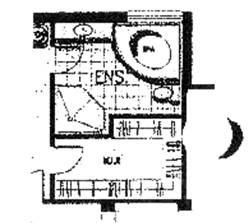
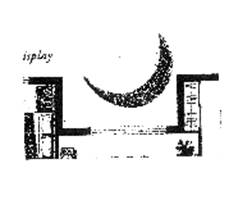
56 The first element relied on by counsel for the applicant was the en-suite bathroom to the main bedroom, and the adjacent alignment of the external wall to the dining area. As this element appeared in the applicant’s brochure, in Mr Factor’s sketch plan of 15 February 2000, in Mr Dervish’s amended plan of 16 February 2000 and as re-drawn by Mr Factor, it is represented in parts (i), (ii), (iii) and (iv), respectively, of App N to these reasons. Counsel for the applicant pointed to the introduction and placement of the walk-in robe, to the set-back of the external wall to the dining area, and to the introduction of a spa in the external corner of the en-suite bathroom. Each of these changes made the plan resemble more closely the plan for the Monomeeth 101 in the applicant’s brochure. And it is clear that they were specifically introduced by Mr Dervish. Counsel for the respondents pointed, on the other hand, to respects in which Mr Dervish’s changes did not reflect the Monomeeth 101 as shown in the brochure: the shower was on the external wall rather than, as in the brochure, on the internal wall; the vanity basin was, correspondingly, on the internal wall rather than on the external wall; and the toilet was altogether differently designed, having its own closet rather than being placed in the general area of the en-suite bathroom itself.
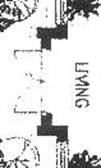
57 Counsel for the applicant next referred to the external doors of the living area which opened on to the part of the property which lay to the rear of the garage. As this element appeared in the applicant’s brochure, in Mr Factor’s sketch plan of 15 February 2000, in Mr Dervish’s amended plan of 16 February 2000 and as re-drawn by Mr Factor, it is represented in parts (i), (ii), (iii) and (iv), respectively, of App O to these reasons.
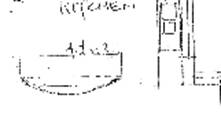
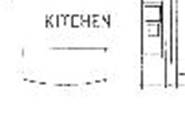
58 The next of Mr Dervish’s changes to which counsel for the applicant referred was that made to the island bench in the kitchen. As this element appeared in the applicant’s brochure, in Mr Factor’s sketch plan of 15 February 2000, in Mr Dervish’s amended plan of 16 February 2000 and as re-drawn by Mr Factor, it is represented in parts (i), (ii), (iii) and (iv), respectively, of App P to these reasons. Counsel for the applicant pointed out that not only had the shape and configuration of the bench changed, but the cupboards, or units, separating the kitchen from the main front-rear axis of the house had been removed (thus making it an “L-shaped” rather than a “U-shaped” kitchen), notwithstanding Mr Factor’s own preference for such a separation.
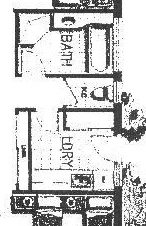
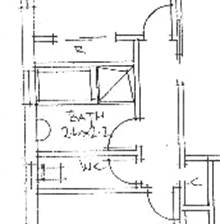
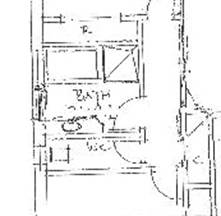
59 The final area of change made by Mr Dervish to which counsel for the applicant referred was that of the family bathroom, which lay between the second and third bedrooms. As this element appeared in the applicant’s brochure, in Mr Factor’s sketch plan of 15 February 2000, in Mr Dervish’s amended plan of 16 February 2000 and as re-drawn by Mr Factor, it is represented in parts (i), (ii), (iii) and (iv), respectively, of App Q to these reasons. As I understand the point here being made by counsel for the applicant, it related to the vanity unit. Originally, Mr Factor had what appears to be only a wash-basin mounted against the external wall. At Mr Dervish’s suggestion, this was changed to a vanity unit running along the wall shared with the WC. This was said to be very similar to the style and orientation of the vanity unit in the applicant’s brochure. But counsel for the respondents pointed out that the bathrooms were different in other respects, notably that involving the orientation of the bath: in the brochure it was in line with the external wall, while in Mr Factor’s plans it was at right-angles thereto.
60 The question for the court is whether these changes made by Mr Dervish make it probable as a matter of inference that he had access to the applicant’s brochure and was uplifting features from it. The changes themselves, viewed in isolation, count in favour of such an inference. It is not that any one of the elements suggested by Mr Dervish was so distinctive or unusual as to make it unlikely for it to have originated from any source other than the Monomeeth plan. Indeed, there was no suggestion in the expert evidence that any of these elements was at all unusual or imaginative in the general run of project house designs. Rather, it was the circumstance that all four of the changes suggested by Mr Dervish brought the Sterling design closer to that of the Monomeeth. Counsel for the applicant submitted that I should regard it as beyond belief that this might have been a mere coincidence.
61 Dealing with this question of fact, I commence by observing that it is not the case that each of the four changes suggested by Mr Dervish corresponded closely with the Monomeeth 101 plan as shown in the applicant’s brochure. The changes to the en-suite bathroom produced a result which was not closely similar to the Monomeeth 101. The general layout in the family bathroom on the plan amended by Mr Factor after Mr Dervish’s intervention was also rather different from that shown on the Monomeeth 101 plan in the brochure: indeed, the only change suggested by Mr Dervish in relevant respects was the introduction of a vanity unit in place of a free-standing wash basin. In each of these rooms, the changes suggested by Mr Dervish were, in my view, both unremarkable in themselves and sufficiently different from the Monomeeth 101 in their result substantially to weaken the applicant’s case that they were most probably the result of reproduction.
62 Although the set-back in the external wall to the dining area was a feature suggested by Mr Dervish which corresponded directly with the Monomeeth 101, there is a basis for supposing that this feature was introduced by him to facilitate the establishment of a fernery external to the dining room window. That is to say, there is a rational explanation for Mr Dervish having made this change which is independent of the applicant’s plan. I accept that this is a relatively minor consideration, but the reference to the fernery on the plans returned to Mr Factor on 16 February 2000 does bespeak a certain independence of thinking which is inconsistent with the applicant’s case.
63 Another circumstance which is inconsistent with the applicant’s case in relevant respects is that, even after Mr Dervish’s changes, there were many respects in which the Sterling plan differed from the plan for the Monomeeth 101 as represented in the applicant’s brochure. A major difference was the location of the laundry, which was between the third bedroom and the family bathroom/WC in the applicant’s plan, but was between the second bedroom and the dining area in the plan drawn by Mr Factor. A less significant difference was the location of the opening between the family/meals area and the rumpus room. Also, the applicant’s plan showed a pantry opposite the kitchen area on the other side of the main pedestrian axis to the rear of the house: there was no such feature in Mr Factor’s plans, and none had been suggested by Mr Dervish.
64 As I understand the applicant’s case, it was not suggested that any of these individual design elements which the Sterling had in common with the Monomeeth 101 was, or even that all of them taken together were, sufficient to sustain the conclusion that, by copying them (if that is what happened), the respondent reproduced a substantial part of the plan for the Monomeeth 101. Rather, it is put that the introduction of these elements at the behest of Mr Dervish showed that there was copying in fact, justified the inference that Mr Dervish had had access to the applicant’s brochure, and therefore (this being the final step in the argument) opened the way to a rejection of his evidence that he did not originally instruct Mr Factor generally as to the dimensions and layout of the plan for the Sterling, and as to the orientation of the various rooms.
65 Although I was readily able to reject the applicant’s inferential case against Mr Dervish to the extent that it was based on the evidentiary state of things as at 15 February 2000, I accept that that case was considerably enhanced by the evidence of Mr Dervish’s changes made the following day. Nonetheless, even taking that evidence into account, I am not satisfied that the instructions given by Mr Dervish were the result of his having had access to, and of making reference to, the applicant’s plans, or one of them.
66 As obvious as it may seem, the starting point is that, in early 2000, there was, and there had been, no relationship or connection between the applicant and Mr Dervish. It was not as though, as sometimes happens in cases of this kind, Mr Dervish previously worked for the applicant, or had previously crossed swords with the applicant, or anything similar. In setting about to design his first house, Mr Dervish had no more reason to turn to the applicant’s plans than to those of any other builder.
67 There is no evidence that Mr Dervish ever visited the applicant’s display house, and, given the geographical separation involved, no reason to regard Mr Dervish’s denials as remarkable. It was only by making such a visit that, so far as the evidence shows, Mr Dervish might have obtained a copy of the applicant’s promotional brochure, in which there was, it seems, the only public exposure of the floor plan of the Monomeeth 101.
68 It is true that, in early 2000, the respondent was under pressure to design and construct its project house on the site in Bundoora, but I am not prepared to jump to the conclusion that this made it the more likely that Mr Dervish would have copied a competitor’s design. Rather, it explains his choice to engage the services of an experienced architect. The engagement of Mr Factor was what might have been expected of a man who had no recent experience in the project house business, who had no established in-house family of plans on which to base his new design, who required plans for a new project house that would fit on to a given, asymmetrically-shaped, site and yet be suitable for construction elsewhere, and who needed the job done expeditiously. There is nothing here which strengthens the inference of copying: if anything, the contrary.
69 As I have noted earlier, had Mr Dervish been of a mind to induce Mr Factor to produce a design closely in line with that of the Monomeeth 101, and if he had had access to the applicant’s brochure, there is no reason why he would not simply have sent it to Mr Factor. He (Mr Dervish) was not beyond putting plans in front of Mr Factor to demonstrate the kind of thing that he wanted. Only by attributing to Mr Dervish a conspicuously Machiavellian disposition could I conclude that, having the applicant’s brochure in his possession and wanting to achieve a reproduction of it, he nonetheless gave Mr Factor a quite different plan – that drawn by Mr Calleja – and sought to achieve his objective by oral instructions of sufficient subtlety for Mr Factor himself to have made no clear reference to them in his notes of 28 January or 7 February 2000.
70 It seemed to be common ground as between the experts that the Sterling plan might have been designed independently of any of the Monomeeth plans. There was nothing in the former that need have been derived from the latter. All these plans consisted of layouts, elements and features that one might encounter in any house, particularly (because of cost restraints) in any project house. For the most part, the points of similarity that struck Dr Cooke – the overall plan shape, the disposition of rooms, the circulation spaces and passages and the “flow of space” – all represent elements that existed in Mr Factor’s plan on 15 February 2000, before Mr Dervish’s alterations. I think it quite improbable that Mr Factor reached this point as a result of Mr Dervish’s promptings. Albeit that it amounts in effect to a finding of coincidence, I consider more likely that things were as they appeared to be, namely, that Mr Factor was asked to design a house for a certain site, and he did so independently, subject only to the overall parameters that he was given by Mr Dervish.
71 Although the elements introduced by Mr Dervish on 16 February 2000 did bring the Sterling plan closer to that for the Monomeeth 101, and although they strengthen the applicant’s inferential case, I am not persuaded that they take that case the distance necessary to justify the findings of copying which the applicant seeks. In respects to which I have referred above, it is odd that, if Mr Dervish was here relying on the applicant’s brochure, he did not always do so either faithfully or completely. The changes which he made were not so distinctive or unusual that I should regard it as unlikely that he made those changes independently of the applicant’s plan. Perhaps the areas in which his changes most closely corresponded with design elements of the Monomeeth 101 were those of the bay window to the living area and the orientation and shape of the island bench in the kitchen. I could not, however, find that these were other than standard features, the appearance of which in a project house design, or even in any two project house designs independently created, would not be at all remarkable.
72 For the reasons stated above, I am not satisfied that, in designing the Sterling house, the respondents reproduced the plans for the Monomeeth houses, or for any one of them, or any of the houses themselves. It follows that I must also reject the applicant’s allegations with respect to the St James house.
73 In the circumstances, there will be judgment for the respondents. I shall lay out a timetable for the filing of written submissions on the question of costs.
| I certify that the preceding seventy-three (73) numbered paragraphs are a true copy of the Reasons for Judgment herein of the Honourable Justice Jessup. |
Associate:
Dated: 12 August 2010
appendix a
appendix b
appendix C
appendix D
appendix E
appendix f
appendix g
Extract from Australand brochure for Botanica Park, which shows the dimensions of the lots in the vicinity of the site in question – Lot 128, as well as the location of the vehicular cross‑over (“x” at top of Lot 128).
appendix H
appendix i
Appendix J
appendix k
appendix l
appendix m
appendix n
Part (i) – Brochure
Part (ii) – Mr Factor’s plan
Part (iii) – Mr Dervish’s amendments
Part (iv) – Mr Factor’s amended plan
appendix o
Part (i) – Brochure
Part (ii) – Mr Factor’s plan
Part (iii) – Mr Dervish’s amendments
Part (iv) – Mr Factor’s amended plans
appendix P
Part (i) – Brochure
Part (ii) – Mr Factor’s plan
Part (iii) – Mr Dervish’s amendments
Part (iv) – Mr Factor’s amended plans
appendix q
Part (i) – Brochure
Part (ii) – Mr Factor’s plan
Part (iii) – Mr Dervish’s amendments
Part (iv) – Mr Factor’s amended plans