FEDERAL COURT OF AUSTRALIA
D’Souza v Wedgewood Road Hallam No 1 Pty Ltd [2010] FCA 765
|
Citation: |
D’Souza v Wedgewood Road Hallam No 1 Pty Ltd [2010] FCA 765 | |
|
Parties: |
||
|
File number: |
VID 121 of 2010 | |
|
Judge: |
GORDON J | |
|
Date of judgment: |
21 July 2010 | |
|
Catchwords: |
||
|
Legislation: |
Sale of Land Act 1962 (Vic) Trade Practices Act 1974 (Cth) Transfer of Land Act 1958 (Vic) | |
|
Cases cited: |
Argy v Blunts & Lane Cove Real Estate Pty Limited (1990) 26 FCR 112 Australian Competition and Consumer Commission v Dukemaster Pty Ltd [2009] FCA 682 Beverly Manufacturing Co Pty Ltd v ANS Nominees Pty Ltd (1978) 22 ALR 237 Clifford v Solid Investments Australia Pty Ltd [2009] VSC 223 Elders Trustee & Executor Co Ltd v E G Reeves Pty Ltd (1987) 78 ALR 193 Everest Project Developments Pty Ltd v Mendoza [2008] VSC 366 Flight v Booth (1834) 131 ER 1160 Fraser v NRMA Holdings Limited (1995) 55 FCR 452 Global Sportsman Pty Ltd v Mirror Newspapers Pty Ltd (1984) 2 FCR 82 Gregg v Tasmanian Trustees Ltd (1997) 73 FCR 91 Henjo Investments Pty Limited v Collins Marrickville Pty Limited (No 1) (1988) 39 FCR 546 Higgins v Statewide Developments Pty Ltd (2010) 14 BPR 27,293 Molotu Pty Ltd v Solar Power Ltd (1989) NSW ConvR ¶55-490 Rhone-Poulenc Agrochimie SA v UIM Chemical Services Pty Ltd (1986) 12 FCR 477 | |
|
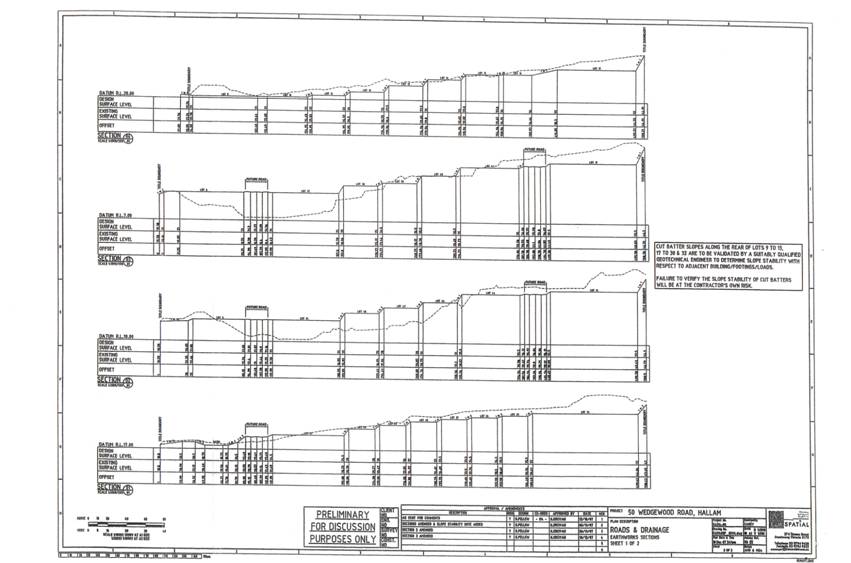
|
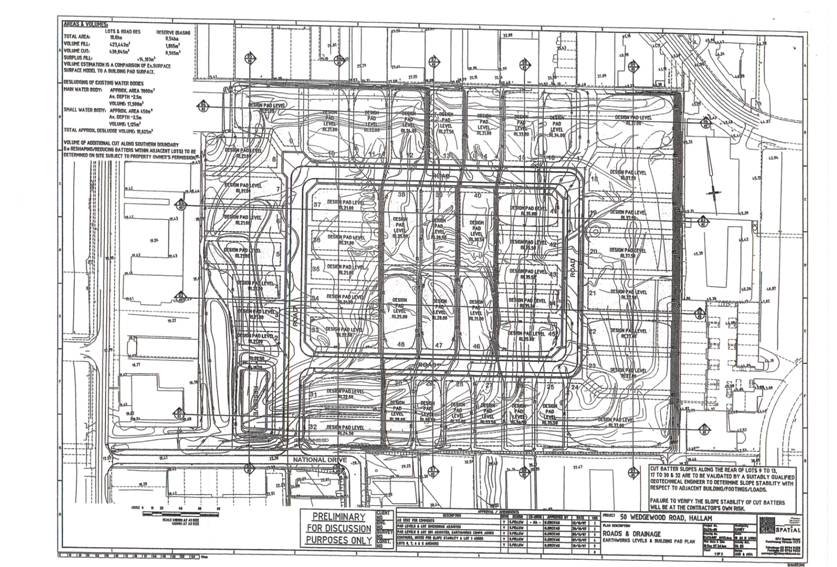
| |
|
Date of hearing: |
31 May & 1 June 2010 | |
|
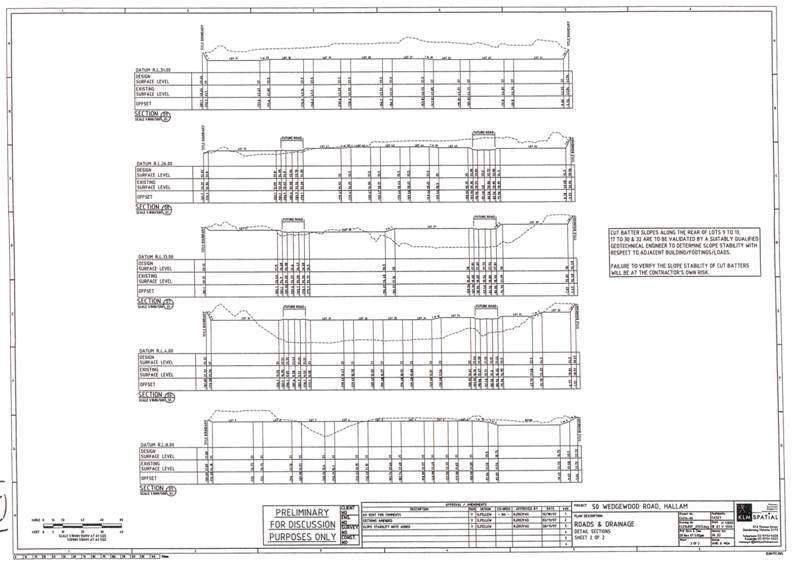
|
| |
|
Date of last submissions: |
2 June 2010 | |
|
|
| |
|
Place: |
Melbourne | |
|
|
| |
|
Division: |
GENERAL DIVISION | |
|
|
| |
|
Category: |
Catchwords | |
|
|
| |
|
Number of paragraphs: |
93 | |
|
|
| |
|
Counsel for the Applicants: |
CR Northrop | |
|
|
| |
|
Solicitor for the Applicants: |
Robert Richter & Associates | |
|
|
| |
|
Counsel for the Respondent: |
M Bevan-John | |
|
|
| |
|
Solicitor for the Respondent: |
Taylor Splatt & Partners | |
|
IN THE FEDERAL COURT OF AUSTRALIA |
|
|
VICTORIA DISTRICT REGISTRY |
|
|
GENERAL DIVISION |
VID 121 of 2010 |
|
CONRAD D’SOUZA First Applicant
HITESH BHATT Second Applicant
ACACIA RED PTY LTD (ACN 127 157 019) Third Applicant
| |
|
AND: |
WEDGEWOOD ROAD HALLAM NO 1 PTY LTD (ACN 127 649 405) Respondent
|
|
JUDGE: |
|
|
DATE OF ORDER: |
21 JULY 2010 |
|
WHERE MADE: |
MELBOURNE |
1. The Applicants have forfeited the deposit of $101,169.00 paid by the Applicants under the Contract of Sale dated 19 February 2008 (the Contract of Sale)for Lot 10 on Plan of Subdivision PS612556N at Wedgewood Road Hallam in the State of Victoria (Lot 10).
2. The Respondent may re-sell Lot 10 in accordance with cl 6(3)(b)(ii) of Table A in the Seventh Schedule to the Transfer of Land Act 1958 (Vic) and, pending the re-sale, is entitled to retain the other moneys paid to it by the Applicants under the Contract of Sale to satisfy any deficiency in the price on the re-sale and any resulting expenses.
AND THE COURT ORDERS THAT:
3. The Fast Track Application is dismissed.
4. The Applicants pay the Respondent’s costs of the Fast Track Application and the Cross-Claim, such costs to be taxed in default of agreement.
Note:Settlement and entry of orders is dealt with in Order 36 of the Federal Court Rules.
The text of entered orders can be located using Federal Law Search on the Court’s website.
|
IN THE FEDERAL COURT OF AUSTRALIA |
|
|
VICTORIA DISTRICT REGISTRY |
|
|
GENERAL DIVISION |
VID 121 of 2010 |
|
BETWEEN: |
CONRAD D’SOUZA First Applicant
HITESH BHATT Second Applicant
ACACIA RED PTY LTD (ACN 127 157 019) Third Applicant
|
|
AND: |
WEDGEWOOD ROAD HALLAM NO 1 PTY LTD (ACN 127 649 405) Respondent
|
|
JUDGE: |
GORDON J |
|
DATE: |
21 JULY 2010 |
|
PLACE: |
MELBOURNE |
REASONS FOR JUDGMENT
INTRODUCTION
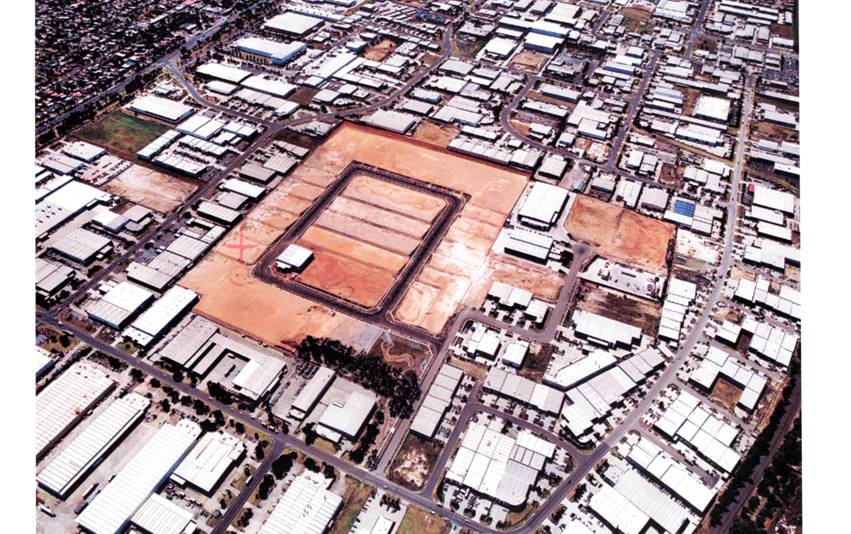
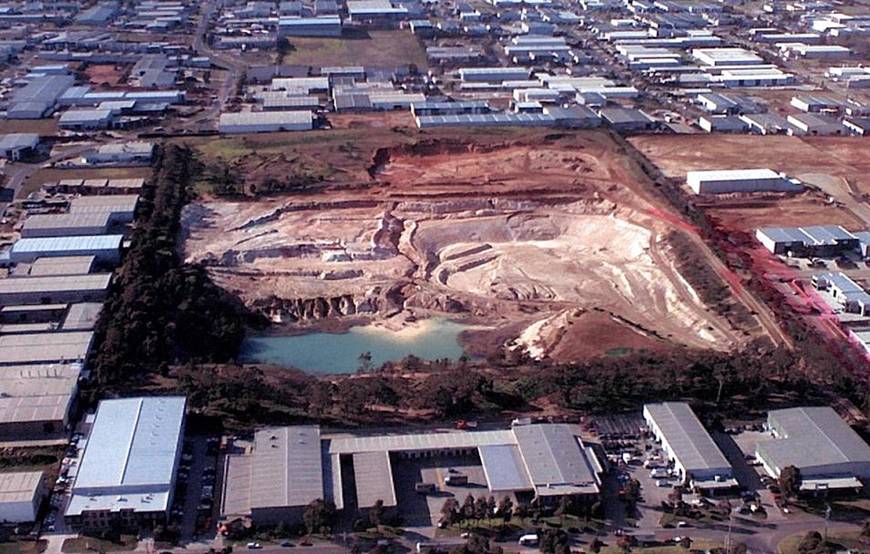
1 The land at 50 Wedgewood Road Hallam, in the State of Victoria, was a disused quarry. A photograph of the disused quarry is Annexure A. At the end of its productive life, Wedgewood Road Hallam No 1 Pty Ltd (ACN 127 649 405) (the Respondent) developed the quarry into an industrial estate in accordance with the plan of subdivision PS612556N (the Subdivision). These proceedings concern the contract of sale for Lot 10 of the Subdivision (Lot 10) by which Conrad D’Souza (Mr D’Souza) and Hitesh Bhatt (Mr Bhatt) (collectively, the Purchasers)agreed to purchase the lot for $1,011,690. The contract of sale was executed on 19 February 2008 (the Contract of Sale).
2 The dispute between the Applicants and the Respondent concerns the terms of the Contract of Sale and, in particular, whether the Contract of Sale disclosed that fill was required on Lot 10 to achieve the designated design level. The Purchasers asserted that they entered into the Contract of Sale on the basis that there would be no fill on Lot 10 (the misrepresentation). In support of their claim, the Purchasers referred to pre-contractual discussions and to the fact that a north-south cross section of the site, showing the need for fill of up to 10m on Lot 10, was omitted from the Contract of Sale.
3 The Respondent admitted that the north-south cross section was inadvertently omitted from the Contract of Sale but submitted that the Applicants’ claim should not succeed by reason of one or more of the following facts and matters:
1. the levelling of works required to be undertaken on Lot 10 was disclosed in the pad plan which accompanied the Contract of Sale and no complaint was made by the Applicants in relation to the facts and matters disclosed in that cross section;
2. the omission of the north-south cross section did not amount to misleading and deceptive conduct under the Trade Practices Act 1974 (Cth) (the TPA) or a misrepresentation by silence;
3. even if the omitted north-south cross section did amount to a misrepresentation or misleading or deceptive conduct under the TPA, the Applicants did not establish that they relied upon the alleged misrepresentation;
4. in mid July 2008, some months after the contract was executed, the omitted north-south cross section was provided by the Respondent to the Purchasers and at no time did the Applicants complain about the contents of that disclosure;
5. in January 2009, the Respondent disclosed changes to the engineering design and fill levels for Lot 10 and again the Applicants did not complain about the contents of that disclosure;
6. between August 2009 and September 2009, with knowledge of the matters identified in paragraphs 4 and 5, the Purchasers renegotiated the settlement date to 15 February 2010 in consideration of the further payment of an additional $101,169, which they paid on 26 November 2009; and
7. on 1 February 2010, with knowledge of the matters identified in paragraphs 4 and 5, the Purchasers nominated Acacia Red Pty Ltd (Acacia Red), the third applicant, as transferee at settlement.
4 The Applicants submitted that the alleged pre-contractual representations and the omitted north-south cross section represented that no fill would be required on Lot 10 and that representation was misleading and deceptive conduct contrary to s 52 of the TPA and a false or misleading representation contrary to s 53A of the TPA. The Applicants sought a declaration that the Contract of Sale had been rescinded, an order that the Respondent refund the deposit and other amounts paid by the Applicants to the Respondent under the Contract of Sale and, alternatively, orders under s 87 of the TPA that the Contract of Sale was void or that the Applicants were entitled to rescind the Contract of Sale and were entitled to the refund of the deposit and other amounts paid by the Applicants to the Respondent under the Contract of Sale. The Respondent cross-claimed seeking orders and declarations that the Applicants had repudiated the contract at common law, that the Respondent was now entitled to retain the moneys paid by the Applicants under the Contract of Sale, and to re-offer the lot for sale to the public.
FACTS
The Fill on the Subdivision
5 It is necessary to begin by saying something about the nature of the fill at the Subdivision, and in particular on Lot 10. As noted earlier, before its development the Subdivision site was a disused quarry (Annexure A). The aerial photograph of the property in Annexure A showed that the property had a large rim around the edge of the property and a large hole or crater of varying surface levels occupying the majority of the quarry site.
6 Mr Steven Buffinton, a geotechnical consultant, gave evidence about the nature of the fill required on Lot 10 and the Subdivision generally. Mr Buffinton’s uncontroverted evidence was that Civiltest Pty Ltd (Civiltest), a company of which he is a director, was engaged by one of the joint venture partners in the Respondent, Bayport Group, to provide inspection and testing services on earthworks associated with Lot 10 at the Subdivision in a manner that would satisfy the criteria for “Level 1 Supervision” in the Australian Standard which governed earthworks on commercial developments, AS3798 - Guidelines on Earthworks for Commercial and Residential Developments (2007).
7 His evidence was that between October 2007 and August 2009, 1,904 compaction tests across the whole Subdivision were conducted, including a number of tests on Lot 10. Between March 2008 and February 2009, a number of pre-fill inspections conducted by staff of Civiltest at the Subdivision revealed that “the test area had been stripped back to the natural ground, weathered granite or granitic clay all of which is suitable for the placement of structural fill”. According to Mr Buffinton, the areas were filled “with fill material which was placed in no more than 300[mm] layers, moisture treated using a water truck, and then compacted.” If more than 300mm of fill was required, more than one layer would be laid. At the end of this process, each lot had been levelled and had a flat surface upon which construction might take place.
8 The Applicants’ case was that the Respondent misrepresented to them that Lot 10 would be one of the lots on the Subdivision that did not require any fill (that is, one of the properties on the rim around the edge of the property).
Pre-Contractual Representations
9 The pre-contractual discussions surrounding the Contract of Sale were disputed between the parties. In broad terms, the Applicants submitted that prior to entering into the Contract of Sale representations were made by Mr Leonardo Iazzolino (Mr Iazzolino), a qualified builder and director of Elite Property Group Pty Ltd (one of the joint venture partners in the Subdivision) to the effect that Lot 10 would have no fill. The Respondent denied that such representations were ever made.
10 The first applicant, Mr D’Souza, gave evidence concerning how he came to purchase Lot 10. Mr D’Souza was at all relevant times the managing director of a home textile company. His intention was to purchase land to build a factory for his business. His evidence was that prior to entering into the Contract of Sale he contacted Mr Iazzolino to discuss any “opportunities for investment”. Mr D’Souza and Mr Iazzolino had met in 2005 and, between 2005 and 2007, jointly participated in several property transactions. These transactions, which were not in dispute, entailed Mr Iazzolino’s involvement in developing the building that Mr D’Souza’s company currently occupies and Mr Iazzolino’s purchase of what was described as a “a real estate industrial property” from Mr D’Souza in Dandenong in 2006. Mr D’Souza had also purchased property from Mr Iazzolino in Callum on a date not specified.
11 Mr D’Souza stated that when he approached Mr Iazzolino to discuss opportunities for investment he was advised by Mr Iazzolino that there was a property being developed at the Subdivision. Mr D’Souza said he asked Mr Iazzolino if it was a good investment and Mr Iazzolino confirmed that it was. In cross-examination, he described his conversations with Mr Iazzolino as follows:
[T]hrough my discussions with [Mr Iazzolino] he recommended me to buy [L]ot 10 because it was level, flat surface with the road and it had no fill, or the best property that he – and this is the words he said, “This is the best block in the development.”
12 Mr D’Souza further stated that “over a period of a couple of conversations with [Mr Iazzolino]”, he became “involved with the property” and used Mr Ben Cooper (Mr Cooper), a real estate agent, to tie the whole deal together.
13 Mr D’Souza’s evidence was that he attended the Subdivision site with Mr Cooper and the second applicant, Mr Bhatt. It was not clear from Mr D’Souza’s evidence whether the site visit occurred while he was still in discussions with Mr Iazzolino or after the discussions had occurred. What was clear was that, at the time of the visit, the Subdivision was not developed and had the appearance shown in Annexure A. Mr D’Souza described the purpose of the visit as being “a general view of where the development was going to take place, [with] no indication of where the property was going to actually be”. Lot 10 was on the other side of the Subdivision site to where Mr D’Souza was standing when he inspected the Site. Mr Cooper did not did not state whether any fill would be required on Lot 10.
14 Mr Bhatt, the general manager of Mr D’Souza’s business, also gave evidence of the site visit. He stated that he visited the site with Mr D’Souza and Mr Cooper. He identified the same location on the aerial photograph (Annexure A) as being the point from which he viewed the site. Mr Bhatt’s evidence was that he did not have any contact with Mr Iazzolino and was not personally involved in the negotiations with Mr Cooper about the purchase of Lot 10.
15 Mr Iazzolino’s description of the pre-contractual discussions differed substantially from that of Mr D’Souza in a number of important respects. First, while acknowledging that he had conversations with Mr D’Souza in December 2007 and January 2008 about the Subdivision, Mr Iazzolino’s evidence was that at the first meeting (which was at Mr D’Souza’s office), Mr D’Souza had already been shown the Subdivision site by Mr Cooper. In support of his evidence, Mr Iazzolino said that if it were the case that he personally had introduced Mr D’Souza to the Subdivision then it would have been unnecessary to pay commission to Mr Cooper (as they did) for introducing Mr D’Souza.
16 Secondly, he denied that he made the statement that Lot 10 was the “best lot”. Mr Iazzolino stated that Mr D’Souza asked what he thought of the Subdivision, the lots that were available and the price. They also discussed the fact that Mr Iazzolino was a joint venture partner in the Subdivision and that he personally had bought land in the Subdivision. Mr Iazzolino said he advised Mr D’Souza to make his own inquiries and to do his own due diligence – something he told all his clients. Mr Iazzolino also recalled Mr D’Souza asking for his opinion on the lot he had chosen. He could not recall whether this occurred at the first or second meeting. He said that he told Mr D’Souza:
As I have told a number of clients, I can only say that I have bought land in there. In – at that point in time there was only one stage released, which was stage 1, and, to me, the best lots were the ones that I bought, obviously. I tried to take them off the market and buy them personally, and that [L]ot 10, I thought, was a reasonable lot, too, but, “you would have to make up your own mind.”
17 Mr Iazzolino was not cross-examined on whether he said to Mr D’Souza that Lot 10 would require no fill. However, his evidence was that “there was always going to be fill [on Lot 10] and you could see that just by going to the site and seeing how deep the hole was”. He understood that the lots he had personally purchased would have “engineered structural fill” and this did not concern him because the fill was “engineered and designed to be able to place the foundations of the building in the fill”. He similarly did not regard the presence of fill on Lot 10 as causing any problems.
18 Counsel for the Respondent submitted that Mr Iazzolino’s evidence should be preferred over that of Mr D’Souza (and Mr Bhatt). Significantly, he submitted there was “no logical reason” that the Respondent would pay Mr Cooper a commission for introducing a client (the Purchasers) to the Subdivision in circumstances where he did not do so. As a result, the Respondent submitted that the Court should prefer the evidence of Mr Iazzolino that it was Mr Cooper who introduced Mr D’Souza to the Subdivision.
19 The Applicants submitted that it was “inherently unlikely” that the discussion about Lot 10 with Mr Iazzolino was as limited as suggested by the Respondent and that “Mr D’Souza did choose lot number 10 for some reason, and … it’s reasonable to infer that things were said to Mr D’Souza to make him select lot number 10”.
20 In relation to who introduced Mr D’Souza to the Subdivision, I accept the evidence of the Respondent. Mr Iazzolino’s evidence concerning the commission paid to Mr Cooper was compelling. If Mr Iazzolino in fact introduced Mr D’Souza to the Subdivision, as contended by the Applicants, it would render any payment of commission to Mr Cooper a gift. Mr Iazzolino is experienced in property development. It is inherently unlikely he would have paid commission when it was not required.
21 Similarly, I do not accept that Mr Iazzolino made a statement to Mr D’Souza that Lot 10 was the best lot, or that Lot 10 would not have any fill. In circumstances where Mr Iazzolino personally purchased lots in the Subdivision it is logical that he purchased the lots that he believed were “the best”. Concerning the fill, Mr Iazzolino was a compelling witness and I accept his version of events. His understanding of the need for fill at the Subdivision was comprehensive and convincing. It was implicit in his evidence that he would not have made a statement to Mr D’Souza that there was no fill required on Lot 10, when he in fact believed the opposite.
22 Accordingly, I accept that in late December 2007 / early January 2008 Mr Iazzolino and Mr D’Souza discussed the Subdivision. I accept that it was Mr Cooper, not Mr Iazzolino, who introduced Mr D’Souza to the Subdivision and that the contents of the meetings occurred in the manner described by Mr Iazzolino. I also accept that before signing the Contract of Sale, the Purchasers viewed the Subdivision with Mr Cooper (who was not called to give evidence) at a stage when the Subdivision was not developed.
23 The consequence of accepting the Respondent’s version of events is significant: one of the bases on which the Applicants submitted there was a misrepresentation by the Respondent was the alleged pre-contractual conversations with Mr Iazzolino. In light of my conclusions about those alleged pre-contractual representations, that aspect of the Applicants’ claim must fail.
The Contract of Sale
24 As noted earlier, the Contract of Sale was executed on 19 February 2008. It was signed by the Purchasers. The Particulars of Sale provided for the purchase of Lot 10 on proposed Plan of Subdivision PS612556N for $1,011,690 plus GST and the payment of a deposit of $101,169 by 19 June 2008 secured by a bank guarantee. $50,000 was paid on signing the contract.
25 The Contract of Sale also contained a number of Special Conditions (SC) including:
1. “Plan of Subdivision” was defined to mean the unregistered Plan of Subdivision No PS612556N, a copy of which was annexed to the Vendor’s Statement: SC 1.1;
2. the Purchasers acknowledged that prior to signing the Contract of Sale and prior to the payment of any monies under the Contract of Sale, the Purchasers received a Vendor’s Statement (the s 32 statement) under s 32 of the Sale of Land Act 1962 (Vic) (the Sale of Land Act): SC 8;
3. the Purchasers had to accept as identical with Lot 10 described in the Particulars of Sale the lot bearing the same number on the Plan of Subdivision when registered as the number as set out in the Particulars of Sale or, if Lot 10 was renumbered at any time prior to registration, the lot on the Plan of Subdivision as registered “which shall occupy the same, or approximately the same, position on the Plan of Subdivision as [Lot 10] described in the Particulars of Sale” and the Purchasers were not entitled to make any requisition, objection or claim any compensation in respect of those matters: SC 13;
4. the Purchasers acknowledged that the Respondent may need to carry out works or do other things required by statutory authorities in respect of Lot 10 and / or surrounding land to have the Plan of Subdivision certified by Council and approved by the Registrar of Titles. The Purchasers were not entitled to make any requisition, objection or claim or take any action against the Respondent by reason of any works or things done to satisfy such requirements: SC 14;
5. Special Condition 15 was central to the dispute between the parties and provided:
The Purchaser[s] shall not make any requisition, objection or claim any compensation in respect of any of the following:-
15.1 any minor variation to the Plan of Subdivision or [Lot 10] which will not materially affect [Lot 10];
15.2 any minor variations between the number, size or location of lots as presently appearing on the Plan of Subdivision and as shall appear on the Plan of Subdivision when approved by the Registrar of Titles;
15.3 any works affecting the natural surface of the land of which [Lot 10] forms part, or any adjoining land;
…
PROVIDED THAT if an amendment to the Plan of Subdivision is required by Council or the Registrar of Titles or is requested by the [Respondent] the [Respondent] shall within fourteen days after receipt of the requirement of the Council or Registrar or the making of the request by the [Respondent] (as the case requires) advise the Purchaser[s] in writing of the proposed amendment and the Purchaser[s] may rescind this Contract within fourteen days after being advised by the [Respondent] of an amendment to the Plan of Subdivision only if such amendment will materially affect the allotment to which the Contract relates within the meaning of Section 9AC of the Sale of Land Act 1962 .
(Emphasis added).
6. Special Condition 18 (SC18) contained a number of acknowledgements by the Purchasers, namely that:
18.1 [Lot 10] or parts of it may be filled land;
18.2 the [Respondent] makes no warranties or representations in regard to the suitability of, or the works required to be carried out to [Lot 10] to enable [Lot 10] to be used by the Purchaser[s];
18.3 If [Lot 10] includes filling exceeding 300mm compacted depth (finished surface level) this will be indicated on the Layout Plan attached to the Vendor’s Statement; and
the Purchaser[s] agree […] not to make any requisition or objection or claim any compensation in respect of any matter referred to in this Special Condition.
7. Special Condition 25 was headed “Entire Agreement and No Representations” (SC25) and provided that:
25.1 The Contract sets out all of the terms of this sale. Any promise, condition, representation or warranty that may have been made by the [Respondent] or by any person on behalf of the [Respondent] and which is not set out in this Contract is negatived and withdrawn. In particular, the Purchaser[s] confirm […] and acknowledge […] that:
25.1.1 there is no other contract, agreement or collateral warranty subsisting at the time of signing this Contract;
25.1.2 the [Respondent] has made no representations or warranties as to the fitness and suitability of the property and any chattels for any particular purpose;
25.1.3 the [Respondent] has made no representations or warranties as to the financial return or income to be derived from the property and any chattels;
25.1.4 the [Respondent] has made no representations or warranties as to the amount of duty payable by the Purchaser[s] on the transfer; and
25.1.5 in entering into this Contract, the Purchaser[s are] relying entirely upon [their] own enquiries.
25.2 This special condition operates for the benefit of the [Respondent] and the [Respondent’s] estate agent and their respective employees, agents and contractors.
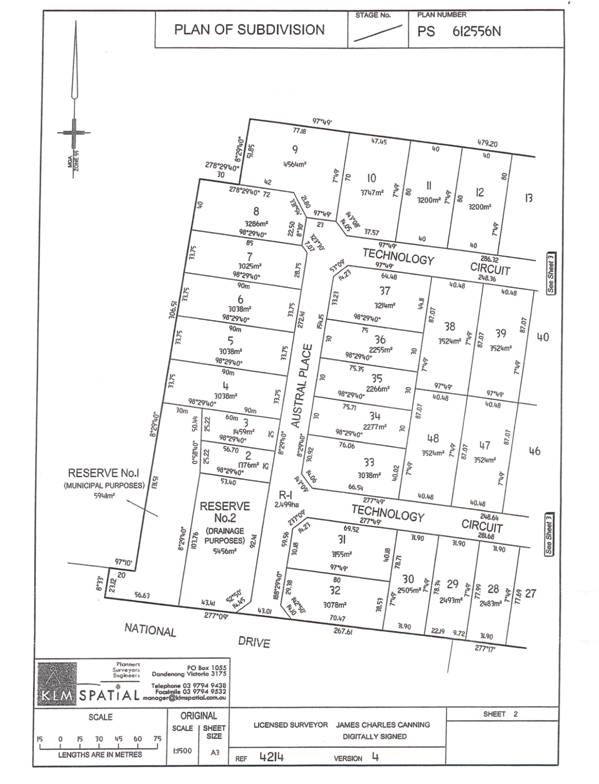
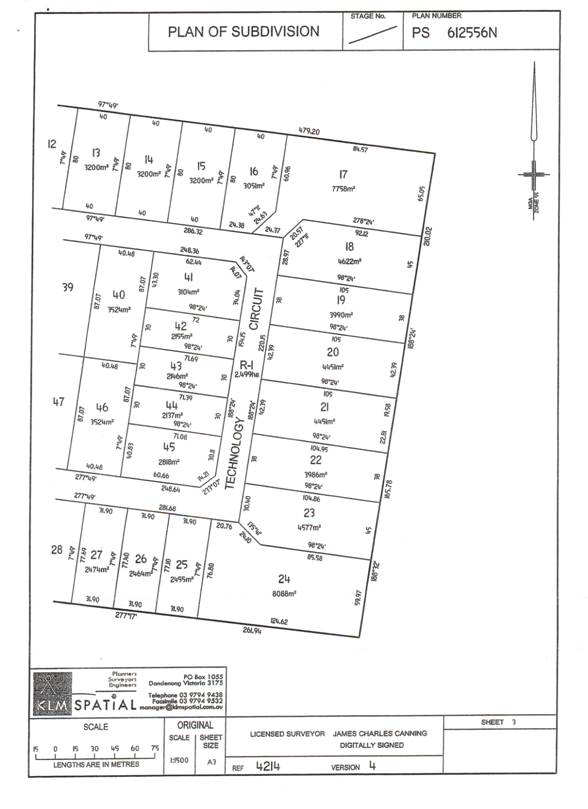
26 The s 32 statement (attached to the Contract of Sale) contained a number of annexures including a lot plan, an east-west cross section entitled “ROADS & DRAINAGE EARTHWORKS SECTIONS SHEET 1 OF 2” (the east-west cross section), and a plan entitled “ROADS & DRAINAGE EARTHWORKS LEVELS & BUILDING PAD PLAN” (the pad plan). A copy of each document is attached as Annexure B, C and D respectively. The annexures are in the same size and form as they were included in the s 32 statement. Lot 10 is in the top left hand corner of the first page of the lot plan (Annexure B). The dimensions shown for the lot are its length (70m 49cm), its rear width (47m 45 cm), the width of the front aspects (14m 5cm and 37m 57cm) and its area (3747m2). The lot plan did not indicate whether any fill was required.
27 The east-west cross section (Annexure C) is difficult to read. However, several observations can be made. First, Lot 10 is shown in the top row of the plan in landscape format, the second lot from the left. The dotted line shows the existing surface level of the land (22.05m on its western side, 24.69m on its eastern side). The solid line that runs underneath it (under the words “lot 10”) shows the proposed surface level of the land (21m). On this view, it appeared that there would be some removal of land to bring the existing surface level to the proposed surface level. Secondly, on the bottom right corner reference is made in the plan description to “sheet 1 of 2”. The pad plan on the following page (Annexure D) is not “sheet 2 of 2”. “Sheet 2 of 2” was in fact the north-south cross section, which was inadvertently omitted from the contract, an issue discussed in further detail below.
28 The pad plan (Annexure D) is important. Lot 10 is in the top left hand corner of this plan in landscape format. It is difficult to read. As the title suggests, the plan shows roads and drainage and the associated earthworks levels. The plan is marked “Preliminary for Discussion Purposes Only”. The plan provides specific information. First, that two cross sections of Lot 10 (indicted by the horizontal and vertical lines through the lot) were available. Secondly, the curved lines that run through Lot 10 show the contours of land, making it clear that the land surface was not flat. Thirdly, the pad plan bears the notation “RL21.00” for Lot 10 under the words “Design Pad Level”, which meant that the pad level of the land was 21 metres.
29 Mr D’Souza gave evidence about his conduct immediately before signing the Contract of Sale. First, Mr D’Souza said that when he received the contract from Mr Cooper he “read all the points that were necessary for [him] to read”. This included the price and what he described as “special instructions or special questions”. He “briefly read” SC 15 and some, but not all of, SC 18: see [25] above. He read SC 18 “in the context with the totality” of the Contract of Sale and, in particular, only focussed on the words “filling [which exceeds] more than 300mm compacted depth”.
30 Mr D’Souza said that he read the lot plan and the east-west cross section in the s 32 statement. In relation to the east-west cross section, his evidence was that he understood the document to show the natural contour of the property and that, from looking at the document, he saw “the straight line indicate[d] that the land surface area was going to be dug into, and that was all [he] look[ed] at”. He did not notice that the north-south cross section was missing because “based on [his] conversation with [Mr Iazzolino], [he] looked at the drawings and [he] assumed that it was all in order”.
31 Further, Mr D’Souza looked at the pad plan in the s 32 statement but he did not understand it. His evidence was that he “just looked at the document”, knew that it was “some kind of drawings (sic) of the engineering”, but that he did not draw any conclusions on the document, and otherwise ignored it.
32 Mr Bhatt also gave evidence about signing the Contract of Sale. His evidence was that he agreed to sign the contract as a result of his discussions with Mr D’Souza. On the day the Contract of Sale was signed, Mr Bhatt said that he and Mr D’Souza “briefly” read the contract, “identified the drawing which was there which … was a plain surface without the fill”. They then proceeded to sign the Contract of Sale.
33 A copy of the missing document entitled “ROADS & DRAINAGE DETAIL SECTIONS SHEET 2 of 2” (the north-south cross section) is Annexure E. Lot 10 is in the fourth row of the document, first on the left in landscape format. The document shows that the proposed level of the road (“future road”) is higher than the existing surface level. It is clear from this document that some fill would be required (in the order of 10 metres) so that Lot 10 would be on a flat surface level with the road.
34 Evidence was given by Mr Stephen Shipp (Mr Shipp), the Respondent’s lawyer, concerning the missing north-south cross section. Mr Shipp prepared the documents for the s 32 statement and was responsible for sending out the draft Contract of Sale. Mr Shipp said that it was an “honest mistake” that the north-south cross section was omitted from the s 32 statement. His evidence was that he received only two of the three sheets from his client and did not notice that one was missing when he reviewed the sheets. He assumed that the pad plan was “sheet 2 of 2”, notwithstanding that the pad plan does not say that. Mr Shipp said that he relied on what his client had provided him.
35 The Applicants did not suggest that the omission of the north-south cross section was deliberate. However, they submitted that the failure to include this document was a misrepresentation by the Respondent as to the nature and extent of the fill required on Lot 10. Mr D’Souza submits that he would not have entered into the contract if he had known the land was going to be filled, save for the 300mm that was mentioned in the Contract of Sale.
June and July 2008
36 On 2 June 2008, the Respondent’s lawyers sent a letter enclosing a copy of an amended Plan of Subdivision for the Purchasers’ records. The purpose of the amendment was stated as “Removal of Carriageway Easements E-1 and E-2 shown in PS 425856 S”. The amendment did not appear to affect Lot 10. Mr Samuel Robert Richter (Mr Richter), the Applicants’ lawyer, forwarded this to the Purchasers. Mr Richter stated that he “would have had a cursory look [at the amended Plan of Subdivision] to see that [L]ot 10 … was still … in the same location and [had] the same square metre[s]”. Mr D’Souza said that he did not look at the detail of the letter. Mr Bhatt did not recall ever seeing the documents.
37 On 15 July 2008, the Respondent’s lawyers sent another letter to the Applicants’ lawyers. The letter provided:
Dear Sirs,
WEDGEWOOD ROAD HALLAM NO 1 P/L TO BHATT AND D’SOOZA (sic)
PPTY: LOT 10, 52 (sic) WEDGEWOOD ROAD, HALLAM
We refer to the above matter and now enclose the following documents for your information pursuant to the Section 32 Statement:-
1. Copy of Certificate of Title Volume 10518 Folio 291;
2. Copy of Planning Permit;
3. Copy of Correspondence from South East Water.
If you have any queries please do not hesitate to contact our office.
…
38 The content of the Planning Permit is instructive. Under the heading “Bulk Earthwork conditions”, the permit imposes conditions when completing earthworks on the Subdivision. For instance, condition 3 provides:
The land must be filled in a manner that does not cause an unreasonable amount of dust to be carried onto nearby land and / or adversely affect the drainage of adjacent land.
There is frequent reference in the permit to the need for earthworks on the Subdivision. Attached to the copy of the Planning Permit was a copy of the plans for the Subdivision. This included the pad plan, the east-west cross section and, importantly, the north-south cross section that had been omitted from the Contract of Sale.
39 Mr D’Souza stated that he recalled receiving the letter of 15 July 2008 and its enclosures but that he “filed them away after reading the covering letter”. He did not read the enclosures. The Respondent submitted that the inclusion of the north-south cross section in July 2008 amounted to adequate disclosure of the fact that fill would be required on Lot 10. Mr D’Souza disputed this, saying that unless a change was “highlighted” to him he did not consider it necessary to read the document. Counsel for the Applicants emphasised that there was no identification in the 15 July 2008 letter that there was any difference between the plans provided in the Planning Permit and the plans provided in the Contract of Sale.
40 On 17 July 2008, the Respondent’s lawyers again sent a letter enclosing an “amended plan number PS612556N” for the Purchasers’ records. The purpose of the amendment was the same as the letter of 2 June 2008 (see [36] above). As with the 2 June 2008 letter, Mr Richter forwarded this letter to the Purchasers, who did not look at the detail of the letter. The amendment did not affect Lot 10.
January 2009
41 On 21 January 2009, the Respondent’s lawyers sent another letter to the Mr Richter which provided:
Dear Sirs,
WEDGEWOOD ROAD HALLAM NO 1 P/L TO BHATT AND D’SOOZA (sic)
PPTY: LOT 10, 52 (sic) WEDGEWOOD ROAD, HALLAM
We advise our client has elected to stage the Plan of Subdivision as it is entitled to do so.
We enclose:
1. Amended Plan of Subdivision 612556N, representing Stage 1.
2. New Plan of Subdivision 621625U, representing Stage 2.
3. Amended engineering drawings entitled “Roads & Drainage Earthworks Levels and Building Pad Plan”.
This has necessitated amendments to the Restrictive Covenant and we enclose a draft of the revised version for your assistance. If you would like an electronic copy of this document, we would be happy to oblige.
…
(emphasis added).
42 The amended engineering drawings included an amended lot plan, an amended pad plan, an amended east-west cross section and an amended north-south cross section. As noted earlier, the original pad plan showed the pad level for Lot 10 to be 21m (see [28] above). Under the amended drawings, the pad level was now to be 23.50m. The north-south cross section revealed that over 10m of fill was to be placed on Lot 10. The amended drawings also showed that Lot 10 (and Lots 11 to 15) would be higher than the road. In his evidence, Mr Buffinton said that that change was not significant because the area would not be able to be used for building in any event (even if it was level) as it would be an “embankment which would be a landscaping area of some sort”.
43 Mr Richter’s evidence was that he had a “quick look” at the documents enclosed in the letter to see if Lot 10 was in the same location by comparing it to the previous plan of subdivision but he did not understand the significance of the other diagrams. On 22 January 2009, Mr Richter sent a letter to the Purchasers enclosing the letter of 21 January 2009 and the enclosures. The letter relevantly provided:
Dear Sirs,
Re CONRAD D’SOUZA & HITESH BHATT PURCHASE FROM WEDGEWOOD ROAD HALLAM NO. 1 PTY LTD
PROPERTY: LOT 10, 52 (sic) WEDGEWOOD ROAD, HALLAM
I enclose herewith photocopy correspondence received from the Vendor’s Solicitors Messrs Taylor Splatt [&] Partners dated 21st January 2009 together with photocopy of the proposed amended Restrictive Covenant.
I look forward to receipt of your further instructions in said regard.
…
(emphasis added).
44 Mr D’Souza said that when he received the letter, he did the following:
… I had a look at the cover letters for both the Robert Richter’s, as well as Taylor Splatt. Once I read that there was no significant comments that were relevant to my property, I filed the documents.
45 Mr D’Souza said that after he filed the documents he took no other action. Therefore, he did not notice the changes to the engineering plans. He did not provide further instructions to Mr Richter as requested in the 22 January 2009 letter. Mr D’Souza said that if he had read the amended engineering plans he would have noticed the change in the pad level and would have noticed on the north-south cross section that Lot 10 would have required fill.
Events after January 2009
46 Settlement of the sale of Lot 10 was initially scheduled for November 2009. However, Mr D’Souza realised that he would not have finance available because it was the “season where all … funds were occupied within the business”. On 28 August 2009, Mr Richter (on behalf of the Purchasers) sent a letter to the Respondent’s lawyers requesting that the settlement date be extended until 15 February 2010. On 1 September 2009, the Respondent’s lawyers agreed to extend the settlement date. The Respondent’s reply letter provided:
…
Our client is prepared to extend the settlement date to 15 February 2010 or to a date within 14 days of the [Respondent’s] Solicitor notifying the Purchaser[s] or the Purchaser[s’] Solicitor of the registration of the Plan of Subdivision at the Land Titles Office, whichever date shall be the latter. This agreement is conditional on the Purchaser[s] agreeing to pay a further $101,169 by way of instalment to the [Respondent] within 14 days notification of registration of the Plan of Subdivision at the Land Titles Office and that such money be then released to the [Respondent] along with the release of the deposit monies.
…
On 21 September 2009, the Purchasers accepted the Respondent’s proposal. The Purchasers paid a further instalment of $101,169 on 26 November 2009.
47 According to Mr D’Souza, the Purchasers sourced funds from an overseas financier (Sevenseas Polymers PVT Ltd) to pay the balance of the purchase price. This finance was confirmed by a letter dated 2 December 2009.
48 Between October 2009 and 8 February 2010, the parties exchanged correspondence through their solicitors in the lead up to settlement. This exchange included, inter alia, notification of the registration of Stage 1 of the Plan of Subdivision on 19 October 2009 and, on 1 February 2010, the nomination of Acacia Red, as a substituted purchaser.
49 On 8 February 2010, Mr D’Souza and Mr Bhatt visited Lot 10. According to Mr D’Souza, the land was different to what they had expected in a number of respects. First, they noticed that the property was elevated above the road. Secondly, there was erosion on one side of the property and, thirdly, there was a large transformer unit on the property. Mr D’Souza took several photographs and telephoned Mr Richter. Mr D’Souza said that he advised Mr Richter of these concerns and then sent an email to Mr Richter which provided:
Hi Robert,
I visited the site today only to find the block had severe erosion on the border of the property. I am very concerned if this is going to be an issue. I think we need to get someone to look at this professionally before we settle. As the settlement date is [o]n the 15th I feel we need to get an extension to ensure that the property is up to specifications prior to settlement.
Please give me your thoughts.
Regards,
Conrad.
50 The next day, 9 February 2010, Mr Richter sent a letter to the Respondent’s lawyers which provided:
Dear Sirs,
…
I act on behalf of the Purchaser and enclose herewith proposed Transfer of Land.
I enclose herewith copy email received from our Client concerning severe erosion which is taking place on our Client’s property and should be pleased to receive your urgent advices as to what remedial steps have been undertaken by the [Respondent] as the erosion seems to be continuing.
I advise that my Client is presently seeking further professional advice in said regard and I believe it appropriate that settlement date be extended to ensure that the property is up to specification prior to settlement.
Please obtain your Client’s urgent instructions.
…
51 At this point, it is necessary to note that the email from Mr D’Souza and letter from Mr Richter only raised the one issue about erosion. The other concerns were not mentioned.
52 On 11 February 2010, the Respondent’s lawyers replied to Mr Richter’s letter:
…
We refer to your letter of 9 February and are instructed to respond as follows.
Firstly, the material has been compacted, tested and passed by a qualified geotechnical consultant. We have attached a copy of the level 1 certificate for Lot 10 which confirms that all works have been completed to the relevant standards. Also, an additional 9 No compaction tests were completed for Lot 10 (over and above AS3798 standard) for the top 1m of filling material.
All Lots have been inspected also from Council, passed accordingly and a Statement of Compliance issued.
Secondly, the erosion occurred prior to the installation of the grated drainage pit now located in the front corner of Lot 10. The minor erosion located within the batter will be rectified in full by 5:00pm on 11 February.
Our client expects settlement to take place on time on 15 February. Accordingly, please let us have a Statement of Adjustments and amended Transfer without delay.
Any delay to settlement, whether due to the purchaser awaiting further engineering or a valuation inspection or otherwise, will not be accepted. Our client will hold the purchasers responsible for penalty interest and any other losses it may suffer as a consequence.
…
The letter enclosed a copy of the Civiltest “Level 1 Fill Certificate” for Lot 10, which explained that the fill on Lot 10 met the Australian Standard (see [6] above). Mr D’Souza read this letter and “started going and looking into detail as to the number of problems that occurred with the property”.
53 Later that day, 11 February 2010, the situation worsened. Mr Richter sent a letter on behalf of the Applicants to the Respondent’s lawyers:
…
I act on behalf of [the Applicants] and refer to the Contract of Sale dated 19th February 2008 in respect of the purchase of [Lot 10].
Pursuant to the Contract of Sale dated 19th February 2008 my clients purchased land the attributes of which were specified in the attached drawings in respect of the roads and drainage earthworks sections.
The drawings with respect to Lot 10 … disclosed Lot 10 as having no landfill whatsoever. In fact it was represented to my client that this was one of the “better lots”.
The amended engineer[ing] drawings which have been provided to this office pursuant to your letter dated 21st January 2009 disclose that the [Respondent] apparently intended to provide vacant possession of Lot 10 with different physical attributes and quality i.e. approximately half the surface area now being covered with landfill.
Please confirm whether your client at settlement intends to delivery (sic) vacant possession of Lot 10 without landfill as provided and represented in the original Contract of Sale or proposes to provide vacant possession of the land with the changed attributes of landfill as per the amended drawings included in your correspondence of the 21st January 2009.
My clients were recently shocked to see approximately half the land being purchased was covered by landfill approximately three (3) metres deep and there had been severe erosion and inadequate drainage works.
Our clients will regard any failure by you to deliver the land as per Contract as a fundamental breach by the [Respondent] and is putting an end to the Contract and in those circumstances requires a refund of deposit and return of the Bank Guarantee.
Please note that time is of the essence and I am instructed we require the [Respondent] to restore the land to being one without landfill prior to Monday 15 February 2010.
Please give this matter your urgent attention.
54 The Respondent’s reply to this letter was brief. It provided:
We refer to your letter of 11 February.
The [Respondent] has completed the work in accordance with the amended drawings and its obligations under the Contract.
Our client expects settlement to take place on time on 15 February.
…
55 On 12 February 2010, Mr Richter sent another letter to the Respondent’s lawyers. The letter stated that the Applicants had sought the advice of Senior Counsel who confirmed the Contract of Sale did not allow the Respondent to significantly change the nature of the land. The letter continued:
… Your contract only allows for minor variations of the Plan of Subdivision. My Client has entered into a Contract for the purchase of land which was substantially free from fill. My Client has only recently inspected the land and has ascertained that approximately one half of the land is covered by fill which we assume varies in depth in areas of approximately up to two - three metres.
This is a substantial change in the nature of the land being purchased by my Client and significantly affects construction costs in respect of the future development of the property. My Clients approval for any of these changes was not sought or granted.
I seek to reiterate to you that your Contract does not allow a substantial change in the nature of the land save and except for minor affects on the property which would have been covered by the works clause. This would not have allowed the covering approximately of half the allotment with fill.
Should you not be able to settle on Monday 15th February 2010 and have the land in its condition as contemplated by the Contract I am instructed by my Client to seek a full refund on the deposit and return of the Bank Guarantee and to issue the appropriate Recission (sic) Notice.
Please note that time is of the essence and I look forward to receipt of your urgent reply.
56 The Respondent did not respond immediately. On 15 February 2010, the Respondent’s lawyers sent a letter via facsimile to Mr Richter advising that settlement arrangements had been made for later that day and advised of the cheque details. The letter did not address the Applicants’ concerns about the fill on the property.
57 On the same day, 15 February 2010, Mr Richter on behalf of the Applicants responded to the Respondent’s earlier letter:
I refer to your facsimile of the 15th February 2010 and advise that settlement will not take place today.
I am instructed by my client that it has inspected the property on the 15th February 2010 and although there has been a patch repair to the erosion that the filling on the allotment to be purchased by my client has not been removed.
I should also be pleased to receive your advices as to why the reserve shown on the Plan of Subdivision had to be increased substantially as the original Plan of Subdivision had no such reserve in respect of a transformer.
I am instructed to issue a Recission (sic) Notice tomorrow should the filling not be removed from Lot 10.
…
58 On 16 February 2010, the Respondent’s lawyers sent a default notice to Mr Richter which stated that the Purchasers had defaulted in the performance of their obligations under the Contract of Sale by failing to pay to the Respondent the balance of the purchase price.
59 On 23 February 2010, Mr Richter sent a final letter to the Respondent’s lawyers on behalf of the Applicants reiterating that prior to entering into the Contract of Sale they were told Lot 10 “was the best lot”: cf [53] above. The letter further provided:
…
It now appears clear that Lot 10 has significant areas of fill. It also appears that the need for fill does not arise from any changes to the plans in January 2009 but was always intended.
Prior to entry into the contract our clients were told that Lot 10 was the best lot in the sub-division. As it transpires lot 10 straddles the side of the former quarry, needing extensive work to the natural surface level.
Contrary to section 9AB of the Sale of Land Act the contract of sale does not give any details of works that would affect the surface level of the lot. Nor does the vendor’s statement. Indeed special condition 18.1 states part of the land “may” be filled land. In truth, it was inevitable that the land would be filled.
In our view the failure to disclose the fact and extent of fill when the contract was entered constitutes a material non-disclosure and misdescription of the property, as well as constituting misleading and deceptive conduct.
Our clients would not have entered into the contract had they known of the presence of the fill.
We have advised our clients they are entitled to rescind the contract by reason of the vendor’s failure to disclose the fill.
Our client hereby rescinds the contract and pursuant to s 26(1)(b) of the Sale of Land Act requires the return of the deposit. They also require repayment of the amount paid to extend the settlement date.
…
60 Having received no response from the Respondent, the Applicants commenced these proceedings on 26 February 2010.
61 Several observations can be made. First, at no time did the Applicants refer to any concern about the road level. All the correspondence until 15 February 2010 only discussed the fill. Secondly, the issue concerning the transformer on Lot 10 was not mentioned until the proposed day of settlement: see [57] above. This is notwithstanding Mr D’Souza’s evidence that he had raised these issues with Mr Richter as early as 8 February 2010 (see [49] above).
62 Thirdly, the request by the Applicants’ lawyer that the fill be removed is odd. Mr D’Souza had no objection to the lots around him being filled but maintained that he did not want his lot filled. An aerial photograph of the Subdivision taken approximately three months before the hearing is attached as Annexure F to these reasons for decision. Lot 10 is marked with an X. If the Respondent had in fact removed the fill from Lot 10, all of the lots surrounding Lot 10 would have been elevated approximately two to three metres higher than Lot 10. At first, Mr D’Souza said that he would have been “comfortable with that” situation. However, he later noted that what was important to him was that the property was at the road level and so if it was “in a dip”, he would not have accepted it.
63 Fourthly, throughout the Purchasers’ evidence, it was not clear why having fill on Lot 10 was significant. Despite the statement in the letter of 12 February 2010 that having fill on the land would “significantly affect … construction costs in respect of the future development of the property” (see [55] above), Mr D’Souza was not able to identify whether the costs would be increased by reason of the fill. Similarly, Mr Bhatt stated that the building costs would increase without any supporting evidence and otherwise simply stated that he didn’t “want to buy a land with fill”. There was no evidence put forward by the Applicants that the value of the land (which the parties agreed was $860,000) was decreased by the presence of the fill. The Respondent submitted that the complaint about the fill was a “subsequent invention” by the Applicants “to allow them to get out of the [Contract of Sale] after they perceived the value of the lot had declined”.
LEGAL PRINCIPLES AND ANALYSIS
Summary of Submissions
64 The Applicants submitted that the failure to include the north-south cross section and the absence of any indication in the Contract of Sale of fill in excess of 300mm was a misdescription of the property in the Contract of Sale that was so substantial and material that it may be supposed the Purchasers would never have entered into the contract: Flight v Booth (1834) 131 ER 1160. The Applicants further submitted that the alleged failure by the Respondent to disclose the fill constituted a misrepresentation by silence because there was a statutory obligation (under s 9AB of the Sale of Land Act) to disclose details of any works affecting the natural surface level of Lot 10: Henjo Investments Pty Limited v Collins Marrickville Pty Limited (No 1) (1988) 39 FCR 546.
65 It should be noted that in the Respondent’s Fast Track Response and document entitled “Respondent’s Responsive Case”, the Respondent initially suggested that the Contract of Sale showed there would be no fill on Lot 10. However, their submissions, which were filed later, made clear that this was an error and that their submission was “[Lot 10] was always intended to be a flat pad suitable for building with fill. The land supplied had that character, and had a greater soil compaction level than natural land.”
66 Accordingly, the Respondent’s primary submission was that the pad plan accompanying the Contract of Sale sufficiently disclosed that fill would be required on Lot 10. Alternatively, the Respondent submitted that the provision of the north-south cross section in the letters of 15 July 2008 and in the amended plans of 21 January 2009 sufficiently disclosed that fill was required on Lot 10 and that it should not be held responsible for the Purchasers’ failure to consider these plans. In any event, the Respondent submitted that if the Purchasers had read the amended drawings of 21 January 2009 and considered that the change would have materially affected Lot 10, they should have exercised their right of rescission under s 9AC(2) of the Sale of Land Act within 14 days of the receipt of the letter.
The TPA
Section 52 Claim
67 The Applicants submitted that the “failure to disclose information [the need for fill on Lot 10] in circumstances which called for its disclosure was misleading and deceptive for the purposes of the statutory provisions”. It is important to note that the Applicants did not put its claim under s 52 of the TPA in any other way. In particular, they did not assert that the Respondent’s conduct (as distinct from its omission) was misleading or deceptive.
68 The principles of misleading and deceptive conduct under s 52 of the TPA are well established: see Australian Competition and Consumer Commission v Dukemaster Pty Ltd [2009] FCA 682 at [10]. A contravention of s 52(1) of the TPA is established by engaging in “conduct” which is misleading or deceptive or likely to mislead or deceive: Dukemaster [2009] FCA 682 at [10] citing Global Sportsman Pty Ltd v Mirror Newspapers Pty Ltd (1984) 2 FCR 82.
69 Section 4(2) of the TPA provides that a reference to “engaging in conduct” is a reference to “doing or refusing to do any act”. “Refusing to do an act” includes a reference to “refraining (otherwise than inadvertently) from doing that act” (emphasis added). Therefore, in order to satisfy the definition of “engaging in conduct”, the omission must be deliberate (rather than inadvertent) because the subsection uses the words “refuse” and “refrain”: Rhone-Poulenc Agrochimie SA v UIM Chemical Services Pty Ltd (1986) 12 FCR 477 at 489 per Bowen CJ. That is not to say that silence cannot be misleading and deceptive conduct. Silence may constitute misleading and deceptive conduct in circumstances where there is a reasonable expectation that a relevant fact would be disclosed if it exists and where “the combination of what is said and what is left unsaid may, depending on the full circumstances, be likely to mislead or deceive”: Fraser v NRMA Holdings Limited (1995) 55 FCR 452 at 467.
70 The Respondent submitted that the omission of the north-south cross section could not be characterised as “engaging in conduct” for the purposes of s 52, as it was an inadvertent omission. The Applicants did not challenge the evidence of Mr Shipp (who prepared the s 32 statement which omitted the north-south cross section) that the omission was an “honest mistake”. In my view, the omission of the north-south cross section was an inadvertent omission from the Contract of Sale. Accordingly, the Respondent was not “engaging in conduct” for the purposes of s 52 of the TPA and the Applicants’ claim under s 52 of the TPA must fail.
Section 53A
71 Section 53A of the TPA governs false representations and other misleading or offensive conduct in relation to land. That section relevantly provides:
(1) A corporation shall not, in trade or commerce, in connexion with the sale or grant, or the possible sale or grant, of an interest in land or in connexion with the promotion by any means of the sale or grant of an interest in land:
...
(b) make a false or misleading representation concerning the nature of the interest in the land, the price payable for the land, the location of the land, the characteristics of the land, the use to which the land is capable of being put or may lawfully be put or the existence or availability of facilities associated with the land.
72 The Applicants submitted that there had been a failure to give details of the works and to disclose the fill that constituted the “making of a false or misleading representation concerning the characteristics of the lot, namely that there was no fill, contrary to s 53A of the [TPA]”. Before turning to consider the merits of that submission and whether the Contract of Sale falsely represented that no fill would be required on Lot 10, it is necessary to consider the Sale of Land Act.
The Sale of Land Act
73 As noted earlier, Special Condition 15 to the Contract of Sale refers to s 9AC of the Sale of Land Act. That section provides:
(1) If after a prescribed contract has been entered into and before the registration of the relevant plan of subdivision an amendment to the plan is required by the Registrar or requested by the vendor, the vendor shall within 14 days after the receipt of the requirement of the Registrar or the making of the request by the vendor (as the case requires) advise the purchaser in writing of the proposed amendment.
(2) The purchaser may rescind a prescribed contract of sale within 14 days after being advised by the vendor under subsection (1) of an amendment to the plan of subdivision which will materially affect the lot to which the contract relates.
It was common ground that the Contract of Sale was a “prescribed contract” within the meaning of s 9AA(1) of the Sale of Land Act.
74 Reference should also be made to s 9AB of the Sale of Land Act which relevantly provides:
(1) The vendor shall disclose in a prescribed contract of sale of a lot details of any works affecting the natural surface level of the land in the lot or any land abutting the lot which is in the same subdivision as the lot which to the vendor’s knowledge –
(a) have been carried out on that land after the certification of the plan of subdivision and before the date of the contract; or
(b) are at the date of the contract being carried out or proposed to be carried out on that land.
(2) The vendor under a prescribed contract of sale of a lot shall disclose to the purchaser details of any works affecting the natural surface level of the land in the lot or of any land abutting the lot which is in the same subdivision as the lot which have not been disclosed in the prescribed contract of sale and which to the vendor's knowledge –
(a) have been carried out on that land after the date of the contract and before the registration of the plan of subdivision; or
(b) after the date of the contract and before the registration of the plan of subdivision have been commenced to be carried out or are proposed to be carried out on the land.
(3) The vendor shall make a disclosure under subsection (2) in writing as soon as practicable after the details required to be disclosed come to the knowledge of the vendor.
(4) If –
(a) any works referred to in subsection (1) or (2) have been, are being or are to be carried out at the direction of a municipality or public authority; and
(b) the vendor has been required to submit plans of the works or proposed works to the municipality or public authority-
the vendor shall –
(c) in the case of a disclosure under subsection (1), include a copy of the plans in the prescribed contract of sale; and
(d) in the case of a disclosure under subsection (2), provide the purchaser with a copy of the plans at the time of that disclosure.
(5) If the vendor under a prescribed contract of sale knowingly or recklessly –
(a) supplies false information to the purchaser under this section; or
(b) fails to supply all the information required to be supplied to the purchaser under this section –
the vendor shall be guilty of an offence and liable to a penalty of not more than 50 penalty units.
75 The Applicants do not bring an action under s 9AB(1) of the Sale of Land Act (see e.g. s 9AE(1) of the Sale of Land Act). Rather, the Applicants submitted that s 9AB(1) imposed an obligation on the Respondent to disclose the fill at the time of the Contract of Sale, and that the failure to do so amounted to a misdescription and misrepresentation.
Did the Contract of Sale disclose that fill was required?
76 What is the content of that duty of disclosure? Section 9AB does not prescribe how disclosure of the “detail of any works affecting the natural surface level of the land” is to be made. That is not surprising. Only a few decided cases concern s 9AB and those that do have not addressed the issue of disclosure: see, for example, Everest Project Developments Pty Ltd v Mendoza[2008] VSC 366 at [102] to [109] and Clifford v Solid Investments Australia Pty Ltd [2009] VSC 223. For present purposes it is sufficient to note that s 9AB imposes a duty to disclose any works affecting the natural surface of the land and that even if that were not so, there would be a duty of that kind: see Rhone-Poulenc Agrochimie SA v UIM Chemical Services Pty Ltd (1986) 12 FCR 477.
77 As noted earlier, the Applicants submitted that the Contract of Sale misrepresented that no fill was required on Lot 10. Reliance was placed on Argy v Blunts & Lane Cove Real Estate Pty Limited (1990) 26 FCR 112. In that case, one page was omitted from a certificate issued under s 149 of the Environmental Planning and Assessment Act 1979 (NSW) that was annexed to the contract of sale. The missing page gave information about zoning which affected a one hundred foot strip at the waterfront of the property. Hill J held that the respondents were involved in misleading and deceptive conduct to the extent that they represented that the s 149 certificate annexed to the contract was complete.
78 The question that must be resolved in this matter is whether the Contract of Sale disclosed that fill was required on Lot 10 and, if so, whether that disclosure was adequately conveyed.
79 As noted earlier, SC 18.1 of the Contract of Sale provided that Lot 10 or parts of it may be filled land: see [25(6)] above. SC 18.3 provided that if Lot 10 was to include filling exceeding 300mm compacted depth (finished surface level), this would be indicated in the Layout Plan attached to the s 32 statement. Neither of the parties could confirm whether the plans attached to the s 32 statement were “layout plans” for the purpose of SC 18.3. However, the Applicants submitted that the “closest thing that comes to a [layout] plan” is the pad plan. The Respondent submitted that a “careful reading” of the pad plan and the contour lines on that document showed a discrepancy between the natural surface area of the land and the proposed pad level so that fill was needed in the south-east corner of Lot 10 to raise it to pad level.
80 In my view, a reading of the pad plan and the Contract of Sale shows that fill was required. On the pad plan, the contours of the lot clearly show a discrepancy between the levels of the land on the subdivision and that there are some very steep slopes within the land. I accept the Respondent’s evidence that this shows the need for fill on Lot 10. This is fortified by the photograph of the undeveloped site (Annexure A) showing the varying surface levels (and in particular the large crater occupying the majority of the quarry site, of which the Purchasers were aware). Although I accept that the omitted north-south cross section would have made it abundantly clear that fill was required, the failure to include the north-south cross section did not alter what was disclosed by the Contract of Sale – that fill of more than 300mm was required on Lot 10.
81 The present case is distinguishable from Argy 26 FCR 112. In Argy 26 FCR 112, the respondents had engaged in misleading and deceptive conduct. In addition to an omitted page from the contract, they had issued a brochure describing the property as having “unlimited potential” and as being zoned “Residential 2A” and then advertised those matters on the day of the auction. None of those statements were accurate. But that is not the case here. As I have already found (see [22] above) there were no pre-contractual representations made by the Respondent about the nature of the property. Moreover, the Applicants acknowledged that fact in the Contract of Sale: see SC 25 at [25(7)] above. Further, the Contract of Sale did not misdescribe Lot 10.
82 Was anything more than the pad plan required? The Applicants submitted (without reference to any authority) that a more detailed plan (such as a north-south cross section) was required to constitute disclosure of “details of any works affecting the natural surface level of the land” for the purposes of s 9AB of the Sale of Land Act. The Respondent submitted that the provision of the pad plan in the Contract of Sale was sufficient. Although the Applicants do not assert a breach of s 32 of the Sale of Land Act, the Respondent referred to s 32(4) in support of its submission. That subsection provides:
Where the information required by any one of the paragraphs (c), (d) or (e) of subsection (2) is contained in a certificate issued by the relevant authority it shall be sufficient compliance with the requirements of that paragraph of subsection (2) if that certificate or a copy of that certificate is attached to the statement required by paragraph (a) of subsection (1) or to the contract.
83 The Respondent further relied on Molotu Pty Ltd v Solar Power Ltd (1989) NSW ConvR ¶55-490 where Young J stated:
The words “specifically disclosed” do not necessarily carry the connotation that every detail of every affection must be plainly stated in the contract.
…
… It must be noted that the word used in the Regulation is not “described” but merely “disclosed”. That word, in the current context, appears to me to mean no more than “tells” …
…
It is not possible to spell out every possible matter which a purchaser might consider affects the land within cl. 5 of the Regulation … [I]t is also of no value to anybody to shower so many pieces of paper that the real message is hidden in the small print somewhere in the middle. In my view, despite the use of the words “specifically disclosed” as opposed to “disclosed” or “disclosed the substance”, it is still sufficient if the vendor indicates to the purchaser the existence of a planning scheme or plan which is a public document which affects the land and which the purchaser can examine if he or she wishes to do so.
See also Beverly Manufacturing Co Pty Ltd v ANS Nominees Pty Ltd (1978) 22 ALR 237.
84 I accept the Respondent’s submission. The Applicants could not and did not identify with any specificity what additional “details of the works” would have been necessary. In circumstances where no pre-contractual representations were made to the Purchasers and where Mr D’Souza was (on his own evidence) an experienced businessman, I am of the view that it was reasonable for the Respondent to attach the plans that it did (which inadvertently omitted the north-south cross section but attached a pad plan which disclosed the need for fill) and for the Applicants to examine them if they wished to do so.
85 Having concluded that the Contract of Sale sufficiently disclosed that fill was required on Lot 10 and that no pre-contractual representations were made to indicate the contrary, the Applicants’ claim for common law misrepresentation must necessarily fail. The Applicants’ claim under s 53A of the TPA must also fail because the Contract of Sale did not falsely represent the characteristics of Lot 10.
86 For completeness, even if the Contract of Sale did not disclose that fill would be required on Lot 10, the Applicants’ case would still fail for a number of reasons. First, applying the rule in Flight v Booth 131 ER 1160, I am not satisfied that the failure to disclose the fill was a misdescription “so substantial and material” that it may be supposed the Purchasers would not have entered into the contract. When considering the application of Flight v Booth 131 ER 1160 , “[i]t is a matter not of what the purchaser thinks in his own mind he is buying or what he would like to be buying but of what the contract requires him to take”: Higgins v Statewide Developments Pty Ltd (2010) 14 BPR 27,293 at [52]. The Contract of Sale was one for the sale of a flat piece of land that “may be filled”. That was what was supplied. The Applicants could not identify any effect the presence of fill would have on Lot 10, be it an effect on value, use, or otherwise. Even if the Applicants would have preferred a property without fill (which in itself cannot be maintained because they acknowledged that 300mm of fill would have been acceptable), there is nothing to suggest that the presence of fill was in any way material or substantial.
87 Secondly, even if the original Contract of Sale misdescribed or misrepresented the nature of the works that would affect the natural surface level of Lot 10, I am not satisfied that the Applicants relied on that misrepresentation when entering into the Contract of Sale. The Applicants did not provide a sufficient explanation (or indeed any explanation) as to how any representation from the Respondent about having no fill on Lot 10 was a factor that induced them to enter into the Contract of Sale. Their submission that they would not have entered into the sale had they known there was fill was not supported by any evidence. In particular, there was no evidence that their proposed use of the property (building a factory) would be affected by the fill, or that the value of the property would be diminished, or that construction costs would increase by the fill.
88 Finally, I accept the Respondent’s submission that the attachment of the engineering drawings (which included the north-south cross section) in the amended plans in January 2009 disclosed with sufficient clarity that fill would be required on Lot 10. The Applicants’ evidence was that they did not read those plans and that in light of the representations in the Contact of Sale that there would be no fill, the Respondent should have explicitly identified in the letter of 21 January 2009 that the amendments to the engineering drawings were different to the Contract of Sale. The Applicants relied on Henjo Investments 39 FCR 546 which held, inter alia, that where there is a duty to disclose relevant facts to a person and silence may be relied on to show misleading or deceptive conduct, such a duty is not negated by failure by that person to make inquiries which, if made, would have revealed the true position. Reliance was also placed on Gregg v Tasmanian Trustees Ltd (1997) 73 FCR 91 at 107-108, where the Court held that the circumstances of the case gave rise to a reasonable expectation that changes and their effect would be brought to the attention of the applicant, and the failure to do so and remaining silent constituted a contravention of s 52 of the TPA.
89 I reject the Applicants’ submission. Unlike Henjo Investments 39 FCR 546 and Gregg 73 FCR 91, the Respondent was not silent about the changes to the amended plans. The covering letter from the Respondent’s lawyers on 21 January 2009 explicitly made reference to the amended plans and the covering letter from his solicitor noted he was awaiting Mr D’Souza’s instructions (see [43] above). On Mr D’Souza’s own evidence, he considered the east-west cross section in the Contract of Sale significant, and he carefully analysed that document (although not to the extent that he noticed the words “sheet 1 of 2”). However, when he subsequently received a letter which explicitly mentioned the amended engineering plans (including the east-west cross section), he ignored them in the same way he had ignored the pad plan. The changes were brought to the attention of the Purchasers (cf Gregg 73 FCR 91). Their failure to take note of those changes is not the fault of the Respondent. Even if s 52 of the TPA was applicable (which it is not), that section is not intended to benefit those who fail to take reasonable care of their own interests: Elders Trustee & Executor Co Ltd v E G Reeves Pty Ltd (1987) 78 ALR 193.
Applicants’ Submissions concerning the road level
90 The Applicants’ submissions concerning the fact that Lot 10 was elevated from the road, when they contracted for a lot that was level with the road, can be addressed briefly. The evidence demonstrated that the elevation from the road was not something that would prevent Lot 10 being used or built upon (see [42] above). Further, there was no evidence that any representation was made, either in the Contract of Sale or otherwise, that Lot 10 would be level with the road. Although the s 32 statement notes that “there is access to the property by road”, there was no evidence to suggest that the elevation would prevent access to the road, particularly when the adjoining properties were similarly elevated. The concern was not raised until after the commencement of these proceedings. The claim is without foundation and is dismissed.
91 For these reasons, the Applicants’ claim is dismissed.
CROSS-CLAIM
92 By their cross-claim, the Respondent sought orders and declarations that the Applicants repudiated the contract at common law and that the Respondent would be entitled to retain the moneys paid by the Applicants under the contract and to re-offer the lot for sale to the public. The Respondent relied on cl 6 of Table A in the Seventh Schedule of the Transfer of Land Act 1958 (Vic) (the TLA) (as it was at the time of the relevant events) which relevantly provides:
(1) Where the default has been made by the purchaser and is not remedied all monies unpaid under this contract shall become immediately payable and recoverable at the option of the vendor.
Sch. 7
(2) If the notice also states that unless the default is remedied the contract will be rescinded pursuant to this condition then if the default is not so remedied the contract shall thereupon be rescinded.
(3) Where the contract is so rescinded and the notice is given by –
…
(b) the vendor, then an amount equal to one tenth of the price ("the security") shall be forfeited to the vendor as his absolute property and he may recover possession of the land and at his option may within one year of the date of rescission either –
(i) retain the land and sue for damages for breach of contract; or
(ii) resell the land in such manner as he sees fit and recover any deficiency in the price on the re-sale and any resulting expenses by way of liquidated damages.
In addition to the security the vendor may retain any part of the price paid to him pending the determination of damages and may apply that money in satisfaction or part satisfaction of those damages.
93 Clause 6 of Table A (incorporated into the Contract of Sale by cl 9.1 of the General Conditions) was engaged in the events that happened. There was default, notice to remedy the default and a failure to do so. The consequences prescribed by cl 6(3)(b) follow. The Respondent is therefore entitled to retain the deposit paid by the Applicants of $101,169, and is further entitled to re-sell the land in accordance with cl 6(3)(b). What of the additional amount paid as consideration for the extension of the settlement date ($101,169)? In accordance with cl 6(3)(b)(ii) of Table A in the TLA, the Respondent may retain that sum pending the determination of damages (i.e. any deficiency in the price on the re-sale and resulting expenses) and may apply that money in satisfaction or part satisfaction of those damages. The Applicants should pay the Respondent’s costs of the Fast Track Application and the Cross-Claim.
|
I certify that the preceding ninety-three (93) numbered paragraphs are a true copy of the Reasons for Judgment herein of the Honourable Justice Gordon. |
Associate:
Dated: 21 July 2010
Annexure A
Annexure B (Page 1 of 2)
Annexure B (Page 2 of 2)
Annexure C
Annexure D
Annexure E
Annexure F