

FEDERAL COURT OF AUSTRALIA
Girramay People v State of Queensland [2009] FCA 1450
ABRAHAM MURIATA ON BEHALF OF THE GIRRAMAY PEOPLE v STATE OF QUEENSLAND, CASSOWARY COAST REGIONAL COUNCIL, ERGON ENERGY CORPORATION LIMITED and CARDWELL SHIRE RIVER IMPROVEMENT TRUST
QUD 6240 of 1998
DOWSETT J
10 DECEMBER 2009
CARDWELL
| QUEENSLAND DISTRICT REGISTRY | |
| general division | QUD 6240 of 1998 |
| BETWEEN: | ABRAHAM MURIATA ON BEHALF OF THE GIRRAMAY PEOPLE Applicant |
| AND: | STATE OF QUEENSLAND First Respondent CASSOWARY COAST REGIONAL COUNCIL Second Respondent ERGON ENERGY CORPORATION LIMITED Third Respondent CARDWELL SHIRE RIVER IMPROVEMENT TRUST Fourth Respondent |
| JUDGE: | DOWSETT J |
| DATE: | 10 DECEMBER 2009 |
| PLACE: | CARDWELL |
THE COURT NOTES THAT:
A. The applicant has, pursuant to the Native Title Act 1993 (Cth), made native title determination application No QUD 6240 of 1998 ("the Application") in relation to the Determination Area.
B. The parties to the Application (“the Parties”) have agreed upon the terms of a determination of native title to be made in relation to the Determination Area.
C. The Parties have applied to the Court for a consent determination that native title exists in relation to the Determination Area.
Being satisfied that a determination in the terms sought by the Parties is within the power of the Court and that it is appropriate that the application be disposed of in this way,
BY CONSENT THE COURT DETERMINES THAT:
1. Subject to orders, 3, 4, 5, 6, and 7, native title exists in relation to the land and waters in the Determination Area.
2. The persons holding the communal or group rights comprising the native title are the Native Title Holders.
3. Save as to Water, the nature and extent of native title in relation to the Determination Area are the non-exclusive rights to use and enjoy the land and waters being to:
(a) access, traverse and Camp on the Determination Area;
(b) hunt Animals and gather Plants on the Determination Area for personal, domestic or non-commercial communal use;
(c) be buried and to bury Native Title Holders in the Determination Area;
(d) visit, maintain and protect from physical harm, sites of significance to the Native Title Holders on the Determination Area;
(e) conduct ceremonies on the Determination Area;
(f) teach on the Determination Area the physical and spiritual attributes of places and areas of importance situated within the Determination Area;
(g) hold meetings on the Determination Area; and
(h) share or exchange Plant and Animal resources obtained from the Determination Area for non-commercial purposes.
4. The nature and extent of native title in relation to Water are the non-exclusive rights to:
(a) hunt and fish in or on, and gather from, the Water for the purpose of satisfying personal, domestic or non-commercial communal needs; and
(b) take, use and enjoy the Water for the purpose of satisfying personal, domestic or non-commercial communal needs.
5. Such native title is subject to, and exercisable in accordance with:
(a) the Laws of the Commonwealth of Australia and the State of Queensland;
(b) traditional laws acknowledged, and traditional customs observed, by the Native Title Holders.
6. Notwithstanding anything in this order there is no native title in, or in relation to:
(a) minerals as defined in the Minerals Resources Act 1989 (Qld); or
(b) petroleum as defined in the Petroleum Act 1923 (Qld) and the Petroleum and Gas (Production and Safety) Act 2004 (Qld).
7. The native title in relation to the land and waters in the Determination Area does not:
(a) include the right to control access thereto or use thereof; and
(b) otherwise confer possession, occupation, use or enjoyment of such land and waters to the exclusion of others.
8. The nature and extent of any other rights and interests in relation to the Determination Area (or respective parts thereof) are set out in Schedule Four.
9. The relationship between the native title rights and interests described in paragraphs 3 and 4 and the other rights and interests described in Schedule Four (the “other rights and interests”) is that:
(i) such other rights and interests continue to have effect, and the rights and interests conferred by, or held thereunder may be exercised, notwithstanding the existence of the native title;
(ii) such other rights and interests and any activity done in exercise of the rights and interests conferred thereby or held thereunder, prevail over the native title and any exercise of the native title.
10. The words and expressions used in this order have the same meanings as they have in Part 15 of the Native Title Act 1993 (Cth) except for the following defined words and expressions:
“Animal” has the meaning given in the Nature Conservation Act 1992 (Qld), excluding fish;
“Camp” means to stay for a short period of time, either in a shelter or otherwise, but does not include residing on, erecting permanent structures on or annexing fixtures to the land;
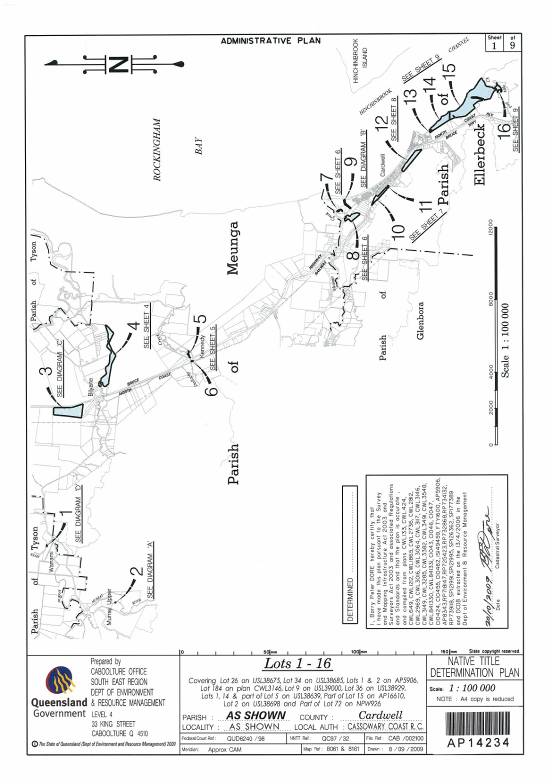
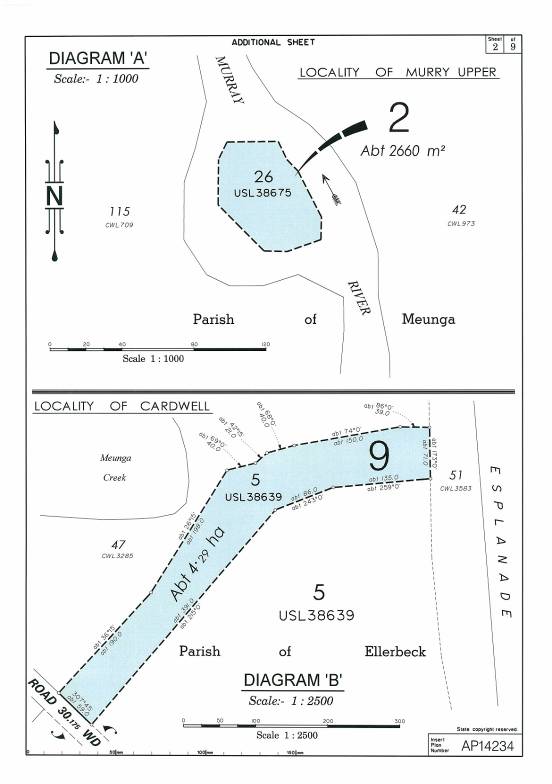
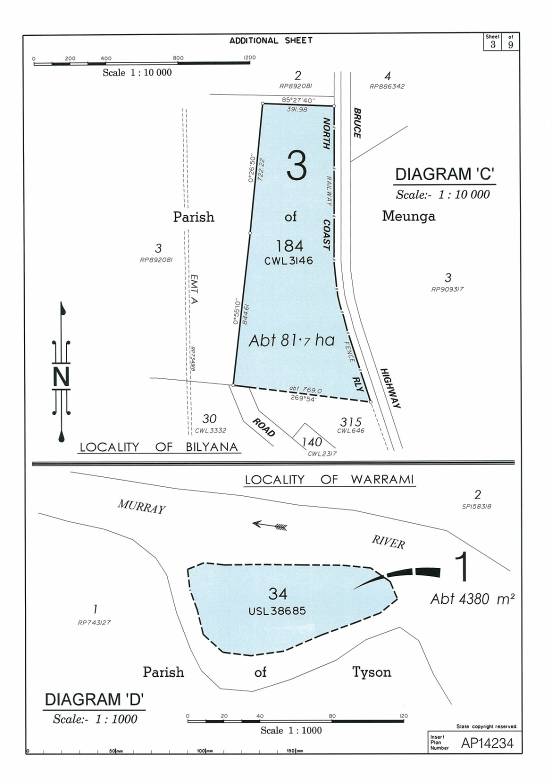
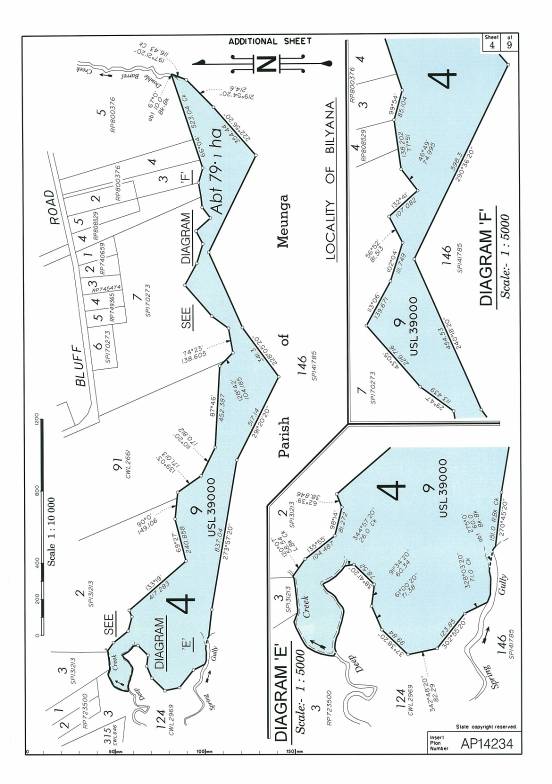
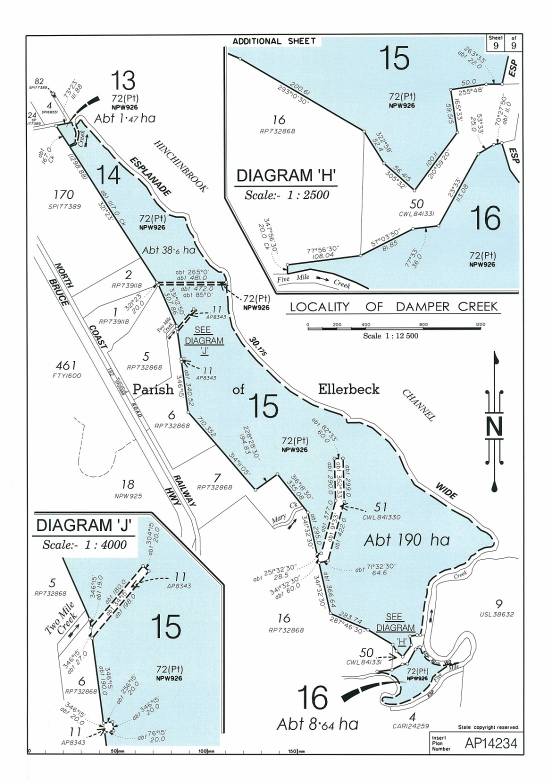
“Determination Area” means the land and waters within the area described in Part A of Schedule One and shown in Schedule Two, with the description in Part A of Schedule One prevailing to the extent of any inconsistency, but does not include the land and waters described in Part B of Schedule One;
“Laws of the Commonwealth of Australia and the State of Queensland” means the common law and the laws of the Commonwealth of Australia and the State of Queensland, and includes local laws and planning instruments;
“Native Title Holders” means the persons described in Schedule Three ;
“Plant” has the meaning given in the Nature Conservation Act 1992 (Qld);
“Tidal Navigable River” has the meaning given in the Land Act 1994 (Qld);
“Tidal Water” has the meaning given in the Land Act 1994 (Qld); and
“Water” means water as defined in the Water Act 2000 (Qld) and Tidal Water.
AND THE COURT FURTHER ORDERS THAT:
11. Native title is to be held on trust.
12. The Girramay People Aboriginal Corporation ICN 4739, being an Aboriginal Corporation under the Corporations (Aboriginal and Torres Strait Islanders) Act 2006 (Cth) is to be the prescribed body corporate for the purposes of section 56 of the Native Title Act 1993 (Cth).
13. Paragraphs 1 – 12 will take effect on the registration of all of the agreements referred to in paragraphs (c), (d), (f) and (g) of Schedule Four on the Register of Indigenous Land Use Agreements.
14. In the event that any of the agreements referred to in paragraphs (c), (d), (f) and (g) of Schedule Four are not registered on the Register of Indigenous Land Use Agreements within six months of the date of this order or such later time as this Court may order, the matter is to be listed for further directions.
15. Each party to the proceedings is to bear its own costs.
SCHEDULE ONE
Part A Determination Area
The Determination Area is the land and waters comprising:-
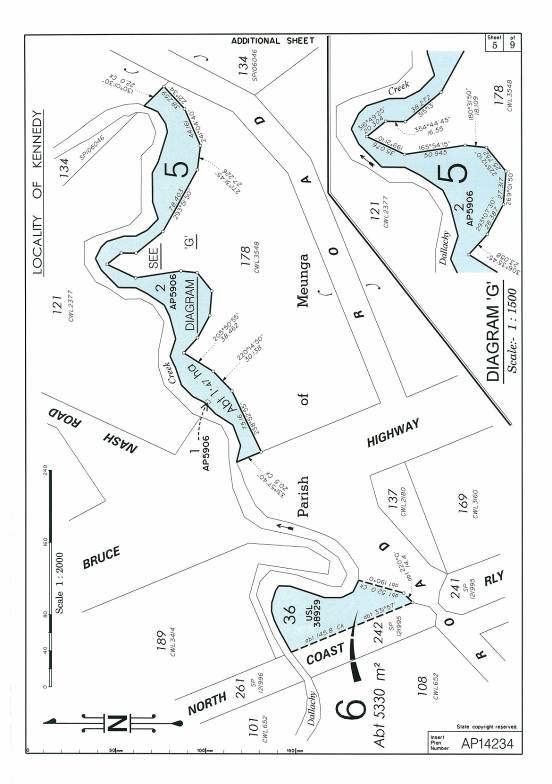
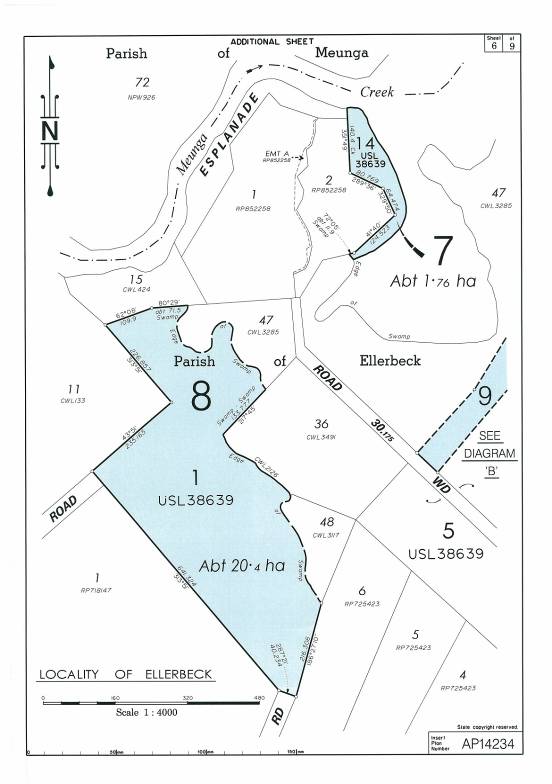
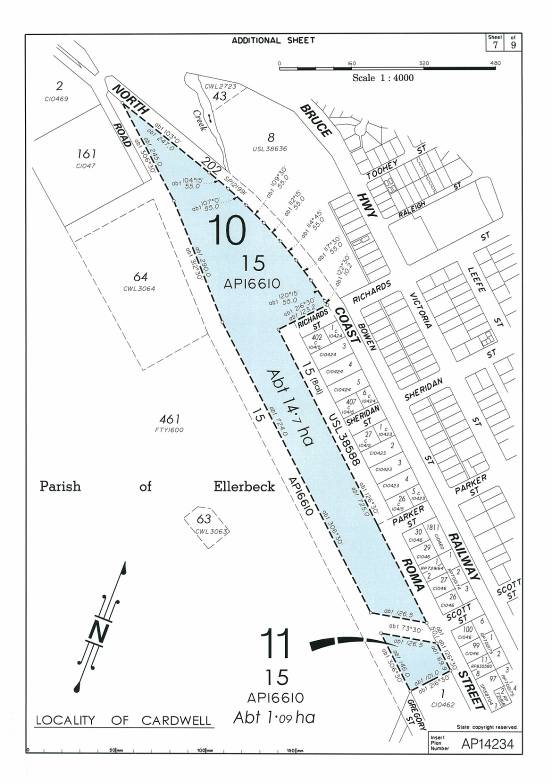
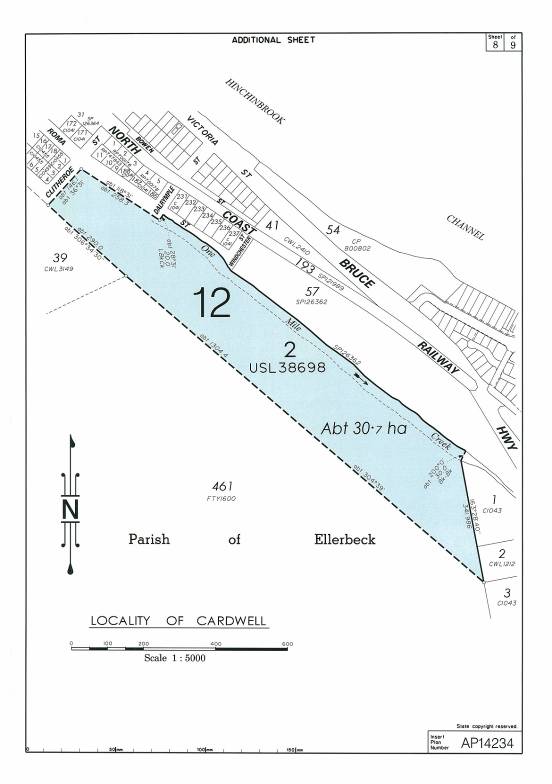
| Area description | |
| Lot 34 on USL 38685 | Lot 1 |
| Lot 1 on USL 38639 | Lot 8 |
| Lot 14 on USL 38639 | Lot 7 |
| Lot 184 on CWL 3146 | Lot 3 |
| Lot 26 on USL 38675 | Lot 2 |
| Lot 2 on USL 38698 | Lot 12 |
and the following land and waters to which s 47B of the Native Title Act 1993 (Cth) applies:
| Lot 9 on USL 39000 | Lot 4 |
| Lot 36 on USL 38929 | Lot 6 |
| Lot 1 on AP 5906 (previously described as Lot 53 on USL 38929) | Part of Lot 5 |
| Lot 2 on AP 5906 (previously described as Lot 53 on USL 38929) | Part of Lot 5 |
| Part of Lot 5 on USL 38639 | Lot 9 |
| Part of Lot 72 on NPW 926 (previously described as Lots 24, 26, 33 and 42 on USL 38644) | Lots 13, 14, 15 and 16 |
| Part of Lot 15 on AP16610 | Lots 10 and 11 |
Part B Areas excluded from the Determination Area by Operation of the Law
Any area of land and waters on which a public work as that expression is defined in the Native Title Act 1993 (Cth) is or has been established on or before 23 December 1996, and any adjacent land and waters the use of which is or was necessary for, or incidental to, the construction, establishment or operation of the public work.SCHEDULE TWO
(determination plan)
SCHEDULE THREE
(the Native Title Holders)
The native title holders are those people known as the Girramay People. The Girramay People are those Aboriginal people who are descended from:
(i) Charles Williams,
(ii) Bella Williams (Yurbil),
(iii) Rosie Williams (Djarrmay) [aka Rosie Runaway],
(iv) Clara Williams (aka Clara Boogal);
(v) Clarke Kennedy (Blencoe) ;
(vi) Jimmy Beeron (Yalbiri);
(vii) Jimmy Bugal (Nganygurru);
(viii) Jimmy Henry (Manidjunayi);
(ix) Jimmy Wallaby (‘Billycan’) and his wife Maggie (Ridjar);
(x) Walter Cardwell (aka Simpson) (aka Blackman) (Djubarriny);
(xi) Tommy Dickman (Dubulmanu) (aka Tommy Digman)
(xii) Lucy, the wife of Tommy Dickman (Dubulamanu) aka Tommy Digman
(xiii) One Arm Jack (Manguburur);
(xiv) Cissy (Ganabulan);
(xv) Clair (Mother of Lily Murray nee Wade);
(xvi) Billy and his wife Jenny (including Charlie Clark Kennedy);
(xvii) Polly Wyle(s);
(xviii) Tommy Djingadjinga (Budalayiny);
(xix) Charlie Nolan (Ibirri);
(xx) Jimmy Jacobs (Rindin);
(xxi) Toby McAvoy;
(xxii) Johnny Dallachy;
(xxiii) Billy Murray (Walguy aka Walguyi) and Nellie Murray (Mudjunin);
(xxiv) Frank McLean (aka Frank Barry) (Gandigurrungu) and his wife Nellie;
(xxv) Mailman.
SCHEDULE FOUR
(other interests)
The nature and extent of any other interests in relation to the Determination Area (or the respective parts thereof identified below) are:
(a) the rights and interests of the State of Queensland pursuant to the Nature Conservation Act 1992 (Qld) and the Forestry Act 1959 (Qld) and the respective subordinate legislation relating to the use and management of the land and waters comprising areas (b), (c), (d), (g)(i) and (g)(v)-(vii) of Part A of the Determination Area as shown in Schedule One;
(b) the rights and interests of the State of Queensland pursuant to the Fisheries Act 1994 (Qld) and subordinate legislation relating to the use and management of the declared fish habitat area on area (c) of Part A of the Determination Area as shown in Schedule One;
(c) the rights and interests of the parties under an Indigenous Land Use Agreement dated [insert date] entered into between Abraham Muriata, the Girramay People Aboriginal Corporation, the Cassowary Coast Regional Council and the State of Queensland;
(d) the rights and interests of the parties under an Indigenous Land Use Agreement dated [insert date] entered into between Abraham Muriata, the Girramay People Aboriginal Corporation, the State of Queensland and Ronald Ernest Brazier and Angelina Brazier;
(e) the rights and interests of Telstra Corporation Limited, being:
(i) rights and interests as the owner and operator of telecommunication facilities installed within the Determination Area, including customer radio terminals and optic fibre and local distribution cabling and as the holder of a carrier licence under the Telecommunications Act 1997 (Cth);
(ii) rights and interests created pursuant to the Post and Telegraph Act 1901 (Cth), the Telecommunications Act 1975 (Cth), the Australian Telecommunication Corporation Act 1989 (Cth), the Telecommunications Act 1991 (Cth) and the Telecommunications Act 1997 (Cth); and
(iii) rights to enter the Determination Area by employees, agents or contractors of Telstra Corporation Limited in the performance of their duties to enable access to its telecommunications facilities in, and in the vicinity of, the Determination Area;
(f) the rights and interests of the Cassowary Coast Regional Council under its local government jurisdiction and as an entity exercising statutory powers in respect of the Determination Area including its interests and the interests of the parties under an Indigenous Land Use Agreement dated 6 November 2009 entered into between Abraham Muriata, the Girramay People Aboriginal Corporation and the Cassowary Coast Regional Council;
(g) the rights and interests of Ergon Energy Corporation Limited as an entity exercising statutory powers and as the owner and operator of electricity transmission and distribution facilities within the Determination Area including its interests and the rights and interests of the parties under an Indigenous Land Use Agreement dated 13 November 2009 entered into between Abraham Muriata and Ergon Energy Corporation Limited;
(h) any rights and interests of the holder of an authority issued under the Fisheries Act 1994 (Qld) that authorises a commercial fishing operation in the waters of the Determination Area as may be current at the date of this Determination;
(i) the public right to fish in any Tidal Water and to navigate in any Tidal Navigable River within the Determination Area; and
(j) any other rights and interests held by the Crown or by reason of the force and operation of the Laws of the Commonwealth of Australia and the State of Queensland as may be current at the date of this Determination.
|
| |
| QUEENSLAND DISTRICT REGISTRY | |
| general division | QUD 6240 of 1998 |
| BETWEEN: | ABRAHAM MURIATA ON BEHALF OF THE GIRRAMAY PEOPLE Applicant |
| AND: | STATE OF QUEENSLAND First Respondent CASSOWARY COAST REGIONAL COUNCIL Second Respondent ERGON ENERGY CORPORATION LIMITED Third Respondent CARDWELL SHIRE RIVER IMPROVEMENT TRUST Fourth Respondent |
| JUDGE: | DOWSETT J |
| DATE: | 10 DECEMBER 2009 |
| PLACE: | CARDWELL |
REASONS FOR JUDGMENT
APPLICATION
1 Abraham Muriata, on his own behalf and on behalf of the Girramay People, applies pursuant to the Native Title Act 1993 (Cth) (the “Act”) for a determination that native title exists over the land and waters identified in Sch 1 of the determination. Schedule 1 is, in fact, the proposed determination.
2 The material reveals that:
Girramay traditional country is located in the Cardwell region of North Queensland about half way between Townsville and Cairns, centred around the Murray River and Meunga Creek systems and the Cardwell Range (see Map 1). It includes a coastal strip of dunes and mangroves, valleys and uplands which originally had heavy tropical rainforest cover, and mountain ranges including peaks of around 1000 metres in height. Today much of the coastal strip, valleys and foothills have been cleared for farming of sugar cane, bananas and other crops and for forestry plantations.
(See Connection Report, November 1998, by McConvell, Craig, Crothers and Pentecost (the “McConvell report”) at p 8.)
3 However not all traditional country is claimed.
BACKGROUND
4 The application was originally lodged with the National Native Title Tribunal (the “Tribunal”) on 3 September 1997. On 30 September 1998, by force of amendments to the Act, all applications lodged with the Tribunal became proceedings filed in this Court. The application became Federal Court proceeding QUD 6240 of 1998. In the course of these proceedings, there have been several amendments to the application.
5 Prior to the 1998 amendments to the Act, the Tribunal notified the application pursuant to s 66 as it then stood. Pursuant to s 68(2) of the Act, the State of Queensland, the Cardwell Shire Council, which has subsequently become the Cassowary Coast Regional Council, Ergon Energy Corporation Limited, Telstra Corporation Limited and the Cardwell Shire River Improvement Trust became parties to the proceedings. On 6 October 2006 Telstra ceased to be a party.
6 The parties have reached agreement upon the terms of the proposed determination. I must now decide whether to give effect to such agreement. I must be satisfied that the Court has the power to make orders in, or consistent with, the terms sought by them, and that it is appropriate to do so.
7 The parties have agreed that the determination should recognize non-exclusive native title rights and interests held by the Girramay People to use and enjoy the land and waters in the determination area. Order 3 of the proposed determination sets out the non-exclusive rights as follows:
Save as to Water, the nature and extent of native title in relation to the Determination Area are the non-exclusive right to use and enjoy the land and waters being to:
(a) access, traverse and Camp on the Determination Area;
(b) hunt Animals and gather Plants on the Determination Area for personal, domestic or non-commercial communal use;
(c) be buried and to bury other Native Title Holders in the Determination Area;
(d) visit, maintain and protect from physical harm, sites of significance to the Native Title Holders on the Determination Area;
(e) conduct ceremonies on the Determination Area;
(f) teach on the Determination Area the physical and spiritual attributes of places and areas of importance situated within the Determination Area;
(g) hold meetings on the Determination Area; and
(g) share or exchange Plant and Animal resources obtained from the Determination Area for non-commercial purposes.
8 Pursuant to s 13 and Pts 3 and 4 of the Act, the Court may make determinations concerning native title in relation to areas over which there is no existing approved determination. Division 1C of Pt 4 of the Act provides that some or all of the parties to native title proceedings may negotiate an agreed outcome in connection with an application or part thereof. Section 87 of the Act empowers the Court, if satisfied that it is appropriate to do so, to make an order in, or consistent with, the terms of the parties’ agreement without holding a full hearing. Where the Court makes a determination of native title, s 94A of the Act requires that it set out details of the matters mentioned in s 225 which provides:
A determination of native title is a determination whether or not native title exists in relation to a particular area (the determination area) of land or waters and, if it does exist, a determination of:
(a) who the persons, or each group of persons, holding the common or group rights comprising the native title area; and
(b) the nature and extent of the native title rights and interests in relation to the determination area; and
(c) the nature and extent of any other interests in relation to the determination area; and
(d) the relationship between the rights and interests in paragraphs (b) and (c) (taking into account the effect of this Act); and
(e) to the extent that the land or waters in the determination area are not covered by a non-exclusive agricultural lease or a non-exclusive pastoral lease – whether the native title rights and interests confer possession, occupation, use and enjoyment of that land or waters on the native title holders to the exclusion of all others.
9 All parties to the proposed determination have legal representation. I infer that they have taken such advice as they deem appropriate. The parties have been provided with extensive anthropological material. There is no other approved determination of native title over the area to be included in this determination. There is no conflicting native title claim over the area.
10 I have had the benefit of the substantial amount of research material filed in these proceedings, including the McConvell report to which I have already referred and a supplementary report dated 6 February 2004 by Mr Peter Blackwood, Ms Naomi Howells and Dr Patrick McConvell (the “Blackwood report”). That report gives an overview of the anthropology, archaeology and history of the Girramay People. It also addresses specific issues raised by the first respondent in relation to anthropological and historical issues. I have also considered the affidavit of Dr Sandra Pannell, filed on 20 November 2009 attaching her report dated November 2009 (the “Pannell report”) and a further report dated June 2009 (the “supplementary Pannell report”). Dr Pannell’s reports were prepared to address certain matters which I raised in the context of an earlier proposed consent determination and other matters raised by the parties.
11 The material contained in these reports is extensive, addressing the history of human occupation of the area from pre-historic times to the present day. According to the McConvell report, the area has been occupied by human beings for at least 2000 years. Archaeological and linguistic evidence suggests that people speaking a language associated with the Girramay language have occupied the area for hundreds of years, with some evidence of cultural continuity over that period.
12 Cook saw Aboriginal people in the general area, as did Lt Jeffreys on the Kangaroo in 1815, and King and Cunningham on the Mermaid between 1819 and 1822. Kennedy arrived in the area in 1848 on the Rattlesnake, landing in Rockingham Bay in order to find an overland route to Cape York. The Rattlesnake remained in the area to survey the coast. There were numerous sightings of Aboriginal people including men in canoes, fishers in Rockingham Bay and people living along the Hull and Tully Rivers. There were two large camps on the Murray River. They were identified at that time as Girramay.
13 The area was first settled in the early 1860s. In 1864 a settlement was established at the site of what is now the Cardwell township. Sadly, from the time of settlement and for some years thereafter, there was ongoing hostility between Aboriginal people and European settlers, leading to deaths on both sides. Inevitably, the Aboriginal people suffered most in this conflict.
14 The Girramay claim group is described primarily by reference to apical ancestors. Dr Pannell has analysed in detail the descent lines connecting those ancestors to present members of the claim group and the relationships between the apical ancestors and the claim area as at the time of first European contact and settlement. Her work, and that of those responsible for the earlier reports, give a clear basis for concluding that a well-established society was present in the area in the early 1860s. There is every reason to infer that its members were the descendants of people who were in the area when Cook visited and when Governor Phillip arrived at Botany Bay in 1788. It is now, and was then, an area rich in the resources necessary for human life. Those early residents would have had no reason to leave. The material identifies a society having a connection with the land and waters of the determination area in accordance with traditional laws and customs which they acknowledged and observed.
15 The supplementary Pannell report gives a clear and comprehensive explanation of the composition of the claim group. It is described as all those persons who are descended from the following ancestors:
Charles Williams;
Bella Williams (Yurbil);
Rosie Williams (Djarrmay) [aka Rosie Runaway];
Clara Williams (aka Clara Boogal);
Clarke Kennedy (Blencoe);
Jimmy Beeron (Yalbiri);
Jimmy Bugal (Nganygurru);
Jimmy Henry (Manidjunayi);
Jimmy Wallaby (‘Billycan’) and his wife Maggie (Ridjar);
Walter Cardwell (aka Simpson) (aka Blackman) (Djubarriny);
Tommy Dickman (Dubulmanu) and the descendants of his wife, Lucy;
One Arm Jack (Manguburur);
Cissy (Ganabulan);
Clair (Mother of Lily Murray nee Wade);
Billy and his wife Jenny (including Charlie Clark Kennedy);
Polly Wyle(s);
Tommy Djingadjinga (Budalayiny);
Charlie Nolan (Ibirri);
Jimmy Jacobs (Rindin);
Toby McAvoy;
Johnny Dallachy;
Billy Murray (Walguyi) and Nellie Murray (Mudjunin);
Frank McLean (aka Frank Barry) (Gandigurrungu) and his wife Nellie;
Mailman.
16 The claim group claims an area which is described in the material as:
… roughly [coinciding] with the Murray River and Meunga Creek catchments, together with the areas between these and the catchments of some shorter creeks flowing into the sea south of Meunga Creek …
Girramay ownership clearly extends along the coast to Cardwell and beyond. Cardwell itself (Girringan) is the first landing place of Girugarr the major creator hero of Girramay and Jirrbal coming from the sea. This area is within Girramay territory and in fact is an important area in Girramay country. Other important Girramay stories start in that area … .
(See the McConvell report at pp 125,128.)
17 The material demonstrates that Girramay native title rights and interests derive from a system of customary law which was observed by the Girramay People before, and has been observed since the arrival of Europeans on their land. The law was set in place, in Girramay belief, by actions of the Jujaba, story characters who, amongst other things, divided the land between tribes. The material goes on to say that:
A number of principles of customary law are shared between a group of tribes in the general region of the Girramay. This common core of principles is thought to result from the fact that a number of important Jujaba travelled around in the region between the countries of different tribes. These include, most importantly, the system of ownership of land by tribes; spiritual connection with areas of land and the cultural expression of such connection; and forms of inheritance of rights and interests in land. They also encompass shared systems of kinship, marriage, ceremony and dispute resolution, which included joint meetings involving several tribes.
Although details of some of the latter systems have changed over the past century, systems of laws which are distinctively different from the general European- Australian systems are still maintained in practice in relation to a wide range of matters of land use, behaviour of individuals and groups and dispute resolution meetings between different tribes are held.
(See McConvell report at p 17.)
18 The material describes some of the laws and customs which lie at the heart of Girramay society, including local organization, systems of social classification, the bestowal of personal names, domestic subsistence, forms of material culture, the belief in supernatural beings, totemism, sorcery and various forms of taboo.
19 The material is in part based upon the work of the noted linguist RMW Dixon who commenced working in the claim area in 1963. At that time, he observed that “Aborigines at Murray Upper were (and still are) the largest group in Queensland living quite freely, outside the direct control of mission or government settlement”.
20 Early in the twentieth century, many Girramay people were forcibly removed from their country and sent to live in the Hull River and Palm Island settlements, although a number managed to remain on their country. Dixon wrote in 1984:
That the aborigines did survive to maintain a viable community in Murray Upper today (1980s) is a tribute to their tenacity and resilience. It is also partly due to the backwoods situation. Most of the forest had not been cleared, especially on the rugged mountain slopes, and there was still plenty of native food around. Indeed, for many families, this was only supplemented by white man’s bread and beef as late as 1950.
21 The supplementary Pannell report states:
Throughout the late nineteenth and the first half of the twentieth centuries, when the Girramay were subjected to turbulent (and often violent) disruption as a result of European settlement and supporting Government policies and administrative arrangements, there always remained a core of Girramay resident on Girramay land … .
This period held the potential to devastate Girramay – demographically and culturally – as happened elsewhere in Queensland. However, even during the most violent period of confrontation in the late nineteenth, Girramay were able to go into hiding in the more remote and inaccessible parts of the forest up in the ranges of Girramay and neighbouring countries, thereby remaining within, or in close proximity to, their own country. Others congregated around Cardwell and sought refuge on selected properties where they felt relatively safe …, maintaining throughout this period a physical connection, the speaking of their own language, the practise of their own traditions and customs, and functioning as a recognisable community.
22 It is impossible to do justice to the research which has been done in connection with this claim. The Girramay people possess a great blessing in the work which so clearly identifies their past, their suffering and the basis for the new opportunities which this determination will offer them. I do not come here to give the Girramay people anything. I come formally to recognize their continuing title to part of their traditional lands, in a way which binds all Australians for all times. I congratulate the Girramay people upon their being recognised as the traditional owners of their land and those others who have assisted in bringing about that recognition.
ORDERS AND DETERMINATION
23 It is necessary to return to s 225 of the Act. Section 94A requires that the matters mentioned in s 225 be set out in the orders.
24 Paragraph 225(a) deals with identification of the persons holding the common or group rights comprising the native title. This matter is dealt with in Sch 3 to the orders.
25 Paragraph 225(b) deals with the nature and extent of the native title rights and interests in relation to the determination area. These matters are dealt with in orders 3 and 4 which are supported by the anthropological material.
26 Paragraph 225(c) deals with the nature and extent of any other interests in relation to the determination area. This is dealt with in Sch 4.
27 Paragraph 225(d) deals with the relationship between the rights and interests in paras 225(b) and (c), taking into account the effect of the Act. This is dealt with in order 9.
28 Paragraph 225(e) deals with the question of exclusion of others. Order 7 addresses this question. The native title rights and interests, being the subject of orders 3 and 4, do not confer possession, occupation, use and enjoyment of the determination area on the native title holders to the exclusion of others.
29 The orders, which are consistent with the terms agreed by the parties, recognize that the Girramay People, as the common law holders of native title over the determination area, are entitled to non-exclusive, use and enjoyment of the land and waters in accordance with their traditional laws and customs. The orders further recognise, at Sch 4, other interests in the determination area and the relationships between those interests and the native title interests.
30 Section 55 of the Act requires the Court to make a determination pursuant to either s 56 or s 57 of the Act. Section 56 of the Act provides:
(1) One of the determinations that the Federal Court must make is whether the native title is to be held in trust, and, if so, by whom.
Steps in making determination
(2) The Federal Court is to take the following steps in making the determination:
(a) first, it must request a representative of the persons it proposes to include in the determination of native title as the native title holders (the common law holders) to indicate whether the common law holders intend to have the native title held in trust by:
(i) nominating, in writing given to the Federal Court within a specified period, a prescribed body corporate to be trustee of the native title; and
(ii) including with the nomination the written consent of the body corporate; and
(b) secondly, if the common law holders give the nomination within the period, the Federal Court must determine that the prescribed body corporate is to hold the rights and interests from time to time comprising the native title in trust for the common law holders; and
(c) thirdly, if the common law holders do not give the nomination within the period, the Federal Court must determine that the rights and interests are to be held by the common law holders.
31 The parties have agreed that native title is to be held on trust. The applicant has nominated the Girramay People Aboriginal Corporation ICN 4739 (the “Corporation”) to be the prescribed body corporate for the purposes of s 56(1) of the Act and to perform the functions mentioned in s 57(1) of the Act after becoming a registered native title body corporate.
32 I am satisfied that it is within the power of the Court to make the orders sought. A full hearing of the applicant’s claim is not necessary. I make the agreed orders being the orders in the draft which I now initial and place with the papers.
33 I once again congratulate the Girramay people upon their having achieved recognition of their traditional title to these lands and, on behalf of myself, the other Judges of the Court and the Court staff, I wish them well for the future.
| I certify that the preceding thirty-three (33) numbered paragraphs are a true copy of the Reasons for Judgment herein of the Honourable Justice Dowsett. |
Associate:
| Solicitor for the State of Queensland: | North Queensland Land Council Aboriginal Corporation |
| Solicitor for Cassowary Coast Regional Council | MacDonnells Law |
| Solicitor for Ergon Energy Corporation | MacDonnells Law |


