FEDERAL COURT OF AUSTRALIA
Chocolaterie Guylian N.V. v Registrar of Trade Marks [2009] FCA 891
Trade Marks Act 1995 (Cth) ss 33, 35, 41(2), 41(3), 41(5)
Trade Marks Regulations 1995 (Cth) regs 17A.4, 17A.15, 17A.24, 17A.26(1), 17A.28
Aristoc Ltd v Rysta [1945] AC 68 cited
Austereo Pty Ltd v DMG Radio (Australia) Pty Ltd (2004) 61 IPR 257 followed
Blount Inc v Registrar of Trade Marks (1998) 83 FCR 50 considered
British Sugar plc v James Robertson & Sons Ltd [1996] RPC 281 followed
Burger King Corporation v Registrar of Trade Marks (The Whopper case) (1973) 128 CLR 417 applied
Clark Equipment Co v Registrar of Trade Marks (1964) 111 CLR 511 applied
Clinique Laboratories v Luxury Skincare Brands Pty Ltd (2003) 61 IPR 130 cited
Conde Nast Publications Pty Ltd v Taylor (1998) 41 IPR 505 cited
Kenman Kandy Australia Pty Ltd v Registrar of Trade Marks (2002) 122 FCR 494 applied
Kowa Company Ltd v NV Organon (2005) 66 IPR 131 cited
Lomas v Winton Shire Council (2003) AIPC 91-839 considered
Ocean Spray Cranberries Inc v Registrar of Trade Marks (2000) 47 IPR 579 cited
Pfizer Products Inc v Karam (2006) 70 IPR 599 followed
Philmac Pty Ltd v Registrar of Trade Marks (2002) 126 FCR 525 cited
Registrar of Trade Marks v Woolworths Ltd (1999) 93 FCR 365 applied
Rejfek v McElroy (1965) 112 CLR 517 cited
Time Warner Entertainment Company LP v Stepsam Investments Pty Ltd (2003) 134 FCR 51 cited
Torpedoes Sportswear Pty Ltd v Thorpedo Enterprises Pty Ltd (2003) 59 IPR 318 cited
Unilever Australia Ltd v Societe Des Produits Nestlé SA (2006) 154 FCR 165 cited
Unilever plc’s Trade Mark Applications [2003] RPC 35followed
Woolworths Ltd v BP Plc (No 2) (2006) 154 FCR 97 applied
THE CHOCOLATERIE GUYLIAN N.V. v THE REGISTRAR OF TRADE MARKS
VID 546 of 2007
SUNDBERG J
18 AUGUST 2009
MELBOURNE
| IN THE FEDERAL COURT OF AUSTRALIA |
|
| VICTORIA DISTRICT REGISTRY | VID 546 of 2007 |
| GENERAL DIVISION |
|
| BETWEEN: | THE CHOCOLATERIE GUYLIAN N.V. Applicant
|
| AND: | THE REGISTRAR OF TRADE MARKS Respondent
|
| JUDGE: | SUNDBERG J |
| DATE OF ORDER: | 18 AUGUST 2009 |
| WHERE MADE: | MELBOURNE |
THE COURT ORDERS THAT:
1. The application be dismissed.
Note: Settlement and entry of orders is dealt with in Order 36 of the Federal Court Rules.
The text of entered orders can be located using eSearch on the Court’s website.
| IN THE FEDERAL COURT OF AUSTRALIA |
|
| VICTORIA DISTRICT REGISTRY | VID 546 of 2007 |
| GENERAL DIVISION |
|
| BETWEEN: | THE CHOCOLATERIE GUYLIAN N.V. Applicant
|
| AND: | THE REGISTRAR OF TRADE MARKS Respondent
|
| JUDGE: | SUNDBERG J |
| DATE: | 18 AUGUST 2009 |
| PLACE: | MELBOURNE |
REASONS FOR JUDGMENT
BACKGROUND
1 The applicant (Guylian) is a Belgian manufacturer of boxed chocolates which are sold in over 132 countries around the world, including Australia. Guylian sells a variety of chocolate products but is particularly well renowned for its sea shell range of chocolates – or “Perles d’Océan” – comprising 11 novelty marine life shapes each filled with a hazelnut praline centre and created by a blend of white, milk and dark Belgian chocolate, which gives the chocolate a marbled appearance. The sea shell range includes different types of shells and shell-fish, a prawn and a seahorse shape.
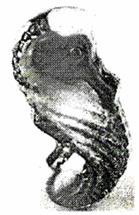
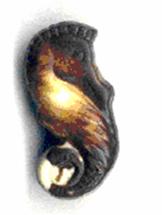
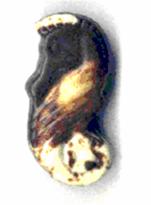
2 Guylian has obtained international registration of its chocolate seahorse shape as a trade mark pursuant to the Protocol Relating to the Madrid Agreement Concerning the International Registration of Marks 1989 (the Madrid Protocol), to which Australia became a party on 11 July 2001. The seahorse shape is depicted below:
|
Fig. 1 – Seahorse shape as depicted in Guylian’s Application No. 936483 (see [4] below). |
Fig. 2 – View of the two sides (profiles) of the seahorse shape. |
3 The Madrid Protocol was adopted on 27 June 1989 and provides a streamlined process for the registration and protection of trade marks in multiple countries by filing a single international application with the International Bureau of the World Intellectual Property Organisation (via the intermediary of the relevant trade make office in an applicant’s home state). The Trade Marks Act 1995 (Cth) (the Act) and Trade Marks Regulations 1995 (Cth) (the Regulations) incorporate provisions for the making of international registration applications in Australia and the extension of protection to Australia for registered international trade marks applied for in another member state: see s 189A of the Act and Pt 17A of the Regulations. The latter are accommodated by Pt 17A, Div 3 of the Regulations which provide a process for the registration of what is termed an “International Registration designating Australia”, or “IRDA”. An IRDA is “a request, made under … the Protocol, for extension to Australia of the protection resulting from the international registration of a trade mark”. Essentially the same examination and opposition procedures apply to an IRDA as to ordinary applications for registration of a trade mark under the Act. Where an IRDA is made the priority date of the IRDA (if accepted) will generally be the date of filing of the original international application in the relevant member state: see regs 17A.4 and 17A.15 of the Regulations.
4 Following international registration of its seahorse shape in Benelux, Guylian sought protection of the shape mark in Australia. (Belgium, Luxembourg and the Netherlands which form the Benelux union are treated as one member state under the Madrid Protocol.) Application for protection was made by way of an IRDA transmitted to the Australian Registrar of Trade Marks on 16 October 2002 (Application No. 936483). Application No. 936483 sought protection of the seahorse shape as a three dimensional shape mark in respect of goods in class 30 as identified in the Regulations, specifically pralines and chocolate. Based on the international registration in Benelux, the priority date sought for Application No. 936483 was 16 April 2002 (the priority date).
5 This proceeding is an appeal from a decision of the delegate of the Registrar of Trade Marks made on 31 May 2007 to refuse registration of Application No. 936483. The delegate refused to register the seahorse shape mark on the basis that it was not capable of distinguishing Guylian’s goods within the meaning of s 41(5) of the Act. Guylian appeals the decision pursuant to s 35 of the Act, which applies to decisions of the Registrar made under Pt 17A, Div 3 of the Regulations: see reg 17A.26(1).
LEGISLATIVE PROVISIONS
Registration and grounds for rejecting
6 Regulations 17A.11 to 17A.28 of the Regulations provide the statutory regime for the registration, or “acceptance”, of an IRDA by the Registrar. The Regulations in substance mirror ss 27 to 44 of the Act, which cater for the application for registration of an ordinary domestic trade mark in Australia. In particular, in essentially the same terms as s 33 of the Act, reg 17A.24 provides:
(1) The Registrar must, after the examination, accept the IRDA unless he or she is satisfied that:
(a) it is not in accordance with this Division; or
(b) there are grounds for rejecting it.
…
(3) The Registrar must reject an IRDA, in whole or in part, if the Registrar is satisfied that:
(a) it is not in accordance with this Division; or
(b) there are grounds for rejecting it, in whole or in part.
(Emphasis added.)
7 The relevant “grounds for rejecting” an IRDA are the grounds set out in ss 39 to 44 of the Act: reg 17A.28(1). Sections 39 to 44 of the Act apply to an IRDA, with appropriate modifications so that the “reference in those sections (i) to an application for the registration of a trade mark were a reference to the IRDA, and (ii) to an applicant were a reference to the holder of an IRDA”: reg 17A.28(2).
8 In the Registrar’s view, s 41(2) of the Act provided a ground for rejecting Guylian’s application. It is the only ground the Registrar considered was a basis to reject the application. It is worth setting out s 41(2) to (6) in full:
(2) An application for the registration of a trade mark must be rejected if the trade mark is not capable of distinguishing the applicant’s goods or services in respect of which the trade mark is sought to be registered (designated goods or services) from the goods or services of other persons.
(3) In deciding the question whether or not a trade mark is capable of distinguishing the designated goods or services from the goods or services of other persons, the Registrar must first take into account the extent to which the trade mark is inherently adapted to distinguish the designated goods or services from the goods or services of other persons.
(4) Then, if the Registrar is still unable to decide the question, the following provisions apply.
(5) If the Registrar finds that the trade mark is to some extent inherently adapted to distinguish the designated goods or services from the goods or services of other persons but is unable to decide, on that basis alone, that the trade mark is capable of so distinguishing the designated goods or services:
(a) the Registrar is to consider whether, because of the combined effect of the following:
(i) the extent to which the trade mark is inherently adapted to distinguish the designated goods or services;
(ii) the use, or intended use, of the trade mark by the applicant;
(iii) any other circumstances;
the trade mark does or will distinguish the designated goods or services as being those of the applicant; and
(b) if the Registrar is then satisfied that the trade mark does or will so distinguish the designated goods or services—the trade mark is taken to be capable of distinguishing the applicant’s goods or services from the goods or services of other persons; and
(c) if the Registrar is not satisfied that the trade mark does or will so distinguish the designated goods or services—the trade mark is taken not to be capable of distinguishing the applicant’s goods or services from the goods or services of other persons.
(6) If the Registrar finds that the trade mark is not to any extent inherently adapted to distinguish the designated goods or services from the goods or services of other persons, the following provisions apply:
(a) if the applicant establishes that, because of the extent to which the applicant has used the trade mark before the filing date in respect of the application, it does distinguish the designated goods or services as being those of the applicant—the trade mark is taken to be capable of distinguishing the designated goods or services from the goods or services of other persons;
(b) in any other case—the trade mark is taken not to be capable of distinguishing the designated goods or services from the goods or services of other persons.
9 Section 41(2) requires the Registrar to reject an application where the purported trade mark is “not capable of distinguishing the applicant’s goods … in respect of which the trade mark is sought to be registered from the goods … of other persons”. Whether a trade mark is “capable of distinguishing” goods from those sold by other traders is to be determined by reference to subss 41(3)-(6). As Branson J said in Blount Inc v Registrar of Trade Marks (1998) 83 FCR 50 (Blount) at 56, subss 41(3)-(6) are “designed to control the process by which the Registrar is to reach a conclusion as to whether the trade mark for which registration is sought is capable of distinguishing the applicant’s goods”. That “process” involves the following steps:
(a) The Registrar must first “take into account the extent to which the trade mark is inherently adapted to distinguish” the relevant goods from the goods of others: subs 41(3);
(b) If that consideration leads to a conclusion that the trade mark is capable of distinguishing the goods from those of others, then, so long as the Registrar is not satisfied that any other grounds for rejecting the IRDA exist, she must accept the IRDA: reg 17A.24 (cf s 33 of the Act);
(c) However, if the Registrar is “unable to decide” whether the trade mark is capable of distinguishing the goods by the “inherently adapted” consideration alone, then either subs 41(5) or subs 41(6) applies: see subs 41(4). Subsection 41(5) will apply if the Registrar finds that the trade mark “is to some extent inherently adapted to distinguish the … goods … from the goods … of other persons but is unable to decide, on that basis alone, that the trade make is capable of so distinguishing the … goods”. By contrast, subs 41(6) will apply if the Registrar finds that the trade mark “is not to any extent inherently adapted to distinguish”.
(d) If the Registrar finds the trade mark is to some extent inherently adapted (subs 41(5)), the Registrar is then required to consider whether the trade mark “does or will distinguish the … goods as being those of the applicant”, by taking into account the combined effect of the following three matters (par 41(5)(a)):
· the extent to which the trade mark is inherently adapted to distinguish;
· the use, or intended use, of the trade mark by the applicant; and
· any other circumstances.
(e) After taking those matters into account, the trade mark is “taken to be capable of distinguishing the applicant’s goods … from the goods … of other persons” only if the Registrar is “satisfied” that the trade mark in fact does or will so distinguish the goods: par 41(5)(b). If the Registrar is not so satisfied, then the trade mark is taken not to be capable of distinguishing (see par 41(5)(c)), a ground for rejecting the IRDA will thereby exist and the Registrar is then required to reject the IRDA: reg 17A.24(3).
(f) In the alternative scenario that the Registrar finds that the trade mark is not to any extent inherently adapted to distinguish (subs 41(6)), then the trade mark is taken not to be capable of distinguishing the goods unless the applicant “establishes” that, because of the extent to which the applicant has used the trade mark prior to the relevant filing date of the application, the trade mark does in fact distinguish the goods as being those of the applicant: pars 41(6)(a) and (b).
10 Prior to the commencement of the Act on 1 January 1996, “shape” trade marks were not capable of registration under Australian trade mark legislation: see Trade Marks Act 1955 (Cth) (the 1955 Act). However they are now recognised in the current Act. Section 17 defines “trade mark” as:
a sign used, or intended to be used, to distinguish goods or services dealt with or provided in the course of trade by a person from goods or services so dealt with or provided by any other person.
11 The concept of a “trade mark” thus has both functional and formative aspects. It must be used “to distinguish” goods, that is “to indicate the origin of the goods to which it is applied”: Aristoc Ltd v Rysta [1945] AC 68 at 96 (Lord MacMillan); and it must be capable of description as a “sign”, which is defined in s 6 as:
sign includes the following or any combination of the following, namely, any letter, word, name, signature, numeral, device, brand, heading, label, ticket, aspect of packaging, shape, colour, sound or scent.
12 In applying the provisions of the Act, and in particular the various grounds for rejecting an application (for example, s 41), the task of construction should be approached so as to give effect to the clear legislative intention that a wide variety of trade marks, including shapes, ought be capable of registration: see Kenman Kandy Australia Pty Ltd v Registrar of Trade Marks (2002) 122 FCR 494 (Kenman Kandy) at [46] (French J).
Nature of appeal
13 Section 35 of the Act provides:
The applicant may appeal to the Federal Court against a decision of the Registrar:
(a) to accept the application subject to conditions or limitations;
or
(b) to reject the application.
14 The nature of an “appeal” to the Federal Court under s 35 (and in respect of a decision in an opposition proceeding under s 56) has been discussed at length in several cases: see Blount 83 FCR at 58D-59A (Branson J); Kenman Kandy 122 FCR 494 at [21]-[22] (French J); Registrar of Trade Marks v Woolworths Ltd (1999) 93 FCR 365 (Woolworths) at [32]-[34] (French J). In hearing an appeal pursuant to s 35, the Court exercises its original jurisdiction and conducts a hearing de novo. It is to determine on the merits the same question that was before the Registrar – namely, whether or not the trade mark should be accepted – and in doing so, it is to apply the same legal criteria that the Registrar is required to adopt under the Act. The Registrar’s decision is not to be presumed correct but the Court is entitled to have regard to the Registrar’s opinion as that of a skilled and experienced person in the field of trade mark registrations: Woolworths 93 FCR 365 at [33] (French J).
Presumption of registrability and standard of proof
15 The parties raised two issues concerning the onus and standard of proof. The first is whether the “presumption of registrability”, as it has come to be known, applies when the relevant ground to refuse registration is s 41(2), having regard to the interrelation of s 33 and s 41(3)-(6). Assuming the presumption does apply, the second issue concerns the proper standard of proof. Relying on the Full Court decision in Lomas v Winton Shire Council (2003) AIPC 91-839 (Lomas), Guylian says that the Court should only refuse registration if it satisfied that the mark should clearly not be registered.
16 Dealing firstly with the issue of onus, it is now well understood that s 33 of the Act had the effect of reversing the previous position on onus under the 1955 Act. Whereas under that Act an applicant had to satisfy the Registrar that there were no grounds to object to registration, the position now is that an application must be registered, unless the Registrar is satisfied that there is a ground for rejecting it: see s 33 and reg 17A.24; see also the discussion by French J in Woolworths 93 FCR 365 at [15] and [20]-[24]. An applicant is thus said to have the benefit of a “presumption of registrability” under the Act. In other words, a mark will be presumed registrable unless the Registrar is satisfied, on the balance of probabilities, that a ground to reject it exists.
17 In Blount 83 FCR at 58C, Branson J took the view that the question under s 41(2) whether a mark is capable of distinguishing is “governed entirely” by subss 41(3)–(6). Accordingly, her Honour considered that it is not the case, as might be expected from the terms of s 33, that the Registrar must accept an application if he or she is uncertain whether the mark is capable of distinguishing an applicant’s goods. Her Honour’s analysis of s 41 has been followed in a number of cases, including Ocean Spray Cranberries Inc v Registrar of Trade Marks (2000) 47 IPR 579 (Ocean Spray) and Austereo Pty Ltd v DMG Radio (Australia) Pty Ltd (2004) 61 IPR 257 (Austereo).
18 In Kenman Kandy 122 FCR 494, the Full Court considered an application for registration of a shape mark where the only ground of possible rejection was s 41(2). The applicant adduced no evidence of use of the mark and did not rely on either s 41(5) or (6). As a result the case turned on the sole question whether the mark was inherently adapted to distinguish the applicant’s goods under s 41(3). In discussing the nature of appeals against decisions of the Registrar, French J stated at [22]:
Since the enactment of the 1995 Act the onus is no longer on the applicant to establish registrability as it was under the 1955 Act: Registrar of Trade Marks v Woolworths Ltd (1999) 93 FCR 365 at 372–3 … The application must be accepted unless the court is satisfied that it has not been made in accordance with the Act or that there are grounds for rejecting it. If the matter is in doubt then the application should be accepted. The possibility of refusal after a contested opposition with evidence and closer scrutiny remains open. The acceptance stage is not the time for detailed adversarial examination of the application that might be involved in an opposition: Registrar of Trade Marks v Woolworths at FCR 377 …. Acceptance for registration involves an initial screening process albeit it requires the application of statutory criteria and evaluative judgments by the Registrar and the Registrar's delegates.
(Emphasis added.)
19 Later, in addressing whether the mark was inherently adapted to distinguish, his Honour said at [50]:
[I]t is necessary to bear in mind that this trade mark is still at the registration stage. It enjoys the benefit of the presumption of registrability mandated by s 33. To the extent that critical criteria upon which registration might be rejected are in doubt, the application should be accepted. Closer adversarial scrutiny may occur in opposition: Registrar of Trade Marks v Woolworths at FCR 377 ….
20 There is a tension between the operation of the presumption and the text and structure of s 41. Section 41(3) requires the Registrar to “take into account” the extent to which a mark is inherently adapted to distinguish in deciding whether or not it is “capable of distinguishing” the applicant’s goods. Section 41(4) then directs the decision-maker to subs 41(5) and subs 41(6), if they are “still unable to decide the question”. Section 41(5) will be applicable if there is a finding that the mark is to some extent inherently adapted, but the Registrar is “unable to decide, on that basis alone, that the mark is capable of … distinguishing”. Accordingly, where there remains some doubt after considering s 41(3) about a mark’s capability to distinguish, rather than resolving that doubt in favour of an applicant (by operation of a presumption), the statute expressly directs the decision-maker to consider the criteria in subs 41(5) or subs 41(6) (whichever is applicable).
21 Reconciling s 41(4) and Branson J’s decision in Blount, with the presumption and French J’s decision in Kenman Kandy,is not entirely free from difficulty. The matter is further complicated by the fact that the onus is reversed under s 41(5) (the Registrar must be “satisfied” that the mark does or will distinguish) and s 41(6) (the applicant must “establish” that the mark does distinguish). In its submissions, the Registrar accepts that the presumption applies in relation to s 41(3), but says that the use of the term “satisfied” in s 41(5) suggests that the presumption no longer applies once the inquiry moves to s 41(5). I agree. Sections 41(3)-(6) contemplate that there are degrees to which a mark might be inherently adapted to distinguish: see Kenman Kandy 122 FCR 494 at [82] (Lindgren J); Austereo 61 IPR 257 at [35] (Finn J). The ultimate question under s 41(3) is whether the mark is inherently adapted to a sufficient degree to conclude that it is “capable of distinguishing”. In my view, the effect of the presumption of registrability on s 41(3) is that, in considering whether a mark is capable of distinguishing by reason of the “inherently adapted” criteria, it should be presumed that the mark is sufficiently adapted unless the Registrar is satisfied otherwise on the balance of probabilities. If the Registrar is otherwise satisfied, then he or she will be “unable to decide the question” (see s 41(4)) whether the mark is capable of distinguishing on the basis of any inherent adaptation alone, and must then proceed to consider s 41(5) or (6). Under those provisions, the presumption no longer has any operation, as the applicant is then required to either “satisfy” the Registrar (s 41(5)), or “establish” (s 41(6)), that the relevant criteria set out therein is met. As Branson J said in Blount 83 FCR at 56, referring to Rejfek v McElroy (1965) 112 CLR 517 at 521,a test of satisfaction requires the Registrar to “be persuaded of the matter according to the balance of probabilities”.
22 In reliance on Lomas (2003) AIPC 91-839, Guylian contends that the proper standard to be applied on an appeal under 35 of the Act in respect of a refusal to register is that the refusal should be upheld only if the Court is satisfied that the mark should clearly not be registered. Lomas was an appeal from a single judge’s decision to uphold an opposition to registration. At [17], the Full Court said:
No submissions were addressed to the Court concerning the standard to be applied by a single judge in considering an appeal under s 56 of the Act. The presence of s 195(2) [which imposes a leave requirement for appeals from a single judge decision] suggests that a parallel should be drawn with the scheme of appeals in opposition proceedings under the Patents Act 1990 (Cth). On that basis, on appeal under s 56, the Court should consider whether the trade mark should clearly not be registered. Only if so satisfied should the Court decide to uphold an opposition.
23 These observations have been followed in several first instance decisions, albeit with varying degrees of caution: see Bennett J in Torpedoes Sportswear Pty Ltd v Thorpedo Enterprises Pty Ltd (2003) 59 IPR 318 (Torpedoes)at [16]-[22], Finn J in Austereo 61 IPR 257 at [4]-[5] and Lander J in Kowa Company Ltd v NV Organon (2005) 66 IPR 131 at [123]-[141]. In Austereo, Finn J considered that he ought “as a matter of comity” apply the Lomas standard as adopted by Bennett J in Torpedoes. In Kowa, Lander J expressed some doubt about the point but considered he was bound by Lomas and the Full Court decision in Woolworths 93 FCR 365.
24 Gyles J has on two occasions expressed a different view: see Clinique Laboratories v Luxury Skincare Brands Pty Ltd (2003) 61 IPR 130 at [132] and Pfizer Products Inc v Karam (2006) 70 IPR 599 at [6]-[26] (Pfizer). His Honour considered the higher Lomas standard in some detail in Pfizer. After an exhaustive review of the authorities, and noting that the observations in Lomas itself were “plainly obiter dicta without the benefit of argument”, his Honour stated at [21]:
The fundamental difficulty with [the respondent’s] argument is that it is inconsistent with the language of s 55. Whether a ground of opposition has been “established” is a conventional concept requiring no particular elucidation. In my opinion, there is no basis upon which the section can be read as “the extent (if any) to which any ground on which the application was opposed has been clearly established”, particularly where that implication changes the practical operation of the section by imposing a special high onus of proof. It is also worth noting that the construction favoured in Torpedoes is not rooted in the words of the section at all. The precise finding in that case was that the opposition “should be upheld only if the court is satisfied that the trade mark should clearly not be registered”: at [22]. With all respect, that test is not to be found in the statute. I cannot find anything in the structure or content of other provisions of the 1995 Act that would point to reading s 55 other than according to its ordinary meaning.
25 Later, his Honour said at [22]:
In my opinion, borrowing further from the field of patents in this respect is impermissible, to adopt the word used by Finkelstein J [in BP Plc v Woolworths Ltd (2004) 62 IPR 545]. Trade marks and patents are different species of intellectual property and have a different history. A general desire for uniformity cannot control construction of the statute governing each.
…
[26] I am faced with the clear words of the statute, on one hand, and the opinions of various judges, on the other. There is no binding Full Court authority. I cannot find any instance where a single judge has actually applied the higher standard. In my opinion, in this case, comity does not demand that I depart from my view as to the meaning of the statute.
26 Guylian did not seek to justify in a substantive way the approach of the Full Court in Lomas. It sought to rely on the decision, and those that have followed it, but it acknowledged that other decisions run counter to it. In my view, there is nothing in the relevant provisions that supports the imposition of a higher standard, even at the acceptance stage. The “presumption of registrability” arises from s 33 of the Act: Woolworths 93 FCR 365 at [24]; Kenman Kandy 122 FCR 494 at [50]. Section 33 does not speak of being “clearly satisfied”; it mandates acceptance of an application unless the Registrar “is satisfied that … there are grounds for rejecting it”. On this point, I prefer the views expressed by Gyles J and in particular his Honour’s observations that an acceptance that there is a presumption of registrability “says nothing as to the standard of proof” and does not import a higher threshold than the conventional balance of probabilities: see Pfizer (2006) 70 IPR 599 at [18]. The presumption as it is gives effect to the general position under the Act that an applicant is not required to establish an absence of grounds to refuse or object to registration. It should also be noted that in both Woolworths 93 FCR 365 and Kenman Kandy 122 FCR 494 (both acceptance stage cases) there is no suggestion that any special higher standard was applicable.
27 In any event, for the reasons I have given at [16]-[21], there can be no question of any special higher standard in respect of s 41(5) or (6), because those provisions place the onus on the applicant. In my view s 41(3) must be considered with the presumption in mind as I have explained at [21].
RELEVANT FACTS
28 Guylian was established in Belgium in 1960 and is a major international seller of Belgian boxed chocolates. (The name “Guylian” is a conjoining of the names of the husband and wife co-founders of the Guylian business, Guy and Liliane Foubert.) Its sea shell chocolate products are sold in boxes of various sizes and configurations, which in each case include an assortment of sea shell and other marine shapes, including the seahorse shape. Guylian has been marketing and selling its sea shell range, including the seahorse shape, in Australia since 1980 and over time that particular range has become Guylian’s top confectionary brand.
29 Guylian’s chocolate seahorse shape has been designed with the typical features of a real seahorse in mind. Webster’s Dictionary, which Guylian referred to during argument, defines “seahorse” in part as:
[A]ny of numerous small fishes (family Syngnathidae) mostly of the genus Hippocampus that are related to the pipe-fishes but of stockier build, have the head and forepart of the body sharply flexed and suggestive of the head and neck of a horse, are covered with rough bony plates and equipped with a prehensile tail and in the male a short broad pouch immediately behind the vent in which the eggs hatch and occur in most warm and warm-temperate seas …
30 Webster’s provides a pictorial representation of the definition above. For comparison, I set out below Webster’s representation alongside Guylian’s chocolate seahorse shape:
|
Fig. 3 – Seahorse as depicted by Webster’s Dictionary. |
Fig. 4 – Guylian’s seahorse shape. |

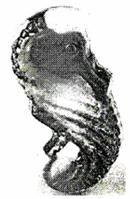
31 Guylian contends that its shape is a “fanciful stylised” representation of a seahorse, which “depart[s] radically from the shape of seahorses found in nature”. The departure, it says, arises from two particular features of its chocolate shape:
(a) the tail that wraps up behind the spine of the creature, rather than forwards; and
(b) the solid and “chunky” appearance, as opposed to the more slender and elongate shape of a real seahorse.
32 It was further put that the backwards curl of the tail gives the shape an overall “S” like configuration, absent in the case of a real seahorse. Guylian provided a photograph of a real seahorse which demonstrates the elongate nature of the creature and the way in which the tail is used (going forward) to take hold of stationary objects (plant life, for example) as a way of anchoring itself. I set out the photograph below:
|
|
Fig. 5 – A seahorse using tail as an anchor. |

33 On the other hand, plainly reminiscent of a real seahorse, Guylian’s “seahorse like shape” (as Guylian describes it) has a long snout, a head and neck suggestive of a horse, a prehensile tail and an upright posture. Positioned alongside other sea shell chocolates the seahorse shape is unmistakably a representation of a seahorse, albeit one with some fanciful or exaggerated features.
34 Guylian does not sell the seahorse shaped chocolate on its own but as part of Guylian’s sea shell collection. In evidence were six of the boxes Guylian sells containing the sea shell chocolates. Each of the boxes displays the “Guylian” trade mark on the front (and usually in several other places), as follows:

35 The boxes in evidence were:
(a) a white tin box with a picture of three of the chocolates on the front (the seahorse or “hippocampus”, the “mesalia brevialis” and the “cerastoderma edule”), as well as eight of the other sea shell shapes across the four sides of the box appearing alongside the “Guylian” trademark (see Annex A);
(b) a gold cardboard box displaying:
· on the front, the same three shapes as on the white tin box, the words “Perles d’Océan”, a variety of sea shell shapes etched into the background and a clear cellophane window revealing some of the chocolates inside;
· on each of the four sides, a picture of a prawn chocolate shape; and
· on the back, the “Guylian” trade mark alongside a picture of the box itself, opened and displaying each of the sea shell shapes inside (see Annex B);
(c) a red box displaying:
· on the front, two of the shapes (the seahorse and the cerastoderma edule) and a clear cellophane window in the shape of a heart, forming the phrase “I ♥ you”;
· on two of the sides, a picture of the prawn shape alongside the “Guylian” trade mark; and
· on the back, the “Guylian” trade mark alongside the same opened box revealing each of the sea shell shapes inside (see Annex C);
(d) a smaller, rectangular gold box displaying:
· on the front, a cellophane window in a shape closely approximating (in two dimensional form) the seahorse shape;
· on two of the sides, a picture of the seahorse shape alongside the “Guylian” trade mark; and
· on the back, the “Guylian” trade mark alongside a small picture in the top right corner of four of the shapes (the seahorse, the prawn, the cerastoderma edule and the “ostrea”) (see Annex D);
(e) two boxes (a large and small size) in the shape of the seahorse shape itself, with an enlarged picture of the seahorse shape covering the whole of the top of the box, along with:
· on the sides, seven of the sea shell shapes alongside the “Guylian” trade mark; and
· on the back, the “Guylian” trade mark alongside a picture of an opened seahorse shaped box revealing the contents (see Annex E).
36 In addition to the physical boxes, Guylian also relied on a number of its corporate marketing documents and brochures it distributes to retailers, which further evidence the variety of Guylian’s chocolate boxes and the extent to which they each display the seahorse shape. All of the boxes depicted in the materials follow similar themes, including a prominent use of the “Guylian” trade mark, clear cellophane windows, and pictures of the sea shell shapes, sometimes individually but often in combinations, usually including the seahorse shape but not always.
37 As referred to earlier, the sea shell range, containing the seahorse shape, has been sold in Australia for almost 30 years. Guylian markets and sells the sea shell range on a considerable scale throughout Australia, through supermarkets (Coles, Safeway/Woolworths, K-Mart, Target and Big W), department stores (for example, Myer and David Jones), specialty confectionary outlets, duty free shops, wholesalers in city and country areas and non-traditional outlets such as Five Star gourmet (in Crows Nest, NSW), Airport Fine Foods, Chocolate Affair, Neat ‘N Sweet, Price Line stores, Harris Scarfe Supermarkets, Metro Supermarkets, Ambarvale Supermarkets and City Convenience stores. Internationally, the seahorse shape is sold as part of the sea shell range in 114 countries.
38 As at April 2004, typical retail prices for the chocolates in Australia were:
| Type of box | Price |
| Exclusive assortments (325g) | $16.70 |
| Gourmet assortments (225g) | $13.25 |
| Seahorse shaped box (small) (125g) | $12.49 |
| Seahorse shaped box (large) (375g) | $31.50 |
39 To demonstrate the strength of the seahorse shape’s presence in the Australian market, Guylian provided, on a confidential basis, annual sales and marketing expenditure figures in respect of the period 1988 to 2003/2004 for its sea shell range. In order to preserve the confidentiality of these figures, I will not refer to specific sums, except to say that they are very large and in the order of tens of millions in respect of retail sales in Australia between 1988 and 2004 and millions in respect of marketing and advertising in Australia over a similar period. The seahorse shaped boxes referred to at [35(e)] above were released in Australia in 1999.
40 Guylian promotes its sea shell range widely, in the following ways:
(a) It advertises in newspapers (for example, The Age), magazines, product catalogues and brochures (for example, David Jones and Stuart Alexander & Co catalogues), and on television.
(b) It provides retailers with point of sale display signs and display units, including:
· a “floor display” unit with four shelves and a sign at the top similar in design to the white tin box referred to at [35(a)];
· a “perspex counter unit” with three shelves containing stacked chocolate boxes and a similar sign at the top;
· a “4 shelf tower unit” which stocks Guylian’s “sea shell bar” and contains a white and brown sign at the top displaying the “Guylian” trade mark and a picture of the bar;
· a seahorse shaped “counter display unit”, which has two sides in the shape of – and with a very large picture of – the seahorse shape, along with two shelves containing the sea shell bar;
· for the seahorse shaped boxes (referred to at [35(e)]), various sized box shelving prominently displaying the seahorse shaped boxes in rows.
(c) It operates a website which provides information on and pictures of its products, including the sea shell range, which is identified on the website by a picture of the seahorse shape;
(d) It has conducted various promotions at certain times of the year, often accompanied by special promotional products, such as Mother’s Day, Christmas and Easter; and
(e) It has exhibited and displayed the sea shell range at various trade fairs and conferences, such as the Fine Foods Expo, Restaurants & Catering Expo, Distributors Trade Show and the Davied & Metcash Trade Expo.
41 Since 1999, Guylian has been actively involved in sponsoring and promoting a marine conservation research project, entitled “Project Seahorse”, established by biologists to research and protect seahorse habitats around the world. According to a press release tendered by Guylian, its involvement with the project began after it had been “looking for an international communication vehicle that would distinguish [it] from the rest, give a very good and positive feel to our consumers and make the world a better place”. It has sought to do this largely by making financial commitments to the project, donating over $1 million, and by engaging in various public relations exercises, often involving its sea shell chocolates, to raise general awareness of the project’s cause. Examples of advertising and promotion initiatives include articles in “The Examiner” (Tasmania, 2 May 2001), “The Sunday Mail” (Queensland, 6 May 2001) and “New Idea” magazine, each describing the project and displaying pictures of either Guylian’s seahorse shape or seahorse shaped chocolate boxes.
42 To anticipate matters, Guylian contends that its use of the seahorse shape, specifically its use in the various packaging, marketing and advertising material described above (including its association with Project Seahorse), along with its long and successful presence in the Australian chocolate market as a prominent part of the sea shell range, demonstrates that the seahorse shape is in fact capable of distinguishing Guylian’s chocolate and praline goods from those of other rival traders. To support this, Guylian tendered evidence from a market survey, which ACNielsen was commissioned to conduct in October 2004. According to the evidence of ACNielsen’s Manager, Customised Research, Mr Lyndell Rouzaire, ACNielsen is Australia’s largest market research organisation and provides, among other things, a “customised research service” which involves “quantitative and qualitative studies that generate information and insights into consumers’ attitudes and purchasing behaviour, customer satisfaction, brand awareness and advertising effectiveness”. The survey was a national, online survey directed at a representative sample of people who use the internet aged 18 years and over. It involved one main and two subsidiary questions. Respondents to the survey were asked to view a picture of the seahorse shape and were asked: “Looking at the below image, do you associate this shape with any brand or manufacturer?” Permissible answers were either “Yes” or “No”. If the answer was “Yes”, respondents were asked to then specify the brand or manufacturer. As such, positive responses given were unprompted, in that no cues or clues as to possible brands were provided. Respondents were then also asked how often they purchased either “Boxed Chocolates” or “Chocolate Bars”.
43 There were 1496 respondents to the survey. Expressed as a percentage, the overall results were:
| (a) | Respondent associated Guylian with the seahorse shape | 40.6% |
| (b) | Respondent associated another brand or manufacturer with the seahorse shape | 13.3% |
| (c) | Respondent did not associate the seahorse shape with any brand or manufacturer (or respondents said “Yes” to question one but “don’t know” when asked to specify the brand) | 46.1% |
44 Out of all the brands and manufacturers listed by respondents, the top six in percentage terms were:
| (a) | Guylian | 40.6% |
| (b) | Lindt Chocolates | 1.7% |
| (c) | Cadbury | 0.8% |
| (d) | Darrell Lea | 0.4% |
| (e) | Nestle/Nestle Chocolates | 0.3% |
| (f) | Ferrero | 0.3% |
45 Guylian sought assistance from an expert in the field of market research and market strategy, Mr William Callaghan. Mr Callaghan has 15 years teaching and over 10 years experience in industry in these fields, with particular expertise in “statistical analysis and interpretation of [market research] data for the purposes of understanding the perceptions and behaviour of consumers”. He was asked to analyse the ACNielesen survey results and provide an opinion and conclusion regarding the level of recognition of the seahorse shape, as surveyed. According to Mr Callaghan, “brand recognition” as it is known in the field of marketing is “the ability of a consumer to confirm prior exposure to [a] brand when presented with one of the brand’s identity elements (for example, the brand name, logo or other symbol, product or package shape or appearance, a colour or colour scheme …)”. As high levels of accurate recognition of a brand are critical for traders, brand recognition is commonly tested and measured in market research, often using visual images as a prompt as in the case of the ACNielsen survey.
46 Two preliminary matters dealt with by Mr Callaghan are worthy of note. First, the survey was conducted online and accordingly the sample of respondents most directly represented the Australian population with online access to the internet, rather than the broader Australian population. Mr Callaghan considered that ACNielsen’s sample methodology – which involves the application of weighting factors to each age/sex group in both metropolitan and non-metropolitan areas and thereby “as far as possible, ensures that composition of the sample by age, sex and locality is closely, but never exactly, in line with the real distribution of the online population” – did not impose any significant limitation on the utility of the survey data, because in his opinion “the online population represents the views of a substantial part of the Australian population”.
47 Second, given that respondents were shown a two dimensional image of the seahorse shape, Mr Callaghan considered it “likely” that many of the associations reported by respondents were based on a recognition of the overall image – including for example its colour and any perception of texture – rather than solely the shape of the object depicted in the image. While he would expect the shape to be a “major” component driving recognition, it is likely it would not be the sole component.
48 Mr Callaghan’s conclusions on reviewing the survey data can be summarised thus:
(a) With around half (50%) of the respondents making an association, the results demonstrate that Australian consumers have a “very high level” of recognition of the image as associated with a particular brand or manufacturer. In addition it is likely, and common in market research surveys, that respondents who answered “No” did in fact associate the image with a brand or manufacturer but answered negatively because they could not name them.
(b) The strength of association between the image and Guylian (40.6%) is “very high”, as compared to other brands and manufacturers. In Mr Callaghan’s experience, when more than 10% of a broad population make a specific association, the association may be regarded as very high (although there are no defined industry standards in this particular product category that would necessarily dictate such a conclusion).
(c) The different results as between Guylian and each other main brand/manufacturer identified (see table at [44] above) are statistically very significant. In only very general terms, Mr Callaghan explained how the application of a statistical test called the “z-test” to the data enables one to make conclusions about the probability that the differences between the recognition of Guylian on the one hand, and any of the non-Guylian brands on the other, arises by chance or because there is a real quantitative difference between the groups of results. In this case, the “z-test” demonstrates that, in respect of each of the five main rival brands identified, the probability that the difference between those results (0.3% – 1.7%) and the Guylian result (40.6%) arises by chance is less than 1%. In other words, the differences are real differences and one can “very confidently” conclude that the image is strongly associated with Guylian and not with other brands.
(d) As the test was “unprompted” the results demonstrate not only a high frequency of association between the image and Guylian but “a high level of accurate, unaided recall of the Guylian brand name”. This, Mr Callaghan said, should be noted because in the real world consumers would encounter the seahorse shape in combination with other identifying features of the Guylian products (for example, the Guylian brand name and specific packaging features).
49 The Registrar did not adduce any evidence to contradict or otherwise challenge Mr Callaghan’s analysis or conclusions. However, as discussed below, the Registrar took issue with Guylian’s ultimate contention that the level of association between the image and Guylian should lead to a conclusion that the seahorse shape has in fact become capable of distinguishing Guylian’s goods from those of others, in the sense required by the Act.
50 The Registrar sought to demonstrate that other traders already sell chocolates in shapes similar to Guylian’s sea shell range, and in particular, the seahorse shape. Among the evidence were printouts from several websites displaying for sale shell, starfish, seahorse, turtle, crab, sharks, lobsters, fish and octopus shapes. The websites had been identified by the original examiner of the application, Mr Magers, by Google searches performed in December 2002 and April and June 2004 during the course of his examination. Among these were:
(a) a chocolate manufacutrer “Godiva”, selling, among other things, a starfish shaped chocolate (dated 18 December 2002);
(b) amazon.com, selling a “Sugar Free Milk Chocolate Sea Horse”, manufactured by Harbor Sweets (dated 29 April 2004);
(c) a website entitled “sugarcraft”, selling a large variety of marine shape chocolate moulds, including fish, sea shells, lobsters, clams, prawns, starfish and a seahorse shape similar to Guylian’s (dated 29 April 2004); and
(d) two websites entitled “favors to treasure” and “the chocolate vault”, selling sea shell shaped chocolates and moulds for use as gifts at weddings, including scallops, crabs, turtles, lobsters, sharks, penguins and seahorses, also similar to Guylian’s (dated 29 April 2004).
51 From their internet address, each of the websites appeared to be American. The Registrar did not provide any further explanation of their source and there was no evidence that the products displayed on the websites were available for purchase in Australia.
52 Guylian relied on the evidence of Mr Gary Adler, Managing Director of “The Chocolate Box” chain of stores, a popular chain with eight shops in and around Melbourne. It was the evidence of Mr Adler that:
(a) when Guylian first entered the Australian market, it was the only chocolate manufacturer selling sea shell shaped chocolates;
(b) the Chocolate Box stores began selling Guylian’s seahorse shape chocolate from at least the early 1990s; and
(c) by that time, he believes that other manufacturers had started selling sea shell shaped chocolates, but has “no recollection of, and [does] not believe that” those other manufacturers were selling any seahorse shapes.
53 The Registrar adduced evidence, much more recently acquired, of boxed sea shell and seahorse shaped chocolates sold by other traders in Australia, similar or in some cases the same as Guylian’s range. These included:
(a) Darrell Lea’s “Chocolate Shells” and Grand Belgian Chocolates’ (GBS) “Chocolate Sea Shells”, which each include a seahorse shape similar to Guylians’, prominently featured on the front of the box in the case of Darrell Lea;
(b) Cavalier’s “Belgian Sea Shells”, Trefin’s “Belgian Chocolates” and a box of “Belgian Seashells” imported and sold by Kmart; and
(c) Royalle’s “Belgian Seashells” and Duc d’O’s “Fruits de Mer”, which each include a seahorse shape with the tail curled up forwards rather than backwards.
54 Each of these chocolate boxes was purchased in May or June 2008, well after the priority date (16 April 2002). This raises a question about the acceptable use of this evidence. It is clear that the relevant date for assessing whether a trade mark is capable of distinguishing the goods for which it is used is the priority date: Austereo 61 IPR 257 at [30]. The parties both accepted that evidence of use by Guylian of the seahorse shape after the priority date is relevant for the purposes of s 41(5) of the Act, because it is open to draw rational inferences from such evidence as to whether the shape in fact had the required capacity to distinguish as at the priority date. That proposition was accepted by Finn J in Austereo, where his Honour referred to Conde Nast Publications Pty Ltd v Taylor (1998) 41 IPR 505 and Burchett J’s reference to actual events as being “capable of illuminating the probabilities already inherent in [a prior] situation”. Although differing as to the weight such evidence should be given, the parties also appeared to accept more generally that evidence of events taking place after the priority date, whether that be the applicant’s use of the mark itself or use of other similar or otherwise relevant shapes by rival traders, may be relevant to whether the seahorse shape is capable of distinguishing Guylian’s goods. This was an appropriate course to take. In my view, evidence of what other traders were selling prior to, at or subsequent to the priority date has the ability to rationally affect, albeit with varying degrees of weight, the conclusion one might reach about the extent to which a mark is inherently adapted to distinguish under s 41(3) of the Act. As Kitto J said in Clark Equipment Co v Registrar of Trade Marks (1964) 111 CLR 511 (Clark) at 514:
[T]he question whether a mark is adapted to distinguish [is to] be tested by reference to the likelihood that other persons, trading in goods of the relevant kind and being actuated only by proper motives – in the exercise, that is to say, of the common right of the public to make honest use of words forming part of the common heritage, for the sake of the signification which they ordinarily possess – will think of the word and want to use it in connexion with similar goods in any manner which would infringe a registered trade mark granted in respect of it.
In assessing as at the priority date the “likelihood” that other traders will behave in a certain way in the future, evidence of how they have in fact come to behave will be relevant, although close attention should be paid to whether such rival behaviour has been “actuated only by proper motives”. In the absence of evidence of improper motive, however, it seems to me logical and appropriate that post priority date events should, where appropriate, be taken into account by decision makers in exercise of the “evaluative judgment” (see French J in Kenman Kandy 122 FCR 494 at [47]) required under s 41(3).
55 Mr Adler gave evidence that in about the mid-1990s, the Chocolate Box store started selling its own brand of sea shell chocolates and ceased selling Guylian’s. It is not clear from his evidence however whether the Chocolate Box’s product included a seahorse shape. In fact, there was no direct evidence from either Guylian or the Registrar that, as at the priority date, 16 April 2002, any other traders were selling seahorse shaped chocolates in Australia. I was asked by the Registrar to infer that such a shape did exist in the Australian marketplace as at 16 April 2002, taking into account (a) Mr Adler’s evidence that other sea shell shapes were sold on and from the mid-1990s, and (b) the ACNielsen survey evidence, which showed that in 2004 almost a quarter of those survey respondents who associated the seahorse image with a particular manufacturer, associated it with someone other than Guylian. However, on the relatively limited and imprecise evidence available, I am not prepared to draw such an inference. Given that the Registrar performed relevant searches in 2002 and 2004 which did not reveal any instances of seahorse shaped chocolates in the Australian market (other than Guylian’s), I am not satisfied that that shape was being sold by others at that time. For present purposes, I am satisfied on the evidence that:
(a) since at least the mid-1990s, the Chocolate Box and probably some other chocolate manufactures have been selling sea shell shaped chocolates in Australia in addition to Guylian;
(b) a number of American manufacturers of chocolates and chocolate moulds have been selling sea shell, and seahorse shaped, chocolates from at least early 2004, but probably earlier; and
(c) as at 2008, there were at least seven chocolate manufacturers selling a sea shell chocolate range in Australia, four of which included a seahorse shape similar to Guylian’s.
REGISTRAR’S DECISION
56 The Registrar’s delegate found that the seahorse shape is “clearly recognizable” as a modification of the shape of a real seahorse. With other traders already using the seahorse shape, “or shapes very similar to it”, the delegate was satisfied “that [the] shape is not prima facie capable of distinguishing” Guylian’s goods and she therefore turned to consider s 41(5). By this, the delegate meant that she was not able to decide whether the trade mark is capable of distinguishing the goods on the basis of s 41(3) alone.
57 As to s 41(5), the Registrar’s delegate formed the view that the evidence of Guylian’s use of an image of the seahorse shape on its packaging did not demonstrate that the shape has been used as a trade mark. Rather, the images on Guylian’s boxes have more obviously functioned as an illustration of the contents of the box, rather than as a marker of the origin of the chocolate goods. Similarly, the delegate found that the seahorse shaped boxes have not functioned or been recognised as a trade mark, because the shape of the box is overwhelmed by the “Guylian” trademark and only approximates the seahorse shape in any event. With regard to the survey evidence, the delegate considered that, although Guylian has a “strong presence in the market” under the “Guylian” name, the seahorse shape itself is not capable of doing the work of distinguishing the goods from the goods of other traders, because over half the survey respondents (ie the majority) did not even associate the shape with Guylian.
SUBMISSIONS AND RESOLUTION
58 The first question for consideration is the extent to which the shape is inherently adapted to distinguish Guylian’s goods from the goods of other chocolate manufacturers. Unless I am satisfied on the balance of probabilities that the seahorse shape is not at all, or is not to a sufficient degree, inherently adapted to distinguish, then the shape should proceed to registration as a trade mark.
Is the seahorse shape inherently adapted to distinguish Guylian’s goods – s 41(3) of the Act?
Applicable principles
59 The parties were not in dispute about the applicable principles, only the application of those principles to the facts. The question whether a trade mark is inherently adapted to distinguish is directed at the nature of the trade mark itself and is not concerned with the mark’s capability to distinguish arising from its actual or intended use: Burger King Corporation v Registrar of Trade Marks (The Whopper case) (1973) 128 CLR 417 (Burger King) at 424; Kenman Kandy 122 FCR 494 at [83] (Lindgren J). A trade mark that is inherently adapted to distinguish goods is one that can “do the job of distinguishing without first educating the public that it is a trade mark”: British Sugar plc v James Robertson & Sons Ltd [1996] RPC 281 (British Sugar) at 306 (Jacob J); see also Austereo 61 IPR 257 at [48] (Finn J). Although in dissent on the ultimate outcome, Lindgren J observed in Kenman Kandy 122 FCR 494 at [84] that:
While inherent adaptation to distinguish requires attention to be focused on the mark itself, and is intended to stand in sharp contrast to a mark's capacity to distinguish arising from use, the notion of “the mark itself” does not exclude from consideration the nature of the range of goods within the class or classes in respect of which registration is sought, or the various ways in which the mark might, within the terms of the registration, be used in relation to those goods. Indeed, those matters must be taken into account.
60 In Kenman Kandy, the Full Court in the context of a shape mark recently endorsed the test articulated by Kitto J in Clark 111 CLR at 514, which is set out at [54]: see Kenman Kandy 122 FCR 494 at [47] (French J), [146] and [161] (Stone J), and [85] (Lindgren J), but note [87]-[89] (Lindgren J).
61 The application of this test, as French J observed at [49], is “largely a matter of evaluative judgment within the broad principles laid down by [the] authorities”. The reference to “likelihood” by Kitto J in Clark was described by Gibbs J in Burger King 128 CLR at 425 as a reference to whether another trader “might”, without improper motive, want to use the mark in relation to his or her goods: see also Time Warner Entertainment Company LP v Stepsam Investments Pty Ltd (2003) 134 FCR 51 at [33] (Wilcox J).
62 In Kenman Kandy, the appellant had sought registration of its “bug” shaped confectionary as a three dimensional shape mark. Although capable of description as a “bug” (and indeed described that way in the appellant’s application for registration), the Full Court accepted that the trade mark was a concocted, imaginary shape, constituted quite simply by a circular centre with two recesses (possibly eyes) and three projections on each of the two sides of the centre (possibly legs). In concluding that the shape was inherently adapted to distinguish the appellant’s confectionary, Stone J stated at [163]:
Although the bug shape is suggestive of insect life it is not the shape of any specific insect or bug. Indeed, were it not for the description given by the appellants, it might as easily be seen as some extra-terrestrial object or space equipment such as a modified lunar landing module. Registration of the bug shape as a trade mark would not give the appellant a monopoly over all bug or insect shapes – only this particular shape and any substantially identical or deceptively similar shape.
63 In agreement with Stone J, French J concluded at [50]:
Theoretically it may be the case that the number of possible symmetrical arrangements of projections and recesses is not infinite. Assuming that to be so, it is speculative, absent evidence, to draw conclusions about that number and whether the particular arrangement has any significant impact upon the access of other traders to the use of insect like shapes as trade marks. In that connection it is necessary to bear in mind that this trade mark is still at the registration stage. It enjoys the benefit of the presumption of registrability mandated by s 33. To the extent that critical criteria upon which registration might be rejected are in doubt, the application should be accepted.
64 There was no evidence of use or intended use by the applicant of the shape mark (save for an empty packet) and neither subs 41(5) nor subs 41(6) was relied upon to justify registration.
Registrar’s submissions
65 The Registrar contends that, unlike the “bug” shape in Kenman Kandy, the seahorse shape is not a concocted or invented shape, but is clearly a representation of a seahorse. It is referred to by Guylian as a seahorse and would not be mistaken for any other animal. Although it has some level of “stylisation or abstraction” (the stockier torso and the backwards curling tail), these relatively minor differences, it said, do not have any significant impact on the ordinary association or signification that the shape establishes in the mind of the observer. The Registrar relied on the observations of Stone J in Kenman Kandy 122 FCR 494who, after referring to Kitto J’s statement of the test in Clark, said at [147]:
In my opinion it is the absence of these [ordinary] associations and significations that makes a sign inherently adapted to distinguish one trader's goods from those of another. In other words the concept is negative not positive.
66 Later, after referring to a number of cases in which the question of inherent adaptability was considered, her Honour said at [156]:
In the above examples the trade marks were held to be inherently adapted not because of any positive content but because they had no associations or significations that prevented them from being inherently adapted to distinguish a trader's goods.
67 Applying this “negative” test, said the Registrar, the shape in suit does not lack, but rather quite clearly possesses, an ordinary signification which another trader in chocolates might want to use. When regard is had to the fact that (a) chocolate confectionary is manufactured in a wide variety of novelty shapes, including animals, (b) other manufacturers have been selling chocolates in the shape of sea shells and other marine life since well prior to the priority date (16 April 2002), and (c) other manufacturers are currently selling chocolates in the shape of a seahorse that is the same or very similar to Guylian’s, the Court should be satisfied, on the Clark test, that the shape in suit is one that, as at the priority date, other traders might think of and want to use in a manner which would infringe a registered trade mark granted in respect of it.
68 The Registrar also referred to the survey evidence, which indicated that almost a quarter of the respondents who associated the image of the shape with a manufacturer, associated it with someone other than Guylian. On that basis, having regard also to the evidence that others were selling sea shell shaped chocolates as at the priority date, the Registrar asked the Court to infer that similar seahorse shapes were already in fact being sold at the priority date, or that at the very least other traders might have wanted to use a similar seahorse shape as part of a novelty sea shell range.
Guylian’s submissions
69 Guylian submits that the seahorse shape should be considered a “fanciful” shape, with its backward curling tail and stocky build, which are features, it said, absent in an ordinary seahorse found in nature. Relying in particular on French J’s judgment in Kenman Kandy 122 FCR 494, Guylian contends that the mere fact the seahorse shape is based on an existing creature and cannot be said to be wholly concocted (as compared to the “bug” shape in Kenman Kandy), should not automatically lead to a conclusion that the shape is inherently unadapted to distinguish. At [46], French J said:
[T]he established test must be construed so as to be applicable to shapes. To say that a shape cannot ever pass the test of being “inherently adapted to distinguish” would be to read into the statute a limitation not warranted by its terms. In considering pre-1995 cases, generalisations must not be drawn based on the narrower range of signs to which those cases related. Such generalisations might not give effect to the legislative intent that from 1995 “shapes” were to be capable of registration as trade marks.
70 Accordingly, Guylian contends that the question whether a shape, which is reminiscent of an existing animal, is sufficiently adapted to distinguish, must be determined by reference to any existing or likely renditions of such an animal in the marketplace and the extent of any relevant differences between those renditions and the shape in suit. In this case, while the seahorse shape is based on a well known marine creature, the creature is capable of depiction in a variety of ways, only one of which is the particular seahorse shape Guylian has chosen to adopt. Other traders, it said, are free to depict a seahorse in a way that is different to the particular shape Guylian uses and there is no reason why another trader might legitimately wish to use the same shape as Guylian’s or one closely resembling it. As examples, Guylian said that other traders would remain free to adopt shapes recognisable as or reminiscent of a seahorse which, however, might not sit in profile (as does Guylian’s) or which do not employ the same proportions as Guylian’s. In any event, Guylian emphasised that no other traders had in fact sought to use a seahorse shape for chocolates, prior to Guylian’s promotion of the shape over the last 20 years.
71 Further, the seahorse shape, Guylian said, is not like a laudatory or descriptive word, which other traders might legitimately wish to use to describe the character or quality of their goods. Nor is it like a colour that might be used to denote a particular meaning (eg danger) or serve a particular function (eg heat absorbing black).
Weight of the evidence
72 As I referred to earlier (see [54]), the parties disagreed as to the weight that should be given to the evidence of other similar marine chocolate shapes in the market, and in particular seahorse shapes. Guylian contends that there is no evidence that seahorse shapes were being used as at the priority date and the evidence of use of the shape or similar shapes in 2008 (see [53]) should be given no weight at all, because the six years between the priority date and 2008 was too great that the inferences sought by the Registrar – namely, that other traders as at April 2002 were using, or might wish to use, the shape or a similar shape – could not reliably be drawn. To the contrary, Guylian contends that the safer inference is that the seahorse shapes on the market in Australia in 2008 (aside from the two with forward curling tails) are simply examples of traders copying Guylian’s product, rather than using the shape in the ordinary course of their business, being “actuated only by proper motives”, for the signification which it ordinarily possesses. Further, Guylian said, the better evidence for assessing the likelihood that other traders were using or might wish to use a similar shape to Guylian’s are the Google searches performed by the Registrar in December 2002 and April 2004, purporting to show the types of shapes on the market as at those dates and, by extension, the priority date. These searches did not reveal any evidence of the use of a chocolate seahorse shape in Australia as at the priority date, other than by Guylian.
73 The Registrar submits that any trader using a seahorse shape simply to denote a seahorse should, in the absence of evidence to the contrary, be considered to be acting with proper motives for the purposes of the Clark test. The Registrar referred to both Philmac Pty Ltd v Registrar of Trade Marks (2002) 126 FCR 525 at [51] and [53], where Mansfield J referred to the “concept of a properly motivated trader” as including the use of a mark to denote a meaning that the mark might ordinarily possess, and Clarke 111 CLR at 517, where Kitto J identified an improper motive on the part of a rival trader as a “desire to get for themselves a benefit” from the applicant’s reputation. Here, said the Registrar, there was no evidence at all, including any witness evidence, that traders now using a seahorse shape are acting with improper motives, for example to assert a connection between their goods and Guylian. There is also no evidence that Guylian has in any way objected to, or sought to restrain, the use by other traders of any similar seahorse shapes.
Resolution
74 I accept Guylian’s submission that a shape, which is reminiscent of a real animal or creature, should not for that reason alone be considered inherently unadapted to distinguish. The Act permits the registration of shapes as trade marks and, just as with words, there are likely to be many shapes that invoke ordinary connotations, which nevertheless are capable of distinguishing when regard is had to the class of goods for which the shape mark is to be registered and the extent to which the shape is otherwise distinctive in appearance. Both parties proceeded in this case on the basis that a trade mark may be the whole of the shape of the goods which the mark is intended to distinguish (cf the discussion by Lindgren J in Kenman Kandy 122 FCR 494). It was not contended that the seahorse shape, being the entire shape of one of Guylian’s chocolate pieces, is incapable thereby of constituting a “trade mark” for the purposes of s 17.
75 The ultimate question on the issue of inherent adaptation is whether a sign – in this case, a shape – possesses any ordinary significations and, if it does, whether or not other traders might think of the shape and want to use it for those ordinary significations in a manner which would infringe a registered mark in respect of the sign. In cases where a shape depicts a known object or concept (cf. wholly concocted or ambiguous shapes), and is therefore likely to signify the same to most if not all consumers, then a subsidiary question is whether the shape is nevertheless sufficiently distinctive or unique so that other traders wishing to represent the same or a similar concept will remain free to do so without infringing the mark, that is, without requiring use of the same shape or one substantially identical or deceptively similar. An important consideration in all of this is the nature of the goods for which the shape mark is to be used.
76 As I said, both parties understood the relevant questions to be as I have stated them. However, Guylian, in reference to Stone J in Kenman Kandy 122 FCR 494at [145], invited the Court to accept that the seahorse shape “does not have any significations or associations that invite confusion in the eyes of consumers, or would preclude use by others whose goods have similar characteristics or qualities or connections with relevant areas”. I do not agree. The shape is clearly a seahorse. It is dissimilar to the shape confronted by the Court in Kenman Kandy, as it conveys a particular meaning and is not entirely imaginary. Though the evidence about the appearance of real seahorses was minimal, I accept that the seahorse shape has some features that distinguish it from a seahorse existing in nature. It is relatively stocky and the tail is curled up all the way backwards, giving it an overall “S” shape. The evidence, minimal as it was, is that seahorses are fairly elongate and their tails extend out downwards and forwards, rather than curled up behind. I note however that Webster’s describes the tail as prehensile and so it is to be expected that they have the ability to curl up generally, although I am prepared to accept for the purposes of Guylian’s application that it would be unusual for the curling to occur behind the spine. Guylian has also chosen to depict the seahorse in profile with a relatively thick middle section, so that the overall shape appears as two opposite side profiles joined together.
77 Putting the tail to one side, I agree that there will be ways to depict a seahorse other than that chosen by Guylian. However, the ultimate question I must consider is whether there is a likelihood that other traders, acting with proper motives, will think of the shape and wish to use the same shape or one substantially identical or deceptively similar. In my view, it is quite possible that as at the priority date other traders might want to depict a seahorse, along with starfish, crabs, prawns for example, in a way that is similar enough to cause potential confusion in the minds of consumers. The evidence is that sea shell shaped chocolates were being sold by others from at least the mid 1990s. With other traders already selling sea shell chocolates, it seems to me reasonable to expect that, as at the priority date, other traders might wish to make chocolates in the shape of a seahorse, as well as other marine creatures. In any event, I think I can take judicial notice of the fact that confectionary manufacturers, here chocolate manufacturers, tend to make chocolates in a variety of novelty shapes, in particular shapes representing animals (cf. the similar approach taken by Lindgren J in Kenman Kandy 122 FCR 494 at [86]). I give some weight to the fact that in 2004, two years after the priority date, there were various American traders selling chocolate moulds for a large range of marine animals (lobsters, starfish, prawns), including a seahorse. On the other hand, I note the lack of evidence of any seahorse shapes being sold in Australia as at the priority date, except by Guylian. The examiner’s Google searches (performed in 2002 and 2004) did not reveal any examples of seahorse shapes being sold in Australia at that time. It might be thought that that fact, together with the fact that Guylian had been selling its seahorse shape in Australia for a long time (since the 1980s), would diminish the likelihood that, as at 2002, other legitimately motivated traders might in the ordinary course of their business wish to sell seahorse chocolate shapes. However, the absence of other seahorses on the market does not in my view mean it was unlikely that others may in the future wish to depict that particular sea creature.
78 These are cases of degree and I must make an evaluative judgment after giving due weight to the assessment made by the Registrar’s delegate. The degree of likelihood in this case I think turns very much on the extent to which this particular seahorse shape is distinctive or unique. As Kitto J said in Clark, “[t]he interests of strangers and of the public are … bound up with the whole question” of whether a mark is inherently adapted to distinguish: see Clark 111 CLR at 514. As best as possible, an assessment should be made as to the ability of other traders to depict a seahorse in a way that would not infringe the mark in suit, if it were registered. In my view, while the shape has some distinctive features, I am satisfied that it is not so unique or imaginative that other traders, using a seahorse shape for its ordinary signification, will be able to avoid potentially infringing the mark if it were registered. Accordingly, I am satisfied that it is to some degree inherently adapted to distinguish, but not sufficiently so to decide the matter under s 41(3), for the following reasons. First, there is a danger that first impressions will be sidelined when an analysis of a shape’s individual components or features is undertaken. In this case, the immediate impression one has of the mark in suit is of an ordinary seahorse. I would not expect most ordinary consumers to know that the tails of seahorses do not curl backwards, only forwards. I think most would know that seahorses have a tail and expect that they curl up in some direction. Accepting that the tail and the stocky appearance might, to a studious observer, appear unusual, I consider on balance that the average consumer would see it as a relatively ordinary representation of a seahorse. The possibility for confusion therefore between Guylian’s shape and any other seahorse shapes is, I think, a real one.
79 Second, the evidence of other seahorse shapes now on the market tend to confirm rather than deny the likelihood that other traders wishing to depict a seahorse may have some difficulty in avoiding infringement proceedings. Guylian said that the seahorse shapes sold by Royalle and Duc d’O (depicted below and referred to at [53(c)] above) are examples of shapes that would not infringe:
|
Fig. 6 – Royalle’s seahorse shape. |
Fig. 7 – Duc d’O’s seahorse shape. |


In my view these are not so significantly different from Guylian’s shape that there is no room for confusion in the eyes of the public or an infringing of the mark if it were registered. Given the exclusivity of the rights that would be granted to Guylian upon registration, it is difficult to see how other traders will know where to draw the line.
80 Third, this is not a case where the shape in suit is “entirely concocted” and thereby lacks “the associations that would lead to confusion”: see Stone J in Kenman Kandy 122 FCR 494 at [162]. The shape does have an ordinary association and the association is one that other traders might wish to draw upon. Given the mark sought to be registered is simply the three dimensional shape itself, without any other stipulation as to its use, the application for registration must be assessed on the basis that it would give Guylian a monopoly over that shape as the entire shape of one of its chocolate pieces. There is therefore a higher potential for other traders who wish to use a similar shape to do so in a manner that would infringe that monopoly. In other words, infringement might occur simply by the selling of a similar shaped chocolate, even where the shape does not feature significantly on, for example, the packaging of the product. Related to this is a submission the Registrar made regarding the type of “use” contemplated by the test in Clark. It would be wrong, said the Registrar, to construe the test as being whether or not other traders might wish to use the mark or a similar mark “in an infringing way”, in other words as a trade mark for themselves. Instead, the test should be understood as whether other traders might wish to use the mark or one resembling it for the sake of the signification of the mark itself and not necessarily to denote trade origin. However, in Clark Kitto J quite clearly referred to use “in any manner which would infringe a registered trade mark granted in respect of [the relevant word or shape].” I agree with Lindgren J in Kenman Kandy 122 FCR 494 at [95] that the Clark test does not go so far that any kind of innocent use at all, including innocent non-trademark use, would necessarily deprive a shape of being inherently adapted to distinguish. However, in a case where the mark is simply the three dimensional shape of the good itself, it is more difficult to see how the distinction made by the Registrar is a relevant one. Both parties proceeded on the basis that simply selling the same or a deceptively similar shaped chocolate would be an infringing use of the mark. It certainly was not suggested that the same shape might be sold by another trader but in some manner that would avoid infringement. Given the scope of the application for registration, the monopoly granted would be over the shape generally and use of the shape as a chocolate would be a manner of use that would be likely to infringe for the purpose of the Clark test.
81 Fourth, while I have taken into account the more recent evidence of similar sea shell and seahorse chocolate products (six years after the priority date), I have done so mainly for the purpose of considering the extent to which other representations of seahorses might be considered “substantially identical with, or deceptively similar to,” the seahorse shape (see [79] above). However, in addition, the recent evidence seems to me to lend further support to the view I take that, as at the priority date, other traders might have wished in the future to adopt the same shape or one closely resembling it. I accept that as at 2008 the use by others of the same sea shells and, in some cases the same seahorse, is likely to be attributable to a large extent to the promotion of those shapes by Guylian over a long period of time. However, it seems to me that a tendency for competition in the manufacturing of sea shell/marine creature chocolates was already evident at the priority date. I do not consider that the sale by others in 2008 of similar seahorse shapes can, on the evidence, be considered illegitimately or improperly motivated for the purposes of the Clark test, and therefore disregarded. There is no evidence that the other traders, in selling a seahorse shape, have sought to assert a connection between their chocolates and Guylian. To the contrary, each of the other traders’ seahorse shapes is contained in a chocolate box which clearly identifies the relevant manufacturer (eg. Darrell Lea). There is also no evidence that Guylian has in any way protested about these rival sales. I accept that one reason, if not the main reason, that these traders have included a seahorse shape in their range of sea shell chocolates is to compete with Guylian’s long standing shape. However, competition should not readily be considered improper, particularly in circumstances where the shape in suit bears an ordinary signification and is not so distinctive as to stand out in the minds of consumers, at least without first educating them to recognise the shape as a trade mark.
82 Accordingly, I am satisfied that, viewed as at the priority date, there is some degree of likelihood that other traders acting with proper motives would want in the future to use the same seahorse shape or one substantially identical or deceptively similar. Accordingly, I am satisfied that the shape is to some extent inherently adapted to distinguish, but not to the degree required by s 41(3).
Does or will the seahorse shape distinguish Guylian’s goods – s 41(5)?
Applicable principles
83 As I consider the shape is to some extent inherently adapted to distinguish, then s 41(5) is applicable. Section 41(5) involves a balancing exercise. With a view to deciding whether the mark does or will distinguish the goods as being Guylian’s, the Court is required to consider, in combination, two specific matters: (1) the extent to which the mark is inherently adapted to distinguish, and (2) the use, or intended use, of the mark by Guylian (cf. Kitto J’s approach in Clark 111 CLRat 513). The Registrar, and on this appeal the Court, must be “satisfied” that the mark does or will distinguish the goods as being Guylian’s: pars 41(5)(b) and (c). It is a balancing exercise in that, for example, a mark that is inherently adapted only to a small degree is thereby likely to require greater evidence that it has been (or will be) used in such a way as to distinguish the relevant goods: see, eg, the approaches of Bennett J in Unilever Australia Ltd v Societe Des Produits Nestlé SA (2006) 154 FCR 165 (Nestle) at [57] and Wilcox J in Time Warner Entertainment Company LP v Stepsam Investments Pty Ltd (2003) 134 FCR 51 at [42].
84 Section 41(5) permits the registration of trade marks that are not, by their inherent qualities, sufficiently adapted to distinguish, but which have as at the priority date in fact acquired a capability to distinguish the relevant goods: see Austereo 61 IPR 257; see also Clark 111 CLR at 515; British Sugar [1996] RPC 281 at 306; Nestle 154 FCR 165 at [29]. In other words, s 41(5) recognises that marks which are insufficiently inherently adapted to distinguish may nevertheless by their use have become distinctive in the minds of consumers so that they will be able to “do the job of distinguishing” the applicant’s goods, that is, they will in fact serve as a badge or an indicator of origin. Accordingly, under s 41(5) an applicant relying on use prior to the priority date will need to point to evidence that the mark has been used as a trade mark, so as to have acquired the requisite capability to distinguish the applicant’s goods: see, in the context of s 41(6), Woolworths Ltd v BP Plc (No 2) (2006) 154 FCR 97 at [72] and [77] (BP (No 2)); Ocean Spray 47 IPR 579 at [38]-[41], in particular [40].
Guylian’s submissions
85 In short, Guylian contends that its long standing and extensive sales and promotion of its sea shell range with the seahorse shape – beginning in 1980 and continuing up to the priority date (16 April 2002) and beyond – demonstrate that the shape itself has been used as a trade mark and was therefore capable of distinguishing Guylian’s chocolate goods as at the priority date. By reference to its annual retail sale figures and marketing expenditure (see [39] above), Guylian emphasises that its sales, advertising and promotion of the sea shell range with the seahorse shape has been not only significant in scope but continuous over a long period of time. It refers to its promotional material, including its chocolate box packaging, and placed particular reliance on its seahorse shaped boxes, which it commenced selling in 1999, together with their related point of sale display units. It points also to its relationship with the Project Seahorse initiative and some of the advertising exposure that the initiative has provided. In the circumstances, it says, the evidence of large, sustained sales and promotion bears out the “common sense” approach suggested by Branson J in Blount 83 FCR at 61G:
Nonetheless, common sense suggests that significant promotion and use of a trade mark amongst people concerned with the relevant market will have a tendency to enhance, rather than diminish, the trade mark's capacity to distinguish the goods in respect of which it is used from the goods of others. Certainly, the absence of evidence of promotion and use is likely to assume significance where distinctiveness resulting from use is in issue.
86 As has become common in trade mark registration appeals, Guylian seeks to rely on the ACNielsen survey results as evidence of an association by consumers of the seahorse shape with Guylian, an association it says is “clear” and “strong” and demonstrats that Guylian has been, and is, using the shape as a badge of origin. Particular reference was made to the survey responses being “unprompted” (ie respondents were not, for example, provided with brand names and asked to choose between them), as well as the fact that the Registrar did not, whether by cross examination or opposing expert evidence, controvert any of Mr Callaghan’s evidence, most notably his conclusions (1) that consumers’ association of the shape with Guylian was of a “very high level”, and (2) the strength of the association with Guylian, when compared to associations made with other brands, was statistically “very significant”. In the absence of evidence from the Registrar, Guylian says, any attack on Mr Callaghan’s conclusions should be given no weight.
Registrar’s submissions
87 The Registrar contends that Guylian’s evidence of use fails to demonstrate that the shape has been used as a trade mark. The Registrar referred to the observations of Jacob J in British Sugar [1996] RPC 281 at 303, where his Lordship dealt with evidence of the use of the word “Treat” by the applicant in relation to its desert sauce and syrup products:
There is an unspoken and illogical assumption that “use equals distinctiveness”. The illogicality can be seen from an example: no matter how much use a manufacturer made of the word “Soap” as a purported trade mark for soap the word would not be distinctive of his goods. … I do not consider that the evidence filed to support the registration was anywhere near enough to support the conclusion that when the mark was registered, it was distinctive. Yes it had been used for about 5 years in conjunction with Silver Spoon, but it was not proved that the public regarded it as a trade mark – a reliable badge of trade origin – on its own.
88 In the case of a three dimensional shape mark, the Registrar said, the necessity to show clear evidence that consumers have been educated to perceive the shape as a trade mark, an indicator of origin, is all the more important. While the shape of goods might distinguish the goods as goods, the shape will not necessarily distinguish the goods as originating from one trade source rather than another. In this case, says the Registrar, the shape has been used not as a badge of origin but rather as simply one of the chocolate shapes out of a number of sea shell/marine shapes that Guylian sells and markets as one collection. Where Guylian uses the shape on its packaging and promotional material, it is more often than not displayed alongside the other sea shell shapes. It is not given such a prominence as to educate the public that it is being used as a trade mark. Rather, it is used in a descriptive or informative manner, identifying to the public examples of the novelty shapes included in Guylian’s sea shell chocolate range.
89 With reference to Austereo 61 IPR 257 at [53], the Registrar says that one should take into account the extent to which the mark applied for has been used in conjunction with any other distinctive marks. Here, there are two: (1) the “Guylian” trade mark (see [34]), and (2) the letter “G”, which Guylian uses as a logo on each of its chocolate pieces. The image of the seahorse shape on Guylian’s packaging, it said, is overwhelmed by the use of the highly distinctive “Guylian” trademark, which serves as the true indicator of origin. Similarly, the “G” logo, appearing on each chocolate piece and the pictures of the chocolates on the boxes, plays a dominant role in indicating the origin of the goods, particularly when they are out of the box.
90 The Registrar makes two main submissions about the survey evidence. First, it says the results fail to establish that consumers see the seahorse shape as a badge of origin. It referred to BP (No 2) 154 FCR 97 and British Sugar [1996] RPC 281, where surveys indicating 85% and 60% recognition of the mark in suit nevertheless failed to demonstrate distinctiveness. Those cases, it said, show that there is a difference between mere association and the perception of a sign as a trade mark. Evidence of an association between a sign and a manufacturer, even a high one, will not necessarily mean that consumers rely on the sign to identify the origin of the goods. Here, the survey question tested association and no more. It did not test whether consumers have in fact come to perceive and understand the seahorse shape as a trade mark, by, for example, asking whether or not respondents believed that the shape belonged to one particular manufacturer and, if so, whether they could identify the manufacturer. Secondly, the Registrar relied on the survey results themselves, referring to the fact that (1) less than half of the respondents associated the shape with Guylian (or, putting it the other way, over half did not associate it with Guylian) and, (2) of those that did associate it with a particular manufacturer, approximately 25% associated it with someone other than Guylian. While the degree of association with an applicant’s goods may in itself be relevant to the overall assessment whether the mark has acquired a capacity to distinguish, the results here, said the Registar, are manifestly insufficient so as to be satisfied that the shape alone distinguishes Guylian’s goods in the minds of the chocolate buying public.
Resolution
91 In Unilever plc’s Trade Mark Applications [2003] RPC 35 (Unilever) (the Walls’ “Viennetta” case), Jacob J considered survey evidence which demonstrated a “high degree of association” (approximately 67% of ice cream eaters) between an image of the “Viennetta” ice cream and its manufacturer, Walls. (Respondents were shown four ice cream products and asked if they recognised them). At 662, his Lordship said:
Putting the other products on one side for the moment, there can be no doubt that the product appearance has achieved considerable recognition on its own as denoting Walls’ “Viennetta” – the product of a particular manufacturer. Is that enough to give it a “distinctive character” within the meaning of Art.3(3)? For what has not been proved is that any member of the public would rely upon the appearance alone to identify the goods. They recognise it but do not treat it as a trade mark.
There is a bit of sleight of hand going on here and in other cases of this sort. The trick works like this. The manufacturer sells and advertises his product widely and under a well-known trade mark. After some while the product appearance becomes well-known. He then says the appearance alone will serve as a trade mark, even though he himself never relied on the appearance alone to designate origin and would not dare to do so. He then gets registration of the shape alone. Now he is in a position to stop other parties, using their own word trade marks, from selling the product, even though no-one is deceived or misled.
I do not think that is what the European Trade Mark system is for. It is a system about trade marks, badges of trade origin. For that reason I think that in the case of marks consisting of product shapes it is not enough to prove the public recognises them as the product of a particular manufacturer. It must be proved that consumers regard the shape alone as a badge of trade origin in the sense that they would rely upon that shape alone as an indication of trade origin, particularly to buy the goods. If that cannot be proved, then the shape is not properly a trade mark, it does not have a “distinctive character” for the purposes of trade mark law.
92 Notably, his Lordship also considered it relevant that a not insignificant proportion of the survey respondents (approximately 15%) identified one or more of the other ice creams as the “Viennetta”, as this showed the potential for infringement by other traders seeking to sell a similar product.
93 In BP (No 2) 154 FCR 97, the Full Court of the Federal Court held that BP Plc (BP) had failed to establish pursuant to s 41(6) that it had used a particular shade of green as a trade mark, either by itself or as the predominant colour in its branding. Two aspects of their Honour’s reasoning are instructive. First, the Court took into account survey evidence indicating, on a weighted basis, that 85% of respondents identified BP when they were asked to look at a picture of a building (a service station) which was coloured substantially in green and were asked to describe what they saw. In considering an expert’s conclusion that this showed a “strong association” between green and BP, the Court stated at [117]:
This conclusion is hardly surprising. Green had been one of BP’s company colours since at least 1956. After 1989 it had been used as the predominant colour with yellow. In particular, in circumstances where there were only a few oil companies, where all have used colour historically to distinguish themselves, where BP has been the only company before 1995 to use green in that way, it is hardly surprising that people shown this stimulus would associate the green service station with BP service stations which have been coloured with a predominant green and accompanying yellow. That association does not lead to the conclusion that the use of colour from 1989 has included use, as a trade mark, of either green alone, or green as the predominant colour accompanied by any other colour. The mere fact that consumers associate green with BP does not, in our view, satisfy the test of distinctiveness required by s 41(6). Evidence of promotion and use does not, without more, demonstrate distinctiveness: see Blount Incv Registrar of Trade Marks at [61G], citing with approval Jacob J in British Sugar Plc v James Robertson & Sons Ltd at 286 and 302; and Koninklijbe Philips Electronics NV v Remington Products Australia Pty Ltd (200) FCR 90 … at [13]. It is necessary for BP to establish that the association is referable to the use of the mark as a trade mark. The learned authors of Kerly’s Law of Trade Marks and Trade Names (14th ed, Maxwell Ltd, UK, 2005, at [8–025]) state, albeit in the European context, that to establish distinctiveness through use the proprietor must have done something in its use to identify the sign as being a trade mark; the use of a sign, without more, does not necessarily create the perception that the products originate from a particular trade source: compare Unilever Plc’s Trade Mark Applications [2003] RPC 35 at [31].
(Emphasis added.)
94 Ultimately, their Honours concluded at [118] that:
These responses are consistent with a recognition that green has always been part of the BP colour scheme; however, they do not lead to the conclusion that green alone, or green predominantly with other unspecified colours, has been used as a trade mark.
95 There were particular problems with the survey evidence in BP (No 2), including the fact that BP’s application had been for the use of green as the predominant colour to be applied to signage boards and petrol pumps (thereby leaving within the available scope of the trade mark other unspecified colours), but the survey respondents had been shown a service station with features that were wholly green. However, their Honours’ observation that associations must be “referable to the use of the mark as a trade mark” is apt to describe the problem confronting Guylian in this case. The survey evidence here plainly shows an association between the seahorse shape and Guylian. This is no doubt due in large part to the substantial sales of Guylian’s sea shell chocolates with the seahorse shape over a considerable period of time. However, even assuming that the association in this case is strong enough, the anterior question is whether the association is referable to Guylian having used the shape as a trade mark. In other words, is the fact that a relatively large proportion of consumers may think of Guylian when they see the shape a consequence of Guylian having educated the public to recognise it as a badge of origin. When the evidence of use is considered as a whole, I am not satisfied that Guylian has done so, for the following reasons.
96 First, my impression is that the seahorse shape (or, more correctly, an image of the shape) is used on Guylian’s packaging to attract consumers and provide an example of the box’s contents. It is by no means the only shape that features on Guylian’s packaging. Many of the other sea shell shapes are displayed with equal prominence and on the back of most boxes, almost all of the shapes are shown, some sitting inside a picture of the box and others outside. As an example, the white tin box referred to at [35(a)] (see Annex A) shows the seahorse shape with two others on the front in a triangular arrangement, positioned closely to the words “44 Finest Belgian Chocolate Sea Shells”. Eight of the other “Sea Shells” are displayed across the four sides of the box and all of the shapes shown are the same size and colour. On these boxes, the seahorse shape does not in my view function as a trade mark. It is not used in any sense to identify Guylian but to illustrate some examples of the elegance of the chocolates and the contents of the box more generally. The sales sheets, brochures and website extract tendered by Guylian confirm this. Putting to one side the seahorse shaped boxes, the marketing materials contain similar examples of the seahorse shape being used in combination (and sometimes not at all) with the other marine shapes to promote and illustrate Guylian’s sea shell range. The evidence is that other traders were selling sea shell chocolates for some time before the priority date. In that context, it does not seem to me likely that consumers would conceive of the seahorse shape on Guylian’s boxes as a trade mark, so much as simply an example of the novelty shapes that Guylian manufactures. I also note that there is a lack of precision in the evidence as to the timing, duration and location of much of the packaging, advertising and point of sale material. Most of the evidence (in particular, the sales sheets, magazine catalogues and website extract) appeared to be quite recent, in the two to three years leading up to the priority date and beyond. Absent, for example, was any evidence about how the seahorse shape had been used between the time it entered the market in 1980 and the end of the 1990s. It is not at all clear what use, in a trade mark sense, was made of the seahorse shape by Guylian over that period.
97 Secondly, I agree with the Registrar’s submission that the “Guylian” trade mark printed on Guylian’s packaging has the effect of diluting any trade mark significance that might otherwise attach to the seahorse shape. On all of the boxes, the “Guylian” trade mark is prominently displayed and acts as the key, distinctive identifier of the products. In addition to the “Guylian” trade mark, Guylian engraves a stylised letter “G” into each piece of chocolate. The “G” itself appears to be a registered trade mark, as recorded on the back of Guylian’s boxes, and its function is described in Guylian’s marketing material: “Every Guylian chocolate creation bears the letter “G”, indicating the outstanding quality and consumer assurance that it is a genuine Guylian praline”. I also observe that the images of the various shapes pictured on Guylian’s boxes, including the seahorse shape, clearly reveal the “G” logo and the shapes appear to be orientated in almost all cases so that the “G” is upright and readable. In my view, the presence of these other distinctive marks makes it difficult to conclude that the seahorse shape has by itself become distinctive of Guylian’s products. Put another way, it is likely that any distinctiveness the shape has acquired is attributable to its use alongside the traditional Guylian trade marks, rather than as a trade mark itself. I accept, as Guylian contends, that a sign may be registrable as a trade mark even though it is used together with other trade marks. However, where an application for registration relies on use the question is whether the particular sign for which registration is sought has itself been used as a trade mark so as to become capable of distinguishing the relevant goods. Each case turns on its own facts and here my impression of the packaging and promotional material as a whole is that it is the “Guylian” trademark, together with the “G” logo”, that does the work of distinguishing the goods, not the seahorse shape. It is unclear from the application whether the shape applied for includes the “G” logo. Counsel informed the Court that Guylian sought registration of the shape only, without the “G”. Assuming that is the position, however, it does not detract from the fact that the “G” logo, in all of the evidence of use, is used on the chocolate pieces including the seahorse shape. When they are viewed out of their box, the “G” logo plays a particularly important role in distinguishing Guylian’s goods from others.
98 Thirdly, I have taken into account Guylian’s use of seahorse shaped boxes. These to some extent show a trade mark use of the shape, with the box approximating an outline of the shape and displaying an enlarged image of the seahorse across the entire front side of the box. The shape of the boxes is unique and has some ability to catch the eye, particularly when they are presented in rows in an upright position on Guylian’s display stands. However, once again, both the “Guylian” trade mark and the “G” trade mark feature significantly on the front of the boxes, which diminishes the trade mark significance the image of the seahorse shape might otherwise have. With the larger image of the seahorse shape on the box (see [35(e)] and Annex E), the engraved “G” is particularly dominant and one’s eye is drawn to it, as well as the “Guylian” trade mark positioned closely by. I also think it relevant that the seahorse shaped boxes have only been on the Australian market since 1999, that is, only 3 years prior to the priority date. Beyond the sales figures provided, the extent to which the boxes have actually been used in Australia is unclear. Mrs Krefting-Foubert’s evidence is that brochures regarding the seahorse shaped boxes “were distributed widely to retailers and the products depicted in them were offered for sale in Australia during the period 2000 to 2002”. It is not clear precisely how “widely” the boxes have been sold. Based on the typical retail prices (see [38]) and annual total sales amounts for the seahorse shaped boxes (see [39]), it would appear that only a comparatively small amount of each of the small and large boxes have been sold in Australia between 1999 and 2003, assuming equal sales of the two sizes. The actual number and sales value are confidential. The retail brochures state that the boxes are “Only available as limited edition – Christmas”. It thus appears that the seahorse shaped boxes have been sold on a fairly limited basis prior to the priority date, and this must be taken into account in assessing the impact their use might have on consumers.
99 Guylian’s association with Project Seahorse has an obvious ability to promote Guylian’s products, in particular the seahorse shape. The mere combination of the name, “Project Seahorse”, with the existing Guylian reputation for marine shaped chocolates focuses one’s attention on the Guylian seahorse chocolate shape. However, while the Project and its promotional material might be capable of founding a mental association between Guylian and the seahorse shape, I am not satisfied that the evidence reveals a use of the shape by Guylian as a trade mark. The seahorse shape does not feature in two of the five advertisements tendered (The Sunday Mail and the New Idea advertisements), although the seahorse shaped box appears in photographs in the advertisements. In most of the advertisements, it is the “Guylian” trade mark that is used alongside the “Project Seahorse” emblem. It seems to me that the paramount purpose of the advertisements is to promote, by offering chocolate prizes, the cause of Project Seahorse, usefully employing the Guylian seahorse shape to assist in that promotion. Undoubtedly, this serves to enhance recognition of the seahorse shape amongst the public. However, the purpose of the seahorse shape appearing in them is not to identify Guylian’s goods; this is achieved by the “Guylian” trade mark and the text that describes the Project and Guylian’s partnership with it. Overall, when one has regard to the totality of the use evidence, I think that the seahorse shaped boxes and the partnership with Project Seahorse, which is of relatively recent origin, do not establish that the shape has acquired the requisite degree of distinctiveness by reason of its use as a trade mark.
100 Finally, I have had regard to the survey evidence, and the expert evidence of Mr Callaghan, which indicates that a significant proportion of the survey respondents were able to identify Guylian when they were shown the seahorse shape. However I am of the view that this association on the whole is likely to be referable to Guylian’s sale of the sea shell and seahorse shaped chocolates, over a long period of time, under the banner of the distinctive “Guylian” and “G” trade marks, rather than to the shape itself being used as a trade mark. The cases confirm that association evidence on its own does not prove distinctiveness; the evidence must establish that the public has been educated to understand the sign as an identifier of the origin of the goods: see BP (No 2) 154 FCR 97 and Unilever [2003] RPC 35. The Full Court’s observations to this effect in BP (No 2) are just as relevant to a consideration of use under s 41(5) as they are to s 41(6). In essence, the survey in this case tested respondents’ ability to recognise a shape and associate it with a manufacturer or brand. It tested “brand recognition”, as Mr Callaghan suggested; “the ability of a consumer to confirm prior exposure to a brand when presented with one of the brand’s identity elements”. When regard is had to the way the shape has been used, the survey results do not in my view confirm that consumers actually understand the shape as an indicator of the origin of the goods. The results plainly show a large degree of public recognition of the shape, but as Jacob J said in Unilever [2003] RPC 35 at 662: “[W]hat has not been proved is that any member of the public would rely upon the appearance alone to identify the goods. They recognise it but do not treat it as a trade mark”. In any event, I agree with the Registrar’s submission that the results tend to confirm the view I have already come to that the shape has not been used as a trade mark, because almost half the respondents were in fact unable to identify the shape with any particular brand or manufacturer. Two other matters should be noted about the survey results. Out of those respondents who did associate the shape with a particular brand or manufacturer, almost a quarter believed it was manufactured by someone other than Guylian. Further, Mr Callaghan also attributed the association to more than just the shape itself. He said it was likely that many associations would have been based on recognition of the overall image and not simply its shape, for example colour and a perception of the texture of the object. I agree with the Registrar’s submission that the marbled appearance on the surface of the shape is also likely to have contributed. As Guylian seeks registration of the shape alone, it must be able to demonstrate that the shape, regardless of its colour for example, has become distinctive of its goods. This is important, because it is the shape alone over which Guylian seeks a monopoly. In the circumstances as described by Mr Callaghan, it seems to me that the probative value of the association evidence is to some extent diminished by the way many of the respondents are likely to have made their association.
CONCLUSION
101 Having regard to Guylian’s use of the shape and the extent to which it is inherently adapted to distinguish, I am not satisfied that the shape does or will distinguish the designated goods as being Guylian’s. Guylian did not seek to rely on any other circumstances as permitted under s 41(5)(iii) of the Act. It follows from s 41(5)(c) therefore that the seahorse shape is taken not to be capable of distinguishing Guylian’s goods from the goods of other persons and should not be registered. I shall therefore dismiss the application.
102 At the conclusion of the hearing, the Registrar suggested that the parties should be heard on the question of costs once my reasons were delivered. As I understood it, this was on the basis that there may be grounds for costs to be awarded other than in accordance with the ordinary rule, particularly if the applicant were successful. In the event, the applicant has not been successful and I propose to order that the applicant pay the respondent’s costs, subject to any submissions the parties may wish to make.
| I certify that the preceding one hundred and two (102) numbered paragraphs are a true copy of the Reasons for Judgment herein of the Honourable Justice Sundberg. |
Associate:
Dated: 18 August 2009
| Counsel for the Applicant: | B N Caine SC and H M J Rofe |
|
|
|
| Solicitor for the Applicant: | Griffith Hack |
|
|
|
| Counsel for the Respondent: | B Fitzpatrick |
|
|
|
| Solicitor for the Respondent: | Australian Government Solicitor |
| Date of Hearing: | 23 June 2009 |
|
|
|
| Date of Judgment: | 18 August 2009 |
Annexure A
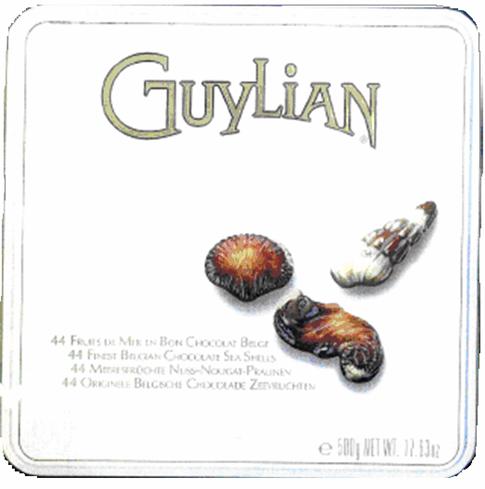
Fig 8. – Front view of white tin box.
Annexure B
|
| Fig. 9 – Front view of gold box. |
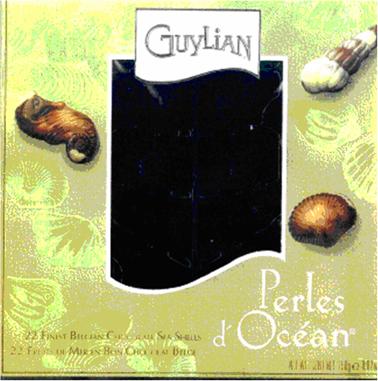
|
| Fig. 10 – Back view of gold box. |
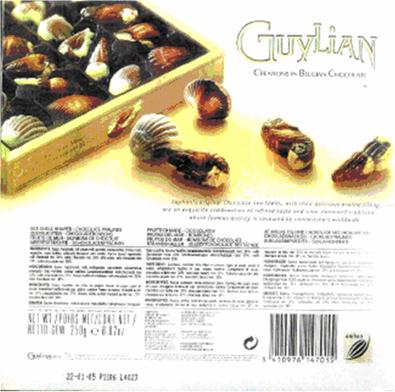
Annexure C
|
|
Fig. 11 – Front view of red box. |

|
|
Fig. 12 – Back view of red box. |
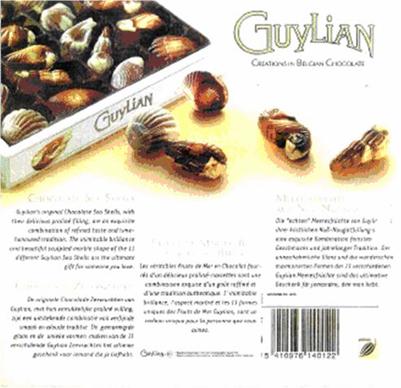
Annexure D
|
| Fig. 13 – Front and side view of small gold box. |
|
| Fig. 14 – Back view of small gold box. |
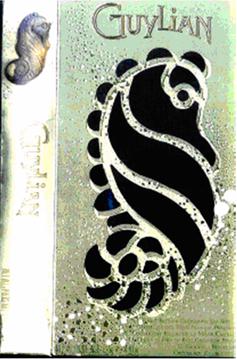
Annexure E
|
| Fig. 15 – Front view of seahorse shaped box. |

|
Fig. 16 – Side view of seahorse shaped box. |
|
Fig. 17 – Back view of seahorse shaped box. |