

FEDERAL COURT OF AUSTRALIA
Interpharma Pty Ltd v Commissioner of Patents [2008] FCA 1498
PATENT – Validity – Pharmaceutical compound – Utility – Whether invention useful according to promises in patent – Whether toxicity compromises utility.
PATENT – Infringement – Process for manufacture of chemical compound.
PATENT – Validity – Process for manufacture of chemical compound – Whether invention lacked inventive step – Common general knowledge – Whether lack of inventive step established an interlocutory application.
INTERLOCUTORY INJUNCTION – Alleged infringement of patent – Whether prima facie case made out – Whether defences of invalidity made out – Necessary strength of defences on interlocutory application – Whether damages an adequate remedy – Balance of convenience – Alleged infringer entering established market – Whether possible to restore applicant to present position – Relevance of apparent strength of substantive cases.
Patents Act 1990 (Cth) ss 18(1)(b), 18(1)(c), 78
AB Hassle v Pharmacia (Australia) Pty Ltd (1995) 33 IPR 63
Aktiebolaget Hassle and Anor v Alphapharm Pty Ltd (2002) 212 CLR 411
Alphapharm Pty Ltd v H Lundbeck A/S [2008] FCA 559
Apotex Pty Ltd v Sanofi-Aventis [2008] FCA 194
Australian Broadcasting Corporation v O’Neill (2006) 227 CLR 57
Beecham Group Ltd v Bristol Laboratories Pty Ltd (1968) 118 CLR 618
Castlemaine Tooheys Ltd v South Australia (1986) 161 CLR 148
GenRx Pty Ltd v Sanofi-Aventis (2007) 73 IPR 502
Hexal Australia Pty Ltd v Roche Therapeutics Inc (2005) 66 IPR 325
Interpharma Pty Ltd v Commissioner of Patents [2008] FCA 1283
Merck & Co Inc v GenRx Pty Ltd (2006) 70 IPR 286
Minnesota Mining & Manufacturing Co v Tyco Electronics Pty Ltd (2002) 56 IPR 248
Pharmacia Italia SpA v Interpharma Pty Ltd (2005) 67 IPR 397
Plimpton v Spiller (1876) 4 Ch D 286
Ranbaxy Australia Pty Ltd v Warner-Lambert Company LLC [2008] FCAFC 82
Tidy Tea Ltd v Unilever Australia Ltd (1995) 32 IPR 405
VID 160 of 2008
JESSUP J
10 OCTOBER 2008
MELBOURNE
| IN THE FEDERAL COURT OF AUSTRALIA |
|
| VICTORIA DISTRICT REGISTRY | VID 160 of 2008 |
| BETWEEN: | INTERPHARMA PTY LTD Applicant
ELI LILLY & COMPANY First Cross-Claimant
ELI LILLY AUSTRALIA PTY LTD Second Cross-Claimant
|
| AND: | THE COMMISSIONER OF PATENTS Respondent
INTERPHARMA PTY LTD Cross-Respondent
|
| JESSUP J | |
| DATE OF ORDER: | 10 OCTOBER 2008 |
| WHERE MADE: | MELBOURNE |
UPON the cross-claimants by their counsel undertaking:
(a) to submit to such order (if any) as the court may consider to be just for the payment of compensation, to be assessed by the court or as it may direct, to any person, whether or not a party, adversely affected by the operation of the interlocutory order or undertaking or any continuation (with or without variation) thereof; and
(b) to pay the compensation referred to in (a) to the person there referred to.
THE COURT ORDERS THAT:
1. The cross-respondent, whether by its servants, agents or otherwise, be restrained until the hearing and determination of this proceeding or further order from making, importing, selling, offering to sell, otherwise disposing of, offering otherwise to dispose of or keeping for any of those purposes, the following pharmaceutical formulations;
(a) EBEGEMCIT gemcitabine 200mg (as hydrochloride) powder for injection vial having ARTG Number 129350; and
(b) EBEGEMCIT gemcitabine 1g (as hydrochloride) powder for injection vial having ARTG Number 129351.
2. The cross-respondent, whether by its servants, agents or otherwise, be restrained until the hearing and determination of this proceeding or further order from making, importing, selling, offering to sell, otherwise disposing of, offering otherwise to dispose of or keeping for any of those purposes, any gemcitabine hydrochloride formulation wherein the active pharmaceutical ingredient was (or will be) manufactured by ScinoPharm Taiwan Limited.
3. The cross-respondent, by 12 noon on Tuesday, 14 October 2008, take all steps as are necessary to withdraw its application for the inclusion of the EBEGEMCIT gemcitabine hydrochloride formulations referred to in paragraph 1 above on the Schedule of Pharmaceutical Benefits and serve on the Cross-Claimants an affidavit made by a proper officer of the Cross-Respondent’s identifying each of the steps that have been taken.
4. The cross-respondent, whether by its servants, agents or otherwise, be restrained until the hearing and determination of this proceeding or further order from making any application for the inclusion of a gemcitabine hydrochloride formulation on the Schedule of Pharmaceutical Benefits wherein the active pharmaceutical ingredient was (or will be) manufactured by ScinoPharm Taiwan Limited.
5. Costs be reserved.
6. All issues as to liability are to be heard prior to, and separately from, any issues as to quantum.
7. Each party file and serve on or before 24 October 2008 a list of categories of documents of which they seek discovery by the opposite party, such categories to be confined to those documents likely to be relevant and useful at the trial.
8. Each party to make discovery of the categories of documents sought by the opposing party on or before 28 November 20087.
9. Each of the parties to file and serve on or before 16 January 2009 any affidavits upon which they intend to rely in chief at the trial of this proceeding.
10. Each of the parties to file and serve on or before 27 March 2009 any affidavits on which they intend to rely in answer at the trial of this proceeding.
11. Each of the parties to file and serve on or before 1 May 2009 any affidavits in reply upon which they intend to rely at the trial of this proceeding.
12. The trial of this proceeding to be fixed for hearing on the first available date on or after 1 June 2009 with an estimate of 10 days.
13. Each party have liberty to apply on 3 days’ written notice.
Note: Settlement and entry of orders is dealt with in Order 36 of the Federal Court Rules.
| IN THE FEDERAL COURT OF AUSTRALIA |
|
| VICTORIA DISTRICT REGISTRY | VID 160 of 2008 |
| BETWEEN: | INTERPHARMA PTY LTD Applicant
ELI LILLY & COMPANY First Cross-Claimant
ELI LILLY AUSTRALIA PTY LTD Second Cross-Claimant
|
| AND: | THE COMMISSIONER OF PATENTS Respondent
INTERPHARMA PTY LTD Cross-Respondent
|
| JUDGE: | JESSUP J |
| DATE: | 10 OCTOBER 2008 |
| PLACE: | MELBOURNE |
REASONS FOR JUDGMENT
Introduction
1 The cross-claimants, Eli Lilly & Company and Eli Lilly Australia Pty Ltd seek interlocutory injunctions restraining the cross-respondent, Interpharma Pty Ltd, from engaging in certain conduct, to which I shall refer in more detail below, said to be in infringement of patents registered under the Patents Act 1990 (Cth) (“Patents Act”) held by the first cross-claimant, and licensed to the second cross-claimant. The cross-claimants also seek an interlocutory mandatory injunction requiring Interpharma to withdraw an application for its product to be included in the Commonwealth Pharmaceutical Benefits Scheme.
2 The first cross-claimant is the proprietor of Australian Patent No. 565856, for an invention entitled “difluoro nucleoside antivirals”. This is a patent for a pharmaceutical compound (or compounds) and has been referred to by the parties as the “compound patent”. The first cross-claimant is also the proprietor of Australian Patent No. 659009, entitled “stereoselective glycosylation process”. This is a patent for a manufacturing process, and has been referred to by the parties as the “process patent”. The compound patent was granted on 1 October 1987 and, on 14 January 2000, was extended for five years ending on 7 March 2009. The judgment of Sundberg J in Interpharma Pty Ltd v Commissioner of Patents [2008] FCA 1283 was given upon an earlier interlocutory application in this proceeding, and dealt with the compound patent. The process patent was granted on 4 May 1995, and its term expires on 18 June 2013.
3 The proceeding concerns pharmaceutical products of which the active ingredient is gemcitabine, a nucleoside which is represented as follows:
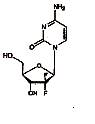
A pharmaceutically acceptable salt, gemcitabine hydrochloride, is commonly used. One of the second cross-claimant’s main products is a medication called “Gemzar”. Gemcitabine hydrochloride is the active ingredient in that medication. It is said to be used to treat five of the major types of cancer, namely, non-small-cell lung cancer, pancreatic cancer, bladder cancer, ovarian cancer and metastatic breast cancer. Gemzar is registered on the Australian Register of Therapeutic Goods (“the ARTG”), and has been sold in the Australian market since 1995. It is listed on the Pharmaceutical Benefits Scheme (“the PBS”) under the National Health Act 1953 (Cth). Hitherto, and as things stand, Gemzar is the only pharmaceutical product so listed in which the active ingredient is gemcitabine hydrochloride. That is because the patents in suit have, it seems, been regarded by other suppliers as standing in the way of their entering the market. If the cross-respondent has its way, all that is about to change.
4 The cross-respondent was incorporated in Australia in March 2002. Its business is the provision of services to multinational pharmaceutical and health care companies entering the Australian and New Zealand markets, including, relevantly to the present application, regulatory compliance, marketing and sales. It has the objective of securing supply agreements with international pharmaceutical companies who wish to market, distribute and sell their products in the Australian and New Zealand markets. The cross-respondent intends, unless restrained by injunction, to commence marketing a pharmaceutical product called “EBEGEMCIT” in which the active ingredient is gemcitabine hydrochloride. EBEGEMCIT is registered on the ARTG, but it has not, it seems, previously been sold in Australia. The cross-respondent has applied for EBEGEMCIT to be listed under the PBS. If that listing is achieved, as the cross-respondent expects to occur on 1 December 2008, EBEGEMCIT would be in a position to compete directly with Gemzar.
5 The cross-claimants allege that EBEGEMCIT infringes the compound patent, and that the process used in the production of Ebegemcit infringes the process patent. As I have indicated, they seek interlocutory injunctions to restrain the cross-respondent from marketing Ebegemcit in Australia. The mandatory interlocutory injunction sought by the cross-claimants would, if granted, require the cross-respondent to withdraw its application for the inclusion of EBEGEMCIT in the PBS. However, the court has been informed that, because of the administrative steps associated with the preparation of the list of pharmaceuticals due to be released on 1 December 2008, unless an application for withdrawal is made by about 16 October 2008 at the latest, it will be unlikely to have any practical effect. That circumstance constitutes part of the explanation for the urgency with which the present interlocutory application has been heard and decided.
Background to the present application
6 In May 2003, the cross-respondent executed an exclusive supply and distribution agreement with an Austrian company, EBEWE Pharma GES.m.b.H. Nfg.KG (“EBEWE”). That agreement gave the cross-respondent the exclusive right to distribute EBEWE oncology and other pharmaceutical products in Australia and New Zealand. The cross-respondent conducted an official “launch” of the EBEWE oncology products in Australia in April 2005. However, it was not until 2007 that preparations were made for the introduction into this range of a product in which the active ingredient was gemcitabine hydrochloride. That product was “Gemcitabine EBEWE”. Those preparations commenced in June 2007, but the managing director of the cross-respondent, Mr David Gray, said in his affidavit sworn on 23 June 2008 that the production of “launch materials” could not commence until Gemcitabine EBEWE obtained registration on the ARTG.
7 In his affidavit of 23 June 2008, Mr Gray swore as follows:
I can recall discussing the patent position in relation to gemcitabine HCl compound with Dr. Schnait who is responsible for pharmaceutical development at EBEWE Pharma during product development and launch meetings in late 2005 and during 2006/2007. I was told by Dr Schnait and believe that Eli Lilly and Company had a patent in Austria for the compound gemcitabine HCl which covered the treatment of cancer and was due to expire in March 2009. Dr Schnait also told me that he could not find any equivalent patents in Australia when he undertook his searches of the patent databases.
On the basis of what I had been told by Dr Schnait of EBEWE Pharma I believed that there was no current patent in Australia which covered the compound gemcitabine HCI and I was not aware of the Anti-Viral Patent and the Decision until 2 August 2007.
The “anti-viral patent” referred to by Mr Gray is the compound patent, and the “decision” is the decision to extend the term of that patent to 7 March 2009.
8 What happened on 2 August 2007 was that the cross-respondent was informed by its solicitors of the existence of the compound patent and the extension of term. Over the next few months, the cross-respondent caused investigations to be made about the compound patent, and considered, amongst other things, whether the extension of term could be challenged. In October 2007, it applied to have Gemcitabine EBEWE registered on the ARTG.
9 In December 2007, the cross-respondent informed the cross-claimants of its intention to import and market Gemcitabine EBEWE. It contended that the extension of term of the compound patent had been wrong. The cross-claimants responded with a letter of demand alleging that the cross-respondent’s intentions would, if carried out, give rise to an infringement of the compound patent, and seeking undertakings. The cross-claimants also notified the cross-respondent of the existence, and the relevance, of the process patent. Over the next 10 weeks or so, the parties attempted to resolve their differences, but without success.
10 On 6 March 2008, the cross-claimants sent a further letter of demand to the cross-respondent, enquiring whether TGA approval for Gemcitabine EBEWE had been obtained and, if not, asking the cross-respondent to notify them within 24 hours of it being obtained. The cross-claimants also sought undertakings in relation to conduct which they alleged infringed the compound patent. The cross-respondent replied that it did not consider that the importation and sale of Gemcitabine EBEWE would amount to an infringement of that patent. At about the same time, it commenced to prepare for this proceeding, in which it proposed to seek the revocation of that patent, and to challenge the decision to extend the term thereof. On 18 March 2008, the cross-respondent learned from EBEWE that the first applicant had obtained an interim injunction in Austria restraining EBEWE from making and exporting Gemcitabine EBEWE. The present proceeding was commenced by the cross-respondent the following day, 19 March 2008. The cross-respondent also made alternative arrangements for the supply of Gemcitabine EBEWE. In April 2008, it applied to have Gemcitabine EBEWE registered on the ARTG, but this time the supplier would be a Romanian company, and the manufacturer of the active material (gemcitabine hydrochloride) would be an Indian company.
11 On 12 May 2008, the cross-claimants filed the present cross-claim. At that time, they alleged only an infringement of the compound patent. However, on 11 June 2008, they filed an Amended Cross-Claim which alleged also an infringement of the process patent. They foreshadowed an interlocutory application to restrain the cross-respondent from marketing Gemcitabine EBEWE, and it seems that, in July 2008, the parties proposed that that application should be heard in early December 2008.
12 On 30 July 2008, the cross-claimants wrote to the cross-respondent, seeking confirmation that the latter had not lodged an application for ARTG registration of any product containing gemcitabine or gemcitabine hydrochloride as its active ingredient, other than those already disclosed, and requiring production of any other such applications. On 7 August 2008, the cross-respondent responded to the effect that all ARTG applications that were in its possession on 28 July 2008, and which related to drugs containing gemcitabine or gemcitabine hydrochloride as their active ingredient, had been produced to the cross-claimants pursuant to a Notice to Produce, answered by the cross-respondent on 28 July 2008. However, it seems that, towards the end of August 2008, Sandoz Pty Ltd (“Sandoz”) (a party to a related proceeding) transferred two ARTG registrations (then standing in its name) for products in which the active ingredient was gemcitabine (as hydrochloride) to the cross-respondent. By letter dated 26 August 2008, Sandoz so informed the cross-claimants, at the same time informing them that the products in question would be renamed “EBEGEMCIT”.
13 There followed a period of about a fortnight during which the cross-claimants sought to obtain from the cross-respondent an indication of its intentions as to the listing of EBEGEMCIT on the PBS. The cross-claimants first made such an inquiry on 27 August 2008. They enquired again on 2 September 2008, this time asking whether the cross-respondent would be in a position to market EBEGEMCIT prior to 7 March 2009. On 3 September 2008, the cross-respondent’s solicitors replied, stating that they would respond to the cross-claimants’ inquiries upon receiving instructions from Mr Gray, who was then overseas. On 5 September 2008, the cross-claimants learnt from the Department of Health and Ageing that, on 1 September 2008, an application had been made to list a gemcitabine hydrochloride product on the PBS with effect from 1 December 2008. By letter to the cross-claimants dated 9 September 2008, the cross-respondent took the position that the pleadings on the cross-claim did not allege that EBEGEMCIT involved a patent infringement, but, by another such letter dated 11 September 2008, stated that it could not respond to the cross-claimants’ request for information until Mr Gray returned from overseas. Finally, at a hearing before Sundberg J on 13 September 2008, counsel for the cross-respondent confirmed that it had applied for the PBS listing of EBEGEMCIT, to be effective, if granted, on 1 December 2008.
14 In the circumstances, the cross-claimants sought an urgent hearing of their application for interlocutory relief, and that hearing occurred on 30 September and 1 October 2008.
THE APPROACH TO BE TAKEN ON AN APPLICATION FOR AN INTERLOCUTORY INJUNCTION
15 The parties are in agreement that the questions which arise in an application for an interlocutory injunction such as the present are –
(a) whether there is a serious question to be tried, or the cross-claimants have made out a prima facie case in the sense that, if the evidence remains the same, there is a probability that at trial they will be entitled to relief;
(b) whether the cross-claimants will suffer irreparable harm, for which damages will not be adequate compensation, unless an injunction is granted; and
(c) whether the balance of convenience favours the granting of an injunction.
See Castlemaine Tooheys Ltd v South Australia (1986) 161 CLR 148, 153; Aktiebologet Hassle v Biochemie Australia Pty Ltd (2003) 57 IPR 1, 9 [29]; Hexal Australia Pty Ltd v Roche Therapeutics Inc (2005) 66 IPR 325, 328 [17]; Pharmacia Italia SpA v Interpharma Pty Ltd (2005) 67 IPR 397, 399 [9]-[10]; Merck & Co Inc v GenRx Pty Ltd (2006) 70 IPR 286, 291 [16].
16 With respect to the first question, in Australian Broadcasting Corporation v O’Neill (2006) 227 CLR 57, 82-83, [65] and [70] Gummow and Hayne JJ (with the assent of Gleeson CJ and Crennan J – at 68 [19]) pointed out that the requisite degree of seriousness of the question to be tried, or the strength of the probability of success at trial (which their Honours seemingly regarded as effectively two ways of saying the same thing) depended on “the nature of the rights [the plaintiff] asserts and the practical consequences likely to flow from the order he seeks” (227 CLR at 82 [65], quoting from Beecham Group Ltd v Bristol Laboratories Pty Ltd (1968) 118 CLR 618, 622). Further, the issue whether there is a serious question (or a probability of success) should not be considered in isolation from the issue of the balance of convenience: Tidy Tea Ltd v Unilever Australia Ltd (1995) 32 IPR 405, 416; Aktiebologet Hassle 57 IPR at 10 [31]. At base, the decision whether to grant an interlocutory restraint is a discretionary one, and it is traditionally at the point of considering the balance of convenience that the court takes into account every circumstance that has the rational capacity to assist in answering the question whether it would be in the interests of justice to do so. The apparent strength of the parties’ substantive cases, to the extent that it is possible to assess such things provisionally, will usually be one of those circumstances: often an important one.
17 Another layer of complication is added to the deliberative exercise in cases in which the respondent (ie the non-moving party) goes further than a denial of the applicant’s case for relief, and pleads a positive point of defence. In such a situation, it will not be enough to ask whether the applicant has shown a serious question, or a probability of success, on his or her own case. While the answer to that question may be in the affirmative, it will then be necessary to consider whether that answer should be qualified by the apparent strength of the defence. In a patent case, the fact of registration constitutes prima facie evidence of validity: AB Hassle v Pharmacia (Australia) Pty Ltd (1995) 33 IPR 63, 69-70, GenRx Pty Ltd v Sanofi-Aventis (2007) 73 IPR 502, 503-504. It has been said that it is for the respondent to show that want of validity is a triable question: AB Hassle 33 IPR at 69. This seems clear enough, but, in my opinion, the analysis needs to be taken a step further. Is it sufficient that the respondent does show a triable question on validity? In my view, if that is as far as the respondent goes, then, assuming always that the applicant has shown a triable issue on infringement, absent questions of validity, the conclusion would remain that the latter had a triable question. That is to say, as a matter of analysis, unless the case for invalidity is sufficiently strong (at the provisional level) to qualify the conclusion that, overall, the applicant has a serious question, or a probability of success, the court should move to consider the adequacy of damages, the balance of convenience and other discretionary matters. It is the applicant’s title to interlocutory relief which is under consideration, and the bottom-line question, as it were, is whether the applicant has a serious question, or a probability of success, not whether the respondent does in relation to some point of defence raised or foreshadowed.
THE CROSS-CLAIMANTS’ CASE FOR INFRINGEMENT OF THE COMPOUND PATENT
18 The invention protected by the compound patent is entitled “difluoro antivirals and intermediate therefor”. The complete specification states that the invention “provides a new difluoro carbohydrate and new antiviral nucleosides prepared by coupling the new carbohydrate with appropriate bases”. For present purposes it is sufficient to note that the specification discloses a carbohydrate as follows –

Where R is one of a number of possible bases including the following –
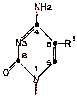
The specification discloses that R1 in this base may be a number of different atoms or groups, including hydrogen.
19 Claim 1 in the patent corresponds with the description given above in the complete specification. Later claims are narrower than Claim 1. The particular combination of carbohydrate and base to which I have referred in the previous paragraph also falls within Claim 4, which is narrower than Claim 1 by confining R in the carbohydrate to the base set out above. Claim 6 is narrower again. It corresponds with Claim 4, save that R1 in the base must be hydrogen.
20 Structurally, gemcitabine is the same as the compound referred to in Claim 6 of the compound patent, and also falls within Claims 1-4. In his affidavit sworn on 16 June 2008, Professor Easton of the Research School of Chemistry, Institute of Advanced Studies, Australian National University, concluded that gemcitabine fell within Claims 1-4 and 6 of the patent. At the structural level, the cross-respondent did not take issue with that conclusion. If that were all that is involved in the question, it would seem to be established prima facie at least that the production and sale of gemcitabine would infringe the compound patent.
21 However, as the complete specification makes clear –
The structural drawings above do not indicate the stereochemistry of the compounds of the present invention. Compounds of all configurations are believed to be useful, and the stereochemistry of the compound is not to be construed as a limitation.
The specification goes on to state that the configuration of naturally occurring ribose is preferred, and that the preferred configuration of the “juncture” between the ribose (ie the carbohydrate) and the base be such that the base lies above the plane of the ribose, and the hydrogen below. As it happens, that is gemcitabine. As indicated, however, the specification goes no further than to indicate that such a configuration is preferred. It is not required.
22 The submission of counsel for the cross-respondent on infringement was that the patent disclosed only the racemate, and not the β anomer. They submitted that “a purified stereoisomer does not infringe a claim to a compound that has no reference to stereochemistry”. They relied upon the evidence of Professor Jackson, of Monash University, who said in his affidavit sworn on 26 September 2008 that “none of the claims is directed toward any one stereoisomer and, thus, none to Gemcitabine.”
23 The first aspect of the dispute with respect to infringement of the compound patent, therefore, comes down to this. The cross-claimants assert that, by being indifferent to stereochemistry, the patent covers all anomeric forms of the structural compounds specified in it. Since it covers all forms, it covers the β anomer which corresponds with gemcitabine. The cross-respondent, by contrast, asserts that the very indifference of the patent with respect to stereochemistry shows that the patent is confined, as a matter of construction, to the racemate. Any organic chemist following only the learning disclosed by the patent would produce the racemate. Although he or she would, presumably, well understand that the racemate consisted of a number of anomers, he or she would not be instructed by the patent to produce any one of them, and would think, correctly in the submission of the cross-respondent, that the stereochemical composition of the resulting mixture was immaterial. It follows, according to the cross-respondent, that a compound which consists only, or very substantially, of a particular anomer will not infringe the patent.
24 It seems, perhaps surprisingly, that there is no decided case which deals directly with this point. That is to say, the question whether a compound consisting of a particular anomer infringes a patent which specifies the racemate does not appear to have been directly decided by a court. However, counsel for the cross-respondent claimed to have considerable support from observations made in a number of cases concerning pharmaceutical patents in recent years.
25 Counsel for the cross-respondent referred to Ranbaxy Australia Pty Ltd v Warner-Lambert Company LLC [2008] FCAFC 82. One of the questions which arose in that case was described by the Full Court as follows (at [54]-[55]):
There is no challenge to the validity of the Broader Patent. The question of infringement of the Broader Patent depends upon the proper construction of the complete specification for the Broader Patent. Ranbaxy contends that all Claims of the Broader Patent should be construed so as to be restricted to the racemate form of the compounds disclosed. Ranbaxy contends, therefore, that its product, which contains only the R enantiomer of atorvastatin calcium, will not infringe the Broader Patent. Warner-Lambert, on the other hand, contends that the Broader Patent extends to all forms of the compounds of the claimed invention.
The primary judge concluded that Structural Formula 1 refers to the following forms of the compounds disclosed, as well as to the racemate:
· the R-trans enantiomer, individually,
· the S-trans enantiomer, individually, and
· unequal mixtures of the R-trans enantiomer and the S-trans enantiomer.
Accordingly, his Honour concluded that Ranbaxy’s intended importation and sale of its product would infringe Claim 1 and certain other Claims of the Broader Patent. In its appeal, Ranbaxy contends that the primary judge erred in rejecting its contention that the Broader Patent was restricted to the trans-racemates of the compounds disclosed.
Their Honours in the Full Court upheld the primary Judge’s conclusion that Structural Formula 1, as it was described, disclosed the two enantiomers mentioned, and was not confined to the racemate. It was by reason of that holding that their Honours dismissed this aspect of the appeal. However, in the course of their reasons, the Full Court said (at [60]):
However, if the Broader Specification, as a whole, only disclosed and claimed the racemate, the claim to the racemate would not extend to claim the enantiomers.
Although this observation cannot be regarded as part of the ratio decidendi of Ranbaxy, it has the authority of the Full Court, and is very recent. It supports the position taken in the present case by the cross-respondent.
26 The other authorities upon which the cross-respondent relied were not concerned with infringement. Rather, they were concerned with the question of anticipation, and in some respects applied the “reverse infringement” test for novelty. The cross-respondent submitted that the authorities in this line are relevant because, if a compound disclosed in a prior publication did not anticipate the patent, it would not infringe the patent if produced after grant. In Alphapharm Pty Ltd v H Lundbeck A/S [2008] FCA 559, it was contended that an invention which consisted of a purified enantiomer had been anticipated by an earlier patent which made no reference to individual enantiomers. Lindgren J said (at [171]):
The Australian Citalopram Patent did not refer to “enantiomers”. It did not expressly or by implication otherwise disclose the individual enantiomers. It disclosed the racemate and enabled the obtaining of it. Whether this anticipated the present invention turns on my construction of the Patent – see Section C above. The skilled but non-inventive addressee reading the Australian Citalopram Patent would have understood that (+/-)-citalopram consisted of the (+)-enantiomer of citalopram and the (-)-enantiomer, each as to 50%, and would have been able to identify the formulae for the S and R enantiomers, but would not have known, in the absence of experimentation, which was (+) and which was (-). These facts would not, however, point specifically to the independent existence of the enantiomers which is, according to my construction of the Patent specification, of the essence of claim 1. If I had construed claim 1 as referring to (+)-citalopram when present in the unresolved racemate, the Australian Citalopram Patent would have been an anticipation. But because of my construction outlined at Section C above, a person taught by the Australian Citalopram Patent, although taught to desire to obtain the racemate, would not be taught to desire to obtain the specific (+)-enantiomer in its own right.
It follows, according to the cross-respondent, that a compound which consists of one enantiomer only does not infringe a patent which is not concerned with anomeric forms.
27 Apotex Pty Ltd v Sanofi-Aventis [2008] FCA 194 involved an application for revocation upon the ground that the patent, which claimed an enantiomer, was disclosed by earlier publications which were said to involve racemic mixtures only. Gyles J said (at [45]):
On the other hand, the formula identified as derivative 1 or example 1 in the French patent and corresponding patents (PCR 4099) has the identical formula to the enantiomer in suit. I am satisfied that the skilled but not inventive reader of the French and corresponding patents would understand that the derivative in question (in common with all of the derivatives) was the racemate and that all of the technical explanations as to the means of obtaining that (and other) derivatives and as to the testing of them related only to the racemate and not to any individual enantiomer. There is no express suggestion that either enantiomer had in fact been separately obtained or tested for efficacy or toxicity. That said, it was commonly known, and was spelled out in the French patent, that the compound in question was a racemate with one chiral centre and two enantiomers – one dextro and the other levo. There were express references to the enantiomers in both the body of the specification and in the claims of the French and corresponding patents, with the detail most clearly spelled out in the Canadian patent. The express references to the enantiomers in the French and corresponding patents (particularly the Canadian patent) plainly carry the claim that the enantiomers are within the compounds disclosed.
Gyles J referred to various passages in the earlier patents that were claimed to be anticipatory, and said that they were “consistent only with a disclosure of, and a claim to, each enantiomer … separate from the racemate and from each other.” (at [46]). His Honour also held (at [47]) that the “patentee was asserting that the relevant qualities of each enantiomer were not to be relevantly distinguished from any particular racemate or the other enantiomer.” His Honour continued (at [48]):
The claims for the separate enantiomers could be described as bare claims for efficacy without any foundation being shown for them in any part of the complete specification. There is no basis for knowing what, if any, efficacy or toxicity would apply to either enantiomer of any particular racemate.… No doubt, if only the racemate were claimed, there would be a large risk that this would not protect against competition from a drug with one of the enantiomers as the active ingredient, which might be as efficacious as, and perhaps more efficacious than, the racemate as an active ingredient.
28 In what Gyles J described as a digression, his Honour referred to the judgment of Lindgren J in Alphapharm, to the judgment of Young J ((2006) 71 IPR 46) and of the Full Court in Ranbaxy, and to other authorities. In the course of that, his Honour referred to a text in the following terms (at [74]):
In the Encyclopedia of United Kingdom and European Patent Law (Sweet & Maxwell Limited, 1977–2007), footnote 3 on page 1109 includes the following:
“It has, for instance, been held that publication of the existence of an “optically active” compound is not publication of the separated optically active forms, even though any chemist would appreciate that they must exist and could be prepared: I.C.I. (1971) unrep. (No. 1,069,343 opposed by Sandoz, P.A.T.). The case could have been treated as a “selection” patent, but it was not. But cf. ante, §2-015. A similar view was taken by the EPO in PFIZER/Penem (T1048/92) [1995] E.P.O.R. 207 but not in SANOFI/HOECHST Enantiomers (T296/87) [1990] E.P.O.R. 337 and in (T658/91) [1996] E.P.O.R. 24. The cases seem to be distinguished by the degree to which the earlier publication specified that Enantiomers formed part of the disclosed invention.”
Later, the authors said (5-110 on page 1110):
“The teaching of a racemate does not amount to the teaching of a single enantiomer (at least in the absence of the clear identification of the relevant chiral site and an indication that the enantiomers are encompassed by the disclosure).”
(T296/87 was the European Patent Office decision as to an application corresponding with the patent in suit.)
29 In the present case, the cross-respondent submitted that the facts of Apotex were “very different from the present case” in that, in Apotex, although the prior patents disclosed the racemate, they did not disclose only the racemate: they disclosed also the existence of separate entantiomers. It was, according to the cross-respondent, upon this basis that Gyles J held that these earlier patents anticipated the patent in suit (which claimed an enantiomer).
30 This brings me to the second aspect of the dispute with respect to the infringement of the compound patent. Counsel for the cross-claimants asserted that the patent in the present case did recognise the existence of different stereochemical forms of the compounds claimed. In this sense, they submitted, the patent should be construed as extending not merely to the racemate, but to the different anomers as elements thereof. Although they did not so submit in terms, I rather gather that they would contend that the present case has, in these respects, a deal in common with Apotex. Counsel also derived support from the identification of what is described as the preferred configuration in the complete specification. That is the β anomer of the compound which is, structurally, specifically covered by Claim 6 (and, structurally, is within Claims 1-4 also). According to the cross-claimants, an organic chemist would readily appreciate that the β anomeric form of the compound covered by Claim 6 was the subject of the patent.
If the Commissioner grants an extension of the term of a standard patent, the exclusive rights of the patentee during the term of the extension are not infringed:
…
(b) by a person exploiting any form of the invention other than:
(i) a pharmaceutical substance per se that is in substance disclosed in the complete specification of the patent and in substance falls within the scope of the claim or claims of that specification; ….
It was submitted on behalf of the cross-respondent that, if gemcitabine does fall within one of the claims in the patent, it is nonetheless not “a pharmaceutical substance per se that is in substance disclosed in the complete specification”. In this respect the cross-respondent’s submission had a degree of overlap with its submission on the question of infringement. It is said that gemcitabine may be the purified β anomer of one of the compounds structurally covered by the patent, but is not “per se” disclosed therein. That is said to be because the patent does not specifically disclose the β anomer, as distinct from the racemate. Given the approach which I have taken on the matter of infringement, however, I could not find that the cross-respondent’s defence under s 78 was so self-evidently correct as leave the cross-claimants without a serious question to be tried. There appears not to be much authority with respect to the operation of s 78(b)(i), and one could well imagine the cross-claimants in the present case submitting at trial that gemcitabine is disclosed per se, either because the complete specification, as a matter of construction, discloses all anomers, or because it contains a specific identification of the preferred configuration, which happens to be gemcitabine.
THE CROSS-RESPONDENT’S CHALLENGE TO THE VALIDITY OF THE COMPOUND PATENT
33 The cross-respondent contended that the compound patent was invalid because it was not “useful”: see Patents Act, s 18(1)(c). Both parties accepted the law as to utility as stated by the Full Court in Ranbaxy (at [141]):
The question, then, is whether the invention as claimed attains the result promised by the patentee.
The antiviral nucelosides of the present invention are used for the treatment of viral infections in the usual manner. The compounds are effective for the treatment of viral infections in general, and most particularly in the treatment of infections caused by viruses of the herpes genus.
35 In contrast to these promises, according to the cross-respondent, gemcitabine has not been found to be useful as a therapeutic antiviral agent in humans. Dr Bartholemeusz, the Business Development Manager at the Murdoch Children’s Research Institute (and also a scientific consultant to the Victorian Infectious Diseases Reference Laboratory and to a company called Evivar Medical Australia Pty Ltd), reviewed the literature in this respect. She concluded that gemcitabine was not therapeutically useful in the treatment of viral infections, due to its toxicity. None of the references which she consulted –
… demonstrated the use of gemcitabine for the clinical antiviral treatment of humans in the greater than 20 years since the priority date of the patent. There was no further supporting evidence to suggest that gemcitabine was useful as an antiviral in the literature.
Dr Bartholemeusz’ evidence was not contested by the cross-claimants. It was not submitted on their behalf that gemcitabine (or, for that matter, any compound made in accordance with the patent) had been found to be useful as a therapeutic antiviral in humans.
36 It was submitted on behalf of the cross-claimants, however, that the patents, properly understood, made no promise with respect to antiviral efficacy in the human clinical context. Rather, the only promise was that a compound made in accordance with the patent would have an antiviral effect, or that it would be an antiviral agent. My attention was drawn in this respect to one of the publications to which Dr Bartholemeusz had referred (a publication by DC Delong et al entitled “Antiviral Activity of 2’,2’–Diflourocytidine”. In the abstract of that publication upon which Dr Bartholemeusz relied, it is stated as follows:
Although the compound inhibited virus multiplication in acute virus infections in animals, we were unsuccessful in separating toxicity from virus activity. However, we obtained very high activity in friend leukemia virus infections in mice that could be separated from toxicity by altering the dose schedule.
From this material, counsel for the cross-claimants submitted that antiviral efficacy had been shown, albeit not in the human context.
37 Here again the point of difference between the parties appears to relate substantially to the construction of the patent. The question is: what did the specification promise? For the most part, the specification promised an antiviral compound. It is possible that a promise of antiviral efficacy in non-human contexts, such as the veterinary context or the botanical context, was intended by the specification, but there are no indications along those lines. I am disposed to think that references in the specification to “antiviral compounds” and the like imply a human therapeutic setting. That impression is strengthened by the discussion in the specification of the use to which the compounds might be put, introduced by the passage which I have quoted in par 34 above. It is said that the compounds, or pharmaceutically-acceptable salts thereof (defined as salts which are useful in the chemotherapy of warm-blooded animals), might be administered “orally, topically or parenterally”. The compounds are said to be “used usually in the form of pharmaceutical compositions”. Topical administration by way of creams, ointments etc is described. Parenteral compositions for injection are described. As to oral administration, the specification states:
A great many types of orally administered compositions are in common use, including unit dosage forms such as tablets and capsules, and liquid dosage forms such as suspensions. In general, unit dosage forms are preferred in pharmacy and are formulated in such a way as to provide the usual dose in one or a small number of tablets or capsules. The formulation of tablets, making appropriate use of lubricants, binding agents and disintegration agents will be understood by those skilled in the art. The formulation of capsules involves only the dilution of the nucleoside with an appropriate proportion of an inert powdery substance, such as lactose, to provide the proper bulk to fill the desired size of capsule. The formulation of orally-administered suspensions is carried out by finely grinding the nucleoside and intimately mixing it with a comparatively viscous aqueous-base liquid. The viscosity is adjusted by the addition of pharmaceutically-acceptable thickening or gel-forming agents including vegetable gums, chemically-modified cellulose derivatives and the like. Appropriate flavors may be used if desired.
Evidently, use of the compound in warm-blooded animals is intended. I would go further and say that use in the human context is fairly obviously implied by the passages to which I have referred.
38 As I have said, the evidence, such as it is, seems to show that compounds prepared in accordance with the patent either have no antiviral efficacy or, to the extent that they do, produce unacceptable toxic side-effects. Even then, these effects are shown to have been produced in laboratory animals. There is no suggestion that any such compound has been generally therapeutically efficacious, whether in the medical or in the veterinary context.
39 As counsel for the cross-claimants submitted, the cross-respondent will carry the onus of proof at trial with respect to the matter of inutility. However, although this is only an interlocutory occasion, and the cross-claimants might be assumed to be in a better position to lead evidence of utility at trial, they are a substantial pharmaceutical concern of international reach, and one of them is the patentee. If there is evidence of human (or, for that matter, of veterinary) utility, the cross-claimants would be in the best position to put it before the court, even under the time constraints associated with their present Notice of Motion.
40 As to the cross-claimants’ point that the presence of toxic side-effects should not be regarded as detracting from the utility of a compound otherwise shown to have an antiviral effect, I am inclined to think that the cross-respondent should be regarded having a fairly persuasive prima facie case that utility, for the purposes of the Patents Act, requires the absence of side-effects which, of themselves, would disqualify the invention from practical application in any relevant context, notwithstanding the presence of the primary benefits claimed for the invention.
THE CROSS-CLAIMANTS’ CASE FOR INFRINGEMENT OF THE PROCESS PATENT
42 The process patent is for an invention which “relates to a stereoselective glycosylation process for preparing 2’-deoxyfluoronucleosides and to intermediates of that process.” Claim 1 is for a process for preparing a β anomer enriched nucleoside of the formula:
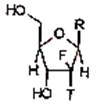
Wherein T is either hydrogen or fluoro and R is a nucleobase selected from a group which includes the following:
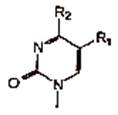
The various options for R1 and R2 are mentioned. The claim continues that the process involves conducting the SN2 displacement “optionally in a suitable solvent of a sulfonyloxy group (Y) from an α anomer enriched carbohydrate of the formula”:
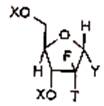
wherein X is “independently selected from hydroxyl protecting groups”, and T is hydrogen or fluoro. The claim continues that the SN2 displacement is conducted with at least a molar equivalent of a nucleobase selected from a group which includes the following:
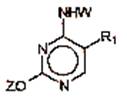
Options for R1 are given. Z is defined as “a hydroxy protecting group”. W is defined as “an amino protecting group”.
43 See confidential annexure.
44 See confidential annexure.
45 See confidential annexure.
46 See confidential annexure.
47 See confidential annexure.
48 See confidential annexure.
49 See confidential annexure.
50 See confidential annexure.
51 See confidential annexure.
52 See confidential annexure.
53 See confidential annexure.
54 See confidential annexure.
55 See confidential annexure.
56 See confidential annexure.
57 See confidential annexure.
58 See confidential annexure.
59 See confidential annexure. In the result, I would find that the cross-claimants do have a prima facie case which remains after consideration of the interlocutory evidence led by the cross-respondent.
THE CROSS-RESPONDENT’S CHALLENGE TO THE VALIDITY OF THE PROCESS PATENT
60 The cross-respondent challenged the validity of the process patent on the ground that the invention did not involve an inventive step (see Patents Act s 18(1)(b)(ii)). Here, the trial Judge would be required by s 7(2) of the Patents Act to reject this challenge unless the invention would have been obvious to a person skilled in the relevant art in the light of the common general knowledge as it existed in the patent area before the priority date. In presently relevant respects, the cross-respondent relies upon a paper by Uri Reichman and others, A Practical Synthesis of 2-deoxy-2-fluoro-D-arabinofuranose Derivatives, published in 1975. As it happens, this paper was referred to in the complete specification for the process patent. Mr Paul Anthony Kilborn, a consultant patent attorney of considerable experience, affirmed an affidavit on 24 September 2008 in which he dealt in detail with the Reichman paper. In the course of that treatment, Mr Kilborn said:
In summary, this paper discloses a process having the features of claim 1 of the Patent, except the requirement that the leaving group (Y) associated with carbon 1 of the sugar is sulphonyloxy (ie sulfonate) and the amino group of the cytosine has two protective groups, whereas in claim 1 of Australian Patent 659009, the cytosine group has only one protective group on the amino of the cytosine.
As I have already stated above, I believe that the use of sulfonyloxy leaving groups was common general knowledge to organic chemists working in Australia before 22 June 1992. I believe that such a person reading the disclosure of Reichman would immediately understand that a sulfonyloxy leaving group could be used instead of the halide group described in Reichman. I refer to paragraph 6.12 of my Affidavit which refers to the Organic Chemistry textbook Morrison and Boyd which indicates that sulfonates are good leaving groups for nucleophilic substitution reactions. In my opinion I consider that claims 1 and 11 lack inventive step in light of the disclosure of Reichman and the common general knowledge as detailed above.
Likewise, Professor Jackson said of the Reichman paper:
The paper describes a glycosylation reaction which involves reaction of a bromo-substituted carbohydrate with a cytosine derivative leading to complete inversion of stereochemistry, that is, only giving the β substituted cytosine derivative. This suggests that this reaction is an SN2 reaction, ie a bi-molecular nucleophilic substitution reaction at an aliphatic carbon atom.
Professor Jackson added that “[t]he use of sulfonoxy groups as leaving groups in SN2 reaction has been known for many years.”
61 Reliance upon the opinions of Mr Kilborn or Professor Jackson in these respects was criticised by counsel for the cross-claimants because they had been given the patents before being asked to express their opinion as to common general knowledge as at the priority date. Counsel relied upon what was said by the Full Court in Minnesota Mining & Manufacturing Co v Tyco Electronics Pty Ltd (2002) 56 IPR 248, 258 [45], as follows:
The manner in which the evidence of some of the experts in the present case was bought into existence suggests that relatively little weight should be given to certain of that evidence. For example, witnesses were provided with a copy of the patent. They were either provided with a large number of other documents or found them in response to the task that was set them. That is hardly calculated to result in objective evidence as to what the hypothetical uninventive but skilled worker would have done. To give the patent to a prospective witness is tantamount to leading the witness. Further, unless the other documents were part of the common general knowledge in Australia before the priority date, they are not relevant to any question of obviousness.
Further, counsel submitted that the cross-respondent had not, in relevant respects, heeded the warning given by the High Court as to the dangers of judgments by way of hindsight in contexts such as the present in Aktiebolaget Hassle and Anor v Alphapharm Pty Ltd (2002) 212 CLR 411, 423 [21].
62 Counsel for the cross-claimants further submitted that it was not sufficient for the cross-respondent’s experts first to refer to Reichman and then to say that an organic chemist would understand that a sulphonyloxy leaving group could be used instead of the halide leaving group there described. Rather, the question as approved by the High Court in Aktiebolaget Hassle (212 CLR at 433 [53]) was:
“Would the notional research group at the relevant date, in all the circumstances, which include a knowledge of all the relevant prior art and of the facts of the nature and success of chlorpromazine, directly be led as a matter of course to try the –CF3 substitution in the ‘2’ position in place of the –C1 atom in chlorpromazine or in any other body which, apart from the –CF3 substitution, has the other characteristics of the formula of claim 1, in the expectation that it might well produce a useful alternative to or better drug than chlorpromazine or a body useful for any other purpose?” [Emphasis added] [ie emphasis added by the High Court]
In other words, it is not merely a case of saying that an organic chemist, equipped with Reichman, would be aware that a sulphonyloxy leaving group could be used in place of the halide leaving group. Rather, the question is whether such a chemist, so equipped, would directly be led as a matter of course to use a sulphonyloxy leaving group in the expectation that it might well produce a useful alternative.
63 Questions of whether an invention involves an inventive step in the light of common general knowledge as at the priority date are notoriously difficult, where approached many years subsequently. Evidence of the kind which is presently before the court stops a deal short of permitting me to express even a provisional view as to how those questions will be resolved at trial. Invalidity is for the cross-respondent to prove. The material upon which it relies manifestly leaves considerable scope for argument. To the extent that I am otherwise of the view that the cross-claimants have established a prima facie case of infringement with respect to the process patent, I am not prepared to qualify that view by reason of the prospect that that patent might be invalid for want of an inventive step.
ADEQUACY OF DAMAGES AS A REMEDY
64 Both sides addressed the court on the subject of the adequacy of damages as a remedy for the cross-claimants should it be held at trial that either or both of the patents in suit had been infringed. In order to deal with this subject, it is necessary to say something about how the PBS works.
65 When a medicine is listed on the PBS, the government subsidises the supply of it by pharmacists to patients. A pharmacist will purchase the medicine from the manufacturer or supplier (such as the parties to the present proceeding), and the government will pay the pharmacist the difference between the patent co-payment and the price of the medicine (plus the pharmacist’s own mark-up and dispensing fee). The effect of this system is that it is the government, rather than the pharmacist or the patient, that bears the lion’s share of the commercial cost of a particular medicine, and that would stand to be directly affected by any variations in the price of the medicine charged by the manufacturer or supplier to the pharmacist. For this reason, that price is negotiated between the manufacturer or supplier and the government, as part of the process by which the medicine is listed on the PBS. Absent agreement on price at this level, a medicine will not be listed.
66 In a situation in which there was originally only one brand of medicine on the PBS meeting a particular therapeutic purpose, the arrival of a second brand will, as a matter of policy it seems, lead to an automatic reduction of 12.5% in the price which the government is prepared to agree to any medicine of that type (including the original brand). One example of how this might happen would be if the presence of a single brand is explicable by reference to the compound being protected by a patent, and the patent reaching the end of its term. However, it appears that the application of the automatic 12.5% price reduction occurs whenever a second product, which is in all respects the therapeutic equivalent of the original product, obtains listing on the PBS. And the evidence in the present case suggests that, where there is such therapeutic equivalence, the second product will be listed almost as a matter of course. In the present case, the second cross-claimant has received correspondence dated 12 September 2008 from the Department of Health and Ageing informing it that, with effect from 1 December 2008, the price of Gemzar will be reduced by 12.5%. Although not made clear in the letter, it is implicit that this indication resulted from the cross-respondent’s application to have EBEGEMCIT included on the PBS. It is also implicit that the Department will not concern itself with whether the cross-respondent’s product infringes either of the patents in suit.
67 Further, evidence before the court discloses that, as part of recent competition reforms implemented by the government, medicines on the PBS will now be divided into two groups – Formulary 1 (F1) and Formulary 2 (F2). F1 consists of medicines where there is presently only a single brand. Gemcitabine is currently listed as F1 because Gemzar is the only brand available. F2 consists of medicines where there are many brands listed. Within F2, it seems that a further distinction is to be made, between medicines where price competition between brands is low (referred to as F2A) and medicines where price competition between brands is high (referred to as F2T). In F2A, there will apparently be a price reduction of 2% per year for three years after 1 August 2008. For F2T, there will be a one-off price reduction of 25%.
68 The cross-claimants contended, and it was not seriously resisted by the cross-respondent, that the introduction of EBEGEMCIT onto the PBS would lead to an immediate reduction of 12.5% in the price received by the second cross-claimant for Gemzar, and annual reductions, for three years, of 2% in that price. If these were the only impacts of the entry of EBEGEMCIT into the market, however, it would be difficult to conclude that the cross-claimants’ losses could not ultimately be calculated, and compensated in damages. Since the subsidy provided to pharmacists, and the co-payments required of patients would not be affected, changes in the price fixed by the government would presumably not have any real impact upon demand for the cross-claimants’ product. However, the question of the detriments to which the cross-claimants will be exposed in the absence of an interlocutory injunction is, they submitted, rather more complex.
69 The entry of the cross-respondent’s product, EBEGEMCIT, into the market would itself have an undoubted impact upon the sales of Gemzar. Further, as a matter of reality, according to the cross-claimants, if no injunction is granted here, there will be other manufacturers of generic alternatives to Gemzar that will also enter the market. It seems that Sandoz is ready to do so. According to the cross-claimants, the more participants there are on the supply side of the market for gemcitabine products, the more difficult it will be for them (the cross-claimants) to quantify the extent of their damages.
70 It was submitted on behalf of the cross-respondent that, having a long-established sales history of Gemzar, the cross-claimants were in a good position to observe the effect of the entry of EBEGEMCIT into the market and, if it should be the case, of the entry also of other generic gemcitabine products. It was submitted that a comparison of “before and after” apropos the listing of EBEGEMCIT would show the extent of the cross-claimants’ losses. Counsel for the cross-claimants responded by pointing out that the issue will not be confined to the loss and damage which their clients may have suffered in the period that passed between the listing of EBEGEMCIT and judgment at trial. They submitted that it would be necessary to estimate future losses, and losses of the kind recognised in Hungerfords v Walker (1989) 171 CLR 125, and that these estimates would become increasingly problematic.
71 Although the calculation of damages to compensate the cross-claimants, should they be successful, will be attended by some uncertainty, I am inclined to think that the real problem is whether it would ever be possible to restore the cross-claimants to the position they now occupy, should they succeed at trial but not secure the interlocutory restraints they seek. To an extent this is recognised in the cross-claimants’ submissions as to the difficulty of quantifying their losses over the future years (ie after judgment and until the expiry of the process patent). But it is not simply a question of quantification. Here I assume success on the part of the cross-claimants and the making of a permanent injunction restraining the cross-respondent for so long as the process patent is within term. If the effect of such an injunction was that Gemzar again was the only gemcitabine product listed on the PBS, the question would arise whether the Department of Health and Ageing would recognise an entitlement to the restoration of the price reductions which, by then, would have been implemented. There appears to be no precedent for such a circumstance, and neither party to the present application was prepared to predict what might happen. Further, the period during which there was competition may well have led to quite substantial changes in the prescribing practices of medical practitioners. The commercial advantage of being the only supplier of a gemcitabine product in the field are likely to be both subtle and powerful. Indeed, one reason given by the cross-respondent for resisting the injunction sought by the cross-claimants was that it would deny it the valuable advantage of being able to offer a more complete suite of oncology products to practitioners. I accept that, but it also illuminates one aspect of the cross-claimants’ likely loss – the adverse impact of the cross-respondent’s activities across a range of products.
72 As Gummow and Hayne JJ implied in ABC v O’Neill, the purpose of an interlocutory injunction is to preserve the status quo pending trial (227 CLR at 82). In this respect, I am much attracted by the approach taken by Gyles J in GenRx Pty Ltd v Sanofi-Aventis (73 IPR at 506 [15]):
However, I am much influenced by the effects of disturbing the status quo, particularly as it relates to the operation of the PBS. A new entrant in this field would have an effect which may be both unpredictable and irreversible. There is also likely to be interference with the trade patterns of Sanofi with its customers, both wholesale and retail, that may not be detectable or measurable in money terms. Sanofi has built up a considerable trade since 2003, and the establishment to go with it, as GenRx looked on. Temporary disturbance of that status quo is not justified. My view is consistent with that of Moore J in Merck & Co Inc v GenRx Pty Ltd (2006) 70 IPR 286….
73 The considerations to which I have just referred apply in the case of the process patent, which does not expire until 2013. However, I could not say the same about the compound patent. On no view will the present case be tried, much less determined, before the expiry of that patent. Even if the cross-claimants succeed at trial, their damages will be confined to a period which, by then, will lie in the past. There will be no question of attempting to re-establish the anterior status quo. Further, the period during which the cross-respondent (on the present assumptions) will be found to have been in infringement of the compound patent will be relatively short (four months) and it seems that no other supplier of a generic gemcitabine product will then be in the market. The complications to which counsel for the cross-claimants referred in the calculation of damages over the long term will not arise in these circumstances. I am, accordingly, of the view that damages are much more likely to be an adequate remedy, should it be found that the cross-respondent was in breach of the compound patent, than in the case of the process patent.
BALANCE OF CONVENIENCE
74 In addition to the discretionary factors covered by the previous section of these reasons, the cross-claimants contended that the balance of convenience favoured the granting of the restraints they seek for three reasons. The first was that they sought the retention of the status quo, in which respect they relied upon Plimpton v Spiller (1876) 4 Ch D 286, 292 (per Brett JA):
Well, now, if you assume that the defendant is in the right, there is no doubt that an injunction is a great hardship upon him; but if you assume that the plaintiff is right, then the mere keeping of an account by the defendant seems to me to be a great hardship on the plaintiff, for he would be driven to commence actions against the purchasers from and customers of the defendant, which would obviously lead to a multiplication of suits. There will be a hardship on the one side or on the other, and the question is, on which side does the balance appear to lie? Now if the trade of a defendant be an old and an established trade, I should say that the hardship upon him would be too great if an injunction were granted. But where, as here, the trade of the defendant is a new trade, and he is the seller of goods to a vast number of people, it seems to me to be less inconvenient, and less likely to produce irreparable damage, to stop him from selling, than it would be to allow him to sell and merely keep an account, thus forcing the plaintiff to commence a multitude of actions against the purchasers.
This passage was endorsed by the High Court in Beecham Group (118 CLR at 625-626).
75 Counsel for the cross-respondent submitted that the retention of the status quo would be detrimental to their client in a way that could never be compensated pursuant to the cross-claimants’ undertaking as to damages. They relied upon evidence which showed that the cross-respondent’s commercial focus was upon pharmaceuticals that were valuable in oncology. The cross-respondent desired to market a suite of such pharmaceuticals, of which EBEGEMCIT would be a natural and valuable component. Its inability to supply the full suite, in effect, would have a negative impact upon its marketing campaign as a whole. Further, in anticipation of the compound patent reaching end of term on 7 March 2009, the cross-respondent desired to be the first supplier of a generic gemcitabine product to appear on the PBS. When future PBS lists are published, the competition is likely to be much more intense, and the cross-respondent has a natural, and wholly legitimate, desire to take advantage of the planning and resources which it has invested into obtaining a listing on 1 December 2008. In this respect, the cross-respondent also relied upon the supply contracts which it has in place in anticipation of being able to include EBEGEMCIT in its suite of oncology products as at that date.
76 I consider that the cross-claimants have at least a valid starting point in their reliance upon the status quo. This is not a case in which the cross-respondent has for some time carried on business in a way which is now alleged to amount to an infringement of one of the patents in suit; nor in which the cross-respondent had little choice but to engage in conduct which may arguably infringe one of those patents. Rather, the cross-claimants have had the benefit of the patents for a long time, and the cross-respondent now proposes to enter the market for gemcitabine-based pharmaceuticals. That is to say, subject only to the loss of the preparatory and start-up expenses which the cross-respondent has incurred, and to the disruption of such supply contracts as it has in place, the cross-respondent does not appear to be able to say that its present position would be worsened if injunctions were granted. In that context, and in an environment of forensic disputation, there is, in my view, some merit in requiring the parties to hold to their present positions until the rights and wrongs of the matter can be established at trial.
77 This brings me to the cross-claimants’ second reason for contending that the balance of convenience favoured the grant of an injunction. They submitted that the cross-respondent had got itself into its present situation with “its eyes wide open”: see Merck & Co Inc v GenRx Pty Ltd (2006) 70 IPR 286, 292 [19]. The cross-respondent has undertaken all its commercial preparations in the knowledge of one or both of the patents, or at least had been less than assiduous in its inquiries as to whether the marketing by it if Gemcitabine EBEWE or of EBEGEMCIT might have constituted an infringement. The cross-claimants relied upon the reasons of Sundberg J in his reasons of 21 August 2008 ([2008] FCA 1283, [38]):
I agree with Lilly that the applicant’s conduct with respect to its investigation of the extension decision demonstrates a marked lack of urgency at every stage. The explanations for the delay cover only comparatively small parts of the overall period between becoming aware of the extension and the institution of proceedings. There is no evidence that the applicant made its own enquiries and searches in relation to an Australian patent. All that appears is very general evidence, purporting to cover a more than two year period, when Mr Gray spoke to Dr Schnait, and apparently relied on that information (from EBEWE) rather than making his own investigations.
The cross-respondent had no ready answer to these criticisms. Although its managing director, Mr Gray, gave evidence of his attempts to investigate the relevance, and the binding nature, of the compound patent once he knew of its existence, that was now more than a year ago, and the cross-respondent has apparently continued to make its preparations to enter the market since then. These circumstances, in my view, significantly compromise its attempt to resist an injunction which goes no further than to maintain the status quo. Likewise in the case of the process patent: the cross-respondent appears not to have been aware of that at all until informed by the cross-claimants in December 2007. Whether or not the cross-claimants ultimately succeed on the process patent, its potential relevance to gemcitabine is plain to see. The cross-respondent has led no evidence of its own searches for Australian patents that might affect its plans. I am not disposed to allow it to rely on its own ignorance as leading to a situation in which it would now be commercially inconvenienced were it to be subject to an interlocutory restraint of the kind that the cross-claimants seek.
78 The cross-claimants relied also upon what they alleged was a course of disingenuous dealing by the cross-respondent over the period of about four months leading to the making of the present application. They alleged that, knowing that they (the cross-claimants) were anxious to know if any ARTG registration for Gemcitabine EBEWE had been sought or achieved, and to know if an application for listing on the PBS was to be made, the cross-respondent was coy about its intentions. It took a transfer of the ARTG registration of Ebegemcit without notifying the cross-claimants (who were notified by Sandoz) and used Mr Gray’s absence overseas as an excuse not to answer the cross-claimants’ questions about the PBS listing of EBEGEMCIT, while at the same time making an application for such listing with the authority of Mr Gray. While there is some forensic force in these points made on behalf of the cross-claimants, and while the cross-respondent’s conduct may well have required the present application to be heard and determined under more pressing circumstances than would otherwise have been the case, ultimately I do not think that the disposition of that application is much influenced by these events. They do not have more than a very marginal bearing on where the balance of convenience lies. Of more significance is the cross-claimants’ previous point, namely, that the cross-respondent, by reason of its own choices or omissions, is not in the ideal position from which to ask the court to pay regard to the inconvenience which would be visited upon it by an interlocutory injunction.
79 The cross-claimants’ third reason was that they had, according to them, a very strong case on the merits. As indicated earlier, questions as to the balance of convenience are not to be addressed in isolation from an awareness of the apparent strength of the respective cases on the merits. Thus, the cross-respondent too submitted that its case on the merits was strong, and should be a factor against granting an injunction.
80 As to the compound patent, I am not persuaded that either side has the self-evidently stronger case at the level of infringement. I refer to par 31-32 of these reasons. Accordingly, I do not propose to take the merits of the matter into account at that level, beyond noting that the cross-claimants have a prima facie case in the sense explained in ABC v O’Neill. However, at the level of validity, I am disposed to think that the cross-respondent has a case of apparent strength with respect to its point on utility: see par 41 above. This is a circumstance which should be placed on the scales in favour of the cross-respondent.
81 See confidential annexure.
82 On the other hand I do not consider that the cross-respondent has established anything more than a fairly arguable case on the matter of common general knowledge, in which respect it challenges the validity of the process patent. I would not express even a provisional view about the prospect of this defence succeeding.
83 In summary with respect to the compound patent, a significant consideration is that the patent expires on 7 March 2009. If an injunction is not granted, the maximum period during which the cross-respondent might be infringing the patent is three months and one week. Calculation of the damages suffered by the cross-claimants over that period is unlikely to present any real difficulties. To those considerations I add what I consider to be the apparent strength of the cross-respondent’s case on validity. On balance, I am not persuaded to grant the interlocutory restraints sought by the cross-claimants.
84 In summary with respect to the process patent, the patent itself is still within term by some years. If an injunction is refused, but the cross-claimants succeed at trial, it seems to me that there are likely to be all manner of difficulties restoring them to the position of advantage that they now occupy. Had the cross-respondent shown a conscientious concern to discover whether its plans to market a gemcitabine product might be compromised by an Australian patent, it must surely have encountered the process patent. The cross-claimants have the advantage of the status quo. Finally, if anything I consider, provisionally, that the cross-claimants may have the better of the argument on the question of infringement. On balance, I think that the cross-claimants have shown enough to entitle themselves to an interlocutory injunction with respect to the process patent.
DISPOSITION OF THE APPLICATION
85 For the reasons set out above, I propose to grant such interlocutory relief as is relevant to the cross-claimants’ case for infringement of the process patent. I am provisionally of the view that restraints of the kind sought in the cross-claimants’ Notice of Motion are appropriate, but there may be a complication arising from the fact that it will be the process patent alone that sustains them. I do not intend that the cross-respondent be restrained from dealing in a gemcitabine product made by a process other than that referred to in the evidence. I shall give the parties the opportunity to address me on the terms of the interlocutory orders that would be appropriate, particularly in the light of the considerations to which I have just referred.
86 I shall also hear the parties on costs.
| I certify that the preceding eighty-six (86) numbered paragraphs are a true copy of the Reasons for Judgment herein of the Honourable Justice Jessup. |
Associate:
Dated: 9 October 2008
| Counsel for the Applicant: | Ms K Howard SC and Ms H Rofe |
|
|
|
| Solicitor for the Applicant: | Stephens Lawyers |
|
|
|
| Counsel for the Second Respondent: | Mr RC Macaw QC, Mr SCG Burley and Ms C Cochrane |
|
|
|
| Solicitor for the Second Respondent: | Clayton Utz |
| Dates of Hearing: | 30 September and 1 October 2008 |
|
|
|
| Date of Judgment: | 10 October 2008 |


