

FEDERAL COURT OF AUSTRALIA
Global Brand Marketing Inc v YD Pty Ltd [2008] FCA 605
TRADE MARKS – representations of sole and shape marks registered as trade marks in respect of footwear – whether rival vendor used shoes as a trade mark – meaning of use as a trade mark – whether goods themselves can constitute a trade mark – whether the mark must have a separate identity from that of the goods – functional and non‑functional considerations – whether features of shape bear any relation to the function to be performed by the nature of the goods
TRADE MARKS – infringement – representations of sole and shape marks registered in respect of footwear – whether infringement by rival vendor – whether rival’s shoes substantially identical or deceptively similar to registered marks
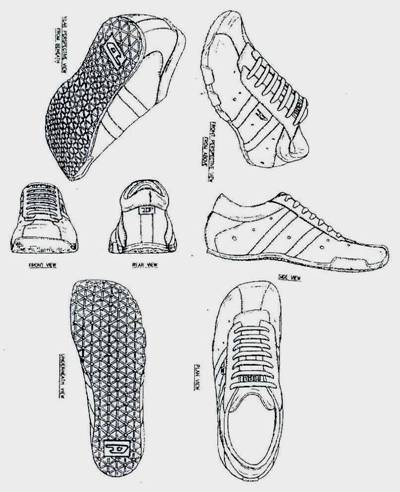
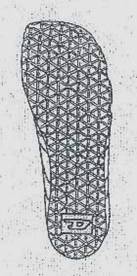
Trade Marks Act 1995 (Cth) ss 7, 10, 17, 41, 58, 88, 120
Shell Co of Australia Ltd v Esso Standard Oil (Aust) Ltd (1963) 109 CLR 407 applied
World Brands Management Pty Ltd v Cube Footwear Pty Ltd [2004] FCA 769 referred to
Re ‘GE’ Trade Mark (1972) 1B IPR referred to
Jafferjee v Scarlett (1937) 57 CLR 115 referred to
Johnson & Johnson Aust Pty Ltd v Sterling Pharmaceuticals Pty Ltd (1991) 30 FCR 326 applied
Coca‑Cola Company v All‑Fect Distributors Ltd (1999) 96 FCR 107 applied
Koninklijke Philips Electrics NV v Remington Products Pty Ltd (2000) 100 FCR 90 applied
Koninklijke Philips Electronics NV v Remington Products Australia Pty Ltd (1999) 91 FCR 167 cited
Mayne Industries Pty Ltd v Advanced Engineering Group Pty Ltd [2008] FCA 27 applied
Kenman Kandy Aust Pty Ltd v Registrar of Trade Marks (2002) 122 FCR 494 applied
Wellness Pty Ltd v Pro‑Bio Living Waters Pty Ltd (2004) 61 IPR 242 applied
Australian Woollen Mills Ltd v FS Walton & Co Ltd (1937) 58 CLR 641 applied
Crazy Ron’s Communications Pty Limited v Mobileworld Communications Pty Ltd [2004] FCAFC 196 applied
Henschke & Co v Rosemount Estates Pty Ltd (2001) 52 IPR 42 referred to
Registrar of Trade Marks v Woolworths (1999) 45 IPR 411 applied
de Cordova v Vick Chemical Co (1951) 68 RPC 103 applied
Melbourne Chinese Press Pty Ltd v Australian Chinese Newspapers Pty Ltd (2004) 63 IPR 38 applied
Aldi Stores Ltd Partnership v. Frito‑Lay Trading Company GmbH (2001) 54 IPR 344 applied
Torpedoes Sportswear Pty Limited v Thorpedo Enterprises Pty Limited (2003) 59 IPR 318 cited
Kowa Company Ltd v N V Organon (2005) 66 IPR 131 referred to
Global Brand Marketing Inc v Cube Footwear Pty Ltd [2005] FCA 852 referred to
Blount Inc v Registrar of Trade Marks (1998) 40 IPR 498 applied
Clark Equipment Co v Registrar of Trade Marks (1964) 111 CLR 511 applied
Shell Co (Aust) Ltd v Rohm and Haas Co (1948) 78 CLR 601 applied
Aston v Harlee Manufacturing Co (1960) 103 CLR 391 cited
Southern Cross Refrigerating Co v Toowoomba Foundry Pty Ltd (1954) 91 CLR 592 cited
Lomas v Winton Shire Council [2003] AIPC 91‑839 applied
Mobileworld Communications Pty Ltd v Q & Q Global Enterprise (2003) 61 IPR 98 cited
In re Jellinek’s Application (1946) 63 RPC 59 cited
Shanahan’s Australian Law of Trade Marks and Passing Off 3rd ed (2003)
Lahore, Patents, Trade Marks and Related Rights (2006)
VID 1132 of 2003
SUNDBERG J
7 MAY 2008
MELBOURNE
| IN THE FEDERAL COURT OF AUSTRALIA |
|
| VICTORIA DISTRICT REGISTRY | VID 1132 of 2003 |
| BETWEEN: | GLOBAL BRAND MARKETING INC First Applicant
DIESEL SPA Second Applicant
|
| AND: | YD PTY LIMITED (ACN 096 242590) First Respondent
TODD TRENEAR Second Respondent
|
| BETWEEN: | YD PTY LIMITED (ACN 096F 242 590) Cross-Claimant
|
| AND: | WORLD BRANDS MANAGEMENT PTY LTD (ACN 093 738 704) First Cross-Respondent
DIESEL SPA Second Cross-Respondent
|
| JUDGE: | SUNDBERG J |
| DATE OF ORDER: | 7 MAY 2008 |
| WHERE MADE: | MELBOURNE |
THE COURT ORDERS THAT:
1. The application be dismissed.
2. The cross‑claim be dismissed.
3. The applicants pay the respondents’ costs of the application.
4. The cross‑claimant pay the cross‑respondents’ costs of the cross‑claim.
Note: Settlement and entry of orders is dealt with in Order 36 of the Federal Court Rules.
| IN THE FEDERAL COURT OF AUSTRALIA |
|
| VICTORIA DISTRICT REGISTRY | VID 1132 of 2003 |
| BETWEEN: | GLOBAL BRAND MARKETING INC First Applicant
DIESEL SPA Second Applicant
|
| AND: | YD PTY LIMITED (ACN 096 242590) First Respondent
TODD TRENEAR Second Respondent
|
| BETWEEN: | YD PTY LIMITED (ACN 096F 242 590) Cross-Claimant
|
| AND: | WORLD BRANDS MANAGEMENT PTY LTD (ACN 093 738 704) First Cross-Respondent
DIESEL SPA Second Cross-Respondent
|
| JUDGE: | SUNDBERG J |
| DATE: | 7 MAY 2008 |
| PLACE: | MELBOURNE |
REASONS FOR JUDGMENT
BACKGROUND
1 The second applicant (Diesel) is the registered owner of two trade marks under the Trade Marks Act 1995 (Cth) (the Act). Both trade marks are registered in class 25 in respect of footwear for a ten year period commencing 29 January 2004.
2 There are three styles of footwear sold by the first respondent (YD) in relation to which Diesel alleges trade mark infringement: the Photon shoe, the Cube shoe and the Gamon shoe. The Photon and Cube shoes were in evidence in three dimensional form. The Gamon shoe was not. The applicants allege that YD has infringed the Sole Mark by selling in Australia the Photon, Cube and Gamon footwear. They allege that YD has infringed the Shape Mark by selling the Photon and Cube Footwear.
3 YD denies infringement and contends that the trade marks should be removed from the Register of Trade Marks as they do not comply with the requirements of ss 41 and 58 of the Act.
REGISTERED MARKS AND PROSECUTION HISTORY
4 The Shape Mark (986713) and the Sole Mark (986709) are depicted in that order below.
Shape Mark
5 The Certificate of Registration of the Shape Mark is endorsed as follows:
The trade mark consists of a combination of the stylised letter D together with the shape of a SHOE including its features as depicted in the representations accompanying the application form. The stylised letter D appears on the rear and outer side of the shoe; the sole comprises a rubber cross-hatched pattern with a square containing the stylised letter D; and two oblique stripes on either side of the shoe and one vertical stripe on the rear.
6 The Shape Mark was registered under s 41(3) of the Act on the basis that it combined several features. One of the prominent features is the stylised letter D. In addition to the features specified in the endorsement, the trade mark includes “features as depicted in the representations accompanying the application form”.
7 My inspection of the Shape Mark together with the representations accompanying the application discloses the following features:
· a stylised letter D on the rear and outer side of the shoe
· a sole comprising a rubber cross hatched pattern with a rectangle containing the stylised letter D
· two oblique stripes on either side of the shoe
· one vertical stripe on the rear
· a squarish shaped toe cap or toe panel incorporating a strip of material flowing from the bottom of the laces to the point where the toe cap or toe panel joins the sole
· small dots carved into the side of the shoe
· a flat sole with three rubber panels coming from the outer side of the sole to the upper of the shoe
· a flat sole with one large rubber panel coming from the inner side of the sole to the upper of the shoe
· a facing
· a padded collar.
Sole Mark
8 There is no endorsement on the Sole Mark Certificate of Registration. The features of the Sole Mark are
· a rubber cross-hatched pattern
· a rectangle containing the stylised letter D.
9 These features are also seen in the underneath view of the Shape Mark. Despite having only two features, the Sole Mark is nevertheless considered a combination mark.
Prosecution history of Shape Mark
10 In her first report dated 28 April 2004 the Trade Mark Examiner objected to the Shape Mark on the ground that:
[The] trade mark consists of the shape of a shoe. The shape is an ordinary shoe shape. Other traders should be able to use an ordinary shoe shape in connection with goods or services similar to yours.
11 The Examiner said the objection could be overcome by either clarifying the exact nature of the mark or providing evidence of acquired distinctiveness under s 41(6) through use of the mark.
12 By letter dated 24 September 2004 Diesel sought to clarify the exact nature of the mark by proposing the following endorsement:
The trade mark consists of the shape of a SHOE including its features as depicted in the representations accompanying the application form and the stylised letter D. The stylised letter D appears on the rear and the outside of the shoe, the sole comprises a rubber cross-hatched pattern with a square containing the stylised letter D; and two oblique stripes on either side of the shoe and one vertical stripe on the rear.
13 Diesel also submitted to the Examiner:
Whether the Trade Mark is registrable will primarily depend on how likely it is that other traders will wish, in good faith, to use the shape of the mark in combination with the other features of the mark. We submit that no other traders would need to use the same shape of the footwear together with the features of the footwear as represented.
14 On 11 October 2004 the Examiner issued her second report. Acceptance of the application was conditioned on the following modified endorsement making it clear that Diesel claimed a combination of elements:
The trade mark consists of a combination of the stylised letter D together with the shape of a SHOE including its features as depicted in the representations accompanying the application form. The stylised letter D appears on the rear and outer side of the shoe; the sole comprises a rubber cross-hatched pattern with a square containing the stylised letter D; and two oblique stripes on either side of the shoe and one vertical stripe on the rear.
15 By letter dated 13 October 2004 Diesel accepted the modified endorsement:
We note that you are prepared to accept the above trade mark application if it is made clear that the application claims a combination of elements depicted on the representations of the shoe accompanying the application.
In accordance with the recommendation in your examination report, we request that the current application be amended to include the following revised endorsement clarifying the nature of the trade mark and the extent of the claim.
The endorsement at [14] was then set out.
FINDINGS OF FACT
16 The context or setting in which a mark appears is an important consideration in determining whether it has been used as a trade mark: Shell Co of Australia Ltd v Esso Standard Oil (Aust) Ltd (1963) 109 CLR 407 at 422 (Shell).
Witnesses
17 The key witnesses and evidence relied upon by the parties were:
· Mr Melville Speers, who is director of World Brands Management Pty Ltd, the first cross‑respondent, and two affidavits sworn by him on 21 September 2006 and 7 April 2008
· Mr Trenear, who is Managing Director of YD, and one affidavit sworn by him on 25 May 2007
· Mr Vickery, who is a consultant and director of DawVic Pty Ltd, Footwear Consultancy, and one affidavit sworn by him on 6 July 2007.
With the exception of Mr Trenear, none of the witnesses was seriously challenged in cross examination. The applicants submit that elements of Mr Trenear’s evidence were unreliable, but notwithstanding this I accept his evidence as a whole.
The market and the shoe industry
18 The relevant market is the buying and selling of shoes. It involves shoes similar to that expressed in the Shape Mark. Diesel’s shoes are sold in stores such as Myer and David Jones amongst many other retail and chain ‘youth’ stores. Substantial sales of the shoes have been made over the past ten years. Mr Speers said 30,000 unit sales of the Wish (male) and Evelyn (female) styles of shoe, and 15,000 unit sales of the Kort (male) and Kortnay (female) styles of shoe, were made in that period.
19 By contrast, the “overwhelming majority” of YD’s shoes are sold as YD footwear in YD stores, supplied by Australian suppliers of such footwear. Samples are inspected in YD offices. After inspection, orders are made for the forthcoming season. The footwear is sold in approximately 51 stores throughout Australia trading under the YD name. These stores opened in late 2001 and specialise in the retail sale of men’s fashion accessories, such as clothing, footwear and headgear. Mr Trenear said:
· the YD trade mark is prominently featured in all YD stores, including external and internal business signage, carry bags, clothing hangers and other store displays
· all goods sold in YD Stores, including YD footwear, prominently bear and display the YD trade mark on the products themselves and, where appropriate, on swing-tags and packaging for such products including shoe boxes
· YD does not sell or offer for sale any products other than those bearing its YD trade mark.
20 This evidence was uncontested, and I find that any consumer entering a YD store would expect to purchase clothing, footwear, headgear and related accessories bearing the YD trade mark.
Consumer knowledge: pricing and shelving
21 The shoes referred to in Diesel’s exhibits are relatively expensive. Their average retail prices are $180 to $290 (male), $160 to $270 (female) and $120 to $180 (children). Prices of shoes are invariably found on the sole of the shoe.
22 YD’s shoes retail from $129 to $139.
23 Shoes are typically purchased through visual inspections and are not purchased over the phone.
24 YD customarily displays its shoes in profile. That is, in a manner whereby a customer can enter a store and see a variety of shoes arranged on the face of a wall. The shoes would be seen from the side view. YD sometimes displays boxes of shoes on tables with the sale shoe on top of the box.
Class of consumer and purchasing habits
25 The class of consumer was described in the evidence as “metro-shoppers”. They are usually people with a “large amount of expendable income”. They tend not to have dependants and to be “slaves of fashion”. Because metro‑shoppers are conscious of fashion, they are discerning of labelling, logos and pricing.
26 Typically, when purchasing a pair of shoes, particularly expensive shoes, the customer takes several steps. The first is a visual examination of the various shoes on display. Second, the customer will inspect a shoe and examine its features and the price (if it is available). Alternatively, a customer may ask a salesperson for the price of a shoe. In some instances, the shoe may be compared with others styles from the wall and their prices. Third, the customer will want to try on a shoe. In most cases, this will require a salesperson’s assistance to obtain the correct style and size from a store room. In the case of a YD shoe (sold at a YD store) this would mean that the correct sized shoe would be brought back to the customer in a box clearly labelled YD. If the shoe is the incorrect size, this may require the salesperson to go back to the storeroom to find a different size. Poorly chosen shoes can lead to considerable discomfort. Fourth, a purchase is either made or advice is sought from the salesperson about the shoe, the seller being imputed with a higher level of knowledge than the customer regarding brand quality. Such knowledge would be impressed on the consumer. Fifth, a consumer may wish to try on a different style of shoe, in which case the third step is repeated and the purchase process is extended.
27 Mr Speers said there were two kinds of shopper within the metro‑shopper class: ‘leaders’ and ‘followers’. Despite this distinction, any purchaser ‑ whether leader or follower ‑ would undertake the purchasing process outlined at [26]. It is unlikely that the purchase of a relatively expensive item would be made at a whim without some degree of consideration by the consumer.
28 Accordingly, the purchase of shoes is not one of impulse. The process described at [26] is far from a hurried purchase. The habits of shoe purchasers differ markedly from those who buy, for example, soft drinks or confectionary. The purchase of shoes involves examination of the product and a comparison with other styles. The salesperson in a shoe store may impart information to the consumer about the availability and attributes of different products. The whole process may take quite some time. By contrast, consumers would not typically ask a salesperson what a bottle of cola or a new soft drink tastes like. They would purchase the product and try it themselves. The transaction would be brief.
29 Consumers in the shoe market also read product labels, such as the YD trade mark. As already indicated, metro‑shoppers are fashion conscious and would be cognisant of label distinctions. The YD trade mark appears on the shoe and its box. It would be noticed by a metro‑shopper. It would be unusual for a consumer to purchase an expensive item without asking for the brand or knowing it before purchase.
30 The above findings are based not only on the evidence in the proceedings, but on commonsense and judicial experience of the process people typically engage in when purchasing footwear. In World Brands Management Pty Ltd v Cube Footwear Pty Ltd [2004] FCA 769 at [7] (albeit in a passing off context) Heerey J said:
Turning to the TPA and passing-off claims, I do not agree that the decision of Goldberg J in Dr Martens Australia Pty Ltd v Figgins Holdings Pty Ltd (1999) 44 IPR 281 establishes some rule of law as to the circumstances which pertain in the retail footwear trade. Nevertheless, his Honour's observations are valuable in another way. They light up and provoke one's memories from personal experience as to the way in which shoes are bought by retail consumers. As counsel for the respondents pointed out, shoes are usually not a quick impulsive purchase of something off the supermarket shelf. Rather, shoes are compared and tried on and thought over. Shoes are expected to last for some years at least. If not well chosen, they may cause discomfort and regret.
31 To the same effect are the observations of Lord Diplock in Re ‘GE’ Trade Mark (1972) 1B IPR 543 at 567:
[W]here goods are sold to the general public for consumption or domestic use, the question whether such buyers would be likely to be deceived or confused by the use of the trade mark is a “jury question”. By that I mean: that if the issue had now, as formerly, to be tried by a jury, who as members of the general public would themselves be potential buyers of the goods, they would be required not only to consider any evidence of other members of the public which had been adduced but also to use their own common sense and to consider whether they would themselves be likely to be deceived or confused.
The question does not cease to be a “jury question” when the issue is tried by a judge alone or on appeal by a plurality of judges. The judge's approach to the question should be the same as that of a jury. He, too, would be a potential buyer of the goods. He should, of course, be alert to the danger of allowing his own idiosyncratic knowledge or temperament to influence his decision, but the whole of his training in the practice of the law should have accustomed him to this, and this should provide the safety which in the case of a jury is provided by their number. That in issues of this kind judges are entitled to give effect to their own opinions as to the likelihood of deception or confusion and, in doing so, are not confined to the evidence of witnesses called at the trial is well established by decisions of this House itself.
See also Jafferjee v Scarlett (1937) 57 CLR 115 at 122‑123.
Expert evidence: shoe features and design
32 Mr Vickery has been involved in the footwear and textile industry in Australia and in other countries for approximately 50 years. He currently provides consultancy services to that industry on all aspects of footwear manufacture. He has been retained to consult on a range of sports shoes to determine whether they incorporate the functional features claimed by the manufacturers.
33 Mr Vickery identified the principal common components of a shoe:
the vamp – which covers the front portion of the shoe from the inside joint of the foot (or last) to the outside joint of the foot (or last) all the way to the front or centre of the toe of the shoe (or last). The vamp can consist of one piece, or a number of pieces and it can also be covered by a toe cap or a toe panel;
the quarter – which is that section of the footwear that goes from the inside and outside joint of the foot (or last) to the centre of the back of the shoe. The quarter can be made up of a single panel or multiple panels;
the tongue – this component fits over the cone of the last (the cone of the last is that part of the last which mirrors the instep section of the foot) and is designed to protect the instep of the foot.
34 Mr Vickery described some additional components of a shoe, including a padded collar which is on the top line of the shoe which fits under the ankle, a facing which is a supporting piece of material which reinforces the insertion of eyelet hooks or D rings and is located on the cone of the last, and a back tab which is located at the centre of the back of the footwear.
35 Mr Vickery said there are a number of broad categories of shoes, including the Oxford shoe, the Court Shoe, the Gibson shoe and the Training shoe (commonly known as a Trainer). Indicia of this last category include a toe cap or toe panel, a vamp, a quarter, a collar, a facing and a tongue. Coloured stripes are very common to a Trainer’s design.
36 Mr Vickery said the Cube shoe fell within the Trainer category. Features such as the Cube shoe’s facing, toe cap or toe panel and coloured stripes clearly demonstrate this.
37 Mr Vickery’s evidence was largely unchallenged, and I accept it.
Functional and commonly used features in the trade
38 Putting aside the fact that a shoe serves a functional purpose of protecting the foot, certain components of a shoe outlined at [33] to [36] are primarily functional or are considered common to the Trainer. The following features are primarily functional or in common usage in the overall Trainer design.
(a) Toe cap or toe panel
In cross examination, Mr Speers said the Diesel shoe in question was one that “revolutionised the trainer business”. He added:
Diesel were the first people to do a square toed trainer on a very flat profile which you will see. Most trainers always have a heel, higher heels built up as a normal shoe does. This increased the comfort aspects of trainers and if you look at it you can see that it’s the shape of a natural foot so that there is no cramping of the toes, as is the case with most shoes. So this is a typical example of the sort of innovative design that they tried to put into shoes to give Diesel the edge. (Emphasis added)
When a shoe is made in two halves, a strip of material is commonly used to cover the join at the front of the shoe.
(b) Facing
This is not only a very common feature of shoes, but serves the functional purpose of reinforcing the lace holes against the stresses of pulling on the lace.
(c) Vertical stripe on rear
This appears on the applicants’ shoes and in the representations of the Shape Mark. Mr Vickery said the pattern is a very common feature. When a shoe is made in two halves, the halves are joined together at the back. The back stripe serves a functional purpose of covering up the seam which is created at the back of the shoe. In this respect, the back stripe serves the same purpose as the strip at the front of the shoe. The Cube shoe does not have this stripe; instead there is a “small rounded piece” at the back of the shoe. Unlike the back stripe, the small rounded piece was considered “quite distinctive” and not a shape that is commonly used in the shoe industry of any type.
(d) Stripes on the side of the shoe
The stripes on the side of the shoe serve no functional purpose. They are, however, very common to the Trainer category and can be considered a means of defining this style of shoe.
(e) Padded collar
Mr Vickery said this was common in the Trainer category. Examples were apparent from exhibits predating registration of the Shape Mark.
Allegedly infringing conduct
39 On 23 April 2005 the applicants’ solicitor purchased a pair of Photon shoes from YD’s shop at Chadstone Shopping Centre. The shoes are exhibit LME 2 to Ms Egan’s affidavit. On 29 October 2003 Mr Speers purchased Cube footwear from the YD shop at Paddington. The shoes are exhibit MS 3 to his first affidavit sworn 21 September 2006.
40 There is no evidence of a purchase of Gamon shoes from a YD store. Nor is there a Gamon shoe in evidence. Mr Speers said that in about May 2004 he became aware that YD was selling footwear it identified with the style number 19:091 and style name Gamon. In January and April 2004 he purchased from stores unrelated to YD shoes marked with style name and number Kato 2299. Those shoes were in evidence together with the boxes in which they were sold. Diesel relied on YD’s sales history report for stock item 19:091 to show that YD was selling Gamon footwear after the priority date. A YD purchase order showed the purchase of Kato shoes from Cube Footwear Pty Ltd. As I understand the document, Cube Footwear Pty Ltd called the shoes by the name Kato, and YD by the name Gamon, the name it used for stock item 19:091. Mr Trenear said the sole pattern on a Kato shoe that was in evidence was the same as that on a Gamon shoe. On this basis Diesel contended that the Kato and Gamon shoes were one and the same, and in particular that the sole of a Kato shoe was the same as that of a Gamon shoe. In other words I was invited to treat myself, when viewing the sole of a Kato shoe, as in effect viewing that of a Gamon shoe.
41 There is no evidence that YD sold Gamon shoes in the same packaging and manner as the retailers from whom Mr Speers made his purchases of the Kato shoes. The style reference Kato 2299 is used for the three different styles of shoe purchased. Accordingly the fact that YD in its purchase order used the same code is no basis for concluding that YD sold any shoes in the packaging and manner described in Mr Speers’ affidavit. I am not satisfied that there was any relevant sale by YD of Gamon shoes.
LEGISLATION
42 Section 120 (1) of the Act provides:
A person infringes a registered trade mark if the person uses as a trade mark a sign that is substantially identical with, or deceptively similar to, the trade mark in relation to goods or services in respect of which the trade mark is registered.
While the Act does not define the phrase “substantially identical”, it does define “deceptively similar”. A trade mark is deceptively similar to another trade mark if “it so nearly resembles that other trade mark that it is likely to deceive or cause confusion”: s 10.
43 The expression “trade mark” is defined in s 17 as:
…a sign used, or intended to be used, to distinguish goods or services dealt with or provided in the course of trade by a person from goods or services so dealt with or provided by any other person.
The word “sign” is defined in s 6 to include
…the following or any combination of the following, namely, any letter, word, name, signature, numeral, device, brand, heading, label, ticket, aspect of packaging, shape, colour, sound or scent.
44 The expression “use of a trade mark” in relation to goods is defined in s 7(4) as “use of the trade mark upon, or in physical or other relation to, the goods”.
INFRINGEMENT
Use as a trade mark
45 Use “as a trade mark” in s 120(1) is use of the mark as a ‘badge of origin’ in the sense that it indicates a connection in the course of trade between goods and the person who applies the mark to the goods. See Johnson & Johnson Aust Pty Ltd v Sterling Pharmaceuticals Pty Ltd (1991) 30 FCR 326 at 341, 351 (Johnson). That is the concept embodied in the definition of “trade mark” in s 17.
46 In Coca‑Cola Company v All‑Fect Distributors Ltd (1999) 96 FCR 107 (All‑Fect) the appellant’s well known ‘Coca‑Cola shaped bottle’ mark was registered in two‑dimensional form. Key features of the shape included:
· its curved rather than flat sides
· a top portion with longitudinal fluting
· a central portion without fluting and a lower portion with fluting
· a flat base and a banded neck.
47 The respondent imported and distributed cola-flavoured confectionary. The issues in suit were whether a three-dimensional shape ‑ namely confectionary ‑ could be used as a mark to denote the origin of goods, and whether such use infringed the appellant’s registered two-dimensional trade mark. At [20] the Full Court referred to the authorities relevant to the issue of use:
… the question is whether the sign used indicates origin of goods in the user of the sign; whether there is a connection in the course of trade between the goods and the user of the sign.
48 At [31] the Court said:
[T]he question at this stage is not whether the respondent has used a sign so as to indicate a connection between it and the appellant. It is whether the use indicates a connection between the confectionary and the respondent. So it does not assist the respondent to demonstrate by reference to the packaging that the suggested connection is with Efruti rather than Coca Cola.
49 These passages reflect High Court authority that a trade mark is a sign used to indicate origin of the goods in the user of that sign. Therefore, in the ordinary case, a court must first examine the use of the impugned mark and whether such use is trade mark use for the purposes of the Act. In cases such as the present this threshold issue should be determined before the court considers whether the two marks are substantially identical or deceptively similar. The threshold issue only examines the impugned mark; not the registered trade mark. As was said in All‑Fect at [32], “At this stage the hypothesis is not that the appellant is trying to tell the consumer that the goods emanate from it, but that the respondent is trying to tell the consumer that the goods emanate from the respondent”.
50 The Full Court in All‑Fect held that the confectionary shape denoted use as a mark, primarily because the confectionary had non‑descriptive features in the shape of the mark. The Court said at [25]:
The confectionary has three features that are notdescriptive of the goods. They are the silhouette, the fluting at the top and bottom, and the label band. It is not necessary for the respondent to adopt any of those features in order to inform consumers that its product is a cola flavoured sweet. It could do so by using the cola colour, the word COLA and the shape of an ordinary straight walled bottle. The silhouette, fluting and band are striking features of the confectionary, and are apt to distinguish it from the goods of other traders. The primary function performed by these features is to distinguish the goods from others. That is to use those features as a mark. It is true, as the respondent said, that the fact that a feature is not descriptive of goods does not necessarily establish that it is used to distinguish or differentiate them. But in the present case we are compelled to the conclusion that the non-descriptive features have been put there to make the goods more arresting of appearance and more attractive, and thus to distinguish them from the goods of other traders. (Emphasis added)
51 The existence of striking features that were not descriptive of the confectionary was enough to indicate that it was used as a trade mark. Features that made the goods more arresting of appearance and more attractive had the capacity to distinguish the respondent’s goods from those of others.
52 At [35] the Court said that whether the respondent had used features of the confectionary as a trade mark was a matter for the court, and was not governed by the absence of evidence that shopkeepers or customers concluded that the confectionary had a trade mark origin.
53 The issue in Koninklijke Philips Electrics NV v Remington Products Pty Ltd (2000) 100 FCR 90 (Remington) was whether Remington’s electric shaver was used as a trade mark. Philips’ marks were shapes depicting a triple headed rotary shaver. The product depicted in the shape had previously been the subject of a patent which had expired. Remington’s product was very similar to the Philips mark, and Remington used images of the shaver head on its packaging and in its brochures and press advertisements. The primary judge’s holding that this use was not use in a trade mark sense was upheld on appeal. Burchett J (with whom Hill and Branson JJ agreed) said at [12]:
In my opinion, merely to produce and deal in goods having the shape, being a functional shape, of something depicted by a trade mark (here the marks do depict, one more completely than the other, a working part of a triple rotary shaver) is not to engage in a “use” of the mark “upon, or in physical or other relation to, the goods” within s 7(4), or to “use” it “in relation to the goods” within s 20(1). “Use” and “use”, in those contexts, convey the idea of employing the mark, (first) as something that can be “upon” or serve in a “relation” to the goods, (and secondly) so as to fulfil a purpose, being the purpose of conveying information about their commercial origin. The mark is added, as something distinct from the goods. It may be closely bound up with the goods, as when it is written upon them, or stamped into them, or moulded onto them … or, in the case of a liquid, it may be sold in a container so formed as to constitute at once both container and mark. But in none of these cases is the mark devoid of a separate identity from that of the goods. The alternative ways of using a trade mark in relation to goods do not include simply using the goods themselves as the trade mark. The reason is plain: it is to be assumed that goods in the market are useful, and if they are useful, other traders may legitimately wish to produce similar goods (unless, of course, there are, for the time being, subsisting patent, design or other rights to prevent them from doing so),and it follows that a mark consisting of nothing more than the goods themselves could not distinguish their commercial origin, which is the function of a mark: Johnson & Johnson at 342, 348‑349.
54 In other words where the features of a mark are functional aspects of the design, they are not being used as a trade mark for distinguishing purposes, because they are essential to the ‘usefulness’ of the product. The triple headed rotary design was found to be one of the best ways to make an efficient electric shaver. It was a useful model and “proved extremely successful”: at [3].
55 The Full Court provided guidance as to when a shape may be used as a trade mark for the purposes of the Act. At [16]‑[17] Burchett J said:
It does not follow that a shape can never be registered as a trade mark if it is the shape of the whole or a part of the relevant goods, so long as the goods remain distinct from the mark. Some special shape of a container for a liquid may, subject to the matters already discussed, be used as a trade mark, just as the shape of a medallion attached to goods might be so used. A shape may be applied, as has been said, in relation to goods, perhaps by moulding or impressing, so that it becomes a feature of their shape, though it may be irrelevant to their function. Just as a special word may be coined, a special shape may be created as a badge of origin. But that is not to say that the 1995 Act has invalidated what Windeyer J said in Smith Kline. The special cases where a shape of the goods may be a mark are cases falling within, not without, the principle he expounded. For they are cases where the shape that is a mark is “extra”, added to the inherent form of the particular goods as something distinct which can denote origin. The goods can still be seen as having, in Windeyer J’s words, “an existence independently of the mark” which is imposed upon them.
His Honour said at [17]:
[A] mark remains something “extra” added to distinguish the products of one trader from those of another, a function which plainly cannot be performed by a mark consisting of either a word or a shape other traders may legitimately wish to use.
56 In finding that Remington’s use was not use as a trade mark, the Full Court gave particular attention to the rotary heads of Remington’s product. They were viewed as “vitally important” to the design of the product and having a “purpose quite different from those of a trade mark”: at [18]. The fact that the three‑headed rotary design was one of the best designs for a rotary shaver was a relevant factor in Remington’s favour. Another factor was that Remington had prominently displayed its ‘Remington®’ trade mark on the packaging of the product and on the product itself “in a way that a mark would be used for goods of this type”: at [6]‑[7] and [19]. The extent of the use of the ‘Remington®’ mark is more fully described by the primary judge: Koninklijke Philips Electronics NV v Remington Products Australia Pty Ltd (1999) 91 FCR 167 at [10] to [12] and [31] to [37].
57 In Mayne Industries Pty Ltd v Advanced Engineering Group Pty Ltd [2008] FCA 27 (Mayne) the applicant had obtained trade mark registration over a previously patented shape ‑ a fence dropper. The mark was an S‑shaped device used in rural settings to enhance the capacity of a fence to function as a fence and to retain tension in the fence “should it be impacted by a beast”: at [52].
58 The case turned on whether the respondent’s use of the S-shaped fence dropper was use as a trade mark. Greenwood J held it was not. His Honour said at [60]-[62]:
… has the respondent used, as a trade mark, the three dimensional sign in relation to goods by importation, sale and promotion of articles, embodying the shape, to distinguish those goods in the course of trade from the goods of others?
The answer to that question requires examination of the purpose and nature of the impugned use, the relevant context, the way the trade mark has been adopted or applied in relation to goods and the use of brochures, catalogues and advertisements (Johnson & Johnson v Sterling at 347). A part of that contextual analysis involves an assessment of whether use of the trade mark might be illustrative or descriptive of the goods rather than use as a trade mark. In that context, the extent to which a three dimensional shape for the goods or a part of the goods serves function is an important element in the determination of whether use is distinctive of commercial origin or illustrative or descriptive of the embodied shape of the goods. Use of the trade mark must be demonstrated to be use that serves the primary function of a trade mark (Johnson & Johnson v Sterling at 348 and 349; Christodolou v Disney Enterprises Inc (2005) 66 IPR 595). A word trade mark that contains a descriptive element may nevertheless still serve as a badge of origin as language does not necessarily convey only one idea (Johnson & Johnson v Sterling) although the descriptive element may make it difficult to demonstrate that the words serve the primary function of distinguishing the goods. (Wellness Pty Ltd v Pro‑Bio Living Waters Pty Ltd (2004) 61 IPR 242 per Bennett J [29]).
… Where the trade mark comprises a shape which is demonstrated to involve a substantial functional element in the goods, references to the shape are almost certainly references to the nature of the goods themselves rather than use of the shape as a trade mark.
59 Greenwood J cited with approval the observation of Stone J as a member of the Full Court in Kenman Kandy Aust Pty Ltd v Registrar of Trade Marks (2002) 122 FCR 494 at [137] (Kenman Kandy):
The ‘inherent form’ of goods, in my view, can only refer to those aspects of form that have functional significance. Were the 1995 Act to enable the registration of a trade mark that would give the owner a monopoly over functional features, it would indeed have made a radical change to trade mark law.
Greenwood J said at [67]:
Where the three dimensional shape inheres in goods or a part of goods and the goods or that part perform a functional role (particularly where the shape derives from a novel and patented improvement to functionality), the use of the shape … is not use of the sign as a trade mark but the expression of the essential features of the goods.
60 As distinct from a ‘word’, a shape may be registrable under several intellectual property regimes. Greenwood J at [69] said:
A further consideration bearing on whether the respondent has used the shape of the S loop catch as a trade mark is this. The social compact underlying the patent legislation is the encouragement of novel innovation by the grant, subject to qualifying criteria, of a term of exclusivity on the footing that upon the expiry of the monopoly, others are free to exercise the former monopoly. The 1995 Act by enabling shapes to be registered as a badge of origin did not establish a regime under which inventors might be able to secure enduring exclusive rights of use and foreclosure of others through infringement proceedings for the shape of a functional manner of new manufacture formerly the subject of a patent, as in this case. A shape essential to the very subject of the patent will almost always be largely functional as the invention must be novel and useful. If the shape is entirely incidental to the subject matter of the patent, it is unlikely to be a shape bearing any functional element.
Summary of principles
61 The principles relevant to use of shape as a trade mark are now set out.
(a) A special shape which is the whole or part of goods may serve as a badge of origin. However the shape must have a feature that is ‘extra’ and distinct from the inherent form of the particular goods: Mayne at [67], Remington at [16] and Kenman Kandy at [137]
(b) Non‑descriptive features of a shape point towards a finding that such features are used for a trade mark purpose. Where features are striking, trade mark use will more readily be found. For example, features that make goods more arresting of appearance and more attractive may distinguish the goods from those of others: All‑Fect at [25].
(c) Descriptive features, like descriptive words, make it more difficult to establish that those features distinguish the product. For example, the word COLA or an ordinary straight walled bottle are descriptive features that would have limited trade mark significance: All‑Fect at [25] and Mayne at [61]‑[62].
(d) Where the trade mark comprises a shape which involves a substantial functional element in the goods, references to the shape are almost certainly to the nature of the goods themselves rather than use of the shape as a trade mark: Mayne at [63]. For example, evidence that a shape was previously patented will weigh against a finding that the shape serves as a badge of origin: Remington at [12] and Mayne at [69].
(e) If a shape or a feature of a shape is either concocted compared to the inherent form of the shaped goods or incidental to the subject matter of a patent, it is unlikely to be a shape having any functional element. This may point towards the shape being used as a trade mark: Kenman Kandy at [162] and Mayne at [69].
(f) Whether a person has used a shape or a feature of a shape as a trade mark is a matter for the court, and cannot be governed by the absence of evidence on the point: All‑Fect at [35].
(g) Context “is all important” and will typically characterise the mark’s use as either trade mark use or not: Remington at [19] and Mayne at [60]‑[62].
62 As is apparent from the foregoing propositions, a shape mark case may require consideration of different types of features in determining whether the mark is used as a trade mark for the purposes of the Act. At one end of the spectrum are shapes or features thereof that are purely functional. The features may have derived substantially from a patented product, such as the S‑shaped fence dropper, or go to the usefulness of the product: Remington at [3] and [12]. Cases such as Mayne and Remington show that such features point away from trade mark use.
63 At the other end of the spectrum are those features of a mark that are non‑descriptive and non‑functional. They ordinarily make the shape more arresting of appearance and more attractive, thus providing a means of distinguishing the goods from those of others. All‑Fect and Remington show that non‑functional features add something extra to the inherent form of the shape. A concocted feature will typically be considered non-functional: Kenman Kandy.
64 Finally, there will be cases, such as the present, that fall between the ends of the spectrum. These cases are not black and white. They involve consideration of whether one set of features supersedes, submerges or overwhelms the other.
YD’s use of the sole pattern
65 In my view the sole pattern of the Photon and Cube shoes is used as a trade mark. In each case the sole acts as a badge of origin in that it indicates a connection in the course of trade between the goods and YD. My reasons for reaching this conclusion appear at [66] to [68].
66 The context in which the characterisation issue is to be resolved supports this conclusion. The shoes were displayed in profile in YD’s stores, out of their boxes, in circumstances where customers could inspect them. Metro‑shoppers handle and inspect the shoes. Metro‑shoppers are not impulse buyers. They take time over their purchase of relatively expensive goods. Typically, the price and size of the shoes appeared on the sole.
67 The patterns on the soles are distinctive. The combined distinctive features of the sole pattern of the shoes are:
Photon: a blank rectangular space at the base of the sole; a rubber cross‑hatched pattern; indentations from the rubber panels coming from outer side of the sole to the upper of the shoe (also known as the lugs).
Cube: a rubber cross‑hatched pattern; indentations from the rubber panels coming from outer side of the sole to the upper of the shoe; small circular dimples in between the triangles formed by the cross‑hatched pattern.
68 YD’s submission that the sole patterns are applied to provide grip, and are thus for a functional and not for a trade mark purpose, is pitched at too high a level of generality to be helpful in the present context. All soles provide some grip. The sole is inherent in the shoe itself and provides traction when a person is walking or running. Saying that the grip is functional is like saying that the shoe protects the foot from cuts and abrasions. In each case it is too broad a proposition. The position might have been different had there been evidence that the grip pattern provided a special quality leaving little or no room for choice. When choice is limited, it is likely that the goods or an important feature thereof will reflect the product or feature itself, as in Mayne and Remington. In such a case function will overwhelm a trade mark purpose. In the absence of evidence to this effect, grip is in my view but a broad functional requirement. As Mr Vickery’s evidence indicated, this function can be achieved by use of a variety of different patterns. In my view any functionality of the grip offered by the sole is overwhelmed by the non‑descriptive aspects of the marks.
69 In the light of what I have said at [40] and [41], the Gamon shoe does not fall for consideration. If what I have said there is wrong, the Gamon sole is almost identical to the Cube, and what I have said about that sole is applicable to the Gamon sole.
YD’s use of the shape of the overall shoe
70 The features of the Photon and Cube shoes are set out below:
(a) a stylised YD label stitched to the inside sole of each shoe;
(b) a sole comprising a rubber cross‑hatched pattern with dimples between the triangles in the Cube shoe, and without dimples in the case of the Photon, which also has a blank rectangular shape at the base of the sole;
(c) two oblique stripes on either side of the Cube shoes, and two stripes on the Photon shoe with the front stripe turning back to overlap the other;
(d) the Cube shoe has a “small rounded piece” at the back of the shoe and the Photon has a stripe on the back that is parallel to the base of the sole;
(e) each shoe has a squarish toe cap or toe panel incorporating a strip of material flowing from the bottom of the laces to the point where the toe cap or toe panel joins the sole;
(f) each shoe has small dots carved into its side;
(g) the Cube shoe has a flat sole with two rubber panels coming from the outer side of the sole to the upper of the shoe. The Photon has a flat sole and three such panels;
(h) each shoe has one large rubber panel coming from the inner side of the sole to the upper of the shoe;
(i) each shoe has a facing;
(j) each shoe has a padded collar.
It is not claimed that the Gamon shoe infringes the Shape Mark.
71 In my view the Photon and the Cube shoe are used as trade marks where the features listed in [70], especially features (a), (b), (d), (g) and (h), are combined in the shape of a shoe. The most important of these features for present purposes are the stitched YD label on both shoes, the small rounded piece at the back of the Cube shoe, and the Photon’s stripe running parallel to the base of the sole. Neither the Cube’s rounded piece nor the Photon’s parallel strip is found on any of the shoes in evidence other than YD’s shoes. Mr Vickery described the rounded piece as “quite distinctive” and not a feature commonly used in the shoe industry. It can I think be considered a striking feature given its lack of commonality in the trade: cf All‑Fect at [25].
72 Features (c), (e), (i) and (j) in the list at [70] are either functional or in common use. Common features are like descriptive words.
73 In my view the non‑functional and non‑descriptive features referred to in [71] overwhelm the functional features and common features referred to in [72] and give the Cube and Photon shoes a trade mark purpose.
74 This case is not as clear cut as Kenman Kandy on the one hand (use) or Mayne and Remington on the other (no use). It is towards the middle of the spectrum referred to at [62] to [64], neither black nor white, but just on the use side of the grey in the middle.
Substantially identical
75 The applicants contend that the sole patterns on all three of YD’s shoes satisfy the substantially identical test with respect to the Sole Mark. They also claim that the Cube and Photon shoes are substantially identical to the Shape Mark, though they say the former more closely resembles it.
76 In Shell at 414, in a passage approved on appeal to the Full Court, Windeyer J said:
In considering whether marks are substantially identical they should, I think, be compared side by side, their similarities and differences noted and the importance of these assessed having regard to the essential features of the registered mark and the total impression of resemblance or dissimilarity that emerges from the comparison. “The identification of an essential feature depends”, it has been said, “partly on the Court’s own judgment and partly on the burden of the evidence that is placed before it”: de Cordova v Vick Chemical Co (1951) 68 RPC 103, at p 106. Whether there is substantial identity is a question of fact.
Sole Mark
77 The applicants’ written submissions on substantial identity in relation to the Sole Mark were as follows:
While the first respondent’s shoes do not have a “D” insignia (as in the registered mark), they are otherwise covered entirely with a very similar diamond shaped pattern. It is submitted that the degree of resemblance here is still overwhelming and such that it can be judged to be “substantially identical” with the registered mark. In addition, the Photon Footwear has a blank panel in place of the “D” insignia, which makes it even closer in visual impression to the Sole Trade Mark than the Cube Footwear and the Gamon Footwear. This blank panel, moreover, is in the same position relative to the shape of the sole as is the panel with the stylised “D” in the Sole Mark. The respondents were unable to give any proper explanation about the presence of this blank panel, which it is submitted, and put to Trenear, was done to convey an impression of closeness to the Wish shoe but without the actual addition of the “D” device ‑ Tr. 69.35. However, it is submitted that all three of the alleged infringing shoes are close enough in their use of the pattern feature on the soles to infringe the Sole Trade Mark on the basis that they are “substantially identical” with the registered mark.
78 YD contended that the stylised D on the heel was the prominent and distinctive feature of the Sole Mark. In the absence of the stylised D, it was submitted that that YD’s sole patterns were not substantially identical.
79 The first step in determining substantial identicality is to identify the essential features of the Sole Mark. They are a rubber cross‑hatched pattern and a rectangle containing the stylised letter D.
80 Cube sole: this does not have the stylised D or a blank panel. There are dimples between the triangles of the cross‑hatched pattern. On a side by side comparison the marks are alike, but are not substantially identical.
81 Photon sole: this has a blank panel in place of the D insignia, which makes it closer in visual impression to the Sole Mark than the Cube and Gamon sole patterns. The fact that it is in the same position as the stylised D and is the same size as the registered mark, underlines the closeness. The fact that the Photon sole pattern does not have dimples between the triangles also makes the sole more akin to the registered mark. Nonetheless the key point of distinction on the side by side comparison is the absence of the D on the Photon sole. In my view, this distinction is critical, and leads me to conclude that the marks are not substantially identical.
82 Gamon sole: on the view expressed at [41] it is not necessary to deal with this shoe. If I am wrong in what I have said there, the Gamon sole stands in the same position as the Cube.
Shape Mark
83 The essential features of the Shape Mark are a stylised letter D on the rear and outer side of the shoe, a sole comprising a rubber cross hatched pattern with a rectangle containing the stylised letter D, a flat sole with three rubber panels coming from the outer side of the sole to the upper of the shoe, and one large rubber panel coming from the inner side of the sole to the upper of the shoe. The Cube shoe is not substantially identical to the Shape Mark. It does not feature the stylised D. It has no panel on the sole. The pattern on the sole is different (dimples). It has two rubber panels. The Cube shoe is labelled YD on the inside sole. Except that the Photon shoe has three rubber panels, what I have said about the Cube shoe is applicable to it.
Deceptively similar
84 In Shell at 415 Windeyer J posed the test for “deceptive similarity” as follows:
The marks are not now to be looked at side by side. The issue is not abstract similarity, but deceptive similarity. Therefore the comparison is the familiar one of trade mark law. It is between, on the one hand, the impression based on recollection of the plaintiff's mark that persons of ordinary intelligence and memory would have; and, on the other hand, the impressions that such persons would get from the defendant’s television exhibitions ….
…
When the Act speaks of marks being “deceptively similar” to the registered mark, it propounds, I think, the same test as in the former Act was expressed by the phrase “so nearly resembling it as to be likely to deceive”. The deceptiveness that is contemplated must result from similarity; but the likelihood of deception must be judged not by the degree of similarity alone, but by the effect of that similarity in all the circumstances.
85 In Australian Woollen Mills Ltd v FS Walton & Co Ltd (1937) 58 CLR 641 at 658 (Woollen Mills) Dixon and McTiernan JJ said:
An attempt should be made to estimate the effect or impression produced on the mind of potential customers by the mark or device for which the protection of an injunction is sought. The impression or recollection which is carried away and retained is necessarily the basis of any mistaken belief that the challenged mark or device is the same.
86 Customers are not to be credited with any “high perception or habitual caution”. On the other hand, “exceptional carelessness or stupidity may be disregarded”: Woollen Mills at 658.
87 In Shell at 410 Windeyer J said that deceptive similarity must be considered against the “background of the usages in the particular trade”. In Woollen Mills at 658 Dixon and McTiernan JJ said:
The usual manner in which ordinary people behave must be the test of what confusion or deception may be expected …. The course of business and the way in which the particular class of goods are sold gives, it may be said, the setting, and the habits and observation of men considered in the mass affords the standard. Evidence of actual cases of deception, if forthcoming, is of great weight.
See also Crazy Ron’s Communications Pty Ltd v Mobileworld Communications Pty Ltd [2004] FCAFC 196 at [75] (Crazy Ron’s).
88 The class of potential customers posited by the test is hypothetical, but “imbued with the characteristics” of an actual group of people purchasing the goods: Lahore, Patents, Trade Marks and Related Rights at 54,145; CA Henschke & Co v Rosemount Estates Pty Ltd (2001) 52 IPR 42 at [43] (Henschke).
89 In Registrar of Trade Marks v Woolworths (1999) 45 IPR 411 at 428 (Woolworths Metro) French J distilled the principles relevant to “likely to deceive or cause confusion”. They include:
i. To show that a trade mark is deceptively similar to another it is necessary to show a real tangible danger of deception or confusion occurring. A mere possibility is not sufficient.
ii. A trade mark is likely to cause confusion if the result of its use will be that a number of persons are caused to wonder whether it might not be the case that the two products or closely related products and services come from the same source. It is enough if the ordinary person entertains a reasonable doubt …
iii. In considering whether there is a likelihood of deception or confusion all surrounding circumstances have to be taken into consideration. These include the circumstances in which the marks will be used, the circumstances in which the goods or services will be bought and sold and the character of the probable acquirers of the goods and services.
Essential features
90 In Crazy Ron’s at [79] the Full Court said:
If a registered trade mark includes words which can be regarded as an essential feature of the mark, another mark that incorporates those words may well infringe the registered trade mark. The other mark may also infringe if there is a tangible danger of deception or confusion by reason of consumers retaining an imperfect recollection of the words constituting an essential feature of the registered mark.
91 At [84] the Court quoted with approval the following passage from the Privy Council’s decision in de Cordova v Vick Chemical Co (1951) 68 RPC 103 (de Cordova):
a mark is infringed by another trader if, even without using the whole of it upon or in connection with his goods, he uses one or more of its essential features. The identification of an essential feature depends partly on the Court’s own judgment and partly on the burden of the evidence that is placed before it.
Shape Mark
92 The essential features of the trade mark are listed at [83]. The other features are two oblique stripes on either side of the shoe, one vertical stripe on the rear, a squarish shaped toe cap, a strip flowing from the bottom of the laces to the toe cap, a facing and a padded collar.
93 Of the essential features, the D is the most dominant feature of the Shape Mark. Significant weightand importance have been attached to that feature: cf Melbourne Chinese Press Pty Ltd v Australian Chinese Newspapers Pty Ltd (2004) 63 IPR 38 at [18] (Melbourne Chinese Press) and All‑Fect at [42].
94 Keeping in mind the test of imperfect recollection, and that the Shape Mark is a combination mark, I have concluded that YD’s shoes are not deceptively similar to the registered Shape Mark. First, the shoes do not contain the stylised D mark. YD’s submission on this point is persuasive:
… the evidence amply illustrates that the prominent and distinctive feature of the applicant’s marks is the stylised D device. That is the feature that they referred to three times in the endorsement, and that is the feature that, on the evidence, consumers seize upon as sending to them the relevant signal that these are Diesel branded shoes, and in my submission, your Honour needs to take that into account when assessing whether or not, assuming that the respondents have used any sign as a mark, the respondents’ marks are either substantially identical or deceptively similar to the applicant’s mark. And, your Honour, I make again the simple point that the respondents’ shoes do not have the stylised D device or any other device that could be remotely considered to be similar to that device or to any other trade mark that the applicants asserts rights into ‑ for example, the Diesel mark.
95 Given the other similarities between the shoes, the applicants contended that the D mark should be discounted in the deceptively similar analysis. The applicants cannot have it both ways. They cannot at one and the same time expect to keep the registration of the Shape Mark that expressly endorses the D feature and expect it to be discounted when it comes to infringement.
96 Second, the stripe at the back of the Shape Mark is not present in the Cube shoe. Instead there is a distinctive rounded piece at the back of the shoe. That the Shape Mark is a combination mark, and that the rounded piece is present in the Cube shoe, tell against infringement. The horizontal strip on the back of the Photon shoe differs from the vertical stripe at the back of the Shape Mark.
97 Third, YD’s shoes are labelled YD on the inside sole. In cases where an additional feature is added to an alleged infringing mark, the feature can affect the overall impression and provide a “significant” point of dissimilarity: cf Crazy Ron’s at [97]‑[98]. In Aldi Stores Ltd Partnership v Frito‑Lay Trading Company GmbH (2001) 54 IPR 344 (Aldi Stores) Lindgren and Hill JJ held that the registered mark TWISTIES was not infringed by the words CHEESY TWISTS, as the dual mark was visually different from the registered mark. The presence the YD label is akin to the distinguishing additional feature in Aldi Stores, particularly as it is the most prominent feature of YD’s shoes.
98 In my view the application to the shoes of YD’s label alters the general effect of the shoes without the label: Melbourne Chinese Press at [18], Torpedoes Sportswear Pty Limited v Thorpedo Enterprises Pty Ltd (2003) 59 IPR 318 at [53] and Kowa Company Ltd v N V Organon (2005) 66 IPR 131, and goes a long way to prevent confusion between the marks.
99 Finally, the context is all important. In the present case the risk of confusion is mitigated by the circumstances in which the products are bought and sold:
· Purchasers of the shoes in suit are metro-shoppers. They are fashion conscious and discerning in their choices. They are likely to be well informed about the products before purchasing them. The steps involved in a purchase (see [26]) constitute a relatively lengthy process in the course of which a customer will become well informed about a product before making a purchase.
· Metro‑shoppers review product labels. Branding, labels and logos are important features to this class of consumer. Their purchasing habits are refined, and this lessens the chance of confusion.
· YD’s shoes are sold only in YD stores. The stores display YD’s signage, and customers are well aware that they are in a YD store when purchasing an item.
· The applicants’ and YD’s shoes are relatively expensive items compared with impulse products such as soft drinks and confectionary: cf. All‑Fect at [41]. Purchasers of shoes generally tend to be discerning in their purchasing habits.
· While it is not necessary for the applicants to lead evidence of actual deception (cf Crazy Ron’s at [95]), it is relevant that there was no such evidence.
100 For the above reasons the applicants have not made out their claim that YD’s shoes are deceptively similar to the Shape Mark.
Sole Mark
101 All three of YD’s shoe patterns are alleged to be deceptively similar to the Sole Mark. The applicants submitted that the prominent feature of the Sole Mark is the cross‑hatched pattern, which each of YD’s shoes takes.
102 Photon sole pattern: this sole most closely resembles the Sole Mark. It contains a blank panel at the base which is similar to the D panel at the base of the Sole Mark. Of course the panel does not contain the stylised D. Given that the stylised D is so prominent, it is a feature not easily forgotten when applying the test of imperfect recollection. What I say at [107] is relevant here. Unlike YD’s other shoes, there are no dimples between the triangles of the cross‑hatched pattern. However, to show that there are similarities is not enough to satisfy the relevant test. It must be shown that, in all the circumstances, the marks are deceptively similar. Unlike the test for substantial identity, the test applicable here considers the context in which YD’s shoes, with soles attached, are sold. The matters I have set out at [99] are equally relevant here.
103 A consumer purchasers the whole product, not just the sole. Therefore, the entire product must be examined. It is difficult to see how any consumer could miss the YD label on the inside of the sole, particularly when trying on the shoe which is a step ordinarily taken before purchase. Seeing the label would disclose the origin of the shoe’s sole and outweigh the fact that the marks are similar. The fact that the relevant consumers are discerning, and that the items are relatively expensive, are further factors pointing against infringement. They mitigate the chance of confusion. It is true that children may not always appreciate labelling, but it is likely that they would be assisted by parents in the purchase and that the shop keeper would provide branding information. In my view, the Photon sole pattern is not deceptively similar to the Sole Mark.
104 Cube sole pattern: on YD’s own submission, the “visual impression” of the Photon shoe is closer to the Sole Mark than are the Cube and Gamon shoes. Given that the Photon shoe is not deceptively similar, it follows that the same must apply to the Cube pattern.
105 Gamon sole pattern: on the view expressed at [40]‑[41], it is not necessary to deal with this pattern. If what I have said there is wrong, the Gamon pattern is in the same position as the Cube.
Consumer evidence
106 Global Brand Marketing Inc v Cube Footwear Pty Ltd [2005] FCA 852 was an application by the present applicants to amend the statement of claim by adding a cause of action for infringement of the Sole Mark and Shape Mark, the very marks in suit in the present case. Goldberg J said at [33]:
The test [for deceptive similarity] necessarily concerns consumers’ recollection of the marks in a trade context. It is by its nature therefore not a matter that can be determined at this stage. The applicant conceded that the absence of the stylised D makes its case difficult, but contended that evidence may establish that the cross hatched sole pattern is the distinctive feature of the sole mark. According to the applicant, it is therefore necessary for the Court to hear evidence of consumers’ recollections and impressions of the marks and the relevant footwear, and any expert evidence as to the manner in which consumers perceive brands, before the Court is in a position to understand whether any consumers might be deceived by the infringing footwear. The shoes in question appeal to a particular group of consumers, and the Court should have evidence from the relevant consumers, presumably young people, of the fad and whether the brand is distinguished by the cross hatched sole pattern in the absence of the stylised D.
107 In allowing the amendment, his Honour made clear that evidence of consumer recollections would be important in determining whether consumers might be deceived by the alleged infringing footwear. No such evidence has been adduced by the applicants. The applicants have had since 2005 to assemble evidence of consumer recollections. In the circumstances, it is reasonable to infer that they have been unable to find such evidence. As is apparent from what I have said thus far, I have concluded that there is no deceptive similarity between YD’s shoes and the applicants’ marks without needing to rely on the absence of deception or confusion evidence.
CROSS CLAIM
108 YD’s cross claim for removal of the trade marks from the Register arises under s 88 of the Act. Under sub‑s (1)(b) the Court may order that the Register be rectified by “removing or amending an entry wrongly made or remaining on the Register”. Sub‑section (2) sets out the grounds upon which an application under sub‑s (1) may be made. The only presently relevant ground is that in par (a) – “any of the grounds on which the registration of the trade mark could have been opposed under Division 2 of Part 5”. Division 2 of Part 5 consists of ss 57 to 62. Section 57 provides that registration of a trade mark may be opposed on any of the grounds upon which an application for registration may be rejected under Division 2 of Part 4. One of those grounds is that described in s 41, that the trade mark is not capable of distinguishing the applicant’s goods or services from those of other persons. Section 58 provides that a trade mark may be opposed on the ground that the applicant is not the owner of the mark. YD relies on ss 41 and 58 for its cross claim for removal of the trade marks from the Register.
Section 41
109 Section 41 is in part as follows:
(2) An application for the registration of a trade mark must be rejected if the trade mark is not capable of distinguishing the applicant’s goods or services in respect of which the trade mark is sought to be registered (designated goods or services) from the goods or services of other persons.
(3) In deciding the question whether or not a trade mark is capable of distinguishing the designated goods or services from the goods or services of other persons, the Registrar must first take into account the extent to which the trade mark is inherently adapted to distinguish the designated goods or services from the goods or services of other persons.
Where the Registrar is “still unable” to decide the question posed by sub‑s (3), sub‑ss (5) and (6) apply: sub‑s (4). The cascading effect of s 41’s provisions is helpfully described by Branson J in Blount Inc v Registrar of Trade Marks (1998) 40 IPR 498 at 504‑505 (Blount). Sub‑sections (4) to (6) are not material to the present case, because the marks were accepted for registration without opposition as possessing sufficient inherent distinctiveness as required by s 41(3). The Registrar saw no reason to engage in the further enquiries indicated in sub‑ss (5) and (6), and did not seek any evidence as to use.
110 Section 41 as a whole has changed the law relating to distinctiveness by extending the class of marks capable of being registered. Nevertheless, the law that developed under the distinctiveness provision in the earlier legislation (s 26 of the Trade Marks Act 1955) is applicable to s 41(2) and (3). See MID Sydney Pty Ltd v Australian Tourism Co Ltd (1998) 41 IPR 561 at 572 and Blount at 504.
111 In Clark Equipment Co v Registrar of Trade Marks (1964) 111 CLR 511 at 513‑514 (Clark) Kitto J said:
That ultimate question must not be misunderstood. It is not whether the mark will be adapted to distinguish the registered owner's goods if it be registered and other persons consequently find themselves precluded from using it. The question is whether the mark, considered quite apart from the effects of registration, is such that by its use the applicant is likely to attain his object of thereby distinguishing his goods from the goods of others. … the question whether a mark is adapted to distinguish [is to] be tested by reference to the likelihood that other persons, trading in goods of the relevant kind and being actuated only by proper motives ‑ in the exercise, that is to say, of the common right of the public to make honest use of words forming part of the common heritage, for the sake of the signification which they ordinarily possess ‑ will think of the word and want to use it in connexion with similar goods in any manner which would infringe a registered trade mark granted in respect of it.
112 Clark was a word case, but Kitto J’s observations have been applied to signs other than words, including shapes and aspects of packages: Kenman Kandy. In that case at [144] to [145] Stone J said (omitting citations):
The authorities give very little guidance as to what is necessary for inherent adaption either generally or with respect to shapes. It is clear that words (ordinary or technical) which are descriptive of the character or quality of the goods are not inherently adapted to distinguish …. It is also well established that the name of a geographical location is not inherently adapted to distinguish goods because another trader may legitimately wish to use the name in connection with goods made in or associated with that place ….
…
Signs that are descriptive of the character or quality of the relevant goods or which use a geographical name in connection with them cannot be inherently distinctive because the words have significations or associations that invite confusion and because registration of a trade mark using such words would preclude the use by others whose goods have similar qualities or which have a connection with the relevant areas.
After referring to Kitto J’s judgment in Clark, Stone J continued at [147]:
In my opinion it is the absence of these associations and significations that makes a sign inherently adapted to distinguish one trader's goods from those of another. In other words the concept is negative not positive …
…
It is the absence of association and signification that accounts for invented words often being found to be inherently adapted to distinguish a trader's product ….
113 After referring to a number of earlier decisions, including Mark Foy’s Ltd v Davies Coop & Co Ltd (1956) 95 CLR 190 and Wella Aktiengesellschaft v Registrar of Trade Marks (1995) 33 IPR 374, Stone J concluded at [156]:
In the above examples the trade marks were held to be inherently adapted not because of any positive content but because they had no associations or significations that prevented them from being inherently adapted to distinguish a trader's goods. In addition they show, especially in the comments made in Mark Foy’s and Wella, that, at least in relation to word trade marks, it is not an obstacle to inherent adaptation that the trade mark is also designed to elicit a positive emotional response. … I see no reason why the attractiveness of a shape should be considered differently. Moreover, I also see no reason why an invented shape should be regarded as different from an invented word in terms of assessing its inherent capacity to distinguish a trader’s goods.
114 YD’s submissions on s 41(3) were brief, namely that the shape and configuration of a shoe is largely dictated by functional considerations, most notably that the shoe, including the sole, must fit the foot of a human being. It was said that largely because of this, all shoes have a commonality of shapes and features. Because of this, and applying the Clark test, s 41(3) has not been satisfied.
Shape mark
115 YD’s submission at [114] does not reflect that the mark is not for a general shape but for a particular combination of features – stylised D on rear and outer side, shoe shape as depicted in representations, cross‑hatched sole pattern with rectangle containing stylised letter D, two oblique stripes on sides and one vertical stripe on rear.
116 The answer to the question posed by the Clark formulation is first, that the particular combination of features is such that by its use Diesel is likely to attain the object of thereby distinguishing its Trainers from those of others, and second, that other traders in Trainers would not reasonably want to use the combination. There would be no occasion for a competitor to adopt the features other than the shape, especially as some of them are Diesel‑related. The stylised D is of the greatest import. It is particularly prominent. It is mentioned three times in the endorsement on the Shape Mark. In my view, it is the combination of this feature and the other essential features identified at [83] that give the Shape Mark the status of inherent distinctiveness to satisfy s 41(3).
Sole mark
117 Diesel does not claim a sole as such. Rather the claim is to a diamond shaped pattern with a panel containing a stylised D. That combination is such that by its use Diesel is likely to attain the object of distinguishing its Trainers from those of others. In addition, other traders in Trainers would not reasonably want to apply the sole mark to their own goods, especially as it incorporates Diesel’s D.
118 YD’s cross claim based on s 41 fails.
Section 58
119 The particulars pleaded for removal of the trade marks are in each case the same:
The owner of the mark was Diesel Spa which used the mark in Australia prior to the filing date of the application. The use of the mark arises from the sales in Australia of Wish/Evelyn and Kort/Kortnay shoes by World Brands Management Pty Ltd as distributor for Global Brand Marketing Inc which in turn was licensed by Diesel Spa to use the mark. Accordingly, the use of the mark in Australia was by Diesel Spa. The cross claimant also refers to the existing registration of the stylised ‘D’ device in Australia in the name of Diesel Spa at the time of the filing of the application, an essential element of the trade mark the subject of the application.
120 Section 88(1)(b) empowers the court to order that the Register be rectified by “removing or amending an entry wrongly made or remaining on the Register”. Sub‑section (2) sets out the grounds on which an application for removal may be made. They include
(a) any of the grounds on which the registration of the trade mark could have been opposed under Division 2 of Part 5.
One of the grounds in Division 2 of Part 5 appears in s 58:
The registration of a trade mark may be opposed on the ground that the applicant is not the owner of the trademark.
Section 6 defines “applicant” as “the person in whose name the application is for the time being proceeding”.
121 YD’s s 58 contention was developed as follows:
(a) the first person to use a mark in Australia in respect of particular goods is the owner of the mark with respect to those goods.
(b) Section 27(1)(a) provides that a person may apply for registration of a trade mark if “the person claims to be the owner of the trade mark”.
(c) Section 7(3) provides that
An authorised use of a trade mark by a person (see section 8) is taken, for the purposes of this Act, to be a use of the trade mark by the owner of the trade mark.
(d) The meaning of the expression “authorised use” appears from s 8(2):
The use of a trade mark by an authorised user of the trade mark is an authorised use of the trade mark to the extent only that the user uses the trade mark under the control of the owner of the trade mark.
There is a complementary definition of “authorised user” in s 8(1).
(e) The concept of “control” is defined, non exclusively, in s 8(3) to include the exercise of “quality control over the goods or services in relation to which the trade mark is used”.
(f) At the time of filing the applications the true owner of the marks was Diesel.
(g) From approximately June 1997 to July 2006 Global created designs for footwear to be sold under the Diesel brand pursuant to a licence agreement with Diesel.
(h) Under the licence agreement Diesel has significant quality control of the footwear the subject of the agreement, and the Wish/Evelyn and Kort/Kortnay footwear, including the sole, to which the Diesel D device trade mark was affixed, was made under the control of Diesel.
(i) Accordingly, Global’s use of the trade marks was use of them by Diesel.
(j) At the time of filing of the two trade mark applications on 29 January 2004, Diesel was the registered owner of the stylised D mark in Australia.
(k) As the validity of a registration is to be determined at the filing date, the registrations are invalid and liable to be cancelled because Global was never the owner of the marks.
(l) The subsequent transfer of the applications to Diesel does not cure this defect.
122 The applicants do not dispute par (a) in [121]. In Shell Co (Aust) Ltd v Rohm and Haas Co (1948) 78 CLR 601 at 625 and 627 Dixon J said:
Before the passing of the Trade Marks Registration Act 1875 … of the United Kingdom property in a trade mark was acquired by user. If a trader had habitually employed a mark in connection with his goods so that to the public it had come to denote or distinguish his goods, he was entitled to legal and equitable remedies to protect him against the use by rival traders of the same or similar marks ….
…
… an application to register a trade mark so far unused must, equally with a trade mark the title to which depends on prior user, be founded on proprietorship. The basis of a claim to proprietorship in a trade mark so far unused has been found in the combined effect of authorship of the mark, the intention to use it upon or in connection with the goods and the applying for registration.
See also Aston v Harlee Manufacturing Co (1960) 103 CLR 391 at 398‑399 and Shanahan’s Australian Law of Trade Marks and Passing Off 3rd ed (2003) 51‑52.
123 Paragraphs (b) to (e) are uncontroversial summaries of sections of the Act.
124 I do not accept the contention in par (f) that Diesel was the owner of the marks at the time of filing the applications. It was the owner only of the part of the marks constituted by the D device. As will appear, I do not consider that ownership is to be tested as at the date of application.
125 I do not understand the applicants to dispute par (g). Its content accords with par 3 of Mr Eden’s first affidavit. His second affidavit is slightly different, though nothing turns on the difference:
[Global] was from on or about June 1997 until October 2007 the exclusive designer and manufacturer of footwear sold by or on behalf of [Diesel]. [Global] designed and contracted with factories for the manufacture of the Wish/Evelyn and Kort/Kortnay footwear referred to in this proceeding including the soles of such footwear.
Mr Eden was not cross‑examined.
126 The licence agreement referred to in par (h) was received as a “confidential” exhibit. Some parts of it have been redacted. Other parts, including some of the schedules, appear to contain confidential material, but they do not bear on whether the contents of par (h) correctly reflect the relevant parts of the agreement. The basic provisions of the agreement are what one would expect of a licence agreement, and are not in my view confidential.
127 By clause 2.1 Diesel grants Global the right to reproduce “the Trademark” and to create, manufacture, distribute, sell and promote in the licence territory “the Licensed Products”. The word “Trademark” is defined as:
the trademark ‘DIESEL’ granted or filed for application in the international class n.25 at the date of execution of the Agreement as indicated in Schedule 1.22 hereof.
Schedule 1.22 identifies three marks – “DIESEL (word) – cl 25”, “D (Design) – cl 25” and “DIESEL LOGO (Indian Head) – cl 25”. It appears from the schedule that the D is the stylised D the subject of Australian trade mark 740924, which is the D appearing on the sole mark and the shape mark and on the Wish/Evelyn and Kort/Kortnay shoes. It would seem therefore that despite the definition of “Trademark”, Mr Eden was correct to assert that pursuant to the agreement Global was authorised to affix “the Diesel name and other trade marks to the footwear”. Although this matter was not the subject of argument, the parties proceeded on the basis that the right to use the stylised D was subject to the grant in clause 2.1.
128 Recitals (e), (f) and (g) are as follows:
(e) the Licensed Products must meet quality standards that are in line with the reputation gained by the Trademark, with particular reference to the design, the technical solutions, the raw materials used, the workmanship, the packaging and the marketing and sales methods applied;
(f) the Licensee has the organizational structure and sourcing capability necessary to guarantee that the Licensed Products meet the above quality standards, as well as an efficient sales network to market them in the Territory;
(g) the Licensee is willing to comply with the directives and inspections of the Licensor, as set forth in this Agreement, for the purpose of meeting a quality level of manufacturing, distribution, sale and promotion of the Licensed Products in line with the Diesel image (as defined in section 1.8) ….
The provisions of the agreement sustain the claim that Diesel has significant quality control over the relevant footwear. See in particular clause 3 of the agreement. It follows that par (h) is made out.
129 As appears from [119], YD contends that the use of the marks by Diesel was constituted by the sales of Wish/Evelyn and Kort/Kortnay shoes by World Brands Management as distributor for Global which in turn was licensed by Diesel to use the marks. That contention has not been established. The licence agreement applies expressly to the word DIESEL and, despite the definition of “Trademark”, applies also to the stylisted D. It is true, as the applicants admit, that the D device was used by World Brands Management or Global under the licence. But the two marks in question were not. Paragraph (i) has not been established.
130 The applications filed in 2004 utilised Diesel’s stylised D. Diesel became the registered owner of the D on 6 August 1997. Paragraph (j) is made out.
131 Paragraph (k) assumes that ownership is to be tested as at the date of filing an application for registration. YD relied on the dictum of Kitto J in Southern Cross Refrigerating Co v Toowoomba Foundry Pty Ltd (1954) 91 CLR 592 at 595 that in “applications for registration, the rights of the parties are to be determined as at the date of the application”. In Lomas v Winton Shire Council [2003] AIPC 91‑839 at [37]‑[38], the Full Court said:
The basis of any claim to ownership of a trade mark so far unused is to be found in the combined effect of authorship of the mark, the intention to use it upon or in connection with goods or services and applying for registration of the mark ‑ Shell Company of Australia Ltd v Rohm and Haas Company & Anor (1949) 78 CLR 601 at 627 …. Authorship in that sense involves the origination or first adoption of the word as and for a trade mark ‑ Aston v Harlee Manufacturing Company (1960) 103 CLR 391 at 399.
Thus, if the Trade Mark had not been used prior to the Priority Date in connection with the goods and services specified in the Application, Ms Lomas should be treated as the owner of the Trade Mark. On the other hand, if Winton is able to establish that, as at the Priority Date, it was the owner of the Trade Mark and not Ms Lomas, the opposition based on s 58 would succeed.
132 Mr Fitzpatrick, for YD, drew my attention to Mobileworld Communications Pty Ltd v Q & Q Global Enterprise (2003) 61 IPR 98. In that case a company within the Crazy John group, Aust P/L, was originally the applicant for registration of a trademark. Before registration the application was amended to substitute a different company within the group as applicant. The respondents argued that Aust P/L was not the owner of the mark, as required by s 27(1)(a), with the result that registration could have been opposed under s 58, and that the Court had power to order rectification of the register by cancelling the registration. Allsop J rejected that contention at [83]:
The ground of opposition is s 58 (see s 88(2)(a)). Bearing in mind the definition of applicant in s 6 as meaning the person in whose name the application is for the time being proceeding, the time to judge the satisfaction of s 27(1)(a) is during the application. Aust P/L initially, implicitly, claimed to be the owner, by being identified on the application form as the applicant. Later, this was changed to Crazy John Pty Ltd …. I think on the evidence that Crazy John Pty Ltd was the owner. The respondents seek to hoist the applicants upon a proposition … that notwithstanding that Aust P/L first applied for the mark, the position should be considered as if Crazy John Pty Ltd was the original applicant. Since Crazy John Pty Ltd did not, as at 17 August 1999, claim to be the owner of the mark, but did so only later, in November, it is said s 27(1)(a) was not satisfied. I do not agree. Crazy John Pty Ltd was a person who, while the application was proceeding, claimed to be the owner and who claimed to be the owner at the time of grant. Aust Pty Ltd before then claimed to be the owner, but withdrew that claim. To make the application fail because of innocent error of the kind displayed in the evidence would impermissibly narrow the power of amendment in Part 6 of the TM Act. Crazy John Pty Ltd claimed to be the owner during the registration process. It was an applicant. Section 27(1)(a) was satisfied.
17 August 1999 was the date of Aust P/L’s application for registration. It was in November 1999 that the Trade Marks Office was requested to amend the application to show Crazy John Pty Ltd as applicant.
133 Allsop J’s decision was set aside on appeal: Crazy Ron’s. However the Full Court (Moore, Sackville and Emmett JJ) approved Allsop J’s treatment of the s 58 issue. Having at [47] to [48] summarized what is set out at [132] above, their Honours said at [128]:
In the light of the findings made by the primary Judge, it is tolerably clear that, while the application was still on foot and at the time of grant, Crazy John Pty Ltd claimed to be, and was the owner of, the 1999 Mark. Crazy John Pty Ltd intended to use the 1999 Mark by licensing it. There was material upon which his Honour could conclude that Crazy John was the owner of the 1999 Mark and intended to authorise another member of the group to use it. The grounds of invalidity referred to in ss 58 and 59 are not made out.
134 I think I should follow Crazy Ron’s. There the date at which the validity of registration was to be tested was squarely raised. The decision on this issue was based on the definition of “applicant” in s 6. The relevant date was not an issue in Lomas. The Full Court did not refer to the definition of “applicant”. The question there was who was the owner at the priority date. The parties were not in dispute as to the time at which to test ownership. Nor was the proper date at which the rights of the parties were to be determined an issue in Southern Cross. Further, the Trade Marks Act 1905 contained no definition of “applicant”. Kitto J’s five propositions were, as his Honour said, taken from Romer J’s judgment in In re Jellinek’s Application (1946) 63 RPC 59 at 78. That was a decision under the Trade Marks Act 1938 (1 & 2 Geo 6 c 22), which contained no definition of “applicant”.
135 On 11 June 2004, while the trade mark applications were proceeding, Global assigned them to Diesel. This was done in accordance with Part 10 of the Act. The Sole Mark was accepted for registration in September 2004 and the Shape Mark in October 2004. Thus Diesel was, after 11 June 2004, the applicant for registration as “the person in whose name the application is for the time being proceeding”.
136 Accordingly YD’s cross claim based on s 58 of the Act fails. As a result of the assignment of the application Diesel had become the applicant. It was then the owner of the marks because it already owned the D device, and had acquired the ‘balance’ of the marks from Global which had assigned the applications to Diesel with the intention that Diesel become registered. The only attack on registration is based on Global not being the owner. There is no attack on Diesel’s ownership. Indeed that very ownership was one of the integers on which YD’s s 58 argument proceeded.
137 In the circumstances it is unnecessary to consider the applicants’ answer to the s 58 case, on the assumption that ownership is to be tested at the date of the application for registration. This was that at that date Global held the applications on a constructive trust for Diesel. One way in which this was put was that Global should be taken to have applied for the D device (part of the Sole and Shape Marks) for the benefit of Diesel by reason of Global’s duties and obligations under clause 5 of the licence. Particular reference was made to clause 5.6 by which the parties agreed, amongst other things, to “provide each other with mutual assistance in every initiative aimed at the protection and defence of the Trademark”. It was said that Global’s applications “followed from its obligations to protect the ‘D’ mark”. This may be doubted in view of the opening words of clause 5.5:
This licence does not give the Licensee any right or claim to proceed with the registration (in any class of goods), transfer or granting in sublicence of the Trademark ….
However, in view of my conclusion that the s 58 contention fails for other reasons, I need not take this further.
CONCLUSION
138 The application and cross claim must both be dismissed.
| I certify that the preceding one hundred and thirty-eight (138) numbered paragraphs are a true copy of the Reasons for Judgment herein of the Honourable Justice Sundberg. |
Associate:
Dated: 7 May 2008
| Counsel for the Applicants: | C Golvan SC and S Ricketson |
|
|
|
| Solicitor for the Applicants: | Middletons |
|
|
|
| Counsel for the Respondents: | B Fitzpatrick |
|
|
|
| Solicitor for the Respondents: | Spruson & Ferguson Lawyers |
| Date of Hearing: | 8 and 9 April 2008 |
|
|
|
| Date of Judgment: | 7 May 2008 |


