FEDERAL COURT OF AUSTRALIA
APF Properties Pty Ltd v Kestrel Holdings Pty Ltd (No 2) [2007] FCA 1561
Held:
1. Vendors made misleading and deceptive representations and were negligent in relation to the croppable area of the properties.
2. Valuer was negligent in relation to the croppable area and value of the properties.
3. In the circumstances valuer owed a duty of care to the purchasers.
4. Valuer’s disclaimer not effective to prevent liability to purchasers.
5. No fiduciary duty owed by vendor to purchasers.
6. Lease of homestead block should not be set aside.
7. Measure of damages was difference between price paid and true value at time of purchase.
8. Damages should include consumer price index adjustment.
9. Value at time of trial was not more than price paid; even if it had been, measure of damage would not be affected.
10. Purchaser’s cause of action arose before effective date of legislation for contributory negligence and proportionate liability.
11. Valuer entitled to full indemnity from vendors.
Trade Practices Act 1974 (Cth) ss 52, 53A(1)(b), 82(1B), 82(2), 84, 87CD
Fair Trading Act 1990 (Tas) ss 14, 17(1)(b)
Wrongs Act 1954 (Tas) ss 3, 4
Civil Liability Act 2002 (Tas) ss 4, 43B
Jones v Dunkel (1959) 101 CLR 298 applied
Australian Communications and Media Authority v Clarity 1 Pty Ltd (2006) 150 FCR 49 cited
Spencer v The Commonwealth (1907) 5 CLR 418 at 432 cited
Henville v Walker (2001) 206 CLR 459 cited
I & L Securities Pty Limited v HTW Valuers (Brisbane) Pty Ltd (2002) 210 CLR 109 applied
Norberg v Wynrib [1992] 2 SCR 226 applied
Pilmer v Duke Group Ltd (2001) 207 CLR 165 applied
Hospital Products Pty Ltd v United States Surgical Corporation (1984) 156 CLR 41 cited
News Ltd v Australian Rugby Football League Ltd (1996) 139 ALR 193 at 311 cited
New Zealand Netherlands Society “Oranje” Inc v Kuys [1973] 2 All ER 1222 applied
Flemington Properties Pty Ltd v Raine & Horne Commercial Pty Ltd (1997) 148 ALR 271 discussed
Potts v Miller (1940) 64 CLR 282 cited
Toteff v Antonas (1952) 87 CLR 647 cited
Gould v Vaggelas (1985) 157 CLR 215 cited
Gates v City Mutual Life Assurance Society Ltd (1986) 160 CLR 1 cited
Wardley Australia Ltd v Western Australia (1992) 175 CLR 514 cited
Kizbeau Pty Ltd v WG & B Pty Ltd (1995) 184 CLR 281 cited
Morgan Corporate Ltd v GWG Leviny Pty Ltd (1995) ATPR 41-414 cited
Munchies Management Pty Ltd v Belperio Pty Ltd (1988) 58 FCR 274 cited
Netaf Pty Ltd v Bikane Pty Ltd (1990) 26 FCR 30 cited
Kenny & Good Pty Ltd v MGICA (1992) Ltd (1999) 199 CLR 413 cited
Henderson v Amadio Pty Ltd (No 1) (1995) 62 FCR 1 cited
Banque Bruxelles Lambert SA v Eagle Star Insurance Co Ltd [1995] QB 375 cited
Banque Bruxelles Lambert SA v Eagle Star Insurance Co Ltd [1997] AC 191 cited
Esanda Finance Corporation Ltd v Peat Marwick Hungerfords (1997) 188 CLR 241 cited
Perre v Apand Pty Ltd (1999) 198 CLR 180 cited
Ta Ho Ma Pty Ltd v Allen (1999) 47 NSWLR 1 discussed
BT Australia Ltd v Raine & Horne Pty Ltd [1983] 3 NSWLR 221 applied
Glass Real Estate Pty Ltd v Karawi Constructions Pty Ltd (1993) ATPR 41-249 cited
Butcher v Lachlan Elder Realty Pty Ltd (2004) 218 CLR 592 cited
Orion Pet Products Pty Ltd v Royal Society for the Prevention of Cruelty to Animals (Vic) Inc (2002) 120 FCR 191 cited
MGICA (1992) Ltd v Kenny & Good Pty Ltd (1996) 140 ALR 313 followed
Baxter v F W Gapp Co Ltd [1939] 2 KB 271 followed
Wardley and King v Yurisich (2006) 153 FCR 78 cited
Burke v LFOT Pty Ltd (2002) 209 CLR 282 applied
C J Gross Land Capability Hand Book, Guidelines for the Classification of Agricultural Land in Tasmania, (2nd ed, Department Primary Industry Water Environment 1999)
W D Duncan (ed) Joint Ventures Law in Australia, (2nd ed, The Federation Press 2005)
TAD 27 OF 2005
HEEREY J
15 NOVEMBER 2007
MELBOURNE (HEARD IN HOBART)
| IN THE FEDERAL COURT OF AUSTRALIA |
|
| TASMANIA DISTRICT REGISTRY | TAD 27 OF 2005 |
| BETWEEN: | APF PROPERTIES PTY LTD Applicant
|
| AND: | KESTREL HOLDINGS PTY LTD First Respondent
NICOLAS GRAEME ROBINSON Second Respondent
ROBINSON INVESTMENT CAPITAL PTY LTD Third Respondent
HALISBWYN PTY LTD TRADING AS MANTACH WHITMORE VALUATIONS Fourth Respondent
HARRISON HUMPHREYS PTY LTD Fifth Respondent
|
| HEEREY J | |
| DATE OF ORDER: | 15 november 2007 |
| WHERE MADE: | melbourne (heard IN HOBART) |
THE COURT ORDERS THAT:
1. Counsel bring in minutes of orders to give effect to these reasons.
2. Further hearing is adjourned to date to be fixed.
Note: Settlement and entry of orders is dealt with in Order 36 of the Federal Court Rules.
| IN THE FEDERAL COURT OF AUSTRALIA |
|
| TASMANIA DISTRICT REGISTRY | TAD 27 OF 2005 |
| BETWEEN: | APF PROPERTIES PTY LTD Applicant
|
| AND: | KESTREL HOLDINGS PTY LTD First Respondent
NICOLAS GRAEME ROBINSON Second Respondent
ROBINSON INVESTMENT CAPITAL PTY LTD Third Respondent
HALISBWYN PTY LTD TRADING AS MANTACH WHITMORE VALUATIONS Fourth Respondent
HARRISON HUMPHREYS PTY LTD Fifth Respondent
|
| JUDGE: | HEEREY J |
| DATE: | 15 NOVEMBER 2007 |
| PLACE: | MELBOURNE (HEARD IN HOBART) |
REASONS FOR JUDGMENT
TABLE OF CONTENTS
1....... INTRODUCTION........................................................................................................... [1]
2....... APPLICANT’S CLAIMS AGAINST ROBINSONS AND MANTACH........................ [6]
(i) Agtech Representations........................................................................................... [7]
(ii) Robinsons Value Representations.......................................................................... [11]
(iii) Robinsons Representations to Mantach.................................................................. [13]
(iv) Robinsons Price Representations........................................................................... [16]
(v) Robinsons Financial Difficulties.............................................................................. [20]
(vi) Misleading and deceptive conduct of Robinsons..................................................... [22]
(vii) Fiduciary duties..................................................................................................... [23]
(viii) Negligence of Robinsons....................................................................................... [26]
(ix) Damage suffered (as against Robinsons)................................................................. [28]
(x) Lease of Broadmoor homestead block................................................................... [31]
(xi) Misleading and deceptive conduct of Mantach....................................................... [35]
(xii) Negligence of Mantach.......................................................................................... [39]
(xiii) Damage suffered (as against Mantach)................................................................... [41]
3....... ROBINSONS’ DEFENCE TO THE APPLICANT’S CLAIMS.................................... [42]
4....... MANTACH DEFENCE TO THE APPLICANT’S CLAIMS........................................ [61]
5....... ROBINSONS’ CROSS-CLAIM AGAINST MANTACH............................................ [73]
6....... MANTACH CROSS-CLAIM AGAINST THE APPLICANT...................................... [74]
7....... MANTACH CROSS-CLAIM AGAINST THE ROBINSONS..................................... [80]
8....... APPLICANT’S DEFENCE TO MANTACH CROSS-CLAIM.................................... [85]
9....... A BRIEF NARRATIVE OF EVENTS........................................................................... [86]
(i) Earlier valuations of Robinson properties................................................................ [87]
(ii) Negotiations for APF joint venture......................................................................... [92]
(iii) Corporate structure............................................................................................... [99]
(iv) Purchase of Robinson properties.......................................................................... [102]
(v) Forestry leases.................................................................................................... [133]
(vi) Lease of the Broadmoor homestead block........................................................... [134]
(vii) Sale of Robinson properties................................................................................. [139]
10..... DID THE ROBINSONS ADVISE MANTACH OF THE CROPPING AREAS FOR BROADMOOR AND LOWER WILMOT? IF YES, DID NICOLAS ROBINSON HAVE A REASONABLE BASIS TO SO ADVISE?..................................................................................................................... [152]
11..... DID MANTACH RELY ON ADVICE FROM THE ROBINSONS AS TO CROPPING AREAS? WAS IT ENTITLED TO DO SO?............................................................................................. [163]
12..... SHOULD MANTACH HAVE REQUIRED A SOIL SURVEY OR AGRICULTURAL CONSULTANT’S REPORT?.................................................................................................................... [174]
13..... SHOULD THE APPLICANT HAVE SPECIFICALLY REQUESTED AN AGRICULTURAL CONSULTANT’S REPORT FOR CONSIDERATION BY MANTACH?................ [177]
14..... DID MANTACH RELEVANTLY RELY ON THE AGTECH REPORT?................... [178]
15..... WAS THE AGTECH REPORT PROVIDED TO MANTACH FALSE AND/OR MISLEADING? [183]
16..... DID MANTACH RELEVANTLY KNOW THAT THE VALUATIONS WERE REQUIRED FOR A PURCHASER (RATHER THAN A MORTGAGE FINANCIER)?............................. [185]
17..... WAS ROBINSON ACTING AS AGENT FOR BOYDS OR THE APPLICANT WHEN HE MADE ANY MISREPRESENTATION TO MANTACH?............................................................... [195]
18..... DID MANTACH HAVE A REASONABLE BASIS FOR ITS STATEMENT AS TO THE CROPPING AREA ON BROADMOOR AND LOWER WILMOT?.............................................. [198]
19..... DID MANTACH HAVE A REASONABLE BASIS FOR ITS EXPRESSION OF VALUE FOR BROADMOOR AND LOWER WILMOT?................................................................ [199]
20..... DID MANTACH HOLD THE OPINION OF VALUE FOR THOSE PROPERTIES AND WAS THERE SOME PROPER FOUNDATION FOR EACH OF THE EXPRESSIONS OF OPINION?[200]
21..... WAS THE RATE PER HECTARE USED BY MANTACH FOR BROADMOOR AND LOWER WILMOT REASONABLE AND/OR WITHIN AN ACCEPTABLE RANGE?........................... [201]
(i) Broadmoor......................................................................................................... [201]
(ii) Lower Wilmot..................................................................................................... [208]
22..... WHAT WERE THE CROPPING AREAS OF BROADMOOR AND LOWER WILMOT?.... [209]
(i) Some background............................................................................................... [209]
(ii) Broadmoor......................................................................................................... [213]
(iii) Lower Wilmot..................................................................................................... [257]
23..... DID THE APPLICANT RELY ON THE MANTACH VALUATIONS IN ENTERING INTO AND SETTLING THE CONTRACT OF PURCHASE FOR BROADMOOR AND LOWER WILMOT? [274]
24..... DID THE APPLICANT RELY ON MANTACH’S OPINION AS TO CROPPING AREA? [280]
25..... DID THE APPLICANT AND APF KNOW, OR OUGHT THEY TO HAVE KNOWN, BEFORE THE CONTRACTS OF SALE OR SETTLEMENTS, THAT 155 HA OR LESS WAS AVAILABLE TO GROW PYRETHRUM ON THE ROBINSON PROPERTIES?............................................... [281]
26..... WOULD THE ROBINSONS HAVE SOLD THE PROPERTIES FOR LESS THAN THE MANTACH VALUATIONS?.......................................................................................................... [283]
27..... WAS MANTACH’S OPINION AS TO THE APPLICABLE RATE PER HECTARE FOR THE SUBJECT PROPERTIES STILL AN ACCEPTABLE RATE THAT THE APPLICANT WOULD HAVE PAID ANYWAY?................................................................................................................. [286]
28..... DID KESTREL AND NICOLAS ROBINSON MAKE THE AGTECH REPRESENTATIONS AS PLEADED?................................................................................................................. [287]
29..... DID KESTREL AND NICOLAS ROBINSON MAKE THE ROBINSONS VALUE REPRESENTATIONS AS PLEADED?........................................................................................................... [288]
30..... DID KESTREL AND NICOLAS AND CHRISTOPHER ROBINSON MAKE THE REPRESENTATIONS AS TO PRICE AS PLEADED AND WERE THEY RELIED ON BY THE APPLICANT?[289]
31..... DID KESTREL AND NICOLAS ROBINSON OWE FIDUCIARY DUTIES TO THE APPLICANT?.................................................................................................................................... [291]
32..... DID KESTREL AND NICOLAS ROBINSON BREACH ANY FIDUCIARY DUTIES?[293]
33..... WERE THE ROBINSONS REPRESENTATIONS FALSE OR MISLEADING?....... [294]
34..... DID THE APPLICANT RELY ON THE ROBINSONS REPRESENTATIONS?...... [298]
35..... DID KESTREL AND NICOLAS ROBINSON FAIL TO DISCLOSE THE ROBINSONS’ FINANCIAL DIFFICULTIES TO THE APPLICANT?.................................................................... [299]
36..... BUT FOR THE REPRESENTATIONS MADE TO IT WOULD THE APPLICANT HAVE AGREED TO ALLOW ROBINSON INVESTMENTS TO LEASE THE HOMESTEAD BLOCK ON BROADMOOR?.................................................................................................................................... [300]
37..... DID THE REPRESENTATIONS OR BREACH OF FIDUCIARY DUTY CAUSE THE APPLICANT TO LEASE THE BROADMOOR HOMESTEAD BLOCK?............................................. [305]
38..... WHAT WAS THE VALUE OF BROADMOOR AT DECEMBER 2000/ JANUARY 2001? [306]
39..... WHAT WAS THE VALUE OF BROADMOOR AT JULY 2007?............................. [307]
40..... WHAT WAS THE VALUE OF LOWER WILMOT AT JANUARY 2001?............... [312]
41..... WHAT WAS THE VALUE OF LOWER WILMOT AT JULY 2007?........................ [313]
42..... SHOULD CPI BE ALLOWED ON INTEREST OR CAPITAL?................................ [314]
43..... LIABILITY OF ROBINSONS TO THE APPLICANT............................................... [317]
(i) Liability............................................................................................................... [317]
(ii) Damages............................................................................................................. [320]
44..... LIABILITY OF MANTACH TO THE APPLICANT.................................................. [335]
(i) Duty of care........................................................................................................ [335]
(ii) Disclaimer........................................................................................................... [347]
(iii) Misleading and deceptive conduct........................................................................ [351]
(iv) Untruth of representations; negligence.................................................................. [355]
(v) Was the applicant misled? Mr Wright’s role........................................................ [357]
(vi) Reliance and causation......................................................................................... [361]
45..... LIABILITY OF APPLICANT TO MANTACH.......................................................... [364]
46..... CONTRIBUTORY NEGLIGENCE............................................................................ [366]
47..... PROPORTIONATE LIABILITY................................................................................. [370]
48..... CONTRIBUTION BETWEEN RESPONDENTS....................................................... [373]
49..... CONCLUSION.......................................................................................................... [379]
1. INTRODUCTION
1 In 1999 members of the Robinson family owned, either directly or through the first respondent Kestrel Holdings Pty Ltd, three farming properties on the North West Coast of Tasmania. They were known as Broadmoor, Lower Wilmot and Mannings Jetty Road. For some time the Robinsons (a term which, unless the context otherwise indicates, means or includes the first three respondents Kestrel, Nicolas Robinson and Robinson Investment Capital Pty Ltd) had grown crops of pyrethrum on the properties. Pyrethrum, a perennial similar in appearance to a daisy bush, provides an ingredient used in the manufacture of insecticides. The Robinsons grew the crops under contracts to supply a company called Botanical Resources Australia Pty Ltd (BRA) which at the time had a monopoly over the production of pyrethrum in Tasmania.
2 The Robinsons wished to set up a pyrethrum farming operation in opposition to BRA. They engaged a merchant banker, Mr Haydn Wright, to advise and obtain investors. Mr Wright in turn through Boyd Partners Limited (Boyds), a Melbourne firm of Corporate Financial Advisors and Chartered Accountants, obtained investment funds from Mr Andrew Cottrell and Mr Gary Andriske who had farming interests in New South Wales.
3 Through a corporate and trust structure a joint venture called Australian Pyrethrum Farms (APF) was established. The individuals involved were brothers Nicolas and Christopher Robinson, Mr Wright, Messrs Cottrell and Andriske and Mr Andrew Youl whose family farmed at Symmons Plains in the Northern Midlands. The vehicle for the acquisition of the Robinson properties was the applicant company APF Properties Pty Ltd.
4 On 8 August 2001 the applicant completed the purchase of the three Robinson properties for the total sum of $2,193,000 made up as follows:
| Broadmoor | $1,040,000 |
| Lower Wilmot | $753,000 |
| Mannings Jetty Road | $400,000 |
The purchase was partly financed by a commercial bill facility of $1.5 million from the Bank of Melbourne.
5 In this litigation the applicant complains of misrepresentations by the Robinsons as to the value, price and available cropping area of Broadmoor and Lower Wilmot and breach of fiduciary duties and duties of care owed by the Robinsons to their joint venture partners. Negligence is alleged against the fourth respondent, a company carrying on a valuation practice as Mantach Whitmore Valuations (Mantach), in respect of valuations of those two properties provided to the purchaser. (No complaint is made about the purchase of Mannings Jetty Road.) An issue also arises as to the grant by the applicant to the third respondent of a 99 year lease over the homestead block on Broadmoor. The applicant seeks an order setting aside the lease.
2. APPLICANT’S CLAIMS AGAINST ROBINSONS AND MANTACH
6 In its fourth amended statement of claim the applicant raises a number of allegations which may be summarised as follows.
(i) Agtech Representations
7 On 15 January 2001 Nicolas Robinson sent to Mantach a document (the Agtech Report) described in the accompanying fax as “a report by Agtech on our properties”. The Agtech Report purported to come from a firm called Agtech Rural and Horticultural Consultants and to have been prepared for “potential joint venture partners of Australian Pyrethrum Farms (APF Ltd)”.
8 The Agtech Report included statements that Broadmoor had 80 hectares of cropping land and 40 hectares of bush and that Lower Wilmot had 80 hectares of cropping land and 66 hectares of bush and pasture. The Report made comments about other matters such as soils, weed control, irrigation systems and yield projections. It was said that Agtech Rural and Horticultural Consultants specialised in giving advice to agricultural businesses on the North West Coast of Tasmania and had “extensive experience in the Agricultural and Horticultural industry”.
9 In fact, the land available for cropping was 35.9 hectares on Broadmoor and 50.5 hectares on Lower Wilmot. Moreover, the entity Agtech Rural and Horticultural Consultants did not exist. The Agtech Report was the creation of Nicolas Robinson.
10 The Robinsons made the representations in the Agtech Report (the Agtech Representations) fraudulently in order to induce Messrs Cottrell and Andriske and the applicant to invest in the purchase of Broadmoor and Lower Wilmot.
(ii) Robinsons Value Representations
11 Between November 2000 and May 2001, in the course of negotiations for the joint venture proposal and the acquisition of the Robinson properties, the Robinsons represented (the Robinsons Value Representations) that Broadmoor was worth well in excess of $1 million and Lower Wilmot well in excess of $750,000.
12 In fact the value of Broadmoor was closer to $700,000 and that of Lower Wilmot closer to $450,000.
(iii) Robinsons Representations to Mantach
13 On 29 November 2000 Boyds on behalf of Messrs Cottrell and Andriske instructed Mantach to value Broadmoor and Lower Wilmot.
14 In the course of Mantach’s preparing its valuations the Robinsons (a) made representations to it that there were 80 hectares of land suitable for cropping pyrethrum on each of Broadmoor and Lower Wilmot (the Robinsons Representations to Mantach) and (b) provided the Agtech Report to Mantach.
15 The Robinsons intended, or knew or ought to have known (as in fact proved to be the case), that Mantach would rely on the Robinsons Representations to it and the Agtech Report in making its valuations of Broadmoor and Lower Wilmot.
(iv) Robinsons Price Representations
16 Between January and May 2001 the Robinsons represented to the applicant (a) that it was necessary for the benefit of the joint venture for the pyrethrum seed to be planted at Broadmoor and Lower Wilmot without delay, (b) that Mantach and another valuer Harrison Humphreys (the fifth respondent, against whom no relief is now sought) had undervalued the two properties, and (c) that the Robinsons would not sell the properties unless they received a higher price. They also procured Mr Wright to represent on their behalf to Boyds that there were certain defects in the Mantach and Harrison Humphreys valuations and that the price of Broadmoor and Lower Wilmot ought to be higher.
17 In January 2001 Christopher Robinson sent a letter to Mr Wright, with the intention that it be sent on to Boyds and their client investors, as in fact it was. In the letter Christopher stated that he was a registered valuer in Tasmania, number 1108, carrying on business as Christopher E Robinson Valuations, and that the value of Broadmoor was $1,363,686 and the value of Lower Wilmot was between $1,135,017 and $1,135,542.
18 In fact, Christopher Robinson was not a registered valuer in Tasmania and did not carry on the business alleged.
19 The representations alleged in [16]-[18] are herein referred to as “the Robinsons Price Representations”.
(v) Robinsons Financial Difficulties
20 At the time of the negotiations for the purchase of the properties the Robinsons were indebted to the Commonwealth Bank of Australia in the sum of approximately $2.1 million.
21 On 17 April 2001 the Bank appointed Paul John Cook as its agent as mortgagee in possession and as receiver and manager of the properties.
(vi) Misleading and deceptive conduct of Robinsons
22 By reason of the above-mentioned Representations, and their failure to disclose their financial difficulties, the Robinsons engaged in conduct that was misleading and/or deceptive contrary to ss 52 and 53A(1)(b) of the Trade Practices Act 1974 (Cth) and ss 14 and 17(1)(b) of the Fair Trading Act 1990 (Tas).
(vii) Fiduciary duties
23 As promoters of the joint venture the Robinsons owed fiduciary duties to the applicant (a) not to permit a conflict between their personal interests and their duty to carry out a task in the interests of the applicant, (b) to account to the applicant for any benefit obtained by them by use of their fiduciary position, and (c) to disclose to the applicant all knowledge relevant to the decision made by it to engage in the dealing with them.
24 In breach of their fiduciary duties the Robinsons made the Representations to the applicant.
25 In further breach of their fiduciary duties, the Robinsons procured for themselves prices for Broadmoor and Lower Wilmot in excess of the true value of those properties, failed to account to the applicant for that part of the purchase price which exceeded the true value of the properties and failed to disclose to the applicant their financial difficulties.
(viii) Negligence of Robinsons
26 The Robinsons owed the applicant a duty of care (a) to ensure the accuracy of material facts provided by them to it which might relate to it’s decision to purchase Broadmoor and Lower Wilmot and (b) to disclose all material facts which might relate to the decision to purchase the two properties.
27 The Robinsons breached their duty of care.
(ix) Damage suffered (as against Robinsons)
28 In purchasing Broadmoor and Lower Wilmot, the applicant relied on the Representations.
29 By reason of its reliance on the Representations and the misleading and deceptive conduct, breaches of fiduciary duty and negligence of the Robinsons, the applicant has suffered loss and damage in that it paid $303,000 and $340,000 in excess of the true value of, respectively, Broadmoor and Lower Wilmot. It has also incurred extra financing costs.
30 Alternatively, the applicant claims $643,000 from the Robinsons as money had and received, being the amount paid in excess of the true value of Broadmoor and Lower Wilmot.
(x) Lease of Broadmoor homestead block
31 By a lease dated 29 August 2003 the applicant leased the homestead and curtilage on Broadmoor consisting of 1.683 hectares to the third respondent Robinson Investment Capital Pty Ltd for a term of nine years with further options for a total of 99 years.
32 Robinson Investment Capital knew or ought to have known that the applicant had agreed to purchase Broadmoor, and lease the homestead block, as a result of the Representations. Had it not been for those Representations the applicant would not have leased the homestead block to Robinson Investment Capital.
33 In the premises Robinson Investment Capital engaged in misleading and deceptive conduct in contravention of s 52 of the Trade Practices Act and s 14 of the Fair Trading Act.
34 The lease of the homestead block contributes to the loss of value of Broadmoor and should be set aside.
(xi) Misleading and deceptive conduct of Mantach
35 In valuing Broadmoor and Lower Wilmot Mantach relied on the Robinson Representations to Mantach and the Agtech Report.
36 Mantach knew or ought to have known that Boyds would communicate the Mantach valuations to a client or clients who would rely on such valuations and statements in them in deciding whether to invest in or purchase the properties.
37 By written valuation reports dated January 2001 Mantach represented to Boyds that:
(a) the value of Broadmoor was $1,040,000;
(b) Broadmoor had 82 hectares of cropping land available;
(c) the value of Lower Wilmot was $753,000;
(d) Lower Wilmot had 70 hectares of cropping land available.
In fact:
(a) the value of Broadmoor was closer to $700,000;
(b) Broadmoor had 35.9 hectares of cropping land available;
(c) the value of Lower Wilmot was closer to $450,000;
(d) Lower Wilmot had 50.5 hectares of cropping land available.
38 In the premises Mantach has engaged in conduct which was misleading and/or deceptive contrary to ss 52 and 53A(1)(b) of the Trade Practices Act and ss 14 and 17(1)(b) of the Fair Trading Act.
(xii) Negligence of Mantach
39 Mantach owed the applicant a duty to make proper and diligent enquiries to determine the land available for cropping, to exercise the care, competence and diligence of a competent valuer and to give fair and accurate advice in relation to the value of the properties and the area available for cropping.
40 In breach of its duties Mantach:
(a) relied on the advice of the Robinsons and the Agtech Report to determine the area of land available for cropping;
(b) failed to make any or any adequate enquiries about the information in the Agtech Report;
(c) failed either to commission an agricultural report to accurately determine the land available for cropping or to advise Boyds or the applicant to commission such a report;
(d) relied on information contained in Tasmap 1:25,000 maps to determine the area of land available for cropping;
(e) failed to identify accurately the land available for cropping;
(f) failed to utilize accurately the comparable sales evidence available.
(xiii) Damage suffered (as against Mantach)
41 The applicant has suffered the same damage as that alleged against the Robinsons.
3. ROBINSONS’ DEFENCE TO THE APPLICANT’S CLAIMS
42 Unless otherwise indicated, the Robinsons put in issue the allegations made against them. In particular, they deny that any of the matters alleged against them had any causative effect on the decision of the applicant to purchase the Robinson properties or to lease the homestead block. Reliance is in issue.
43 The Robinsons admit that Nicolas Robinson prepared the Agtech Report. They deny they made the Agtech Representations fraudulently. They deny that they intended the Agtech Report to be accepted as professional advice in relation to the feasibility of successful pyrethrum farming on Broadmoor and Lower Wilmot.
44 They do not admit making the Robinsons Value Representations.
45 They admit that Boyds, on behalf of Messrs Cottrell and Andriske, instructed Mantach to value Broadmoor and Lower Wilmot.
46 They deny they made the Robinsons Representations to Mantach. They gave the Agtech Report to Mantach after it had completed its inspection and valuation and after it had, on 16 January 2001, provided its valuations to Boyds.
47 They deny that Mantach relied on the Robinsons Representations to Mantach or the Agtech Report in making its valuations of Broadmoor and Lower Wilmot.
48 Save that they admit that Mr Wright made representations on their behalf as to the price of Broadmoor and Lower Wilmot, they deny making the Robinsons Price Representations.
49 They deny that Christopher Robinson made any representations as to valuation qualifications and say that any cause of action arising therefrom is outside “the relevant limitations period”.
50 They put in issue all elements of the applicant’s claims of misleading and deceptive conduct and breach of fiduciary duties.
51 As to the negligence claim, the Robinsons deny the existence of any duty of care to the applicant, that they were in breach of any such duties, or that Messrs Cottrell and Andriske or the applicant relied on any of the Representations in their decision to purchase Broadmoor and Lower Wilmot.
52 Further, they say that the applicant devalued Broadmoor and Lower Wilmot by (a) granting, on 10 August 2004, forestry leases over portions of those properties and (b) requiring Robison Investment Capital to lease the homestead block on Broadmoor.
53 They say the applicant imposed as a condition of sale that Robinson Investment Capital purchase the Broadmoor homestead block. Subsequently local planning restrictions made subdivision impossible and the alternative of a 99 year lease was adopted.
54 They seek to set off against any amount for which they are found liable the amounts received by the applicant from Forest Enterprises Australia Ltd (FEA).
55 The Robinsons raise a plea of contributory negligence. They say the applicant
(a) limited its instructions to Mantach to a request for “a formal valuation of the freehold interest”;
(b) failed to clarify with Mantach the criteria of cropping land;
(c) failed to obtain, or instruct Mantach to obtain, a suitably qualified agricultural consultant to advise as to the area of croppable land;
(d) purchased the properties when it knew or ought to have known that the area of 155 hectares or less was available to grow pyrethrum on the three properties.
56 By reason of the contributory negligence of the applicant, the Robinsons are entitled to have their liability reduced by reason of s 82(1B) of the Trade Practices Act and s 4 of the Wrongs Act 1954 (Tas).
57 Any loss in relation to Broadmoor was caused or contributed to by (a) the 99 year lease of the homestead block and (b) by the creation of the forestry lease.
58 Any loss in relation to Lower Wilmot was caused or contributed to by the creation of the forestry lease.
59 The applicant sold Lower Wilmot in August 2004 for $450,000 whereas its true market value was at least $750,000. It failed to mitigate its loss. It failed to obtain a valuation to set a reserve, failed to allow a lengthy marketing and sale period and marketed the property too late in the cropping cycle. The Robinsons rely on s 82(1B) of the Trade Practices Act and s 4 of the Wrongs Act.
60 Any liability should be limited as between the Robinsons and Mantach as concurrent wrong doers having regard to their responsibility for the damage and loss under s 87CD of the Trade Practices Act and s 43B of the Civil Liability Act 2002 (Tas).
4. MANTACH DEFENCE TO THE APPLICANT’S CLAIMS
61 Mantach says that on 29 November 2000 it received instructions from Boyds to value the three properties in the belief and understanding that it was to prepare a valuation for mortgage lending purposes.
62 In the course of an inspection for an earlier valuation in March 1997 Nicolas Robinson represented to it that there were 80 or 82 hectares of land on Broadmoor and 70 hectares on Lower Wilmot used for cropping purposes. Those representations were repeated and/or not withdrawn by Nicolas Robinson at the time of the 2001 valuations.
63 Its valuation reports in 2001 were addressed to and intended for use by Boyds for mortgage lending purposes only. Its understanding was that if Boyds wanted a lender or any other person to rely on the valuation reports they would ask that person to write to Mantach to ask that the report be addressed to that other person.
64 The valuation reports were made subject to the following disclaimer:
We state that this report is for the use only of the party to whom it is addressed and for no other purpose, and no responsibility is accepted to any third party for the whole or part of its contents.
65 Mantach admits it considered the Robinson Representations and considered and relied on the Agtech Report in carrying out its valuations, along with other factors and information available to it. It denies knowing that either was inaccurate.
66 Any loss of the applicant was caused by its contributory negligence in:
(a) not instructing Boyds to clearly specify the intended recipient of and the purpose for which the Mantach valuations were to be used;
(b) relying on the Representations;
(c) failing to conduct due diligence regarding the ownership of the properties and regarding the joint venture;
(d) failing to instruct it to obtain an independent agricultural consultant’s report;
(e) failing to advise that the valuations were required for the purpose of potential purchases and not mortgage lending.
67 By reason of the contributory negligence of the Robinsons, Mantach is entitled to have its liability reduced by reason of s 82(1B) of the Trade Practices Act and s 4 of the Wrongs Act.
68 Any loss in relation to Broadmoor was caused or contributed to by (a) the 99 year lease of the homestead block and (b) by the creation of the forestry lease.
69 Any loss in relation to Lower Wilmot was caused or contributed to by the creation of the forestry lease.
70 Nicolas Robinson, as the agent of the applicant, knew the areas of land at Broadmoor and Lower Wilmot used for cropping purposes and was not misled as to anything to this effect in Mantach’s valuation reports. His knowledge is to be imputed to the applicant pursuant to s 84 of the Trade Practices Act and the general law.
71 The applicant sold Lower Wilmot in August 2004 for $450,000 whereas its true market value was at least $750,000. It failed to mitigate its loss. It failed to obtain a valuation to set a reserve, failed to allow a lengthy marketing and sale period and marketed the property too late in the cropping cycle. The Robinsons rely on s 82(1B) of the Trade Practices Act and s 4 of the Wrongs Act.
72 Any liability should be limited as between it and the Robinsons as concurrent wrong doers having regard to their responsibility for the damage and loss under s 87CD of the Trade Practices Act and s 43B of the Civil Liability Act.
5. ROBINSONS’ CROSS-CLAIM AGAINST MANTACH
73 Kestrel and Nicolas Robinson seek contribution from Mantach under s 3 of the Wrongs Act.
6. MANTACH CROSS-CLAIM AGAINST THE APPLICANT
74 The applicant represented to Mantach (a) that the valuations of Broadmoor and Lower Wilmot were required by the Robinsons and not for a potential purchaser of the properties, (b) that Mantach need not obtain an independent agricultural consultant’s report, and (c) that it was appropriate for Mantach to rely on the Robinsons’ statements as to the areas used for cropping purposes.
75 These representations were implied from the circumstances that:
(a) the applicant was aware that Mantach had prepared the 1997 and 1999 valuations for the Robinsons for mortgage lending purposes;
(b) the 2001 Mantach valuations expressly stated that no independent soil reports were being obtained;
(c) the 2001 valuations were sent to Boyds with a compliments slip addressed to Boyds “for your client Robinson”;
(d) the applicant did not tell Mantach that it required the valuations for the purpose of purchase of the properties.
76 If it is found (contrary to Mantach’s case) that the 2001 valuations were prepared for the purpose of potential purchase, that Mantach should have obtained an independent agricultural consultant’s report and/or that Mantach was not entitled to rely on the Robinsons’ statements as to the area of land used for cropping purposes, then the representations referred to in [75] were misleading.
77 In reliance on the representations Mantach valued the properties. Had it known the representations were misleading it would not have done the valuations at all or would have qualified its valuation reports.
78 The applicant has thus engaged in conduct that was misleading or deceptive or likely to mislead or deceive, contrary to s 52 of the Trade Practices Act.
79 Mantach has suffered loss and damage because in the absence of the representations Mantach would not have valued the properties at all, or would have placed appropriate qualifications or disclaimers on the valuations. In that event this proceeding would not have been brought against Mantach and it would not have been exposed to actual or potential loss, including liability for damages interest and costs.
7. MANTACH CROSS-CLAIM AGAINST THE ROBINSONS
80 In the event that the Court finds that Mantach is liable to the applicant, Mantach seeks from Kestrel and Nicolas Robinson contribution to an extent as shall seem just and equitable under s 3 of the Wrongs Act.
81 Further, Kestrel and Nicolas Robinson represented to Mantach that Broadmoor and Lower Wilmot had 80 and 70 hectares respectively used for cropping purposes.
82 These representations were made orally at the time Mantach carried out earlier valuations of the properties for the Robinsons in 1997 and 1999 and between 29 November 2000 and January 2001 when Mantach was carrying out the valuations the subject of this proceeding.
83 The representations were also made in the Agtech Report and are also to be implied from the fact that the Robinsons did not correct the areas recorded in the 1997 and 1999 valuations provided by Mantach.
84 If it is found that there were not 80 hectares of land suitable for cropping pyrethrum at Broadmoor and there were not 70 (or 80) hectares of such land at Lower Wilmot (all of which Mantach denies) then Kestrel and Nicolas Robinson were negligent and engaged in misleading and deceptive conduct contrary to s 52 of the Trade Practices Act and s 14 of the Fair Trading Act.
8. APPLICANT’S DEFENCE TO MANTACH CROSS-CLAIM
85 Mantach filed its cross claim after the expiration of the limitation period prescribed by s 82(2) of the Trade Practices Act.
9. A BRIEF NARRATIVE OF EVENTS
86 In this section I shall briefly outline the sequence of events. Following that I shall address the issues raised by the pleadings. The definition of legal and factual issues appearing hereafter in these reasons generally corresponds with a template prepared and agreed on by counsel at my request.
(i) Earlier valuations of Robinson properties
87 In August 1992 Mr Brian Chandler of Richardson & Wrench (Tas) Pty Ltd valued Broadmoor for the Westpac Bank. The Robinsons had a copy of the valuation. It valued Broadmoor at $560,000 and included the following
Areas Cleared
Approximately 52 hectares of cropping land.
Approximately 30 hectares of grazing slopes and flats.
Balance – bush, dams and waste areas.
88 In 1997 a finance broker Mr Ray Cross instructed Mantach to value the Robinson properties on behalf of the Hobart legal firm Piggott, Wood and Baker which was a prospective mortgagee. Mantach duly provided valuations of Broadmoor and Lower Wilmot dated March 1997. Mr Brian Mantach conducted an inspection of the property on 14 March 1997. He valued Broadmoor at $1,022,000. His report stated his instructions as follows:
My instructions are to establish the current fair market value of the property for mortgage security purposes. Instructions have been issued by Mr Ray Cross, Finance Broker of 88 Main Street, Sheffield, on behalf of the Robinson family. Lender is Piggott, Wood and Baker.
Under the heading “Description” there was a description of the land in the two titles which comprised the property. It was in these terms:
Description
P 0992 comprises approximately 42 ha of near level upper banks and gently sloping hillside ranging from the 150 metre contour down to the 100 metre contour. Kerrison Creek runs through this land forming a permanent water supply. The balance land in this title is steeper undulating land that remains as bush.
P 0993 contains approximately 40 ha of mostly near level banks and gentle slopes that is [sic] used for cropping purposes with the remainder of the property being undulating in nature and containing bush. The soils on the cleared land are red basalt in nature, mostly stone free and very suitable for cropping purposes. The area has an average rainfall of around 37 inches and predominant land use in the area, apart from cropping in its various forms is for dairying, fat lambs and beef cattle.
Under the heading “Site Improvements” there appeared the following:
The property is now exclusively used for cropping purposes. By scaling off a map and by discussions with the owners, there is [sic] approximately 82 ha of gently undulating banks and slopes that have been cleared and are used for cropping purposes. The remaining 40 ha of the property is bush. The boundary is fenced with standard post and wire fencing plus there is some internal fencing of a similar nature. A gravel roadway provides access through the property. [Emphasis added]
After detailing six comparable sales the valuation calculations were set out. Buildings and chattels totalled $142,000 (rounded). Land was $880,000 as follows:
82 ha of red cropping land @ $10,000/per ha 820,000
40 ha of bush @ $1,500/per ha 60,000
89 A valuation also dated March 1997 for Lower Wilmot was based on inspection of that property on the same date as Broadmoor. The valuation was $753,000. It included a figure for 70 ha of “cropping land” at $8000 per hectare.
90 In July 1999 Mantach provided further valuations of Broadmoor and Lower Wilmot for the Robinsons for mortgage lending purposes. The descriptions of cropping land and the values assessed were the same as in the 1997 valuations.
91 In November 1999 at the request of the Robinsons, Mantach “assigned” its valuations to the Commonwealth Bank, that is to say, Mantach made the valuations available to the Bank for its use, obviously enough for security purposes. Mantach did not charge the bank but did charge the Robinsons.
(ii) Negotiations for APF joint venture
92 In mid 1999 the Robinson brothers and Mr Andrew Youl commenced research into the possibility of establishing a company for the growing of pyrethrum. They had in mind securing a hybrid seed capable of producing high yields and securing holdings of 1000 ha cropping land.
93 In November 1999 Mr Haydn Wright was introduced to the Robinsons as a person who might assist them to find investors. On 24 November 1999 Australian Bio-Pharmaceuticals Pty Ltd (ABP) was incorporated. The founding members were the Robinson brothers, Mr Wright, Mr Youl and Mr Nigel Blair who had experience in insurance.
94 In July 2000 Messrs Cottrell and Andriske, clients of Boyds, were introduced to the project by Mr Joff Macleod of that firm. They were given an information memorandum which included two financial models prepared by Mr Wright. One was a “red” model and the other a “grey” model. The two models assumed operations on, respectively, the red soils of the North West Coast or the grey soils of the Northern Midlands.
95 Messrs Cottrell, Andriske and Macleod made several visits to Tasmania and had discussions with the Robinsons. Messrs Cottrell and Andriske told the Robinsons that in their view the grey model was far superior because the land was cheaper and could be operated more profitably. However, Nicolas Robinson persuaded them that red soil was preferable because it had better drainage properties. He told them the Robinson family had been growing pyrethrum for almost 10 years, were BRA’s biggest grower and had the top yielding crop. In answer to Messrs Cottrell and Andriske’s query as to why they were needed if pyrethrum farming was so easy and so profitable, Nicolas Robinson said that they had debt against their properties and could not raise extra money to buy new properties. They wanted to buy more properties through BRA, but BRA was inherently conservative and would not allow them to do that.
96 In the course of one of their trips to Tasmania, Messrs Cottrell and Andriske inspected the Robinson properties and other farming properties on the North West Coast. The Robinsons said that the price of red cropping land was about $7000 per hectare but their own land was worth more. However, no specific price was put on the Robinson land at this stage.
97 By November 2000 the various parties were committed to the project. Up until this stage the Robinsons did not wish their land to be considered for the project. However, in November this attitude changed and it was agreed that the Robinson properties should be purchased by the joint venture. Broadly speaking, the scheme was that the Robinsons would run operations under the overall direction of Mr Youl. Messrs Cottrell and Andriske would provide the equity capital.
98 About this time arrangements were made to import seed from a firm called Pyagra Inc in Arizona, USA. Importation was seen to introduce a note of urgency to finalise the sites for the venture.
(iii) Corporate structure
99 On 5 December 2000 the applicant and APF Investments Pty Ltd were incorporated. Mr Wright was appointed as sole director of the applicant and Mr Macleod as sole director of APF Investments.
100 Leaving aside, for the sake of clarity, trust arrangements, the structure of the joint venture was as follows. The operating company was Australian Pyrethrum Farms Pty Ltd. Its share capital was divided into equal numbers of A class and B class shares. The A class shares were held by APF Investments, in which the Cottrell and Andriske interests each had a 50 per cent shareholding. The B class shares were owned by ABP. That company’s shareholding was divided between the Robinsons and Messrs Wright, Youl and Blair. Holders of B class shares were not entitled to a share of profits until the return on investment to APF Investments reached 25 per cent.
101 Australian Pyrethrum Farms was to lease the properties from the applicant in which the beneficial interests, again via trusts, were shared between APF Investments and ABP, but with the latter having a deferred interest contingent on APF Investments obtaining a 25 per cent return.
(iv) Purchase of Robinson properties
102 In November 2000 a meeting was held at the office of Boyds in Melbourne. Present were the Robinson brothers and Messrs Wright, Macleod, Blair, Cottrell and Andriske. In his evidence Mr Cottrell described the meeting in these terms:
Right and what – was there any particular aspect of proceedings at that stage that sparked the discussion about the property purchase?---Yes, well, the discussion at that stage was that we knew we had seed coming and that they wanted to get it in straight away.
Right?---And it was pretty clear that Robinsons’ property was the only one we could practically get prepared in time to actually put the seed in, so that brought up how do we actually get the properties. It was agreed by everyone that we would buy them. It was agreed that the homestead would be subdivided as the Robinsons wanted to keep their family home, which we felt was fair enough. In the scope of what we were looking at then as well we weren’t looking at selling the property back and worrying about the homestead. That was going to be one of many properties we were going to buy over the next 12 months. We discussed the properties and the Robinsons weren’t keen on getting valuations, they didn’t like that idea, but we just couldn’t agree to just simply handing them over whatever price they wanted to put on it, and it was the only [way?] we could practically agree to getting a purchase. So it was agreed to get two valuations and it was agreed to abide by them.
103 On 29 November Boyds wrote to Mantach requesting a valuation of the three Robinson properties. The letter stated (formal parts omitted):
REQUEST FOR VALUATION IN RELATION TO THE FOLLOWING PROPERTIES:
□ P.2600 Mannings Jetty Road, North Motton,
□ P 0992 & P 0993 Broadmoor RA 403 Preston Main Road,
□ UPI Nos. 1155-1159 Wilmot Road, Lower Wilmot.
We hereby instruct Mantach Whitmore Valuations to prepare a formal valuation of the freehold interest in the above properties.
We require the following issues to be considered in performing this assignment:
□ The valuations is [sic] to be carried out in accordance with the definition of Market Value as defined by the International Assets Standards Committee;
□ The valuation should be based on an arms length market valuation;
□ The valuation reports must be signed by the undertaking Valuer and any other person duly required in relation to the Firm’s Professional Indemnity Insurance;
□ We require full disclosure of the Valuation Methodology including calculations, rationale and any assumptions; and
□ The valuation is urgent and must be completed without delay.
Prior to undertaking the assignment, would you please provide an indication of your fee for our approval together with the proposed completion date.
Should you have any queries or require any further information, please do not hesitate to contact us.
104 On 29 November Boyds gave instructions to Mr Andrew Cubbins of Harrison & Humphreys in similar terms.
105 On 5 January 2001 Mr Wright wrote to Pyagra confirming that ABP would plant 500 acres of land in January 2001 and that the land specified had a land volume in excess of 500 acres. The letter stated that the land was “owned by the Robinson Family who are known to Pyagra”.
106 On 9 January Mr Cubbins of Harrison & Humphreys wrote to Boyds advising of valuations of $820,000 for Broadmoor and $575,000 for Lower Wilmot and stating that full valuation reports would follow.
107 On 15 January Mantach wrote to Boyds stating that Mr Brian Mantach had inspected the three properties and that detailed valuation reports were being prepared. Figures were given as follows:
Mannings Jetty Road $400,000
Broadmoor $1,040,000
Lower Wilmot $753,000
The letter stated that at Broadmoor “(a)bout 82 hectares of … land comprises good red basalt type soils that are very suitable for intensive cropping purposes. The balance comprises land that was until recently bush but which has now been pushed and partly cleared”. Lower Wilmot had “about 70 hectares of good cropping land”.
108 On 16 January Nicolas Robinson faxed a copy of the Agtech Report to Mantach. The covering letter said:
Dear Brian,
Please find attached a report by Agtech on our properties.
Yours faithfully,
Nic
109 On the same day Boyds gave instructions to Mr Noel Ware of Ware & Otlowski, solicitors, to act on behalf of Cottrell and Andriske in relation to the purchase of the three properties. The letter enclosed contracts of sale which were “subject to the vendors providing final confirmation of clear title and final price negotiation”.
110 On 18 January Mr Wright emailed Boyds referring to their meeting of the same date and advising that subsequent discussions with the shareholders of ABP confirmed that the land would be sold to the applicant at $2,300,000 “unless reasonable argument can be shown to the contrary”. The email also stated that seed would be on hand within days and that ABP would commence planting “irrespective of the contemplated agreements being finalised”.
111 Some time in late January Mantach sent formal valuations of the properties to Boyds. They were accompanied with a compliments slip in these terms:
With Compliments
To: J J McLeod
Enclosed please find the Valuation Report as requested for your client, Robinson
Thank you for your instructions in this matter.
Regards
Brian Mantach
The words underlined were handwritten.
112 In the Broadmoor valuation under the heading “Client and Instructions” the report stated:
My instructions are to prepare a formal valuation of the freehold interest in the property. Instructions have been issued by Boyd Partners Limited.
The interest valued was stated to be “Freehold interest assuming vacant possession” and the valuation $1,040,000. The description of the land in each title was identical with that of the Mantach 1997 valuation (see [88] above), except that the title references themselves were different. The description under the heading “Site Improvements” was the same, except that the sentence italicised was replaced by “The remaining 40 ha of the property was bush much of which has recently been cleared”. Seven comparable sales showing brief details of improvements, cropping areas and price were set out. Another nine were noted in more summary form.
113 Under the heading “Summation Valuation” figures were attributed to various improvements and to 82 hectares of “Red cropping land” at $9500 per hectare.
114 Under the heading “Qualifications and Assumptions” it was said (par (j)) that while the valuer had “taken every reasonable care both during our inspection of the property and in making relevant enquiries, we have not undertaken or requested” a number of enquiries and searches, including “soil survey”. It was also stated (par l):
We state that this report is for the use only of the party to whom it is addressed and for no other purpose, and no responsibility is accepted to any third party for the whole or part of its contents.
115 The Lower Wilmot valuation was for the same figure ($753,000) as the 1997 valuation. It contained the same qualifications and assumptions as the 2001 Broadmoor valuation.
116 On 25 January Mr Wright wrote to Boyds criticising the valuations and in particular those of Cubbins. The letter concluded:
The Robinson’s [sic] have argued that a figure far in excess of the Mantach Whitmore valuation could be achieved on the open market given the cropping history and water systems on their properties would make them highly sought after. The consideration requested is $2,300,000 and this is obviously an issue that must now be dealt with to see how consensus on price can be achieved.
The letter enclosed what was described as a
separate analysis provided by Chris Robinson in respect of the comparable data noting in particular where the comparable is distinguishable by property use.
117 That letter is headed “Christopher E. Robinson Valuations” and is signed under a description “Christopher E. Robinson (BBUS PROP VAL, IM) REGISTERED VALUER NO: 1108”. After noting some favourable features of the Robinson properties and criticising the valuations, particularly those of Cubbins, it included the following:
Please note there is a long history of cropping land sales that show an overall rate above $9000 per hectare. If this rate is applied to the Robinson Group’s 315.38 hectares, $2,838,420 results.
118 After the Mantach and Cubbins valuations were received there was a meeting in Melbourne. According to Mr Cottrell, the Robinsons (or at least Nicolas, he could not be sure if Christopher was present) were very unhappy about the valuations. They felt they grossly under-valued their properties and that to agree to them would be to give away some of their family heritage cheaply and would be discounting all the work they had done on their farms.
119 The stand taken by Cottrell and Andriske was that without some reason they could not agree to pay more than the valuations, so they would pay the (higher) Mantach valuation. The original agreement had been that the parties would get two valuations and split the difference, but as it turned out the Robinsons were not happy with either valuation. After this meeting negotiations continued between Macleod on behalf of the Cottrell and Andriske side and Wright on behalf of the Robinsons.
120 On 29 January Mr Wright emailed Boyds confirming discussions to the effect that Nicolas Robinson would “need $2,300,000 [to] pay out family with reimbursement to investors at subdivision”.
121 On 1 February Mr Wright wrote to Boyds referring to a recent conversation confirming purchase for the price equal to the Mantach valuations on terms of 10 per cent deposit with 30 days settlement. The letter also stated:
That the Robinson Group will purchase the homestead property together with any land required for subdivision purposes from the applicant upon achieving subdivision. The purchase price will be equal to that stipulated in the Mantach Whitmore valuations. Any cleared land that is included in the subdivision will be purchased by the Robinson Group at the valuation price of $2,500.00. Any cropping land required for subdivision will be purchased for nil consideration subject to that land being leased to the applicant on a 99- year basis.
122 No mention had been made in the Mantach valuation of Broadmoor of any sale back of the homestead property. It is not suggested that this issue was raised with Mr Mantach.
123 On 15 February Boyds on the letterhead of APF Investments sent to Mr Wright a letter, later referred to as the Letter of Understanding, “document(ing) the intention of the parties” in relation to the purchase of the properties by the applicant from the Robinsons for $2,193,000 made up as follows:
Broadmoor 1,040,000
Lower Wilmot 753,000
Mannings Jetty Road 400,000
The valuations were said to “reflect the values provided by Mantach Whitmore”. Settlement was to be on terms of 10 per cent deposit and balance on “not less than 30 days or as soon as practicable thereafter”. It was noted that the Robinsons had agreed to purchase the homestead on Broadmoor from the applicant, subject to a subdivision of title. The subdivided area would include the homestead and would be “the minimum amount permitted under planning restrictions”. The price was to be the value placed by the Mantach valuation on the homestead and associated improvements ($118,770) plus for any cleared land “the valuation price of $2500 per hectare”. If cropping land was included in the subdivided property it was to be leased back to the applicant for $1 per year.
124 On 27 February the Pyagra seed arrived in Australia but was detained in quarantine.
125 On 14 March the Commonwealth Bank notified the Robinsons that they were in default, that the Bank was seeking to end the banking relationship and would issue letters of demand shortly. The total amount alleged to be due was approximately $2,335,000. On 17 April the bank appointed Paul John Cook as receiver and manager of Kestrel and related companies.
126 In March Messrs Cottrell and Andriske visited the properties again in the company of the Robinsons and Mr Wright. They discussed issues concerning BRA. The Robinsons had told BRA of the sale and the latter wanted the buyers to take over the existing contracts. Obviously that would not be possible if the buyers were to plant their own pyrethrum, so BRA wanted the crop eradicated, which ultimately occurred. The Cottrell/Andriske legal advice was that contracts of sale could not be signed until BRA confirmed they agreed to their plants being eradicated.
127 On 27 March a Shareholders Agreement was executed. The parties were ABF (the Robinson, Wright and Youl interests), APF Investments (the Cottrell and Andriske interests) and Australian Pyrethrum Farms (the joint venture vehicle). The recitals included statements to the effect that the first stage of the project comprised an initial planting of 500 hectares of pyrethrum in 2001, that the parties intended to expand the project “on a prudent basis” to at least 1000 hectares, and that APF Investments agreed to fund a minimum level of 1000 hectares.
128 On 27 April a meeting of the Board of APF was held at the Youl property at Symmons Plains. Those present included Messrs Cottrell, Macleod, Youl and Wright and Messrs Andriske and Nicolas Robinson as guests. Mr Wright advised that the Pyagra seed release was imminent and that BRA had no capacity to caveat or claim an interest in the Robinson land. On that basis the Board resolved to sign the purchase contracts.
129 Contracts of sale were exchanged on 11 May 2001 with Cottrell and Andriske as purchasers. Subsequently Cottrell and Andriske nominated the applicant as purchaser.
130 The Broadmoor contract contained a term (cl 15.2) for the sale back of the homestead “together with its relevant land and improvements when it is subdivided by the Purchaser and this area including the homestead shall be the minimum amount permitted by the relevant Planning Laws and Regulations”. The vendor undertook to “submit a Subdivision Plan to the Central Coast Council to achieve a separate Certificate of Title to the subdivided property”. The purchase price was to be equal to that stipulated for the homestead and improvements in the Mantach valuation (a total of $118,770) plus cleared land at the “valuation price of $2,500 per hectare”. It was further provided that if “cropping land (was) included in the Subdivided Property, that land must be leased back to the Purchaser for a rental of $1.00 per year”. The clause demonstrates that the parties proceeded on the assumption that all cleared land is not necessarily cropping land.
131 Some problems arose with contamination of a seed bank from Pyagra.
132 Ultimately the contracts were settled on 30 August 2001. In the meantime the Bank of Melbourne (Westpac) had confirmed finance for the purchasers. On 2 July Westpac emailed Mantach stating that it wished to rely on the January 2001 valuations addressed to Boyd Partners “for mortgage purposes relating to proposed Pyrethrum farming”. In a reply of the same date Mantach stated that it had provided valuation reports to Boyds in January 2001 and that the reports “are assigned to Westpac Banking Corporation and may be used and relied on by the bank for mortgage lending purposes”. The valuations were confirmed as still being current. As the reports were being assigned to Westpac “for the same client” no fee would be charged.
(v) Forestry leases
133 In December 2002 the applicant granted leases over portions of Broadmoor and Lower Wilmot to FEA for forestry purposes. The areas leased were approximately 25.5 ha (Broadmoor) and 38 ha (Lower Wilmot) and the rentals were $175 per hectare per annum (Broadmoor ) and $150 per hectare per annum (Lower Wilmot). Both leases were to commence on 31 December 2002 and terminate on 31 December 2022.
(vi) Lease of the Broadmoor homestead block
134 On 28 November 2001, pursuant to the Letter of Understanding and the contract of sale, the Robinsons submitted a proposal to the Central Coast Council for the subdivision of the homestead block. On 20 February 2002 the Council rejected the application on the grounds that it was contrary to the applicable Planning Scheme and the State Policy on the Protection of Agricultural Land.
135 On 28 March 2003 Nicolas Robinson forwarded a proposal to Australian Pyrethrum Farms for a 99 year lease of the homestead block on payment of $123,700 ($118,770 for improvements and $5000 for five acres of land).
136 The Cottrell and Andriske interests sought legal advice on the proposal. They were concerned as to the loss of functionality in that no accommodation would be available for a farm manager, and that there would be a loss of value if and when APF Investments chose to sell Broadmoor.
137 Mr Noel Ware of Ware & Partners in a letter of 10 April advised that
…there is no way this condition [in the Letter of Understanding] can be read to include a 99 year lease between the parties if the Robinsons application to subdivide the homestead lot was refused, which it was.
Consequently I believe APF [Properties] has no legal obligation to enter into any form of lease 99 years or otherwise with the Robinsons for the homestead block.
If circumstances have changed since the Letter of Understanding and Contract were entered into between the parties then in our opinion APF [Properties] can either refuse to contemplate leasing the property to him or lease it to him on such terms as can be agreed.
138 There was in evidence a letter dated 9 July 2003 from APF Investments to Westpac signed by Mr Cottrell which refers to extreme disappointment “due to misrepresentation of vendors and negligence of valuers”. Mr Cottrell’s evidence was that the letter was sent over a year later, in August 2004, and the date was mistakenly recorded. In any event, after some further correspondence between the Robinsons and Mr Cottrell concerning the precise area of the homestead block, a lease between the applicant and Robinson Investment Capital was executed on 29 August 2003. The area of the homestead and curtilage was approximately 1.67 hectares. The term, including options, was 99 years. The rental was $122,945 payable within three months and thereafter one dollar per annum. The lease was registered at the Lands Titles Office.
(vii) Sale of Robinson properties
139 By the end of 2003 the project was in trouble. A major factor was the collapse of the market for pyrethrum. The top American insecticide manufacturer switched to a synthetic source. Kenya, the world’s leading producer, had a bumper harvest after many lean years. Management disputes also arose. In early June 2004 it was resolved to put the three properties on the market.
140 Mr Robert Medwin, then with Roberts Real Estate Agency in Ulverstone, was retained as agent for the sale. Mr Medwin has worked in real estate on the North West Coast for over 40 years. He would sell about 60 rural or rural residential properties in a year. He said in evidence, and I accept, that over the years he has accumulated very specific knowledge about the North West Coast of Tasmania including but not limited to the topography, land areas, soil type, climate, land use and compatibility for varied farming purposes.
141 Mr Medwin was familiar with the three Robinson properties and had been so for about 40 years. He could remember “off the top of [his] head” three preceding owners of the properties before they came into the hands of the Robinsons. In early July 2004 he met with, amongst others, Mr Bill MacDonald the CEO of APF, Mr Youl and Christopher Robinson for the purpose of inspecting the three properties.
142 They commenced with an inspection of Broadmoor. Christopher Robinson told Mr Medwin that it was a 300 acre property and that 160 acres was presently planted to crops. Mr Medwin said that he could not see that there were 160 acres (64.7 hectares) being cropped. He asked Mr Robinson for a copy of the paddock plan and crop rotation details. Mr Medwin observed that Broadmoor had steep contours and a large area of the land was bush and planted with forest.
143 A week or two after that meeting Mr Medwin obtained copies of the paddock plan and crop rotation plans together with aerial maps of the property held by FEA. He looked at the Tasmap 1: 25,000 map and formed the view there was “no way” that 64.7 hectares of the property was cropped or capable of being cropped. Some of the land also appeared to be of poor quality soil and would not be worth clearing. He obtained a copy of the water licence. As a rule of thumb one hectare of cropping land will require a licence for 1 ML (1 million litres) of water. The water licence for Broadmoor was 43 ML. He reached the conclusion that 40 hectares of land was capable of being used for cropping purposes.
144 On the same day in early July 2004 Mr Medwin inspected Lower Wilmot. He asked Mr Robinson for the same details as he had for Broadmoor and one or two weeks later was given a copy of the paddock plan and crop rotation details. The paddock plan showed 54 hectares of cropping land. The total water allocation was 63.5 ML. Mr Medwin estimated the total area being 52 hectares. The eight paddocks shown on the paddock plan had an individual size of 54 hectares.
145 In June 2004 Mr Medwin submitted a marketing proposal to Mr MacDonald. It stated that Broadmoor had “40 hectares of pine [sic] cropping land in a sort [sic] after area” and that at Lower Wilmot “52 hectares is prime cropping land”. The proposal gave estimated prices of $600,000 to $650,000 for Broadmoor and $420,000 to $460,000 for Lower Wilmot.
146 The proposal recommended sale by auction with advertising over a five week period in specified Tasmanian newspapers and internet display. In his evidence Mr Medwin defended the length of the advertising campaign, saying
the longer you give purchasers, the more likely they are to procrastinate. Intensive and short advertising campaigns are more likely to attract the market.
147 On 19 June 2004 Mr Medwin received an email from Mr Youl in which Mr Youl calculated the “total cropping area” for Broadmoor as approximately 40 hectares plus probably 5 to 7 hectares taken up with the dam gully, existing dam chemical storage area sheds and access roads, the balance of the 122.43 hectares being existing forest and a small mix of potential cropping land now planted with trees by FEA with the remaining steeper land not suitable for cropping now also planted out with trees. Mr Youl calculated the total cropping area for Lower Wilmot as approximately 60 hectares with the balance of 147.05 hectares taken up with existing forest and non-cropping ground now committed to trees planted by FEA, existing dam areas, ground storage areas, chemical wash down area with evaporation pit, overhead tank and access roads.
148 Some time in July/August, and after he submitted his figures to Mr MacDonald, Mr Medwin received a copy of the Mantach 2001 valuations. They gave him great concern. He disagreed with them in terms of the land area available for cropping and the price.
149 There was a lot of interest in Broadmoor after it was advertised. Mr Medwin took about fifteen couples over the property. Lower Wilmot did not attract the same amount of interest. Mr Medwin considered it not to be in a prime cropping area. It was further inland and relatively isolated.
150 The auctions of all three properties were conducted by Michael Warren, the Manager of Roberts, at the Ulverstone Civic Centre on 10 August 2004. There were approximately 40 persons in attendance. The reserve prices supplied by Mr MacDonald the previous day were Broadmoor $1,000,000; Lower Wilmot $450,000 and Mannings Jetty Road $400,000. Mannings Jetty Road sold at auction at or about the reserve price. Lower Wilmot was passed in and sold shortly after the auction for $450,000. The sale was negotiated with the only bidder. There was no bidding for Broadmoor.
151 I now turn to the factual and legal issues as defined by counsel.
10. DID THE ROBINSONS ADVISE MANTACH OF THE CROPPING AREAS FOR BROADMOOR AND LOWER WILMOT? IF YES, DID NICOLAS ROBINSON HAVE A REASONABLE BASIS TO SO ADVISE?
152 The evidence of Mr Mantach was that for the purposes of the 1997 valuations he inspected the Robinson properties on 14 March 1997. He went first to Broadmoor where Nicolas and Christopher Robinson were living in the homestead. He drove around Broadmoor in the company of Nicolas Robinson. He made a file note which is headed by the words “P992 and 993”. Underneath there is a plus and minus sign and the figures and words “200 ac cleared”. The numbers P 992 and 993 refer to the two titles which made up Broadmoor. Two hundred acres referred to a statement that Nicolas Robinson made to him that 200 acres of the property had been cleared. Two hundred acres is roughly 81 hectares. Mr Robinson told him that all the cleared land was used for cropping purposes.
153 At the time of his inspection Mr Mantach had with him a 1:25,000 Tasmap of the area. The map was produced in 1992 from aerial photography carried out in 1988. The Tasmap 1:25,000 maps are published by the Tasmanian Department of Environment and Planning. They are produced from aerial photographs taken at irregular intervals. They show title boundaries (although stated to be not authoritative) and topographic detail including roads and watercourses. Forested areas are coloured green. Contour intervals are 10 metres with 50 metre index contours.
154 After the inspection of Broadmoor, which took about an hour, Nicolas Robinson and Mr Mantach drove to Mannings Jetty Road and then to Lower Wilmot which is about 16 kms south of Broadmoor. Nicolas Robinson told him that there was 70 hectares of cropping land at Lower Wilmot. Mr Mantach also had with him the Tasmap for this area.
155 After the inspection Mr Mantach returned to his office in Launceston. On 21 March Nicolas Robinson faxed him some information. Mr Mantach said in his evidence that he has since learned that this material was extracted from a valuation report produced by Mr Brian Chandler dated 24 August 1992 (see [87] above). He never received the full version of the Chandler Report until he was given it by his solicitors in April 2007. As already noted, the Chandler Report gave an area for Broadmoor of approximately 52 hectares of cropping land and approximately 30 hectares of grazing slopes and flats. However, what was said to be the extracts from the Chandler Report faxed to Mr Mantach in March 1997 obviously come from a different document than the Chandler Report which was in evidence. They are in a different font. In the 1997 document there is the following passage:
2.7 Areas Cleared
The following land types exist on the property;
· [X] hectares chocolate loams, varying from level to sloping ground.
· [X] hectares non arable grazing land
· [X] hectares, watercourse and 3 dams.
Where the X appears a figure has been obliterated. Opposite the first dot point appears the handwritten figure 40. Opposite the other two dot points there is a bracket and the handwritten figure 6. The significance of this document and the differences between it and the Chandler Report were not explored in evidence. In any event, Mr Mantach had not requested the information faxed to him. He assumed it was taken from some other report and he already had the material in it so he did not pay much attention to it.
156 In preparing his 1997 valuation report Mr Mantach used a scale rule to calculate the amount of cleared land shown on the Tasmaps for Broadmoor and Lower Wilmot. This exercise involved marking regular geometric shapes on the cleared (non-forested) area shown in the map, calculating the area of those shapes from the scale and then estimating the area of such irregular shapes as remained. This process produced in the case of Lower Wilmot an area of 70 hectares, which was consistent with the figure Nicolas Robinson had given him. However in the case of Broadmoor the scaling indicated a cleared area of 68 ha. In his witness statement Mr Mantach said:
I telephoned Nicolas Robinson to discuss the discrepancy. I specifically recall him telling me that the Robinsons had done some clearing at the edge of the bush since the time the map had been created in 1992, and that accounted for the difference. He had previously told me that all the cleared land was used for cropping purposes.
157 It will be recalled in his 1997 valuation (see [88] above) Mr Mantach stated that
[b]y scaling off a map and by discussions with the owners there is [sic] approximately 82 ha of gently undulating banks and slopes that have been cleared and are used for cropping purposes.
The ordinary meaning conveyed by that sentence would be that the two sources of information, scaling off the map and discussions with the owner, produced the one consistent result. Mr Mantach’s evidence as to what happened was to the opposite effect. It should also be noted at this stage that Mr Mantach in cross-examination was unable to explain how his 82 ha was apportioned as to 42 ha on one title and 40 ha on the other.
158 Mr Mantach does not say that there were any further representations by the Robinsons at the time of the 1999 or 2001 valuations.
159 I accept the evidence of Mr Mantach as to what he was told by Nicolas Robinson. Although as counsel for the Robinsons stressed, there was no contemporaneous note (other than the reference to 200 acres) and the conversation occurred some ten years ago, the fact that there was a conversation about the cropping area is corroborated by the valuation report itself made at the time, albeit that it creates a misleading impression. Although the Robinson brothers were present in the court for most of the hearing, they did not give evidence. I think the rule in Jones v Dunkel (1959) 101 CLR 298 entitles me to infer that their evidence on this critical issue would not have assisted them. There is added significance in the fact that the absent witnesses are a party, and a person closely associated with that party in the matters the subject of the litigation: Australian Communications and Media Authority v Clarity 1 Pty Ltd (2006) 150 FCR 494 at [52].
160 A relevant circumstance is that since Broadmoor and Lower Wilmot were cropping properties (there is no suggestion of stock being run on them) it is inherently likely that an owner, no doubt wanting the best figure from a valuer, would give the valuer some estimate of the croppable area. The Robinsons did not give evidence that they gave Mr Mantach different figures from those he attributed to them.
161 Mr Mantach’s evidence as to checking the map, finding the discrepancy and going back to Nicolas Robinson is a little out of the ordinary and would be likely to stick in the mind of somebody in Mr Mantach’s position.
162 I therefore answer this question, yes. The question as to whether the Robinsons had a reasonable basis for that advice can be postponed until I make a finding as to what was in fact the croppable area of the properties.
11. DID MANTACH RELY ON ADVICE FROM THE ROBINSONS AS TO CROPPING AREAS? WAS IT ENTITLED TO DO SO?
163 Mr Mantach’s evidence was that he did in fact rely on what he was told by Nicolas Robinson in 1997 and that reliance continued through until he made the 2001 valuation. I find that Mr Mantach relied on what Nicolas Robinson told him about cropping areas, both verbally and via the Agtech Report. The Agtech Report in fact played a comparatively minor confirmatory role, but was nevertheless part of the information available to Mr Mantach on this issue. It was not ignored by him.
164 There is no reason to doubt Mr Mantach’s evidence on this question. Indeed, the Robinsons were his main source as to this critical factual basis for his valuation, especially of Broadmoor. When faced with an inconsistency between what Nicolas had told him and his calculation from the Tasmap, Mr Mantach accepted Nicolas’s explanation. He placed some reliance on it.
165 Whether Mr Mantach was entitled, as a matter of competent valuation practice, to rely on what the Robinsons told him is an essential element in the negligence case (assuming, of course, as will fall to be considered later, that information was factually incorrect beyond an acceptable margin for error). The applicant and Mantach relied on evidence from valuers called as expert witnesses on this question, as well as others in the case.
166 When it was put to the applicant’s expert witness, Mr John Austin, in cross-examination that “other things being equal” it was reasonable for Mr Mantach to rely on Nicolas Robinson’s 1997 statement about 200 acres being used for cropping purposes he said: “Well, as I said generally that can be the case but not always”. The following exchange then took place:
HIS HONOUR: What do you mean by that, what would take it out of the general rule? --- Well, your Honour, I think all experts in matters I’ve been involved in in [sic] the Land [and] Environment Court [of New South Wales] there’s a stack of experts that produce reports and generally you can rely upon them, but I don’t think a valuer should just blindly accept them without making his own inquiries and I don’t expect a valuer to be an expert town planner or engineer or agriculturalist, but I think you’ve got to have care and diligence in looking at reports.
But you were asked specifically about the situation where Mr Mantach will say he was told by the owner that there was 200 acres used for cropping purposes and whether it was reasonable for him to rely on that. What do you say as to that?---Well, I think generally you can rely on it, but you should also make an inspection, I mean, with respect, the owner could tell you anything. I haven’t found that in general terms, they’re generally very honest people, farmers, but all I’m saying is that I think you don’t just accept what the owner says without making your own inquiries and doing your own inspection.
167 Mantach’s expert witness Mr Russell Cripps in cross-examination accepted the propositions that:
…in making investigations for the purpose of valuing a property, that the inspecting process is an exacting one, designed to reveal all pertinent information relating to the property being valued, and the marke[t] evidence that is used in its valuation.
…
it is important to have an accurate idea of the land and the components of the land that are to be valued.
Mr Cripps was asked by Mantach’s counsel in re-examination to assume that a valuer had stated in his report that he had relied on information from the owner, and that information had not been contradicted by the owner. The questions then proceeded:
Is it consistent with good practice to accept therefore that the owner accepted that information as accurate and correct? --- It would still be prudent to – if it’s information that can be checked, then it would be checked.
All right? --- But if it was information, say, in relation to yields of crops produced in the past, where you have no means of checking, but on the balance of all other – you know, the information that you have been supplied with, you would generally accept it as being appropriate if you thought everything else was being reliable that you had been told.
Now, if the information provided by the owner was that a certain area of the property had been used for cropping purposes, as opposed to that [sic] was the croppable area, would that be information would could [sic] rely upon, if you revealed it in the report? ---Expressed in those terms yes.
168 In my opinion, Mr Mantach was entitled to rely on what the Robinsons told him, but not to the exclusion of making his own enquiries if the circumstances so warranted. They did so warrant in the present case. Put another way, it was not a case of “other things being equal”.
169 As far as the evidence shows, the Robinson properties had always been used exclusively for cropping. The amount of croppable land on them was far and away the most important factor in determining their economic worth, whether for buyers or sellers, borrowers or lenders. The amount of croppable land is an objectively discernible fact. Owners of properties will usually want the highest valuation possible. Without going into issues of honesty or otherwise, owners seeking valuations are not objective, disinterested bystanders. It should not take much to put a reasonably competent valuer on enquiry as to what an owner tells him about croppable area.
170 The discrepancy between what Mr Mantach was told and what appeared on the Tasmap should have sounded a warning. The difference between the area revealed by his scaling (68 ha) and what he had been told by Nicolas Robinson (200 acres, ie 81 hectares) was significant. Added to this was the circumstance of the gratuitous provision of the Agtech Report. I accept Mr Austin’s evidence that he would have been “highly suspicious” of the Agtech Report. Although it had telephone and fax numbers, there was no address and it was not signed.
171 Moreover, Mr Mantach had no basis for arriving at 82 hectares, which was neither the figure mentioned by Nicolas (the equivalent of 81 hectares) nor the Agtech Report (80), still less of apportioning it as to 42 and 40 hectares between the two titles on the property. He had no recollection as to how he arrived at that apportionment.
172 As Mr Cripps said, information that can be checked should be checked. I do not think that the valuer’s position is somehow improved if information provided by the owner is said in the valuer’s report to have come from that source and the owner does not ask for a correction. On this hypothesis, the information is incorrect (if the information were correct the question would not arise), but either believed by the owner to be true or known to be untrue. On either basis, there would be no reason for the owner to correct the valuer. The argument is circular; the valuer has been told by the owner something that is false but is entitled to rely on it because the same owner does not say it is untrue.
173 Similarly, to equate all cleared land with croppable land just on the owner’s say so is something of a bootstrap argument.
12. SHOULD MANTACH HAVE REQUIRED A SOIL SURVEY OR AGRICULTURAL CONSULTANT’S REPORT?
174 The evidence was that valuers valuing rural properties in Tasmania do not, as a general rule, obtain such reports themselves or recommend that their clients obtain them. However, such reports can be very useful, including for the questions with which the present case is concerned. Mr Cripps was asked:
And you give clear evidence that it is not the Tasmanian experience, in your clear view, to engage an agricultural consultant as a general rule?---As a general rule, it doesn’t happen.
So when you are not using an agricultural consultant, you have got a cleared property and you have got to take into consideration such as steep areas may well be able to be used for cropping by certain farmers or might be able to be used subject to some modifications being made, such as drainage etcetera, and you haven’t got the assistance of an agricultural consultant’s report, it is more difficult, isn’t it, in those circumstances, to rule out land which is cleared and part of the general croppable area of the property, as being croppable land, whether first class or second class?---Well, it is an awful lot clearer if there is a consultant’s report that sits there, that has got soil testing and all the rest of it done, that you can look at or go to and says, “This is uniform in its class of land from one end to the other.”
That is right, so it is not that clear when you don’t have the agricultural consultant’s report?---No, because you are relying upon other indicators that you can observe on the property to give clues as to what differences might be there.
175 In my opinion the discrepancy Mr Mantach discovered in relation to Broadmoor should have put him on enquiry either to obtain a consultant’s report or recommend that his client obtain one.
176 This issue is perhaps peripheral. If a valuer does not obtain such a report, the obligation to exercise the standard of care of a reasonably competent valuer would still require the valuer to make a reasonably accurate assessment of croppable land when valuing properties. On the evidence, a variation of up to 10-15 per cent would be acceptable. In the present case it was much more, especially in relation to Broadmoor.
13. SHOULD THE APPLICANT HAVE SPECIFICALLY REQUESTED AN AGRICULTURAL CONSULTANT’S REPORT FOR CONSIDERATION BY MANTACH?
177 The Cottrell/Andriske interests did not know about the discrepancy discovered by Mr Mantach over three years earlier. True it is, as counsel for Mantach points out, the number of hectares to be planted was a critical element of the APF business plan and cash flow budgets. However, this was all the more reason for the purchasers to rely on the information contained in the Mantach valuation. They had no reason to think that the cropping areas given were not accurate to within a reasonable limit. I answer this question: no.
14. DID MANTACH RELEVANTLY RELY ON THE AGTECH REPORT?
178 Nicolas Robinson sent the Agtech Report to Mr Mantach by fax with a covering letter (see [108] above) dated 15 January 2001 although it was probably sent on the following day. The Report itself had a printed heading on its first page “Atech [sic] Rural and Horticultural Consultants” and at the foot of that page printed telephone, fax and mobile numbers. No address was given.
179 The Report probably reached Mr Mantach after he sent his letter of 15 January (see [107] above) but certainly it arrived and was read by him before finalising his reports (see [111]-[115]). In his witness statement Mr Mantach said that the report “became part of the information that (he) had on the property”. It contained little information that was new to him and was “generally consistent” with information provided to him by the Robinsons. The cropping land figure given by the Report for Lower Wilmot (80 ha) was different from his estimate (70 ha). Since he had arrived at his own figure by scaling off the map and discussions with Nicolas Robinson, he saw no reason to change his estimation. As to Broadmoor, the figure in the Report (80 ha) was “broadly consistent” with his own figure (82 ha).
180 Mr Mantach says he did not suspect the Agtech Report was not genuine. He had previously received material from the Robinsons which appeared to be third party reports.
181 At one stage of his cross-examination Mr Mantach said he did not rely on the Agtech Report, however, he later said it “confirmed the 80 ha of cropping land on Broadmoor” (of course, his own figure for Broadmoor was 82 ha).
182 I agree with the submission of counsel for Mantach that on the evidence Mr Mantach had regard to the Report and that it influenced his final valuation reports. It was a contributing cause to his conclusions. It is significant that when the applicant’s solicitors, writing on behalf of disgruntled purchasers, wrote to him asking for the basis of his assessment of croppable land he relied, in part at least, on the Agtech Report (see letter of 19 July 2004 quoted at [238] below).
15. WAS THE AGTECH REPORT PROVIDED TO MANTACH FALSE AND/OR MISLEADING?
183 It was false and misleading in its statements as to the areas of the croppable land on Broadmoor and Lower Wilmot. The true figures, as I find, were much less – see [255] and [273] below.
184 It was also false and misleading in that it was put forward by Nicolas Robinson as coming from an independent consultant. Although he did not give evidence, Mr Robinson by his counsel formally admitted authorship.
16. DID MANTACH RELEVANTLY KNOW THAT THE VALUATIONS WERE REQUIRED FOR A PURCHASER (RATHER THAN A MORTGAGE FINANCIER)?
185 In his witness statement Mr Mantach says that although the Boyds’ letter of instructions did not disclose the purpose of the report requested nor whether it was sought on behalf of any person or company, on the previous occasions when he had conducted valuations of the Robinson properties they had all been for the purpose of mortgage security. He had “no cause to believe” that the Boyds request was for anyone other than the Robinsons, or for any reason other than lending purposes. He stated on the front of each valuation “Re: Kestrel Holdings Pty Ltd” and sent the reports to Boyds with the compliments slip already mentioned (see [111] above) marked “for your client Robinson”.
186 If he had known the valuations were for a purchaser he would have “seriously considered” not doing the valuation since there was, in his view, a conflict of interest as he had previously only been instructed by the owners of the properties or their financiers.
187 When he inspected the properties on 21 December 2000 the Robinsons were his point of contact. He recalled having a discussion with them about a venture which involved growing pyrethrum. He “assumed that the Robinsons must have been seeking finance for this joint venture through mortgage borrowing or something similar”. The Robinsons did not tell him the valuations were being prepared for purchasers of the properties or that this valuation was being conducted for anything other than mortgage lending purposes, as had been the case in the previous valuations.
188 It was assumed in argument, implicitly at least, that the test is an objective one. I take it the word “relevantly” in the formulation of this issue is raising the question whether Mr Mantach knew or ought to have known that his valuations were prepared for a purchaser.
189 If the difference between valuing for a purchaser and valuing for a lender is as important as Mr Mantach says it is, then I think a reasonable valuer in his position would have raised the matter with Boyds. It must have seemed highly likely that this Melbourne firm of Corporate Financial Advisors and Chartered Accountants seeking urgent valuations of Tasmanian rural properties was acting on behalf of a client or clients rather than as principals. In his evidence Mr Mantach said that he in fact assumed this.
190 Boyds’ letter of instruction was silent as to the purposes of such clients. Mr Mantach recognised this by the change in the 2001 report where he sets out his instructions. The 1997 report ([88] above) had specifically stated that the valuation was “to establish the current fair market value of the property for mortgage security purposes”. The 2001 report ([112] above) stated the instructions were “to prepare a formal valuation of the freehold interest”. Although Mr Macleod of Boyds says that the purpose of the valuations was not stated so as to “maintain anonymity given the existence of BRA” it could hardly be suggested that he would have maintained that position had Mr Mantach contacted him and said (as he now maintains) he would seriously consider not doing the valuations at all unless the information was provided. The Robinsons were as keen to get the valuations as Cottrell and Andriske since both sides hoped and expected that valuations would resolve the impasse over price. The conclusion seems inescapable that if Mr Mantach had really wanted to know the purpose of his instructions Boyds would have told him and would, without difficulty, have obtained the consent of the Robinsons and Cottrell and Andriske to do so, had that seemed necessary.
191 Moreover, the Agtech Report referred to “potential joint venture partners of Australian Pyrethrum Farms (APF Ltd)” which presumably would include some parties other than the Robinsons in some capacity or other, including at least the possibility of becoming owners or part owners of the Robinson properties. This was another circumstance which put Mr Mantach on notice.
192 By July 2001, and before the mortgagee’s funds were advanced and the purchases completed, Mr Mantach certainly knew that his valuations were required by a purchaser. As already mentioned (see above [132]), on 2 July 2001 Westpac advised by email that it had “just been mandated to do banking and financing with regards to a purchase” of the properties and would like to be able to rely on valuations for mortgage purposes relating to proposed pyrethrum farming. Mr Mantach replied on the same day advising that the three reports were “assigned” to the bank. Mr Mantach knew then that somebody other than the Robinsons was purchasing the properties and that the Robinsons were not Boyds’ clients. Although he said in his evidence that there was a conflict in his own mind, he did not raise it with the Bank.
193 Mr Mantach admitted his reports were designed to go to a firm of accountants and whoever they were acting for, and that could have been a bank, a vendor or a purchaser. But he made no enquiry.
194 The answer to this question is: yes. In any case, I note that the Mantach case was not put on the basis that the test of market value as laid down in Spencer v The Commonwealth (1907) 5 CLR 418 at 432 would have been applied differently if Mr Mantach has known his valuation was for a purchaser rather than a mortgagee. The complaint against Mr Mantach was that his valuations were too high. Understandably, he did not put forward a case along these lines: valuations for mortgagees tend to be low, I thought these valuations were for mortgage purposes, had I known they were for a purchaser they would have been higher.
17. WAS ROBINSON ACTING AS AGENT FOR BOYDS OR THE APPLICANT WHEN HE MADE ANY MISREPRESENTATION TO MANTACH?
195 It was put on behalf of Mantach that Mr Macleod admitted in evidence that he expected the valuer would contact the owner to arrange inspections and have discussions and communications with the owners. Counsel also pointed out that Mr Wright was the sole director of the applicant from its incorporation on 5 December 2000 until he was joined by Messrs Cottrell and Andriske on 15 March 2001. Mr Wright remained a director until 23 January 2003.
196 As already mentioned, Mr Wright wrote a letter to Boyds on 25 January 2001 arguing the merits of the Robinson properties, criticising the valuations (particularly those of Cubbins) and asking for a higher price. On 1 February he wrote again answering queries by Boyds about the properties. On 15 February Boyds sent the Letter of Understanding to him.
197 The answer to this question is: no. The underlying reality here was that the applicant was the purchaser. In this context it was the vehicle for the Cottrell and Andriske interests. Boyd was acting for the purchaser and Wright was acting for, and vigorously promoting the interests of, the Robinsons as vendors. All concerned were aware of this setting. For a Mainland purchaser to get a valuation of a Tasmanian rural property from a Tasmanian valuer, it would go without saying that the valuer would need to inspect the property and for that purpose make the necessary arrangements with the owner; most farmers take a dim view of trespassers. On the visit one would not expect the owner to maintain a Trappist-like silence. On the contrary, it might be expected that the owner would say something to the valuer about the property, and probably in laudatory terms. All this falls far short of a purchaser authorising a vendor to make binding representations to the purchaser’s valuer.
18. DID MANTACH HAVE A REASONABLE BASIS FOR ITS STATEMENT AS TO THE CROPPING AREA ON BROADMOOR AND LOWER WILMOT?
198 No. While it is reasonable and understandable that a valuer take into account what his client tells him about aspects of a property, such as croppable area, that does not absolve the valuer from applying his independent professional judgement. It is part of a valuer’s function to establish as accurately as reasonably possible facts about the property which are essential to the valuation. Mr Mantach made a fundamental error in treating all cleared land as croppable land. While a margin for error must be allowed, Mr Mantach’s figures were far beyond any such margin. Compared with what I have found to be the true figures (see [255] and [273] below), the excess was 82.6 per cent in the case of Broadmoor and 18.6 per cent in the case of Lower Wilmot, (Broadmoor 45 v 82, Lower Wilmot 59 v 70.)
19. DID MANTACH HAVE A REASONABLE BASIS FOR ITS EXPRESSION OF VALUE FOR BROADMOOR AND LOWER WILMOT?
199 No. A critical element in the valuation of these farming properties was the estimate of croppable land. Mr Mantach’s estimates were far beyond any acceptable margin for error. His basic error was that he treated all cleared land as croppable. This would inevitably distort any valuation.
20. DID MANTACH HOLD THE OPINION OF VALUE FOR THOSE PROPERTIES AND WAS THERE SOME PROPER FOUNDATION FOR EACH OF THE EXPRESSIONS OF OPINION?
200 It can be accepted that Mantach in fact held the relevant opinions as to value but there was no proper foundation for doing so.
21. WAS THE RATE PER HECTARE USED BY MANTACH FOR BROADMOOR AND LOWER WILMOT REASONABLE AND/OR WITHIN AN ACCEPTABLE RANGE?
(i) Broadmoor
201 Mr Mantach found that comparable sales supported $9,500 per hectare which he applied to his assessment of 82 ha.
202 His comparable sales “particularly relevant to this subject property” were as follows:
| Property | Date | Cropping (ha) | Price (per ha) |
| 1. Prestons Road | 11/00 | 80 | $7125 |
| 2. Geales Road | 10/00 | 146 | $7712 |
| 3. Allison Road | 08/00 | 57 | $8333 |
| 4. Walkers Road | 02/00 | 11.7 | $9370 |
| 5. Kindred Road | 07/99 | 43 | $7930 |
| 6. Kings Road | 05/99 | 55 | $7000 |
| 7. Preston Road | 03/99 | 18 | $10000 |
203 He referred in more summary form to nine other sales. Of these, five were relatively small properties: 17.98 ha ($9450), 27.54 ha ($10,167), 30.68 ha ($9,680), 13.17 ha ($11,390) and 34 ha ($10,500).
204 Mr Austin was of the view that numbers 4 and 7 of the “particularly relevant” sales were too small, as were the five sales mentioned in the last paragraph. Mr Cripps pointed out that usually smaller properties will sell at a higher rate per hectare because they are more affordable to a larger group of people. It will be seen that numbers 4 and 7 are the two highest figures per hectare and the only ones that get anywhere near the figure Mr Mantach adopted for Broadmoor.
205 Another controversial aspect of Mr Mantach’s valuations was that he used what was referred to as “catch-all” approach. I do not understand this to be an accepted technical term in valuation terminology, but as used by witnesses in this case it means taking an overall per hectare figure for all cropping land on the property, that figure being adjusted according to the proportions of varying qualities of land. For example, taking a hypothetical property of 100 ha of croppable land, with 80 ha of primary croppable land and 20 ha of secondary croppable land, a valuer could put $9000 per ha on the primary land and $7000 per ha on the secondary land. Using the “catch-all” approach, the valuer might apply a figure of $8600 to the whole of the 100 ha. Both approaches in theory produce the same result, $860,000.
206 But in practice there are problems with the “catch-all” approach. Mr Cripps said:
The danger for me in that scenario is you derive your rates per hectare from analysis of sales, so unless you have a similar ratio of the various classes of land reflected within the sale that you’re analysing, then the averaging type of methodology that’s being proposed doesn’t necessarily transpose through to the property that you’re valuing equally.
He was asked by Mr Ayliffe:
Well, just let us take it step by step. You would accept that some valuers wouldn’t break down their assessments to first-class cropping, secondary cropping. They might use a catch-all scenario of cropping as opposed to bush?
Your Honour, some might. I don’t and I’m not aware of any of my contemporaries [who] would aggregate the various classes of land in that way.
Mr Cripps later pointed out:
As I say, no two properties are going to be the same and for every property you are going to expect that there is going to be a different ratio between the different classes of land. And averaging, by its nature, will produce those differences.
207 A combination of the use of sales that were not truly comparable and the “catch-all” approach means the rate per hectare used by Mantach was not reasonable or within an acceptable range.
(ii) Lower Wilmot
208 Mr Mantach used the same comparable sales and the same “catch-all” approach for Lower Wilmot. The same result follows.
22. WHAT WERE THE CROPPING AREAS OF BROADMOOR AND LOWER WILMOT?
(i) Some background
209 The North West Coast of Tasmania is well known for its high quality red Krasnozem soil, volcanic in origin. A lesser quality soil appearing in the area is Duplex which has generally lighter texture over clay subsoil. Krasnozem soil is very suitable for potatoes, onions, carrots and other vegetables. In more recent years crops have also been grown of opium poppies (for medicinal purposes) and pyrethrum.
210 Apart from soil types, land can be classified according to land capability using the procedures and definitions described by Gross, C J, Land Capability Hand Book, Guidelines for the Classification of Agricultural Land in Tasmania, (2nd Ed, Department Primary Industry Water Environment 1999). This system defines seven classes of agricultural land, based primarily on the soil and climatic constraints to use of the land. Brief descriptions are as follows:
Class 1
Multiple use land with only minor limitations* to intensive cropping and grazing. It occurs on flat land with deep, well drained soils, and in a climate that favours a wide variety of crops. It is capable of being cropped eight to nine years out of ten in a rotation with pasture or equivalent without risk of damage to the soil resource or loss of production.
Class 2
Land suitable for intensive cropping and grazing. Limitations to use are slight, and these can be readily overcome by management and minor conservation practices. Limitations present increase the risk of damage to the soil resource through over cultivation or the risk of yield loss is such that the length of the cropping phase is reduced to five to eight years out of ten in a rotation with pasture or equivalent during “normal” years.
Class 3
Land suitable for cropping and intensive grazing. Limitations are such that either cultivation or cropping should be limited to two to five years successive crops in a rotation with pasture or equivalent to prevent damage to the soil resource, or the risk of crop failure or yield reduction with average climatic conditions is such that significant losses can be expected 5-7 years out of ten. Soil conservation practices and sound management are needed to overcome the moderate limitations to cropping use. The range of crops that can be grown is generally more restricted than on Class 1 or 2 land.
Class 4
Land marginally suitable for cropping because of severe limitations which restrict the range of crops that can be grown, and/or make major conservation treatment necessary. Cropping rotations should be restricted to one or two years out of ten in a rotation with pasture or equivalent to avoid damage to the soil resource or are limited by severe climatic conditions such that there is a very high risk of crop failure or yield decline in most years. This land is well suited to intensive grazing.
Class 5
Land with slight to moderate limitations to pastoral use. This land is unsuitable for cropping, although some areas on easier slopes may be cultivated for pasture establishment or renewal. The effects of limitations on the grazing potential may be reduced by applying appropriate soil conservation measures and land management practices.
Class 6
Land marginally suitable for grazing because of severe limitations. This land has low levels of production, high risk of erosion, low natural fertility or other limitations that severely restrict agricultural use.
Class 7
Land with severe to extreme limitations which make it unsuitable for agricultural use.
*In the above descriptions, limitations refer to physical factors or constraints which affect the versatility of the land and determine its capability for long-term sustainable agricultural production.
211 It is claimed that the term “croppable land” is used to extend not only to land on which crops are grown but also to land containing infrastructure such as dams, roadways and land on which buildings are erected, provided such land would be suitable for cropping if it were not so occupied. I shall return to this topic.
212 Because the North West Coast has been farmed since well back into the 19th century, the great bulk of land which might be suitable for cropping has been cleared. However, it does not follow that all cleared land is suitable for cropping.
(ii) Broadmoor
213 Broadmoor, as appears on the enlarged extract from the relevant Tasmap which is Schedule A to these reasons, consists of 122 hectares. It is roughly quadrilateral in shape bounded by Preston Road on the west and on the east by the Gawler River. Kerrison Creek flows in a south westerly direction down the western half of the property. The property is on two titles of approximately equal size divided by an east - west line.
214 The various estimates that have been given of croppable land on Broadmoor are as follows (rounded to nearest hectare):
Mantach | 82 |
| Austin (applicant’s valuer witness) | 45 |
| Medwin (selling agent in 2004) | 40 |
| Cripps (Mantach valuer witness) | 59 |
| Armstrong (applicant’s agricultural consultant witness) | 45 |
| Lehman (Mantach’s agricultural consultant witness) | 47 |
215 The most scientific assessment of the area of croppable land was that of the applicant’s witness Mr David Armstrong. For reasons which will later appear, I prefer his assessment to that of others. Mr Armstrong is an agricultural consultant and the manager of Armstrong Agricultural Services Pty Ltd of Launceston. He received a Bachelor of Agricultural Science Degree from the University of Adelaide in 1968. In 1970 he completed a Post Graduate course in Soil Science and Irrigation at that University. In 1992 he completed an Associate Diploma of Business in Agriculture at the University of Tasmania. He has conducted the business of Armstrong Agricultural Services Pty Ltd since 1988. The firm’s consulting activities include farm management, advice, land capability assessment, feasibility studies and viability assessments, river care and catchment planning, water management planning and advice on irrigation development and agronomic research. From 1984 to 1988 he was the Regional Manager of another firm in Launceston responsible for farm management and agronomy consultancy services in Tasmania. From 1976 to 1984 he was a Soils Officer in the Chemistry and Soil Section of the Tasmanian Department of Agriculture. This position involved conducting research on many aspects of irrigation with particular emphasis on crop water requirements and advice on irrigation. From 1968 to 1976 he occupied a similar position with the South Australian Department of Agriculture. In total he has had over 38 years experience in the agricultural services industry.
216 On instructions from the applicant’s solicitors he inspected Broadmoor and Lower Wilmot on 11 May 2005 and again on 10 November 2005. His instructions were to report on those areas which were capable of being cropped or were suitable for cropping pyrethrum. He was also asked to provide details of
· the techniques or methodology used;
· the classification of the soil;
· the area of land “available”, “capableor “suitable” for cropping pyrethrum;
· whether there is any type of soil, and if so what type, that is specifically suitable for cropping pyrethrum or whether “cropping soil” is generally suitable for a variety of crops;
· whether there are specific features that would render the land unsuitable for cropping and
· any other relevant matters.
217 After inspecting the properties on 11 May 2005 Mr Armstrong provided reports dated 3 June 2005. He assessed area and land capability. He determined areas with mapping software (MapInfo V7.8) based on a rectified digital area photograph.
218 Mr Armstrong found Broadmoor was predominately land capability Classes 6 and 1 with smaller areas of Classes 2, 3 and 4. He found the cropping land was confined to the Krasnozem soil type and areas where this soil graded to Duplex type. The land capability of the Krasnozem soils was directly related to the gradient, and thus the potential for erosion. The capability of Duplex soils was limited primarily by the potential for water-logging that results from the relatively low permeability of the sub-soil and the erosive nature of the top-soil. The land capability was at best Class 4 and on more sloping land decreased to at least Class 5.
219 Mr Armstrong calculated the cropping areas by reference to the existing paddocks as shown on Figure 3 to his report (Schedule B to these reasons). He assessed the paddocks individually and found a total of 37.4 hectares as follows:
| Paddock | Area (ha) |
| A | 4.1 |
| B | 10.6 |
| C | 0.6 |
| D | 2.7 |
| E | 1.7 |
| F | 0.9 |
| G | 5.8 |
| H | 6.1 |
| I | 4.9 |
| Total | 37.4 |
In respect of each of the cleared paddocks he assessed the total area and the croppable area to be the same figure. Paddocks A, B, D, E, G, H and I, a total of 35.9 ha, had been cropped recently and appeared to have been cropped regularly. They contained Krasnozem soil type, were low slope, regular in shape and convenient to irrigate. They were paddocks that had been fenced and established as routine cropping paddocks.
220 Paddocks C and F comprised Krasnozem soil types and could be cropped but appeared to have been less used than the other cropping paddocks. They had limitations of small area or irregular shape. The combined area of those two paddocks was 1.5 ha.
221 Mr Armstrong excluded dams and immediate surrounds, the house and farm buildings, the laneway and the road and quarry, all totalling 10.7 hectares.
222 The remainder of the property included the sloping and forested lands (55 ha) as well as a number of smaller areas which together totalled 72.1 ha. He considered parts of these smaller areas could be cropped but there were limitations including the small and irregular shapes, steeper slopes and inferior soil type (Duplex). Irrigation of many of those areas would be inconvenient with a travelling irrigation, but could be irrigated with alternative facilities. He estimated about 7.5 ha in the smaller paddocks could be cropped with pyrethrum but would be more costly and less convenient to manage. In addition, sloping areas on the inferior soils are more subject to erosion than the Krasnozem soils and would require the installation of erosion control measures which many farmers would consider not worth while. A large proportion of this land had been planted to eucalypts and that was an indication of its poorer cropping potential.
223 The two paddocks at the eastern end of the property Far PS and Far PN had a combined cleared area of 2.9 ha. In Mr Armstrong’s opinion those paddocks were too small an area and too isolated from the main cropping areas of the farm to be considered for cropping, irrespective of soil type. Although they have a frontage to the Gawler River he assumed there is no water right for irrigation water to be extracted from the river. As a result the cropping potential would be further constrained.
224 Table 3 of Mr Armstrong’s report detailing his findings as to the 72.1 ha was as follows:
Table 3. Paddock details, areas with some cropping potential
| Identity | Total Area (ha) | Gradient | Soil type | Limitations | Current use | Land Capability | Cropable [sic] Area (ha) | Comments |
| J | 1.2 | To 50% | Krasnozem | Arable but steep, falls off to the east | Plantation Trees | LC3?-5 | 0.6 | Part could be cropped (say 50%, 0.6 ha); but practically only if included in other paddocks. |
| K | 0.8 | 16-28% | Krasnozem; Grading to Duplex | | Plantation trees | LC 4-5 | 0.8 | Small irregular area; marginal Land Capability (LC 4-5); possible but difficult to crop.
|
| K-D | 0.1 | | Duplex | | Plantation trees | LC 5 | 0 | Poorly drained duplex soil, not suitable for cropping. |
| L | 2.9 | 17-31% | Krasnozem; grading to Duplex | Falls off to the east | Plantation trees | Predominantly LC4 | 2.9 | Irregularly shaped sloping area.
|
| L-D | 0.1 | | Duplex | Poorly drained, bleached layer | Plantation trees | LC 5 | 0 | Poorly drained duplex soil, not suitable for cropping. |
| M | 1.0 | 20-28% | Krasnozem; grading to Duplex | Grading to orange & Duplex soils | Plantation trees | LC 4 | 1.0 | Irregularly shaped area, moderate slopes. |
| M-D | 1.1 | 20-36% | Duplex | | Plantation trees | LC 4-6 | 0 | High erosion potential, poorly drained.
|
| N | 1.7 | 22-29% | Krasnozem
| | Plantation trees | LC 4-6 | 1.7 | Irregularly shaped, steeply sloping.
|
| O | 0.5 | 9-11% | Krasnozem
| Falls off to the north | Plantation trees | LC 3 | 0.5 | Narrow strip between road and drainage line. |
| Gully | 4.8 | >28% | Krasnozem
| Steep gully sides | Part plantation | LC 5 | 0 | Not suitable for cropping. |
| Bush & P | 55.0 | | Generally grey Duplex | | Native forest & plantation | | | Not suitable for cropping |
| Far P S | 2.0 | | | | | | 0 | Too remote from remainder of farm for cropping. |
| Far P N | 0.9 | | | | | | 0 | Too remote from remainder of farm for cropping. |
| TOTAL | 72.1 | | | | | | 7.5 | |
225 In summary, on Mr Armstrong’s assessment of the total property area of 122 ha, approximately 35.9 ha was capable of and very suitable for cropping with a range of crops including pyrethrum and had been so used in the past. A further 1.5 ha could be cropped with a range of crops including pyrethrum, but less conveniently. Irrigation costs would be higher. A further approximately 7.5 ha could be cropped but less conveniently to the extent that the land has been excluded from regular cropping paddocks. A smaller area near the eastern boundary could be cropped if water was available, but the remoteness from the remainder of the property made cropping very unlikely. The remainder of the property was unsuitable for any cropping.
226 On 29 September 2005 Mr Armstrong received from the applicant’s solicitors a copy of an undated letter from Nicolas Robinson to Boyds complaining about his (Mr Armstrong’s) earlier report on the basis that it only recognised class 1 land. I infer that the letter referred to the Armstrong report, or at least that the writer was aware of Mr Armstrong’s estimate, since the letter states that the applicant had determined cropping areas on Broadmoor at 35.9 ha, which was Mr Armstrong’s figure. In any event, Mr Armstrong conducted a further site inspection on 10 November 2005 and provided a supplementary report dated 12 November 2005.
227 The supplementary report dealt with areas the subject of Nicolas Robinson’s complaints. They are designated by Mr Armstrong on a plan he prepared which is Schedule C. Areas and description are as follows:
| RB 1 Homestread [sic] Block Crop Land | 2.71 |
| RB 2 Crop land | 11.30 |
| RB 3 Crop land | 13.28 |
| RB 4 Land cleared for cropping | 11.07 |
| RB 5 River flat crop land | 2.00 |
| RB 6 River flat crop land | 0.88 |
| Total | 41.24 |
Mr Armstrong’s response can be summarised as follows:
· RB 1 Only portion could be cropped, approximately 0.6 ha, the larger portion is taken up with the house, farm buildings, roads and tree plantings
· RB 2 A small area of Class 3 land (1.4 ha) with the majority Classes 4-6. Steep slopes appear not to have been cropped, blackberries common. Of the total area approximately 4.1 ha could theoretically be cropped but would be less convenient than elsewhere on the farm. Some of the area planted to trees. He confirmed his previous assessment that 3.6 ha could be cropped although there are practical difficulties associated with using any of the land for cropping
· RB 3 Includes a small area of Class 3 land (0.6 ha) with the majority Classes 4-6. Most is too steep for any or regular cropping. Includes an area of native forest and a quarry. Almost all of the area planted to trees. Previous assessment confirmed.
· RB 4 The area was assessed as “Bush and Plantation” in previous report. The aerial photograph of 31 December 2000 showed land recently clear felled. Since 2002 established with dense eucalypts to a height of 5-8 metres. Access difficult. Soil at several sites relatively shallow. Elsewhere gravely clay loam over mottled clay. About 3.1 ha Class 4, based on slopes of 12 per cent or less. Remainder steeper and completely unsuitable for cropping. The 3.1 ha area is marginally suited to cropping but after clearing would take many years to remove the timber debris. The land is mostly unsuitable, and some practically inconvenient for cropping.
· RB 5 About a third sloping land grading to the flood plain. Remainder subject to flooding, likely to be severe at least one year in five. Class 4 with a smaller area of Class 3. The area is not accessible to farm machinery. Existing foot track could be developed but small size and remoteness make development of the cropping potential impractical. Not known whether the property has a licence to take water from the river. For practical purposes no cropping potential for this property.
· RB 6 Mostly flood prone to the extent that cropping should not be undertaken. No access for machinery. Class 5.
228 In summary Mr Armstrong confirmed his previous assessments:
Land cropped in the past 35.9
Additional land that could be cropped but less conveniently 9.0
Total 44.9.
229 In cross-examination Mr Armstrong made it clear that he disagreed with what was said to be the custom of Tasmanian valuers that infrastructure such as dams, buildings and roadways would be included within an assessment of croppable land. Mr Armstrong said that if he was looking at the area of croppable land, he “would want to know the area that you can drive a tractor over and crop”. In regard to a dam within the treed area he said that “a dam in and surrounded by bush being regarded as croppable land is a bit of a stretch”.
230 He accepted that if all cleared land was to be treated as croppable land there would be 75 to 80 ha on the property. It is fundamental to Mr Armstrong’s approach, however, that he did not accept that assumption. This seems to me to accord with common sense. Assessing what land is croppable is not a matter of black and white judgement, like calculating the area of a roadway which is paved. Factors like soil quality, slope, availability of water and accessability must be considered. Hence the need for a classification system like the one used in Tasmania. Questions of judgement are necessarily involved and there must be a margin for error. But as the Robinsons themselves accepted when negotiating the rent for the homestead block (see [130] above), not all cleared land is croppable land.
231 Mr Ayliffe on behalf of the Robinsons put to Mr Armstrong a number of assumptions which were based on what were said to be proposals of his clients, for example that the Robinsons would be able to get water rights to take water from the Gawler Riverand had developed access tracks. However, ultimately the Robinsons did not give evidence – no doubt understandably in the light of their involvement in the fraudulent Agtech Report – so the assumptions never advanced to the stage of proof.
232 Much of the cross-examination of Mr Armstrong really came down to matters of arithmetic. If you add such and such an area you will get an increased area of croppable land. In substance, however, Mr Armstrong did not retreat to any significant view from the views expressed in his report. I accept them. They were not all that different from the views of the opposing witness Mr Lehman.
233 The witness most closely corresponding to Mr Armstrong was Mr Michael Lehman, who was called by Mantach. Mr Lehman is employed by Agricultural Resource Management (ARM) of Devonport as Manager of their Ag Information Systems Working Group. He has 15 years experience in agriculture and project management including specific technical expertise in Geospatial Information Systems (GIS), Global Positioning Systems (GPS) and associated technologies.
234 Mr Lehman produced two reports. In the first report to assess the cleared land on Broadmoor he used the aerial imagery in his firm’s GIS database and digitized cleared land (cropping and pasture) and bush/forestry. As at the date of the aerial photograph (April 1999), cleared land was 59 ha plus water of 3 ha. He did not take into account a large area of land which had been cleared towards the right of the map. I take that to be land within the forested area. Mr Lehman thought it may be the case that the owner intended to use that area for cropping, but he did not include it.
235 As to land capability, Mr Lehman digitally overlaid Department of Primary Industry and Water land capability data. This data is at a broad scale of 1:100,000. To determine accurate land capability at a farm level, a detailed site survey would need to be carried out. However, using the data as part of a desktop study Mr Lehman concluded there was 49 ha of Class 1-3 land, 7 ha of marginal cropping land and 3 ha of water.
236 Mr Lehman subsequently attended the site with his colleague Mr Bill Chilvers, an expert on soils. Mr Lehman produced a second report. Mr Chilvers was not called to give evidence. The conclusions of the second report broke down the approximately 121 ha of Broadmoor as follows (emphasis in original):
1. land capability (C 1-4), suitable for cropping 46.7 ha
2. land capability (C 1-4), impractical for cropping 5.3 ha
3. land capability (C 5), cleared land suitable for pasture or forestry 8.4 ha
4. land capability (C 6-7), unsuitable for cropping 57.2 ha
5. dam areas 3.2 ha
237 The applicant’s expert valuer was Mr John Austin of Nowra, New South Wales. He has had over 40 years experience as a valuer in that State. At first blush it might seem odd that a New South Wales valuer was called to give evidence about valuation of rural properties in Tasmania. However, Mr Austin had an unusual professional experience which made him well qualified to speak about valuations of rural properties on the North West Coast. He was involved for some five years from 2001 as a consultant to Alinta Energy and the Tasmanian Government in assessing compensation for property owners affected by the Tasmanian gas pipeline. He was asked whether, in assessing the value of the easements across which the pipeline travelled, he did any research of the Tasmanian market for freehold property. He said:
Before we commenced it was obviously essential. I knew nothing about the Tasmanian market at the time, so I spent a fortnight researching every sale that had taken placed on the north west coast, which was – the area of my operation was from Ulverstone to Port Latta, so I looked for the previous two years of every sale. I actually inspected every sale that had taken place, like rural properties. I spoke to purchasers in order that we could arrive at a fair value for the freehold land. Under the Tasmanian Act, the Land Acquisition Act, there’s specific heads of claim. One is for the easement, and one is for injurious affection. So we had to determine not only the value of the easement, the effect, but also the effect of the pipeline on the residue of the property. So, in effect, we did before and after valuations.
238 Mr Austin was instructed by the applicant’s solicitors on 8 December 2004 to inspect the Robinson properties. He received further requests for advice on 4 February and 12 October 2005. He was provided with copies of the Agtech Report, the letters of instruction from Boyds to Mr Mantach and Mr Cubbins, the Mantach and Cubbins valuations, the contract of sale for Broadmoor of 11 May 2001, the lease of the Broadmoor homestead block and two letters in July 2004 to the applicant’s solicitors, one from Mr Cubbins and one from Mr Mantach. The latter was in response to a letter from the applicant’s solicitors of 8 July 2004 which was not in evidence. However, in substance it must have asked how Mr Mantach came to his assessment of croppable land. Mr Mantach’s reply of 19 July 2004 stated:
Page 7 of the report, under the heading “Site Improvements” it is stated “By scaling off a map and by discussions with the owners …” that would seem to answer your request.
My file also includes extracts from a report prepared by Atech [sic] Rural and Horticultural Consultants which was faxed to me on 16 January 2001 by Nick Robinson. That report clearly refers to the property having 80 hectares cropping land and 40 hectares bush.
239 Mr Austin’s initial opinion was that 40 ha was a fair and reasonable area for the cropping land of Broadmoor. His understanding of “cropping land” was land which is suitable for the growing of crops and land which features quality basalt soils, is mostly level and easy to work, is possessed with adequate irrigated water and is within the 1-3 range of prime cropping country as defined on agricultural maps.
240 Mr Austin made his initial assessment of the cropping area on the basis that he reserved the right to make any necessary adjustments following the receipt of an agricultural consultant’s report. He subsequently received Mr Armstrong’s reports. He reassessed his earlier report because in them he had excluded the areas of the laneway, the residence and curtilage from his estimate of cropping land. He estimated those areas cover approximately 5 ha and would add this extra figure to his assessment of the cropping land of Broadmoor.
241 Mr Austin made it clear that, after having conducted a careful inspection of the property, he disagreed with Mr Mantach’s statement in his report that all of the 82 ha of cleared land are used for cropping purposes. He expanded on that view in evidence in chief. In his report he had included an ARM aerial photo which is Schedule D to these reasons. Mr Austin was asked:
…Now, by reference to that map can you explain to his Honour why you disagree with Mr Mantach’s opinion that ---?---Yes, your Honour. In inspecting the property I did have the benefit of these maps but a physical inspection taught to me over the years looking at this cropping country on the North-West that generally cropping country is – it has obviously got to have good climatic conditions, good soil and most importantly, water, an abundance of water, which this property did have. But once the land changes into some light country or bushy country or – it must be of a different value. If it gets too steep, although in saying that certainly some steeper country can be cropped, but looking at pure cropping country I was looking mainly at the land on the property that was of good soil type, a one to three classification, it had good water and it was easy to work.
Yes, and by reference to that map, where was that land?---That land is mostly the land which is to the western part of the land fronting Preston Road, back to the bushy country where it becomes lighter country.
242 In examination-in-chief, referring to the ARM photo, Mr Austin said that the cropping country was virtually all that part of the property fronting Preston Road marked (from the south west) including paddocks of 4.1, 6.9, 3.8, 1.8 and 2.7 ha plus the house and curtilage which he thought should be included, and, continuing clockwise, paddocks of 5.9, 6.1 and 4.8 ha. He excluded the area of the creek and dams, which was “quite – fairly steep”. He said:
Now, that is the area that has been cropped. I think there are some fringe areas that could also be cropped, adjoining that, which is a couple of the laneways. But once you move in an easterly direction – well, you can see that gravel pit, the soil becomes very light and very steep.
In addition to a finding of 45 ha of good cropping country, Mr Austin identified 25 ha of “fringe steeper land & gullies”. This was “sloping, steeping country which could be used for – maybe a bit of cropping”. The remaining 52.43 ha was “poor timbered country”. In particular the light area within the timbered country (shown on the ARM photo immediately to the west of the Gawler River), was “very, very poor country. Its highest and best use in [his] view is for tree planting”.
243 Mr Russell Cripps of Saunders & Pitt, Valuers of Hobart, was called by Mantach. Mr Cripps has been a licensed valuer since 1983 when he was admitted to the Australian Institute of Valuers. He has had over 20 years experience in valuing all classes of residential, commercial, rural residential and rural property. However, he has had little experience of valuation on the North West Coast, and, perhaps paradoxically, much less than the New South Welsh valuer Mr Austin. Valuations that he had prepared for the purposes of this case were the first he had done in the North West Coast area behind Ulverstone over the last 10 years.
244 Mr Cripps said in his report, in answer to one of a number of questions asked by Mantach’s solicitors, that it was “sound valuation practice to include cleared areas that are not currently in use at the time of the valuation”. This is because “they are often integral to the overall makeup of a farm and its operations”. There was always going to be land not actively in production at any given time for reasons such as crop rotation. The same reasoning applies to laneways which are integral to the operation of the farm.
245 That may be so, but it seems to be quite a different thing to treat, as Mr Mantach did, all cleared land as croppable land. The evidence of Mr Armstrong, Mr Austin and indeed Mr Lehman confirms what common sense would suggest, namely that land may be cleared but quite unsuitable for cropping by reason of soil quality, steepness, water availability, accessibility and other factors.
246 In a more detailed report dated 14 February 2007 Mr Cripps noted that he had been provided with a plan prepared by ARMconsisting of an aerial photograph which assigned and delineated a break-up of the property as being 59 ha of bush, 59 ha of “cleared land for cropping and pasture” and 3 ha for dams. This plan is Schedule E to these reasons. I will refer to it as the 59:59:3 photo. Although not easy to pick out, the boundary between the two 59 ha sections is a lighter green line running along the western edge of the treed area and continuing around the southern edge of the trees which abut the northern boundary.
247 Mr Cripps said that using the 1:25,000 map (ie the Tasmap) he apportioned the subject land into five quality classes and approximated areas to these using basic geometry calculations. He found a “close correlation” between the areas determined by ARM and his own assessment. His break-up was as follows:
| Land suitable for cropping including laneways, headlands and minor dams | 59 ha |
| Dams within gullies and steeper banks | 9 ha |
| Steeper cleared slopes and secondary quality soils | 10 ha |
| Destumped bush with development potential & adjoining river flats | 11 ha |
| Bush, logged land and inaccessible river flats | 33.5 ha |
248 In answer to Mr Ayliffe in cross-examination Mr Cripps identified the location of his 10 ha of secondary quality soils by reference to an FEA map of its forestry lease on Broadmoor, Schedule F to these reasons. He drew a north-south line on the FEA map immediately below the dam which is within the forested area. Land to the west of that which is double hatched is Mr Cripps’ 10 ha.
249 In cross-examination by Mr O’Farrell, Mr Cripps was taken to the ARM photo Schedule Det seq. He agreed that his 10 ha of secondary quality soils fell entirely within the 59 ha “Cleared Land for Cropping & Pasture” in the 59:59:3 photo (Schedule E). He agreed that the areas on the ARM photo of the cropping paddocks totalled 37.2 ha. Adding the house block of 1.7 ha produced 38.9, say 39 ha. The areas around the red lines on the ARM photo were what he referred to as secondary cropping land. The conclusion appears to be that Mr Cripps has double counted his 10 ha. It had already been included in the 59 ha of “Cleared Land for Cropping & Pasture in the ARM 59:59:3 photo.
250 Notably Mr Cripps did not include in his assessment of cropping land any cleared land to the east of his line on the FEA map, that is to say the large cleared area within the timbered area and the two areas on the Gawler River (Mr Armstrong’s Far PS and Far PN): see Schedule B.
251 It will be recalled that Mr Robert Medwin was the agent engaged to sell the Robinson properties in 2004. His extensive experience with the marketing of North West Coast rural properties and with the properties in question is outlined above at [140]-[141].
252 Mr Medwin’s evidence that there was only 40 ha of cropping land on Broadmoor is discussed at [142]-[143] above.
253 As already mentioned there was evidence that in the discourse of valuers of North West Coast rural properties (and perhaps of similar properties elsewhere in Tasmania) the term “croppable land”, or synonyms such as “land available for cropping”, extends to infrastructure such as dams and roadways and a homestead and curtilage. The rationale is said to be that such infrastructure is essential for the running of a cropping property and/or that the land occupied by the infrastructure would be suitable for cropping if not so occupied.
254 In my opinion, “croppable land” is an ordinary, non-technical English term which means land on which crops can be grown, or as Mr Armstrong would say, land “that you can drive a tractor over and crop” (see [219] above). If valuers use the term in the idiosyncratic sense suggested when analysing and comparing sales for valuation purposes, then, as long as like is compared with like, perhaps no great harm is done. But to the outside world, and in particular those contemplating the purchase of a farm as a unit of economic production, the quantity of crop which may be anticipated depends essentially on the area of land on which crops may be grown.
255 I find the croppable land on Broadmoor was 45 ha. I accept Mr Armstrong’s evidence. He was the most appropriately qualified expert and the one who gave the most detailed analysis and the most intuitive and common sense explanation of croppable land. Once one excludes Mr Cripps’ double counting, Mr Armstrong’s figure was not all that different from all other witnesses, except of course Mr Mantach, who has the basic problem that he treated all cleared land as croppable land.
256 Mr Medwin’s evidence is of some significance. Although not a valuer or an agricultural consultant, he had vast experience in dealing with rural properties like the Robinsons’ properties. Such experience would have given him a good feel for such essential features of farms as the croppable area. He immediately had doubts when Christopher Robinson told him there were 160 acres (64.7 ha) presently planted to crops. Reference to the paddock plan and the Tasmap confirmed in his mind that there was “no way that 64.7 ha of the property was cropped or capable of being cropped”.
(iii) Lower Wilmot
257 Lower Wilmot has a total area of approximately 151.3 ha as shown on the Tasmap which is Schedule G. Cleared land is surrounded by timbered areas on the western and southern boundaries.
258 Various estimates of croppable land on Lower Wilmot (to the nearest hectare) were:
Mantach 70
Austin 55
Medwin 54
Cripps 67
Armstrong 60
Lehman 68
259 Mr Armstrong inspected the property on 11 May 2005. He applied the same techniques as he had in relation to Broadmoor. He assessed the paddocks individually by reference to a paddock plan which was Figure 3 to his report, Schedule H to these reasons and found a total of 50.5 ha as follows:
| Paddock | Area (ha) |
| A | 4.1 |
| B | 9.2 |
| C | 10.5 |
| D | 6.3 |
| E | 4.0 |
| F | 5.9 |
| G | 5.1 |
| H | 5.4 |
| Total | 50.5 |
260 The paddocks just mentioned had been cropped recently, and appeared to have been cropped regularly. They contained Krasnozem soils, low to moderate slope were regular in shape and convenient to irrigate.
261 Mr Armstrong excluded a number of areas not available for cropping, including the dams and immediate surrounds, the farm buildings, the laneway and road and the quarry. The total of these areas was 4.2 ha.
262 The remainder of the property included land in native forest (46.9 ha), plantations (39.9 ha) and a number of smaller areas many of which had been recently cultivated and sown to pasture grass. As to these Mr Armstrong said:
Parts of these smaller areas could be cropped but there are limitations. These limitations include the small and irregular shapes and steeper slopes. Irrigation of many of these areas would be inconvenient with a travelling irrigator, but could be irrigated with alternative facilities. I have estimated that a total of approximately 8.7 hectares in these smaller land areas could be cropped with pyrethrum and other crops, but would be more costly and less convenient to manage. Some farmers would consider the additional effort and inconvenience not worthwhile. Some of this land has been planted to Eucalypts, although in several areas the planting has bee neglected and grazed with sheep.
263 Mr Armstrong accepted in evidence that the correct total for these smaller areas was 9.7 ha. Apart from the 50.5 ha and the less conveniently croppable 9.7 ha, the remainder of the property was unsuitable for any cropping, and was currently under native forest or recent Eucalypt plantation.
264 As already noted ([226] above) Mr Armstrong was requested by the applicant’s solicitors to comment on complaints by Nicolas Robinson. Mr Armstrong visited Lower Wilmot again on 10 November 2005 and provided a supplementary report. He prepared a plan of the areas the subject of Nicolas Robinson’s complaints which is Schedule I to these reasons. Areas and descriptions are as follows:
| RW 1 Crop land | 2.1 |
| RW 2 Crop land | 0.5 |
| RW 3 Crop land | 9.0 |
| RW 4 Land cleared for cropping prior to APF sale | 5.5 |
| RW 5 Crop land | 16.2 |
| RW6 Land cleared for cropping | 15.2 |
265 Mr Armstrong’s response can be summarised as follows:
· RW1 Is LC 4, but due to the irregular shape, small size of the area and patches that are steep and stony, is deemed for practical purposes to have at the most approximately 1 ha of cropping land. The area was planted to trees.
· RW2 He confirmed his previous assessment of this area as LC 4-6. While the area could be used for occasional cropping, the small size and irregular shape make cropping use impractical.
· RW3 He confirmed his previous assessment of the land as predominantly LC 4, with some LC 3. There were 2 ha of croppable area, with the remainder limited by steep slopes and practical management difficulties. Parts of this area had been planted to trees.
· RW4 This area was mixed forest and plantation trees. A portion of the area was LC 3, while the majority was LC 4-5. The very steep sections limit the use of the whole area for cropping, with possibly 1 ha suitable, though practically difficult to use for cropping.
· RW5 A large area with varying from LC 3 to LC 5. It includes riparian areas that should not be cropped, and small irregularly shaped areas that have practical difficulties for cropping use. He confirmed his previous report that 5.7 ha could be cropped, but with most of that area being LC 4 the intensity of cropping should be restricted to 2 years out of 10 (compared to Class 2 land on the property limited to 5-8 years out of 10). Parts of this area have slopes exceeding 18%, indicating LC 5; this land is not recommended for cropping.
· RW6 The majority of land in this area has slopes exceeding 18% (limit for Class 4), and at least half has slopes exceeding 28% (limit for Class 5); so the majority is classed at LC 5-6. As such the land is unsuitable for cropping, and it has been planted to trees. Some areas are very gravelly, and this is a further constraint on cropping. His previous assessment indicated that none of this area is suitable for cropping, and was confirmed.
266 Mr Lehman’s desktop review led him to a conclusion of 38 ha of Class 1-3 croppable land with a very large area of marginal cropping land which he estimated at 104 ha. Whether or not that could be used for cropping land would need to be confirmed by a site survey. There was also 2 ha of water.
267 Mr Lehman and Mr Chilvers together with Christopher Robinson visited the property. They had Mr Armstrong’s report. Their figure for the paddock areas was substantially the same (50.8 ha). Mr Lehman addressed the disputed areas RW 1- RW 6 as follows:
· RW 1 Due to the narrow irregular shape of some of the Class 3-4 soil protruding to the west, this area is deemed impractical for cropping. A clear boundary is evident where extensive stone removal has been undertaken. Croppable area 0.9 ha.
· RW 2 The northern part of this area contains large basalt stones and outcrop, and is deemed not croppable. The southern half could be cropped if desired. Croppable area 0.3 ha.
· RW 3 Some cropping could be gained along the western margins of the current paddocks, avoiding a major outcrop area. To the south is a larger area, basically free of stone and moderately sloping allowing a wide range of crops to be grown. Croppable area 4.1 ha;
· RW 4 Again, a complex mixture of Class 3 and 4 on basalt, limited by stoniness and slope. Land Capability guidelines limit croppable slopes to 28% (Class 4 on basalt), and stone or cobbles are less than 35%. Provided some stone picking is undertaken, these areas can be cropped. Class 5 areas have excessive slope and/or stone. Croppable area 4.8 ha;
· RW 5 A significant portion of RW 5 occurs on Cambrian greywackes and mudstone geology. This gives rise to shallow gravel topsoils and imperfectly drained subsoils. The area surrounding the quarry has been deemed LC 5 due to excessive gravel content and shallow depth of top soil, as well as the high level of erosion risk. South of the dam, the basalt soil within RW 5 is croppable. To the north is a significant area of LC 4 on mudstone solid and gentle slopes. Croppable area 6.9 ha;
· RW 6 This entire area is deemed not suitable for cropping due to excessive slope and shallow, gravelly topsoils of high erosion risk. Croppable area 0 ha.
Additional areas. A 25 m strip of LC 3-4 to the north of paddock A could be included as part of this paddock and cropped by moving the northern fence line. Croppable area 0.6 ha.
268 Thus apart from the virtually identical assessments of the paddock croppable areas, the assessments of Mr Armstrong and Mr Lehman can be summarised as follows. It was agreed that Mr Armstrong missed 1 ha in RW1, so it now reads 1 rather than 0.
| Area | Armstrong | Lehman |
| RW 1 | 1 | 0.9 |
| RW 2 | 0 | 0.3 |
| RW 3 | 2 | 4.1 |
| RW 4 | 1 | 4.8 |
| RW5 | 5.7 | 6.9 |
| RW6 | 0 | 0 |
| Lehman additional |
| 0.6 |
| Total | 9.7 | 17.6 |
| Paddocks | 50.5 | 50.8 |
| Grand Total | 60.2 | 68.4 |
269 Mr Austin in his report described the property as “includ(ing) approximately 55 hectares of good rich basalt country suitable for cropping”. His valuation assessment was:
· 55 ha of basalt cropping land @ $6000
· 12 ha of “fringe arable/rocky country” @ $3000
· 80 ha of “poor timbered country” @ $1000.
270 Mr Cripps used the Tasmap of Lower Wilmot. He was aware that Mr Lehman had concluded that approximately 68.7 ha were suitable for cropping. On his own observations of the land surface and profiles as they existed as a result of minor excavations it was his judgement
… that there is approximately 54 hectares of high quality cropping land and approximately 13 hectares which is currently pasture and which could be cropped but which does not appear to be imminently [sic – eminently?]suitable for root based crops such as potatoes and carrots.
In the event that Mr Leaman [sic] can certify that the entire 68.7 hectares is of approximately similar quality and would be suitable for the growing of potatoes and other crops then we reserve the right to amend our valuation.
271 Mr Medwin after his inspection in July 2004 obtained from Christopher Robinson a copy of the paddock plan and crop rotation details. Water allocation he noted was 63.500 ML. The total areas of the paddocks he estimated at 54 ha.
272 For the reasons already mentioned, I accept Mr Armstrong’s evidence. Clearly the real dispute is as to the croppability of the areas outside the paddocks. Mathematical precision is not possible. However, one circumstance suggests a conservative approach. This property, like Broadmoor, has been cropped for many years, including some 10 years by the Robinsons. If land outside the paddocks was really, in a practical sense, capable of producing crops logic suggests it would have been cropped by now.
273 I find the croppable area of Lower Wilmot was 60.2 ha.
23. DID THE APPLICANT RELY ON THE MANTACH VALUATIONS IN ENTERING INTO AND SETTLING THE CONTRACT OF PURCHASE FOR BROADMOOR AND LOWER WILMOT?
274 Messrs Cottrell and Andriske from New South Wales were investing a large amount of money, including borrowed funds, in farming land in Tasmania. The proposition that the valuation of that land by a Tasmanian valuer would affect their decision as to the price they would agree to pay seems to be beyond argument.
275 The evidence of the negotiations leading up to the purchase supports this conclusion. That evidence is discussed in more detail at [92] et seq. To recapitulate briefly, the Robinsons were initially not keen on getting any valuations. Unsurprisingly, Cottrell and Andriske “just couldn’t agree to just simply handing them over whatever price they wanted to put on it”. It was agreed that two valuations would be obtained and the price would be the average of the two. The valuations were duly obtained but the Robinsons complained that both were too low. Mr Wright wrote on 25 January 2001 criticising the valuations, particularly those of Cubbins, and advancing Christopher Robinson’s own ([116]-[117]). Finally Cottrell and Andriske agreed to pay a price equal to the Mantach valuation. The very fact that the price ultimately agreed was exactly the same as the Mantach valuation is a strong indication that the latter influenced the former.
276 A number of contrary arguments were advanced on behalf of Mantach. It was said that the purchasers (a term which in this context means Cottrell and Andriske) “probably knew of the cropping areas” because their cash flow predictions dated 9 January 2001 showed 155 ha (ie less than Mantach’s 193 ha). The purchasers, along with Messrs Wright, Macleod and Youl, inspected the properties before contract and settlement and discussed cropping. The reliance was not on the cropping area but the “bottom line”. The Mantach valuations “merely set the scene” for negotiation between vendors and purchasers through the intermediacy of Messrs Macleod and Wright. The “real operative cause” of the entry into the transactions was the urging by Mr Wright to Mr Macleod that the views expressed by Christopher Robinson should be accepted. Mr Wright had a conflict of interest. He was at the time the only director of the applicant, but was negotiating on behalf of the vendors. Had he not had that conflict he would have assessed the arguments put to him by the Robinsons in a totally different light. His absence of scepticism was a real cause of the loss.
277 The short answer is that it is only necessary to show that, if the Mantach valuations amounted to misleading and deceptive conduct, they were a cause of the applicant’s loss in purchasing properties for more than their true value: Henville v Walker (2001) 206 CLR 459, I & L Securities Pty Limited v HTW Valuers (Brisbane) Pty Ltd (2002) 210 CLR 109. As Gleeson CJ said in I & L Securities at [33]:
In most business transactions resulting in financial loss there are multiple causes of the loss. The statutory purpose would be defeated if the remedy under s 82 [of the Trade Practices Act] were restricted to loss of which the contravening conduct was the sole cause.
278 The Mantach (and Cubbins) valuations were critical to the purchasers’ agreement to pay the price they did. True it is the purchasers were persuaded to retreat from the original position that the average of the two valuations would be the price. But that only emphasises the importance placed on the Mantach valuation, which became the price. The suggestion that somehow the reliance was really on Christopher Robinson’s analysis is hardly consistent with his assertion that the properties were worth $2,838,420. It will be recalled that the total price paid for the three properties was $2,193,000.
279 Nor does Mr Wright’s supposed conflict (which anyway would have been apparent to all concerned) affect the purchasers’ reliance on the Mantach valuation, which was produced quite independently of Mr Wright.
24. DID THE APPLICANT RELY ON MANTACH’S OPINION AS TO CROPPING AREA?
280 Yes. The representations as to the cropping areas were integral parts of the valuation. Had they been stated correctly the valuation would necessarily have been less. It is no answer to say that the purchasers only relied on the “bottom line”. The bottom line was in essence a number of hectares of cropping land multiplied by a figure per hectare. In relying on that product, as they undoubtedly did, the purchasers were relying on both multipliers.
25. DID THE APPLICANT AND APF KNOW, OR OUGHT THEY TO HAVE KNOWN, BEFORE THE CONTRACTS OF SALE OR SETTLEMENTS, THAT 155 HA OR LESS WAS AVAILABLE TO GROW PYRETHRUM ON THE ROBINSON PROPERTIES?
281 This issue arises out of the respondents’ argument that because a cash flow analysis of 9 January 2001 prepared by Mr Wright showed plantings of 155 ha the purchasers knew or ought to have known that such was the area of croppable land.
282 As explained by Mr Wright, the first stage of the whole project involved growing pyrethrum on 500 ha. The initial planting was to be 155 ha. This amount was dictated by the seed being obtained from Pyagra. There would be an initial planting of 155 ha on the Robinson properties and another 345 ha would be planted partly on the Robinson properties and partly on the Youl properties. It is clear that neither the purchasers nor Mr Wright believed or assumed that no more than 155 ha of croppable land was available on the Robinson properties. Nor was there any reasonable basis on which they should have so believed or assumed.
26. WOULD THE ROBINSONS HAVE SOLD THE PROPERTIES FOR LESS THAN THE MANTACH VALUATIONS?
283 The Robinsons were under some financial pressure. On 17 April 2001 the Commonwealth Bank of Australia appointed Mr Paul Cook as its agent as mortgagee in possession of the Robinson properties. The level of debt was about $2.1 million. Mr Cook’s instructions were that the Bank was not getting paid and the directors were not being cooperative. He was told that the Bank knew that the Robinsons and associated companies were well secured but nothing was being done to resolve the debt situation. After the sale of the three properties the subject of this proceeding there was still a shortfall of $350,000 owed to the Bank. However, the Robinsons did have an $800,000 subdivision at Gawler.
284 Mr Wright described the Robinsons as “fairly intractable on the price”. The best evidence as to what their intentions were would have come from the Robinsons themselves, but they stayed out of the witness box. The onus is on the Robinsons to prove that they would not have sold for less than the Mantach valuation. I am unable to make such a finding.
285 In any event, I do not accept the way this issue is put on behalf of Mantach. It is said that since the Robinsons would not have sold for less than they did there is no loss; the transaction would have proceeded with the same prices paid. The fact however, is that, in reliance at least in part on the Mantach valuation, the applicant purchased properties worth less than the price paid. It has suffered loss accordingly.
27. WAS MANTACH’S OPINION AS TO THE APPLICABLE RATE PER HECTARE FOR THE SUBJECT PROPERTIES STILL AN ACCEPTABLE RATE THAT THE APPLICANT WOULD HAVE PAID ANYWAY?
286 As I have found, the Mantach valuations were flawed in respect of both essential elements, the croppable areas and the rate per hectare. What the applicants would have done had these flaws been revealed can only be a matter of speculation. While the project had certainly developed a momentum prior to the execution of contracts for purchase, I am unable to find that the purchasers would have gone ahead with the purchase at the Mantach valuation regardless of any revelation as to the true value of the properties.
28. DID KESTREL AND NICOLAS ROBINSON MAKE THE AGTECH REPRESENTATIONS AS PLEADED?
287 It is not disputed that Nicolas Robinson was the author of the Agtech Report and that it was sent by him to Mantach. I have already found that Mantach relied on it: [178]-[182] above.
29. DID KESTREL AND NICOLAS ROBINSON MAKE THE ROBINSONS VALUE REPRESENTATIONS AS PLEADED?
288 No. The Robinsons did not raise questions of value in specific dollar terms until after the Mantach and Cubbins valuations were received. Rather they represented that their properties were superior to others on the North West Coast.
30. DID KESTREL AND NICOLAS AND CHRISTOPHER ROBINSON MAKE THE REPRESENTATIONS AS TO PRICE AS PLEADED AND WERE THEY RELIED ON BY THE APPLICANT?
289 For a vendor to ask for a price would not usually be a representation of anything more than a wish to receive that price for the property, which would usually be true, however unrealistic. I think that no more than this happened in the present case.
290 The Christopher Robinson valuation (see [116]-[117] above) was not put to Cottrell or Andriske. There is no evidence they relied on it. Mr Macleod says he discussed it with them in the context of the financial impact of the land value on the projected returns from the project. He told them the land was the key asset and was vital to the project but they should rely on the independent valuation and should not pay above that figure.
31. DID KESTREL AND NICOLAS ROBINSON OWE FIDUCIARY DUTIES TO THE APPLICANT?
291 The essence of a fiduciary relationship is that one party exercises power on behalf of another and pledges himself or herself to act in the best interests of the other: Norberg v Wynrib [1992] 2 SCR 226 at 272 per McLachlin J, cited with approval in Pilmer v Duke Group Ltd (2001) 207 CLR 165 at [71]. There has been a traditional reluctance to impose fiduciary obligations on parties to commercial transactions: Hospital Products Pty Ltd v United States Surgical Corporation (1984) 156 CLR 41 at 70. However, joint ventures may attract fiduciary obligations: News Ltd v Australian Rugby Football League Ltd (1996) 139 ALR 193 at 311. But even in such a relationship there will be instances where the parties can choose their own interests ahead of the joint interest and in such matters there will be no fiduciary duties: W D Duncan (ed) Joint Ventures Law in Australia, (2nd ed, The Federation Press 2005) at 50. A person “may be in a fiduciary position quoad a part of his activities and not quoad other parts: each transaction, or group of transactions must be looked at”: New Zealand Netherlands Society “Oranje” Inc v Kuys [1973] 2 All ER 1222 at 1225-1226.
292 While the APF pyrethrum project as a whole was certainly a joint venture within the usual understanding of that term, the sale and purchase of the Robinson properties was a distinct transaction which did not attract fiduciary obligations. Vendors and purchasers of land are entitled to, and usually do, act entirely in their own interests. In the present case neither party was under a disability. Each had access to commercial and professional advice.
32. DID KESTREL AND NICOLAS ROBINSON BREACH ANY FIDUCIARY DUTIES?
293 No relevant fiduciary duties were owed.
33. WERE THE ROBINSONS REPRESENTATIONS FALSE OR MISLEADING?
294 I take “the Robinsons Representations” to comprehend (i) the Agtech Representations ([7]-[10] above), (ii) the Robinsons Value Representations ([11]-[12] above), (iii) the Robinsons Representations to Mantach ([13]-[15] above) and (iv) the Robinsons Price Representations ([16]-[19] above).
295 The Agtech Representations were false and misleading both because of the inflated cropping areas stated and the fraudulent representation that they were made by an expert consultant which in fact did not exist. They were made with the intent of misleading Mantach and in fact did so. As a consequence of misleading Mantach they misled the applicant.
296 The Robinsons Representations to Mantach were also false and misleading because of the inflated cropping areas. They had a similar effect on Mantach and in turn on the applicant.
297 The Robinsons Representations as to Value and Price were no more than vendors’ subjective views of the worth of their properties and would have been seen by the applicant as such. There is no ground for finding those views were not held, however unrealistic they might have been.
34. DID THE APPLICANT RELY ON THE ROBINSONS REPRESENTATIONS?
298 The applicant relied on the Agtech Representations and the Robinsons Representations to Mantach because they fed into the Mantach valuation and hence into the price the applicant agreed to pay. As to the other representations, they simply formed part of the bargaining process. In any event, as explained, they were not false.
35. DID KESTREL AND NICOLAS ROBINSON FAIL TO DISCLOSE THE ROBINSONS’ FINANCIAL DIFFICULTIES TO THE APPLICANT?
299 Messrs Cottrell and Andriske were in fact made aware that the Robinsons had substantial debts [95] and [120] above. The Robinsons were not under any obligation to make any further disclosure.
36. BUT FOR THE REPRESENTATIONS MADE TO IT WOULD THE APPLICANT HAVE AGREED TO ALLOW ROBINSON INVESTMENTS TO LEASE THE HOMESTEAD BLOCK ON BROADMOOR?
300 It was put that the representations “remained operable” until Mr Medwin, the selling agent, inspected the property in June 2004.
301 The initial contractual term for subdivision of the Broadmoor homestead block, and the 99 year lease entered into when the subdivision could not be effected had nothing to do with any representation of the Robinsons as to cropping area. From the evidence of Mr Cottrell already quoted ([102] above), the subdivision proposition was raised by the Robinsons and readily seen by the purchasers as “fair enough”.
302 In causation terms the subsequent lease was further removed from any misrepresentation or negligence of the respondents because the applicant received firm advice (see [137] above) that there was no legal obligation to grant the lease. That advice was in my view plainly correct. Mr Cottrell accepted in cross-examination that the lease would risk seriously diminishing the value of Broadmoor for any sale on the open market.
303 There is some ground for thinking that the applicant granted the lease, despite legal advice that it was not obligated to do so, because it badly needed the money. In an email dated 25 July 2003 to Christopher Robinson, which dealt with the imminent execution of the lease, Mr Cottrell said
Bill [MacDonald, CEO of APF] is desperate to get funds into the business and allow the Oleo [pyrethrum extract] to be transported to France, not to mention the ongoing bills.
304 In any event the homestead block transaction does not affect the measure of damages, in effect, by cl 15.2 of the contract ([130] above) the vendor agreed to a reduction of $118,770 in the purchase price and the purchaser agreed to take the property less the homestead block. Thus the $118,770 gained by the purchaser and the homestead block gained by the vendor cancel each other out. The measure of damages – price paid less true value of property acquired at time of purchase – remains the same. The value of the homestead block was calculated on the basis of the Mantach valuation ([121], [123], [130] above). Since that valuation was, as I find, far too high, the applicant was over-compensated for the loss of the homestead block. As it turned out, the repurchase of the homestead did not proceed and a 99 year lease was substituted. By the same token, the applicant received more than the value of the interest it granted.
37. DID THE REPRESENTATIONS OR BREACH OF FIDUCIARY DUTY CAUSE THE APPLICANT TO LEASE THE BROADMOOR HOMESTEAD BLOCK?
305 No. It was an arm’s length transaction unconnected with any misrepresentation or negligence of the respondents.
38. WHAT WAS THE VALUE OF BROADMOOR AT DECEMBER 2000/ JANUARY 2001?
306 Mr Austin’s figure was $720,000 and Mr Cripps’ $835,000. Counsel did not engage in any detailed analysis of the two valuations. Both are far below Mr Mantach’s $1,040,000. I would prefer Mr Austin’s. Counsel for Mantach submitted that the evidence of the local valuer should be accepted. For the reasons already stated, I have a preference for Mr Austin, who is to be regarded as the local valuer more than Mr Cripps. I find the value was $720,000.
39. WHAT WAS THE VALUE OF BROADMOOR AT JULY 2007?
307 The questions posed by the parties raised distinct issues as to the value as at January 2007, which was the time of Mr Cripps’ inspection, and July 2007, the time of the hearing. Since there was no indication of any significant difference in value as between these two dates, I shall confine myself to a finding as to the latter.
308 Mr Cripps valued the property as at 8 January 2007 at $1,085,000. This was on the assumption that it could be sold with vacant possession as if there were no homestead lease and no lease to FEA.
309 Mr Austin valued the property retrospectively as at December 2000 at $720,000 and gave an opinion as at 31 January 2005, the date of his inspection, at $520,000. The main factor that influenced those two valuations, apart from sales evidence, was the homestead lease.
310 Mr Austin said that there had been a general escalation in property values in North West Tasmania between December 2000 and January 2005, especially in residential properties. However, sales research and discussions with agents, valuers and the like indicated that there has been little or no movement in the market for large rural holdings such as Broadmoor and Lower Wilmot. Corroboration of this view is provided by the experience of Mannings Jetty Road which was purchased by the applicant in 2001 for $400,000 and sold at auction in 2004 for $390,000. Broadmoor was passed in at auction and Lower Wilmot was sold the day after the same auction for $450,000 (purchase price by applicant was $753,000).
311 For the reasons already explained, the diminution in value caused by the homestead lease cannot be laid at the feet of any respondent. (In any event, as already noted, the applicant has already received the value of that lease.) Mr Austin was not asked to give a current value on the same basis as Mr Cripps, ie assuming the homestead and forestry leases did not exist. Doing the best I can, and having regard to the evidence which strongly suggests little or no increase in properties of this kind, I find the value of Broadmoor in July 2007, assuming no homestead or forestry lease, was the same as in 2001, ie $720,000.
40. WHAT WAS THE VALUE OF LOWER WILMOT AT JANUARY 2001?
312 I accept Mr Austin’s figure of $450,000. This is strongly supported by the actual sale in August 2004 for that figure. I am satisfied that the property was adequately marketed by a very experienced estate agent and achieved market value.
41. WHAT WAS THE VALUE OF LOWER WILMOT AT JULY 2007?
313 For the same reasons, $450,000.
42. SHOULD CPI BE ALLOWED ON INTEREST OR CAPITAL?
314 The applicant claims as part of its damages Consumer Price Index adjustments as follows:
| On Commercial Bill interest and fees | $15,023 |
| On borrowing costs | $439 |
| On stamp duty | $4,069 |
| On property overpayment | $101,506 |
315 CPI has been applied, in the words of the applicant’s accounting expert Mr Richard Cooper, to express the current value of the expense incurred. I think this is correct. If, as a result of a respondent’s negligence or misleading and deceptive conduct, the applicant paid in 2001 one dollar more than it should have, then to compensate it in 2007 by awarding it one dollar would not put it back in the same position as it would have been had the respondent’s wrongful conduct not occurred. A 2007 dollar is not worth the same as a 2001 dollar. The best measurement of the decline in value is the CPI.
316 The same approach should be adopted to other payments made as a consequence of the respondents’ wrongful conduct. Excess interest is to be treated in the same way. No double counting is involved. It is true that interest is in part compensation for the decline in value of money, but the fact remains that, if the applicant’s claims are accepted, it has physically paid more money than it should have.
43. LIABILITY OF ROBINSONS TO THE APPLICANT
(i) Liability
317 I find that the applicant succeeds on its claims in respect of the Agtech Representations ([7]-[10] above) and the Robinsons Representations to Mantach ([113]-[115] above).
318 The claims in respect of the Robinsons Value Representations ([11]-[12] above), the Robinsons Price Representations ([16]-[19] above), the Robinsons Financial Difficulties ([20]-[21]), fiduciary duties ([23]-[25] above) and lease of the Broadmoor homestead block ([31]-[34] above) are not made out.
319 The Representations on which the applicant succeeds also constituted misleading and deceptive conduct ([22] above) and negligence ([26] above).
(ii) Damages
320 The measure of damage is the difference between the price paid and the true value for Broadmoor and Lower Wilmot based on the valuations of Mr Austin, which I have accepted, together with overpayment on the commercial Bill, stamp duty, and establishment fee, together with CPI adjustments.
321 As already discussed, the Broadmoor homestead lease does not affect the measure of damages. Nor do the forestry leases. They are normal uses for rural properties of this kind.
322 Counsel for both the Robinsons and Mantach submitted that Broadmoor is now worth what was paid for it and thus there is no capital loss: Flemington Properties Pty Ltd v Raine & Horne Commercial Pty Ltd (1997) 148 ALR 271. The factual basis is not made out: see [306]-[311] above. The submission must therefore be rejected. Nevertheless, since Flemington Properties loomed large, especially in the submissions of Mantach, its application to the present case warrants some discussion.
323 Flemington Properties concerned a valuation of land for a prospective purchaser. The land was subject to a 99 year lease to a statutory authority. The defendant’s valuation was $11.5m-$12.9m. The purchaser bought the land for $9.5m. After the purchase the New South Wales Valuer-General valued the land for the purpose of rent calculation at $10.4m. By the time of the trial the purchaser had sold a substantial portion of the land for $13.75m and retained a large parcel valued at $8m. The purchaser claimed as damages the difference between the price paid and the market value at the time of purchase. It is not clear from the report whether, as seems implicit from the argument of the purchaser, there was some valuation at less than $9.5m. In any event, Lehane J found that the valuer had not been negligent, but went on to make observations on other issues, including whether the purchaser had suffered any loss. Since his Honour’s observations were obiter, I am not subject to the convention that a judgment of another single judge should be followed unless thought to be clearly wrong.
324 Lehane J analysed a series of High Court, Full Federal Court and New South Wales Court of Appeal authorities: Potts v Miller (1940) 64 CLR 282, Toteff v Antonas (1952) 87 CLR 647, Gould v Vaggelas (1985) 157 CLR 215, Gates v City Mutual Life Assurance Society Ltd (1986) 160 CLR 1, Wardley Australia Ltd v Western Australia (1992) 175 CLR 514, Kizbeau Pty Ltd v WG & B Pty Ltd (1995) 184 CLR 281, Morgan Corporate Ltd v GWG Leviny Pty Ltd (1995) ATPR 41-414, Munchies Management Pty Ltd v Belperio Pty Ltd (1988) 58 FCR 274 and Netaf Pty Ltd v Bikane Pty Ltd (1990) 26 FCR 305.
325 His Honour at 316 accepted that there was a rule, and certain exceptions to it, where property is acquired as a result of fraud, misrepresentation or misleading and deceptive conduct. The rule is that the usual measure of damage is the difference between the real value of the property at the time of purchase and what the plaintiff paid for it: see eg Gould at 220. An example of an exception is where the purchaser of a business continues to trade, either because he has no real alternative or because he has not become aware of the fraud, and incurs further losses which are not represented by the difference between the price and value of the business: Gould at 221. Lehane J at 316 said that
…the rule seems really to be based upon considerations of causation and, possibly, foreseeability and to be a rule at least the usual effect of which is to limit the damages recoverable to so much as may reasonably be supposed to have been caused by the inducing conduct; that, of course explains not only the rule itself but also the exceptions.
His Honour concluded at 317 that the Court should not be “over zealous in applying the particular rule [loss is difference between price paid and value at time of purchase] at the expense of the more general principle [limiting damage to that reasonably caused by the inducing conduct]”. The cases dealt with how loss was to be measured, rather than the prior question whether any loss has been caused. The money and money’s worth which the applicant had obtained within five years of the purchase were to be taken into account and accordingly it had suffered no loss.
326 In Kenny & Good Pty Ltd v MGICA (1992) Ltd (1999) 199 CLR 413 a valuer valued a property at $5.5m and recommended it as suitable for the investment of trust funds on mortgage to the extent of 65 per cent of its valuation for a term of three to five years. A mortgage insurer insured a mortgage for that percentage of the valuation. Upon default by the mortgagor, the property was sold for $2.65m. The trial judge (Lindgren J) found the valuer to have been negligent and that the true value at the time of valuation was $3.9m-$4m. The High Court held that the insurer could recover the full amount of the loss, and not just the difference between the valuation and the true value.
327 One of the arguments of the valuer appellant was that the courts below should have restricted damages to the difference between valuation and true value at the time of valuation, in accordance with the Potts v Miller line of cases. The valuer’s negligence, it was said, was not the cause of the further loss which resulted from a “supervening event”, the fall in the market. The case was thus the converse of Flemington Properties where the defendant valuer had sought to claim the benefit of a post-valuation rise in the market.
328 Two elements of Kenny are relevant for present purposes. First, the retainer of the valuer specifically raised the question of value extending over a period into the future. As McHugh J commented at [59], the terms of the valuation made the case a “poor vehicle” to determine the correctness of the principle for which the valuer contended. Once the true nature of the representation as to value was properly understood, the statements in Potts v Miller, relied on to limit liability to the difference between the loan and the true value at time of the valuation, had no application to the case: at [62]. See also per Gummow J at [80] and per Kirby and Callinan JJ at [121].
329 Another example of a wrongdoer being liable for fluctuations in value over a period was Henderson v Amadio Pty Ltd (No 1) (1995) 62 FCR 1. That case concerned an investment scheme for a purchase of a building leased to Coles Myer financed by a mortgage back to the vendor for a three year term, the scheme being sold on a promise of consistently increasing value over a much longer period; see at 198. Investors were hit by the catastrophic collapse of the Melbourne commercial property market in the early 1990s. In declining to apply a strict price less true value at time of purchase approach I relied on the English Court of Appeal decision in Banque Bruxelles Lambert SA v Eagle Star Insurance Co Ltd [1995] QB 375. (Subsequently that decision was reversed by the House of Lords: Banque Bruxelles Lambert SA v Eagle Star Insurance Co Ltd [1997] AC 191. However, in Kenny the High Court preferred the Court of Appeal’s decision.) In Henderson at 199 I characterised the scheme and its future value elements by a nautical metaphor:
The Coles Myer building investment scheme was like an overloaded and unseaworthy ship setting out on a long voyage. Given exceptionally fair winds and calm seas she might conceivably have reached her destination. However, she was always to be at severe risk from ordinary perils of the seas. The fact that what sunk her was a cyclone of 50-year severity hardly absolves those who caused her to be put to sea.
330 By contrast, in Morgan Corporate a majority of the New South Wales Court of Appeal (Meagher and Handley JJA, Mahoney JA dissenting) held that the Potts v Miller rule applied where units in a property trust bought at 82 cents were worth about that at the time of purchase but declined over three months to three cents and were worth one cent at the time of trial. Liability flowed from the defendant’s misleading and deceptive conduct in relation to the personal liability of directors of the plaintiff. Thus the wrongdoing in the case did not involve anything in relation to future value. Meagher JA said at 40,592, speaking of a reformulation in Wardley of the Potts v Miller rule,
…one is conscious that the rule … has as its fundamental postulate that a purchaser of property can always resell it. One knows that this may not always be so. In the present case, for example, it may have been that if the company sought to resell the units once the price of the units began to slide it would have found itself in the position where it could not have sold without redeeming the mortgage yet been unable to redeem the mortgage without recourse to the proceeds of the resale, which might have been insufficient of [sic] that purpose. Suffice it to say that no such case was pleaded or proved.
331 In Flemington Properties at 316 Lehane J disagreed with that statement. But as long as it is kept in mind that the Potts v Miller rule is not a rigid and inflexible one, the negotiability or otherwise of the property in question seems to be both a sensible rationale of the rule and a guide to possible exceptions.
332 The second Kenny element is related to the first. It turns on the nature of a valuation. As already noted, that case concerned a market decline between transaction and trial. McHugh J at [48] pointed out that insofar as a decline in the market was reasonably foreseeable, it will already be factored into the assessment of the true value of the property as at the date of valuation. Present value cannot be divorced from future prospects: at [52]. His Honour observed (ibid):
The true value of a property on a particular day therefore reflects the likelihood of any risk that the price for the property in the reasonably foreseeable future will rise or fall on what it would have fetched the day before.
If not reasonably foreseeable, any loss arising from the decline must be regarded as outside the contemplation of the parties to the valuation arrangement and not recoverable. However, the particular arrangements in that case meant that the valuer was giving a warranty as to the value of the property over the next five years. This took the case out of the general rule: see at [58]-[62]. See also per Gummow J at [80].
333 In the present case the property in question was a freely negotiable commodity, farming land in a well established farming area. True it is the purchase of the Robinson properties was part of a larger joint venture arrangement. However, this did not impose any restriction on the purchaser’s reselling.
334 Unlike Henderson, Morgan Corporate, and Kenny, the present case on the respondents’ version (which, as it happens, I do not accept) is one of general market increase after the transaction. The transaction, however, was one partly caused by the respondents’ wrongful conduct. There seems to be an unfairness in a respondent mitigating or eliminating its liability in such circumstances. Had the representations or valuations been true, at the time of trial the property would have been worth more than the representors’ or valuer’s figure. This is another way of looking at the point McHugh J makes in Kenny. The “true value” at the time of purchase will include an assessment of the prospects for future increase (or decline) in value. When an increase has in fact occurred by the time of trial, it should not affect the Potts v Miller assessment of the aggrieved party’s loss: difference between price paid and true value at time of purchase. The exceptional case of unforeseeable boom between purchase or trial does not arise in the present case there is no suggestion of a property boom in North West Coast farming properties between 2001 and 2007. The evidence is all to the contrary.
44. LIABILITY OF MANTACH TO THE APPLICANT
(i) Duty of care
335 Mantach points out that it was retained by Boyds. It says that the instructions from Boyds did not disclose that the report was being requested on behalf of any other person or that Boyds were acting as an agent.
336 As noted ([103]) above Boyds’ letter of instruction dated 29 November 2000 is on their letterhead in which they describe themselves as “Corporate Financial Advisors and Chartered Accountants”. The letter identifies the properties and instructs Mantach to “prepare a formal valuation …of the above properties”. It nominates certain “issues to be considered” such as basing the valuation on an arms length market valuation. It is said the valuation “is urgent and must be completed without delay”. The letter does not expressly state that the valuation is being sought on behalf of a client. But nor does it state that it is being sought by Boyds for themselves.
337 In Esanda Finance Corporation Ltd v Peat Marwick Hungerfords (1997) 188 CLR 241, a claim brought by a financier against the auditors of a borrower corporation, the High Court held that the statement of claim did not disclose a cause of action in negligence against the auditors. Brennan CJ said at 252
…that mere foreseeability of the possibility that a statement made or advice given by A to B might be communicated to a class of which C is a member and that C might enter into some transaction as the result thereof and suffer financial loss in that transaction is not sufficient to impose on A a duty of care owed to C in the making of the statement or the giving of the advice.
However his Honour went on to say:
But, in every case, it is necessary for the plaintiff to allege and prove that the defendant knew or ought reasonably to have known that the information or advice would be communicated to the plaintiff, either individually or as a member of an identified class, that the information or advice would be so communicated for a purpose that would be very likely to lead the plaintiff to enter into a transaction of the kind that the plaintiff does enter into and that it would be very likely that the plaintiff would enter into such a transaction in reliance on the information or advice and thereby risk the incurring of economic loss if the statement should be untrue or the advice should be unsound. If any of these elements be wanting, the plaintiff fails to establish that the defendant owed the plaintiff a duty to use reasonable care in making this statement or giving advice. The statement of claim does not plead these elements.
338 The significance of the pleading in that case was pointed out by Gaudron J in Perre v Apand Pty Ltd (1999) 198 CLR 180 where her Honour said at [30] that in Esanda:
…it was not pleaded that the auditors in question knew or ought to have known that a finance provider would rely on their audited statement of accounts and thus, it was held, on the pleadings, that no duty of care was owed by the auditors to the finance provider.
In the present case that matter has been pleaded in par 39A of the statement of claim.
339 An identified class in the sense used by Brennan CJ would include the class of persons who were clients of Boyds and who had requested Boyds to seek the advice of valuers in relation to these particular properties, where Boyds themselves were providing other financial advice. The circumstance that a Melbourne firm of accountants was seeking valuations of farming properties in Tasmania itself tends to show that the valuations were not being sought by the accountants themselves acting as principals.
340 In Ta Ho Ma Pty Ltd v Allen (1999) 47 NSWLR 1 Giles JA said at [17]:
So a valuer who puts out a negligent valuation does not incur an open ended liability to any and every financier who relies on it, even if it was reasonably foreseeable that the financier would rely on it. The particular financier may be outside the class of person to whom the valuer owes a duty to take care in making the statement in the valuation, in the same manner as Esanda was outside the class of persons to whom the auditors owed a duty of care on the case as pleaded in Esanda Finance Corporation Ltd v Peat Marwick Hungerfords (1997) 188 CLR 241; the auditors owed a duty of care to the members of Excel, but not to Esanda.
341 In Ta Ho Ma an owner of property obtained a valuation from the defendant. Some 8½ months later the owner telephoned a solicitor (apparently not the owner’s own solicitor) seeking a loan and advising of the valuation. The solicitor in turn contacted the plaintiff who advanced a loan on the basis of the defendant’s valuation which by this time was 9½ months old. The Court of Appeal held that the defendant owed no duty of care to the plaintiff because, having regard to the age of the valuation, there could be no expectation of reasonable reliance by the plaintiff: see per Handley JA at [12]-[14], per Giles JA at [18], [24], [28], per Sheppard AJA at [105].
342 The case is certainly not authority for any proposition that a valuer only owes a duty of care to the client who directly retains him or her. If that were the law, there would have been a short answer to the plaintiff’s claim since the chain went from valuer defendant to owner to solicitor to lender plaintiff. On the facts, as Handley JA noted at [6], it was not a case where the valuer contemplated that a class of persons might rely on his valuation. Giles JA at [24] pointed out that where a valuer puts out a negligent valuation the class of persons to whom to whom the duty of care
…will normally be confined, apart from any other considerations, to those persons whom the valuer knows or ought to know will reasonably rely on the valuation. [Emphasis in original]
In other words, given expectation of reasonable reliance, there can be a duty owed by a valuer to a class of persons. The identification of that class will obviously depend on the circumstances.
343 Perre, a decision of the High Court handed down shortly after Ta Ho Ma, demonstrates the flexibility and pragmatism of the law of negligence in identifying the class of persons to whom a duty of care is owed in a particular case and the absence of any bright line rule: see per Gleeson CJ at [7]. It was held that the defendant, which brought infected seed potatoes on to a farm in South Australia, owed a duty of care to growers within 20 kilometres of the farm because such persons would be prevented by Western Australian law from exporting potatoes to that State. The plaintiffs “were members of a class whose members, whether numerous or not, were ascertainable by (the defendant)”: per McHugh J at [50].
344 In the present case there was an identifiable class constituted by clients of Boyds on whose behalf that firm was seeking the valuations in connection with some commercial dealing involving the specified properties. I do not see the reference to Robinson on the compliments slip as displacing this inference.
345 Counsel for Mantach argued that it was not unreasonable for his client to take the view that the valuations were prepared for a mortgagee. But Mantach’s knowledge does not have to go to the precise use to which the valuation was to be put. In any event, the evidence shows that Mantach knew that its valuation would or might be used for some purpose other than mortgage, or at the very least was indifferent to the use. Mr Mantach cut and pasted from the 1997 valuation and in the course of doing so removed all reference to mortgage purposes. When he found that there was a purchaser he made no attempt to correct the record.
346 Moreover, as already noted ([194] above), one may accept that, other things being equal, a valuation for mortgage purposes will be conservative and therefore probably lower than one for a purchaser. In the present case the claim is that the valuation was too high. Yet if Mantach says it would have acted differently had it known the valuation was for a purchaser and not a mortgagee, presumably its valuation would have been higher still.
(ii) Disclaimer
347 Mantach’s valuations were accompanied by a disclaimer which as already noted relevantly provided:
We state that this report is for the use only of the party to whom it is addressed and for no other purpose, and no responsibility is accepted to any third party for the whole or part of its contents.
348 A disclaimer in almost identical terms was relied on by a valuer defendant in BT Australia Ltd v Raine & Horne Pty Ltd [1983] 3 NSWLR 221. The first plaintiff (BT) was the trustee of a property trust, the second plaintiff was the custodian trustee of assets of superannuation funds of which BT was manager, and the third plaintiffs were the trustees of various superannuation funds which had invested in the trust. Wootten J at 236 held that the first part of the disclaimer impliedly accepts responsibility for the use of the valuations by BT, but not for its use for any other purpose. The second part disclaimed responsibility to any third party. The second part was to be read as not disclaiming responsibility for damage to a third party by the very use of the valuation by BT for which the valuer in the first part of the clause impliedly accepted responsibility.
349 His Honour noted that the disclaimer clause was unilaterally framed and inserted by the valuer, and if it was intended to disclaim responsibility for the consequences of its use for the very purpose for which it was obtained it was reasonable to expect the valuer to say so in clear words.
350 I think the same conclusion is to be reached in the present case. Also, by a slightly different route it can be said that, construing the clause contra proferentem, “the party to whom it is addressed” comprehends Boyds and also its clients, given the circumstance that, as already discussed, the obvious inference is that the firm is acting on behalf of clients.
(iii) Misleading and deceptive conduct
351 As to the misleading and deceptive conduct claim ([35]-[38] above) it was submitted that Mr Mantach simply stated what he had done and what he had been told: he had scaled off the map and the owner had instructed him that the area of land used for cropping purposes was 82 ha. His statements of value were expressions of opinion. Valuation, it was said, is an art not a science.
352 However, what Mr Mantach said in the valuations as to croppable area was a matter of “hard physical fact”; see John G Glass Real Estate Pty Ltd v Karawi Constructions Pty Ltd (1993) ATPR 41-249 at 41,359 cited with implicit approval by the High Court in Butcher v Lachlan Elder Realty Pty Ltd (2004) 218 CLR 592 at [65]. John G Glass dealt with a misrepresentation by a vendor’s agent as to net lettable area of a commercial building, something obviously analogous to croppable area of a rural property.
353 An expression of opinion as to value may constitute misleading and deceptive conduct if the valuer does not in fact genuinely hold the opinion in question (not suggested in the present case) or (as is submitted) there is not some proper foundation for it: Orion Pet Products Pty Ltd v Royal Society for the Prevention of Cruelty to Animals (Vic) Inc (2002) 120 FCR 191 at [124].
354 In MGICA (1992) Ltd v Kenny & Good Pty Ltd (1996) 140 ALR 313 at 356 (Kenny at first instance) Lindgren J held that a valuation report in that case conveyed representations not only that the opinions expressed in them were held but also (a) that the opinions were based on reasonable grounds, (b) were the product of the exercise of due care and skill and (c), after making due allowance for their nature as opinions as to the market value of real estate at a particular time, safe to be relied upon and not outside the range of latitude properly to be allowed to them. The same can be said of the Mantach valuations in the present case.
(iv) Untruth of representations; negligence
355 These representations were untrue, thereby constituting misleading and deceptive conduct. They also amounted to negligence.
356 The valuations of Mr Austin, which I accept, and even Mr Cripps, establish that there was here a gross overvaluation, which in itself is evidence of negligence: Baxter v F W Gapp Co Ltd [1939] 2 KB 271 at 277, Kenny (at first instance) at 335-337. This is confirmed by what happened when the properties were put up for sale in 2004: [139]-150] above. There were also identifiable errors, especially in the assessment of the croppable areas, but also in the use of some of the comparable sales and the inherently unreliable “catch-all” approach.
(v) Was the applicant misled? Mr Wright’s role
357 Mr Wright was the sole director of the applicant until 15 March 2001 when Messrs Cottrell and Andriske joined him on the Board. Counsel for Mantach argued that Mr Wright was an agent of the Robinsons; he was not misled into any error since his principals, the Robinsons, thought the Mantach valuation was too low.
358 There was criticism of Mr Wright for acting where he was subject to a conflict of interest.
359 However, the contracts for the purchase of the Robinson properties were exchanged on 11 May 2001 with Messrs Cottrell and Andriske as purchasers. By this time they were directors of the applicant, which they subsequently nominated as purchaser.
360 Anyway, the underlying reality was that Messrs Cottrell and Andriske were the investors who were putting up the money. Authority does not need to be cited for the proposition that that recovery for economic loss caused by negligence is not limited to those in a contractual relationship with the defendant. I do not see any real basis for the criticism of Mr Wright. Having introduced Messrs Cottrell and Andriske via Boyds to the Robinsons, his role then became that of a facilitator. But however one characterises Mr Wright’s participation, it was Messrs Cottrell and Andriske who were misled into investing a large sum of money.
(vi) Reliance and causation
361 This case was put as a “successful-transaction case” rather than a “no-transaction” case, cf Banque Bruxelles in the Court of Appeal at 404. The applicant’s case is that if the representations not been made, and Mantach had valued the properties at their true worth, it would have still purchased the properties, but at a lower price.
362 Counsel for Mantach contended that the Robinsons were arguing for a higher price than the Mantach and Cubbins valuations and Mr Wright in the 25 January 2001 letter on their behalf ([116] above) was asking for $2.3m. It was said that Christopher Robinson’s advice ([117] above) was “the real cause of the entry into the contracts”.
363 My reading of the situation in the early months of 2001 is that the parties were, so to speak, eyeball to eyeball. As already mentioned, the project was already under way, there was pressure on both sides to consummate the deal, including some considerable personal financial pressure on the Robinsons. As it happened, the Cottrell/Andriske side blinked and retreated from the earlier agreement for an average of the two valuations. But by the same token they rejected the Robinsons’ extravagant demand for $2.3m (or $2.8m). Counterfactual history has its pitfalls, but I am quite unpersuaded that Messrs Cottrell and Andriske would have settled on the Mantach valuation figure had they know.
45. LIABILITY OF APPLICANT TO MANTACH
364 Mantach’s cross-claim against the applicant was filed on 4 July 2007. It would thus be outside the limitation period of six years (Trade Practices Act s 82(2)). The period runs from the date of exchange of the contracts of sale (11 May 2001).
365 In any event, as already mentioned, there is no basis for any attribution to the applicant of liability for any representation made by the Robinsons to Mantach: see section 17 above.
46. CONTRIBUTORY NEGLIGENCE
366 Section 82(1B) of the Trade Practices Act, inserted by Schedule 3 item 5 of the Corporate Law Economic Reform (Audit and Corporate Disclosure) Act 2004 (Cth)is concerned with claims in relation to economic loss caused by conduct in contravention of s 52. It provides for reduction of damages to the extent that the Court thinks just and equitable having regard to the claimant’s share in responsibility for the loss or damage. It altered the well-established law that contributory negligence is not available in reduction of damages for claims under Pt V of the Trade Practices Act: I & L Securities.
367 However, the provision applies only to causes of action that arise on or after the day on which Sch 3 to the amending Act commenced, which was 26 July 2004. Here the cause of action arose in August 2001 when the purchases were completed and the applicant, in exchange for money, acquired properties worth substantially less than their true value. At that moment the applicant suffered actual loss, not just the possibility of future loss, however likely. The case is therefore different from cases of contingent loss such as Wardley and King v Yurisich (2006) 153 FCR 78 at [67].
368 In respect of the claims under ss 14 and 17(1)(b) of the Fair Trading Act 1990 (Tas), the reduction provision in s 4 of the Wrongs Act 1954 (Tas) would apply. However, if the applicant has a non-reducible claim under the Trade Practices Act, this would have no practical effect.
369 In any case, I see no factual basis for a finding of contributory negligence. As counsel for the applicant fairly put it, his client was firmly in the hands of vendors who were dishonest and professional advisors (ie Mantach) who were negligent. There was nothing to put them on notice as to these dangers. In the resale or attempted resale of the properties, the applicant acted reasonably. It retained Mr Medwin, a very experienced and reputable local agent. The marketing program was, for the reasons explained by Mr Medwin, reasonable and appropriate for properties of this kind [146-150] above.
47. PROPORTIONATE LIABILITY
370 Recent Commonwealth and Tasmanian legislation provides for proportionate liability. A claimant succeeding against two or more defendants can only recover against a particular defendant a proportion of the loss that the Court considers just having regard to that defendant’s responsibility for the damage and loss. Prior to such legislation a claimant could recover the total loss from any defendant, leaving that defendant to seek contribution from other defendants.
371 The Commonwealth legislation is Pt VIA of the Trade Practices Act, inserted by Schedule 3, item 6 of the amending Act. It applies to causes of action that arise on or after 26 July 2004. For the reasons already explained, the present causes of action, which arose in 2001, are not caught.
372 The Tasmanian legislation is Pt 9A of the Civil Liability Act 2002 (Tas) which includes s 43B. Section 4 of that Act provides that Pt 9A does not apply to a cause of action that accrued before the commencement of the Civil Liability (Proportionate Liability) Act 2005 (Tas). That commencement was 1 August 2005. Thus this legislation is also inapplicable.
48. CONTRIBUTION BETWEEN RESPONDENTS
373 The various cross-claims between the Robinsons and Mantach ([73], [80]-[84] above) can be subsumed into the issue of contribution.
374 Apportionment between a misleading and deceptive vendor and a negligent professional advisor of a purchaser was the subject of the High Court’s decision in Burke v LFOT Pty Ltd (2002) 209 CLR 282. The vendor of a commercial property had made misleading and deceptive representations to a purchaser concerning the reliability and solvency of a tenant of the property. The purchaser was awarded damages of $750,000 being the difference between the price and the true value of the property at the time of purchase. The vendor sought contribution from the purchaser’s solicitor who was found to be negligent in not advising the purchaser to inquire about the financial standing of the tenant. The trial judge held that the vendor was entitled to 50 per cent contribution from the solicitor. A majority of the Full Court upheld this order but it was set aside by a majority of the High Court: Gaudron A-CJ, McHugh, Hayne and Callinan JJ, Kirby J dissenting.
375 Gaudron A-CJ and Hayne J pointed out at [19] that if regard were to be had to culpability there would be “much to be said” for the view that the vendor’s culpability and its causal significance were of such a different order from the conduct of the solicitor that no contribution should be ordered. The vendor’s misleading conduct was a positive inducement to the purchaser whereas the solicitor’s omission to advise further enquiries “merely had the consequence that (the vendor’s) misleading conduct remained undetected”. In similar vein McHugh J observed at [59] that it would be “absurd” to suggest that a person who stole money and was ordered to repay it could obtain contribution from a person who negligently failed to safeguard the money. In substance, his Honour thought, there was no difference between that example and the instant case.
376 A factor which much influenced the majority’s approach was that the contribution would have the effect of repaying to the vendor half of the ill-gotten gains which he had to disgorge to the purchaser: per Gaudron A-CJ and Hayne J at [22], per McHugh J at [65]. Also, as the latter pointed out at [66], contribution would be inconsistent with the policy considerations behind Pts V and VI of the Trade Practices Act. Contribution would enable a person in breach of s 52 to profit by its contravention of the Act. The vendor would be able to obtain $375,000 from the solicitor even though its misleading and deceptive conduct had misled him (as well as the purchaser).
377 In the present case the application of those principles mandates a conclusion that the Robinsons, whose conduct misled and deceived Mantach as well as the applicant, are not entitled to contribution from the former.
378 Mantach is entitled on its cross claim to recover from the Robinsons the amount of its liability to the applicant. However, this liability would not extend to the third respondent Robertson Investment Capital, whose only role has been the passive one of lessee of the Broadmoor homestead block.
49. CONCLUSION
379 The applicant is entitled to judgment against Kestrel Holdings, Nicolas Robinson and Mantach for damages being the difference between the price paid for Broadmoor and Lower Wilmot and the true value of those properties at the time of purchase as assessed by Mr Austin, together with expenses and interest as detailed above.
380 The claim to set aside the lease of the Broadmoor homestead block is dismissed.
381 Mantach is entitled to a full indemnity against Kestrel Holdings and Nicolas Robinson.
382 I direct counsel to bring in minutes of orders to give effect to these findings and to deal with the question of costs. Further hearing will be adjourned to a date to be fixed.
| I certify that the preceding three hundred and eighty-two (382) numbered paragraphs are a true copy of the Reasons for Judgment herein of the Honourable Justice Heerey. |
Associate:
Dated: 15 November 2007
| Counsel for the Applicant: | M E O’Farrell |
|
|
|
| Solicitors for the : | Ware and Partners |
|
|
|
| Counsel for the first, second and third Respondents: | W A Ayliffe |
|
|
|
| Solicitors for the first, second and third Respondents: | Simmons Wolfhagen |
|
|
|
| Counsel for the fourth Respondent | P G Cawthorn |
|
|
|
| Solicitors for the fourth Respondent | DLA Phillips Fox |
|
|
|
| Dates of Hearing: | 19 21, 22 and 30 March, 9, 10, 11, 12, 16, 17, 18, 19, 24, and 25 July 2007. |
|
|
|
| Date of Judgment: | 15 November 2007 |
SCHEDULE A
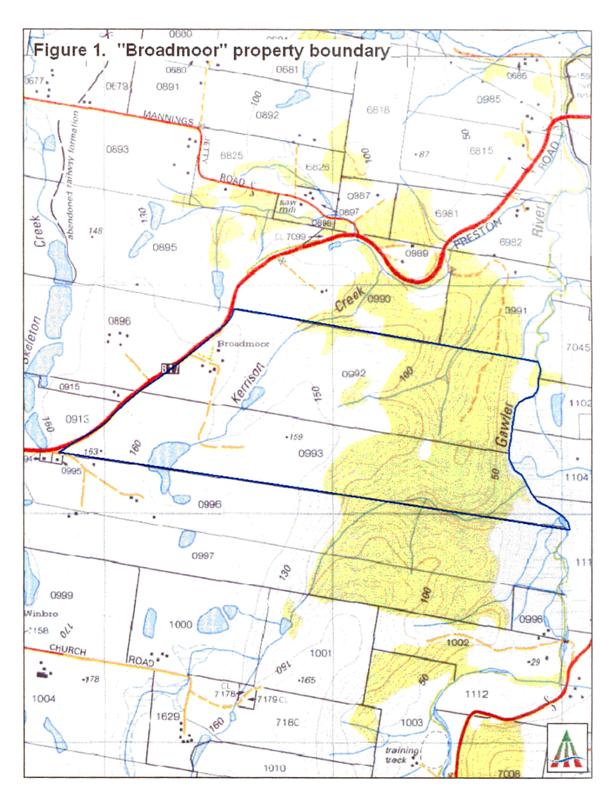
SCHEDULE B
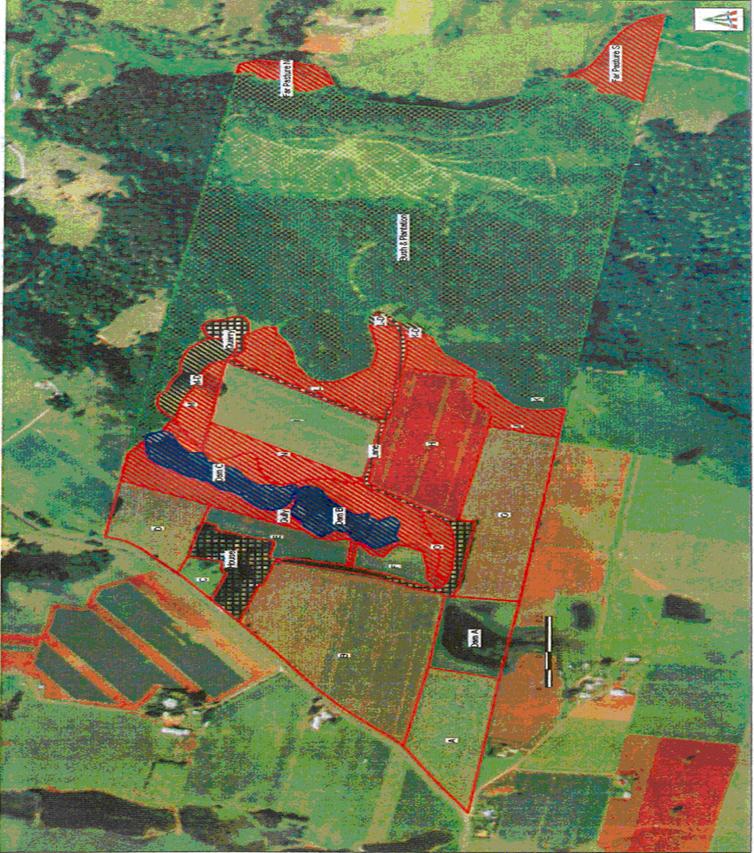
SCHEDULE C
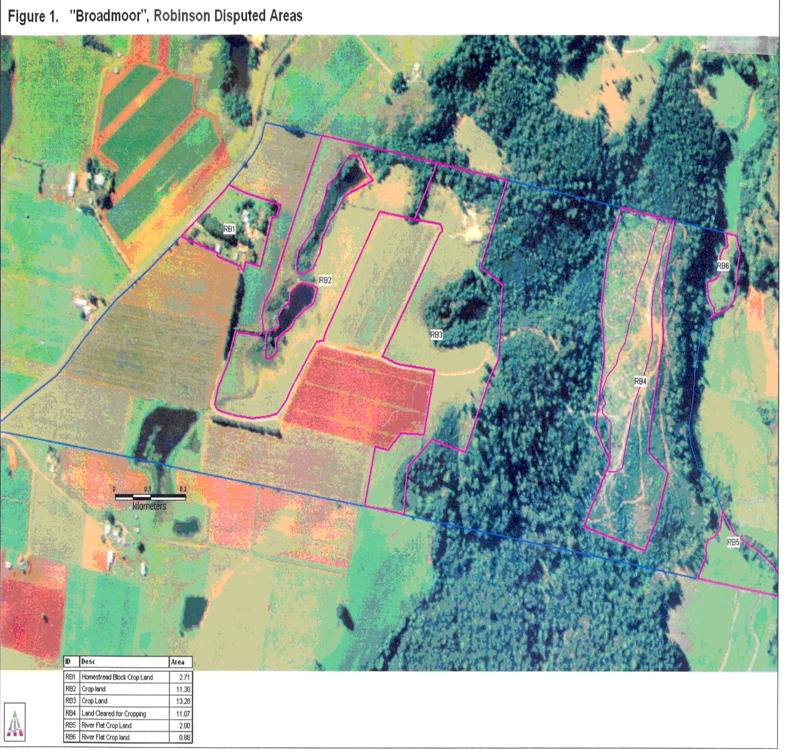
SCHEDULE D
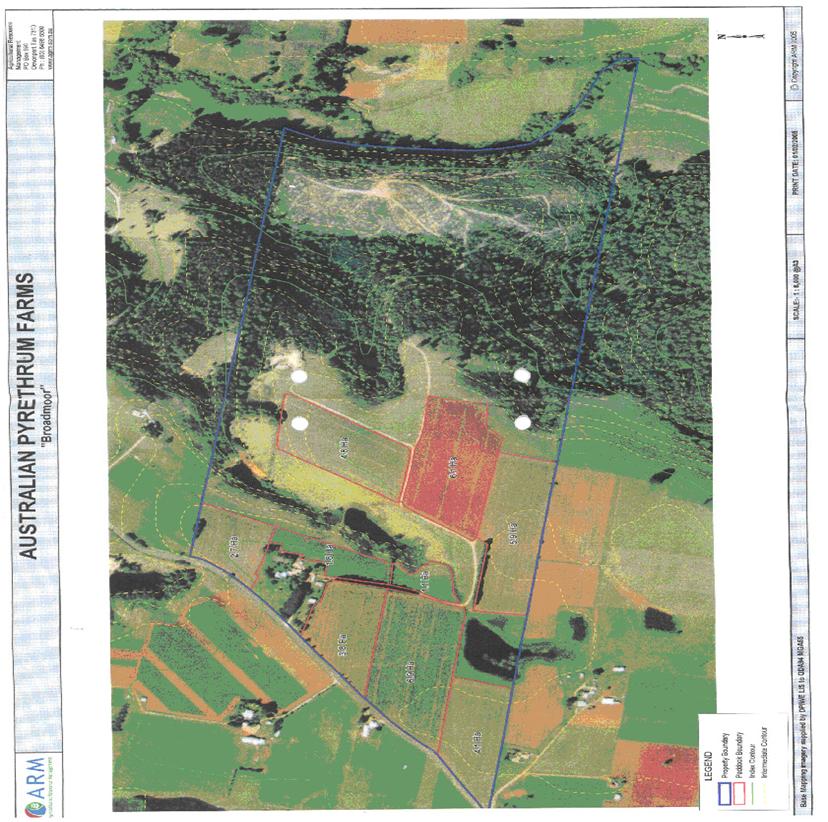
SCHEDULE E
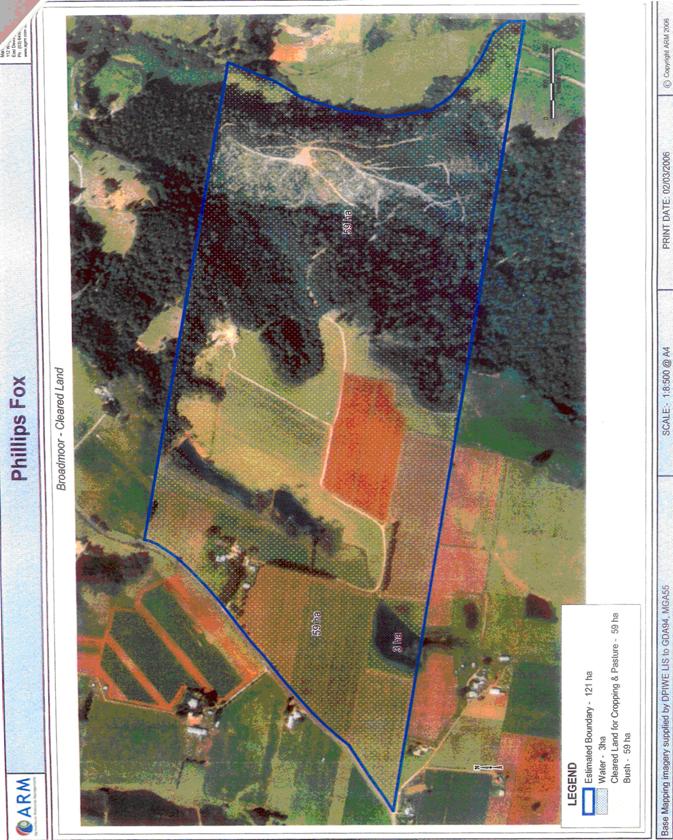
SCHEDULE F