

FEDERAL COURT OF AUSTRALIA
Leighton Contractors Pty Limited (ABN 98 000 893 667) v Page Kirkland Management Pty Limited (ABN 46 097 111 245) [2006] FCA 288
PRACTICE AND PROCEDURE – application for discovery – Order 15A r 6 of the Federal Court Rules– whether there is reasonable cause to believe applicant has or may have right to obtain relief against respondent – whether even after making all reasonable enquiries applicant has insufficient information to decide whether to commence proceeding – whether there is reasonable cause to believe respondent is likely to have documents relating to whether applicant has right to obtain relief.
Federal Court Rules, O 15A r 6
LEIGHTON CONTRACTORS PTY LIMITED (ABN 98 000 893 667) v PAGE KIRKLAND MANAGEMENT PTY LIMITED (ABN 46 097 111 245) & ANOR
NSD1340 OF 2004
EMMETT J
23 MARCH 2006
SYDNEY
|
IN THE FEDERAL COURT OF AUSTRALIA |
|
|
NEW SOUTH WALES DISTRICT REGISTRY |
NSD1340 OF 2004 |
|
BETWEEN: |
LEIGHTON CONTRACTORS PTY LIMITED (ABN 98 000 893 667) APPLICANT
|
|
AND: |
PAGE KIRKLAND MANAGEMENT PTY LIMITED (ABN 46 097 111 245) RESPONDENT
|
|
EMMETT J |
|
|
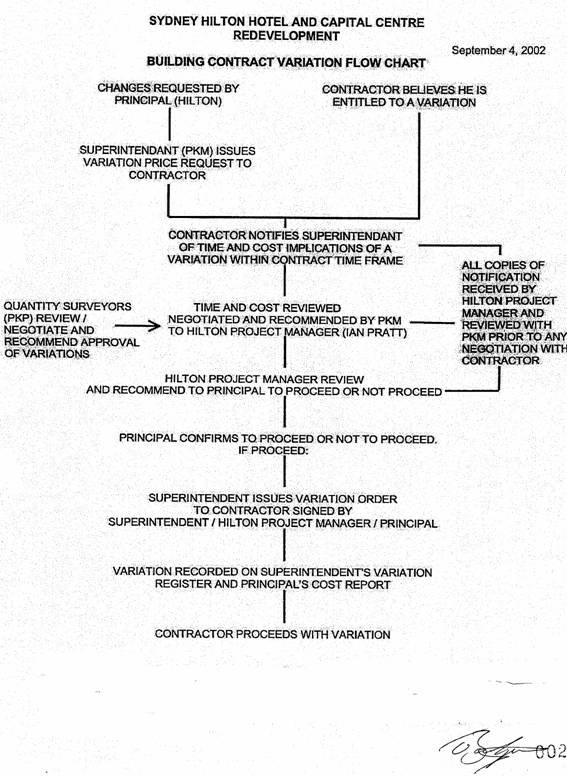
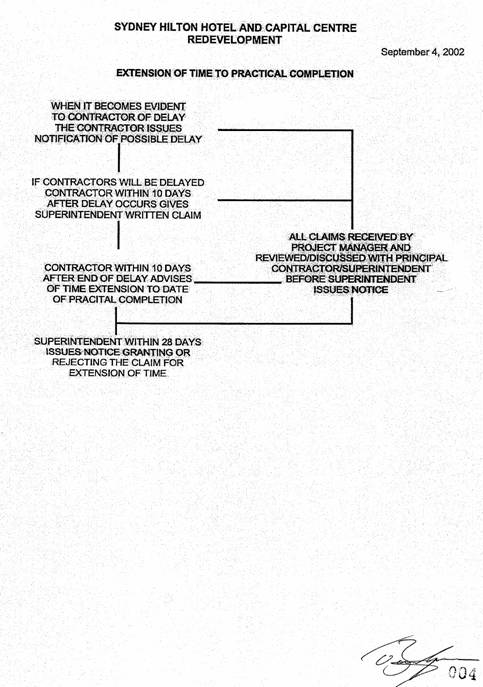
DATE OF ORDER: |
|
|
WHERE MADE: |
SYDNEY |
THE COURT ORDERS THAT:
1. The application be dismissed.
2. The applicant pay the respondent’s costs of the proceeding.
Note: Settlement and entry of orders is dealt with in Order 36 of the Federal Court Rules.
|
IN THE FEDERAL COURT OF AUSTRALIA |
|
|
NEW SOUTH WALES DISTRICT REGISTRY |
NSD1340 OF 2004 |
|
BETWEEN: |
LEIGHTON CONTRACTORS PTY LIMITED (ABN 98 000 893 667) APPLICANT
|
|
AND: |
PAGE KIRKLAND MANAGEMENT PTY LIMITED (ABN 46 097 111 245) RESPONDENT
|
|
JUDGE: |
|
|
DATE: |
|
|
PLACE: |
SYDNEY |
REASONS FOR JUDGMENT
1 This proceeding has had a chequered history, which it is not necessary for me to recount. Originally, there were numerous respondents but the proceeding has been disposed of against all of them but the present respondent, Page Kirkland Management Pty Limited (‘PKM’). The proceeding came before me originally in my capacity as List Judge, following the untimely death of Hill J.
2 The applicant, Leighton Contractors Pty Limited (‘Leighton’), seeks orders for preliminary discovery by PKM, pursuant to Order 15A rule 6 of the Federal Court Rules. Leighton seeks discovery in order to determine whether it has a right to obtain relief in the Court from PKM in connection with a contract made by Leighton on 26 August 2002 concerning the design, construction and completion of work at the Capitol Centre, 255-259 Pitt Street, Sydney, which includes the Sydney Hilton (‘the Contract’). The other parties to the contract were Admiral I Pty Limited, Admiral II Pty Limited and Admiral III Pty Limited (together ‘the Principal’). Under the Contract, Leighton was required to design, construct and complete the Works (as defined) and maintain a certain part of the Works. The Principal was to pay Leighton the Contract Sum (as defined). PKM was involved in the Contract as Superintendent.
ORDER 15A RULE 6
3 Order 15A rule 6 provides as follows:
‘ Where
(a) there is reasonable cause to believe that the applicant has or may have the right to obtain relief in the Court from a person whose description has been ascertained;
(b) after making all reasonable inquiries, the applicant has not sufficient information to enable a decision to be made whether to commence a proceeding in the Court to obtain that relief; and
(c) there is reasonable cause to believe that that person has or is likely to have or has had or is likely to have had possession of any document relating to the question whether the applicant has the right to obtain the relief and that inspection of the document by the applicant would assist in making the decision
the Court may order that that person shall make discovery to the applicant of any document of the kind described in paragraph (c)’
4 Thus, r 6 contemplates three prerequisites. In the present case, they would be as follows:
- there is reasonable cause to believe that Leighton has or may have the right to obtain relief in the Federal Court against PKM;
- after making all reasonable enquiries, Leighton does not possess sufficient information to enable a decision to be made whether to commence a proceeding for that relief;
- there is reasonable cause to believe that PKM is likely to have documents relating to the question whether Leighton has the right to obtain such relief.
5 The first prerequisite requires a consideration of the elements that are necessary to establish the putative causes of action relied upon to support Leighton’s postulated right to obtain relief. That requires the Court to conclude, at least, that there is reasonable cause to believe that each of the elements of the relevant cause of action might be made out. The test for whether there is such reasonable cause for belief is an objective one. It is not necessary to prove that each of the elements exists. The rule contemplates only that there be reasonable cause to believe that Leighton may have a right to obtain relief. On the other hand, mere speculation or suspicion that the relevant elements might exist is not sufficient. There must be some positive basis for the belief.
6 The question of insufficiency that is raised by the second prerequisite has both subjective and objective aspects. Thus, if the evidence establishes that Leighton was able to decide whether to commence a proceeding by, for example, showing that Leighton has already decided to do so, it may be that the second prerequisite would not be satisfied, even though, from an objective point of view, the information available was insufficient for such a decision to be made. On the other hand, the fact that Leighton genuinely feels unable, because of an insufficiency of information, to decide to commence a proceeding, is not sufficient of itself to satisfy the second prerequisite. Leighton must establish, from an objective point of view, that it lacks sufficient information. The question may be formulated as whether it is reasonable for Leighton to make a decision, without having the information that might become available from inspection of the documents in respect of which discovery is sought.
7 Ultimately, the question of whether discovery should be ordered is a matter involving the exercise of judicial discretion. The question raised under Order 15A rule 6 must be answered in the context of the adversarial system of forensic contest that underlies any proceeding in the Federal Court. Thus, ordinarily, PKM would be entitled to withhold its evidence until a claim is formulated against it. While Order 15A is a significant erosion of that principle, the principle must be borne in mind in the exercise of the discretion. Thus, it is relevant to consider the extent of the uncertainty as to the elements of the postulated causes of action. While uncertainty as to only one element of the cause of action might be compatible with the first prerequisite, uncertainty as to a number of the elements may be sufficient to undermine the reasonableness of the cause to believe that there may be a right to belief.
8 Leighton claims that there is cause to believe that it may have the right to obtain damages under s 82 of the Trade Practices Act 1974 (Cth) (‘the Trade Practices Act’) as a consequence of contraventions of s 52 of that Act by PKM, or as a consequence of contraventions by the Principal in which PKM was involved. There are four causes of action on the basis of which Leighton asserts that it may have a right to obtain such relief. Leighton has formulated its putative causes of action in a document filed on 30 January 2006, pursuant to a direction that I gave following oral argument.
9 PKM says that there is no reasonable cause to believe that Leighton has or may have a right to obtain relief as it claims. Further, PKM says that the second prerequisite of r 6 has not been satisfied. However, it has not been suggested by PKM that, if the first two prerequisites of r 6 are satisfied, there is no reasonable cause to believe that PKM has or is likely to have documents relating to the question whether Leighton has the right to obtain the relief postulated.
10 Leighton relied on the affidavit evidence of Mr Peter Thomas Pether, who is a partner of Mallesons Stephen Jacques. Mallesons Stephen Jacques act for Leighton and Mr Pether has been instructed to advise Leighton on whether it has sufficient prospects of success to warrant commencement of a proceeding against PKM. If a proceeding is commenced, he will be required to certify, in relation to any pleading filed on behalf of Leighton, that the factual and legal material available to him at present provides a proper basis for each allegation in the pleadings. He will also be required to ensure that any such pleading states all necessary particulars of any claim pleaded by Leighton.
THE CONTRACT
11 Before addressing Leighton’s putative causes of action, it is necessary to say something about the Contract. The Contract consists of a formal instrument of agreement dated 26 August 2002, which incorporates AS4300-1995 ‘Amended General conditions of contract for design and construct’ (‘the General Conditions’).
12 Clause 23 of the General Conditions relevantly provides as follows:
‘(a) The Principal must ensure that at all times there is a Superintendent and must ensure that the Superintendent:
(i) acts honestly and fairly,
(ii) acts within the time prescribed under the Contract or where no time is prescribed, within a reasonable time, and
(iii) arrives at a reasonable measure or value of work, quantities or time.
…
(e) Notwithstanding any other provision of the Contract:
(i) subject to paragraph (ii) below the Superintendent may represent the Principal in so far as the day to day supervision of design, construction and project management of the Works are concerned… and
(ii) all notices and other documents required to be given by the Principal may… be given by the Superintendent (in place of the Principal).
…’ [Emphasis added]
13 Clause 24 of the General conditions relevantly provides as follows:
‘The Superintendent may from time to time appoint individuals to exercise any functions of the Superintendent under the Contract but not more than one Superintendent’s Representative will be delegated the same function at the same time…
The Superintendent must forthwith notify [Leighton] in writing of:
(a) the appointment and the name of any Superintendent’s Representative and the functions delegated to the Superintendent’s Representative; and
(b) the termination of the appointment of a Superintendent’s Representative.
…’
14 Superintendent is defined as meaning:
‘the person stated in Annexure Part A as the Superintendent or other person from time to time appointed in writing by the Principal to be the Superintendent and notified as such in writing to [Leighton] by the Principal and, so far as concerns the functions exercisable by Superintendent’s Representative, includes the Superintendent’s Representative.’
The term ‘Superintendent’s Representative’ is defined as meaning a person appointed by the Superintendent pursuant to clause 24 of the Contract.
15 Item 7 in Part A of the Annexure to the General Conditions is completed in relation to ‘The Superintendent’ as follows:
‘Mr Randall Haynes,
Page Kirkland Management’
16 Clause 35.5 of the General Conditions relevantly provides as follows:
‘(a) When it becomes evident to the Contractor that anything, including any of the matters specified in clause 35.5(d) and including an act or omission of the Principal, the Superintendent or the Principal’s employees, consultants, other contractors or agents, may delay the work under the Contract, the Contractor must promptly notify the Superintendent in writing with details of the possible delay and the cause.
(b) When it becomes evident to the Principal that anything which the Principal is obliged to do or provide under the Contract may be delayed, the Principal must promptly give notice to the Superintendent who must promptly notify the Contractor in writing of the extent of the likely delay.
(c) If the Contractor is or will be delayed in reaching Practical Completion by a cause described in the next paragraph in circumstances where paragraph (f) applies, the Contractor must:
(i) …give the Superintendent a written claim for an extension of time for Practical Completion setting out the facts on which the claim is based;
(ii) …
(iii) …give a further notice stating a fair and reasonable time by which in the Contractor’s opinion the Date for Practical Completion should be extended.
(d) The causes are:
(i) caused by the negligent act or omission of:
(a) the Principal
(b) an employee, consultant, other contractor or agent of the Principal
(ii) …
(iii) a breach of the Contract by the Principal.
…
(f) If the Contractor has provided all notices in accordance with paragraph (c), the Contractor is delayed by any of the causes referred to in clause 35.5(d) and such cause:
(i) could not be reasonably be avoided or mitigated by the Contractor…
(ii) affects the critical path of the Works to the extent that Practical Completion is or will be delayed; and
(iii) is not caused or contributed to by the Contractor
the Contractor will be entitled to an extension of time for Practical Completion…
(g) If the Contractor is entitled to an extension of time for Practical Completion the Superintendent must… grant a reasonable extension of time…’
17 Clause 40.4 of the General Conditions provides as follows:
‘If the Contractor requests the Superintendent to provide a variation for the convenience of the Contractor, the Superintendent may do so in writing. The approval may be conditional.
Unless the Superintendent otherwise directs in the notice approving the variation, the Contractor will not be entitled to:
(a) an extension of time for Practical Completion; or
(b) extra payment,
in respect of the variation or anything arising out of the variation which would not have arisen had the variation not been approved.
The Superintendent will not be obliged to approve a variation for the convenience of the Contractor.’
18 Clause 47.1 of the General Conditions relevantly provides as follows:
‘If a dispute or difference (hereafter called a “dispute”) between the Contractor and the Principal arises in connection with the Contract or the subject matter thereof, including a dispute concerning:
(a) a direction given by the superintendent, or
(b) a claim:
(i) in tort;
(ii) under statute;
(iii) for restitution on unjust enrichment; or
(iv) for rectification or frustration,
then either party will deliver by hand or send by certified mail to the other party and to the Superintendent a notice of dispute in writing adequately identifying and providing details of the dispute.
…’
19 Clause 47.2(a) provides that, unless otherwise expressly provided in the Contract, it is a condition precedent to the referral of a dispute to litigation that the parties to the dispute first follow and complete the procedures referred to thereafter in clause 47.2. Clause 47.2 then provides a regime whereby a dispute may be submitted to particular officers of each party who must meet and attempt in good faith to resolve the dispute.
SUPERINTENDENT’S DUTY TO ACT HONESTLY AND FAIRLY
20 The position of Superintendent under an arrangement such as is contemplated by the Contract is of great importance. A contractor such as Leighton is entitled to rely on the Superintendent as bringing an independent and impartial mind to bear on determinations that affect contractual rights and obligations under the Contract. To deprive Leighton of that impartiality would constitute a substantial and serious breach of the Contract. The first three causes of action arise out of the same facts and circumstances. They relate to the express term of the Contract that the Superintendent is to act honestly and fairly, and an alleged implied term that the Superintendent would act independently in exercising, assessing, certifying or determining functions under the Contract.
21 In connection with the first three causes of action, Leighton seeks discovery of documents relating to the following questions:
‘(1) who (if anybody) was appointed from time to time to exercise the functions of Superintendent or Superintendent’s Representative under the Contract.
(2) whether the person exercising the functions of Superintendent or Superintendent’s Representative under the Contract has been doing so in accordance with the wishes, advice or instructions of [the Principal or other companies described as ‘the Hilton Entities’, being the companies and individuals associated with the Principal]
being documents recording or constituting:
(a) the appointment, retainer or engagement of [PKM] or any of its employees or officers;
(b) any advice or instructions… given to [PKM] or any of its employees or officers as to how they should exercise any of the functions of Superintendent or Superintendent’s Representative under the Contract…;
(c) any request made by [PKM] or any of its employees or officers as to how they should exercise any of the functions of Superintendent or Superintendent’s Representative under the Contract…;
(d) correspondence between [PKM], or any of its employees or officers, and the Principal…, as to how they should exercise any of the functions of Superintendent or Superintendent’s Representative under the Contract.’
THE FIRST THREE CAUSES OF ACTION
22 I shall summarise each of the three causes of action that are based on the conduct of PKM in the administration of the Contract.
PKM Represented That the Superintendent Would Act Honestly And Fairly
23 The elements of the first cause of action postulated by Leighton appear to be as follows:
(1) PKM was the Principal’s Representative in issuing tender documents and in precontract dealings with Leighton.
(2) The form of contract issued to Leighton required that the Superintendent would act honestly and fairly and would act independently in exercising, assessing, certifying or determining functions.
(3) The Superintendent during the precontract negotiations with Leighton was intended by the Principal and PKM to be either PKM or Mr Randall Haynes.
(4) By virtue of its involvement in the precontract negotiations, PKM knew or ought to have known that Leighton would, unless told otherwise, assume and believe that the person identified in the Contract as the Superintendent was the Superintendent and that that person would act honestly and fairly and would act independently in exercising, assessing, certifying or determining functions.
(5) In those circumstances, in order to avoid the likelihood of Leighton being misled, it was necessary for PKM, and the Principal, to disclose any arrangement between them that would or might have the effect that the Superintendent would not act honestly and fairly and would not act independently in exercising, assessing, certifying or determining functions.
(6) By proffering, and dealing with Leighton on the basis of, the form of contract which they did, and by failing to disclose any contrary arrangement, PKM impliedly represented that the Superintendent identified in the Contract would act honestly and fairly and would act independently in exercising, assessing, certifying or determining functions.
(7) At the time of the precontract negotiations with Leighton and at the time of entry into the Contract, PKM and the Principal intended or contemplated that the Superintendent identified in the Contract would not act honestly and fairly and would not act independently in exercising, assessing, certifying or determining functions, but rather, at least in determining whether to grant claims for variations and extensions of time by Leighton as the Contractor under the Contract, would act as discussed and decided with the Principal without the knowledge or participation of Leighton.
(8) PKM did not disclose to Leighton that the Superintendent named in the Contract would not act honestly and fairly and would not act independently in exercising, assessing, certifying or determining functions and did not disclose the private arrangements between it and the Principal relating to the manner in which the Superintendent would determine claims for variations and extensions of time under the Contract.
(9) By reason of those matters, PKM engaged in conduct that contravened s 52 of the Trade Practices Act.
(10) In the alternative, by reason of those matters, the Principal engaged in conduct that was in contravention of s 52 of the Trade Practices Act and PKM was a person involved in that contravention.
(11) Leighton suffered loss or damage by the contravening conduct.
Failure To Disclose Private Arrangements
24 The second cause of action postulated by Leighton may be summarised as follows:
(1) There were terms of the Contract that the Superintendent would act honestly and fairly and would act independently in exercising, assessing, certifying or determining functions and that the Principal would not interfere with the Superintendent so acting.
(2) In the course of administering the Contract, PKM purportedly acting as Superintendent, acted in accordance with private arrangements and discussions with, and decisions of, the Principal, including in determining Leighton’s variation and extension of time claims, and thereby failed to act honestly and fairly, failed to act independently, and failed to act in accordance with the Contract.
(3) The Principal thereby breached the terms of the Contract.
(4) The Principal’s said breaches were repudiatry breaches which, if the material facts were fully known to Leighton, would have entitled it to terminate the contract.
(5) PKM owed to Leighton, as Contractor, duties of honesty and fairness in relation to its administration of the Contract.
(6) PKM knew or ought to have known that Leighton would, unless otherwise told, assume and believe that the Superintendent was acting and would act honestly and fairly, was acting and would act independently in the exercise of assessing, certifying or determining functions and was acting and would act in accordance with the Contract and knew or ought to have known that that was a significant matter to Leighton.
(7) In those circumstances, in order to avoid the likelihood of Leighton being misled, it was necessary for PKM to disclose any private arrangement between it and the Principal which would or might have the effect that the Superintendent would not act honestly and fairly, would not act independently in exercising, assessing, certifying or determining functions or would not act in accordance with the provisions of the Contract.
(8) PKM and the Principal failed to disclose to Leighton the private arrangements, discussions and decisions referred to above.
(9) In answer to direct requests on behalf of Leighton, PKM and the Principal refused to disclose the manner in which PKM was administering Leighton’s claims and, in particular, failed to disclose that it was doing so in accordance with the private arrangements set out in the letters of 5 September 2002 and 22 October 2002.
(10) In the circumstances, PKM’s conduct contravened s 52 of the Trade Practices Act.
(11) In the alternative, the Principal engaged in conduct that contravened s 52 of the Trade Practices Act and PKM was involved in that contravention.
PKM Induced Breaches Of Contract By The Principal
25 The third cause of action postulated by Leighton can be summarised as follows:
(1) By acting in accordance with private arrangements and discussions with, and the decisions of, the Principal, instead of in accordance with the Contract, PKM caused breaches of the Contract by the Principal, as alleged above.
(2) PKM knew that acting in accordance with its private arrangements and discussions with, and decisions of, the Principal would result in breach by the Principal of the Contract and it thereby directly and intentionally caused the Principal’s breach of the Contract.
WHETHER REASONABLE CAUSE
26 I have emphasised the critical elements in the three causes of action, namely, that PKM and the Principal intended that PKM, in exercising functions as Superintendent under the Contract, would not act honestly and fairly and would not act independently and that PKM did not in fact act honestly and fairly and did not act independently. Leighton’s contention that there is reasonable cause to believe that such elements may exist is based on communications of 5 September 2002 and 22 October 2002 from officers of the Principal to officers of PKM.
27 The communication of 5 September 2005 is an email enclosing flow charts for:
- building contract variations;
- provisional sums; and
· extensions of time.
The email says that ‘[it] is imperative – for…financial control that steps of the flow chart are rigidly adhered to’. The two relevant flow charts are those relating to Building Contract Variation and Extension of Time, which are set out in the Schedule to these reasons.
28 Leighton points to the requirement in the Building Contract Variation flow chart as follows:
‘All copies of notification received by Hilton Project Manager and reviewed with PKM prior to any negotiation with Contractor.’
In relation to the Extension of Time flow chart, Leighton points to the following element:
‘All claims received by Project Manager and reviewed/discussed with Principal Contractor/Superintendent before Superintendent issues notice.’
29 The communication of 22 October 2002 was from Messrs Lifschitz and Clough of the Principal and was addressed to Mr Green of PKM. It referred to the email of 5 September 2002 and said, in effect, that the Principal had ‘implemented procedures and authority levels to ensure control of items that may have a financial impact on the Design and Construct Contract’. The communication said that the procedures were described in the attached flow charts and said:
‘It is imperative that as Superintendent to the Contract your Company Representatives strictly adheres to the procedures and the nominated financial authority level described in these flow charts.’
30 Leighton contends that the communications of 5 September 2002 and 22 October 2002 give reasonable cause to believe that there may have been an improper arrangement between PKM and the Principal. Leighton says that the requirement in those communications is entirely inconsistent with the regime under the Contract, which does not envisage the Superintendent conferring with one party in the absence of the other prior to making its decision. Leighton contends that the Contract should be treated as an exhaustive statement of the mechanism by which the Superintendent was to exercise its or his specific functions. Leighton says that the flow charts establish that the Principal was instructing the Superintendent to exercise its or his functions in a specific way.
31 Leighton also asserts that there is reasonable cause to believe that, having regard to the flow charts, there was an arrangement between PKM and the Principal that before PKM, as Superintendent, approved any building contract variation or extension of time, it would consult with the Principal before entering into negotiations with Leighton, as Contractor. Leighton says that such an arrangement is indicative of an intention that the Superintendent:
- would not act honestly and fairly;
- would not act independently when exercising, assessing, certifying or determining functions, and
- would not act in accordance with the provisions of the Contract set out above.
32 Leighton asserts that the flow charts are a specific direction from the Principal to the Superintendent as to the way in which the Principal asserts that the Superintendent should exercise some of its or his functions. It says that a formal direction in terms of the two communications from the Principal to PKM, as the Superintendent, is, at least in part, inconsistent with the contractual regime and neither the Principal nor PKM provided Leighton with a copy of the flow charts before the Contract was entered into. If Leighton, as the other party to the Contract, was not advised of the direction, there is reasonable cause to believe that there may have been an improper arrangement between PKM and the Principal.
33 PKM, on the other hand, says that the arrangements evidenced by the two communications and the flow charts do not contain the slightest suggestion that either PKM or the Principal intended that the Principal act in breach of its obligations under the Contract in connection with the performance of functions by PKM as the Superintendent. The flow charts simply contemplate a procedure that ensures that all parties are aware of the existence and the time and cost implications of building contract variation claims and extension of time claims and the efficient consideration and communications in connection with such claims.
34 I do not consider that there is reasonable cause to believe, in consequence of the communications and the flow charts, that there was an intention that PKM was not to act honestly and fairly, was not to act independently and was not to act in accordance with the Contract. The documents relied upon do not suggest any impropriety of the kind alleged. Mere suspicion of such a serious matter is not sufficient. Any suggestion along the lines asserted by Leighton is, in my view, no more than speculation. Compliance with the flow charts is quite consistent with absence of any improper intention on the part of PKM as to the manner in which it might exercise functions as Superintendent under the Contract.
35 There are other elements of the first postulated cause of action that are challenged by PKM. It is unnecessary to deal with those elements in the light of the conclusion that I have reached concerning the pivotal basis for alleging an arrangement of understanding that PKM and the Principal intended or contemplated that the Superintendent, whether it was PKM or an employee of PKM, would not act honestly and fairly and would not act independently in exercising independent functions under the Contract or would not act in accordance with the Contract.
36 The second cause of action involves the assertion that, in the course of administering the Contract, PKM, as Superintendent, acted in accordance with private arrangements and discussions with, and decisions of, the Principal and, thereby, failed to act honestly and fairly, failed to act independently in exercising functions under the Contract and failed to act in accordance with the Contract. Leighton relies on the communications of 5 September 2002 and 22 October 2002 and on conduct on the part of the Superintendent.
37 Leighton says that there is reason to believe that PKM, or whoever was exercising the functions of the Superintendent, did not exercise those functions honestly and fairly and did not act independently but rather in accordance with the wishes, instructions or advice of the Principal, on the basis of the following:
(1) PKM’s unreasonable refusal to give a requested direction.
(2) PKM’s purported inability to issue a variation order until the Principal’s project director had concluded certain discussions.
(3) PKM’s belated and wrongful rejection of a claim by Leighton.
(4) PKM’s delay and course of conduct in dealing with particular variation claims by Leighton.
38 However, while, if those assertions are justified, there may have been a breach of the Contract by the Principal, I do not consider that those circumstances give rise to any inference or a reasonable cause to believe that any such breach was pursuant to an arrangement such as is postulated by Leighton.
39 The third postulated cause of action alleges that PKM caused a breach of the Contract on the part of the Principal. The basis for that is the assertion that, in the course of administering the Contract, PKM acted in accordance with private arrangements and discussions with, and decisions of, the Principal and thereby failed to act honestly and fairly, failed to act independently and failed to act in accordance with the Contract. Those assertions have already been dealt with. As I have said, I do not consider there is reasonable cause to believe that there was such an arrangement as is postulated on behalf of Leighton.
40 It follows that Leighton is not entitled to discovery of the documents sought in relation to any of the first three causes of action. I am not persuaded that there is reasonable cause to believe that Leighton has or may have the right to obtain relief in the Court on the basis of any of those causes of action.
SUFFICIENT INFORMATION AFTER REASONABLE ENQUIRY
41 Part of the second prerequisite is that the applicant must have made all reasonable enquiries for information necessary to enable a decision to be made whether to commence a proceeding. Mr Pether says that in order to advise Leighton, give the necessary certificate and provide necessary particulars, he should have available to him at least the following information in relation to the first three causes of action:
(a) any arrangement between the Principal and PKM as to the manner in which PKM should exercise its certifying, assessing and determining functions;
(b) whether PKM in fact exercised those functions in accordance with requests for directions of, or private discussions with, the Principal.
42 Leighton relies on correspondence with PKM’s solicitors in order to satisfy the second requirement. On 9 February 2005, Henry Davis York, PKM’s solicitors, wrote to Mallesons Stephen Jaques. The letter asserted that Leighton’s application did not set out the reasonable enquiries Leighton had made prior to seeking preliminary discovery pursuant to Order 15A. The letter also enclosed a number of documents, including the communication of 22 October 2002.
43 On 17 February 2005, Mallesons Stephen Jaques responded to Henry Davis York. After referring to the documents dated 5 September 2002 and 22 October 2002 and the flow charts, Mallesons Stephen Jaques requested answers to the following questions:
‘(a) To what extent were the procedures set out in the [communication] dated 5 September 2002 relating to the determination of extensions of time and variations implemented for the project?
(b) To what extent would the procedures set out in the [communication] dated 22 October 2002 relevant to the determination of extensions of time and variations implemented for the project?
(c) Were the procedures as implemented inconsistent with those set out in the… Contract… and if so, in what precise respects?
(d) As to the procedures implemented:
(i) Were determinations as to whether or not a variation claimed by [Leighton] was a Variation made by the Principal or on its advice or recommendation? To the extent that the Superintendent made the determinations, was the Principal’s consent first sought?
(ii) Were [Leighton’s] entitlements to extensions of time determined by the Principal? To the extent the Superintendent made the determinations, was the Principal’s consent first sought.
(e) Is there, or has there been, a process implemented for the Project whereby a Hilton person must first approve the Superintendent’s proposed determinations on matters of valuation, variations, extensions of time and the like?’
The letter also said as follows:
‘The position maintained by [the Principal and PKM] to date has been that the Superintendent and the Superintendent’s Representatives under the Contract discharged their responsibilities in accordance with the Contract. If that is not the case, we require you to make full disclosure of the true position.’
44 Henry Davis York responded to Mallesons Stephen Jaques on 28 February 2005, saying:
‘We do not consider that adherence to the procedures contemplated by the flowcharts to which you refer required any departure from the procedures specified in the [Contract] or otherwise prevented our client from properly discharging its duties as Superintendent. We are instructed that our client, similarly, does not understand the flowcharts to describe a process that is inconsistent with the procedures contemplated under the contract and does not believe that the flow charts have in any way impeded the performance of its duties as Superintendent during the course of its administration of the Contract.
We do not propose to respond in any greater detail to the requests set out in your letter.’
45 If I were persuaded that there is a reasonable cause to believe that Leighton has or may have a right to claim damages on the basis of any of the first three causes of action, it would be appropriate to order discover of documents relating to the two matters referred to by Mr Pether. However, I do not consider that the evidence establishes that there is insufficient information in relation to the other elements of the causes of action to enable a decision to be made whether to commence a proceeding on the basis of those causes of action.
46 In particular, I do not consider that documents relating to the appointment, retainer or engagement of PKM, or any of its employees or officers, is material that is needed to enable a decision to be made as to whether to commence a proceeding based on the first three causes of action. One element of Leighton’s first cause of action is the assertion that the Superintendent was intended to be either PKM or Mr Randall Haynes. Leighton says that it is not practicable for Leighton to obtain information as to that matter otherwise than from PKM or the Principal.
47 Leighton accepts that PKM provided documents that suggest that PKM was appointed as the Superintendent. Leighton says, however, that there are other documents created by, or on behalf of, PKM and the Principal that suggest that individuals, including Mr Haynes, were appointed as a Superintendent.
48 Leighton has drawn attention to correspondence from PKM signed by Mr Haynes as ‘Superintendent’. However, by letter dated 6 August 2003, PKM informed Leighton that, pursuant to clause 24 of the General Conditions, from 6 August 2003 the Superintendent’s Representative would be Richard Wilkinson. The letter of 6 August 2003 was signed by ‘Peter Morgan Superintendent’. Mr Pether says in an affidavit that Leighton had not been notified that the Superintendent was Mr Peter Morgan or anybody other than Mr Randall Haynes of PKM. Mr Pether ends by saying that Leighton has no means of knowing who, if anybody, was in truth appointed from time to time to act as Superintendent or as Superintendent’s Representative.
49 After 6 August 2003, Leighton received correspondence from PKM signed by Mr Wilkinson, sometimes as ‘Superintendent’s Representative’ and sometimes as ‘Superintendent’. From 4 May 2004, Leighton and PKM engaged in correspondence in which Leighton sought clarification of the proper appointment of the Superintendent and the delegation of functions to a Superintendent’s Representative and sought a copy of any instrument of appointment. PKM and Mr Pratt, apparently on behalf of the Principal, asserted that the Superintendent named in the Contract was not Mr Haynes, but was PKM, that the Superintendent had remained PKM throughout, that Mr Wilkinson had been the Superintendent’s Representative for all purposes since 6 August 2003 and that Leighton had no entitlement to see any instrument of appointment and none would be provided to it.
50 Whether PKM or Mr Haynes was appointed as Superintendent involves a question of the proper construction of the General Conditions. Any dispute as to who was Superintendent appears to relate to the identity of the original Superintendent. An instrument appointing the Superintendent would shed no light onto the proper meaning of the General Conditions. I do not consider that Leighton has established that it does not have sufficient information concerning the identity of the Superintendent to enable it to make a decision as to whether or not to commence a proceeding based on the first three causes of action.
MISLEADING CONDUCT IN RELATION TO DESIGN RISK
51 The fourth putative cause of action is formulated by reference to a notice of dispute served on the Principal by Leighton pursuant to clause 47.1 of the General Conditions (‘the Notice of Dispute’). That cause of action might be summarised as follows:
(1) The Principal and PKM engaged in the conduct set out in paragraphs 3.3.5 to 3.3.40 of the Notice of Dispute, the effect of which was to convey to Leighton the impression that the design risk being assumed by a successful tenderer was minimal.
(2) The Principal and PKM were aware of a number of matters that were inconsistent with the information provided by them to Leighton, namely, the information referred to in paragraphs 3.3.5 to 3.3.40 of the Notice of Dispute.
(3) Those matters would have conveyed a very different impression of the design risk and were obviously highly material to Leighton’s tender, including the matters referred to in paragraphs 3.3.42 to 3.3.57 of the Notice of Dispute.
(4) Neither the Principal nor PKM disclosed those matters to Leighton.
(5) By reason of the foregoing, PKM engaged in conduct that contravened s 52 of the Trade Practices Act.
(6) In the alternative, the Principal engaged in conduct that contravened s 52 of the Trade Practices Act and PKM was involved in that contravention.
52 The Notice of Dispute was dated 11 June 2004 and consisted of some 62 pages, together with a further 38 pages of schedules. Section 1 of the Notice of Dispute consisted of an executive summary, which contained the following ‘Overview’:
‘1.1.1 Leighton’s entry into the Contract was induced by misleading and deceptive conduct by [the Principal] and by [the Principal’s] agents [PKM]… As a result, Leighton will be entitled to recover all of its losses on the Project from those responsible for [the Principal’s] misleading and deceptive conduct pursuant to… [the Trade Practices Act].
1.1.2 Those liable to Leighton for misleading and deceptive conduct and/or aiding, abetting, counselling or procuring misleading and deceptive conduct include [the Principal], PKM…
1.1.3 Leighton would be entitled to recover its anticipated losses of $71,706,278 plus interest pursuant to [the Trade Practices Act].
…’
53 The executive summary in the Notice of Dispute then summarise the alleged misleading conduct as follows:
(1) Leighton’s interest in the Contract was drawn by an assurance as to how far advanced the design work was. In the short tender period, Leighton was selectively provided with only information that conveyed the impression that the design documentation was all but complete, fully coordinated and properly validated against the existing building, with very little design work remaining to be done. The impression was conveyed that the state of the existing building, including the condition, locations and dimensions of services and structure, had been taken into account and difficulties resolved. The project was sold as one that involved minimal design risk.
(2) that was false. Leighton was passed a design risk that was vastly different from that represented. The design documentation did not take proper account of the state of the existing building, was not coordinated and its shortcomings have been progressively revealed during demolition and construction.
(3) It will take a Court no time to conclude that the Principal’s conduct in providing and withholding was materially misleading. There are many instances where it will be a difficult for a court to escape the conclusion that the Principal must have known that the true state of affairs differed from what it represented.
(4) The true design position, concealed by the Principal, has led to very substantial delay and disruption to Leighton’s work. The problems on site, which were unforeseen by Leighton, have required a massive increase in design resources to design around problems, fix the Contract design documents and continue to move the project forward. Architectural resources required have more than doubled that which was planned and structural engineers resources have been required to be increased more than seven-fold. That is a measure of the misrepresentation of how advanced the design was.’
54 Paragraphs 3.3.5 to 3.3.40 of the Notice of Dispute may be summarised as follows:
3.3.5 The Principal issue the request for tender to Leighton on 7 May 2002;
3.3.6 On 9 May 2002, the Principal gave a tender briefing to Leighton and confirmed to Leighton that the project was at an advanced state of design, with only minor detailing to be done. Each of the Principal’s principal consultants was presented, who demonstrated by extensive reference to the design documentation that they had carried out a very significant amount of design, development and detailing.
3.3.7 Leighton was informed that there had been detailed consideration of various complex matters and generally that the design process of all consultants, as coordinated by the architect, was so far advanced that it was practically complete, and essentially capable of implementation, with only the remaining detailing outstanding which one would ordinarily expect in the course of construction, including the preparation of shop drawings.
3.3.14 Given that the Project involved extensive remodelling and refurbishing of an existing building, with considerable structural complexity, it was of obvious importance to Leighton that the services and structural consultants had, in preparing their designs, first taken proper steps to ascertain the state of the existing building. If this were not the case, one might anticipate numerous design issues arising during construction, with potential for significant delay, disruption and extra cost.
3.3.17 The architect’s schedule required it to coordinate and integrate all design work of the other consultants into the architectural documentation.
3.3.18 That was a normal and expected role for the base building architect on such a project, and it was of importance to Leighton that the architect’s scope included such a role. It was important that all services, structural details and architectural elements, both new and existing, had been coordinated so that clashes had been identified and eliminated and such matters as layouts, set downs, ceiling heights etc were checked to ensure that they would work.
3.3.19 The architects scope contained no material exclusion of services, other than the tenancy fitout.
3.3.20 Accordingly, it was reasonable to conclude in the absence of contrary advice that the architect’s services extended to the design, including coordination, of the entire building except those interiors where the services extended to coordination only.
3.3.21 Part of the background information provided with the request for tender was a summary outline of scope of services for tender allowance, which scheduled the novated consultants and their services for both the base building and the ‘Living Well’ tenancy. The architect’s services were stated to cover the construction documentation for the base building, and the structural engineers services were stated to cover the construction documentation for both the base building and the Living Well tenancy. That confirmed that the design services for the building were comprehensive save as expressly identified.
3.3.22 By a spreadsheet provided to Leighton on 3 June 2002, the Principal conveyed the information that, as at 31 May 2002, the architect had been paid about 80 per cent of its fees for all work up to and including design and documentation, the structural engineer about 82 per cent and all consultants on average about 84 per cent. As design work was continuing during the tender period, that reinforced the impression that had been conveyed that design and documentation would be all but completed by the time of commencement of the Contract.
3.3.26 Leighton expressed to the Principal its concern to ensure that the amounts said to be outstanding to the consultants were adequate to cover any design and documentation that remained to be done.
3.3.27 At this time, Leighton was told that the design and documentation was virtually complete, with only a small amount of work remaining to be carried out.
3.3.31 Leighton’s tender letter of 21 June 2002 contained the assumption that the Principal has received completed Consultancy Agreement Schedule 12 Certificates from all consultants for all work up to the Construction Attendance Stage and that the Principal’s silence implicitly affirmed that assumption.
3.3.37 In the light of all the information provided, it was reasonable to conclude that, by the time of the Contract, the design documentation of all consultants was virtually complete in accordance with their retainers, including all that was necessary to verify the state of the existing building, and including coordination and integration of all designs by the architect.
3.3.40 Leighton was required, in the short tender period allowed, to determine the level of design risk and what contingency or qualifications to allow for it in its tender. The Principal had gone out of its way to provide only information to Leighton that conveyed the overwhelming impression that the design and documentation would, by contract date, be all but complete, fully coordinated and properly validated against the existing structure and services, so that very little design work would be required after Contract other than normal detailing during construction.
3.3.41 It now appears that the Principal, in particular identified officers of the Principal, were aware of a large number of matters, which were inconsistent with the information referred to above, which would have conveyed a starkly contrasting impression of the design risks, which were obviously highly material to Leighton’s tender, and which the Principal did not disclose.
3.3.42 The Consultants had not carried out the requisite review of available existing building documentation and building services documentation. Nor had they carried out the surveys to document the existing structure and services. Nor had they prepared the reports on the extent and accuracy of the available existing building documentation and building services documentation.
3.3.43 The structural engineers have not carried out verification of the existing building as required.
3.3.44 Such survey of the existing building as had been carried out was clearly no substitute for the survey and verification work that was provided for in the consultancy deeds.
3.3.45 The scope of services negotiated by the Principal with the architect was in fact far less comprehensive than the scope indicated in the material provided to Leighton.
3.3.48 The fact that the architect’s scope excluded the hotel rooms and was very limited in other design areas resulted in an absence of coordination in these areas.
3.3.49 There had also been extensive negotiations between the Principal and the structural engineer bearing on scope of services, survey and coordination, which were not disclosed to Leighton.
3.3.50 Given that Leighton was being asked to assume design risk, a course of correspondence detailed in paragraph 3.3.49 ought to have been fully disclosed to Leighton. The Principal should have disclosed to Leighton certain identified matter.
3.3.51 It is difficult to understand how the Principal, acting in good faith, could have chosen not to disclose the structural engineer’s correspondence, or the substance thereof, to Leighton.
3.3.52 The combined effect of incomplete scopes of services for the consultants, and inaccurate and incomplete survey information, exacerbated by late design changes and given the extremely tight constraints of an existing structure, was that the coordination of the design documentation of the various design consultants was of utmost importance but was not adequately provided for.
3.3.53 The survey and coordination services called up by the consultancy deeds would have substantially eliminated the risk of the very problems that have occurred.
3.3.54 As a result of the limited scopes of services for the architect and the structural engineer, and the consequential lack of appropriate survey information and proper coordination, the design was in fact not nearly as advanced or reliable as represented by the Principal.
3.3.55 The Principal also failed to disclose a number of matters concerning the apparent requirements and conditions of authorities, which were highly material to the risk that Leighton was being asked to assume, including the following:
(a) Sydney Water’s requirements;
(b) Sydney City Council’s requirements;
(c) the fact that the RIC had not yet been properly consulted.
3.3.56 An illustration of the consultant’s failure to investigate the existing buildings and the Principal’s failure to disclose what is found with the fire detection and EWIS systems. As detailed in Schedule 3 of the Notice of Dispute, a large number of existing fire detection and EWIS systems and equipment were depicted in the tender drawings as to be reused. On post-contract investigation, many of these systems were found to be grossly non-compliant, non-functioning or non-existent. Yet the Principal had provided information to authorities, in the form of annual compliance certificates, that the services were compliant with BCA and NSW Fire Brigade requirements.
3.3.57 The presence of asbestos provides another illustration of the state of the existing building, which was not properly examined by consultants and not disclosed by the Principal. This is detailed in Schedule 2 of the Notice of Dispute.
55 Leighton seeks discovery of the following in relation to the fourth cause of action:
‘…any document recording, constituting or identifying the knowledge or information held by [PKM] in the period 1 April 2002 to 31 August 2002 concerning:
(a) the extent to which the consultants had at that time completed their respective design work for the Works.
(b) the extent to which the Consultants [as identified in paragraph 12(b) of the affidavit of Pether sworn 12 January 2005] had at that time carried out the services referred to in Schedule 5 to their respective consultancy deeds [‘the Services’].
(c) the extent to which the design work of each of the Consultants had at that time been verified against documentation of the existing building and building services, or by survey of the existing building and building services.
(d) the extent of any survey carried out at that time, and the need for any further survey to be carried out, in order to verify the design requirement for the Works.
(e) the extent to which the design work of each of the Consultants had at that time been coordinated with the others.
(f) the scope of the services which each of the Consultants had agreed to perform.
(g) the existence, location and condition of the fire detection and warning systems in the Hilton Hotel at that time.
(h) the existence, location and condition of asbestos in the Hilton Hotel at that time.
(i) the information which had been provided by [PKM] to Sydney Water for the purpose of its determination of its requirements with respect to the works.
(j) the information which had been provided by [PKM] to Sydney City Council for the purpose of its determination of its requirements with respect to the works.
(k) the likely or possible requirements of the Rail Infrastructure Corporation, State Rail Authority or other railway authority with respect to the Works.’
WHETHER REASONABLE CAUSE
56 The basis of the fourth cause of action is not entirely clear. The assertion is that the Principal and PKM engaged in conduct that had the effect of conveying to Leighton the impression that the design risk being assumed by the successful tender was minimal. Whether or not that conduct reasonably conveyed such an impression and whether Leighton gained that impression are matters entirely within the knowledge of Leighton. Despite the assertion in paragraph 3.3.41 of the Notice of Dispute, which is highlighted in the summary above, the state of mind or state of knowledge of the Principal and PKM does not appear to be an element of the cause of action.
57 It is difficult to see why the fact that the Principal was aware of a large number of matters, which were inconsistent with the information provided to Leighton, is relevant to a cause of action based on contravention of s 52 of the Trade Practices Act. Either the conduct alleged was misleading or deceptive or it was not. There is no element in the putative cause of action, for example, that the Principal represented that it had made full disclosure to Leighton of matters known to the Principal. Nevertheless, subject to that comment, the detailed material contained in the Notice of Dispute may well support a conclusion that there is reasonable cause to believe that Leighton has or may have a right to obtain relief against PKM on the basis of contravention of s 52 of the Trade Practices Act.
SUFFICIENT INFORMATION AFTER REASONABLE ENQUIRY
58 Mr Pether says that he has been informed by Mr Greg Hall, who, in his capacity as Leighton’s project manager, was responsible for the Notice of Dispute, has made searches and enquiries of Leighton’s officers, employees and documents and believes, to the best of his information and knowledge, that the statements of fact made in the Notice of Dispute are true. However, Mr Pether also says that, in relation to the fourth cause of action, he will need to know what information on the scope and state of completion of the design consultants’ respective briefs was in the possession of PKM, as distinct from the Principal, at the time the Contract was entered into.
59 Leighton contends that PKM was aware of a number of matters that were inconsistent with the representations said to have been made by PKM to Leighton. Leighton says that, while it had sufficient information to be able to trigger the dispute provision of the Contract, the information required to trigger such a dispute is far less than the information required to determine whether or not a right to relief exists that can be the subject of a properly pleaded claim in the Court. Leighton says that the material in respect of which discovery is sought would enable Leighton to determine the extent of PKM’s knowledge at the time the alleged representations were made. Leighton says that that information is required in order for Leighton to determine whether or not there is reasonable cause to believe that PKM did in fact engage in conduct that was misleading and deceptive.
60 However, that contention appears to involve a misapprehension. The extent of PKM’s knowledge is irrelevant to the question of any representation that it made was misleading or deceptive, except to the extent that the representation relates to PKM’s state of knowledge itself. Whether or not PKM had information that would enable it to conclude that a representation is misleading or deceptive is irrelevant to the question of whether or not, in all the circumstances, any representation was misleading or deceptive. There was no allegation of fraud and no suggestion of a knowingly false representation on the part of PKM.
61 The detail contained in the Notice of Dispute is immense. I consider that it would be extraordinary for a claim such as is made in such detail in the Notice of Dispute to be made if Leighton does not have sufficient information to enable a decision to be made whether to commence a proceeding in the Court to obtain the relief that is claimed by the Notice of Dispute. It is inconceivable that responsible officers of Leighton could be parties to the making of such a claim as is formulated in the Notice of Dispute unless those officers had sufficient information to make a decision as to whether to commence a proceeding in the Court to claim the relief that is sought by the Notice of Dispute.
62 I am not persuaded that the second prerequisite in relation to the fourth postulated cause of action is made out.
CONCLUSION
63 The application should be dismissed with costs.
SCHEDULE
|
I certify that the preceding sixty-three (63) numbered paragraphs and schedule are a true copy of the Reasons for Judgment herein of the Honourable Justice Emmett. |
Associate:
Dated: 23 March 2006
|
Counsel for the Applicant: |
Mr SA Kerr |
|
|
|
|
Solicitor for the Applicant: |
Mallesons Stephen Jaques |
|
|
|
|
Counsel for the Respondent: |
Mr SR Donaldson SC with Mr IG Roberts |
|
|
|
|
Solicitor for the Respondent: |
Henry Davis York |
|
|
|
|
Date of Hearing: |
15 December 2005 |
|
|
|
|
Date of Final Submissions: |
17 February 2006 |
|
|
|
|
Date of Judgment: |
23 March 2006 |


