

FEDERAL COURT OF AUSTRALIA
Clorox Australia Pty Ltd v International Consolidated Business Pty Ltd
[2006] FCA 261
INTELLECTUAL PROPERTY - patents - infringement - principles of construction of patent claims - principles of infringement - whether a feature of a claim is an essential integer - relevance of expert evidence to construction of claims - allegedly infringing product did not embody essential integer of the claims - no infringement demonstrated
Patents Act 1990 (Cth) s 13, 122, Sch 1
Allsop Inc v Bintang Ltd (1989) 15 IPR 686
Beloit Technologies Inc v Valmat Paper Machinery Inc [1895] 24 RPC 705 followed
Braas & Co GmbH v Humes Ltd (1993) 26 IPR 273 followed
Breville Pty Ltd v The Warehouse Group (Australia) Pty Ltd [2005] FCA 1893 cited
British United Shoe Machinery Co Ltd v A Fussell & Sons Ltd (1908) 25 RPC 631 followed
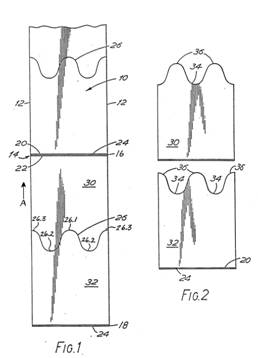
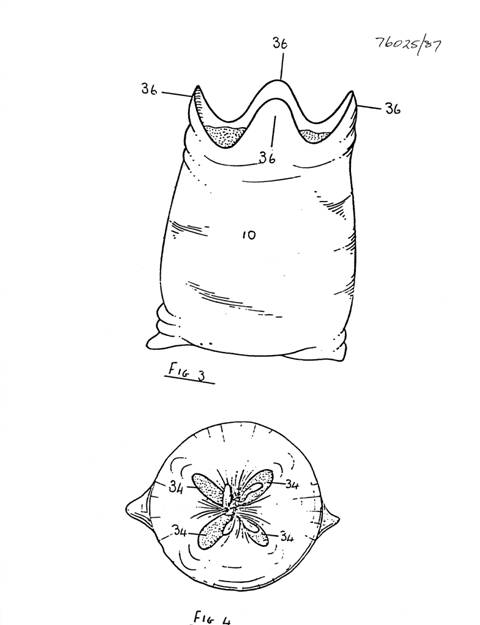
Catnic Components Ltd v Hill & Smith Ltd [1982] RPC 183 applied
CCOM Pty Ltd v Jiejing Pty Ltd (1994) 51 FCR 260 followed
Commonwealth Industrial Gases Ltd v M W A Holdings Pty Ltd (1970) 44 ALJR 385 followed
Cooper Industries Inc v Metal Manufactures Ltd (1994) 29 IPR 106 followed
Décor Corporation Pty Ltd v Dart Industries Inc (1988) 13 IPR 385 applied
EI Dupont de Nemours & Co v Imperial Chemical Industries plc (2002) 54 IPR 304 applied
Elconnex Pty Ltd v Gerard Industries Pty Ltd (1991) 32 FCR 491 followed
Electric & Musical Industries Ltd v Lissen Ltd (1939) 56 RPC 23 followed
Fisher & Paykel Healthcare Pty Ltd v Avion Engineering Pty Ltd (1991) 103 ALR 239 followed
Flexible Steel Lacing Co v Beltreco Ltd (2000) 49 IPR 331 applied
Gambro Pty Ltd v Fresenius Medical Care South East Asia Pty Ltd (2004) 61 IPR 442 followed
Glaverbel SA v British Coal Corp [1994] RPC 443 cited
Improver Corporation v Remington Consumer Products Ltd [1990] FSR 181 considered
Interlego AG v Toltoys Pty Ltd (1973) 130 CLR 461 followed
Kimberly-Clark Australia Pty Limited v Arico Trading International Pty Limited (2001) 207 CLR 1 followed
Kirin-Amgen Inc v Hoeschst Marion Roussel Ltd (2004) 64 IPR 444 followed
Lantech Inc v First Green Park Pty Ltd (1995) 31 IPR 327 followed
Leonardis v Sartas No 1 Pty Ltd (1996) 67 FCR 126 followed
Martin v Scribal Pty Ltd (1954) 92 CLR 17 followed
Martin Engineering Co v Trison Holdings Pty Ltd (1989) 14 IPR 330
Minnesota Mining & Manufacturing Co v Beiersdorf (Australia) Ltd (1980) 144 CLR 253 followed
Nesbit Evans Group Australia Pty Ltd v Impro Ltd (1997) 39 IPR 56 followed
Nicaro Holdings Pty Ltd v Martin Engineering Co (1989-1990) 16 IPR 545 followed
Nobel’s Explosives Co Ltd v Anderson (1894) 11 RPC 519 followed
NV Philips Gloeilampenfabrieken v Mirabella International Pty Ltd (1993) 26 IPR 513 followed
Patent Gesellschaft AG v Saudi Livestock Transport and Trading Co (1996) 33 IPR 426 followed
Pinefair Pty Ltd v Bedford Industries Rehabilitation Association Inc (1998) 42 IPR 330 cited
Populin v HB Nominees Pty Ltd (1982) 41 ALR 471 applied
PhotoCure ASA v Queen’s University at Kingston (2005) 64 IPR 314 approved
Ransburg Co v Aerostyle Ltd [1968] RPC 287 referred to
Rhone-Poulenc Agrochimie SA v UIM Chemical Services Pty Ltd (1986) 12 FCR 477 followed
Rosedale Associated Manufacturers Ltd v Carlton Tyre Saving Co Ltd [1960] RPC 59 followed
Sachtler GMBH & Co KG v RE Miller Pty Ltd (2005) 221 ALR 373 approved
Sartas No 1 Pty Ltd v Koukourou & Partners Pty Ltd (1994) 30 IPR 479 followed
Stanway Oyster Cylinders Pty Ltd v Marks (1996) 66 FCR 577 followed
Welch Perrin & Co Pty Ltd v Worrel (1961) 106 CLR 588 followed
Wheatley (Davina) v Drillsafe Ltd [2001] RPC 7 followed
Clorox Australia Pty Ltd AND GARFUSE BV v International Consolidated Business Pty Ltd AND PHILIP CRAIG WITHERS
VID 558 OF 2002
STONE J
22 MARCH 2006
SYDNEY (HEARD IN MELBOURNE)
|
IN THE FEDERAL COURT OF AUSTRALIA |
|
|
VICTORIA DISTRICT REGISTRY |
VID 558 OF 2002 |
|
BETWEEN: |
Clorox Australia Pty Ltd FIRST APPLICANT
|
|
|
GARFUSE BV SECOND APPLICANT
|
|
AND: |
International Consolidated Business Pty Ltd FIRST RESPONDENT
|
|
|
PHILIP CRAIG WITHERS SECOND RESPONDENT
|
|
STONE J |
|
|
DATE OF ORDER: |
22 MARCH 2006 |
|
WHERE MADE: |
SYDNEY (HEARD IN MELBOURNE) |
THE COURT ORDERS THAT:
1. The application be dismissed with costs.
Note: Settlement and entry of orders is dealt with in Order 36 of the Federal Court Rules.
|
IN THE FEDERAL COURT OF AUSTRALIA |
|
|
VICTORIA DISTRICT REGISTRY |
VID 558 OF 2002 |
|
BETWEEN: |
Clorox Australia Pty Ltd FIRST APPLICANT
|
|
|
GARFUSE BV SECOND APPLICANT
|
|
AND: |
International Consolidated Business Pty Ltd FIRST RESPONDENT
|
|
|
PHILIP CRAIG WITHERS SECOND RESPONDENT
|
|
JUDGE: |
STONE J |
|
DATE: |
22 MARCH 2006 |
|
PLACE: |
SYDNEY (HEARD IN MELBOURNE) |
REASONS FOR JUDGMENT
1 The applicants in this proceeding seek relief under s 122 of the Patents Act 1990 (Cth) (‘the Act’) in respect of the alleged infringement of Australian Patent No 611639 (‘the Patent’). As is not uncommon in such cases, pursuant to O 29 r 2 of the Federal Court Rules the Court has ordered that the issues of liability and quantum be determined separately. The first respondent’s cross claim challenging the validity of the Patent has been withdrawn by consent and consequently the present proceeding is confined solely to issues of infringement of the Patent.
2 At all material times the second applicant has been registered under the Act as the proprietor of the Patent and is a corporation organised and existing under the law of The Netherlands. At all material times the first applicant (‘Clorox’) has been the exclusive licensee of the Patent.
3 The first respondent (‘ICB’) is a company engaged in, among other things, the importation, offering for sale, supply and sale in Australia of a product to be used as a refuse bag under or by reference to the name, ‘Hercules WingTop’ (‘the Hercules Bag’). The second respondent is, and was at all material times, the sole director of ICB and was involved in ICB’s importation of the Hercules Bags.
4 Clorox alleges that ICB has infringed each and all of claims 1-2 and 4-6 of the Patent by importing, making, selling or otherwise disposing of the Hercules Bag, or by offering to do so. In addition, in reliance on s 117 of the Act, it is claimed that ICB has engaged in acts of contributory infringement. Clorox further alleges that the second respondent has engaged in accessorial conduct or is a joint tortfeasor in respect of ICB’s conduct.
The Patent
5 The Patent, entitled ‘Bag with tie parts at open end’, was filed as a complete specification by application dated 22 July 1987 and was granted on 5 November 1991. The Patent has been open for public inspection since 28 January 1988 and the earliest priority date is 23 July 1986.
6 As its title suggests, the Patent is concerned with bags and, in particular, bags of the kind used for storing and/or transporting material such as garbage or refuse. Claims 1-6 relate to ‘a refuse bag’, claims 7 and 9 relate to a ‘roll of tubular plastics material from which is formed a plurality of refuse bags’ and claim 8 relates to a ‘roll of tubular material from which is formed a plurality of refuse bags’. Clorox only pressed allegations of infringement in respect of claims 1-2 and 4-6 which are as follows:
‘1. A refuse bag for use for storing and/or transporting material such as garbage or refuse prior to collection or transport to disposal, comprising:
front and rear panels joined directly to each other along three straight sides and being open on the fourth side,
the fourth side of each of said front and rear panels being shaped with one of (1) two spaced valleys with a projection in between and (2) two spaced projections with a valley in between, whereby there are four tie-parts of sufficient length to be tied together by hand to close the said fourth side.
2. A refuse bag for use for storing and/or transporting material such as garbage or refuse prior to collection or transport to disposal, comprising:
front and rear panels joined to each other along three straight sides and being open on the fourth side,
the fourth side of each of said front and rear panels being shaped with one of (1) two spaced valleys with a projection in between and (2) two spaced projections with a valley in between so that when the open side is opened, there are four tie-parts of sufficient length to be tied together by hand to close the said fourth side.
…
4. A refuse bag for use in storing and/or transporting material such as garbage or refuse prior to collection or transport to disposal comprising front and rear panels joined together along three straight sides and being open on the fourth side,
the fourth side of each of said front and rear panels comprising a complete crest, two valleys, one on either side of the crest, and two half crests respectively outside the valleys so that when the fourth side is opened, there are four tie parts of sufficient length to tie together by hand to close the fourth side.
5. A refuse bag for use in storing and/or transporting material such as garbage or refuse prior to collection or transport to disposal comprising front and rear panels joined together along three straight sides and being open on the fourth side,
the fourth side of each of said front and rear panels being shaped with two spaced projections having a valley therebetween [sic] and two half valleys on either side of the projections so that when the open side is opened, there are four tie parts of sufficient length to be tied together by hand to close the fourth side.
6. A refuse bag for use in storing as claimed in claim 4 or 5 wherein the fourth side is generally of sinusoidal shape.’
It is apparent that while claims 1, 2, 4 and 5 are independent of each other, claim 6 is dependent upon claims 4 or 5.
7 The specification describes the bags with which the Patent is concerned as follows:
‘Such bags are formed from plastics material and comprise, in the flat condition, two rectangular panels which are not connected along only one end, so that there is an opening through which matter can be inserted into the bag. The bag is normally made from a tubular extrusion’
8 The specification refers to the prior art, being four United States patents, namely US Patents No 3,744,838, No 3,961,743, No 4,445,230 and No 4,345,712. These patents all involve attempts to ‘modify the shape of the bags so that they have projections or tie parts which will facilitate the closing of the open end’. The specification describes the deficiencies of each of these designs. It was these deficiencies that the invention contained in the Patent was designed to address. In particular, the Patent attempted to address issues in relation to the capacity of the bag, the quality of the closure from tie parts resulting from the shape of the fourth side and waste occurring in the manufacturing process. It is accepted by Clorox that the prior art, reflected in these United States patents, are the basic subject matter from which the invention contained in the Patent derives.
9 The specification describes a method of manufacturing refuse bags the subject of the invention:
‘According to an aspect of the invention there is provided a method of manufacturing a refuse bag used for storing and/or for transporting material such as garbage or refuse prior to collection or transport to disposal comprising: welding front and rear panels of material with straight end welds that join the panels together at suitably spaced locations, said end welds extending transversely to the direction of the bag, i.e. transversely to the direction of extrusion, for forming bag bottoms; cutting the material at an end cut at each end weld; and cutting the material at a separating cut which will form an open end for two bags between a pair of end welds and which extends generally transversely to the bag, the said separating cut being so shaped, preferably by being generally sinusoidal, that cut-outs are formed in the said open ends to leave four projecting tie parts which in each bag are capable of being tied together to close the opening. With this arrangement there is a straight closed welded end and there are four tie parts. The said separating cut is preferably so arranged that the tie parts in each bag correspond to the cut-outs in the other bag of the said two bags.
Each end weld preferably comprises a pair of spaced welds and preferably the method further comprises providing an end cut between the two welds to separate the two bags from the material.’
While the specification describes a method, as Mr Caine, senior counsel for the respondents, submitted there is no counterpart in the claims.
10 The Patent’s specification describes the preferred embodiment as follows:
‘In the drawings:-
Figure 1 shows an extruded tube that has been laid flat immediately prior to separation of the bags, Figure 2 is a side view of two bags formed from the tube,
Figure 3 is a perspective view from the side when filled but not yet closed, and
Figure 4 is a front view of the bag when filled and closed.
Referring now to Figure 1 there is shown an extruded tube 10 of plastics material which is arranged in lay-flat form i.e. with front and rear panels joined along their edges 12 (without any gussets being formed). The tube 10 is processed in welding and cutting apparatus (not shown) which provides the welds and cuts as will be described. A straight transverse end weld 14 (that welds the front and rear panels of the material together) is provided transversely to the direction of extrusion “A” at suitably spaced locations 16 and 18. The end weld 14 comprises a pair of spaced parallel welds 20 and 22. A transverse end cut 24 is made between the two welds 20 and 22 to form the two bags. It will be seen that in the flat condition the bags comprise two rectangular panels joined at their edges 12 and at the end welds 14.
The apparatus also makes a separating cut 26 which will form the open ends 28 for each of the two bags that are formed between a pair of end cuts 24. The separating cut 26 is located midway between the end cuts 24 and is generally sinusoidal having a central crest 26.1, two valleys 26.2 on either side of the crest 26.1 and two half crests 26.3 outside the valleys 26.2. Therefore in each of the bags 30 and 32 that are thus formed cut-outs 34 to leave projecting tie parts 36 in the other bag which tie parts 36 are capable of being tied together to close the opening as will be described.
It will be seen that the two bags 30 and 32 have open ends which when the bags are in the lay-flat condition appear to be of different appearance. However once these ends are open, they will be of the same shape with four cut-outs 34 and four projecting tie parts 36.
When the bag 10 is filled with refuse (as shown in Figure 3), the diametrically opposite projecting tie parts 36 can be tied together to provide a substantially complete closure for the opening to the bag 10. (In the Figure 4, there are shown openings 34 between the tie parts 36. This is for the purpose of clarity only and in fact these openings will be very small indeed.)
I have found that this closure is more than adequate for the normal purposes to which the bag 10 is put in domestic circumstances.’
Figures 1-4, referred to immediately above, are annexed to the Patent:
11 One of the issues discussed in the specification is that of waste occurring in the manufacturing process. It states:
‘It will be seen that by making the bags as described above the considerable amount of material are saved in addition to providing bags which are convenient to use for tieing corners to close the open ends. This because with conventional bags only a portion can be filled if material is to be left to form ties. The upper limit of such filling is normally no more than a position slightly lower than the valleys of the cut-outs 34. Furthermore by having a straight end weld, the bag is capable of being filled to the maximum amount. Thus for forming bags 10 of the invention of the same practical capacity as conventional bags, up to 10% (ten per cent) of the bag forming material may be saved.’
12 As is commonly the case, the specification provides that the invention is not limited to the precise construction set out in the preferred embodiment. It states:
‘For example the bags may have more projections and cut-outs. The shape of the projections and cut-outs may vary as desired. These are preferably shapes with rounded corners but they may be zig-zag or rectangular in shape preferably with suitable means being provided to prevent tearing at the corners. …
The bags may be gussetted if desired even though this will reduce the capacity of the bag as compared to that described above. However the provision of the straight closed end and the interleaved cut-outs and tie parts results in the bag having a larger capacity than the known bags mentioned above.’
CONSTRUCTION
Principles of construction
13 It is appropriate to consider the principles applicable to the construction of a patent and their application to the Patent’s specification before addressing Clorox’s claims of infringement: see CCOM Pty Ltd v Jiejing Pty Ltd (1994) 51 FCR 260 at 267-268 referring to Ransburg Co v Aerostyle Ltd [1968] RPC 287 per Lord Upjohn at 297. Indeed, it is important to ensure that consideration of the allegedly infringing product does not influence the determination of the proper construction of the claims.
14 The parties are not in dispute as to the applicable principles which have been the subject of frequent discussion in the decisions of this Court: see, for instance, Flexible Steel Lacing Co v Beltreco Ltd (2000) 49 IPR 331 (‘Beltreco’); PhotoCure ASA v Queen’s University at Kingston (2005) 64 IPR 314 (‘Photocure’); Sachtler GMBH & Co KG v RE Miller Pty Ltd (2005) 221 ALR 373 (‘Sachtler’). While it may be useful for me to set out some of the relevant principles I shall do so only briefly.
15 The ordinary rules of construction that apply to any written instrument are applicable to the construction of the specification of a patent: Nobel’s Explosives Co Ltd v Anderson (1894) 11 RPC 519 at 523; Décor Corporation Pty Ltd v Dart Industries Inc (1988) 13 IPR 385 (‘Décor’) at 391, 400; Photocure at [168]. However, there are also a number of special considerations that are relevant to the construction of a patent. The general basis for these rules was explained by Hely J in Beltreco at [70]:
‘A patent is a public instrument which grants the right to protection of a defined monopoly, for the consideration of the disclosure of the invention to the general knowledge base of society. It is the need for balance between these symbiotic, yet competing interests which underscores the rules of patent construction.’
16 It is well established that the claims contained in the specification set out the legal limits of the monopoly. Yet, when construing the claims and determining the nature and extent of this monopoly it is necessary to consider the context in which the claims are made. This requires a consideration of the specification as a whole even if there is no apparent ambiguity in the claim; Minnesota Mining & Manufacturing Co v Beiersdorf (Australia) Ltd (1980) 144 CLR 253 (‘Minnesota Mining’) at 267-272; Décor at 410-411; Beltreco at [75]-[78]. The specification is made up of several parts which have different functions: Welch Perrin & Co Pty Ltd v Worrel (1961) 106 CLR 588 (‘Welch Perrin’) at 610; Décor at 391, 398; Beltreco at [73]. Nevertheless, reference to it as a whole may explain or elucidate the background to the claims, assist in ascertaining the meaning of a technical term or in resolving ambiguities in the construction of claims: Martin v Scribal Pty Ltd (1954) 92 CLR 17 (‘Martin’) per Taylor J at 97; Welch Perrin at 610-611; Electric & Musical Industries Ltd v Lissen Ltd (1939) 56 RPC 23 (‘Electric & Musical Industries’) at 41-42, Interlego AG v Toltoys Pty Ltd (1973) 130 CLR 461 (‘Interlego’) at 478-479; Décor at 400; Sartas No 1 Pty Ltd v Koukourou & Partners Pty Ltd (1994) 30 IPR 479 (‘Sartas’) at 486; Beltreco at [75].
17 It is important, however, that the focus of the inquiry remain on the claims under consideration. If claims are clear and unambiguous, they are not to be varied, qualified or made obscure by statements found in other parts of the patent: Welch Perrin at 610; Interlego at 478-479; Electric & Musical Industries at 41; Rosedale Associated Manufacturers Ltd v Carlton Tyre Saving Co Ltd [1960] RPC 59 at 69; Cooper Industries Inc v Metal Manufactures Ltd (1994) 29 IPR 106 at 113; Lantech Inc v First Green Park Pty Ltd (1995) 31 IPR 327 at 333; Beltreco at [74]. It is not legitimate to narrow or expand the boundaries of the monopoly as fixed by the words of the claims by adding to those words a gloss drawn from other parts of the specification: Welch Perrin at 610; Décor at 391, 398; Braas & Co GmbH v Humes Ltd (1993) 26 IPR 273 at 284; Beltreco at [74].
18 A patent specification should be given a purposive rather than a purely literal construction: Catnic Components Ltd v Hill & Smith Ltd [1982] RPC 183 (‘Catnic’) at 242-243; Décor at 400; Improver Corporation v Remington Consumer Products Ltd [1990] FSR 181 (‘Improver’); Nicaro Holdings Pty Ltd v Martin Engineering Co (1989-1990) 16 IPR 545 at 560-561; Commonwealth Industrial Gases Ltd v M W A Holdings Pty Ltd (1970) 44 ALJR 385 at 388; Beltreco at [81]; Kirin-Amgen Inc v Hoeschst Marion Roussel Ltd (2004) 64 IPR 444 (‘Kirin-Amgen’); Sachtler at [43]-[67]. It is inappropriate, however, to approach construction of the specification with a view to being ‘fair’ to the patentee; Kirin-Amgen at [33]; Sachtler at [60]. The fact that the monopoly is granted in consideration for the disclosure of the invention to the general knowledge base of society must be recognised: Beltreco at [70]. Indeed, the principles governing a definition of a monopoly operating over the public at large require a description of the claims that ‘is not reasonably capable of misunderstanding’: Martin at 59. The patentee must define the invention with sufficient precision to permit the monopoly to be determined and allow the general public to identify from the words of the claims the conduct prohibited: British United Shoe Machinery Co Ltd v A Fussell & Sons Ltd (1908) 25 RPC 631 at 650-651. The public are entitled to be able to design around the monopoly claimed in a patent and therefore they must be able to determine reliably the scope of the claims: Beloit Technologies Inc v Valmat Paper Machinery Inc [1895] 24 RPC 705 at 720.
19 As a general rule, the terms used in a specification should be accorded their ordinary English meaning. Put another way, the terms must be understood in a practical, commonsense manner: Electric & Musical Industries at 41; Elconnex Pty Ltd v Gerard Industries Pty Ltd (1991) 32 FCR 491 at 512-513; Interlego at 478; Minnesota Mining at 270; Nesbit Evans Group Australia Pty Ltd v Impro Ltd (1997) 39 IPR 56 at 95; Martin Engineering Co v Trison Holdings Pty Ltd (1989) 14 IPR 330 at 338.
20 The hypothetical addressee of the patent specification is the non-inventive person skilled in the art before the priority date: Welch Perrin at 610; Populin v HB Nominees Pty Ltd (1982) 41 ALR 471 (‘Populin’) at 476-477; Fisher & Paykel Healthcare Pty Ltd v Avion Engineering Pty Ltd (1991) 103 ALR 239 at 260; Décor at 397; Stanway Oyster Cylinders Pty Ltd v Marks (1996) 66 FCR 577 at 582-583; Beltreco at [81]; Kimberly-Clark Australia Pty Limited v Arico Trading International Pty Limited (2001) 207 CLR 1 at [24]; Gambro Pty Ltd v Fresenius Medical Care South East Asia Pty Ltd (2004) 61 IPR 442 at [113]; Rhone-Poulenc Agrochimie SA v UIM Chemical Services Pty Ltd (1986) 12 FCR 477 at 496; NV Philips Gloeilampenfabrieken v Mirabella International Pty Ltd (1993) 26 IPR 513 (‘NV Philips’) at 531; Catnic at 225; Wheatley (Davina) v Drillsafe Ltd [2001] RPC 7 at 141–142. Thus, the words used in a specification are to be given the meaning that the hypothetical addressee would attach to them, both in the light of his or her own general knowledge and what is disclosed in the body of the specification: Décor at 391; Photocure at [170].
21 Evidence can be given by experts on the meaning which those skilled in the art would give to technical or scientific terms and phrases and on unusual or special meanings given by such persons to words that might otherwise bear their ordinary meaning: Sartas at 485-486; NV Philips at 531-532; Leonardis v Sartas No 1 Pty Ltd (1996) 67 FCR 126 at 137-138; Patent Gesellschaft AG v Saudi Livestock Transport and Trading Co (1996) 33 IPR 426 (‘Patent Gesellschaft’) at 455.
22 Ultimately, however, the construction of the specification is for the court, not for the expert witness. Insofar as a view expressed by an expert depends upon a reading of the patent, it cannot carry the day unless the court reads the patent in the same way: Allsop Inc v Bintang Ltd (1989) 15 IPR 686, 697. See also Glaverbel SA v British Coal Corp [1994] RPC 443 at 486; Sartas at 485-486; Patent Gesellschaft at 455. Further, if the evidence before the court does not establish that a technical meaning is to be given to a term, it is to be given its ordinary meaning: Electric & Musical Industries at 226; Minnesota Mining at 279; Patent Gesellschaft at 455; Photocure at [170].
The relevant claims
23 Claims 1-2 and 4-6 have a number of common elements:
(a) a refuse bag for use for storing and/or transporting material such as garbage or refuse to collection or transport to disposal;
(b) front and rear panels joined:
a. [in the case of claim 1] directly to each other along three straight sides and being open on the fourth side;
b. [in the case of claim 2] to each other along three straight sides and being open on the fourth side;
c. [in the case of claims 4-6] together along three straight sides and being open on the fourth side;
(c) the fourth side being:
a. [in the case of claims 1-2 and 4-5] formed so as to have valleys and projections (crests) which result, in effect, in four tie parts of sufficient length to be tied together by hand to close the fourth side;
b. [in the case of claim 6] the fourth side being ‘generally of sinusoidal shape’.
24 The dispute in the present proceedings focuses on the element of the relevant claims that the front and rear panels be joined ‘along three straight sides’. As I understood the parties, it was not argued that there is any material difference between claims 1-2 (which require the joining to be ‘to each other’) and claims 4-6 (which require the joining to be ‘together’). On this basis, the following questions must be considered:
(a) is it an essential element of the relevant claims that the front and rear panels be joined along three straight sides?
(b) in what form should an allegedly infringing product be considered in order to assess infringement?
(c) what is the proper meaning of ‘joined … along three straight sides’ in the relevant claims?
(d) in light of the answers to these questions, does the Hercules Bag have front and rear panels that are joined along three straight sides?
Is the requirement of straight sides essential?
25 A feature of a claim is considered essential if the hypothetical reader (that is, a reader skilled in the art before the priority date) would have understood from the language used in the claim, in the context of the specification as a whole, that the patentee intended that strict compliance was an essential requirement of the invention: Catnic at 243; Décor at 400; Populin at 476; Beltreco at [81].
26 Counsel for Clorox, Mr Hess, accepted that the requirement that the front and rear panels be joined along straight sides was an essential integer of each of the relevant claims. However, Mr Hess submitted that as the novelty of the invention comes from the shape of the fourth side (that is, the open side), the requirement that the front and rear panels be joined along three straight sides was an ‘intermediate feature’. He contended that there is some inherent flexibility in this so-termed ‘intermediate feature’.
27 Mr Caine did not challenge Clorox’s contention that the shape of the fourth side represented the inventive element or technical advance. However, he noted that the requirement that the front and rear panels be joined along three straight sides avoided three of the four prior art bags; the fourth being avoided by the shape of the fourth side. Thus, Mr Caine submitted that the requirement that the panels be joined along three straight sides must be viewed as essential as otherwise the patentee would encounter difficulties in respect of anticipation or obviousness.
28 I do not accept the applicant’s attempt to introduce the concept of an ‘intermediate’ feature. Either the feature is necessary for an article to infringe the Patent or it is not. Mr Hess’ submissions qualifying his concession go to the proper construction of the relevant claims (and in particular the meaning of ‘straight’ in this context) rather than to whether this requirement is essential. The construction of the requirement found in the specifications that these sides be ‘straight’ is a separate question and is discussed below. In my view the requirement that the front and rear panels be joined along three straight sides is an essential integer of the relevant claims and the Hercules Bag must possess this element in order for infringement to be demonstrated. On this issue I respectfully agree with Bennett J in Sachtler at [55]where her Honour said:
‘To the extent that recent judgments of this court have suggested that there may be infringement by taking what is determined to be the substantial idea disclosed by the specification but not the essential integers of the claim, I must respectfully disagree.’
29 I also respectfully agree with Bennett J’s assessment of the assistance provided by the questions in Improver, which Mr Hess referred to in his submissions. In particular her Honour said at [67]:
‘…I do not consider that utilisation of those questions is helpful other than, perhaps, as a “check” on the conclusion reached as to the characterisation of essential or inessential integers present in the allegedly infringing article. They are no substitute for construction of the claim to ascertain the essential and inessential integers and a determination regarding the presence of those integers for infringement.’
30 While the shape of the fourth side might accurately be described as the novel feature of the invention claimed, the patentee has chosen by the language of the claims to make the requirement that the front and rear panels be joined along straight sides an essential feature.
The form in which the bag is to be arranged and the meaning of ‘joined … along three straight sides’
31 In my view, these two issues, both of which involve construction of the claims and the specification as a whole, are necessarily connected. Mr Caine’s threshold question about the form in which the refuse bag of the invention is to be arranged in order to understand its features, cannot be addressed properly without considering the context in which there is a requirement that the panels be joined along three straight sides. Similarly, the meaning of ‘along three straight sides’ cannot be determined without reference to the appropriate arrangement.
32 The products claimed in claims 1-2 and 4-6 of the Patent, plastic bags with certain features, are inherently difficult to consider, assess or describe. The dispute about the form in which the bag is to be arranged focused on the lack of structural rigidity of a thin plastic bag. During the hearing the bags were variously described as flexible, flimsy, lacking in structural integrity and amorphous. Further, given these characteristics plastic bags like those claimed are able to be distorted and do not have a single or uniform configuration. They can be laid flat, held taut, crumpled or folded. When filled with refuse the bag roughly reassumes the tubular shape in which it is made; in such form it has no sides that can be described as jointed or straight.
33 In addition, the language of the claims is, given the characteristics of plastic bags, somewhat unusual. Each of claims 1, 2, 4 and 5 (and claim 6 by its dependent nature) uses the terms ‘panels’, ‘joined’ and ‘sides’. It is common ground that plastic bags of the relevant kind are manufactured by the blowing of plastic into an extruded tube. At this stage there is no bag, rather a tube of extruded plastic. It is the closing or welding of the base (or third) side that forms the bag. Thus, the use of the terms ‘panels’, ‘joined’ and ‘sides’ appears somewhat incongruous. In particular, while the language of the claims might appear, at least at first glance, to restrict the monopoly claimed to bags which are not made from an extruded tube, the respondents did not press such a construction. It is apparent that the relevant claims, when read in the context of the specification as a whole, encompass both bags made from an extruded tube and those not made in this manner.
The evidence
34 Before turning to consider the proper construction of the claims, it is necessary to make some brief comments in respect of the evidence adduced by the parties insofar as it went to the construction of the claims. Clorox and the respondents each adduced evidence from experts directed to the issue of whether or not the Hercules Bag infringes the relevant claims. However, in order to proffer an opinion on infringement each of the witnesses necessarily averted to their view of the appropriate construction of the claims. This was primarily because of the nature of the products claimed and the unusual language adopted by the patentee. In particular, the expert witnesses gave evidence as to their understanding of various terms used and the appropriate form in which to consider infringement. While none of the evidence was couched in terms of the witnesses’ views as at the priority date, there appears to be no issue in this regard. The witnesses do not appear to have regarded the terms as having a different meaning as at the priority date than today. Indeed, nothing in the material before the Court indicates that the terms would be interpreted differently and in my view nothing turns on this.
35 Clorox contended that the respondents’ expert witnesses’ evidence was inadmissible, at least to the extent that their opinions went to the construction of the claims. It was argued that in the absence of technical or scientific words or expressions requiring expert explanation, which was said not to be the case here, the task of construction of the claims was for the Court and, as such, this evidence was irrelevant and consequently inadmissible. See, for instance, the recent judgment in Breville Pty Ltd v The Warehouse Group (Australia) Pty Ltd [2005] FCA 1893 at [34]-[36]. Clorox also submitted that certain portions of the respondents’ affidavit evidence were inadmissible, again on grounds of irrelevance, as it was not for a witness to rewrite or redraft the Patent. I should note that Clorox made further submissions in respect of the admissibility of the respondents’ evidence in the context of infringement and I will consider those objections when addressing infringement.
36 The respondents submitted that the evidence to which Clorox raised an objection was admissible on the basis that it responded to the evidence of Clorox’s own expert witness; was of assistance to the Court in construing the relevant claims of the Patent; and that the weight to be given to such evidence was a matter for submissions.
37 In my view, the evidence objected to by Clorox is admissible as relevant in the present proceedings in relation to the proper construction of the Patent’s claims. While terms used in a claim are to be given their ordinary English meaning, the hypothetical addressee is the non-inventive person skilled in the art before the priority date: see [20] above. This is made plain by Lord Hoffman in Kirin-Amgen at [32] where his Lordship stated:
‘Construction, whether of a patent or any other document, is of course not directly concerned with what the author meant to say. There is no window into the mind of the patentee or the author of any other document. Construction is objective in the sense that it is concerned with what a reasonable person to whom the utterance was addressed would have understood the author to be using the words to mean. Notice, however, that it is not, as is sometimes said, "the meaning of the words the author used", but rather what the notional addressee would have understood the author to mean by using those words. The meaning of words is a matter of convention, governed by rules, which can be found in dictionaries and grammars. What the author would have been understood to mean by using those words is not simply a matter of rules. It is highly sensitive to the context of, and background to, the particular utterance. It depends not only upon the words the author has chosen but also upon the identity of the audience he is taken to have been addressing and the knowledge and assumptions which one attributes to that audience.’
(emphasis added)
38 As such, a court can have regard to evidence from experts on the meaning which those skilled in the art would give to technical or scientific terms and phrases and on unusual or special meanings given by such persons to words which might otherwise bear their ordinary meaning: see [21] above and EI Dupont de Nemours & Co v Imperial Chemical Industries plc (2002) 54 IPR 304 at [41]-[60]. This is not to say that the court is thereby relinquishing its role as the ultimate arbitrator of the proper construction of the claims. The weight that a court gives to such evidence will vary from case to case.
39 In the present proceedings, the terms used in the relevant claims are unusual given the characteristics of plastic bags: see [32]–[33] above. The use of particular terms, especially ‘straight’, must be understood by reference to what the hypothetical addressee would consider the terms to mean. Consequently, in my view the evidence adduced by the respondents provides evidence of the meaning that the notional addressee would ascribe to such terms and the evidence is admissible as relevant to the construction of the claims.
Laid- flat form
40 Counsel for Clorox accepted that in order to consider infringement a bag must be considered in the laid-flat form but contended that this could encompass a laid-flat three-dimensional form. In my view the concession as to the laid-flat form was correctly made. The language of the relevant claims, as set out above, is ambiguous when considered in isolation. The terms chosen by the patentee to describe the monopoly cannot be properly understood without reference to the specification as a whole. In particular, unless the bags are arranged in a laid-flat form, it is not sensible to refer to the front and rear panels of the bag or to the sides of the bag (whether straight or otherwise) or even to discuss the shape of the fourth side of the bag. To consider the bags in any other form or arrangement would be to deprive the essential integers of the invention of any content. While, as previously mentioned, a clear and unambiguous claim must not be varied or qualified by statements in the remainder of the specification, in the present context the language chosen is difficult to comprehend without reference to the description of the invention contained in the body of the specification. Thus, in my opinion the relevant claims each import a requirement that the language used is to be understood in light of the invention being in the laid-flat form. This does no more than give effect to the language chosen by the patentee and does not expand or narrow the relevant claims.
41 At the hearing, the parties provided a number of examples of the various ways in which a bag could be laid flat and the permutations in display options possible because of the inherent characteristics of plastic bags. While these demonstrations were, in the main, directed to demonstrating that the Hercules Bag either did or did not infringe the claims, the demonstrations also revealed the respective constructions placed on the phrase ‘laid-flat form’.
42 Mr Hess, in various demonstrations for the Court, submitted that the laid-flat form could involve laying a bag flat and then tensioning each of the edges (or sides) of a bag in order to demonstrate that the longitudinal sides were straight. In my view, the claims do not permit this. The patentee has chosen to import into the relevant claims a requirement that the language of the claims be assessed as if the bag under consideration is in the laid-flat condition. There are good reasons for such an approach. As Mr Caine submitted, there must be a constant way in which allegedly infringing products are to be assessed. However, this does not allow a bag to be laid flat and manipulated in any way.
43 The term ‘lay’ is defined in the Macquarie Dictionary (revised third edition) as relevantly meaning:
‘1. to put or place in a position of rest or recumbency: to lay a book on a desk. … 5. to smooth down or make even: to lay the nap of cloth. … 8. to place, set, or cause to be in a particular situation, state, or condition: to lay hands on a thing. … 20. to place on or over a surface, as paint; cover or spread with something else. …’
44 For my mind, the term ‘lay’ does not, in the present context, connote the pressing down, manipulating or altering of the bag when laying it down flat. The term must be given its ordinary meaning and this, in my opinion, requires that the bag is to be laid out on the relevant surface and then considered without any further manipulation.
45 However, the specification imports into the relevant claims not simply that the bag be laid down, but that it be laid down flat. ‘Flat’ is defined in the same dictionary to mean:
‘1. level, even, or without inequalities of surface, as land, etc. 2. horizontally level: a flat roof. 3. comparatively lacking in protection or depression of surface: a broad flat face. … 5. lying at full length, as a person. 6. lying wholly on or against something: a ladder flat against a wall. 7. thrown down, laid low, or level with the ground, as fallen trees or buildings. … 9. having a generally level shape or appearance; not deep or thick: a flat plate. … 12. spread out, as an unrolled map, the open hand, etc. … 33. a flat surface, side or part of anything: the flat of a blade, the flat of the hand. 34. flat or level ground; a flat area. …’
46 The term ‘flat’ has a variety of meanings which makes it difficult to provide a simple, ordinary meaning and resort must be had to the context in which the term is used. In my view, in the present context the term ‘flat’ must mean wholly or substantially level and spread out. Thus, the ‘laid-flat’ form imported into the claims requires that a bag be put or placed wholly or substantially level and spread out against the relevant surface. I do not take this to mean that every surface of the bag needs to touch the relevant surface, or that the bag should be pressed against the surface or manipulated in any way. For instance, a person may accurately be described as lying flat on their back on the ground even though the back of their neck is likely not to be actually touching the surface. In this sense I accept that the laid-flat form can encompass a three-dimensional form.
47 In addition, given the nature of the claimed products and the language adopted by the patentee, it cannot be the case that infringement can be determined by reference to more than one form; it needs to be a uniform and constant form. To permit otherwise would be to place any competitor in a situation where they did not have a reliable basis for determining the scope of the claimed monopoly and would be contrary to the very foundation upon which the monopoly is granted: see [18] above. In my view, the laid-flat form adopted by the relevant claims is that contained in Figures 1 and 2 in the specification. The description of these illustrations in the specification gives context and meaning to the unusual language used in the claims described above at [33]. Further, the United States patents together form the prior art base: see [8] above. As Mr Caine submitted, the prior art represented the background to the lexicon of the patentee. As he noted, each of the United States patents presents or describes the bag the subject of the patent by reference to the bag when it is in a flattened condition. Thus, the claims import a requirement that an allegedly infringing product is to be considered in a laid-flat form where the product is, subject to the opening of the top (or fourth) side, ready to be used in its intended manner; that is, as a refuse bag for the purpose of storing and/or transporting material such as garbage or refuse prior to collection or transport to disposal. In my view, this is not to limit the claims impermissibly by reference to the preferred embodiment. Rather, it elucidates the equivocal language of the claims by reference to the form of the bag in the preferred embodiment. To adopt this approach is not to alter or limit the essential integers contained in each of the relevant claims but instead to determine the form in which an allegedly infringing product is to be assessed to establish whether it possesses each of the essential integers.
Front and rear panels joined
48 As noted above, the use of these terms appears to be incongruous given the nature of plastic bags. However, despite some initial difficulty the parties, as I understood them, were not in dispute as to the meaning of these terms. Once it is accepted that the language of the claims must be understood in light of the product being considered in the laid-flat form, these terms become easier to understand.
49 The term ‘panel’ is ordinarily used to mean a distinct portion of any surface. Taking into account the requirement that the bag be considered in the laid-flat form, the front and rear panels are exhibited by the laying of the plastic bag on a flat surface in the manner referred to above with the valleys and projections matched up along the top side.
50 The relevant claims also require that the panels be ‘joined’ to each other. Leaving aside the use of the term ‘panels’, the requirement that they be joined is especially unusual: see [33] above. As the specification itself notes, such bags are ‘normally made from a tubular extrusion’: see [7] above. Even if a bag can be said to have front and rear panels, if it was manufactured from an extruded tube it is hard to see how the front and rear panels can be described accurately as ‘joined’. Despite this, the parties were in agreement that when laid flat, the crease forming the demarcation between the front and the rear panels represents the relevant ‘join’. As Clorox submitted, the requirement of joinder need not be joinder mechanically applied. Rather, it was accepted that it is sufficient in the context of a bag formed from an extruded tube that the ‘join’ be demonstrated by the crease line at the extremities of the front and rear panels.
Along three straight sides
51 It is convenient to begin by considering the proper construction of the term ‘sides’. Mr Hess for Clorox submitted that the term ‘sides’, in the context of the claims, can be equated with ‘edges’. As I understood him, Mr Caine did not contend otherwise. This result necessarily follows from the nature of the bags. As I noted above at [33], the respondents did not seek to argue that the relevant claims did not extend to cover plastic bags, of the relevant kind and having certain features, made from an extruded tube. As such, the term ‘sides’ must be equated with ‘edges’ or, putting it another way, with the creases formed at the extremities when the plastic bag is in the laid-flat form. These sides, and the front and rear panels, do not come into existence until the product is put into a laid-flat form.
52 The integer requires that the front and rear panels are ‘joined … along three straight sides’; it does not state that the joining of the front and rear panels along the longitudinal sides be accomplished in a straight manner. As noted above at [9], despite a method of manufacturing the subject product being described in the body of the specification the patentee chose not to include a method claim. Thus, the relevant claims include as an essential integer that the product must possess front and rear panels that are (rather than were) joined along three straight sides. This must also be true of an allegedly infringing product if an infringement claim is to be made out. It is not to the point that a bag or tube had, at some prior point, front and rear panels that were joined along three straight lines. Ultimately, the question is whether the nominal bag, when placed in the laid-flat form (as that form is construed above), possesses front and rear panels that are joined along three straight sides.
53 The word ‘straight’ is relevantly defined in the Macquarie Dictionary as follows:
‘1. without a bend, crook, or curve, not curved; direct: a straight path. 2. flat; horizontal. … 4. (of a line) lying evenly between its points; generated by a point moving constantly in the same direction. … 17. in a straight line: to walk straight. … 19. directly: to go straight to a place. …’
54 There is, in my view, some ambiguity in this word as used in the specification. Dr Pullum, a consulting engineer, gave evidence on behalf of the respondents. On cross-examination by Mr Hess, he accepted as accurate the use of the word, ‘straight’ in the context of quality control, where he might accept as having been made ‘straight’ something approximating a straight line as recognised visually. He rejected the use of the word in circumstances where it could only apply if the geometry of the object were distorted. Dr Pullum gave the example of a coiled telephone cable which, he said, might with tension be made into a straight wire but could not be accurately described as straight in ‘its natural condition’. In the context of the specification Dr Pullum interpreted ‘straight’ as being used in the engineering sense of a straight line. This assumption was said to be based on the fact that the Patent was instructing him how to make something; that is, it is an engineering document. Dr Pullum’s application of this meaning to the Hercules Bag is discussed below at [71]–[75].
55 Mr Hess for Clorox submitted that the use of the word, ‘straight’ in this context referred to the visual approximation of straight. While Mr Caine submitted on behalf of the respondents that ‘straight’ was used in its geometric sense, he accepted that the term would encompass joinder involving a slight degree of curvature. In this sense, Mr Caine seemed to be accepting and adopting a purposive construction similar to that applied by Lord Diplock in Catnic in relation to the term ‘vertical’. On one level at least the dispute seemed to be about just how much deviation from geometric precision was consistent with the description, ‘straight’. This aspect of the debate seems to be what is behind the characterisation of the straight sides requirement as an intermediate term; see [26]-[28] above.
56 As noted above, the Patent is addressed to the hypothetical non-inventive person skilled in the art before the priority date. A patent is a public instrument designed to disclose the invention. As such, the term should be given a construction that is consistent with this role. The relevant claims require that the front and rear panels be joined along three straight sides. The claims do not require that these panels be joined along lines that appear to be straight or that the join is displayed as straight. In my view, in this context ‘straight’ must be construed to require that the joins, when the nominal bag is in the laid-flat form, are straight in the geometric sense but not so as to restrict the term to absolute or perfect geometric precision. It might, in my view, extend to encompass joinder along sides that display a slight or modest curvature. Ultimately, however, it is not necessary for me to be more precise on this point as, for reasons explained below, I have formed the view that the sides of the Hercules Bag are distinctly curved and do not fall within any possible meaning of straight as used in the Patent specification.
Infringement
Relevant principles of infringement
57 Section 13 of the Act relevantly provides that a patentee has the exclusive rights, during the term of the patent, to exploit the invention and to authorise another person to exploit the invention. The term ‘exploit’ is relevantly defined in Schedule 1 of the Act as follows:
‘exploit, in relation to an invention, includes:
(a) where the invention is a product—make, hire, sell or otherwise dispose of the product, offer to make, sell, hire or otherwise dispose of it, use or import it, or keep it for the purpose of doing any of those things; or
(b) …’
58 In respect of infringement in the present context, it is necessary to consider whether ICB has ‘exploited’, in the patent area (which for present purposes can be said to be Australia), a refuse bag that possesses each and every one of the essential features of the relevant claims, namely claims 1-2 and 4-6. This is done by reference to the proper construction of the claims, in light of the specification as a whole, as set out above. While Clorox contended that a purposive construction should be adopted in construing the claims, it accepted that in order to establish infringement it must demonstrate that the Hercules Bag possesses each and every essential integer of the relevant claims.
The Hercules Bag
59 The Hercules Bag is manufactured, like other such bags (as detailed in the specification of the Patent), from an extruded tube of plastic. Initially therefore, there is no bag, merely a plastic tube. For this reason, Clorox did not claim that this was a case where infringement occurred during the manufacturing process: see, for instance, Pinefair Pty Ltd v Bedford Industries Rehabilitation Association Inc (1998) 42 IPR 330. After the plastic is blown through the extruder, the resulting tube is flattened. The longitudinal sides are ‘gusseted’, by effectively folding the longitudinal sides towards each other, so that they meet in the centre of the inside of the tube. This ‘four-layered form’ is then folded in half again resulting in an eight-layered form; that is one-quarter the size of the flattened extruded plastic tube. The tube’s base (the third side) is then heat welded forming a ‘star-shaped’ weld. This feature marks, in essence, the practical difference between the plastic bag described in the Patent’s specification and the Hercules Bag.
60 The gusseting of the longitudinal sides and the star-shaped welding of the base have both advantages and disadvantages in comparison to the bag described in the specification. For instance, the Hercules Bag has less capacity and uses more plastic material because of the way in which the base is welded. However, an advantage is that the Hercules Bag is able to be sold in packaging that is narrower than would otherwise be the case. This was said by Mr Caine to be attractive to retailers as the package fits in a supermarket basket and occupies less shelf space. It is also the case that the base weld is stronger and the Hercules Bag has greater tear strength. Dr Pullum also gave evidence that fewer manufacturing difficulties arose when cutting and/or serrating across a narrower portion of plastic. In other words, to cut or serrate across a portion one-eighth the width of the tube is less likely to involve manufacturing difficulties than performing the same action across the entire width of the extruded tube. Dr Pullum also stated that the Hercules Bag could be manufactured in multiple streams.
61 It is also important to note that the Hercules Bag is in an eight-layered form when sold. Consequently, in order to be used in the manner envisaged, the bag must; first, be torn from the other bags to which it is attached along the base and top sides; and secondly, ‘opened’ up such that refuse or garbage can be placed in the bag through the open top side. This latter action will necessarily mean that, except for the base weld, the bag will no longer be in an eight-layered form.
The evidence
62 The expert evidence adduced by the parties was primarily directed to the question of whether the Hercules Bags infringe the claims as alleged by Clorox. However, as noted above each of the witnesses turned their minds to the appropriate construction of the relevant claims. To the extent that Clorox objected to the admission of the evidence insofar as it dealt with construction, I have rejected that objection above: see [37]-[38]. However, Clorox further objected, at least in part, to the evidence of the respondents’ witnesses in respect of their consideration of whether the Hercules Bag infringes the relevant claims of the Patent. It is appropriate to deal with this objection in the course of considering the respective evidence of the parties.
Clorox’s evidence
63 Clorox relied on the evidence of an expert witness, Mr Bayly. Mr Bayly, an industrial designer with over 45 years’ experience, gave evidence that in his opinion the Hercules Bag infringes the relevant claims of the Patent. In part, Mr Bayly described the Hercules Bag as follows:
‘The bags have been folded or overlapped longitudinally into a “concertina-type” form along their longitudinal axis in the direction of extrusion of the bags which produces an 8 layered configuration having a width equal to a quarter of the width of a flattened bag which has its front and rear panels overlaying each other in a 2 layered configuration. The bags have straight side edges along the folds of the longitudinal axes.
The folding into an 8 layered “concertina” form occurs prior to welding the closed bottom of the bag in a direction transverse to the direction of extrusion of the bag and prior to cutting the open end of the bag in the shape of a half crest, the top of which is connected to the welded bottom of the preceding folded bag.
The transverse weld at the bottom of the bag is straight and joins all 8 layers by a single weld such that when the bag is unfolded ready for use each 1/8th section of the wall of the bag is connected to the straight line weld of the base of the bag and the 8 sections radiate outwardly from the central welded join which has a straight length equal to ¼ of the width of the flattened bag.’
64 I note that according to the above description the ‘bag’ is folded into the 8 layer configuration before it is welded to form a bag and before the cut is made to the top of the bag such that the closing ties are created. Mr Bayly admitted in cross-examination that he considered the Hercules Bag to have front and rear panels because he had used as a boundary between front and rear panels two folded edges along the longitudinal sides of the bag and that this required the bag to be flattened in a 2 layer form.
65 Mr Bayly was of the view that when considered in either an eight- or two-layered form the Hercules Bag possessed front and rear panels joined along three straight sides. Under cross-examination, he stated in respect of the two-layered form, that the two longitudinal sides were straight when put under tension. .
66 Mr Bayly conceded on a number of occasions that he had been careless in preparing his affidavits in these proceedings and that some corrections were required. I am satisfied that, as he conceded, the errors resulted from carelessness rather than any attempt to mislead the Court. However, as Mr Bayly’s evidence contained more assertions than explanations of his views I did not find it very helpful.
The respondents’ evidence
67 The respondents relied on the evidence of two expert witnesses, Dr Pullum and Mr Wolfenden. Their evidence was similar and only Dr Pullum was cross-examined. Both witnesses expressed some confusion as to the correct form in which to consider whether the Hercules Bag infringes the relevant claims. This resulted, in their view, in part from the evidence of Mr Bayly contained in his first affidavit in which, it was said by the respondents’ witnesses, the way in which Mr Bayly considered the Hercules Bag was unclear. As a result, both Dr Pullum and Mr Wolfenden considered the Hercules Bag in the way in which they believed it was appropriate and the way they thought Mr Bayly had.
Objections to admissibility
68 Clorox submitted that the relevant claims did not confine the form in which an allegedly infringing product is to be considered to the way in which each of the respondents’ experts considered the Hercules Bag. As such, it was argued that their evidence was inadmissible as lacking in relevance.
69 In my opinion, the evidence objected to is admissible in these proceedings. As set out above, I have considered and determined what, in my view, is the proper construction of the relevant claims. Therefore, it is necessary to consider the respondents’ evidence in this light. If, as may be the case, the underlying premises or assumptions upon which a witness’ evidence is based prove to be unsound after construction of the claims (even to some extent), the witness’ evidence will need to be treated with corresponding caution. However, in the present context even if the forms considered by the witnesses do not ultimately prove to be wholly consistent with the claims as properly construed or prove to be only one of a variety of forms that may be considered, in my view this is not a sufficient basis for rejecting the evidence as inadmissible. The significance of the evidence is properly a matter for submissions as to weight.
70 I should also note that, to a significant extent, the respondents’ witnesses were concerned with responding to the evidence of Mr Bayly, especially to the forms in which he considered the Hercules Bag when addressing the alleged infringement of the claims. In this light, it is difficult to see any basis for a claim that the respondents’ evidence is not relevant in these proceedings, especially in the absence of any concession as to the inadmissibility of Mr Bayly’s evidence.
Dr Pullum
71 Dr Pullum explained why he considered the bag should be considered in a flattened form:
‘A Hercules Wing Top bag when first removed from the roll of bags has a very different configuration than when used for its intended purpose of storing or transporting material such as garbage. In this initial configuration I do not consider that the bag is able to fulfil any useful purpose (in particular it cannot be used for its intended purpose of storing or transporting material such as garbage) and so I shall not consider the bag in this configuration. Instead, I will consider the bag in an unfolded laid flat configuration. While the bag in this configuration is still not suitable for its intended purpose, it only needs to be opened at the top for it to become suitable for that purpose; and it appears to me to be likely that the inventor had in mind the unfolded laid flat configuration when the Patent was drafted.’
72 In Dr Pullum’s view, when considered in the eight-layered form, the Hercules Bag did not have front and rear panels joined along three straight sides; had at least nine straight sides or edges; and the fourth side was not shaped as required.
73 Turning to consider the two-layered form, Dr Pullum’s evidence was that the longitudinal sides (or edges) do not lie in the same plane as the front and rear panels for the whole of their length. This was said to result from the nature of the base weld. As such, he stated that the shape of the edges was ‘distinctly curved’. Dr Pullum said that when in the laid-flat form, the Hercules Bag necessarily goes into a three-dimensional curve; that is, because of the inherent features of the Hercules Bag, not only do the longitudinal sides curve in to the straight base, they curve up as well.
74 For Dr Pullum, the fundamental point was that it is a total change in the geometry of the Hercules Bag that leads to the three-dimensional curve. In Dr Pullum words, his view was that there was ‘a three-dimensional curving space and that it’s symptomatic of the change of the geometry of the bag which makes it not straight’. Further, he gave evidence that this was not an error, but the fundamental form of the bags.
75 Dr Pullum accepted that when placed in the laid-flat form and applying tension between the top of the base weld and the end of the projections, the edges are straight. However, he stated that this was only accomplished distorting the bags from its natural condition while laid flat. As discussed above at [54], Dr Pullum gave the example of a telephone cord. For him, while a telephone cord could not be described as ‘straight’ when laid on a flat surface, it was possible, by applying tension, to make it into a straight cord. However, this would not, in his view, be looking at the telephone cord in its natural condition. In other words, to tension the bags was impermissibly to change the geometry of the bag so that it was no longer being examined in its natural condition.
Mr Wolfenden
76 Mr Wolfenden, who has been involved in graphic, furniture, interior and product design and the design and development of new products for over 45 years, also gave evidence on behalf of the respondents.
77 He stated that in the eight-layered form, the Hercules Bag did not have front and rear panels that were joined. Even assuming that such panels existed, he was of the opinion that, in respect of claim 1, they were not joined directly. More fundamentally, Mr Wolfenden stated that this form did not have three straight sides, rather it had nine straight sides. In giving this evidence, I take it that Mr Wolfenden was assuming that the claim required exactly three straight sides and no more.
78 In its two-layered form, Mr Wolfenden considered that the Hercules Bag did not have front and rear panels joined along three straight sides. In particular, he gave evidence that while the base side was straight, the longitudinal sides were ‘tapered or curved’.
Consideration
79 It is not in dispute that the Hercules Bag possesses front and rear panels joined to each other (directly in the case of claim 1). It is also accepted by the respondents that the third (or base) side is straight and the fourth side is shaped within the description of the relevant claims. The issue for resolution is whether the joins (or edges) of the panels along the longitudinal sides of the Hercules Bag, when in the laid-flat form, are relevantly straight.
80 The relevant claims necessarily import a requirement that the terms used therein are to be understood in the context of the specification as a whole and, in particular, are to be construed having regard to a plastic bag being in a laid-flat form. Further, and as Clorox conceded, infringement of the relevant claims must be considered when the allegedly infringing product is in the laid-flat form.
81 As set out above at [47], there needs to be a uniform and constant way to determine whether a product infringes the relevant claims. Thus, in the present context the Hercules Bag must be assessed in either the eight- or two-layered form. As I apprehended the evidence of Mr Bayly (the only witness to consider it in this form) and the submissions of the parties, no one contended that a four-layered form was the appropriate one in which to consider infringement. In my view, for the reasons set out above at [47] the two-layered form is the appropriate one in which to consider infringement as it is only in this form that the bag is ready for its intended use (as a refuse bag) and the only operation required is to open the top side and insert the refuse.
82 Clorox submitted that while the preferred embodiment has longitudinal sides that are parallel and straight when in the laid-flat form, the preferred embodiment cannot confine the claims. Further, it was argued that there is no limitation that the longitudinal sides must be in the same plane for the entire length of the bags. In my view, so much can be accepted. The claims, as construed above, do not require that the longitudinal sides are parallel, merely that the joins of the front and rear panels along these sides are straight. Further, Mr Hess is correct in that the claims are not limited to straight longitudinal sides that are in the same plane for the entire length of the plane. The longitudinal sides of a nominal bag may not stay in the same plane for the entire length of the bag, yet they could still be described as straight. Thus, I am unable to accept the submission of the respondents to the effect that, as the bag cannot lay perfectly flat and the longitudinal sides do not exist in the same plane for the length of the bag, infringement is not demonstrated.
83 Clorox contended that the Hercules Bag was manufactured from an extruded tube with straight longitudinal sides and these sides, despite the nature of the base weld, remain straight when in the laid-flat form. Mr Caine submitted that because of the gathering of the tube at the base and the welding of the base in this form, the longitudinal sides of the Hercules Bags are curved. He further contended that the curving of the longitudinal sides was not an accident, but a necessary consequence of the way in which the bag is manufactured.
84 The question therefore becomes a relatively narrow one. On Clorox’s view, the Hercules Bag, when in the laid-flat form, possesses three straight sides; that is, the base (which is perpendicular to the flat surface) and the two longitudinal sides. The longitudinal sides are said to be straight when tensioned. As I determined above, in my view this is not permitted by the claims as properly construed. Alternatively, it is argued that although the Hercules Bag, when in the laid-flat form, does not display two straight longitudinal sides, it is plain from the manufacture of the bags that they have two straight longitudinal sides. The join along these sides can, on this view, be said to always remain straight. On the respondents’ view, when in the laid-flat form the Hercules Bag has front and rear panels joined along longitudinal sides that are necessarily distinctly curved.
85 The ultimate question is, when placed in the appropriate laid-flat form, does the Hercules Bag possess each of the essential integers of the relevant claims. On Clorox’s view, the Hercules Bag would be held to possess front and rear panels joined along (curved or straight) sides when in the laid-flat form. This would be required as otherwise there are no panels and the shape of the top side could not be seen to be of the requisite shape. However, the requirement that these sides be straight would need to be inferred either from the way in which they are manufactured and from the knowledge that the extruded tube, prior to the forming of a bag, had straight sides, or by tensioning or altering the geometry of the bag. Yet, the front and rear panels do not come into existence until the bag is in the laid-flat form. For this reason, whether three of the sides of these panels are straight must, in my view, be determined when the bag is in the laid-flat form. In my opinion, to adopt the view that the sides are straight based on knowledge of how the Hercules Bag is manufactured is beyond the language of the relevant claims when considered in their context. Infringement cannot be demonstrated by altering the geometry of the bag.
86 Thus, it is my view that infringement has not been demonstrated by Clorox. The Hercules Bag, when in the appropriate laid-flat form, has front and rear panels that are not straight; they curve both ‘inwards’ and ‘upwards’ to the base. The patentee has chosen particular language which can only be understood when a plastic bag is considered in the laid-flat form. Clorox concedes that infringement must be determined in this way. Consequently, although the submitted and accepted novel feature of the invention is possessed by the Hercules Bag, when it is considered in the laid-flat form the joins of the front and rear panels along the longitudinal sides are necessarily curved and thus the bags do not possess an essential integer of the claims. The patentee can, in my opinion, be described accurately as the author of this result from the particular language chosen.
87 For these reasons it is not necessary to consider Clorox’s claims in reliance on s 117 of the Act. Nor need I address the involvement of the second respondent and whether it constitutes assessorial liability. The application must be dismissed with costs.
|
I certify that the preceding eighty seven (87) numbered paragraphs are a true copy of the Reasons for Judgment herein of the Honourable Justice Stone. |
Associate:
Dated: 22 March 2006
|
Counsel for the Applicants: |
BJ Hess |
|
|
|
|
Solicitor for the Applicants: |
Callinan Lawrie Solicitors |
|
|
|
|
Counsel for the Respondents: |
BN Caine SC and GJ Fitzgerald |
|
|
|
|
Solicitor for the Respondents: |
Griffith Hack |
|
|
|
|
Date of Hearing: |
22-24 June 2005 |
|
|
|
|
Date of Judgment: |
22 March 2006 |


