FEDERAL COURT OF AUSTRALIA
Breville Pty Ltd v The Warehouse Group (Australia) Pty Ltd [2005] FCA 1893
PATENTS – infringement – construction of claims – purposive, as against literal, construction – fruit and vegetable juicer – claim integer of ‘a knife or knives having an upwardly directed cutting edge’ – allegedly infringing product having a bluntened plastic blade’ not having an upwardly directed cutting edge – allegedly infringing product achieved main advantage of the invention (side of blade acting as stay or buffer against rotation of fruit or vegetable on rotating grating disc), but not as effectively as if the blade had had upwardly directed cutting edge – patentee to be held to language of claim – Held: allegedly infringing product lacked essential integer; no infringement.
EI Dupont de Nemours & Co v Imperial Chemical Industries Plc (2002) 54 IPR 304 cited
Photo Cure ASA v Queen’s University at Kingston (2005) 216 ALR 41 cited
Allsop Inc v Bintang Ltd (1989) 15 IPR 686 cited
Sachtler GmbH & Co KG v RE Miller Pty Ltd (2005) 221 ALR 373 cited
Olin Corporation Ltd v Super Cartridge Co Pty Ltd (1977) 180 CLR 236 cited
Catnic Components Ltd v Hill & Smith Ltd [1982] RPC 183 cited
Improver Corporation v Remington Consumer Products Ltd [1990] FSR 181 cited
Root Quality Pty Ltd v Root Control Technologies Pty Ltd (2000) 177 ALR 231 cited
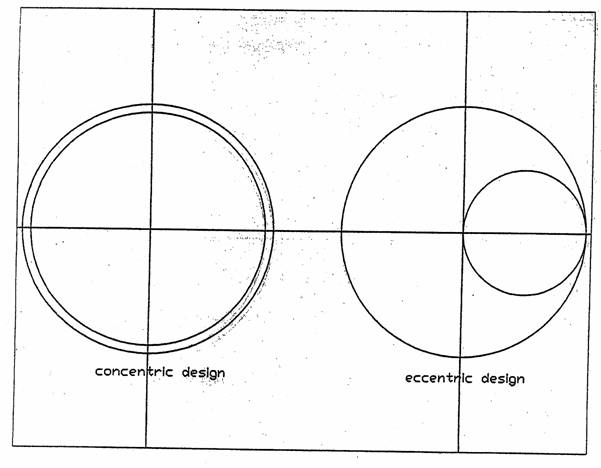
Grove Hill Pty Ltd v Great Western Corporation Pty Ltd (2002) 55 IPR 257 cited
Baygol Pty Ltd v Foamex Polystyrene Pty Ltd [2005] FCA 624 cited
Fresenius Medical Care Australia Pty Ltd v Gambro Pty Ltd [2005] FCAFC 220 cited
Kirin-Amgen Inc v Hoeschst Marion Roussel Ltd [2005] 1 All ER 667 cited
BREVILLE PTY LTD v THE WAREHOUSE GROUP (AUSTRALIA) PTY LTD
NSD 183 OF 2005
LINDGREN J
23 DECEMBER 2005
SYDNEY
|
IN THE FEDERAL COURT OF AUSTRALIA |
|
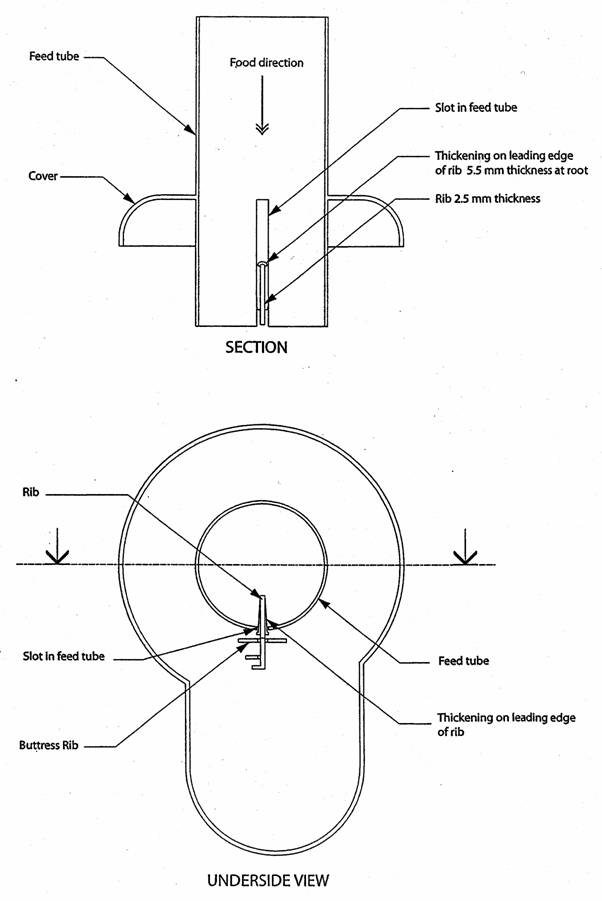
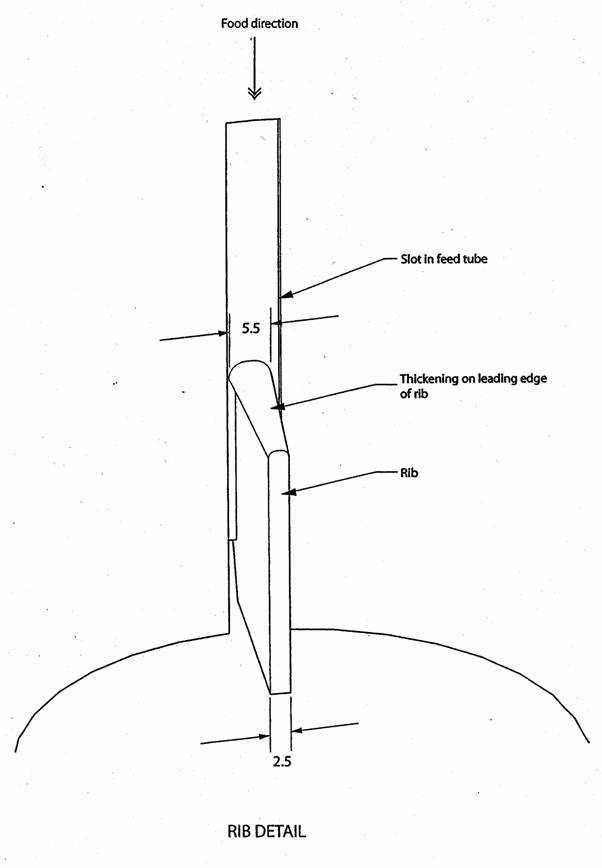
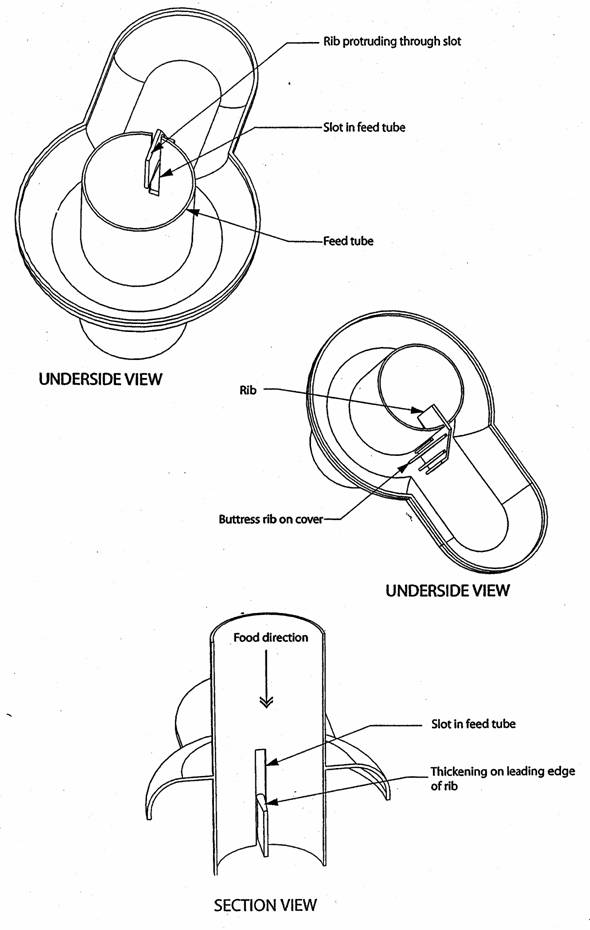
|
NEW SOUTH WALES DISTRICT REGISTRY |
NSD 183 OF 2005 |
|
BETWEEN: |
BREVILLE PTY LTD ACN 000 092 928 APPLICANT
|
|
AND: |
THE WAREHOUSE GROUP (AUSTRALIA) PTY LTD ACN 003 038 702 RESPONDENT
|
|
LINDGREN J |
|
|
DATE OF ORDER: |
23 DECEMBER 2005 |
|
WHERE MADE: |
SYDNEY |
THE COURT ORDERS THAT:
1. The application be dismissed.
2. The applicant pay the respondent’s costs.
Note: Settlement and entry of orders is dealt with in Order 36 of the Federal Court Rules.
|
IN THE FEDERAL COURT OF AUSTRALIA |
|
|
NEW SOUTH WALES DISTRICT REGISTRY |
NSD 183 OF 2005 |
|
BETWEEN: |
ACN 000 092 928 APPLICANT
|
|
AND: |
THE WAREHOUSE GROUP (AUSTRALIA) PTY LTD ACN 003 038 702 RESPONDENT
|
|
JUDGE: |
|
|
DATE: |
23 DECEMBER 2005 |
|
PLACE: |
SYDNEY |
REASONS FOR JUDGMENT
Introduction
1 The applicant (‘Breville’) sues the respondent (‘Warehouse’) for infringement of Breville’s Australian Patent 684615, which has a priority date of 25 May 1994, for an invention entitled ‘Fruit and Vegetable Juicer’.
2 The validity and priority date of the Patent are not in issue.
3 There is uncontradicted evidence that Warehouse has been selling in Australia a ‘Cascade Juice Bar model no CJB500 (‘the Cascade Juicer’).
4 On 11 May 2005 I ordered that liability be heard and determined separately from the question of relief.
5 Breville contends that by selling the Cascade Juicer in Australia, Warehouse has infringed claims 1, 2 and 5 – 9 of the Patent. Claims 2 and 5 – 9 are dependent on claim 1.
6 The case turns chiefly on the proper construction of two aspects of claim 1:
· ‘a knife or knives having an upwardly directed cutting edge’ with the result that when an article of food is pushed down by the food pusher, this causes the article to be ‘cut by the cutting edge of the knife or knives’, pressed onto the grating disc, and held against rotation by the knife or knives;
· ‘the knife or knives being attached to and supported by the tube’.
There is a further less important issue relating specifically to claims 5 and 6.
The Patent
7 The specification commences (p2 lines 1-30):
‘The present invention relates to a fruit and vegetable juicer of the kind in which a fruit or vegetable to be juiced is forced downwardly onto a rotating horizontal disc having grating teeth. The horizontal disc is circular and is mounted for rotation about a vertical axis. It is integral with and surrounded by a frusto-conical sieve. Juice is extracted from a fruit or vegetable by pressing it onto the rotating disc which grates material from the surface of the fruit or vegetable at the same time releasing the juice. The grated material or pulp and the juice are thrown upwardly and outwardly by centrifugal force against the sloping surface of the filter. The pulp carries on over the edge of the filter and is caught in a suitable receptacle. The finely filtered juice passes through the filter into another receptacle.
Such fruit and vegetable juicers are well known and function satisfactorily. All those available on the market do however have one drawback and that is that it has not been hitherto possible to make full use of the circular grating surface of the disc because it is necessary to reduce the size of the passage through which the material to be juiced is fed to the grating disc in order to ensure that the material is held against rotation with the disc. For this reason existing fruit and vegetable juicers are not as efficient as they might be.
The object of the present invention is to provide a fruit and vegetable juicer of the kind set forth in which full use can be made of the entire grating surface of the disc.’
8 The specification proceeds (p2 line 31 – p3 line 21) with the following consistory clause:
‘The present invention consists in a fruit and vegetable juicer of the kind comprising a substantially horizontal grating disc rotatable about a vertical axis and integral with and surrounded by a substantially frusto-conical sieve the sides of which project upwardly and outwardly from the grating disk, a feed tube arranged above the disc and a food pusher insertable into the tube to press food down on to the grating disc for grating, pulp and juice thereby produced flying upwardly and outwardly, the juice passing through the filter and the pulp passing over the filter for subsequent collection characterised in that the feed tube has an internal diameter substantially the same as that of the grating disc, there being provided in the tube a knife or knives having an upwardly directed cutting edge, the knife or knives being attached to and supported by the tube the food pusher being bifurcated or otherwise shaped to pass downwardly past the knife or knives, downward movement thereof causing an article of food to be cut by the cutting edge or edges of the knife or knives and pressed onto the grating disc, the food being held against rotation by the knife or knives.
It is preferred that the grating disc has at its centre means for abrading or otherwise removing that part of the fruit or vegetable lying on the axis or close to the axis of the grating disc.’ (my emphasis)
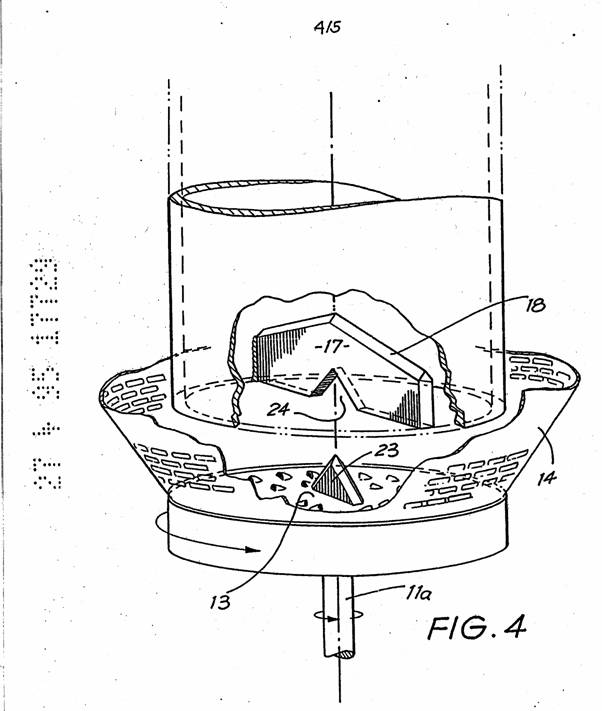
9 Figure 4 in the specification is an enlarged perspective view of a portion of the machine showing the shape of the knife. A copy of Figure 4 is annexure A to these reasons. Item 13 in Figure 4 is the rotating horizontal grating disc. Item 17 is the knife and Item 18 is its upward facing cutting edge. In Figure 4, the knife extends across the diameter of the feed tube, but claim 1 does not require that it do so. The specification states (p5 lines 4-15):
‘In one form of construction according to the present invention there is provided in the tube 16 a knife 17 which is preferably a stainless steel member having a sharpened upper edge 18. In the particular forms of the invention illustrated the upper edge 18 is V-shaped. While it is preferred that the knife 17 should extend across the feed tube for reasons of strength this is not absolutely necessary and the knife or knives may take any form in which it or they is or are effective to hold a fruit or vegetable against rotation provided that it is or they are held against rotation by being attached to and supported by the tube 16.’
10 The specification states that a juicer according to the present invention is distinguished by the fact that the internal diameter of the feed tube is substantially the same as the diameter of the grating disc. Indeed, the ‘main object’ of the invention, according to the specification, is to enable as much of the grating disc as possible to be used, and it is therefore clearly desirable that the area of the rotating disc covered by the feed tube should be as large as possible.
11 Adjunct Professor Allan Clifford Wightley, an expert witness called by Breville, explained, by reference to a diagram, the advantage in the present respect of Breville’s concentric design over that of the older style eccentric design juicer on the market. A copy of Professor Wightley’s diagram is annexure B to these reasons.
12 The specification also states (at p5 line 29 – p6 line 6):
‘Experimental work has shown that the grating disc is not entirely effective in abrading the central part of any food or vegetable lying on or close to the axis of the grating disc due to the relatively slow linear speed of points on the disc near the axis. It has been found that superior results can be obtained by providing at the centre of the disc an additional means for abrading the central part of the fruit or vegetable. In the embodiments of the invention shown this is accomplished by means of a triangular piece of steel 23 arranged at the centre of the grating disc 13 and having sharpened upper edges. In the preferred embodiments this is accommodated by providing a V shaped aperture 24 in the knife 17.’
13 The specification states that when the device is in use, an item of food such as an apple is inserted in the feed tube, the food pusher is inserted on the top of it, and the pusher pushes the apple or other item of food ‘on to the edge 18 which cuts it into two halves which move downwardly on either side of the knife 17 and are then prevented from rotating and are pressed onto the grating disc 13 by downward pressure on the food pushed. The action of the grating disc 13 is to grate the apple to produce both juice and pulp’.
14 The specification states (at p6 line 31 – p 7 line 3):
‘The significant feature of the construction is that substantially the whole area of the grating disc is available for use whereas in presently available constructions only a portion of this area can be used at any one time due to the necessity for providing some means of holding the foodstuff being juiced against rotation.
In the case of the present invention this function is performed by the knife 17.’
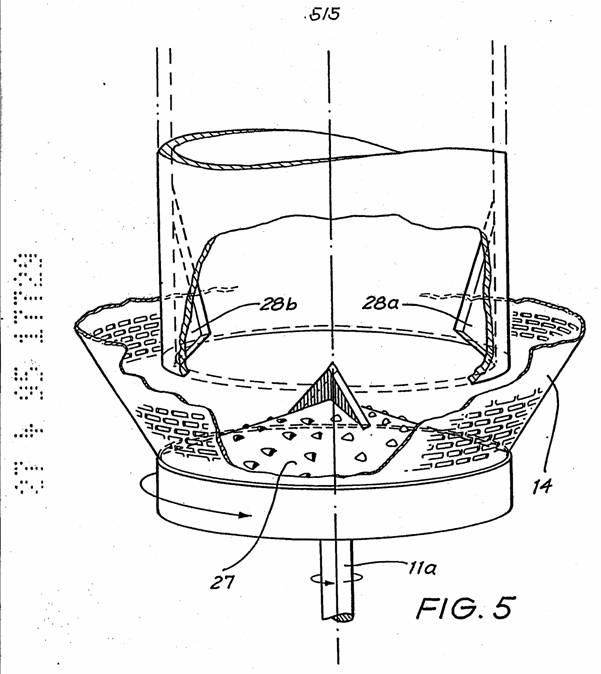
15 The specification states that ‘the knife may take various forms’, and gives ‘an alternative form’ in Figure 5, a copy of which is annexure C to these reasons. The specification observes that in Figure 5:
‘... the knife is in two parts 28a and 29b each secured to the side of the tube 16 and each having a sharpened upper cutting surface. The food pusher is suitably shaped to enable it to pass the knives 28a and 28b. It has been found that this arrangement is particularly effective in dealing with elongated foodstuff such as carrots, the end of which are held by the portions of the knife against rotating while being abraded by the disc 27.’
16 Claims 1, 2 and 5 – 9 of the Patent are as follows:
‘1. A fruit and vegetable juicer of the kind comprising a horizontal grating disc rotatable about a vertical axis and integral with and surrounded by a substantially frusto-conical filter sieve the sides of which project upwardly and outwardly from the grating disk, a feed tube arranged above the disc and a food pusher insertable into the tube to press food down on to the grating disc for grating, pulp and juice thereby produced flying upwardly and outwardly, the juice passing through the filter and the pulp passing over the filter for subsequent collection characterised in that the feed tube has an internal diameter substantially the same as that of the grating disc, there being provided in the tube a knife or knives having an upwardly directed cutting edge, the knife or knives being attached to and supported by the tube, the food pusher being bifurcated or otherwise shaped to pass downwardly past the knife or knives, downward movement thereof causing an article of food to be cut by the cutting edge or edges of the knife or knives and pressed onto the grating disc, the food being held against rotation by the knife or knives.
2. A fruit and vegetable juicer as claimed in claim 1 wherein the grating disc has at its center means for abrading or otherwise removing that part of the fruit or vegetable lying on the axis or close to the axis of the grating dish [sic – disc].
...
5. The juicer of claim 2, wherein:
the means for abrading comprises a pair of sharpened upper edges, one sharpened upper edge located on either side of a centre of the disc.
6. The juicer of either of claims 1 or 4, wherein:
the grating disc further comprises a pair of sharpened upper edges, one sharpened upper edge located on either side of a centre of the disc.
7. The juicer of any one of claims 1 – 5, wherein:
the sides of the sieve are not stopped.
8. The juicer of any one of claims 1 – 7, wherein:
the feed tube and the pusher mechanically cooperate, along the entire length of the feed tube so that an orientation guide for the pusher is provided;
a correct orientation of the pusher with respect to the knife or knives being determined by the guide.
9. The juicer of any one of claims 1 – 8, wherein:
the feed tube and the pusher mechanically cooperate, along the entire length of the feed tube so that an orientation guide for the pusher is provided in the feed tube;
a correct orientation of the pusher with respect to the knife or knives being determined by the guide;
the mechanical cooperation between the pusher and the guide extending from an upper extremity of the feed tube to the knife or knives.’ (my emphasis)
the evidence said to show infringement
17 The Cascade Juicer is in evidence.
18 Breville led evidence from Allan Clifford Wightley who is currently Special Project Consultant at Weir Group Plc and is Adjunct Professor in Mechanical and Mechatronic Engineering at the University of Technology, Sydney.
19 Warehouse led evidence from Andrew Crick who is the Principal of Schremmer Crick & Associates, which carries on business as design consultants.
20 Both experts are highly qualified and I need not detail their qualifications and experience.
21 Annexed to Breville’s submissions was a useful analysis of their affidavits in reference to the integers of claims 1, 2 and 5 – 9, which provides a means by which I can proceed to address the issues to be decided.
Independent claim 1 (and dependent claims 2 and 5 – 9)
1 ‘there being provided in the tube a knife or knives having an upwardly directed cutting edge’
22 Professor Wightley states:
‘The Cascade juicer has a blade which is approximately 2.5 mm thick, 15 mm wide and 37 mm deep made of plastic with rounded upper edge and a tapering profile (like a wedge) from the top view (when looked at from above) so that it will penetrate the food being forced onto it and prevent it from rotating. This blade is a knife. While the knife may not be sharp, it is designed to penetrate fruit and/or vegetables and I have no reason to believe that it does not do so effectively most of the time.’ (my emphasis)
23 On the other hand, Mr Crick states:
‘In my opinion, the Cascade Juicer does not have “a knife or knives” provided in the feed tube. The Cascade Juicer clearly has a plastic vane or rib, which protrudes radially into the feed tube. The leading edge of the rib has a wider portion than the general thickness of the rib proper. Annexed to this affidavit and marked “A” is a series of drawings I have prepared depicting the rib and the Cascade Juicer. Because it is thickened on its leading edge, the rib is not designed to have a cutting function and, in my opinion, it is not a knife.’
Copies of the series of drawings to which Mr Crick referred are annexures D, E and F to these reasons.
24 In response, Professor Wightley said that it was inappropriate to describe the plastic blade as a ‘vane’ or ‘rib’. He said that a vane is usually associated with liquid or gas flow which the vane directs, and that a rib is often used in engineering contexts to refer to a protrusion from the surface of a stressed plate or shell, which is designed to stiffen the plate or shell against buckling. He said that the blade in the Cascade Juicer’s ‘knife’ does not stiffen any other element, and is better described as a ‘knife’ than as a ‘vane’ or ‘rib’. He expressed the opinion that the ‘knife’ is ‘clearly designed to cut into fruit and/or vegetables’.
2 ‘downward movement [of the food pusher] causing an article of food to be cut by the cutting edge or edges of the knife or knives and pressed onto the grating disc’
25 The ‘cutting’ effect to which this integer refers is obviously relevant to the ‘knife’ integer discussed above.
26 Professor Wightley said that by its shape and configuration, the ‘knife’ of the Cascade Juicer was ‘apt to cut into the food and/or split it open as the food pusher is pushed downwards towards the grating disc’.
27 Mr Crick, on the other hand, said that the food was not ‘cut by the cutting edge’ of the rib, because the rib did not have a cutting edge. Rather, he said that if sufficient downward force was applied, the food would be ‘forced past the blunt edge of the rib’, which ‘may result in some of the larger pieces of food being split open’ while ‘smaller pieces of food [would] fall down either side of the vane or rib’.
3 ‘the knife or knives being attached to and supported by the tube’
28 Professor Wightley stated:
‘There is a clearance slot in the side of the feed tube for most of the length of the knife. The knife is directly joined to the feed tube at the top of the knife. The knife is also joined directly to the horizontal cover which is itself joined directly to the feed tube.’
29 He also said:
‘The configuration I have just described is quite peculiar in that it would be much simpler to fix the knife to the feed tube directly down the whole of the length of the knife. The configuration adopted in the Cascade Juicer adds to the complexity and cost of manufacturing the unit (at least in relation to tooling), and at the same time reduces the strength of the knife and makes the juicer more difficult to clean.’
In cross-examination Mr Crick agreed that the Cascade Juicer would be difficult to clean.
30 Mr Crick said that the feed tube was itself integral with, that is moulded as part of, the cover of the Cascade Juicer, while, functionally, the cover and the feed tube are distinct parts. He said:
‘The vane or rib does not project from the wall of the feed tube, rather it projects from the underside surface of the cover and passes through a slot in the feed tube, which is larger in size than the width of the rib. The rib is supported by the lower surface of the cover. The rib is buttressed by secondary supporting ribs, which also project from the underside surface of the cover.’
31 In his affidavit in reply, Professor Wightley said that Breville’s instructing solicitors had provided him with the Cascade Juicer’s feed tube in which the horizontal cover had been cut away by a machine (the cutaway version was admitted into evidence), and that his examination of it revealed that the knife was indeed joined to both the feed tube and the horizontal cover.
32 Mr Crick also examined the cutaway version, but disagreed that the knife was joined to the feed tube as well as to the horizontal cover. He said that his examination of the cutaway version showed that the rib or vane of the Cascade Juicer was separate from the feed tube, and that both were ‘joined’ only by reason of the section of the cover that was left, that is to say, the rib or vane was attached to the cover proper, not to the feed tube.
Dependent claims 5 and 6
4 ‘the means for abrading comprises a pair of sharpened upper edges, one sharpened upper edge located on either side of a centre of the disc’
33 Professor Wightley said that this integer was present in the Cascade Juicer, while Mr Crick said that it was not, because there had been no sharpening of the edges of the metal protrusions on either side of the centre of the grating disc. Mr Crick described the metal protrusions:
‘These protrusions are approximately one millimetre in height and pressed from the disc material. The leading side and top surface of the protrusions are set somewhat less than 90 degrees and based on my examination of the edge of the protrusions, it has not been “sharpened”, as required by claims 5 and 6 of the Patent.’
Counsel for the parties agreed that this issue was simply to be resolved by my examination of the protrusions.
consideration
34 With respect to Professor Wightley and Mr Crick, the capacity for expert evidence to assist in this case was very limited. It was not suggested that any of the terms of the specification with which I am concerned were used as terms of art. The Cascade Juicer was in evidence, and its structure and manner of operation are readily understood upon inspection.
35 Evidence of Professor Wightley’s opinion that the blade is a knife and is attached to and supported by the feed tube, and of Mr Crick’s opinion that it is not a knife and is not attached to and supported by the feed tube, is clearly inadmissible: see the opinion rule in s 76(1) of the Evidence Act 1995 (Cth). The evidence of their opinions lies outside the exception to the opinion rule provided for in s 79 of that Act because those opinions are not wholly or substantially based on specialised knowledge based on their training, study or experience.
36 The experts’ evidence was not evidence that the notional skilled addressee would have understood the terms of claim 1 in a particular way at the relevant time: cf EI Dupont de Nemours & Co v Imperial Chemical Industries Plc (2002) 54 IPR 304 (‘Dupont’) at [59]. Since the evidence did not establish that there was a technical meaning of any of the expressions in claim 1 with which I am concerned, they are to be given their ordinary meanings: Photo Cure ASA v Queen’s University at Kingston (2005) 216 ALR 41 at [170] and authorities there cited. The construction of the specification is for the court: Allsop Inc v Bintang Ltd (1989) 15 IPR 686 at 697; Dupont at [60]; Sachtler GmbH & Co KG v RE Miller Pty Ltd (2005) 221 ALR 373 (‘Sachtler’) at [22], and cases cited in those authorities.
37 Claims 2, 5 and 6 are dependent on claim 1, claim 7 on claim 2, and claims 8 and 9 on claim 1. No independent submissions were addressed to claims 2, 7, 8 and 9.
Independent claim 1 (and dependent claims 2 and 5 – 9)
1 ‘there being provided in the tube a knife or knives having an upwardly directed cutting edge’
2 ‘downward movement [of the food pusher] causing an article of food to be cut by the cutting edge or edges of the knife or knives and pressed onto the grating disc’
Dictionary definitions
38 I was supplied with dictionary definitions of ‘knife’ as follows:
1. Chambers Concise 20th Century Dictionary: ‘an instrument for cutting’
2. The Macquarie Dictionary (Revised Edition):
‘1 A cutting instrument consisting essentially of a thin blade (usu. of steel and with a sharp edge) attached to a handle.
2 A knife like weapon; a dagger; a short sword.
3 Any blade for cutting, as in a tool or machine.’
3. McGraw-Hill, Dictionary of Scientific and Technical Terms (2nd ed): ‘A sharp-edged blade for cutting.’
4. The Collins Dictionary and Thesaurus:
‘1 A cutting instrument consisting of a sharp-edged blade of metal fitted into a handle or onto a machine.
2 A similar instrument used as a weapon.’
5. The New Shorter Oxford English Dictionary:
‘1 A cutting instrument composed of a blade (usu. of metal with usu. one long edge sharpened) and a handle into which this is fixed either rigidly or with a joint ...
2 A sharpened cutting blade forming part of a machine.’
6. The Australian Concise Oxford Dictionary:
‘1(a) A metal blade used as a cutting tool with usu. one long sharp edge fixed rigidly in a handle or hinged (cf PENKNIFE).
(b) A similar tool used as a weapon.
2 A cutting blade forming part of a machine.
3 ...’
7. Oxford English Dictionary:
‘1(a) A cutting instrument, consisting of a blade with a sharpened longitudinal edge fixed in a handle, either rigidly ... or with a joint ... The blade is generally of steel, but sometimes of other material ...
...
(d) A sharpened cutting-blade forming part of a machine, as of a straw-cutter, turnip-cutter, rag-engine, etc.’
39 I deduce from these definitions that, relevantly, in ordinary parlance, a knife necessarily has a blade with a sharpened edge designed for cutting.
Principles of construction
40 There is a tension between two ideas, the force of both of which has been felt in the construction of patent claims: first, there is the idea that a person should not be able to take the ‘pith and marrow’ or ‘substance’ of the patented invention and avoid infringement by sidestepping the language of the claims; and, secondly, there is the idea that the language of patent claims has been chosen by the patentee, sets the boundary of the patentee’s monopoly, and should not be extended by the Court to catch that which the patentee has left open to be done by others. Both ideas were referred to in, for example, Olin Corporation Ltd v Super Cartridge Co Pty Ltd (1977) 180 CLR 236 at 246 per Gibbs J.
41 This Court is frequently called upon to refer to the principles which govern the construction of patent claims. On each new occasion it seems that the same authorities plus the last preceding one are reviewed. And so the list lengthens.
42 The review frequently commences with reference to the ‘purposive’ construction of claims, famously advocated by Lord Diplock in delivering the judgment of the House of Lords in Catnic Components Ltd v Hill & Smith Ltd [1982] RPC 183 (‘Catnic’), in preference to a ‘literal’ construction of them. The point of that distinction was clear on the facts of that case. Claim 1 of the specification said ‘extend vertically’. The literal, acontextual meaning of this expression was an absolute: a one degree departure from the vertical marks non-verticality. But the skilled addressees would not have read the claim in that way. A 6 degree angle gave a reduction in load bearing capacity of only 0.6 percent, and an 8 degree angle, a reduction of only 1.2 percent. The question was whether the skilled addressee would have understood that a literal meaning was intended by the patentee to be ‘an essential requirement of the invention’ (at 243). Lord Diplock said that this question of construction does not arise if:
1. the allegedly infringing article’s departure from the claim, literally construed, would have a material effect on the way in which the invention worked; and
2. it would have been obvious to the skilled addressee at the date of publication of the specification that it would have that material effect.
If condition 1. is satisfied, but condition 2. is not, the skilled addressee would have been entitled to assume that the patentee thought that he:
‘had good reason for limiting his monopoly so strictly and had intended to do so, even though subsequent work by him or others in the field of the invention might show the limitation to have been unnecessary.’ (at 243)
43 The subsequent authorities, English and Australian, including ‘the Improver questions’, formulated in Improver Corporation v Remington Consumer Products Ltd [1990] FSR 181 at 188-189, have been recently reviewed in this Court by Finkelstein J in Root Quality Pty Ltd v Root Control Technologies Pty Ltd (2000) 177 ALR 231, Gyles J in Grove Hill Pty Ltd v Great Western Corporation Pty Ltd (2002) 55 IPR 257; Tamberlin J in Baygol Pty Ltd v Foamex Polystyrene Pty Ltd [2005] FCA 624 (‘Baygol’); Bennett J in Sachtler; and a Full Court in Fresenius Medical Care Australia Pty Ltd v Gambro Pty Ltd [2005] FCAFC 220. As well, the English authorities were recently reviewed by the House of Lords in Kirin-Amgen Inc v Hoeschst Marion Roussel Ltd [2005] 1 All ER 667.
44 I am grateful for these reviews of the legal principles but can decide this case by saying that, in my opinion, when proper allowance is made for a purposive construction, the plastic blade (I will call it a ‘blade’, but in a strictly neutral sense and in order to avoid ‘knife’, ‘rib’ and ‘vane’) of the Cascade Juicer is not, on any reckoning, ‘a knife ... having an upwardly directed cutting edge’ (and is not, on any reckoning, ‘attached to and supported by the tube’) within claim 1.
45 The circumstances of this case have little resemblance to a case like Catnic and are rather more akin to those of Baygol, in which claim 1 of the patent said ‘concrete spacer’ and the allegedly infringing product used plastic spacers. Tamberlin J said (at [28]):
‘It is obvious that “concrete”, whether used as an adjective or a noun, is not a word which is capable of including “plastic”.’
and
‘In the present case, there is no such range or spectrum of permissible interpretation which could permit the word “concrete” to mean material other than “concrete”.’
46 Baygol is not on all fours with the present case, either, however. Both concrete and plastic were materials known and named as distinct categories independently of, and prior to, the manufacture of the allegedly infringing product. The plastic blade which I am considering is unique in the sense that it did not exist prior to being created as part of the Cascade Juicer, and the question is whether this newly created unique thing falls within the words ‘a knife ... having an upwardly directed cutting edge’ within the meaning of claim 1. The case is perhaps like Catnic and unlike Baygol in this respect: it may be seen to raise the question how blunt a blade may be, and still be ‘a knife ... having an upwardly directed cutting edge’ – a question of degree of a kind having no relevance to Baygol’s distinction between concrete and plastic.
Resolution of this case
47 Plainly, the blade is not a ‘knife’ according to the ordinary meaning of that term. It does not have a sharpened edge designed to ‘cut’. Moreover, of the three edges which intrude into the feed tube (two horizontal ones, one facing upwards and the other downwards, and a vertical one facing sideways), the one facing upwards is ‘the least sharp’, because its ‘edge’ is actually thickened or bluntened by reason of its taking the form of a wedge-shaped ‘cap’. It seemed to me that even Professor Wightley had a preference, over all, for saying that the ‘knife’ would ‘penetrate’ or ‘split’, as against saying, without qualification, that it would ‘cut’, a piece of fruit or vegetable (see [22], [24]-[26]).
48 It is clear that the drafter had in mind a ‘knife’ in the ordinary sense of the term. Claim 1 refers to its ‘upwardly directed cutting edge’ and to its ‘causing an article of food to be cut by the cutting edge or edges of the knife or knives’.
49 If the blade were to be separated from the larger structure of which it forms part and from which it gains stability, no one would contemplate using its upper edge, or for that matter any of its edges, for the purpose of cutting. It is only because it is held firmly in place by reason of its being part of the larger structure, that it is possible, by dint of force applied to the food pusher, to push a piece of fruit or vegetable through and, at least partially, past it. Senior counsel for Breville performed that exercise on an apple in the course of the hearing. My observation was that a significant degree of downward force had to be applied by him in order to force the apple through and past the blade. Predictably, the result was not a clean cut in the apple but a jagged penetration.
50 Is there any purposive construction which would demonstrate that the expression ‘a knife ... having an upwardly directed cutting edge’ has a special meaning in claim 1?
51 The main role of the knife in claim 1 is not to cut, but to present a ‘stay’ or ‘buffer’ to hold a piece or pieces of fruit or vegetable in place against the rotating force of the abrading disc. It is the side of the knife, not its upwardly directed cutting edge, that performs this function. Thus, the main object of the invention would not be achieved if, for example, a knife with upward facing cutting edge were located only towards the top of the feed tube. In that case, the resulting sliced pieces of food would simply fall down through the feed tube onto the rotating disc and rotate with it, rather than being held in place against the rotation.
52 We do not know why claim 1 was framed as it was. One possible explanation is that, since the invention allowed a wider feed tube than the off-centre feeder tubes of the juicers that were already on the market, it may have been thought that the feed tube would be able to accommodate larger pieces of fruit or vegetable, and the upwardly directed cutting edge of the blade would eliminate the need for certain pre-feed cutting of some pieces of fruit or vegetable. Professor Wightley’s diagram referred to at [11] above illustrates this.
53 Another possibility is simply that the inventor could not imagine that a person would wish to have to force a piece of fruit or vegetable over a blunt object in preference to having it easily sliced as it passed over the upwardly facing cutting edge of a knife.
54 Whatever the reason may have been, the integer of a knife or knives having an upwardly directed cutting edge is an essential integer. The patentee is to be held to the terms of that integer, and the Court is not at liberty to extend its monopoly by reading the integer as if it said something like: ‘a blade or blades having an upwardly directed edge of such narrowness that food is capable of being pushed through and, at least partially past it’.
55 While the blade of the Cascade Juicer achieves the main object of the patented invention, performing the function of a stay or buffer against the rotation of the grating disc, it does not do so by means of a knife having an upwardly directed cutting edge, and does not do so as efficiently as it would if it possessed that feature.
56 For this reason alone, the Cascade Juicer falls outside the terms of claim 1 and does not infringe the Patent.
3 ‘the knife or knives being attached to and supported by the tube’
57 I have examined the cutaway version of the Cascade Juicer. I do not think that the blade is ‘attached to and supported by the tube’ within the meaning of that expression in claim 1. In my view, the fact that the blade, the tube and the cover are all a single structure does not satisfy that description. While the cut away feed tube shows that a single plastic unit of which the blade forms part is attached for a minute distance to the external surface of the feed tube, this does not signify that the blade itself (within the tube) is ‘attached to and supported by the tube’ (my emphasis). The support referred to in claim 1 is support against the rotational force of the fruit or vegetable on the rotating grating disc. The knife itself is not attached to the feed tube and supported by that attachment against that rotational force.
58 The Cascade Juicer therefore does not replicate this integer either.
Dependent claims 5 and 6
4 ‘the means for abrading comprises a pair of sharpened upper edges, one sharpened upper edge located on either side of the centre of the disc’
59 I have examined the pair of ‘edges’ located on either side of the centre of the disc, but they do not have a ‘sharpened upper edge’ in my view.
60 Accordingly, this integer of claims 5 and 6 is not present in the Cascade Juicer either.
conclusion
61 For the above reasons, the application should be dismissed with costs.
|
I certify that the preceding sixty-one (61) numbered paragraphs are a true copy of the Reasons for Judgment herein of the Honourable Justice Lindgren. |
Associate:
Dated: 22 December 2005
|
Counsel for the Applicant: |
Mr J V Nicholas SC |
|
|
|
|
Solicitor for the Applicant: |
Truman Hoyle Lawyers |
|
|
|
|
Counsel for the Respondent: |
Mr S C G Burley and Ms C L Cochrane |
|
|
|
|
Solicitor for the Respondent: |
Griffin Vincent IT & IP Lawyers |
|
|
|
|
Date of Hearing: |
19 October 2005 |
|
|
|
|
Date of Judgment: |
23 December 2005 |
ANNEXURE A
ANNEXURE B
ANNEXURE C
ANNEXURE D
ANNEXURE E
ANNEXURE F