FEDERAL COURT OF AUSTRALIA
Dias Aluminium Products Pty Ltd v Ullrich Aluminium Pty Ltd (No. 2)
[2005] FCA 1400
PRACTICE AND PROCEDURE – costs – where each party enjoyed a measure of success – whether the court should depart from the rule that costs follow the event – respondent ordered to pay a percentage of the applicant’s costs – respondent’s right of election between delivery up or destruction – what information is required to enable a successful applicant to make an informed election as to damages or an account.
Federal Court of Australia Act 1976 (Cth) s 43(2)
Federal Court Rules O 62 r 15, O 15 r 15
Brugger v Medicaid [1996] FSR 362 cited
Colgate‑Palmolive Company v Cussons Pty Ltd (1993) 46 FCR 225 cited
Cummings v Lewis (1993) 41 FCR 559 referred to
Dodds Family Investments Pty Ltd v Lane Industries Pty Ltd (1993) 26 IPR 261 followed
Guglielmin v Trescowthick (No. 4) [2005] FCA 140 referred to
Hughes v Western Australia Cricket Association (Inc.) (1986) ATPR 40-748 referred to
Innovative Agricultural Products Pty Ltd v Crawshaw (No. 2) (1996) AIPC 91-281 referred to
James v Surf Road Nominees Pty Ltd (N.o 2) [2005] NSWCA 296 referred to
LED Builders Pty Ltd v Eagle Homes Pty Ltd (No. 3) (1996) 36 IPR 293 referred to
Mansfield v Australian Crime Commission [2003] FCA 1632 referred to
Paton Calvert & Co Ltd v Rosedale Associated Manufacturers Ltd [1966] 83 RPC 61 followed
Spotwire Pty Ltd v Visa International Service Assn [2004] FCA 1481 referred to
Standard Commodities Pty Ltd v Societe Socinter Department Centragel [2005] 54 ACSR 496 referred to
DIAS ALUMINIUM PRODUCTS PTY LTD v ULLRICH ALUMINIUM PRODUCTS PTY LTD
VID 123 of 2003
CRENNAN J
4 OCTOBER 2005
MELBOURNE
|
IN THE FEDERAL COURT OF AUSTRALIA |
|
|
VICTORIA DISTRICT REGISTRY |
V123 OF 2002 |
|
BETWEEN: |
DIAS ALUMINIUM PRODUCTS PTY LTD APPLICANT
|
|
AND: |
ULLRICH ALUMINIUM PTY LTD RESPONDENT
|
|
BETWEEN: |
ULLRICH ALUMINIUM PTY LTD CROSS-CLAIMANT |
|
AND: |
DIAS ALUMINIUM PRODUCTS PTY LTD CROSS-RESPONDENT |
|
CRENNAN J |
|
|
DATE OF ORDER: |
|
|
WHERE MADE: |
MELBOURNE |
THE COURT DECLARES THAT:
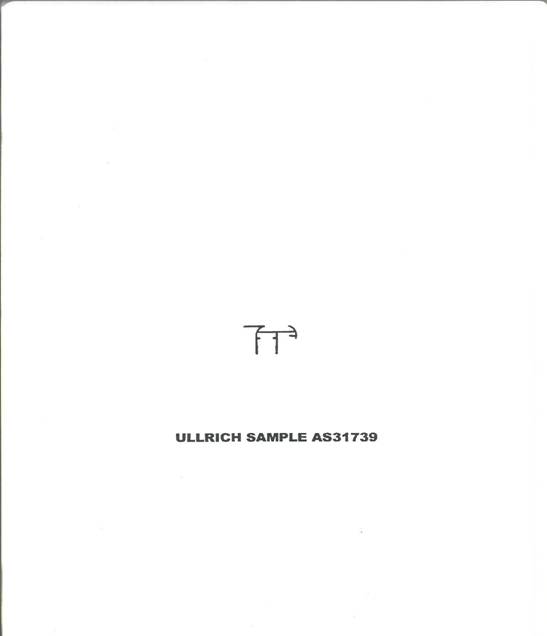
1. The respondent has infringed the monopoly in the applicant’s Australian design registration number 115996 (‘Design 115996’) by having, without the licence or authority of the applicant –
(i) applied an obvious imitation of Design 115996 to wardrobe door panel stiles, the features of shape and configuration of which are depicted in Annexure A; and
(ii) sold, offered for sale and kept for sale, wardrobe door panel stiles to which an obvious imitation of Design 115996 has been applied, the features of shape and configuration of which are depicted in Annexure A.
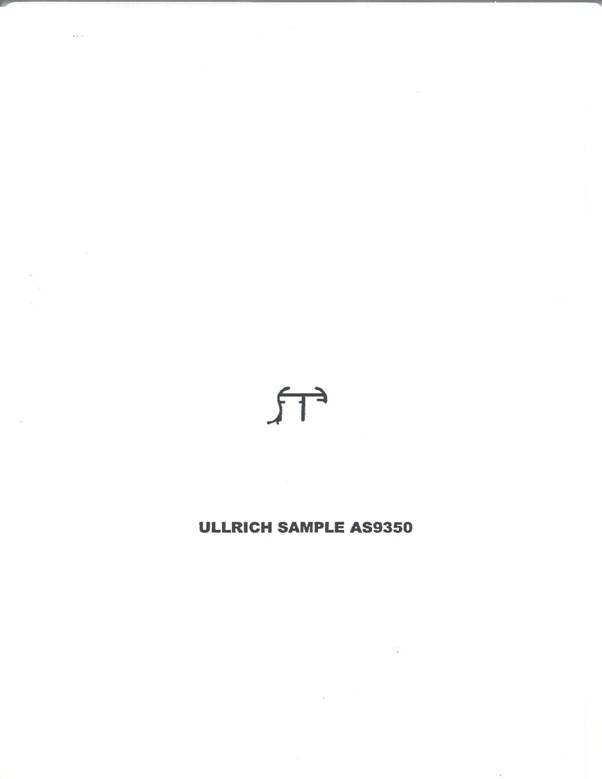
2. The respondent has infringed the monopoly in the Applicant’s Australian design registration number 123036 (‘Design 123036’) by having, without the licence or authority of the applicant –
(i) applied an obvious imitation of Design 123036 to wardrobe door panel stiles, the features of shape and configuration of which are depicted in Annexure B; and
(ii) sold, offered for sale and kept for sale, wardrobe door panel stiles to which an obvious imitation of Design 123036 has been applied, the features of shape and configuration of which are depicted in Annexure B.
3. The entry effecting the registration of Australian design registration number 116380 (‘Design 116380’) was wrongly made in and has at all material times wrongly remained on the Register of Designs and is and has at all material times been wholly invalid.
THE COURT ORDERS THAT:
1. The respondent, whether by itself, its servants or agents or howsoever otherwise, be restrained from infringing the monopoly in Design 115996 without the licence, authority or consent of the applicant by –
(i) applying an obvious imitation of Design 115996 to wardrobe door panel stiles, the features of shape and configuration of which are depicted in Annexure A; or
(ii) selling, offering for sale or keeping for sale, wardrobe door panel stiles to which an obvious imitation of Design 115996 has been applied, the features of shape and configuration of which are depicted in Annexure A.
2. The respondent, whether by itself, its servants or agents or howsoever otherwise, be restrained from infringing the monopoly in Design 123036 without the licence, authority or consent of the applicant by –
(i) applying an obvious imitation of Design 123036 to wardrobe door panel stiles, the features of shape and configuration of which are depicted in Annexure B; or
(ii) selling, offering for sale or keeping for sale, wardrobe door panel stiles to which an obvious imitation of Design 123036 has been applied, the features of shape and configuration of which are depicted in Annexure B.
3. The registration of Design 116380 be expunged from the Register of Designs pursuant to section 39 of the Designs Act 1906 (Cth).
4. The respondent, on or before 30 November 2005, destroy all wardrobe door panel stiles the features of shape and configuration of which are depicted in Annexure A and Annexure B which are in its possession, custody, power or control, the sale, supply or use of which by the respondent, its servants or agents would be in breach of the foregoing injunctions or either of them.
5. By 30 November 2005, the respondent file and serve an affidavit verifying that it has destroyed all the articles referred to in paragraph 4 and the date(s) and place(s) of such destruction.
6. The respondent give the applicant no less than 72 hours written notice of when it proposes to undertake the destruction of the articles referred to in paragraph 4, the place and time where this is to occur, and the applicant shall have the right to have a representative present when the destruction takes places, with the respondent bearing the reasonable costs of the applicant’s attendance.
7. On or before 30 November 2005, the respondent file and serve an affidavit setting forth:
(a) the quantity (as indicated by contemporaneous manufacturing records, whether measured by weight in tonnage, length in metres or otherwise) of articles to which the respondent, whether by itself, its servants or agents or howsoever otherwise, in Australia applied, on or after 28 February 1996, an obvious imitation of Design 115996 (the features of shape and configuration of which are depicted in Annexure A) or an obvious imitation of Design 123036 (the features of shape and configuration of which are depicted in Annexure B);
(b) the quantity (as indicated by contemporaneous importation records, whether measured by weight in tonnage, length in metres or otherwise) of articles imported on or after 28 February 1996 into Australia, by the respondent, whether by itself, its servants or agents or howsoever otherwise, for sale or for use for the purposes of any trade or business, in respect of which –
(i) Design 115996 is registered and to which an obvious imitation of Design 115996 (the features of shape and configuration of which are depicted in Annexure A) has been applied outside Australia; or
(ii) Design 123036 is registered and to which an obvious imitation of Design 123036 (the features of shape and configuration of which are depicted in Annexure B) has been applied outside Australia;
(c) the gross sale price in respect of sales, made on or after 28 February 1996, of articles by the respondent, whether by itself, its servants or agents or howsoever otherwise, to which an obvious imitation of Design 115996 (the features of shape and configuration of which are depicted in Annexure A) or an obvious imitation of Design 123036 (the features of shape and configuration of which are depicted in Annexure B) has been applied in Australia;
(d) the gross sale price in respect of sales, made on or after 28 February 1996, of articles by the respondent, whether by itself, its servants or agents or howsoever otherwise -
(i) in respect of which Design 115996 is registered and to which an obvious imitation of Design 115996 (the features of shape and configuration of which are depicted in Annexure A) has been applied outside Australia;
(ii) in respect of which Design 123036 is registered and to which an obvious imitation of Design 123036 (the features of shape and configuration of which are depicted in Annexure B) has been applied outside Australia.
8. The respondent exhibit to the affidavit referred to in paragraph 7 above a copy of summary accounts of the respondent, relating to the sales referred to in paragraph 7 above, the approximate cost of those sales, or both, for each year or part thereof in which the said articles were manufactured, imported or sold, and particulars as to how the estimate of costs was made.
9. The affidavit referred to in paragraph 7 shall set out the details of licences, if any, granted by the respondent in relation to the manufacture, sale and/or distribution of any of the articles referred to in paragraph 1, the identity of the licensee(s), the quantity of articles manufactured, sold or distributed under any such licence (as indicated by contemporaneous records, whether measured by weight in tonnage, length in metres or otherwise), and shall append a copy of any such licence(s).
10. The applicant has liberty to apply to seek discovery in relation to the issues of damages and an account of profits after receipt of the affidavit referred to in paragraph 7 above.
11. The applicant notify the respondent of its election between damages and an account of profits by 27 January 2006
12. There be a further trial in order to determine the amount of any damages (or at the applicant’s option, account of profits) due by the respondent to the applicant in respect of infringement of the monopoly in Design 115996 and the monopoly in Design 123036 and interest thereon during such period and at such rate as the Court shall fix.
13. The parties attend a mediation and case management conference on or by 1 March 2006.
14. The respondent pay 40%of the applicant’s party-party costs in the proceeding, including reserved costs, such costs to be taxed in default of agreement.
15. Liberty to apply generally be reserved.
16. A directions hearing be held on a date to be fixed after 1 March 2006.
Note: Settlement and entry of orders is dealt with in Order 36 of the Federal Court Rules.
|
IN THE FEDERAL COURT OF AUSTRALIA |
|
|
VICTORIA DISTRICT REGISTRY |
V123 OF 2002 |
|
BETWEEN: |
DIAS ALUMINIUM PRODUCTS PTY LTD APPLICANT
|
|
AND: |
ULLRICH ALUMINIUM PTY LTD RESPONDENT
|
|
BETWEEN: |
ULLRICH ALUMINIUM PTY LTD CROSS-CLAIMANT |
|
AND: |
DIAS ALUMINIUM PRODUCTS PTY LTD CROSS-RESPONDENT |
|
JUDGE: |
CRENNAN J |
|
DATE: |
|
|
PLACE: |
MELBOURNE |
REASONS FOR JUDGMENT
1 On 14 September 2005 a decision was delivered in respect of the claim and cross‑claim in this proceeding. Neither party was wholly successful. The proceeding involved four separate claims seeking relief in respect of four separate designs. The applicant succeeded on its claims in respect of two of those designs.
2 Section 43(2) of the Federal Court of Australia Act 1976 (Cth) confers an unfettered discretion on the Court to make orders as to costs. See also Order 62, r 15 of the Federal Court Rules. The usual order as to costs is that a successful party will have its costs paid on a party and party basis by the unsuccessful party: Colgate‑Palmolive Company v Cussons Pty Ltd (1993) 46 FCR 225 at 232-234 (Sheppard J).
3 It will, however, be an appropriate exercise of the Court’s discretion to deprive a party of its costs in respect of an issue which it lost at trial: Cummings v Lewis (1993) 41 FCR 559 at 599-604; Hughes v Western Australia Cricket Association (Inc.) (1986) ATPR 40-748 at 48,136; Innovative Agricultural Products Pty Ltd v Crawshaw (No. 2) (1996) AIPC 91-281 at 37,829; James v Surf Road Nominees Pty Ltd (No. 2) [2005] NSWCA 296 at [32]-[36], [40]; Guglielmin v Trescowthick (No. 4) [2005] FCA 140 at [6]; Spotwire Pty Ltd v Visa International Service Assn [2004] FCA 1481 at [13]-[14]; Standard Commodities Pty Ltd v Societe Socinter Department Centragel [2005] 54 ACSR 496 at [18]-[29]; Dodds Family Investments Pty Ltd v Lane Industries Pty Ltd (1993) 26 IPR 261 at 271-272; Mansfield v Australian Crime Commission [2003] FCA 1632 at [11]-[14].
4 The applicant submitted that an appropriate order, reflecting an appropriate exercise of apportionment, would be that the applicant be awarded 50% of its party and party costs of the proceeding.
5 The matters relied on in support of this submission are that each of the four registered designs were separate components of the wardrobe sliding door systems, but the two stiles in respect of which it succeeded were critical components. Next, it also relies on the quantity of prior art adduced in respect of the two stiles by comparison with the prior art adduced in respect of the door jamb, which was a much simpler component. It also relies on the time taken to deal with significant evidentiary contests concerning issues of prior publication and prior use.
6 The respondent submitted that any appropriate exercise of the discretion as to costs is to make no order as to costs. To support this submission the respondent urged that the time taken in evidence and argument in respect of the two stiles was approximately equal to the time taken on the balance of the case on which it succeeded. It was also submitted that relevant evidence from Mr Paterson was given late and that significant time was spent on the evidence concerning the tracking device.
7 An allocation of costs in a case of mixed results when neither party is wholly successful can never be done with mathematical precision: Dodds Family Investments Pty Ltd v Lane Industries Pty Ltd (1993) 26 IPR 261 at 272 per Gummow, French and Hill JJ.
8 I accept the submissions for the applicant that a greater proportion of the time and forensic effort in the proceeding was directed to the applicant’s two successful claims. It was implicitly accepted on behalf of both parties that the claims in respect of the door jamb raised the simplest issue. However, the costs order should reflect the respondent’s success in respect of the door jamb and the tracking device.
9 Doing the best I can to exercise the discretion appropriately in all the circumstances, in the light of the authorities, I propose to order that the respondent pay 40% of the applicant’s costs of the claim and cross‑claim to be taxed as one set of costs. This reflects as best I can the proportional success of the applicant on its claims, without ignoring the respondent’s proportional success in its defence and cross‑claim.
10 There was also a dispute between the parties about whether infringing products should be the subject of an order for delivery up or an order for destruction under supervision.
11 The respondent relied on the accepted principle that such orders support the injunctive relief granted: S Thorley et al, Terrell On the Law of Patents, 15th edn, Sweet & Maxwell, London, 2000 at [13.48] and [13.50]; RP Meagher et al, Meagher, Gummow and Lehane’s Equity Doctrines and Remedies, 4th edn, Butterworths, Sydney at [27-050].
12 The textbook writers recognise the ordinary order gives to the infringer the choice between delivery up and destruction: Paton Calvert & Co Ltd v Rosedale Associated Manufacturers Ltd [1966] 83 RPC 61. Considerations of convenience have been raised in argument on behalf of the respondent.
13 Destruction under supervision was finally agreed to be the appropriate course, although there was a contest about whether dies and moulds as well as infringing products should be ordered to be destroyed. I have declined to make that order at this stage in the absence of evidence or argument on the point. However, liberty to apply generally has been reserved to both parties.
14 There was a further contest about whether discovery should be ordered in aid of the applicant’s election between damages or an account of profits. Dicta relied on by the respondent recognised that the information needed to make an informed election could be provided other than by discovery: LED Builders Pty Ltd v Eagle Homes Pty Ltd (No. 3) (1996) 36 IPR 293 at 297, 305 and 307 (Lindgren J); see also Brugger v Medicaid [1996] FSR 362 at 363-364 (Jacob J). It appears appropriate at this stage to order that information be provided which may well prove sufficient for an informed election whilst reserving a right to the applicant to seek further discovery should it prove necessary: see O 15, r 15 of the Federal Court Rules. This has included an order requiring the respondent to give details of relevant licences if any.
|
I certify that the preceding fourteen (14) numbered paragraphs are a true copy of the Reasons for Judgment herein of the Honourable Justice Crennan. |
Associate:
Dated: 4 October 2005
|
Counsel for the Applicant: |
C D Golvan SC Dr S Ricketson |
|
|
|
|
Solicitor for the Applicant: |
Hunt & Hunt |
|
|
|
|
Counsel for the Respondent: |
B N Caine SC M S Goldblatt |
|
|
|
|
Solicitor for the Respondent: |
Middletons Lawyers as agents for Geoff Bartels Lawyers |
|
|
|
|
Date of Hearing: |
14 September 2005 |
|
|
|
|
Date of Judgment: |
4 October 2005 |
ANNEXURE A
ANNEXURE B