

FEDERAL COURT OF AUSTRALIA
Sachtler GMBH & Co KG v RE Miller Pty Ltd [2005] FCA 788
PATENT – infringement – mechanical combination – principles of claim construction – evidence on technical and non-technical terms – evidence on working of the embodiments – relevance of description to construction of claim – principles of infringement – relevance of purposive construction – Catnic – Improver questions – relevance of Protocol questions – it is not infringement to take substantial idea but not essential integers – meaning of “pith and marrow” – preferred embodiment not within claim 1 – claim not necessarily coexistent with inventive step – limitation by result – no infringement
Patents Act 1990 (Cth)
Aktiebolaget Hassle v Alphapharm Pty Ltd (2002) 212 CLR 411
Allsop Inc v Bintang Ltd (1989) 15 IPR 686
Baygol Pty Ltd v Foamex Polystyrene Pty Ltd [2005] FCA 624
British United Shoe Machinery Company Ld v A Fussell & Sons Ld (1908) 25 RPC 631
Catnic Components Limited v Hill & Smith Limited [1982] RPC 183
Clark v Adie (1875) LR 10 ChApp 667
Commonwealth Industrial Gases Ltd v MWA Holdings Pty Ltd (1970) 180 CLR 160
Décor Corporation Pty Ltd v Dart Industries Inc (1988) 13 IPR 385
EI Dupont De Nemours & Co v Imperial Chemical Industries PLC (2002) 54 IPR 305
Electric & Musical Industries v Lissen Ltd [1938] 4 All ER 221
Festo Corp v Shoketsu Kinzoku Kogyu Kabushiki Co Ltd (2000) 234 F 3d 558
Flexible Steel Lacing Company v Beltreco Ltd (2000) 49 IPR 331
General Tire & Rubber Co v Firestone Tyre & Rubber Co Ltd [1972] RPC 457
Glaverbel SA v British Coal Corp [1994] RPC 443
Improver Corporation v Remington Consumer Products Limited [1990] FSR 181
Interlego AG v Toltoys Pty Ltd (1973) 130 CLR 461
Jupiters Ltd v Neurizon Pty Ltd[2005] FCAFC 90
Kimberly-Clark Australia Pty Ltd v Arico Trading International Pty Ltd (2001) 207 CLR 1
Kirin-Amgen Inc v Hoeschst Marion Roussel Ltd [2005] 1 All ER 667
Leonardis v Sartas No 1 Pty Ltd (1996) 67 FCR 126
Martin & Biro Swan Ltd v Millwood Ltd [1956] RPC 125
Meyers Taylor Pty Ltd v Vicarr Industries Pty Ltd (1977) 137 CLR 228
Minnesota Mining & Manufacturing Co v Beiersdorf (Aust) Ltd (1980) 144 CLR 253
Nicaro Holdings Pty Ltd v Martin Engineering Co (1990) 91 ALR 513
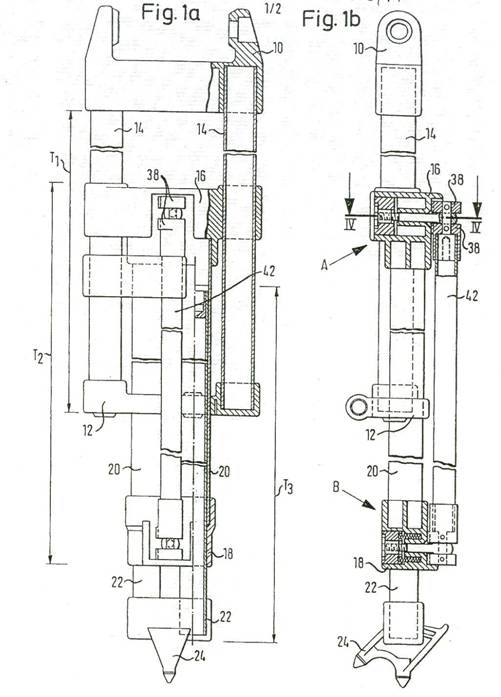
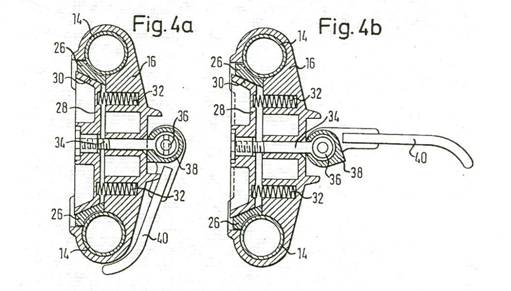
NV Philips Gloeilampenfabrieken v Mirabella International Pty Ltd (1993) 26 IPR 513
Olin Corporation v Super Cartridge Co Pty Ltd (1977) 180 CLR 236
Patent Gesellschaft AG v Saudi Livestock Transport and Trading Co (1996) 33 IPR 426
PhotoCure ASA v Queen’s University at Kingston [2005] FCA 344
Populin v HB Nominees Pty Ltd (1982) 41 ALR 471
Rehm Pty Ltd v Websters Security Systems (International) Pty Ltd (1988) 81 ALR 79
Rescare Ltd v Anaesthetic Supplies Pty Ltd (1992) 111 ALR 205
Root Quality Pty Ltd v Root Control Technologies Pty Ltd (2000) 49 IPR 225
Sartas No 1 Pty Ltd v Koukourou & Partners Pty Ltd (1990) 30 IPR 479
Stanway Oyster Cylinders Pty Ltd v Marks (1996) 66 FCR 577
Walker v Alemite Corporation (1933) 49 CLR 643
Welch Perrin & Co Pty Ltd v Worrel (1961) 106 CLR 588
SACHTLER GMBH & CO KG (FORMERLY SACHTLER AG) v R E MILLER PTY LTD
NSD161 OF 2003
BENNETT J
15 JUNE 2005
SYDNEY
|
IN THE FEDERAL COURT OF AUSTRALIA |
|
|
NEW SOUTH WALES DISTRICT REGISTRY |
NSD161 OF 2003 |
|
BETWEEN: |
SACHTLER GMBH & CO KG (FORMERLY SACHTLER AG) APPLICANT
|
|
AND: |
R E MILLER PTY LTD RESPONDENT
|
|
BENNETT J |
|
|
DATE OF ORDER: |
15 JUNE 2005 |
|
WHERE MADE: |
SYDNEY |
THE COURT ORDERS THAT:
- The application be dismissed.
- The applicant pay the respondent’s costs.
Note: Settlement and entry of orders is dealt with in Order 36 of the Federal Court Rules.
|
IN THE FEDERAL COURT OF AUSTRALIA |
|
|
NEW SOUTH WALES DISTRICT REGISTRY |
NSD161 OF 2003 |
|
BETWEEN: |
SACHTLER GMBH & CO KG (FORMERLY SACHTLER AG) APPLICANT
|
|
AND: |
R E MILLER PTY LTD RESPONDENT
|
|
JUDGE: |
BENNETT J |
|
DATE: |
15 JUNE 2005 |
|
PLACE: |
SYDNEY |
REASONS FOR JUDGMENT
1 This is a claim for infringement of a patent.
the patent
Subject matter of the patent
2 Australian Patent No 709257 (‘the patent’) is in respect of an invention entitled ‘A Telescopic Stand’.
3 Each of the claims is for a mechanical combination in the nature of a new and improved telescopic stand. In typical embodiments, the telescopic stand will be a tripod used for mounting camera or surveying equipment. The invention, as claimed, provides advantages in terms of simplified handling. It is not suggested that the invention was obvious.
4 The respondent (‘Miller’) is the manufacturer and supplier of a telescopic stand called the Sprinter 2 Stage Tripod (‘the Miller tripod’). There is no dispute that the Miller tripod has been manufactured, supplied and offered for supply by Miller in Australia both prior to and after the commencement of these proceedings.
The history of the patent and the issues in these proceedings
5 The applicant (‘Sachtler’) is the proprietor of the patent. The patent was applied for on 6 June 1997 and granted on 9 December 1999. It has a priority date of 7 June 1996. These proceedings, which were commenced on 25 February 2003, are brought by Sachtler against Miller for infringement of the patent.
6 On 7 January 2002, Sachtler applied to amend the patent pursuant to s 104 of the Patents Act 1990 (Cth)(‘the Act’). That amendment, which included amendment of the claims, was allowed. It is alleged by Miller that, if these amended claims are to be given the construction contended for by Sachtler, then they are not fairly based on matter disclosed in the specification prior to amendment.
7 Sachtler claims that the Miller tripod infringes claims 1 to 5 and 7 to 9 (‘the relevant claims’).
8 Sachtler submits that each of the relevant claims is entitled to a priority date of 7 June 1996 based on German Application No 19622894 (‘the German Application’). As part of its primary submission, Miller does not disagree, although it says that if the Miller tripod infringes the relevant claims then each claim is entitled to a later priority date of 7 January 2002, the date of the amendments.
9 The priority issue does not arise if the Miller tripod is held not to infringe any of the relevant claims. However, if the priority issue does arise and the priority date is deferred to 7 January 2002, then Sachtler accepts that each of the relevant claims will have been anticipated by sales of the Miller tripod made prior to that time, with the consequence that the relevant claims are invalid.
10 No other priority issue arises in these proceedings. In particular, it is not suggested that the complete specification, as lodged on 6 June 1997, was not fairly based on the German Application.
11 The particulars of invalidity, filed by Miller on 26 May 2003, also raised a ground of false suggestion or misrepresentation. That ground was abandoned during the hearing.
12 The parties agree that the claim to be considered is the independent claim 1 and that the question of infringement is to be determined by reference to that claim. It is conceded that, if the Miller tripod infringes claim 1, it will infringe each of the other relevant claims. Conversely, if it does not infringe claim 1, then it does not infringe the relevant claims.
13 I have been greatly assisted by Mr Nicholas SC who appeared for Sachtler and Mr Catterns QC who appeared for Miller. Counsel were careful to define and refine the issues, both in oral and written submissions.
The description of the invention in the specification
14 The specification starts by broadly describing the invention in terms of:
- A telescopic stand comprising at least one stand leg that has at least three telescopic units.
- At least two fixing locations at which the telescopic units are slidable and preferably continuously variable in relation to one another by means of fixing devices.
- A crossbar rigidly connected to the start of the second telescopic unit that can be longitudinally moved on the first telescopic unit; another crossbar in which another telescopic unit can be longitudinally moved is rigidly connected to the end of the second telescopic unit.
- Both crossbars form the fixing locations.
15 The fixing locations, the crossbars, are the points at which the telescopic units are slidable in relation to one another by means of fixing devices whereby the crossbars can be moved.
16 The object of the invention, conceded to be inventive, is to ameliorate or to overcome the disadvantage of the prior telescopic stand where six fixing levers, two on each leg, one on the first telescopic unit and one on the second telescopic unit, were provided. To use the tripod, it was necessary to release all of those fixing levers and to adjust them in order to fix and lock the telescopic legs.
17 The patent specification describes how the object is solved:
- Twofixing devices of the fixing locations are connected together by a coupling/actuating bar.
- The coupling/actuating bar is connected to an actuating lever at one of the fixing locations and preferably at the upper-most fixing location (crossbar).
- It is advantageous to situate the actuating lever at the upper fixing location (crossbar).
- The distance between the crossbars (fixing locations) remains equal so that the coupling/actuating bar operates the two crossbars (fixing locations) simultaneously by means of one actuating lever.
- The crossbar operates as a clamping piece and as an initial piece of the second telescopic unit. The telescopic tubes can be securely clamped in the upper crossbar in order to adjust and lock the relative position between the first telescopic unit and the second telescopic unit. The second telescopic unit has a constant length.
18 As a further embodiment of the invention:
- A torsion rod is used as the coupling/actuating member. The torsion rod, in the area of the each of the crossbars (fixing locations), is connected to one eccentric which actuates at least one clamping member.
- At least the eccentric on which the actuating lever is disposed comprises a lock-in position portion.
- The actuating device simultaneously actuates the clamping members for securely clamping the crossbar to both telescopic rods.
- The clamping device is actuated by a tie rod.
- An eccentric connected to a clamping lever is located on a pin at that end of the tie rod which is opposite the clamping device.
- The axis of the clamping lever is located in the centre of the pin.
- The two eccentrics, located on each of the two crossbars, are connected by a fixed length torsion rod so that the two instances of clamping are performed simultaneously when the clamping lever is actuated. This can be achieved, instead of via a torsion rod, by other mechanical devices.
Terminology of the patent
19 The terminology used in the patent is not totally consistent. Some of the words and expressions are explained in the patent specification. There was some agreement on the meaning of terms of art as used by skilled workers in the art. This agreement did not extend to the connotations of those words in the context of the claims. Accepting that the construction of the claims was a matter for the Court, each party called evidence as to the meaning of technical terms and terms of art and as to how the skilled reader would read the claims. There was no challenge to the qualifications of the experts to give evidence as persons of skill in the art.
20 Evidence can be given by experts on the meaning which those skilled in the art would give to technical or scientific terms and phrases and on unusual or special meanings given by such persons to words which might otherwise bear their ordinary meaning (Sartas No 1 Pty Ltd v Koukourou & Partners Pty Ltd (1990) 30 IPR 479 at 485-486 (‘Sartas’); NV Philips Gloeilampenfabrieken v Mirabella International Pty Ltd (1993) 26 IPR 513 at 531-532; Leonardis v Sartas No 1 Pty Ltd (1996) 67 FCR 126 at 137-138 (‘Leonardis’); Patent Gesellschaft AG v Saudi Livestock Transport and Trading Co (1996) 33 IPR 426 at 455 (‘Patent Gesellschaft’)). Where the patent contains technical material, the Court must, by evidence, be put in a position of a person of the kind to whom the patent is addressed, a person acquainted with the surrounding circumstances of the state and the art and at the relevant time (General Tire & Rubber Co v Firestone Tyre & Rubber Co Ltd [1972] RPC 457 at 485, cited in Nicaro Holdings Pty Ltd v Martin Engineering Co (1990) 91 ALR 513 at 523-524 per Gummow J (‘Nicaro’); Kimberly-Clark Australia Pty Ltd v Arico Trading International Pty Ltd (2001) 207 CLR 1 at [24] (‘Kimberly-Clark’)). However, if the evidence does not establish that such a technical meaning exists, words used in a patent specification should be given their ordinary meaning (PhotoCure ASA v Queen’s University at Kingston [2005] FCA 344 at [170] (‘Photocure’) and the cases cited therein).
21 As Branson J said in EI Dupont De Nemours & Co v Imperial Chemical Industries PLC (2002) 54 IPR 305 at [59], the evidence of the skilled reader is not determinative of the construction of the document. It is evidence of how a skilled reader would have read the document at the relevant time. It is then for the Court to construe the document, giving such weight to the evidence as it sees fit.
22 The construction of the specification is for the Court, not for the expert witness (Allsop Inc v Bintang Ltd (1989) 15 IPR 686 at 697. See also Glaverbel SA v British Coal Corp [1994] RPC 443 at 486, Sartas at 485-486, Patent Gesellschaft at 455; Jupiters Ltd v Neurizon Pty Ltd [2005] FCAFC 90 at [67] (‘Jupiters’)).
23 Once the terms used in the claims were elucidated, it was not necessary to call in aid the evidence in order to construe the claims. The evidence was otherwise directed to the working of the preferred embodiment and the explanation of the figures in the specification. It was also directed to the Miller tripod, its components and mechanism of action. The key differences between the expert witnesses related to the use of the levers of the Miller tripod as separate levers or as a single lever and to the requirement for the coupling/actuating bar of the patent to actuate the upper fixing means. The evidence in respect of the latter aspect, to the extent that it described the mechanism of action, was helpful. To the extent that it addressed the construction of the non-technical words of the claim, it was not.
24 The witnesses from whom oral evidence was adduced were Professor Wightley, called by Sachtler and Dr Stark, called by Miller.
25 Professor Wightley has had extensive experience as a draftsman and a design engineer. He has also worked in a supervisory capacity across a range of activities, including product development and engineering design. He is an adjunct Professor to the Faculty of Engineering at the University of Technology, involving guest lecturing in, inter alia, mechanical structure and design. He has used tripods both in his work and as an ‘avid amateur photographer’.
26 Dr Stark is a Senior Lecturer in the School of Mechanical Engineering at the University of New South Wales and also a private consultant. He has had extensive experience in the mechanical design of a wide range of products.
27 From the patent and the evidence not in dispute, the following terms can be further explained in the following way:
- Fixing location: crossbar
There is a distinction between the crossbar formed as a clamping piece, a clamping member and a clamping device which is located at the side of the clamping member. The clamping device is normally biased by springs so that the clamping member is released from the telescopic rod such that the crossbar is freely movable along the telescopic rods.
- Fixing device of the fixing location: that which is the means of fixing the crossbar to the telescopic unit
- Coupling/actuating bar: in the preferred embodiment, a torsion rod or torsion bar. I shall use the expressions ‘coupling/actuating member’; ‘torsion rod’ and ‘torsion bar’ interchangeably.
- The stand leg comprises three telescopic units. The telescopic unit consists of, inter alia, two telescopic tubes
- Torque: the application of force; this can be applied upwards and downwards
- Actuate: to engage or activate; bring into operation; to cause movement
- Coupling: linking and operating of the two fixing means; operative in the sense that action on one would affect the other
- Extending: connecting
- Coupling feature: connecting feature
- Member: a discrete thing
- Means: a collection of separate pieces of equipment or part of a larger piece of equipment linked together functionally to give a result
The figures
28 Professor Wightley and Dr Stark gave evidence about the figures in the patent, in particular figures 1a, 1b, 4a and 4b. The figures depict the embodiments described in the specification:
29 There are, however, some additional matters to be noted. In figure 1a, the actuating lever appears to be shown as operating below the upper crossbar (fixing location) and on the torsion rod. In figures 4a and 4b the actuating lever appears to be operating at the level of the upper crossbar and on the eccentric, although there was some dispute as to whether the actuating lever was depicted at or below the upper crossbar.
30 Figures 4a and 4b are described in the specification as showing ‘the more precise structure of the crossbars 16 and 18 formed as clamping pieces’. They show a sectional view along a line through the crossbar in each of a clamped and released state. The line goes through the pin at the end of the tie rod on which the eccentric is located. As figures 4a and 4b are described in the specification, the pivoting axis of the clamping lever is located in the centre of the pin on which the eccentric is located.
31 Professor Wightley concentrated on figure 1b and figures 4a and 4b. Professor Wightley described the eccentric as a cam. Those words were used interchangeably. I will use them in the same way. Professor Wightley interpreted figures 4a and 4b as showing an association between the clamp lever and the eccentricsuch that the lever operates on the cam directly with the result that the tubes are clamped and released. That is, in these figures the upper fixing means does not operate directly via the torsion rod but by the action of the lever on the eccentric.
32 In figure 1b and as described in the specification, the torsion bar is connected both to the eccentric of the lower fixing means and to the eccentric of the upper fixing means. Professor Wightley agreed that, unlike figure 1b, in the Miller tripod there was no physical connection between the torsion rod and the mechanism that clamps the top crossbar.
33 Professor Wightley explained that the torsion bar does not provide torque to the top clamping means in figure 1b. He described the role of the torsion rod in the actuation of the top clamp in figure 1b, in answer to a question from Mr Nicholas as follows:
‘In this embodiment the torsion bar, type 42, has a spigot connected to the end of it and the spigot forms two pins, little pins which operate within the handle near the cam mechanism. That spigot also passes through the eye of the tie rod which pulls against the clamping mechanism providing the clamping means.’
34 Dr Stark explained how the torsion rod, which transmits the torque applied by the handle upwards, operates upon the cam as follows:
‘Well, it appears to go to a pin that’s got a couple of the roll pins or clevis pins into the cams.
CATTERNS: so you’re saying that above the torsion rod something connects the torsion rod to 38 [the cam]---Yes.’
Dr Stark identified such a mechanism in the telescopic stand that is marketed by Sachtler.
35 Dr Stark concentrated on figure 1a, which he interpreted as depicting the handle somewhat down from the first fixing means and operating on the torsion rod, so that torque goes up to the first fixing means and down to the second fixing means. That interpretation of figure 1a was not challenged.
36 Dr Stark agreed that, in figures 4a and 4b, the torsion rod is not itself a component of the clamping mechanism but he did not agree that the torsion rod played no part in the working of the clamping mechanism. On his interpretation of the figures, the handle or lever operates on the torsion rod which provides or transmits torque to both the first and second fixing means. As Dr Stark saw figure 1b (and figures 4a and 4b), the handle was still somewhat below the first fixing means. He referred to the fact that the handle 40 is not sectioned and that there are no hatched lines through the member 40.
37 Dr Stark gave evidence that in the Miller tripod, the torsion rod plays no part in the actuation of the upper clamping mechanism.
38 Mr Nicholas points out, however, that the complete specification describes figures 1a and 1b being ‘partially sectioned’, that the tie rod is not hatched in figures 4a and 4b and that there are other parts that are obviously shown in section that are also not hatched. Mr Nicholas submits that whether the handle and the eccentric are depicted in figures 4a and 4b as one part is not important. That they are, or at least can be, made from one part demonstrates that it is the lever actuating the clamping device via the tie rod and not the handle actuating the clamping device via the torsion rod. Further, Mr Nicholas submits, either the handle is wrongly located in figure 1a or figure 1a and figures 4a and 4b are describing different embodiments.
Construction of claim 1
Principles for construing claims
39 There is no dispute as to the principles to be applied in the construction of the patent.
40 In a number of decisions, courts have noted that the principles of claim construction are not in dispute and have then restated those principles. Those courts have drawn on different expressions in order to assist in construing the scope of the claimed monopoly under consideration to take into account different submissions in the individual case on the permitted use of the body of the specification and the evidence of expert witnesses.
41 The underlying principles are clear and have been enunciated by the High Court in cases such as Welch Perrin & Co Pty Ltd v Worrel (1961) 106 CLR 588 (‘Welch Perrin’); Walker v Alemite Corporation (1933) 49 CLR 643; Interlego AG v Toltoys Pty Ltd (1973) 130 CLR 461 (‘Interlego’); Kimberly-Clark. Those principles, together with consideration of them by Full Courts in cases such as Nicaro; Décor Corporation Pty Ltd v Dart Industries Inc (1988) 13 IPR 385 (‘Décor’); Allsop; Patent Gesellschaft and Jupiters; have been restated and summarised in recent decisions such as Flexible Steel Lacing Company v Beltreco Ltd (2000) 49 IPR 331 (‘Beltreco’)(by Hely J); Photocure (by Merkel J);and Baygol Pty Ltd v Foamex Polystyrene Pty Ltd [2005] FCA 624 (‘Baygol’)(by Tamblerlin J).
42 I draw with gratitude on those analyses and note some of the principles that are apposite to the issues in the construction of the claims in this patent:
- When determining the nature and extent of the monopoly claimed, the specification must be read as a whole. As a whole it is made up of several parts and those parts have different functions. The claim, cast in precise language, marks out the legal limits of the monopoly granted by the patent. What is not claimed is disclaimed. The specification describes how to carry out the process claimed and the best method known to the patentee of doing that (Beltreco at [73]).
- Although the claims are construed in the context of the specification as a whole, it is not legitimate to narrow or expand the boundaries of monopoly, as fixed by the words of a claim, by adding to those words glosses drawn from other parts of the specification. If a claim is clear and unambiguous, it is not to be varied, qualified or made obscure by statements found in other parts of the document (Beltreco at [74]).
- Terms in the claim which are unclear may be defined or clarified by reference to the body of the specification (Welch Perrin at 610; Interlego at 479, both approved in Kimberly-Clark at [15]).
- Reference may be made to the body of the specification to understand the context in which words have been used (Beltreco at [77] following Minnesota Mining & Manufacturing Co v Beiersdorf (Aust) Ltd (1980) 144 CLR 253at 272 (‘3M’)).
- It is legitimate to refer to the rest of the specification to explain the background to the claims, to ascertain the meaning of technical terms and to resolve ambiguities in the construction of the claims. Where the language of the claim is obscure or doubtful the doubt is sometimes resolved by referring to words in the body of the document to explain it (Beltreco at [75]).
- It is not necessary first to construe the claims without reference to the specification and then to determine whether or not ambiguity exists (Décor at 410; Beltreco at [76]; PhotoCure at [174].
- There is a fine line between, on the one hand, reading down the words of a patent claim to reflect how a person skilled in the art would understand it in a practical and commonsense way and, on the other hand, impermissibly limiting the clear words of a claim because a reader skilled in the art would be likely to apply those wide words only in a limited range of all the situations they describe (Stanway Oyster Cylinders Pty Ltd v Marks (1996) 66 FCR 577 at 585 per Drummond J).
- The construction of the claim determines infringement, on both textual and substantive bases (Catnic Components Limited v Hill & Smith Limited [1982] RPC 183 at 242 (‘Catnic’) at 242; PhotoCure at [158]). It is a question of whether the alleged infringement is covered by the language of the claim (Improver Corporation v Remington Consumer Products Limited [1990] FSR 181 at 189-190 cited in Photocure at [158]).
- A patent should be given a purposive construction (Catnic at 242-243). However, that does not involve extending or going beyond the definition of the technical matter for which the patentee seeks protection in the claims. The question is always what the person skilled in the art would have understood the patentee to be using the language of the claim to mean. For this purpose, the language chosen is usually of critical importance (Kirin-Amgen Inc v Hoeschst Marion Roussel Ltd [2005] 1 All ER 667 at [34] (‘Kirin-Amgen’)).
- Purposive construction, permitting consideration of whether the person skilled in the art would understand a variant that does not strictly comply with the particular descriptive word used in the claim may still fall within the monopoly, does not arise where the variant would in fact have a material effect upon the way the invention worked (Catnic at 243; Kirin-Amgen at [50]).
Principles of infringement
43 As with principles of construction of claims, emphasis has been placed on different expressions of the principles that apply in determining whether there has been infringement of the claims of a patent. In particular, some attention in this Court has recently been directed to decisions in the United Kingdom which have developed from Catnic, such as Improver which have, in turn, been marshalled recently for that jurisdiction in Kirin-Amgen.
44 The Improver questions, as put by Hoffman J (as he then was) at 189, designed to give effect to the Catnic principle, are:
‘If the issue was whether a feature embodied in an alleged infringement which fell outside the primary, literal or a contextual meaning of a descriptive word or phrase in the claim ("a variant") was nevertheless within its language as properly interpreted, the court should ask itself the following three questions:
(1) Does the variant have a material effect upon the way the invention works? If yes, the variant is outside the claim. If no –
(2) Would this (ie that the variant had no material effect) have been obvious at the date of publication of the patent to a reader skilled in the art? If no, the variant is outside the claim. If yes –
(3) Would the reader skilled in the art nevertheless have understood from the language of the claim that the patentee intended that strict compliance with the primary meaning was an essential requirement of the invention. If yes, the variant is outside the claim.
On the other hand, a negative answer to the last question would lead to the conclusion that the patentee was intending the word or phrase to have not a literal but a figurative meaning (the figure being a form of synecdoche or metonymy) denoting a class of things which included the variant and the literal meaning, the latter being perhaps the most perfect, best-known or striking example of the class.’
45 In Root Quality Pty Ltd v Root Control Technologies Pty Ltd (2000) 49 IPR 225 (‘Root Quality’), Finkelstein J said at [45]: ‘when the Improver questions are posed and answered, it is difficult to see what can be achieved by recourse to the “pith and marrow” approach’. Merkel J in Photocure, in a section of the reasons headed ‘infringement in substance’ said at [207]:
‘However, in a case such as the present the Improver questions are useful guidelines because they can be of assistance in determining whether a reasonable person skilled in the art, reading the claims in context, would think that the patentee was not intending to employ the primary meanings of the relevant phrases used in claims 1 and 9 but, rather, was intending that the meaning of those phrases would include the use of an equivalent.’
46 In Baygol (at [15]), Tamberlin J considered Catnic and its application in Improver. His Honour also considered the application of the purposive approach in Australian cases and the application of the Improver questions.
47 While Catnic is often cited for its reference to ‘purposive construction’, that reference must be read in context.
48 As stated by Lord Diplock at 242-3:
‘My Lords, a patent specification is a unilateral statement by the patentee, in words of his own choosing, addressed to those likely to have a practical interest in the subject matter of his invention (ie. ‘skilled in the art’), by which he informs them what he claims to be the essential features of the new product or process for which the letters patent grant him a monopoly. It is those novel features only that he claims to be essential that constitute the so-called ‘pith and marrow’ of the claim. A patent specification should be given a purposive construction rather than a purely literal one derived from applying to it the kind of meticulous verbal analysis in which lawyers are too often tempted by their training to indulge. The question in each case is: whether persons with practical knowledge and experience of the kind of work in which the invention was intended to be used, would understand that strict compliance with a particular descriptive word or phrase appearing in a claim was intended by the patentee to be an essential requirement of the invention so that any variant would fall outside the monopoly claimed, even though it could have no material effect upon the way the invention worked.
The question, of course, does not arise where the variant would in fact have a material effect upon the way the invention worked. Nor does it arise unless at the date of publication of the specification it would be obvious to the informed reader that this was so. Where it was not obvious, in the light of then-existing knowledge, the reader is entitled to assume that the patentee thought at the time of the specification that he had good reason for limiting his monopoly so strictly and had intended to do so, even though subsequent work by him or others in the field of the invention might show the limitation to have been unnecessary. It is to be answered in the negative only when it would be apparent to any reader skilled in the art that a particular descriptive word or phrase used in a claim cannot have been intended by the patentee, who was also skilled in the art, to exclude minor variants which, to the knowledge of both him and the readers to whom the patent was addressed, could have no material effect upon the way in which the invention worked.’
(emphasis added)
49 In Populin v HB Nominees Pty Ltd (1982) 41 ALR 471 at 476-477 (‘Populin’), Bowen CJ, Deane and Ellicott JJ cited Catnic as standing for the proposition that the essential integers are determined by a common sense assessment of what the words of the claims convey in the context of then-existing published knowledge (see also Rehm Pty Ltd v Websters Security Systems (International) Pty Ltd (1988) 81 ALR 79 at 92 per Gummow J (‘Rehm’).
50 In Populin (at 475), the Full Court reiterated the fundamental proposition that, to establish infringement of a combination patent, the patentee must show that the defendant has taken each and every one of the essential integers of the claim. If, on its true construction, the claim is for a particular combination of integers and the alleged infringer omits one of the essential integers, the infringer escapes liability (Populin at 475). A defendant will not escape liability if an inessential integer is omitted or replaced by an equivalent (Populin at 475).
51 In Populin (at 475) the Full Court discussed the taking of the substantial idea disclosed by the specification and infringement of the claims:
‘It is whether the substantial idea disclosed by the specification and made the subject of a definite claim has been taken and embodied in the infringing thing’ (emphasis added)
This is the “pith and marrow” test which is based on a statement by James LJ in Clark v Adie (1875) LR 10 ChApp 667 that one should look to whether the allegedly infringing article is the same in substance and effect or is a substantially new or different combination. This principle applies to immaterial variations where an inessential part or step is omitted or substituted. A modification may be so small as to be insignificant and to have no material effect on the way the invention works (Commonwealth Industrial Gases Ltd v MWA Holdings Pty Ltd (1970) 180 CLR 160 at 168; Rehm at 92 per Gummow J).
52 This is consistent with the principle in Catnic, as discussed in Kirin-Amgen at [50], that there is no infringement if a variant has a material effect on the way the invention works. Put another way, if the variant were of an inessential integer, it would not be a mechanical equivalent.
53 This does not mean that there is infringement where there has been no taking of all the essential integers of the claim (Olin Corporation v Super Cartridge Co Pty Ltd (1977) 180 CLR 236 at 246 per Gibbs J) or where the wording of the claims make it clear that the relevant area has been deliberately left outside the claim (3M at 286). Catnic is clear authority for the proposition that it is the essential integers of the claim that constitute the “pith and marrow” of the claim (at 243).
54 Although in Nicaro Gummow J (with whom Jenkinson J agreed) was considering anticipation rather than infringement, his Honour traced the application of the Catnic principle in Australia (at 528-529). Nicaro sets out the approach to construction of a claim for a combination for the purposes of infringement and anticipation. Gummow J expressed the view that Catnic and purposive construction did not propound a novel principle. His Honour referred to the Full Court decision in Populin where (at 476) the Court commented that the essential features ‘are to be determined not as a matter of abstract uninformed construction but by a common-sense assessment of what the words used convey in the context of then-existing published knowledge’ and cited Catnic as espousing the same principle.
55 To the extent that recent judgments of this Court have suggested that there may be infringement by taking what is determined to be the substantial idea disclosed by the specification but not the essential integers of the claim, I must respectively disagree. To the extent that cases such as Olin are relied upon as authority for the proposition that there is infringement by taking the “pith and marrow” or substance of an invention, untrammelled by the form of the claims, in my view those cases stand for the opposite test. An examination of “non-textual” infringement raises the question whether ‘the substance of the invention as claimed has been taken’ (emphasis added) (Rehm at 92).
56 Catnic has not changed the law as applied in Australia. Indeed, it did not purport to change the law in the United Kingdom. In any event, the applicable law is as set out by the High Court and the Full Court of this Court which have made clear the way in which Catnic is to be applied.
57 Before turning to the Improver questions, it is useful to consider the context in which they were framed and their applicability. Both of those issues were recently discussed by Lord Hoffman, the framer of the questions, in Kirin-Amgen. His Lordship discussed the fact that article 69 of the Convention on the Grant of European Patents 1973 (‘European Patent Convention’) and the Protocol on the Interpretation of article 69 (‘the Protocol’) were perceived to be a compromise between the principles of construction applied by United Kingdom courts, which were perceived as having sometimes resulted in claims being given an unduly narrow and literal construction and the principles applied in Europe which are based on the “essence of the invention” rather than the actual terms of the claims (at [23]-[25]).
58 Lord Hoffman set out the principles applied to construction prior to the European Patent Convention. At [27]-[28] he traced the early approach applied in Electric & Musical Industries v Lissen Ltd [1938] 4 All ER 221; 56 RPC 234 in which meaning was assigned to the claims by their words and grammar and was adopted without regard to the context or background unless the words were ambiguous, in which case the Court could have regard to the context provided by the specification and drawings. As his Lordship points out at [30], by the time the Protocol was signed, English courtshad adopted the approach of construing the language of the claims as it would be understood by the people to whom it was addressed (see, for example, Catnic). As in Australia, the words were given the meaning that the notional addressee, the person skilled in the art, would have understood the author to have meant.
59 Lord Hoffman sounded a caution about the “purposive construction” of Lord Diplock in Catnic at [33]:
‘But there is, I think, a tendency to regard it as a vague description of some kind of divination which mysteriously penetrates beneath the language of the specification. Lord Diplock was in my opinion being much more specific and his intention was to point out that a person may be taken to mean something different when he uses words for one purpose from what he would be taken to mean if he was using them for another.’
The example in Catnic was the use of the word “vertical” as used in the building trade which was not to be construed in a strictly mathematical sense.
60 Lord Hoffman rejected the suggestion that one construes the patent claims in some way to be ‘fair to the patentee’. As his Lordship points out at [33] ‘There is no presumption about the width of the claims. A patent may, for one reason or another, claim less than it teaches or enables’.
61 His Lordship described the question as what the person skilled in the art would have understood the patentee to be using the language of the claim to mean (at [34]). To that end, one looks to the words and syntax used which, it is assumed, were chosen with skill and care. It would not be often, as pointed out at [34], that it will be obvious to the skilled reader that the patentee has departed from conventional use of language or included in the description of the invention some element which was not meant to be essential.
62 Lord Hoffman then examined the way in which the courts of the United Kingdom and the United States have dealt with the difficulties of applying a literal or textual approach to construction of patent claims. In the United States, the courts have adopted the doctrine of equivalents. That has given rise to its own problems with regard to uncertainty and predictability (Festo Corp v Shoketsu Kinzoku Kogyu Kabushiki Co Ltd (2000) 234 F 3d 558). In the United Kingdom the courts adopted Catnic as a solution which, according to Lord Diplock (at [43]) was ‘a principle of construction which actually gave effect to what the person skilled in the art would have understood the patentee to be claiming’.
63 It can be seen that the approach of courts in the United Kingdom mirrors that in the Australian cases. In Kimberly-Clark at [24], for example, the High Court articulates the familiar principle that the patent specification is to be construed in the light of common general knowledge and the art at the priority date.
64 Article 69 of the European Patent Convention, according to Lord Hoffman in Kirin-Amgen at [44], precludes a doctrine which extends protection outside the claims. At [48], his Lordship concludes that the Catnic principle of construction is precisely in accordance with the Protocol. Such a principle also, in the view of his Lordship, provides fair protection to the patentee (at [48]).
65 As Lord Hoffman pointed in Kirin-Amgen out at [69], there is no point in going through the motions of answering the Improver questions when you cannot sensibly do so until you have construed the claim. In such cases, they simply provide a justification for a conclusion that has already been reached on other grounds, namely on the construction of the claims. ‘They are not a substitute for trying to understand what the person skilled in the art would have understood the patentee to mean by the language of the claim’ (at [71]).
66 I am mindful of what was said in Aktiebolaget Hassle v Alphapharm Pty Ltd (2002) 212 CLR 411 (‘Alphapharm’) at [42] by Gleeson CJ and Gaudron, Gummow and Hayne JJ as to the consequence of the divergence between the case law of Australia and that of the United Kingdom, in particular after ‘the ‘Europeanisation’ of British law’ (at [48]). In Alphapharm, the High Court was considering differences in the approach to obviousness but, as can be seen, the European Patent Convention has also affected the approach to claim construction.
67 Taking into account the observations of Lord Hoffman as to the usefulness of the Improver questions, which have been labelled ‘the Protocol questions’, I do not consider that utilisation of those questions is helpful other than, perhaps, as a “check” on the conclusion reached as to the characterisation of essential or inessential integers present in the allegedly infringing article. They are no substitute for construction of the claim to ascertain the essential and inessential integers and a determination regarding the presence of those integers for infringement.
The claimed telescopic stand
68 Claim 1 of the patent is as follows:
‘A telescopic stand including:
an upper stand base;
at least one leg depending from the base and including three telescopically associated units, said units including an upper unit, an intermediate unit telescopically associated with the upper unit, and a lower unit telescopically associated with the intermediate unit;
a first fixing means, said fixing means being operatively associated with the upper unit and the intermediate unit, and operable to selectively permit or inhibit telescopic relative movement therebetween, said fixing means including a cross member rigidly fixed to said intermediate unit adjacent an upper end thereof.
a second fixing means, said fixing means being operatively associated with said intermediate unit and said lower unit, and operable to selectively permit or inhibit telescopic relative movement therebetween, said second fixing means including a cross member rigidly fixed to said intermediate unit adjacent a lower end thereof;
a coupling/actuating member extending between the first and second fixing means so that they operate in unison to permit or inhibit telescopic movement between their associated units;
a clamping lever operatively associated with the coupling/actuating member and usable to cause operation thereof to permit or inhibit telescopic movement between the units.’
69 The parties have addressed claim 1 on the basis of the breakdown of the integers by Dr Stark. That breakdown and Dr Stark’s assessment of the presence or absence of each identified integer of the patent in the Miller Tripod is as follows:
|
Feature No. |
Feature |
Present in the Miller Tripod Yes/No |
|
1 |
A telescopic stand |
Yes |
|
2 |
including: an upper stand base |
Yes |
|
3 |
At least one leg depending from the base |
Yes |
|
4 |
and including three telescopically associated units |
Yes |
|
5 |
said units including an upper unit |
Yes |
|
6 |
an intermediate unit telescopically associated with the upper unit |
Yes |
|
7 |
and a lower unit telescopically associated with the intermediate unit |
Yes |
|
8 |
a first fixing means |
Yes |
|
9 |
said fixing means being operatively associated with the upper unit and the intermediate unit |
Yes |
|
10 |
and operable to selectively permit or inhibit telescopic relative movement therebetween |
Yes |
|
11 |
said fixing means including a cross member rigidly fixed to said intermediate unit adjacent an upper end thereof |
Yes |
|
12 |
a second fixing means |
Yes |
|
13 |
said second fixing means being operatively associated with said intermediate unit and said lower unit |
Yes |
|
14 |
and operable to selectively permit or inhibit telescopic relative movement therebetween |
Yes |
|
15 |
said second fixing means including a cross member rigidly fixed to said intermediate unit adjacent a lower end thereof |
Yes |
|
16 |
a coupling/actuating member extending between the first and second fixing means |
No |
|
17 |
so that they operate in unison to permit or inhibit telescopic movement between their associated units |
No |
|
18 |
and a clamping lever operatively associated with the coupling/actuating member and usable to cause operation thereof to permit or inhibit telescopic movement between the units. |
No |
70 It can be seen that the dispute between the parties is centred on integers 16 to 18.
71 The integers said by Miller to be missing from the Miller tripod are:
- A coupling/actuating member extending between the first and second fixing means so that they operate in unison to permit or inhibit telescopic movement between their associated units.
- A clamping lever operatively associated with the coupling/actuating member and usable to cause operation thereof to permit or inhibit telescopic movement between the units.
72 Mr Catterns submits that there are five elements, required by three of the agreed essential integers of claim 1, as identified by Dr Stark, that are missing from the Miller tripod:
Integer 16:
(a) a member which ‘couples’ – ‘extends between’ the first and second fixing means
(b) which is also an actuating member – that is, plays a role in the operation of both means
Integer 17:
(c) the role of the member is further defined by the result ‘so that they operate in unison to permit or inhibit telescopic movement between their associated units
Integer 18:
(d) a clamping lever operably associated with the coupling/actuating member
(e) the lever is also defined or characterised by an additional result – it is usable to cause operation of the coupling/actuating member to achieve the result of (c).
Fixing means of the claim
73 It is necessary to identify the first fixing means and the second fixing means for the purpose of determining whether there is a “member extending between” them. There is no issue as to the identity or whereabouts of the second fixing means. On either party’s interpretation of the claim, there is a member extending to the second fixing means. The questions are whether it extends from the first fixing means and whether the claim requires the coupling/actuating member to couple and actuate both fixing means.
74 The claims refer to ‘fixing means’. This expression is not used in the body of the specification. The specification contains references to, inter alia, fixing devices, fixing locations, eccentrics, tie-rods and clamping members. Professor Wightley and Dr Stark agreed that ‘fixing means’ includes everything necessary to effect the fixing. Professor Wightley said, without contradiction, that ‘fixing means’ is synonymous with ‘fixing devices’. The first fixing means is a means to fix the upper unit to the intermediate section. The second fixing means fixes the lower unit relative to the intermediate unit. As it was put by Dr Stark, the fixing means is made up of ‘the means to fix. Missing any one of them and you won’t cause the fixation…it won’t fix’.
75 According to claim 1, the fixing means are operably associated with the telescopic units, are themselves operable to permit or inhibit movement of those units and include a cross member fixed to the intermediate unit. The coupling/actuating member extends between the first and second fixing means so that they operate in unison. This is reinforced by the requirement that the clamping lever be operatively associated with the coupling/actuating member so that telescopic movement between the units is permitted or inhibited.
76 This is a limitation by result which operates to ‘provide a limitation characterising the construction of the apparatus’ (Rescare Ltd v Anaesthetic Supplies Pty Ltd (1992) 111 ALR 205 at 213 (‘Rescare’) per Gummow J). That limitation ‘draws a line between two classes of things that would otherwise fall within the claim’ (Blanco White, Patents for Inventions, 5th ed, 1983 cited in Rescare at 214), so that an ‘apparatus not providing for this result is not claimed, and the attainment of the result limits the area of the claim’ (Rescare at 214). The context, of a combination claim, means that the result is achieved by the interaction of the constituent components.
77 The language of the claim requires that the first fixing means will be ‘operatively associated with the upper unit and the intermediate unit, and operable so to selectively permit or inhibit telescopic relative movement therebetween’. Functionally speaking, the fixing means is there to fix the upper and intermediate units in the same plane to facilitate telescopic movement between them.
78 Professor Wightley expressed the view that “fixing means” as used in the patent cannot be limited to the cams (or eccentric members) because a cam by itself is not mechanically capable of ‘fixing’ the telescopic units of the tripod legs into position. The clamping or fixing occurs when the cam pushes a rigid plate, inside the housing, against the rods of the telescopic unit. It is the eccentrics, pins and tie rods together with the crossbars on which they are located and the clamping members that they actuate that constitute the fixing means.
79 In Professor Wightley’s view, “fixing means” refers not only to the cam but also to the housing and the means of applying torque. He supports this view by reference to the language of claim 1 which describes the fixing means as including the cross member rigidly fixed to each end of the intermediate telescopic unit of the leg. This cross member forms the housing which contains the cam and other components which together make up the fixing means. Professor Wightley does not explain or refer to the patent to support why the fixing means includes the means of applying torque. Regardless of whether torque is applied to the torsion rod, which, in turn, applies torque to the cam or directly to the cam, this mechanism is effected by the lever. Professor Wightley does not include the lever in the fixing means, although the lever is, on his description, as much part of the means of applying torque as the torsion rod.
80 As explained by Professor Wightley, the torsion rod operates as part of the second fixing means; it provides a location whereby torque can be transmitted to the rod to drive the lower fixing means. The torsion bar does not provide torque to the top clamping means. This is because, in Professor Wightley’s interpretation of the figures, the torque is applied directly to the cam without the intervention of the torsion rod. Dr Stark disagreed. Assuming that the clamping lever operates upon the torsion rod he said, by reference to figures 4a and 4b as well as figure 1a, that the torsion bar transmitted torque upwards and operates upon the cam through roll pins or clevis pins which connect the torsion rod and the cams.
81 Both witnesses say that, if the torsion rod operates to provide torque to the clamping mechanism of a fixing means, it should be considered as part of that fixing means. There is no dispute that the torsion rod is part of the second fixing means. If the clamping lever is located on the torsion rod, it also forms part of the first fixing means. If the clamping lever is located to operate on the cam, it does not. Both embodiments are provided for in the patent.
82 Whether or not the coupling/actuating member can be said to be part of the fixing means in a general sense, in that it is part of the componentry that enables the associated telescopic units to be fixed in position relative to each other, the claim makes it clear that it is not so included. The coupling/actuating member extends between the first and second fixing means. Claim 1 does not require the torsion rod to be or not to be a part of the first fixing means. It requires the coupling/actuating member to extend between the first and second fixing means.
Coupling/actuating member extending between the first and second fixing means
83 Integer 16 requires that the coupling/actuating member extend between the first and second fixing means.
84 The torsion rod of the patent extends between the first and second eccentrics which are themselves located on the pins at the end of the tie rods. The eccentrics are part of the fixing means. The coupling/actuating member extends between the first and second fixing means.
The location of the clamping lever
85 Claim 1 provides for a clamping lever operatively associated with the torsion rod and usable to cause operation “thereof”, that is operation of, or via, the torsion rod. From the evidence, this would occur by the application of torque to the torsion rod. That is consistent with at least figure 1a, where the clamping lever acts on and is connected to the torsion rod.
86 The invention, as generally described in the specification, is one where the coupling/actuating bar is connected to the actuating lever. As a further embodiment, the coupling/actuating bar is a torsion rod. In that embodiment, the torsion rod is connected to an eccentric and the actuating lever is disposed on the eccentric, with the axis of the clamping lever located in the centre of the pin. The eccentric actuates a clamping member.
87 Claim 1 refers to a coupling/actuating member and is not restricted to a torsion rod. I note that in claim 4, which is dependent on claim 1, the clamping lever is located adjacent to the first fixing means. It is only in claim 5 and claims dependent on claim 5 that the coupling/actuating member is a torsion rod. Claim 5 specifies a torsion rod as the coupling/actuating member and a torsion rod would also fall within claim 1. In any event, claim 5 is dependent on claim 1 and in both cases the clamping lever is operatively associated with the coupling/actuating member and causes the coupling/actuating member to permit or inhibit telescopic movement between the units. Claim 7 and the claims dependent on claim 7 provide for actuation of an eccentric by the coupling/actuating member and for a clamp member associated with the eccentric which is ‘moved thereby’.
88 Claim 1 requires, consistently with the description of the invention, including figure 1a, that the clamping lever causes the operation of the coupling/actuating member. I note that, in construing integer 18 (as described in [67]), Professor Wightley acknowledged at that ‘the clamping lever creates a torque on the coupling actuating member…’.
89 To the extent that figures 1b, 4a and 4b depict the clamping lever at the first fixing means and operating on the eccentric, that is consistent with the dependent claims and the further embodiment.
The relationship between the coupling/actuating member and the first fixing means
90 The evidence dealt with the way in which the invention works. Professor Wightley pointed out that, as described in the patent, it is the coupling/actuating member which facilitates and enables operation of the tripod to permit or inhibit telescopic movement between the associated telescopic units.
91 Professor Wightley dealt with the coupling/actuating member this way:
‘The notion of coupling is that it couples the forces in the upper clamp to forces in the lower clamp and that’s where I think the word actuating, it causes the lower cam to actuate, in other words to rotate the same and thereby clamping the lower clamping member.’
92 Professor Wightley described the “coupling/actuating member” as:
‘a member which will provide a torque which operates on the lower fixing means such that it will either lock or release and I do not have to bend down to find that clamping lever. It’s associated with the upper clamping means…it couples, these upper and lower clamping members are coupled together so that I can take some action here and a reaction takes place down there…purely by applying a torque here that torque is translated via the coupling actuating member and actually operates the cam inside the lower clamping means’.
93 Professor Wightley also said that coupling involved more than a mere physical connection in that it couples the forces in the upper clamp to forces in the lower clamp. “Actuating” means, in this context, according to Professor Wightley, that it causes the lower cam to actuate, to rotate and thereby clamp the lower clamping member. He separated the coupling and actuating characteristics. He interpreted “coupling/actuating member” as a member that coupled the first and second fixing means but only actuated the second fixing means.
94 Professor Wightley also explained the role that the torsion rod of figure 1b (and therefore figures 4a and 4b which are of a section through the crossbar of figure 1b) played in the actuation of the top clamp. He maintains that the torsion bar does not provide or apply torque to the upper clamping means.
95 Dr Stark’s interpretation of coupling/actuating member in claim 1 requires the handle to operate the torsion rod and the torsion rod to operate or actuate both fixing means. This conclusion was drawn from the expression ‘coupling/actuating member extending between the first and second fixing means so that they operate in unison’. Mr Catterns submits that the result ‘so that they operate in unison’ must flow from the fact that the torsion rod couples, actuates and connects (extends between) the first and second fixing means.
96 Dr Stark’s interpretation of the figures and the mechanism of action of the coupling/actuating member in claim 1 is that the clamping lever which, in his view, is positioned on the torsion rod, rotates and applies torque to the coupling/actuating member, which rotates. Torque is then transmitted both upwards and downwards. The first fixing means is actuated by the application of that torque to the cam to which the torsion rod is connected so that the cam rotates. That is, the coupling/actuating member does actuate the first fixing means.
97 Mr Catterns submits that in conformity with the text of the specification, the drawings plainly show that there is a physical and functional connection between the coupling/actuating bar or torsion rod and the clamping means which are locked and released by the operation of the two eccentrics.
98 Mr Nicholas submits, on the other hand, that the claim does not expressly or implicitly require that the ‘coupling/actuating member extending between the first and second fixing means’ actuate both of them. Mr Nicholas notes that it was Dr Stark who insisted that the claim requires that the torsion rod actuate both the first and second fixing means. According to Mr Nicholas, it is nonsense to suggest that the mechanical arrangement depicted in figures 2, 4a and 4b, as explained in the body of the specification, show a torsion rod that is actuating the upper fixing means. The handle is connected to the tie rod by means of a pin – the specification says as much. For these reasons, in Mr Nicholas’ submission, there is no reason to think that the torsion rod actuates the upper fixing means or, more particularly, that the torsion rod provides torque to the tie rod.
99 Mr Nicholas points to figures 2, 4a and 4b where the lever is connected to a tie rod by means of a pin extending into the top end of the torsion rod and contends that there is no reason to think that the torsion rod provides torque to the tie rod.
100 I accept Mr Catterns’ submissions. As I read claim 1 and the specification, the expression “coupling/actuating member” describes the member that is required to couple and to actuate both the first and second fixing means. In my view this construction is consistent with the description of the invention, if not the further embodiment. The construction advanced by Professor Wightley and Mr Nicholas is tortured and imports an unwarranted gloss on the words of the claim.
The Miller tripod
The first fixing means of the Miller Tripod and the coupling/actuating member
101 The first and second fixing means of the Miller tripod are released and fixed by the operation of two clamping release levers on each telescopic leg, one to release the upper clamp and a second to release the lower clamp. Although Dr Stark did not accept this to be the case, it is not really in dispute that the two levers can be and usually are operated simultaneously by the human operator.
102 The coupling/actuating member is a torsion rod. The torsion rod operates to apply torque to the cam of the second fixing means. The first fixing means of the patent includes ‘a cross member rigidly fixed to [the] intermediate unit adjacent an upper end thereof’. Mr Catterns submits that the lower part of the moulding, in which the torsion rod is inserted, asserted by Mr Nicholas to form part of the first fixing means, is not so included. According to Mr Catterns, this lower part only forms part of the second fixing means, being the part where the intermediate rods are located. As it also locates the lever and the top of the rod which actuates the second fixing means, he submits that it only forms part of the second fixing means. Mr Catterns concedes, however, that the first fixing means includes a cross member rigidly fixed to the intermediate unit. He submits that the cross member is the top portion of the moulding. I cannot accept that submission.
103 The part of the moulding, which was exhibit A in the proceedings, that fixes to the intermediate units is the lower portion. Accordingly, the lower portion forms part of the both the first and second fixing means. As part of the first fixing means, the upper part and lower part together fix the intermediate units and selectively permit or inhibit telescopic relative movement between the top two units. The torsion rod is fixed to such a cross member. Accordingly, the torsion rod extends between the first and second fixing means.
104 In referring to the Miller tripod, Dr Stark expressed the view that the ‘coupling/actuating member extending between the first and second fixing means’ as required by claim 1, was not present. In that tripod, he said, the torsion rod, while extending from the approximate location of the first to the location of the second fixing means, does not couple the two fixing means, which I take to mean does not itself transmit torque between them, and does not actuate the first fixing means. The two fixing means operate independently and there is no connection between the torsion rod and the upper clamp. On that basis, Dr Stark concluded that the ‘in unison’ feature of integer 17 is not present in the Miller Tripod.
105 Mr Catterns submits that “in unison” does not mean merely simultaneously; it means “in complete agreement” in the functional sense of connection so that they operate together. In the Miller tripod, Mr Catterns submits, it is the simultaneous operation of the levers (by the operator) rather than the operation of the coupling/actuating member, which has the result that the fixing means operate in unison. The claim requires the latter.
106 The operation of the first and second fixing means in unison to permit or inhibit telescopic movement between their associated units occurs by the operation, at the same time, of the upper clamping lever which actuates the first fixing means and the operation of the lower clamping lever on the torsion rod which actuates the second fixing means. When the two clamping levers are operated as one, the fact that the torsion rod extends between the first and second fixing means results in their operation in unison to permit or inhibit telescopic movement between the associated units. Mr Nicholas submits that it is the presence of the torsion rod, connecting the first and second fixing means, that enables the associated units to be operated in unison. That may be the case and it is necessary but it is not sufficient.
107 The operation does not occur because the torsion rod actuates both fixing means. Irrespective of whether the levers are operated singly or in unison, the torsion rod does not operate or actuate both fixing means. The torsion rod does not operate to apply torque to the cam of the first fixing means. That is done by the operation of the upper clamping lever, operating on the cam of the first fixing means. It is common ground that the torsion bar in the Miller device plays no role in the operation of its first fixing means. There is no physical connection between the torsion rod and the upper clamping means.
108 Mr Catterns submits and I accept that even if the Miller device did have a single lever, the torsion rod would still play no part in the operation of the first fixing means, in unison with the second fixing means or otherwise.
109 It is the connection of the first and second fixing means by the torsion rod that enables the user of the invention to operate remotely the lower fixing means. In this sense, the connection is “a coupling” in a functional sense. As it was put by Mr Nicholas ‘the idea of using a coupling/actuating member (eg a torsion rod) for that purpose constitutes the inventive step’. However, that is not all that is required by claim 1, which defines the invention as claimed. An inventive step is not necessarily coexistent with the subject matter of the claim (Kimberly-Clark at [20]-[21], citing British United Shoe Machinery Company Ld v A Fussell & Sons Ld (1908) 25 RPC 631 at 651). A patent may claim less than it describes (Kirin-Amgen at [33] per Lord Hoffman).
The operation of the clamping lever of the Miller tripod
A clamping lever
110 There is no dispute that the levers of the Miller tripod are capable of being used as a single lever and are often used as such. When they are so used, the first and second fixing means operate in unison. In my view, however, the distinction sought to be drawn by the possibility of independent operation of the two levers does not avoid infringement.
111 The Miller tripod incorporates an additional feature in that the clamping lever is split into two levers and constitutes two clamping release levers on each telescopic leg – one to release the upper clamp and a second to release the lower clamp. The two levers can be operated separately or together. If both are released simultaneously, the upper and lower clamp mechanisms can and do operate in unison. It is not in dispute that this is an additional and desirable design feature and is an improvement. It permits greater flexibility in the operation of the tripod in that the operator has a choice to release both or either of the upper and lower clamp mechanism. It is not suggested by Miller that the improvement by way of an addition of an extra feature, the split levers, per se takes the Miller tripod outside the claim.
112 When the two levers are operated simultaneously, as one, torque is applied to the torsion rod which actuates the second fixing means. This can be tested by operation of the lower lever which operates on the torsion rod and actuates the second fixing means but does not selectively permit or inhibit telescopic relative movement between the upper unit and intermediate unit as required by claim 1. The first fixing means are actuated by the application of torque by the upper lever to the cam of the first fixing means.
113 The clamping levers, operated as one, are operatively associated with the coupling/actuating member. The lower clamping lever alone achieves this.
114 When the clamping levers are operated as one, the first and second fixing means operate in unison within the requirement of the claims. There is no requirement that such operation be precisely in unison. It is sufficient if the operator can effectively carry out the telescopic movements, so that they operate together, without actuating levers at different levels by one lever immediately after the other. The operation is enabled by the torsion rod. That is made clear in the specification. In my opinion, it is clear that the skilled reader of the claim and the operator of the tripod would not understand the requirement for operation of the clamping lever in unison to mean literally in perfect accord but achievable in a single operation. This is an example for the application of the purposive construction approved in Catnic.
115 It is not, however, the operation of the coupling/actuating member, the torsion rod, of the Miller tripod which permits or inhibits telescopic movement between the units. Integer 18 of claim 1 requires that the clamping lever be ‘usable to cause operation thereof [the coupling/actuating member] to permit or inhibit telescopic movement between the units’ (emphasis added). This, to my mind, requires the movement between each of the units to be permitted or inhibited by the operation of the torsion rod. The claim requires the use of the clamping lever to cause the operation of the coupling/actuating member to permit or inhibit the movement. This is not the case for the Miller tripod, whether the clamping levers are operated separately or simultaneously. The torsion rod plays no role in permitting or inhibiting the movement between the upper and intermediate units.
Competing analyses
116 Mr Catterns contends that the Miller tripod operates by a different principle to that described and claimed in the patent. It does not operate by way of a connection between the two fixing means by a coupling/actuating member which couples and actuates both fixing means. On his analysis, the lower fixing lever of a conventional tripod has been relocated so that the same advantage as that described in the patent is obtained by locating the lower fixing lever close enough to the upper fixing lever to enable both levers to be operated simultaneously.
117 Mr Nicholas contends that ‘if claim 1 is sensibly construed’ the torsion rod need not actuate both the upper and lower fixing means. In written submissions in reply, Mr Nicholas expanded on the description of the inventive step as residing ‘in the appreciation that the distance between the two crossbars in the prior art remains equal with the consequence that a coupling/actuating bar can be attached in order to operate two fixing locations simultaneously via the bar and the associated lever’. That is, the presence of the coupling/actuating member causes the first and second fixing means to operate in unison when the clamping lever(s) are engaged. The torsion bar actuates the second fixing means at the same time as the first fixing means is actuated by the clamping lever. In this way, Mr Nicholas contends, the lever is “operatively associated” with the coupling/actuating member as required by the claim. It is the presence of the coupling/actuating bar that enables the upper and lower clamping mechanisms to operate in unison.
118 Mr Nicholas submits that the proposition by Mr Catterns that the torsion rod in the Miller tripod plays no part in the operation of the first fixing means is wrong because, he says, the torsion rod enables the first and second fixing means to operate in unison when the levers are operated simultaneously. That, he says, is the inventive step.
119 Mr Nicholas disputes the assertion that the Miller tripod operates on a different principle to that of the patent. The common principle he proposes is an appreciation that the distance between the two crossbars remains equal and that a torsion rod is utilised in order to operate the two fixing locations simultaneously.
120 Mr Nicholas submits that a mechanism which involves a clamp which itself actuates the first fixing means directly and which remotely actuates the second fixing means via a torsion bar is within claim 1. Mr Nicholas concedes that, in the further or preferred embodiment in the specification, the torsion rod does not apply torque to the first fixing means; indeed he relies upon this to support his submission. As he points out, figures 4a and 4b show that the clamping lever is directly connected to the eccentric which in turn pulls on the tie rod. As Mr Nicholas put it, the ‘simple reason’ is that the torsion rod ‘has no role to play in the actuation of the upper clamping mechanism’ of the patent. Mr Nicholas relies upon the description of the further embodiment to support his construction of claim 1. He refers to the evidence of Professor Wightley and points out that, otherwise, the preferred embodiment depicted in the drawings is outside the claims.
121 In relying on figures 4a and 4b, Mr Nicholas does not make reference to figure 1a and the language of the rest of the specification.
122 The substance of Mr Nicholas’ submission on this point is that, accepting the evidence of Professor Wightley over that of Dr Stark, the description of the preferred embodiment and the drawings are of a tripod in which the torsion rod, the coupling/actuating member, has no role to play in the actuation of the upper clamping mechanism. This should, he says, be taken into account in construing the expression “coupling/actuating member” as, otherwise, the preferred embodiment is outside the claim. Mr Nicholas submits that a requirement that the coupling/actuating member does play a role in the actuation of the upper clamping mechanism ‘does not find support in the language of the claim’ but he does not specifically deal with the language of integer 18.
123 Mr Catterns submits that a single embodiment is described. His explanation for the apparent differences between figure 1a on the one hand and figures 1b and 4a and 4b on the other is that, in the latter, the eccentric is located on the pin at that end of the tie rod which is opposite the clamping device. This says nothing about the location (vertically) of the clamping lever. The axis of the lever is located in the centre of the pin but that is the case, he says, whether the lever is at the same level as the eccentric or below it. He submits that the fact that the eccentric is described as ‘connected’ to the clamping lever is consistent with the lever being depicted as in figure 1a, that is, connected to each eccentric ‘via the torsion rod’. Accordingly, he submits, the specification, including the drawings, depict one ‘exemplary embodiment’ in which there is a lever located on the torsion bar which is connected to and actuates both fixing means. I find that analysis also places an unwarranted gloss on the words of the claim and is inconsistent with the description in the specification.
124 In this regard, it is worth noting claims 4 and 7:
‘4. A telescopic stand according to claim 1, 2 or 3, wherein said clamping lever is located adjacent to the first fixing means.
…
7. The telescopic stand of anyone of claims 1 to 5 wherein each fixing means includes:
an eccentric number [member] actuates [actuated] by the coupling/actuating member; and
a clamp member associated with each eccentric member and moved thereby to secure the intermediate unit to the upper unit in respect of said first fixing means, and to secure the lower unit to its intermediate unit in respect of said second fixing means.’
125 Those claims specifically provide for the clamping lever’s location at the level of the first fixing means and the clamping by means of an eccentric.
126 Mr Nicholas’ response to the Miller submissions is to point out that, were it not for the association between the clamping lever and the torsion rod, there would be no means to permit or inhibit telescopic movement between the units. This, of course, considers the clamping lever of the Miller tripod only as a single unit. If the two clamping levers of the Miller tripod are used separately, there is telescopic movement. The upper clamp, which does not operate on the torsion rod, affects the movement between the upper and intermediate units. The lower clamp, which does operate on the torsion rod, affects movement between the intermediate and lower units.
127 It is worth repeating what is stated in Kimberly-Clark at [15], citing Welch Perrin at 610 and Interlego at 479, ‘the plain and unambiguous meaning of a claim cannot be varied or qualified by reference to the body of the specification. However, terms in the claim which are unclear may be defined or clarified by reference to the body of the specification’.
128 In my view, the words of the claim and in particular integer 18 are clear. However, to the extent that the words of the claim are not clear, in particular to the extent to which they require the torsion rod be the means of permitting or inhibiting telescopic movement, regard may be had to specification.
129 The specification explains the invention as one where the fixing devices of the crossbars are connected by the coupling/actuating member and that it is the coupling/actuating member, the torsion rod, that is connected to the actuating lever, preferably at the upper fixing location. The invention, the ‘amazingly simple solution’, is said to be based upon the fact that the distance between the two crossbars remains equal and that the coupling/actuating member is attached in order to ‘operate’ two fixing locations simultaneously ‘via this coupling/actuating bar’ by means of one actuating lever.
130 That is, the lever operates on the coupling/actuating member which operates or actuates the two fixing locations simultaneously.
131 In the preferred embodiment where the coupling/actuating member is a torsion rod, the torsion rod is connected to two eccentrics which each actuate a clamping member at each crossbar. The upper eccentric is connected to the clamping lever. The pivoting axis of the clamping lever is located in the centre of the pin to which the eccentric is connected. The two eccentrics, one on each crossbar, are connected by the torsion rod so that the two instances of clamping are performed simultaneously when the clamping lever is actuated. In this embodiment, it will be seen that the clamping lever operates on the eccentric of the upper fixing means and that the torsion rod operates as a connection between the functions.
132 As I read the specification, claim 1 requires the clamping lever to be operatively associated with the coupling/actuating member and operates on that member. That is consistent with figure 1a which depicts the clamping lever located below the first fixing means and across coupling/actuating member.
133 Figure 1b, as expanded in figures 4a and 4b, depicts the clamping lever operating on the tie rod and the eccentric, at the location of the first fixing means. The expanded description in the specification of figures 4a and 4b is the ‘structure of the crossbars … formed as clamping pieces’.
134 I have come to the conclusion that the specification describes two mechanisms. I appreciate that there is language in the specification that suggests that only one embodiment is described and that the description of the figures is said to be of a single embodiment in different views. On the other hand, it is apparent to me that the figures and the description depict different embodiments as can be seen, for example, in the different positioning and operation of the clamping lever.
135 In one embodiment, the clamping lever operates on the coupling/actuating member which, in turn, permits and inhibits the telescopic movement between all three units. This is achieved by the coupling/actuating member extending between the first and second fixing means, both coupling and actuating them. This is what is claimed in claim 1 and depicted in figure 1a.
136 It is of interest, although not relevant to the construction of claim 1, that the Sachtler tripod which was in evidence is operated by a clamping lever operating on a torsion rod which thereby releases the first fixing means from the upper telescopic unit and permits relative movement between the upper and intermediate units and between the intermediate and lower units.
137 In the other mechanism disclosed in the specification, the clamping lever operates on the tie rod and the eccentric which form part of the first fixing means. The torsion rod is then simply the connector between the first and second fixing means and the operator of the second fixing means. This is what is described in the specification as ‘an exemplary embodiment’ and depicted in figure 1b and figures 4a and 4b but is not claimed in claim 1. These features are, however, present in claim 7.
138 If the specification describes a single embodiment, as proposed by Mr Catterns, it is the embodiment as claimed in claim 1 and one in which it is the coupling/actuating member that actuates the first and second fixing means. If the specification describes two embodiments, that does not affect the invention as claimed in claim 1, which accords with the description in the specification and figure 1a, if not the further embodiment specifically described in figures 4a and 4b and made the subject of later claims.
139 I should make it clear that my construction comes from the words of claim 1 itself, not from the body of the specification. I note, however, that the construction is consistent with the description of the invention in the specification.
140 Sachtler contends that Miller has taken the substance of the invention, in that it has taken each essential feature of the invention and merely added an additional feature, the two clamping levers. If that were the case, Miller could not escape infringement (3M at 286).
141 Miller contends that the Miller tripod operates in an entirely different manner and does not take all of the essential features of the claims in suit or any combination thereof (Meyers Taylor Pty Ltd v Vicarr Industries Pty Ltd (1977) 137 CLR 228 at 234, in the context of reverse infringement). Mr Catterns submits that the Miller tripod is of a different design which has the advantages of the Sachtler invention with the additional benefit of optional independent operation of the fixing means, rather than operation only ‘in unison’.
142 In the patent, the crossbar has attached to it the cam, the pin and the other parts that together form the fixing means. The crossbar slides on the upper unit, clamps to the upper units when the lever is locked and forms the initial piece of the intermediate unit. In the Miller tripod, the top half of the unit on which the two levers are positioned, the part on which the upper lever is positioned, holds the clamping or fixing means. The torsion rod does not extend into this upper half. It is this top half that, functionally speaking, operates as the cross member which slides on the upper unit. Functionally speaking, the lower part is the part fixed to the intermediate unit adjacent to the top of that unit.
143 In my view, the coupling/actuating member of the Miller tripod does couple the first and second fixing means but does not play a role in the operation of the first fixing means; it does not actuate the first fixing means. The torsion rod does permit the first and second fixing means to operate in unison to permit or inhibit telescopic movement of the units and does actuate the second fixing means. The clamping lever is not operably associated with the torsion rod and does not cause operation of the torsion rod. Those three integers are essential integers of Sachtler’s claim and are absent from the Miller tripod.
144 While I am of the view that the Improver questions are not the primary tool for assessing infringement nor a replacement for a proper construction of the claims to identify the essential integers and of the allegedly infringing article to ascertain whether those integers are present, I have come to the conclusion that the variants of the Miller tripod do have a material effect upon the way the invention, as claimed in claim 1, works. Accordingly, an application of the Improver questions results in a finding that the Miller tripod is outside claim 1.
The amendments
145 Section 116 of the Act provides that the Court may, in interpreting a complete specification as amended, refer to the specification without amendment. As noted by Tamberlin J in Baygol at [55], this could provide a basis for an inference as to what was intended by the patentee or at least cast some light on the construction of the claim. However, it is neither useful nor legitimate to do so where the amended specification is clear (Beltreco at [81] citing Martin & Biro Swan Ltd v Millwood Ltd [1956] RPC 125 at 135).
146 In the present case, the amendments to the patent as granted included amendments to claim 1. Prior to the amendment, the claim read:
‘A telescopic stand comprising at least one stand leg, having at least three telescopic units and at least two fixing locations spaced in the longitudinal extension of said stand and at which said telescopic units are slidable and preferably independently continuously variable in relation to one another by fixing means wherein a crossbar rigidly fixed connected to the start of said second telescopic unit is longitudinally movable on said first telescopic unit from the stand shell, wherein a further crossbar in which a further telescopic unit is longitudinally movable is rigidly connected to the end of this second telescopic unit, said two crossbars, forming said fixing locations, characterised in that said at least two fixing means of said fixing locations are connected together by a coupling/actuating member and said coupling/actuating member is connected to a clamping lever preferably at the upper-most fixing locations.’
147 It can be seen that the coupling/actuating member is said to connect the two fixing means of the crossbars (fixing locations). It is also clear that the coupling/actuating ember is connected to the clamping lever. It is only preferable that this is at the upper-most fixing location, that is at the upper crossbar.
148 The description of the telescopic stand and of the drawings in the specification remains unchanged.
149 It is not contended that the amended claims are not fairly based or that the amendments introduced new matter. Infringement is to be determined by reference to the amended patent. However, the unamended claim 1 is consistent with my construction of the amended claim in the operation of the clamping lever on the coupling/actuating member. It is also consistent with the location of the clamping lever on the torsion rod in figure 1a and the location of the clamping lever at the first fixing means in figure 1b and figures 4a and 4b.
conclusions
150 The coupling/actuating member of integer 18 of claim 1 operates both to couple and to actuate the first fixing means and the second fixing means. This is required to be achieved by means of a clamping lever operatively associated with the coupling/actuating member to cause that member to operate or actuate both fixing means. That essential integer is not present in the Miller tripod. Accordingly, the Miller tripod does not contain all of the essential integers of the claim.
151 Integer 18 limits by result the operation of the combination of the clamping lever, the first and second fixing means and the coupling/actuating member. That result is not the means of operation of the Miller tripod.
152 As I read the Improver questions, in particular question three, they effectively ask the same questions as in Nicaro (at 527-528). That is, is the variant a variant of an essential or inessential integer? Is it a mechanical equivalent of an essential or inessential integer? If it is a mechanical equivalent of an inessential integer, it does not escape infringement. If it is another way of achieving the result by a different combination that contains a variant that, as properly construed, is different from an essential integer, there is no infringement.
153 I find that the Miller tripod does not infringe claim 1 of the patent. It was conceded that, if there is no infringement of claim 1, there is no infringement of the other relevant claims, namely claims 4-5 or 7-9.
154 It was agreed by counsel that, if there were no infringement, the claim of invalidity based upon a deferred priority date by reason of the introduction of new matter on amendment does not arise. The challenge to the validity of the patent on the basis that the claims are not fairly based on the matter described in the specification is not pressed. The claim of invalidity based on false suggestion or misrepresentation was abandoned. Accordingly, there are no outstanding claims of invalidity.
155 The orders of the Court are:
- The application be dismissed.
- The applicant pay the respondent’s costs.
|
I certify that the preceding one hundred and fifty-five (155) numbered paragraphs are a true copy of the Reasons for Judgment herein of the Honourable Justice Bennett. |
Associate:
Dated: 15 June 2005
|
Counsel for the Applicant: |
J V Nicholas SC |
|
|
|
|
Solicitor for the Applicant: |
Spruson & Ferguson Lawyers |
|
|
|
|
Counsel for the Respondent: |
D K Catterns QC |
|
|
|
|
Solicitor for the Respondent: |
Shelston IP Lawyers |
|
|
|
|
Date of Hearing: |
21, 22 and 30 March 2005 |
|
|
|
|
Date of Judgment: |
15 June 2005 |


