

FEDERAL COURT OF AUSTRALIA
Pacific Publications Pty Limited v Next Publishing Pty Limited [2005] FCA 625
INTELLECTUAL PROPERTY – misleading or deceptive conduct – passing off – tween girl magazines – appellant published “Total Girl” magazine – appellant published a one-off “Girl Power Issue” and “Girl Power Poster Book” – respondent commenced publication and distribution of “Girl Power” magazine – whether applicant had acquired a substantial reputation in the cover and internal elements of “Total Girl” – whether applicant had acquired a substantial reputation in the expression “Girl Power” – similarities between cover and internal elements of the magazines – allegation that these similarities create a misleading impression in the minds tweens and purchasers of the magazines that there is an association between the publishers of the two magazines – discussion of classes of persons alleged to be misled or deceived – whether respondent was aware of, or intended to, copy the format used in “Total Girl” – whether sufficient similarity exists between the two magazines to conclude that there has been any copying or misleading or deceptive conduct – comparison with other tween girl magazines
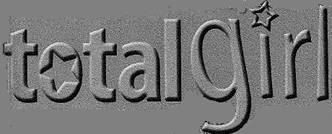
EVIDENCE – rule in Jones v Dunkel (1959) 101 CLR 298 – strengthening of adverse inferences by failure to call witnesses – whether any adverse inferences arise
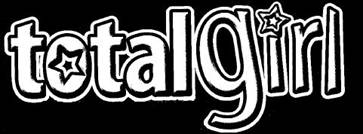
Trade Practices Act 1974 (Cth) ss 52, 53
Erven Warnink BV v JW Townsend & Sons (Hull) Ltd [1979] AC 731 cited
Reckitt & Coleman Products v Borden Inc (1990) 1 WLR 491 cited
AG Spalding & Bros v AW Gamage Ltd (1915) 32 RPC 273 cited
Cadbury Schweppes Pty Ltd v Pub Squash Co Pty Ltd [1981] RPC 429 cited
Annand & Thompson Pty Ltd v Trade Practices Commission (1979) 40 FLR 165 referred to
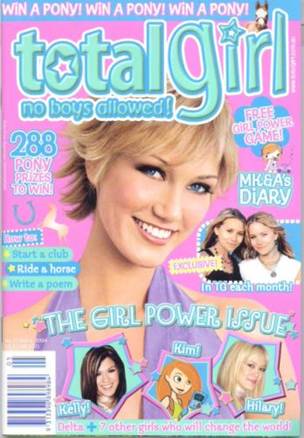
CRW Pty Limited v Sneddon (1972) AR (NSW) 17 referred to
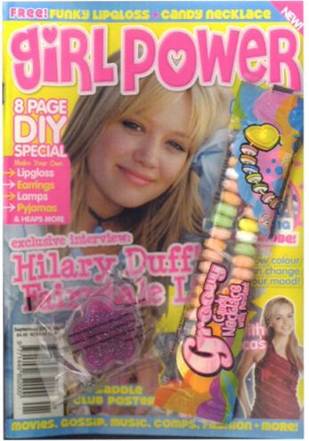
Moorgate Tobacco Co Limited v Philip Morris Limited & Anor (No 2) (1984) 156 CLR 414 referred to
Campomar Sociedad Limitada v Nike International Limited (2000) 202 CLR 45 applied
Parkdale Custom Built Furniture Pty Ltd v Puxu Pty Ltd (1982) 149 CLR 191 referred to
Tobacco Institute of Australia Limited v Australian Federation of Consumer Organisations Inc (1992) 38 FCR 1 applied
Pacific Dunlop Ltd v Hogan & Ors (1989) 23 FCR 553 considered
R & C Products Pty Ltd trading as Samuel Taylor v S C Johnson & Sons Pty Ltd (1993) 113 ALR 487 cited
Twentieth Century Fox Film Corporation v The South Australian Brewing Co Ltd (1996) 66 FCR 451 cited
Energizer Australia Pty Limited v Gillette Australia Pty Limited (2001) 189 ALR 480 cited
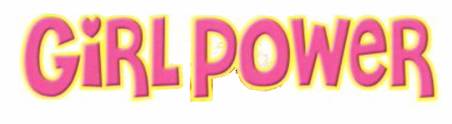
Seven Network Ltd v News Interactive Pty Ltd (2004) 63 IPR 28 cited
Makita (Australia) Pty Ltd v Sprowles (2001) 52 NSWLR 705 referred to
Pacific Publications Pty Limited v IPC Media Pty Ltd (2003) AIPC 91-869 referred to
Australian Woollen Knitting Mills Ltd v FS Walton & Co Ltd (1937) 58 CLR 641 cited
Kettle Chip Co Pty Ltd v Apand Pty Ltd (1993) 46 FCR 152 cited
Children’s Television Workshop Inc v Woolworths (NSW) Ltd (1981) 1 NSWLR 273 discussed
Topps Co Inc v Tom Hannah (Agencies) Limited [1999] Scot CS 285 discussed
C Wadlow, The Law of Passing Off,Sweet & Maxwell, London, 2nd Ed., 1995.
PACIFIC PUBLICATIONS PTY LIMITED (ACN 097 410 986) v NEXT PUBLISHING PTY LIMITED (ACN 002 647 645)
NSD 1569 OF 2004
TAMBERLIN J
SYDNEY
18 MAY 2005
|
IN THE FEDERAL COURT OF AUSTRALIA |
|
|
NEW SOUTH WALES DISTRICT REGISTRY |
NSD 1569 OF 2004 |
|
BETWEEN: |
PACIFIC PUBLICATIONS PTY LIMITED (ACN 097 410 896) APPLICANT
|
|
AND: |
NEXT PUBLISHING PTY LIMITED (ACN 002 647 645) RESPONDENT
|
|
TAMBERLIN J |
|
|
DATE OF ORDER: |
18 MAY 2005 |
|
WHERE MADE: |
SYDNEY |
THE COURT ORDERS THAT:
The application is dismissed with costs.
Note: Settlement and entry of orders is dealt with in Order 36 of the Federal Court Rules.
|
IN THE FEDERAL COURT OF AUSTRALIA |
|
|
NEW SOUTH WALES DISTRICT REGISTRY |
NSD 1569 OF 2004 |
|
BETWEEN: |
PACIFIC PUBLICATIONS PTY LIMITED (ACN 097 410 896) APPLICANT
|
|
AND: |
(ACN 002 647 645) RESPONDENT
|
|
JUDGE: |
|
|
DATE: |
18 MAY 2005 |
|
PLACE: |
SYDNEY |
REASONS FOR JUDGMENT
1 By Amended Application and Statement of Claim filed on 21 December 2004, the applicant, Pacific Publications Pty Limited (“Pacific”), seeks orders that the respondent, Next Publishing Pty Limited (“Next”), be restrained from publishing or distributing a magazine directed to girls between the ages of six and thirteen (“tweens”) by reference to the name “Girl Power” or any similar name. Restraining orders are also sought against Next in respect of any other magazine which has specified characteristics. Declarations are sought that five issues of “Girl Power” published by Next to January 2005 misrepresent to the public that “Girl Power” is affiliated or connected with the tween magazine entitled “Total Girl”, which is published by Pacific, and that Next has engaged in misleading and deceptive conduct under the Trade Practices Act 1974 (Cth)(“the TPA”) by implicitly suggesting that “Girl Power” is promoted by, or with the approval of, Pacific. Ancillary relief is sought in the nature of orders for the delivery up and destruction of unsold issues of “Girl Power”, recall of the magazines and damages or an account of profits.
OVERVIEW
2 Since November 2002, Pacific has published, distributed, promoted and sold a monthly magazine entitled “Total Girl”. The words “Total Girl” are the masthead of the magazine. The masthead is almost invariably used in close proximity with the tag line, “no boys allowed”.
3 From November 2002 until August 2003, the masthead appeared as follows:
4 Since September 2003, the masthead has appeared as follows:
5 Pacific draws attention to the following features of the masthead of “Total Girl”:
“(a) an angled “g” as the first letter of the word “girl”;
(b) a star shape forming the middle of the letter “o” and the dot of the letter “i”;
(c) letters coloured pink, purple, yellow, blue or green;
(d) letters which are bevelled and since September 2003 outlined in pink, purple, yellow, blue or green, together with white;
(e) irregularly sized and shaped lettering in the word “girl”.”
6 Since November 2002, “Total Girl” has featured at least two of the following elements on each of its covers. These are referred to by Pacific as the “Total Girl” cover elements.
“(a) pink, purple, yellow, blue or green coloured background(s);
(b) pink, purple, yellow, blue or green top strip running horizontally across the top of the cover page;
(c) photographs or images emerging from outlined star, heart, circle or oblong shapes; and
(d) star images.”
7 Other aspects of “Total Girl” referred to by Pacific, which it calls the “Total Girl” internal elements, are as follows:
“(a) since April 2004, distinctive icons in the shape of a star with a rainbow tail which surround and highlight page numbers;
(b) since November 2002, background rainbow imagery (being arcs or stripes consisting of at least three colours or graded tones of the same colour) or rainbow imagery together with stars;
(c) since November 2002, stylised contents pages including between five and eight rectangular text boxes with rounded corners and coloured pink, purple, yellow, orange, blue or green together with a combination of images and stars interspersed throughout the text boxes and (since April 2004) rainbow coloured stripes forming a background;
(d) since November 2002, page backgrounds interspersed throughout the magazine consisting of spots;
(e) since November 2002, realistic corkboard images as page backgrounds overlaid with pictures, photographs and other items which are displayed using realistic images of pins, tacks or tape;
(f) from November 2002 until December 2003, realistic refrigerator images as page backgrounds overlaid with pictures, notes and other items displayed using realistic images of magnets.”
8 From November 2002, editions of “Total Girl” displaying the masthead, tag line, cover elements and internal elements were extensively sold throughout Australia. The evidence is that between November 2002 and 2004, 25 monthly editions were published. The number of copies sold for each edition ranged in number from 51,000 copies to 106,000 copies. In total, in the order of 1.9 million copies of “Total Girl” were sold to the public during that period. “Total Girl” has been extensively promoted throughout Australia and Pacific has spent in excess of $2,000,000 on its promotion.
9 Over the period March 2004 to September 2004, the “Total Girl” companion website attracted over 10 million hits. As part of Pacific’s promotion program since November 2002, tween girls have been encouraged to join the “Total Girl Club” on the website and thus gain access to chat rooms and other internet facilities designed to promote “Total Girl”. In March 2004, there were over 55,000 unique visitors to the website and the “Total Girl Club” had in the order of 114,000 members. In April 2004, there were 58,000 unique visitors to the website, who made in the order of 1.5 million page impressions, and the “Total Girl Club” had over 122,000 members.
10 In mid- to late-February 2004, Pacific published an edition of “Total Girl” entitled “The Girl Power Issue” (“the Girl Power Issue”). These words were featured on the magazine’s cover. It was sold from 23 February 2004 until approximately 22 March 2004 and in excess of 74,000 copies were sold in Australia. Pacific says its promotion, expenditure and distribution is of central importance and establishes its reputation in Australia. The evidence is that Pacific has widely promoted the Girl Power Issue, including promoting it on the “Total Girl” website in March and April 2004. The promotion of the Girl Power Issue involved in-store poster and presentation displays and advertisements published in other magazines. Included in the promotion of the Girl Power Issue was the production of more than 2,500 posters for in‑store display, each depicting the cover of the Girl Power Issue on a spotted background.
11 By way of illustration, set out below is a copy of the cover page of the Girl Power Issue of “Total Girl” together with a copy of the cover of the first issue of “Girl Power” from August 2004.
12 In April 2004, Pacific published, distributed and sold a poster book known as the “Total Girl” “Girl Power Poster Book” (“the Poster Book”), which featured more than 50 detachable wall posters of celebrity girls, many of whom had been featured in previous editions of “Total Girl”. In the order of 39,000 copies of the Poster Book were distributed by Pacific and as at June 2004, approximately 26,000 copies had been sold. Each poster featured the words “Girl Power” and “Total Girl” “no boys allowed” on diagonally opposing corners and was designed to be removed from the poster book and used as a wall poster. The Poster Book was extensively promoted for sale in April 2004 and was further promoted after this date.
13 As a result of its extensive promotion of “Total Girl”, including the Girl Power Issue and Poster Book, Pacific contends that as at 23 August 2004, when Next published its first edition of “Girl Power”, Pacific had acquired a substantial and valuable reputation in Australia in the name “Total Girl”, the form of the “Total Girl” masthead, the “Total Girl” cover elements used in association with the name “Total Girl” and the “Total Girl” masthead and the “Total Girl” internal elements used in conjunction with the masthead. In addition, Pacific claims that it had acquired a substantial and valuable reputation in Australia in the name “Girl Power” when associated with a magazine directed predominantly at tween girls.
14 I am satisfied, on the above evidence, that by August 2004 Pacific had established a substantial reputation in the masthead and tag line of “Total Girl”. However, I am not satisfied that Pacific had acquired a substantial reputation in the other features referred to, namely, the cover elements and the internal elements or in the words “Girl Power”.
15 On 23 August 2004, Next began to publish, distribute and sell “Girl Power”. Since that date, Next has published issues of “Girl Power” for September, October, November and December 2004 and January 2005.
16 Both “Total Girl” and “Girl Power” are written for, and directed to, tween girls. They are distributed for sale to consumers mainly via newsagencies, supermarkets and mail subscription. They are displayed in close proximity in newsagencies and other outlets. The retail sale price of the magazines is $4.20 for “Total Girl” and $4.50 for “Girl Power”. However, nothing of substance turns on the price of the magazines.
17 “Girl Power” features information on a variety of topics of interest to tween girls, including fashion, beauty and makeup, song lyrics, movies, television, celebrities, animals, party ideas and shopping and also contains games and puzzles.
18 The masthead of the first three issues of “Girl Power” for September, October and November 2004 appeared as follows:

Pacific points to the following features of this masthead:
“(a) an angled “g” as the first letter of the word “girl”;
(b) a heart shape forming the middle of the letter “o” and the dot of the letter “i”;
(c) letters coloured pink (in the case of the September and November 2004 editions) and green (in the case of the October 2004 edition);
(d) letters which are bevelled and also outlined in pink and white (in the case of the September 2004 edition), purple and white (in the case of the October 2004 edition) and yellow (in the case of the November 2004 edition);
(e) irregularly sized and shaped lettering in the word “girl”.
19 The “Girl Power” masthead for December 2004 and January 2005 differed from that of the earlier editions of “Girl Power” by removing the heart shape from the inside of the “o” in the word “Power” and making certain other small amendments. This masthead appeared as follows:
In relation to this amended masthead, Pacific points to the following features:
“(a) yellow background (in the case of the September 2004 edition), or pink background (in the case of the October 2004 edition);
(b) blue top strip (in the case of the September and November 2004 editions) or yellow top strip (in the case of the October 2004 edition), running horizontally across the top of the cover page;
(c) photographs or images emerging form an outlined star, circle or oblong shape;
(d) star images.”
20 The Statement of Claim outlines in detail a number of features of the covers of “Girl Power”. These features are substantially illustrated by the “Girl Power” cover set out in [11] above.
21 Pacific also points to the internal artwork of “Girl Power” magazine and, in particular, to the following internal elements of the September, October and November 2004 editions:
“(a) icons in the shape of a flower/cloud shaped with a tail which surround and highlight page numbers;
(b) background rainbow imagery (being arcs or stripes consisting of at least three colours or graded tones of the same colour) or rainbow imagery together with stars;
(c) (in the case of the September and October 2004 editions) stylised contents pages including multiple rectangular boxes with rounded corners and coloured pink, purple, yellow, orange, blue and/or green together with a number of images interspersed throughout the boxes, with page references highlighted using stars with tails and a rainbow striped background header superimposed with stars;
(d) (in the case of the November 2004 edition) stylised contents pages including multiple rectangular boxes with rounded corners and coloured pink, purple, yellow, orange, blue and/or green together with a number of images interspersed throughout the boxes, with page references highlighted using stars with tails and a spotted background header;
(e) realistic corkboard images as page backgrounds overlaid with pictures, photographs and other items which are displayed using realistic images of pins, tacks or tape (in the September and October 2004 editions);
(f) realistic refrigerator images as page backgrounds overlaid with pictures, notes and other items which are displayed using realistic images of magnets (in the November 2004 edition).”
22 In broad terms, the allegation made by Pacific is that Next has wrongfully exploited the formula built up and used by Pacific in “Total Girl”. Pacific contends that when the first edition of “Girl Power” was published, Next was aware that the applicant had been publishing “Total Girl” on a monthly basis for at least twelve months, that “Total Girl” had achieved substantial recognition by consumers and within the publishing industry and that Pacific had promoted and used the name “Girl Power” in association with the Girl Power Issue and the Poster Book. Pacific refers to the widespread distribution of “Total Girl”, the Girl Power Issue and the “Poster Book” and attaches importance to the timing of publication of the first edition of “Girl Power” in the context of the extensive promotion by Pacific of the Girl Power Issue and the Poster Book.
23 The specific representations alleged by Pacific are that Next has falsely represented to consumers that “Girl Power” magazine:
“(e) is published by the Applicant;
(f) is published by the same person as the publisher of TOTAL GIRL Magazine and/or the publisher of the GIRL POWER Poster Book;
(g) is published with the sponsorship or approval of the Applicant;
(h) is published with the sponsorship or approval of the person who publishes TOTAL GIRL Magazine and/or the GIRL POWER Poster Book;
(i) is a “sister publication” of TOTAL GIRL Magazine and/or the GIRL POWER Poster Book;
(j) comes from the same publisher or “stable” of magazines as the TOTAL GIRL Magazine and/or the GIRL POWER Poster Book; and/or
(k) has an affiliation or association with the Applicant or the Applicant’s publications (including TOTAL GIRL Magazine and the GIRL POWER Poster Book).”
These alleged representations are claimed to be deceptive and misleading because “Girl Power” is not published with the approval of the applicant and neither Next nor “Girl Power” has any affiliation or association with the applicant, “Total Girl” or the “Girl Power Poster Book”. Accordingly, it is said that Next is in breach of Sections 52 and 53(c) and (d) of the the TPA. In the alternative, it is alleged that Next has passed off “Girl Power” as being associated with, or having the endorsement, approval or sponsorship of, Pacific, when it does not.
Legal principles
24 In an action for passing off, the applicant must show that the use by the respondent of the mark or getup in respect of goods or services represents, either expressly or impliedly, that the goods or services are those of, or connected with those of, the applicant or that the respondent’s use of the mark or getup is calculated to deceive: see C Wadlow, The Law of Passing Off,Sweet & Maxwell, London, 2nd Ed., 1995, at 179-180; Erven Warnink BV v JW Townsend & Sons (Hull) Ltd [1979] AC 731; Reckitt & Coleman Products v Borden Inc (1990) 1 WLR 491; AG Spalding & Bros v AW Gamage Ltd (1915) 32 RPC 273; Cadbury Schweppes Pty Ltd v Pub Squash Co Pty Ltd [1981] RPC 429.
25 To succeed in an action for passing off, it is necessary to establish that the aggrieved party has a right in relation to a commercial reputation built up by that party in relation to goods or services. Damage is an essential part of an action for passing off, although, in many cases, damage will be presumed to have occurred where there has been a misrepresentation or deceitful conduct in relation to the appropriation of the applicant’s reputation. There must be some misrepresentation or deception that falsely suggests some connection with another party’s business. The emphasis in a passing off action is usually upon damage to an interest in reputation rather than consumer protection. The latter is the focus of actions under ss 52 and 53(c) and (d) of the TPAfor misleading and deceptive conduct and misrepresentation.
26 In cases relating to misrepresentation and deceptive and misleading conduct under the TPA, it is not necessary to establish an express misrepresentation. An implicit misrepresentation arising from conduct and circumstances is sufficient.
27 In Annand & Thompson Pty Ltd v Trade Practices Commission (1979) 40 FLR 165 at 176, Franki J said that the issue is:
“…whether in an objective sense the conduct of the appellant was such as to be misleading or deceptive when viewed in the light of the type of person who is likely to be exposed to that conduct. Broadly speaking it is fair to say that the question is to be tested by the effect on a person, not particularly intelligent or well‑informed, but perhaps of somewhat less than average intelligence and background knowledge although the test is not the effect on a person who is, for example, quite unusually stupid.”
28 In CRW Pty Limited v Sneddon (1972) AR (NSW) 17 at 28, in relation to the Consumer Protection Act 1969 (NSW), Sheldon and Sheppard JJ said:
“An advertisement published in a newspaper is not selective as to its readers. The bread is cast on very wide waters. The advertiser must be assumed to know that the readers will include the shrewd and the ingenuous, the educated and the uneducated and the experienced and the inexperienced in commercial transactions. He is not entitled to assume that the reader will be able to supply for himself or … herself omitted facts or to resolve ambiguities. An advertisement may be misleading even though it fails to deceive more wary readers.”
29 In Moorgate Tobacco Co Limited v Philip Morris Limited & Anor (No 2) (1984) 156 CLR 414 at 445, Deane J referred to:
“the adaptation of the traditional doctrine of passing off to meet new circumstances involving the deceptive or confusing use of names, descriptive terms or other indicia to persuade purchasers or customers to believe that goods or services have an association, quality or endorsement which belongs to or would belong to goods or services of, or associated with, another or others …”
30 In Campomar Sociedad Limitada & Anor v Nike International Limited & Anor (2000) 202 CLR 45at 85 (Campomar), the Full Court of the High Court said:
“Where the persons in question are not identified individuals to whom a particular misrepresentation has been made or from whom a relevant fact, circumstance or proposal was withheld, but are members of a class to which the conduct in question was directed in a general sense, it is necessary to isolate by some criterion a representative member of that class. The inquiry thus is to be made with respect to this hypothetical individual why the misconception complained has arisen or is likely to arise if no injunctive relief be granted.”
Their Honours also stressed the importance of considering the effect of the conduct of reasonable members of the class and noted the comment of Chief Justice Gibbs in Parkdale Custom Built Furniture Pty Ltd v Puxu Pty Ltd (1982) 149 CLR 191 at 199 regarding the “heavy burdens”imposed by s 52 of the TPA.
31 The issue in Campomar was whether the conduct could be said to give rise to a belief or misconception that the product of one manufacturer was that of, or was associated with, the product of another. In deciding whether there has been a misrepresentation, it is important to take into account the “general impression” left by offending material or statements or conduct. In this process, it will often be necessary to consider the individual elements of the offending material and their similarity to other material and the circumstances of the applicant. However, because the focus is on the overall impression, it would be erroneous and artificial to take an unduly analytical approach to a consideration of the question of misrepresentation. As Sheppard J said in Tobacco Institute of Australia Limited v Australian Federation of Consumer Organisations Inc (1992) 38 FCR 1 at 4:
“It is not appropriate to take part of an advertisement such as the one in question here and endeavour to ascertain in isolation the meaning of each of the critical words or phrases which is used. Rather an attempt should be made to measure the veracity of its message by reading it in context. One needs also to take into account the fact that many readers would not make a close study of the advertisement but would read it fleetingly and absorb its general thrust.” (Emphasis added)
32 When considering the impact of material said to “suggest” an association between products and services, it is helpful to bear in mind the statement of principle by Burchett J in Pacific Dunlop Ltd v Hogan & Ors (1989) 23 FCR 553 at 586:
“In my opinion, the vagueness of the suggestion conveyed in this case is not sufficient to save it. That vagueness is not incompatible with great effectiveness. It would be unfortunate if the law merely prevented a trader using the primitive club of direct misrepresentation, while leaving him free to employ the more sophisticated rapier of suggestion, which may deceive more completely. In my opinion, the deployment in circumstances of the present kind of techniques of persuasion, designed to influence prospective customers in favour of a trader or his products upon the basis of some underlying assumption which is false, may be held to be misleading or deceptive … and may also be held to constitute passing off.”
33 These principles have been applied in subsequent cases: see, for example, R & C Products Pty Ltd trading as Samuel Taylor v S C Johnson & Sons Pty Ltd (1993) 113 ALR 487 at 500 per Davies J; Twentieth Century Fox Film Corporation v The South Australian Brewing Co Ltd (1996) 66 FCR 451 at 468 per Tamberlin J; Energizer Australia Pty Limited v Gillette Australia Pty Limited (2001) 189 ALR 480 at [53] per Conti J; Seven Network Ltd v News Interactive Pty Ltd (2004) 63 IPR 28 at [17]-[18] per Tamberlin J.
34 In Children’s Television Workshop Inc v Woolworths (NSW) Ltd (1981) 1 NSWLR 273 (Children’s Television Workshop), the applicant successfully brought an action for passing off against Woolworths for selling toys which looked like characters from the television program “Sesame Street” without any licence or approval by the producers or owners of Sesame Street Television. At 278, Helsham CJ, after pointing out the difficulties in determining what impression would be created, said:
“One must add to this the fact that the toys will be bought by adults, many of whom will not be as familiar with the characters in the children’s television programs as those for whom they are shopping, often commissioned, no doubt to but one or more of the many named characters as present.”
This observation points to the reality of the circumstances in which the goods in question are likely to be purchased. In that case, there was evidence before the Court that persons had been able to identify the toys sold by Woolworths as the “Sesame Street” characters.
35 In the Topps Co Inc v Tom Hannah (Agencies) Limited [1999] Scot CS 285, Lord Nimmo Smith framed the question in the following way:
“The products are, however, sold as confectionery for children and I have to consider what impression might be made on a child who goes into a typical corner shop clutching a 50p coin and gazes up at the whole range of confectionery on display, all competing by various forms of get-up and other attraction for the child’s attention and purchasing power. … I have decided that there is a prima facie case of passing off.”
36 In that case, the products in question were lollipops sold under the names “Push Pop” and “Two to One Pop & Toy”. Having regard to the particular get-up in that case, the Court considered that there was a prima facie case that children would be confused about the relationship between the two products.
Ms NICOLE SHEFFIELD
37 Ms Sheffield was called by Pacific. She said that she had held senior positions within Pacific but that she had not edited a magazine or received training of the kind that an art director of a magazine would receive. There are a number of officers who report to her at Pacific and she reports to the Chief Executive Officer of Pacific.
38 Her evidence concerned the circumstances in which “Total Girl” was put together and the people who were involved in this process, namely, an editorial team, comprising an editor, art director, writer, website producer and sub-editor, together with a marketing team and an advertising team. She described the teams in some detail.
39 Ms Sheffield referred to the time that she and the launch editor, Sarah Oakes, had spent considering the masthead and shapes and colours to be used in “Total Girl” and analysing the packaging of toys, dolls, and confectionery for tweens. She agreed that she had gained an appreciation of the graphic elements that were attractive to tween girls by looking at other products that had been successful with this group. She said that she had previously engaged in a number of focus groups and spoken to younger children in relation to a different tween magazine and therefore she had a good general idea of what colours would appeal to this age group. Ms Sheffield was questioned about the shapes and colours of a number of other tween products.
40 Ms Sheffield agreed that tween girls today shared common interests, such as fashion, friendship, beauty, entertainment, listening to music, watching television and movies, playing on computers, horses and ponies and puzzles and quizzes. According to Ms Sheffield, the biggest trend in the past few years in the tween market had been the emergence of celebrity and entertainment as an area of interest. She agreed that these had become a feature of the content of tween magazines and that celebrities are, at the present time, strong cover icons.
41 Ms Sheffield agreed that some magazines appeal to tween girls with an interest in boys and some do not. She agreed that “Girl Power” contained subject matter dealing with boys and she thought that this would appeal to the older girls in the tween age group or to younger tween girls with an interest in boys. She also agreed that “Barbie” magazine had sections dealing with boys. On the other hand, she said that “Total Girl” had always been directed to girls who were not particularly interested in boys, sex or issues relating to puberty. This is expressed in the magazine’s tagline “no boys allowed”, which has always been an integral part of the “Total Girl” masthead. The tagline has always appeared in exactly the same place in relation to the words “Total Girl”, even when the rendering of the title has changed. In re-examination Ms Sheffield referred to a number of places where the title “Total Girl” was used without the tagline “no boys allowed”. Ms Sheffield gave evidence that “Total Girl” received up to 1,000 letters a week from fans and a large number of these letters included the tagline “no boys allowed”. She agreed that the readership of “Total Girl” was very conscious of the “Total Girl” masthead and the positioning of the tagline. Although she agreed the tagline was an integral part of the cover, she did not think that it was essential.
42 In cross-examination, Ms Sheffield agreed that other tween magazines such as “Barbie” and “Disney Girl” shared common features with “Total Girl”. For example, she agreed that other magazines used stylised forms for numbering their pages.
43 Ms Sheffield said that she was involved in selecting the title for “Total Girl”. She agreed that a number of names were considered for the magazine, including “Girl Power”. She agreed that “Girl Power” was a good title for a magazine aimed at the tween market, especially at the older end of that market. She did not agree with the suggestion put to her in cross-examination that at least one of the reasons for the letter of demand which Pacific’s solicitors sent to Next on 8 September 2004 was that Pacific wished to put out a new magazine entitled “Girl Power”, although she agreed that this was one of a number of working titles for a new magazine that Pacific was planning to launch. Ms Sheffield expressed the view that from the perspective of the tween market, a “Girl Power” sub-brand was created by the look and feel of the Poster Book, although the font was not unique to the Poster Book.
44 Ms Sheffield agreed that “Girl Power” was one of a number of themed editions of “Total Girl”. The other themes included pop stars, best friends and baby animals. She agreed that when the Girl Power Issue of “Total Girl” was published, the theme of “Girl Power” was given no more prominence than any of the other themes that had been adopted by “Total Girl” from time to time. Ms Sheffield was asked about why, despite the “Win a Pony” competition associated with the Girl Power Issue, that issue was less successful than other themed issues. She sought to explain this.
45 Ms Sheffield agreed that the Poster Book was referred to as the “Total Girl Poster Book” or “Total Girl Power Poster Book” in a number of places in internal or promotional material. She agreed that, to her knowledge, the Poster Book had not been removed from the “Total Girl” website. She agreed that the website was in error in stating that the Poster Book was still available at newsstands, as it had been recalled several months before the hearing. In re-examination, Ms Sheffield gave evidence that the Poster Book had ceased to be available in September but that there had been a subscriptions drive with the Poster Book since that time. Ms Sheffield gave evidence that lanyards, which featured in magazines, had become a common fashion item for girls and boys in the tween age group and there was nothing special about a lanyard attachment.
Mr MARTIN LINDSTROM
46 Mr Lindstrom was approached by Pacific shortly before the hearing by a letter dated 26 November 2004 and asked to provide expert evidence. It was said that Mr Lindstrom’s evidence indicated the way in which tween girls perceive features associated with brands and that his claimed expertise concerns the perception of tween girls of associations between magazines of the type here under consideration. Mr Lindstrom refers to research that he has undertaken which is said to support a conclusion that today’s tweens have a heightened ability to read and understand iconic symbols, signs, colours, fonts and pictures. His task was to evaluate what were the most significant branding elements of “Total Girl” and “Girl Power” which would be remembered by a six to nine year old girl and whether “Girl Power” would be likely to evoke an association or connection with “Total Girl” in the minds of these girls. Mr Lindstrom concentrates on what he refers to as the “Important Brand Identification Symbols” (“IBIS”) and “Important Logo Identification Symbols” (“ILIS”) in both publications. He says that “Girl Power” uses essential symbols that tweens have previously associated with “Total Girl”, with the sole exception of the tagline “no boys allowed”.
47 In relation to the Girl Power Issue of “Total Girl”, Mr Lindstrom concludes that the sale of that issue, either consciously or unconsciously, established the brand name “Girl Power” in the minds of tween girls. He also refers to the Poster Book as being important in establishing the brand name. His conclusion is, in substance, that because of the similarities between the two magazines and the previous association of the name “Girl Power” with “Total Girl”, a case has been made that tweens will mistake a relationship between the brands. He claims that this situation, without any doubt, assisted “Girl Power” in securing substantial sales from the release of their first edition. He proffers the opinion that not only has “Girl Power” imitated the look and feel of “Total Girl”, but there has been a highly planned strategy to leverage “Girl Power” on the existing platform developed by “Total Girl” to ensure instant sales success. He concludes that tweens would, in many cases, confuse “Total Girl” with “Girl Power”. He suggests that to avoid consumer confusion it would be necessary to make some modifications to “Girl Power” by changing its headings, name, font and use of colour. He also suggests that the font and the use of outline shadows and shapes should be varied to secure clear differentiation between the two magazines.
48 Counsel for Next submits that the evidence of Mr Lindstrom is inadmissible on a number of grounds, including that it has not been established that Mr Lindstrom has specialised knowledge or is qualified to give evidence concerning the awareness and perceptions of girls in the two relevant age ranges, namely, six to nine and ten to twelve, in relation to branding elements in the type of magazines which are the subject of the proceedings. Furthermore, it is submitted that his report does not contain any satisfactory reasoning basis. Rather, it is founded on speculation and purely personal views and Mr Lindstrom proceeds on an unwarranted assumption that the elements of the two magazines to which he refers individually function for tween girls as branding elements which they associate exclusively with “Total Girl” and no other tween magazine. He is vague as to the nature of the perceived association arising between the two magazines.
49 I have considered the detailed discussion of principles as to the admissibility of expert evidence of Heydon JA in Makita (Australia) Pty Ltd v Sprowles (2001) 52 NSWLR 705 at 728-750, a decision of the New South Wales Court of Appeal, and the observations of Beaumont J in Pacific Publications Pty Limited v IPC Media Pty Ltd (2003) AIPC 91-869 at [91]-[92]. Counsel for Next refers to the fact that the theory relied on by Mr Lindstrom, and the components of this theory entitled IBIS and ILIS, have not been shown to have been generally accepted by others practising in the field of advertising or marketing as a valid theory. It is submitted that it is a creation of Mr Lindstrom without any empirical backing. This criticism is directed particularly to Mr Lindstrom’s assertions that elements of the format of the magazines were IBIS.
50 I am not satisfied that Mr Lindstrom’s evidence in this case can be accepted as expert evidence in relation to the perception of tween girls. It is not based on any identified or specific empiric examinations referred to by him in his material. He claims to be a leading expert with many years of experience, however, the prime nature of this experience is unclear. In my opinion, there is no specifically identified relevant area of expertise in which he is qualified to express a view. The area of perception of tween girls of associations between magazines of the type here under consideration and between the persons producing those magazines has not, in my view, been shown to be an area of expertise in respect of which evidence is of any assistance to the Court.
51 The cross examination of Mr Lindstrom reinforces the conclusion I have reached that his professed expertise is of no assistance in the present case. The following comments apply even if he were to be accepted as an expert.
52 The evidence of Mr Lindstrom, as demonstrated in cross-examination, was not based on any relevant empiric research relating to the publications under discussion in this case. Indeed, having regard to Mr Lindstrom’s belated retainer as an expert, he clearly did not have sufficient time to carry out any empiric investigations in relation to the circumstances that may be peculiar to the Australian tween market. In many instances, his answers were non-responsive, speculative and repetitive. He frankly admitted that objective studies and empirical data would be useful and suggested that if they were carried out they could support his position. He made assertions about carrying out some empirical work in relation to double outlines, that is, letters with a thin outline of colour around them. He also professed to have carried out the largest research study ever conducted about “kids” and their relationship with brands, however, he did not refer to any specific relevant data. When it was put to him that there was no way of knowing objectively whether readers place any particular significance on graphic elements, he responded by answering that although there was no rational way of knowing, there was an emotional way of knowing. He added that there was no objective evidence right now because no test had been conducted. His evidence was equivocal in relation to a number of questions put to him, with answers such as:
“You’re probably right, you’re probably right, that could be the case, could not be the case either.”
53 The nature of Mr Lindstrom’s evidence can be gathered from the following exchange:
“Q We have no way of testing whether your opinion is correct or not?
A Yes, we have, it’s very easy to test.
Q We would have to carry out an objective study, don’t we?
A Yes, let’s do that, I would be very happy to do so, you will see I am right. That’s the reason why I work for Coca Cola and Disney and all the other brands.
Q Yes, thank you. I mean if they pay attention to it all, once again they may recognise it as a feature which is used in a number of different tween magazines?
A They might or they might not, but I am pretty sure of everyone associated with “Total Girl”’
54 The equivocal and unhelpful nature of his evidence is indicated by the following exchange:
“Q We have no study carried out to determine whether or not the words “Girl Power” are clearly associated with “Total Girl” magazine, do we?
A No, but we probably could test it and find out that it is correct.
Q If some tween girls did associate the words “Girl Power” with “Total Girl” magazine, we have no way of telling objectively what that association is, do we?
A We could test it and we would find out clearly.
…
Q We may find out there is in fact no association at all?
A Yes, you might find there’s one percent saying that and 99 percent saying the totally opposite, you will most likely find that.
…
Q It may be that even if there is some association it may not be an exclusive association?
A You may be right or you may be the total opposite, I think we should test it.”
55 Having regard to the foregoing, I do not accept the evidence of Mr Lindstrom as an expert regarding the perception of tweens or that he is engaged in an area of expertise. Furthermore, and in any event, I consider that his evidence, even if admitted, is of no assistance in the determination of the present case having regard to the features of his evidence which I have referred to above.
MS KRISTIE-LEE PROHM
56 Ms Prohm is the art director of “Girl Power” magazine. She said that she had not looked through “Total Girl” for inspiration. She said that she hadn’t thoroughly studied “Total Girl” until probably early July 2004, when she was half-way through designing “Girl Power”. Ms Prohm agreed that she had been vaguely aware of the title “Total Girl” before this point. She said that she had done free-lance work for Pacific in mid 2002 but had not been aware that “Total Girl” was in the course of preparation for publication or had just commenced publication. She said that she had not heard of “Total Girl” in 2002. Ms Prohm could not remember exactly when she became aware of the “Total Girl” title but she thought that it could have been in mid-July 2004. There was some confusion demonstrated in Ms Prohm’s evidence as to when she became aware of “Total Girl” and I find that her recollection was unclear and unreliable as to exact dates or periods in that respect. In my view, it would be unsafe to rely on her recollection in relation to this.
57 Ms Prohm said that she had looked at other tween magazines but not for artistic inspiration. She denied that she had closely monitored other magazines in the same market as “Girl Power” since she had become art director but agreed that she had browsed through them to see if they had similar content.
58 Ms Prohm did not consider that “Total Girl” was very similar to “Girl Power”. She referred to a number of specific distinctions between the two magazines. Ms Prohm did not consider “Total Girl” to be an educational magazine, whereas “Girl Power” has features on the environment, endangered animals and “do it yourself” projects. She said that she was unaware whether “Girl Power” had a “do it yourself” aspect. Ms Prohm said that she designed the covers for “Girl Power” with input from Mr Gover, another employee of Next. As to outlining, bevelling and colouring, Ms Prohm said that these features were a carry over from her work at another magazine, “Mania”. When asked to make a comparison between the August 2003 issue of “Total Girl” and the September 2004 issue of “Girl Power” in relation to the celebrities used on the cover, the colour palettes, the pink masthead, the pale blue top strip and star shaped decorations with backgrounds and lip gloss, Ms Prohm denied that she had ever seen the August 2003 cover of “Total Girl”. Ms Prohm was then directed to a number of other similarities between the two magazines and to the fact that a copy of the August 2004 issue of “Total Girl” had been purchased by an employee of Next. She stated that because “Girl Power” and “Total Girl” were in the same market, it was difficult to avoid using the same celebrities on the cover.
MR DARREN GOVER
59 Mr Gover, the Creative Director of Next, was then called. He agreed that he had looked at the mastheads of other magazines in July 2004 so that he could create a masthead that was “different” to them. He agreed that he had considered and produced suggestions for possible titles for the new tween girls’ magazine. At that time, Mr Keir was in the United Kingdom.
60 Mr Gover said that he was scrupulous in trying to avoid designing a masthead for “Girl Power” in such a way that it had similarities to the “Total Girl” masthead. Mr Gover was cross-examined in relation to the font he used for the masthead of “Girl Power” and the difference between the heart in the “Girl Power” masthead and the star in the “Total Girl” masthead. Mr Gover said that a heart has a different symbolic meaning in the sense that it indicates a love or “girlie” element whereas a star is more about pop and popstars. Mr Gover stated that the bevelling and embossing of the masthead of “Girl Power” was taken from another Next magazine entitled “Mania”. He emphasised that despite the common use of the word “girl” in the title of both magazines, “Girl Power” was a totally different name to “Total Girl”. They are also aurally different names. Mr Gover saw the message of the two magazines as being different in that boys were excluded in “Total Girl”, whereas, in “Girl Power”, boys were not excluded and the theme was about empowering girls.
61 Mr Gover stated that when Mr Keir returned from the United Kingdom, he was shown a number of drafts of the cover for “Girl Power” and suggestions were made by Mr Keir as to the final form of the cover.
62 Mr Gover denied knowledge of the Girl Power Issue of “Total Girl” and said that he did not see each edition of “Total Girl” as it came through. He agreed that he had seen editions of “Total Girl” before “Girl Power” was first published because he has a daughter at home who reads it.
Ms MELISSA Doyle
63 Ms Doyle is the Operations Manager of Next and reports directly to Mr Keir, the CEO of Next. Ms Doyle said that “Girl Power” was the working title of the new magazine in mid-June 2004. She did not remember where the title came from or when it was decided upon. She agreed that Mr Keir would have had the final say about the title of the new magazine. She recalled Mr Keir saying on 23 June 2004, at a meeting, that he would like a strong title, preferably with “girl” in it, which made it clear that the magazine was for girls. Ms Doyle said that it was not Next’s intention to discourage boys but rather that the magazine should be targeted toward girls. She agreed that she knew at the 23 June meeting that “Total Girl” had, as part of its banner, the tagline “no boys allowed”. She did not agree that she had carefully studied what the competition was offering in February or March 2004, however, she agreed that she probably glanced at covers of other magazines. Finally, she agreed in cross-examination that if copying had occurred it would have occurred at a level below her function, namely, at the level of the editorial staff. Therefore, she would not know whether there had been any copying.
mr Phillip keir
64 Mr Keir is the Chief Executive Officer of Next. He holds approximately ninety five percent of the issued capital of Next and the remainder belongs to his family. In his affidavit, Mr Keir provides a history of his extensive experience in magazine publishing and the development of magazine titles such as “Mania”. Since 1987, Mr Keir has been directly involved with the launch of approximately 25 magazines. Next currently publishes 20 magazine titles, including “Girl Power”.
65 Mr Keir says that approximately 14 children’s magazine titles are presently available in Australia, each of which are published in the A5 format. In 2000 and 2001, Mr Keir worked with Ms Lofberg, the editor, on the development of the magazine, “Mania”. In late 2003 to early 2004, Ms Lofberg told him she wanted to work on a title for a new A5 girls’ magazine. He made a diary note on 5 March 2004 of a conversation to this effect. The question of a name for this new magazine was raised on about 17 March 2004. On 11 May 2004, Mr Keir asked Ms Doyle to draw up potential schedules for the proposed A5 magazine. Mr Keir said that he then looked at competing tween girls’ magazines in Australia, including “Disney Girl”, “Disney Adventures”, “Barbie Girl” and “Total Girl”. He said he was not aware of the contents of “Total Girl” before May 2004 and, on 12 May 2004, he made a note in his diary to remind himself to get a copy of the magazine. He said that he was not aware of any copies of “Total Girl” having been purchased until May 2004 but he knew that the Poster Book was purchased in April 2004 at the same time as a copy of the “TV Hits” poster book. Mr Keir said that he did not see a copy of the Poster Book and denied having any knowledge of it until discovery in the present proceedings.
66 Mr Keir began recruiting staff for the new magazine in late May 2004 and, by June, he was considering possible launch dates. In early June 2004, he asked his assistant, Ms Doyle, to create a production schedule for the magazine setting out details for its production. Mr Keir said that the name for the new magazine was still not settled as at 22 June 2004. At that time, there were several names under consideration, including “Girl Power”, “Girl Stuff”, “Girl Talk” and “Planet Girl”. On 23 June, Mr Keir attended a monthly editorial meeting to discuss titles and his notes record references to these four names. There were further discussions concerning names up to 22 July 2004, at which time Mr Keir decided that the name “Girl Power” would be used.
67 Mr Keir said that he had been aware of the phrase “Girl Power” since at least 1997 and had observed the phrase to gain wide currency in the media in relation to achievements by women and girls. He said that he had not received any comment from any person to suggest any reader of “Girl Power” had mistaken that magazine for “Total Girl”.
68 Mr Keir’s evidence in chief is largely argumentative. He deals in detail with what he perceives to be the differences between the two magazines.
69 In cross‑examination, Mr Keir denied that he had discussed the title of “Girl Power” in relation to the proposed magazine before March 2004. He reiterated that no final decision had been made as to the name “Girl Power” in early- to mid-June and denied knowledge of “Total Girl” magazine’s use of the words “Girl Power” in the March edition. He agreed that Next closely monitored other magazines in terms of onserts from time to time. Onserts included give-aways such as sweets, biros and lanyards. He agreed that the cover for “Girl Power” was initiated in June 2004 and adjusted several times.
70 Mr Keir returned from the United Kingdom on 28 July 2004, having been absent during July, and discussed the cover of the new magazine with Mr Gover. Mr Keir agreed that he would have seen printed copies of the “Girl Power” logos and the proposed masthead. Mr Keir was shown a document dated 15 June 2004 which was prepared to notify Woolworths and other supermarkets of Next’s intention to launch a new magazine entitled “Girl Power”. Mr Keir said that this was simply a code name and that it was difficult to sell a magazine into a supermarket without a name. Mr Keir said that the use of the words “Girl Power” in the letter did not necessarily mean that this was the final name for the magazine.
71 Mr Keir said that the proposed magazine, “Girl Power”, was not necessarily just for girls.
72 Mr Keir was shown a schedule, headed “Girl Power”, which indicated that a proposal existed to sell into supermarkets by June 2004. Mr Keir agreed that this document could have been written in the first week of June 2004. Upon his return from the United Kingdom in July 2004, Mr Keir discussed the title of the new magazine with Mr Gover. Mr Keir agreed that the July 2004 edition of “Total Girl” may have been available to his staff to buy at the time they were designing the October 2004 issue of “Girl Power” and that the celebrities portrayed on the covers of the two magazines, namely, the Olsen twins, were the same. However, he said that they were probably the second most common cover girls used in tween magazines. Mr Keir contended that “Girl Power” adhered to design practices common to all magazines and denied that “Girl Power” copied “Total Girl”. Mr Keir agreed that Next had attempted to compete with Pacific on another occasion in relation to a magazine entitled “Game Zone”. He said that, in 2001, a Next magazine called “Game Zone” was intended to compete with a Pacific publication called “K-Zone” but that the name of Next’s magazine was subsequently changed to “Mania”. He agreed that since September 2004, at the request of Pacific, changes had been made to use of outlining and hearts on the letters of the “Girl Power” masthead, however, he said that no undertakings had been given in respect of the use of these motifs.
DR catherine DRISCOLL
73 Dr Driscoll was called by Next. Dr Driscoll is a Lecturer in the Faculty of Arts, Department of Gender Studies, at the University of Sydney and conducts a course entitled “Gender, Media and Popular Culture”. She gave two expert reports.
74 In her first report, Dr Driscoll deals with the history of the expression “girl power”, tracing it back to the “riot grrrl” groups in the North-West of the United States in the late 1980s and early 1990s. She refers to the meaning of the expression “girl power” in Australia in 2004 and gives examples of its use, including references in television, film, magazines, fashion, toys, accessories, popular music, and in other fields such as government and public programs, media merchandising and marketing. Her material is the subject of extensive referencing and she refers to a number of her published works in this area. Dr Driscoll states that the expression “girl power” is a familiar part of Australian girl culture and relevantly, in popular culture, is directed to pre‑teen and young teen girls. The expression refers to narratives centred on girls who are happy and independent and, in particular, on girls who operate in a girls-only peer group. She refers to “Total Girl” and “Barbie” as examples of publications directed to the tween market which use “girl power” as a form of rhetoric and an explicit slogan.
75 Dr Driscoll points out that in January 2004, “Total Girl” conducted a survey of online readers asking what “girl power” meant to them. This survey acknowledged the currency of the concept of “girl power” among the readership of “Total Girl”. Dr Driscoll says that the general understanding of the phrase in 2004 encompasses positive messages about individualism and self expression, with some residual elements of the activist feminist origins as used by older girls.
76 Dr Driscoll’s conclusion in the first report is based on archival, cultural and ethnographic evidence. Dr Driscoll concludes that the expression “girl power” does not belong to any specific product or producer in the minds of its target audience or in the wider community within which it is consumed. Instead, the expression is a complex and important part of the social texture and historical context of the late twentieth and early twenty-first centuries.
77 In her second report, Dr Driscoll focuses on girls’ magazines in particular. She traces the developmental series of girls’ magazines and contrasts these with boys’ and men’s magazines and the age sequence followed in relation to these magazines. She notes that girls’ magazines are marketed as if they appeal to a particular type of girl but it is generally a similar “ideal” girl produced within them. This girl is portrayed as happy, active and successful in a particular range of areas, however, she is fairly homogenous in terms of her class, appearance and her desires and interests.
78 Dr Driscoll identifies a number of key conventions employed by the tween magazines that distinguishes them from magazines for older age groups.
79 In relation to “Girl Power”, Dr Driscoll considers that it places more emphasis on social issues than other Australian tween magazines, with a special focus on environmental issues and the social dimensions of every tween girl’s life. “Girl Power” also caters to a broader range of interests and presumes a higher reading age than some of its competitors. In relation to the format and content of “Girl Power”, Dr Driscoll considers that it incorporates the generic “triggers” of the tween magazine, including the use of rainbow colours, pink and pastel patterned backgrounds, stars, hearts and flower graphic motifs. However, she considers it has several distinct features, including its overall commitment to the familiar “girl power” concept and its travel sections and environmental education. The “do it yourself” material is also, in her view, far more extensive than that in other tween magazines and is directed to an older reader within the five to twelve year age group. The feature stories are more detailed, including items such as music reviews, and the “informational” or “article” formatting is different from other tween magazines. Dr Driscoll notes there are fewer full-page advertisements in “Girl Power” and also refers to the development of layout changes to tween magazines. She notes the reference in “Total Girl” to celebrities and party ideas, fashion and gossip. In her view, the distinguishing feature of “Girl Power” from other tween magazines is that girls are represented as active in their private lives and even socially active or socially interested, even if they still want to read about the celebrities and characters common to the tween age group, such as the Olsen twins.
80 Dr Driscoll relied on her experience in analysing girls’ magazines since 1993 to conclude that the conventions of tween magazines drew heavily on the contents of teen magazines in relation to their format and presentation. She considered that even what are referred to as “identity” magazines, such as “Barbie” and the “Saddle Club” magazine, indicate the pressures of the tween genre, resettling a lot closer to teenage groups than younger school age children. Dr Driscoll’s conclusion is that the tween magazine in Australia is in flux, especially in relation to content, and she notes the difficulty of demarcating a useful line between “teen” and “tween” magazines because they involve subtle differentiations of taste, identification and other social practices.
81 In cross-examination, Dr Driscoll said that she had supervised research projects by students in relation to “Total Girl”. She agreed that “Total Girl” was a very popular magazine among tween girls, along with “Saddle Club” and “Barbie”, although it depended on the region of Australia. She did not agree that “Girl Power” and “Total Girl” were very different from the tween magazines that are aligned with character merchandising, such as “Disney” and “Barbie”, stating that they are generically extremely similar and the connection between commodities and tween girl magazines is very strong. She considered that consistent use of the expression “girl power” for advertising purposes had created an environment where it was almost impossible for girls not to come across the term or assign particular meanings to the expression.
82 Dr Driscoll agreed that the image that “Total Girl” portrayed was that of an assertive girl and she said that this was one of the most popular ideas of “girl power” that attracted tweens. She did not agree that “Barbie Girl” had a different emphasis. She agreed that “Disney Girl” did not connote the same assertiveness and independence. Although “Disney Girl” has some content similarities to “Total Girl”, Dr Driscoll said that it has connotations of a younger girls’ culture, indicated by the use of Walt Disney characters, and is therefore slightly less confronting for the parents of tween girls. She considered that the use of the word “girl” was almost essential in the title of a girl magazine but, when her attention was drawn to exceptions such as “Barbie” and the “Saddle Club” and “Lizzie McGuire” magazines, she said that they were different because they were specifically designed to promote a particular line of products.
83 I found Dr Driscoll to be well-qualified to give the expert evidence that she presented to the Court, particularly as to the cultural background of the expression “girl power”. I found Dr Driscoll’s evidence to be of considerable assistance in approaching and understanding the relevant aspects of the tween magazine market and the similarities and differences between the magazines in general. However, I do not consider Dr Driscoll’s evidence to be determinative of the issue before the Court. That is a matter for me in the light of the context provided by her evidence.
84 It was suggested by counsel for Pacific that Dr Driscoll’s evidence was too semantic and directed excessive attention to the use of the expression “girl power” in the title. However, I do not agree with this submission and I consider that this focus of Dr Driscoll’s evidence does not detract from the utility or reliability of her evidence overall.
comparison table
85 Pacific has produced a comparison table of the covers of various issues of “Total Girl” and “Girl Power”. Pacific submits that a comparison of the cover and cover elements of the two magazines supports its case that there has been significant copying by Next.
86 The first comparison is between the August 2003 edition of “Total Girl” and the September 2004 edition of “Girl Power”. While there are significant elements of similarity, such as the colour, the celebrity depicted on the cover and the existence of information strips, I think there are still significant differences in the overall impression created by the cover, the masthead and the cover elements. For example, a significantly darker shade is used on the “Girl Power” cover and a more sombre impression is therefore created than in the case of “Total Girl”. A comparison is then made between the July 2004 issue of “Total Girl” and the October 2004 issue of “Girl Power”. In my view, the covers of these two editions bear no significant similarity. The colours, the give-aways and onserts and the overall appearance of the covers are different. Next, there is a comparison between the August 2004 edition of “Total Girl” and the November 2004 edition of “Girl Power”. Again, on analysis, there are some similarities between the two covers, however, in my view, the overall impression is different. There is then a comparison between the December 2004 issues of “Total Girl” and “Girl Power”. In relation to these two covers, the differences in colour are pronounced, although there is a similarity in relation to the existence of a lanyard. Likewise, I do not think there is any significant similarity between the January 2005 editions of “Girl Power” and “Total Girl”, although the covers feature the same celebrity, namely, Hilary Duff.
87 When these covers and onsets are considered, it is necessary to bear in mind the time lapse between the issues that are the subject of the comparison. When one compares, for example, the July 2004 edition of “Total Girl” and the October 2004 edition of “Girl Power”, the type of consumers and readers of these magazines must be kept in mind. It seems to me inherently unlikely that a tween buying “Girl Power” in October 2004 would reflect on her recollection the July 2004 edition of “Total Girl”. The question, of course, is subtler than this, however, this illustrates the difficulty, in the absence of any significant evidence, of attributing a continuation of recollection to tweens and those purchasing on their behalf in relation to this aspect of the comparison. For these reasons, I do not consider that the comparison table of the two magazines is of any significant assistance, especially bearing in mind that the Court is to have regard to the overall or general impression that is created.
FINDINGS AND REASONS
INTENTION
88 I now turn to the question of whether it has been shown that Next was aware of, and intended to copy, the successful format used by Pacific in “Total Girl”. The presence, or lack of, a conscious intent can be relevant, as a matter of evidence, in establishing whether there has been any unlawful copying, passing off, misrepresentation or deceptive conduct: Australian Woollen Knitting Mills Ltd v F S Walton & Co Ltd (1937) 58 CLR 641 at 657 per Dixon and McTiernan JJ; Kettle Chip Co Pty Limited v Apand Pty Limited (1993) 46 FCR 152 at 162-63 per Burchett JJ.
89 In my view, it has been established that Next, through its officers and employees, was aware of “Total Girl” by about June 2004. Mr Keir impressed me as an experienced magazine publisher and, as a consequence, it is most likely that he and those engaged in the design and production of “Girl Power” would have been aware of the publications of his competitors, in particular, “Total Girl”. However, I am not persuaded that he was aware of the Girl Power Issue or the Poster Book, and the publicity surrounding them by June 2004.
90 I am satisfied that “Girl Power” was under serious consideration by Next as the title of its new tween magazine by mid-June 2004. I accept that the commitment to this title was not made until about 22 July 2004. It was pointed out in cross-examination, and evidenced in the documents that were put to the witnesses, that the evidence of Mr Keir, Ms Gover, Ms Prohm and Ms Sheffield as to the circumstances in which the masthead was selected were inconsistent in a number of respects. However, notwithstanding this, I am not persuaded that Pacific has established that Next intended to copy “Total Girl” in any relevant respect or to appropriate or take advantage of the magazine’s commercial success by closely imitating it. Rather, I am satisfied that independent thought and attention was given to the formulation of the theme, format, presentation and content of “Girl Power”. In particular, independent consideration was given to a number of features of the content of the proposed new magazine that differentiated it from “Total Girl”. This is not a case in which Next endeavoured to reproduce the “Total Girl” format or theme in any of its aspects so as to appropriate the magazine’s success in the marketplace or aimed to create an overall impression that “Girl Power” was associated or affiliated with “Total Girl” or intended to sail as close to the wind as possible without affecting, infringing or encroaching upon the reputation built up by Pacific in “Total Girl”. The evidence relied on by Pacific is not sufficient to cross the threshold.
WHO IS DECEIVED OR MISLED
91 In this case, an important burden which needs to be discharged by Pacific concerns the identity of the group or class of persons who are said to have been misled, or potentially misled, into believing that there is an association, link, approval or some other connection between the entities producing or publishing “Total Girl” and “Girl Power”. Pacific’s submission is that it is either the tweens themselves or their parents, guardians or carers who purchase the magazines on their behalf who may be misled. An unusual feature of this case is that the characteristics of these two groups or classes are not clearly described.
92 The principal difficulty in Pacific’s case is that there is insufficient evidence to discharge the “heavy burden”, as it is described in the authorities, of establishing that either tweens or the persons who purchase tween magazines on their behalf could be considered reasonably likely to be misled. In considering whether the representation or conduct is likely to mislead, it is necessary to consider the precise nature of the misrepresentation. In this case, the misrepresentation is broadly said to arise from the resemblance between “Total Girl” and “Girl Power” so as to create an impression in the minds of the two aforementioned groups that there is an association between the persons responsible for the publication or production of the two magazines. In this case, no evidence has been given as to the patterns of behaviour of tweens or their parents in considering the appearance or contents of the magazines either at the point of sale or when the magazines are distributed amongst the readers. There is also no evidence as to the impression formed by these two groups of the provenance, endorsement or formulation of the two magazines. Although assertions and speculative remarks have been made, there is an important evidentiary gap in Pacific’s case. There is no reliable evidence before me as to the reactions of such a reader or purchaser in relation to the misrepresentations alleged.
93 It is important to determine the addressee when considering the likely effect of conduct said to be misleading and deceptive and the respects in which any misrepresentation can be said to have created a false impression in the minds of such readers or purchasers. In this case, it is not suggested that the parents of tween girls read the magazines, although some may have. The real focus of attention is on the tween reader or purchaser.
94 In my view, there is substantial force in Next’s submission that, given the age of the tween market and the absence of any evidence concerning the people who purchase magazines on behalf of tweens, these two groups would give no consideration at all to whether there is any association or affiliation between the publishers, producers or sources of the magazines or any links between the magazines so far as ownership, proprietary rights, reputation or approval are concerned. These matters are left by Pacific to the suggestion that somehow the combination of the common features of the two magazines engenders an impression in the minds of these two groups that the two magazines are in the same “publishing stable” or that permission, approval or a licence has been granted by the owners or publishers of “Total Girl” to the publishers of “Girl Power”.
95 In my view, the subject matter of the representation is a sophisticated conclusion and one that is by no means self-evident in the present case. Concepts such as “source”, “publication”, “same stable”, “licence” or “approval” are complex concepts and are probably not considerations that would be important to girls in the six to twelve year old age bracket. The primary interest of such an audience is likely to be to read an attractive, interesting and topical presentation of subjects that are admired by their peer group rather than to consider whether an association exists between “Total Girl” and “Girl Power”.
96 The difficulty with the case presented by Pacific is that, on the evidence before me, there is a significant evidentiary gap as to what impression is, or would be likely to be, created in the minds of the tween readers of “Total Girl” and “Girl Power”. For example, there is no evidence, as distinct from assertion and speculation, that the expression “Girl Power” had developed a denotation or connotation associated with “Total Girl”. There is evidence of the expenditure of a great amount of time and money by Pacific in promoting the Girl Power Issue and Poster Book, but, for the reasons given below, I do not consider that this was sufficient to establish “Girl Power” as a sub-brand of “Total Girl” or as being closely associated with “Total Girl”. The use of the word “issue” in relation to the Girl Power Issue of “Total Girl” suggests a one-off situation and carries the implication that other issues will be distributed using different themes such as “do it yourself” and fashion. This is in fact what occurred both before and after the Girl Power Issue. In any event, the impression conveyed by the Girl Power Issue was, at best, a mixed one involving “Girl Power” and the “Win a Pony” competition.
97 For the reasons given earlier, I do not accept that the assertions by Mr Lindstrom are of any assistance on this question. While I accept the evidence of Dr Driscoll as to the conclusions she derives from her studies concerning the behaviour of tweens and the topics that appeal to them, Dr Driscoll does not address the central question as to who may be misled. I am not persuaded that any person could be misled, or even confused, as alleged.
COMPARISON OF “TOTAL GIRL” AND “GIRL POWER”
98 In addition, I am not satisfied that sufficient similarity has been shown between the two magazines to enable me to reasonably infer that there has been any copying by Next or misrepresentation or misleading or deceitful conduct in relation to the origin, development, promotion, sale and distribution or circulation of “Girl Power” or any impression created of an association between the two magazines. I do not consider that the “Girl Power” magazines would be likely to be mistaken for “Total Girl”.
99 I accept that it is necessary and useful to consider the numerous detailed characteristics of the two publications as explained by the evidence and as pointed out in submissions, including the cover elements and the internal elements. It is useful to bear in mind the views of those persons engaged in the industry and to refer to the evidence of Dr Driscoll in relation to the context in which the expression “girl power” is used. However, it is essential to step back from the particular enumerated detailed similarities in relation to individual elements such as the cover elements, the internal elements and the masthead, together with the themes, and to consider the overall impression created by the magazines having regard to the cumulative effect of the above elements. While keeping in mind the detailed analytical specific similarities of some features of the two magazines, one must look at the overall impression created by the magazines. At the point of sale, it may be that the masthead and cover elements, onsets and inclusions have a particular impact on the purchaser and the impression created in the mind of the purchaser. Later, when the publication is read or distributed amongst readers and friends, it may be the case that the contents, including the subject-matter of the articles, layouts, colours, shading and configuration, assume importance. It will not simply be the location and shape of stars or hearts, for example, that determine the issue, or even some combination of the individual elements, but rather the overall impact created by these elements. No doubt any impression created in the minds of the consumers of the magazines, namely, tween girls, would be influenced by the previous issues which they have read.
100 A comparison of the two magazines with a range of other similar magazines indicates that the title of the magazine is important. The auralimpression created by the words “Total Girl” and “Girl Power” are quite distinct. If one asks for “Total Girl” in an outlet, the sound is quite different to a request for “Girl Power”. From a semantic viewpoint, the words of the title are different so that the points of reference in the masthead are different. While there are similarities in the font used for the title of each of the magazines, the titles themselves are different. A publication directed at girls might tend to use the word “girl” in its title, although this does not necessarily follow. There is, however, a differentiation between the titles in that, in one case, the word “total” is used and, in the other case, the other word “power” is used. These words are used in different positions in relation to the word “girl”. The word “total” precedes the word “girl” in “Total Girl” whereas the word “power” is placed after the word “girl” in “Girl Power”.
101 In addition to the pronounced aural and semantic differences between the titles of the two magazines, in the case of “Total Girl”, the masthead is strongly linked with the tagline “no boys allowed”. This tagline points to a significant differentiation between the two magazines both so far as the overall impression is concerned and as regards the theme or approach of the two magazines. The evidence indicates that in the fan-mail sent to “Total Girl”, a number of tweens linked the title “Total Girl” with the tagline. Each issue of “Total Girl” in Exhibit A (3 of 3) carries the tagline “noboysallowed”, which is placed in a prominent position on the cover. This tagline might be said to create a distinct impression because of the continuous reinforcement of this slogan in each issue of the magazine. I accept that the emphasis in “Total Girl” is on the absence of boys, that is, it suggests a girls’ club with a certain degree of exclusivity based on a bonding between girls. However, in the case of “Girl Power”, there is no such reference or indication of any similar theme of exclusivity or “clubiness” adopted by the magazine. The evidence suggests that “Girl Power” has a stronger emphasis on female improvement, achievement and independence. In the course of the evidence, there was also some discussion as to the significance of the use of a star in the masthead of “Total Girl” and a heart in the masthead of “Girl Power”.
102 It is correct to note that there are many similarities between the magazines in relation to, for example, the use of cheerful rainbow colours, bands containing messages at the top and bottom of the pages, onserts such as lip gloss, pictures of tween celebrities, references to competitions and the use of words such as “win”, “cool” and the like. It is to be expected that tween girls will tend to have shared opinions and interests and will be attracted to similar colours, layouts, subject matters and celebrities. In my view, there can be no specific proprietary right in relation to these individual elements and, in the case of “Total Girl”, the combination of these elements does not serve to create a distinct impression that would warrant any proprietary right in relation to those elements either taken together or separately. After considering the two magazines as a whole, I am satisfied that there is an important difference between the covers and titles of the two magazines and also their thematic approach.
103 The parties tendered numerous copies of the covers and internal elements of not only the two magazines in suit but also a large number of other magazines. In relation to some of these other magazines, for example, “Disney Girl” and “Barbie”, it was suggested that they are significantly different to the two magazines in suit because their popularity and meaning depends on the fame and promotion of Disney and Barbie products. This does not mean, however, that a consideration of these magazines is not relevant to the issues in the present case. In my view, it is appropriate to take into account the format, colouring, content, presentation and overall impression of these other magazines when deciding the issues before me. This is because these elements have been selected by persons with considerable experience in the tween magazine market based on their knowledge of what elements and impressions will attract, and have attracted, the same tween readers who are being targeted by “Total Girl” and “Girl Power”.
104 When these other magazines are considered, it is clear, in my view, that many of the elements relied on by Pacific are identical or very similar to the colours, fonts, celebrities, symbols, content and themes used by “Disney Girl” and “Barbie”. This similarity substantially weakens the case sought to be made out by Pacific, namely, that “Total Girl” has a collocation of elements that give it a distinctive character. In my view, almost all of the individual elements relied on by “Total Girl”, including the use of words such as “cool”, “funky” and “win”, are common to many of the wide range of magazines in evidence. For example, the September, November and December 2004 issues of “Barbie” have many elements in common with “Total Girl”. The colours are upbeat and optimistic and both magazines use celebrities such as Hilary Duff, Reese Witherspoon and Delta Goodrem. It is not surprising that the same icons or celebrities should appeal to a wide cross-section of the teen market. In my view, this does not support any suggestion of copying and it may simply be seen to reflect the current interest of tweens in that particular celebrity.
105 Finally, Pacific placed some reliance on the fact that “Total Girl” and “Girl Power” are placed in close proximity to each other in shops and distribution outlets, which, together with the shared cover elements of the magazines, thereby suggests that there may be an association between the two magazines. However, is no evidence before me of any such effect. Given the differences between the two magazines in relation to their titles and mastheads, I am not persuaded that this fact would materially contribute to any deception or misleading representation as to any association between the magazines.
Total girl poster issue
106 In relation to the Girl Power Issue and Poster Book, Pacific submits that the effect of the launch of “Girl Power” in August 2004 was to appropriate the burgeoning reputation that “Total Girl” was developing in the words “Girl Power” in the tween girls’ magazine market. Pacific submits that as a consequence of the reputation it had in the words “Girl Power” by about August 2004, there was a strong likelihood that either tween girls or adults purchasing a tween magazine on their behalf would be likely to be misled or deceived into believing that “Girl Power” magazine was associated or affiliated somehow with “Total Girl” or the publishers of “Total Girl”.
107 I agree with the submissions made for Next that the expression “girl power” had a generally-understood and entrenched connotation among tween girls well before “Total Girl” came into existence. In her evidence, Dr Driscoll pointed out that the expression “girl power” is used in relation to a number of other advertising campaigns. In view of this, the promotion by Pacific of the Girl Power Issue and Poster Book would not have impressed the minds of readers or purchasers of tween magazines with a reputation or association of the kind for which Pacific contends.
108 In the Girl Power Issue, the words “Girl Power” were not used as a brand so as to indicate the provenance of the issue and its contents but rather they were used transiently and thematically. In the Girl Power Issue, the words “Girl Power” are used on only five pages of an issue consisting of more than eighty pages. In January 2004, “Total Girl” conducted a survey of what the expression “girl power” meant to its readers. The results of this survey support the conclusion that in the Girl Power Issue, “Girl Power” referred to a theme and not to the provenance of the publication. It is also to be noted that the Girl Power Issue was promoted heavily by reference to the “Win a Pony” competition, so that there was a mixed message. The sales figures indicate that this issue of “Total Girl” was not as successful as some other issues of the magazine. In substance, the Girl Power Issue and Poster Book were in the nature of special ad hoc or one‑off productions. As the evidence of Ms Sheffield indicates, the marketing of the Poster Book was the standard marketing treatment for a one-off issue. There were also a number of other themed issues of “Total Girl” on a one-off basis.
109 I am not persuaded that the Girl Power Issue, when seen in context and taking into account the posters and subsequent promotions, was sufficient to establish any proprietary right, interest or identification of “Total Girl” with the expression “Girl Power” so as to provide any basis for the present proceedings.
110 As a consequence of the foregoing observations, I am not persuaded that Pacific has proven that “Total Girl” had such a substantial association or reputation in the words “girl power” that the reference to, or use of, those words in the title of “Girl Power” could be said to be misleading or deceptive or support a case that the conduct was misleading or deceptive or that there had been a passing off.
Jones v dunkel
111 Pacific drew attention to the fact that Ms Lofberg, the editor of “Girl Power” during the relevant period, was not called to give evidence. Mr Keir explained that Ms Lofberg had left the employ of Next and was travelling in South America. There was no evidence that Next had made any attempt to contact her. Accordingly, it was suggested that the principle stated in Jones v Dunkel (1959) 101 CLR 298 at 308 per Kitto J (Jones v Dunkel) regarding the strengthening of inferences, is applicable in the present case as a consequence of Next’s failure to call Ms Lofberg as a witness. I do not agree. I consider that the explanation given by Mr Keir as to her absence is sufficient. More importantly, and in any event, the principle in Jones v Dunkel is used to strengthen an inference that is available from the evidence. It is not to be treated as supplying any gap that the evidence leaves unsatisfied. In the present case, for the reasons set out in this judgment, I am not persuaded that there is any available inference that is capable of being strengthened by the absence of Ms Lofberg from the witness box.
112 Pacific also submitted that Ms Simone Smith, who had taken over the position of editor, should have been called to give evidence and that an adverse inference could be strengthened as a result of Next’s failure to call her. I am not satisfied that Ms Smith played such a significant role in relation to the production of “Girl Power” as to warrant an application of the Jones v Dunkel principle. There is no direct evidence that she was responsible for the title “Girl Power” or for the format of the initial issues while Ms Lofberg was still employed by Next. There is a suggestion that Ms Smith may have had some unspecified participation in the magazine but I am not satisfied that I should give any weight to the fact that she was not called to give evidence.
113 For the above reasons, I am not persuaded there has been any misrepresentation, misleading or deceitful conduct or any copying or passing off on the part of Next. Accordingly, I dismiss this application with costs.
I certify that the preceding one hundred and thirteen (113) numbered paragraphs are a true copy of the Reasons for Judgment herein of the Honourable Justice Tamberlin. |
Associate:
Dated: 18 May 2005
Counsel for the Applicant: |
F M Douglas QC, S C G Burley and M G Small |
|
|
|
|
Solicitor for the Applicant: |
Mallesons Stephen Jacques |
|
|
|
|
Counsel for the Respondent: |
D M Yates SC and J Richards |
|
|
|
|
Solicitor for the Respondent: |
Arnold Bloch Leibler |
|
|
|
|
Date of Hearing: |
7,8, 20, 21 December 2004 |
|
|
|
|
Date of Judgment: |
18 May 2005 |


