

FEDERAL COURT OF AUSTRALIA
PhotoCure ASA v Queen’s University at Kingston [2005] FCA 344
PATENTS – invention claimed for a method of detection and treatment of malignant and non-malignant lesions by photochemotherapy – whether patent invalid on grounds of obviousness, lack of novelty, lack of sufficiency and best method, lack of definition or lack of fair basis – whether the patent is infringed in substance by a variant that does not have a material effect on the way the invention works – consideration of the principles to be applied in determining a claim of infringement in substance when no claim is infringed on a textual approach to construction of the patent
Patents Act 1990 (Cth) ss 7, 40(2)(a), 40(2)(b), 117, 138(3)(b) and 234 and Sch 1
Patents Act 1952 (Cth) s 100(1)(e)
Amadio Pty Ltd v Henderson (1998) 81 FCR 149
Minnesota Mining & Manufacturing Co v Tyco Electronics Pty Ltd (2002) 56 IPR 248
NV Philips Gloeilampenfabrieken v Mirabella International Pty Ltd (1993) 44 FCR 239
Aktiebolaget Hässle v Alphapharm Pty Limited (2002) 212 CLR 411
General Tire & Rubber Company v The Firestone Tyre and Rubber Company Ltd [1972] RPC 457
The Leonardis v Sartas No 1 Pty Ltd (1996) 67 FCR 126
ICI Chemicals & Polymers Ltd v Lubrizol Corporation Inc (1999) 45 IPR 577
Minnesota Mining and Manufacturing Co v Beiersdorf (Australia) Ltd (1980) 144 CLR 253
Aktiebolaget Hässle v Alphapharm Pty Ltd (2000) 51 IPR 375
Aktiebolaget Hässle v Alphapharm Pty Ltd (1999) 44 IPR 593
Williams Advanced Materials, Inc v Target Technology Company LLC [2004] FCA 1405
Nescor Industries Group Pty Ltd v Miba Pty Ltd (1997) 150 ALR 633
Chiron Corporation v Organon Teknika Ltd (No 3) [1994] FSR 202
ICI Chemicals & Polymers Ltd v The Lubrizol Corporation Inc (2000) 106 FCR 214
Meyers Taylor Pty Ltd v Vicarr Industries Ltd (1977) 137 CLR 228
R D Werner & Co Inc v Bailey Aluminium Products Pty Ltd (1989) 25 FCR 565
Bristol-Myers Squibb Company v FH Faulding & Co Ltd (2000) 97 FCR 524
Nicaro Holdings Pty Ltd v Martin Engineering Co (1990) 91 ALR 513
Hills v Evans (1862) 31 LJ Ch 457
Olin Corporation v Super Cartridge Co. Pty Ltd (1977) 180 CLR 236
Arrow Pharmaceuticals Ltd v Merck & Co Inc (2004) 213 ALR 182
Rescare Ltd v Anaesthetic Supplies Pty Ltd (1992) 111 ALR 205
Kimberly-Clark Australia Pty Limited v Arico Trading International Pty Limited (2001) 207 CLR 1
Innovative Agriculture Products Pty Ltd v Cranshaw (1996)35 IPR 643
Electric & Musical Industries Ltd v Lissen Ltd [1938] 4 All ER 221
Welch Perrin and Company Pty Ltd v Worrel (1961) 106 CLR 588
Kauzal v Lee (1936) 58 CLR 670
Raleigh Cycle Co Ltd v H Miller & Co Ltd [1948] 1 All ER 308
General Steel Industries Inc v State of New South Wales (1967) 40 ALJR 464
Windsurfing International Inc v Petit [1984] 2 NSWLR 196
Philpott v Hanbury (1885) 2 RPC 33
Rose Street Foundry and Engineering Company Ld v India Rubber Gutta Percha and Telegraph Works Company Ld (1929) 46 RPC 294
Cincinnati Grinders (Inc) v B.S.A. Tools Ld (1931) 48 RPC 33
Société des Usines Chimiques Rhône-Poulenc v Commissioner of Patents (1958) 100 CLR 5
F. Hoffman-La Roche & Co. Aktien-Gesellschaft v Commissioner of Patents (1971) 123 CLR 529
Rehm Pty Ltd v Websters Security Systems (International) Pty Ltd (1988) 81 ALR 79
CCOM Pty Ltd v Jiejing Pty Ltd (1994) 51 FCR 260
Lockwood Security Products Pty Ltd v Doric Products Pty Ltd (2004) 212 ALR 1
Atlantis Corporation Pty Ltd v Schindler (1997) 39 IPR 29
Catnic Components Limited v Hill & Smith Limited [1982] RPC 183
Root Quality Pty Ltd v Root Control Technologies Pty Ltd (2000) 177 ALR 231
Improver Corporation v Remington Consumer Products Limited [1990] FSR 181
Nobel’s Explosives Company Limited v Anderson (1894) 11 RPC 519
Decor Corporation Pty Ltd v Dart Industries Inc (1988) 13 IPR 385
Populin v HB Nominees Pty Ltd (1982) 41 ALR 471
Flexible Steel Lacing Company v Beltreco Ltd (2000) 49 IPR 331
Gambro Pty Ltd v Fresenius Medical Care South East Asia Pty Ltd (2004) 61 IPR 442
Rhone-Poulenc Agrochimie SA v UIM Chemical Services Pty Ltd (1986) 12 FCR 477
Wheatley (Davina) v Drillsafe Ltd [2001] RPC 7
Patent Gesellschaft AG v Saudi Livestock Transport and Trading Company (1996) 33 IPR 426
Allsop Inc v Bintang Ltd (1989) 15 IPR 686
Sartas No 1 Pty Ltd v Koukourou & Partners Pty Ltd (1994) 30 IPR 479
Azuko Pty Ltd v Old Digger Pty Ltd (2001) 52 IPR 75
Commonwealth Industrial Gases Ltd v M.W.A. Holdings Pty Ltd (1970) 180 CLR 160
Doric Products Pty Ltd v Lockwood Security Products Pty Ltd (2001) 192 ALR 306
Nesbit Evans Group Australia Pty Ltd v Impro Ltd (1997) 39 IPR 56
Neurizon Pty Ltd v Jupiters Ltd (2004) 62 IPR 569
Sydney Cellulose Pty Ltd v Ceil Comfort Home Insulation Pty Ltd (2001) 53 IPR 359
Minnesota Mining & Manufacturing Company v Tyco Electronics Pty (2001) 53 IPR 32
Bartlem Pty Ltd v CMMC Pty Ltd (2001) 53 IPR 124
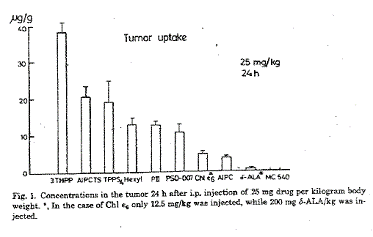
Great Western Corporation Pty Ltd v Grove Hill Pty Ltd [2001] FCA 423
Wimmera Industrial Minerals Pty Ltd v RGC Mineral Sands Ltd (No 3) (1997) AIPC 91-366
Hutt v Enig Pty Ltd (1998) 41 IPR 559
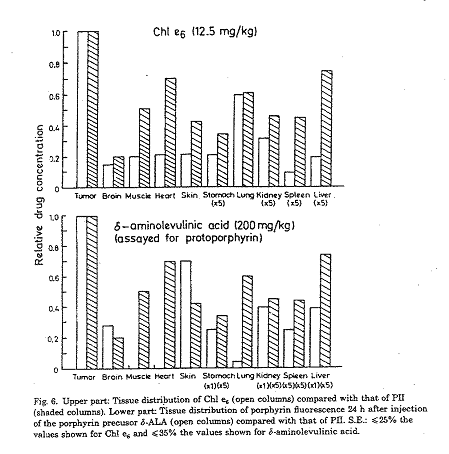
Cenefill Pty Ltd v Australian Sheetpiling Pty Ltd (1996) 35 IPR 64
Winner v Morey Haigh & Associates (A’Asia) Pty Ltd (1996) 33 IPR 215
Astra Lakemedel Aktiebolag v Commissioner of Patents (1995) 56 FCR 208
Kirin-Amgen Inc v Hoechst Marion Roussel Ltd [2005] 1 All ER 667
Union Carbide Corp v BP Chemicals Ltd [1999] RPC 409
Sundstrand Corporation v Safe Flight Instrument Corporation [1994] FSR 599
Insituform Technical Services Ltd v Inliner U.K. PLC [1992] RPC 83
Kastner v Rizla Ltd [1995] RPC 585
Beecham Group Limited v Bristol Laboratories Limited [1978] RPC 153
PHOTOCURE ASA v QUEEN’S UNIVERSITY AT KINGSTON AND DUSA PHARMACEUTICALS, INC
AND BETWEEN DUSA PHARMACEUTICALS, INC v PHOTOCURE ASA, GALDERMA S.A., PHOTOCURE AUSTRALIA PTY LTD AND GALDERMA AUSTRALIA PTY LTD
V214 OF 2002
MERKEL J
6 APRIL 2005
MELBOURNE
|
IN THE FEDERAL COURT OF AUSTRALIA |
|
|
VICTORIA DISTRICT REGISTRY |
V 214 OF 2002 |
|
BETWEEN: |
PHOTOCURE ASA APPLICANT
|
|
AND:
AND BETWEEN:
AND: |
QUEEN’S UNIVERSITY AT KINGSTON FIRST RESPONDENT
DUSA PHARMACEUTICALS, INC SECOND RESPONDENT
DUSA PHARMACEUTICALS, INC CROSS-CLAIMANT
PHOTOCURE ASA FIRST CROSS-RESPONDENT
GALDERMA S.A. SECOND CROSS-RESPONDENT
PHOTOCURE AUSTRALIA PTY LTD THIRD CROSS-RESPONDENT
GALDERMA AUSTRALIA PTY LTD FOURTH CROSS-RESPONDENT
|
|
MERKEL J |
|
|
DATE OF ORDER: |
|
|
WHERE MADE: |
MELBOURNE |
THE COURT ORDERS THAT:
1. The application and the cross-claim be dismissed.
2. Each of the parties is to bear its own costs of and incidental to the application and cross-claim.
Note: Settlement and entry of orders is dealt with in Order 36 of the Federal Court Rules.
|
IN THE FEDERAL COURT OF AUSTRALIA |
|
|
VICTORIA DISTRICT REGISTRY |
V 214 OF 2002 |
|
BETWEEN: |
PHOTOCURE ASA APPLICANT
|
|
AND:
AND BETWEEN:
AND:
|
QUEEN’S UNIVERSITY AT KINGSTON FIRST RESPONDENT
DUSA PHARMACEUTICALS, INC SECOND RESPONDENT
DUSA PHARMACEUTICALS, INC CROSS-CLAIMANT
PHOTOCURE ASA FIRST CROSS-RESPONDENT
GALDERMA S.A. SECOND CROSS-RESPONDENT
PHOTOCURE AUSTRALIA PTY LTD THIRD CROSS-RESPONDENT
GALDERMA AUSTRALIA PTY LTD FOURTH CROSS-RESPONDENT
|
|
JUDGE: |
MERKEL J |
|
DATE: |
|
|
PLACE: |
MELBOURNE |
REASONS FOR JUDGMENT
1. Introduction 1 – 3
2. Background facts 4 - 13
3. The patent 14 – 18
4. Validity 19 – 151
(a) Obviousness 25 - 72
(b) Novelty 73 - 100
(c) Lack of sufficiency and best method 101 - 116
(d) Lack of definition 117 - 126
(e) Fair basis 127 - 151
5. Infringement 152 - 248
(a) The primary meaning of terms used in the claims 161 - 194
(i) “Administering to the patient” 176 - 182
(ii) “5-aminolevulinic acid” 183 - 194
(b) Infringement in substance 195 - 248
(i) Does the variant (or equivalent) have a material effect upon the way the invention works? 209 - 224
(ii) Would this (i.e. that the variant (or equivalent) had no material effect) have been obvious at the date of publication of the patent to a reader skilled in the art?225 - 248
6. Conclusion 249
1. Introduction
1 As a result of a deed of assignment made between the first respondent (“Queen’s University”) and the second respondent (“DUSA”), DUSA became the registered proprietor of Australian Patent No 624985 (“the patent”). The patent is for an invention entitled “Method of Detection and Treatment of Malignant and Non-Malignant Lesions by Photochemotherapy”. A lesion is an injury, a hurt, a wound, any localised morbid structural change in the body or any pathological or traumatic discontinuity of tissue or loss of function of a part. The priority date for the patent is 28 July 1989, being the date of the United States application in respect of the invention.
2 The applicant (“PhotoCure”) has applied to the Court for the revocation of the patent on the ground of invalidity and DUSA has cross-claimed for declaratory and injunctive relief, claiming that the exploitation and supply by PhotoCure of its product “Metvix” in Australia and its proposed use in Australia of “Metvix Photodynamic Therapy” (“Metvix PDT”) infringes the patent. PhotoCure also claimed similar relief against the second cross-respondent (“Galderma”), which is an exclusive licensee of PhotoCure in Australia, and against the third and fourth cross-respondents, which are the wholly owned Australian subsidiaries of PhotoCure and Galderma respectively.
3 There were very few points or issues that were not contested. In order to prevent these reasons from being unacceptably long I have confined them to the significant and consequential issues that were both relied on in submissions and are capable of affecting the outcome of the dispute: see Amadio Pty Ltd v Henderson (1998) 81 FCR 149 at 175.
2. Background facts
4 The invention involves the use of photodetection and photodynamic therapy (“PDT”) for the detection and treatment of certain cancers and lesions or abnormalities (“lesions”). Photodetection and PDT are medical procedures involving the delivery to, or production in, the lesions of a photosensitive chemical compound. Photodetection involves exposing lesions to a certain wavelength of light thereby causing them to fluoresce and hence enable their detection. PDT involves exposing lesions to a wavelength of light that causes the photosensitised cells to be destroyed. One of the inventors, Professor Kennedy, describes the process as follows:
“PDT involves the interaction of photons of light of suitable (photoactivating) wavelengths with molecules of photosensitiser. When the energy of a photon of light is absorbed by a molecule of photosensitiser, that energy may be transferred by direct contact to a molecule of oxygen, thus producing an energized molecule of oxygen that is chemically quite reactive, called singlet oxygen. Singlet oxygen is capable of reacting with and destroying a wide variety of vital cellular structures. If the damage is severe enough, cell death follows. All else being equal, the higher the concentration of intracellular photosensitizer, the greater will be the production of activated oxygen in the presence of photoactivating light and the higher the probability that exposure of photosensitized tissues to light will lead to phototoxic cell death. However, very low concentrations of photosensitizer will have little or no effect on cell viability, since any minor cell damage that might be produced can quickly be repaired.”
5 At the priority date, the photosensitising agents most commonly used in photodetection and PDT were substances called porphyrins. Porphyrins are naturally occurring chemical compounds in the human body which have fluorescent and photosensitive qualities. For PDT to function effectively a sufficient amount of porphyrins needs to accumulate in the targeted lesions with only minimal amounts accumulating in the surrounding normal tissue. The preferential accumulation of porphyrins in lesions is significant because it allows the precise area of the lesions to be identified when exposed to a light. The light then causes fluorescence of the porphyrins and allows those lesions to be destroyed while leaving the surrounding normal tissue undamaged. This accumulation of a photosensitising agent preferentially in abnormal tissue (as compared to the surrounding healthy tissue) is referred to in the art as “selectivity” or “specificity”.
6 When PDT and photodetection function effectively they can have significant advantages over other more established methods of cancer detection and treatment. Photodetection allows diagnosis before the cancer has grown to a size that would make its malignancy apparent in the normal course of events. It can also enable the identification of small secondary cancers, the presence of which might otherwise be overlooked. The ability of PDT to destroy malignant cells leaving healthy tissue unharmed gives it an advantage over traditional cancer treatments such as chemotherapy or radiotherapy, both of which can occasion significant damage to healthy tissue. The invasiveness and imprecision in the case of surgery are additional problems that are absent in PDT when it is effective.
7 However, the advantages of PDT are often not achieved in practice. Earlier forms of PDT usually involved intravenous administration of a mixture of porphyrins, known as hematoporphyrin derivative (“HpD”) or a related, but more purified, mixture known as Photofrin II (“PII”). Certain other porphyrin compounds and mixtures were also used. But the clinical use of these photosensitisers for PDT gave rise to some significant problems. Insufficient selectivity was achieved as a significant accumulation of porphyrins also occurred in normal cells. This meant that the photodetection was not able to achieve a precise detection of abnormal tissue since the surrounding normal tissue also showed significant fluorescence. It also meant that healthy tissue was photosensitised and harmed during PDT. Additionally, repeated administration of HpD or PII for multiple treatments can result in decreasing selectivity. A further problem was that high levels of porphyrins remained in patients’ systems for several weeks. Consequently, patients were required to avoid any exposure to light for some time after treatment in order to prevent severe burning from occurring.
8 In the light of these difficulties, attempts were made, including by Professor Kennedy as an employee of Queen’s University, to find alternative photosensitising agents which would demonstrate increased selectivity and more rapid clearance from the body. The outcome of that quest by Professor Kennedy was the use of 5-aminolevulinic acid (“ALA”) in PDT. 5-aminolevulinic acid and delta-aminolevulinic acid are the common names given to 5-amino-4-oxopentanoic acid, which is represented by the formula:
 |
9 In order to appreciate the issues arising between the parties, it is necessary to outline the role played by ALA in the human body. ALA forms naturally in human cells as one step in the series of reactions leading to the creation of heme, which (along with globin) forms hemoglobin. The steps that lead to the creation of heme are referred to as the “biosynthetic pathway to heme”, which is an important basic metabolic pathway in living organisms in which biosynthesis occurs by the production of a chemical substance by a living organism. Heme is the primary respiratory agent in most organisms because it enables cells or molecules to transport or use oxygen. Within the biosynthetic pathway, ALA is created from other compounds, and it in turn reacts to create a sequence of porphyrins, the last of which ultimately combines with iron to form heme. A number of porphyrins follow ALA in the pathway to heme, one of which is protoporphyrin IX (“PpIX”), which functions as a photosensitising agent. ALA is a “rate-limiting step” in the biosynthetic pathway to heme. This means that the rate at which heme (and the other precursors to heme which follow ALA in the pathway) is created is controlled at the point in the pathway where ALA is created.
10 Because the creation and reaction of ALA precede the creation of PpIX, ALA is referred to as a “precursor” to PpIX and heme in the biosynthetic pathway. In general terms a “precursor” is a substance from which another substance is formed. The Oxford English Dictionary defines “precursor” in its chemical or biochemical sense as a “compound which precedes another in a metabolic pathway or a chemical synthesis, esp. a naturally occurring one”. This is consistent with the meaning advanced by PhotoCure that a precursor involves “a stage in the biosynthetic sequence for a metabolite which can be converted into another metabolite by one or more enzymatic reactions”. The common usage of the term “precursor” refers to a substance preceding another in a natural metabolic pathway, such as the biosynthetic pathway to heme. While the term might also refer to a compound from which another is formed, in a reaction not occurring in a natural metabolic pathway, I doubt that anything turns on that extended meaning in the present case. Clearly the context in which the term is used is of importance in ascertaining its meaning.
11 Professor Kennedy discovered that adding ALA can bypass the rate-limiting step and therefore treating a patient with ALA increased the generation and selective accumulation of PpIX in abnormal cells. The PpIX was then able to be employed as a photosensitising agent, which reacts with light to destroy those cells, and also fluoresces so as to enable photodetection. This selective process is different from the use of HpD, which is administered as a porphyrin-photosensitising agent to the patient. ALA is not itself a photosensitiser, but its administration has the consequence of bypassing the rate-limiting step and, as a consequence, inducing the production of photosensitising porphyrins within the targeted cell. DUSA claims that Professor Kennedy’s unique approach caused the very cell which PDT is intended to destroy to make its own photosensitiser.
12 The use of ALA in PDT and photodetection was found by Professor Kennedy to have a number of advantages over previous methods. In particular:
(1) in addition to systemic use, ALA can be applied topically (ie by administration to the skin or other epithelial layer), by localised injection or by infusion into a cavity such that the resulting photosensitivity affects only a small localised area;
(2) within the area treated with ALA (or the entire body where ALA is introduced systemically) PpIX accumulates preferentially in abnormal cells with the consequence that the administration of ALA results in selectivity even within the area to which it is applied;
(3) because ALA does not easily penetrate healthy skin, but can more easily penetrate through skin damaged by basal cell carcinomas, actinic keratoses or psoriasis, it may more readily reach those cells when it is applied topically to treat certain skin abnormalities;
(4) ALA-induced PpIX is highly susceptible to photobleaching (a process whereby the porphyrins are destroyed) in both normal and abnormal cells during treatment, but, since the levels of PpIX in normal cells are already low, photobleaching during treatment tends to reduce levels of PpIX in normal tissue to a sufficiently low level, such that photosensitivity in that tissue does not last after treatment;
(5) there is a rapid clearance of ALA-induced PpIX from normal cells, with the consequence that even if the photobleaching that occurs during treatment does not reduce PpIX levels in normal tissue to below that necessary for photosensitivity, this would occur rapidly by the normal clearance of the compound from the cells.
The advances able to be achieved by the use of ALA improved the precision of PDT (since abnormal cells could be targeted while not harming healthy cells), and reduced the problem of lasting photosensitivity and associated phototoxic skin reactions (since a smaller area of the body could be treated with ALA, healthy cells would not accumulate as much photosensitiser, and the levels of photosensitisers accumulated in healthy cells would be reduced through photobleaching and rapid clearance).
13 The use of ALA in PDT also presented several other benefits:
(1) ALA-based PDT can be effective against certain conditions which did not respond to the use of HpD and other photosensitisers;
(2) PpIX is strongly absorbent of red light, which passes through human tissue more readily than blue light, and therefore enables the use of PDT in relation to lesions that occur a greater distance below the surface of the skin;
(3) ALA-based PDT was shown to be particularly effective in treating basal and squamous cell carcinomas and some non-cancerous conditions such as psoriases.
3. The patent
14 The patent relates to “the detection and treatment of certain tissue abnormalities (both cancerous and non-malignant) by induced fluorescence and photochemotherapy respectively.” After explaining the background to the pre-existing forms of PDT, the specification sets out the object of the invention, the statement of the invention and a detailed description of the preferred embodiment as follows:
“Object of Invention
It is an object of the present invention to provide a method for the detection of certain types of malignant and non-malignant tissue abnormalities by induced fluorescence.
It is another object of the present invention to provide a photodynamic (photosensitizing) treatment method which can be administered either systemically or topically using an agent which is not in itself a photosensitizer but which induces the synthesis of protoporphyrin IX (PpIX) in vivo.
Statement of Invention
Thus, by one aspect of this invention there is provided a method for detecting malignant and non-malignant lesions in a patient comprising administering to said patient an effective amount of a precursor of protoporphyrin IX in the biosynthetic pathway for heme so as to induce an accumulation of protoporphyrin IX in said lesions and exposing said lesions to light having a wavelength within the absorbance spectrum of said protoporphyrin IX to thereby induce fluorescence in said lesions.
Thus, by another aspect of this invention there is provided a method for treating malignant and non-malignant hyperproliferative lesions of the skin, mucosa, endometrium and urothelium in a patient comprising administering to said patient an effective amount of a precursor of protoporphyrin IX in the biosynthetic pathway for heme so as to induce synthesis of protoporphyrin IX in said lesions, and exposing said lesions to light having a wavelength within the photoactivating action spectrum of said PpIX to thereby induce photoactivation in said lesions.
In preferred aspects of this invention the preferred precursor or protoporphyrin IX is 5-amino-4-oxo-pentanoic acid, otherwise known as 5-aminolevulinic acid, and a preferred wavelength of the photoactivating light is in the range 350-635 nm, more preferably a red light of about 635 nm.
Detailed Description of Preferred Embodiment
Protoporphyrin IX (PpIX), a naturally occurring photo sensitizer, is the immediate precursor of heme in the heme biosynthetic pathway. All nucleated cells have at least a minimal capacity to synthesize PpIX, since heme is necessary for the synthesis of various essential heme-containing enzymes. Certain types of cells and tissues can synthesize relatively large quantities of PpIX. Under normal conditions, the synthesis of PpIX in such tissues is under such tight feed-back control that the cells produce it at a rate just sufficient to match their need for heme. However, the usual rate-limiting step in the process, the synthesis of 5-aminolevulinic acid (ALA), can be bypassed by the provision of exogenous ALA, porphobilinogen, or other precursor of PpIX. Certain tissues and organs will then accumulate such a large excess of PpIX that they become both fluorescent and photosensitive. At least in the case of skin, the PpIX appears to be synthesized in situ. The ALA, which is commercially available from Sigma Chemical Company and which is water soluble, can be administered orally, topically or by injection. The oral and parenteral routes lead to the induction of clinically useful concentrations of PpIX in certain benign and malignant tissues throughout the body. Only certain types of tissue can synthesize clinically useful amounts of PpIX when provided with an excess of ALA, and the provision of ALA is only beneficial if the tissue affected is at a site that can be reached by photoactivating light. At the present time, treatment of basal cell, baso-squamous and squamous cell carcinomas and other lesions of the skin, mucosa (respiratory, digestive, and vaginal), endometrium and urothelium is contemplated. Treatment of non-malignant lesions such as genital warts and psoriasis is also contemplated. Sites could include lesions involving (i) skin and conjunctiva; (ii) the lining of the mouth, pharynx, esophagus, stomach, intestines and intestinal appendages, rectum, and anal canal; (iii) the lining of the nasal passages, nasal sinuses, nasopharynx, trachea, bronchi, and bronchioles; (iv) the lining of the ureters, urinary bladder, and urethra; (v) the lining of the vagina, uterine cervix and uterus; (vi) the parietal and visceral pleura; (vii) the lining of the peritoneal and pelvic cavities, and the surface of the organs contained within those cavities; (viii) the dura mater and meninges; (ix) any tumors in solid tissues that can be made accessible to photoactivating light either directly, at time of surgery, or via an optical fibre inserted through a needle.
The wavelength of the photoactivating light is of some importance, as it has been shown that between 1 and 10 percent of incident red light (600-700 nm) can pass through a slab of human tissue 1 cm thick, whereas only 0.001 percent or less of blue light (about 400 nm) can pass through the same thickness of human tissue. The photosensitizer will, therefore, be more successful if it strongly absorbs red light. PpIX does strongly absorb red light. The present approach has several advantages over the prior art. First, PpIX has a much shorter half-life in normal tissues than does HpIX, HpD or Photofrin II. This greatly reduces the danger of accidental phototoxic skin reactions in the days following treatment. Second, the topical application of ALA to certain types of lesions can induce PpIX within those lesions, but nowhere else. This improves the specificity of the treatment, reduces the danger of accidental phototoxic reactions to a very low level, and greatly reduces the amount of both ALA and PpIX to which the entire body would be exposed if an equally effective dose of ALA were to be given systemically. Both ALA and PpIX are normal products of metabolism, and are handled quite readily by the biochemical machinery of the body. However, since very large doses of ALA (like large doses of HpIX or HpD) are associated with a transient decrease in motor nerve conduction velocity, it is desirable to reduce the dose of ALA to the minimum that is still effective. Topical application requires much less ALA than systemic administration. Third, PpIX is rapidly inactivated by the photoactivating light. Following exposure of tissues containing PpIX to a therapeutic dose of photoactivating light, there is a substantial decrease in photosensitization of the tissues within the treatment volume. Consequently, if PpIX is induced by the topical application of ALA to specific lesions, the patient can be exposed to sunlight immediately post-treatment without danger of serious phototoxicity. Fourth, ALA is an effective inducer of PpIX when given by mouth, by topical application, or by injection. In contrast, HpIX, HpD and Photofrin II are effective in most situations only when given by injection. This versatility of ALA enhances its acceptability for routine use by the medical profession, since the oral and topic routes of administration are much more convenient than the parenteral. Fifth, the normal and abnormal tissues that can be photosensitized by the administration of ALA are somewhat different from those that can be photosensitized by the administration of HpIX, HpD or Photofrin II. Consequently, ALA may be useful in clinical situations in which the other photosensitizers are not.
Thus present technique is not merely another way to do what can be done already but is, in fact, a significant advance in therapeutic capability.”
15 Four examples are then given of PDT involving the topical application of ALA to the skin of four patients for treatment of carcinomas. Example 5 relates to the systemic administration of ALA to mice. In that example it was found that the mouse endometrium showed strong protoporphyrin fluorescence while the underlying myometrium did not.
16 The claims defining the invention are as follows:
“1. A method for treating malignant and non-malignant tissue abnormalities and lesions of the skin; conjunctiva; respiratory, digestive and vaginal mucosa; endometrium; and urothelium in a patient in need of such treatment comprising administering to said patient an effective amount of 5-aminolevulinic acid so as to induce synthesis of protoporphyrin IX in said lesions, and exposing said lesions to light within the photoactivating action spectrum of said protoporphyrin IX.
2. A method as claimed in claim 1 wherein said malignant lesions are selected from basal, baso-squamous and squamous carcinomas.
3. A method as claimed in claim 1 wherein said non-malignant lesions are selected from psoriasis and genital warts.
4. A method as claimed in claim 1 wherein said photoactivating light is in the range of 350-365 nm.
5. A method for treating menorrhagia in a patient in need of such treatment comprising topically administering 5-aminolevulinic acid to the endometrium and exposing said endometrium to light having a wavelength within the photoactivating action spectrum of protoporphyrin IX.
6. A method as claimed in claim 1 where in said 5-aminolevulinic acid is administered parenterally.
7. A method as claimed in claim 1 wherein said 5-aminolevulinic acid is administered topically.
8. A method as claimed in claim 1 wherein said 5-aminolevulinic acid is administered orally.
9. A method for treating malignant and non-malignant hyperproliferative lesions of the skin, mucosa, endometrium and urothelium in a patient in need of such treatment comprising administering to said patient an effective amount of a precursor of protoporphyrin IX in the biosynthetic pathway for heme so as to induce synthesis of protoporphyrin IX in said lesions, and exposing said lesions to light within the photoactivating action spectrum of said protoporphyrin IX.
10. A method as claimed in claim 9 wherein said precursor is 5-aminolevulinic acid.
11. A method for detecting malignant and non-malignant tissue abnormalities and lesions of the skin, mucosa, endometrium and urothelium in a patient in need of such treatment, comprising administering to said patient an effective amount of a precursor of protoporphyrin IX in the biosynthetic pathway for heme so as to induce synthesis of protoporphyrin [IX] preferentially in said abnormalities and lesions, exposing said patient to light having a wavelength within the absorbance spectrum of said protoporphyrin IX to thereby induce fluorescence in said abnormalities or lesions, and detecting said fluorescence.
12. A method of treatment according to any one of claims 1, 5, 9 or 11 substantially as hereinbefore described with reference to the Examples.”
17 DUSA claims that PhotoCure’s use of Metvix PDT infringes claims 1, 2, 4, 7, 9, 10 and 12. PhotoCure’s riposte is that all of the claims are invalid and that the patent should be revoked.
18 At trial PhotoCure and DUSA adduced evidence from numerous expert witnesses who differed in their views on a number of critical factual issues. I accept that the expert evidence was carefully considered and was an honest expression of the witnesses’ opinions and views. The differences of opinion can be explained in part by the fact that each witness’s evidence was significantly influenced by the particular expertise, background and experience of that witness, which itself differed in significant respects from the particular expertise, background and experience of other witnesses. Where the witnesses differed in their views, I have tended to prefer the evidence of experts whose expertise, background and experience is most closely related to the subject matter of the invention. The evidence of the experts that I have preferred, or upon which I have relied, is set out in these reasons. I would add that I have not given significant weight to the expert evidence of Dr Hansson who is the President and Chief Executive Officer of PhotoCure. I regarded Dr Hansson’s evidence as having been influenced by his position, his belief in his company’s product, Metvix, and his advocacy of PhotoCure’s case.
4. Validity
19 The application for the patent was filed on 25 July 1990 and accepted on 25 June 1992. The Patents Act 1990 (Cth) (“the Act”) commenced on 30 April 1991. It was common ground between the parties that ss 234(2) and (5) of the Act apply to the patent with the result that the Act applies to the patent, subject to the proviso contained in s 234(5) that the validity of the patent cannot be impugned on any basis that would not have been available under the Patents Act 1952 (Cth) (“the 1952 Act”).
20 With respect to questions of obviousness and novelty, the effect of s 234 of the Act is that the patent will only be invalidated on those grounds by reference to things “known or used in Australia on or before the priority date” by virtue of s 100(1)(e) of the 1952 Act: see Minnesota Mining & Manufacturing Co v Tyco Electronics Pty Ltd (2002) 56 IPR 248 (“Minnesota Mining v Tyco”) at 250-251 [5]-[8] and 272 [98]; NV Philips Gloeilampenfabrieken v Mirabella International Pty Ltd (1993) 44 FCR 239 (“NV Philips”) at 251-254 and Aktiebolaget Hässle v Alphapharm Pty Limited (2002) 212 CLR 411 (“Alphapharm (HCA)”) at 421-422 [13]-[18].
21 It was common ground that for all other purposes the issues raised by the claim and cross-claim are governed by the Act.
22 Under s 138(3)(b) of the Act a patent may be revoked on the ground that is not for a patentable invention. Section 18 provides that:
“(1) Subject to subsection (2), an invention is a patentable invention for the purposes of a standard patent if the invention, so far as claimed in any claim:
(a) is a manner of manufacture within the meaning of section 6 of the Statute of Monopolies; and
(b) when compared with the prior art base as it existed before the priority date of that claim:
(i) is novel; and
(ii) involves an inventive step; and
(c) is useful; and
(d) was not secretly used in the patent area before the priority date of that claim by, or on behalf of, or with the authority of, the patentee or nominated person or the patentee’s or nominated person’s predecessor in title to the invention.”
23 Section 138(3)(f) provides for revocation on the ground that a patent does not comply with ss 40(2) or (3) which, relevantly, provide:
“(2) A complete specification must:
a. describe the invention fully, including the best method known to the applicant of performing the invention; and
b. where it relates to an application for a standard patent – end with a claim or claims defining the invention…
(3) The claim or claims must be clear and succinct and fairly based on the matter described in the specification.”
24 PhotoCure relies upon the following grounds of invalidity:
(a) lack of inventive step (obviousness);
(b) lack of novelty;
(c) lack of sufficiency and best method;
(d) lack of definition;
(e) lack of fair basis.
(a) Obviousness
25 Section 7 of the Act, relevantly, provides that:
“(1) …
Inventive step
(2) For the purposes of this Act, an invention is to be taken to involve an inventive step when compared with the prior art base unless the invention would have been obvious to a person skilled in the relevant art in the light of the common general knowledge as it existed in the patent area before the priority date of the relevant claim, whether that knowledge is considered separately or together with the information mentioned in subsection (3).
(3) The information for the purposes of subsection (2) is:
(a) any single piece of prior art information; or
(b) a combination of any 2 or more pieces of prior art information;
being information that the skilled person mentioned in subsection (2) could, before the priority date of the relevant claim, be reasonably expected to have ascertained, understood, regarded as relevant and, in the case of information mentioned in paragraph (b), combined as mentioned in that paragraph.”
26 “Prior art base” is defined in Schedule 1 of the Act. However, as explained above, the effect of s 234 of the Act is that the validity of the patent cannot be impugned for obviousness other than by reference to things “known or used in Australia on or before the priority date”. Further, the requirement in s 7(2) that the question of obviousness be considered not only in the light of the common general knowledge existing at the priority date, but also taking account of the information mentioned in s 7(3), represents a change from the situation under the 1952 Act and the jurisprudence developed in relation to its application by the High Court: see Alphapharm (HCA) at 422 [16].
27 As the question of obviousness is to be assessed in the light of the common general knowledge as it existed in the patent area before the priority date, and by reference to the perspective of a person skilled in the art, it is first necessary to determine what the relevant art is, who the person skilled in that art would have been, and what would have constituted the common general knowledge available to such a person. DUSA contended that the relevant art or field is “PDT” and that the relevant person is someone “who was working in the area of PDT”, although it accepted that such a person would have a sound knowledge of PDT and biochemistry. PhotoCure’s contention was that the relevant person is “someone with a knowledge of porphyrin biochemistry, PDT and drug formulation”. DUSA has understated, and PhotoCure has overstated, the relevant area. At the priority date, PDT was a highly specialised and relatively recently developed area of research. Any person working in the area of PDT would have had a sound understanding of the role of porphyrins, as porphyrins were the main photosensitising agent used in PDT. In my view, the relevant person under s 7(2) of the Act was a person who was seeking to enhance the development of PDT using porphyrins as a photosensitising agent. Thus, the hypothetical skilled addressee would have a sound understanding of biochemistry and a detailed understanding and knowledge of PDT and of the role of porphyrins as a photosensitising agent in PDT.
28 The parties also differed as to whether the skilled addressee in this instance should be considered to consist of, or include, a team of persons working together. As a matter of law this may be the case where it is normal in the field for a team to work together: see General Tire & Rubber Company v The Firestone Tyre and Rubber Company Ltd [1972] RPC 457 (“General Tire & Rubber”) at 485; The Leonardis v Sartas No 1 Pty Ltd (1996) 67 FCR 126 (“Leonardis”) at 146; ICI Chemicals & Polymers Ltd v Lubrizol Corporation Inc (1999) 45 IPR 577 (“ICI Chemicals”) at 597 [100]). PhotoCure adduced some evidence to the effect that a team of persons with multidisciplinary expertise would be involved. However, that evidence was given by Professors Moore and Roberts, neither of whom had direct experience in the area of PDT research and development. In any event, while it is possible, and perhaps even likely, that a group of persons might have worked collaboratively in seeking to develop new methods of PDT, I do not consider that the evidence indicates that their skills would have been sufficiently multidisciplinary to materially expand the understanding and knowledge of the hypothetical skilled addressee as set out above.
29 It is next necessary to consider what constituted the common general knowledge in Australia at the priority date. In Minnesota Mining and Manufacturing Co v Beiersdorf (Australia) Ltd (1980) 144 CLR 253 (“Minnesota Mining v Beiersdorf”) at 292 Aickin J described the concept of common general knowledge as follows:
“The notion of common general knowledge itself involves the use of that which is known or used by those in the relevant trade. It forms the background knowledge and experience which is available to all in the trade in considering the making of new products, or the making of improvements in old, and it must be treated as being used by an individual as a general body of knowledge.”
See also ICI Chemicals at 599 [111].
30 In the present context little turns on the issue of the availability of common general knowledge in Australia. PDT was being explored, developed and employed internationally with the consequence that what was generally known or used in Australia in relation to PDT did not differ in any material respect from what was generally known or used internationally.
31 The common general knowledge will encompass not only information that is retained in the memory of the skilled person, but also information that the person knows of, and to which he or she might refer as a matter of course, or habitually consult: see ICI Chemicals at 599 [112] and Aktiebolaget Hässle v Alphapharm Pty Ltd (2000) 51 IPR 375 at 391 [73]. However, common general knowledge does not include information merely because it would have been able to be found if a routine literature search was conducted: see Alphapharm (HCA) at 426 [31], 430 [44]-[45] and 434 [55]. Nor does it follow from the fact that a publication “may have been held in a library readily accessible to a particular formulator” that such a publication formed part of the common general knowledge: see Aktiebolaget Hässle v Alphapharm Pty Ltd (1999) 44 IPR 593 (“Alphapharm (FCA)”) per Lehane J at 625 [105].
32 The common general knowledge in the relevant field at the priority date included the matters set out in [4] to [7] above and the role of ALA in the human body as set out in [8] above. In particular, it was uncontroversial between the parties, and clear from the evidence, that the following matters were within the common general knowledge in the relevant field as at the priority date:
(1) PDT involving the provision of exogenous porphyrins, such as HpD and PII, was known as a method of treatment for malignant and non-malignant lesions in various parts of the body;
(2) a characteristic of HpD and PII is their tendency to accumulate selectively, to some extent, in abnormal tissue;
(3) fluorescent diagnosis involving the provision of exogenous porphyrins was a method of detecting tissue abnormalities;
(4) PpIX was a fluorescent and photosensitive naturally-produced porphyrin;
(5) the nature of the biosynthetic pathway to heme was generally known, including the roles of PpIX and ALA in that pathway, and the fact that all nucleated cells have a capacity to synthesise PpIX;
(6) it was possible, and in some cases advantageous, to use a “prodrug” to achieve particular pharmacological results.
33 A prodrug is defined in the Oxford English Dictionary as any (usually biologically inactive) “compound which may be metabolized in vivo to produce a drug…”. Professor Roberts explained that a prodrug is a compound (which may or may not be active in its own right) which is converted once inside the body by metabolic activity into the drug whose biochemical effect is sought to be utilised. There was some disagreement as to whether ALA should be regarded as a “prodrug” of PpIX, but what is relevant for present purposes is that it was known in the relevant field that a compound may be given to a patient in order to induce in vivo the production of another, and more pharmacologically useful, compound.
34 PhotoCure claimed, and DUSA disputed, that the common general knowledge included the following matters:
(1) a detailed level of knowledge about porphyrias;
(2) knowledge that natural porphyrins, including PpIX, tended to accumulate selectively in malignant tissue, and therefore would be useful in PDT;
(3) knowledge that the provision of ALA, or any other precursor of PpIX in the biosynthetic pathway, to a cell caused an excess of PpIX in the cell, causing the cell to fluoresce and become photosensitive;
(4) The Peng paper.
(1) a detailed level of knowledge about porphyrias
35 Porphyrias are a number of related medical conditions. DUSA relied on the evidence of Professor Moore, whose background related more to biochemistry, including experience in relation to porphyrias, rather than PDT. Professor Moore explained porphyrias as follows:
“Some people have conditions which result from one of the enzymes having an altered activity so that the biosynthetic pathway to heme does not function properly. These conditions are called the porphyrias and have driven the study into the biosynthetic pathway to heme.
…The symptoms [of porphyrias] are acute neurological features (called an ‘acute attack’) or skin photosensitivity or both. …
Often in porphyria, there is a build up of porphyrinogens which are converted to porphyrins. The body cannot remove the porphyrins quickly enough and skin photosensitivity results. It was known before 1989 that the skin photosensitivity results from different porphyrins in different porphyrias. For example, in porphyria cutanea tarda and congenital porphyria, the skin photosensitivity arises from excess uroporphyrin. It was known in 1961 that the skin phototoxicity associated with PpIX is found in erythropoietic protoporphyria.”
36 Professor Moore’s evidence was that there was overlap at conferences and in research between the areas of “porphyrins, porphyria and PDT” and that:
“[PDT] was raised in various discussions amongst people interested in porphyria and in other areas for very very many years. The initial conceptualities behind porphyrin photosensitisation go back to 1913. You see even in more recent times that people with specific interests in these areas were talking about this in the late 1970s and right through to the present time.”
37 DUSA accepted that PDT researchers necessarily have some knowledge of porphyrin biochemistry, in the sense of the biological activity of pre-formed porphyrin photosensitisers. It also accepted that the researchers would have some understanding of porphyrias as a class of diseases arising from defects in the biosynthetic pathway. However, DUSA argued that there was a clear separation between what might constitute common general knowledge in relation to a person researching porphyrias and porphyrins per se, and a person doing so for the purpose of PDT research. Professor Oseroff and Professor Waner, DUSA’s expert witnesses, expressed the view that PDT researchers at the priority date did not draw an association between their work and the study of porphyrias. Both said that they had a familiarity with porphyrins as a result of their medical training, but before the priority date had not considered that their knowledge was relevant to their work in PDT, and that they did not recall consideration being given to porphyrias at the PDT conferences they had attended prior to 1989.
38 While it can be accepted that a person working in the area of porphrias might take a secondary interest in PDT, I prefer the evidence of Professors Oseroff and Waner, who were both involved in researching PDT, to the effect that the relevant area of interest of a person skilled in the art of researching PDT would be the photosensitising characteristics of porphyrins, rather than in porphyrias.
39 In any event, I do not consider that common general knowledge in relation to porphyrias on the part of the notional skilled addressee would have significantly advanced PhotoCure’s case on obviousness. A knowledge of porphyrias would not have indicated that natural porphyrins would be likely to be useful in PDT, the efficacy of which requires selective accumulation of a photosensitiser in abnormal, rather than in normal, tissue. As Professor Oseroff explained, “the symptoms of porphyria are inimical to the goals of PDT” in that:
“Porphyria involves circulating porphyrins which can cause injury to the vascular system, the skin, certain internal organs and the nervous system. One of the aims of PDT was to develop drugs which could be used in the human system to achieve selective and preferential accumulation of porphyrins in the target tissues, without causing injury to normal tissues in patients. In addition, the porphyrins that were being studied for use in PDT were generally not naturally occurring porphyrins, but rather were pre-formed photosensitisers. Accordingly, there was no particular emphasis on understanding porphyrin metabolism in the context of PDT.”
40 Professor Waner gave similar evidence, namely that his knowledge of porphyrias from his medical training led him to understand that patients suffering from those conditions suffered serious consequences as a result of an excess of porphyrins, whereas in his PDT research he sought to achieve the selective retention of a photosensitiser (which may or may not be a porphyrin) in tumour tissue. As a result, Professor Waner considered that
“A knowledge of porphyria and porphyrin metabolism did not lead to a better understanding of [the selective uptake of a photosensitiser by malignant tissue]. Rather, porphyria is associated with widespread tissue destruction, as a result of the accumulation of excess porphyrins. Accordingly, a knowledge of porphyrias would lead away from the choice of porphyrins as a photosensitiser.”
41 The skills and training which different researchers in the field of PDT would have brought to their work would vary depending, for example, on whether their background was in medical treatment or biochemistry. It is possible that some researchers in the field of PDT would have had detailed knowledge of porphyrias. However, the notional skilled addressee is “the person of ordinary skill in the art”: Williams Advanced Materials, Inc v Target Technology Company LLC [2004] FCA 1405 at [105], and I do not consider that such a person would have had more than a basic and general knowledge of porphyrias.
(2) knowledge that natural porphyrins, including PpIX, tended to accumulate selectively in malignant tissue, and therefore would be useful in PDT
42 PhotoCure relied on evidence from Professor Moore that well known publications indicated that natural porphyrins might be useful in PDT. He referred specifically to writings by Kessel and himself and the reference in the patent to the prior use of hematoporphyrin in PDT. However, even if the publications were part of, or reflected, the common general knowledge at the priority date, they would not assist PhotoCure’s case. The Kessel article (“Components of Hematoporphyrin Derivatives and Their Tumor-localizing Capacity” (1982) 42 Cancer Research 1703) is an investigation into the components of HpD, which is not a natural porphyrin. Although the article discusses the accumulation of protoporphyrin and hematoporphyrin in tumour cells, it does so in the context of the administration of HpD. The article does not teach that the use of those porphyrins when naturally occurring would be useful in PDT, and does not deal with PpIX. Professor Moore’s own text of 1987 (Moore et al, Disorders of Porphyrin Metabolism, Plenum Medical Book Company, New York) includes a chapter covering PDT. However it discusses only the use of HpD and hematoporphyrin. Similarly, in discussing the prior art, the patent refers only to the prior use of HpD, PII, and hematoporphyrin IX.
43 DUSA’s evidence was to the effect that, according to the existing knowledge in the field at the priority date, although commercially produced hematoporphyrin tended to localise in tumour cells, pure hematoporphyrin did not. DUSA also led evidence to demonstrate that the existing state of knowledge in the field prior to 1989 was that PpIX was not an effective agent for PDT. Experiments involving the injection of PpIX into mice had led to the conclusion that it would be unsuitable for use in PDT as it cleared too rapidly. Professor Batlle (at T 231) gave evidence that she was aware in 1989 that experiments involving the administration of PpIX had been viewed as unsuccessful. Professor Oseroff’s evidence was that there was little interest before the priority date in pursuing the use of natural porphyrins in PDT.
44 Having regard to the above evidence I do not accept that common general knowledge in the field at the priority date indicated that natural porphyrins in general, or PpIX specifically, would tend to accumulate selectively in malignant cells or lesions in such a way as to be potentially useful in PDT.
(3) knowledge that the provision of ALA or any other precursor of PpIX in the biosynthetic pathway to a cell caused an excess of PpIX in the cell, causing the cell to fluoresce and become photosensitive.
45 DUSA led evidence from Professor Waner and Professor Oseroff that this specific piece of information was not known, as well as evidence from experts working in PDT that they had no interest in ALA.
46 PhotoCure sought to demonstrate that this information was part of the common general knowledge at the priority date by reference to particular publications. The first of these, authored by JJ Scott in 1955, is titled “The metabolism of d-aminolaevulic acid” in Ciba Foundation Symposium on Porphyrin Biosynthesis and Metabolism (“the Scott paper”). The Scott paper considered experiments in which ALA was administered to rats and humans, and included the following paragraph (at 48):
“In all the human subjects tested, a dose of ALA has given rise to a transient but marked photosensitivity. There is an erythema of the exposed skin resembling a mild sunburn, reaching a maximum between nine and twelve hours (the experiments have always been begun in the early morning). In one subject the erythema was replaced one day later by a prolonged suntan.”
47 In the course of cross examining Professor Kennedy, PhotoCure produced a further article published in 1956 by NI Berlin, A Neuberger and JJ Scott, also titled “The Metabolism of d-aminolaevulic acid” in the journal Bioch. vol 64 at 80. It contained the following paragraph under the heading “Experimental photosensitivity in man induced by aminolaevulic acid” (at 89):
“The marked photosensitivity of human subjects who have been given aminolaevulic acid is of particular interest in view of the severe photogenic blistering which is the main clinical feature of congenital porphyria. The nature of the reaction in the experimentally induced condition is, however, different from that usually observed in the disease, where exposure to light will have occurred over long periods. In none of the human subjects was there any vesicular eruption. Only in the subject who received the largest dose was there any desquamation; in all subjects the condition in fact resembled most closely that of sunburn. The photosensitivity of congenital porphyria has long been assumed to be due to porphyrins, particularly uroporphyrin I, known to be present in the blood and tissues of patients with the disease. Preliminary experiments have shown that protoporphyrin is excreted in relatively large quantities in the bile of rats after administration of ALA (Scott, 1955). Circulating porphyrins may therefore be responsible for the experimentally induced sensitivity; the skin reaction is, however, very mild in the latter condition, compared with that in the disease, where exposure with porphyrinaemia has been prolonged.”
48 I am not satisfied that the articles formed a part of, or reflected, the common general knowledge of the notional skilled addressee. Very little evidence was led to that effect. Both articles were written in the 1950s in the context of the study of porphyrias, and the paragraphs in question formed minor, and not central, observations in those articles. In any event, even if the material formed part of the common general knowledge, I do not consider that it significantly advances PhotoCure’s case. The Scott paper does not indicate the biochemical process by which provision of ALA causes photosensitivity, nor does it identify PpIX as the specific porphyrin involved. Moreover, knowledge that the administration of ALA leads to a general photosensitivity in humans would not make the use of ALA in PDT obvious without the further knowledge that that photosensitivity can occur selectively in abnormal tissue. I do not consider that this additional information formed part of the common general knowledge at the priority date.
(4) The Peng paper
49 PhotoCure also sought to rely on an article authored by Peng Qian and others entitled “A Comparison of Different Photosensitizing Dyes with Respect to Uptake C3H-Tumors and Tissues of Mice” and published, in vol 36 of the journal Cancer Letters in 1987 (“the Peng paper”) at pp 1-10. In order to rely on that paper in support of its obviousness submissions it was necessary, in the light of the High Court’s decision in Alphapharm, for PhotoCure to demonstrate that the paper formed part of the common general knowledge at the priority date.
50 DUSA sought to rely in its closing submissions on PhotoCure’s failure to plead that the Peng paper was part of common general knowledge. However, from the outset of the hearing PhotoCure made it clear that it intended to rely on the Peng paper in that way. No objection was raised at that time by DUSA in relation to PhotoCure’s failure to plead the Peng paper as part of common general knowledge. I am satisfied that this question was “in the ring” at trial and that DUSA is not disadvantaged by PhotoCure’s reliance on it: see Nescor Industries Group Pty Ltd v Miba Pty Ltd (1997) 150 ALR 633 at 640, 647 and 650.
51 In support of its contention that the Peng paper was part of the common general knowledge at the priority date, PhotoCure relied on the following evidence:
· The evidence of Professor Moore that he had read the Peng paper before the priority date; the evidence of Professor Oseroff that it was very likely that he had read the Peng paper around the time of its publication; and the evidence of Dr Ward that the Peng paper was part of his collection of “articles by significant researchers in the field”;
· the response of Professor Kennedy when asked whether he had read the Peng paper around the time of its publication (“No. It’s a bit embarrassing to admit, but I am not a very organised researcher and I do not do all the reading that I should do…”) which was said to imply that an organised researcher who engaged in the appropriate reading would have read the article;
· the evidence of Professor Moore that Cancer Letters, the journal in which the Peng paper was published is “a well known publication by a well known science publisher” and is “commonly read by medical and biological scientists”; and the evidence of Dr Waner that Cancer Letters is a well known publication; and
· evidence indicating that of the authors of the Peng article, Dr Moan, and possibly Professor Rimington, were well known in the field.
52 DUSA, in arguing that the Peng paper was not part of the common general knowledge at the priority date, relied on the following evidence:
· evidence from Dr Ward that, although he had the paper as part of his collection of articles, he did not recall its contents before revisiting it for the purposes of this case;
· evidence from Professor Oseroff that, although it was very likely that he read the Peng paper around the time of its publication, he “had no specific recollection of the article prior to reading it for the purposes of making this affidavit”;
· the following evidence from Dr Waner:
“MACAW: I think you said this is a paper that you have not read?
WANER: That’s correct.
MACAW: But did I correctly understand your earlier evidence to be that you were not attempting prior to 1989 to keep up to date with all relevant literature on the subject?
WANER: Please repeat that?
MACAW: Did I correctly understand an earlier answer to me that you were not attempting to keep up to date with all relevant literature on the subject?
WANER: No, I – prior to 1989 I was attempting to keep up to date with what I considered to be all of the relevant literature, which does not necessarily mean that I read every single article. You know, there’s a tremendous amount of stuff being put out there and I may well have missed this and several other articles. I could possibly or I may possibly have read this and did not recall at the time of – few years ago or at least a year ago I may not have recalled that I had in fact read this article.
MACAW: The publication, Cancer Letters?
WANER: Yes.
MACAW: Is a well-known publication?
WANER: Yes, but, you know, prior to the age of computers it was very difficult to keep up with every single article that was published. One would go to Index Medicus and pick out as many of the articles as appeared to be relevant. One would go to the meetings and listen to what was being spoken about and thereby pick out the articles. This article did not come into my radar or at least I do not recall it coming into my radar.
MACAW: Have you ascertained whether the use of Index Medicus would have identified it?
WANER: No, I have not gone back and checked that.
MACAW: Would you accept that Cancer Letters is a journal which is commonly read by medical and biological scientists?
WANER: It’s a journal read by oncologists.
MACAW: Including those whose interest in oncology involves PDT?
WANER: I guess so. You know, there are more interesting and more pertinent journals. There is a wide range of publications which are used by certain individuals. One attempts to get an article published wherever one can and an ever increasing number of articles are being used as [a] vehicle to publish literature.
MACAW: You don’t mean by that, do you professor, to demean the status of Cancer Letters?
WANER: No, I don’t mean to demean the status of this. I just mean that someone such as myself interested in photodynamic therapy would tend to read other journals before I would read Cancer Letters.
MACAW: Do you in fact retain a collection of the articles that you read from time to time?
WANER: Yes, I do, and this is not one of them.
MACAW: Not one in the retained collection?
WANER: Yes, that’s correct.
…”
53 I find that the evidence relied upon by PhotoCure is sufficient to establish that the Peng paper formed part of the common general knowledge of the hypothetical skilled addressee at the priority date. While the witnesses may not all have instantly recalled the paper, it satisfies the requirement in Alphapharm (HCA) (at [31] and [55]) that it has been “generally accepted and assimilated” by the relevant community. However, as I later explain, my finding that the Peng paper was part of the common general knowledge, does not make out PhotoCure’s case on obviousness.
54 Finally, in his opening submissions at trial, senior counsel for PhotoCure indicated that he would also be relying on a paper by Nora M Navone and others (including Alcira M. del C. Batlle, a PhotoCure witness) titled “Porphyrin biosynthesis in human breast cancer. Preliminary mimetic in vitro studies” and published in Medical Science Research (1988) vol. 16 no.2, 61-62 (“the Navone paper”). However, the reliance was not pressed in closing submissions and PhotoCure did not challenge DUSA’s submission that the Navone paper was not part of the common general knowledge. Nor did PhotoCure plead that the Navone paper was part of the common general knowledge. Irrespective of whether or not it is open to PhotoCure to rely on the Navone paper as part of common general knowledge, I am satisfied in any event that the evidence does not support a conclusion that it was part of the common general knowledge.
55 Having determined the main contested issues in relation to common general knowledge, it is necessary then to consider whether, in the light of common general knowledge, the invention would have been obvious to the skilled addressee. For this purpose the invention can be characterised as a new form of PDT and photodetection which administers to the patient an effective amount of ALA or another precursor of PpIX in the biosynthetic pathway for heme so as to induce an accumulation of PpIX in lesions and expose the lesions to light having a wavelength which induces fluorescence in the lesions. In the preferred embodiment of the invention the precursor administered to the patient is ALA.
56 DUSA agreed with Professor Moore’s definition of an “effective amount” in the present context as meaning “effective to induce synthesis of a sufficient amount of PpIX to enable the treatment of the malignant and non-malignant tissue abnormalities and lesions”. Professor Moore explained his preference for that meaning by stating that it relies on the abnormality or lesion to accumulate sufficient amounts of PpIX after application of ALA, which would be photoactivated by exposure to an appropriate wavelength of light and thus provide the desired result of cell death. Professor Moore’s definition accords with the meaning that would be attributed to the phrase “an effective amount” in claims 1 and 9 of the patent by the hypothetical person skilled in the art. However, as explained earlier, it was a requirement for PDT to be effective that the accumulation of the photoactive agent be selective and that would have been known and understood by a person skilled in the art at the priority date.
57 The most recent explanation of when an invention will be “obvious” in the context of the 1952 Act is found in the majority judgment of Gleeson CJ, Gaudron, Gummow and Hayne JJ in Alphapharm (HCA) at 427-428 [33]-[38]. Their Honours cautioned against purported formulas or definitions of what is “obvious”, citing Diplock LJ in Johns-Manville Corporation’s Patent [1967] RPC 479 at 493-494 and emphasised that obviousness is a classic question of fact (at 447-449 [94]-[99]). However, their Honours also observed, in determining whether an invention is “obvious”, it is wrong to equate that concept with what is “worth a try” or “obvious to try”.
58 I consider that in the light of the common general knowledge existing at the priority date, the highest that one could put the evidence in support of obviousness is that it could be said by the relevant hypothetical person skilled in the art that administering to a patient a precursor of PpIX, including ALA, was worth trying. This is because there was nothing in the common general knowledge at that date which indicated that the administration of ALA would cause a sufficiently selective accumulation of PpIX in lesions or tumours to enable PDT treatment of the malignant and non-malignant tissue abnormalities and lesions. As stated above, it is clear from the evidence that this quality of selectivity is, and was considered at the priority date to be, a requirement for an effective PDT agent. Without the knowledge that the use of ALA would result in selectivity, its use could not have been obvious. Indeed, the requisite quality of selectivity for particular tumours or lesions could only be established with any degree of scientific reliability after appropriate in vivo clinical experimentation. For example, when asked about the usefulness of the in vitro tests carried out by Navone and Batlle using ALA on breast adenocarcinoma tumours, Professor Waner gave the following evidence:
“MACAW: Do you say that one may not extrapolate to any degree from the result in adenocarcinoma to, for example, the prospective results in other epithelial issues?
WANER: No, one cannot extrapolate - I think extrapolation is sceptical. I wouldn’t like to use the word ‘dangerous’ but one should not extrapolate, certainly not in science, not in these circumstances.
MACAW: Is it true to say that one cannot extrapolate with confidence in the sense that one could never extrapolate without doing confirmatory testing but one can extrapolate to some extent subject to confirmatory testing?
WANER: One can merely speculate but one cannot extrapolate and there is a distinct difference in the scientific field between the two. I have an article in front of me which simply describes that adenocarcinoma appeared to concentrate protoporphyrin IX and that the tumour to background ratio was very favourable. However, the experiment was done in vitro, it was done in tissue culture and that’s all we can say. We can speculate that this could or may well be interesting and that further work needs to be done but we cannot extrapolate into our tumour lines based on this.”
59 That evidence is in conformity with the evidence that was given by various witnesses in the context of the question of whether it was obvious in March 1991 that the methyl ester of ALA (“methyl-ALA”) would work in the same way as ALA. Indeed, the need for human in vivo testing was made clear by the discouraging results arising from Professor Kennedy’s experiments using ALA-based PDT on rats and mice over a period of more than seven years. Professor Kennedy’s breakthrough in relation to skin tumours came about when he obtained ethics approval to conduct clinical trials on human patients after he applied ALA to normal and abnormal areas of his own skin. After those trials had been conducted, the clinical efficacy of ALA-induced PpIX as a photosensitiser for use in PDT on humans was able to be established. Professor Kennedy stated in his affidavit that as a result of the clinical trials:
“… we found that ALA-induced photosensitisation in fact produced beneficial results in the treatment of cancer patients, even though models involving transplantable tumours in mice did not support such a finding and did not give a basis for predicting such benefit.”
60 I am satisfied that the evidence establishes that in order to ascertain whether ALA was effective for use in PDT in respect of particular tumours or lesions in humans, clinical testing
on human subjects was required. Prior to such testing occurring, the most that might have been said is that the use of ALA, or some other precursor to PpIX, was worth trying.
61 I am able to reach this conclusion without relying on the direct hindsight evidence given by DUSA’s witnesses – in particular Professors Oseroff and Waner, who were both involved in researching new PDT agents – that they had not considered the use of ALA in PDT before the priority date. However, that evidence, and the evidence that numerous researchers were working towards new drugs for use in PDT, reinforces the view that I have reached. Such evidence is admissible, though not always helpful on its own, in ascertaining whether an invention is obvious: see Chiron Corporation v Organon Teknika Ltd (No 3) [1994] FSR 202 at 229 and ICI Chemicals & Polymers Ltd v The Lubrizol Corporation Inc (2000) 106 FCR 214 at 239-240 [78].
62 In any event, the contents of the Peng paper fall short of establishing PhotoCure’s case on obviousness. The summary contained in the Peng paper explains the experiment outlined in the paper as follows:
“Nine dyes, all potential sensitizers for photodynamic cancer therapy (PDT), were injected in mice with C3H mammary carcinomas. Twenty-four hours later the animals were sacrificed and the dye concentrations in tumors and 9 other tissues were measured by means of spectrofluorimetry. … The porphyrin precursor d-aminolevulinic acid was also tested and found to induce porphyrin fluorescence in tumors and some other tissues.
The best tumorlocalizer of those tested was 3THPP. This drug also showed a favorable tissue distribution. The following dyes showed lower skin/tumor concentration ratios than PII (the most widely used dye for PDT): Chl e6’ PSD-007, HP-di-hexyl-ether and 3THPP. Low brain/tumor ratios were found for: PSD-007, HP-di-hexyl-ether, 3THPP, TPPS4 and A1PCTS.”
63 The article explained that two of the nine dyes tested, HpD and PII, were the only photosensitisers being used in clinical trials of PDT. It states (at 2) that:
“Hematoporphyrin derivative (HPD) and Photofrin II (PII), a more purified product, are the only photosensitizers being used in clinical studies of photodynamic cancer therapy (PDT) outside China. So far, promising results have been obtained both in the clinical studies and in the experimental animal investigations. However, these drugs are not ideal: they contain several chemically different components, they have a low absorbance in the red part of the spectrum (which is best transmitted through tissue) and they induce skin photosensitivity in patients for several weeks after an injection. For these reasons several other dyes have been proposed to replace HPD and PII. For a comparison with PII we have chosen 9 such dyes and studied their uptake in C3H mouse mammary carcinomas and other tissues of tumorbearing mice. A good PDT-sensitizer should be efficiently taken up by tumors and show tissue/tumor concentration ratios as low as possible.”
64 The object of the experiments reported in the Peng paper was to find a drug that provides a high uptake of the photosensitiser in tumours, but with low levels of concentration in healthy tissue. The paper explains the reasons for choosing each of the nine tested substances and includes the statement (at 2) that “d-aminolevulinic acid (d-ALA) was chosen because it is a precursor in the biosynthesis of porphyrins.”
65 The results of the experiment were discussed and set out in a number of graphs, including Fig 1 under the heading “Tumor uptake”:
66 The article observes (at 5) that:
“…injection of the porphyrin precursor d-ALA gave rise to some porphyrin fluorescence in the tumor samples. This fluorescence is most likely to be due to protoporphyrins as can be suggested from the biosynthetic pathways leading to heme but no chemical analysis was attempted.”
67 The evidence at the hearing established that the tumour uptake for ALA was too low for any practical judgment to be made on its effectiveness. It seemed to be common ground that, with the benefit of hindsight, the reason for the poor result in respect of ALA was the fact that the tumour and tissue concentrations were tested 24 hours after the injection, by which time the ALA uptake had been significantly dissipated because of its “short half-life”.
68 Under the heading “Tissue distribution” (at 7-8) the paper states:
“Porphyrin fluorescence is clearly induced by injection of d-ALA (Figs. 1 and 6). The tissue distribution of the porphyrin fluorescence obtained in this way was on several points different from that obtained by injection of porphyrins. One should particularly note that practically no fluorescence was found in muscle and heart tissue (Fig. 6) and relatively low amounts were found in lung, kidney spleen and liver. This indicates that one should investigate further the possibility to use porphyrin precursors in PDT.”
69 Figure 6 was as follows:
70 The hatched bars in the graph compare PII with ALA. They show some promising selectivity outcomes for tumours over some normal tissues, but poor selectivity outcomes in the important practical areas of the skin and the brain.
71 Although the Peng paper investigated the use of ALA and other photosensitising dyes as drugs for use in PDT, despite some of the potentially positive results demonstrated by figure 6, the overall results were seen by the authors as only warranting the observation that “one should investigate further the possibility to use porphyrin precursors in PDT”. The Peng paper stops short of indicating that the use of ALA in PDT is obvious. All that may reasonably be taken from the paper in respect of ALA or other porphyrin precursors is the authors’ conclusion that the use of such precursors in PDT is worth investigating. As is clear from the High Court’s decision in Alphapharm, that is not sufficient to invalidate a patent on the ground of obviousness.
72 Accordingly, the patent is not invalid by reason of lack of an inventive step.
(b) Novelty
73 Section 7(1) of the Act, relevantly, provides that:
“an invention is to be taken to be novel when compared with the prior art base unless it is not novel in the light of any one of the following kinds of information, each of which must be considered separately:
(a) prior art information …
made publicly available in a single document or through doing a single act;
…”
74 As explained above, the prior art base relates only to information and documents available in Australia at the priority date.
75 It is well established in Australia that generally the test for want of novelty is that of “reverse infringement”:
“The basic test for anticipation or want of novelty is the same as that for infringement and generally one can properly ask oneself whether the alleged anticipation would, if the patent were valid, constitute an infringement.”
See Meyers Taylor Pty Ltd v Vicarr Industries Ltd (1977) 137 CLR 228 per Aickin J at 235; R D Werner & Co Inc v Bailey Aluminium Products Pty Ltd (1989) 25 FCR 565 (“RD Werner & Co”) at 568-569; Bristol-Myers Squibb Company v FH Faulding & Co Ltd (2000) 97 FCR 524 (“Bristol-Myers”) at 546.
76 The test is only “generally” applicable because further issues may arise in cases, such as the present, where the anticipation sought to be relied upon is a published paper: see Bristol-Myers at 546 and R D Werner & Co at 569. In cases involving a claimed “paper anticipation” there are two questions: whether the extent or scope of the information in the document is sufficient to cover all of the essential integers of the patent; and additionally, whether the quality of the disclosure in the paper is sufficient to adequately disclose those integers. In Nicaro Holdings Pty Ltd v Martin Engineering Co (1990) 91 ALR 513 (“Nicaro”) at 528 Gummow J explained:
“Where the alleged anticipation is a paper publication, particularly a prior patent specification, there may be ground for debate in a comparison with the specification in suit as to the presence of inessential integers and mechanical equivalents…There may also be a dispute whether what has been disclosed sufficiently reveals an essential integer, in the light of the principles in Hill v Evans …”
77 His Honour there referred to the often cited statement by Lord Westbury LC in Hills v Evans (1862) 31 LJ Ch 457 at 463:
“[in order to invalidate the subsequent patent] the antecedent statement must be such that a person of ordinary knowledge of the subject would at once perceive, understand, and be able practically to apply the discovery without the necessity of making further experiments and gaining further information before the invention can be made useful… the information as to the alleged invention given by the prior publication must, for the purposes of practical utility, be equal to that given by the subsequent patent.”
That approach has been adopted in Australia: see Olin Corporation v Super Cartridge Co. Pty Ltd (1977) 180 CLR 236 (“Olin”) at 261.
78 In claiming that the patent is invalid for lack of novelty, PhotoCure relies, in particular, on a paper by Professor Kennedy entitled “Photochemotherapy – clinical aspects”, which was presented at the NATO Conference on Photosensitisation held in July 1987 and published in written form on 30 November 1988 as part of the proceedings of the conference: Photosensitisation: Molecular, Cellular and Medical Aspects, eds G Moreno, RH Pottier, TG Truscott, Springer-Verlag, Berlin, 1998 (“the Kennedy paper”), at 453. It was common ground that the publication of that paper in Australia preceded the priority date of the patent.
79 The Kennedy paper covers some ten pages and provides an overview of PDT and discusses some of the chief difficulties with, and recent promising developments relating to, this type of treatment. In a number of sections it emphasises the need to improve tissue selectivity of PDT agents. For example, Kennedy states (at 455-456):
“Hematoporphyrin derivative (HpD), the photosensitizing agent in common clinical use at present, shows a useful degree of specificity for many different types of malignant tissue. Of the several normal tissues that retain a clinically significant amount of HpD, the skin is the most important in clinical practice. We often see previously irradiated breast cancer patients who have developed hundreds of tiny cutaneous or subcutaneous secondaries in a restricted area of skin. Curative surgery is impossible, additional radiotherapy is inadvisable, and often the cancer has demonstrated resistance to all of the usual forms of chemotherapy. Since we must assume that the involved area contains many other clusters of malignant cells too small to identify by palpation, we must treat the whole area via a broad external beam. However, since HpD is retained to a significant extent by normal skin, we may find it impossible to eradicate the malignant tissue without causing serious damage to the overlying skin. In principle, there would be no such problem if our photosensitizer showed a greater concentration differential between the malignant tissues and the skin. We could then use doses of photoactivating light sufficiently large to ensure complete eradication of all of the subcutaneous tumors within the treatment field without seriously damaging the overlying skin. A related problem, the retention of HpD by the skin for several weeks or even several months followings its injection, results in a serious risk of phototoxic skin reactions following accidental exposure to sunlight. This hazard would be reduced if HpD showed greater specificity for malignant tissues.
Obviously, a major goal of research should be to improve the tissue specificity of our photochemotherapeutic agents. How might this be done? Four basically different strategies appear to be feasible: (i) combine photodynamic therapy with some other therapeutic procedure that shows similar tissue specificity; (ii) selectively protect non-target normal tissues from phototoxic damage, or selectively decrease the amount of oxygen scavenger normally present in some malignant tissues; (iii) improve the tissue specificity of the photosensitizing drugs; (iv) improve the tissue specificity of the delivery system for the photoactivating light.”
80 At the conclusion of his paper Kennedy discusses protoporphyrin IX (at 462):
“Protoporphyrin IX (PPIX), a naturally-occurring photosensitizer, is the immediate precursor of heme in the heme biosynthetic pathway. All nucleated cells have at least a minimal capacity to synthesize PPIX, since heme is necessary for the synthesis of various essential heme-containing enzymes. Certain tissues can synthesize relatively large quantities of PPIX. Under normal conditions, the synthesis of PPIX in such tissues is under such tight feedback control that the cells produce it at a rate just sufficient to match their need for heme. However, the usual rate-limiting step in the process, the synthesis of 5-aminolevulinic acid (ALA), can be bypassed by the provision of exogenous ALA. Certain tissues and organs will then accumulate such a large excess of PPIX that they become both fluorescent and photosensitive. At least in the case of skin, the PPIX appears to be synthesized in situ (Sima et al, 1981). Also, several years ago we reported that certain hepatomas and rhabdomyosarcomas retain the ability of their tissue of origin to accumulate large amounts of PPIX if their host is given sufficient ALA. Such tumors become photosensitized, and can be destroyed if exposed to appropriate doses of photoactivating light. On the other hand, certain squamous cell carcinomas lose the ability of their tissue of origin to accumulate PPIX, presumably as a result of a malignancy-induced change in their enzyme profile such that a new rate-limiting step appears in the heme biosynthesis pathway at some stage before the synthesis of PPIX. The main attraction of ALA-induced PPIX as a photosensitizing agent is its short half-life (Pottier et al, 1986). Its main disadvantages are its high concentration in normal skin and its failure to accumulate in certain malignant tissues.”
81 And concludes:
“An ideal photochemotherapeutic agent would have the following chemical and biological characteristics: (a) low toxicity, and low neurotoxicity; (b) a short half-life (hours) in tissue; (c) a high degree of specificity for malignant tissues; (d) a high quantum yield for singlet oxygen; (e) an excitation spectrum with a large peak in the near IR (700 – 900 nm).”
PhotoCure argued that the effect of the Kennedy paper, but particularly the discussion of “PpIX”, is that claims 1-4 and 6-11 are invalid for lack of novelty.
82 Claim 1 contains the following integers:
(1) a method for treating malignant and non-malignant tissue abnormalities and lesions of the skin; conjunctiva; respiratory, digestive and vaginal mucosa; endometrium; and urothelium in a patient in need of such treatment;
(2) comprising administering to said patient an effective amount of ALA so as to induce synthesis of PpIX in said lesions; and
(3) exposing said lesions to light within the photoactivating action spectrum of said PpIX.
83 The paper speaks (at 462) of the “provision of exogenous ALA” which causes tissues and organs to “accumulate such a large excess of PPIX that they become both fluorescent and photosensitive.” It goes on to say that certain tumours “can be destroyed if exposed to appropriate doses of photoactivating light”. Thus, subject to the earlier discussion of the meaning to be attributed to an “effective” amount of ALA, the second and third integers appear to be revealed in the Kennedy paper.
84 DUSA contended that the final integer was not made out because there is no teaching in the Kennedy paper of how the photoactivating light is to be applied, but there is nothing in claim 1 about how the photoactivating light is to be applied other than the reference to the light being “light within the photoactivating action spectrum of … protoporphyrin IX”. The Kennedy paper makes it clear that the active porphyrin produced by the administration of ALA is PpIX. A skilled reader would know that the photoactivating light referred to in the
Kennedy paper is light within the photoactivating action spectrum of PpIX. No evidence was led to the contrary.
85 DUSA also contended that an essential integer of the patent is that it deals with the treatment of humans, and that the Kennedy paper does not deal with the treatment of humans. Both Professor Waner and Professor Oseroff gave evidence that they would have assumed from reading the Kennedy paper that the work on hepatomas and rhabdomyosarcomas was not carried out in vivo, but rather was experimental work in cell cultures or on laboratory animals containing implanted tumours. However, that evidence does not lead to the conclusion that the Kennedy paper does not teach about PDT for the treatment of humans. Although the Kennedy paper deals specifically with ALA only in the one paragraph set out above, that paragraph must be read in the context of the paper as a whole. That context makes it clear that a primary purpose for which the methods are proposed is the treatment of malignant human tissue. In that context it is not relevant whether in vivo tests were the basis for the paper’s teachings. For the purposes of anticipation it is not necessary that a piece of prior art demonstrate that a proposed method has already been proven to work. It is sufficient if the essential integers of the invention are revealed.
86 A significant issue is whether the Kennedy paper makes the relevant disclosures in the context of the claim in claim 1 of a method “for treating malignant and non-malignant tissue abnormalities and lesions of the skin; conjunctiva; respiratory, digestive and vaginal mucosa; endometrium; and urothelium in a patient in need of such treatment”. The paragraph relating to ALA that is relied on by PhotoCure refers expressly to only three types of lesions: hepatomas, rhabdomyosarcomas, and squamous cell carcinomas. It reports good results in the context of hepatomas (cancers of the liver) and rhabdomyosarcomas (cancers of the muscle or mesenchymal tissue). However, those cancers are not malignant or non-malignant tissue abnormalities or lesions of the skin; conjunctiva; respiratory, digestive and vaginal mucosa; endometrium; or urothelium.
87 The Kennedy paper also discusses squamous cell carcinomas, which are lesions which would fall within those listed in claim 1. In that context it notes reports that “certain squamous cell carcinomas” lose their ability to accumulate PpIX. There was some disagreement amongst the witnesses as to how this phrase would be interpreted by the notional skilled addressee in the context of the Kennedy paper. Professor Moore was of the view that the phrase indicated that whereas ALA did not work in some squamous cell carcinomas, it did in others. Professor Moore (at T 174) said that this view was supported:
“Because [Professor Kennedy] uses the term ‘certain’. He’s not saying, ‘All squamous cell carcinomas are not amenable to this treatment.’ He uses the word ‘certain’ to imply that other squamous cell carcinomas might be amenable to this treatment.”
Professor Moore concluded that his reading was “that it would be appropriate to see some squamous cell carcinomas as amenable to treatment”. Conversely, Professors Batlle (at T 235-236), Waner (at T 326-327) and Oseroff (at T 635) were of the view that no positive results in relation to squamous cell carcinomas could be inferred. Rather, the language used reflected the fact that negative results had been found in those tumours tested, but that not all types of squamous cell carcinomas had been tested.
88 I have concluded that the latter view is a correct reading of the Kennedy paper. In my view, the skilled reader would have assumed that any positive results in respect of other squamous cell carcinomas would have been referred to explicitly. The reader would probably have assumed that the use of the word “certain” referred to the fact that only some such tumours had been tested. This view is supported by the author’s use of the word “certain” in the paragraph to specify an outcome or result without any implication about the outcome or result of anything not specified. In my view, the Kennedy paper does not direct, recommend or suggest (ie teach: see Bristol-Myers at 576 [67]) the use of ALA for PDT on squamous cell carcinomas.
89 DUSA submitted that for this reason the Kennedy paper could not amount to an anticipation of the patent because it amounts to a “teaching away” from the patent. DUSA’s “teaching away” argument is also supported by not only the failure of PpIX “to accumulate in certain malignant tissues” (which is a reference to “certain squamous cell carcinomas”), but also by the “main disadvantage” of a high concentration in normal skin which means a lack of the desired degree of specificity. As outlined above, both accumulation in the tumour or lesion to be treated, and specificity in respect of that tumour or lesion, are prerequisites for a photosensitising agent to be effective as a PDT agent for the treatment of lesions and tumours. As I am satisfied that a person skilled in the art would understand that accumulation and specificity are implicit integers in claim 1, any disclosure that results in the
invention lacking novelty would have to also disclose both accumulation and specificity in respect of the lesions or tumours to be treated.
90 DUSA sought to rely on General Tire & Rubber, including the following passage at 486:
“…To anticipate the patentee’s claim the prior publication must contain clear and unmistakeable directions to do what the patentee claims to have invented… A signpost, however clear, upon the road to the patentee’s invention will not suffice. The prior inventor must be clearly shown to have planted his flag at the precise destination before the patentee.”
and on similar statements contained in Nicaro and Bristol-Myers. The passages support DUSA’s case on novelty but, as the Full Court made clear in Bristol-Myers, the authorities do not state that anticipation only occurs where the prior publication shows that the invention in question works. In Bristol-Myers (at 548 [67]) Black CJ and Lehane J observed that not only a direction or a recommendation, but also a suggestion, to take certain steps could amount to an anticipation. More recently, in Arrow Pharmaceuticals Ltd v Merck & Co Inc (2004) 213 ALR 182 Gyles J held that a claim covering a weekly treatment regime in respect of a particular drug was anticipated by a publication that stated that that treatment regime “needs to be tested”. His Honour explained at [107] – [108]:
“It is submitted for Merck that the decision of the Full Court in Faulding establishes that to suggest that something needs to be tested is not to anticipate that which is suggested. Black CJ and Lehane J said (at FCR 548-9 [67]):
What all those authorities contemplate, in our view, is that a prior publication, if it is to destroy novelty, must give a direction or make a recommendation or suggestion which will result, if the skilled reader follows it, in the claimed invention.
That statement of principle was based upon a review of certain of the authorities. Those authorities stand for the proposition that the claimed invention must be disclosed as such and not simply as a possibility. If the [alleged anticipating] article had said ‘in view of these problems a continuous dosing schedule with various intervals greater than one day should be tested’ it would not anticipate claim 3, even though a weekly dosage interval would be both technically and practically contemplated by that suggestion. …”
91 However, the above passages do not assist PhotoCure as I do not accept that a reader skilled in the art would infer that the Kennedy paper discloses that ALA is suggested as being effective for the PDT treatment of some, but not other, squamous cell carcinomas.
92 An alternative way of considering this question is to approach claim 1, and therefore necessarily the claims based on it, as a claim that is, in part, limited by result. The result which the claim requires is that an effective amount of ALA be administered to the patient (for the treatment of the relevant abnormalities and lesions) so as to induce synthesis of protoporphyrin IX. In his 1983 text, Patents for Inventions and the Protection of Industrial Designs (5th ed, Stevens & Sons, London) (“Patents for Inventions”) TA Blanco White explains (at 127) that:
“To amount to a limitation by result, what is in the claim must at least be a limitation: something that draws a line between two classes of things that would otherwise fall within the claim: with the implication that conditions of the manufacture can be adjusted, by the reader of the specification, to secure the specified result.”
93 Where a limitation by result is used in a claim “the worker in the field will know he is in the territory marked out by the claim when he achieves that result”: see Rescare Ltd v Anaesthetic Supplies Pty Ltd (1992) 111 ALR 205 (“Rescare”) at 213. Far from teaching (or directing, suggesting or recommending) that the administration of ALA can be used to induce synthesis of a sufficient amount of PpIX to enable PDT treatment of PpIX in squamous cell carcinomas, the Kennedy paper teaches away from that outcome. The teaching that certain squamous cell carcinomas lose their ability to accumulate PpIX cannot amount to an anticipation in respect of basal cell carcinomas. In summary, the Kennedy paper does teach that ALA can be used for PDT to treat some tumours, however they are not tumours falling within claim 1. In respect of certain squamous cell carcinomas it teaches that the use of ALA does not lead to the synthesis and accumulation of a sufficient amount of PpIX, which is itself one of the integers of claim 1. It is otherwise silent on whether ALA might or might not lead to the synthesis and accumulation of a sufficient amount of PpIX in other squamous cell carcinomas. It follows that the “reverse infringement” test has not been satisfied and therefore there is no anticipation by the Kennedy paper in relation to squamous cell carcinomas or any of the other lesions described in claim 1.
94 PhotoCure argued that the reference to hepatomas and rhabdomyosarcomas “is only to exemplify the mode of operation of ALA by reference to past investigations and reports of the authors” and that “the addressee is not being confined to hepatomas and rhabdomyosarcomas but, rather, is told that ALA will be suitable to generate PpIX as a photosensitiser for use in PDT cancers suitable for treatment with PDT…”. However, there are a number of difficulties with this argument. First, I am not satisfied that the evidence establishes that a skilled addressee at the priority date would interpret the Kennedy paper in that way, or that it is common practice to extrapolate results concerning one type of tumour to another. On the contrary, Professor Waner gave the following evidence:
“MACAW: Can one relate the behaviour of tissue in adenocarcinoma to the behaviour of tissue in a melanoma?
WANER: No.
MACAW: Can one relate the behaviour of tissue in squamous cell carcinoma to the behaviour of tissue in actinic keratosis?
WANER: No, because actinic keratosis is usually basal or squamous. No, one cannot.
MACAW: Can one equate the behaviour of tissue in a squamous cell carcinoma to the behaviour of tissue in a basal cell carcinoma?
WANER: No.
MERKEL J: What’s the reason for that?
WANER: These are all different tumours. They have different cellular origins; in other words, they derive from different cells, and they behave differently. For instance, we have so many different modalities for treating cancer, and if there was a relationship between all of these tumours, well then, it would make treating them a lot easier; we’d have one or two agents which were good for all. But the problem is that they behave differently. Even adenocarcinoma from the, say, stomach, would behave differently from adenocarcinoma of the breast. Although both are derived from glands, they are derived from different glands and different genetic make-ups, so they would be different tumours. So it’s very difficult to extrapolate from one to the other, in my mind.”
There is therefore good reason for supposing that a skilled addressee would not have interpreted the Kennedy paper as teaching that ALA could be administered so as to synthesise PpIX for use in PDT to treat cancers or abnormalities generally.
95 In any event, a general disclosure about ALA for PDT treatment of lesions would not amount to an anticipation for the reasons given in Bristol-Myers. That is to say, such a teaching would not provide a sufficiently clear description of the invention claimed, as it would not include a teaching as to the sorts of cancers and other abnormalities for which ALA-based PDT treatment is being suggested. This is an important aspect of the invention and is included as an integer in claim 1. Thus if, contrary to my view, the Kennedy paper was taken to teach the use of ALA for PDT generally in cancers, it would not provide a sufficiently clear and precise teaching of the integers of claim 1 to anticipate that claim. For the above reasons the Kennedy paper does not anticipate claim 1.
96 Each of claims 2-4 and 6-8 is based on and adds a further integer to claim 1. Since claim 1 is not anticipated by the Kennedy paper, neither is any of these claims.
97 Claim 9 is identical to claim 1, save that:
· it refers to the administration of any precursor of PpIX in the biosynthetic pathway for heme, rather than to ALA alone, so as to induce synthesis of PpIX; and
· it refers to a more specific set of treatment indications, namely: “malignant and non-malignant hyperproliferative lesions of the skin, mucosa, endometrium and urothelium”. [emphasis added]
Hyperproliferative lesions are those that have an increase in the rate of cell division, and can include both malignant and non-malignant lesions (see Professor Waner at T 344). It is therefore not materially different from claim 1 in so far as the Kennedy paper and PhotoCure’s arguments about novelty are concerned. It is not invalid for lack of novelty.
98 Claim 10 is based on claim 9 and is only different in that it relates specifically to the use of ALA, rather than precursors to PpIX in the biosynthetic pathway for heme generally. It therefore stands in the same position as claim 1 in that it relates only to the hyperproliferative lesions set out in claim 9. It is not materially different from claim 1 in so far as the Kennedy paper and PhotoCure’s arguments about novelty are concerned. It is not invalid for lack of novelty.
99 Claim 11 is about the use of ALA for detecting malignant and non-malignant lesions. The Kennedy paper does not teach about the use of ALA for detection purposes. Rather, it is concerned with the PDT treatment of such lesions. Although Professor Moore gave evidence that the mention in the Kennedy paper of lesions becoming fluorescent would have indicated use in detection to a skilled reader, there is no reference in the Kennedy paper to detection. In my view the reference to fluorescence is in the context of treatment and is not a disclosure of the use of ALA in detecting lesions so as to amount to an anticipation. In any event, for
reasons similar to those set out above in respect of claim 1 the other integers of claim 11 are not disclosed by the Kennedy paper.
100 It follows that the patent is not invalid for lack of novelty.
(c) Lack of sufficiency and best method
101 Section 40(2)(a) of the Act, relevantly, provides:
“(2) A complete specification must:
(a) describe the invention fully, including the best method known to the applicant of performing the invention; and …”
102 The requirements of s 40(2)(a) will be satisfied so long as the disclosure contained in the patent is sufficient to “enable the addressee of the specification to produce something within each claim without new inventions or additions or prolonged study of matters presenting initial difficulty”: see Kimberly-Clark Australia Pty Limited v Arico Trading International Pty Limited (2001) 207 CLR 1 (“Kimberly-Clark”) at 17 [25]. For this purpose the claims are to be considered as part of the specification: Kimberly-Clark at 12-13 [14], [16].
103 PhotoCure did not deal with the question of sufficiency in its closing submissions – either oral or written. However, in its most recent particulars of invalidity, twenty-two bases on which the patent should be invalidated for lack of sufficiency and best method were alleged, and since counsel did not indicate that these grounds were no longer pressed it is appropriate for me to deal with them, albeit briefly.
104 Much of the evidence relating to sufficiency and best method was of a general nature rather than being directed to the content of a particular claim. For example, Professor Moore’s affidavit evidence was that based on the patent he would have “sufficient information to commence standard testing to establish the appropriate doses of ALA to use and the conditions which could be treated.” Under cross-examination (at T 180) he confirmed that this was so with both malignant and non-malignant lesions, and even given the limited number of examples provided in the specification. Dr Hansson (at T 516) accepted that a skilled addressee would be able to work the invention on the various types of tissue set out in the patent. Professor Roberts gave evidence indicating how he would have gone about working the invention at the priority date, at least in so far as it relates to ALA specifically (as opposed to other precursors of PpIX in the biosynthetic pathway for heme) including topical, parenteral and oral administration of ALA.
105 Professor Moore did indicate his concern that he “would expect to see examples showing that the method of treatment claimed worked in more than one type of tissue claimed to illustrate that the treatment would work for all the tissue types claimed.” However, there is no requirement that a patent must contain examples (see for example Alphapharm (FCA) at [209]). The absence of examples might be fatal to the patent on the basis of s 40(2)(a) if the examples were necessary to enable the skilled addressee to work a particular claim. On Professor Moore’s own evidence he had sufficient information from the patent, without further examples, to work the invention. He did not indicate any particular claims that he would be unable to work without further detail or examples.
106 Similarly, although PhotoCure sought to lead evidence concerning the difficulties involved in “extrapolating” from the examples and detail given to other tumour types and sites, that evidence does not establish the case it pleaded in relation to insufficiency. As explained above, the test for sufficiency under s 40(2)(a) was clearly set out by the High Court in Kimberly-Clark (at [25]) as being whether or not the disclosure in the specification (including the claims) is sufficient to “enable the addressee of the specification to produce something within each claim without new inventions or additions or prolonged study of matters presenting initial difficulty.” Whether the addressee works out the particulars of how to perform the invention in a given situation by a process of extrapolation or by what Professor Moore referred to as “standard testing” is not to the point so long as the addressee is able to do so. In the present case I am satisfied that the disclosures in the patent enable that outcome to be achieved.
107 Finally, PhotoCure sought to argue (at least in the context of fair basing and sufficiency) that the specification is deficient because at least some embodiments of the invention do not work. In particular, it relied on the evidence of Professor Batlle that the administration of porphobilinogen, which is specifically referred to in the body of the specification is not effective in PDT. Professor Batlle was not cross-examined on this point, however, her evidence appears to be contradicted by that of Professor Moore. In any event, it
is clear that this fact, even if true, would not be relevant to the s 40(2)(a) question. In Bristol-Myers at 552 [77] Black CJ and Lehane J explained:
“…The fact (if it is the fact) that not every method of performing the invention will, for example, have a therapeutic effect on every kind of cancer would not mean that the specifications do not meet the requirement of ‘sufficiency’ as ordinarily understood. Carr J, with whom the other members of the Full Court agreed, in Patent Gesellschaft AG v Saudi Livestock Transport & Trading Co (1997) 37 IPR 523 at 530, said:
‘The specification contains a full description if it makes the nature of the invention plain to persons having reasonably competent knowledge of the subject and also makes it plain, to persons having reasonable skill, how to perform the invention.’”
108 Putting to one side for the moment claim 5, I consider that the evidence establishes that a skilled addressee, in the light of the common general knowledge, would be able to work at least one form of the claims and I therefore consider that the allegation of insufficiency has not been made out by PhotoCure.
109 Claim 5 received scant attention in the evidence and the submissions. It, and example 5, are concerned with the PDT treatment of menorrhagia, which Professor Moore said he understood to be a condition involving an excess growth of the endometrium and abnormally heavy bleeding at menstruation. In his affidavit, Professor Moore interpreted claim 5 as follows:
“Claim 5 can be divided into the following integers:
(a) a method for treating menorrhagia;
(b) in a patient in need of such treatment;
(c) comprising topically administering to the endometrium;
(d) 5-aminolevulinic acid; and
(e) exposing said endometrium to light having a wavelength within the photoactivating spectrum of protoporphyrin IX.”
110 The Statement of Invention and claim 1 refer to the invention treating, inter alia, lesions and other abnormalities of the endometrium. Claim 5 deals specifically with the use of ALA for PDT treatment of menorrhagia. This aspect of the invention was said to be based, at least in part, on example 5 in the specification. The examples were preceded in the patent by the statement that the “technique” described by the patent “is not merely another
way to do what can be done already but is, in fact, a significant advance in therapeutic capability”. Example 5 is as follows:
“ALA was dissolved in isotonic saline and then administered systemically to mice by either subcutaneous or intraperitoneal injection, at a dose of 100 to 500 mg per kg of body weight. Three hours later, the mice were sacrificed and frozen sections were taken of the uterus. [W]hen these sections were examined by fluorescence microscopy, the endometrium showed strong protoporphyrin fluorescence while the underlying myometrium did not. Since the ALA was administered systemically, it certainly must have been present in the myometrium, and the ensuing lack of protoporphyrin fluorescence in the myometrium must indicate that when supplied with an excess of exogenous ALA. The myometrium therefore will not become photosensitized if ALA is applied directly to the surface of the endometrium, and subsequent exposure of both the endometrium and the myometrium of the uterus to photoactivating light should result in preferential ablation of the endometrial tissue.”
“Ablation” in that context means the removal of abnormal growths.
111 With respect to menorrhagia Professor Moore indicated that he would have concluded from the patent that the invention should be worked by administering ALA systemically and exposing the endometrium to light in the usual way. Professor Moore gave the following evidence (at T 180-181):
“CATTERNS: … Could I just confine myself to the patent. With the teaching of the patent, even though there are a limited number of examples, you would have sufficient information to conduct standard tests to use the method of the patent with respect to tissues other than those that appear in the examples?
MOORE: Yes.
CATTERNS: That’s the case whether it be malignant or non-malignant lesions?
MOORE: That would be so, yes.
CATTERNS: In the case of menorrhagia - you understand that’s an abnormality of the endometrium. Is that right?
MOORE: I’m not a gynaecologist or obstetrician, therefore I cannot comment specifically on the precise clinical definition of this but, yes, that’s my understanding of it.
CATTERNS: It often leads to greatly excessive bleeding?
MOORE: Yes.
CATTERNS: The mouse experiment there showed localisation of the - by all means have a look at the patent if we need it. The mouse experiment showed localisation of fluorescence in the endometrium. Is that right?
MOORE: That’s correct, yes.
CATTERNS: Rather than in underlying tissue?
MOORE: Rather than in the myometrium, yes.
CATTERNS: So does that lead you to understand that if one applied - sorry, the method of application of the method for dealing with menorrhagia would be to apply the ALA systemically. Is that right?
MOORE: I must assume this would be the case, yes.
CATTERNS: Upon its going into the endometrium, then you shine light on it in the usual PDT way using fibre optics or whatever?
MOORE: Using an appropriate light source, yes.”
112 Professor Waner (at T 355) gave the following evidence as to what he could glean from example 5 about the use of the invention to treat menorrhagia:
“Well, the treatment of menorrhagia prior to this, I think the conventional treatment - and once again [I’m not a] gynaecologist - that is, a D and C, dilatation and curettage. The process of curettage means evacuating the contents of the uterus. The hypervascular endometrium is scraped off the uterus leaving the lining and the muscle behind. So what he’s stating here [in example 5] is that by systemically administering ALA the endometrium accumulates a high concentration of drug whereas the myometrium does not, and that would mean that if one subsequently exposed the uterus or the inside of the uterus to light, the endometrium would be destroyed and the muscle there, the myometrium, would not be destroyed. So what he’s doing is, he’s setting the ground or he’s establishing the fact that it would be possible to treat some abnormality of the endometrium without destroying the myometrium, whether this was an endometrial carcinoma or just menorrhagia, given that the normal treatment for menorrhagia was dilatation and curettage. Having said that, I would say that example 5 does not specifically refer to menorrhagia and so it merely obliquely refers to the - or it merely refers to a differential concentration between the lining of the uterus and the muscle of the uterus. But it does not refer specifically to menorrhagia.”
113 Although Professor Waner did not accept that the results permit an extrapolation as to whether the same treatment would work on a human patient, that relates to utility rather than sufficiency. Also, while the example did not expressly relate to the treatment of any condition, I am satisfied that a person skilled in the art would understand that the example is being proffered as a method for treating menorrhagia. That interpretation is supported by the context, by the specification read as a whole, by claim 1 (treatment of the endometrium) and by claim 5 (treatment of menorrhagia) and the expert evidence to which I have referred.
114 Keeping in mind that s 40(2)(a) questions are to be resolved by a reading of the specification as a whole, including the body of the specification and the claims, I am of the view that a reader skilled in the art would conclude that example 5 is an example of a systemic use of the invention described in the patent for the treatment of menorrhagia. In the light of the above matters, including the evidence of Professors Moore and Waner, a person skilled in the art would have been able to work the menorrhagia treatment “without new inventions or additions or prolonged study of matters presenting initial difficulty” (Kimberly-Clark at [25]).
115 In relation to its “best method” arguments, PhotoCure’s particulars allege that the patent fails to describe the best methods for (a) treating a patient with menorrhagia; and (b) detecting malignant and non-malignant tissue abnormalities and lesions of the skin, mucosa, endometrium and urothelium in a patient.
116 In order to demonstrate invalidity on this basis it is necessary to show that at the time of filing of the complete specification, the patentee was aware of a specific “best method” of performing the invention that was not included in the specification: Rescare at 220-222. Although PhotoCure cross-examined Professor Kennedy on this issue, it failed to adduce evidence that would satisfy the criterion stated in Rescare.
(d) Lack of definition
117 Section 40(2)(b) of the Act requires that a complete specification must “end with a claim or claims defining the invention”. This requirement is related to the requirement in s 40(3) that the claims must be clear and succinct, in that if sufficient ambiguity attends a claim it may be invalid for failing to define the invention. However, invalidity will only arise if the claim is “incapable of resolution by a skilled addressee by the application of common sense and common knowledge”: see Innovative Agriculture Products Pty Ltd v Cranshaw (1996)35 IPR 643 (“Innovative Agriculture”) at 666. This test from Electric & Musical Industries Ltd v Lissen Ltd [1938] 4 All ER 221 (“Electric & Musical”) at 224 acknowledges the function of the claims, namely:
“… to define clearly and with precision the monopoly claimed, so that others may know the exact boundaries of the area within which they will be trespassers. Their primary object is to limit, and not to extend, the monopoly. What is not claimed is disclaimed.”
118 In its particulars of invalidity, PhotoCure alleged that claims 1, 11 and 12 were defective in that they did not define the invention. Those grounds were not raised in closing submissions, however as there was no express indication that they were no longer pressed I will briefly consider them.
120 In respect of claim 1 there are two reasons for treating the phrase “in said lesions” as referring back to all of the previously mentioned lesions and abnormalities. The first is that the specification does not appear to draw a distinction between its use of the terms “lesion” and “abnormality”. Although Professor Waner gave evidence tending to suggest that those skilled in the art might usually treat the term “abnormality” as encompassing, but being slightly wider than, the term “lesion”, it is possible that they are used in the patent in a different way and it is therefore necessary to read them in the light of the specification as a whole: Kimberly Clark at 12 [15]. In that respect the patent appears, in several places, to use the terms almost interchangeably. One example of this is that although the consistory clause titled “Statement of Invention” refers to the detection and treatment of “lesions”, the sections titled “Field of Invention” and “Object of Invention” only refer to the detection and treatment of “tissue abnormalities”. Nothing said in the specification indicates any reason why the references to “lesions” would be narrower than the references to “tissue abnormalities”, or any reason why the invention might be appropriate for use on the former but not the latter. Also, if the phrase “said lesions” in claim 1 was to be treated as exclusive of the “tissue abnormalities” referred to in the first line of that claim, the reference to “tissue abnormalities” would be made entirely meaningless. For the above reasons I am satisfied that the meaning of claim 1 is sufficiently clear.
121 Claim 12 was said to lack definition on two grounds. The first ground was that it claims “a method of treatment” according to claim 11, whereas claim 11 is for “a method of detecting…”. As explained above I do not consider that there is any merit in that ground.
122 The second ground was that claim 12 claims a method according to claim 5 as described in the patent with reference to the examples. PhotoCure claimed that there are no examples of treating menorrhagia in patients. However, as explained above, a person skilled in the art would regard example 5 as being related to the treatment of menorrhagia.
123 Further, there is nothing unusual about a claim that is based on an example. A claim by reference to the description in the body of the specification is not per se impermissible (Raleigh Cycle Co Ltd v H Miller & Co Ltd [1948] 1 All ER 308 (“Raleigh Cycle Co”); General Steel Industries Inc v State of New South Wales (1967) 40 ALJR 464at 467 and Windsurfing International Inc v Petit [1984] 2 NSWLR 196), although it may be where the description referred to is insufficiently specific to define the scope of the monopoly claimed: see for example: Philpott v Hanbury (1885) 2 RPC 33 at 39-40; Rose Street Foundry and Engineering Company Ld v India Rubber Gutta Percha and Telegraph Works Company Ld (1929) 46 RPC 294 at 309; and Cincinnati Grinders (Inc) v B.S.A. Tools Ld (1931) 48 RPC 33 at 76 and 85.
124 In Raleigh Cycle Co at 320-321 Lord Morton explained the rationale behind claims such as claim 12:
“…For many years it has been a common practice to insert, as the last claim in a patent specification, a claim on the same lines as claim 5 in the present case. I think that the reason why such a claim has been inserted, in the present case and in countless other cases, is as follows. The patentee fears that his earlier claims may be held invalid because they cover too wide an area or fail sufficiently and clearly to ascertain the scope of the monopoly claimed. He reasons: ‘If I have made a patentable invention and have described the preferred embodiment of my invention clearly and accurately and without any insufficiency in the directions given, I must surely be entitled to protection for that preferred embodiment, and that protection may fairly extend to cover anything which is substantially the same as the preferred embodiment.’”
125 The test of validity in respect of such claims is the same as that generally applicable. The claim must be sufficiently clear to indicate to the notional addressee what are the limits of what is being claimed. The evidence and other matters to which I referred in relation to the question of sufficiency in relation to claim 5 would enable the notional addressee to define the limits of claim 12 by reference to claims 1 and 5, example 5 and the invention described in the patent.
126 Accordingly, PhotoCure’s challenge on the ground of lack of definition also fails.
(e) Fair basis
127 Section 40(3) of the Act requires that the claim or claims in a patent “must be clear and succinct and fairly based on the matter described in the specification”. A consideration of fair basis involves a comparison between the scope of the claim or claims that are challenged on the one hand, and the description of the invention that is provided in the specification pursuant to s 40(2)(a) on the other: Kimberly-Clark at 12 [15].
128 The body of the specification must provide a “real and reasonably clear disclosure” of the matters that are claimed: in Société des Usines Chimiques Rhône-Poulenc v Commissioner of Patents (1958) 100 CLR 5 per Fullagar J at 11, followed in F. Hoffman-La Roche & Co. Aktien-Gesellschaft v Commissioner of Patents (1971) 123 CLR 529 at 359, Rehm Pty Ltd v Websters Security Systems (International) Pty Ltd (1988) 81 ALR 79 (“Rehm”) at 93, Leonardis at 142, CCOM Pty Ltd v Jiejing Pty Ltd (1994) 51 FCR 260 at 281-282 and Lockwood Security Products Pty Ltd v Doric Products Pty Ltd (2004) 212 ALR 1 (“Lockwood”) at 69. Correlatively, the claims must not travel beyond the matter described in the body of the specification: per Barwick CJ in Olin at 240, followed in Kimberly-Clark at 12 [15], and Lockwood at 26 [91]. See also Atlantis Corporation Pty Ltd v Schindler (1997) 39 IPR 29 at 50.
129 PhotoCure’s case on lack of fair basis related to the following matters:
(1) the use of precursors in the biosynthetic pathway to heme other than ALA
(2) the use of ALA and other precursors of PpIX in the detection of abnormalities and lesions
(3) the methods used for the administration of ALA
(4) the types of lesions and abnormalities which may be treated or detected
· claim 1 and the other claims dependent on it (claims 2, 3, 4, 6, 7 and 8) are too broad to the extent that they include the treatment of lesions other than hyperproliferative lesions;
· claims 1-10 are too broad to the extent that they relate to lesions other than squamous and basal cell carcinomas; and
· claims 1-6 and 8-11 are too broad to the extent that they relate to the conjunctiva; the respiratory, digestive and vaginal mucosa; the endometrium; and the urothelium.
132 Before considering each of these submissions in detail, it is necessary to set out some points of principle. Firstly, to a large extent, PhotoCure’s arguments were premised on the contention that the claims should not travel beyond the disclosure set out in the examples. The patent specification contains five examples. Three of these involve the treatment of squamous cell carcinomas in the skin by topical application of ALA; one involves the treatment of basal cell carcinomas in the skin by topical application of ALA; and one involves the injection of ALA into mice, followed by examination by fluorescence microscopy of their uteri. PhotoCure in effect argued that the claims should not be permitted to travel beyond the disclosure in those examples. For example, it submitted that “[t]here can be no fair basis for a claim to the treatment of the numerous malignant and non malignant tissue abnormalities and lesions of the skin from which a patient might suffer other than those referred to in the examples”.
133 But the disclosure in the specification is not limited to that which is contained in the five examples. In Lockwood, Gleeson CJ, McHugh, Gummow, Hayne and Heydon JJ emphasised the need to consider the specification as a whole in order to ascertain what it discloses as the invention. Their Honours observed at [69] and [99] that the “inquiry is into what the body of the specification read as a whole discloses as the invention”. At [69] their Honours warned against an approach to fair basis that focuses on particular sections of the specification rather than considering it as a whole, and cited the following passage from Rehm at 95:
“…The circumstance that something is a requirement for the best method of performing an invention does not make it necessarily a requirement for all claims; likewise, the circumstance that material is part of the description of the invention does not mean that it must be included as an integer of each claim. Rather, the question is whether there is a real and reasonably clear disclosure in the body of the specification of what is then claimed, so that the alleged invention as claimed is broadly, that is to say in a general sense, described in the body of the specification.”
134 There is therefore no reason to restrict the consideration of the specification’s disclosure, for the purpose of fair basing, to the examples. When s 40(3) requires that a patent’s claims must be fairly based on “the matter described in the specification”, it refers back to the description of the invention required by s 40(2) (see Lockwood at [53]). That is not limited to the examples. Rather, the specification must be read as a whole in order to ascertain what it discloses as the invention.
135 It is clear that the scope of the description set out in the specification extends significantly beyond the content of the examples. For example, the specification:
(1) says that “treatment of basal cell, baso-squamous and squamous cell carcinomas and other lesions of the skin, mucosa (respiratory, digestive, and vaginal), endometrium and urothelium is contemplated” and that “[t]reatment of non-malignant lesions such as genital warts and psoriasis is also contemplated.”;
(2) sets out an extensive list of the sites on which the invention could be used:
“Sites could include lesions involving (i) skin and conjunctiva; (ii) the lining of the mouth, pharynx, esophagus, stomach, intestines and intestinal appendages, rectum, and anal canal; (iii) the lining of the nasal passages, nasal sinuses, nasopharynx, trachea, bronchi, and bronchioles; (iv) the lining of the ureters, urinary bladder, and urethra; (v) the lining of the vagina, uterine cervix, and uterus; (vi) the parietal and visceral pleura; (vii) the lining of the peritoneal and pelvic cavities, and the surface of the organs contained within those cavities; (viii) the dura mater and meninges; (ix) any tumors in solid tissues that can be made accessible to photoactivating light either directly, at time of surgery, or via an optical fibre inserted through a needle.” (p 9);
(3) refers three times to the administration of precursors to PpIX in the biosynthetic pathway other than ALA (pp 7-8);
(4) states that an object of the invention, and “one aspect of” the invention, is its use in detecting malignant and non-malignant lesions in a patient (pp6 and 7); and
(5) states that the treatment may be achieved by the administration “systemically or topically” of the precursor to PpIX (p 7); and, referring specifically to ALA, that it may be administered “orally, topically or by injection”, with the “oral and parenteral routes lead[ing] to the induction of clinically useful concentrations of PpIX in certain benign and malignant tissues throughout the body” (pp 8-9) and that it “is an effective inducer of PpIX when given by mouth, by topical application, or by injection” (p 11).
It is therefore clear that the scope of the specification is far wider than the examples looked at alone.
136 In effect, the submission made by PhotoCure was that the examples provide the only “real and reasonably clear disclosure” in the specification. The difficulty with that qualitative approach is that in Lockwood at [87] the High Court observed that it is possible for a claim to be fairly based on nothing more than a use of the same words in the specification (including in a consistory clause), as long as those words reflect the disclosure provided in the specification when read as a whole. Thus, s 40(3) does not require that the specification describe the invention in a different or more detailed way than the supported claims.
137 However, PhotoCure’s additional submission was that, in effect, much of the disclosure in the specification outside the examples amounts to “no more than speculation” as to whether the invention will work and that invalidity should result from speculative claiming. In particular, PhotoCure referred to a portion of the specification stating that certain uses of the invention are “contemplated”. The specification states that at the present time, treatment of basal cell, baso-squamous and squamous cell carcinomas and other lesions of the skin, mucosa (respiratory, digestive, and vaginal), endometrium and urothelium “is contemplated” and that treatment of non-malignant lesions such as genital warts and psoriasis is also contemplated.” However, I do not consider that the use of that language would have communicated to the skilled addressee that the patentee was merely speculating about possible uses of the treatment. Rather, the phrase communicates that such uses are contemplated “at the present time”. Read together with the examples, four of which concern actual uses of the treatment carried out on squamous and basal cell carcinomas of the skin, I do not accept that this section of the specification is “no more than speculation”. Further, there is no reason why the inclusion in claims of some embodiments which have not yet been proven to work would fall foul of s 40(3). Even if some such embodiments are subsequently shown not to work, that does not invalidate the claims in respect of those embodiments on the ground of lack of fair basis. In Alphapharm (FCA) at [201] Lehane J explained:
“…The authorities do not, in my view, support a proposition that a claim will be fairly based on a specification only if every way of performing the invention, within the terms of the claim, will produce the result claimed for the invention. There may be questions of degree; but it cannot be right that a claim of the patent in suit would be fairly based only if it claimed particular compounds, particular quantities and particular combinations which the specification disclosed as effective to produce (to some extent, though not necessarily to the extent achieved by the inventor’s best method) the purpose of the invention.”
That position was confirmed by the Full Court in Bristol-Myers at 552-553 [77]-[79]:
“The invention claimed is, after all, a very simple one. The fact (if it is the fact) that not every method of performing the invention will, for example, have a therapeutic effect on every kind of cancer would not mean that the specifications do not meet the requirement of ‘sufficiency’ as ordinarily understood. …
…
To an extent, at least, similar comments might be made in relation to fair basing. …Questions of fair basing may, no doubt, involve matters of degree (see, for example Aktiebolaget Hässle v Alphapharm Pty Ltd (1999) 44 IPR 593 at 646 [200] and 646-647 [201]): and there is a point at which matters of the kind relied on here by the respondent go to inutility (a ground of invalidity which the respondent does not raise) rather than lack of fair basing.”
138 I now turn to consider the specific allegations of lack of fair basing that I have summarised above.
139 The first submission relates to the claiming of the use of precursors of PpIX in the biosynthetic pathway to heme other than ALA. As explained above, the body of the specification refers not only to ALA but to precursors of PpIX in the biosynthetic pathway generally. This is done in the consistory clause. There appears to be no reason why a description provided in a consistory clause is not sufficient to base a claim, so long as it is not in conflict with the description that is provided by the body of the specification when read as a whole (Lockwood at [99]). In the present case I consider that a reading of the body of the specification as a whole indicates that the use of ALA is merely the “preferred embodiment” of the invention, and that the description of the invention includes other precursors to PpIX in the biosynthetic pathway to heme.
140 PhotoCure also pressed this aspect of its fair basis argument by submitting that not all precursors to PpIX in the biosynthetic pathway to heme would be effective as PDT agents. However, as explained above, that is relevant to a challenge on the ground of inutility rather than fair basis, but PhotoCure made no challenge on that ground.
141 The second submission relates to the claiming of a method for the detection of abnormalities and lesions. Again, I consider that disclosure of this aspect of the invention is adequately made in the consistory clause, which is also supported by the discussion in the opening section of the patent headed “Background of Invention” which discusses the use of porphyrins in detecting tissue abnormalities.
142 The third submission concerns the claiming of means of administering ALA in the biosynthetic pathway to heme other than by topical application. However, that process is also described sufficiently in the body of the specification. PhotoCure’s contentions in this respect were based on the fact that examples 1 to 4 involve only topical application of ALA. But, as I have indicated above, the examples cannot be read in isolation from the rest of the body of the specification. The specification makes repeated reference to the systemic administration of ALA, including oral administration and administration by injection.
143 In respect of the fourth submission, the questions that arise are whether there is a fair and reasonable disclosure in the specification of the following matters:
(i) the treatment of lesions other than squamous and basal cell carcinomas;
(ii) the treatment of lesions other than hyperproliferative lesions; and
(iii) the treatment of lesions occurring in the conjunctiva; respiratory, digestive and vaginal mucosa; endometrium and urothelium.
144 The consistory clause headed “Statement of Invention” (p 7) describes an aspect of the invention as “a method for treating malignant and non-malignant hyperproliferative lesions of the skin, mucosa, endometrium and urothelium…” [emphasis added]. In the section headed “Detailed Description of Preferred Embodiment” the specification states that:
“At the present time, treatment of basal cell, baso-squamous and squamous cell carcinomas and other lesions of the skin, mucosa (respiratory, digestive, and vaginal), endometrium and urothelium is contemplated. Treatment of non-malignant lesions such as genital warts and psoriasis is also contemplated. Sites could include lesions involving (i) skin and conjunctiva; (ii) the lining of the mouth, pharynx, esophagus, stomach, intestines and intestinal appendages, rectum, and anal canal [the digestive mucosa]; (iii) the lining of the nasal passages, nasal sinuses, nasopharynx, trachea, bronchi, and bronchioles; (iv) the lining of the ureters, urinary bladder, and urethra; (v) the lining of the vagina, uterine cervix, and uterus; (vi) the parietal and visceral pleura; (vii) the lining of the peritoneal and pelvic cavities, and the surface of the organs contained within those cavities; (viii) the dura mater and meninges; (ix) any tumors in solid tissues that can be made accessible to photoactivating light either directly, at time of surgery, or via an optical fibre inserted through a needle.” [Emphasis added]
145 As explained above, I do not consider that the use of the words “is contemplated” detracts from the quality or extent of the disclosure that is made. In my view these sections of the specification, when read in the context of the specification as a whole (and even without reference to evidence as to whether “sites” (ii) to (ix) referred to would necessarily indicate that the treatment was directed to the respiratory, digestive and vaginal mucosa; the endometrium; or the urothelium), are sufficient to encompass the treatment of malignant and non-malignant lesions, including but not limited to squamous, basal and baso-squamous cell carcinomas, psoriasis and genital warts, when they occur in the conjunctiva; the respiratory, digestive or vaginal mucosa; the endometrium, or the urothelium.
146 This leaves the question of whether the disclosure contained in the patent is limited in its scope to the treatment of hyperproliferative lesions. The consistory clause refers to “a method for treating malignant and non-malignant hyperproliferative lesions of the skin, mucosa, endometrium and urothelium in a patient…” [emphasis added]. Professor Moore defined “hyperproliferative” as meaning “the abnormally increased or excessive reproduction or multiplication of similar forms, especially of cells, and refers to cells which have higher rates of hyperplasia, that is, growth in cell numbers.” Professor Waner gave substantially the same definition and explained the relationship between the concept of hyperproliferation and malignancy:
“…hyperproliferative means that the cells are dividing at a rate which is greater than the normal rate of cell division. If those cells are both dividing and spreading, then it’s malignant; if they’re dividing and remaining locally, then it’s a benign process, but both are hyperproliferative.” (T 344)
It is necessary to consider whether the specification, read as a whole, discloses the treatment of non-hyperproliferative lesions. After the consistory clause, under the heading “Detailed Description of Preferred Embodiment”, where the types of lesions and sites in respect of which treatment is contemplated are discussed, no mention is made of a requirement of hyperproliferation. The only lesions referred to are basal cell, baso-squamous and squamous cell carcinomas and other lesions of the skin, mucosa (respiratory, digestive, and vaginal), endometrium and urothelium; genital warts; and psoriasis. However, other than Professor Waner’s observation (at T 344) that “most cancers result from proliferation of cells in an uncontrolled manner” it was not clear from PhotoCure’s evidence whether these conditions were all hyperproliferative in nature and whether that would lead a reader skilled in the art to conclude that the disclosure in the body of the specification related only to the detection and treatment of hyperproliferative lesions. Neither did PhotoCure lead evidence indicating that there was some biochemical or pharmacological reason why the notional addressee might consider that the method might work in relation to hyperproliferative lesions and not in respect of other abnormalities. In all the circumstances, I am not satisfied that a reader skilled in the art would have regarded the disclosures in the specification as limited only to hyperproliferative lesions.
147 In its closing written submissions PhotoCure additionally argued that claim 5 is invalid for lack of fair basis in that there is insufficient disclosure in the body of the specification relating to menorrhagia. Although this point was not raised in PhotoCure’s particulars of invalidity, it appeared from the opening submissions (see for example T 104) that this ground was raised and no objection was taken by DUSA to it being relied upon. In support of its arguments in this respect, PhotoCure relied on certain testimony from Professor Waner, (at T 355-356) to the effect that:
· example 5 does not refer specifically, but rather only “obliquely”, to menorrhagia; and
· one should not extrapolate from results obtained on healthy mouse tissue to what might occur in the treatment of menorrhagia in a human.
148 Neither of these statements would be sufficient to cause claim 5 to be invalid for lack of fair basis. In respect of the first point, as I have explained, the evidence does not establish that the body of the specification, including through example 5, did not disclose menorrhagia as an application of the invention to the notional skilled addressee at the priority date. For the reasons explained in relation to sufficiency, the patent specification read as a whole discloses such an application, even if it does not do so expressly. While it would be preferable for a patent specification to set out its parameters expressly, this is not the test under s 40(3). PhotoCure has not established that a skilled addressee would not have understood the body of the specification as disclosing the treatment of menorrhagia.
149 The second point set out above appears to relate again to the notion of “speculative claiming”. It appears to be correct that the body of the specification does not expressly disclose that the invention had been tested on, and would work for, cases of menorrhagia. However, the views of Lehane J in Alphapharm (FCA) at [201] and the Full Court in Bristol-Myers at [77]-[79], to which I have referred, indicate that it is not necessary for fair basis that every possible application of the invention has been demonstrated to work.
150 PhotoCure also argued that if it was found that any of the claims include a method that covered the use of methyl-ALA, that claim would not be fairly based on any disclosure in the specification. However, as I later conclude that such a method is not covered by the claims, I do not need to further consider that submission.
151 For the above reasons, PhotoCure’s claim for revocation of the patent on the ground of invalidity must be refused.
5. Infringement
152 DUSA’s infringement case is based on the marketing, supply and use of Metvix and Metvix PDT, which were developed by PhotoCure and licensed to Galderma.
153 Metvix PDT is a method for treating basal cell carcinoma and actinic keratoses. The process involves the topical application of Metvix to a patient followed by exposing the area to be treated to red light within a continuous spectrum of 570 to 670 nm.
154 The active ingredient in Metvix is methyl-ALA, which is the methyl ester of ALA. Methyl-ALA is a distinct compound, similar in structure to ALA, but different in that it contains a methyl (CH3) group. It is represented as:

155 Like ALA, the methyl esters of ALA enhance the production of PpIX. Upon delivery of methyl-ALA to the desired site of action, hydrolytic enzymes, such as esterases, break down the esters into the parent ALA, which then enters the heme synthesis pathway and leads to a build up of PpIX. When methyl-ALA reaches the targeted cell it decomposes by hydrolysis and separate methyl and ALA ions are formed.
156 The infringement issue is whether Metvix, and its use in Metvix PDT, falls within the scope of claims 1, 2, 4, 7, 9 and 10 of the patent. If so, a question would then arise as to whether the respondents would be liable under s 117 of the Act in respect of their proposed commercial exploitation of Metvix and Metvix PDT. However, the latter issue is more hypothetical than real as there can be little doubt that commercial exploitation is intended as soon as all of the necessary regulatory approvals have been obtained.
157 DUSA made two alternative submissions regarding infringement. It contended that Metvix PDT infringes the patent because it falls within the textual meaning of the patent’s claims but, if it falls outside the textual meaning, it nonetheless falls within the substance of the claims.
158 In Catnic Components Limited v Hill & Smith Limited [1982] RPC 183 (“Catnic”) Lord Diplock explained at 242 that it is wrong:
“to treat ‘textual infringement’ and infringement of the ‘pith and marrow’ of an invention as if they were separate causes of action, the existence of the former to be determined as a matter of construction only and of the latter upon some broader principle of colourable evasion.”
See also Root Quality Pty Ltd v Root Control Technologies Pty Ltd (2000) 177 ALR 231 (“Root Quality”) at [41]. While DUSA’s submissions on textual and substantive meaning were put in the alternative, they relate to the same question of whether the claims, interpreted with a view to their purpose, have been infringed. As Hoffmann J explained in Improver Corporation v Remington Consumer Products Limited [1990] FSR 181 (“Improver”) at 189-190, the “pith and marrow” or “substance” approach is merely a method of determining the construction that should be given to the language of the claims:
“In the end… the question is always whether the alleged infringement is covered by the language of the claim. This, I think, is what Lord Diplock meant in Catnic when he said that there was no dichotomy between ‘textual infringement’ and infringement of the ‘pith and marrow’ of the patent and why I respectfully think that Fox L.J. put the question with great precision in Anchor Building Products Ltd. v. Redland Roof Tiles Ltd. when he said the question was whether the absence of a feature mentioned in the claim was ‘an immaterial variant which a person skilled in the trade would have regarded as being within the ambit of the language’.”
159 However, there is some utility in separately considering the two limbs, albeit that in doing so, two aspects of the same question are being considered. The reason for doing so is that in the present case it is helpful to determine the primary meaning of the words used in the relevant claims and to then determine if that primary meaning is to be displaced by applying the “substance” approach.
160 Thus, I propose to first consider the words used in the claims to ascertain whether on their primary meaning DUSA has made out its case of infringement and, if not, to apply the “substance” or purposive approach in order to ascertain whether strict compliance with the primary meaning of the words used was intended to be a requirement of the claims.
(a) The primary meaning of terms used in the claims
161 Although DUSA alleges infringement of claims 2, 4, 7 and 10, claims 2, 4 and 7 cannot be infringed unless claim 1 is infringed and, likewise, claim 10 cannot be infringed unless claim 9 is infringed. Accordingly, it is first necessary to consider whether Metvix PDT falls within claims 1 or 9.
162 Claim 1 reads:
“A method for treating malignant and non-malignant tissue abnormalities and lesions of the skin; conjunctiva; respiratory, digestive and vaginal mucosa; endometrium; and urothelium in a patient in need of such treatment comprising administering to said patient an effective amount of 5-aminolevulinic acid so as to induce synthesis of protoporphyrin IX in said lesions, and exposing said lesions to light within the photoactivating action spectrum of said protoporphyrin IX.”
163 The parties differed on the construction that should be given to the phrase “…comprising administering to said patient an effective amount of 5-aminolevulinic acid so as to induce synthesis of protoporphyrin IX in said lesions…”.
164 DUSA argued that the phrase should be read as a whole, comprising one integer of the claim, and that the claim should be read as involving a “limitation by result”. DUSA therefore focused its submissions on that result, emphasising that the purpose and result of the “administration”, which is part of the claimed invention, is the synthesis within the lesion or the targeted cells of PpIX. DUSA submits that because the administration of Metvix induces the synthesis of PpIX in the lesion or the targeted cells it infringes claim 1.
165 DUSA referred to the decision of Gummow J in Rescare in which his Honour held (at 214) that a claim involving a similar phrase was limited by result and that “[t]he phrase ‘so as’ is to be read with what goes before it…”. However, reference to Rescare does not assist DUSA because relating the phrase “so as” in claim 1 of the patent to the phrase “administering to said patient an effective amount of 5-aminolevulinic acid” does not have the consequence claimed by DUSA of changing the meaning of “administering [ALA] to said patient” to administering [ALA] to the targeted cell or lesion. As PhotoCure submitted, DUSA’s arguments relating to limitation by result cannot overcome the difficulty that claim 1 relates to a process “comprising administering to said patient … 5-aminolevulinic acid.” That process, which achieves the result of “induc[ing] synthesis of protoporphyrin IX in said lesions”, would not infringe claim 1 if it did not involve “administering” ALA to the patient. The limitation by result is additional to the integer constituted by the administration of ALA to the patient and can only serve as an additional restriction on the claim and not an enlargement of it. In that regard, in Patents for Inventions Blanco White observes at 127 that a limitation by result is “something that draws a line between two classes of things that would otherwise fall within the claim…” [emphasis added].
166 It is therefore necessary to consider the meaning of the words “…administering to said patient an effective amount of 5-aminolevulinic acid”. DUSA submitted that the phrase should be interpreted as meaning “the provision of exogenous ALA … to a cell”. PhotoCure argued that it means giving ALA to the patient, whether orally, topically or parenterally. Two related questions arise from these submissions. First, does the meaning of the phrase “administering to the patient” include a process occurring within the body by which a substance is delivered to a cell (as submitted by DUSA), or is it limited to the initial point at which a substance is applied to the patient’s body (as submitted by PhotoCure)?
167 Second, if the latter meaning is correct, is the reference in claim 1 to “5-aminolevulinic acid” restricted in its meaning to that precise compound, or might it, as was submitted by DUSA, also cover other substances including prodrugs of ALA or drugs such as the methyl ester of ALA which DUSA claims utilises ALA as their “active moiety”?
168 Before turning to address these questions of construction, it is useful to set out the legal principles that apply. It has often been said that there are no special rules for the interpretation of patents. Rather, the ordinary rules for the construction by a court of any written document apply: see for example Nobel’s Explosives Company Limited v Anderson (1894) 11 RPC 519 at 523 and Decor Corporation Pty Ltd v Dart Industries Inc (1988) 13 IPR 385 (“Decor Corporation”) at 391 per Lockhart J and at 400 per Sheppard J. Nonetheless, specific rules of construction have been applied to assist in the interpretation of a patent.
169 The first of these is that a patent must be construed from the position of its notional addressee namely, the non-inventive person skilled in the art as at the priority date with the benefit of the common general knowledge in the relevant field as it then stood: see Kimberly-Clark at 16 [24]; Populin v HB Nominees Pty Ltd (1982) 41 ALR 471 (“Populin”) at 476-477; Flexible Steel Lacing Company v Beltreco Ltd (2000) 49 IPR 331 (“Flexible Steel”) at 349-350 [81]; Gambro Pty Ltd v Fresenius Medical Care South East Asia Pty Ltd (2004) 61 IPR 442 (“Gambro”) at [113]; Rhone-Poulenc Agrochimie SA v UIM Chemical Services Pty Ltd (1986) 12 FCR 477 at 496; NV Philips at 531; Catnic at 225 and Wheatley (Davina) v Drillsafe Ltd [2001] RPC 7 (“Wheatley”) at 141-142.
170 That principle has the result that terms of art used in a specification must be given their appropriate technical meaning, that is, the meaning that would be given to them by the hypothetical non-inventive person skilled in the art. However, if the evidence does not establish that such a technical meaning exists, words used in a patent specification should be given their ordinary meaning: see Flexible Steel at 350 [81]; Electric & Musical at 226;Aickin J (with whose reasons the rest of the Court agreed) in Minnesota Mining v Beiersdorf
at 279; and Olney J in Patent Gesellschaft AG v Saudi Livestock Transport and Trading Company (1996) 33 IPR 426 (“Patent Gesellschaft AG”) at 455.
171 In seeking to ascertain whether a term carries a particular technical meaning for a reader skilled in the art at the priority date, the Court may have regard to the evidence of expert witnesses on that question, although ultimately questions of construction are for the Court: see Flexible Steel at 350 [81]; Leonardis at 137-138; Patent Gesellschaft AG at 455; Allsop Inc v Bintang Ltd (1989) 15 IPR 686 at 697 and Sartas No 1 Pty Ltd v Koukourou & Partners Pty Ltd (1994) 30 IPR 479 at 485-6.
172 The patent specification is to be read as a whole and its terminology construed in the light of the manner in which the terminology is used in the specification. However, the specification may not be used to artificially expand or narrow the scope of the monopoly claimed: Welch Perrin at 610; Kimberley-Clark at 12 [15]; Flexible Steel at 347 [73]; Rescare at 215; Azuko Pty Ltd v Old Digger Pty Ltd (2001) 52 IPR 75 (“Azuko”) at 95 [23]; Root Quality at 238 [27]; Decor Corporation per Lockhart J at 391 and per Sheppard J at 400 and NV Philips at 531.
173 As Hely J explained in Flexible Steel at 347 [75]:
“It is legitimate… to refer to the rest of the specification to explain the background to the claims, to ascertain the meaning of technical terms and resolve ambiguities in the construction of the claims. Where the language of the claim is ‘obscure or doubtful’ (Martin v Scribal at 97 per Taylor J) the doubt was sometimes resolved by referring to words in the body of the document to explain it….”
174 Thus, it is not necessary first to construe the claims without reference to the specification and then to determine whether or not ambiguity exists: Decor Corporation per Sheppard J at 410 and Flexible Steel at 347-348 [75]-[78] per Hely J.
175 With these principles in mind I turn to consider the construction that would, in the normal course, be given to the contentious words in claim 1, namely: “administering to the patient an effective amount of 5-aminolevulinic acid”.
(i) “Administering to the patient”
176 In its primary meaning, “administering [a substance] to the patient” involves the external or exogenous provision of the substance to the patient. This reflects in part the usual meaning given to the term “administer” (the Oxford English Dictionary gives it the meaning of “To apply or perform (any branch of the healing art)”). However, this interpretation gains strength from the qualifying phrase “to the patient” which emphasises the point at which the substance is applied or provided to the patient, not the point at which the substance might perform its therapeutic function. For example, it would have been a simple matter for the patentee to have used the phrase “administering to the said lesions or abnormalities” but that formulation was not adopted in claim 1.
177 Further, the ordinary meaning is the same meaning that the skilled addressee would give to the relevant words at the priority date. In that regard Professor Moore stated in his affidavit that:
“…the term ‘administering’ in the context of treatment by use of a pharmaceutical substance includes topical, systemic, parenteral and oral administration. … the term ‘administration’ refers to the method by which a pharmaceutical substance is provided to a patient, such as giving an injection, ingesting a tablet or capsule or applying a cream. The term ‘administering’ thus does not refer to the biochemical processes by which a pharmaceutical substance is metabolised by the body and then delivered to the target cells or tissues.”
178 DUSA’s evidence did not establish that the phrase “administering to the patient” would have been understood by a person skilled in the art at the priority date as including the meaning “providing to the lesions or abnormalities” or “providing to the cell”. One of DUSA’s witnesses, Professor Oseroff, gave the following explanation under cross-examination of his understanding of the terminology:
“MACAW: Well, the first distinction one draws in clinical pharmacokinetics is between administration on the one hand and disposition of a drug once administered on the other, is it not?
OSEROFF: Yes.
MACAW: Administration is something that can occur by different routes or modes and at different sites?
OSEROFF: Certainly.
MACAW: Could you give examples please?
OSEROFF: One can administer a drug topically by applying it to the skin. One can administer it orally by ingesting it. One can administer it intravenously. Those cover the – one can inject it into tissue.
MACAW: One can administer it at different sites. For example, if it’s to be administered parenterally the administration might occur at different sites.
OSEROFF: Yes.”
179 It is clear from this extract that Professor Oseroff understands the term “administering” as relating to the process whereby a substance enters a patient’s body, whether topically, orally, parenterally or otherwise. That interpretation is supported by reference to the specification. There is nothing in the specification that would indicate that the use of the term “administering” or the phrase “administering to the patient” should be given a meaning that departs from the above interpretation. On the contrary, the specification uses the terms “administer” and “administering” to refer to the external provision of a substance to the patient. For example, the specification often refers to “systemic”, “oral”, “parenteral” and “topical” administration (and also to administration “by injection” and “by either subcutaneous or intraperitoneal injection”) (see pp 7, 8, 10, 11, 12, 13, 14; claims 5, 6, 7). These usages indicate that “administration” refers to the introduction of a substance into the patient, rather than the introduction of that substance into particular cells or lesions.
180 By contrast, when the patent discusses processes that might arguably take place at a cellular level it uses the term “provision” (pp 8-9). For example, the specification speaks of the tissue synthesising PpIX “when provided with an excess of ALA”. However, the patent does not speak of “administering” any substance (including ALA) to a tissue, cell or lesion.
181 In the light of the above matters, I am satisfied that the primary meaning of the phrase “administering to the patient” in claim 1 relates to the external or exogenous provision of ALA to the patient. The provision will occur at the point at which a substance is applied or provided to a patient’s body. Even if the “administration” were to conclude with the synthesis of PpIX in the patient’s lesion, DUSA would not have overcome the difficulty that
the administration to the patient commences with the external or exogenous provision of ALA.
182 PhotoCure also contended that methyl-ALA is not hydrolysed into ALA until after it is within the target cell with the consequence that, even if “administering to the patient” included the provision of ALA to a cell, the claims would not cover the administration of methyl-ALA. However, in the light of the conclusion I have reached as to the primary meaning of the phrase “administering to the patient” in the context of the claims, it is unnecessary for me to make a finding on that issue.
(ii) “5-aminolevulinic acid”
183 The primary meaning of “5-aminolevulinic acid” is the compound set out in [8] above. It does not extend to a different chemical compound.
184 However, DUSA contended that the term is used in the specification to include a wider range of related compounds, including prodrugs of ALA. In support of this submission it led evidence that ALA is commonly used to also describe the ionic form of ALA as well as its hydrochloride salt. DUSA tendered documents demonstrating that 5-ALA hydrochloride has a distinct Chemical Abstract Service Registry Number from that of 5-amino-4-oxopentanoic acid, and is therefore a different chemical substance. This was said to support the argument that use of the terms “ALA” and “5-ALA” is not limited to the specific compound 5-amino-4-oxopentanoic acid.
185 However, there are difficulties with DUSA’s approach. As the expert witnesses made clear, the terminology that is used to refer to a substance depends on the context in which it is used. Professor Moore explained that the term “5-ALA hydrochloride” would be used where the molecular weight of the substance was significant (for example, where it was to be used in making up solutions), because in those circumstances it would be necessary to be precise about the molecular makeup of the compound. However, where the use of the substance concerned was in solution, the terms “5-ALA” or “ALA” might be used to refer to any of 5-aminolevulinic acid, 5-aminolevulinic acid hydrochloride, or 5-aminolevulinate. This is because, when in solution, the hydrogen ion in the 5-aminolevulinic acid and the hydrochloride in the 5-aminolevulinic acid hydrochloride disassociate, leaving as the operative substance 5-aminolevulinate. Thus, when placed in solution 5-aminolevulinic acid and 5-aminolevulinic acid hydrochloride disassociate to the same ionic form namely, 5-aminolevulinate. It is that ion, 5-aminolevulinate, that combines with itself to form the next step in the biosynthetic pathway to heme. It therefore makes sense when discussing a use of the substances in solution, or more particularly in the context of interactions involving the heme biosynthetic pathway, to refer to these compounds by the same name. The active substance in respect of both is the ionic form of ALA. Professor Moore’s evidence under cross-examination was:
“CATTERNS:The hydrochloride form of the acid is frequently just called 5-ALA isn’t it?
MOORE: It’s the normal description that you would use in working out biological use of the compound.
…
CATTERNS: What is combined to make the next step in the [heme biosynthetic] pathway is two ions of – two aminolevulinate ions?
MOORE: Yes.
CATTERNS: In a different context it would be, as I think you yourself used the words earlier, natural for you as at 1989 to use the words or the word 5-ALA to describe the hydrochloride salt that you’ve drawn on the board?
MOORE: It would depend on the circumstances in which I was operating. If I was making method sheets and the like I would have to use the salt designation as a hydrochloride because that would have been essential in calculating the molecular weight of solutions. But if I was referring to it in a reaction mixture I would have referred to it as 5-ALA.
CATTERNS: Notwithstanding the presence of the HCl on the left-hand end of the molecules of your crystal?
MOORE: When one is putting these things into solution the addition of the HCl becomes effectively irrelevant because one is working in biological circumstances with salt solutions which already contain chlorine ions in a buffered solution which maintains the pH of the solution. So isotonic salt solutions containing the ALA would be the kinds of materials one would use in experimental work.”
And later:
“CATTERNS:Why do you say there’s no pharmacological difference between administration of ALA and administration of a salt of ALA?
MOORE: Because in effect when one is using a solution of ALA the two are effectively identical.
CATTERNS: Why do you mean by effectively identical?
MOORE: Because in solution the ALA will exist in ionic form, as the anion shown here and not as any other component.
…
CATTERNS: There are some cases, aren’t there, where that might not apply to a salt, for example, a cyanide salt?
MOORE: It would depend on whether or not the salt dissociated.”
186 However, the evidence was that in order for an ester of 5-ALA to become 5-aminolevulinate, a process of hydrolysis was required. Professor Moore described this process as being more than a mere disassociation in solution, but requiring “a biological intermediary process”:
“CATTERNS:Given that assumption, which I’m asking you to maintain – the assumption of the capacity of the cell to hydrolyse the ester – can we keep that assumption as a constant, please. Contingent on that, or upon that assumption, in that sense there’s no pharmacological difference between the administration of 5-ALA in the form of the ester and 5-ALA in the form of a salt?
MOORE: I think there’s a quite substantial difference, because in one case you’re dealing with a compound which can in fact act directly, and another compound which has a demand for a biological intermediary process.”
187 DUSA’s submission, that because the terms “ALA” and “5-ALA” are used in reference to 5-aminolevulinic acid hydrochloride, the term “5-aminolevulinic acid” should also be interpreted as including other related compounds, should be rejected for the reasons outlined by Professor Moore. Relevantly, “5-aminolevulinic acid” when used in the patent cannot be said to include esters of the acid. The esters of the acid are distinct chemical compounds and do not form 5-aminolevulinate in solution. That conclusion is also consistent with the evidence of Professor Kennedy who (at T 659) referred to esters of ALA that will turn into ALA as “different from ALA”.
188 The specification provides further support for my construction of “5-aminolevulinic acid”. The body of the specification teaches a method “comprising administering to said patient an effective amount of a precursor of protoporphyrin IX in the biosynthetic pathway for heme…” (p 7) and states that “[i]n preferred aspects of this invention the preferred precursor of protoporphyrin IX is 5-amino-4-oxo-pentanoic acid, otherwise known as 5-aminolevulinic acid …” (p 8). This extract confirms that where the specification refers to “5-aminolevulinic acid” it is referring specifically to 5-amino-4-oxo-pentanoic acid. This is also confirmed by the references to the administering of precursors to PpIX in the heme biosynthetic pathway which would have indicated to the skilled reader that the “5-aminolevulinic acid” referred to was that which forms part of the biosynthetic pathway and not an ester of 5-ALA, which is not itself formed during any step in that pathway.
189 Finally, DUSA was not able to establish that within the relevant fields, prodrugs of ALA or esters of ALA were referred to at the priority date by use of the terms “ALA” or “5-ALA” or “5-aminolevulinic acid”. In that regard Professor Moore’s evidence (at T 208-209) was:
“CATTERNS:I wanted to focus on this question of the prodrug, if I may. Do you see at the bottom of the column it says, ‘One of the solutions to the bioavailability problem of ALA is provided by the prodrug concept’ with a reference to Bundgaard. Would you agree with that as a definition of prodrugs, the next bit that goes on?
MOORE: Yes.
CATTERNS: Where it says, ‘The prodrug itself is pharmaceutically inactive but it is converted into the active parent compound by enzymes at the site of action. In the case of ALA prodrugs conversion into original ALA will cause the onset of PP-IX synthesis in the same way as administration of ALA itself.’ So that's again a reference to the mode of action. Remember you talked about the mode of action when we looked ‑ ‑ ‑?
MOORE: Yes.
CATTERNS: Confining ourselves to the mode of action, would you agree with the conclusion, ‘Hence in photochemical terms there’s no difference between administration of ALA prodrugs and ALA itself’?
MOORE: I accept the statement with the proviso that the capacity to have this prodrug process take place there has to be sufficient of the esterases available to convert, so that there is to my way thinking some differences between ALA methyl ester and ALA itself. They cannot be seen to be identical.
CATTERNS: If we assume we have sufficient esters to take place in photochemical terms ‑ ‑ ‑
MACAW: Esterases.
CATTERNS: Thank you. I'm grateful to my friend for reminding me every time I get that wrong.
If we assume that there are sufficient esterases for the conversion to take place would you agree that in photochemical terms on that assumption - in photochemical terms there's no difference between administration of ALA prodrugs and ALA itself?
MOORE: I can accept the description of ‘photochemical’ if there is the additional component that such ALA has been converted to protoporphyrin IX, recognising that ALA itself has no photochemical properties.
CATTERNS: So with that ‑ ‑ ‑?
MOORE: With these two provisos, yes.
CATTERNS: Amongst those prodrugs, they would include the methyl ester?
MOORE: Yes.”
190 In my view, in its primary meaning the reference in claim 1 to “5-aminolevulinic acid” is a reference to 5-amino-4-oxo-pentanoic acid. It may also include the ion 5-aminolevulinate, as well as related compounds which disassociate to that ionic form in solution (including 5-aminolevulinic acid hydrochloride). However, its primary meaning would not include other substances such as prodrugs and esters of ALA.
191 Claim 9 reads:
“A method for treating malignant and non-malignant hyperproliferative lesions of the skin, mucosa, endometrium and urothelium in a patient in need of such treatment comprising administering to said patient an effective amount of a precursor of protoporphyrin IX in the biosynthetic pathway for heme so as to induce synthesis of protoporphyrin IX in said lesions, and exposing said lesions to light within the photoactivating action spectrum of said protoporphyrin IX.”
192 It was accepted by DUSA that “precursor of protoporphyrin IX in the biosynthetic pathway for heme” refers only to substances that occur naturally as part of the heme biosynthetic pathway and does not include methyl-ALA. Thus, although methyl-ALA may be a precursor of ALA and PpIX, it is not a precursor “in the biosynthetic pathway for heme”.
193 However, DUSA argued that “administering to said patient” is wide enough to cover the provision of a substance at the cellular level. This is the same argument that is set out above and my earlier reasoning is determinative of it. There is no reason to ascribe a different meaning to the phrase “administering to said patient” in claim 9 than to “administering to the patient” in claim 1. As explained above, the primary meaning of the phrase refers to the point at which a substance is applied or provided to a patient’s body.
194 It must follow that on a textual approach Metvix PDT does not infringe any of the claims in the patent.
(b) Infringement in substance
195 It was common ground that an infringement in substance may occur even where no claim is infringed on a textual approach: see Root Quality at [37] and Minnesota Mining v Beiersdorf at 286. However, the parties differed as to the law to be applied in ascertaining whether such an infringement has occurred. PhotoCure argued that the correct approach was to apply the questions set out by Hoffmann J in Improver (“the Improver questions”) at 189:
“If the issue was whether a feature embodied in an alleged infringement which fell outside the primary, literal or acontextual meaning of a descriptive word or phrase in the claim (‘a variant’) was nevertheless within its language as properly interpreted, the court should ask itself the following three questions:
(1) Does the variant have a material effect upon the way the invention works? If yes, the variant is outside the claim. If no –
(2) Would this (i.e. that the variant had no material effect) have been obvious at the date of publication of the patent to a reader skilled in the art. If no, the variant is outside the claim. If yes –
(3) Would the reader skilled in the art nevertheless have understood from the language of the claim that the patentee intended that strict compliance with the primary meaning was an essential requirement of the invention. If yes, the variant is outside the claim.
On the other hand, a negative answer to the last question would lead to the conclusion that the patentee was intending the word or phrase to have not a literal but a figurative meaning (the figure being a form of synecdoche or metonymy) denoting a class of things which included the variant and the
literal meaning, the latter being perhaps the most perfect, best-known or striking example of the class.”
196 DUSA submitted that the Improver questions do not precisely reflect the position under Australian law, and claimed that this is because they were articulated by Hoffmann J for the purpose of assisting UK courts in applying the Protocol on Interpretation of Article 69 of the European Patent Convention. According to DUSA, the Australian approach is “related to” the UK approach, “but is less formulaic”. Nonetheless, DUSA accepted that the Improver questions “represent a consistent and developed approach to problems” such as those arising in the present case. However, DUSA submitted that the Court should have regard to the approach of the Australian courts, particularly in Populin; Rehm; Commonwealth Industrial Gases Ltd v M.W.A. Holdings Pty Ltd (1970) 180 CLR 160 and Minnesota Mining v Beiersdorf.
197 The authorities relied upon by DUSA predate the decision in Improver and, although relevant, are not determinative of whether Australian courts should follow that decision. Since Improver a number of decisions of the Court have considered the question of “infringement in substance” without reference to Improver or the Improver questions: see for example Doric Products Pty Ltd v Lockwood Security Products Pty Ltd (2001) 192 ALR 306; Leonardis; Azuko and most recently Gambro. However, in at least three instances the Court has applied Improver. In Nesbit Evans Group Australia Pty Ltd v Impro Ltd (1997) 39 IPR 56 the Full Court referred to the Improver questions as relevant, although there was no dispute in that case as to their applicability under Australian law: per Lindgren J (with whom Hill J agreed) at 80-81, and per Wilcox J at 58. The Improver questions were also applied by Finkelstein J in Root Quality at [55] and [69] - [74], and more recently by Kiefel J in Neurizon Pty Ltd v Jupiters Ltd (2004) 62 IPR 569 at [139]. See also Sydney Cellulose Pty Ltd v Ceil Comfort Home Insulation Pty Ltd (2001) 53 IPR 359 (“Sydney Cellulose”) at [43].
198 It is correct that in Improver the patent in suit was a European Patent to which the Patents Act 1977 (UK) applied. Section 125 of that Act incorporates the content of Art 69 of the European Patent Convention and the Protocol on the Interpretation of Article 69 of the European Patent Convention. It is also correct that in Wheatley Aldous LJ wrote (at 142) that the Improver questions were “better called the Protocol questions”. However, the approach of the Convention and Protocol to infringement is merely that “the scope of the invention must be found in the language of the claims” (as paraphrased by Hoffmann J in Improver at 190) and has been held to be the same as the approach taken by Lord Diplock in Catnic: see Improver at 190. In fact, Hoffmann J’s explanation of the Improver questions itself makes it clear that he intended the questions to be a mere elaboration of the approach taken in Catnic. He refers to the questions as “Lord Diplock’s three questions” (at 190) and in explaining the source of the questions states (at 188-189):
“The proper approach to the interpretation of patents registered under the Patents Act 1949 was explained by Lord Diplock in Catnic Components Ltd. v. Hill & Smith Ltd. The language should be given a ‘purposive’ and not necessarily a literal construction. …”
199 The source of the Improver questions can be found in the explanation given by Lord Diplock in Catnic at 242-243:
“My Lords, a patent specification is a unilateral statement by the patentee, in words of his own choosing, addressed to those likely to have a practical interest in the subject matter of his invention (i.e. ‘skilled in the art’), by which he informs them what he claims to be the essential features of the new product or process for which the letters patent grant him a monopoly. It is those novel features only that he claims to be essential that constitute the so-called ‘pith and marrow’ of the claim. A patent specification should be given a purposive construction rather than a purely literal one derived from applying to it the kind of meticulous verbal analysis in which lawyers are too often tempted by their training to indulge. The question in each case is: whether persons with practical knowledge and experience of the kind of work in which the invention was intended to be used, would understand that strict compliance with a particular descriptive word or phrase appearing in a claim was intended by the patentee to be an essential requirement of the invention so that any variant would fall outside the monopoly claimed, even though it could have no material effect upon the way the invention worked.
The question, of course, does not arise where the variant would in fact have a material effect upon the way the invention worked. Nor does it arise unless at the date of publication of the specification it would have been obvious to the informed reader that this was so. Where it is not obvious, in the light of the then-existing knowledge, the reader is entitled to assume that the patentee thought at the time of the specification that he had good reason for limiting his monopoly so strictly and had intended to do so, even though subsequent work by him or others in the field of the invention might show the limitation to have been unnecessary. It is to be answered in the negative only when it would be apparent to any reader skilled in the art that a particular descriptive word or phrase used in a claim cannot have been intended by a patentee, who was also skilled in the art, to exclude minor variants which, to the knowledge of both him and the readers to whom the patent was addressed, could have no material effect upon the way in which the invention worked.” [emphasis added]
200 In Root Quality, Finkelstein J viewed the approach taken in Improver as an elaboration of the “purposive” approach enunciated in Catnic, as distinct from the “pith and marrow” position which his Honour considered to be a different approach that had prevailed prior to Catnic. At 242 [44] – [45] Finkelstein J explained the current state of the law:
“It seems that the following is the position that now pertains. Before Catnic, the subject matter of a patent was defined in accordance with the literal meaning of the claim. Nevertheless, if the substance (pith and marrow) or mechanical equivalent of the claim was taken, there would be an infringement. The rules were made necessary to render patents useful. The change brought about by Catnic was that a patent specification is to be given a purposive and not a literal construction. The question to be determined under this approach is whether the patentee intended strict compliance with an element of the invention to be an essential requirement of the invention. On this basis the former approach, that is, whether the ‘pith and marrow’ or substance of a claim has been taken, is no longer necessary.
In Australia the so-called `purposive approach´ to construction has been adopted (see Populin v HB Nominees Pty Ltd and Binder (1982) 41 ALR 471; Nesbit Evans Group Australia Pty Ltd v Impro Ltd (1997) 39 IPR 56) although some cases imply that the former approach can still have application: see Populin at 475-477; see also J W Dwyer and A Dufty (eds) Lahore on Patents Trademarks and Related Rights,1996 paras 18,135 and 18,140. On the other hand, when the Improver questions are posed and answered, it is difficult to see what can be achieved by recourse to the ‘pith and marrow’ approach.”
201 The questions posed by Hoffmann J in Improver do not constitute a novel test of infringement, but rather are an application of the purposive approach adopted by Lord Diplock in Catnic, which is also reflected in the European Patent Convention and Protocol.
202 Whether or not the Catnic approach represents a divergence from the position that had been taken previously in Australia (as was the view of Finkelstein J in Root Quality at [44]; cf Rehm at 92; Nicaro at 528-529 per Gummow J; Minnesota Mining & Manufacturing Company v Tyco Electronics Pty (2001) 53 IPR 32at [127]; Azukoat 93 [20] and Flexible Steel at 349 [81]) it has clearly been cited with approval by Australian courts on a number of occasions: see, for example, Populin at 476-477; Sydney Cellulose at [43]; Bartlem Pty Ltd v CMMC Pty Ltd (2001) 53 IPR 124at [70]; Azuko at 92-93 [20]; Great Western Corporation Pty Ltd v Grove Hill Pty Ltd [2001] FCA 423 at [43]; Flexible Steel at 349 [81]; Wimmera Industrial Minerals Pty Ltd v RGC Mineral Sands Ltd (No 3) (1997) AIPC 91-366 at 39,787-39,788; Innovative Agriculture at 649; Hutt v Enig Pty Ltd (1998) 41 IPR 559 at 564; Cenefill Pty Ltd v Australian Sheetpiling Pty Ltd (1996) 35 IPR 64 at 67; Winner v Morey Haigh & Associates (A’Asia) Pty Ltd (1996) 33 IPR 215 at 220; and Astra Lakemedel Aktiebolag v Commissioner of Patents (1995) 56 FCR 208 at 214.
203 There is, therefore, nothing controversial about the Improver questions. The questions do not supplant the purposive approach that was explained in Catnic. Rather, they are an application of that approach to the claims in question in Improver.
204 The views expressed above as to the role of the Improver questions were recently re-affirmed by Lord Hoffmann (with whom the other members of the House of Lords agreed) in Kirin-Amgen Inc v Hoechst Marion Roussel Ltd [2005] 1 All ER 667 (“Kirin-Amgen”). Lord Hoffmann at [48] observed that the Catnic and Protocol principles of construction were identical in that each intends:
“… to give the patentee the full extent, but not more than the full extent, of the monopoly which a reasonable person skilled in the art, reading the claims in context, would think he was intending to claim.”
205 In explaining the role of the Improver questions (which his Lordship referred to as the Protocol questions) Lord Hoffmann stated at [52]:
“These questions, which the Court of Appeal in Wheatley v Drillsafe Ltd [2000] IP & T 1076 at 1084, [2001] RPC 133 at 142 dubbed ‘the Protocol questions’ have been used by English courts for the past 15 years as a framework for deciding whether equivalents fall within the scope of the claims. On the whole, the judges appear to have been comfortable with the results, although some of the cases have exposed the limitations of the method. When speaking of the ‘Catnic principle’ it is important to distinguish between, on the one hand, the principle of purposive construction which I have said gives effect to the requirements of the Protocol, and on the other hand, the guidelines for applying that principle to equivalents, which are encapsulated in the Protocol questions. The former is the bedrock of patent construction, universally applicable. The latter are only guidelines, more useful in some cases than in others. I am bound to say that the cases show a tendency for counsel to treat the Protocol questions as legal rules rather than guides which will in appropriate cases help to decide what the skilled man would have understood the patentee to mean.”
206 For the reasons stated by Lord Hoffmann, the submission of DUSA, that the Improver questions are not to be treated as formulaic or as rules of construction, correctly represents the legal position in the United Kingdom. There is no reason why it does not also correctly represent the legal position in Australia, where the purposive approach to the construction of contracts, statutes and patents, has also prevailed.
207 However, in a case such as the present the Improver questions are useful guidelines because they can be of assistance in determining whether a reasonable person skilled in the art, reading the claims in context, would think that the patentee was not intending to employ the primary meanings of the relevant phrases used in claims 1 and 9 but, rather, was intending that the meaning of those phrases would include the use of an equivalent, such as methyl-ALA, in PDT.
208 Accordingly, I propose to consider the Improver questions within the framework outlined by Lord Hoffmann in Kirin-Amgen.
(i) Does the variant (or equivalent) have a material effect upon the way the invention works?
209 In the present case, the variant (or the equivalent) may be described as the administration to the patient of the methyl ester of ALA which is later transformed into ALA by hydrolysis. Whether or not the variant has a material effect on the way the invention is claimed to work was a matter of some dispute at the trial. However, it appeared to be common ground that this question is to be determined on the basis of the information that is presently available and is to be answered by reference to how the patent claims the invention works. In Improver at 191 Hoffmann J observed that the answer to this question will depend on the level of generality at which one describes the way the invention works. The correct level of generality is that at which the invention is defined in the claims in the patent: see Wheatley at 143 [26] and 144 [34], Union Carbide Corp v BP Chemicals Ltd [1999] RPC 409 at 421, Sundstrand Corporation v Safe Flight Instrument Corporation [1994] FSR 599 at 615 and Kirin-Amgen at [70].
210 PhotoCure argued that Metvix PDT works in a materially different way to the invention. It sought to demonstrate that Metvix PDT involves:
(a) deeper penetration in a shorter time period;
(b) greater selectivity;
(c) a different cellular uptake;
(d) less pain;
(e) lower systemic absorption; and
(f) a faster clearance rate
than PDT using ALA as described in claim 1.
211 However, the question as set out in Catnic, Improver and subsequent cases is whether the variant has a material effect on the way the invention works. It is not, as PhotoCure submitted, necessary for DUSA to demonstrate that Metvix PDT “is equivalent in every sense to the administration of ALA”. In Improver, Hoffmann J held that differences between the commercial embodiment of the patented invention and the alleged infringing device, including that the latter was said to work more slowly and cause less pain, were not material differences as to the way the invention worked (at 191-192). In Insituform Technical Services Ltd v Inliner U.K. PLC [1992] RPC 83 at 92-93 Aldous J considered an infringement action in relation to a patented invention for the lining of pipes. He said:
“…[Counsel for the defendant] submitted that the eversion process [used by the defendant] had advantages as compared with the method described in the patent, namely, it was possible to dispense with the outer membrane, no pulling was needed, it was quicker, air was excluded, and it was easier to heat the water during thermal cure. There is no dispute that an eversion process has advantages, but that does not mean that carrying out eversion has a material effect upon the working of the invention.
The invention … is the making of a pipe within a pipe by urging an impregnated flexible laminate against the surface of the pipe until the resin is cured. The actual way that the laminate is inserted or formed is not the essence of the invention as claimed or described in the complete specification. I cannot see any reason why the skilled reader would believe that insertion of the laminate by eversion was intended to be excluded from the monopoly claimed. Further, if he realised that eversion had advantages over pulling a preformed laminate through the pipe, he would realise that it would have no material effect upon the way the inventive concept of the patent worked.” [emphasis added]
In Kastner v Rizla Ltd [1995] RPC 585 Aldous LJ noted at 599 that the variant was mechanically different from the patented invention, but found that it produced the same effect.
212 In the present matter the specification states that an object of the invention is “to provide a method for the detection of certain types of malignant and non-malignant tissue abnormalities by induced fluorescence”, and that another object is:
“to provide a photodynamic (photosensitizing) treatment method which can be [administered] either systemically or topically using an agent which is not in itself a photosensitizer but which induces the synthesis of protoporphyrin IX (PpIX) in vivo.” [emphasis original]
213 The “Statement of Invention” refers to administering to the patient a precursor of PpIX in the biosynthetic pathway to heme in order to induce an accumulation of PpIX in lesions (and mentions the use of ALA as a preferred embodiment of the invention). The Objects and the Statement of Invention are set out in claim 1, which describes the way in which the invention works as the administration to the patient of an effective amount of ALA, so as to induce synthesis of PpIX in the targeted lesions and expose those lesions to light within the photoactivating action spectrum of PpIX. Claim 9, relevantly, describes the invention in the same terms, save that the administration is of a precursor of PpIX in the biosynthetic pathway.
214 In the present context, the issue is whether the administration of methyl-ALA results in an effective amount of ALA, thereby inducing synthesis of PpIX in the targeted lesions.
215 While some of the matters relied upon by PhotoCure can be relevant to demonstrating how methyl-ALA (or Metvix) works (in particular, by a different cellular uptake or greater selectivity) they involve quantitative questions, or questions of degree, in relation to the efficacy of methyl-ALA or Metvix PDT, rather than to any qualitative difference in the biological sequence by which the selective accumulation of PpIX in the targeted lesions is achieved. In those circumstances I am not satisfied that the matters relied upon by PhotoCure establish that the use of methyl-ALA or Metvix PDT has a materially different effect on the way the invention works.
216 PhotoCure’s case on this issue sits uncomfortably with its “Expert Report on the Toxico-Pharmacological (Preclinical) Documentation for Metvix” dated 23 March 2000, which formed part of PhotoCure’s Therapeutic Goods Administration application. The report states that methyl-ALA is a precursor in the cellular synthesis of heme and PpIX and that methyl-ALA and ALA “are both metabolised to the photoreactive protoporphyrin PpIX through the same or similar metabolic pathways”. At p 7 of the Report reference is made to PpIX as an endogenous photosensitiser which is “the last intermediate in the synthesis of heme…” and that “[w]hen adding precursors of PpIX e.g. ALA or esters of ALA, the negative feedback mechanism controlling the production of heme is by-passed and PpIX accumulates”. At p 10 of the report there is a reference to the identity of PpIX formed from ALA and methyl-ALA in certain in vitro studies. The Report is consistent with the evidence that, in so far as the inventive concept is concerned (ie using ALA, as a non-sensitising agent, to induce synthesis of PpIX in the targeted cells), ALA and methyl-ALA are not materially different in relation to how the invention works.
217 Of course, the report refers to in vitro, rather than in vivo, studies, but similar statements were made in the Norwegian Radium Hospital Research Foundation patent for methyl-ALA, which treated methyl-ALA’s metabolic conversion to ALA as making the use of methyl-ALA “essentially equivalent” to the use of ALA. PhotoCure’s Australian patent for methyl-ALA referred to methyl-ALA as acting “like ALA” by exerting its effect by enhancing production of PpIX. The patent states that upon delivery of the methyl-ALA “to the desired site of action hydrolytic enzymes such as esterases present in the target cells break down the esters into the parent ALA, which then enters the [heme] synthesis pathway and leads to a build-up of Pp[IX]”. While both patents also refer to the claimed advantages of methyl-ALA over ALA, I regard those advantages as relating to the quantitative aspects of methyl-ALA referred to above, rather than to the way the invention works.
218 Further, Professor Moore (at T 203) accepted that methyl-ALA is a precursor of ALA because, although it is a different compound with differences in its pharmokinetics, its ultimate “manner of action” is equivalent to ALA.
219 An unpublished report written after 1992, which lists Professor Kennedy as one of the authors, revealed that research had been conducted into “ALA derivatives in order to see if other non-natural amino acids could also be used for PDT”. The preliminary finding on the use of methyl-ALA was that it “mimics the in vivo reactivity of ALA”.
220 Finally, numerous papers published since 1991 (a number of which are referred to in Schedule A of DUSA’s reply submissions on infringement) also treat the way in which methyl-ALA and ALA work as essentially equivalent. One of the more recent papers, “New 5-Aminolevulinic Acid Esters – Efficient Protoporphyrin Precursors for Photodetection and Photodynamic Therapy” by H Brunner et al (Exhibit A6), which was published in 2003 in
vol 78(5) of the journal Photochemistry and Photobiology at 481-486 (“the Brunner et al article”), states:
“…ALA esters have been used as prodrugs instead of ALA itself. Within the cells the ALA esters are hydrolyzed by unspecific esterases to give the parent compound ALA.”
221 In the 1998 paper by J Kloek et al titled “Derivatives of 5-Aminolevulinic Acid for Photodynamic Therapy: Enzymatic Conversion into Protoporphyrin” published in vol 67(1) of Photochemistry and Photobiology at 150-154 (“the Kloek et al 1998 article”) the authors state:
“One of the solutions to the bioavailability problem of ALA is provided by the prodrug concept. A prodrug is a chemical derivative of a drug that shows more favorable pharmacological properties than its parent compound. The prodrug itself is pharmaceutically inactive, but it is converted into the active parent compound by enzymes at the site of action. In the case of ALA prodrugs, conversion into original ALA will cause the onset of PpIX synthesis in the same way as administration of ALA itself. Hence, in photochemical terms, there is no difference between administration of ALA prodrugs and ALA itself.”
222 JM Gaullier et al wrote (in their article “Use of 5-Aminolevulinic Acid Esters to Improve Photodynamic Therapy on Cells in Culture” published in vol 57 of the journal Cancer Research at 1481-1486) that “… the esterification of ALA has no detectable effects on the pathway leading to PpIX formation or on the intracellular distribution of PpIX”. I would add that there was other evidence, to which I refer in relation to the second Improver question, to the same effect.
223 PhotoCure also claimed that Metvix PDT involves the production and use of different porphyrins than those involved in ALA PDT. The production of PpIX is clearly central to the way in which the invention described in the patent works. In this context, PhotoCure relied on the results of studies by Menon and Haberman commissioned by DUSA’s predecessor, Deprenyl Research, which compared the functioning of ALA with that of methyl-ALA. Those studies, which DUSA sought to discredit, show that different porphyrins were produced through the administration of methyl-ALA than were produced when ALA was used. While the studies go some way in supporting PhotoCure’s case on this issue, there are several reasons why I am not satisfied that they establish that methyl-ALA works in a different way. First, the studies are not sufficiently detailed or comprehensive to overcome the substantial body of expert opinion, and the papers upon which I have relied to conclude that methyl-ALA and ALA are not materially different in the way they induce the synthesis of PpIX in the targeted lesions. Second, the studies do not justify a conclusion that protoporphyrin (PpIX) is not the active moiety in Metvix PDT. Third, the results were not based on any in vivo tests. Finally, the studies were not conclusive on the utility of the additional porphyrins. Rather, they referred to the different porphyrins produced from ALA and methyl-ALA as showing “…the possibility that different derivatives of ALA would be useful for [PDT] of a variety of conditions.”
224 For the above reasons the first Improver question is to be answered in the negative.
(ii) Would this (i.e. that the variant (or equivalent) had no material effect) have been obvious at the date of publication of the patent to a reader skilled in the art?
225 The relevant date for the making of this assessment is the date of the publication of the patent (Improver at 189), namely 11 March 1991. The assessment was framed by Hoffmann J in Improver at 192 as presupposing that the reader skilled in the art is told of both the invention and the variant (or equivalent) and asked whether it will obviously work in the same way.
226 As stated earlier in these reasons, the reader skilled in the art is a researcher in the field of PDT who is working on improving PDT methods of treatment. That reader is to be treated as equipped with the common general knowledge available at the publication date. The evidence did not indicate that there would have been any material difference between the common general knowledge that existed at the priority date and that existing at the publication date. I therefore do not consider it to be of significance that some of the evidence led on this question related to the priority date (in 1989), rather than to the publication date (in 1991).
227 PhotoCure adduced a significant body of evidence to the general effect that it would not have been possible to determine in 1989 what would happen if methyl-ALA was used in PDT. It also relied on Professor Oseroff’s agreement (at T 556) with the proposition put to him by senior counsel for PhotoCure that “If one were considering in 1989 the possibility of using an esterified form of ALA for some particular supposed advantage over ALA, it’s … true … that the outcome would be impossible to predict”.
228 However, evidence of that kind is not necessarily helpful to PhotoCure’s case without more. The specific question that needs to be considered is whether, at the relevant date, it would have been obvious that the use of methyl-ALA, instead of ALA, would have had no material effect on the way that the patented invention works. As I have indicated above, this does not include considerations such as whether the variant would have worked more or less rapidly, or whether it would have had more or fewer side effects or what their nature would be. It is necessary to ask whether it would have been obvious that the use of methyl-ALA would induce synthesis of a sufficient amount of PpIX in the targeted lesions to enable the PDT treatment of those lesions. There was evidence that was directly relevant to this specific question.
229 In the Kloek et al 1998 article the authors observed that:
“The improvement of the bioavailability of ALA by use of an ALA-prodrug is determined by two processes: the rate of diffusion of the prodrug through biological barriers and its rate of enzymatic conversion into the parent ALA.”
230 I am satisfied that there was expert evidence, upon which I am prepared to rely, to the effect that in March 1991 it would not have been possible to predict the rate or extent of hydrolysis of the methyl-ALA. Without this knowledge it would not have been possible to know whether a sufficient amount of ALA would be produced so as to induce the synthesis of the requisite amount of PpIX to enable PDT treatment of the targeted lesions.
231 Professor Roberts gave evidence (at T 284-285) that it would not have been possible to predict the rate of hydrolysis and that this would have been crucial in determining whether methyl-ALA would work in the same way as ALA:
“CATTERNS: Then so far as selectivity goes, whether or not one was able to predict how selective one would be versus the other, again that’s a matter of setting up experiments of a conventional type?
ROBERTS: Except that you always have 100 per cent vision in hindsight and I have to be honest with you. I didn’t understand, and I’ve only just started to understand now, the relevant importance of this metabolism, you know, of the actual prodrug going to the whatever in tumours compared to normal tissue. The amount of work that has been done in terms of tumours and normal tissue in terms of metabolism isn’t that great.
CATTERNS: When you say ‘metabolism’ are you referring about the hydrolysis of the - - -?
ROBERTS: Hydrolysis of the ester.
CATTERNS: The rate at which it does and doesn’t hydrolyse?
ROBERTS: Yes, and as it applies to different sorts of esters. That information I can’t find too easily.
CATTERNS: So far as – is that the matter so far as selectivity goes that you would have had difficulty predicting back in 1989?
ROBERTS: Correct.
CATTERNS: So far – sorry?
ROBERTS: I was going to say selectivity depends upon both getting it in and then having the material converted if you assume that the conversion of ALA is active moiety. It also depends on that rate of conversion.
CATTERNS: Having perceived various differences of that type, it’s a matter for the experimenter and then the clinician, isn’t it, to adjust your time, doses and other pharmacokinetic variables?
ROBERTS: It is, but for instance which ester do you choose? Do you choose a methyl ester or do you choose a hexyl ester or do you choose a propyl ester? That you have to establish by experiment.
CATTERNS: Of the type you and I have been talking about? If you wouldn’t mind just saying yes for the transcript?
ROBERTS: Yes.”
232 When asked about a 2001 publication which compared the use of ALA with methyl-ALA, Professor Roberts said (at T 276) that the outcomes of that study would not have been foreseen:
“…because we don’t – as I said, the problem with esterase activity is in the fact that we have different esters in the – different esterases in the body. So we have different esterases for long chain fatty acids compared to short chain ones. So I’m not sure we would have foreseen exactly how the ALA-ME was going to be – how fast it can be metabolised. I can’t find any literature around at all on ALA-ME metabolism, how fast it is. So I couldn’t have foreseen that.”
233 Professor Roberts then indicated that he would have had to experiment in order to ascertain the rate at which ALA-ME would be metabolised. Later (at T 289) he explained more specifically the state of knowledge in 1989 regarding the metabolism of esters of ALA:
“MACAW: You said a short time ago that one of the differences between esters of ALA was their rate of hydrolysis?
ROBERTS: Yes.
MACAW: Could you in 1989, in selecting a particular ester of ALA, have predicted then the rate of hydrolysis for the esters you were concerned to select from?
ROBERTS: In some cases yes, in some cases no. So if we were playing around with acetylcholine and trying to make a sort of a range of acetylcholine derivatives, we knew exactly what the enzyme was, acetylcholinesterase, which would be metabolising that series of compounds. For other compounds we didn’t know where the actual metabolism was occurring, so that – I was doing work at that time on aspirin hydrolysis, and we only found in, I think it was 1989 in fact, that albumen was one of the things which hydrolysed it. So there’s a range of both specific and non-specific esterases involved.
MACAW: What about the range of esters themselves?
ROBERTS: There’s a range of those as well, as, as I said earlier, we talk about acetylcholinesterases, we talk about arylesterases, and I think I’ve mentioned in my affidavit there’s about five or more of them. So there are some esterases meant to break down the lipids that you – you know, the very – the fatty acids that you swallow in your food. You have to sort of convert those lipids into fatty acids that the body can then use for energy, and they are different sorts of esterases to, say, acetylcholinesterase, which is meant to break down acetylcholine, which is a natural transmitter.”
234 Professor Robert’s views were consistent with those of DUSA’s witness, Professor Oseroff, whose evidence (at T 546-547) was as follows:
“MACAW: Professor, an esterified form of an active compound would have to hydrolyse to the active compound before it would have the activity of the active compound?
OSEROFF: That’s correct.
MACAW: You couldn’t tell, could you, in advance what would be the rate or extent of hydrolysis of any particular esterified form?
OSEROFF: My understanding of the esterases, at least in the skin, is that they’re not particularly selective as to which ester it is. So I don’t know of data that says that an ethyl ester, for example, would be hydrolysed at a different rate than a methyl ester. So I wouldn’t necessarily believe that different esters would be hydrolysed at different rates but I certainly would believe that they all need to be hydrolysed.
MACAW: Let me ask you though about different tissues. The biochemistry of the body means that you might get a different rate or extent of hydrolysis of any particular esterified form for any particular given tissue?
OSEROFF: Yes.
MACAW: The rate and extent of hydrolysis might vary according to whether one adopted the oral or parenteral or topical route of administration?
OSEROFF: Yes, though I can’t conceive of why one would use a[n] ester form for other than topical application, actually. That may be my bias as a dermatologist but the issue is to get it through this barrier, biological barrier, that would otherwise keep out the drug. If one is administering it into a vein then you’ve – there is no barrier and I’m not sure I would see any immediate reason to use an ester.
MACAW: Does the same observation apply in the case of oral administration?
OSEROFF: I have little experience – in fact, I have no experience with oral administration of ALA. So I’m not certain I really can give an informed opinion on the oral issues.
…
MACAW: Professor, would this be a correct proposition, that because one couldn’t tell with any certainty in advance what the pharmacological activity would be of an esterified form, because one couldn’t tell with any certainty in advance that there may be toxic side effects, because one couldn’t tell in advance what the rate or extent of hydrolysis was for any particular tissue, and because one couldn’t tell in advance what the rate or extent of hydrolysis would be for any particular mode of application, one would necessarily have to experiment in order to work out whether an esterified form would produce a useful outcome of otherwise?
OSEROFF: Yes. That’s a very broad question and I really can only – I’d like to confine my answer to the skin, which is really where my focus has been. In the skin there is – one knows of the existence of the esterases because of other esterified drugs that have been administered and one knows that there have been no cases of toxicity, at least to my knowledge, of using esterified forms. The amount of drug that gets into the body through the skin is so small that the – I mean that’s the virtue of topical application – that systemic effects are usually not a significant concern. So I guess my – what you say is true in theory but in terms of – it’s I think far simpler for topical drugs and the skin.
MACAW: Do you mean that in the case of topical application you might have a higher degree of assurance in advance that some predicted advantage of using any particular esterified form might be achieved?
OSEROFF: That is correct.
MACAW: But you would always need to test?
OSEROFF: Of course, of course.”
235 Professor Kennedy (at T 683) agreed that the enzymatic profiles of particular tissues were of significance in determining “… whether they can or cannot generate and accumulate an abnormally large amount” of PpIX. Professor Oseroff (at T 551) also stated that clinical testing was necessary before being confident that any particular derivative of ALA would be a useful one.
236 PhotoCure’s evidence included the Brunner et al article, which set out results from in vitro testing of various esters of ALA as agents in PDT and photodetection. The authors remark (at 486) that:
“It is well known that in vitro properties of ALA esters are quite different from their in vivo properties. Therefore, esters poorly performing in this study might show better performance in in vivo studies.”
237 When cross-examined on this question Professor Oseroff agreed with the authors’ remark and confirmed (at T 556) that “the studies of the sort in this paper are not highly predictive for the ultimate outcome in practical applications.” Professor Kennedy stated in his affidavit that:
“The use of methyl ALA requires conversion by an esterase into the active pro-drug ALA. In this process, animal models have limited predictive value for human treatment because so much depends on the details of human biochemistry.”
238 The minutes of the PDT Steering Committee of the Norwegian Radium Hospital of 19 December 1994 make the same point. The minutes state:
“Esters
It was agreed to intensify the work on esters. Peng had performed testing in mice that indicates similar properties as 5-ALA. The model used has limited precision with respect to human effect. TW will perform some biopsies on patients that will remove basaliomas with surgery.”
239 Professor Waner also commented on the difficulties of extrapolating from the results of in vitro experiments without confirmatory in vivo testing. He regarded (at T 341) such extrapolations without confirmatory testing as justifying no more than speculation on the outcome.
240 There are a number of reasons why in March 1991 it would have been accepted by persons skilled in the art that the efficacy of an ester of ALA, including methyl-ALA, which, unlike ALA, is a synthetic compound, could only be ascertained with any degree of confidence after in vivo testing. However, the main reason is the need to determine whether the esters of ALA have hydrolysed to a sufficient extent and at a sufficient rate to induce the required synthesis of PpIX in the targeted human cells.
241 Professor Kennedy’s evidence (at T 659 and T 710), concerning the unpublished research by Menon and Haberman from about 1991-1992, which was commissioned by DUSA’s predecessor, Deprenyl Research, also suggests that methyl-ALA needed to be tested in order to ascertain whether the methyl alcohol in methyl-ALA might result in a different enzyme activity and intra-cellular response than would occur with ALA.
242 Another reason why testing was necessary was that in March 1991 little was known by the reader skilled in the art as to why the exogenously administered ALA caused the by-passing of the rate-limiting step to induce the synthesis of PpIX in situ in the targeted cells. Thus, it would have been difficult to predict with any confidence whether methyl-ALA would work in the same way as ALA. It is relevant in that regard that, as at 1991, only two articles had been published on ALA-based PDT. By 1995, 55 articles had been published on ALA or methyl-ALA based PDT (Peng et al “5-Aminolevulinic Acid-Based Photodynamic Therapy: Principles and Experimental Research” 65(2) Photochemistry and Photobiology (1997) at 235-251). The fact is that most of the studies that might be relevant to this question only became available to the hypothetical reader skilled in the art after 1991.
243 DUSA relied upon a number of publications in support of its case on the second Improver question. The publications, which were annexed as Schedule A to DUSA’s reply submissions, all post-date the 1991 publication date. However, several of the papers are to the effect that during the 1990s those engaged in researching the subject held expectations or theoretical views that ALA and methyl-ALA would be likely to work in the same way, but those expectations and views fall short of it having been obvious to the authors that the two compounds would work in the same way. I am not satisfied that the publications justify the affirmative answer, as at March 1991, to the second Improver question that DUSA is contending for.
244 In the result, I am satisfied that the reasonable reader skilled in the art would not answer the second Improver question in the affirmative unless satisfied that some in vivo tests had been carried out to justify that answer. It is clear that the results of such testing did not become known until well after 1991.
245 Ultimately, DUSA submitted that the present case cannot, relevantly, be distinguished from Beecham Group Limited v Bristol Laboratories Limited [1978] RPC 153 (“Bristol Laboratories”). In Bristol Laboratories the House of Lords held that the “pith and marrow” approach resulted in the marketing of hetacillin, which was a reproduction of the substance ampicillin, albeit temporarily masked, constituting an infringement of the ampicillin patent. DUSA claimed that methyl-ALA was developed for the sole purpose of producing ALA and contended that the reversible reaction of esterifying ALA to methyl-ALA and hydrolysing methyl-ALA to ALA plus alcohol is comparable to hetacillin. The answer to that contention is to be found in the following passage of Lord Diplock in Catnic at 243-244:
“My Lords, upon analysis of the speeches in this House in Van der Lely v. Bamfords the division of opinion between Lord Reid and the remainder of their Lordships appears to have been due to his thinking that it would be obvious to the informed reader that dismounting the ‘foremost’ rather than the ‘hindmost’ wheels was an immaterial variant, whereas the majority were not satisfied that this was even the fact, let alone that it was obviously so. In the bracelet case, Rodi and Weinenberger A.G. v. Harry Showell Ltd. (ubi sup.) where this House was more evenly divided, the difference between the majority and the minority appears to have turned upon their respective views as to whether the particular variant alleged to be an infringement, had a material effect upon what were claimed to be the advantages obtained by the patented invention - as to which they differed. In the third of the trilogy of leading cases in this House upon this topic, the ampicillin case, Beecham Group Ltd. v. Bristol Laboratories Ltd. [1977] F.S.R. 215; [1978] R.P.C. 153, the descriptive phrase was ‘an amino group in the alpha position’. In the alleged infringing antibiotic, hetacillin, this amino group had been temporarily converted by a further chemical reaction into a molecular structure that was no longer an amino group, but the reaction was reversible and upon being put to use as an antibiotic, (which necessitated contact with water) it reverted to its original form as an amino group and in that form produced its prophylactic effects. This House unanimously held that this temporary masking of the amino group amounted to an immaterial variant. It would be obvious to anyone skilled in the specialised art of selecting and synthesising polymers for use as antibiotics that the essential feature of the invention was that when put to use for its intended purpose, the product should have an amino group in the alpha position; and that, accordingly, the patentee's reference to this feature of his claim cannot have been intended by him to exclude products in which the amino group in that position was temporarily displaced during a period before the product was put to any prophylactic use.” [emphasis added]
246 Infringement was established in Bristol Laboratories because of the conclusion that it was obvious to a person skilled in the art that the temporary masking of the ampicillin was an immaterial variant which did not result in the variant falling outside the claims. Thus, the variant, hetacillin, did not have a material effect upon the way the invention worked (the first Improver question) and that would have been obvious at the relevant time to the reader skilled in the art (the second Improver question). Accordingly, the variant was not intended to fall outside the claim (the outcome of the third Improver question).
247 As explained above, the present case is one in which I have determined that, as at the publication date, it was not obvious to the reader skilled in the art that the variant (methyl-ALA) would have no material effect upon the way the invention (ALA) worked. Thus, the present case is clearly distinguishable from Bristol Laboratories. I would add that, in any event, as was explained in Root Quality (at 242 [44]-[45]), the “pith and marrow” approach has been overtaken by the purposive approach enunciated in Catnic, Improver, and Kirin-Amgen.
248 It may not be strictly necessary to address the third Improver question as the answer to the second question has the consequence that, applying a purposive approach to the construction of the claims, there is no proper basis for concluding that the primary meanings of “administering to the patient” and “5-aminolevulinic acid” in the claims were not the intended meanings. However, it is also clear that the answer to the third Improver question is that the reader skilled in the art would have understood that compliance with the primary meaning of those phrases was an essential requirement of the invention. I would add that it was not, and could not be, disputed that “administering to the patient” and “5-aminolevulinic acid” were essential integers. Thus, DUSA has not made out its case on infringement.
6. Conclusion
249 In the result, PhotoCure’s application for revocation of the patent is to be dismissed and DUSA’s cross-claim for infringement must also be dismissed. Because so many of the issues raised on the application and the cross-claim were closely related, it would be an almost impossible task to separate the substantial costs incurred in relation to the application from the substantive costs incurred in relation to the cross-claim. For example, a great deal of the extensive evidence relating to obviousness was relevant to both the application and the cross-claim. In the circumstances, which include DUSA’s success on the application and PhotoCure’s success on the cross-claim, I am of the view that the fair and reasonable outcome is for each of the parties to bear its own costs of and incidental to the application and the cross-claim.
|
I certify that the preceding two hundred and forty-nine (249) numbered paragraphs are a true copy of the Reasons for Judgment herein of the Honourable Justice Merkel. |
Associate:
Dated: 5 April 2005
|
Counsel for the Applicant and Cross-Respondents: |
Mr RC Macaw QC with Mr AJ Ryan |
|
|
|
|
Solicitors for the Applicant and Cross-Respondents: |
Mallesons Stephen Jaques |
|
|
|
|
Counsel for the Respondents and Cross-Claimant: |
Mr DK Catterns QC with Ms SJ Goddard |
|
|
|
|
Solicitors for the Respondents and Cross-Claimant: |
Freehills |
|
|
|
|
Dates of Hearing: |
1, 2, 5, 6, 7, 8, 13, 14, 15, 16, 19, 28, 29 and 30 April and 23 September 2004 |
|
|
|
|
Date of Judgment: |
6 April 2005 |


