

|
IN THE FEDERAL COURT OF AUSTRALIA |
|
|
VICTORIA DISTRICT REGISTRY |
V 675 OF 2001 |
|
BETWEEN: |
SARAH McCORQUODALE FIRST APPLICANT
RICHARD JOHN CAREW CHARTRES SECOND APPLICANT
THE DIANA, PRINCESS OF WALES MEMORIAL FUND THIRD APPLICANT
|
|
AND: |
BONNIE MASTERSON RESPONDENT
|
|
KENNY J |
|
|
DATE OF ORDER: |
24 SEPTEMBER 2004 |
|
WHERE MADE: |
MELBOURNE |
THE COURT ORDERS THAT:
1. Frances Shand Kydd, who is deceased, cease to be named as a party to the proceeding; and the proceeding be in the name of the remaining applicants.
2. The decision of the delegate of the Registrar of Trade Marks made on 31 May 2001 be reversed.
3. The applicants’ opposition to the opposed trade mark be allowed.
4. The respondent’s application for registration be refused.
5. The respondent pay the applicants’ costs of and incidental to the proceeding.
Note: Settlement and entry of orders is dealt with in Order 36 of the Federal Court Rules.
|
IN THE FEDERAL COURT OF AUSTRALIA |
|
|
VICTORIA DISTRICT REGISTRY |
V 675 OF 2001 |
|
BETWEEN: |
SARAH McCORQUODALE FIRST APPLICANT
RICHARD JOHN CAREW CHARTRES SECOND APPLICANT
THE DIANA, PRINCESS OF WALES MEMORIAL FUND THIRD APPLICANT
|
|
AND: |
RESPONDENT
|
|
JUDGE: |
KENNY J |
|
DATE: |
|
|
PLACE: |
MELBOURNE |
REASONS FOR JUDGMENT
1 This is an appeal, pursuant to s 56 of the Trade Marks Act 1995 (Cth) (“the Act”), from a decision of a delegate of the Registrar of Trade Marks (“the delegate”) on 31 May 2001, dismissing an opposition by the applicants to registration by the respondent of trade mark No 804192 for the trade mark DIANA’S LEGACY IN ROSES together with a device comprising doves, a wreath of flowers and a stylised letter “D”. The delegate’s reasons for decision are reported: see Executors of the Estate of Diana, Princess of Wales (Deceased) v Masterson (2001) 52 IPR 264 (“Masterson”).
2 The applicants in this proceeding include the executors of the Estate of Diana, Princess of Wales (Deceased). At the time this proceeding commenced, the executors were the Hon. Frances Ruth Shand Kydd, the Hon. Lady Elizabeth Sarah Lavinia McCorquodale and the Right Hon. Richard John Carew Chartres (“the Estate”). The Diana, Princess of Wales Memorial Fund (“the Fund”) was the fourth applicant. The Hon. Frances Ruth Shand Kydd died on 4 June 2004 (see affidavit of Anthony Brooke Watson sworn on 17 June 2004); and the proceeding continued in the names of the remaining executors and the Fund.
3 The respondent, Bonnie Masterson, filed trade mark application No 804192 on 18 August 1999 in respect of goods specified in Class 31, namely, “Live Roses”. She claimed Convention priority based on an application filed in the United States of America on 16 June 1999.
4 Pursuant to s 34(b) of the Act, the Registrar advertised acceptance of the application for registration in the Australian Official Journal of Trade Marks on 6 January 2000. The Estate filed a notice of opposition pursuant to s 52 of the Act on 18 February 2001. The delegate heard the matter on 8 February 2001. As already noted, the delegate dismissed the opposition.
5 By a notice of appeal dated 21 June 2001, the Estate and the Fund seek orders that the delegate’s decision be reversed; the opposition to the opposed trade mark be allowed; and that the application for registration be refused. The grounds of appeal are:
(1) The delegate erred in holding or implicitly holding that there was no connotation that the impugned trade mark has which would be likely to deceive or cause confusion (s 43).
(2) The delegate erred in holding that the applicants had no trade marks in existence in Australia that had acquired sufficient reputation such that registration of the impugned trade mark would be likely to deceive or cause confusion (s 60).
(3) The delegate erred in holding that the respondent was the owner of the impugned trade mark (s 58).
(4) The delegate should on the evidence before him have refused to register the trade mark on the grounds of opposition arising under s 43 and/or s 58 and/or s 60 of the Act.
6 The respondent, who is apparently a resident of Tulsa, Oklahoma, in the United States of America, originally filed a notice of appearance that indicated that she was represented in these proceedings by a well-known firm of solicitors with offices in Melbourne. Prior to trial, however, these solicitors gave notice that they ceased to act on the respondent’s behalf. The respondent has not since retained lawyers to represent her in the proceedings. The applicants have served orders and other relevant documents on the respondent pursuant to orders for substituted service. The respondent did not appear at the trial; and the applicants were content to rely, for the most part, on their written submissions filed prior to trial. They also relied on the affidavits of Andrew Purkis sworn on 29 October 2002, the Hon. Lady Elizabeth Sarah Lavinia McCorquodale sworn on 19 November 2002, Tony Mitchell sworn on 20 December 2002, and Christopher John Round affirmed on 13 November 2003 and 24 November 2003, including the exhibits to these affidavits. The respondent filed no evidence or written submissions in answer to the applicants; and, of course, none of the applicant’s deponents were subject to cross-examination.
factual background
7 Since her marriage to His Royal Highness, the Prince of Wales, the late Diana Princess of Wales, has been a very widely known figure throughout the world. As a member of the Royal Family and spouse of the heir to the British Crown, she became one of the most famous and widely recognised individuals of modern times. Even from the time of her courtship and engagement, she was commonly referred to in the global media as “Diana”. Although the title “The Princess of Wales” was bestowed upon her at her marriage, the media continued to refer to the Princess as simply “Diana”. Following her divorce in July 1996, the Princess remained a member of the Royal Family with the official title “Diana, Princess of Wales”.
8 Throughout her marriage, Princess Diana took on the patronage of a number of charitable causes and supported others as president or in some other capacity. At one stage, she supported over 100 charities in this way. She continued this charitable work after her divorce and, prior to her death, she was linked with a number of charitable causes, including the Landmine Survivors Network, The Leprosy Mission, the English National Ballet, The National Aids Trust, The Red Cross, various hospitals and the homeless. Prior to her involvement, some of these causes had been little known, but, following her involvement, they attained a very high public profile. Two such examples are the Landmine Survivors Network and the cause of homeless people.
9 Following the death of the Princess in August 1997, there was an unprecedented outpouring of public grief, principally in the United Kingdom, but also in other countries. The Diana, Princess of Wales’ Memorial Fund was established shortly after her death, on 4 September 1997, with the object of perpetuating the Princess’ memory and to receive and distribute monies that were donated by members of the public. The Fund is regulated by a Declaration of Trust and is registered as a UK charity.
10 At the same time, the Executors of her will and Trustees of her Estate recognised that the popularity of the late Princess’ name and likeness extended throughout the world and that any link between the Princess and products or services could be used as a “powerful marketing tool”, to use the words of her sister, the Lady Sarah McCorquodale. The Estate realised that, if properly protected and managed, the intellectual property rights of the late Princess could be used for the benefit of charity by raising funds to carry on the charitable work of the Princess.
11 Under the will of the Princess, her beneficiaries are her sons, His Royal Highness Prince William of Wales and His Royal Highness Prince Harry of Wales. In December 1997, acting through their guardian ad litem, the beneficiaries applied to the High Court in the United Kingdom to have the terms of her will varied so as to give the Executors power to license the intellectual property rights (including trade marks) belonging to, or acquired by, the Estate. By order of the High Court on 19 December 1997, a discretionary trust over the intellectual property rights was created. This gave the Estate the flexibility to license its rights and putative rights to third parties. The Estate has given such a licence to the Fund.
12 On 4 September 1997, a European Community trade mark application was filed in the name of Diana, Princess of Wales on behalf of the Fund. By deed of assignment dated 27 February 1998, the Fund assigned the benefit of this application to the Estate. Similar applications have been filed in the UK and in various countries around the world on behalf of the Estate. Since her death, the Princess’ name, which is a registered trade mark in the UK, Australia and in various other countries, has been used on a range of products and services, both in relation to the Fund and in relation to products and services endorsed by the Fund. The licence agreement between the Estate and the Fund permits the Fund to sub-licence this and related marks and other relevant intellectual property rights to third parties, on the basis that the net royalties received are applied to the charitable purposes of the Fund.
13 In making the application to have the will of the Princess varied in order to allow these trade mark applications and licensing activities to occur, the Estate had three major concerns. These concerns were to ensure that: (1) wherever possible, charity rather than commercial organisations benefited from the Princess’ memory; (2) consumers were not misled into purchasing products bearing her name which were not authorised by the Estate; and (3) in the words of the Lady Sarah McCorquodale, “her name [was] not besmirched by tasteless and inappropriate exploitation of her name and reputation”.
the delegate’s decision
14 Since the respondent did not appear at the hearing of the application in this Court, it may assist to summarise the delegate’s reasons for dismissing the opposition. Before the delegate, the Estate relied unsuccessfully on ss 41, 43, 55, 58 and 60 of the Act. At the hearing before the delegate, the opponents (who are the applicants in this Court) relied on the statutory declarations of Sebastian Matthew White Hughes dated 12 July 2000 and 8 March 2001, Andrew Charles Dobson dated 11 July 2000 and the Lady Sarah McCorquodale dated 12 July 2000. Ms Masterson relied on a statutory declaration of Lt Colonel Kenneth Grapes dated 6 February 2001.
15 In considering the grounds of opposition, the delegate held that, in order to succeed on the s 43 ground, the opponents were required to show that there was a connotation in the proposed mark or in one of its parts; and because of this, the trade mark was likely, when in use, to deceive or cause confusion. Relying on TGI Friday’s Australia Pty Ltd v TGI Friday’s Inc (2000) 100 FCR 358 (“TGI Friday’s”), the delegate observed that “the connotation must be in the mark itself and cannot be determined as the result of external considerations, such as reputation”: Masterson at 271. Following this analysis, the delegate held, at 272, that:
There is no evidence to suggest that a person in Australia would necessarily associate roses, or the “Princess of Wales” rose in particular, with the Princess. Even so, I am reasonably satisfied that the overall impression of the mark, limited to live roses, is one that evokes a memory of Princess Diana. …
Accordingly, I find that the trade mark does carry a connotation of the late Princess.
16 The delegate referred to Registrar of Trade Marks v Woolworths Ltd (1999) 93 FCR 365 (“Woolworths”) and distinguished Radio Corporation Pty Ltd v Disney (1937) 57 CLR 448 (“Radio Corporation v Disney”) and Sabrina Trade Mark (1959) 29 AOJP 1988 (“Sabrina Trade Mark”). The delegate observed, at 273:
There is a complete lack of evidence of commercialisation of [the Princess’] name during her lifetime. This tends to confirm what I think is general knowledge, that members of the Royal Family do not allow their names to be commercialised. There is nothing in the evidence that satisfies me that the Estate or Memorial Fund changed this position, at least as it existed in Australia, before the priority date.
…
The opponents submitted that, in the present case, it is clear that the Estate of the Princess, as the exclusive owner of all intellectual property related to the Princess, had carried out large-scale licensing of intellectual property rights relating to Princess Diana through the Memorial Fund. However, neither the opponents nor the declarants have provided any basis for this assertion and I am not satisfied that their asserted exclusive right exists. Even if it does, the Estate would still need to establish that the mark itself incorporates a connotation that the product to which it is applied has some sponsorship or approval by the Estate or the Memorial Fund. Again, there is no evidence before me that indicates that any person in Australia would assume that the trade mark connoted such sponsorship or approval. The newspaper articles … merely show that an Australian reader might be aware that a Memorial Fund had been established, and that endorsed products might be available. However, this is not sufficient for me to find that the mark in question will give rise to a connotation of connection, sponsorship, approval or endorsement by the Estate or Memorial Fund … .
…
With regard to the internet searches, there is no indication that any of the searches identify sites which mention the Estate or Memorial Fund. Where sites do contain such references, … no details are provided of actual visits by Australians. It is not open to me to assume that a reasonable number of visitors to the site were Australians … . In relation to the books, there is no mention at all of any apparent connection to the Estate or Memorial Fund.
The fact that there have been sales of authorised products in Australia is of no real assistance in the present case. The evidence indicates neither how nor whether these products were identified as “official”, nor what constitutes the “well known trade marks of the Princess”. Further, it is not apparent on the face of the evidence that any of the products were available in Australia, with or without an official endorsement, before the priority date.
17 The delegate concluded at 274:
If the buyer does purchase the product because of a supposed association or endorsement with a deceased celebrity, today’s consumers are, I believe, likely enough to look for some evidence of such an association or endorsement. This is particularly so where the name is that of a deceased person who, during her life, appears to have carefully avoided the commercialisation of her name. She was, in this respect, apparently unlike those people who might be expected, in principle, to be likely to trade on a reputation. This is not a case where, in life, the person created a connotation linked directly to the goods …. In my opinion, there is nothing in the mark itself to give the imprimatur of endorsement. No independent evidence, in either anecdotal or survey form, has been placed before me to contradict this finding.
Accordingly, the delegate found that the s 43 ground was not made out.
18 The delegate held that, in order to succeed on the s 60 ground, the opponents were required to demonstrate “the existence of a trade mark and then show that the trade mark had a reputation in Australia before the priority date”. He added that “[t]he issue of substantial identity or deceptive similarity (of the applied-for mark and the earlier trade mark) must be assessed in isolation from the question of reputation.”
19 Referring to Shell Co of Australia Ltd v Esso Standard Oil (Aust) Ltd (1963) 109 CLR 407 at 424-5 per Kitto J, Johnson & Johnson Australia Pty Ltd v Sterling Pharmaceuticals Pty Ltd (1991) 30 FCR 326 (“Johnson & Johnson”) and ConAgra Inc v McCain Foods (Aust) Pty Ltd (1992) 33 FCR 302, the delegate found that the opponents had not satisfied either the trade mark or reputation elements of s 60. The delegate said, at 276, that:
There is little doubt that the attachment of the Princess’s name or likeness to an event or product would serve a secondary function as described by Gummow J [in Johnson & Johnson]. However, I am not satisfied that the badge of origin test is satisfied. In relation to the events or the rose that used the Princess’s title prior to her death, there was no evidence that the Princess herself was the organiser of the event, or connected with either the events or the roses in any way that amounts to a source or origin. In relation to use after her death, none of the products referred to is shown to have used the Princess’s name to indicate any aspect of the origin of the goods. For instance, the use of the name, with that of the Memorial Fund, on the margarine containers was described as a thank-you to the relevant manufacturer for its sponsorship. Mr Dobson stated “that the public clearly considered the use of the Princess’s name as an indication that the goods were supplied by or under the control of the Fund and/or the Estate”, and “There is evidence that consumers expect her name to represent a guarantee that it is the Estate or its authorised licensees which is the source of products and services bearing it …”. However, he was speaking of the situation in the UK. There is simply no comparable evidence that such a situation exists in Australia. As Mr Dobson put it “It was after her death that her name became associated with the source of products bearing it, rather than merely descriptive or commemorative of her”. Without such evidence that, in fact, a trade mark function is expected in Australia, it is very hard to see such use as trade mark use as all.
Similarly, the tribute CD, which included the Princess’s name, was not a trade mark use. Rather, it was descriptive of the type of CD or an indication of its title. Certainly, a CD title will not generally operate as a trade mark. In relation to the balance of the products and events … , they are all apparently manufactured and/or run by third parties. Use of the Princess’s name or likeness on these products or in relation to the events is at best an indication of the likely destination of proceeds, or utilises only the secondary function of a trade mark described above.
Even if there was some use as a trade mark, I am not satisfied that the necessary reputation had spread to Australia. Most, if not all, of the events to which the Princess’s name or likeness were attached were apparently held outside of Australia. There is no evidence that any of the events were even known here. Similarly, there is no evidence of any sales of “authorised” products in Australia, at least prior to the relevant date. The newspaper articles do not refer to the alleged trade marks.
20 The delegate accepted that the reputation of Princess Diana was well known in Australia. He found, however, “that there [was] no evidence that would suggest that it was likely that the typical Australian customer was aware that the Princess had, during her lifetime lent her name to the events or the product referred to by the opponents”: Masterson at 277. Further, he found that there was no evidence that indicated that the opponents had established a reputation in a trade mark in Australia following her death. He found, therefore, that the s 60 ground was not made out.
21 Referring to Carnival Cruise Lines Inc v Sitmar Cruises Ltd (1994) 31 IPR 375 at 391 per Gummow J, the delegate noted that, in the normal course, the ground under s 58 would not be made out, because of the opponents’ concession that there was no substantial identity in the proposed mark and any of the marks of the opponent. The delegate rejected the opponents’ submission that there was no authorship in the proposed mark on the part of the applicant, since all the elements of the proposed mark were in the public domain. The delegate held that Ms Masterson had “done enough to create an original mark, and … ha[d] not fallen foul of suggesting some affiliation or approval”: Masterson at 278.
22 Finally, the delegate rejected the opponents’ submissions concerning ss 41 and 55. In connection with s 41, the delegate held that the proposed mark had the requisite degree of inherent adaptation to distinguish. There was, so the delegate found, a sufficient amount of getup in the total mark and the phrase to ensure that other traders were not likely to desire to use it. The delegate held that s 55 could only be utilised where a ground had been made out and, as no ground had been made out, he had no discretion to refuse to register the trade mark.
consideration
23 In applications for registration of a trade mark, the rights of the parties are to be determined as at the date of the application: see Southern Cross Refrigerating Co v Toowoomba Foundry Pty Ltd (1954) 91 CLR 592 (“Southern Cross”) at 595 per Kitto J. The Registrar must accept the application unless satisfied that there are grounds for rejecting it: see s 33(1); also Blount Inc v Registrar of Trade Marks (1998) 83 FCR 50 at 56 per Branson J. In Woolworths at 376, French J discussed the nature of an appeal to this Court from a decision of the Registrar, observing at 376:
The jurisdiction conferred upon this Court to entertain an appeal from the Registrar is of the same character as that formerly conferred upon the High Court under s 45 of the Trade Marks Act 1905 (UK) (the 1905 Act) and s 51 of the 1955 Act. Being an “appeal” from an administrative decision it is an exercise of the original jurisdiction of the Court: [Jafferjee v Scarlett (1937) 57 CLR 115]. Dixon J said of the jurisdiction of the High Court in that case (at 126):
‘the nature of the jurisdiction under s 76 of the Constitution and the terms of the subsection alike show that the court is to determine judicially whether the application should succeed on the merits, and not whether an administrative officer has lawfully discharged his duties. Of course weight will be given to the registrar’s opinion as that of a skilled and experienced person.’
…
If there were any doubt the provisions of s 197 and its statutory antecedents authorising the Court to receive evidence and to examine and cross-examine witnesses, inter alia, make plain that in exercising its jurisdiction on appeal from the Registrar, it is to determine the question of acceptance of the application on its merits. In Blount Inc v Registrar of Trade Marks (1998) 83 FCR 50 … Branson J, while noting that neither the 1955 nor the 1995 Acts contain an equivalent to s 44(2) of the 1905 Act, said (at 59 …):
‘Section 197 of the Act, like s 115A of the 1955 Act, discloses, in my view, a clear intention that the established practice of an appeal of this kind being conducted as a rehearing is to be maintained.’
There is therefore no presumption in favour of the correctness of the Registrar’s decision save that weight will be given to the Registrar’s opinion as that of a skilled and experienced person. But the Court on appeal from the Registrar must, in determining the question of acceptance of the application, apply to it the same legal criteria that the Registrar is required to adopt. That is to say the application must be accepted unless the Court is satisfied that it has not been made in accordance with the Act or that there are grounds for rejecting it. If the matter is left in doubt, then the application should be accepted. That is consistent with the possibility, adverted to earlier, that after a contested opposition registration may eventually be refused. Weight can be given to the Registrar’s opinion without compromising the duty of the Court to construe the relevant legal criteria.
24 As Bennett J said in Torpedoes Sportswear Pty Limited v Thorpedo Enterprises Pty Limited (2003) AIPC 91-919 at [15] – [22], the Act has placed the onus of establishing a ground of opposition on the opponent: see also the discussion in Lomas v Winton Shire Council (2003) AIPC 91-839 at [36]. The opposition is to be upheld only if the Court is satisfied that the trade mark should not be registered because it is satisfied that a ground of opposition is made out.
section 43
25 At the hearing, counsel for the applicants relied principally on s 43 of the Act and it is to this provision that I first turn. Section 43 of the Act provides:
An application for the registration of a trade mark in respect of particular goods or services must be rejected if, because of some connotation that the trade mark or a sign contained in the trade mark has, the use of the trade mark in relation to those goods or services would be likely to deceive or cause confusion.
In an opposition to registration, s 43 of the Act requires an opponent to show that: (1) there is a connotation in the proposed trade mark or in a part of it; and (2) because of this connotation, the use of the proposed mark would be likely to deceive or cause confusion. The connotation must be contained within the mark itself: see TGI Friday’s at 365 per Wilcox, Kiefel and Emmett JJ.
26 The word “connotation” is defined in The Oxford English Dictionary (Oxford, 2nd ed, 1989) as meaning:
1. The signifying in addition; inclusion of something in the meaning of the word besides what it primary denotes; implication.
…
b. That which is implied in a word in addition to its essential or primary meaning.
In order for s 43 to apply, the Court must be satisfied that there is a reasonable likelihood of deception or confusion arising because of the connotation within the mark, having regard to the nature of the goods or services to which it is to apply and other relevant considerations: see, e.g., the discussion in Down to Earth (Victoria) Co-operative Society Ltd v Schmidt (1998) 41 IPR 632 at 644-5.
27 Dealing with an opposition under s 44 of the Act, French J observed in Woolworths at 382-383:
In Southern Cross Refrigerating Co v Toowoomba Foundry Pty Ltd at
594–595, which concerned the 1905 Act, Kitto J set out a number of propositions which have frequently been quoted and applied to the 1955 Act. The essential elements of those propositions continue to apply to the issue of deceptive similarity under the 1995 Act. Applied also to service marks and absent the imposition of an onus upon the applicant they may be restated as follows:
(i) To show that a trade mark is deceptively similar to another it is necessary to show a real tangible danger of deception or confusion occurring. A mere possibility is not sufficient.
(ii) A trade mark is likely to cause confusion if the result of its use will be that a number of persons are caused to wonder whether it might not be the case that the two products or closely related products and services come from the same source. It is enough if the ordinary person entertains a reasonable doubt.
…
(iii) In considering whether there is a likelihood of deception or confusion all surrounding circumstances have to be taken into consideration. These include the circumstances in which the marks will be used, the circumstances in which the goods or services will be bought and sold and the character of the probable acquirers of the goods and services.
…
(v) The question of deceptive similarity must be considered in respect of all goods or services coming within the specification in the application and in respect of which registration is desired, not only in respect of those goods or services on which it is proposed to immediately use the mark. The question is not limited to whether a particular use will give rise to deception or confusion. It must be based upon what the applicant can do if registration is obtained.
Allowing for the differences between ss 43 and 44 of the Act, these observations may assist in the construction and application of s 43. It must be borne in mind, however, that s 43 does not require that there be a conflicting trade mark. Section 43 concentrates instead on the effect of a connotation contained in the impugned mark.
The connotation in the respondent’s mark
28 The respondent’s proposed mark, in respect of “Live Roses” in class 31, was as follows:


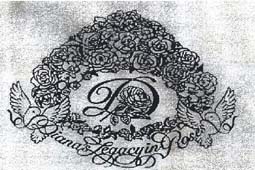
29 In written submissions, the applicants submitted that there were four connotations in the proposed mark that, taken singly or together, would be likely to deceive or cause confusion. In particular, the applicants submitted that:
(1) the possessive “Diana’s” was a clear reference to the late Princess of Wales;
(2) the word “Legacy”, in combination with the name “Diana”, indicated a connection with the late Princess and her death;
(3) the words “rose” and “roses” were also closely associated with the late Princess; and
(4) the stylised “D” and the encircled rose in the centre of the proposed mark also contained a connotation of the late Princess.
Taken together, the applicant submitted that the words “Diana’s Legacy in Roses” and the stylised “D” within the proposed mark conveyed a clear connotation of the late Princess.
30 As already noted, the evidence showed that the popular press and the media referred to the late Princess of Wales as “Diana” throughout her public career. Internet searches under the name “Diana’s” will produce thousands of entries, the majority of which refer to the late Princess. Internet searches for “Diana’s Legacy” will also produce thousands of entries relating to the Princess. The evidence showed that the worldwide media coverage extended not only to the death of the Princess, but also to the extraordinary statements of public grief following her death, especially in the United Kingdom, and to the establishment of the Fund to perpetuate her well-known charitable involvement. There have also been very many media publications, television documentaries and books on Diana, her life and death.
31 The evidence also showed that the late Princess was associated with the words “rose” and “roses”. There is a rose called the “Princess of Wales”, which was marketed with her consent before her death for the benefit of the British Lung Foundation, of which she was patron. In December 1997, the Fund gave Jackson and Perkins a sub-licence to market the “Diana, Princess of Wales Rose” in the United States of America. More generally, as the Lady Sarah McCorquodale said, the rose has long been recognised as a symbol of England in relation to which, prior to her divorce in July 1996, the Princess was the presumptive Queen Consort. There was, moreover, the use of the words “England’s Rose” as the opening words to the Tribute Song, recorded and sung by Elton John. The Tribute Song expressly linked the late Princess to roses. The evidence showed that in Australia, in 1997, the year of the Princess’ death, the Tribute Song reached number 1 on the Australian Record Industry Association (ARIA) charts for 16 weeks; and that it was the number 1 selling single in Australia in that year. As at 29 October 2002, it remained the biggest selling single ever in Australia and the world, with over 40 million copies worldwide. There were in evidence copies of news articles published in the Australian news media from 1997, featuring references to the Tribute Song. These articles also fortified the applicants’ case in this regard. On this evidence, if there was any doubt in the mind of a person in Australia as to the asserted connection between the Princess and roses in her lifetime, there is no real likelihood that any such uncertainty remained following her death.
32 Considered on its own, I doubt, however, that there was sufficient evidence to support the applicants’ submission concerning the stylised “D” in the respondent’s mark. At first glance there is some force in the applicants’ submission but, on closer inspection, there are clearly a number of differences between the respondent’s stylised “D” and the hallmark used by the Estate and the Fund. In particular, the encircling flowery loop which extends beyond the upper top left portion of the “D”, the extension of the line above the top of the “D”, and the marked absence of a crown above the letter. On its own, I doubt that the respondent’s stylised “D” has the connotation of the kind that the applicants alleged. It remains open, however, to find that the “D”, when considered in the context of the whole mark, has the connotation of the late Princess; and I so find. Taken together, I find that the words “Diana’s Legacy in Roses” and the stylised “D” within the proposed mark clearly connote the late Princess of Wales, as indeed the delegate found.
Likelihood of deception or confusion
33 As the delegate aptly observed, “without more, merely invoking a reference to a deceased celebrity cannot deceive or confuse”: Masterson at 272. The question is whether, because of this connotation, the respondent’s proposed mark is likely to deceive or cause confusion. In considering this question, the Court has the benefit of the uncontroverted evidence which the applicants tendered. This evidence was not before the delegate.
34 The applicants submitted that, on the evidence, the likelihood of deception or confusion arose in two different ways. First, the applicants submitted that, because of the connotation of Princess Diana in the respondent’s proposed mark, deception or confusion would be likely to arise as to whether or not the registration and use of this mark occurred with the sponsorship or approval of the applicants. Secondly, the applicants submitted that, by virtue of its connotation, the respondent’s registration and use of “Diana’s Legacy in Roses” would be likely to deceive or cause confusion with another mark or marks already used in Australia by the applicants, namely “Diana”, “Diana, Princess of Wales”, the stylised “D” hallmark, and “Remembering England’s Rose”.
35 In considering the meaning of “likely to deceive or cause confusion” in Woolworths at 380, French J said:
The use of the word “likely” in this context does not import a requirement that it be more probable than not that the mark has that effect. The probability of deception or confusion must be finite and non-trivial. There must be a “real tangible danger of its occurring”.
See also Southern Cross at 594-595 per Kitto J.
36 The applicants submitted that the evidence showed that the reference to the late Princess (through the words “Diana’s Legacy in Roses”) was so immediate and direct that it was likely that consumers in Australia would be likely to believe that those representing her Estate had given some approval or sponsorship to the registration and use of the mark. For the reasons that follow, I accept this submission.
37 The evidence established that the charitable activities of the Princess during her lifetime were well known. Although she did not exploit her name and image for her own commercial purposes, it can readily be inferred from the evidence that she appreciated that the use of her name and image in relation to chosen charities had a great potential to enable those charities to raise funds for their work. As we have seen, soon after her death, her executors recognised that her name, image and other indicia of her might be used as a means of earning income through commercial sponsorship arrangements, and that this income could be used for the various charitable causes that the Princess had supported in her lifetime. The evidence of the Lady Sarah McCorquodale and Mr Purkis showed that this recognition led to the establishment of the Fund, which was licensed by the applicants as trustees of the Princess’ Estate to control such sponsorship arrangements, as well as to ensure that the income arising was only used for the benefit of charitable causes.
38 The executors of the will of the late Princess and trustees of her Estate obtained the power to licence the intellectual property rights (including trade marks) of the Estate pursuant to the order of the Chancery Division of the High Court in the United Kingdom almost two years before the priority date. The Fund has been the principal licensee for most of this time. Well before mid 1999, the Estate had applied for, and was obtaining, registrations of trade marks comprising the words “Diana”, “Princess” and like variations, in respect of a wide variety of goods and services, including roses, throughout the world, including Australia. The evidence showed that, as at mid 1999, the Estate was licensing its intellectual property rights through the Fund on the basis that the licensing fees would be directed to the charitable purposes of the Fund. By 1999, the Fund had successfully raised a considerable amount of money from its commercial licensing arrangements, which it distributed to charities in the United Kingdom and throughout the world that were identified with the Princess’ own particulars interests, such as children’s health and education, AIDS sufferers and landmine victims.
39 In her Defence and Further and Better Particulars of Defence, the respondent asserted that, both before and after her death, many persons unconnected with the late Princess, her Estate and the Fund had made uncontrolled commercial use of her name and image in Australia and worldwide. Such persons included, so the respondent said, manufacturers and retailers of souvenirs and mementos, publishers of magazines, newspapers and books, electronic media organisations and internet-based distributors of collectable and commemorative items. The respondent also alleged in her Defence that there had long been substantial sales of memorabilia and other commemorative products bearing the name or image of Princess Diana, without any control by Princess Diana during her lifetime or by the Estate or the Fund thereafter. In Further and Better Particulars of Defence, the respondent said that these sales included sales of photographs, drawings, books, special editions and supplements in magazines and newspapers, television programmes, musical recordings, computer screen-savers, headgear, t-shirts and other clothing, clocks, watches, tea-towels, spoons, cups, plates and other kitchen and household utensils. As already noted, however, the respondent did not appear at the hearing and, in this Court, she tendered no evidence in support of these claims.
40 Whilst the activities of the Fund focused on charitable causes in the United Kingdom, Africa and Asia, there was evidence that, almost from its inception, there was knowledge in Australia of the Fund and its activities. Such knowledge was reflected in references to the Fund and its licensing activities in the Australian print media following the establishment of the Fund. There was also evidence that many people visited the web sites relating to the marketing, promotional and licensing activities of the Fund, although there was no direct evidence as to the precise number of persons in Australia who, as at the relevant date, had visited the web sites relating to the Fund.
41 There was evidence that since 1997 the Fund had licensed to a large number of entities throughout the world and in Australia the right to sell flowers, giftware and a wide variety of memorial merchandise by reference to trade marks associated with Diana and the Fund. The evidence was that most of these products were available in the Australian marketplace. Many of these products were apparently available before the respondent made her application. There was also evidence that since September 1997 the Fund had licensed a number of entities to sell a variety of products in Australia, including floral tribute photographs, commemorative stamps and a variety of plates and musical boxes by The Bradford Exchange. These products contained various licensed references to the Princess and the Fund. For the first quarter of 1999, a royalty statement for sales in Australia by The Bradford Exchange showed a total of $10,944.64 for the licensed DIANA, ENGLAND’S ROSE memorial plate series. The total sales by The Bradford Exchange of licensed products in Australia by March 2000 was $2,350,000. Mr Mitchell, whose evidence was that The Bradford Exchange had made sales of plates featuring commemorative images of Princess Diana since at least 1997, also deposed that the sales of such plates in Australia was $862,302 in 1997, $982,945 in 1998, and $285,146 in 1999.
42 There was, as the evidence showed, enormous publicity around the world, including in Australia, surrounding the Princess’ death, and funeral. The funeral of the Princess was viewed by millions of Australians. Mr Purkis’ evidence was that a tribute CD dedicated to the Princess, generated an income of $2,911,853.00 from sales in Australia alone. The cover of the CD clearly identified the Fund and its aims. Moreover, the word “Diana” is the dominant identifier on its cover.
43 The evidence showed that there have been sales of the roses “Princess of Wales” and “Diana, Princess of Wales” in Australia since 1997. According to Mr Purkis, Brundett’s grew, distributed, marketed and sold the Princess of Wales rose to retailers continuously after its introduction to Australia in 1997. He also deposed that, between 1997 and the respondent’s application (and subsequently), Swane’s Rose & Fruit Tree Nursery (as a sub-licensee) had also sold many bushes of the “Diana, Princess of Wales” rose in Australia.
44 Mr Purkis deposed that:
The Fund has through the success and popularity of the Programme generated substantial income for its charitable aims. By 1999, the Fund had generated over 70 million pounds in revenue through the licensing and sale of products.
45 It can be inferred from the evidence to which reference has been made that, at the time the respondent made her application for registration, a relevantly significant sector of consumers in Australia knew of the Fund and of its licensing and charitable activities. Before the priority date, the Fund, as licensee of the Princess’ Estate, was involved in worldwide commercial licensing of the intellectual property (including trade marks) of the late Princess on a large scale, although to a lesser extent in Australia. There were, however, a number of products in the Australian market by virtue of these commercial licensing arrangements. The Fund was the recipient of considerable royalties as a result of its licensing arrangements worldwide, which it directed to its charitable purposes. Although the sale of products under licence in Australia yielded less by way of royalties than in some other places, nonetheless the royalties were significant. Consumers in Australia were made aware of the activities of the Fund through the printed and electronic media, as well as the licensed products in the market. Having regard to the probable level of consumer knowledge of the Fund in Australia and to the fact that the respondent’s mark clearly and directly connoted the late Princess, the question arises as to whether there was a real tangible danger that consumers in Australia would also understand that in some way the applicants had sponsored or approved the use of the respondent’s mark.
46 The applicants submitted that this case was very similar to Radio Corporation v Disney and Sabrina Trade Mark. In Radio Corporation v Disney, Walter E Disney and companies associated with him successfully opposed applications for the use of “Mickey Mouse” and “Minnie Mouse” as trade marks in respect of radio receiving sets and kits. Latham CJ held, at 453:
The opponents have, in my opinion, shown that the names and the figures are so closely associated in the public mind, in Australia and elsewhere, with Walter E. Disney and his activities, that the use of either the names or the figures in connection with any goods at once suggests that the goods are ‘in some way or other connected’ with Walter E. Disney … . This, the evidence shows, would be the case whatever the nature of the goods to which the names were attached. It is very seldom indeed that there can be a world-wide association of ideas in connection with a particular name or figure, but the evidence shows that this association does exist in the present case. A proposed trade mark should not be registered if it involves “a misleading allusion or a suggestion of that which is not strictly true” … . Thus, in my opinion, these marks should not be registered.
47 In the same case, Rich J said at 454:
In matters such as this we are dealing with the vague and indefinite impressions of the great mass of the public who neither are required nor desire to refine upon distinctions of this sort. To them it is shown that the name “Walt Disney” summons up a picture of “Mickey Mouse” and the picture of Mickey Mouse reminds them of “Walt Disney”. The foundation of this is authorship no doubt. But somehow or other, how, it is fruitless to inquire, they connect the appearance on an article of the name or form of “Mickey Mouse” with “Walt Disney”. This being so, it is, I think, impossible for the appellant to negative all likelihood of confusion. It is no part of our duty to state in definite term precisely how the public will be misled or what kind of connection they will impute. Confusion involves indefiniteness of ideas.
48 Again, in the same case, Dixon J, at 457, referred to the words “Mickey Mouse” and said:
I find it hard to believe that the use of the words on or in connection with a radio receiving set would produce any other impression than in the case of most of the other almost innumerable classes of articles to which the name or the representation of Mickey Mouse has been applied. That impression does not, I think, primarily relate to the origin, selection or treatment of the goods. The reason for using the names is to attract the attention of members of a public that has found pleasure and amusement in the grotesque forms and absurd antics of Disney’s creatures, and at the same time to give to the goods a name or means of description at once familiar and pleasing or interesting to the possible buyer. No doubt this means that the trader makes use of elements which belong to the reputation and fame of Disney’s creations and it may be that in some vague way the buyer supposes that Disney must have sanctioned it.
49 Plainly enough, as Radio Corporation v Disney shows, a name and image may be sufficient to suggest an association with another person, entity or institution. I doubt that there is today any distinction necessarily to be drawn between a well-known fictitious character and an actual person, who is also a celebrity.
50 In Sabrina Trade Mark, the opponent was a well-known British actress, who worked under the name “Sabrina”. She opposed the registration of her name as a mark for a cosmetic cream for bust development. The objection arose under s 26 of the Trade Marks Act 1955 (Cth), which required the consent of a living person where the name of that person was used as a trade mark. The applicant for registration submitted that Sabrina was not the name of a “living person” for the purposes of this provision. As to this, the Deputy Registrar of Trade Marks said, at 1990:
I am satisfied that the English actress and stage personality Miss Norma Sykes was well-known by her professional name “Sabrina” in Australia before application 137, 460 was lodged. I am satisfied that the average member of the Australian purchasing public would, when seeing the word “Sabrina”, immediately think of the stage personality who would be far better known by the word/name “Sabrina”, than she would be as Miss Norma Sykes. I consider also that the average purchaser would, when seeing the name “Sabrina” on goods of the kind claimed by application 137460, wonder whether the goods had any association with the stage personality whom they knew by the name “Sabrina”. I think that many purchasers might consider that the person well-known by the name “Sabrina” had some direct association with the goods claimed by application 137460. The motive of the applicants in this matter in adopting the word “Sabrina” as their trade mark would not have any relevance for [the] purposes of this decision.
51 Although the word “connotation” was not used in trade marks legislation prior to its appearance in s 43 of the Act, there are in fact numerous instances under the pre-1995 trade marks legislation where registration has been refused on the basis that a mark contained some suggestion of endorsement or approval by a well-known person or entity, or that goods or services to which it was to be applied had been awarded some particular prize or commendation. Such instances include In re Ferguson and Company’s Trade Mark (1903) 29 VLR 331 (“P&O” in relation to whisky). In this case, Holroyd J observed at 334:
It appears to us that the trade mark is one well calculated to deceive. There is evidence that the Peninsula and Oriental Steamship Company is well known and commonly spoken of by the name “P.&O. Company”, or the “P&O”; and if this trade mark were allowed to be registered there would be upon the register a mark calculated to induce people to believe that the whisky in respect of which it was registered was whisky which was ordered or used by the P.&O. Company or purchased and kept by them as part of their stock on ship board.
52 In WD & HO Wills (Australia) Ltd’s Application (1922) 17 AOJP 2, the Registrar of Trade Marks refused to register the words “Government House” in relation to cigarettes, observing:
The words mean that which is literally conveyed by them, namely, a house maintained by Government. It is therefore reasonable to conclude that the inclusion of the word “Government” in the trade mark consisting of the words “Government House” might lead people to think that the applicant had Government patronage.
The Registrar made a like decision in Sniders and Abrahams Pty Ltd’s Application (1920) 15 AOJP 814 (“King’s Own” for cigarettes): contrast “Treasury” Trade Mark [1973] RPC 551. See also Saxon-Lee’s Application (1928) 23 AOJP 580 (“Dr Hope’s” suggesting an association with a qualified medical practitioner); and Balmoral Textile Mills’ Application (1954) 24 AOJP 2131 (“Schiaparelli” in relation to underwear suggesting a connection with a well-known Paris designer). In Trebor Sharps Limited’s Application [1970] RPC 212, the English Board of Trade refused registration to a mark consisting of a device of five interlocking circles, beneath which were the words GOLD MEDAL, in relation to boiled sugar confectionery. I accept, as the applicants’ counsel submitted, that there are ample instances in which registration has been refused because of a connotation contained in the mark that referred directly to some person, entity or institution and, by doing so, suggested an endorsement or approval by that person, entity or institution.
53 Plainly enough, however, whether a mark or part of it connotes the sponsorship or approval of a person, entity or institution will depend on all the surrounding circumstances. In each case, it will be a question of fact and degree. In some cases, the implication has been insufficiently direct, as, for example, in Joseph Bancroft & Sons Co v Registrar of Trade Marks (1957) 99 CLR 453 (“Joseph Bancroft”). In that case, the High Court reversed the decision of the Registrar of Trade Marks, refusing to register the words “Miss America” as a trade mark in respect of textile products. The Court, which consisted of Williams, Kitto and Taylor JJ, observed at 458-459:
No doubt the words “Miss America”, just like the words “Miss Australia”, and the corresponding titles in other countries, when used in connexion with female apparel would be capable of suggesting in a vague and indefinable way to likely female purchasers that the goods were suitable in quality to be fashioned for such glamorous beauties, that such vague and indefinable suggestions, emotive as they might be, could hardly be said to refer directly to the character or quality of the goods. … They simply refer to an annual title conferred upon the winner for the year of a beauty competition under this designation and are in essence indistinguishable from the titles conferred upon winners of musical, artistic, sporting and other competitions. … Any reference that the words “Miss America” have to the character or quality of the goods in respect of which registration is sought or indeed to the character or quality of any goods is remote and indirect. Registration could not possibly trespass upon the rights of other traders to use ordinary English words or phrases to inform possible purchasers that the fabrics that they were offering for sale were similar to fabrics that had been worn by “Miss America” or which had in some way received her approval or patronage. Nor would registration of the words as a trade mark be likely to deceive the purchasing public into the belief that “Miss America” had ordered some of the fabrics or had otherwise approved of them. They would at most create the impression that the fabrics were suitable to be worn by a person who desired to be dressed in the same style as such a publicised, attractive, glamorous and popular lady.
54 In Imperial Tobacco Company (of Great Britain and Ireland) Ltd’s Trade Marks (1915) 32 RPC 361 (“Imperial Tobacco”) the English Court of Appeal dismissed an appeal refusing an application to remove three marks from the register. These marks comprised the words “Prince of Wales” and a feathers device. The marks had been registered for many years without objection.
55 More than forty-five years have passed, however, since the decision in Joseph Bancroft, longer in the case of Imperial Tobacco. In that time, the practice of licensing names and likenesses of well-known people has become more prevalent and even better known. Consumers in the contemporary Australian market can be taken to be aware of these practices, at least in a general way. Referring to Radio Corporation v Disney, Tamberlin J said in Twentieth Century Fox Film Corp v South Australian Brewing Co Ltd (1996) 34 IPR 225 at 238:
That decision was given over 6 decades ago and it is important to bear in mind the great developments in broadcasting, advertising and merchandising during those decades. Nowadays, the public must be considered to be more sophisticated and aware with respect to character and personality merchandising than 60 years ago. Today there is clearly greater familiarity with licensing of products so that public awareness of the nature of the “sanction” to which Dixon J adverts is significantly more focused than in 1937.
I would agree.
56 The applicants sought to distinguish the decision in Elvis Presley Trade Marks [1999] RPC 567, which at first glance tended against acceptance of their submissions. The applicants in that case unsuccessfully applied for registration of the marks ELVIS and ELVIS PRESLEY and the signature “Elvis A. Presley” in respect of toiletries. The applicants carried on the merchandising activities previously carried on by, or on behalf of, Elvis Presley. The English Court of Appeal held that the marks had insufficient distinctiveness to be registrable. At the time of the registration application, however, some years had passed since the death of Elvis Presley, during which the applicant had not made significant use of the marks for the relevant goods. In the meantime, the opponent had traded on a significant scale under the name “Elvisly Yours”. The opponent was the registered proprietor of “Elvisly Yours” for a wide range of goods in the same class. It is apparent that the factual circumstances of the case were different from the present case and, as the applicants submitted, the case is plainly distinguishable from the present matter.
57 Referring to a number of authorities, including Pacific Dunlop Ltd v Hogan (1989) 14 IPR 398, the applicants submitted that, for present purposes, the test of affiliation or sponsorship was analogous to that used in cases involving ss 52 and 53(a) of the Trade Practices Act 1974 (Cth). The appellant in Pacific Dunlop had produced a television advertisement for shoes, which was easily recognised as a parody of a scene from the film “Crocodile Dundee”. This film had been a considerable commercial success in Australia and elsewhere. The first respondent had performed the title role, which was largely an extension of his already widely known personality. Beaumont J (with whom Burchett J agreed) held at 426-7, that, in actions for passing off and misleading and deceptive conduct contrary to s 52, the question was “whether a significant section [of the public] would be misled into believing, contrary to the fact, that a commercial arrangement had been concluded between the first respondent and the appellant under which the first respondent agreed to the advertising.” If such a misrepresentation were established, then a case of both passing off and conduct contrary to s 52 would be made out. I return to this submission below.
58 Referring to Dr Barnardo’s Homes: National Incorporated Association v Barnardo Amalgamated Industries Ltd (1949) 66 RPC 103 and Toms and Moore v Merchant Service Guild Ltd (1908) 25 RPC 474, the applicants also submitted that the courts in the United Kingdom have allowed charitable or welfare organisations to bring action to restrain the unauthorised use of their names or similar names by commercial enterprises. The applicants submitted that the likely damage in such a case was to the reputation of the charitable body and the possible consequence that its capacity to raise funds would be diminished. The applicants submitted that, in the same way, the registration and use of the respondent’s mark was likely to cause damage to the reputation of the Estate and the Fund, with the consequence that the fundraising capacity of the Fund would be diminished.
59 For the reasons I am about to give, it is, I think, unnecessary to say anything further about this last-mentioned submission. It is also unnecessary to decide whether the test adopted in cases of passing off and ss 52 and 53(a) of the Trade Practices Act 1974 (Cth) should inform the approach to be taken in a case involving implied sponsorship or approval under s 43 of the Act, although there is some force in this submission.
60 As we have seen, the authorities recognise that, in circumstances such as these, the sponsorship or endorsement of the proprietor of the intellectual property in the name or image of a celebrity may well be implied. Whether or not it does is a matter of fact and degree. As I have said, I am satisfied that the words “Diana’s Legacy in Roses”, together with the stylised “D”, directly and immediately connote the late Princess Diana. The practice of licensing names and likenesses of celebrities, such as the late Princess, is now well recognised in the community. Although the Princess did not in her lifetime derive any personal profit from the use of her name and image, she plainly used (or permitted the use of) her name and image for the fundraising activities of the charitable causes that she supported. As already found, before the priority date, a relevantly significant sector of consumers knew of the Fund and its licensing and charitable activities. The goods to which the impugned mark would apply have a real connection in the public mind with the late Princess. In all the circumstances, I find that the impugned mark would not only directly and immediately connote the late Princess, the impugned mark would also bespeak an association with the Fund and the Estate of the late Princess. There is a real likelihood that consumers would understand that goods bearing the impugned mark are in some way sponsored or approved by the Fund or the Princess’ Estate, even if they were ignorant about the specific details of the arrangements. The likelihood of this misunderstanding is sufficient to create a likelihood of confusion and deception in Australia, by reason of the connotation of the mark.
61 As previously noted, the applicants also submitted that deception or confusion under s 43 was likely to arise if the impugned mark was registered and used, because, as the applicants said in their written submission, they “have already authorised the use of marks closely resembling it, in Australia, both in relation to roses and other goods”. The applicants referred to the use of the marks “Princess of Wales” and “Diana, Princess of Wales” on roses sold in Australia since 1997. They also referred to the marks “Diana” and “Remembering England’s Rose” on The Bradford Exchange Plates that were available in Australia from the beginning of 1999. The applicants submitted that there was “a strong possibility that persons purchasing both the Respondent’s roses [to which was applied the impugned mark] and the licensed roses and the plates of The Bradford Exchange might be ‘caused to wonder whether the two products come from the same source’”.
62 I reject this submission in so far as it asserted a close resemblance between the respondent’s impugned mark and the other marks to which the applicants referred. There was no such close resemblance. Apart from this, the submission added little to the applicants’ case under s 43 of the Act, which, for the reasons stated, I would otherwise accept.
63 I am satisfied that, on the evidence before the Court, the respondent’s mark should not be registered because I am satisfied that the s 43 ground of opposition is made out. There is a real likelihood or “a real tangible danger” that, by virtue of the connotation of the late Princess in the impugned mark, consumers in Australia would be deceived or confused by incorrectly believing that the mark was indicative of some endorsement or approval by the Fund or the Estate of the late Princess.
64 Having regard to this conclusion, it is unnecessary to consider the remaining grounds of opposition, which the applicants conceded were subsidiary to the s 43 ground in any event.
|
I certify that the preceding sixty-four (64) numbered paragraphs are a true copy of the Reasons for Judgment herein of the Honourable Justice Kenny. |
Associate:
Dated: 24 September 2004
|
Counsel for the Applicant: |
S Ricketson |
|
|
|
|
Solicitor for the Applicant: |
Middletons |
|
|
|
|
Counsel for the Respondent: |
E Heerey until 14 February 2003 and on 24 September 2004 for judgment |
|
|
|
|
Solicitor for the Respondent: |
Allens Arthur Robinson until 14 February 2003 |
|
|
|
|
The Respondent was self‑represented from 15 February 2003 until 23 September 2004 |
|
|
|
|
|
Date of Hearing: |
24 November 2003 |
|
|
|
|
Date of Judgment: |
24 September 2004 |


