

FEDERAL COURT OF AUSTRALIA
Playboy Enterprises International Inc v You Tao Hong [2004] FCA 1205
TRADE MARKS – infringement – respondent imports 3790 mobile telephone housings or face plates bearing signs substantially identical to the applicant’s registered trade marks – whether infringement by respondent importer had yet occurred – whether the importer had yet used the signs as a trade mark – whether declaration of infringement should be made.
Trade Marks Act 1995 (Cth) s 120
Oakley, Inc v Franchise China Pty Ltd (2003) 58 IPR 452 followed
Sony Computer Entertainment Australia Pty Ltd v Saleh [2001] FCA 717 followed
Sony Computer Entertainment Australia Pty Ltd v Yansen [2002] FCA 1000 followed
Nokia Corporation v Mai [2003] FCA 924 followed
Dunlop Rubber Co Ltd v AA Booth & Co Ltd (1926) 43 RPC 139 discussed
The Shell Co of Australia Ltd v Esso Standard Oil (Australia) Ltd (1963) 109 CLR 407 cited
Upmann v Forester (1883) 24 ChD 231 followed
Upmann v Elkan (1871) LR 7 Ch App 130 cited
James Minifie & Co v Edwin Davey & Sons (1933) 49 CLR 349 cited
Kerly’s Law of Trade Marks and Trade Names (12th ed) (1986)
Ricketson, The Law of Intellectual Property (1984)
Lahore, Patents, Trade Marks and Related Rights (Butterworths, loose leaf)
Shanahan’s Australian Law of Trade Marks & Passing Off (3rd ed, 2003)
PLAYBOY ENTERPRISES INTERNATIONAL INC v YOU TAO HONG
t/a AUSTRALIAN MULTIBUSINESS TELECOMMUNICATIONS & ANOR
N 859 of 2004
LINDGREN J
10 SEPTEMBER 2004
SYDNEY
|
IN THE FEDERAL COURT OF AUSTRALIA |
|
|
NEW SOUTH WALES DISTRICT REGISTRY |
N 859 OF 2004 |
|
BETWEEN: |
PLAYBOY ENTERPRISES INTERNATIONAL INC APPLICANT
|
|
AND: |
YOU TAO HONG t/a AUSTRALIAN MULTIBUSINESS TELECOMMUNICATIONS FIRST RESPONDENT
THE CHIEF EXECUTIVE OFFICER AUSTRALIAN CUSTOMS SERVICE SECOND RESPONDENT
|
|
LINDGREN J |
|
|
DATE OF ORDER: |
10 SEPTEMBER 2004 |
|
WHERE MADE: |
SYDNEY |
THE COURT ORDERS THAT:
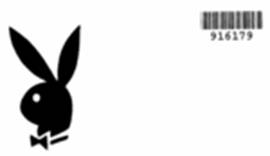
1. The first respondent, whether by himself, his servants, agents or otherwise, be restrained from infringing the applicant’s registered trademarks No 916178 and No 916179, being respectively the word PLAYBOY and the device a representation of which appears in Annexure A to this Order (‘the Trade Marks’), by, without the licence of the applicant, importing, advertising, promoting, selling, offering to sell, supplying or offering to supply in Australia any mobile telephone accessories, including mobile telephone face plates, under or by reference to the Trade Marks or either of them, or any substantially identical or deceptively similar sign.
2. The first respondent, whether by himself, his servants, agents or otherwise, be restrained from, in trade or commerce, falsely representing:
(a) that mobile telephone accessories, including mobile telephone face plates, sold or offered for sale by the first respondent are manufactured or sold by or on behalf of or with the licence, sponsorship or approval of the applicant;
(b) that there is a business relationship between the applicant and the first respondent or that the first respondent is affiliated with or has the sponsorship or approval of the applicant.
3. The goods the subject of the Notice of Seizure to Objector dated 23 April 2004 issued to the applicant by the Chief Executive Officer of the Australian Customs Service pursuant to s 134 of the Trade Marks Act 1995 (Cth) be forfeited to the Commonwealth.
4. The first respondent pay the applicant’s costs of the proceeding.
5. The proceeding be otherwise dismissed.
Note: Settlement and entry of orders is dealt with in Order 36 of the Federal Court Rules.
|
IN THE FEDERAL COURT OF AUSTRALIA |
|
|
NEW SOUTH WALES DISTRICT REGISTRY |
N 859 OF 2004 |
|
BETWEEN: |
PLAYBOY ENTERPRISES INTERNATIONAL INC APPLICANT
|
|
AND: |
YOU TAO HONG t/a AUSTRALIAN MULTIBUSINESS TELECOMMUNICATIONS FIRST RESPONDENT
THE CHIEF EXECUTIVE OFFICER AUSTRALIAN CUSTOMS SERVICE SECOND RESPONDENT
|
|
JUDGE: |
LINDGREN J |
|
DATE: |
10 SEPTEMBER 2004 |
|
PLACE: |
SYDNEY |
REASONS FOR JUDGMENT
1 The following are my reasons for orders made on 10 September 2004. They comprise the extempore reasons which I then gave for the grant of quia timet injunctive relief and reasons subsequently developed in relation to the question of a declaration of infringement (see [20]-[45] below).
2 The applicant, Playboy Enterprises International Inc (‘Playboy’), seeks relief in respect of alleged:
· infringement of its registered trade marks;
· misleading or deceptive conduct in contravention of s 42, and or false representations in contravention of s 44(e) and (f), of the Fair Trading Act 1987 (NSW); and
· passing off.
3 Relief is sought only against the first respondent, You Tao Hong, trading as ‘Australian Multibusiness Telecommunications’ (‘Mr Hong’). The second respondent, the Chief Executive Officer, Australian Customs Service (‘the Customs CEO’) has filed a submitting appearance.
4 There are two trade marks in question (‘the Trade Marks’). The first, the word, ‘PLAYBOY’, is registered number 916178. The second, registered number 916179, has been described as a ‘RABBIT HEAD’ Device. It is a silhouette image of a rabbit head above a bow tie. Both are registered in respect of, relevantly, ‘mobile or cell telephones, mobile or cell phone face plates and mobile or cell phone accessories’.
5 Playboy notified the Customs CEO under s 132 of the Trade Marks Act 1995 (Cth) (‘the Act’ – references to sections are references to sections of the Act), that it objected to the importation of goods in respect of which either of the Trade Marks was registered, where the goods were manufactured outside Australia and had applied to them, or in relation to them, a trade mark substantially identical with, or deceptively similar to, either of the Trade Marks.
6 On 23 April 2004, the Customs CEO notified Playboy, through its solicitors, under s 134(b) that the Customs CEO had seized under s 133 a consignment of 3790 mobile phone housings or face plates, bearing markings which appeared to infringe the Trade Marks (‘the Seized Goods’). According to the notification, the importer and ‘designated owner’ (see s 134(b)(ii) and (iii) and definition of ‘designated owner’ in s 6) of the Seized Goods was ‘Australian Multibusiness Telecommunication [sic], Unit 1, 79 Bay Street, Rockdale, NSW 2216’. The Customs CEO further notified Playboy through its solicitors pursuant to s 134(b)(iii) that the Seized Goods would be released to the designated owner unless Playboy brought an action for infringement, and notified the Customs CEO of the action within ten working days, or, if the Customs CEO should extend that period under s 137(1), within the extended period.
7 Playboy’s solicitors ascertained that ‘Australian Multibusiness Telecommunications’ was a registered business name; that the registration was in respect of Unit 1, 79 Bay Street, Rockdale NSW 2216; and that the registered owner of the name was Mr Hong. They sought undertakings from Mr Hong but these were not forthcoming. They then obtained from the Customs CEO an extension of the 10 working day period until close of business on 25 May 2004. On that date Playboy commenced this proceeding.
8 On 9 June 2004 Wilcox J made an order restraining the Customs CEO from releasing the Seized Goods to Mr Hong until further order.
9 Mr Hong appeared, unrepresented, on 9 June 2004, when Wilcox J made that interlocutory order; and on 14 July 2004, when I fixed the proceeding for hearing today. Mr Hong has not filed any appearance or defence, and, upon being called today, has not appeared.
10 Prior to 1 September 2004 Playboy had unsuccessfully attempted to serve a notice to admit facts on Mr Hong. On that date I ordered that Mr Hong notify Playboy by 7 September 2004 of any fact specified in the form of notice to admit facts dated 4 August 2004 and annexed to the order, which he disputed, and that failing such notification in respect of such a fact by that date, the fact should stand admitted by him for the purpose of this proceeding. I also ordered that a sealed copy of the order be served on Mr Hong that day, 1 September 2004.
11 Again there was difficulty in serving Mr Hong. There is reason to think he has been evading service. Eventually, he was served on Friday 3 September 2004. In the event, however, Mr Dimitriadis, of counsel, who appears for Playboy, has disclaimed reliance upon Mr Hong’s failure to respond to the notice to admit facts.
12 I find on the affidavit evidence which has been read:
· that Mr Hong imported the Seized Goods;
· that the Seized Goods bore two signs substantially identical to the Trade Marks;
· that the signs had been placed on the Seized Goods without Playboy’s authority; and
· (from photographs of samples of the Seized Goods) that those signs appear prominently on the Seized Goods and would function as trade marks if the goods were to be sold.
I infer that Mr Hong intended to sell the Seized Goods (a person does not import 3790 mobile telephone face plates for private or domestic use).
13 On the evidence, the Trade Marks are well known in Australia, and, indeed, are so well known that they have become in themselves marketable products of Playboy. I infer that Mr Hong intended, in selling the Seized Goods, to take advantage of the reputation of the Trade Marks.
14 In selling the Seized Goods, Mr Hong would not only infringe the Trade Marks by using the signs on them as trade marks in relation to them (s 120): he would impliedly falsely represent that the Seized Goods, or he or his business, had one or other of several business associations with Playboy. In doing so, Mr Hong would, in trade or commerce, engage in misleading or deceptive conduct in contravention of s 42 of the Fair Trading Act 1987 (NSW). As well, he would pass off the Seized Goods as having a connection in trade with Playboy or its business, which of course, they do not have. Mr Hong has remained silent throughout in the face of the allegation that he imported for sale the Seized Goods bearing counterfeits of the Trade Marks, and he did not respond to Playboy’s request for undertakings. I infer that if he could he would sell the Seized Goods, and that, unless restrained, it is likely that he will again import similar ‘infringing goods’ for sale. At least, quia timet injunctive relief should be granted against him.
15 Playboy has also sought a declaration of infringement. Subsection 120(1) provides:
‘A person infringes a registered trade mark if the person uses as a trade mark a sign that is substantially identical with, or deceptively similar to, the trade mark in relation to goods or services in respect of which the trade mark is registered.’
16 Infringement, of whatever form, of a registered trade mark, requires that a person ‘use’ the offending sign ‘as a trade mark’: s 120(1), (2) and (3). The Act’s definition of ‘trade mark’ is found in s 17:
‘A trade mark is a sign used, or intended to be used, to distinguish goods or services dealt with or provided in the course of trade by a person from goods or services so dealt with or provided by any other person.’
The word ‘PLAYBOY’ and the RABBIT HEAD device which appear on the Seized Goods are ‘signs’ (see the definition of ‘sign’ in s 6), which, being upon the Seized Goods, are used in relation to them (see s 7(4)), and, as noted earlier, they are substantially identical to the Trade Marks. The Seized Goods are goods in respect of which the Trade Marks are registered, being mobile or cell phone face plates (see [4] above).
17 The two signs upon the Seized Goods are themselves trade marks within the Act’s definition of ‘trade mark’: they are used or intended to be used to distinguish the Seized Goods from other goods dealt with or provided in the course of trade.
18 Has Mr Hong yet used counterfeits of the Trade Marks, as trade marks?
19 The evidence shows only that Mr Hong is recorded by the Customs CEO as the importer of the Seized Goods, that is, that he imported them. The Seized Goods have not come into his possession. If he has infringed the Trade Marks, he must have done so by reason of conduct of his which preceded seizure of them by the CEO Customs. There is no evidence of that conduct. There is no evidence of the terms of the agreement pursuant to which the Seized Goods were ordered by, or sent to, Mr Hong or of the identity of the manufacturer or consignor.
20 The Act does not contain a provision comparable to s 37 of the Copyright Act 1968 (Cth), or s 13 of the Patents Act 1990 (Cth) (read in the light of the definition of ‘exploit’ in that Act’s dictionary). The former provides that the copyright in a literary, dramatic, musical or artistic work is infringed by a person who, without the licence of the owner of the copyright, imports an article into Australia for the purpose of sale or of any of the other forms of commercial exploitation specified in that section, if the importer knew, or ought reasonably to have known, that if the article had been made in Australia by the importer, the making of it would have constituted an infringement of copyright. The latter provision is that subject to the provisions of the Patents Act 1990, a patent gives the patentee the exclusive rights, during the term of the patent, to exploit the invention and to authorise another person to do so, and s 3 of, and the dictionary in Schedule 1 to, the same Act, defines ‘exploit’ to include, where the invention is a product, to ‘import’ it. Similarly, s 10(4)(c) of the Trade Marks Act 1994 (UK) and art 9(2)(c) of the Council Regulation (EC), No 40/94 of 20 December 1993 on the Community trade mark provide that a sign is used when a person imports goods under the sign.
21 I raised with Mr Dimitriadis the question whether, on the state of the evidence, infringement had yet occurred. He indicated:
· that the only basis on which the declaration of infringement had been included in Playboy’s application was the decision of Drummond J in Oakley, Inc v Franchise China Pty Ltd (2003) 58 IPR 452 (‘Oakley’) at [2]-[12];
· that he had not been able to find any other authority, or textbook statement, to support the proposition that mere importation amounted to use of a trade mark which appeared on the imported goods;
· that in a case such as the present one in which there was no subsequent sale, only quia timet relief seemed to be the appropriate form of relief; and
· that he did not press for the declaration of infringement.
Because cases of importation of goods bearing counterfeits of registered trade marks are not uncommon in the Court, I researched the question further, and invited, and received the benefit of, a written submission by Mr Dimitriadis on the point, for which I am grateful.
22 In Sony Computer Entertainment Australia Pty Ltd v Saleh [2001] FCA 717 (‘Saleh’) (at [39]) I noted that ss 131 and 133 contemplate that an importation may, but will not necessarily, constitute an infringement. Indeed, Part 13 of the Act is headed ‘Importation of goods infringing Australian trade marks’. That Part contemplates both that a trade mark may be infringed by ‘importation’ of goods (ss 133(2), 136(3)(a), 136(4), 137(4)(a)) and that there may be an ‘action for infringement of the notified trade mark in respect of the [seized] goods’ (ss 134(b)(iii), 136(1)(a), 136(2)(b)(i), 136(3)(b), 138). While it would be consistent with the latter expression that the infringer might be a person other than the importer, the former class of provision clearly contemplates that there may be infringement by the importer consisting of the importer’s conduct prior to seizure.
23 In Saleh, the respondent imported 79 CD-ROMs which were taken from his baggage by the Customs CEO at Sydney International Airport. I expressed the opinion (at [39]) that whether importation in a particular case constituted an infringement depended on whether, in all the circumstances of the case, the importation satisfied the terms of s 120(1). I concluded (at [40]) that whatever the position might be in another case of importation (I referred to an isolated ‘innocent’ importation of a single good for private use or consumption by the importer), the respondent’s importation of 79 CD-ROMs in the circumstances identified by me in that case (at [34]) constituted a use by him of the marks which were on the CD-ROMs and associated ‘slicks’ and which were electronically stored on the CD-ROMs, as trade marks in infringement of the applicant’s registered trade marks. I made declarations of infringement.
24 In Sony Computer Entertainment Australia Pty Ltd v Yansen [2002] FCA 1000 (‘Yansen’) the respondent, inter alia, imported for sale 74 CD-ROMs which were seized by the Customs CEO. Hely J found that the importation constituted an infringement of the applicant’s registered trade marks, and made declarations of infringement.
25 In Nokia Corporation v Mai [2003] FCA 924 (‘Mai’) Kenny J (at [54]) quoted Saleh at [39] with apparent approval, and, in circumstances which her Honour described (at [56]) as ‘relevantly indistinguishable from those’ in Saleh, found infringement established. By consent, a declaration was made but not one of past infringement.
26 In Saleh and Mai, certain circumstances were present beyond those of the present case, but the facts of Yansen, in so far as they related to the importation of the 74 CD-ROMs, are on all fours with the present facts.
27 Oakley also concerned seizure of imported goods, pairs of sunglasses bearing counterfeits of registered trade marks, by the Customs CEO. In fact, there were three seizures: they were of, respectively, 530 pairs, 598 pairs and 2917 pairs of sunglasses. The relevant respondents were the importing company and two directors of it. At [3] his Honour said the applicant’s case was that all three infringed the applicant’s registered trade marks ‘by importing these sunglasses into Australia for the purposes of sale here’. The applicant also contended that the directors were ‘liable as joint tortfeasors for [the company’s] trade mark infringements’.
28 Drummond J had given judgment on an earlier date against the company in default of delivery of its defence. His Honour said (at [6]) that he had, on that occasion, relied on evidence relating to the 2917 pairs of sunglasses, ‘that showed [the applicant] had a good factual foundation for this judgment’. His Honour made a simple ‘declaration that the first respondent [the company] has infringed the applicant’s marks’. Importantly for present purposes, he also ordered that the 2917 pairs of sunglasses be forfeited to the Commonwealth pursuant to s 137(3)(b). It is therefore clear that his finding of infringement by the company had been based on ‘importing with intent’.
29 His Honour’s reasoning was the same, in substance, in relation to the two directors. He made findings of infringement by both of them. There was again an order for forfeiture to the Commonwealth (of the other two seized consignments). Although his Honour did not make a declaration of infringement by the directors, the fact of forfeiture again shows that his findings of infringement depended on importation for sale, and not on any subsequent sale of, or other dealing with, the seized goods.
30 In my opinion, Playboy’s legal advisers correctly understood Drummond J’s findings of infringement to be based on the act of importation alone.
31 Treatises on the law relating to trade marks commonly state that importation for sale of goods bearing counterfeits of a registered trade mark is a use of those counterfeit marks in infringement of the registered trade mark: Kerly’s Law of Trade Marks and Trade Names (12th ed)(1986) at [14-13 (as noted at [20] above, legislation now governs the position in the United Kingdom, as the 13th edition of Kerly’s recognizes at [13-31]]; Ricketson, The Law of Intellectual Property (1984) at [36.24], [36.27]; Lahore, Patents, Trade Marks and Related Rights (Butterworths, loose leaf at [56.120]. Dunlop Rubber Co Ltd v AA Booth & Co Ltd (1926) 43 RPC 139 (‘Dunlop Rubber’) is sometimes cited in support of such statements. In that case, an English Dunlop company owned registered trade marks identical to those owned by a French Dunlop company. The English company complained of importation and sale by the defendant in England of tyres made by the French company and bearing the trade marks. The English company obtained injunctions to restrain infringement, an order for delivery up or destruction, and an inquiry as to damages.
32 The complaint made related to three alleged events: the sale of six infringing French Dunlop tyres towards the end of 1923; a sale of one infringing French Dunlop tyre on 14 July 1924 to an employee of the plaintiff; and the importation of consignments of tyres in July 1924 which included a number of French Dunlop tyres. I need not discuss the first of these (Tomlin J noted (at 140) that it was of ‘relatively little importance’).
33 The plaintiff was notified by the Customs House at Salford Dock of the arrival of the tyres and of their temporary detention in a shed on the dock. A representative of the plaintiff was permitted on two occasions in July 1924 to enter the shed and to carry out an inspection. He found a number of French Dunlop tyres. They were traced to the defendant’s warehouses.
34 The plaintiff received a further notification from the docks and its representative attended on 15 August 1924 to carry out a further inspection, but the defendant, whose officer happened to be present, objected, and the inspection did not proceed. Meanwhile, on 13 August 1924, the plaintiff had issued its writ.
35 A year later, in August 1925, two further shipments were inspected and found to contain French Dunlop tyres. Those shipments were also traced to the defendant’s warehouses, and it was not disputed that they were consigned to, and received by, the defendant.
36 At 145 his Lordship referred to the identicality of the English and French Dunlop trade marks, and observed:
‘It follows from that that a French “Dunlop” tyre having upon it the Trade Marks which are identical with the English Trade Marks cannot be imported for sale into this country without infringing the English Trade Marks.’ (Emphasis added)
Similarly, at 146 his Lordship stated:
‘ … with regard to the French tyres, if the case is made that the Defendants import for sale orsell them here for “Dunlop” tyres, then there is obviously an infringement of … the trade marks …’ (Emphasis added)
Clearly, his Lordship accepted in these passages that importation for sale, without any actual sale, was an infringement.
37 Tomlin J concluded that the tyre sold on 14 July 1924 had come out of one of the July 1924 consignments, and went on to state (at 149):
‘… there has been in the course of this trade a sending of foreign-made tyres by the agents in the consignments and there has not been exercised by the consignees of the Defendants sufficient diligence to enable that fraud, or that default, to be discovered, with the result that there has been an importation for sale of such tyres, and, at any rate, a sale of one of them.’
(Emphasis added)
38 The words emphasised in this passage may be said to suggest that his Lordship thought he did not need to decide whether bare importation for sale constituted an infringement, because there had been a sale of at least one of the tyres – a clear infringement. However, read with the earlier passages set out above, his Lordship was, I think, indicating that importation for sale was itself an infringement.
39 Section 39 of the Trade Marks Act 1905 (UK) which applied at the time of the importation in Dunlop Rubber, provided that the proprietor of a registered trade mark had ‘the exclusive right to the use of such trade mark upon or in connection with the goods in respect of which it [was] registered’. Section 3 of the same Act defined ‘trade mark’ as:
‘a mark used or proposed to be used upon or in connexion with goods for the purpose of indicating that they are the goods of the proprietor of such trade mark by virtue of manufacture, selection, certification, dealing with, or offering for sale’.
It will be noted that s 39 did not contain the words ‘as a trade mark’ following the expression ‘the exclusive right to the use’ or elsewhere. But the presence of those words in s 120(1), (2) and (3) does not provide a basis for distinguishing the Australian infringement provision from s 39 of the UK Act of 1905, or from s 120’s predecessors in Australia (see ss 58(1) and 62(1) of the Trade Marks Act 1955 (Cth) and ss 50 and 53 of the earlier Trade Marks Act 1905 (Cth)). The reason is that registration has only ever given a right to the exclusive use of the registered mark ‘as a trade mark’, and therefore it was only ever use of a sign ‘as a trade mark’ that constituted an infringement: see The Shell Co of Australia Ltd v Esso Standard Oil (Australia) Ltd (1963) 109 CLR 407 at 422 – 425 per Kitto J, and cases there cited.
40 The facts of Upmann v Forester (1883) 24 ChD 231, a case not referred to in Dunlop Rubber, are on all fours with those of the present case. The defendant imported 5000 cigars in cases bearing a spurious brand. While the cases were still at the docks, the plaintiff served him with a writ claiming, relevantly, an injunction restraining him from selling or dealing with the cigars in boxes bearing a colourable imitation of its registered trade mark. The parties immediately settled the proceeding and Chitty J had to resolve only the question of costs.
41 It appeared from the defendant’s affidavit, inter alia, that when he ordered the cigars (in Belgium) he did not mention any brand; that he had never seen the cigars or the boxes in which they were packed; and that he had not known that there were manufacturers of cigars trading under the plaintiff’s name.
42 Chitty J noted that the first question was whether there had been an infringement. Infringement consisted of the ‘use’ of a registered trade mark: see Trade Marks Registration Act 1875 (UK), ss 1, 3, 4. Chitty J noted that the plaintiff was, both at common law and under the statute, entitled to the exclusive use of its trade mark, and that its case was that the defendant had used it and knowingly or unknowingly infringed its right. His Lordship stated (at 234):
‘Although it may be the Defendant’s misfortune that the boxes should bear a spurious trade-mark, yet, according to the authorities, he must be held to have committed a clear infringement of the Plaintiffs’ right sufficient to entitle the Plaintiffs to an injunction for the purposes of this action.’
His Lordship said that there had been an infringing use of the trade mark prior to the commencement of the action, that is, while the boxes of cigars ‘were standing to the order of the Defendant at the docks’ (at 232).
43 Other authorities which, in various ways, would suggest that Mr Hong’s conduct in importing the Seized Goods for sale constitutes a use of the counterfeits of the Trade Marks on them as trade marks, include Upmann v Elkan (1871) LR 7 Ch App 130 (mere carriers receiving goods only for transmission to consignees, not for sale); James Minifie & Co v Edwin Davey & Sons (1933) 49 CLR 349 (defendant exporter of flour, by arrangement with its Singaporean buyer, packing flour in bags bearing buyer’s Singaporean registered trade mark closely resembling plaintiff’s Australian registered trade mark, transporting bags of flour to wharf in enclosed trucks or vehicles, handling them on wharf and placing them on board ship); and see the cases on the expression ‘in the course of trade’ referred to in Shanahan’s Australian Law of Trade Marks & Passing Off (3rd ed, 2003) at [2.185].
44 The single judge authorities and the texts to which I have referred consistently hold that to import goods bearing a sign for the purpose of sale or other commercial exploitation in the country in question, is to use that sign as a trade mark, notwithstanding that the goods have remained at the dock or the airport. This is so, even though in special circumstances such as those of Upmann v Forester, the result may appear harsh to the importer. It is for an appellate court to depart from a line of authority so well established.
45 For the above reasons, in my respectful opinion, Drummond J was correct in making the declaration of infringement in Oakley, and Playboy would have been entitled to one on the facts of the present case.
46 As noted earlier, Playboy pressed only its claim for quia timet relief in respect of threatened infringement of the Trade Marks, threatened misleading and deceptive conduct in contravention of s 42 of the Fair Trading Act 1987 (NSW), and threatened passing off. For the above reasons I made orders generally as proposed by Playboy.
47 Mr Dimitriadis indicated that his client did not intend to pursue its claim for pecuniary relief. Therefore nothing further remained in the proceeding upon the making of the present orders. Accordingly, the proceeding was otherwise dismissed.
|
I certify that the preceding forty-seven (47) numbered paragraphs are a true copy of the Reasons for Judgment herein of the Honourable Justice Lindgren. |
Associate:
Dated: 24 September 2004
|
Counsel for the Applicant: |
Mr C Dimitriadis |
|
|
|
|
|
|
Solicitor for the Applicant: |
Spruson & Ferguson Lawyers |
|
|
|
|
|
|
The First Respondent was unrepresented and did not appear. |
||
|
|
|
|
|
The Second Respondent filed a submitting appearance. |
||
|
|
|
|
|
Date of Hearing: |
10 September 2004 |
|
|
|
|
|
|
Date of Judgment: |
10 September 2004 |
|


