FEDERAL COURT OF AUSTRALIA
Zhan v Minister for Immigration & Multicultural & Indigenous Affairs [2003] FCA 327
MIGRATION – Application for Spouse (Migrant) (Class BS) visa under Part 100, Schedule 2 of the Migration Regulations – Deputy Registrar found no jurisdiction of Migration Review Tribunal to review decision by reason of out of time application – inadequacy of notice under s 66 of the Migration Act 1958 (Cth), subs 66(2)(a) and par 66(2)(d)(iv) not satisfied – application not out of time – decision of Deputy Registrar quashed.
Judiciary Act 1903 (Cth) s 39B
Migration Act 1958 (Cth) ss 66, 128, 338, 347, 348, 474, 494B, 494C
Acts Interpretation Act 1901 (Cth) s 23(b) subs 46(2)
Migration Regulations Sch 2 Subclass 100 reg 2.16, 4.10,
NAAO v Secretary, Department of Immigration and Multicultural Affairs (2002) 34 AAR 508 referred to
Golden-Brown v Hunt (1972) 19 FLR 438 referred to
Evans v Donaldson [1977] Tas SR 104 referred to
Lee v Minister for Immigration and Multicultural and Indigenous Affairs [2002] FCAFC 305 referred to
ZHI FANG ZHAN v MINISTER FOR IMMIGRATION & MULTICULTURAL & INDIGENOUS AFFAIRS
N 874 of 2002
ALLSOP J
11 APRIL 2003
SYDNEY
|
IN THE FEDERAL COURT OF AUSTRALIA |
|
|
NEW SOUTH WALES DISTRICT REGISTRY |
874 of 2002 |
|
BETWEEN: |
ZHI FANG ZHAN APPLICANT
|
|
AND: |
MINISTER FOR IMMIGRATION AND MULTICULTURAL AND INDIGENOUS AFFAIRS RESPONDENT
|
|
ALLSOP J |
|
|
DATE OF ORDER: |
11 APRIL 2003 |
|
WHERE MADE: |
SYDNEY |
THE COURT:
1. Orders that the decision of a Deputy Registrar of the Migration Review Tribunal (the Tribunal) dated 27 July 2002 that the Tribunal had no jurisdiction to review the decision of a delegate of the respondent refusing the applicant a Spouse (Migrant) (Class BS) visa (the “decision”) be quashed.
2. Declares that the Tribunal has jurisdiction to review the decision.
3. Orders that the Tribunal review the decision under Part 5 of the Migration Act 1958 (Cth).
4. Orders that the respondent pay the costs of the applicant.
Note: Settlement and entry of orders is dealt with in Order 36 of the Federal Court Rules.
|
IN THE FEDERAL COURT OF AUSTRALIA |
|
|
NEW SOUTH WALES DISTRICT REGISTRY |
874 of 2002 |
|
BETWEEN: |
ZHI FANG ZHAN APPLICANT
|
|
AND: |
MINISTER FOR IMMIGRATION AND MULTICULTURAL AND INDIGENOUS AFFAIRS RESPONDENT
|
|
JUDGE: |
ALLSOP J |
|
DATE: |
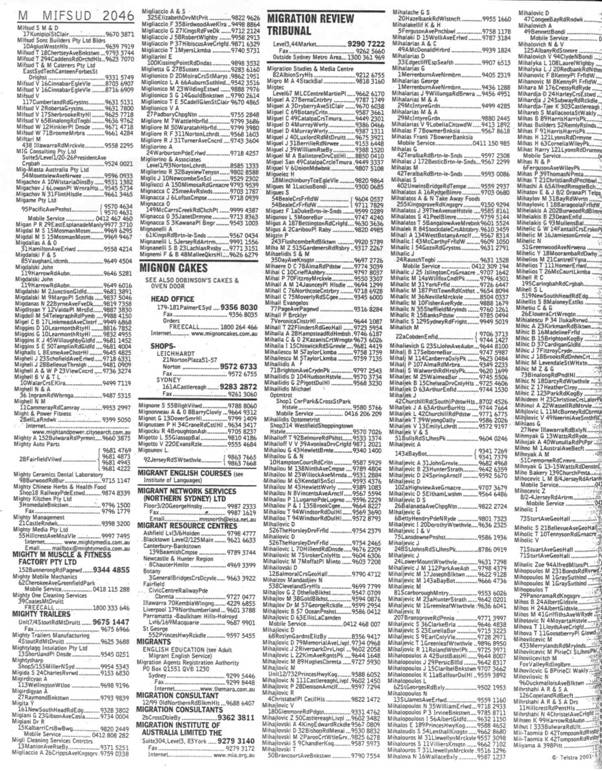
11 APRIL 2003 |
|
PLACE: |
SYDNEY |
REASONS FOR JUDGMENT
1 This is an application under s 39B of the Judiciary Act 1903 (Cth) relating to a decision taken by a Deputy Registrar of the Migration Review Tribunal (the “Tribunal”) to the effect that the Tribunal had no jurisdiction to review a decision of a delegate of the respondent, because, it was said, the applicant was out of time in making her application.
2 The matter is a most unfortunate one, because the delay which has caused the legal difficulty is the making of neither the applicant, nor the respondent, but of Australia Post. A letter dated 26 April 2002 from the Manager of the Blacktown Delivery Centre of Australia Post states as follows:
I am writing to explain that a registered letter (RP 12318945), addressed to Ms Zhifang Zhan, 2 Cardiff St Blacktown was not delivered until 16.4.02. The problem seems to be that our Australia Post Delivery Officer did not leave a card notifying Ms Zhifang Zhan that there was a Registered Letter for her to collect on the day it arrived and she was not notified until 16th April 2002.
Please accept my apologies for the inconvenience caused and, if you need further information, please ring me on the telephone number above.
The Facts
3 The applicant is a national of China. She has a daughter whose father is the applicant’s previous husband. In May 2000, the applicant applied to migrate to Australia under a spouse visa. She was sponsored by her partner Mr Sukander Lai, an Australian citizen. In the sponsorship documentation, Mr Lai indicated that he and the applicant were married on 19 May 2000 in Jiaxing City, Zhejiang Province, China.
4 The application thereafter proceeded. The applicant provided certain information as required by the Department. She was interviewed by an officer of the Department in Shanghai.
5 On 20 April 2001, a Departmental officer from the Department’s Shanghai office wrote to the applicant in Jiaxing and informed her that she and her daughter had been granted temporary visas, the applicant receiving a “Spouse (provisional)” visa.
6 A little later on 26 April 2001, Mr Lai sent a handwritten facsimile from an Australia Post Office at Rydalmere to the Australian Visa Office in Shanghai, which contained a statutory declaration of Mr Lai stating the following:
I would like to withdraw migration application from Ms Zhan Zhi Fang File Reference: 2000/136774JL. because our relationship has broken down.
Thank you.
7 The reasons for Mr Lai sending this facsimile, and the course of events thereafter are not clear. It appears that there may have been some misunderstanding between Mr Lai and the applicant. Mr Lai appears, however, to have shortly thereafter recanted his views. On 28 April 2001, Mr Lai made a handwritten statutory declaration in the following terms:
I have made mistake, I apologized to Ms. Zhan Zhi Fang File Reference: 2000/136774JL because she wasn’t fault.
If possible, I would like to invite her to come to Australia.
After she arrives, I will look after her. I am going to provide; food and clothing, accommodations, medical treatment and financial support.
Thank you for your attention.
8 The applicant sought to explain what had happened in an undated document which contained the following, after recounting that Mr Lai had sent the applicant money to travel to Australia:
Apart from this, I have previously mentioned to him over the phone that it might be a heavy burden for him to raise another two persons, after I migrated, I would support the family, actually I raised the family in China, my ex-husband likes smoking and drinking. My child also advised him her father did not giver her mother any money. Upon hearing this, he was very unhappy stating I looked down on him, I insulted him as a man who was unable to afford a wife should not get married. He said his mother did not work for 60 years after she married and so does his sister and his sister-in-law. Anyway, I should not tell him about it, I should say I have to study first and in case he is not in good health then I go out to find a job. He was unpleasant for a week as I said I could manage to work at my friend’s garments factory. All these were the reasons he repeated over the phone for 30 minutes and I’m not sure whether this is conclusive to the so called relationship broken-up. Anyway he realized it was totally a misunderstanding after I explained to him thoroughly about the equal job and equal opportunity in China for men and women. He felt regretful and stated he would ask lawyer to fax to your office again to restore the sponsorship. If your office still now satisfied, then next month he will take a holiday and come to Shanghai. He is an Indonesian Chinese, very traditional type, realized that over 2 years I have been making efforts to come to his side for better life and work though migration is not easy. Please trust us that we are sincere in the relationship and will not quit the chance for reunion due to a misunderstanding. Hope you will consider the situation and allow me to come to Australia asap to create our bright future.
[emphasis added]
9 On 17 May 2001 Mr Lai sent a handwritten statutory declaration to the Department, which contained the following:
I am writing in regard to my wife Zhan Zhi Fang File Reference: 2000/136774JL migration application which is currently being assessed by your office. First I apologized to you, because I have made trouble for you.
Few weeks ago, on the phone, she told me, after she arrives in Sydney she is looking for her friend and working there, because her friend has small clothing factory.
That time I was very upset, I thought she doesn’t need me, why I sponsor her to come to Australia? The next day, I received her letter, I knew I was misunderstanding, because she loves me, she is going to live with me for ever and ever and attending English class which I suggested to her I miss her, need her and love her very much. I would like her to come to Australia as soon as possible. Thank you for your Kindness.
10 Meanwhile, it would appear that on 26 April 2001 the applicant’s temporary visa and that of her daughter were cancelled under s 128 of the Migration Act 1958 (Cth)(the “Act”).
11 Notwithstanding this, it appears that the applicant came to Australia lawfully.
12 On 12 December 2001 a Departmental officer wrote to both the applicant and Mr Lai. The two letters were sent to the same residential address in Sydney where, it would appear, both the applicant and Mr Lai live. The letter to Mr Lai included the following:
I am writing to acknowledge receipt of your letter dated 18 April 2001 advising that you no longer support the permanent visa application of Zhi Fang Zhang. The application also includes her dependant daughter, Yu Yue Zhang. The information below will help you understand what will now happen in relation to Zhi Fang Zhan’s visa application.
…
As you have withdraw from the application, the Privacy Act 1988 prevents us from telling you anything about the applicant from this point forward unless the applicant consents in writing to that – please do not write or call for information as we are unable to assist you without their consent.
Thank you for bringing this matter to our attention. Please be assured that your advice will be acted on.
13 The letter to the applicant was to the following effect:
I refer to your application for permanent settlement in Australia lodged on 23 May 2000. The application also includes your dependant daughter, Yu Yue Zhang.
We have been informed that the relationship on which your application was based is no longer continuing.
There are three circumstances in which an application may continue to be assessed for the grant of permanent residence on spouse grounds despite the fact that your personal circumstances in respect to the application have changed. These are where:
§ The Australian citizen or permanent resident spouse has died, or
§ If your relationship has ended and you are a proven victim of domestic violence in that relationship, or
§ Maintenance obligations or custody/access rights in respect of any children have been granted to the Australian citizen/permanent resident spouse.
If you wish to proceed with your application you must provide certain documents to the Department within 35 days of the receipt of this letter. If for some reason you are unable to provide the documents requested within 35 days of receiving this letter you should inform the department of the steps you are taking to acquire these documents. Consideration will then be given to the need or an extension of the 35 day period. Failure to provide the requested documents or to notify the Department you are unable to provide the requested documents, within 35 days, may result in your application being decided on the basis of the information held on your file at present.
The documents required are:
IF YOUR AUSTRALIAN PARTNER HAS DIED
- your spouse’s death certificate
IF YOU ARE A VICTIM OF DOMESTIC VIOLENCE
- Statutory declaration (Form 1040) by or on behalf of you, and
- Statutory declaration (Form 1040) by a competent person, and
- an confirmed restraining order or injunction against your spouse, the nominator, or
- evidence of a conviction of assault on you by your spouse.
OR
- Statutory declaration by or on behalf of you, and
- Two statutory declarations by competent persons.
ACCESS
- An order granted by a court which gives right of access to the Australian citizen or permanent resident to the children or
MAINTENANCE
- an obligation under an agreement registered under section 66zc of the family law Act 1975 that makes provision for maintenance; or
- an order of a court specifying a maintenance obligation; or
- a notice of acceptance, assessment and registration from the Child Support Agency of the Australian Taxation Office.
Any documents that you send to the Department must be the originals, or photocopies certified by a Justice of the Peace, or a Commissioner for Declarations, or a person before whom a statutory declaration may be made under the Statutory Declaration Act 1959.
A decision will be made on your application as soon as possible once you have provided the requested information.
You must notify this department if you have any change in your circumstances, including a change of address, at any time before your application is finalised.
[emphasis in original]
For whatever reason, neither letter dealt with Mr Lai’s recantation of his withdrawal of sponsorship and the explanations given by him and the applicant for the facsimile of 26 April 2001, set out at [6] above.
14 The applicant affirmed an affidavit to which there was no objection, and upon which she was not cross-examined. Paragraph 3 of that affidavit was in the following terms:
On 31 December 2001 I wrote to DIMIA to explain that my relationship with my husband, Sukandar Lai, was continuing. In this letter I included a statutory declaration from Sukandar Lai. I no longer have a copy of this letter.
15 I accept this evidence. I find that the statutory declaration of Mr Lai enclosed was either that referred to at [7] above, or to like effect.
16 In March 2002, the Departmental officer who sent the letters of 12 December 2001, sent another letter to the applicant enclosing a decision record refusing the Spouse visa application.
17 It is now necessary to be precise about dates.
18 The date at the foot of the letter last referred to in [16] above was 20 March 2002. The letter was in the following terms:
Dear Ms Zhan,
I refer to your application for a permanent visa. The application includes the following applicants:-
ZHI FANG ZHAN DOB 28.03.1962
YU YUE ZHANG DOB 16.02.1988
I am writing to advise you that the following applicants have been refused:
ZHI FANG ZHAN DOB 28.03.1962
YU YUE ZHANG DOB 16.02.1988
You and each person included in the application were assessed under the Spouse (Migrant) Class BS.
On the basis of careful consideration of the information you provided, your application was assessed under the Migration Act 1958 and against the criteria set out in the relevant Migration Regulations. A statement explaining the reasons for the refusal under each subclass is attached.
I shall now explain to you what your current immigration status is, and the options you have now that your application has been refused.
Your Current Immigration Status:
When you lodged your application to remain in Australia you were granted a bridging visa to ensure you had lawful status throughout the processing of your application. This bridging visa will remain in effect for 28 calendar days plus 7 working days from the date of this letter.
If you held a substantive visa (any visa other than a bridging visa or a criminal justice visa) at the time you lodged your application, the bridging visa would only have come into effect if the substantive visa expired. If you hold a current substantive visa it will remain in effect until the expiry date.
Your Options:
1. Seek a review of this decision;
You can apply to the Migration Review Tribunal for this decision to be reviewed. If you decide to apply for review, you must lodge the review application at a registry of the Tribunal within 21 calendar days plus 7 working days of the date of this letter and pay the prescribed fee.
The enclosed leaflet provides information about the review by the Tribunal, including addresses where the application can be lodged. If you need further information about review by the Tribunal, you should contact one of the registries listed in the leaflet.
[emphasis added]
2. Lodge a further application
There are limitations on the types of applications you can now lodge. An information form (No. 1026i) “Limitations on Applications in Australia” is enclosed for your information. If you do lodge a further application, you will be granted a further bridging visa which will remain in effect until that application is decided.
3. Depart Australia
If you do not hold a current substantive visa and you do not lodge a further application for a substantive visa and you do not lodge an application for review of this decision, then you must depart Australia by the date that your bridging visa ceases, that is , within 35 days of the date of this letter. Failure to depart by this date may result in you becoming an unlawful non-citizen. Unlawful non-citizens are subject to detention and removal from Australia, and may be excluded from re-admission to this country for a set period in the future.
If you decide not to seek a review of the decision and not to lodge a further application you must leave Australia by the date your bridging visa ceases or, if you hold a substantive visa, by the date that ceases. You should advise the Compliance Section at this Office of your travel arrangements prior to departure.
If you require any information, or need of the above matters clarified please contact the office on [number provided] and ask for the Compliance Section.
Yours sincerely
[signature]
B Sanjiu
P.N 1303
Residence Section
Parramatta
20 March 2002
19 Contrary to what was in the second paragraph under the heading, “1. Seek a review of this decision;” no leaflet mentioned was provided.
20 There was enclosed a decision record which commenced with a table of information as follows:
File reference: OSF2000/136774
Primary Applicant: Zhi Fang ZHAN
Date of birth: 28 March 1962
Secondary applicant 1: Yu Yue ZHANG
Date of birth: 16 February 1988
Nominator Sukandar LAI
Date of application: 23 May 2000
Date of decision: 21 March 2002
Office of decision: Parramatta
Primary decision: Application Refused
Decision: REFUSED
[emphasis added]
21 The decision record concluded with the delegate’s signature in the following manner:
B Sanjiu
Delegate of the Minister for the purposes of Section 65 of the Migration Act 1958
Residence Section
Parramatta
20 March 2002
22 It will be noted that the date of the decision was said to be 21 March 2002 at the beginning and 20 March 2002 at the end of the decision record. There was affidavit evidence, to which there was no objection and on which there was no cross-examination, to the effect that the Departmental computer business records reflect that the decision was made on 20 March 2002 and the information about its being made was entered into the computer on 21 March 2002. There was also affidavit evidence, to which there was no objection and on which there was no cross-examination, to the effect that the letter was taken as a registered mail item to Australia Post on 21 March 2002.
23 I find that the decision was made on 20 March 2002 and the letter with the enclosed decision record, but without any accompanying leaflet, was despatched as registered mail and given to Australia Post on the afternoon of 21 March 2002.
24 By reason of the arguments of the parties, it is necessary to set out much of the decision record. After a heading and the block of information set out at [20] above, the decision record began as follows:
1. LEGISLATIVE FRAMEWORK
Part 100 of Schedule 2 of the Migration Regulations specifies the prescribed criteria for a Spouse (Migrant) visa.
2. EVIDENCE OR OTHER MATERIAL ON WHICH FINDINGS IS BASED
In reaching the findings outlined below, I had regard to:
[various documents were set out]
3. BACKGROUND
The applicant lodged an application to remain permanently in Australia on the grounds of her marriage to Sukandar LAI, an Australian Citizen. The applicant arrived in Australia on 2 June 2001. The applicant is the holder of Subclass 309 visa and is now being considered for Subclass 100 visa. The applicant has included her dependant child, Yu Yue ZHANG, in the application. The Departmental record shows that Ms Zhang, has departed Australia on 1 September 2001, and has not re-entered.
4. ASSESSMENT OF ISSUES AND CLAIM
The relationship was not of long standing. On 27 April 2001, the nominator withdrew his support for the application, advising the Department that the relationship on which the applicant’s application was based is no longer continuing.
On 12 December 2001 correspondence was sent to Ms Zhan, inviting comment regarding this information. To date there has not been a response to that letter.
Regulation 1.15A, states, a couple have a genuine and continuing relationship that they are living together or not living apart on a permanent basis.
25 It will be noted that there was still no reference to the evidence of Mr Lai apparently recanting his communication in April 2001 about his relationship with the applicant.
26 The decision record continued by setting out the criteria to be satisfied at the time of the decision under Schedule 2, Subclass 100 of the Migration Regulations. Relevantly it set out Subclass 100.22 in the following terms:
100.221(1) The applicant meets the requirements of subclause(2), (3) or (4A).
(2) The applicant meets the requirement of this subclause if:
(a) the applicant is the holder of a Subclass 309 (Spouse (Provisional)) visa; and
(b) the applicant is the spouse of the sponsoring spouse; and
(c) subject to subclauses 95), (6) and (7), at least 2 years have passed since the application was made.
[emphasis added]
(3) The applicant meets the requirements of this subclause if the applicant:
(a) first entered Australia as the holder of a Subclass 309 (Spouse (Provisional)) visa and continues to be the holder of that visa; and
(b) would meet the requirements of subclause (2) except that, after the applicant first entered Australia as the holder of that visa, the sponsoring spouse has died; and
(c) satisfies the Minister that the applicant would have continued to be the spouse of the sponsoring spouse if the sponsoring spouse had not died.
(4) The applicant meets the requirements of this subclause if:
(a) the applicant first entered Australia as the holder of a Subclass 309 (Spouse (Provisional)) visa and continues to be the holder of that visa; and
(b) the applicant meet the requirements of subclause (2) except that the relationship between the applicant and the sponsoring spouse has ceased; and
(c) after the applicant first entered Australia as the holder of that visa – either or both of the following circumstances applies:
(i) either or both of the following:
(A) the applicant:
(B) a member of the family unit of the sponsoring spouse or of the applicant or of both of them; has suffered domestic violence committed by the sponsoring spouse;
(ii) the applicant:
(A) has custody or joint custody of, or access to; or
(B) has a residence order or contact order made under the Family Law Act 1975 relating to; at least 1 child in respect of whom the sponsoring spouse:
(C) has been granted joint custody or access by a court; or
(D) has a residence order or contact order made under the Family Law Act 1975; or
(E) has an obligation under a child maintenance order made under the Family Law Act 1975, or any other formal maintenance obligation.
27 There then followed almost two full pages of close type setting out the interlocking definitions in the Regulations relevant to the word “spouse”.
28 The record continued:
It is a requirement, under the Migration Regulations, for the grant of a Class 100 spouse Visa, that partner/nominator continues to be the sponsor. The partner/nominator in this case withdrew his sponsorship of the applicant. Therefore, the sponsorship is no longer in force. This means a prescribed criterion for the grant of a Class Spouse visa has not been satisfied.
[emphasis added]
In view of the breakdown of the couple’s relationship, I now considered whether the applicant meets the required requirements with respect to the following:
- death of spouse
- domestic violence
- custody of children
[emphasis added]
The applicant’s spouse is not deceased and also there is no information provided to the Department to suggest that the applicant meets the requirement with respect to domestic violence or custody matters.
4.2 As the applicant has failed to satisfy a prescribed criteria for the grant of a subclass 100 Spouse visa, she cannot be granted the visa in this visa Subclass.
ASSESSMENT OF DEPENDANT
I have also assessed the dependant (secondary) applicant against the relevant criteria. There is nothing in the departmental file to indicate that the dependant (Secondary) applicant in this case meets any of visas contain within the Spouse (Migrant) (Class BC) class as she is not nominated by the spouse. Further, the departmental record shows that the Yu Yue Zhang, has departed Australia on 1 September 2001, and has not re-entered.
5. DECISION
The application for a visa in the Spouse (Migrant) (Class BC) visa for Zhi Fang ZHAN and her dependant, Yu Yue ZHANG is refused.
29 Notwithstanding that the Department delivered the registered letter to Australia Post on 21 March 2002, the applicant was not notified by Australia Post that there was a letter for collection by her until Tuesday 16 April 2002, according to the letter made reference to at [2] above. The applicant stated in her affidavit that she did not receive the card from Australia Post notifying her that there was a registered item for her to collect from Blacktown post office until 17 April 2002. The applicant was not challenged on this evidence. I find that she received the Australia Post card on 17 April 2002.
30 On Friday 19 April 2002 the applicant attended the Blacktown post office and collected the letter. She read it. It contained no leaflet.
31 On Monday 22 April 2002 the applicant attended the office of the Department at Parramatta and spoke to someone. The applicant gave this person a copy of the letter that she had sent to the Department on 31 December 2001, as to which see [14] and [15] above. This step was no doubt caused by a perusal of the letter and decision record which lacked any reference to the recantation of Mr Lai.
32 On Wednesday 24 April, Mr Lai telephoned the Department and spoke with the delegate, Ms Sanjiu who told Mr Lai that she could not look at the case further and that the applicant could lodge an appeal with the Tribunal.
33 The following day was Anzac Day.
34 On Friday 26 April 2002 the applicant lodged an application for review with the Tribunal. The applicant also gave the Tribunal the letter from Australia Post of the same date explaining the error, see [2] above.
35 On 26 April 2002 the applicant hand delivered to the Tribunal a letter she had written on 19 April 2002 to the Department, but not sent. It was in the following terms:
Dear Sir/Madam
Thank you for your letter, I received it this morning on 31-12-2001 I have already sent the Statutory Declaration from my husband Sukandar Lai to your office unfortunately you have not received it. Now I am sending again the copy to you.
Thanks
36 On 27 June 2002 the applicant delivered a handwritten letter of Mr Lai to the Tribunal. The letter stated:
Migration Review Tribunal
Level 3 AXA Centre
44 Market Street
Sydney NSW 2000
Blacktown, 27.06.2002
Dear Sir,
Thank you for your letter from 22.06.02. I would like to continue the case until the end, because we’ve got right. Our married is genuine. We are living together as husband and wife and we love each other I appreciate if you could help us to review the case. Thanks
Yours faithfully
Sukandar Lai
PS. Zhi Fang Zhan
MRT. ref: No2/02777
Home: [number provided]
Work: [number provided]
The Tribunal “decision”
37 On 22 June 2002 a Deputy Registrar of the Tribunal wrote to the applicant and Mr Lai stating its position as follows:
I am sorry to advise you that we cannot accept your application to the Tribunal for the review of the decision to refuse you a subclass 100 visa.
Your application to the Tribunal should have been lodged within a 7 working days plus 21 calendar days time limit.
The letter from the Department of Immigration and Multicultural and Indigenous Affairs informing you of the decision was dated 20 March 2002, and on this basis I have calculated that the last day on which you could have lodged a valid application for review was 23 April 2002.
However, your application for review was not received at the Tribunal until 26 April 2002.
The Tribunal has no power to extend or waive time limits but it is possible that an error may have been made in calculating the period, or that the Department of Immigration and Multicultural and Indigenous Affairs did not properly notify you of the decision.
I have noted the issues raised in the letter from the Blacktown Delivery Centre of Australia Post dated 26 April 2002. Whilst the circumstances are unfortunate, I have determined that the letter was properly sent to the last address advised to the Department for notification. Further you have provided evidence which confirms that you received the notification of the visa refusal within the time period for lodgement of a valid application for review with the Tribunal.
Given the circumstances, the Tribunal is of the view that your application is ineligible for consideration, and has been finalised accordingly. I am arranging for a refund of the $1400 application fee and you should receive a cheque in the near future.
The contentions of the parties and the issues
38 Mr Reilly, of counsel, on behalf of the applicant, submitted that the applicant was not out of time, that the Tribunal erred in so concluding, and that the Tribunal was obliged by subs 348(1) to review the decision of the delegate on its merits. Mr Smith, of counsel, on behalf of the respondent, submitted that the Tribunal was correct in its conclusion.
39 The arguments, on both sides involve a degree of intricacy dictated by the Act and regulations. Paragraph 347(1)(b)(i) of the Act (which applied by reason of the decision of the delegate being an “MRT-reviewable decision” under subs 338(7A) of the Act) required the application for review to be given to the Tribunal:
within the prescribed period, being a period ending not later than… 28 days after the notification of the decision.
40 Regulation 4.10(1) provided for the prescribed period for par 347(1)(b)(i) by stating that the period:
…starts when the applicant receives notice of the decision and ends at the end of 21 days after the day on which the notice is received; …
41 If this were the only relevant provision, it could be safely concluded that the applicant was not out of time. However, one is led to more delegated legislation. Subsection 66(1) requires the Minister, when he or she grants or refuses to grant a visa, to notify the applicant in the prescribed way. I will need to return to s 66 in due course, but it is presently relevant because reg 2.16 (see reg 2.16(1)) prescribes for subs 66(1) the way of notifying a person of the grant or refusal of a visa. Regulation 2.16(3) provides, for the notification of the refusal to grant a visa, the following prescription:
The Minister must notify an applicant of a decision to refuse to grant a visa by one of the methods specified in section 494B of the Act.
42 One of the methods set out in s 494B is contained in subs 494B(4). It was used here. It was as follows:
Another method consists of the Minister dating the document, and then dispatching it:
(a) within 3 working days (in the place of dispatch) of the date of the document; and
(b) by prepaid post or by other prepaid means; and
(c) to:
(i) the last address for service provided to the Minister by the recipient for the purposes of receiving documents; or
(ii) the last residential or business address provided to the Minister by the recipient for the purposes of receiving documents.
43 The application of s 494B is relevant because s 494C provides for deemed receipt of a document if the Minister gives a document to a person by one of these methods specified in s 494B. One of the methods specified in s 494B was used by the Minister as required by reg 2.16(3) and subs 66(1).
44 Subsection 494C(4) provides as follows:
If the Minister gives a document to a person by the method in subsection 494B(4) (which involves dispatching the document by prepaid post or by other prepaid means), the person is taken to have received the document:
(a) if the document was dispatched from a place in Australia to an address in Australia – 7 working days (in the place of that address) after the date of the document; …
45 Thus, by the interplay of subs 66(1), regs 2.16(1) and (3), subs 494(4) and subs 494C(4), the method of notification employed here (pre-paid registered post) is deemed to bring about the result that the person is deemed to have received the document 7 working days after the date of the document.
46 Then, reg 4.10 ([40] above) adds another 21 days from receipt of a decision notice to identify the period within which an application for review must be given to the Tribunal. This is so assuming subs 494C(4) and reg 4.10 are dealing with the same matter. Under subs 494C(4) the person is “taken to have received the document”; under reg 4.10 the period for giving the Tribunal the application starts when the applicant “receives notice of the decision” (not when he or she receives the decision or a letter containing the decision). No argument along this textual line was put to me. If the letter and the enclosed record of decision amount to a “notification” for the purposes of s 66, the last day for giving the application for review to the Tribunal was Tuesday 23 April 2002 (bearing in mind Good Friday and Easter Monday fell on 29 March and 1 April, and if the relevant date of the communication was 20 March), or 24 April 2002 (if the relevant date of the communication was 21 March). Thus, on either hypothesis concerning the date of the communication, the applicant gave the application for review to the Tribunal too late – on 26 April.
47 The evidence before me satisfies me that the letter was despatched within three working days of its date. Nevertheless, it was submitted by Mr Reilly for the applicant that subs 494C(4) is inapplicable where a document has two or more dates, here the letter being dated 20 March 2002 and the decision record both 20 and 21 March 2002 (see [18], [20] and [21] above). It was said that this flowed from a required “strict construction” of s 494C(4)
48 I do not accept this submission. The two documents (the letter and decision record) should not, it seems to me, be dealt with separately or differentially by s 494C. They, together, amounted to the notification in a document or documents for the purposes of s 66. The letter is the first document intended to be read. It bears a date: 20 March 2002. The enclosed decision record bears the same date below the signature, in the same position as in the letter. The date of 21 March is in a part of the decision record where certain information is given. Looking at the two documents together, I would characterise them as both dated 20 March 2002, notwithstanding the presence of another date on the face of the decision record in a place where the reader is told the date of the decision.
49 If I am wrong about that, and if there are two dates “of the document”, I see no reason to ignore the operation of the section to both and to take the later date as the relevant operative date in a dispute such as the present. I do not see a contrary intent for the purpose of s 23(b) of the Acts Interpretation Act 1901 (Cth). No argument was put to me based on subs 46(2) of the Acts Interpretation Act.
50 It is now necessary to turn to the subject most closely debated in submissions: Was the letter and enclosed decision record a notification for the purposes of s 66 of the Act?
51 Subsection 66(2) sets out certain requirements for the notification required by subs 66(1). Section 66 is, relevantly , in the following terms:
(1) When the Minister grants or refuses to grant a visa, he or she is to notify the applicant of the decision in the prescribed way.
(2) Notification of a decision to refuse an application for a visa must:
(a) if the grant of the visa was refused because the applicant did not satisfy a criterion for the visa—specify that criterion; and
(b) if the grant of the visa was refused because a provision of this Act or the regulations prevented the grant of the visa—specify that provision; and
(c) unless subsection (3) applies to the application—give written reasons (other than non-disclosable information) why the criterion was not satisfied or the provision prevented the grant of the visa; and
(d) if the applicant has a right to have the decision reviewed under Part 5 or 7 or section 500—state:
(i) that the decision can be reviewed; and
(ii) the time in which the application for review may be made; and
(iii) who can apply for the review; and
(iv) where the application for review can be made.
(3) [not relevant]
(4) Failure to give notification of a decision does not affect the validity of the decision.
(5) [not relevant]
52 First, it was submitted that there was a failure to “specify” the criterion for the visa that was not satisfied, for the purposes of par 66(2)(a).
53 Secondly, it was submitted that the absence of the enclosed leaflet containing the addresses of the Tribunal offices meant that par 66(2)(d)(iv) was not satisfied.
54 It was submitted that these characteristics of the communication embodied in the letter and enclosed decision record prevented its characterisation as a “notification”, or the fulfilment of the requirement “to notify”, for the purposes of s 66 and par 347(1)(b)(i) of the Act. So, it was submitted, no time has, as yet, begun to run against the applicant under par 347(1)(b)(i) and reg 4.10. Mr Smith did not contend that even if the requirements of s 66 were not met, nevertheless time otherwise ran.
The specification of a criterion: par 66(2)(a)
55 The relevant criteria were handed up. It was agreed that these were in force at the time. Parts of them were also set out in the decision record, see [26] above. I will mark the relevant criteria handed up as Exhibit B, now, so that the basis on which the matter was litigated before me is clear.
56 One of the difficulties for the respondent is that there was no criterion laid down in the regulations for the sponsorship of Mr Lai to “continue” or be extant, as at the date of the decision: see cl 100.221(1) (2), (3) and (4) at [26] above. Thus, if the delegate was saying in the record of decision that that had to be the case, there was a specification of a “criterion” which was not a criterion provided for by the regulations.
57 If that be the case, Mr Reilly submitted that there could be no notification for the purposes of s 66, since what was required by par 66(2)(a) was the specification of a criterion contemplated by the regulations. Mr Smith submitted the “criterion” in par 66(2)(a) does not have to be one provided for by the regulations. If the delegate had specified left-handedness that would be a specification of a criterion, even though it (obviously) formed no part of the regulations.
58 I tend to acceptance of Mr Reilly’s submission; par 66(2)(a), in terms, is referring to the criteria satisfaction of which is required for the grant of a visa. However, I would prefer to base my conclusions on a slightly different basis. It is not clear to me whether the delegate made so elementary a mistake; or whether reference was being made, in a somewhat elliptical way to the failure of the criterion in 100.221(2)(b) – that the applicant and Mr Lai’s relationship had broken down and so they could not be described as spouses. Indeed, this was Mr Smith’s alternative submission.
59 In those circumstances, it is unclear to me what criterion or criteria was or were relied on by the delegate. In circumstances of such ambiguity and opacity, I do not think it can be said that there has been a “specification” of the criterion for par 66(2)(a). There needs to be some clarity and precision in an explicit identification of the relevant matter. Though in another context, what the Full Court said in NAAO v Secretary, Department of Immigration and Multicultural Affairs (2002) 34 AAR 508 at [32] is particularly apposite.
60 The lack of clarity is not merely a matter of form. A person in the applicant’s position must be able to appreciate to what matters or issues his or her application for review must be directed. Not only must the document be filed promptly (the risk of any delay in the postal system having been thrust on to the would-be applicant), but also material must be marshalled to put to the Tribunal. Here, is it just the issue of sponsorship to which the applicant must direct herself in gathering material, or is the genuineness and bona fides of the marriage to, or relationship with, Mr Lai in issue? These were important matters for the applicant to know.
61 The notification was in my view inadequate to specify the criterion for the purpose of par 66(2)(a).
62 It was not disputed that if there was a failure to comply with s 66 there had been no initiating of time running against the applicant.
63 In these circumstances, this deficiency in the decision record and notification means that the Tribunal was obliged to accept the applicant’s application for review and that the applicant is entitled, in substance, to the relief she seeks.
The alleged failure to comply with par 66(2)(c)(iv)
64 I also base my conclusion upon par 66(2)(d)(iv). That requires the respondent to state where the application for review can be made. The verb “state” not “specify” is used. Nevertheless, the purpose is to give information as to where the applicant can “make the application”, that is, initiate it. The applicant was told that lodgement of documents had to be at “a registry of the Tribunal”. No address was given. A leaflet giving that information was not included with the letter and decision record. Mr Smith says that the applicant only had to look up the white pages of the Sydney phone book to find the entry annexed to these reasons.
65 However that entry gave no information as to whether level 3, 44 Market St in Sydney was a registry of the Tribunal or its head office or the site of some other activity of the Tribunal. Further enquiry needed to be made.
66 The scheme of the Act and regulations is such as to place the risk of postal delays on applicants. The consequence of that are reflected in the facts of this case. Neither the Court nor the Tribunal is empowered to give any extension of time. Parliament, as part of this scheme, requires the Minister or his delegate to provide sufficient information to the applicant to facilitate the timeous filing of an application for review directed to the relevant subject matter. One aspect of that is the requirement to tell the applicant where he or she is to go to make an application. If the registries of the Tribunal had been identified in the phone book it may be that the letter was adequate. I have some doubts about that, but , with no assistance given to the applicant as to the location of the registry of the Tribunal in communication or the phone book, I do not think the delegate has stated in the communication “where” the application may be made.
67 Whilst I have drawn assistance in my consideration of this issue from the decisions of the Full Courts of the ACT and Tasmanian Supreme Courts in Golden-Brown v Hunt (1972) 19 FLR 438 and Evans v Donaldson [1977] Tas SR 104, especially the judgments of Fox J and Green CJ, I think decisions on other statutes are of limited utility. In the context of the crucial importance of timeous filing, I think that par 66(2)(d)(iv) requires some direction to a location where the act of making the application may be done. Merely to state “at a registry of the Tribunal” seems to me to be insufficient. No doubt that was why the leaflet was intended to be included.
68 No submissions were put contesting the form of the relief claimed by the applicant.
69 For these reasons the applicant is entitled to the relief she claims requiring the Tribunal to receive her application and review the decision.
70 Whilst it does not matter, given the balance of my views, once again (see Lee v Minister for Immigration and Multicultural and Indigenous Affairs [2002] FCAFC 305) the decision seems to have been made not by a Tribunal member but a Tribunal officer on behalf of the Deputy Registrar.
71 The Tribunal has in effect, refused to undertake its jurisdictional tasks. No possible protection can be delivered by s 474 of the Act to that circumstance. The Tribunal (if the Deputy Registrar had authority) wrongly concluded that it had no power or authority to undertake a function of review. It must now undertake that statutory task.
72 There is no reason apparent to me why the respondent should not pay the applicant’s costs.
|
I certify that the preceding seventy-two (72) numbered paragraphs are a true copy of the Reasons for Judgment herein of the Honourable Justice Allsop J. |
Associate:
Dated: 11 April 2003
|
Counsel for the Applicant: |
Mr T Reilly |
|
|
|
|
Solicitor for the Applicant: |
Christopher Levingston & Associates |
|
|
|
|
Counsel for the Respondent: |
Mr J Smith |
|
|
|
|
Solicitor for the Respondent: |
Sparke Helmore |
|
|
|
|
Date of Hearing: |
18 December 2002 |
|
|
|
|
Date of Judgment: |
11 April 2003 |