FEDERAL COURT OF AUSTRALIA
Barry v City West Water Limited [2002] FCA 1214
Contract – mediation – whether matter settled or not.
Trade Practices Act 1974 (Cth) s 52
Masters v Cameron (1954) 91 CLR 353 referred to
Baulkham Hills Private Hospital Pty Ltd v GR Securities Pty Ltd (1986) 40 NSWLR 622 (and on appeal 40 NSWLR 631) referred to
Australian Broadcasting Corporation v XIVth Commonwealth Games Ltd (1988) 18 NSWLR 540 referred to
Branir Pty Ltd v Owston Nominees (No 2) Pty Ltd [2001] FCA 1833 referred to
DTR Nominees Pty Ltd v Mona Homes Pty Ltd (1978) 138 CLR 423 referred to
Progressive Mailing House Pty Ltd v Tabali Pty Ltd (1985) 157 CLR 17 referred to
Sweet and Maxwell Ltd v Universal News Services Ltd [1964] 2 QB 699 referred to
Woodar Investments Development Ltd v Wimpey Construction UK Ltd [1980] 1 WLR 277 referred to
Satellite Estate Pty Ltd v Jacquet (1968) 71 SR (NSW) 126 referred to
United Telecasters Sydney Ltd v Kellaway (Yeldham J, 5 February 1982, unreported) referred to
Vaswani v Italian Motors (Sales and Services) Ltd [1996] 1 WLR 270 referred to
McDermott v Black (1940) 63 CLR 161 referred to
British Russian Gazette and Trade Outlook Ltd v Associated Newspapers Ltd [1933] 2 KB 616 referred to
Deputy Commissioner of Taxation v Hadidi (1994) 123 ALR 48 referred to
Howes v Miller [1970] VR 522 referred to
Byrnes v Jokona Pty Ltd [2002] FCA 41 referred to
KEVIN FRANCIS PATRICK BARRY & ANOR v CITY WEST WATER LIMITED & ANOR
V 569 of 1999
ALLSOP J
3 OCTOBER 2002
MELBOURNE
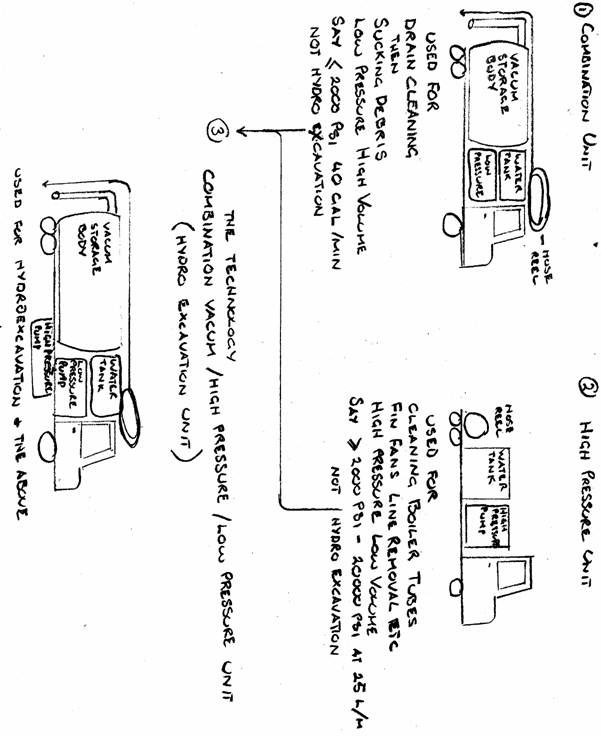
|
IN THE FEDERAL COURT OF AUSTRALIA |
|
|
BETWEEN: |
KEVIN FRANCIS PATRICK BARRY FIRST APPLICANT
STREAMLINE DRAINS & PIPELINES PTY LIMITED (ACN 059 665 539) SECOND APPLICANT
|
|
AND: |
CITY WEST WATER LIMITED (ACN 066 902 467) FIRST RESPONDENT
BRAMBLES AUSTRALIA LIMITED (ACN 000 164 938) SECOND RESPONDENT
|
|
DATE OF ORDER: |
|
|
WHERE MADE: |
THE COURT ORDERS THAT:
1. On or before 10 October 2002 the second respondent file and serve draft short minutes of order giving effect to the reasons for judgment published today.
2. The proceedings stand over to a date to be fixed by arrangement with the associate to Allsop J for the making of orders and for any argument in relation thereto, including any further argument in relation to the appropriate orders as to costs.
Note: Settlement and entry of orders is dealt with in Order 36 of the Federal Court Rules.
|
IN THE FEDERAL COURT OF AUSTRALIA |
|
|
BETWEEN: |
FIRST APPLICANT
STREAMLINE DRAINS & PIPELINES PTY LIMITED (ACN 059 665 539) SECOND APPLICANT
|
|
AND: |
(ACN 066 902 467) FIRST RESPONDENT
BRAMBLES AUSTRALIA LIMITED (ACN 000 164 938) SECOND RESPONDENT
|
|
JUDGE: |
|
|
DATE: |
|
|
PLACE: |
REASONS FOR JUDGMENT
1 Before the Court is a notice of motion filed by the second respondent, Brambles Australia Ltd (Brambles), in proceedings brought by the applicants against Brambles and the first respondent. The proceedings against the first respondent have been settled.
2 The relevant order sought in the notice of motion is that the proceedings against Brambles be struck out with no order as to costs. The notice of motion is not brought on the basis of the alleged hopelessness or vexatiousness of the applicants’ claims. Rather, it is brought on the basis that on 8 June 2000 the proceedings as against Brambles were settled by agreement, one term of which was that the proceedings be struck out with no order as to costs.
3 When the motion was called on for hearing, I raised with counsel the form of the process before me and the state of the pleadings. Consequent upon those discussions, Brambles amended its defence to include the following particularised paragraph as [13] of the defence:
Further to the matters aforesaid, by an agreement made on 8 June 2000 between the Applicants on one part and the Second Respondent on the other part (to the full terms and effect of which the Second Respondent will refer at the trial of this proceeding), the Applicants and the Second Respondent agreed that this proceedings be settled, upon terms (inter alia) that the proceeding be struck out with no order as to costs and with no right of reinstatement; by reason whereof the Applicants’ claims and the parties’ claims for costs herein have been compromised, and the Second Respondent is entitled to orders in accordance with that agreement.
Particulars
The agreement was in writing, contained in a document dated 8 June 2000 entitled “Essential Terms agreed between Barrys, Streamline Drains and Pipelines PL and Brambles Australia Ltd” and signed on behalf of the parties. Alternatively, it was partly in writing, partly oral and partly to be implied. Insofar as it was it was in writing, it was constituted by the said document dated 8 June 2000 entitled “Essential Terms agreed between Barrys, Streamline Drains and Pipelines PL and Brambles Australia Ltd”. Insofar as it was oral, it was contained in conversations between the parties in a mediation which occurred on 8 June 2000, as set out in the affidavits of Stephen Merritt sworn on 19 April 2001 and of Colin Partington sworn on 16 August 2001. Insofar as it was implied it was to be implied in order to give business efficacy to the dealings between the parties.
4 This pleading led to a reply, amended reply, rejoinder and amended rejoinder. I will come to the detail of the issues raised by the pleadings in due course. However, in essence, the landscape of the dispute can be summarised as follows. The applicants to the proceedings were Kevin Francis Patrick Barry (who is the son of Kevin Francis Barry) and a company called Streamline Drains & Pipelines Pty Limited (Streamline). I will refer to the applicants as KBJ (that is Kevin Barry junior) and Streamline, when referring to them individually. Streamline was the business entity of Kevin Francis Barry (to whom I will refer as KBS, that is Kevin Barry senior). KBJ was said to have developed a patentable invention. He licensed it to Streamline. The matter concerned, amongst other allegations which included alleged contraventions of s 52 of the Trade Practices Act 1974 (Cth), the alleged breach by Brambles of obligations of confidence, by which it was said to be bound, in connection with the invention of KBJ licensed to Streamline.
5 There was no issue before me of jurisdiction. I am satisfied that the allegations raised, at least by the pleading of s 52 of the Trade Practices Act, have created one federal matter including all the material alleged in the statement of claim against Brambles.
6 A mediation took place on 8 June 2000. Brambles said that the proceedings, insofar as they concerned the applicants and Brambles, settled on that day and that such settlement was and is enforceable, containing, as it was said, a term that the proceedings be struck out with no order as to costs. The applicants denied any settlement was reached. They said that a measure of consensus was reached on the day, but the parties reached a point at which it was necessary for the Brambles representatives to obtain higher authority in order to give a promise not to challenge KBJ’s patent. Pending that further agreed element, the applicants said, there was no agreement or complete consensus. The significance of the position of the applicants is that the resolution of the controversy does not turn upon a characterisation of substantially agreed communications on 8 June 2000 and whether they reflect a mutual intention to create legal relations: cf Masters v Cameron (1954) 91 CLR 353; and Baulkham Hills Private Hospital Pty Ltd v GR Securities Pty Ltd (1986) 40 NSWLR 622; and, on appeal, 40 NSWLR 631. Rather, the applicants’ case was that the parties had reached a position past which they could not advance; the Brambles representatives had no authority to conclude a point said to be expressly central to the willingness of the Barry interests to settle. Thus, it was said by the applicants, whilst the mediation process was successful, to a degree, in allowing the parties to reach consensus as to a significant number of commercial aspects of a possible resolution, the day finished with a central matter unresolved, and certain other matters yet to be agreed upon. Alternatively, it was said by the applicants that if an agreement was reached, it was one which was conditional on the execution of a more formal contract, or on performance by Brambles, neither of which had taken place, or it was repudiated by Brambles by its conduct after 8 June 2000; and, in any of these cases, if there was an agreement, the applicants’ claims had not been released or extinguished and were still maintainable in these proceedings.
7 When I raised with counsel the procedural approach to the matter, I suggested that the appropriate course was to make an order for the separate decision of the issues raised by [13] of the amended defence and the aspects of the subsequent pleadings relevant thereto. That remains, it seems to me, the appropriate course. For the reasons I express herein, I am of the view that on 8 June 2000 there was agreement reached to settle these proceedings and Brambles is entitled to enforce that settlement and bring a halt to these proceedings. I later express these conclusions in terms of orders which I would propose to make. At the conclusion of the hearing I told the parties that I would give them the opportunity of dealing with the form of the orders, which I will do.
8 As is plain from the above, the central and most important issue before me is whether a legally binding agreement was reached at the mediation on 8 June 2000. The answer to that question, which is in the affirmative, is provided by a careful factual analysis of what occurred before, on and after 8 June 2000. There is, unfortunately, the need to resolve conflicts of sworn evidence.
9 May I say at the outset that it is most regrettable that, at considerable expense, a hearing lasting eight days was necessary to resolve the question as to whether a matter was settled at a mediation at which the parties’ agreement was reduced to writing and signed and at which (as I find occurred) the mediator, before signatures were appended to the terms, made clear the binding nature of what was being done. I will return to this topic when dealing with the question of costs. It should not be thought that by making these comments I am being critical of Brambles, its representatives or the representatives (past or present) of the applicants.
Factual Analysis
10 The applicants sued Brambles alleging, amongst other things, that KBJ had invented a water and air excavation system: Statement of Claim (SOC) [4]. This was the “Invention” referred to in the pleadings.
11 On 9 January 1998 KBJ filed in the offices of IP Australia (then AIPO, the Australian Industrial Property Organisation) a provisional patent; and on 11 January 1999, an application under the Patent Cooperation Treaty. The application under the Patent Cooperation Treaty filed on behalf of KBJ by experienced and reputable patent attorneys described the field of the invention as follows:
The present invention relates to a method and apparatus for excavation.
The invention has been developed primarily for use in digging holes to access sewers in areas where other services such as gas mains or electrical cables may be buried. However, it will be appreciated that the invention is not limited to this particular field of use.
[Emphasis added]
12 The background to the invention was described in the application as follows:
Prior art methods for excavating holes typically involve solid digging implements such as shovels which require a high degree of manual labour when excavating. Mechanically assisted excavating machines, for example bobcats, bulldozers, backhoes and loaders all use a similar basic principle to that of the humble shovel. In particular, the aforementioned mechanically assisted excavating devices utilise solid scoops of varying configurations which cut into the ground. A disadvantage shared by all of the aforementioned prior art excavating devices may be experienced when excavating regions having various submerged services such as gas pipes, water mains, electrical or optical fibre cables, and the like. When the prior art excavating implements strike this type of submerged service, there is a substantial risk that the scoop will inadvertently damage or sever the service. This may result in disruptions to services which can have unpredictable and potentially very expensive ramifications. For example, if a telecommunications optical fiber [sic] is inadvertently severed, a large number of users of the telecommunications system may be adversely affected, potentially resulting vast [sic] unpredictable economic loss. Additionally, once damaged or ruptured, further expense will be incurred in repairing the affected service.
A further disadvantage associated with the mechanically assisted excavating devices mentioned above is the substantial room required for their operation, which may be a limiting factor when excavating in narrow confines. Also, the operation of mechanical excavators often causes significant noise.
[Emphasis added]
13 The disclosure of the invention in the application was described in terms of two aspects of the invention. The first aspect was described in terms of an excavating device; the second was described in terms of a method of excavating. The disclosure of the invention was as follows:
It is an object of the present invention to overcome or ameliorate at least one of the disadvantages of the prior art, or to provide a useful alternative.
According to a first aspect of the invention there is provided an excavating device including:
a pressurised cutting fluid source communicating with an outlet adapted to spray cutting fluid so as to excavate material adjacent said outlet; and
suction means disposed so as to suck detritus resulting from excavated material away from said outlet.
Preferably the cutting fluid is, or includes, water provided at a pressure of greater than 2000 psi and dispensed from the outlet at a rate of less than 200 litres per minute. More preferably the pressure exceeds 4000 psi and the flow rate is less than 25 litres per minute.
According to another aspect of the invention there is provided a method of excavating including the following steps:
(a) providing a pressurised cutting fluid source communicating with an outlet adapted to spray cutting fluid;
(b) spraying cutting fluid from said outlet so as to excavate material adjacent said outlet; and
(c) using suction means disposed proximate said outlet to suck detritus resulting from excavated material away from said outlet.
Specific embodiments in accordance with the invention will now be described by way of non-limiting examples.
[Emphasis added]
14 After a detailed description of the preferred embodiments, which, from time to time, dealt with excavation, the claims were set out in forty-three numbered paragraphs. Each and every claim commenced with the phrase “An excavating device…” or the phrase “A method of excavating…”. The claims referred to “pressurised cutting fluid” and “cutting fluid” which included water. Various pressures were identified for the cutting fluid. Ejection and suction of the cutting fluid was referred to.
15 The provisional application was drafted in KBJ’s own hand. He described the invention under the heading “Invention Title” as “Combination Vacum [sic] / High Pressure / Low Pressure Water Sucker Excavation Unit.” He described the invention in terms of its use in excavation.
16 During 2000, Streamline had a website upon which it posted information about its business. Under the heading “Additional Services Available” (in addition to certain pipe lining systems not relevant to the proceedings) the following appeared:
· Closed circuit TV of drains with video recording.
· Root removal from sewer and drain systems.
· Drain and pipe testing – air, smoke and dye – to detect odours and illegal connections.
· Electronic tracing of drains, pipes and services.
· High pressure water jetting for the removal of sand, silt, slurry & roots.
· Jet-Vac Hydro Excavation – the 1998 International Gold Medal Winning excavation system.
Fast, efficient, safe, cost effective excavation avoiding damage to services.
[Emphasis added]
17 The so-called “Jet-Vac Hydro Excavation” system was more fully described thereafter on the website as follows:
Conventional methods of digging holes require shovels, bobcats, backhoes and bulldozers. All risk damage to hidden services such as sewage pipes, optic and electric cables, water mains and gas pipes.
A new technique is poised to change all that by excavating without the risk of collateral damage. The JetVac Hydroexcavation system produced by StreamLine Drains & Pipelines Pty Ltd can carve holes with great precision in bitumen and even concrete without disturbing these services. This technology uses high pressure water jets on a rotating head to cut through the surface. When such services are likely to be present, the water pressure can be varied to avoid damage.
A suction apparatus is an integral part of JetVac system. It removes all the rubble produced during excavation and stores it in a collection tank. The water is separated from the excavated material which is used later to refill the hole when work has been completed.
This new technology will be a boon for the excavation industry particularly where access is difficult. Its ability to cut around structures and services that need to be kept intact will help to prevent the disruption caused when gas lines, telephone cables or other services are severed inadvertently.
The commercial potential of this system is enormous. It saves time and money in excavating the site and rehabilitating the area. Up to 30% of the cost of landscaping and resurfacing paved areas can be avoided by using JetVac instead of the more conventional systems.
A patent for the JetVac technology has been applied for. When this is granted the system is sure to find a ready market and will make an immediate impact wherever excavation is required.
[Emphasis in original]
18 The claim in the litigation concerned the alleged abuse by Brambles of confidential information which had been imparted to it. The information said to be confidential comprised “details of the Invention”: SOC [9]; that is details of the water and air excavation system.
19 One of the occasions at which disclosure was said to have taken place was a demonstration of the “system” (SOC [9] particulars (4)), that is the “excavation system” defined as the Invention, to the Yarra Valley Water Authority. On this occasion it was used to “excavate holes”: SOC [9] particulars (4).
20 The breaches of the relationship of confidence alleged included Brambles performing work for a client using the Invention (the air and water excavation system) without the applicants’ consent by (SOC [18]):
(1) Excavation
(2) Locating water main valves and/or leaks for repair
21 All other breaches of the confidence alleged in the SOC related to activity concerning the Invention (the air and water excavation system).
22 Pursuant to an order of the Court, the matter went to mediation. Before the mediation took place, a mediation agreement was signed by the parties. KBJ signed the agreement for himself, and on behalf of Streamline. The mediation agreement included the following provisions:
1. The parties have requested the Mediator to assist them to resolve the dispute briefly described in Item 1 in the schedule to this agreement (“the Dispute”). [Emphasis in original]
…
3. The mediator and each party will use their best endeavours to resolve the dispute by systematically identifying the issues in dispute; developing alternatives and options for the resolution of the dispute; and seeking to achieve a resolution which is acceptable to the parties and which meets their interests and needs.
…
12. Each party must have in attendance at the mediation a person or persons who will have the ultimate authority to settle the Dispute. If that is not reasonably practical, each party must have the ultimate decision maker reasonably available and accessible by telephone, and a person or persons in attendance at the mediation with sufficient authority to recommend to the ultimate decision maker whether or not and on what terms to settle the Dispute, and whose recommendation is likely to be accepted.
…
Recording of Settlements
16. If the parties agree to resolve the dispute, a note of the essential terms of the settlement must be signed by or on behalf of the parties, before they leave the mediation.
Enforcement of Settlement Agreements
17. A party seeking to enforce a settlement agreement made at the mediation may call evidence of entry into the agreement, including evidence from the mediator and from any other person present at the mediation.
…
23 The schedule to the mediation agreement identified the subject matter of the Dispute (see cl 1 of the mediation agreement) as follows:
ITEM 1
The Dispute: The subject matter of proceeding no. V569 of 1999 in the Federal Court of Australia (Victoria District Registry)
24 Stopping at this point, it should be noted that the subject of the mediation was the dispute in the proceedings in which the applicants’ pleading set the outer limits of the claim by the applicants. The statement of claim identified the alleged valuable invention as an excavation system. It had been so described in the patent applications. It was so described in Streamline’s own website, where the phrase “hydro-excavation” was used. This reflected the use of water as the pressurised cutting fluid, as anticipated in the patent application. The thing of value was said to be an excavation system using water as one of the pressurised cutting fluids. I will hereafter refer to the alleged valuable invention as the “Invention”. By using this expression I am not to be taken to be expressing any conclusion about the novelty or inventiveness of the claims in question.
25 The mediation took place on 8 June 2000. Prior to its commencement, KBJ drew a diagram on a whiteboard depicting, as KBJ said in his affidavit of 5 June 2001:
the technology the subject of these proceedings.
This diagram provided the focus and reference point for an explanation at the commencement of the mediation by Mr Goldblatt, who was then counsel for the applicants (and who gave evidence before me), of the complaints of the applicants. There was no suggestion whatsoever that Mr Goldblatt’s explanation of the Invention went outside the pleadings or outside the diagram drawn by KBJ, who was the alleged inventor of the Invention. The diagram on the white board on 8 June 2000 was reproduced by KBJ in an exhibit to his affidavit which was read before me. This diagram is an annexure to these reasons. As can be seen from the diagram, and as was made clear in KBJ’s evidence in cross-examination, the Invention had led to the development of a truck which contained on it all the physical elements necessary for the implementation of the excavation system: a vacuum storage body, a water tank, a low pressure pump, a high pressure pump, hose reels and vacuum hoses. The diagram expressly recognised that the unit could do tasks, some of which were not hydro-excavation, and some of which were hydro-excavation. The former included clearing boiler tubes and other machinery, using the high pressure pump, and clearing drains, using the low pressure pump. There were plainly usages for the elements of the “combined unit” which were properly described as “hydro-excavation” (that is excavation by use of pressurised cutting fluid, including water – in effect by the described and pleaded Invention) and usages which were not properly described as “hydro-excavation”.
26 The mediation proceeded until early to mid-afternoon on 8 June 2000 with no apparent prospect of successful resolution. At this point the parties met without lawyers. The participants in this “lawyer-free” meeting were the mediator; on behalf of the applicants, KBS, KBJ and Mr Smith (an employee and officer of Streamline); and, on behalf of Brambles, Mr Merritt and Mr Partington. During this meeting matters were discussed which the parties saw to be the important issues for resolution. A significant degree of consensus was reached about them. During the meeting, as each point was dealt with, Mr Merritt wrote matters in his hand on a single sheet of paper. Somewhat before 6 pm, this part of the meeting broke up. KBS, KBJ and Mr Smith conferred with their lawyers, that is, at least Mr Goldblatt and, in all likelihood, also their solicitor, Mr Simms. Mr Merritt and Mr Partington did not confer with Mr McSweeney, a solicitor from Corrs Chambers Westgarth (Corrs) who acted for Brambles. Before KBS, KBJ and Mr Smith conferred with their lawyers, the mediator spoke to those with whom he had been meeting.
27 Mr Jolson QC, the mediator, provided an affidavit to the parties after he met with the legal representatives of the applicants and Brambles. He stated that his recollection (on 28 September 2001, the date of swearing his affidavit) was “limited”. I would take this to be reflected by his use, on occasions, of the phrase “I believe”. However, I do not take otherwise than at face value evidence given by him introduced by phrases such as “I recall”, “I advised” etc. I do not see the reference to his recollection as “limited” as inherently undermining evidence given by him that is on its face clear. Certainly not in the absence of cross-examination. He stated the following, which was read in the hearing without objection:
At the conclusion of that session, [which I take to be the afternoon “lawyer-free” meeting] I recall forming the view that the parties had reached an agreement but I believe that one of them (I believe one of the Brambles’ representatives) had noted the terms upon which agreement had been reached. I advised the parties that they should tell their lawyers that they had reached agreement and that they should get advice from their lawyers about the terms and about preparing terms of settlement.
One of the parties said that they did not need to speak to their lawyers, that they were content with what they had agreed to and I believe the other party concurred with that view. I then said words to the effect that, in order to be binding, the parties needed to be certain about what the essential terms were and that as long as the essential terms had been noted and agreed to, a more formal document embodying those terms and not departing from them could be prepared by the lawyers at a later time. I am not sure which of the persons present said that as far as they were concerned they had agreed on the essential terms and the other persons agreed and they shook hands.
[Emphasis added]
28 The use by Mr Jolson of the phrase “essential terms” reflected, no doubt, his familiarity with cl 16 of the mediation agreement ([22] above) which, of course, the parties had signed.
29 Mr Jolson was not cross-examined. No witness who was at the mediation, that is KBS, KBJ, Mr Smith, Mr Merritt, Mr Partington or Mr McSweeney, specifically contradicted the proposition that Mr Jolson said the words emphasised in the passage above at [27].
30 Mr Maxwell QC, senior counsel for the applicants, submitted that I should not accept this as a reliable account of what happened. In one respect he is probably correct. Mr Goldblatt’s evidence was that after the “lawyer free” meeting he spoke with his clients, before gathering again with the Brambles people. I accept that evidence. Thus, Mr Jolson correctly recalled that Mr Merritt and Mr Partington did not wish to confer with their lawyer; but he would appear not to have recalled that Mr Goldblatt, at least (and probably Mr Simms also), conferred with the Barrys. However, the proposition that I should reject the evidence of what Mr Jolson said that he said to the parties about rendering the terms binding is both surprising and without merit. This affidavit was given to both parties. If this conversation was in contest it should have been challenged.
31 Also, insofar as Mr Jolson had a belief that there was an agreement, that too is inconsistent with the objective events as propounded by the applicants. If the “lawyer-free” meeting (at which Mr Jolson was in attendance) reached only the basis of an agreement and any possibility of a binding agreement depended upon Brambles promising not to challenge the patent, Mr Jolson could only have viewed matters as he did and said what he did in his affidavit if he had been inattentive to, or had not understood, what was being discussed in his presence during the course of the afternoon. His appreciation of the result of the “lawyer-free” meeting and his conduct in saying that which he says he said is inconsistent with the evidence on behalf of the Barrys, and consistent with that of Mr Merritt and Mr Partington, as to what was said and agreed on 8 June 2000.
32 After the interlude during which KBS, KBJ and Mr Smith spoke to their lawyers, the participants gathered once again in the presence of the mediator. During this gathering, Mr Goldblatt went through each and every line of the document which had been prepared in Mr Merritt’s hand. Some discussion took place. Mr Goldblatt wrote on his copy. The mediator wrote on the original. The writing of the mediator reflected clarification and emendations to Mr Merritt’s document. Precisely who was listening to the matters said by Mr Goldblatt and Mr Merritt, apart from the mediator, is a matter of some dispute, to the resolution of which I will return shortly.
33 After this process of clarification and emendation was complete, the mediator wrote the following on the top of the handwritten document:
Essential Terms agreed between Barry’s [sic], Streamline Drains & Pipelines P/L & Brambles Australia Ltd
8 June 2000. [Underlining in original]
34 The document was then signed and dated by KBS and Mr Merritt, but not by KBJ, though it was signed and dated in KBJ’s presence, and he uttered no dissent as to the terms of the document.
35 The full terms of the signed document (including matters crossed out) were as follows. The parts in bold were in the hand of the mediator placed on the document in the circumstances to which I have just referred. The excisions were made in circumstances to which I will return.
· 3% of gross revenue backdated to Yarra trial
· Is in respect of hydro excavation
· Client amount received only
· 10 years exclusive
· After 5 years if 2 consecutive revenue reductions, then a non-exclusive licence
·
$45, offset against amounts due as royalties
· [There is some writing scored through which I cannot decipher. None of the parties said that it was important.]
· Right to challenge, if patent is defeated, the licence is non-cancellable for 5 years
· Marketing for us, in conjunction
· Brambles determines client pricing
· Proceedings struck out with no order for costs and mutual releases
· No right to reinstate
·
Marketing
their expense. Each party
bear their own costs of marketing
· Payment 30 days of receipt of funds
· BAL
· Who gets the funds (jnr) or nominee
· [Indecipherable, scored through writing]
· Machines at cost plus 10% - option to purchase
· Streamline right to own a machine
· International first and last subject to acceptance by Minuzzo group
· 5 years non-cancellable
· Australia + NZ exclusive rights
· Parties to cooperate to do all things necessary to put these terms into a more formal document embodying these essential terms
·
Confidential
terms of settlement subject to the extent necessary to market the product
36 Mr Smith also made some notes of his own at the meeting. These notes comprised six pages. They appear, by their form and content, to reflect the events of the day – Mr Goldblatt’s “opening”, position papers being spoken to, and discussion of the worth or lack of worth of the patent. The last page of the notes included the following:
AGREEM
5-10 y exclusive license
3% total revenue
right to fight patent
back dated to
↓
revenue
licence fee:?
* 2 y negative revenue exclusive falls.
ceases.
* bear own cost.
37 Before continuing with the events of 8 June 2000, it is necessary to say something by way of introduction about the participants at the mediation and their evidence. The participants at the mediation were, for Brambles, Mr Merritt, Mr Partington, Mr Graham Clarke, the retained counsel for Brambles, and Mr McSweeney; for the Barry interests, KBS, KBJ, Mr Smith, Mr Goldblatt and Mr Simms; the mediator; and the representatives of the first respondent. The last group of people can be put to one side. The mediation was conducted separately between Brambles, the first respondent and the applicants.
38 Mr Merritt was the commercial manager of the relevant division of Brambles at the time. He was senior to Mr Partington. Mr Merritt was in effect in charge of the litigation from Brambles’ viewpoint. Whilst at times he seemed to react to the vigorous cross-examination to which he was subjected, I formed the view that at all times he was attempting to assist me with his recollection in an honest and open way. I accept Mr Merritt’s evidence in substance; and with one qualification, to which I will come, I accept Mr Merritt when his evidence is in conflict with that of KBS, KBJ or Mr Smith. I should also say that Mr Merritt struck me as an experienced and intelligent man who had a clear understanding of what was achievable in a commercial negotiation such as this.
39 In June 2000, Mr Partington was the general manager of the relevant division in Victoria and New Zealand (Gardner Perrott). At the time of swearing his affidavit (on 16 August 2001) and giving evidence before me he no longer worked for Brambles. There was no suggestion that Mr Partington had any interest, financial or other, in the outcome of this litigation. Mr Partington was also subjected to vigorous cross-examination. I find that he too at all times honestly attempted to give me his best recollection. Where his evidence conflicts with that of KBS, KBJ or Mr Smith, I prefer his evidence.
40 Mr McSweeney, at the time, was a young solicitor employed by Corrs, whose experience was largely confined to litigation. At all times, he gave his evidence frankly and openly. For reasons which will become apparent in due course, he was sensitive about the conduct of the file. There was a less than efficient transposing of the agreement reached on 8 June 2000, as reflected in the Essential Terms document, into the more formal draft documentation prepared later. I think that this was not entirely Mr McSweeney’s fault. However, these matters led to some tense and, I think for Mr McSweeney, less than pleasant cross-examination. Whilst his credit was not put in issue in the proceedings, Mr McSweeney could have been forgiven at times for thinking that it was. I accept his evidence.
41 Mr Clarke did not give evidence. There was no suggestion that I should draw any inference from his absence.
42 It will be necessary to deal with the evidence of KBS and KBJ in more detail as I deal with the disputed issues. However, by way of introduction, I regret that I must say that I was less than impressed by parts of the evidence of each. Most importantly, I reject the burden of the evidence of both of them that there was an outstanding matter of instructions from higher authority at Brambles about the patent opposition. Each was keen, whenever possible, to force his version of events on the questioner. Each appeared to be driven by the righteousness of the cause of the applicants and each was unable sensibly to explain important factual matters which could not be controverted.
43 I will also deal with Mr Smith’s evidence as I deal with the issues. However, his evidence, at important points, was unsatisfactory.
44 As far as possible, I have sought to rely upon the unimpeachable facts and the probabilities, but I have, in part, been assisted in my conclusions by my impressions at the time, confirmed by reading and re-reading the transcript, that the evidence of Mr Merritt and Mr Partington is to be viewed as the more reliable source of recollection of events than is the evidence of KBS, KBJ or Mr Smith.
45 As to the events of 8 June 2000, I do not propose to analyse all the contradictions and conflicts in the evidence. It is possible, however, to come to a conclusion about what happened on that day and its legal effect by concentrating upon the major points of dispute. Before coming to a number of different topics of disagreement about what happened on the day in question, it is necessary, with my views of the reliability of the witnesses introduced, to say something more as to how the mediation concluded. As referred to in [27] above, Mr Jolson gave his recollection of how the mediation concluded. It was a version which bespoke both agreement between the parties and an intention on their part to be bound legally. Mr Jolson was not the only person to deal with the conclusion of the day. Mr Merritt recalled the following occurring and being said after the exchanges with Mr Goldblatt in clarifying and emending the Essential Terms document:
[62]At this juncture, Henry Jolson QC, in the presence of Mark Goldblatt, Kevin Barry Snr and Kevin Barry Jnr and Sheldon Smith, me and Colin Partington, read through the document, clause by clause, out loud. Having read through the document out aloud, the following words, or words to the following effect were spoken:
Jolson: “Do we have an agreement?”
[Merritt]: “Yes, we have.”
KB Snr: “Yes, we have.”
[63] At some point in this process, Henry Jolson took the handwritten document I had written and upon which Mark Goldblatt had made further additions, and came back with the original and a photocopy. Following the acknowledgment by both Kevin Barry Snr and me that we had reached an agreement, Henry Jolson QC then got us both, in the presence of himself, Mark Goldblatt, Kevin Barry Jnr, Sheldon Smith and Colin Partington, to sign and date the original and the photocopy of the agreement, which we did. Kevin Barry Snr received the original copy (note that the lighter writing is mine and is in pencil and the darker writing is in pen and is that of Mark Goldblatt) and I received the counterpart… .
46 With the exception of the proposition that Mr Goldblatt had made markings on the document, I accept this evidence.
47 Mr Merritt then continued:
[64]I then said words as follows or to the following effect to the Barry’s:
[Merritt]: “I will have Corrs draft up a contract recording all of this and they will send it to you to sign.”
[65] Mark Goldblatt then said to Kevin Barry Snr words as follows or to the following effect:
“Fair enough.”
[66] At that point, all parties stood up, again shook hands and the meeting adjourned.
48 I accept this evidence also.
49 Mr Partington’s version was not dissimilar:
[16] …My clear recollection and understanding is that Kevin Barry Snr and Stephen Merritt signed the handwritten terms of agreement in front of the mediator, Henry Jolson QC, who had been present throughout the negotiation and assisted with writing up the document recording the terms, which he subsequently entitled the Essential Terms. My further clear recollection is that all parties present agreed that this document was a formal and binding agreement recording and reflecting the intentions of the parties to “once and for all” dispose of this litigation. Kevin Barry Snr and Stephen Merritt signed the document in front of Henry Jolson QC and shook hands after doing so. My recollection from the actions of those present was that there was a congratulatory mood in the room at this stage. The terms written down in the signed document were the basis upon which a formal document would be produced, which reflected the intentions of the parties to resolve the proceedings and proceed forward in a partnership. I recall Henry Jolson QC reading through the terms aloud to all of those present and that he wrote down the words at the top “Essential Terms …”and also wrote the words, at the bottom of the document “parties to co-operate to do all things necessary to put these terms into a more formal document embodying these essential terms”.
50 I accept Mr Partington’s evidence.
51 I reject the evidence of KBS, KBJ and Mr Smith that the utterances of the parties at the conclusion of the mediation were couched in terms of having only reached the basis for an agreement.
52 I turn now to specific matters about which the parties were in dispute in relation to the existence of an agreement.
The Matters In Dispute About What Was Agreed
3% of what?
53 The first important matter in dispute concerned the first to third lines of the Essential Terms document. The case put by the applicants as to what was agreed in this respect was set out in written submissions as follows:
The royalty payable under the licensing agreement would be 3% of the gross revenue generated by Brambles from its use of the technology.
[Emphasis added]
54 The applicants sought to show the great commercial value of the uses of “the technology” beyond hydro-excavation. In particular, KBS gave this evidence, with leave, after his cross-examination was complete. Valuable such uses may be (though, I remain far from convinced), what was plain from the Invention and its background, the nature of the dispute and the way the Invention was promoted to the public by the applicants was that the context of the discussions on 8 June 2000 was the excavation system the subject of the patent application. In that context, I accept the evidence of Mr Merrit that the following was said:
KB Snr: “You’ve been using this hydro-excavation at least since the Yarra trial. We want the 3% payments back dated to the Yarra trial.”
Mr Merritt: “Yes, I agree. We will agree to make payment of the 3% royalty stream back to the Yarra Trial. However, Brambles will only pay the 3% royalty in respect of hydro-excavation work. As you know, Brambles/Gardner Perrott is involved in a whole range of site clean-up work such as tank cleaning and drainage. The royalty stream payment is only in respect of the use of the hydro-excavation system and not all the associated work that Gardner Perrott would undertake in any single project.”
KB Snr: “Alright, but how do we define what monies Brambles has received? How do we know how much you’ve got?”
Mr Merritt: “We will pay 3% of the amount received from clients and you can check it by looking at the itemised invoices. This way, as our partner, you stand along side us in terms of debtor exposure.”
KB Snr: “I agree it sounds fair.”
55 This consensus was clearly embodied in the first few lines of the Essential Terms.
56 Mr Partington said the following (which I accept) in cross-examination:
Well, the terms of the agreement clearly set out – in my point, very clearly – that we were going to pay 3 percent for hydro-excavation work only. It did not apply to any other work which we would do with Brambles’ equipment – that we had invested millions of dollars in around Australia – in the interests of Barrys. We made that very clear because they had no commercial rights to work that was done off those trucks other than hydro-excavation. That was very clear and we all signed the intent and it was agreed and we all left with that intent.
[Emphasis added]
57 In his affidavit KBJ said:
…There was discussion of the 3% royalty payment being backdated to the Yarra Trial. But there was no discussion whatsoever regarding the work being done by Brambles/Gardner Perrott. Nor was it suggested that the royalty stream payment was only in respect of the hydro-excavation system and not in respect of associated work.
58 In his affidavit KBS said:
…I recall Mr Merritt repeatedly using the phrase “hydro-excavation system” and “hydro-excavation work”. But he made no statement to the effect set out in the longer passage which he attributes to himself in this paragraph. No limitation was expressed in relation to the use of the technology which would attract the obligation to pay a royalty. As I have said, the nature and use of the technology had been expressly referred to in the joint session and on the whiteboard.
59 I reject these attempts to expand what was plainly the subject of discussion. There was no evidence that the phrase was used at the mediation in a way to include what was not hydro-excavation. The two concepts were differentiated on the whiteboard. There is no basis to think that the phrase was used, or understood by the parties, as meaning anything other than the hydro-excavation as identified on the diagram and being of the kind referred to in the patent application and on the website.
60 Mr Goldblatt in his affidavit said that he explained “the technology the subject of the dispute”. The Invention the subject of the dispute was an excavation system using pressurised cutting liquid, including water. Mr Goldblatt knew from the whiteboard diagram, and no doubt from his familiarity with the case, that there were hydro-excavation and non-hydro-excavation uses for the technology. He no doubt explained this. In his affidavit he explained the gist of what he said to the meeting:
In the course of my presentation, I explained the technology the subject of the dispute, by reference to a diagram which Kevin Barry jnr. had put up on a whiteboard. The technology consists in essence of a high pressure/low water volume unit combined with a low pressure/high volume water unit. It is used for processes such as digging holes under roads, and avoids the need for a ditch to be dug across the road.
[Emphasis added]
61 Later, after the parties had had their “lawyer-free” meeting, and after he had spoken to his clients, Mr Goldblatt clarified the hand-written document then in existence. Mr Goldblatt said that he asked Mr Merritt to sit down with him in order to clarify matters. He said the following:
When I asked Mr Merritt to sit down with me and clarify some of the terms in the document, he said he was reluctant to do so but agreed, for the purposes only of clarification. He said that, as far as he was concerned, the matter had been concluded between him and my clients and he was not prepared to change anything of substance in the handwritten document.
62 Mr Goldblatt said that the “discussion about the content of the handwritten document essentially took place between Mr Merritt and me, with Mr Jolson’s active participation”. Mr Merritt recalled that KBS was present and that Mr Goldblatt read each term aloud to KBS. I have little doubt, having seen both KBS and KBJ give evidence, that neither would have ignored or failed to pay attention to a discussion about the terms of the document in which their barrister, the mediator and the senior Brambles negotiator were taking part. It is sufficient to find, as I do, that KBS at least, and probably KBJ also, paid attention to what passed between Mr Goldblatt, Mr Jolson and Mr Merritt at this point.
63 Mr Merritt deposed to the following about this discussion:
[47] In respect of the very first term in the handwritten document, i.e. the term relating to the 3% revenue stream, which said “3% back dated to Yarra trial”, Mark Goldblatt said, whilst reading the term, words as follows or to the following effect:
“3% of what?”
to which I replied, saying words as follows or to the following effect:
“Of gross revenue”.
[48] Mark Goldblatt then wrote down the words “of gross revenue”.
64 Mr Goldblatt did not demur from this account, except that he said Mr Jolson wrote the variations not he. I accept Mr Goldblatt’s recollection as to Mr Jolson’s role as the amanuensis of these changes. I otherwise accept Mr Merritt’s evidence set out above.
65 If the agreement was intended to be wider than a 3% royalty in respect of hydro-excavation work, it is inconceivable that KBS and KBJ, aided by Mr Goldblatt, would have allowed the document to remain in the form that it took when signed. Mr Jolson had emphasised the importance of the document a few minutes before, the mediation agreement referred to the importance of writing out the essential terms, Mr Goldblatt took the time to go through each term to clarify it and the document was then read out by Mr Jolson. Also, as I have earlier described, the whole point to the mediation was to settle a dispute over wrongs in connection with the Invention said to be an excavating device or a method of excavating. I have no doubt that both KBS and KBJ appreciated that the royalty would be in respect of hydro-excavation, and not any other uses of the “technology”. At the conclusion of the day, the Barrys, according to Mr Goldblatt, were commercially happy with the way the agreement was structured in terms of gross revenue, despite his concern (which he no doubt expressed to them) about the need for a minimum payment.
66 Further, in his letter of 10 October 2000 commenting upon the draft of a “more formal” agreement drafted by Corrs, Mr Simms (upon the instructions of KBS and probably also KBJ) said:
…The licence was only to be granted in respect of the Granted Patents and no future Improvements to it or any Know How.
67 The phrase “Granted Patents” was defined by reference to the patent applications exemplified by the Patent Cooperation Treaty application referred to at [11] to [15] above.
68 In his oral evidence, KBJ sought to expand hydro-excavation to include activities that were plainly not hydro-excavation. The attempt was both confused and unimpressive. When pressed, he accepted (as logic compelled) that “hydro-excavation” did not cover some of the things he said were covered by it in discussions. He said:
Hydro-excavation was the term we used for the technology, which is what the patent application is.
69 I reject this kind of evidence. It was contrived, and an attempt to avoid the conclusion as to what was plainly discussed to be covered by the royalty – “hydro-excavation”, as opposed to activities that were not properly so described. The agreement was only in respect of the former. The contrived nature of the evidence can be seen in responses such as the following:
Mr Gunst: In respect of hydro-excavation work?
KBJ: In respect to the technology which we’re calling hydro-excavation work, yes
Mr Gunst: Would you read out the words on the second line of the handwritten document? Or you can read from the typed one if you find that easier?
KBJ: It’s in respect of hydro-excavation.
Mr Gunst: I suggest to you that what was discussed was hydro-excavation, the digging of holes by the use of water?
KBJ: No, more was discussed than that.
Mr Gunst: But no more was agreed, was it?
KBJ: Yes, more was agreed.
Mr Gunst: Hydro-excavation, as your own company defines it on your own website. Isn’t that right?
KBJ: No, that’s not right.
70 KBJ said the following in evidence:
What it meant when we were talking about hydro-excavation was what I drew on the whiteboard for everyone and what I had long discussions with Mr Partington and Mr Merritt about. I clarified it quite clearly a number of times what was meant by the technology which we were calling hydro-excavation. What was meant by the technology was anything that truck was being used for. …
[Emphasis added]
71 I reject this evidence. When taxed with Streamline’s website ([17] above), KBJ denied that this was what was discussed at the mediation. I reject that evidence.
72 KBS, also, sought to qualify the phrase “in respect of hydro-excavation” by saying that that limitation applied in relation only to the work done at Yarra Valley, but other uses “of the technology” were not so limited. I reject this evidence. It was both contrived and false.
73 Mr Smith even rejected the proposition that what was being talked about on 8 June 2000 was hydro-excavation. He accepted that he was responsible for the website of Streamline ([17] above). After some prevarication, he accepted that this is what Streamline says to the world on its website about what the “jetvac hydro-excavation system is all about”. But, when it was put to him that on the day of the mediation, when hydro-excavation was being talked about, this was what was discussed, he said no “it was one of the meanings”. I reject this evidence.
74 KBJ gave evidence in a late filed affidavit of a conversation on 8 June 2000 about Brambles paying for any use of “the technology”. I reject it. What was agreed was plain for all the reasons I have described.
75 Before leaving this part of the events of 8 June 2000, it is worth noting that this process of clarification and emendation was very detailed. The markings in bold in [35] above reveal the perspicacity of the parties and their attendance to detail reflective of the importance of the document; for example, the addition of the phrase “or nominee”, and the use of the phrase “more formal document”. This assists in some degree in concluding that the parties had reached a point of conclusion and intended that this document mark out the elements of a binding agreement reached on the day, which it was intended would be overtaken by greater formality, in the fullness of time.
76 I find that the parties discussed, and agreed on, this primary commercial element of the bargain – that there would be a revenue stream of 3% of all gross revenue from work “in respect of hydro-excavation”. That is what the parties agreed; that is what they wrote. The agreement was not to pay for the use of the “technology” for whatever purpose. It was “in respect of hydro-excavation”.
the question of patent opposition
77 It is important to understand that for much of the day the parties had been unable to reach any meaningful accommodation. The day had begun with a certain amount of traditional posturing – the lawyers for each party had given their clients’ position through presentations. Mr Goldblatt explained “the technology”. Mr Clarke was dismissive of the patent application. He was forceful in putting the view of Brambles that the Invention lacked novelty or was obvious. After this opening session, the mediator held various private sessions. One of the stumbling blocks was the patent itself – there were differing views expressed about its worth. Mr Merritt believed (and he had probably prepared for this in advance) that a way around this difficulty was to set up a partnership to exploit the Invention. That no doubt, to a degree, was perceived as leaving the merit of the Invention to be judged by the marketplace. The method of achieving this, which was discussed, was a licence agreement. It was this legal structure which formed the framework of the agreed matters listed in [35] above.
78 A 3% gross revenue was outlined and received favour. How then to deal with the patent? KBS and KBJ wished to avoid patent litigation, especially with a public company such as Brambles. Mr Merritt and Mr Partington did not have authority to promise never to challenge the patent. That was understood by all parties. Mr Merritt recounted in [10] to [12] of his affidavit the exchange dealing with this:
[10] …
KB Snr: “We are concerned about the fact that you insist on reserving the right to challenge our patent. Our concern is that Brambles is a large corporation, has a lot of money and may defeat our patent application and then we are left with nothing.”
Mr Meritt: “I don’t have the authority to promise that Brambles, as a corporation, will not challenge your patent application. All I can do is to take away the incentive. Brambles will agree to enter into an exclusive licence agreement for a period of 5 years, irrespective of whether we challenge the patent or not. The idea is that we will be working together to develop the idea and therefore there would be no commercial incentive for Brambles because we will pay the royalty irrespective of whether the patent is defeated or not.”
[11] I recall that there was then a discussion between Kevin Barry Snr and Kevin Barry Jnr on this issue, in words as follows or to the following effect:
KB Jnr: “What protection does this offer? What do we get out of this if they challenge the patent?”
KB Snr: “Brambles are saying they are going to pay anyway.”
[12] I then interrupted Kevin Barry Snr to say the following:
“That’s right, even if the patent is defeated, Brambles will continue to pay the royalty stream to you for a period of 5 years.”
79 KBS accepted that these words were spoken, but with “one important omission”. In his affidavit (at [18]), in otherwise inadmissible form, he sought to put forward the underlying thesis of his (and KBJ’s) evidence: that the proposal (the five-year non-cancellable period) was an “interim solution” and that it was “openly discussed, and acknowledged, that no deal could be concluded while Brambles continued to assert the right to challenge”. KBS deposed as follows in [18] and [19] of his main affidavit:
[18] I refer to paragraph 10 of the Merritt affidavit. The words which he attributes to himself are accurate so far as they go, but there is one important omission. What Mr Merritt does not say there is that it was agreed – in order to enable the discussions to continue – that, while he did not have authority to commit Brambles to give up the right to challenge, he would agree to a mechanism which would take away their incentive to make a challenge. He put forward this proposal (the 5-year non-cancellation period) as an interim solution, on the basis that he would subsequently obtain the requisite authority to remove the right to challenge the patent. It was openly discussed, and acknowledged, that no deal could be concluded while Brambles continued to assert the right to challenge.
[19] I refer to paragraph 11 of the Merritt affidavit. Words such as those referred to may have been used during the discussion but Mr Merritt has taken them out of context. As I have said, the proposal of a 5-year non-cancellation period was put forward by Mr Merritt because, he said, it would enable him to ensure that his superiors subsequently agreed to give up the right to challenge.
[Emphasis added]
80 Objection was taken to the parts emphasised. I indicated that I would deal with this in my reasons. I allowed the hearing to proceed on the basis that evidence such as this was subject to objection and subject to ruling. I would ordinarily reject it. However, given the views which I have formed about the reliability of KBS’ evidence, I will allow it. I deal with the remainder of the reserved evidence rulings at the end of these reasons.
81 The real difference between the parties is whether (as Mr Merritt said in his evidence) the proposal for the five year non-cancellable element and the ten year term was a way of moving around the obstacle of a patent challenge so that agreement could be reached on the day short of an undertaking by Brambles not to challenge, or whether (as the applicants say) the proposal was agreed to as part of going as far as the parties could in reaching some consensus, before adjourning, until either the duly authorised person at Brambles made the requisite promise not to challenge, or it became apparent that such a promise would not be forthcoming.
82 I have little hesitation in concluding that the parties were attempting to achieve the former. First, if there were to be no binding agreement until Brambles agreed not to challenge the patent, it is not straightforward to see why the parties provided for a guaranteed income stream for five years even if someone else successfully challenged the patent. It might be explained by a bargaining process whereby it was part of the price of the applicants foregoing their rights in the suit; but it was not explained in that way in the evidence. It was said to be “interim”. There was no evidence that it would be withdrawn if there was a promise given. It seems to me that its clear commercial purpose was as Mr Merritt’s evidence sets forth. The aim of the mediation was to settle the case on the day, if that were possible. The mediation agreement made that clear. The clause was discussed to be one which was to remove the incentive for Brambles to challenge the patent. Whether it was an effective incentive was not discussed. The five year non-cancellable part of the licence was put forward by KBS in his affidavit as an agreement which would act as an incentive for Brambles to give up the right to challenge. This was denied by Mr Merritt. I accept Mr Merritt. The aim of the parties was to settle the agreement on the day. I find that the five year non-cancellation clause was designed not to persuade Mr Merritt’s superiors to promise not to challenge, but to provide a commercial incentive for any such challenge not to occur. Apart from having this commercial good sense, I otherwise accept, subject to one qualification with which I will deal later, Mr Merritt’s version of the discussion in relation to the clause.
83 Also, not least of all, two contemporaneously created documents refer to the “right to challenge” – Mr Smith’s notes and the carefully perused Essential Terms in question.
84 In the light of the way the mediation concluded, as set out at [27], [34] and [45] to [51] above, there can have been no doubt of the intended retention of the right to challenge.
85 Further, later in the year, in the course of events to which I will come, Mr Simms wrote a letter dated 10 October 2000 to Corrs commenting upon, and indeed complaining in clear and forceful terms about, the then current draft agreement of the licence agreement. In relation to a number of clauses in the draft agreement, Mr Simms (who was at the mediation on 8 June 2000, though not at the “lawyer-free” meeting) stated:
Clause [X] was never agreed to or contemplated by the Essential Terms.
86 In the letter of 10 October 2000, more than twenty clauses were objected to. Of these, well over half were objected to for the reason set out above. The evidence is clear that KBS at least, and probably also KBJ, gave instructions for this letter. I find that Mr Simms would not have sent it without obtaining clear instructions about its form. The letter was entirely silent about one clause of some importance in this regard: cl 2.4 which was in the following terms:
2.4 Patent Proceedings
The Licensors [KBJ and Streamline] and the Licensee [Brambles] agree that the Licensee shall be entitled to commence the Patent Proceedings at any time
87 The “Patent Proceedings” were defined as follows:
“Patent Proceedings” means any proceedings initiated by the Licensee at any time challenging the Licensors’ claim to the rights, title and interest in the Invention, Applications, Patent or Know-How including:
(a) any proceedings in any court or other appropriate forum, within the Territory or outside the Territory, and
(b) any opposition or objection proceedings, or notices to be issued by the Licensee to the Patent Office, or the patent office that is considering the Applications, prior to the Application being finally determined (sealing of the accepted applications as “Letters Patent”), or at any time prior to the Applications lapsing.
[Emphasis in original]
88 Plainly, there was no objection to that clause being in the draft on the basis that it was “never agreed to or contemplated by the Essential Terms” because it was agreed to and was contemplated by the Essential Terms document which was drafted and settled after discussion about the subject matter in question. If the Essential Terms document had been intended to reflect a body of conversation to the effect that the “right” to challenge was referring to other people and not to Brambles, it is inconceivable but that this letter would have taken that point up. It did not do so, because cl 2.4 embodied what had been discussed. It made express what Mr Merritt said and what the logical consequence was of what he said. It reflected the signed document. It also reflected Mr Smith’s note. It reflected what was agreed.
89 Further, the conduct of the parties after 8 June 2000, to the extent that it can be reliably gauged, was inconsistent with the applicants’ hypothesis of what occurred. One week after the mediation, on 15 June 2000, Mr Simms sent a brief, but succinct, letter to the Court, for the attention of the District Registrar. The letter stated:
We wish to advise that on 8 June 2000 the Mediation was held.
The result of the Mediation was that the Plaintiffs settled with Brambles Australia Limited but was [sic] unable to settle with City West Water Limited.
90 When questioned about how Mr Simms could possibly have written this letter, KBS agreed with the proposition put to him that he (Mr Simms) had gone off “on a frolic of his own”. It was “completely beyond” KBS how he (Mr Simms) could have written the letter. I reject this evidence.
91 Also on 15 June 2000, Mr Jolson sent the following facsimile to the three solicitors who attended the mediation:
I refer to the mediation on 8 June 2000 and confirm that the dispute between the Barry interests and Brambles Australia Limited was settled, but the dispute between the Barry interests and City West Water remained unresolved.
I enclose a signed copy of the Mediation Agreement for your records.
I thank you all for your participation in and contribution to the process. If I can be of any further assistance, do not hesitate to contact me by telephone.
92 Neither solicitor replied to Mr Jolson indicating that he was in any way in error about the settlement between Brambles and “the Barry interests”.
93 Also, on 28 June 2000, Mr Smith (who had attended the mediation) sent an email to Mr Simms (the solicitor for the applicants who attended the mediation) which included a typed version of the signed document and which stated:
I have typed out the agreement please find it attached.
94 Mr Smith gave most unsatisfactory evidence about this document. First, before he was taken to it, he was unequivocal that there was no agreement on 8 June. He was then taken to his own notes ([36] above). He said that they were notes for himself “rather than to reflect the actual conversation”. After denying that there was agreement on the day, he was asked why he wrote what he accepted was short for “agreement”. He said:
Mr Gunst: Why did you write it in your notes?
Mr Smith: Because I wrote these notes in particular – these were the last things I wrote because I have earmarked these things to look at [out] for when we got a draft version. When we got a version, because it was established that Corrs were going to prepare a version when it came back – these were just purely and utterly notes for me to look at when it arrived.
Mr Gunst: Mr Smith, let me ask you this just so we’re clear?
Mr Smith: Yes
Mr Gunst: The notes that are at page 282 of the court book, did you write those on the day of the mediation?
Mr Smith: Yes, I did.
Mr Gunst: You wrote them in the early evening of the day of the mediation, didn’t you?
Mr Smith: Towards the latter part.
Mr Gunst: You wrote the word “agreement” or “agreem”, as you correctly say, by which you concede you meant “agreement”. Is that right?
Mr Smith: Well, that word, yes, is referring to “agreement”.
Mr Gunst: You’ve then written out a number of things that are in the document that’s entitled Essential Terms Agreed that was signed by Mr Barry senior and the Brambles representative, haven’t you?
Mr Smith: Sorry, could I have that question again?
Mr Gunst: You’ve then written out a number of the points that are contained in the essential terms document signed by Mr Barry senior on the day?
Mr Smith: That were being discussed, yes.
Mr Gunst: Let me ask you this, Mr Smith: apart from your recording that an agreement had been reached on these terms, what were you intending to convey in these notes you made on the day by writing the word “agreement” and then these points?
Mr Smith: As I said earlier, these notes particularly were for the items in particular that I felt had to be specifically checked in the draft agreement when it was sent to us from Corrs.
Mr Gunst: Because they were things that had been discussed between the parties?
Mr Smith: Yes, they were certain things that were discussed.
Mr Gunst: And because they were things on which the parties had reached agreement?
Mr Smith: No, the right to fight patent, for example, and no agreement was reached. That was subject to Mr Merritt getting approval from his superiors, because he did not have – and stated that during the mediation – he did not have the approval to remove that clause.
95 I reject his evidence. He wrote “agreem” at the time because at the time he thought there was an agreement.
96 He was also asked about the email of 28 June 2000 to Mr Simms ([93] above). He said:
Mr Gunst: To Peter Simms you say, “I have typed out the agreement. Please find it attached”?
Mr Smith: Yes. I accept what you say, yes.
Mr Gunst: A funny use of language, wouldn’t you agree?
Mr Smith: Well, it’s just a – this document itself was just typed out, that’s all. As regards an agreement being per se, these points were agreed upon, yes, but as to an agreement, no, it wasn’t, because there were things in this document that had to be clarified. So no I would there say yes, it’s a poor use of language.
97 I reject this evidence. He wrote it because he thought there was an agreement on 8 June. His attempts to say otherwise were false.
98 I should add that from Mr Smith’s evidence, I would conclude that it is likely that if Mr Smith sent a document to Mr Simms concerning the events of 8 June, he either cleared it beforehand with KBS or showed it to him shortly after sending it.
99 That these people thought that the matter was settled or that an agreement had been reached is, of course, not determinative of the ascertainment objectively of what was said, or the manner and context in which it was said: Australian Broadcasting Corporation v XIVth Commonwealth Games Ltd (1988) 18 NSWLR 540, 549 and Branir Pty Ltd v Owston Nominees (No 2) Pty Ltd [2001] FCA 1833 at [298] and [300]. However, this behaviour is inconsistent with the parties earlier, on 8 June, having been unable to reach agreement on an avowedly central point necessary for any concluded bargain and they merely recording such matters about which they had been able to reach consensus. If that was what occurred, as a matter of objective fact, those letters, in the form they take, would not have been written.
100 There is at least one other document created by Mr Smith which tends against the proposition that there was no binding agreement pending Brambles giving up the right to challenge. In a letter to Mr Simms on 2 November 2000 dealing with correspondence then passing between the solicitors, Mr Smith said the following:
Not at any stage of the mediation process was the “right to challenge” defined.
· At no stage during the mediation process has it been discussed in detail, that Brambles would have the right to challenge anything but the granted patent. If Brambles are so addiment [sic] that they have the right to challenge the Patent at the stage that the Patent Office approves or rejects the Patent and in any Court proceedings, then a reasonable person must ask themselves what are Brambles motives? Also what is the commercial advantage of Streamline entering into this exclusive license with Brambles when Brambles question the technology and want all rights to challenge the technology?
[Emphasis added]
101 Also, there was another document sent to Mr Simms in early November 2000 (Ex T), the author of which was unclear. From its text, this document must have been created by KBS, KBJ or Mr Smith, or by someone who received instructions directly from one or more of them; and I so find. This document, prepared in all likelihood at a time when it was appreciated that there might well be a dispute about this matter, contained the following about the right of Brambles to challenge the patent being expressly included in cl 2.4 of the draft:
Discussion word for word at mediation to show how this point was clarified at mediation.
Kevin Sr said: A scenario may be that an accountant at Brambles realising that Brambles perhaps are paying Streamline $300K a year, could suggest Brambles challenge the patent and if successful not have to pay Barry’s [sic] any royalties. The Barry’s [sic] would have to spend $3-400K defending the patent. Considering that the Barry’s [sic] had assisted at no cost to Brambles in establishing a client base, promoting the technology and making it a success, Mr Barry said he would not agree to this possibility.
Mr Steve Merritt then replied we will eliminate the commercial incentive to that by not challenging the patent for five years. He also said he will make the licence uncancellable for five years so there is no incentive for Brambles to challenge it.
He further said if we were to challenge it and be successful that anyone can do it, this would not be in the commercial interests of Brambles or Streamline.
We expected the formulated contract to contain the same. We do not understand why Brambles would want to challenge our patent to which they would have the exclusive rights. Unless their real motives are to settle this case without paying damages and to continue using our technology and knowledge without paying us royalties. Obviously this is not what we agreed to in front of the mediator at the mediation meeting. The whole premise of the essential terms was a mutually commercially advantageous relationship for both parties.
[Emphasis added]
102 It is plain from what is there recorded that the five-year non-cancellable right was intended to achieve the commercial solution identified by Mr Merritt. The retention of the right to challenge did not indicate that Brambles “wanted” to challenge. In any event, this note is not consistent with there being no agreement; nor does it state that Brambles would give up the right to challenge; nor does it state that formation of an agreement must abide the receipt of a promissory renunciation of the right.
103 KBS said that he had never seen this document before. I do not believe him. He may not have written it, but I find that it would not have been sent to Mr Simms without his knowledge. I also think he would have seen it in the preparation for giving his evidence.
104 Another piece of conduct inconsistent with the proposition that no binding agreement was made on 8 June 2000 was a telephone conversation that I find KBS had with Mr Simms on 10 October 2000. A diary note of Mr Simms taken from material produced by him on subpoena recorded the following:
10/10/--
27401
Barry Snr
- clause 25 – licence doesn’t give the right to do things other than hydro-excavation
- can’t grant licence to anyone else until matter exhausted
- matter settled implementation hasn’t occurred.
- OK to send fax off
105 The first matter there recorded (“…licence doesn’t give the right to do things other than hyrdro-excavation”) reinforces the conclusion which I have already expressed that the agreement reached on 8 June 2000 was to cover only hydro-excavation. This note discloses that KBS well knew that, contrary to his sworn evidence.
106 The third matter recorded (“matter settled implementation hasn’t occurred”) reflects the recognition of an agreement on 8 June 2000. It is inconsistent with the hypothesis put forward in this litigation about the required promissory abandonment of the right to challenge from someone at Brambles with authority.
107 KBS was taxed in cross-examination about Mr Simms’ apparent record of this conversation with him. KBS said in an aggressively assertive manner:
Mr Gunst: Does it accord with your recollection that you said to Mr Simms in October or about October 2000 that the matter with Brambles had settled?
KBS: No, I’ve never said that to Mr Simms in my life, at anytime.
108 The following exchange then took place between the cross-examiner and KBS:
Mr Gunst: If Mr Simms was to come along and give evidence he’d back you up about that presumably?
KBS : I don’t know what he’d do but I know what I said. I don’t know what he’s going to say but I know what I do. I never told him that.
Mr Gunst: But if your solicitor came along you’d expect him to back you up about that, wouldn’t you?
KBS: I don’t – from what I’ve seen that’s gone on with Mr Simms today I don’t think he would have backed me up for anything in his life. I’ve never seen such barbaric nonsense. I should have sacked him earlier. I’m sorry, your Honour, I’m sorry.
Mr Gunst: I’m not?
KBS: I’m sure you’re not.
Mr Gunst: Mr Barry, you’ve still got exhibit S there, that note of 10 October?
KBS: Yes.
Mr Gunst: Do you see there in the last line the note records, “Okay to send fax off”? Did you see that?
KBS: I can see it, yes, but I don’t know what it means. I’ve got no idea what it means.
Mr Gunst: No idea?
KBS: No idea.
Mr Gunst: Just bear with me and I might be able to help you?
KBS: That would be good.
109 Mr Simms was not called. KBS gave clear evidence that he was the person in this litigation who gave instructions for the Barry interests. The following exchange took place elsewhere in his evidence:
Mr Gunst: Forget about anybody else. You’re the man giving instructions on behalf of the Barry interests in this litigation, aren’t you?
KBS: Yes.
The same no doubt obtained in 2000 after 8 June.
110 The above exchange over Mr Simms’ note ([108]) not only reflected the tenseness of the cross-examination, but it was one of the times during KBS’ cross-examination where the manner in which he gave his evidence, as well as its content, led and leads me to conclude that he was not telling me the truth. I find that Mr Barry had a conversation on 10 October 2000 with Mr Simms in which he said that which is recorded in Mr Simms’ note of 10 October 2000 ([104] above).
111 The assistance being offered by the cross-examiner in the last line of the above exchange ([108] above) was a reference to the facsimile of 10 October 2000 from Mr Simms to Mr McSweeney ([85] above). This makes plain KBS’ instructions in respect of that letter.
112 If it be the case that the discussion amongst the parties on 8 June 2000 only reached a point at which it was plain that there was no agreement until the right to challenge was promissorily abandoned, that fact was the simple and cogent answer to the “right to challenge” being included in the agreement in the terms in which it was. After 8 June, one would have expected a clear simple statement that nothing was happening until the “deal breaker”, which everyone understood to be central to the reaching of any agreement, was forthcoming. Brambles would have been told that there was as yet no agreement and that there was no point wasting time and money on lawyers and more formal agreements until the essential and expressed requirement for the creation of an agreement was forthcoming – a contractual promise not to challenge the patent. The conduct after (and on) 8 June 2000 is not consistent with that state of affairs.
113 The applicants rely on KBS ringing Mr Harman, the in-house counsel for Brambles, after the meeting of 12 July at which KBS, KBJ and Mr Smith and Messrs Merritt and Partington attended. KBS said that he spoke to Mr Harman about the removal of the right to challenge. KBS’ evidence was as follows:
…He said that Brambles were happy with the deal. I told him more than once that the retention of the right to challenge was a deal-breaker. When he refused to change position, I ended the conversation by telling him that in those circumstances no deal could be achieved.
114 Mr Harman did not give evidence. KBS was not challenged on this evidence. However, it is evidence which in terms was consistent with the views of Mr Merritt and Mr Partington that on 12 July 2000, and afterwards, KBS and KBJ were seeking to renegotiate what had been agreed on 8 June 2000. (I will come to the meeting of 12 July 2000 in due course.) The above paragraph does not say that after Mr Harman said that Brambles were happy with the deal KBS said that there was not and never had been any “deal”, that the day (8 June 2000) concluded with a list of matters discussed without the formation of any agreement and the future possibility of any agreement was conditional on the promise, which he was seeking, being given. Calling something a “deal-breaker” in the circumstances and context of this conversation was more consistent with the topic being revisited by KBS by way of renegotiation.
115 The inconsistency of conduct is a simple one. If there was no agreement pending promissory abandonment of the right to challenge, that would in all likelihood have been reflected in a clear and unequivocal position in correspondence and oral communication. The solicitors would have had no need to discuss any drafts. The matter would never have been described as settled by anyone (including KBS).
116 It is necessary to refer to some evidence given by KBS and KBJ in relation to this question of the right to challenge. KBJ was taxed about his agreement to the Essential Terms document. The following exchange took place:
Mr Gunst: You didn’t say to the mediator or to Mr Merritt or Mr Partington, or for that matter to your father or Mr Smith, that you weren’t agreeing to what had been hammered out through the course of the day, were you?
KBJ: No, I didn’t think I had to.
Mr Gunst: Indeed, you were in agreement with all the points that are set out in that document called the Essential Terms, weren’t you?
KBJ: I was in agreement that it was the essential terms and that it would be, as long as it was mutually beneficial to both parties, then I was in agreement.
117 I think this passage helps to illuminate what happened after 8 June 2000. The Barrys became sceptical and distrustful of the commercial worth of what had been agreed on 8 June 2000. This is also reflected in KBJ’s evidence that a “deal-breaker” was the need for “streams of income”. The fact is, however, the 3% of gross revenue in respect of hydro-excavation had been agreed to on 8 June 2000.
118 KBJ said at another point in his evidence that the words “right to challenge” were there only as a heading and they did not reflect Brambles’ right to challenge. At another point he said that the five year non-cancellable period was there in relation to anyone else challenging the patent. I reject this evidence.
119 KBS gave evidence that he only signed the Essential Terms document “to show that these were the points that we were discussing towards an agreement, that these were the points we discussed.” He accepted the proposition that a summary of his evidence was that the Essential Terms document should properly be entitled “list of things that we discussed on 8 June 2000”. I reject this evidence. There was agreement reached on 8 June. KBS knew that. This evidence was false. In this vein, KBS said that the “right to challenge” was a mere topic heading – referring to the “right” of others to challenge the patent. I reject this evidence.
120 The only piece of reliable evidence about the events of 8 June 2000 which tends in favour of the applicants’ case was some evidence given by Mr Goldblatt in cross-examination. He gave the following evidence:
Mr Gunst: But I should ask you this. There’s no doubt in your mind that those words referred to Brambles’ right to challenge the patent application?
Mr Goldblatt: When I first read it, yes. That’s what I understood it to mean, yes.
Mr Gunst: The licence being non-cancellable for five years, were you told what had brought about that proposition?
Mr Goldblatt: It was not fully explained to me, from my recollection, by my clients exactly what was going to occur. But it was indicated to me that the requisite authority from Brambles so the patent wouldn’t be challenged was part of it, so I shouldn’t be concerned about that. They would enter into a partnership and while the partnership existed with Brambles there would be no challenge to the patent and in fact if the patent was challenged by someone else or didn’t go to grant for some reason, that the agreement would continue in any event, or something along those lines. So the concern that I raised was told to me to be not a concern.
[Emphasis added]
121 Later in cross-examination Mr Goldblatt was asked, without objection, the following:
If a document had been drawn the next day or the next week, a formal legal contract such as solicitors are fond of drawing, that embodied these essential terms, then in your view the parties would have been obligated to sign that document?
122 Mr Goldblatt hesitated, quite legitimately, and said:
Are you asking for a legal opinion on that – because I obviously can’t give you a legal opinion.
123 I sought to explain the matter and said:
Well, it hasn’t been objected to and you are a lawyer and you’re asked a question. I think that’s the relevant confines – no, it’s being asked at this level. You were there. Assume in seven days’ time Corrs or indeed Mr Simms prepared a document which had recitals, operative clauses, attestation clauses – whether it was a deed or an agreement doesn’t matter – and it was common ground and it was manifest that the document reflected this document in terms in a sense, and one of the parties – it doesn’t matter who; it might have been Brambles – said, “I’ve changed my mind” or “my managing director has changed his and we don’t want to sign this. We want to continue with the litigation.” What, I think, Mr Gunst is asking you is whether, in that paradigm situation, you being a lawyer who actually was there, would have taken the view that there was an obligation to sign up. Is that a fair representation of your question?
124 Senior counsel for Brambles, Mr Gunst QC, indicated that this was a fair representation of his question. Mr Goldblatt answered as follows:
Without viewing the terms it is very difficult for me to answer that question, your Honour. My understanding was that these were the essential terms, as Mr Jolson had characterised them, upon which the basis of an agreement that was going to be formulated in a document which Corrs Chambers Westgarth Solicitors were, as it were, dobbed in to prepare, as they were – was going to be resulted now. In answering your Honour’s question, there would have been, from my understanding, at least two changes to what is embodied in these essential terms. One of them would have been some sort of confidentiality clause which ultimately had to be agreed upon because it was left in abeyance or not fully decided, from my recollection. My understanding was that there was going to be further input from the other members of Brambles to confirm that the non-cancellability of the licence, even if the patent was not granted or was challenged, was going to be the subject of further input.
[Emphasis added]
125 Of course, Mr Goldblatt’s understanding was and is strictly speaking irrelevant. Also, evidence of what his clients told him was hearsay and not admissible as to its truth. However, the fact that his clients said something to him as recounted at [120] and [124] above may be probative of what passed between them and Messrs Merritt and Partington or, perhaps more accurately, it may be probative of what they, or one of them, thought had passed between them and Messrs Merritt and Partington.
126 Mr Merritt denied saying that he would seek a promise from those higher up in Brambles with authority not to challenge the patent. I accept that this evidence was honestly given. Yet Mr Goldblatt’s recollection would indicate that his clients thought that someone at Brambles not present at the mediation was to have some input and that “the requisite authority from Brambles so the patent wouldn’t be challenged was part of it”. It is not entirely clear from these passages whether the “further input” was to do with the confirmation of the non-cancellability for five years or the question of a challenge to the patent or both. However, it is clear that Mr Goldblatt was not told that there was no agreement reached and that there could be none reached until the central promise not to challenge was forthcoming from Brambles. It may be that the long discussions during the day and the assurance that the five year non-cancellability took away the incentive for Brambles to challenge led KBS or KBJ to assume that there would be no challenge (cf Ex T at [101] above). However, the balance of the evidence is such that I am in no doubt that the “right to challenge” was maintained and agreed and the problem it raised was solved commercially by the proposal of a five year non-cancellable licence.
the question of purchasing and making trucks
127 There was a complaint that Brambles would not “buy the trucks”. KBJ said this in his oral evidence. The conversation on 8 June 2000 reflected by the Essential Terms provided for an option to buy trucks, not an obligation to buy them. Nor was there any agreement on 8 June 2000 about payment to the Barrys of sums of money in lieu of purchasing trucks, if Brambles constructed them itself or had a third party construct them.
128 KBS, KBJ and Mr Smith put conversations in their affidavits to the effect that the part of the Essential Terms to the effect “Machines at cost + 10% - option to purchase” meant not only that Brambles would have an option to purchase trucks from Streamline at cost + 10%, but that if it did not and if it arranged for a third party to make the necessary modifications to another truck, Streamline would be entitled to 10% of the cost of the modification. Mr Merritt denied their evidence. KBS, KBJ and Mr Smith were not specifically cross-examined on these passages. In modern commercial litigation, where the parties put on statements or affidavits and the contest of evidence is clear, it is not incumbent on counsel in a case, where credit is plainly and squarely in issue, to put every single element of the contested facts to a witness. Mr Merritt, on oath, swore evidence in answer to that relied upon by the applicants. I have indicated that I generally prefer his evidence to that of KBS, KBJ and Mr Smith. I prefer it here. If this extended meaning of the line was meant, I have no doubt that it would have been more clearly reflected in the words used.
129 That there was no discussion expressly of this additional obligation is revealed by the document sent to Mr Simms on 2 November 2000 under a facsimile header sheet written on by Mrs Barry. This was the document (Ex T) which no witness could recall writing (but see [101] above). All were in agreement that Mrs Barry would not have been responsible for it. The document said, relevantly at this point:
We also envisaged Brambles would buy the equipment for us to do the work that is in abundance. (See ET machines at cost plus 10% option to purchase.)
They informed us that they would not buy the equipment from us to do the work. They implied that they would even pay us the 10% of the conversion of their truck.
[Emphasis added]
130 If there was only an implication, it was not express. In any event, I prefer Mr Merritt’s evidence. I reject the assertions that the discussions on 8 June 2000 and the Essential Terms went wider than an option to Brambles to buy machines from Streamline at cost plus 10%.
The Matters Said To Have Been Left Unresolved
131 Various matters were said to have been left unresolved indicating a lack of intention to reach a binding agreement. I deal with them in turn.
Streamline’s right to own machinery
132 It was said that Streamline’s right to own machinery was a matter requiring further instructions. Certainly Mr McSweeney was not clear after 8 June 2000 as to the intent of the phrase “Streamline right to own machine”. He was also unclear as to the phrase “International first and last – subject to acceptance by Minuzzo group”. That he was unclear about these after 8 June 2000 in circumstances where he had not participated in the discussions leading to this agreement is both unsurprising and of little consequence. The fact that he had to ask twice for these instructions is also irrelevant. Mr Merritt gave evidence as to the agreement about Streamline owning a truck. It was not contested. Mr Merritt said in his first affidavit:
Kevin Barry Jnr then interrupted to raise an issue and our conversation was in words as follows or to the following effect:
KB Jnr: “We have some work of our own and we also have a truck of our own currently doing this work. What will happen about that, given the exclusive agreement?”
Mr Merritt: “That is fine. Streamline can continue to have the right to use the truck it has in hydro-excavation work. If you have contractual obligations at this time, they need to be met and given the agreement we are entering into, we don’t see you as a competitive threat in the context of the exclusive arrangement we have talked about above.”
the international rights
133 It was said that there was a failure to agree on international rights. The Essential Terms said “International first and last – subject to acceptance by Minuzzo group.” This did not reflect a failure to agree. It recognised that the consent of another party was needed – should it not be forthcoming, the international rights were not included.
the question of confidentiality
134 There was a failure to agree on confidentiality on 8 June 2000. There was a desire in the Barry interests to publicise their association with Brambles. Mr Merritt did not want the Barrys using Brambles’ name. Mr Jolson wrote in the provision reflecting a compromise and Mr Merritt rejected it. Thus it was scored through. However, I do not think that amounted to such a failure as undermined the reality of the binding agreement that had been reached. The businessmen were well able to, as they did, identify and agree on the essentials to found an agreement. That some further discussion or agreement was expected to occur about an aspect of the arrangement, even one of some importance, does not deny the reality of an agreement on essentials at this point.
The Applicants’ Submissions About Whether There Was a Contract Formed on 8 June 2000
135 A number of propositions were put forward by the applicants as to why the objective surrounding circumstances indicated the improbability of agreed legal relations being intended to be formed on 8 June 2000. First, the Essential Terms document was said to be rudimentary, difficult to read and couched in highly abbreviated shorthand. It was said to be incomprehensible to anyone other than the participants. However, the parties were present on an occasion organised in order that they might enter legal relations. That is the point of a mediation. The mediation agreement said as much. Though handwritten, some care was taken in the recording of the agreement reached in the Essential Terms document. It was a document that encapsulated an agreement and could be understood by those there who had participated in its development. Its deficiencies, as a formal embodiment of the agreement, were obvious, and so a “more formal” embodiment of the terms was specifically called for in the agreement and the document itself.
136 Secondly, it was said that it was recognised on all sides that the Essential Terms document could not possibly govern a ten year complex commercial relationship. The parties were aware of the document’s limitations. The parties intended a more formal document. The only circumstances which would call for this document to provide a record of the agreement for ten years would be if one party failed to comply with its obligation to agree on a more formal document drawn legitimately in conformity with the agreement. That is not a reason upon which to base a conclusion that it was not intended in the circumstances to reach a concluded agreement on terms reflected in this document. It is not a reason to deny efficacy to the document reflecting the parties’ binding arrangement until more formal documentation was settled on.
137 Thirdly, it was said that because the parties’ lawyers were not present during the commercial discussions, it was inconceivable that these businessmen would have intended to be legally bound without measured legal advice in due course. I see little force in this proposition. KBS was an experienced businessman. If he conducted himself on 8 June 2000 as he did in the witness box, as I have no reason to doubt that he did, he would have exuded self confidence and assurance and I do not think that he would have felt himself in any need of assistance before deciding to agree to a commercial arrangement within his sphere of commercial expertise, as this was. Likewise Mr Merritt – he was a man of some commercial experience. These men, together with KBJ, Mr Partington and Mr Smith, were well able to decide upon the matters of importance and to agree upon them if they wished to; as they did.
138 Fourthly, it was said that the applicants “had valuable claims to pursue against Brambles and valuable intellectual property to exploit”. It was said that Streamline’s losses totalled more than $21M. It was said that the advice was that the patent would be granted and was likely to survive opposition or challenge. I need not, for the disposition of this matter, say more than the following about these assertions. The material before me does not permit me to conclude that the applicants had a substantial case for $21M. The fact that the case was so particularised does not prove anything. The fact that, with this settlement at least arguably on foot, the applicants settled with the first respondent for $50,000 throws some light on the perceived worth of the case and the impediments, whether legal or practical, in running it. It is unnecessary for me, from the paper on the prior art in evidence, to estimate the prospects of the grant of the patent or it being held upon challenge. Mr Goldblatt says he was told that the patent attorneys thought that there was “a significant chance that the patent would survive any opposition”. Mr Goldblatt was not asked when that view was conveyed to him – that is, what the currency of the patent attorneys’ views were. Nor was he asked who told him this – the Barrys or the patent attorneys. Mr Goldblatt said that his understanding was that the patent attorneys were “very optimistic” that the patent would “survive an opposition”. He said that there was no discussion about a challenge to validity after grant, only about opposition. However, it is plain from other evidence that there was a real issue in respect of both novelty and obviousness concerning the claims in the patent. The first written opinion of the International Preliminary Examining Authority expressed the view that some, but not all, of the claims in the application were novel, but was of the view that all were obvious. The retained patent attorneys responded to this initial opinion and, in conjunction with KBJ, added two new claims. The authority then issued its final report. Again some, but not all, of the claims were considered novel. Again, all claims were considered to lack an inventive step – to be obvious.
139 A little over a fortnight before the mediation, the patent attorneys wrote to KBJ and commented upon the final report of the examiner. They said:
…As explained at our earlier meeting, the laws in regard to inventive step vary from jurisdiction to jurisdiction. For example, in Australia, the Examiner would need to fully establish his assertions as to what is a mere workshop improvement or what was general knowledge of those in the art. In practice, the Examiner is usually unable to support such assertions.
As previously mentioned this report is not binding and you will have a further opportunity to amend the claims and to address the objections during National Phase examination in each of the jurisdictions of interest.
140 There was no evidence of any further advice.
141 I have no doubt whatsoever about the honesty of recollections of Mr Goldblatt. However, it is not clear from whom he heard what he did about the views of the patent attorneys or when he heard it. In the absence of any evidence from the patent attorneys, and taking into account the communications shortly prior to 8 June 2000 and the views of the Examining Authority, I conclude that the applicants and KBS were aware on 8 June 2000 of real doubts about the prospects of obtaining and holding a patent. To the extent that this affected the claims based on breach of confidence, as the parties at the mediation, and before me, appeared to assume, I find that there must have been real doubts over the value of the claim; how substantial those doubts were it is not necessary to assess.
142 Thus, I see little point in this fourthly identified objective circumstance.
143 Fifthly, it was said that the Essential Terms document was not signed by KBJ. The point has no merit. The Essential Terms document was contemplated by cl 16 of the mediation agreement ([22] above). KBS signed the Essential Terms document, as did Mr Merritt. The signatures were appended in the presence of KBJ in the context described earlier in ([27], [34] and [45] to [51] above). In the circumstances of the discussion which had taken place all day, plainly the parties saw the Barry interests as one. KBS gave instructions for the Barry interests ([109] above). KBJ recognised in his evidence that his father had that authority. No difference of position was ever put to differentiate Streamline and KBJ or KBS and KBJ. Also, from my observation of KBJ and KBS in the witness box and from the evidence of KBS and KBJ, I find that the parties present are likely to have viewed KBS as the senior or dominant participant for the Barry interests. There would be little doubt that on 8 June 2000 he spoke, and was seen as speaking, for Streamline and his family. Also, there was no suggestion made at the time by KBJ that he disagreed with any of the terms in the document or with what had been agreed orally antecedently.
144 The parties intended the document to be a note or record of their agreement. It was to be read in the light of the oral agreement reached. It was not intended to be the agreement, it was a note of the agreed terms. In those circumstances there was no need for KBJ to sign, as he would need to sign a more formal document later. It was only sufficient for him to accede (as he plainly did) to his father signing, in his presence, a document which I am satisfied he thought, and which others at the meeting reasonably thought at the time, was an accurate reflection of an agreement then made and intended to be binding on him and Streamline.
145 The applicants submitted that the pleading of the agreement was inadequate and that the case as put was only that the Essential Terms were regarded as the agreement. Paragraph 13 of the amended defence is adequate to encompass what I have found. Clearly, an agreement was reached orally; clearly also, its “essential terms” were embodied in a note. The agreement on the day is to be found in the words spoken, in the context in which they were spoken, in the context in which the mediation concluded and as substantially evidenced and recorded in writing, adopted by the parties by signature in the presence of all and intended to be reflective of the adoption by the two sides of a record of the bargain.
146 Some criticism was levelled at the applicants, particularly KBJ, for taking this point. It is unnecessary to dwell on it, but I think there is force to the criticism of Brambles that it reflects badly on KBJ as a businessman that he takes a point that he did not sign this document in support of a proposition that if there were an agreement he did not authorise it to be made on his behalf. He participated in the discussions on that day. What was agreed was intended to bind KBJ and Streamline. At one point in his evidence, KBJ sought to distance himself from the act of signing (“I was in the room, yes”). I reject this. The signing was not a casual act of KBS touching only Streamline. I find that the signing by KBS was a deliberate act by him which, in the context in which it took place, could be seen (as it no doubt was by the parties present) as an outward act of adoption by the Barry interests present (including KBJ) of what had been agreed and written.
147 The applicants submitted that the handshake at the end of the day was equivocal. In one sense they are correct. Its meaning and significance flow, in large part, from the conversations and events surrounding it. If I had accepted KBS’ and KBJ’s versions of events, the handshake would signify no more than the polite termination of a day in which some measure of consensus had been achieved, but certainly not that a legally binding agreement was reached. They said in their affidavits:
KBS [30]: I was pleased that we had arrived at a basis for settling the dispute. I believed we had advanced a long way from the proposal originally put forward by Brambles. I said to Mr Merritt:
“Now that we have reached the basis for an agreement, I hope the lawyers don’t bugger it up.”
It was in this context that I shook hands with Mr Merritt.
KBJ [28]: …The handshake was preceded by an exchange of words, as follows:
Merritt: “I think we now have the basis of an agreement which will settle the dispute.”
My father: “I think you’re right.”
148 However, I do not accept that the result of the day’s endeavours was the consensual basis for a legal agreement which could only come into existence when the promise from Brambles about not challenging the patent was forthcoming from the duly authorised source. I find that the parties agreed on a way to settle the matter on that day. In those circumstances, a handshake is more likely to be (like the signing of the Essential Terms document) an objective mark of an agreement, of finality, and of a bond.
149 The applicants point to a divergence of recollection among Messrs Merritt, Partington and Jolson about precisely when the handshake occurred. To the extent there is any divergence of recollection, I think it is minor. Mr Merritt placed the handshake at a point just prior to the dispersal of the parties. Mr Partington was to like effect.
150 In the context set out in [45] to [51] above, the handshake reinforces the existence of an agreement and the mutually manifested intention otherwise that it be legally binding then and there.
Brambles’ Conduct after 8 June 2000
151 It was submitted by the applicants that Brambles’ conduct after the mediation was inconsistent with there being a final and binding agreement on 8 June 2000.
152 The first matter pointed to was a reluctance to move forward with co-operative arrangements that were anticipated by the Essential Terms document until the more formal document was signed off.
153 At this point, it is appropriate to say something of events after 8 June 2000. Mr Partington gave evidence, which I accept, of approaches to him by KBS requesting, first, that Brambles buy one of Streamline’s trucks (see the option to purchase in the Essential Terms document) and, secondly, that Brambles participate in demonstrations at a technology exhibition. There was also discussion about further work. On 14 June 2000, KBS rang Mr Partington and the following conversation took place:
KB Snr: “We have a second-hand truck being used for hydroexcavation which we would like to offer to sell to Brambles.”
CP: “We will need to assess the unit and, once we have done so, I will respond. What are you looking for?”
KB Snr: “We are asking $110,000.”
CP: “I will arrange for one of Brambles’ Senior Operations Managers to inspect the unit.”
154 Mr Partington arranged for an inspection of the truck. He described the result of the inspection as follows:
…The report which came back to me was that the truck was a 1988 Volvo model, was unregistered, was not roadworthy, had bald tyres and was not in operation. It was not a complete unit, as it did not have hydraulics installed on the unit and the recommendation to me by my senior manager was that the age and the standard of the equipment did not comply with the health and safety requirements of Brambles and that it was not something that should be purchased. Furthermore, the recommendation to me was that it was not worth $110,000 and was probably worth approximately $50,000.
155 Mr Partington then spoke to KBS on 19 June 2000 and said:
“We’ve inspected the unit and we are not interested in buying it.”
156 In this same conversation, KBS raised the question of further work with Mr Partington. The following conversation occurred:
KB Snr: “We think there are opportunities to use the hydroexcavation system for a project at Port Kembla.”
CP: “There is also a possible opportunity to use the hydroexcavation system for work which Telstra have put out a tender for in Melbourne. We will look into the opportunities and let you know what we think. I also understand that Barry Brothers are conducting work at Esso’s Longford plant using hydroexcavation, but I have heard that they are having difficulty with the task.”
KB Snr: “Yes, Barry Brothers are involved in hydroexcavation work at Esso’s Longford plant. They were given approval by us to conduct this work.”
157 About one week later, on 26 June 2000, KBS again rang Mr Partington. He told Mr Partington about an opportunity to promote the hydro-excavation system. The following exchange took place:
KB Snr: “We have an opportunity to demonstrate the hydroexcavation system at an Australian technology showcase, which is a government body. They have sponsored me twice before. There is an opportunity for the system to be presented in a video, to be prepared at their expense, which will then be promoted at the showcase. We are one of five picked to be represented. We would like Brambles to provide a truck to conduct the demonstration in Sydney for this purpose.”
CP: “It sounds like a great opportunity for both parties and I will look at the current bookings we have for our equipment as to whether we can mobilise or de-mobilise a truck to Sydney for participation in this. I’ll also contact David Pritchard, who is Gardner Perrott’s General Manager for New South Wales, to see if they have any equipment available to conduct the task.”
158 The following day Mr Partington spoke to KBS. Mr Partington’s recollection in his affidavit was that he spoke to KBS in the following terms:
CP: “There are some issues with the promotional work in Sydney, relating to whether we can make a unit available and cost. In addition, we can’t undertake this until the licence agreement is signed by the parties so that our dispute is all finalised before all this goes ahead.”
KB Snr: “Alright. I’ve also got some issues to discuss about the licensing agreement. I need to talk with Steve Merritt as a number of issues need to be worked through and I don’t anticipate Brambles will have a problem with these, because it won’t want to lose the agreement over these issues.”
CP: “Alright, I’ll contact Steve Merritt and arrange for him to call you. Corrs are still completing the Licensing Agreement but we will have it to your shortly.”
159 Mr Partington explained his reticence about doing anything before signature as follows:
…We were very interested in participating in this demonstration, which Kevin Barry Snr had said was to take place on 13 September 2000. We preferred that the formal agreement, to give effect to the Essential Terms reached at the mediation, be finalised before our partnership moved forward. Amongst other things, we wanted the formal agreement signed off and formal orders made to end the Court proceedings.
160 Before saying something about this last conversation on 27 June 2000 relating to the 3% royalty stream, a number of comments can be made about the question of the consistency of these exchanges with there being a binding contract. First, they reflect a view in KBS that steps could now be taken co-operatively in a business sense. In that sense, KBS’ own conduct is consistent with an assumption of the existence of an arrangement. KBS was suggesting matters – the purchase of a truck, the availability of work and the promotion at the technology fair – reflective of a formed business relationship. Secondly, the reticence of Mr Partington, probably promoted by Mr Harman (the Brambles in-house counsel with whom Mr Partington raised the matter), about waiting until the formal agreement was signed was, to a degree, logically inconsistent with a binding agreement being in force, but it can be seen as a reflection of a prudent desire in cases of this kind to finalise all arrangements before undertaking business. One can understand a desire to see finalisation of all details before becoming enmeshed in the operation of activities of a bilateral business relationship. This is especially so after a conversation on 27 June 2000 which led Mr Partington to think that (contrary to his understanding about what had been agreed) KBS said the 3% covered more than “hydro-excavation”. See [161] below.
161 Mr Partington made a note in his day-book about the last conversation with KBS on 27 June 2000. The notes reflect the dawning of an issue with which I have already dealt – the activities the undertaking of which attracted the 3% royalty payment. The notes, which I take to be a substantially accurate reflection of the conversation read, as follows:
Kevin Barry
- unable to undertake promotional video until Licensing Agreement is signed by the parties.
- Kevin raised 3% Royalty & advised minimal payment – would need truck in Melbourne & Sydney to make $30.0K per annum.
Discussed Brambles use of truck as a vacum [sic] & HP cleaning unit – suggested Patent applied to all Activities. CP advised understand was that the 3% royalty only applied to Hydro Excavation works & not general cleaning Activities conducted by BP.
KB advised he would need to talk with SM as a number of issues needed to be talked thru which he would expect Brambles would not want to lose agreement over.
CP to contact SM to arrange phone conversation w SM.
Advised KB License Agreement by Corrs was still outstanding & not complete.
[Emphasis added]
162 Importantly, KBS referred to there being an agreement “to lose”.
163 Mr Partington’s oral evidence was that, as the operational manager responsible for the implementation of this new business relationship, he desired to begin immediately to make the relationship work. He said:
I wanted my people to start looking for opportunities and keeping ears open and looking for market opportunities, and at the end of the day the document I had, I wasn’t able to articulate to a lot of management people to make sure that people clearly understood what we needed and what we were going to be doing in the marketplace, and that’s where I was waiting for everything to be finalised.
[Emphasis added]
164 As to the promotion in Sydney, Mr Partington said the following in cross-examination:
Mr Maxwell: You wouldn’t have said, given your view of the agreement, “No, we can’t get into that until the agreement is in place,” because it was already in place?
Mr Partington: There was one instance where I did have to say that because – and that’s where they wanted to use the equipment to be videoed for promotional work and we wanted to go ahead with it and make it all work and definitely tried to make some alternative arrangements where they wanted our equipment to go to Sydney and we couldn’t do that because the equipment was booked up doing other work and it couldn’t leave Melbourne because it takes three days to go up. Bear in mind we had three of these trucks in the whole of Victoria trying to support thousands of customers just doing drain cleaning type work and Kevin wanted the equipment to go up to Sydney to be put on video so that we could do some work with it and he could promote it. We were really keen to go with that and so I tried everything I could to see if we could get a truck to go up. In the end we couldn’t so I suggested what we would do is Brambles would pay two-thirds of the cost to bring the crews down from Sydney, come down and we would find a location in Melbourne where we could do the work and what we would do, do the video and promotion work down here. That’s what we wanted to do. The legal people said to me that we needed to get the agreement signed off by both parties to go forward, particularly so that, you know, we hadn’t all been out and done all the work and then something went wrong afterwards, but the spirit was certainly for all of us to get out and if the opportunity was there to do it. Unfortunately the agreements weren’t finalised. Can I add that it could have been done at any time. We would have made arrangements, you know, whilst down here, to do that promotional work.
165 He further said:
Mr Maxwell: The last thing you would have wanted to say, I imagine, is that we can’t take up this opportunity because we don’t yet have the agreement finalised and you wouldn’t have wanted to say that to your partner, would you, because you had an agreement?
Mr Partington: We absolutely had an agreement, the issue being that there was toing and froing between both legal parties and everybody is getting involved in it and I’m sitting at the front end of the business trying to make a business work for both parties. Now, you know, at the end of the day I did what I thought was right and I wanted people to come down and I made that offer but no-one gave me a response. At the end of it, it was too hard and no-one even came back to me and said, “Look, we’d like to fly the television crew down and take up your offer.” It didn’t happen.
166 While the reference there to “toing and froing between both legal parties” is probably best understood at this point as a reference to the communications with Brambles’ own lawyers (which had taken some time), I otherwise accept the above evidence of Mr Partington. It reflects and is consistent with an agreement having been reached on 8 June 2000.
167 It can be said that Brambles exhibited a less than an immediately enthusiastic leaping into the day to day operation of a new partnership at this point. The reticence of Mr Harman (who was not at the mediation) is the most likely reason for that. Also, it can be explained, in part, by the realisation by 27 June 2000 that there may be an issue about the agreement itself, and by 12 July 2000 that there was significant unhappiness in the Barry camp with what had been agreed on 8 June 2000. Certainly after 12 July 2000, the failure of Brambles to market the system was a reflection of Brambles’ unhappiness with the attitude of the Barry camp; but was not based on a view that there were no legal relations between the parties. That there has been no co-operative commercial behaviour since 2000 is explained by the apparent dispute from mid-2000 as to what was agreed, and from somewhat later, as to whether there was an agreement at all.
168 No doubt, a signature to a more formal document and the disposition of the Federal Court proceedings would have seen greater activity by Brambles: Mr Merritt said as much. That says little, however, in all the circumstances, as to whether there was an objectively formed agreement on 8 June 2000.
169 The applicants referred to other conduct of Brambles which was said to reflect a lack of binding legal relations on 8 June 2000. It was said that Mr Partington deferred putting into place procedures to enable periodic reports to be sent the Barrys informing them of what work had been done by Brambles. However, Mr Partington gave evidence, which I accept, that he did put in place, or take steps to put in place, a system of recording the royalty payments. He accepted that this did not encompass periodic reports being sent to the Barrys. He said the following about this in cross-examination:
Mr Partington: No, but we would have in the future once we’d settled – you know, had everything signed off between us all and got on with it, absolutely.
Mr Maxwell: So if I understand that correctly, once you had a formal agreement in place then you would have made periodic reports to them about the usage of the technology. Is that what you’re saying?
Mr Partington: We had a formal agreement in place. Once we’d all signed off on the terms of how it was all going to operate then we would have definitely had all the formal procedures and everything in position.
170 Again, in the context of the lack of clarity in the Barrys’ position and the dispute about the parties’ positions, this attitude is understandable, even if not entirely logically consistent with the existence of a binding contract.
171 Also, the applicants referred to a conversation between Mr Partington and Mr McSweeney about the offer of KBS to sell a truck to Brambles (see [127] above). On 16 June 2000 Mr McSweeney made a note about their conversation in the following terms:
Barry is already on to them about selling a truck to Brambles. Brambles doesn’t want to buy it – “it is a dud” – but he wants to bed the agreement down before he communicates this. He said Barry is saying, if Brambles don’t buy it they will sell it to someone else. He said this is in contravention of the license agreement as it gives exclusive licence to Brambles!
[Emphasis added]
172 First, it should be noted that the conversation reflects a view of Mr Partington that there was a binding arrangement. Secondly, he expressed the perfectly natural desire not to vex KBS until the formalities were complete. In any event, a few days later he did tell KBS that Brambles would not buy the truck.
173 The applicants also referred to the attitude of Brambles reflected in the conversation between Mr McSweeney and Mr Simms recorded in a file note of Mr McSweeney dated 21 June 2000:
…I said I understood that the lawyers for Streamline in Melbourne were calling the lawyers for Brambles in Melbourne in the debt recovery proceedings wanting orders to be made ending this litigation. So that he is in the loop, I said that the position of Brambles in relation to this issue is that it will not agree to discontinue this litigation (bearing in mind that it is not really its claim given that Streamline has lodged an appeal and is prosecuting an appeal of a debt in Brambles’ favour) and will not do so until there has been “sign off” of the agreement I refer to above. He understood where I was coming from and believes that there will no issue about this.
174 Once again, the Barrys, on this occasion through Streamline’s lawyers, were putting a position consistent with there being an existing binding agreement. Not surprisingly perhaps, the formalities of ending the debt litigation were to await the formalities of dealing with the licensing agreement. Again, there may be some logical inconsistency, but it was a very human response and does not tell against the parties having agreed to end the litigation by a binding agreement on 8 June 2000.
The Various Drafts After 8 June
175 The events in relation to the creation of the “more formal document” envisaged by the Essential Terms document are used by the applicants as part of the surrounding circumstances to deny a conclusion of a binding agreement on 8 June and to amount to repudiatory conduct by Brambles if there was an agreement on 8 June.
176 It is therefore necessary, once again, to pick up events after 8 June 2000.
177 After the mediation Mr McSweeney reported to Brambles’ in-house counsel (Mr Harman) about the outcome of the mediation. On 13 June 2000 Mr Merritt reported to one of his superiors at Brambles, amongst other things, the following:
The mediation hearing resulted in an agreement being reached on terms acceptable to Brambles in the form attached. The dot point list of items will now be transformed into a more legalistic format by Corrs. The agreement was entered into by myself and Kevin Barry Senior on behalf of Streamline after a full day of discussion and negotiation.
…
Col Partington will follow up with Corrs to ensure the agreement is converted to a suitable legal form and follow up on Brambles’ undertakings.
178 Meanwhile, Mr McSweeney spoke to a partner in the business law division of Corrs to facilitate the drafting of the contemplated more “formal agreement”. Unfortunately this draft took some time to prepare and, in significant respects, it did not reflect the hand-written document and what was common ground to have been the consensus on 8 June 2000.
179 By 27 June 2000 Mr Partington, who had been deputed by Mr Merritt to finalise the matter, was becoming concerned about the time being taken to produce the draft agreement. Mr McSweeney made a note of a conversation on 27 June 20002 with Mr Partington which contained the following:
- What is happening? Where is agreement? Apologised & said I will follow up with person drafting it. It is an internal issue here.
- he said he is becoming concerned that things might fall apart.
- also, Barrys want to do a joint promotion at upcoming showcase awards etc. Can’t do unless & until agreement in place. He spoke to Ian Harman about it.
- pls hurry up.
180 Mr Partington plainly was not impressed by the delay.
181 On 29 June 2000 Mr McSweeney received the draft from a colleague within Corrs. He spoke to Mr Partington and made a note in the following terms reflecting that conversation:
- I have just received draft agreement. I have yet to go through it, but will copy it to him on basis it is a draft & because of urgency.
- Barry has recently phoned him. Some issues
o wants 3% for all work (ie) not just hydro exe
o wants Brambles to buy trucks
- Some concerns as to what may happen
- Chris Ahern & I available to discuss. Me & Steve Merritt will review.
- I told him to make sure the paper agreement (signed by SM & Barry) is safely kept – it may be an NB document.
182 Also on 29 June 2000 Mr McSweeney sent an email to Mr Partington which included the following:
As discussed, I have just received the further draft agreement. What follows below is the draft agreement and the covering email to me from those who drafted it. Sorry for the delay.
Although you mentioned, in our discussion the other day, that you had placated the Barry’s [sic] by telling them you would send a copy to them as soon as you received it, I do not recommend you do so at this stage. I suggest you, Steve & me look at it in the context of the agreement which was struck at the Mediation, so it can be “finalised” first-it must be appreciated that the person who drafted the agreement has not “lived with” the detail which, you, Steve & me have regarding the relevant background circumstances. For example, they have already queried the reason why the 5 year deal was struck for the term of the agreement.
183 The reference in the last sentence concerned an issue raised by the drafter of the agreement, an employed solicitor in the business law section of the firm. She had drafted the agreement so that the licence would terminate if the patent were to be successfully challenged or not granted. She commented in an email to Mr McSweeney:
Please note that we have drafted this Licence on the basis that the Licence will automaticall [sic] terminate if the Patent Applications by the Licensors are not granted. We did not see the logic in the Licence continuing for “5 years” in this instance?
184 Plainly this ran counter to the whole commercial purpose of the five year non-cancellability. Plainly the drafter did not appreciate the central purpose of the five year non-cancellable clause.
185 The draft deed was a twenty page document which was, apparently, a reworking of a draft bearing date 7 June 2000 (the day before the mediation). This is consistent with the fact that the Brambles’ representatives at the mediation, or at least Mr Merritt, had given some thought to the structure of any likely settlement proposal. The draft contained a number of clauses which were not in the Essential Terms document. This is hardly unusual – a “more formal” solicitor drafted agreement was anticipated. The draft contained a number of what might be called “boiler-plate” clauses: again, in the context, hardly surprising. However, unfortunately, in an important respect, the draft departed significantly from the Essential Terms document by removal of the guaranteed five year exclusive licence if the patent was not granted or was successfully challenged.
186 Notwithstanding that Mr McSweeney appears to have picked this up, at least from the text of his colleague’s email ([183] above), and that both Mr McSweeney and Mr Partington, at least, at Brambles, read the draft, the offending clause remained in the draft which went to Mr Simms and to the Barrys. Some attempt was made in cross-examination to rely upon this as a conscious attempt to “slip in” a clause to better Brambles’ position. I reject that. The error, as I find it was, was not well explained in the evidence, but I think it can be understood by the confluence of a number of factors: the drafting of the agreement by someone unfamiliar with the commercial negotiation, the relative inexperience of Mr McSweeney and of the drafter in the business law section, the time taken in the drafting of the document, the pressure on Mr McSweeney from a concerned client, and what must have been payment of less than careful attention to the draft. This confluence is seen in the fact that by 7 July after the draft had been sent back to the business law section no final draft had re-emerged. Mr Merritt was (understandably) unhappy. He spoke with Mr McSweeney who made a note of the conversation which included the following:
1. dissatisfied that agreement is slow in being drafted. Wanted to know why. Said I was embarrassed to say (as I had said to Colin P) that it was an internal CCW issue in getting in corporate people to draft.
2. I proposed GC [Mr Clarke] review it – not from a drafting angle but to give it a glance over b/c of his intimate involvement. He disagreed. No value added & not appropriate for counsel to do this. OK. He says “not rocket science” & we should be capable of doing it. I didn’t disagree with anything he said & it is their decision. Left at that.
3. Proposed meeting next Wed with Barry. Next Wed 12/7. He intends that to go ahead. If they want an adjournment, OK, but it is because we have given it to them & they need time – rather than because we haven’t done something.
187 On 7 July 2000 the reviewed draft emerged from the business law section. It was sent on to Mr Simms. The offending clauses (cll 2.1 and 2.2) had been physically amended but not, relevantly, changed in meaning. They read as follows:
2.1 Final determination of Applications – Term
(a) Any or all of the Licensors (in whose name(s) the Applications are made) shall immediately notify the Licensee of the final determination of the Applications, in writing and providing copies of same, immediately upon the receipt of the final determination by any or all of the Licensors, from the Patent Office that has considered the Application.
(b) If the final determination of the Applications by the Patent Office is to the effect that the Patent will not be granted to any orall of the Licensors (in whose name(s) the Applications are made), then:
(i) the Term of this Deed will be five years from the Effective Date; and
(ii) this Deed will immediately terminate upon the date being five (5) years from the Effective Date, notwithstanding the provisions of clause 4.
2.2 Final determination of Applications – Licence Fee
Further to clause 2.1(b), if the Term of this Deed is reduced for the foregoing reasons, then the Licensors acknowledge that they shall forego all rights, title and interest to any and all accumulated sums of money, comprising the Licence Fee (calculated in accordance with clause 6.2), from the date that the final determination of the Applications is first received by any or all of the Licensors from the Patent Office as provided in clause 2.1(a).
[Emphasis in original]
188 At this point, it should be noted that the draft which was sent to Mr Simms also contained the following:
2.4 Patent Proceedings
The Licensors and the Licensee agree that the Licensee shall be entitled to commence the Patent Proceedings at any time.
189 This clause was entirely in accordance with what had been written in the Essential Terms document. It was entirely inconsistent with what KBS and KBJ said was agreed and what they said was not agreed at the meeting.
190 On 11 July 2000 Mr McSweeney spoke with Mr Simms. Mr McSweeney’s note of that conversation included the following:
Confirmed receipt of draft agreement – he has sent it to client for instructions. Said my instructions are to have it finalised by this Friday’s 14/7 directions hearing. He said he can’t have it done by then. Doesn’t yet have instructions & he has no time. Wants 2 weeks. I will get instructions.
191 It should be noted that Mr Simms’ response was for a period of time to finalise an agreement. It did not include any proposition that any arrangement was, of course, awaiting the missing commercial element in respect of which neither Mr Merritt nor Mr Partington had authority at the mediation.
192 The matter was adjourned in Court to accommodate this delay.
193 On 12 July 2000 Mr Merritt and Mr Partington met with KBS, KBJ and Mr Smith. It is common ground that the meeting was less than harmonious. Mr Partington made a note of the discussion. It is clear that KBS said that the draft did not conform with what had been agreed on 8 June 2000. Also, it is clear that KBJ expressed the view that the agreement was commercially unsatisfactory. This had already been raised by KBJ with Mr Partington on or prior to 29 June (before the draft was received by the Barry interests ) – see [161] above. KBS also raised the question of the right to challenge. Mr Merritt in his affidavit said that the issue was dealt with in the following terms:
KB Snr: “This bit about you retaining the right to challenge our patent is something that we need to take out of the agreement.”
Me [Merritt]: “We talked about this when we were putting the agreement together. That’s why we said the agreement was non-cancellable and you get paid for 5 years irrespective of what the corporation does. As I told you before, only the CEO or the company secretary talks on behalf of the company and I can’t give the undertaking you want.”
[Emphasis added]
…
KB Snr: “This document has numerous errors in it. I want to talk about this bit about Brambles wanting to challenge the patent. You’ve got a lot more money than us and I don’t want to be spending thousands defending our patent application.”
Me [Merritt]: “Brambles has not said that it is going to do anything. All I am saying is that I don’t have the authority to say that the corporation won’t do something and the document was, as we agreed, to take away a commercial incentive. Nobody is going to spend thousands of dollars just trying to avoid paying a 3% royalty when Streamline, helping us to find business, are therefore doing something to earn their money.”
194 KBS in his affidavit said that the issue was dealt with in the following terms:
I refer to the last sentence which Mr Merritt attributes to himself in this paragraph [being the emphasised sentence in [193] above]. I recall him making a statement in those terms. This was a reiteration of what he had said at the mediation about his own lack of authority. He went on to say that a Mr Lance Harmon, who he said was the in-house counsel for Brambles, was the person who had the appropriate authority. I remonstrated with Mr Merritt about this issue. I said:
“You will recall that this was an issue which we discussed at length at the mediation. It is up to you to ensure that there is no mention in any formal agreement of Brambles having a right to challenge the patent. You realise this is a deal breaker”.
195 I accept the evidence of Mr Merritt and reject the evidence of KBS to the extent that the latter sought to say that he had stated at the mediation that without the undertaking from Brambles there was no agreement. I accept that on 12 July 2000 KBS raised the question of a right to challenge remaining in the document, but I find that it was raised in an attempt to vary what had been agreed on 8 June 2000.
196 Mr Merritt said that the meeting ended with an exchange to the following effect:
KB Snr: “This document bears no relationship to what we agreed.”
Me [Merritt]: “If you don’t like the drafting by Corrs, then you are welcome to prepare the document yourselves.”
KB Jnr: “I could do a better job myself.”
Me [Merritt]: “Fine. You guys put it together and we will have a look at it.”
KB Jnr: “Can we just go through some of what we said at the mediation.”
Me [Merritt]: “The Essential Terms is the agreement and after all the work and effort we both put into it, I’m not about to reopen it and do it all over again. We’ve got an agreement and we’ll live by it. You draft it up and send it through to us.”
KB Jnr: “We will write the agreement up then.”
197 I accept this evidence. I reject the evidence of KBJ that at the meeting of 12 July Mr Merritt and Mr Partington said that this form of the draft must be signed and could not be departed from.
198 It was not disputed that KBS thereafter rang Mr Harman (in-house counsel at Brambles). Mr Merritt deposed that about a week after the meeting of 12 July 2000 he and KBS had a telephone conversation to the following effect:
Me [Merritt]: “I just had a call from the General Counsel of Brambles saying that you had called him. In response to that call, I’ve got to tell you that Brambles is sticking with the agreement we have reached and we don’t want to reopen the negotiation.”
KB Snr: “We’re still worried about you challenging the patent.”
Me [Merritt]: “I don’t want to back around the wheel. We’ve already talked about this one to death. We’ve already agreed how we were going to tackle it.”
KB Snr: “I suppose there’s nothing more to say then.”
199 KBS denied having this conversation. I accept Mr Merritt.
200 Thus, by mid-July, Corrs had produced a less than satisfactory draft and the Barry interests had expressed unhappiness with its form and a willingness to redraft the agreement. Mr McSweeney followed up Mr Simms on 18 July, 25 July, 3 August, 14 August and 28 August 2000. No response was forthcoming. No satisfactory evidence of the reasons for the delay was given.
201 Meanwhile, on 26 July 2000 Mr Simms sent to Streamline, for the attention of KBS, an offer of compromise which had been served on Mr Simms’ firm by the solicitors for the first respondent pursuant to O 23 of the Federal Court Rules. The compromise proposed was set out in [2] of the document which was in the following terms:
1. This Offer of Compromise is served in accordance with Order 23 of the Federal Court Rules.
2. The First Respondent offers to pay the sum of $40,000 to the Applicants by way of compromise of the whole of the Applicants’ claims against the First Respondent in the proceeding which sum is inclusive of costs.
3. This Offer of Compromise is open to be accepted for a period of 14 days after the day on which the offer is served upon the Applicants.
4. This Offer of Compromise is not an admission of liability by the First Respondent.
202 A handwritten note taken from the documents produced by the applicants’ former solicitors (Mr Simms’ firm) dated 1 August 2000 contained the following below the numbers “27401” which appear on Mr Simms’ correspondence and which I conclude are a reference to this file:
Snr
- $40,000 including
costs – thinking
of accepting
- If settle both – what
have achieved
- Go back to CWC
$65,000 all up
- not settle Brambles
- speaking to Brambles
Hopefully see them
this Thursday
- me to speak to Goldblatt

Goldblatt (WCB)
203 I find that down to the horizontal line below and above the words “Goldblatt” this is a note of a telephone conversation between Mr Simms and KBS. It is not clear what all of it means. However, I refer to it at this point as it probably marks a point at which an alternative to settling with Brambles became apparent.
204 On 29 September 2000, Mr McSweeney once again wrote to Mr Simms complaining about the lack of response to the July draft.
205 Finally, by letter of 10 October 2000, Mr Simms set out his comments on the draft agreement provided by Mr McSweeney in July 2000. I have already referred to this letter (see [66] and [85] to [86] above). One thing that the letter did not say was that there could be no agreement without the necessary forthcoming promise about not challenging the patent. Indeed, as I earlier noted, cl 2.4 was not challenged in any way. Further, the letter stated:
We are instructed that unless an agreement can be reached within the terms of the Essential Terms then the matter cannot be progressed.
206 The letter also contained an unparticularised assertion that:
…to date your client has not acted in good faith in relation to the agreement reached in the Essential Terms and this manifests itself in your client’s actions to date and that the agreement does not reflect the Essential Terms.
[Emphasis added]
207 Mr McSweeney promptly rejected these allegations of bad faith by letter the same day. He, perfectly fairly, commented:
…It is to be noted that a Deed of Licence Agreement was sent to your firm on 7 July 2000 and it is only now, some three months later, that we have received your client’s response.
208 It is to be noted that Mr Simms (on the instructions of KBS) referred to “the agreement reached in the Essential Terms”.
209 On 30 October 2000 Mr McSweeney responded in writing. The human context of this letter was given by him in his evidence. It is necessary to understand this human context for his response in order to understand why the letter of 30 October 2000 was drafted in the form it took. Mr McSweeney said the following in cross-examination when explaining his actions in November 2000 (to which I will come) about the conduct of the matter:
…That was despite what were very forceful instructions to me from Brambles which essentially were to the effect that, “What the hell is going on here? This has been going since June 2000. When are you going to get this finished?” And we were saying, “Look what we’ve done. We’ve been met with a lack of response, our phone calls aren’t returned, our correspondence isn’t returned.” Finally by early October I have a telephone conversation with Peter Simms where he says, “I expect to get a response to you,” and I make the comment that, “Great, this is what we’ve been after for so long.” The response he sends to me at the time I was just astounded by it. I thought there would be some meaningful attempt to come back with some suggested drafting of clauses which would move forward that final document and enable it to be signed off. But it appeared to be the case that it was getting – each side were taking positions and on reflection we saw that perhaps we’d got confused in that period and we needed to get back on track and do absolutely everything to make sure that the essential terms was made into a more formal document, nothing more or nothing less, and it was in this period, late November, which culminated in that agreement being reduced to what we thought was a document that so closely reflected the essential terms and we sent it with the revised document, the aide-memoire, which is the comparison, and the former document, so that the applicant [sic] could see where it’s all gone, and come back to us. They never did.
210 Mr McSweeney’s frustration in October, to which he refers above, perhaps led him to allow the inclusion in the response of 30 October 2000 of some forceful expressions (“taking a position”, as he put it in his evidence) which were inconsistent with what was agreed on 8 June 2000. For instance, Mr Simms in his letter of 10 October 2000, perfectly appropriately, took issue with cl 2.2 of the draft which was contradictory to the guaranteed five year non-cancellability of the kind which was agreed on 8 June 2000. In relation to this clause and the objection raised by Mr Simms, the letter stated:
This term was not specifically outlined in the ET, however it is a logical consequence of the final determination of the Applications, should that determination be to the effect that the Patent will not be granted. Barry may wish to justify his/its claim to receive a Licence Fee (from the date of the final determination) for an alleged Invention for which he/it can claim no unique ownership rights.
211 This letter in response was drafted by Mr McSweeney’s colleague in the business law section of the firm, settled by Mr McSweeney and was approved by Mr Partington and Mr Harman. Mr McSweeney explained the inconsistency in terms which were a little confused but understandable. He said:
Mr Maxwell: You were conscious, when you signed the letter, that amongst other things, that clause was being defended, weren’t you?
Mr McSweeney: At the time – my answer is that I, perhaps, may not have paid the attention to it that I should have. I can clearly see now that it is a term which is inconsistent. We were, at the time – we had been waiting since early July for a response from the applicants’ solicitors, and despite all attempts on our part, they had never, despite repeated promises, provided that and there was at this stage by October perhaps not the spirit of cooperation that previously existed in trying to resolve what was the deed, but I can see now that it is inconsistent.
212 I find that by late October, Mr McSweeney was affected by frustration, pressure from the clients and a sense of a flagging spirit of co-operation. Some time had passed since 8 June. I find that he did not appreciate at the time the fact that the clause as drafted struck at the core of the agreement as reached on 8 June. No doubt, it can be said that he should have understood that. That is perhaps so. However, Mr Maxwell put it that he did understand that. I do not so find.
213 Nor do I find that Mr Partington or Mr Harman consciously appreciated the inconsistency. Again, perhaps they should have.
214 In any event, the letter of 30 October in its objective form could be taken, as the applicants assert, to be a rejection of a central commercial integer of the 8 June agreement. This founds the applicants’ submission that, if there is found to be an agreement on 8 June, it was repudiated. There might have been some force in that submission if the alleged repudiatory conduct had been accepted as such by the applicants. It was not. The failure to accept what might be seen as repudiatory conduct must be seen in the light of later events, to which I will come. First, I must deal with the other complaints made by the applicants in respect of the Corrs response of 30 October 2000.
215 Complaint was made about the dismissive tone and content of the letter. Mr McSweeney was criticised for writing the following paragraph:
As a general observation, your client’s repeated comments that clauses were “never agreed to or contemplated by the Essential Terms” do not, in our view, constitute either productive or satisfactory responses to the suggested clauses, such as might assist in progressing this matter and bringing it to finality. In this regard, we note that most of the comments to this effect refer to standard (ordinarily non-contentious) clauses found in standard commercial agreements.
216 The unexplained and, to Mr McSweeney, the inordinate delay was no doubt a factor in the tone of the response. Mr McSweeney might not, with more experience, have permitted the letter to be sent with this paragraph. However, in human terms, it was both understandable and forgivable. Moreover, there was some force to the underlying proposition in the paragraph. The draft was intended to be a “more formal” embodiment of a licence agreement and plainly would be expected to contain clauses whether of a machinery or elaborative kind to assist with the working of the arrangement. Further, the obligation to co-operate would not exclude one party seeking to add some reasonable features not otherwise, as yet, expressly discussed or referred to. If not agreed to, such latter matters would not be included. In that light cll 2.3(d), 3.3, 5.1, 8(b), 9, 10, 11, 12, 13, 14, 15, 16, 17 and 18 could be placed in one or more of these categories. Mr McSweeney would have been forgiven for thinking that a modicum of co-operation from Mr Simms (to the extent his instructions permitted) could have led to some constructive suggestions about at least some of these clauses.
217 The applicants criticised the so-called “unilateral rights of termination conferred on Brambles by cl.16”. The Barrys were represented by an apparently competent solicitor. If they wanted equal rights, they only had to suggest it for the next draft. Some kind of termination clause was not inappropriate to include in the draft.
218 On 6 November 2000 Mr Simms sent Mr McSweeney a facsimile which was in the following terms:
We refer to your letter of 30 October 2000.
We believe that the further conduct of this matter can take either one of the following courses:
1. The parties have a formal or informal meeting in Sydney so as to complete the Agreement to their mutual satisfaction; or
2. Continue the litigation with appropriate amendments being made to the pleadings; or
3. That your client undertakes such course of actions as it sees fit.
From our client’s point of view it would like to resolve the matter in accordance with 1 above and to this end we suggest that a meeting be arranged.
There are various matters which have occurred between the date of the Mediation and to date which our client reserves its rights to raise if the matter is not resolved amicably. We do not propose to raise these matters now as they may not be conductive in resolving the matter as a whole.
Having regard to previous correspondence we don’t consider that the matters are likely to be greatly advanced by comprehensive and endless comments on the particular clauses of the Agreement. It is clear from your last letter that a number of matters which were not agreed at the Mediation are now part of the Agreement you propose.
Would you be good enough to take your client’s instructions in relation to the above and advise us of those instructions as soon as possible.
219 Mr McSweeney responded on 7 November in the following terms:
We refer to your facsimile dated 6 November 2000.
You record, in your facsimile dated 6 November 2000, that the future conduct of this dispute can take a number of alternative courses. In our view, the courses you have proposed are not alternative courses and can be pursued either alone or together.
Notwithstanding this, we are instructed that Brambles Australia Limited (“Brambles”) cannot see the utility of a further meeting. A meeting took place at the mediation on 8 June 2000 when agreement was reached between the parties, which was reduced to the handwritten document entitled “Essential Terms”. Brambles cannot be confident (having regard to the continued inaction by the Applicants since the mediation) that anything will occur on behalf of the Applicants to advance the matter if there were to be agreement to a further meeting and, presumably, an adjournment of the proceedings.
Therefore, Brambles requires the litigation to continue, although it remains ready willing and able to discuss the resolution of the dispute in the terms agreed by the “Essential Terms”.
The first element of the litigation continuing reverts back to the issue concerning security for costs. At the directions hearing tomorrow, we will be seeking an order that the Second Applicant provide security for costs within 14 days (consistent with the order made by Justice Kenny on 26 April 2000) failing which the proceedings against the Second Respondent are to be stayed.
We will also be seeking leave to amend the Second Respondent’s Defence as well as to file and serve a Cross-Claim against the Applicants.
In the meantime, we request that, within the next 14 days, you respond, in a substantive way, to our letter dated 30 October 2000.
[Emphasis added]
220 Attitudes appeared to be hardening. The reference to requiring the litigation to continue was a reference to a continuation of the case with an anticipated plea in bar that the matter was settled on 8 June. Mr McSweeney’s note of his conversation with Mr Simms on 3 November 2000 makes that plain. The note recorded a discussion to the following effect:
At the outset, I informed him that I have quite clear instructions about where this matter is going. This is that an agreement was reached in June 2000 and, five months later, the matter has not been finalised in accordance with the agreement which was reached. It is fair to say that Brambles are not very happy about this situation and, despite making concessions in the bona fide belief that the matter could be finalised, it is clearly now the case that this is not happening and I have instructions to seek various orders at the directions hearing next week.
He asked what those were. I said that, first and foremost, there is the issue about changing the nature of their claim. It is pleaded in one way yet it was opened in an entirely different way at the mediation. We will need to amend our defence to cover these issues. He said he appreciated the point I was making, although did not concede that there was any difference. More importantly, I said that that we will be amending our defence to rely upon the agreement reached at the mediation. He interjected to say that the mediation was on a “without prejudice” basis and nothing which occurred within it can be used as evidence. I agreed that is the case with regard to discussions within the mediation, but not in relation to the signed agreement. That is a settlement which can be relied upon and Brambles intends to do so.
221 Both Mr Merritt and Mr Partington were cross-examined about the emphasised part of the letter referred to in [219] above. Both displayed concern and confusion. Mr McSweeney was under no misapprehension as to what he meant by the letter. The following exchange took place:
Mr Maxwell: The statement in the fourth paragraph, “Brambles requires the litigation to continue, although it remains ready willing and able to discuss the resolution of the dispute in the terms agreed by the essential terms.” Neither Mr Merritt nor Mr Partington in their respective evidence to the Court had any recollection of instructing you to write to the other side requiring the litigation to continue. Did you have instructions from them to insist that the litigation continue?
Mr McSweeney: My instructions were that there was an agreement in the terms of the essential terms document. There was considerable delay on the applicants and the applicants’ solicitors’ part in giving us – Brambles and Corrs – any response for a number of months. In that time there were adjournments of the proceedings on several occasions and Brambles’ concern was that the matter was just going on indefinitely and to put it colloquially that the applicants and the applicants’ solicitors were “running us around” and there was some pressure on me to have the proceedings finalised in accordance with the essential terms. The sideline to that of course was that in the Court’s eyes there was no resolution and so in the Court’s eyes the proceedings regularly came back for directions hearings and my standing instructions were to resolve the proceedings in accordance with the essential terms which the key terms from Brambles’ perspective in relation to the proceedings was that the proceedings be struck out.
Mr Maxwell: Why then did you require the litigation to continue if you thought it was at an end?
Mr McSweeney: When I use the term “the litigation to continue”, there was as early as August 2000 a directions hearing where Graham Clarke of counsel appeared on behalf of Brambles and said to the Court that so far as Brambles was concerned, these proceedings had resolved at a mediation but it appeared to be the case that the applicants didn’t agree with that, and the instructions which he had at the time were for the proceedings to continue, on the understanding that Brambles intended to amend its defence and file and serve a cross-claim dealing specifically with the agreement reached in the essential terms. When there were references to the litigation to continue, the litigation meant consistent with what had been told to the Court at a directions hearing – I think it was on 9 August 2000 – that Brambles intended to, given the complete inaction by the applicants and their failure to cooperate to do all things necessary to reduce the essential terms to a more formal document, to take such steps as it thought necessary to protect its position which, at that time, the instructions were to amend Brambles’ defence to plead the agreement and to file a cross-claim against the applicants with respect to the same issue. The pressure that I was under from Brambles was that this litigation was just going on and on without any defined end to it and we were being requested on several occasions by the applicants’ solicitors to agree to adjournments. My instructions, my matter instructions, were to get Brambles out of the litigation in accordance with the essential terms. Not every single piece of correspondence that I send in a matter receives the express instructions of a client. I am permitted to act within the realm of the standing instructions. That is why the 7 November 2000 facsimile was sent to the applicants’ solicitors.
222 I accept this evidence.
223 On 16 November 2000 Mr Simms sent another facsimile to Mr McSweeney in the following terms:
We refer to your telephone conversation with the writer’s secretary where we were advised that your instructions are not to have a further meeting so as to attempt to finally resolve this matter.
As indicated to you by our facsimile of 6 November 2000 the problems, from our client’s point of view, not only relate to the form of the Agreement but also to matters that have arisen between the parties in the attempted implementation of the Essential Terms.
Our client is now left in the position that despite its efforts and a willingness to resolve the matter your client does not wish for a meeting to take place to discuss various outstanding matters.
In view of your client’s instructions to you we can only suggest that the litigation proceed or your client takes such other steps as it deems appropriate.
As previously indicated to you we believe that this course of action is not to the benefit of the parties and restate our client’s position that it is prepared to meet with you and your client so as to see whether the matter can be resolved to the mutual satisfaction of both sides.
224 Mr McSweeney and Mr Simms spoke on 17 November. On 22 November 2000 Mr McSweeney wrote again to Mr Simms in the following terms:
1. We refer to your facsimile dated 16 November 2000 and Mr Simms’ subsequent telephone conversation with Michael McSweeney on 17 November 2000.
2. We confirm our instructions that Brambles Australia Limited (“Brambles”) does not wish to attend any further meeting “to resolve the matter”. This is because Brambles cannot see any utility in having a further meeting when the matter has already been resolved. So far as Brambles is concerned, the only outstanding issues to finalise the settlement of the proceedings which was agreed on 8 June 2000 are:
(a) the finalisation of “a more formal document embodying these essential terms” ie the Deed of Licence Agreement (“Deed”); and
(b) orders being made for the proceedings to be struck out.
3. In paragraph 2 of your facsimile dated 16 November 2000 (as well as your facsimile dated 6 November 2000) your record that the Applicants assert:
(a) problems with the form of the Deed; and
(b) various matters which have occurred between the parties in the attempted implementation of the “Essential Terms…”.
4. In relation to (a), whilst we maintain that the draft Deed prepared by us is entirely consistent with the “Essential Terms” (only adding additional terms which are of a standard nature and included to make the Deed, which is to govern a relationship between the parties of up to 10 years, a workable one), it seems reasonably clear that an impasse has been reached between the Applicants and Brambles concerning the wording of the Deed. In this regard, we note that the Applicants have not suggested any workable alternative to the clauses in the Deed but, rather, have only (for the most part) made blanket objections to the clauses in it. Therefore, in further compliance with the agreement to “do all things necessary to put these terms into a more formal document embodying these essential terms”, we now have instructions to further revise the Deed in a final attempt to reduce the draft Deed to as bare a form as possible which reflects what was contemplated in the “Essential Terms”. A further draft will be submitted to you early in the week commencing 27 November 2000, when we will also request you to obtain instructions so that, by the directions hearing on 6 December 2000, both parties will know their respective positions.
5. Concerning what is recorded at (b), please specifically identify to us, in writing, the “matters” that you refer to, so that we [may] obtain instructions.
225 On 23 November 2000, in pursuance of this expressed aim of preparing another draft, Mr McSweeney began work on another version. It was put to him in cross-examination that this was “apparently a strategic change of approach”. He agreed. Mr McSweeney said:
It was a decision I recall moved by me and Graham Clarke of counsel that on reflection perhaps – not perhaps – on reflection there needed to be absolute cooperation to ensure that the deed accorded so closely to the essential terms which was always for us the document which settled these proceedings, and we had to reduce it so far as possible to the essential terms, and that we needed to ensure that nothing gave rise to an argument by the applicants that might be inconsistent with the very last clause of the essential terms, that the parties cooperate to do all things necessary.
226 The changes made in this next draft were contained in a fresh version sent to Mr Simms on 4 December 2000. The covering letter sought to set out the background circumstances. I need not set that out. However, it is important to recite what the letter said about this further draft now put forward.
3. Following on from what is recorded in our facsimile dated 22 November 2000, we have obtained instructions to submit a further revised Deed to you and a copy is enclosed. As recorded in our letter dated 30 October 2000 and our facsimile dated 22 November 2000, our client does not agree that there are “a number of matters which were not agreed at the mediation which are not part of the agreement” (as you assert in your facsimile dated 6 November 2000). With our client’s instructions, we have only sought to embody the ET into a more formal document, as required by the ET. To assist you to obtain instructions in relation to the revised Deed, we also enclose:
(a) a comparative table, which outlines each of the ET reached at the mediation, together with the corresponding clauses in the revised Deed;
(b) the original draft sent to you on 7 July 2000, with mark-ups, additions and deletions (to assist your comparison).
4. In addition to the ET, the revised Deed also contains the following additional clauses, which were not agreed as part of the ET:
(a) Recitals;
(b) Interpretation;
(c) Definition;
(d) Taxation clauses;
(e) Termination clauses (mutual);
(f) Warranty clauses (mutual);
(g) Indemnity clauses (mutual);
(h) Confidentiality clauses (mutual);
(i) Miscellaneous boiler plate clauses (force majure, assignment, severability, dispute resolution, waiver, governing law, entire document, notices), (mutual).
5. With respect to the incorporation of the clauses at 4(a) to (i) above into the revised Deed, we repeat the comments recorded in our letter dated 30 October 2000 ie that the inclusion of these clauses is because they are standard, ordinarily non-contentious clauses which are usually found in commercial agreements. Indeed, these clauses are essential to make the ET a more formal document embodying the ET.
6. Further, the revised Deed contains the following additional clauses, which were not agreed as part of the ET:
(a) Licence extends to the grant of a licence to the “Know-How”, as defined;
(b) Disclosure of Improvements, as defined by either party (mutual);
(c) Institution of legal proceedings to defend the Patent, Invention or Know-How (mutual); and
(d) Maintenance of the Patent.
7. With respect to these clauses at 6(a) to (d) above into the revised Deed, the inclusion of these clauses is because they are standard clauses ordinarily required in the grant of a patent licence. Again, we see their inclusion as being essential to make the ET a more formal document embodying the ET.
8. Further, with respect to the incorporation of the clauses outlined in paragraphs 4(a) to (i) and 6(a)-(d) above, and to emphasise their benign nature, these standard clauses have been made to apply mutually, where relevant. Therefore, the revised Deed has been drafted so as to have the terms recorded in the ET restated in a form which will be fuller and more precise, but not different in effect to those recorded in the ET.
9. You will appreciate that, since the parties reached the agreement recorded in the ET on 8 June 2000, a period of almost 6 months have [sic] elapsed and the reduction of the ET into a more formal document needs to be brought to finality as a mater of urgency, so that orders can be made for the proceedings to be struck out.
227 The letter plainly sought to conform strictly with the obligations entered on 8 June 2000. To the extent that there may have been disagreement with any part of the draft, it could have been taken up. The five year non-cancellabilty had been restored in accordance with the agreement of 8 June 2000. To the extent that the earlier communications in their negation of this element may have amounted to repudiatory conduct, such had not been accepted, and here such possibly repudiatory conduct was clearly withdrawn.
228 The applicants submitted that the 4 December draft still failed to “embody the Essential Terms”. This was said to be in four respects. First, it retained the right to challenge. As I have said, this was in conformity with the 8 June agreement and the Essential Terms document. Secondly, it provided for a ban on the disclosure of the licensing agreement. This was not agreed in the Essential Terms document, but was not a matter which had to be agreed to. It was not inconsistent with what had been agreed on 8 June 2000. If by the exercise of co-operation no agreement could be reached on this additional term, it would not have formed part of the agreement. The fact that Brambles sought to propound it neither negated the existence of a complete agreement on 8 June or evidence of a failure to comply with the obligation in the Essential Terms to co-operate to put a more formal document in place. Thirdly, it provided only for Brambles to have an option to purchase a truck from Streamline, but did not provide for 10% of the cost of modification to another truck to be payable. It did not need to contain this latter element. It was not part of the agreement reached on 8 June and it was not part of the Essential Terms. Fourthly, it provided for royalty only in respect of hydro-excavation. That is all that was agreed. Thus, I find that the 4 December draft was propounded in accordance with Brambles’ contractual obligations arising from the agreement on 8 June and the Essential Terms.
229 Thus, there was no basis for any assertion that from 4 December 2000 Brambles was in breach of its obligations under the 8 June 2000 agreement.
230 No submissions, save those concerning the contested matters of agreement on 8 June, with which I have dealt, were put that the draft propounded on 4 December 2000 could not have been finalised with reasonable co-operation on both sides into a “more formal document” contemplated by the Essential Terms.
Conclusions
231 I therefore conclude that there was an agreement made on 8 June 2000 orally and reflected in the Essential Terms document which was intended to be legally binding, though to be superseded by a more formal agreement, one term of which agreement was that the proceedings on foot between the applicants and Brambles were settled and at an end which settlement was to be effected by the proceedings being struck out with no order as to costs and with no right to reinstate the proceedings.
232 I also find that to the extent that it might be said that the conduct of Brambles in propounding cll 2.1 and 2.2 in the July draft might be seen as repudiatory, such conduct was not accepted by the applicants as a repudiation before 4 December 2000 when, by conduct on that day, the effect of the earlier conduct was withdrawn.
233 I find that the conduct in propounding cll 2.1 and 2.2, which were in terms inconsistent with the agreement reached on 8 June as to the five year non-cancellability of the licence, was undertaken in error, without an appreciation of its fundamental inconsistency with the 8 June agreement and was not intended to be put to the applicants as other than part of a draft incorporating the agreement reached on 8 June 2000.
234 It is unnecessary for me therefore to consider or to draw any conclusions whether in these circumstances there was repudiatory conduct able to be accepted: cf DTR Nominees Pty Ltd v Mona Homes Pty Ltd (1978) 138 CLR 423 431-3; Progressive Mailing House Pty Ltd v Tabali Pty Ltd (1985) 157 CLR 17, 35; Sweet and Maxwell Ltd v Universal News Services Ltd [1964] 2 QB 699, 734; Woodar Investments Development Ltd v Wimpey Construction UK Ltd [1980] 1 WLR 277, 282-3, 297, 298-9; Satellite Estate Pty Ltd v Jacquet (1968) 71 SR (NSW) 126, 149; United Telecasters Sydney Ltd v Kellaway Yeldham J, 5 February 1982, unreported at pp 47-48; and Vaswani v Italian Motors (Sales and Services) Ltd [1996] 1 WLR 270, 276-78 (on which case see the note in [1996] Lloyds Maritime and Commercial Law Quarterly at 309).
235 The above deals with the primary contentions of the applicants. However it was also put that the binding nature of the agreement on 8 June 2000 was conditional upon the more formal agreement, contemplated by the Essential Terms document, being signed.
236 I reject this submission. The events of 8 June 2000, in particular how the mediation concluded, reveal a manifested desire on the parties there and then to reach a conclusion about their respective positions. That was the purpose of the mediation. The conduct of the parties did not disclose a conditional intent.
237 In any event, to the extent that signature has not occurred based on the 4 December 2000 draft, that is a result of the fault of the applicants in failing to co-operate to finalise that document. In those circumstances, the applicants are not able to bring forward their own contractual wrong in answer to a claim by Brambles that the matter had settled.
238 The applicants further submitted that, if there be found to be an agreement, it was executory – that there was accord, but no satisfaction. Reference was made to McDermott v Black (1940) 63 CLR 161, 184 and British Russian Gazette and Trade Outlook Ltd v Associated Newspapers Ltd [1933] 2 KB 616, 643. The satisfaction posited in this argument was the performance by Brambles of its “relevant obligations”. It was not clear whether this was the whole of the ten years of the licence agreement or some part of it, presumably substantial. I reject this argument. The settlement did not, as settlements sometimes do, call for the payment of money. In those circumstances, a sum of money (rather than the promise to pay) is seen as providing the necessary balm to cool the fires of litigation. In those kinds of cases, the proposition that courts lean in favour of construing the agreements of this kind as requiring performance, rather than merely the promise of performance (Deputy Commissioner of Taxation v Hadidi (1994) 123 ALR 48 and Howes v Miller [1970] VR 522), has great force. Here, the parties agreed to an arrangement there and then. The essentials were able to be identified and agreed on. A more formal document was contemplated. There was no suggestion from the discussion or the Essential Terms document that the fate of the Federal Court proceedings should abide some substantial performance of the agreement. Indeed the contemplation was to the contrary – that it be dealt with shortly.
239 It was also put that Brambles repudiated any contract formed. I have dealt with cll 2.1 and 2.2 of the July draft. The reticence to market actively and the unwillingness to take up the technology fair opportunity, pending the signing of an agreement, were not repudiatory. They were not accepted as such. At the same time Brambles was seeking to have the matter finalised. The lack of any manifested intent not to be bound by the contract can be gauged by the fact that KBS was not of the view at the time that the lack of immediate desire of Brambles to undertake these matters was a breach of contract. It is true that he and KBJ expressed unhappiness on 12 July 2000, but this was largely over matters that they had already agreed upon – the royalty in respect of the hyrdo-excavation in particular and the question of the right to challenge the patent.
240 Any lack of energy in marketing since October and also since December 2000 was not repudiatory but can be explained by the apparent unwillingness of the applicants to move towards finalisation of the “more formal” document called for; though, recognising as I have, that the applicants had a legitimate complaint about cll 2.1 and 2.2 in the July draft.
241 To that extent, in the unhappy circumstances between the parties since July 2000, if there was or has been any failure by Brambles to live up to the terms of the agreement reached on June 2000 by way of lack of energy in marketing, any failure to account to the applicants for funds attributable to work under the agreement, or to provide a price list, such matters are not, in my view, capable of being characterised as either repudiatory, that is evincing an intention not to be bound by the contract, or as sufficiently serious as to provide the applicants with a right to terminate. (See Byrnes v Jokona Pty Ltd [2002] FCA 41 at [71] to [80] in this respect.) The applicants, if they think that they have suffered damages in these respects, can sue for breach of contract if there are breaches sounding in damages, which I am far from persuaded there are.
242 The applicants also submitted that there was a serious breach of the term of the agreement on 8 June 2000 (if there was such an agreement formed, which, I find, there was) that the parties would co-operate to do all things necessary to put the June agreement into a more formal document. The July draft and the requests on 12 July to execute it are identified as breaches of this term. They were not. Clauses 2.1 and 2.2 did not reflect the June agreement; but, self evidently, Brambles were seeking to reach agreement. The meeting of 12 July ended (see [196] above) with an invitation (never taken up in fact) for the applicants to draft a version which did accord with the Essential Terms document. The letter of 30 October from Corrs may be in a different category, but I have dealt with that. Likewise, the inclusion in the draft of cl 2.4 was, on my findings, not inconsistent with the agreement. The unilateral right of termination in the first draft was not a breach of this obligation to co-operate. No refusal was communicated by Brambles to include a mutual termination clause. It was never asked for.
243 It was submitted that the applicants accepted the repudiation alleged against Brambles. It was said that this was to be implied from their refusal to sign the Brambles draft. The conduct of the parties from July to December 2000, especially after 20 October, belies any such proposition. The applicants did not accept any such repudiation.
244 In these circumstances, all the contentions of the applicants fail. They should be held to their bargain of 8 June 2000. The fact that they have failed to sign a more formal agreement after 4 December 2000 in circumstances where, on the submissions put forward by them in this case, there was no good reason not to, or, at least, there was no good reason not to attempt to finalise an agreement based on such a draft, is a matter which does not affect the consequences of the obligation to settle entered on 8 June. It is sufficient to say that the absence of a finalised agreement does not prejudice Brambles’ entitlement to have the settlement reached on 12 June 2000 performed.
245 The above deals with the issues raised by [13] of the Amended Defence and the Amended Reply. In these circumstances, it is unnecessary to deal with the matters raised in the Amended Rejoinder.
246 I will allow the parties time to consider these reasons. At the moment, and subject to argument, I would be inclined to make the following orders (subject to costs, to which I will come shortly):
(a) Pursuant to O 29 r 2 the decision of the questions raised by par 13 of the Amended Defence of the Second Respondents, the Amended Reply of the Applicants and the Amended Rejoinder be heard before the trial of any other question in these proceedings.
(b) The proceedings be struck out with no order as to costs in respect of any costs incurred in the proceedings up to 31 December 2000.
(c) The applicants be restrained from instituting in any court or tribunal proceedings substantially in the form of these proceedings or claiming relief claimed in these proceedings against the second respondent.
247 I have provided that there be no order for costs up to 31 December 2000. That date, it seems to me, is a generous one to identify when the more formal document should have been finalised and the matter disposed of. The costs of negotiating the formal agreement would not be costs in the cause in any event.
248 Order (c) was not sought by Brambles in any initiating process. However, subject to hearing from the parties, I would have thought that O 35 r 1 enables the order to be made. I would have thought that in the circumstances it is not inappropriate.
The Remaining Objections to Evidence
249 I have already dealt with one objection to the affidavit of KBS sworn 6 June 2001 (referred to in Ex A as the affidavit of 5 June 2001) – see [80] above. I will now deal with the balance of the objections.
250 As to the balance of the objections to the affidavit of KBS sworn 6 June 2001:
(a) I allow the second sentence of [7] as an observation.
(b) I allow the last sentence of [23] as his sworn evidence as to his recollection on these matters.
(c) I allow the third and second last sentences of [26].
(d) I allow [28] as his sworn evidence as to his recollection on these matters.
(e) I reject [29].
(f) I reject the first and second sentences of [30].
(g) I allow the words “It was not my view, and” in [35], and I allow the third and fourth sentences in [35].
(h) I allow the second to fourth sentences of [36] as sworn evidence of his recollection.
(i) I reject the words “In an attempt… however” in [47]; and I allow the words “as this was … agreement” in the last sentence of [47] as his sworn evidence of his recollection of the state of negotiations at this point.
251 As to the objections to the affidavit of KBJ sworn 5 June 2001:
(a) I allow [17].
(b) I allow the third and fourth sentences of [18].
(c) I allow the last sentence of [22].
(d) I allow the second sentence of [24].
(e) I allow the words “but they … position” in the second sentence of [25].
(f) I allow the second and third sentences of [26].
(g) I allow the second, fifth and sixth sentences of [27].
(h) I allow the fourth and fifth sentences of [29].
252 As to the affidavit of Sheldon Arthur Austin Smith sworn 5 June 2001:
(a) I allow the second to fifth sentences of [7].
(b) I allow the second sentence of the quotation in [11].
(c) I reject the third, fourth, fifth and sixth sentences of [18].
(d) I reject the last sentence of [19].
(e) I reject [28].
(f) I allow the third and fourth sentences of [29] as his sworn evidence as to the result of the meeting on 8 June.
Costs
253 Brambles made an application during argument for indemnity costs. This was based on what was said to be the falsity of the evidence put forward by the applicants. The applicants sought to argue costs on a later occasion. I have elsewhere found significant parts of the evidence led on behalf of the applicants to be false. I have sought to indicate my dissatisfaction with that evidence during the course of these reasons. I have been troubled by aspects of the evidence led on behalf of the applicants. I have indicated a number of places in their evidence where I have, reluctantly, concluded that they were not telling me the truth or where the evidence is best described as false. I have sought to show the clear inconsistency between the propounded thesis of the applicants that no completed and binding agreement was reached because of the absence of a plain, central and necessary integer to the formation of such an agreement (the promise not to challenge the patent) and the reliably gauged objective facts before, on and after 8 June and Mr Jolson’s evidence. I reluctantly conclude that KBS, KBJ and Mr Smith in their evidence in this respect are unreliable. This perhaps is putting the matter rather too gently. I have no doubt that in 2000 KBS thought the matter settled on 8 June. The note of 10 October of Mr Simms (who was not called), plainly a record of a conversation with KBS, states “matter settled, implementation hasn’t occurred”. It could only be referring to the events of 8 June and thereafter with regard to Brambles. It may well be that by 12 July KBS and KBJ regretted the bargain struck. But significant parts of the evidence put forward to me to support the proposition that on 8 June there was no concluded agreement reached was, I am reluctantly forced to say, false. My observations of KBS, KBJ and Mr Smith reinforce that. KBS gave his evidence in an almost imperious tone, sometimes oblivious to the need to listen to and answer the question, seemingly weighed down by the task of ensuring that every possible aspect of favourable evidence was forced into answers to questions.
254 KBJ appeared to be almost obsessed by the righteousness of his cause. He too appeared to wish to remain faithful to the propounded thesis. To a degree, I am prepared to accept in respect of him that the passage of time and the effect of litigation may have led to his belief in the accuracy of what he was saying. It may be that he harboured doubts about the wisdom of the bargain soon after it was made. However, I am not prepared to trust the frankness or accuracy of his recollection. At times his evidence was false.
255 Mr Smith was an employee of Streamline. To the extent that Mr Smith sought to corroborate the central thesis, I reject his evidence. He made a contemporaneous note that there was an agreement, and that there was a right to challenge. His evidence about this note and about his communications with Mr Simms was not frank.
256 In the circumstances, I will hear the parties on costs, including, but not limited to, the question of indemnity costs.
|
I certify that the preceding two hundred and fifty six (256) numbered paragraphs are a true copy of the Reasons for Judgment herein of the Honourable Justice Allsop. |
Associate:
Dated: 3 October 2002
|
Counsel for the Applicants: |
C M Maxwell QC with P D Nicholas |
|
|
|
|
Solicitor for the Applicants: |
Home Wilkinson Lowry |
|
|
|
|
Counsel for the Second Respondent: |
C Gunst QC with M Kennedy |
|
|
|
|
Solicitor for the Second Respondent: |
Freehills |
|
|
|
|
Dates of Hearing: |
27 – 28 March 2002; 11 – 14 June 2002; 17 – 18 June 2002. |
|
|
|
|
Date of Judgment: |
3 October 2002 |