FEDERAL COURT OF AUSTRALIA
Windsor Smith Pty Ltd v Dr Martens Australia Pty Ltd [2000] FCA 756
TRADE PRACTICES – misleading and deceptive conduct – where trade dress and get up of respondents’ footwear (“Z welt footwear”) comprise distinctive features – where appellants’ footwear (“Windor Smith footwear”) copied distinctive features of Z welt footwear – where soles of Z welt and Windsor Smith footwear marked with the expression “The Original” (“the marking”) – whether trial judge erred in finding that use of the marking in conjunction with other distinctive features of the Z welt footwear amounts to a misrepresentation that the Windsor Smith footwear is Z welt footwear – where Windsor Smith footwear labelled with own brand – where pricing differential between Z Welt and Windsor Smith footwear – whether branding, labelling and pricing serves to distinguish Windsor Smith footwear – where purpose in affixing the marking is to suggest or imply a connection with the Z welt footwear – whether purpose decisive – overall impression upon examination of the footwear
TORTS – passing off
Trade Practices Act 1974(Cth)
S & I Publishing Pty Ltd v Australian Surf Life Saver Pty Ltd (1998)43 IPR 581 applied
Australian Woollen Mills v F S Walton & Co Ltd (1937) 58 CLR 641 applied
Dr Martens Australia Pty Ltd v Rivers (Australia) Pty Ltd [1999] FCA 1655 applied
WINDSOR SMITH PTY LTD & ORS v DR MARTENS AUSTRALIA PTY LTD & ORS
V 306 OF 1999
SUNDBERG, EMMETT & HELY JJ
7 JUNE 2000
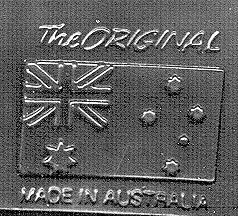
MELBOURNE
|
IN THE FEDERAL COURT OF AUSTRALIA |
|
ON APPEAL FROM A SINGLE JUDGE OF THE FEDERAL COURT OF AUSTRALIA
|
BETWEEN: |
WINDSOR SMITH PTY LTD FIRST APPELLANT
CHICAGO BOOT COMPANY PTY LTD SECOND APPELLANT
CRAIG MANCE THIRD APPELLANT
A.D. MANCE AUSTRALIA PTY LTD FOURTH APPELLANT
|
|
AND: |
DR MARTENS AUSTRALIA PTY LTD FIRST RESPONDENT
R GRIGGS & CO LIMITED SECOND RESPONDENT
DR ING HERBERT FUNCK THIRD RESPONDENT
ELISABETH MAERTENS FOURTH RESPONDENT
WOLLASTON VULCANISING COMPANY LTD FIFTH RESPONDENT
DR MARTENS INTERNATIONAL TRADING GmbH SIXTH RESPONDENT
DR MARTENS MARKETING GmbH SEVENTH RESPONDENT
|
|
DATE OF ORDER: |
|
|
WHERE MADE: |
THE COURT ORDERS THAT:
1. The appeal be allowed.
2. The respondents pay the appellants’ costs of the appeal with the exception of any costs associated with the production of the appeal books.
3. The matter be remitted to Goldberg J for the purpose of determining the costs of the proceedings.
Note: Settlement and entry of orders is dealt with in Order 36 of the Federal Court Rules.
|
IN THE FEDERAL COURT OF AUSTRALIA |
|
ON APPEAL FROM A SINGLE JUDGE OF THE FEDERAL COURT OF AUSTRALIA
|
BETWEEN: |
FIRST APPELLANT
CHICAGO BOOT COMPANY PTY LTD SECOND APPELLANT
CRAIG MANCE THIRD APPELLANT
A.D. MANCE AUSTRALIA PTY LTD FOURTH APPELLANT
|
|
AND: |
FIRST RESPONDENT
R GRIGGS & CO LIMITED SECOND RESPONDENT
DR ING HERBERT FUNCK THIRD RESPONDENT
ELISABETH MAERTENS FOURTH RESPONDENT
WOLLASTON VULCANISING COMPANY LTD FIFTH RESPONDENT
DR MARTENS INTERNATIONAL TRADING GmbH SIXTH RESPONDENT
DR MARTENS MARKETING GmbH SEVENTH RESPONDENT
|
|
JUDGES: |
|
|
DATE: |
|
|
PLACE: |
REASONS FOR JUDGMENT
INTRODUCTION
1 The respondents to the present appeal (“the Dr Martens Interests”) were applicants in four separate proceedings brought in the Federal Court against different Australian manufacturers and distributors of footwear (“the Look Alike Manufacturers”). The present appellants (“Windsor Smith”) were one group of Look Alike Manufacturers. All four proceedings were heard together by a judge of the Court and, for the most part, the evidence in each of the proceedings was evidence in all of them. The Dr Martens Interests failed in their claims against three of the Look Alike Manufacturers (“the Non Offending Manufacturers”) but succeeded in the proceeding brought against Windsor Smith.
2 The Dr Martens Interests appealed from the orders dismissing the proceedings against the Non Offending Manufacturers. Windsor Smith also appealed from the orders made against it by the primary judge. Marshall J made an order that the appeals by the Dr Martens Interests be heard separately from and prior to the appeal brought by Windsor Smith. The appeals by the Dr Martens Interests, V 303 of 1999, V 304 of 1999 and V 305 of 1999, were dismissed for reasons published on 26 November 1999([1999] FCA 1655) by a Full Court constituted in the same way as this Full Court. We have now heard full argument in the appeal by Windsor Smith.
3 In his reasons of 16 April 1999, the primary judge concluded that by 1991 the use by the Dr Martens Interests of certain features of trade dress and get up, in combination and in association with the Dr Martens branding, markings and labelling, had become distinctive of footwear of the Dr Martens Interests (“the Z welt footwear”). That continued to be the case up to and after the commencement of the proceedings. His Honour held that, although it might be possible to identify distinctive features of trade dress and get up in relation to the Z welt footwear, those features could not be looked at in isolation or in a vacuum, without reference to the branding, markings and labelling on the Z welt footwear and the footwear of the other manufacturers. His Honour found that it was also necessary to take into account and consider the differing prices at which footwear was offered or exposed for sale and the known existence of imitation and look alike products in the market.
4 His Honour found that the Z welt footwear is prominently branded and labelled “Dr Martens”, the footwear of the Look Alike Manufacturers is prominently labelled with their own brands and the price at which the footwear of the Look Alike Manufacturers has been offered for sale and sold is substantially less than the price at which the Z welt footwear is offered for sale. His Honour had regard to the awareness of potential purchasers in the market at the relevant times of the existence of look alike and imitation footwear and their ability to recognise look alike and imitation footwear because of their brand consciousness and price consciousness.
5 Having taken those matters into account, his Honour was satisfied that the Non Offending Manufacturers had not made any representation that their footwear is Z welt footwear or that it has the sponsorship or approval of the trade source of the Z welt footwear. His Honour was satisfied that the Non Offending Manufacturers had not passed off their respective footwear as and for the footwear of any of the Dr Martens Interests. His Honour was also satisfied that in manufacturing, marketing, offering for sale and selling their respective footwear, the Non Offending Manufacturers had not engaged in conduct that contravenes the Trade Practices Act 1974(Cth) (“the Trade Practices Act”).
6 However, his Honour reached a different conclusion in relation to the conduct of Windsor Smith. His Honour concluded that, by reason of factors not applicable to the Non Offending Manufacturers, the conduct of Windsor Smith contravened the Trade Practices Act and constituted passing off its footwear as Z welt footwear. Windsor Smith contend that the primary judge erred in concluding that their conduct constituted a contravention of the Trade Practices Act and passing off. They contend that his Honour should have reached a similar conclusion in relation to Windsor Smith’s conduct as he reached in relation to that of the Non Offending Manufacturers.
WINDSOR SMITH’S FOOTWEAR
7 The Windsor Smith group is a substantial Australian men’s and women’s footwear manufacturer. It was founded in 1946. The first appellant presently sells men’s shoes, 90 per cent of which are branded under the name “Windsor Smith”. The second appellant sells women’s shoes under the brand “Lipstik”, which has been used on women’s shoes since 1976 and over the years it has become a well known brand. The name “Lipstik” has featured prominently in advertisements for the sale of Windsor Smith’s women’s footwear and the name “Windsor Smith” has featured prominently in advertisements for the sale of Windsor Smith’s men’s footwear.
8 “Windsor Smith” and “Lipstik” brand shoes are, and have been for some years, sold in approximately 1200 outlets in Australia and since 1990 some 5 million pairs of footwear have been sold running to a value of some hundreds of millions of dollars. Over the years, Windsor Smith have used advertisements in the print media, television and in store promotions which identify and promote the brands “Windsor Smith” and “Lipstik”. Their products have been sold at prices from $50 to $100 to the age group between 15 years and 40 years. Between 1991 and 1995 nearly all Windsor Smith’s footwear retailed for under $100 with the average retail price for the “Windsor Smith” brand being $70 to $80 and the average retail price for the “Lipstik” brand being $60 to $70.
9 Three Windsor Smith products were in issue in the proceeding before the primary judge, namely “Hot” and “Fire”, which are women’s shoes, and “MC”, which is a men’s shoe. There were two factors that the primary judge considered distinguished those products of Windsor Smith from the products of the Non Offending Manufacturers. To explain those factors, it is necessary to say something further about the markings on the Z welt footwear.
10 One of the Dr Martens Interests is the registered proprietor of Australian registered trade mark 641055 (25) (“the Trade Mark”). The Trade Mark is shown in Figure 1 in the Appendix to these reasons. It is only the rectangle that comprises the Trade Mark. The words “The ORIGINAL” and “Made in England” do not form part of the Trade Mark. However, whenever the Trade Mark is applied to the sole of the Z welt footwear, the words “The ORIGINAL” appear above the Trade Mark and the words “Made in England” appear below the Trade Mark as indicated in Figure 1. The Trade Mark is often described as the Dr Martens logo or “the Resistance Rectangle”. The latter appellation appears to refer to the words “OIL FAT ACID PETROL ALKALI RESISTANT”, which appear in the Trade Mark. The script in which the words “The ORIGINAL” is represented in Figure 1 is characteristic of the way in which the words are always represented on the Z welt footwear.
11 The “Hot” footwear was branded “Lipstik” on the sock. Its first sale to retailers was on 1 April 1991 and its last sale to retailers was on 16 August 1993. Apart from similarities to the Z welt footwear of the same character as the similarities of the footwear of the Non Offending Manufacturers, the “Hot” footwear had two additional similarities. In its original form, it was marked with a rectangle on the sole similar in layout to the “Resistance Rectangle”. In addition, the words “The ORIGINAL” in a stylised script similar to that of “The ORIGINAL” on the Z welt footwear appeared above the rectangle device on the “Hot” footwear.
12 The rectangle device on the “Hot” footwear is depicted in Figure 2 in the Appendix. It contained a cross on the left hand side. However, the cross was a different shape from that contained in the Resistance Rectangle. Further, around the cross on the “Hot” footwear, the words “Windsor Smith Soft Sole” appeared as against the words “Dr Martens Air Cushion Sole” around the cross in the Resistance Rectangle. On the right hand side of the rectangle device on the “Hot” footwear the words “OIL FAT ACID PETROL ALKALI RESISTANT” also appeared. However, in lieu of the words “Made in England” the words “Made in Australia” appeared below the rectangle device on the “Hot” footwear. In around June/July 1991, the format and content of the markings on the “Hot” footwear were changed. The rectangle device was replaced with an Australian flag so that the words “The ORIGINAL” appeared in the same stylised script above the flag and the words “Made in Australia” appeared below it. The rectangle device as altered is shown in Figure 3 in the Appendix.
13 The “Fire” footwear was first sold to retailers on 21 November 1994 and the last sale to retailers was on 9 November 1995. Some of the “Fire” footwear were branded “Lipstik” on the sock and others were branded “Lipstik” with the words “Comfort Sole” below. Those words were in yellow print on a green rectangular background. In each shoe, there also appeared further inside the sock the words:
“Made by
Chicago Boot Co.
Leather Upper
Non Leather Sole
And Quarter Lining”
Each shoe was marked on the sole with an Australian flag with the words “The ORIGINAL” in the same stylised form as on the “Hot” footwear above the flag and the words “Made in Australia” below the flag.
14 The “MC” footwear was first sold to retailers on 10 May 1991 and the last sale to retailers was on 31 March 1993. It was branded “Windsor Smith”. The sole marking at all times had the same rectangle device as initially appeared on the “Hot” footwear.
FUNCTION OF THE FULL COURT ON APPEAL
15 Where the grounds upon which the decision of a trial judge is impugned include an attack on the ultimate finding of fact, it is incumbent upon an appellate court to consider the relevant primary findings of the trial judge and, where appropriate, reach its own conclusion as to the ultimate fact. It is not sufficient for the appellate court to be satisfied that a particular conclusion was open to the trial judge on the material before him. Where that conclusion is impugned, the appellate court must itself reach a conclusion giving appropriate weight and respect to the decision of the trial judge.
16 Once the primary facts have been found, the question whether conduct is misleading or deceptive or is likely to mislead or deceive is itself a conclusion of fact. Even where primary facts are not in dispute, an evaluation of facts not depending on assessment of credibility requires appellate caution in reversing the findings of a trial judge. The nature of the issue that arises in such a proceeding, involving as it does matters of impression, is one in which particular respect and weight should be given to the decision of the trial judge, unless some error in his judgment is demonstrated. Nevertheless, such a principle does not preclude an appellate court from reaching a different conclusion from the trial judge if it forms the view that conduct is not misleading and deceptive, even if it was found to be so by the trial judge – see generally S & I Publishing Pty Ltd v Australian Surf Life Saver Pty Ltd (1998) 43 IPR 581 at 585-587.
17 Senior counsel for Dr Martens Interests characterised the task of the primary judge in the present case as a balancing exercise. Thus, his Honour concluded that adoption by the Non Offending Manufacturers of certain of the distinctive features of the Z welt footwear was outweighed by:
(a) the absence of the Dr Martens brand in relation to their footwear;
(b) the use of their own brands in connection with the promotion and sale of their footwear;
(c) the substantial price differential between the Z welt footwear and the look-alike footwear.
However, his Honour concluded that, because of the adoption by Windsor Smith of the additional markings, the adoption of distinctive features of the Z welt footwear was not outweighed by the absence of the Dr Martens brand, the presence of the “Windsor Smith” and “Lipstik” brands and the price differential.
18 Senior counsel for the Dr Martens Interests submitted that, while the Full Court may have been in as good a position as the primary judge to assess the significance of the addition of “The ORIGINAL” and the rectangle device, the Full Court was not in as advantageous position as the primary judge to carry out the exercise of balancing the relevant distinctive features of the Z welt footwear, on the one hand against the presence of the Windsor Smith brands, the absence of the Dr Martens brand and the price differential, on the other hand. It was said that his Honour’s judgment in carrying out that balancing exercise was made with the benefit of all of the evidence before him, including the assessment of witnesses from a trial that lasted in excess of 30 days.
19 However, the Full Court was not taken to any of the evidence, save for two or three documents in an appeal book that comprised in excess of 30 ring back folders. Rather, both parties contented themselves with a detailed analysis of his Honour’s reasons. In circumstances where the question of likelihood of deception or confusion is one of impression, this Court is in no worse position than the primary judge to reach a conclusion as to whether or not the conduct of Windsor Smith contravened the Trade Practices Act or constituted passing off of its footwear as the Z welt footwear.
PRIMARY JUDGE’S CONCLUSIONS
20 His Honour considered that, while the “Hot” and “Fire” footwear was branded “Lipstik” on the sock and the “MC” footwear was branded “Windsor Smith” on the sock and were so advertised on television, the use of the stylised “The ORIGINAL” on that footwear created a greater tendency for deception than was the case of the footwear of the Non Offending Manufacturers. While his Honour considered that that tendency might have been dissipated or minimised by the presence of swing tags and point of sale material, his Honour was not satisfied that such swing tags or point of sale material were in fact in use by Windsor Smith at relevant times.
21 Without the use of “The ORIGINAL” on the sole of the footwear, his Honour would not have concluded that Windsor Smith’s footwear contravened the Trade Practices Act or was being passed off as the footwear of the Dr Martens Interests. His Honour accepted that the “Lipstick” and “Windsor Smith” brands are not associated with the Dr Martens branding. However, his Honour characterised the marking on the sole of the Windsor Smith shoes of the names “Lipstik” and “Windsor Smith” as “ambiguous as to the source” because of the reference to “The ORIGINAL”. His Honour considered that the distinction drawn by that branding became “diluted to the point of extinction” when the words “The ORIGINAL” are used on the sole. That dilution was increased, in his Honour’s estimation, by the presence of the rectangle device. His Honour considered that the use of the words “The ORIGINAL” on Windsor Smith’s footwear was a “dominant and very strong appellation”.
22 While his Honour considered that the embossing of the Australian flag and the words “Made in Australia” may be seen to distinguish the Lipstik footwear from the Z welt footwear, since the Z welt footwear is made in England, his Honour could not disregard what he considered to be “the dominant significance” of the words “The ORIGINAL”. His Honour was satisfied that those words not only suggest, but affirmatively invite, an identification or association with the product that was the genesis of the style or look that the Z welt footwear now exemplifies.
23 His Honour concluded that, while Windsor Smith’s footwear does not incorporate all the distinctive features relied on by the Dr Martens Interests, they incorporate a sufficient number of them in such a manner that, when they are taken in conjunction with the words “The ORIGINAL”, a misrepresentation was made that the Windsor Smith footwear:
· is Z welt footwear;
· comes from the same trade source as the Dr Martens Z welt footwear, and
· has the sponsorship or approval of that trade source.
His Honour considered that that conclusion was “a fortiori” when one takes into account the use of the rectangle device on the “Hot” footwear between April and June/July 1991 and on the “MC” footwear throughout the period when those shoes were available for sale.
24 The three matters said to be conveyed by the combination of distinctive features of Z welt footwear with the words “The ORIGINAL” are distinct. They are three different notions rather than different ways of conveying the same notion. If the addition of “The ORIGINAL” to the distinctive features has any relevant effect, that effect must be to convey that the Windsor Smith shoes are Z welt footwear, rather than that they are not Z welt footwear, but come from the same trade source, or have the sponsorship or approval of that trade source.
25 His Honour had already rejected a contention that a licence or association would be inferred by potential purchasers from the similarity of trade dress where a quite different brand appeared on the look-alike footwear. That was upheld on appeal: [1999] FCA 1655 at [38]. That conclusion is not affected by the addition of “The ORIGINAL”.
26 Thus, the proposition must be that the incorporation of the distinctive features, when taken in conjunction with “The ORIGINAL”, would convey to a potential purchaser that Windsor Smith’s footwear is Z welt footwear even though:
· they do not carry the Dr Martens brand;
· they are branded “Windsor Smith” or “Lipstik”; and
· they are offered for sale at about half the price of Dr Martens.
27 The consistent theme of his Honour’s reasons for judgment of 16 April 1999 is that branding, labelling and pricing provide the means by which potential purchasers distinguish between the genuine Z welt footwear on the one hand, and look-alikes or imitations on the other. Price was the factor that enabled purchasers of inferior footwear made by a New Zealand manufacturer under licence from the Dr Martens Interests under the name of Dr Martens and labelled “The ORIGINAL” to distinguish that footwear from the superior footwear made in England. His Honour said that if the fact of difference of prices is a basis for distinguishing between the Dr Martens product made in England, and the New Zealand Dr Martens product, the same proposition should apply to distinguish between genuine Dr Martens footwear and a look-alike or imitation product.
28 Despite the firm conclusions reached by his Honour, both in relation to branding and in relation to price, his Honour also appears to have concluded that the use of the expression “The ORIGINAL” of itself constituted a representation that Windsor Smith’s footwear was manufactured by interests associated with Dr Martens Interests. His Honour reached that conclusion, notwithstanding the clear branding of Windsor Smith’s footwear as “Windsor Smith” or “Lipstik”, the absence of any reference to Dr Martens, the clear statement that the appellants’ footwear is “Made in Australia” where the Dr Martens product is made in England and the very significant price difference in the products.
29 His Honour nowhere explains why, if branding, labelling and price are sufficient to overcome any suggestion conveyed by the copying of the distinctive features, they cease to have that effect when “The ORIGINAL” is added. His Honour does, however, refer to two matters:
· Windsor Smith added the words “The ORIGINAL” for the purpose of suggesting or implying a connection or association with Dr Martens or genuine Dr Martens footwear; and
· the expression “The ORIGINAL” is of dominant significance.
We shall deal separately with each of those matters.
Windsor Smith’s Purpose
30 His Honour found that Windsor Smith added the words “The ORIGINAL” to its footwear for the purpose of suggesting or implying a connection or association with the Dr Martens Interests or genuine Z welt footwear. His Honour was also satisfied that the rectangle device was applied to Windsor Smith’s footwear for the same purpose. Those findings were not challenged.
31 The intention of Windsor Smith to adopt the get up of the Z welt footwear and to adopt those particular markings is relevant to the issue whether there is in fact a misrepresentation. If markings on, or a get up for, goods are adopted for the purpose of appropriating part of the trade or reputation of a rival, it should be presumed to be fitted for the purpose and therefore likely to deceive or confuse – Australian Woollen Mills Ltd v FS Walton & Co. Ltd (1937) 58 CLR 641 at 657.
32 His Honour found that each of the Look Alike Manufacturers, including Windsor Smith, set out to adopt the get up and trade dress or a substantial or significant part of the get up and trade dress of the Z welt footwear but also with the intention of branding it as their own by using their own brand. However, it was only Windsor Smith who went the extra step of using “The ORIGINAL” and the rectangle device. While the purpose for doing so is a relevant consideration in assessing whether or not a misrepresentation occurred, it is clearly not decisive.
33 The fact that “The ORIGINAL” was added for that purpose is a piece of evidence from which it can be inferred that the incorporation of “The ORIGINAL” is likely to have the intended effect. But it is simply one piece of evidence to be assessed with such other evidence as may be adduced on the issue. In some circumstances, proof of an intention to mislead may readily lead to an inference of the likelihood of deception. In other circumstances an intention to mislead may lead nowhere: the intention may simply miscarry.
34 The potency of the admission inherent in a finding of intention to deceive may depend upon the extent of the evidence as to the practical operation of the market place in question. The more complete the picture portrayed by that evidence, the less likely that an admission constituted by intended effect will carry the day, if it is inconsistent with the picture otherwise established.
35 Clearly enough his Honour’s finding as to intention is a factor to be weighed with the totality of the evidence in coming to a conclusion as to the likely effect of the conduct in question. But, earlier in his judgment, his Honour said:
“It seems to me that once a potential purchaser or consumer was confronted with look‑alike footwear with a brand name other than Dr Martens and a price point substantially less than the price at which genuine Dr Martens footwear is sold, the consumer would form the view that this was not a genuine Dr Martens product. It was apparent from the evidence that the market at which Dr Martens footwear and the look‑alike or imitation footwear was targeted was brand conscious, price conscious and fashion conscious. That market was also well attuned to the existence of look‑alikes and imitations.”
36 The proposition that incorporation of “The ORIGINAL” is likely to deceive, cannot stand with his Honour’s assessment of the market as being one in which branding, labelling and pricing serve to distinguish the genuine product from the look-alike or imitation. “The ORIGINAL” is simply one of the incidents of the Dr Martens trade dress and get up. Branding, labelling and pricing distinguish Windsor Smith’s footwear from the Z welt footwear, whose trade dress and get up has been imitated. That is particularly so, given the finding that it was the yellow stitch thread and the grooved sole which were the prime features distinctive of Dr Martens footwear.
37 That view is reinforced by his Honour’s finding that swing tags and point of sale material, had their use been established, could have dissipated the deception flowing from the use of “The ORIGINAL”. That material would have identified Windsor Smith, rather than Dr Martens, as the trade source of the footwear in question. But that information was already conveyed by the absence of the Dr Martens brand and the presence of Windsor Smith’s brands, which, as his Honour found, were an integral part of the display and sale of Windsor Smith’s footwear.
38 Clearly a distinction must be drawn between the position of Windsor Smith on the one hand and the position of the other three manufacturers on the other. However, his Honour reiterated over and over again in relation to the market generally the importance of branding, labelling and pricing, in determining whether prospective purchasers would be likely to be misled or deceived into thinking that there was some relevant connection between the look-alike or imitation footwear and the Z welt footwear. While Windsor Smith may have added the words “The ORIGINAL” and applied the rectangle device for the purpose of suggesting or implying a connection or association, that purpose must be considered in the light of the very firm findings made by his Honour concerning the significance of branding and pricing.
Dominance of “The ORIGINAL”
39 It was apparent from most witnesses that the prime feature distinctive of Z welt footwear was the yellow stitching on the welt. However, the Dr Martens Interests disavowed distinctiveness in relation to each element of trade dress and get up upon which they rely. Their position has been that it is a combination of particular elements that leads to the relevant distinctiveness of the Z welt footwear. Thus, it was the use of the distinctive features, in combination and in association with the Dr Martens name, branding, markings and labelling, that made the Z welt footwear distinctive.
40 There is a tension between those conclusions and his Honour’s subsequent conclusions that:
· the use by Windsor Smith of “The ORIGINAL” had “dominant significance” [419],
· the use by Windsor Smith of “The ORIGINAL” led to the “Windsor Smith” and “Lipstik” brand being “diluted to the point of extinction” [421];
· “The ORIGINAL” was “a dominant and very strong appellation” [423].
41 His Honour advances no reasons for elevating the significance of “The ORIGINAL” in that way and it is not clear what factors led his Honour to conclude that “The ORIGINAL” was a “dominant and very strong appellation”. The reference to “dominant” is presumably intended to indicate something that sets at nought the distinction otherwise flowing from the absence of the Dr Martens brand, the presence of the Windsor Smith brands and the differential pricing.
42 If dominance is said to flow from intention to deceive, then we have already dealt with that issue. If it is said to flow from the likely visual impact upon consumers of “The ORIGINAL” then, in our view, a conclusion to that effect is simply not borne out by an examination of the footwear in question. The words “The ORIGINAL” and the Resistance Rectangle are merely incidents of the Dr Martens trade dress and get up. They are very much subordinate features of the trade dress and get up of the Z welt footwear.
THE OVERALL IMPRESSION CREATED BY WINDSOR SMITH’S FOOTWEAR
43 Whether or not the promotion and sale of Windsor Smith’s footwear with some of the distinctive features in conjunction with the words “The ORIGINAL” and the rectangle device is misleading, or constitutes a representation of association with the Dr Martens Interests, is a matter of impression upon examination of the footwear. Examination of samples of Windsor Smith’s footwear demonstrates that the words “The ORIGINAL” and the rectangle device do not have as much prominence as the “Windsor Smith” or “Lipstik” brand. The words and the rectangle device appear on the sole. Where the rectangle device was used, the name “Lipstik” or “Windsor Smith” was also used. His Honour found that purchasers expected Z welt footwear to be English made footwear. Under the rectangle device there appeared with prominence at least equal to that of “The ORIGINAL”, the words “MADE IN AUSTRALIA”. All of the factors just described create the impression that Windsor Smith’s footwear is clearly branded as “Windsor Smith” or “Lipstik”. The words “The ORIGINAL” are by no means dominant. In any event, they were on the sole and, since they were merely embossed, were in the same colour as the sole. They do not stand out in the same way as the brand marked on the sock in a different colour stands out.
44 The words “The ORIGINAL” and the Resistance Rectangle are merely incidents of the Dr Martens trade dress and get up. They, together with the other of the distinctive features adopted by Windsor Smith, may have a firm tendency to suggest a connection with the Dr Martens source. However, they do not of themselves constitute a representation that they are shoes manufactured and distributed by the Dr Martens Interests. They do not constitute a representation that the footwear has a sponsorship and approval from the Dr Martens Interests. They are but one of a number of factors that have a tendency to suggest a connection with the manufacturer and distributor of Dr Martens branded products.
45 The Windsor Smith products displayed the name “Windsor Smith” or “Lipstik” clearly and distinctly. Windsor Smith used advertisements and the print media, television and in-store promotions that identify and promote the brands “Windsor Smith” and “Lipstik”. There was no mention of the Dr Martens brand. Most significantly, Windsor Smith’s footwear has been sold at prices from $50 to $100, the average retail price for Windsor Smith being $70 to $80 and the average retail price for the Lipstik brand being $60 to $70. That is in stark contrast with the price at which the Z welt footwear was sold, of approximately $150.
46 Further, his Honour made express findings that:
· branding of footwear is important as identifying the source of manufacture;
· purchasers usually, if not inevitably, looked at and identified the brand on footwear before making a purchase;
· purchasers were aware of the Dr Martens brand name;
· when purchasers bought Dr Martens footwear they expected to see the name or mark “Dr Martens” on the footwear;
· purchasers expected Dr Martens footwear to be English made footwear;
· if purchasers saw shoes with the mark “Windsor Smith” or “Lipstik” on them, purchasers would think that the footwear came from those sources and would not think it was Dr Martens footwear;
· purchasers were accustomed to distinguish products by reference to brand names and price, and price was a distinguishing factor when a potential purchaser was considering whether a particular product was a genuine branded product or was an imitation look-alike of a different brand; and
· if footwear displaying the Dr Martens distinctive features was priced at substantially less than $150, potential purchasers would understand and expect the footwear to be a look-alike or an imitation of the genuine product.
In the light of those findings, it is difficult to conclude that purchasers would be misled into thinking that Windsor Smith’s footwear had any association with the Dr Martens Interests.
47 In light of his Honour’s firm findings concerning the significance of branding, labelling and pricing, we do not consider, having taken all factors into account, that the promotion and sale of Windsor Smith footwear in the manner complained of constituted contravention of the Trade Practices Act or passing off.
RESULT OF THE APPEAL
48 It follows that the appeal should be upheld and the orders made by the primary judge should be set aside. The Dr Martens Interests should pay Windsor Smith’s costs of the appeal. The appeal book in this appeal comprised in excess of 30 ring back folders. Apart from the pleadings and the reasons of the primary judge, only 2 documents were referred to in the course of the appeal. In the circumstances, the costs of the appeal should not include the costs of the preparation of the appeal books. We have not heard argument on this point. For that reason only (without wishing to encourage an application), we reserve liberty to apply to modify or discharge this order insofar as it relates to the costs of the preparation of the appeal books provided a notice of motion to that effect is filed within 7 days of the date on which judgment is delivered, returnable on a date to be fixed by arrangement with the associate to Sundberg J.
49 Having regard to the fact that the proceeding against Windsor Smith was heard at the same time as the proceedings against the other look-alike manufacturers, the question of Windsor Smith’s costs of the trial should be remitted to the primary judge for further consideration.
|
I certify that the preceding forty-nine (49) numbered paragraphs are a true copy of the Reasons for Judgment herein of the Honourable Justice Sundberg, the Honourable Justice Emmett and the Honourable Justice Hely. |
Associate:
Dated: 7 June 2000
|
Counsel for the Appellants: |
D Catterns QC and C Golvan |
|
|
|
|
Solicitors for the Appellants: |
Baldwins |
|
|
|
|
Counsel for the Respondents: |
J McL Emmerson QC, B Hess and L Duncan |
|
|
|
|
Solicitors for the Respondents: |
Deacons Graham & James |
|
|
|
|
Date of Hearing: |
23 & 24 May 2000 |
|
|
|
|
Date of Judgment: |
7 June 2000 |
APPENDIX
FIGURE 1
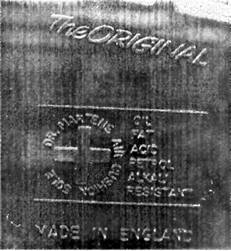
FIGURE 2
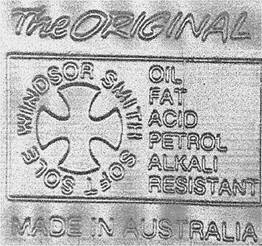
FIGURE 3