FEDERAL COURT OF AUSTRALIA
Oakley Inc v Oslu Import and Export Pty Ltd [2000] FCA 700
DESIGNS - importation and offering for sale of sunglasses - whether such glasses infringed registered designs - whether allegedly infringing glasses were actually supplied by respondents.
TRADE MARKS - importation and offering for sale of sunglasses - whether such glasses infringed registered trademarks - whether allegedly infringing glasses were actually supplied by respondents.
Designs Act 1906 (Cth), s 21(1), s 30(1), s 32B(1)
Trade Marks Act 1995 (Cth), s 10
Trade Practices Act 1974 (Cth), s 52, s 53(c), s 53(d)
Copyright Act 1968 (Cth), s 36(1)
Hecla Foundry Co v Walker Hunter & Co (1889) 14 App Cas 550
Firmagroup Australia Pty Ltd v Byrne & Davidson Doors (Vic) Pty Ltd (1986) 6 IPR 377
Dart Industries Inc v Decor Corporation Pty Ltd (1989) 15 IPR 403
Malleys Ltd v J W Tomlin Pty Ltd (1961) 180 CLR 120
Wanem Pty Ltd v Tekiela (1990) 19 IPR 435
Lift Verkaufsgerate GmbH v Fischer Plastics Pty Ltd (1993) 27 IPR 187
Autocaps (Aust) Pty Ltd v Pro-Kit Pty Ltd (1999) 46 IPR 339
Barnes v Addy (1874) LR 9 Ch App 244
Microsoft Corp v Auschina Polaris Pty Ltd (1996) 36 IPR 225
Mentmore Manufacturing Co Ltd v National Merchandising Manufacturing Co Inc (1978) 89 DLR (3d) 195
Trevor Ivory Ltd v Anderson [1992] 2 NZLR 517
Williams v Natural Life Health Foods Ltd [1998] 2 All ER 577
Shell Co of Australia Ltd v Esso Standard Oil (Australia) Ltd (1963) 109 CLR 407
OAKLEY INC v OSLU IMPORT AND EXPORT PTY LTD & ANOR
VG 665 of 1998
FINN J
MELBOURNE
30 MAY 2000
|
IN THE FEDERAL COURT OF AUSTRALIA |
|
|
VG 665 OF 1998 |
|
BETWEEN: |
OAKLEY INC APPLICANT
|
|
AND: |
OSLU IMPORT AND EXPORT PTY LTD FIRST RESPONDENT
GUO QIANG TAO SECOND RESPONDENT
|
|
DATE OF ORDER: |
|
|
WHERE MADE: |
THE COURT DECLARES THAT:
1. the first respondent has infringed Australian Registered Designs No 125520 and No 128173;
2. the first respondent has infringed Australian Registered Trade Mark No B387164;
AND ORDERS THAT:
3. an injunction be granted to restrain the first respondent from, whether by itself, its officers, servants, agents or otherwise howsoever, during the term of Australian Registered Designs No 125520 and No 128173 and any extension thereof, infringing either of the said registered designs and in particular from making, importing, hiring or selling, offering or keeping for sale or hire sunglasses or any other eyeglasses or eyeglass frames with lenses to which either or both of the said designs or a fraudulent or obvious imitation of either or both of those designs has been applied;
4. delivery up be done on oath to the applicant, or its nominated agent, for destruction, of any sunglasses or any other eyeglasses or eyeglass frames with lenses to which either or both of the said designs or a fraudulent or obvious imitation of either or both of those designs has been applied and which are in the possession, custody, power or control of the first respondent;
5. the further hearing of the matter be adjourned to a date to be fixed.
Note: Settlement and entry of orders is dealt with in Order 36 of the Federal Court Rules.
|
IN THE FEDERAL COURT OF AUSTRALIA |
|
|
VG 665 OF 1998 |
|
BETWEEN: |
APPLICANT
|
|
AND: |
OSLU IMPORT AND EXPORT PTY LTD FIRST RESPONDENT
GUO QIANG TAO SECOND RESPONDENT
|
|
JUDGE: |
|
|
DATE: |
|
|
PLACE: |
REASONS FOR JUDGMENT
1 The applicant Oakley Inc ("Oakley") is incorporated in the United States. It manufactures sunglasses and owns a variety of forms of intellectual property relating to its products. The present proceeding against Oslu Import and Export Pty Ltd ("Oslu") and that company’s director and sole shareholder, Guo Qiang Tao, relates to alleged infringements of designs and trademarks registered under the Designs Act 1906 (Cth) and the Trade Marks Act 1995 (Cth) respectively, as well as claims against the respondents under the Trade Practices Act 1974 (Cth) for contraventions of s 52 and s 53(c) and (d) and at common law for passing off. The claims result from Oslu’s importing into Australia and offering for sale sunglasses that are alleged to imitate Oakley’s registered designs and that have marks that are alleged to be deceptively similar to Oakley’s marks.
2 The ease in resolution of the matter has been impeded markedly by Mr Tao’s failure to cooperate in the orderly prosecution of the litigation itself. It has only been possible at this hearing to deal partially with the applicant’s claims. Questions of possible pecuniary relief have necessarily to be deferred. I should add that Mr Tao has not been legally represented.
Factual Setting
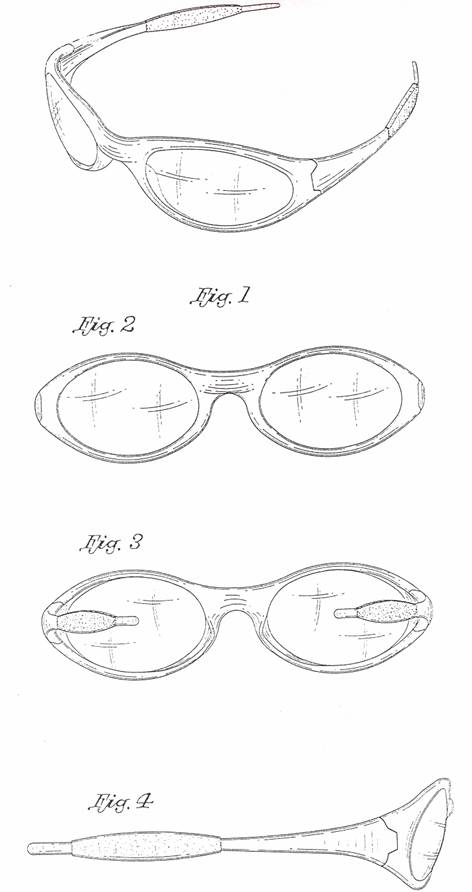
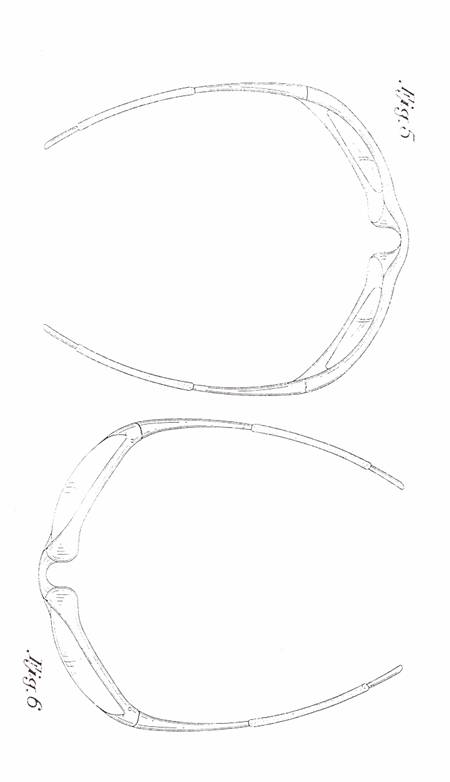
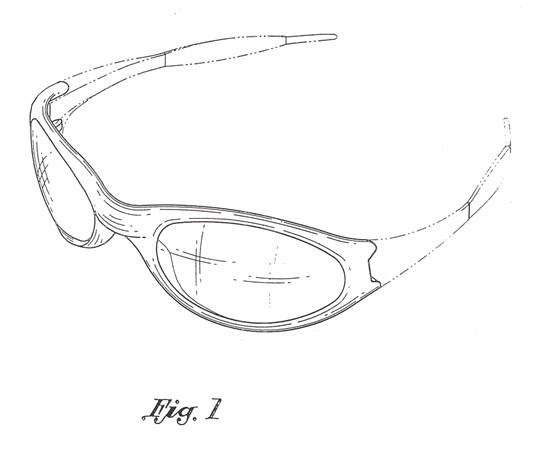
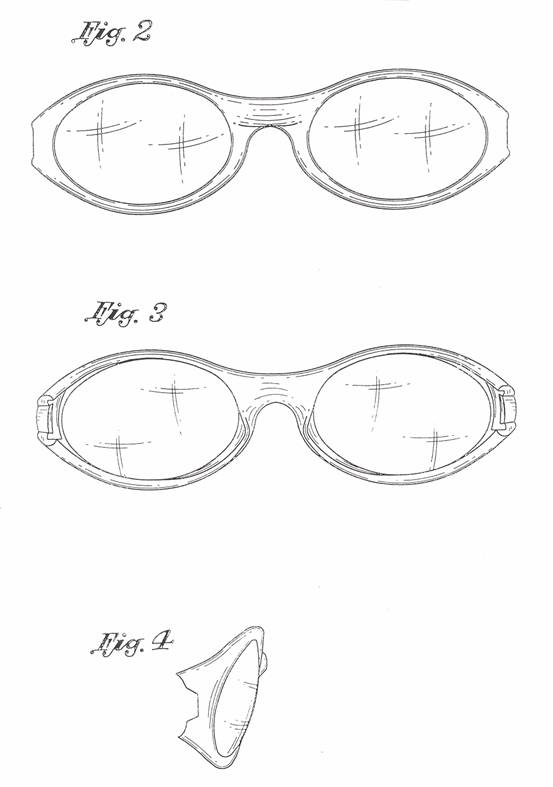
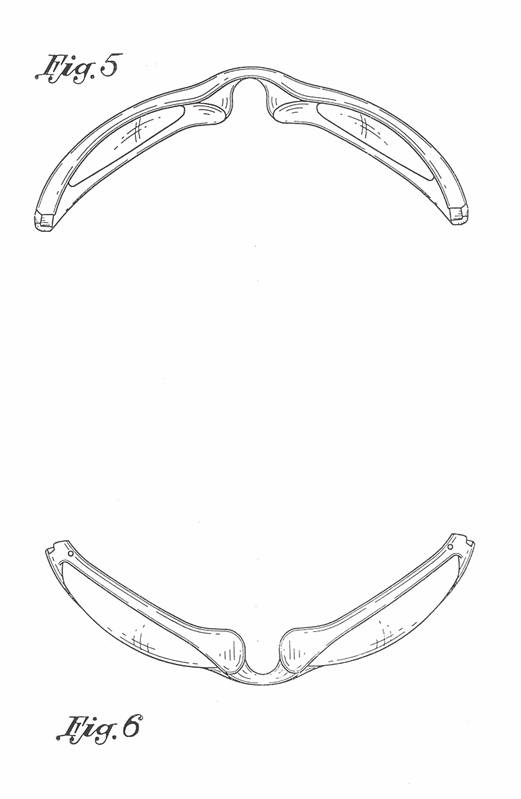
3 (1) Oakley at all relevant times was the registered proprietor of two designs being Design No 125520 and Design No 128173. Both relate to styles of sunglasses. The representations relating to Design No 125520 ("the Eye Jacket design") are set out in Schedule 1 to these reasons (see attached). The Design No 128173 representations ("the Eye Jacket with lens design") are set out in Schedule 2.
4 (2) At all material times Oakley was the registered proprietor of two trademarks. Trade Mark No B387164, registered in respect of (inter alia) goggles and sunglasses which I will refer to as "the name mark", is set out in Schedule 3. Trade Mark No 636580, that relates to protective and anti-glare eyewear and which I will refer to as "the ellipse mark", is set out in Schedule 4.
5 (3) The applicant sells a wide range of its products in Australia including a range of sunglasses which it heavily advertises, promotes and markets. Its evidence is that its "Eye Jacket" style has been the most successful single style it has sold in Australia.
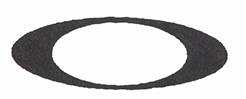
6 (4) Oslu imports sunglasses from China where it has three principal suppliers. In turn it acts as a wholesaler of glasses from two premises, one in Sydney, one in Melbourne. Its business is at the cheap, or bottom, end of the sunglasses market, its price range being apparently between $1.50 and $8.50 (though its sales are predominantly at the lower end of that range). In early 1998 it applied for registration of a trademark (the "Eyecon" mark), that application later being allowed to lapse. The "mark", nonetheless, was used on tags attached to Oslu’s glasses in 1998. This proposed mark is set out in Schedule 5. Later in 1998 another mark (the "Eyemate" mark) was applied for and was registered. It also was used on tags attached to Oslu’s glasses and is set out in Schedule 6.
7 (5) In early February 1998, Mr Tao visited a resale business in Melbourne, Dimmeys Stores Pty Ltd ("Dimmeys"), to show Dimmeys’ buyer, Ms Webster, a range of his sunglasses. He left with Ms Webster what has variously been described as a "box" or "briefcase" of sunglasses. It will be necessary to refer to the evidence relating to the contents of the box below. It is alleged that glasses infringing Oakley’s designs and trademarks were amongst those in the box. It is unnecessary to provide an illustrative visual representation of such glasses here. The box was returned to Mr Tao in October 1998. Photographs of the allegedly infringing glasses were taken in February and October 1998. It is Mr Tao’s evidence that he no longer has the glasses contained in the box but that he gave some away and threw out the rest which were said to be faulty or damaged.
8 (6) As a result of the above visit, information concerning the alleged infringements came to Oakley’s notice. On 19 February 1998 after making a company search, its solicitors wrote to Oslu at its principal place of business alleging breaches of Oakley’s designs and trademarks (photographs were enclosed) and requiring Oslu to give some number of undertakings, or else litigation would be commenced. Mr Tao denies receipt both of this letter and of a follow-up letter of 3 April 1998 indicating the imminence of legal proceedings unless the undertakings previously sought were given.
9 (7) In October 1998, Mr Tao again contacted Ms Webster at Dimmeys with a view again to showing her his range of sunglasses. Ms Webster previously had had contact with Oakley’s solicitors, and she informed them of Mr Tao’s projected visit to Dimmeys. On 21 October 1998 Mr Tao supplied Ms Webster with a black briefcase containing trays of sunglasses. On 27 October Ms Webster met with a Mr Jordan of the applicant’s solicitors and showed him the box that Mr Tao had provided to her on his February (not his October) visit to Dimmeys. Mr Jordan took photographs of five pairs of sunglasses in that box.
10 (8) Pursuant to a subpoena issued by this Court on 26 July 1999, the black briefcase given Ms Webster in October 1998 was produced to the Court by Dimmeys. It has been put in evidence. Three of the forty-six pairs of glasses in the box are alleged to infringe Oakley’s designs and trademarks. Two have been marked in the exhibited box. I note that one of the two has an Eyecon tag attached to it. One of the photographs taken by Mr Jordan of one of the three pairs of glasses, is reproduced in Schedule 7.
11 (9) The present application and statement of claim were filed on 4 December 1998. The interlocutory stages in the matter proceeded haltingly in large measure because of Mr Tao’s failure to comply adequately with directions given, particularly in relation to discovery. This has left significant gaps in the information available both to the applicant and to the Court and has contributed directly to the need to adjourn consideration of possible pecuniary relief.
12 (10) On 17 September 1999 a Mr Singh, an employed solicitor of the applicant’s solicitors, went to Oslu’s Sydney warehouse. It is his evidence (i) that he saw hundreds of boxes at the premises; (ii) that he examined four pairs of glasses in the display racks and concluded they were imitations of one or other or both of Oakley’s two designs; (iii) that the four glasses each had what appeared to be style numbers on them; (iv) that when he asked if he could purchase a selection of sunglasses including the four he was told they were for display purposes only and that they were not in stock because they were sold out; and (v) that a number of the sunglasses offered for sale had either stickers or tags on them. On 21 September he returned to the Oslu warehouse. The four pairs of glasses were no longer there, though two other styles with new style numbers were on display. These appeared to him to be very similar to registered Design No 128173. He was told by the woman present in the warehouse, Ms Wei, that neither of these two styles were for sale as "they have caused us some problems".
13 (11) The documentary evidence provided by Mr Tao on discovery indicates that in the period from 21 July 1997 until 8 June 1999 Oslu purchased over half a million sunglasses from its three Chinese suppliers at a purchase price of US$260,847. Glasses other than sunglasses were purchased from one supplier Wenzhou Import and Export Corp ("Wenzhou").
The Witnesses
14 The central issue in this case is whether the sample glasses provided by Mr Tao to Ms Webster in February 1998 and October 1998 contained the glasses alleged to infringe Oakley’s designs and trademarks. The applicant’s case is that they did; the respondents’, that they did not. In this state of affairs the credibility of the rival versions advanced is in question.
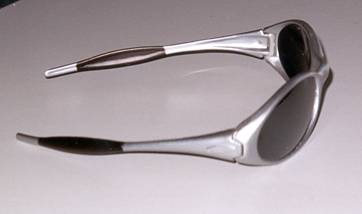
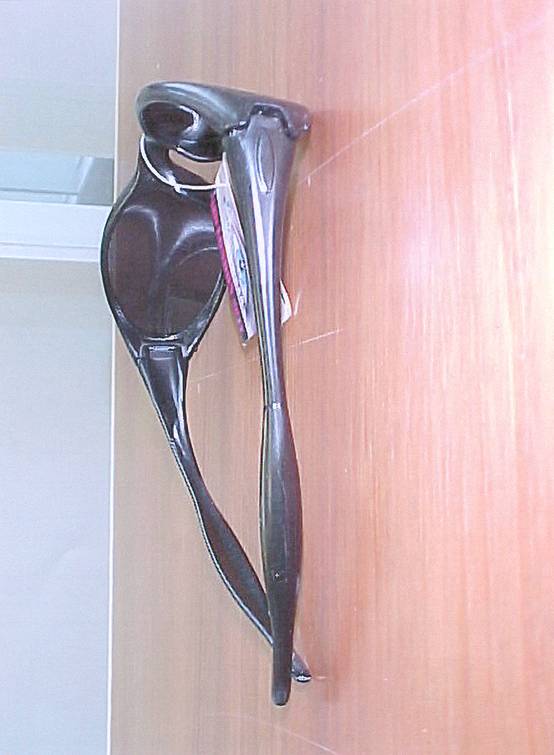
15 (i) Only one of the applicant’s witnesses was required for cross-examination. That was Ms Webster. The affidavit evidence of six other persons – Mr Jordan, Mr Singh, Mr Williams, Mr Lewis, Ms McGuire and Mr George – was tendered. Of these I need only refer to Mr Williams’. He lived in the same house as Ms Webster at the time of Mr Tao’s February visit to Dimmeys. He was the sales representative at the time for the Victorian distributor of Oakley sunglasses. It is his evidence that, when Ms Webster brought home the sample glasses, he noticed that two pairs of glasses looked like the "Oakley Fives" and "Oakley Eye Jacket" styles. The latter pair had what looked like Oakley’s ellipse device on the ear stems and, on the nose bridge, a word that appeared to be "OAKºY" (this is an inexact rendition). It is this latter pair that is of concern in this proceeding. He borrowed the two pairs of glasses; showed them to Mr Jordan several days later; both he and Mr Jordan photographed the glasses (both sets of photograph are in evidence); and returned the glasses to Ms Webster. I should note that while none of Mr Jordan’s or Mr Williams’ photographs reveal the word on the nose bridge, the photographs do demonstrate that one of the two pairs in question clearly infringes Design No 125520 as Schedule 8 illustrates.
16 Ms Webster has sworn two affidavits, the first on 27 October 1998 (that dealt only with Mr Tao’s February visit to Dimmeys) being an annexure to the second of 25 January 2000 (that contained the entirety of her account of events). While there are discrepancies between the two affidavits, the essential details for present purposes remain constant – the two pairs of glasses that she considered infringed Oakley’s designs and marks were among the samples provided by Mr Tao. Her later (ie 25 January 2000) account of the events of February 1998 to the extent that it enlarges upon that of 27 October 1998 should, I consider, be treated with some reserve given her concession in cross-examination of her now poor memory of the actual events themselves. I refer particularly to her account of her conversations with Mr Tao concerning his alleged sales to other businesses of the two types of glasses in question. Ms Webster was asked in cross-examination whether she had mixed sunglasses provided by other suppliers with sunglasses provided by Mr Tao. She said she had not.
17 I should add that Ms Webster’s account of the February events, and in particular the manner of identification of the two offending pairs of glasses, is supported by Mr Williams’ evidence of what transpired when Ms Webster brought the sample glasses to her home – though I should say that the linguistic similarity in the dialogue recounted in each’s affidavit may well owe more to the exertions of those assisting in the preparation of the affidavits than to the actual expression of either Ms Webster or Mr Williams.
18 While accepting the limitations of Ms Webster’s memory of the details of her encounters with Mr Tao, I accept the substance of what she says in relation to the provenance of the two pairs of sunglasses that she and Mr Williams identified as infringing Oakley’s rights. I am satisfied that she was a truthful witness.
19 (ii) Both Mr Tao and Ms Wei gave evidence and were cross-examined. Ms Wei’s evidence should be given little weight insofar as it deals with Mr Singh’s visits to the Sydney warehouse in September 1999. She conceded in cross-examination that she cannot remember anything about those visits notwithstanding that she purported to give some account of them in an affidavit she swore on 29 March 2000. Her oral evidence was, I should add, evasive.
20 Mr Tao’s evidence proceeded from the premise that his business did not deal in Oakley copy types of sunglasses. He admitted to providing two cases of samples to Ms Webster but to retrieving only one. He denied that any of the alleged infringing glasses in both the February and October samples belonged to him. He appeared in the end to be suggesting that on both occasions somebody had switched glasses and on the latter had attached one of his Eyecon tags to the offending pair.
21 Mr Tao’s oral evidence is both arresting and, in large measure, either unacceptable or unbelievable. Notwithstanding that he conducted business from two premises in two cities and has at least from time to time large quantities of stock, he maintains he has no employees but is only helped by friends. He keeps no stock records and apparently no accounts. He purchases in bulk from China but does not use or have catalogues. He does not order any particular styles. He takes what is sent. With the supplier Wenzhou, in particular, he says that he has had a trusting relationship over the years such that he can simply order by telephone and pay when Oslu is able to. Yet he was unable to name a person known to him at Wenzhou.
22 He could provide no precise reason why Ms Webster or Dimmeys should switch glasses in the samples he provided other than to speculate that Dimmeys and other suppliers were "probably [trying] to ruin my business" apparently because sunglasses suppliers were "very competitive".
23 As to his tags that are attached to many of his samples including one of the three challenged in the October samples, he said that the Eyecon tag, though his, was also affixed to glasses in China. Notwithstanding that the labelling on some of the unchallenged glasses in the October samples demonstrates to the contrary, he said he only used Eyemate and Oslu tags once his Eyecon application was "refused" prior to October 1998.
24 I do not consider Mr Tao to be a person whose evidence can be relied upon safely. It is difficult to resist the conclusion that he has attempted systematically to conceal, or to deflect the exposure of, the truth.
The Statutory Claims
25 I need refer only to the Designs Act and the Trade Marks Act. Such is my view of the Designs Act claim in particular that it is unnecessary to consider the Trade Practices Act, or for that matter the passing off, claims.
(1) The Designs Act
26 Section 30(1) of the Designs Act provides:
"30(1)A person shall be deemed to infringe the monopoly in a registered design if he, without the licence or authority of the owner of the design –
(a) applies the design or any fraudulent or obvious imitation of it to any article in respect of which the design is registered;
(b) imports into Australia for sale, or for use for the purposes of any trade or business, any article in respect of which the design is registered and to which the design or any fraudulent or obvious imitation of it has been applied outside Australia without the licence or authority of the person who was the owner of the registered design at the time when the design or imitation was so applied; or
(c) sells, or offers or keeps for sale or hires, or offers or keeps for hire, any article –
(i) to which the design or any fraudulent or obvious imitation of it has been applied in infringement of the monopoly in the design; or
(ii) in respect of which the design is registered and to which the design or any fraudulent or obvious imitation of it has been applied outside Australia without the licence or authority of the person who was the owner of the registered design at the time when the design or imitation was so applied."
27 Given that Mr Tao only faintly suggested, but without supporting evidence, that the glasses in question do not in any event infringe Oakley’s designs, it is not necessary to set out other than briefly the principles to be applied in a case such as the present. (i) The monopoly conferred by a registered design is for a particular, specific and individual appearance: Hecla Foundry Co v Walker Hunter & Co (1889) 14 App Cas 550. (ii) The scope of the registered design must be judged against the background of the prior art at the statutory priority date: Firmagroup Australia Pty Ltd v Byrne & Davidson Doors (Vic) Pty Ltd (1986) 6 IPR 377 at 386; Designs Act,s 21(1); see also Ricketson, The Law of Intellectual Property, § 23.40. (iii) It is for the Court to determine whether or not the monopoly has been infringed with or without evidence from experts or members of the public directed to the question of infringement: Dart Industries Inc v Decor Corporation Pty Ltd (1989) 15 IPR 403 at 409. (iv) Determining whether there has been an infringement requires a visual comparison to be made between the design in question and the alleged infringing article, though the comparison will differ somewhat as between a case of obvious imitation and one of fraudulent imitation: Malleys Ltd v J W Tomlin Pty Ltd (1961) 180 CLR 120 at 123. (v) An obvious imitation is one which is not the same as the registered design but is a copy apparent to the eye notwithstanding slight differences: Wanem Pty Ltd v Tekiela (1990) 19 IPR 435 at 440. (vi) In the case of a fraudulent imitation (ie where there has been a deliberate copying) greater allowance is made where there are differences with the design: Lift Verkaufsgerate GmbH v Fischer Plastics Pty Ltd (1993) 27 IPR 187; Autocaps (Aust) Pty Ltd v Pro-Kit Pty Ltd (1999) 46 IPR 339 at 362-363.
28 In relation to the present matter I would note that there is no evidence before me of prior art such as would limit the scope of the registered design. There is evidence in the applicant’s case of persons (eg Mr Singh) being of the view that there was imitation of Oakley’s designs. But, as I have noted, there is no evidence directed at pointing up differences between the design and the allegedly infringing glasses.
29 In my view, the two marked pairs of glasses contained in the October box of samples are obvious imitations of Design No 125520 and of No 128173. The principal features of each of the designs - the nose bridge, the curved and elliptical front frame (both designs), the form of hinge and the bulging on the curved ear stem (No 125520 only) - are all there. Such dissimilarities as there are reflect the quality of the Oslu product itself rather than the burden of the copying.
30 Of the February samples, I again am of the view that there has been obvious imitation. I need only point to one of the two pairs identified by Ms Webster and Mr Williams. It embodies the same four features noted above. It is unnecessary to consider the glasses depicted in Mr Jordan’s five photographs for infringement purposes. With some number of these the making of a visual comparison is problematic in any event because of the angles from which the photographs have been taken.
31 The sole remaining question is whether I am satisfied that the obviously infringing glasses were ones supplied by Mr Tao for Oslu. Mr Tao, as I have noted, claims they were not. Given that he contends that on two separate occasions a switching of glasses occurred – and, in relation to the October sample, that switching involved an Eyecon tag being placed on one of the offending glasses – his claim seems to be that Ms Webster at least is lying and that possibly complicit in this were Mr Williams and Mr Jordan. He is, though, unable to indicate an obvious motive for the switching other than the speculative reason to which I earlier referred.
32 He seeks to bolster his case first by pointing to alleged inconsistencies within and between the affidavit evidence of Ms Webster and Mr Jordan, and secondly, he disputes whether the photographs taken of the October samples are actually photographs of the glasses now in the box. He suggests that those in the photographs are blue but those in the box are black. The latter contention is completely without merit. Quite apart from Mr Jordan’s evidence on taking the photographs, which I accept, the colour variations such as they are do not suggest that the glasses depicted are other than what they are claimed to be. As to the affidavit evidence, I have already expressed my view on Ms Webster’s evidence. As to Mr Jordan’s affidavits, even counsel for the applicant has conceded they could have been expressed in more felicitous and less ambiguous terms. Properly understood – they are in places capable of causing confusion – they are not misleading. The only oddity in the evidence is that the five pairs of glasses Mr Jordan took from the February samples and photographed (in addition to the two Mr Williams identified that he also photographed) were not also identified as infringing articles by Mr Williams. Given that neither Mr Williams nor Mr Jordan were cross-examined it is idle to speculate why this was so.
33 Finally I consider that Mr Singh’s evidence (which I accept) is quite consistent with the case put by the applicant. It suggests that there had been use made by the respondents over time of glasses similar to those supplied to Ms Webster. I conclude then that a case of design infringement has been made out.
34 I am satisfied that infringing glasses make up some part, probably a reasonably small part, of the bulk of glasses supplied to Oslu from time to time by the suppliers in China. I am not in a position to determine whether such glasses were, or are, positively sought by Mr Tao or whether he is actually indifferent to what styles are supplied. In this I note Ms Webster’s evidence in relation to her own company’s sales that, at the end of the market in which Oslu sells, generally all sunglasses sold are "slight copies of other brands".
35 I will make a declaration accordingly that Oslu has infringed Australian Registered Designs No 125520 and No 128173. Mr Tao’s personal liability is more problematic. It is not founded directly in some form of statutory liability: cf Copyright Act 1968 (Cth), s 36(1). Rather, it seems to be based simply on the independent tortious liability of a director for a tort committed by his company. In such a setting the liability probably is to be seen as a form of accessorial, or civil secondary, liability: cf Sales "The Tort of Conspiracy and Civil Secondary Liability" [1990] Camb L J 491; and note the analogy with participatory liability in equity: see Barnes v Addy (1874) LR 9 Ch App 244. While judges in this Court in other intellectual property settings have discussed the nature of this liability: see eg Microsoft Corp v Auschina Polaris Pty Ltd (1996) 36 IPR 225; and see eg Lahore, Copyright and Designs, para 36,010; such are both the controversies surrounding it in the common law world and its implications for small companies: see eg Mentmore Manufacturing Co Ltd v National Merchandising Manufacturing Co Inc (1978) 89 DLR (3d) 195; Trevor Ivory Ltd v Anderson [1992] 2 NZLR 517; see also Williams v Natural Life Health Foods Ltd [1998] 2 All ER 577; that, in the absence of argument directed to the foundation of the tort – and in particular to whether it properly is to be regarded in the present setting as an intentional tort – I am not prepared to assume liability from the fact that, as the company’s alter ego, Mr Tao directed the actions that gave rise to the infringements. Accordingly, I will defer resolution of this question and will invite further submission on it.
36 Turning to the prayer for injunctive relief, given (a) the conduct of the respondents since February 1998; (b) my view both of Mr Tao’s credibility and of his evasiveness; (c) the evidence of Mr Singh relating to possible further infringement after proceedings had been instituted; and (d) the respondents’ failure to provide any undertakings, the case is an appropriate one for an injunction against Oslu, its servants and agents to restrain likely continuing and apprehended future infringements. I will make an order in terms of para 1 of the Application as it applies to Oslu. For similar reasons, I will make the order for delivery up and destruction sought by the applicant in para 7 of the Application.
The Trade Mark Claims
37 These can be dealt with shortly. Oakley, as I have indicated, has two registered marks, the name mark and the ellipse mark. As to the former it is the evidence of Mr Williams that one of the two pairs of glasses he identified had the word "OAKºY" on its nose bridge. That wording is, though, not apparent in the photographs of the glasses. Ms Webster’s evidence was that one of the glasses provided in February had the word "OAKLEY" on it. Mr Jordan’s evidence is that there was a word on the nose bridge in the same font as used by Oakley but that the word "Oakley" had been altered so as to form a meaningless word.
38 Beyond the above, the evidence does not suggest any practice of use of the word form in question on other styles or, for that matter, any repeated usage in the same style of glasses.
39 Notwithstanding that the use of the word in question is not apparent in the photographs – the quality of the photography could well account for that – I am prepared to accept that the glasses in question bore the word noted by Mr Williams. There is no reason for rejecting the evidence of the three persons to whom I have referred.
40 For the purposes of the infringement provisions of the Trade Marks Act, I am satisfied that the word used by Oslu was used as a trademark and that, though not substantially identical with Oakley’s mark, it was without question deceptively similar to it. It embodies a manipulation of that mark of a kind that does not result in unmistakeable differentiation between the two. Rather the contrary is the case. That it could deceive: see Trade Marks Act, s 10; is reflected in Ms Webster’s account of the word she saw.
41 Accordingly I am satisfied that an infringement of the word mark has been proved. I am, though, not satisfied on the evidence before me that this type of infringement was repeated or was pervasive. I do not consider that relief beyond the declaration sought against Oslu is warranted in the circumstances.
42 The second alleged infringement relates to the ellipse mark. That mark can somewhat inaccurately be described as a tubular style ellipse. The mark used by Oslu of which complaint is made, though having a similar external configuration to the ellipse mark, is merely a solid oval (or football) shaped mark. It is an undistinguished mark. It lacks features that impress on the memory, unlike the name mark. I am not satisfied that it is, for s 120 purposes, substantially identical with, or deceptively similar to, the ellipse mark. It is most improbable that potential customers would be likely to be deceived or confused by the Oslu mark, having regard to the effect or impression produced on them based on recollection of the Oakley name mark: Shell Co of Australia Ltd v Esso Standard Oil (Australia) Ltd (1963) 109 CLR 407 at 415-416. I rather suspect the alleged mark would be seen as no more than a decorative flourish commonly seen on the arms of glasses.
43 Accordingly I find there to be no infringement of the ellipse mark.
The Trade Practices Act and Passing Off Claims
44 Given my findings in relation to the intellectual property claims it is unnecessary for me to express a view on the other claims made and I decline to do so.
Outstanding Issues
45 I have foreshadowed above that I require to be addressed specifically on the question of relief against Mr Tao. In particular I wish to be addressed on the nature and character of the tort for which he could be held liable and whether in the circumstances the ingredients of that tort are satisfied.
46 The applicant has, as is its right: Designs Act, s 32B(1); elected to pursue an account of profits against Oslu for design infringement. There is, at least on the material so far before the Court, a very real question as to whether that remedy will prove to be an illusory one. The applicant is, nonetheless, entitled to prosecute its claim for relief and to obtain the appropriate aid of the Court in so doing.
47 I will make the orders I have foreshadowed and will otherwise adjourn the further hearing of the matter to a date to be fixed.
|
I certify that the preceding forty-seven (47) numbered paragraphs together with the attached eight (8) Schedules are a true copy of the Reasons for Judgment herein of the Honourable Justice Finn. |
Associate:
Dated:
|
Counsel for the Applicant: |
Mr G McGowan |
|
|
|
|
|
|
Solicitor for the Applicant: |
Davies Collison Cave |
|
|
|
|
|
|
The Second Respondent appeared in person on his own behalf and on behalf of the First Respondent. |
|
|
|
|
|
|
|
Date of Hearing: |
15-16 May 2000 |
|
|
|
|
|
|
Date of Judgment: |
30 May 2000 |
|
SCHEDULE 1
SCHEDULE 1 (CONT)
SCHEDULE 2
SCHEDULE 2 (CONT)
SCHEDULE 2 (CONT)
SCHEDULE 3

SCHEDULE 4
SCHEDULE 5

SCHEDULE 6

SCHEDULE 7
SCHEDULE 8