FEDERAL COURT OF AUSTRALIA
ICI Chemicals & Polymers Ltd v Lubrizol Corp Inc [1999] FCA 345
PATENT – revocation – s18(1)(b)(i) Patents Act 1990 – whether claimed invention “novel” – whether anticipation by document published in Australia before priority date – whether general description in prior document exposes elements of invention in the patent – whether anticipation by prior document incorporating another prior document by cross-reference – s18(1)(b)(ii) Patents Act 1990 – whether claimed invention involves “inventive step” – whether notional skilled worker in the field a team – whether claimed invention merely proposal “worth trying” – relevance of attempts by competitors to solve the problem – whether claimed invention merely result of routine trial and error – relevance of commercial success – s18(1)(a) Patents Act 1990 – whether claimed invention a “manner of manufacture” – s40(3) Patents Act 1990 – adequacy of specification – abandonment of some claims – whether specification requires amendment to achieve conformity with remaining claims – s138(3)(d) Patents Act 1990 – false suggestion – infringement
Patents Act 1990 (Cth)
Patents Act 1952 (Cth)
Minnesota Mining & Manufacturing Co. v Beiersdorf (Australia) Pty Ltd (1980) 144 CLR 253, cited
General Tire & Rubber Co v The Firestone Tyre & Rubber Co Ltd [1972] RPC 457, cited
Coopers Animal Health Australia Ltd v Western Stock Distributors Ltd (1986) 6 IPR 545, cited
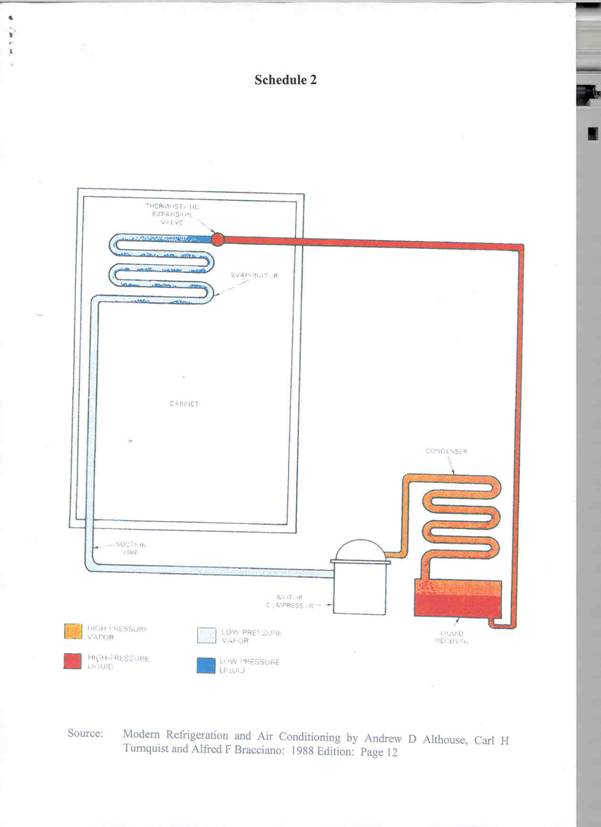
Wellcome Foundation v VR Laboratories (Aust) Pty Ltd (1981) 148 CLR 262, cited
Advanced Building Systems Pty Ltd v Ramset Fasteners (Aust) Pty Ltd [1998] 19, cited
Weiss v Lufft (1941) 65 CLR 528, considered
ICI CHEMICALS & POLYMERS LTD v THE LUBRIZOL CORP INC
NG 190 OF 1997
THE LUBRIZOL CORP INCV WOOLWORTHS LTD & Ors
NG 552 OF 1997
EMMETT J
31 MARCH 1999
SYDNEY
|
|
|
|
|
|
BETWEEN: |
ICI CHEMICALS & POLYMERS LIMITED Applicant
|
|
AND: |
Respondent
|
NG 552 OF 1997
|
BETWEEN: |
THE LUBRIZOL CORPORATION INC Applicant
|
|
AND: |
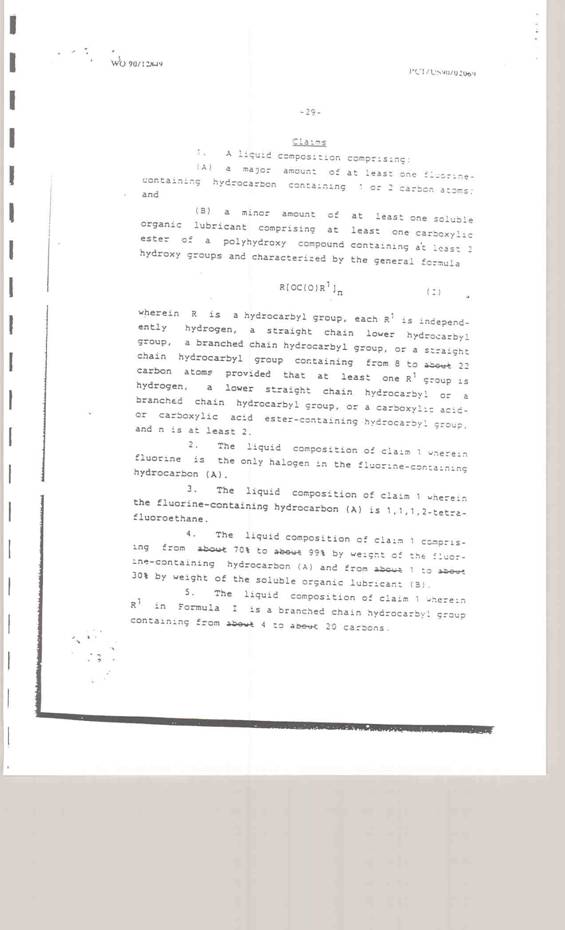
WOOLWORTHS LIMITED ACN 000 014 675 Respondent
|
|
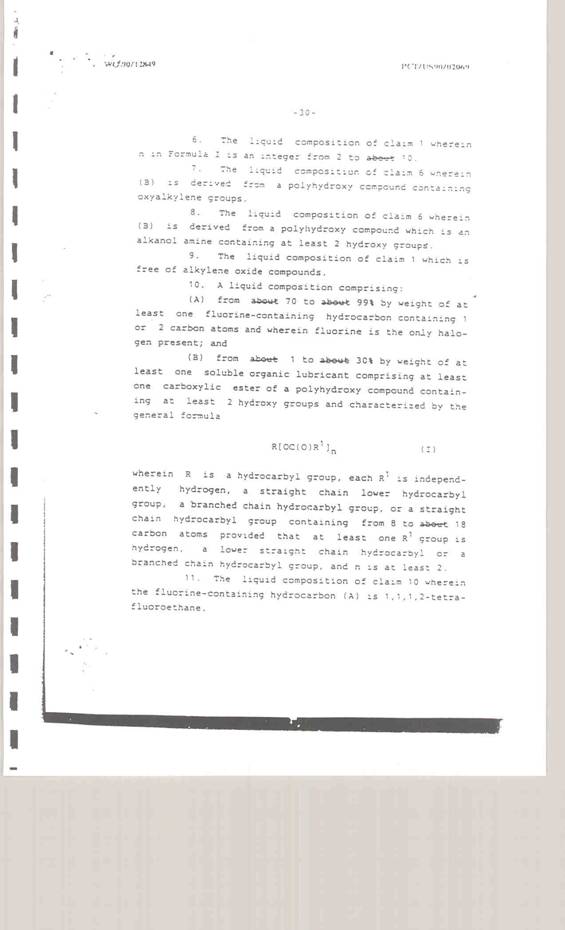
AND: |
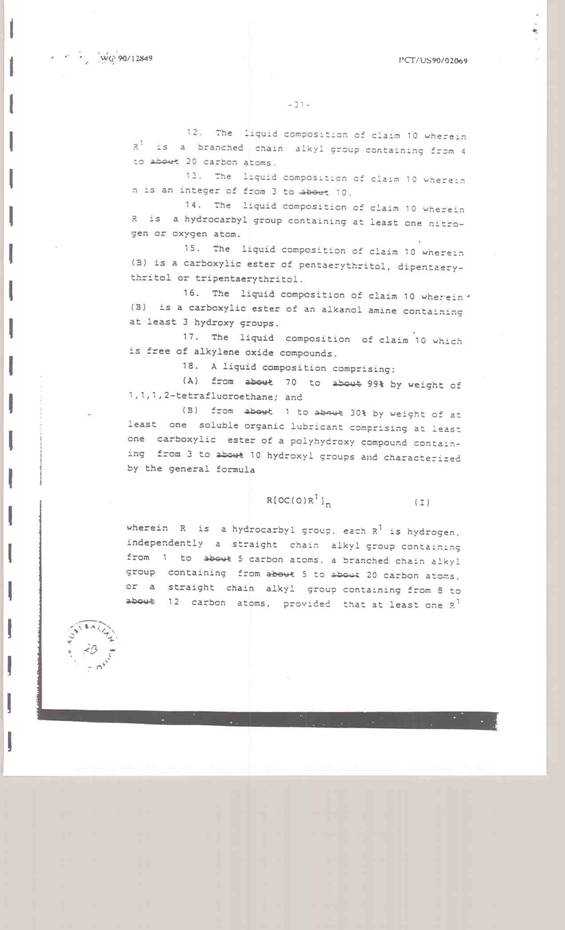
AUSTRAL REFRIGERATION PTY LIMITED ACN 001 702 594 Second Respondent
|
|
AND: |
WOOLWORTHS (VICTORIA) PTY LIMITED ACN 004 177 155 Third Respondent
|
|
AND: |
LAWRENCE REFRIGERATION PTY LIMITED ACN 005 912 176 Fourth Respondent |
|
JUDGE: |
|
|
DATE: |
|
|
PLACE: |
REASONS FOR JUDGMENT
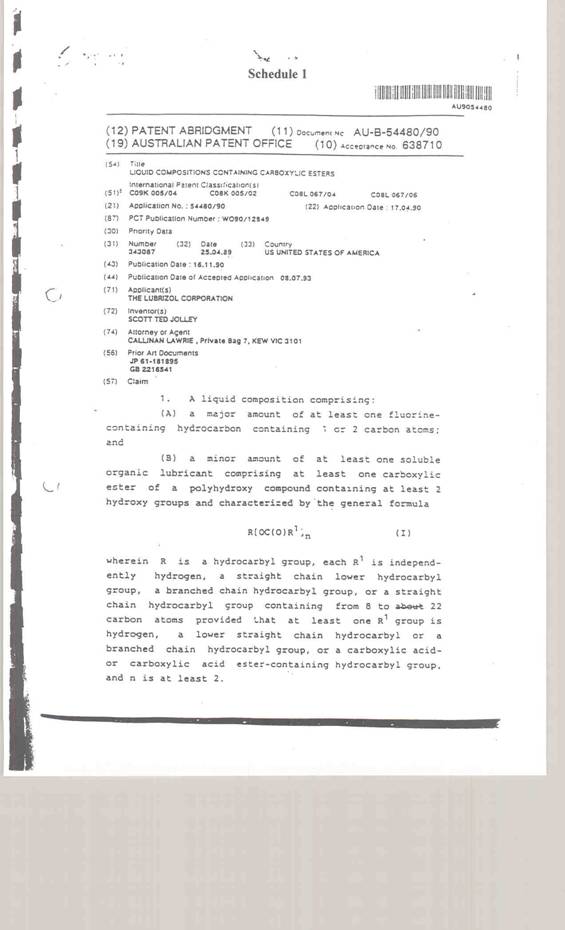
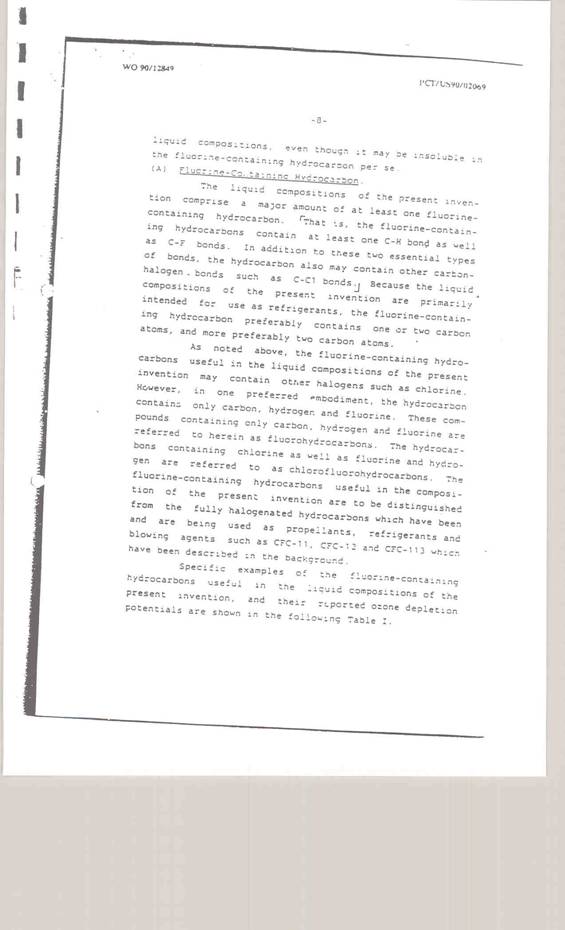
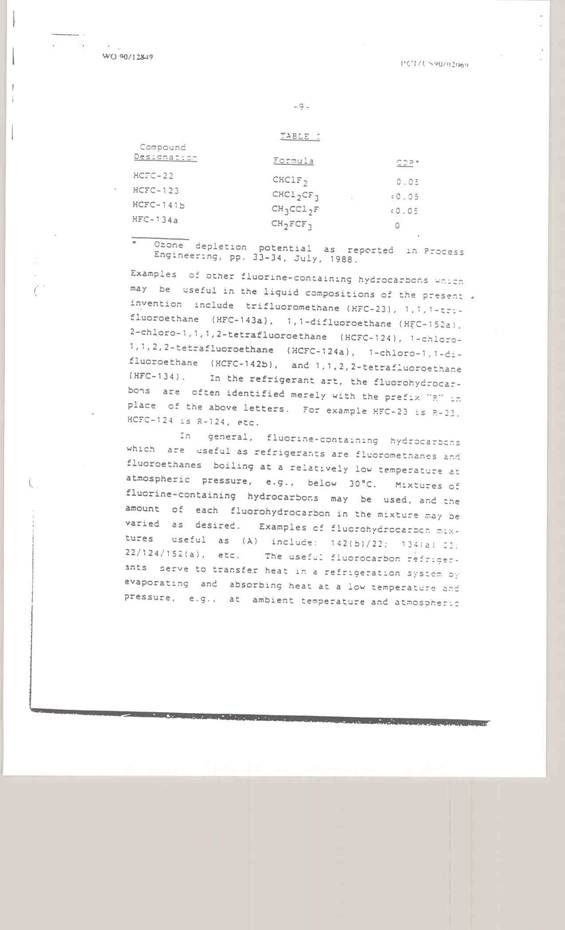
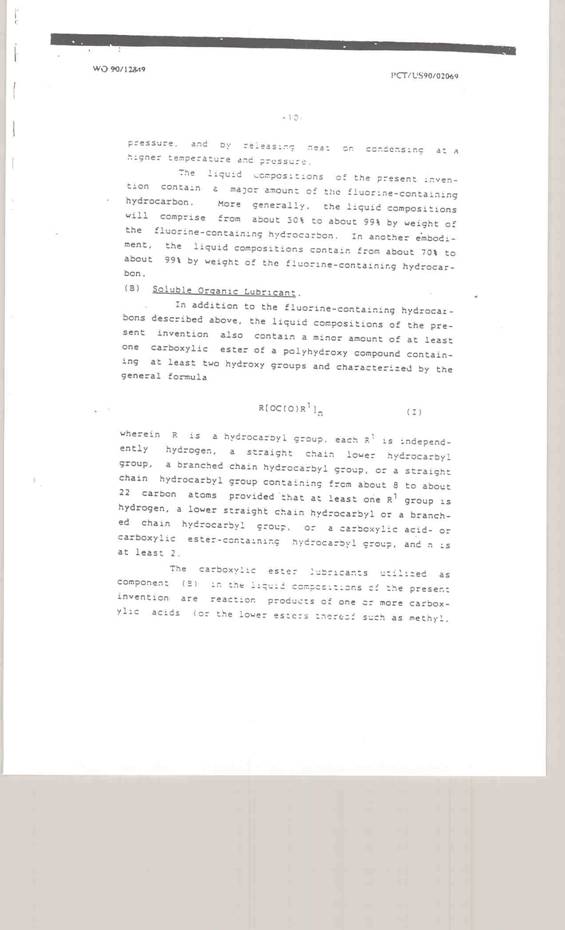
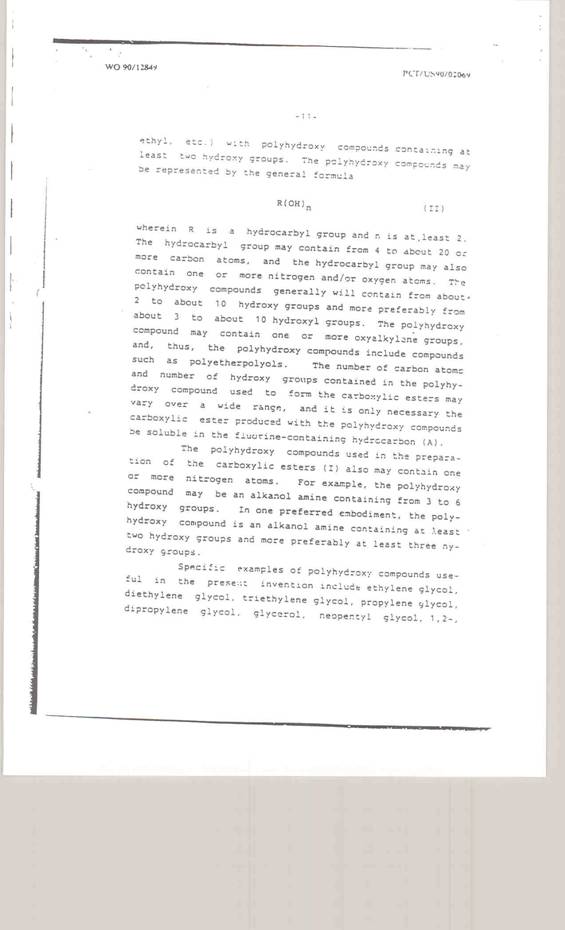
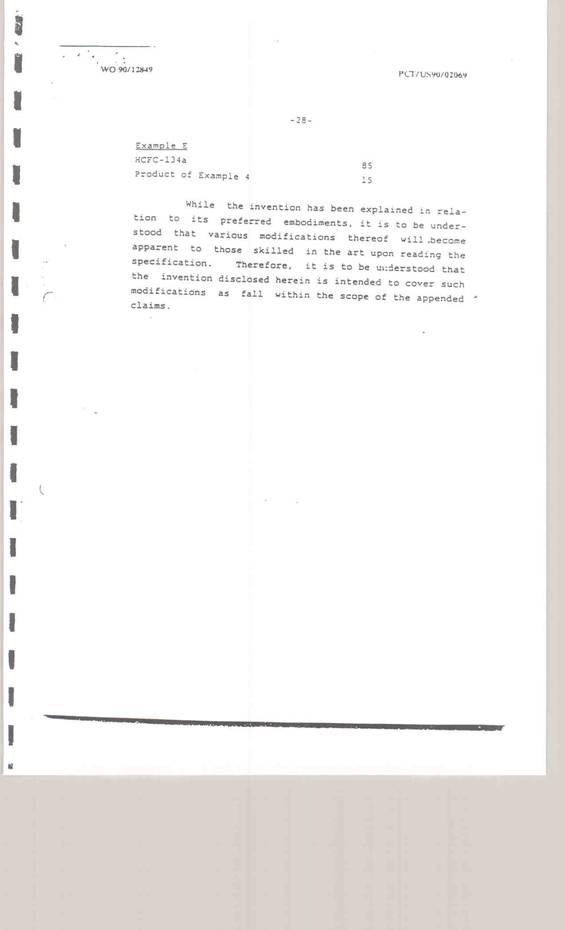
1 The Lubrizol Corporation Inc. (“Lubrizol”) is the registered proprietor of Australian patent number 638710 (“the Patent”). A copy of the Patent is attached as Schedule 1 to these reasons. The invention which is the subject of the Patent relates to “liquid compositions” said to be useful as refrigeration liquids. ICI Chemicals & Polymers Ltd (“ICI”) has brought proceedings under sections 128 and 138 of the Patents Act 1990 (“the 1990 Act”) seeking revocation of the Patent and a declaration that threats by Lubrizol of infringement proceedings were unjustified.
2 Lubrizol, on the other hand, has brought proceedings under section 120 of the 1990 Act for injunctions restraining Woolworths Limited (“Woolworths”), Austral Refrigeration Pty Limited (“Austral”), Woolworths (Victoria) Pty Limited (“Woolworths Victoria”) and Lawrence Refrigeration Pty Limited (“Lawrence”) from infringing the Patent by making a liquid composition of KLEA refrigerant and EMKARATE lubricant in refrigeration systems or operating refrigeration systems which contain such a composition. KLEA and EMKARATE are products manufactured and distributed by ICI. Counsel for ICI also appeared for the respondents to Lubrizol’s claim.
3 It is convenient to deal first with the question of the validity of the Patent since any question of infringement depends upon its valid registration. The particulars of invalidity furnished by ICI raise the following questions:
(1) Whether the alleged invention was not a patentable invention within the meaning of the 1990 Act because the alleged invention:
(a) is not novel;
(b) does not involve an inventive step;
(c) is not a manner of manufacture within the meaning of section 6 of the Statute of Monopolies;
(d) is not useful.
(2) Whether the complete specification for the Patent (“the Specification”) complies with the requirements of section 40(2) and section 40(3) of the 1990 Act.
(3) Whether the Patent was obtained on a false suggestion or representation.
Some of those grounds are inter-related as will be apparent when I deal with them below.
4 Lubrizol contended that the Patent has been infringed by Woolworths having a liquid composition of KLEA refrigerant and EMKARATE lubricant in the refrigeration system at its Penrith supermarket following a retrofit in 1993. Austral carried out the retrofit when a combination of KLEA and EMKARATE was installed in the system. That was said to have been an infringement by Austral.
5 Lubrizol also contended that Woolworths Victoria infringed the Patent by having a liquid composition of KLEA and EMKARATE in the refrigeration system at its Safeway Milton supermarket following a retrofit in 1993. Lawrence carried out that retrofit when a combination of KLEA and EMKARATE was installed in the system. That was said to have been an infringement by Lawrence.
6 There was no dispute concerning the allegations of installation of KLEA refrigerant and EMKARATE lubricant in the two refrigeration systems. Assuming the validity of the Patent, the issues remaining on infringement were whether there was a “liquid composition” in terms of the claims in the Patent and whether the composition was present in the percentages referred to in the claims made in the Patent.
7 I shall first say something about the background to the Patent, the claims made in the Specification and the witnesses who gave evidence. I shall then deal separately with each ground of revocation. Finally, I shall deal with the question of infringement.
BACKGROUND
8 Refrigeration involves the transfer of heat from a medium of low temperature to a medium of high temperature. That effect is seen in domestic and commercial refrigeration systems, air conditioning systems, process chilling systems and heat pumps among other instances. A typical method of achieving such a transfer of heat is vapour compression, which is based on the circulation of a fluid compound known as a refrigerant around a refrigeration loop. The refrigeration loop comprises four main components, namely: an evaporator, a compressor, a condenser and an expansion device. A diagrammatic representation of a basic refrigeration loop is contained in Schedule 2. The cabinet surrounding the evaporator in the diagram is the refrigerator space where, for example, cold or frozen food is stored.
9 The cooling effect of a refrigeration system is provided by boiling the fluid refrigerant in the evaporator. The heat energy required for the refrigerant to boil is absorbed through the walls of the evaporator from the evaporator’s external environment, namely the refrigerated space and its contents. Heat is thus removed from the refrigerated space and the contents of the refrigerated space are thus cooled.
10 The gas created by boiling the refrigerant in the evaporator is piped to the compressor. The compressor compresses the refrigerant in its gaseous form to a higher pressure. The compressing of the gas results in the gas being heated to a relatively high temperature. The hot gas from the compressor then passes through a closed system, often copper tubing, to the condenser. In the condenser, the gas loses its heat through the condenser’s walls to the atmosphere. As the gas cools, it condenses into liquid.
11 The cooled liquid refrigerant, still under pressure, is then piped towards the evaporator where the pressure is reduced by an expansion device such as a valve or capillary tube. The refrigerant, now under low pressure, starts to boil as it enters one end of the evaporator. The liquid refrigerant absorbs heat as it passes through the evaporator causing it to continue to boil. By the time it reaches the other end of the evaporator, the heat which it has absorbed has boiled all the refrigerant liquid into vapour. The low pressure vapour is then drawn, via a suction line, back into the compressor where the cycle is repeated for as long as power is supplied to operate the compressor. The refrigerant in the system is in liquid form from the point where it turns into a liquid, as it is passing through the condenser, and remains in liquid form until it turns into a gas as it passes through the evaporator.
12 Refrigeration systems may be stationary or mobile. Stationery systems include domestic and industrial refrigeration and air conditioning systems. Mobile systems include automotive air conditioning systems. Refrigeration systems may also be distinguished by the compressor drive mechanism. The principal mechanisms are the integral electric motor, found in hermetic compressors, and the mechanical drive or open drive mechanism. Hermetic compressors are characterised by the intimate contact of refrigerant and compressor lubricant with the electric drive motor for the compressor.
13 The lubricant in such a system provides lubrication for the bearings in the compressor and also acts to form a liquid seal around the compression volume, for example, between the piston and the cylinder of a reciprocating compressor. Without such a sealing effect, the efficiency of the compression process would be reduced. The compressor is the only component of such a refrigeration system which requires lubrication by the lubricant.
14 In stationary refrigeration systems, the lubricant is charged to the compressor and remains essentially in the compressor sump while the refrigerant circulates around the refrigeration loop. A small quantity of lubricant, however, is inevitably entrained in the circulating refrigerant despite any efforts to minimise oil circulation in designing the compressor. In contrast, in the special case of automotive air conditioning systems, the lubricant is intentionally mixed with the circulating refrigerant so as to form a composition. Lubrication of the compressor in such a system is dependent on a high level of lubricant being delivered to the compressor under the variety of inclines and movement to which an automotive compressor is subjected in normal use.
15 The lubricant in a refrigeration system must have a number of properties in order to satisfy both its lubrication and sealing roles. On the other hand, the presence of significant levels of lubricant in the circulating refrigerant may have an adverse effect on system performance through reduction in heat transfer capability, increased pressure drops in suction lines and impaired thermodynamic properties of the refrigerant. It has long been recognised that stationary refrigeration systems must be designed so as to ensure that the small quantity of lubricant that inevitably passes into the circulating refrigerant is returned to the compressor. In order to ensure “adequate oil return”, as the phenomenon is termed, the refrigerant and lubricant must be compatible and, in particular, must have adequate mutual solubility. That is to say they must be “miscible”.
16 Chlorofluorocarbons (“CFCs”) have for a considerable time been widely used as refrigerants. CFCs have also been used, because of their unique combination of properties, in other circumstances. For example, they have been used as propellants in aerosols. CFCs were first developed in the 1930s predominantly for use in refrigeration. They enjoyed considerable success throughout the world as they were both non-flammable and relatively non-toxic and were considered to be safe refrigerants.
17 There are several CFCs, generally gaseous at room temperature and atmospheric pressure, that have commonly been used as refrigerants. Such compounds have a low boiling point and are able to be liquefied under pressure. Some have been used for nearly a century. Others have been recently developed. For some years, particular substances which had been used as refrigerants were trichlorofluoromethane (“CFC-11”), dichlorodifluoromethane (“CFC-12”) and 1,2,2-trifluoro-1,1,2-trichloroethane (“CFC-113”). Each has chlorine atoms.
18 Refrigerants are generally classified according to their chemical make up. For example, refrigerants that are composed of only chlorine, fluorine and carbon are referred to as CFCs. Refrigerants that also include hydrogen, as well as chlorine, fluorine and carbon, are generally referred to as HCFCs. Those refrigerants that include only hydrogen, fluorine and carbon are generally referred to as HFC’s.
19 Such refrigerants, besides their chemical names, also have a universally accepted numbering system. The numbering system is related to the number of carbon, chlorine and fluorine atoms in the refrigerant molecule. The system is based on a three digit number, XYZ, where Z is the number of fluorine atoms, Y is one more than the number of hydrogen atoms and X is one less than the number of carbon atoms. X is omitted if there is only one carbon atom. Where necessary a small letter “a”, “b”, etc. is used next to the number to distinguish the refrigerant from another with the same number, but with a different molecular structure. The refrigerant number is usually prefixed with either the letter “R” or with the lettering system CFC, HCFC or HFC. Sometimes the refrigerant number is prefixed with the word “Freon”, a trade name for refrigerants.
20 It is now accepted that the use of CFCs has a detrimental effect on the ozone layer of the Earth’s stratosphere. The aspect of CFCs which is harmful to the ozone layer is the presence of chlorine atoms in the CFC molecule. Chlorine attacks the ozone molecule. The measure of the harmfulness of a particular substance to the ozone layer depends upon the combination of the percentage by weight of chlorine in the relevant substance and the life time of the substance in the atmosphere.
21 In the Earth’s stratosphere, CFC molecules are cleaved by ultra violet radiation arriving at the ozone level of the stratosphere. Chlorine atoms are released which cause catalytic degradation of ozone molecules which can result in an increase in harmful ultraviolet radiation penetrating through to the Earth’s surface. Such prospective harmful effects were recognised by academic and industrial chemists and engineers in the late 1970s and by the public at large during the mid to late 1980s.
22 Accordingly, from 1976 onwards, there were demands by environmentalists and governments for the reduction, if not a complete ban, on the use of CFCs in the aerosol industry and elsewhere. The aerosol industry has accordingly moved towards the substitution of hydrocarbon propellants for CFC propellants. Hydrocarbon propellants are readily available and inexpensive and the quality of the final product was unaffected by the substitution of such propellants. However, the problem of finding a replacement for CFC refrigerants was not quite so straightforward.
23 As a result of the concern about the use of CFCs, the Montreal Protocol on Substances that Deplete the Ozone Layer (“the Montreal Protocol”) was opened for signature in September 1987. Australia became a party to the Montreal Protocol at that time. The Montreal Protocol is an international treaty to control the use of CFCs and certain other halogen-containing compounds. Halogens are the elements fluorine, chlorine, bromine, iodine and astatine. The Montreal Protocol recognised the problem caused by CFCs and highlighted the need to move to alternative refrigerants that do not include chlorine.
24 In 1987, HCFCs, in particular R-22, were considered to have an important part to play in the phase-out of CFCs. The propensity of a particular substance to cause depletion of the ozone layer is measured in terms of its ozone depletion potential (“ODP”). Manufacturers of refrigerants therefore looked towards the identification of refrigerants that had zero ODP. HFCs, because they contain only atoms of hydrogen, fluorine and carbon, were known at the time of the Montreal Protocol to have zero ODP. Following the Montreal Protocol therefore, many participants in the refrigerant manufacturing industry looked towards HFCs as replacements for CFCs.
25 The compound known as 1,1,1,2-tetrafluoroethane (“R-134a”) is an example of an HFC. The compound has been known for many years. The United States Patent 19265 (“the Midgley Patent”) was effective from 1934. The Midgley Patent was expressed to relate to the art of transferring heat from one point to another and specifically to the art of refrigeration. The claims related to the process of refrigeration comprising condensation of various compounds. Numerous compounds were identified including, without singling it out, R-134a. However, R-134a was not developed commercially as a refrigerant prior to the 1980s, principally because CFCs and HCFCs were readily synthesised and performed well as refrigerants. Prior to the time of the Montreal Protocol, there was no motivation in the industry, or from end users, to look for alternatives for CFCs and HCFCs.
26 R-134a was manufactured by ICI and possibly others on a low tonnage commercial scale in the late 1980s to provide a commercial supply following the Montreal Protocol. There was no manufacture of R-134a on a commercial scale in Australia at that time and no incentive to do so.
27 In 1987, most refrigeration compressors for use with CFCs or HCFCs used mineral oils or, in some cases, synthetic hydrocarbons, as lubricants. Following the Montreal Protocol, and prior to 1989, it was recognised widely in the refrigeration industry that the traditional mineral oil lubricants, which had been used with CFCs and some HCFCs, were not compatible with R-134a. Accordingly, it became necessary to find alternative lubricants that were compatible with HFCs generally, in particular R-134a, and which possessed the other properties that were required of refrigeration lubricants.
28 There is a variety of different classes of refrigeration lubricants that have been used extensively since the beginning of the 20th century. They can broadly be classified as mineral oils or synthetic oils. Mineral oils have been widely used mainly because of their availability and the knowledge that they are safe, relatively non-toxic and very easy to handle. Mineral oils are good lubricants, and generally have good thermal stability. They also show good compatibility with refrigerants such as R-11 and R-12 which have been extensively used since the 1920s.
29 Synthetic oils or lubricants have also been commercially manufactured since the late 1920s. The advantage with synthetic lubricants is that they may be tailored in order to meet specific qualities that an engineer, such as a refrigeration engineer, may desire. There is a considerable number of synthetic lubricants available including synthetic hydrocarbons, alkylbenzenes, esters such as dibasic acid esters, polyol esters, including neopentyl esters, phosphate esters, silicate esters and polyalkyleneglycols (“PAGs”).
30 The American Society of Heating Refrigeration and Air Conditioning Engineers (“ASHRAE”) is the peak professional association for the refrigeration industry in the United States. ASHRAE regularly publishes a handbook for the benefit of its members. ASHRAE handbooks have been generally available to air conditioning and refrigeration engineers in Australia from before 1989.
31 Chapter 8 of the 1986 edition of the ASHRAE handbook is concerned with “Lubricants in Refrigerant Systems”. It contains a general discussion of oils that are suitable as lubricants in refrigerant systems. It discloses the properties desired of refrigeration oils including oil return, miscibility with refrigerant, adequate fluidity at low temperatures and chemical stability.
32 Under the heading “Synthetic Oils”, Chapter 8 of the 1986 ASHRAE handbook referred to the limited solubility of mineral oils with R-13, R-22 and R-502 as having led to the investigation of synthetic oils for refrigeration use. It was said that, of the available types, alkylbenzenes perform satisfactorily. The handbook then went on to state that numerous other synthetic oils were commercially available and that many have properties suited to refrigeration purposes. Among those listed were synthetic paraffins, polyglycols, dibasic acid esters, neopentyl esters, silicons, silicate esters and fluorinated compounds.
33 Chapter 8 referred to a paper published by Sanvordenker and Larime in 1972 which describes the properties of those synthetic oils, alkylbenzenes and phosphate esters in regard to refrigeration application. In that article, each class of the synthetics is discussed with reference to the chemical structure, viscosity-temperature relations, miscibility with R-22 and R-502, low temperature fluidity, chemical compatibility, availability and cost. Chapter 8 records that, according to those authors, the phosphate esters are clearly unsuitable for refrigeration use because of their poor thermal stability and the fluorocarbon oils are extremely expensive. Among the others, according to the article, only the synthetic paraffins have poor miscibility relations with R-22. Dibasic acid esters, neopentyl esters, silicate esters and polygylcols all have excellent viscosity temperature relations and remain miscible with R-22 and R-502 to very low temperature levels. It was said that those and the alkylbenzenes are considered suitable for low temperature applications.
THE PATENT
34 The priority date of the Patent was 25 April 1989, that being the date on which an application was first made in the United States. The application for an Australian patent was lodged on 17 April 1990, but it is common ground that Lubrizol is entitled to the benefit of a priority date based on the earlier application in the United States.
35 The Specification states that the alleged invention relates to liquid compositions comprising a major amount of at least one fluorine containing hydrocarbon and a minor amount of at least one lubricant. After describing the background of the alleged invention, referring to the ODP of CFCs, the Patent states that HCFC-22 and HCF-134a are generally recommended as being alternatives to CFCs in refrigerant applications and that HCF-134a is particularly attractive because its ODP has been reported as being zero. The Specification refers to the need for any proposed replacement refrigerant to be compatible with the lubricant in the compressor and the fact that the proposed new alternative refrigerants have solubility characteristics different from the refrigerants presently in use. The Specification stated that the problem was particularly evident in automotive air conditioning since the compressors are not separately lubricated but a mixture of refrigerant and lubricant circulates throughout the entire system.
36 The Specification also states that, in order to perform as a satisfactory refrigeration liquid, the mixture of refrigerant and lubricant must be compatible and stable over a wide temperature range. It states that it is desirable for the lubricant to be soluble in the refrigerant at concentrations of about 5 to 15% over a temperature range from minus 40ºC to 80ºC. The Specification also states that the refrigeration liquid must have acceptable viscosity characteristics, even at high temperatures, and should not have a detrimental effect on materials used as seals in compressors.
37 All of the claims made in the Specification refer to a “liquid composition”. The liquid composition is said to comprise two elements, being a refrigerant and a lubricant. Various alternatives of each, and combinations of those alternatives, are set out in the 26 claims. In each of the claims, more than 50% of the “composition” must be refrigerant and less than 50% must be lubricant. In some of the claims a more specific proportion is specified.
38 The claims can be divided into three groups. Claim 1 is for:
“ 1. A liquid composition comprising:
(A) a major amount of at least one fluorine-containing hydrocarbon containing 1 or 2 carbon atoms; and
(B) a minor amount of at least one soluble organic lubricant comprising at least one carboxylic ester of a polyhydroxy compound containing at least 2 hydroxy groups and characterized by the general formula
R[OC(O)R1]n
wherein…”
39 Claims 4 to 9 inclusive are generally dependent on claim 1. Claim 1 and Claims 4 to 9 all concern HCFCs and involve variations only in the lubricant. Lubrizol concedes that it cannot maintain those claims.
40 Claims 2 and 3 are dependent on Claim 1. However, the variation is in relation to the refrigerant rather than the lubricant. Claim 2 varies Claim 1 by providing that fluorine is the only halogen in the fluorine-containing hydrocarbon (A). That is to say, the refrigerant must be an HFC. Claim 3 varies Claim 1 by providing that the refrigerant must be R-134a. Lubrizol wishes to maintain Claims 2 and 3 but accepts that it will be necessary for an amendment to be made to those claims if Claim 1 is deleted.
41 Claim 10 is relevantly in the following terms:
“ 10. A liquid composition comprising:
(A) from 70 to 99% by weight of at least one fluorine-containing hydrocarbon containing 1 or 2 carbon atoms and wherein fluorine is the only halogen present; and
(B) from 1 to 30% by weight of at least one soluble organic lubricant comprising at least one carboxylic ester of a polyhydroxy compound containing at least 2 hydroxy groups and characterized by the general formula
R[OC(O)R1]n
wherein…”
42 Claims 11 to 17 are dependent on Claim 10 and comprise narrowing variations of Claim 10. Claim 11 involves variation of the refrigerant disclosed in Claim 10 and requires that the refrigerant must be R-134a. Claims 12 to 17 inclusive involve variation of the lubricant disclosed in Claim 10.
43 Claim 18 is in the following terms:
“ 18. A liquid composition comprising:
(A) from 70 to 99% by weight of 1,1,1,2-tetrafluoroethane; and
(b) from 1 to 30% by weight of at least one soluble organic lubricant comprising at least one carboxylic ester of a polyhydroxy compound containing from 3 to 10 hydroxyl groups and characterized by the general formula
R[OC(O)R1]n
wherein…”
Thus, in Claim 18 the refrigerant would be R-134a. Claims 19 to 26 are all narrowing variations of Claim 18 in which the variation relates to the lubricant.
44 Each of Claims 1, 10 and 18 contains a series of definitions for “R”, “R1” and “n”, the variables in the formula which appears in each of the claims. The variations of the lubricant in the claims involve changes in the definitions of those variables. The lubricants which are the subject of the Patent are synthetic esters. Synthetic esters are the product of the reaction of acids with alcohols. The reaction produces esters and water. The process is referred to as esterification. The claims identify the classes of acids and alcohols which are capable of producing satisfactory esters.
45 No claim is made for any of the compounds described in the Specification. The essence of the alleged invention is the identification of a soluble organic lubricant which is suitable for use in refrigeration systems with HFCs generally and R-134a in particular. Putting it another way, the alleged invention is the identification of a lubricant having the properties described above in relation to HFCs generally and R-134a in particular.
WITNESSES
46 Several witnesses were called by each party and some of them were cross-examined at length. It is desirable to say something about the witnesses in order to explain references to their evidence.
47 Dr P.J.B. Fraser gave evidence on behalf of ICI. Dr Fraser is a scientist employed by the Commonwealth Scientific and Industrial Research Organisation (“CSIRO”). His expertise is generally in the field of atmospheric chemistry and more particularly in the chemistry of atmospheric ozone depletion and greenhouse gases. He completed a PhD in 1972 and has held positions at the University of Bristol and at the Australian National University. He has also held visiting positions at the University of Colorado and the University of East Anglia. He was first employed by CSIRO in 1974 and has remained an employee of CSIRO to the present day. Dr Fraser gave evidence, initially by affidavit, concerning the chemistry of CFCs and related substances, the chemistry and early research into atmospheric ozone depletion, the Montreal Protocol and the development of ozone protection in Australia.
48 Professor I.D. Rae gave evidence on behalf of ICI. Professor Rae’s career has essentially been in the field of organic chemistry at an academic level. He is an expert in many areas of organic chemistry but has particular expertise in classifying and analysing the structures of chemical molecules and in particular organic and organo-metallic molecules. He has also had broad experience with the interaction of compounds including molecular interaction between chemical compounds. His career has been broadened by involvement in consulting work involving industrial chemicals. He has had considerable experience in synthesising synthetic esters. Professor Rae was awarded a PhD at the Australian National University and was Associate Professor of Chemistry at Monash University from 1981 to 1990 and Professor and Dean of the Faculty of Science at the latter University from 1990 to 1994. He was Deputy Vice Chancellor of the Victoria University of Technology from 1994 to 1997 and is presently a professorial fellow of the Department of History and Philosophy of Science in the faculty of Arts at the University of Melbourne. He has held acting appointments at the University of Canterbury, Cornell University and University of Buenos Aires. He has also held consultant research positions with ICI Pharmaceuticals, Environment Protection Authority Victoria and CSIRO.
49 Dr Stuart Corr gave evidence on behalf of ICI. Dr Corr is employed by ICI as a science and technology associate. He holds a PhD in physical chemistry and completed two years of post doctoral research prior to joining ICI in 1985. He works in the KLEA Business Research and Technology Group of ICI, conducting research in and around the application of hydrofluorocarbons to refrigeration and other uses. He has been involved in that technical field since the end of 1988 and his role has involved the development and execution of technical programs with global manufacturers of refrigeration equipment. Prior to that role, he worked for two years in the area of advanced functional fluids, in particular the development of electro-rheological fluids and their application in automotive engineering. Since commencing work in the refrigeration area, Dr Corr has focussed particularly on the behaviour of lubricants in refrigeration systems and their interaction with refrigerants. He is named as an inventor in a number of refrigerant-related patents and has published and presented extensively in international refrigeration conferences in Europe, USA and Japan.
50 Mr W.E. Dobney gave evidence on behalf of Lubrizol. Mr Dobney is a mechanical engineer and has worked in the field of refrigeration systems and air conditioning systems since 1944. He worked originally as a refrigeration mechanic in the RAAF and after the war studied mechanical engineering at the Melbourne Technical College where he was awarded a diploma in mechanical engineering. He is a life member of the AIRAH (Australian Institute of Refrigeration and Heating) and is a member of ASHRAE. He has worked extensively in the refrigeration and air conditioning industry as an engineer, sales engineer, product manager and manufacturing manager. Since retiring from full time employment in 1990, he has acted as a private consulting engineer in solving air conditioning and refrigeration problems. He is an active member of the Australian Standards Association Committee in relation to refrigerants.
51 Mr Bertrand Harrington gave evidence on behalf of Lubrizol. Mr Harrington is a retired industrial chemist and has worked in the field of fluorocarbons and their use as refrigerants since 1962. He has a BSc from London University and has had extensive experience in industry as a chemist, plant manager, product manager and marketing manager of Pacific Chemical Industries. He was the person chiefly responsible for providing technical service and advice on the use of fluorocarbons. The customer base with which he was concerned encompassed many industries but the refrigeration industry was one of the major ones. He acquired a good working knowledge of the operation of commercial and domestic refrigeration and air conditioning systems and particularly the interaction of refrigerants with other components of the system such as materials of construction, desiccants and lubricants. From 1984, he has been interested in HFC and HCFC refrigerants which were developed as the likely replacements for CFCs and the progress which was being made in solving problems associated with the new generation refrigerants.
52 Dr Scott Ted Jolley is named as the inventor in the Lubrizol Patent. He gave evidence on behalf of Lubrizol. Dr Jolley is a research chemist employed by Lubrizol and has held that position since 1981. He was awarded a PhD in organic chemistry in 1981. Before that time he held positions as an analytical chemist at Southern Utah University and then as a teaching assistant.
53 Evidence of all of those witnesses may be relevant to the question of whether or not the alleged invention of Lubrizol involved an inventive step. I am satisfied that all of the witnesses gave their evidence honestly. There was no conflict which requires resolution by me. I regarded each of the witnesses as perfectly competent in his field. Indeed Professor Rae was very impressive in his command of organic chemistry. Nevertheless, each witness was prepared to acknowledge areas into which his particular expertise did not extend.
NOVELTY
54 Lubrizol’s application for the Patent was filed under the Patents Act 1952 (“the 1952 Act”). The 1952 Act was repealed by section 230 of the 1990 Act with effect from 30 April 1991. The Patent was granted under the 1990 Act and is subject to the grounds of revocation applicable under the 1990 Act. However, section 234(5) of the 1990 Act provides, in effect, that the Patent cannot be revoked on a ground which was not available under the 1952 Act – NV Philips Gloeilampenfabrieken v Mirabella International Pty Ltd (1993) 44 FCR 239.
55 Section 138(3)(b) of the 1990 Act provides that the Court may revoke a patent on the ground that “the invention is not a patentable invention”. Section 18(1)(b)(i) relevantly provides that a “a patentable invention is an invention that, so far as claimed in any claim..., when compared with the prior art base as it existed before the priority date of that claim,… is novel”. Under the 1952 Act, the corresponding ground of revocation was specified in section 100(1)(g) as follows:
“That the invention, so far as claimed in any claim of the complete specification… was not novel in Australia on the priority date of that claim.”
Thus, under the 1952 Act, there was a territorial limitation in that the question of novelty was restricted to an assessment of the prior art base as it existed in Australia before the priority date. ICI accepts that the test of novelty under the 1952 Act is applicable in relation to the Patent.
56 The concept of novelty includes anticipation by documents. The question in the proceeding is whether the alleged invention was anticipated in a document or documents published in Australia before the priority date. ICI relies on the publication of United States Patent 2807155 (“the Williamitis Patent”) which was published in Canberra on 10 April 1958 or, in the alternative, the publication of the Williamitis Patent coupled with the prior publication of United States Patent No. Re. 19, 265 (“the Midgley Patent”), which was published in Canberra on 13 September 1934. The Midgley Patent is referred to in the Williamitis Patent. Thus, the first question is whether the invention disclosed in the Specification is disclosed in the Williamitis Patent alone or together with the Midgley Patent.
57 A prior publication can only render a claim not novel if it clearly discloses each of the essential integers of the claim, subject to any question of cross-reference to another prior publication. The process of applying common general knowledge to the solution of a problem is not a process of picking out individual pieces of information and combining them, including inferences from known facts and known principles, as well as the application of such principles. It is not sufficient to pick out individual items of information from prior publications or prior objects and assemble them together so as to give them an appearance of unity – Minnesota Mining & Manufacturing Co. v Beiersdorf (Australia) Pty Ltd (1980) 144 CLR 253 at 292-3.
58 If carrying out the directions contained in a prior publication will inevitably result in something being made or done which, if the patent under consideration is valid, would constitute an infringement of the claim made in that patent, that may demonstrate that the claim has been anticipated. On the other hand, if the prior publication contains a direction which is capable of being carried out in a manner which would infringe the claim but would be at least as likely to be carried out in a way which would not do so, the claim would not have been anticipated. To anticipate the claim, the prior publication must contain clear and unmistakable directions to do what the patentee claims to have invented – General Tire & Rubber Co. v The Firestone Tyre & Rubber Co. Ltd [1972] RPC 457 at 485-6. It will not be sufficient if the prior publication contains a generalised disclosure which may, but does not necessarily, include the particular chemical groups characterising the claim in question – Ethyl Corporation v Commissioner of Patents [1969] AOJP 2860.
59 ICI contended that the alleged invention, as described in Claims 2, 3, 10-15, 17-23 and 25-27 of the Specification, is not novel when compared with the Williamitis Patent. The abandoned Claims 1, 4-7 and 9 are clearly anticipated. Claims 8, 16 and 24 are not anticipated by the Williamitis Patent which does not disclose lubricants in which the alcohol is “an alkanol amine containing at least two hydroxy groups”. In each of Claims 8, 16 and 24 the alcohol is described in those terms. In the Williamitis Patent, however, the alcohol is a pentaerythritol, a dipentaerythritol or a tripentaerythritol.
60 The invention in the Williamitis Patent is entitled “Working fluids in refrigeration apparatus”. The first object of the Williamitis Patent is described in the following terms:
“It is an object of this invention to provide a working fluid for a refrigeration apparatus which includes a refrigerant capable of being in liquid and gaseous phases within the operating temperature range of the refrigeration apparatus and a wax-free lubricant which is completely soluble in the refrigerant and is highly thermally stable within the refrigeration apparatus in the range of the operating temperatures thereof.”
61 Thus, it describes a fluid which includes both a refrigerant and a lubricant. The “working fluid” is more specifically described as a “fluid which includes a fluoro halo substituted aliphatic hydrocarbon refrigerant and a lubricant comprising an organic acid ester of pentaerythritol”. The refrigerant is more particularly described as:
“A fluoro halo derivative of an aliphatic hydrocarbon of the character disclosed in the patent to Midgley et al., Re. 19,265, reissued August 7, 1934, as, for example, trichlorofluoromethane (Freon 11), dichlorodifluoromethane (Freon 12) and particularly difluoromonochloromethane (Freon 22).”
62 The specification for the Williamitis Patent states that the lubricant of the invention may include:
“Esterified monomolecular pentaerythritol described by the following structural formula:
|
|
CH2OCOR |
|
|
C CH2OCOR |
|
CH2OCOR |


wherein the R represents a saturated aliphatic straight or branched hydrocarbon chain such as alkyl radicals, and alkyl radicals having substituted aromatic radicals, aromatic groups such as aryl radicals and aryl radicals having substituted aliphatic radicals, the R groups having carbon atoms in the range of about 2 to 20 and preferably an average from 6 to 10. The term alkyl as hereinafter used includes both unsubstituted and aromatic radical substituted alkyl radicals and the term aryl includes both unsubstituted and alkyl radical substituted aryl radicals.
The lubricant may also consist of or include the esterified polyethers dipentaerythritol and tripentaerythritol…”
63 The specification for the Williamitis Patent indicates that the lubricant may include mixed esters and mixtures of esters. It also gives a number of specific examples of the acids which may be used to produce the “R” groups of the lubricant. The specification also gives an example of the testing of a particular lubricant in combination with R-22.
64 There are six claims in the specification for the Williamitis Patent. Each claim is expressed to include the combination of “a refrigeration apparatus including a compressor, condenser, and evaporator in refrigerant flow relationship, a refrigerant and a lubricant.” In the first three claims the refrigerant is R-22. In the second three claims the refrigerant is described as:
“a fluoro chloro substituted aliphatic hydrogen refrigerant.”
It is clear enough that the reference to “hydrogen” should have been a reference to hydrocarbon. That is an error which would be overcome by a person skilled in the relevant art having a basic knowledge of chemistry. The refrigerants described are HCFCs, as is R‑22. Thus, in the claims in the Williamitis Patent, no mention is made of HFCs.
65 In the body of the specification for the Williamitis Patent, reference is made to certain properties of the proposed lubricant. The specification begins by saying:
“The superiority of the present lubricant for refrigeration systems of the type described may be demonstrated by comparing the lubricant with conventionally used refrigeration mineral oil lubricants. “
The refrigerant used in the comparison is R-22. In dealing with solubility, the specification ends as follows:
“Thus it is apparent that the use of pentaerythritol esters involves a substantial improvement in the operation of a refrigeration system at low temperatures, particularly with a refrigerant such as Freon 22.”
66 The specification then deals with the thermal and chemical stability of the lubricant by describing tests involving R-22. The results are expressed in the quantity of “refrigerant decomposed in milligrams of released chlorine”. That indicates a concern only with a refrigerant containing chlorine atoms, namely, HCFCs or CFCs. It is not concerned with HFCs which do not contain chlorine atoms.
67 The claims in the specification for the Williamitis Patent refer to three lubricants for each of R-22 and the HCFC refrigerant. The lubricants may be summarised as follows:
Claim |
Lubricant |
|
1, 4 |
Ester of mono-pentaerythritol with an average R of C6 –C10 |
|
2, 5 |
Ester of monopentaerythritol, dipentaerythritol or tripentaerythritol with an R of C2-C20 in a specified viscosity range |
|
3, 6 |
Ester of monopentaerythritol with an average R of C6-C10 in a specified viscosity range. |
68 However, while the claims of the Williamitis Patent refer only to HCFCs and the body of the specification deals specifically with R-22 and possibly HCFCs and CFCs generally, the description of the refrigerant in the body of the specification for the Williamitis Patent would logically include HFCs as well as HCFCs. As I have said, the expression used is “a fluoro halo substituted aliphatic hydrocarbon refrigerant”. The term “fluoro” clearly indicates fluorine atoms. The term “halo” signifies any halogen, which might include either fluorine or chlorine or, if it matters, bromine, iodine or astatine. Thus, a fluoro fluoro hydrocarbon refrigerant could also strictly be referred to as a fluoro halo hydrocarbon refrigerant. On that basis, ICI contended that the specification for the Williamitis Patent anticipated the Lubrizol invention because it disclosed the idea of a fluid which includes a fluoro fluoro hydrocarbon, namely, an HFC, and the relevant lubricant. The critical question is whether HFCs generally are disclosed as part of the “working fluid”.
69 Several considerations were said to support the contention that the Williamitis specification disclosed HFCs as part of the working fluid as follows:
(a) The author of the Williamitis specification used the expression “fluoro halo substituted aliphatic hydrocarbon refrigerant” in the body of the specification and also used the term “fluoro chloro substituted aliphatic hydrogen refrigerant” in the Claims 4, 5 and 6. That may indicate an intention to distinguish between HCFCs and HFCs.
(b) “Halo” is used as a general term to include any halogen such as fluorine, chlorine, bromine or estatine.
(c) In correspondence with the Commissioner of Patents, Lubrizol also used the term “halogen”.
(d) A skilled addressee as at the priority date of the Patent would be aware of R-134a as a “fluoro halo substituted aliphatic hydrocarbon”.
70 The last matter may raise a question as to the appropriate date at which the relevant art should be taken, for the purposes of making an assessment of novelty. ICI contended that the specification for the Williamitis Patent should be considered on the basis of how it would be understood by a skilled addressee as at the priority date, namely 25 April 1989, irrespective of how it might have been understood at the time of publication. That is to say, if the hypothetical skilled addressee would, on reading the specification in the Williamitis Patent in 1989, understand that “fluoro halo substituted aliphatic hydrocarbon” includes R-134a, then the Williamitis Patent anticipated the alleged invention. ICI contended that if novelty is not to be so assessed, it would be necessary to determine the knowledge available to a skilled addressee many years before the priority date.
71 It was not suggested that there had been any change in the meaning of the term since the publication of the Williamitis Patent but only that any disclosure made in the Williamitis Patent must be read by a skilled addressee as at 24 April 1989. The contention appears to entail the proposition that, even if the claim under attack would have been novel if first disclosed at the time of the publication of the alleged anticipating document, it was not novel at the time of its actual disclosure, simply because the hypothetical skilled addressee would know more in 1989 than in 1957. Such a proposition appears to me to blur the distinction between lack of novelty and obviousness. Common general knowledge is clearly an expanding, or at least variable, universe. Something, which might be obvious in 1989 may not have been obvious in 1957 because common general knowledge has expanded during the intervening time. On the other hand, ICI’s proposition appears to entail the notion that the prior art base might expand or at least be varied
72 The expression “fluoro halo” when used in the Williamitis Patent must be read in its immediate context. That context is to state, in very general terms, an object of the invention rather than to define specifically or expose the elements of the invention. The term did not have a completely fixed meaning in chemical usage either in 1957 or 1989. At its broadest, the term may refer to a hydrocarbon where fluorine is substituted for one of the hydrogen atoms and then a further halogen (whether fluorine, chlorine, bromine, etc.) is substituted for a further hydrogen atom. In a narrower sense, as illustrated in the examples and claims of the Williamitis Patent, the term may refer to fluorine plus a halogen other than fluorine, which would usually be chlorine, substituting for the hydrogen.
73 The Williamitis Patent specification does not state that lubricants have been identified which will work with every compound which falls within the widest meaning of the term “fluoro halo”. Rather, the specification discloses the object of identifying a lubricant which would work, for refrigeration purposes, with “a fluoro halo”. The balance of the specification confirms that the invention is suitable for use with R-22, an HCFC. It is also claimed that the invention is a lubricant suitable for HCFCs generally. There is, however, no assertion that the lubricants will work with any or all HFCs, whether R-134a or otherwise.
74 I have already referred to the detailed narrative in the Williamitis specification concerning R-22. After referring to the Midgley Patent, the Williamitis specification then gives three examples of refrigerants, namely R-11, R-12 and “particularly” R-22. The first two are CFCs and the third is an HCFC. No suggestion is made that an HFC may be relevant. Further, no mention is made of any HFC in the definition of the problem to be overcome by the invention. A fortiori, no mention is made of R-134a. The problem is stated in the following terms:
“Various conventionally used mineral oils have been refined and dewaxed which have been effective in minimising wax precipitation when used with certain refrigerants, such as Freon 12. However, such oils are unsatisfactory to various degrees in this respect when used at very low temperatures with Freon 12 or with Freon 22 at any temperature in which such oils are only partially soluble.”
75 The Williamitis Patent compares the solubility of its lubricants in R-22 with the solubility of traditional mineral oils in R-22. R-22 is chosen because solution of the oil in that refrigerant is more difficult than in other refrigerants. The matter is dealt with as follows in the specification.
“The superiority of the present lubricant for refrigeration systems of the type described may be demonstrated by comparing the lubricant with conventionally used refrigeration mineral oil lubricants…. The graph of figure 2 shows the temperature of the phase separation plotted against various concentrations of the oil and Freon-22 for lubricants of various viscosities. The refrigerant used in the comparison is Freon-22since solution of the oil in this refrigerant is more difficult than in other refrigerants.”
The Williamitis Patent does not mention R-134a or any other HFC. It regards R-22 as being the most difficult refrigerant with which to find solubility. There is no mention of the solubility of the lubricants with R-134a or any other HFC.
76 As I have indicated above, the Williamitis Patent assesses the stability of refrigerants by reference to the amount of chlorine released. No stability test is propounded in the Williamitis Patent applicable to an HFC, which contains no chlorine. Further, the specification does not refer to any test of the lubricants with any HFCs at all and gives no reasoning, as a matter of chemistry, why the lubricants would work with refrigerants where, unlike R-22 and R-11, chlorine is entirely absent.
77 Most significantly, all the claims of the Williamitis Patent are limited to HCFCs, namely, refrigerants containing chlorine. The purpose of the claims is to define the invention. I do not consider that it is permissible to rely upon statements in the body of the specification, which are at best ambiguous and incidental, in order to find an anticipation of a patent claiming a refrigerant without chlorine in composition with a lubricant, in circumstances where the claims are unambiguously limited to refrigerants containing chlorine.
78 That the specification for the Williamitis Patent should be limited to HCFCs is confirmed by several other matters. At the time when the Williamitis Patent was published, the commercially used refrigerants were R-11, R-12 and R-22. HFCs were not commercially available. In particular, R-134a was not commercially available. On a fair reading of the Williamitis specification, it is a specification about R-22 and HCFCs and provides a solution to the particular problem of the lack of solubility of HCFCs with mineral oils. The teaching of the Williamitis Patent may also apply to R-11 and R-12 but it clearly was not intended to refer to HCFCs generally and does not, at least as at 1957, anticipate use of the lubricants with HCFCs.
79 For those reasons, I do not consider that the Williamitis Patent anticipates the Patent. Accordingly, it is not strictly necessary for me to consider the extent to which the lubricants described by the Williamitis Patent anticipate the lubricants of the Patent. However, that question would become important if I am wrong in my conclusions concerning the refrigerant component of the liquid composition in the Patent. I shall therefore deal with Lubrizol’s contentions concerning the lubricants of the Patent.
80 Lubrizol contended that, even if the Williamitis Patent anticipated the use of its lubricants with HFCs, the Williamitis specification, while it might anticipate some of the claims in the Patent, does not anticipate all of the claims. In other words, the classes of lubricants as defined in the Patent are different from the classes defined in the Williamitis Patent. Counsel for Lubrizol adopted the analogy of a Venn diagram wherein the “universe” of lubricants carved out by each patent intersect such that some lubricants are common to both patents but each patent includes lubricants which are not within the other.
81 Thus, some lubricants will be within the Williamitis specification and also be within some of the claims in the Patent. However, some lubricants within the Williamitis claims are not even within the broadest claims in the Patent and would not work with R-134a. In particular, the Williamitis Patent teaches that an appropriate ester can be made from acids coming from a group consisting of alkyl and aromatic radicals and that the R groups in the one lubricant can be selected from different such radicals (i.e. alkyl and aromatic) and preferably will be varied. Thus, Williamitis permits aromatics alone or in combination. However, aromatics are not included in the Patent and do not work with R-134a. Teaching which is inconsistent with claims cannot be an anticipation of the claims. In addition, there are lubricants that would be within the Patent but not within the Williamitis Patent. For example, the Lubrizol Patent would permit R1 in the formula to be hydrogen.
82 Although it cannot be said that the Williamitis Patent wholly discloses the boundaries of the classes of lubricants described by Lubrizol, there are lubricants which would fall within the descriptions in both patents. One such example would be an ester-lubricant in which the acid component was a mixture of heptanoic acid and branched C8-10 alkanoic acids and the alcohol component was pentaerythritol. That is the lubricant which was sold by ICI under the name EMKARATE RL-184. If, contrary to my conclusions, the Williamitis Patent does disclose the use of HFCs as a refrigerant, then a liquid composition of an HFC and those lubricants which fall within the class described by Williamitis would not now be capable of being the subject of a patent by Lubrizol.
83 However, given my findings on the refrigerants which are disclosed by the Williamitis Patent, the Patent (at least as far as it purports to claim liquid compositions in which the refrigerant is an HFC) is not lacking in novelty.
84 The absence of identity between the refrigerants and lubricants in the Patent on the one hand and the Williamitis Patent on the other hand might be represented by the following table:
|
|
Refrigerant |
Lubricant |
|||||
|
|
CFC |
HCFCs |
HFC |
OTHER |
ALCOHOL |
ACID |
|
|
Williamitis |
? |
ü |
X |
x |
3 specific examples |
Alkyl* C=2-20 (pref. average 6-10) |
Aromatic* C=2-20 (pref. average 6-10) |
|
Lubrizol Claims 1, 4-9 |
X |
ü |
ü |
X |
General Class |
ü R1 can be H. R1 can be an ester. Limits on straight chains |
X |
|
Lubrizol Claims 2, 3, 11-26 |
X |
X |
ü |
X |
|
|
|
* Acid can be either class or both classes, preferably varied.
The table emphasises the possible intersection of the classes of refrigerants which are the subject of the Williamitis and Lubrizol patents. As far as they specifically intersect, Lubrizol is not entitled to the monopoly of a patent. That is to say, where Williamitis discloses a liquid composition consisting of a particular refrigerant in combination with a particular lubricant, Lubrizol’s claims in respect of the same composition must fail for lack of novelty.
85 However, it appears that the area of intersection of the two universes is quite narrow. As I have found, the Williamitis Patent only discloses a working fluid in which the refrigerant is an HCFC. It follows, therefore, that any lack of novelty in the Patent must be confined to those claims which refer to HCFCs. Claims 1 and 4 to 9 are such claims. However, the claims which specifically limit the refrigerant component of the “liquid composition” to HFCs or more narrowly to R-134a cannot be said to have been anticipated by Williamitis and, therefore, are not liable to revocation on the ground of lack of novelty.
86 The table also emphasises possible intersection of the classes of lubricants that are the subject of the Williamitis Patent and the Patent. The Patent involves the engineering of the boundaries of a class of lubricants which will work with the new generation of refrigerants being HFCs generally and R-134a particularly. That problem is simply not addressed in the Williamitis Patent. The Williamitis Patent has not, by accident or otherwise, disclosed those boundaries.
87 Reliance by ICI on the Williamitis Patent in combination with the Midgley Patent does not take the matter any further. If one accepts, as I have, that the Williamitis Patent is only concerned with HCFCs, and possibly CFCs but not HFCs, the Midgley Patent does not add anything because it is not limited in any way to HFCs. It clearly deals with HCFCs and CFCs as well as HFCs. On the other hand, if the Williamitis Patent does disclose lubricants which were suitable for use with HFCs, it is unnecessary to refer to the Midgley Patent.
88 In order to rely on an incorporation by reference, the reference must equivocally and plainly demonstrate that the drafter has adopted the cross reference solely as a shorthand means of incorporating a writing and disclosing the invention – Nicaro Holdings v Martin Engineering Co. (1990) 91 ALR 513 at 538. The Midgley Patent claims to have identified a vast range of refrigerants and gives information on the inflammability and toxicity in combination with their boiling points.
89 The refrigerants commercially developed at the time of the Williamitis Patent were limited to R-11, R-12 and R-22. All contained chlorine atoms. It was also known that mineral oils worked satisfactorily as lubricants with R-11 and R-12, except perhaps at very low temperatures, but not with R-22. Thus, the skilled addressee, reading the Williamitis Patent, would treat the Midgley Patent as being a background reference to refrigerants generally, a limited number of which had been commercialised, being the highly successful chlorine containing refrigerants. If the Williamitis Patent was saying something relevant to all possible refrigerants disclosed by the Midgley Patent, including those not commercially developed, the skilled addressee would expect the Williamitis Patent to say so expressly.
90 There is nothing in the cross-reference to the Midgley Patent in the Williamitis Patent which would disclose that the solution which Williamitis had found for R-22, and possibly R‑12 is one which Williamitis claimed would work across the entire range of Midgley refrigerants, including those not yet commercially developed. That indicates that the cross-reference to the Midgley Patent is for the limited purpose of indicating that, in an earlier work, a large number of refrigerants were identified and that the Williamitis Patent takes only some of those, being the ones then commercially available, all of which contain chlorine, and finds a suitable lubricant for them alone.
91 The essence of the alleged invention disclosed in the Patent (excluding Claims 1 and 4-9) is to identify one class of refrigerant from within the general description found in the Williamitis Patent (assuming it intended to refer to the whole range of refrigerants referred to in the Midgley Patent) and to specify a class of lubricants with a range of limitations on R1 different from those set out in Williamitis. The two together provide a liquid composition which is useful and a marked improvement over existing compositions, being non-harmful to the ozone layer. That is not disclosed in the Williamitis Patent. I do not consider, therefore, that the alleged invention claimed in the Patent was anticipated either by the Williamitis Patent or by the Williamitis Patent in combination with the Midgely Patent. Accordingly, the claim for revocation of the Patent on the ground of lack of novelty must fail.
OBVIOUSNESS
92 I have referred above to section 138(3)(b). In the context of obviousness, section 18(1)(b)(ii) of the 1990 Act relevantly provides that a “patentable invention is an invention that, so far as claimed in any claim… when compared with the prior art base as it existed before the priority date of that claim… involves an inventive step”. Section 7(2) then provides that an invention is to be taken to involve an inventive step when compared with the art base “unless the invention would have been obvious to a person skilled in the relevant art in the light of the common general knowledge as it existed in the patent area before the priority date of the relevant claim”.
93 In considering the question of whether the alleged invention of Lubrizol involved an inventive step, it is necessary to:
(a) determine the nature of the alleged invention and the alleged inventive step;
(b) identify the relevant art or field;
(c) ascertain the common general knowledge in that art or field at the priority date;
(d) determine whether the alleged invention would have been obvious to a hypothetical non-inventive person or persons skilled in the relevant art or field, equipped with the common general knowledge so ascertained.
94 In determining whether the invention would have been obvious, the following circumstances may also be of relevance:
· whether the work involved in the invention was a matter of routine;
· whether the invention satisfied a long felt need;
· the commercial success of the invention;
· whether others sought but failed to find the invention;
· whether the invention has been copied.
The Invention
95 Senior counsel for Lubrizol described the alleged invention as the combination of the particular lubricants identified and described, with HFCs generally and with R-134a particularly. The inventive step was described as the formulation of a lubricant which would be soluble in or miscible with the relevant HFCs. The language of the Specification, in referring to the need for the refrigerant to be compatible with the lubricant and for the mixture to be stable over a wide temperature range, indicates that the problem to which the alleged invention is directed is the incompatibility of the new generation of refrigerants with mineral oils as lubricants.
96 The Specification refers to the several replacement candidates which had been suggested as alternatives to fully halogenated hydrocarbons. It refers to HCFC-22, HCFC-123, HFC-134a and HCFC-141b. It then goes on to say that HCFC-22 and HFC-134a generally are recommended as being candidates in refrigerant applications and that HFC-134a is particularly attractive because its ODP has been reported as being zero. After noting that presently used refrigerants, such as CFC-12, are readily compatible with mineral lubricating oils, it notes that the new candidates have different solubility characteristics from the refrigerants presently in use. The example is given of mineral lubricating oil being incompatible, in the sense of insoluble, with HFC-134a. That is described as “the problem” and is characterised as being particularly evident in automotive air conditioning systems.
97 Those references confirm that the problem said to be solved by the alleged invention is to identify lubricants that would be soluble in or miscible with HFCs. The references also indicate that the choice of refrigerant is a given in the Patent. Accordingly, it could not be contended that the choice of refrigerant was part of an inventive step.
98 Additionally, there is no suggestion that the compounds which are proposed as lubricants were not known. In other words, there is no suggestion of the synthesis of a new chemical compound. The alleged invention, ignoring the abandoned claims, can be characterised as the choice of a class of compounds which will be compatible, in the sense of miscible, with HFCs.
The Relevant Art and the Skilled Worker
99 The relevant art or field is, clearly enough, the manufacture and supply of hydrocarbons and lubricants suitable for combination and use together for purposes such as refrigeration and air conditioning. The skilled worker in that field could be expected to have practical knowledge of the chemical and other properties required of a lubricant, knowledge of the likely introduction of R-134a to replace CFCs and HCFCs and knowledge of the unsatisfactory nature of mineral oils as lubricants in that context.
100 The notional skilled reader may not be limited to a single person but may be a team whose combined skills would normally be employed in that art – Sachs LJ in General Tire & Rubber Co v Firestone Tyre & Rubber Co Ltd [1972] RPC 457 at 485, cited with approval in Leonardis v Sartis No.1 Pty Ltd (1996) 67 FCR 126 at 146. ICI contended that the skills of Mr Dobney and Mr Harrington would have been available to the hypothetical skilled worker. ICI also contended that if chemical matters went beyond the expertise of Mr Harrington, an academic or organic chemist, such as Professor Rae could be consulted. Accordingly, ICI contended, the skills of somebody in the position of Professor Rae should also be regarded as available to the hypothetical skilled worker.
101 However, there is no evidence that skilled practitioners in the field in fact consulted academic organic chemists for the purposes of devising refrigerant and lubricant compositions. Neither Mr Harrington nor Mr Dobney said that that was his practice and Professor Rae accepted that he had never made such a composition or advertised his ability to do so. Nor had he been asked to do so. Neither Lubrizol nor ICI had academic organic chemists as part of their teams. There is no basis for concluding that a chemist having skills beyond that of an industrial chemist such as Mr Harrington would be regarded as a practitioner in the field which I have identified above. I do not consider, therefore, that the particular academic skills of Professor Rae should be regarded as being available to a hypothetical skilled worker for the purposes of this question.
Common General Knowledge
102 Professor Rae advanced the proposition that, from the point of view of a chemist, materials that are likely to show the greatest compatibility, in terms of solubility and miscibility, are those that are similar in terms of polarity. Polar materials are miscible with each other but not with non polar materials. A simple example is water and oil. Water is a highly polar material and does not mix to any extent with oil which is non polar.
103 Professor Rae considered that a knowledge of the approximate polarity of various compounds provides a good basis for predicting whether certain compounds will dissolve in each other. He said that it is accepted chemical practice, when trying to “solubilise” certain compounds, to look for solvents that are similar in polarity. That is a basic research technique which had been used for many years prior to 1989.
104 Professor Rae said that it is possible to predict the relative polarity for most compounds by considering their structure. That is readily achieved from the knowledge of electro-negativity of the atoms. That knowledge allows the skilled chemist to estimate the degree of polarity of bonds in molecules. From a knowledge of bond polarities, the skilled chemist can estimate the polarity of molecules.
105 One measure of polarity is the dielectric constant of the bulk substance, being a measure of the interaction of the aggregate of molecular dipoles with an electric field. Professor Rae said that halogenated refrigerant fluids may be divided into two groups: those with high dielectric constants and those with low dielectric constants. Professor Rae said that those groups correspond respectively to the hydrohalocarbons where there is a C-H bond and the halocarbons where there is no C-H bond. Within the former group are included R-22 and R-134a but not CFCs such as R-11 and R-12.
106 Thus, Professor Rae concluded that the presence or absence of chlorine in the molecule does not uniquely influence the dielectric constant of the fluid. Rather, it is the presence or absence of one or more C-H bonds, together with C-halogen bonds, that affects polarity and hence dielectric constant. He considered that it is clear, as a matter of principle, that both R-22 and R-134a will be significantly more polar than CFC refrigerants such as R-11 and R-12 which do not contain a C-H bond.
107 Professor Rae said that the structures of lubricants are somewhat more complex than those of refrigerants, due to the size of the molecules. However, the same principles apply. Thus, mineral oil lubricants are predominantly made up of carbon and hydrogen atoms which have very low electro-negativity. Accordingly, mineral oils are largely non-polar. By contrast, ester lubricants have a large number of highly electro-negative oxygen atoms and, accordingly, are polar compounds. Professor Rae said that because mineral oils have low polarity, as do R-11 and R-12, he would expect, as a matter of principle, that mineral oils would be compatible with R-11 and R-12.
108 He said, therefore, that if, in 1989, he was looking for a suitable lubricant for R-134a, he would have looked to see what lubricants were compatible with other polar refrigerants such as R-22. R-22 would be a good candidate for comparison because its compatibility with lubricants was well documented in the general literature and in polarity it is more similar to R-134a than to other refrigerants which are widely referred to in the literature. He said that he would have realised that synthetic esters may have been suitable as lubricants for R-134a because he knew them to be polar substances. He said that he would have readily expected that polar refrigerants such as R-22 would be miscible with polar lubricants and that a mixture of R-22 and a non polar refrigerant such as R-115 would also be miscible with polar lubricants.
109 ICI contended that the relevance of polarity with respect to miscibility, as described by Professor Rae, was part of the common general knowledge as at April 1989. Dr Jolley acknowledged that it is drummed into a chemist from the beginning of his learning that “like dissolve in like”, that “high polarity likes high polarity” and that “low polarity likes low polarity”. The kinds of general chemical structures that give higher polarity and so forth were also part of that learning. He said that those matters were a “general thing that one learns as basic knowledge” as a chemist. He acknowledged that, in the course of his experimentation, he was considering polarity as one of the possible indicia of a suitable lubricant. Indeed, in an internal Lubrizol memorandum, Dr Jolley said the following:
“[The lubricant] should ideally be compatible with neoprene, nitrile, and nylon elastomers. It is expected that a high amount of polarity will be needed in order to give the material a reasonable chance to be soluble in the refrigerant.”
110 The question, however, is whether common knowledge of principles of polarity within the field of refrigeration engineering rendered the choices found in the Claims for the Patent obvious to a person skilled in that field. While polarity might be a starting point, it was not a self evident basis for choosing an appropriate lubricant to use in conjunction with HFC’s generally or R-134a in particular.
111 The notion of common general knowledge involves the use of that which is known or used by those who are in the relevant field or area. It forms the background knowledge and experience which is available to all in that field in considering the making of new products or making of improvements in old products. It must be treated as being used by an individual as a general body of knowledge – Minnesota Mining & Manufacturing Co. Pty Ltd v Beiersdorf (Australia) Ltd (1980) 144 CLR 253 at 292.
112 The common general knowledge is the technical background to the hypothetical skilled worker in the relevant art. It is not limited to material which might be memorised and retained at the front of the skilled workers mind but also includes material in the field in which he is working which he knows exists and to which he would refer as a matter of course. It might, for example, include:
· standard texts and handbooks;
· standard English dictionaries;
· technical dictionaries relevant to the field;
· magazines and other publications specific to the field;
113 At the priority date of the Patent, I find that the following was part of the common general knowledge in the field which I have identified:
· CFCs such as R-11 and R-12 worked satisfactorily as refrigerants with mineral oil lubricants.
· R-22 worked as a suitable refrigerant in many areas with some but not all mineral oils.
· Because of the Montreal Protocol, there was a need to adopt an alternative refrigerant to R-12 and there was a range of at least 5 or 6 candidates, some of which were HCFCs and some of which were HFCs. Some of those were then commercially available such as R-22. Others such as R-134a were not yet commercially available and were still going through toxicity tests which were not expected to conclude until 1993.
· HCFCs were a short time replacement for CFCs and HFCs were a long term replacement.
· R-134a was the refrigerant of choice to replace R-12.
· There were several classes of synthetic lubricants, and many variations within each class, which were possible for use in particular applications, but there were no synthetic oils actually in use within the refrigeration industry.
· Mineral oils were not suitable for use with R-134a.
· There was no principle that allowed one to know in advance which lubricant would work for all or any particular purposes with any newly commercialised refrigerant.
· There was an awareness that work was being done on the problem overseas but no reports of the detail of that work were published or known in Australia.
· A possible exception was an article in “Chemistry in Britain” which stated that ICI had solved the problem by using R-134a and PAGs. However, that magazine was likely to be read by organic chemists keeping up to date with the literature but not by persons directly in the field identified.
· The properties required of a refrigeration lubricant for it to be suitable for use in a wide range of applications included the following:
(a) good inherent lubricity;
(b) high thermal stability;
(c) high chemical stability: in particular, there must be no reaction between refrigerant and lubricant;
(d) suitable physical properties such as viscosity, pour point and viscosity index;
(e) acceptable material compatibility with materials of construction;
(f) compatibility with refrigerant by way of good miscibility.
· The process of esterification and how to carry it out.
· The relevance of polarity with respect to miscibility, at least in general terms.
· Methods to test combinations of refrigerant and lubricant for miscibility.
· The knowledge contained in the 1986 ASHRAE handbook.
Inventive Step
114 A distinction must be drawn between an inventive step on the one hand and the trial and error which forms part of the normal industrial function of a skilled worker in the relevant field. If it would be apparent to the skilled worker in the relevant field that a proposal is “worth trying” there is no inventive step in so trying – see for example Coopers Animal Health Australia Ltd v Western Stock Distributors Ltd (1986) 6 IPR 545 at 569-70. If, in the state of knowledge to be attributed to the notional skilled worker, he should have been put on the track of such a solution, and would have recognised that the combination would be worth trying, the solution may be considered to be obvious in the relevant sense – per Buckley LJ in Tetra Molectric Ltd v Japan Imports Ltd [1976] RPC 547 at 583.
115 However, the test of whether something was “worth trying” involves questions of degree – Beecham Group Ltd (Amoxycillin) Application [1980] RPC 261 at 291. If something is obvious then one can go straight to it. An inventive step, however, does not necessarily have to be a flash of inspiration. It may equally involve something which it might be predicted could possibly be found down some generally defined track by a patient enough searcher. However, the question may be as to how much research a searcher may have to do if he is to achieve the desired result. A patient searcher is as much entitled to the benefits of a monopoly as someone who hits upon an invention by some lucky chance or an inspiration. If the expectation of success is sufficiently predictable, and the effort involved is not going to be very great, it may well be that there is no inventive step. On the other hand, if the expectation of ultimate success is doubtful and the effort involved is great, the person undertaking the work should be entitled to a monopoly – American Cyanamid Company v Berk Pharmaceuticals Ltd [1976] RPC 231 per Whitford J at 257. A patent monopoly is awarded, not to reward genius but to encourage the disclosure of information which is of value to the public in that it takes the store of knowledge ahead by the requisite “inventive step”.
116 Several considerations are indicative of an inventive step in the present case. The finding of a composition of refrigerant and lubricant which was non-harmful to the ozone layer was a matter of significance. To identify a composition that met the requirements of the Montreal Protocol would be to satisfy a public need. The need was urgent. Persons in Australia in the relevant field were awaiting a solution to the problem, at least from the time of the Montreal Protocol. Major chemical houses and automotive compressor suppliers world-wide were working on a solution to the problem from at least mid-1986. By the time of the priority date for the Patent, the problem had been worked on world-wide without success for at least three years. The fact that the problem had not been solved in Europe and America during that three year period is strongly indicative of invention.
117 Where a problem awaits solution for some time and the invention is novel and superior to what has gone before and is subsequently widely used, it is very difficult to say that there is not present that scintilla of invention necessary to support a patent – Commonwealth Industrial Gases v M.W.A. Holdings Pty Ltd (1970) 180 CLR 160 at 164-5 and Minnesota Manufacturing & Mining Co. v Beiersdorf (Australia) Ltd (1980) 144 CLR 253 at 298.
118 ICI’s attempts to solve the problem are significant. ICI commenced work on the problem in 1986 and pursued PAGs very extensively for at least 3 to 4 years thereafter. Indeed, PAGs ultimately proved useful and successful in automotive air conditioning. In the period up to the end of 1988, ICI had done one or two tests on polymer esters and found them to be immiscible over at least part of the desired range. However, there was no evidence adduced by ICI to explain the nature and purpose of those experiments and what was done with them.
119 Dr Corr came to the ICI project in the first quarter of 1989. At that time his contribution was to suggest an alternative method of solving the problem, namely, to combine the immiscible lubricant with a surfactant so as to create a dispersant. As one of his possible candidates, he chose MIDEL which was available to him from a previous project, where he was studying quite different properties of lubricants. In the course of that work, Dr Corr learned that it may be possible to produce an ester varying MIDEL which might give suitable miscibility and viscosity, together with other suitable characteristics.
120 The work on that solution, together with the work on other possible solutions, continued extensively throughout 1989 and 1990. In the course of that work, Dr Corr came up with various further hypotheses, including non-polarity index and the study of high viscosity esters. After extensive work, ICI began to discern properties relating to the straight or branched chain acids and possible links which might lead to a solution. All of that indicates that a solution to the problem was far from obvious. Had it been obvious and only a matter of routine trial and error, skilled chemists in the employment of ICI could be expected to have solved it promptly.
121 ICI contended that the alleged invention would have been obvious to the hypothetical skilled worker on the basis that the compounds identified in the claims in the Patent were obvious candidates to try, even if the individual results were not clearly predictable. ICI referred to the decision of Wilcox J in Coopers Animal Health Australia Ltd v Western Stock Distributors Ltd (1986)6 IPR 545. The alleged invention in question in that proceeding was the selection of an insecticide solvent for the use in control of lice on sheep, referred to as “DGBE”.
122 Wilcox J formulated the question which there arose under the heading “Obviousness” as being whether the selection of DGBE represented an inventive step or whether its selection was merely a result of that type of trial and error which forms part of the normal industrial function of the skilled worker in the relevant field. In other words, were the known characteristics of DGBE such as to make it, out of a field of possible solvents, a solvent worth trying. His Honour considered the question was not whether there was common general knowledge of the actual suitability of DGBE but whether a skilled worker in the field, having regard to common general knowledge, would have thought it worth trying. In that case, there was no issue between the expert witnesses although they differed as to the confidence with which one could predict success in advance of testing (at 569-570).
123 The testing regime which was involved in Coopers Case was complex, had to be carefully planned and executed and was labour intensive. Wilcox J did not consider that those facts meant that the result must necessarily be characterised as inventive because they were equally consistent with patient trial and error (at 571). ICI contended that that case is difficult to distinguish from the facts involved in the present proceeding, especially given the breadth of the claims made in the Patent. ICI contended that it was impossible to determine whether any particular substances are asserted as being truly inventive, particularly in the light of the abandonment of Claims 1 and 4 to 9.
124 In Coopers Case, the patentee had failed to emphasise the choice of DGBE specifically. Neither the provisional specification nor the complete specification, in either its original or amended form, claimed the use of DGBE as an essential integer of the alleged invention. That particular compound apparently received only passing mention. His Honour drew the inference, therefore, that the failure of the inventors to emphasise DGBE in the earlier documents reflected their acceptance that there was nothing inventive about their choice (at 572).
125 In the case of the Patent, however, there is no reliance on a specific compound in relation to the soluble organic lubricant specified in integer (B). Certain criteria are specified for the choice of the lubricant. The essence of the alleged invention is identifying the acids and alcohols which will react to create esters which will have properties suitable for use as lubricants and which will be miscible with appropriate HFCs.
126 The Specification states the requirement for integer (B) in the following terms:
“The carboxylic ester lubricants utilised as component (B) in the liquid composition of the present invention are reaction products of one or more carboxylic acids… with polyhydroxy compounds containing at least two hydroxy groups… The number of carbon atoms and the number of hydroxy groups contained in the polyhydroxy compound used to form the carboxylic esters may vary over a wide range, and it is only necessary the carboxylic ester produced with the polyhydroxy compounds be soluble in the fluorine containing hydrocarbon (A).”
127 The Specification then lays down requirements for the polyhydroxy compounds and the carboxylic acids to be used in the preparation of the relevant carboxylic esters. Thus, there is no specific carboxylic ester identified. The claims identify a class or classes of ester, by reference to the acids and alcohols which react to produce the ester. There is no reliance in the present case on a specific compound which happens to fall within one of those classes. Lubrizol relies on the identification of the classes as such. I do not consider that the observations made by Wilcox J in Coopers Case bear on the question of obviousness in relation to the Patent.
128 It is necessary to outline the work which Dr Jolley did, which resulted in the claims made in the Patent. That work must be considered against the background of the Montreal Protocol. On 1 June 1998, there was a meeting in New York between officers of Lubrizol, including Dr Jolley, and officers of General Motors. General Motors indicated that it needed a lubricant which was completely soluble with R-134a in all proportions between at least ‑7ºC and 88ºC. PAGs were identified as the lubricant of choice but they exhibited an inverse solubility for normal temperatures and unacceptable wear protection. General Motors produced a document which indicated thirteen classes of lubricant that had been screened for consideration. Four, including PAGs, showed some miscibility with R-134a. One of the classes which General Motors had found insoluble in R-134a was polyol esters. General Motors also made available a document stating the properties desirable for use in connection with R‑134a.
129 Dr Jolley commenced his task on 2 June 1988 by listing all compounds which he considered might produce a useful lubricant and which were worthwhile testing. On that day he sent a “swarm invitation” to a number of the research chemists at Lubrizol. A “swarm” is a meeting at which chemists gather to brain storm and propose ideas for addressing a specific technical problem. The swarm meeting was held on 7 June 1988 and was attended by 17 Lubrizol research chemists. Dr Jolley prepared minutes which he then circulated. The minutes record that Dr Jolley presented 9 basic candidate categories including non-standard polyol esters. The minutes record other classes and suggestions made at the meeting.
130 On 14 June 1988 Dr Jolley received a memorandum from another Lubrizol chemist proposing 13 possible classes for consideration. On the following day, Dr Jolley received from General Motors a cylinder of R-134a for the purposes of his research. On 16 June 1988, Dr Jolley received further suggestions of candidates for evaluation from his supervisor Dr Salomon.
131 Dr Jolley commenced solubility testing on 15 June 1988 and thereafter worked full-time on the project with the assistance of some other chemists. Between June and October 1988, Dr Jolley carried out solubility tests on in excess of 100 different compounds, some of which were commercially available, but many of which were made by him or other Lubrizol chemists. The compounds fell into some 18 different classes.
132 In a progress report of 4 October 1988, Dr Jolley recorded that as a class the most soluble group were the alkoxylates and their derivatives. He also recorded that compounds having an “x = o” structure with the polar group in the molecule, stood a good chance of being soluble. He recorded that solubility dropped off quickly when the hydrocarbon chains are added. Branch chains of up to 12 carbons can be “solubilised” but straight chain materials as a rule are very insoluble. Aromatic rings are insoluble. Dr Jolley also reported that various materials had been sent to General Motors for testing but it was currently difficult to say if any of the materials would be the final answer.
133 During October 1988, Dr Jolley began to narrow his focus to testing of polyol esters. He found he could get viscosity up sufficiently so that they could be useful as a lubricant and at the same time maintain their solubility in R-134a. On 28 October 1988, Dr Jolley tested a polyol ester compound being a reaction compound of triglycerol and acetic anhydride. He identified that as having considerable potential as a base for a lubricant for use with R-134a. He subsequently blended that with various additives and sent them to General Motors for testing on 22 November 1988.
134 The bulk of Dr Jolley’s research from the beginning of November 1988 was focussed on identifying the range of polyols and side groups for polyol esters delivering the necessary solubility in R-134a. As research progressed, he identified several polyols and acids which could be combined to make a polyol ester as a base for a potential lubricant. He then blended various additives to improve lubricity. He continued with research on other chemical compounds but his main focus was polyol esters.
135 On 24 January 1989, Dr Jolley sent a further 10 samples to General Motors for testing. The next day he submitted a technology disclosure report to his supervisor for what he considered to be an invention. Prior to a patent application being lodged in the United States, Dr Jolley had identified a number of polyol ester compounds which are now found as examples in the Specification. He identified a range of polyol esters which contained the appropriate characteristics for good solubility in HFC refrigerants while at the same time maintaining the necessary viscosity.
136 Dr Jolley agreed that the candidates identified by General Motors were worth trying and, as indicated above, that he would expect polarity to be a factor in miscibility. He acknowledged that the experimentation carried out by him and under his supervision was routine and quickly showed relevant trends. He agreed that when conducting experiments with the various esters, as he did, with one or two experiments starting with the same alcohol but different acids, one could begin to perceive a trend in relation to the property of solubility. He said that that was just a typical course that any one in research would take when trying to flush out the scope of an invention. He would do some sort of an experiment like that to start to map out the boundaries. Within the first week or two, Dr Jolley had tested three products within the category that now come within the claims of the Patent.
137 Dr Jolley said that he was hoping to find, through the evaluation of the many different materials of the kind available to Lubrizol, a lubricant that would have greater solubility together with the right viscosity. Because Lubrizol dealt with lubricants and lubricant additives, Dr Jolley was hoping to find something that Lubrizol already had that was more or less in the right lubricity range and which also had the correct viscosity. Those were his thoughts early on in his program. However, as testing progressed, Dr Jolley found his test subjects showing poor solubility. Eventually, his experimentation evolved into the practice of slight alterations to the chain link. The prior experiments had enough detail in them to tell him that the longer the chain was, the more insoluble it was bound to be. It was only when that stage was reached, in December or January, that the experimentation achieved a degree of focus. Most of the work that he did in varying chain lengths came during that time frame.
138 His extensive testing up to the beginning of October 1988 had disclosed a number of chemical types that had good low temperature solubility in R-134a. In general, he discovered that compounds which had an ester functionality stood a good chance of being soluble. However, he also discovered that solubility dropped off quickly when hydrocarbon tails were added and that branched tails of up to 12 carbons tended to be soluble whereas straight chained tails of greater than about 7 carbons were as a rule very insoluble. One of the ways he chose to modify his experimentation in the more focussed phase after October was to use a shorter chain acid, namely acetic acid or acetic anhydride. He used the shorter length acid either on its own or in combination in an attempt to get better solubility characteristics.
139 The steps taken by Lubrizol to solve the problem indicate that an extensive research program over 9 months was required. Dr Jolley did not simply accept General Motors results as a starting point. Rather, his work ranged broadly over many possible compounds and, in particular, did not focus on PAGs. Dr Jolley did not simply find one compound which was the solution. Rather he deduced, over time, from many experiments, certain principles which ultimately led to the solution.
140 There were numerous possible classes of chemical compounds within which a solution might lie. Further, it was not simply a matter of identifying a relevant class but rather of finding the particular compounds or characters of compounds within the class which might solve the problem. Many classes of compounds contain possible solutions. To reject PAGs and seek a solution from first principles by investigating a whole range of compounds is indicative of an inventive step. There was a degree of trial and error in Dr Jolley’s work, much of which can be characterised as routine. However, the breadth of the approach to experimentation, the rejection of PAGs as the necessary solution and the deduction of principles from the experimentation are indicative of an inventive step – see Wellcome Foundation Ltd v V.R. Laboratories (Aust) Pty Ltd (1981) 148 CLR 262 at 280-1 and 286-8.
141 The 1986 ASRAE Handbook was the last published before the priority date for the Patent. Chapter 8 of the 1986 ASHRAE Handbook contained a warning that “extreme caution must be exercised in considering a synthetic oil for refrigeration purposes”. The chapter went on to say that while, in mineral oils, certain characteristics are taken for granted and are only cursorily examined, within the same chemical class, the properties of industrial synthetic compounds can vary widely depending on the compound’s structure. Hence, every conceivable property should be determined for each formulation and extensive accelerated system tests should be made prior to actual field use.
142 It is significant that Chapter 8 referred only to HCFCs and made no reference to HFCs. The warnings contained in the chapter are hardly consistent with a conclusion that the choice of particular synthetic lubricants with HFCs generally and R-134a in particular was obvious at the time of publication of the 1986 edition of the ASHRAE handbook.
143 Further, when dealing with the topic “Oil-Refrigerant Solutions”, Chapter 8 noted that, as a result of the high solubilities of halogenated refrigerants, the lubricating fluid can no longer be treated as a pure oil, but rather as an oil-refrigerant solution whose properties are markedly different from those of a pure oil. If only oil properties are considered, an erroneous picture of the system is obtained. When the oil circulates through the system and returns from the evaporator to the compressor, a similar situation exists. The highest viscosity does not occur at the lowest temperature, because the oil contains a large amount of dissolved refrigerant. As the temperature increases, the oil loses some of the refrigerant and the viscosity reaches a maximum at a point away from the coldest spot in the system. Similar to the lubricating fluid, the properties of the refrigerant are also affected. The vapour pressure of an oil-refrigerant solution, for example, is markedly lower than that of the pure refrigerant. Those considerations emphasise that the choice of a synthetic lubricant for use with a refrigerant is something less than obvious.
144 The need to address the incompatibility of HFC refrigerants with mineral oil lubricants was not a long felt one because it arose only as a direct consequence of the requirements of the Montreal Protocol. At the time of Dr Jolley’s work, the use of CFC and HCFC refrigerants was still permitted. However, it is clear that there was a move towards the limitation of the use of CFCs and HCFCs, albeit that the phasing out was to occur over a fairly lengthy period of time.
145 Where there has been for some time a long unsatisfied demand and then suddenly a substance springs into existence which satisfies the demand, the length of the time during which the demand has remained unsatisfied is a matter from which it might be inferred that it is ingenuity which has enabled the inventor to surmount the obstacle that would otherwise seem, from the mere existence of the long unsatisfied demand, to have existed somewhere, or in some shape – per Bowen LJ in Cosnell v Bishop (1888) 5 RPC 151 at 158. It may be that the need to develop a lubricant which was compatible with HFCs was not of such long standing that an inference can necessarily be drawn that an inventive step was involved in the solution. However, the absence of a long felt need in that sense is not inconsistent with the presence of an inventive step.
146 Commercial success of a product may be indicative of an inventive step. Evidence was given by Mr D.J. Fries, the chief executive of CPI Engineering Services Inc., a wholly owned subsidiary of Lubrizol. Mr Fries is responsible for negotiating commercial agreements regarding licensing of Lubrizol’s synthetic refrigeration lubricant technology world wide. A polyol ester compressor lubricant is marketed by CPI and sold under the brand name “Solest”. Solest is a lubricant which falls within certain of the claims of the Patent. CPI has appointed two distributors in Australia for Solest.
147 The current world-wide market for polyol ester compressor lubricants for use with HFC refrigerants in air conditioning systems and refrigeration compressor applications is worth approximately $US75,000,000 per year. As the phase out of CFCs continues and the phase out of HCFCs begins, the conversion from mineral oil to polyol ester compressor lubricants should result in the market for polyol ester compressor lubricants for use in air conditioning systems and refrigerator compressor applications increasing to approximately $US120,000,000 per year by the year 2002. The customer base for polyol ester compressor lubricants for use with HFC refrigerants consists principally of a small number of global compressor manufacturers, which manufacture and supply their compressors on a world-wide basis. The compressor manufacturers’ customers are appliance companies and other end users and suppliers to the commercial industrial and retail air conditioning and refrigeration markets.
148 Polyol ester compressor lubricant is the technology preferred by compressor manufacturers for use with HFC refrigerants for most appliances except automotive air conditioning appliances. Mr Fries is not aware of any serious efforts under way to find an alternative to polyol ester compressor lubricants for use with HFC refrigerants in air conditioning systems and refrigeration compressor applications. Polyol ester based compressor lubricants have a substantial life and any replacement would take several years of development and significant resources. Those considerations indicate that the Lubrizol patent has been commercially successful. While that matter is not decisive, it may be regarded as supporting a conclusion that an inventive step was involved.
149 In all the circumstances outlined above, I am satisfied that the isolation of the categories of esters identified in the Lubrizol patent was not obvious to the skilled worker in the refrigeration and air conditioning field in Australia in April 1989. Accordingly, the ground of revocation contemplated by the combination of sections 138(3)(b) and 18(1)(b)(ii) has not been made out.
MANNER OF MANUFACTURE
150 Under section 18(1)(a) of the 1990 Act, an invention will not be a patentable invention unless it is a “manner of manufacture” within the meaning of section 6 of the Statute of Monopolies. It must be borne in mind that the ground arising under section 18(1)(a) must be distinguished from the grounds rising in section 18(b)(i) and (ii). It is not permissible to consider obviousness and lack of novelty under the ground that no manner of manufacture is involved – Advanced Building Systems Pty Ltd v Ramset Fasteners (Aust.) Pty Ltd [1998] HCA 19 at paragraph 40.
151 ICI contended that the Lubrizol patent claims an invention which is merely the new use of an old thing for which its known properties make it suitable. The “thing” was said to be polyol esters, including esters of pentaerythritol, dipentaerythritol and tripentaerythritol.
152 I do not consider that the claims in the Patent are merely for the new use of an old thing. The alleged invention is a method whereby the identified refrigerants can be used in a hermetic refrigeration system. The identified refrigerants can only be used if a lubricant, which has the required properties as a lubricant and is miscible with the refrigerant, is available for use in connection with the compressor. The invention does not identify all esters of pentaerythritol but only a section of esters of pentaerythritol. It certainly does not identify all polyol esters.
153 It will be sufficient for a method or process to be a manner of manufacture if it improves a vendible product – National Research Development Corp. v Commissioner of Patents (1959) 102 CLR 252 at 271. The combination of the identified categories of esters renders the identified refrigerants useful as refrigerants in hermetic refrigeration systems. That is sufficient, in my view, for the claims to constitute a new manner of manufacture within the meaning of section 18(1)(a).
NOT USEFUL
154 Under section 18(1)(c) an alleged invention will not be a patentable invention unless it is “useful”. In the course of argument, senior counsel for ICI indicated that this ground was not independent of the ground based on section 40.
ADEQUACY OF THE SPECIFICATION
155 Section 40 of the Act relevantly provides as follows:
“40 (2) A complete specification must:
(a) describe the invention fully, including the best method known to the applicant of performing the invention; and
(b) where it relates to an application for a standard patent – end with a claim or claims defining the invention; and
………………………………
(3) The claim or claims must be clear and succinct and fairly based on the matter described in the specification.
………………………………”
156 ICI contended as follows:
· The complete Specification, including the examples of the liquid compositions of the invention contained in it, does not support the width of the claims.
· The description of the “liquid composition” is uncertain in that it provides that throughout the Specification and claims, all pressures are at or near atmospheric pressure unless otherwise clearly indicated. The claims do not specify a pressure. Hence, it would appear that the claimed composition must be liquid at or near atmospheric pressure. At or near atmospheric pressure, the fluorine containing hydrocarbon may be gaseous and not a liquid. The Specification fails to provide a description of a liquid composition in accordance with the invention. The examples merely provide an indication of the relative amount of the refrigerant and lubricant and there is no indication at what point and under what conditions a liquid composition in accordance with the invention is formed.
· The expressions “major amount” and “minor amount” are ambiguous and uncertain.
157 I shall deal with each of those matters separately.
Width of the Claims
158 This ground of objection was raised as a consequence of the abandonment by Lubrizol of claims 1 and 4 to 9. In those claims, integer (A) is an HCFC whereas in all other claims, integer (A) is an HFC. The Specification contains a section headed “Description of the Preferred Embodiments”. Under that heading each of integer (A) and integer (B) is described. That section includes the following:
“(A) Fluorine-Containing Hydrocarbon.
The liquid compositions of the present invention comprise a major amount of at least one fluorine-containing hydrocarbon. That is, the fluorine-containing hydrocarbons contain at least one C-H bond as well as C-F bonds. In addition to these two essential types of bonds, the hydrocarbon also may contain other carbon-halogen bonds such as C-C1 bonds. Because the liquid compositions of the present invention are primarily intended for use as refrigerants, the fluorine-containing hydrocarbon preferably contains one or two carbon atoms, and more preferably two carbon atoms.
As noted above, the fluorine-containing hydrocarbons useful in the liquid compositions of the present invention may contain other halogens such as chlorine. However, in one preferred embodiment, the hydrocarbon contains only carbon, hydrogen and fluorine. These compounds containing only carbon, hydrogen and fluorine are referred to herein as fluorohydrocarbons. The hydrocarbons containing chlorine as well as fluorine and hydrogen are referred to as chlorofluorohydrocarbons. The fluorine-containing hydrocarbons useful in the composition of the present invention are to be distinguished from the fully halogenated hydrocarbons which have been and are being used as propellants, refrigerants and blowing agents such as CFC-11, CFC-12 and CFC-113 which have been described in the background.”
159 A table then follows which sets out the reported ODP of “specific examples of the fluorine containing hydrocarbons useful in the liquid compositions of the present invention”. The table lists HCFC-22, HCFC-123 and HCFC-141b as well as HFC–134a. The Specification then goes on to list other examples of fluorine containing hydrocarbons “which may be useful in the liquid compositions of the present invention”. The other examples include HCFC-124, HCFC-124a and HCFC-142b as well as two HFCs.
160 ICI contended that, once claims 1 and 4 to 9 are abandoned, the remaining claims do not conform to the Specification in that the Specification is too wide. It was said that, in those circumstances, the claims are not fairly based on the matter described in the Specification as is required by section 40(3) of the 1990 Act. ICI relied on Weiss v Lufft (1941) 65 CLR 528, where the High Court held that where the claims in a specification are amended by disclaiming some features, it is necessary that the body of the specification also be amended to make it conform with the amended claim.
161 In the light of the passage set out above, dealing with the applicability of the alleged invention in relation to HCFCs, it is clear that amendment will be required to achieve conformity between the narrative of the Specification and the claims which are maintained. In the absence of such amendment I consider that, on the basis of Weiss v Lufft, there is a failure to comply with section 40. The consequences of that conclusion, however, should await further argument on any question of amendment under section 105 of the 1990 Act.
“Liquid Composition”
162 Each claim involves a “liquid composition” comprising a refrigerant and a lubricant. However, the evidence indicates that at atmospheric pressure, the refrigerants in question are likely to be gaseous and not liquid. In the description of the preferred embodiments, the specification state:
“Throughout this specification and claims… pressures are at or near atmospheric pressure unless otherwise clearly indicated.”
Taken literally that might indicate that the liquid composition referred to in the claims is a liquid composition when at atmospheric pressure. That, however, is clearly a nonsense.
163 The alleged invention is intended for use in refrigerators and air conditioners, as the Specification states. I have already set out the manner in which refrigeration and air conditioning systems operate. They entail, at different points in the loop, the compression and boiling of the refrigerant such that it changes its state from a gas to a liquid and then to a gas repeatedly throughout the operation of the system. The essence of the operation of the system is that the refrigerant will boil and become gaseous at some stage in the circuit, since it is that process which is required to absorb heat from the space intended to be refrigerated or cooled. I consider that it is obvious that when the claims refer to a “liquid composition” they are referring that part of the refrigeration process at which the refrigerant is liquid. At that point it is under much greater pressure than atmospheric pressure.
164 So understood, the claims are clear. The reference to atmospheric pressure is somewhat infelicitous in the circumstances. However, I consider that the Specification overall and the claims in particular are sufficiently clear in the references to liquid composition for the educated reader to understand that the “liquid composition” is intended to refer to the stage when the refrigerant is under compression and not the stage when the refrigerant is expanded and enters the evaporator where it becomes gaseous.
165 ICI also contended that the term “composition” was ambiguous. However, once it is understood that the reference to “liquid composition” is a reference to the combining of the refrigerant and the lubricant at the stage in the refrigeration process where the refrigerant is under compression, the claims are clear enough. A composition is no more than the putting together of two things. The claims involve an alleged invention, the essence of which is putting together a lubricant and a refrigerant. I do not consider that the use of the term “liquid combination” is vague or uncertain in a manner which would contravene section 40 of the Act.
Major Amounts and Minor Amounts
166 When the two terms are used together, the meaning is clear. One of the substances is greater than the other. In the description of the preferred embodiments in the Specification, the following appears:
“Throughout this specification and claims, all parts and percentages are by weight…”
167 Further, the Specification also contains the following:
“The liquid compositions of the present invention comprises a major amount of a fluorine-containing hydrocarbon and a minor amount of at least one soluble organic lubricant comprising at least one carboxylic ester. By ‘major amount’ is meant an amount greater than 50% by weight such as 50.5%, 70%, 99% etc. The term ‘minor amount’ includes amounts less than 50% by weight such as 1%, 5%, 20%, 30% and up to 49.9%.”
It is clear that when the refrigerant and lubricant are in liquid form, the weight of the refrigerant is to be greater than the weight of the lubricant. I do not consider that there is any uncertainty or ambiguity in that respect.
FALSE SUGGESTION
168 Section 138(3)(d) provides that a ground for revocation is:
“That the patent was obtained by fraud, false suggestion or misrepresentation.”
That ground is broader than the corresponding ground in the 1952 Act. Accordingly, by the operation of section 234(5) of the 1990 Act, it is necessary to have regard to the ground contained in the 1952 Act. Under section 100(1)(k) of the 1952 Act, the following was a ground of revocation:
“That the patent was obtained on a false suggestion or representation.”
169 The inclusion in the 1952 Act of a number of grounds of invalidity, such as non-compliance with section 40, lack of utility, prior claiming and lack of title in the applicant may well leave section 100(1)(k) with much less work to do than was performed by the principles dealing with false suggestion in the past. Originally, such specific grounds did not appear but the substance of them was embraced by the predecessor of 100(1)(k). Nevertheless, circumstances may still arise where the paragraph has work to do – Prestige Group (Aust.) Pty Ltd v Dart Industries Inc. (1990) 26 FCR 197 at 218.
170 The words “obtained on” convey the concept that the representation or false suggestion must have been material such that the Crown was deceived in the grant. Nevertheless, it is not necessary to show that no grant would have been made “but for” the false suggestion or representation. It could be sufficient that the false suggestion or representation was a material inducing factor which led to the grant – Prestige v Dart at 201.
171 The first Examiner’s Report on the application for the Patent, dated 20 November 1991, was received by Lubrizol’s patent attorneys on 22 November 1991. It relevantly provided as follows:
“The invention you have defined in claim 1, 10 and 18 is not novel when compared with the following document:
JP61-181895 to Nippon Oil and Fats Co. Ltd 14 August 1986 (14.08.86)
This document discloses an ester, which is used as a refrigerator oil, which falls within the scope of the formula 1 as defined in claim 1. It is common knowledge that refrigerator oils are used along with refrigerants which are mostly fluorine containing hydrocarbons.”
172 It is not clear from the report whether the examiner had available the complete specification or simply an extract for JP61-181895. The extract was received into the Patent Office library no later than 4 March 1987. An English translation of the patent was published at the Patent’s Office library on 19 September 1986.
173 In response to the Examiner’s Report, Lubrizol’s patent attorney replied on 14 April 1993, setting out verbatim the comments received from Lubrizol as follows:
“The Examiner considers claims 1, 10 and 18 not novel when compared with JP61-181895. Based upon the abstract, this citation, which was filed in 1985, is directed exclusively to an oil intended to be used with freon, a chlorofluorocarbon (CFC). This we submit is not surprising, because the industrial paradigm change from systems using chlorofluorocarbon (CFC) type refrigerants with mineral oil lubricant to alternative, ozone-friendly hydrofluorocarbon (HFC) type refrigerants with alternative lubricants, did not really take place until about 1988 i.e. until well after invention of the citation was made and then published. The realization that CFC-type refrigerants would have to be replaced by HFC-type refrigerants was accompanied by the discovery that the mineral oil lubricants that have been used so long and successfully with CFC refrigerants were not satisfactory for use with HFC refrigerants. Moreover, there was no [scilicet] clear indication as clearly evident from the reference, as to any particular chemistry which might reasonably be expected to combine acceptable lubricity, viscosity, and miscibility with HFC refrigerants.
An important reason understood by the skilled addressee for the difficulty in finding comparable lubricants for use with HFC refrigerants is the presence in the latter of a C-H bond, which dramatically reduces miscibility in comparison to, for example, R-12, a typical CFC type refrigerant in which all available carbon bonds are completely occupied by halogen substituents. This reduced miscibility is further aggravated in HFC refrigerants lacking chlorine, which has a strong solubilising influence: a prime example of this is R-134a… one of the most important of the new alternative refrigerants.
Therefore, and to return to the present subject, the novelty of the presently claimed invention does not reside in the ester lubricant. Rather, it resides in the successful combination of a C-H bond containing fluorocarbon refrigerant with an ester lubricant as now first described in the present claims.
From the above, it appears the Examiner has in fact misstated the prior art when he indicates that “it is common knowledge that refrigerator oils are used along with refrigerants which are most [sic] fluorine containing hydrocarbons…”
Prior to the recent drive towards ozone friendly refrigerants, refrigerants have instead generally comprised chlorofluorocarbon and have generally not been hydrocarbon, in the sense that they have not contained any C-H bonds but have instead been fully substituted by halogen. The present invention we submit is not disclosed by the prior art reference and is novel and patentable thereover.”
174 The extract of JP16-181895 describes the invention as “flon-resistent refrigerator oil”. The purpose of the invention as stated in the extract is as follows:
“To provide the titled refrigerator oil having excellent lubricating properties, thermal stability and flon-resistence and capable of eliminating the need for the use of additives, which comprises as main component an ester of a carboxylic acid mixture containing a hydroxyaryl acid with a polyhydric alcohol.”
The term “flon” is a Japanese usage like “freon”, namely, a trade name or descriptor for refrigerants.
175 ICI contended that the letter of 14 April 1993 contained the following suggestions or representations:
(i) That the abstract for JP61-181895 stated that the citation was directed “exclusively” to an oil intended to be used with freon, a chlorofluorocarbon.
(ii) By implication, that JP61-181895 was directed exclusively to an oil intended to be used with freon.
(iii) That the combination of a C-H bond containing fluorocarbon refrigerant with an ester lubricant was first described in the present claims.
176 ICI contended that those suggestions or representations were false because:
(i) The abstract for JP61-181895 did not state that the citation was directed exclusively to an oil intended to be used with freon.
(ii) JP61-181895 was not directed exclusively to an oil intended to be used with freon and is also directed to hydrofluorocarbon refrigerants.
(iii) The combination of a C-H bond containing a fluorocarbon refrigerant with an ester lubricant was not first described in Lubrizol’s claims but was described in the Williamitis Patent and the Midgley Patent.
177 Next, ICI contended that the statement that “The present invention… is not disclosed by the prior art reference and is novel and is patentable thereover” was false. ICI contended that an amendment proposed by Lubrizol to its United States patent application in respect of the invention included a limitation to integer A of claim 1 (and dependent claims) to at least one fluorine containing hydrocarbon “…further wherein fluorine is the only halogen in said fluorine containing hydrocarbon.” ICI contended that by failing to amend its claims in the Patent to limit claim 1 in that fashion, Lubrizol impliedly represented to the Commissioner of Patents that the alleged invention described in the Specification without such limitation was “novel and patentable [over JP61-181895]”.
178 ICI contended that it was incorrect to say that JP61-181895 was directed “exclusively” to an oil intended to be used with freon and that that was a crucial misrepresentation because the citation plainly anticipated claim 1 and the other claims depended upon claim 1 which have been abandoned. However, even if that were a false representation or suggestion, it was material only to the grant of the claims which Lubrizol has now abandoned. It was not suggested that the statement was material to the other claims. Putting it another way, if the abandoned claims had not been included in Lubrizol’s application in the first place, the false representation or suggestion in relation to “exclusivity” would have been irrelevant.
179 I do not consider that a representation or suggestion which was not material to the grant of particular claims, could constitute a basis for revocation of those claims, even if the representation or suggestion may have been material to the grant of other claims. For example, had the Commissioner rejected the claims which have now been abandoned but allowed the ones that are still maintained by Lubrizol, no complaint could have been made under section 100(1)(k) because a false suggestion or representation had been made which was not relied upon.
180 The other representations relied on by ICI as constituting false suggestion or representation concerned the very issue which is raised in the proceedings. In so far as the alleged invention of the Patent is not novel, it will be revoked on that ground. In that event, section 100(1)(k) will add nothing to the result. On the other hand, if the alleged invention was in fact novel, it is not false to say that it was.
181 ICI contended that it was a false representation to say to the Examiner that a C-H bond containing fluorocarbon refrigerant with an ester lubricant was first described in the claims of the Patent because they were first described in “the citation”. It was contended that the falseness of that representation was made clear by Lubrizol’s conduct in the prosecution of its patent in the United States. In response to a United States examiner, Lubrizol proposed amendments designed to overcome prior publication of combinations of ester lubricants with C-H bond containing fluorocarbon refrigerants by limiting integer A of claim 1 to a fluorine containing hydrocarbon wherein fluorine is the only halogen in the fluorine containing hydrocarbon. Lubrizol made the following statement:
“Applicant’s invention is not limited to the discovery that the claimed ester lubricants are suitable for use with fluorine-containing hydrocarbons when the ester lubricant and fluorine-containing hydrocarbon are present in minor and major amounts, respectively. Rather, applicant’s invention resides in the fundamental discovery that the claimed ester lubricants are miscible with fluorine containing hydrocarbons over a sufficient range of concentrations and temperatures to make them useful in refrigeration systems generally.”
182 ICI contended that, having known by November 1992 that claim 1 of the United States patent required amendment to limit the refrigerant in the way specified, Lubrizol chose not to make a similar amendment in Australia. Instead, Lubrizol made the representation that JP61-181895 related “exclusively” to chlorofluorocarbons. ICI contended that an inference can be drawn that the examiner relied on the response by Lubrizol as being a true statement of the nature its invention and the effect of the prior art.
183 Notwithstanding that the Commissioner was notified of the proceeding, the Commissioner has not participated. I do not consider that a statement to an examiner by an applicant, made in good faith, concerning the effect of the prior art, will fall within section 100(1)(k). The Commissioner and his examiners will take such steps as they are advised to determine whether or not an alleged invention is novel. An applicant would be entitled, in my opinion, to make submissions to an examiner concerning the effect of the prior art. The fact that those submissions are ultimately shown to be wrong, does not mean the submissions constituted false suggestion or representation.
184 Having regard to the specific grounds for revocation which are now found in the 1990 Act, there is good reason for construing section 100(1)(k) as limited to statements of fact about which the applicant has knowledge and about which the Patent Office would not normally have any information. It should have limited application in an area where there is debate between the Patent Office and the applicant about the construction or effect of a piece of prior art, cited by the Patent Office.
185 I do not consider that any ground based on section 100(1)(k) of the 1952 Act has been made out.
INFRINGEMENT
186 Lubrizol alleged that each of Woolworths, Austral, Woolworths Victoria and Lawrence (“the Alleged Infringers”) infringed claims 2, 10, 13, 14, 15 and 17. The matters raised in defence on behalf of the Alleged Infringers, apart from validity of the Patent, were:
(a) there is no “liquid composition” in terms of the claims of the Patent;
(b) the composition was not present in the percentages of claim 10.
187 The Alleged Infringers made the following admissions in connection with the infringement proceedings:
(i) In or about 1993 the entire air conditioning and refrigeration systems at Woolworths Penrith supermarket were converted, or retrofitted and the CFC refrigerant was replaced with either of two HFC refrigerants marketed by ICI under the brand names KLEA 61 and KLEA 66 and the mineral oil lubricant was replaced with a synthetic ester lubricant marketed by ICI under the name EMKARATE RL32S.
(ii) In or about 1993, the entire air conditioning and refrigeration systems at Woolworths Victoria Melton supermarket were converted or retrofitted and the CFC refrigerant was replaced with either KLEA 61 or KLEA 66 and the mineral oil lubricant was replaced with EMKARATE RL32S.
(iii) The conversion or retrofitting referred to in (i) above was carried out by the employees or servants of Austral.
(iv) The conversion or retrofitting referred to in (ii) was carried out by the employees or servants of Lawrence.
(v) The refrigeration systems at the Melton supermarket currently operate using a refrigerant of at least one fluorine containing hydrocarbon containing one or two carbon atoms.
(vi) Each of KLEA 61 and KLEA 66 comprised a mixture of three fluorine containing hydrocarbons containing one or two carbon atoms.
(vii) EMKARATE RL32S comprised at least one soluble organic lubricant comprising at least one carboxylic ester of a polyhydroxy compound containing at least two hydroxy groups.
(viii) EMKARATE RL32S is an ester of pentaerythritol with 60 parts by weight of linear C7 acid and 40 parts by weight of branched C8-10 acid with the 40 parts branched acid mixture of C8-10 split into a mixture of 50:40:10 of C8, C9 and C10 respectively, and the pentaerythritol containing about 2% dipentaerythritol.
(ix) KLEA 61 is a ternary mixture of R-32, R-125 and R-134a.
188 Lubrizol relied on the evidence of Mr Harrington, who demonstrated that the refrigerant and lubricant described in each of the relevant claims in the Patent are present in the systems operated by Woolworths and Woolworths Victoria. Lubrizol also relied on the evidence of Mr Dobney to establish that the refrigerant and lubricant are present in liquid solution in the proportions defined in the relevant claims in the systems between the liquid receiver attached to the condenser and the thermostatic expansion valve which opens to the evaporator.
189 The essential argument advanced on behalf of the respondents to Lubrizol’s claim was that, although a liquid mixture is formed during the condenser phase, it cannot be described as a “liquid composition” within the meaning of the claims. There is nothing in the claims to limit them to a liquid composition form throughout the entirety of the refrigeration loop. The Specification indicates that the liquid compositions of the claims are intended to be useful as refrigeration liquids in compression type refrigeration equipment. The word “composition” in ordinary English includes:
· A substance or preparation formed by the combination or mixture of various ingredients – New Shorter English Oxford Dictionary.
· A compound or composite substance – Macquarie Dictionary.
190 The liquid composition in the two systems is maintained for half of the refrigeration loop. During 80% of the time, the refrigerant will be in liquid form. While the substances are liquid, the proportions by weight of the refrigerant and lubricant remain stable. The fact that, in the other phase of the refrigeration loop the refrigerant will be in gaseous form, does not prevent there being an infringement between the condenser and the thermostatic expansion valve.
191 The Patent is silent as to the method by which the liquid composition is to be formed within a particular system. It does not matter whether the system is charged separately with the lubricant and refrigerant or whether it is charged with the two in combination. I conclude, therefore, that, if the Patent is valid, there has been an infringement by each of Woolworths, Austral, Woolworths Victoria and Lawrence.
CONCLUSION
192 It follows from the reasoning set out above that the application for revocation of the Patent should be dismissed in so far as it relies on any ground other than non compliance with section 40. That ground may be affected by any amendment if one is allowed. If the Patent is valid, there has been infringement of the Patent by Woolworths, Austral, Woolworths Victoria and Lawrence. Lubrizol would be entitled to an injunction restraining further infringement and to recover damages or an account of profits at its election. As I have indicated, Lubrizol has abandoned claims 1 and 4 to 9. It can, therefore, support claims 2 and 3 only following amendment. The form of any proposed amendment has not yet been formulated. If it is intended to pursue amendment under section 105 of the 1990 Act and that is opposed by ICI, I shall direct the parties to bring in short minutes relating to the interlocutory steps necessary to bring that question before the Court for resolution. If not, the Patent should be revoked and the infringement proceedings would then be dismissed. I shall stand the proceedings over for a period which will enable the parties to consider my conclusion and be in a position to indicate to the Court what further steps they wish to take to finalise the proceedings.
|
I certify that the preceding one hundred and ninety-two (192) numbered paragraphs are a true copy of the Reasons for Judgment herein of the Honourable Justice Emmett. |
Associate:
Dated: 31 March 1999
|
Counsel for ICI Chemicals & Polymers Ltd, Woolworths Ltd, Austral Refrigeration Pty Ltd, Woolworths (Vic) Pty Ltd, Lawrence Refrigeration Pty Ltd: |
D.K. Catterns QC |
|
|
|
|
Solicitor for the above: |
Blake Dawson Waldron |
|
|
|
|
Counsel for Lubrizol: |
R.V. Gyles QC; J.T. Gleeson |
|
|
|
|
Solicitor for Lubrizol: |
Norton Smith & Co |
|
|
|
|
Date of Hearing: |
8-19 February 1999 |
|
|
|
|
Date of Judgment: |
31 March 1999 |