

FEDERAL COURT OF AUSTRALIA
Bristol-Myers Squibb Australia Pty Ltd v Astra Pharmaceuticals Pty Ltd
[1999] FCA 256
PRACTICE & PROCEDURE – application for interlocutory injunction – publication of representations in advertising and promotional material – whether misleading or deceptive conduct contrary to s 52 Trade Practices Act 1974 (Cth) – whether making of false representations contrary to s 53(a) and (c) Trade Practices Act 1974 (Cth) – whether serious question or questions to be tried – balance of convenience.
Trade Practices Act 1974 (Cth), ss 52, 53(a) and (c)
Bullock v The Federated Furnishing Trades Society of Australasia (No 1) (1985) 5 FCR 464 referred to
Telstra Corporation Limited v Optus Communications Pty Limited (1997) ATPR 41-541 at 43,513, 43,514-5, 43,516-7 applied
Colgate-Palmolive Pty Ltd v Rexona Pty Ltd (1981) 37 ALR 391 at 395 referred to
Duracell Australia Pty Limited v Union Carbide Australia Limited (1988) ATPR 40-918 at 49,858, 49,861, referred to
Sterling Winthrop Pty Limited v The Boots Company (Australia) Pty Limited (1995) ATPR 41-433 at 40,877 referred to
BRISTOL-MYERS SQUIBB AUSTRALIA PTY LTD v ASTRA PHARMACEUTICALS PTY LTD
V 80 of 1999
WEINBERG J
MELBOURNE
18 MARCH 1999
|
|
|
|
V 80 OF 1999 |
|
BETWEEN: |
BRISTOL-MYERS SQUIBB AUSTRALIA PTY LTD (ACN 004 333 322) Applicant
|
|
AND: |
ASTRA PHARMACEUTICALS PTY LTD (ACN 009 682 311) Respondent
|
|
JUDGE: |
|
|
DATE: |
|
|
PLACE: |
INTERLOCUTORY JUDGMENT
1 The applicant, Bristol-Myers Squibb Australia Pty Ltd (“BMSA”) is responsible for having developed an anti-hypertension drug known as Irbesartan. That drug was introduced as a reimbursed drug on the Pharmaceutical Benefits Scheme (“PBS”) on 1 May 1998. BMSA markets Irbesartan in Australia under the trade name AVAPRO.
2 Irbesartan is one of a range of drugs developed over the years which are effective in reducing elevated blood pressure towards normal. It is one of a class of drugs known as Angiotensin II receptor antagonist (blocking) drugs (“AII antagonists”). These AII antagonists superseded an earlier class of drugs known as Angiotensin converting enzyme inhibitors (“ACE inhibitors”) which had proved to be effective in controlling hypertension but which had severe side effects. The AII antagonists are said to be as effective as ACE inhibitors in controlling hypertension, but to have minimal side effects. However, because AII antagonists have only been introduced to Australia relatively recently, most patients suffering hypertension in Australia today still use ACE inhibitors and earlier classes of drugs.
3 AII antagonists react against Angiotensin II which is a powerful hormone which causes narrowing of blood vessels thereby leading to an increase in blood pressure. This narrowing of the blood vessels results from a binding between Angiotensin II and certain receptors (AT1receptors) on the surface of muscle cells in the walls of blood vessels. This induces a contraction of the muscle cells and therefore the blood vessels, making them narrower, and increasing the workload on the heart.
4 The AII antagonist drugs bind to the AT1receptors in place of AII. They thereby prevent AII from binding and from exerting its vasoconstricting effect.
5 The first drug in the AII antagonist class was Losartan which was marketed by Merck, Sharp, & Dohme. Losartan was launched in Australia in November 1997, and was extremely successful. In August 1998 it was withdrawn from the PBS market in Australia largely, it would seem, because it was too expensive. Patients who had been taking Losartan started taking Irbesartan. The market for Irbesartan has grown strongly since then. It is currently being prescribed for approximately 150,000 patients. There are presently about 2.5 million people being treated for hypertension in this country.
6 Because of the strong increase in sales, BMSA has budgeted sales of Irbesartan worth $40.5 million for 1999. Sales of Irbesartan presently constitute 98.8% of the total sales of AII antagonists in Australia.
7 The respondent, Astra Pharmaceuticals Pty Ltd (“Astra”) is a trade competitor of the applicant in the development and distribution of pharmaceutical drugs. It has developed its own AII antagonist which is known as Candesartan. That drug was introduced as a reimbursed drug on the PBS in Australia on 1 February 1999. It is sold here under the trade name ATACAND. In essence, it shares with Irbesartan the characteristics of all AII antagonists described above. There is no suggestion that Candesartan is anything other than a very effective treatment for hypertension.
8 The applicant has brought proceedings under various provisions of the Trade Practices Act 1974 (Cth) (“the Act”) seeking declaratory and injunctive relief against the respondent, and damages. These proceedings arise out of the publication by the respondent of various representations in certain advertising and promotional material concerning Candesartan. The applicant contends that the publication of this material constitutes misleading or deceptive conduct contrary to s 52 of the Act, and also constitutes the making of false representations in connection with the supply or use of goods in contravention of s 53(a) and (c).
9 The advertising and promotional material said to contain the representations which contravened the provisions of the Act consists of the following items:
· Brochure
· First newsletter
· Booklet
· Fact sheet
· Second newsletter
· Advertisement
· Retail Pharmacy Article.
10 The applicant also contends that the respondent, by its servants or agents, made a series of oral representations concerning its product each of which contravened ss 52 and 53(a) and (c) of the Act. It has, by notice of motion, brought an application for interlocutory relief seeking to have the respondent restrained from continuing to make the representations, both written and oral, said to contravene the relevant provisions of the Act.
11 Each side has filed with the Court a number of affidavits, together with several voluminous exhibits. Some of the affidavits have been sworn by highly qualified experts. They deal with complex scientific and medical matters. On some issues the experts have arrived at diametrically opposed views. There has been no cross-examination of any of these witnesses. I am left to resolve the questions raised in this application upon material which is essentially untested. I have been asked by the parties to deal with this application as a matter of urgency, even at the cost of endeavouring to do full justice to the many thorough and helpful submissions raised before me. I have, for that reason, prepared this judgment in far less time than the matters dealt with would normally warrant.
The alleged contraventions of the Act
12 Mr Whelan QC who appeared with Mr Sharpley for the applicant identified the following representations which he contended were to be found in the respondent’s advertising and promotional material, and which he contended contravened ss 52 and 53(a) and (c) of the Act.
The Brochure
13 A brochure entitled “ASTRA INTRODUCES AII ANTAGONISM REFINED” has been distributed by the respondent to various medical practitioners since approximately late January 1999. That brochure is said to contain six representations which the respondent was not lawfully entitled to make. These are:
· ATACAND is a refinement of existing AII antagonist pharmaceuticals (“the first representation”).
· ATACAND possesses the quality of insurmountable AII antagonism (“the second representation”).
· The alleged “Tight binding to AT1receptors” action of ATACAND demonstrates or indicates a clinical advantage in the reduction of blood pressure (“the third representation).
· The alleged “Longer binding to AT1receptors” action of ATACAND demonstrates or indicates a clinical advantage over Irbesartan in the reduction of blood pressure (“the fourth representation”).
· A study by Abrahamsson and others concerning the suppression of Angiotensin II vasoconstriction in rat portal veins as cited in the brochure (“the Abrahamsson study”) can be relied upon to draw conclusions regarding the suppression of Angiotensin II vasoconstriction in humans (“the fifth representation”).
· That for the reasons set out above ATACAND possesses a clinical advantage in the reduction of blood pressure, and is superior to Irbesartan in the reduction of blood pressure (“the sixth representation”).
The First Newsletter
14 Astra has, since late January 1999, distributed to medical practitioners a newsletter entitled “Advances in Angiotensin II Antagonism”. That newsletter is said to contain the second, third and fourth representations (as described above). It is also said to contain the following representations:
· That the fact that ATACAND allegedly binds “more tightly to the AT1receptor” than Irbesartan demonstrates or indicates a clinical advantage over Irbesartan in the reduction of blood pressure (“the seventh representation”).
· That the fact that ATACAND allegedly “dissociates more slowly from the AT1receptor” than Irbesartan demonstrates or indicates a clinical advantage over Irbesartan in the reduction of blood pressure (“the eighth representation”).
· The alleged “long-lasting binding” action of ATACAND demonstrates or indicates a clinical advantage in the reduction of blood pressure (“the ninth representation”).
· The Abrahamsson study can be relied upon to draw conclusions regarding dissociation of ATACAND and Irbesartan from the AT1receptor in humans (“the tenth representation”).
· That for the reasons set out above ATACAND possesses a clinical advantage in the reduction of blood pressure, and is superior to Irbesartan in the reduction of blood pressure (“the eleventh representation”).
The Booklet
15 Astra has, since late January 1999, distributed to medical practitioners a booklet entitled “Astra Introduces AII Antagonism Refined”. The booklet is said to contain the first and second representations. It is also said to contain the following representation:
· That ATACAND possesses a clinical advantage in the reduction of blood pressure and is superior to Irbesartan in the reduction of blood pressure (the twelfth representation”).
The Fact Sheet
16 Astra has, since late January 1999, distributed to pharmacists a fact sheet entitled “AII Antagonism Refined”. That fact sheet is said to contain the first representation, together with the following representations:
· That the fact that ATACAND allegedly displays “tighter and longer lasting binding to the AT1receptor” than Irbesartan demonstrates or indicates a clinical advantage over Irbesartan in the reduction of blood pressure (“the thirteenth representation”).
· The Abrahamsson study can be relied upon to draw conclusions regarding duration of binding to AT1receptors by ATACAND and Irbesartan in humans (“the fourteenth representation”).
· That for the reasons set out above ATACAND possesses a clinical advantage in the reduction of blood pressure, and is superior to Irbesartan in the reduction of blood pressure (“the fifteenth representation”).
The Second Newsletter
17 Astra has, since early February 1999, distributed to medical practitioners a newsletter entitled “Advances in AT1Blockade” comprising an article by Professor Colin Johnston. This newsletter is said to contain the second, eighth and tenth representations, together with the following representations:
· The alleged “slow dissociation” of ATACAND from AT1receptors demonstrates or indicates a clinical advantage in the reduction of blood pressure (“the sixteenth representation”).
· The alleged “unique binding characteristics” of ATACAND to AT1receptors demonstrates or indicates a clinical advantage in the reduction of blood pressure (“the seventeenth representation”).
· That a valid comparison of clinical efficacy can be drawn between ATACAND and Irbesartan based on a comparison of studies carried out by Elmfeldt et al and Reeves et al cited in the newsletter (“the eighteenth representation”).
· The alleged “long duration of action” of ATACAND with respect to AT1receptors demonstrates or indicates a clinical advantage in the reduction of blood pressure (“the nineteenth representation”).
· The alleged action of ATACAND to “effectively block the response to angiotensin II for prolonged periods of time” demonstrates or indicates a clinical advantage in the reduction of blood pressure (“the twentieth representation”).
· The Abrahamsson study can be relied upon to draw conclusions regarding the duration of action of ATACAND in humans (“the twenty-first representation”).
· That for the reasons set out above ATACAND possesses a clinical advantage in the reduction of blood pressure, and is superior to Irbesartan in the reduction of blood pressure (“the twenty-second representation”).
The Advertisement
18 Astra has published an advertisement for ATACAND which commences “Astra introduces a logical development in antihypertensive therapy …” in medical journals circulating in Australia. The advertisement is said to contain the second, third, sixteenth and twentieth representations, and also makes the following representations:
· ATACAND is a “logical development” of existing AII antagonist pharmaceuticals (“the twenty-third representation”).
· For the reasons set out above ATACAND possesses a clinical advantage in the reduction of blood pressure, and is superior to Irbesartan in the reduction of blood pressure (“the twenty-fourth representation”).
The Retail Pharmacy Article
19 Astra has caused a paid article entitled “Selective ATACAND listed” to be published on p 18 of Vol 8 No 1 February 1999 edition of Retail Pharmacy. That article is said to contain the second, seventh and eighth representations. It is also said to contain the following representations:
· The fact that ATACAND allegedly dissociates from the AT1receptor more slowly than other AII antagonists with an alleged consequential “longer duration of action and sustained antihypertensive effect” than Irbesartan demonstrates or indicates a clinical advantage in the reduction of blood pressure (“the twenty-fifth representation”).
· For the reasons set out above ATACAND possesses a clinical advantage in the reduction of blood pressure, and is superior to Irbesartan in the reduction of blood pressure (“the twenty-sixth representation”).
The Oral Representations
20 The applicant contends that since approximately late January 1999 representatives of Astra have made the seventh and eighteenth representations to medical practitioners and pharmacists and, in addition, have represented:
· That 16mg of ATACAND is more effective than 300mg of Irbesartan (“the twenty-seventh representation”).
· The maximum dose of Irbesartan was equivalent in clinical effect to the starting dose for ATACAND (“the twenty-eighth representation”).
· ATACAND is superior to Irbesartan for the reduction of blood pressure (“the twenty-ninth representation”).
The applicant’s case
21 The applicant contends that there is a serious question to be tried in relation to each of the twenty nine representations set out above as to whether it is misleading or deceptive, or is likely to mislead or deceive (s 52) or is relevantly false (s 53(a) and (c)).
22 The applicant’s statement of claim disputes the validity of each of the twenty-nine representations set out above. For example, it pleads in relation to the first representation that ATACAND is not a refinement of Irbesartan. It pleads in relation to the second representation that there is no clinical evidence that ATACAND possesses the pharmacological quality or activity of insurmountable AII antagonism when used in humans, or that it is superior in clinical efficacy to other AII antagonist pharmaceuticals. Moreover, it pleads in relation to the third representation that there is no clinical evidence on which any conclusion as to ATACAND’s AT1receptor binding properties in humans could be based or that demonstrates any relevant connection between AT1receptor binding properties and a clinical advantage in the reduction of blood pressure.
23 The applicant pleads in relation to the fifth representation that there is no scientific basis for concluding that the results of studies concerning the suppression of angiotensin II vasoconstriction in rat portal veins are a valid basis for drawing conclusions regarding the suppression of angiotensin II vasoconstriction in humans, and that there is no clinical evidence that demonstrates or indicates that ATACAND is superior to Irbesartan for the reduction of blood pressure.
24 In relation to the eighteenth representation, the comparison between ATACAND and Irbesartan, the applicant contends that it is false and misleading and/or deceptive in that it is not possible to carry out a meaningful comparison between two studies, each with different populations and with different or distinguishable study designs, methodology and statistical analysis and that the results of the studies overstate the relative effectiveness of ATACAND in reducing blood pressure. The applicant pleads in relation to the nineteenth representation that there is no clinical evidence that demonstrates a relevance between AT1receptor binding properties and the duration of ATACAND blood pressure reduction effect in humans. It pleads in relation to the twenty-third representation that ATACAND is not a development (let alone a “logical” development) of Irbesartan, in relation to the twenty-seventh representation that 16mg of ATACAND is not more effective than 300mg of Irbesartan, and in relation to the twenty-eighth representation that the maximum dose for Irbesartan is not equivalent in clinical effect to the starting dose for ATACAND.
25 The principal affidavit relied upon in support of the applicant’s case, is that of Dr Michael Bernard Ablett, Medical Director of BMSA and a cardiologist of many years’ experience. Dr Ablett was formerly a Senior Lecturer in Medicine at the University of Otago. As an academic cardiologist, he had been engaged in clinical research and teaching as well as the clinical practice of cardiology. He has been involved over the years in the introduction of a number of new methods of pharmaceutical treatment of cardiovascular disease including ACE inhibitors and AII receptor antagonists. In his role as Medical Director of BMSA he is responsible for the oversight and management of the medical accuracy and ethical propriety of BMSA’s promotional activities in Australia and New Zealand and for the conduct of clinical research appropriate to those markets.
26 Dr Ablett explained the causes and treatment of hypertension and the development of various drugs to combat that condition. He identified the manner in which AII antagonists operate and spoke of the history and development of Irbesartan. He also dealt with the manner in which new drugs are promoted and marketed.
27 Dr Ablett stated that BMSA was highly dependent for the success of a drug like Irbesartan on general practitioners writing prescriptions, noting that generally speaking hypertension is treated by GP’s rather than specialists. He described how he had first become aware that the respondent was proposing to introduce ATACAND in Australia in early August 1998, and how right from the outset the respondent appeared to be suggesting that ATACAND was more clinically effective than, or superior to, Irbesartan.
28 Dr Ablett had written in September 1998 to the Director, Medical Affairs of the respondent concerning the claims by the respondent relating to ATACAND noting that the superiority claim relied on data from an experiment on rats (Abrahamsson et al) without making it clear that animal tests rather then human tests were involved; that there had been no tests comparing Irbesartan to Candesartan in the treatment of hypertension; and that the promotional activities of the respondent suggested that differences in the duration of AT1reception blockage were of clinical relevance when the relevance or otherwise of that factor was unknown.
29 Dr Ablett noted that the respondent had replied to his letter by denying that it had represented that ATACAND was superior to Irbesartan. The respondent had also asserted that it was its policy to indicate clearly when animal data was used in promotional material. The respondent had denied attempting to claim clinical benefit based solely on that type of data.
30 Dr Ablett then turned his attention in his affidavit to the advertising and promotional material being distributed by the respondent. He analysed each of the representations said to be contained in the various documents described above explaining why, in his view, those representations were misleading or deceptive, or false. He commenced by making some general observations. He observed:
“The most common breaches of the APMA Code of Conduct, according to the Code itself, concern inaccurate, unsubstantiated, and unbalanced use of scientific data. Typical areas of concern are use of animal data to directly support clinical claims, unbalanced statements concerning competitive products, use of information or conclusions from studies inadequate in design or scope to furnish support for such information and conclusions, and lack of substantiation. The Respondent’s material is misleading and deceptive for all of these reasons. In substance, however, the material is misleading and deceptive because it consistently portrays ATACAND as having characteristics which are scientifically established and which result in clinical superiority when compared with Irbesartan, or at least which constitute a proper scientific basis for choosing ATACAND over Irbesartan.”
31 Dr Ablett then produced a table in which he catalogued the representations which he considered the respondent to have made. He also indicated where those representations appeared in the material being disseminated by the respondent. Dr Ablett divided his table into three broad categories which he contended demonstrated a strategic progression the objective of which was to produce a conclusion in a prescribing doctor’s mind that ATACAND was clinically superior to Irbesartan. Those categories were:
· Scientific claims as to characteristics of ATACAND.
· Comparative scientific claims as to characteristics of ATACAND and Irbesartan.
· Explicit links to or claims of clinical superiority of ATACAND over Irbesartan.
32 Dr Ablett’s table is as follows:
|
|
Brochure |
Newsletter 1 |
Booklet |
Fact Sheet |
Newsletter 2 |
Advertisement |
PharmacyJournal |
Oral Representations |
Scientific Claims |
|
|
|
|
|
|
|
|
|
Tight Binding |
ü |
ü |
|
|
|
ü |
|
|
|
Long Binding |
|
ü |
|
|
|
|
|
|
|
Slow Dissociation |
|
|
|
|
ü |
ü |
|
|
|
Insurmountable |
ü |
ü |
ü |
|
ü |
ü |
ü |
|
|
Comparative Scientific Claims |
|
|
|
|
|
|
|
|
|
Tighter Binding |
|
ü |
|
ü |
|
|
ü |
ü |
|
Longer Binding |
ü |
ü |
|
ü |
|
|
|
|
|
Unique Binding |
|
|
|
|
ü |
|
|
|
|
Antagonism Refined |
ü |
|
ü |
ü |
|
|
|
|
|
Slower Dissociation |
|
ü |
|
|
ü |
|
ü |
|
|
Explicit links to statement of clinical superiority |
|
|
|
|
|
|
|
|
|
Elmfeldt and Reeves |
|
|
|
|
ü |
|
|
ü |
|
Long duration of action |
|
|
|
|
ü |
|
ü |
|
|
Sustained anti-hypertensive effect or duration |
|
ü |
|
|
ü |
ü |
ü |
|
|
Express assertion of superiority |
|
|
|
|
|
|
|
ü |
|
|
|
|
|
|
|
|
|
|
33 The scientific claims as to the characteristics of ATACAND set out above were referenced to three separate studies, those of Shibouta, Morsing and Abrahamsson. Copies of those studies were exhibited to Dr Ablett’s affidavit. They were conducted in laboratories and studied tissues isolated from animals. Dr Ablett commented:
“…there is no dispute between the Respondent and I that the use of such studies in a clinical context is misleading. My interpretation is that the material is being used in a clinical context. The Respondent denies their use is in that context. There is a large amount of experimental data of this kind which is available. I find it impossible to conceive of a reason for the Respondent giving doctors and pharmacists these particular data if they did not expect them to assume the information has clinical relevance.”
34 Dr Ablett then observed that the claims themselves were not, in any event, adequately substantiated by the studies. He stated that, in his opinion, the respondent’s material unambiguously asserted the characteristics of “tight binding” and “slow dissociation” were responsible for the inhibitor effect of Candesartan. However, Abrahamsson’s study had noted that the mechanism for that persistent inhibitory effect was, at present, unclear. Abrahamsson had concluded that a tight binding of Candesartan or a slow dissociation from the AT1receptors was but one of several possible explanations for that effect.
35 In dealing with the respondent’s claims of “insurmountability” for its product, Dr Ablett commented that this was a reference to the capacity of the hormone angiotensin to overcome the blockade of the AT1receptor produced by the angiotensin antagonist. He observed that the use of the term “insurmountable” suggested to him, and he believed would suggest to any other doctor, a claim that angiotensin could not overcome the blockade created by ATACAND. However, one of the studies relied upon, that of Morsing, demonstrated that the degree of “insurmountability” was variable, and depended upon the nature of the experiment, and the dose of the administered drug. It was therefore wrong, Dr Ablett contended, for the respondent to make the claim to “insurmountability” in such unqualified terms.
36 Returning to the issue of misuse of animal studies in a clinical context, Dr Ablett commented that it could not be assumed that the results of animal experiments would translate into human experience. The tissues studied (rabbit aorta and rat portal vein) were not the tissues responsible for the elevation of blood pressure in humans. The experiments were conducted in tissue removed from animals. One could not extrapolate from those experiments to the clinical effect of Candesartan upon human patients.
37 When Dr Ablett turned to the comparative scientific claims as to the characteristics of ATACAND and Irbesartan he noted that the claims of “tighter binding”, “longer binding”, “unique binding” “antagonism refined”, “slower dissociation”, and “logical development” were referenced to the same studies as those to which he had already referred. The claims to comparative advantage over Irbesartan reinforced the suggested clinical significance of the characteristics. They were, however, even less substantiated by the studies upon which they purported to be based than the scientific claims which Dr Ablett had already addressed. The term “unique” suggested to Dr Ablett that Candesartan was said to have binding characteristics which were not only superior to Losartan and Irbesartan, but were in fact possessed by ATACAND alone. There was no proper scientific basis for that claim.
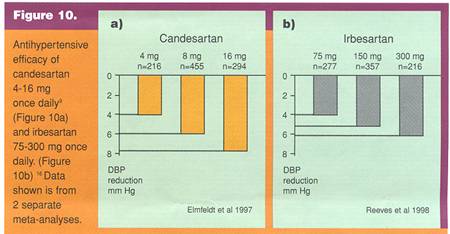
38 Finally, Dr Ablett turned to explicit links to or statements of clinical superiority of ATACAND over Irbesartan. He commented that, on his reading of the respondent’s material, it was all directed towards a conclusion of clinical superiority. There was no proper scientific basis for that conclusion. He noted that in earlier correspondence the respondent had denied making any claims of clinical superiority. Despite that, he contended, the respondent had made explicit links to, or statements of, clinical superiority in the oral presentations to various doctors, including one specific presentation to Dr Francesco Barbagallo which was the subject of a separate affidavit. That affidavit concerned the events of the morning of 21 January 1999. A representative of the respondent, Ms Lee Mennie, had sought to convey to Dr Barbagallo that ATACAND was more effective than Irbesartan in reducing blood pressure at the dosages specified in two sets of bar graphs which she had shown him. Those bar graphs appear as Figure 10 in the second newsletter, and are the subject of the eighteenth representation.
39 “Figure 10”, in Dr Ablett’s view, constituted an express claim to clinical superiority. He characterised Figure 10 as “most misleading”. It was created from data derived from two separate meta-analyses (a meta-analysis being an analysis conducted on the accumulated results of several small studies), one of Candesartan studies, and one of Irbesartan studies.
40 The graphic, and the accompanying text, are as follows:
“Comparison with irbesartan
Derived comparisons between candesartan 4-16 mg and irbesartan 75-300 mg show similar efficacy in terms of BP reduction. In a meta-analysis of six placebo-controlled studies, candesartan 16 mg caused a placebo-corrected fall in DBP of 8 mmHg, while the pooled results from placebo-controlled trials with irbesartan show a placebo-corrected fall in DBP of 6 mmHg with the 300 mg dose. (Figure 10).”
41 Dr Ablett observed that, in his opinion, the graphic portrayed Candesartan as being more effective than Irbesartan. It portrayed an equivalence between doses of 4mg (Candesartan) and 75mg (Irbesartan), a superiority of 8mg (Candesartan) over 150mg (Irbesartan), an approximate equivalence between 8mg (Candesartan) and 300mg (Irbesartan), and a superiority of 16mg (Candesartan) over 300mg (Irbesartan).
42 Dr Ablett exhibited the studies relied upon for the preparation of this graphic. He stated:
“The nature of the studies does not permit this kind of comparison. The populations are different. One (Elmfeldt) comprises virtually all (99%) Caucasians whereas in the other (Reeves) 82% were Caucasian and Hispanic (the proportions are unknown) and 18% were other ethnic groups. As the Reeves studies were largely conducted in North America it is likely a high proportion of the 18% were African Americans. Population differences like this can have a dramatic effect on the outcomes of studies of hypertensive drugs. For example it has been demonstrated that African Americans are poor responders to ACE inhibitors. Elmfeldt (who is also an employee of the Respondent’s parent) specifically cautions:
“The results obtained on the dose response relationship for the antihypertensive effect of candesartan cilexetil can only be regarded as representative for similar patient groups. Specific studies are needed for conclusions on the effect of different doses of candesartan cilexetil in other patient populations, e.g. of different race, ethnic group or social environment.””
43 Dr Ablett concluded that Figure 10 represented an attempt to make a direct comparison between Candesartan and Irbesartan without the studies necessary before such a comparison could be made. None of the representations in the graphic could properly be relied upon to guide a doctor in the clinical context. As presented, it clearly portrayed Candesartan as superior to Irbesartan. Dr Ablett did not consider that the impact of the graphic was reduced by the reference to “similar efficacy” in the text accompanying it, especially as the apparently superior result for Candesartan in the 16mg/300mg comparison was set out in the text immediately after that statement.
44 Dr Ablett drew attention to the fact that the Pharmaceutical Benefits Advisory Committee (“PBAC”), an independent statutory body established under the National Health Act 1953 which considered the effectiveness and cost of proposed benefits compared to alternative therapies had come to a different basis of equivalence between Candesartan and Irbesartan from that depicted in Figure 10 of the second newsletter. The PBAC had concluded that Candesartan could be recommended for listing on the basis of 8mg of Candesartan being equivalent to 75mg of Irbesartan. Figure 10, however, represented an approximate basis of equivalence of 8mg to 300mg. The PBAC recommendation was relied upon by Dr Ablett as demonstrating the unreliability of Figure 10. An additional vice of Figure 10 was that it tended to suggest that Candesartan was cheaper than Irbesartan given the relative efficacy of each drug.
45 Dr Ablett pointed to the fact that the second newsletter also stated:
“Candesartan dissociates more slowly from the AT1receptor than Losartan, EXP-3174 and Irbesartan (Figure 4). Slow dissociation of candesartan from the AT1receptor ensures a long duration of action.”
46 Dr Ablett commented that, in his view, this was a clear statement of clinical superiority. It did not fairly represent the study cited (Abrahamsson) even if such a study could form a proper basis for a clinical conclusion which, Dr Ablett contended, it could not.
47 In the Retail Pharmacy Article the following statement appeared:
“… Atacand dissociates from the receptor more slowly than other AII antagonists, ensuring a longer duration of action and sustained antihypertensive effect.”
Dr Ablett repeated his earlier comments in relation to this statement.
48 In the first newsletter the following statement appeared:
“In addition to its tighter binding, candesartan binds to the AT1receptor for longer than irbesartan and losartan, ie it dissociates more slowly than the other AII antagonists. Candesartan can therefore effectively block angiotensin II and its effects for a prolonged period of time.”
Dr Ablett noted that the study cited was Abrahamsson, and stated that his earlier comments applied.
49 Dr Ablett concluded that medical practitioners and pharmacists to whom the respondent’s representations had been made would be misled into thinking that there was a proper scientific basis for concluding that ATACAND was clinically superior to Irbesartan for the treatment of hypertension. Alternatively, they would be misled into believing that there was a scientific basis for choosing ATACAND over Irbesartan in the clinical context.
50 Dr Ablett noted that these representations were continuing to be made. If they remained unchecked, the reputation and market position of Irbesartan would be damaged irrevocably. BMSA would suffer a substantial, but unquantifiable loss of income.
51 Dr Ablett also contended that there was a significant public health issue. The second newsletter containing Figure 10 could mislead readers into believing that ATACAND was more effective than Irbesartan at certain dosages. Reliance on that figure could have undesirable results because ATACAND might be prescribed at a level lower than that required to achieve the necessary drop in blood pressure.
52 I have already referred to the oral representations allegedly made to Dr Barbagallo on 21 January 1999 by a representative of the respondent. Dr Barbagallo in a supplementary affidavit, expressed the belief that Figure 10, as set out in the second newsletter, contained the same bar graphs as those shown to him in the chart produced by Ms Mennie on that date.
53 The applicant also relied upon an affidavit of Professor John James McNeil, who is Professor of Epidemiology and Preventive Medicine at Monash University. Aside from his ordinary medical degrees, and his training as a physician specialising in clinical pharmacology, Professor McNeil obtained a Master of Science degree in Epidemiology from the Department of Medical Statistics and Epidemiology at the University of London in 1980, and a PhD from the University of Melbourne. He has served on many government committees concerning the assessment and regulation of drugs and has been extensively involved in teaching clinical pharmacology to medical students at Monash University. He is a member of the Cardiovascular Advisory Board for BMSA.
54 In substance, Professor McNeil’s affidavit supports that of Dr Ablett in criticising the respondent’s use in its advertising and promotional material of the word “insurmountable” when applied to Candesartan. It also criticises the respondent’s claims that Candesartan blocks the angiotensin II receptor more completely, and for a longer period, than other similar drugs (“tight binding/slow dissociation”). Professor McNeil states:
“In my view, prescribing doctors reading the Astra material would infer that Astra was informing them that the probable consequence of these characteristics was more powerful and more consistent blood pressure reduction than would occur using drugs without these characteristics.”
55 Professor McNeil doubted that prescribing doctors would be aware of the pharmacological use of the term “insurmountable”. In his view such doctors would generally interpret that term as meaning complete blockade or some such similar meaning.
56 Professor McNeil observes:
“There is no scientific evidence which establishes that drugs possessing these properties (“insurmountable”, “tight binding”, “slow dissociation”) have any clinical advantage in humans over those that do not.”
57 In Professor McNeil’s view prescribing doctors would be unlikely to be aware of that fact.
58 Professor McNeil also referred in his evidence to the chart which Dr Barbagallo described in his affidavit, and which is Figure 10 in the second newsletter. He stated:
“The comparative chart juxtaposes the results of two separate meta- analyses. I think it is obvious that the reader is intended to compare the two and conclude that Candesartan is more effective in lowering blood pressure than Irbesartan. This is very misleading. Meta-analyses cannot be compared in this manner. The factors which influence the amount of blood pressure lowering achieved in clinical trials include entry blood pressure and other characteristics of the two groups of patients, including age, sex, concomitant medication, and the protocol used for measuring blood pressure in the two groups. I have been told that it has been suggested that medical practitioners reading the Newsletter and Figure 10 would not make the comparison to which I have referred. I do not agree. The material is presented in a way which invites the comparison. I believe that the comparison is inappropriate and very likely to be misleading. I note also that the diagram purporting to represent the result omits the statistical error bars which are almost universally employed to indicate the degree of imprecision in such data.”
59 The applicant also relied upon evidence from Mr Dilip Kotecha, a product manager employed by BMSA. In his affidavit, Mr Kotecha recounted a conversation which he had with another BMSA representative who had come into possession of a folder relating to ATACAND left behind in a doctor’s surgery by an Astra representative. On the front cover of that folder is a post-it note which appears to have been written by the Astra representative. It contains the following handwritten statements:
“· more effective than irbesartan.
· 4, 8, 16mg
· 8 mg most common dose
· no orthostatic effect
· good for renal function
· can use in type II diabetics”
The post-it note appears to have been signed by the Astra representative.
60 The applicant invites me to conclude that the handwritten notes convey, in general terms, what was communicated by the Astra representative to the doctor with whom she left the ATACAND folder.
61 Finally, the applicant relied upon an affidavit sworn by one of its medical representatives, Ms Alison Kristensen. She deposed to various conversations with doctors with whom she dealt in the course of her promotional activities on behalf of BMSA. Those doctors had informed her that the respondent’s representatives had told them that ATACAND had greater binding affinity for the AT1receptors, and that the doctors thought that this was clinically significant, making ATACAND more efficacious than AVAPRO.
The respondent’s case
62 The respondent relied primarily upon the evidence of two experts, Dr Dag Elmfeldt, Scientific Director, Hypertension at Astra Hassle AB, the respondent’s parent company, and Professor Lindon Michael Harper Wing, Dean of the School of Medicine in the Faculty of Health Sciences at Flinders University in South Australia, and Professor in the School of Medicine with a specialist background in Clinical Pharmacology.
63 Dr Elmfeldt holds the degree of Doctor of Medicine from the University of Gothenburg and is an acknowledged expert in the fields of cardiovascular epidemiology, cardiology, hypertension and clinical pharmacology. He has previously taught and practised medicine in Australia.
64 Dr Elmfeldt accepted that there have been no clinical studies to date as to the efficacy of the blocking agent used in Candesartan on human vascular tissue. He stated however that it was generally accepted by practitioners and researchers who worked in receptor research that in human trials, the mechanism by which vasoconstriction is reduced is the binding of AT1receptor blockers to receptors. Differences in the binding characteristics of these drugs translate into differences in clinical effects. In the case of Candesartan, the trough-to-peak ratio remained in the range of 80 to 100 per cent, greater than Losartan and Irbesartan. He continued:
“Owing to the invasive nature of any procedure which would be required to obtain clinical data, there have been no clinical tests of the drug on human tissue. However, extensive testing has been undertaken on rat portal veins (which exhibit similar characteristics to human tissue when treated with these drugs) and rabbit aorta …
These pre-clinical tests demonstrate that candesartan is insurmountable when subjected to high concentrations of angiotensin II. The term “insurmountable” is a pharmacological term which means that the blocker is able to block the response in the tissue to the agonist hormone completely, provided that the concentration of the blocker is high enough. “
65 Dr Elmfeldt continued:
“In my opinion, it is an unfounded criticism to say that pre-clinical studies have no relevance to the effect of drugs on humans. In my view, these tests enable researchers and practitioners to understand the underlying mechanisms of action.”
66 Dr Elmfeldt then stated:
“In the case of candesartan, the pre-clinical studies undertaken by the abovementioned authors [Shibouta, Morsing and Abrahamsson] help us to understand the reason for the sustained positive effect of the drug, long after plasma concentrations have fallen away. Furthermore, these studies may be of interest to general practitioners in helping them to understand the basic mechanism at work. It is anticipated that these practitioners will examine the pre-clinical data and draw their own inferences from that data. The promotional material clearly states that tests have been conducted on animal tissue and there is certainly no intention on the part of Astra to present the impression that clinical data has been provided. In this regard, I dispute the suggestion made by Dr Ablett in paragraph 49 of his affidavit that the pre-clinical studies are being used in a clinical context. However, these studies are not entirely irrelevant to clinical application, in that they provide a likely hypothesis for the binding characteristics in a clinical context.”
67 Dr Elmfeldt went on to say that he strongly disagreed with Dr Ablett that it was misleading to use the results of animal experiments. Pre-clinical data could be used to provide a possible explanation of the mechanisms behind the clinical effects of Candesartan.
68 Dr Elmfeldt went on to dispute almost all of Dr Ablett’s claims concerning the nature of the respondent’s promotional material. He denied that that material contained any direct comparisons in clinical terms. It had been made clear that the tests had been undertaken on animal tissue, and it was a reasonable assumption that the effects experienced in animals would translate into a clinical environment.
69 As regards Figure 10, Dr Elmfeldt stated that it was clear that the comparison which had been undertaken was between two meta-analyses, rather than a head to head comparison of the drugs in a clinical context. Each graph constituted a compilation of the results of six to eight separate studies. Whilst each set of studies was conducted separately, the use of similar subjects, similar numbers and similar methodology rendered the comparison valid. It was not an overstatement to suggest, as the respondent had, that each of Candesartan and Irbesartan, on the basis of each meta-analysis, had “similar efficacy”. Dr Elmfeldt believed that general practitioners would understand that the Figure 10 studies were not conducted head to head. Accordingly, in his opinion, general practitioners would not assume that the graph provided firm comparative conclusions as to the clinical effects of each of the drugs. In circumstances where direct comparison data was not available it was, in his opinion, legitimate and appropriate to use the best data available.
70 Finally, Dr Elmfeldt expressed criticisms of the work done by the PBAC and its views as to the equivalence between Candesartan and Irbesartan (8mg equals 75mg). In Dr Elmfeldt’s view the methodology adopted by the PBAC was not of the same standard and quality as that used in the separate meta-analyses undertaken in relation to Candesartan and Irbesartan, referred to in Figure 10. He also disagreed that medical practitioners who normally prescribe Irbesartan would not apply the correct equivalency ratio, and would prescribe ATACAND at a level lower than that required to achieve the necessary drop in blood pressure.
71 Professor Wing’s affidavit is broadly supportive of the views of Dr Elmfeldt. He referred to certain clinical tests which, in his view, provided evidence that Candesartan had the property of tight and sustained binding with the AT1receptors. He stated:
“Such binding has been demonstrated pre-clinically, and the results of experiments such as the one referred to in the previous two paragraphs [GG Belz] strongly suggest that this is a clinical property of candesartan. In my professional view it is a fair and open inference that candesartan has this property clinically.”
72 Professor Wing had no difficulty with extrapolating conclusions from well conducted animal experiments and making that information available to the medical profession. He continued:
“I understand that it is alleged by the applicant in this case that even if candesartan may be regarded as having a property of particularly tight binding in humans, there is no fully tested clinical study which proves that such tight binding has an influence on the pattern of the blood pressure response in humans. However, I believe that on all the evidence such tight binding of candesartan is likely to have a significant influence on the pattern of the blood pressure response in clinical studies. It is very difficult to obtain direct evidence of the tight binding of candesartan from studies on man.”
73 Professor Wing then dealt with the various contentions contained in Dr Ablett’s affidavit. He disputed Dr Ablett’s criticism of the use of the term “refinement of existing AII antagonist pharmaceuticals”. He claimed that a medical practitioner reading that statement would not form the impression that Candesartan had proven clinical superiority over Irbesartan in terms of duration of binding (though he thought that this may, in fact, be the case). Professor Wing considered that a medical practitioner would derive from the brochure the understanding that there is a pre-clinical difference of significance which may have clinical relevance.
74 Likewise, Professor Wing had no difficulty with the respondent’s promotional material describing Candesartan as having demonstrated in pre-clinical tests that it possessed the pharmacological quality of insurmountability. The brochure was clearly linked to the Abrahamsson study which had used rat portal veins, and was therefore pre-clinical. Professor Wing did not think that it could reasonably be inferred by a medical practitioner that this indicated that the clinical effects would be the same. A medical practitioner would infer no more than that this was a quality of interest, and that the drug may possess such a property.
75 Professor Wing did not think that a medical practitioner would reach the conclusion that the words “tight binding to a AT1receptors” meant that the product possessed a clinical advantage in reducing blood pressure. Similarly, he saw nothing inappropriate in using the expression “longer binding to AT1receptors”. Professor Wing commented:
“The suggestion is that because a pre-clinical study is included in promotional material, it must convey a representation that the results of the pre-clinical study will be obtained in a clinical context. I do not think that this is justified of members of the medical profession. Medical students and pharmacy students generally are taught a number of things about animal experiments:
(i) experiments are carried out using animals;
(ii) there are differences between the two;
(iii) it is impossible to say that the same results would be achieved in humans but the circumstances may indicate a greater or lesser degree of likelihood that this will be so.”
76 Professor Wing then turned to the first newsletter. This had been prepared by Professor Colin Johnston, Professor of Medicine at the University of Melbourne, and a renowned authority on hypertension. He commented in relation to the seventh representation pleaded by the applicant that there was nothing in the newsletter which asserted a clinical difference between Irbesartan and Candesartan. The medical profession would not draw that inference from that document. Professor Wing did not consider that Professor Johnston was asserting, either directly or by implication, that Candesartan was clinically better than Irbesartan.
77 Professor Wing then turned to the booklet. He noted that it incorporated four pages of product information. That product information was intended to be given to doctors, and used by them in prescribing the product. It had been approved by the Therapeutic Goods Administration which is the Commonwealth Authority which authorises the manufacture, import and sale of therapeutic goods in Australia. The process by which a drug such as ATACAND is approved involves submitting substantial pre-clinical and clinical trial data in order to establish the safety and efficacy of the product. The Therapeutic Goods Administration is generally in possession of all information and all studies relevant to the drug in question. The product information approved by that body is intended to be supplied to doctors in order to aid in the prescribing of the products. Professor Wing noted that the following passage had been approved in the product information:
“Candesartan is an angiotensin II receptor antagonist, selected for AT1receptors with tight binding to and slow dissociation from the receptor. It has no agonist activity.”
78 Professor Wing commented that the applicant relied on the text of this booklet to convey the alleged representations. He noted, however, that the text had been approved for the assistance of doctors by the Therapeutic Goods Administration.
79 Professor Wing had no difficulty with the use of the term “AII antagonism refined” or with the expression “tighter and longer lasting binding”. It had been made clear that the Shibouta study was pharmacological, and that the Abrahamsson study was pre-clinical. In Professor Wing’s view, a medical practitioner would not draw any inference of clinical superiority from anything said in the fact sheet. Similarly, Professor Wing had no difficulty with the language in the second newsletter which had been written by Professor Johnston. It was not, in his view, misleading to use the phrase “insurmountable antagonism” in relation to Candesartan.
80 In dealing with Figure 10, Professor Wing noted that there was nothing improper in presenting derived comparisons of two meta-analyses to the medical profession in the manner done in the newsletter, accompanied as Figure 10 was, by the statement that the two analyses “show similar efficacy in terms of BP reduction”. A meta-analysis was simply a combination of a number of studies. Placing two meta-analyses side by side did not represent that a head to head comparison was being made. It was legitimate and proper for Professor Johnston to have made the comment which he had, utilising as its basis the two studies by Elmfeldt and Reeves. Professor Wing rejected the assumption (which he regarded as implicit in Dr Ablett’s attack on Figure 10) that the only comparisons which could be presented to the medical profession for any purpose were full head to head comparative tests. He commented that tests of that type would be superior, but it was incorrect to suggest that derived comparisons such as Figure 10 should never be made, or that they have no value.
81 It is unnecessary to traverse the remainder of Professor Wing’s evidence save to note that he also disputed Dr Ablett’s conclusion that Figure 10 was misleading because the studies reflected in that figure were based upon different population groups. Professor Wing noted that Dr Ablett had suggested that population difference could have a “dramatic effect” on the outcome of studies of hypertensive drugs, and that African Americans had been poor responders to ACE inhibitors (which were quite different drugs to AII antagonists). Professor Wing then observed, somewhat sardonically:
“However, I note that in the approved product information for the applicant’s drug “Avapro”, the following passage appears:
“Analysis of age, gender and race subgroups of patients showed that men and women, and patients over and under 65 years of age, had generally similar responses.””
82 Professor Wing disagreed with Dr Ablett that the PBAC equivalence tables were in any way likely to be more accurate than the equivalences produced in Figure 10. He rejected Dr Ablett’s concern that Figure 10 could be misused by practitioners to the detriment of their patients.
83 The respondent also led evidence from one of its sales representatives who had obtained a brochure produced by the applicant to promote its own product AVAPRO. That brochure refers to AVAPRO in the following terms:
“Complete and sustained blockade of angiotensin II”.
84 The respondent contends that there is little difference between the applicant’s use of terminology of this type, and its own claims to “insurmountability” for its product. That contention is said to be relevant to the strength of the applicant’s case in respect of some of the representations made by the respondent, and is also said to be relevant when considering whether interlocutory relief should be granted as a matter of discretion.
85 Finally, the respondent relied upon an affidavit sworn by Mr Robert Richardson, its Director of Business Strategy and Coordination. Mr Richardson’s affidavit set out a number of factors which are relevant to the balance of convenience issue. He pointed out that a number of the articles containing the representations which are the subject of complaint will not, in any event, be published again. He also set out some of the costs of the respondent’s advertising campaign, and identified the damage which would be done to that campaign if the interlocutory relief sought were to be granted.
The applicant’s case in reply
86 The applicant filed an additional affidavit in reply sworn by Dr Ablett. That affidavit deals at considerable length with the affidavits of Dr Elmfeldt and Professor Wing. It is unnecessary to set out in any detail Dr Ablett’s comments. It is sufficient to say that nothing in the affidavits of Dr Elmfeldt or Professor Wing has caused Dr Ablett to resile in any way from the contentions set out in his primary affidavit. Those contentions form the basis for the applicant’s statement of claim. Dr Ablett strongly disagrees with Dr Elmfeldt and Professor Wing. There the matter rests.
The relevant legal principles
87 There is no dispute between the parties that in order to obtain the interlocutory relief which it seeks the applicant must demonstrate that there is, in relation to each representation said to contravene the Act, a serious question to be tried as to that issue, and that the balance of convenience favours the grant of the injunctive relief sought. The applicant has indicated that it is prepared to give the appropriate undertakings as to damages. There is no doubt as to its capacity to pay any damages awarded to the respondent in the event that it is unsuccessful in obtaining final relief.
88 Mr Whelan submitted that in relation to each and every representation pleaded, the material demonstrates that there is a serious question to be tried. The evidence of Dr Ablett and Professor McNeil was sufficient, in his submission, to establish that fact.
89 Mr Blackburn who appeared with Mr Sibtain, for the respondent, did not concede that the applicant had demonstrated that there was a serious question to be tried in respect of each of the representations pleaded. However, it is fair to say that save for one or two of those representations, he did not really challenge Mr Whelan’s contention in this regard. Mr Blackburn submitted, however, that in determining whether to grant the interlocutory relief sought, it was relevant for the Court to have regard to the apparent strength of the applicant’s case. That case, he submitted, could not be regarded as anything other than weak. He relied in support of that submission upon the evidence of Dr Elmfeldt, and perhaps to a greater extent, upon the evidence of Professor Wing. Professor Wing, he noted, was independent of both the applicant and the respondent. That could not be said of Dr Ablett or Professor McNeil. Nor, of course, could it be said of Dr Elmfeldt.
90 Mr Blackburn also submitted that Professor Johnston’s willingness to allow his name to be associated with the respondent’s promotional material, including the use of Figure 10, was a matter of considerable significance in assessing the strength of the applicant’s case. Professor Johnston did not swear an affidavit in the proceedings before me. I was informed that he had declined to do so. I was also informed that he had declined to desist from making use of the respondent’s advertising and promotional material, and in particular Figure 10, pending the resolution of this application.
91 The approach to be followed in an application for an interlocutory injunction in circumstances such as these is set out in a number of authorities to which my attention was drawn. The Court must be satisfied that the evidence establishes that there is a serious question to be tried, that the balance of convenience favours the grant of injunctive relief, and that there are no discretionary reasons for refusing the relief sought. Once the Court is satisfied that there is a serious question to be tried in relation to any particular representation, the strength of the applicant’s case in relation to that representation may be taken into account when considering the balance of convenience, and the exercise of the Court’s discretion.
92 In Bullock v The Federated Furnishing Trades Society of Australasia (No 1) (1985) 5 FCR 464 at 472 Woodward J (in a judgment with which Smithers and Sweeney JJ agreed) stated:
“The only point I would wish to add for myself is that, when it becomes necessary to consider the balance of convenience, it is, I believe, quite proper to continue to bear in mind the apparent strength of the applicants’ case; the two legs of the test need not be considered in isolation from each other. Thus an apparently strong claim may lead a court more readily to grant an injunction when the balance of convenience is fairly even. A more doubtful claim (which nevertheless raises “a serious question to be tried”) may still attract interlocutory relief if there is a marked balance of convenience in favour of it.”
93 See also Telstra Corporation Ltd v Optus Communications Pty Ltd (1997) ATPR 41-541 at 43,513 per Merkel J.
94 In assessing the strength of the applicant’s case, the Court does not forecast the result at trial. The strength of the case must be considered on the basis of the evidence, and the submissions which have been made, on an interlocutory basis. Some of the evidence which has been led before me would not have been admitted in its present form if this were not an interlocutory application. As indicated earlier, there has been no cross-examination of any of the witnesses who have sworn affidavits. I am left in the position of having to evaluate the strength of the applicant’s case upon the basis of the widely divergent views expressed by each side’s experts. The qualifications and experience of those experts has not been challenged. They seem to me to have endeavoured to state their conclusions in an honest and forthright manner though it is difficult to avoid the conclusion that they have, at various times, assumed the role of advocates in support of the cause in which they happen to believe.
95 It would be difficult for the respondent to sustain the proposition that the applicant has failed to raise a serious question to be tried in respect of each of the representations which have been identified as allegedly contravening the relevant provisions of the Act. Dr Ablett and Professor McNeil have set out in considerable detail their reasons for concluding that those representations were, and are, misleading or deceptive, or false. The fact that Dr Elmfeldt and Professor Wing have formed diametrically opposed views in relation to these matters does not prevent the applicant from having overcome the initial hurdle which confronts it.
96 Dr Ablett’s forceful rejoinder to the affidavits of Dr Elmfeldt and Professor Wing in his affidavit in reply makes it plain that he in no way resiles from the views which he expressed in his original affidavit. He maintains his stated position that many aspects of the respondent’s advertising and promotional campaign are misleading or deceptive, or false.
97 As noted earlier, Mr Blackburn did not concede that the applicant had established a serious question to be tried in relation to the representations identified in the statement of claim. Very sensibly, he confined his submissions in opposition to the grant of interlocutory relief largely to the question of the balance of convenience, relying in part upon what he submitted was the weakness of the applicant’s case.
98 Before turning to the issue of the balance of convenience, several points of a general nature should be made.
- Care must be taken to avoid reading individual statements or representations contained in a single piece of advertising or promotional material in isolation, and out of context. A single statement, read in isolation from other statements in the same piece may not convey the meaning that the document, read as a whole, plainly does – Colgate-Palmolive Pty Ltd v Rexona Pty Ltd (1981) 37 ALR 391 at 395 per Lockhart J.
- There is no inconsistency between the purpose underlying Part V of the Trade Practices Act (which is essentially to protect consumers from misleading or deceptive conduct in trade or commerce) and, in an appropriate case, considering damage likely to be suffered by an applicant for injunctive relief – Colgate-Palmolive Pty Ltd v Rexona Pty Ltd (supra) at 400.
- The fact that approval has been given to some of the impugned representations by the Therapeutic Goods Association having approved the respondent’s product information, and the fact that the product information itself is included within the promotional material being disseminated, is a relevant consideration in determining whether or not to grant the injunction sought. It is not, however, decisive in determining whether that relief should be granted. The Therapeutic Goods Association performs a specific statutory responsibility which is not identical to that performed by the Court. Moreover, there is no evidence as to how that body goes about the task of determining whether to permit a particular drug to be marketed in this country - Colgate-Palmolive Pty Ltd v Rexona Pty Ltd (supra) at 400.
- In assessing the strength of the applicant’s case for the purpose of determining whether the interlocutory relief sought should be granted, it must be remembered that the respondent’s material is directed primarily towards individuals who are both knowledgable and highly trained in the general field of treating hypertension. The evidence before me is that hypertension is relatively easy to treat. For the most part, such treatment is carried out by general practitioners, rather than by specialists. When considering the strength of the applicant’s case in relation to any given representation, the question which must be asked is, how that representation would be understood by a reasonable general practitioner of normal intelligence reading a document which is no mere piece of junk mail, but rather a document which deals with a subject of real importance. At the same time, however, the material in question would not be likely to be scrutinised in the way that a lawyer might read an important letter, or a written agreement. It will be recognised as advertising or promotional material.
- Special considerations apply in the area of what is known as “comparison advertising”. In Duracell Australia Pty Limited v Union Carbide Australia Limited (1988) ATPR 40-918 at 49,861 Burchett J stated:
“In the area of comparison advertising, it has repeatedly been said that particular care is required. An unfair comparison may, quite simply, because it is unfair, be misleading. It may mislead a consumer into thinking there is a basis for a choice where, in truth, there is not; or that a choice may be made on grounds which are not truly valid: ….”
In Sterling Winthrop Pty Ltd v The Boots Company (Australia) Pty Ltd (1995) ATPR 41-433 at 40,877 Tamberlin J observed:
“The authorities indicate that where comparative advertising is in question, particular care must be exercised to ensure that the products are accurately compared. … A comparison may be misleading by the omission of material that would be necessary to render the comparison fair. …
It can be misleading for a corporation which disseminates information not to put forward sufficient information to avoid the possibility that the recipient may be misled. … It can also, in my view, be misleading to make a statement which implies that there is an adequate foundation in scientific knowledge to justify it when taken in its context the scientific statement quoted does not provide a proper foundation.”
See also Telstra Corporation Ltd v Optus Communications Pty Ltd (supra) per Merkel J at 43,514-5. Errors made in comparative advertising may have a greater potential to mislead consumers than statements made in ordinary advertising which may be perceived as mere “puffs”. There are also greater dangers in the “half truth”, or in the unqualified “literal truth”, in comparative advertising.
- When dealing with the balance of convenience regard must be had to the possibility that the applicant’s undertaking as to damages will not fully compensate the respondent for any loss or damage it may suffer if interlocutory relief is granted. It may be impossible for the respondent to establish damage by reference to its failure to gain a market share, in contrast to losing one.
- Moreover, the respondent in the present case asserts that if its advertising program is curtailed, that may mean the loss of a window of opportunity which presently exists to enter the market. It may even be that the grant of interlocutory relief will have the effect of causing the respondent to abandon its present advertising campaign in its entirety. Once abandoned the campaign might be incapable of being reinstated even if the respondent ultimately succeeds in the final hearing of this application.
The balance of convenience
99 If the applicant can make out a sufficiently serious case to be tried, the balance of convenience would, in the present case, favour the grant of interlocutory relief. There is a public interest protected by the Act that consumers should not be deceived. The respondent’s advertising campaign, which is aimed at disturbing the status quo in the market for these particular types of anti-hypertension drugs would, if successful, make it very difficult to compensate the applicant adequately by an award of damages should it be left to that remedy, and ultimately succeed.
100 There is no doubt as to the applicant’s ability to meet its undertakings as to damages should it fail. Any damages required to be paid pursuant to that undertaking would be difficult to assess, but not nearly as difficult as in the converse case.
101 The relevant principles are well set out in Duracell Australia Pty Limited v Union Carbide Australia Limited (supra) at 49,858 where Burchett J concluded that the balance of convenience in that case favoured the applicant. His Honour continued:
“It does not necessarily follow that relief must be granted if a barely sufficient case is established; as I have said, the ultimate decision may be made on a balance that takes all the considerations into account together.”
102 I have given careful consideration to the approach adopted by Merkel J in Telstra Corporation Ltd v Optus Communications Pty Ltd (supra) at 43,516-43,517. There his Honour concluded that the balance of convenience favoured the applicant because the harm to which it would be subjected if the respondent’s advertising campaign were permitted to continue was “incalculable and irreparable”. It would not, in a practical sense, be possible to determine whether customers had switched their allegiance from the applicant to the respondent by reason of the misleading conduct alleged against the respondent, or for some other reason. The fact that the respondent had expended substantial sums in preparing its advertising campaign did not weigh heavily with his Honour. That loss was quantifiable and was protected by the usual undertaking as to damages.
103 As to the loss of the opportunity to obtain custom, and the loss of momentum which the respondent would suffer by having its advertising campaign curtailed, his Honour accepted that the relief could, in effect, be viewed as final. The loss to the respondent in granting the interlocutory relief might prove to be incalculable. So also, however, would be the applicant’s loss if the respondent’s commercials were permitted to continue.
104 His Honour concluded that the strength of the prima facie case made out by the applicant was sufficient to swing the balance in its favour.
105 The onus rests upon the applicant to satisfy the Court not merely that there is a serious issue to be tried in respect of each representation that it seeks to enjoin, but that the strength of its case in relation to each such representation is such that when considering the balance of convenience, the scales come down in favour of the grant of interlocutory relief. The applicant must also demonstrate that there are no discretionary reasons for refusing that relief.
Conclusion
106 Although the applicant has succeeded in showing that there is a serious question to be tried in relation to each representation identified and pleaded in its statement of claim, it is clear that its case is stronger in relation to some of those representations than it is in relation to others. Mr Whelan accepted that this was so.
107 As I have already indicated, the balance of convenience seems to me to favour the grant of interlocutory relief. That is because of the greater difficulty which the applicant would have in calculating the harm or loss which it may sustain if the respondent’s advertising campaign were to continue, and damage its sales, than the respondent would sustain if its advertising campaign were to be curtailed.
108 It cannot, however, be said that the disparity between the applicant’s position and that of the respondent is so great as to make the distinction between the parties one which can be viewed as “marked”. It would be more accurate to say that the balance of convenience favours the applicant, certainly clearly, but by a relatively small margin.
109 In my opinion, the applicant should be granted the injunctive relief which it seeks but only in relation to those of its claims regarding the respondent’s representations which are strongly arguable, and not merely arguable, let alone doubtful – Bullock v The Federated Furnishing Trades Society of Australasia (No 1) (supra) at 472; Duracell Australia Pty Limited v Union Carbide Australia Limited (supra) at 49,858.
110 Although I have found that there is a serious question to be tried in relation to each representation pleaded, I do not regard the evidence presented in relation to the first, second, third, fifth, sixth, ninth, tenth, eleventh, twelfth, fourteenth, fifteenth, sixteenth, and seventeenth representations as being of sufficient strength, when taken in conjunction with the marginal finding favouring the applicant on the balance of convenience, to warrant the grant of interlocutory relief. Nor would I enjoin the making of the twentieth, twenty-first, twenty-second, twenty-third, and twenty-fourth representations. Many of those representations seem to me to be relatively innocuous, and unlikely to mislead or deceive their target audience in the manner contended for by Dr Ablett. I do not think that, taken in context, statements such as “refined”, “insurmountable”, “tight-binding”, “slow dissociation” or “unique” are likely to have the effect upon general practitioners or pharmacists which Dr Ablett has prophesied. A number of those representations are, in my view, in the nature of “puffs”, and would be recognised as such. Nor do I believe that it is likely that the representations concerning the Abrahamsson study, and its utility when dealing with clinical matters, are likely to be found to be misleading or deceptive, or viewed as relevantly false, at least when confined to Candesartan.
111 I am satisfied, however, that the respondent should be enjoined from making or causing to be made the fourth, seventh, eighth, thirteenth, eighteenth and nineteenth representations. These representations all involve direct comparisons being made between Candesartan and Irbesartan which seem to me to portray Candesartan as having clinical advantages over Irbesartan. I believe that the applicant has established a strongly arguable case that Figure 10, which together with the accompanying text provides the basis for the eighteenth representation, is misleading or deceptive. I would enjoin the making of the twenty-fifth representation and the twenty-sixth representation to the extent that it depends upon the making of the twenty-fifth representation. The twenty-fifth representation involves a direct comparison between Candesartan and Irbesartan which is linked to the referenced studies in a manner which I consider to be sufficiently objectionable, on an interlocutory basis, to warrant the grant of interlocutory relief. I would also enjoin the making of each of the twenty-seventh, twenty-eighth and twenty-ninth representations, these being the oral representations allegedly made to medical practitioners by representatives of the respondent. They too involve direct comparisons between Candesartan and Irbesartan which ought not, pending the trial of this action, be permitted to be made.
112 In substance, I am satisfied, on the state of the evidence before me, that the respondent should not be permitted, pending the trial of this action, to continue to make claims involving any direct comparison between its product Candesartan and the applicant’s product Irbesartan, at least insofar as any such comparison involves the making of a representation of the type which I have identified as warranting the grant of interlocutory relief.
113 In accordance with the parties’ wishes, I will hear the parties further as to the form any orders should take. I will also hear them in relation to the question of costs.
|
I certify that the preceding one hundred and thirteen (113) numbered paragraphs are a true copy of the Reasons for Judgment herein of the Honourable Justice Weinberg. |
Associate:
Dated: 18 March 1999
|
Counsel for the Applicant: |
Mr SP Whelan QC and Mr S Sharpley |
|
|
|
|
Solicitor for the Applicant: |
Mallesons Stephen Jacques |
|
|
|
|
Counsel for the Respondent: |
Mr TD Blackburn and Mr DR Sibtain |
|
|
|
|
Solicitor for the Respondent: |
Minter Ellison |
|
|
|
|
Date of Hearing: |
10 March 1999 |
|
|
|
|
Date of Judgment: |
18 March 1999 |


