

Federal Court of Australia
Registrar of Trade Marks v National Cancer Foundation Limited [2026] FCAFC 95
Appeal from: | National Cancer Foundation v Registrar of Trade Marks [2025] FCA 711 |
File number(s): | VID 1038 of 2025 |
Judgment of: | MARKOVIC, Needham and Bennett JJ |
Date of judgment: | 24 July 2026 |
Catchwords: | TRADE MARKS – revocation of registration – s 84A of the Trade Marks Act 1995 (Cth) – where Registrar of Trade Marks found that a trade mark should not have been registered as it was deceptively similar to prior registered marks pursuant to s 44 of the Act – where primary judge held there was no basis to be satisfied that the trade mark should not have been registered pursuant to s 84A(1)(a) – construction of s 84A(1)(a) – meaning of “satisfied” – whether primary judge erred by approaching the question in s 84A(1)(a) by reference to the degree to which the trade mark was deceptively similar to another – whether primary judge erred by taking into account the nature of the error for the purpose of s 84A(1)(b) – whether the primary judge erred in finding that the trade mark was not deceptively similar to prior registered marks – held: Appeal dismissed – primary judge erred in approach to s 84A(1)(a) but no error established in primary judge’s approach to s 84A(1)(b) – trade mark not deceptively similar to prior registered marks – no error in the original registration – discretion in s 84A(1) of the Act not enlivened – appeal dismissed |
Legislation: | Acts Interpretation Act 1901 (Cth) Intellectual Property Laws Amendment Act 2006 (Cth) Trade Marks Act 1995 (Cth) Intellectual Property Laws Amendment Bill 2006 (Cth) |
Cases cited: | Australian Postal Corporation v Digital Post Australia Pty Ltd [2013] FCAFC 153; 308 ALR 1 Avon Downs Pty Ltd v Commissioner of Taxation [1949] HCA 26; 78 CLR 353 at 360 Blount Inc v Registrar of Trade Marks [1998] FCA 440; 83 FCR 50 Caporaso Pty Ltd v Mercato Centrale Australia Pty Ltd [2024] FCAFC 156; 306 FCR 549 Federal Commissioner of Taxation v Consolidated Media Holdings Ltd [2012] HCA 55; 250 CLR 503 Firstmac Limited v Zip Co Limited [2025] FCAFC 30; 184 IPR 458 Foxtel Management Pty Limited v Registrar of Trade Marks [2019] FCA 605; 141 IPR 445 Health World Ltd v Shin-Sun Australia Pty Ltd [2010] HCA 13; 240 CLR 590 Minister for Immigration and Border Protection v Stretton [2016] FCAFC 11; 237 FCR 1 Minister for Immigration and Border Protection v SZVFW [2018] HCA 30; 264 CLR 541 Minister for Immigration and Citizenship v SZMDS [2010] HCA 16; 240 CLR 611 Palmanova Pty Ltd v Commonwealth [2025] HCA 35; 99 ALJR 1362 Palmer v Western Australia [2021] HCA 5; 272 CLR 505 R v Connell; Ex parte The Hetton Bellbird Collieries Ltd [1944] HCA 42; 69 CLR 407 Re Bobart [2010] ATMO 43; 88 IPR 357 Registrar of Trade Marks v Woolworths Ltd [1999] FCA 1020; 93 FCR 365 Self Care IP Holdings Pty Ltd v Allergan Australia Pty Ltd [2023] HCA 8; 277 CLR 186 Shell Co of Australia Ltd v Esso Standard Oil (Australia) Ltd [1963] HCA 66; 109 CLR 407 at 416-417 Societe Civile et Agricole du Vieux Chateau Certan v Kreglinger (Australia) Pty Ltd [2024] FCA 248; 179 IPR 226 Southern Cross Refrigerating Company v Toowoomba Foundry Pty Ltd [1954] HCA 82; 91 CLR 592 SZTAL v Minister for Immigration and Border Protection [2017] HCA 34; 262 CLR 362 |
Division: | General Division |
Registry: | Victoria |
National Practice Area: | Intellectual Property |
Sub-area: | Trade Marks |
Number of paragraphs: | 124 |
Date of last submission/s: | 25 February 2026 |
Date of hearing: | 11 March 2026 |
Counsel for the Applicant: | S Rebikoff and M Marcus |
Solicitor for the Applicant: | Australian Government Solicitor |
Counsel for the Respondent: | L Merrick and T Burn-Francis |
Solicitor for the Respondent: | Richards & Evans Commercial Lawyers |
ORDERS
VID 1038 of 2025 | ||
| ||
BETWEEN: | REGISTRAR OF TRADE MARKS Applicant | |
AND: | NATIONAL CANCER FOUNDATION Respondent | |
order made by: | MARKOVIC, Needham and bennett JJ |
DATE OF ORDER: | 24 July 2026 |
THE COURT ORDERS THAT:
1. The Applicant have leave to extend the period of time to seek leave to appeal.
2. The Applicant have leave to appeal from the judgment of the Federal Court of Australia given on 30 June 2025 at Melbourne and the orders made on the same day.
3. The Appeal is dismissed.
4. Subject to order 5, the Applicant pay the Respondent’s costs of the appeal as taxed or agreed.
5. If either party seeks an order as to costs which differs from order 4, then that party must:
(a) within 7 days of these orders being made, file submissions of no longer than 2 pages and any affidavit on which it seeks to rely in relation to an alternative costs order; and
(b) the other party must, within 7 days of receiving the above submissions, file submissions of no longer than 2 pages in response, along with any affidavit on which it seeks to rely.
6. The Court will determine any question of costs on the papers.
Note: Entry of orders is dealt with in Rule 39.32 of the Federal Court Rules 2011.
REASONS FOR JUDGMENT
THE COURT:
1 The Registrar of Trade Marks (Registrar) seeks:
(1) an extension of time to seek leave to appeal;
(2) leave to appeal; and
(3) if granted, appeals from orders made in National Cancer Foundation v Registrar of Trade Marks [2025] FCA 711 (PJ) which allowed an appeal with costs from a decision of a delegate of the Registrar (Delegate) pursuant to s 84D of the Trade Marks Act 1995 (Cth) (TM Act).
2 The Delegate revoked the registration of trade mark number 2086028 for the words “BROWN NOSE DAY” (Trade Mark), which was registered on 15 December 2020 in respect of “charitable fundraising” services in class 36.
3 The effect of the primary judge’s orders was to restore registration of the Trade Mark. The registered owner of the Trade Mark is the National Cancer Foundation (NCF), the Respondent to this application.
4 The background facts were summarised by the primary judge at PJ[8]-[16].
5 The NCF was established in June 2013. It is a charity which raises funds to support cancer prevention and treatment: PJ[8].
6 In April 2020, the NCF decided to pursue the “Brown Nose” theme for bowel cancer fundraising and awareness. It adopted the theme as an opportunity to use a mixture of humour, shock, affront and concern to raise awareness of bowel cancer: PJ[9].
7 On 7 May 2020, the NCF filed an application to register the Trade Mark (Application): PJ[10].
8 The Application was examined as required by s 31 of the TM Act. In undertaking the examination, the examiner identified and considered potentially conflicting prior registered trade marks in the usual manner, which relevantly included:
(1) trade mark number 490285 for 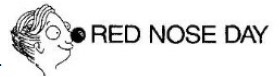 ;
;
(2) trade mark number 1022837 for the words “RED NOSE DAY” in respect of “charitable fundraising services” in class 36 (the RED NOSE DAY Mark);
(3) trade mark number 909947 for 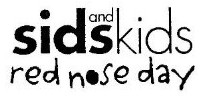 ;
;
(4) trade mark number 530371 for a series of trade marks comprising the words “NOSE DAY” and six other marks involving the name of a colour plus “NOSE DAY”, namely “RED NOSE DAY”, “WHITE NOSE DAY”, “BLACK NOSE DAY”, “BLUE NOSE DAY”, “YELLOW NOSE DAY” and “GREEN NOSE DAY”, in respect of “fundraising” services in class 36 (NOSE DAY series),
(collectively, the RND Marks).
9 In each case, the examiner found that the Trade Mark and the RND Marks were “sufficiently different”: PJ[11].
10 Accordingly, the Application was accepted for registration on 21 May 2020 and advertised in the Official Journal on 8 October 2020. No opposition was pursued and the Trade Mark was entered on the Register of Trade Marks (Register) on 15 December 2020: PJ[11].
11 On 25 October 2021, Red Nose Limited (RNL), the owner of the RND Marks, wrote to the Registrar requesting that the registration of the Trade Mark be revoked: PJ[12].
12 On 16 November 2021, the Deputy Registrar issued a written Notice of Intention to Revoke Registration (Notice) to the NCF, advising that the Registrar proposed to revoke the registration of the Trade Mark on the basis that a s 44 ground for rejection should have been raised against the Trade Mark at the examination stage. This was because the Trade Mark was substantially identical or deceptively similar to the RND Marks: PJ[13].
13 Following receipt of the Notice, the NCF requested that the Deputy Registrar explain the basis for the Notice and provide all documents relied upon in making the decision referred to therein. There were delays by IP Australia in responding to the NCF’s requests. Ultimately, it emerged that there were no documents recording IP Australia’s reasoning process for issuing the Notice, other than the Notice itself: PJ[14]-[15].
14 On 13 October 2022, the NCF requested a hearing in accordance with s 84A(5) of the TM Act and filed submissions and evidence opposing the revocation of the Trade Mark. A hearing took place before the Delegate on 5 December 2022 and resulted in revocation of the Trade Mark under s 84A of the TM Act on 28 February 2023: PJ[16].
15 The NCF appealed from the Delegate’s decision pursuant to s 84D of the TM Act.
16 As set out above, on 30 June 2025, the primary judge ordered that the appeal be allowed so that the Trade Mark remain registered.
the primary judge’s reasons
The statutory regime
17 After observing that the appeal before him was to proceed as a hearing de novo, with no presumption in favour of the correctness of the Delegate’s decision, the primary judge identified the questions that arose for determination to be whether the Court could be satisfied that (at PJ[19]):
(1) the Trade Mark should not have been registered, taking account of all the circumstances that existed when it became registered, including those specified in s 84A(2) of the TM Act; and
(2) it is reasonable to revoke the registration, taking account of all the circumstances, including those specified in s 84A(3) of the TM Act.
18 After setting out s 84A of the TM Act and extracts from the Explanatory Memorandum to the Intellectual Property Laws Amendment Bill 2006 (Cth), which led to the enactment of the Intellectual Property Laws Amendment Act 2006 (Cth) (Amending Act) and introduced s 84A into the TM Act, his Honour said (at PJ[22]):
The NCF submits, and I accept, that the wording of s 84A makes the following matters clear:
(a) First, the power to revoke a registration under s 84A is discretionary. This is the effect of the use of the word “may” in s 84A(1)(a), and the express statement that the Registrar does not have a duty to consider revocation in s 84A(6).
(b) Secondly, before revoking a registration under s 84A, the Registrar must be satisfied that two requirements have been met:
(i) the impugned mark should not have been registered; and
(ii) it is reasonable to revoke the impugned mark.
(c) Thirdly, both of those requirements are to be assessed against all the relevant circumstances. It may also be accepted that the question of whether the mark should have been registered is constrained by the circumstances prevailing at the time of registration, whereas the question of reasonableness has no such temporal constraint.
19 The primary judge rejected the Registrar’s submission that his construction of the operation of s 84A (as set out above) imposed a gloss on the wording of the section. His Honour accepted that the word “satisfied” in s 84A(1) was of particular significance and that in order to be satisfied of the relevant matters, a positive level of conviction needed to be formed that the Trade Mark should not have been registered and that it is reasonable to revoke it: PJ[23].
20 As to the question of deceptive similarity, the primary judge accepted that reasonable minds may differ as to whether one mark is deceptively similar to another. His Honour also accepted the NCF’s submission that in some cases such a difference may clearly disclose error, such as the application of the wrong legal test. In other cases, such a difference may be the product of evaluative judgements about the differences and similarities between the marks having regard to the context in which they are to be used. The primary judge accepted that it would be more difficult to show error in the latter case. In those circumstances, his Honour accepted that the concept of error in s 84A of the TM Act might be considered as a continuum from “clear error to evaluative difference” and continued (at PJ[24]):
Where the error is said to be a matter of evaluative difference, it may be accepted that the Registrar would only be “satisfied” that the mark “should not have been registered” where the original evaluation of the mark has clearly miscarried, such that it is not merely a matter about which minds can reasonably differ. It follows that this question of degree will also be relevant to the reasonableness limb of s 84A.
21 The primary judge observed that the legislative scheme suggests that the power under s 84A should be exercised sparingly and, in support of that proposition, noted that it can only be exercised by the Registrar in the 12 months following registration, after which time the power to cancel a trade mark can only be exercised by the Court. After the Registrar’s power under s 84A has expired, the Registrar can only apply to the Court for cancellation if the Registrar considers such an application to be desirable in the public interest, referring to s 88A of the TM Act. His Honour accepted that these statutory requirements reflected the fact that once a trade mark has become registered, it is a form of statutory property and the registered owner is entitled to rely upon and deal with that proprietary right: PJ[25].
22 Noting the limited authority dealing with the power to revoke under s 84A of the TM Act, the primary judge referred to the decision of the Deputy Registrar in Re Bobart [2010] ATMO 43; 88 IPR 357 and concluded that the observations made therein, as referred to in his Honour’s judgment, were compelling and accorded with the purpose for which s 84A of the TM Act was enacted. His Honour also observed that the decision in Bobart appropriately recognises that the Registrar must be satisfied that the trade mark should not have been registered: PJ[26]-[28].
Application
23 Having set out the legislative scheme and the approach to be taken to it, the primary judge turned to the questions to be determined.
24 The first question was whether there was a basis to find that the Trade Mark should not have been registered. The NCF’s position was that there was no such basis.
25 The parties accepted that the only requirement for rejection of the Trade Mark under s 44 of the TM Act that was relevant was whether it is deceptively similar to the RND Marks. The appeal before the primary judge was conducted on that basis.
26 The primary judge set out the principles relevant to determining whether one mark is deceptively similar to another (at PJ[34]-[35]). After setting out both parties’ submissions on the question of deceptive similarity, his Honour concluded that the Registrar ought not to have been, and his Honour was not, satisfied that the Trade Mark is deceptively similar to any of the RND Marks (at PJ[63]).
27 His Honour’s reasons for reaching that conclusion were as follows.
28 First, the primary judge accepted that the word BROWN distinguished the Trade Mark, visually, orally and conceptually from the RND Marks, noting that none of the latter contained the word BROWN. The primary judge considered this to be of particular significance because BROWN is the first word in the Trade Mark. His Honour accepted the evidence of Professor Valentyna Melnyk, a marketing expert relied on by the NCF, that “decades of research indicate that colour is a very important consumer differentiator that works both consciously and unconsciously” and that “Australian consumers are educated and trained through experience to distinguish similar charitable fundraising campaigns through the use of a feature like colour, within subcategories of charity “day” events”: PJ[64].
29 Second, his Honour referred to the commonly understood and distinct colloquial meaning of the words BROWN NOSE, being someone who is a sycophant, or someone who flatters or tries to carry favour. His Honour held that the colloquial meaning of BROWN NOSE strongly distinguishes the Trade Mark as to its meaning and the concept it conveys from the RND Marks. The primary judge accepted that RED NOSE has a distinct and well known connotation with respect to comedy, often being associated with clowns, a meaning that points away from any connection with BROWN NOSE DAY: PJ[65]-[66].
30 Third, the primary judge accepted the evidence that it was common for trade marks used in connection with awareness and charitable fundraising campaigns to focus on a specific time period, such as a day, a week or a month. His Honour referred to some common examples, Red Nose Day (for SIDS), Daffodil Day (for the Cancer Council) and Wet Nose Day (for Guide Dogs). His Honour also relied on and referred to other examples which showed that it is common in awareness and charitable fundraising campaigns for trade marks to combine a colour, object and a time period: PJ[67].
31 On this point, the primary judge referred to Professor Melnyk’s evidence that she would “expect consumers would readily identify that in the charitable fundraising sector, a different colour signifies a different fundraising campaign and charity”. His Honour accepted that the effect of this evidence was that, when comparing the Trade Mark and the RND Marks, the word “day” should be given less significance: PJ[67].
32 Fourth, the primary judge accepted Professor Melnyk’s evidence that charitable donations are a highly involved category leading consumers to give careful consideration to the donations they might make: PJ[68].
33 The primary judge accepted the NCF’s submission that, insofar as the Registrar relied on the concept of “contextual confusion”, such reliance was misplaced. His Honour also accepted that there is no well established principle that the substitution of qualifying words within an otherwise distinctive combination can result in two marks being deceptively similar on the basis that they appear to be variations of each other, or part of a common family of marks: PJ[69].
34 The primary judge then turned to consider the second question, being whether it was reasonable to revoke the registration. His Honour observed that given his conclusion that the Trade Mark was not deceptively similar to any of the RND Marks, and thus there was no basis to find that it should not have been registered, it may be unnecessary to canvass this question, but did so given that the parties had made detailed submissions on the subject: PJ[71].
35 His Honour made five observations:
(1) a significant element of the public interest which is relevant to consider in the revocation process is any adverse impact that the revocation may have on the trade mark owner. Deprivation of statutory property is a serious matter that ought not to be undertaken lightly and in a manner that lacks rigour. While his Honour accepted that the NCF’s investment in the Trade Mark was not substantial, he declined to characterise it as “de minimis”, as the Registrar had submitted was the case: PJ[72];
(2) the substantial and unexplained delays of IP Australia standing in the shoes of the Registrar in the revocation process and in providing documents and information to the NCF were not of central relevance to the question of reasonableness in circumstances where there had been no use of the Trade Mark and the role of the Court is to determine the issues on their merits: PJ[73];
(3) the intervention of the owner of the RND Marks, RNL, is not relevant to the question of whether it is reasonable to revoke the registration of the Trade Mark: PJ[74];
(4) the Notice was issued in circumstances where there were differences of opinion within IP Australia, rather than because of an error or oversight on the part of the examiner and to proceed to revoke on that basis was not reasonable. His Honour observed that s 84A of the TM Act was intended to allow for correction of administrative oversight or error. His Honour also agreed that differences of opinion, absent other compelling factors, will not usually be sufficient to revoke registration and revocation by reason only of the later emergence of different views may well by capable of being characterised as unreasonable, as was the case here: PJ[75]; and
(5) there is a public interest in the integrity of the examination process. Those who have obtained registration should generally be able to proceed with certainty and confidence. His Honour expressed the view that a difference of opinion within the Trade Marks Office should not ordinarily be sufficient for the power to revoke to be exercised: PJ[76].
36 The Applicant seeks leave to appeal from the judgment and orders of the Court dated 30 June 2025.
37 An extension of time is required because the appeal was not lodged within time. The explanation for that delay was outlined in the Affidavit of Jonathon Hutton dated 30 July 2025. The Affidavit noted that the decision and orders were delivered by the primary judge on 30 June 2025. The appeal was lodged on 28 July 2025. Mr Hutton states in his Affidavit that this was within the timeframe which AGS believed it had to apply, having overlooked s 195(2) of the TM Act, which requires the grant of leave prior to the filing of an appeal from a relevant decision of a single Judge of this Court.
38 The Respondent does not oppose the extension of time, nor the grant of leave sought by the Registrar. Given the significance of the issues raised by the proposed appeal as it concerns s 84A, and the lack of any prejudice to the Respondent, it is appropriate to grant leave to file the notice of appeal, and to extend the time in which to do so.
statutory framework
39 A trade mark is defined by s 17 of the TM Act as a sign used, or intended to be used, to distinguish goods or services dealt with or provided in the course of trade by a person from goods or services so dealt with or provided by any other person.
40 A trade mark is registered after a person applies for registration (TM Act s 27). The Registrar must publish the particulars of the application for registration (TM Act s 30) and examine and report upon the application (TM Act s 31). The Registrar must accept the application for registration after the examination unless he or she is satisfied that the application is not made in accordance with the TM Act, or there are grounds under the TM Act for rejecting it (TM Act s 33). The grounds for rejecting an application are set out in Division 2 of Part 4 of the TM Act, which includes s 44. Section 44 relevantly provides as follows:
(2) Subject to subsections (3) and (4), an application for the registration of a trade mark (applicant's trade mark) in respect of services (applicant's services) must be rejected if:
(a) it is substantially identical with, or deceptively similar to:
(i) a trade mark registered by another person in respect of similar services or closely related goods; or
(ii) a trade mark whose registration in respect of similar services or closely related goods is being sought by another person; and
(b) the priority date for the registration of the applicant's trade mark in respect of the applicant's services is not earlier than the priority date for the registration of the other trade mark in respect of the similar services or closely related goods.
41 Subsections (3) and (4) concern exceptions for honest and concurrent use and continuous use of the trade mark respectively. It is not necessary to set out those provisions as no party asserts that they apply in the context of this case.
42 The Registrar’s decision under s 33 is notified and published in accordance with the regulations (TM Act s 34). Section 38 provides that before a trade mark is registered, the Registrar may revoke the acceptance of the application for registration if satisfied that the application should not have been accepted, taking into account all of the circumstances that existed when the application was accepted (whether or not the Registrar then knew of their existence), and it is reasonable to revoke the acceptance, taking into account all of the circumstances.
43 If the Registrar accepts an application for registration of a trade mark, a person may oppose the registration by filing a notice of opposition (TM Act s 52). The grounds of opposition include any ground in which an application for the registration of a trade mark may be rejected under the TM Act (except the ground that the trade mark cannot be represented graphically) (TM Act s 57). Thus, a party can oppose registration by reason of s 44 of the TM Act.
44 The Registrar considers the opposition and decides whether to refuse to register the trade mark, or to register it with or without conditions or limitations (TM Act s 55). That decision may be appealed to the Federal Court or the Federal Circuit and Family Court of Australia (Division 2) (TM Act s 56). At the conclusion of the opposition process, if the Registrar’s decision (or in the case of an appeal against the Registrar’s decision, the decision on appeal), is that the trade mark should be registered (or if there is no opposition), then the Registrar must, within the period provided under the regulations, register the trade mark that has been accepted for registration (TM Act s 68).
45 Once a trade mark is registered, it is personal property (TMA s 21) and the registered owner has certain exclusive rights to use the trade mark, and to authorise others to use it in relation to the goods or services in respect of which it is registered (TM Act s 20).
46 After registration, there are limited circumstances in which registration may be amended, cancelled or revoked. Those circumstances are found in Division 1 of Part 8 of the TM Act, which is titled “Amendment, cancellation and revocation of registration”. Subdivision C of Division 1 of Part 8 concerns revocation of registration by the Registrar and includes s 84A.
47 At the heart of this appeal is the proper construction of s 84A of the TM Act. Section 84A provides:
Power to revoke
(1) The Registrar may revoke the registration of a trade mark if he or she is satisfied that:
(a) the trade mark should not have been registered, taking account of all the circumstances that existed when the trade mark became registered (whether or not the Registrar knew then of their existence); and
(b) it is reasonable to revoke the registration, taking account of all the circumstances.
(2) The circumstances to be taken into account under paragraph (1)(a) include the following:
(a) any errors (including errors of judgment) or omissions that led directly or indirectly to the registration;
(b) any relevant obligations of Australia under an international agreement;
(c) any special circumstances making it appropriate:
(i) not to register the trade mark; or
(ii) to register the trade mark only if the registration were subject to conditions or limitations to which the registration was not actually subject.
(3) The circumstances to be taken into account under paragraph (1)(b) include the following:
(a) any use that has been made of the trade mark;
(b) any past, current or proposed legal proceedings relating to the trade mark as a registered trade mark or to the registration of the trade mark;
(c) other action taken in relation to the trade mark as a registered trade mark;
(d) any special circumstances making it appropriate:
(i) to revoke the registration; or
(ii) not to revoke the registration.
Note: For use of a trade mark see section 6.
Prerequisites to revocation decision
(4) The Registrar may revoke the registration of the trade mark only if the Registrar gives notification of the proposed revocation to each of the following persons within 12 months of registering the trade mark:
(a) the registered owner of the trade mark;
(b) any person recorded under Part 11 as claiming a right in respect of, or an interest in, the trade mark.
Note: For registered owner see section 6.
(5) The Registrar must not revoke the registration of the trade mark without giving each of the following persons the opportunity to be heard:
(a) the registered owner of the trade mark;
(b) any person recorded under Part 11 as claiming a right in respect of, or an interest in, the trade mark.
Note: For registered owner see section 6.
No duty to consider whether to revoke
(6) The Registrar does not have a duty to consider whether to revoke the registration under this section, whether or not the Registrar is requested to do so.
48 Section 84C sets out the effect of a Registrar’s decision to revoke the registration of a trade mark under s 84A. It is not necessary to set out its terms.
49 Section 84D provides for an appeal to this Court or the Federal Circuit and Family Court of Australia (Division 2) from a decision of the Registrar to revoke the registration of a trade mark under s 84A.
50 In this case, it is asserted that the Trade Mark “should not have been registered” within the meaning of s 84A(1)(a) because the Trade Mark is said to be deceptively similar to the RND Marks within the meaning of s 44 of the TM Act.
Grounds of Appeal
51 The grounds of appeal are generally grouped around one of two different issues, being:
(1) First: the proper construction and application of s 84A (grounds 1, 2, 6-8),
(2) Second: the question of whether the Trade Mark is deceptively similar to the RND Marks (grounds 3-5).
52 For the reasons that we have explained in detail below, we have concluded that:
(1) There was an error in the way in which his Honour approached s 84A(1)(a) insofar as that provision does not permit a differential analysis based upon the nature of the error in the original registration: it requires only the identification of error for the relevant state of satisfaction to be reached.
(2) It was nonetheless open to his Honour to take into account the nature of the error in the course of considering “all of the circumstances” surrounding the revocation, in the context of s 84A(1)(b).
(3) The Trade Mark is not deceptively similar to the RND Marks. It follows from this conclusion that the discretion conferred by s 84A(1) is not enlivened because there was no error in the original registration.
The proper construction of s 84A
53 Uncontroversially, the process of statutory construction is the process of attributing meaning to statutory text (Palmanova Pty Ltd v Commonwealth [2025] HCA 35; 99 ALJR 1362 at[4] (Gageler CJ, Gordon, Jagot and Beech-Jones JJ)). The construction task begins and ends with the statutory text understood in context and in light of its purpose (Federal Commissioner of Taxation v Consolidated Media Holdings Ltd [2012] HCA 55; 250 CLR 503 at [39] (French CJ, Hayne, Crennan, Bell and Gageler JJ)). Context should be regarded at this first stage and it should be regarded in its widest sense (SZTAL v Minister for Immigration and Border Protection [2017] HCA 34; 262 CLR 362 at [14] (Kiefel CJ, Nettle and Gordon JJ)) as follows:
The starting point for the ascertainment of the meaning of a statutory provision is the text of the statute whilst, at the same time, regard is had to its context and purpose [citing Project Blue Sky Inc v Australian Broadcasting Authority [1998] HCA 28; 194 CLR 355 at [69]-[71] and Alcan (NT) Alumina Pty Ltd v Commissioner of Territory Revenue [2009] HCA 41; 239 CLR 27 at [47] with approval]. Context should be regarded at this first stage and not at some later stage and it should be regarded in its widest sense [citing CIC Insurance Ltd v Bankstown Football Club Ltd [1997] HCA 2; 187 CLR 384 at 408]. This is not to deny the importance of the natural and ordinary meaning of a word, namely how it is ordinarily understood in discourse, to the process of construction. Considerations of context and purpose simply recognise that, understood in its statutory, historical or other context, some other meaning of a word may be suggested, and so too, if its ordinary meaning is not consistent with the statutory purpose, that meaning must be rejected.
54 The construction which best achieves the purpose or object of the legislation is to be preferred: s 15AA of the Acts Interpretation Act 1901 (Cth).
55 The statutory framework is part of the context within which the text is to be understood. In this instance, the outline of the TM Act above makes clear that a trade mark is a form of statutory property. Upon registration, exclusive rights, including rights to use and licence the trade mark, are conferred. Registration only takes place after an opposition process permits any person, including those who might be aggrieved by the registration of a deceptively similar mark, to be heard on the opposition. Once registered, there are limited and specific circumstances in which the TM Act permits that proprietary entitlement to be removed.
Section 84A(1)
56 Section 84A was introduced into the TM Act by the Amending Act. The Respondent asserts that s 84A reflects a Parliamentary intention to permit revocation in only limited circumstances, such as an error or oversight in the examination process. In the course of the hearing below, the Respondent referred to the fact that there were “competing view[s] formed by some others within IP Australia” as to whether the Trade Mark was deceptively similar to the RND Marks and asserted that this was not the kind of error to which s 84A was directed.
57 Counsel were only able to identify one case of this Court that has substantively considered s 84A, being Foxtel Management Pty Limited v Registrar of Trade Marks [2019] FCA 605; 141 IPR 445 (Burley J). In that decision, his Honour drew attention to the concern that the legislative scheme shows for the purity of the Register, noting (at [36]) that:
The concern and the public interest, viewed from the angle of consumers, is to ensure that the Register is maintained as an accurate record of marks which perform their statutory function – to indicate the trade origins of the goods to which it is intended that they be applied.
58 This statement echoed the comments of the High Court in Health World Ltd v Shin-Sun Australia Pty Ltd [2010] HCA 13; 240 CLR 590 where French CJ, Gummow, Heydon and Bell JJ explained the public interest in the integrity of the Register in the following way:
23. This concern and this interest are reflected in the following scheme. If an application is made to have a mark registered which does not meet the criteria for registration, there are two opportunities for registration to be prevented. And if a mark has been registered which does not meet the criteria for remaining on the Register, a further opportunity exists to have the Registrar adjust it.
24. The first opportunity arises when an application is lodged. Section 31 of the Act creates a duty on the Registrar to examine and report on whether the application has been made in accordance with the Act, and whether there are grounds under Pt 4 Div 2 for rejecting it. The Registrar must accept the application unless satisfied that the application has not been made in accordance with the Act, or there are grounds for rejecting it (s 33).
25. Even if the application is accepted, a second opportunity arises. Section 34 creates a duty on the Registrar to advertise the decision to accept the application in the Official Journal of Trade Marks. This enables those who wish to oppose registration to do so pursuant to s 52 of the Act. Section 52 has no standing requirement. If opposition proceedings are not brought, or if they fail, the trade mark is registered (s 68).
26. However, a third opportunity to ensure the purity of the Register arises, for recourse can be had to s 88 or s 92. Those sections require applicants under them to be "aggrieved". It is not the case that any applicant who wants the Register rectified or a mark removed is "aggrieved" merely by reason of that desire: the word has a filtering function. But against that legislative background, it is not clear why the word should be construed restrictively rather than liberally.
59 Thus, while we accept that the legislative scheme as a whole evinces an intention to grant certainty in relation to the property rights conferred by the TM Act, it is also strongly concerned with the public interest in the purity or accuracy of the Register as a record of “marks which perform their statutory function” (Foxtel at [36] (Burley J)).
60 The Applicant lays emphasis upon Parliament’s apparent intention to reduce the limitations upon the use of the revocation power, noting that the Explanatory Memorandum stated that:
Paragraph 84A(2)(a) clarifies that any error of the Registrar may be taken into account in deciding whether to revoke a registration, and that the provision does not refer to a limited class of errors only.
61 The Explanatory Memorandum also observed that the wording introduced through the replacement of s 38(1) (an equivalent provision concerning the Registrar’s power to revoke acceptance of a trade mark referred to at [42] above) was included because the previous provision had been:
interpreted in a narrower manner than was originally intended, so that certain classes of errors and omissions, and certain types of special circumstances, have been held not to fall within the operation of the provision.
62 The previous provision was in the following terms:
(1) If, before a trade mark is registered, the Registrar is satisfied:
(a) that the application for registration of the trade mark was accepted because of an error or omission in the course of the examination; or
(b) that, in the special circumstances of the case, the trade mark should not be registered, or should be registered subject to conditions or limitations, or to additional or different conditions or limitations;
the Registrar may revoke the acceptance of the application.
Note: For limitations see section 6.
63 The Amending Act replaced s 38(1) with a new provision containing wording that is relevantly the same as that introduced in s 84A(1). The Explanatory Memorandum states that one of the aims of the new provision was to put beyond doubt that the Registrar may take account of all circumstances when deciding whether to revoke the acceptance of a trade mark. In particular, it observed that s 38(1)(a) clarifies that the Registrar is able to take account of any circumstance that existed which should have prevented acceptance.
64 The Applicant argues that confining s 84A to errors or oversights in the examination process that rise higher than a “difference of opinion” about whether the mark is deceptively similar to a prior mark involves an impermissible limitation on the statutory words.
65 Of course, the intention of Parliament is best discerned through the words of the statute itself, and the explanatory memorandum cannot fix a deficiency in the wording of the statute (Consolidated Media Holdings Ltd at [39] (French CJ, Hayne, Crennan, Bell and Gageler JJ)). Some observations may be made about the overall structure of s 84A of the TM Act:
(1) The use of the word “may” indicates the conferral of a discretion (Acts Interpretation Act s 33(2A)). This is put beyond doubt when considered in combination with s 84A(6) which makes clear that there is no duty to consider whether to revoke registration of a trade mark under s 84A.
(2) The question of whether a trade mark should not have been registered is plainly to be considered at the time of registration. The statute specifically directs attention to the circumstances prevailing at that point in time, and we do not understand that to be controversial.
(3) The Registrar must be “satisfied” that both of the factors in s 84A(1)(a) and (b) have been established to trigger the discretion conferred by s 84A(1).
66 The word “satisfied” is a well known precondition to the exercise of a statutory power. It is used in a variety of legal contexts (Minister for Immigration and Citizenship v SZMDS [2010] HCA 16; 240 CLR 611 at [104] (Crennan and Bell JJ, citing Avon Downs Pty Ltd v Commissioner of Taxation [1949] HCA 26; 78 CLR 353 at 360 (Dixon J)) and at [122] (Crennan and Bell JJ, citing R v Connell; Ex parte The Hetton Bellbird Collieries Ltd [1944] HCA 42; 69 CLR 407 at 432 (Latham CJ)). It requires the formation of a subjective opinion as to the existence of the relevant matter that conditions the exercise of the power. The requirement of “satisfaction” was explained by Gageler J (as his Honour then was) in Palmer v Western Australia [2021] HCA 5; 272 CLR 505 at [158] in the following way (citations omitted):
The requirement for the Minister to be “satisfied” … requires that the Minister in fact form a state of mind that can be described as one of satisfaction and implies that the Minister must form the requisite state of mind reasonably and on a correct understanding of the Act.
67 In the context of trade marks this proposition was explained by Branson J in Blount Inc v Registrar of Trade Marks [1998] FCA 440; 83 FCR 50 (at 56) as follows:
Where the Act requires the Registrar to be “satisfied” of any matter, it is to be understood as requiring that he or she be persuaded of the matter according to the balance of probabilities (Rejfek v McElroy (1965) 112 CLR 517 at 521). That is, that the Registrar be persuaded, having given proper consideration to those factors and circumstances that the Act requires him or her to give consideration to, that such matter is more probable than not.
68 There is nothing in the text, context or purpose of the TM Act which causes us to consider that a different or higher threshold is intended by the use of the word “satisfied” in s 84A(1). We turn then to consider the manner of the operation of the two requirements in s 84A(1) that are at the core of the issue in this appeal.
Section 84A(1)(a)
69 Section 84A(1)(a) provides that the first matter that the Registrar must be satisfied of, is that the trade mark should not have been registered. Section 84A(1)(a) makes explicit that it does not matter whether the Registrar knew (at the time of registration) of the circumstances which mean that the trade mark should not have been registered.
70 One of the reasons that a Registrar could be satisfied that a trade mark should not have been registered is if it was deceptively similar to another mark pursuant to s 44 of the TM Act. As explained above, if a trade mark in respect of services is deceptively similar to an already registered mark (in respect of similar services or closely related goods), then the application for the registration of that trade mark must be rejected. None of the exceptions to this proposition (arising in s 44(3) and (4)) are enlivened in this case. It follows that if the Registrar is satisfied that the Trade Mark is (and at the time it became registered was) deceptively similar to the RND Marks, then it should not have been registered.
71 The question of whether the Trade Mark is deceptively similar to the RND Marks is one which admits of only one correct answer (Caporaso Pty Ltd v Mercato Centrale Australia Pty Ltd [2024] FCAFC 156; 306 FCR 549 at [134] (Katzmann, Wheelahan and Hespe JJ), citing Self Care IP Holdings Pty Ltd v Allergan Australia Pty Ltd [2023] HCA 8; 277 CLR 186 at [28] (Kiefel CJ, Gageler, Gordon, Edelman and Gleeson JJ)). While it is a question which often turns on matters of fact and degree, “the scheme of the [TM Act] does not provide for any zone of choice on the question of deceptive similarity” (Caporaso at [134]).
72 The matters that can be taken into account under s 84A(1)(a) are “all the circumstances that existed when the trade mark became registered”. Section 84A(2) contains an inclusive list of circumstances that are identified as permissible to consider as part of the s 84A(1)(a) analysis. They include “any errors” which is specifically said to include “errors of judgment” or “omissions that led directly or indirectly to the registration”. The words “any error” are of clear and broad import. That construction is underscored by the clarifying words which follow, which specifically include “errors of judgment”.
Section 84A(1)(b)
73 Section 84A(1)(b) provides that the second matter that the Registrar must be satisfied of is that it is “reasonable to revoke the registration, taking account of all the circumstances”.
74 Section 84A(1)(b) is cast in broad language. Section 84A(3) identifies circumstances “to be taken into account” under paragraph (1)(b) but does not limit those circumstances. The use of such language evinces an intention to ensure that all circumstances relevant to the reasonableness of the revocation can be taken into account, while ensuring that particularly pertinent matters (such as previous use, legal proceedings, and other action taken in relation to the trade mark) are taken into account.
75 It is in this general context statutory context that we turn to consider the grounds of appeal.
Ground one
76 Ground one is:
The primary judge erred in his approach to the application of section 84A of the Trade Marks Act 1995 (Cth) (the Act), insofar as he found at J[24], [27], [28] and [75] that where there is a difference of opinion about whether one mark is deceptively similar to another, and that difference is a product of evaluative judgments about the differences and similarities between the marks having regard to the context in which they are to be used:
(a) the Registrar can only be satisfied that the mark “should not have been registered” under s 84A(1)(a) of the Act where the original evaluation of the mark has “clearly miscarried, such that it is not merely a matter about which reasonable minds can differ”; and
(b) differences of opinion, absent other compelling factors, will not usually be sufficient to revoke registration, and revocation by reason only of the later emergence of different views will not ordinarily be “reasonable in the circumstances” under s 84A(1)(b) of the Act.
77 The approach of the primary judge focused on the word “satisfied” in s 84A(1)(a). His Honour considered that word to be of “particular significance” (PJ[23]), reasoning that it requires that a positive level of conviction be formed that the Trade Mark should not have been registered, before deciding whether it is reasonable to revoke it. Importantly, his Honour said (at PJ[24]):
Insofar as the question of deceptive similarity might arise, I accept that it can readily be recognised that reasonable minds may differ as to whether one mark is deceptively similar to another. As the NCF submits, in some cases such a difference may clearly disclose error. The wrong legal test may be applied, for example. In other cases, such a difference may be the product of evaluative judgments about the differences and similarities between the marks having regard to the context in which they are to be used. I accept that it will be more difficult to show error in respect of such an evaluative exercise. The NCF is correct to submit that the concept of error in s 84A of the Act may be considered as a continuum from clear error to evaluative difference. Where the error is said to be a matter of evaluative difference, it may be accepted that the Registrar would only be “satisfied” that the mark “should not have been registered” where the original evaluation of the mark has clearly miscarried, such that it is not merely a matter about which minds can reasonably differ. It follows that this question of degree will also be relevant to the reasonableness limb of s 84A.
78 In approaching the concept of error as one where there is a continuum from “clear error to evaluative difference”, his Honour effectively proceeded on the basis that towards the lower end of that spectrum, a Registrar would not be “satisfied” that the mark “should not have been registered”, while in a clearer case (for example where there had been registration through an administrative oversight), the Registrar would be “satisfied” that the trade mark should not have been registered.
79 In approaching the matter in this way, his Honour was distinguishing between kinds of error in the decision to register, depending on where the trade mark sits on a spectrum of deceptive similarity. On this approach, a decision maker would need to place the nature of the error on a spectrum or a continuum, and then assess the error by reference to where it landed on that continuum.
80 His Honour is plainly correct to observe that questions of deceptive similarity are matters about which reasonable minds can (and often do) differ. It does not follow, however, that there is a continuum of error. There are many aspects of the law about which reasonable minds can differ in the sense that judicial decision about a question might be contestable, but it does not alter the reality that there can be, legally, only one correct answer (in the context of legal unreasonableness, see Minister for Immigration and Border Protection v Stretton [2016] FCAFC 11; 237 FCR 1 at [25] (Allsop CJ), applied in Minister for Immigration and Border Protection v SZVFW [2018] HCA 30; 264 CLR 541 (Gageler J at[60]; Nettle and Gordon JJ at [76] and Edelman J [154]). This has been recognised in the trade mark context in Caporaso as follows (at [134]):
As for trade marks, while questions of deceptive similarity for the purposes of claimed trade mark infringement may be evaluative questions involving matters of impression on which reasonable minds may differ, they raise an “objective question based upon a construct” (Self Care at [28]) to which there is one uniquely correct outcome. The scheme of the Trade Marks Act does not provide for any zone of choice on the question of deceptive similarity.
81 That approach was applied with approval by the Full Court of this Court in Firstmac Limited v Zip Co Limited [2025] FCAFC 30; 184 IPR 458 at [94] (Katzmann and Bromwich JJ (with whom Perram J agreed)), which was not disturbed on appeal:
In GLJ v Trustees of the Roman Catholic Church for the Diocese of Lismore [2023] HCA 32; 414 ALR 635, the High Court unanimously affirmed the distinction between questions to which an appeal court must apply the correctness standard, and those discretionary decisions to which the principles in House v The King (1936) 55 CLR 499 must apply: see in particular [16]-[17] (Kiefel CJ, Gageler and Jagot JJ), Steward J agreeing at [95], Gleeson J agreeing at [161]. Questions in the former category admit of only one legally correct answer, often distinguished by the fact that only binary choices are available. Of course, a primary judge’s answers to these questions are built on findings of fact and interpretations of evidence, which themselves are subject to processes of evaluation and inference on which reasonable minds may differ. Due deference must be paid to those findings, bearing in mind any advantages a primary judge enjoyed in the particular case.
82 Understood in this way, an earlier decision to register a trade mark that is deceptively similar is an “error” (even if it may also be considered an “error of judgment”). It may be that the error is readily understandable given the variety of evaluative factors that are relevant to the process. However, that does not change the character of the decision as either an error or not.
83 The Respondent submits that:
It may be readily acknowledged that error may be shown by an incorrect assessment of deceptive similarity, but the critical point remains that the Registrar must be satisfied of the existence of that error by a proper analysis of the purported error. A mere difference of opinion in the absence of such an analysis (as occurred in this case) is insufficient.
84 The introduction of the concept of a “mere difference of opinion” obscures the legal reality that there is a legally correct answer to the question of whether or not the Trade Mark is deceptively similar to the RND Marks.
85 It is clear that the Respondent’s construction seeks to divide the kinds of error in the registration decision into those which can be characterised as a “mere difference of opinion” and those which arise from an “incorrect assessment of deceptive similarity”. There is no basis in the text, context or purpose of s 84A for such a distinction. Both are pathways to an error, and it is the error with which s 84A(1)(a) is concerned.
86 Thus, by approaching the question of s 84A(1)(a) in the context of s 44 by reference to a continuum, his Honour applied a more stringent test than the text of the provision will bear. In the context of s 44 there is no continuum. Where it is decided that a trade mark is deceptively similar within the meaning of s 44, then an application for the registration of that trade mark “must be rejected” (TM Act s 44).
87 There is nothing in the text, context or purpose of s 84A(1) which causes us to consider that the word “satisfied” is used in that context to denote a more stringent standard than the formation of a subjective opinion as to the existence of the specified matter. The relevant matter in this case is whether the Trade Mark should not have been registered, taking account of all the circumstances that existed when the Trade Mark became registered. When considering this matter in the context of s 44, the first step is considering the question of whether the Trade Mark is relevantly deceptively similar. If it is deceptively similar, then there is no discretion and the Trade Mark cannot be registered (unless it complies with a relevant exception which was not at issue in this case).
88 The Respondent asserts that the legislative scheme indicates that the power under s 84A should be used sparingly particularly because once a trade mark is registered, it is a form of statutory property and the registered owner is entitled to rely upon and deal with it on that basis. It cannot be provisional, while awaiting an application under s 84A.
89 However, the wording of s 84A(1)(a) is plainly directed to whether or not a trade mark was registered when it should not have been, on a correct application of the law. That is reinforced by s 84A(2)(a) which specifically directs attention to error. Thus, the statutory scheme cannot close its eyes to an erroneous registration, even where the error might be said by some to be finely balanced. This construction arises on the words of the statute alone, but is underscored by the Explanatory Memorandum to the Bill which led to the enactment of the Amending Act which inserted s 84A referring to the need to take into account “any error of the Registrar”, rather than a limited class of errors only.
90 The primary judge relied upon the decision in Bobart to support his construction of s 84A(1)(a). In that case, the Deputy Registrar said that it would not be reasonable, without there being other compelling factors, for the Registrar to revoke registration if the question was only one of a change of opinion ([55]). Relying on Bobart, the primary judge reasoned that even though in some cases opinions might differ about whether a mark should have been registered, that would “generally not meet the standard of satisfying the Registrar for the purposes of s 84A of the TM Act that the mark should not have been registered” (PJ[28]). There is no error in a Judge of the Federal Court being informed by the decision of a Deputy Registrar where it shows a cogent path of reasoning. However, such a decision has no precedential value, and to the extent it is inconsistent with our analysis above, it does not assist the Respondent.
91 It follows that ground one is established insofar as his Honour fell into error by taking into account the degree to which a mark was deceptively similar to another as part of whether or not the Trade Mark should have been registered for the purposes of the analysis under s 84A(1)(a) of the TM Act. The issue of whether something is “reasonable in the circumstances” under s 84A(1)(b) of the Act is considered in more detail in relation to ground two, to which we now turn.
Ground two
92 Ground two is:
The primary judge ought to have found that, on the proper construction of s 84A(1) of the Act:
(a) it is open to the Registrar to be satisfied that a mark “should not have been registered” whenever the Registrar concludes, in considering the application of s 84A(1)(a) of the Act, that one of the grounds for rejection of the mark is established, including (relevantly) that the mark is deceptively similar to a prior registered mark for the purposes of s 44(1) or (2) of the Act, notwithstanding a previous assessment to the contrary; and
(b) whether the assessment of deceptive similarity can be characterised as a mere “difference of opinion” is irrelevant to the determination of whether revocation is “reasonable in the circumstances” for the purposes of s 84A(1)(b) of the Act.
93 Ground two is concerned with s 84A(1)(a) and (b). Ground 2(a) is, in some respects, the converse of ground one. For the reasons that we have explained in relation to ground one, we accept that his Honour should have found that it is open to the Registrar to be satisfied that a mark “should not have been registered” whenever the Registrar concludes that one of the grounds for rejection of the marks is established (in this case that the mark is deceptively similar to another for the purposes of s 44(2) of the TM Act).
94 However, whether the fact that the assessment of deceptive similarity can be characterised as a “difference of opinion” is irrelevant for the purposes of s 84A(1)(b) of the TM Act is a different question. It turns upon the proper construction of s 84A(1)(b). As we have explained above, that provision is expressed in very broad terms. It requires that the Registrar decide whether they are satisfied that it is reasonable to revoke the registration “taking account of all the circumstances”.
95 Because of the construction of s 84A(1)(a) that we have explained above, if a trade mark is deceptively similar to a previously registered mark, the Registrar will be satisfied that it was registered in error, even where the analysis was finely balanced.
96 However, s 84A(1)(b) is cast in broader terms. We can see no reason that the Registrar should be prevented from considering the fact that the deceptive similarity analysis was finely balanced, or even that there had been a previous decision by an examiner in favour of registration. These are matters which a decision maker may (in the exercise of their discretion) consider to be relevant to the reasonableness of the revocation.
97 Because a decision maker must be satisfied of both factors in s 84A(1), a decision maker will only ever be considering whether it is reasonable to revoke the registration in circumstances where the trade mark has been registered in error. We cannot see any reason that the circumstances of that erroneous registration should be removed from the view of the decision maker.
98 Just as it is not open to the Registrar to close their eyes to the fact that the trade mark ought not to have been registered, the Registrar is not required to ignore the reasons for the error in their consideration of “all the circumstances”. One reason for the error may be the nature and extent of the similarity between the trade marks in question.
99 Thus, while we accept his Honour fell into error in proceeding on the basis of a continuum of deceptive similarity for the purpose of determining whether a trade mark should not have been registered pursuant to s 84A(1)(a), s 84A(1)(b) is an unconfined invitation to consider matters which are relevant to the question of whether it is reasonable to revoke the registration. A broad approach to s 84A(1)(b) is clearly contemplated by s 84A(3), which draws attention to any use that has been made of the trade mark, any past, current or proposed legal proceedings relating to the trade mark, or other action taken in relation to the trade mark, or any special circumstance.
100 We can see no basis for restricting the Registrar from taking into account the nature of any deceptive similarity identified in the course of the s 84A(1)(a) analysis. That conclusion is reinforced by the significance of the revocation power in the context of a person’s proprietary rights otherwise conferred by the TM Act.
101 We therefore do not accept that the nature of the deceptive similarity (characterised in this case as one arising due to a “difference of opinion”) is irrelevant to determining whether revocation is “reasonable in the circumstances” for the purposes of s 84A(1)(b) of the TM Act. It follows that ground two is not established.
Is the Trade Mark deceptively similar to the RND Marks?
The approach to deceptive similarity
102 Grounds 3-5 are concerned with his Honour’s conclusion that the Trade Mark was not deceptively similar to the RND Marks. It is useful at the outset to identify the ways in which his Honour reasoned, and the errors alleged, before turning to consider each of the separate grounds of appeal.
103 The parties accept that the “correctness standard” applies to the question of deceptive similarity, so that on appeal, a Full Court may reach a different view to a primary judge as to deceptive similarity. The task was explained by the Full Court in Caporaso as follows (at [135]):
The powers of this Court on an appeal from a single judge are conditioned on a finding of some legal, factual, or discretionary error. In relation to an evaluative conclusion, specific error may be shown in a trial judge’s reasoning or approach that falsifies the conclusion. But specific error need not be established. Error may established in an evaluative conclusion where, after giving proper weight and respect to the trial judge’s views and any advantages that the trial judge enjoyed, the appellate court ultimately takes a different view: see Warren v Coombes at 551 (Gibbs ACJ, Jacobs and Murphy JJ); and see the earlier reasons of Jacobs J when President of the New South Wales Court of Appeal in Cashman v Kinnear [1973] 2 NSWLR 495 at 499, which were quoted in Warren v Coombes at 549. As the High Court stated in Moore at [14], citing Warren v Coombes at 552 and Fox v Percy [2003] HCA 22; 214 CLR 118 at [23] –
Under the correctness standard, the appellate court determines for itself the correct outcome while making due allowance for such “advantages” as may have been enjoyed by the judge who conducted the trial or hearing.
104 The principles relevant to deceptive similarity are not in dispute. They were set out by the High Court in Self Care in the context of infringement under s 120(1) of the TM Act, and were correctly identified by his Honour at PJ[34] as follows:
[28] The question to be asked under s 120(1) is artificial — it is an objective question based on a construct. The focus is upon the effect or impression produced on the mind of potential customers. The buyer posited by the test is notional (or hypothetical), although having characteristics of an actual group of people. The notional buyer is understood by reference to the nature and kind of customer who would be likely to buy the goods covered by the registration. However, the notional buyer is a person with no knowledge about any actual use of the registered mark, the actual business of the owner of the registered mark, the goods the owner produces, any acquired distinctiveness arising from the use of the mark prior to filing or, as will be seen, any reputation associated with the registered mark.
[29] The issue is not abstract similarity, but deceptive similarity. The marks are not to be looked at side by side. Instead, the notional buyer’s imperfect recollection of the registered mark lies at the centre of the test for deceptive similarity. The test assumes that the notional buyer has an imperfect recollection of the mark as registered. The notional buyer is assumed to have seen the registered mark used in relation to the full range of goods to which the registration extends. The correct approach is to compare the impression (allowing for imperfect recollection) that the notional buyer would have of the registered mark (as notionally used on all of the goods covered by the registration), with the impression that the notional buyer would have of the alleged infringer’s mark (as actually used). As has been explained by the Full Federal Court, “[t]hat degree of artificiality can be justified on the ground that it is necessary in order to provide protection to the proprietor’s statutory monopoly to its full extent”.
…
[37] The starting point is the TM Act. As has been explained, the TM Act provides for the registration of trade marks and sets out and protects the rights deriving from registration. A registered trade mark is personal property and it is the Act that defines the rights that constitute that property, when the rights will come into existence (the date of registration), and what conduct will infringe those property rights. Of particular significance is that the rights that constitute the property — a monopoly — are limited to use of a mark on the particular goods in a particular class, being the goods for which registration was sought and then obtained. It is that registered mark, and that mark alone, which constitutes the property and against which allegedly infringing conduct is assessed. Registration of the trade mark alone confers the right of its exclusive use on the registered owner or, in the case of a defensive trade mark, the right to exclude use. If reputation was considered after registration other than where expressly provided for in the Act, the level of protection afforded to that right would vary and be inherently uncertain.
…
[49] In the application of that test, it is impermissible to attribute to the notional buyer any familiarity with the actual use of a registered trade mark, including any use in relation to goods which are not the subject of the trade mark asserted to be infringed under s 120(1). Put differently, the test cannot be a broad analysis of a potential buyer’s familiarity with all goods related to the trade mark or a broad familiarity with the reputation of the trade mark owner. The inquiry under s 120(1) is directed to avoiding deception and confusion between trade marks, and protecting the registered owner’s trade mark rights in relation to the particular goods covered by the registration. It is not concerned with and does not seek to protect “the commercial value or ‘selling power’ of a mark”.
(Citations omitted.)
(Emphasis added.)
105 A core part of his Honour’s reasoning was that the Trade Mark in question was not deceptively similar to the RND Marks. His Honour’s approach to the issue is summarised at [28]-[33] above. The Applicant asserts that there are three errors in relation to his Honour’s conclusion as to deceptive similarity:
(1) First, it is said that the primary judge failed to have sufficient regard to the fact that the combination of a colour name plus the words NOSE DAY as used by RNL was “highly distinctive” in the context of charitable and fundraising services. The Applicant argues that while there was evidence of other organisations using the word DAY in the context of fundraising activities, the primary judge “failed to have regard to the fact that there was very limited evidence of any other organisation ever using the words NOSE DAY in that context, and no evidence of any other organisation using the combination of a colour name plus NOSE DAY at any time”.
(2) Second, it is said that the primary judge gave excessive weight to the colloquial meaning of BROWN NOSE being a person who is a sycophant or who flatters or tries to curry favour. It is suggested that his Honour “failed to consider the effect of that meaning on perceptions of the Trade Mark in the context of the relevant services” and that in doing so, he “impermissibly dissected the mark and failed to have proper regard to its meaning as a whole”.
(3) Third, the Applicant argued that in accepting Professor Melnyk’s evidence that charitable donations are a highly involved category leading consumers to give careful consideration to what donations they might make , the primary judge failed to have proper regard to the fact that the “threshold for confusion is not high” when considering the question of deceptive similarity, such that it does not matter if the confusion stops short of actual deception or mistake. In this respect, it is said that his Honour also failed to take into account that it is irrelevant if the confusion is “unlikely to persist up to the point of, and be a factor in, actual sales”.
106 In addition, the Applicant contends that the primary judge also fell into error by rejecting the concept of “contextual confusion” as the relevant framework for this analysis. In this respect, contextual confusion arises where “consumers might think that the product bearing the impugned mark is a variant of or related to an existing brand” (as explained by Beach J in Societe Civile et Agricole du Vieux Chateau Certan v Kreglinger (Australia) Pty Ltd [2024] FCA 248; 179 IPR 226 at [560]). The Applicant asserts that having regard to the concept of contextual confusion, his Honour ought to have concluded that the Trade Mark was deceptively similar to the RND Marks.
Analysis
107 We consider that the question of whether the Trade Mark was deceptively similar to the RND Marks is finely balanced. However, as we have been at pains to point out in relation to the operation of s 84A, there is only one correct answer, to be identified having regard to the relevant principles identified above. Of course, in doing so, we keep steadily in mind that the test for deceptive similarity is whether there is a real risk that the use of the applied-for mark will cause a number of ordinary persons to wonder whether it might be the case that the two products or services come from the same source (Registrar of Trade Marks v Woolworths Ltd [1999] FCA 1020; 93 FCR 365 at [43] (French J) citing Southern Cross Refrigerating Company v Toowoomba Foundry Pty Ltd [1954] HCA 82; 91 CLR 592 at 594-595 (Kitto J), or are “in some way allied” (Shell Co of Australia Ltd v Esso Standard Oil (Australia) Ltd [1963] HCA 66; 109 CLR 407 at 416-417 (Windeyer J)). It is not in dispute that the “threshold for confusion is not high” (Australian Postal Corporation v Digital Post Australia Pty Ltd [2013] FCAFC 153; 308 ALR 1 at [70] (North, Middleton and Barker JJ)). Of the principles referred to in Self Care and extracted above, the following are of particular significance in the present case:
(1) The marks are not to be looked at side by side: the notional buyer’s imperfect recollection of the registered mark lies at the centre of the test for deceptive similarity.
(2) The test assumes that the notional buyer has an imperfect recollection of the mark as registered, and is assumed to have seen the registered mark used in relation to the full range of goods to which the registration extends.
(3) If reputation was considered after registration other than where expressly provided for in the TM Act, the level of protection afforded to that right would vary and be inherently uncertain. In this respect, it is impermissible to attribute to the notional buyer any familiarity with the actual use of a registered trade mark.
108 The Applicant asserts that the combination of a colour name plus the words NOSE DAY (as used by RNL) was highly distinctive in the context of charitable fundraising services. However, the correct approach is to look at the trade mark as a whole, taking into account both its look and sound (Self Care at [26]). In considering whether BROWN NOSE DAY when considered as a whole, is deceptively similar to the RND Marks, his Honour had regard to evidence before him that:
(1) The phrase “brown nose” has a distinct colloquial meaning that operates to distinguish it from the RND Marks.
(2) There was research that indicated that colour is a very important consumer differentiator that works both consciously and unconsciously (PJ[64]).
(3) Australian consumers are educated and trained through experience to distinguish similar charitable fundraising campaigns through the use of a feature like colour, within the sub-categories of charity “day” events (PJ[64]).
109 No error is alleged in respect of his Honour’s reliance upon these aspects of the evidence, although the Applicant argues that the primary judge gave excessive weight to the colloquial meaning of “brown nose” and in so doing impermissibly dissected the mark.
110 It is apparent that his Honour relied upon that evidence to reason that the words BROWN NOSE DAY do not evoke a connection with the RND Marks (PJ[64]-[69]). Instead, his Honour found, and we agree, that the phrase evokes the colloquial phrase “brown nose” in a distinctive manner, which is then attached to a charitable day (PJ[65]). The Applicant’s submission that consumers will assume a connection because the RND Marks use various colours in combination with the words “nose day” places emphasis upon the last two words of the Trade Mark, without attaching any significance to the phrase BROWN NOSE nor the overall impact of the phrase BROWN NOSE DAY. We respectfully agree with his Honour’s analysis that when considered as a whole, the Trade Mark is distinguished from the RND Marks.
111 There was evidence before his Honour that charitable organisations often used the word “day” in the context of charitable and fundraising services, although there was no evidence of another organisation using the combination of a colour with “nose day”. This was said by the Applicant to lend support to its submission that consumers would be “caused to wonder” whether there was a connection between the RND Marks and the Trade Mark.
112 There is some force to this submission, particularly when one is careful to ensure that the reputation of the RND Marks (and the fame of “red nose day”) cannot be taken into account. However, ultimately, we are satisfied that the evidence supports the conclusion that the existence of a colour, attached to a day is a common enough device in charitable fundraising that consumers will not be caused to wonder as to the connection between them. It is therefore only whether the interposition of the word “nose” as a common element between the marks under consideration is sufficient to cause consumers to wonder as to the existence of a connection between them.
113 We consider that it is artificial in the context of this mark to separate the word “brown” and “nose” when considering the overall impact of the Trade Mark. We are satisfied that the (somewhat confronting) meaning of those words in combination mean that they will not be read in that disaggregated way by consumers. Thus, we are satisfied that, having regard to the particular meaning and impact of “brown nose”, consumers will not read the Trade Mark as a “colour [nose] day”. They will instead read BROWN NOSE as a phrase that carries a particular and distinct connotation which separates it from the RND Marks. In this respect, even being careful to apply the threshold referred to at [107] above, we are not satisfied that the Trade Mark is deceptively similar to the RND Marks.
114 There is a complaint about the alleged failure of his Honour to have regard to contextual confusion. We accept that contextual confusion can arise where otherwise distinctive combinations can appear to be variations of or related to each other (Chateau Certan at [560] (Beach J)). The concept of “contextual confusion” was dismissed by his Honour in the circumstances of this case. In doing so, his Honour said (at PJ[69]):
Insofar as the Registrar has relied on the concept of “contextual confusion”, I accept the NCF’s submissions that these contentions are misplaced. I accept also that there is no well established principle that the substitution of qualifying words within an otherwise distinctive combination can result in two marks being deceptively similar, on the basis that they appear to be variations of each other or part of a common “family of marks”. As the NCF submits, such a submission sits uncomfortably with the decision of the High Court in Self Care which emphasises that the resemblance between the two marks must be the cause of the likely deception or confusion.
115 We consider that these comments were merely observations in the nature of obiter dicta, in circumstances where his Honour had already concluded that the Trade Mark was not deceptively similar to the RND Marks. His Honour’s reasons make clear that the contextual confusion analysis is not dispositive by observing in the final sentence of PJ[69] that “in any event” it would be illogical for such an argument to be available in respect of the RND Marks for “the reasons advance[d] by the [Respondent]”. In their closing submissions below, the Respondent’s said:
First, the Respondent’s reliance at ROS [36]-[37] on the concept of “contextual confusion” is misplaced. Contrary to the authority cited in ROS, [36], the evidence in this case does not support the contention that in the context of charitable services, there is a “well-known practice of traders in adopting a certain word as a trade mark and constructing other trade marks for distinguishing characteristics of their goods by using such words as a basis and adding thereto prefixes of a qualifying nature” (see the quote set out in ROS, [36]). To the contrary, the evidence demonstrates that charities typically adopt a single colour (or other distinguisher) plus a noun and the word day (or some other time period) as a trade mark to distinguish their charitable services from those of other charities. On the evidence, there is no charity that operates two or more different coloured ‘days’. There is certainly no suggestion that RNL has ever used any colour other than red.
116 It is this reasoning, which is focused upon the evidence in the case as it relates to contextual confusion, which his Honour appears to have accepted.
117 Nonetheless, out of deference to the manner in which the matter was argued before us, we have considered whether such an issue of contextual confusion arises in this case. We accept that given the meaning attributed to “brown nose”, it is very unlikely that a consumer would apprehend that the Trade Mark in question is a variation of the RND Marks. In reaching this conclusion, we are conscious that it is not permissible to have regard to the reputation associated with the RND Marks. However, we nonetheless do not consider that the Trade Mark is deceptively similar to the RND Marks because:
(1) When considering whether “Brown Nose” would be taken to be a variation of “Red Nose”, it is important that colour is a key consumer differentiator, and is not, in this context, an indicator that the marks are part of a series and connected.
(2) While we do not accept that contextual indicators will always require evidence to establish the potential for contextual confusion, this is a case where the evidence referred to in the submissions of the Respondent extracted above, tended to suggest that there would not be such confusion. His Honour evidently accepted on the basis of the evidence before him that consumers were trained to distinguish fund raising campaigns through the use of a feature like colour. Such evidence goes against the conclusion that a consumer would suffer from contextual confusion in this instance.
118 We are therefore satisfied that his Honour’s analysis in relation to the deceptive similarity of the Trade Mark was sound and discloses no error in the result.
Grounds of appeal 3-5
119 Grounds of appeal 3-5 each impugn the primary judge’s conclusion that there was no basis to find that the Trade Mark should not have been registered. Having regard to the analysis that we have carried out above, each ground is not established. In particular:
(1) Ground three alleges error in relation to the conclusion that circumstances did not exist when the Trade Mark became registered that could properly have satisfied the Registrar that it should not have been registered, and that there was no error in the examination process. This error is asserted to have arisen because of the conclusion that the Trade Mark was not deceptively similar to a previously registered mark. For the reasons we have explained above, we do not accept that any error is established in relation to this ground.
(2) Ground four alleges that the primary judge also erred in concluding that the Trade Mark was not deceptively similar to any of the prior trade marks of RNL, including the RND Marks on various bases. For the reasons that we have explained above, his Honour’s approach to contextual confusion was not dispositive, and in any event, we consider that the ultimate analysis in relation to this issue was correct.
(3) Ground five is concerned entirely with the question of contextual confusion. For the reasons that we have explained, his Honour’s comments in this respect were not dispositive to the conclusion that the Trade Mark was not deceptively similar to the RND Marks. In any event, even applying the concept of contextual confusion in the manner suggested by the Applicant, we do not accept that a different outcome would arise.
Reasonableness of Revocation (Grounds 6-8)
120 But for our conclusion in relation to grounds 3-5, we would have accepted that our conclusion in relation to ground one would have necessitated this Court forming its own view as to whether it was reasonable to revoke the registration and to re-exercise the discretion for itself.
121 However, because we have concluded that the Trade Mark is not deceptively similar to the RND Marks, the question of revocation under s 84A does not arise. That is because the criteria in s 84A(1) are cumulative. The Registrar must be satisfied both that the trade mark ought not to have been registered and that it is reasonable to revoke the registration. Because we are not satisfied that the Trade Mark should not have been registered, it is unnecessary to consider whether it is reasonable to revoke the registration.
122 Accordingly, there is no utility in further considering grounds 6-8, which are concerned with errors alleged to have arisen in relation to the exercise of the trial judge’s discretion.
Disposition of the Appeal
123 An appeal is concerned with the orders made by the Court below. For the reasons that we have explained, despite the existence of error in some aspects of the analysis in the PJ in relation to ground one, we agree that the Trade Mark is not deceptively similar to the RND Marks. This means the orders made by his Honour are correct.
124 It follows that the power in s 84A cannot have been enlivened in circumstances where the Trade Mark was not deceptively similar to the RND Marks and no other basis is advanced to suggest that it should not have been registered. Therefore, the Applicant should have leave to appeal, but that appeal should be dismissed. We will therefore make an order that the Applicant pay the Respondent’s costs (as taxed in default of agreement) as well as an order permitting any party that wishes to vary that order to do so by filing submissions and any evidence in support of their proposed alternative order.
I certify that the preceding one hundred and twenty-four (124) numbered paragraphs are a true copy of the Reasons for Judgment of the Honourable Justices Markovic, Needham and Bennett. |
Associate:
Dated: 24 July 2026


