

Federal Court of Australia
Nalco Company v Cytec Industries Inc [2026] FCAFC 72
Leave to appeal from: | Cytec Industries Inc. v Nalco Company [2021] FCA 970 Cytec Industries Inc. v Nalco Company (No 3) [2021] FCA 1332 Cytec Industries Inc. v Nalco Company (No 4) [2024] FCA 1318 |
File number: | NSD 1856 of 2024 |
Judgment of: | BEACH, JACKSON and JACKMAN JJ |
Date of judgment: | 26 May 2026 |
Catchwords: | PATENTS — patent application for method of reducing aluminosilicate scale in the Bayer process — appeal under s 60(4) of the Patents Act 1990 (Cth) from a decision of a delegate of the Commissioner of Patents — claim construction — whether claims include within their scope a reaction product mixture containing a single type of small silane molecule — validity — lack of support — s 40(3) of the Act — comparison between invention specified in the claims and that described in the specification — technical contribution to the art — validity — lack of clear and complete description — s 40(2)(a) of the Act — whether specification enables skilled addressee to perform invention over the whole area claimed without undue burden — leave to appeal granted — appeal dismissed PATENTS — application to amend patent application — whether proposed amendments are allowable under s 102 of the Act — claim construction — whether proposed amended claims include within their scope a reaction product mixture containing only the named small molecules — whether proposed amendments overcome deficiencies previously identified by the primary judge — lack of support — lack of clear and complete description — power to amend under s 105(1A) — ambit and nature of s 105(1A) — exercise of discretion under s 105(1A) — relevant factors and circumstances in the exercise of discretion to amend — leave to appeal granted — appeal allowed |
Legislation: | Patents Act 1990 (Cth) ss 40(2)(a), 40(3), 102(2), 105(1A), 105(4) |
Cases cited: | Biogen Inc v Medeva PLC [1997] RPC 1 Britax Childcare Pty Ltd v Infa-Secure Pty Ltd (2012) 290 ALR 47 British Dynamite Co v Krebs (1879) 13 RPC 190 Calix Ltd v Grenof Pty Ltd (2023) 171 IPR 582 Commissioner of Patents v Rokt Pte Ltd [2020] FCAFC 86; (2020) 277 FCR 267 Commonwealth Scientific and Industrial Research Organisation v BASF Plant Science GmbH [2020] FCA 328; (2020) 151 IPR 181 CSR Building Products Ltd v United States Gypsum Company [2015] APO 72 Cytec Industries Inc v Nalco Company [2018] APO 4 Cytec Industries Inc v Nalco Company [2019] APO 2 Cytec Industries Inc v Nalco Company [2019] FCA 1800 Cytec Industries Inc. v Nalco Company [2021] FCA 970; (2021) 162 IPR 202 Cytec Industries Inc. v Nalco Company (No 3) [2021] FCA 1332 Cytec Industries Inc. v Nalco Company (No 4) [2024] FCA 1318; (2024) 186 IPR 1 Davies v Lazer Safe Pty Ltd [2019] FCAFC 65 Decor Corporation Pty Ltd v Dart Industries Inc (1991) 33 FCR 397 Electronic Tax-Free Shopping Ltd v Fexco Merchant Services (No 3) [2017] FCA 569 Eli Lilly v Human Genome Sciences, Inc [2008] RPC 29 Evolva SA [2017] APO 57; (2017) 133 IPR 147 Ex parte Mole Engineering Pty Ltd (1981) 147 CLR 340 Flexible Steel Lacing Co v Beltreco Ltd [2000] FCA 890 General Clutch Corporation v Sbriggs Pty Limited (1997) 38 IPR 359 Genetics Institute Inc v Kirin-Amgen Inc (1999) 92 FCR 106 GlaxoSmithKline Australia Pty Ltd v Reckitt Benckiser Healthcare (UK) Ltd (2013) 305 ALR 363 GlaxoSmithKline Consumer Healthcare Investments (Ireland) (No 2) Ltd v Apotex Pty Ltd (No 2) (2016) 119 IPR 1 GlaxoSmithKline Consumer Healthcare Investments (Ireland) (No 2) Ltd v Generic Partners Pty Ltd (2018) 264 FCR 474 H Lundbeck A/S v Alphapharm Pty Ltd (2009) 177 FCR 151 Hytera Communications Corporation Ltd v Motorola Solutions, Inc [2024] FCAFC 168; (2024) 308 FCR 68 Illumina Cambridge Ltd v Latvia MGI Tech SIA [2021] RPC 12 Johnson Tiles Pty Ltd v Esso Australia Ltd (2000) 104 FCR 564 Jupiters Ltd v Neurizon Pty Ltd (2005) 222 ALR 155 Jusand Nominees Pty Ltd v Rattlejack Innovations Pty Ltd (2023) 300 FCR 408 Kimberly-Clark Australia Pty Ltd v Arico Trading International Pty Ltd (2001) 207 CLR 1 Kimberly-Clark Australia Pty Ltd v Multigate Medical Products Pty Ltd (2011) 92 IPR 21 Kinabalu Investments Pty Ltd v Barron & Rawson Pty Ltd [2008] FCAFC 178 Kirin-Amgen Inc v Hoechst Marion Roussel Ltd [2005] RPC 9; [2005] 1 All ER 667 Les Laboratoires Servier v Apotex Pty Ltd (2010) 273 ALR 630 Les Laboratoires Servier v Apotex Pty Ltd (2016) 247 FCR 61; [2016] FCAFC 27 Meat & Livestock Australia Limited v Cargill, Inc (No 2) [2019] FCA 33; (2019) 139 IPR 147 Meat and Livestock Australia Ltd v Branhaven LLC (2020) 281 FCR 640 Mentor Corporation v Hollister Inc [1991] FSR 557 Mentor Corporation v Hollister Inc [No 1] [1993] RPC 7 Merck Sharp & Dohme Corporation v Wyeth LLC (No 3) (2020) 155 IPR 1 Merial Inc v Intervet International BV (No 4) (2017) 124 IPR 1 Neurim Pharmaceuticals (1991) Ltd v Generic Partners Pty Ltd (No 2) (2019) 139 IPR 424 New England Biolabs Inc v F Hoffman-La Roche AG (2004) 141 FCR 1 Nichia Corporation v Arrow Electronics Australia Pty Ltd [2019] FCAFC 2 Novartis AG v Bausch & Lomb (Australia) Pty Ltd (2004) 62 IPR 71; [2004] FCA 835 Novartis AG v Johns & Johnson Medical Ltd [2010] EWCA Civ 1039; [2011] E.C.C. 10 Nutrasweet Australia Pty Ltd v Ajinomoto Co Inc (No 3) [2007] FCA 966; (2007) 73 IPR 282 Pfizer Overseas Pharmaceuticals v Eli Lilly & Company (2005) 225 ALR 416 Populin v HB Nominees Pty Ltd (1982) 41 ALR 471 Product Management Group Pty Ltd v Blue Gentian LLC [2015] FCAFC 179; (2015) 240 FCR 85 Ranbaxy Laboratories Ltd v AstraZeneca AB (2013) 101 IPR 11 Regeneron Pharmaceuticals Inc v Kymab Ltd [2020] UKSC 27; [2020] RPC 22; [2021] All ER 475 Repipe Pty Ltd v Commissioner of Patents (No 3) [2021] FCA 31 Sachtler GmbH & Company KG v RE Miller Pty Ltd (2005) 221 ALR 373 Schering Biotech Corp’s Application [1993] RPC 249 Smith Kline & French Laboratories Ltd v Evans Medical Ltd [1989] FSR 561 Stanway Oyster Cylinders Pty Ltd v Marks (1996) 66 FCR 577 Streetworx Pty Ltd v Artcraft Urban Group Pty Ltd (2014) 110 IPR 82 ToolGen Inc v Fisher (No 2) (2023) 184 IPR 191 ToolGen Inc v Fisher (No 3) (2024) 184 IPR 301 Vector Corp v Glatt Air Techniques Ltd [2007] RPC 255 Welch Perrin & Company Pty Ltd v Worrel (1961) 106 CLR 588 Wimmera Industrial Minerals Pty Ltd v RGC Mineral Sands Limited (No 3) [1997] FCA 1063; [1997] AIPC 91-366 |
Division: | General Division |
Registry: | New South Wales |
National Practice Area: | Intellectual Property |
Sub-area: | Patents and associated Statutes |
Number of paragraphs: | 889 |
Date of last submissions: | 2 September 2025 |
Date of hearing: | 19 August 2025 |
Counsel for the Appellant: | Mr J S Cooke SC and Ms M Evetts |
Solicitors for the Appellant: | Spruson & Ferguson |
Counsel for the Respondent: | Mr C Dimitriadis SC and Mr B A Mee |
Solicitors for the Respondent: | Allens |
ORDERS
NSD 1856 of 2024 | ||
| ||
BETWEEN: | NALCO COMPANY Appellant | |
AND: | CYTEC INDUSTRIES INC Respondent | |
order made by: | BEACH, JACKSON and JACKMAN JJ |
DATE OF ORDER: | 26 May 2026 |
THE COURT ORDERS THAT:
1. There be leave to appeal against orders 1 and 2 of the orders made by the primary judge on 1 November 2021 reflecting the reasons given on 19 August 2021 ([2021] FCA 970) (the principal decision) and the reasons given on 1 November 2021 ([2021] FCA 1332).
2. There be leave to appeal against orders 1 to 5 and 7 of the orders made by the primary judge on 9 December 2024 reflecting the reasons given on 15 November 2024 ([2024] FCA 1318) (the amendment decision).
3. The appeal from the principal decision be dismissed.
4. The appellant pay the respondent’s costs of and incidental to the application for leave to appeal and the appeal from the principal decision.
5. The appeal from the amendment decision be allowed.
6. Orders 1, 2 and 5 of the orders made on 9 December 2024 reflecting the amendment decision be set aside.
7. The appellant’s amended interlocutory application dated 23 December 2022 in proceeding NSD130/2019 be granted (the amendment application).
8. Australian patent application no 2012220990 proceed to grant in the form annexed to the amendment application.
9. The appellant serve a copy of these orders on the Commissioner of Patents.
10. Subject to further order, the operation of orders 7 to 9 be stayed for a period of 28 days from the date of this order.
11. Within 14 days of these orders the appellant file and serve submissions (not exceeding 10 pages) on the question of the costs of the proceedings in the Full Court and also the proceedings before the primary judge concerning the question of amendment and the amendment application.
12. Within 14 days of receipt of the appellant’s submissions referred to in order 11, the respondent file and serve responding submissions (not exceeding 10 pages) concerning such costs questions.
13. Within 14 days of receipt of the respondent’s submissions referred to in order 12, the appellant file and serve any submissions in reply (not exceeding 5 pages).
14. Any dispute concerning such costs questions referred to in orders 11 to 13 are to be dealt with on the papers.
15. The presiding judge is to deal with any confidentiality or redaction questions concerning the Full Court’s reasons in such manner as he sees fit.
16. Liberty to apply.
Note: Entry of orders is dealt with in Rule 39.32 of the Federal Court Rules 2011.
REASONS FOR JUDGMENT
BEACH AND JACKMAN JJ:
1 Nalco Company has applied for leave to appeal from two substantive determinations of the primary judge concerning Australian patent application no 2012220990 titled “Reducing aluminosilicate scale in the Bayer process”, as well as a costs determination. The patent applicant is Nalco and the patent application has a priority date of 25 February 2011.
2 The first substantive determination made by his Honour that has been challenged before us arose from a proceeding before his Honour by way of an appeal that had been brought by Cytec Industries Inc, the present respondent to Nalco’s applications for leave to appeal, against a decision of a delegate of the Commissioner of Patents regarding Cytec’s opposition to the grant of the patent application.
3 His Honour in substance allowed that appeal and delivered reasons that concluded that Cytec’s opposition to the grant succeeded on the basis of a lack of sufficient disclosure and lack of support; see s 40(2)(a) and s 40(3) respectively of the Patents Act 1990 (Cth) (Cytec Industries Inc v Nalco Company [2021] FCA 970; (2021) 162 IPR 202 (J1)). These findings principally depended on his Honour’s construction of the form of the claims before him. His Honour made costs orders on 1 November 2021 but made no other substantive orders at that time (Cytec Industries Inc. v Nalco Company (No 3) [2021] FCA 1332). His order allowing the appeal and other consequential orders were made much later on 9 December 2024, and only after his Honour’s second determination under challenge before us concerning Nalco’s amendment application concerning the patent application that we will come to in a moment.
4 In relation to the first substantive determination the subject of the challenge before us including the associated costs orders made on 1 November 2021, for the reasons which we will elaborate on we would grant Nalco leave to appeal but dismiss its appeal.
5 The second substantive determination made by his Honour that has been challenged before us concerned his Honour’s dismissal of Nalco’s application to amend the claims of the patent application under s 105(1A) of the Act, which amendment application had been brought by Nalco to address issues of claim construction found against Nalco by his Honour in J1 and which underpinned his Honour’s findings concerning ss 40(2)(a) and 40(3) as set out in J1.
6 On 15 November 2024 his Honour refused that amendment application. On his Honour’s construction of the proposed amended claims there would still have been a lack of disclosure and lack of support (Cytec Industries Inc v Nalco Company (No 4) [2024] FCA 1318; (2024) 186 IPR 1 (J2)). Accordingly, his Honour principally concluded that the amendments were not allowable; see ss 102(2)(b) and 105(4).
7 On 9 December 2024, his Honour made orders, inter-alia, that:
1. The Respondent’s amended interlocutory application dated 23 December 2022 (Amendment Application) be dismissed.
2. The Respondent pay the Appellant’s costs of:
(a) the Amendment Application; and
(b) the Respondent's interlocutory application dated 20 September 2021.
3. The appeal be allowed.
4. The decision of the Commissioner of Patents given by her Delegate, Mr Keith Wagg, on 8 January 2019 with respect to the Appellant’s opposition pursuant to s 59 of the Patents Act 1990 (Cth) (Act) to the grant of Australian Patent Application No. 2012220990 (Patent Application) entitled “Reducing aluminosilicate scale in the Bayer Process” (Opposition) be set aside.
5. The Patent Application be refused.
6. The cross-appeal be dismissed.
…
8 As to his Honour’s second determination the subject of challenge before us concerning his Honour’s orders dismissing the amendment application, for the reasons which we will elaborate on we would grant leave to appeal and allow Nalco’s appeal.
9 Before proceeding further, it is convenient to elaborate here on some aspects of the procedural chronology in terms of the decision making process before the Patent Office and in this Court.
10 On 7 February 2012, Nalco filed its patent application, which was examined and advertised as accepted by the Commissioner of Patents on 21 May 2015. Cytec filed a notice of opposition on 21 August 2015 pursuant to s 59 of the Act. Cytec contended that the patent application should not proceed to grant on the basis that the claims were not novel, that they lacked an inventive step and that the application did not comply with the requirements of ss 40(2) and 40(3) of the Act.
11 On 8 January 2019, a delegate of the Commissioner of Patents found that the description in the specification did not provide a clear and complete enough disclosure of the invention and that the claims were not supported (Cytec Industries Inc v Nalco Company [2019] APO 2). The delegate also found that several of the claims lacked clarity and novelty. The other grounds of opposition advanced were rejected.
12 On 8 January 2019, Cytec filed in this Court a notice of appeal pursuant to s 60(4) of the Act from those parts of the decision of the delegate upon which it did not succeed. On 25 February 2019, Nalco filed a cross-appeal which was later amended.
13 On 4 November 2019, Nalco obtained on an unopposed basis the leave of the primary judge pursuant to s 105(1A) of the Act to amend the claims of the application; see Cytec Industries v Nalco Company [2019] FCA 1800. In our reasons it is convenient to refer to this amended form of the complete specification as the patent application. The amendments sought to overcome those aspects of the delegate’s decision that were determined adversely to Nalco.
14 Cytec then amended its statement of grounds and particulars in its notice of appeal before the primary judge to address the patent application’s amended form.
15 As we have said, the primary judge preferred for the reasons set out in J1 a construction of the claims that resulted in his finding that the claims did not comply with ss 40(2)(a) and 40(3). The primary judge concluded that Cytec’s opposition succeeded on the basis of lack of support (s 40(3)) and lack of sufficient disclosure (s 40(2)(a)).
16 The Act as amended by the Intellectual Property Laws Amendment (Raising the Bar) Act 2012 (Cth) (the RTB Act) generally applies to the patent application and any proposed amendments. Sections 40(2) and (3) provide:
40 Specifications
(1) …
(2) A complete specification must:
(a) disclose the invention in a manner which is clear enough and complete enough for the invention to be performed by a person skilled in the relevant art; and
(aa) disclose the best method known to the applicant of performing the invention; and
(b) where it relates to an application for a standard patent—end with a claim or claims defining the invention; and
(c) where it relates to an application for an innovation patent—end with at least one and no more than 5 claims defining the invention.
(3) The claim or claims must be clear and succinct and supported by matter disclosed in the specification.
…
17 Generally, Nalco says that in J1 the primary judge adopted a construction of the claims that was unworkable over an available construction that was practical, supported by the plain language of the claims and the disclosures in the specification, and consistent with the expert evidence. Accordingly, Nalco says that the primary judge erred in finding that the claims did not comply with s 40(2)(a) and s 40(3).
18 Now without accepting the correctness of the primary judge’s findings in J1, and reserving its position to seek leave to appeal, Nalco subsequently sought leave pursuant to s 105(1A) to amend the claims to address the primary judge’s findings based upon his construction of the claims.
19 In deciding the application for leave to amend, the primary judge for the reasons set out in J2 adopted a construction of the proposed amended claims that resulted in a finding of lack of disclosure and support within ss 40(2)(a) and 40(3). Accordingly, the primary judge found that the amendments were not allowable under ss 102 and 105(4). His Honour also concluded that if the amendments had been allowable he would have exercised his discretion against allowing the amendments.
20 Nalco says that in J2 the primary judge again adopted an unworkable construction of the proposed amended claims, again resulting in a finding of lack of disclosure and support within ss 40(2)(a) and (3), and, therefore, the amendments were not allowable under ss 102 and 105(4). Nalco says that the primary judge also made erroneous findings regarding the discretion to be exercised under s 105(1A).
21 As we have indicated, Nalco now seeks leave to appeal the determinations reflected in the primary judge’s findings in both J1 and J2. Clearly, leave to appeal is required under s 158(2) of the Act concerning any determination that flows from the appeal concerning the delegate’s decision as discussed by the primary judge in J1 and also in relation to any associated costs orders. But the application of s 158(2) to the amendment application and his Honour’s dismissal of that for the reasons in J2 is not as clear. But we have proceeded on the basis that leave to appeal under s 158(2) or more generally is required, given that his Honour heard the amendment application and ruled on it before finally disposing of the appeal proceeding from the delegate’s decision. The question of leave to appeal was heard by us concurrently with the proposed substantive appeal in each case.
22 We are not in doubt that leave to appeal should be granted in relation to his Honour’s determinations reflected in his reasons in both J1 and J2.
23 First, the orders made on 9 December 2024 have the practical operation of finally determining the rights of the parties (Johnson Tiles Pty Ltd v Esso Australia Ltd (2000) 104 FCR 564 at [43] per French J).
24 Second, the reasons of his Honour in J2 concerning the ambit of the power in s 105(1A) raise questions of principle that it is necessary to elaborate on. We have adopted a different emphasis to that of his Honour. Of course, questions of principle are also involved on matters of construction of the relevant claims and the application of ss 40(2)(a) and 40(3). But on these topics we are in agreement with his Honour’s pellucid analysis on the questions of applicable principle albeit that we have elaborated on some aspects.
25 Third, if it is necessary to say so, if the usual two-pronged test for the grant of leave applies (Decor Corporation Pty Ltd v Dart Industries Inc (1991) 33 FCR 397 at 400), both aspects are satisfied in respect of the orders giving effect to his Honour’s reasons in both J1 and J2.
26 Fourth, if leave to appeal is appropriate concerning his Honour’s consideration and disposition of the amendment application, then it would be inappropriate not to grant leave to appeal concerning the orders which reflect his Honour’s reasons in J1 given the overlapping issues the subject of his Honour’s reasons in J2. Indeed, if we had allowed the appeal concerning the matters the subject of J1, then it would have been appropriate to have dismissed the appeal concerning J2.
27 Fifth, to the extent that leave is required under s 158(2) we would grant such leave for the reasons just discussed in the first to fourth points.
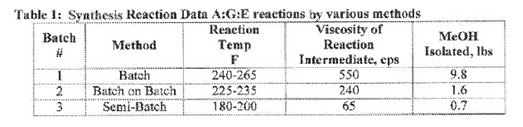
28 As noted, we would grant leave to appeal in each case. Further, we would dismiss the appeal concerning the determination reflected in J1, but we would allow the appeal concerning the determination reflected in J2. The consequence is that we would set aside his Honour’s determination refusing the amendment application, and having decided the matter for ourselves we would grant that application. Some modifications will also need to be made to his Honour’s costs orders.
29 There is one further observation that we would make before getting into the detail. These reasons are longer than usual for two reasons. First, we have had to address his Honour’s reasons in both J1 and J2. Second and even more significantly, on the amendment application we have exercised the statutory discretion for ourselves under s 105(1A), which his Honour did not proceed to do given his findings in J2 on construction and his findings that the amendments were not allowable under s 102. It was more efficient for us to do so. Now the choice was open to us to remit that matter to the primary judge, but the parties were content to have us address this matter ourselves, which we now have. And for that purpose the parties made submissions and provided us with aides-memoire drawing our attention to the relevant evidence that had been adduced before the primary judge and the submissions made below on the question of discretionary considerations relevant to whether the amendment should be allowed. We of course have taken such material into consideration. Further, no party asserted that the primary judge enjoyed a greater advantage than us in considering the relevant evidence on the topic including the cross-examination of various witnesses.
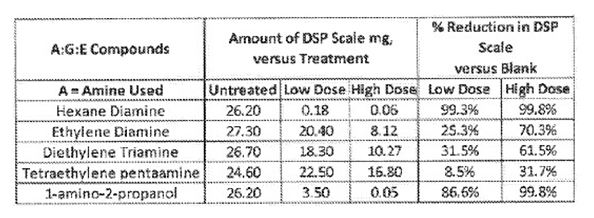
30 Before addressing his Honour’s determinations reflected in J1 and J2, it is convenient to begin with a discussion of the technical background and then turn to the patent application and its detail, which will provide the foundation for discussing Nalco’s challenge to the two determinations.
The technical background
31 His Honour set out non-contentious aspects of the relevant technical background (J1[24] et seq) which we have drawn on for present purposes with some modifications.
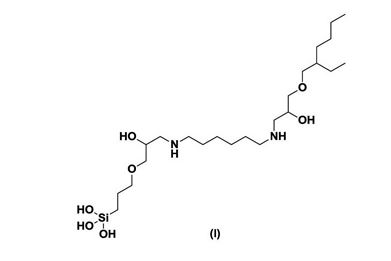
The Bayer process
32 Since about 1888, a method developed by Karl Bayer known as the Bayer process has been used to extract alumina from bauxite in order to make aluminium metal. It is the dominant method in use around the world today.
33 The Bayer process uses bauxite as the starting material. Bauxite is a rock containing many minerals, including aluminium hydroxides (gibbsite and boehmite) and aluminosilicate clays which are insoluble in water but soluble in strong caustic soda. The other main constituent of bauxite is ferrous oxide, which gives the bauxite its red appearance. The iron and most other minerals contained in the bauxite are not readily soluble in caustic soda. Silica and organic compounds are the main impurities present in bauxite. The amounts and levels of these impurities can depend on where the bauxite was mined. The organic impurities typically come from plant roots or soil that has decayed. The amount of organic impurity depends on how the soil is removed during the mining of bauxite, the geology of the area and climate.
34 To dissolve aluminium hydroxide in the form of gibbsite and/or boehmite, crushed and milled bauxite is added to a solution of caustic soda (sodium hydroxide), which has an alkaline pH at high temperature. This basic solution is known as the Bayer liquor, which continuously flows within a closed circuit comprising various machinery that facilitate different stages and conditions for the Bayer process. By taking bauxite, crushing it and heating it to over 100°C in caustic soda in a pressurised vessel, alumina is extracted into solution, which is referred to as liquor, and the rest of the minerals are left in a residual sludge/slurry (red mud). The mixture then flows through a series of decanters operating at about 105°C under atmospheric pressure in the presence of flocculants to settle and remove the red mud from the liquor, and the liquor is filtered to remove any residual mud particles, leaving a pregnant liquor.
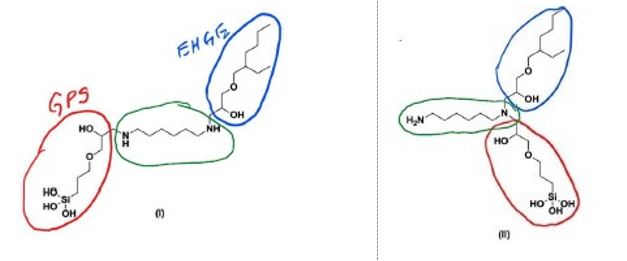
35 The Bayer liquor from the decanters then flows to crystallisers which are large tanks to crystallise and precipitate the alumina hydrate. The crystallisers are placed in series usually along a gradient such that the liquor cascades from one crystalliser to the next by gravity flow. Each crystalliser has an agitator to ensure mixing. The liquor and/or slurry flowing to the crystallisers is cooled to a temperature of about 80°C, which initiates the alumina trihydrate or alumina hydrate precipitation process by mixing the liquor with fine alumina hydrate “seeds” which are added to the first crystalliser in the series. Alumina-containing solids are then removed from the liquor to be processed and then eventually smelted into aluminium metal.
36 The spent liquor is returned to digest more bauxite. After the liquor leaves the final crystalliser, the liquor remains rich in alumina, however, it is typically half the original alumina concentration present during digestion. A key element of the Bayer process is this recirculation of the liquor.
37 The core step of the Bayer process is the removal of the alumina hydrate by precipitation (cooling and seeding). This is done by all refineries and the chemistry of this part of the process is almost always the same. However, the first portion of the Bayer process up to and including digestion, which is the process of extracting alumina from bauxite by high pressure leaching (digestion) in caustic soda, can occur differently depending on the type of bauxite, as the different types require different pre-processes to extract alumina.
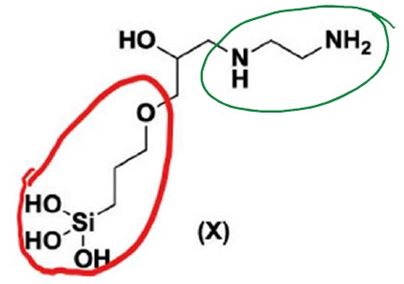
38 After the crushed and milled bauxite has been added to caustic soda, a slurry solution that is rich in alumina as well as undissolved bauxite remains at digestion temperature for a time sufficient to dissolve the alumina, which can typically be at least 30 minutes to several hours. The temperature of the slurry is then rapidly reduced in sequential stages, such as by suddenly significantly reducing the pressure and allowing energy to escape. This generates steam which is used to heat up the input Bayer liquor earlier within the circuit for digestion via heat exchangers, which are a series of tubes through which the Bayer liquor runs during the digestion phase. This stage is most prone to silica scale formation on the heat exchangers as silica tends to form in the parts of the Bayer process circuit which are hotter.
39 In Australia, all refineries applying the Bayer process use the process in broadly the same way, subject to variations in bauxite and know-how being used. One key difference is the digestion temperature used as between refineries, which can either be a high temperature (220 to 270°C) where the bauxite contains significant amounts of boehmite or low temperature (145 to 175°C) where only the gibbsite is intended to be recovered. The reason for the difference is the type of bauxite being processed, or the relative proportions of different forms of alumina-bearing ore. Bauxite will generally contain both gibbsite and boehmite and it is their relative proportion that dictates the digestion temperature that is used. In particular, only if there is a significant proportion of boehmite would the higher temperatures for digestion be justified to extract alumina from the boehmite in addition to the gibbsite.
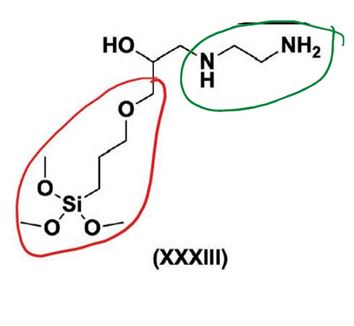
40 After digestion, it is common for refineries to use a range of chemical additives while applying the Bayer process. The same types of chemical additives are used by refineries in the same ways, but the quantities of additives and the specific additives selected could vary between refineries. The selection and variation of additives is a standard and routine part of the process for refinery operators. Chemical additives were and are generally developed and supplied by chemical companies such as Cytec and Nalco.
41 The chemical additives known and commonly used in the Bayer process before February 2011 included settling agents, flocculants, clarifying agents, agglomeration agents, filtration aids and anti-scalants. Anti-scalants were used to inhibit or reduce the formation of aluminosilicate scale on plant equipment.
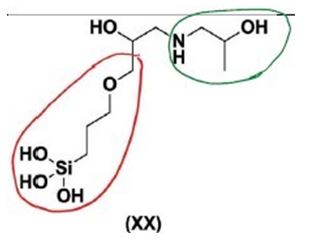
Scale formation and management
42 One problem with the operation of the Bayer process is that bauxite contains silica which can accumulate and form scale on surfaces within the equipment which eventually has to be removed. The patent application concerns a method of reducing scale.
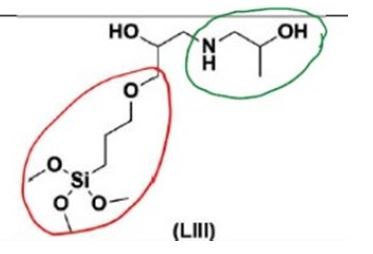
43 Scale management is a key issue for the industry because scale of various types impacts on all parts of the process, including operating costs, costs of equipment and health and safety issues. Aluminosilicate scale, some forms of which are often referred to as desilication product (DSP), precipitates more readily at higher temperatures unlike most chemicals. All bauxite contains some clay (aluminosilicate) which dissolves quickly in the Bayer process and results in silica in solution. When this solution is heated for digestion, the silica precipitates as DSP, which grows as a hard glass-like film on the hot equipment. DSP can therefore form obstructions and adversely affect the efficiency of the plant's equipment.
44 DSP/scale is a solid growth on the surface of a tank, pump or pipe. The way scale builds up in the Bayer process is similar to scale build up in a kettle. If hard water is boiled in a kettle with an internal heating coil, calcium scale will build up and affect the heat exchange. Consequently, the kettle needs to be descaled with acid such as citric acid.
45 The high temperature heat exchangers included within the digesters and evaporators are key problem areas for scale formation. Scale can grow quickly with several microns of scale within a few days of operation, and will continue to grow over time. The hard glassy scale is a good heat insulator, meaning the efficiency of the heating tubes starts to reduce as scale builds up, and this reduction will happen proportionately. Scale forms not only in the heat exchangers included within the digesters and evaporators, but they are the main problem area because scale adheres to a hot surface. Scale will also form in other pipes, pumps, and the digestion vessels themselves, especially in places where there may be a join or liquor flow into a vessel where it flashes, resulting in sudden concentration around an entry point. Scaling can happen throughout the processing plant, anywhere where there is liquor in contact with a hot surface.
46 After some weeks or months of operation, the scale needs to be cleaned off. This usually involves taking the heat exchanger offline, draining it down and putting it in acid, which is usually dilute sulfuric acid combined with a corrosion inhibitor. Once the scale is removed, the acid will attack the metal, so the process has to be managed carefully. In general, it is a messy and expensive process.
47 In addition to acid cleaning, two other ways of managing the problem of aluminosilicate scale or DSP build-up known before February 2011 were to reduce the amount of silica in solution going into digestion through a pre-desilication process or to put additives in the liquor which prevented the scale forming. The patent application concerns this second option of using additives.
48 One chemical solution to the problem of aluminosilicate scale was developed by Cytec. This was an oxysilane-based anti-scalant additive that would keep the silica in solution and prevent scale formation. By February 2011, the product was marketed by Cytec under the brand name Max HT. Max HT is typically added during the evaporation process of the Bayer process. It is intended to remain in the Bayer liquor at the same concentration, albeit with some loss when red mud is removed from the decanters. Max HT has minimal effect on other aspects of the Bayer process, other than reducing or preventing silica scale formation. It stabilises, that is, keeps dissolved digested silica from the bauxite by preventing or reducing crystallisation on the heat exchanger. The silica can then be removed by precipitation on red mud in digestion or pre-desilication.
Developing solutions to the scaling problem
49 In developing a scale inhibitor, while a product would initially be developed on a laboratory scale, it would need to be tested on an industrial scale in a refinery. Particularly when viscosity and miscibility are relevant factors, how the material mixes in the equipment available at a plant will be of great interest, and consideration would be given to how to introduce the product into the liquor stream. Factors to consider would include how the product is pumped, whether it is actively pumped or poured out of a pipe or whether to have a sparging mechanism, how rapidly it is introduced and whether it will settle at the bottom of a mixing tank or float to the top.
50 If the material is very viscous, it will not mix very well with the Bayer solution, which is aqueous, highly alkaline and has a high salt content. Viscous material is also more difficult to pump through pipes and dosing equipment. The degree to which this is a problem depends on the viscosity of the material and how much needs to be added to the liquor. One way to reduce viscosity, as done with flocculants, is to dissolve the material in a carrier to make it more easily dispersed.
Expert witnesses
51 Before proceeding to discuss the solution disclosed in the patent application, we should say something about the expert witnesses.
52 In the primary proceeding (J1) before his Honour, Nalco called two expert witnesses. Mr John Bellwood, an organic chemist, had expertise in the Bayer process. He gave evidence concerning, inter-alia, disclosures in the patent application. Dr Denis Audet, a chemical engineer, also had expertise in the Bayer process. He gave evidence concerning, inter-alia, disclosures in the patent application, the Bayer process and the scaling problem. But his Honour noted (J1[23]) that Dr Audet did not have experience working as a synthetic or organic chemist and his understanding on some aspects was not as deep as Professor Christopher Easton called by Cytec.
53 In the primary proceeding, Cytec called two expert witnesses. Dr Gregory Power, a process chemist, had expertise in the Bayer process. He gave evidence, inter-alia, concerning the Bayer process, the scaling problem and the disclosures in the patent application. Professor Easton, an organic chemist, gave evidence concerning the Bayer process, scale formation and aspects of the patent application. But his Honour considered that Professor Easton had less familiarity with and expertise concerning the Bayer process as compared with Dr Power, Dr Audet and Mr Bellwood (J1[23]). But it would seem that Professor Easton had greater expertise over the other experts concerning synthetic organic chemistry.
54 In the amendment proceeding (J2), Nalco only called Mr Bellwood as an expert. He gave evidence concerning, inter-alia, the nature of the amendments and the significance of claims including both hydrolysed and non-hydrolysed forms of the identified small molecules.
55 Nalco also called five lay witnesses in the amendment proceeding. To the extent necessary we will identify these witnesses later.
56 In the amendment proceeding, Cytec only called Professor Easton as an expert. He gave evidence concerning the proposed amendments and what he understood was claimed by and within the scope of the claims as sought to be amended.
57 Cytec also called one lay witness in the amendment proceeding whom we will refer to later.
58 It is convenient now to discuss the patent application in some detail. We have partly drawn on the primary judge’s description in J1 with some modifications and additions of our own.
The patent application
59 The complete specification identifies that the field of the invention “relates to compositions of matter and methods of using them to treat scale in various industrial process streams, and in particular certain silane based small molecules that have been found to be particularly effective in treating aluminosilicate scale in a Bayer process stream” (p 1 lines 4 to 7). We will return to the topic of small molecules later.
60 The section “Background of the Invention” notes that the Bayer process is used to manufacture alumina from bauxite ore and says (p 1 lines 15 to 22):
The process uses caustic solution to extract soluble alumina values from the bauxite. After dissolution of the alumina values from the bauxite and removal of insoluble waste material from the process stream the soluble alumina is precipitated as solid alumina trihydrate. The remaining caustic solution, known as “liquor” and/or “spent liquor” is then recycled back to earlier stages in the process and is used to treat fresh bauxite. It thus forms a fluid circuit. For the purposes of this application, this description defines the term “liquor”. The recycling of liquor within the fluid circuit however has its own complexities.
61 The specification then explains that bauxite often contains silica in various forms and amounts, some of which is unreactive and does not dissolve in the Bayer circuit and remains as solid material. But other forms of silica such as clays are reactive and dissolve in caustic soda when added to the liquor, so increasing the silicon concentration in the liquor. The specification provides (p 2 lines 3 to 8):
As liquor flows repeatedly through the circuit of the Bayer process, the concentration of silica in the liquor further increases, eventually to a point where it reacts with aluminium and soda to form insoluble aluminosilicate particles. Aluminosilicate solid is observed in at least two forms, sodalite and cancrinite. These and other forms of aluminosilicate are commonly referred to, and for the purposes of this application define, the terms “desilication product” or “DSP.
62 The specification says that because DSP has an inverse solubility, which means that the level of precipitation increases at higher temperatures, and because it can precipitate as fine scales of hard insoluble crystalline solids, its accumulation in Bayer process equipment is problematic. As DSP accumulates in Bayer process pipes, vessels, heat transfer equipment and other process equipment, it forms flow bottlenecks and obstructions that can adversely affect liquor throughput. It also reduces the efficiency of heat exchangers. These adverse effects are typically managed through a descaling regime, which involves process equipment being taken off line and the scale being physically or chemically treated. But this all leads to regular periods of down-time for critical equipment, and also the use of hazardous concentrated acids (p 2 lines 11 to 23).
63 The specification describes that another known approach is to deliberately precipitate DSP as free crystals rather than as scale. Such a “desilication” step is used to reduce the concentration of silica in solution by precipitation of silica as DSP, as a free precipitate. But total elimination of all the silica from solution is impractical, and changing process conditions within various parts of the Bayer circuit such as the heat exchangers can lead to changes in the solubility of DSP, resulting in consequent precipitation as scale (p 2 line 24 to p 3 line 7).
64 The specification then refers to polymeric materials disclosed in the prior art including Cytec’s product marketed as MAX HT (p 3 lines 8 to 20):
Previous attempts at controlling and/or reducing DSP scale in the Bayer process have included adding polymer materials containing three alkyloxy groups bonded to one silicon atom as described in [five patents] and published article Max HTTM Sodalite Scale Inhibitor: Plant Experience and Impact on the Process, by Donald Spitzer et. al., Pages 57-62 Light Metals 2008, (2008) all of whose contents are incorporated by reference in their entirety.
Manufacturing and use of these trialkoxysilane-grafted polymers however can involve unwanted degrees of viscosity, making handling and dispersion of the polymer through the Bayer process liquor problematic. Other previous attempts to address foulant buildup are described in [two patents] both of which are incorporated by reference in their entirety.
65 As the primary judge correctly pointed out, the reference to adding polymeric materials in this passage serves to distinguish the prior art solution from the “small molecule” solution to the scaling problem proposed in the patent application.
66 At this point, and in the sequence of the specification, we note that there is the following relevant definition (p 4 lines 7 to 10) which we will return to later:
Unless the context clearly requires otherwise, throughout the description and the claims, the words “comprise”, “comprising”, and the like are to be construed in an inclusive sense as opposed to an exclusive or exhaustive sense; that is to say, in the sense of “including, but not limited to”.
67 Under the heading “Summary of the Invention” the first aspect of the invention is said to provide a method for the reduction of aluminosilicate containing scale in a Bayer process comprising the steps of (p 4 line 19 to p 4b line 3):
adding to the Bayer process stream an aluminosilicate scale inhibiting amount of a composition comprising at least one small molecule, the at least one small molecule comprising at least three components, one being an R1 component, one being an R2 component and one being an R3 component, the components within the small molecule arranged according to the general formula:
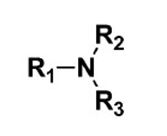
wherein the small molecule may be at least one of: carbonates, bicarbonates, carbamates, ureas, amides and salts thereof and:
R1 is selected from the group consisting of: H, alkyl, amine, structure (A) and structure (B);
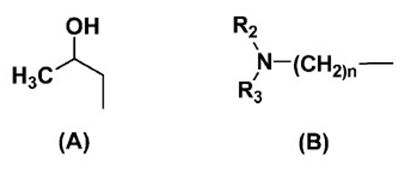
each R2 is G, and each R3 is independently selected from the group consisting of H, alkyl, amine, G and E,
wherein each G is one item independently selected from the group consisting of: 3-glycidoxypropyltrimethoxysilane, 3-glycidoxypropyltrialkoxysilane, 3-glycidoxypropylalkyldialkoxysilane, 3-glycidoxypropyldialkylmonoalkoxysilane, 3-isocyanatopropyltrialkoxysilane, 3-isocyanatopropylalkyldialkoxysilane, 3-isocyanatopropyldialkylmonoalkoxysilane, 3-chloropropyltrialkoxysilane, 3-chloropropylalkyldialkoxysilane, and 3-chloropropyldialkylmonoalkoxysilane and wherein G is optionally hydrolyzed;
each E is independently selected from the group consisting of ethylhexyl glycidyl ether, C3-C22 glycidyl ether, C3-C22 isocyanate, C3-C22 chloride, C3-C22 bromide, C3-C22 iodide, C3-C22 sulfate ester, C3-C22 phenolglycidyl ether, and any combination thereof, and n is an integer from 2 to 6.
68 As the primary judge pointed out, this was a consistory clause for the unamended version of claim 1. And as is apparent from its terms, this aspect relates to silane-based small molecules added to the Bayer process stream.
69 The silane based small molecules of this embodiment are defined by the Markush diagram. R1 is “selected from the group consisting of: H, alkyl, amine, structure (A) and structure (B)”. So it includes amines involving structures (A) and (B). Structure (A) relevantly includes 1-amino-2-propanol (AP), and structure (B) relevantly includes hexane diamine (HD) and ethylene diamine (ED). We note that we have used “HD” for hexane diamine rather than “H” so as not to confuse it with other references to “H” where hydrogen atoms are simply being referred to. The specification does not use the acronyms HD, ED or AP but does use H to represent hydrogen. R2 is G, which is the class of silanes and relevantly includes 3-glycidoxypropyltrimethoxysilane (GPS). Each R3 “is independently selected from the group consisting of H, alkyl, amine, G and E” and relevantly includes 2-ethylhexyl glycidyl ether (E). These inclusions are relevant to the claims under consideration.
70 The specification then goes on to describe (p 4b lines 5 to 19) that a second aspect of the invention involves a method for the reduction of aluminosilicate containing scale in a Bayer process involving mixing with the stream an aluminosilicate scale inhibiting amount of a composition comprising at least one small molecule comprising three components, the first being a multiamine having from 2 to 5 amine groups, the second being selected from silanes similar to GPS, as defined in the first aspect, and the third being similar to E, as defined in the first aspect. It is not necessary for present purposes to describe the third aspect (p 4b line 21 to p 4d line 10).
71 The primary judge referred to two further embodiments that were identified at p 4d.
72 One of the embodiments is a method for reducing siliceous scale in a Bayer process comprising the step of adding to a Bayer liquor an aluminosilicate scale inhibiting amount of reaction product between an amine-containing molecule and an amine-reactive molecule containing at least one amine-reactive group per molecule and at least one –Si(OR)n group per molecule, where n = 1, 2 or 3, and R = H, C1 to C12 Alkyl, Aryl, Na, K, Li or NH4 or a mixture of such reaction products (p 4d lines 12 to 18). The expert evidence indicates that this covers a large range of unidentified reaction products which can reduce siliceous scale using two reagents, namely (1) an amine-containing molecule and (2) an amine reactive molecule containing at least one amine-reactive group per molecule and at least one –Si(OR)n group per molecule.
73 The other embodiment described on p 4d involves adding to a Bayer liquor “an efficacious amount of reaction product” between (1) an amine-containing “small molecule”; (2) an amine-reactive “small molecule” containing at least one amine reactive group per molecule and at least one –Si(OR)n group per molecule, where n = 1, 2 or 3 and R = H, C1 to C12 Alkyl, Aryl, Na, K, Li or NH4 or a mixture of such reaction products; and (3) a non-polymeric amine reactive hydrophobic hydrocarbon. The expert evidence indicates that this embodiment is similar to the previous embodiment, however, the molecules produced are defined as “small molecules” and use three reactants.
74 We would note here that neither of these are the relevant embodiments of the claims.
75 The next embodiment is described to be a method of reducing DSP in a Bayer process comprising the step of adding to the Bayer process stream an aluminosilicate scale inhibiting amount of a mixture of the products previously defined (p 4e lines 2 to 4).
76 The specification then makes reference to two graphs which are set out as figures after the claims. Figure 1 is a graph illustrating a batch reaction profile of the invention. Figure 2 is a graph illustrating a semi-batch reaction profile of the invention. We will return to these in a moment.
77 Then there is set out the “Detailed Description of the Invention” which commences by defining “polymer” to mean a chemical compound comprising essentially repeating structural units each containing two or more atoms and “small molecule” to mean a chemical compound comprising essentially non-repeating structural units. It states that the terms “small molecule” and “polymer” are mutually exclusive (p 4e lines 15 to 24). We would note that there is no definition of “product mixture” which is a term used in the claims.
78 After defining other terms, including the terms amine and GPS, the specification describes the Bayer process in general terms (p 6 lines 10 to 20) before stating (lines 21 to 26):
In this invention, it was discovered that dosing of various types of silane-based products can reduce the amount of DSP scale formed.
In at least one embodiment of the invention, an effective concentration of a silane-based small molecule product is added to some point or stage in the liquor circuit of the Bayer process, which minimizes or prevents the accumulation of DSP on vessels or equipment along the liquor circuit.
79 The specification repeats (p 7 line 8 to p 8 line 14) the general embodiment identified as the first aspect of the invention that we have referred to earlier. It then says (p 9 lines 1 to 2):
In at least one embodiment said small molecule is selected from the group consisting of: (I), (II), (III), (IV), (V), (VI), (VII), (VIII), and (IX):
80 There are then depicted nine drawings of individual structures [I] to [IX], each of which is a compound formed from the reaction of HD, GPS and E.
81 The specification then continues by setting out nine further sets of embodiments by reference to the said small molecule being selected from groups of numbered small molecules, each of which is drawn. In total 65 small molecules are depicted.
82 The specification (p 32 lines 2 and 3) says that “[i]n at least one embodiment the small molecule is present in a solution in an amount ranging from about 0.01 to about 100wt%”.
83 This embodiment was reflected in claim 12, which claim has now been deleted in the amendment application. But despite that deletion, these words remain in the body of the specification. At this point it is convenient for us to note that s 116 provides that in interpreting a complete specification as amended, and we would interpolate a specification as proposed to be amended, one can refer to the specification without amendment which included of course both the embodiment and claim 12.
84 The specification then points out that the invention resides in the use of small molecules as opposed to the higher molecular weight polymers of the prior art. It begins by saying (p 32 lines 10 to 12):
Although some of these small molecules have been mentioned in various references, their uses are for entirely unrelated applications and their effectiveness in reducing Bayer Process scale was wholly unexpected.
85 It then says at p 33 lines 5 to 17:
The effectiveness of these small molecules was unexpected as the prior art teaches that only high molecular weight polymers are effective. Polymer effectiveness was presumed to depend on their hydrophobic nature and their size. This was confirmed by the fact that cross-linked polymers are even more effective than single chain polymers. As a result it was assumed that small molecules only serve as building blocks for these polymers and are not effective in their own right. (WO 2008/045677 [0030]). Furthermore, the scientific literature states “small molecules containing”...“[an] Si-O3 grouping are not effective in preventing sodalite scaling”...because...“[t]he bulky group”...“is essential [in] keeping the molecule from being incorporated into the growing sodalite.” Max THTM Sodalite Scale Inhibitor: Plant Experience and Impact on the Process, by Donald Spitzer et. al., Page 57, Light Metals 2008, (2008). However it has recently been discovered that in fact, as further explained in the provided examples, small molecules such as those described herein are actually effective at reducing DSP scale.
86 The specification then says that it is believed that there are at least three advantages to using a small molecule based inhibitor as opposed to a polymeric inhibitor with multiple repeating units of silane and hydrophobes. It is said (p 33 lines 20 to 26):
A first advantage is that the smaller molecular weight of the product means that there are a larger number of active, inhibiting moieties available around the DSP seed crystal sites at the DSP formation stage. A second advantage is that the lower molecular weight allows for an increased rate of diffusion of the inhibitor, which in turn favors fast attachment of the inhibitor molecules onto DSP seed crystals. A third advantage is that the lower molecular weight avoids high product viscosity and so makes handling and injection into the Bayer process stream more convenient and effective.
87 The specification then provides two examples. Example 1 is entitled “Example of a Synthesis Reaction A, E and G” and provides (p 34 lines 8 to 13):
In a typical synthesis reaction the three constituents: A (e.g. hexane diamine), G (e.g. 3-glycidoxypropyltrimethoxysilane) and E (e.g. ethyl hexyl glycidl ether) are added to a suitable reaction vessel at a temperature between 23-40°C and allowed to mix. The reaction vessel is then warmed to 65-70°C during which time the reaction begins and a large exotherm is generated. The reaction becomes self-sustaining and depending on the scale of the reaction, can reach temperatures as high as 125 to 180°C. (see FIG. 1).
88 Figure 1, which is depicted at the end of the specification, is a graph illustrating a batch reaction profile of the invention (p 4e line 9) and is as follows:
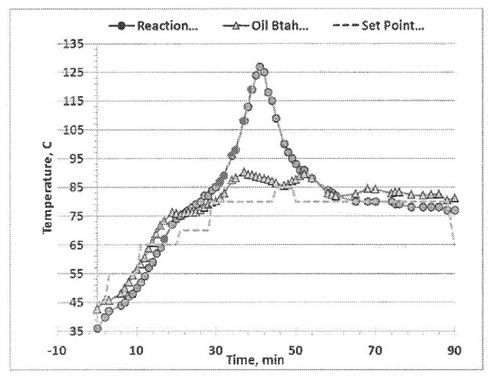
89 Clearly the strong exothermic nature of the reaction, and so self-sustaining, is well illustrated. The specification then continues (p 34 lines 13 to 24):
Typically the reaction is complete after 1 to 2 hours and then the mixture is allowed to cool down. As an aspect of this invention this un-hydrolyzed product mixture can be isolated as a liquid or gel or a solid in a suitable manner. Alternatively, the reaction product mixture can be hydrolyzed, via a number of methods, to prepare a solution of the hydrolyzed product mixture in water. The hydrolysis of the alkoxysilane groups in the component G results in the formation of the corresponding alcohol (e.g. methanol, ethanol etc,. depending on the akloxysilane used in the synthesis).
It is common to those skilled in the art to conduct the ring opening of an epoxide with a reactive amine in a batch mode (where the components are mixed together), heated to an initiation temperature above room temperature (e.g. 50-65°C) with the reaction temperatures allowed to reach as high as 125 to 180°C. This can cause internal cross-linking and side reactions to occur - which is often desired in the resin manufacturing processes.
90 The reference to resin manufacturing processes is to polymers which, as noted earlier, the specification contrasts with the small molecules of the invention. The specification continues (p 34 line 25 to p 35 line 6):
However, at least one embodiment involves the use of a continuous or semi-batch synthesis method which provides several advantages over the batch process commonly used. This involves adding only a portion of the G and E constituents either together or sequentially or individually in a form of a slow feed to initiate the primary epoxide ring opening reaction, followed by the slow continuous feeding of the two constituents G and E (either together or separately and at the same time or sequentially). This method allows for a much better control over the overall reaction, the reaction temperature and provides a better overall yield of the active compounds in the product also avoiding the undesired side reactions. (see FIG. 2).
91 Figure 2, which is also depicted at the end of the specification, is a graph illustrating a semi-batch reaction profile of the invention (p 4e line 10) and is as follows:
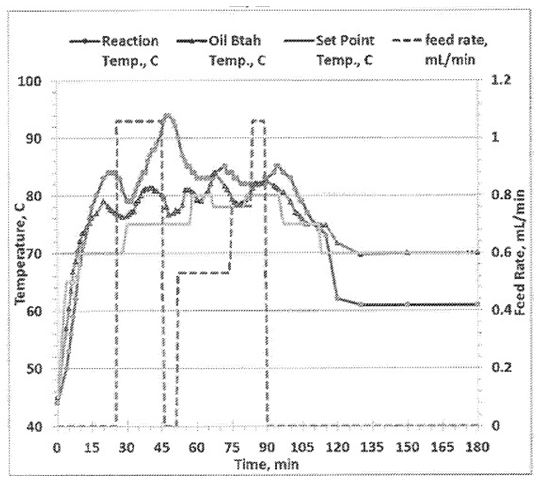
92 The specification continues (p 35 lines 7 to 16):
In at least one embodiment the synthesis reaction utilizes constituent G = 3- glycidoxypropyltrimethoxysilane. Prolonged exposure at high temperatures above 120°C can result in internal coupling reactions and multiple substitutions with the reactive amine groups such as hexane diamine or ethylene diamine. The resulting un-hydrolyzed reaction products will turn to a gel over shorter time period accompanied by an increase in the reaction product viscosity. Use of a semi-batch process or continuous or separate or slow sequential or individual or combined feed of the E and G epoxides into the reaction mixture allows better control of the reaction temperature thereby reducing the amount of methanol that is generated and isolated during the reaction. Furthermore the reaction mixture has a lower viscosity and accounts for fewer undesired side reactions (see Table l).
93 Example 2 is entitled “Examples of the relative DSP scale inhibition of various A:G:E small molecules formed during the synthesis reaction disclosed above” (p 35 lines 22 and 23). The example is described in the following terms (p 36 lines 1 to 9):
The scale inhibition performance of the small molecule is typically performed as follows:
l) A small amount of sodium silicate (0.25 - 1.5 g/L as SiO2) is added to a Bayer refinery spent liquor at room temperature to raise the silica concentration in the liquor.
2) Portions of this liquor sample are dosed with varying amounts of the new scale inhibitor compound or mixture.
3) Dosed and untreated (or Blank) liquor samples are subjected to elevated temperatures between 96 to 105°C for 4 to 6 hours.
4) Samples are then cooled and the amount of DSP scale formed in each of the dosed liquors samples are measured and compared to that formed in the untreated or blank samples.
94 Table II then shows the relative DSP scale inhibition for several A + GPS + E synthesised reaction mixtures “using the synthesis reaction disclosed earlier, with various amine constituents as the core” (p 36 line 11). The five synthesised mixtures are the result of the reaction of five different amines with GPS and E.
95 The specification states, at p 37 line 6, that the term “comprising” means “including, but not limited to”. This is consistent with the definition that also appears earlier (p 4 lines 7 to 10). To be clear, what is said (p 37 lines 3 to 8) is the following:
The above disclosure is intended to be illustrative and not exhaustive. This description will suggest many variations and alternatives to one of ordinary skill in this art. All these alternatives and variations are intended to be included within the scope of the claims where the term “comprising” means “including, but not limited to”. Those familiar with the art may recognize other equivalents to the specific embodiments described herein which equivalents are also intended to be encompassed by the claims.
96 It is convenient to now turn to the claims in the form that they were in before his Honour and considered by him in J1.
The claims
97 Claim 1 provides (with integer numbers added by the primary judge (J1[74])):
(1) A method for the reduction of aluminosilicate containing scale in a Bayer process comprising the step of:
(2) adding to the Bayer process stream an aluminosilicate scale inhibiting amount of a composition comprising at least one small molecule
(3) selected from the group consisting of compounds (I) through (XIII), (XV) through (XXX), (XXXII) through (XLVII), (LIII) through (LVIII) and (LX)
(4) within a product mixture formed from the reaction of a) hexane diamine, ethylene diamine or 1-amino-2-propanol; b) 3-glycidoxypropyltrimethoxysilane; and c) 2-ethylhexyl glycidyl ether:
[drawn thereafter are the 46 further compounds referred to in integer (3)]
98 Integer (4) identifies three constituent reactants from which the product mixture is to be formed:
(1) HD, ED or AP being amines, which can be abbreviated to A to mean any one of HD, ED or AP;
(2) GPS being an amine-reactive compound that has a silane (Si(OR)3) group; and
(3) E being an amine-reactive hydrophobic hydrocarbon.
99 Claims 2 to 16 are as follows:
2. A method according to claim 1, wherein the small molecule is selected from the group consisting of compounds (I) through (XIII), (XV) through (XXX) and (XXXII) through (XLII).
3. A method according to claim 1, wherein the small molecule is selected from the group consisting of compounds (LIII) through (LVIII).
4. A method according to claim 1, wherein the small molecule is selected from the group consisting of compounds (LIII), (LIV) and (LV).
5. A method according to claim 1, wherein the small molecule is selected from the group consisting of compounds (I) through (IX).
6. A method according to claim 1, wherein the small molecule is selected from the group consisting of compounds (X) through (XIII) and (XV) through (XIX).
7. A method according to claim 1, wherein the small molecule is selected from the group consisting of compounds (XX) through (XXII).
8. A method according to claim 1, wherein the small molecule is selected from the group consisting of compounds (XXIII) through (XXIX).
9. A method according to claim 1, wherein the small molecule is selected from the group consisting of compounds (XXX) and (XXXII).
10. A method according to claim 1, wherein the small molecule is selected from the group consisting of compounds (XXXIII) though (XLII).
11. A method according to claim 1, wherein the small molecule is selected from the group consisting of compounds (LVI) through (LVIII) and (LX).
12. A method according to claim 1, wherein the small molecule is present in a solution in an amount ranging from about 0.01 to about 100 wt%.
13. A method according to claim 1, wherein the composition further comprises an item selected from the list consisting of: amines, activators, antifoaming agents, co-absorbents, corrosion inhibitors, coloring agents, and any combination thereof.
14. A method according to claim 1, wherein the composition comprises a solvent, the solvent is selected from the group consisting of: water, alcohols, polyols, other industrial solvents, organic solvents, and any combination thereof.
15. A method according to claim 1, wherein the composition is isolated from a synthesis reaction in the form of a solid, precipitate, gel, salt and/or crystalline material in pHs ranging from 0 to 14.
16. A method according to claim 1, wherein the composition is hydrolyzed prior to being added to the Bayer process.
The chemistry of the claims
100 Drawing from the primary judge’s description (at J1[77] to [83]) but with some modifications and additions, it is appropriate to set out some of the background organic chemistry relevant to an understanding of the claims.
101 The drawn small molecule structures in claim 1 consist of 47 of the 65 structures depicted in the body of the specification. They can be placed conceptually into five groups of structures where the A component is circled in green, the GPS component is circled in red and the E component, if present, is circled in blue.
102 The first group of structures involves and are products of a reaction between the reactants hexane diamine being the A component, with GPS and E, noting that some molecules do not include an E component, and the trimethoxysilane (Si(OCH3)3) groups on the molecules have been hydrolysed to trihydroxysilane Si(OH)3, and can be illustrated as follows:
103 In terms of the specification, only 2 of these 13 small molecules have been set out by way of illustration.
104 The second group of structures involves and are products of a reaction between the reactants ED being the A component with GPS and E, noting that some molecules do not include an E component, and the Si(OCH3)3 groups on the molecules have been hydrolysed to Si(OH)3, and can be illustrated as follows:
105 In terms of the specification, only 1 of the 14 small molecules has been set out by way of illustration.
106 The third group of structures involves and are products of a reaction between the reactants ED being the A component with GPS and E, noting that some molecules do not include an E component, and the Si(OCH3)3 groups on the molecules have not been hydrolysed, and can be illustrated as follows:
107 In terms of the specification, only 1 of the 14 small molecules has been set out by way of illustration. To be clear, this third group differs from the second group only by reason of the absence of the hydrolysis of the Si(OCH3)3 groups.
108 The fourth group of structures involves and are products of a reaction between the reactants AP being the A component with GPS and E, noting that some molecules do not include an E component, and the Si(OCH3)3 groups on the molecules have been hydrolysed to Si(OH)3, and can be illustrated as follows:
109 In terms of the specification, only 1 of the 3 small molecules has been set out by way of illustration.
110 The fifth group of structures involves and are products of a reaction between the reactants AP being the A component with GPS and E, noting that some molecules do not include an E component, and the Si(OCH3)3 groups on the molecules have not been hydrolysed, and can be illustrated as follows:
111 In terms of the specification, only 1 of the 3 small molecules has been set out by way of illustration. The fifth group differs from the fourth group only by reason of the absence of the hydrolysis of the Si(OCH3)3 groups.
112 The small molecules identified are amine-based (each must have an A component) which must also have at least one silane group (from the GPS component) and may optionally also have one or more non-silane hydrophobic groups (the E component). This is apparent from the fact that the structures identified in integer 3 of claim 1 include a number of structures with no E group at all, and some where E is present.
113 Each of the small molecules in the claims of the patent application are relatively simple molecules. The structures are formed from the A, GPS and E reactants by a reaction between the epoxide ring at the end of GPS or E, which both have the same single epoxide ring at one end, and an amine group of the A reactant. The amine nitrogen attaches to a carbon atom adjacent to the oxygen of the epoxide ring, causing the epoxide ring to open. A hydrogen from the amine is transferred to the oxygen which was originally part of the epoxide ring to form a hydroxyl (OH) group. All of the claimed structures are formed by way of this reaction, with different permutations of GPS and E attaching to the relevant amine.
114 This epoxide-amine reaction is exothermic, due to the epoxide ring opening during the reaction, which releases energy in the form of heat, and the resulting lower energy state when the carbon atom in the epoxide ring has bound to the amine nitrogen, substituting for one of the hydrogens previously bound to the amine nitrogen.
115 Each primary amine group (NH2) on HD, ED and AP, before reacting, has two hydrogen groups and is therefore able to react with two epoxide reactants. The compounds shown in claim 1 show different combinations and degrees of epoxide-substitution on the amine. HD and ED are both diamines, having two primary amine groups (one at each end of their carbon chain) and can react with four epoxide groups. AP is a monoamine with only one primary amine group (at the end of the carbon chain) and can react with two epoxide groups.
116 We would also draw on the following further matters that appeared in the technical summary before his Honour.
117 First, when reference is made to compounds being hydrolysed or not hydrolysed, this refers to the GPS component of the molecules, which in some of the structures appears as a Si(OCH3)3 and in others appears hydrolysed as a Si(OH)3. Hydrolysis involves water reacting with the Si(OCH3)3 to replace the methoxy (OCH3) groups with OH groups, forming methanol as a by-product which can be removed by evaporation. Hydrolysis can be performed before the molecules are added to the Bayer process stream. Hydrolysis will occur if there is water present anywhere in the composition or in contact with that composition. However, if the molecules are not hydrolysed beforehand and they are added to the caustic Bayer process liquor, they will then hydrolyse in the liquor and the methanol produced could be dealt with and evaporated. The silane group will be hydrolysed when the composition is added to the Bayer process, if it is not hydrolysed already. As such, within the Bayer process stream the product will always contain the hydrolysed manifestation of the silane because it will always be in an aqueous solution.
118 Second, the specification (p 34, line 7 to p 35, line 20) refers to the “batch”, “batch-on-batch” and “semi-batch” methods for preparing product mixtures containing the amine, silane and hydrophobe constituents discussed in the specification. A “batch” method is a method where all reactants are reacted together with one another at the same time. A “batch-on-batch” method is a method where all reactants are reacted together with one another, but the reaction is split into multiple “batch” reactions, for example, 10% of the total amount of the reactants is reacted in a first “batch” reaction, then the next 10% of the total amount of the reactants is reacted in a second “batch” reaction, and so on. A “batch-on-batch” method may be a series of smaller scale batch processes to reduce the scale of each reaction so as, for example, to manage the amount of heat produced by a reaction that is exothermic, with all of the reaction products then ultimately combined. A “semi-batch method” is a method where all reactants eventually end up in the same reactor, but the order of addition, rate, timing, amounts and proportions of the different reactants are varied. The purpose of the variations in a “semi-batch method” is to control the reaction conditions during the course of what is, as we have said, a strong exothermic reaction.
119 We should also make some other observations before turning to the question of claim construction.
120 As the primary judge said (at J1[84]), the subject matter of the patent application is chemistry, particularly organic chemistry as it relates to the synthesis of reaction product mixtures containing the small molecules claimed and the chemistry of their application to the inhibition of silica scale formation in Bayer liquor. The disclosure of the specification focuses on the use of synthesised small molecule product mixtures in the Bayer process to reduce the formation of scale.
121 As the primary judge said (at J1[86]), the experts in their joint report agreed that the product mixtures described and claimed in the patent application are formed from the reaction of one of the specified amines (HD, ED or AP) and the amine-reactive silane containing molecule (GPS) and the amine-reactive hydrophobic hydrocarbon (E).
122 In their joint report they said (at [17] and [18]):
[The application] provides structural drawings which are conceptual representations of the silane-containing products that would be formed through amine-epoxide ring opening reactions and expected to be present in the resulting product mixtures. Why these silane compounds were chosen to be illustrated instead of others that would inevitably be present in the complex reaction product mixtures, or their proportions or individual effectiveness, is not disclosed.
Claim 1 states that a product mixture must contain at least one of the small molecules listed, and that the product mixture is added to the Bayer stream in an inhibiting amount. Claims 2-11 are dependent on claim 1 limiting [sic] to specific subsets of the possible structures. The scale-inhibiting action of a product mixture will inevitably be attributable to the aggregate influences of all of the silane compounds present in the complex mixture, rather than any specific individual compound which may be present in the mixture in only a small amount.
123 The primary judge said (J1[87]) that there was little difference between the experts in their oral evidence as to the complexity of the product mixtures. When one of the three different forms of amine is reacted with GPS and E, the consequent reaction mixture will contain an extremely large variety of small molecules and will include all of the small molecules listed in claim 1, subject only to being limited by those molecules containing the same form of amine backbone that was added to the mixture.
124 His Honour said (J1[88]) that the experts agreed that there was no known way to avoid the production of a complex product mixture including within it all of the other compounds specified within the claim.
125 His Honour said (J1[89]) that the experts also agreed that the examples in the patent application disclose methods for making the product mixtures identified in the laboratory, and that beyond general guidance, not enough detail is provided in the specification to enable the examples to be replicated. They added that the focus of the synthesis method disclosed is a semi-batch process in which reactants are added gradually. They agreed that the patent application states that the semi-batch process allows for much better control of the overall reaction and the reaction temperature and provides a better overall yield of the active compounds in the products, also avoiding undesired side reactions. They agreed that whilst the patent application discloses an empirical laboratory method for testing the scale-inhibiting effectiveness of the product mixtures, not enough detail has been provided to enable the examples to be replicated.
126 It is now convenient to turn to the first appeal and to consider his Honour’s reasons in J1. As we have said at the outset of these reasons, and for the reasons which now follow, we would dismiss the first appeal.
Claim construction — the primary judge’s consideration
127 The primary judge addressed (J1[90]) two issues of claim construction before turning to the grounds of invalidity advanced by Cytec.
128 The first issue was whether the claims encompass an embodiment wherein the composition added to the Bayer process stream comprises only one type of small molecule selected from the group of compounds identified in claim 1 (the single small molecule argument).
129 The second issue was whether the claims include any limitations as to the synthesis method to be employed. This second issue can be put to one side for present purposes.
The single small molecule argument
130 As his Honour said (J1[92]), Cytec submitted that claim 1 encompasses three types of embodiments being: (a) embodiments where the listed small molecules are contained “within” a complex reaction product mixture; in other words the “composition” that is added to the Bayer process is the complex reaction product mixture; (b) embodiments where the reaction product mixture composition contains a single type of small molecule, being one of those small molecules identified in integer (3); and (c) embodiments where the listed small molecules have been “selected from...within a product mixture” by isolating them from the complex product mixture within which they were formed. And in terms of (b) and (c), Cytec also sought to draw support from claim 12.
131 Before his Honour (J1[94] to [98]), Nalco accepted that claim 1 includes within its scope the result of the reaction of A, GPS and E within (a), being a product mixture which will include at least one, and most likely all, of the claimed small molecules (depending on which of the amine reactants is used) in various proportions. It submitted that the experts agree that in practice the reaction of those three reactants will almost inevitably form each of the claimed small molecules, corresponding to the selection within A (whether HD, ED or AP), in various proportions within the product mixture. It submitted that Mr Bellwood and Professor Easton understood that the formation of any of the claimed small molecules will occur randomly. As at the priority date, three of the experts thought it was possible but statistically unlikely that only one of the claimed molecules and no other of the claimed molecules would be within a product mixture formed by the reaction of A, GPS and E.
132 Nalco also accepted that a product mixture within the claim may theoretically include a single type of small molecule, being one of those identified in integer (3), within the construction (b). But it submitted that this would be a random happenstance that the claim does not “require”.
133 Nalco contested that the claim includes any embodiment wherein a single type of small molecule is isolated from the product mixture within construction (c).
134 Nalco submitted that the dependent claims did not detract from its construction. It submitted that the reference to “the small molecule” in claims 2 to 12 refer to the “at least one small molecule” within the product mixture formed from the reaction of A + GPS + E and that this term should be given the same meaning as in claim 1. With respect to claim 12, Nalco submitted that it concerns the dilution of the product mixture and therefore the small molecules within it, and does not claim a product mixture having only one of the claimed small molecules and not others.
135 Nalco submitted that by defining the scope of the claims by reference to particular small molecules that will inevitably form from the reaction of A + GPS + E, it is plain that the product mixture must be the result of “the reaction” disclosed in the patent application. This, it submitted, demonstrates that the selection of the small molecules in claim 1 is not arbitrary. Nalco also submitted that the product mixture formed from the reaction of A + GPS + E need not contain only the small molecules identified in the claims, and that this is supported by the expert evidence that other compounds formed from the reaction will inevitably be present in the product mixture.
136 His Honour made various findings based upon the technical evidence (J1[99] to [103]).
137 The compounds illustrated in claim 1 would conceptually be derived as a product of the three identified reactants, depending on the selection of the amine, but the patent application does not describe how the specific small molecules could be separated from that product mixture (J1[99]).
138 The patent application also does not provide any explanation as to why the specifically drawn compounds, as opposed to other molecules which would also inevitably be contained in the product mixture made from the reactants, have been specifically identified as effective in reducing aluminosilicate scale when added to the Bayer process.
139 Example 1 in the patent application describes general methods of producing the synthesis reaction of A + GPS + E and recites a preference for a semi-batch method. Example 2 identifies various different amines used and indicates that HD is the most preferred of the amines to use in the synthesis reaction.
140 The compounds illustrated in claim 1 are all derived from the same silicon-containing moiety (GPS) and hydrophobe (E), with the only variation being the amine component, which may be in the form of HD, ED or AP (J1[100]).
141 The 47 specifically illustrated compounds in the claim are likely to be present as the product of the reaction identified in integer (4) and would be within a very complex mixture, which would include small molecules and polymers. The person skilled in the art reading the specification would attribute the aluminosilicate scale inhibiting effect to the combination of all of the silane compounds in the mixture formed from A + GPS + E, rather than any specific individual small molecule which would be present in the mixture in small amounts (J1[101]).
142 His Honour said (J1[102]) that it was not possible to say, based on the disclosure of the specification, whether any particular compound in the mixture is responsible for all, most, or only some of the effect. Mr Bellwood provided a slight qualification to this general statement by making the point that the listed compounds in the patent application did not include compounds containing only A and E reactants, that is, compounds without the silane group GPS, because such compounds would not be active in DSP scale inhibition or reduction.
143 The reason for the complexity of the mixture was discussed in the evidence and concerns the number of potential primary and later reactions within the mixture (J1[103]).
144 Against that background and the common general knowledge, his Honour turned to consider the language of claim 1.
145 In his Honour’s view (J1[105] and [106]), the language of claim 1 encompasses a composition that is made up of a single type of small molecule selected from the group identified within the product mixture formed from the reaction of A + GPS + E (within the construction propounded by Cytec in (b) above) as well as a composition that includes a complex mixture of many of the small molecules depicted in the claim as well as many other compounds (within (a) above).
146 In his Honour’s view, it was not apparent that the claim encompasses an embodiment that involves isolating a small molecule from the reaction product mixture within the construction propounded by Cytec in (c).
147 The claim refers to adding to the Bayer process stream an “aluminosilicate scale inhibiting amount of a composition comprising at least one small molecule selected from the group” consisting of 47 identified compounds. The word “comprising” is defined to mean “including, but not limited to” and the words “at least one small molecule” includes the selection of one molecule only. It is apparent from the breadth of the meaning of “including” that the entirety of the composition may be one type of small molecule or more than one such type. It is difficult to read the claim in a different way. The type of small molecule may be one or more selected from the group of nominated compounds that are “within a product mixture” that is “formed from the reaction of a) hexane diamine, ethylene diamine or 1-amino-2-propanol; b) 3-glycidoxypropyltrimethoxysilane; and c) 2-ethylhexyl glycidyl ether” (A+GPS+E).
148 His Honour rejected (J1[107]) the submission that the words “selected from” refer to the selection of the three alternative amines, HD, ED or AP. That was not, in his Honour’s view, a natural or common sense way to understand the words “selected from”; the verb “selected” applies to the compounds identified in the claim, not the amines identified in integer (4). Although the choice of either HD, ED or AP as the amine “backbone” will influence which of the small molecule compounds identified in integer (3) may appear within the reaction product mixture, that choice does not account for the language of “comprising at least one small molecule”.
149 So, his Honour said (J1[108]) that, properly construed, the claim includes within its scope both: (a) a complex reaction mixture, formed from the reaction of A + GPS + E, that includes within it many of the identified small molecules as well as many more compounds; and (b) a reaction mixture, formed from the reaction of A + GPS + E, that is made up of a single type of small molecule identified in the claim. The language of “comprising at least one small molecule” indicates that the claim covers the spectrum between these two possibilities.
150 Indeed, he said (J1[109]) that Nalco accepted that the scope of the claim includes a composition comprising a single type of the same small molecule.
151 His Honour said (J1[110]), as Mr Bellwood put it, that the probability of a single small molecule emerging within the reaction mixture would be like trying to win the lottery in every country in the world with the same six numbers on the same weekend. Dr Power considered that the prospect of this occurring was an impossibility. Even so, it was apparent from his Honour’s previous discussion that Nalco did not dispute that claim 1 encompasses a single type of molecule forming the composition to be added to the Bayer process stream, but it submits that this is necessary for the patentee to have claim coverage against the infinitesimally unlikely event to which it refers.
152 In his Honour’s view (J1[111]), Nalco’s concession was properly made. However, claim 1 should not be understood as claiming only the infinitesimally small happenstance to which the evidence refers. The claim is not limited in scope as to how the single type of molecule becomes the result of the reaction product mixture. Claim 1 simply encompasses a circumstance where 100% of the reaction mixture formed from the reaction of A + GPS + E is composed of a single type of one of the identified small molecules. His Honour said that put another way, the claim includes within its scope any circumstance where a single type of the small molecules identified in integer (3) emerges as the outcome of the product mixture, regardless of the conditions in which the reaction is conducted.
153 His Honour said (J1[112]) that it was true that the claim does not “require” an outcome of a single type of molecule as the reaction product, but the question of claim construction does not concern what the claim “requires” but rather the breadth of the claim. In his Honour’s view, this construction provided content to the language of integer (3), whereby the composition comprising at least one small molecule involves a “selection from the group” of compounds. Otherwise, that wording would be surplusage.
154 Furthermore, his Honour held that this construction sat comfortably with claim 12 which is for a method according to claim 1 “wherein the small molecule is present in a solution in an amount ranging from about 0.01 to about 100 wt%”. In his Honour’s view (J1[113]), the reference to the small molecule must be a reference to the “at least one small molecule” in claim 1. In circumstances where the “at least one small molecule” of claim 1 is just one small molecule, claim 12 provides for the composition to be a solution that contains 100% of that type of small molecule (J1[114]).
155 This construction applied to all of the dependent claims 2 to 16.
156 His Honour said (J1[115]) that he was not satisfied, however, that claim 1 includes within its scope a circumstance where the listed small molecules have been “selected from...within a product mixture” by isolating them from the complex product mixture within which they were formed, within construction (c) propounded by Cytec. That construction involved selecting at least one small molecule from the product mixture formed from the reaction of A + GPS + E, which distorted the language of the claim by transposing the selection of (in this instance) one compound as the type of small molecule that was to be the result of the product mixture of integer (4), to the selection of one small molecule from the resulting product mixture.
Sections 40(2)(a) and 40(3) – the primary judge’s consideration
157 It is convenient to briefly address the primary judge’s consideration of s 40(3) and then s 40(2)(a).
Lack of support (s 40(3))
158 Before the primary judge Cytec contended that the claims lacked support for the following reasons.
159 Cytec’s first lack of support argument was that all claims include within their scope embodiments where a single molecule constituted the whole small molecule component of the composition, whether because the reaction mixture contained a single type of molecule only or because a single type of small molecules was isolated from the reaction mixture. Cytec said that there was no supporting disclosure of the synthesis of any such composition or any supporting disclosure of isolating a single small molecule from the complex reaction product mixtures. Further, even if the claims were construed as including embodiments with two or more individual small molecules, Cytec said that they would lack support, because the technical contribution of the invention related only to the complex reaction product mixture, scale inhibition being achieved by the aggregate effect of the large number of molecules that were present within it.
160 Cytec’s second lack of support argument was that the purported selection of the small molecule(s) within the claims from other small molecules that will inevitably be present in the reaction mixture lacked support. It said that each of the reactions of A (being HD, ED or AP) + GPS + E will always contain an extremely large variety and number of other small molecules. It said that the scale inhibiting action of a product mixture will inevitably be attributable to the aggregate influences of all of the silane compounds present in the complex mixture, rather than any specific individual compound which may be present in the mixture in only a small amount. Cytec also noted that the patent application does not disclose why the saline compounds that were drawn and disclosed in the patent application were chosen instead of others that would inevitably be present in the complex reaction product mixtures.
161 Cytec said below (J1[125]) that from these matters it was apparent that there is no disclosure in the specification teaching the skilled person why any small molecule in the complex mixture is selected over any other. It said that in the absence of an explanation directing the person skilled in the art to select a specific “at least one small molecule” in preference to the very large number of other molecules that will inevitably be present, the scope of the claims was not supported by the disclosure and was an arbitrary selection. Cytec said that the claimed selection was meaningless where scale inhibition is caused by the aggregate and the claims do not require any individual selected molecule to be present in any particular amount or concentration. So, Cytec said that no technical contribution was provided to support the selection aspects of the claims.
162 In answer to Cytec’s first lack of support argument, Nalco put to the primary judge that the technical contribution of the patent application was the discovery that the small molecule based inhibitors are effective in reducing DSP scale in Bayer refineries and that the patent application describes the reaction conditions for making and maximising the yield of those small molecule based inhibitors. It contested the construction advanced by Cytec as we have detailed earlier.
163 In answer to Cytec’s second lack of support argument, Nalco said that the claims do not require the product mixture formed from A + GPS + E only to contain the small molecules identified in claim 1. Further, Nalco said that in practice, each of the small molecules identified will inevitably form in varying proportions in the product mixture, depending on the particular amine selected. Accordingly, the selection is in no sense arbitrary. Further, Nalco said that the claims do not require the scale-inhibiting action of the product mixture to be attributable to any specific small molecule or only the small molecules identified in the claim. Further, Nalco said that the specification discloses that the silane based small molecules of the general structure defined by the Markush diagram are effective in reducing DSP scale in Bayer refineries, and that there are at least three advantages to using small molecule based inhibitors such as those claimed over polymeric inhibitors with repeating units of silane and hydrophobe. The specification also discloses the reaction conditions for making those small molecule based inhibitors, which minimises undesired side reactions to maximise the yield of those small molecules in a product mixture.
164 Nalco said to the primary judge that the technical contribution of the patent application was therefore the discovery that these small molecule based inhibitors are effective in reducing DSP scale in Bayer refineries, and it describes the reaction conditions for making and maximising the yield of those small molecule based inhibitors. Nalco said that it followed that the claims are supported by the description.
165 As to Cytec’s first lack of support argument, the primary judge concluded (J1[129]) that claim 1 includes within its scope not only a complex reaction mixture but also a composition where the product mixture formed from the reaction of integer (4) consists of one type of identified small molecule.
166 His Honour said (J1[130]) that there was no dispute that the specification does not disclose how such a composition may be made. Indeed, the expert evidence was clear that the person skilled in the art would not know how to achieve such a composition and the specification does not teach how this would be done.
167 He said (J1[131]) that whilst the evidence does disclose that there is an infinitesimally small prospect that the product of the reaction of A + GPS + E in claim 1 may yield a single type of small molecule within the reaction product mixture, that would arise only by random happenstance, and not by virtue of any disclosure in the specification. His Honour rejected that as an adequate teaching for the purpose of the support requirement within s 40(3).
168 Further, his Honour agreed with Nalco’s characterisation that the technical contribution was the general discovery that small molecule based inhibitors are effective in reducing DSP scale in Bayer refineries and that the patent application broadly describes the reaction conditions for making and maximising the yield of those small molecule based inhibitors. But his Honour said that the body of the specification does not identify or describe the beneficial effects of particular small molecules, and nor does it identify or describe how to produce a reaction mixture that consists of only one or other of those small molecules.
169 His Honour pointed out, correctly in our view, that the advantages of the small molecules are identified in the specification (p 33) as being the following. First, the small molecular weight means that there is a larger number of active, inhibiting moieties available around the DSP seed crystal sites at the DSP formation stage. Second, the lower molecular weight allows for an increased rate of diffusion of the inhibitor, which favours fast attachment of the inhibitor molecules onto DSP seed crystals. Third, the lower molecular weight avoids high product viscosity and so makes handling and injection into the Bayer process stream more convenient and effective. Each of these advantages is linked in terms to the molecular weight of small molecules generally. So, the technical contribution is directed to small molecules generally, not to any specific small molecules or how to produce a reaction mixture confined to any one small molecule.
170 In his Honour’s view (J1[132]), the absence of any technical contribution sufficient to encompass the full scope of the monopoly claimed in claim 1 rendered claim 1, and all of the claims dependent on it, lacking in support.
171 Accordingly, his Honour found (J1[133]) that the opposition to the grant succeeded on this basis.
172 We now need to say something about his Honour’s alternative consideration given that it is relevant to Cytec’s notice of contention that seeks to resurrect Cytec’s second lack of support argument.
173 His Honour briefly considered (J1[134]), against the prospect that he was wrong in his view as to the construction of the claims, whether Cytec’s second lack of support argument should succeed. This argument is to be understood in the context of a construction whereby claim 1 is limited to including within its scope only a complex reaction product including many different small molecules. But his Honour rejected Cytec’s second lack of support argument.
174 His Honour said (J1[135]) that in essence, the contention advanced by Cytec was that the specification does not explain why it is that the particular small molecules that are identified within claim 1 have been singled out. Accordingly, Cytec’s contention was that the identified molecules amount to little more than an arbitrary parameter.
175 But his Honour said (J1[136]) that the question of support fell to be determined by consideration of what is claimed and comparing that with the invention described in the specification, to determine whether the description in the specification, in the form of the technical contribution to the art, fairly entitled the patentee to a monopoly of the width claimed.
176 His Honour said (J1[137]) that the technical contribution to the art in the present context included that small molecules produced by the reaction of A + GPS + E overcome or ameliorate at least one of the disadvantages of the prior art or at least provide a useful alternative. The prior art is identified on p 3 of the specification by reference to previous attempts to control or reduce DSP scale by adding polymer materials containing three alkyloxy groups bonded to one silicon atom. The advantages of the small molecules are identified in the specification at p 33 as being concerned with small molecules generally.
177 Claim 1 identifies small molecules that will form within the product mixture formed from the reaction of A + GPS + E. His Honour said (J1[138]) that the specification provides guidance as to how that product mixture can be synthesised to produce small molecules. And he said that there was no dispute that the product mixture formed from the reaction would produce a complex mixture including small molecules and that this is explained and taught in the body of the specification. In that sense it was properly enabled.
178 His Honour said (J1[139]) that it was true that in this sense, and upon this construction of the claims, the identification of the specific small molecules depicted was redundant, in that the disclosure of the specification does not explain why those compounds are singled out. However, that aspect of the claim and the disclosure of the specification was addressed by him in response to Cytec’s first lack of support argument. Insofar as the claim includes a reaction product mixture containing only particular small molecules identified in the claim, that aspect of the claim is not supported, as his Honour found in answer to Cytec’s first lack of support argument. However, the broader embodiment encompassed within the claim, where the reaction product is a complex mixture containing many of the listed small molecules and many more compounds, does not suffer from lack of support.
179 So, his Honour rejected Cytec’s second lack of support argument.
Lack of clear and complete description (s 40(2)(a))
180 Cytec contended below in its statement of grounds and particulars that for substantially the same reasons that the claims lacked support within s 40(3), the complete specification failed to comply with s 40(2)(a).
181 Now his Honour’s resolution of the construction of claim 1 was also determinative of the ground of opposition under s 40(2)(a) (J1[140] to [149]).
182 His Honour said that it was apparent that the disclosure of the specification, including the claims, was not sufficient to enable the invention claimed to be performed without undue experimentation insofar as those claims include a product mixture made up of a single type of small molecule. Accordingly, his Honour concluded that for substantially the same reasons why Cytec succeeded in its first lack of support argument, it succeeded in its first argument based on lack of sufficient disclosure.
183 But as his Honour pointed out, Cytec failed in relation to its second lack of support argument and it advanced no additional argument to suggest that it should, in that event, succeed in relation to its contention based on lack of sufficiency. For the reasons set out in his consideration of that argument, Cytec’s second argument also failed under this ground.
Relevant legal principles
184 Before turning specifically to Nalco’s appeal grounds, it is convenient at this point to address two aspects of the applicable legal principles.
Principles of construction
185 In terms of the construction of the claims, our attention was drawn to what was said in Product Management Group Pty Ltd v Blue Gentian LLC (2015) 240 FCR 85 by Kenny and Beach JJ who made the following points at [35] to [40].
186 First, a claim is to be construed from the perspective of a person skilled in the relevant art as to how such a person, who is neither particularly imaginative nor particularly inventive (or innovative), would have understood the patentee to be using the words of the claim in the context in which they appear. A claim is to be construed in the light of the common general knowledge before the priority date.
187 Second, in construing the claims, a generous measure of common sense should be used (Ranbaxy Laboratories Ltd v AstraZeneca AB (2013) 101 IPR 11 at [108] per Middleton J and Streetworx Pty Ltd v Artcraft Urban Group Pty Ltd (2014) 110 IPR 82 at [58] to [69] per Beach J). Further, ordinary words should be given their ordinary meaning unless a person skilled in the art would give them a technical meaning or the specification ascribes a special meaning (Kimberly-Clark Australia Pty Ltd v Multigate Medical Products Pty Ltd (2011) 92 IPR 21 at [39] per Greenwood and Nicholas JJ).
188 Third, the body of the specification may be used in the following fashion in construing a claim.
189 The claim should be construed in the context of the specification as a whole even if there is no apparent ambiguity in the claim (Britax Childcare Pty Ltd v Infa-Secure Pty Ltd (2012) 290 ALR 47 at [222] per Middleton J and more generally Welch Perrin & Company Pty Ltd v Worrel (1961) 106 CLR 588 at 616 per Dixon CJ, Kitto and Windeyer JJ); even the ordinary meaning of words may vary depending on the context, which the specification may provide. Nevertheless, it is not legitimate to narrow or expand the boundaries of the monopoly as fixed by the words of a claim by adding to these words glosses drawn from other parts of the specification (Jupiters Ltd v Neurizon Pty Ltd (2005) 222 ALR 155 at [67] per Hill, Finn and Gyles JJ; Kinabalu Investments Pty Ltd v Barron & Rawson Pty Ltd [2008] FCAFC 178 at [44] per Sundberg, Emmett and Greenwood JJ). More particularly, if a claim is clear and unambiguous, to say that it is to be read in the context of the specification as a whole does not justify it being varied or made obscure by statements found in other parts of the specification.
190 Now the specification may stipulate the problem in the art before the priority date and the objects of the invention that are designed to address or ameliorate this. Nevertheless, what is being construed are the claims. The specified objects may be useful in construing a claim in context. Nevertheless, the specified objects are not controlling in terms of construing a claim.
191 Fourth, a claim should be given a purposive construction. Words should be read in their proper context. Further, a too technical or narrow construction should be avoided. A “purposive rather than a purely literal construction” is to be given (Kimberly-Clark Australia Pty Ltd v Multigate Medical Products Pty Ltd at [41] per Greenwood and Nicholas JJ). Further, the integers of a claim should not be considered individually and in isolation. Further, a construction according to which the invention will work is to be preferred to one in which it may not (Pfizer Overseas Pharmaceuticals v Eli Lilly & Company (2005) 225 ALR 416 at [250] per French and Lindgren JJ, adopting what was said by Lindgren J in an earlier case). But to give a claim a purposive construction “does not involve extending or going beyond the definition of the technical matter for which the patentee seeks protection in the claims” (Sachtler GmbH & Company KG v RE Miller Pty Ltd (2005) 221 ALR 373 at [42] per Bennett J). To apply a purposive construction does not justify extending the patentee’s monopoly to the “ideas” disclosed in the specification (GlaxoSmithKline Australia Pty Ltd v Reckitt Benckiser Healthcare (UK) Ltd (2013) 305 ALR 363 at [60] per Bennett, Jagot and Griffiths JJ).
192 Further, in Blue Gentian reference was also made (Kenny and Beach JJ at [41], Nicholas J at [272]) to Lord Hoffmann’s well-known observations in Kirin-Amgen Inc v Hoechst Marion Roussel Ltd [2005] RPC 9; [2005] 1 All ER 667 at [34] and [35] concerning the proper approach to the question of purposive construction.
193 We would also note what was said by Kenny and Beach JJ in Blue Gentian concerning literal interpretations (at [111]):
In summary, we consider that the present case is one of those exceptional cases where a skilled addressee would not construe the integer with the word “said” in such a literal way. First, to a skilled addressee it would make little, if any, scientific or technical sense. It does not accord with how the operation of a garden hose and the causes of an “increase” in pressure would be understood. Second, a skilled addressee reading the integer and claim in the context of the specification as a whole would not use such a literal interpretation. Third, the skilled addressee when reading integer 1.8 in the context of and with integers 1.7 and 1.9 would appreciate that a literal meaning of “said” was not being used. This is one of those occasions referred to by Lord Hoffmann as not expected to happen very often. Moreover, and again to use his language, there is a “rational basis” in the present case for departing from the literal use of the word “said”. His Honour departed from this literal use, and we see no error in his approach.
194 Further, during argument before us, reference was made to what Beach J said in GlaxoSmithKline Consumer Healthcare Investments (Ireland) (No 2) Ltd v Apotex Pty Ltd (No 2) (2016) 119 IPR 1 at [388]:
… I am not here to apply any rule of benevolent construction which would strive to construe the Patent in a way not claimed. I am here to construe what is claimed rather than what is not claimed (see generally Blanco White, TA “Patents for Inventions” (Stevens & Sons, 5th ed) at [2-104]). The universe of activity of construction must be bound by the claim. Construction that re-writes the claim is in effect construing what ought to have been rather than what is. I am not at liberty to adopt a method of construction that gives a patentee what it might have wished or intended to claim rather than what it did claim (H Lundbeck A/S v Alphapharm Pty Ltd (ACN 002 359 739) (NSD 1048 of 2008) (2009) 177 FCR 151; 81 IPR 228; [2009] FCAFC 70 at [60]).
195 On appeal from that decision (GlaxoSmithKline Consumer Healthcare Investments (Ireland) (No 2) Ltd v Generic Partners Pty Ltd (2018) 264 FCR 474), which appeal was dismissed, Middleton, Nicholas and Burley JJ said (at [106] and [110]):
More recent cases have continued to emphasise the need to read a patent specification as a whole and in light of the common general knowledge. They also confirm that a patent specification should be read in a practical and common sense way and given a “purposive” construction. This approach to construction requires the court to read the specification through the eyes of the skilled addressee with practical knowledge and experience in the field of work in which the invention was intended to be used and a proper understanding of the purpose of the invention.
… [A] skilled addressee may understand a claim that required that something be “vertical” to mean “substantially vertical” or that a claim that includes a requirement that a device “prevents air from coming into contact with the surface of the ink” did not require that it prevent all the air from doing so: Henrikson v Tallon [1965] RPC 434 (HL). These are situations in which the court endeavours to give effect to the skilled addressee’s understanding of the claim language in preference to a purely literal or grammatical construction, not because the skilled addressee understands that the claim contains a mistake that requires correction, but because, when read in the context of the document as a whole and the common general knowledge, the words used would convey that meaning to the skilled addressee.
196 At the end of the day the parties before us did not dispute the existence or formulation of any of these principles. Rather, as is usually the case, the debate focused on their application.
197 It is appropriate to now say something concerning ss 40(2)(a) and 40(3), although we should note at the outset that given our conclusion concerning the primary judge’s first determination (J1), what we would say here more concerns the second determination (J2) that we will discuss later. But it is convenient to address all relevant principles at this point.
Principles — ss 40(2)(a) and 40(3)
198 It is convenient at this point to draw on some of the principles pellucidly discussed by the primary judge in his decision in Merck Sharp & Dohme Corporation v Wyeth LLC (No 3) (2020) 155 IPR 1 at [502] to [508] and [511] to [547], with some further references and additional discussion.
199 Section 40(3) in its current form provides:
(3) The claim or claims must be clear and succinct and supported by matter disclosed in the specification.
200 This provision, described by the primary judge as the claim support obligation, replaced the requirement under the pre-RTB position that the claims be fairly based on the matter disclosed in the specification.
201 The RTB amendments also introduced a new obligation under s 40(2)(a) as follows:
(2) A complete specification must:
(a) disclose the invention in a manner which is clear enough and complete enough for the invention to be performed by a person skilled in the relevant art…
202 This provision, described by the primary judge as the disclosure obligation, replaced the requirement under the former s 40(2)(a) that the complete specification must describe the invention fully.
203 In his second reading speech introducing the Intellectual Property Laws Amendment (Raising the Bar) Bill 2011 [2012] (Cth), the then Attorney-General observed in relation inter-alia to the proposed new ss 40(2)(a) and 40(3) that the Bill sought to raise patent standards to address concerns that Australia’s standards are lower than elsewhere, which discourages export of technology developed in Australia, and inhibits the growth of Australian business.
204 In relation to the new s 40(2)(a) obligation, the explanatory memorandum to the Bill makes it plain that it was intended to align the disclosure requirement with that applying in other jurisdictions, with the effect that sufficient information must be provided to enable the whole width of the claimed invention to be performed by the skilled person without undue burden or the need for further invention.
205 In Commonwealth Scientific and Industrial Research Organisation v BASF Plant Science GmbH [2020] FCA 328; (2020) 151 IPR 181 Beach J, albeit discussing amendments to s 102, noted (at [188] to [190]):
… But what the explanatory memorandum does emphasise is that the “full description” requirement in s 40(2)(a) should not be able to be satisfied by amending the complete specification as filed, and the explanatory memorandum noted that the full description requirement had also been strengthened by the proposed amendments. In relation to the intended operation of the strengthened s 40(2)(a), the explanatory memorandum said of the amendment (at 46):
This is intended to align the disclosure requirement with that applying in other jurisdictions with the effect that sufficient information must be provided to enable the whole width of the claimed invention to be performed by the skilled person without undue burden, or the need for further invention. This more clearly reflects a fundamental principle of the patent system: in exchange for the exclusive rights given to the patentee, the patentee must share with the public the information necessary to make and use the invention.
So, this suggests that there may be impermissible added matter if the amendment disclosed new information that was material to the implementation of the invention, that is, material to satisfying the requirements of s 40(2)(a).
Moreover, in relation to the amendments to ss 40(2) and 40(3), the explanatory memorandum disclosed an intention that the operation of those provisions be as close as practicable to that given to the corresponding provisions in UK legislation and the European Patent Convention (EPC).
206 In relation to the new s 40(3) obligation, the explanatory memorandum noted that despite the underlying concept and policy between fair basis and support being similar, the different terminology has produced different substantive law in different countries, which has produced unnecessary complexity and uncertainty for those seeking protection in Australia and in other jurisdictions. The change is intended to align Australian requirements with those of overseas jurisdictions, such as the UK. It says (citations omitted):
Overseas law generally requires there to be a relationship between the claims and the description, and between the claims and any document from which priority is being claimed. This is expressed by the requirement that a claim be ‘supported by’ or ‘fully supported by’ the description. Broadly speaking, the terms ‘support’ and ‘full support’ pick up two concepts:
* there must be a basis in the description for each claim; and
* the scope of the claims must not be broader than is justified by the extent of the description, drawings and contribution to the art.
...
Overseas case law and administrative decisions in respect of the ‘support’ requirement will be available to Australian courts and administrative decision makers to assist in interpreting the new provision.
207 The explanatory memorandum refers inter-alia to the Patents Act 1977 (UK). The UK Act provides for the disclosure obligation in s 14(3), and a corresponding ground of invalidity in s 72(1)(c). The UK Act provides for the claim support obligation in two ways. First, in relation to a requirement applicable to the breadth of the claims (s 14(5)(c)). Second, in relation to the allocation of a priority date (s 5(2)(a)).
208 Under our Act the s 40(2)(a) disclosure obligation is expressed in terms that are virtually the same as in s 14(3) of the UK Act. Further, the language of the obligation in s 40(3) (“...claims must be...supported by matter disclosed in the specification”) is similar to that in s 14(5)(c) of the UK Act.
209 It is apparent from the language of ss 40(2)(a) and 40(3) and also from the second reading speech and the explanatory memorandum that the intention of Parliament in amending s 40(2)(a) and s 40(3) was to align the law in relation to these requirements with that of inter-alia the United Kingdom, although not all aspects of the approach adopted in the United Kingdom are adopted here.
210 Before discussing further the Australian position, it is appropriate to say something more concerning the UK position.
The UK disclosure obligation: classical insufficiency
211 Under the UK Act, the disclosure obligation has been interpreted to require the teaching of the specification to enable the skilled addressee to perform the invention. The failure to meet this requirement is often referred to in the cases as “classical insufficiency”. It requires an assessment by the court of the steps which it would be necessary for the skilled reader or team to take in following the teaching of the specification and in order to arrive within the claim.
212 Aldous J in Mentor Corporation v Hollister Inc [1991] FSR 557 at 562 said:
The section requires the skilled man to be able to perform the invention, but does not lay down the limits as to the time and energy that the skilled man must spend seeking to perform the invention before it is insufficient. Clearly there must be a limit. The subsection, by using the words “clearly enough and completely enough”, contemplates that patent specifications need not set out every detail necessary for performance, but can leave the skilled man to use his skill to perform the invention. In so doing he must seek success. He should not be required to carry out any prolonged research, enquiry or experiment. He may need to carry out the ordinary methods of trial and error, which involve no inventive step and generally are necessary in applying the particular discovery to produce a practical result. In each case, it is a question of fact, depending on the nature of the invention, as to whether the steps needed to perform the invention are ordinary steps of trial and error which a skilled man would realise would be necessary and normal to produce a practical result.
213 This passage was endorsed in Mentor Corporation v Hollister Inc [No 1] [1993] RPC 7 at 14 by Lloyd LJ.
214 In Novartis AG v Johns & Johnson Medical Ltd [2010] EWCA Civ 1039; 118 BMLR 15, Jacob LJ said at [74]:
The heart of the test is: “Can the skilled person readily perform the invention over the whole area claimed without undue burden and without needing inventive skill?”
215 Further, a convenient summary of the relevant principles was set out in Eli Lilly v Human Genome Sciences, Inc [2008] RPC 29 at [239] by Kitchin J. He said that the specification must disclose the invention “clearly and completely enough” for it to be performed by a person skilled in the art. He said that the key elements of this requirement were the following: (a) the first step is to identify the invention and that is to be done by reading and construing the claims, which in the case of a product claim means making or otherwise obtaining the product, and which in the case of a process claim means working the process; (b) sufficiency of the disclosure must be assessed on the basis of the specification as a whole including the description and the claims; (c) the specification must be sufficient to allow the invention to be performed over the whole scope of the claim; and (d) the specification must be sufficient to allow the invention to be so performed without undue burden.
The UK claim support obligation: Biogen insufficiency
216 “Classical insufficiency” is to be distinguished from “Biogen insufficiency” which is also considered under UK law to form part of the disclosure obligation. Biogen insufficiency draws on the law of support, identified in s 14(5)(c) of the UK Act. In the context of revocation actions, the UK courts sometimes refer to a distinction between classical insufficiency and Biogen insufficiency, the former arising from s 14(3) and the latter arising from s 14(5)(c), but both falling within the unifying requirement that there be an enabling disclosure, and both being available as a ground of invalidity within s 14(3).
217 For the claim breadth to be supported (or justified), it must correspond to the “technical contribution to the art”.
218 In Biogen Inc v Medeva PLC [1997] RPC 1, the House of Lords was concerned with whether or not a claim was entitled to priority from an earlier application within s 5(2)(a) of the UK Act, and so the claim support obligation was clearly in issue. It was considering a complicated claim to a product, being a molecule identified partly by the way in which it had been made, and partly by what it did. On the facts, the patentee could not claim either the product (a recombinant DNA molecule involving fragments of the “Dane particle”), as it had already been made, or the process involved (recombinant DNA technology enabling expression in a cell), as it had already been invented.
219 Lord Hoffmann said at 50 and 51 that the question:
...is not whether the claimed invention could deliver the goods, but whether the claims cover other ways in which they might be delivered: ways which owe nothing to the teaching of the patent or any principle which it disclosed.
It will be remembered that in Genentech I/Polypeptide expression the Technical Board spoke of the need for the patent to give protection against other ways of achieving the same effect “in a manner which could not have been envisaged without the invention”. This shows that there is more than one way in which the breadth of a claim may exceed the technical contribution to the art embodied in the invention. The patent may claim results which it does not enable, such as making a wide class of products when it enables only one of those products and discloses no principle which would enable others to be made. Or it may claim every way of achieving a result when it enables only one way and it is possible to envisage other ways of achieving that result which make no use of the invention.
220 Lord Hoffmann had earlier said (at 48) that if the invention disclosed in the specification concerns “a principle capable of general application, the claims may be in correspondingly general terms”.
221 This was further developed by Lord Hoffmann in Kirin-Amgen where his Lordship said (at [112] and [113]):
This gave rise to a good deal of argument about what amounted to a “principle of general application”. In my opinion there is nothing difficult or mysterious about it. It simply means an element of the claim which is stated in general terms. Such a claim is sufficiently enabled if one can reasonably expect the invention to work with anything which falls within the general term. For example, in Genentech/Polypeptide expression (T 292/85) [1989] O.J. EPO 275, the patentee claimed in general terms a plasmid suitable for transforming a bacterial host which included an expression control sequence to enable the expression of exogenous DNA as a recoverable polypeptide. The patentee had obviously not tried the invention on every plasmid, every bacterial host or every sequence of exogenous DNA. But the Technical Board of Appeal found that the invention was fully enabled because it could reasonably be expected to work with any of them.
This is an example of an invention of striking breadth and originality. But the notion of a “principle of general application” applies to any element of the claim, however humble, which is stated in general terms. A reference to a requirement of “connecting means” is enabled if the invention can reasonably be expected to work with any means of connection. The patentee does not have to have experimented with all of them.
222 So expressed, the claim support obligation is based on a requirement that the technical contribution to the art disclosed by the specification justifies the breadth of the monopoly claimed.
223 It is convenient to also refer to the decision of the UK Supreme Court in Regeneron Pharmaceuticals Inc v Kymab Ltd [2020] UKSC 27; [2020] RPC 22; [2021] All ER 475.
224 In Regeneron the Court considered two patents which sought to confer a monopoly over the creation of a range of types of transgenic mice. The insufficiency challenge to the patents in the Court of Appeal and the Supreme Court involved an analysis of what may be considered to be an “enabling disclosure”, which is a concept that encompasses the disclosure obligation and the claim support obligation.
225 The relevant claim was for a range of transgenic mice, which were referred to as “products”, answering a certain description. The Court of Appeal had held that the teaching in the patent coupled with the available common general knowledge as at the priority date enabled some, but not all, types of mice within the claimed range to be made. Nevertheless, the claim support obligation was met because the invention claimed was for an inventive, ground-breaking principle, such that every type of mouse within the specified range that could now be made or would in the future be made would display the benefits which the invention was designed to achieve. The central issue on appeal accordingly arose because although the beneficial effects of the principle disclosed in the patent would apply to every mouse within the range claimed, the specification did not disclose how to make every mouse in the range.
226 The Supreme Court considered the question of the validity of the claim within the general concept of “sufficiency”. In so doing, the claim support obligation and the disclosure obligation were considered under the general rubric of enablement whereby, as Lord Briggs said, “the essential patent bargain is not satisfied in relation to products in that part of the range which cannot be made, using the teaching in the patent” (at [25] and [26]). The Supreme Court picked up the claim support obligation by reference to Biogen.
227 The Supreme Court (at [56]) distilled the following principles (using their numbering and expression, but slightly modified): (i) the requirement of sufficiency exists to ensure that the extent of the monopoly conferred by the patent corresponds with the extent of the contribution which it makes to the art; (ii) in the case of a product claim, the contribution to the art is the ability of the skilled person to make the product itself, rather than (if different) the invention; (iii) patentees need to ensure that they make no broader claim than is enabled by their disclosure; (iv) the disclosure required is such as will, coupled with the common general knowledge existing as at the priority date, be sufficient to enable the skilled person to make substantially all the types or embodiments of products within the scope of the claim. That is what, in the context of a product claim, enablement means; (v) a claim which seeks to protect products which cannot be made by the skilled person using the disclosure in the patent will, subject to de minimis or wholly irrelevant exceptions, be bound to exceed the contribution to the art made by the patent; (vi) patentees do not have to demonstrate in the disclosure that every embodiment within the scope of the claim has been tried, tested and proved to have been enabled to be made; patentees may rely, if they can, upon a principle of general application if it would appear reasonably likely to enable the whole range of products within the scope of the claim to be made; (vii) a claim which in substance passes the sufficiency test will not be defeated by dividing the product claim into a range denominated by some wholly irrelevant factor; the requirement to show enablement across the whole scope of the claim applies only across a relevant range; the range will be relevant if it is denominated by reference to a variable which significantly affects the value or utility of the product in achieving the purpose for which it is to be made; (viii) enablement across the scope of a product claim is not established merely by showing that all products within the relevant range will, if and when they can be made, deliver the same general benefit intended to be generated by the invention, regardless of how valuable and ground-breaking that invention may prove to be.
228 Classical insufficiency and Biogen insufficiency are really two sides of the same coin. Both concern the essential patent bargain, and both require consideration, as a matter of substance, of the scope of the disclosure of the specification when read against the scope of the claims.
229 Insofar as the support obligation is concerned, in the United Kingdom it is not enough for the “inventive step” to be applicable to the full range of products falling within the scope of the claims. It is the full range of products that must be able to be made on the basis of the disclosure in the specification (see Regeneron at [58]).
230 In Illumina Cambridge Ltd v Latvia MGI Tech SIA [2021] RPC 12, Birss J dealt with a sufficiency question in relation to a process claim. There was an appeal from his decision on other issues that do not concern us, which appeal was dismissed ([2022] RPC 14). One of the claims concerned a method of sequencing a chain of nucleotides where the invention as claimed could be performed in a range of ways. And so the issue before Birss J was whether the specification enabled the invention over that range. Birss J engaged in a slight re-jigging of Lord Briggs’ propositions in Regeneron, particularly as he recognised (at [254]) that the reasoning in Regeneron was not limited to product claims. So, Birss J (at [256] to [258]) recast principles (iv) to (vii) by changing “make” to “perform”, “made” to “performed” and making other generalising amendments so as to embrace products or processes. He then discussed (at [279]) relevant range questions that we do not need to descend into for present purposes.
Section 40(2)(a)
231 In Merck, particularly at [511] to [514] and [523] to [526], the primary judge addressed the introduction into the Patents Act of the current form of s 40(2)(a). In relation to the manner in which this requirement has been applied in the United Kingdom under the name “classical sufficiency” his Honour made various observations.
232 In CSR Building Products Ltd v United States Gypsum Company [2015] APO 72, Dr S D Barker considered at [95] that it involved the following three steps: (a) construe the claims to determine the scope of the invention as claimed; (b) construe the description to determine what it discloses to the person skilled in the art; and (c) decide whether the specification provides an enabling disclosure of all the things that fall within the scope of the claims.
233 In the present case, the delegate added to these the further questions to be considered, citing Evolva SA [2017] APO 57; (2017) 133 IPR 147 at [45]: (a) is it plausible that the invention can be worked across the full scope of the invention? and (b) can the invention be performed across the full scope of the claims without undue experimentation?
234 The steps proposed in Terrell on the Law of Patents (19th ed, Sweet & Maxwell, London, 2020) do not differ materially from those set out in the decisions of the Commissioner. The emphasis in Evolva that the question involves consideration of whether the invention can be performed across the full scope of the claims without undue experimentation represents a significant shift from the previous law set out in Kimberly-Clark Australia Pty Ltd v Arico Trading International Pty Ltd (2001) 207 CLR 1 at [25].
235 The language of s 40(2)(a) now indicates that this is the correct approach in Australia, a position that is amplified by the secondary materials that we have referred to.
Section 40(3)
236 The claim support obligation requires an inquiry into whether the claims are supported by the description in the specification.
237 In Schering Biotech Corporation’s Application [1993] RPC 249, Aldous J said (at 252 and 253):
… [To] decide whether the claims are supported by the description it is necessary to ascertain what is the invention which is specified in the claims and then compare that with the invention which has been described in the specification. Thereafter the court’s task is to decide whether the invention in the claims is supported by the description. I do not believe that the mere mention in the specification of features appearing in the claim will necessarily be a sufficient support. The word “support” means more than that and requires the description to be the base which can fairly entitle the patentee to a monopoly of the width claimed.
238 Aldous J went on to explain the application of these concepts (at 257 and 258) in the following terms:
I have come to the conclusion that the description does not support a claim having feature 1(a)(ii). The applicant in its specification has described the use of known recombinant DNA technology for volume production of a known polypeptide thought to be IL-3 which was known to exhibit multi-CSF activity. Using that technology the applicant has found and described a cDNA nucleotide sequence encoding for IL-3 in the mouse and deduced an amino-acid sequence for IL-3. It has not described any work to identify any active site which exhibits the multi-CSF activity. Thus the only vector which it has actually described which will satisfy the invention said to have been made is one containing the insert of plasmid ATCC 39467. Feature l(a)(ii) includes within the claim a large number of sequences which have not been explored and are therefore not mentioned in the description. Some of these will not achieve the promised result of producing a polypeptide having cellular growth factor activity.
… Even if the applicant is right that the words “A process for” can bear the meaning for which it contends, I do not consider that the claim is supported by the description. The invention as described is the use of standard techniques to produce polypeptides having the required activity and the only novel feature is the use of a particular vector. Feature l(a)(ii) includes within it many vectors which have not been explored and which, if used, might produce polypeptides having the claimed activity but not as yet known and certainly not described in the specification. The claim as construed by the applicant is in effect a claim to use of a vector as particularly described by the specification and any similar ones so long as they produce the required result. Such a claim cannot be supported by this specification where only one vector has been investigated.
… [The] description cannot be read as providing support for a claim which specifies use of a vector defined in such wide terms as to include vectors comprising a nucleotide sequence so different from that of the one actually described that the process would not produce a polypeptide exhibiting the promised growth activity. The passages in the specification relied on by the applicant provide verbal support for feature l(a)(ii) but the claims define the scope of the invention and the invention described in the patent does not include all within feature 1(a)(ii). It is trite law that an applicant does not have to restrict his claims to the specific embodiment described but the width of the claim must be properly supported by the description of the invention in the specification. The invention was the use of a new insert in a vector to produce a certain polypeptide. The passages on page 7 of the specification suggest that by using that new insert other inserts of unknown code and amino-acid sequence can be found. There is to my mind no adequate description of such other inserts as to support a claim to a monopoly covering such.
239 In CSR Building Products the delegate adopted the summary provided by Aldous J in Schering Biotech, which has been often followed in the United Kingdom. Aldous J’s approach encapsulates broadly the claim support obligation under s 40(3). To it may be added the requirement that the technical contribution to the art must be ascertained. Where it is a product, it is that which must be supported in the sense that the technical contribution to the art disclosed by the specification must justify the breath of the monopoly claimed.
240 Nicholas J in ToolGen Inc v Fisher (No 2) (2023) 184 IPR 191 essentially followed the primary judge’s approach in Merck concerning s 40(3); see ToolGen at [395] to [397] and [409] to [411].
241 In Jusand Nominees Pty Ltd v Rattlejack Innovations Pty Ltd (2023) 300 FCR 408, Perram J (at [155] and [177]) also generally adopted what had been said by the primary judge in Merck. Perram J also commented (at [193] and [194]) on Regeneron and Birss J’s discussion in Illumina, and went on to say (at [204] and [205]):
… [it] is accepted at least in relation to a product claim that a patent's technical contribution to the art is the product [scil: how to make the product] and not the inventive step: Regeneron at [56(ii)]. Birss J explained in Illumina why some care needed to be exercised when applying that principle more generally beyond product claims …
Noting that caution, in a method claim such as the present concerned with a mechanical apparatus I would accept that the technical contribution of the patent to the art is the explanation of how to perform the method disclosed in the specification. The technical contribution to the art is not the same as the inventive step, although the inventive step may constitute an element of the contribution to the art.
242 Finally, in Calix Ltd v Grenof Pty Ltd (2023) 171 IPR 582, Nicholas J said (at [128]):
Although discussion of s 40(3) is often focused on the breath of the claim, there may be some claims which lack support not because they are too broad, but because they define an invention that is materially different to what is described in the body of the specification. Hence, a claim that includes a feature not disclosed in the specification, or omits a feature that is disclosed, may lack support because the invention claimed is materially different from the invention disclosed…. It is difficult to see how a claim to an invention that is fundamentally different from that which is disclosed in the specification could be “supported by matter disclosed” in accordance with s 40(3) of the Act.
243 It is appropriate to now turn to Nalco’s appeal concerning the determination made by his Honour the subject of his reasons in J1 concerning the “unamended” claims, that is, the claims in their form before the primary judge and discussed in J1; of course these claims had already been subject to prior amendments, the history of which amendments we will discuss when we deal with the grounds of appeal concerning the primary judge’s dismissal of the amendment application and his reasons in J2.
Construction of the unamended claims (ground 1 of the appeal)
244 Ground 1 is expressed in the following terms:
The primary judge erred in construing the phrase “comprising at least one small molecule selected from the group consisting of… within a product mixture formed from the reaction of …” in claim 1 … .
245 The following particulars were given of this ground:
(a) The primary judge erroneously held that the language of claim 1:
(i) encompasses a composition that is made up of a single type of small molecule selected from the group identified within the product mixture formed from the reaction of A + GPS + E: J1[105];
(ii) includes: (A) a complex reaction mixture, formed from the reaction of A + GPS + E that includes within it many of the identified small molecules as well as many more compounds; and (B) a reaction mixture, formed from the reaction of A + GPS + E that is made up of a single type of small molecule identified in the claim; and (C) the spectrum between these two possibilities: J1[108];
(iii) extends to any circumstance where a single type of the small molecules identified in integer (3) emerges as the outcome of the product mixture, regardless of the conditions in which the reaction is conducted: J1[111].
(b) The primary judge ought to have found that the language of claim 1 encompasses a product mixture produced by reason of the reaction of A + GPS + E that includes any of the identified small molecules.
246 Before addressing this ground it is convenient to note at the outset that although the parties and the primary judge have used, consistently with the language of the claims, terms such as “identified small molecule”, “one small molecule” and the like, what is being referred to by way of this shorthand is identified or non-identified types of small molecules. So, for example, “one identified small molecule” means one identified type of small molecule. We will continue to use the shorthand of the parties and his Honour, which is also reflected in the claim language.
247 Nalco says that in light of the language of claim 1 in the context of the specification as a whole and the evidence as to the common general knowledge, the primary judge ought to have found that the composition referred to in claim 1 should be properly construed as including a product mixture formed from the reaction of A+GPS+E, where that product mixture contains at least one of the identified small molecules subject to the selected HD, ED or AP amine, and whether or not the product mixture has been hydrolysed, together with other non-identified small molecules and polymers.
248 Nalco says that this understanding of the claim is consistent with the following matters.
249 First, it said that the use of the words “comprising” and “product mixture” reflect the fact that the product mixture contains one or more of the identified small molecules together with non-identified small molecules and polymers. It says that this is supported by the definition of “comprising” and the examples in the specification as well as the common general knowledge.
250 Nalco points out that the specification defines “comprising” in the description and the claims to mean “including but not limited to” unless the context requires otherwise.
251 We note that in General Clutch Corporation v Sbriggs Pty Ltd (1997) 38 IPR 359, Lindgren J referred to the different meanings of “comprising” and cognate verbial forms. As he said (at 372), the word can signify “consisting of”, “constituted by”, “made up of” or “composed of”. But as he said, it can also signify “encompassing”, “containing” or “including”. How it is of course used is context dependent to the claims being construed, and in the light of the particular specification. We accept that in the patent application “comprising” is used in its inclusive sense.
252 Second, Nalco said that given the random nature of the reaction, the words “at least one [of the identified] small molecules…within a product mixture” include all possibilities as to the one or more identified small molecules included in the product mixture formed from the reaction of A+GPS+E, no matter their statistical likelihood.
253 Third, Nalco said that the only selection that can be made as to the type of identified small molecules to be included within the product mixture is in respect of the amine backbone, which is determined by the selection of HD, ED or AP, and whether to perform an optional hydrolysis step.
254 Nalco says that the primary judge erroneously adopted a construction in which claim 1 encompassed within its scope a composition in which the product mixture is made up of only one identified small molecule (J1[105] to [114]). We will put to one side for the moment whether his Honour’s construction excluded other non-identified small molecules and polymers or was agnostic on that question.
255 Nalco says that to have only one selected identified molecule was, in effect, impossible to achieve and that this construction is unworkable. Nalco says that the evidence as to common general knowledge established that apart from the selection of the amine to be used and whether to perform a hydrolysis step, it is not possible to select which one or more of the identified small molecules are to be included in the product mixture.
256 Nalco points out and we accept that the primary judge found the following in respect of the common general knowledge relevant to the claims.
257 First, the identified small molecules can be conceptually placed into 5 groups which differ from each other by reason of their amine backbone, which is determined by the selection of one of the three amines for the reaction to produce the product mixture, and whether or not the identified small molecules had been hydrolysed.
258 Second, the product mixture formed from the reaction of A+GPS+E is complex in that it will contain not just all or many of the identified small molecules subject to the amine backbone, but also other non-identified small molecules and polymers that will inevitably be formed from the reaction of A+GPS+E.
259 Third, the aluminosilicate scale inhibiting effect is attributable to the combination of all of the silane-based compounds in the product mixture formed from the reaction from A+GPS+E, rather than any specific individual small molecules, which would be present in the mixture in small amounts.
260 Further, and as Nalco points out, we accept that the expert evidence also confirmed that the reaction of A+GPS+E is a random reaction such that it is likely that all or many of the identified small molecules, subject to the amine backbone, would be included within the complex product mixture formed from the reaction, together with non-identified small molecules and polymers. But because of the random nature of the reaction, it is not possible to control the reaction to select which one or more of the identified small molecules having an amine backbone corresponding to the selected amine reactant (HD, ED or AP) would be included in the product mixture and which one or more of the identified small molecules having that corresponding amine backbone would not be included in the product mixture.
261 We also accept, and as Nalco pointed out, that three of the four experts agreed that it was possible, but statistically very unlikely, that the reaction of A+GPS+E would proceed in such a way that the product mixture of the reaction would contain only one of the identified small molecules.
262 Nalco says that in reaching an erroneous construction, the primary judge made a number of errors, putting to one side for the moment what Nalco said was an error in how his Honour dealt with claim 12; we will address the point concerning claim 12 later.
263 Nalco says that the primary judge fell into error by finding that the words “selected from” allowed for the product mixture to contain only one “selected” identified small molecule; and that the words were not referable to the selection of the alternative amines, HD, ED or AP, or whether a hydrolysis step had been performed (J1[107]).
264 Nalco says that this ignores the limitation of the claim to a product mixture formed from the reaction of A+GPS+E. Further, Nalco says that the experts agreed that the production of identified small molecules within the product mixture was random beyond the selection of one of HD, ED or AP as the amine reactant and whether or not the reaction product mixture was hydrolysed.
265 Nalco says that the evidence was that, in practice, all of the identified small molecules would be present in the product mixture, but there was at least a possibility albeit statistically unlikely that only one of the claimed small molecules might form, in addition to other non-identified small molecules and polymers; see J1[94] and [110].
266 Because of the random nature of the reaction, Nalco says that the primary judge’s construction also gives no effect to the words “within the product mixture formed from the reaction of A+GPS+E”.
267 Further, Nalco says that the primary judge’s findings also ignore the science behind what a “product mixture” formed from the reaction of A+GPS+E is and that as a matter of plain language a product mixture requires more than one single type of small molecule.
268 Generally, Nalco says that the primary judge impermissibly focused on individual integers of the claims to the entire exclusion of other integers, thereby failing to construe the claims as a whole in light of the common general knowledge, and giving the claims unworkable constructions inconsistent with the science.
269 Before dealing with Nalco’s arguments we need to deal with one other matter which is convenient to address here.
Other non-identified small molecules and polymers?
270 How should his Honour’s reasons be construed concerning the proper construction of claim 1 in the scenario where the composition contained a single identified type of small molecule? The question is: One identified small molecule or one identified small molecule together with other non-identified small molecules and polymers? His Honour’s reasons leave open two possibilities.
271 The first possibility is that his Honour construed claim 1 such that the composition could just contain a single identified type of small molecule and nothing else, that is, no other non-identified small molecules or polymers.
272 The second possibility is that his Honour construed claim 1 such that the composition contained a single identified type of small molecule, together with other non-identified small molecules and polymers.
273 Other possibilities could flow from the second possibility where the composition could include polymers but not other non-identified small molecules or include other non-identified small molecules but not polymers. But these further possibilities can be put to one side as they were not in the frame in terms of how the parties put their cases below, the expert evidence or how his Honour dealt with the matter.
274 If the primary judge adopted the first possibility then with respect he was in error. Neither Nalco nor Cytec put such a position below and it was not consistent with the expert evidence or how claim 1 should be properly construed.
275 It is convenient here to say something more about how the parties put the case below.
276 In its written closing submissions below, Nalco said (at [42] and [43]):
Fifthly, the “at least one small molecule” is “within a product mixture formed from the reaction of A (H, ED or AP) + G + E.” That is, those small molecules that will form within the product mixture are as a result of the reaction A:G:E. The experts agreed that in practice the reaction of A:G:E will inevitably form each of claimed small molecules (corresponding to the selected A) in various proportions within the product mixture. That is how they understood claim 1. The synthetic chemists, Mr Bellwood and Prof. Easton, understood that the formation of any of the claimed small molecules will occur randomly. As at February 2011, three of the experts thought it was possible but statistically unlikely that only one of the claimed molecules and not other of the claimed molecules would be within a product mixture formed the reaction of A:G:E. Regardless, however, the claim is claiming the result of the reaction of A:G:E being a product mixture which will include at least one (and most likely all) of the claimed small molecules. Contrary to Cytec’s submission, it is not requiring any of the small molecules to be isolated from the product mixture or requiring that any one of the claimed small molecules and not other of the claimed small molecules to be present in the product mixture.
…
Sixthly, the product mixture formed from the reaction of A:G:E need not contain only those small molecules identified in the claims. Other silane compounds formed from the reaction of A + G + E will inevitably be present in the product mixture. However, as the experts have agreed in the JER, each of the small molecules claimed will inevitably form (in varying proportions) and depending upon the particular amine selected.
…
277 Further, in submissions to his Honour on 30 October 2020, Mr Cooke for Nalco said:
… Now, your Honour, we also say when you construe claim 1 that the product mixture is not limited to – it doesn’t say it has to be only – it can only contain the small molecules identified in the claims and we accept that other compounds could be formed from the reaction of A-G and E and there was an exchange my learned friend had on the first day which I had the experts about the SN1 and SN2 substitutions. Does your Honour recall? But the point is that each of the identified molecules within the claims are each – each of them have the same SN2 substitution. So they’re not arbitrary, your Honour, in any sense. And they’re inevitably as a matter of practice - -
278 Clearly the case being put by Nalco did not exclude the presence of other non-identified types of small molecules and polymers.
279 Further, Cytec well understood this. In its written closing submissions below, Cytec said (at [96] and [97]):
Cytec submits that a further consequence of the conflation of the small molecule embodiment and reaction product mixture embodiment of the invention in claim 1 is that the claim does not require any individual small molecule compound drawn in the claim to be present within the reaction product mixture in an amount or concentration that is sufficient to result in that individual compound achieving aluminosilicate scale inhibition.
The starting point in considering this issue is that claim 1 does not refer to adding a composition of one or more small molecules per se. Rather, claim 1 refers to adding a “composition” in the form of a “product mixture” formed from reacting H + GPS + E; ED + GPS +E; or AP + GPS + E. The product mixture will be a complex mix of small molecules and polymers, including compounds that are not drawn within claim 1: Easton 1 at [109] (CB.V2/T11/p113) and Power at [200] (CB.V2/T10/p49). As the experts agree, “The scale-inhibiting action of a product mixture will inevitably be attributable to the aggregate influences of all of the silane compounds present in the complex mixture, rather than any specific individual compound which may be present in the mixture in only a small amount”: JER q 2 (Agreed) (CB.V3/T17/p209).
280 And this was all consistent with the expert evidence that the relevant product mixture would also contain other non-identified types of small molecules and polymers.
281 So, in the joint expert report it was agreed by the experts:
AU ‘990 provides structural drawings which are conceptual representations of the silane-containing products that would be formed through amine-epoxide ring opening reactions and expected to be present in the resulting product mixtures. Why these silane compounds were chosen to be illustrated instead of others that would inevitably be present in the complex reaction product mixtures, or their proportions or individual effectiveness, is not disclosed.
Claim 1 states that a product mixture must contain at least one of the small molecules listed, and that the product mixture is added to the Bayer stream in an inhibiting amount. Claims 2-11 are dependent on Claim 1 limiting to specified subsets of the possible structures. The scale-inhibiting action of a product mixture will inevitably be attributable to the aggregate influences of all of the silane compounds present in the complex mixture, rather than any specific individual compound which may be present in the mixture in only a small amount.
282 And in the cross-examination of Professor Easton there was the following passage:
MR COOKE: Yes. Now, Professor Easton – and by your reference to parallel process what you mean is that it is inevitable, as far as you’re concerned, that the reaction of A, G and E would produce the claimed compounds with the product mixture. Correct?
PROF EASTON: Yes.
Q: And your position’s also that the reaction of A, G and E will also produce the – what is referred to as the representative non-claim compounds within the same product mixture. Correct?
A: Yes, that’s right.
283 A further exchange took place in the following terms:
Q: All right. And you would agree that, in practice, as a matter of statistical probability, you would expect the reaction of one of the three claimed 30 amines with the G and the E would form a product mixture, including each of the corresponding claimed small molecules?
A: Yes.
284 As discussed, Nalco says that the primary judge was wrong to use the definition of “comprises” to countenance the possibility of the product mixture only containing one selected identified small molecule, but nothing else (J1[106]). The specification defines “comprise” and “comprising” as being “construed in an inclusive sense as opposed to an exclusive or exhaustive sense; that is to say, in the sense of including, but not limited to”.
285 Nalco says that in light of that definition, the examples in the specification and the common general knowledge that polymers will always be included in the product mixture whatever synthesis method is used, the word “comprises” must sensibly be understood as indicating that the product mixture will never exclude polymers and other non-identified small molecules. So, Nalco says that the product mixture includes, but is not limited to, at least one of the identified small molecules produced from that random reaction, as well as other non-identified small molecules and polymers produced from that random reaction.
286 Now Cytec says that to the extent that Nalco seeks to contend that the composition must also include, in addition to “at least one of” the specific small molecules identified in the claims, other non-identified small molecules, this is not how Nalco put its case before the primary judge. Cytec says that Nalco accepted that “the scope of the claim includes a composition comprising a single type of the same small molecule” (J1[109] and [110]). In other words, a composition not including any other small molecules, whether “identified” or not. Further, Cytec says that ground [1(b)] of the notice of appeal does not articulate the construction now sought to be advanced by Nalco. The words “together with other non-identified small molecules” do not appear in that ground or the particulars. Further, Cytec says that Nalco’s notice of appeal does not challenge the primary judge’s finding in J1[109] and [110] as to Nalco’s acceptance regarding the scope of the claim.
287 But we agree with Nalco that it has always maintained that the product mixture of the claims inevitably includes other non-identified small molecules and polymers.
288 Nalco’s submission recorded in J1[109] was focused on the presence of the claimed small molecules in the product mixture. Nalco did not submit that the product mixture would exclude other non-identified small molecules or polymers.
289 Indeed, as Nalco points out, in its written closing submissions below it said at [43] “… the product mixture formed from the reaction of [A+GPS+E] need not contain only those small molecules identified in the claims. Other silane compounds formed from the reaction of [A+GPS+E] will inevitably be present in the product mixture”. Further, it said at [199] “… the claims do not require the product mixture formed from the reaction of [A+GPS+E] to only contain the claimed small molecules and not other (non-claimed) small molecules”.
290 Further, we agree with Nalco, which it dealt with below in dealing with the expert evidence, that many of the non-identified small molecules that inevitably form are isomers of the identified small molecules. They are also undoubtedly present.
291 Further, we agree with Nalco that the primary judge correctly recorded Nalco’s position at J1[98]. Read in that context, it would seem that the primary judge was not suggesting (at J1[109] and [110], and see also [94] and [95]) that Nalco had accepted that the claims could include within their scope a product mixture that excluded other non-identified molecules and polymers. But to the extent that the primary judge did so suggest, his Honour was incorrect.
292 Further, we agree with Nalco that it has not departed from its notice of appeal.
293 In summary then on this aspect, if his Honour construed claim 1 to exclude other non-identified small molecules and polymers, then with respect his Honour was incorrect. But this error, if made, does not matter. We say that because even if one accepts that the proper construction of claim 1 does not exclude other non-identified small molecules and polymers, one is left with his Honour’s position that claim 1 (as unamended) properly construed admits of the possibility of a composition with one type of identified small molecule only together with other non-identified small molecules and polymers. But that being so, Nalco still fails to satisfy ss 40(2)(a) and 40(3) as his Honour correctly concluded.
Analysis
294 The primary judge found that “the technical contribution [ie, of the disclosure in the specification] is directed to small molecules generally, not to any specific small molecules or how to produce a reaction mixture confined to any one small molecule” (J1[131]).
295 The specification does not instruct the skilled person how to make a composition comprising specific small molecule/s, as distinct from a product mixture which is a random assortment of small molecules and polymers.
296 In the present case, and as Cytec has pointed out, the italicised words in “… a composition comprising at least one small molecule selected from the group consisting of [47 specific small molecules identified by chemical structure] within a product mixture formed from the reaction of [A + GPS + E]” constitute an express integer limiting the scope of the claim to the use of something less than simply any product mixture formed from the reaction of A + GPS + E.
297 Moreover, as Cytec points out, his Honour’s findings and the evidence were not that it was scientifically impossible to have a composition comprising only one single type of small molecule or only specified small molecules. Rather, they were to the effect that there was no known way of making such a composition (J1[88]). And that it was in principle possible but statistically very unlikely that such a composition would result from simply reacting the precursor molecules with each other as described (J1[94] and [110]).
298 The scope of claim 1 included a composition including a single type of identified small molecule only. We agree with Cytec and the primary judge that however low the probability of obtaining such compositions from the reaction described in the specification, the words of limitation chosen by the patentee must be given work to do.
299 Further, we agree with Cytec that there was no evidence that a composition comprising a single type of small molecule would not work in the claimed method.
300 Further, and as we have already touched on, assuming that the construction effectively reads “a product mixture produced by reason of the reaction of A+GPS+E that includes any of the identified small molecules together with other non-identified small molecules and polymers”, it is apparent that his Honour would have found that the result should be the same. The claims so construed are not supported or enabled by the same reasoning of his Honour set out in J1.
301 Finally, there is one further matter that we should deal with at this point. Nalco says that the primary judge also erred in finding that his construction “sits comfortably” with claim 12, which was for a method according to claim 1 “wherein the small molecule is present in an amount ranging from about 0.01 to about 100 wt%” (J1[113]).
302 Nalco says that unamended claim 12 concerns the extent to which the product mixture including the “at least one small molecule” in claim 1 is diluted in solvent (specification p 32, lines 2 to 9). It concerns the dilution of the product mixture, and therefore whatever identified small molecules are included within it by virtue of claim 1. It says that that is the only workable construction and that Mr Bellwood and Dr Audet understood this to be the case. It does not support a construction of claim 1 in which the product mixture of the reaction only contains a selected identified small molecule and nothing else.
303 In any event, Nalco points out that the upper bound refers “to about 100 wt%” rather than precisely “to 100 wt%”.
304 But in any event, Nalco says that the mere fact that the construction of an independent claim may not be harmonious with a dependent claim does not justify the adoption of an unworkable construction of the independent claim. To do so would be to add glosses drawn from other parts of the specification, which in this case is claim 12, in a manner which is impermissible.
305 In Davies v Lazer Safe Pty Ltd [2019] FCAFC 65 it was said by Greenwood, White and Burley JJ (at [65] to [67]) that:
… The appellants submit that the primary judge’s construction of integers (1.5) and (1.6) is not “harmonious” with the scope of dependent claims 2 and 8 – 11. The appellants do not, however, submit that the construction adopted by the primary judge renders those claims redundant. If that were the case, then the Court would endeavour to construe claim 1 in a manner that avoided redundancy; see Bodkin, Patent Law in Australia, 3rd ed, 2019, at [21910]. This is consistent with the proper approach to claim construction that construes claims in the context of the specification as a whole, including the other claims. Nevertheless, if the plain meaning of a claim has the effect that one or more dependent claims are redundant, then the consequence of redundancy would not drive the construction of the claim itself. In Nichia Corporation v Arrow Electronics Australia Pty Ltd [2019] FCAFC 2 (Besanko, Jagot and Nicholas JJ), Jagot J noted (Besanko and Nicholas JJ agreeing) that there was a degree of overlap (or redundancy) between two claims, but declined to use this as a basis to prefer a particular construction. …
It may be that the particular language of an earlier claim has the consequence that later claims were poorly drafted and are accordingly redundant.
306 Nalco says that the issue involving claim 12 does not concern redundancy in the sense discussed in Davies and Hytera Communications Corporation Ltd v Motorola Solutions, Inc [2024] FCAFC 168 at [258] to [264] per Beach, O’Bryan and Rofe JJ; the authorised report ((2024) 308 FCR 68) omitted the reasoning dealing with the patents.
307 We are inclined to Nalco’s view concerning the construction of claim 12 but this issue does not ultimately matter for present purposes for two reasons. First, if the primary judge erred concerning his treatment of claim 12, nevertheless we have rejected the appeal concerning J1 and his Honour’s ultimate determination for other reasons. Second, the proposed amended claims in the amendment application dealt with in J2 do not contain claim 12, although the specification (even as proposed to be amended) still contains residual references in discussing embodiments.
308 It is convenient at this point to say something concerning Cytec’s notice of contention although strictly we do not need to address the points raised.
Notice of contention
309 Ground 1 of the notice of contention is in the following terms:
If (as asserted in the Notice of Appeal, and contrary to Cytec’s contention) the primary judge erred in construing the phrase “comprising at least one small molecule selected from the group consisting of... within a product mixture formed from the reaction of...” in claim 1, the primary judge’s finding that each of the claims is invalid for non-compliance with s 40(2)(a) and/or (3) of the Act should nevertheless be affirmed.
310 The first type of particulars given were as follows (sub-paragraph (i)):
Ground 1 (b) of the Notice of Appeal asserts that “the primary judge ought to have found that the language of claim 1 encompasses a product mixture produced by reason of the reaction of A + GPS + E that includes any of the identified small molecules”. Cytec contends that the primary judge did so find: J1[105], [108], [111]. On that basis, the primary judge’s finding that each of the claims is invalid for non-compliance with s 40(2)(a) and/or (3) of the Act should be affirmed for the reasons given in J1[129] to [133], [149].
311 The second type of particulars given were as follows (sub-paragraph (ii)):
Further or alternatively, if claim 1, properly construed, is limited to “a product mixture produced by reason of the reaction of A + GPS + E that includes any of the identified small molecules”; and/or excludes “a reaction mixture, formed from the reaction of A + GPS + E that is made up of a single type of small molecule identified in the claim” (cf J1[108]), then the primary judge’s finding that each of the claims is invalid for non-compliance with s 40(3) of the Act should be affirmed on the basis that the purported selection of the small molecule(s) within each claim from other small molecules that are present in the product mixture lacks support (cf J1[139]).
312 Now Nalco’s position is that the primary judge ought to have found that the language of claim 1 encompasses a product mixture produced by reason of the reaction of A + GPS + E that includes any of the identified small molecules. But Cytec says that the primary judge did so find (J1[105], [108], [111]), but his Honour also found that the claims encompassed a reaction mixture made up of a single type of small molecule identified in the claim, and the spectrum in between (J1[108]). Cytec says that on that construction, the reasoning in J1[129] to [133], [149] applies and the claims are invalid.
313 Further, Cytec says that if claim 1 is construed as being limited to “a product mixture produced by reason of the reaction of A + GPS + E that includes any of the identified small molecules” and/or as excluding “a reaction mixture, formed from the reaction of A + GPS + E that is made up of a single type of small molecule identified in the claim”, then the primary judge’s finding that the claims lack support should be affirmed.
314 Cytec says that the purported selection of small molecules within each claim from other small molecules present in the product mixture lacks support. And it says that the support obligation in s 40(3) has independent work to do over the disclosure obligation in s 40(2)(a) in the case of claims that are enabled across their scope but which define an invention materially different to what is described in the body of the specification.
315 Cytec points out that in considering (J1[134] to [139]) whether a claim limited to only “a complex reaction product including many different small molecules” would be supported, the primary judge found that in the specification “[t]he advantages of the small molecules are identified…as being concerned with small molecules generally” (J1[137]), “[c]laim 1 identifies small molecules that will form within the product mixture”, “[t]he specification provides guidance as to how that product mixture can be synthesised to produce small molecules” (J1[138]), and that, on this construction “the identification of the specific small molecules depicted is redundant, in that the disclosure of the specification does not explain why those compounds are singled out”: J1[139].
316 Cytec says that those findings ought to have led to a conclusion that the claims (so construed) define an invention materially different to what is described in the body of the specification.
317 Cytec says that on that construction they still define an invention requiring, as an essential integer, specific small molecules, whereas the disclosure in the specification only provides guidance as to how small molecules generally can be produced and does not teach how to drive the formation of specific small molecules or the advantage of any specific small molecules.
318 Cytec says that Nalco’s position reinforces the disconnect between a disclosure of “synthesis methods to allow for much better overall yield of the active compounds (i.e., the small molecules) and avoiding undesired side reactions (i.e., polymers)”, and claims that are agnostic as to the yield of small molecules generally and not limited as to synthesis methods, yet mandate the presence of specific small molecules.
Analysis
319 Now we agree with Nalco that ground 1(i) of the notice of contention fails to properly engage with its construction. But in any event, Cytec does not assert that the unamended claims do not comply with s 40(2)(a) of the Act if Nalco’s construction is accepted.
320 Further, we agree with Nalco that Cytec’s contention at ground 1(ii) of the notice of contention that the unamended claims would not comply with s 40(3) of the Act because the “purported selection of the small molecule(s) within each claim from other small molecules that are present in the product mixture lacks support” is also unfounded.
321 We agree with Nalco that the primary judge correctly held that “the broader embodiment encompassed within the claim, where the reaction product is a complex mixture containing many of the listed small molecules and many more compounds, does not suffer from lack of support” (J1[137] to [139]).
Section 40 (ground 2 of the appeal)
322 Ground 2 is expressed in the following terms:
By reason of the matters referred to in paragraph 1 above, the primary judge erred in finding that the claims of AU’990 in their form prior to the Amendment Application are invalid by reason of a failure to comply with section 40(2)(a) and (3) of the Patents Act 1990 (Cth): Appeal Decision [129]-[139]; [149].
323 In our view ground 2 is not made out.
324 Accepting that the proper construction of claim 1 requires that the composition include at least one of the small molecules specified in the claim together with other non-identified small molecules and polymers, the claim so construed fails to comply with ss 40(2)(a) and (3) essentially for the reasons given by the primary judge.
325 In our view, the effect of his Honour’s findings is that the specification does not instruct the skilled person how to make a composition comprising a specific small molecule as identified in the claim, whether or not other non-identified small molecules and polymers are also present.
Conclusion
326 In summary we would reject Nalco’s challenge to his Honour’s determination concerning ss 40(2)(a) and (3) as reflected in his reasons in J1.
327 It is convenient to now turn to the amendment application and his Honour’s refusal to permit the amendments sought by Nalco as dealt with in his reasons in J2.
The amendment decision
328 As we have already indicated, Nalco applied pursuant to s 105(1A) of the Act for an order for the amendment of the patent application.
329 Section 105 relevantly provides:
105 Amendments directed by court
Order for amendment during relevant proceedings
(1) In any relevant proceedings in relation to a patent, the court may, on the application of the patentee, by order direct the amendment of the patent request or the complete specification in the manner specified in the order.
Order for amendment during an appeal
(1A) If an appeal is made to the Federal Court against a decision or direction of the Commissioner in relation to a patent application, the Federal Court may, on the application of the applicant for the patent, by order direct the amendment of the patent request or the complete specification in the manner specified in the order.
Orders for amendment generally
(2) An order under subsection (1) or (1A) may be made subject to such terms (if any) as to costs, advertisements or otherwise, as the court thinks fit.
(3) The applicant for an order under subsection (1) or (1A) must give notice of an application for an order to the Commissioner, who is entitled to appear and be heard, and must appear if the court directs.
(4) A court is not to direct an amendment that is not allowable under section 102.
(5) The applicant must file a copy of an order within the prescribed period.
(6) On the filing of a copy of an order, the patent request or complete specification is to be taken to have been amended in the manner specified in the order.
330 Pursuant to s 105(4), in order to be allowable, the amendments sought must comply with s 102 of the Act.
331 Sections 102(1), (2) and (2A) relevantly provide:
102 What amendments are not allowable?
Amendment of complete specification not allowable if amended specification claims or discloses matter extending beyond that disclosed in certain documents
(1) An amendment of a complete specification is not allowable if, as a result of the amendment, the specification would claim or disclose matter that extends beyond that disclosed in the following documents taken together:
(a) the complete specification as filed;
(b) other prescribed documents (if any).
Certain amendments of complete specification are not allowable after relevant time
(2) An amendment of a complete specification is not allowable after the relevant time if, as a result of the amendment:
(a) a claim of the specification would not in substance fall within the scope of the claims of the specification before amendment; or
(b) the specification would not comply with subsection 40(2), (3) or (3A).
Meaning of relevant time
(2A) For the purposes of subsection (2), relevant time means:
(a) in relation to an amendment proposed to a complete specification relating to a standard patent—after the specification has been accepted; or
(b) in relation to an amendment proposed to a complete specification relating to an innovation patent—after the Commissioner has made a decision under paragraph 101E(1)(a) in respect of the patent.
332 Sections 112 and 112A provide:
112 Pending proceedings
A complete specification relating to a patent must not be amended, except under section 105, while relevant proceedings in relation to the patent are pending.
112A Decisions on appeal
A complete specification relating to a patent application must not be amended, except under section 105, if:
(a) an appeal against a decision or direction of the Commissioner has been made to the Federal Court in relation to the specification; and
(b) the appeal, and any proceedings resulting from it, have not been finally determined, withdrawn or otherwise disposed of.
333 The phrase “relevant proceedings” is defined in Sch 1 of the Act to mean:
relevant proceedings, in relation to a patent, means court proceedings:
(a) for infringement of the patent; or
(b) for revocation of the patent; or
(c) in which the validity of the patent, or of a claim, is in dispute.
334 So, pursuant to ss 105(1A) and 112A, the Court has the exclusive power to consider and allow amendments requested by a patent applicant during an appeal to the Federal Court against a decision or direction of the Commissioner, which includes the power to order amendments to address deficiencies identified by the Court after it has delivered its reasons on the grounds of opposition; see Meat & Livestock Australia Limited v Cargill, Inc (No 2) [2019] FCA 33; (2019) 139 IPR 147 at [103] to [105] per Beach J, leave to appeal from which was refused (Meat and Livestock Australia Ltd v Branhaven LLC (2020) 281 FCR 640 per Kenny, Nicholas and Burley JJ).
335 If the proposed amendments are allowable under s 102, then the Court has a discretion as to whether to grant the amendments under s 105(1A). Nalco as the applicant for amendment bears the onus of establishing that the amendment should be allowed.
336 We should also at this point say something about s 60 which provides:
60 Hearing and decision by Commissioner
(1) Where the grant of a standard patent is opposed, the Commissioner must decide the case in accordance with the regulations.
(2) The Commissioner must give the applicant and the opponent a reasonable opportunity to be heard before deciding a case.
(3) The Commissioner may, in deciding a case, take into account any ground on which the grant of a standard patent may be opposed, whether relied upon by the opponent or not.
(3A) If the Commissioner is satisfied, on the balance of probabilities, that a ground of opposition to the grant of the standard patent exists, the Commissioner may refuse the application.
(3B) The Commissioner must not refuse an application under this section unless the Commissioner has, where appropriate, given the applicant a reasonable opportunity to amend the relevant specification for the purpose of removing any ground of opposition and the applicant has failed to do so.
(4) The applicant, and any opponent, may appeal to the Federal Court against a decision of the Commissioner under this section.
337 In exercising its powers under s 60(4) in dealing with an appeal against a decision of the Commissioner, the Court albeit in the exercise of judicial power is carrying out the same task as the Commissioner and dealing with the same subject matter. The Court stands in the shoes of the Commissioner and exercises the powers and function of the Commissioner to decide the opposition in the context of the appeal before it. Section 160 provides:
160 Powers of Federal Court
On hearing an appeal against a decision or direction of the Commissioner, the Federal Court may do any one or more of the following:
(a) admit further evidence orally, or on affidavit or otherwise;
(b) permit the examination and cross‑examination of witnesses, including witnesses who gave evidence before the Commissioner;
(c) order an issue of fact to be tried as it directs;
(d) affirm, reverse or vary the Commissioner’s decision or direction;
(e) give any judgment, or make any order, that, in all the circumstances, it thinks fit;
(f) order a party to pay costs to another party.
338 Now in such a context, in upholding objections to the grant of a patent, the Commissioner in deciding an opposition under s 60(1) should refrain from refusing the application where the objections may be cured by amendment. This is because a decision on an opposition is a final decision only on the issues in the opposition so far as they are capable of final determination at that stage.
339 And if the Commissioner or the Court upholds objections to the grant of a patent, the decision-maker will refrain from refusing the application in circumstances where it appears that the objections may be cured by amendment. Indeed as said by the delegate in the present context (Cytec Industries Inc v Nalco Company [2019] APO 2 at [145]), “[it] is usual for the Commissioner to give the Applicant an opportunity to amend after a successful opposition where there is scope to overcome the existing grounds”; sometimes the amendments can be foreshadowed at the hearing, sometimes not.
340 Mason J acknowledged this practice in Ex parte Mole Engineering Pty Ltd (1981) 147 CLR 340 in the context of analogous provisions of the Patents Act 1952 (Cth) as follows (at 348 and 349):
It is a natural consequence of the procedures under Pt V and Pt VIII that an officer who upholds objections to the grant of an application under Pt V will refrain from refusing the application where it appears that the objections may be cured by amendment. Then it is a practical and sensible course to allow the applicant time within which to lodge a request to amend the specification, as Mr Kildea did in this instance. But his decision was nonetheless a final decision on the original unamended application – there was nothing provisional or tentative about the finding on the grounds of objection. It dealt with all the issues arising on the notice of opposition so far as they were capable of final determination.
341 Now prior to the RTB Act, the powers of the Court on an appeal from an opposition were arguably more limited than the powers of the Commissioner. One perceived consequence of New England Biolabs Inc v F Hoffman-La Roche AG (2004) 141 FCR 1 at [22] to [50] was that the Court was limited to considering the specification in the form before the Commissioner when deciding the opposition. But this meant, unsatisfactorily, that any application to amend the patent application to address objections in the opposition upheld on appeal had to be remitted to the Commissioner to be dealt with. Prior to the introduction of s 105(1A) the Court had no power to direct amendment of a patent application in an appeal brought in respect of a decision by the Commissioner under s 60(4) of the Act.
342 Unsurprisingly, it was considered that such a consequence led to inefficiency and unnecessary duplication. Accordingly, s 105(1A) was introduced into the Act by the RTB Act; see Sch 3 “Reducing delays in resolution of patent and trademark applications”, items 6, 7 and 10.
343 The amendment of the Act to include ss 105(1A) and 112A expanded the powers of the Court to deal with the controversy fully and finally. The explanatory memorandum to the Intellectual Property Laws Amendment (Raising the Bar) Bill 2011 (Cth) in relation to the proposed schedule 3 amendments explained (p 76):
Item 6: Patent opposition – amendments directed by the court
[s 105]
This item amends the Patents Act to provide that a court may consider and decide on amendments to a patent application during an appeal from a decision of the Commissioner.
Currently, during an appeal from a decision of the Commissioner the Court must confine itself to the same subject matter as considered by the Commissioner [New England Biolabs Inc v F Hoffman-La Roche AG (2004) 141 FCR 1]. This means that where an applicant has amended their specification subsequent to the Commissioner’s decision, the Court cannot consider the amended specification, even where the amendments may overcome the grounds on which the decision is being appealed.
This adds complexity to the appeals process and to resolution of opposed patent applications.
The item addresses this problem by giving a court power to consider and decide upon any amendments proposed by the applicant while an appeal is on foot. These amendments would be considered under the existing provisions under which courts may direct amendments [Section 105].
The provision applies only to amendment of patent applications, not to amendment of granted patents.
Existing section 105 applies to amendment of patents. It is expected that in exercising their discretion under new subsection 105(1A), the courts will give account to the different factors that are relevant to applications, in contrast to those applying to patents.
344 As is apparent, the provision which became s 112A was proposed to reinforce and ensure the objective sought to be achieved by the proposed amendment inserting s 105(1A).
345 To that end, the explanatory memorandum explained in relation to s 112A:
Item 10: Patent opposition – decisions on appeal
[s 112A]
This item inserts a new provision, section 112A.
This item is consequential upon item 6 above, which gives a court the discretion to consider and decide on amendments to a patent application during an appeal from a decision of the Commissioner.
The item specifies that only the Court can deal with amendments to an application during an appeal to the Court against a decision of the Commissioner relating to that application. This is similar to an existing prohibition, where there are court proceedings in respect of a granted patent [s 112]. The intention is to avoid having the same issues dealt with by different decision makers.
346 Now Cytec said that the proposed amendments were not allowable under ss 105(4) and 102 inter-alia because the specification would lack support and lack clarity. We have already set out ss 40(2) and (3).
347 Cytec also contended that the proposed amendments should be refused on discretionary grounds under s 105(1A) because the amendment did not overcome the deficiencies identified in his Honour’s earlier judgment (J1) and also for reasons related to alleged delay and misconduct in seeking the amendments.
348 The primary judge, largely accepting Cytec’s arguments, concluded that Nalco’s amendment application did not overcome the deficiencies identified in J1. He said that the specification did not disclose the invention in a manner which is clear and complete enough for the invention to be performed by a person skilled in the art pursuant to s 40(2)(a). And he also found that the invention claimed in each of the claims was not supported by the matter disclosed in the specification within s 40(3). As a result, he said that the requirements of s 102(2) had not been met.
349 Further, he said that in any event he would decline to exercise the discretion under s 105(1A) to grant the amendment application.
350 Before turning in more detail to his Honour’s reasons it is convenient at this point to set out the amendments sought by Nalco which only related to the form of the claims. The body of the complete specification was not sought to be amended.
The amended claims
351 Claim 1 in the form sought to by the amendment application, is as follows (with integer numbers added and marked-up against claim 1 in its current form) (amended claim 1):
(1) A method for the reduction of aluminosilicate containing scale in a Bayer process comprising the steps of:
(2) adding to the Bayer process stream an aluminosilicate scale inhibiting amount of a composition comprising at least one small molecules is selected from the group consisting of compounds:
(3) (I) through (IX), (XXVIII) (XIII), (XV) through (XXX) and (XXXII) through (XLVII), (LIII) through (LVIII) and (LX)
(4) within a product mixture formed from the reaction of a) hexane diamine, ethylene diamine or 1-amino-2-propanol; b) 3-glycdixoypropyltrimethoxysilane; and c) 2-ethylhexyl glycidyl ether:
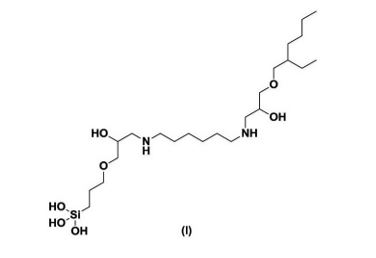
[drawn thereafter are the 12 further compounds referred to in integer (3)]
352 The amendment application also sought to remove dependent claims 2 to 16 and to replace them with independent claims 2 to 5, in the form as follows:
2. A method for the reduction of aluminosilicate containing scale in a Bayer process comprising the step of adding to the Bayer process stream an aluminosilicate scale inhibiting amount of a composition comprising small molecules (X) through (XIII), (XV) through (XIX), (XXIII) through (XXVII) within a product mixture formed from the reaction of ethylene diamine, 3-glycidoxypropyltrimethoxysilane and 2-ethylhexyl glycidyl ether.
[drawn thereafter are the 14 compounds referred to in integer (3)]
3. A method for the reduction of aluminosilicate containing scale in a Bayer process comprising the step of adding to the Bayer process stream an aluminosilicate scale inhibiting amount of a composition comprising small molecules (XXXIII) through (XLII), (LVI) through (LVIII) and (LX) within a product mixture formed from the reaction of ethylene diamine, 3-glycidoxypropyltrimethoxysilane and 2-ethylhexyl glycidyl ether.
[drawn thereafter are the 14 compounds referred to in integer (3)]
4. A method for the reduction of aluminosilicate containing scale in a Bayer process comprising the step of adding to the Bayer process stream an aluminosilicate scale inhibiting amount of a composition comprising small molecules (XX) through (XXII) within a product mixture formed from the reaction of 1-amino-2-propanol, 3-glycidoxypropyltrimethoxysilane and 2-ethylhexyl glycidyl ether.
[drawn thereafter are the 3 compounds referred to in integer (3)]
5. A method for the reduction of aluminosilicate containing scale in a Bayer process comprising the step of adding to the Bayer process stream an aluminosilicate scale inhibiting amount of a composition comprising small molecules (LIII) through (LV) within a product mixture formed from the reaction of 1-amino-2-propanol, 3-glycidoxypropyltrimethoxysilane and 2-ethylhexyl glycidyl ether.
[drawn thereafter are the 3 compounds referred to in integer (3)]
353 In summary, Nalco by its amendment application sought to achieve two types of changes.
354 First, it proposed to narrow the language of claim 1 by removing the phrase “at least one” as follows (with the changes in mark-up): “…adding to the Bayer process stream an aluminosilicate scale inhibiting amount of a composition comprising at least one small molecules is selected from the group consisting of compounds…” (the narrowing amendment).
355 Second, it proposed to separate claim 1 into five independent claims, which specify: (a) a choice of A: HD in the case of claim 1; ED in the case of claims 2 and 3; and AP in the case of claims 4 and 5; and (b) whether the product mixture has undergone a hydrolysis step prior to being added to the Bayer process stream, in the case of claims 1, 2 and 4; or not, in the case of claims 3 and 5 (the separation amendment).
356 It is convenient to now address his Honour’s reasons concerning the construction of the claims as proposed to be amended. The separation amendment is not in contest. The construction dispute substantially concerns the scope and effect of the narrowing amendment.
His Honour’s reasons
357 Nalco submitted on the amendment application before his Honour that there were two issues of claim construction arising for determination (J2[52]).
358 First, whether the proposed amended claims included within their scope product mixtures made up of all of the particular small molecules identified in the claims, being 13 identified small molecules for claim 1, 14 small molecules for claims 2 and 3, and 3 small molecules for claims 4 and 5, but no others (small molecule construction issue).
359 Second, whether claims 1, 2 and 4 are directed to a product mixture that has undergone a hydrolysis step and claims 3 and 5 directed to a product mixture that has not undergone a hydrolysis step prior to being added to the Bayer process stream. We will briefly discuss the hydrolysis construction issue later, but it is not directly raised for our consideration or decision given the nature of the appeal grounds.
360 The parties agreed before his Honour that the small molecule construction issue could be determined by reference to claim 1. And the following matters were accepted by the parties before his Honour in respect of the amended claims (J2[54]).
361 First, the amended claims were not directed to a product mixture that contains only some of the identified small molecules. It was accepted that the product mixture includes all of the identified small molecules in each claim, as well as others.
362 Second, the claims did not require the scale-inhibiting action of a product mixture to be attributable to any specific individual small molecule or only to the small molecules identified in the claims. Rather, it was the aggregate influences of all of the silane compounds present in the product mixture formed from the reaction of A + GPS + E.
Small molecule construction issue
363 Nalco contended before his Honour (J2[55]) that the amended claims were directed to a complex product mixture formed from the reaction of A + GPS + E, which must include, but must not be limited to, all of the identified small molecules in each of the particular claims. That is, depending upon the amine molecule used in the reaction, the product mixture will include many other small molecules and polymers in addition to each of the listed small molecules in the particular claim.
364 Nalco put forward before the primary judge a number of matters in support of its construction (J2[56] and [57]).
365 First, having regard to his Honour’s earlier findings at J1[87], it was not practically possible to react A, GPS and E in a way that results in only the specified small molecules in the claim being present to the exclusion of other small molecules and polymers.
366 Second, the claims required all of the identified small molecules to be within a product mixture formed from the reaction of A, GPS and E. The words “within” and “formed” are ordinary English words which, in context, mean “inside or in” and “produced” respectively. So, a person skilled in the art would understand from the above and having regard to the term “product mixture” as a term of art that the claims require these small molecules to be in a product mixture that has been produced by the reaction of the three reactants, and the claims do not include within their scope a product mixture that contains only the small molecules listed.
367 Third, the words “at least one” and “selected from” have been removed, and work should be given to those deletions such that the composition now comprises the identified small molecules (along with many others and polymers) within a product mixture formed from the reaction of A, GPS and E. As a matter of ordinary English, the fact that the identified small molecules are “within” a product mixture means that the identified small molecules are not coterminous with the product mixture.
368 Nalco further contended before his Honour that its construction fits within the definition of “comprising” provided at p 4 lines 7–10 in the specification, which states:
Unless the context clearly requires otherwise, throughout the description and the claims, the words "comprise", "comprising", and the like are to be construed in an inclusive sense as opposed to an exclusive or exhaustive sense; that is to say, in the sense of "including, but not limited to”.
369 Having regard to the fact that the identified small molecules are within a product mixture, which will contain those molecules, along with many others, a skilled addressee would understand “comprises” in the context of the amended claims to include product mixtures not limited to only those identified small molecules.
370 Cytec contended before his Honour (J2[58] and [59]) that the amended claims define an invention which includes within its scope compositions comprising only the particular small molecules identified. Cytec noted that in J1 the primary judge found that the complete specification does not identify or describe beneficial effects of any particular small molecules, or how to produce a reaction product mixture that contains only those small molecules.
371 So, Cytec contended that its construction must follow as a result of or by applying the same logic underpinning the findings at J1[108] that claim 1 included within its scope a reaction mixture that is made up of a single type of small molecule identified in the claim. Cytec submitted that there can be no other way to read the amended claims and that the deletion of “at least one” does not alter that conclusion because: (a) the small molecule integer must be given meaning independent of the product mixture integer; and (b) “comprising” remains an inclusive term. That is, a composition within the method must comprise each of the specified small molecules and may, but need not, comprise other small molecules. The probability of obtaining a composition comprising only the listed types of small molecules is not to the point.
372 The primary judge accepted the construction advanced by Cytec. In his Honour’s view, each of the amended claims included within its scope a product mixture consisting of only the listed small molecules (J2[60]).
373 His Honour said (J2[61]) that looking first at the language of amended claim 1, the method there involves adding to the Bayer process stream an aluminosilicate scale inhibiting amount of a composition “comprising” the small molecules identified in integer (3) within a product mixture formed from the reaction of A, GPS and E. The requirement of integers (2) and (3) is that all of the small molecules identified must be present in the product mixture, although given the inclusive definition of “comprising” in the specification, other components may also (optionally) be present.
374 His Honour said (J2[62]) that that construction is consistent with his findings at J1[108] in respect of the current version of claim 1:
The result is that, properly construed, the claim includes within its scope both: (a) a complex reaction mixture, formed from the reaction of A + GPS + E, that includes within it many of the identified small molecules as well as many more compounds; and (b) a reaction mixture, formed from the reaction of A + GPS + E, that is made up of a single type of small molecule identified in the claim. The language of “comprising at least one small molecule” indicates that the claim covers the spectrum between these two possibilities.
375 His Honour saw no reason why a different construction of the word “comprising” in the context of the claim would arise from the language of amended claim 1 (J2[63]). Although the amended claims refer to a number of specified small molecules (varying in amount from 3 to 13 or 14) rather than a single small molecule, the logic of J1[108] still applied. The amended claims required at a minimum that the specified small molecules be present. Many more may be included, but that was not essential.
376 His Honour did not accept (J2[64]) Nalco’s submission that the words “within a product mixture formed from the reaction of A, GPS and E”, which appear in the proposed amended version of claim 1, would be understood by the person skilled in the art to mean that the amended claims do not include within their scope a product mixture that only contains the small molecules listed. His Honour said that read as a whole, the language of amended claim 1 more sensibly had the meaning that the product mixture may be made up of those specified molecules only or made up of those specified molecules as well as others.
377 His Honour was fortified in that conclusion by the evidence of the experts in the joint expert report, who agreed, in relation to the proposed amended claims:
All the small molecules illustrated and referred to by Roman numerals in each claim must be present in the product mixture of that Claim. No other small molecule is either excluded or required. That is, other small molecules may also be present in the product mixture, but the Claim does not require or exclude the presence of any other material in the product mixture.
378 Nalco drew attention before his Honour (J2[65]) to the evidence of the experts that it is, in effect, impossible to create a reaction mixture from A, GPS and E that results only in the specified small molecules. It submitted that whilst the words “within” and “formed” are ordinary English words, the term “product mixture” is a term of art such that the skilled addressee would understand those terms together to mean that the claims do not include within their scope a product mixture that only contains the small molecules listed.
379 But his Honour said (J2[66]) that the expression “term of art”, and the role of the expert evidence should be correctly understood. The words “product mixture” are part of a phrase, being “product mixture formed from the reaction of [A + GPS + E]”, that describes, as the expert evidence explains, how a product mixture is created and the end result of that product mixture. The words “product mixture” themselves are ordinary English words that are to be understood in that technical context. Explaining the technical context falls within the realm of expert evidence but determining the meaning of the words “product mixture” is a matter for the Court. To the extent that Nalco’s submission suggested that the Court is bound by an expert’s construction of “product mixture”, his Honour rejected that proposition.
380 Nalco also submitted to his Honour that the word “comprising” supports its position, because the words “including, but not limited to” would be understood in the context of the reaction mixture to mean that the small molecules are to be within the product mixture so formed, which will invariably contain the identified small molecules as well as many others.
381 In his Honour’s view (J2[68]), the plain meaning of “comprising” was that the composition of the amended claims would include at least the specified compounds within the reaction mixture but may contain more than those compounds. One may not distort the clear language of the claim by reference to glosses drawn from the specification or elsewhere. His Honour said that the tortured history of amendments of the claims demonstrated, even if it were not a given in patent law, that the language of the claim is of the patentee’s own choosing. If the patentee wished to signify that only product mixtures containing more than the specified molecules were present in the product mixtures, then it could have done so.
382 In contesting this construction before his Honour (J2[69]), Nalco accepted that it was practically not possible to specify the outcome of the reaction of A, GPS and E such that any individual small molecule, or group of small molecules is produced. It submitted that this aids its construction, noting that when one of the three different forms of amine is reacted with GPS and E, the consequent product mixture will always contain an extremely large variety of small molecules and will include all the small molecules listed in the current and amended claims, as well as many others, and polymers. It contended that because it was not practically possible to react A, GPS and E in a way that results only in those small molecules being present to the exclusion of other small molecules or polymers it was not practical or within common sense to construe the claims in the manner set out above. His Honour noted that that was not the approach taken by the experts, who were well familiar with the practical difficulties to which Nalco refers but still read the plain words of the claims for the meaning to which he had referred.
383 Nalco submitted to his Honour (J2[70]) that the evidence of Mr Bellwood, in agreeing to the passage from the joint expert report quoted above, should not be determinative of the small molecule construction issue. It submitted that the substance of Mr Bellwood’s evidence elsewhere was such that he would never have agreed to that construction of the claim if it had been pointed out to him that the consequence was that the amended claims included within their scope a product mixture containing only the specified small molecules, because he considered that this was impossible to achieve. Nalco complained that it was not permitted to “explore this during the oral expert evidence” on the basis that construction was a matter for the court.
384 His Honour said that (J2[71]) the proposition advanced by Nalco was, in effect, that it ought to have had an opportunity to cross examine its own witness in order to enable it or him to retreat from a clear concession that he made in joint session and produced in a joint expert report. His Honour said that Mr Bellwood was a careful and well qualified witness whose evidence reflected a clear understanding of the issues in the case. He joined in the answer given above in a manner that was consistent with the construction that his Honour separately adopted.
385 There were three reasons why Nalco was not permitted to cross examine its own witness, which his Honour set out (at J2[73] to [75]). It is appropriate to set out the third reason given by his Honour.
386 His Honour said (J2[75]) that the substantive submission advanced by Nalco was that, because it is impossible to make a composition consisting only of the small molecules identified in integer (3) of amended claim 1, no person would construe the language of the claim to include such a composition. That proposition assumed that the construction of the claims was to be entirely driven by the technical contribution to the art described in the specification. Such a circular proposition was repugnant to the authorities that require the claims to be understood according to their terms, albeit in the context of the specification as a whole. His Honour said that to distort the plain language of the claim by reference to the technical contribution was to place a gloss on the language of the claim of the type that has long been forbidden.
Hydrolysis construction issue
387 Before the primary judge (J2[76]) Nalco contended that properly construed, the amended claims are directed to product mixtures that have either undergone a hydrolysis step (amended claims 1, 2 and 4) or have not undergone a hydrolysis step (amended claims 3 and 5), prior to being introduced to the Bayer process stream. Contrastingly, Cytec submitted before the primary judge (J2[77]) that none of the amended claims included any hydrolysis step of the product mixture as an integer and such an integer should not be read into any claim. It said that to do so would be to add an impermissible gloss to the claims from the specification. Similarly, Cytec said that there was no basis for limiting any of the amended claims by reference to the water content of the reactants. His Honour preferred the argument advanced by Cytec and pointed out various matters which we do not need to set out.
388 But relevantly, his Honour said (J2[84]) that the amended claims did not identify that the product mixture formed from the reaction of A, GPS and E must be undertaken under any particular conditions or that there be any limitation on the way the synthesis reaction is brought into effect. And he said (J2[85]) that the same applied to amended claim 1. It is not limited in scope as to how the 13 small molecules specified in amended claim 1 are to be made. Put another way, he said that any composition comprising the small molecules identified within a product mixture as described will fall within the scope of the claims, regardless of how the composition was formed.
Consideration of opposition to amendment
389 His Honour found (J2[89]) that the small molecule construction issue should be determined in favour of Cytec such that the amended claims include within their scope a composition that includes only the identified small molecules within a product mixture, although a large number of other small molecules and polymers may also be included. He also found that Nalco’s arguments in relation to the hydrolysis construction issue must be rejected.
390 The remaining grounds concern the consequences of his findings in relation to the small molecule construction issue.
391 As his Honour recited (J2[92]), Cytec submitted that in light of this construction the amendment application must be determined adversely to Nalco on three separate alternative bases. First, the amendment was not allowable because as a result of the amendment the specification would claim matter that extends beyond that disclosed in the complete specification in breach of s 105(4) and s 102(1). Second, as a result of the amendment the specification would not comply with the requirement of s 40(2)(a) that the specification disclose the invention clearly and be supported within the requirements of s 40(3) in breach of s105(4) and s 102(2)(b). Third, as a matter of discretion the amendment was futile and ought to be refused.
392 Now the first of these points can be put to one side in the present context. His Honour dealt with the second and third points in the following fashion (J2[92] et seq).
Lack of support and lack of clear and complete description
393 The construction that his Honour determined in relation to the small molecule construction issue was materially the same as that which he adopted in his earlier judgment. In short, he concluded (J2[94]) that the word “comprising” in current claim 1 should be given the inclusive meaning defined in the body of the specification, with the consequence that claim 1 includes within its scope a product mixture formed from the reaction of A + GPS + E that consisted entirely of a single type of small molecule.
394 He reached the same conclusion as he set out concerning the small molecule construction issue, albeit that instead of a single type of small molecule for amended claim 1 there are 13 specified small molecules, for amended claims 2 and 3 there are 14 specified small molecules and for amended claims 4 and 5 there are three such specified small molecules. Indeed, it seemed to him that the ineluctable outcome of the reasoning set out in J1 was that he should reach the same conclusion in relation to the amended claims.
395 His Honour considered that the amendments proposed by Nalco did not serve to afford any different meaning to the word “comprising” or the words “within a product mixture” in the context of the amended claims. Nor was there any material difference in the evidence concerning the fact that the technical contribution of the specification was not directed to the ability to isolate given small molecules, whether it be a single small molecule or a group of small molecules.
396 His Honour said (J2[95]) that the consequence was that, as for the current claim set considered in the judgment, so too for the amended claims, the amended claims ought not to be allowed because they do not satisfy the requirement in s 40(3) that the claims be supported by matter disclosed in the specification for the reasons provided elsewhere.
397 In short, in the absence of any technical contribution sufficient to encompass the full scope of the monopoly claimed, the amended claims lacked support.
398 His Honour held that the same outcome applied in relation to the application of s 40(2)(a) which requires that the complete specification disclose the invention in a manner which is clear enough and complete enough for the invention to be performed by a person skilled in the relevant art.
399 Further, his Honour considered (J2[96]) that the disclosure of the specification, including the amended claims, was not sufficient to enable the invention to be performed without undue experimentation insofar as those claims include a product mixture made up of only the identified small molecules. His Honour said (J2[97]) that Nalco continued to seek to claim something despite not disclosing how it is to be done.
Futility and discretion
400 His Honour said (J2[98]) that the failure of Nalco to satisfy the requirements of ss 40(2)(a) and 40(3) had the consequence that the amendments were not allowable pursuant to s 102(2). Consequently, his Honour did not need to consider discretionary arguments. But nonetheless his Honour addressed (J2[99]) two arguments that Cytec raised, being, first, that the amendments should be refused on the basis that they did not overcome the deficiencies in the patent application identified in J1 and, second, that the amendments should not be allowed as granting such amendments would be futile.
401 Other discretionary arguments raised by Cytec against permitting the amendments were not considered by his Honour. But given that we have taken a different view to his Honour on questions of construction and ss 40(2)(a) and 40(3) concerning the proposed amendments, it has been necessary for us to consider these additional discretionary questions.
402 We will return to these issues later, including setting out the history of the amendments sought which is relevant to the discretionary grounds. But first it is convenient to deal with questions of construction, ss 40(2)(a) and 40(3) and also whether the amendments are not allowable under s 102(2) (see s 105(4)) as his Honour held.
The amended claims: questions of construction (grounds 3 and 10)
403 By grounds 3 and 10 of its notice of appeal, Nalco has asserted the following:
3. Further or in the alternative to paragraphs 1 and 2 above, the primary judge erred in construing the phrase “comprising small molecules… within a product mixture formed from the reaction of…” in the claims of AU’990 in their amended form sought by the Amendment Application: Amendment Decision [55]-[75].
…
10. In the event that the Full Court regards paragraph 2(a)(ii) of the Joint Expert Report dated 25 August 2023 to be determinative on the question of construction (which it ought not to), then the primary judge erred in:
(a) finding that Nalco was seeking to cross-examine its own witness: Amendment Decision [71]-[72]; and
(b) refusing to allow Nalco’s Counsel to ask questions in the joint expert session about inconsistent answers given in the joint expert report: Amendment Decision [73]-[75].
404 In elaboration of ground 3, in the particulars to this ground it was said that the primary judge erroneously held that the scope of the claims in their proposed amended form includes a product mixture consisting of only the listed small molecules (J2 [60]). And it was said that his Honour ought to have found that the scope of the claims in their proposed amended form is limited to a complex product mixture formed from the reaction of A+GPS+E, which must include, but not be limited to, all of the identified small molecules in each of the particular claims.
405 Now the proposed amendments sought to address the primary judge’s findings that unamended claim 1 included a selection of at least one small molecule and that practically speaking the product mixture will include all of the identified small molecules. The proposed amendments also involved what we have earlier identified as the separation amendment. Further, various dependent claims were deleted. These latter two aspects can be put to one side for present purposes.
Cytec’s arguments — ground 3
406 It is appropriate to first consider Cytec’s arguments concerning ground 3.
407 Cytec said that simply shifting the language from “at least one small molecule selected from the group consisting of [47 particular small molecules]” to “comprising small molecules [3, 13 or 14 particular small molecules]” necessarily suffered the same deficiencies as dealt with by his Honour in J1.
408 Cytec said that each of the proposed claims still included, in addition to the express “within a product mixture” integer, an express integer limiting the range of product mixtures within the scope of the claim to those comprising particular small molecules, which is unsurprising given that a form of proposed claim removing any such requirement would necessarily be an impermissible broadening of the claims, contrary to s 102.
409 Cytec said that the primary judge rightly found that, on the basis of the language of proposed claim 1, it included within its scope a product mixture consisting of only the listed small molecules (J2[60] and [61]), as well as product mixtures consisting of the listed small molecules as well as others (J2[64]).
410 It was also said that his Honour rightly found that the logic of J1[108] applied to the proposed claims, notwithstanding that they referred to a number (3, 13 or 14) of specified small molecules rather than a single small molecule: J2[63]. Cytec said that that conclusion was reached based on the language of the claims, independently of the views of the experts in the joint expert report, which in any event were consistent with that result.
411 Cytec said that the assertion by Nalco that the primary judge relied only upon a single aspect of the claim, being the word “comprising”, does not do justice to his Honour’s reasons which consider the claim as a whole.
412 Cytec pointed out the “spectrum” referred to in J1[108] which, as his Honour explained in J2[62] and [63], included a composition made up of two, three, four, or any other number of types of small molecules identified in the claim.
413 Cytec said that all that changed was that Nalco sought to exclude product mixtures comprising only one or two types of specified small molecules (proposed claim 1), one to twelve types of specified small molecule (proposed claims 2 and 3), or one to thirteen types of specified small molecule (proposed claims 4 and 5). The unsupported and unenabled balance of the “spectrum” remained within the claims: J2[63].
414 Further, Cytec said that insofar as Nalco advanced a construction of the proposed amended claims which requires that the composition include “other non-identified small molecules”, in any event, the claims would not comply with s 40 and the amendments would be futile.
Analysis — ground 3
415 As Nalco correctly points out, the words “at least one” and “selected from” have been removed, such that the composition now comprises the identified small molecules within a product mixture formed from the reaction of A, GPS and E.
416 And as Nalco also correctly points out, as a matter of ordinary English, the fact that the identified small molecules are “within” a product mixture means that the identified small molecules are not coterminous with the product mixture. The product mixture is a complex mixture that includes but is not limited to the identified small molecules. It also contains other small molecules and polymers. We agree with Nalco that that is how the word “comprises” is to be understood in the context of the claim.
417 We agree with Nalco that when read in the context of the specification as a whole, it is clear that the inclusion of the identified small molecules in the claims is to distinguish product mixtures formed from the reaction of A, GPS and E which contain only, or are principally comprised of, polymers. It is also uncontroversial that a not insignificant amount of the identified small molecules will exist within the product mixture formed from the reaction of A, GPS and E using the methods described in the specification because they are the small molecules formed by the primary epoxide-amine reaction of A + GPS + E, as opposed to their isomers.
418 In our view, the claims do not include within their scope a product mixture made up of all of the identified small molecules but nothing else. The claims are directed to a complex product mixture that contains the listed small molecules together with many other small molecules and polymers.
419 The evidence before his Honour, which we have reviewed for ourselves, demonstrated that when one of the three different forms of A is reacted with GPS and E, the consequent product mixture will always contain an extremely large variety of small molecules and will include all of the small molecules listed in the amended and unamended claims, as well as many others, as well as polymers. Further, it was not practically possible to react A, GPS and E in a way that results in only those small molecules being present to the exclusion of other small molecules or polymers. All of this was made clear by the primary judge’s findings in J1. It was also not in dispute that this was common general knowledge at the priority date. And as Nalco points out, the claims have to be construed in such a context.
420 As Nalco points out, the claims require all of the identified small molecules to be within a product mixture formed from the reaction of A, GPS and E.
421 Further, we agree with Nalco that the words “within” and “formed” are ordinary English words which, in context, mean “inside or in” and “produced” respectively. So, the claims require these small molecules to be in a product mixture that has been produced by the reaction of A, GPS and E.
422 We also agree with Nalco that the term “product mixture” is a term of art. Further, it was common general knowledge that a product mixture formed from that reaction will always contain an extremely large variety of small molecules and will include all of the small molecules listed in the amended and unamended claims, as well as many others, and will include polymers albeit that they are undesirable.
423 Indeed, as the evidence before the primary judge indicated, it was not practically possible to react A, GPS and E in a way that produces a product mixture having only the identified small molecules.
424 The following cross-examination of Professor Easton occurred during the concurrent evidence session between himself and Mr Bellwood on the hearing of the amendment application before the primary judge:
MR COOKE: … Professor Easton, your position is that the product mixture formed from the reaction of HDGNE [A, GPS and E] would inevitably be a complex reaction product mixture that includes millions or billions of molecules.
PROFESSOR EASTON: Yes.
Q: And it would inevitably include polymers.
A: Yes.
Q: And also would inevitably include many different types of small molecules.
A: Yes.
Q: It would inevitably include hundreds or thousands of different types of small molecules.
A: Yes.
Q: And, as a matter of chemistry, that is what you understand by the words:
A product mixture formed from reaction of HDGNE [A, GPS and E]
A: Sorry. Where are you referring to HDGNE? A-G-E, for example - - -
Q: Yes.
A: - - - where ….. hexane diamine, yes.
Q: Correct. Yes. And it’s also how you understand the words in claim 1 of the proposed amended claim, namely the words:
A product mixture formed from reaction of hexane diamine G and E.
A: That’s the product mixture, but that’s just a way of generating the small molecules.
Q: Yes, but you understand that the words in proposed …..claim 1, namely a product mixture formed from the reaction of HDGNE [A, GPS and E] to inevitably include a complex reaction product mixture; correct?
A: The reaction product will be a complex mixture, yes.
425 We should make several points here. The cross-examiner’s reference as transcribed to HDGNE was a short hand reference to the amine (A), hexane diamine (HD), GPS and E, which from time to time has been referred to as “A, GPS and E” or “A-G-E”. Further, following this extract from the transcript, Mr Cooke went on to ask Professor Easton whether “that means it will inevitably include the listed small molecules together with other small molecules and polymers”. Objection was taken to this question, which was upheld.
426 So, the skilled addressee reading the words “within a product mixture formed from the reaction of A, GPS and E” would understand that the claims do not include within their scope a product mixture that only contains the small molecules listed. It is not in dispute that this would be practically impossible to achieve. Nothing in the wording of the claims suggests otherwise.
427 We also agree with Nalco that Cytec’s construction ignores the words “within a product mixture formed from the reaction of…”, and omits the remainder of the claim, including such words.
428 Now Cytec suggests that the small molecules integer must be given a meaning independent of the product mixture integer. But the claims require the small molecules to be “within” the product mixture, not independent of it.
429 Further, Cytec’s reliance on the use of “comprising” in the claims does not assist Cytec’s construction. The product comprises, in the sense of includes but is not limited to, the identified small molecules because it also contains other small molecules and polymers. This fits within the definition of “comprising” as provided in the specification, which states that:
Unless the context clearly requires otherwise, throughout the description and the claims, the words “comprise”, “comprising”, and the like are to be construed in an inclusive sense as opposed to an exclusive or exhaustive sense; that is to say, in the sense of “including, but not limited to”.
430 We agree with Nalco that in the present case, when regard is had to the definition of “comprising”, and the fact that these small molecules are to be within a product mixture formed from the reaction of A, GPS and E, which will inevitably contain those small molecules as well as many others, a skilled addressee would understand “comprises” in this context to mean that the product mixture including those small molecules identified as a subordinate element within a larger more complex product mixture, and not only those small molecules.
431 Cytec also erroneously seeks to divorce the primary judge’s findings on “comprising” from “at least one small molecule”, asserting that the logic of J1[108] applied to the amended claims, notwithstanding the deletion of “at least one”. The primary judge’s findings in J1 concern the composite phrase “comprising at least one small molecule”: J1[106] and [108]. But we agree with Nalco that both Cytec and the primary judge in J2 fail to consider the meaning of “comprising” after the deletion of “at least one”.
432 Further, as Nalco rightly says, the rationale of including the small molecules in the claims is to claim the product mixture formed from the reaction of A, GPS and E in which those small molecules are present, ideally in a high overall yield, with fewer polymers resulting from undesired side reactions.
433 The claims are not directed to a product mixture simpliciter, because the small molecules integer requires that the specified small molecules be present. If the small molecules were not included in the claims, the claims would extend to product mixtures comprised solely or primarily of polymers resultant from cross-linking reactions, which formed part of the prior art.
434 If the claims included reference to a product mixture formed from the reaction of A, GPS and E, without reference to any of the small molecules, then the product mixture could be comprised mostly of polymers. But this is inconsistent with the disclosures in the specification concerning the advantages of the small molecules that are the subject of the invention, over polymers which formed part of the prior art.
435 We agree with Nalco that in these circumstances, the skilled addressee reading the specification and observing the presence of the small molecules in the claims, who knows that a product mixture formed from the reaction of A, GPS and E will always result in a complex mixture that contains those identified small molecules, as well as many others, would not think that the claims are directed to anything other than a product mixture, as it is ordinarily understood as a term of art, that includes small molecules.
436 The skilled addressee would not construe the claims as being directed to a product mixture that contains only the small molecules listed in the claims where no contrary indication is contained in the specification and it is known that this is impossible to achieve.
437 Finally, as Nalco points out, recourse to the unamended specification for the purpose of interpreting the amended specification, which is permissible (see s 116), also demonstrates that the amended claims do not include within their scope a product mixture that contains only the small molecules listed in the claims. The words “at least one” and “selected from” have been deleted from the claims. Work should be given to those deletions. The effect of those deletions is to limit the claims to only product mixtures that contain those identified small molecules, together with many others and polymers.
438 Properly construed the proposed amended claims now only relate to the complex reaction product mixture referred to by the primary judge in J1[108(a)]. For completeness, we note that claim 12 has also been deleted, so the point made by the primary judge in J1 concerning claim 12, if it had any force, which we do not see as we have said, has even less force in the present context although the specification continues to have the reference at p32 lines 2 to 9.
Ground 10
439 It is convenient to now say something briefly here concerning ground 10.
440 Mr Bellwood agreed with the following proposition with respect to question 2(a)(ii) in the joint expert report:
All the small molecules illustrated and referred to by Roman numerals in each Claim must be present in the product mixture of that Claim. No other small molecule is either excluded or required. That is, other small molecules may also be present in the product mixture, but the Claim does not require or exclude the presence of any other material in the product mixture.
441 But as the primary judge correctly held at J2[66] and [74], the question of construction is for the Court. The answer given by Mr Bellwood to question 2(a)(ii) is not determinative.
442 Further, consistently with his written evidence Mr Bellwood agreed in the joint expert report that the product mixture formed from the reaction of A, GPS and E would inevitably contain the small molecules identified in the claims, as well as many others in a complex mixture (2(b)(ii)):
The reactions of either hexane diamine (Claim 1), ethylene diamine (Claims 2 and 3) or 1-amino-2-propanol (Claims 4 and 5) with 3-glycidoxypropyltrimethoxysilane and 2-ethylhexyl glycidyl ether will form complex reaction product mixtures. Among the 10>20 molecules in these mixtures, it is conceptually inevitable as a matter of chemistry that each of the small molecules illustrated and referred to by Roman numerals in the Claims will be some proportion of these, but in an unknown amount.
443 Further, Professor Easton said (2(e)(v)(b)):
I do not agree that the illustrated small molecules define or characterise reaction product mixtures that are responsible for the aluminosilicate scale inhibiting effect (Bellwood 2: [54]; Bellwood 4: [36]). Other classes of molecules such as dimethoxysilanes and monomethoxysilanes, and other members of the classes of molecules illustrated in Claims 3 and 5 or Claims 1, 2 and 4 (trimethoxysilanes or trihydroxysilanes, respectively) that are not currently illustrated, as well as condensation products and polymers, will also inevitably be present in the reaction product mixtures. They would be equally representative of the components of the reaction product mixtures and expected to have various aluminosilicate scale inhibiting effects.
444 Contrastingly, Mr Bellwood said (2(e)(vi)(c)):
I do not understand that the illustrated small molecules should be solely responsible for the aluminosilicate scale inhibiting effect of the product mixture as it is generally known that all the silane/silanol compounds in the product mixture are likely to contribute to the aluminosilicate scale inhibiting effect to some extent. [JER 1: Qu 2) It is the aluminosilicate scale inhibiting effect of the product mixture (composition) which is claimed, not that of any individual or group of small molecules. [Bellwood 2: (58-59)]
445 Further, Mr Bellwood stated in the joint expert report, in contrast to Professor Easton, that in his view the specification provides guidelines on how to prepare product mixtures from the specified reagents. Further, he said that he was confident that the invention of the proposed amended claims can be performed. Again, this is consistent with his written evidence.
446 Further, Mr Bellwood gave evidence that:
The reaction product mixture [of the amended claims] must contain the identified small molecules, but it would not contain only those small molecules, because (as Professor Easton explains) it would inevitably include other small molecules and possibly polymers. Therefore, applying the knowledge that I had at February 2011, and in particular the knowledge that this reaction product mixture would inevitably include other small molecules and possibly polymers, I do not read the [amended claims] as including the use of a composition which consist entirely of the particular small molecules identified in the claim.
447 And Professor Easton had also given evidence that the product mixture formed from the reaction of A+GPS+E would inevitably contain the small molecules identified in the claims, as well as other small molecules and polymers in a complex mixture.
448 The primary judge upheld an objection by Cytec’s senior counsel to Nalco’s senior counsel exploring the answer given to question 2(a)(ii) of the joint expert report with Cytec’s expert, Professor Easton, and directed that no further questions regarding claim construction could be asked: J2[64], [69] and [70] to [75].
449 We agree with Cytec that the primary judge reached his conclusion on construction separately from the evidence of the experts: see J2[70] and [71]. The primary judge reached that finding on the basis of the ordinary English words in the claim: J1[60] to [64] and [68]. Further, evidence of underlying technical issues had already been given at the initial hearing and on the amendment application, and construction was a matter for the Court. In summary, we reject ground 10.
Appeal grounds 4 to 7
450 Ground 4 is in the following terms:
4. The primary judge erred in finding that none of the claims of AU’990 in their amended form sought by the Amendment Application includes any hydrolysis step of the product mixture as an integer and that such an integer should not be read into any claim: Amendment Decision [77]; [80]-[88].
451 Now whilst the primary judge indicated (at J2[76] to [88]) that he preferred the argument advanced by Cytec on what was referred to as the hydrolysis construction issue, nothing turned on the primary judge’s preference. The primary judge’s rejection of the amendment application arose solely from the small molecule construction issue and the primary judge’s decision not to exercise the discretion, which was unrelated to the hydrolysis construction issue. So, the observations made by the primary judge regarding the hydrolysis construction issue are obiter dicta. Moreover, Cytec no longer presses its amendment opposition grounds that were premised on the hydrolysis construction issue. We do not need to consider ground 4 further.
452 Grounds 5, 6 and 7 are in the following terms:
5. Further or in the alternative to paragraphs 1 and 2 above, by reason of the matters referred to in paragraph 3 above, the primary judge erred in finding that, as a result of the amendments sought by the Amendment Application, the claims of AU’990 would not comply with the requirement of section 40(2)(a) and (3) of the Act: Amendment Decision [94]-[97].
6. By reason of the matters referred to in paragraph 3 above, the primary judge erred in finding that the amendments proposed by the Amendment Application are not allowable because as a result of those amendments the specification of AU’990 would claim matter that extends beyond that disclosed in the complete specification in contravention of sections 105(4) and 102(1) of the Act: Amendment Decision [92].
7. The primary judge erred in finding that the amendments proposed by the Amendment Application are futile and ought to be refused: Amendment Decision [92]; [98]-[107].
453 The primary judge held that, in light of his construction of the proposed amended claims, the claims did not comply with ss 40(2)(a) and (3) (J2[92] to [97]). This also led the primary judge to find that the amendment was not allowable pursuant to ss 105(4), 102(1) and 102(2)(b) (J2[92] to [97]).
454 Now as we have said, the primary judge adopted an incorrect construction of the proposed amended claims. Adopting the correct construction, the claims comply with ss 40(2)(a) and (3), and the amendments will comply with ss 105(4) and 102(1). Further, they are not futile because they are compliant with the Act.
455 Now Cytec contends in ground 2(i) of its notice of contention that on Nalco’s construction the proposed claims do not comply with s 40(3) in that they are unclear because it is not clear what (if any) other product mixtures on the spectrum between the 3, 13 or 14 types of small molecules listed in the proposed claims, and all possible small molecules, would also be excluded.
456 But we agree with Nalco that the proper construction of the claims is clear. The amended claims are directed to a product mixture formed from the reaction of A+GPS+E, which contains all of the listed small molecules, together with other molecules and polymers. The scope of the claims is clearly defined and understood. The fact that each resulting product mixture may contain different types and proportions of molecules does not render the claims unclear.
457 Further, Cytec contends that if it is successful in the contention in ground 1(ii) of its notice of contention, then the proposed amended claims also do not comply with s 40(3); see ground 2(ii) of the notice of contention. But this ground should be rejected as well. We have rejected Cytec’s contention in ground 1(ii) as discussed earlier.
458 As we have indicated earlier, no error has been shown in the primary judge’s statement that “the broader embodiment encompassed within the claim, where the reaction product is a complex mixture containing many of the listed small molecules and many more compounds, does not suffer from lack of support” (J1[137] to [139]).
Discretion
459 It is convenient at this point to turn to the question of discretion.
460 Grounds 8 and 9 of Nalco’s notice of appeal are in the following terms:
8. The primary judge erred in determining that the scope of the discretion in s 105(1A) is to be understood as being fettered such that a patent applicant should not be given an opportunity to amend a patent application after the hearing of an appeal of a patent opposition hearing in respect of an issue that was held adversely to the patent applicant in respect of that patent application: Amendment Decision [104]-[105]; [108].
9. The primary judge erred in finding that he would not have exercised the discretion under s 105(1A) in favour of Nalco: Amendment Decision [107]; [108].
461 We have accepted that Nalco’s construction of the amended claims is correct and the amendments satisfy ss 40, 102 and 105(4). Moreover, these amendments were not broadening amendments. So, the proposed amendments addressed the primary judge’s adverse findings in J1. Moreover, contrary to what the primary judge seemed to suggest, Nalco did not seek to relitigate an issue that had already been before him. So, such amendments could not be futile.
462 Now Cytec has said that appellate review of the exercise of discretionary power is subject to the principles in House v The King (1936) 55 CLR 499. But the primary judge never reached the position of having to exercise any discretion as he held that the proposed amendments were not allowable (ss 102 and 105(4)). Accordingly, we are not here reviewing any exercise by the primary judge of a discretion as such albeit that the formulation of Nalco’s grounds of appeal tended to so assume.
463 It is convenient at this point to identify the relevant reasoning engaged in by his Honour.
The primary judge’s reasons
464 Notwithstanding that his Honour did not reach the stage of having to exercise any discretion under s 105(1A), his Honour said (J2[100]) that the discretion to consider and allow an amendment must be understood in the context of the policy and purpose of the opposition procedure under s 59.
465 His Honour said (at J2[101]), correctly in our view, that the purpose of pre-grant opposition proceedings is to provide a swift and economical means of settling disputes that would otherwise need to be dealt with by the courts in more expensive and time consuming post-grant litigation; see Genetics Institute Inc v Kirin-Amgen Inc (1999) 92 FCR at [19]. And it was accepted that pre-grant opposition provides a relatively inexpensive mechanism for resolving third party disputes as to validity.
466 The primary judge said (J2[102]), correctly in our view, that the amendments pursuant to the RTB Act introducing s 105(1A) tend to reinforce the importance that pre-grant opposition is intended to provide a relatively inexpensive mechanism.
467 His Honour said (J2[103]) that in the case before him it cannot be said that the opposition process has been the sort of swift and economical skirmish contemplated in the legislation. He said that to the contrary, by means of multiple proposed amendments and oppositions, the process resembles a decade-long war of attrition where, even after a contested hearing on appeal from the APO, the patent applicant seeks to battle on.
468 In his Honour’s view (J2[104]), the observations by Beach J in Meat & Livestock at [103] and [104] to the effect that s 105(1A) contains no limitation as to the point in time during an appeal when an amendment application can be made or determined and no limitation confining the exercise of discretion to addressing adverse findings, must be understood in the context of the policy and purpose of s 105(1A). He said that it should not be understood to provide a “magic pudding” of opportunity for the creative endeavours of a patentee to craft ways of avoiding the consequences of adverse findings. Nor should the existence of the power under s 105(1A) enabling the Court to allow an amendment to a patent application be regarded as a mechanism to provide a patent applicant with a basis for attempting to relitigate an issue that has already been before the Court.
469 Now we would note here that Beach J was addressing in Meat & Livestock at [103], [104] and [115] the question of the existence of power rather than the exercise of power. He said:
First, s 105(1A) contains no limitation as to the point in time during an appeal at which an amendment application can be made or determined or the relevant amendment power exercised, providing of course that the appeal remains on foot and has not yet been finally disposed of. In such a context, the question of the timing only has relevance to the exercise of the amendment power, not its existence. For completeness and as I have said, the word “during” in the heading to s 105(1A) encompasses any time prior to final disposition of the appeal.
Second, any amendment power under s 105(1A) is clearly not confined to addressing adverse findings made by the Commissioner. On its face, s 105(1A) can extend to permitting amendments to address adverse findings by me. And indeed, if I am in essence standing in the shoes of the Commissioner, there would be little reason in logic to distinguish between the two scenarios. Moreover, it is a non-sequitur to argue that because s 105(1A) refers to “an appeal…against a decision or direction of the Commissioner…” that the amendment power is confined to addressing adverse findings of the Commissioner. These words refer to the nature of the appeal itself rather than to confine the scope of the amendment power.
…
In my view, whether a patent applicant ought to bring forward amendments during or prior to the hearing of an appeal, as opposed to bringing forward amendments to address objections upheld by a judge after he has addressed them in his reasons, does not go to the existence of power under s 105(1A) but rather whether it should be exercised.
(emphasis in original)
470 Later paragraphs of Meat & Livestock (at [334] to [466]), which were not referred to by the primary judge, dealt with discretionary considerations such as the question of full and frank disclosure being made ([415] to [436]), the knowledge of risk of potential difficulties ([370] to [414]) and the questions of unfair advantage and delay ([437] to [450]). But of course some of these factors take on a different complexion where one is dealing with an amendment to a patent application as distinct from an amendment to a granted patent where the monopoly is in operation so to speak. We will return to Meat & Livestock later.
471 As a general proposition, so his Honour said (J2[105]), a patent applicant should, on appeal from an opposition, advance its best and final version of the specification and claims that it desires to litigate and the decision on appeal should be regarded as resolving any controversy regarding the scope and construction of the specification.
472 The primary judge said that any other approach is, in his view, contrary to basic principles of the finality of litigation, as noted by McKerracher J in Repipe Pty Ltd v Commissioner of Patents (No 3) [2021] FCA 31 in the context of an application to amend a patent that had been found to be invalid for want of manner of manufacture. There, his Honour considered (at [60]) the principles of finality of litigation, before endorsing as relevant the observations of Finkelstein J in Nutrasweet Australia Pty Ltd v Ajinomoto Co Inc (No 3) [2007] FCA 966; (2007) 73 IPR 282 at [20] to [25]. But as we would note, of course these observations all relate to the amendment of granted patents. We will return to these questions later.
473 Further, whilst recognising the different position of a patent application compared to a granted patent, his Honour said (J2[106]) that the principles relevant to finality articulated in those cases, to which may be added the requirements of ss 37M and 37N of the Federal Court of Australia Act 1976 (Cth), indicate that particular care must be taken in exercising the discretion in favour of amendment after a full hearing on appeal from an opposition.
474 We will return to these questions later, although what his Honour said was obiter given that the amendments were in any event not allowable (s 102 and s 105(4)). As we have said, the occasion for the exercise of his Honour’s discretion never arose. The statutory power under s 105(1A) had not been relevantly enlivened because of the preclusive operation of s 105(4) on his Honour’s findings.
475 His Honour went on to say (J2[107]) that in the case before him the issues between the parties regarding the specification were substantively determined in the judgment. He said that the proposed amendments did not overcome the difficulties consequent upon the finding at J1[131] that the technical contribution disclosed in the specification rises no higher than the general discovery that small molecule-based inhibitors are effective in reducing aluminosilicate scale in Bayer refineries. But as we have concluded and discussed earlier, we have taken a different position to his Honour on this aspect, and so these observations may be put to one side.
476 His Honour said that had the requirements of s 102(2) been met by Nalco’s sixth proposed amendments, which we will further describe later, he would not have exercised the discretion under s 105(1A) in favour of Nalco.
477 His Honour said (J2[108]) that a basis upon which he would have refused the amendment as a matter of discretion lay in the application of the principles to which he had referred (J2[105]) concerning the finality of litigation.
478 Finally, his Honour recorded (J2[109]) that Cytec contended that the Court should not otherwise exercise its discretion under s 105(1A) to allow the amendments on eight separately particularised bases, which may collectively be described as relating to unreasonable delay on the part of Nalco in proposing the amendments at different points in time during the opposition proceedings before the APO. On appeal before this Court, Nalco disputed that any of these bases was well founded.
479 But his Honour did not consider it necessary or appropriate to reach any conclusion regarding such matters (J2[110]) given that they were hypothetical on his Honour’s findings. The occasion for the exercise of his discretion did not arise. Of course, it is necessary for us to consider these matters as we are now in the position of having to exercise the discretion under s 105(1A) given that the amendments are not disallowable under s 102(2).
480 Accordingly, it is necessary to say something more as to the relevant principles concerning the exercise of the s 105(1A) discretionary power to amend.
Legal principles – discretion
481 Section 105(1A) contains no limitation as to the point in time during an appeal at which an amendment application can be made or determined or the relevant amendment power exercised. In such a context, the question of timing only has relevance to the exercise of the amendment power, not its existence.
482 And whether a patent applicant ought to bring forward amendments during or prior to the hearing of an appeal, as opposed to bringing forward amendments to address objections upheld by a judge after he has addressed them in his reasons, does not go to the existence of power under s 105(1A) but rather whether it should be exercised.
483 Further, at the time of the proposed introduction of s 105(1A), the explanatory memorandum stated “[e]xisting section 105 applies to amendment of patents. It is expected that in exercising their discretion under new subsection 105(1A), the courts will give account to the different factors that are relevant to applications, in contrast to those applying to patents”.
484 Now Cytec says that so much might be accepted for an unpublished and undisclosed patent application, but it says that as a matter of public policy there is no reason why the distinction should be otherwise made. Cytec says that many of the matters identified by this Court as relevant to the application of the discretion under s 105 concern protection of the public against a patentee maintaining claims when it knows or ought to know that amendment of the claims should be sought and fails to do so for a substantial period of time. And this does not require the identification of any particular person who has read the published claims and acted to their detriment. This is because the claims stake out the monopoly granted to the patentee, the infringement of which grants the patentee extensive rights including pecuniary relief.
485 Cytec says that importantly, for the purposes of s 105(1A), s 57(1) provides that the right to pecuniary relief commences from the date of publication of the patent application:
After a complete specification relating to an application for a standard patent has become open to public inspection and until a patent is granted on the application, the applicant has the same rights as he or she would have had if a patent for the invention had been granted on the day when the specification became open to public inspection.
486 Now although such an action cannot be brought until grant, the public is on notice that relief can be sought by the patentee in respect of acts done from the date the specification was first published. The only caveat on that right is s 115, which provides that pecuniary relief may not be ordered in respect of any infringement of the patent made before amendment of the claims “unless the court is satisfied that the specification without the amendment was framed in good faith and with reasonable skill and knowledge”. Cytec says that therefore, the public would be entitled to expect that the patent applicant would ensure that its claims were so drafted and properly mark out the boundaries of the proposed monopoly.
487 Further, in the exercise of its discretion under s 105(1), the Court may reject an amendment where the patentee seeks to take advantage of patent claims that it knows or ought to know should be amended. But Cytec says that similar circumstances can arise with respect to a patent application where the patent applicant engages in negotiation and licensing of the technology the subject of the patent application (as in the present case). That is because, without the threat of that technology being the subject of granted patent claims, the licensee would have no need for a licence at all. And in such a context, it does not matter if the patent application is published or not, only whether the claims of the patent application are disclosed to the potential licensee and the right to exploit the claimed invention made the subject of negotiations. Moreover, the culpability of this behaviour is exacerbated where the patent applicant explicitly or implicitly threatens to sue for infringement on the grant of the patent claims, or makes some other like threat contingent on that grant, for example, threatening higher licence fees if a deal is not struck prior to grant.
488 Further, Cytec says that there is no good reason to distinguish between the amendment of patents and the amendment of patent applications in the need for full and frank disclosure. Full and frank disclosure is required under s 105(1A) but in the context of the particular amendment application under consideration.
489 Now Nalco says that a Court cannot direct an amendment that is not allowable under s 102 (s 105(4)). And s 105(1A) does not specify any other factors a court should take into account when considering whether to direct the amendment of a patent application. Nalco says that accordingly, as the Court is standing in the shoes of the Commissioner, the first source of guidance should be the factors the Commissioner is directed to consider under the regulations.
490 Nalco says that pursuant to reg 10.5(1) of the Patents Regulations 1991 (Cth), if the amendments are proposed in anticipation of or in response to an examination report, the Commissioner must consider whether the proposed amendments would remove all lawful grounds of objection to the patent request and complete specification. Regulation 10.5(1) provides:
The Commissioner must grant leave to amend a patent request, complete specification or other filed document:
(a) if the report on the proposed amendments under subregulation 10.2(1) is not an adverse report; and
(b) in the case of amendments that are proposed in anticipation of, or in response to, a report relating to an examination under section 45 of the Act and that do not relate to matters mentioned in paragraph 6(c) of the Act—if the Commissioner is satisfied, on the balance of probabilities, that the proposed amendments would remove all lawful grounds of objection to the patent request and complete specification; and
(c) in the case of amendments that are proposed in anticipation of, or in response to, a report relating to an examination under section 101B of the Act—if the Commissioner is satisfied, on the balance of probabilities, that the proposed amendments would remove all lawful grounds for revocation of the innovation patent.
491 Nalco says that response to or anticipation of an examination report disclosing lawful grounds of objection is a comparable circumstance to the circumstance where a Court has delivered reasons for judgment that identify lawful grounds of objection in an appeal from the decision of the Commissioner.
492 Nalco says that apart from the statutory conditions in s 102, the factor of whether the amendments remove lawful grounds of objection should be the dominant consideration for the Court in exercising its discretion under s 105(1A) whether to direct the proposed amendments. If the proposed amendments do not remove the lawful grounds of objection identified in the Court’s reasons, then there is nothing achieved by directing the amendments. But if the proposed amendments are not disallowable pursuant to s 102, and also remove the identified grounds of objection, then the amendments should be directed and the patent application should proceed to grant.
493 Nalco says that this approach is consistent with the reason for introducing s 105(1A), which is to reduce the complexity of the pre-grant process by empowering the Court to deal with amendment applications in an appeal from the Commissioner’s decision.
494 The exercise of the discretion should take into account the matters just described. But Nalco says that the following matters are also relevant being, first, knowledge of the risk of potential difficulties, second, whether there has been full and frank disclosure and, third, unfair advantage and delay.
495 Nalco says that each of these matters are relevant to the exercise of discretion under s 105(1A). But in the context of an application to amend a patent application as distinct from a granted patent, their weighting and the balancing exercise may have a different dimension as compared with considering such factors in exercising a discretion under s 105(1). And in the context of s 105(1A), as opposed to the context of s 105(1), the points made drawing an analogy between the Commissioner’s task and our task have significant relevance and weight in the discretionary balancing.
496 Generally speaking, we agree with Nalco’s position on these questions of principle.
497 It is convenient to now discuss some authorities relevant to the question of amendment. In this respect we will address the cases by reference to two categories, namely, first, amendments to granted patents and, second, amendments to patent applications.
Amendments to granted patents
498 In terms of an amendment sought to a granted patent, various principles were distilled in Les Laboratoires Servier v Apotex Pty Ltd (2016) 247 FCR 61; [2016] FCAFC 27 by Bennett, Besanko and Beach JJ (at [243] to [245]). First, the discretion exists for the benefit of the patentee, but the onus to establish that amendment should be allowed is on the patentee. Second, generally, a permissible amendment (i.e. not disallowed under s 102) will be allowed unless there are circumstances which would lead the court to refuse amendment. Third, the patentee must make full disclosure of all relevant matters. Fourth, the relevant focus is on a patentee’s conduct, not the merit of an invention. Fifth, amendment should be sought promptly and where a patentee delays for an unreasonable period, the patentee has the onus of showing that it delayed on reasonable grounds, such as a belief, on reasonable grounds, that an amendment was not necessary. Sixth, unreasonable delay is a circumstance likely to lead to refusal of the amendment. In assessing delay, the time when the patentee was unaware and reasonably did not know of the need for amendment is not taken into account. The relevant delay is from when the patentee knows of the likely invalidity, or has its attention drawn to a defect in the patent, or is advised to strengthen the patent by amendment. That is, amendment will not be permitted in cases where a patentee knows or ought to know that amendment should be sought and fails to do so for a substantial period of time. Thus the reasonableness of the conduct of the patentee is a relevant consideration when assessing delay. Seventh, mere delay is not, of itself, sufficient to refuse to exercise the discretion to amend. The fact of delay is, however, relevant to whether the respondent or the general public have suffered detriment. Eighth, if a patentee seeks to take unfair advantage of the unamended patent, knowing that it requires amendment, then refusal of the amendment is likely. The proportionality of the asserted culpability of the patentee as compared with the effect of loss of protection for the invention should be considered. Ninth, the nature of the amendment and the ground of invalidity sought to be overcome by it are important matters to be taken into consideration when exercising the discretion. Is the amendment a narrowing amendment to defeat a piece of prior art? Or is it to remedy the failure to comply with an obligation that crystallised on the filing of the patent application or, in the alternative, on the grant of the patent?
499 The Full Court said that these principles have been applied to amendments generally and operate as factors relevant to the exercise of the discretion to grant or refuse amendments. But there may be other factors that are relevant in a particular case.
500 Further, in an earlier decision between the same parties but concerning a different patent, the Full Court in Les Laboratoires Servier v Apotex Pty Ltd (2010) 273 ALR 630 at [92] per Kenny and Stone JJ observed that it was not necessary for the patentee to know that the unamended claims were invalid for delay to be a relevant factor in the exercise of the discretion. It was enough that the patentee knew of significant invalidity risks yet delayed in seeking amendment.
501 Emmett J said at [59]:
The underlying purpose of the power conferred by s 105 is to allow a patentee to validate what would otherwise be an invalid or partially invalid patent. It is a power conferred on the Court for the benefit of the patentee. However, the exercise of power in favour of the patentee is an indulgence. The rationale underlying the Court’s discretion to refuse permission to amend is that it is the duty of the Court to protect the public from abuse of the monopoly conferred by the grant of a patent. Where a patentee has claimed a monopoly over an area that is unjustifiably wide, research and experiment that might otherwise have been carried out might be deterred. That is against the public interest. On the other hand, where there has been no abuse of the monopoly, there would be no reason to refuse an amendment in order to protect a patentable invention that would otherwise be unprotected. It is in that context that the conduct of a patentee is relevant. If a patentee persists in defending or asserting claims that the patentee knows are unjustifiably wide, the implication is that the patentee is claiming to own something that really belongs to the public. By delaying too long in seeking to amend, the patentee may have effectively persisted in maintaining claims that the patentee knows are unjustifiably wide (see Vector Corp v Glatt Air Techniques Ltd [2007] RPC 255 at 279-280).
502 Further, a failure by the patentee to provide a full and frank disclosure of the reasons for seeking amendment is also a relevant factor in the exercise of the discretion.
503 In another case dealing with a granted patent, being Novartis AG v Bausch & Lomb (Australia) Pty Ltd (2004) 62 IPR 71, after Merkel J allowed the deletion and consolidation of certain dependent claims, his Honour considered whether to allow an amendment to the original form of claim 1 to remove a typographical error and to add a limitation to make the claim conform with data that indicated the limits at which the invention would work dealing with ion permeability values. The invention that his Honour was concerned with was contact lenses involving a discovery concerning the correlation between ion permeability and “on eye” movement. There were two sets of values involved, one calculated by the ionoton measurement and the other calculated by the ionoflux measurement. The amendments were not disallowable under s 102. Accordingly, his Honour considered the exercise of discretion. His Honour observed that a distinction had been drawn between validating amendments that cure otherwise invalid claims (the case before us) and other amendments such as deletion amendments involving deleting invalid claims. At [66] his Honour said by reference to this distinction that a more lenient approach may be taken where one was dealing with “deleting amendments, or amendments that merely seek to correct errors or mistakes or remove ambiguities”. Of course this distinction was being drawn in the context of seeking to amend a granted patent.
504 On the question of whether full and frank disclosure had been made, the patentee (Novartis) asserted that certain figures which appeared in the claims were based on discussion, correspondence and thought by the inventors and scientific judgment. But there was no corroboration of those matters, which led to his Honour’s conclusion that the real reason behind the choice of the values in the claims (which were now sought to be amended) was “a policy on the part of [the patentee’s] attorneys to express the claims in the patent as broadly as possible, irrespective of whether the scientific evidence then available to the patentees supported those claims” (at [126]). His Honour concluded that the patentee had not made a full and accurate disclosure of all relevant matters “as it [had] not candidly disclosed the ‘whole story of how it was that amendment had come to be sought’” (at [130] and [161(iv)]).
505 His Honour then dealt with the question of delay. His Honour pointed out that amendment may be denied where the delay has caused detriment to a particular party or the general public. Moreover, where a lengthy delay has occurred, a reasonable explanation is required even if no public detriment is apparent (at [135]). In the case before him, his Honour found that the patentee had been made aware of substantive errors in the claims six years before amendment was sought, but concluded that no proper explanation was given of the consideration given to the errors and why it was decided that no amendment was necessary.
506 In rejecting the amendments, his Honour concluded at [162] that:
In summary, the present case is one in which the patentees knew or ought to have known that the substantive amendments they now seek to make should have been sought long ago, but have failed to provide a reasonable or satisfactory explanation for their delay, which can fairly be characterised as culpable delay. Further, the errors and other matters now sought to be corrected came about as part of a policy of overstating claims without having reasonable grounds for doing so.
507 Further, as we have referred to earlier, the primary judge made reference to McKerracher J’s decision in Repipe, which dealt with an amendment sought to a granted patent and so is of less assistance to our context. And heavy reference was made by McKerracher J to the principle of the finality of litigation. But it must be borne in mind that his Honour found the amendments in that case to be futile. So his Honour said (at [63] to [65]):
In any event, and as a separate but fundamental reason, the amendments in any of their forms would be futile. Repipe has attempted to add detail to the claims of the two Patents in order to create a manner of manufacture, but in a way which it contends is properly drawn from the body of the specification of each of the claims. The difficulty is that the detail in the amendments, if it is properly drawn from the specifications, cannot transform the substance of the invention into a manner of manufacture because findings have already been made in relation to the disclosure in the specification of the Patents and the conclusion reached that no patentable subject matter was disclosed.
The alternative possibility is that the detail in the amendments is not properly drawn from the specification and goes beyond what is disclosed in some way. That, of course, gives rise to the s 102 issues which the Commissioner has raised.
Either way the amendments would fail to comply with the Act due to the findings in Repipe (No 1). The addition of generic detail to the claims, or elaboration on detail disclosed in the specification, cannot elevate a non-existing manner of manufacture to a manner of manufacture. Detail that is not generic or not disclosed cannot be added by way of amendment because of s 102 of the Act.
508 That is not our case of course where the amendments proposed are not disallowable under s 102 and are not futile. Further, McKerracher J considered there to be an element of gamesmanship going on, which is not our case on our assessment.
509 Now we accept that the concept of the finality of litigation and ss 37M and 37N of the FCA Act are not irrelevant to the exercise of discretion under s 105(1A), but their weight must be tempered by the fact that it is accepted that an amendment application can be made to address invalidity issues found in the judgment delivered in the appeal proceedings.
510 Further, reference was made by McKerracher J (at [61]) to what was said by Finkelstein J in Nutrasweet at [20] to [25]. But again, the latter case concerned an amendment sought to a granted patent.
511 Now Finkelstein J said in Nutrasweet at [20] and [27]:
While this argument was superficially attractive, upon closer analysis it must be rejected. There is no realistic possibility of there being inconsistent findings. According to the cases, a patentee is not entitled, following a trial on validity, to bring an application to amend the invalid claims, except in very limited circumstances and this is not one of them.
…
It was far too late in the day for any tactical move to save the application. The position in law is quite clear. Ajinomoto should have brought on its application to amend so that it could be dealt with at or before the trial. Thereafter it was too late.
512 But the reference in [20] to “except in very limited circumstances” and the time frame referred to in [27] have nothing to say about the time frame under which s 105(1A) operates or the breadth of the discretion thereunder.
513 If anything, the observations of Nicholas J in Neurim Pharmaceuticals (1991) Ltd v Generic Partners Pty Ltd (No 2) (2019) 139 IPR 424 at [107] and [108] better align with how we would view the exercise of the amendment power concerning a granted patent; see also his specific findings at [122] and [127].
514 Further, in Wimmera Industrial Minerals Pty Ltd v RGC Mineral Sands Limited (No 3) [1997] FCA 1063, [1997] AIPC 91-366, Sundberg J said at p 39,790, “the Court does not approach the exercise of its discretion in a manner hostile or antipathetic to amendment”. Sundberg J was dealing with an amendment sought to a granted patent under s 105(1). Given that the amendments were allowable, his Honour dealt with the exercise of discretion and cited with approval what was said by Aldous J. He said at p 39,789:
The Court has a discretion to refuse an amendment even though it is allowable under s 102. In Smith Kline & French Laboratories Ltd v Evans Medical Ltd [1989] FSR 561 at 569, Aldous J said:
The discretion as to whether or not to allow amendment is a wide one and the cases illustrate some principles which are applicable to the present case. First, the onus to establish that amendment should be allowed is upon the patentee and full disclosure must be made of all relevant matters. If there is a failure to disclose all the relevant matters, amendment will be refused. Secondly, amendment will be allowed provided the amendments are permitted under the Act and no circumstances arise which would lead the court to refuse the amendment. Thirdly, it is in the public interest that amendment is sought promptly. Thus, in cases where a patentee delays for an unreasonable period before seeking amendment, it will not be allowed unless the patentee shows reasonable grounds for his delay. Such includes cases where a patentee believed that amendment was not necessary and had reasonable grounds for that belief. Fourthly, a patentee who seeks to obtain an unfair advantage from a patent, which he knows or should have known should be amended, will not be allowed to amend. Such a case is where a patentee threatens an infringer with his unamended patent after he knows or should have known of the need to amend. Fifthly, the court is concerned with the conduct of the patentee and not with the merit of the invention.
515 He then said at p 39,790:
I accept that the Court does not approach the exercise of its discretion in a manner hostile or antipathetic to amendment … [A] failure to make full disclosure of all relevant matters will not inevitably result in an exercise of the discretion adverse to the patentee. There may be circumstances which mitigate, explain or excuse some non-disclosure. The non-disclosure may be of some minor, though strictly relevant, matter. An adequate explanation may be provided for a disclosure which is not as complete as it might have been. An innocent non-disclosure may have caused no harm.
Amendments to patent applications
516 In a case dealing with the amendment to a patent application, Moshinsky J said in Merial Inc v Intervet International BV (No 4) (2017) 124 IPR 1 at [10] to [25], particularly at [25(d)]:
Where the Commissioner or the Court upholds objections to the grant of a patent, the decision-maker will “refrain from refusing the application where it appears that the objections may be cured by amendment”, such as by the narrowing of the claims set out in the specification.
(citation omitted)
517 Moshinsky J declined to grant the applicant an opportunity to amend for the reasons outlined by him at [35] to [36]. His Honour held inter-alia that the applicant was not entitled to the patent by reason of the fact that it did not derive title from the inventor. This was an issue that went to the heart of the patent application and was not capable of being overcome by an appropriate amendment. His Honour considered that the issue of the applicant’s title to the invention had been dealt with generally and finally at the hearing.
518 Further, in Electronic Tax-Free Shopping Ltd v Fexco Merchant Services (No 3) [2017] FCA 569, Yates J said, albeit on an unopposed application, about the different contexts (at [52] to [54]) that the context in which the power under s 105(1A) comes to be exercised is quite different to the context in which s 105(1) comes to be exercised and that there is much to be said for the proposition that many of the considerations usually taken into account when exercising the Court’s discretion under s 105(1) are not relevant to the operation of s 105(1A).
519 Now the rationale underlying the Court’s discretion to refuse amendment under s 105(1) is not a rationale that can simply just be applied to the power of amendment in s 105(1A). No monopoly is conferred by a patent application and so no abuse of monopoly can arise. And s 105(1A) was introduced to overcome the difficulty of amending a patent application in the context of an appeal from the Commissioner’s decision.
520 In Meat & Livestock, Beach J discussed the various discretionary factors that were applicable to the exercise of power under s 105(1A) and his application of them (see at [342] et seq). We have earlier made reference to the principal discretionary factors discussed in Meat & Livestock and do not need to set them out.
521 Further, in Toolgen Inc v Fisher (No 3) (2024) 184 IPR 301, Nicholas J similarly dealt with the exercise of discretion under s 105(1A) (see at [22] to [24] and [29]).
522 Finally on this aspect, we accept that there is some force in Cytec’s s 57 point, albeit that s 57 is subject to s 115. But it is an exaggeration on Cytec’s part to assert that the distinction between granted patents and pending patent applications in terms of the question of amendment is substantially diminished by reason of the effect of s 57. There are clear and important distinctions between the two scenarios as the authorities make clear.
Nalco’s attempt to relitigate issues (ground 8)
523 We have already set out appeal ground 8. As formulated by Nalco, we do not consider that his Honour so held in such terms. Rather, in the passages of the primary judge’s reasons identified in this ground (see J2 [104], [105] and [108]), his Honour was addressing what his Honour considered to be Nalco’s attempt to relitigate issues. We have paraphrased these paragraphs earlier in our reasons.
524 Cytec sought to support the reasoning of the primary judge.
525 Cytec says that the primary judge found correctly that the issues Nalco sought to relitigate on the amendment application were issues that had been substantively determined in J1(J2[104] and [107], and [94] to [97]).
526 Cytec says that the primary judge found correctly that Nalco’s application, having regard to the issues it raised, was in essence an attempt to relitigate the issues that had already been determined adversely to it, contrary to basic principles of finality of litigation (J2[105]). On the facts before him, the primary judge would have declined to exercise the discretion (J2[108]). But as we have indicated, this was a hypothetical construct.
527 Cytec says that his Honour proceeded correctly to find (J2[94]) to the effect that the reasoning in J1 ineluctably applied in relation to the proposed claims and that there was no material difference in the evidence concerning the fact that the technical contribution of the specification was not directed to the ability to isolate given small molecules, whether it be a single small molecule or a group of small molecules. Further, Cytec says that the primary judge correctly found that “the issues between the parties regarding the specification were substantively determined in [J1]” (J2[107]).
528 Further, Cytec says that the present case was not one where the decision-maker decides that a deficiency identified can be cured by amendments to the specification. Cytec pointed out that the primary judge referenced Repipe, in which McKerracher J referred (at [62]) to examples of situations in which a decision-maker has decided that a deficiency underlying a ground of opposition can be cured by amendments to the specification.
529 But clearly Nalco was not seeking to relitigate an issue in a relevant sense. Nalco was seeking to address by means of the amendments sought his Honour’s findings in J1 that were based on his conclusion as to construction.
530 Of course in a very general sense it might be said that Nalco was “relitigating” the question of the validity of the claims. But that could be said of any application under s 105(1A) to amend after a judge’s ruling. But clearly s 105(1A) was designed to so permit.
531 Further, in terms of this so called “relitigation” question, the case before the primary judge and before us is similar to Meat & Livestock and Merial, and unlike Repipe.
532 We do not consider that there was in a relevant sense an attempt to relitigate an issue that his Honour had already decided in his earlier reasons (J1). If it is necessary to do so we would uphold ground 8 as reconceptualised.
533 It is now necessary to turn to the question of the exercise of discretion. Now in one sense, as his Honour did not exercise any discretion, we are doing so for ourselves. And if that be so, consideration of ground 9 of the notice of appeal and ground 3 of the notice of contention does not take the matter far. We are considering the matter afresh.
534 We raised with the parties whether they were content for us to do so rather than remitting the matter to his Honour. They were so content and drew to our attention both before and after the hearing before us all of the relevant evidentiary material and arguments that they would wish to put. We have so proceeded, and for that purpose we should first set out the amendment history and some relevant evidence.
Amendment history
535 His Honour set out a brief history of the patent application and the various amendments sought to it by Nalco, which is not contentious and which it is convenient to draw upon with some modification. We will elaborate in more detail on some of the evidence later.
536 On 21 August 2013, Nalco filed its patent application with the Australian Patent Office as the Australian national phase entry of PCT/US2012024099 with an international filing date of 7 February 2012.
537 On 24 February 2015, the first examination report was issued that raised a novelty and inventive step objection in light of an identified prior art document.
538 On 1 May 2015, Nalco filed its first amendment application to address the cited prior art, which application was accepted on 21 May 2015.
539 On 21 August 2015, Cytec filed a notice of opposition pursuant to s 59 contending that the patent application should not proceed to grant on the basis that the claims were not novel, lacked an inventive step and the application did not comply with the requirements of ss 40(2) and (3). We note that the ss 40(2) and (3) objections raised at this time were not those dealt with and upheld by the primary judge in J1.
540 On 24 November 2015, Cytec filed its statement of grounds and particulars in the s 59 opposition. The grounds of opposition included a lack of novelty or inventive step in light of two pieces of prior art, a lack of sufficiency (disclosure), a lack of support, a failure to disclose the best method, and a lack of clarity. These lack of support/sufficiency grounds did not include the amended first support/sufficiency grounds or the successful support/sufficiency grounds (as we refer to those terms later). Those grounds of opposition were directed to claims in a very different form to those the subject of the appeal decision and the amendment decision that are the subject of the application for leave to appeal before us.
541 On 6 May 2016, Shelston IP advised Nalco that, in light of the first Australian decision concerning lack of support/sufficiency post the RTB statutory amendments (CSR Building Products Limited v United States Gypsum Company [2015] APO 72), the claims of the patent application as they then stood were, on the balance of probabilities, invalid for lack of support or sufficiency; that the claims “may be considered by the Commissioner to be unduly broad”; and that whether to address that issue by way of argument/submission or amendment essentially came down to “a case of ‘risk vs reward’”. We will return to this when discussing the evidence of Nalco’s witnesses.
542 On 25 May 2016, Nalco filed its second amendment application seeking to remove the Markush format of the claims and to define the claims in the form of small molecules, which we have set out later.
543 On 14 September 2016, Cytec filed a notice of opposition to the second proposed amendments. Again, any concerns of Cytec at this time concerning ss 40(2) and (3) were not those dealt with and upheld by the primary judge in J1.
544 On 16 January 2018, a delegate of the Commissioner refused the second proposed amendments on the basis that there was not clear enough and complete enough disclosure of various claimed small molecules and that those small molecules in isolated form were not supported by the technical contribution to the art, such that the amendments did not comply with s 102(2)(a) (Cytec Industries Inc v Nalco Company [2018] APO 4).
545 We will say more about the 2018 period later, but we note here that on 10 August 2018, Nalco filed its third amendment application addressing the s 102(2)(a) concern raised by the delegate in respect of the second proposed amendments by seeking to delete the specific identified small molecules from the claims. The third proposed amendments, as we have referred to and set out later, also sought to insert the phrase “within a product mixture”. The third proposed amendments were not considered by the delegate during the s 59 opposition hearing, which proceeded on the basis of the unamended claims.
546 On 8 January 2019, the delegate handed down a decision in the s 59 opposition, finding that the specification did not provide a clear and complete enough disclosure of the invention and that the claims were not supported (Cytec Industries Inc v Nalco Company [2019] APO 2). The delegate also found that several of the claims lacked clarity and novelty. Other grounds advanced, including lack of inventive step, were rejected. Again, any concerns at this time relating to ss 40(2) and (3) were not those dealt with and upheld by the primary judge in J1.
547 On 17 January 2019, Nalco filed with the Commissioner of Patents its fourth amendment application, proposing what we refer to later as the fourth amendments which were substantially in the form of the third proposed amendments, but updated to also address the lack of novelty ground identified by the delegate’s decision on the s 59 opposition. Again, none of this dealt with the ss 40(2) and (3) concerns upheld by the primary judge in J1.
548 On 29 January 2019, Cytec filed a notice of appeal in this Court pursuant to s 60(4) appealing from parts of the delegate’s s 59 opposition decision upon which it did not succeed. On 25 February 2019, Nalco filed a cross-appeal concerning aspects of the delegate’s decision that it was dissatisfied with.
549 On 19 March 2019, the Commissioner refused the third and fourth amendment requests in view of s 112A of the Act which provides that a patent specification must not be amended where an appeal against a decision of the Commissioner has been made to the Federal Court in relation to the specification, except under s 105 of the Act.
550 On 29 March 2019, Nalco filed an amendment application in the appeal proceedings in this Court seeking an amendment pursuant to s 105(1A). The amendments sought were the same as those Nalco had filed with the Commissioner of Patents on 17 January 2019, being the fourth proposed amendments. As we have said, the fourth proposed amendments were substantially in the form of the third proposed amendments. Again, none of this dealt with the ss 40(2) and (3) concerns upheld by the primary judge in J1.
551 On 18 April 2019, Cytec advised Nalco that it did not intend to oppose the fourth amendment s 105 application. It reserved its right to challenge the validity of the claims as amended.
552 On 4 November 2019, Nalco obtained the leave of the primary judge pursuant to s 105(1A) to amend the claims of the patent application in accordance with the fourth proposed amendments (Cytec Industries Inc. v Nalco Company [2019] FCA 1800). It is worth pausing at this point to note various aspects concerning this fourth proposed amendment application which was granted by his Honour. First, the amendments were not opposed by Cytec. Second, as his Honour recognised, the amendments were narrowing amendments. Third, the proposed amendments only sought to amend the claims. Fourth, his Honour was satisfied that the amendments complied with s 102(1) and that the requirements of s 102(2)(a) were met. It is also to be noted that the Commissioner had provided an opinion that the proposed amendments satisfied s 102. The patent application as so amended by the fourth amendments was what his Honour then proceeded to deal with at the hearing of the appeal and cross-appeal in October 2020.
553 Following his Honour’s 2019 decision, Nalco further amended its notice of cross-appeal to state the following:
Grounds relied on
1. On 4 November 2019, the Court ordered that, pursuant to s 105(1A) of the Patents Act 1990 (Cth), the claims of Australian Patent Application No. 2012220990 be amended to take the form indicated in Annexure A to those orders.
2. The amendments to the claims of Australian Patent Application No. 2012220990 overcome the findings of invalidity made by the Delegate in respect of the claims before amendment. In any event, however, this appeal is a proceeding de novo in which the Court determines the opposition afresh on the basis of the grounds and evidence before the Court, and the Appellant/Cross-Respondent, as the opponent, bears the onus of establishing that Australian Patent Application No. 2012220990, as amended pursuant to paragraph 1 of the Order of Burley J dated 4 November 2019, if granted would be invalid on each of the asserted grounds of opposition.
554 On 5 December 2019, Cytec filed its statement of grounds and particulars outlining the amended grounds of opposition relied upon by Cytec in light of the Court’s allowance of the fourth amendments. The grounds relied upon were that the patent application was not entitled to a particular priority date, claims 1 to 16 did not involve an inventive step when compared to the prior art base and claims 1, 2, 5, 8 and 9 were not novel when compared to the prior art base.
555 Further, on 20 April 2020, Cytec filed its evidence in chief.
556 On 18 May 2020, Cytec filed an amended statement of grounds and particulars in which the following additional ground was relied upon (first support/sufficiency grounds), namely, that if any of claims 1 to 6 required any individual one of the compounds referred to in the claims to be present within the product mixture in an amount or concentration that is sufficient to result in that specific individual compound achieving aluminosilicate scale inhibition, then none of the claims were supported by the matter disclosed in the specification as required by s 40(3) and, further or alternatively, the complete specification did not disclose the invention in a manner which is clear enough and complete enough for the invention to be performed by a person skilled in the relevant art, as required by s 40(2)(a).
557 On 31 August 2020, Cytec filed a further amended statement of grounds and particulars in which the following additional grounds were relied upon (second support grounds):
Furthermore, if (which the Appellant contends) claims 1 to 16 of the Opposed Application do not require, on their proper construction, any individual one of the compounds referred to in the claims to be present within the product mixture in an amount or concentration that is sufficient to result in that specific individual compound achieving aluminosilicate scale inhibition, the Appellant relies on the ground of opposition under section 59(c) of the Act, on the basis that the invention claimed in claims 1 to 16 of the Opposed Application does not comply with section 40(3) of the Act in that none of the claims is supported by the matter disclosed in the specification.
558 In the primary judge’s reasons for judgment (J1), he rejected the second support grounds, but accepted a variation of the first support/sufficiency grounds, which we have referred to and will refer to as the successful support/sufficiency grounds, (J2[101], [105] to [107], [141] and [149]).
559 On 16 October 2020, Cytec filed and served its outline of opening submissions raising new arguments concerning non-compliance with ss 40(2) and (3).
560 On 21 October 2020 Nalco filed its outline of opening submissions stating:
Nalco does not understand this ground to arise in light of Nalco’s propounded construction in section C.2 above and CS [84]. If this is not the case, Nalco will address the ground orally.
561 On the afternoon of 22 October 2020, Cytec served its second further amended statement of grounds and particulars embodying these new arguments, being the afternoon before the first day of trial. These were filed on 23 October 2020.
562 The amendments introduced by the second further amended statement of grounds and particulars included amendments to the first support/sufficiency grounds, which we have referred to and will refer to as the amended first support/sufficiency grounds, as follows:
5. Further or alternatively, all claims purport to include within their scope embodiments where a single small molecule is present in the reaction product mixture in an amount of about 100% by weight (see the words “at least one small molecule” in claim 1 and dependent claim 12). Such embodiments would involve if (which the Appellant denies) any of claims 1-16 of the Opposed Application require, on their proper construction, any individual one of the compounds referred to in the claims to being present within the product mixture in an amount or concentration that is sufficient to result in that specific individual compound achieving aluminosilicate scale inhibition then. Consequently:
(a) none of the claims are is supported by the matter disclosed in the specification, as required by s 40(3) of the Act; and
(b) further or alternatively, the complete specification does not disclose the invention in a manner which is clear enough and complete enough for the invention to be performed by a person skilled in the relevant art, as required by s 40(2)(a) of the Act.
563 His Honour dealt with these new arguments at the trial.
564 On 19 August 2021, the primary judge handed down judgment in respect of the substantive appeal and cross-appeal proceedings, the reasons for which we have described as J1. As we have said, his Honour dealt with the patent application as amended by the fourth proposed amendments for which his Honour had granted leave to amend on 4 November 2019. His Honour upheld with some adjustment Cytec’s new arguments concerning ss 40(2) and (3) which had been raised for the first time the day before the hearing commenced.
565 On 20 September 2021, Nalco filed its fifth amendment application containing the fifth proposed amendments which it asserted addressed his Honour’s findings in J1 with respect to deficiencies identified in the support and disclosure requirements.
566 On 23 December 2022, and following the grant of leave by consent to deliver an amended version of its proposed amendments, Nalco filed its sixth proposed amendments, being an amended version of its fifth proposed amendments. Nalco contended that the need for this yet further amendment arose from Cytec’s amended particulars of grounds of opposition to the fifth proposed amendments that had been served. It is these sixth proposed amendments to the patent application that the primary judge then addressed in J2, and ultimately refused.
567 Before turning to the grounds of appeal we should also identify the relevant witness evidence before his Honour going to the question of the exercise of discretion.
The relevant evidence
568 Putting to one side the expert evidence concerning questions of construction and potential grounds of invalidity that we have already discussed, Nalco adduced evidence from various witnesses concerning the amendment history, the skeleton of which we have just set out.
Dr Dixon
569 Nalco called Dr Gareth Dixon, a registered patent attorney and a principal of Spruson & Ferguson Pty Ltd, the patent and trade mark attorneys associated with Spruson & Ferguson Lawyers Pty Ltd, the solicitors for Nalco. Previously Spruson & Ferguson had acquired Shelston IP Pty Ltd and Shelston IP Lawyers Pty Ltd, who had previously been the solicitors for Nalco. Dr Dixon affirmed two affidavits in relation to the amendment application and was cross-examined. Dr Dixon had the conduct of the prosecution of the patent application and the defence of the opposition proceedings conducted before the APO pursuant to ss 59 and 104 of the Act, on behalf of Nalco, before this proceeding.
570 He gave evidence about what he understood, as Nalco’s patent attorney, to be the invalidity risk to the patent application in respect of the disclosure and support requirements before the commencement of the appeal proceedings; he also gave evidence as to the advice given. And he gave evidence as to the history of and basis for the associated amendment applications before the Office.
571 Dr Dixon gave evidence that he did not believe or understand that there was at any time an invalidity risk concerning disclosure or support in respect of the proposed claims of the patent application during prosecution insofar as they claimed a composition comprising at least one small molecule selected from the group of identified small molecules within a product mixture. Rather, so far as he was concerned, the invalidity risks concerning disclosure and support which he understood to exist with respect to the forms of claims of the patent application during prosecution and before the appeal to this Court, that is, between 2016 to 2019, related, first, to the breadth of claims describing Markush structures rather than specific small molecules and, second, to the need to limit to at least one of the identified small molecules to being present within the product mixture produced from the reaction of the identified reactants (A + GPS + E) as opposed to being isolated from the product mixture. The amendments he recommended to Nalco, and which were pursued by Nalco between 2016 to 2019, addressed these invalidity risks. The reason for addressing the first invalidity risk arose from his understanding of the (then) very recent decision of a delegate in CSR Building Products. Further, the reason for addressing the second invalidity risk arose from the delegate’s decision in the s 104 decision.
572 Let us say something more about Dr Dixon’s evidence regarding the first risk.
573 On 6 May 2016, Dr Dixon (then at Shelston IP) sent an email to his instructors for Nalco at its parent company, Ecolab. He was prompted to send the email having read the then-recent decision of CSR Building Products, which is referred to in the email. As indicated in the email, he thought it prudent to apply the lessons provided in that decision, being the only support decision that he was aware of in Australia since the enactment of the “Raising the Bar” reforms to the Act, to the patent application as part of defending Cytec’s opposition under s 59 to the grant of the patent application. In that regard, he suggested to Nalco in this email to narrow the claims of the patent application in the way suggested. This included narrowing the proposed amended claim 1 of the patent application from a claim referring to a Markush structure, which covered millions of compounds, to a claim referring to particular small molecules identified in the specification.
574 On 25 May 2016, Dr Dixon sent a letter to the Commissioner of Patents on behalf of Nalco requesting proposed amendments to the claims of the patent application. These proposed second amendments included amending proposed claim 1 such that it provided:
1. A method for the reduction of aluminosilicate containing scale in a Bayer process comprising the steps of:
adding to the Bayer process stream an aluminosilicate scale inhibiting amount of a composition comprising at least one small molecule, –
wherein the small molecule is selected from the group consisting of compounds (I) through (XIII), (XV) through (XXX), (XXXII) through (LVIII) and (LX) through (LXVII):
575 At the time Dr Dixon filed the second amendments request, he did not contemplate there being any invalidity risks concerning disclosure or support in respect of the claims proposed in the second amendments. His evidence was that if he had, then he would not have proposed the claims he did in the second amendments.
576 Let us say something more about the second risk and Dr Dixon’s evidence.
577 As we have said, on 14 September 2016, Cytec filed its notice of opposition to commence its opposition under s 104 to the second amendments. It later provided a statement of grounds and particulars dated 14 October 2016. Cytec raised lack of disclosure and lack of support as grounds of opposition amongst other grounds in respect of the second amendments. Now at the time, Dr Dixon understood both of these grounds of opposition to concern an allegation that the proposed amended claims of the second amendments were not limited to at least one of the listed small molecules within a product mixture but also included at least one of those small molecules isolated from a product mixture formed from the reaction of A + GPS + E, and that there was no enabling disclosure in respect of the latter.
578 On 19 October 2017, there was a hearing of Cytec’s s 104 opposition before the delegate.
579 On 16 January 2018, and as we have said, the delegate of the Commissioner of Patents delivered a decision with respect to the s 104 opposition. The delegate refused the second amendments, including on support and disclosure grounds. In particular, the delegate found that the proposed amended claims of the second amendments did not satisfy the disclosure and support requirements because they included at least one small molecule that had been isolated from the complex product mixture.
580 On 24 January 2018, Dr Dixon sent an email to Dr Corey Anthony of Nalco and Dr John Kildea, one of the inventors named in the patent application and associated with Nalco, concerning the s 104 decision. In that email he stated that:
The decision
In essence, all three of the grounds that Cytec was successful on are inter-related: added matter, enablement and support. The Delegate’s reasoning centres around the finding that the claims “embrace isolated compounds in the absence of the other components of the complex mixtures in which their production was enabled” . In other words, it wasn’t the addition of the two “new” compounds (LXVI ) and (LXVII) that we were unsuccessful on — rather, it was the fact that we had claimed (inter alia) individual compounds when only the product mixtures were considered enabled to the requisite degree. It is for this reason that we perceive the decision as actually being somewhat sympathetic to our cause — because at a future amendment level, this should be readily correctable.
Significantly also, both of the strongly-contested interpretive issues throughout the description and claims were decided in our favour: “is” (Cytec) versus “is derived from” (Nalco ): and unidentified silane (Cytec) versus 3-GPS (Nalco). Both issues are also evident in the main opposition — and the Delegate’s decision here is expected to be binding (unless, of course, Cytec appeals — and wins). In fact, the Delegate also found that the two “new” compounds (LXVI ) and (LXVII) were implicitly/indirectly disclosed (more on this below).
581 In that same email, he further stated:
Ramifications for the main/substantive opposition
As noted above, the finding that the claims “embrace isolated compounds in the absence of the other components of the complex mixtures in which their production was enabled” is likely to also be a feature of the main/substantive opposition (the claim language in this respect did not change upon filing the now-refused amendment). Accordingly, unless we now amend again to remove this feature of the accepted claims, we run the risk that the Delegate will merely follow his earlier decision in respect of the main opposition. By corollary, if we can amend to remove the identified issue, whilst keeping all other interpretive issues consistent with those decided in respect of the procedural opposition, then we appear to have a good path forward. Of course, both sides can try to distinguish the earlier decision where it suits them to do so — but in all likelihood, the Delegate is unlikely (even unable given the rule of precedent) to deviate too much from the earlier decision.
582 In that same email, he further stated:
Proposed further amendment
We have enclosed a draft further amendment to the accepted/originally-opposed claims that removes any claim to “isolated compounds in the absence of the other components of the complex mixtures in which their production was enabled”. This amendment should be allowable on the basis that amendments herein must be “narrowing” in nature — and that “isolated + mixture” (accepted claims) is broader than ·”mixture” (proposed amended claim ). By way of the “mixture”, we propose defining it as one “formed from the reaction of a) hexane diamine, ethylene diamine or 1-amino-2-propanol; b) 3-glycidoxypropyltrimethoxysilane; and c) 2-ethylhexyl glycidyl ether”; this accounts for rows 1, 2 and 5 of Table II, and covers the complex mixtures within which small molecules (I) through (LXV) are formed.
583 He referred to a copy of the proposed further amendments enclosed with his 24 January 2018 email, which we have referred to and will refer to as the third proposed amendments, in which claim 1 (with amendments marked-up from the accepted claims) read:
1. A method for the reduction of aluminosilicate containing scale in a Bayer process comprising the steps of:
adding to the Bayer process stream an aluminosilicate scale inhibiting amount of a composition comprising at least one small molecule, the at least one small molecule comprising at least three components, one being an R1 component, one being an R2 component and one being an R3 component, the components within the small molecule arranged according to the general formula:
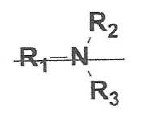
wherein the small moleculeselected from the group consisting of compounds (I) through (XIII), (XV) through (XXX), (XXXII) through (LVIII) and (LX) to (LXV) within a product mixture formed from the reaction of a) hexane diamine, ethylene diamine or 1-amino-2-propanol; b) 3-glycidoxypropyl trimethoxysilane; and c) 2-ethylhexyl glycidyl ether: may be at least one of: carbonate, bicarbonates, carbamates, ureas, amides and salts therefore and:
584 As indicated in his 24 January 2018 email, Dr Dixon proposed the third amendments to remove from the claims of the patent application any claim to “isolated compounds in the absence of the other components of the complex mixtures in which their production was enabled”. He considered that the amendments would be allowable.
585 As indicated under the “Summary” of his 24 January 2018 email, he believed that the proposed further amendments were internally consistent with the findings of the delegate in the s 104 decision:
Summary
Although ultimately unsuccessful, the procedural opposition has served as a valuable test-case for the main/substantive opposition: it tells us what we need to do to avoid the Delegate’s findings — and we believe that our proposed further amendment is fully internally consistent with such findings. Many of Cytec’s potential avenues of objection (for instance, “is” (Cytec) versus “is derived from” (Nalco); and unidentified silane (Cytec) versus 3-GPS (Nalco)) have already been decided in our favour. At worst, we feel that the proposed further amendment could draw a relatively simplified procedural opposition from Cytec (unless, of course, we opt to retain (LXVI) and (LXVII ) — and potentially the other “new” compounds identified above).
586 He also stated the following in his 24 January 2018 email :
Main/substantive opposition — what now?
As you will recall, the main opposition had been stayed until such time as the procedural opposition concluded. It has now resumed — and Cytec has until 16 February 2018 to file its evidence in reply. This is the final step in the evidentiary process: and the matter would then be set down for a hearing (in the same manner as the procedural opposition played out — unless, of course, Cytec opts to again oppose any amendment we file).
With respect to the proposed further amendment, we feel that it is strategically preferable to wait until after Cytec files its evidence before submitting the amendment. This means that Cytec will not know exactly where to focus their reply evidence — they will, of course, concentrate it on the accepted/originally opposed claims — but if we then amend, much of Cytec’s evidence should be rendered irrelevant.
587 In respect of the comments he made regarding the timing of proposing the third amendments, he recalled there only being a number of weeks left in which Cytec could file its evidence in reply in the s 59 opposition, such that he was concerned not to hold up the hearing of the s 59 opposition, as he expected may have occurred if he proposed the third amendments before the s 59 opposition evidence closed. He also noted that he had referred to it being “strategically preferable to wait until after Cytec files its reply evidence before submitting” the third amendments, which was because he was concerned that was the last round of evidence in the s 59 opposition and Nalco would not have any opportunity to file responsive evidence. That said, he was not aware of any validity risks concerning disclosure or support in respect of the foreshadowed amended claims of the third amendments. Indeed, he believed that the proposed claims of the third amendments were consistent with the delegate’s findings in the s 104 decision. We will refer to some of the cross-examination of Dr Dixon later.
588 On 25/26 January 2018, he exchanged emails with Dr Anthony concerning the timing of requesting the third amendments in the context of the s 59 opposition. He indicated in one of his emails to Dr Anthony that he did not think that Cytec had any legitimate basis to oppose the third amendments, as they were fully consistent with the delegate’s finding in the s 104 decision. It is convenient here to set out the email communications. For a particular email string we have put square brackets around the dates and times of the second and subsequent emails as the dates and times shown are problematic given the different clock settings. We have also not corrected the emails for grammar or spelling and nor bothered with “(sic)”.
589 On 26 January 2018 at 1:35 am, Dr Anthony sent an email to Dr Dixon stating:
The shedule (my Aussie accent) of Opposition discussion, [REDACTED] sounds good to me. I have blocked off the afternoon and we can refine your arrival time as we get closer to the 12th.
As for the Opposition, aside from whether to appeal or not, are there any other decisions that need to be made before our Feb. 12th discussion?
590 On [25 January 2018 at 3.09 pm], Dr Dixon responded to Dr Anthony stating:
Thanks Corey – sounds good (aside from the Aussie accent part)...
Probably the only other decision we’d need to make (preferably, but not necessarily before the 12th) is the timing of the further amendment. Waiting until after Cytec files its evidence in reply on 16 February seems advisable on the basis that Cytec won’t know exactly where to focus their evidence, but there’s really nothing stopping us going back in right away with the further amendment.
591 On [26 January 2018 at 9.07 am], Dr Anthony responded to Dr Dixon stating:
Does Cytec have the right to file a response to our amendment? What effect, if any, does filing the amendment after Feb. 16th have on the estimated timeline for completion of the Opposition? In other words, will filing after the 16th lead to a longer period of time before we have a final decision?
592 On [25 January 2018 at 4.51 pm], Dr Dixon responded to Dr Anthony stating:
Yes, and that’s exactly what happened last time.
We file the amendment and it gets examined, probably after around 2 weeks. Because Cytec will have this case on alert, they’ll see the amendment once it’s filed and will look to get in with preliminary comments as to why it’s not allowable. Ultimately, it’s up to the Examiner how much notice he/she takes of their submission. If the amendment is objected to, we have the right of reply.
Once the amendment is allowed, it’s advertised for opposition purposes and that is where Cytec will oppose should they wish to. We then enter the same evidentiary process we went through last time, all of which would take about one year (plus any delay leading up to the hearing, which depends upon the workload of the hearing officers).
Filing after the 16th won’t have any real effect on the overall timeline. If Cytec opposes the amendment, then that is what will extend the timeframe – not the timing of the amendment +/- one month.
As to whether they will/won’t oppose, it’s difficult to gauge. On the one hand, I don’t think they have a whole lot to oppose on here as our amendment would be fully consistent with the delegate’s findings in the first amendment opposition. However, on the other hand, because evidence in the main opposition would have closed, opposing our amendment would be Cytec’s only chance to put on evidence in respect of the “mixture” feature that we’d be adding to our claim – and notwithstanding, that evidence would need to be diametrically opposed to the delegate’s finding.
[REDACTED]
593 On [26 January 2018 at 10.14 am], Dr Anthony responded to Dr Dixon stating:
Okay, let’s file the amendment after February 16th.
As for the amendment, what do you think of the two claims below? If you’re available now (no need to rearrange your schedule) I could arrange a quick Webex
1. A method for the reduction of aluminosilicate containing scale in a Bayer process comprising the steps of:
adding to the Bayer process stream an aluminosilicate scale inhibiting amount of a composition comprising at least one small molecule selected from the group consisting of compounds (I) through (XIII), (XV) through (XXX), (XXXII) through (LVIII) and (LX) to (LXV) within a product mixture formed from the reaction of a)hexane diamine, ethylene diamine or 1-amino-2-propanol; b) 3-glycidoxypropyltrimethoxysilane; and c) 2-ethylhexyl glycidyl ether.
2. A method according to claim 1, wherein the small molecule is selected from the group consisting of compounds (I) through (XIII), (XV) through (XXX), (XXXII) through (LVIII) and (LX) to (LXV)
594 On [25 January 2018 at 6.10 pm], Dr Dixon responded to Dr Anthony stating:
Sorry for the delay getting back to you. We have a public holiday here today (Australia day), so I’ve not been checking the phone regularly for messages.
I’m available now, but note it’s 6pm in Chicago now...
The claim looks good – and Jess and I considered this variant. However, with the requirement for the amended claims to be fully within the scope of the accepted claims, we felt that this might invite professor Easton to try and show that something outside the scope of the original Markush formula was formed. That would disprove the claim. It would be an exercise in academic pedantry, but that seems to be the sort of challenge Easton enjoys.
With the amendment we’d proposed, we feel that in following the delegate’s reasoning, there’s less scope for objection. That said, absolutely no problem if you’d prefer to go with your version.
595 On [25 January 2018 at 9.11 pm], Dr Anthony responded to Dr Dixon stating:
Let’s use the amendment you originally drafted. [REDACTED]
596 On 16 February 2018, IP Australia sent a letter to Shelston IP as attorneys for Nalco in the s 59 opposition. That “pre-hearing check” letter sought confirmation from the parties of various matters, including “whether [Nalco] intends making any amendments to the specification before the hearing”.
597 On 21 February 2018 at 11.12 am, Dr Dixon sent an email to Dr Anthony stating:
[REDACTED]
Please see attached. [REDACTED] Remember the evidence relates to the originally-accepted claims and most, if not all of the issues he raises will be addressed by the amendment we will file within the next few weeks.
[REDACTED]
I’ll be back in the office from Monday, although I could make time to talk over the next few days if you wanted to.
598 On 16 March 2018, Dr Dixon sent a letter to IP Australia in response to the 16 February 2018 “pre-hearing check” letter. In his 16 March 2018 letter, he advised the Commissioner that:
Yes. We are in the process of finalising amendments to the claims and propose filing these once they are approved by the Applicant.
599 On 16 April 2018, IP Australia sent a letter to Shelston IP as attorneys for Nalco in the s 59 opposition. That “hearing notice” letter informed the parties that the s 59 opposition had been set down for 17 August 2018, without any reference to his indication on 16 March 2018 that Nalco intended to seek to amend the patent application before the hearing.
600 On 19 April 2018 at 12.08 am, Dr Anthony sent an email to Dr Dixon stating:
Hello Gareth – I hope you are doing well. I wanted to check on the status of the Opposition, any developments since we last spoke? Has our amendment been allowed and advertised for opposition as yet?
601 On [18 April 2018 at 10.48 pm], Dr Dixon responded to Dr Anthony stating:
Nice to hear from you. All good at this end, thanks.
We’ve actually had some progress over the past couple of days. The final hearing has been set down for 17 August. However, this may yet change as we haven’t yet filed the amendment (and haven’t yet been directed to do so).
To explain: The Office had asked whether there was any reason the hearing should be delayed. We replied “yes – we intend filing an amendment” – this is all fairly standard practice. Usually, that would bring forth a direction to file the amendment prior to the hearing date being set (in case the amendment is opposed). However, on this occasion, the Office proceeded to set the date, irrespective. This is somewhat unusual.
However, given that we now have a hearing date and no direction to file the amendment, my thoughts are that it probably suits us best to delay for as long as possible (so that Cytec gets the minimum amount of time to consider the amendment prior to the hearing). On the other hand, given that our proposed amendment is only really complying with the Office’s decision in the amendment opposition, Cytec could probably make a fair guess at what is to come; perhaps their only uncertainty would be whether we opt to retain compounds LXVI and LXVII.
The potential downside to filing the amendment now is that Cytec opposes it, the hearing gets postponed, and we enter into another amendment opposition. I understand from past conversations that the business may not mind this from a pendency perspective – but I think that if we can somehow conflate the amendment with the final hearing, this would ultimately save considerable time, effort and expense.
Therefore, a best-case scenario for us would be that no direction issues (in which case, we could file the amendment along with our written submission a few days prior to the hearing and have everything considered together on 17 August). However, as there is still 4 months until the hearing date, it is possible (even likely) that a direction will issue, at which time we’ll need to comply. Cytec may even push for a direction to issue, which would probably suit their purposes.
I trust this is all OK by the business. Of course, if you’d prefer us to file the amendment now, we’ll happily do so.
Any questions, please let me know.
602 As he explained in this email, he was concerned that the hearing of the s 59 opposition would be significantly delayed if the third amendments were proposed and then opposed by Cytec under s 104 of the Act. He continued to believe that the third amendments were allowable as they were consistent with the findings of the delegate in the s 104 decision. He believed that having foreshadowed Nalco’s intention to make amendments in his letter dated 16 March 2018 to IP Australia, Cytec would have anticipated that the amendments would be directed to introducing a claim limitation that the at least one identified small molecules be within a product mixture in line with those findings.
603 On 27 April 2018 at 3.50 pm, Dr Anthony sent an email to Dr Dixon stating:
As long as we don’t lose the opportunity to have the amendment considered by the Office then I think we should continue to wait. Assuming Cytec and the Office does nothing, is there a date by which you intend on filing the amendment?
Thanks for the update.
604 Now as we have already touched on, on 10 August 2018, Dr Dixon made on behalf of Nalco a request to the Commissioner of Patents to amend the claims of the patent application in accordance with the third amendments. Claim 1 of the patent application proposed by the third amendments read:
1. A method for the reduction of aluminosilicate containing scale in a Bayer process comprising the step of:
adding to the Bayer process stream an aluminosilicate scale inhibiting amount of a composition comprising at least one small molecule
selected from the group consisting of compounds (I) through (XIII), (XV) through (XXX), (XXXII) through (LVIII) and (LX) to (LXV) within a product mixture formed from the reaction of a) hexane diamine, ethylene diamine or 1-amino-2-propanol; b) 3-glycidoxypropyltrimethoxysilane; and c) 2-ethylhexyl glycidyl ether:
605 At this time, Nalco’s written submissions in respect of the s 59 opposition written by Dr Dixon and another patent attorney, Dr Jessica Chadbourne, and approved of by Dr Anthony, referred to the proposed amended claims of the third amendments in answer to Cytec’s s 59 opposition. In respect of the disclosure and support requirements, these submissions recorded his thinking at the time, namely, that the third amendments would resolve the issues identified by the delegate in the s 104 decision.
606 On 21 August 2018 at 7.24 pm, a secretary for Shelston IP sent an email to Dr Anthony stating:
Thank you for your email. On 10 August 2018, we filed the Section 104 amendments and shortly after, we filed the written submissions. Please find a copy of both attached.
The Office has given the other side 21 days from 13 August 2018 to comment on the amendments and we are yet to hear from them.
The Office has proposed rescheduling the hearing sometime before mid-October 2018 and Gareth will arrange a suitable date upon his return.
I have asked another of the principals here to look over the matter and he has confirmed that all is in good order.
If you have any further queries, please let me know.
607 On 4 September 2018, Dr Dixon received an email from Cytec’s attorneys stating that:
We have informed the delegate that our client does not consent to deferring the hearing until after the amendment has been considered and we therefore suggest rescheduling the s59 hearing for a date as soon as possible.
608 The s 59 opposition hearing was held on 10 October 2018.
609 As noted in our earlier summary of the amendment history, on 8 January 2019 the decision of the delegate of the Commissioner in relation to Cytec’s opposition was published. The delegate found that: (a) claims 1, 2, 10, 13, 14, 19 and 21 lacked novelty in the light of the prior art document WO 2011/037873 (WO’873); (b) the invention as defined in claims 1 to 22 was not disclosed in a manner clear enough and complete enough to be performed by a person skilled in the art; (c) the invention defined in claims 1 to 22 was not supported across its full scope; (d) claims 1 to 3 and 14 to 22 lacked clarity; and (e) claims 1 to 22 contained an inventive step when compared to the prior art base. But the delegate stated that the third amendments appeared to overcome matters (b) to (d).
610 Now in light of the fact that the delegate was unable to consider the proposed amended claims of the third amendments in relation to the disclosure and support requirements, the delegate followed the findings of the delegate in the s 104 decision with the claims including at least one small molecule within a product mixture, on the one hand, and at least one small molecule being isolated from the product mixture, on the other hand.
611 Accordingly, the delegate in the s 59 decision found that the accepted claims of the patent application, without the third amendments, did not satisfy the support and disclosure requirements of the Act. In the s 59 decision, the delegate referred to the third amendments and stated (at [145]):
Opportunity to Amend
It is usual for the Commissioner to give the Applicant an opportunity to amend after a successful opposition where there is scope to overcome the existing grounds. ln the current case the Applicant filed amendments with their summary of submissions for this hearing. I will note that these amendments appear to overcome ground of s 59(c) in relation to s 40. However, the proposed amendments include claims to the use of reaction products yielded from the reaction of l.6-Hexanediamine, 3-glycidoxypropyltrimethoxysilane and 2-Ethylhexylglycidyl ether (see claim l pages 52 -55). It seems likely that the applicant will need further amendments in order to avoid the disclosure of WO’873 which disclose this reaction. I will allow the applicant time to file further amendments.
612 This accorded with Dr Dixon’s understanding at the time that the third amendments would overcome the s 40 issues including the disclosure and support issues referred to in the s 104 decision. He did not think that the claims as proposed to be amended by the third amendments presented any invalidity risks concerning disclosure or support.
613 On 17 January 2019, and as we have touched on earlier, Dr Dixon sent a letter to IP Australia requesting amendments to the patent application (the fourth amendments). Claim 1 of the fourth amendments read:
1. A method for the reduction of aluminosilicate containing scale in a Bayer process comprising the step of:
adding to the Bayer process stream an aluminosilicate scale inhibiting amount of a composition comprising at least one small molecule selected from the group consisting of compounds (I) through (XIII), (XV) through (XXX), (XXXII) through (XLVII), (LIII) through (LVIII) and (LX) within a product mixture formed from the reaction of a) hexane diamine, ethylene diamine or 1-amino-2-propanol; b) 3-glycidoxypropyltrimethoxysilane; and c) 2-ethylhexyl glycidyl ether:
614 The fourth amendments included the same amendments as the third amendments, as well as further amendments to remove certain identified small molecules to overcome the delegate’s findings with respect to novelty in the s 59 decision. Dr Dixon believed that the amendments proposed by the fourth amendments overcame all of the findings of invalidity in the s 59 decision, and the previous s 104 decision, and that the claims were valid.
615 On 29 January 2019, and before the Commissioner of Patents had responded to Nalco’s request to make the fourth amendments, Cytec filed its appeal to the Federal Court. The notice of appeal challenged the following findings of the opposition decision: (a) a finding concerning the priority date; and (b) the finding that claims 1 to 22 involved an inventive step when compared to the prior art base. Consequently, Nalco’s request to make the fourth amendments was not progressed by the Commissioner of Patents.
616 On 25 February 2019, Nalco filed a notice of cross-appeal appealing the finding of the opposition decision that claims 1, 2, 10, 13, 14, 19 and 21 lacked novelty in the light of the prior art document WO’873.
617 On 15 March 2019, an amended notice of cross-appeal was filed in which the following findings of the opposition decision were also appealed: (a) the invention as defined in claims 1 to 22 was not disclosed in a manner clear enough and complete enough to be performed by a person skilled in the art; (b) the invention defined in claims 1 to 22 was not supported across its full scope; and (c) claims 1 to 3 and 14 to 22 lacked clarity.
618 Now it should be noted that in or around January 2019, and as the matter was now the subject of court proceedings, Dr Dixon transitioned primary carriage for the matter to Ms Katrina Crooks of Shelston IP Lawyers. From that time, whilst Dr Dixon continued to be copied on correspondence and provided occasional input, his role in the matter was peripheral. But he did provide input into Nalco’s interlocutory application filed on 29 March 2019 before the primary judge in this proceeding, under s 105(1A) of the Act, to amend the claims of the patent application in accordance with the fourth amendments which he had lodged with the Commissioner of Patents two months earlier.
619 The following is also to be noted in terms of his written evidence. First, Dr Dixon had not considered the first support/sufficiency grounds before Cytec provided its proposed amended statement of grounds and particulars on 5 May 2020. Second, he had not considered the amended first support/sufficiency grounds before Cytec provided its written outline of submissions on 16 October 2020. Third, he had not considered the successful support/sufficiency grounds before the primary judge published his reasons being J1 on 19 August 2021. Fourth, he had not considered applying to make amendments to the patent application in, or substantially in, the form sought in Nalco's amendment application dated 20 September 2021, before the primary judge published J1.
620 Generally, Dr Dixon said that he had not considered applying to make any amendments to the patent application to address any s 40(2)(a) or s 40(3) issues, other than in connection with the second amendments, the third amendments, the fourth amendments and the fourth amendment s 105 application before the primary judge published J1.
621 Now we have reviewed the cross-examination of Dr Dixon including the passages drawn to our attention. And to provide some context and as was also drawn to our attention, Cytec in closing submissions before his Honour submitted:
Dr Dixon was an unsatisfactory witness. He was argumentative and defensive, and at times gave long-winded responses and commentary that were at best tangentially relevant to the question he had been asked. Although he was willing to volunteer in his answers new explanations about the circumstances that pertained in 2018, he was plainly evasive when confronted with the relevant documents, an approach most clearly evident in the exchange at T24.8-25.47 (15 June). Dr Dixon’s approach to his oral evidence was antithetical to Nalco’s obligation of full and frank disclosure. His evidence regarding the circumstances of the 2018 emails should be given little or no material weight except to the extent that it was against interest or corroborated by the contemporaneous documents. The Court ought to find that:
(a) his affidavit and oral evidence, to the effect that his reasons for recommending a delay included concern about the opposition hearing being significantly delayed, was untrue;
(b) his oral evidence denying that in April 2018 he had the objective of giving Cytec the minimum amount of time to consider the amendment prior to the hearing, maximising the prejudice to Cytec in considering or meeting the amendment, and minimising the scrutiny of the proposed amended claims by the Commissioner at the hearing, was untrue; and
(c) his affidavit and oral evidence, to the effect that his reasons for recommending a delay included a concern about Nalco not having a right of reply, is inconsistent with contemporaneous documents and should not be accepted.
622 The transcript at p 24 line 8 to p 26 line 4 was as follows:
Mr Mee: And then your advice is given that:
We now have a hearing date and no direction to file the amendment, my thoughts are that it probably suits us best to delay for as long as possible so that Cytec gets the minimum amount of time to consider the amendment prior to the hearing.
See that?
Dr Dixon: Yes.
Q: Now, do you agree with me that you are advising Nalco to deliberately delay further than it already had?
A: No. There’s no formal advice here, Mr Mee. My thoughts are that it probably suits us best. I mean, that’s all fairly informal. It’s an option. I don’t believe I’m telling them what they should and shouldn’t do here.
Q: So you are recommending to Nalco that the best option for it is to deliberately delay further than it already has?
A: I think the context comes a couple of paragraphs below, doesn’t it. It says, you know:
It’s possible even locally a direction will issue at which time we need to comply.
Q: Dr Dixon, could you just answer my question. Do you agree with me that you are recommending here that the best case – sorry – that it suits Nalco best to deliberately delay further than it already has until a few days prior to the hearing?
A: I don’t believe that’s a formal recommendation. No, I don’t. It’s – it’s not – I’m giving them an option.
Q: So when you said:
I trust this is all okay by the business –
is it your considered evidence to this court that you were not recommending that course to your client?
A: Recommending – I say no, I don’t believe I was. I believe it’s – it’s just an option.
Q: Dr Dixon, you said to your client that it probably suits us best to delay for as long as possible?
A: Yes, but when – when I write an advice letter, and I recommend something, I say “I recommend”. I suggest – I recommend, I mean, it’s – I’m fully aware of the style that I – that I, you know, I wrote these things in, Mr Mee. And so – so I think, you know, absent, you know, the words “I strongly suggest” or “I strongly recommend”, I don’t believe it can be taken as much more than a series of options.
Q: You agree that you gave an informal recommendation to Nalco to deliberately delay further?
A: Again, I still – I still don’t believe the word “recommendation” is correct there. Informal suggestion, perhaps.
Q: Dr Dixon, I put it to you that you’re avoiding answering my question. Do you agree with me?
A: No, I don’t.
Q: Is it your considered evidence that this email is not a recommendation to your client in connection with AU990?
A: Insofar as you’re suggesting it’s a recommendation, per se, I disagree.
Q: I put it to you that that is untrue?
A: I disagree.
Q: Do you agree with me that the suggestion in this email was that Nalco delay as long as possible in filing the amendment?
A: That’s closer to the mark, yes.
Q: Well, that’s what your words say, isn’t it?
A: So you’re – sorry. Have I not answered the question? I - - -
Q: No. Your words were “as long as possible”, and you say that’s close to the mark. Well, what part of the mark did it miss, Dr Dixon?
A: No, closer to the mark.
Q: Closer to the mark. So I put it to you that your objective was to give Cytec the minimum amount of time to consider the amendment before the hearing?
A: No. I think you missed the context again, Mr Mee, because in the background, we were always expecting – anticipating that we would be directed to file the amendment.
Q: Well, your words were so that Cytec gets the minimum amount of time to consider the amendment prior to the hearing, Dr Dixon. Is it your considered evidence that your objective here was not to give Cytec the minimum amount of time to consider the amendment before the hearing?
A: I’m sorry. Rephrase that one, please.
Q: Your words in your email are:
...so that Cytec gets the minimum amount of time to consider the amendment prior to the hearing.
Is it your considered evidence that your objective here was not to give Cytec the minimum amount of time to consider the amendment before the hearing?
A: In – in the absence of a direction, that is what I appear to be saying there.
Q: I’m sorry. You do agree with me or you don’t?
A: No, I’m not – not going to hide from the words there, Mr Mee. In the – in the – in the absence of a direction, that – that does appear to be what I’m saying.
Q: That was your objective?
A: No, I wouldn’t say it was my objective. No, it’s – it’s nothing quite that sinister, I assure you.
Q: I put it to you that that’s untrue?
A: I disagree.
623 In terms of proposition (a) in Cytec’s closing submissions, the transcript referred to (p 27 lines 32 to 35 and lines 43 to 46) was as follows:
Q: Dr Dixon, I put it to you that your evidence – that what you were trying to explain in this email was that you had a concern, as Nalco’s patent attorney, about the opposition hearing being significantly delayed if the amendment was filed in April, is untrue?
A: No. I disagree.
…
Q: Yes. I put it to you that in circumstances where you understood Nalco not to mind from a pendency perspective if the hearing date was delayed, your evidence about your intention in sending the 18 April email to the effect that you had a concern about the hearing being significantly delayed, is untrue evidence?
A: I disagree.
624 In terms of proposition (b) in Cytec’s closing submissions, we have set out above the transcript referred to (p 25 line 11 to p 26 line 4), but in addition p 26 lines 24 to 34 should be referred to which was as follows:
…
Q: And your reasons here for recommending the further delay included maximising the prejudice to Cytec in considering or meeting the amendment. That’s right, isn’t it?
A: No.
Q: I put it to you that that is untrue?
A: No, I disagree.
Q: And your reasons here for recommending the further delay included minimising the scrutiny of the proposed amended claims by the Commissioner at the hearing. That’s right, isn’t it?
A: No, that’s not right.
Q: I put it to you that that’s untrue?
A: I disagree.
625 Some further passages were also drawn to our attention.
626 At p 8 line 1 to p 9 line 45 it was said:
Q: So do you agree with me that in formulating the proposed third amendment and, in particular, the question of how any product mixture integer should be framed, you gave consideration to how Professor Easton might go about showing that the proposed amended claims were invalid?
A: No, I don’t believe I do. I believe that these proposed amended claims were formulated based on the delegate’s decision and the 104 opposition where – that the take home was that we included the product mixture.
Q: Yes, but Dr Anthony wrote to you with a different form of amendment?
A: Yes, but still including the same compounds there within his proposed claim 2. So Dr Anthony’s claim, of course, being broader than the one that we ended up going with here.
Q: Yes. So when you responded to Dr Anthony, you had regard, in suggesting that your version was preferable, to what Professor Easton might say about the proposed amended claim. Do you agree with that?
A: Only insofar as our version was narrower.
…
Q: Then under the heading “Main/Substantive Opposition What Now?” you see that you wrote:
…
Q: Now, you would agree with me that, in this email, you were advising Nalco to deliberately delay in filing the amendment until after Cytec had filed its reply evidence?
A: For the sole reason that Cytec would always have the right to object, whereas, given the situation that we’re in with raising the bar and the fact that – that there was a scenario here whereby, had we filed that amendment straight away, that would come through weeks before Cytec’s evidence in reply was due. Given the uncertainties, and these were uncertainties that we discussed at a – at a group level within the – the senior attorneys at Shelston IP because none of us had much experience about raising the bar and the bounds of regulation 5.3, which – I mean, in this scenario, whereby we filed the amendment, Cytec opted not to oppose, let it through and then tailored their reply evidence to the amendment conceivably, you know, in the 523 request that we filed there may have been knockback. Now, we didn’t want to be in the position whereby Cytec had the right to comment or to object or to give evidence on – on our amendment, and we would be subsequently precluded. Now, I believe, in terms of my obligations as a patent attorney, you know, number 1, act within the law, but number 2, act within the best interests of your clients. Now, I’m never going to suggest to my client that they put themselves in a position whereby they may get locked out from – from commenting further. Irrespective of when we filed the amendment, if my understanding is correct, Cytec would have had the opportunity to oppose it either by way of procedural opposition or – or within the court or – or some other way. So - - -
His Honour: Before you go on, could you explain to me what you are referring to by regulation 5.23?
Dr Dixon: The – my understanding, your Honour, is it replaced the old further evidence provision whereby if evidence in reply perhaps went too far, you – you may be able to request the opportunity to – to file further evidence again to – to keep the – the procedure going, so to speak.
Q: So if you had filed an amendment and Cytec had put on evidence addressing the amendment rather than the as originally filed form, you weren’t sure whether you would be permitted to file evidence responding to that?
A: Yes, your Honour. That’s correct. And that – that was, I think, a legitimate concern amongst – not just the professionals at Shelston IP at the time but – but the provision in general, and – and I believe it still is now, just at the bounds of where 5.23 will allow you to put on further evidence and where it won’t.
Q: Thank you.
Mr Mee: Dr Dixon, I will just ask my question again. Do you agree with me that in this email, you were advising Nalco to deliberately delay in filing the amendment until after Cytec had filed its reply evidence?
Dr Dixon: Delay until after, yes, but only because Cytec would always have that – that right of objection reply.
Q: You would agree with me that one of your reasons for recommending that Nalco delay was to cause Cytec to focus its reply evidence on the accepted claims rather than the amended claims?
A: The accepted claims, yes. They were the ones on foot at – at the time, yes.
627 At p 10 line 39 to p 11 line 40 it was said:
Mr Mee: I’m just asking you about January 2018 at the moment, Dr Dixon. Is your answer to my question no?
Dr Dixon: Could you repeat the question, sorry.
Q: Yes. Do you agree with me that at the time of this January email, you considered the best case scenario to be that you could file the amendment along with Nalco’s written submissions a few days prior to the hearing and have everything considered together at the hearing?
A: No, I disagree.
Q: Now, you didn’t suggest in this email to your client that if Nalco filed the amendments before Cytec’s evidence in reply, that there was any risk of Nalco not having opportunity to put on any responsive evidence, did you?
A: The words aren’t there in the mail, no.
Q: And you didn’t say that to your client in this email anyway, did you?
A: On the – on the words and – again, imperfect recollection, no, the words aren’t there.
Q: And I put it to you that that’s because, at that time, it was not a reason that you had in mind for proposing that Nalco deliberately delay?
A: No, I disagree.
Q: You knew that if Cytec raised new points in its reply evidence that was not properly in reply to Nalco’s evidence, Nalco could seek to have that evidence excluded?
A: Could seek, perhaps, but no guarantees and, as I mentioned, no – no guarantees that we would be able to put on reply evidence under – under 5.23.
Q: And you don’t make any mention in this paragraph of your email or otherwise in this email that you had any concern about the hearing being held up if you did propose the third amendment before Cytec filed its evidence in reply?
A: About the hearing being held up?
Q: About the hearing being held up?
A: No.
Q: And I put it to you that the reason that you didn’t mention that in this email is that it was not one of your reasons for advising at this time that it was strategically preferable to wait?
A: No, I disagree again.
Q: I put it to you that if you did hold a concern about the hearing being held up, Dr Dixon, you would not have proposed a strategy that encouraged Cytec to prepare and file evidence that would ultimately be irrelevant. Do you agree with that?
A: No, I disagree again.
Q: And I put it to you that your reasons for considering it to be strategically preferable to wait were the reasons set out in the immediately following sentence beginning with the words:
This means that …
Do you agree?
A: Sorry, Mr Mee. I’m trying to find – I’ve found it. No. Disagree. Strongly.
628 In our view, and having reviewed the transcript of his cross-examination, we consider Cytec’s criticisms of the reliability of Dr Dixon’s evidence to be overstated. We agree with Nalco that just because Dr Dixon resisted the propositions put to him which characterised his own emails and recollections in a different way, to fit with Cytec’s attempts to make the events in 2018 regarding the third amendment request somehow relevant to the present amendment application and thereby manufacture circumstances of culpable delay, does not mean that he gave “evasive and argumentative oral evidence [which] demonstrated the antithesis of candour” as Cytec characterised it.
629 In summary, we agree with Nalco that the substance and reliability of Dr Dixon’s affidavit evidence, which is consistent with the face of the documents, was not substantially diminished by the cross-examination of Dr Dixon. And even accepting in Cytec’s favour that there was some element of strategy or tactics in Dr Dixon’s and therefore Nalco’s behaviour in 2018 concerning the third amendments, in our view it does not amount to disqualifying conduct relating to a favourable exercise of discretion concerning allowing the sixth proposed amendments given that the 2018 events and conduct were superseded by later events and amendments.
Dr Anthony
630 Nalco also called Dr Corey Anthony, a senior intellectual property counsel of Ecolab Inc., the parent company of Nalco. Since May 2017, Dr Anthony has been responsible for prosecuting the patent application, instructing Spruson & Ferguson (previously Shelston IP) during the opposition before the APO and in the appeal proceeding before this Court. Dr Anthony affirmed one affidavit in relation to the amendment application and an earlier affidavit in the proceedings in relation to discovery. He was cross-examined about his evidence. In his second affidavit, Dr Anthony gave evidence about the history of the proceedings before the APO and this Court, including correspondence between Nalco’s legal team as to the form and rationale of the proposed amendments, and the consideration given by Nalco to the support/sufficiency grounds the subject of the judgment.
631 In terms of his evidence concerning 2018 and 2019 events, Dr Anthony gave evidence which was consistent with the evidence of Dr Dixon.
632 In particular, Dr Anthony gave evidence consistent with Dr Dixon regarding the 24 to 26 January 2018 emails. We have set out relevant extracts of the emails earlier. Dr Anthony did not disagree with Dr Dixon’s summary of the s 104 decision as reported to him in his email dated 24 January 2018.
633 Based on Dr Anthony’s email of 26 January 2018 to Dr Dixon, Dr Anthony recalled that he followed Dr Dixon’s advice regarding the content of the third proposed amendments and the time at which they should be filed.
634 On [26 January 2018 at 10:14 am], Dr Anthony sent an email to Dr Dixon and suggested different amendments to Dr Dixon as we have already set out. Dr Anthony does not recall why he proposed this alternative form of amendments. But he subsequently agreed with Dr Dixon’s advice, as contained in his email of 25 January 2018, that the third amendments he had proposed were preferable because they were consistent with the delegate’s reasoning in the s 104 decision.
635 In the email correspondence dated 26 January 2018, Dr Anthony followed Dr Dixon’s advice and instructed Shelston IP to file the third amendments after 16 February 2018 so as to avoid further delaying the hearing of the s 59 opposition, whilst still ensuring that the third amendments could be considered by the Patent Office.
636 Dr Anthony also corroborated Dr Dixon’s evidence that Dr Dixon informed IP Australia on 16 March 2018 that Nalco was in the process of finalising amendments to the claims and proposed filing these once they were approved by the applicant.
637 On 16 April 2018, IP Australia advised that the substantive opposition had been set down for 17 August 2018, but made no reference to the fact that Nalco had foreshadowed that it would seek to amend the patent application before the hearing. This was reported to Dr Anthony in an email from Dr Dixon on 18 April 2018. Dr Anthony continued to communicate with Dr Dixon through to 21 August 2018 concerning questions of timing and the amendments.
638 On 10 January 2019, Dr Anthony received an email from Dr Dixon attaching the delegate’s decision in the substantive opposition (s 59 decision). In that email, Dr Dixon observed that the decision was consistent with the s 104 decision, the delegate had indicated that the third amendments would overcome all of the support/sufficiency objections, and the delegate had also upheld a further novelty objection, which was “the only thing we need to worry about” because “[a]ll of the other objections will be addressed and overcome by our [third] amendment’. Dr Anthony did not disagree with Dr Dixon’s summary of the s 59 decision as reported to him in his email.
639 In Dr Dixon’s 10 January 2019 email, he provided draft proposed amendments which revised the third amendments to also address the novelty findings in the s 59 decision by deleting the methoxysilane small molecules (i.e. the non-hydrolysed small molecules) identified in the claims that were derived from the reaction of HD, GPS and E (the fourth amendments).
640 By email dated 16 January 2019, Dr Anthony instructed Dr Dixon to file the fourth amendments. Dr Anthony did not disagree with Dr Dixon’s advice that the fourth amendments would overcome the s 59 decision.
641 Pursuant to his instructions, a request was sent to IP Australia on 17 January 2019 requesting the fourth amendments.
642 On 29 January 2019, before the Commissioner of Patents had responded to Nalco’s request to make the fourth amendments, Cytec filed its appeal to the Federal Court in this proceeding. Dr Anthony was advised by Ms Crooks, who, as noted, took over carriage of the matter from Dr Dixon, that:
Cytec’s appeal relates only to the aspects of the Commissioner’s decision [to] maintain the claimed priority date and finding the patent claims to be inventive over the prior art. The Commissioner’s decision also found that the claims lacked support and the necessary disclosure and that certain claimed lacked novelty. Certain claims were also found to be unclear. If this appeal was not filed, it was intended to deal with these matters by way of amendment.
Another aspect to consider is whether Nalco should file an amendment application. Now that Federal Court proceedings are ongoing with respect to the application, no amendments can proceed in the Patents Office. If Nalco wishes to file amendments to overcome the grounds of opposition upheld by the Commissioner it would therefore need to file an application for amendment. This should be done at an early stage, ideally we would seek directions for filing of an amendment application at the first directions hearing and would likely be given a couple of weeks to do so.
643 Ms Crooks also stated:
Filing an amendment application may provide some breathing space as the Court may order that the application be heard before the evidence timetable proceeds. If the application is filed in late March it is unlikely to be heard before mid April. There will be a timetable for filing of any responding evidence on the amendment application by Cytec and submissions to be filed. Hopefully these steps could be delayed until after mid April but this will depend on when the application is to be heard.
644 Shortly after this time, Nalco commenced “without prejudice” settlement discussions with Cytec.
645 In light of the above, on 15 February 2019, Dr Anthony confirmed that Nalco should “potentially file an amendment application by the end of March”.
646 On 27 March 2019, Dr Anthony received an email from Ms Crooks in which she advised on the form of the amendments that should be sought. She advised:
As you know we are due to file the application to amend the patent specification this Friday. In considering what amendments should be sought, Garreth and I have reviewed the previous two sets of most recent amendments sought to be made before the Office (immediately prior to the hearing on 10 August 2018 and shortly after the decision was issued on 17 January 2019). Copies of each of these proposed amendments are attached above. You may recall that the 10 August 2018 amendments responded to the earlier amendment opposition decision by limiting the claims:
a. to compounds only when used within a product mixture (not as isolated compounds);
b. by limiting the classes of compounds claimed to those found to be clearly disclosed in the specification.
The opposition decision of 8 January 2019 noted that these amendments appeared to overcome the issues of support, disclosure and clarity identified in that decision.
The 17 January 2019 amendments included the 10 August 2018 amendments but also included further amendments addressed to the novelty issue, to specifically exclude the subject matter of WO’873, namely by excluding any trimethoxysilane small molecules derived from the reaction of 1,6-haxanediamine, 3-glycidoxypropyltrimethoxysilane and 2-ethylhexylglycidyl ether have been deleted; there are 15 in total, i.e., compounds (XLIII) to (LII) and (LXI) to (LXV).
Once the appeal to the Court was filed, the Office is not permitted under the Patents Act to make any amendments and so both sets of amendments submitted to the Office have now been refused.
Our view is that Nalco should now in the appeal proceedings seek the amendments as per the 17 January 2019 amendments. This will overcome the grounds of opposition on which we have appealed and by excluding the material found to be covered by WO’873 will provide a better basis for resisting the argument that the 990 Application is not entitled to claims priority date. The more distance we can put between the 990 Application and WO’873 (and hence its US priority document), the better the argument that such US application was not an application for the invention of the 990 Application so that the claimed priority document for the 990 Application was the first application for that invention and priority was correctly claimed.
The other alternative is to submit the 3rd amendments which do not deal with the novelty issue, and instead fight that issue on the basis that any disclosure in WO’873 was not an enabling disclosure [REDACTED]
We also understand [REDACTED] you are content with the 4th amendments which were previously filed.
647 Based on the advice Dr Anthony received from Ms Crooks, on 29 March 2019, pursuant to Dr Anthony’s instructions, Nalco filed an interlocutory application in the proceeding seeking orders that the patent application be amended in the form set out in the fourth amendments (fourth amendment s 105 application).
648 On 18 April 2019, Cytec advised Nalco that it did not intend to oppose the fourth amendment s 105 application.
649 On 4 September 2019, Dr Anthony received an email from Ms Crooks that concerned whether Nalco should submit the proposed amendments to the Patent Office and ask for its view as to whether they complied with the requirements for amendments, and in particular whether they did not extend beyond the scope of the current claims and that no new matter was disclosed as a result of the amendments, and that the requirements of sufficiency, support and clarity were met. Ms Crooks observed that this carried a possible risk that the Office would issue an adverse opinion, but advised that Shelston considered the risk very low in the circumstances, given the comments of the delegate during the amendments and substantive oppositions.
650 Dr Anthony instructed Shelston to submit the proposed amendments to the Patent Office, which was done on 25 September 2019.
651 On 1 October 2019, the Commissioner indicated that the proposed amendments satisfied s 102 of the Act.
652 As noted, on 4 November 2019 the primary judge granted leave to amend the patent application in accordance with the fourth proposed amendments.
653 Following this decision, on Dr Anthony’s instructions Nalco further amended its notice of cross-appeal as we have set out earlier.
654 On 5 December 2019, Cytec filed its statement of grounds and particulars outlining the amended grounds of opposition relied upon by Cytec in light of the Court’s allowance of the fourth amendments. Cytec did not assert that the invention claimed in each of the claims of the patent application did not comply with s 40 of the Act. Rather, its grounds of opposition were limited to: (a) deferred priority date; (b) lack of inventive step; and (c) lack of novelty.
655 Cytec filed its evidence in chief in this proceeding on 20 April 2020.
656 On 18 May 2020, Cytec filed the amended statement of grounds and particulars which included the first support/sufficiency grounds which we have earlier summarised.
657 Prior to receipt of Cytec’s amended statement of grounds and particulars, Dr Anthony had not considered the first support/sufficiency grounds.
658 Following Nalco raising with Cytec its intention to rely on the grace period for the purposes of addressing inventive step and novelty, on 11 August 2020, Dr Anthony received an email from Mr Longstaff regarding Cytec’s intended interlocutory application which sought leave to file and serve the further amended statement of grounds and particulars which included the second support grounds which we have set out earlier. As we have said, this was ultimately unsuccessful.
659 Prior to receipt of Cytec’s further amended statement of grounds and particulars, Dr Anthony had not considered the second support grounds.
660 On 26 August 2020 at 9.43 pm, Mr Longstaff sent an email to Dr Anthony stating:
[REDACTED]
Evolution of Cytec’s invalidity case
The invalidity case Nalco now faces is quite different to that advanced by Cytec in the original Patent Office opposition and in its first round of expert evidence.
* In the original Patent Office opposition, Cytec focused primarily on grounds of insufficiency [REDACTED] arising from the breadth of Nalco’s patent application in suit (AU ‘990, [REDACTED] All of the opposition findings against Nalco were addressed by the narrowing claim amendments Nalco made at the start of the Federal Court appeal.
[REDACTED]
* In May 2020, shortly after filing its expert evidence in the Federal Court appeal, [REDACTED] Cytec also added a narrow support and sufficiency challenge which only operated if Nalco was successful in adopting a particular construction of the AU ‘990 claims that Cytec contended against.
[REDACTED]
Nalco’s prospects
We believe Nalco’s prospects of successfully defending Cytec’s new invalidity case can be summarised as follows:
[REDACTED]
* We believe Cytec’s other challenges based on [REDACTED] lack of support, inadequate disclosure in the specification and [REDACTED] are relatively weak, and they turn essentially on matters of claim construction.
[REDACTED]
661 On 31 August 2020, Cytec filed the further amended statement of grounds and particulars.
662 On 30 September 2020 at 11.05 pm, Mr Longstaff sent an email to Dr Anthony stating:
The affidavits of Denis Audet and John Bellwood are now in final form and have been sent to the experts to be affirmed tomorrow (1 October 2020). We will therefore have them filed and served by Friday’s deadline. Copies of the complete final affidavits are attached.
We believe these affidavits have come together as well as could be hoped and put the best case possible for Nalco on [REDACTED], as well as addressing the support and sufficiency challenges. [REDACTED]
* [REDACTED]
* [REDACTED]
* Regarding the issues of support/enablement, [REDACTED] and sufficiency, Cytec’s main contention is that the claims are to a reaction product mixture containing “at least one” of the specified small molecules and there is no disclosure of how to produce only one small molecule or any support for a product containing only one small molecule inhibiting scale formation. Our experts embrace the point that a complex mixture containing most and very likely all of the small molecules will be produced, in varying proportions, and the patent does not suggest otherwise – the “at least one” simply reflects the fact that exactly what small molecules are formed is a matter of probability, not certainty.
It is difficult to predict which way the judge will go on these key issues, which are now finely-balanced.
[REDACTED]
663 On 22 October 2020, being the afternoon before the first day of trial, Cytec served a second further amended statement of grounds and particulars, which it subsequently filed on 23 October 2020. These included the amended first support/sufficiency grounds which have been set out earlier.
664 Prior to receipt of the second further amended statement of grounds and particulars, Dr Anthony had not considered the amended first support/sufficiency grounds.
665 On 22 October 2020 at 8.55 pm, Mr Longstaff sent an email to Dr Anthony stating:
This afternoon Allens’ sent the attached letter, setting out Cytec’s revised position on claim construction in light of Nalco’s opening submissions and seeking Nalco’s consent to Cytec filing a Second Further Amended Statement of Grounds and Particulars.
There are aspects of the proposed amended Statement we would not agree to, such as the references to Nalco agreeing with Cytec on construction issues. However, we do not intend to formally object to Cytec filing this amended Statement because there is no prejudice or burden we can point to and the judge will allow it. We do not want to make the amended position appear stronger by arguing against it even being allowed to be pursued. Instead, we will criticise the position as part of the opening oral submissions and more fulsomely in closing submissions once the expert evidence has been completed.
In terms of the substance of Cytec’s amendments:
* [REDACTED]
* [REDACTED]
* Cytec has adjusted its support/enablement and sufficiency challenges to say that, even though the claims of AU ‘990 do not require only one of the small molecules to be present in the product mixture and itself be responsible for the aluminosilicate-inhibiting effect of the composition added to the Bayer liquor, such embodiments are within the scope of the claims. Such embodiments are said not to be supported because they exceed the technical contribution of the specification (which is directed to producing mixtures with sufficient amounts of the small molecules to inhibit scale formation), and insufficient description because there is no disclosure of how to make only one of the compounds rather than more than one in the product mixture.
Our arguments in response will continue to focus on the claims never requiring only one small molecule (rather, it is at least one). As set out in our written submissions, we will emphasise that it is “the reaction” described in the specification (particularly avoiding the temperature going above 120ºC for prolonged periods to favour the small molecules and avoid side-reactions and polymers) that is critical in producing a useful reaction product mixture containing at least one of the small molecules, as that is what is taught in the specification. Also, the random nature of the chemical reactions mean there is a non-zero (even if extremely small) possibility of performing “the reaction” described in the AU ‘990 specification and producing only one of the small molecules.
Please let us know if you have any comments or questions, or if you would like to speak before the hearing starts tomorrow morning (Australian time).
666 On 30 October 2020 at 6.07 pm, Mr Longstaff sent an email to Dr Anthony stating:
Attached is the transcript from today – the final day of the trial, in which the parties’ respective counsel presented their oral closing submissions by taking the judge through their written outlines of closing submissions. I attach copies of those written outlines – Cytec has one document, Nalco’s submissions are broken into Parts A and B (reflecting the staged manner in which they were sent up to the Court and to Cytec).
[REDACTED]
It is also clear that claim construction, and its consequences for support/enablement and sufficiency, is another major risk for Nalco in this case. The key issues are whether the phrases “selected” and “at least one” in claim 1 relate to there being within the claim scope a single isolated small molecule (ie, just 1 of the listed types) (Cytec’s construction) or the selection of the amine reactant with no need to isolate specific small molecules from the reaction product mixture (Nalco’s construction). This construction issue appears to be a 50/50 proposition, based on the judge’s questioning of both parties’ counsel today and how the evidence and submissions have fallen out.
[REDACTED]
Overall, then, we believe Nalco put its best case forward but there is a material risk (slightly greater than 50%) that AU ‘990 will be found invalid for [REDACTED] or lack of support/enablement and sufficiency. We do not place Cytec’s prospects significantly higher than 50% on these grounds because Nalco has advanced credible counter-arguments with supporting evidence from well-qualified witnesses [REDACTED]
At the end of the written closing submissions we reserved Nalco’s ability to seek to amend if it loses on any ground, which is a standard approach in a Federal Court appeal from a Patent Office opposition decision. Whether this would be necessary or desirable is something we can visit when we receive judgment.
[REDACTED]
667 On 19 August 2021, the primary judge delivered his judgment in the appeal (J1). The relevant findings regarding the successful support/sufficiency grounds have been discussed elsewhere.
668 Prior to receipt and consideration of the reasons, Dr Anthony had not considered the successful support/sufficiency grounds.
669 Prior to receipt and consideration of the reasons, Dr Anthony had given no consideration to applying to make amendments to the patent application in, or substantially, in the form that Nalco has sought to make in its interlocutory application dated 20 September 2021 or applying to make amendments to the patent application to address any disclosure or support issues, other than in connection with the third amendments, the fourth amendments and the fourth amendment s 105 application.
670 On 20 September 2021, pursuant to Dr Anthony’s instructions, Nalco filed an interlocutory application seeking to amend the patent application to address the primary judge’s reasons (J1). Later, Nalco obtained leave to file an amended amendment application.
671 Prior to 14 November 2022, no consideration was given by Dr Anthony to: (a) the matters raised in sub-paragraph 8(g) of Cytec’s proposed amended opposition particulars or (b) applying to make amendments to the patent application in, or substantially in, the form sought in the amended amendment application.
672 We have read the cross-examination of Dr Anthony including the passages to which Cytec drew our attention. We would observe the following.
673 First, much of the cross-examination amounted to little more than getting him to agree on the content of emails and other documents in evidence and which he did not contest.
674 Second, there was little in the cross-examination to demonstrate that he had not been frank or fulsome in his affidavit evidence concerning his involvement.
675 Third, there were questions asked of Dr Anthony concerning Dr Dixon’s email of 24 January 2018 sent to Dr Anthony. Dr Anthony agreed with the self-evident, that is, he understood Dr Dixon’s reasons as set out in the email as to why Dr Dixon thought it strategically preferable to wait until after Cytec filed its evidence before seeking to amend.
676 Fourth, Dr Anthony was also asked questions concerning Dr Dixon’s email of 18 April 2018. Dr Anthony accepted Dr Dixon’s recommendation.
677 Fifth, we note that in submissions below, Cytec submitted in closing:
Dr Anthony’s oral evidence was generally responsive and direct, in stark contrast to Dr Dixon’s. He was responsible for hundreds of Ecolab and Nalco patents and patent applications worldwide in 2017 to 2019, usually deferred to the advice of local attorneys regarding patent law and procedure in their jurisdiction, and ultimately deferred to Dr Dixon in relation to the appropriateness of the deliberate delay strategy. Dr Anthony’s oral evidence should be preferred to his affidavit evidence in respect of the circumstances surrounding the 2018 emails, in particular, his readiness to accept in oral evidence that it was he, not Dr Dixon, who raised the issue of a possible delay in the opposition hearing date if Nalco accepted (as it did) Dr Dixon’s advice to deliberately delay in filing the Third Amendment.
678 The transcript of his cross-examination referred to in those submissions (p 52 lines 3 to 35) on the last point was not quite as Cytec would have it. The transcript is as follows:
Mr Mee: Dr Anthony, in respect of this chain of email correspondence, do you agree with me that it is you who first raised the question of what impact filing the amendment after February 16th would have on the estimated timeline for the proceeding?
Dr Anthony: One second while I scroll back through the email. I will take your representation if you’ve read through the documents in the chain if I were the first to raise it. I will take that representation as – as accurate.
…
Q: When you said:
What effect, if any, does filing the amendment after 16 Feb have on the estimated timeline for completion of the opposition –
you wanted to have an understanding of what impact delaying in filing the amendment would have on the timeframe of the opposition so that you could make a considered decision about whether to take that recommendation?
A: Correct.
Q: Thank you. And if you go to the previous page, 7697?
A: Yes. I’m there.
Q: Thank you. You see that Dr Dixon says that:
Filing after the 16th won’t have any real effect on the overall timeline.
A: I see that.
Q: And the only significance of February 16th, as you understood it, is that that was the date Cytec’s reply evidence was due on the main opposition?
A: I believe that’s correct. – what I don’t recall is whether it’s the main opposition or the procedural one. But, yes, – it would be the main opposition.
679 For completeness, we also note some further cross-examination (p 53 lines 40 to 43):
Q: You understood the purpose that Dr Dixon was putting to you as to why Nalco should wait until after Cytec filed its evidence on the 16th was the basis that Cytec won’t know exactly where to focus their evidence?
A: Correct.
680 In our view there was no substantive conflict between Dr Anthony’s affidavit and his oral evidence that takes Cytec anywhere.
Ms Crooks
681 Nalco also adduced evidence from Ms Crooks, a principal of Spruson & Ferguson Lawyers Pty Ltd and previously a principal of Shelston IP Lawyers Pty Ltd. She had the carriage of or otherwise assisted on the matter from January 2019 to April 2021 and then from 24 October 2022 and thereafter. Ms Crooks gave evidence inter-alia as to the history of the proceedings before this Court in respect of the proposed amendments. Ms Crooks was not cross-examined. She gave the following evidence, which was consistent with the evidence of other witnesses including Dr Anthony.
682 First, prior to Cytec providing its proposed amended statement of grounds and particulars in May 2020 she had not considered the first support/sufficiency grounds, which had then been raised for the first time by Cytec.
683 Second, prior to Cytec providing its proposed further amended statement of grounds and particulars in August 2020 she had not considered the second and new support ground then raised for the first time by Cytec.
684 Third, prior to Cytec providing its written outline of submissions in October 2020 she had not considered the amended first support/sufficiency grounds then raised in the amended form by Cytec in its second further amended statement of grounds and particulars.
685 Fourth, prior to reading J1 she had not considered the successful support/sufficiency grounds found by the primary judge, which were a variation on Cytec’s October 2020 grounds.
686 Fifth, prior to her departure from Shelston IP Lawyers on 30 April 2021, she had not considered making any amendments in the same form as sought in that application, or in substantially the same form, or any other amendments other than those sought in the amendment application of 29 March 2019.
687 Sixth, prior to 14 November 2022 she had not considered the matters raised in sub-paragraph 8(g) of Cytec's proposed amended opposition particulars, which we have set out later, or the matters raised in Mr Longstaff’s fifth affidavit dated 25 November 2022. Further, she had not considered applying to make amendments in the form sought in the amended amendment application.
Mr Longstaff
688 Nalco also called Mr Duncan Longstaff, a principal of Spruson & Ferguson Lawyers Pty Ltd, and prior to that a principal of Shelston IP Lawyers Pty Ltd. Since November 2019, Mr Longstaff has had the care and conduct of these proceedings on behalf of Nalco alongside Ms Crooks.
689 Mr Longstaff affirmed four affidavits in relation to the amendment application and he was cross-examined. He gave evidence about the nature and effect of the proposed amendments sought by the fifth proposed amendments, the history of amendments to and Cytec’s opposition of the patent application, the consideration given by Nalco and Shelston IP to the sufficiency and support issues the subject of the judgment prior to the filing of the fifth proposed amendments, and the basis for and effect of the sixth proposed amendments.
690 Since his involvement in the proceeding from November 2019, Mr Longstaff had not considered the first support/sufficiency grounds prior to reading the amended statement of grounds and particulars, or the successful support/sufficiency grounds prior to reading the reasons.
691 As well as being consistent with other witness evidence, Mr Longstaff also gave the following evidence.
692 On 20 September 2021, Nalco filed an interlocutory application seeking to amend the patent application in the form attached to that application (amendment application), including proposed amendments to the claims (proposed amended claims).
693 Pursuant to the Court’s orders dated 18 October 2021, on 15 November 2021 Cytec filed and served its particulars of grounds of opposition to the amendment application (opposition particulars). Since that time, both parties have filed expert evidence in relation to the amendment application and the opposition particulars.
694 On 24 October 2022, Cytec’s solicitors, Allens, wrote to Sprusons by email indicating that Cytec intended to seek leave to file amended particulars of grounds of opposition to the amendment application (proposed amended opposition particulars), and asked whether Nalco consented to such leave being granted.
695 The proposed amended opposition particulars sought to add two new particulars to paragraph 8 of the opposition particulars, which relate to Cytec’s contention that the Court should not exercise its discretion under s 105(1A) of the Act to allow the amendments proposed in the amendment application, by way of the addition of sub-paragraphs (f) and (g) to paragraph 8.
696 Proposed new sub-paragraph 8(f) relates to a matter which was raised by senior counsel for Cytec at a case management hearing in the matter on 7 September 2022. At that case management hearing, he indicated:
Yes, your Honour. There was one other matter I need to raise. We’ve flagged this in very general terms without [sic] friends, but just so your Honour is aware, we have a statement of particulars of grounds of apposition, which was filed before discovery in evidence. It contained the usual reservation of rights to add further particulars. Having received our friends’ evidence on the Friday, we’re considering whether we want to supplement those particulars, and we will seek instructions in relation to that.
We don’t have them at the moment, but we may provide our friends with a proposed amended version of those grounds which refers to some matters in the evidence that we wish to rely on. I should indicate that when we filed our evidence in answer, one of our affidavits of Mr Wiseman - my instructor - contained a list of documents from discovery that we indicated we would rely on. So that has already been notified. We would incorporate that into the particulars as well, for completeness.
697 Proposed new sub-paragraph 8(g) (proposed sub-paragraph (g)) relates to a different matter, and was raised for the first time in Allens’ 24 October 2022 email. Sub-paragraph (g) reads:
(g) Further or in the alternative:
(i) On the construction of the claims of AU 990 (as proposed to be amended by this Amendment Application) as propounded by the Respondent in the affidavit of John Gerard Bellwood dated 1 September 2022:
(1) None of the claims encompasses the use of a composition which consists entirely of the identified small molecules corresponding to the chosen amine, and no other small molecules.
(2) Every embodiment within the claims encompasses the use of a composition which contains the identified small molecules corresponding to the chosen amine, as well as other silane-containing small molecules and possibility silane-containing polymers.
(3) Every embodiment (or alternatively, some embodiments) within the scope of claim 1 (and any of dependent claims 5, 6, 7 and 8) wherein a product mixture is formed from the reaction of 1.6-hexanediamine, 3-glycidoxypropyltrimethoxysilane (GPS) and 2-ethylhexylglycidyl ether (E) would involve the use of a product mixture contaning one or more non-hydrolysed small molecures dereived from the reaction of 1.6-hexanediamine, GPS and E (Non-Hydrolysed H Small Molecules), including compounds XLIII-LII and LXI-LXV as defined in AU 990 (Compounds XLIII-LII and LXI-LXV).
(4) Every embodiment (or alternatively, some embodiments) within the scope of claim 2 (and any claim dependent thereon) would involde the use of a product mixture containing one or more of Compounds XLIII-LII and LXI-LXV.
(5) Some embodiments within the scope of claims 3 and 4 (and any claim dependent thereon) would involve the use of a product mixture containing one or more of Compounds XLIII-LII and LXI-LXV.
(ii) In its submissions in support of its application to the Court pursuant to s 105(1A) of the Act to amend AU 990 dated 29 March 2019 (Fourth Application), the Repsondent put forward the proposed amendments as amendments narrowing the scope of the claims of AU 990, by inter alia, “exclud[ing], by deletion, any trimethoxysilane (that is, non-hydrolysed) small molecules derived from the reaction of 1.6-hexanediamine, 3-glycidoxypropyltrimethoxysilane and 2-ethylhexylglycidyl ether from the small molecule compounds within the claims”. This involved deletion of Compounds XLIII-LII and LXI-LXV and was done in order to overcome lack of novelty findings by a Delegate of the Commissioner of Patents in the Opposition Decision.
(iii) The Court allowed the Fourth Application on 4 November 2019 and the Court’s published reasons for judgment record the Respondent’s position in relation to Compounds XLIII-LII and LXI-LXV (at [27] and [42]).
(iv) If, and to the extent that, on its proper construction any claim of AU 990 (as amended) would include within its scope the use of any composition containing any of Compounds XLIII-LII and LXI-LXV, the Court ought not to exercise its discretion to permit an amendment pursuant to which the Respondent would obtain a monopoly including the use of any composition containing:
1. any of Compounds XLIII-LII and LXI-LXV; or
2. any Non-Hydrolysed H Small Molecules; or
3. any product derived from the reaction of 1.5-hexanediamine, GPS and E which has not been subjected to a hydrolysis step before being added to a Bayer process.
698 Allens’ 24 October 2022 email asserted that proposed sub-paragraph (g) “became apparent based on the content of Nalco’s evidence in reply”, which appears to be a reference to the second Bellwood affidavit.
699 By email dated 31 October 2022, Sprusons indicated to Allens that Nalco did not consent to leave being given to amend the grounds of opposition and stated, inter-alia:
Contrary to what is asserted in the Proposed Amended Grounds, proposed new ground 8(g) does not arise from the second affidavit of Mr Bellwood. He does not refer to compounds XLIII-LII and LXI-LXV. Nalco has not had the opportunity to explore Cytec’s proposed new argument with Mr Bellwood. Cytec has provided no reasonable justification as to why it had delayed raising the proposed new ground in circumstances where it has had the benefit of the Court’s construction of the claims since judgment was delivered on 19 August 2021 and it filed the third affidavit of Professor Easton on 12 August 2022 (who, e.g., refers to structure XLIX and the hydrolysed form of structure XLII in paragraph 22 of that third affidavit).
700 By email dated 1 November 2022, Allens responded to Sprusons, indicating, inter-alia:
In relation to the particulars in paragraph 8(g), Nalco’s evidence in chief did not address the construction of the proposed amended claims at all. Cytec notes that:
It is only from Mr Bellwood’s second affidavit (in particular paragraph 53(a)) that it became apparent that Nalco is intending to rely on a construction of the claims which would not include the use of a composition which consists entirely of only the identified small molecules. Rather, on Nalco’s construction, the claims would cover a product mixture that includes the identified small molecules and all other small molecules and polymers which are produced by the relevant reaction.
As a result, therefore, the claims would cover a product mixture that includes small molecules which were previously expressly disclaimed by Nalco.
Cytec does not consider that additional expert evidence from Nalco is required to respond to this paragraph in circumstances where Nalco declined to put forward evidence in chief on construction. As you note, Professor Easton’s third affidavit does refer to structures XLIX and XLIII. However, Cytec agrees for this issue to be included for consideration as part of the experts’ joint conference.
701 By email dated 2 November 2022, Sprusons responded to Allens, indicating, inter-alia:
We disagree with your comments in relation to paragraph 8(g). Without commenting on the lack of merit in respect of the proposed ground, Nalco made it expressly clear in its evidence in chief that the effect of the proposed amendments is to limit the scope of the claims to subject matter which has been found by the Court to be: (a) supported by the matter disclosed in the specification, and (b) disclosed in the complete specification in a manner which is clear enough and complete enough for the invention to be performed by a person skilled in the relevant art (see e.g, Longstaff #2; Longstaff #3 [37]). That is, Cytec has been on notice for a considerable period of time the construction Nalco adopts of the proposed amended claims. In the circumstances, it is too late for Cytec to raise this ground of opposition, particularly when Nalco did not have an opportunity to explore the new ground with Mr Bellwood in his reply evidence.
702 By email dated 11 November 2022, Allens did not respond to the matters indicated above but instead stated:
For the avoidance of doubt, Cytec also intends to rely on paragraph 8(g) of the proposed amended PGOAA. Cytec intends to file an interlocutory application seeking leave to rely on the aspects of its proposed amended PGOAA to which Nalco does not consent.
703 In light of Cytec’s indication that it intended to file an interlocutory application, a meeting was held on 14 November 2022 by Nalco’s legal team, being external solicitors, patent attorneys and counsel retained by Nalco in this proceeding, for the purpose of considering Cytec’s proposed amended opposition particulars.
704 At that meeting, consideration was given to try to understand paragraph 8(g) and, in particular, the matters raised in paragraph 8(g)(i)(3)-(5) in circumstances where the second Bellwood affidavit did not discuss the issue of hydrolysed or un-hydrolysed small molecules at all, let alone compounds XLIII to LII and LXI to LXV, which all concern the use of HD. The third Easton affidavit and the Allens correspondence did not advance any understanding of the issue.
705 At the 14 November 2022 meeting, in trying to work out how Cytec could contend that Nalco alleged that claim 1(a), inter-alia, of the proposed amended claims included compounds XLIII to LII and LXI to LXV, consideration was given to the structure of the identified compounds in claim 1(a). The identified structures are all hydrolysed compounds, which are formed from the reaction of HD, E and GPS. That fact did not shed any light on the issue because compounds XLIII to LII and LXI to LXV are not identified in claim 1(a) and are non-hydrolysed compounds. Consideration then moved to claims 1(b) and (c), which identify small molecules produced from the reaction of different amines (ED and AP respectively), GPS and E. Not only do these claims not identify compounds XLIII to LII and LXI to LXV but these claims refer to amines which are not applicable to compounds XLIII to LII and LXI to LXV, which can only be produced by use of HD. It was at this juncture that the following was realised.
706 First, each of proposed claims 1(b) and (c) claimed both hydrolysed and un-hydrolysed forms of the same small molecules, which was in contrast to claim 1(a) which only claimed hydrolysed small molecules.
707 Second, Mr Bellwood in his second affidavit had indicated that practically speaking all the small molecules identified in those sub-paragraphs of claim 1 would be present within a product mixture of the claim, depending on the A chosen to react with GPS and E.
708 Third, perhaps technically speaking the matters referred to in the second point may not be correct considering that non-hydrolysed small molecules would only occur in the absence of water (a hydrolysis step) whereas hydrolysed small molecules could only be produced by adding water (a hydrolysis step) and if this was the case each of proposed amended claims 1(b) and (c) should be sub-divided into claims that separately claim hydrolysed small molecules, on the one hand, and un-hydrolysed small molecules, on the other hand;
709 Fourth, although it was unclear, perhaps Cytec was relying upon the above matters to somehow allege that Nalco was contending that claim 1(a) also included non-hydrolysed compounds XLIII to LII and LXI to LXV, even though it only identified hydrolysed small molecules.
710 Fifth, the legal team should discuss the technical matters raised above with Mr Bellwood.
711 Thereafter, the legal team discussed these technical matters with Mr Bellwood and he affirmed the third Bellwood affidavit. That affidavit confirms the technical matters indicated in the second and third points above and in doing so responds to the arguments put forward by Cytec in sub-paragraph 8(g)(i)(3)-(5) of Cytec’s proposed amended opposition particulars.
712 Prior to the third Bellwood affidavit, Mr Longstaff said that no consideration had been given in the expert evidence filed in the proceedings, the joint expert report or the expert evidence given at the trial as to whether or not both the hydrolysed and non-hydrolysed form of the same small molecules would be included within a product mixture produced by the reaction of ED or AP with GPS and E.
713 This is also reflected in Mr Longstaff’s understanding of the finding at [87] of his Honour’s judgment (J1) in this matter that the product mixtures of claim 1 of the patent application would include “all of the small molecules listed in claim 1, subject only to being limited to those molecules containing the same form of amine backbone that was added to the mixture”. The focus of the amendment application up until this meeting, which had been brought about by Cytec’s proposed amended opposition particulars, was always overcoming this finding.
714 As a result of the matters raised for the first time by Cytec in the proposed amended opposition particulars, Nalco filed an amended amendment application (proposed amendment application).
715 The proposed amendment application sought two alternative forms of claim amendments which we have referred to elsewhere.
716 Prior to 14 November 2022, no consideration was given by Nalco or Spruson & Ferguson (or formerly Shelston IP) or Spruson & Ferguson Lawyers (or formerly Shelston IP Lawyers) to the matters raised in sub-paragraph 8(g) of Cytec’s proposed amended opposition particulars or applying to make amendments to the patent application in, or substantially in, the form sought in schedule 1 of the proposed amendment application.
717 We have also reviewed the cross-examination of Mr Longstaff including the passages drawn to our attention.
718 Cytec in closing submissions before his Honour submitted:
Mr Longstaff answered questions directly in cross-examination. He readily accepted that he understood, well before the October 2020 hearing, that Cytec contended there to be no disclosure in AU 990 of how to produce only one small molecule or support for a product containing only one small molecule, and that he considered the “at least one small molecule” issue to be a material risk to AU 990. And, although both Nalco and then Cytec changed their proposed construction of the claims in relation to this issue in the lead up to the trial, Nalco’s answer to the issue remained the same.
719 As to the second last proposition said by Cytec to be supported by the transcript at p 41 line 9 to p 42 line 21, the cross-examination was as follows:
Mr Mee: Now, can you go to document 197. This is your email of 30 September 2020?
Mr Longstaff: Yes, I’m there.
Q: This was sent before you filed Nalco’s expert evidence?
A: That’s correct.
Q: And it was sent before the joint expert report?
A: Joint expert report was received on around 15 October, is that right?
Q: Yes?
A: And this is 30 September, so yes.
Q: Yes. And it was before you received Cytec’s opening submissions or its further amended statement of grounds and particulars?
A: Yes. Second further, do you mean?
Q: Yes. Thank you?
A: Yes.
Q: Now, you note that the Audet and Bellwood affidavits address the support and sufficiency challenges?
A: I did.
Q: And you say in your third bullet point:
Regarding the issues of support/enablement –
something redacted –
and sufficiency, Cytec’s main contention is that the claims are to a reaction product mixture containing at least one of the specified small molecules, and there is no disclosure of how to produce only one small molecule or any support for a product containing only one small molecule inhibiting a scale formation.
See that?
A: Yes, I do.
Q: And so by the time you sent this email on 30 September 2020, you understood that to be Cytec’s main contention on support and enablement?
A: That is a distillation of both support and sufficiency grounds that Cytec was running at the time, what I call the first and the second.
Q: Yes?
A: So there are elements in there, and this is just translating for the purposes of the audience – a foreign instructor – how those were all being navigated at the same time. So yes, there was a contention arising that from the words “at least one of the specified small molecules” but as the words in the first support sufficiency ground, at that time, said, (a) that was denied by Cytec but also the contention was that the claims required only one small molecule to be in there, and for that small molecule to have the scale inhibiting effect. So that was the effect of what I was recording there, and that was my understanding at the time.
Q: Yes, and that’s how you distilled it for your client?
A: Yes.
Q: And Cytec hadn’t served any further particulars since 11 August, had they, at this time?
A: No.
Q: And you advised, at this time, that it was difficult to predict which way the judge will go on these key issues which are now finely balanced?
A: The key issues summarised in that entire paragraph. Yes.
Q: Yes. So you are describing the at least one small molecule issue in the third bullet point as a key issue, among others?
A: Yes.
Q: And you were describing that issue as finely balanced?
A: Yes.
Q: And when you use the term “finely balanced”, you mean to convey that it’s difficult to say much more than approximately 50/50?
A: I’m very loathe to give percentages, Mr Mee.
Q: Do you accept that you’re saying it would be difficult to give a number?
A: I’m not sure if I thought of it in those terms but I think I just – I meant what I said.
Q: Yes. And you would accept that a risk that’s finely balanced is a material risk?
A: Yes.
720 As to the last proposition, the transcript does not quite amount to what Cytec asserts. From p 43 line 26 to p 44 line 36 the following is revealed:
Q: And so there’s a revision in the second further amended statement of grounds and particulars as to what claim construction Cytec intends for that responds to your changing construction?
A: I wouldn’t – responds – I can’t say that, that it’s characterised in the Allens letter you just took me to.
Q: Yes, but the argument remains that there is no disclosure of how to make only one?
A: The argument changed from requiring only one to encompassing within the scope of the claim only one.
Q: Yes. So the claims might be read differently but, in any scenario, there is no disclosure of how to make only one, whether it’s required or within the scope?
A: It’s difficult for me to answer that now given how much time has passed. As you would have read in the emails, our position in our evidence and throughout was that there was an extremely low probability that by following the directions of the specification, you could get only one. There was no direction in the specification or teaching about isolating only one, but there was a direction as to how to make the product mixture. And our construction and our understanding was that the one was technically possible.
Q: Thank you. You say, in the indented paragraph, that Nalco’s arguments in response to this will continue to focus on the claims never requiring only one small molecule. That’s right?
A: Yes, never requiring only one.
Q: Yes. So when you say:
Nalco’s arguments in response will continue to focus on that.
Nalco’s answer to the argument remain the same as it was before receiving this particular - - -?
A: Substantively. The difference was that we no longer contended that the identified small molecules had to be responsible for the scale inhibition.
Q: Thank you?
A: But we maintained our position on at least one being the differentiator. Yes.
Q: Yes. And so when you say in your fourth affidavit that, prior to receiving Cytec’s written outline of submissions, you had not considered the amended first support/sufficiency grounds, you’re not suggesting to the court that the matters raised by that ground were matters that you hadn’t given consideration to before that time?
A: I think you need to unpack that, Mr Mee.
Q: So you had considered the question of whether production of a single type of small molecule in a product mixture was enabled?
A: I had considered that, and I thought it was enabled to the extent that it could happen as a random happenstance.
Q: You had considered the question of whether there was support for a product mixture comprised of a single type of small molecule?
A: Same answer.
Q: You had considered the question of whether the claim should be construed as requiring a single type of small molecule?
A: I did, and I thought that it did not require that because of the words “at least one”.
Q: And they were matters that you had already considered and had in mind when you advised Nalco about the potential vulnerabilities of AU990 to a lack of support challenge prior to August 2020?
A: Prior to August 2020, we’ve been to the few emails along the way in August 2020.
Q: Yes. So the 11 August email where you mention the vulnerabilities is the point in time I have in mind?
A: Yes, because the first support/sufficiency ground as then pleaded had the words “require” in there – the word “require” in there.
721 Clearly Cytec’s attempt to blur the issues was not accepted by the witness. The fact is that Cytec one day before the hearing amended its case.
Other witnesses
722 Further, Nalco also adduced evidence from Mr Eric DeMaster, the assistant chief intellectual property counsel of Ecolab Inc. From no later than April 2016 until May 2017, Mr DeMaster had had responsibility for the prosecution of the patent application, including instructing Shelston IP. Mr DeMaster affirmed one affidavit in relation to the amendment application. He gave evidence about the history of the proceedings during that time, including the basis for the second proposed amendments. He was not cross-examined.
723 Mr DeMaster said that he had not considered the first support/sufficiency grounds, the successful support/sufficiency grounds or the amended first support/sufficiency ground before they were shown to him in December 2021 and, in the case of the amended first support/sufficiency ground, February 2022.
724 Finally, Cytec only adduced evidence on the amendment history question from Mr Andrew Wiseman who is a legal practitioner and partner of Allens, the solicitors for Cytec, with day-to-day carriage of the matter. He gave evidence about what he considered to be Nalco’s delay in bringing the fifth proposed amendments. He was not cross-examined.
General
725 Prior to the primary judge delivering his reasons (J1), no consideration was given by Nalco or Shelston IP or Shelston IP Lawyers to applying to make amendments to the patent application in, or substantially in, the form sought in Nalco’s interlocutory application dated 20 September 2021 or to applying to make any amendments to the patent application to address any ss 40(2)(a) or 40(3) issues, other than in connection with the second amendments, the third amendments, the fourth amendments and the fourth amendment s 105 application.
726 Mr Longstaff, Dr Dixon, Ms Crooks, Dr Anthony and Mr DeMaster first considered Cytec’s amended first support/sufficiency grounds when they reviewed Cytec’s written outline of submissions received on 16 October 2020, but had not considered it before that time.
727 Cytec’s amended first support/sufficiency grounds appear to be the same as the successful support/sufficiency grounds except that the primary judge did not find (at least expressly) that “Such embodiments would involve any individual one of the compounds referred to in the claims to being present within the product mixture in an amount or concentration that is sufficient to result in that specific individual compound achieving aluminosilicate scale inhibition.”
728 It is convenient to now turn to the question of the exercise of discretion.
The exercise of discretion
729 We should begin with a summary of the parties’ arguments going to the question of the exercise of discretion.
Nalco’s appeal arguments
730 It is appropriate to begin with a summary of Nalco’s position drawn from its submissions that were addressed to ground 9 of the notice of appeal and ground 3 of the notice of contention.
731 Nalco says that the primary judge applied an unnecessarily restrictive approach which was inconsistent with previous authorities, including the principles in Meat & Livestock.
732 It says that it is a long-established practice that if the Commissioner or the Court upholds objections to the grant of a patent, the decision-maker will refrain from refusing the application in circumstances where it appears that the objections may be cured by amendment. And it says that this is mandated by s 60(3B), which provides:
The Commissioner must not refuse an application under this section unless the Commissioner has, where appropriate, given the applicant a reasonable opportunity to amend the relevant specification for the purpose of removing any ground of opposition and the applicant has failed to do so.
733 Such an opportunity extends to the patent applicant being able to address deficiencies found to exist in an application (see Meat & Livestock at [97], [98] and [110]).
734 Further, Nalco says that the discretionary factors identified in the authorities do not constitute a set of rigid rules to be inflexibly applied, and that the discretion is a wide one. So, it points out that factors such as knowledge of risk of potential difficulties, whether the patent applicant has made full and frank disclosure and unfair advantage and delay are to be considered.
735 But Nalco says that mere delay is not a reason to deny an amendment application, and that what must be shown is culpable delay. And it says that delay is not culpable where the patentee reasonably believed that the relevant claim would be construed in accordance with the interpretation of it put forward by its expert witness (see Neurim Pharmaceuticals at [122]).
736 It says that delay is also not considered culpable where Australian examiners did not raise objections to the application and the delegate’s decision in a preceding opposition proceeding found the claims valid (Meat & Livestock at [410] and [411]). In particular, in Meat & Livestock it was not accepted that an applicant should necessarily be required to seek to amend the patent application prior to or at the hearing of an appeal before the Court (at [453]).
737 Further, Nalco says that in the context of the Court’s consideration of these matters, their weighting and the balancing exercise has a different dimension compared with exercising a discretion under s 105(1) of the Act in the context of a granted patent.
738 Nalco says that the factor of whether the amendments remove lawful grounds of objection should be the dominant consideration for the Court in exercising its discretion under s 105(1A) (see Meat & Livestock at [363] to [366]).
739 Further, Nalco says that it is important to note what is not said by Cytec. First, it is not said that the amendments have been sought to avoid the prior art. But in any event it says that such a purpose would not be disqualifying. Second, it is not said that there has been a failure by Nalco to disclose its true purpose(s) for the amendments. Third, it is not said that there has been a failure to disclose other applications or amendments sought elsewhere. Fourth, it is not said that there has been a knowingly taking advantage of overly broad claims.
740 Nalco says that the facts support the exercise of the discretion pursuant to s 105(1A), given that the sixth amendments remove all lawful grounds of objection, which is the dominant consideration. Further, Nalco says that all amendments have been sought in a timely and transparent manner.
741 Further, Nalco says that there is no evidence that Nalco or any of its external legal representatives held the belief that any of the amendments sought throughout the history of the application did not, or would not likely, comply with s 40. Rather, it says that each time that Nalco made an amendment application, Nalco and its legal representatives considered that the amendments would overcome the s 40 issues raised.
742 Indeed, Nalco says that Cytec itself did not hold a real belief that the claims lacked support/sufficiency in a way akin to what the primary judge found in J1, at least until very close to the hearing that led to J1. Nalco points to the following matters.
743 Cytec did not oppose Nalco’s application to amend at the commencement of the appeal to address the delegate’s findings and nor did it assert a s 40 invalidity ground when it first commenced the appeal. As to the amendment, Cytec reserved its right to challenge the validity of the claims as amended.
744 It was not until its opening outline of submissions in the appeal dated 16 October 2020, filed 7 days before the hearing of the appeal, that Cytec alleged for the first time that the claims of the patent application lacked support/sufficiency because they encompassed embodiments in which the composition comprised only a single molecule.
745 Cytec then served on 22 October 2020 a second further amended statement of grounds and particulars in which it sought to introduce the amended first support/sufficiency grounds relating to this construction on the eve of trial, which commenced on 23 October 2020. Even those grounds were not in the same terms as the support/sufficiency grounds that ultimately succeeded in J1.
746 In those circumstances, Nalco says that it can hardly be expected to have appreciated that there was an inescapable problem with the claims that required immediate amendment. Rather, it was entitled to test whether the claims did lack support/sufficiency by advancing a construction argument that was based on expert evidence and reasonably open to argue.
747 Nalco says that it also gave full and frank disclosure. It provided a detailed outline of the history of each of the previous amendments sought, and annexed all internal correspondence between its external solicitors, and correspondence between Nalco and its external solicitors.
748 Nalco says that the evidence also establishes that neither Nalco nor its legal representatives contemplated the possibility of amending the claims in the manner now sought by the sixth amendment application, or any amendment involving the removal of the “at least one small molecule” claim feature.
749 In the circumstances, Nalco says that the primary judge erred in refusing to exercise his discretion and should have allowed the amendments.
Cytec’s appeal arguments - general
750 Cytec says that although there are differences in the context in which ss 105(1) and (1A) operate, the essential question remains the same. Are there circumstances that warrant a refusal to exercise the discretion having regard to its purpose and the context in which it is exercised? Cytec says that the distinction between granted patents and pending patent applications is less significant for most purposes when regard is had to the effect of s 57, a topic we have briefly referred to earlier; and of course s 57 is subject to s 115.
751 Cytec says that the sixth amendment application ought to have been dismissed by reason of one or more of Nalco’s culpable delay, its related failure to make full and frank disclosure, and the abuse of process issues addressed by the primary judge in J2[107] and [108].
752 Cytec says that Nalco knew or was on notice by May 2016 or alternatively January 2018, that single small molecules were claimed, and that only complex product mixtures were enabled, by the specification.
753 Further, Cytec says that Nalco’s advisers understood in early August 2020 that the lack of support/sufficiency case was significant. Further, it says that prior to receiving Cytec’s August 2020 particulars, Nalco had already been contemplating the s 40 vulnerabilities to which Cytec’s support/sufficiency grounds related, and had been mindful of those vulnerabilities in preparing its expert evidence.
754 Cytec says that by the time Nalco had finalised its evidence in answer at the end of September 2020, its advisers believed that the “single small molecule” argument was a key issue in the case and raised a material risk of invalidity.
755 Further, Cytec says that Nalco elected to defend the existing application, and to wait until Cytec’s position and evidence had been tested and considered by the Court on the merits before seeking to amend with knowledge of the material risk that the claims of the application were invalid for lack of sufficiency/support.
756 Cytec says that Nalco did not make any contingent amendment application addressing those vulnerabilities, as a fall-back position, of the kind contemplated in Meat & Livestock at [107], despite knowing, and conceding at trial and in correspondence, that the claims under consideration still encompassed the use of a single small molecule, which it says it knew in May 2016.
757 Cytec says that time will start running from the time at which a material defect is drawn to the patentee/patent applicant’s attention and the discretion is broad.
758 Further, Cytec’s contention on discretion is not confined to just the 2018 and 2020 conduct.
759 Cytec also relies on Nalco’s knowledge throughout the periods indicated, including that Nalco’s claims at all relevant times have included at least one small molecule as an integer and that at all relevant times Nalco knew that the product mixture was a complex mixture. Cytec says that each of the third, fourth (in part), fifth and sixth amendment applications has been directed to this material defect.
760 It is appropriate to descend further into the detail of Cytec’s position. In this respect we have drawn not only on Cytec’s contentions before us but also on how the matter was put to the primary judge.
2015 and 2016 – Cytec’s position
761 Cytec has made the following points.
762 In relation to each form of the claims considered in the Patent Office between May 2015 and January 2018, each set of claims contained the “at least one small molecule”, or a substantially equivalent, integer, and no claim contained the “product mixture” integer sought to be introduced by the third amendments.
763 By no later than February 2016, Nalco was on notice that Cytec and Professor Easton considered that the reactions disclosed in the patent application would not produce discrete chemical species or classes of discrete chemical species having the respective structures (I) to (LXV) except as a component of a complex mixture. Further, Nalco was on notice of Cytec’s position that the specification provided no information as to how to make any single specific chemical compound, as opposed to a mixture of compounds. Further, Nalco was on notice of Cytec’s position that the scope of the claims vastly exceeded the technical information provided in the specification.
764 By 6 May 2016 Nalco believed that the claims of the specification may be considered by the Commissioner to be unduly broad. It also believed that the general premise of Professor Easton’s evidence was that the scope of the opposed claims extends considerably beyond the teaching/exemplification provided in the description as filed. Further, Nalco believed that addressing invalidity risk based on ““support” and “written description” versus the breadth of the opposed claims” via submissions or amendments came down to a case of “risk/reward”. Further, Nalco believed that the claims, as they then stood, were on balance invalid for lack of support/sufficiency.
765 By 16 May 2016, Nalco agreed with Professor Easton’s view that the reaction products are a complex mixture and knew that while some specific molecules are identified in the text of the specification, no effort to isolate these for specific testing was ever undertaken. Further, it knew that not all possible reaction products were listed in the claims, but that the claims included a “reasonable selection of key small molecules that will be present as components in a reaction mixture of [A+GPS+E]”.
766 Further, the file note attached to Dr Kildea’s email to Dr Dixon of 10 May 2016 noted that “the reaction products are described as a complex mixture. This is not argued but is agreed and accepted”.
767 On 25 May 2016, Dr Kildea’s statutory declaration stated that “[as] inventors, we sought to increase the efficiency of the Bayer process circuit by adding to it one or more small molecules that functioned as DSP scale inhibitors” (at [25]).
768 Cytec says that Nalco so understood by no later than 25 May 2016, when it sought the second amendments, that the claims (as they then stood) included the addition of one (i.e. a single) small molecule to a Bayer process.
769 To the extent that there is any dispute about Dr Kildea’s knowledge or state of mind regarding the specification or the proposed amended claims, Cytec says that the Court should infer that any evidence Dr Kildea could have given about the explanation would not have assisted Nalco on the application.
770 It is convenient to say here that we have considered Dr Kildea’s declaration of 25 May 2016 at [22] to [68]. None of it supports any argument of Cytec opposing the amendments or gives rise to any adverse inference against Nalco by reason of Dr Kildea not being called.
2018 – Cytec’s position
771 A central delay consideration relied on by Cytec was what it says was Nalco’s 2018 deliberate delay strategy in relation to the third amendments. We will not repeat the chronology that we have set out earlier.
772 Cytec says that Dr Dixon’s reasons for recommending the delay were, or alternatively included minimising Cytec’s opportunity to consider the amendments, preventing Cytec from addressing the amendments, including the “product mixture” integer, in evidence, and prejudicing Cytec’s ability to consider and address the amendments. Further, Cytec says that Dr Dixon sought to avoid or minimise the evidentiary scrutiny of the proposed amended claims by the Commissioner and that he considered the best-case scenario for Nalco to be that the Patent Office would consider the amendments at the hearing of the s 59 opposition without the benefit of any further evidence relating to the amendments.
773 Cytec says that the Court ought to infer from Dr Dixon’s advice to Nalco to delay the third amendments until after reply evidence, that one of the concerns Dr Dixon held, or a matter he had regard to, was that Professor Easton would give reply evidence that showed the third amendment claims were invalid. Dr Dixon’s evidence that he thought Cytec could not legitimately put forward evidence that would cause the third amendments to fail should be rejected.
774 Cytec says that the Court ought to infer that Dr Dixon considered there was at least a material risk that Professor Easton’s evidence would identify an invalidity issue concerning disclosure or support in respect of the proposed amended claims.
775 As we have indicated earlier, in January 2018, Nalco accepted Dr Dixon’s advice, and thereby elected not to file the third amendments in January 2018.
776 Cytec says that the Court ought to infer that in January 2018, as in April 2018, Nalco did not mind from a pendency perspective if the grant was delayed. Nalco understood Dr Dixon’s reasons for proposing the deliberate delay to be the reasons contained in Dr Dixon’s emails.
777 By 26 or 27 January 2018, Nalco had agreed on the form of the proposed amendments. There was no further discussion between Dr Dixon and Nalco after 26 or 27 January 2018 of the form of the proposed amendments.
778 Cytec says that Nalco elected not to file the third amendments, and the strategy was continued through March, April and up to 10 August 2018.
779 Cytec says that on 16 March 2018, Dr Dixon represented to the Commissioner that Nalco had not yet approved the form of the amendments, when that was not the case. Further, he represented that Shelston IP intended to file the proposed amendments as soon as their form had been approved by Nalco.
780 Cytec says that each of these representations was misleading. The reason the third amendments had not yet been filed was Dr Dixon’s advice to deliberately delay in filing it.
781 On 18 April 2018, Dr Dixon emailed Dr Anthony and said “I trust this is all OK by the business. Of course, if you’d prefer us to file the amendment now, we’ll happily do so.”
782 Cytec says that the Commissioner did not expect Nalco to file amendments on 10 August 2018, the same day as its written submissions, but that Dr Dixon advised or caused Nalco to do so for the reasons set out above and to enable Nalco to make submissions about the validity of the proposed amended claims in its submissions of 10 August, while denying Cytec the opportunity to do so in its written submissions of 3 August.
783 Cytec says that Nalco accepted Dr Dixon’s advice to wait because Nalco believed it could improve Nalco’s overall prospects of the application being granted with the amendments. In support of this assertion Cytec says that Dr Anthony agreed in cross-examination that Nalco understood Dr Dixon’s reasons for proposing the delay to be those contained in the 24 January 2018 email, and that Nalco accepted Dr Dixon’s advice to wait because Nalco believed it could improve Nalco’s overall prospects of the patent being granted with the amendments.
784 Cytec says that Nalco filed the amendments only after Cytec had filed its reply evidence and submissions (the latter on 3 August 2018), despite having settled the form of the amendments in January 2018.
785 Further, Cytec says that irrespective of whether it succeeded, the deliberate delay strategy is, on its face, a ploy designed to obtain an illicit advantage, and of a greater degree of culpability than other cases where pre-grant amendments were refused for culpable delay, and it has not been satisfactorily explained.
2019 – Cytec’s position
786 On 8 January 2019, and as we have indicated earlier, the delegate upheld Cytec’s s 59 opposition on four grounds being lack of novelty, lack of support, lack of clear enough and complete enough disclosure and lack of clarity: Cytec Industries Inc v Nalco Company [2019] APO 2. The delegate, who considered the unamended form of the claims, concluded (at [64] and [65]) that “the use of individual compounds is part of the scope of the claims and is not enabled by the disclosure in the description”. The delegate observed that there was no evidence as to whether the skilled addressee could isolate a single compound, or tweak the reaction conditions such that only one compound, that is, a single small molecule, was produced. The delegate found in the absence of evidence that it was at least plausible that it could be done. That finding formed part of the background to the delegate’s observation (at [145]) that the proposed amendments “appear[ed] to” overcome the s 40 ground. Further, it is noted that the delegate’s findings were not confined to “isolation” and included “production”.
787 Cytec says that consistently with Nalco’s advice to delay in filing the amendments until after Cytec’s evidence in reply for strategic reasons, the delegate did not have the benefit of evidence from Professor Easton as to these issues. Cytec says that when this Court received expert evidence regarding the plausibility of producing a single small molecule, it heard that the chances of doing so were akin to winning the lottery in every country in the world on the same weekend.
788 Cytec says that Nalco has failed to exclude the possibility that its deliberate delay was of significance to, or materially affected, the delegate’s consideration of the question of whether the specification enabled the production of a product mixture containing only one, or particular, small molecules or was of significance to, or materially affected, the delegate’s provisional views regarding the validity of the claims as proposed to be amended by the third amendments.
789 Further, Cytec says that Nalco has failed to exclude the possibility that its deliberate delay had the result that the Patent Office did not consider, on the merits and with the benefit of expert evidence, the issues around the “single small molecule” argument that the Court ultimately found to result in invalidity.
790 Cytec says that it is no answer in this regard for Nalco to point to Cytec’s position, in August 2018, that the s 59 opposition should not be deferred until after the consideration of the amendments. As the Commissioner noted in her letter of 31 August 2018, Nalco delayed nearly seven months from the delivery of reasons on the second amendments. The course of events that would have ensued had Nalco filed the amendments on or shortly after 26 January 2018 is a matter of speculation.
791 Cytec says that in circumstances where Nalco deliberately prevented that scenario from occurring, the Court ought to make any available inferences against Nalco’s interest, including as to the content of any evidence that might have been filed by Professor Easton and as to the likely outcome in the Patent Office had the third proposed amendments gone to a contested hearing on the s 59 opposition. Of course, the Commissioner would not have been confined as to the grounds or matters on which to determine the opposition: ss 60(3) and (3A).
792 Cytec says that Nalco ought not to be permitted to rely on its own wrongdoing in order to overcome any uncertainty as to how matters might have transpired had it not adopted and continued the deliberate delay strategy.
793 Cytec says that Nalco did not proactively seek to put forward evidence from Dr Dixon regarding his conduct in relation to the third amendments, despite putting the emails into evidence on 21 December 2021, and notwithstanding Cytec notifying Nalco that it intended to rely on the 24 January 2018 email in August 2022. Nalco only put forward evidence from Dr Dixon regarding his conduct in relation to the third amendments after Cytec put forward an explanation of the 24 January 2018 email in its opening submissions.
794 Cytec says that the circumstances above surrounding the third amendments are a sufficient reason, either alone or when taken together with the other relevant circumstances, to decline to exercise the discretion in Nalco’s favour.
2020 – Cytec’s position
795 As we have already said, Cytec says that Nalco’s advisers understood in early August 2020 that the lack of support case was significant, and prior to receiving Cytec’s August 2020 particulars, Nalco had already been contemplating the “vulnerabilities” to which Cytec’s support/sufficiency grounds related, and had been mindful of those vulnerabilities in preparing its expert evidence (see the email from Mr Longstaff to Dr Anthony of 11 August 2020).
796 Cytec says that the evidence shows that Nalco did not turn its mind to the “single small molecule” issue “on the eve of trial”, nor can Cytec’s case fairly be characterised as “late pleaded”. Nalco understood that Cytec’s May 2020 first sufficiency/support grounds were, at that time, in the nature of a squeeze. Nalco anticipated that Cytec was likely to change its case in the light of the grace period argument being raised by Nalco.
797 As we have already said, Cytec says that by the time Nalco had finalised its evidence in answer at the end of September 2020, its advisers believed that the “single small molecule” argument was a key issue in the case and raised a material risk of invalidity (see the email from Mr Longstaff to Dr Anthony of 30 September 2020).
798 Cytec says that to the extent that Nalco seeks to rely on matters concerning its advisers’ state of mind as at 26 August 2020 regarding the strength of the “single small molecule” argument, those matters were superseded by the time Nalco had prepared its expert evidence (see the email of 30 September 2020).
799 Now although Cytec reframed the first sufficiency/support grounds after receiving Nalco’s opening submissions, Cytec says that Mr Longstaff accepted that Nalco had adjusted its construction of the claims in its written submissions in a way that he thought best met Cytec’s support and enablement challenges, and having regard to the expert evidence. Cytec says that Nalco’s argument in response to Cytec’s case on the “single small molecule” issue did not substantively change as a result of the first sufficiency/support grounds being amended to the amended first sufficiency/support grounds.
800 Cytec says that the failure of the specification to enable a single small molecule has formed part of Cytec’s case since 2015.
801 As we have already said, Cytec says that Nalco did not make any contingent amendment application addressing those vulnerabilities, as a fall-back position, of the kind contemplated in Meat and Livestock at [107]. As conceded in its opening submissions, Nalco elected to “defend the existing application, wait until Cytec’s position and evidence had been tested and considered by the Court on the merits before seeking to amend”.
802 Cytec says that Nalco knew, and conceded at trial, that the claims as amended in the fourth application still encompassed the use of a single small molecule (and, it follows, the use of particular small molecules): J1[109]. That is, Nalco held the same understanding as it did in May 2016. But it chose to take the “risk” of addressing that issue by way of submission, not amendments (contingent or otherwise), with the potential “reward” of a broader monopoly. In the event, that risk did not pay off: see J1[131] to [132] and [139].
General - Cytec
803 In those circumstances, Cytec says that Nalco knew or ought to have known, by 25 May 2016, or alternatively January 2018, 8 January 2019 or May to October 2020, of the need to amend the specification in the light of the material invalidity risk relating to the single small molecule issue, and elected not to do so.
804 Cytec does not contend that Dr Dixon positively believed in 2018 that the claims as proposed to be amended by the third amendments would be found to be invalid on the specific basis ultimately identified by the Court. However, Cytec says that that level of granularity is not necessary.
805 In all the circumstances Cytec says that the Court ought to infer that in 2018 Dr Dixon was sufficiently concerned that Professor Easton would identify a material invalidity issue relating to the proposed claims to recommend the deliberate delay strategy. And it says that the Court should infer that Nalco ought to have known that there was a significant risk that the claims as proposed by the third amendments would, or might well, be invalid on the basis that the specification does not enable or support a claim which includes the use of a single small molecule.
806 For the period May to October 2020 (and afterwards), Cytec relies on both actual and constructive knowledge that the claims might well be invalid and need to be amended.
807 Cytec says that by its fourth proposed amendments, Nalco sought to overcome adverse findings made in the Patent Office. Those amendments narrowed the claims to require “at least one of” 47 specified small molecules to be present within the composition.
808 In its submissions in support of the fourth amendments, Nalco, inter-alia, sought to avoid adverse novelty findings by “exclud[ing], by deletion, any trimethoxysilane (that is, non-hydrolysed) small molecules derived from the reaction of [HD, GPS and E] from the small molecule compounds within the claims”. This involved deletion of the disclaimed small molecules.
809 Nalco proffers a construction of the amended claims pursuant to which compositions within claim 1 will inevitably contain the disclaimed small molecules. Nalco asserts (and Cytec accepts) that it is only the product mixture that must have the scale inhibiting effect, not any particular small molecule or molecules, and that presence in any amount of the particular small molecules mentioned in the claim is sufficient. It follows that compositions containing predominantly non-hydrolysed HD small molecules would be within claim 1 (in any case, or alternatively, on Nalco’s construction, if any “deliberate” hydrolysis step has been undertaken). The composition made using solution grade HD discussed by Mr Bellwood would be within claim 1, notwithstanding that it has not been subjected to a deliberate hydrolysis step.
810 Having at all times claimed something narrower than the product mixture simpliciter (by reason of “small molecule” integers), and having expressly disavowed non-hydrolysed HD small molecules in the fourth amendments, Cytec says that the Court should not exercise its discretion to allow amendments that would give Nalco a monopoly over the use of compositions that will inevitably include those small molecules given that there is no evidence that a skilled person could make a composition that contains none of those disclaimed small molecules.
Analysis
811 As we have indicated, Cytec asserts that Nalco has engaged in culpable delay, and has failed to give full and frank disclosure. But we would reject these assertions. It is convenient to begin by considering whether there has been any culpable delay by Nalco as Cytec would describe it.
Was there any culpable delay?
812 We agree with Nalco that there has been no undue delay on its part that has any relevance to the exercise of our discretion.
813 In May 2016 the second proposed amendments were filed in the Patent Office concerning the removal of the Markush format and the insertion of small molecules. In January 2018, the delegate handed down his decision refusing the second amendments on the basis that the small molecules in isolated form (as opposed to within a product mixture) were not supported. But neither of these events concern the amendments the subject of the sixth proposed amendments or the s 40 issues in respect of which Nalco was unsuccessful below. Indeed, the delegate indicated that inserting the phrase “within a product mixture”, would cure the deficiency.
814 Cytec’s contention that Nalco had knowledge of the “single small molecule” issue since no later than 2016 is incorrect. Throughout the opposition, including in 2016, Cytec contended that the claims included within their scope the isolation and separation of individual compounds.
815 Nalco addressed that issue by way of the third amendments, and both the delegate and the Court confirmed that the claims after the third amendments did not include within their scope the isolation and separation of individual compounds: s 59 decision at [145]; J1[115]. That is a different issue to the successful support/sufficiency grounds and construction of the claims that Cytec ultimately succeeded on in 2021.
816 Cytec asserts that there was culpable delay in relation to the third amendments in the Patent Office. But as Nalco correctly points out, the third amendments have no bearing on culpable delay, which concerns the patentee’s actual or objective awareness of the need for the amendments the subject of the amendment application before the primary judge. That need for amendment arose from the primary judge's adverse findings in J1. This need had nothing to do with the third or fourth amendments.
817 The 2018 conduct relied upon by Cytec is not related to the findings of the primary judge set out in J1, and the amendments the subject of the 2018 conduct have little if anything to do with the amendments considered in J2 and that are the subject of our present consideration. The amendments that were the subject of the third amendments are not the subject of the sixth amendment application.
818 As we have endeavoured to explain, and as Nalco rightly points out, the 2018 conduct concerned amendments which, inter-alia, added the words “within the product mixture formed from the reaction of [A+GPS+E]” so as to address the delegate’s earlier findings concerning isolated individual small molecules. There was no objection by Cytec to such amendments. Moreover, the primary judge in 2019 considered that these earlier amendments satisfied s 105(4), which referenced s 102 ([2019] FCA 1800). The primary judge also rejected Cytec’s isolation construction in J1 at [115].
819 As Nalco says, put at their highest from Cytec’s perspective, the communications and events in 2018 pertained to whether and when Cytec and the Commissioner considered the claims proposed by Nalco’s third amendment request, which removed the Markush structures, introduced for the first time the “within a product mixture formed from the reaction of [A], [GPS] and [E]” feature and retained the “at least one small molecule” feature.
820 Contrastingly, the form of claims proposed by Nalco’s sixth amendment application primarily involved removing the “at least one small molecule” feature, whilst retaining the “within a product mixture formed from the reaction of [A], [GPS] and [E]” feature and more clearly delineated the different combinations of reactants, with or without a hydrolysis step, in separate independent claims.
821 So, the nature and effect of the amendments the subject of the third amendment request submitted by Nalco on 10 August 2018 and the amendments the subject of the sixth amendment application, for the purposes of s 102, are materially different.
822 Further, the allowability of the amendments the subject of the third amendment request had been considered both by the Commissioner of Patents and by the Court, and the amendments were incorporated into the specification in November 2019.
823 Now it may be accepted that a decision was made to defer the filing of the third amendments because of concerns that Nalco would not have an opportunity to file responsive evidence in the s 59 opposition. And there was the desire to avoid holding up the hearing of the s 59 opposition, as had already happened in the case of the second amendments. But we agree with Nalco that this was not a deliberate strategy to prevent Cytec from adducing evidence that would identify an invalidity issue concerning disclosure or support in respect of the proposed claims.
824 Further, it was never envisaged that Cytec would not have an opportunity to oppose the third amendments, and advance evidence in support of that opposition. Indeed, Cytec had every opportunity to do so.
825 As Nalco points out, one opportunity was after the third amendments were filed. But Cytec did not consent to deferring the hearing until after the amendments had been considered, and sought to reschedule the s 59 opposition hearing as soon as possible. This was despite Nalco having advanced written submissions extensively outlining why the amendments in the third amendments overcame the findings of the second amendment decision.
826 And as Nalco points out, another opportunity arose when the fourth amendments were sought in the proceeding. But Cytec did not oppose those amendments. In its submissions filed in support of the fourth amendments, Nalco relied on the delegate’s observation in the s 59 decision that the third amendments met the deficiencies otherwise identified in the decision, which Cytec did not contest.
827 More generally, and as should be apparent from what we have already said, there is no causal or other logical connection between the timing of Nalco submitting the third amendments and Cytec’s decisions and actions in commencing and running the appeal.
828 Further, we agree with Nalco that the suggestion that its conduct materially affected the Commissioner’s consideration of the s 59 opposition overlooks the fact that Cytec repeatedly declined to raise any objection to the third amendments and the claims as amended on the basis of lack of support/sufficiency, and did not do so in a material way until the eve of trial.
829 Generally, it cannot sensibly be said in the circumstances described above that Nalco’s conduct in relation to the filing of the third amendments constituted culpable delay in relation to the sixth amendment application.
830 It is convenient at this point to turn to other conduct of Nalco in 2020 that Cytec has sought to highlight.
831 We agree with Nalco that Cytec mischaracterises the evidence as to what Nalco’s advisers knew at August/September 2020. The “vulnerabilities” contemplated by Nalco’s advisers, insofar as they concerned support/sufficiency related to a lack of description of dosages and molar ratios in the specification. And the advice given was in relation to numerous issues, only one of which was support/sufficiency. Further, at those dates, the support/sufficiency grounds advanced by Cytec were quite different arguments to those that Cytec succeeded on at trial.
832 Further, as we have previously said, Cytec only raised and pleaded for the first time the relevant support/sufficiency grounds on the day before the appeal hearing, and even then those grounds were not completely co-extensive with what the primary judge found.
833 Further, as to the 2020 conduct, we agree with Nalco that it has not been shown that it unreasonably delayed in seeking to amend when it had knowledge of a significant invalidity risk, being relevant to what the primary judge found in J1.
834 As Nalco points out, the evidence demonstrates that many grounds of invalidity were raised by Cytec from time to time and Nalco obtained advice on these grounds. But such advice was not confined to ss 40(2)(a) and 40(3) grounds, let alone the precise grounds found by the primary judge in J1.
835 Moreover, and as Nalco correctly points out, the advice pre-trial and before Cytec’s outline of submissions on 16 October 2020 concerned different arguments. The advice given to Nalco on 6 August 2020 concerned deficiencies in the description of product dosages and molar ratios. The advice given to Nalco on 11 and 26 August 2020 did concern the first support/sufficiency ground. But this was considered by Nalco to be “fairly weak”. Further, advice was given to Nalco on 30 September 2020 on the invalidity grounds generally, but this predated Cytec’s outline of submissions on 16 October 2020 which raised for the first time the amended first support/sufficiency grounds. Now clearly as at 22 October 2020 Nalco received advice on these amended grounds but continued to put its preferred construction. The advice given on 22 October 2020 demonstrated that Nalco continued to rely upon its construction, supported by expert evidence. And as we have said, it was only on the eve of trial, which commenced on 23 October 2020, that Cytec put forward its amended first support/sufficiency grounds. And even then, these were not the precise grounds found by his Honour. Further, on 30 October 2020 after the hearing Nalco received further advice, but we agree with Nalco that this does not demonstrate knowledge of significant invalidity risks. The advice given on 30 October 2020 concerned all invalidity grounds and must be read in that context. In any event, this was after the hearing of the appeal and does not demonstrate knowledge of “significant invalidity risks”.
836 We agree with Nalco that at the hearing commencing on 23 October 2020 it was entitled to advance its construction supported by its experts and consistent with the underlying agreed science.
837 Now Cytec seems to suggest that Nalco should have put to his Honour various fall back scenarios which his Honour could then have ruled on. But the timing of Cytec’s late argument does not justify such a course and nor does s 105(1A). And it was not incumbent on Nalco to put forward multiple fall back claim sets before the Court to rule on in the course of the appeal. Neither the timing, nor the express terms of s 105(1A), permit this.
838 Further, as Nalco posits, Cytec’s suggestion amounts to Nalco in effect being required to seek judicial advice on various fall back amendments but without seeking such amendments. Further, as Nalco points out, Cytec’s suggestion amounts to Nalco being required to take such a course without knowing what lawful grounds of objection actually arose.
839 And as we have already said, it was only the day before trial that Cytec filed the amended first support/sufficiency grounds which advanced a particular construction of the claims on which it succeeded in this appeal, having first raised the issue a week earlier in its written opening submissions filed and served on 16 October 2020. The materiality of this change to Cytec’s support/sufficiency case was acknowledged in the correspondence from Allens to Shelston IP Lawyers accompanying the proposed amendments.
840 Cytec had previously commenced the appeal without raising any support/sufficiency ground and later introducing two different support/sufficiency grounds – one depending on a claim construction by which any one of the identified small molecules was “required” to be responsible for the aluminosilicate scale inhibiting effect of the composition, which Cytec disavowed; and the other in substance reintroducing the “isolation point” which had already been addressed by the third amendments as discussed above.
841 Instead, for months, Cytec only asserted that the claims were invalid due to lack of inventive step and novelty, having made it would seem a forensic judgment that the case as pleaded in its statement of grounds and particulars filed in December 2019, and maintained in the amended statement of grounds and particulars and the affidavit evidence filed in April 2020, was sufficiently strong to be the only case advanced in opposition to the grant of the patent application.
842 In those circumstances, Nalco could hardly be on notice of the successful support/sufficiency grounds or the amended first support/sufficiency grounds before Cytec itself raised them and in circumstances where Nalco’s construction of the claims was not unreasonable. These are not matters of unnecessary “granularity”. Cytec’s support/sufficiency attacks evolved multiple times throughout the history of this dispute, and both parties considered the specific details of Cytec’s pleading to be critical.
843 Cytec seeks to make something of the fact that Nalco’s advisers appreciated that Cytec’s first support/sufficiency grounds introduced in May 2020 operated as a “squeeze” against its primary case on novelty and inventive step. This is unremarkable considering that these grounds always operate as a squeeze against each other and, in any event, the first support/sufficiency grounds were substantially different to the amended support/sufficiency grounds and the successful support/sufficiency grounds.
844 Cytec also observes that Nalco anticipated that Cytec would likely change its case in light of the grace period argument being raised. However, it is apparent from the email that Cytec relies upon that the lack of support/sufficiency arguments that Nalco’s advisers were mindful of concerned lack of description of dosages and molar ratios in the specification, which are different arguments to the amended first support/sufficiency grounds and successful support/sufficiency grounds.
845 Further, having only been on notice of the “single small molecule” ground of opposition and claim construction shortly before the hearing in 2020, there is no reason why Nalco was not entitled to test that issue at the hearing including because it was answered by Nalco’s construction.
846 It was not incumbent on Nalco to amend the patent application prior to or at the hearing of the appeal where it believed the amendments were not necessary and had reasonable grounds for that belief (see Servier at [76] and [77] and Meat & Livestock at [453]).
The question of disclosure and other matters
847 In our view, Nalco has given fairly fulsome and detailed disclosure.
848 We agree with Nalco that it has clearly stated the reasons for seeking the amendments sought in the amendment application. It has also provided a detailed outline of the history of each of the previous amendments that Nalco has sought, and annexed all internal Shelston IP correspondence and correspondence between Shelston IP and Nalco in order for the Court to see the whole history.
849 Further, Cytec has been able to test Nalco’s evidence that neither Nalco nor its advisers at the relevant times had ever considered the issues to which the amendment application is directed, or contemplated amending the claims in the manner now sought.
850 Now Cytec asserts that Nalco has failed to provide full and frank disclosure and has made in essence the following points. First, it says that Nalco filed additional lay evidence after Cytec served its opening submissions. Second, it says that Nalco did not call Dr Kildea. Third, it says that Nalco adduced more than 3,000 pages of documents into evidence without in most cases explanation.
851 But as to the first point, being the additional lay evidence, we accept Nalco’s explanation that the need to file that evidence arose because 4 days before the hearing Cytec objected to the evidence of Mr Longstaff given on information and belief from those deponents. In any event, as Nalco points out, Cytec did not oppose that evidence being filed and served.
852 As to the second point, being the absence of evidence from Dr Kildea, as Nalco rightly points out it is clear from the affidavit evidence of Mr DeMaster, Dr Anthony, Dr Dixon, Ms Crooks and Mr Longstaff that whilst Dr Kildea was one of eight named inventors, the persons responsible for providing instructions to Shelston IP throughout the Patent Office and Federal Court phases of this dispute were Mr DeMaster and then Dr Anthony. As Nalco says, the documents to which Dr Kildea was party, adduced by Nalco through its evidence and discovery in connection with the sixth amendment application, make clear that Dr Kildea provided technical input but was not responsible for Nalco’s decision-making. Those documents did not warrant any additional explanation. In our view, and as we have already said, no adverse inference should be drawn from the failure of Dr Kildea to give evidence. But even if one was to be drawn, it seems to go nowhere given the wealth of evidence that Nalco in fact led relevant to the discretionary considerations which supported its position for a favourable exercise of discretion.
853 As to the third point, being the alleged failure to explain the documents put into evidence, we agree with Nalco that the requirement of full and frank disclosure did not require Nalco to proffer an explanation of every single document that it puts into evidence. As Nalco says, it was not required to explain every single decision that was made and every comment made in correspondence, in order to demonstrate that it has given full and frank disclosure.
854 Further, as is well evident from the detailed evidence that we have recited, there is no evidence that Nalco or any of its external legal representatives held the belief that any of the amendments sought throughout the history of the application did not comply with s 40 of the Act or that Nalco’s construction of the claims was not viable. Rather, the evidence establishes that each time Nalco made amendments, Nalco and its legal representatives considered that the amendments would overcome the s 40 issues raised.
Summary
855 In our view, Nalco has not unreasonably delayed in seeking to make the amendments. Moreover, if there has been any delay, that has not caused any significant and relevant prejudice to Cytec. And as we have said, Nalco has made a full and frank disclosure.
856 Further, whilst Cytec refers to the first to sixth proposed amendments, each of the third and fifth proposed amendments were not pressed because they were wholly encompassed by subsequent proposed amendments.
857 Further, as we have previously indicated, each of the first, second, fourth and sixth proposed amendments concerned different issues to each other. Moreover, the first and fourth proposed amendments were not opposed.
858 In summary, there are no strong discretionary grounds against allowing the amendments. And there are positive discretionary grounds for allowing the amendments. Moreover, the amendments satisfy ss 102 and 105(4) by addressing the primary judge’s findings in J1 by removing lawful grounds of objection.
Conclusion
859 For the foregoing reasons, we have reached the following conclusions.
860 First, as already indicated, we would grant leave to appeal but dismiss the appeal concerning his Honour’s determination and orders reflected in his findings on construction and ss 40(2)(a) and 40(3) and dealt with in his reasons in J1.
861 Second, we would grant leave to appeal and allow the appeal concerning his Honour’s determination and orders reflected in his findings concerning the amendment application and dealt with in his reasons in J2.
862 We have made various orders to reflect these conclusions save that we will need to hear further from the parties on some aspects of costs and any necessary confidentiality orders.
I certify that the preceding eight hundred and sixty-two (862) numbered paragraphs are a true copy of the Reasons for Judgment of the Honourable Justices Beach and Jackman. |
Associate:
Dated: 26 May 2026
REASONS FOR JUDGMENT
JACKSON J:
863 I have had the considerable benefit of reading the reasons for judgment of Beach and Jackman JJ (Majority Judgment) in draft.
864 I respectfully agree with their Honours that, for the reasons they give, leave to appeal ought to be given in relation to the primary judge’s orders consequent on J1 and J2, resulting from his Honour’s findings on construction, lack of support and sufficiency under s 40(2)(a) and s 40(3) of the Patents Act 1990 (Cth) as it stood after the RTB Act came into effect (save as stated, defined terms are as in the Majority Judgment).
865 I further agree, for the reasons given in the Majority Judgment, that Nalco’s challenges to J1 should be dismissed. Those are the challenges made in grounds 1 and 2.
866 I respectfully differ from their Honours, however, in that I would also dismiss Nalco’s challenges to the primary judge’s conclusion in J2 in relation to the amended claims. Those are the challenges made in in grounds 3 to 6 and ground 10. With respect, the detailed and thorough nature of the Majority Judgment permits me to express my reasons with relative brevity.
Principles
867 There is no need to repeat or summarise the general principles as to claim construction that are set out in the Majority Judgment, which I gratefully adopt. It is only necessary to make a few points, by way of addition or emphasis.
868 As is said in the Majority Judgment, claims are to be construed from the perspective of a person skilled in the relevant art who is neither particularly imaginative nor particularly inventive (or innovative). The task of construction is to identify what that hypothetical person would understand the claim to mean. That assessment is to be undertaken in light of the common general knowledge before the priority date: Product Management Group Pty Ltd v Blue Gentian LLC [2015] FCAFC 179; (2015) 240 FCR 85 at [35] (Kenny and Beach JJ); see also Flexible Steel Lacing Co v Beltreco Ltd [2000] FCA 890 at [81] (Hely J).
869 The Court is to place itself in the position of a person acquainted with the surrounding circumstances as to the state of the art and manufacture at the time (that is, before the priority date): British Dynamite Co v Krebs (1879) 13 RPC 190 at 192, quoted with approval in Kimberly-Clark Australia Pty Ltd v Arico Trading International Pty Ltd [2001] HCA 8; (2001) 207 CLR 1 at [24]. The role of expert evidence in construing the patent specification and claims is limited to placing the Court in that position, including by providing the meaning of words that are terms of the art and by explaining the technical concepts that are relevant to the understanding of the invention: Commissioner of Patents v Rokt Pte Ltd [2020] FCAFC 86; (2020) 277 FCR 267 at [73] (Rares, Nicholas and Burley JJ). But the question of construction of the claims as a whole is a question of law that is to be answered by the Court: Jupiters Ltd v Neurizon Pty Ltd [2005] FCAFC 90 at [67]; Rokt at [73].
870 As Nicholas J said in Blue Gentian at [272]:
A patent claim is not to be given a purely literal construction derived from a meticulous verbal analysis. But as Lord Hoffman recognised in Kirin-Amgen Inc v Hoechst Marion Roussel Ltd (2004) 64 IPR 444 at [34]:
… The question is always what the person skilled in the art would have understood the patentee to be using the language of the claim to mean. And for this purpose, the language he has chosen is usually of critical importance. The conventions of word meaning and syntax enable us to express our meanings with great accuracy and subtlety and the skilled man will ordinarily assume that the patentee has chosen his language accordingly. … There will be occasions upon which it will be obvious to the skilled man that the patentee must in some respect have departed from conventional use of language or included in his description of the invention some element which he did not mean to be essential. But one would not expect that to happen very often.
871 Two further passages from earlier authority are relevant in this context. The first comes from the judgment of Bowen CJ, Deane and Ellicott JJ (in an infringement context) in Populin v HB Nominees Pty Ltd (1982) 41 ALR 471, at 476-477:
The complete specification must not be read in the abstract but in the light of common knowledge in the art before the priority date, bearing in mind that what is being construed is a public instrument which must, if it is to be valid, define a monopoly in such a way that it is not reasonably capable of being misunderstood (see generally Welch Perrin & Co Pty Ltd v Worrel (1961) 106 CLR 588 at 610). The essential features of the product or process for which it claims a monopoly are to be determined not as a matter of abstract uninformed construction but by a common sense assessment of what the words used convey in the context of then-existing published knowledge. As Lord Diplock (with whom the other members of the House of Lords agreed) commented in Catnic Components Ltd v Hill & Smith Ltd (1981) 7 FSR 60 at 65-6:
…a patent specification is a unilateral statement by the patentee, in words of his own choosing, addressed to those likely to have a practical interest in the subject matter of his invention (i.e. ‘skilled in the art’), by which he informs them what he claims to be the essential features of the new product or process for which the letters patent grant him a monopoly. It is those novel features only that he claims to be essential that constitute the so-called ‘pith and marrow’ of the claim. A patent specification should be given a purposive construction rather than a purely literal one derived from applying to it the kind of meticulous verbal analysis in which lawyers are too often tempted by their training to indulge…
872 It is also pertinent to quote the frequently cited words of Drummond J in Stanway Oyster Cylinders Pty Ltd v Marks (1996) 66 FCR 577 at 584-585:
In Melbourne v Terry Fluid Controls Pty Ltd (1994) 28 IPR 302 at 308-310, the Full Court, in the context of rejecting the trial judge’s conclusion that a claim was not ambiguous, held that, while a patent specification must be construed in the light of the state of the common knowledge in the art before the priority date, it was not permissible to imply a limitation upon the clear words of a claim to match the general expectation of those skilled in the art. This approach does not appear to sit easily with that in Martin v Scribal Pty Ltd, [(1954) 92 CLR 17], Minnesota Mining and Manufacturing Co v Beiersdorf (Australia) Ltd, [(1980) 144 CLR 253], and Elconnex Pty Ltd v Gerard Industries Pty Ltd [(1991) 32 FCR 491], where the courts, in giving a purposive rather than a literal construction to patent claims, were prepared to read unqualified words as applying only to the normal or ordinary or practical use of the patented invention contemplated by the persons to whom the patent was addressed. But a fairly fine, although still clear distinction can, I think, be drawn between, on the one hand, reading down the unqualified words of a patent claim to reflect how a person skilled in the relevant art would understand it in a practical and commonsense way and, on the other hand, impermissibly limiting the clear words of a claim because a reader skilled in the art would be likely to apply those wide words only in a limited range of all the situations they describe. Norton and Gregory Ltd v Jacobs (1937) 54 RPC 271, cited in Melbourne v Terry Fluid Controls Pty Ltd, supra, at 309, provides an example of the latter kind of case.
Contextual matters
873 Turning to the context that informs the proper construction of the claims, the following points are material. All references to the claims are to the claims as proposed to be amended.
(1) The claims concern a product mixture that is the outcome of reactions involving specified chemical components. The only classes of compounds in the mixture that are relevant to the present case are small molecules and polymers.
(2) The claims specify certain small molecules. Claim 1 (which all concerned take as meaningfully representative of the other four claims) specifies 13 particular compounds by number, providing a diagram of each molecule. I will call these 13 compounds the identified small molecules or ISMs.
(3) For all practical purposes, the relative proportions of small molecules and polymers in the product mixture, and the specific kinds of molecules within each of those two classes of compounds, are random. There are qualifications to that. The specification discloses reaction conditions for making small molecules which minimise undesired side reactions, so as to maximise the yield of small molecules in the product mixture. Also, the amine backbone of the molecules resulting from the reactions may be selected. But according to the common general knowledge, there is no way of controlling the precise composition of the product mixture that results from reactions of components of the kind described. I say ‘precise composition’ to distinguish the precise selection of any given ISM or group of ISMs from the techniques for the broader control of the composition of the product mixture that are the subject of the qualifications just mentioned.
(4) The product mixture that results from the described reactions is therefore highly likely to include all of the ISMs. It is also highly likely to include other small molecules, and highly likely also to include polymers. The phrase ‘highly likely’ here may sound like an understatement. For the converse of the proposition is that it is ‘infinitesimally unlikely’ (to adopt a phrase from the primary judge’s summation of Nalco’s submissions– see J1[110]) that the product mixture will be exclusively comprised of any single given small molecule (including any given ISM), or comprised only of ISMs.
(5) To further employ that phrase, it is also infinitesimally unlikely that the product mixture produced by the described reactions will not contain other small molecules that are not ISMs. It is also infinitesimally unlikely that it will not contain polymers. But one outcome that is a possibility, albeit an infinitesimally unlikely one, is that the product mixture contains no small molecules other than ISMs, and that it also contains polymers.
The text of the amended claim
874 Claim 1 is as follows, marked with the proposed amendments (with integer numbers as added by the primary judge):
(1) A method for the reduction of aluminosilicate containing scale in a Bayer process comprising the step of:
(2) adding to the Bayer process stream an aluminosilicate scale inhibiting amount of a composition comprising at least one small molecules selected from the group consisting of compounds
(3) (I) through (IX), (XXVIII), (XV) through (XXX) and, (XXXII) through (XLVII), (LIII) through (LVIII) and (LX)
(4) within a product mixture formed from the reaction of a) hexane diamine, ethylene diamine or 1-amino-2-propanol; b) 3-glycidoxypropyltrimethoxysilane; and c) 2-ethylhexyl glycidyl ether:
[followed by appropriately numbered drawings of each of the 13 ISMs referred to in integer (3)]
875 It will be recalled that the specification defines ‘comprising’ as follows:
Unless the context clearly requires otherwise, throughout the description and the claims, the words “comprise”, “comprising”, and the like are to be construed in an inclusive sense as opposed to an exclusive or exhaustive sense; that is to say, in the sense of “including, but not limited to”.
876 The obviously scientific terms in the claims (‘aluminosilicate’ and the chemical terms in integer 4) may be set aside; their meaning does not bear on the present controversy. Leaving them aside, the claim, read as a sentence of ordinary English words and in light of the definition of ‘comprising’, refers to a method that includes the step of adding to the Bayer process a scale-inhibiting amount of a composition. The composition and the product mixture are the same thing. It includes but is not limited to ISMs. That is what ‘comprising’ means ‘in an inclusive sense’.
877 Further, the word ‘within’ in the phrase ‘within a product mixture’ connotes that the ISMs are not coextensive with the product mixture. That is, the product mixture contains one or more compounds that are not ISMs. But it does not follow from this that the other compounds that it contains are comprised of other small molecules.
878 This understanding follows from a straightforward reading of the text, involving no ‘meticulous verbal analysis’. In my respectful view the words are clear and are not to be read down so as to implicitly exclude a product mixture containing only ISMs and other compounds that are not small molecules, namely polymers.
How the amended claims would be understood by the skilled addressee
879 The contextual matters summarised above provide no reason to think that those addressees skilled in the art would understand the ordinary words of claim 1 other than in accordance with their usual signification. That is because, even allowing that the product mixture is essentially random, there is an (infinitesimally small) possibility that it will only contain ISMs and polymers. A product mixture of that kind would still answer the description of the product mixture in the claim.
880 That is a common-sense assessment of what the words mean in the context of the common general knowledge. It reflects the view that the words of the claim have been chosen carefully by the patentee, and are to be given their ordinary meaning as emerges from the words and syntax (and the definition of ‘comprising’). That is consistent with the character of the patent as a public instrument defining the limits of a monopoly.
881 Further, there is no suggestion in the evidence that the randomness of the product mixture has been established as inevitable at a theoretical level. That is, no scientific reason has been advanced as to why controlling the precise composition of the mixture is impossible in the same sense that special relativity, say, establishes that it is impossible to travel faster than the speed of light. The skilled addressee will not, therefore, depart from the ordinary meaning of the claim on the basis that it posits something impossible. The claim is, rather, positing something where no method of bringing it about is known: see J1[88]. Hence Nalco put it as something that was not ‘practically possible’ (see J2[56], see also J2[69]).
882 As the primary judge pointed out (J2[64] and [69]), the following passage from the joint expert report confirms that the experts did indeed understand claim 1 in accordance with the ordinary meaning of its text:
All the small molecules illustrated and referred to by Roman numerals in each claim must be present in the product mixture of that Claim. No other small molecule is either excluded or required. That is, other small molecules may also be present in the product mixture, but the Claim does not require or exclude the presence of any other material in the product mixture.
While the construction of the claims is ultimately a matter for the Court, this evidence confirms that this is not a situation where those skilled in the art would think that the patentee has departed from conventional use of language.
883 Reading the amended claims in the context of the previous version of the claims does not require any different conclusion. The amendments have certain uncontentious work to do, as they effect what has been referred to as the separation amendment, by reformulating the one original claim into five independent claims. Also, the amended claims no longer have within their scope the ‘selection’ of ‘at least one’ ISM. But it does not follow that the amended claims should be read so as to exclude a product mixture comprised only of ISMs and polymers.
884 Giving the deletions work to do does not necessarily require construing the claims so as to confer validity. The deletions do not change the meaning of ‘comprising’ which, in context, performs the function of specifying that the invention must include (in the case of claim 1) the 13 ISMs. This does not, by itself, say whether the product mixture contains anything more. It is true that the phrase ‘within a product mixture’ does indicate that it contains something more, at least after the deletion of the reference to the selection of ‘at least one’ small molecule. But the ‘something more’ may be made up exclusively of polymers as distinct from small molecules.
885 My construction of the amended claim 1 is therefore different to that of the primary judge, who considered that it meant that ‘the product mixture may be made up of those specified molecules [i.e. ISMs] only or made up of those specified molecules as well as others’: J2[64]. I respectfully consider that the proposed amended claim means that molecules other than ISMs will always be present in the invention. But because those other molecules may exclusively be comprised of polymers, the outcome is the same. The claim contains within its scope a product mixture that includes ISMs and no other small molecules. I would dismiss ground 3.
Hydrolysis construction issue
886 As explained in the Majority Judgment, nothing turned on the hydrolysis construction issue, in view of the primary judge’s conclusion on the small molecule construction issue. The same is true on my preferred resolution of that issue. It is therefore not necessary to comment on ground 4.
Lack of support and complete description
887 Grounds 5 and 6, concerning the primary judge’s finding of lack of support and the claiming of matter that goes beyond the specification in the amended claim, are premised on Nalco succeeding in relation to ground 3. Since I would dismiss that ground, it follows that I would also dismiss grounds 5 and 6. Just as the specification discloses no way of making a product mixture that contains only ISMs, it discloses no way of arriving at a mixture that includes only ISMs and polymers.
Ground 10
888 By ground 10, Nalco challenges the primary judge’s ruling refusing its counsel leave to elicit evidence from Mr Bellwood that may have differed from the opinion in the joint expert report, in which he joined, as reproduced at [882] above. My different conclusion on the construction of the amended claims means that ground 10 may assume greater importance than in the Majority Judgment. Nevertheless, I would dismiss ground 10, respectfully, for the same reasons as are given in that judgment.
Conclusion
889 My conclusion as to the construction of the amended claims means that they are not allowable, and no question of discretion arises. I would dismiss the appeal in its entirety.
I certify that the preceding twenty-seven (27) numbered paragraphs are a true copy of the Reasons for Judgment of the Honourable Justice Jackson. |
Associate:
Dated: 26 May 2026


