Federal Court of Australia
Forrest v Commonwealth Director of Public Prosecutions [2026] FCAFC 69
Appeal from: | Commonwealth Director of Public Prosecutions v Forrest [2026] FCA 14 |
File number(s): | NSD 251 of 2026 |
Judgment of: | LEE, ABRAHAM AND VANDONGEN JJ |
Date of judgment: | 22 May 2026 |
Catchwords: | CRIMINAL LAW – whether a sentencing judge must state the specific discount given for the utilitarian value of a guilty plea in sentencing for a federal offence – whether general deterrence may be a primary consideration for sentencing insider trading offences – whether the primary judge erred in making a finding based on a Weissensteiner inference – whether the primary judge erred in using the applicant’s initial denials to elevate the criminality of his offences – whether the primary judge erred in finding the applicant was indistinguishable from a true insider – whether the primary judge denied the applicant procedural fairness CRIMINAL LAW – resentencing – where the applicant charged with two rolled up insider trading offences contrary to ss 1043A(1) and 1311(1) of the Corporations Act 2001 (Cth) – where the applicant pleaded guilty to all charges at an early stage |
Legislation: | Corporations Act 2001 (Cth) ss 911A, 1311(1) Crimes Act 1914 (Cth) Pt IB, ss 16A, 16A(1), 16A(2), 16A(2)(g), 16AC, 16BA Crimes Legislation Amendment (Powers, Offences and Other Measures) Act 2015 (Cth) Crimes Legislation Amendment (Sexual Crimes Against Children and Community Protection Measures) Act 2020 (Cth) Federal Court of Australia Act 1976 (Cth) Pt III, ss 23AB, 23AB(2)(b), 23HC, 23HC(1), 23HC(1)(b), 30AA, 30BH(2), Pt VAA, ss 30AB(1)(a), 37AC, 37AD, 37AF, 37AF(1)(b), 37AG, 37AG(2), 37AH, 37AH(5), 37AI, 37AI(1), 37AI(2), 37AJ, 37AJ(1) Judiciary Act 1903 (Cth) ss 68(1), 79, 79(2) Proceeds of Crime Act 2002 (Cth) s 116 Children (Criminal Proceedings) Act 1987 (NSW) ss 10, 15A, 15A(1) Crimes (Sentencing Procedure) Act 1999 (NSW) Pt 3, Div 1A, ss 25A, 25D Criminal Appeal Act 1912 (NSW) s 5(1)(c) Sentencing Act 1991 (Vic) s 6AAA Sentencing Act 1995 (WA) s 9AA |
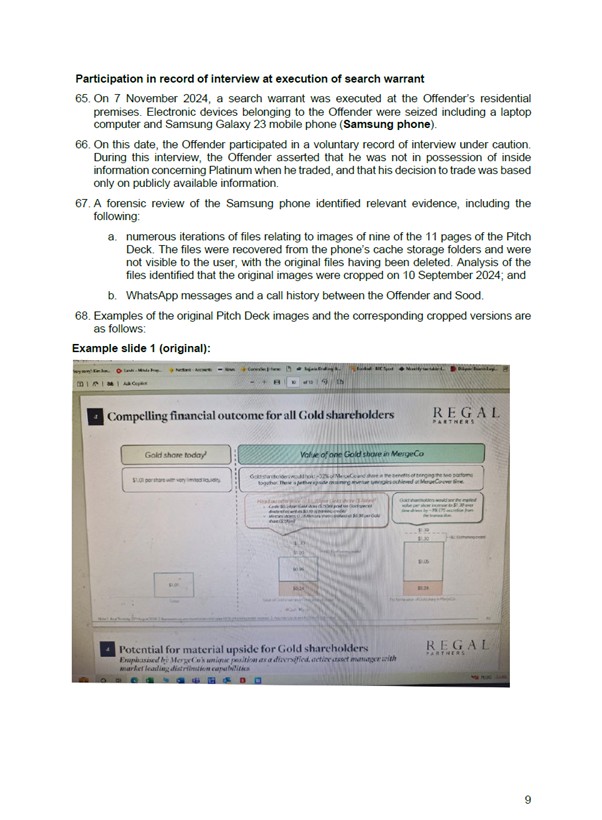
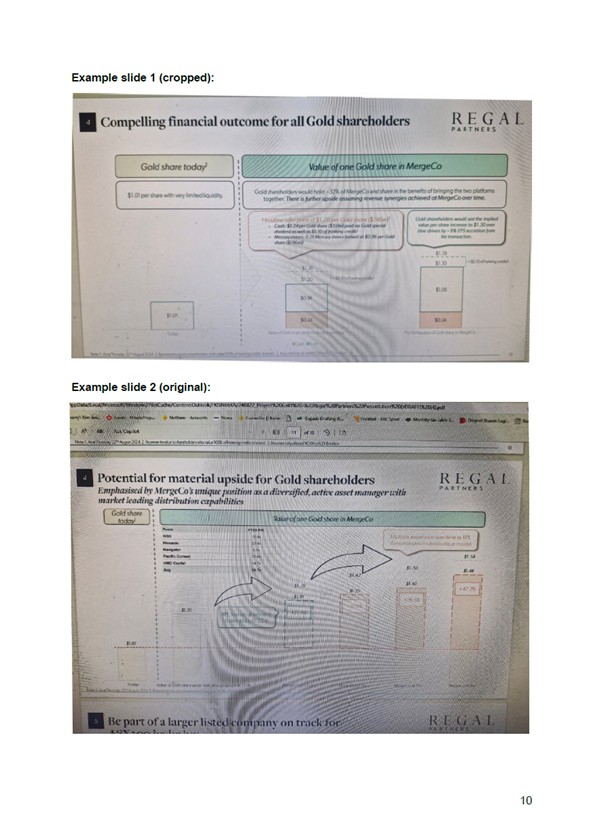
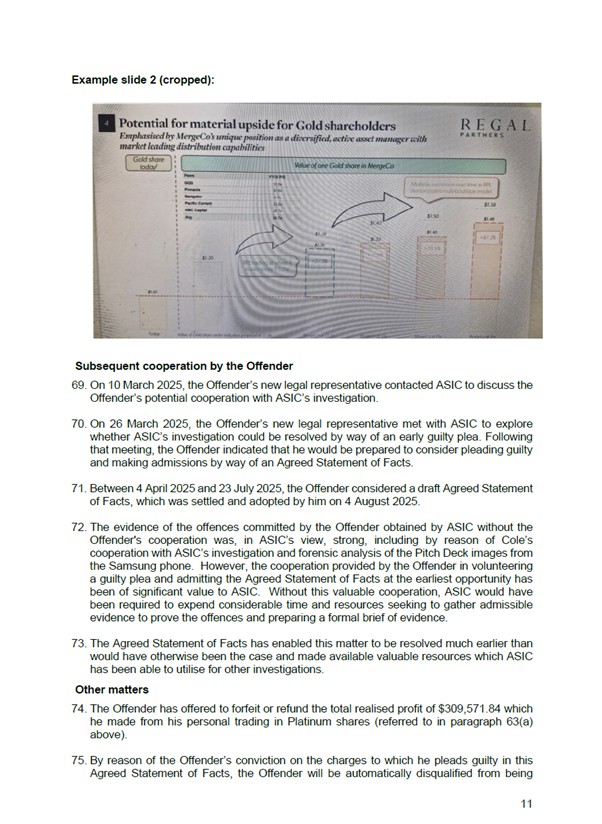
Cases cited: | Abraham v Western Australia [2014] WASCA 151; (2014) 244 A Crim R 1 Al-Kutobi v The King [2023] NSWCCA 155; (2023) 378 FLR 218 Attorney-General’s Application under s 37 of the Crimes (Sentencing Procedure) Act 1999 (No 1 of 2022) [2002] NSWCCA 518; (2002) 56 NSWLR 146 Australian Competition and Consumer Commission v Air New Zealand Limited (No 12) [2013] FCA 533 Azzopardi v The Queen [2001] HCA 25; (2001) 205 CLR 50 Bae v R [2020] NSWCCA 25 Beins v Western Australia (No 2) [2014] WASCA 54 Bugmy v The Queen [1990] HCA 18; (1990) 169 CLR 525 Cahyadi v The Queen [2007] NSWCCA 1; (2007) 168 A Crim R 41 Cameron v The Queen [2002] HCA 6; (2002) 209 CLR 339 CDPP v Aussie Skip Bins [2024] FCA 122 CDPP v Bingo Industries [2024] FCA 121 CDPP v Stewart [2025] VCC 1306 Commonwealth Director of Public Prosecutions v Joyce [2022] FCA 1423 Deakin v The Queen [1984] HCA 31; (1984) 58 ALJR 367 Directory of Public Prosecutions (Cth) v De La Rosa [2010] NSWCCA 194; (2010) 79 NSWLR 1 Director of Public Prosecutions (Cth) v Gregory [2011] VSCA 145; (2011) 34 VR 1 Director of Public Prosecutions (Cth) v Nippon Yusen Kabushiki Kaisha [2017] FCA 876; (2017) 254 FCR 235 Director of Public Prosecutions (Cth) v Wallenius Wilhelmsen Ocean AS [2021] FCA 52; (2021) 368 ALR 98 Dixon v The King [2026] WASCA 48 DGF v The Queen [2021] WASCA 4 Elmir v The Queen [2021] NSWCCA 19; (2021) 357 FLR 274 Filippou v The Queen [2015] HCA 29; (2015) 256 CLR 47 GAS v The Queen; SJK v The Queen [2004] HCA 22; (2004) 217 CLR 198 GLO v The King [2025] WASCA 49 Green (a pseudonym) v The King [2025] NSWCCA 16; (2025) 393 FLR 339 Herron v HarperCollins Publishers Australia Pty Ltd [2022] FCAFC 68; (2022) 292 FCR 336 Hili v The Queen [2010] HCA 45; (2010) 242 CLR 520 Hogan v Australian Crime Commission [2010] HCA 21; (2010) 240 CLR 651 House v The King [1936] HCA 40; (1936) 55 CLR 499 Hurt v The King [2024] HCA 8; (2024) 281 CLR 286 Kamay v R [2015] VSCA 296; (2015) 47 VR 475 Kentwell v The Queen [2014] HCA 37; (2014) 252 CLR 601 Khoo v R [2013] NSWCCA 323; (2013) 237 A Crim R 221 Lazarus v R [2023] NSWCCA 214; (2023) 380 FLR 228 Markarian v The Queen [2005] HCA 25; (2005) 228 CLR 357 Mensink v Registrar of the Federal Court of Australia [2022] FCAFC 102; (2022) 294 FCR 101 Mill v The Queen [1988] HCA 70; (1988) 166 CLR 59 Muldrock v The Queen [2011] HCA 39; (2011) 244 CLR 120 Munda v Western Australia [2013] HCA 38; (2013) 249 CLR 600 Postiglione v The Queen [1997] HCA 26; (1997) 189 CLR 295 Power v The Queen [1974] HCA 26; (1974) 131 CLR 623 Re Minister for Immigration and Multicultural and Indigenous Affairs; Ex parte Lam [2003] HCA 6; (2003) 214 CLR 1 Richards v R [2023] NSWCCA 264 Rinehart v Welker [2011] NSWCA 403; (2011) 93 NSWLR 311 R v De Silva [2011] NSWSC 243 R v Engert (1995) 84 A Crim R 67 R v Flaherty (No 2) [2008] VSC 270; (2008) 19 VR 305 R v Gajjar [2008] VSCA 268; (2008) 192 A Crim R 67 R v Glynatsis [2013] NSWCCA 131; (2013) 203 A Crim R 99 R v Hatahet [2024] HCA 23; (2024) 282 CLR 392 R v Jones [2004] VSCA 68 R v Pham [2015] HCA 39; (2015) 256 CLR 550 R v Rivkin [2004] NSWCCA 7; (2004) 59 NSWLR 284 R v Tait (1979) 46 FLR 386 R v Thomson; R v Houlton [2000] NSWCCA 309; (2000) 14 NSWLR 374 R v Zhu [2013] NSWSC 127 SH v R [2026] NSWCCA 35 Staples v the Queen [2021] VSCA 307 Strbak v The Queen [2020] HCA 10; (2020) 267 CLR 494 Tran v The Queen [2021] VSCA 292 Totaan v R [2022] NSWCCA 75; (2022) 108 NSWLR 17 Vamadevan v The King [2024] NSWCCA 223; (2024) 116 NSWLR 195 Waters v The King [2025] NSWCCA 226; (2025) 400 FLR 7 Weissensteiner v The Queen [1993] HCA 65; (1993) 178 CLR 217 Wong v The Queen [2001] HCA 64; (2001) 207 CLR 584 Xiao v The Queen [2018] NSWCCA 4; (2018) 96 NSWLR 1 |
Division: | General Division |
Registry: | New South Wales |
National Practice Area: | Federal Crime and Related Proceedings |
Number of paragraphs: | 260 |
Date of hearing: | 16 April 2026 |
Counsel for the applicant: | Mr T Game SC with Ms S Palaniappan and Ms C McNair |
Solicitor for the applicant: | Mangioni Biggs & Co |
Counsel for the respondent: | Ms G Mahony SC with Mr E McGinness |
Solicitor for the respondent: | Commonwealth Director of Public Prosecutions |
ORDERS
NSD 251 of 2026 | ||
| ||
BETWEEN: | RODNEY JOHN FORREST Applicant | |
AND: | COMMONWEALTH DIRECTOR OF PUBLIC PROSECUTIONS Respondent | |
order made by: | LEE, ABRAHAM AND VANDONGEN JJ |
DATE OF ORDER: | 22 May 2026 |
THE COURT ORDERS THAT:
1. Leave to appeal be granted.
2. The appeal be allowed.
3. Orders 2, 3 and 4 made by the primary judge are set aside.
4. In lieu thereof Mr Forrest is sentenced to an aggregate sentence of 5 years and 3 months as follows:
(1) on count 1, Mr Forrest is sentenced to a term of imprisonment of 4 years and 6 months imprisonment commencing on 23 January 2026 and to conclude on 23 July 2030;
(2) on count 2, Mr Forrest is sentenced to a term of imprisonment for 1 year and 9 months imprisonment commencing on 23 July 2029 and to conclude on 23 April 2031.
5. Pursuant to s 19AB(1) of the Crimes Act 1914 (Cth), a single non-parole period of 3 years is fixed.
6. Within seven days, the solicitors for the applicant provide to the Chambers of Justice Lee (copied to the Chambers of Abraham and Vandongen JJ) a draft form of final suppression order specifying the grounds of the order and with a duration of 10 years and otherwise in conformity with these reasons.
Note: Entry of orders is dealt with in Rule 39.32 of the Federal Court Rules 2011.
REASONS FOR JUDGMENT
LEE J:
A INTRODUCTION
1 This is an application for leave to appeal from a sentencing judgment pursuant to s 30AB(1)(a) of the Federal Court of Australia Act 1976 (Cth) (FCA Act).
2 Given this is the first such application to be heard and determined by a Full Court, it is worth emphasising that like, for example, appeals under s 5(1)(c) of the Criminal Appeal Act 1912 (NSW), an appeal, if leave be granted, is not a rehearing. It is not enough that the Full Court considers that had it been in the position of the judge, it would have taken a different course.
3 Section 30AB(1)(a) provides that an appeal under s 30AA lies to the Court, with leave, from a judgment of the Court constituted by a single judge exercising the Court’s criminal jurisdiction. The requirement of leave reflects the settled principle that appellate intervention is not to be undertaken lightly. Leave to appeal will not be granted unless the applicant demonstrates that the proposed grounds are reasonably arguable and disclose error of a kind warranting appellate intervention. In the sentencing context, of course, that requires the identification of error of the type described in House v The King [1936] HCA 40; (1936) 55 CLR 499 (at 504–505 per Dixon, Evatt and McTiernan JJ).
4 The sentence in the present case was imposed on 23 January 2026, following careful and detailed reasons delivered by the sentencing judge in Commonwealth Director of Public Prosecutions v Forrest [2026] FCA 14 (PJ), and after the applicant had pleaded guilty, at an early stage, to two insider trading offences, with a further financial services licence offence being taken into account on a schedule pursuant to s 16BA of the Crimes Act 1914 (Cth) (Crimes Act).
5 His Honour imposed a sentence of imprisonment of five years on count 1 and two years on count 2, with one year of consecutiveness between the two sentences, yielding an aggregate sentence of six years’ imprisonment and a non-parole period of three years (PJ [115]–[117]). In addition, the applicant was ordered to pay to the Commonwealth the amount of $309,571.84, pursuant to s 116 of the Proceeds of Crime Act 2002 (Cth).
B SUMMARY OF THE SENTENCING JUDGE’S REASONING
6 The sentencing judge commenced by identifying the charges and the way in which the offending had been presented (PJ [1]–[4]). The applicant had been charged with two rolled-up insider trading offences committed between 29 August 2024 and 16 September 2024, and a further offence of carrying on a financial services business without the necessary licence over a longer period (PJ [1]). The insider trading charges were based upon possession and use of inside information concerning a prospective takeover of Platinum Asset Management Ltd (Platinum) (PJ [1], [15]).
7 One charge concerned the applicant’s purchases of Platinum shares in his own name, which was undertaken in eight tranches (PJ [19]). The other concerned his procurement of three others to acquire Platinum shares (PJ [20]).
8 The sentencing judge also identified the source and character of the inside information. It had been contained in slides described as a “Pitch Deck” which the applicant had obtained from a computer at the office of Mr Michael Cole, the chairman of Regal Partners Limited (Regal) (PJ [13]–[15]). The information concerned the preparation of a takeover proposal for Regal to acquire 100% of the ordinary shares in Platinum via a scheme of arrangement, the proposed price per Platinum share, and the anticipated timing of the transaction (PJ [15]). The applicant used his mobile phone to photograph the Pitch Deck, thereby obtaining access to valuable inside information to which he had no entitlement (PJ [16]). His Honour described both the obtaining of that information and its later deployment as a “profound breach of trust” (PJ [17]).
9 The sentencing judge set out the key facts and circumstances. The applicant, then aged 41, had substantial academic qualifications and more than 20 years’ experience in senior management, stockbroking and funds management roles (PJ [11]). He had entered into an arrangement to provide investment management services through an entity called “Sublime” to various portfolios held by the McKeage Cole Family Office (PJ [12]). He had signed a confidentiality agreement relating to information obtained in that role, and had access to a private office maintained by Mr Cole (PJ [12]). The significance of those matters for the sentencing exercise was obvious enough: the offending was not committed by a naïf or casual “tippee”, but by a sophisticated and experienced actor operating in a commercial setting in which confidentiality obligations had been expressly assumed.
10 The reasons described in detail the mechanics of the offending. After obtaining the Pitch Deck information on 23 August 2024 (PJ [14]), the applicant communicated numerous times with an Australian Financial Review (AFR) journalist, Ms Kanika Sood, in relation to Platinum, anticipating that she would publish an article (PJ [18]). During the period between 29 August and 10 September 2024, he acquired 2,750,532 shares in Platinum in his own name, at an investment cost, including brokerage, of $2,693,383.41, in eight tranches (PJ [18]). His Honour observed that the structured nature of those purchases bore upon planning and sophistication (PJ [71]–[72]).
11 In addition, and separately from his share purchases, the applicant encouraged three others to acquire Platinum shares (PJ [20]). Those endeavours were successful: Mr Mizzi acquired 400,000 shares in multiple tranches; a company associated with Mr Leary acquired 66,246 shares; and Jatam Investments Pty Ltd acquired 464,539 shares in the last ten minutes of trading on 16 September 2024 (PJ [20]).
12 By the time the applicant procured some of those acquisitions, he was aware not merely of the information contained in the Pitch Deck, but of the additional information constituted by the anticipated publication of the AFR article (PJ [2], [18], [21]). His Honour regarded the applicant’s dealings with the journalist and the publication of the article as bearing importantly upon the overall criminality, because they formed part of an evident strategy to stimulate interest in Platinum and maximise the return on the positions taken (PJ [74], [82]).
13 The sentencing judge also traced what followed the publication of the AFR article on the afternoon of 16 September 2024 and the subsequent ASX announcement by Platinum on the following morning (PJ [21]–[25]). The reasons set out that, after the publication and announcement, Platinum shares opened materially higher and trading volume increased dramatically (PJ [26]). Between 18 September and 22 October 2024, the applicant and those whom he had procured to buy shares sold positions for profit. The applicant’s realised profit was $309,571.84 (PJ [27]). The offending produced a real, substantial and quantifiable benefit.
14 Prior to dealing with the key facts and circumstances, his Honour set out the material relied upon, which was entirely documentary (PJ [7]). It comprised, among other things, a statement by the applicant, the agreed statement of facts, the criminal history, a sentencing assessment report, character references, letters from the applicant and members of his family, a psychologist’s report, a certificate of appreciation for community service, and a bundle of media reports relied upon not as evidence of extra-curial punishment but rather as evidence of publicity and humiliation said to reduce the need for specific deterrence (PJ [7]). The sentencing judge also noted that there was no sworn evidence, oral or written, from anyone, including the applicant (PJ [8]). That circumstance informed the weight given to some contested or evaluative assertions in the sentencing material.
15 The reasons also addressed the sentencing principles and maximum penalties. The sentencing judge noted the substantial increase over time in the maximum penalty for insider trading, reflecting the evident legislative concern to deter such offending (PJ [5]). His Honour treated imprisonment as inevitable and common ground (PJ [6]), the issue being whether actual incarceration was required or whether some other disposition was appropriate. In approaching that question, the sentencing judge made plain that the sentence had to be fixed in accordance with s 16A of the Crimes Act, and that the matters there specified were non-exhaustive considerations to be taken into account insofar as they arose (PJ [68]).
16 A substantial part of the reasons was devoted to setting out the features of the offending that bore upon objective seriousness. It will be necessary to return to this aspect of the sentencing judge’s reasoning below. It presently suffices to note that his Honour did not accept attempts to minimise the criminality. His Honour considered that it was too simplistic to characterise the applicant’s motivation merely as greed, but explained that this did not make his motivation any less blameworthy to any measurable degree (PJ [70]). To the contrary, the conduct was, in some respects, more troubling because it was directed to elevating the applicant’s reputation on a false and dishonest basis (PJ [70]). His Honour also rejected the applicant’s characterisation of the offending as lacking planning or sophistication; the structured purchases, the communications with the journalist, and the procurement of others to take positions in Platinum all supported the contrary conclusion (PJ [18]–[20], [71], [72]).
17 His Honour recognised a degree of uncertainty as to the extent to which the acquisition of the Pitch Deck itself had been pre-planned, but accepted it could, in a narrow sense, be described as opportunistic (in the sense of seizing an opportunity that arose (PJ [72]–[73])). The sentencing judge then distinguished that limited opportunism from what followed (being a series of considered and structured steps: repeated share acquisitions, procurement of other purchasers, use of the anticipated AFR article, and encouragement to maintain positions in expectation of further corporate developments).
18 The sentencing judge also addressed the character of the applicant’s access to the information. His Honour observed that the applicant was not a “true insider” in the strict sense, nor the passive recipient of a tip-off. But his conduct in obtaining the Pitch Deck was regarded as relevantly akin to that of a true insider in the sense that he had access of a kind a true insider would be expected to have (PJ [72]). The applicant had no right to the information yet placed himself in a position to exploit it as if he were entitled to privileged access.
19 When his Honour came to the assessment of criminality, his Honour concluded that the objective seriousness of the insider trading offending was significant and warranted an overall sentence including a limited measure of specific deterrence and a substantial measure of general deterrence, affected by the subjective features later discussed (PJ [107]).
20 The reasons also dealt with the financial services licence offence taken into account under s 16BA of the Crimes Act (PJ [85]). His Honour approached that scheduled matter by reference to established authority as to the limited but real way in which such offending may increase the penalty that would otherwise be appropriate for the particular offence. His Honour did not punish that matter separately, but treated it as informing the assessment of criminality, personal deterrence and the community’s entitlement to retribution for admitted but uncharged or separately unpunished wrongdoing.
21 The sentencing judge then turned to the subjective case. His Honour accepted that the applicant had prior good character, but did not permit that circumstance to obscure the seriousness of what had occurred (PJ [62], [99]). The reasons examine the references in some detail and conclude, in substance, that many of them did not meaningfully engage with the nature of the offending. Some described the conduct as out of character or as an error of judgment; others expressed views about the applicant’s honesty or integrity without confronting the plainly dishonest features of the offences. His Honour took them into account, but regarded them as providing limited assistance beyond confirming prior good character, which was not in doubt (PJ [65]–[66]).
22 Similarly, the sentencing judge dealt with older material, including community and volunteer contributions dating back to 2001, and treated it as going no further than reinforcing the applicant’s prior good character and promise in earlier life (PJ [67]). His Honour also considered the psychologist’s material (PJ [63]–[64]) and the applicant’s letters and family material (PJ [59]–[62]). The overall picture was one of a person of previous good character and considerable prior attainment who had nonetheless engaged in serious, dishonest and calculated market misconduct.
23 The treatment of the guilty pleas involved his Honour accepting that the pleas were entered at the earliest available opportunity and that they saved substantial court time and prosecutorial resources (PJ [89], [92]). His Honour recognised the utilitarian value of the pleas and stated that they would be given significant weight, but did not consider it necessary or appropriate to identify a specific percentage (PJ [94]).
24 The sentencing judge’s treatment of general deterrence must be understood in context. His Honour’s reasons repeatedly emphasised the need for general deterrence in cases of this type (PJ [35], [106]–[107], [112]). The reasons did not proceed on the basis that general deterrence was the only thing that mattered, but rather as an important consideration within the overall synthesis.
25 Finally, his Honour fixed the sentence structure, which I set out above (see [5]; PJ [115]– [117]).
C THE GROUNDS OF APPEAL
26 The applicant advances numerous proposed grounds of appeal. One ground (Ground 3) is not pressed, and the remaining proposed grounds may be summarised as follows.
27 First, the sentencing judge erred in holding that it was not necessary or appropriate to identify a specific percentage for the utilitarian value of the guilty pleas, and in treating the pleas as simply an important part of the instinctive synthesis (Ground 1).
28 Secondly, his Honour acted upon a wrong principle in treating general deterrence as a “paramount consideration” in circumstances where s 16A of the Crimes Act establishes no hierarchy of matters to be taken into account (Ground 2).
29 Thirdly, his Honour impermissibly reasoned from the applicant’s silence, contrary to the principles explained in Weissensteiner v The Queen [1993] HCA 65; (1993) 178 CLR 217 and related authorities, in making certain findings said to bear upon the seriousness of the offending (Ground 4).
30 Fourthly, his Honour erred in the use made of the applicant’s initial denials to police together with his failure to voluntarily produce the photographs he took of the Pitch Deck (Ground 5).
31 Fifthly, the sentencing judge erred in characterising the applicant as akin to a true insider, thereby overstating the objective seriousness of the offending (Ground 6).
32 Sixthly, the applicant was denied procedural fairness by reason of his Honour relying upon matters not put to the applicant or not sufficiently foreshadowed (Ground 7).
33 Finally, the sentence imposed was manifestly excessive (Ground 8).
34 For reasons I will explain, however, I consider this application for leave and the appeal can be decided on a narrow basis and it is only necessary to deal with Ground 5, the resolution of which is determinative.
D GROUND 5: USE OF DENIALS AND PRODUCTION OF MATERIAL
I The Argument
35 As noted above, by Ground 5, the applicant contends that the sentencing judge erred in the way in which his Honour used the applicant’s initial denials to police, together with the fact that the photographs of the Pitch Deck were recovered by investigative action rather than volunteered, in assessing sentence.
36 The submission of the applicant in writing in relation to this ground was directed to the proposition that the sentencing judge relied on these matters to discount remorse and to diminish the subjective value of the guilty pleas, and in substance treated the absence of initial cooperation as aggravating criminality. As refined in oral submissions, the complaint was not directed to the uncontroversial proposition that such matters may bear upon remorse or the subjective significance of a plea of guilty. Rather, the argument was that the sentencing judge went further and deployed those matters as part of the reasoning process by which the gravity of the offending was assessed. Emphasis was placed on the distinction between using such conduct to assess the offender, and using it to assess the offence.
II Consideration
37 It is worth commencing with the chronology.
38 On 7 November 2024, a search warrant was executed on the applicant’s home, and on the same day, the applicant participated in an interview in which he expressly denied having any inside information (PJ [83]). Examination of the applicant’s mobile phone seized during the search process revealed deleted images of the Pitch Deck (PJ [90]–[91]). On 10 March 2025, through new legal representatives, the applicant contacted ASIC to discuss potential cooperation and, on 26 March 2025, raised resolution by early pleas of guilty. The facts were thereafter agreed.
39 It is next worthwhile focussing upon the material part of his Honour’s reasons. As his Honour recognised, Pt IB of the Crimes Act deals with the sentencing of federal offenders. It sets out the sentencing factors, procedural requirements and penalty options when sentencing a person for a “federal offence” but is not, of course, a code and State or Territory sentencing provisions can be picked up and applied to the sentencing of federal offenders provided that law is not inconsistent with a law of the Commonwealth (see s 68(1) of the Judiciary Act 1903 (Cth)). Relevantly, s 16A(1) (within Pt 1B) provides that in determining the sentence, a court must impose a sentence that is of a severity appropriate in all the circumstances of the offence and s 16A(2) specifies the factors that must be taken into account on sentence to the extent they are relevant and known to the court.
40 Under the heading, “Nature and circumstances of the offences: s 16A(2)(a)” (the first of the s 16A(2) factors), the sentencing judge remarked that he had already dealt with the “offending” and would “therefore confine this part of these reasons to how that conduct should be characterised and an assessment of its seriousness” (PJ [69]).
41 His Honour then proceeded to do so.
42 After characterising Mr Forrest’s motivation (PJ [70]) and rejecting a submission that the conduct lacked planning or sophistication (PJ [71]), the sentencing judge remarked upon the confined aspect of the deliberate and dishonest offending that was opportunistic (PJ [73]). His Honour then dealt with the planned and premeditated nature of the offending, which was consistent with the applicant’s motivation (PJ [74]–[76]), and rejected any attempt to downplay the notion the offending involved a breach of trust or that the seriousness of the offending was mitigated by it occurring over a short period of time (PJ [77]–[78]). His Honour then dealt with the extent of the investment and profit, as well as the efforts the applicant took to boost demand for Platinum shares (PJ [79]–[80]). His Honour then turned to the greater criminality involved with the rolled up charges (although they were part of a course of conduct) (PJ [81]), and remarked that the AFR communications played a role in relation to the applicant’s “evident overall strategy” and that this had the effect of “elevating the overall criminality” (at PJ [82]).
43 It is in this context the critical paragraphs appear, which are in the following terms (PJ [83]–[84]):
83. A further and important measure of the criminality involved is that Mr Forrest denied having any inside information when voluntarily interviewed by police on 7 November 2024, even though a search warrant had been executed and his mobile phone had been seized. He falsely asserted that his decision to trade in Platinum shares was based only on publicly available information.
84. Overall, the objective seriousness of the insider trading offending was significant and warrants an overall sentence that includes a limited measure of specific deterrence and a substantial measure of general deterrence, affected by the subjective features considered below.
(Emphasis added).
44 Before considering these paragraphs and evaluating the applicant’s argument, it is worth identifying the orthodox position, which reflects common ground on the appeal.
45 A plea of guilty may have both utilitarian and subjective significance. The utilitarian value lies in the saving of time and resources; its subjective significance lies in what it may reveal about contrition or acceptance of responsibility. As was explained by Gaudron, Gummow and Callinan JJ in Cameron v The Queen [2002] HCA 6; (2002) 209 CLR 339 (at 343 [11]–[14]):
It is well established that the fact that an accused person has pleaded guilty is a matter properly to be taken into account in mitigation of his or her sentence. In Siganto v The Queen [(1998) 194 CLR 656 at 663–664 [22] per Gleeson CJ, Gummow, Hayne and Callinan JJ] it was said:
“a plea of guilty is ordinarily a matter to be taken into account in mitigation; first, because it is usually evidence of some remorse on the part of the offender, and second, on the pragmatic ground that the community is spared the expense of a contested trial. The extent of the mitigation may vary depending on the circumstances of the case.”
It should at once be noted that remorse is not necessarily the only subject matter revealed by a plea of guilty. The plea may also indicate acceptance of responsibility and a willingness to facilitate the course of justice.
…
Reconciliation of the requirement that a person not be penalised for pleading not guilty with the rule that a plea of guilty may be taken into account in mitigation requires that the rationale for that rule, so far as it depends on factors other than remorse and acceptance of responsibility, be expressed in terms of willingness to facilitate the course of justice and not on the basis that the plea has saved the community the expense of a contested hearing.
46 Consistently with this orthodox approach, post-offending conduct, including denials of wrongdoing or a failure to assist authorities, may bear upon the assessment of remorse and the weight to be given to a plea. Accordingly, it was open to his Honour to distinguish between, on the one hand, the utilitarian value of the pleas and, on the other, the separate question whether the pleas, viewed with the surrounding conduct, evidenced contrition or remorse to the extent for which the applicant contended. But the present issue is whether his Honour went further and used the post-offending conduct in the characterisation of the nature of the offending conduct (and in increasing its objective seriousness).
47 It seems to me the placement of PJ [83] is central in the resolution of this issue. Read fairly, that paragraph is embedded within a sequence of paragraphs expressly directed to the assessment of the offending conduct and its seriousness, not a discrete discussion of remorse or subjective mitigation. Moreover, as the emphasised parts of the extracted paragraphs indicate, the terms in which the matters are expressed are not confined to the weight to be given to the plea. Rather, they are articulated in a way that links them to the assessment of the applicant’s conduct.
48 When the reasoning is read in that way, the applicant’s denials and failure to produce the material are used as part of the evaluative process by which the seriousness of the offending is assessed. They operate as part of the process by which his Honour assessed the seriousness of the conduct, rather than merely to qualify the extent to which the pleas evinced contrition.
49 During oral argument, the respondent’s senior counsel accepted that, if PJ [83] were to be read as using earlier denials or a failure to cooperate as part of the basis for assessing the seriousness of the offending itself, that would constitute error. Despite the through reasons of the sentencing judge, I am persuaded by the applicant’s argument that this is the proper reading of the impugned part of his Honour’s reasons. No compelling contrary reading was advanced by the respondent.
50 Ground 5 is therefore made out. In the circumstances, it is unnecessary for me to say anything further about the other grounds.
E RESENTENCING AND OTHER ORDERS
I Disposition of Application and Resentencing
51 This is an application for leave. As noted at the outset, leave will only be granted where the applicant demonstrates that the proposed grounds are reasonably arguable and disclose House v The King error. Having done so, leave to appeal should be granted and the appeal allowed. It is necessary to then proceed to resentencing.
52 I have had the benefit of reviewing in draft the reasons of Abraham and Vandongen JJ. Although it does not now matter, I am unconvinced the sentence imposed below was manifestly excessive and, my respectful view, was within the range of sentences available given the findings of his Honour that have not been impugned. That said, I agree with the proposed resentencing orders of Abraham and Vandongen JJ and their reasons for reaching that conclusion.
II Non-Publication Orders
The Issue
53 A final issue remains outstanding. On the application of the applicant, which was not opposed, an interim order was made pursuant to s 37AI of the FCA Act, that certain “Confidential Information” is not to be published or otherwise disclosed other than to court staff, the parties, and the parties’ legal representatives.
54 That information suppressed on an interim basis was contained in evidence adduced by the applicant relevant to resentencing and was as follows:
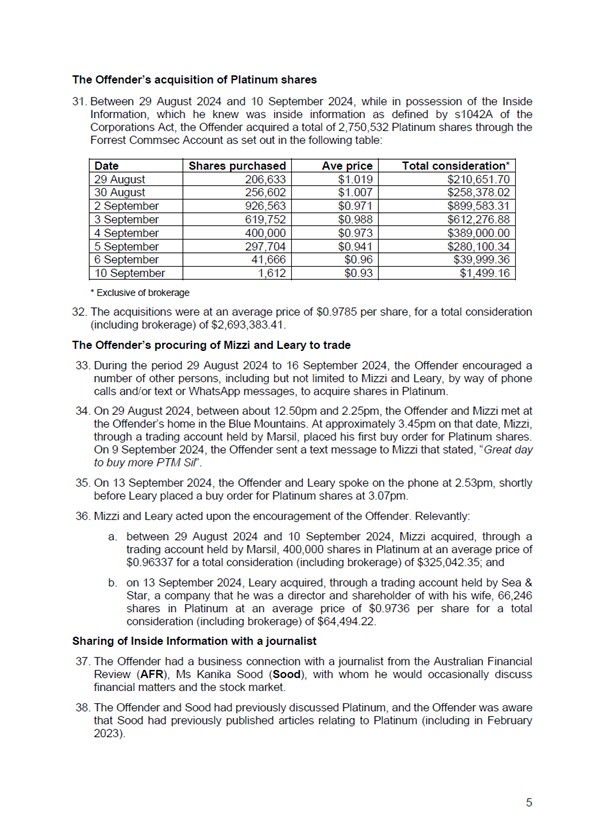
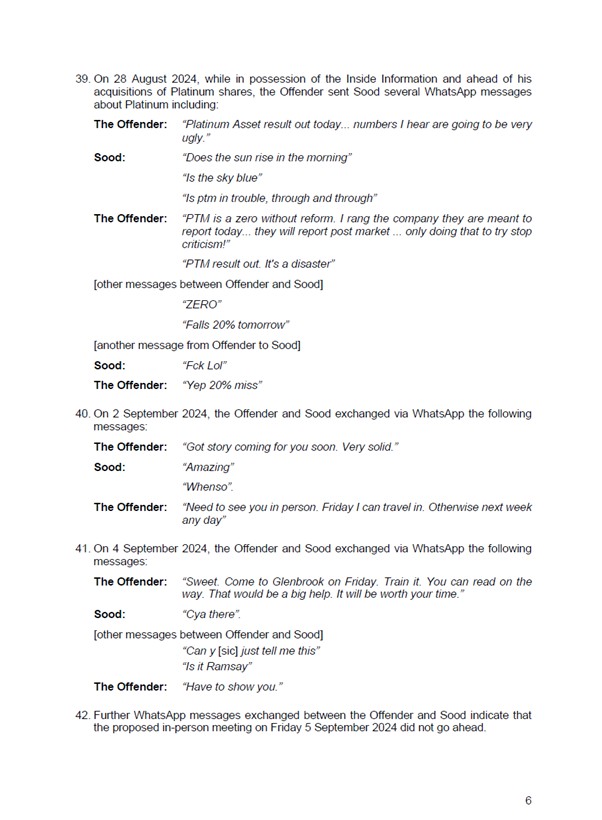
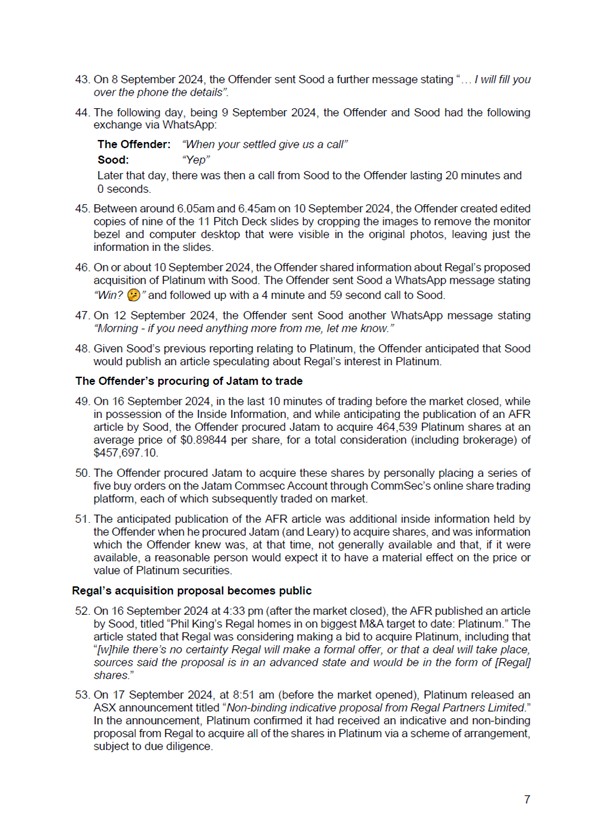
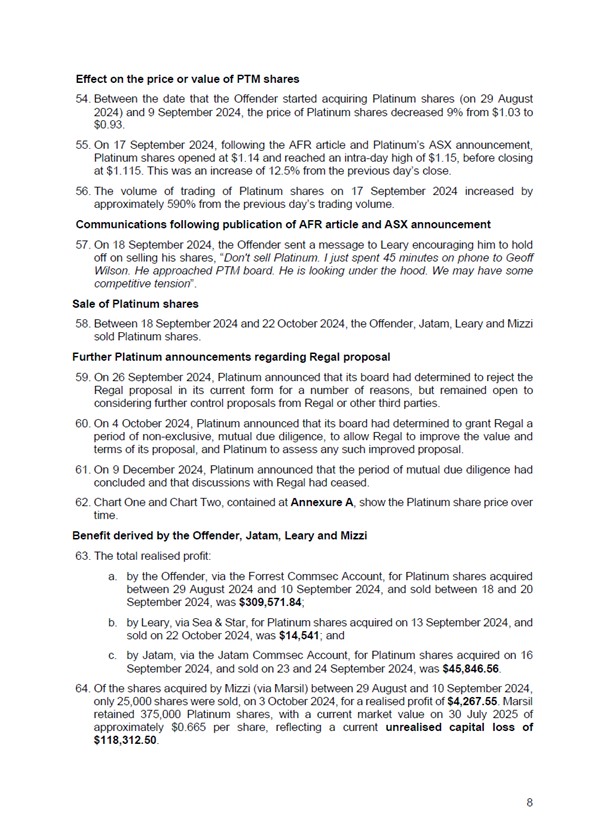
Evidence | Material covered by interim non-publication order |
Affidavit of Andrea Forrest sworn 17 March 2026 | * Names of the two children in [3], [10], [35]–[36], [39]–[41] (including the heading above [39]), [42]–[45] (including the heading above [42]), [46], and [52] * The first three sentences of [35] * Name of school psychologist in [37] (appearing twice) |
Affidavit of Rodney Forrest sworn 18 March 2026 | * [16]–[66] * Names of the two children in [8], [71], [74], and [75] |
Affidavit of Robert Mangioni sworn 15 April 2026 | * [16]–[18] and annexures RM8, RM9, RM10 |
Affidavit of Robert Mangioni sworn 16 April 2026 | * [6] and annexure RM11 |
55 During submissions in support of making the confidentiality order, reliance was placed on two statutory foundations for making such orders (T3.41–47). The first was the provisions of Pt VAA of the FCA Act; and the second suggested basis was the Children (Criminal Proceedings) Act 1987 (NSW) (State Act).
Source of Power
56 The State Act reflects a legislative intention by the Parliament of New South Wales to prioritise confidentiality in certain circumstances relating to children by restricting public access to proceedings (for example, s 10 provides that generally only directly interested parties are permitted in the Children’s Court) and prohibiting the publication of children’s names subject to limited exceptions (Div 3A). Relevantly for present purposes, s 15A of the State Act provides, among other things, that:
(1) The name of a person must not be published or broadcast in a way that connects the person with criminal proceedings if—
…
(c) the person is mentioned in the proceedings in relation to something that occurred when the person was a child, or
(d) the person is otherwise involved in the proceedings and was a child when so involved …
…
57 I am unpersuaded by the applicant’s contention that, by calling in aid s 79 of the Judiciary Act 1903 (Cth), the State Act provides a statutory source for making a suppression or confidentiality order in this Court.
58 For reasons I canvassed at length in Herron v HarperCollins Publishers Australia Pty Ltd [2022] FCAFC 68; (2022) 292 FCR 336 (at 414–416 [327]–[337], with which Rares and Wigney JJ agreed), three foundational propositions can be identified from the relevant High Court authorities as to the interrelationship between State laws and the exercise of federal jurisdiction: first, State parliaments lack the power to regulate the exercise of federal jurisdiction or command a federal court in the exercise of its jurisdiction; secondly, in determining whether a State law purports to regulate the exercise of federal jurisdiction, it is relevant to ask whether the impugned law operates independently of anything done by a court; and thirdly, the categories of laws identified in s 79 of the Judiciary Act 1903 (Cth), such as whether a law is a law of evidence, are of assistance in identifying whether a State law purports to regulate the exercise of federal jurisdiction.
59 It is important not to elide two matters which should remain distinct. The first is whether s 15A of the State Act has field of operation that operates independently of anything done by a federal court (by creating a norm of conduct that prohibits specified actions by persons not involved in the court process). The second is the question as to the identification of the source of power of a judge of this Court to make a suppression or non-publication order of the kind sought.
60 It is unnecessary to deal with the first of these issues as to the principled operation of the State Act for reasons that will become evident. As to the second, it is not straightforward.
61 Dealing with laws other than the FCA Act, s 37AC provides that Pt VAA does not limit the operation of a provision made under any other Act “that prohibits or restricts, or authorises a court to prohibit or restrict, the publication or other disclosure of information in connection with proceedings”. There is no need to explore this further as no other Act was identified other than the State Act.
62 But dealing with the FCA Act itself, s 37AD provides that nothing in Pt VAA limits s 23HC of the FCA Act. Section 23HC is contained in Pt III, Div 1A of the FCA Act, which deals with “Original Jurisdiction (indictable offences)”. Section 23HC(1) provides that Court may make such orders as it thinks “appropriate” in the circumstances to protect, relevantly, “information, documents and other things admitted or proposed to be admitted” in “indictable primary proceedings” (s 23HC(1)(b), emphasis added). Indictable primary proceedings are defined in s 23AB to include proceedings in the Court for sentencing of the accused (but of course in the original jurisdiction) (s 23AB(2)(b)). But then s 30BH(2) provides that “[f]or the purposes of sentencing an accused under this Subdivision [B of Division 2A dealing with appellate and related jurisdiction in criminal proceedings] … the Court’s powers are taken to include those of the court from which the appeal was made”.
63 Despite any complications arising from these provisions of the FCA Act, upon which we have not received submissions, it was not suggested by either party that there was any power in the FCA Act to make the proposed final suppression orders other than a power found in Pt VAA. In any event, in the particular circumstances of this case, it would only be appropriate to make the proposed suppression orders based on the provisions relied upon in the application for suppression.
The Relevant Principles
64 As noted above, an “interim” order was made. If an application is made for a suppression or non-publication order, the Court may make the order as an interim order without determining the merits of the application (s 37AI(1)). If such an order is made, s 37AI(2) provides that the Court must determine the application (that is, the merits of a final order) “as a matter of urgency”.
65 Turning to the merits, as the Full Court explained in Mensink v Registrar of the Federal Court of Australia [2022] FCAFC 102; (2022) 294 FCR 101 (at 101 [76] per Bromwich, Lee and Thawley JJ), consistently with suppression orders being exceptional, Div 2 of Pt VAA sets out express limits on, among other things, the power to make such orders (s 37AF) and the grounds for making them (s 37AG).
66 In deciding whether to make a suppression or non-publication order, the Court must take into account that a primary objective of the administration of justice is to safeguard the public interest in open justice. The identification of this mandatory consideration reflects a profoundly important aspect of our system of justice.
67 When the importance of open justice is properly appreciated, it can be seen that a confidentiality or suppression order is not justified simply because it may be “convenient, reasonable or sensible”; nor is it sufficient that a confidentiality order may be viewed as serving “some notion of public interest”, or that it is the result of some “balancing exercise”: Hogan v Australian Crime Commission [2010] HCA 21; (2010) 240 CLR 651 (at 664 [31] per French CJ, Gummow, Hayne, Heydon and Kiefel JJ).
68 Part VAA of the FCA Act relevantly provides for the making a suppression or non-publication order in relation to “information that comprises evidence or information about evidence” (s 37AF(1)(b)(i)). Any such order should go no further than suppressing that part of the information or that part of the evidence that is necessary and be formulated with “sufficient particularity to ensure” that the order is limited to achieving the purpose for which the order is made” (s 37AH(5)). It necessarily follows that if it is only necessary to suppress some representations contained in a document, the order should be calibrated to ensure that it is only that part of the document that is the subject of suppression.
69 With these principles in mind, I turn to the evidence sought to be suppressed.
Consideration
Affidavit of Andrea Donne Forrest sworn 17 March 2026
70 The material in this affidavit in respect of which non-publication or suppression orders are sought falls into three categories. It is convenient to deal with each separately.
I Names of the children
71 As to the names of the children, the only apparent bases upon which an order might be made under s 37AG are that such an order is necessary to prevent prejudice to the proper administration of justice or that it is necessary to protect the safety of a person. It is sufficient to deal with the latter ground.
72 The concept of the “safety” of a person who is a child should not be approached in a narrow or purely physical sense. It extends to the protection of a child’s psychological and emotional well-being, including protection from distress, stigma, or other forms of harm that may arise from public identification in the context of criminal proceedings of this kind.
73 It is readily apparent that the public identification of the applicant’s children in connexion with these proceedings carries a real risk of harm of that kind. That risk is not speculative. It arises from the ordinary incidents of publicity, the potential for dissemination beyond the immediate proceedings, and the particular vulnerability of children to adverse attention. Although no direct evidence has been led as to the likely impact upon these children, it is appropriate to draw the usual inference from ordinary human experience as to the consequences that may flow from such public identification.
74 In those circumstances, I am satisfied that it is necessary to make orders suppressing the names of the children.
II Name of the school psychologist
75 As to the name of the school psychologist, it would have been preferable simply not to have included that name in the evidence. However, the position must be addressed as the material now stands.
76 The identification of the school psychologist, in context, is capable of leading to the identification of the school attended by the children and, in turn, the identification of the children themselves. Given the conclusion reached in relation to the names of the children, and the need to protect their safety in the sense described above, it is necessary that the name of the school psychologist also be suppressed.
III Paragraph 35 (first three sentences)
77 As to the first three sentences in [35], there is no basis upon which the entirety of those sentences should be suppressed. The only aspects of those sentences that warrant suppression are the name of the school and the names of the children.
78 There is nothing about the balance of the matters contained in those sentences to justify their suppression.
Affidavit of Rodney John Forrest sworn 18 March 2026
I Paragraphs 16–66
79 This information falls into three broad categories.
80 The first category concerns the narrative describing the applicant’s experiences while in custody, including interactions with other inmates, incidents of threatened or actual violence, and the general conditions of confinement.
81 That material is, in substance, a first-hand account of the applicant’s experiences in custody. It includes descriptions of other inmates, their conduct, and the applicant’s perception of the risks he faced.
82 There is no general basis upon which material of that kind should be suppressed. It does not, without more, fall within any of the categories identified in s 37AG. In particular, the fact that the material is personal, confronting, or describes conditions in custody does not of itself engage the statutory test. Nor is there any sufficient basis to conclude that publication of that material would prejudice the proper administration of justice. The material does not bear upon any ongoing investigative process or any matter that would compromise the Court’s ability to administer justice.
83 That said, some parts of the narrative include references to identifiable individuals or sufficiently particularised descriptions which may expose those individuals to risk or facilitate their identification within the custodial environment.
84 To the extent that such references identify, or are capable of identifying, specific individuals other than the applicant, or disclose information that could reasonably give rise to a risk to their safety, those references should be suppressed.
85 Subject to that limited qualification, there is no basis to suppress this aspect of the narrative account contained in [16]–[66].
86 The second category concerns the references to other inmates by name or by sufficiently particularised description. Unlike the applicant, those individuals are not parties to these proceedings. The affidavit contains references to alleged criminal conduct, violence, drug use and other matters which, if published, may expose those individuals to risk within the custodial environment. In addition, the custodial context is a relevant consideration. Identification of individuals in that environment may carry consequences not ordinarily present in the community, including the potential for retaliation or other adverse treatment. In those circumstances, I am satisfied that it is necessary, for the protection of the safety of those persons, to suppress their names and any identifying particulars.
87 The third concerns the specific incidents described in the affidavit involving threats, attempted extortion, intimidation, and violence. Those matters are already addressed in the preceding categories. To the extent that they involve identifiable individuals, suppression is warranted for the reasons already given. However, there is no basis to suppress the fact that such incidents are alleged to have occurred. The narrative itself does not fall within any category requiring suppression. The balance to be struck is between the principle of open justice and the protection of individuals from harm. That balance is appropriately achieved by framing an order which suppresses identifying material, but not the substance of the narrative.
II Names of the children in [8], [71], [74], and [75]
88 For reasons already explained, these details ought to be suppressed.
Affidavit of Robert Michael Alexander Mangioni sworn 15 April 2026
89 The material in this affidavit in respect of which non-publication or suppression orders are sought comprises [16]–[18] as well as annexures RM8, RM9, and RM10. It is convenient to deal with all this material together. The material in [16]–[18] of Mr Mangioni’s affidavit identifies the three annexures. Annexure RM8 comprises inmate request forms and grievance forms produced by Corrective Services NSW in response to a subpoena. Annexure RM9 comprises a pathways request form. Annexure RM10 comprises an extract from a case report. The annexures are relied upon as corroborative material concerning matters addressed in the applicant’s affidavit, including his requests for transfer, his custodial circumstances, his work in the prison library, and his rehabilitation while in custody.
90 The same general approach should be taken to this material as to the applicant’s custodial narrative. The fact that the material concerns prison administration, transfer requests, classification, rehabilitation, prison employment, and case management does not justify a suppression order. Some of the material is no doubt personal to the applicant. Some of it concerns internal prison records. But the statutory test is not one of convenience or forensic preference.
91 Nor do I presently see any basis for concluding that suppression of RM8, RM9 or RM10, as a class, is necessary. The material was adduced for the purposes of resentencing. It is not apparent that publication of the substance of the requests, pathways material, or case report would impede the administration of justice.
92 The position is different only to the extent the material identifies other persons, or contains information which may expose a person to a risk to safety. To that limited extent, suppression is justified. That includes names or specific identifying details of correctional staff, other inmates, or particularised information which could identify persons within the custodial environment in circumstances where publication could carry a real risk of harm. It may also include operational details if, properly identified, their disclosure could compromise safety or security. But the order should go no further than that.
93 In relation to RM8, the forms include the applicant’s own transfer and placement requests, his MIN, cell and unit locations, staff names, device identifiers, and internal administrative entries. Much of that material does not itself warrant suppression. The applicant’s requests to be transferred to minimum security, and his references to welfare, rehabilitation, and family proximity are not confidential in any relevant sense. Any names or identifying details of correctional officers or staff, and any precise cell, room, device or internal system identifiers, may be suppressed if their publication carries a risk to safety or prison security; but there is no basis for suppressing the narrative substance of the requests.
94 RM9 appears to be a pathways request form relating to prison employment and educational activity. On the material presently before the Court, I do not see why that document should be suppressed.
95 RM10 is an extract from a case note report recording education and employment screening information about the applicant. Again, the fact that it is an institutional record does not mean it is to be suppressed. The applicant’s education, employment history, willingness to participate in programmes, and rehabilitation-related information are matters relied upon in support of resentencing. They do not warrant suppression merely because they appear in a Corrective Services record.
96 Accordingly, I would not make a suppression or non-publication order over [16]–[18] or RM8, RM9 and RM10 as a whole.
Affidavit of Robert Michael Alexander Mangioni sworn 16 April 2026
97 Paragraph 6 of the interim order should presumably refer to paragraph 4 or 5, but it does not matter as all parts of the affidavit are entirely anodyne and should not be suppressed.
98 Annexure RM11 is an “Offender Case Plan with Full Summary and Review History” prepared by Corrective Services NSW. It records matters such as the applicant’s classification (C2 minimum security), location, case management details, rehabilitation planning, education and employment history, mental health observations, family circumstances, and programme participation. It also contains narrative material describing the offending, the applicant’s personal reflections, and forward-looking rehabilitation objectives.
99 The same principles apply here as to the earlier material. The fact that RM11 is an institutional or internal document does not, without more, justify non-publication or suppression. Much of the content is relied upon by the applicant to demonstrate rehabilitation, stability, family support, and prospects. Those matters have been aired in open court in the sentencing process and do not attract confidentiality merely because they are recorded in a Corrective Services document.
100 Nor is there any basis to conclude that publication of RM11, in substance, would prejudice the proper administration of justice. It is not investigative material, nor does it bear upon any ongoing process in a way that would warrant restriction.
101 However, the document contains a range of personal identifiers and administrative details, including the applicant’s MIN, date of birth, internal classification data, staff names, and other institutional identifiers. It also contains references to third parties, including family members and correctional staff. To the extent that RM11 discloses information which could reasonably give rise to a risk to the safety of any person or to the security of the custodial environment, those details should be suppressed.
102 Subject to those limited redactions, there is no basis to suppress the substance of the case plan document, and I would not make a suppression order in respect of RM11 as a whole. Any order should be confined to details of the kind identified above.
F Final Orders
103 In conformity with these reasons, a draft form of final suppression order specifying the grounds of the order and with a duration of 10 years should be provided to the Court (and the draft form of order should accord with the requirements specified in ss 37AG(2), 37AH(5) and s 37AJ(1) of the FCA Act).
104 Otherwise, the orders of the Court should be as proposed by Abraham and Vandongen JJ.
I certify that the preceding one hundred and four (104) numbered paragraphs are a true copy of the Reasons for Judgment of the Honourable Justice Lee. |
Associate:
Dated: 22 May 2026
REASONS FOR JUDGMENT
ABRAHAM AND VANDONGEN JJ:
105 On 23 January 2026, having pleaded guilty to two rolled-up insider trading offences, the applicant was sentenced to 5 years’ imprisonment and 2 years’ imprisonment respectively, with 1 year of consecutiveness between the 2 sentences and a non-parole period of 3 years. In sentencing for count 2, the primary judge, pursuant to s 16BA of the Crimes Act 1914 (Cth) (Crimes Act), took into account on a schedule, an offence contrary to ss 911A and 1311(1) of the Corporations Act 2001 (Cth) (Corporations Act), being an offence of providing financial services without a licence.
106 This is an application for leave to appeal from a sentence pursuant to s 30AB(1)(a) of the Federal Court of Australia Act 1976 (Cth) (FCA Act). The applicant relies on 7 grounds of appeal (with 1 additional ground in the draft notice of appeal not being pressed).
107 For the reasons below, leave to appeal must be granted as we are satisfied the applicant has established grounds 4 and 5. We are also satisfied for the purposes of s 30AJ(3) of the FCA Act that some other sentence is warranted in law. It falls to this Court to resentence the applicant.
Factual overview
108 We gratefully adopt Lee J’s summary of the primary judge’s sentencing remarks.
109 This matter proceeded before the primary judge by way of an agreed statement of facts (ASOF), which is annexed to these reasons as Annexure A. Given some of the grounds of appeal, it is appropriate to set out the factual basis of the offending, as reflected in the ASOF.
110 In summary, on 23 August 2024, the applicant obtained through the unauthorised use of the computer of Mr Michael Cole, the chairman of Regal Partners Limited (Regal), access to a confidential email with attachments, being slide decks (the Pitch Deck) which related to a proposed acquisition by Regal of all of the ordinary shares of Platinum Asset Management Limited (Platinum) (inside information). The applicant took photographs of the Pitch Deck. Between 28 August and 12 September 2024, the applicant communicated with Ms Kansika Sood, a journalist from the Australian Financial Review (AFR), about a merger between Regal and Platinum. On eight occasions between 29 August and 10 September 2024, while in possession of the inside information, the applicant personally acquired shares in Platinum paying $2,693,384.41. The applicant also procured Mr Silvio Mizzi and Mr Brendan Leary to acquire shares in Platinum between 29 August and 16 September 2024, and in the last 10 minutes of trading before the market closed on 16 September 2024, also procured Jatam Investments Pty Ltd (Jatam) to acquire shares in Platinum. By the time the applicant procured Mr Leary and Jatam to acquire shares in Platinum, he was in possession of additional inside information in the form of the anticipated publication of the AFR article. Between 18 September and 22 October 2024, the applicant, Jatam, Mr Mizzi and Mr Leary sold Platinum shares. The applicant’s total realised profit was $309,571.84.
111 Between 4 January to 8 October 2024, the applicant also operated a financial services business in Australia without holding an Australian Financial Services Licence.
Grounds of appeal
112 The applicant seeks leave to appeal on 7 grounds. Although we have found that grounds 4 and 5 are established, it is appropriate to address the remaining grounds as they may impact on the issue of resentencing.
Ground 1: the primary judge erred in holding that he did “not consider it necessary or appropriate to identify a specific percentage” for the utilitarian value of the guilty plea and in holding it was “simply an important part of the instinctive synthesis”: Judgment (J) at [94].
113 The applicant’s ground is directed to the primary judge’s remarks at J[94]:
Mr Forrest’s guilty pleas were made very early and will be given significant weight. However, I do not consider it necessary or appropriate to identify a specific percentage to this feature. It is simply an important part of the instinctive synthesis of all of the inputs to the sentences arrived at.
114 This ground, as argued, appeared to have two aspects: a broader allegation of error in failing to identify a specific discount for the utilitarian value of the applicant’s guilty pleas in relation to a Commonwealth sentence; and a narrower submission directed to the content of J[94].
115 As to the broader allegation, the applicant submitted that, although it was not suggested in Xiao v The Queen [2018] NSWCCA 4; (2018) 96 NSWLR 1 (Xiao) at [279]-[280] that a failure to quantify the measure of the discount would of itself amount to error, error is established where, as here, a failure to quantify the discount in the sentencing exercise results in a sentence that lacks the requisite transparency: see e.g. Markarian v The Queen [2005] HCA 25; (2005) 228 CLR 357 (Markarian) at [74] per McHugh J. The applicant submitted that the significance of failing to specify a discount has also been elevated in the authorities since Xiao, referring to Green (a pseudonym) v The King [2025] NSWCCA 16; (2025) 393 FLR 339 (Green) at [38]; Al-Kutobi v The King [2023] NSWCCA 155; (2023) 378 FLR 218 (Al-Kutobi) at [6]. According to the applicant, the error in the primary judge’s approach is that one is left to speculate as to what value his Honour placed on the guilty plea. The applicant submitted that while his Honour stated the pleas would be “given significant weight”, there is no basis to determine what discount his Honour in fact provided. The premise underlying this ground is that it is an error for a sentencing judge not to expressly quantify a specific discount for the utilitarian benefit of a guilty plea.
116 The slightly narrower submission was focused on the language of J[94] where the primary judge stated that the identification of a specific percentage was not “appropriate”, and the utilitarian benefit of a guilty plea “is simply a part of instinctive synthesis”. Although put on a different basis, the underlying premise is, in practical terms, the same as the broader allegation.
117 The broader submission, that the primary judge was required to specifically identify the discount for the utilitarian value of the guilty plea, is incorrect. Most significantly, it is not supported by the terms of the legislation. Nor do the authorities, including those relied on by the applicant, support the submission. Given that there is no requirement to identify a specific discount, no error exists when a sentencing judge does not do so.
118 The starting point is the Commonwealth sentencing regime in Pt 1B of the Crimes Act, as it is that which must be complied with by a sentencing judge.
119 The statutory command in s 16A of the Crimes Act requires that in determining the sentence to be passed in respect of any person for a “federal offence” (as defined in s 16(1)), the Court must impose a sentence that is of a “severity appropriate in all the circumstances of the offence”: Crimes Act s 16A(1). In determining the sentence to be passed, in addition to any other matters, the Court must take into account the matters set out in s 16A(2) as far as they are relevant and known to the Court. Relevantly, those matters includes s 16A(2)(g):
(g) if the person has pleaded guilty to the charge in respect of the offence:
(i) that fact; and
(ii) the timing of the plea; and
(iii) the degree to which that fact and the timing of the plea resulted in any benefit to the community, or any victim of, or witness to, the offence;
120 Significantly, s 16A(2)(g) was amended after Xiao, with (ii) and (iii) introduced in 2020: Crimes Legislation Amendment (Sexual Crimes Against Children and Community Protection Measures) Act 2020 (Cth).
121 Given the timing of the amendment to s 16A(2)(g), it is helpful at this stage to refer to Xiao. In Xiao, the New South Wales Court of Criminal Appeal addressed two issues in relation to a guilty plea. First, whether the utilitarian value of a plea fell within s 16A(2)(g) of the Crimes Act as then drafted. Second, if so, whether a sentencing judge should specify the quantum of any discount given on account of a guilty plea. These issues arose because at that time there had been a divergence of views expressed in decisions of intermediate appellate courts as to whether the utilitarian value of a guilty plea could be given in sentencing for a federal offence. A five-member bench was convened in Xiao to address the issues.
122 As to the first issue, the Court concluded that s 16A(2)(g) (as then drafted) included the utilitarian value of the plea at [278]. In respect to the second issue, the Court observed at [280]:
Section 16A(2)(g) neither requires nor prohibits the specification of a discount. However, once it is accepted that s 16A allows a sentencing judge to give a discount to the sentence which would otherwise be imposed, it seems to us desirable that, in the interests of transparency, such discounts be specified. However, there is no obligation on the sentencing judge to do so, and a failure to do so would not of itself amount to error.
123 In that context, the amendments to s 16A(2)(g), by introducing (ii) and (iii), expanded the terms of the provision by expressly requiring that in determining a sentence to be passed a court is required to take into account the utilitarian aspects of a guilty plea.
124 Section 16A(2)(g) does not prescribe the manner in which the utilitarian aspect of the guilty plea is to be taken into account. Nor does it limit the value or weight to be ascribed to this aspect of the plea. This reflects an approach consistent with the other matters identified in s 16A(2).
125 This is to be contrasted with the legislative approach taken in respect to an offender who has undertaken to cooperate with law enforcement agencies. In that circumstance, s 16AC provides that if a sentence is reduced for future cooperation with law enforcement agencies in proceedings, the court must state that the sentence is being reduced for that reason and specify the sentence that would have been imposed but for the reduction. Section 16AC was inserted by Crimes Legislation Amendment (Powers, Offences and Other Measures) Act 2015 (Cth) with effect from 27 November 2015 (it replaced s 21E of the Crimes Act which was to a similar effect). The provision distinguishes future cooperation from past cooperation. There is no requirement for a sentencing judge to quantify and specify any discount for past cooperation.
126 There is no such provision in relation to any aspect of a guilty plea. Rather, a guilty plea is treated as any other sentencing consideration that is to be taken into account in imposing a sentence that is of a “severity appropriate in all the circumstances of the offence” pursuant to Crimes Act s 16A(1). In taking a guilty plea into account, in accordance with the amendment, the sentencing judge considers the fact of the plea, the timing of the plea and the degree to which those factors resulted in any benefit to the community, or any victim of, or witness to, the offence: s 16A(2)(g). That is, the Crimes Act does not require a specific discount to be identified for any aspect of the guilty plea. Considering s 16A(2)(g) in the context of s 16AC, this reflects a legislative choice.
127 The amendments were made to s 16A(2)(g) in a context where it had been concluded in Xiao, inter alia, that the subsection as then drafted did not require quantification of any discount afforded for a guilty plea. It was also in a context where it was apparent that sentencing legislation in various States throughout Australia detail, in relation to a guilty plea, the manner in which the plea can be taken into account in the sentencing process (including the quantification of the discount and the amount of the plea). Some examples are referred to below at [147], which serve to highlight the legislature did not go down those paths in respect to the amendments to s 16A(2)(g).
128 The applicant’s broader submission is not supported by the terms of the Commonwealth legislation.
129 Turning to the authorities.
130 When pressed during the hearing of the appeal, the applicant was unable to identify any case which has held that in imposing a sentence for a federal offence, the judge is required to quantify and specify a discount to represent the utilitarian value of a guilty plea. The highest the applicant put his submission was that cases such as Bae v R [2020] NSWCCA 25 (Bae), impliedly imposed that requirement. Nor could the applicant have put it higher, as the statutory regime does not support that approach. Unless it is a mandatory requirement, failure to quantify a discount cannot be an error on that account.
131 We have already referred to what was said in Xiao.
132 The applicant also referred to Green and relied on a passage where the New South Wales Court of Criminal Appeal (Adamson JA, Ball JA and Fagan J) observed at [38]:
The correct approach is for a sentencing judge to take all relevant subjective and objective matters into account to arrive at a starting pre-discount figure in a process described as ‘instinctive synthesis’. If there is to be a discount for a plea of guilty or for assistance to authorities, the discount is to be applied to the starting figure.
133 However, that passage is immediately followed by this observation (emphasis added):
It is desirable that it be separately quantified to indicate the utilitarian value of the plea and that it has been taken into account: Xiao v R (2018) 96 NSWLR 1; [2018] NSWCCA 4 at [280] (Bathurst CJ, Beazley P, Hoeben CJ at CL, McCallum and Bellew JJ). Section 16AC(2) of the Crimes Act 1914 (Cth) requires the discount for assistance to be quantified. Such transparency is apt to achieve the objective of encouraging co-operation.
134 In Al-Kutobi, which predates Green, Button J (with whom Kirka JA and Hamill JJ agreed) said that Xiao “provided that an explicit discount for the utilitarian value of a plea of guilty should be provided when sentencing for Commonwealth offences” at [6] (emphasis in original). However, this does not elevate the desirability of specifying a discount referred to in Xiao to a mandatory requirement. The applicant also relied on Bae at [49]-[57] which also does not purport to make specifying the utilitarian value of a guilty plea mandatory. The very recent decision of SH v R [2026] NSWCCA 35 at [45(7)] also goes no higher than suggesting that it is preferable that the utilitarian value of a plea of guilty be quantified.
135 The significance of Xiao is not that it imposed a requirement to specify a discount for the utilitarian value of the plea (as it did not), but that it decided the utilitarian value of a plea is relevant in sentencing for federal offences.
136 Those cases after Xiao are not authority for the proposition that a sentencing judge must identify the utilitarian value of a guilty plea in the form of a numerical discount and specify a discount in the sentencing process. Moreover, that there is no such requirement was also recognised in Waters v The King [2025] NSWCCA 226; (2025) 400 FLR 7 at [51] (decided after Green). There, Adamson JA (Ward P and RA Hulme AJ agreeing) stated at [51]:
The effect of Markarian and Xiao is that, a judge sentencing an offender who has pleaded guilty to a Commonwealth offence has a choice whether:
(1) to include the utilitarian value of the plea in the process of instinctive synthesis (as required by Markarian); or
(2) determine the result of the process of instinctive synthesis (without taking into account the utilitarian value of the plea) and deduct from the resultant figure a percentage referable to the utilitarian value of the plea.
137 The applicant sought to minimise that statement in Waters by submitting the sentence imposed on the offender in that case did specify a discount. However, that does not detract from the correctness of the general observation of principle at [51]. It is consistent with the authorities to which we have referred.
138 Further, the applicant’s submissions only referred to cases decided in New South Wales. The consideration and application of s 16A(2)(g) is not so confined. To illustrate by reference to another state. In Western Australia, it is recognised, correctly, that under the Commonwealth sentencing regime, there is no requirement to expressly quantify the discount to be allowed for a plea of guilty: DGF v The Queen [2021] WASCA 4 at [46]; GLO v The King [2025] WASCA 49 at [33(1)]. Indeed, in the very recent decision of Dixon v The King [2026] WASCA 48 (Dixon), the Western Australia Court of Appeal reiterated this position, describing at [117]:
…s 16A(2)(g) of the Crimes Act 1914 (Cth) provides that in sentencing a federal offender, the court must take into account the fact, timing and benefit of any plea of guilty. There is, however, no requirement for the sentencing court to specify the discount to the sentence which would otherwise have been imposed. While the New South Wales Court of Appeal in Xiao v R said that it was ‘desirable that, in the interests of transparency, such discounts be specified’ there is no obligation on a sentencing judge to do so.
139 Section 16A(2)(g) provides no limitation and imposes no requirement on the manner in which a plea may be taken into account. The applicant’s submissions do not address that and therefore fail to grapple with the terms of the relevant provision in the Commonwealth sentencing regime.
140 Further, the applicant seeks to elevate the observations of McHugh J in Markarian to a significance they do not have. As can be seen from the issues in Markarian, this arose in a context where instinctive synthesis had been considered the approach to sentencing, rather than a two-tiered approach. In Markarian, the High Court was considering whether giving a specific discount for the plea of guilty (which was given under various state statutory regimes) offended the concept of instinctive synthesis. His Honour found at [74] that it was not inconsistent with that concept. McHugh J in explaining why that was so described that the discount is outside the sentencing process (in comments relied on by the applicant in this case). Those comments are not referred to or applied by Gleeson CJ, Gummow, Hayne and Callinan JJ. Their Honours endorsed the view that in general, a sentencing court will, after weighing all of the relevant factors, reach a conclusion that a particular penalty is the one that should be imposed: at [37], citing Wong v The Queen [2001] HCA 64; (2001) 207 CLR 584 at [74]-[76]. In doing so they recognised at [39]:
Accessible reasoning is necessary in the interests of victims, of the parties, of appeal courts, and the public. There may be occasions when some indulgence in an arithmetical process will better serve these ends. This case was not however one of them because of the number and complexity of the considerations which had to be weighed by the trial judge.
141 Therefore, the judgment goes no higher than suggesting that giving a specific discount for a guilty plea is not inconsistent with the instinctive synthesis process. McHugh J’s observations go no higher than that. His Honour did not state that recognition of a guilty plea must be addressed in that manner. Nor was there any such suggestion in the majority judgment.
142 Further, in Xiao, the New South Wales Court of Criminal Appeal considered Markarian, and in particular the passage at [74]. It concluded at [279] that McHugh J’s observations in Markarian at [74] show that specifying a discount is not inconsistent with the instinctive synthesis approach to sentencing. In that context, having considered the sentencing scheme in the Crimes Act, the Court concluded that there is no obligation on the sentencing judge to do so, and a failure to do so would not of itself amount to error.
143 It also follows the applicant’s submission, that this Court ought to find a specific discount is required to be given for the utilitarian value of a guilty plea in sentencing for a federal offence based on the need for transparency with it being an error not to do so, finds no support in legislation or the authorities.
144 The applicant, in response to questions during oral submissions, submitted that whether it was a mandatory requirement to specify the discount would depend on the circumstances. He submitted:
If the discount is very small, it won’t matter. If it’s very large, it will be a mistake, in my submission, not to identify what the discount is.
145 That submission accepts that in some cases it will not be an error if the sentencing judge does not specify a discount. That does not sit with the applicant’s case that in sentencing for federal offences a sentencing judge is required to identify a specific discount for the utilitarian value of the plea. Failing to specify a discount could only be an error if a sentencing judge is obliged to do so in all cases.
146 Further, the applicant’s submissions involved a plea to this Court, said to be based on principles of comity, that because identifying a specific discount for the utilitarian value of a guilty plea has become the norm for Commonwealth sentencing, this Court should find that specifying a discount is now a requirement. That submission cannot be accepted.
147 First, the comity the applicant seeks is that between this Court and the New South Wales approach. This is in a context where the value of a guilty plea or the approach to the manner in which a plea is dealt with in the sentencing process varies between states. For example, the Crimes (Sentencing Procedure) Act 1999 (NSW) Pt 3, Div 1A, s 25D imposes a mandatory approach to “sentencing discount[s]” which must be applied for the utilitarian value of a plea of guilty in relation to offences dealt with on indictment. The division does not apply to an offence under a law of the Commonwealth: Crimes (Sentencing Procedure) Act 1999 (NSW) s 25A. In Western Australia, s 9AA of the Sentencing Act 1995 (WA) specifies the need to fix a “head sentence” and then to quantify the specific discount for the guilty plea. This has been described as a “forced departure” from the instinctive synthesis approach to sentencing: Dixon at [123]. We note that under s 9AA, a sentencing judge can take into account the strength of the prosecution case in assessing the specific discount for the utilitarian value of a plea of guilty: Beins v Western Australia (No 2) [2014] WASCA 54 at [52]-[59]; Abraham v Western Australia [2014] WASCA 151; (2014) 244 A Crim R 1 at [61]. In Victoria, a sentencing judge, by virtue of s 6AAA of the Sentencing Act 1991 (Vic), must specify the sentence which would have been given but for the plea. The s 6AAA statement or declaration does not form part of the sentence. Rather, the sentencing judge determines the appropriate sentence by the process of instinctive synthesis, taking into account the relevant considerations (including all aspects of a guilty plea). In what has been described as an artificial exercise, the judge is then required to hypothesise or postulate as to what the sentence would have been if the offender had not pleaded guilty (which encompasses all aspects of the plea, including but not confined to the utilitarian benefit): R v Flaherty (No 2) [2008] VSC 270; (2008) 19 VR 305 at [9]-[15]; Staples v the Queen [2021] VSCA 307 at [86]. The applicant failed to explain how comity applies in these circumstances.
148 Second, and fundamentally, comity with New South Wales cannot impose a requirement on a sentencing judge that the Crimes Act does not.
149 Turning to the applicant’s narrower submissions concerning the impugned passage of the primary judge’s sentencing remarks.
150 The primary judge observed it was not necessary to identify a percentage discount for the plea, which is correct. Failure to take that approach is not an error. In that regard it is important to note that, subject to some limited exceptions (which need not be further discussed here), s 16A(2) of the Crimes Act places an obligation on a sentencing court, in determining a sentence for a federal offence, to “take into account” the matters identified in s 16A(2)(a) to (p) that are relevant and known to the court. However, s 16A(2) does not otherwise require a sentencing court to expressly isolate and identify the weight given to any of those matters, much less a requirement to specifically identify any discount afforded for a plea of guilty expressed as a percentage of a notional sentence that was itself arrived at after taking into account all other relevant factors.
151 It is clear that his Honour was aware that providing a percentage discount was an approach which could be taken given the parties’ submissions. His Honour thereafter was expressing no more than his view as to the appropriate approach, which is open based on the sentencing regime. The sentencing remarks reflect, amongst other things, the primary judge took into account the utilitarian benefits of the plea and in doing so recognised the early stage at which the plea occurred. There can be no suggestion that his Honour did not do what he said he was doing and gave significant weight to the guilty pleas in assessing the sentences he considered were of the severity appropriate in all the circumstances of each offence. The approach adopted is not contrary to authority and nor has the applicant established that the approach taken by the primary judge involved a misapprehension of principle. No error has been established.
152 That said, in our view it is desirable that a sentencing judge identify a specific discount given to an offender for the utilitarian value of a plea of guilty. Not only does that provide transparency to the offender, but significantly, it provides guidance to others on the impact of a guilty plea on the sentencing process. If a specific discount is identified, it ought to be made clear what that encompasses. It is the approach we take in resentencing the applicant.
Ground 2: the primary judge acted upon a wrong principle in treating “general deterrence” as a “paramount consideration” in circumstances where s 16A (2) of the Crimes Act contains no hierarchy of matters to be taken into account: J[35], [52], [59(h)], [59(i)], [84], [87], [93], [103], [106], [107], [112].
153 The applicant contended that the primary judge erred “in (repeatedly) treating general deterrence as the dominant or decisive consideration, having described it as “a paramount consideration” at J[35], emphasising it at J[52], [59(h)], [59(h)], [84], [87], [93], [103], [106], and then sentencing in a manner so as to not “defeat and deny the critical need for general deterrence” and which “advance[d], in particular, the objective of general deterrence”: J[107], [112]. See also J[46], [48]. The applicant submitted this approach was contrary to Totaan v R [2022] NSWCCA 75; (2022) 108 NSWLR 17 (Totaan) at [100] and Vamadevan v The King [2024] NSWCCA 223; (2024) 116 NSWLR 195 at [26] in which it was held that there is no “hierarchy of matters” to be taken into account in s 16A of the Crimes Act, and that s 16A obliges the sentencing court to take all of the matters into account.
154 The applicant also referred to CDPP v Aussie Skip Bins [2024] FCA 122 (Aussie Skip Bins) at [196] and CDPP v Bingo Industries [2024] FCA 121 (Bingo Industries) at [165]. In that regard, the applicant refers to Aussie Skips Bins at [196] where Wigney J states “it should be made clear that s 16A does not create any hierarchy of matters to be considered by the Court and the need for deterrence in such cases should not be seen to operate as a fetter on the Court’s sentencing discretion”. However, Wigney J at [192] also observed:
It is well-accepted that general deterrence is a particularly significant consideration in sentencing for cartel offences. That is so for at least two reasons. The first reason is that cartel conduct is notoriously difficult to detect, investigate, and prosecute. It is well-accepted that general deterrence is a weighty consideration in sentencing for offences which are difficult to detect and investigate: see R v Curtis (No 3) (2016) 114 ACSR 184; [2016] NSWSC 866 at [51]-[53]; R v Hannes (2000) 36 ACSR 72; [2000] NSWCCA 503 at [394]; R v Rivkin (2004) 59 NSWLR 284; [2004] NSWCCA 7 at [423]; see also, in the specific context of cartel contraventions and offences: CDPP v NYK at [271]-[273]; CDPP v K-Line at [274], [357]-[361]; CDPP v WWO at [270]; CDPP v Vina Money Transfer at [110]. The second reason is that cartel conduct is an essentially economic or commercial crime that generally involves the offender weighing up whether the benefit or profit from the conduct is likely to outweigh the risks of detection and punishment. Sentences imposed for such offences should be set so that others who may engage in such a weighing exercise will come to appreciate that the risks are likely to outweigh the benefits and that the likely penalty will be such that it could not be regarded as an acceptable cost of doing business: CDPP v NYK at [211]; CDPP v K-Line at [274], [359]; CDPP v WWO at [271].
155 See also Bingo Industries at [161]. Those observations refer to cases involving insider trading (including some referred to by the primary judge in this case) which explains the importance of general deterrence to the offending under consideration.
156 In oral submissions, the applicant appeared to also advance a different submission. That is, general deterrence can be a prime factor in offences such as importing large quantities of drugs but it cannot be in relation to white collar crime. Further, he submitted the primary judge made general deterrence the paramount consideration such that all other sentencing factors were limited.
157 The applicant’s general submission misreads both the authorities and the sentencing remarks.
158 In Lazarus v R [2023] NSWCCA 214; (2023) 380 FLR 228, Beech-Jones JA (as his Honour was then) addressed the issue of statements of principle concerning weight to be given to general deterrence for particular types of offending in the context of s 16A. It is appropriate to recite his Honour’s observations at [2]-[5] in full:
[2] One matter debated at the hearing of the appeal and in the written submissions that followed was the correctness of the statement in Assheton v The Queen [2002] WASCA 209; (2002) 132 A Crim R 237 at [35] per Malcolm CJ (with whom Murray and Steytler JJ agreed) that the nature of child pornography offences and the penalties attached to them is such that “general deterrence must be the paramount consideration given the prevalence and availability of child pornography” (see also, for example, Director of Public Prosecutions (Cth) v D’Alessandro (2010) 26 VR 477; [2010] VSCA 60 at [21] per Harper JA with whom Redlich JA and Williams AJA agreed; “D’Alessandro”; R v Porte [2015] NSWCCA 174; (2015) 252 A Crim R 294 at [60] per Johnson J with whom Leeming JA and I agreed; “Porte”). The applicant contended that such statements are contrary to Markarian v The Queen (2005) 228 CLR 357; [2005] HCA 25 (“Markarian”) and are otherwise inconsistent with s 16A(2) of the Crimes Act 1914 (Cth).
[3] In Markarian at [37], Gleeson CJ, Gummow, Hayne and Callinan JJ stated that “[i]n general, a sentencing court will, after weighing all of the relevant factors, reach a conclusion that a particular penalty is the one that should be imposed.” Their Honours then cited a passage from Wong v The Queen (2001) 207 CLR 584; [2001] HCA 64 at [74]-[76] per Gaudron, Gummow and Hayne JJ, which described that process as an “instinctive synthesis” and rejected a “two-stage” sentencing approach “in which an ‘objective’ sentence is first determined and then ‘adjusted’ by some mathematical value given to one or more features of the case, such as a plea of guilty or assistance to authorities”.
[4] Thus, the process of instinctive synthesis identified in Markarian is one that requires “weighing all of the relevant factors” (at [37]). It is not, however, a process that requires that equal weight be attached to all such factors, much less one that involves all such factors being thrown in together and a sentencing figure produced at the end. Similarly, Markarian is not authority for the proposition that appellate courts cannot develop general principles concerning the approach to sentencing for particular offences or classes of offenders. If it did, then the principles in Director of Public Prosecutions (Cth) v De La Rosa (2010) 79 NSWLR 1; [2010] NSWCCA 194 at [177] (“De La Rosa”), which the applicant embraces, would also be in jeopardy.
[5] Subsection s 16A(2) lists various factors that must be taken into account in the exercise of the sentencing function referred to in s 16A(1). As noted by Bell CJ in Totaan v R (2022) 108 NSWLR 17; [2022] NSWCCA 75 (“Totaan”), “nothing in s 16A(2) as a whole suggests any hierarchy of considerations or that varying degrees of importance should be placed upon each of the matters set out in subsection (2)” (at [83]; emphasis in original). That observation was directed to the statutory provision as a whole applying as it does to all sentences for federal offences. However, like other judicial discretions, while the power to impose a sentence must not be unduly fettered, it must also be exercised in accordance with both statute and principle. Principles governing the exercise of the sentencing discretion are developed by this Court, other intermediate Courts of Appeal and, ultimately, the High Court. Unlike the approach that was overturned in Totaan concerning s 16A(2)(p) of the Crimes Act, principles such as those suggested in Porte concerning the weight to be generally attached to general deterrence in a particular class of cases or in De la Rosa concerning the weight to be attached to various factors in the case of mentally ill offenders, are consistent with the statutory provisions and do not unduly fetter the sentencing discretion.
159 As is clear from that passage, statements of principle concerning weight to be given to general deterrence for a particular type of offending are consistent with s 16A and do not unduly fetter sentencing discretion. Rather, such statements are not to be applied in an undiscriminating way: Totaan at [98]-[101]; Elmir v The Queen [2021] NSWCCA 19; (2021) 357 FLR 274 at [37].
160 A proper reading of the sentencing remarks demonstrates that the primary judge referred to the role of general deterrence in a carefully considered manner. His Honour articulated, in a manner that reflects an acceptance of the rationale for general deterrence as well as why he considered it was “a paramount consideration on sentence for the offence of insider trading is general deterrence”: J[35] (emphasis added). In doing so he referred to many authorities which have discussed the nature of the offence of insider trading, the types of offenders who commit that offence and why in sentencing for insider trading general deterrence ordinarily is a primary consideration: see R v Tait (1979) 46 FLR 386 at 399 (Brennan, Deane and Gallop JJ); Kamay v R [2015] VSCA 296; (2015) 47 VR 475 (Kamay) at [52]-[53], [55]; R v Glynatsis [2013] NSWCCA 131; (2013) 203 A Crim R 99 (Glynatsis) at [79] (McCallum J); Director of Public Prosecutions (Cth) v Gregory [2011] VSCA 145; (2011) 34 VR 1 (Gregory) at [53] (Warren CJ, Redlich JA and Ross AJA; omitting footnotes); and Khoo v R [2013] NSWCCA 323; (2013) 237 A Crim R 221 at [99]-[101] (RS Hulme AJ, with whom Leeming JA and Bellew J agreed, omitting footnotes). When addressing the specific considerations in s 16A(2)(j), (ja) and (k), the primary judge described at J[103] “[a]n important consideration in determining the sentences to be imposed is general deterrence”. This approach is uncontroversial. The primary judge’s statements as to the relevance of general deterrence in sentencing for offences of insider trading were not used in an undiscriminating way.
161 In so far as the applicant submitted that the investigation of offences of this nature is no longer difficult so general deterrence is no longer an important basis for sentencing, we do not agree. As the primary judge observed at J[34]:
This fluid dynamic [of the market] alone makes detection, investigation, prosecution, conviction and punishment of insider trading inherently difficult to achieve. Although regulators now have access to improved technology including, presumably, artificial intelligence tools that can assist in detecting suspicious trades, the difficulty of detection remains a salient feature of insider trading regulation.
162 The applicant’s submission fails to grapple with the nature of instinctive synthesis. It is a weighing process. It cannot be sensibly suggested that all the matters in s 16A(2) must be given equal weight in determining the sentence to be passed in every case. In that regard, it is instructive to note that in Munda v Western Australia [2013] HCA 38; (2013) 249 CLR 600 at [58], French CJ, Hayne, Crennan, Kiefel, Gageler and Keane JJ referred with evident approval to the following observations made by Gleeson CJ in R v Engert (1995) 84 A Crim R 67 (Engert) at 68:
A moment’s consideration will show that the interplay of the considerations relevant to sentencing may be complex and on occasion even intricate. In a given case, facts which point in one direction in relation to one of the considerations to be taken into account may point in a different direction in relation to some other consideration. For example, in the case of a particular offender, an aspect of the case which might mean that deterrence of others is of lesser importance, might, at the same time, mean that the protection of society is of greater importance. That was the particular problem being examined by the court in the case of Veen (No 2) [(1988) 164 CLR 465 at 476; 33 A Crim R 230]. Again, in a particular case, a feature which lessens what might otherwise be the importance of general deterrence, might, at the same time increase the importance of deterrence of the offender.
It is therefore erroneous in principle to approach the law of sentencing as though automatic consequences follow from the presence or absence of particular factual circumstances. In every case, what is called for is the making of a discretionary decision in the light of the circumstances of the individual case, and in the light of the purposes to be served by the sentencing exercise.
163 As Gleeson CJ also said in Engert at 68:
Sentencing is essentially a discretionary exercise requiring consideration of the extremely variable facts and circumstances of individual cases and the application of those facts and circumstances to the principles laid down by statute or established by the common law. The principles to be applied in sentencing are in turn developed by reference to the purposes of criminal punishment. Those purposes were set by the High Court in Veen (No 2) (1988) 164 CLR 465 at 476; 33 A Crim R 230 at 237-238 as follows:
“ … protection of society, deterrence of the offender and of others who might be tempted to offend, retribution and reform.”
164 It follows that when greater weight is attached in the balancing process to general deterrence, it necessarily follows, at least in a relative sense, that less weight will be accorded to what might otherwise be significant mitigating factors: R v Gajjar [2008] VSCA 268; (2008) 192 A Crim R 67 at [28]; Tran v The Queen [2021] VSCA 292 at [7].
165 The applicant submitted that it was apparent from the primary judge’s reasoning and repeated reference to “general deterrence”, his Honour incorrectly treated it as the “paramount consideration” at the apex of a hierarchy of matters contained in s 16A(2). He submitted:
his Honour’s concern, particularly evident from J[112] was to sentence the applicant in a manner that would ensure general deterrence, rather than ensuring that the sentence imposed was “of a severity appropriate in all the circumstances of the offence”, which is the overarching command in s 16A(1). That reasoning reveals more than a matter of emphasis. It shows the sentence was anchored to what his Honour regarded as necessary to send the market a message, with the applicant’s subjective case affecting only the manner in which the sentence was to be served.
166 We note that at J[111], the paragraph immediately preceding that impugned paragraph, his Honour described his sentencing task:
What I am required to do is arrive at a sentence, both as to the head sentence and the non-parole period, that is of a severity that is appropriate in all the circumstances: Hili at [23]-[45], but especially at [24] and [44] (French CJ, Gummow, Hayne, Crennan, Kiefel and Bell JJ).
167 There is nothing in the primary judge’s sentencing reasons to suggest his Honour did not do that. The paragraph relied on at J[112] does not support the applicant’s submission. There is no basis to suggest, as the applicant does, that the primary judge increased the sentences above the severity appropriate for each offence, based on general deterrence. It was for the primary judge to determine what weight was to be applied to the relevant sentencing consideration in the circumstances of the particular case.
168 The various sentencing considerations apply to both the head sentence and the non-parole period, although the weight attached may differ. Given the purpose of a non-parole period, it may be that subjective matters may carry more weight than in determining the head sentence.
169 In any event, the applicant’s submission rests on the premise that a sentencing judge cannot determine that, given the circumstances of the particular case, a factor (in this case general deterrence) carries greater weight than other sentencing factors in the sentencing process. That premise is flawed. Section 16A(2) does not require that all matters that must be taken into account are to be given equal weight. Although the matters identified in s 16A(2)(a) to (p) must be taken into account, to the extent they are relevant and known to the court, it may be in any sentencing exercise that one matter carries the greatest weight. The determination of a sentence on that basis does not involved error.
170 This ground of appeal is not established.
Ground 4: the primary judge erred in making findings of fact based on “Weissensteiner inferences”: J[57], [72], [73]
171 The applicant submitted that his Honour’s reliance on “Weissensteiner inferences” (Weissensteiner v The Queen [1993] HCA 65; (1993) 178 CLR 217 (Weissensteiner)) was contrary to the authorities, referring in particular to Strbak v The Queen [2020] HCA 10; (2020) 267 CLR 494 (Strbak) at [13]. Reference was also made to GAS v The Queen; SJK v The Queen [2004] HCA 22; (2004) 217 CLR 198 at [30]-[31] and Filippou v The Queen [2015] HCA 29; (2015) 256 CLR 47 at [70], where it was held that a sentencing judge must proceed on the basis of what is proved or admitted formally, and leave to one side what is not proved to the requisite standard.
172 The applicant challenges three passages in the primary judge’s sentencing remarks. First, the finding at J[72], that “Mr Forrest did not merely chance upon the Pitch Deck, which would be a most unlikely coincidence”, where the ASOF was silent as to this issue. Second, the finding at J[73] that access to the Pitch Deck was deliberate and dishonest rather than opportunistic. Third, the finding at J[14], that “[w]hile Mr Cole was away, Mr Forrest obtained access to Mr Cole’s computer and thereby access to Mr Cole’s email account without Mr Cole’s permission”. The challenge to a fourth finding at J[60] was not pressed at the hearing.
173 The applicant submitted that none of those findings were established on the evidence and that the evidentiary gaps were impermissibly filled by reasoning from the applicant’s silence.
174 The applicant has established an error with respect to J[72], which is in the following terms (emphasis added):
It is unclear how much planning or premeditation went into obtaining the inside information. It is possible that it was preplanned, but equally possible that it was opportunistic in the sense of grabbing the opportunity when Mr Cole left the room. I readily infer, and am satisfied beyond reasonable doubt in the absence of any evidence to limit drawing the obvious inference, that Mr Forrest did not merely chance upon the Pitch Deck, which would be a most unlikely coincidence.
175 This passage appears in the part of his Honour’s reasons addressing the nature and circumstances of the offence, as required by s 16A(2)(a).
176 To put this passage in its broader context, when discussing the fact that Mr Forrest had not given evidence at his sentence hearing, the primary judge referred (at J[56]) to the following passage in Weissensteiner at 227:
… when a party to litigation fails to accept an opportunity to place before the court evidence of facts within his or her knowledge which, if they exist at all, would explain or contradict the evidence against that party, the court may more readily accept that evidence. It is not just because uncontradicted evidence is easier or safer to accept than contradicted evidence. That is almost a truism. It is because doubts about the reliability of witnesses or about the inferences to be drawn from the evidence may be more readily discounted in the absence of contradictory evidence from a party who might be expected to give or call it.
177 At J[57], his Honour then said (emphasis added):
Weissensteiner has been somewhat confined in its operation in criminal proceedings by the subsequent High Court cases of RPS v The Queen [2000] HCA 3; 199 CLR 620 and Azzopardi v The Queen [2001] HCA 25; 205 CLR 50 at [18] (Gleeson CJ, albeit in dissent) and at [34] (the majority). Both Azzopardi and RPS were New South Wales cases in which s 20 of the Evidence Act 1995 (NSW) applied and was material, being in identical terms as s 20 of the Evidence Act 1995 (Cth). The principle emerging from those cases was that Jones v Dunkel [1959] HCA 8; 101 CLR 298 does not apply in criminal cases without taking into account the right to silence. However, those limitations have little or no application to sentencing as guilt has already been established by either a verdict or a guilty plea; the central purpose behind the right to silence is absent. The underlying principles in Weissensteiner have received renewed currency even in criminal cases, at least in non-Uniform Evidence Act jurisdictions, including in federal courts: R v Baden-Clay [2016] HCA 35; 258 CLR 308 at [50] (French CJ, Kiefel, Bell, Keane and Gordon JJ). I therefore proceed upon the basis that Weissensteiner reasoning is available on issues where there is evidence upon which inferences can be drawn, and Mr Forrest has not given evidence to explain or qualify that evidence so as to resist ordinary available inferences being drawn.
178 The applicant drew attention to the approach emphasised in the last sentence of this paragraph.
179 Returning to the emphasised aspect of J[72], when read in the context of the reasons as a whole, that paragraph demonstrates that in circumstances in which there was a dispute about the facts constituting the offences to which the applicant pleaded guilty, namely whether the applicant came into possession of the inside information because he merely chanced upon the Pitch Deck, the primary judge drew an adverse inference relying on Mr Forrest’s failure to give evidence.
180 As is apparent from J[57] recited above, the primary judge adopted that approach because he considered that the limitations on the evidentiary use of an accused person’s silence had little or no application when sentencing. However, that approach was inconsistent with what the High Court concluded in Strbak at [13]:
When sentencing an offender where there is a dispute as to the facts constituting the offence, the judge should not draw an adverse inference by reason of the offender’s failure to give evidence save in the rare and exceptional circumstances explained in the joint reasons in Azzopardi v The Queen.
181 The “rare and exceptional circumstances” explained in Azzopardi v The Queen [2001] HCA 25; (2001) 205 CLR 50 (Azzopardi) are those circumstances in which an accused fails to offer an explanation by reference to some matter peculiarly within his or her knowledge that could not be the subject of evidence from any other person or source: Azzopardi at [52], [61]-[62], [64], [68] per Gaudron, Gummow, Kirby and Hayne JJ, see also Callinan J at [210].
182 The respondent challenged the applicant’s contention on two bases.
183 First, the ASOF states the applicant accessed Mr Cole’s computer, opened Mr Cole’s email account, accessed a confidential email with two attachments containing the Pitch Deck and photographed the Pitch Deck using his phone. The respondent submitted that the applicant’s use of Mr Cole’s computer and access to his email account on this occasion and for this purpose was without Mr Cole’s permission, and that the applicant could not have opened Mr Cole’s email account and accessed the email containing the Pitch Deck by chance or coincidence. The respondent submitted that was the overwhelming inference from the facts and did not involve any impermissible reasoning. The import of the respondent’s submission is that if the primary judge did impermissibly use the applicant’s failure to give evidence it was not material to the outcome as it was the obvious inference on the evidence. However, materiality is not relevant to whether error is established: Kentwell v The Queen [2014] HCA 37; (2014) 252 CLR 601 at [42]. If the primary judge impermissibly used the applicant’s silence to draw an adverse inference by reason of his failure to give evidence, an error has been established.
184 Second, the respondent submitted it was open to the primary judge to make the finding he did for the purpose of assessing the criminality of the offending. In other words, the primary judge’s approach came within the circumstances described in Azzopardi. The respondent submitted that only the applicant knew how he came to access Mr Cole’s email and its attachment containing the Pitch Deck. However, that submission must be rejected. There were other potential sources of evidence to establish how the applicant gained access to the inside information. For example, Mr Cole was a potential source of evidence, and there was the further potential for forensic evidence to be obtained from Mr Cole’s computer.
185 We are satisfied that this ground has been established in relation to the finding at J[72]. The primary judge impermissibly drew an adverse inference about a fact constituting both offences to which the applicant pleaded guilty, namely the circumstances in which he came to be in possession of the inside information, by reason of the applicant’s failure to give evidence.
186 In relation to the remaining paragraphs no error has been established.
187 At J[73], the primary judge said the following:
To the extent that Mr Forrest’s conduct can fairly be characterised as opportunistic, that is confined to actually obtaining the Pitch Deck, and even then, only in the sense that he seized an opportunity that arose to find and photograph it. Despite this, it was accepted that access to Mr Cole’s computer and email on this occasion and for this purpose was unauthorised. Therefore, I am left with the bare fact of Mr Forrest having obtained the Pitch Deck deliberately and dishonestly, and then having put it to valuable use as information that was not generally available to other investors and would-be investors in Platinum. What then followed in relation to the use of that information was plainly premeditated, even if it cannot be known how far in advance.
188 In relation to J[73], the primary judge found that the applicant obtained the Pitch Deck deliberately and dishonestly rather than opportunistically. The applicant submitted that the primary judge’s finding that the applicant’s access to the Pitch Deck was deliberate and dishonest rather than opportunistic was not proven beyond reasonable doubt and was not available on the evidence. However, contrary to the applicant’s submission, the primary judge’s findings about the applicant’s conduct being opportunistic was confined to the manner in which he obtained the Pitch Deck, in that he seized the opportunity that arose to find and photograph it. It is readily apparent that the primary judge’s finding that the applicant engaged in deliberate and dishonest conduct was concerned with the agreed fact that the applicant’s use of Mr Cole’s computer and access to his email account on this occasion and for that purpose was without Mr Cole’s permission. That finding was plainly open and it involved no impermissible “Weissensteiner” reasoning.
189 In relation to J[14], the primary judge found that “[w]hile Mr Cole was away, Mr Forrest obtained access to Mr Cole’s computer and thereby access to Mr Cole’s email account without Mr Cole’s permission” (emphasis in the applicant’s submission). The applicant submitted that this inference was not open on the evidence, relied on evidentiary gaps being filled by reasoning from the applicant’s silence, and contrary even to the Crown’s submission that the evidence as to whether access had been authorised was “simply neutral”. However, the reasoning at J[14] did not employ “Weissensteiner” reasoning. There is nothing to indicate that the primary judge drew an adverse inference based on the failure of the applicant to give evidence. In any event, the applicant has misread the paragraph. As the respondent submitted, the “permission” referred to in J[14] relates to the applicant’s access to Mr Cole’s email account, not to the computer which is consistent with the ASOF.
Ground 5: the primary judge erred in the manner in which he utilised the applicant’s initial denials to police together with his failure to voluntarily produce the photographs he took of the Pitch Deck: J[59(d)], [66], [83], [90]
190 The applicant submitted that the primary judge erred by using his initial denials to the police to discount remorse. Additionally, the applicant submitted that the primary judge relied on the fact that the photographs of the Pitch Deck were recovered by search warrant, rather than volunteered, to diminish the weight given to the applicant’s remorse, the subjective value of the plea of guilty, the applicant’s general honesty, and as a factor that aggravated overall culpability or criminality: J[59(d)], [66], [83], [90]. It is submitted that by so doing, his Honour impermissibly treated the lack of initial cooperation by the applicant as an aggravating factor (cf s 16A(2)(h)) which diminished the value that very early pleas of guilty would normally have had in demonstrating contrition or remorse.
191 The ASOF outlines that on 7 November 2024, a search warrant was executed at the applicant’s home and electronic devices were seized. An examination of the devices seized during the search process revealed the applicant’s communication with Ms Kanika Sood and evidence of deleted images of the Pitch Deck. On the day of the search, the applicant voluntarily participated in an interview with authorities under caution. He said he was not in possession of inside information concerning Platinum when he traded and his decision to trade was based only on publicly available information. He denied having traded on inside information.
192 Against that background, we are of the view that the applicant has established error in relation to J[83].
193 To explain why that is so, it is necessary to read that paragraph in the context of the immediately surrounding paragraphs and the topic those paragraphs were directed to.
194 This section of the reasoning was addressing the nature and circumstances of the offences, for the purposes of s 16A(2)(a). The reasoning commences at J[69] where his Honour explained that he confined this part of his reasons to “how that conduct should be characterised and an assessment of its seriousness”. In that context J[83], and its immediate context, is in the following terms:
[82] While the further information that Mr Forrest effectively created by his communications with Ms Sood as to a forthcoming article to be published by the AFR is described in the ASOF as additional inside information which he had been instrumental in creating, it is important to recognise the role that this information played in relation to the evident overall strategy. It has the effect of elevating the overall criminality.
[83] A further and important measure of the criminality involved is that Mr Forrest denied having any inside information when voluntarily interviewed by police on 7 November 2024, even though a search warrant had been executed and his mobile phone had been seized. He falsely asserted that his decision to trade in Platinum shares was based only on publicly available information.
[84] Overall, the objective seriousness of the insider trading offending was significant and warrants an overall sentence that includes a limited measure of specific deterrence and a substantial measure of general deterrence, affected by the subjective features considered below.
195 It may be seen that in J[82], the primary judge considered that the applicant’s communications with Ms Sood had “the effect of elevating the overall criminality”. The applicant’s denials to the police after the commission of the offences were then used by his Honour in J[83] as “a further and important measure of criminality”. In the following paragraph J[84], the primary judge then assessed that the “objective seriousness” of the insider trading offences as “significant”.
196 However, whether the applicant lied to police after the commission of the offences about whether he had been in possession of inside information was incapable of rationally affecting an assessment of the objective seriousness or the overall criminality of the insider trading offences. That is not to deny the relevance of the applicant’s lies to the police to the overall sentencing exercise. Nevertheless, contrary to the primary judge’s approach, the applicant’s lies were not a “further and important measure of the criminality involved”.
197 The other impugned paragraphs do not reflect error when read in the context of the primary judge’s reasons as a whole. They are separate from the use of the evidence in J[83].
198 The criticism of J[90] is that the primary judge impermissibly deprecated the early pleas as “all but inevitable” at J[91], where his Honour had acknowledged at J[90] that whilst the prospects of the applicant defending the charges were “not strong”, “conviction can never be assured” due to the difficulty of prosecuting insider trading offences. However, as recognised by Spigelman CJ in R v Thomson; R v Houlton [2000] NSWCCA 309; (2000) 14 NSWLR 374 at [117], a “plea is, of itself, equivocal with respect to remorse” and “may be entered as an acceptance of the inevitable or in order to obtain such advantage as may be afforded in the circumstances”. The strength of the prosecution’s case when entering a guilty plea may be relevant in assessing whether the guilty pleas themselves are evidence of contrition and remorse. Although it is correct the applicant initiated contact with the Australian Securities and Investments Commission (ASIC) to cooperate and he entered pleas of guilty upon the first mention of the charges, it occurred in the context of his devices having been seized which revealed evidence of his possession of inside information. With that, the strength of the prosecution case was considerably increased. That is, by the time of the plea, the police had the evidence of the inside information from his phone. The primary judge described him as having been “caught red-handed”: J[90]. That is an apt description. In those circumstances the primary judge considered that his chances of successfully defending the charges were not strong: J[90]. There is no error in taking that into account in assessing his remorse and contrition.
199 Finally, the paragraph at J[59(d)], where the primary judge addressed a letter the applicant had written to this Court, his Honour accepted the applicant felt shame and guilt at what he had done but said this “is tempered by the fact that he initially denied wrongdoing to the police on 7 November 2024, a position which did not change until March 2025, when I infer he knew about the recovery of the Pitch Deck images”. Whatever there might have been said about the primary judge’s use of the fact that the applicant initially denied wrongdoing to the police in his assessment of the applicant’s remorse, the primary judge nevertheless accepted that at the time of sentence the applicant was genuinely remorseful and that he genuinely regretted having engaged in the offending conduct: J[59(l)].
Ground 6: the primary judge erred in finding that the applicant’ s “conduct in obtaining the Pitch Deck was relevantly indistinguishable from being a true insider”: J[72].
200 The applicant submitted the finding at J[72] – that “his conduct in obtaining the Pitch Deck was relevantly indistinguishable from being a true insider in that he had access of a kind that a true insider would be expected to have” – was incorrect and impermissibly increased the objective seriousness of the offending. He submitted that a “true insider”, or one relevantly indistinguishable from a “true insider”, differs from “a share trader acting on inside information” in that the former is involved in the creation and the control of price sensitive inside information, which is relevant to the objective seriousness of the offence, referring to R v Zhu [2013] NSWSC 127 (Zhu) at [200] citing R v De Silva [2011] NSWSC 243 at [60]-[61].
201 As a starting point, a “true insider” was described in Zhu as an employee in a position of trust who took advantage of inside information obtained through his employment: at [189]. In Glynatsis, Hoeben CJ also observed that the conduct of a “true insider” was “a serious breach of the trust bestowed upon him by his employer”: at [25].
202 It is important to recognise that in sentencing, courts should not be distracted by labels of characterisation being attached to offending conduct. An offender is to be sentenced for the conduct they engaged in to commit the offence. The primary judge’s sentencing remarks clearly reflect that this was the approach taken. The applicant’s submission that the primary judge impermissibly increased the sentence because of that characterisation is not borne out by a proper reading of the sentencing remarks.
203 In any event, the description in J[72] was open to his Honour given the applicant’s conduct in this case. The applicant accessed confidential information from a client. This involved a breach of trust, as the applicant was able to access the information by reason of his client relationship with Mr Cole. Further, as the respondent submitted, in his communications with Ms Sood, the applicant also controlled the release of inside information to the market, and the anticipated publication amounted to additional inside information which he had created.
Ground 7: the primary judge denied the applicant procedural fairness by making particular findings adverse to his interests without notice to him: J[63], [66], [72], [83], [109].
204 This ground, in most respects, folds into other grounds as the impugned paragraphs are also the subject of other grounds. Further, given the errors in respect to grounds 4 and 5 it is unnecessary to address this ground.
205 That said it is appropriate to make some general observations which relate to this ground before referring to the remaining aspects of this ground.
206 First, to establish an error arises as the result of procedural unfairness, the applicant must establish there has been a “loss of an opportunity to make representations” on a matter which was ultimately determined against him. “[T]he concern of the law is to avoid practical injustice”: Re Minister for Immigration and Multicultural and Indigenous Affairs; Ex parte Lam [2003] HCA 6; (2003) 214 CLR 1 at [37].
207 Second, it must be remembered that this was a sentencing hearing. Judges are not required to and “cannot be expected to indicate how they are thinking on this or that issue so as to enable some change of course by a party in terms of calling further evidence. A sentence hearing would be unworkable. It would frequently require [the] re-opening of a party’s case, or an adjournment to obtain further evidence, during the course of oral submissions”: Richards v R [2023] NSWCCA 264 at [62]. This issue is not whether it would be preferable to have raised a matter with the parties, it is whether it was required to be raised. That is not to suggest that there may not be circumstances where an opportunity for further submissions ought to be provided. But parties cannot assume submissions as to findings and weight will be accepted. It is the parties’ obligation to present their evidence. For an offender, there are forensic choices as to what to provide, and the form of the material (e.g. whether on affidavit).
208 Turning to the remaining complaints in relation to a report by Mr Patrick Sheehan, a forensic psychologist, and Mr Geoff Wilson AO, who authored a character reference, both of which were documents before the primary judge. The complaint in relation to the primary judge’s treatment of an aspect of Mr Sheehan’s relevant expertise concerning recidivism in white collar offending at J[63] could have had no practical effect. The applicant submitted that the question of expertise meant his opinion that the applicant would be “in the low range of risk of criminal reoffending” was not accepted. However, the primary judge did not reject Mr Sheehan’s opinion in that regard: J[63]. In any event, the primary judge concluded, it was “quite unlikely” the applicant would reoffend: J[100]. As such, no practical injustice arises.
209 The applicant also challenges J[64] where the primary judge did not accept an aspect of Mr Sheehan’s report which detailed the untested hearsay evidence of the applicant as to the circumstances of the offending recorded by him. However, the applicant made a forensic choice to rely on Mr Sheehan’s report rather than give evidence about the circumstances of the offences. Further, the hearsay evidence constituted self-serving statements which, in some respects, were inconsistent with the ASOF – a topic raised at the hearing. Given the form of the evidence and the fact the applicant did not give evidence, it was an obvious risk that what he had said to Mr Sheehan would not be accepted or that less weight would be given to it.
210 In relation to Mr Wilson’s reference, the applicant relied on the primary judge’s criticisms of it: J[66]. The submission is those criticisms should have been raised with his counsel before sentences were imposed. The applicant emphasised that Mr Wilson’s reference expressly stated “[i]f the Court requires any further information about my observations, I am willing to assist.” However the weight to be given to material relied on is a matter for the sentencing judge, and in the circumstance of a reference, it cannot be assumed a judge will give it the weight that an offender seeks. That the reference refers to being willing to assist further if needed does not impose any obligation on a sentencing judge to seek further information if they consider there are issues with the quality of the information provided. We note (in contrast to Mr Sheehan) that the applicant has not suggested what further evidence could have been provided. Additionally, no further evidence from Mr Wilson was sought to be relied upon in relation to his reference in the event of resentencing. The applicant has had an opportunity to address the finding in that context.
211 This ground is not established.
Ground 8: the sentence for count 1, and the overall sentence imposed, were manifestly excessive.
212 Having regard to the conclusions we have reached in relation to grounds 4 and 5, and the consequent need to resentence the applicant, it is unnecessary to determine this ground.
Resentencing
213 It is appropriate to commence by referring to some relevant general principles of sentencing.
214 As observed correctly by the primary judge, the maximum penalty for insider trading has increased twice due to two successive amendments, increasing from 5 to 10 years in 2010, and from 10 to 15 years in 2019: J[5].
215 Recently, in Hurt v The King [2024] HCA 8; (2024) 281 CLR 286, Gageler CJ and Jagot J at [27], reiterated the relevance of a maximum penalty:
[W]hen a statute specifies a maximum sentence the specified maximum has two functions. It confines the power of the court to impose any sentence greater than the maximum. It also informs the sentencing process by conveying the Commonwealth Parliament’s view of the relative seriousness of the offence. In Markarian v The Queen, for example, Gleeson CJ, Gummow, Hayne and Callinan JJ said that “careful attention to maximum penalties will almost always be required, first because the legislature has legislated for them; secondly, because they invite comparison between the worst possible case and the case before the court at the time; and thirdly, because in that regard they do provide, taken and balanced with all of the other relevant factors, a yardstick”. In other words, the maximum sentence reflects the Commonwealth Parliament’s view of the appropriate sentence for the worst possible case constituting the offence.
216 An increase in the maximum penalty for an offence reflects a legislative view about the seriousness of the offence. An increase in the maximum penalty for an offence is an indication that sentences for that offence should be increased: Muldrock v The Queen [2011] HCA 39; (2011) 244 CLR 120 at [31].
217 The maximum penalty for an offence of insider trading is now 15 years’ imprisonment. This reflects a steep increase as a result of the two successive amendments to the maximum penalty. The maximum penalty for the financial services licence offence is 5 years’ imprisonment.
218 That necessarily impacts on the usefulness of comparative sentences which have been imposed where a lower maximum penalty applied. We discuss this further below.
219 In this case, each of counts 1 and 2 are rolled-up counts. In relation to count 2, the Court is also to take into account, pursuant to s 16BA, an offence on a schedule.
220 It is also important to recall the approach a court is to take when sentencing for a rolled-up count. A rolled-up count is a count in which more than one contravention of the relevant offence provision, or more than one episode of criminality, is particularised as part of the charge. Count 1 is a rolled-up count. This approach is adopted in some cases where there is a guilty plea and consent from the offender’s counsel because otherwise the counts would offend the rule against duplicity: R v Jones [2004] VSCA 68 (Jones) at [13]; Director of Public Prosecutions (Cth) v Nippon Yusen Kabushiki Kaisha [2017] FCA 876; (2017) 254 FCR 235 (NYK) at [206]-[207]. The maximum penalty for the offence remains the same as if it were a single offence. However, the objective criminality of the offence is greater for the offender than if there was only one count: NYK at [207]; Commonwealth Director of Public Prosecutions v Joyce [2022] FCA 1423 at [26]-[27].
221 Offences that are taken into account under s 16BA constitute an admission of guilt only when there is, relevantly, no conviction: Attorney-General’s Application under s 37 of the Crimes (Sentencing Procedure) Act 1999 (No 1 of 2022) [2002] NSWCCA 518; (2002) 56 NSWLR 146 (AG’s Application) at [23]. It follows that in taking the s 16BA offences into account, the sentencing judge is not imposing any punishment for those offences: AG’s Application at [29]. Rather, when taking the other (s 16BA) offences into account, the Court is concerned only with imposing a sentence for “the principal offence”; it is no part of the task of the sentencing court to determine appropriate sentences for s 16BA offences or to determine the overall sentence that would be appropriate for all the offences and then apply a “discount” for the use of the procedure under s 16BA: AG’s Application at [39]. It may be expected that the use of the procedure set out in s 16BA will result in a lower effective sentence than that would have been imposed if an offender had been sentenced for the principal offence and separately sentenced for each of the offences included in the s 16BA schedule: AG’s Application at [34]. That said, “[i]t does not follow, however, that the increase to the penalty as a result of taking the two s 16BA offences into account will necessarily be small”: Director of Public Prosecutions (Cth) v Wallenius Wilhelmsen Ocean AS [2021] FCA 52; (2021) 368 ALR 98 (WWO) at [233].
222 Turning to the facts.
223 The criminality of the insider trading offences was significant.
224 It is clear from the ASOF the applicant while operating Mr Cole’s computer, having been left alone in Mr Cole’s office, accessed a confidential email with two attachments and took photos using his mobile phone of the computer screen showing the contents of the confidential attachments. These are deliberate acts. These confidential attachments were of a slide deck, prepared for Regal, setting out the details of the proposed acquisition by Regal of all the ordinary shares in Platinum via a scheme of arrangement (Pitch Deck). The applicant’s use of Mr Cole’s computer and access to his email account on this occasion and for this purpose was without his permission. Given that, the primary judge’s description of the conduct as the applicant having obtained the Pitch Deck deliberately and dishonestly is apt: J[73]. From there, the applicant put the information to valuable use in a planned manner. The conduct was premeditated. The applicant had a window of up to a month between accessing the Pitch Deck on 23 August 2024, and the planned acquisition announcement at the end of September 2024.
225 The applicant communicated numerous times with a journalist from the AFR, Ms Sood, in relation to Platinum, anticipating that Ms Sood would publish an article about Platinum in the AFR: ASOF at [37]-[48]. Having possession of the inside information and ahead of his acquisitions of Platinum shares, he commenced communicating with Ms Sood about Platinum. His use of Ms Sood, in the way he did, was designed to influence the Platinum share price to his advantage. The dealings with Ms Sood to advance a favourable article being published in the AFR involved planning and a high degree of sophistication.
226 During this time, the applicant acquired in his own name 2,750,532 shares in Platinum, at an investment cost of $2,693,383.41, in eight tranches constituting the first insider trading offence (being eight insider trading offences, charged as one rolled-up charge). The share purchases were structured in a way that indicates considerable planning.
227 Separately to his own direct share purchases, the applicant encouraged a number of other persons, by telephone calls and/or texts or WhatsApp messages, to acquire shares in Platinum: ASOF [33]-[36], [49]-[51]. He was successful in relation to two individuals (Mr Mizzi and Mr Leary) and one company (Jatam). This represents the second offence of insider trading. By the time the applicant procured Mr Leary and Jatam to acquire shares in Platinum, he was aware of the additional inside information in the form of the anticipated publication of the AFR article. Jatam acquired 464,539 shares in Platinum in the last 10 minutes of trading on 16 September 2024. Therefore, the second offence involved premeditation prior to the offending conduct, including by then, knowledge of the additional inside information.
228 The AFR article was published on the afternoon of 16 September 2024 after the share market had closed. The article forced Platinum to make a public announcement before share trading began the next morning on 17 September 2024. The share value of Platinum increased by 12.5 percent from the previous day, and the volume of trading increased by 590 percent from the previous day. The applicant sold his shares between 18 and 20 September 2024.
229 It was a profound breach of trust to obtain the inside information and an even more profound breach of trust to use it for the purpose of illegal share trading. It was because of the trust reposed in the applicant that he was able to obtain the inside information.
230 The applicant made just over $300,000. As the primary judge recognised, more important than the profit is the very substantial investment of over made $2.6 million. That is because the level of profit involves an element of chance, including because it depended on the market’s reaction: J[79]; see Glynatsis at [51]-[54].
231 The primary judge accepted the applicant’s conduct was, as he contended, designed to make him appear clever and for recognition and accolades. The applicant hoped to gain more than just money. He wanted those substantial financial gains, ostensibly obtained as a result of his skill, diligence and ability as an investor and market analyst, to reflect positively on him for the purposes of his career and to bring future success and wealth as a result: J[59(i)]. That finding was not challenged in the appeal. That said, as the primary judge correctly observed, it does not make the applicant’s motivation any less blameworthy to any measurable degree; it is not a higher moral basis than greed, especially as it was evidently intended to elevate his reputation on a false and dishonest premise: J[70].
232 Having obtained the inside information, the applicant engaged in conduct that was premeditated and he was determined to use the information, making it as valuable as possible.
233 Turning to the personal circumstances of the applicant.
234 As already referred to above, the applicant pleaded guilty to the offences at a very early stage. We would allow a 25 percent discount for the utilitarian value of that plea. In determining whether the plea evidences the applicant’s remorse, that he accepted responsibility and that he was willing to facilitate the course of justice, the strength of the prosecution’s case is relevant. The circumstances are described above, including that the pleas of guilty were entered in the circumstances of what was by then a strong prosecution case. That is relevant. That said, his Honour found at the time of sentence, and we accept, that the applicant was now genuinely remorseful for his conduct: J[59(l)]. Accordingly, we also give weight to those subjective aspects of the pleas of guilty as part of the instinctive synthesis process. That said, in doing so a sentencing court must guard against double counting these aspects in a manner favourable to the offender: Bae at [57].
235 As explained earlier, the applicant’s cooperation with the authorities was significant. In that regard, the applicant voluntarily made contact with ASIC within months of the execution of a search warrant at his home to discuss his potential cooperation. Ultimately, the applicant indicated that he would be prepared to plead guilty and to adopt an agreed statement of facts before he was charged. ASIC agreed that although it had a strong case, the cooperation provided by the applicant in volunteering to plead guilty and agreeing to an agreed statement of facts at the earliest opportunity was “of significant value to ASIC”: ASOF at [72]. According to the ASOF, it was accepted that without the applicant’s cooperation, ASIC would have been required to expend “considerable time and resources seeking to gather admissible evidence to prove the offences and preparing a formal brief of evidence”: ASOF at [72]. That said, this occurred in a context where the applicant had earlier denied the offences and his phone had been seized.
236 The applicant has no relevant prior convictions, and he was a person who was otherwise of good character. However, good character may be of lesser significance for white collar crimes, since it is that factor which normally places the offender in a position, where they are able to commit the offence: R v Rivkin [2004] NSWCCA 7; (2004) 59 NSWLR 284 (Rivkin) at [410]. In this case we note that but for the applicant’s good character and lack of prior convictions, he would likely not have been in the position to commit these offences.
237 The primary judge detailed the impact of the offending on the applicant’s family. It can readily be accepted that his wife and children suffer hardship due to his imprisonment, which is not surprising. That said, given the lack of evidence other than general assertions, we do not accept the applicant has established his family will suffer financial hardship because of his incarceration. The applicant bears the onus of proof in establishing this consideration. The lack of evidence is in the context where the primary judge was critical of the evidence as to financial hardship: J[60]. Nevertheless, like the primary judge, we accept the loss of the applicant’s income and prospects for replacement employment, both as an immediate consequence of his conduct and as a consequence of the sentence to be imposed, will mean that his immediate and extended family will be worse off than they would have been if none of this had occurred.
238 The applicant also tendered further material relating to, inter alia, his experiences in prison, the effect on him, and the impact of his imprisonment on his family. Again, these are matters not uncommon to be faced by persons imprisoned and their families. In any event, the applicant’s prison circumstances have changed significantly since his time in maximum security. He is now in minimum security and has taken up a job in the library and is assisting other inmates. Mr Sheehan opined that there is a realistic possibility that his depressive condition will resolve spontaneously as he develops a positive routine in custody (such as employment and exercise) and reconciles himself to making the best of his time in prison. The matters described by Dr Cashman concerning the psychological impact of the applicant’s incarceration on his wife are not uncommon to many families of persons in custody. Nevertheless, we have taken into account all the reports and affidavits relied upon by the applicant in resentencing.
239 The primary judge found that the applicant was at a low risk of reoffending, and highly likely to be a good candidate for rehabilitation, which we accept: J[100]. Indeed, the evidence of the applicant’s experiences to date, and the steps he has taken since being in minimum security make that more likely.
240 We take into account the subjective factors relied on by the applicant, and do so having regard to the evidence relied on before the primary judge and in this Court.
241 It is relevant to consider the authorities which have considered sentencing in relation to insider trading. In Glynatsis, McCallum J at [79] observed:
The acquisition or disposal of financial products by people having the unfair advantage of inside information is criminalised because it has the capacity to unravel the public trust which is critical to the viability of the market. It is, as previously observed by this Court, a form of cheating. The fact that people of otherwise good character and compelling personal circumstances are tempted to engage in such conduct emphasises the need for the clear deterrent that insider traders should expect to go to gaol.
242 The primary judge also referred to the importance of general deterrence in white collar crime in Gregory at [53]:
In seeking to ensure that proportionate sentences are imposed, the courts have consistently emphasised that general deterrence is a particularly significant sentencing consideration in white collar crime and that good character cannot be given undue significance as a mitigating factor and plays a lesser part in the sentencing process. ... Moreover, general deterrence is likely to have a more profound effect in the case of white collar criminals. White collar criminals are likely to be rational, profit seeking individuals who can weigh the benefits of committing a crime against the costs of being caught and punished. Further, white collar criminals are also more likely to be first time offenders who fear the prospect of incarceration.
243 Returning to the topic of use of comparative cases.
244 As referred to above, the increase in the maximum penalty impedes the usefulness of prior sentences as comparative cases. The maximum penalty was increased twice in a limited time, with the last increase being 50 percent. This is in the context of the sentences which had to date been imposed for this type of offending.
245 In that context it is important to recall care must always be taken in using what has been done in other cases: Hili v The Queen [2010] HCA 45; (2010) 242 CLR 520 (Hili) at [53]. As recognised, the range of past sentences does not fix “the boundaries within which future judges must, or even ought, to sentence”. Sentences imposed in other cases “are no more than historical statements of what has happened in the past. They can, and should, provide guidance to sentencing judges, and to appellate courts, and stand as a yardstick against which to examine a proposed sentence”: Hili at [54] (emphasis included) citing Directory of Public Prosecutions (Cth) v De La Rosa [2010] NSWCCA 194; (2010) 79 NSWLR 1 at [304]. It is also recognised that consistency in federal sentencing is important, but that consistency relates to the application of relevant legal principles rather than numerical equivalence and is to be achieved through the work of the intermediate courts of appeal: Hili at [18], [56]; R v Pham [2015] HCA 39; (2015) 256 CLR 550 at [28]
246 The applicant contrasted the cases of Xiao and Kamay with a first instance sentence by the County Court of Victoria in CDPP v Stewart [2025] VCC 1306 (Stewart). He submitted the applicant’s offending is close to Mr Stewart (who received a sentence of 18 months imprisonment to be released on good behaviour). The applicant’s submissions ignore the principles set out above, relying on a first instance sentencing decision. But leaving that aside for the moment, the offending conduct in this case is plainly far more serious than that in Stewart. For example, in Stewart, there was: no breach of a position of trust; the offender only purchased $130,000 shares in two tranches (which was the extent of the offending conduct); his profit was just under $65,000; there was no suggestion, as in this case, that he obtained the inside information deliberately and dishonestly (he obtained it casually from his brother); the nature of the information was different than in this case; and, there is no evidence that he took premeditated and active steps to increase the value of the inside information he held as in this case. There were less charges in Stewart whereas in the applicant’s case the charges were rolled-up. It appears in assessing the seriousness of the offending the primary judge was influenced by the amount the offender invested and profit gained in a context where his Honour compared it to “this type of offending, where profits are seen at a million or above”: Stewart at [48]. This case places the focus on expenditure and profit in determining seriousness. This highlights the issues with relying on a first instance sentence. A single first instance sentence by the County Court tells little about the range of sentences for offences of this nature. We note also that the cases put forward in a schedule to the primary judge were all first instance sentences, rather than decisions of intermediate appellate courts.
247 In any event, by describing his conduct as being close to Mr Stewart’s, the applicant fails to grapple with the seriousness of his conduct.
248 Further, as to the applicant’s reliance on Xiao, apart from the difference in the maximum penalty, the following should be noted given the submissions advanced on this appeal. The NSW Criminal Court of Appeal made observations as to the nature of this type of offending at [354]:
In this context, the importance of general deterrence must be emphasised. These are not victimless crimes. At a micro level they involve trading on what is presumed to be an open market in circumstances where one party has confidential information unknown to his or her counterparty which will generally involve the counterparty acting to his, her or its disadvantage. At a macro level the financial affairs of this country depend, to a significant extent, on the integrity of the stock market. Trading is not confined to professional investors. Many persons, corporations and their superannuation funds trade on the basis that they are dealing on an informed and open market. Trading of the nature of that involved in the present case undermines the integrity of the market, and if not prevented would lead to a loss of confidence in the ability of people to invest in listed companies on an informed basis.
249 Those observations are equally apt in this case. The conduct in Xiao was undoubtedly serious, and a more serious example than this case. However, the sentence imposed on appeal was 7 years, with a 4 year and 6 month non-parole period in circumstances where the maximum penalty was 10 years. There were two offences for which the court imposed a substantial degree of concurrency. The sentence included a discount for the guilty plea. Importantly, the appeal was allowed and the sentence was lowered because the principle of parity with his co-offender required a lesser sentence to be imposed. The resentencing was curtailed by that. That illustrates it is not as simple as approaching these cases on the basis of what that offender would have received if the maximum penalty had been 15 years. In Xiao, the Court considered Kamay and observed that does not set an outer limit for such offences, and that some factual matters in Xiao tend against the submission that Kamay was more serious.
250 The sentences imposed in the cases we have been referred to provide limited assistance.
251 In our view, given the nature of the conduct undertaken by the applicant and the manner in which it was undertaken, general deterrence is a primary sentencing consideration. It necessarily follows less weight can be given to matters personal to the applicant. That said, while all matters are to be taken into account in both the head sentence and any non-parole period to be imposed, the weight to be attached to them can vary given the role or purpose of a non-parole period: Bugmy v The Queen [1990] HCA 18; (1990) 169 CLR 525 (Bugmy) at 531.
252 This Court is to impose a sentence of the severity appropriate in all the circumstances of this the offence. The obligation in s 16A(1) applies to the determination of a non-parole period: Hili at [40]; R v Hatahet [2024] HCA 23; (2024) 282 CLR 392 at [28]. The intention of the legislature in providing for the fixing of minimum terms is to provide for mitigation of the punishment of the prisoner in favour of his rehabilitation through conditional freedom, when appropriate, once the prisoner has served the minimum time that a judge determines justice requires that he must serve having regard to all the circumstances of his offence: Bugmy at 536 referring to Power v The Queen [1974] HCA 26; (1974) 131 CLR 623 at 629 and Deakin v The Queen [1984] HCA 31; (1984) 58 ALJR 367 at 766; and see Hili at [40]. The deterrent and punitive effects of sentences for a particular offence must be reflected both in the head sentence and non-parole period: Hili at [41], [63].
253 These offences are unquestionably serious. It is a significant example of offences of this nature. Each offence is a rolled-up count. Although it is accepted that they reflect a course of conduct, it illustrates the premeditated nature of the applicant’s actions undertaken to maximise the benefit of the inside information he had in his possession. Information he had obtained deliberately and dishonestly. The circumstances of the offences call for general deterrence to be a primary consideration. The applicant chose to commit these offences knowing his family and personal circumstances. In that context he committed these offences for reputational and financial gain. At the time he was of good character and had no relevant prior convictions. That good character put him in the position which enabled him to be in the position to access the inside information and use it in the manner he did.
254 Taking into account and weighing the relevant considerations by the process of instinctive synthesis, including the factors that are relevant and known to the Court in s 16A(2) of the Crimes Act, in light of the evidence before the primary judge and that relied on in this Court for the purposes of resentencing, we impose the following sentences.
255 The sentence in relation to count 1 is 4 years and 6 months’ imprisonment, which reflects a 25 percent discount for the utilitarian value of the plea of guilty. In relation to count 2, a sentence of 1 year and 9 months, which reflects a 25 percent discount. But for the discounts, the sentences would have been 6 years and 2.5 years respectively.
256 As the primary judge recognised at J[113], while there is significant overlap between the two insider trading offences, there were important differences. The first insider trading offence was committed by the applicant with his own investment and resulted in personal profit, while the second involved additional inside information and procuring others to trade with their own investments resulting in their own prospective gains, some of which were realised. Given this, while there will be some concurrency, there will also be some accumulation: see, for example, the oft cited Cahyadi v The Queen [2007] NSWCCA 1; (2007) 168 A Crim R 41 at [37]. We are also mindful of the principle of totality which obliges a judge “who is sentencing an offender for a number of offences to ensure that the aggregation of the sentences appropriate for each offence is a just and appropriate measure of the total criminality involved”: Postiglione v The Queen [1997] HCA 26; (1997) 189 CLR 295 at 307-308, citing Mill v The Queen [1988] HCA 70; (1988) 166 CLR 59 at 63.
257 That said, we note that the sentences, given the use of rolled-up charges and with an offence taken into account by the schedule, have an inherent element of leniency.
258 We consider that there should be 12 months served concurrently, which results in an aggregate sentence of 5 years and 3 months.
259 There is to be a single non-parole period imposed. In the circumstances, we fix a period of 3 years.
Suppression orders
260 For the reasons given by Lee J, we agree that a suppression order should be made. We also agree that the applicant should provide the Court with a draft form of a suppression order that gives effect to those reasons.
I certify that the preceding one hundred and fifty-six (156) numbered paragraphs are a true copy of the Reasons for Judgment of the Honourable Justices Abraham and Vandongen. |
Associate:
Dated: 22 May 2026
ANNEXURES
Annexure A — Agreed Statement of Facts