

Federal Court of Australia
Manikantan v Secretary, Department of Employment and Workplace Relations [2024] FCAFC 116
Table of Corrections | |
Correction to name of First Respondent on the Orders page |
ORDERS
Appellant | ||
AND: | SECRETARY, DEPARTMENT OF EMPLOYMENT AND WORKPLACE RELATIONS First Respondent ADMINISTRATIVE APPEALS TRIBUNAL Second Respondent | |
DATE OF ORDER: | 5 September 2024 |
THE COURT ORDERS THAT:
1. The appeal be dismissed.
2. The appellant pay the respondent’s costs as agreed or assessed.
Note: Entry of orders is dealt with in Rule 39.32 of the Federal Court Rules 2011.
THE COURT
INTRODUCTION
1 This is an appeal from the judgment of a single judge of this Court in Manikantan v Secretary, Department of Employment and Workplace Relations [2024] FCA 94 (referred to as the primary judgment or PJ) and the orders made by her Honour on 16 February 2024. The matter before the primary judge was an application under s 44(1) of the Administrative Appeals Tribunal Act 1975 (Cth) (AAT Act) seeking to appeal on questions of law arising from a decision made by the Administrative Appeals Tribunal (Tribunal) as recorded in the reasons published in Manikantan and Secretary, Department of Education [2022] AATA 4051 (Third Tribunal Decision). The Third Tribunal Decision affirmed an earlier decision of the Tribunal dated 24 March 2017 (First Tribunal Decision) which had, in turn, affirmed a decision of the respondent (Secretary) made on 7 November 2016 to cancel the “Newstart Allowance” that was (then) being paid to the appellant under the Social Security (Administration) Act 1999 (Cth) (Administration Act). The Third Tribunal Decision was brought about because, as is explained further below, this Court in Manikantan v Secretary, Department of Jobs and Small Business [2019] FCA 2103 (Abraham J) (Manikantan No 1) quashed an earlier decision of the Tribunal in Manikantan v Secretary, Department of Jobs and Small Business [2018] AATA 685 (Second Tribunal Decision) and remitted to the Tribunal the review of the First Tribunal Decision as required by law.
2 On 15 March 2024, the appellant filed a Notice of Appeal but on 12 April 2024 he filed a Supplementary Notice of Appeal in accordance with r 36.10 of the Federal Court Rules 2011 (Cth) (FC Rules). It is the Supplementary Notice of Appeal upon which this appeal proceeded. The Supplementary Notice of Appeal runs for 65 pages. The Court’s approach to the determination of the grounds of appeal that are able to be discerned from the Supplementary Notice of Appeal is set out below.
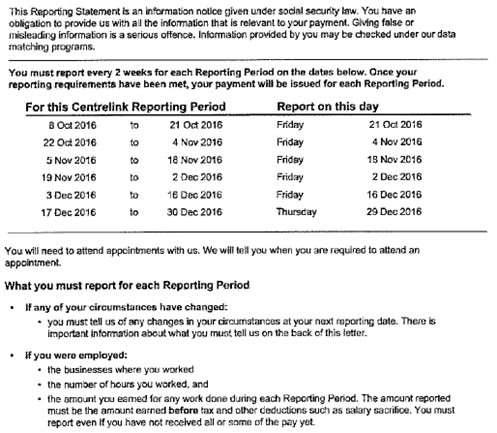
3 For the reasons we set out below, we are not satisfied that the appellant has established that the primary judge erred in any respect alleged by him, and, accordingly, we dismiss the appeal.
BACKGROUND
4 The background to the appeal relates to the circumstances in which the appellant’s receipt of the Newstart Allowance came to be cancelled under the Administration Act. The Newstart Allowance was administered and managed by the Department of Employment and Workplace Relations, which was at the relevant time the Department of Human Services (Department or Centrelink) and its Secretary at the relevant times.
Applicable statutory provisions
5 The Newstart Allowance which the appellant once received has since been replaced by the “Jobseeker” payment: PJ [5]. The proceedings below were determined on the basis that the appellant’s application under s 44(1) of the AAT Act fell to be determined in accordance with the law as at the time of the First Tribunal Decision which was made on 24 March 2017 and, in turn, in that Decision, the Tribunal was required to apply the law as it applied to the Secretary’s delegate at the time of the original cancellation. The primary judge proceeded on the basis that the relevant version of the Social Security Act 1991 (Cth) (Social Security Act) for those purposes was the one contained in Compilation No 151 and that the relevant version of the Administration Act was the one contained in Compilation No 109 (noting that the same versions of the Acts applied as at the time of the original cancellation and the authorised review officer’s decision): PJ [5]. The parties did not dispute this to be the case. For the purposes of these reasons, our references to the Social Security Act and the Administration Act are references to the respective Compilations that we have indicated.
6 Section 593 of the Social Security Act prescribed the criteria which a person was required to meet in order to qualify for a Newstart Allowance in respect of a period. For presently relevant purposes, s 593(1) provided as follows:
593 Qualification for newstart allowance
(1) Subject to sections 596, 596A, 597 and 598, a person is qualified for a newstart allowance in respect of a period if:
(a) the person satisfies the Secretary that:
(i) throughout the period the person is unemployed; or
(ii) the person is a CDEP Scheme participant in respect of the period; and
Note: For CDEP Scheme participant see section 1188B.
(b) in the case of a person to whom subparagraph (a)(i) applies—throughout the period, or for each period within the period, the person:
(i) satisfies the activity test; or
(ii) is not required to satisfy the activity test; and
(c) if subsection 605(1) applies to the person, at all times (if any) during the period when a Newstart Employment Pathway Plan is not in force in relation to the person, the person is prepared to enter into such a plan; and
(d) if subsection 605(1) or (2) applies to the person, at all times during the period when a Newstart Employment Pathway Plan is in force in relation to the person, the person is prepared to enter into another such plan instead of the existing plan; and
(e) if the person is required by the Secretary to enter into a Newstart Employment Pathway Plan in relation to the period, the person enters into that plan; and
(f) while the plan is in force, the person satisfies the Secretary that the person is complying with the requirements in the plan; and
(g) throughout the period the person:
(i) is at least 22 years of age and has not reached the pension age; and
(ii) is an Australian resident or is exempt from the residence requirement within the meaning of subsection 7(7); and
(i) the person was not in receipt of a youth allowance during the period.
7 It will be apparent from s 593(1)(c) to (f) that those provisions interact with s 605 of the Social Security Act in respect of various qualifying conditions pertaining to a “Newstart Employment Pathway Plan” (EPP or Job Plan). Relevantly, s 605 of the Social Security Act provided:
605 Newstart Employment Pathway Plans—requirement
(1) If a Newstart Employment Pathway Plan is not in force in relation to a person, the Secretary may require the person to enter into such a plan if:
(a) the person is receiving, or has made a claim for, a newstart allowance; or
(b) the Department is contacted by or on behalf of the person in relation to a claim for a newstart allowance.
(2) If a Newstart Employment Pathway Plan is in force in relation to a person, the Secretary may require the person to enter into another plan instead of the existing one.
(2A) If, under Subdivision BA, a person is not required to satisfy the activity test, subsections (1) and (2) apply to the person only if subsection 603D(1) applies to the person.
(2B) Subsections (1) and (2) do not apply to a person who is qualified for a newstart allowance only under subsection 593(1B).
(2C) Subsections (1) and (2) do not apply to a person at a time during which, under section 602B or 602C, the person is not required to satisfy the activity test.
(3) The Secretary is to give a person who is required to enter into a Newstart Employment Pathway Plan notice of:
(a) the requirement; and
(b) the places and times at which the plan is to be negotiated.
(4) A Newstart Employment Pathway Plan must be in a form approved by the Secretary.
(5) For the purposes of this Part, if:
(a) a person starts to receive newstart allowance on a particular day; and
(b) immediately before that day, a Parenting Payment Employment Pathway Plan was in force in relation to the person; and
(c) the period covered by the plan ends after that day;
the plan has effect on and after that day as if it were a Newstart Employment Pathway Plan.
(6) For the purposes of this Part, if:
(a) a person starts to receive newstart allowance on a particular day; and
(b) immediately before that day, a Youth Allowance Employment Pathway Plan was in force in relation to the person; and
(c) the period covered by the plan ends after that day;
the plan has effect on and after that day as if it were a Newstart Employment Pathway Plan.
(7) For the purposes of this Part, if:
(a) a person starts to receive newstart allowance on a particular day; and
(b) immediately before that day a Special Benefit Employment Pathway Plan was in force in relation to the person; and
(c) the period covered by the plan ends after that day;
the plan has effect on and after that day as if it were a Newstart Employment Pathway Plan.
8 It will be apparent from the above that a Job Plan was required to be in a form approved by the Secretary: s 605(4). And, such a Job Plan was required to contain one or more terms with which the person was required to comply and which the Secretary regarded as suitable for the person: s 606(1). In this regard, s 606(1) provided as follows:
606 Newstart Employment Pathway Plans—terms
Suitable requirements
(1) Subject to sections 607 to 607B, a Newstart Employment Pathway Plan that is in force in relation to a person is to contain one or more terms (the requirements) that:
(a) the person is required to comply with; and
(b) the Secretary regards as suitable for the person.
9 The Administration Act dealt with circumstances in which a “social security payment”, which relevantly included the Newstart Allowance, could be cancelled or suspended, including automatic cancellation. In this regard, s 80 of the Administration Act provided:
80 Cancellation or suspension determination
(1) If the Secretary is satisfied that a social security payment is being, or has been, paid to a person:
(a) who is not, or was not, qualified for the payment; or
(b) to whom the payment is not, or was not, payable;
the Secretary is to determine that the payment is to be cancelled or suspended.
(2) Subsection (1) does not authorise the Secretary to make a determination if:
(a) the payment of a social security payment to a person has been cancelled or suspended by the operation of another provision of the social security law; and
(b) the determination would take effect at or after the time at which the cancellation or suspension referred to in paragraph (a) would take effect.
(3) However, subsection (1) authorises the Secretary to make a determination that:
(a) cancels a social security payment that has been suspended under subsection 81(3); and
(b) takes effect at or after the time the suspension took effect.
(3A) Subsection (1) does not authorise the Secretary to make a determination that cancels the payment of a parenting payment, youth allowance, austudy payment, newstart allowance or special benefit to a person if:
(a) paragraph (1)(a) does not apply to the person; and
(b) paragraph (1)(b) applies only because of the application of a compliance penalty period.
(4) A reference in this section to a social security payment being, or having been, paid includes a reference to:
(a) if the social security payment is a youth allowance—the youth allowance being payable but for the operation of section 547AA; or
(b) if the social security payment is a newstart allowance—the newstart allowance being payable but for the operation of section 615.
10 Section 95 provided for automatic cancellation as follows:
95 Automatic cancellation—failure to provide statement under subsection 68(2)
(1) If:
(a) a person who is receiving a social security payment is given a notice under subsection 68(2) requiring the person to give the Department a statement or a number of statements; and
(b) the notice relates to the payment of the social security payment in respect of a period or a number of periods specified in the notice; and
(c) the person does not comply with the notice so far as it relates to a particular period;
then, subject to subsection (2), the social security payment is cancelled, by force of this section, on the first day in that period.
(2) If the Secretary is satisfied that, in the special circumstances of the case, it is appropriate to do so, the Secretary may determine in writing that subsection (1) does not apply to the person on and from a day specified in the determination.
(3) The day specified under subsection (2) may be before or after the making of the determination
11 As will be evident, s 95 provided for circumstances in which a social security payment was to be automatically cancelled where there had been a failure to provide a statement under s 68(2). Section 68 provided as follows:
68 Person receiving social security payment or holding concession card
(1) Subsection (2) applies to a person to whom a social security payment (other than utilities allowance or energy supplement under Part 2.25B of the 1991 Act) is being paid.
(2) The Secretary may give a person to whom this subsection applies a notice that requires the person to do any or all of the following:
(a) inform the Department if:
(i) a specified event or change of circumstances occurs; or
(ii) the person becomes aware that a specified event or change of circumstances is likely to occur;
(b) give the Department one or more statements about a matter that might affect the payment to the person of the social security payment;
(c) give the Department one or more statements about a matter that might affect the operation, or prospective operation, of Part 3B in relation to the person.
(3) Subsection (4) applies to a person who is the holder of a concession card.
(4) The Secretary may give a person to whom this subsection applies a notice that requires the person to do either or both of the following:
(a) inform the Department if:
(i) a specified event or change of circumstances occurs; or
(ii) the person becomes aware that a specified event or change of circumstances is likely to occur;
(b) give the Department a statement about a matter that might affect the person’s qualification for the concession card.
(5) An event or change of circumstances is not to be specified in a notice under this section unless the occurrence of the event or change of circumstances might:
(a) affect the payment of the social security payment or the person’s qualification for the concession card, as the case requires; or
(b) affect the operation, or prospective operation, of Part 3B in relation to the person.
12 The question of whether the appellant’s entitlement was subject to s 605(1) or (2), and whether his entitlement was cancelled under s 80 or under s 95, took on significance to the history and circumstances of the appeal before us, as set out below.
The relevant factual history
13 The appellant first received the Newstart allowance from in or about December 1996: PJ [11]. From about 2004 until 22 October 2016, the appellant frequently received the Newstart allowance, other than during those periods it was suspended or cancelled on account of the appellant’s overseas absences: PJ [11].
14 On 22 August 2016, a delegate of the Secretary wrote to the appellant directing the appellant to attend an appointment and “enter into or review” a “Job Plan”: PJ [12]. He was informed that at the appointment he may be required to “review and agree to updates” to his Job Plan. The appellant was put on notice that payment of the Newstart Allowance may be stopped if he did not comply with the requirements set out in that letter.
15 The relevant appointment was scheduled for 10:00am on Wednesday, 31 August 2016: PJ [13]. The appellant attended the appointment with this “employment service provider” but did not enter into a Job Plan on the terms that were presented to him by that provider even though the provider explained that it needed to be agreed: PJ [14]. Instead, as mentioned below, the appellant struck through some of the terms contained in the Job Plan that was provided to him and would only sign the Job Plan if he “changed all the writing” on the plan.
16 On 3 October 2016, the Department gave the appellant a notice imposing on him an obligation to give the Department “all the information that [was] relevant to [his] payment”: PJ [15]. The notice advised the appellant that he “must report every 2 weeks for each Reporting Period on the dates” set out in a table contained in that notice and stated that, once the reporting requirements had been met, his payment would be issued for each “Reporting Period”. The notice also set out various matters that the appellant was to provide a report about during each Reporting Period.
17 Relevantly, the reporting notice provided as follows:
…

18 It will be evident from the abovementioned notice that the report to be provided in each Reporting Period had to not only identify a change in circumstances but also, amongst other things, the appellant’s participation in activities as detailed in his Job Plan.
19 It would appear that on 21 October 2016, the appellant purported to make a report for the period of 8 October 2016 to 21 October 2016. Whilst this report was successfully submitted, the Department notified the appellant that his report “could not complete automatically because [he had] outstanding Mutual Obligations Requirements”.
20 On 22 October 2016, the Department wrote to the appellant informing him that a decision had been made to suspend his Newstart Allowance because its “records show [that he] did not attend [his] activity or an appointment”: PJ [16]. The letter provided some context and information as to the “Mutual Obligation Requirements” in that it contained the following information:
Job Plan and Mutual Obligation Requirements
A Job Plan is an Employment Pathway Plan under the Social Security Act 1991.
21 The letter also informed the appellant that he needed to contact “Centrelink” as soon as possible to discuss the activity or appointment that he had missed, and set out the relevant contact details for him to do so.
22 On 25 October 2016, the appellant attended an appointment with his employment service provider but (again) did not enter into a Job Plan: PJ [17]. As noted above, the appellant sought to make changes to the proposed terms of the Job Plan but was advised that the employment service provider could not sign off on the Plan in those circumstances.
23 On 1 November 2016, the Department wrote to the appellant informing him that its records showed that he may not have met one of the conditions for receiving the Newstart Allowance and that, if he did not have a reasonable excuse for his actions, he may lose that payment: PJ [18]. The appellant was further informed that if he did not contact the Department before his next payment date, his payment may be stopped.
24 On 7 November 2016, the Department wrote to the appellant advising that his “Newstart Allowance ha[d] been cancelled from 8 October 2016 because [he had] not reported” as required. This notification did not specify whether the cancellation had been made under s 80 or s 95 of the Administration Act.
25 On an application for review made by the appellant, an authorised review officer reviewed the cancellation decision under s 129 of the Administration Act: PJ [20].
26 On 29 November 2016, the review officer found that the cancellation decision was correct and determined that the appellant’s review was unsuccessful: PJ [20]. Relevantly, the officer referred to s 80 of the Administration Act but did not specify whether the original decision made by the Department on 7 November 2016 was made under that section.
27 On 5 December 2016, the appellant applied to the Tribunal for review of the authorised review officer’s decision. For the reasons set out in the First Tribunal Decision, the Tribunal found that the appellant was not qualified to receive the Newstart Allowance because he had not entered into a Job Plan as required by s 593(1)(c)–(f) of the Social Security Act. The Tribunal accepted that the appellant had signed a Job Plan on 16 August 2016 and on 25 October 2016 but found that neither of these Job Plans were valid as they were not signed by the appellant’s employment service provider as the appellant had made changes to the Job Plan including by deleting a requirement that he attend job search activities with his employment service provider for three days a week for two hours each day. The Tribunal reasoned that, whilst the appellant was permitted to jointly develop and negotiate a Job Plan with his employment service provider, his “right to negotiate” did not extend to him deciding not to attend regular meetings and skills activities with his employment service provider. As to the final outcome, the First Tribunal Decision recorded the following:
Issue 3 - Was the decision to cancel the applicant’s newstart allowance correct?
38. Subsection 80(1) of the Administration Act provides that, where a social security payment is being paid to a person who is not qualified for the payment, the payment is to be cancelled or suspended.
39. I am satisfied that Mr Manikantan did not meet the requirement of subsection 593(1), paragraphs (c)-(f) of the Act on 8 October 2016 because he did not have a newstart employment pathway plan in place. Consequently, he was not qualified to receive newstart allowance on this date.
40. I find that the decision to cancel Mr Manikantan’s newstart allowance on 8 October 2016 was correct.
28 On 5 April 2017, the appellant applied for a review of the First Tribunal Decision, which involved an exercise of such a right of review under s 179 of the Administration Act. This led to the Second Tribunal Decision. On 29 March 2018, in that Second Tribunal Decision, the Tribunal commenced its reasons by referring to the legislative provisions of the Social Security Act and the Administration Act which it identified were relevant, being ss 593 and 601 of the Social Security Act and ss 68(2) and 95 of the Administration Act: see Manikantan No 1 at [8]. The Tribunal concluded that the appellant had refused to enter a Job Plan and had no intention of entering into a Job Plan which was acceptable to his employment service provider. The Tribunal found that the appellant had not met his fortnightly reporting requirements and failed to report for two consecutive fortnights being the weeks ending on 21 October and 4 November 2016. The Tribunal concluded as follows (see Manikantan No 1 at [9]):
21. Having careful regard to the applicant’s evidence, I am satisfied that the applicant has failed to meet his requirements under subsections 593(1)(c)-(f) of the Act because he refused to sign an EPP and had no intention of entering into an EPP (which was acceptable to his job service provider).
22. As a consequence of the applicant’s failure to enter an EPP and the subsequent suspension of the applicant’s Newstart allowance on 22 October 2016, he was unable to meet his fortnightly reporting requirements. Consequently, he failed to report for two consecutive fortnights being the weeks ending on 21 October 2016 and 4 November 2016. In a letter dated 7 November 2016, the applicant was advised by Centrelink that his Newstart allowance had been cancelled from 8 October 2016 (the start of the first fortnightly reporting period) for failure to report. I am not satisfied that there are any special circumstances in this matter which prevented the applicant from contacting Centrelink to discuss his suspension and to ensure that he reported on time as per his reporting requirements.
23. For the above reasons, I am satisfied that the decision to cancel the applicant’s Newstart allowance from 8 October 2016 was correct.
29 It would appear from the above that the Tribunal proceeded to determine that the original decision to cancel was the correct one based on the application of s 95 of the Administration Act. For example, the reference made by the Tribunal that it was not satisfied that there were any special circumstances appears to have been a reference to s 95(2) of the Administration Act. The Court in Manikantan No 1 proceeded on the basis, which was accepted by both the appellant and the respondent, that the Second Tribunal Decision affirmed the original decision on the basis that it was the correct or preferable one under s 95 of the Administration Act: see Manikantan No 1 at [20].
30 On 13 December 2019, a single judge of this Court set aside the Second Tribunal Decision and remitted the matter for hearing: see Manikantan No 1. This conclusion was arrived at on the basis that the Tribunal in its Second Tribunal Decision, without notice to the appellant, relied on s 95 of the Administration Act as the basis for the cancellation. Abraham J stated at [21]-[26]:
The applicant is correct that s 95 was not raised during the hearing, nor was it raised in any submission by the respondent prior to the hearing. Indeed, the respondent had submitted to the Tribunal (and to the AAT1) that the applicant’s allowance was cancelled pursuant to s 80(1) of the Administration Act. The written and oral submissions of the respondent before the Tribunal were directed towards s 80(1). That provision was in the materials provided to the Tribunal, s 95 was not.
…
The difference between the s 80(1) and s 95, is that the former cancellation involves some decision by the Secretary, the latter is automatic.
It follows that no submission was advanced to the Tribunal about the application of s 95. Importantly, the applicant was not given an opportunity to address that provision. This is in the context where the applicant had submitted before the Tribunal that s 80(1) had not been satisfied. The Tribunal did not refer to or address those arguments. Indeed, the Tribunal did not refer at all to s 80(1) and why it did not accept the respondent’s submission that the cancellation was made under that section.
The failure to raise with the applicant that it was considering concluding, contrary to what was relied on by the respondent, that the cancellation was pursuant to s 95 is, in the particular circumstances of this case, a denial of procedural fairness. Section 95 has a number of preconditions to its operation which require satisfaction of certain factual matters.
31 Abraham J also concluded that the Tribunal erred in another respect relating to the construction and application of s 593(1)(c)-(f) of the Social Security Act. Her Honour stated as follows at [37]-[40]:
The Tribunal’s statement that it was satisfied in relation to s 593(1)(c)-(f), in so far as it related to each of those subsections, cannot be correct. The applicant submitted that this established that the Tribunal misinterpreted those provisions. As accepted by the respondent during the hearing, all of those subsections could not apply simultaneously, as some relate to a person entering an EPP and others contemplate the scenario where a person was already on an EPP. While originally contending in its written submission that this ground/question was nothing more than “a challenge with respect to the merits of the [Tribunal]’s decision”, at the hearing, the respondent accepted there was an error.
However, the respondent submitted that the error was not a material one, relying on Hossain v Minister for Immigration and Border Protection [2018] HCA 34; (2018); 264 CLR 123 at [30] per Kiefel CJ, Gageler and Keane JJ, in support of this contention. The applicant took issue with that submission.
Only two of the subsections of s 593 apply in this case. That the Tribunal considered that it was satisfied as to all four, reflects that it misapplied the provision. The relevant subsections which applied depended on the circumstances of the applicant; that is, if that person is to enter into an EPP or was already on an EPP which was being reviewed.
That error, by itself, may not have been material because it could be argued that the two that were applicable were addressed. However, the error is symptomatic of a broader issue (which is addressed in the next ground), that is, that the Tribunal did not address the applicant’s argument that he was already on an EPP, and that the letters he had been sent were to review the EPP and not to enter an EPP. The respondent’s argument throughout was that the letters related to entering an EPP as on their submission, the applicant was not already on one. In light of the issues noted below, the Tribunal’s error has been established and it is a material one.
32 Finally, Abraham J also concluded that the Tribunal erred by failing to address the appellant’s arguments relating to whether he was on a Job Plan or not at the relevant time. Her Honour reasoned as follows at [51]-[52]:
The applicant also raised the issue that the Tribunal’s decision is based on the proposition that he had received a notice to enter into an EPP. The applicant had challenged this below, where he submitted that he was already on an EPP. An issue arose as to whether what was occurring was that he would not enter into an EPP or whether what was requested, was a review of an existing EPP. That has a significance to the nature of the powers being exercised. The relevant provisions are different depending on which of the two scenarios are in play. The applicant submitted to the Tribunal he was already on an EPP while the respondent submitted that the information notice was directed to entering into an EPP. As referred to above, his letters to Centrelink, reflect that at the time the applicant understood he was on such a plan. The Tribunal does not refer to the applicant’s evidence and submission on this topic, nor does it reflect any reasoning as to resolving the issue. Rather, as is apparent from paragraph [9] of the Tribunal’s reasons recited above, the Tribunal asserted the fact that the letter related to entering into an EPP. The Tribunal gave no reasons for that assertion. That finding underpinned the Tribunal’s ultimate conclusion.
I express no view on the ultimate merit of these submissions, but rather, given the nature of these arguments, the fact that they were not addressed, reflects an error by the Tribunal. Suffice to say that the AAT1 accepted, based on the evidence and argument, that the applicant satisfied the activity test. The applicant also submitted this argument is relevant to the application of s 95 and the denial of procedural fairness (discussed above at [16]–[32]), on the basis that if he had been on notice about s 95 he would have advanced this argument in support of the contention that the conditions in s 95 had not been satisfied. It is a precondition to the application of s 95 that the person does not comply with the notice. I note also that the AAT1 had accepted this part of the applicant’s argument.
33 It will be apparent from the above that Abraham J did not express any view as to the ultimate merit of the arguments advanced by the appellant as to whether he was on a Job Plan at the relevant time or not, but rather determined that the Tribunal had erred by failing to address the arguments that the appellant had raised.
34 As a result, Abraham J made the following orders:
1. The appeal is allowed.
2. The decision of the Administrative Appeals Tribunal dated 29 March 2018 be set aside, and the matter is to be remitted to the Administrative Appeals Tribunal to be determined according to law.
3. The respondent to pay the applicant’s costs of this appeal, as agreed or taxed.
35 On 24 November 2022, the Tribunal made a fresh decision in the form of the Third Tribunal Decision. In this Decision, the Tribunal found that the effect of s 605 of the Act was that “the final substance of the job plan is to be determined by the Secretary”. The Tribunal further found that whilst the appellant did not consider the Job Plan was suitable for him, he conceded that the Secretary had the last say in what was suitable: PJ [26]. The Tribunal found that the appellant had failed to submit compliance statements to Centrelink on the first two reporting dates of 21 October 2016 and 4 November 2016 and these were failures that were sufficient for the Newstart Allowance to be cancelled on 7 November 2016. The Tribunal further found that the appellant’s failure to enter into a new Job Plan was a serious non-compliance: PJ [26]. For these and other reasons, the Tribunal concluded that the cancellation on 8 October 2016 was an automatic cancellation under s 95(1) of the Administration Act: PJ [26]. In arriving at these conclusions, the Tribunal made a finding that at the relevant time of the suspension and cancellation of the appellant’s Newstart Allowance, the appellant did not have a Job Plan in place. The Tribunal stated as follows:
116. I am, on the evidence before me, satisfied that the applicant did not have an existing job plan at the date of 31 August 2016. The Department’s record, produced in the T-documents, shows that the applicant entered a job plan on 23 July 2015 that was to expire on 24 August 2016. There is, in evidence, the signed job plan of 23 July 2015.As discussed above, even if the applicant’s job plan dated 23 July 2015 continued to exist past 24 August 2016, the Secretary was able to require him to enter into a new EPP while there was an existing EPP in force.
36 The Tribunal further found that the letter dated 22 August 2016 issued by the Department covered both scenarios where an applicant is being required to enter into a new Job Plan or vary any existing one:
113. Mr Manikantan was required by the s 68(2) reporting statement of 3 October 2016 to provide details of how he had complied on each reporting day. It did not allow him to merely state formally that in his opinion, he had complied with the activities with which his job plan required compliance. He needed to provide appropriate evidence of compliance.
114. Of particular importance, the applicant was required to demonstrate that he had complied with his job search requirements and also the requirement of 22 August 2016 to enter into a new job plan. I do not accept Mr Manikantan’s assertions that the reporting obligations did not include an obligation to enter into a new job plan. This requirement was not contingent on whether or not the job plan of 23 July 2015 was still extant, as s 605(2) of the Act allows the Secretary to require a person to enter into a new EPP while there is an existing EPP in force.
115. Further, I accept the Respondent’s submissions that it is not material whether the applicant was on an existing EPP on 31 August 2016, as the letter from TSAEP adequately covered both scenarios. Relevantly, the letter stated:
If you do not attend this appointment and enter into or review your job plan as required, your payment may be stopped by Centrelink…This is a notice under Social Security Law.
37 Further, in concluding that it was not open to the appellant to, in effect, unilaterally amend the Job Plan that had been proposed to him by his employment service provider, the Tribunal relied upon the decision of this Court in Kronen v Secretary, Department of Education, Employment and Workplace Relations [2009] FCA 1268 (Finn J). The Tribunal stated as follows:
97. In determining the issue in this matter, it is important to have regard to the decision of the Federal Court in Kronen and the Secretary, Department of Education, Employment and Workplace Relations 2009 FCA 1268 and similar authorities relied upon by both the Applicant and the Respondent at hearing.
98. In Kronen, the Federal Court stated relevantly as follows at [38]–[39]:
[38] Central to this trio is Mr Kronen’s conception of what is signified by the words “to be negotiated” in s 605(3). What is clear is that the level of permissible compromise and of required mutual agreement that this formula might otherwise suggest when used in other contexts, is radically curtailed in this statutory setting. Whether one can say that the ordinary meaning of “negotiate” is what is intended here (albeit what can be negotiated is limited by the Act and its purposes), hence the meaning is a question of fact: Collector of Customs v Pozzolanic Enterprises Pty Ltd (1993) 43 FCR 280 at 287 (proposition 2); or that its meaning and hence proper construction is contrived by its legislative settings, hence are questions of law: Pozzolanic, 287 (propositions 1 and 4), what is clear is that Mr Kronen misapprehends the latitude the Act gives him. Elblematic [sic] of this was his presenting Maxima with negotiation procedures which included referral to an independent panel if any terms could not be agreed.
[39] If Mr Kronen is to qualify for a newstart allowance, he was required, in the circumstances, enter into an activity agreement: s 593(1)(e); he was required to undertake one or more activities that the Secretary regarded as suitable for the person: s 606(1); the terms of the agreement were to be approved by the Secretary. In this scheme, the “right to negotiate” could be illusory in quite some degree for some purposes and especially when the Secretary (or a delegate) takes decisions or actions in effectuation of the purposes of the Act itself. This is not to say that there was no room for discussion, accommodation and compromise. Rather, it is to recognise that the actual terms of the negotiation itself were something in relation to which the Secretary, acting reasonably and in good faith, could ultimately dictate, approve or disapprove, if there was to be an agreement.
38 In relation to the issue as to whether the cancellation decision was made under s 80 or s 95 of the Administration Act, the Tribunal stated:
120. There is some contention as to whether the Applicant’s NSA was lawfully cancelled under either s 80(1) of the Administration Act or under s 95 of the Administration Act. The Respondent contends that, on 22 October 2016, the Secretary made a decision to suspend his NSA on the basis that Mr Manikantan had failed to comply with his EPP obligations as contained within s 593(1)(c) or (d), and s 593(1)(e) and/or (f) of the Act, namely his preparedness to enter into an EPP proposed by TSAEP on 31 August 2016, regardless of whether his 23 July 2015 job plan was still extant, actually entering into an EPP, and satisfying the Secretary that he was complying with the requirements of his EPP.
121. The Respondent asserts that the suspension under s 80(1) of the Act is not the decision reviewable by the Tribunal, and I accept that contention. The Respondent also asserts that, while not material to the reviewable decision, the suspension under s 80(1) of the Act “is relevant as it throws light on the lawfulness of the cancellation decision on 7 November 2016.”
122. While I accept that either s 80(1) or s 95(1) may have been invoked to cancel the applicant’s NSA, and that the applicant’s submits that his NSA was cancelled under s 80(1), I note that there is evidence in the T-documents that the previous actions under s80(1) by the respondent were accompanied by a file note, and I accept the Respondent’s submission that a cancellation under s 80(1) would have been accompanied by such a file note.
123. Section 80(1) requires a positive action by the Secretary to cancel the NSA – such an action would have, in my view been likely to have been accompanied by some internal correspondence and file noting which would have been produced in the T-documents. Cancellation under s 95(1) is automatic, following a failure to comply with a notice under s 68(2), from the first day in the period specified by the notice.
…
125. I note that the authorised review officer (ARO), when reviewing the cancellation of the applicant’s NSA, referred to the cancellation occurring under s 80(1). It is not unlikely that the ARO may have been mistaken, or confused about the nature of the cancellation given the Applicant’s existing suspension under s 80.
126. On the evidence available to the Tribunal, namely that the cancellation occurred on the first day of the reporting period specified in the s 68(2) notice, that no file note was made of the cancellation, and that there is no evidence before the Tribunal that the cancellation occurred under s 80(1) other than the ARO’s decision, I find that the cancellation was an automatic cancellation under s 95(1) of the Administration Act.
THE PRIMARY JUDGMENT
39 As noted above, the application before the primary judge was an appeal on questions of law under s 44(1) of the AAT Act and, as the primary judge observed, it was to be properly characterised as an application for judicial review of the lawfulness of the Tribunal’s Decision: see, eg, Wills v Chief Executive Officer of the Australian Skills Quality Authority [2022] FCAFC 10; (2022) 289 FCR 175 at [7]. Applying earlier authorities of this Court, the primary judge correctly stated that the subject matter of an application under s 44 “is limited to the question or questions of law”: citing Haritos v Commissioner of Taxation [2015] FCAFC 92; (2015) 233 FCR 315 at [85] (following Brown v Repatriation Commission [1985] FCA 236; (1985) 7 FCR 302 at 304; and Commission of Taxation v Brixius [1987] FCA 612; (1987) 16 FCR 359 at 363-364). Her Honour further observed that questions of law in this context include “non-jurisdictional questions of law and mixed questions of fact and law”: citing Haritos at [62](7) and (8).
40 The primary judge carefully considered the appellant’s application under s 44(1) of the AAT Act. Her Honour observed as follows in respect of that application at PJ [30]:
The applicant’s amended notice of appeal is prolix and, at times, incomprehensible. It raises ten purported questions of law, with many containing a multitude of sub-issues. The confusion is compounded by the fact that the grounds contained in the amended notice of appeal do not directly correspond with the purported questions of law.
41 The respondent contented that the application did not raise questions of law, and either sought to agitate the merits of the Third Tribunal Decision or made bare assertions: PJ [31]. In dealing with these submissions and giving careful consideration to the appellant’s contentions, the primary judge took into account that the appellant was a litigant in person and adopted the course identified in Onassys v Comcare [2022] FCA 90 where Abraham J stated at [21]:
The fact that an appellant is unrepresented is a relevant matter to be taken into account: see for example, Chen v Secretary, Department of Social Services [2019] FCA 1155 at [35]; Lim v Secretary, Department of Education, Employment and Workplace Relations [2008] FCA 1058 at [13]. The notice of appeal should be read fairly and as a whole, particularly in cases involving unrepresented parties: Haritos at [104], citing Avetmiss Easy Pty Ltd v Australian Skills Qualifications Authority [2014] FCA 314 at [75]–[77]. Where as a matter of substance a question of law exists, the Court has a procedural discretion to grant leave for an amended notice of appeal to be filed: Haritos at [107]. In appropriate cases, the Court may reframe the questions relied upon so as to give precision to an inelegantly specified question of law, however care must be taken, especially in the face of an objection to competency, not to “visit on a respondent party a judicially attractive question of law which the notice does not fairly raise”: Secretary, Department of Education, Employment and Workplace Relations v Ergin [2010] FCA 1438 at [11]; Rana v Repatriation Commission [2011] FCAFC 124 at [14].
42 In particular at PJ [28], the primary judge had regard to the approach outlined by the Full Court in Haritos at [94] that in determining whether a question of law is raised the Court should consider the issues as a matter of substance, and that:
In cases of doubt, the Court should consider the notice of appeal, the alleged question or questions of law, the grounds raised, the statutory context, and the Tribunal’s reasons for its decision, and having considered all those matters, satisfy itself that there is in fact a question of law.
43 Having examined the appellant’s notice of appeal, and taking into account the fact that the appellant was a litigant in person, the primary judge identified the following questions of law:
(a) whether the Secretary and the Tribunal erred in failing to determine whether the notice dated 22 August 2016 satisfied the requirements under s 605 of the Social Security Act insofar as there was a failure to identify whether it was issued under s 605(1) or s 605(2) of the Social Security Act: PJ [38]-[41];
(b) whether the Tribunal erred in finding that the notice dated 3 October 2016 was a s 68(2) notice for the purposes of s 95(1) of the Administration Act: PJ [42];
(c) whether the Tribunal erroneously affirmed the 2017 Tribunal Decision which was “void” following the Federal Court’s decision in Manikantan No 1, and was premised on a different legal and factual issue: PJ [42];
(d) whether the appellant was denied procedural fairness because of a change in legal issues between the earlier decisions and the Tribunal’s decision: PJ [42];
(e) whether the Tribunal’s decision was affected by apprehended bias: PJ [42].
44 In identifying these questions of law, the primary judge rejected the respondent’s contention that no questions of law were able to be ascertained from the appellant’s application under s 44(1) of the AAT Act. In respect of each of the questions that the primary judge identified, as set out above, the primary judge found as follows.
45 In relation to the first question, the primary judge identified that s 605(1) applied in circumstances where the relevant person does not have a Job Plan in force and that s 605(2) applied where the person has a Job Plan in force: PJ [45]. The primary judge found that by the letter dated 31 August 2016, the appellant was directed to attend an appointment with his employment service provider to “enter into or review” his Job Plan: PJ [46]. The primary judge next observed that in the Third Tribunal Decision, the Tribunal found that the appellant had entered into a Job Plan on 23 July 2015 which expired on 24 August 2016 and that, even if this Job Plan continued to exist past 24 August 2016, the Secretary was able to require the appellant to enter into a new Job Plan/EPP even if there was already one in force: PJ [47]. The primary judge reasoned that as the Tribunal had found that the appellant did not have a Job Plan in place at the relevant time, it was to be inferred that s 605(1) applied, but that the Tribunal had in any event considered the alternative position: PJ [48]. The primary judge concluded that on either approach (irrespective of whether a Job Plan was in place at the time or not), it did not affect the decision under review because the appellant had nevertheless failed to comply with the requirement to enter into a new Job Plan: PJ [48].
46 In relation to the second question, the primary judge found that the notice dated 3 October 2016 required the appellant to report, amongst other things, on any changes in circumstances and required the appellant to provide “his statements of compliance with Centrelink”, and that the appellant had failed to submit these statements: PJ [56]. The primary judge reasoned that by reason of these matters the appellant was given a notice which required him to give the Department a statement or number of statements for the purpose of the application of s 95(1)(a): PJ [56]. The primary judge then considered the notice and the requirements of s 68(2) and s 72, and concluded that it complied with those requirements: PJ [57]-[62].
47 In relation to the third question, the primary judge reasoned that the orders in Manikantan No 1 set aside only the Second Tribunal Decision, and the Court did not set aside the First Tribunal Decision or consider whether that First Tribunal Decision was affected by error: PJ [63]-[64]. The primary judge further reasoned that on the remitter, the task of the Tribunal was to determine whether the original cancellation decision as affirmed by the First Tribunal Decision was the correct or preferable decision: PJ [65]. Accordingly, the primary judge did not accept that the First Tribunal Decision was void.
48 In relation to the fourth question, the primary judge observed that the appellant was relying upon Manikantan No 1 to contend that he had again been denied procedural fairness because the Tribunal in the Third Tribunal Decision considered the cancellation of the Newstart Allowance under s 95 of the Administration Act as opposed to s 80: PJ [66]-[68]. The primary judge rejected this argument including on the basis that the Second Tribunal Decision itself had put the appellant on notice that the Tribunal may rely upon s 95 of the Administration Act and that the respondent’s Statement of Facts, Issues and Contentions dated 19 May 2020 (RSFIC) expressly contended (based on detailed submissions) that the appellant’s Newstart Allowance had been automatically cancelled under s 95: PJ [70]. The primary judge observed that the appellant had an opportunity to reply to the RSFIC and made detailed submissions about the very issue: PJ [70]. In those circumstances, the primary judge was not satisfied that the appellant had been denied procedural fairness: PJ [70].
49 In relation to the fifth question, the primary judge rejected the appellant’s contentions that the Tribunal was affected by a reasonable apprehension of bias, or actual bias: PJ [71]-[81]. In rejecting these contentions, the primary judge applied well settled authorities and assessed the appellant’s contentions that the Tribunal’s reasons or processes disclosed the relevant forms of bias: PJ [71]-[81].
THE SUPPLEMENTARY NOTICE OF APPEAL
50 As noted above, the appeal proceeded on the basis of the Supplementary Notice of Appeal. It is 65 pages in length. Although it contains three primary grounds of appeal identified as “G1”, “G2” and “G3”, each of them contain multiple sub-grounds, and some of those sub-grounds contain an even greater multiple of particulars. The observations made by the primary judge in relation to the appellant’s application under s 44(1) of the AAT Act apply equally to the Supplementary Notice of Appeal: it is prolix and, at times, incomprehensible. In other respects, it fails, in an articulate and cohesive way, to identify the errors engaged in by the primary judge.
51 Rule 36.01(2)(c) of the FC Rules provides that a notice of appeal must state “briefly but specifically, the grounds relied on in support of the appeal”. The Supplementary Notice of Appeal does not comply with the requirements of the FC Rules. Nevertheless, we have addressed each of the grounds of appeal advanced by the appellant and done so by reference to their division across the three primary grounds raised in the Supplementary Notice of Appeal and referred to as “G1”, “G2” and “G3”.
ALLEGED BREACHES OF THE RULES OF NATURAL JUSTICE
52 The grounds identified under “G1” of the Supplementary Notice of Appeal variously contend that the primary judge erred by engaging in breaches of the rules of natural justice.
53 The first error alleged by the appellant is that he did not get sufficient time allocated at the hearing before the primary judge to establish that his application raised questions of law: see G1.1 of the Supplementary Notice of Appeal. This alleged error is not made out. As noted above, the primary judge observed that the appellant’s application was prolix and, in some respects, incomprehensible. By orders made by the primary judge on 15 June 2023, the matter was listed for hearing with “an estimated duration of a half day hearing”. In advance of that hearing, the appellant was given an opportunity to file both written submissions in chief and in reply to the respondent’s submissions. The appellant had an opportunity to present his case both in writing and in the oral hearing before the primary judge. In those circumstances, we are satisfied that the appellant was provided with ample opportunity to present his case and arguments, and we are not satisfied that there was a denial of procedural fairness.
54 The second alleged error is the appellant’s contention that the primary judge deviated from the principles enunciated in Haritos at [62], [103]-[105], [197], [201], [204] and [217]-[221]: see G1.2 of the Supplementary Notice of Appeal. We do not agree. The primary judge identified the applicable principles from Haritos at PJ[27]-[29] and applied them. These principles required the primary judge to, amongst other things, consider whether the appellant’s application under s 44(1) of the AAT Act in substance (as opposed to form) raised questions of law. The primary judge attended to this task by carefully reviewing the application and fairly identifying those issues that in substance could be properly characterised as questions of law. As we have noted above, the primary judge did not accept the respondent’s contention that the application disclosed no questions of law. Instead, the primary judge engaged in a careful exercise of taking the most generous reading of the application to identify those matters that could be properly characterised as questions of law. We are not satisfied that the primary judge erred in doing so. In coming to this conclusion, we have examined the appellant’s application under s 44(1) of the AAT Act and are not satisfied that the primary judge failed to correctly identify, as best as can be discerned, the questions of law that were raised by the appellant.
55 The appellant further contended that the primary judge regarded some of the aspects of his application as involving “merit-attacks” when in fact they raised questions of law and did not take into account that a challenge to the fact-finding by the Tribunal gave rise to an error of law in its own right. The appellant’s contentions in this respect did not identify which aspects of his application under s 44(1) of the AAT Act were rejected by the primary judge as involving “merit-attacks” or challenges to findings of fact. As we have indicated, we have considered the appellant’s application under s 44(1) of the AAT Act and discern no error in the way the primary judge identified and isolated those parts of the application that gave rise to questions of law, and rejected others on the basis that they involved a re-agitation of the merits of his application and quibbles with the findings of fact made by the Tribunal. No error is disclosed.
56 The third error alleged by the appellant is the contention that the primary judge did not give him an opportunity to respond to the respondent’s “final note” dated 13 December 2023 which raised new but inconsistent issues and facts: see G1.3 of the Supplementary Notice of Appeal. The context for this ground is that at the hearing before the primary judge an argument was raised by the respondent that a question of law asserted by the appellant in his application under s 44(1) of the AAT Act had not been raised in the proceedings before the Tribunal. This question related to the contention that the Tribunal erred by failing to determine whether the notice dated 22 August 2016 was issued under s 605(1) or (2). At the hearing on 11 December 2023, the primary judge directed the appellant to file written submissions relating to this issue which he did on 12 December 2023 and directed the respondent to file submissions in reply on 13 December 2023 which it did. In the result, the primary judge found in favour of the appellant on this point by concluding that the issue identified by him raised a question of law that he should be entitled to rely upon: PJ [38]-[41]. In those circumstances, there was no denial of procedural fairness, let alone any adverse consequence arising from that alleged denial. We discern no error.
57 The next alleged error asserted by the appellant at G1.4 of the Supplementary Notice of Appeal contends that the primary judgment involved a miscarriage of justice by changing the factual and legal basis upon which his entitlements were cancelled. This argument appears to involve the contention that the primary judge failed to find that the original decision of the reviewing officer and the First Tribunal Decision were void.
58 The underlying basis for this contention is that the effect of the decision of the Court in Manikantan No 1 was that the original decision of the reviewing officer and the First Tribunal Decision were void. We do not agree. The primary judge found that the orders made by the Court in Manikantan No 1 only set aside the Second Tribunal Decision and did not declare as void or otherwise set aside the original decision or the First Tribunal Decision: PJ [63]-[70]. The primary judge was correct to so find. It is apparent from the orders made by the Court in Manikantan No 1 (which we have set out above at [34]) that it was only the Second Tribunal Decision that was set aside.
59 In relation to the appellant’s contention that there was a changed factual and legal basis upon which the Tribunal in the Third Tribunal Decision determined that the Newstart Allowance had been cancelled, the matters contained in the Supplementary Notice of Appeal and raised in the appellant’s written and oral submissions disclose that his argument was as follows. The appellant contends that the original cancellation decision was made under s 80 of the Administration Act and that this is what the authorised reviewing officer had found. The appellant further contends that the Tribunal in the First Tribunal Decision also concluded that the original cancellation decision was to be affirmed on the basis that the appellant had not complied with ss 593(1)(c)-(f) and therefore did not qualify for the allowance leading to the cancellation being made under s 80 of the Administration Act. The appellant contends that in Manikantan No 1, Abraham J had found at [37]-[40] that it was an error (accepted by the respondent) for the Tribunal to state that it was satisfied of each of the matters in ss 593(1)(c)-(f) given each subsection applied to different scenarios and that the only ones that could apply would depend on the appellant’s circumstances, namely whether a Job Plan applied to him or not. The appellant contends that he did have a Job Plan in place and that he did in fact attempt to submit a report to the Department for the relevant Reporting Period (which was not accepted). In these circumstances, the appellant contends that the First Tribunal Decision was erroneous and void because it had assumed that each of ss 593(1)(c)-(f) applied to him and that it was not open to the Tribunal in the Third Tribunal Decision to change the basis of the First Tribunal Decision by finding that the cancellation decision was to be affirmed on the basis of s 95 of the Administration Act. The appellant thereby contends that the primary judge erred by not so finding.
60 We do not accept the appellant’s contentions. It is correct that, as the appellant points out, the Tribunal in the First Tribunal Decision affirmed the original cancellation decision under s 80(1) of the Administration Act and on the basis that it was satisfied that he did not meet the requirements of each of ss 593(1)(c)-(f). It is also correct that, as the appellant further points out, Abraham J concluded in Manikantan No 1 at [37]-[40] that the Tribunal had engaged in an error in finding that each of ss 593(1)(c)-(f) could apply to the appellant. However, Abraham J did not determine which subsection applied and reasoned that this would need to depend on findings of fact to be made as to whether the appellant had a Job Plan at the relevant time and whether the notification issued to him was one directing him to enter a new Job Plan or vary an existing one. Abraham J had stated at [52] that her Honour was not expressing any view as to the “ultimate merit” of these submissions and they would depend upon the appellant’s arguments being addressed and findings being made in relation to them.
61 As we have already observed, none of Abraham J’s findings as to error resulted in the First Tribunal Decision being set aside. The only decision that was set aside was the Second Tribunal Decision. That was a logical consequence of the fact that the Second Tribunal Decision had come about precisely because the appellant had exercised a right under s 179 of the Administration Act for a review of the First Tribunal Decision. It followed that the orders made by Abraham J setting aside the Second Tribunal Decision and remitting the matter to the Tribunal for determination according to law had the effect that the matter that was to be redetermined was the review of the First Tribunal Decision. This is then what occurred before the Tribunal that led to the Third Tribunal Decision.
62 On the remitter, the Tribunal was reviewing the First Tribunal Decision in the exercise of the power provided for in s 179 of the Administration Act. That section provided:
179 Application for AAT second review
(1) Application may be made to the AAT for review (AAT second review) of a decision of the AAT on AAT first review made under subsection 43(1) of the AAT Act.
(2) For the purposes of subsection (1), the decision of the AAT on AAT first review is taken to be:
(a) if an AAT first review affirms a decision—that decision as affirmed; or
(b) if an AAT first review varies a decision—that decision as varied; or
(c) if an AAT first review sets a decision aside and substitutes a new decision—the new decision; or
(d) if an AAT first review sets a decision aside and sends the matter back to the Secretary for reconsideration in accordance with any directions or recommendations of the AAT—the directions or recommendations of the AAT.
63 In exercising this power, the Tribunal was also undertaking the review consistent with its powers under the AAT Act. In this regard, it is not controversial that the Tribunal’s responsibility was to determine the correct or preferable decision and to do so by standing in the “shoes of the decision-maker” and exercising the same powers as the decision-maker: Frugtniet v Australian Securities and Investments Commission [2019] HCA 16; (2019) 266 CLR 250 at [51]. This required the Tribunal “to do over again” that which had been done by the primary decision-maker: Miller v Minister for Immigration, Citizenship and Multicultural Affairs [2024] HCA 13; (2024) 98 ALJR 623 at [14]-[15]. Relevantly, this required the Tribunal to review the First Tribunal Decision and make that decision over again by exercising the same powers as those that had been exercised in that first review. As the First Tribunal Decision was the “first review” of the original cancellation decision, the Third Tribunal Decision was the “second review” (as indicated by the heading and title to s 179 of the Administration Act). In the second review, the question was whether to affirm, set aside or vary the First Tribunal Decision in respect of its conclusion that the original cancellation decision should be affirmed.
64 It followed that in exercising a “second review”, the Tribunal for the purpose of the Third Tribunal Decision was not constrained by the findings or conclusions reached in the First Tribunal Decision. The appellant’s contentions that the Third Tribunal Decision was at odds with Manikantan No 1 assumed that it was not open to the Third Tribunal Decision to make different findings of fact nor come to different conclusions than those that were reached in the First Tribunal Decision. In the exercise of the second review, it was open to the Tribunal to make its own findings of fact and come to its own conclusions as to matters of law. This necessarily meant that it could come to its own conclusions as to whether the appellant had a Job Plan in place at the relevant time, whether the letter dated 22 August 2016 directed the appellant to enter into a new Job Plan or vary any existing one, whether the appellant had complied with this direction, whether the appellant had complied with other directions including as to the submission of reports that conformed with the notices that had been issued to him, and other relevant matters.
65 It is also relevant that in advance of the hearing before the Tribunal that led to the Third Tribunal Decision, the respondent had served the RSFIC on the appellant which raised both evidentiary and legal issues relating to these matters, and, specifically, which advanced the respondent’s case that the appellant did not have a Job Plan in place at the relevant time and that the original cancellation decision and the First Tribunal Decision should be affirmed on the basis that the cancellation was one that was made under s 95 of the Administration Act. Not only were these matters squarely raised, they were ones which were the subject of evidence and argument before the Tribunal, as is disclosed in the Third Tribunal Decision.
66 The primary judge reasoned in this way. At PJ [65], the primary judge stated that the “nature of the Tribunal proceeding on the s 179 second review was to undertake a de novo review in the exercise of the powers conferred on the first Tribunal, that is, to determine what was the correct and preferable decision”. Her Honour further stated at [65] that:
It was therefore open to the Tribunal to determine that the correct and preferable decision was that the decision under review should remain unchanged — that is, that the applicant’s Newstart allowance should remain cancelled — and to do so based on different legal and factual issues from the 2017 Tribunal decision (provided that the issues remain within the Tribunal’s jurisdiction).
67 The primary judge was correct to so find and we discern no error.
68 The final series of errors alleged by the appellant at G1.5-6 of the Supplementary Notice of Appeal contend that the primary judge erred by characterising some of his arguments as raising only questions of fact and otherwise as being indecipherable. These contentions involve a repetition of the arguments we have rejected for the reasons set out at [54]-[55] above.
69 For these reasons, it follows that “G1” is not made out.
ALLEGED MISIDENTIFICATION AND MISAPPLICATION OF LEGAL PRINCIPLES
70 By “G2” of the Supplementary Notice of Appeal, the appellant contends that the primary judge made material errors of law by misunderstanding the facts and misapplying the applicable principles and governing laws.
71 The first error alleged by the appellant is that the primary judge erred in the findings relating to whether the notice issued on 22 August 2016 satisfied the requirements of s 605(1) or (2): see G2.1 of the Supplementary Notice of Appeal. We do not agree. As noted above, the primary judge concluded that the Tribunal made a finding that the appellant had entered into a Job Plan on 23 July 2015 which had expired on 24 August 2016: PJ [47]-[48]. On the basis of that finding, the primary judge inferred that the Tribunal was satisfied that the notice was issued for the purposes of s 605(1), but even if that was not the case it did not matter given the alternative finding made by the Tribunal that even if the Job Plan remained in force the Secretary was able to require the appellant to enter into a new one: PJ [47]-[48].
72 We are not satisfied that any error is disclosed in the primary judge’s reasons. As the primary judge observed, and we have set out above, the Tribunal made a finding that the appellant’s Job Plan had expired on 24 August 2016. It followed that s 605(1) was applicable. It is correct that, as the appellant points out, the Tribunal did not make a specific finding that s 605(1) applied, but, as the primary judge reasoned, it was readily to be inferred that this was the conclusion that the Tribunal reached. In the result, the issue is of no moment because the Tribunal ultimately concluded that the cancellation decision could be affirmed on the basis that the appellant had failed to enter into a Job Plan despite being directed to do so.
73 The second series of errors asserted by the appellant are located at G2.2-2.7 of the Supplementary Notice of Appeal and are all variations to the same theme that the primary judge erred in respect of the findings as to whether the appellant did or did not have a Job Plan, whether the Secretary could direct that the appellant enter into a Job Plan at the relevant time, whether the notice dated 22 August 2016 was issued under s 605(1) or (2) and whether the Tribunal’s alternative findings were available and reflected an “orthodox” approach. These contentions in substance repeat the same essential complaint as that which we have considered and rejected at [71]-[72] above.
74 The next set of errors asserted by the appellant are that the primary judge erred by finding that there was a valid notice issued on 3 October 2016 under s 68(2) of the Administration Act for the purposes of an automatic cancellation under s 95(1), and that the primary judge otherwise engaged in various errors relating to the proper construction of s 68(2) and its interaction with other provisions such as ss 42B and 605 of the Social Security Act and s 95 of the Administration Act: see G2.8-13.
75 As set out above, s 68(2) of the Administration Act provided that the Secretary may give to a relevant person a notice requiring that person to inform the Department if a specified event or circumstance occurs, or give the Department one or more statements about a matter that might affect the payment to the person of the relevant payment, or give the Department one or more statements about a matter that might affect the operation or prospective operation of Part 3B of that Act. The letter dated 3 October 2016 required the appellant to inform the Department about any change in circumstances and to provide such information as well as other information every two weeks for each Reporting Period: PJ [15]. It also required the appellant to inform the Department about activities being undertaken in accordance with a Job Plan. Such a request was clearly one requiring the appellant to provide the Department with one or more statements about a matter that might affect the payment being made to the appellant within the scope of s 68(2) of the Administration Act. The Tribunal found that these obligations gave rise to a requirement that the appellant submit statements of compliance: PJ [56]. The primary judge concluded on the basis of those factual findings that the notice complied with s 68(2): PJ [56]-[62]. In our view, that conclusion was correct.
76 The appellant’s other contentions relying upon ss 42B and 605 of the Social Security Act and s 95 of the Administration Act appear to proceed on a misunderstanding of the primary judge’s reasons at PJ [61]. Those provisions did not have any bearing on the appellant’s contentions as to whether the notice issued on 3 October 2016 complied with s 68(2) for the reasons that the primary judge stated at PJ [55]-[62]. We see no error in the primary judge’s conclusions.
77 The next contention advanced by the appellant was that the primary judge had misunderstood or misconstrued the question as to whether it was open to the Tribunal to affirm the First Tribunal Decision where the Second Tribunal Decision had been set aside: see G2.15 of the Supplementary Notice of Appeal. This contention is repetitive of the argument we have rejected at [57]-[67] above.
78 The next contention raised by the appellant was that the primary judge erred by finding at PJ [65] that it was open to the Tribunal to determine “what was the correct and preferable decision” and that the decision under review, being the First Tribunal Decision, should remain unchanged: see G2.16 of the Supplementary Notice of Appeal. The appellant’s argument in support of this contention, in essence, repeated his arguments that the First Tribunal Decision was void, that the Tribunal was not permitted to rely upon s 95 of the Administration Act and that the notice dated 3 October 2016 did not comply with s 68(2). For the reasons we have stated above, we do not accept these arguments.
79 Thereafter the appellant contended that the primary judge erred by finding at PJ [70] that there had been no breach of procedural fairness: see G2.17 of the Supplementary Notice of Appeal. The underlying basis of this contention was that the Tribunal was not permitted to find that the cancellation decision was made under s 95 of the Administration Action. However, as the primary judge observed, the respondent’s reliance upon s 95 was squarely raised in the proceedings before the Tribunal by reason of the RSFIC and the appellant had an opportunity to respond to the respondent’s position in this regard. There was no error in the primary judge’s conclusion that there had been no denial of procedural fairness in those circumstances: see PJ [66]-[70].
80 The next contention raised by the appellant was that the primary judge misconstrued or misstated at PJ [79] the question as to whether the appellant had applied for jobs as being relevant to whether the appellant had complied with the obligation to report on his job search activities: see G2.18 of the Supplementary Notice of Appeal. The appellant’s contention appears to misunderstand the relevance of the primary judge’s observations at PJ [79]. Her Honour was there dealing with the contention that the Tribunal’s decision was affected by a reasonable apprehension of bias or actual bias on the basis that the appellant had been cross-examined by the respondent before the Tribunal on matters that he argued were irrelevant. The force of the primary judge’s observations and reasoning at PJ [79] was that the cross-examination of the appellant in the proceedings before the Tribunal were apparently or actually relevant to questions that the Tribunal had to decide. Specifically, the issue as to whether the appellant was complying with his obligation to report his job search activities was relevant to the Tribunal’s consideration as to whether, in fact, the appellant had acted in breach of his reporting obligations. We are satisfied that these matters were relevant for the reasons found by the primary judge and the primary judge did not err in so finding.
81 The next contention raised by the appellant was that the primary judge erred at PJ [71]-[81] in the resolution of the question as to whether apprehended bias could be inferred: see G2.19 of the Supplementary Notice of Appeal. As with the previous contention, the appellant’s argument appears to misunderstand the primary judge’s reasons at PJ [71]-[81]. There, the primary judge was dealing with the various submissions that had been raised by the appellant in asserting that the Tribunal’s decision was affected by a reasonable apprehension of bias or actual bias. Nothing raised by the appellant in the Supplementary Notice of Appeal or in his written or oral submissions before us establish that the primary judge erred in rejecting the appellant’s contention as to a reasonable apprehension of, or actual, bias. Further, at the hearing before us, the appellant accepted that he no longer asserted that the primary judge erred in relation to her Honour’s findings in relation to bias.
OTHER ALLEGED ERRORS
82 By “G3” of the Supplementary Notice of Appeal the appellant contends that the primary judge made material errors of law by variously identifying a wrong issue, asking the wrong question, ignoring relevant material, and relying on irrelevant material.
83 The sub-grounds to “G3” of the Supplementary Notice of Appeal either repeat the earlier contentions or raise matters that are incomprehensible or indecipherable in a legally meaningful way. We are not satisfied that any of these alleged errors disclose any error engaged in by the primary judge.
DISPOSITION
84 For the reasons set out above, the appeal is to be dismissed and the appellant should pay the respondent’s costs as agreed or assessed.
I certify that the preceding eighty-four (84) numbered paragraphs are a true copy of the Reasons for Judgment of the Honourable Justices Collier, Raper and Shariff. |
Associate:


