FEDERAL COURT OF AUSTRALIA
Morellini v Mizzi Family Holdings Pty Ltd [2016] FCAFC 13
ORDERS
Appellant | ||
AND: | MIZZI FAMILY HOLDINGS PTY LTD (ACN 132 033 615) First Respondent PAUL LAURENCE MIZZI Second Respondent | |
DATE OF ORDER: |
THE COURT ORDERS THAT:
1. By 23 February 2016, the parties bring in agreed orders giving effect to the reasons for judgment published 16 February 2016.
Note: Entry of orders is dealt with in Rule 39.32 of the Federal Court Rules 2011.
ORDERS
QUD 464 of 2014 | ||
BETWEEN: | MIZZI FAMILY HOLDINGS PTY LTD (ACN 132 033 615) First Appellant PAUL LAURENCE MIZZI Second Appellant | |
AND: | DARYL MARK MORELLINI Respondent | |
JUDGES: | BENNETT, GREENWOOD AND YATES JJ |
DATE OF ORDER: | 16 FEBRUARY 2016 |
THE COURT ORDERS THAT:
1. By 23 February 2016, the parties bring in agreed orders giving effect to the reasons for judgment published 16 February 2016.
Note: Entry of orders is dealt with in Rule 39.32 of the Federal Court Rules 2011.
THE COURT:
1 There are two appeals before the Court concerning Innovation Patent No 2010100955 (the patent). The complete specification of the patent is entitled “A Cane Billet Planter”.
2 In the proceeding below, the patentee, Mizzi Family Holdings Pty Ltd (MFH), sued Daryl Mark Morellini for infringement of the patent. The alleged infringement arose from Mr Morellini’s use of a cane billet planter (the Morellini device) which he had designed and built. Mr Morellini denied infringement and filed a cross-claim seeking revocation of the patent on various grounds. He also sought relief, including damages, against MFH and Paul Lawrence Mizzi for, amongst other things, unjustifiable threats of patent infringement.
3 The primary judge concluded that no ground of invalidity had been established. His Honour also found that no infringement had been proved. Having been satisfied that threats had been made, his Honour concluded that Mr Morellini’s claims of unjustifiable threats must succeed: Mizzi Family Holdings Pty Ltd v Morellini (2013) 104 IPR 109; [2013] FCA 1435 (the First Reasons). The primary judge granted declaratory relief but did not determine Mr Morellini’s claim for damages because he understood that claim to have been abandoned: Mizzi Family Holdings Pty Ltd v Morellini (2014) 109 IPR 182; [2014] FCA 807 (the Second Reasons).
4 In the end result, the primary judge dismissed MFH’s claim for infringement and ordered it to pay the costs of and incidental to that claim. His Honour also ordered MFH and Mr Mizzi to pay the costs of the cross-claim to the extent that those costs related to the claims of unjustifiable threats. MFH and Mr Mizzi appeal from these orders (the Mizzi appeal).
5 Other than in respect of the claim for declaratory relief for unjustifiable threats, the primary judge also dismissed the cross-claim and ordered Mr Morellini to pay MFH’s costs of the cross-claim to the extent that those costs related to the validity of the patent. Mr Morellini appeals from these orders (the Morellini appeal).
The patent
The description of the invention
6 As noted above, the invention described in the complete specification is directed to a cane billet planter. The specification describes prior art methods of planting sugarcane billets, including the machinery used for that purpose. Relevantly for present purposes, this description can be summarised as follows. The quotations reproduced in the paragraphs below are in the precise terms shown in the specification, including (what appear to be) typographical errors.
7 There is a need to ensure that the billets sprout (shoot) as quickly as possible. This can be achieved by properly positioning the billets in the soil. The soil in which the billets are planted must not be too dry. Further, the soil adjacent to the billets must be kept warm by the sun. Conventional planting techniques do not enable this to happen very efficiently. Harvesting sugarcane is usually conducted on a cost per tonnage basis. Densely planting sugarcane “on a row” would allow for harvesting to be undertaken efficiently. However, because of planting difficulties, it has been found that the number of sugarcane plants that can be grown in a row is limited.
8 The specification describes conventional planting methods with reference to Figures 9a-d, which are reproduced in the first schedule to these reasons.
9 The specification describes these methods as follows:
Referring to figures 9 a-d, there is illustrated conventional planting methods. Figure 9a shows flat ground which is formed into a furrow (9b), by a machine that simply pushes the dirt to each side of the formed furrow. The billets can then be dropped into the furrow and lightly covered over. This is the position illustrated in figure 9b. Similarly, figures 9c-9d illustrates something similar but this time where the ground has been mounded in a previous season (9c), and a pair of furrows formed in the mound and cane billets are planted in the bottom of each furrow (9d). One disadvantage with this conventional planting methodology is that the soil around the cane billets is not warmed by the morning sun or the afternoon sun because the side mounds prevent the sun from striking the soil around the billets. Another disadvantage is that the furrows can collect water during a rain event and the water does not drain off very efficiently and soaks around the cane billets which can cause the cane billets to get a fungal disease that prevents germination.
10 The specification states that it would be an advantage to provide a method which would enable more sugarcane to be grown in a particular row. The specification states that there would also be an advantage in providing a cane billet planter having a particular design which would improve the amount of sugarcane that could be grown in a particular row.
11 The specification states that, in one broad form, the invention resides in a cane billet planter. In another form, the invention resides in a particular method of planting sugarcane. One method is described by reference to Figures 10a-f, which are reproduced in the second schedule to these reasons.
12 The specification describes these figures as follows:
Referring to figure 10 a-e, this illustrates the method according to an embodiment of the invention. In this embodiment, the ground (10 a) has a top layer of drier soil which is removed by the cane billet planter such that a bed 53 is formed with the dryer scraped off soil 52 being on each side of the bed (10 b). Cane billets 26 can then be planted across the bed (10c), and it is possible to plant five billets across the bed to greatly improve the density of sugarcane plants. The outer most cane billets are spaced inwardly from the edge of the bed to form an edge spacing 50 of about 50 mm. Disk 18 of the planter digs up soil in the edge area 50 (which is damper soil) and pushes this soil on top of the billets (10d) to form a rough un-profiled heap of soil. The furrow 51 which his left behind by the dug up soil is filled in using a scraper 16 c and using the drier soil 52, and to form a rough mound 10e. The profiled roller profiles the mound (10f) in such a way that the sides of the mounds are an angle of about 40° (or thereabouts) which means that the billets buried in the mound can be warmed by the sun for longer than is achieved by conventional techniques.
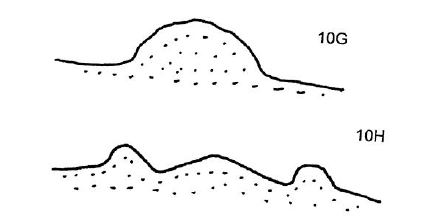
13 The specification also describes planting where there is a preformed mound. With reference to Figures 10g-h, which are reproduced in the third schedule to these reasons, the specification states:
Figures 10 g-h illustrates the first two steps which are used according to the embodiments of the invention in case where there is a preformed mound (10g) -- typically formed in the previous season -- and the pre-former pushes through the mound to form the bed 10h, which is similar to that described in 10 b and therefore the subsequent steps are similar to that described from 10 b-10f.
14 In an earlier part of the specification, the following statement appears:
Typically, the warming effect may be achieved by making the top of the mound relatively flat and each side of the mound inclined at an angle which promotes warming of the soil by the sun. It is found that the mound can be much better kept warm by the sun if each side of the mound is an inclined of between 20-60° and typically about 40°. The mound will typically have the profile illustrated in figure 10f, and it can be seen that this profile will catch the morning sun and the afternoon sun which is something that was not very efficient with the existing techniques (see particularly figure 9b, and 9d, and furthermore, there are no furrows etc in the mound that can catch and retain water and cause fungal disease of the cane billets.
15 The specification also states:
It is found that a desirable profile is one where the soil is, pressed and smoothed to catch the sun’s rays to warm the soil to a temperature that promotes shooting (sprouting) of the billets. This profile may include a profile where the top of the mound is relatively flat and each sidewall of the mound is at an angle of between 30-50° and typically about 40° to catch the sun’s rays. This profile may also facilitate harvesting with reduced uptake of soil/stones etc into the harvester.
The claims
16 Claim 1 is:
A cane billet planter comprising a hopper to store cane billets, a pre former which removes an upper layer of soil to form a bed, a discharge chute to drop the cane billets onto the bed , a cover means to cover the cane billets with soil to form a mound, and a mound profiler which profiles the mound after the cane billets have been covered with soil to form a shaped mound in which each side of the mound is at an incline of between 20° to 60°, all achieved in a single pass.
17 Claim 2 is the planter claimed in claim 1, where the mound profiler comprises a roller.
18 Claim 3 is the planter claimed in claim 1 or claim 2, where the mound profiler also compresses the soil in the mound.
19 Claim 4 is:
A planting apparatus, which in a single pass is adapted to:
a. loosen the top layer of soil on the ground to form a bed and push the loosened soil at least to one side,
b. drop sugarcane billets onto the bed,
c. replace at least the loosened soil back over the sugarcane billets to form a rough mound, and,
d. profile the mound such that the top of the mound is relatively flat and each side of the mound is inclined at an angle which promotes warming of the soil by the sun.
20 Claim 5 is:
A method for planting sugarcane, the method comprising pre-formering the ground along a row to be formed to loosen the soil, pushing the loosened soil to at least one side to expose damper underneath soil and to form a bed, dropping sugarcane billets onto the bed such that between 1-8 billets extend across the bed from the one edge of the bed to the other edge of the bed, covering the billets with soil to form a mound and profiling the mound to form a shaped mound in which each side of the mound is an incline of between 20° to 60° such that the soil about the billets are better warmed by the sun’s rays, all the above steps being carried out in a single pass along the ground.
LEGISLATION
21 Section 18(1A) of the Patents Act 1990 (Cth) (the Act) relevantly provides:
(1A) Subject to subsections (2) and (3), an invention is a patentable invention for the purposes of an innovation patent if the invention, so far as claimed in any claim:
...
(b) when compared with the prior art base as it existed before the priority date of that claim:
(i) is novel; and
(ii) involves an innovative step; and
…
22 Section 138(3) relevantly provides:
(3) After hearing the application, the court may, by order, revoke the patent, either wholly or so far as it relates to a claim, on one or more of the following grounds, but on no other ground:
…
(b) that the invention is not a patentable invention;
(d) that the patent was obtained by fraud, false suggestion or misrepresentation;
…
(f) that the specification does not comply with subsection 40(2) or (3).
the primary judge’s findings
Findings on construction
23 The primary judge identified two issues of construction.
24 The first was the meaning of “relatively flat” where used in claim 4 with respect to the profile of the mound.
25 The primary judge found (at [26]):
26 … The top must be generally in the horizontal plane. That is a question of impression, and impressions may differ. Any such impression may be influenced by the proximity of sloping sides against which the top will, inevitably and probably subconsciously, be compared.
26 The second issue also concerned the profile of the mound referred to in claim 4, conveyed by the words “each side of the mound is inclined at an angle which promotes warming of the soil by the sun.” Mr Morellini argued that if these words meant “inclined at an angle of between 20° and 60°”, then the Morellini device did not infringe. Alternatively, if the words meant something else, that “something else” was not clear and did not fully disclose the invention.
27 The primary judge addressed and resolved (at [29]-[30]) this issue as follows:
29 The specification addresses the warming effect of the sun on the soil and the importance of such warming to germination. It also addresses the fact that in conventional planting, side mounds prevent the sun from striking the soil which surrounds the billets. The respondent submits that the specification teaches that the mound can be better warmed if each side of the mound is inclined at between 20° and 60°, typically about 40°. There is, however, no explanation as to this choice of a range, nor is there any other direction as to calculation of the incline. None the less, it is hardly surprising that such a mound would catch the sun better than would the bottom of a furrow. Although claim 4 seems to suggest that the angle of incline will affect the warming effect of the sun, the specification, at p 3 ll 10–12, p 4 ll 16–23 and figures 9b, 9d and 10f demonstrate that the true meaning is otherwise.
30 Figures 9b and 9d demonstrate the situation in which the billets lie at the bottom of a furrow with a side mound on either side. Figure 10 demonstrates the typical profile of a mound which will catch the morning and afternoon sun. The passage at p 4 ll 20–22 highlights the fact that the typical profile will “catch” the sun while the bottom of a furrow will not do so. Claim 4, understood having regard to the specification, addresses this proposition. It does not advance some arcane and unexplained notion that the angle at which the sun strikes the surface will affect the resulting degree of heating. Understood in this way, no problem arises in performing the invention according to claim 4. In cross-examination at ts 107 Mr Mizzi said that the range of 20° to 60° is associated with the natural angle of repose of the soil rather than warming effect. As I understand Mr Mizzi’s evidence, it is that a mound above surface level will have sides which naturally incline at between 20° and 60°, at least if the top is relatively flat.
28 The primary judge concluded (at [31]):
31 … the skilled addressee would understand the claim as describing the physical characteristics of a mound above ground level, the shape of which will be dictated by the angle of repose of the soil. It is the existence of the mound above ground level, rather than the angle of the sides, which creates the perceived advantage.
Findings on invalidity
29 Mr Morellini challenged the validity of the patent on four grounds.
30 The first ground was that the invention was not novel. Mr Morellini contended that the invention was anticipated by the prior public use of a sugarcane billet planter called the Roncato device. He also contended that the invention was anticipated by the prior public use of a sugarcane billet planter called the O’Grady device.
31 The Roncato device was designed and built by “Josh” Roncato, a cane farmer in the Burdekin district. Mr Roncato described the operation of the Roncato device in a statutory declaration, which the primary judge understood to have been lodged in opposition proceedings in the Patents Office. Mr Roncato also gave evidence about the operation of the Roncato device during cross-examination at trial. Mr Roncato’s declaration, and his examination in chief, stood as the only direct evidence as to how the Roncato device functioned. Two experts, Mr Robotham and Mr Sulman, gave evidence about the Roncato device, but their evidence appears to have been based on their understanding of Mr Roncato’s description in his declaration.
32 The primary judge noted an inconsistency in Mr Roncato’s description. In one paragraph of his declaration, Mr Roncato said that, in operation, the Roncato device created two raised mounds into which beds were formed. The cane billets were then deposited into the beds. The mounds were covered with soil that was then rolled to press and flatten the soil over the billets. Thus, the sequence of operation was: formation of the mound; formation of the bed; and, deposit of the cane billets into the bed. This sequence did not reflect the sequence described in the patent. The primary judge found that, when describing the operation of the Roncato device in examination in chief, Mr Roncato adopted this sequence.
33 In another paragraph of his declaration, Mr Roncato described a different sequence. Here, Mr Roncato described the operation of the device as follows. Cane billets were dropped onto an area from which an upper layer of soil had been removed by the device. Soil was pushed over the billets to form a mound, which was then shaped. The primary judge found that this sequence was “much closer” to the sequence disclosed in the patent.
34 As the only direct evidence of the way in which the Roncato device functioned was that given by Mr Roncato himself, the primary judge felt unable to overlook the inconsistency he had identified, and concluded that it was “uncertain whether the Roncato device forms the mound before or after planting of the billets.”
35 The evidence concerning the O’Grady device raised a similar problem. The primary judge concluded that it was unclear whether, in operation, the O’Grady device created a mound before or after planting. The primary judge also concluded that it was unclear whether the O’Grady device operated only on pre-formed mounds which had been separately created.
36 As the patent described an apparatus and method involving the formation of a mound after planting, the primary judge concluded that Mr Morellini had failed to prove that the invention had been anticipated by either the Roncato device or the O’Grady device.
37 The second ground of challenge was that the invention did not involve an innovative step. Based on the way in which Mr Morellini had framed his submissions, the primary judge reasoned that this ground only had substance if the sole reason for finding that the invention had not been anticipated was that the Roncato device and the O’Grady device had not produced a mound with sides inclined at angles between 20° and 60°. As the challenge based on lack of novelty had been rejected on a different basis, the primary judge reasoned that it was not necessary for him to consider the challenge based on lack of innovative step.
38 The third ground of challenge was that the patent specification did not comply with s 40(2) or (3) of the Act. This was advanced as a lack of clarity objection. Mr Morellini submitted that the words in claim 4—“each side of the mound is inclined at an angle which promotes warming of the soil by the sun”—may mean that the sides are inclined at angles between 20° and 60°. If so, the Morellini device did not infringe the patent. However, if the words meant something else, claim 4 lacked clarity. The primary judge concluded that his findings on construction disposed of this ground of challenge.
39 The fourth ground of challenge was that the patent had been obtained on a false suggestion or misrepresentation. This ground was based on the description in the specification that it had been “found” that the mound can be better kept warm by the sun if each side is inclined at between 20° to 60° and typically at about 40°. Mr Morellini submitted that there had been no such finding, and that the representation was fallacious. He submitted that this representation had materially contributed to, or induced, the grant of the patent. The primary judge concluded that this ground could be disposed of by his finding concerning the meaning of the references to the angles of incline: the patent does not claim that the angles of incline of the mound affect the heating effect of the sun on the soil; rather, the angles indicate the likely shape of a mound that will catch the sun.
Findings on infringement
40 Mizzi contended that the Morellini device, as operated by Mr Morellini, infringed each claim of the patent.
41 Mr Morellini contended that there was no infringement because, firstly, the shape of the mound produced by the Morellini device was not the shape identified in the patent and, secondly, the Morellini device did not have a mound profiler as required by claims 1, 2 and 3.
42 Evidence on the question of infringement was given by Mr Robotham and Mr Sulman, who observed the Morellini device in operation. Mr Morellini also gave evidence on this issue.
43 According to Mr Sulman, the Morellini device had a mound profiler. The primary judge described (at [90]) the feature as follows:
90 … The mound profiler comprises four tyres, which tyres are located to the rear of the device. They are in pairs, each pair apparently being on a separate axle. The axles are oblique to the horizontal such that the top of the left-hand side pair of tyres is tilted to the left, whilst the top of the right-hand side pair is tilted to the right. The inner tyre on each side, at its base, is close to the inner tyre of the other pair, so that the two inner tyres are at an angle of about 20° to each other.
44 Mr Sulman said that, when the Morellini device was operated, this assembly produced an “apex angle” of approximately 10° along each side of the top surface of the mound. The primary judge understood this evidence to mean that, after the assembly had passed over a pre-formed mound, it left the mound with an apex in the centre and with sides falling away from that apex, each at an angle of about 10° below the horizontal plane.
45 Importantly, Mr Sulman noted that the Morellini device previously had a “down-force compression spring” which exerted a downward force through the press wheels of the assembly to the ground. At the demonstration, the compression press spring had been removed. Further, two tension springs had been installed. These springs provided support for the static weight of the mound profiler and associated mechanisms. The primary judge found that Mr Sulman’s evidence implied that a device which had been designed to force the press wheels downwards had been removed, and that another device had been installed to take further weight off them.
46 Mr Sulman expressed the opinion that if the assembly had been fitted with a down-force spring, combined with a hydraulic drive to assist rotating the mound profiler, thereby allowing for correct engagement along the top of the mound, it would be expected that the mound profile would have a relatively flat top surface, with the soil along the lower sides of the mound squeezed outwards to form an increased incline between 20° and 60°. The primary judge noted (at [96]) that there was no evidence that the Morellini device ever incorporated an hydraulic drive.
47 Mr Robotham considered that the role of the press wheels of the assembly in the Morellini device was primarily to enhance billet-to-soil contact and that shaping or profiling the top of the mound was a consequence of that function. He said that the design of the assembly was such that it would not produce a relatively flat top, but an apex. He also considered that it was impossible for the assembly, powered or unpowered, to impose sufficient downward or horizontal force to squeeze outwards the lower sides of the mound to form an increased incline of between 20° to 60°, as opined by Mr Sulman.
48 Mr Morellini gave evidence that the missing compression spring was removed in March or April, or during the “slack season”, in 2010 because it did not seem to make much difference in the operation of the planter. Mr Morellini said that the spring had now been re-installed and the tension springs had been removed, but this had been done because Mr Sulman wanted to perform another inspection, which, as a matter of fact, had not occurred.
49 In cross-examination, Mr Morellini was taken to his own patent application which he had filed in September 2008 (the Morellini application). The abstract to the application states:
A method and apparatus … for forming in a single pass operation, a profiled planting mound for growing of a crop from planted seeds or billets by using a pair of spaced tools … to displace soil inwardly towards each other. A central bed is formed between the displaced soil onto which billets or seeds may be deposited through a guide or chute … Covering disks … are provided to move soil to cover the billets or seeds and a press wheel assembly … is used for pressing the soil in the mound and form the desired profile in the mound.
50 The primary judge was unpersuaded by Mr Morellini’s argument that the press wheel assembly in the Morellini device was not a mound profiler but merely an assembly to press the top of the mound so that the billets would have better soil contact. The primary judge noted that the Morellini application described the press wheel assembly as pressing the soil in the mound to form the desired profile. The primary judge also found that there was good reason to conclude that, at the demonstration, the Morellini device was not operating in the way in which it had been operated on other occasions. Further, the primary judge found that no adequate explanation had been given for the removal of the spring which previously had exerted downward pressure on the assembly. The primary judge said that it was difficult to see how the assembly could operate as “press wheels” unless there was some mechanism exerting downward pressure through them to the ground surface over which they passed. The primary judge concluded, therefore, that the Morellini device included a mound profiler.
51 Although expressing a willingness to infer that the demonstration of the Morellini device did not show the machine in its normal operating configuration, the primary judge was not persuaded by Mr Sulman’s evidence that, if the missing spring had been in place, and the tension springs removed, the formed mounds would have sides inclined at angles between 20° and 60° or would have a relatively flat top. The primary judge reasoned that Mr Sulman’s opinion that, with adjustments, the device would have produced sides angled at between 20° and 60° seemed to be speculative. Amongst other things, the primary judge noted that, although not entirely clear, Mr Sulman’s opinion was at least based in part on the need for hydraulic means to create a downward force. As noted, there was no evidence that the Morellini device ever had such means. As to the requirement of claim 4 that the mound must have a relatively flat top, the primary judge found that the mound produced by the Morellini device was ridged longitudinally by the gaps between the tyres of the press wheels. The primary judge found that the mound appeared to be “curved in section rather than marked by a flat top and inclined sides”.
52 For these reasons, the primary judge found that infringement had not been proved.
53 Mr Morellini had also raised defences under s 119 of the Act. However, in light of the finding on infringement, the primary judge reasoned that it was not necessary for him to consider these defences. Accordingly, his Honour made no findings in relation thereto.
The Morellini appeal
54 Mr Morellini repeated his challenges to the validity of the patent, which the primary judge had rejected. As will become apparent, not all grounds were advanced with equal fervour in this appeal.
Lack of novelty
55 With respect to lack of novelty, Mr Morellini raised an initial question of construction. He submitted that, as claimed, the invention does not exclude a method or apparatus:
(a) that plants billets onto pre-existing mounds (such as a mound formed in a previous season); or,
(b) that starts gathering soil to make a mound before the bed (onto which the billets are planted) is made.
56 Mr Morellini submitted that if a planter is adapted to “leave behind” a mound containing the billets, then such an apparatus is not “excluded” from the invention.
57 The background to this question is the primary judge’s finding (at [60]) that the invention requires the formation of a mound after planting, regardless of whether there has been previous mounding or not. It is important to understand what his Honour meant by “previous mounding” in this finding.
58 The consistory statement for the method claim, claim 5, undoubtedly provides a set sequence of steps:
In one form, the invention resides in a method for planting sugarcane, the method comprising pre forming the ground along a row to be formed to loosen the soil and pushing the loosened soil to at least one side to expose damper underneath soil and to form a bed (e.g. see figure 10b), dropping sugarcane billets onto the bed such that between 1-8 billets extend across the bed from adjacent edge of the bed to adjacent the other edge of the bed (e.g. see figure 10c), but leaving an edge space between the edge and the outermost billet on the bed … covering the billets with soil obtained mainly from the ground in the edge space to form a mound and profiling the mound such that the soil about the billets are better warmed by the sun’s rays, all the above steps being carried out in a single pass along the ground.
59 The steps are, therefore: preforming the ground along a row to form a bed; dropping the billets across the bed; covering the billets with soil to form a mound; and, profiling the mound to create a defined shape. These steps are carried out in a “single pass along the ground”.
60 Claim 5 defines other features related to each sequential step. For example, the preforming step includes loosening the soil and pushing the loosened soil to at least one side to form a bed. In a number of places, the specification makes clear that the preforming step can take place where there is a preformed mound: see, for example, the passage quoted in [13] above. However, this preformed mound is not the mound referred to in the claims. Rather, the mound referred to in the claims is a mound formed after the bed has been formed and after the billets have been dropped onto (across) the bed and covered with soil. Thus, what was once a preformed mound is part of the soil that is loosened and pushed to (at least) one side to form a bed.
61 The specification describes the bed in the following way:
The term “bed” is meant to include the soil that is exposed once the pre former loosens and removes part of the upper layer of soil. The bed may have a gentle inverted V shape configuration (see for instance figure 10 c), and may be below the normal surface of the ground, may be approximately at ground level, or may even be slightly above ground level (for instance if there is a mound formed in previous year). The bed may have a width of between 300-900 mm. The soil in the “bed” is expected to be slightly damper and the dryer top layer of soil but there may be circumstances (e.g. after rain) where this is not necessarily the case or (e.g. during dry conditions) where the underlay of soil may also be substantially dry.
An advantage of having the inverted V-shape bed configuration, is that when the cane billets are dropped on the bed (e.g. figure 10 c), and soil is pushed to bury the billets (see for instance figure 10 d), there is less likelihood that this action will cause the billets to move relative to the bed and, for instance, become bunched together.
62 Claims 1 to 4 should be understood as directed to an apparatus that is configured to carry out the sequence of steps defined in claim 5.
63 The primary judge’s description of the invention as an “apparatus and method involving the formation of a mound after planting … regardless of whether there has been previous mounding or not” recognises the proper sequence of steps and correctly distinguishes between (a) the formation of the mound referred to in the claims, and (b) the state of repose of the soil before the preforming step, which may include a preformed mound. However, in the preforming step, the state of repose of the soil is changed: it is loosened and pushed to (at least) one side to form a bed. Mr Morellini’s submissions did not always clearly draw this distinction or, indeed, recognise the distinction which the primary judge correctly made.
64 Mr Morellini submitted that the primary judge erred by not finding that the O’Grady device and the Roncato device anticipated the invention.
65 With respect to the O’Grady device, Mr Morellini submitted that it is not in dispute that the device planted into pre-existing mounds. He submitted that his case, based on the O’Grady device, was simply that the claims included devices that plant into pre-existing mounds.
66 The operation of the O’Grady device was described by Raymond Henry O’Grady in an affidavit supplemented by oral evidence. Mr O’Grady described the O’Grady device as planting into raised beds or pre-formed mounds, although in oral evidence he said that the device could be used to “plant into flat ground”. It should be stressed, however, that Mr Morellini does not contend that the O’Grady device was ever used, before the priority date, to plant in flat ground. Mr O’Grady said that the preformed mounds were approximately 150 to 200 mm high. Billets were dropped on the top of the mound into beds that had been formed by two planting boots set about 500 mm apart. The planting boots parted the soil in the preformed mounds. The billets were then covered with 70-80 mm of soil. This was performed by a “duck foot” tyne located towards the rear of the device. “Soil crowding plates”, also located towards the rear of the device, also pushed soil over the billets. Mr O’Grady described this action as making a “mound”. However, it is clear from Mr O’Grady’s evidence, taken as a whole, that the billets were planted into a preformed mound and that the contribution of the tyne and crowding plates was to cover the billets with soil on the pre-existing mound. Mr O’Grady’s evidence cannot sensibly be understood as referring to the creation of a further mound by the action of the tyne or crowding plates. In the course of covering the billets with soil, a steel plate smoothed and shaped the mound. The mound had a flat top and an incline on each side between approximately 30° and 45°. A roller at the rear of the device pressed the mound to increase “sett to soil contact”. The roller was attached to a hydraulic ram which controlled the height of the roller. The compression created by the roller did not affect the angle of incline of the sides of the mound.
67 The operation of the O’Grady device was not a prior use of the invention. The invention involves the formation of a mound over the billets after they have been dropped onto a preformed bed. The O’Grady device planted billets into beds in a mound that had already been formed. The subsequent operation of the device was to cover the billets with soil and then shape the mound.
68 With regard to the Roncato device, it is to be remembered that the primary judge had found that the evidence was uncertain as to whether the device formed a mound before or after the planting of the billets: see [32] above.
69 On appeal, Mr Morellini submitted that the evidence clearly showed that the process by which the two mounds containing the billets were created “began when soil was gathered by the mounders at the front of the planter”. Mr Morellini submitted that the gathered soil passed between the mounders and the bed formers. Beds were then made and the billets were dropped into the beds. Mr Morellini then submitted that “whether or not the mounding operation commenced at or just prior to bed formation”, the mounding operation was “completed” when soil was pushed over the billets, and the billets were “buried and pressed”.
70 This submission does not engage with the inconsistency that the primary judge found in the evidence. Indeed, on appeal, Mr Morellini did not contend that the primary judge erred in finding that the evidence was uncertain. Rather, he argued that such uncertainty was without relevance because, for the purposes of the claims, “it simply doesn’t matter” whether the mounds were formed before or after the billets were planted. This is really an echo of the submission made by Mr Morellini with respect to whether the operation of the O’Grady device constituted prior use of the invention. Contrary to Mr Morellini’s submission, the sequence of steps does matter, and is important when considering the question of whether the invention, as claimed, is new.
71 Mr Roncato’s oral evidence was unequivocal:
… as it went along, it made a mound and then the drill opened it out where the sticks fell in and then it was pressed, buried, and pressed. And it left the mound.
72 It is not enough that, in operation, the Roncato device simply “left a mound”. This evidence, supported by a similar statement in Mr Roncato’s declaration, shows that, in operation, the Roncato device planted billets in a mound that had been formed by the device before the planting step. This is not the invention that is claimed.
73 Another passage in Mr Roncato’s declaration suggested that the mounds were formed after the cane billets had been dropped onto the beds. This led to the inconsistency which the primary judge found to have been unresolved at trial. The fact that this inconsistency was not resolved meant that the evidence of prior use was left in a state of uncertainty. That uncertainty was, and is, fatal to the allegation of prior use.
74 In this connection, it has been said that an allegation of prior use should be strictly proved, in the sense that the court determining that question must be satisfied that the proof given is sufficient in the circumstances, having regard to the gravity of the allegation: Windsurfing International Inc v Petit [1984] 2 NSWLR 196 at 231, citing Toyo Tsushinki Kabushiki Kaisha’s Application [1962] RPC 9 at 15 and Laguerre’s Patent [1970] RPC 587 at 591, 593 and 596. The evidence adduced with respect to the operation of the Roncato device was plainly insufficient to establish prior use of the invention. Indeed, if anything, it tended to establish that there had been no prior use of the invention.
75 The primary judge was correct to find that prior use of the invention had not been proved. No error has been demonstrated in his Honour’s reasoning or conclusion.
Lack of innovative step
76 An invention is to be taken as involving an innovative step when compared with the prior art base unless the invention only varies from prior art information (here, the prior public use of the O’Grady device and the Roncato device) in ways that make no substantial contribution to the working of the invention: see s 7(4) and (5) of the Act.
77 The primary judge reasoned that the only difference between the invention as claimed and the Roncato and O’Grady devices was the sequence of steps involved in planting the billets and forming the mound. In the invention, the mound is formed after planting of the billets. The evidence of the operation of the O’Grady device showed that the sequence was otherwise. The evidence of the operation of the Roncato device was, at the very least, uncertain. The primary judge proceeded on the basis that, in all other respects, the operation of the O’Grady device and the Roncato device was a prior use of the features of the invention.
78 The variation that Mr Morellini relied on to argue that the invention did not involve an innovative step was the angle of incline of the mounds formed by the Roncato device compared to the angle of incline of the mounds defined in the claims of the patent. This was not a difference that the primary judge found to exist between the invention and the operation of the Roncato device. And, importantly, MFH did not seek to argue (at least on this appeal) that this was a difference between the invention and the Roncato device. Mr Morellini sensibly accepted that, in these circumstances, his case on innovative step did not arise.
Lack of clarity
79 As matters eventuated, Mr Morellini did not place much significance on this ground in the appeal. It concerns the construction of claim 4 and the meaning to be given to the words “each side of the mound is inclined at an angle which promotes warming of the soil by the sun”. At trial, MFH treated those words as meaning an angle between 20° and 60°, consistently with the teaching of the specification. On appeal, MFH maintained this construction of claim 4. On appeal, Mr Morellini agreed with this construction.
80 In these circumstances, it is natural to ask: why was this particular challenge to the patent made on appeal? The answer appears to be that the primary judge did not adopt the construction for which both parties contend. His Honour found that the words quoted in [79] above really do no more than refer to the profile of a mound above ground level.
81 The construction of claim 4 arises again when considering the case on false suggestion or misrepresentation. It is perhaps enough to note at this juncture that, as the parties agree that, in the context of claim 4, the angle of incline of each side of the mound can only sensibly be understood as an angle between 20° and 60°, any allegation that claim 4 is unclear in this respect cannot be maintained. For this reason, this ground of appeal should be rejected.
False suggestion or misrepresentation
82 Mr Morellini relied on the following passages of the specification on page 4 lines 2, 9-10 and 18-20, which he identified as the Statement:
In one form, the invention resides in … profiling the mound such that the soil about the billets [is] better warmed by the sun’s rays … It is found that the mound can be much better kept warm by the sun if each side of the mound is an [incline] of between 20-60° and typically about 40°.
83 Mr Morellini argued that the Statement comprises a representation that the soil around the billets in the mound can be much better kept warm by the sun if each side of the mound is inclined between 20° and 60°, and typically about 40°, and a representation that experiments had been undertaken to establish that fact (together, the representations).
84 To support this argument, Mr Morellini pointed to the prosecution history of the patent, which was based on a divisional application. The uncontested evidence is that Mr Mizzi filed the parent application (Patent Application No. 2007202931) on 25 June 2007. The application was accepted. On 24 October 2008, Mr Morellini filed a notice of opposition to the parent application. Mr Roncato’s declaration, discussed above, was filed in support of the opposition to argue that the invention was not novel and was obvious.
85 On 29 September 2009, MFH (to whom Mr Mizzi had, by then, assigned the parent application), filed a request to amend the complete specification of the parent application. Mr Morellini says, and MFH does not dispute, that this was done to overcome the contention that the invention was not novel and was obvious in light of the Roncato device.
86 On 29 January 2010, following certain other events, the Examiner published a first report in relation to the proposed amendments, advising that they were not allowable because they did not satisfy s 102(1) of the Act, in that the amended specification would claim matter not in substance disclosed in the specification as filed, and s 102(2)(b) of the Act, in that the proposed amendments would not be fairly based on the matter described in the specification.
87 On 17 February 2010, MFH responded by proposing further amendments to the independent claims to include a limitation that the formed mound be a “shaped mound in which each side of the mound is an incline of between 20° and 60°”. In the correspondence accompanying those proposed amendments, MFH’s attorneys argued that the mound was not limited to having a flattened top. The attorneys argued, however, that “the specification teaches that in order for the billets to be kept warm within the mound, the mound should have angled sides.” In advancing that argument, the attorneys specifically referred to the second paragraph of the Statement quoted in [82] above.
88 Leave was granted to MFH to amend the specification as proposed. On about 26 August 2010, Mr Morellini filed a notice of opposition to the amendments.
89 Shortly after, on 30 August 2010, MFH filed its divisional application for the patent. The five claims of the patent are in the same terms as five of the claims proposed by MFH on 17 February 2010 in respect of the further proposed amendments to the parent application. The patent was granted and, on 30 September 2010, certified.
90 In this appeal, Mr Morellini submitted that it could be assumed that, when certifying the patent, the Examiner would have been mindful of the fact that the Statement had been drawn to his attention in the context of considering the further proposed amendments to the parent application. Mr Morellini submitted that the Statement “must have been at the top of the [E]xaminer’s mind”.
91 Mr Morellini then submitted that, during the trial, it became apparent that the representation about the “finding” was false. In cross-examination, Mr Robotham said that he had carried out a significant literature search and could find nothing about angles of incline and warming by the sun. In Mr Sulman’s cross-examination, the following exchange occurred:
MR CAMPBELL: Thank you. Mr Sulman, you’ve read Mr Mizzi’s patent and there’s reference in there to angles, 20 degrees to 60 degrees. What, in your view, is the importance of those angles?---The importance – one major importance that I see is that it creates the structure of the mound that presents it above the surface. So there’s a clear definition to the – to the shape of the mound. Secondly, the angle is essentially set where if it’s 20 degrees – if it’s slightly under 20 degrees, if it’s 15, the only – the only way that we can say that it’s cooler or warmer is – the only evidence I have provided to me is my basic training, which – which tells me that the angle of incidence of sunlight hitting a plane, if that is reduced, then you would expect less warming imparted into the – into the plane. But we do not have any evidence to – to provide the court that would state the significance of that change in angle. That’s – we would need to do testing to provide that.
92 It is clear that neither Mr Robotham nor Mr Sulman was aware of any finding that a mound (of the kind under consideration) can be much better kept warm by the sun if each side of the mound is at an incline between 20° and 60°, or typically about 40°. Further, neither witness had any independent knowledge that a mound would be much better kept warm by the sun if it had that particular profile. Significantly, MFH did not itself bring forth any evidence of any such finding. Its failure to adduce evidence of the existence of such a finding, when it must have been within its power to adduce such evidence, is significant: Kuhl v Zurich Financial Services Ltd (2011) 243 CLR 361 at [63]; Commercial Union Assurance Company of Australia Ltd v Ferrcom Pty Ltd (1991) 22 NSWLR 389 at 418-419; Jones v Multiple Sclerosis Society of Victoria Ltd [1996] 1 VR 499 at 506.
93 As noted above, the primary judge addressed this challenge by reference to his findings on the construction of claim 4. That claim refers to a mound having a relatively flat top with “each side of the mound … inclined at an angle which promotes warming of the soil by the sun”. As discussed, claim 4 makes no specific mention of a range of angles of incline. Although referring to the teaching in the specification that the mound can be better warmed if each side of the mound is inclined at between 20° and 60°, typically 40°, the primary judge addressed the construction of claim 4 by drawing a distinction between planting in a mound (exemplified by figure 10f) and planting in a furrow (exemplified by figures 9b and 9d). The primary judge saw (at [30]) claim 4 as addressing “this proposition” (mound versus furrow) rather than “some arcane and unexplained notion that the angle at which the sun strikes the surface will affect the resulting degree of heating”. Relatedly, the primary judge appears to have accepted Mr Mizzi’s evidence that the range of 20° to 60° is associated with the natural angle of repose of the soil in a mound, rather than any warming effect. The primary judge concluded that it is the existence of the mound above ground level, rather than the angle of the sides of the mound, which creates the perceived advantage.
94 Mr Morellini submitted that the primary judge dismissed the allegation of false suggestion or misrepresentation only on the basis that the representations, as alleged, had not been made. Mr Morellini submitted that the primary judge appears to have accepted that, if in fact made, the representations were false.
95 In response, MFH relied on the primary judge’s reasoning and conclusion. It referred to evidence that there is some advantage in planting cane in a mound. However, significantly, MFH did not address the specific question of whether the representations were false, assuming them to have been made, other than to suggest that the “finding” to which the complete specification refers is “readily capable” of being Mr Mizzi’s own experience and conclusions. The difficulty with this submission is that it is entirely speculative. MFH did not address the further question of whether, in that state of affairs, the representations played a role in the grant of the patent.
96 With respect, it is difficult to escape the conclusion that the complete specification treats the profile of the mound—as opposed to, merely, its existence as a mound—as significant. The profile of the mound is certainly significant to the invention claimed in claims 1, 2, 3 and 5, where it is essential that each side of the mound be inclined at between 20° to 60°. Moreover, both parties agree that claim 4 should be read with the same limitation, so that it contains the same essential feature. Claim 5 explicitly draws a causal connection between such an incline and the fact that the soil about the billets is better warmed by the sun’s rays. Claim 5 is explicit that the warming of the soil about the billets is not merely a consequence of the billets being planted in a mound. It is a consequence of the billets being planted in a mound having the stated profile.
97 This conclusion is not arrived at simply on textual considerations pertaining to the drafting of the claims. It is based more broadly on a consideration of the claims in the context of the specification as a whole. The specification’s discussion of the background art makes clear that the machine-planting of cane billets in a mound is not new. The specification teaches that a mound with the stated profile is advantageous. The specification does not refer to this profile as being, merely, the natural repose of the soil in a mound or in a mound that has been pressed downwardly. Indeed, if that was the natural repose of the soil, it is difficult to understand why the specification makes such a feature of the angle of incline within the stated range. Plainly, the specification treats the stated range as an important feature of the profile of the mound, and hence an important feature of the invention, that is brought about by the claimed apparatus and method.
98 As discussed above, the specification speaks of disadvantages with current machinery and current methods of planting. One disadvantage is that conventional planting techniques do not efficiently enable the soil adjacent to the billets to be kept warm by the sun: see [7] above. When discussing the object of the invention, the specification explains how the desired warming effect can be achieved: the mound is inclined at an angle which promotes warming of the soil by the sun. It is in the course of this explanation that the Statement is made.
99 The meaning of the Statement is clear: the mound can be much better kept warm by the sun if each side is inclined between 20° and 60°, and typically at about 40°. But what is more, the Statement conveys, as Mr Morellini alleged, that this relationship between the stated profile of the mound and the resultant “better warm[ing]” is a fact which has been “found”. The Statement does not advance this relationship as the inventor’s hypothesis; still less does it advance it as his conjecture. Rather, the specification advances this relationship as a fact based on a finding that has actually been made.
100 It should be accepted, therefore, that the representations alleged by Mr Morellini were made by the Statement and that the primary judge erred in finding otherwise. The next question is whether the representations were false at the time they were made.
101 It seems tolerably clear that the primary judge accepted that there had been no “finding” that the mound can be much better kept warm by the sun if each side is inclined within the stated range of angles. His Honour said (at [82]) that there is no direct link between those angles and the heating effect of the rays of the sun at any point in time or place. Indeed, as noted at [93] above with respect to the construction of claim 4, his Honour referred to the angle at which the sun strikes the surface of the mound with a resultant degree of heating as an “arcane and unexplained notion”.
102 We were not referred to any evidence that the “finding” referred to in the Statement had been made or that the relationship between the stated profile of the mound and the resultant “better warming” was, in any event, correct. It should be accepted, therefore, that the representations were false when they were made.
103 In Ranbaxy Australia Pty Ltd v Warner-Lambert Co LLC (2008) 77 IPR 449; [2008] FCAFC 82, the Full Court said (at [82]):
82 If a representation that was false or misleading materially contributed to the commissioner’s decision to grant a patent, even if other circumstances or causes also played a part in the making of that decision, it may be said that the patent was obtained by a false suggestion or misrepresentation (or on a false suggestion or representation, to use the language of the 1952 Act). It is sufficient if the representation materially contributed to the commissioner’s decision to grant the patent or was a material, inducing factor, which led to the grant. However, it is not necessary to establish that the representation was material in the sense that, without it, the patent would not have proceeded to grant: Pfizer Overseas Pharmaceuticals v Ely Lilly & Co (2005) 225 ALR 416; 68 IPR 1; [2005] FCAFC 224 at [390]–[395]. It is not necessary to show that, but for the suggestion or representation, no grant would have been made (Prestige Group (Aust) Pty Ltd v Dart Industries Inc (1990) 26 FCR 197; 95 ALR 533 at 537–8; 19 IPR 275 at 279–80).
104 The Full Court noted that if a false suggestion or misrepresentation did play a part in the decision to grant a patent, the Commissioner could be expected to take a position on the matter. The Full Court also noted that it is a relevant factor that the Commissioner chooses not to give evidence. However, the Full Court also said (at [83]):
83 … In the absence of such evidence, it is for the court to make a finding, based on the evidence before it. In the absence of explicit evidence that the commissioner, or the commissioner’s delegate, was in fact misled, it may nevertheless be inferred that a representation in fact contributed to the decision to grant a patent, if the representation was objectively likely to contribute to such a decision and the patent was in fact granted: see Synthetic Turf Development Pty Ltd v Sports Technology International Pty Ltd [2004] FCA 1179 at [2], and WM Wrigley Jr Co v Cadbury Schweppes Pty Ltd (2005) 66 IPR 298; [2005] FCA 1035 at [123]–[130].
105 Later, the Full Court said (at [135]):
135 The ground of false suggestion or misrepresentation must involve some misleading or deception of the commissioner or the commissioner’s delegate, being the person who makes the grant. To establish the ground, there must be a finding that the commissioner or the commissioner’s delegate was in some way misled or deceived by the suggestion or representation in question and that being so misled or deceived contributed to or caused the decision to grant the patent.
106 In this connection, the Full Court also said (at [137]):
137 In the absence of an allegation of fraud, which involves an examination of the state of mind of the patent applicant, it is not sufficient to make out the ground of false suggestion or misrepresentation to prove simply that a false or misleading statement was made and nothing else. That is to say, even if a suggestion or representation is shown to be false or misleading, that, of itself, is not sufficient reason to draw an inference that the suggestion or representation contributed to the decision to grant the patent.
107 The Commissioner was not named a party to this proceeding. Thus, the Commissioner’s views on this question are simply not known. Because of the way in which he dealt with the matter, the primary judge made no finding as to whether the falsity of the representations contributed to the Commissioner’s decision to grant the patent. In these circumstances, it is for the Court, on this appeal, to draw its own conclusions on that question, based on the available evidence.
108 As noted above, Mr Morellini seeks to draw a connection between statements made on behalf of MFH in prosecuting the parent application, and MFH’s application for the patent. As also noted above, in this appeal MFH does not challenge the prosecution history as advanced by Mr Morellini. In these circumstances, the Court is justified in proceeding on the basis that the proposed amendments were made by MFH to overcome the novelty and obvious objections that had been raised in respect of the parent application and that, by including the Statement in the specification of the patent, and by confining the claims—implicitly in the case of claim 4—to mounds having the stated profile, MFH was intending to present the invention described and claimed in its divisional application as one that was both novel over the Roncato device and involved an inventive step. In considering this aspect of the question, it would be artificial to ignore the context provided by the making of the parent application and the events leading up to MFH’s proposal of the further amendments to that application. When regard is had to all the circumstances, the inference is available, and should be drawn, that the Statement was intended to contribute, and did contribute, to the Commissioner’s decision to grant the patent.
109 For these reasons, this ground of appeal should be allowed.
Damages
110 In the Second Reasons, the primary judge considered the nature of the relief that should be granted, including in relation to his Honour’s finding that unjustifiable threats of patent infringement had been made by MFH and Mr Mizzi against Mr Morellini.
111 In the Second Reasons, the primary judge said (at [1]):
1 … Although Mr Morellini initially sought to establish that he suffered damage as a result of the unjustifiable threats, that claim has now been abandoned.
112 MFH and Mr Mizzi had argued that, although there had been a finding of unjustifiable threats, no declaratory relief, as sought, should be granted. The primary judge rejected that submission, saying (at [1]):
1 … The fact is that Mizzi and Mr Mizzi made unjustifiable threats. There is some evidence that such threats had an adverse effect upon Mr Morellini in connection with his own device, although he no longer claims damages. In those circumstances I can see no reason to deprive him of the benefit of a declaration establishing that the threats were unjustified.
113 Mr Morellini submitted that he had not abandoned his claim for damages and that the primary judge erred in proceeding as if he had. Mr Morellini said that he had filed written submissions on the question of damages on 12 February 2014. He said that, in those submissions, he argued that an award of damages in the sum of $50,000 should be made having regard to the likely value of his loss of income and goodwill.
114 In subsequent correspondence with the parties, the primary judge’s Associate sought clarification as to whether the case had been conducted on the basis that the question of damages would be addressed separately (and after the resolution of issues on liability), and whether Mr Morellini wished to seek leave to lead further evidence on this question. In that correspondence, the primary judge’s Associate stated that his Honour did not understand the basis of Mr Morellini’s calculation of damages.
115 Subsequent correspondence from the solicitors for the parties reveals that they were in agreement that the question of Mr Morellini’s claim for damages was not for separate determination and that, if Mr Morellini wished to lead further evidence on that question, leave would be required. Mr Morellini’s written submissions in this appeal contained the following extracts from the correspondence.
116 On 3 April 2014, Mr Morellini’s solicitors replied to the Associate’s correspondence, with a copy to the solicitors for MFH and Mr Mizzi, saying:
Neither party made an application before the trial for an order under Rule 30.01 for the trial of issues of liability and quantum to be split, and accordingly no such order was made.
In the circumstances the Respondent understands that it is not entitled to lead further evidence (without the consent of the applicant or leave of the court).
117 On 4 April 2014, the solicitors for MFH and Mr Mizzi wrote to the Associate and Mr Morellini’s solicitors, saying:
We concur with the first substantive paragraph of Mr Lambert’s email response.
In respect to the second substantive paragraph, the Applicant will not consent to further evidence from the Respondent on the issue of damages. The Applicant will oppose any leave being given to the Respondent for that purpose.
The Applicant had the opportunity at trial to lead such evidence. The Applicant and the Respondent have made submissions to his Honour in respect to the issue of damages for unjustified threats. We await his Honour’s decision without further submissions being made.
(Emphasis added.)
118 On 15 April 2014, Mr Morellini’s solicitors wrote to the Associate and to the solicitors for MFH and Mr Mizzi, saying:
The respondent understands that the issue regarding whether or not it will make an application for leave to rely on further evidence in support of its unjustified threats cross claim cannot be left open ended. In the circumstances the respondent proposes to file and serve its application for leave to rely on further evidence (if any) by no later than 4pm on Tuesday, 13 May 2014. If no application is made by the respondent by that date, then the applicant/cross respondents and the Court will be entitled to assume that no such application will be made. The respondent understands that his Honour will then deal with the matter accordingly.
We have discussed this proposed course with the solicitors for the applicant/cross respondents. The applicant/cross respondents do not object to it.
(Emphasis added.)
119 On 14 May 2014, Mr Morellini’s solicitors confirmed that he did not wish to seek leave to file further evidence in support of his claim for damages for unjustified threats.
120 These extracts show that Mr Morellini had not abandoned his claim for damages and that the parties were awaiting his Honour’s judgment on that question. Nevertheless, in this appeal, MFH and Mr Mizzi submitted that the primary judge was correct to understand that Mr Morellini had abandoned his claim that he had suffered damage as a result of the threats.
121 In advancing that submission, MFH and Mr Mizzi did not address the correspondence referred to above but, rather, pointed to what they argued was a deficiency in Mr Morellini’s evidence concerning the existence of damage. They submitted that, following the correspondence from his Honour’s Associate, Mr Morellini could have been in no doubt about “the problem” and made no application for leave to call additional evidence. MFH and Mr Mizzi submitted that this failure to seek leave to call additional evidence amounted to “an effective abandonment” of Mr Morellini’s claim for damages.
122 This submission should not be accepted. It is one thing to say that a claim should fail for want of proof; it is another to say that a claim has been abandoned and, for that reason, need not be determined. On the material to which we were taken in this appeal, the only conclusion on this issue is that Mr Morellini did not abandon his claim for damages in respect of the threats that had been made.
123 The primary judge had found (at [1] of the Second Reasons) that there was “some evidence that [the] threats had an adverse on Mr Morellini in connection with his own device”, although in subsequent correspondence it was stated that his Honour did not understand the basis of Mr Morellini’s calculation of damages. We were not taken to any of the evidence on which Mr Morellini relies to support his claim for damages; nor was it suggested that we should attempt to determine that claim ourselves.
124 In these circumstances, taking into account our conclusions below on the question of whether infringement was proved, the only course open is to remit Mr Morellini’s claim for damages for determination by the primary judge, based only on the evidence now before his Honour. Whether that evidence demonstrates loss or damage or would otherwise justify an award of damages is a matter that should be left for his Honour’s consideration.
The Mizzi appeal
MFH’s submissions on infringement
125 MFH addressed three issues on the question of infringement.
126 First, it challenged the primary judge’s treatment of the evidence given with respect to the demonstration of the Morellini device. MFH submitted that, because the demonstration of the Morellini device was not of the machine in its normal operating configuration, the primary judge ought to have drawn “an adverse inference”, particularly where, according to MFH, a demonstration was crucial in order to determine the nature of the “product” produced by the device. MFH did not state what this inference was. It would seem that MFH seeks to argue that the primary judge’s preparedness to infer that the demonstration was not of the Morellini device in its normal operating configuration was, without more, sufficient to justify the further inference by his Honour that the device necessarily had the features of each of claims 1 to 4 and, in operation, carried out the method of claim 5.
127 In advancing this submission, MFH and Mr Mizzi argued that the primary judge had made two findings. The first was that the Morellini device had been adjusted so that the necessary quantity of soil would not be extracted, thus making it impossible for mounds of the requisite “normal” size to be created. The second finding to which MFH referred was that the compression spring on the wheel assembly of the Morellini device had been removed.
128 It should be stated at once that the primary judge did not make the first finding, although his Honour did refer (at [105]) to Mr Sulman’s evidence that, in his (Mr Sulman’s) view, the covering discs in the Morellini device had been set in a way which did not favour mound creation. However, there is nothing in the primary judge’s reasons to suggest that his Honour considered that the mounds formed by the Morellini device were not of a “normal” size or that the covering discs in the Morellini device had been manipulated in some way for the purposes of the demonstration. Mr Morellini gave evidence on how and when the covering discs in the Morellini device were set. This evidence was inconsistent with the submission now advanced by MFH. Mr Morellini was not challenged on this evidence.
129 Secondly, MFH challenged the primary judge’s finding that MFH had failed to prove that the mound produced by the Morellini device had sides inclined at an angle between 20° and 60°. MFH also submitted that the primary judge did not take into account the effect of the pressure of the profiling wheels on the Morellini device shaping the mound so that the soil fell to its natural angle of repose. Here, MFH referred to Mr Mizzi’s evidence that the angle of repose of soil in a mound which has been pushed from the top is between 20° and 60°. MFH argued that a mound profiler would flatten the top of the mound and “cause a sharpening of the angle sides of the mounds”. MFH referred to Mr Sulman’s evidence that, if the Morellini device had been fitted with a “downforce spring” combined with a hydraulic drive to assist rotating the mound profiler, it would be expected that a mound would be produced with a relatively flat top, resulting in the soil along the lower sides of the mound being squeezed outwards to form an incline of between 20° and 60°.
130 Thirdly, MFH challenged the primary judge’s finding that the mound produced by the Morellini device did not have a relatively flat top. MFH once again, placed emphasis on Mr Sulman’s evidence that, if the Morellini device had been working properly, it would be expected that it would have produced a mound with a relatively flat top.
131 In relation to the second and third issues, MFH placed reliance on some drawings made by Mr Sulman which sought to compare, amongst other things, the shape of a mound that would be produced by the Morellini device (if the device were to be adjusted in certain ways) with the shape of a mound produced by what Mr Sulman called the Mizzi device. The Mizzi device appears to be a device that Mr Sulman inspected on the same day that he observed the demonstration of the Morellini device. It is convenient to note at this juncture that there is a significant difficulty with this comparison. Mr Sulman appears to have assumed that the Mizzi device is the device claimed in the patent. This is doubtful, to say the least. More likely, the assumption is simply wrong. The mound profiler in the Mizzi device is obviously not the shape of the mound profiler illustrated in Figure 5 of the patent specification, which is configured to produce a mound with a flat top. Further, the profile of the mound for the Mizzi device, as drawn by Mr Sulman, is visually different to the profile of, say, the mound illustrated in Figure 10f of the specification. Importantly, the primary judge made no finding that the mound profiler in the Mizzi device would produce a mound having the profile claimed in the patent.
132 MFH also submitted that the primary judge placed weight on the fact that, in the Morellini device as operated, there were no hydraulics creating downward pressure. MFH submitted that this was an irrelevant consideration because the patent did not stipulate force by hydraulics as an essential integer. This submission appears to be a misreading of what the primary judge found: see [143] below. Relatedly, MFH submitted that, in the Morellini device, downward force would have been created by the “natural weight of the wheels” in the assembly and the action of the spring, which had been removed by Mr Morellini.
133 MFH also criticised the primary judge’s observation (at [112]) that he had difficulty in understanding how wheels, angled as the press wheels were in the Morellini device, would have resulted in any particular inclination of the soil on the outside of each outer wheel. MFH submitted that if, by this observation, the primary judge was referring to the angle of the incline of the sides of the mound, then his Honour’s observation failed to take account of the evidence regarding the creation of such angles, including the evidence regarding the angle of repose of soil. MFH submitted that if, on the other hand, the primary judge was referring to the top of the mound, then his Honour’s observation appeared to be speculative.
134 MFH submitted that the evidence supported a finding of infringement and the primary judge should have found infringement accordingly.
Mr Morellini’s submissions on infringement
135 In responding to these submissions, Mr Morellini explained the circumstances in which the demonstration of the Morellini device took place. It is not disputed that, at a directions hearing approximately two months before the trial, Mr Morellini’s counsel volunteered to provide MFH with the opportunity to inspect the Morellini device. No request for inspection had previously been made by MFH. An inspection was arranged to accommodate Mr Sulman’s availability. At the demonstration, Mr Sulman asked Mr Morellini why the compression spring on the press wheel assembly had been removed. Mr Morellini provided an explanation: the spring caused the wheel assembly to bulldoze the soil. It should be noted that Mr Morellini’s evidence was that the compression spring had been removed some two years before the demonstration. Mr Sulman did not request the compression spring to be refitted for the purpose of the demonstration. However, in his report dated 16 April 2012, Mr Sulman made reference to the absence of the spring and expressed an opinion concerning the profile of a mound that would result from the operation of the Morellini device if it were fitted with, amongst other things, such a spring. The solicitors for MFH requested a further opportunity to inspect the Morellini device with the compression spring refitted to the press wheel assembly and with the two tension springs removed. Mr Morellini offered this opportunity to MFH but, as events transpired, it was not taken up.
136 Mr Morellini challenged the correctness of MFH’s submission that the primary judge had found that, for the purpose of the demonstration, the Morellini device “had been adjusted so that the necessary quantity of soil would not be extracted”. MFH’s submission has already been addressed: see [128] above. In this connection, Mr Morellini also pointed to Mr Sulman’s oral evidence that if he were to adjust the covering disks by making them “move in tighter to the centre of the machine” and also change the vertical height of the disks, he could “manipulate the mound shape”. Mr Morellini submitted that these were just some of the adjustments which Mr Sulman had advanced at trial to argue that the Morellini device could be made to produce mounds with sides angled at between 20° and 60°. Mr Morellini pointed to the primary judge’s finding at [112] that Mr Sulman’s claims in this regard seemed to be speculative.
137 Next, Mr Morelli challenged the contention inherent in MFH’s submission that, by increasing the compression force of the press wheel assembly on the Morellini device, “a sharpening of the angled sides of the mounds” would have resulted. Mr Morellini submitted that this contention was “untested speculation” of the kind that the primary judge had found to be unpersuasive. Mr Morellini also submitted that the contention was not supported by Mr Sulman’s evidence, which was that pressing the top of the mound would only have a small effect on the angles of the sides. Mr Morellini argued, further, that MFH’s contention was, in any event, dependent on the configuration of the mound profiler itself.
138 Mr Morellini also submitted that it was never argued by MFH, and not accepted by Mr Morellini, that the effect of downward force on soil in a mound with a gentle incline would cause the incline to increase to the “angle of repose” of that soil sample. Mr Morellini submitted that, clearly, soil cannot fall to its natural angle of repose if the incline is not above that angle in the first place.
Consideration
139 MFH has not demonstrated error in the primary judge’s reasoning or conclusion that infringement had not been proved. The primary judge was, plainly, mindful of the fact that the Morellini device as operated at the demonstration was different to the device that had been operated at a previous time. In particular, the primary judge was mindful of the fact that the compression spring on the wheel assembly had been removed and that tension springs had been added. But his Honour was, with respect, correct to observe that it does not follow that, but for those adjustments, the Morellini device would form mounds which had a relatively flat top or sides inclined at angles between 20° and 60°.
140 It is important to note the basis on which Mr Sulman expressed the opinion on which MFH relied. At [88] of his report of 16 April 2012, Mr Sulman said:
… it is my opinion that the absence of a hydraulic drive motor on the Morellini mound profiler as fitted to the Mizzi mound profiler, prevents the Morellini mound profiler from engaging with an adequate down force, and subsequently, functioning in such a manner that it would not apply compression to the top of the mound forming a neat apex profile as described in [the patent].
141 At [91] of that report, Mr Sulman said:
… it is my opinion that if the Morellini mound profiler had been fitted with a down force spring combined with a hydraulic drive to assist rotating the mound profiler, allowing for correct engagement along the top of the mound, then it would be expected that one would witness a final mound profile consisting of a top surface that is relatively flat, resulting in the soil along the lower sides of the mound squeezed outwards to form an increased incline between 20° and 60° as described in [the patent].
142 So expressed, Mr Sulman reasoned that profiling the mound with a relatively flat top surface would necessarily result in the sides of the mound being inclined at between 20° and 60°.
143 As the primary judge correctly observed, Mr Sulman’s opinion in this regard appears to have been based on the Morellini device operating with an hydraulic drive—a feature which the Morellini device did not have at any time. Contrary to MFH’s submissions, the primary judge was not ‘stipulating’ that the claims of the patent required the creation of force by hydraulics. The primary judge was merely noting the particular basis on which Mr Sulman had given his opinion. The fact that the Morellini device had never operated with an hydraulic drive is telling. It plainly undermined Mr Sulman’s opinion, as expressed in his report.
144 Based on MFH’s submissions in this appeal, and other evidence given by Mr Sulman at trial, it seems that, apart from the need for an hydraulic drive, Mr Sulman also considered it necessary to make other adjustments to the Morellini device—most notably to the positioning of the covering discs—so that mounds of the required size could be made to achieve the profile defined by the patent claims.
145 Contrary to MFH’s submissions, the primary judge’s reasons show that his Honour was mindful that Mr Sulman’s evidence spoke of the need to make these other adjustments. Indeed, the primary judge referred to Mr Sulman’s claims in this regard as seeming to be “speculative”. That conclusion was open to the primary judge. His Honour’s conclusion is supported by the evidence to which we were taken. It should be noted in this regard that Mr Sulman had not observed the operation of the Morellini device with such adjustments. Mr Sulman agreed in cross-examination that he could not predict, in advance, the extent of the “settings” that would be required to enable the Morellini device to produce mounds having the defined profile. Mr Sulman accepted that experimentation would be necessary.
146 It is not known whether the Morellini device could be adjusted or modified to produce mounds having the defined profile. Even if it could, the evidence falls far short of establishing that the device had been operated in that way.
147 The primary judge’s finding that the mound produced by the Morellini device was not relatively flat, but curved and ridged longitudinally by the gaps between the tyres of the wheel assembly, was clearly one that was open to be made. It rested on the primary judge’s impression and evaluation of the profile of the mounds that had been produced during the demonstration of the Morellini device. There is no warrant in the present case for appellate interference with that finding: see, for example, the discussion concerning the need for appellate caution in reversing a primary judge’s findings based on impression and evaluation in S & I Publishing Pty Ltd v Australian Surf Life Saver Pty Ltd (1998) 88 FCR 354 at 359-361. MFH’s reliance on Mr Sulman’s comparison of the Morellini device (hypothetically modified) with the Mizzi device to advance a contrary finding is misplaced, for the reasons given at [131] above.
148 It is also necessary to say something about MFH’s reliance on Mr Sulman’s reasoning that profiling the mound with a relatively flat top surface would necessarily result in the sides of the mound being inclined at between 20° and 60°. Mr Sulman was challenged in cross-examination on the opinion he had expressed in [91] of his report (see [141] above). He was taken to the results of the demonstration of the Morellini device. Mr Sulman volunteered that the effect of compressing the top of the mound would result in only a minor change to the angles of the sides of the mounds. Mr Sulman appeared to accept that increased downward pressure on the mounds formed at the demonstration of the Morellini device would not result in the mounds having sides inclined at 20° or more.
149 The consequence of the primary judge’s lack of satisfaction that the Morellini device produced a mound with sides inclined at an angle between 20° and 60° is that none of the claims is infringed—it being noted again that the parties accept that claim 4 contains effectively the same limitation regarding the angle of incline of the sides of the mound. The consequence of the primary judge’s finding that the top of the mound produced by the Morellini device is not relatively flat is that claim 4 cannot be infringed in any event.
150 For these reasons, the Mizzi appeal fails.
Notice of contention
151 In the course of hearing this appeal, Mr Morellini was given leave to file an amended notice of contention which raised three grounds. The first ground was that, if the Roncato device does not fall within any of the claims because it begins to build mounds at the commencement of the planting process before billets are dropped, then the primary judge should have found that the Morellini device does not fall within the claims, for the same reason. The second ground concerned Mr Morellini’s defences based on s 119 of the Act. The third ground was that the primary judge should have found that MFH’s rights in respect of infringement of the patent did not arise before its certification.
152 Having regard to the fact that, for other reasons, infringement has not been proved, and that the patent has been found to be invalid in any event, it is not necessary to embark upon a consideration of any of these grounds. This is particularly so where, in relation to the first two grounds, there are no relevant findings of fact by the primary judge. These grounds were not developed in the appeal in a way that would assist us in attempting to make the relevant findings now. Had it become necessary to determine those grounds then, in all likelihood, it would also have been necessary to remit them to the primary judge for that purpose.
Conclusion and disposition
153 The Morellini appeal should be allowed. The primary judge’s order otherwise dismissing the cross-claim should be set aside. MFH and Mr Mizzi should pay the costs of the Morellini appeal and of the cross-claim, including reserved costs. An order should be made that the patent be revoked. Mr Morellini’s claim for damages for unjustifiable threats should be remitted to the primary judge for determination on the evidence now before his Honour.
154 The Mizzi appeal should be dismissed. MFH should pay Mr Morellini’s costs of that appeal.
155 The parties should bring in draft orders giving effect to these reasons.
I certify that the preceding one hundred and fifty-five (155) numbered paragraphs are a true copy of the Reasons for Judgment herein of the Honourable Justices Bennett, Greenwood and Yates. |
Associate:
SCHEDULE 1
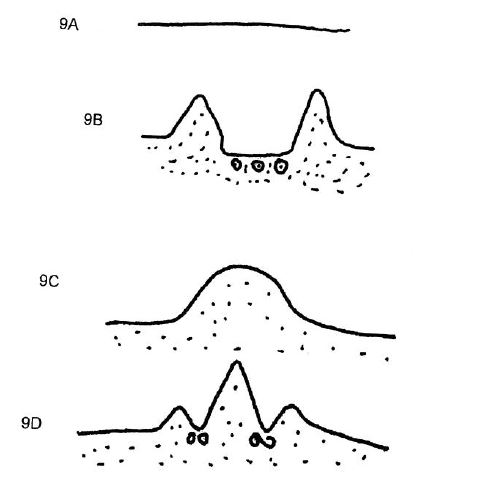
SCHEDULE 2
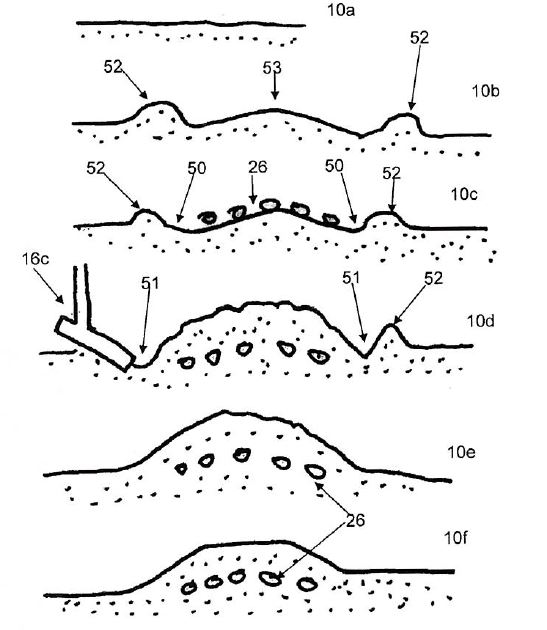
SCHEDULE 3