

FEDERAL COURT OF AUSTRALIA
Siegwerk Australia Pty Ltd (In Liquidation) v Nuplex Industries (Aust) Pty Ltd [2013] FCAFC 130
| IN THE FEDERAL COURT OF AUSTRALIA | |
| SIEGWERK AUSTRALIA PTY LTD (ACN 007 114 338) (IN LIQUIDATION) Appellant | |
| AND: | NUPLEX INDUSTRIES (AUST) PTY LTD (ACN 000 045 572) Respondent |
| DATE OF ORDER: | |
| WHERE MADE: |
THE COURT ORDERS THAT:
1. The parties are to bring in short minutes of order or competing written submissions on the scope of the retrial and costs within 14 days.
Note: Entry of orders is dealt with in Rule 39.32 of the Federal Court Rules 2011.
| IN THE FEDERAL COURT OF AUSTRALIA | |
| VICTORIA DISTRICT REGISTRY | |
| GENERAL DIVISION | VID 713 of 2013 |
| ON APPEAL FROM THE FEDERAL COURT OF AUSTRALIA |
| BETWEEN: | QBE INSURANCE (AUSTRALIA) LIMITED (ACN 003 191 035) Appellant |
| AND: | NUPLEX INDUSTRIES (AUST) PTY LIMITED (ACN 000 045 572) Respondent |
| JUDGEs: | PERRAM, DODDS-STREETON & ROBERTSON JJ |
| DATE OF ORDER: | 20 NOVEMBER 2013 |
| WHERE MADE: | MELBOURNE |
THE COURT ORDERS THAT:
1. The parties are to bring in short minutes of order giving effect to the conclusion that QBE’s appeal against the declaration and orders on Nuplex’s cross-claim should be allowed and dealing with the question of costs within 14 days.
Note: Entry of orders is dealt with in Rule 39.32 of the Federal Court Rules 2011.
| VICTORIA DISTRICT REGISTRY | |
| GENERAL DIVISION | VID 265 of 2013 |
| ON APPEAL FROM THE FEDERAL COURT OF AUSTRALIA |
| BETWEEN: | SIEGWERK AUSTRALIA PTY LTD (ACN 007 114 338) (IN LIQUIDATION) Appellant
|
| AND: | NUPLEX INDUSTRIES (AUST) PTY LTD (ACN 000 045 572) Respondent |
| IN THE FEDERAL COURT OF AUSTRALIA | |
| VICTORIA DISTRICT REGISTRY | |
| GENERAL DIVISION | VID 713 of 2013 |
| ON APPEAL FROM THE FEDERAL COURT OF AUSTRALIA |
| BETWEEN: | QBE INSURANCE (AUSTRALIA) LIMITED (ACN 003 191 035) Appellant |
| AND: | NUPLEX INDUSTRIES (AUST) PTY LIMITED (ACN 000 045 572) Respondent |
| JUDGES: | PERRAM, DODDS-STREETON & ROBERTSON JJ |
| DATE: | 20 NOVEMBER 2013 |
| PLACE: | MELBOURNE |
REASONS FOR JUDGMENT
Perram J
I. Introduction
1 This is an appeal from orders made by Gray J (Visy Packaging Pty Ltd v Siegwerk Australia Pty Ltd (2013) 301 ALR 560; [2013] FCA 231) and concerns cans of tuna in various, including ‘zesty’, vinaigrettes. In what remains of this complicated litigation the manufacturer of a lacquer (the present appellant, ‘Siegwerk’) sues the supplier of a resin used as a component in that lacquer (the present respondent, ‘Nuplex’). The cans of tuna had ring pull ends which are also known as ‘easy open ends’. The cans were manufactured by Visy Packaging Pty Ltd. As part of the process of manufacture it applied the lacquer to the inside surface of the cans. It did so to provide a protective coat between the tuna (and the vinaigrette) and the can surface with the aim of preventing degradation of the latter by the corrosive action of the former. Once manufactured, the cans were supplied to a canner who put tuna in them which, in turn, was supplied to it by a canned tuna purveyor. The filled cans were then delivered back to the canned tuna purveyor who sold them to distributors and retailers under the well-known brand ‘John West’.
2 From July 2004 internal corrosion was observed on the score line of the easy open can ends. In some cases, the corrosion would make its way from the inside of the can to the exterior. When this occurred, the contents of the cans spilled out on to other cans then spreading the corrosion further. Most cans were not affected by the problem but a significant number were. There followed two product recalls by the canned tuna purveyor of its product from the retail market. Initially this was confined to tuna in the zesty vinaigrette but the second recall swept up tuna in brine as well as in lemon and cracked pepper. Claim and counter claim ensued. The canned tuna purveyor claimed on the canner and the canner claimed on the can manufacturer. The can manufacturer settled the claims against it paying $6,105,786 to the canned tuna purveyor and $1,630,000 to the canner. Having done so, the can manufacturer then sued the lacquer supplier, Siegwerk; Siegwerk sued the resin supplier, Nuplex, and it sued its insurers.
3 Before the matter was called on for trial, Siegwerk settled the claim made against it by the can manufacturer for $2,250,000. All that was left of the suit that was eventually heard by the learned trial judge was the Siegwerk claim on Nuplex and Nuplex’s claim on the insurer. The trial judge determined that the winner in this imbroglio was Nuplex. It was held not to be liable to Siegwerk and, going in the opposite direction, its insurer was held to be liable to indemnify it for the cost of the litigation subject only to an excess.
4 Leaving the insurance issues to one side, the main issue at the trial was whether Nuplex was liable to Siegwerk for the amount for which it had settled with the can manufacturer. As a result of some interventions by the trial judge the parties had agreed that the sole question for determination was whether the resin supplied by Nuplex had caused the internal corrosion of the cans. Before this Court an attempt was made by Siegwerk to complain that this had resulted in the trial judge failing to deal with all of the issues raised by its claim. This submission is unsound. Once the parties had agreed, as they unquestionably did, that there was only one issue – causation – all of the other issues in the case ceased to exist as matters between them. Litigation could scarcely be conducted on a rational basis if trial judges were obliged to consider not only the matters said by the parties to be in issue between them but also those issues said by them not to be so: see Metwally v University of Wollongong (No 2) (1985) 60 ALR 68 at 71, ‘It is elementary that a party is bound by the conduct of his case’. For the reasons given, therefore, by Robertson J I agreed at the hearing that Siegwerk’s application to amend its notice of appeal to pursue this point ought be refused.
5 The forensic task faced by Siegwerk was then to link the behaviour of the resin supplier, Nuplex, to the corrosion of the can ends. As it happened, liability was an easy burden. Nuplex was obliged under its contract with Siegwerk to provide it with a resin known as Nuplex 3490 EP. The terms of the contract provided that Nuplex 3490 EP was to include an epoxy resin ingredient called DER 669-E and that this was to be sourced exclusively by the resin supplier from Dow Chemicals in Germany.
6 In the events which occurred, Nuplex did not use the mandated DER 669-E but instead another epoxy resin called Epikote 1009. This action by Nuplex in substituting DER 669-E with Epikote 1009 when making the Nuplex 3490 EP phenolic resin was, therefore, a direct breach of contract and Siegwerk was entitled, at least, to nominal damages for that breach of contract.
7 The debate which ensued at the trial was concerned, therefore, not with the issue of whether the use by Nuplex of Epikote 1009 was in some way actionable at law. No question of negligence arose and there was no inquiry into whether the Nuplex 3490 EP was of merchantable quality. There mere fact that Epikote 1009 was used in substitution for DER 669-E was sufficient to provide a basis for legal liability in contract. The issue instead was only whether that, ultimately admitted, breach of contract was the cause of the corrosion in the cans.
8 The remaining forensic task confronting Siegwerk was therefore clear: it had to show that the cans were corroded because Epikote 1009 had been substituted for DER 669-E.
9 Many ways of proving such a case might be imagined. Siegwerk decided to pursue only two which overlapped. The first was a circumstantial case by which it sought to show that there was a temporal link between the time when the Epikote 1009 substitution began and the time when the corrosion in the cans occurred. The second was a more theoretical case in which an attempt was made to show that certain chemical consequences of using Epikote 1009 in the lacquer could be seen as making it more likely that corrosion would occur.
10 The circumstantial case was hampered in a number of key respects.
11 The first was that the switch to Epikote 1009 from DER 669-E was not the only change which had occurred in the lacquer around the time in question. To understand the issues of chronology it is useful to know that the lacquer Siegwerk supplied to the can manufacturer under its specifications was known as ‘650814’. Siegwerk was only the most recent provider of 650814 and, indeed, it was not until October 2003 that the lacquer supplied by Siegwerk came to be used in commercial production by the can manufacturer on can bodies and ends. It was at that time that the cans first came to be exposed to lacquer 650814 made by Siegwerk using Nuplex’s epoxy phenolic resin 3490 EP. It was not until three months later, in January 2004, that the canner began filling cans made using Siegwerk’s lacquer with tuna. It was six months later still, on 25 July 2004, that corrosion in these cans was first noticed. The trial judge found, and it did not appear to be in dispute, that where corrosion occurred it typically started a minimum of four to six weeks after the tuna was put in the cans.
12 The nature of the record keeping which was available did not permit any direct link to be made between individual cans and whether the lacquer used had been made using Epikote 1009 or DER 669-E. The impermissible substitution of Epikote 1009 appears to have occurred only between October 2003 (when the can manufacturer first started using the Siegwerk lacquer) and March 2004. In that time, there were apparently 49 batches of Nuplex 3490 EP provided to Siegwerk of which it could be shown that 13 contained Epikote 1009. There was no way thereafter of tracing directly which cans were treated with lacquer using those batches.
13 Looked at this way, it is easy to see Siegwerk’s enthusiasm for the proposition that there was circumstantial evidence linking Nuplex’s use of Epikote 1009 in batches made from October 2003 to March 2004. There was a reasonably distinct temporal coincidence.
14 The difficulty was that this was not the only change which occurred to lacquer 650814 at the time that Siegwerk’s lacquer began to be used. Another change which took place in the same month that Siegwerk’s lacquer began to be used, October 2003, was the can manufacturer’s decision to specify to Siegwerk that the lacquer should be less viscous. The trial judge found at [15] that it changed the viscosity specification for the lacquer from 80-100 FORD to 65-95 FORD. Thus it was not the case that the lacquer which began to be used on actual cans in October 2003 and which was detected as failing in July 2004 differed in only one way – the substitution of Epikote 1009 for DER 669-E – from its predecessor; it differed also in that it was being applied to the cans with decreased viscosity. There was a further difficulty which was that in the preceding year, April 2002, there had been another change in the recipe for lacquer 650814 with the substitution of one aluminium product for another. Unlike the reduced viscosity (which occurred in the same month the substitution of DER 669-E began) this occurred 18 months earlier. Nevertheless it was another change.
15 Thus, the timing of the can failure was consistent with it being caused by the substitution of Epikote 1009 or by the use of a lacquer with reduced viscosity or, perhaps, or although this seems less likely given the longer period, the change in the aluminium product. By itself such a circumstantial case could not succeed. Although it was consistent with the cause of the failure being the lower viscosity of the lacquer or the use of Epikote 1009 it simply provided no basis for choosing between them and hence no path to saying that one of those conclusions was more probable than not.
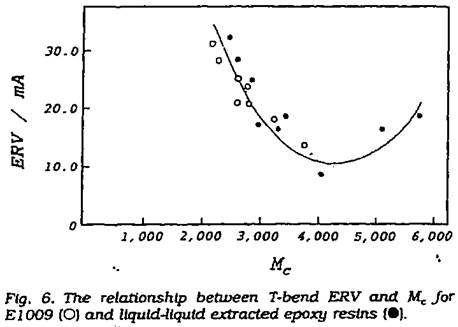
16 If Siegwerk was to succeed, therefore, it needed something additional and for this it turned to industrial chemistry. Expert evidence was adduced which, if accepted, could have tended to show that:
(a) Epikote 1009 had a lower average molecular weight than DER 669-E; and
(b) lacquer produced using epoxy phenolic resins with lower average molecular weights tended to be more brittle than those with higher average molecular weights.
17 The argument then was that given the more brittle nature of the ensuing lacquer and the timing of the can failures it was established on the balance of probabilities that the cause of the failure of the cans was the use of Epikote 1009 in the Nuplex 3490 EP.
18 The trial judge did not accept that the lacquer supplier had discharged its burden of showing, on the balance of probabilities, that the use of Epikote 1009 was the cause of the can failure. He did not accept that it was proved that Epikote 1009 did have a lower average molecular weight than DER 669-E. Further, although the trial judge was prepared to accept as plausible the idea that the use of an epoxy phenolic resin with a lower average molecular weight might result in a more brittle lacquer, his Honour was not willing to find that this had, in fact, been proved. The trial judge noted some other matters which might also be responsible for the failure, two of which were the decision by the can manufacturer to specify a lacquer with lower viscosity and the possible excessive wear by the scoring tool responsible for the creation of the easy open lid. His Honour’s ultimate conclusion was that there was insufficient evidence to establish Siegwerk’s theory of causation.
19 Siegwerk filed a notice of appeal containing four grounds. Its written submissions developed each of these. It is convenient to commence with the challenges to the trial judge’s factual conclusions, first, that the lacquer supplier had failed to show that Epikote 1009 had a lower average molecular weight than DER 669-E and, secondly, that lacquers made with epoxy phenolic resins having a lower average molecular weight were more brittle and more likely to fail.
II. The Average Molecular Weight of Epikote 1009
20 At trial Siegwerk called Dr Scheirs to make good this point and Nuplex called Mr Haig. There was no question about either man’s qualifications. Mr Haig did not venture a view on the question of whether Epikote 1009 had a lower average molecular weight than DER 669-E, confining himself to criticism of Dr Scheirs’ methods.
21 Dr Scheirs had been involved in the litigation for a longer period than Mr Haig. His first report was prepared in March 2006 at a time when the can manufacturer was accusing Siegwerk of providing a defective lacquer. In 2006, Siegwerk was seeking to resist that proposition. As noted above, before October 2003 the can manufacturer had sourced its lacquer from a different manufacturer to Siegwerk. Its contention was that the problems had started when Siegwerk took over the supply of the lacquer in that month. The can manufacturer’s expert had suggested that the new lacquer provided by Siegwerk had significantly different molecular weights to the old lacquer. Dr Scheirs had rejected this proposition, however, because he felt that the process of calculating molecular weights used in the can manufacturer’s expert’s report could not be relied upon.
22 In 2010 it emerged for the first time that there had been a substitution of DER 669-E with Epikote 1009 by Nuplex. Dr Scheirs then changed his views. In his second report (which was issued after Siegwerk had settled with the can manufacturer) he expressed not only the view that the average molecular weight of Epikote 1009 was 4000 whilst DER 669-E was 5000-8000 but also that this was likely to make the ensuing lacquer more brittle.
23 In a third report Dr Scheirs arranged for samples of Epikote 1009 and DER 669-E to be tested to see what their average molecular weights were. The first test was conducted by a chemical analysis company called Leeder Consulting. As it happens, there are in fact three measures of average molecular weight Mw (weight average molecular weight), Mn (number average molecular weight) and Mz (sedimentation average molecular weight). Dr Scheirs thought Mw the most useful. The result of the Leeder Consulting analysis was as follows:
| Mn | Mw | Mz | |
| Epikote 1009 Epoxy resin | 3901 | 8425 | 10914 |
| DER669E Epoxy resin | 4401 | 11215 | 17770 |
24 From this Dr Scheirs concluded that the Mw of DER 669-E was 25% greater than that of Epikote 1009. Dr Scheirs also noted that the Mn of the Epikote 1009 was 3901 and this was close to the Mn quoted in the product data sheet for Epikote 1009 which was approximately 4000. The point of that last observation was to demonstrate that the sample which had been tested was typical.
25 Mr Haig was critical of this process in a number of ways.
26 First, he did not think that only one sample of each substance was enough given that they were substances which exhibited a large range of weights. Additionally, nothing was known of the samples’ age which could affect the results. In fact, as discussed below, Dr Scheirs did arrange for two sets of tests.
27 Secondly, he noted that Dow’s data sheet for DER 669-E had said that it had a large molecular weight range Mw of 5000-8000 (Mn). That is, for an arithmetic average of 6,500 Mn there was a possible variability of ± 25%. That variability mattered because the difference found between the Epikote 1009 (3901) and DER 669-E (4401) samples analysed was only 11% (Mn). Mr Haig criticised Dr Scheirs for regarding that 11% as critical when the product variability of Mn was ± 25%. Dr Scheirs did not, however, say that. His evidence was that what was significant was the 25% difference in the Mw values. He did say that the Mn was, in fact, higher for DER 669-E but he was quite clear that the most commonly used measure was Mw and that there the difference was 25%.
28 Mr Haig’s third criticism had more substance. The product data for DER 669-E suggested a Mn in the range of 5000-8000, but the ChemicalAnalysis results suggested a Mn of 4401, i.e., well outside the quoted ranges. This was capable of suggesting that there was something irregular about the sample of the DER 669-E which was used for testing or the testing process itself.
29 A fourth criticism Mr Haig made was that the Mw value found by Leeder Consulting for Epikote 1009 was at variance with the reported values for it in the literature. So Kioke had reported its Mw as 9454 (as opposed to Leeder Consulting, 8425) and Mori had reported it as 15300.
30 For those reasons Mr Haig was sceptical of the process by which Dr Scheirs had gone about measuring the Mw for Epikote 1009.
31 The trial judge approach the matter this way (at [73]):
The first assumption on which Dr Schier’s [sic] theory is based is that there was in fact a difference in molecular weight between the Epikote 1009 used by Nuplex in substitution for the DER 669-E that Nuplex was bound by its contract with Siegwerk to use. The validity of this assumption is very difficult to establish. In the first place, the use by the respective manufacturers of the two epoxy resins of ranges in the technical data they publish about molecular weight has the result that the only comparison possible on the basis of that technical data is a comparison of the ranges, rather than a direct comparison of the molecular weights of the particular inputs into resin manufactured by Nuplex. Dr Scheirs said that this difficulty was overcome by the analysis he had carried out of a sample of each of the two epoxy resins, which revealed significant differences in molecular weight. I accept Mr Haig’s criticism of this proposition. Given that molecular weights are expressed in ranges, analysis of a single sample of each epoxy resin is unlikely to be of much significance in determining whether there were actual differences in molecular weights. This is not to say that I agree with Mr Haig’s statement that he would need to be “convinced” of the difference in molecular weight. It is clear from his evidence that Mr Haig was applying a standard well above that of the balance of probabilities in saying that he was “[n]ot convinced”. It is true, however, that separate comparative analyses of a series of samples from different batches of the two epoxy resins could have provided a firmer basis on which it could have been determined with any confidence whether there was a difference in molecular weights between the two resins used by Nuplex. The evidence as it is falls short of validating the first assumption.
32 The lacquer supplier’s complaints about this reasoning are fivefold:
(a) the trial judge erred in concluding it was difficult to assess the molecular weights involved because Dr Scheirs had, in fact, done so;
(b) the manufacturing data sheets were in evidence and these showed Epikote 1009 had a lower molecular weight;
(c) Dr Scheirs gave evidence to the same effect;
(d) Mr Haig agreed; and
(e) the trial judge was wrong when he said that only one test had been conducted by Leeder Consulting; in fact, there had been two.
33 Proposition (a) is rhetorical only and assumes its own correctness. It is true that Dr Scheirs had assessed the molecular weights but the entire question at the moment is whether he did so correctly. The fact that Dr Scheirs had the molecular weights tested cannot, by itself, provide any more support for the correctness of those tests than the testing process itself does.
34 Proposition (b) is wrong. The Epikote 1009 data sheet was in evidence. It did not reveal an Mw for the product but it did say that the Mn was approximately 4000. The reference given in Siegwerk’s written submissions to Tab 28 of Part C of the appeal books was not a reference to a data sheet but instead to an analytical report. The reference given in the same submissions to p 21 of Mr Haig’s report is not a reference to a data sheet either. On that page Mr Haig reported that he had sent an email to the manufacturer of DER 669-E, Dow, which had replied that the Mw for DER 669-E was between 5000-8000. The evidence did not permit any comparison so far as data sheets were concerned between the Mn of Epikote 1009 and DER 669-E for the data sheet for Epikote 1009 quoted a Mn value and the response from Dow was an Mw value (even assuming it could be treated as a data sheet). It was not correct to say, therefore, that the manufacturing sheets showed Epikote 1009 had a lower molecular weight than DER 669-E without explaining the relationship between Mn and Mw. This was not attempted.
35 As to (c), it is true that Dr Scheirs gave evidence to this effect but, as the passage above plainly shows, the trial judge took this into account.
36 As to (d), it is not correct to say that Mr Haig agreed. The transcript reference given is to T54. At that part of the trial Dr Scheirs and Mr Haig were giving concurrent evidence and were engaged in a dialogue with each other. At the top of the page (and the bottom of the preceding page) Mr Haig said this:
- - - in that the Epikote 1007 has a molecular weight range that’s published that’s only half the value published for the 1009 and to find a result that’s comparable between those two is really quite disturbing as far as my acceptance of these results as being truly accurate. And in fact, one of the results that John produced for the D.E.R. 669, the ones done by GPC -and came back with a result of 4400 is in fact outside the published range for the D.E.R. anyway. So all in all I don’t have a lot of confidence in these results and I’m quite willing to accept that there may well be a molecular weight difference on average between the two products. But we haven’t been able to establish it with the testing that has been performed.
37 Unsurprisingly, Dr Scheirs did not agree. It is not necessary to set out his response. It suffices to say that he emphasised the orthodoxy of the testing procedure. Siegwerk then relies on Mr Haig’s response to this:
I’m quite happy to accept John’s contention that, in fact, samples analysed in the one laboratory on the one machine at the same time and calibrated at the same time are going to produce a relative figure that’s quite acceptable. I agree with that. I guess in this whole molecular weight argument and the differences between the two starting epoxies, at the end of the day I don’t see that that is significant, and we will discuss that further through a number of avenues, one of which being the published literature for the performance, and also the fact that there are many other valid reasons for the failures without becoming involved in these subtle differences of molecular weight.
38 Siegwerk submits that this is evidence that Mr Haig accepted that the molecular weight of Epikote 1009 was lower. It does not say that.
39 As to (e), the parties’ submissions were difficult to follow. Siegwerk submitted that the trial judge had made a mistake in thinking that Dr Scheirs had only commissioned a single test of Epikote 1009 and DER 669-E. My reading of paragraph [73] of the judgment is that it proceeds on the basis that there was only a single test arranged by Dr Scheirs. There were, in fact, two tests. The first was commissioned by Dr Scheirs from Leeder Consulting on 4 November 2010 and the results received on 18 November 2010. The results of that test are set out above at [23]. Dr Scheirs appears then to have obtained another analysis on around 13 July 2011. This time the analysis was conducted by an entity called ‘ChemicalAnalysis’. This Court was not taken to any material as to how this came about. The result of the analysis was before the Court, however, and it showed a Mn for DER 669-E of 6834 and for Epikote 1009 of 4789. It was this analysis that Siegwerk elsewhere erroneously referred to in its written submissions as a data sheet.
40 Nuplex’s submissions took issue with the idea that the trial judge had not been aware of both tests. Reference was made in its written submissions to paragraphs [39], [45] and [47] of the judgment. These contain, however, no reference to the second test at all. Indeed, [45] explicitly referred to Mr Haig’s criticism of Dr Scheirs for only using a single sample. Nuplex sought, in Mr Donaldson SC’s address to the Court, to establish that what the trial judge meant was that there had only been a single sample of the two resins tested, albeit this sample had been tested twice. That is not the natural reading of [73] or [45]. The reasons for judgment contain no reference to the second test at all. In that circumstance, and even apart from the ordinary language of [73], it is much more likely that the trial judge was referring to there having been only one test and not two tests of a single sample.
41 Accordingly, I would conclude that this was an error. As I have already said, the second analysis suggested a Mn for Epikote 1009 of 4789 and for DER 669-E of 6834. It did not include any analysis directly of Mw but it did include a measurement of a variable called ‘EEW’ (epoxide equivalent weight) which Mr Haig elsewhere gave evidence could, in a rough and ready way, be half the value of Mw. There was no discussion of this effect in the appeal, however, and I do not think it appropriate to proceed on the basis that Mw is roughly half of EEW.
42 Taken together the two tests commissioned by Dr Scheirs, therefore, suggested the following:
| Leeder Consultants | ChemicalAnalysis | |||
| Mw | Mn | Mw | Mn | |
| Epikote 1009 | 8425 | 3901 | – | 4789 |
| DER 669-E | 11215 | 4401 | – | 6834 |
43 Mr Haig’s criticism was that an accurate picture could not be obtained from a single sample. The trial judge rendered this criticism at [73] as an observation that there needed to be a series of tests done. I do not accept that if the trial judge had adverted his mind to the second test, that the result would necessarily have been the same. It would have been possible, it is true, to discount the second test, by noting that it dealt with Mn and not Mw or by saying that two tests were not enough. But there may have been answers to this. One answer might be calculating Mw from EEW. I cannot say this error was immaterial.
III. Whether lower molecular weight epoxy resins lead to more brittle lacquers
44 Dr Scheirs explained this point in his final report as follows:
The use of the unauthorized lower MW Epikote 1009 (molecular weight 4000) in place of the stipulated DER669 (molecular weight 5000 – 8000) reduced the resistance of the coating to cracking under scoring stresses and reduced the level of adhesion of the lacquer to metal under autoclave sterilization. The low MW epoxy gave a coating that was more brittle and with less adhesion to the metal substrate than the PPG resin. The Epikote epoxy was used by Nuplex until March 2004 based on the information that I have seen.
Use of Epikote 1009 in place of DER 669E would explain the variability in performance both of the Sicpa product as well as between the Sicpa product and the PPG product.
45 Dr Scheirs gave evidence that his view was supported by two academic papers; one by Kojima, the other by Kojima and Watanabe together, (‘the Kojima Papers’).
46 Mr Haig had two points in response. First, he noted that the lacquer had other components in it besides the Epikote 1009 and reasoned that it was not possible to draw conclusions about the effects of Epikote 1009 without first understanding those effects. Secondly, he argued that the Kojima Papers did not apply to grade 9 epoxy resins and that both Epikote 1009 and DER 669-E were resins of that kind. Dr Scheirs did not accept this interpretation of the Kojima Papers.
47 The first point was not debated before this Court. As to the second point, it will be seen that what is involved is a dispute about the meaning of the Kojima Papers.
48 The trial judge dealt with the matter this way at [74]:
The second assumption made by Dr Scheirs is that a lower molecular weight of the epoxy resin used results in a less flexible coating on a can end, after the epoxy resin has been mixed with a phenolic resin, the resulting epoxy-phenolic resin has been mixed with other ingredients to make a lacquer, the lacquer has been applied to can ends in two coats and each of those coats has been separately cured by heating. Dr Scheirs says that this assumption is supported by the Kojima papers, which show the results of experimental work demonstrating the correlation between higher molecular weight of epoxy resin and greater flexibility of final coating. There can be no doubt that the contents of the Kojima papers do support the existence of such a correlation up to a point. Mr Haig’s criticism is that Grade 9 epoxy resins (which include Epikote 1009 and DER669E) appear to be beyond that point. In other words, the higher the grade of epoxy resin, the more likely it is that there will be a plateau effect or (Mr Haig says) even a downturn in the flexibility of the finished product. Grade 9 epoxy resins are very high grade products. I do not accept that the assumption made by Dr Scheirs that any lowering of molecular weight involved in the substitution of Epikote 1009 for DER669E resulted in less flexible lacquer coating on can ends is borne out. The assumption might well be correct, but further evidence would be needed to validate it.
49 Both Mr Haig and Dr Scheirs claimed that the Kojima Papers supported their position. In brief, Dr Scheirs pointed to certain parts of the Kojima Papers to make good the proposition that when used as part of a coating, lower average molecular weight epoxy resins were more prone to brittleness and adhesion problems. On the other hand, Mr Haig pointed to other parts of the papers to make good the proposition that, whilst this was generally true, it was not true in the case of what he called group 9 epoxies (of which Epikote 1009 and DER 669-E were apparently members). To resolve this debate it was necessary to grasp the point being made by both gentlemen and to assess it.
50 The debate between them was technical. They were ad idem in accepting that there was a general rule of thumb that as the average molecular weights of epoxy resins increases the flexibility of the epoxy phenolic resins also improves. Mr Haig’s reasoning was that this rule of thumb ceased to apply to grade 9 epoxy resins. His evidence was as follows:
So I guess in taking issue with John’s theory, we can start I suppose by saying that, yes, there is quite an acceptable rule of thumb that as the molecular weight of epoxies increases and the epoxy phenolic resins that are manufactured from those epoxies increases, that you start – you get superior performance because of better adhesion and flexibility, and all of the good things that you want in this particular application. It is though a rule of thumb and it has its limitations, and the main limitation I see is that it is really only applicable over a range of epoxy resins up to a point. At the point of about 5, 9 epoxies we start to get into a region where the molecular weight differences are less critical on performance and, in fact, beyond that the molecular weight increases can actually be detrimental to performance. Now, I rely in forming that opinion on the work of Kojima in that paper that I quote in my report. We can delve into Kojima at this point if you wish, your Honour. It is going to be probably hard going but - - -
51 Thus the essence of the debate foreshadowed by Mr Haig was that the Kojima Papers would demonstrate that for grade 9 epoxy resins (such as Epikote 1009 and DER 669-E) there were little discernible improvements in flexibility and adhesion as average molecular weight increased. This proposition was disputed by Dr Scheirs who read the Kojima Papers differently. Both readings were quite technical and by no means susceptible to simple explanation.
52 It is evident that the trial judge accepted Mr Haig’s point about grade 9 epoxy resins but neither at [74] nor anywhere else did his Honour record any of the detail of what the debate was or why he accepted Mr Haig’s view. The reasons simply accept that the conclusions in the Kojima Papers did not apply to grade 9 epoxy resins. Siegwerk submits that this reasoning was not adequate. In my opinion, this contention is correct.
53 To see why, one needs to understand the debate. At its heart, not mentioned in the trial judge’s treatment of the subject matter, was the variable Mc. Mr Haig and Dr Scheirs agreed on this definition of Mc:
When describing both polymeric networks and crosslinked polymers, the basic quantity used is the so-called network parameter, Mc, defined as the number average molecular weight between branch points (junction points). In crosslinked polymers, we can distinguish primary chains and crosslinks, and thus Mc relates to the segment of the primary chain between two crosslinks.
54 They also agreed that the Kojima Papers took Mc and related it to the performance characteristics of the epoxy resins in question. Put another way, Mc measured the molecular weight between the crosslinks in the resin and the point of the Kojima Papers was to examine the relationship between flexibility and adhesion, on the one hand, and the variable Mc, on the other. It might be observed, as both Dr Scheirs and Mr Haig accepted, that Mc and average molecular weight are not quite the same thing. Both accepted that Mc was the average molecular weight between crosslinks. No attempt was made to explain to this Court what this meant. Both parties in this Court appeared to proceed on the basis that average molecular weight was some kind of proxy for average molecular weight between the crosslinks. Neither party sought to say whether average molecular weight between the crosslinks stood as a proxy for Mw or Mn or for something else.
55 The testing carried out by Kojima involved creating coatings of various resins with different varying levels of Mc, folding these coatings over themselves twice (referred to as ‘2T’) and then dropping a steel block of fixed weight on to them from 40 cms above. After this the disruptions to the surface coating (‘enamel’) of the specimens were measured electrically (or ‘rated’) as a result of which a value was derived. This was called the enamel-rater value or ‘ERV’. The lower the ERV, the more flexible the coating was.
56 Mr Haig’s point about the Kojima Papers turned on Figure 6 in the second paper which looks like this:
57 Kojima and Watanabe explained Figure 6 as follows:
Solvent-borne coatings were formulated using the 4-times extracted epoxy resin and the original epoxy resin at various epoxy/phenolic ratios. These coatings were coated on TFS and baked in an oven at 210˚C for various times to obtain the coating films with various degrees of cure. Figure 6 shows the evaluated results of flexibility by an enamel-rater as a function of calculated Mc. The ERVs were well expressed as a function of Mc, which possess a minimum at around Mc = 4,000. In the lower Mc region, the network structure appears to be too tight and rigid; whereas in the higher Mc region, it appears to be loose and imperfect. Thus, it appears important to control Mc to obtain optimum flexibility of the cured coating films, but not Ws.
58 Some things Figure 6 shows are perhaps tolerably clear to an appellate court, some not. Into what might be thought to be the clear category can be put the observation that the figure does appear to show that as Mc increases the flexibility of Epikote 1009 improves right up until just above a Mc of 3500. However, there are aspects of Figure 6 which are confusing to lay people. Why, for example, is it indicated that the Mc, of the Epikote 1009 increases apparently from 2000 to just under 4000? The answer to that may appear on the previous page where the authors explained that they had removed, in varying degrees, the low molecular weight elements in the resin to obtain different levels of Mc. They said:
To examine the adverse effects of lower molecular weight components, a model calculation was carried out. We assumed that the molecular weight distribution obtained by GPC is segmented into fractions and that each fraction in the sol is formed by the fraction of the original epoxy resin corresponding to the same molecular weight. Then, we eliminated a certain fraction both from the original epoxy resin and the sol. Calculated Mc for such distributions corresponding to a certain sol content, Ws, gives information on how Mc changes by eliminating a certain molecular weight fraction. Figure 4 shows the calculation results for Ws = 0.10, 0.15, and 0.20. The contribution of the fractions with a molecular weight range between 1,000 and 10,000 appear to be most significant. In other words, a network structure of higher Mc can be obtained by eliminating such fractions. The influence of fractions with a molecular weight < 1000 appears not to be significant. However, this is because of their lower content and the influence of each molecule may be even more significant. Thus, it will be concluded that the epoxy resin without any lower molecular weight components is preferable to obtain a network structure with higher Mc.
59 If that be right (and I am by no means sure that it is) then the various levels for the Epikote 1009 displayed in Figure 6 reflect the fact that it has had varying bands of low molecular weight material removed from it to achieve varying Mc levels (on the basis that removal of lighter material will increase the average weight). On the other hand, Kojima and Watanabe also refer to varying curing times at the standard temperature of 210˚C and it may be that this is the reason for the fluctuations in Mc. Having no expertise in industrial chemistry, it is very difficult for me to say.
60 Whilst the trend of the Epikote 1009 (that is, the open circle dots) indicated that flexibility increased as Mc increased towards 3700, the black dots (which were the liquid-liquid extracts with even higher average molecular weights) revealed decreasing flexibility as Mc increased beyond 3700. Kojima and Watanabe explained this as follows:
An epoxy resin, E1009, was used to prepare epoxy resins with sharper molecular weight distribution. Solid epoxy resin (300 g) was charged in a flask with 3000 g of ethanol and agitated at the boiling temperature for 3 h. After cooling, the mixture separated into two phases. The upper phase, which contained lower molecular weight components, was disposed. One third of the residue was dried and used as an extracted resin. By repeating this procedure, epoxy resins with a different molecular weight distribution were obtained. Figure 2 shows the molecular weight distribution patterns of these liquid-liquid extracted resins.
61 Mr Haig put it this way:
… And having done that, he looks at the flexibility of commercial epoxy resins. So having performed experiments where he, if you like, purifies the resin, he actually produces an unrealistic series of lacquers that he tests. He then goes back to the flexibility of commercial epoxy resins and he tests Epikote 1009 and produces a range of final molecular weight products in the cured baked film by changing the stoichiometry or the baking conditions, and if we go to page 227, figure 6, you will see that the filled circles or the solid dot points represent the liquid-liquid extracted epoxy resins – that is, those that he has modified to produce sufficiently high molecular weight material, and also, the E-1009, which he has produced varying molecular weight final materials by changing the curing conductions. …
62 The significance of this then for Mr Haig was that it allowed Kojima and Watanabe to create a class of epoxy resins which had a very high average molecular weight between the crosslinks, higher indeed than that of Epikote 1009. When the trend line was extended what it showed was that the ERV started to go up when the Mc exceeded 4000, that is to say, that increasing molecular weight past 4000 with Epikote 1009 led to decreased flexibility and not, as the rule of thumb would have it, increased flexibility. Mr Haig explained this as follows:
Now, a – a Mc value of about 3800, 3700 for the E-1009, if you look at figure 7, that is down in the – what is called the optimum range of performance for the enamel rater value for those epoxy resins. Now, in that area of about 3800, once can see that if you move lower or higher, you’re not going to get any improvement in enamel rater value. So it’s my contention that in fact molecular weight of the starting material as it is reflected in the final Mc value is in fact very insensitive in the range where we expect these type 9 epoxies to perform.
63 Thus was Mr Haig’s argument. On any view, it was reasonably complex. As might be expected, Dr Scheirs’ response was equally complex and had, in effect, two elements. The first was that the thrust of the Kojima Papers contradicted what Mr Haig was suggesting. He quoted the abstract from the second article:
The coating films with a higher molecular weight of network chain, Mc, showed more flexibility. This was achieved by the use of an epoxy resin with higher molecular weight or an epoxy resin with a lower content of lower molecular weight components and by control of cure.
64 This left unchallenged, however, Mr Haig’s treatment of Figure 6. Dr Scheirs dealt with it by focusing on the liquid-liquid extracted epoxy. His point was that this was not Epikote 1009 and that the increasing ERVs were to be seen as having been caused by increased curing times. Dr Scheirs put it this way:
So it’s quite clear what he is saying there, but now we need to revisit figure 6. So what he has got here in figure 6, by my estimation, is that he has reproduced those open circles for the Epikote. So we can take that data as being valid. He has then got some dark circles, and that refers to the liquid-liquid extractions. The problem I have with those dark circles is, if we go to his experimental section – or in fact, sorry, page 226, the previous page, the last paragraph:
Solvent borne coatings were formulated at various epoxy-phenolic ratios. These coatings were coated and baked under various conditions to obtain coating films with varying degree of cures.
So what he has done with those black circles, is he has taken firstly liquid-liquid extracted epoxy. It’s no longer – yes? No? The black circles.
…
Okay, just the black. He has taken liquid-liquid extracted epoxy, which is no longer Epikote 109. Molecular weight has shifted. Then he has baked them under varying degrees of cure. Now, varying degrees would mean from both low to high. So – and once you overcure these systems, they become too densely crosslinked, and they then no longer have inherent flexibility. They become brittle. And that’s what you see. That’s why you see that curve moving up, because he has taken the higher molecular weight and then cured them to varying degrees.
65 Thus the debate between the experts was about what Figure 6 meant and how it was to be interpreted in light of the article as a whole. It was a complex issue. The only treatment of this question is at paragraph [74] of the trial judge’s reasons (above). Of that paragraph the entire topic is dealt with in 6 sentences which I will repeat:
Dr Scheirs says that this assumption is supported by the Kojima Papers, which show the results of experimental work demonstrating the correlation between higher molecular weight of epoxy resin and greater flexibility of final coating. There can be no doubt that the contents of the Kojima Papers do support the existence of such a correlation up to a point. Mr Haig’s criticism is that Grade 9 epoxy resins (which include Epikote 1009 and DER 669-E) appear to be beyond that point. In other words, the higher the grade of epoxy resin, the more likely it is that there will be a plateau effect or (Mr Haig says) even a downturn in the flexibility of the finished product. Grade 9 epoxy resins are very high grade products. I do not accept that the assumption made by Dr Scheirs that any lowering of molecular weight involved in the substitution of Epikote 1009 for DER 669-E resulted in less flexible lacquer coating on can ends is borne out. The assumption might well be correct, but further evidence would be needed to validate it.
(emphasis added)
66 With great respect to the trial judge, the italicised portion is inconsistent with a full grasp of the evidence which had been led. There was no plateauing effect. There was a trend down in ERV as Mc increased towards 4000 and then a trend up past the 4000 point using liquid-liquid extract resins. Mc was not a measure of how ‘high grade’ an epoxy resin is (whatever that meant), it was a measure of the molecular weight between the crosslinks. On my reading of the Kojima Papers there was nothing about ‘high grade’ epoxy resins in it at all.
67 All of that might well be material if one were trying to work out the answer. However, much more important is that there is no reference in the trial judge’s reasons to Dr Scheirs’ responsive argument that the data points for the liquid-liquid extract could be disregarded because they were not Epikote 1009. To engage with that argument it would have been necessary to have had a working theory of what Figure 6 meant.
68 In my opinion, the reasons of the trial judge on this issue are absent: cf. State Rail Authority of New South Wales v Earthline Constructions Pty Ltd (1999) 160 ALR 588 at 607 [64] and 622 [94] – [95]. Nor do I think this is a case where one could speculate about what the correct outcome should be so that this Court could attempt to answer the issue for itself. I do not have any confidence that an attempt on my part to say what the correct answer is would be correct.
IV. Conclusions on factual challenges
69 Error is shown in the trial judge’s treatment of both of the critical assumptions. On the first assumption, his Honour failed to appreciate that Dr Scheirs had arranged for two tests, one with Leeder Consulting and one with ChemicalAnalysis. On the second assumption, the trial judge failed to come to grips with the central debate between the experts and in consequence gave no reasons at all for preferring Mr Haig’s view.
70 It is not possible to say that either of these errors is not material. As to the first, whilst one can conceive of a chain of reasoning by which a tribunal of fact might determine that the second test made no difference, this is not, by any means, inevitable. It is possible that the second test might have persuaded the trial judge that Mr Haig’s concerns about the sampling process were unfounded. Of course, his Honour could also have concluded that two samples were not enough either. The important point is that this Court cannot be definitive about what the outcome would, or should, be.
71 On the second point, the principal scientific question has simply not been determined. Again, this Court is in no position to determine the question for itself. Grounds 3 and 4.2 of appellant’s notice of appeal are made out. Accordingly, there will need to be a retrial.
72 This makes it unnecessary strictly to deal with the remaining grounds. I would nevertheless make the following brief remarks. The trial judge reasoned that although his Honour was confronted with several different possible reasons why the corrosion occurred the question was whether Siegwerk had proved it was as a result of the use of Epikote 1009. His Honour concluded that whilst Dr Scheirs’ theory about average molecular weight was plausible it had not been proved on the balance of probabilities. As a syllogism, I detect no error in this. Having found that it had not been shown that the average molecular weight of Epikote 1009 was less than that of DER 669-E the analytical theory could not succeed for the premise upon which it rested was not made out. I would therefore have rejected ground 4.1 which sought to criticise this style of reasoning. I would also have rejected ground 4.3 which sought to suggest that the trial judge had erred in not being more critical of Mr Haig. No such obligation existed.
73 Grounds 1 and 2 effectively sought to argue that the trial judge’s conclusions were against the weight of the evidence. Had the trial judge noted the second test commissioned by Dr Scheirs and had he dealt with the debate about the Kojima papers and determined it adversely to Siegwerk, I would not have accepted this argument. The evidence before the trial judge was capable of supporting a favourable conclusion to either party. The difficulties in this appeal lie not in the trial judge having arrived at a conclusion which the evidence cannot sustain but, rather, in failing adequately to deal with the evidence.
74 My initial view is that the retrial should be confined to the single issue determined by the trial judge but I would permit the parties to debate this if they wish in brief written submissions filed within 14 days.
75 On the insurance issues, I have had the advantage of reading in draft the reasons of Robertson J. I agree that the insurer is entitled to succeed on its appeal for the reasons given by his Honour and join in his Honour’s proposed orders.
76 Subject to the matter in [74] above, in Siegwerk’s appeal I would propose the following orders:
1. Set aside the orders made on 19 March 2013.
2. There be a new trial on the single issue of whether the substitution of Epikote 1009 for DER 669-E caused the corrosion in the cans.
77 Pending determination of the appropriate orders the only formal order which should be made now is that the parties bring in short minutes of order or competing written submissions on the scope of the retrial and costs within 14 days.
| I certify that the preceding seventy-seven (77) numbered paragraphs are a true copy of the Reasons for Judgment herein of the Honourable Justice Perram. |
Associate:
| IN THE FEDERAL COURT OF AUSTRALIA | |
| VICTORIA DISTRICT REGISTRY | |
| GENERAL DIVISION | VID 265 of 2013 |
| ON APPEAL FROM THE FEDERAL COURT OF AUSTRALIA |
| BETWEEN: | SIEGWERK AUSTRALIA PTY LTD (ACN 007 114 338) IN LIQUIDATION Appellant |
| AND: | NUPLEX INDUSTRIES (AUSTRALIA) PTY LTD (ACN 000 045 572) Respondent |
| JUDGES: | PERRAM, ROBERTSON AND DODDS-STREETON JJ |
| DATE: | 20 November 2013 |
| PLACE: | MELBOURNE |
| IN THE FEDERAL COURT OF AUSTRALIA | |
| VICTORIA DISTRICT REGISTRY | |
| GENERAL DIVISION | VID 713 of 2013 |
| ON APPEAL FROM THE FEDERAL COURT OF AUSTRALIA |
| BETWEEN: | QBE INSURANCE (AUSTRALIA) LIMITED (ACN 003 191 035) Appellant |
| AND: | NUPLEX INDUSTRIES (AUSTRALIA) PTY LTD (ACN 000 045 572) Respondent |
| JUDGES: | PERRAM, DODDS-STREETON AND ROBERTSON JJ |
| DATE: | 20 November 2013 |
| PLACE: | MELBOURNE |
REASONS FOR JUDGMENT
Dodds-Streeton J
78 I have had the advantage of reading in draft the separate reasons of Perram J and of Robertson J.
79 For the reasons given by their Honours I agree that the appeals in VID 265 of 2013 and VID 713 of 2013 should be allowed and I agree with the orders each proposes. I also agreed, at the hearing of the appeal, that leave to amend the notice of appeal should be refused, for the reasons given by Robertson J.
| I certify that the preceding two (2) numbered paragraph is a true copy of the Reasons for Judgment herein of the Honourable Justice Dodds-Streeton. |
Associate:
Dated: 20 November 2013
| IN THE FEDERAL COURT OF AUSTRALIA | |
| VICTORIA DISTRICT REGISTRY | |
| GENERAL DIVISION | VID 265 of 2013 |
| ON APPEAL FROM THE FEDERAL COURT OF AUSTRALIA |
| BETWEEN: | SIEGWERK AUSTRALIA PTY LTD (ACN 007 114 338) IN LIQUIDATION Appellant |
| AND: | NUPLEX INDUSTRIES (AUSTRALIA) PTY LTD (ACN 000 045 572) Respondent |
| JUDGES: | PERRAM, ROBERTSON AND DODDS-STREETON JJ |
| DATE: | 20 November 2013 |
| PLACE: | MELBOURNE |
| IN THE FEDERAL COURT OF AUSTRALIA | |
| VICTORIA DISTRICT REGISTRY | |
| GENERAL DIVISION | VID 713 of 2013 |
| ON APPEAL FROM THE FEDERAL COURT OF AUSTRALIA |
| BETWEEN: | QBE INSURANCE (AUSTRALIA) LIMITED (ACN 003 191 035) Appellant |
| AND: | NUPLEX INDUSTRIES (AUSTRALIA) PTY LTD (ACN 000 045 572) Respondent |
| JUDGES: | PERRAM, DODDS-STREETON AND ROBERTSON JJ |
| DATE: | 20 November 2013 |
| PLACE: | MELBOURNE |
REASONS FOR JUDGMENT
ROBERTSON J
80 In relation to Siegwerk’s appeal, I have read the judgment of Perram J and agree with it and with the orders he proposes. What follows sets out first my reasons for refusing Siegwerk leave to amend its notice of appeal and thereafter deals with the insurer’s appeal.
Siegwerk’s appeal – leave to amend
81 At the commencement of the hearing of its appeal Siegwerk applied for leave to amend its notice of appeal filed on 9 April 2013. Its application to amend was filed on 22 July 2013, supported by the affidavit of Mr Robin Shute sworn that day. Nuplex opposed Siegwerk being granted leave to rely on the proposed ground 5. The Court dismissed the application to amend. These are my reasons for joining in that order.
82 The proposed amendment took the following form:
Ground 5: Mitigation
5.1 The learned trial judge erred in failing to hear or determine the matters pleaded in paragraphs 51A-51J of the Further Amended Cross claim dated 8 February 2012.
83 The matters pleaded in paragraphs 51A-51J were under the headings “Reasonable Settlement” and “Mitigation”. As to the former, it was pleaded by reference to a number of facts and circumstances that it was not unreasonable for Siegwerk to settle Visy’s claim against it. As to the latter, in the alternative, it was pleaded that Siegwerk took reasonable steps to mitigate its loss and damage and accordingly it was entitled to recover from Nuplex the sum it paid to Visy as an amount reasonably incurred in mitigation of its loss.
84 The substantive submissions in support of this proposed ground were relevantly as follows, omitting footnotes:
Proposed Ground 5: Expenditure incurred in mitigation & settlement reasonable
56. Siegwerk had alleged an entitlement to recover, both on principles of mitigation and upon a reasonable settlement, for the settlement sum of $2.5m, interest and costs. As noted above, it was only at trial that Nuplex admitted its use of Epikote was a breach of contract. Nuplex further admitted that Siegwerk’s settlement with Visy was reasonable. Conscious that Siegwerk had settled the claim by Visy, the learned judge passed comment on the pleadings, but said that the issue was whether Nuplex was responsible for the breakdown in the resin.
57. As both issues were fully pleaded they are not now being raised for the first time. The Court should not adopt a narrow or technical approach to deciding whether those issues were matters for determination. His Honour was in error not to decide these issues, which were squarely pleaded; they went to the root of Siegwerk’s cross-claim and it [is] not to the point that the parties acquiesced in the course dictated by His Honour. This Court can substitute its own decision upon the facts and law as they stand. Alternatively, upon consideration of the conduct of the proceedings, it is expedient and in the interests of justice to entertain the point. Nuplex’s admissions obviated the need for evidence. The pleaded issues were whether the settlement was recoverable as a sum incurred in mitigation or as a reasonable settlement.
85 The reference to “acquiesced” requires context. When the trial was called on for hearing on 17 September 2012 the following exchange took place between the primary judge and counsel for Siegwerk:
HIS HONOUR: The two things that need to be decided are whether Nuplex is responsible for the breakdown of the resin, and that is – boils down, as I understand what the experts say, to whether the substitution of an ingredient in the chemical concerned is the - - -
COUNSEL: Causation
HIS HONOUR: - - - is the cause of that. And it seems to me that that issue will be resolved by a joint - by a hot tub, if you like, of the experts.
COUNSEL: Yes, your Honour, I agree with you.
HIS HONOUR: And the second issue is whether the policy is or isn't applicable, which has a few sub issues, such as whether the loss claim falls within the terms of the policy, and whether it falls within various exclusions.
COUNSEL: Well, that, your Honour, is a matter between - - -
HIS HONOUR: And that's a matter between them.
COUNSEL: - - - the other end of the bar table.
HIS HONOUR: Yes. But those are the only two issues I have to decide, aren't they?
COUNSEL: Well, we would say yes, your Honour.
…
COUNSEL: … Subject to what my learned friend says, we agree with that.
…
There was then confirmation by counsel for Nuplex that they were the only two things the Court needed to decide. Nuplex conceded that the substitution occurred as a matter of fact and conceded it was a breach of an implied term of the contract that what was produced would correspond to the instructions that were given. Counsel for Nuplex then said:
And it then raises what your Honour has, with respect, correctly identified as a causation issue. Did we cause the liability that they settled? . . . [w]ere they settling a claim that we imposed upon them? And that's the causation question ... And if we caused it, we will be in trouble.
A little later in the transcript of discussions between the primary judge and counsel for Siegwerk, counsel for Siegwerk said that counsel for Nuplex was correct when he said that the real contest was whether the substitution caused the cans’ leakage. The following exchange occurred:
COUNSEL: - - -[i]n the meantime, hopefully we can - - -
...
agree on the all the relevant facts that are necessary for your Honour to go forward other than on that causation issue and interpretation of an insurance document.
HIS HONOUR: Yes. All right. Well, let's do that. Shall we adjourn until tomorrow morning on the basis that you will then present me with an agreed statement of facts and we will proceed with the hot tub, and then proceed with submissions including submissions on the interpretation of the insurance policy? Is everybody happy with that?
HIS HONOUR: Is anybody unhappy with that?
...
HIS HONOUR: Well, don't just say you are happy. If you're unhappy, voice your unhappiness now.
...
86 There were three matters which counsel sought to bring to bear on the exercise of the Full Court’s discretion to grant leave to amend. The first matter was that the primary judge had hung the sword of Damocles over the heads of counsel in the trial. The second matter was that a concession was made by counsel for Nuplex obviating the need to call the authors of an opinion of counsel, which opinion was disclosed to the solicitors for Nuplex some months before the trial. The third matter was that what counsel for Siegwerk said to the primary judge should be seen as an admission of fact.
87 As to the first matter, in my view it is irrelevant. It suggests that when counsel agreed to the course the primary judge put it was not a real agreement. There is no basis for so concluding. Counsel was given every opportunity to state any disagreement.
88 As to the second matter, again in my view it is irrelevant. It was, perhaps, part of the reason Siegwerk was not then represented by a particular counsel but that is beside the point.
89 In support of the third matter, I do not see that it supports the application to amend. Siegwerk referred to two judgments of the Supreme Court of Western Australia, Briggs v Lunt (No 3) [2011] WASCA 44 at [117] and Southern Properties (WA) Pty Ltd v Executive Director of the Department of Conservation and Land Management (2012) 42 WAR 287; (2012) 189 LGERA 359; [2012] WASCA 79 at [324], [115], and [335]. Siegwerk also referred to Pilbara Infrastructure Pty Ltd v Australian Competition Tribunal (2012) 246 CLR 379. I shall consider those judgments later in these reasons.
90 Nuplex submitted, in opposing the grant of leave to amend, that the primary judge did not err in failing to determine the issues that Siegwerk alleged were raised in paragraphs 51A-51J: those grounds were quite plainly abandoned. Counsel for Siegwerk accepted without qualification the primary judge’s suggestion that, notwithstanding the complexity of the pleadings, the Siegwerk claim fell to be determined by reference to one question only, namely, whether the lacquer failure was caused by the use of Epikote 1009 in lieu of DER 669-E. That approach to the case was accepted by Nuplex, and following that agreement, the case was determined on the basis of agreed facts. There was express agreement that the pleadings could be put to one side, and a streamlined approach adopted to determining the single relevant issue in the case.
91 Nuplex submitted it was difficult to imagine a clearer case of abandonment of any claim based upon other factual allegations. Thus the additional issues now sought to be raised by Siegwerk were abandoned at the outset of the case, following which the parties arrived at an agreed set of facts.
92 With reference to Branir v Owston Nominees (No 2) (2001) 117 FCR 424 at [37]-[39] Nuplex submitted that if the case had not been narrowed to a single issue and decided on the basis of agreed facts then witnesses would have been called to prove the matters alleged in paragraphs 51A-51J and they would have been cross-examined. That of itself was a very significant alteration of the course of the trial and it was impossible to speculate as to its potential consequences. Further, Nuplex submitted, had the matters now sought to be raised remained in issue, the cross-examination of Dr Scheirs may have taken a different course.
93 In Metwally v University of Wollongong (No 2) [1985] HCA 28; (1985) 60 ALR 68 at 71 the High Court unanimously stated:
Except in the most exceptional circumstances, it would be contrary to all principle to allow a party, after a case had been decided against him, to raise a new argument which, whether deliberately or by inadvertence, he failed to put during the hearing when he had an opportunity to do so.
94 The principle applies to appeals by way of rehearing, such as the present appeal. In Coulton v Holcombe (1986) 162 CLR 1 at 7-8 per Gibbs CJ, Wilson, Brennan and Dawson JJ said:
To say that an appeal is by way of rehearing does not mean that the issues and the evidence to be considered are at large. It is fundamental to the due administration of justice that the substantial issues between the parties are ordinarily settled at the trial. If it were not so the main arena for the settlement of disputes would move from the court of first instance to the appellate court, tending to reduce the proceedings in the former court to little more than a preliminary skirmish. The powers of an appellate court with respect to amendment are ordinarily to be exercised within the general framework of the issues so determined and not otherwise. In a case where, had the issue been raised in the court below, evidence could have been given which by any possibility could have prevented the point from succeeding, this Court has firmly maintained the principle that the point cannot be taken afterwards: see Suttor v Gundowda Pty Ltd (1950) 81 CLR 418, at 438); Bloemen v The Commonwealth (1975) 49 ALJR 219).
95 In Water Board v Moustakas (1988) 180 CLR 491 at 497 Mason CJ, Wilson, Brennan and Dawson JJ said that a point cannot be raised for the first time on appeal “when it could possibly have been met” by calling evidence at the trial.
96 In Whisprun Pty Ltd v Dixon (2003) 200 ALR 447 at [51]-[52], Gleeson CJ, McHugh and Gummow JJ said:
It would be inimical to the due administration of justice if, on appeal, a party could raise a point that was not taken at the trial unless it could not possibly have been met by further evidence at the trial (University of Wollongong v Metwally (No 2) (1985) 59 ALJR 481 at 483; Coulton v Holcombe (1986) 162 CLR 1 at 8– 9; Liftronic Pty Ltd v Unver (2001) 75 ALJR 867 at 875 [44]; Water Board v Moustakas (1988) 180 CLR 491 at 496–497; cf R v Birks (1990) 19 NSWLR 677 at 683–685).
97 In my opinion, the submissions on behalf of Nuplex were unanswerable and unanswered. It is axiomatic that parties are bound by the way the case is conducted. If a case is conducted in a particular way and opposing counsel say, in opposition to a ground of appeal or an application to add a ground of appeal, that they would have responded differently at trial if the point had been put or remained live then usually that is sufficient to have the consequence that the point cannot be raised on appeal.
98 Turning to the authorities relied on by Siegwerk, Pilbara Infrastructure Pty Ltd v Australian Competition Tribunal (2012) 246 CLR 379 was quite a different case. The point there run in the High Court was one which went to the jurisdiction and powers of the Australian Competition Tribunal, which is not a court. The plurality on this point, Heydon J agreeing at [125]-[128] but for similar reasons, said:
[31] Fortescue should have the leave that it seeks. These are not cases in which the principle applied in Suttor v Gundowda Pty Ltd is engaged. The point that now arises could not have been met by any evidence led at any earlier stage of the matter. Had the point been taken earlier, less not more evidence would have been called.
[32] The importance of the general principle stated in Coulton v Holcombe, that “[i]t is fundamental to the due administration of justice that the substantial issues between the parties are ordinarily settled at the trial”, is evident. That is why, as was said in University of Wollongong v Metwally [No 2]:
“It is elementary that a party is bound by the conduct of his case. Except in the most exceptional circumstances, it would be contrary to all principle to allow a party, after a case had been decided against him, to raise a new argument which, whether deliberately or by inadvertence, he failed to put during the hearing when he had an opportunity to do so.”
[33] But in this case, the question that Fortescue now seeks to raise goes to the root of the judicial review applications that were mounted in the Federal Court. It is not to the point that the parties acquiesced in the Tribunal taking, and even encouraged it to take, the course it did.
[34] … Resolution of the issue is thus necessary for the proper future disposition by the Tribunal of the present matters. But apart from this consideration, the point that has already been made – that the question which Fortescue raises is one that goes to the root of the applications for judicial review – compels the grant of the leave which Fortescue seeks. The applications for judicial review that were made to the Federal Court could not be decided without first deciding what was the task which the Act committed to the Tribunal. That requires identification of the tasks committed to the NCC and the Minister. Only when the Tribunal's task has been properly identified can this Court decide what orders the Full Court should have made on the applications for relief under the AD(JR) Act, s 39B of the Judiciary Act or s 163A of the Act.
(footnotes omitted)
99 In Briggs v Lunt (No 3) [2011] WASCA 44 a ground of appeal was that the trial judge erred in law in failing to deal with the plea of WRS Pacific Pty Ltd (‘WRS’) that it had a limitation defence to part of the claim against it. At the close of the trial, neither counsel made submissions about that issue. WRS did not announce that it abandoned the limitation defence. Mr Lunt did not announce any abandonment of the pleaded answers to the limitation defence. The trial judge made no inquiry of the parties as to why no submissions were made about the issue. At [116]-[117] the Court of Appeal said:
The limitation defence and related issues were not abandoned. Counsel for the parties who appeared at the trial must accept criticism for their failure to make any submissions at all about those issues. However, with due respect to the trial judge, it was not correct for him to disregard a pleaded defence which had not been abandoned. When it was clear that neither counsel was going to address submissions to the issues, the correct approach would have been for the trial judge to have asked counsel for the parties to explain why no submissions were made. If he had been told that the limitation defence had not been abandoned, then his Honour would have been justified in requiring the parties to make submissions about the defence and the issues which then arose.
The trial judge erred in law in failing to deal with issues which were live and which had to be determined at the trial. As a result, grounds 17, 18 and 22 should be upheld. …
100 As may be seen, the facts of that case, non-abandonment, were quite different to the present case where counsel agreed that the point now sought to be raised was not in issue. It may also be that the point the Court of Appeal was considering was not one which could have been met by evidence at the trial. Nevertheless, I would, with respect, disagree with the obligation placed on the trial judge to examine the pleadings for a point on which no submissions had been put: in my opinion this practice is inconsistent with the proper role of legal practitioners and with the overarching purpose of the civil practice and procedure provisions to facilitate the just resolution of disputes according to law and as quickly, inexpensively and efficiently as possible: see s 37M of the Federal Court of Australia Act 1976 (Cth). This is not a matter on which one intermediate appeal court should follow another but is a matter of practice and procedure. Alternatively I would conclude that the approach of the Court of Appeal was clearly wrong and would not follow it for that reason.
101 This decision was followed in Southern Properties (WA) Pty Ltd v Executive Director of the Department of Conservation and Land Management (2012) 42 WAR 287; (2012) 189 LGERA 359; [2012] WASCA 79 at [324], [115], and [335]. This was an appeal from the dismissal of the appellants’ claims against the respondents for damage to wine grapes caused by smoke from a prescribed burn carried out by officers of the Department of Conservation and Land Management. As Pullin JA explained the position, at the end of the trial no written or oral submissions were made by either party about a cause of action in nuisance. The trial judge evidently thought that the cause of action in nuisance was no longer pursued, which was, it was said, the only explanation for why his reasons did not mention such a cause of action. The exchange between counsel, and between counsel for the appellants and the trial judge, ended ambiguously. It was possible that Senior Counsel could be taken as saying that he would not amend the pleadings because he thought that no amendment was necessary (which was correct). On the other hand, it was open to infer that Senior Counsel thought (incorrectly) that amendment was necessary and that he would not make the amendment and would therefore abandon the asserted claim in nuisance. In these circumstances Pullin JA said:
[324] However, a party cannot be taken to have abandoned a cause of action which
is supported by the pleadings unless it is expressly abandoned. The cause of action in nuisance was pleaded, it was not expressly abandoned and therefore the trial judge erred in failing to deal with that cause of action in his reasons for decision. In Briggs v Lunt (No 3) [2011] WASCA 44, a similar point arose. There, the issue concerned a pleaded limitation defence and material facts pleaded in reply to that defence. Although pleaded, there were no submissions made to the trial judge in that case about the limitation defence and, in consequence, the trial judge made the assumption that he did not have to deal with the limitation defence and related pleadings in reply. That was held to be an error: see [117].
At [115], McLure P agreed with Pullin JA that the appellants did not unequivocally abandon their claim in nuisance which was open on the pleadings. At [335]-[336], Buss JA agreed with McLure P.
102 Again, the facts of that case, non-abandonment, were quite different to the present case where counsel agreed that the point now sought to be raised was not in issue. Indeed the point, nuisance, seems to have been merely a legal characterisation of the proved facts rather than one which could have been met by evidence at the trial.
103 In my view none of the three decisions assists or supports the appellant’s application for leave to amend.
104 I bear in mind the caveats in Branir v Owston Nominees (No 2) (2001) 117 FCR 424 at [38] against requiring retrospective and hypothetical assessment of the different forensic or evidentiary approach by which opposing counsel would have addressed the new point had it been run below, and similarly, against a strict requirement for specific identification of the prejudice which may arise from the introduction of a new point or reintroduction of an abandoned claim.
105 I was not persuaded that the introduction of the new ground on appeal would serve the interests of justice. To the contrary, in litigation between commercial parties represented by experienced counsel, it would tend without any cogent justification to undermine the important principle of finality.
106 For these reasons I joined in the order refusing the appellant leave to amend its notice of appeal.
QBE’s appeal
107 The Full Court was asked to deal with the appeal by QBE whatever the outcome of the appeal by Siegwerk because there might be a further appeal. On this limb it is necessary to assume that Siegwerk has succeeded in its appeal against Nuplex and that causation has been established by Siegwerk. Also, as it seems to me, part of Nuplex’s cross-claim against QBE does not depend on the success of Siegwerk’s cross-claim against it: Nuplex’s cross-claim against QBE seeks not only an indemnity under the policy in respect of any liability Nuplex may have to Siegwerk but also indemnity in respect of Nuplex’s costs and other expenses incurred in the conduct of its defence of the allegations made against it by Siegwerk. It is also possible that it may be necessary for the purpose of resolving the costs of QBE’s appeal to determine the appeal itself.
108 The primary judge made a declaration that pursuant to the broadform liability policy entered into between Nuplex as insured and QBE as insurer, QBE was obliged to defend in Nuplex’s name and on Nuplex’s behalf the cross-claim brought by the cross-claimant Siegwerk in this proceeding. The orders made relevant to QBE’s appeal were:
4. Subject to the deduction of:
(a) the sum of $500,000; and
(b) the amount of the costs recoverable from Siegwerk pursuant to the order in paragraph 2 (whether by the enforcement of the undertaking referred to in paragraph 3 or otherwise)
the cross-respondent QBE pay the cross-respondent Nuplex’s costs of the cross-claim of the cross-claimant Siegwerk.
5. The costs payable by the cross-respondent QBE pursuant to the order in paragraph 4 be agreed or assessed on an indemnity basis.
6. The cross-respondent QBE pay the cross-claimant Nuplex’s costs of the cross-claim of the cross-claimant Nuplex.
7. The costs payable by the cross-respondent QBE pursuant to the order in paragraph 6 be agreed or assessed on an indemnity basis.
8. For the purposes of the order in paragraph 4:
(a) the cross-respondent QBE be responsible for agreeing or assessing, and for collecting, the costs payable by the cross-claimant Siegwerk to the cross-respondent Nuplex, pursuant to the order in paragraph 2;
(b) payment by or on behalf of the cross-claimant Siegwerk to the cross-respondent QBE of the amount of the costs agreed or assessed pursuant to the order in paragraph 2 be a sufficient discharge of the obligation of the cross-claimant Siegwerk to pay those costs;
(c) the cross-respondent QBE be entitled to the benefit of the undertaking by way of security for costs referred to in the order in paragraph 3; and
(d) payment by Zurich to the cross-respondent QBE of the amount of the costs agreed or assessed pursuant to the order in paragraph 3 be a sufficient discharge of the obligation of Zurich to pay those costs in accordance with the undertaking referred to in the order in paragraph 3.
109 QBE’s notice of appeal sought orders that the declaration that QBE had an obligation to defend the proceeding in Nuplex’s name and on Nuplex’s behalf be set aside; the order that QBE pay all of Nuplex’s legal costs and expenses of defending Siegwerk’s cross-claim be set aside; the orders in paragraphs 100, 101 and 102 of the judgment below be set aside; the order that QBE pay Nuplex’s costs of Siegwerk’s cross-claim on an indemnity basis be set aside; there be a verdict for QBE against Nuplex in the proceedings below; Nuplex pay QBE’s costs of the cross-claim below; and that Nuplex pay QBE’s costs of the appeal.
110 The order seeking that the orders in paragraphs 100, 101 and 102 of the judgment below be set aside confuses reasons for judgment with orders: Driclad Pty Ltd v Federal Commissioner of Taxation (1968) 121 CLR 45. It need not be considered further.
111 Nuplex filed a notice of contention dated 8 August 2013, as amended by leave granted in the course of the hearing of the appeal.
112 I did not discern any difference of substance between the parties on the correct approach to construction, that is, the policy should be given a businesslike interpretation and preference is given to a construction supplying a congruent operation to the various components of the whole: Wilkie v Gordian Runoff Ltd (2005) 221 CLR 522 at [15]-[16].
113 I turn now to the reasoning of the primary judge.
114 His Honour explained the claim as follows at [77]:
The failure of Siegwerk’s claim against Nuplex does not bring to an end the issues in the proceeding. Nuplex’s cross-claim against QBE seeks not only indemnity under the broadform liability policy in respect of any liability Nuplex may have to Siegwerk (including interest and costs), but also indemnity in respect of all costs and other expenses incurred by Nuplex in the conduct of its defence of the allegations contained in the amended cross-claim. This claim is based on a term in the policy that would require QBE to defend in Nuplex’s name and on Nuplex’s behalf any claim, even a failed claim. As a consequence, it is necessary to go to the terms of the policy to see if Siegwerk’s claim against Nuplex falls within those terms, even though the claim has failed.
115 His Honour then set out the relevant terms of the policy.
116 Clause 2 of the policy, headed “COVERAGE” specifies the circumstances in which QBE will indemnify Nuplex. For present purposes, the relevant clauses are as follows:
2.1 Liability
QBE will pay in respect of Personal Injury or Property Damage first happening during the Period of Insurance and caused by an Occurrence within the Territorial Limits in connection with Your Business:
2.1.1 all sums which You become legally liable to pay by way of compensation;
2.1.2 all costs awarded against You.
2.2 Defence of Claims
With respect to the indemnity provided by this Policy QBE will:
2.2.1 defend in Your name and on Your behalf any claim or legal action against You seeking damages on account of Personal Injury or Property Damage even if the action is groundless, false or fraudulent and QBE will investigate, negotiate and settle any claim or legal action as QBE sees fit;
2.2.2 pay all legal costs and expenses incurred by QBE and all interest accruing after entry of judgment until QBE have paid, tendered or deposited in court such part of the judgment as does not exceed the Limit of Liability;
2.2.3 reimburse You for all reasonable expenses, other than loss of earnings, incurred with QBE’s consent, in the defence of a claim or legal action against You seeking damages on account of Personal Injury or Property Damage;
117 Relevant definitions are in cl 1 of the policy, as follows.
Any word or expression which this Policy defines as having a particular meaning will have the meaning everywhere it appears.
...
1.11 “Occurrence” means an event which results in Personal Injury or Property Damage, neither of which is expected nor intended from any person’s standpoint. All Personal Injury or Property Damage arising out of continuous or repeated exposure to substantially the same general conditions shall be construed as arising out of one Occurrence.
...
1.17 “Property Damage” means:
1.17.1 physical damage to or physical loss or physical destruction of tangible property including any resulting loss of use of that property; or
1.17.2 loss of use of tangible property which has not been physically damaged, lost or destroyed provided such loss of use is caused by physical damage to or physical loss or physical destruction of other tangible property.
...
1.24 “Your Products” means any goods, products and property (after they have ceased to be in Your possession or under Your control), which are or is deemed to have been manufactured, grown, extracted, produced, processed, assembled, constructed, erected, installed, repaired, serviced, treated, sold, supplied or distributed by You (including any container thereof other than a Vehicle).
118 Clause 3 of the policy is headed “EXCLUSIONS” and provides relevantly:
This Policy does not cover liability in respect of:
...
3.13 Loss of Use
loss of use of tangible property which has not been physically damaged, or physically lost or physically destroyed resulting from:
…
3.13.2 the failure of Your Products to meet the level of performance, quality, fitness or durability expressed or implied, warranted or represented by You, but this Exclusion does not apply to the loss of use of other tangible property resulting from the sudden and accidental physical damage to, or physical loss or physical destruction of Your Products after they have been put to use by any person or organisation other than You.
...
3.17 Product Recall
Claims arising out of or resulting from any loss, cost or expense incurred by You for the loss of use, withdrawal, recall, inspection, repair, replacement, adjustment, removal or disposal of Your Products or of any property of which they form a part, if such Products or property are withdrawn from the market or from use because of any known or suspected defect, deficiency, inadequacy or dangerous condition in them.
119 The policy also contains a schedule, specifying a number of matters, including the period of insurance, the limit of liability, the deductibles ($500,000 for each and every Occurrence (inclusive of costs and expenses)) and endorsements to the policy. Endorsement 3 adds an additional exclusion to the policy, in the following terms:
This Policy does not cover liability in respect of Personal Injury or Property Damage resulting from the failure of Your Products, or work completed by You or for You, to perform the function or serve the purpose intended by You but this Exclusion does not apply to Personal Injury or Property Damage resulting from the Active Malfunctioning of such products or work.
For the purposes of this Exclusion, “Active Malfunctioning” means the failure to function in its normal manner (for which it was designed) and such failure was active.
120 It is to be recalled that Nuplex was the supplier to Siegwerk of the resin used as a component in the manufacture and supply by Siegwerk of the lacquer for coating the inside of can ends. The claims were that the lacquer broke down so that the food sealed in some of the cans came in contact with the can ends manufactured by Visy and supplied to canners of tuna, and caused the corrosion of the cans.
121 Before turning to the submissions of the parties it is important to analyse what the relevant question is. Clause 2.1 has the heading “Liability” by virtue of which, in short, QBE will pay Nuplex all sums which Nuplex becomes legally liable to pay by way of compensation, and all costs awarded against Nuplex. Also, an important provision is cl 2.2 of the policy, headed “Defence of Claims”, which provides that, with respect to the indemnity provided by this Policy, QBE will defend in Nuplex’s name and on its behalf any claim or legal action against Nuplex seeking damages on account of Property Damage even if the action is groundless, false or fraudulent and QBE will investigate, negotiate and settle any claim or legal action as QBE sees fit and pay all legal costs and expenses incurred by QBE and reimburse Nuplex for all reasonable expenses, other than loss of earnings, incurred with QBE’s consent, in the defence of a claim or legal action against Nuplex seeking damages on account of Property Damage.
122 It follows, so far as concerns cl 2.1, that the appropriate perspective is the sums which Nuplex becomes legally liable to pay by way of compensation.
123 It also follows, so far as concerns cl 2.2, that it is the claim or legal action against Nuplex, that is, the cross-claim Siegwerk filed against Nuplex, which must be examined to see whether it sought damages on account of Property Damage as defined.
124 The further amended cross-claim filed on 17 April 2012 alleged misleading conduct and a breach of the relevant manufacturing and supply agreement. As to the former, Siegwerk sought damages pursuant to s 82 of the Trade Practices Act 1974 (Cth) and orders under ss 82, 87(1), 87(1A), and 87(2). As to the latter, Siegwerk sought damages for breach of contract. Siegwerk also sought a declaration that Nuplex was obliged to indemnify Siegwerk pursuant to cl 37 of the contract for the sum of $2,250,000 paid by Siegwerk to Visy in settlement of Visy’s claim against Siegwerk. Siegwerk also claimed against Nuplex contribution pursuant to the Wrongs Act 1958 (Vic) in respect of the sum of $2,250,000 paid by Siegwerk to Visy.
125 The misleading conduct claim was founded on the alleged substitution by Nuplex of the ingredient DER 699-E with Epikote 1009 in at least 25 batches of Nuplex 3490 EP sold by Nuplex to Siegwerk pursuant to the manufacturing and supply agreement.
126 On the basis of the same facts, Siegwerk pleaded that Nuplex had breached the warranty in cl 36 of the manufacturing and supply agreement in that Nuplex failed or neglected to formulate at least 25 batches of Nuplex 3490 EP in accordance with the agreed specifications.
127 Siegwerk also claimed that at least 25 batches of Nuplex 3490 EP were not reasonably fit for the purpose and were not of merchantable quality and did not correspond in bulk with the agreed specification and “were not free of any defect rendering the bulk unmerchantable”.
128 The loss and damage claimed by Siegwerk in relation to both the Trade Practices Act claim and the breach of contract claim was the same, as follows:
[Siegwerk] has suffered loss represented by the costs incurred in investigating its defence to and in defending this proceeding.
[Siegwerk] has suffered loss in the amount of the sum paid to Visy in reasonable settlement of Visy’s claim against [Siegwerk], namely $2.250M together with interest thereon and costs including its costs of defending the proceeding brought by Visy and its costs of and incidental to the cross-claim.
[Siegwerk] relies upon the terms of the Settlement Agreement with Visy made on 17 August 2010, a copy of which has been supplied to Nuplex.
129 There were two agreed statements of facts. The statement specific to Siegwerk and Nuplex was as follows:
1 Simplot sold cans of seafood including cans of tuna to retailers for purchase by consumers. In or about July/August 2004 Simplot received complaints from customers that a number of cans of the product known as John West Tuna Zesty Vinaigrette were found to be leaking.
2 On 4 August 2004 Simplot and PLTP [Port Lincoln Tuna Processors Pty Ltd] initiated a product recall of the tuna cans. Simplot and PLTP sought recovery of its [sic] losses arising from the recall and withdrawal of the product from market.
3 Simplot had purchased the finished tuna from PLTP which had filled and packaged the cans at its Port Lincoln Plant.
4 PLTP purchased the cans from Visy under the terms of a Supply Agreement dated 12 December 2001.…
5 Visy had applied a lacquer to the cans…
6 Visy had purchased lacquer known as EP lacquer from Siegwerk.
7 Siegwerk had engaged Nuplex to manufacture and supply the resin, which formed part of the lacquer, under the terms of a Toll Manufacturing Agreement.
8 Consequent to the initiation of the first product recall, PLTP continued to use cans treated and supplied by Visy.
9 On or about January 2005 a small number of further cans were observed to be leaking.
10 On 28 January 2005 Simplot initiated a further product recall, this time in respect of a larger number of cans. Ie. Millions of cans were recalled or withdrawn from sale by Simplot.
11 As set out in paragraph 68 of the Further Amended Statement of Claim, Simplot and PLTP then made claims against Visy in respect of losses incurred by them as a result of those product recalls.
12 PLTP claimed from Visy the sum of $1,778,000 which comprised:
(i) loss of stock;
(ii) labour costs in replacing stock;
(iii) pallet hire costs wasted;
(iv) costs of disposal of condemned stock;
(v) finance costs;
(vi) miscellaneous expenses.
13 Simplot claimed the sum of $7,482,000 to $9,865,000, comprising:
(i) loss of stock;
(ii) cost of recalling stock;
(iii) sums paid to its customers;
(iv) loss of profits;
(v) claim preparation costs.
14 Visy paid the sum of $1,630,000 to PLTP and $6,105,000 to Simplot (see paragraph 70 of FASOC).
15 As set out in paragraph 68 of the FASOC, Visy alleged there was a substantial risk to its business as a result of the loss of ongoing custom from PLTP.
16 As set out in paragraph 71 of the FASOC, Visy alleged that the amount paid by Visy to PLTP and Simplot was loss and damage suffered by Visy and that such losses were caused by Siegwerk’s breaches of s.52 TPA and breaches of the Visy/Siegwerk Purchase Agreement.
17 As set out in paragraphs 81 and 82 of the FASOC, Visy sought to recover the amounts paid to PLTP and Simplot from Siegwerk.
18 Siegwerk settled the proceedings being pursued by Visy against it by means of a payment to Visy in the sum of $2.25 million, inclusive of costs.
130 The claim by Siegwerk against Nuplex was that Nuplex had supplied resin in breach of its obligations to Siegwerk and Siegwerk had used the resin so supplied as an ingredient in the lacquer which it made and supplied to Visy which, in manufacturing the cans, had applied the lacquer to the cans. Visy supplied the cans to PLTP. PLTP processed the tuna and put the tuna into the cans. Simplot purchased the finished canned tuna from PLTP. Some of the cans failed by leaking. This resulted in two product recalls: the first by Simplot and PLTP and the second and larger recall by Simplot. In short, some of the cans failed which spoiled the contents and the canned tuna was recalled because of the corrosion and leaking of some of the cans. The leaking was caused by the failure of the lacquer supplied by Siegwerk to Visy to seal the cans so as to prevent the content of the cans from coming into contact with the can ends. These were the claims.
131 It will be recalled that the primary judge said it could not be established on the balance of probabilities that the substitution of one epoxy resin for the other [by Nuplex] was a causal factor in the damaged cans of tuna. There remained the possibility that the damage was caused by Visy’s decision to use a thinner coating of Siegwerk lacquer. There remained the possibility that occasional excessive wear of the scoring tools, whether in conjunction with the thin coat of lacquer or by itself, was the cause. The result was that there was insufficient evidence to establish any cause of the damage to the cans of tuna out which Visy’s claim against Siegwerk arose.
132 In these circumstances the first question under cl 2.2 of the policy is whether the claim against Nuplex sought damages on account of Property Damage as defined in cl 1.17. In my opinion there was physical damage to tangible property, the physical damage being the corrosion and the tangible property being the cans. This included the resulting loss of use of those cans which were physically damaged.
133 As to the much greater number of cans which were not themselves physically damaged, Property Damage includes resulting loss of use of tangible property which has not been physically damaged provided such loss of use was caused by physical damage to other tangible property. Here, in my opinion, there was loss of use of the cans which had not corroded at the time of the recalls as the cans of tuna could not be used in commerce.
134 Was the Property Damage caused by an Occurrence, as defined, in connection with Nuplex’s business, within cl 2.1? What was the event which resulted in the corrosion of the cans? In my opinion the event as claimed by Visy was the failure of the lacquer and, as claimed by Siegwerk, the composition of the resin supplied to Siegwerk by Nuplex in breach of its obligations to Siegwerk.
135 The reasoning of the primary judge at [84] was as follows:
In the present case, the property damage from which the loss was claimed to follow was the corrosion of cans, resulting from the contents coming into contact with the metal of the can ends, with the consequent corrosion of the cans and deterioration of the products within them. Between Nuplex supplying to Siegwerk resin containing Epikote 1009 and the corrosion of cans there lay any number of events, each of which could amount to a relevant “Occurrence”, for the purposes of the coverage clause of the broadform liability policy. They included Siegwerk mixing that resin with other ingredients to make lacquer, Siegwerk supplying that lacquer to Visy, Visy applying that lacquer to can ends, Visy scoring the can ends to which the lacquer had been applied, Visy supplying the can ends with cans to fish canners, and fish canners using those can ends to seal cans in which they had placed their fish products. Each of these events lies along a chain of causation, alleged to lead from the supply by Nuplex of resin containing Epikote 1009 to the corrosion of some cans of fish. If Siegwerk’s claim against Nuplex had been successful, it would have been because of that chain of causation and the events that were part of it. It follows that any of those events can constitute an “Occurrence” as defined in cl 1.11 of the policy. Of course, each of those events was itself more than one event. Siegwerk used resin from a number of different batches containing Epikote 1009 to make lacquer. It sold a number of different batches of lacquer to Visy. Visy applied those different batches of lacquer to many different can ends, which it then scored and supplied to the fish canners. The fish canners filled a number of different cans with fish and sealed them, using the can ends. In each case, however, these events amounted to “continuous or repeated exposure to substantially the same general conditions”, within the meaning of the second sentence of cl 1.11, so they are to be construed as a single occurrence.
136 I now turn to the grounds agitated on QBE’s appeal by subject-matter, it being necessary for it to succeed on only one of these points in order to succeed on its appeal.
137 I have set out the submissions of the parties at some length in order to demonstrate the relatively limited nature of the points which were argued.
The occurrence point - Grounds 4 and 5
138 QBE submitted that the definition of “Occurrence” was more specific than some common definitions found in similar policies. The event itself must be unexpected or unintended from any person’s standpoint. The primary judge erred in finding that between Nuplex supplying the resin and the corrosion of the cans there were a number of events because each step in the supply and manufacture chain was a deliberate step, not one which was unexpected or unintended from any person’s standpoint. Thus, it was submitted, the primary judge failed to give meaning and effect to the phrase “neither of which is expected nor intended from any person’s standpoint” in cl 1.11 and failed to have regard to the earlier cases which emphasised the notion of there being some form of unexpected mishap which results in the Property Damage. QBE emphasised Forney v Dominion Insurance Co Ltd [1969] 1 WLR 928; Distillers Co Biochemicals (Aust) Pty Ltd v Ajax Insurance Co Ltd (1974) 130 CLR 1; Australian Rail Track Corp Ltd v QBE Insurance (Europe) Ltd [2013] NSWCA 175 at [22]; Selected Seeds Pty Ltd v QBEMM Pty Ltd (2009) 15 ANZ Ins Cas ¶61-799; [2009] QSC 070; GIO General Ltd v Newcastle City Council (1996) 38 NSWLR 558 at 566-567; and Windsurf Pty Ltd v HIH Casualty and General Insurance Ltd (1999) 10 ANZ Ins Cas 61-447; [1999] QCA 360; at [9].
139 The primary judge, at [84] which I have set out above, identified each of the stages in the supply chain between Nuplex manufacturing the resin and it ultimately being applied by Visy to the can ends. QBE submitted that none of those stages of the supply chain could constitute an Occurrence for the purposes of this claim. It was common ground that the property damage was the corrosion to the cans, therefore there must be an event before the corrosion of the cans.
140 Nuplex submitted that it could be readily accepted that the property damage which gave rise to the liability in respect of which the indemnity was sought and the “Occurrence” contemplated by the policy were different things. The clause contemplated the damage being caused by the Occurrence. It did not follow that a negligent act could never be a relevant Occurrence in a policy structured this way. Plainly the fish canners’ use of the can ends (by sealing cans containing the tuna product) that had not been effectively coated with lacquer so as to prevent corrosion was a sufficiently proximate Occurrence to satisfy the requirement that the Property Damage be caused by the event.
141 Nuplex submitted that the appropriate reading of the words “neither of which” in cl 1.11 was that they referred to Personal Injury or Property Damage. The evident commercial purpose of the policy was better achieved by construing “neither of which” as applied to Personal Injury or Property Damage or the approach to intention needed to be modified so that the intention would have to be the intentional use of the defective product. If the definition was read so that the Occurrence had to be something not expected nor intended from any person’s standpoint a far more confined approach to the concept of expectation needed to be adopted to avoid depriving the policy of all of its intended commercial effect and the question to be addressed would be was the event intended in the sense that was it intended to encase the tuna in a defective product or use a defective lid rather than was it merely intended to use the lid.
142 In my opinion, it is not necessary to go as far as did the primary judge at [84]. As I have earlier indicated, in my opinion the Property Damage was the corrosion of some cans and the consequent deterioration of the contents of those cans and the loss of the use of the undamaged cans of fish recalled and withdrawn from sale, that Property Damage being not expected nor intended from any person’s standpoint. The event which resulted in that Property Damage was, on present assumptions, the supply of the defective resin which was used as an ingredient in the lacquer used by the manufacturers of the cans used by the canners.
143 I should say that I reject the submission that “neither of which” refers to “an event”: its natural meaning is a reference to the two concepts which immediately precede the expression, that is, “Personal Injury or Property Damage”. I accept however that “an event” is something separate from, relevantly, Property Damage.
144 Turning to consider the authorities on which QBE relied, in my view they do not take the matter further.
145 Forney v Dominion Insurance Co Ltd [1969] 1 WLR 928 concerned a solicitor’s professional indemnity policy and whether the claims arose out of one or two or three or four occurrences within the meaning of the policy. Mr Bailey was the driver in a serious car accident in which he and his father-in-law, Mr Perry, were killed and in which Mrs Perry and Mrs Bailey were seriously injured and Ian Bailey was slightly injured. Mrs Bailey’s brother decided to consult a solicitor and saw Miss Tomlinson who was the assistant to Mr Forney, the solicitor. Miss Tomlinson was found to have been negligent, in part in allowing claims to become statute barred. It was held by Donaldson J that a number of persons may be injured by a single act of negligence by the insured – in other words that “occurrence” in this context is looked at from the point of view of the insured. Asking the question how often Miss Tomlinson’s negligence occurred, the answer was twice, namely, when she allowed Mrs Bailey to become administratrix of her late husband’s estate, thus making her unable to sue because she would be the nominal defendant, and when she failed to issue writs within the six-month limitation period from the grant of administration for proceedings against the estate of the deceased tortfeasor. In my opinion this decision does not throw any light on the proper construction or application of the definition of “Occurrence” in cl 1.11 of the present policy.
146 Distillers Co Biochemicals (Aust) Pty Ltd v Ajax Insurance Co Ltd (1974) 130 CLR 1 concerned a proviso that the total liability of the insurer for all compensation payable to any claimant or number of claimants in respect of or arising out of any one occurrence or in respect of or arising out of all occurrences of a series consequent on or attributable to one source or original cause was limited to £50,000. It was held that the effect of the indorsement to the policy was to limit the insurer’s liability to a total sum of $100,000 in respect of the claims of all infant plaintiffs. Justice Stephen, at 19, said that he would not regard the word “occurrence” in the context of that proviso as apt to refer to the death of a victim or to his illness or injury but rather to the mishap causing such death, illness or injury and this was borne out by the contemplation of the proviso that there may be a number of distinct claimants although only one occurrence. His Honour concluded, at 20, that “the occurrence or occurrences spoken of in the proviso refer to mishaps in which victims suffer death, injury or illness and not to that which they suffer.”
147 In Australian Rail Track Corp Ltd v QBE Insurance (Europe) Ltd [2013] NSWCA 175 the definition was “an event including continuous or repeated exposure to substantially the same general conditions. All events of a series consequent on or attributable to one source or original cause will be deemed one Occurrence.” Meagher JA said at [22]:
That definition, and the context in which the defined term is used, make clear that the event referred to is the mishap or accident or conditions which cause the Personal Injury or Property Damage, as distinct from the happening of that injury or damage.
148 Selected Seeds Pty Ltd v QBEMM Pty Ltd (2009) 15 ANZ Ins Cas ¶61-799; [2009] QSC 70 was the first instance decision of McMurdo J. (See Selected Seeds Pty Ltd v QBEMM Pty Ltd (2009) 15 ANZ Ins Cas ¶61-821; [2009] QCA 286 allowing an appeal from the first instance decision of McMurdo J and Selected Seeds Pty Ltd v QBEMM Pty Ltd (2010) 242 CLR 336 reversing the decision of the Supreme Court of Queensland (Court of Appeal).) The relevant definition was:
1.6 ‘Occurrence’ means
An event which results in Personal Injury or Property Damage, neither expected nor intended from Your standpoint. All Personal Injury or Property Damage arising out of continuous or repeated exposure to substantially the same general conditions shall be construed as arising out of one Occurrence.
Justice McMurdo applied GIO General Ltd v Newcastle City Council (1996) 38 NSWLR 558 and Windsurf Pty Ltd v HIH Casualty and General Insurance Ltd (1999) ANZ Insurance Cases 61-447; [1999] QCA 360 and accepted that in that policy, the Occurrence and the Property Damage could not be the same thing because one must be the result of the other.
149 In GIO General Ltd v Newcastle City Council (1996) 38 NSWLR 558, “Occurrence” was defined to mean:
An event, including continuous or repeated exposure to substantially the same general conditions, which results in personal injury or damage to property neither expected nor intended from the standpoint of the insured.
The primary judge in that case had held that the relevant “occurrence” was the “earthquake and the contemporaneous collapse of the building”. The difficulty with the finding was that the “collapse of the building” was, in fact, the relevant “damage to property”. Hence if the primary judge was correct, the property damage was, in part, caused by itself. The Court of Appeal held, at 567, that the relevant “occurrence” was limited to the earthquake itself. This characterisation conformed with commonsense. The most direct and most obvious cause of the damage to the Club was the Newcastle earthquake.
150 Lastly, in Windsurf Pty Ltd v HIH Casualty and General Insurance Ltd (1999) 10 ANZ Ins Cas 61-447; [1999] QCA 360, the contract defined the word “occurrence” to mean “the event (including a continuous or repeated exposure to substantially the same general conditions) from which a loss or series of losses may emanate”. The appellant was the developer of units at Runaway Bay. Mr and Mrs Colston purchased one of the units. The carpet on a set of stairs had been negligently laid. On 14 June 1993, the carpet moved, causing Mrs Colston to fall and break her ankle. It was held that the proximate or immediate incident leading to the injury was the shifting of the carpet rather than the negligent laying of the carpet or the negligent inspection of the carpet as laid. The “event”, the happening or incident, from which Mrs Colston’s injury flowed was the shifting of the carpet and her fall. Thus the “occurrence” which led to the injury was the shifting of the carpet and her fall. Since those events occurred outside the period of insurance the respondent was not obliged to indemnify the appellant.
151 These decisions do not in my view lead to the conclusion for which QBE contends that there was here no event which resulted in the Property Damage.
152 In my opinion this point fails and these grounds fail.
The property damage point - Grounds 6 and 7
153 QBE accepted that corrosion of cans would be Property Damage within the meaning of the policy but submitted that the question was whether the liability of Nuplex was “in respect of” that Property Damage or whether it was really in respect of economic loss. Nuplex’s resin did not suffer any Property Damage itself and in any event, it was submitted, the policy did not cover claims in respect of damage to Nuplex’s own product. It was submitted that the policy responded to an obligation of the insured to pay an amount to a third party. The amount paid by Siegwerk to Visy was in the nature of economic loss. The amount paid by Visy to Simplot and PLTP was in the nature of economic loss. The liability of Nuplex to Siegwerk, if any, would be in the nature of economic loss. Nuplex would not be paying any amount to Siegwerk in respect of damage to any Siegwerk property. Siegwerk did not pay any amount to Visy in respect of damage to any Visy property. Further, the claim by Siegwerk against Nuplex was by way of a cross-claim which, by its very nature, was a claim for economic loss rather than a claim in respect of Property Damage. Reliance was placed on Allianz Australia Ltd v Wentworthville Real Estate Pty Ltd (2004) 13 ANZ Ins Cas 61-598; [2004] NSWCA 100.
154 QBE submitted that when properly characterised the liability of Nuplex was to pay not in respect of the initial cans but in respect of economic loss. When the actual claims being made by Simplot and PLTP were analysed they were not in respect of or for property damage at all. They were for the economic loss and the next claim was for the economic loss as was the subsequent claim. The recall costs were not relating to property damage because there was only a small number of corroded cans.
155 QBE also submitted, by reference to Zurich Australian Insurance Ltd v Regal Pearl Pty Ltd (2007) 14 ANZ Ins Cas 61-715; [2006] NSWCA 328 at [75]-[78] that “for” is capable of meaning “in respect of” as used in cl 2.1 of the present policy.
156 Nuplex submitted, on this point, that Allianz Australia Ltd v Wentworthville Real Estate Pty Ltd (2004) 13 ANZ Ins Cas 61-598; [2004] NSWCA 100 was concerned with an insuring clause providing indemnity in respect of liability “for” personal injury. Here the words were “in respect of” Property Damage. Here, there was plainly a “discernible and rational link” between the loss of stock sustained by PLTP and Simplot and the alleged liability of Nuplex. Nuplex referred to Technical Products Pty Ltd v State Government Insurance Office (Qld) (1989) 167 CLR 45. Nuplex submitted that the primary judge found or should have found that the following alternative propositions fell within the definition of Property Damage: the tuna which was packaged in cans that could not be regarded as appropriate or safe, and thereby rendered useless, was “physical loss”; the liability for loss of stock on hand was a liability in respect of “physical damage” to property where that liability was a direct consequence of the corrosion of some cans and the consequent expectation or risk that the other cans were or were likely to be similarly affected; or the liability for the lost stock on hand which had not yet sustained material corrosion was a loss of use of tangible property, which had not been physically damaged, caused by physical damage to other property being the corroded cans, within the definition of Property Damage in cl 1.17.
157 Nuplex submitted there was no basis in authority warranting the reading down of the expression “in respect of” in an insuring clause so as to confine it to the scope usually attached to “for”. The proposition that “for” might mean “in respect of” was a very different proposition to saying “in respect of” should be read as narrowly as “for” and traditionally in an insuring clause it is not so read for the very good reason that when the parties adopt a wide basis of connection between the factor attracting indemnity and the loss then they are taken to have intended that it be of wide compass.
158 In my view, Allianz Australia Ltd v Wentworthville Real Estate Pty Ltd (2004) 13 ANZ Ins Cas 61-598; [2004] NSWCA 100 is not of present assistance. It concerned an exclusion for bodily injury. Mr Hudson was the tenant of Mr and Mrs Khoury. Mr Hudson injured himself when he slipped in the shower and cut his arm badly. Starr Partners was the trading name of Wentworthville Real Estate Pty Ltd. The insurer agreed to indemnify the insured, Starr Partners, against legal liability for any claim made against it in respect of any civil liability, howsoever incurred in the course of Starr Partners' profession as estate agents. The exclusion clause relied on was that the policy shall not indemnify the insured in respect of any claim against the insured: “(k) For any alleged or actual bodily injury or property damage.” The essential reasoning was, at [32]:
Granted that the claim against Starr Partners sought to pass on legal responsibility to compensate for the bodily injuries suffered by Mr Hudson, more was needed to make such a claim emanating from the Khourys one that was "against the Insured … for any alleged or actual bodily injury". (original emphasis)
Thus the decision concerned an exclusion clause and one which involved different language and a different context to the language and context of the present policy.
159 As to Zurich Australian Insurance Ltd v Regal Pearl Pty Ltd (2007) 14 ANZ Ins Cas 61-715; [2006] NSWCA 328 at [75]-[78], in my opinion it is not a permissible mode of construction to reason from a conclusion, from the context provided by that policy, that the word “for” should be given a broad meaning and should be understood in the sense of “in respect of”, to found the proposition that in the context of this policy “in respect of” should mean “for”. In my view this decision is of no present assistance other than to confirm that meaning is a creature of context.
160 The primary judge at [86] reasoned that the corrosion of some cans and the consequent deterioration of the contents of those cans clearly amounted to physical damage to tangible property. Then the undamaged cans of fish recalled and withdrawn from sale (the use of which was thereby lost) were caused to be recalled and withdrawn from sale by the physical damage to the cans that were damaged and their contents. The claim by Siegwerk against Nuplex was therefore one “in respect of” property damage within the meaning of cl 2.1 of the policy, whichever of the two limbs of the definition of “Property Damage was applied. Either the whole claim was “in respect of”, i.e. causally related to the physical damage, or the claim was partly in respect of loss of use of undamaged property consequent upon damage to other property.
161 I agree. It seems to me that one flaw in QBE’s submission on the insuring clause is to reason by reference to an unstated exclusion for economic loss. Additionally, in my view a flaw in the submission is to ignore or downplay the significance of the money payments having as their basis the physical damage to tangible property. The relevant question is whether the liability is in respect of Property Damage or whether the claim sought damages on account of Property Damage. In my opinion, the answer is that the liability is in respect of such damage and the claim was on account of such damage.
162 QBE also referred to Transfield Constructions Pty Ltd v GIO Australia Holdings Pty Ltd [1996] NSWCA 538; (1997) 9 ANZ Ins Cas 61-336 where the Court of Appeal said, in rejecting a submission that the fact that fumigation pipes were rendered useless constituted physical damage within the meaning of the policy, loss of usefulness might in some context amount to damage, though even that was not beyond dispute, but it could not amount to physical damage. Functional inutility was different from physical damage. However, in my view, everything must turn on the terms of the insurance policy.
163 The judgment at first instance, Transfield Constructions Pty Ltd v GIO Australia Holdings Pty Ltd (Supreme Court of New South Wales, Rolfe J, 2 March 1993, unreported) shows that the question was whether the blockage of the pipes by grain, such that the fumigant could not escape therefrom into the silos, constituted “physical loss or damage (which term includes destruction)”, so that the plaintiff could recover from the defendant the cost of handling the pipes to remove the grain and re-installing the pipes. In the present case Property Damage is defined to include loss of use of tangible property which has not been physically damaged provided the loss of use is caused by physical damage of other tangible property.
164 In my opinion this point fails and these grounds of appeal fail.
Exclusion 3.13 - Ground 8
165 QBE submitted that the primary judge accepted that the exclusion in cl 3.13.2 would have applied but for the operation of the proviso to the exclusion but erred in finding that the proviso applied. Nuplex’s product was the resin, so the proviso would only apply if the liability of Nuplex was in respect of loss of use of other tangible property resulting from the sudden and accidental physical damage to, or physical loss or physical destruction of the resin. There was no evidence of any physical damage or destruction of the resin. The only point, apart from the settlement point, that QBE needed to challenge to rely on the exclusion was whether or not the primary judge’s finding that the loss of use of other tangible property resulted from the sudden and accidental physical damage or physical destruction of “Your Products”.
166 In its written reply, QBE submitted that the only case pursued against Nuplex by Siegwerk was that its product failed to meet the level of performance, quality, fitness or durability, either expressed or implied, warranted or represented by Nuplex. The only basis on which Siegwerk could succeed against Nuplex was if its products failed to meet the level of performance, quality, fitness or durability expressed or implied or warranted or represented by Nuplex, as the primary judge correctly found.
167 Nuplex submitted on its amended notice of contention that the primary judge should have held that the loss of use exclusion was of no application to the claim by Nuplex which was for indemnity in respect of liability in relation to loss of stock on hand, not for “loss of use” of stock on hand: the primary judge ought to have found that the claim was for the physical loss of tangible property. The owners of the tuna had not merely lost the “use” of the tuna in the usual sense of that expression. Assuming it was undamaged, it was nevertheless irretrievable and thus physically lost. In any event, even if the Nuplex liability was in respect of loss of use of property of the type referred to in the exclusion, it did not arise from a failure of its products to meet any warranted level of performance or quality. Alternatively, if there was a loss of use of the tuna arising from a failure of the Nuplex resin, the primary judge was correct in finding that any such failure met the description in the proviso to the exclusion, that is, the resin sustained sudden and accidental physical damage when it was unable to withstand the rigours of the scoring process.
168 In considering these submissions, the first question, on Nuplex’s amended notice of contention, is whether the exclusion operates so that the policy does not cover liability because it is liability in respect of loss of use of tangible property which has not been physically damaged, or physically lost or physically destroyed resulting from the failure of Nuplex’s products to meet the level of performance, quality, fitness or durability expressed or implied, warranted or represented by Nuplex.
169 The real issue is the “loss of use” point as it is clear, in my opinion, that if there was such loss of use it was, as claimed, a result of the failure of Nuplex’s products to meet the quality or fitness expressed or implied warranted or represented by Nuplex. This was the nature of the claim by Siegwerk against Nuplex.
170 As to the “loss of use” point in relation to the tangible property being the corroded cans of tuna, the point being made by the primary judge at [89] was that the claim made by Visy against Siegwerk was predominantly a claim in respect of loss of use of tangible property which had not been physically damaged, lost or destroyed but because the settlement between Visy and Siegwerk was for a lump sum there had been no specification of the loss for which Siegwerk was compensating Visy. The total of the amounts claimed by Visy other than “loss of stock on hand” would be more than enough to cover the entire sum of $2,250,000 paid by Siegwerk to Visy which was the amount of the claim against Nuplex.
171 On this construction of the primary judge’s reasoning on this point, QBE’s notice of appeal does not accurately reflect or take issue with those reasons because the notice of appeal, and QBE’s written submissions at [23] assume there was a finding by the primary judge that the claim as between Siegwerk and Nuplex was for loss of use of tangible property, contrary to my reading of his Honour’s reasons at [89]. However I do not think there is any procedural difficulty in light of Nuplex’s amended notice of contention and the way in which the matter was argued before the Full Court. As I understand it, Nuplex’s amended notice of contention made the same assumption as did QBE’s notice of appeal.
172 It may therefore be sufficient to state that I reject Nuplex’s submission on its amended notice of contention that the claim was for the physical loss of tangible property and that the owners of the tuna had not merely lost the “use” of the tuna in the usual sense of that expression. In my opinion cl 3.13 uses the same language as the opening provision of cl 1.17.2 and should be construed consistently with that clause and with the application of that clause. I refer to my reasoning and conclusions at [132] above.
173 For completeness, in my opinion and contrary to the approach of the primary judge, the claim against Nuplex by Siegwerk did answer the character of loss of use of tangible property since that was the character of the claims made against Visy in the claim by Visy against Siegwerk which Siegwerk settled by payment to Visy in the sum of $2,250,000.
174 Turning to the proviso, being that the exclusion does not apply to the loss of use of other tangible property resulting from the sudden and accidental physical damage to, or physical loss or physical destruction of Nuplex’s products after they have been put to use by any person or organisation other than Nuplex, in my opinion, it is difficult to see that the proviso applies. With respect, I do not agree with the reasoning of the primary judge that it had been established that there was sudden and accidental physical damage to Nuplex’s resin after it had been used by others: see [93]. The reasoning appears to have been that the damage was to the lacquer, which included Nuplex’s resin, in the scoring process carried out by Visy, but in my opinion this was not “the sudden and accidental physical damage to… Your Products…” within cl 3.13.2. My conclusion is that the proviso does not apply.
175 In the result, QBE’s point and grounds of appeal are made good and Nuplex’s notice of contention fails in respect of cl 3.13.
Exclusion 3.17- Grounds 9, 10 and 11
176 QBE submitted that Simplot initiated two product recalls and it claimed losses arising from those product recalls. The loss for which Nuplex sought indemnity under the policy was its liability to pay a sum to Siegwerk in reimbursement of the amount that Siegwerk paid to Visy in reimbursement of the amount that Visy paid to the parties which initiated the product recalls. It was the damage to the cans which ultimately started the process of claims leading to the claim against Nuplex. The product recall exclusion was not limited to a product recall initiated by Nuplex, the insured. QBE submitted the primary judge erred in distinguishing between claims for the loss of value of the property recalled and other costs and expenses associated with recall. The primary judge also erred in justifying this approach on the basis that the interpretation advocated by QBE would amount to a substantial negation of the intention of the policy.
177 Nuplex submitted that the exclusion quite clearly purported to exclude from the scope of indemnity expenses incurred by the insured through the recall of products supplied by the insured. There was no recall by Nuplex of its resin and it incurred no expense in connection with any such recall. That was the first obstacle to reliance on cl 3.17. The primary judge did not err in recognising at [94] that the exclusion was of no application. Even if the exclusion could sensibly be regarded as applying to claims for the recovery of losses incurred by third parties as a result of “loss of use” of products that were recalled, Simplot and PLTP did not seek to recover damages for “loss of use” of their tuna products. Their claims were predominantly for “loss of stock on hand”, physical loss of the tuna product in a very direct sense. Nuplex submitted there was a profound difference between the loss of use of an asset and the loss of an asset; and when the tuna product was found to be packaged in a way that rendered it both unsaleable and irretrievable, it was lost in the relevant sense. This was the second obstacle to reliance on cl 3.17. As the primary judge correctly observed, the fact that the claim against Siegwerk included (minor) elements in the nature of recall expenses incurred by the claimant could not assist QBE in satisfying the onus of proving that some part of the settlement amount was referable to such a claim. Nuplex relied on its notice of contention that this exclusion was of no application to the claim by Nuplex which was for indemnity in respect of liability in relation to loss of stock on hand; not for “loss of use” of stock on hand.
178 The primary judge considered this exclusion at [94]-[95] and said that it was directed to the expenses of the process of withdrawal from the market or from use. It was the loss, cost or expense involved in withdrawing from the market, recalling, inspecting, repairing, replacing, adjusting, removing or disposing of property that was covered, not the loss of the value of the property itself.
179 It seems to me that the correct analysis is to ask: first, what is the property, if any, of which Nuplex’s products formed a part; second, whether such property had been withdrawn from use, or the market, because of any suspected defect or deficiency in them; third, whether there was any loss incurred by Nuplex for loss of use or withdrawal or disposal of the property of which Nuplex’s products form a part; and, fourth, were there claims arising out of or resulting from such loss?
180 In my opinion, the answers to these questions are as follows. First, there was property of which Nuplex’s products formed a part and that property was the cans of tuna. Second, the cans of tuna were withdrawn from use or from the market because of a suspected defect or deficiency in them. Third, on the present hypothesis, there was loss incurred by Nuplex for the loss of use or withdrawal from use or disposal of the cans of tuna. Fourth, there were claims (by Nuplex) arising out of or resulting from such loss.
181 It follows that I disagree with the primary judge’s reasoning that the exclusion is directed to the expenses of the process of withdrawal from the market or from use, not a loss of the value of the property itself.
182 In my opinion this point succeeds and these grounds of appeal are made out.
Endorsement 3 - Grounds 14 and 15
183 QBE submitted that the only issue was whether the damage to the cans resulted from the “Active Malfunctioning” of the resin. “Active Malfunctioning” was a defined term and meant the failure to function in its normal manner (for which it was designed) and such failure was active. The issue which arose was whether the corrosion of the cans, being the Property Damage, resulted from the failure of the resin to function in its normal manner (for which it was designed) and such failure was active. It would not be sufficient for Nuplex to merely establish one or the other, i.e. that the resin failed to function in its normal manner or that the failure was active. It was necessary for Nuplex to establish both. There was no evidence that the resin failed to function in the manner for which it was designed. QBE submitted that the primary judge confused the lacquer with the resin. The question was not whether the lacquer containing the resin failed to perform the function but whether the resin itself failed to perform its normal function.
184 QBE submitted that Endorsement 3 applied absent a finding that the resin itself malfunctioned. This was a different question to whether it failed to serve the purpose intended. A product may not serve its purpose or perform its function for a number of reasons but it was only Property Damage resulting from Active Malfunctioning which would be written back into the policy. QBE did not understand there was any suggestion that the Nuplex resin itself did not function in accordance with its design and composition.
185 In its written reply, QBE submitted that as set out in the agreed facts it was quite clear that Nuplex knew that it was manufacturing batches of resin for use by Visy on can ends and the primary judge correctly found that the claim was in respect of the alleged failure of Nuplex’s product to perform the function or serve the purpose intended by Nuplex.
186 Nuplex submitted that the apparent purpose of the exclusion was to exclude liability arising out of the failure of products to achieve agreed performance requirements, except in the case of “active” failure to function in the usual way.
187 Nuplex relied also on its notice of contention to the effect that Endorsement 3 did not operate to exclude the claim by Nuplex from cover under the policy in circumstances where its alleged liability was as a manufacturer of resin used as an ingredient in a product developed and sold by Siegwerk, and where it had no knowledge or intention as to the function or purpose which its resin allegedly failed to achieve.
188 The circumstance that Nuplex’s liability arose out of a failure of Siegwerk’s product to perform in accordance with the expectations of Siegwerk’s customer did not create a sensible basis for arguing that the operation of the exclusion was attracted.
189 In any event, Nuplex submitted, absent any basis for identifying an expectation by Nuplex that its resin would be used in a particular way to serve a particular purpose, any failure to meet Nuplex’s expectations could only be a failure to function in its “normal manner” and therefore within the scope of the first requirement of the exception to the exclusion. Further, a failure in the nature of breakdown, leakage and consequent corrosion appeared to clearly satisfy the second requirement that the failure be “active”.
190 The primary judge said there was no doubt that the claim was in respect of the alleged failure of Nuplex’s products to perform the function or serve the purpose intended by Nuplex. This was to form part of a lacquer that would prevent the contents of the cans coming into contact with the metal of the can ends. Having construed “Active Malfunctioning” and the word “active”, the primary judge held that “such failure was active” meant causing change; capable of exerting influence and that a failure that brought about change appeared to be regarded as an active failure and therefore as “Active Malfunctioning”. Applying that meaning it was clear that Siegwerk’s claim depended upon the allegation that Nuplex’s resin failed to function in the normal manner, for which it was designed, and that, in doing so, it brought about change in the form of corrosion of the cans. Thus the proviso to Endorsement 3 of the policy prevented the exclusion from applying.
191 In my opinion, the primary judge did not err in finding that the Property Damage resulted from the failure of Nuplex’s products to perform the function or serve the purpose intended by Nuplex. There was, in effect, a finding of fact by the primary judge that Nuplex knew that its resin was to form part of a lacquer that would prevent the contents of the cans coming into contact with the metal of the can ends. Nuplex did not, in my opinion, demonstrate that the primary judge was wrong in this respect. Indeed the inferences from the agreed statements of facts tended in the opposite direction. It follows, in my view, that Nuplex’s notice of contention fails in this respect.
192 The exclusion therefore applies unless the proviso to Endorsement 3 applies, that is whether the Property Damage resulted from the Active Malfunctioning of Nuplex’s products, being the failure of Nuplex’s products to function in their normal manner, for which they were designed and where such failure to function was active.
193 The distinction seems to be between Property Damage resulting from the failure of Nuplex’s products to perform the purpose intended by Nuplex, which is an exclusion, but the policy applying, by virtue of the proviso, where the Property Damage resulted from the failure of Nuplex’s products to function in their normal manner where that is an active failure to function in the manner for which the products were designed. In my opinion, accepting that the clause is a difficult provision to construe, it does not appear that the resin did fail to function in its normal manner, for which it was designed, as distinct from the purpose intended by Nuplex.
194 Assuming that approach to be wrong and that Nuplex’s resin products did fail to function in their normal manner, for which they were designed, was the failure active? In my view it was not established that the resin acted to cause the Property Damage from its failure to function in the manner for which it was designed.
195 On that basis the proviso would not apply and the exclusion would apply and QBE would succeed on this point and on these grounds of appeal.
Conclusion
196 QBE’s appeal against the declaration and orders on Nuplex’s cross-claim should be allowed. My tentative view is that Nuplex should pay QBE’s costs of the appeal and of the trial but the parties should have the opportunity to file short written submissions if they wish to contend for some other costs order. The parties should bring in short minutes giving effect to the conclusion that QBE’s appeal against the declaration and orders on Nuplex’s cross-claim should be allowed and dealing with the question of costs within 14 days and there should be an order to that effect.
| I certify that the preceding one hundred and seventeen (117) numbered paragraphs are a true copy of the Reasons for Judgment herein of the Honourable Justice Robertson. |
Associate:
Dated: 20 November 2013


