

FEDERAL COURT OF AUSTRALIA
Idameneo (No 789) Ltd v Symbion Pharmacy Services Pty Ltd [2011] FCAFC 164
IN THE FEDERAL COURT OF AUSTRALIA | |
IDAMENEO (NO 789) LIMITED (ACN 004 073 410) Appellant | |
AND: | SYMBION PHARMACY SERVICES PTY LIMITED (ACN 000 875 034) Respondent |
DATE OF ORDER: | |
WHERE MADE: |
THE COURT ORDERS THAT:
2. Declaration 1 and Orders 2, 3, 4, 8, 9 and 10 made by the primary judge on 13 May 2011 be set aside and in lieu thereof it be ordered that:
1. The applicant’s claim for breach of clause 5.5 of the Trade Mark Licence between the applicant and the respondent dated 31 October 2008 (the Trade Mark Licence) be dismissed.
2. The proceedings be otherwise dismissed.
3. The applicant pay the respondent’s costs.
3. The respondent pay the appellant’s costs.
Note: Entry of orders is dealt with in Rule 39.32 of the Federal Court Rules 2011.
VICTORIA DISTRICT REGISTRY | |
GENERAL DIVISION | VID 464 of 2011 |
BETWEEN: | IDAMENEO (NO 789) LIMITED (ACN 004 073 410) Appellant
|
AND: | SYMBION PHARMACY SERVICES PTY LIMITED (ACN 000 875 034) Respondent
|
JUDGES: | RARES, GILMOUR & DODDS-STREETON JJ |
DATE: | 15 DECEMBER 2011 |
PLACE: | MELBOURNE |
REASONS FOR JUDGMENT
THE COURT:
1 On 31 October 2008 Symbion Pty Ltd (Symbion) granted its former parent company, Idameneo (No 789) Pty Ltd (Idameneo), a two year licence to use registered trade mark No 1085313 (the Symbion registration). The licence was arranged as part of a completion of a complex corporate demerger and sale. Immediately before this, both Symbion and Idameneo had been part of a group of companies that had operated under the brand name “Symbion” and, for a time, had shared a common logo. It will be necessary to go into some more detail about the corporate family history later in these reasons.
2 Symbion claimed that from about April 2010 Idameneo was in breach of cl 5.5(b) of the licence because it continued to use a device mark that Idameneo had developed in 2005 (the Idameneo mark). That was because Symbion alleged that the Idameneo device mark was “similar to or capable of being confused with” one or both of the Symbion registration and a device mark in the colour green that used the registered mark (the Symbion device mark). This green device mark had been the corporate logo used by both parties when they were in common ownership. The primary judge upheld that claim by Symbion. He did so on the basis that the licence should be construed as prohibiting Idameneo from using a mark that was sufficiently similar to one of the Symbion registration or Symbion device mark to an extent that it was capable of causing confusion. His Honour dismissed Symbion’s other claims against Idameneo, including those alleging infringement of the registered mark brought under s 120(1) of the Trade Marks Act 1995 (Cth).
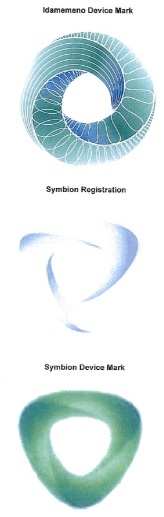
3 The three marks in issue are:
Issues in the appeal
4 Idameneo has appealed against his Honour’s grant of an injunction prohibiting its use of the Idameneo device mark. It contended that the primary judge erred:
by not acting on his findings that had led his Honour to dismiss Symbion’s infringement claims under the Act;
in finding that Symbion had received an assignment of the Symbion registration or the Symbion device mark or that Idameneo was bound by cl 5.5(b) not to use the Idameneo mark;
in construing cl 5.5(b) by holding that the words “capable of” were more expansive that “likely to”;
in concluding, either as a fact, or by his comparing their similarities and differences, that the Idameneo mark was similar to either or both of the Symbion registration or the Symbion device mark to an extent capable of causing confusion so as to breach cl 5.5(b) of the licence.
5 Symbion relied on the primary judge’s findings as being correct. It also filed a notice of contention arguing that his Honour ought not to have conflated the terms of cl 5.5(b) but should rather have found that it prohibited two alternative uses of a mark by Idameneo, namely, of a mark that, first, was “similar to” or, secondly, was “capable of being confused with” any of Symbion’s marks. Symbion argued that the Idameneo mark was “similar to” its mark in breach of cl 5.5(b).
The features of the three marks
6 Unaided by any other considerations than comparing the three marks and examining them for their essential features, we have come to the clear view that, first, they are manifestly different and, secondly, Idameneo’s is not capable of being confused with the Symbion registration or the Symbion device mark.
7 The circumference of the Idameneo mark is circular in shape. The mark has graphical features that gives it the appearance of consisting of three separate, interlocking, different segments surrounding a triangle. Each segment is characterised by a distinctly different graphic design, one using coils or loops, a second using straight lines and a third using a wave-like or curved pattern. In addition, the Idameneo mark is characterised by a variety of colours in shades of blue, green and white.
8 In contrast, the two Symbion marks are in the shape of an inverted triangle. On the Symbion device mark the lines of that triangle appear to be continuous, though this is not so clear on the indistinct monochrome of the Symbion registration. The monochrome has a much fainter and, at places, indistinct outline of the external circumference of the inverted triangle. The undecorated Symbion registration looks nothing like the visually intricate Idameneo mark. No version of the Symbion marks has any graphic design superimposed on it. Each version of the Symbion marks has a single colour, though it is varied by shading and intensifying features. One essential feature of the Symbion marks is their consistent, inverted triangular shape. Another essential feature is that each has a single basic colour. The Symbion device mark is the more distinctive, because of its strong green colour.
9 An ordinary person who had seen, or was familiar with, the Symbion device mark or the Symbion registration, on seeing the Idameneo mark would not form an impression that the Idameneo mark was, or was like, either of the Symbion marks or be left in doubt of such a relationship. Such a person would not see or form an impression of any relationship between the marks because they have no essential or apparent commonalities.
10 The Idameneo mark has a composite range of essential features. Its three different graphic designs, and multiple different colours (white, green and blue) and its circular circumference are, each, significant points of dissimilarity with the uniform single colour and inverted triangular shape of each of the Symbion marks.
11 We are of opinion that the Idameneo mark could not be confused with or mistaken for either Symbion mark. They are very different on first impression and remain so on repeated viewing.
12 For these reasons alone the appeal must succeed, as senior counsel for Symbion conceded would be the position if the Court came to this conclusion. Although it is not necessary, we will deal as briefly as possible with the other matters that were argued.
Background
13 Before and since the time the licence was granted, Idameneo and Symbion each carried on different businesses in the broader allied health sector. Each of them provided services to a different specialised market. Neither promoted itself directly to the general public.
14 Idameneo provided diagnostic imaging services, such as x-rays, CT scans and radiology services. Idameneo’s principal customers or market comprised medical practitioners and dentists who referred patients to it for diagnostic imaging in the course of their diagnosis and treatment.
15 Symbion carried on a business of wholesale pharmaceutical distribution. This involved sales of pharmaceutical products to pharmacists in private practice, pharmacy departments within hospitals and dentists.
16 The history of the parties’ business and relationships leading up to the grant of the licence is complex. For some years prior to 2005, two major corporate groups provided services to the allied health sector. One was the Mayne group comprising Idameneo, then called Mayne Group Ltd, and its subsidiaries. The other was the Primary Health group, comprising Primary Healthcare Ltd (Primary) and its subsidiaries.
The primary group develops the Idameneo MARK
17 The Primary group had provided a range of services, including, since the late 1980s, diagnostic imaging services in medical centres operated by the group in Victoria, South Australia and Queensland, and externally. The Primary group’s medical centres operated under the business name “Primary Diagnostics” between 2001 and late 2006. In 2005 the Primary group undertook a rebranding for its diagnostic imaging services that involved a change of business name to “Healthscan” and the development of a new logo. Ultimately from about late November 2006, Primary chose the Idameneo mark as its new logo for its Healthscan business.
18 Primary conducted that business through a subsidiary called Idameneo (No 123) Pty Ltd (Idameneo 123). By about mid 2007, Idameneo 123 was using the Idameneo mark on its stationery, forms and, in some cases, business cards in Victoria, South Australia and Queensland. However, there was no evidence that any other company in the Primary group used the Idameneo mark as at about mid 2007. From August 2007, Idameneo 123 began using the Idameneo mark on signage with the name “Healthscan Specialist Imaging” at a number of sites in South Australia.
The Mayne Group develops the Symbion marks
19 It is important to appreciate that Idameneo has transformed its corporate activities significantly over the years. It is not the same company as Idameneo 123. But, ultimately, and briefly in mid 2008, Idameneo came to operate Idameneo 123’s diagnostic imaging businesses of the Mayne group. This was as a result of a takeover of Idameneo by Primary and a subsequent demerger.
20 In 2005 Idameneo was called “Mayne Group Ltd”. At this time, the Mayne group conducted various businesses including the provision of medical services and medical analysis, the operation of medical centres and practices, the provision of diagnostic imaging and pathology services, the manufacture of pharmaceutical products and two businesses operated by its then subsidiary, Symbion, namely, the operation of pharmacies and the distribution of pharmaceutical products. During 2005, the Mayne group undertook a corporate reconstruction that involved the incorporation of Mayne Pharma Ltd and transfer to it of the business of manufacturing pharmaceutical products. However, Symbion remained a subsidiary of Idameneo and continued to operate the wholesaling business of distributing pharmaceutical products. Idameneo commissioned graphic designers to develop a new name and logo for its retained businesses. This was the genesis of the name “Symbion” and the Symbion registration. Mayne Group Ltd (i.e. Idameneo) changed its name to “Symbion Health Ltd” on 23 November 2005. Shortly before this, on 14 November 2005, Idameneo applied to register the Symbion registration as a trade mark under the Act. It was subsequently registered in respect of various goods and services including:
“Medical services; medical analysis; provision of pharmacy advice; pharmacy services; the operation of rest and convalescent homes; operation of medical centres and medical practices; medical and heath care services including provision of diagnostic, imaging, pathology, general practitioner, hospital and related services ….” (emphasis added)
21 The primary judge found that an important part of the change of name to Symbion and rebranding was that the Symbion registration would be shown in green, as is depicted in the Symbion device mark. After the change of name in late November 2005, Idameneo and its remaining subsidiaries, including Symbion, all traded under the name “Symbion” and used the Symbion device mark as their new logo. In some limited situations, the Symbion registration was used in a different colour than the green Symbion device mark, for example, where green was the background colour of the material on which the new logo was to appear or where the use of different colour was beneficial. However, wherever the Symbion device mark was used on signage at premises it was always in green as illustrated in the depiction of the Symbion device mark above. Symbion’s (then Mayne) diagnostic imaging businesses were conducted, then, under the name “Healthcare Imaging Services Network” (Healthcare) and they used the Symbion marks in the imaging sector. These diagnostic imaging businesses were located predominately within private hospitals or at stand-alone sites. These businesses typically adopted an individual name that incorporated the business location, e.g. “Glen Waverley Medical Imaging”, “Blackburn South Radiology” or “Rowville X-Ray” and continued to use the Idameneo mark as an element in their branding.
Primary takes over and then sells Symbion
22 In August 2007, Primary acquired 20% of Idameneo’s issued capital and commenced a takeover bid for its remaining shares. The takeover was completed on 28 April 2008 after Primary used its right to acquire compulsorily the remaining shares held by members of Idameneo who had not accepted the takeover offer. The takeover left Primary owning both Idameneo and Symbion as subsidiaries. Thus, after the takeover, Primary operated both its own diagnostic imaging business, through Idameneo 123, and those operated by its new subsidiaries in the Idameneo group.
23 However, Primary had never conducted a business of wholesale distribution of pharmaceutical products and had no intention of doing so. Consequently, on 19 August 2008 Idameneo entered into a share sale agreement with Zuellig Australia Pharmacy Services Pty Ltd (Zuellig) for the sale of the whole of the issued capital in Symbion. The share sale agreement was subject to a number of conditions. It contained provisions:
defining the “Symbion Marks” in cl 1.1 as the Marks (defined as “a trade mark, logo, symbol, … and similar rights whether registered or unregistered”) listed in Part B of Schedule 4. That Schedule relevantly included the Symbion registration, being the trademark registered in Australia, as well as a number of other trademarks using the name Symbion that were registered both in Australia and in other countries;
requiring Idameneo to assign to Symbion all of its right, title and interest in the Symbion registration with all associated goodwill, including the rights to prosecute and obtain registration of the Symbion Marks and to institute and maintain proceedings against any person for any infringement of, among others, the Symbion registration (cl 11.1);
requiring Zuellig to procure that on completion Symbion would grant Idameneo a licence to the Symbion Marks as set out in the retained business transitional mark licence agreement (the licence agreement) that was an annexure to the share sale agreement (cl 11.4).
24 Under the provisions of the share sale agreement Symbion made a written offer to Idameneo to pay $10 for Idameneo procuring the assignment to Symbion of intellectual property, being defined as trade marks and domain names set out in the offer (cl 2.1). The only relevant trade mark referred to in the offer was a written description of the Symbion registration. The offer was capable of acceptance by Symbion delivering to Idameneo a statutory declaration in the terms set out in a schedule. That declaration noted that Idameneo “is currently listed in the applicable trade mark and domain name registers as the owner of the trade marks and domain names set out in” the schedule attached to it (cl 3).
25 On 20 August 2008, Symbion made the offer and the next day Idameneo provided Symbion with the statutory declaration as contemplated. There was no direct evidence that, despite the promise to do so in Idameneo’s acceptance of Symbion’s offer, Idameneo had assigned to Symbion any trade marks, including the Symbion registration. However, the execution of the licence agreement amounted to an acknowledgement by Idameneo of Symbion’s title and created an estoppel by convention. That prevented Idameneo disputing that Symbion had assigned to it the intellectual property referred to in the offer of 20 August 2008: Grundt v Great Boulder Pty Gold Mines Ltd (1937) 59 CLR 641 at 675-677 per Dixon J. This disposes of Idameneo’s argument that there was no evidence of an assignment of the Symbion registration or Symbion device mark to Symbion.
The licence agreement
26 The licence agreement was executed by Symbion and Idameneo on 31 October 2008. It provided relevantly that:
“infringement” meant any actual, suspected or threatened infringement of the Trade Marks or related passing off or breach of the Trade Practices Act 1974 (Cth) or any Fair Trading Act of a State (cl 1.1);
“Trade Marks” meant the registered trade marks and unregistered trade marks as set out in Schedule 1, which included the Symbion registration referred to both by its registered number and depicted in monochrome, as well as the word “SYMBION” (cl 1.1);
“Mark” meant, among others, a mark, word, name, device and logo (cl 1.1);
Symbion granted Idameneo, among others, an irrevocable, worldwide, two year licence to use the Trade Marks on or in respect of, relevantly, goods and services in respect of which the Trade Marks were registered or had goodwill (cll 2.1, 11.1);
Importantly, cl 5 provided:
“5.1 Reservation of rights
[Idameneo] recognises the value of the goodwill and reputation in the Trade Marks and acknowledges that:
(a) the benefit of all existing goodwill in the Trade Marks enures solely to [Symbion];
(b) the benefit of all goodwill in the Trade Marks resulting from use by [Idameneo and its subsidiaries (the Licensees)] enures solely to [Symbion]; and
(c) the Licensees’ only rights in respect of the Trade Marks are those rights of use expressly given under this deed and the Licensees do not have any proprietorial right, title or interest to the Trade Marks or the goodwill in them.
…
5.1 Non derogation
[Idameneo] must not, and must ensure that each Licensee does not, do, cause or authorise the doing of anything which may adversely affect or jeopardise:
(a) the distinctiveness of the Trade Marks;
(b) the goodwill in or value of the Trade Marks;
(c) [Symbion’s] right, title or interest to the Trade Marks;
(d) the validity of the registration of the registered Trade Marks; or
(e) [Symbion’s] right to register any unregistered Trade Marks, whether or not an application for registration has been made.
…
5.5 Use of similar Marks
Except as permitted by this deed, [Idameneo] must not, and must ensure that each Licensee does not, use:
(a) any Trade Mark; or
(b) any Mark similar to or capable of being confused with any of the Trade Marks or which contain the words SYMBION …
as a trade mark, business name, domain name or otherwise anywhere in the world.” (emphasis added)
27 In addition, cl 5.4 prohibited Idameneo and its subsidiaries from applying, or being involved in any application, for registration of any trade mark or “… Mark similar to or capable of being confused with any of the Trade Marks”. It is notable that the Idameneo mark was not referred to at all in any of the contracts between the parties.
28 After the licence agreement was entered into on 31 October 2008, Idameneo continued to use the Idameneo mark as its branding. Idameneo phased out use of the Symbion device mark. Since 2010, both Healthcare and Healthscan have used the Idameneo mark. Symbion made no complaint about any use by Idameneo of either the Symbion registration or the Symbion device mark. Rather, Symbion alleged that Idameneo’s continued use from about April 2010 of the Idameneo mark was a breach of cl 5.5(b) of the licence agreement. As noted above, the primary judge substantively upheld that contention, and granted an injunction restraining Idameneo from continuing to use the Idameneo mark.
The primary judge’s reasons for the injunction
29 The primary judge found that there was no evidence that the Idameneo mark had a tendency to deceive or cause confusion within the meaning of s 120(1) of the Act. Relevantly, ss 120(1) and 10 of the Act provided:
“s 120(1) A person infringes a registered trade mark if the person uses as a trade mark a sign that is substantially identical with, or deceptively similar to, the trade mark in relation to goods or services in respect of which the trade mark is registered.
s 10 For the purposes of this Act, a trade mark is taken to be deceptively similar to another trade mark if it so nearly resembles that other trade mark that it is likely to deceive or cause confusion.”
30 His Honour applied the reasoning of Lord Diplock in General Electric Co Ltd (USA) v General Electric Co Ltd [1972] 1 WLR 729 at 737H-738A. His Lordship had held that in a claim based on infringement of a trade mark, where goods or services were not normally sold to the public for consumption or use, but were sold to a specialised market consisting of persons engaged in a particular trade, it was essential that persons accustomed to dealing in that market gave evidence as to the likelihood of deception or confusion. This finding has not been challenged by Symbion in this appeal.
31 The primary judge rejected Idameneo’s argument that the expression “similar to or capable of being confused with” in cl 5.5(b) should be construed as if it meant the same as the different expression in s 120 of the Trade Marks Act, namely, “substantially identical with, or deceptively similar to”. Idameneo had relied on the definition of “deceptively similar” in s 10 of the Act which provided that one trade mark would be deceptively similar to another “… if it so nearly resembles that other trade mark that it is likely to deceive or cause confusion”. His Honour reasoned that the parties had contracted using language different from that in the Act. Accordingly, he concluded that he should give effect to the different wording as imposing a different restraint on the use of marks from that achieved by the statutory language. His Honour said that this construction was reinforced by the parties having contracted about use of the registered trade marks and having imposed obligations on Idameneo to ensure compliance by it and its subsidiaries with the contractual restraints.
32 His Honour also rejected Symbion’s argument that the parties had used a disjunctive expression in cl 5.5(b), namely, “similar to or capable of being confused with”. He held that the expression was a composite one and conveyed the meaning that “the kind of similarity with which [cl 5.5(b)] is concerned is that which is capable of causing confusion”. The primary judge said that because the parties had eschewed the statutory language it was necessary to give the words “capable of being confused”, in cl 5.5(b), a different meaning to “likely to deceive or cause confusion” in s 10 of the Act.
33 Next, his Honour approached the construction of cl 5.5(b) on the assumption that it was intended to give Symbion greater protection for its trade marks than it was given by the Act. He said that concepts used in trade mark law were relevant to assessing whether the distinctive test in cl 5.5(b) had been breached. His Honour said that Idameneo had not argued that the principle that evidence from persons in the specialised markets was necessary applied in determining whether there had been a breach of cl 5.5(b).
34 The primary judge rejected Idameneo’s argument that cl 5.5(b) should not be read as prohibiting Idameneo’s use of its own mark. He also found that the different markets or settings in which Idameneo’s and Symbion’s marks were used were not so distinct as to leave no realistic scope for confusion by reason of their similarity.
35 In considering the circumstances in which the Idameneo mark was used, the primary judge noted that both parties used their marks in the allied health sector. And, his Honour found that prior to 2008, Symbion and its then subsidiaries had used its marks in both the pharmaceutical and imaging parts of that sector, and continued:
“I think I am entitled to regard it as notorious that there is a degree of contact, at both the professional and the consumer levels, as between these parts, such as would make it quite unsurprising if the same people – to some extent at least – had occasion to encounter both the [Idameneo] mark and the [Symbion] mark from time to time. And there is some evidence that the respondent’s mark is used in settings, such as the premises of hospitals, where those who have regular business dealings with [Symbion] – pharmacists and the staff of hospital pharmacy departments, for example – might be expected to be found. If there is such similarity between the marks as would be capable of causing confusion – a question to which I turn next – I would not accept that the respective areas of operation are so distinct as to exclude the reasonable prospect of that confusion arising in fact.”
36 In the event, his Honour concluded that, taking the similarities and differences of the three marks into account, the net result was that Idameneo’s was similar to Symbion’s “to an extent capable of causing confusion”.
The parties’ arguments
37 Each of Idameneo and Symbion argued that its respective arguments on construction of cl 5.5(b) that had been rejected by his Honour should be accepted in the appeal. Symbion argued that his Honour should have given the words of cl 5.5(b) their natural and ordinary disjunctive meaning. It argued that on this construction his Honour’s grant of the injunction could be supported and that Idameneo’s mark contravened cl 5.5(b) because it was “similar to” Symbion’s.
Consideration
38 A trade mark is used to distinguish one trader’s goods or services from those of another. It is a “badge of origin” in the sense that it indicates a connection in the course of trade between goods or services and the person who applies the mark to the goods or as a means of promoting its services: cf E&J Gallo Winery Pty Ltd v Lion Nathan Australia (2010) 241 CLR 144 at 163 [43] per French CJ, Gummow, Crennan and Bell JJ; Coca-Cola Co v All-Fect Distributors Ltd (1999) 96 FCR 107 at 115 [19] per Black CJ, Sundberg and Finkelstein JJ.
39 Hence, its use in relation to goods or services will create a reputation for the user of the trade mark that associates it with the particular goods or services in the minds of the public or, in the case of a specialised market, those who are actual or potential consumers in that market for the goods or services. In other words, the use of a trade mark in relation to goods or services distinguishes those goods or services as those of the person who owns the trade mark.
40 In construing the licence agreement and in particular, the ambit and operation of cl 5.5(b), the Court must consider the circumstances with reference to which the words in that clause were used. It must then discern, from those circumstances, the objective that the parties have in mind and, as Gleeson CJ, Gaudron, McHugh, Gummow and Hayne JJ said in Royal Botanic Gardens and Domain Trust v South Sydney City Council (2002) 240 CLR 45 at 52-53 [10]:
“In particular, an appreciation of the commercial purpose of a contract (Reardon Smith Line v Hansen-Tangen [1976] 1 WLR 989 at 995-996; [1976] 3 All ER 570 at 574): “presupposes knowledge of the genesis of the transaction, the background, the context, the market in which the parties are operating.” Such statements exemplify the point made by Brennan J in his judgment in Codelfa ((1982) 149 CLR 337 at 401):
“The meaning of a written contract may be illuminated by evidence of facts to which the writing refers, for the symbols of language convey meaning according to the circumstances in which they are used.””
41 The primary judge approached the construction of cl 5.5(b) and said that he was bound to assume that “the clause is somewhat more favourable to [Symbion] than the Act”. However, that is not an assumption stated in the licence agreement. Rather, in our opinion, the licence agreement reflected a commercial elucidation of the contractual rights and restrictions each party would have in respect of the Symbion registration and the Symbion device mark. Any basis for an assumption that the construction of cl 5.5(b) must provide a comparatively better outcome in terms of protection for Symbion than it is entitled to under the Act must be found in the words of the licence agreement itself.
42 In deciding the contractual issues, his Honour overlooked Idameneo’s written and oral submissions that evidence from persons in specialised markets was necessary to support a contention that the use of a mark in one market was likely to deceive or confuse persons in a different specialised market. This argument was based on what Lord Diplock had said in General Electric [1972] 1 WLR at 737H-738C, as approved by Gummow J, with whom Black CJ and Lockhart J agreed, in Interlego AG v Croner Trading Pty Ltd (1992) 39 FCR 348 at 388, namely:
“My Lords, where goods are of a kind which are not normally sold to the general public for consumption or domestic use but are sold in a specialised market consisting of persons engaged in a particular trade, evidence of persons accustomed to dealing in that market as to the likelihood of deception or confusion is essential. A judge, though he must use his common sense in assessing the credibility and probative value of that evidence, is not entitled to supplement any deficiency in evidence of this kind by giving effect to his own subjective view as to whether or not he himself would be likely to be deceived or confused. In the instant case this would apply to the large industrial electrical machinery sold under the rondel mark. But where goods are sold to the general public for consumption or domestic use, the question whether such buyers would be likely to be deceived or confused by the use of the trade mark is a “jury question.” By that I mean: that if the issue had now, as formerly, to be tried by a jury, who as members of the general public would themselves be potential buyers of the goods, they would be required not only to consider any evidence of other members of the public which had been adduced but also to use their own common sense and to consider whether they would themselves be likely to be deceived or confused.
The question does not cease to be a “jury question” when the issue is tried by a judge alone or on appeal by a plurality of judges. The judge's approach to the question should be the same as that of a jury. He, too, would be a potential buyer of the goods. He should, of course, be alert to the danger of allowing his own idiosyncratic knowledge or temperament to influence his decision, but the whole of his training in the practice of the law should have accustomed him to this, and this should provide the safety which in the case of a jury is provided by their number. That in issues of this kind judges are entitled to give effect to their own opinions as to the likelihood of deception or confusion and, in doing so, are not confined to the evidence of witnesses called at the trial is well established by decisions of this House itself.” (emphasis added)
43 As his Lordship explained, the reason why the law requires evidence of the effect of the use of a trade mark in a specialised market on those who trade or participate in such a market is because this is not a mere “jury” question. This evidence is essential in such situations because the use of a common law trade mark gives its owner rights to benefit from the reputation and goodwill associated with the mark. Similarly, in the case of a trade mark registered under the Act used only in a specialised market, this evidence is essential to establish the likelihood, among those in the relevant market, that the mark complained of so nearly resembles the registered mark that it is likely to deceive or cause confusion. Ordinarily, the owner of a registered trade mark used in a specialised market will already enjoy the benefit of a reputation and goodwill from that use.
44 A representation associated with a trade mark established by its use in a specialised market generates both a reputation and goodwill for the owner among those in the market who know, or know of, the mark. That reputation and goodwill is valuable to the owner because of its capacity to create an association with, or to represent a badge of origin of, its goods or services in the minds of those in the specialised market who know, or know of, the trade mark. If the reputation or goodwill associated with a trade mark exists only in a specialised market, then evidence of those in that market who know it, or of it, is relevant and necessary to establish what, if any, injury the owner of the mark may suffer by another person using a mark that is alleged to infringe the owner’s right.
45 The owner of a trade mark that has an established reputation or goodwill in that mark in a specialised market can bring proceedings to protect its proprietary interest in that reputation or goodwill. As explained above, the relevance of the mark’s reputation and goodwill in cases of specialised markets is that evidence of market participants is essential to establish the likelihood of deception or confusion: General Electric [1972] 1 WLR at 737H-738C; Interlego 39 FCR at 388.
46 Thus, where the trade mark is registered, the owner can, for example, take infringement proceedings under s 120 of the Act and, or where it is a common law mark, commence passing off proceedings: s 230(1) of the Act; cf Leather Cloth Co Ltd v American Leather Cloth Co Ltd (1865) 11 HLC 523 at 538 per Lord Kingsdown; Cadbury-Schweppes Pty Ltd v Pub Squash Co Pty Ltd [1980] 2 NSWLR 851 at 857C-D; [1981] 1 WLR 193 at 199E-G per Lord Scarman. The principle was encapsulated by Lord Herschell in Reddaway v Banham [1896] AC 199 at 209:
“The principle which is applicable to this class of cases was, in my judgment, well laid down by Lord Kingsdown in Leather Cloth Co. v. American Leather Cloth Co ((1865) 11 HLC 523 at 538 [11 ER 1435 at 1442]). It had been previously enunciated in much the same way by Lord Langdale in the case of Croft v. Day ((1843) 7 Beav 84 [49 ER 994]). Lord Kingsdown's words were as follows: “The fundamental rule is, that one man has no right to put off his goods for sale as the goods of a rival trader, and he cannot, therefore (in the language of Lord Langdale, in the case of Perry v. Truefitt ((1842) 6 Beav 66 [49 ER 749]), be allowed to use names, marks, letters, or other indicia, by which he may induce purchasers to believe that the goods which he is selling are the manufacture of another person.” It is, in my opinion, this fundamental rule which governs all cases, whatever be the particular mode adopted by any man for putting off his goods as those of a rival trader, whether it is done by the use of a mark which has become his trade mark, or in any other way.” (emphasis added)
47 A range of considerations informs the way in which the law deals with the exploitation and protection of rights in both registered and unregistered trade marks. This ranges from the public policy balances that are currently reflected in the Act and provisions of the Competition and Consumer Act 2010 (Cth) such as s 46, dealing with misuse of market power, and s 48, dealing with resale price maintenance: see Campomar Sociedad Limitada v Nike International Ltd (2000) 202 CLR 45 at 65-75 [42]-[67] per Gleeson CJ, Gaudron, McHugh, Gummow, Kirby, Hayne and Callinan JJ.
48 Here, cl 5 of the licence agreement commenced by Idameneo stating (in cl 5.1) that it recognised the value of the goodwill and reputation in the “Trade Marks” (as defined in the licence agreement) and acknowledged that these enured solely to, and were for the benefit of, Symbion and its subsidiaries. And in cl 5.3, Idameneo accepted that it must not do, or cause to be done, anything that may adversely affect or jeopardise that goodwill or the value of those trade marks. This provided part of the contractual matrix in which cl 5.5(b) must be construed.
49 Relevantly, on the uncontested evidence, Symbion’s property consisting of the Symbion registration and Symbion device mark, and the reputation and goodwill associated with them, was located in the specialised markets in which those trade marks had been used, including the markets in which Idameneo traded. Moreover, the parties were giving effect to a demerger of their former corporate and business group that reflected the distinct special markets in which the newly separated Symbion and Idameneo entities operated. And, cl 5.5(b) did not impose a restraint merely in Australia nor was it limited to the use of trade marks. The concluding words of cl 5.5 prohibited use “anywhere in the world”. Thus, the repetition of the words of the Act is likely not to have been apt to apply to use of trade marks in every other country.
Meaning of “similar to or capable of being confused with”
50 Here, the Symbion registration could be, and was until sometime between the demerger and April 2010, used under the licence agreement in respect of the provision of diagnostic and imaging services. The prohibition in cl 5.5(b) relates to the use of a mark by Idameneo that meets one or other description of a use “similar to” or “capable of being confused with” the Symbion marks. The use of the disjunctive “or” was intended to specify alternate restrictions on use. Neither alternative was expressed in the language of the statutory prohibition of infringement by use of a trade mark found in ss 10 and 120(1) of the Act. The differences in wording between the Act and the licence agreement must have been intentional. So too must have been the choice of “or” rather than “and” in cl 5.5(b). That choice reflects the use in the Act of two different standards by which an infringing use of a trade mark can be established: cf Solahart Industries Pty Ltd v Solar Shop Pty Ltd (2011) 281 ALR 544 at 553-554 [37]-[38] per Perram J. It follows that, in our opinion, the primary judge erred in conflating the phrase “similar to or capable of being confused with” into one cognate expression.
51 The dictionary meanings of the terms used in cl 5.5(b) include:
“similar”: | • | “1. having likeness or resemblance, especially in a general way. 2. Geometry (of figures) having the same shape” (Macquarie Dictionary online) |
• | having a marked resemblance or likeness; of a like nature or kind (Oxford English Dictionary online) | |
“capable of”: | • | “having the ability to” (Macquarie Dictionary online) |
• | of a nature, or in a condition, to allow or admit of | |
• | having the needful capacity, power or fitness for | |
• | open to, susceptible of (Oxford English Dictionary online) | |
“confuse[d] with”: | • | render[ed] indistinct [from] |
• | fail[ed] to distinguish between; associate[d] by mistake (Macquarie Dictionary online) | |
• | mix[ed] up in the mind; fail[ed] to distinguish, erroneously regard[ed] as identical; mistake[n] one for another | |
• | mix[ed] up or mingle[d] so that it becomes impossible or difficult to distinguish the elements (Oxford English Dictionary online) |
52 The words “similar to” capture a wider range of commonality between two objects than the narrower, statutory expression “substantially identical with”. The concept of “likeness” or “resemblance” connoted by the words “similar to” is looser or more wide ranging than “substantial identity”. Thus, the criterion of “similar to” in cl 5.5(b) broadened the range of trade marks that Idameneo was prohibited from using beyond that proscribed in Australia by the statutory criterion of “substantially identical with”.
53 A visual comparison of the marks side by side is the appropriate way to assess whether marks are similar to one another. This requires the identification of the similarities and differences, assessing their importance having regard to the essential features of each Symbion mark “… and the total impression of resemblance or dissimilarity that emerges from the comparison”: The Shell Co of Australia Ltd v Esso Standard Oil (Australia) Ltd (1963) 109 CLR 407 at 414 per Windeyer J. The tests used in cases of statutory infringement actions for the ordinary reasonable person are apposite for this purpose. Those tests are not prescribed by the statutes, but have been developed by the courts to identify objective features of those persons who may be exposed to the use of a trade mark and another mark so that assessments can be made of the effect of the mark complained of.
54 The degree of similarity prescribed by cl 5.5(b) has to relate to the comparative resemblance or difference between the marks. It must be such that the overall visual impression made when the marks are viewed side by side leads the ordinary reasonable viewer to conclude that they are alike or look much the same. Here, the ordinary reasonable viewer will be a person who is engaged in any relevant specialised market in which the Symbion registration and or the Symbion device mark are or have been used (including that in which the Idameneo mark is used).
55 That hypothetical person (even in the case of a specialised market) will not recollect precisely or acutely what one mark looked like. The purpose of the prohibition on “similarity” in cl 5.5(b) is to protect Symbion’s reputation in each of its marks among the class of persons who know, or know of, it and will associate it with Symbion or its goods or services. Thus, the similarity referred to by cl 5.5(b) cannot be an abstract likeness or resemblance or one discerned by fine or precise analysis. The objective intention of the parties in the wording of cl 5.5(b) must have been that the ordinary reasonable viewer of any mark used by Idameneo would conclude that it had such a likeness or resemblance to the Symbion registration or the Symbion device mark that the general impression left on that person’s mind was that the Idameneo mark was not relevantly different from either, or the relevant one, of the Symbion marks.
56 The expression “capable of being confused with” involves a different concept to “similar to” in cl 5.5(b). The former expression connotes that the two marks in issue (i.e. one of the Symbion marks and the Idameneo mark) were of such a nature that a viewer could form an impression that they were associated together (by mistake), mixed up in his or her mind, able to be mistaken for one another or indistinguishable. The parties must have intended that the capacity of a mark to be confused with another must, however, be more than theoretical or be the product of some idiosyncratic viewer’s conclusions. The capacity for confusion must be such as to be capable of damaging the reputation and goodwill associated with its marks that Symbion was seeking to protect.
57 The concept of “capable of being confused with” is expressed differently from the statutory one of a mark being “deceptively similar to” a registered trade mark. Nonetheless, this contractual restraint involves a mark that has the ability, or is open, to lead a person into mistaking Idameneo’s mark for one of the Symbion marks. This necessarily requires the person concerned to have an awareness of one or both of the Symbion marks so that when he or she sees the Idameneo mark it can cause the person to mistake it for Symbion’s. It follows that cl 5.5(b) was intended to protect Symbion’s interests in the reputation its marks had in the specialised markets where those marks were known and associated with it. Because none of the marks in issue was used outside specialised markets, the capacity of the Idameneo mark to confuse persons in those markets had to be established by evidence: General Electric [1972] 1 WLR at 737H-738C; Interlego 39 FCR at 388. As Yates J observed in Optical 88 Ltd v Optical 88 Pty Ltd (No 2) (2010) 275 ALR 526 at 545 [97], the statutory criterion of “deceptive similarity” assumes that an intending purchaser or viewer has knowledge of the mark alleged to have been infringed.
58 Under statutory concepts of deceptive similarly, it is necessary to show a real, tangible danger of deception or confusion, although it is sufficient if an ordinary person entertains a reasonable doubt: Southern Cross Refrigerating Co v Toowoomba Foundry Pty Ltd (1953) 91 CLR 592 at 595 per Kitto J. The Court ascertains the essential elements of the mark sought to be protected and the impression taken away by a person who looked at it and later saw the other, allegedly infringing, mark. The statutory concepts of “deceptive similarity” recognise that merely because the goods or services for which a trade mark is registered are different from those of the claimed infringer is not sufficient to dispel the likelihood or probability of deception. So, Dixon CJ, McTiernan, Webb, Fullagar and Taylor JJ in Southern Cross Refrigerating Co v Toowoomba Foundry Pty Ltd (1954) 91 CLR 592 at 608, approving what Kitto J had said at trial, held that there will be a likelihood of confusion if there “is a real risk that ‘the result of the user of the mark will be that a number of persons will be caused to wonder whether it might not be the case that the two products came from the same source’.”
59 Their Honours noted that it was not necessary, for the then statutory concept of infringement, that the user of the mark complained of would lead to passing off. They added, applying what Dixon J had said in Reckitt & Colman (Australia) Ltd v Boden (1945) 70 CLR 84 at 94-95, that the likelihood of confusion would not be negatived merely because of the actual trade carried on by the person asserting infringement or the manner in which that person used its mark. Rather, all legitimate uses which the person asserting infringement may reasonably make of its mark within the ambit of its registration must be taken into account. Importantly, their Honours prefaced these considerations with the following (91 CLR at 607-608):
“The question whether it is likely that deception will result from the use of a mark which is the same as, or which closely resembles, a trade mark already in use may, and frequently will, require the consideration of matters additional to and distinct from those which are relevant to an inquiry under s. 25. It may be of importance to see whether the registered mark is general or special in character and to ascertain the extent of its reputation. Again, it may be important to see whether the goods in respect of which it is registered constitute a narrow class or a wide variety of goods as also will be the question whether the goods of both the applicant and the opponent will be likely to find markets substantially in common areas and among the same classes of people.” (emphasis added)
60 In Australian Woollen Mills Ltd v FS Walton & Co Ltd (1937) 58 CLR 641 at 658 Dixon and McTiernan JJ, in discussing the then statutory concept of “deceptive similarity” said:
“The usual manner in which ordinary people behave must be the test of what confusion or deception may be expected.”
Their Honours noted that the hypothetical potential buyers were neither highly perceptive nor habitually cautious, nor were they exceptionally careless or stupid. Dixon and McTiernan JJ regarded the context in which the goods (or services) were sold, including the course of business and the habits and observation of “men considered in the mass” as setting the standard. In essence, the person with such characteristics epitomises the ordinary reasonable person whose reaction to the alleged infringing mark will be decisive. As Yates J said in Optical 88 275 ALR at 544 [94]:
“… the essential task [under s 120] is one of trade mark comparison. … it is the resemblance between the two marks that must be the cause of the likely deception or confusion.”
61 In our opinion the primary judge erred in finding a breach of cl 5.5(b) by acting as a “jury” without any evidence from persons in the specialised markets in which the marks were used. His Honour should not have held that he was entitled to regard as notorious that professionals and consumers would encounter the Idameneo and Symbion marks from time to time and that the marks were sufficiently similar that use of the Idameneo mark was capable of causing confusion. His Honour should not have held, without evidence, that the respective areas in which Symbion and Idameneo used their marks were not so distinct as to exclude a reasonable prospect of confusion arising in fact. It is likely that the primary judge considered that this course was open because he had overlooked Idameneo’s reliance on what Lord Diplock had said in General Electric [1972] 1 WLR at 737H-738C for its defence to the contractual claims, in addition to its defence to the claim under s 120 of the Act.
62 Here, although the Symbion registration does extend to diagnostic and imaging services, there was no evidence that the goods or services of Symbion and Idameneo would find markets in substantially common areas or among the same classes of people. To the contrary, the evidence established that each of the parties currently operated in distinct and different specialised markets. And, as we have found above, the Symbion marks, on the one hand, and the Idameneo mark, on the other, are not the same and do not closely resemble one another. Thus, although the Symbion marks had been used in the same sector as the Idameneo mark prior to the demerger in 2008 and for a time afterwards, they were always distinct and did not so closely resemble one another that there was a real risk of anyone being caused to wonder whether the respective marks identified or were associated with services that come from the same source.
63 The parties must have intended in cl 5.5(b) that Idameneo not “use… any Mark … capable of being confused with any of” the Symbion registration or Symbion device mark as a restraint that protected Symbion’s legitimate commercial interests in those two marks themselves and the reputation and goodwill associated with them. While the Symbion device mark had been used to brand the Healthcare imaging business before the merger in 2008, by April 2010 only the Idameneo mark was used by Idameneo for all its imaging businesses, including Healthcare. Having regard to the lack of resemblance between the marks and the lack of any evidence of any possibility of confusion in the specialised markets, Symbion’s claim based on a breach of cl 5.5(b) must fail.
Conclusion
64 For these reasons, the appeal must be allowed with costs. The primary judge’s orders for an injunction and ancillary relief must be set aside and an order should be made that the proceedings below be dismissed with costs.
I certify that the preceding sixty-four (64) numbered paragraphs are a true copy of the Reasons for Judgment herein of the Honourable Justices Rares, Gilmour & Dodds-Streeton. |


