

FEDERAL COURT OF AUSTRALIA
Bodum v DKSH Australia Pty Limited [2011] FCAFC 98
| IN THE FEDERAL COURT OF AUSTRALIA | |
| First Appellant BODUM (AUSTRALIA) PTY LIMITED ACN 104 809 672 Second Appellant PI-DESIGN AG Third Appellant | |
| AND: | DKSH AUSTRALIA PTY LIMITED ACN 005 059 307 Respondent |
| DATE OF ORDER: | |
| WHERE MADE: |
THE COURT ORDERS THAT:
2. Order 1 of the orders made by the primary judge on 14 April 2010 be set aside.
3. Orders 1 and 2 of the orders made by the primary judge on 13 May 2010 be set aside.
4. The matter be remitted to the primary judge for further consideration of the orders which should be made having regard to the scope of the relief claimed in the application.
5. The appellants’ costs of and incidental to the appeal be paid by the respondents.
Note: Entry of orders is dealt with in Rule 39.32 of the Federal Court Rules 2011
| VICTORIA DISTRICT REGISTRY | |
| GENERAL DIVISION | VID 325 of 2010 |
| ON APPEAL FROM THE FEDERAL COURT OF AUSTRALIA |
| BETWEEN: | PETER BODUM A/S First Appellant BODUM (AUSTRALIA) PTY LIMITED ACN 104 809 672 Second Appellant PI-DESIGN AG Third Appellant |
| AND: | DKSH AUSTRALIA PTY LIMITED ACN 005 059 307 Respondent |
| JUDGES: | GREENWOOD, TRACEY AND BUCHANAN JJ |
| DATE: | 5 august 2011 |
| PLACE: | MELBOURNE |
REASONS FOR JUDGMENT
GREENWOOD J
Background
1 The first appellant, Peter Bodum A/S (“Bodum”), is a Danish company founded in 1944. It is the holding company for the Bodum group of companies. It designs, manufactures and sells throughout the world, and in Australia, a range of household products including coffee plungers (and relevantly for the trial although no longer relevant on appeal, teapots).
2 The second appellant is a wholly owned subsidiary of Bodum which since 2003 has sold or licensed for sale in Australia particular Bodum products although Bodum products have been otherwise sold in Australia through distributors since 1973. The third appellant is a Swiss company related to Bodum. It owns a number of Australian registered designs which it licenses to Bodum companies ([6] of the primary judgment). No question of infringement of any registered design arose in the proceedings.
3 Unless otherwise relevant I will refer to the first two or primary appellants collectively as “Bodum”. The third appellant, Pi-Design AG, is an owner and licensor of particular intellectual property rights. For example, “bodum” is a registered trade mark of the third appellant.
4 The respondent DKSH Australia Pty Limited (“DKSH”), an Australian company, is a subsidiary of a Swiss company DKSH Holdings Ltd. DKSH imports into Australia and sells by wholesale, homewares and kitchen products including a coffee plunger the subject of Bodum’s suit before the trial judge.
5 Bodum’s case, put simply, at trial against DKSH involved these contentions.
6 Since 1958, Bodum or its predecessors in title have manufactured and sold a coffee plunger exhibiting particular features embodied in a coffee plunger described as the Bodum Chambord Coffee Plunger. From at least April 1986, Bodum made substantial sales in Australia of the Bodum Chambord Coffee Plunger exhibiting those features. The Bodum Chambord Coffee Plunger has been promoted and advertised widely in Australia in many ways including through publications such as Australian Gourmet Traveller (AB Vol 7, Tab 48, pp 2496, 2497 and 2497A), Donna Hay Magazine (AB Vol 7, Tab 45, pp 2480 and 2485) and Vogue Australia (AB Vol 7, Tab 44, pp 2476, 2477 and 2478), among others. The particular features and shape of the Bodum Chambord Coffee Plunger will be described more fully later in these reasons in examining the findings of the primary judge. For present purposes, an image of the Bodum Chambord Coffee Plunger exhibiting those features is attached to these reasons marked Schedule 1. That image is described as Appendix A in the reasons of the primary judge. I have exhibited the image to these reasons for ease of reference.
7 Bodum further contended that the Bodum Chambord Coffee Plunger is packaged for sale in packaging that prominently depicts a photograph of the coffee plunger thus giving prominence and emphasis to the design features of the plunger within, rendering, it is said, the packaging, in a practical sense, transparent to the consumer. At the point of sale, the coffee plunger might be exhibited in its packaging or, for ease of examination of the plunger by a potential consumer, standing outside and near its packaging or independently of its packaging.
8 Bodum contended that by reason of these matters Bodum has acquired a substantial and valuable reputation in the features of the Bodum Chambord Coffee Plunger and the distinctive shape of the Bodum Chambord Coffee Plunger with the result that the sale in Australia of coffee plungers which embody those features or a significant number of them and the shape of the Bodum Chambord Coffee Plunger, signifies or is likely to signify to consumers in Australia, that such a coffee plunger is the Bodum Chambord Coffee Plunger or is made, promoted or sold by or with the licence, sponsorship or approval of Bodum (that is, relevantly associated with Bodum).
9 Bodum contended that independently of the hierarchy of trade marks a manufacturer uses in connection with a product in the course of the owner’s trade, such as the trade marks Bodum or Chambord, a secondary meaning or independent reputation can, as a matter of law, subsist in the features and shape of an article or the get-up for a product which operates to associate products of that shape or those features in the mind of consumers with a particular trader although it is not necessary that the consumer knows the name of that trader. An iconic example of secondary meaning is said to be the independent reputation subsisting in the shape of the Coca-Cola bottle which associates carbonated cola sold in a bottle of that shape with a particular trader. The presence of the Coca-Cola trade mark on every bottle of that product sold, does not diminish, it is said by way of example, the secondary or independent reputation in the shape (or features) of the bottle itself, signifying to consumers that the product is the product of that particular company. Whether a secondary meaning or independent reputation exists in the features or shape of a particular product or its get-up is, it is said, a question of fact to be determined having regard to all the relevant contextual circumstances.
10 Apart from the above analogical reference, Bodum relies upon the authorities, discussed in these reasons, as the source of the proposition. A brief observation should be made about the terms “secondary meaning” or “secondary reputation”. The question to be determined is whether the features or shape of the Bodum Chambord Coffee Plunger have acquired a reputation and have become distinctive in the minds of consumers or potential purchasers of its maker. The reputation, if made out on the facts, is only “secondary” in the sense that it subsists in the features of the product itself rather than a reputation that may or may not be isolated to a brand, label, mark, trade mark or house mark.
11 Bodum contended that DKSH from July 2004 began to distribute and sell in Australia a coffee plunger described as the Euroline Coffee Plunger which embodies each of the features, or features that closely resemble the features, of the Bodum Chambord Coffee Plunger. Aspects of the features and shape of the Euroline Coffee Plunger will be described later in these reasons. For present purposes, an image of the Euroline Coffee Plunger exhibiting its features and shape is attached to these reasons marked Schedule 2. That image derives from the image of the Euroline Coffee Plunger depicted on the front and back of the box (packaging) for the product described as Exhibit B2(a) at trial.
12 Bodum further contended that DKSH adopted, like Bodum, packaging (Schedule 2) giving prominent emphasis to a photographic representation of its coffee plunger; the Euroline Coffee Plunger is displayed at the point of sale either in its packaging or, for ease of examination by a potential consumer, outside (and away from) its packaging or, alongside the Bodum Chambord Coffee Plunger; the Euroline Coffee Plunger is not marked or engraved with any branding or labelling visible on the coffee plunger (other than the glass marked “Pyrex”) so as to distinguish it from the Bodum Chambord Coffee Plunger; and DKSH intended to mislead consumers by importing and selling a coffee plunger it knew to contain the features of the Bodum Chambord Coffee Plunger.
Bodum’s central contentions
13 Thus, the central contention was (and is, on appeal by way of re-hearing, in the face of contended error) that DKSH by advertising and selling the Euroline Coffee Plunger with the features of the Bodum Chambord Coffee Plunger, “without labelling or distinguishing it adequately or at all” (para 35, Statement of Claim), falsely represented to consumers in Australia that the Euroline Coffee Plunger is the Bodum Chambord Coffee Plunger or is made, promoted and sold with the licence, sponsorship or approval of Bodum, and by so doing, consumers and retailers are misled and deceived as to the true position or are likely to be misled or deceived as to the true position in contravention of ss 52, 53(c) and (d) of the Trade Practices Act 1974 (Cth).
14 Bodum also contended that by reason of the conduct earlier described, DKSH engaged in passing off the Euroline Coffee Plunger as the Bodum Chambord Coffee Plunger or as a product relevantly sponsored or approved by Bodum, thus causing damage to Bodum’s goodwill and reputation subsisting in the Bodum Chambord Coffee Plunger.
15 Bodum sought a declaration that DKSH’s conduct contravened ss 52, 53(c) and (d); an injunction under s 80 of the Trade Practices Act restraining DKSH from importing into and selling in Australia the Euroline Coffee Plunger or any coffee plunger embodying each of the features of the Bodum Chambord Coffee Plunger; a declaration that DKSH by engaging in the relevant conduct previously described, engaged in passing off; an injunction under s 80 of the Trade Practices Act and s 23 of the Federal Court of Australia Act restraining DKSH from making the representations (by conduct) and engaging in passing off in respect of the Euroline Coffee Plunger.
16 Bodum also claimed damages under s 82 of the Trade Practices Act, compensation under s 87 of that Act and other orthodox remedies (subject to election) arising out of the contended passing off, although the proceedings before the trial judge concerned only the question of liability.
DKSH’s response
17 For present purposes, before examining the findings of the primary judge, it is sufficient to note that DKSH put each of Bodum’s central contentions in issue and although it accepted that the Bodum Chambord Coffee Plunger exhibited the pleaded features, it contended that Bodum’s coffee plunger when offered for sale has always been marked or engraved with important additional names, marks or descriptions not present in the Euroline Coffee Plunger; the packaging for each product is different; the use of “Euro Line” on the packaging differentiates the products; and the history of Bodum look-alikes in the market must be taken into account in determining whether DKSH’s conduct could be described as misleading or deceptive or likely to mislead or deceive consumers. DKSH supports the reasoning of the primary judge and contends that no error is demonstrated.
The relevance of the Playcorp proceedings
18 The proceedings before the trial judge involved two separate proceedings heard together in which evidence in one was ordered to be evidence in the other. The three appellants were the applicants in the DKSH proceeding and respondents in the second action, a proceeding commenced by Playcorp Group of Companies Pty Ltd and Playcorp Pty Ltd (collectively “Playcorp”). Each action was concerned only with questions of liability.
19 In the Playcorp proceeding, the question was whether Playcorp had engaged in conduct in contravention of s 52 of the Trade Practices Act or passed off their Baccarrat Venice Coffee Plunger and Baccarrat Devon Filter Teapot and saucer as and for the (contended) equivalent Bodum products, namely the Bodum Chambord Coffee Plunger and the Assam Teapot, respectively. Those claims and cross-contentions were the subject of an earlier settlement agreement. Bodum contended that the settlement agreement precluded Playcorp from asserting that Bodum has an exclusive reputation and goodwill in the Bodum Chambord Coffee Plunger or that no secondary meaning subsists in the features and shape of the Bodum Chambord Coffee Plunger. Other questions arose for determination in relation to the settlement agreement and contended conduct by Playcorp leading to it.
20 The only questions alive on appeal concern the DKSH proceeding. However, a contextual reference to the Playcorp proceeding is necessary and important because some of the primary judge’s findings in the DKSH proceeding adopt a position as explained by the primary judge in dealing with a like issue in the Playcorp proceeding.
The findings of the primary judge
21 The parties filed an agreed statement of facts settling out the features of the Bodum Chambord Coffee Plunger and the Euroline Coffee Plunger. At [35] of the judgment, the primary judge set out the agreed comparative features in the following table:
| Features | Bodum Chambord Coffee Plunger | DKSH Euroline Coffee Plunger |
| Frame | a frame, designed to hold a glass beaker, consisting of: (i) one upper horizontal band of flat silver-coloured metal; and (ii) four vertical bands of flat silver-coloured metal which: (A) taper slightly at the point at which they are attached to the upper horizontal band; and (B) extend and curve underneath the glass beaker to form four feet. | a frame, designed to hold a glass beaker, consisting of: (i) a chrome plated upper horizontal band with cut out sections; and (ii) four vertical bands of flat silver-coloured metal which: (A) taper slightly at the point at which they are attached to the upper horizontal band; and (B) extend and curve underneath the glass beaker to form four feet. |
| Beaker | a clear glass beaker with a pouring spout | a clear glass beaker with a pouring spout |
| Handle | a black curved handle attached to the frame by means of a stainless steel screw | a black curved handle attached to the frame by means of a stainless steel or chrome screw |
| Lid | a domed or rounded stainless steel lid | a domed or rounded chrome lid |
| Knob | a spherical black knob above the lid | a chrome spherical knob above the lid |
| Plunger | a plunger device | a plunger device |
| Markings | The name ‘bodum®’: (a) is etched into a white label on the side of the glass beaker of the Bodum Chambord Coffee Plunger; (b) is engraved on one of the vertical bands forming part of the metal frame; (c) is embossed into the black plastic lining of the lid; and (d) is printed on a translucent, removable sticker affixed to the glass beaker which is printed in red and white and also contains the words ‘THE Original’ and ‘FRENCH PRESS’ and ‘bodum®’. | The glass beaker has the word ‘pyrex’ permanently etched on it in white |
| Instructions | Instructions in both English and French are etched in white lettering beneath the white label on the side of the glass beaker. When offered for sale in Australia, the Bodum Chambord Coffee Plunger includes within the glass beaker a ‘bodum®’ branded instruction leaflet. | An instruction sheet is placed in the glass beaker at the time of manufacture |
22 The written description of these features (for either product) is apt to be a little antiseptic especially in the context of a claim of secondary meaning or independent reputation for the shape of a product said to be distinctive (and sometimes referred to as iconic) and thus it is important to look at the three-dimensional products tendered in evidence at the trial. Nevertheless, the image at Schedule 1 also reveals the important features giving rise to the contended secondary meaning, which comprise, the horizontal band, the four tapered vertical bands attached to the horizontal band, the curvature of the bands underneath the glass beaker to create the feet of the cradle for the beaker, a domed or rounded lid, a prominent black curved handle attached to the frame (with a prominent screw fixing) and a plunger device.
23 At [26], the primary judge set out the features over time of the packaging adopted by Bodum for the Bodum Chambord Coffee Plunger in the following table:
| Bodum Chambord Coffee Plunger | |
| Years | Packaging Style |
| November 1997 to May 1999 | White box with Garamond font, Bodum logo comprising red box with white characters, and square instructional images on the side |
| Approx May 1999 to 2005 | White box with Franklin font, Bodum logo comprising red box with white characters, and round instructional images on the side |
| Approx 2005 to approximately March 2008 | Black box with Garamond font, Bodum logo comprising red box with white characters, and numbered instructional images on the side |
| Approx March 2008 to Present | Predominantly black box featuring photo of product set against a graphite background, Bodum logo comprising red box with white characters, and numbered instructional images on the side. |
24 At [27], the primary judge attaches as Appendix C an image of “an example of some of the packaging style” of the Bodum Chambord Coffee Plunger. That image is also attached to these reasons marked Schedule 3. The primary judge’s example of Bodum’s packaging falls within category 3 or category 4 in the above table. Exhibit B18(c) at trial however is an example of the Bodum packaging for the Bodum Chambord Coffee Plunger at July 2004 when DKSH entered the market and began selling the Euroline Coffee Plunger. That style of packaging was adopted by Bodum from May 1999 to a date in 2005. It is a white box depicting on the front, back and sides of the box the images depicted in Schedule 4 to these reasons.
25 At [37], the primary judge set out the features of the packaging adopted by DKSH for the Euroline Coffee Plunger from approximately July 2004 to the date of judgment in the following table:
| DKSH Euroline Coffee Plunger | |
| Years | Packaging Style |
| Approx July 2004 to present. | Black and white box featuring prominent photo of the product with the words ‘Coffee’ in red and ‘Plunger’ in white at the top of the box. The brand ‘Euroline’ appears at the bottom left hand corner of the box, with ‘EURO’ in black and ‘LINE’ in white with black outlining. |
26 An image of the DKSH packaging is Schedule 2 to these reasons being the DKSH packaging comprising Exhibit B2(a) at trial. It too has predominantly although not entirely a white (table background) depicting an image of the Euroline Coffee Plunger on the front and back of the box and the side images and words shown in Schedule 2. The box is marked “Coffee Plunger” and “EURO LINE”.
27 At trial, Bodum led evidence from an expert in industrial design, Associate Professor Douglas Tomkin, the Head of the School of Design at the University of Technology, Sydney. At [42], the primary judge noted this evidence:
Associate Professor Tomkin also provided expert evidence in relation to the comparison of the Bodum Chambord Coffee Plunger and the Euroline plunger, finding that they were so similar in their choice of materials, manufacturing techniques and appearance that ‘[i]t is unlikely that one could be conceived without reference to the other’. Bodum submitted that such an impression is analogous to the one that a consumer, acting reasonably, would form.
[emphasis added]
28 The primary judge at [43] then observed:
It is to be observed that the Euroline plunger has no branding on the product. The word Pyrex is etched on the glass beaker. It only described the kind of glass, and is no distinguishing feature. Pyrex sells replacement beakers, which can be used in most types of plungers including Bodum plungers and Euroline plungers.
29 As to the qualitative nature of the differences in the Euroline Plunger, the primary judge at [44] noted this further evidence:
While Associate Professor Tomkin noted the three main differences in the Euroline plunger (namely, cavities in the top support ring of the frame, the plunger knob being metallic, and the absence of the safety skirt), he regarded the overall visual difference between the two products as ‘small’. The three differences in his opinion had marginal effect on the overall appearance.
[emphasis added]
30 As to the probative value of Associate Professor Tomkin’s expert evidence, the primary judge said this at [47]:
No objection was made to the admission of the evidence of Associate Professor Tomkin. None of his evidence, in chief or under cross-examination, was controversial. The evidence focused attention on what the Court itself could observe about the similarities and differences in the products themselves. However, it is for the Court, in a case such as this, to determine for itself by way of overall impression, the significance of these similarities and differences once they have been identified.
31 Although the primary judge noted at [47] that it is for the Court to determine for itself, as a matter of overall impression, the significance of the similarities and dissimilarities noted by Associate Professor Tomkin and “observ[able]” by the Court, the fact of those similarities and dissimilarities identified at [42], [43] and [44] seemed to be accepted by the primary judge.
32 Bodum contended that the date for assessing the impugned conduct of DKSH for the purposes of passing off was July 2004 when DKSH first sold the Euroline Coffee Plunger. A question arose as to whether July 2004 (or February 2008 in the case of the Playcorp proceeding) was the correct date for the purposes of the s 52 cases. At [58], the primary judge noted in relation to both actions that in deciding whether the sale of a product involves misleading or deceptive conduct in contravention of s 52, the date when “the sale of the product commenced may influence the question as to whether it is the respondent that is the cause of the deception”. At [59], the primary judge said that he did not need to further consider the issue of competing dates relevant to that question because (relevantly for the DKSH proceeding) on the basis of the evidence:
… Bodum clearly had a strong reputation even prior to 2004. It may have been reinforced by subsequent events. This was contended to be so by reason of the fact that certain copy products had been discontinued and had left the market, and Bodum continued to sell the same products for many years and increased the sale and promotion of its own products. These facts I accept and are supported by the evidence.
[emphasis added]
33 Specifically in relation to DKSH, the primary judge found at [61] that the relevant date for determining passing off is July 2004 being the date when DKSH entered the market. At [62], the primary judge noted DKSH’s acceptance, as to s 52, that if the sale of the Euroline Coffee Plunger was misleading or deceptive at July 2004, the consideration that DKSH had inherited the Euroline Coffee Plunger from other corporations by assignment (and sales of it had been made commencing in 1988), would not affect the July and post-July 2004 finding, although it may affect the scope of the remedy.
34 At [76], the primary judge framed the question to be answered arising out of his assessment of the legal principles at [63] to [74] in these terms:
The question is whether the circumstances in which the accused products are presented to consumers are likely to mislead or deceive the ordinary reasonable shopper for housewares products, or coffee and tea makers, having regard to the reputation which Bodum has established in the particular presentation of the products which Bodum markets.
35 At [77], the primary judge noted the factors informing the answer to the question in these terms:
This depends upon a combination of visual impression and judicial estimation of the effect likely to be produced in the ordinary conduct of affairs, having regard to the reputation actually proved, in all the circumstances. It is not a side by side comparison. It is a comparison between the impression of Bodum’s products (including the packaging) retained in the ordinary reasonable customer’s mind and the impression made by the sort of consideration that the ordinary reasonable customer is likely to give to the accused product (including the packaging) before purchasing it. (authority cited)
36 At [78], the primary judge said this about the question posed at [76]:
In considering this question, one looks to all the information the potential customer may have prior to sale, which would include any advertising the potential customer may be exposed to even prior to gaining a foot in the trader’s door. However, the place and time of sale will in most cases be the important place and time to analyse the question of whether there was a misleading impression.
37 As to the contended reputation subsisting in the features and distinctive shape of the Bodum Chambord Coffee Plunger the primary judge said at [81] that:
… the question of any reputation that Bodum has (for instance) in the Bodum Chambord Coffee Plunger cannot be determined by looking at the Bodum Chambord Coffee Plunger features in isolation. The question must be considered by reference to all of the relevant circumstances, including all of the distinctive visual features of the Bodum Chambord Coffee Plunger, its branding, its markings, labelling and packaging and the manner by which it has been advertised and exposed to potential purchasers of coffee plungers in Australia. (authority cited)
The findings at [82] of the primary judgment
38 At [82], the primary judge summarised in a collective way findings relating to both actions. So far as those findings at [82] relate to DKSH, the findings are these [emphasis added].
39 First,
… while I am of the view that the Bodum brand itself has a significant reputation in the homewares/housewares market, I do not consider that Bodum has the secondary meaning or reputation in the Bodum Chambord Coffee Plunger …
40 Second,
I consider that Bodum’s reputation is distinctly tied to its products being properly labelled and sold in conjunction with reinforcing packaging and, significantly, by reference to the Bodum name.
41 Third,
Bodum’s reputation does not exist in the naked Coffee Plunger features … (without its logo in place) alone.
42 Fourth,
If I am wrong about this, and if Bodum does have a secondary reputation in the features alone, then I am not satisfied that the accused products in any of the proceedings in the way they are packaged or exposed to potential customers in Australia are sufficiently similar to give rise to the misrepresentation alleged by Bodum.
43 At [86], the primary judge simply notes the categories of promotional material and advertising Bodum led in evidence of the reputation around the world, and more particularly in Australia, for the Bodum Chambord Coffee Plunger. That evidence was set out by Bodum in a schedule in detail.
44 As to actual sales and sales revenue, the data remained confidential and is not set out in the judgment although a confidential exhibit containing the data is before the Full Court. The primary judge found that sales of the Bodum Chambord Coffee Plunger in Australia from 1986 to 2009 “are extensive, dwarfing the respective sales of Playcorp and DKSH” at [87] [emphasis added]. At [88], the primary judge noted that there had been “no retail advertising by Playcorp [of its coffee plunger or teapot in issue in that proceeding] … during 2008 of [or] 2009”. That finding is relevant to DKSH because, at [88] the primary judge notes that “[a] similar picture exists in relation to the DKSH Euroline Coffee Plunger”.
45 At [90], the primary judge found that:
It is clear that there has been [a] vast amount of advertising of the Bodum brand and I find that Bodum had and has a significant reputation in Australia in that brand.
[emphasis added]
46 At [90], the primary elected to apply a “with or without test” and said, after noting the vast amount of advertising and significant Bodum “brand” reputation, “[h]owever, it is necessary to consider how this [the significant brand reputation] translates to a reputation in the Bodum Chambord Coffee Plunger … with or without its branding” [emphasis added].
47 At [91], the primary judge noted Bodum’s central contention that “the consistency, extent and duration of the sale and promotion of the Bodum products increased the likelihood that there will be a significant number of people to whom the features do have a signification for which Bodum contends”. [emphasis added]
48 At [92], the primary judge makes this finding about that contention:
I agree that there may be some such people, but very few. In any event, in the way that Bodum has marketed (by specific and consistent reference to its name and logo), the absence of such reference would readily lead to the view being held by consumers that the accused products are not part of the Bodum range.
[emphasis added]
49 The primary judge therefore found as a matter of overall impression at [47] and [77] that notwithstanding that the appearance of the Euroline Coffee Plunger could not be conceived in the mind of a reasonable consumer without reference to the Bodum Chambord Coffee Plunger (and one to the other) ([42], [43] and [44]), DKSH’s election (or commercial step) not to use or refer to Bodum’s name or logo in connection with the promotion and sale of its rival coffee plunger (presumably either on the box or on the product) would readily lead the cohort of reasonable consumers (that is shoppers, [76]), seeking to engage in a possible purchase or shopping transaction (presumably carrying into that engagement a sense of imperfect recollection), to the view that the rival coffee plunger is not a Bodum Chambord Coffee Plunger. The primary judge found that all but a very few potential purchasers would be readily led to that view.
50 The primary judge found that the absence of the Bodum name and logo in connection with the rival coffee plunger tells the reasonable consumer that the rival coffee plunger is not a Bodum product and thus no reasonable consumer is, or is likely to be, misled or deceived by the rival’s adoption of the features and shape alone, of the Bodum Chambord Coffee Plunger. It follows that passing off would thus not be made out either.
The criticism of the findings at [82]
51 The appellants attack this finding and the findings at [82] as an error of law in failing to give proper recognition to the jurisprudence on secondary reputation in features, shape and get-up and as a finding of fact unsupported by the evidence; a finding made without any examination or consideration (at least so far as the exposed reasons of the primary judge reveal) of the content of the vast amount of advertising relied upon in support of the secondary reputation for the features and shape (not the brand); a finding that could not reasonably have been made had the advertising and promotional material been examined and considered; and, a finding made in disregard of the primary judge’s acceptance of the evidence of Associate Professor Tomkin which, although accepted, was not then weighed in the balance in the dispositive resolution of the central question.
52 Before examining those contentions, it is necessary to identify the remaining findings of the primary judge.
53 At [93], the primary judge recognised that there will be a variety of consumers who might seek to engage in potential purchase transactions. Some of them will not have been exposed to the Bodum Chambord Coffee Plunger at all. The primary judge accepted that others will have a knowledge of the features of the Bodum Chambord Coffee Plunger even if not by name. Some may have been exposed to copy products: [93]. As to those consumers having knowledge of the features or exposed to copy products, the primary judge concluded at [93] that:
I do not consider that they would conclude that the accused products or any copy products would be part of the Bodum range rather than just ‘copies’ or cheaper versions.
54 As to price, the primary judge found at [93]:
The fact that the accused products in these proceedings are ‘just under’ the price range of the Bodum products, does not confuse the consumer that they are part of the same range, but a cheaper version. The consumer would readily appreciate that these differently packaged products are just that, cheaper, and would not necessarily assume any association with Bodum. No persuasive evidence was led by Bodum to demonstrate otherwise.
[emphasis added]
55 As to the steps taken by DKSH to distinguish its rival coffee plunger from the Bodum Chambord Coffee Plunger, the primary judge made this finding at [94]:
The accused products were clearly packaged to distinguish them from Bodum, with no reference to the distinctive name or logo of Bodum. No evidence was led by Bodum of actual confusion of a consumer.
[emphasis added]
The findings at [94] of the primary judgment
56 At [94], the primary judge expressed the view that if a consumer was familiar with Bodum or the Bodum product range itself, then the observation of Burchett J (in the context of the matrix of fact then before Burchett J in the Full Court in Koninklijke Philips Electronics NV v Remington Products Australia Pty Ltd (2000) 100 FCR 90 at [45]) to the effect that “[t]he public is thoroughly accustomed to competing brands of almost identical products, which may or may not have some link” also applies to this case “even though the brands of the accused products are not well known” (at [94]). The point of distinction, of course, is that the Remington brand was “well-known in its own right and, in Australia, [sold] more personal care products but fewer electric shavers than Philips” (Burchett J at [45], Hill and Branson JJ agreeing).
57 At [94], in that same context, the primary judge also cited an observation made by Sundberg, Emmett and Hely JJ in Dr Martens Australia Pty Ltd v Rivers (Australia) Pty Ltd (1999) 95 FCR 136 at [38] (although the primary judge mis-attributes the relevant paragraph to Dr Martens Australia Pty Ltd v Figgins Holdings Pty Ltd (1999) 44 IPR 281 which is the decision of the primary judge, Goldberg J, in that proceeding heard together with the Bata Shoe, Rivers and Windsor Smith proceedings) that the suggestion that a potential purchaser would think that footwear marked with the trade marks and names of the respondents (“ah! Soul”, “Rivers” and “JJ Lester & Co Ltd”) and sold so marked might be thought to be footwear sponsored or licensed by Dr Martens or that Dr Martens would allow its own footwear to be marked with the respondent’s trade marks, was “fanciful” and “bizarre”, and that such an observation also applied to this case, even though DKSH’s Euroline brand was “not well known”.
58 It should be noted, of course, that like Koninklijke Philips Electronics NV v Remington Products Australia Pty Ltd, the marks or names of the respondents were well-known Australian brands. At [38], the Full Court said this:
It is to be recalled that the words on the sock of the Bata shoe are ‘JJ Lester & Co Ltd by Bata’. ‘Rivers’ and ‘Bata’ are well known Australian brands of footwear. Why would a potential purchaser of footwear labelled ‘Rivers’ or ‘Bata’ conclude that the footwear was in fact that of a rival trader?
[emphasis added]
59 In this context, it should also be recalled that DKSH’s Euroline Coffee Plunger had no branding on the product other than the glass mark “Pyrex” etched on the glass beaker and thus no use of the name or mark “Euro Line” or “Euroline coffee plunger” as a distinguishing cue or feature of the rival product (at [43] and [47]) on the product. DKSH’s product is naked of any differentiating name, mark or title. An instruction leaflet as to the safe use of the rival product sits inside the rival product and can be seen through the glass on examination of the rival product (see [104] of these reasons).
60 Although the presence of well-known Australian footwear brands such as “Bata” or “Rivers” or the description “JJ Lester & Co Ltd by Bata” on footwear (reflecting the features of the Dr Martens’ footwear or get-up - the applicant’s footwear product in that case), positioned in the places where consumers would customarily look for a distinguishing brand (in the “sock” of the shoe and, more particularly, on the sole of the shoe where the price sticker is also located), resulted in the Full Court’s observation that the notion that consumers would be misled or deceived or be likely to be misled or deceived into thinking that the rival products so marked were sponsored, licensed or approved by Dr Martens, was “fanciful” or “bizarre”, a question properly arises as to whether such an observation applies in the circumstances of this case where the rival product (essentially indistinguishable in its features from Bodum’s product – [42], [43], [44], [182] and [155]) was not marked, etched on the glass, or otherwise engraved or labelled on the frame with any reference to a distinguishing name or logo and, in particular, the name or mark “Euro Line” or “Euroline coffee plunger”, which, DKSH says, as to the packaging, is a seminal point of differentiation between the rival products.
61 Why would such an important point of differentiation not be endorsed on the product itself, unless the internal instruction leaflet was thought to serve that purpose? The answer, as a matter of inference, might be that the entry into the market by DKSH in July 2004 of a coffee plunger essentially indistinguishable from the appearance of the Bodum Chambord Coffee Plunger and unmarked, as to the product itself (but for an irrelevant Pyrex glass mark), would be likely to lead consumers attracted to the rival product by the features of the Bodum product (handling the rival product and seeing nothing on it to suggest it was other than the product to which they had been attracted by the vast body of advertising), to the view that the rival product is the Bodum product. The use of the mark Euroline on the box for the rival product is discussed later in these reasons. The primary judge regarded the use on the box of the “Euro Line” brand, although “unknown” by consumers, as decisive of differentiation especially as Bodum “goes out of its way” to use its own name and logo: [176].
62 Having regard to the application, in the primary judge’s view, of the observations of the Full Court in Philips v Remington (and relevantly reinforced by the particular remarks of the Full Court in Dr Martens v Rivers) to the circumstances of this case (to the effect that consumers are thoroughly accustomed to competing brands of almost identical products which may or may not have some link), the primary judge concluded at [94] that:
The knowledgeable consumer would expect to see the name and the logo of Bodum on its products. This is how Bodum has in fact marketed its products for very many years. I am of the clear view that consumers are now sophisticated enough (at least in the relevant market here) to understand the concept of competing brands with no trade connection, even though there may be an element of copying. In fact, the similarity may put the consumer on guard to ensure that he or she takes care to purchase ‘the original’. The evidence indicates that Bodum understood the need to (and did) educate the relevant market to beware of copyists, and to look for the ‘original’ Bodum.
[emphasis added]
63 The appellants challenge this finding as reflecting appellable error.
64 The finding, they say, is simply wrong and thus unsustainable.
The criticism of the findings at [94]
65 Bodum says that the vast body of advertising does not demonstrate that Bodum has educated consumers to expect to see the name and logo of Bodum on the Bodum Chambord Coffee Plunger. Rather, the vast body of promotional and advertising activity over a period of 30 years has been directed to emphasising and giving prominence, they say, to the look or attractive force of the features and shape of its coffee plunger. Bodum contends that, unsurprisingly, the Bodum name or bodum® mark is used by Bodum in that material to connect and associate the product exhibiting those features, with its maker. Bodum contends that the burden of the advertising material however is to mark out or render distinctive, features of the product, that will resonate with potential consumers.
66 At the centre of the criticism of the finding at [94] is the submission that the primary judge either did not look at the vast body of advertising material put in evidence and relied upon by Bodum as the foundation of its secondary meaning or independent reputation for the features of the product, or alternatively, the primary judge failed to properly consider that evidence. Instead, it is said, the primary judge simply accepted that the body of promotional and advertising material was “vast” (thus obviating the need to examine it in total) and then, without considering that evidence in an exposed way in the reasons for judgment, fell into factual error (adverse to Bodum) by finding that the promotional evidence all ultimately led to Bodum building an expectation in the mind of the consumer to see the Bodum name or logo on its coffee plunger and if, in the mind of the consumer, the product is to be regarded as a Bodum Chambord Coffee Plunger the mark or name must be there. Put another way, the “brand itself” has a significant reputation ([82] and [90]); Bodum’s reputation is “distinctly tied” to its coffee plunger being properly labelled, packaged and sold “by reference to the Bodum name” ([82]); in the absence of the “bodum” name or mark ([92]) a secondary reputation does not subsist in the features or shape of the product; and, by force of this cultivated expectation, Bodum is “a victim of its own success” ([121] and [122]). The [121] and [122] matters are discussed at [89] to [94] of these reasons.
67 For my part, I am satisfied that there is force in the contention of the appellants that the exposed reasons of the primary judge do not examine the body of evidence relied upon by them at trial as the foundation for their contention of a secondary reputation. It seems to me that the finding of the primary judge which, on the facts, is adverse to the appellants, required an examination of at least the emblematic examples of Bodum’s advertising said to powerfully demonstrate that although the product is advertised in conjunction with the Bodum name or mark, the burden of the advertising shows that it is directed to establishing the attractive force of, and distinction and reputation in, the shape and features of the Bodum Chambord Coffee Plunger.
68 This is the foundation of the case brought to the Court for determination on the question of whether the respondent has engaged in misleading or deceptive conduct or passed off, by conduct, its product as that of the appellants.
69 The evidence of that case needs to be addressed and it falls to the Court in the exercise of its appellate jurisdiction to look at the evidence and especially those examples which are said to be the most powerful examples that make the appellants’ case good.
70 Although I have formed this view, it is not necessary to remit the matter to the primary judge to examine the promotional and advertising material although a determination of aspects of those matters is properly a “jury question” for the tribunal of fact (so too is the ultimate question of whether get-up so nearly resembles another as to be deceptive or likely to deceive) and does not cease to be a jury question on appeal before a plurality of judges: General Electric Co (of USA) v General Electric Co Ltd [1972] 1 WLR 729 by Lord Diplock at 738; Interlego AG v Croner Trading Pty Limited (1992) 39 FCR 348 per Gummow J at 387 (Black CJ and Lockhart J agreeing). Nevertheless, on questions such as these, as described by Lord Diplock, judges of appeal can apply their own assessments to the matter applying their own common sense, and the interests of justice require the material to be considered within the disposition of the appeal.
71 In making these observations, I am conscious of the considerations informing the proper role of the Court in the exercise of the appellate jurisdiction as discussed in Sydneywide Distributors Pty Ltd v Red Bull Australia Pty Ltd (2002) 55 IPR 354, Weinberg and Dowsett JJ at [50] to [54]; SAP Australia Pty Ltd v Sapient Australia Pty Ltd (1999) 169 ALR 1, French, Heerey and Lindgren JJ at [38]; Windsor Smith Pty Ltd v Dr Martens Australia Pty Ltd (2000) 49 IPR 286, Sundberg, Emmett and Hely JJ at [15] – [16].
The grounds of appeal
72 It is convenient in this context to note the grounds of appeal set out in the Amended Notice of Appeal filed 8 July 2010. Apart from the general statement (ground 1) that the appellants appeal from the whole of the judgment of the primary judge, there are 15 grounds of appeal although the second and third last grounds are both numbered 14. I do not propose to recite and address individually each of the 15 grounds of appeal. It seems to me that the grounds of appeal can be accurately framed in the following terms. The primary judge is said to have erred by:
1. holding that Bodum’s reputation in the features of its Chambord Coffee Plunger are distinctly tied to and do not operate separately from Bodum’s name or trade mark;
2. reaching that determination by acting upon an error of law in holding that a secondary meaning or independent reputation does not subsist in the features of shape of the Bodum Chambord Coffee Plunger;
3. reaching that determination by acting upon an error of fact in holding that a secondary meaning or independent reputation does not subsist in the features of shape in the Bodum Chambord Coffee Plunger when the vast body of advertising and promotional material leads to the conclusion that a secondary meaning or independent reputation does subsist in the features of shape of the Bodum Chambord Coffee Plunger associating that product in the minds of consumers or potential purchasers with the manufacturer of the product;
4. reaching that determination without considering the promotional and advertising material or at least without revealing in the exposed reasons the consideration of the promotional and advertising material;
5. having regard to all of the contextual circumstances relating to the features of the Bodum product; the features of the rival product; the evidence of Associate Professor Douglas Tomkin; the evidence of sale, display and promotion of the Bodum product and the rival product; the evidence of the packaging adopted by each trader; the history of the packaging; and the totality of the get-up, the primary judge erred by finding that DKSH had differentiated and distinguished its rival product from Bodum’s product and that DKSH’s conduct did not and does not involve conduct which is misleading or deceptive of, or likely to mislead or deceive consumers and nor does DKSH’s conduct pass off its rival product as a Bodum Chambord Coffee Plunger or a coffee plunger made, promoted or sold with the licence, sponsorship or approval of Bodum;
6. failing to find that DKSH fraudulently intended to pass off its rival product as a Bodum product or a product relevantly associated with Bodum or that DKSH fraudulently intended to mislead or deceive consumers to that effect, having regard to, the similarities between the products; the inherently descriptive nature of the trade name adopted for the rival product, “Euroline”; the failure of DKSH to brand its rival product until the late addition of a removable swing tag and sticker after the commencement of the proceedings; and, the evidence of Associate Professor Douglas Tomkin.
73 So far as the grounds of appeal assert contended error in failing to have regard to the promotional and advertising material, counsel for the appellants was asked, in the course of the appeal, to identify the critical or emblematic examples of the advertising material relied upon by Bodum to make good its proposition. An annotated schedule has been put before the Full Court which is the schedule put before the primary judge (now annotated to the appeal record). The appellants rely upon each and every example in the schedule and urge the Court to look at their evidence. I have critically examined virtually all of the examples in the schedule including each of the examples the subject of oral submissions which, in the main, concern the examples set out at paras 49 to 53 in the appellants’ outline of submissions although I have not confined my consideration of the promotional material to only those examples.
74 Those matters are considered further in these reasons at [133] to [178].
The further findings of the primary judge
75 At [95], the primary judge sets out the evidence concerning additional features, relied upon by DKSH, under and by reference to which the Bodum Chambord Coffee Plunger has been sold in Australia since 1986. They are these:
• the name ‘bodum®’ presented in a stylised form in white on a bright red ‘flag’;
• the name Chambord;
• packaging which has been either predominantly white or black in colour;
• the words ‘The Original French Press’;
• a large red and white sticker affixed to the glass beaker bearing the words ‘the original French press’ and the name ‘bodum®’;
• an instruction leaflet bearing the name ‘bodum®’ and the words ‘French Press’;
• the permanent branding and instructions which appear on the Chambord Coffee Plunger product itself including:
- the name ‘bodum®’ engraved into the frame;
- the name ‘bodum®’ etched into the glass;
- the name ‘bodum®’ embossed on the black plastic skirt; and
- (since 1998) safety/usage instructions in both English and French which are etched into the glass beaker in white lettering beneath the white label on the side of the glass beaker.
76 As to the use of the Bodum name, the primary judge noted Mr Bodum’s evidence (Mr Jorgen Bodum is a Director of the first appellant, Peter Bodum A/S) at [96]:
Mr Bodum gave evidence (which I accept) that Bodum had placed its trade mark on the packaging of all of its products and where any Bodum products were sold without boxes, they were sold by reference to the name ‘Bodum’ either appearing on the product itself or by some other means.
77 The primary judge also noted that from as early as the year 2000, Bodum placed a bright red and white sticker on the glass beaker of each Bodum Chambord Coffee Plunger proclaiming that the product is “the original French Press bodum®”. The primary judge noted that the packaging in which each Bodum coffee plunger is sold bears prominently in bright red and white the words “the original French Press”. It should be noted that this phrase can be seen on the front and back image in the right-hand corner of the box for the Bodum Chambord Coffee Plunger being Exhibit B1(a). However, it does not appear on the Bodum box being Exhibit B18(c) which is the form of packaging from 1999 until a date in 2005. Mr Thomas Fernando Perez was at the date of trial the President of Bodum USA and prior to that appointment had been Managing Director of Bodum Australia and remained at the date of trial a Director of the second appellant, Bodum (Australia) Pty Limited. At [98], the primary judge referred to the evidence of Mr Perez to this effect:
Mr Perez acknowledged in cross-examination that the purpose of this emphasis on the Bodum Chambord Coffee Plunger as the ‘original’ was to draw attention to its French heritage, to educate consumers to watch out for look-alikes and to distinguish its products from competitors’ look-alikes.
78 At [99], the primary judge noted Bodum’s contention that there is nothing inherent in any aspect of packaging that makes DKSH’s packaging distinctive of their product. Bodum contended that marks used on the boxes are of much less significance than marks on the products themselves.
79 As to that matter, the primary judge found at [100]:
I do not consider that the evidence shows that the packaging of the products in suit plays a subsidiary and insignificant role in the advertising, promotion and sale of the products. The packaging of the accused products is distinctive of the brand displayed and is different from the Bodum packaging. Bodum’s packaging may have changed over the years, but the essential Bodum name and logo have been constant. The boxes of the products in suit have been used in many stores and they have been close enough physically to be connected to the product when out of the box, to be instructional and informative of the brand. Mr Perez acknowledged himself that a lot of attention was placed on Bodum’s gift boxes, as these helped promote and strengthen brand awareness.
[emphasis added]
80 At [104], the primary judge noted Bodum’s submission that the evidence of retail displays of coffee plungers shows that displaying the products themselves is of primary importance in selling the products. As to the method of display in that context, the primary judge found at [105] and [106]:
105. I accept on the evidence than in most shops, the packaging as well as the products are on display in varying ways. However, the packaging is most commonly displayed behind the plungers … and there will in almost all cases be some products displayed out of the packaging but corresponding packaging will be present.
106. In most cases (particularly in the larger stores) different brands are sold together, with different packaging on display indicating the different brands. Where the Bodum product is sold alone, it is sold by reference (in one form or another) to the Bodum name or logo. Where an accused product is sold alone, this seemed to occur in the context of the packaging alongside.
81 At [107], the primary judge noted Bodum’s contention that in the hierarchy of sensory cues, it is the product that is of most importance to consumers and that consumers will pick up the product and look at it with the result that the features of prominence will be those that convey the secondary meaning, that is, the horizontal band, the tapered legs, the Bodum style feet and the handle and “a not insubstantial number of people will have this secondary meaning by examining the product”.
82 At [108], the primary judge noted Bodum’s further contention that when the consumer looks to purchase a coffee plunger with those features mentioned at [107], and if the consumer is only confronted with the DKSH Euroline Coffee Plunger, he or she would be misled into thinking there is an association between the Euroline Coffee Plunger and Bodum. Bodum contended that the relevant deception would occur before the packaging would be able to influence the consumer otherwise and thus, for Bodum, the packaging adopted by DKSH “could not teach away from the secondary meaning” conveyed by the “features of prominence” described at [107].
83 As to those contentions, the primary judge found at [109]:
I do not agree. If the consumer was not aware of Bodum, or had not been exposed to the Bodum advertisements or promotional material, there is not the expectation of the kind relied upon by Bodum. A consumer aware of Bodum or exposed to the Bodum advertisements or promotional material may be specifically looking for the Bodum product (even if not by name), but would be aware of copies and would be educated upon viewing the products for sale of the different brands by the packaging and presentation of the product.
[emphasis added]
84 At [110], the primary judge recognised that “obviously” the product will be available for the consumer to “actually examine” and that the practice of displaying the products out of their packaging is adopted because consumers “will want to see and touch the product they are buying”. Mr Perez gave evidence, noted by the primary judge, that there seemed to be three main reasons why retailers display the products outside their packaging. First, retailers aim to simulate the “home environment” in which the products are used. Secondly, many of the relatively new homewares concept stores in Australia have sought to “reduce the level of individual product branding so as to enhance the feeling of the store being unique to the customer”. Thirdly, retailers seek to reduce the customer’s focus on price and increase differentiation of the products and build an association between the products and the individual store in which the goods are displayed out of the packaging.
85 The primary judge accepted at [111] Mr Perez’s evidence. Notwithstanding that, the primary judge observed that “the packaging is there for a purpose – to promote the brand”. The primary judge also said this at [111]:
Further, the packaging of the various products is different and is associated with the respective physical product depicted on the packaging. On the evidence before me, the packaging (whilst prominently featuring the product itself) has a significant role to play in informing the consumer of the different brand by reference to each product. All the packaging is clearly labelled and sufficiently distinctive to distinguish the various products.
[emphasis added]
86 At [112], the primary judge found that Bodum’s explicit branding and the presence of the logo served to reinforce Bodum’s advertising message with the result that, at [113], a purchaser is “left in no doubt about the provenance of the Bodum Chambord Coffee Plunger …”. At [114], the primary judge found that even though Bodum’s promotional material “other than in a store (eg. as in magazines) may not include the packaging, the promotion occurs by reference to the name Bodum, and when sold on display, the Bodum Chambord Coffee Plunger … retain[s] the stickers, named etchings and instructions which promote the Bodum brand”.
87 At [118], the primary judge considered that rival coffee plungers could properly be distinguished from other types of products of lesser price which might be the subject of an “impulse purchase” with the result that [118]:
A consumer would be expected to look at the products in suit carefully, and make a considered purchase after viewing the product and the packaging. This is a decision that would be made at the point of sale, even if promotional material gave rise to the impulse to seek out a coffee plunger in the first place.
[emphasis added]
88 As to the relevance and role of copyist plungers, the primary judge noted at [119] that such plungers had been sold in the market for many years but that in recent years the ranks of copyist products have “thinned”. At [120], the primary judge noted the emphasis placed by Playcorp and DKSH on the presence of copyists in terms of the contended dilution of Bodum’s reputation. Rather than diluting Bodum’s reputation, the primary judge considered that the presence of copyists had the effect of reinforcing Bodum’s reputation. At [120], the primary judge said this:
While Playcorp and DKSH contended that the presence of copyists was said to dilute Bodum’s reputation, I am of the view that it would have had the inverse effect. It appears to me that there was little or no advertising of the copy products, and before me, only limited evidence of sales. To the extent that these copyist products were promoted for sale, these products were always prominently displayed with a mark such as Avanti or Arcosteel. With the continued removal of the copyists from the market, a starker market has emerged, against which Bodum and the limited number of remaining coffee plunger manufacturers can be more distinctly seen. However, look-alikes have been in the market for some period of time (since the late 1980s) and consumers were and are aware of look-alikes. As I have indicated, Bodum itself taught consumers to beware of imitations and look for the ‘original’.
[emphasis added]
The findings at [121] and [122] of the primary judgment
89 As to the relationship between Bodum’s consistent advertising and promotion and the development of a reputation for its product, the primary judge made this finding at [121]:
When viewed in the light of Bodum’s consistent and extensive promotion and sale over a significant duration, I have already indicated that the Bodum products must be considered to be well known and appreciated. Bodum’s presence and dominance has created a situation where it is a well known brand of some level of sophistication with a separate and distinct identity from look-alike products. This separate identity - its get-up is never isolated from the Bodum Chambord Coffee Plunger.
[emphasis added]
90 Having made that observation at [121], the primary judge then further observed at [121] that Bodum’s “well-known brand” and “separate identity” born out of its “consistent and extensive” promotion and “sale” over a “significant duration” has the result that Bodum “could be said to be ‘a victim of its own success’”. In making that finding, the primary judge adopted the phrase “a victim of its own success” from the observations of Perram J in Mars Australia Pty Ltd v Sweet Rewards Pty Ltd (2009) 81 IPR 354 at [32]. In that case, Perram J observed that because the principal component of the Maltesers get-up is the highly stylised word “Maltesers” emblazoned across the box for the product, “it is highly unlikely that any ordinary consumer of chocolate confectionary could mistake something which is not called a Malteser for a Malteser” and “[i]n that sense, Mars is a victim of its own success”. It followed for the primary judge that the “consistent and extensive” promotion over a “significant duration” of the Bodum Chambord Coffee Plunger resulting in the product being “well known and appreciated” as a “well known brand of some level of sophistication” with a “separate and distinct identity”, that is, “its get-up - is never isolated from the Bodum Chambord Coffee Plunger”, results, as a question of fact, in the position that unless the Bodum name and logo is on the rival product embodying the features and shape (or perhaps the rival product’s packaging), no ordinary consumer of coffee plungers could mistake something which is not called a Bodum for a Bodum.
91 That finding is further elaborated at [122] in these terms:
In all of the Bodum advertising shown, it is clear that the Bodum logo is prominent as is the relevant brand name. Therefore, even prior to entering the trader’s door, the potential consumer may be aware of the product, and that the product is a Bodum. Upon entering the trader’s door, by the way the products are displayed, the potential customer is directed to the Bodum product, as distinct from the other brands. If a brand other than Bodum is sold alone, the consumer has identified for him or her the brand name and identification, and would not assume any Bodum connection (whether by name or otherwise). A consumer would expect to see the Bodum mark or name, before making any association to Bodum.
[emphasis added]
The criticism of the findings at [121] and [122]
92 Bodum attacks these findings at [121] and [122] on the footing that they compound the contended error in the findings at [82] and [94] that the secondary reputation for the features and shape of the Bodum Chambord Coffee Plunger is inextricably or “distinctly tied” to the Bodum name or mark whereas, it is said, the use of the name or mark Bodum simply provides an orthodox trade link to the point of origin of the product in a particular corporation, Bodum, rather than operating to diminish the secondary reputation in the features and shape of the product to the point where a rival might lawfully sell or offer for sale an indistinguishable rival product (in appearance) by ensuring the absence of any reference to the name or mark Bodum on or near or in connection with the indistinguishable product.
93 Bodum contends that it is entirely counter-intuitive to long-standing well-understood commercial behaviour to think that the manufacturer of the product will not use one or more trade names or marks in the hierarchy of house or brand marks such as Bodum or Chambord in connection with the coffee plunger product in the course of trade and further contends that the use of those marks in that orthodox way reinforces, rather than diminishes, the secondary meaning or independent reputation for the features and shape of the product, as a product with such features but relevantly connected, in terms of origin, to a particular trader. The contention is that the mark serves as a link to origin not a tie to secondary reputation. It is explanatory of origin, not constraining of independent reputation. Thus, they contend, the orthodoxy of using a trade mark with a product exhibiting the features of the Bodum Chambord Coffee Plunger does not result in the secondary or independent reputation for the features and shape of the Bodum coffee plunger being reduced, in effect, to zero, in the absence of the name Bodum or the bodum® mark.
94 The product, it is said, stands by its shape, distinctive or of repute, in its own right by virtue of its shape, as a coffee plunger of a particular trader, that happens to be known as Bodum, if known by the consumer by name at all (which, on the authorities, is not necessary as the primary judge determined at [143] and [144]). To the same effect, see Reckitt & Colman Products Ltd v Borden Inc. and Others [1990] RPC 341 at 406 per Lord Oliver of Aylmerton.
95 The notion of Bodum’s reputation for its Chambord Coffee Plunger being “distinctly tied” to the Bodum name is the subject of the further finding of the primary judge at [142] in these terms:
Bodum carefully and universally employs the Bodum name and logo – and it is this the consumer looks for and expects when seeking to purchase a Bodum product.
Copying of many of the Bodum features
96 At [182], in the context of a discussion of fraudulent intention, the primary judge made this finding:
As in the Playcorp proceeding I am prepared to make the same assumptions relating to the adoption of a Bodum Chambord look-alike product by DKSH.
97 The assumptions referred to at [182] are assumptions described at [155] in these terms:
I am prepared to assume in Bodum’s favour that there was a progressive and ultimate copying of many of the features of the Bodum products by Playcorp.
98 Although the primary judge found that the progressive copying by Playcorp of many of the features of the Bodum Chambord Coffee Plunger did not occur in a way that demonstrated Playcorp’s appropriation of Bodum’s goodwill, and that DKSH’s adoption of a Bodum Chambord Coffee Plunger look-alike as its rival product did not suggest a failure on DKSH’s part to exhibit care to distinguish its rival product from Bodum’s coffee plunger, the primary judge nevertheless accepted that DKSH had copied (having regard to the operation of [182] and [155]) “many of the features of the [relevant] Bodum products [that is, the Bodum Chambord Coffee Plunger]”.
The Bodum product markings
99 An examination of the Bodum Chambord Coffee Plunger being Exhibit B18(c) reveals the following markings on the product itself. If the product is held in the right hand, the vertical band of flat silver, tapering to the top horizontal band immediately to the left of the handle, reveals a plainly visible engraved mark “bodum”. The mark “bodum®” is etched on the glass immediately adjacent to the handle in a way which gives some prominence to the mark as the etching is cast and contrasted within a solid white block. Underneath the mark bodum is a sequence of warnings in capital letters which read:
HOT FLUIDS MUST BE
HANDLED WITH CARE
ALWAYS USE COARSE
GROUND COFFEE
PRESS DOWN VERY
GENTLY
ALWAYS STIR BEFORE
PRESSING DOWN
100 Those warnings are then repeated in French.
101 Immediately to the left of the vertical band in which the name bodum is etched, is an adhesive sticker the top part of which is coloured red and the bottom section is clear. In the top section the words, in the following approximate proportion, appear:
THE
original
102 In the bottom section the words, in the following approximate proportion, appear:
FRENCH PRESS
bodum®
103 A plastic “skirt” sits underneath the lid and on the back wall of the skirt appears the mark “bodum®”. Inside the coffee plunger is a leaflet which contains instructions for the use and particularly the safe use of the coffee plunger. The instructions are written in a range of languages. The front folded presentation page of the leaflet is marked in the following approximate proportion with these marks:
bodum®
FRENCH PRESS®
The DKSH product markings
104 The Euroline Coffee Plunger, Exhibit B2(a) has no marking on the product other than the Pyrex glass mark. However, the Euroline Coffee Plunger has within it an instructional leaflet and marked on the front and the back of the leaflet, in the following approximate proportion, are these words:
EUROLINE
COFFEE PLUNGER
105 Mr Perez gave evidence (AB 12, T 86, lns 25 ff) that Chambord was first used in relation to coffee plungers as part of the name Melior Chambord in the 1950s. The name Melior Chambord originated with a French company described in the proceedings compendiously as “Martin”. Bodum acquired Martin in 1991 and has since endeavoured in its promotional material to maintain a link with the French origins of the product. Mr Perez regarded Chambord as an important name. Bodum uses the name as a product line and to distinguish the coffee plunger from the product of competitors (AB 12, T 87, lns 25 to 45). Mr Perez accepted that a Bodum distributor had used the phrase “original Bodum Chambord plunger” to convey the idea that the product is the original product, not “some cheap copy” and, by reference to promotional material in 2007 (after July 2004), Bodum’s distributor had used the phrase “original Chambord” to tell customers that Bodum’s coffee plunger is the original Chambord coffee plunger (AB 12, T 100, lns 20 to 35).
106 As to the words “French Press”, Mr Perez accepted that the use of those words in promotional material by Bodum was for the purpose of describing the Chambord line of products and in particular the Chambord coffee plunger. The words were used to convey the “French heritage of the Bodum Chambord product” (AB 12, T 102, lns 1 to 7). Mr Perez gave evidence that Bodum also uses “French Press” to signify that its plungers come from no one else (AB 12, T 102, lns 26 to 27).
107 At AB 12, T 117 and 118, Mr Perez gave further evidence about the features of Bodum’s Chambord Coffee Plunger when removed from the box. Mr Perez accepted that the product is normally presented with the handle to the right as most people are right-handed and the reason the product is exhibited out of the box is so that people can handle the product if they wish to, feel the weight of the product, assess its quality, determine whether the plunger moves easily and decide whether the product exhibits the elegance the consumer seeks (AB 12, T 117, lns 20 to 36).
108 Mr Perez accepted that if the product is held in the right hand, it is easy to see the name Bodum adjacent to the handle and next to the fingers of the person holding the product. As to the engraving of the name “bodum” on the vertical strap immediately to the left of the handle, DKSH’s counsel put to Mr Perez that a person would also be able to see the name Bodum on the strap. Mr Perez accepted in evidence that the engraved name could be seen, “yes, because I know where it is”: AB 12, T 118, lns 4 and 5.
109 It was put to Mr Perez that if a consumer held the product in his or her right hand, he or she would not fail to see the name “bodum” engraved on the strap. Mr Perez accepted that they probably would see the name “if they were looking for it”. It was also put to Mr Perez that if a consumer wanted to buy a Bodum product, such a consumer would look for the Bodum name. Mr Perez agreed that such a consumer would look for the Bodum name if it was his or her intention to buy a Bodum product.
110 Bodum contends, having regard to this evidence, that consumers within the cohort of consumers who might engage in a possible transaction for the purchase of a coffee plunger, include those consumers who expressly intend to purchase a Bodum Chambord Coffee Plunger by name, looking for the product marked Bodum. Such a consumer will look for and seek out the name Bodum and when holding the product will be likely to find and see the Bodum name and mark endorsed upon it. Such a consumer embarking upon a possible consumer transaction with that frame of reference would not be, or be likely to be, misled by the conduct of DKSH because such a consumer would reach an informed decision as to the particular product they want.
111 However, Bodum contends that within the cohort of consumers seeking to engage in a possible transaction is a group properly described as a not insignificant group (and thus not a trivial number of persons) who might seek out the possibility of purchasing a coffee plunger by reference to the distinctive features and shape of the Bodum Chambord Coffee Plunger, not conscious of or not looking for the Bodum name and perhaps having no immediate recollection of the Bodum name if they ever knew it with any sense of real recollection. That group, it is said, is misled and deceived, or is likely to be misled or deceived, by the conduct of DKSH selling or offering for sale its rival coffee plunger embodying the features and shape of the Bodum Chambord Coffee Plunger and not marked with any distinguishing or differentiating name, mark or logo which would otherwise, in the mind of the consumer, set it apart from the Bodum Chambord Coffee Plunger.
112 As to the informed consumer seeking out a Bodum Chambord Coffee Plunger by name, Mr Perez accepted these propositions at AB 12, T 118, lns 40 to 46 put to him by counsel for DKSH:
One thing that is perfectly plain is that a consumer is going to see the word ‘Bodum’ if they want to look for the name ‘Bodum’. The next thing they’ll see is the red and white sticker that says ‘The Original French Press’ and has the Bodum logo in red again.
[emphasis added]
And that sticker was put there I think you said in 2004 or 2005 for the purpose of communicating the originality or authenticity of this product.
113 As to the packaging, it largely speaks for itself. However, those features require some explanation.
114 Exhibit B18(c) (Schedule 4) is the box for the Bodum Chambord Coffee Plunger at the moment in time when DKSH introduced its rival product into the market in July 2004. The front and back of the box contains a large scale photograph of the coffee plunger. Above it is the name Chambord and in the centre of the box is the Bodum trade mark in white letters against a red background. The background for the box on all sides and the top and bottom is white. The top of the box bears the Bodum trade mark, the word Chambord and in relatively small print the words, in the following approximate size:
FRENCH PRESS® COFFEE MAKER
Further aspects of the DKSH packaging
115 As to the packaging for the rival DKSH product, Exhibit B2(a) also largely speaks for itself. It is previously described in these reasons and the image is Schedule 2 to these reasons. It displays a large scale image of the rival product on the front and back of the box. At the top it bears the word “Coffee” in red on a black background and the word “Plunger” in white on a black background. Two-thirds of the front and back of the box is white. The words “Coffee Plunger” appear above an image of the rival product on the sides of the box. At the base of the front and back of the box and on each side are the following words in reasonably large text :
EUROTM
LINE
116 Schedule 2 reveals the precise content and size of the image on the box and the relative position and size of the description EURO LINE.
117 Exhibit B1(a) is Schedule 5 to these reasons. It contains an image of the changed format of the Bodum packaging as earlier described in these reasons. Again, the image speaks for itself. It can be seen however that Chambord is given much greater emphasis along the side edge of the image on the front and back of the box. The Bodum trade mark is in the right-hand top corner and at the top of the side images in approximately the same size and proportion as it appeared on the original packaging. On the front and back of the box the words “THE original FRENCH PRESS” appear in red and white.
118 When the Euroline Coffee Plunger is exhibited for sale contained within its box, the consumer would see an image of the plunger, the general description “Coffee Plunger” and at the base the words “EURO LINETM”. When the product is displayed out of its box and positioned in front of the box, the general description “Coffee Plunger” is readily apparent. The words “EURO LINETM” at the base of the box are either entirely obscured or partially obscured. If the product is displayed out of its box but set to one side of its box, the consumer would see all of the features marked on the box and may well associate a product adjacent to the box as the product depicted on the box.
119 When the Bodum Chambord Coffee Plunger is exhibited for sale contained within its box the features previously mentioned are, obviously enough, apparent. When the product is displayed out of its box and positioned in front of the box (in the “white version” prior to the change in 2005) the word “Chambord” would be readily apparent although the trade mark bodum® is either entirely obscured or partially obscured. A consumer looking down on the top of the box would see the trade marks “bodum”, “Chambord”, and in lesser text, the words FRENCH PRESS® COFFEE MAKER. Similarly, a consumer looking down on the top of the Euroline Coffee Plunger box would see the words “Coffee Plunger” and “EURO LINETM”.
120 When the Bodum Chambord Coffee Plunger is exhibited outside of its box in the current format (Exhibit B1(a)) and positioned in front of the box, the mark “bodum®” remains readily apparent. The mark “CHAMBORD” in large text is likely to be partially obscured although by reason of the size of the text it may well nevertheless remain quite prominent.
121 At [161], the primary judge noted DKSH’s contention that the two issues of Bodum’s reputation on the one hand and the question of whether DKSH has made the alleged misrepresentations on the other hand, can only be considered against the background of the following matters. In summary, they are these: since the early 1990s many companies have sold look-alike plungers in Australia and thus consumers are well aware of the existence of look-alike plungers; consumers are brand-conscious; Bodum has consistently presented its product by unique and distinct indicators of trade source including references to “Chambord”, “French Press” and an appeal to the “French heritage” of its product and thus ordinary, reasonable and knowledgeable consumers will look for those indicators of origin; DKSH sells its rival product under and by reference to a prominent mark “Euroline” and an ordinary and reasonable consumer when considering a purchase of a Euroline plunger is confronted with the name Euroline and could not reasonably believe that the rival product is a Bodum Chambord Coffee Plunger or a product in any way associated with Bodum; the only similarities between the product and the rival product are visual features said to be common to many plungers on the Australian market for 15 years; and, the Euroline plunger has none of the unique features of the Bodum product such as the black safety skirt and lid lining or the French and English safety instructions.
122 In addition, DKSH asserts that visual features of the rival product are absent from Bodum’s product and they include cutaway segments in the upper horizontal band; a chrome-plated spherical knob rather than a black Bakelite knob with a raised rim around its equator in the case of the Bodum product; differences in the lid lining inside the rival product; the presence of the name Pyrex on the glass of the rival product; and, a gold “Made in Taiwan” sticker on the base of the rival product.
123 In identifying at [161] of the judgment the primary features relied upon by DKSH in considering the two questions mentioned above, the primary judge did not suggest that DKSH placed particular emphasis upon the instruction leaflet inserted inside the glass beaker of the rival product. Bodum submitted that the disposable leaflet inside the rival product is “easily capable of being lost, discarded and ignored” [165] and in that sense the disposable leaflet is in the category of a feature of “marginal prominence and provides no information about the source of the plunger” [165]. That observation was also made in relation to the question of a swing tag attached to the rival product in October 2008 which was not taken into account by the primary judge because the relevant conduct commenced in July 2004.
124 At [167], the primary judge noted Bodum’s contention that the principal feature of the packaging for the rival product was the photograph of the plunger; its close resemblance in that image to Bodum’s plunger; the adoption by DKSH of black and white livery for the packaging with words and numbers written in red reflecting thematic reference to the colours black, white and red used by Bodum. At [167], the primary judge further found that the packaging for each product was “sufficiently distinctive to distinguish the brands [and thus the products] to consumers”.
125 As to the use of packaging in the course of DKSH’s trade, the primary judge found that since 1997 the Euroline Coffee Plunger has been sold in Australia in gift-box packaging under the Euroline name. The brand Euroline is a registered trade mark of DKSH launched in 1997 [168] which has been applied to a range of imported housewares products including DKSH’s rival coffee plunger. Packaging has been designed for each product in the Euroline range not just the Euroline Coffee Plunger. That packaging was designed to be the packaging in which consumers would purchase the products in retail shops: [169]. At all times, DKSH sells its rival Euroline Coffee Plunger to retailers with its packaging: [169]. In 2000, the design of the packaging was changed to reflect the features depicted at Schedule 2. The EURO LINETM trade mark is prominent on the packaging ([171]) and is at least as large as the bodum® trade mark on Bodum’s packaging: [172]. At [172] and [173], the primary judge made these further findings:
172. … The photographs of in-store displays demonstrate that the EUROLINE trade mark is not concealed when the glass plunger is displayed in front of the packaging. Even if it was concealed, anyone interested in purchasing the plunger would reveal the packaging when they picked up the plunger.
173. … As I have already indicated, it is common practice in the housewares industry for products to be displayed and sold in packaging that features a photograph of the product that is inside the packaging. When the plunger is displayed outside its packaging, the photograph and the name EUROLINE enables consumers to match the product and its packaging.
126 Having regard to those observations, the primary judge found at [174]:
In context, I do not accept that the branding with the name ‘Euroline’ as it appears on the box does little to distinguish the DKSH product.
127 At [175], the primary judge notes Bodum’s contention that the name or mark “Euroline” is inherently descriptive and not adapted to distinguish DKSH’s rival product. The name or mark EURO LINETM , simply describes, it is said, a product of European style or type whereas DKSH’s rival product is made in Taiwan. Bodum contended that the brand “Euroline” had in fact failed to achieve any recognition amongst consumers.
128 At [176], the primary judge found that “the Euroline brand is not well known”.
129 The primary judge further found at [176]:
However, that is not to say that a potential customer will assume that this ‘unknown brand’ is connected in someway to Bodum, particularly whether [when] Bodum goes out of its way to use its own name and logo, and features of the product are different. In any event, I consider the use of ‘Euroline’ on the packaging does indicate clearly a different brand. My earlier comments in relation to the Playcorp proceeding concerning consumer awareness of look-alikes are equally relevant here.
[emphasis added]
130 The reference to the Playcorp proceedings in this context seems to be a reference to [138] where the primary judge found that consumers are aware of the existence of look-alikes in the market; that consumers are aware of the copying of premium brands; and, consumers are aware that the source of this copying is not the corporation responsible for the lead or premium brand itself.
131 It follows from [176] and [138] as relevantly applied to the DKSH proceedings, that the primary judge was satisfied that consumers would simply regard the Euroline Coffee Plunger as a distinct and different product from the Bodum product and one not associated with the owner of the lead or premium Bodum brand itself.
132 The ultimate conclusion of the primary judge is reflected at [184] in these terms:
In my view, the promotion and sale of the Euroline coffee plunger does not convey the representation that it is the Bodum Chambord coffee plunger or is otherwise associated with Bodum. The name Euroline is placed fairly and squarely before the consumer, even if not widely known. When regard is also had to the some [the word “some” may be intended to be a reference to the word “sum” or the primary judge may have meant “some” of the visual differences] visual differences between the products; the fact that Bodum has always promoted, advertised and sold its products by reference to the name Bodum and other indicia of trade source, the fact that potential consumers have been warned to be aware of the availability of look-alike plungers; the manner in which the products are displayed for sale in retail stores; and the fact that there is no evidence that any consumer has ever been misled by the sale of the Euroline plunger, I readily conclude that DKSH has not engaged in misleading or deceptive conduct or passing off.
The advertising and promotional material
133 It is now necessary to consider the body of advertising material relied upon by Bodum to support its contention of secondary meaning and independent reputation in the shape and features of its Bodum Chambord Coffee Plunger. It should also be remembered that reputation and likelihood of deception are distinct issues, the first preceding the second: Interlego AG v Croner Trading Pty Limited (1992) 39 FCR 348 by Gummow J at 387.
134 Bodum contends that the body of advertising material put before the Court, accepted by the primary judge as vast, was unchallenged evidence which demonstrated overwhelmingly the Bodum Chambord Coffee Plunger in use and without any packaging. The advertising material includes the use of catalogues, brochures, newspapers and magazine advertisements, press releases, promotional television material, internet websites, trade fairs, displays with retailers and through other orthodox promotional methods in the homewares market.
135 The logical starting point in the consideration of the material is the advertisement contained in the June/July 1989 edition of Vogue Living Australia (AB 7, Tab 33, p 2363) which is attached to these reasons as Schedule 6. The image is not as clear as it might be in the reproduction in the evidence. However, counsel for Bodum submitted in the course of the appeal (T 39, ln 41 ff) that this page is “the heart of the case” and if Bodum is wrong on the strength of this advertisement, then Bodum is wrong at large. That seems to follow because this advertisement (which appears in many places in the advertising material) is emblematic of an image that presents the viewer (the reader and potential consumer) with a large close-up image of Bodum’s coffee plunger. It fixes the viewer’s attention upon the features of the product (and Bodum says the attractive force of the shape and features of its product) and says “look at this”. It also says this is “our product” by placing Bodum’s trade mark on the advertisement. The same idea, in a clearer image, can be seen in the examples at Schedules 7, 8, 12, 14 and 15 (to mention some only). Bodum places emphasis on these forms of advertisement because it is consistent with the vast body of advertising and it gives rise to “great reputation”, it is said, and the only question is, “is it tied?”. Bodum contends that “all of the successful get-up cases or product shape cases all depend upon it being right that you don’t have to show the name as well as the get-up”: T 39, ln 46 ff. In this image, the Bodum Chambord Coffee Plunger is prominently displayed in large format outside of its packaging. In the right-hand corner is the bodum® mark. Bodum accepts that in much of its advertising the mark or name Bodum is somewhere present but the point is, it says, that the presence of the mark does not diminish the emphasis and prominence given to the features of the product itself. The trade mark simply reinforces the independent or secondary reputation for the product by virtue of its distinctive features.
136 Schedule 7 is taken from the September 2004 edition of Australian Gourmet Traveller (AB 7, Tab 43, pp 2473 and 2474). A further example is taken from Australian Gourmet Traveller of January 2005 (AB 7, Tab 48, p 2496 with the relevant images at pp 2497 and 2497A) Schedule 8. The image at AB 7, Tab 48, p 2497 is an image of the Bodum Chambord Coffee Plunger out of its packaging and is substantially the same image used by Bodum in September 2004 at Schedule 7. Bodum from June/July 1989 has continued to exhibit the plunger in its naked form throughout the advertising material giving large pictorial emphasis to the product itself. The image at p 2497 is part of a double-spread advertisement in Australian Gourmet Traveller and no point is taken by Bodum that the image at p 2497 does not display the bodum® mark as the mark is incorporated in the bottom right-hand section of the second (facing) page of the double-spread advertisement. The same double-spread advertisement (that is, the same image at Schedule 8, p 2497 – page 2497A is included simply to show the use and position of the bodum® trade mark in the double-spread advertisement) appears in Vogue Living (AB 7, Tab 49, pp 2499 and 2500). The same image (Schedule 8, p 2497 image) appears in a magazine called Inside Out, February 2005 (AB 7, Tab 50, p 2503).
137 In the course of the reasons for judgment, the primary judge makes reference to the Bodum name, the Bodum brand and the Bodum “logo” (for example, [82], [90], [94], [121], [122], [176] and others). The reference to the Bodum “logo” is a reference to the textual use of Bodum’s trade mark which consists of the word Bodum in rounded text with a registration endorsement next to it in the following form, bodum®. It can be seen in use in Schedules 6 (p 2363) and 7 (p 2474), for example. There is no “device” or other “logo” used by Bodum.
138 Two sizes of the naked Bodum coffee plunger, displayed in reasonably large format, are depicted in an advertisement from The Sydney Morning Herald (AB 8, Tab 53, p 2604) which has at the top of the advertisement “Bodum® made the Best better”. In smaller print with an arrow directed to the wall of the glass beaker are the words, in approximately the following proportion, “NEW! CHAMBORD”.
139 In the 2004/2005 edition of House Magazine (AB 7, Tab 46, p 2487), the Bodum Chambord Coffee Plunger is depicted in its naked form with the words “CHAMBORD coffee press” at the base of the image: Schedule 9. The same image appears in Issue 18 of the Donna Hay Magazine (AB 7, Tab 45, p 2485).
140 The 1991 David Jones Christmas Catalogue contains a prominent image (AB 7, Tab 35, p 2368) of the naked Bodum Chambord Coffee Plunger. That catalogue image also displays (on the left side) the Bodum tea maker. The image from the catalogue does not contain the Bodum name or mark. The products are described by the following text:
Chambord coffee and tea makers by Bodum of Denmark are hallmarks of style. The chrome finish always retains its glow and both coffee and teapots are simple to use. [The prices are then set out.]
141 Particular emphasis is given by Bodum to the 2008 Myer Christmas Catalogue as evidence of the very pronounced reputation for the Bodum Chambord Coffee Plunger (AB 9, Part B, affidavit Mr Perez, p 2922), Schedule 10 to these reasons. The front page of the catalogue is entitled “mychristmas A HUGE CHOICE OF GREAT VALUE GIFTS”. The front page depicts an assembled “Christmas tree” of products most of which are said to be immediately recognisable by members of the public just by looking at the image. Bodum says that this image has been adopted by a major national retailer for the peak retail period of the year so as to attract the custom of consumers by reference to prominent products well-known by their look which is an analogue for shape or features of appearance. The collection of products includes an “iPod”, and at the top of the tree of assembled products, is the Bodum Chambord Coffee Plunger in an obvious and prominent position. The products are depicted in the catalogue out of their packaging. Bodum contends that consumers are invited to engage with Myer by reference to the attractive force of the images of these well-known products. The Bodum Chambord Coffee Plunger (together with the Bodum teapot) is then depicted within the catalogue at p 30 of the catalogue (p 2951 of AB 9) in the housewares section.
142 The Habitat Catalogue for August 1992 (AB 7, Tab 23, p 2332) depicts the naked Bodum Chambord Coffee Plunger in amongst a coffee setting with the advertisement describing the product as the Bodum “Chambord” traditional chrome coffee makers 6-8 cup”. The naked Bodum Chambord Coffee Plunger is displayed in the 2006 David Jones Mothers Day Catalogue (AB 8, Tab 72, p 2731). There is no reference to the “bodum” trade mark. The text of the catalogue at p 2731 under the heading “Kitchen Essentials” simply describes, so far as the image of the Bodum product is concerned, “F. Purchase the BODUM ‘Chambord’ 12-cup plunger [and the price]”. An image of two naked Bodum Chambord Coffee Plungers is depicted in the CHRISTMAS COLLECTION 2004 your habitat (AB 8, Tab 66, p 2643). The following text appears underneath the image: “Original Bodum ‘Chambord’ coffee makers at new low prices!” [and then the prices are set out]. Again, two images of the Bodum Chambord Coffee Plunger are depicted in a further Habitat Catalogue (AB 8, Tab 69, p 2663) with small textual reference to “Bodum - making great coffee for 40 years” and “Original Bodum ‘Chambord’ French press coffee makers”.
143 Apart from these advertisements and magazine publications, Bodum produced a wide-range of catalogues of its own for distribution in Australia.
144 One example (AB 8, Tab 80, pp 2806 and 2807) describes Bodum’s five decade history of creating what it describes as elegant and functional coffee makers to the highest standards. At p 2807, the Bodum Chambord Coffee Plunger is depicted as one of 12 different coffee makers. The catalogue at p 2806 contains the bodum® trade mark. Underneath the image of the naked Chambord coffee plunger (p 2807) is simply the word “Chambord” and then descriptive text about the coffee plunger. Other Bodum brochures depict the naked Bodum Chambord Coffee Plunger at AB 8, Tab 82, p 2811; Tab 83, p 2812; Tab 84, p 2814; Tab 85, p 2816; Tab 86, p 2818; Tab 87, p 2820 – 2007 New Year Specials. In all of these brochures, the bodum® trade mark appears somewhere on the brochure.
145 There are many other examples of catalogues. At AB 8, Tab 51, p 2504 is a Bodum catalogue entitled “1994-2004 60 YEARS DANISH DESIGN BY bodum®”. Page 2517 of that brochure depicts five images of the Bodum Chambord Coffee Plunger, each filled with coffee. Under each image is the word “Chambord” (in the same format as the image in Schedule 11). At AB 5, Tab 61, p 1532 ff is another Bodum catalogue which depicts a wide range of Bodum coffee makers. At p 1558, the brochure depicts an image of four naked Bodum Chambord Coffee Plungers filled with coffee all with the word “Chambord” underneath the plunger with the relevant capacity/volume statistics for each size (Schedule 11). The trade mark bodum® appears on the front page of the catalogue at p 1532.
146 Other examples of Australian promotional materials, brochures and catalogues are these.
147 On 17 June 1986, a feature article addressing the coffee-drinking behaviours, styles and coffee preferences of coffee-drinkers appeared under the title “The Coffee Society” in the Good Living section of The Sydney Morning Herald (AB 4, Tab 43, p 880) which depicts as the signature image setting off the article, a large image of the Bodum Chambord Coffee Plunger standing next to a mound of coffee beans, Schedule 12. In 1985, Bodum published an extensive catalogue (AB 4, Tab 44, pp 884 to 939) which depicts a wide-range of Bodum products. The brochure is marked with the bodum® trade mark with the words underneath the trade mark in small print “BODUM DESIGN”. Large images of the Bodum Chambord Coffee Plunger are displayed at pp 905 and 906 underneath “Chambord” in large print.
148 The naked plunger is displayed in a brochure published by “Vasa Agencies” in or around 1990 of Perth (AB 4, Tab 46, p 942). The naked plunger is displayed in large format in a brochure supplied to retailers by “Gibsons & Patterson” in February 1995 (AB 4, Tab 47, p 944). The bodum® trade mark appears underneath the large image.
149 Tabs 48, 49, 50 and 51 of Volume 4 contain the Bodum catalogues for the years 1988, 1991/1992, 1993/1994, 1994/1995 (with each brochure circulating in the first year of its currency). Each catalogue depicts an image of the Bodum Chambord Coffee Plunger. The word “Chambord” is often positioned in small print next to the plunger with reference to the volume or number of cups. The brochure is endorsed with the bodum® trade mark on the front page and inside page.
150 In the 1991/1992 catalogue (Tab 49), the bodum® trade mark is in very large format on the front page of the catalogue and in a reduced format on the inside page. The trade mark also appears on pages 2 and 3 of the brochure. The Bodum Chambord Coffee Plungers are displayed very prominently in stand-alone format at pp 1,001 and 1,002.
151 The Bodum catalogue for 1993/1994 (Tab 50) is again prominently marked with the bodum® trade mark in the way earlier described for the 1991/1992 catalogue and similarly displays the Bodum Chambord Coffee Plunger prominently in stand-alone format. This brochure also adopts on its front page an image of the Bodum Chambord Coffee Plunger with a chimpanzee about to push down the plunger component thus pressing the coffee grains to the base of the beaker. The image apparently is designed to convey the ease with which the plunger might be used. The image of the chimpanzee about to push down on the plunger device was used by Bodum in other material to extol the ease of use of the Bodum Chambord Coffee Plunger.
152 The 1994/1995 catalogue (Tab 51) contains the same image, makes reference to the bodum® trade mark on the front page in the same way and again prominently displays the Bodum Chambord Coffee Plunger in various sizes with references to “Chambord”, like the 1993/1994 catalogue.
153 In 1995, Bodum published what it describes as a “small brochure” entitled “bodum®” (AB 4, Tab 52) which at p 1141 displays an image of the Bodum Chambord Coffee Plunger. In this brochure the bodum® trade mark is displayed on every page in relation to each image.
154 In 1998, Bodum published a catalogue entitled “modern is where everything is possible” (AB 4, Tab 53, p 1146). Immediately above the title is the bodum® trade mark. The Bodum Chambord Coffee Plunger is depicted at p 1147 in stand-alone format. On this occasion, Bodum has not placed its trade mark directly against the images of the naked coffee plunger.
155 In 1998, Bodum published two leaflets marked “bodum® the original chambord” (AB 4, Tab 54, pp 1158 and 1160). At p 1158, the Bodum Chambord Coffee Plunger is prominently displayed filled with coffee. The second brochure similarly displays Bodum’s coffee plunger. A further leaflet from 1998 (AB 4, Tab 55) displays the Bodum Chambord Coffee Plunger in a similar way to the second image.
156 The 1999/2000 Bodum catalogue (AB 4, Tab 57) displays at p 1189 and 1190 the naked Bodum Chambord Coffee Plunger filled with coffee, in various sizes. The text adjacent to the coffee plungers is “COFFEE MAKER Chambord”.
157 The 2000/2001 catalogue (AB 5, Tab 58, p 1282) is endorsed on the front page with the bodum® trade mark. It displays a range of coffee making products. The Bodum Chambord Coffee Plunger is displayed at pp 1290 and 1291. The image at p 1291 shows the bodum® trade mark on what appears to be an adhesive sticker on the glass beaker. The image at p 1290 is Schedule 13.
158 In 2002, Bodum produced a leaflet marked “bodum® x-mas gifts” (AB 5, Tab 59, p 1406). The Bodum Chambord Coffee Plunger is depicted filled with coffee at p 1407. Each page of the leaflet is marked with the bodum® trade mark.
159 The 2002/2003 catalogue (AB 5, Tab 60) is marked on the front page with the bodum® trade mark. The mark also appears on the inside page. Throughout the catalogue images of coffee making devices are depicted and the Bodum Chambord Coffee Plunger is depicted in large format at p 1432 (with one image at p 1431) filled with coffee. On p 1432, there is one large image of the coffee plunger with no text together with three smaller sizes and under each of those sizes is the word “CHAMBORD” with text describing the volume capacity of each size.
160 The 2004/2005, 2006/2007, 2007/2008 and 2008/2009 catalogues are at AB 5, Tab 61; AB 6, Tab 62; AB 6, Tab 63; and AB 6, Tab 64 respectively. As to those catalogues, the 2004/2005 catalogue (Tab 61) is marked on the front page with the bodum® trade mark. The Bodum Chambord Coffee Plunger is displayed at p 1558, as earlier mentioned, with a further image of a smaller version of the plunger at p 1557, all filled with coffee (see Schedule 11).
161 The 2004/2005 catalogue, like many of the other Bodum catalogues is an extensive, quality catalogue. The images are eye-catching. The 2006/2007 catalogue (Tab 62) is again a very extensive, high quality catalogue depicting a wide-range of Bodum products. The front page is marked with the bodum® trade mark. The Bodum Chambord Coffee Plunger is depicted at pp 1729 and 1730 filled with coffee. The two large images on p 1729 have no textual endorsements. The four images of the smaller versions of the coffee plunger filled with coffee on those pages have the words “CHAMBORD Coffee maker” and the volume capacities.
162 The 2007/2008 catalogue (Tab 63) has the bodum® trade mark on the front page in the top right-hand corner (p 1900). The catalogue has a range of images of the Bodum Chambord Coffee Plunger in stand-alone position filled with coffee.
163 The 2008/2009 catalogue (Tab 64, Schedule 14) contains a large image of the Bodum Chambord Coffee Plunger filled with coffee on the front page of the catalogue (p 2014) and on the back page at p 2121. Two of the vertical straps visible in the image and the handle are slightly distorted to give the impression that the coffee plunger mirrors the outline of the publications against which it is positioned. The bodum® trade mark can be seen immediately to the left of the plunger in both images and the word bodum (although distorted) can be seen on the vertical strap immediately to the left of the handle in both images. The image of the chimpanzee about to push down the plunger device, as earlier described, is contained in the catalogue at pp 2015 and 2120. Further images in varying sizes appear at pp 2019, 2023 and 2024 and 2028. The images at pp 2023 and 2024 depict steps in the sequence of use of the product. A clear example of the chimpanzee advertisement is at p 2015 (Schedule 15).
164 The catalogue entitled “1944-2004 60 YEARS DANISH DESIGN BY bodum®” has previously been mentioned [145]. It is a large eye-catching brochure. It was distributed in 2005. The Bodum Chambord Coffee Plunger is depicted at p 2517 in similar stand-alone format to the earlier images previously discussed with one large scale image of the coffee plunger and four smaller versions all filled with coffee. Bodum contends that approximately 90,723 copies of this catalogue were sent to a magazine called Inside Out to be distributed in the January/February 2005 issue of that magazine. Approximately 900 copies of the catalogue were distributed inside the Bodum CafÉ and Home Store and the Bodum Store in Westfield, Bondi Junction. Approximately 3,000 copies were sent to Your Habitat in Hobart in November 2004 to be distributed to customers of that magazine. Approximately 300 copies were sent to Domestix Stores in 2004 and 2005 and approximately 1,101 copies of the catalogue were sent to department stores and specialist homeware and coffee retailers including Myer, House, Hungerfords and Tasmanian Coffee Roasters. The catalogue contains the bodum® trade mark on the front page in very large format. The images at p 2517 of the Bodum Chambord Coffee Plunger are not further marked with the trade mark but bear the endorsements under four of the images of the word “Chambord” and volume data.
165 The material at AB 8, Tabs 80 and 82 has previously been mentioned [144]. There are further examples of leaflets and brochures referred to in the evidence which reinforce the theme that images of the coffee plunger have been promoted to retailers and consumers over a long period of time. Either adjacent to the image itself or at some other place on the leaflet, brochure or catalogue, the bodum® trade mark appears.
166 The material discussed at [144] to [165] represents catalogues, brochures and leaflets generated by Bodum itself. There are many examples in the material of third party catalogues and only some of those will be mentioned.
167 In July/August 2006, the Reed Giftware Guide was published (AB 8, Tab 70, p 2664) which features a large image of the Body Chambord Coffee Plunger with the bodum® trade mark in the right-hand corner of the full page advertisement. The CHRISTMAS COLLECTION 2004 your habitat brochure (AB 8, Tab 66, p 2643) has also previously been mentioned. It contains an image of two Bodum Chambord Coffee Plungers as earlier described at [142]. A further copy of a catalogue distributed by Habitat is contained in AB 8, Tab 69 under the title “discover”. An image of the Bodum Chambord Coffee Plunger (one filled with coffee from which coffee is being poured and one standing alone) is depicted at p 2663. The Habitat catalogue from November 2005 entitled “Celebrate the Season” (AB 8, Tab 74 at p 2754) of which 200,000 copies were produced, depicts at p 2762 an image of two Bodum Chambord Coffee Plungers, one filled with coffee and one empty (in different sizes), endorsed with the text “Save on classic Bodum ‘Chambord’ coffee plunger and receive a great bonus”. The Habitat catalogue entitled “Discoveries” (AB 8, Tab 75, p 2770) of which 200,000 copies were produced (the date being unknown) contains at p 2781 the same image and text as that at p 2762. The Habitat brochure entitled “autumn values … and sensational gift ideas for Mother’s Day” (AB 8, Tab 76, p 2782) from April 2006 of which 200,000 copies were produced depicts at p 2792 an image of two Bodum Chambord Coffee Plungers adjacent to this text: “Original Bodum ‘Chambord’ French press coffee plungers reduced!”.
168 The 1991 David Jones Christmas Catalogue (AB 7, Tab 35, p 2368) has already been described at [140]. The 1994 David Jones Catalogue (AB 7, Tab 36, p 2372) also contains an image of a naked Bodum Chambord Coffee Plunger with no reference to the Bodum mark or “Chambord”. Approximately 1 million copies of the catalogue were distributed. The David Jones Catalogue entitled “home” (AB 7, Tab 37, p 2374) depicts an image of the Bodum Chambord Coffee Plunger at p 2376 with text underlining the various images which, so far as it relates to Bodum products, uses the word “Bodum”. Approximately 600,000 copies of this catalogue were distributed by David Jones.
169 In 2006, David Jones distributed a catalogue entitled “gifts from the heart Mother’s Day 2006” (AB 8, Tab 72, p 2672). The catalogue is an extensive promotion of products in celebration of Mother’s Day. At p 2731, a photograph of the naked plunger appears as discussed at [142]. Bodum contends that 1.2 million copies of the 2006 David Jones catalogue were produced. In March 2005, Domestix Homewares distributed a catalogue entitled “wrap up summer sale”: AB 8, Tab 68, p 2646. An image of a naked Bodum Chambord Coffee Plunger next to a small mound of coffee beans appears at p 2649.
170 In 2008, Myer distributed its Christmas catalogue. That catalogue has already been discussed at [141] (Schedule 10).
171 As to newspaper advertisements, the naked Bodum coffee plunger was advertised on 20 March 1994 in an advertisement placed by Peter’s of Kensington in The Sun Herald newspaper (AB 7, Tab 6, p 2252). The image has the word “Bodum” above it with no other references. The circulation for the advertisement was 603,746. A further advertisement (circulation 211,700) appeared on behalf of David Jones in The Sydney Morning Herald on 9 November 2005 (AB 8, Tab 71, p 2670) which depicts a small image of the Bodum Chambord Coffee Plunger among other products. An advertisement (AB 8, Tab 73, p 2752) appeared on 21 December 2005 in The Canberra Times (circulation 36,200) depicting an image of two naked Bodum Chambord Coffee Plungers with the words in small text to the left of the image “The original and still the best! Buy a Bodum ‘Chambord’ plunger …”.
172 As to magazine advertisements, the advertisement (AB 7, Tab 43, pp 2473 and 2474) previously described at [136] and marked Schedule 7, was published in September 2004 in Australian Gourmet Traveller. Bodum contends that the circulation for the magazine as at June 2004 was 80,577 and the readership at June 2004 was 312,000. The circulation as at December 2004 was 82,467 and the readership as at December 2004 was 297,000. An image of the naked Bodum Chambord Coffee Plunger appeared in an advertisement in Australian Gourmet Traveller in December 2004 (AB 7, Tab 47, p 2495) in its edition called “the christmas issue”. Again, the image depicts the coffee plunger filled with coffee with small text underneath the image which reads “CHAMBORD coffee press”. In January 2005, a further advisement appeared in Australian Gourmet Traveller (AB 7, Tab 48, pp 2497 and 2497A) as discussed at [136], depicted at Schedule 8. Again, the images depict the naked coffee plunger in conjunction in the right-hand corner with the bodum® trade mark.
173 As earlier discussed, the images at Schedule 7 were also published in Vogue Living Australia (AB 7, Tab 44, pp 2477 and 2478) in November/December 2004. The publishing statistics for that magazine are these. In June 2004 it had a circulation of 76,683 and a readership of 247,000. A further advertisement was published in the January/February 2005 edition of the magazine (AB 7, Tab 49, pp 2499 and 2500). The image at p 2499 is the same image as that depicted at p 2497 at Schedule 8. The bodum® trade mark appears on the second page of that double spread advertisement at p 2500.
174 In December 2004, an advertisement appeared in the Donna Hay Magazine depicting the naked Bodum Chambord Coffee Plunger filled with coffee with the words underneath the image “CHAMBORD coffee press”. In December 2004, the magazine had a circulation of 92,681 and a readership of 348,000. The same advertisement appeared in House magazine in 2004/2005. In January/February 2005 a large advertisement (AB 7, Tab 50, p 2503) of the naked Bodum Chambord Coffee Plunger appeared in a magazine called Inside Out. The image at p 2503 is the same image depicted at p 2497 of Schedule 8. The circulation for that magazine in December 2004 was 58,621 and its readership at that date was 147,000.
175 The Bodum Chambord Coffee Plunger was advertised in Vogue Living Australia in September and October 1985, November 1987, June/July 1989 and November/December 1989. Each of the advertisements (AB 7, Tab 26, p 2341; AB 7, Tab 27, p 2343; AB 7, Tab 29, p 2348; and AB 7, Tab 34, p 2366) show the coffee plunger in a kitchen setting or on a table as an element of the environment for the advertisement. Of those examples, the image at p 2348 is the clearest example of the coffee plunger, filled with coffee, in a setting ready for the drinking of coffee without any reference to Bodum trade marks or trade names. However, apart from those examples, a further important example from Vogue Living Australia is contained at AB 7, Tab 33, p 2363 which is the large close-up image of the Bodum Chambord Coffee Plunger, more particularly described at [135] of these reasons and marked Schedule 6, upon which Bodum relies as a clear example of its advertising campaign to promote the features of the product itself. It carries, in the right-hand corner, the bodum® trade mark.
176 An image of the naked plunger appears in Australian Country Style from October 2005 (AB 8, Tab 57, p 2613). The circulation for the magazine was 62,874 with a readership of 291,000.
177 As to trade fairs in Australia, the Bodum Chambord Coffee Plunger was exhibited on shelves at trade fairs in 1992, September 1993, February 1994, 1998 and 18-20 June 2004 as reflected in the photographs at AB 7, Tabs 1, 2, 3, 4 and 5.
178 Bodum also relies upon references to its coffee plunger in a particular sequence in the popular television series Kath & Kim, Series 1, Episode 8 from 2006 which is said to only make sense of the joke being played out because of the distinctiveness of the Bodum Chambord Coffee Plunger product.
Reputation and the advertising material
179 There can be no doubt that, as a matter of law, a trader can acquire a reputation or a “high reputation” (William Edge & Sons Limited v William Niccolls & Sons Limited [1911] AC 693 at p 701) for goods or the get-up for goods, or put another way, the “design” (that is, the features and shape of the goods) or “get-up” of goods: Dr Martens Australia Pty Ltd v Rivers (Australia) Pty Ltd (1999) 95 FCR 136 at [41]; William Edge & Sons Limited v William Niccolls & Sons Limited (“Edge v Niccolls”) (supra); Reckitt & Colman Products Ltd v Borden Inc. [1990] RPC 341; Numatic International Limited v Qualtex UK Limited [2010] EWHC 1237, Floyd J; Apand Pty Limited v The Kettle Chip Company Pty Ltd (1994) 52 FCR 474, Lockhart, Gummow and Lee JJ; Sydneywide Distributors Pty Ltd v Red Bull Australia Pty Ltd (2002) 55 IPR 354 per Branson, Weinberg and Dowsett JJ.
180 In Edge v Niccolls, although the rival trader conceded the high reputation of the plaintiff trader’s goods, there is no suggestion in the judgments in the House of Lords that no cause of action for passing off could arise as a matter of law if the case rested, on the facts, on the configuration or features of the goods in question. In that case, the plaintiffs (appellants before the House of Lords) asserted a high reputation developed over 27 years of trade promotion and large sales, in distinctive features of the get-up of certain laundry blues. The particular feature of the product was that it was “put up in a porous bag, the neck of which was tied round a small stick with a knob at each end, and thus the blue or tint could be dipped or dissolved in water without the hands of the person using it becoming wetted” (Lord Gorell at p 700). The product so configured was known by the trade name “Dolly blue”. The manner in which the goods were “done up” had become “associated in the minds of purchasers with the plaintiffs’ goods” and the evidence demonstrated that members of the public using those goods distinguished the plaintiffs’ goods from all others (Lord Gorrell at p 700).
181 The contextual facts of every case are different and each case turns on its own facts. However, a claim of passing off reliant upon the features of a product falls squarely within principle (Lord Gorrell at p 701; Lord Loreburn LC, Lord Robson and Lord Atkinson concurring).
182 Reckitt & Colman Ltd v Borden Inc., on this issue, concerned the reputation subsisting in the distinctive features of the natural-size lemon-shaped and lemon-coloured plastic squeeze pack in which the plaintiff (the respondent before the House of Lords) sold its Jif lemon juice and a consideration of whether, on the facts, the features of that “pack” had become associated in the mind of the purchasing public as “distinctive specifically of the plaintiff’s goods”. The product in issue in Numatic International Limited v Qualtex UK Limited concerned the distinctive features of the plaintiff’s well-known “Henry” vacuum cleaners which exhibited these features at [2]:
It is a tub type construction. It has a domed black lid which some people recognise as a bowler hat. Below the bowler hat it is red and there is a printed smiling face. The nose is the hole where the hose emerges from the side of the tub, and gives the appearance of an elephant’s trunk when the hose is connected.
183 The word “Henry” also appeared on the product.
184 There is no point of departure in a case based on the features of a product, as a matter of principle, from the “one short general proposition - that no man [trader] may pass off his goods as those of another” (Lord Oliver, Reckitt & Colman Products Ltd at p 406), or get-up goods in a way that is misleading or deceptive or likely to be mislead or deceive consumers.
185 The questions are ultimately questions of fact in each case. More fundamentally however, the cases recognise that a trader’s goods may, as a question of fact, become distinctive of and associated with a particular trader by reason of the get-up or design of the goods even though other labelling or brand names are also present such as “Henry” or “Dolly” or “Jif” or “Dr Martens” in connection with distinctive features of footwear or “Red Bull” in connection with the distinctive get-up for an energy drink. Get-up or features can acquire a reputation independently of trade names used in connection with the product.
186 In this case, the primary judge, correctly with respect, described the many years of greatly diversified and extensive advertising of the Bodum Chambord Coffee Plunger as “vast”. Short of evidence of an extensive television campaign directed to consumers generally (rather than those consumers of products in the housewares market), there is little more, one imagines, Bodum could have done to reach out to the cohort of consumers (potential purchasers) interested in coffee-drinking, coffee-making or particular homeware appliances to hold out the Bodum Chambord Coffee Plunger as a product exhibiting a particular distinctive look by reason of the pleaded combination of features evident in Exhibit B1(a). The primary judge also correctly, with respect, described at [90] the reputation so established as a “significant reputation in Australia” giving rise to “well-known and appreciated” products with a “separate and distinct identity”: [121]. However, with respect, the facts do not support the findings of the primary judge that that reputation subsists simply in the Bodum brand ([90]) or that in the absence of the Bodum brand (or logo) there is no independent or secondary reputation in the features or shape of the product ([92]). This seems to me to deny the overwhelming force of the advertising of the product itself.
187 It is true that much of the advertising of the features of the Bodum Chambord Coffee Plunger, depicting the plunger in large images either in use or in a stand-alone depiction, is associated or connected with the use of the Bodum trade mark or name.
188 Some consumers in their responses to the images might well strongly identify the features of the Bodum Chambord Coffee Plunger with the name Bodum and learn to describe the product as “a Bodum” with the result that when such a consumer engages in the sequence of steps and thought processes involved in a potential consumer transaction, he or she will look for the Bodum Chambord Coffee Plunger by name, astute to precisely what they want, and conscious that any plunger not bearing the name Bodum is not what they want. However, such a realisation simply speaks to the success of the advertising campaign in associating a distinctive product in the mind of purchasers with its manufacturer. The very point of the advertising material is to associate the features or get-up of the Bodum Chambord Coffee Plunger with Bodum as the point of origin of the product. The trade mark or brand name reinforces the link to the particular trader/manufacturer of the product which is otherwise distinctive and associated in the mind of consumers by reason of the product’s distinctiveness. The distinctive features of the product in that sense are reinforced by the use of the trade mark. The secondary reputation is not lost by the association of the images with the manufacturer’s trade marks.
189 Those consumers that retain a recognition of the trade mark and the distinctive features of the Bodum product are prima facie likely to think that a product exhibiting those features is a Bodum Chambord Coffee Plunger unless something about the rival product tells the consumer – “You are not looking at a Bodum Chambord Coffee Plunger here” – which goes to the question of labelling and the differentiation factors applicable to the rival product. The absence of the Bodum mark or name from the rival product, exhibiting the Bodum features of significant secondary distinction, does not diminish the attractive force of the secondary reputation in the features associated with the particular trader/manufacturer. The reputation for the shape and distinction of the Bodum Chambord Coffee Plunger does not dissolve in the absence of the trade mark.
190 Some consumers might not recall the Bodum name or trade mark and they might well seek out – “that distinctive coffee plunger” recognising that the distinctive coffee plunger is the product of a particular trader although unrecalled by name. Those consumers might seek out the Bodum Chambord Coffee Plunger because of the distinctive features they have seen and, acting reasonably, treat a coffee plunger exhibiting those features as a Bodum Chambord Coffee Plunger in the absence of something about the rival product (having regard to the relevant differentiation factors) which tells them that – “You are not looking at a Bodum Chambord Coffee Plunger here”.
191 The primary judge does not suggest, it seems to me, that the features or shape of the product are incapable, as a matter of law, of acquiring a significant independent reputation associated, in the mind of purchasers or consumers, with Bodum whether by reason of the features alone or taking account of the use by Bodum of its trade mark. The appellants contend that the primary judge may have approached the central question on the footing that no such independent reputation can subsist in the features of the product as a matter of law and if the primary judge has done so, his Honour is in error. It seems to me however that, fairly construing the reasons, the primary judge treated the contentions of secondary meaning and secondary reputation as questions of fact and impression. The primary judge did not apply a rule of law that the features of the product could not give rise to an independent reputation associated with the manufacturer.
192 The advertising material is vast. It has endured over a long period. It is reinforced by substantial sales of the product. The reputation for the product by reason of its aesthetic features reflected in the pleaded elements of the shape of the product, is very significant. The presence of the bodum® trade mark operates to reinforce the association in the mind of consumers or potential purchasers between the distinctive product and its maker which is established by the reputation subsisting in the features of the product itself.
193 In Cadbury Schweppes Pty Ltd v Darrell Lea Chocolate Shops Pty Ltd (2007) 159 FCR 397, the Full Court made this observation at [97]:
Both in the context of Pt V of the Trade Practices Act and the common law tort of passing off, trade indicia other than names and logos can become associated with a particular trader, such that a use by another trader could give rise to misleading or deceptive conduct or passing off. If particular branding elements used by a trader have been identified in a special way with that trader in the minds of members of the public, there may be misleading or deceptive conduct by reason of the appropriation of those particular branding elements by another trader.
194 Two examples (among many) speak loudly to the independent or secondary reputation in the features of the product at approximately each end of the chronological spectrum. The first is the feature article as early as 17 June 1986 addressing the coffee-drinking behaviours and coffee preferences of consumers, in the Good Living section of The Sydney Morning Herald which depicts as the signature image for the article a large Bodum Chambord Coffee Plunger standing next to a mound of coffee beans. Presumably, the publishers of the article in that section of the newspaper thought that consumers would immediately identify with the image. The second is the front page of the 2008 Myer Christmas Catalogue. In that catalogue Myer placed the Bodum Chambord Coffee Plunger at the apex of the Christmas tree of products presumably on the footing that consumers ready to engage in purchase transactions in the Christmas retail cycle would identify and associate with the products on the cover of the catalogue including, for present purposes, the Bodum Chambord Coffee Plunger.
195 What further evidence could be needed of a significant independent reputation in the features of the product itself connecting consumers with the maker of the product (even if the name of the maker may not readily be called to mind) although, in fact, the promotional material is, as found, vast.
196 As to the distinctiveness of those features, there is no evidence which suggests that the features of the Bodum Chambord Coffee Plunger are simply generic features. There are many different coffee makers which exhibit many different shapes. The evidence within the advertising material contains many images of different styles of coffee makers. Moreover, the primary judge found at [120] that although copyists had entered the market from time to time, the presence of copyists had not diluted Bodum’s reputation. Rather, it “would have had the inverse effect” having regard to the factors mentioned by the primary judge at [120].
The reputation in the features of the Bodum Chambord Coffee Plunger
197 I am satisfied that the evidence establishes a very significant secondary reputation in the features of the Bodum Chambord Coffee Plunger associated in the mind of consumers with Bodum as the manufacturer of the product and, with respect to the primary judge, that reputation is not “distinctly tied” to Bodum in the sense that in the absence of the name Bodum there cannot be a secondary reputation in the features of the product. The primary judge considered that Bodum, like Mars Australia Pty Ltd, had become “a victim of its own success” by so heavily promoting its distinctive product in conjunction with its trade mark, Bodum, that in the absence of the mark, no potential purchaser would be, or would be likely to be, misled into believing that a rival product is a Bodum Chambord Coffee Plunger. Care should be taken in applying this notion as a general principle. As a conclusion on the facts in the case of the Maltesers get-up, the highly stylized and dominant word Maltesers as the principal component of the get-up emblazoned on the box of the confectionary product meant that purchasers of similar confectionary would not think a rival boxed product not exhibiting the highly stylized Maltesers mark was a box of Maltesers. However, it should be remembered that the product in question was a boxed product in which the confectionary could not be examined by a potential buyer independently of its packaging.
198 The real question to be determined in the proceeding is whether DKSH has done enough having regard to all the relevant differentiation factors to distinguish its rival product from the Bodum product.
Misleading or deceptive conduct – s 52 – the framework principles
199 The framework principles are these.
200 The scope of the protection of the public by operation of s 52 of the Trade Practices Act 1974 (Cth) (as that Act applied at the relevant time – the provision is now to be found in s 18, Schedule 2 of the Competition and Consumer Act 2010 (Cth)) from conduct that is, or is likely to be, misleading or deceptive of consumers is not to be read down simply because the section might facilitate, in conjunction with the remedial provisions of the Trade Practices Act, a field of operation unconstrained by limitations that would be relevant in the operation of the specific intellectual property monopolies conferred under the relevant statutes. The operation of s 52 is not constrained by common law principles of passing off which are concerned with the protection of goodwill. Section 52 confers a wider field of protection on consumers than the common law integers relating to passing off.
201 Although the promotion of competition and the promotion of efficiency gains perceived to arise out of free competition are social benefits (particularly, the elimination of inefficient costs competed away by rivalrous behaviour to a level of economically efficient costs), rivalry, so far as the operation of s 52 is concerned, occurs within a “regulatory framework” that seeks to avoid the social detriment of traders engaging in misleading or deceptive conduct or conduct likely to mislead or deceive consumers of goods or services (by prohibiting such conduct) “even if it means one trader [a rival] cannot compete with another”, without ensuring that the rival takes steps to ensure that the character of the rival’s conduct does not involve a contravention of the regulatory prohibition.
202 In other words, s 52 prescribes standards of conduct manufacturers and traders must exhibit in their dealings with consumers. Contraventions of these prescribed regulatory standards are actionable at the suit of rivals not just consumers or the regulator. As to these principles, see generally Parkdale Custom Built Furniture Pty Ltd v Puxu Pty Ltd (“Parkdale v Puxu”) (1982) 149 CLR 191, Mason J, at p 204 to p 205, Campomar Sociedad Limitada v Nike International Limited (“Campomar v Nike”) (2000) 202 CLR 45, the Court, at [97]. It should also be remembered of course that a rival trader is entitled to enter the market and copy precisely the product of another and seek to take some of its market share (in the absence of any infringement of a formal intellectual property right), so long as the rival does not mislead or deceive the public or pretend, by conduct, that its goods are the goods of another: a proposition accepted as correct as a matter of principle in Interlego AG v Croner Trading Pty Limited (1992) 39 FCR 348, Gummow J at 392, Black CJ and Lockhart J agreeing.
203 Whether impugned conduct conveys the making of a representation is a question of fact to be determined having regard to all the contextual circumstances within which something was said or done. When that assessment is being made in the context of conduct said to involve representations to the public at large (or a section of the public) such as prospective retail buyers of a product sold by a respondent rival trader, s 52 must be regarded as contemplating the effect of the impugned conduct on reasonable members of the class of prospective buyers (Parkdale v Puxu, Gibbs CJ at 199) or ordinary members of that class (Parkdale v Puxu, Mason J at p 204 to p 205). In Australian Woollen Mills Ltd v F.S. Walton & Co Ltd (1937) 58 CLR 641, Dixon and McTiernan JJ said this so far as the remarks relate to deception:
The usual manner in which ordinary people behave must be the test of what … deception may be expected. Potential buyers of goods are not to be credited with any high perception or habitual caution. On the other hand, exceptional carelessness or stupidity may be disregarded. The course of business and the way in which the particular class of goods are sold gives, it may be said, the setting, and the habits and observation of men [and women] considered in the mass affords the standard.
[emphasis added]
204 In order to test whether a misconception has arisen or might arise amongst members of the relevant cohort by reason of the impugned conduct, the inquiry is to be made notionally of the hypothetical individual excluding “assumptions by persons whose reactions are extreme or fanciful”: Campomar v Nike, the plurality at [105]. The question is “whether the misconceptions, or deceptions, alleged to arise, or to be likely to arise, are properly to be attributable to the ordinary and reasonable members of the class of prospective purchasers”: Campomar v Nike at [105]. The evidence should be viewed objectively to determine whether the reputation subsisting in Bodum’s coffee plunger is such that members of the public (that is, ordinary and reasonable members of the relevant class excluding those making extreme or fanciful assumptions) would assume that a rival product exhibiting those features, without properly labelling or distinguishing the rival product (if it be the case on the facts), is a product of Bodum or a product sold with the licence, sponsorship or approval of Bodum. The issue is not whether the impugned conduct simply causes confusion or wonderment but whether the conduct is or is likely to mislead or deceive: Taco Co of Australia Inc v Taco Bell Pty Ltd (“Taco Bell”) (1982) 42 ALR 177 at 201, Deane and Fitzgerald JJ.
205 In this case, the relevant class consisted of prospective retail buyers of the rival product sold by DKSH within a market the primary judge described as the “homewares/housewares market” at [82]. In determining whether a contravention of s 52 has occurred, the focus of the inquiry is whether a not insignificant number within the class or cohort have been misled or deceived or are likely to be misled or deceived by the respondent’s alleged conduct, whether in fact or by inference: Hansen Beverage Co. v Bickfords (Australia) Pty Ltd (2008) 171 FCR 579 at [46], Tamberlin J; and at [66], Siopis J; ConAgra Inc. v McCain Foods (Aust) Pty Ltd (1992) 33 FCR 302, French J at pp 380 and 381. In ConAgra, French J observed that the reference to the word “insignificant” by the primary judge in that case identified the threshold of public awareness below which such conduct is not misleading for the purposes of s 52. His Honour noted that the term “insignificant” is thus normative but not inappropriate in understanding the scope of s 52 which is directed to consumer protection. His Honour observed that if the similarity complained of is “commercially irrelevant having regard to the number of people who know of it, then it can be concluded that the … get up complained of is not misleading or deceptive”. His Honour further observed that he was not persuaded that such an approach reflected error.
The notion of “a not insignificant number of persons”
206 Some debate has arisen in the authorities about whether the test adopted in Campomar v Nike by the High Court is inconsistent with the notion that s 52 looks in a normative sense to whether a not insignificant number of persons have been misled or are likely to be misled by the impugned conduct. In Campomar, as already indicated, the High Court observed that s 52 must be regarded as contemplating the effect of the impugned conduct on reasonable members of the class of prospective buyers and the question is answered by considering the reactions of the hypothetical individual within the class excluding assumptions which might be regarded as extreme or fanciful. The hypothetical individual is a reasonable or ordinary member of the class and once the responses of the notional hypothetical individual have been determined, they are determined for the class, that is, the whole class. Therefore, the Campomar question might be (in the context of conduct said to involve representations to a section of the public at large such as prospective retail buyers of a product sold by a respondent rival trader) whether the class, as a class, has been misled or deceived or is likely to be misled or deceived by the conduct rather than whether a not insignificant number of persons in the class, in fact or by inference, have been misled or are likely to be misled. The reference to a “not insignificant number of persons” in the formulation of the test in Full Court authorities of this Court, is taken to be a reference to a not insignificant number of reasonable or ordinary persons in the class. If a not insignificant number of such persons would be misled or deceived by the impugned conduct, s 52 is contravened. That may be a test that asks a different question from whether the class as a class is misled by reference to the hypothetical notional reasonable member of the class.
207 In National Exchange Pty Ltd v Australian Securities and Investments Commission (2004) 61 IPR 420 (National Exchange), Jacobson and Bennett JJ expressed the view that there is no difference of approach arising out of the observations of the Court in Campomar and references to s 52 being construed against a normative construct of whether a not insignificant number of persons in the class would be misled. At p 440 at [70] and [71], Jacobson and Bennett JJ said this:
… In determining the effect of conduct on the reasonable members of the class, it is necessary for the court to consider objectively, as a question of fact, whether those persons have been, or would be likely to be, misled. A finding that reasonable members of the class would be likely to be misled carries with it the determination that a significant proportion of shareholders would be misled.
[With reference to an earlier discussion of 10th Cantanae Pty Ltd v Shoshana Pty Ltd (1987) 79 ALR 299] … 10th Cantanae was a decision of a Full Court. Pincus J observed (at 309) that it was not sufficient that ‘some readers’ were affected. Gummow J (in dissent, but not as to the test) referred (at 314-315) to the need to prove that a substantial proportion of persons was misled, in contrast to a need to establish that almost all purchasers were of a particular view. Gummow J also referred (at 315) to ‘the usual manner in which ordinary people behave’ [which resonates with the observations of Dixon and McTiernan JJ in Australian Woollen Mills Ltd at p 658]. Accordingly, it is apparent that the test stated in 10th Cantanae is not inconsistent with Nike. We disagree with a suggestion to the contrary by Finkelstein J in [.au Domain Administration Ltd v Domain Names Australia Pty Ltd (2004) 207 ALR 521 at [25] - [26]].
208 In National Exchange, Dowsett J at [23] observed:
To speak of a reasonable member of a class necessarily implies that one is speaking of a significant proportion of that class. It is impossible to postulate a situation in which the reasonable member of a class is not representative of such a proportion. Thus the approach adopted by Wilcox J in 10th Cantanae is simply an alternative way of expressing the test now clearly prescribed in Nike.
209 In the absence of a decision of the High Court expressly concluding that the proper approach to the construction of s 52 does not involve normative considerations of whether a not insignificant number of persons within the group would be misled by the impugned conduct, it seems to me appropriate to apply the test of whether a not insignificant number of persons within the relevant section of the public would be misled or be likely to be misled by reason of the impugned conduct.
210 In assessing the character of the conduct in question, against the background of all of the contextual circumstances, conduct which misleads a consumer such that he or she opens negotiations or invites approaches under some mistaken impression of a trader’s connection or affiliation with another, may be engaging in misleading or deceptive conduct even if the true position emerges before the transaction is concluded: SAP Australia Pty Ltd v Sapient Australia Pty Ltd (1999) 169 ALR 1 at [51], French, Heerey and Lindgren JJ; Taco Bell at 197 to 199, Deane and Fitzgerald JJ.
Passing off
211 As to passing off, the High Court in Campomar v Nike said this at [108] and [109]:
108. … However, passing-off, at least so far as concerns equitable relief, protects against injury to the goodwill built up by the activities of the plaintiff. …
109. The tort of passing-off is but one of the greatly differing contexts in which the courts have been called on to define and identify the nature of goodwill. The injuries against which the goodwill is protected in a passing-off suit are not limited to diversion of sales by any representations that goods or services of the defendant are those of the plaintiff. In [A G Spalding & Brothers v A W Gamage Ltd (1915) 32 RPC 273] itself, the misrepresentation was that one class of the plaintiff’s goods was another class. In more recent times there has been development both in the nature of the ‘goodwill’ involved in passing-off actions and the range of conduct which will be restrained. In Moorgate Tobacco [(1984) 156 CLR 414 at 445], Deane J spoke with evident approval of:
the adaptation of the traditional doctrine of passing off to meet new circumstances involving the deceptive or confusing use of names, descriptive terms or other indicia to persuade purchasers or customers to believe that goods or services have an association, quality, or endorsement which belongs or would belong to goods or services of, or associated with another or others.
212 The principles and the nooks and crannies within which they might sometimes variably reside were explained comprehensively (together with some criticisms) in ConAgra Inc. v McCain Foods (Aust) Pty Ltd (1992) 33 FCR 302 at 355 and 356 by Gummow J (and as to the role of fraud, the defendant’s conduct and the scope of remedial orders – pp 357 to 371, and as to the preferred position – at pp 372 to 374). In Reckitt & Colman Products Ltd v Borden Inc. [1990] RPC 341, Lord Oliver said this at 406:
The law of passing off can be summarised in one short general proposition - no man may pass off his goods as those of another. More specifically, it may be expressed in terms of the elements which the plaintiff in such an action has to prove in order to succeed. These are three in number.
First, he must establish a goodwill or reputation attached to the goods or services which he supplies in the mind of the purchasing public by association with the identifying ‘get-up’ (whether it consists simply of a brand name or a trade description, or the individual features of labelling or packaging) under which his particular goods or services are offered to the public, such that the get-up is recognised by the public as distinctive specifically of the plaintiff’s goods or services.
Second, he must demonstrate a misrepresentation by the defendant to the public (whether or not intentional) leading or likely to lead the public to believe that the goods or services offered by him are the goods or services of the plaintiff. Whether the public is aware of the plaintiff’s identity as the manufacturer or supplier of the goods or services is immaterial, as long as they are identified with a particular source which is in fact the plaintiff. …
Thirdly, he must demonstrate that he suffers or, in a quia timet action, that he is likely to suffer damage by reason of the erroneous belief engendered by the defendant’s misrepresentation that the source of the defendant’s goods or services is the same as the source of those offered by the plaintiff.
213 Two further considerations should be noted. First, there is no requirement that there be an actual, subjective intention to mislead. Nevertheless, proof of deliberate borrowing of the features or get-up of a rival’s product provides “evidential value” as discussed in Australian Woollen Mills Ltd v FS Walton & Co Ltd (1937) 58 CLR 641 by Dixon and McTiernan JJ in the well known passage at p 657 which, in part, is in these terms:
The rule that if a mark or get-up for goods is adopted for the purpose of appropriating part of the trade or reputation of a rival, it should be presumed to be fitted for the purpose and therefore likely to deceive or confuse, no doubt, is as just in principle as it is wholesome in tendency. In a question how possible or prospective buyers will be impressed by a given picture, word or appearance, the instinct and judgment of traders is not to be likely rejected. …
214 Secondly, the misrepresentation need only be likely to lead the public to believe that the goods are those of the plaintiff. There is no requirement that actual deception be proven: Sydneywide Distributors Pty Ltd v Red Bull Australia Pty Ltd (2002) 55 IPR 354 per Weinberg and Dowsett JJ at [62] and generally, [55] to [61]; Nutrientwater Pty Ltd v Baco Pty Ltd (2010) 265 ALR 140, Kenny J at [78] to [83].
215 Further, passing off is not made out merely by demonstrating that the rival manufacturer is found to have copied the features of its rival’s product. The copying of the features of Bodum’s Chambord Coffee Plunger may indicate nothing more than the realisation that Bodum has a useful idea for a coffee plunger product which DKSH can turn to its own advantage without passing off its coffee plunger as a Bodum Chambord Coffee Plunger. The question is whether the three integers described by Lord Oliver which constitute the traditional doctrine of passing off are made out by a plaintiff as adapted to take account of the “new circumstances” described in Campomar v Nike at [109] as set out at [211] of these reasons.
216 In the context of s 52, there are many guiding principles as already discussed, which are gathered together in S & I Publishing Pty Ltd v Australian Surf Life Saver Pty Ltd (1998) 88 FCR 354 at 361 to 363, Hill, RD Nicholson and Emmett JJ; and Equity Access Pty Ltd v Westpac Banking Corporation (1989) 16 IPR 431 at 440 to 441 per Hill J. One of the guiding principles is that conduct may be found to contravene s 52 notwithstanding that the respondent acted honestly and did not intend to mislead or deceive consumers. However, like the approach to passing off reflected in the observations of Dixon and McTiernan JJ in Australian Woollen Mills, a finding that the respondent had such a subjective intention, may more readily lead to a finding that the impugned conduct was, in fact, misleading or deceptive or likely to mislead or deceive consumers.
217 These further observations of the primary judge ought to be noted.
218 At [66], the primary judge observed that the question to be asked is whether there exists a class of consumers to whom the features of the Bodum Chambord Coffee Plunger have a secondary meaning of the kind alleged and the answer to that question involves [67] asking whether a significant number of that class would be misled by the features of the accused products “in certain realistic circumstances of sale” and, if so, whether “this misconception arises because of the conduct of … DKSH in selling copy products”. At [75], the primary judge noted the agreement of the parties that the test of whether passing off and contraventions of s 52 are made out is to be determined by reference to the ordinary reasonable purchaser of homewares/housewares products and that consideration led to the matters mentioned at [76], [77] and [78] (described at [34], [35] and [36] of these reasons).
Is the conduct of DKSH misleading or deceptive or likely to mislead or deceive consumers in the way contended by Bodum and does the impugned conduct pass off DKSH’s rival product in the way contended by Bodum?
219 The answer to these questions is to be found in these considerations.
220 The Bodum Chambord Coffee Plunger at July 2004 enjoyed a substantial or significant reputation by reference to its features and shape. Those features had become distinctive of the product of its maker. The promotional advertising for the Bodum Chambord Coffee Plunger over almost 30 years was productive of that reputation. The reputation in the features of the Bodum Chambord Coffee Plunger had been reinforced over time by Bodum’s use of its trade mark but that use did not diminish the substantial reputation in the aesthetic features of the product itself. The relativity of the Bodum trade mark to the images of the product itself can be seen, by way of example, in Schedules 6, 7, 14 and 15.
221 At [59], the primary judge observed that “Bodum clearly had a strong reputation even prior to 2004. It may have been reinforced by subsequent events”. See also [90]. The factors noted by the primary judge [at 59] led his Honour to conclude that “[t]hese facts I accept and are supported by the evidence” although, of course, his Honour concluded that the strong reputation seemed to subsist in the brand itself and the absence of a reference to the brand would readily lead consumers to the view that the accused products are not part of the Bodum range [82], [90] and [92]. I have formed a different view of the effect of the promotional and advertising evidence on that matter.
222 “Sales” of the Bodum Chambord Coffee Plunger have been substantial. Sales of the product in Australia from 1986 to 2009 (including, obviously enough, the period commencing July 2004) were “extensive, dwarfing the respective sales of … DKSH” [emphasis added] [87].
223 DKSH had not undertaken during 2008 or 2009 any retail advertising of its Euroline Coffee Plunger [88].
224 At [47], the primary judge observed that none of the evidence of Associate Professor Tomkin was controversial and the evidence he gave focused attention upon those matters that the Court “itself could observe about the similarities and differences in the products themselves”. As to those similarities and differences, the primary judge noted Associate Professor Tomkins’ evidence that the features of the Bodum Chambord Coffee Plunger and DKSH’s Euroline plunger were “so similar” that “[i]t is unlikely that one could be conceived without reference to the other” ([42]) and although Associate Professor Tomkin noted three differences in the Euroline plunger consisting of cavities in the top support ring of the frame, the plunger knob being metallic (rather than Bakelite), and the absence of a safety skirt under the lid, he regarded the “overall visual difference between the two products as small”, having, “marginal effect on the overall appearance”: [44].
225 The primary judge, with respect, correctly observed that the evidence of Associate Professor Tomkin which the primary judge seemed to accept, reflects those matters observable by the Court itself, although of course Associate Professor Tomkin gave expert opinion evidence on the appearance of the design features. As to observations of the products by the Court, an examination of the Bodum Chambord Coffee Plunger put in evidence at the trial consisting of Exhibit B18(c) shows that its features are strikingly similar to DKSH’s coffee plunger comprising Exhibit B2(a).
226 The top horizontal band on the Euroline Coffee Plunger exhibits a cut-away section or cavities within the band. The rival product exhibits a round knob which is essentially the same size and shape as the Bodum round knob although the material is metallic in the DKSH product rather than Bakelite in the case of Bodum’s product. The Bodum product contains an additional component called a “safety skirt” which sits underneath the lid of the product.
227 These differences are properly described as small and of marginal effect. For all practical purposes, the overall appearance of the two products is the same.
228 Having regard to the primary judge’s findings at [182] and [155], the primary judge was prepared to assume in Bodum’s favour that DKSH had engaged in a “progressive and ultimate copying of many of the features of the [Bodum Chambord Coffee Plunger]”. Those observations of the primary judge are entirely consistent with the objective observations of Associate Professor Tomkin, as a matter of expert evidence, and the observable similarities in the appearance of the two products.
229 At [120], the primary judge addressed the contentions of DKSH as to the contended dilution of Bodum’s reputation by reason of the presence of copyists introducing look-alike products to the market. At [120], the primary judge found that the presence of copyists “would have had the inverse effect”. That followed, for the primary judge, because the evidence demonstrated that there was little or no advertising of copy products and only limited evidence of sales. Further, to the extent that copyist products were promoted for sale, those products were “always prominently displayed with a mark such as Avanti or Arcosteel”. Moreover, with the continued removal of copyists from the market, a “starker market” had emerged against which Bodum (and a limited number of remaining coffee plunger manufacturers) could be more “distinctly seen”.
230 However, at [120], the primary judge also noted that look-alikes had been in the market since the late 1980s and consumers were aware of look-alikes. The primary judge also found that Bodum had taught consumers to beware of imitations and look for the “original”.
231 The DKSH rival product has no branding on the product itself. The word Pyrex is on the glass beaker. There is no other differentiating symbol, name or logo on the product.
232 However at [94], the primary judge found that the accused’s products were “clearly packaged” to distinguish them from Bodum and the packaging for the rival product contained “no reference to the distinctive name or logo of Bodum”. There are two aspects to the significance of the packaging. The first concerns the importance the primary judge attributed to the branding on the packaging for the Bodum Chambord Coffee Plunger. The primary judge noted Mr Bodum’s evidence that Bodum placed its trade mark on the packaging and the product itself. The various application of the Bodum name to the product and the packaging has already been described. The primary judge noted that from the year 2000 Bodum also gave emphasis to the phrase “the original French press” and the use of the word “original”. At [98], the primary judge noted Mr Perez’s evidence that this was done to draw attention to the product’s French heritage and to educate consumers to watch out for look-alikes.
233 The primary judge regarded the use by Bodum of its trade mark in this way as part of its education of consumers to look for and seek out the Bodum Chambord Coffee Plunger by name with the result that in the absence of the combination of names and descriptions, consumers would readily identify and understand that such a product was not associated with or a product of Bodum. The primary judge found at [113] that a purchaser would be “left in no doubt about the provenance of the Bodum Chambord Coffee Plunger”.
234 The second aspect of packaging concerns the distinction or differentiation evident in the DKSH packaging. At [111], the primary judge found that the packaging of the various products is “different” and has “a significant role to play in informing the consumer of the different brands by reference to each product”. The primary judge found at [111] that all the packaging is “clearly labelled and sufficiently distinctive to distinguish the various products”.
235 The brand name for the rival product selected by DKSH is “EURO LINE”. The primary judge found at [176] that the Euroline brand is “not well known” and further described that brand as an “unknown brand”. Those findings are not surprising since at least so far as 2008 and 2009 is concerned there had been no advertising of the brand Euroline and sales of the Bodum product had dwarfed sales of DKSH’s product.
236 Ultimately, these questions are matters of impression against the background of all of the factors identified in seeking to answer the questions postulated above. Having regard to these factors I find it difficult to accept that DKSH has distinguished its product as found by the primary judge. Bodum’s packaging at July 2004 is Schedule 4 to these reasons. The features of that packaging have already been described. It is a white box displaying a large image of a coffee plunger. It is marked Chambord and bears the Bodum trade mark. The rival product is, as to the front and back sections of the box, two thirds white. It also displays a large image of the rival product which for all practical purposes is substantially the same product by appearance which is not surprising having regard to the findings of the primary judge at [182] and [155]. It is marked with a trade name “EURO LINETM” at the base of the box on the left-hand side of the front and back of the box. The name “Euroline” is not distinctive and at July 2004 was very likely to be regarded as an abbreviated description of a product having a provenance as a product within a line of European products.
237 What else could EUROLINE possibly mean other than a product in a line of European products, especially in the absence of pronounced advertising or sales which might have rendered such a description distinctive in some way?
238 The box for the rival product is not prominently marked with the name of the respondent although at the base of the box in small print is the following text: “EUROLINETM is a registered trade mark of DKSH Australia Pty Ltd. Packaging designed in Australia. Made in Taiwan”.
239 The consumer seeks out the product not the box.
240 The product is often removed from the box and displayed outside the box. The DKSH product has no Euroline marking on the product itself. It may or may not contain an instruction leaflet. In 2008, DKSH attached a sticker to the rival product to mark it Euroline. That sticker may or may not be easily detachable and may or may not represent a fixed method of differentiating the product in a way which would guarantee an enduring representation to a consumer that the rival product is something different from Bodum’s product or Bodum. In any event, the sticker was not present from July 2004 to October 2008. Presumably, DKSH thought it necessary in 2008 to put a product name on the Euroline Coffee Plunger itself.
241 The products are offered for sale by Bodum and DKSH to retailers and then by retailers to consumers. As to consumers, the primary judge found at [105] that in most shops the packaging as well as the products are on display in varying ways. The packaging is most commonly displayed behind the plungers. In almost all cases there will be some products displayed out of the packaging but corresponding packaging will be present. The primary judge found at [106] that in most cases different brands are sold together with different packaging on display indicating different brands. The primary judge found at [106] that where the Bodum product is sold alone it is sold in conjunction with the Bodum name or logo and where DKSH’s product is sold alone, these sales “seemed to occur in the context of the packaging alongside”.
242 At [110] - [111], the primary judge recognised that “obviously” the product will be available for the consumer to “actually examine” and the practice of displaying the products out of their packaging is adopted because consumers will want to see and touch the product they are buying and the main reasons why the product is displayed outside its packaging are that retailers want to simulate the impression of the “home environment”; specialist homeware stores seek to reduce the level of individual product branding to enhance the prominence of the store itself; retail operators want to strengthen the association between the products and the store in which the goods are displayed out of their packaging; and, the product is exhibited out of the box so that people can handle the product if they wish to, feel the weight of the product, assess its quality, determine whether the plunger moves easily and decide whether the product exhibits the elegance the consumer seeks.
243 Although the primary judge accepted Mr Perez’s evidence to that effect, his Honour concluded that the packaging sufficiently differentiated the products: [111].
244 It seems to me that the adoption on the box of a non-distinctive and descriptive trade mark Euroline for a rival product which for all practical purposes embodies all of the features (that is, copies those features) of the product exhibiting the pronounced and substantial reputation at July 2004 of the Bodum Chambord Coffee Plunger, is not sufficient to distinguish the rival product from the distinctive product sought to be copied. This is especially so as the rival product and the Bodum product are regularly displayed outside the packaging for each product notwithstanding that it may be that the products are displayed in stand-alone fashion, proximately located to the packaging and in some locations in front of the boxes. It would have been a simple matter for DKSH to mark its name prominently on the box or mark its trade mark and product name prominently on the rival product itself (or at least as prominently as Bodum marks its product) or both. A plainly distinctive differentiating trade mark might also have been selected for use on the box and on the product.
245 An inference is open that at July 2004 DKSH’s get-up of its product was such as to lead consumers to believe, or be likely to lead consumers to believe, that when they engaged with the rival product they were actually engaging with Bodum’s product or a product in the Bodum line of products even if they saw the words Euroline on the box when engaging in the sequence of steps leading up to selection and purchase of a coffee plunger. If they did not see the box and were drawn to the rival coffee plunger by reason of the distinctive features of the Bodum product, a consumer might well pick up the rival product and handle and examine it, and if a potential purchaser did so, there is no indication from DKSH on the product itself that the consumer was not looking at a Bodum product or a product in the Bodum line of products, but looking at a DKSH product.
246 The references in the primary judgment to the association between the distinctive features of the Bodum product and the use of Bodum’s name and logo inverts the real question to be addressed. A consumer looking specifically for the Bodum Chambord Coffee Plunger by reference to the name Bodum could pick up the Bodum product as displayed out of its box, hold it (as put in cross-examination – even at arms-length in the right hand) and see the Bodum name and trade mark. That might well be so for a consumer looking for the product specifically by name because they know the product by name. They may be replacing a Bodum product they already own; or they may have seen the product closely in particular settings at a restaurant, in a home or in many other settings which attracted their attention to its features and the Bodum name as well as the features. The real question is what impression is made on the mind of the reasonable or ordinary member of the class of consumers seeking to buy a coffee plunger (rather than sophisticated members of the class, which applies a more stringent and incorrect test) drawn to the rival product by reason of the copying of the distinctive features of the Bodum product and conscious of the reputation associating the product distinctly with Bodum (although the name might not be immediately recalled), when such a consumer examines the rival product without any differentiating name, title or logo on the product at all to signify that it is not actually a Bodum product.
247 As a matter of impression, it seems to me entirely rational to conclude that such a member of the class is very likely to think that the largely indistinguishable product embodying those features (as DKSH chose to do) is the Bodum product, a version of the Bodum product or in some way sponsored or approved by Bodum.
248 The only step taken by DKSH to differentiate its product is the placing of the Euroline name on the box for the product. The instruction sheet as to safe use of the product does not reasonably tell a potential purchaser that “this is not a Bodum coffee plunger”.
Parkdale v Puxu
249 DKSH contends that marking the box with the name Euroline falls squarely within differentiating conduct recognised as sufficient within the principles established in Parkdale v Puxu. In that well known case, Puxu from June 1978 manufactured and sold under the name “Post and Rail” furniture of “distinctive appearance and design” known as the “Contour” range. That furniture had been designed and sold by Puxu’s predecessor since late 1976 or early 1977. The Puxu lounge suites had been the subject of “fairly extensive advertising” and “had acquired an established reputation”. Eighteen months after those first sales by Puxu, in June 1978, Parkdale (the rival) began to sell furniture under the general names “Parkdale Custom Built Furniture” and “Rawhide”. The furniture made by Parkdale “closely resembled” Puxu’s furniture. However, sewn into the front of each of Parkdale’s chairs was a small label, 6.35cm square, reciting “Parkdale Custom Built Furniture”, “Rawhide” range. In adopting that practice, Parkdale acted consistently with the practice of manufacturers to identify chairs by labelling them in that way. Puxu’s chairs bore labels of a “similar kind but somewhat smaller”.
250 Gibbs CJ observed that focusing upon particular differences in the furniture in issue had been over-emphasised and said at p 196:
An ordinary buyer would not be expected to make a detailed comparison of one chair with another, and the general impression given by [Parkdale’s] chairs was substantially the same as that given by [Puxu’s chairs]. Further, it is difficult to escape the conclusion that [Parkdale] deliberately copied the design and appearance of [Puxu’s] chairs. However, it does not follow that the appellant had any intention to mislead or deceive.
251 Gibbs CJ noted at p 196 that Puxu’s claim rested “solely on the fact that [Parkdale] sold goods which were virtually identical in appearance to those sold by [Puxu]”. Gibbs CJ observed at pp 196 and 197 that the evidence showed that the resemblance between Parkdale’s chairs and Puxu’s chairs was “so close that a person looking at [Parkdale’s] chairs without looking for and finding the label on them, would be likely to be misled into thinking that they were [Puxu’s] chairs. The Chief Justice then observed at p 197: “But an ordinary person who read the label could not possibly be deceived or misled”. Gibbs CJ further observed that it is not enough that the respondent’s conduct is confusing or causes people to wonder. The Court must objectively determine whether the conduct is misleading or deceptive or likely to mislead or deceive. At p 199, the Chief Justice noted that s 52 contemplates the effect of the impugned conduct on reasonable members of the relevant class; “what is reasonable will … depend on all the circumstances”; and “potential purchasers of a suite of furniture costing about $1,500, would, if acting reasonably, look for a label, brand or mark if they were concerned to buy a suite of particular manufacture”. Moreover, the conduct of a defendant “must be viewed as a whole”. The well known passage in the reasons of the Chief Justice is at pp 199 to 200 in these terms:
Speaking generally, the sale by one manufacturer of goods which closely resemble those of another manufacturer is not a breach of s 52 if the goods are properly labelled. There are hundreds of ordinary articles of consumption which, although made by different manufacturers and of different quality, closely resemble one another. In some cases this is because the design of a particular article has traditionally, or over a considerable period of time, been accepted as the most suitable for the purpose which the article serves. In some cases indeed no other design would be practicable. In other cases, although the article in question is the product of the invention of a person who is currently trading, the suitability of the design or appearance of the article is such that a market has become established which other manufacturers endeavour to satisfy, as they are entitled to do if no property exists in the design or appearance of the article. In all of these cases, the normal and reasonable way to distinguish one product from another is by marks, brands or labels. If an article is properly labelled so as to show the name of the manufacturer or the source of the article its close resemblance to another article will not mislead an ordinary reasonable member of the public...
For these reasons I have reached the conclusion that the conduct of the appellant was not of the kind to which s 52 refers.
252 In this case, the Bodum coffee plunger does not fall into the category in which no other design would be practicable. Nor is it a design which has been accepted traditionally as the “most suitable for the purpose” for making coffee. There are many different coffee makers and many different designs adapted to the purpose of making coffee. The vast advertising and promotional evidence shows a range of quite different coffee makers even within the Bodum range of coffee makers. Secondly, Parkdale v Puxu seems to recognise that the sale by one manufacturer of goods which closely resemble those of another can involve a contravention of s 52 if the goods are not properly labelled.
253 At p 200, the Chief Justice said this:
In all of these case [of sales of goods which closely resemble one another], the normal and reasonable way to distinguish one product from another is by marks, brands or labels. If an article is properly labelled so as to show the name of the manufacturer or the source of the article its close resemblance to another article will not mislead an ordinary reasonable member of the public.
254 Of course, in Parkdale v Puxu, the rival product or article was Parkdale’s furniture and neither Puxu’s furniture nor the rival articles involved concealing packaging. The furniture was displayed on the retailer’s floor for inspection by potential purchasers. In order to differentiate Parkdale’s closely resembling rival furniture from Puxu’s furniture of distinctive appearance and design, Parkdale marked its furniture (the inspected rival product) with a label identifying Parkdale as the source, not Puxu.
255 If the product is sold in packaging from which the product cannot be disengaged such as a drink in a container, chips in a packet or chocolate confectionary in a box, the mark, brand or label would need to be endorsed on the packaging especially because there is no independent opportunity for the consumer to touch, feel, handle, examine and evaluate the aesthetic or other qualities of the goods within the packaging. Even then, all the contextual circumstances need to be considered. In Parkdale v Puxu, those contextual considerations involved a recognition that the price of the furniture was $1,500; a reasonable member of the class would when engaging in a purchase of an item of that value look for a label; and, the label was located in the place where orthodoxy in the furniture industry required a label to be put.
256 In this case, the Euroline mark is on the box only. It is not on the product and the product is displayed out of the box, sometimes away from the box and sometimes in a proximate relationship to the box. The price, as found by the primary judge, of the rival product is approximately that of the Bodum product. The evidence before the primary judge was that only in 14% of cases is there an overlap between the places of sale of the two products by homewares retailers and thus 86% of sales for each product occur in separate locations.
257 Moreover, affixing a label to the packaging for a rival impugned product that closely resembles the features of another product with a developed reputation, does not necessarily avoid the consequence that a potential purchaser would be, or would be likely to be, misled or deceived into believing that the rival product is the other product, simply by placing a label on the packaging.
258 In Koninklijke Philips Electronics NV v Remington Products Australia Pty Ltd (2000) 100 FCR 257, the rival product was marked with the Remington trade mark which was a well known mark in Australia in its own right and which had the effect of telling consumers unmistakably that the rival product was not a Philips shaver. In Dr Martens Australia Pty Ltd v Rivers (Australia) Pty Ltd (1999) 95 FCR 136, the rival footwear was marked in all of the orthodox places (the sock and the sole of the shoe) with well known, prominent, Australian brand names and consumers therefore were drawn to differentiating indicia.
259 The Euroline trade mark does not fall into that category. It falls into the category of the mark endorsed on the rival can of energy drink bearing the get-up of the Red Bull can in Sydneywide Distributors Pty Ltd v Red Bull Australia Pty Ltd (2002) 55 IPR 354. In that case, the rival trader marked the can for the rival energy drink with the trade name or mark “LiveWire”. The rival’s can reflected the distinctive features of Red Bull’s get-up pleaded in the statement of claim (see [104] per Weinberg and Dowsett JJ). At [133], their Honours said this:
We say again that the appellants [the rival] apparently considered that there was advantage in the marketplace in copying aspects of the Red Bull get-up. In those circumstances we find ourselves unable to say that his Honour erred in concluding that the LiveWire get-up constituted a misrepresentation of that product as one which either was the same as the Red Bull product or was produced by, or with the approval of Red Bull.
260 In Apand Pty Limited v The Kettle Chip Company Pty Ltd (1994) 52 FCR 474, the respondent began to manufacture and market potato chips in packets labelled “The Kettle Chip”. In December 1991, the packet label was changed to “The Kettle Chip Co.”. The products were marketed in 100g packets of four types and the chips were manufactured to the “batch-cooking method”. In the period December 1989 to March 1992, substantial sales of the products had been achieved and a certain market share established. In May 1992, Apand (the rival) and manufacturer of potato chips under a “longstanding and well-known brand name in the Australian market” introduced to the market potato chips produced by a particular method but marketed in packets labelled “COUNTRY KETTLE”. The “diamond-shaped brand and logo ‘SMITH’S’, usually a prominent feature in [Apand’s] packaging of its potato chip products, was present but of lesser size than usual”: at p 479. In simple terms, the question of whether Apand’s use of the word “KETTLE” in the label “COUNTRY KETTLE” resulted in an appropriation of a word which was distinctive of the product of the respondent. Having regard to all of the contextual circumstances, the Full Court did not disturb the finding of the primary judge that the word “Kettle” had achieved a secondary meaning distinctive of the respondent’s product and the word remained distinctive of the respondent’s product notwithstanding particular licensing behaviour of the respondent. The presence of Apand’s “Smith’s” trade mark on the rival product did not diminish the distinctiveness or secondary meaning in the word “Kettle”.
261 The primary judge regarded these authorities of little assistance because they relate to “impulse purchases”. It seems to me that not very much is ultimately to be gained by reference to other cases which in the end result always involve findings on the facts only relevant to those cases although, as Lord Oliver observed in Reckitt & Colman Products Ltd v Borden Inc. (supra) at p 406, references to other cases may be of some analogical assistance. However, it seems to me that if what is sought to be derived from Parkdale v Puxu as a matter of principle is that adoption of a label on the packaging for a rival product will avoid a finding, on the balance of probabilities, of a contravention of s 52 or avoid a finding of passing off, the true operation of the principle is that all of the contextual circumstances must be considered to determine whether the rival has distinguished its rival product from the product it closely resembles and thus the circumstances in which the distinguishing label is adopted (and its use) must be carefully considered.
262 It seems to me to be an error of principle to simply put cases such as Red Bull and Apand to one side as purely “impulse purchase” cases in the circumstances of this case. Those cases at least raise for proper analogical consideration the question of whether the use of a label on the rival product itself (or packaging for a product) aided, in context, in distinguishing a rival product from the product it closely resembles whether by features of shape or other distinctive get-up. In similar terms, the adoption of the trade name REALEMON on the rival get-up for the rival product in Reckitt & Colman Products Ltd v Borden Inc. (Schedule 16) was not enough to establish differentiation for the rival product from the distinctive lemon get-up of Borden’s product.
263 Having regard to all of the factors I have mentioned, I am not satisfied that the adoption of the unknown brand name “Euroline” on the box for the rival product at July 2004 had the effect of distinguishing or differentiating the rival product from that of the Bodum Chambord Coffee Plunger or a product promoted and sold with the licence, sponsorship or approval of Bodum.
264 I am satisfied on the evidence that Bodum established at July 2004 a contravention of s 52 and s 53 of the Trade Practice Act 1974 (Cth) by reason of DKSH’s adoption of the features of the distinctive Bodum Chambord Coffee Plunger in circumstances where DKSH failed to adopt distinguishing or differentiating indicia for its rival product which made it plain to consumers attracted to the rival product by reason of the distinctive reputation and secondary meaning subsisting in the features of the Bodum Chambord Coffee Plunger that the rival product was not a Bodum Chambord Coffee Plunger or a coffee plunger promoted and sold with the licence, sponsorship or approval of Bodum. I am also satisfied that such conduct involved DKSH passing off its product as that of Bodum’s product or a product sold with the licence, sponsorship or approval of Bodum.
265 Placing “EURO LINE” on the box was not enough. Nor was placing the small sticker in the following small text “MADE IN TAIWAN” (Schedule 17) on the base of the beaker sufficient to distinguish DKSH’s rival product from that of the Bodum Chambord Coffee Plunger.
The important matter of what is not asserted by Bodum by its proceeding
266 It is important to remember that Bodum does not contend that it is entitled to a de facto monopoly in the features of the Bodum Chambord Coffee Plunger or, put more precisely, that it is entitled to remedial relief of any kind on the footing that DKSH has no right to import, sell and offer for sale a rival coffee plunger exhibiting the features of the Bodum Chambord Coffee Plunger. The contention is that DKSH cannot engage in that conduct by adopting the distinctive features of the Bodum Chambord Coffee Plunger,
… without labelling or distinguishing [the rival product] adequately or at all.
[para 35, Statement of Claim]
so as to ensure that no false representation is made to potential purchasers of the rival product that the rival product is the Bodum Chambord Coffee Plunger or is made, promoted and sold with the licence, sponsorship or approval of Bodum. From July 2004 to a date in 2008, the rival product was not marked with any label, tag, name or logo which differentiated it from the Bodum Chambord Coffee Plunger. Placing the Schedule 17 sticker on the base of the beaker did not achieve that result.
No inference of subjective intention arises
267 I am not satisfied that an inference arises that DKSH adopted the features of the Bodum Chambord Coffee Plunger (without marking or labelling the rival product itself and by adopting a form of packaging which marked the rival product only by reference to a descriptive unknown trade name “Euroline”), with the subjective intention or purpose of passing off its rival product as that of the Bodum Chambord Coffee Plunger or a coffee plunger in the Bodum line of coffee plungers bearing the features and shape of the Bodum Chambord Coffee Plunger, or with the subjective intention or purpose of leading consumers to the view, wrongly, that the rival product is a Bodum Chambord Coffee Plunger or a coffee plunger in the Bodum line of coffee plungers bearing the features and shape of the Bodum Chambord Coffee Plunger.
268 Notwithstanding that no subjective intention or purpose of that kind is proven, there is no doubt, in my view, that the conduct of DKSH passed off its rival product in the way already described and that DKSH’s conduct involved conduct in contravention of s 52 and s 53(c) and (d) of the Trade Practices Act.
269 In 2008, DKSH sought to affix a sticker to the product itself, no doubt, with a view to differentiate its product from Bodum’s distinctive product. It may be that the conduct of DKSH which contravenes ss 52 and 53 and passes off its rival product, ceased in or about October 2008. That question may need to be considered further by the primary judge.
270 I am satisfied that the appellants have demonstrated error in terms of the synthesised grounds 1, 3, 4, 5 and 6 of appeal set out at [72] of these reasons. Accordingly, the appeal ought to be upheld. Order 1 of the orders of the primary judge made on 14 April 2010 ought to be set aside. Orders 1 and 2 of the orders made by the primary judge on 13 May 2010 ought to be set aside. The question before the primary judge concerned one of liability only. The matter ought now be remitted to the primary judge to address the form of the orders having regard to the scope of the relief claimed in the application.
271 The appellants’ costs of and incidental to the appeal ought to be paid by the respondents.
| I certify that the preceding two hundred and seventy one (271) numbered paragraphs are a true copy of the Reasons for Judgment herein of the Honourable Justice Greenwood. |
Associate:
SCHEDULE 1
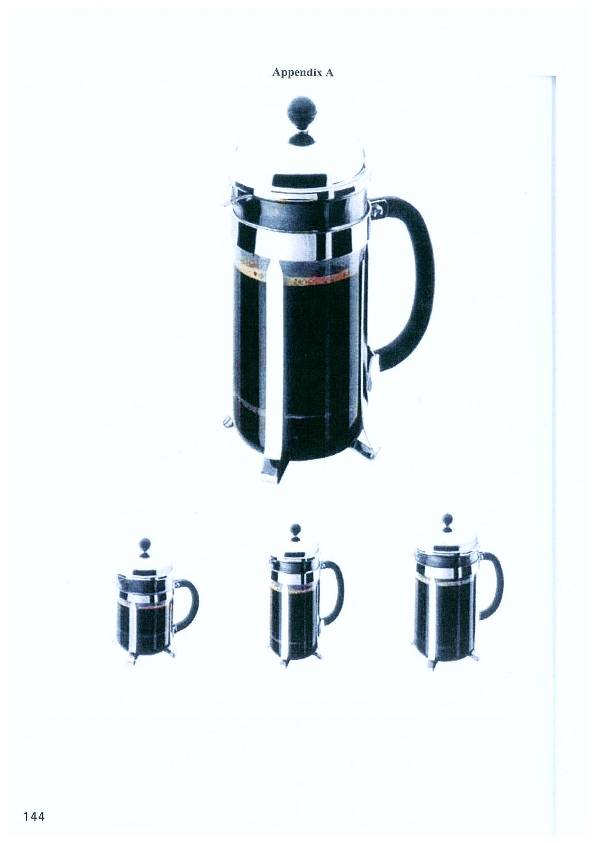
SCHEDULE 2
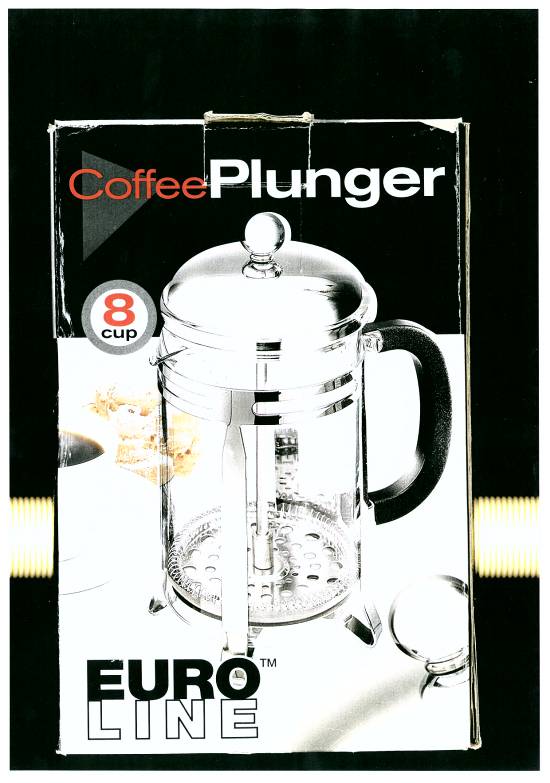
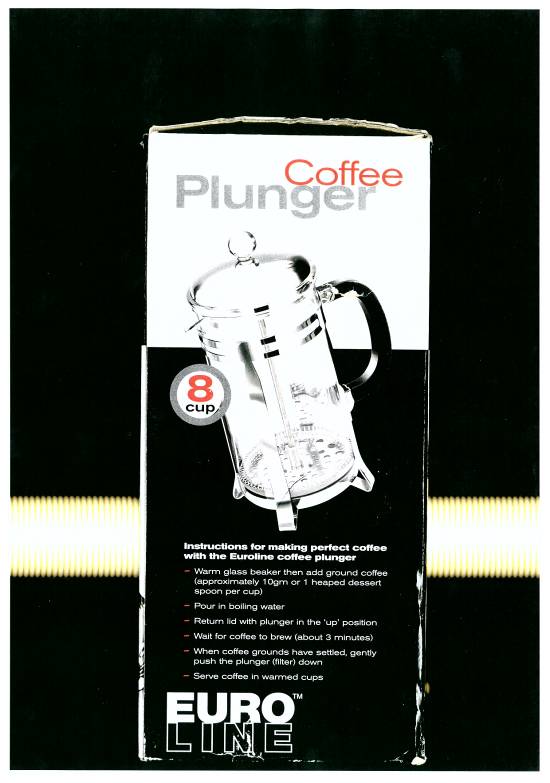
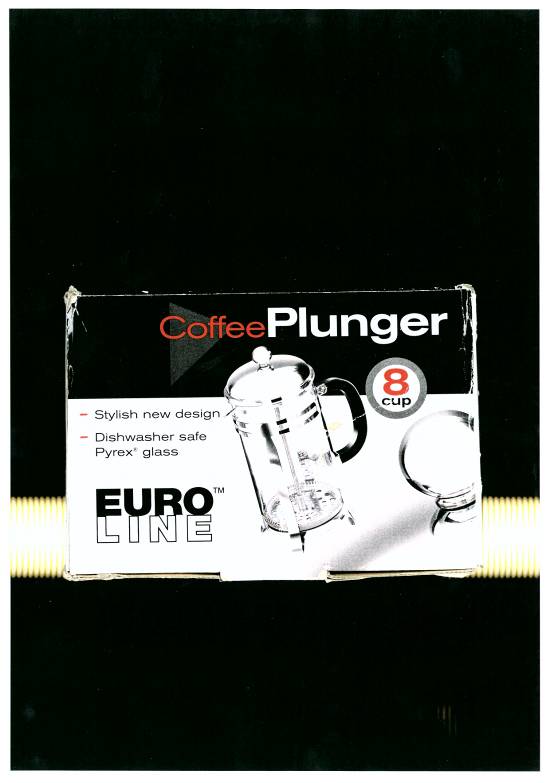
SCHEDULE 3
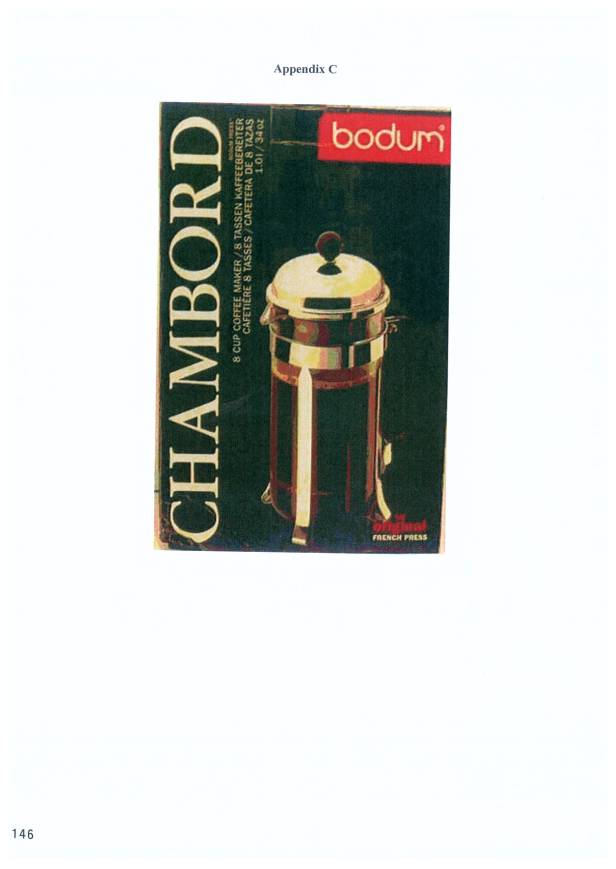
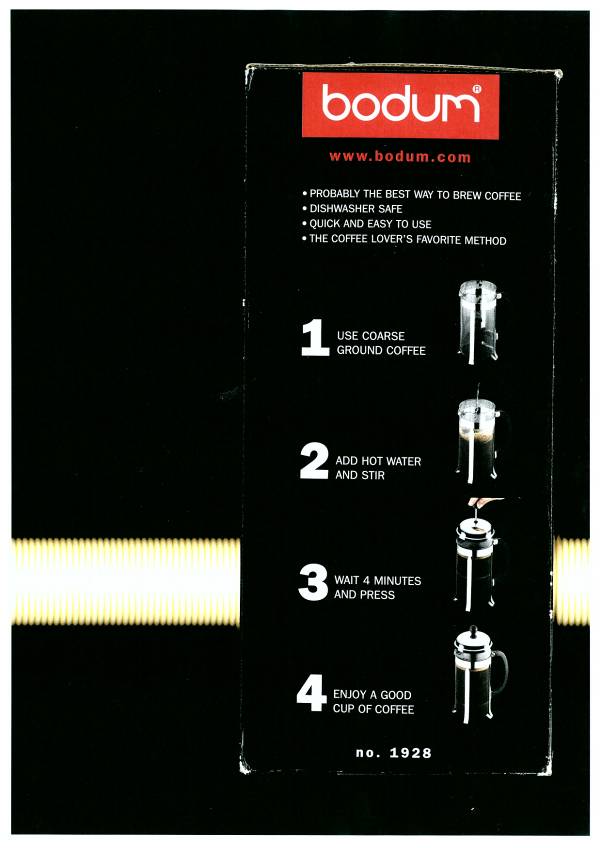
SCHEDULE 4
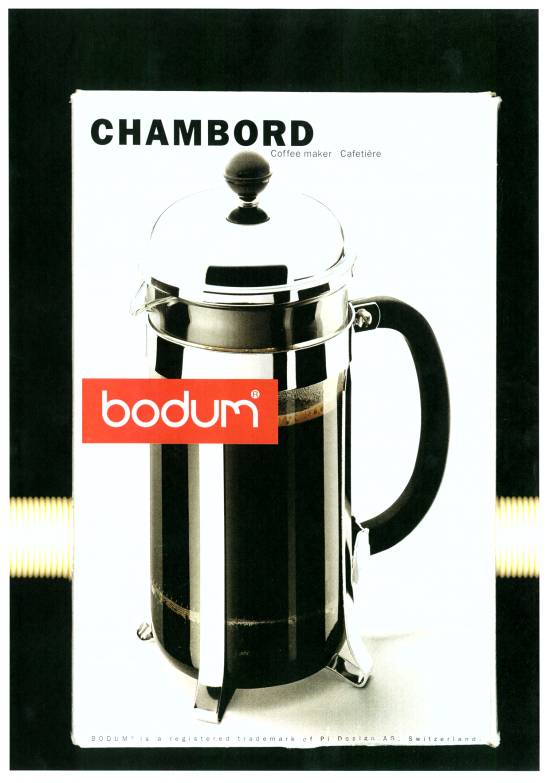
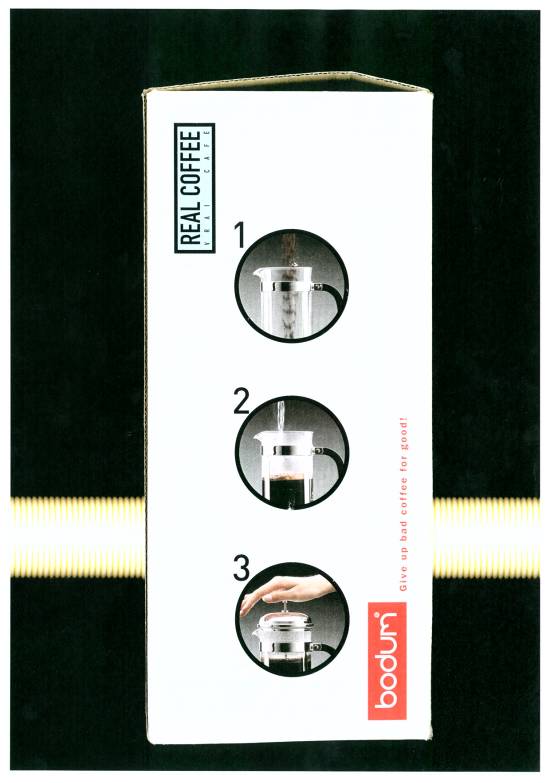
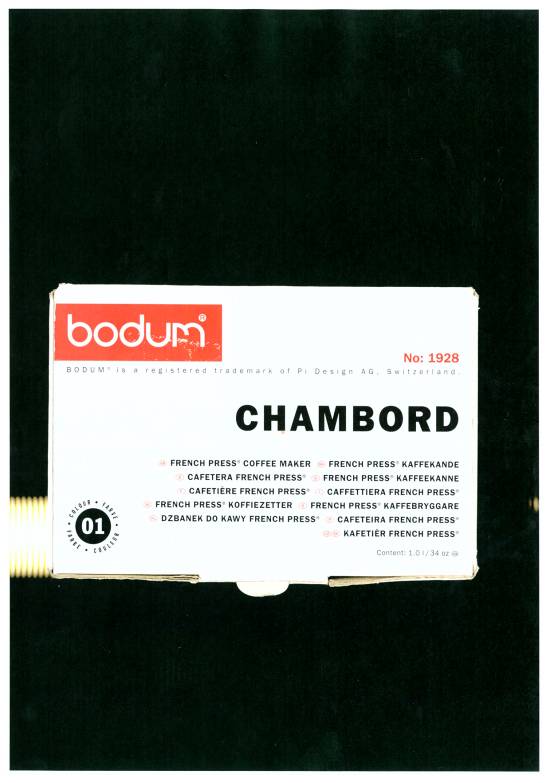
SCHEDULE 5
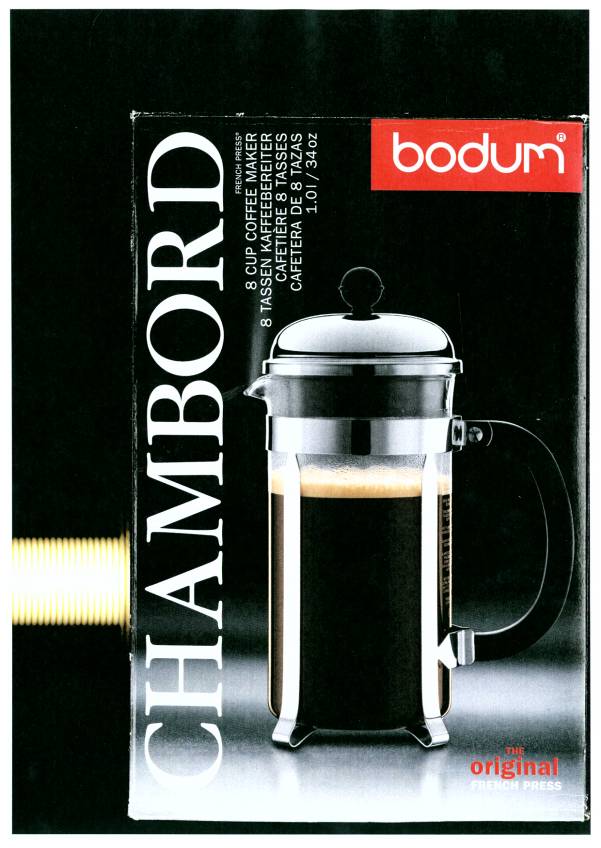
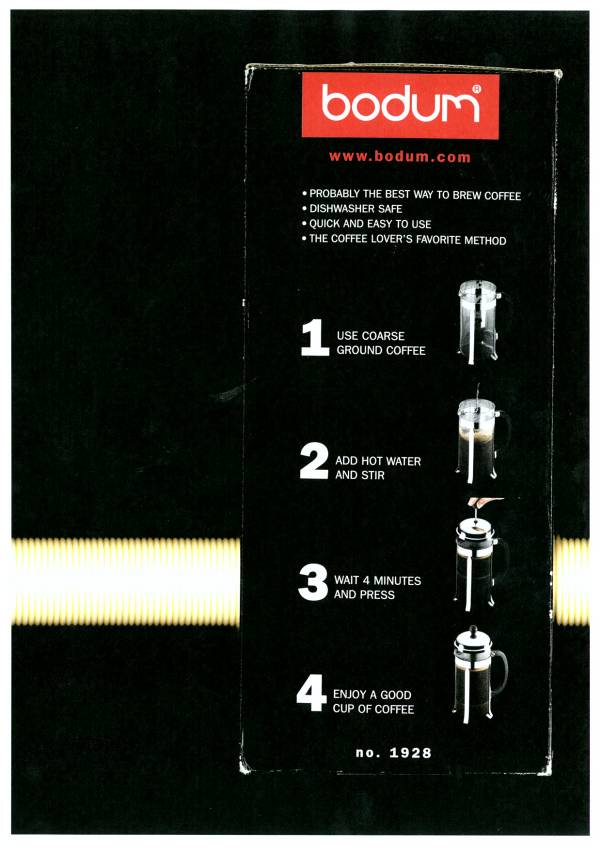
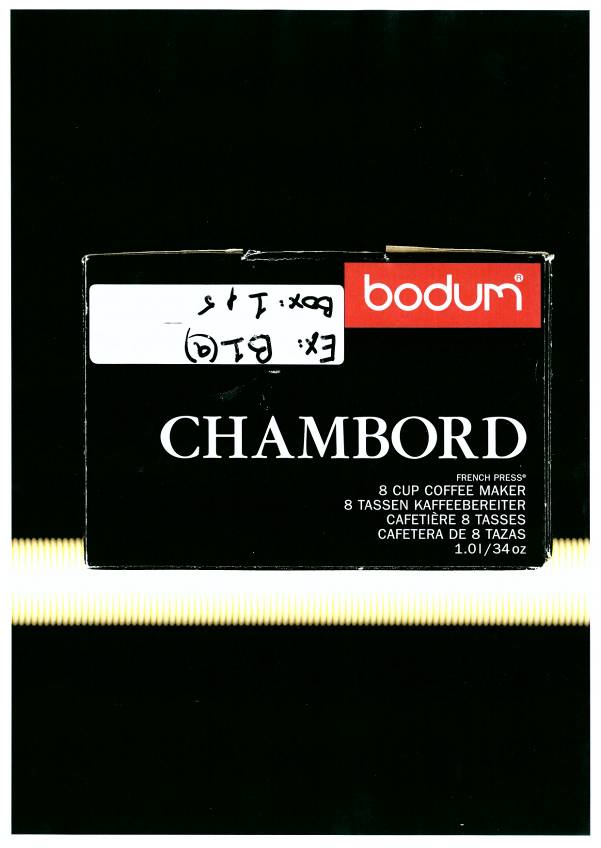
SCHEDULE 6
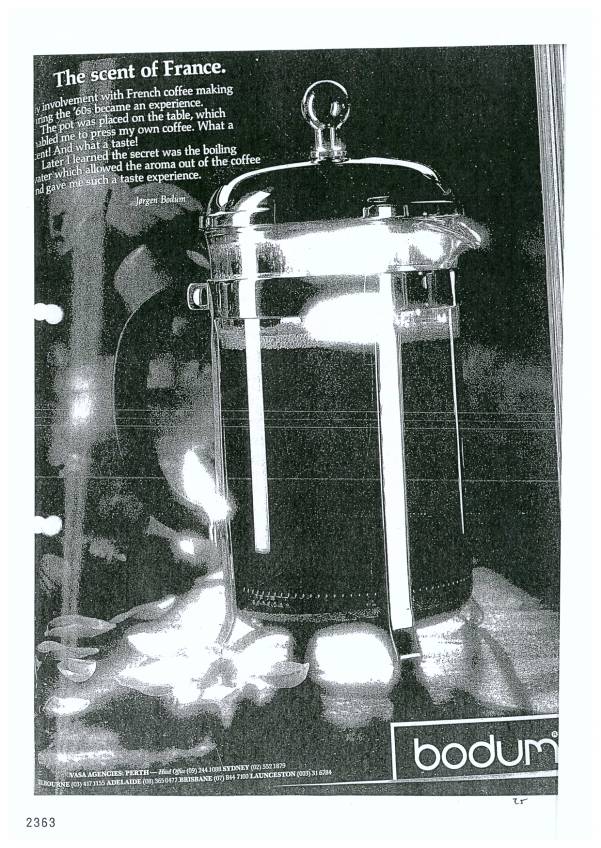
SCHEDULE 7
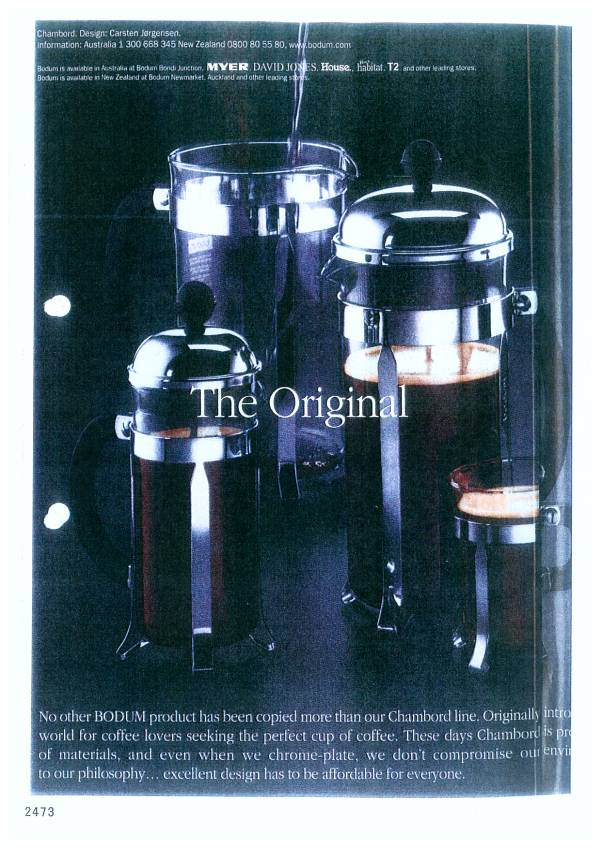
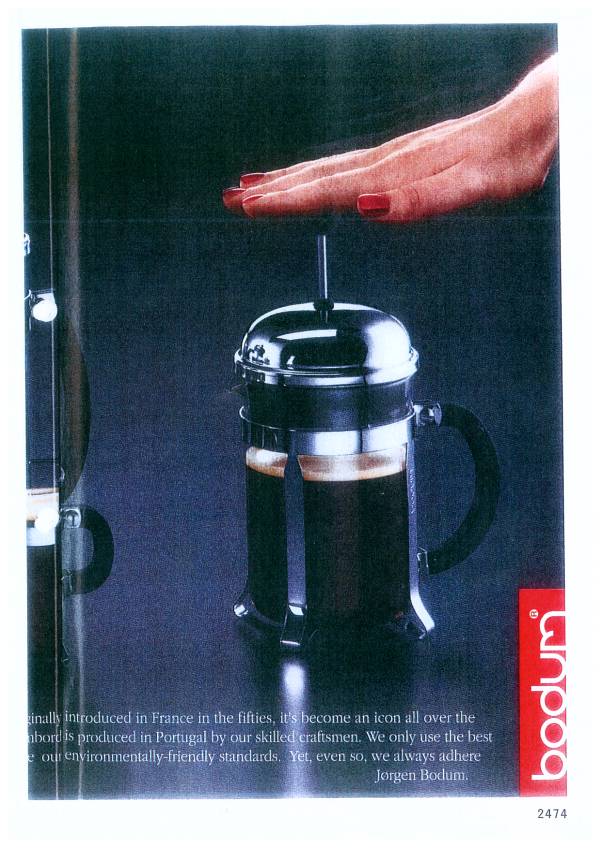
SCHEDULE 8
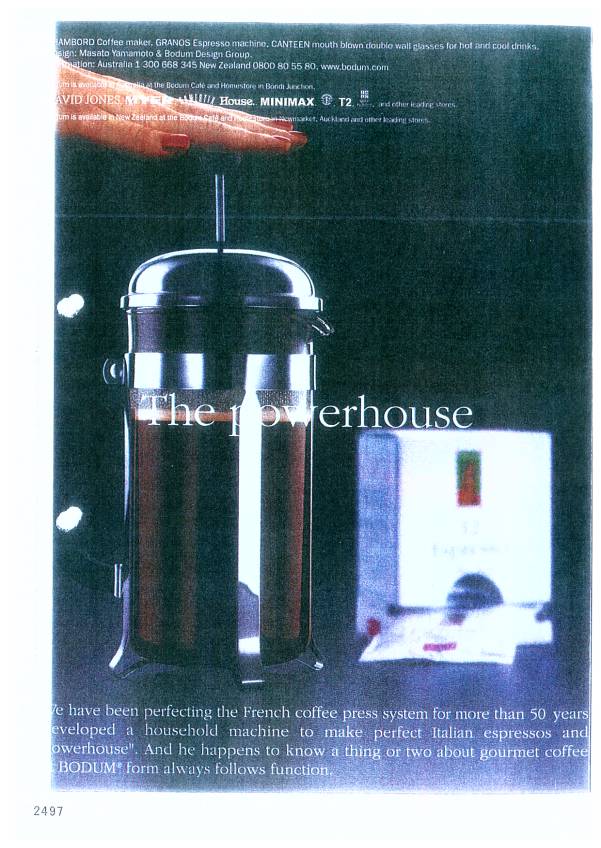
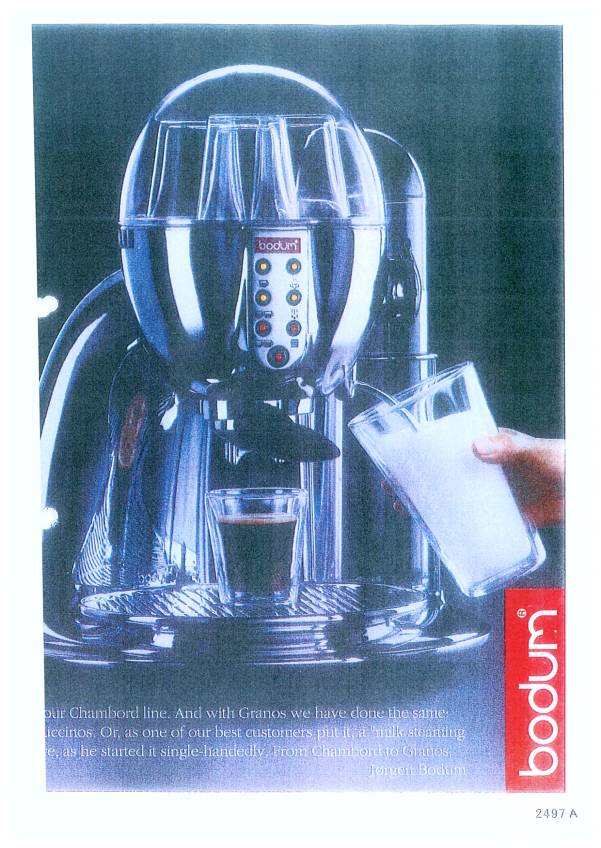
SCHEDULE 9
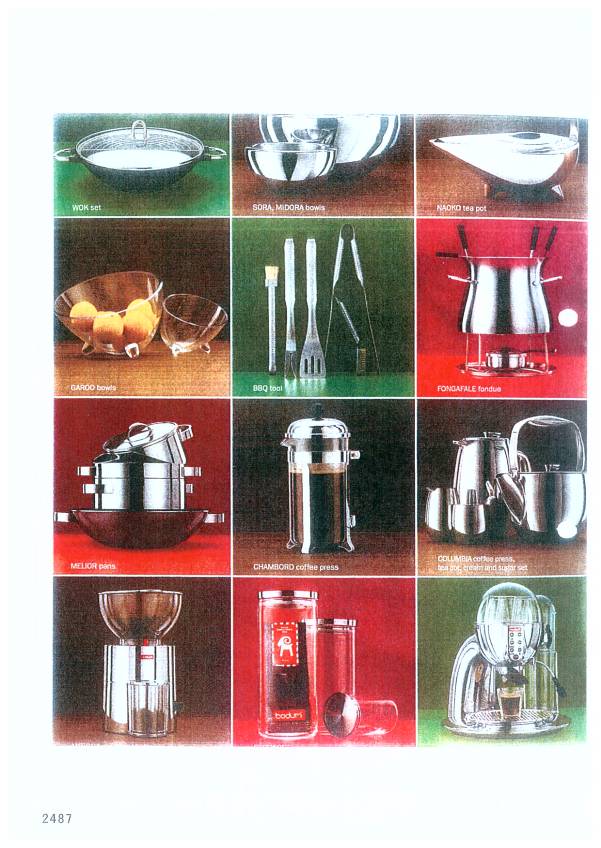
SCHEDULE 10
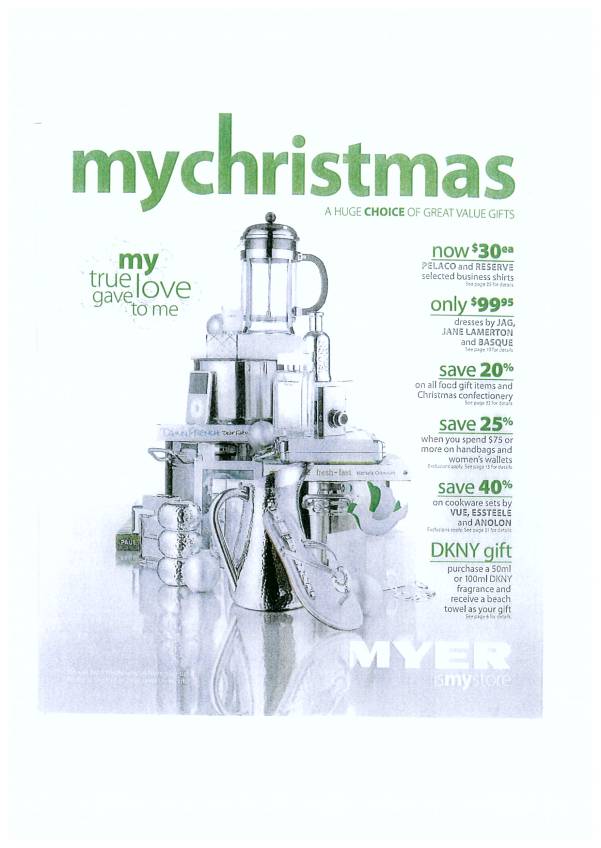
SCHEDULE 11
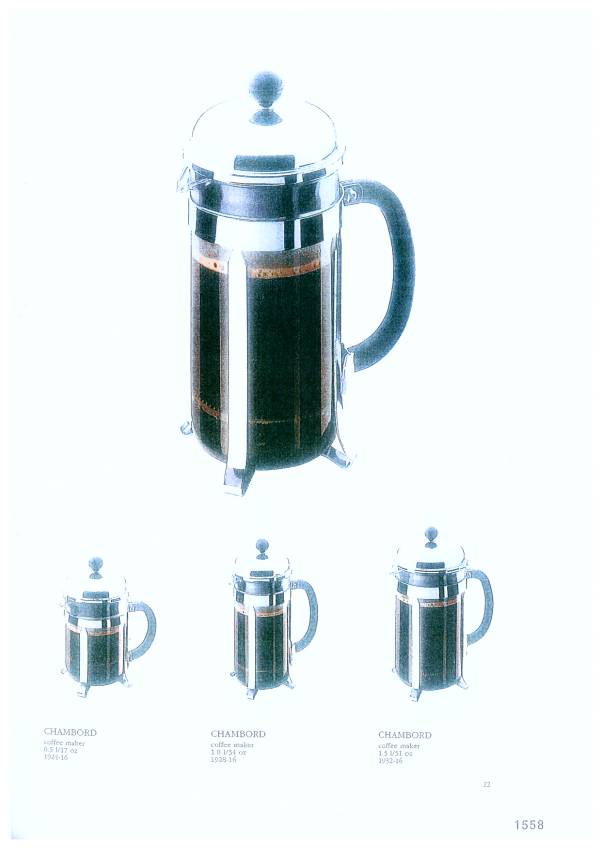
SCHEDULE 12
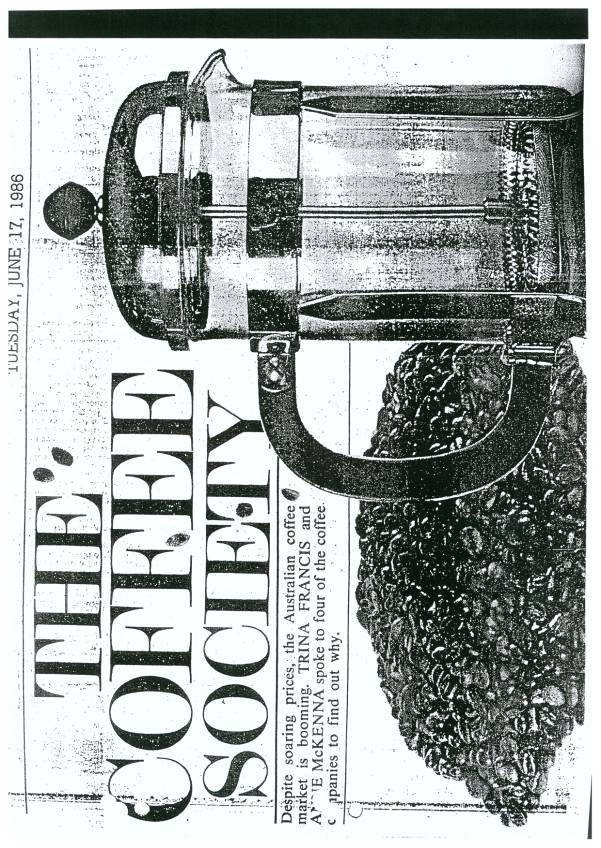
SCHEDULE 13
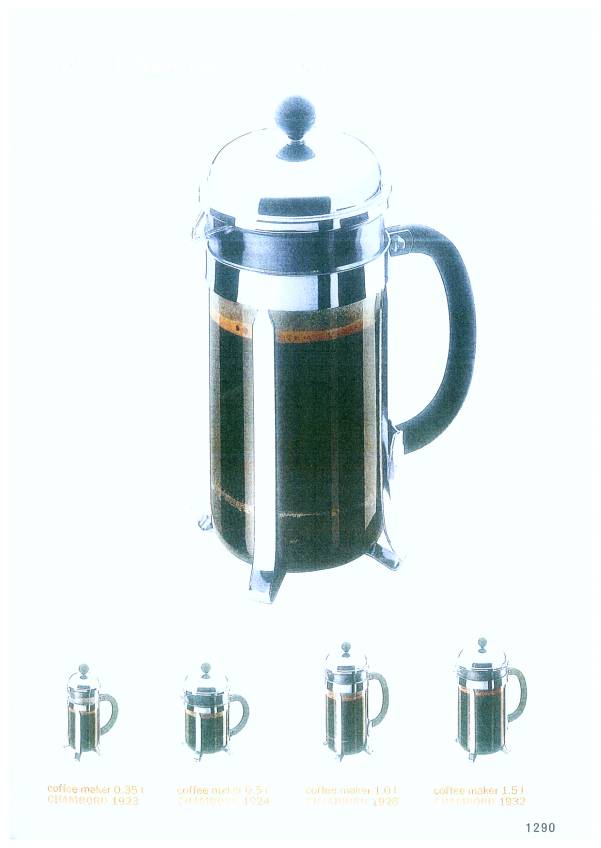
SCHEDULE 14
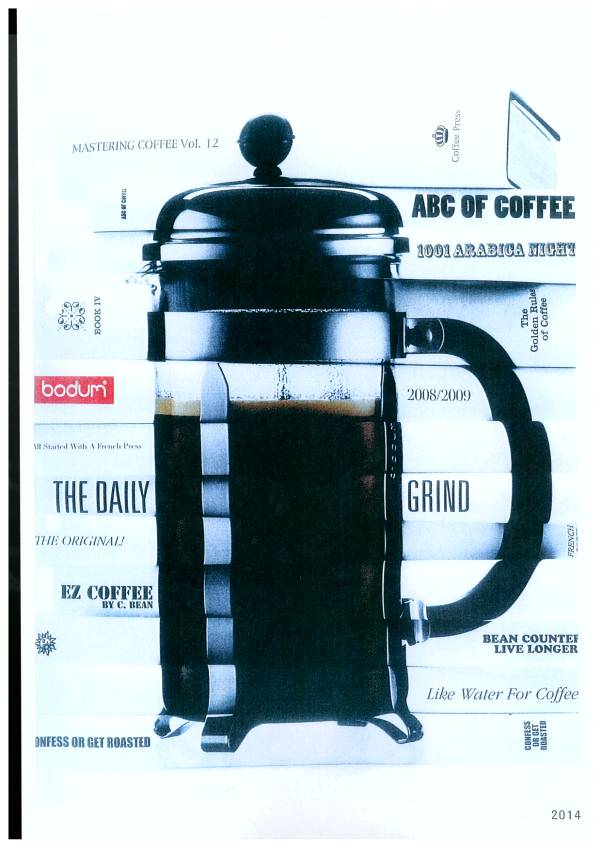
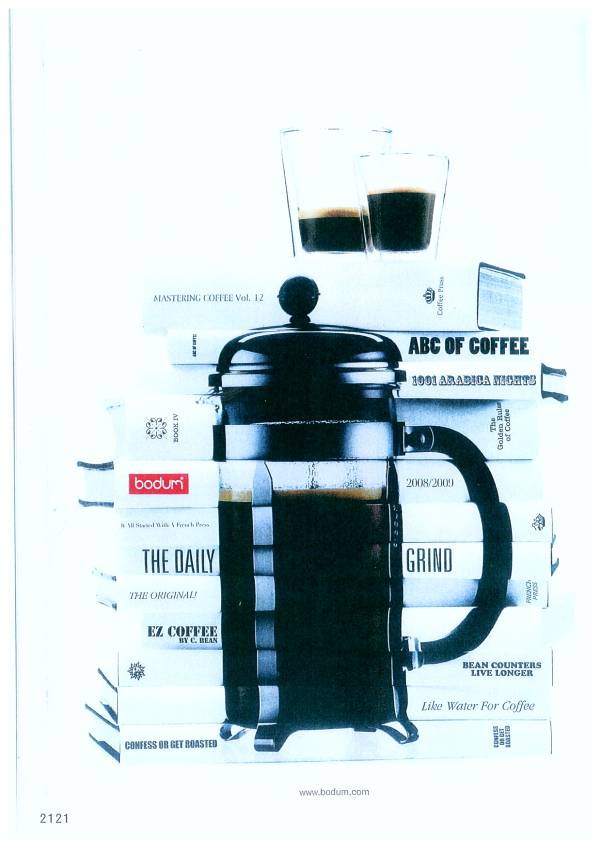
SCHEDULE 15
 SCHEDULE 16
SCHEDULE 17

| IN THE FEDERAL COURT OF AUSTRALIA | |
| VICTORIA DISTRICT REGISTRY | |
| GENERAL DIVISION | VID 325 of 2010 |
| ON APPEAL FROM THE FEDERAL COURT OF AUSTRALIA |
| BETWEEN: | PETER BODUM A/S First Appellant BODUM (AUSTRALIA) PTY LIMITED Second Appellant PI-DESIGN AG Third Appellant |
| AND: | DKSH AUSTRALIA PTY LIMITED Respondent |
| JUDGES: | GREENWOOD, TRACEY AND BUCHANAN JJ |
| DATE: | 5 aUGUST 2011 |
| PLACE: | Melbourne |
REASONS FOR JUDGMENT
TRACEY J:
272 I agree with the judgment of Greenwood J and I would allow the appeal.
| I certify that the preceding one (1) numbered paragraph is a true copy of the Reasons for Judgment herein of the Honourable Justice Tracey. |
Associate:
Dated: 5 August 2011
| IN THE FEDERAL COURT OF AUSTRALIA | |
| VICTORIA DISTRICT REGISTRY | |
| GENERAL DIVISION | VID 325 of 2010 |
| ON APPEAL FROM THE FEDERAL COURT OF AUSTRALIA |
| BETWEEN: | PETER BODUM A/S First Appellant BODUM (AUSTRALIA) PTY LIMITED Second Appellant PI-DESIGN AG Third Appellant |
| AND: | DKSH AUSTRALIA PTY LIMITED Respondent |
| JUDGES: | GREENWOOD, TRACEY AND BUCHANAN JJ |
| DATE: | 5 aUGUST 2011 |
| PLACE: | Melbourne |
REASONS FOR JUDGMENT
BUCHANAN J:
273 The Bodum coffee plunger is well known. It possesses a number of readily identified and reasonably distinctive features and is marked with the Bodum name in a number of places. When sold it also bears a prominent sticker on which the Bodum logo appears. The Euroline coffee plunger possesses almost all the same physical features but is not marked in the same way. When sold it carries a sticker on its base which says “Made in Taiwan”.
274 In the statement of claim the following assertions, which are at the heart of the proceedings, were made by the appellants (at [35]–[36]):
35 By promoting, advertising and selling the Euroline Coffee Plunger with the features as set out … and without labelling or distinguishing it adequately or at all, the Respondent has represented to consumers in Australia that the Euroline Coffee Plunger is the Bodum Chambord Coffee Plunger or is made, promoted or sold by or with the licence, sponsorship or approval of the [appellants].
36 Further or in the alternative and by reason of the matters pleaded … consumers and retailers are likely to be misled or deceived in the manner set out in paragraph 35 above.
275 These assertions raised the common law action of “passing off” and the statutory prohibition then contained in s 52 of the Trade Practices Act 1974 (Cth) (“the TP Act”) against misleading or deceptive conduct in trade or commerce. In order to succeed in each cause of action the appellants needed to prove an adequate reputation in the Bodum plunger as a foundation for the assertion that offering, promoting and selling the look-alike Euroline plunger conveyed the representation pleaded in paragraph 35 of their statement of claim.
276 The trial judge was prepared to assume that the Euroline plunger copied the features of the Bodum plunger. However, the fact that a product is copied is not enough to make out a case of passing off or of misleading or deceptive conduct. In Parkdale Custom Built Furniture Pty Ltd v Puxu Pty Ltd (1982) 149 CLR 191 (“Puxu”) a manufacturer of lounge suites and chairs made and sold furniture which closely resembled the “Post and Rail” furniture of distinctive appearance and design known as the “Contour” range manufactured and sold by Puxu Pty Ltd and its predecessors. Gibbs CJ observed (at 196):
… it is difficult to escape from the conclusion that the appellant deliberately copied the design and appearance of the respondent’s chairs. However, it does not follow that the appellant had any intention to mislead or deceive. One manufacturer may copy the product of another, because that product has proved successful and with the intention of taking advantage of an available market for a product of that kind, but with no intention of passing off his own product as the product of the original manufacturer.
…
… the respondent’s claim that the conduct of the appellant was misleading or deceptive, or likely to mislead or deceive, rests solely on the fact that the appellant sold goods which were virtually identical in appearance to those sold by the respondent. There is no suggestion of false labelling or false description.
277 Deliberate imitation was found to be insufficient in Puxu to make out a case for relief. Puxu was concerned with the operation of s 52 of the TP Act, rather than with the common law tort of passing off. Section 52 was designed primarily to protect consumers whereas the tort of passing off protects the proprietary rights of the holder of goodwill. Making due allowance for those differences, however, the following observations by Gibbs CJ (at 199) bear repetition in connection with the present proceedings:
Although it is true, as has often been said, that ordinarily a class of consumers may include the inexperienced as well as the experienced, and the gullible as well as the astute, the section must in my opinion by [sic] regarded as contemplating the effect of the conduct on reasonable members of the class. The heavy burdens which the section creates cannot have been intended to be imposed for the benefit of persons who fail to take reasonable care of their own interests.
278 His Honour went on (at 200):
There are hundreds of ordinary articles of consumption which, although made by different manufacturers and of different quality, closely resemble one another. In some cases this is because the design of a particular article has traditionally, or over a considerable period of time, been accepted as the most suitable for the purpose which the article serves. In some cases indeed no other design would be practicable. In other cases, although the article in question is the product of the invention of a person who is currently trading, the suitability of the design or appearance of the article is such that a market has become established which other manufacturers endeavour to satisfy, as they are entitled to do if no property exists in the design or appearance of the article. In all of these cases, the normal and reasonable way to distinguish one product from another is by marks, brands or labels. If an article is properly labelled so as to show the name of the manufacturer or the source of the article its close resemblance to another article will not mislead an ordinary reasonable member of the public.
279 Bodum had a clearly established reputation in its name and logo. (It will be convenient, at times, to refer to the appellants’ interests by the generic term “Bodum”.) The appellants were entitled to protect Bodum’s goodwill and proprietary interest in the name and logo at common law and entitled to insist, relying on s 52 of the TP Act, that other traders’ goods were not represented as its own. However, there were no independent proprietary rights or statutory protection (e.g. by way of registered design, trademark or copyright) in the features of the Bodum plunger. The appellants’ case was, therefore, that Bodum had, in addition, a reputation or “secondary meaning” in the features of the Bodum plunger which did not depend upon a direct association in the minds of consumers with the Bodum name or logo. The trial judge came to the view on the evidence, much of which was provided by the appellants, that Bodum had succeeded in its own advertising and promotion in distinguishing and differentiating itself from look-alike versions of the plunger sold by other traders.
280 It was not in dispute that, although expert evidence was called to deal with the significance of various features of the two plungers and make a comparison between them, it was ultimately a matter for the trial judge to decide, as a matter of overall impression, whether the pleaded representations had been made. The trial judge made reference to the expert evidence which was led by the appellants. He observed (at [47]):
47 … This evidence focussed attention on what the Court itself could observe about the similarities and differences in the products themselves. However, it is for the Court, in a case such as this, to determine for itself by way of overall impression, the significance of these similarities and differences once they have been identified.
281 In the present case, the Euroline plunger did not represent in any overt or express way that it was a Bodum plunger. The trial judge rejected the argument that the intentional similarities of the Euroline plunger to the Bodum plunger demonstrated that the purpose of the respondent was to appropriate the goodwill in the Bodum plunger or to mislead consumers as alleged in the statement of claim. There were a number of matters which contributed to this conclusion. The trial judge’s findings were summarised by him as follows (at [184]):
184 In my view, the promotion and sale of the Euroline Coffee Plunger does not convey the representation that it is the Bodum Chambord Coffee Plunger or is otherwise associated with Bodum. The name Euroline is placed fairly and squarely before the consumer, even if not widely known. When regard is also had to the some [sic] visual differences between the products; the fact that Bodum has always promoted, advertised and sold its products by reference to the name Bodum and other indicia of trade source; the fact that potential consumers have been warned to be aware of the availability of look-alike plungers; the manner in which the products are displayed for sale in retail stores; and the fact that there is no evidence that any consumer has ever been misled by the sale of the Euroline plunger, I readily conclude that DKSH has not engaged in misleading or deceptive conduct or passing off.
282 In the discussion which preceded this summary, there were two critical conclusions reached by the trial judge requiring attention on the appeal, which were outlined at the outset of his analysis of the issues (at [82]):
82 I should state from the outset that while I am of the view that the Bodum brand itself has a significant reputation in the homewares/ housewares market, I do not consider that Bodum has the secondary meaning or reputation in the Bodum Chambord Coffee Plunger … features it identifies. I consider that Bodum’s reputation is distinctly tied to its products being properly labelled and sold in conjunction with reinforcing packaging and, significantly, by reference to the Bodum name. Bodum’s reputation does not exist in the naked Coffee Plunger features … (without its logo in place) alone. If I am wrong about this, and if Bodum does have a secondary reputation in the features alone, then I am not satisfied that the accused products …in the way they are packaged or exposed to potential customers in Australia are sufficiently similar to give rise to the misrepresentation alleged by Bodum …
283 These conclusions (that the appellant had no secondary reputation in the features of the Bodum plunger, apart from the Bodum name and logo, and that, in any event, there was sufficient product differentiation at point of sale that there was no misrepresentation) were explained in some detail in the discussion which followed. His Honour accepted that Bodum had a significant reputation in its brand but he rejected an argument that the features of the Bodum plunger could be considered to be significant in their own right and in the absence of the Bodum name and logo. Those more detailed findings were expressed as follows (at [90]–[94]):
90 It is clear that there has been vast amount of advertising of the Bodum brand and I find that Bodum had and has a significant reputation in Australia in that brand. However, it is necessary to consider how this translates to a reputation in the Bodum Chambord Coffee Plunger … with or without its branding.
91 It was submitted by Bodum that the consistency, extent and duration of the sale and promotion of the Bodum products increased the likelihood that there will be a significant number of people to whom the features do have a signification for which Bodum contends.
92 I agree that there may be some such people, but very few. In any event, in the way that Bodum has marketed (by specific and consistent reference to its name and logo), the absence of such reference would readily lead to the view being held by consumers that the accused products are not part of the Bodum range.
93 Of course, there will be a variety of consumers. Some will not have been exposed to Bodum products at all. They will have no pre-conception or knowledge of the Bodum features relied upon by reference to the Bodum range. Other potential consumers will have a knowledge of the Bodum range and the Bodum features even if not by name. They may or may not have been exposed to copy products. I do not consider that they would conclude that the accused products or any copy products would be part of the Bodum range, rather than just ‘copies’ or cheaper versions. The fact that the accused products in these proceedings are ‘just under’ the price range of the Bodum products, does not confuse the consumer that they are part of the same range, but a cheaper version. The consumer would readily appreciate that these differently packaged products are just that, cheaper, and would not necessarily assume any association with Bodum. No persuasive evidence was led by Bodum to demonstrate otherwise.
94 The accused products were clearly packaged to distinguish them from Bodum, with no reference to the distinctive name or logo of Bodum. No evidence was led by Bodum of actual confusion of a consumer. If a consumer was familiar with Bodum or the Bodum product range itself, then in my view the comments made in Koninklijke Philips Electronics NV (2000) 48 IPR 257 at [45] and Dr Martens (1999) 44 IPR 281 at [38] referred to above apply here even though the brands of the accused products are not well known. The knowledgeable consumer would expect to see the name and logo of Bodum on its products. This is how Bodum has in fact marketed its products for very many years. I am of the clear view that consumers are now sophisticated enough (at least in the relevant market here) to understand the concept of competing brands with no trade connection, even though there may be an element of copying. In fact, the similarity may put the consumer on guard to ensure that he or she takes care to purchase ‘the original’. The evidence indicates that Bodum understood the need to (and did) educate the relevant market to beware of copyists, and to look for the ‘original’ Bodum.
284 There was an abundance of evidence before the trial judge to establish the proposition that the Bodum plunger was advertised and promoted in close association with the Bodum name and logo, one or other of which was virtually always published in close proximity to any photograph of the Bodum plunger and in a prominent way. The close association with the name and logo was also a feature of the point of sale marketing and display arrangements for the Bodum plunger. The trial judge recorded (at [95]–[98]):
95 It is convenient to mention some aspects of the evidence relating to the promotion of the Bodum Chamboard Coffee Plunger. The Bodum Chambord Coffee Plunger has been sold in Australia since 1986 primarily under and by reference to the following features:
• the name ‘bodum®’ presented in a stylised form in white on a bright red ‘flag’;
• the name Chambord;
• packaging which has been either predominantly white or black in colour;
• the words ‘The Original French Press’;
• a large red and white sticker affixed to the glass beaker bearing the words ‘the original French press’ and the name ‘bodum®’;
• an instruction leaflet bearing the name ‘bodum®’ and the words ‘French Press’;
• the permanent branding and instructions which appear on the Chambord Coffee Plunger product itself including:
- the name ‘bodum®’ engraved into the frame;
- the name ‘bodum®’ etched into the glass;
- the name ‘bodum®’ embossed on the black plastic skirt; and
- (since 1998) safety/usage instructions in both English and French which are etched into the glass beaker in white lettering beneath the white label on the side of the glass beaker.
96 Mr Bodum gave evidence (which I accept) that Bodum had placed its trade mark on the packaging of all of its products and where any Bodum products were sold without boxes, they were sold by reference to the name ‘Bodum’ either appearing on the product itself or by some other means.
97 Since at least as early as the year 2000, Bodum has placed a bright red and white sticker on the glass beaker of each Bodum Chambord Coffee Plunger, as well as its other coffee plunger products sold in Australia proclaiming that the product is ‘the original French Press bodum®’. Similarly, the packaging in which each Bodum coffee plunger is sold bears prominently in bright red and white the words ‘the original French Press’.
98 Mr Perez acknowledged in cross-examination that the purpose of this emphasis on the Bodum Chambord Coffee Plunger as the ‘original’ was to draw attention to its French heritage, to educate consumers to watch out for look-alikes and to distinguish its products from competitors’ look-alikes.
and also (at [113]–[114]):
113 The packaging is emblazoned with the bright, distinctive Bodum logo of white writing on red background, with the distinctive name ‘Chambord Coffee Plunger’ given prominence through large type face. A purchaser is left in no doubt about the provenance of the Bodum Chambord Coffee Plunger …
114 To me, these aspects encapsulate the Bodum get-up that has been advertised and marketed as the promotional material shows. Even though promotional material other than in a store (eg as in magazines) may not include the packaging, the promotion occurs by reference to the name Bodum, and when sold on display, the Bodum Chambord Coffee Plunger … retain[s] the stickers, named etchings and instructions which promote the Bodum brand.
285 No challenge was made to those findings. Rather, the appellants’ attack was directed to the conclusions which proceeded from them. In particular, the appellants challenged the conclusion of the trial judge (at [121]) that Bodum was the “victim of its own success” in establishing for itself “a separate and distinct identity from look-alike products”.
286 In my respectful view, these conclusions, the more general conclusion that Bodum had no “secondary reputation” in the features of the plunger and the findings from which the respective conclusions proceeded, were clearly open on the evidence before the trial judge.
287 Furthermore, although the appellants argued on the appeal that the trial judge was wrong to find that Bodum had no independent reputation or “secondary meaning” in the features of the plunger alone, separate from the Bodum name or logo, I do not understand how the concept of a secondary meaning might assist the appellants on the facts of the present case. First, reputation must be established to make out either of the causes of action (i.e. passing off or breach of s 52 of the TP Act). Thus, if reliance on a reputation independent of brand or logo is intended then that independent reputation must nevertheless be sufficiently established. The trial judge found, on the facts, that it was not. Furthermore, I do not regard the present as a case involving a “secondary meaning”. In my view, that notion does not apply to a design or to physical features of a product itself of the kind relied upon.
288 The trial judge found that the features of the Bodum plunger were not, in fact, distinctive or exclusive, either historically or at the time of the trial and that “… Bodum itself taught consumers to be aware of imitations and look for the ‘original’”. I do not understand those factual findings to be challenged. In those circumstances, any suggestion that consumers were misled merely by the similarity of features between the Euroline plunger and the Bodum plunger is a surrogate contention that copying or imitation of an original concept or product is banned. The authorities do not support that contention.
289 I earlier referred to the judgment of Gibbs CJ in Puxu. It is also instructive, in my respectful view, to note the observations of the other two Justices who, with Gibbs CJ, constituted the majority. In Puxu, Mason J said (at 209):
Conduct does not breach s. 52(1) merely because members of the public would be caused to wonder whether it might not be the case that two products come from the same source.
290 Brennan J, in Puxu, dealt with the matter in more detail. His Honour said (at 219):
The protection afforded by the common law stops short of according to a manufacturer a monopoly right to the manufacture and sale of goods of a particular design unless he is the owner of a design validly registered under the Designs Act 1906 (Cth) in respect of goods of that kind.
and (at 225):
Conduct cannot be held to fall within s. 52 unless a consumer, not labouring under any mistake or imperfection of understanding of law, would be or would be likely to be misled or deceived by that conduct. Section 52 operates in a milieu of the external legal order, so that the character of conduct which falls for consideration under s. 52 is to be determined by reference to the external legal order as it exists when the conduct is engaged in. Therefore, a manufacturer who exercises his freedom to manufacture goods according to a design which is not protected by valid registration does not engage in conduct which is misleading or deceptive or which is likely to mislead or deceive. If consumers or potential consumers believe that all goods of a particular design are manufactured by him who first establishes a market reputation as a manufacturer of those goods, that belief is or may be erroneous. The error may be attributed to a preconceived belief that the manufacturer who first establishes a market reputation has a monopoly in the manufacture and sale of goods of that kind but, unless the manufacturer has acquired a statutory monopoly, that belief is also erroneous and the error flows from a misconception of law. A later manufacturer who does no more than exercise his freedom to manufacture and sell goods made in accordance with a design in the public domain does not mislead or deceive; and if a consumer has an erroneous preconceived belief that the first manufacturer has a monopoly, a false assumption by the consumer as to the source of the later manufacturer’s goods is self-induced.
291 In my view, the limitations upon the protection given by s 52 of the TP Act (i.e. not to afford protection to designs which are copied, but not directly protected by the relevant statutory scheme), apply equally in the present case. An action in passing off cannot enliven, in this context, greater protection than s 52 of the TP Act because the common law also does not go so far.
292 In Dr Martens Australia Pty Ltd v Rivers (Australia) Pty Ltd (1999) 95 FCR 136 (“Dr Martens”) a Full Court dealt with an attempt to confine the limitations expressed in Puxu, with a view to leaving room for actions protecting so-called distinctive features of goods. The attempt failed (see especially at [40]–[42]). Although this judgment has been explained as turning on adequacy of labelling (see Koninklijke Philips Electronic NV v Remington Products Australia Pty Ltd (2000) 100 FCR 90), in my respectful view, neither Puxu or Dr Martens depended in principle upon labelling, although it is true that a case of misleading get-up (as opposed to copy of a design) would not survive adequate labelling (see Dr Martens at [40]). To the extent that Reckitt & Colman Products Ltd v Borden Inc [1991] All ER 873 (“the Jif Lemon Case”) might hold that a legally enforceable monopoly may be acquired in a design, it is not readily reconciled with Puxu, although the principle recognised by the House of Lords in the Jif Lemon Case was nominally the same as that applied by the High Court in Puxu – namely that the common law does not protect a monopoly in goods. In the Jif Lemon Case the House of Lords focussed on get-up, rather than design of goods. The lemon looking bottle was found to represent a distinctive get-up for the presentation to the public of the lemon juice it contained. The present case is not one which may, in my view, be approached that way. The present case is concerned with the design of goods themselves, not their distinctive container. In my view, the analysis in Puxu must prevail, with the result that neither cause of action in the present case should succeed.
293 In all the circumstances, I cannot subscribe to the outcome of the very thorough analysis by Greenwood J, which has also persuaded Tracey J, about this aspect of the case. Nor, I regret to say, can I join with their Honours concerning the other principal issue in the appeal.
294 To the extent that the claimed reputation (or “secondary meaning”) in the features alone might actually exist, the relevant enquiry is whether it has been made sufficiently clear to a consumer at the point of sale that the product they are about to purchase is not a Bodum plunger. In that connection the trial judge made the following findings (at [171]–[174] and [176]):
171 The Euroline packaging features the prominent use of DKSH’s trade mark, EUROLINETM. EUROLINETM is printed on all six panels of the packaging. It is printed in large, stylised type on the bottom left-hand side of the front, back, top and two side panels. It is printed in smaller capital letters on the bottom panel in the statement, EUROLINETM is a registered trade mark of DKSH.
172 The EUROLINETM trade mark on DKSH’s packaging is at least as large as the BODUM trade mark on Bodum’s packaging. The photographs of in-store displays demonstrate that the EUROLINE trade mark is not concealed when the glass plunger is displayed in front of the packaging. Even if it was concealed, anyone interested in purchasing the plunger would reveal the packaging when they picked up the plunger.
173 A prominent photograph of the Euroline Coffee Plunger appears on the front and back panels of the packaging. A smaller photograph of the plunger appears on the side panels. As I have already indicated, it is common practice in the housewares industry for products to be displayed and sold in packaging that features a photograph of the product that is inside the packaging. When the plunger is displayed outside its packaging, the photograph and the name Euroline enables consumers to match the product and its packaging.
174 In context, I do not accept that the branding with the name ‘Euroline’ as it appears on the box does little to distinguish the DKSH product.
…
176 I do accept that the Euroline brand is not well known. However, that is not to say that a potential customer will assume that this ‘unknown brand’ is connected in someway to Bodum, particularly whether Bodum goes out of its way to use its own name and logo, and the features of the product are different. In any event, I consider the use of ‘Euroline’ on the packaging does indicate clearly a different brand.
295 Again, in my respectful view, the findings were clearly open to the trial judge as a matter of impression, making the judgment for himself once the relevant matters had been sufficiently identified for him if necessary. In addition, the trial judge recorded at [163(e)] that “at all times the Euroline plunger has had a gold ‘Made in Taiwan’ sticker on its base”. That appears to me to be substantially destructive of a claim of a “secondary meaning” arising simply from the features shared between the Bodum and Euroline plungers, even if the sticker seems not wholly consistent with the name “Euroline”.
296 However the matter is examined, therefore, there is no basis to conclude that the trial judge made any error in the evaluation of the evidence, or in the application of relevant principles, which might provide a ground to uphold the appeal.
297 Finally, the trial judge observed that there was no evidence of any consumer being actually misled. That was a relevant, even though not determinative, matter. It provided a practical touchstone against which to test what was otherwise a debate concerned with possibilities and competing versions of available impressions.
298 In my view, no appellable error has been demonstrated in either of the critical conclusions stated by the trial judge at [82] of his reasons, or in his more detailed analysis of the evidence. In my respectful view, the trial judge was correct to conclude that there had been no breach of s 52 of the TP Act. His Honour was also correct to conclude that a case of passing off had not been established. In my opinion, the appeal should be dismissed with costs.
| I certify that the preceding twenty-six (26) numbered paragraphs are a true copy of the Reasons for Judgment herein of the Honourable Justice Buchanan. |
Associate:
Dated: 5 August 2011


