

FEDERAL COURT OF AUSTRALIA
Olivaylle Pty Ltd v Flottweg AG [2010] FCAFC 62
|
Citation: |
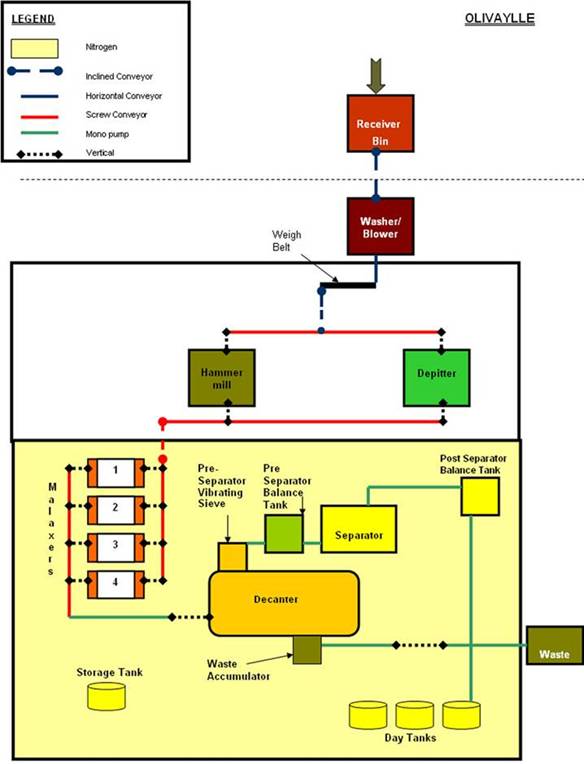
Olivaylle Pty Ltd v Flottweg AG [2010] FCAFC 62 |
|
Appeal from: |
Olivaylle Pty Ltd v Flottweg GMBH & Co KGAA (No 4) [2009] FCA 522 |
|
Parties: |
OLIVAYLLE PTY LTD (ACN 080 670 640) v FLOTTWEG AG (ABN 95 101 547 424) |
|
File number: |
SAD 85 of 2009 |
|
Judges: |
SPENDER, EMMETT AND JACOBSON JJ |
|
Date of judgment: |
2 June 2010 |
|
Catchwords: |
CONTRACTS – failure to satisfy a term – whether promisor bears onus of establishing compliance with the term CONTRACTS – warranties – right of withdrawal created by contract – whether a period of grace must follow reasonable notice to rectify defects |
|
Legislation: |
Digest of Justinian 21.1 |
|
Cases cited: |
Makita (Australia) Pty Ltd v Sprowles (2001) 52 NSWLR 705 |
|
| |
|
Date of hearing: |
18 and 19 February 2010 |
|
| |
|
Place: |
Adelaide |
|
Division: |
GENERAL |
|
Category: |
Catchwords |
|
Number of paragraphs: |
111 |
|
Counsel for the Appellant: |
R J Whitington QC and J B Teague |
|
Solicitor for the Appellant: |
Wallmans Lawyers |
|
Counsel for the Respondent: |
M C Hoffman QC and S J Doyle |
|
Solicitor for the Respondent: |
Baker & McKenzie |
|
IN THE FEDERAL COURT OF AUSTRALIA |
|
|
SOUTH AUSTRALIA DISTRICT REGISTRY |
|
|
GENERAL DIVISION |
SAD 85 of 2009 |
|
ON APPEAL FROM THE FEDERAL COURT OF AUSTRALIA |
|
OLIVAYLLE PTY LTD (ACN 080 670 640) Appellant
| |
|
AND: |
FLOTTWEG AG (ABN 95 101 547 424) Respondent
|
|
JUDGES: |
|
|
DATE OF ORDER: |
2 June 2010 |
|
WHERE MADE: |
sydney (VIA VIDEO-LINK TO adelaide) |
THE COURT ORDERS THAT:
2. The appellant pay the respondent’s costs of the appeal.
Note: Settlement and entry of orders is dealt with in Order 36 of the Federal Court Rules.
The text of entered orders can be located using Federal Law Search on the Court’s website.
|
IN THE FEDERAL COURT OF AUSTRALIA |
|
|
SOUTH AUSTRALIA DISTRICT REGISTRY |
|
|
GENERAL DIVISION |
SAD 85 of 2009 |
|
ON APPEAL FROM THE FEDERAL COURT OF AUSTRALIA |
|
BETWEEN: |
OLIVAYLLE PTY LTD (ACN 080 670 640) Appellant
|
|
AND: |
FLOTTWEG AG (ABN 95 101 547 424 Respondent
|
|
JUDGES: |
SPENDER, EMMETT AND JACOBSON JJ |
|
DATE: |
2 June 2010 |
|
PLACE: |
sydney (VIA VIDEO-LINK TO adelaide) |
REASONS FOR JUDGMENT
SPENDER J
1 I agree with the reasons for judgment of Emmett J, and with the orders his Honour proposes.
|
I certify that the preceding one (1) numbered paragraph is a true copy of the Reasons for Judgment herein of the Honourable Justice Spender. |
Associate:
Dated: 2 June 2010
|
IN THE FEDERAL COURT OF AUSTRALIA |
|
|
SOUTH AUSTRALIA DISTRICT REGISTRY |
|
|
GENERAL DIVISION |
SAD 85 of 2009 |
|
ON APPEAL FROM THE FEDERAL COURT OF AUSTRALIA |
|
BETWEEN: |
OLIVAYLLE PTY LTD (ACN 080 670 640) Appellant
|
|
AND: |
FLOTTWEG AG (ABN 95 101 547 424) Respondent
|
|
JUDGES: |
SPENDER, EMMETT AND JACOBSON JJ |
|
DATE: |
2 June 2010 |
|
PLACE: |
sydney (VIA VIDEO-LINK TO adelaide) |
REASONS FOR JUDGMENT
|
INTRODUCTION.......................................................................................................... |
[2] |
|
THE OLIVE OIL LINE................................................................................................. |
[4] |
|
NITROGEN AND OXYGEN LEVELS........................................................................ |
[15] |
|
RELEVANT PROVISIONS OF THE ORDER CONFIRMATION.......................... |
[18] |
|
The Process Guarantee as to Oxygen Levels........................................................... |
[21] |
|
The Warranty and Process Speed............................................................................. |
[24] |
|
OLIVAYLLE’S CLAIMS AS PLEADED..................................................................... |
[26] |
|
THE WITNESSES.......................................................................................................... |
[29] |
|
THE INSTALLATION OF THE OLIVE OIL LINE................................................... |
[39] |
|
THE EVIDENCE GIVEN BY THE RELEVANT WITNESSES................................. |
[50] |
|
Mr Carey.................................................................................................................... |
[51] |
|
Mr Nieuwkerk............................................................................................................ |
[52] |
|
Professor King............................................................................................................ |
[59] |
|
THE FINDINGS OF THE PRIMARY JUDGE........................................................... |
[62] |
|
THE APPEAL................................................................................................................. |
[71] |
|
The Process Guarantee as to Oxygen Levels........................................................... |
[73] |
|
Design..................................................................................................................... |
[75] |
|
Normal Operating Conditions............................................................................... |
[100] |
|
There was no Breach of the Process Guarantee................................................... |
[101] |
|
The Warranty and Process Speed............................................................................. |
[103] |
|
CONCLUSION............................................................................................................... |
[110] |
INTRODUCTION
2 This appeal is concerned with an agreement between the appellant, Olivaylle Pty Ltd (Olivaylle), and the respondent, Flottweg AG (Flottweg), relating to the supply by Flottweg to Olivaylle of equipment for the production of olive oil (the Olive Oil Line). The terms of the agreement between Olivaylle and Flottweg are contained in an order confirmation sent by Flottweg on 8 February 2005 (the Order Confirmation). Flottweg supplied the Olive Oil Line to Olivaylle and Olivaylle paid the price. However, Olivaylle claimed that the Olive Oil Line supplied by Flottweg did not satisfy certain performance specifications in their agreement. Olivaylle purported, therefore, to rescind the agreement.
3 Olivaylle then commenced a proceeding for recovery of the price that it had paid and for damages for breach of the agreement. In the proceeding Olivaylle asserted contravention of provisions of Part V of the Trade Practices Act 1974 (Cth) as well as breaches of contract. A judge of the Court dismissed Olivaylle’s claims with costs. Olivaylle has now appealed to the Full Court from the orders made by the primary judge.
THE OLIVE OIL LINE
4 The Olive Oil Line consisted of several different items of equipment, which may be described as follows:
· leaf blowing, washing and weighing system;
· multipurpose feeding system;
· hammermill;
· depitter station;
· four malaxeurs;
· eccentric screw pump;
· decanter;
· vibrating screen;
· feeder tanks;
· separator;
· storage tanks;
· oxygen measuring system;
· control panel.
A diagrammatic representation of the Olive Oil Line is set out in the Schedule to these reasons. However, it is desirable to describe in more detail the equipment constituting the Olive Oil Line as well as its operation.
5 Harvested olives are placed in an external receiver bin. From the receiver bin, the olives move up an inclined conveyor to a system that blows off leaves and twigs that accumulate with the olives in the course of harvest. The system then washes the olives with water to remove dirt and sand. The olives are then fed onto another conveyor, which measures the weight of olives being conveyed.
6 After weighing, the multipurpose feeding system, another conveyor, splits the flow of olives into two. One flow is conveyed to the depitter station and the other flow is conveyed to the hammermill. The respective proportions conveyed to the depitter and the hammermill can be varied by the operator.
7 The depitter station consists of a stationary barrel with blades rotating rapidly inside. When olives are delivered into the depitter, the blades push the flesh of the olives, but not the pits, through perforations in the sides of the barrel, where the flesh forms a paste. The paste is then directed to a screw conveyor, which conveys it to the malaxeurs.
8 The hammermill uses fixed rotating hammers to hammer whole olives into a paste of disintegrated flesh and pits. The paste falls by gravity from the hammermill onto the screw conveyor, which conveys it to the malaxeurs.
9 The malaxeurs are devices that cause the release of oil from cells in the olive flesh by malaxing, a process of heating and kneading. A ribbon mixer inside each of the Malaxeurs gently turns over and mixes the olive paste. While it is being mixed in that way, it is heated by a hot water jacket fitted to the outside of the malaxeur.
10 Each malaxeur is fully enclosed with a stainless steel cover. The covers are gasketted so as to form a seal, thereby permitting a blanket of nitrogen to cover the paste during the course of malaxing. The significance of nitrogen blanketing is described below.
11 The malaxeurs are fitted with automatic valves, which regulate filling and emptying, without the need for input by the operator. An advantage of having four malaxeurs arranged in parallel, with each having valves, is that there can be a continuous supply of olive paste to the decanter during a production run.
12 Once the malaxing process is complete, the olive paste is directed by means of the eccentric screw pump to the decanter. The decanter is a centrifuge consisting of a solid stainless steel bowl, which rotates at a very high speed. It subjects the paste introduced to it to a force more than 3,000 times that of gravity, which occasions a separation of the paste into oil, water and solids. The oil, water and solids leave the decanter at different points. The water and solids fall into a hopper and are pumped away from the plant.
13 The oil falls onto a vibrating screen, the purpose of which is to remove any remaining solids from the oil. From the vibrating screen, the oil is pumped into the feeder tanks.
14 From the feeder tanks, the oil is fed into the separator to be clarified. The separator is a disk centrifuge consisting of a solid bowl containing many stainless steel disks, which rotate and cause further separation of the raw oil. To assist the process of removing any remaining suspended solid particles from the raw oil, water is added. The clarified oil is pumped from the separator to the storage tanks.
NITROGEN AND OXYGEN LEVELS
15 Peroxides are intermediate products of oxidisation in olive oil, which eventually leads to rancidity of the oil. Various factors are responsible for the rate of formation of peroxides, including light, high temperature, metal catalysts and, importantly for present purposes, oxygen. Accordingly, it is desirable to ensure that the olive paste being processed is not exposed to atmospheric oxygen. That is done by nitrogen flushing or blanketing during the manufacture of olive oil, whereby the olive paste is retained within sealed units and lines from which atmospheric oxygen has been displaced by nitrogen.
16 Nitrogen flushing or blanketing involves the introduction of nitrogen into sealed units or lines in order to force oxygen out of the unit or line. Nitrogen flushing or blanketing requires a continuous flow of nitrogen to displace the oxygen that is drawn into the system by the material being processed. A greater flow of nitrogen is required at the beginning of the processing line when it is first started up or restarted, in order to lower the level of oxygen in the system. The amount of nitrogen required gradually reduces once the processing line has been running continuously for some time.
17 So long as the amount of nitrogen being put into the system is enough to create a positive pressure compared with the outside atmosphere and to be of sufficient quantity to displace the oxygen, the oxygen levels will be lowered and can then be maintained at low levels. Because of dilution factors, the amount of nitrogen required will be greater than the amount of oxygen to be displaced. The amount of nitrogen required to achieve any given reduction in oxygen levels will increase as oxygen levels reduce. For example, the amount of nitrogen required to reduce oxygen levels from 2% to 1% is much greater than the amount of nitrogen required to reduce oxygen levels from 20% to 19%.
RELEVANT PROVISIONS OF THE ORDER CONFIRMATION
18 While the Order Confirmation was sent by Flottweg on 8 February 2005, a binding agreement does not appear to have come into existence until 10 February 2005, when the terms of the Order Confirmation were accepted by Olivaylle. Nothing turns on the timing. The total price for the Olive Oil Line was €620,290 plus GST. Provision was made in the Order Confirmation for engineering documentation, installation, commissioning, start up and training supervision to be provided by Flottweg.
19 The complaints by Olivaylle that are pressed on the appeal are concerned with two different aspects of the Order Confirmation. The first aspect involves a provision described as a process guarantee, which relates to the proposed nitrogen flushing or blanketing of the Olive Oil Line. The second aspect is concerned with the processing speed of the Olive Oil Line and involves a provision described as a warranty, whereby Olivaylle was given a right of withdrawal if Flottweg failed to remedy defects.
20 The Order Confirmation described the Olive Oil Line as:
Continuous FLOTTWEG special 5 TPH in sealed N2 version
[Emphasis added]
The references to sealed N2 version andto 5 TPH in the description of the Olive Oil Line are significant in relation to the two aspects of Olivaylle’s complaints.
The Process Guarantee as to Oxygen Levels
21 The Order Confirmation contains the following (the Process Guarantee):
… all items of equipment supplied by Flottweg will function as per the descriptions in this quotation and oxygen levels in the gas phase of all equipment starting at the malaxeurs will be under 1% v/v – assuming client supplies sufficient Nitrogen gas of sufficient purity to make these levels of oxygen feasible.
[Emphasis added]
22 The guarantee as to oxygen levels applies only if the client supplies the amount of nitrogen gas that is necessary to ensure that the oxygen level is achieved. It might have been arguable that the Process Guarantee is void for uncertainty because that proviso is circular and therefore meaningless. On that basis, Olivaylle would simply need to demonstrate that the oxygen levels in the gas phase of the Olive Oil Line exceeded 1% v/v. However, neither party suggested that the proviso was void for uncertainty. Both parties conducted the proceeding on the basis that some meaning must be given to it.
23 The Order Confirmation also contains references to flushing the Olive Oil Line with nitrogen gas. For the most part, the symbol N2 is used to refer to nitrogen gas. Thus, the Order Confirmation states that the Olive Oil Line is “N2 flushed starting at the malaxeurs”, that the malaxeurs are “in N2 flush construction” and that each malaxeur “is covered for N2 flushing”. The Order Confirmation also describes each of the decanter, the vibrating screen, the feeder tank, the Separator and the storage tank as being “in N2 flushed version”. Next, the Order Confirmation states that the oxygen measuring system will be used to measure the oxygen content of any of the gas output lines of “N2 sparged plant or tanks”. Finally, the Order Confirmation reserves to Flottweg “the right to carry out N2 gas purging modifications to all equipment”.
The Warranty and Process Speed
24 In addition to describing the Olive Oil Line as 5TPH,the Order Confirmation described the depitter station in the following terms:
5-6 TPH De-pitter Station.
Stainless steel de-pitter capable of handling up to 5-6 TPH olives. The mash from the de-pitter falls into a hopper and is pumped by a mono type pump (2-5 TPH capacity) to the distribution screw above the malaxeurs.
[Emphasis added]
It is common ground that the Order Confirmation thereby specified that the Olive Oil Line would be capable of processing at least 5 tonnes of olives per hour.
25 The Order Confirmation also contains the following (the Warranty):
Flottweg guarantees that the equipment will be in accordance with the contractual agreements in terms of its design and quality of materials.
Should the equipment not be in accordance with this warranty because it is defective, Flottweg shall be both entitled and obliged, at its option, to repair the defective parts free of charge, to supply replacement parts free of charge or to make good any services not carried out correctly.
…
Flottweg’s warranty shall be limited to a period which is the lesser of one of the following:
- 16 months from the date of commissioning; or
- 2 full local olive oil seasons during which the equipment is operated; or
- 24 months from the date of readiness of the equipment for despatch.
Should Flottweg fail to make repairs of or modifications to any defective equipment, [Olivaylle] shall be entitled to either carry out repairs or modifications themselves or have them carried out by a third party if Flottweg fails to meet its obligations within a reasonable period.
[Olivaylle] shall be entitled to exercise the right to a reduction in the purchase price or a withdrawal from the contract only on the expiry of a reasonable period of grace. [Olivaylle] shall be obliged to specify such period in writing, stating the right which they intend to exercise in the event of such period expiring without Flottweg’s carrying out their obligations.
[Emphasis added]
OLIVAYLLE’S CLAIMS AS PLEADED
26 The allegations as to Flottweg’s contractual obligations made by Olivaylle in its further amended statement of claim (the Statement of Claim) that are relevant to the appeal may be summarised as follows:
· Paragraph 6: Flottweg would supply the Olive Oil Line;
· Paragraph 11: The following were essential terms of the agreement for the supply of the Olive Oil Line:
· the Olive Oil Line would process 5 tonnes of olives per hour while recovering a minimum of 85% of oil contained in the olives;
· the Olive Oil Line would be a sealed nitrogen version and nitrogen flushed to displace oxygen;
· the oxygen levels in the gas phase of all equipment comprising the Olive Oil Line, starting at the malaxeurs, would be under 1% v/v;
· Paragraph 12: Flottweg warranted that it would comply with each of those essential terms;
· Paragraph 12A: Flottweg guaranteed that the Olive Oil Line would be in accordance with the contractual agreements in terms of design and quality of materials;
· Paragraph 13: Olivaylle was entitled to exercise the right to a withdrawal from the contract in certain circumstances;
· Paragraph 14: In the event that Flottweg failed to carry out its obligations and Olivaylle exercised its right to withdraw:
· Olivaylle was entitled to a refund of monies paid;
· Olivaylle would not be obliged to make any further payments; and
· Flottweg would be entitled to retake possession of the Olive Oil Line.
27 In its defence to the Statement of Claim, Flottweg recited the provisions of the Order Confirmation concerning the depitter station, the Process Guarantee, the Warranty and the reservation of the right of Flottweg to carry out nitrogen gas purging modifications, all of which are set out above. Flottweg otherwise denied the assertions made in paragraphs 11, 12, 12A 13 and 14 of the Statement of Claim.
28 Olivaylle also asserted in the Statement of Claim that the Olive Oil Line was defective because:
· it failed to process 5 tonnes of olives per hour;
· it failed to extract a minimum of 85% of the oil in the olives; and
· it failed to maintain oxygen levels, in the gas phase of all equipment starting at the malaxeurs, under 1% v/v.
The allegation that the Olive Oil Line was defective was denied by Flottweg in its defence.
THE WITNESSES
29 In the appeal, Olivaylle raised questions concerning the weight given by the primary judge to the evidence of several witnesses, namely Mr Anthony Carey, who was called by Olivaylle, and Mr Dirk Nieuwkerk and Professor Keith King, who were called by Flottweg. The primary judge preferred Mr Nieuwkerk’s opinions where they differed from those of Mr Carey. That preference was reinforced by what his Honour considered was corroboration by Professor King of certain of Mr Nieuwkerk’s views. It is desirable, therefore, to say something about the witnesses in question.
30 Mr Carey is a chartered professional engineer. He has primary degrees in engineering, majoring in electrical and electronic engineering as well as in science, majoring in physics and computing. Mr Carey has expertise in industrial control systems, automation, instrumentation, electronic design, electrical noise control, electrical power control and diesel and gas turbine power generation. However, Mr Carey does not have any depth of engineering experience in the field of the design and commissioning of industrial systems that require nitrogen flushing or blanketing. He does not regard himself as an expert in olive oil processing lines.
31 Mr Carey was commissioned in late 2003 or early 2004 to work on the irrigation system at Olivaylle’s property. As a result of that commission, and following his work on the irrigation system, Olivaylle engaged Mr Carey in 2005 to assist in the planning for the installation of the Olive Oil Line. Mr Carey’s particular role was to provide advice in relation to the installation of monitoring equipment and to expand the oxygen monitoring system for the olive oil line.
32 Mr Nieuwkerk is a chemical engineer whose work has focussed on mechanical separation technology. He has worked in industries that are dependent upon process engineering of that type. Mr Nieuwkerk’s experience in separation technology has involved work in the petrochemical, dairy, edible oils and pharmaceutical industries. Since April 2001, Mr Nieuwkerk has run his own independent-contract engineering business.
33 Mr Nieuwkerk has had considerable experience in commissioning industrial systems that require nitrogen flushing or blanketing. That experience was gained primarily in the petro-chemical and pharmaceutical industries and solvent extraction of edible oil from oil seeds. In such industries, it is often important to ensure that the separation process takes place in an oxygen-sparse environment to reduce the risk of the material igniting or exploding. Mr Nieuwkerk’s most recent experience with commissioning a system that employed nitrogen blanketing involved GlaxoSmithKlein (GSK), a pharmaceutical company. The GSK system was used to extract morphine, codeine and thebaine from poppy straw, using solvents. The proportion of oxygen in the environment where the process was being carried out had to be below 5% in order to reduce the risk of explosion.
34 Mr Nieuwkerk’s first experience in olive oil processing was in 1997 or 1998, when he was involved in the sale of an olive oil processing line to South Australian Olive Corporation. In 1999, Mr Nieuwkerk was involved in the sale of an olive oil processing line to Mount Compass Olive Processors.
35 Since about February 2004, more than half of Mr Nieuwkerk’s business has come from Flottweg. Mr Nieuwkerk’s work for Flottweg has primarily involved the gathering of technical information and technical support for new and existing customers.
36 Mr Nieuwkerk first visited Olivaylle’s property in late June 2004. At that time, Mr Nieuwkerk discussed his experience in nitrogen blanketing, in process plant design and operation and in the installation of two other process lines in Australia. Mr Nieuwkerk discussed with Mr De Moya, the principal of Olivaylle, a proposal that Olivaylle had received from Flottweg for the supply of equipment for the processing of olives. Mr De Moya invited Mr Nieuwkerk to “come on board as a project manager”. Mr Nieuwkerk agreed, although he pointed out that he would then be “working for both sides”.
37 Professor King is Head of the School of Chemical Engineering at the University of Adelaide and is a fellow of the Institution of Chemical Engineers and other learned bodies. His industrial experience and consultancies have covered energy and combustion, gas processing, surface coatings, adhesives, laminates and minerals processing.
38 The primary judge considered that Professor King was at pains to assist the Court with precise, accurate and impartial answers. His Honour considered that Professor King’s most valuable assistance came in re-examination, which was conducted in writing because of his unavailability to give further oral evidence. His Honour considered that Professor King’s combination of practical and academic achievements commanded respect.
THE INSTALLATION OF THE OLIVE OIL LINE
39 The Olive Oil Line arrived at Olivaylle’s property in mid April 2005. Mr Nieuwkerk and technicians sent from Germany by Flottweg engaged in the installation and commissioning of the Olive Oil Line, which took several weeks. Problems were experienced during commissioning. The most significant problem was that the gear boxes driving the screw conveyors were not operating at the speed identified on their name plate. Moreover, even if they had operated at that speed, they would not have been fast enough to convey five tonnes of olives per hour.
40 During the 2005 olive harvest at Olivaylle, the quantity of olives delivered to the Olive Oil Line was nowhere near sufficient to keep it running continuously for any extended period. Accordingly, the Olive Oil Line had to be slowed down and intermittently shut down completely. The total harvest in 2005 was only around 110 tonnes, which could have been processed in under two days if the Olive Oil Line had operated continuously, even at 2.5 tonnes per hour. The slowing and intermittent shutting down caused many problems because all mechanical line processes work best when operated continuously.
41 By August 2005, the olive season had finished and no further testing of the Olive Oil Line was possible. Notwithstanding the problem with the speed of the conveyor gear boxes, it was possible to process the whole of the harvest of 110 tonnes with ease, since no more than eight to ten tonnes per day were available for processing. However, even at the reduced rate of 2.5 to 3 tonnes per hour, it was necessary to switch the Olive Oil Line off and use it intermittently to allow the harvest to catch up with supply.
42 A solution to the problem of the speed of the gear box was to install new gear boxes, which would allow for the conveyors to turn more quickly. However, Mr De Moya told Mr Nieuwkerk that he would rather have a larger conveyor that would run at a slower speed, because the temperature of the olives would otherwise be increased.
43 During the 2005 harvest, there was also a lack of a sufficient continuous flow of nitrogen. That factor, coupled with the intermittent nature of the operation because of the small quantities of olives available for processing, meant that Mr Nieuwkerk was unable to demonstrate whether the nitrogen blanketing system was able to operate effectively. Those factors meant that there was considerable restriction in the testing and fine tuning that could be done, since it was not possible to observe the plant running in a continuous mode for any longer than five to six hours at a time.
44 On 21 February 2006, Olivaylle wrote to Flottweg asserting that Flottweg’s attempts to commission the Olive Oil Line during the 2005 harvest had ended in failure. The letter asserted that the Olive Oil Line failed to meet two contractual requirements, namely the ability to process 5 tonnes of olives per hour and the ability to maintain less than 1% oxygen throughout the process, starting at the malaxeurs. The letter referred to a proposal by Flottweg to solve the capacity problem by increasing the size of the first screw conveyor and increasing the speed of the gear boxes driving the next four screw conveyors leading to, and exiting, the malaxeurs. The letter said that Olivaylle had accepted that proposal “as a gesture of good faith” but also said that that was not a sound engineering solution.
45 Olivaylle then stated that it expected Flottweg to correct the pertinent items, to make the Olive Oil Line comply with the specifications and requirements, within the parameters established by the Warranty. The letter then said as follows:
Pursuant to the contract Olivaylle hereby grants Flottweg until 30th June 2006 to bring the plant into compliance. This constitutes Olivaylle’s “reasonable period of grace” in accordance with the contract.
If at the end of this “period of grace”, the defects persist and have not been corrected and/or no other arrangements have been made in writing between Olivaylle and Flottweg, Olivaylle shall withdraw from the contract in accordance with its rights under the contract documents and Australian law.
46 Test runs of the Olive Oil Line were conducted on 1 May 2006 and 2 May 2006. Mr Nieuwkerk was present on those occasions. On the first day he made minor adjustments to various items of equipment. Other adjustments were also made by other technicians. The tests ran until there were no more olives to process, which was for about two to three hours. On both 1 May 2006 and 2 May 2006, the Olive Oil Line was run at a speed of 5 tonnes per hour.
47 On 25 May 2006, a further test run was conducted, at which Mr Nieuwkerk was present. However, while he participated in the test, he did not have control of all of the test parameters. Contrary to the draft test protocol, he was not permitted enough hot water to heat the paste to 35oC, and although the protocol stated that 20 tonnes of olives were to be tested, only 15 tonnes were available. Furthermore, there were problems with Olivaylle’s water supply and electrical systems, with the consequence that the Olive Oil Line had to be stopped and restarted several times which made it impossible to observe or accurately measure the true operating performance. Several problems were identified during the test on 25 May 2006. Some of those were fixed by the end of June 2006.
48 Mr Nieuwkerk says that, in addition to the matters that were fixed following the test run of 25 May 2006, further work could have been done to improve the nitrogen blanketing system after May 2006. He said that, if he had been able to fine tune the flows to the particular parts of the Olive Oil Line, he would have been able to identify the areas that were likely to require lower quantities of nitrogen. That would have permitted more nitrogen to be available to be introduced to the upstream parts of the Olive Oil Line, where it is most needed. Because of the continuous starting and stopping, Mr Nieuwkerk did not have the opportunity to perform proper tests.
49 Mr Carey was present at the Olivaylle plant for the test run on 25 May 2006. However, the operation of the Olive Oil Line in all its facets was not his responsibility. Mr Carey was concerned, at least for part of the day, with the electrical equipment. Neither in 2005 nor in 2006 did Mr Carey have the role of advising Olivaylle as to the amount of nitrogen gas required to achieve the specified oxygen levels.
THE EVIDENCE GIVEN BY THE RELEVANT WITNESSES
50 It is desirable to describe the relevant evidence of the witnesses whose evidence was the subject of contention on the hearing of the appeal. It will be necessary, of course, to refer only to those parts of their evidence that are relevant to the appeal.
Mr Carey
51 In 2007, Mr Carey inspected the Olive Oil Line at Olivaylle’s request for the purpose of furnishing a report concerning its ability to achieve the oxygen levels specified in the Order Confirmation. Mr Carey provided a report dated 3 July 2007 as to the results of tests conducted to determine whether particular equipment in the Olive Oil Line was sufficiently sealed to allow effective elimination of oxygen. Mr Carey made the following recommendations:
· Most items are likely to be able to be sealed sufficiently,
· More work is needed to ensure that the nitrogen supply to each item is regulated to compensate for any changes in internal gas volume as product flows in and out,
· The vibrating screen is not effectively sealed, but significant changes to the design of the cover would allow sufficient sealing.
Mr Carey did not offer any opinion as to the quantity of nitrogen that would be sufficient to achieve the specified oxygen level if those recommendations were adopted.
Mr Nieuwkerk
52 Mr Nieuwkerk swore two affidavits, one on 17 October 2007 and a second one on 28 February 2008. Olivaylle objected to several paragraphs of the first affidavit, in which Mr Nieuwkerk expressed opinions concerning the quantity of nitrogen that was needed to achieve an oxygen level of less than 1%. The objection was that the paragraphs were argumentative or by way of submission or speculation. The primary judge considered that the paragraphs were the voicing of an opinion by a man who has general familiarity with nitrogen flushing and with the endeavour to flush the Olive Oil Line. Senior counsel for Olivaylle accepted in argument before the primary judge that, if the paragraphs were to be received “as a bare statement of opinion”, the basis upon which the evidence had been received would be clear. No objection was based on the requirements of s 79 of the Evidence Act 1995 (Cth) (the Evidence Act). There was no objection by Olivaylle to the second affidavit.
53 In his first affidavit, Mr Nieuwkerk expressed his opinion that a lower oxygen content would have been achieved, without further testing or fine tuning, by increasing the quantity of nitrogen that was able to be introduced to the Olive Oil Line as a whole. Without fine tuning, however, that would have resulted in more nitrogen than was necessary going to the decanter and separator and would require more nitrogen than was necessary to achieve the desired result. Mr Nieuwkerk said that the greatest difficulty was in relation to the malaxeurs, particularly when they were being filled.
54 Mr Nieuwkerk observed that when the nitrogen supply to the malaxeurs was left on overnight, the levels of oxygen dropped to below 1%. Mr Nieuwkerk said that that showed that there were no problems with the sealing of the Olive Oil Line. However, when the malaxeurs were being filled with paste, the level of oxygen increased sharply because the paste itself contained entrained oxygen, since the olives were crushed in the depitter or hammermill in the open air. That entrained oxygen was released as the malaxeurs were being filled. Mr Nieuwkerk said that the quantities of nitrogen made available by Olivaylle were insufficient to counteract that effect, so that during the filling period, the oxygen levels started to rise back towards normal atmospheric levels. Once the malaxeur was filled, the levels would drop down again.
55 However, because there was always one malaxeur being filled, there was a continuous high demand on the nitrogen, which could never be met with the supply that was made available by Olivaylle. Mr Nieuwkerk expressed the opinion that having observed the Olive Oil Line during the 2005 and 2006 seasons, oxygen levels of below 1% could be achieved and sustained without any further significant modifications if the available supply of nitrogen was increased six fold to approximately 120 cubic metres per hour.
56 Mr Nieuwkerk’s second affidavit was sworn after he had been given access to oxygen sensor data resulting from the test on 25 May 2006. Mr Nieuwkerk had also been given access to daily data sheets for various days during the 2006 and 2007 harvests. In his second affidavit, Mr Nieuwkerk expressed the opinion that, in the light of that additional material, the filling and emptying of the malaxeurs has much less effect on the oxygen levels than he first thought. In particular, he considered the fact that oxygen levels were able to remain under 1% during the filling and emptying of the second run of the first malaxeur suggested that the volume of additional nitrogen required to ensure that oxygen levels were maintained at similar levels in the other malaxeurs may not be as much as he first estimated. Accordingly, he concluded that the estimate in his first affidavit, that the volume of nitrogen necessary might be in the order of 120 cubic metres per hour, appeared to be high.
57 Mr Nieuwkerk also said that the additional material confirmed his previous view that the nitrogen supply should be maintained continuously during the harvesting season, including when the system was not actively processing olives. He said that that was because he had observed that, where the oxygen levels were brought down to low levels prior to the start of processing, those levels were able to be maintained. He expressed the opinion that, having observed the operation of the Olive Oil Line in 2005 and 2006 and having had the benefit of the additional material, if the available supply of nitrogen were doubled to 40 cubic metres per hour, which was the expanded maximum capacity of the existing nitrogen generator, that may be sufficient to maintain oxygen levels of below 1% in all parts of the Olive Oil Line during the process.
58 While Mr Nieuwkerk maintained that the outlet valves in the malaxeurs had a pressure release function, he accepted that they had an internal diameter of 2 mm and were connected to a flow meter, which regulated the flow of gas passing through the sensor at approximately 0.5 litres per minute, whereas the inflow of nitrogen gas to the malaxeurs was in the order of 20 to 90 litres per minute, shared among the four malaxeurs.
Professor King
59 In cross-examination, Professor King was asked to make some assumptions as to the indirect connection or communication between the atmospheres of the malaxeurs. He said that, on those assumptions, flow of gas from the downstream malaxeur to an upstream malaxeur would be essentially impossible. He said that the possibility of communication was more theoretical than real because of the driving force of the nitrogen flow.
60 Professor King expressed the opinion that an outlet narrower than the inlet would assist in creating a positive pressure in the malaxeur. That would assist in achieving an effective sealing or blanketing of the malaxeur with a given supply of nitrogen. However, he pointed out that there needs to be at least some form of outlet for the nitrogen supply to be able to replace the atmosphere in the malaxeur and to ensure that there is not a build up in pressure. Whether the pressure build up risked creating damage would depend upon the pressure that the nitrogen generator supplying the inflow was able to generate. Professor King did not expect that Olivaylle’s nitrogen generator, with a capacity of 20 cubic metres per hour, would be capable of supplying sufficient pressure to damage the malaxeurs. Rather, an internal pressure would be reached within the malaxeurs that would prevent any further nitrogen being delivered to the malaxeurs by the nitrogen generator well before there was a danger of damage. Professor King said that the outlet valves should have a pressure release function and not simply a measurement function. As a consequence, they should be the same size as the inlet valve.
61 Professor King concluded that fluctuations in oxygen levels inside the malaxeurs were not caused by any significant leak or failure to seal the vessels but by an event causing low pressure inside the malaxeur. In that regard, Professor King referred to what occurs whenever a batch of paste enters or exits each malaxeur during continuous operation. He described that as a dynamic event, a dynamic process or a dynamic aspect, being an aspect of any processing line operation.
THE FINDINGS OF THE PRIMARY JUDGE
62 His Honour considered that Mr Nieuwkerk had given a detailed description in his affidavit evidence of how and why the Olive Oil Line, as a whole, was capable of achieving the contractual target with a commercially feasible supply of sufficient nitrogen of sufficient purity. His Honour accepted Mr Nieuwkerk’s overall opinion. His Honour observed that, while Mr Carey did not offer an opinion as to the ameliorative effect of increasing either the nitrogen flow or its purity on the level of atmospheric oxygen, Mr Nieuwkerk, who undertook the design, did offer an opinion on that question. His Honour’s preference for Mr Nieuwkerk’s opinion was reinforced by what his Honour thought was corroboration by Professor King of Mr Nieuwkerk’s views concerning the oxygen readings in respect of the malaxeurs and the adequacy of their sealing. The primary judge found that the Olive Oil Line had design features that would achieve, or could be modified as contractually anticipated so as to achieve, the contractual specification as to oxygen levels with an occupationally safe and commercially feasible supply of nitrogen of sufficient purity. His Honour found that the malaxeurs were adequately designed, having regard to the Process Guarantee. His Honour considered, having regard to Mr Nieuwkerk’s evidence, that sufficiency in both volume and purity of nitrogen gas was able to be supplied in a commercially feasible and anticipated way. His Honour accepted Professor King’s opinions and, based on those opinions, in conjunction with those of Mr Nieuwkerk, concluded that, in all likelihood, with sufficient nitrogen of sufficient purity, it was possible to achieve and sustain in the malaxeurs an atmospheric oxygen level of less than 1% v/v. His Honour concluded, therefore, that Olivaylle had not proved, on the balance of probability, a breach of the Process Guarantee as to oxygen levels.
63 The primary judge also found that standard or normal operating conditions for the Olive Oil Line involved or required:
· Malaxation within a temperature range of 27ºC to 35ºC;
· A large and uninterrupted supply of olives of at least 20 tonnes; and
· Allowing the Olive Oil Line a few hours of operation to allow for the malaxeurs to heat up and for the operator to observe the flow and, based upon that observation, make fine tuning adjustments as required.
His Honour found that departure from those conditions could have the effect of lowering the yield and the processing speed.
64 Nevertheless, Olivaylle regularly operated the Olive Oil Line in ways that represented departure from those standard or normal operating conditions in the following respects:
· Olivaylle regularly depitted the olives, rendering the processing speed guarantee inapplicable;
· In both 2005 and 2006 the Olive Oil Line was subjected to repeated interruptions that were not attributable to Flottweg, with the consequence that there was an insufficient supply of olives to permit continuous operation of the Olive Oil Line for any extended period;
· The malaxeurs were regularly used at temperatures well below the normal range.
65 The primary judge found that Flottweg was prevented from demonstrating the capacity of the Olive Oil Line to achieve the performance specifications under normal processing conditions by reason of Olivaylle’s conduct in operating the Olive Oil Line otherwise than in accordance with standard or normal operating conditions. While Olivaylle was entitled to conduct experiments with the Olive Oil Line, it could not treat the results as probative of a failure to comply with the performance specifications.
66 The primary judge also found that, for the purposes of the Warranty, the date of commissioning of the Olive Oil Line was the start or middle of May 2005. Accordingly, some four months of the sixteen month period running from that time had yet to run when Flottweg offered to replace the gear boxes at its own expense. His Honour found that the proposal made by Flottweg for replacement of the Hammermill conveyor gear boxes was a genuine one in that Flottweg was ready, willing and able to replace the gear boxes. His Honour found that Olivaylle was aware in June 2006 that Flottweg wished to exercise its right to effect repairs to or replacement of the gear boxes at its own expense.
67 The primary judge also concluded that Olivaylle had no right in February 2006 to nominate 30 June 2006 as the concluding date of a period of grace for the purposes of the Warranty. His Honour found that the “reasonable period” within which repair or replacement could be carried out was by the end of the 2006 season. His Honour considered that the period nominated by Olivaylle in its letter of 21 February 2006 was nothing more than the end of the “reasonable period” to which Flottweg was contractually entitled in any event. His Honour considered that “a reasonable period of grace” would not have commenced, at the very earliest, until June 2006 and would have concluded in April 2007, before harvesting and processing for the 2007 season was to commence.
68 The primary judge found that, by requiring the undertaking of repairs or replacements in February 2006, Olivaylle in effect affirmed the agreement with Flottweg. His Honour further found that Olivaylle unreasonably prevented Flottweg from undertaking what his Honour characterised as relatively minor works of replacing the gear box.
69 The primary judge found that the Olive Oil Line was able to operate at the speed specified in the Order Confirmation, but only if the hammermill conveyor gear boxes were replaced. His Honour found that Flottweg had not been afforded the opportunity to replace the gear boxes at its own expense, as it proposed. That was the only step required to bring the Olive Oil Line into conformity with the specifications. As at the time of that proposal, the Olive Oil Line was able to satisfy the oil recovery term. It was also able to operate at the rate of 5 tonnes per hour but, because of the conveyor gear box difficulty, was not able to do so on a sustained basis.
70 The primary judge found that it was not until the test run on 25 May 2006 and the deliberate action that Mr Nieuwkerk took during that production run that the need for further repairs or replacement of gears became manifest. His Honour considered that that underscored why the duration of the 2006 season was a reasonable period within which Flottweg might effect repairs or replacements in the exercise of its contractual right and obligation. However, when it came to Olivaylle’s attention in June 2006 that some further repairs or replacements were needed in respect of the gears, it purported to withdraw without allowing any reasonable period of grace. His Honour found that Olivaylle could not do that under the terms of the Order Confirmation. Thus, his Honour concluded, it was premature for Olivaylle in February 2006 to give notice of its intention to withdraw. Accordingly, Olivaylle was not contractually entitled to withdraw and was not contractually entitled to the return of the purchase price.
THE APPEAL
71 By its notice of appeal, Olivaylle asked that the orders of the primary judge dismissing the application with costs be set aside. It asked that Flottweg be ordered to repay to Olivaylle the purchase price of €678,606 and damages in the sum of $454,833 for wasted expenditure, whereupon Flottweg would be entitled to the return of the Olive Oil Line. Olivaylle asked for its costs of the proceeding and of the appeal. The notice of appeal relied on eighteen grounds. Only grounds 9 to 12 inclusive and ground 18 were pressed on the appeal. Grounds 9 to 12 are that the primary judge erred:
· in finding that the relevant items in the Olive Oil Line were adequately designed to achieve an atmospheric oxygen level of less than 1% v/v;
· in finding that the Olive Oil Line was capable of operating at the warranted speed of five tonnes per hour;
· in holding that the contractual provision for a reasonable period of grace within which Olivaylle might require Flottweg to repair or modify the Olive Oil Line only commenced to run after Flottweg had been allowed a reasonable period within which to effect such repairs or modifications, and misapprehended Olivaylle’s pleaded case as to the right of withdrawal in event of design deficiency in the Olive Oil Line;
· in holding that Flottweg was not afforded a reasonable period of grace in which to effect the necessary repairs and modifications to make the Olive Oil Line conform to specification.
The primary judge also ordered Olivaylle to pay Flottweg’s costs on an indemnity basis as from 28 September 2007. Ground 18 is that his Honour erred in doing so. That ground only arises if Olivaylle succeeds on one of the other four grounds.
72 Ground 9 is concerned with the Process Guarantee and grounds 10, 11 and 12 are concerned with the Warranty and processing speed. It is convenient to deal with them on that basis.
The Process Guarantee as to Oxygen Levels
73 Olivaylle contends that it was its case before the primary judge that the Olive Oil Line had to be designed by Flottweg so as to achieve or be capable of achieving the warranted oxygen level under normal operating conditions and that Flottweg failed to do so. Olivaylle says that his Honour erred in rejecting that case on the basis of the opinion of Professor King in conjunction with that of Mr Nieuwkerk. Olivaylle says that his Honour erred in doing so because:
· the evidence disclosed that Flottweg undertook no, or virtually no, design work or calculations;
· the evidence of Professor King, properly understood, did not support his Honour’s conclusion;
· the relevant evidence of Mr Nieuwkerk was self serving non-independent opinion evidence, which, properly understood, should have been given no probative value, since it was no more than a guess;
· the evidence of Mr Carey was sufficient to demonstrate that the oxygen level term was not met.
74 Flottweg, on the other hand, places emphasis on the qualification in the Process Guarantee that Olivaylle must supply sufficient nitrogen gas of sufficient purity to make the levels of oxygen feasible and on the reservation in the Order Confirmation of the right to carry out nitrogen gas purging modifications to all equipment. Flottweg also relies on the proposition that the Process Guarantee must be taken to be subject to, or to be measured by reference to, standard or normal operating conditions for the Olive Oil Line.
Design
75 Olivaylle complains that the primary judge failed to have any, or any sufficient, regard to the complete absence of design work or calculation by Flottweg. Olivaylle contends that the evidence established that maintaining oxygen levels of less than 1% in a nitrogen blanketing system was a more complicated endeavour than a gas tight system, requiring a greater degree of design and calculation. It says that the atmospheric processes within the Olive Oil Line, from the malaxeurs onwards, were highly complex and that for an effective nitrogen blanketing or flushing system there needed to be engineering design and calculation, which neither Flottweg nor Mr Nieuwkerk undertook.
76 Olivaylle says the effect of the evidence at trial was that it was a matter of considerable complexity to achieve sufficient nitrogen blanketing or flushing to produce an atmospheric level of oxygen in the Olive Oil Line as low as 1% v/v. Olivaylle refers specifically to the evidence of:
· Professor King to the effect that the system was one of some complexity;
· Mr Carey to the effect that the system required complex regulation mechanisms to respond to the continuous process of the Olive Oil Line; and
· Mr Nieuwkerk as to the practical obstacles he discovered, which highlighted the complexity of the process.
Olivaylle says that since the Olive Oil Line was built and supplied with no material design work, it could only comply with the oxygen level specification by “pure happenstance” and that that should not be presumed.
77 Olivaylle asserts that the primary judge failed to address its case that Flottweg did nothing of substance in the nature of engineering, planning, design or calculation. It complains that his Honour erred in concluding that Flottweg discharged its contractual obligation in respect of design.
78 No complaint of want of design and calculation was made in the Statement of Claim. While the primary judge referred to Flottweg’s responsibility for the design of various parts of the Olive Oil Line, no particular design term or breach of such a term was alleged or mentioned in the Statement of Claim. Neither the existence of a promise to undertake planning, design or calculation nor a breach of such a promise was alleged in the Statement of Claim. Flottweg contends that, therefore, allegations concerning defective design or lack of design and calculation can play no part in the appeal. Rather, Flottweg says, Olivaylle’s case was founded solely upon alleged breaches of the so-called essential terms, including the Process Guarantee.
79 Olivaylle asserts that it proved positively that the Olive Oil Line did not perform to the oxygen level specification on the occasion of the test of 25 May 2006. It says that, having regard to the complexity of the Olive Oil Line and the absence of any proper engineering design or calculation, an inference should be drawn that the Olive Oil Line did not comply with the Process Guarantee, in that it was incapable of satisfying the oxygen level specification. Olivaylle says that it thereby established a prima facie breach of the Process Guarantee. Olivaylle says that Flottweg sought to answer that by asserting that Olivaylle had not met its obligation to supply sufficient nitrogen. However, Olivaylle says that Flottweg carried either a legal or an evidential onus on that question, but it failed to discharge that onus with any adequate evidence.
80 Olivaylle says, first, that Flottweg had a legal onus to establish that there was a level of nitrogen that it was feasible to supply and that would have achieved the 1% v/v oxygen level specification. The legal onus was said to arise from construing the proviso or qualification to the Process Guarantee as if it were an exception to an exclusion clause or, by analogy, an exception to the insuring clause in an insurance policy.
81 Alternatively, Olivaylle says, there was a deficiency in the design of the Olive Oil Line, by reason of the absence of adequate nitrogen outlet valves, such that there would be a build up of pressure. The effect was that the plant was never capable of achieving the 1% specification because it was impossible to supply the appropriate level of nitrogen. Olivaylle says that that, by itself, cast an evidentiary onus on Flottweg to prove that the oxygen level term was met.
82 Olivaylle’s case depends upon establishing that, by either of those routes, Flottweg had the onus of demonstrating that Olivaylle had failed to supply sufficient nitrogen gas of sufficient purity to the plant to make the relevant levels of oxygen feasible. The primary judge found that Flottweg had discharged that onus through the evidence of Mr Nieuwkerk. Olivaylle therefore needed to impugn Mr Nieuwkerk’s evidence. Not having objected to the admissibility of Mr Nieuwkerk’s opinion evidence, Olivaylle relied on the proposition that his evidence should have been given no weight. If neither legal nor evidentiary onus passed to Flottweg, Mr Nieuwkerk’s evidence becomes irrelevant, since the onus was on Olivaylle to establish a breach of the Process Guarantee.
83 There was no legal onus imposed on Flottweg to demonstrate that the proviso in the Process Guarantee was not satisfied. The better view of the Process Guarantee is that it is conditional. That is to say, it applies only if a condition is satisfied, namely, that sufficient nitrogen gas of sufficient purity was supplied by Olivaylle. It was therefore incumbent upon Olivaylle to establish that the condition was satisfied. It failed to do so. It therefore failed to establish that there was a failure to comply with the Process Guarantee. That was the conclusion reached by the primary judge.
84 The matters that are said to cause the evidentiary onus to pass to Flottweg are as follows:
· According to the data log for the test run of 25 May 2006, nothing like the oxygen level was achieved, except for one malaxeur;
· The nitrogen supply for the test run was at a level recommended by Mr Nieuwkerk, Flottweg’s own expert, to whom Flottweg had delegated or abrogated the task to create an effective nitrogen supply system although, Olivaylle admitted, he was acting at that point as adviser to Olivaylle.
· The Olive Oil Line is a dynamic system, which admitted oxygen in two unexpected ways and also permitted communication between atmospheres of the malaxeurs;
· There are no proper outlet valves to permit the release of pressure building up, so there could be no effective nitrogen flushing of the malaxeurs; and
· There was no proper engineering design for the Olive Oil Line and the relevant oxygen level cannot be achieved by mere happenstance. In particular:
- The Olive Oil Line will not permit the flow of nitrogen because of the inadequacy of the outlet valves.
- The Olive Oil Line permits the ingress of oxygen from the hammermill.
- The Olive Oil Line permits the ingress of oxygen from the outlet for the paste in the event that pressure is reduced.
85 Olivaylle says that, in the test run of 25 May 2006, oxygen levels in the gas phase of parts of the Olive Oil Line, starting at the malaxeurs were not under 1% v/v. The thrust of Olivaylle’s complaint appears to be that, because of the inadequacy of the outlet valves, the oxygen level specification could never be met because sufficient nitrogen could not be introduced into the system to flush out the oxygen. It says that there is simply nowhere for the introduced nitrogen to go, with the consequence that, as more and more nitrogen was introduced, the pressure would build up to the extent that the generator forcing the nitrogen in could not create sufficient pressure.
86 The primary judge accepted the evidence of Mr Nieuwkerk, who said that, if the available supply of nitrogen was 40 cubic metres per hour, that may be sufficient to maintain oxygen levels below 1% v/v. Olivaylle says that Mr Nieuwkerk’s evidence should not have been accepted and that his evidence should be given no weight.
87 Olivaylle contends that Mr Nieuwkerk’s assertion that the doubling of the nitrogen supply would have achieved compliance with the oxygen level specification was, on a proper analysis and appreciation of the technical evidence, no more than a guess. It says that that guess was incapable of answering the evidence of failure to satisfy the oxygen level specification adduced by Olivaylle, which, it said, demonstrated a complete absence of any engineering design or calculation.
88 There is no ground of appeal concerning the admission of Mr Nieuwkerk’s affidavits into evidence. Further, none of the grounds of appeal is directed specifically to the treatment by the primary judge of Mr Nieuwkerk’s opinion evidence. However, considerable attention was given to that matter during the course of argument. Olivaylle contends that no weight should have been given to Mr Nieuwkerk’s opinion evidence because the evidence did not satisfy the requirements of s 79 of the Evidence Act (see Makita (Australia) Pty Ltd v Sprowles (2001) 52 NSWLR 705). Flottweg contended, on the other hand, that, since several findings made by the primary judge that were critical to the appeal were based on the acceptance of the evidence of Mr Nieuwkerk and Professor King and a preference for their evidence over that of Mr Carey, the Full Court should be slow to interfere with any such finding made by the primary judge on the basis of Mr Nieuwkerk’s evidence.
89 While Mr Nieuwkerk may have had specialised knowledge concerning nitrogen blanketing, based on his training, study and experience, it is not entirely clear how the opinions just recorded are based on that specialised knowledge, as would be required by s 79 of the Evidence Act. The question is whether Mr Nieuwkerk has specialised knowledge based on his training, study or experience and whether his opinion can be shown to be wholly or substantially based on that knowledge. There can be little doubt that Mr Nieuwkerk has specialised knowledge based on his training, study and experience. However, there is little in his affidavits to demonstrate how or in what way the opinions he expressed in his first affidavit and in his second affidavit are wholly or substantially based on his specialised knowledge.
90 On the other hand, as indicated above, no objection by Olivaylle was based on s 79 of the Evidence Act. Had there been an objection and the objection had been upheld, Flottweg may have been able to adduce further evidence to overcome any such objection. In the absence of objection, and in the absence of a ground of appeal, there is no basis for departing from the findings and conclusions of the primary judge in relation to Mr Nieuwkerk’s opinion evidence.
91 Mr Nieuwkerk said that the effectiveness of the design of the nitrogen flushing system was a function of the amount of nitrogen being pushed into the system and the amount of oxygen being drawn in with the olive paste. He said that, provided nitrogen introduced into the system created a positive internal pressure, and was of sufficient quantity to displace oxygen, the specified levels of oxygen could be achieved. Thus, he said, compliance with the oxygen level specification would be achieved if a greater volume of nitrogen gas were introduced into the Olive Oil Line during a longer period, particularly prior to commencement of operation. He conceded that a higher pressure would slow the rate of delivery of nitrogen into the malaxeurs but that the problem could be solved by turning on the supply of nitrogen prior to commencement of operation, in order to allow time for the oxygen level to reduce to less than 1% v/v.
92 Mr Carey’s evidence was that while the inlet valves that admit nitrogen to the malaxeurs are true inlet valves, the only outlet valves were to allow egress of atmospheric gas for measurement purposes and did not have a true pressure control function or capacity. Olivaylle complains that, while Mr Nieuwkerk disputed Mr Carey’s description, the primary judge failed to make a finding to resolve that conflict.
93 Olivaylle also says that the trial judge erroneously concluded that Mr Nieuwkerk’s opinion was corroborated by Professor King. Olivaylle contends that, properly understood, the evidence of Professor King did not support Mr Nieuwkerk’s opinion. Professor King identified a need for proper release valves in the malaxeurs to achieve dynamic stability. However, such outlets as there were, which were installed by Mr Nieuwkerk, were only measuring valves. Nevertheless, Professor King proceeded on the assumption that the outlets were true release valves. Professor King observed that periodic increases in the oxygen levels in the malaxeurs were likely to have been caused by a temporary dynamic event in the operation of the Olive Oil Line, for the reason that, in order for the ingress of air to occur, the atmospheric pressure inside the malaxeur must be less than outside it.
94 Olivaylle contends that Professor King’s evidence, properly understood, undermines Mr Nieuwkerk’s claim that turning on the supply some time prior to operating the Olive Oil Line would allow compliance with the oxygen level specification. It says that Professor King’s evidence, so understood, accords with Mr Carey’s conclusion that design work needed to be done to compensate for internal gas changes as product flows in and out of the malaxeurs. Olivaylle says that Professor King’s evidence with regard to increase of the volume of nitrogen gas supply reinforces that conclusion: he said that any nitrogen supply causing positive pressure inside the malaxeur would prevent ingress of air through a hole or crack, but specifically excluded ingress by reason of “some dynamic event”.
95 Olivaylle says that the necessary inference from Professor King’s conclusion is that the fluctuations of oxygen levels inside the malaxeurs above 1%, during the operation of the Olive Oil Line, could not be overcome simply by turning on the supply prior to operating or by increasing the supply of nitrogen. Rather, it says, engineering design and planning was required in order to deal with the “dynamic” continuous operation of the malaxeurs. That, so Olivaylle says, explains why it was practically impossible to make the Olive Oil Line gastight and, moreover, explains why it was more difficult, not less difficult, to comply with the oxygen level specification by employing nitrogen flushing.
96 Olivaylle contends that the primary judge did not properly comprehend that the import of Professor King’s evidence, as to the complexity of the nitrogen flushing system, was that a theoretical appraisal of such a system was a necessary starting point if the oxygen level specification was to be achieved. It says, therefore, that his Honour erred in concluding that Professor King’s evidence tended to reinforce Mr Nieuwkerk’s empirical observations of the performance of the Olive Oil Line. Significantly, Professor King recognised that the nitrogen system could not prevent an increase in the oxygen level in the malaxeurs upon the occurrence of a “dynamic event”.
97 Olivaylle argues that the primary judge erred in accepting Mr Nieuwkerk’s estimate of the additional volume of nitrogen necessary to satisfy the oxygen level specification, in circumstances where the estimate was given without the benefit of any theoretical engineering design or calculation. According to Olivaylle, Mr Nieuwkerk could not provide an answer to Professor King’s “dynamic event”; nor could he give any evidence of design parameters according to which the system would have achieved compliance with the oxygen level specification in the course of the continuous process of the Olive Oil Line.
98 Mr Nieuwkerk was the only witness who proffered an estimate of the amount of nitrogen required to satisfy the oxygen level specification. Olivaylle submits that his estimates failed to address the complex design issues that were identified by Mr Carey and Professor King. The primary judge considered it significant that Mr Carey did not proffer an opinion as to the volume of nitrogen that might be necessary to achieve compliance with the oxygen level specification. Olivaylle complains that, while referring to Mr Carey’s explanation that in order to do so it was necessary to perform design calculations, his Honour failed to reconcile that view with the design failures observed by Mr Carey. Mr Carey said that Mr Nieuwkerk did not ever show him any design calculations and Mr Carey formed the view that Mr Nieuwkerk was not capable of doing any. Mr Carey emphasised that the achievement of low levels of oxygen by nitrogen flushing or blanketing was not simply a function of the volume of nitrogen supply. Further, the problems that he observed in the Olive Oil Line related to failure to design the flow and pressure regulation systems. In light of that evidence, Mr Carey concluded that increasing the volume of nitrogen could not have overcome the design failures. Olivaylle said that the primary judge should have accepted that conclusion as being appropriate.
99 The apparent conflict between the views of Mr Carey and Mr Nieuwkerk about the nature of the outlet valves on the malaxeurs leads nowhere. Professor King referred to the potential for a pressure build up where the outlet valves are smaller than the inlet valves. However, he went on to identify a flow meter that would allow the operator to monitor the pressure. He then explained that he had not been informed that the malaxeur lids were held in place by stainless steel bolts. Accordingly, he did not consider it likely that an internal pressure sufficient to present a danger to the lids of the malaxeurs would be reached, given the limited capacity of the nitrogen generator in use. Finally, Professor King observed that a pressure regulator, commonly used on a similar plant, would usually be set at a pressure well below that which would risk damage to the plant.
Normal Operating Conditions
100 Flottweg’s ability to achieve, and demonstrate achievement of, compliance with the oxygen level specification was hampered by the absence of normal operating conditions throughout the 2005 and 2006 seasons and, in particular, by the insufficient supply of olives and nitrogen. Those factors, as well as the interrupted operation of the Olive Oil Line, had the consequence that Flottweg had limited opportunity to make adjustments to the nitrogen flushing/blanketing system contemplated by the terms of the Order Confirmation. Nevertheless, Flottweg says that despite those difficulties, parts of the Olive Oil Line achieved the oxygen level specification on several occasions in the 2005 season and on various occasions achieved, and to some extent maintained those levels in the 2006 season, including the test run on 25 May 2006.
There was no Breach of the Process Guarantee
101 Resolution of the question of failure to comply with the Process Guarantee is not straightforward. The contentions advanced on behalf of Olivaylle in the appeal are not reflected in the Statement of Claim in so far as they are based upon absence of design and calculation on the part of Flottweg. Despite Olivaylle’s contentions, the onus remained with Olivaylle to establish a breach of the so-called essential term to be found in the Process Guarantee. Olivaylle did not establish that the Olive Oil Line was not capable of satisfying the specification of the Process Guarantee. It has not established that the primary judge erred in accepting the opinion of Mr Nieuwkerk that the specified level of oxygen could be achieved by increasing the nitrogen level, whether or not that evidence was corroborated by Professor King. As his Honour observed, Mr Carey did not express any opinion on that question.
102 Olivaylle has not demonstrated any sufficient error on the part of the primary judge to justify upholding ground 9.
The Warranty and Process Speed
103 The primary judge did not find that the Olive Oil Line was incapable of operating at the warranted speed of 5 tonnes per hour. Rather, his Honour found that it would only do so if the conveyor gear boxes were replaced. There was no effective challenge to that finding. The real issue in relation to grounds 10, 11 and 12 concerned the construction of the Warranty.
104 Flottweg also points to the provision in the Warranty to the effect that, should the equipment be defective, Flottweg was to be entitled, as well as obliged, to repair the defective parts, to supply replacement parts or to make good any services not carried out correctly. Flottweg says that the warranty period had not expired and that, therefore, the right to a reduction in price or to a withdrawal could not have arisen because it was still open to Flottweg to remedy any defect within the period. The primary judge accepted that contention. Olivaylle contends that his Honour erred in his construction of the Warranty and, in particular, the right to withdraw.
105 Olivaylle accepts that under the Order Confirmation, Flottweg reserved the right to make modifications to the gas purging system in Australia if necessary. However Olivaylle says that a right to undertake modifications to the Olive Oil Line, in order to achieve satisfaction of the oxygen level term, did not relieve Flottweg of the obligation to design the Olive Oil Line so far as possible before modifications were rendered necessary. Olivaylle contends that his Honour erred in construing the Warranty in so far as his Honour held that it effectively conferred not one but two opportunities on Flottweg to make good defects in the design or construction of the Olive Oil Line.
106 The effect of the Warranty was as follows:
(1) Flottweg promises that the Olive Oil Line will be in accordance with its contractual obligations.
That appears to be a promise without any content, in so far as it is a promise by Flottweg to perform its obligation under the agreement.
(2) Should any equipment be defective, Flottweg must, free of charge to Olivaylle:
· repair the defective parts, or
· supply replacement parts.
So far as defective equipment is concerned, Flottweg, at its option, may choose to repair or to replace. There is a third course of making good any services not carried out correctly. That does not appear to relate to defective equipment.
(3) Should Flottweg fail to repair or modify defective equipment within a reasonable period, Olivaylle may carry out repairs or modifications or have repairs or modifications carried out by a third party.
No mention is made at that point to the option of supplying replacement parts. However, the reference to carrying out modifications must be taken to be a reference to supplying replacements. It is implicit that, if Olivaylle carries out repairs or modifications, or has them carried out by a third party, Flottweg will bear the cost.
(4) Olivaylle may give notice in writing to Flottweg:
· specifying a period of grace within which Flottweg must make repairs of or modifications to any defective equipment; and
· stating whether, at the end of that period, Olivaylle intends to exercise the right to withdraw or the right to a reduction in the price.
This provision is triggered if Flottweg fails to repair or modify defective equipment and Olivaylle chooses not to carry out repairs or modifications or have them carried out.
(5) If, on the expiry of the period of grace specified in the notice Flottweg has still not repaired or modified/replaced defective equipment, Olivaylle is to be entitled to:
· a reduction in the purchase price, or
· withdraw from the agreement
according to what was stated in the notice.
In so far as the Warranty speaks in terms of Olivaylle being entitled “to exercise the right” to a reduction or a withdrawal, there is an assumption that such a right exists. That may be the position under civil law principles (see Digest 21.1, The Edict of the Aedile, Rescission and the Action for Diminution). However, no such right would arise under the common law simply by reason of the failure by Flottweg to make repairs of or modifications to any defective equipment. The effect of the Warranty is to create such a right as a matter of contract.
107 The requirement to grant a reasonable period of grace before exercising the right of withdrawal is a different concept from that of permitting repairs or replacements to be effected within a reasonable period. The primary judge correctly found that the right to withdraw imported a seriousness beyond that associated with a simple breach of warranty, which would ordinarily sound only in damages and would not justify termination of the contractual arrangement. Consecutive periods of reasonable notice and then a period of grace represents a more natural construction of the provision, given the separate reference to those periods and the different language used. Such a construction makes commercial sense, given the significant consequences associated with withdrawal.
108 In determining what is a reasonable period of grace, some regard must be had to what is reasonable in the circumstances. The Olive Oil Line was only operational for a short period, being two harvests, each consisting of a limited number of days’ operation and even then only a few hours of operation each day. In those circumstances, requiring rectification by 30 June 2006 did not allow for a reasonable period of grace. The right to a withdrawal had not arisen. Further, Olivaylle has continued to make use of the Olive Oil Line.
109 Even if the right of withdrawal could be exercised after the expiration of a reasonable period of rectification, and there was no additional period of grace, Olivaylle has not addressed or overcome the finding made by the primary judge that neither the 16 month warranty period nor the reasonable period contemplated by the warranty had expired at the time when Olivaylle refused Flottweg’s offer to fix the one remaining defect with the processing line, namely, the gear boxes. Olivaylle has made no claim for the cost of replacing the gear boxes. The primary judge did not err in his construction of the Warranty. Olivaylle was not entitled to a refund of the purchase price.
CONCLUSION
110 Olivaylle has not established any of its grounds of appeal. The appeal must be dismissed. Olivaylle should pay Flottweg’s costs of the appeal.
|
I certify that the preceding one hundred and nine (109) numbered paragraphs are a true copy of the Reasons for Judgment herein of the Honourable Justice Emmett. |
Associate:
Dated: 2 June 2010
THE SCHEDULE
Diagrammatic representation of the Olive Oil Line
|
IN THE FEDERAL COURT OF AUSTRALIA |
|
|
SOUTH AUSTRALIA DISTRICT REGISTRY |
|
|
GENERAL DIVISION |
SAD 85 of 2009 |
|
ON APPEAL FROM THE FEDERAL COURT OF AUSTRALIA |
|
BETWEEN: |
OLIVAYLLE PTY LTD (ACN 080 670 640) Appellant
|
|
AND: |
FLOTTWEG AG (ABN 95 101 547 424) Respondent
|
|
JUDGES: |
SPENDER, EMMETT AND JACOBSON JJ |
|
DATE: |
2 June 2010 |
|
PLACE: |
sydney (VIA VIDEO-LINK TO adelaide) |
REASONS FOR JUDGMENT
JACOBSON J
111 I agree with the reasons for judgment of Emmett J, and with the orders his Honour proposes.
|
I certify that the preceding one (1) numbered paragraph is a true copy of the Reasons for Judgment herein of the Honourable Justice Jacobson. |
Associate:
Dated: 1 June 2010


