FEDERAL COURT OF AUSTRALIA
Woolworths Limited v BP plc [2006] FCAFC 132
INTELLECTUAL PROPERTY – TRADE MARKS – applications for trade marks for the colour green as applied to service stations – amendments of applications and extent to which amendments substantially affected the identity of the trade mark and extended rights under registration for the purposes of s 65(2) and (5) of Trade Marks Act 1995 – use as a trade mark discussed – use of colour green not such as to establish distinctiveness for s 41(6) of Trade Marks Act 1995 – power of Full Court on appeal
Federal Court of Australia Act 1976 (Cth) ss 24, 28
Trade Marks Act 1955 (Cth) s 42
Trade Marks Act 1995 (Cth) ss 6, 7, 17, 27, 30, 41, 64, 65, 68, 69, 83, 195, 197, 207
Trade Mark Regulations 1995 regs 4.2, 4.3
Aldi Stores Ltd Partnership v Frito-Lay Trading Co Gmbh (2001) 190 ALR 185 applied
Antoni and Allison’s Application [1998] ETMR 460 cited
Blount v Registrar of Trade Marks (1998) 83 FCR 50 applied
BP plc v Woolworths Ltd (2004) 212 ALR 79 reversed
Branir Pty Ltd v Owston Nominees (No 2) Pty Ltd (2001) 117 FCR 424 cited
British Hoist & Crane Co Ltd’s Trade Mark (1955) 72 RPC 66 cited
British Sugar plc v James Robertson & Sons Ltd [1996] RPC 281 cited
Campomar Sociedad, Limitada v Nike International Ltd (2000) 202 CLR 45 cited
Coca-Cola Co v All-Fect Distributors Ltd (1999) 96 FCR 107 applied
“Creola” Trade Mark [1997] RPC 507 cited
Johns v Australian Securities Commission (1993) 178 CLR 408 cited
Johnson & Johnson Australia Pty Ltd v Sterling Pharmaceuticals Pty Ltd (1991) 30 FCR 326 considered and applied
Kenman Kandy Australia Pty Ltd v Registrar of Trade Marks (2002) 122 FCR 494 cited
Koninklijke Philips Electronics NV v Remington Products Australia Pty Ltd (2000) 100 FCR 90 applied
Landsal Pty Ltd (in liquidation) v REI Building Society (1993) 41 FCR 421 cited
Levi Strauss & Co v Kimbyr Investments Ltd [1994] 1 NZLR 332 discussed
Magarditch v ANZ (1999) 32 ACSR 367 cited
Musidor BV v Tansing (1994) 52 FCR 363 applied
New England Biolabs Inc v F Hoffman-La Roche AG (2004) 141 FCR 1 cited
Newcastle City Council v GIO General Ltd (1997) 191 CLR 85 applied
“Otrivin” Trade Mark [1967] RPC 613 cited
“Pelican” Trade Mark [1978] RPC 424 cited
Philmac Pty Ltd v Registrar of Trade Marks (2002) 126 FCR 525 discussed and approved
Project Blue Sky Inc v Australian Broadcasting Authority (1998) 194 CLR 355 applied
Re Australian Rugby Union Ltd (2000) 53 IPR 438 cited
Re Lawson (2001) AIPC 91-693 cited
Shell Company of Australia Ltd v Esso Standard Oil (Australia) Ltd (1963) 109 CLR 407 applied
Sports Break Travel Pty Ltd v P & O Holidays Ltd (2000) 50 IPR 51 applied
Ty Nant Spring Water’s Application [1999] RPC 392; [2000] RPC 55 cited
Unilever’s plc’s Trade Mark Applications [2003] RPC 35 cited
Watkins Ltd v Renata (1985) 8 FCR 65 applied
Woolworths Ltd v BP plc (2006) 150 FCR 134 referred to
Kitchin, D et al, Kerly’s Law of Trade Marks and Trade Names (14th ed)
Davison, M et al, Shanahan’s Australian Law of Trade Marks and Passing Off (3rd ed)
WOOLWORTHS LIMITED v BP plc
NO. VID 1529 OF 2004
HEEREY, ALLSOP & YOUNG JJ
4 SEPTEMBER 2006
MELBOURNE
| IN THE FEDERAL COURT OF AUSTRALIA |
|
| VICTORIA DISTRICT REGISTRY | VID 1529 OF 2004 |
ON APPEAL FROM A SINGLE JUDGE OF THE FEDERAL COURT OF AUSTRALIA
| BETWEEN: | WOOLWORTHS LIMITED APPELLANT
|
| AND: | BP PLC RESPONDENT
|
| JUDGES: | HEEREY, ALLSOP & YOUNG JJ |
| DATE OF ORDER: | 4 SEPTEMBER 2006 |
| WHERE MADE: | MELBOURNE |
THE COURT ORDERS THAT:
1. Within seven days, the appellant file and serve a draft minute of orders which seeks to give effect to these reasons.
2. The appeal stand over to a date to be fixed for any argument as to the orders.
Note: Settlement and entry of orders is dealt with in Order 36 of the Federal Court Rules.
| IN THE FEDERAL COURT OF AUSTRALIA |
|
| VICTORIA DISTRICT REGISTRY | VID 1529 OF 2004 |
ON APPEAL FROM A SINGLE JUDGE OF THE FEDERAL COURT OF AUSTRALIA
| BETWEEN: | WOOLWORTHS LIMITED APPELLANT
|
| AND: | BP PLC RESPONDENT
|
| JUDGES: | HEEREY, ALLSOP & YOUNG JJ |
| DATE: | 4 SEPTEMBER 2006 |
| PLACE: | MELBOURNE |
REASONS FOR JUDGMENT
THE COURT:
|
|
| |
| Introduction |
| [1]-[2] |
| Application 559837 (the first application) |
| [3]-[7] |
|
| [8]-[10] | |
| Use of colour by service stations |
| [11]-[24] |
| The amendments to the applications |
| [25]-[30] |
| The proper construction of s 65 |
| [31]-[49] |
| The primary judge’s interpretation of s 65(2) |
| [50]-[53] |
| Applying s 65 to the first application |
| [54]-[60] |
| Applying s 65 to the second application |
| [61]-[63] |
| Distinctiveness and the operation of s 41 |
| [64]-[71] |
| The requirements of s 41(6) and use as a trademark |
| [72]-[82] |
| The evidence of use |
| [83]-[106] |
| The survey evidence |
| [107]-[125] |
| Deference to the views of the primary judge |
| [126]-[128] |
| Relief |
| [129]-[156] |
| Power to correct the Register |
| [132]-[152] |
| Discretionary relief |
| [153]-[156] |
| Orders |
| [157]-[158] |
Introduction
1 The respondent BP plc made two applications for registration of the colour green in association with service stations. The appellant Woolworths Ltd opposed registration. A delegate of the Registrar of Trade Marks refused the applications on the ground that the marks were not capable of distinguishing BP’s goods and services: Trade Marks Act 1995 (Cth), s 41(2), (5) and (6). The primary judge allowed an appeal and directed that the applications proceed to registration: BP plc v Woolworths Ltd (2004) 212 ALR 79. A Full Court of this Court granted Woolworths leave to appeal: Woolworths Ltd v BP plc (2006) 150 FCR 134.
2 Woolworths does not challenge the primary judge’s conclusion that the colour green as such is not inherently adapted to distinguish BP’s goods and services but is capable of acquiring distinctiveness through usage as a trade mark. The appeal concerned three main issues. Broadly stated, the first is whether the trial judge erred in finding that the amendments to the endorsements of each of the applications were not made contrary to s 65 of the Act; the second is whether each of the marks does distinguish BP’s goods or services by reason of its prior use and whether the trial judge erred in finding that BP’s trade mark applications should be registered pursuant to s 41(6) of the Act; and the third concerns this Court’s power to grant relief.
application 559837 (the first application)
3 On 17 July 1991 the respondent made three applications numbered 559837, 559838 and 559839 for different goods in three classes (classes 1, 4 and 37), in a common form as follows:
“1. BRITISH PETROLEUM COMPANY p.l.c … the proprietor of the trade mark, a representation of which is affixed to the Schedule of this application, hereby applies for registration of a trade mark in Part A of the Register of Trade Marks in respect of:
[the goods in the relevant class were set out]
being goods included in Class No. …
1. ...
2. Furnished herewith are the additional representations required to be furnished by sub-regulation (5) of regulation 7 of the Trade Marks Regulations.
The Schedule
[A square of green material was affixed, each side being about 3.5 cm]
The trademark is limited to the colour green as shown in the representation attached to the application form.”
4 It was common ground that what was “affixed to the Schedule of this application” and what was “attached to the application form” was the same thing: the green square under the heading “The Schedule”.
5 After the commencement of the Act in 1995 the three applications were consolidated into one application, numbered 559837. Class 1 goods were deleted.
6 At the time of making the consolidated application on 17 July 1997 the respondent amended the endorsement by inserting the following:
“The trade mark consists of the colour green as shown in the representation on the application as applied to a significant proportion of the exterior surface of the buildings, canopies, pole signs and other component parts of service stations used for the sale of the goods and the supply of the services covered by the registration.”
7 On 30 October 1997, the endorsement was re-amended to the following form:
“The trade mark consists of the colour GREEN as shown in the representation on the application applied as the predominant colour to the fascias of buildings, petrol pumps, signage boards – including poster boards, pole signs and price boards – and spreaders, all used in service station complexes for sale of the goods and supply of the services covered by the registration.”
Application 676547 (the second application)
8 The second application, filed on 25 October 1995 in respect of services in class 42, attached a schedule containing a sketch of a service station together with a convenience store and a car wash in the background. The fascias of the canopy above the petrol pumps, the convenience store and car wash, the front and back of the tanks, the rubbish bin, the poster board, the price board and the spreaders (the area on the petrol pump immediately above the glass display area) were all coloured green.
9 When first filed the schedule contained the endorsement:
“The mark consists of the colour green applied to the exterior surfaces of the premises used for the supply of the said services as exemplified in the representation attached to the application”
10 In July 1997 this was amended to:
“The trade mark consists of the colour GREEN applied to a significant proportion of the exterior surface of the buildings, canopies, pole signs and other component parts of service stations used for the supply of the services covered by the registration, as exemplified in the representation attached to the application form.”
And ultimately in October 1997 to:
“The trade mark consists of the colour GREEN applied as the predominant colour to the fascias of buildings, petrol pumps, signage boards – including poster boards, pole signs and price boards – and spreaders, all used in service station complexes for the supply of the services covered by the registration, as exemplified in the representation attached to the application form.”
Use of colour by service stations
11 In his reasons for judgment the primary judge described the historical usage of colours and logos by major participants in the retail petrol industry in Australia and the events leading up to the changes in BP’s use of colour which has led to these proceedings. In the passages which follow we have summarised the more important background facts. None of them was in dispute.
12 The emergence of service stations led oil companies to apply their colours and logos to parts of the structures in an effort to identify themselves and distinguish themselves from their rivals. From 1920 BP in the United Kingdom had a logo consisting of the letters “BP” in upper case on a background in the shape of a shield. At first the letters were in red within a black shield, but in 1923 the colours were changed to green and yellow.
13 BP has used the letters “BP” and the green and yellow shield logo in Australia since 1954 when it entered the Australian market on its own account. About this time oil companies began aggressive promotion of their brands. Petrol rationing had ended and the motor car was becoming the principal means of transportation for most people in the industrialised world.
14 In the late 1950s BP decided to standardise the image of its service stations around the world. It retained the French design firm Compagnie D’Esthetique Industrielle who produced a “New Look” involving white, yellow, green and red. Photographs of BP service stations in Australia between the early 1960s and the late 1980s show the canopy above the dispensing islands was generally painted white with a green and yellow horizontal parallel stripe on the fascia. In one photograph the canopy is painted white and has no stripes. The poles holding the canopy are painted white.
15 In 1986 BP decided to change the appearance of its service stations. Its existing get-up had been applied inconsistently around the world and its main competitors had changed or were in the process of changing the appearance of their own service stations. This project was dubbed “Project Horizon”. Addison Design Consultants and MAS Research Marketing & Consultants Ltd were retained.
16 In early 1989 a design and colour were approved. The green shade Pantone 348C was chosen. This was to become the predominant colour applied to BP’s service stations.
17 BP devised a strict procedure for the implementation of Project Horizon. The implementation occurred in two stages. First, there was the re-imaging of existing service stations. Then there was the building of new sites. Three levels of re-imaging for existing stations were laid down. Level 3 was the top re-imaging standard. Service stations in this level adopted a new bullnose canopy edge, stand alone petrol pumps with larger spreaders, back lighting, and a new identification sign. Level 3 was applied to key company-owned sites in prime, highly visible locations. Service stations re-imaged to level 2 had flat faced canopies and stand-alone petrol pumps with spreaders above the main identification sign as well as additional signage. Level 2 was applied to small towns and rural sites which did not have such a substantial patronage to justify the cost of top level re-imaging. Level 1 was for smaller sites and was confined principally to re-painting. All levels had the following common features: the colour green was to be applied to the canopy, fascias, main identification sign, all auxiliary signage, the car wash and convenience store fascia; the fuel dispensing area in the service station was also to be predominantly green; and the main identification sign would be between five to ten metres high to attract the eye of the motorist.
18 Between July 1989 and July 1991 approximately 1200 BP service stations in Australia adopted the new get-up. By December 1995, a total of 1356 retail service stations had been re-imaged. The amount BP spent on the project, inclusive of capital works, was substantial: between July 1989 and September 1996 it spent $50,564,909 with a further $91,898,317 being spent since then. The worldwide budget for Project Horizon was US$500 million.
19 BP widely promoted its new image. Every television advertisement screened in Australia since late 1988 has ended either with a green BP flag or a road which turns into green. In the print media, BP’s "Easy in, Easy Out" advertisement referred to "BP’s new green stations". A later "Easy In, Easy Out" advertisement had the following text: "At BP the new green stations keep the wheels turning for more and more motorists every day". The "Stop at the green light" advertisement advised motorists that there was more "to our petrol stations than their new green look". The advertisement invited motorists to pull in "[n]ext time you see the green light".
20 Woolworths entered the Australian retail petrol market in June 1996. By December 1998 there were 83 Woolworths service stations, of which 58 were located in car parks adjacent to shopping centres in which a Woolworths supermarket was situated. Different trading names were used:
· “Woolworths Plus Petrol” – New South Wales, Australian Capital Territory, Queensland, Western Australia, South Australia and the Northern Territory;
· “Safeway Plus Petrol” – Victoria;
· “Purity Plus Petrol” and “Roelf Vos Plus Petrol” – Tasmania.
In 2000 some Woolworths service stations began incorporating convenience stores.
21 The Woolworths service stations used the Woolworths supermarket logo as well as the colours red, green and white as part of their get-up. The canopy was painted green with the words “Woolworths” and “+ Petrol” painted in white. The poles holding up the canopy were white. The pay point that was located at the premises was painted green. From October 1996 to April 2001 the green colour was Pantone 347C. In April 2001 the shade was changed to Pantone 354C, which is the same green as is used in the supermarket logo.
22 7-Eleven stores were set up in Australia in 1977. Two years later 7-Eleven began to establish combined “format stores” (self-service drive-in service stations which incorporated a convenience store). As at 31 August 2002, 7-Eleven had 276 stores operating in Australia, 149 of which were in the combined format. 7-Eleven stores have a distinctive get-up. It comprises a band of three horizontal colours (orange, green, and red) on a white background which appears on the canopy of the service stations and on the building façades.
23 Caltex has operated in Australia since 1941 as a refiner, distributor and marketer of fuels and lubricants. In the early 1980s Caltex established its service stations and from the mid-1980s began incorporating "Star Mart" convenience stores into those stations. Initially the colours incorporated in the Caltex livery were primarily white, red and black. The canopy was painted red with the word “Caltex” written in white. The canopy also incorporated the Caltex logo which comprised a white circle with a red star cut out. The poles holding up the station were white. The logo was encased on a black signage board.
24 In February 1999 Caltex adopted a new colour scheme for its service stations and convenience stores. A "deep ocean green" appears as part of the Caltex logo, on the price board and on the numbers appearing above each pump. A "turquoise" green together with orange and yellow appears on the "Star Mart" logo and on the awnings of "Star Mart" convenience stores. Caltex also markets fuel under the "Vortex" brand. "Vortex" service stations, of which there now are five in the Sydney metropolitan area, use the colour green on their logo and canopy. The Vortex logo consists of two halves of a green oval which is encased on a white background. Between the two halves the word Vortex appears in black.
The amendments to the applications
25 Woolworths opposed the registration of each trade mark on the ground that the application for the trade mark, or a document filed in support of it, was amended contrary to s 65(2) and (5) of the Act: see s 62(a).
26 Section 65(2) and (5) provide
“(2) An amendment may be made to the representation of the trade mark if the amendment does not substantially affect the identity of the trade mark as at the time when the particulars of the application were published.
…
(5) An amendment may be made to any other particular specified in the application unless the amendment would have the effect of extending the rights that (apart from the amendment) the applicant would have under the registration if it were granted.”
27 The primary judge rejected this ground of opposition. As to the first application, his Honour held (at [11]-[13]) that the application was not for a device (the square) limited to a particular colour. The application was to be construed from the perspective of “an interested trader who wishes to gain an understanding of the trade mark register”. The endorsement, in its original form, made it clear to such a person that the mark is a colour mark and the colour is the particular shade of green in the representation. His Honour concluded that the amendments did not affect the representation of the trade mark and did not affect the identity of the trade mark (for s 65(2)) and did not extend the rights claimed in the application in its original form (for s 65(5)). Each amendment restricted those rights by confining or limiting the mark.
28 As to the second application, the primary judge held that the amendments did no more than cut down the otherwise broad operation of the original endorsement by restricting, in descending order, the application of the colour green, and therefore the definition of the mark (at [14]). Accordingly, his Honour concluded that the amendments did not run foul of s 65.
29 On appeal Woolworths contended that these conclusions were erroneous. Specifically, it contended that s 65(2) was contravened because the amendments to the endorsement to each trade mark constituted amendments to the representation of the mark within the meaning of that section, and substantially altered the identity of each trade mark as at the time when particulars of the application were published. Alternatively, Woolworths contended that the amendments had the effect of extending the rights that, apart from the amendment, BP would have had under each registration if the application were granted.
30 The resolution of these issues depends on the proper construction of s 65 in the light of its language, context and purpose. Further, the correct application of s 65 requires a precise understanding of the way in which the trade mark was defined in each application. For the reasons below, we consider that the primary judge erred in his construction of s 65(2) and in his application of s 65(2) and (5) to the facts.
The proper construction of section 65
31 Section 65 must be construed in a manner that is consistent with the language and purpose of all of the provisions of the Act: Project Blue Sky Inc v Australian Broadcasting Authority (1998) 194 CLR 355 at 381 [69] per McHugh, Gummow, Kirby and Hayne JJ. A construction that promotes the purpose or object underlying the Act is to be preferred to one that does not: Acts Interpretation Act 1901 (Cth), s 15AA and Newcastle City Council v GIO General Ltd (1997) 191 CLR 85 at 109 per McHugh J.
32 Before examining the context of s 65, its general purpose and the underlying policy within the scheme of the Act, it is important to note that there is no definition of the word “representation” in the Act. In the Macquarie Dictionary (4th ed) the meanings given to “representation” include the following:
‘representation: 1. the act of representing. 2. the state of being represented. 3. the expression or designation by some term, character, symbol, or the like. … 9. presentation to the mind. 10. a mental image or idea presented to the mind; concept. 11. the act of portrayal, picturing, or other rendering in visible form. 12. a picture, figure, statute, etc. … 14. (often plural) a description or statement, as of things true or alleged.’
Thus, the ordinary meaning of the word “representation” is not confined to pictures or diagrams that might be appended to an application. In ordinary parlance a representation can consist solely of a picture or diagram, or solely of textual descriptions, or it can comprise both a picture or diagram and textual descriptions or explanations that are intended to be read together.
33 The Act contains several provisions that have a direct bearing upon the proper construction of s 65. The contents of a trade mark application are governed by s 27. Section 27(2) provides that the application must be in accordance with the regulations and must be filed, together with any prescribed document, in accordance with the regulations. Section 27(3) provides:
“Without limiting the particulars that may be included in an application, the application must:
(a) include a representation of the trade mark; and
(b) specify, in accordance with the regulations, the goods and/or services in respect of which it is sought to register the trade mark.”
34 Section 30 provides that the Registrar must publish the particulars of the application in accordance with the regulations. Section 33(2) provides that the Registrar may accept the application subject to conditions or limitation. See also s 20(4) in this respect.
35 Section 40 provides that an application for the registration of a trade mark must be rejected “if the trade mark cannot be represented graphically”. The word “graphically” can refer to a representation by means of diagrams, pictures or the like, but it can also refer to a representation by means of writing, or by means of a combination of diagrams, pictures and writing: Macquarie Dictionary (4th ed).
36 Section 83(1) governs the amendment of the particulars of a trade mark after it has been entered in the Register. Broadly speaking, it adopts concepts which are similar to those found in s 65. It provides:
“Subject to Part 11, the Registrar may, at the written request of the registered owner of a registered trade mark:
(a) amend the representation of the trade mark as entered in the Register if the amendment does not substantially affect the identity of the trade mark as at the time when the particulars of the application for the registration of the trade mark were published under section 30; or
(b) amend any particulars entered in the Register relating to any goods or services in respect of which the trade mark is registered if the amendment does not have the effect of extending the rights that (apart from the amendment) the owner has under the registration; or
(c) amend, or enter in the Register, any other particular in respect of the trade mark if the amendment or entry does not have the effect of extending the rights that (apart from the amendment or entry) the owner has under the registration.”
37 The Act contains no definition of the term “particulars”. The word is used in numerous sections, including ss 27(3), 30, 64, 65, 69, 83 and 207. These provisions make it fairly clear that the term “particulars” is a very broad one. Sections 27(3) and 65 seem to treat a representation of the trade mark as one of the particulars that is to be included in an application. But, curiously, neither the Act nor the regulations specifically requires that the representation be published as a particular of the application: see s 30 and reg 4.7. The material before the Court on appeal did not identify what particulars were first published or when that occurred. The evidence includes a computer record of the details captured for each trade mark application which does not include any description of the trade mark or any reference to its representation. When the trade mark applications were accepted on 17 July 1997, details of the accepted trade marks were published in the Official Journal of Trade Marks. Those details included the endorsement as it stood after the first amendment but did not include any visual representation of the colour green.
38 Section 69(2) provides that the Registrar must enter in the Register a graphical representation of the trade mark, its registration number and any other particulars that are required by the Act to be entered in the Register. Section 83(1)(a) assumes that, in accordance with s 69(2), a representation of the trade mark will have been entered in the Register. Section 207 speaks of a Register being kept of the particulars of trade marks.
39 The Act treats the required representation of a trade mark as one of the particulars of registration. However, it is unclear whether the Act and the regulations treat the representation as a particular of the application. We have concluded that the better view is that they do, albeit it is not a particular that must be published under s 30 and reg 4.7.
40 Given the provisions of s 27(2)(a), we consider that it is appropriate to have regard to the regulations in understanding the totality of the legislative scheme in and under the Act. Regulation 4.2(1) provides that an application for registration of a trade mark must:
“(b) include a representation of the trade mark that is sufficient to identify the trade mark; …”
Regulation 4.3 provides:
“(1) If practicable, the representation of a trade mark included in an application for registration of the trade mark must not exceed 8 centimetres by 8 centimetres.
(2) In an application for the registration of 2 or more trade marks as a series, the representation of each trade mark in the series must, if practicable, not exceed 8 centimetres by 8 centimetres.
(3) In an application for the registration of a trade mark that contains, or consists of, a 3 dimensional shape:
(a) if practicable, the representation of the trade mark in the application must be illustrated in a perspective that shows each feature of the trade mark; and
(b) otherwise, the representation of the trade mark in the application must include views of the trade mark that are necessary to show each feature of the trade mark.
(4) If the Registrar reasonably believes that the views of a trade mark to which paragraph (3) (a) or (b) applies are not sufficient to allow all features of the trade mark to be properly examined, the Registrar may, by notice in writing, require the applicant to give to the Registrar up to 6 additional views of the trade mark that show the features sufficiently to permit proper examination of the trade mark.
(5) If the representation of a trade mark in an application for registration of the trade mark includes words of a language other than English, the applicant must file in support of the application a translation of the words into English.
(6) If the representation of a trade mark in an application for registration of the trade mark includes characters constituting words, being characters that are not roman letters, the applicant must file in support of the application:
(a) a transliteration of the characters into roman letters, using the recognised system of romanisation of the characters (if any); and
(b) a translation of the words into English.
(7) If a trade mark for which registration is sought contains or consists of a sign that is a colour, scent, shape, sound or an aspect of packaging, or any combination of those features, the application for registration of the trade mark must include a concise and accurate description of the trade mark.
(8) If the Registrar reasonably believes that the description or representation of a trade mark in an application for registration of the trade mark does not:
(a) demonstrate the nature of the trade mark sufficiently; or
(b) show each feature of the trade mark sufficiently;
to permit proper examination of the trade mark, the Registrar may require the applicant to give to the Registrar:
(c) a description, or further description, of the trade mark; and
(d) a specimen of the trade mark.
(9) If a representation of a single trade mark exceeds, or the representations of the trade marks in a series of trade marks together exceed, 8 centimetres by 8 centimetres, the representation or representations:
(a) must be attached to the application for registration of the trade mark or trade marks; and
(b) must be taken to be part of the application.
(10) The representation of a trade mark in an application for registration of the trade mark must be of a kind and quality that:
(a) ensures that the features of the trade mark will be preserved in the course of time; and
(b) is suitable for reproduction.”
These regulations, particularly reg 4.3, need to be understood against the background of the significant changes that were made by the Act in 1995 to the range of signs that were capable of registration as trade marks.
41 Taken together, the definition of “trade mark” in s 17 and the definition of “sign” in s 6 have the consequence that trade marks can now be registered in respect of a shape, sound, scent or aspect of packaging. In addition, the Act expressly confirms that colour, when used as a trade mark, is registrable under the Act. Subject to strict conditions, s 41(6) makes provision for the registration of signs, such as a colour or a combination of colours, that are not inherently adapted to distinguish the designated goods or services from the goods or services from other persons.
42 Regulation 4.3 recognises that difficulties may arise in providing a sufficient representation of a trade mark in pictorial or diagrammatic form. Exactly that kind of problem arose in Levi Strauss & Co v Kimbyr Investments Ltd [1994] 1 NZLR 332; see also Ty Nant Spring Water’s Application [1999] RPC 392; [2000] RPC 55; “Creola” Trade Mark [1997] RPC 507 and Antoni and Allison’s Application [1998] ETMR 460. Hence, reg 4.3(7) provides that the applicant must include a concise and accurate description of the trade mark where registration is sought for a sign that contains, or consists of, a colour, scent, shape, sound, or aspect of packaging or any combination of those features. Regulation 4.3(8) makes it clear that the description is intended to serve the same purpose as the representation of the trade mark, namely to demonstrate the nature of the trade mark or to show each feature of the trade mark sufficiently. If the Registrar is not satisfied as to the sufficiency of the description or representation that has been provided, reg 4.3(8) gives him or her the power to require a further description and a specimen of the trade mark. Nothing in the regulations excludes the provision of a representation that contains pictorial or diagrammatic elements, coupled with textual descriptions, notes or explanations that are intended to be read with the diagram or picture. More generally, we consider that ordinary English words such as “description”, “particulars” and “representation”, which are not defined in the Act, should be construed flexibly so as to give effect to the purpose and policy of the Act.
43 It is also necessary to take account of the general purpose and policy of s 65. The predecessor of s 65 was s 42 of the Trade Marks Act 1955 (Cth). Under s 42 an application could be amended so as to remove grounds of objection raised by an examiner or otherwise at the direction of the Registrar. Section 42(3) provided that an amendment shall not be made or directed if the amendment would substantially affect the identity of the trade mark before amendment. Section 21 of the 1955 Act corresponded to s 83 of the Act. It permitted a registered proprietor of a trade mark to apply to the Registrar for leave to alter the trade mark “in a manner not substantially affecting its identity”.
44 The 1995 Act responded to the report of the Working Party to Review the Trade Marks Legislation. In its report entitled “Recommended Changes to the Australian Trade Marks Legislation” dated July 1992 the Working Party said at 106:
“Discussion within the Working Party focused on the desirability of maintaining certainty as to the nature and scope of the subject matter of applications for registration, once that matter has been published and constitutes part of the Constituent Particulars Index (CPI) database for search purposes … There is also the important factor of the nature of amendments that may be made once applications have been filed. It has been long-standing law not to allow amendments which substantially affect the nature of the trade mark or extend the scope of the protection sought at lodgement.”
45 Recommendation 45A(1) provided:
“Amendments to the mark:
i. allowed during examination if in response to an objection raised in an examiner’s report and provided that the amendment does not substantially affect the identity of the mark as at the date of the original application…”
46 The clear policy underpinning s 65 is that the identity of the mark should not be substantially affected by amendments made after publication and during the course of the application. Section 83(1)(a) reflects a similar policy in relation to amendments made after the mark has been registered.
47 In our opinion, it would not be consistent with the purpose and policy which underpins ss 65 and 83 to construe those provisions so as to permit amendments to the nature and scope of a trade mark, as defined by endorsements or by descriptive statements of the kind referred to in reg 4.3(7) and (8), merely because no change is made to the diagrammatic or pictorial depiction of the trade mark.
48 The analysis, in any case, of the “identity of the trade mark” will not necessarily be straightforward: see British Hoist & Crane Co Ltd’s Trade Mark (1955) 72 RPC 66; “Otrivin” Trade Mark [1967] RPC 613; “Pelican” Trade Mark [1978] RPC 424 and Re Lawson (2001) AIPC 91-693. Bound up in the notion of “identity” is the feature or features by which the mark will be recognised as distinguishing the proprietor’s goods or services from those of others. When the mark is a word or device or combination thereof, any change that affects what is conveyed in terms of distinctiveness will affect the identity of the mark. Thus to change spelling, unless there is no change in meaning or pronunciation, has been taken to change identity: Otrivin and Pelican. In Re Lawson, the proposed omission of a word adjacent to the device, leaving just the device, changed the identity of the mark. See generally the discussion and cases referred to in Davison, M et al, Shanahan’s Australian Law of Trade Marks and Passing Off (3rd ed) at 328-330 and 376-378. When one is dealing with colour, the notion of the representation and the identity of the mark will almost certainly be linked to the context in which the mark is said to be distinctive. Thus, the manner in which the colour is to be used as a trade mark, as described in any endorsement to the trade mark application, may well be central to understanding both the representation and the identity of the trade mark.
49 We note that the approach which we prefer accords with that outlined in the Trade Marks Office Manual of Practice and Procedure published by IP Australia at paras 2.1 and 2.2 of Part 21 as follows:
“2.1 Description endorsement
All these kinds of signs require a description, whether or not a pictorial representation is relevant. Ideally, the description of the trade mark should appear on the application when filed. There should be no discrepancy between the description and the required graphical representations and the relationship between them should be clearly spelled out, for example by including a cross reference to the representation in the description.
Without a clear description of the trade mark claimed, it may be difficult to research it for section 41 purposes. It may also be difficult to search the database for any conflicting trade marks on the Register. There may also be questions raised about the scope of the applicant’s claim. The description is thus very important in helping decide the exact nature of the trade mark claim. Examples of appropriate descriptions for the various kinds of signs are included in the specific sections of the Part referring to those signs.
2.2 Amendments to descriptions
It is important to note that the description is an integral part of the representation of the trade mark and any amendments made to it will affect the trade mark. If the applicant puts forward a proposal to amend the description that would change the identity of the trade mark then that amendment will not be allowed. When a description is supplied after filing care must be taken that the description is exactly in accord with the trade mark as filed. The combination of description and representation should not include any differences that would affect the identity of the trade mark, thus constituting an unallowable amendment.”
See also paras 3.1 and 3.5 of the Manual.
The primary judge’s interpretation of section 65(2)
50 In support of his conclusion that s 65(2) was not engaged because the amendments only affected the particulars in the applications and not the representation of the marks, the primary judge drew a distinction between the definition of a mark and the representation of a mark. His Honour thought that this distinction was consistent with the decision in Levi Strauss at 350-351 and the distinction which reg 4.3(7) draws between a representation of a mark and a description of a mark. We do not agree with this analysis and we do not think that it is supported by the considerations identified by the primary judge.
51 As the primary judge recognised, Levi Strauss was concerned with a different legislative regime. The trade mark in question concerned a tab protruding from a seam of Levi Strauss jeans. The issue was whether the definition of the mark was governed solely by a pictorial representation of the tab or by the words of a written description. Williams J held that the Trade Marks Act 1953 (NZ) did not prohibit written descriptions and, in the case before him, the words governed the delineation of the trade mark. Williams J said at 351:
“Thus the regulations, like the Act itself, do not require the representation to be entered in the register nor do they specifically prohibit the use of a written description to define trade marks. I pressed Mr Brown to point to any provision in the Act or the regulations prohibiting written descriptions of marks in the register. He was unable to do so. In my view the absence of such a prohibition is not surprising. To function well in relation to the multifarious character of trade symbols the registration system needs some degree of flexibility for novel or difficult cases. The absence of any provision insisting solely upon a visual representation and the language of s 5 and reg 48(2) which allow the entry of “such other particulars as the Commissioner may think fit” provide the necessary flexibility.
It is no doubt true that in many cases a pictorial representation will be the best way to delineate the mark in the register. But in other cases like the present, words may be more appropriate.”
Later in his judgment, Williams J said at 352:
“Accepting that it is permissible in appropriate cases to enter words upon the register to define a trade mark, the question then becomes whether the words or the pictorial representation govern the delineation of the trade mark in this case. In my view the answer is plain. The opening words of the written description state that ‘the mark consists of’. In the absence of any other words explicitly stating that the pictorial representation is to govern, those words are decisive. Moreover, as Wylie J recognised, the representation is wholly inadequate on its own to define precisely what the commissioner had agreed as to the scope of the trade mark. The words were essential because the two-dimensional representation of the mark could not adequately delineate this distinctive three-dimensional mark. In short, the pictorial representation is either silent or non-specific on certain crucial matters.”
In the course of his reasoning at 350, Williams J observed, quite incidentally, that he did not accept the argument that Levi Strauss advanced, based on one dictionary definition, that in the context of the New Zealand statute, “representation” includes a written description. In our view, this observation provides no assistance in relation to the proper construction and application of s 65(2) in its different statutory context.
52 The primary judge’s reference to reg 4.3(7) appears to be mistaken. Regulation 4.3(7) simply imposes a requirement that applications relating to signs that consist of a colour, scent, shape, sound or an aspect of packaging must include a concise and accurate description of the trade mark. No doubt his Honour intended to refer to reg 4.3(8) which is triggered if the Registrar believes that “the description or representation of a trade mark” inadequately demonstrates the nature of a mark or its features. The disjunctive reference to “description or representation” addresses the fact that a representation must be supplied with every trade mark application under s 30 of the Act, whereas only applications of the kind referred to in reg 4.3(7) must include a concise and accurate description of the trade mark. Regulation 4.3(8) is capable of applying to an application which falls outside reg 4.3(7) and contains only a pictorial representation of the mark without any further description. In such a case, if the Registrar reasonably believes that the representation does not sufficiently demonstrate the nature or features of the trade mark, the Registrar may require a description and specimen of the trade mark. Where a supplementary description of this kind is demanded by the Registrar, it is hard to see why that description should not be regarded as part of the representation of the trade mark. Some support for this view can be found in reg 4.2(1)(b) which requires the inclusion of a representation of the trade mark that is sufficient to identify the trade mark.
53 In our opinion, it does not follow from regs 4.2(1)(b) and 4.3(7) and (8) that a representation of a trade mark cannot contain descriptive text, or that a description under reg 4.3(7) cannot include pictorial or diagrammatic elements. Nor does it follow that the endorsements that accompanied, or were subsequently included in, the applications in this case must be excluded from consideration when applying s 65(2).
Applying section 65 to the first application
54 The original application stated explicitly that the representation of the trade mark was set forth in the schedule and contained both a green coloured square and a statement defining the scope of the mark. In other words, what was later referred to as the endorsement (“the trade mark is limited to the colour green as shown in the representation attached to the application form”) formed part of the representation of the trade mark.
55 At trial, and on appeal, Woolworths submitted that the original application was for a green device in the form of a square. In our view the primary judge rightly rejected this contention. Essentially his Honour found that the green coloured square must be understood in the context of the endorsement. As his Honour put it, the endorsement makes it clear to the reasonably interested trader that the mark is a colour mark and the colour is the particular shade of green in the coloured square. Woolworths submitted that the next step in this analysis should have been that the visual depiction of the particular shade of green and the endorsement constitute integral parts of the representation of the trade mark set forth in the schedule to the application. The primary judge did not deal with this argument. When the argument is properly considered, it becomes clear that s 65(2) was engaged and that the subsequent amendments to the endorsement must be regarded as amendments to the representation of the mark as set forth in the trade mark application.
56 It was common ground between Woolworths and BP that the visual depiction of the colour and the endorsement together demonstrate the nature of the trade mark in each case and thus define the scope of the rights claimed. At times, BP added a gloss to this position by arguing that the endorsements limited the applications which fall within the scope of the mark. From the outset, however, the endorsement was expressed in language that defined the scope of the trade mark. Indeed, in the absence of the endorsement contained in the original schedule, the application might well have been read as an application for a trade mark consisting of a green coloured square. As amended, the endorsement continued to be expressed in a way that defined the scope of the trade mark. After amendment in July and October 1997 the endorsement commenced with the words “The trade mark consists …”.
57 In this respect the present case is similar to Levi Strauss. There, the opening words of the written description stated that “the mark consists of”. Those words were held to be decisive; they indicated that the written description performed an essential role in defining the scope of the mark. By itself, the two dimensional representation of the mark was inadequate to be fully definitive of the mark since it was either silent or non-specific on certain crucial matters. Lindgren J made observations to similar effect in Kenman Kandy Australia Pty Ltd v Registrar of Trade Marks (2002) 122 FCR 494 at 516-517 [72]-[76]; see also Re Australian Rugby Union Ltd (2000) 53 IPR 438 at 439.
58 We are satisfied that the entire schedule to the original trade mark application, comprising the endorsement and the swatch of colour, constituted the representation of the trade mark for which BP applied. Before the first amendment was made to the endorsement in July 1997, the application and the representation in it would have been understood as a trade mark for the particular shade of green depicted in the schedule for use upon, or in physical or other relation to, the goods or services referred to in the application. The trade mark would not have been understood by an interested trader, who wished to gain an understanding of the Register, to be applied only to a significant proportion of the exterior surfaces of buildings or other parts of service stations. Yet, this was the change wrought by the first amendment. The second amendment in October 1997 introduced the notion that the particular shade of green would be applied “as the predominant colour” to specified parts of buildings and other equipment used in service station complexes. This amendment again changed the representation and identity of the trade mark and extended the scope of the mark to cases where the colour green would be applied as the predominant colour of the mark (not merely of the service station), along with one or more other colours, to particular parts of service station complexes. This change substantially affected the identity of the trade mark. Thus, in our view the amendments were contrary to s 65(2), given that there was no issue that the amendments occurred after the time of publication of the particulars of the application.
59 Turning to s 65(5), we agree with the primary judge that the first amendment did not extend, but rather confined, the rights that would have been obtained under a registration. Under the application as originally formulated, the trade mark could have been applied in various ways that were not limited to its application to a significant proportion of the exterior surfaces of particular parts of service stations. We therefore consider that the first amendment did not infringe s 65(5).
60 The second amendment did, however, infringe s 65(5). By introducing the words “as the predominant colour”, it significantly extended the scope of the trade mark. Before the amendment, the trade mark application contemplated that green would be applied as the only colour on the designated surfaces; after the amendment, the scope of the trade mark included the case where green was to be applied as the predominant colour of the trade mark, along with one or more other colours. In our opinion, this extended the rights that would have been obtained by registration. It does not matter whether the second amendment is compared to the original application or to the form of endorsement as amended in July 1997. Either way, the introduction of the words “as the predominant colour” extended the rights that would be conferred by registration, contrary to s 65(5).
Applying section 65 to the second application
61 As it originally stood the endorsement referred to the colour green being applied to the exterior surfaces in the diagram. The diagram did not colour all of the surfaces of the relevant premises. Arguably, the first amendment merely addressed these features in another way; and although it might be said that the representation of the mark was changed, the identity of the trade mark can perhaps be seen as unaltered, or at least not substantially affected. So regarded, the first amendment did not infringe s 65(2). Similar considerations might arguably lead to the conclusion that s 65(5) was not infringed. In both cases it might be said that the changed language did no more than accurately reflect the exemplification in the diagram in the original application. We are not satisfied that the first amendment contravened s 65(2) or (5).
62 On the other hand, the second amendment contained a different representation which substantially affected the identity of the trade mark and extended the rights that would have been obtained by registration. Under the original application and under the application as amended in July 1997, the colour green and only the colour green was applied to the identified surfaces as the trade mark. The second amendment provided that the colour green could be applied, along with any other colour in the trade mark, so long as green remained the predominant colour of the trade mark. Thus, the representation of the trade mark was amended in a way which affected substantially the identity of the mark and the scope of the trade mark was extended to an application of green, together with, say, red or orange etc, so long as green remained the predominant colour of the trade mark. In our opinion, the second amendment was contrary to s 65(2) and (5).
63 As the application was amended contrary to s 65, the primary judge ought to have upheld the opposition to the registration of the marks: s 62(a). Further, the marks ought not to have been entered on the Register and are susceptible to rectification under s 85 or cancellation or removal under s 88. Later in these reasons, we consider the Court’s power to effect rectification, cancellation or amendment.
Distinctiveness and the operation of section 41
64 In deciding whether a mark is distinctive (that is, capable of distinguishing the applicant’s goods or services from those of others: s 41(2)) the Registrar must consider whether the mark is inherently adapted to distinguish the applicant’s goods or services (s 41(3)). If it is not, the Registrar must then decide whether the mark is to "some extent inherently adapted to distinguish" those goods and services, and, if it is, whether its "use or intended use" will distinguish the applicant’s goods or services: s 41(5). If neither s 41(3) nor (5) is satisfied, the Registrar must apply s 41(6), which is in the following terms:
“If the Registrar finds that the trade mark is not inherently adapted to distinguish the designated goods or services from the goods or services of other persons, the following provisions apply:
(a) if the applicant establishes that, because of the extent to which the applicant has used the trade mark before the filing date in respect of the application, it does distinguish the designated goods or services as being those of the applicant—the trade mark is taken to be capable of distinguishing the designated goods or services from the goods or services of other persons;
(b) in any other case—the trade mark is taken not to be capable of distinguishing the designated goods or services from the goods or services of other persons.”
65 His Honour noted (at [16]) that the Act does not suggest that the registrability of a colour mark is to be approached any differently from that of any other mark.
66 His Honour held (at [19]-[23]) that, for the purposes of s 41(3) and (5), the colour green, in the shade shown in the applications, was not inherently adapted to distinguish BP’s goods and services. Accordingly, his Honour had to consider whether use of the marks before the filing of the applications distinguished the goods and services of BP. As his Honour put it (at [23]), BP had to establish:
“first, that it has used the particular shade of green as a trade mark and, second, that in the minds of the public the primary significance of that shade of green, when used in connection with the supply of petroleum products or the provision of petroleum services, identifies the source of those goods or the provider of those services as originating from a particular trader, though not necessarily from an identified trader.”
67 His Honour noted (at [24]) that since most objects have some colour, merely applying a colour to a product will not act as an identifier for that product. For colour to function as a trade mark the colour must be used to distinguish products, and not as mere ornamentation or decoration. The question is whether the trader has used the colour in a way that informs the public that the product emanates from a particular source.
68 There was no issue on appeal about the correctness of the primary judge’s view that the colour green was not inherently adapted to distinguish the designated goods and services for the purposes of s 41(3) and (5) of the Act. Thus, the only issue was the application of s 41(6).
69 It is convenient to set out the key paragraphs of the trial judge’s reasoning on s 41(6), at [62]-[65] of his reasons for judgment:
“From all of the evidence there is at least one inescapable conclusion. It is that each major oil company that retails petroleum products through service stations has adopted a get-up for its stations which is distinctive of that company’s products. The same is true of a non-oil company retailers, such as Woolworths and 7-Eleven, whose own evidence (the 7-Eleven witness was called by Woolworths) speaks eloquently of the distinctiveness of their own styles. So far as BP is concerned, there is simply no doubt in my mind that its get up, with its predominant use of green, is a badge of origin. Not only do consumers know that a predominantly green (in a particular shade) service station signifies a source, for the most part they also know that source to be BP. I am quite satisfied that this was as true in 1991 as it was in 1995. At the time of the first group of applications, the new get up had been in existence in some areas for upwards of three years and in almost all areas of Australia for at least a short time. Although short it was of sufficient duration to establish distinctiveness, in my opinion.
Here, however, we have a problem of a different order. BP’s get-up consists of more than one feature. It comprises the shield, the letters BP, the use that is made of the colour yellow, as well as the colour green. It is true that as a result of its green program, green was regarded as BP’s dominant corporate colour. Yet green is only one aspect of its total image. The question that arises in these circumstances is whether it is possible to dissect that total image and obtain trade mark registration of only one component of the whole image.
I have not found any English or Australian authorities which provide any guidance on this issue. On the other hand the matter has been extensively considered in the US. Most, but not all, of the cases have arisen when an attempt has been made to register as a trade mark the background design for a word, letter or device mark. The cases include: Application of E J Brach & Sons 256 F 2d 325 (1958); In re Dailey Pickle Co. 122 USPQ 340 (1959); In Re McGregor – Doniger Inc. 123 US PQ 49 (1959); Application of Schenectady Varnish Company 280 F 2d 1969 (1960); Application of Esso Standard Oil Company 305 F 2d 495 (1962); The American Basketball Association v AMF Voit, Inc and AMF Incorporated 358 F Supp 983 (1973); Seabrooke Foods, Inc, v Bar-Well Foods Limited, 568 F 2d 1342 (1977); In Re National Institute for Automotive Service Excellence 218 USPQ 744 (1983); In Re Chemical Dynamics, Inc. 839 F 2d 1569 (Fed. Cir 1988). The relevant principles to be extracted from these cases, principles which I intend to apply, are these: Separate components of a single get-up or design may qualify for registration as a mark. They will be capable of registration if each feature considered separately distinguish the goods or services in question. If the get-up or design creates "a separate and distinct commercial impression" then the separate parts will not be registrable. However, if each separate part creates an impression which is totally separate from the others and is distinctive, that is it performs the trade mark function of identifying the source of the goods and services to customers, that will suffice. J McCarthy, McCarthy on Trade Marks and Unfair Competition Vol. 1 at § 7.28 puts it this way: "The design must emerge out of the ‘background’ and ‘hit the buyer in the eye’ such that it is likely to guide the buyer in purchasing decisions. "
Customers identified BP’s service stations by the colour green alone, independently of the shield. These are the reasons. First BP is the only service station that used green as the predominant colour on its get up when the applications were filed. Second BP has made extensive use of the colour green in its get up – not only with the implementation of Project Horizon but as early as 1956 when green was adopted as one of BP’s corporate colours in Australia. Third the colour green has featured prominently in the company’s advertising. On the evidence which I have, much of which was not before the examining officer, I am bound to reach the conclusion that the colour green in the shade depicted in the applications had acquired a secondary meaning and had become distinctive of BP’s goods and services in the classes for which registration is sought when the applications were filed in 1991 and 1995 respectively.”
70 There were two related strands to Woolworths’ arguments on appeal. The first strand was that the primary judge’s focus was not directed to the full scope of the mark. Woolworths stressed that the use of the word predominant in the endorsements meant that the mark was not for the colour green alone, but was wider – green as the predominant colour with any other (unspecified) colour. Thus, Woolworths submitted, the primary judge erred by considering the distinctiveness of green alone and not the distinctiveness of the mark in its full scope. The second strand was that, by relying on the results of the survey that was put into evidence, the trial judge confused the fact that green was associated with BP and its get-up with the more specific question of whether green had been used by BP in the manner claimed in the application as a badge of origin.
71 Bound up in both strands of the argument were the propositions that the evidence was inadequate to establish trade mark usage of green alone prior to 1991 or 1995 and that the analysis was not to be undertaken by looking to the get-up of BP’s service stations. Woolworths submitted that the questions posed by s 41(6) ought to have been addressed by examining the evidence which showed the extent to which BP had actually used the trade mark it had applied for, as a trade mark, in order to assess the distinctiveness called for by s 41(6).
The requirements of section 41(6) and use as a trade mark
72 Section 41(6)(a) of the Act requires the applicant to establish at least two things: first, that there has been use of the trade mark that is the subject of the application before the filing date, being, of course, use as a trade mark; and, secondly, that because of the extent of that use before the filing date the trade mark does distinguish the designated goods or services as those of the applicant.
73 Subsections 7(4) and (5) of the Act are in the following terms:
“(4) In this Act:
‘use of a trade mark in relation to goods’ means use of the trade mark upon, or in physical or other relation to, the goods (including second-hand goods).
(5) In this Act:
‘use of a trade mark in relation to services’ means use of the trade mark in physical or other relation to the services.”
74 The notion of use as a trade mark is fundamental to the operation of the Act and flows from the nature of a trade mark as defined in s 17 of the Act:
“A trade mark is a sign used, or intended to be used, to distinguish goods or services dealt with or provided in the course of trade by a person from goods or services so dealt with or provided by any other person.”
75 The word “sign” is defined in s 6 of the Act as follows:
"‘sign’ includes the following or any combination of the following, namely, any letter, word, name, signature, numeral, device, brand, heading, label, ticket, aspect of packaging, shape, colour, sound or scent.”
76 Though discussing the definition of “trade mark” in s 6 (1) of the 1955 Act, the following passage from the reasons of Lockhart J in Johnson & Johnson Australia Pty Ltd v Sterling Pharmaceuticals Pty Ltd (1991) 30 FCR 326 (the Caplets case) at 333 is helpful:
“[E]ssentially, so far as relevant, it is a mark used in trade to distinguish the goods of the person who uses it; it is a badge of origin of the goods indicating a connection in the course of trade between the goods and the person who applies it to the goods: see Attorney-General v Brewery Employees Union of New South Wales (1908) 6 CLR 469; Mark Foys Ltd v Davies Coop & Co Ltd (the Tub Happy case) (1956) 95 CLR 190; Shell Company of Australia Ltd v Esso Standard Oil (Australia) Ltd (the Esso case) (1963) 109 CLR 407.”
In the same case, see 342-43 per Burchett J and 347-51 per Gummow J.
77 Whether or not there has been use as a trade mark involves an understanding from an objective viewpoint of the purpose and nature of the use, considered in its context in the relevant trade. How the mark has been used may not involve a single or clear idea or message. The mark may be used for a number of purposes, or to a number of ends, but there will be use as a trade mark if one aspect of the use is to distinguish the goods or services provided by a person in the course of trade from the goods or services provided by any other persons, that is to say it must distinguish them in the sense of indicating origin: see Shell Company of Australia Ltd v Esso Standard Oil (Australia) Ltd (1963) 109 CLR 407 at 422-425, the Caplets case, Musidor BV v Tansing (1994) 52 FCR 363, Coca-Cola Co v All-Fect Distributors Ltd (1999) 96 FCR 107 at 115-116 [19]-[20], Sports Break Travel Pty Ltd v P & O Holidays Ltd (2000) 50 IPR 51 at 57-58 [14], Koninklijke Philips Electronics NV v Remington Products Australia Pty Ltd (2000) 100 FCR 90 at 100-101 [12], Aldi Stores Ltd Partnership v Frito-Lay Trading Co Gmbh (2001) 54 IPR 344 at 353 [22]-[23] and 365 [76].
78 It is necessary, therefore, to examine the evidence of the use by BP of colour before 1991 and before 1995 to assess whether, objectively, the use of colour (identifying what colour or colours) would be understood in the context of the trade and the surrounding circumstances to have been used so as to indicate a connection in the course of trade between the product or service and the person using the mark, in the respects claimed in the application.
79 Before examining the evidence, it is important to appreciate that it is the use of the trade mark, as a trade mark, before the application date that determines what can be registered. The trade mark that is the subject of the application must conform with the trade mark that was used before the relevant filing date, because it is the extent to which that prior use has distinguished the designated goods or services as being those of the applicant which must be assessed. It is only where the extent of that prior use has had the consequence that the trade mark does distinguish the applicant’s designated goods or services from those of other persons that the trade mark is “taken to be capable” of so distinguishing the applicant’s goods or services: s 41(6)(a). If the prior use has not had that consequence, the trade mark is taken not to be capable of distinguishing the applicant’s goods or services and the application for registration must be rejected: s 41(2) and (6)(b). Under s 41(6), there is no wider inquiry into the capacity or adaptability of the mark to distinguish the applicant’s goods or services.
80 Woolworths submitted that, during the relevant period, the letters “BP” and the logo with the letters “BP” surrounded by the yellow outline of a shield, had each been used as a trade mark, but not the colour green. It also submitted that, even if some of BP’s advertisements were to be regarded as using the colour green as a trade mark, BP had not established the distinctiveness called for by s 41(6) as at the relevant filing dates.
81 One of the difficulties with the approach of the primary judge is that one does not find any analysis expressed in the terms of s 41(6), although his Honour referred to the statutory questions posed by s 41(6) early in his reasons. The primary judge proceeded to analyse the evidence and draw his conclusions by reference to the get-up of the service stations: at [62]-[65]. Apart from those conclusions his Honour made no express finding about what had been used as a trade mark. Certainly, one can recognise the discussion of what may be a very similar issue in the United States of disaggregating get-up for the purposes of individual trade mark registration. However, s 41(6) calls for a more precise analysis. In Philmac Pty Ltd v Registrar of Trade Marks (2002) 126 FCR 525 at 548 [71], Mansfield J said that for the purposes of applying s 41(6) to a colour mark two issues needed to be addressed. The first is whether the use of the colour in the manner described in the application has, prior to the date of the application, constituted use of the colour as a trade mark. The second issue is whether the trade mark applied for does in fact distinguish the applicant’s products, having regard to evidence concerning the actual use of the colour as a trade mark. We agree with that approach. Thus, s 41(6) requires specific consideration of the extent to which BP has used each of the marks applied for as a trade mark before the date of filing and whether that use was sufficient to distinguish the designated goods and services as being those of BP: Blount v Registrar of Trade Marks (1998) 83 FCR 50 at 60.
82 In our view, there are obvious dangers in approaching these issues by reference to the get-up of the service stations. The foremost danger, perhaps, is that the inquiry will be diverted into an examination of the distinctiveness of the colour green alone, and away from the questions posed by s 41(6). That danger must be heightened where the evidence clearly showed that BP had used the colour green in ways, and as part of other trade marks, that did not correspond with the trade marks that were the subject of the applications in suit. For the purpose of s 41(6), the focus of the inquiry should be the use of the marks applied for, rather than use of colour as part of the get-up or packaging of goods generally: cf British Sugar plc v James Robertson & Sons Ltd [1996] RPC 281 at 302. Woolworths submitted that the primary judge was diverted in this way, and as a result incorrectly concluded that the trade marks the subject of the applications had been used by BP, either at all or to such an extent that they did distinguish BP’s goods and services. We agree with this submission.
The evidence of use
83 Before coming to the public advertising and “re-imaging” of service stations in “Project Horizon”, some important matters of context should be noted. First, as the primary judge’s discussion at [43]-[54] made clear, major oil companies operating service stations in Australia in the decades before 1989 had used colours in their livery or get-up. It is unnecessary to recite the detail in those paragraphs beyond our earlier outline of the primary judge’s reasons; but it can be accepted that oil companies (including BP) had a history in Australia (and other countries) of using distinctive colours as part of the get-up of their service stations.
84 Secondly, as a reflection or illustration of the use of colour in the industry just mentioned, from the mid-1950s, BP introduced green and yellow (or as it was sometimes referred to in advertisements, gold) as the corporate colours of BP. The evidence included photographs of BP service stations in 1977 and 1989 which can be taken to be illustrative of the BP livery in the years immediately before “Project Horizon” began in 1989. These showed the prominent use of green and yellow. Sometimes, for instance in the placement of the green shield with yellow letters “BP”, these colours were used against a white background. Sometimes, for example on the fascias of the station canopy and building, green and yellow strips of equal prominence were bordered by white strips.
85 The use of green and yellow (or gold) together as a means of distinguishing the BP brand, that is by way of use as a trade mark, is most easily understood by reference to the television advertisements screened on Australian television between 1983 and 1989. Some of these advertisements used a catchy jingle the words of which make clear to the viewer and listener the branding use, that is the trade mark use, of green and yellow (or, as stated, gold) together. The words to the jingle included:
Wherever you go, you find the colours you know, go with the green and gold.
It’s nice to go with the people you know, so go with the green and gold.
86 While this was being sung, the green and yellow BP logo was shown, together with other things that were green and yellow (or gold), sometimes unrelated to a service station, such as a young woman dressed in yellow and green, feeding green and gold birds in her hands. One advertisement finishes with the words, visually displayed, “go with the green and gold” in white below the green and yellow logo. Other advertisements use the words “green and gold” aurally; others use the colours by display of the logo.
87 This context makes clear that BP had used green and yellow (or gold) as a combination of colours (often against a white background) for many years as its corporate colours to identify BP and to distinguish its services and products from those of other oil companies. In that context, and as part of that combined usage of colours, green was an important part of its get-up and in that way part of the method of identifying and distinguishing BP products and services. We do not see the colour green, however, as having been used, separately, as a trade mark. Nevertheless, as a prominent element of the colour scheme of BP the colour green would no doubt be capable of founding a mental association with BP if used alone, depending on the context.
88 One then comes to the changes brought about by the implementation of “Project Horizon”. Photographs of BP service stations introduced as part of “Project Horizon” were placed into evidence. These reveal a significantly more extensive use of green in the livery of the service stations. In these photographs the yellow strip on the fascias of the canopy and buildings was largely eliminated, as were the white borders, and the white background on the main signage was eliminated. Yellow was, however, still used. The prominent “BP” mark was in yellow. The often-used word “welcome” placed prominently on the fascia of the canopy was in yellow. The prices on the price board were in yellow numbers. The word “workshop” to identify same on the building fascia was in yellow. On the main identification sign, the words, letters and numbers “car wash”, “workshop”, “24 hrs”, “autogas” and “shop” were in yellow. Yellow colouring was used for the conveying of information, through numbers and letters that clearly contrast with the surrounding green. In the context of the history of BP’s use of colour these uses of yellow would have been understood as the subsidiary company colour alongside the predominating green. In other words, the colours green and yellow were still being used to identify or brand the stations. The use of green was extensive, and certainly more extensive than previously. It can be said to predominate in the colour scheme of the service stations, though it was visibly and noticeably accompanied by yellow in that two-colour scheme.
89 The evidence included two documents which were referred to as “Retail Outlet Visual Standards” manuals. The apparent purpose of these manuals was to ensure consistent visual displays of signs in the company’s service stations. The first (exhibit JAMc18) was issued in 1989 and was said to contain “the standards for all re-imaged sites.” It was distributed until 2001. The introduction to this document stated:
“The manual is a statement of the Visual Standards that are required of the BP Retail Network in the areas of graphics, signage, exterior merchandising and display, and housekeeping practices.
These standards compliment [sic] and reinforce the visual effects created by our lay-out and design standards and to contribute to the total package through which BP communicates itself to its customers and competitors.
The principles illustrated in this manual should be carried through on all applications. Dealers must strictly adhere to these standards and field staff will ensure effective implementation within their areas of responsibility.”
90 The manual is of importance in showing how BP consistently used various colours in its get-up, including how it used colour in connection with the parts of the service stations referred to in the endorsements. The manual described the key graphic components as “The BP Mark”, “The BP Colours” and “The BP Alphabet”. For ease of understanding important aspects of the use of colour, we have included relevant parts of the evidence, including the manuals, as annexures to these reasons for judgment. The BP Mark was as set out in annexure A. In the section dealing with “Retail Alphabet”, the instructions about certain words and the use of yellow in their display were as set out in annexure B. The picture set out in annexure C appeared in a section dealing with how to lay out the signage on the driveway verge. Examples of the main identification signs are in annexure D. Examples of product price signs are in annexure E. An example of the BP flag is in annexure F. An example of the car wash is in annexure G. An example of the shop signage is in annexure H. An example of the pumps is in annexure J. An example of the pumps with spreader above is in annexure K. Numerous other examples of signage instructions could be given. All have a consistent use of green and yellow. Examples of the view of some service stations, with some perspective provided by distance, can be seen in annexures L, M, N and O.
91 Another manual entitled “The Right Identity: A Guide to Visual Standards”, which was exhibit JAMc21, was produced in 1992 and was distributed to all employees. It was not superseded until 1997. Mr McCrindle, an employee of BP, said that it “provided background material to BP’s new identity introduced through Project Horizon”. This document describes the mark and logo as in two colours “BP Yellow” and “BP Green”. The document gave the following instructions about the two colours “BP Green” and “BP Yellow”:
“Colour is a significant and prominent feature of BP’s corporate identity. The two BP colours – BP Green and BP Yellow – are associated with the BP Mark and Identifier. Their proper use is therefore crucial to the integrity of the whole identity system.
BP Green is the primary colour. It is the colour we wish the outside world to recognize us by and it may therefore be used freely in a whole host of applications. The appearance of the secondary colour, BP Yellow, in conjunction with BP Green, can reinforce the perception of BP.
However, employing a combination of BP Green and BP Yellow in applications other than the BP Mark and Identifier does present a problem. Used judiciously, the two colours can help compliment [sic] and reinforce the corporate identity. Used inappropriately, they can detract form the impact of the logo.
Essentially, their use should not overpower the BP logo nor move from a ‘background’ element of design to a shape or symbol which competes with the logo – for example in outlining ‘masthead’ lettering on a BP periodical.
Of course, there will be occasions when these colours occur naturally as in photographs, or will be appropriate for illustrations or artistic use, for example in advertising (see below). However, in these cases the green-and-yellow combination should be used with discretion.”
It is to be noted that on this page there is an instruction that “solid BP Green and white are the main background colours for all BP communications”.
92 The evidence of advertising after the commencement of “Project Horizon” and up to July 1991 and then up to October 1995 (being the two relevant filing dates) was less than complete. In significant respects, records were unavailable because of the passage of time.
93 Before coming with more precision to the consequences of these difficulties, it is necessary to deal with the television advertisements which have been screened in Australia since the commencement of “Project Horizon”.
94 Exhibit JAMc28 contained a number of television advertisements. All displayed a more extensive use of green than had previously been displayed in television advertisements prior to the change. With limited exceptions, however, that green was accompanied visually by the use of yellow. The exceptions were a green road running up to the BP mark, a green pipe in an oil refinery and an almost exclusively green truck, with a yellow BP mark on the door of the prime mover. These uses of green, however, are not trade mark uses of the kind the subject of the application. There is no claim for use of green on trucks, or pipes in refineries, or on roads. At their highest, they are part of the context of the use of colour generally in the advertising from which conclusions can be drawn about whether green has been used as a trade mark in the respects claimed in the applications.
95 BP was not able to produce what were called the running sheets for its advertisements. These were the business records which would have identified the dates and frequency of publication of the advertisements in question. It can be inferred that some advertisements (such as the one based on transforming an old green and gold station into a predominantly green station) were shown in or about 1989. It can also be inferred that there was some significant advertising of that character at the launch of Project Horizon. It can also be inferred that a significant amount of the advertising in exhibit JAMc28 had occurred by October 1995.
96 There was also evidence of the use of press and print media. Exhibit JAMc30 contained examples of print advertisements for BP since 1989. Again, evidence showing the dates and frequency of such advertisements was lacking; though, once again, it can be inferred that some of the material was published in, or shortly after, 1989. These advertisements again use green and yellow. Visually, green dominates, but yellow appears on the canopy fascia, the flag, price board and other structures referred to in the applications. One advertisement said “stop at the green light”. Particular reference was made in submissions on behalf of BP to advertisements which referred to “BP’s new green stations”. The evidence was, however, meagre as to the extent of use of this phrase in advertising. Even assuming that in print advertisements this was said, it was not, on the evidence, repeated on television. Visually, both in the print media and television, the use of colour was the predominant green, with the habitually used yellow.
97 An example of advertisements that it can be inferred were published in, or shortly after, 1989 is set out at annexure P. A change of livery is demonstrated. Green is predominant; but yellow is recognisably part of the new colour get-up identifying BP. This advertisement taught the change of corporate colours – from equal green and yellow to predominant green with yellow. Other examples of advertisements which it can be inferred were published at the time of the change in livery are at annexure Q. Once again green dominates, but only with yellow.
98 The evidence also included some point-of-sale and promotional material. Once again, there was no precision in the evidence as to timing and frequency of the use of this material. Some of this material, such as the cover of a demonstration pack booklet, was coloured green, with white letters, without any yellow. Other material used the familiar yellow juxtaposed with the green.
99 Taking all the evidence together the following can be said. First, in the context of the oil industry in which a small number of companies had for many years used colours to distinguish their goods and services from the goods and services of competitors, before 1989 BP used green and yellow to distinguish its service stations, goods and services from those of its competitors.
100 Secondly, by 1989, BP made a deliberate decision to change what might be called the colour branding of BP. Green was to be, and was, used more extensively than yellow in the livery of service stations and in advertising. It continued, however, to be used with yellow.
101 Thirdly, on the fascias of buildings, petrol pumps, signage boards, (including poster boards, pole signs and price boards), and spreaders in service stations (the parts of service stations referred to in the endorsements), green was used as the predominant colour, but only with yellow. This use of green as the predominant colour, with the use of yellow, can be understood as trade mark use, replacing the use of green and yellow given approximately equal weight and prominence as the company’s brand colours before 1989.
102 Fourthly, the question arises whether, after 1989, the advertising reveals not only the use of predominantly green with yellow as the company’s colours and as a trade mark, but also the use, as a trade mark, of green alone. This question cannot be answered simply by attempting to find an advertisement without yellow present, although there is no such advertisement in evidence. For the conclusion to be drawn that green alone was being used by BP as a trade mark prior to 1991 or 1995, one must understand the material as stating to the ordinary person that green alone was being used as a badge of origin to distinguish BP’s goods and services from those of its competitors.
103 Some of the print media referring to “green stations” and the “green light” clearly sought to use green in this way. Overall, however, it is difficult to conclude that the colour green was used by BP before 1991 and 1995 as a trade mark other than by its use of green as the predominant colour in conjunction with yellow. Certainly, on the evidence, in relation to the parts of the service station referred to in the endorsements, green has always been used in conjunction with yellow.
104 The fact that from a distance the predominant green of the colour of the service station (in particular the fascias of the canopy and buildings and any pole sign) would be noticed, and would assist the motorist in identifying the existence of a BP service station, is not sufficient to transform the use of green predominantly with yellow into the use of green as a trade mark. The fact is that the fascias had yellow logos and marks prominently placed on them, the main identification signs had the green and yellow logo and mark, as well as yellow script, the price boards had a green background and yellow writing, the pumps and spreaders had yellow logos and marks.
105 After the change brought about by “Project Horizon”, green predominated in the colour scheme of the service station, but at all times it was used with yellow as the subsidiary, but ever present companion. Looking at all the advertisings, print, television and point of sale material, we conclude that the colours used to distinguish BP’s goods and services from those of its competitors in the parts of the service stations referred to in the endorsements were its existing brand colours, green and yellow, with a marked and clear predominance of green. Green, alone, was not used as a trade mark in the parts of the service stations referred to in the endorsements. BP stressed, however, the educative role of that part of the advertising which stressed green – that told the reader of the “Green BP stations” and to “stop at the green light”. But even if it be assumed that there was some trade mark use of green alone in the particular print advertisements to which we have referred, the evidence is inadequate to elevate that to the point where it establishes the matters referred to in s 41(6).
106 Taking all of the evidence into account, including the absence of evidence as to the frequency of specific print or television advertising, we are unable to conclude that any trade mark use of colour by BP at the relevant times has been other than green as the dominant colour in conjunction with yellow as the subsidiary colour.
The survey evidence
107 BP relied heavily on the results of a survey that was admitted into evidence. The survey was professionally and competently done under the supervision of a person qualified to undertake and to assess the survey and its results, a Dr Bednall. The appellant did not seek to impugn Dr Bednall’s evidence, so far as it went. However, the appellant challenged the trial judge’s reliance on the survey evidence to support his Honour’s conclusions as to the distinctiveness of BP’s use of green as a trade mark.
108 BP sought to prove two things by the survey: that the colour green had become distinctive of BP and of the goods and services of BP, and that this conclusion was indicative of the perception by the public before 1991 and 1995 of BP’s use of the colour green being trade mark use.
109 Dr Bednall drew the following conclusions from the survey results:
“This survey suggests there is a strong association in the minds of the vast majority of Australian consumers between service stations making extensive use of green and the brand BP. This reflected consumer learning of a long-standing association between green and BP. The memory of this association was reported to be a long term one, with most people estimating a long association of at least ten years. Thus the results strongly suggest the extensive use of green, as shown in the annexed picture, does distinguish and has for a long period of time (ten (10) years or more) distinguished, BP from other brands, for the vast majority of consumers.
The results of the survey also support the conclusion that a building like the one shown in the picture, when identified as being a BP service station, was expected to carry not only a range of service station products or services, but also the goods and services found in convenience stores.
These findings were similar among four different age groups of consumers, grouped so that they came of driving age before the various filing dates for BP p.l.c.’s applications for registration of the colour green as a trade mark.
Given the care taken in sampling and weighting, the results of the survey can be confidently applied to the population of Australia as a whole.”
110 At one stage, Woolworths challenged the admissibility and cogency of Dr Bednall’s opinion that the survey results strongly suggested that BP’s extensive use of green had distinguished BP from other brands for ten years or more. However, in the course of argument on the appeal, Woolworths conceded that, whatever probative force the survey had, it could be understood as relevant to July 1991 and October 1995.
111 The survey was undertaken by showing interviewees a picture of a service station which was coloured substantially in green. The picture shown to these people was referred to as the “stimulus”. We will do likewise. The fascias to the canopy and buildings, the price boards, the main identification sign and the petrol pumps were all wholly green. No yellow or any other colour was placed near the green. No brand initials were placed on the service station.
112 BP emphasised the particular terms of the answers to the survey. The first body of answers arose from the interviewees being shown the stimulus and asked questions by the interviewer following this instruction:
“Q1 SHOW DRAWING AND ASK: Here is a picture of a building. Please describe to me what you see. What else do you see? What else? DO NOT PROMPT. RECORD VERBATIM”
BP placed great weight on the facts that 41.4 per cent of people stated in answer to this that it was “a BP service station”, that 8.1 per cent of people stated that it as a “BP service station because it’s green” and that 2.7 per cent of people stated that it was “a service station missing the BP sign”. Most of the remaining responses were descriptions of what was in the picture.
113 The second question and later questions was and were directed at the persons who did not mention a brand in the answer to question 1. These people were asked whether the picture suggested any brands, or brands and if so which. Some 35.2 per cent of people named BP.
114 Based on this questioning the survey stated:
“Table 5a summarises the overall results of Q1, Q2 and Q3 where the “BP” brand was identified. On a weighted basis, 85% of respondents identified the picture with BP, with most of this response coming without any prompting about branding. This result can be directly projected to the population as a whole. Hence, if they were asked, it would be expected that 85% of the adult population 19 and over would identify the picture with BP.”
115 It is important to recognise that the stimulus contained a use of green different from that claimed in the applications. Green was not used as the predominant colour on the fascias of the buildings, petrol pumps, signage boards – including poster boards, pole signs and price boards – and spreaders. It was used as the only colour. Dr Bednall said in cross-examination that, as he understood the trade mark application, it was for green alone. Dr Bednall accepted that at some point another colour used as a branding colour may neutralise the use of green as an identifier of BP.
116 BP said that the results, in the context of the stripping away of all marks and use of yellow, showed that green was distinctive and that green alone must have been used as a trade mark. Thus the survey was used as evidence for both components of s 41(6).
117 Dr Bednall concluded that there was a strong association between green and BP. This conclusion is hardly surprising. Green had been one of BP’s company colours since at least 1956. After 1989 it had been used as the predominant colour with yellow. In particular, in circumstances where there were only a few oil companies, where all have used colour historically to distinguish themselves, where BP has been the only company before 1995 to use green in that way, it is hardly surprising that people shown this stimulus would associate the green service station with BP service stations which have been coloured with a predominant green and accompanying yellow. That association does not lead to the conclusion that the use of colour from 1989 has included use, as a trade mark, of either green alone, or green as the predominant colour accompanied by any other colour. The mere fact that consumers associate green with BP does not, in our view, satisfy the test of distinctiveness required by s 41(6). Evidence of promotion and use does not, without more, demonstrate distinctiveness: see Blount v Registrar of Trade Marks at 61G, citing with approval Jacobs J in British Sugar plc v James Robertson & Sons Ltd at 286 and 302; and Koninklijbe Philips Electronics NV v Remington Products Australia Pty Ltd at 101 [13]. It is necessary for BP to establish that the association is referable to the use of the mark as a trade mark. The learned authors of Kerly’s Law of Trade Marks and Trade Names (14th ed) at
[8-025] state, albeit in the European context, that to establish distinctiveness through use the proprietor must have done something in its use to identify the sign as being a trade mark; the use of a sign, without more, does not necessarily create the perception that the products originate from a particular trade source: cf Unilever plc’s Trade Mark Applications [2003] RPC 35 at [31].
118 Dr Bednall put it no higher that that the survey showed a “strong association” in the minds of consumers. That conclusion is consistent with the answers given by participants to the survey which explored why 85 per cent of people associated the stimulus with the BP brand. The reasons given included: “green is the colour of the BP brand/trademark” (40.3 per cent); “green is part of the BP symbol/logo” (5.3 per cent); “BP promote/advertise themselves with the colour green” (5.4 per cent); “All BP service stations I have seen are green” (12.5 per cent); “BP service stations are the only ones that are green” (16.1 per cent); “BP has been green since I can remember/traditional” (13.6 per cent); “BP colours are green and gold” (4.7 per cent); “BP colours are green and yellow” (6.7 per cent); “yellow is missing” (1.0 per cent). These responses are consistent with a recognition that green has always been part of the BP colour scheme; however, they do not lead to the conclusion that green alone or green predominantly with other unspecified colours has been used as a trade mark.
119 There are other reasons for doubting the significance which the primary judge attached to the survey. Woolworths argued that the survey was not designed to test the distinctiveness of a mark consisting of the colour green applied as the predominant colour. In the survey, parts of the service station were not green, but all those parts that are referred to in the endorsements to the trade mark applications (the fascias of the buildings, petrol pumps, signage boards – including poster boards, pole signs and price boards – and spreaders) were wholly green. Indeed, Dr Bednall said that the issue for the survey “was the extent to which green alone would identify ‘BP’”. But, he then said that the “survey clearly showed that consumers, when given the cues of a building and the predominant use of a green colour identified ‘BP’”. The use of the word “predominant” in this last sentence was accurate only insofar as it described the depiction of the service station. It was not an accurate description of any use of green in the stimulus in respect of the parts of the service station that are referred to in the endorsements; those parts were entirely green. Indeed, Dr Bednall reinforced the importance of this point and the variable use of the word “predominant” (predominant colour of the service station or predominant colour of the trade mark) by saying in answer to Dr Roberts’ view that other colours with green should have been used, that:
“While testing alternative designs would possibly give additional information, for example, the point at which the extensive use of red might weaken the evident association between the predominant use of green and “BP”, the trade mark applications being dealt with here are for the colour green alone.” [emphasis added]
120 This last passage highlights one of the difficulties with using the survey to support BP’s entitlement to register the marks for which it applied. The trade mark applications are not for the colour green alone. They are not for the use of the colour green alone as a trade mark, as the predominant colour of the service station. They are for the use of the colour green as the predominant colour of the trade mark that is to be applied to the fascias of buildings, petrol pumps etc. This calls for, or implies within the available scope of the trade mark, the use of another (unspecified) colour or colours. On the other hand, the stimulus was (as Dr Bednall said) for the colour green alone (as the brand stimulus, or the putative mark), although it was only the predominant colour over the service station. This stimulus posits a different trade mark than claimed in the application.
121 We are satisfied that the primary judge fell into error in the key paragraphs of his reasons at [62] and [65]. First, his Honour erred by directing his attention to the “get-up” of the service stations, as opposed to the use before 1991 or 1995 of colour as a trade mark, whether green, or green and yellow, in respect of the parts of the service station claimed in the application. Given BP’s use of the colours green and yellow in its trade marks and in other ways, we do not think that BP’s total image could be dissected so as to support these applications in the manner suggested by the primary judge. Secondly, his Honour did not consider whether BP’s use of the colour green prior to 1991 and 1995 constituted trade mark use of the marks claimed in the applications, such that they had become distinctive of BP’s goods and services. In particular, his Honour did not consider the full scope of each of the marks by asking whether BP had used the colour green as the predominant colour with yellow or any other (unspecified) colour: cf Campomar Sociedad, Limitada v Nike International Ltd (2000) 202 CLR 45 at 76 [72]. Thus, in our view, his Honour’s conclusion on BP’s use of green prior to 1991 and 1995 did not support his finding of distinctiveness under s 41(6). Thirdly, his Honour erred in treating the survey as evidence that the trade marks the subject of the applications must have been in use as trade marks before the priority dates, so as to distinguish BP’s goods and services. In reality, the survey respondents were directed to the use of green alone, which was not the mark the subject of the applications. As a result of these errors, the primary judge did not properly address the statutory questions posed by s 41(6).
122 Thus, we do not accept the proposition that the survey itself or the survey together with the other evidence of use, proves that before 1991 or 1995 there was trade mark use of the colour green alone on the parts of the service station that are referred to in each endorsement. Nor do we accept that it proves trade mark use of the colour green as the predominant colour on the parts of the service station that are referred to in each endorsement, with any other accompanying colour.
123 In our view, BP failed to establish as at July 1991 or October 1995 that it had used each of the trade marks it had applied for, that is green as the predominant colour of the parts of the service station referred to in the endorsements with any other (unspecified) colour. Nor in our view did BP establish as at July 1991 or October 1995 use as a trade mark of the colour green alone in respect of the parts of the service station referred to in the endorsements.
124 Thus, in our view, on the evidence, BP failed to establish the matters provided for in s 41(6) of the Act.
125 Even if the submission of BP were to be accepted that it had established trade mark use of the colour green on the parts of the service station referred to in the endorsements before 1991 or 1995, the two applications do not claim any such trade mark use of colour. They do not claim the use of green alone in the trade mark, nor do they claim the use of predominant green with yellow. Rather the applications claim green as the predominant colour to the various parts of the service station identified, with the subsidiary colour or colours of the trade mark unidentified. That was not the use of green before 1991 or 1995. The trade mark use before 1991 and 1995 in relation to the parts of the service station referred to in the endorsements was predominantly green with yellow as the subsidiary colour or, assuming contrary to our view, green alone.
Deference to the views of the primary judge
126 BP argued that because of the cross-examination of the witnesses, including the expert witnesses, this Court on appeal should not interfere with the primary judge’s conclusion about colour because of his advantage in seeing that cross-examination.
127 We disagree. This is not a case in which the trial judge decided any issue on credit. There was no real issue of demeanour. Those considerations are, of course, not the only advantages of the trial judge. Conformably with well-known authority the appeal court will in appropriate cases give weight to the primary judge’s views on matters of impression and judgment. An appeal is a rehearing, but one for the correction of error. The extent to which the views of a primary judge will be given weight on matters of impression and judgment has been discussed in many cases: for some, see Branir Pty Ltd v Owston Nominees (No 2) Pty Ltd (2001) 117 FCR 424 at 437 [29].
128 Here, for the reasons that we have given, the primary judge erred in his approach. It is therefore necessary for this Court to come to its own view about the operation of s 41(6) on the evidence before the Court.
Relief
129 By its notice of appeal dated 24 May 2006, Woolworths sought the following relief:
“21. an order refusing registration of trade mark applications;
…
24. such further orders as the Court thinks fit.”
130 The orders under appeal were pronounced by the primary judge on 1 December 2004. BP’s trade marks were subsequently registered on 31 January 2005. No stay of his Honour’s orders was sought. The question therefore arises whether this Court has the power to grant the relief sought by the notice of appeal, given that the trade marks have already been registered. A further issue is whether this Court should, in the exercise of its discretion, refuse to grant relief on the basis that the appellant did not seek to stay the orders of the primary judge, which directed that the applications proceed to registration, pending the outcome of its application for leave to appeal to the Full Court.
131 These issues were addressed by the Full Court in its reasons for judgment on Woolworth’s application for leave to appeal under s 195(2) of the Act.
Power to correct the Register
132 BP submitted in this Court and at the leave application that the Full Court does not have power to make the orders sought by Woolworths because the trade marks have proceeded to registration.
133 BP submitted that the Act establishes a code for the application and registration of trade marks, and that cancellation or removal of registered trade marks can only be effected in accordance with that code. Further, BP submitted that the Court does not have power under the Act (or otherwise) to convert a proceeding for opposition into a proceeding for cancellation of a registered mark under Part 8.
134 Part 8 of the Act contains the following provisions:
“85 A prescribed court may, on the application of an aggrieved person, order that the Register be rectified by:
(a) entering in the Register particulars that were wrongly omitted from it; or
(b) correcting any error in an entry in the Register.
…
88 (1) Subject to subsection (2) and section 89, a prescribed court may, on the application of an aggrieved person, order that the Register be rectified by:
(a) cancelling the registration of a trade mark; or
(b) removing or amending an entry wrongly made or remaining on the Register; or
(c) entering any condition or limitation affecting the registration of a trade mark that ought to be entered.
(2) An application may be made on any of the following grounds, and on no other grounds:
(a) any of the grounds on which the registration of the trade mark could have been opposed under Division 2 of Part 5
…”
135 BP contended that there is no general power under the Act to remove a lawfully registered trade mark from the Register. It also contended that s 28 of the Federal Court of Australia Act 1976 (Cth) does not empower this Court to remove a lawfully registered trade mark from the Register; and nor does the Court have any inherent power to do so.
136 BP’s argument proceeds on the basis that the trade marks were lawfully entered on the Register. The Registrar’s obligation to register a trade mark arises under s 68(1) of the Act which states:
“The Registrar must, within the period provided under the regulations, register a trade mark that has been accepted for registration:
…”
(b) in a case where there has been an opposition:
(i) if the Registrar’s decision, or (in the case of an appeal against the Registrar’s decision) the decision on appeal, is that the trade mark should be registered; or
...”
137 BP submitted that “an appeal against the Register’s decision” in s 68(1)(b) applies only to an appeal to a single judge of the Federal Court, and not an appeal to the Full Court under s 195(2). It contrasted the phrase “an appeal against the Registrar’s decision” in s 68(1)(b) with the language of s 195(2) of the Act which provides for “an appeal… to the Full Court of the Federal Court against a judgment or order of a single judge”. BP also observed, quite correctly, that an appeal against the Registrar’s decision is a hearing de novo in the Court’s original jurisdiction (see generally New England Biolabs Inc v F Hoffman-La Roche AG (2004) 141 FCR 1), whereas an appeal to the Full Court is an appeal by way of rehearing that is only available with leave. Thus, on BP’s construction of s 68(1)(b), the Registrar was bound to register the trade marks upon the orders of the primary judge, absent any stay of those orders.
138 In their decision on the leave application, Sundberg and Bennett JJ said that the reference in s 68(1)(b) to the decision on appeal against the Registrar’s decision must extend to any application for leave to appeal from the decision of the primary judge and the decision on any subsequent appeal. Their Honours found that the obligation to register does not arise until the appeal process has been exhausted: at [29]. By contrast, Black CJ found that the obligation to register does not extend to the “uncertain and exceptional process of leave and possible subsequent appeal in the Court’s appellate jurisdiction”: at [7]. However, the Court unanimously held that the Registrar had not acted in error by complying with an order of the Court that had not been stayed and entering the trade marks on the Register. Rather, any error was in the Registrar’s view that she was obliged to register the trade marks upon the decision of the primary judge pending appeal: see Sundberg and Bennett JJ at [39], cf Black CJ at [7].
139 We agree that the Registrar was not in error by complying with the order of the Court. Nevertheless, as we have concluded that the trial judge erred in directing that BP’s trade marks proceed to registration, there is an error in the Register which should not be left unrectified. We are satisfied that this Court has power to rectify that error.
140 Section 197 of the Act provides:
“On hearing an appeal against a decision or direction of the Registrar, the Federal Court may do any one or more of the following:
(a) admit further evidence orally, or on affidavit or otherwise;
(b) permit the examination and cross examination of witnesses, including witnesses who gave evidence before the Registrar;
(c) order an issue of fact to be tried as it directs;
(d) affirm, reverse or vary the Registrar’s decision or direction;
(e) give any judgment, or make any order, that, in all the circumstances, it thinks fit;
(f) order a party to pay costs to another party.”
141 BP submitted that these powers do not apply to the Federal Court in its appellate jurisdiction. Consistently with its construction of ss 68(1)(b) and 195(2), it argued that s 197 applies only to appeals “against a decision or direction of the Registrar”; that is, an appeal to the Federal Court exercising original jurisdiction. Therefore s 197 does not, so BP said, empower this Court to rectify an error in the Register.
142 BP contended that the powers available to the Court on this appeal are limited by s 28 of the Federal Court of Australia Act. Section 28 provides:
“(1) Subject to any other Act, the Court may, in the exercise of its appellate jurisdiction:
(a) affirm, reverse or vary the judgment appealed from;
(b) give such judgment, or make such order, as, in all the circumstances, it thinks fit, or refuse to make an order;
(c) set aside the judgment appealed from, in whole or in part, and remit the proceeding to the court from which the appeal was brought for further hearing and determination, subject to such directions as the Court thinks fit…”
143 BP pointed out that the powers conferred by s 28 are “subject to any other Act”. As a result, it said that the powers available to the Court under s 28 cannot override the provisions of the Act which provide for the cancellation or removal of a registered trade mark.
144 The majority on the leave application found that the powers conferred on the Court by s 197 extend to an appeal to the Full Court. Their Honours noted that both s 197 of the Act and s 28(1)(b) of the Federal Court of Australia Act give the Court a general power to make “any order that the Court thinks fit”. The majority held that those provisions allow the Court to correct an entry in the Register under s 85(b). Their Honours found that s 85(b) was intended to have wide effect and could extend to the whole of the entry made in error. This is because, in contrast to s 85(a), s 85(b) is not limited to correcting the particulars of an entry. Accordingly, their Honours held that the Court has power to correct an erroneous entry in the Register. The majority also said that the inherent powers of the Court represented an additional source of power that the appellate court could use to cancel or remove the registered trade marks from the Register.
145 While Black CJ held that s 197 applied only to the Court in its original jurisdiction, he did not reject the view that s 28(1)(b) of the Federal Court of Australia Act provides a sufficient basis for a Full Court to order rectification of the Register by the cancellation or removal of a registered trade mark. However, his Honour said that such a power should be reserved for an exceptional case: see Johns v Australian Securities Commission (1993) 178 CLR 408 at 433 per Brennan J.
146 Black CJ went on to express the dissenting view that leave to appeal should be refused on discretionary grounds, having regard to the fact that Woolworths had at least three opportunities to protect its interests and avoid the trade marks being registered, but did not do so: at [16]-[17]. In these circumstances, Black CJ concluded at [18] that, assuming Woolworths made out its case on appeal, any power to alter the Register by cancellation or removal of the trade marks should not be exercised in its favour and therefore the appeal would be futile.
147 The Full Court’s decision on the application for leave to appeal is an interlocutory judgment and is not binding on this Court. Nonetheless, it is persuasive authority that this Court has power, under the Act, the Federal Court of Australia Act and/or its inherent powers, to grant the relief sought by Woolworths. It is also persuasive authority that Woolworths’ failure to obtain a stay on registration is not a sufficient reason for withholding relief on discretionary grounds.
148 Section 28 confers wide discretionary powers on an appellate Court. Plainly, the powers of an appellate court are not limited to the hearing and determination of an appeal in the strict sense, ie to decide the correctness or otherwise of a decision in light of the evidence and issues as they were before the primary judge: Magarditch v ANZ (1999) 32 ACSR 367 at 396 [104]. In Watkins v Renata (1985) 8 FCR 65 at 73-74, Toohey and Morling JJ held that, having regard to the terms of s 28, the Court could give such judgment or make such order as might be given or made by the primary judge if the matter went back to him. Section 28 augments the powers of the appellate Court conferred by s 24 of the Federal Court of Australia Act and confers a wide discretion to ensure that justice is done.
149 In our opinion, this Court through s 28 of the Federal Court of Australia Act can give any judgment or make any order which the primary judge could have made. The primary judge had the powers set out in s 197 of the Act, which included the power to give any judgment, or make any order, that, in all the circumstances, he thought fit. Taken together, s 28 of the Federal Court of Australia Act and s 197 of the Act equip this Court on appeal from the orders of the primary judge with power to make an order for the cancellation of trade marks which were registered as a result of the primary judge’s orders. Although we do not think it necessary to express a final view on the question, it may be that an order for rectification could also be founded by the Court’s inherent powers: Landsal Pty Ltd v REI Building Society (1993) 41 FCR 421 at 427.
150 In our view, rectification orders of this kind would not involve any contravention of ss 85 or 88 or any other provision of the Act. For this reason, the opening words of s 28(1) do not present an obstacle to the orders sought by Woolworths.
151 The Full Court’s decision on the leave application supports this view. Each of the judges considered that there was power to order rectification of the Register by cancellation or removal of the registered trade marks, although different sources of power were identified: see Sundberg and Bennett JJ at [48]; Black CJ at [14]. The key point of difference between the majority and Black CJ was whether those powers should be exercised by the Full Court as a matter of discretion.
152 Alternatively, this Court could make declarations pursuant to s 28(1) of the Federal Court of Australia Act that the applications infringe s 65, that the trade marks should not have been entered on the Register. These declarations could be coupled with an order remitting the proceeding to the primary judge for further hearing and determination. At such a hearing, Woolworths could move the Court under ss 85(b) or s 88(1) of the Act for orders correcting the Register by cancelling the registration of the trade marks. It would be a strange result if full and effective relief could only be achieved by these two steps, rather than by the Full Court directly exercising the relevant powers under s 28(1)(b) of the Federal Court of Australia Act. In our view, that result would be contrary to the language, purpose and object of s 28(1).
Discretionary relief
153 On 31 January 2005, when the trade marks were entered on the Register, Woolworths had filed its leave application but it had not yet been heard or determined by the Court. Woolworths did not at that time, or at any other time, apply for a stay of the primary judge’s orders so as to prevent the registration of the trade marks. The Registrar advised the parties that she intended to register the trade marks notwithstanding the extant leave application. Woolworths foreshadowed making a stay application but, for whatever reason, no such application was made.
154 BP submitted that, even if Woolworths establishes that the trade mark application ought to have been rejected, the Court should as a matter of discretion decline to order rectification of the Register. BP submitted that to do so would be unjust and prejudicial to it. It also submitted that the registration of the marks had transformed the nature of the proceedings, that any challenge to the registrations should now be argued on the basis of the different test that would apply in rectification proceedings.
155 We reject BP’s submission. The proceeding at trial was an opposition to registration; this Court is entertaining an appeal from the trial judge’s decision. It would be an unsatisfactory situation if, following the grant of leave to appeal under s 195(2) and having heard substantive argument on the merits, this Court should decline to exercise its power to correct a legal error in the Register by virtue only of the fact of registration of the trade marks in the interim. It was not possible for Woolworths to apply for rectification at the time of trial, as the trade marks had not yet been entered on the Register. The possibility of rectification proceedings arose after the primary judge had made his findings and the trade marks had been registered.
156 It is true that Woolworths could have, and probably should have, applied for a stay pending the outcome of its application for leave to appeal and any subsequent appeal. But we do not consider that this circumstance provides sufficient grounds to refuse Woolworths the relief to which it would otherwise be entitled. As Sundberg J and Bennett J noted in the leave application, if the trade marks should not have been registered, they should not remain on the Register; this is not only in Woolworth’s interests, it is also in the public interest. We consider that maintenance of the integrity of the Register far outweighs any prejudice of the kind to which BP points.
orders
157 At the hearing the Court indicated that it would give the parties a further opportunity to put submissions and bring any necessary application consequent upon the expression of our views on the substantive issues. Thus, the course we propose to take is to hear submissions from the parties as to the form of orders that will give full and final relief to Woolworths as the successful party.
158 The orders that we will make will merely direct Woolworths to bring in a minute of orders which it seeks to give effect to these reasons and to stand over the appeal to a date to be fixed for argument as to the orders.
| I certify that the preceding one hundred and fifty eight (158) numbered paragraphs are a true copy of the Reasons for Judgment herein of the Honourable Justices Heerey, Allsop and Young. |
Associate:
Dated: 4 September 2006
| Counsel for the Applicant: | Mr D K Catterns QC with Mr S Burley |
| | |
| Solicitor for the Applicant: | Spruson & Ferguson Lawyers |
| | |
| Counsel for the Respondent: | Mr D Shavin QC with Ms G Schoff |
| | |
| Solicitor for the Respondent: | Davies Collison Cave Solicitors |
| | |
| Date of Hearing: | 31 July and 1 August 2006 |
| | |
| Date of Judgment: | 4 September 2006 |
Annexure A
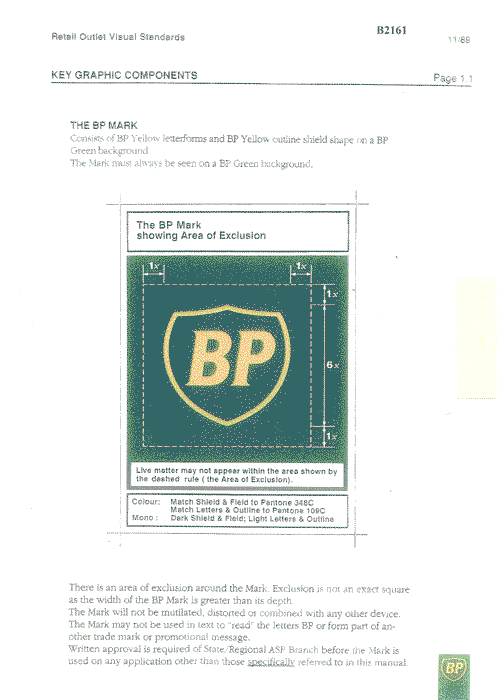
Annexure B
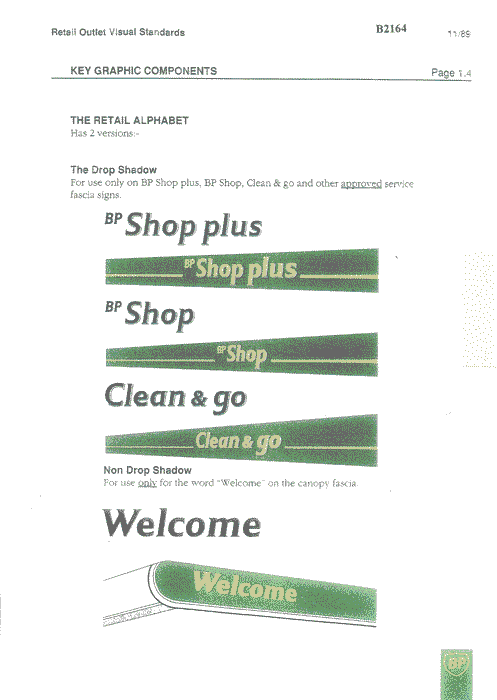
Annexure C
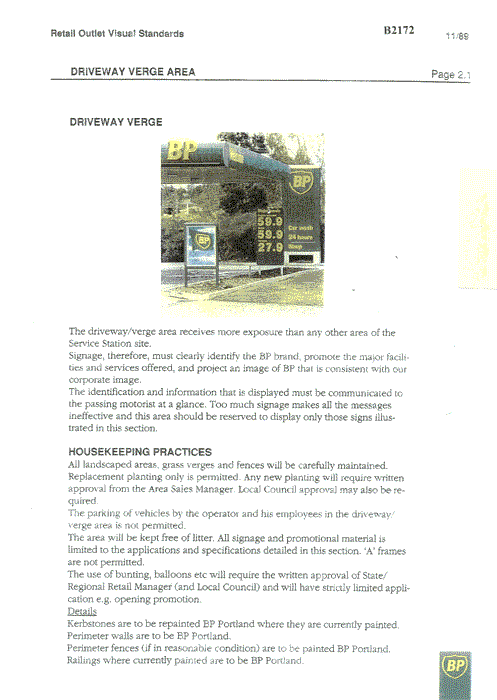
Annexure D
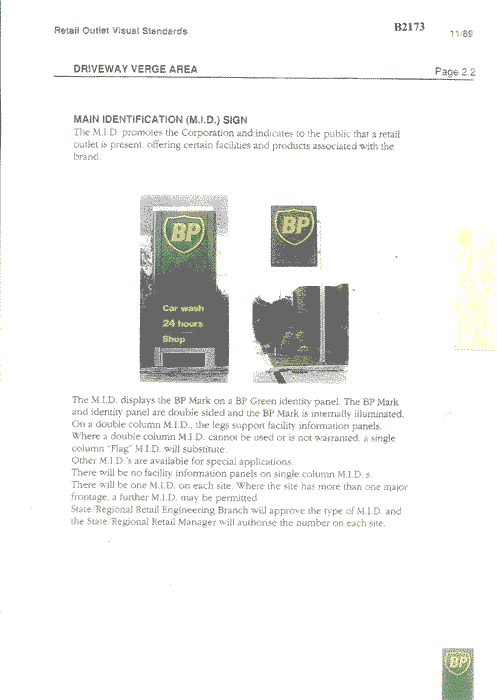
Annexure E
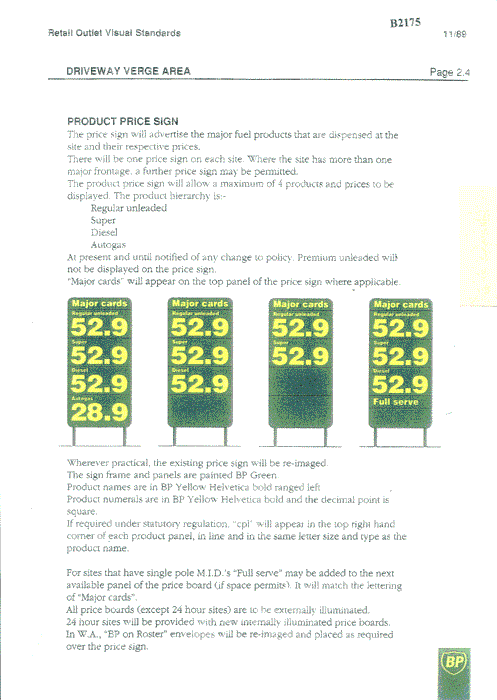
Annexure F
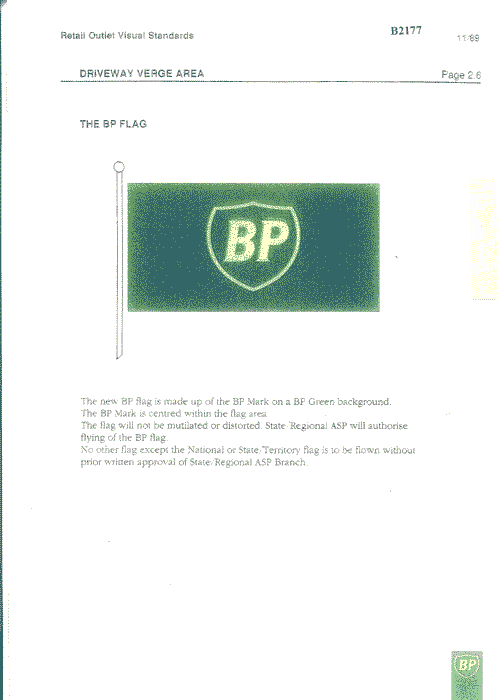
Annexure G

Annexure H
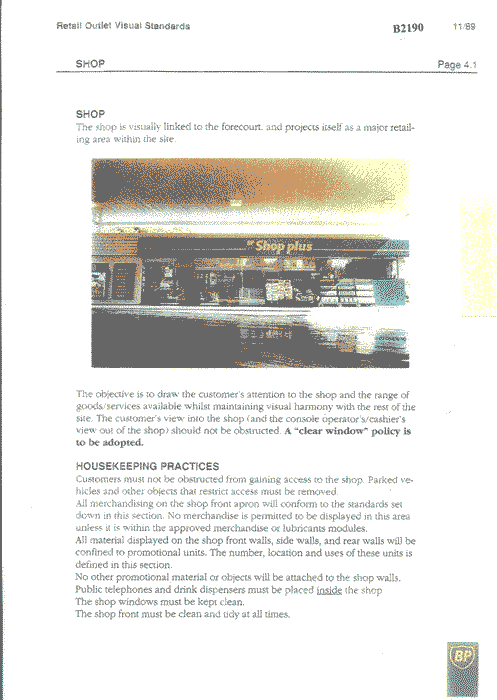
Annexure J
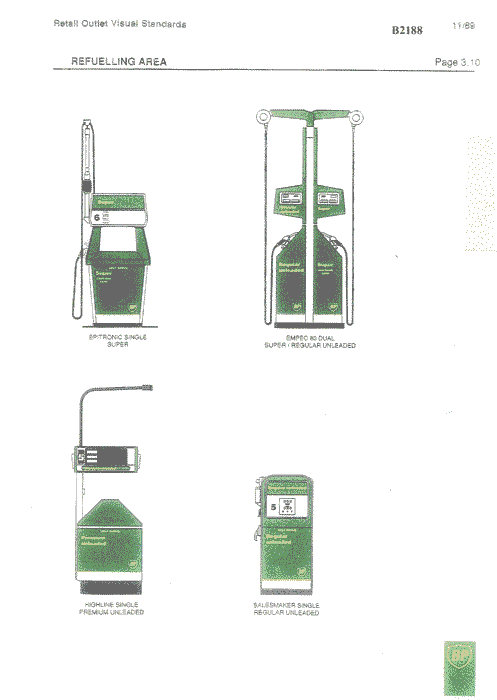
Annexure K
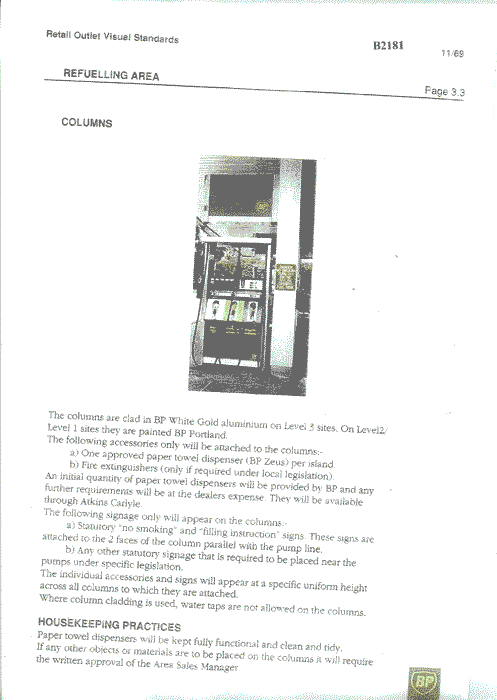
Annexure L



Annexure M
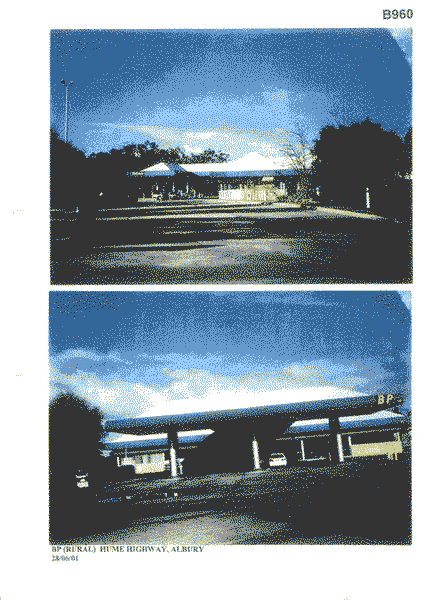
Annexure N
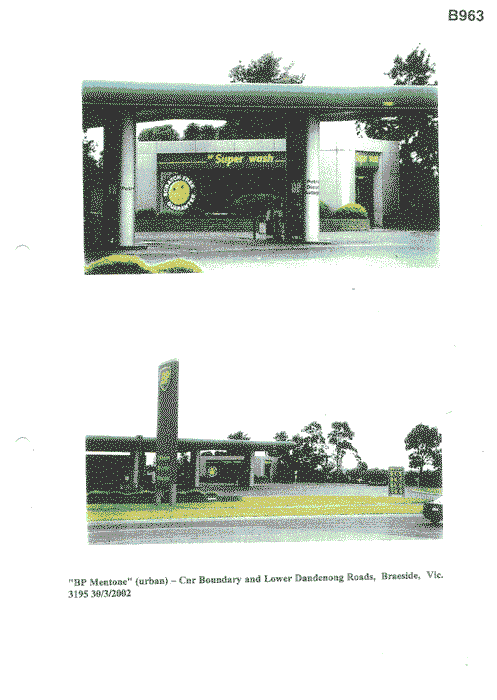
Annexure O
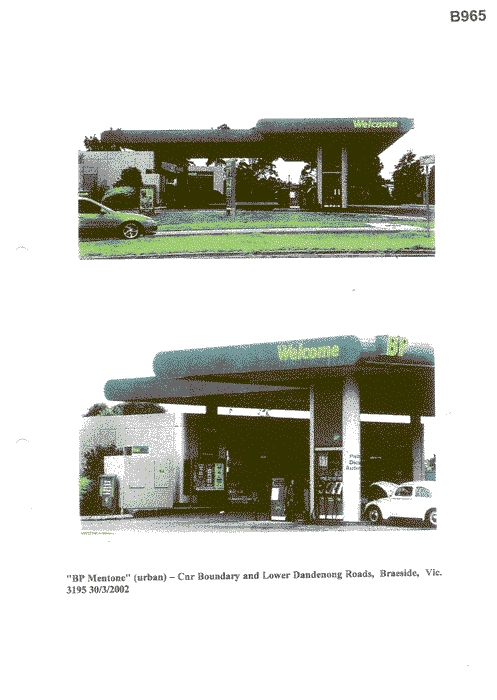
Annexure P

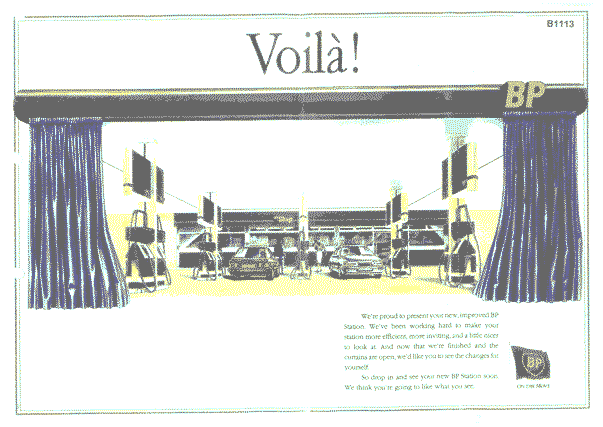
Annexure Q